Monthly Archives: September 2026

Rebecca and Her Daughters: The Cross-Dressing Toll-Gate Rioters of Wales

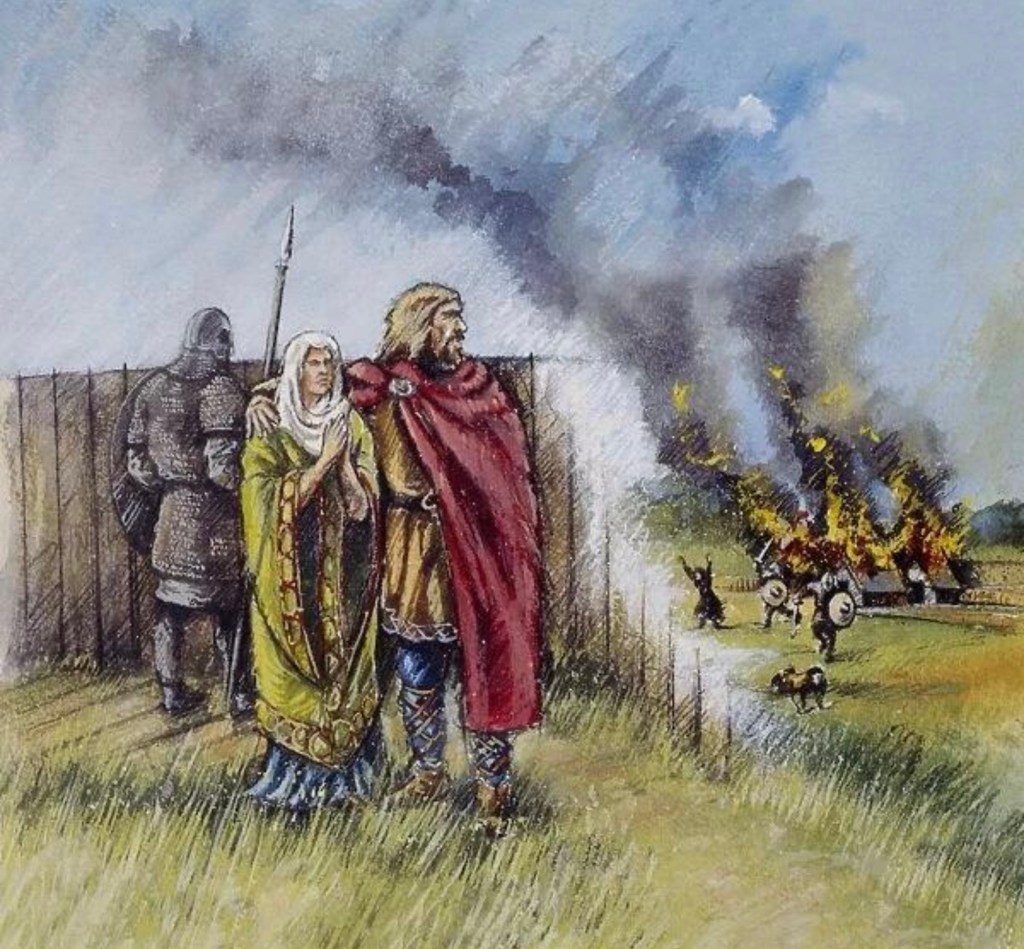
Sometime during the early 1840s, a traveller on a lonely road in rural Wales might have encountered a decidedly peculiar scene.

It was night.

A crowd had gathered around a toll gate.

Among them were men disguised in women’s clothing, their faces concealed or blackened. One particularly imposing figure might be addressed as Rebecca.

Around her stood her “daughters.”

A conversation followed.

Rebecca demanded to know what obstacle had been placed across the road.

One of her daughters explained that a gate prevented the people from passing.

Rebecca pronounced judgement.

The crowd surged forward.

And the toll gate was torn from its hinges.

Welcome to the Rebecca Riots — one of the strangest, most theatrical and, beneath the costumes, most serious episodes of popular protest in nineteenth-century Britain.

Between roughly 1839 and 1843, communities across rural west and south-west Wales attacked toll gates and other symbols of authority.

Their grievances included road tolls, poverty, rents, tithes, the administration of the Poor Law and a political system dominated by landowners.

But instead of marching beneath an ordinary political banner, the protesters created a character.

Rebecca Riots

Rebecca.

And Rebecca had daughters.

Lots of them.

Before We Meet the Drag Queens…

There is one important historical qualification.

Calling the Rebecca Rioters drag queens is irresistible.

It is also anachronistic.

The men who dressed as women during the riots weren’t necessarily expressing a female or gay identity, nor were they performing drag in its modern entertainment sense.

Cross-dressing has appeared repeatedly in European traditions of protest, carnival and social inversion.

Clothing could disguise identity.

But it could also turn the normal social order upside down.

Men became women.

Labourers became judges.

The powerless issued commands.

Respectability became ridiculous.

Authority was mocked.

So while Kylie Minogue sadly wasn’t available to provide the soundtrack, the Rebeccas understood one enduring principle of political theatre:

If you’re going to challenge authority, make sure everybody remembers the performance.

Wales Under Pressure

The world from which Rebecca emerged was overwhelmingly rural.

Much of west Wales consisted of small farms operating on difficult land.

Farmers and agricultural labourers lived precariously.

Bad harvests could devastate household finances.

Rents had to be paid.

Church tithes remained burdensome, particularly galling in communities where many Welsh people were Nonconformists yet financial obligations were associated with the established Anglican Church.

Then there was the New Poor Law of 1834.

The workhouse embodied one of the harshest principles of nineteenth-century social policy: assistance to the destitute should be sufficiently unpleasant that people would avoid seeking it unless absolutely necessary.

Poverty was increasingly treated not merely as misfortune but as something requiring discipline.

And through this already strained countryside ran the turnpike roads.

Radicals in the Countryside

The Hated Toll Gate

Britain’s roads had long been maintained partly through turnpike trusts.

Parliament authorised trusts to maintain particular roads and collect tolls from those using them.

In principle, travellers paid for better roads.

In practice, rural communities could experience the system very differently.

Farmers didn’t use roads merely for occasional journeys.

They used them repeatedly.

Livestock had to be moved.

Produce had to reach markets.

Lime had to be transported for improving acidic Welsh soils.

Animals, carts and goods might all attract charges under different arrangements.

And the proliferation or placement of toll gates could make short local journeys expensive.

To a wealthy traveller, a toll might be irritating.

To a struggling farmer repeatedly passing through gates in the ordinary course of earning a living, tolls could become a serious economic burden.

People began asking a dangerous question:

Why should we keep paying?

Enter Rebecca

The first major outbreak usually associated with the Rebecca movement occurred in 1839, around Efailwen in Carmarthenshire.

A newly erected toll gate became the target.

Local men assembled.

Some disguised themselves in women’s clothing.

The gate was destroyed.

When it was rebuilt, they returned.

And destroyed it again.

The movement temporarily subsided.

Then economic hardship intensified.

By 1842–43, Rebecca returned on a much larger scale.

Toll gates across west Wales began disappearing.

Why “Rebecca”?

The traditional explanation leads us into the Bible.

In Genesis 24:60, Rebekah is blessed with words traditionally rendered along the lines that her descendants should possess the gate of those who hate them.

For people attacking gates, the symbolism was almost suspiciously convenient.

Rebecca became the imaginary mother of the protesters.

Her followers became her daughters.

Contemporary accounts also record ritualised exchanges in which Rebecca questioned her children about the offending gate.

Why was it there?

Who had put it there?

What should be done about it?

The answer was rarely favourable to the continued architectural integrity of the gate.

Rebecca Holds Court

Imagine the scene.

Dark countryside.

Lanterns or torches.

Dozens — sometimes hundreds — of people assembling.

Faces concealed.

Some men wearing bonnets, shawls, gowns or other female clothing.

One conspicuous figure representing Rebecca.

Then came the performance.

Rebecca might call to her children.

A daughter answered.

Rebecca demanded to know why the road was blocked.

The daughter explained that the gate prevented poor people from passing.

Rebecca asked what must be done.

The daughters knew.

Remove it.

Then axes, hammers, crowbars and sheer manpower went to work.

The toll gate came down.

Sometimes the tollhouse itself was attacked.

The protesters disappeared into the darkness.

By morning, the road was open.

Rebecca had delivered judgement.

Why Women’s Clothing?

There probably wasn’t one single reason.

The most practical was disguise.

These were illegal acts.

Participants faced arrest and prosecution.

Changing clothing and concealing faces made identification more difficult, particularly within communities where neighbours might be reluctant to inform.

But disguise alone doesn’t fully explain the choice.

The cross-dressing also belonged to an older tradition sometimes described by historians as ritual inversion.

During carnival, folk customs and certain forms of popular protest, normal hierarchies could temporarily be reversed.

Men dressed as women.

The poor imitated their social superiors.

Mock courts tried authority.

Crowds created imaginary kings, queens or officials.

The world was symbolically turned upside down.

Rebecca was therefore more than camouflage.

She was theatre.

Rebecca riots – source 3b – The National Archives

The Power of Ridicule

Governments can sometimes deal more easily with straightforward rebellion than ridicule.

A conventional rebel acknowledges the seriousness of authority by fighting it.

Rebecca mocked it.

A toll gate backed by an Act of Parliament was transformed into a ridiculous object awaiting judgement from a fictitious Welsh matriarch and her strangely hairy daughters.

Officials became characters in a farce.

Toll collectors became targets of mockery.

The people who possessed almost no formal political authority temporarily created an alternative authority of their own.

Rebecca decided whether the gate was legitimate.

Rebecca’s daughters enforced the verdict.

It was funny.

It was intimidating.

And it was politically potent.

Not Just the Gates

This is where the popular image of the Rebecca Riots becomes misleading.

The toll gates were spectacular.

But grievances extended much further.

Rural Welsh society contained enormous inequalities of power.

Landowners dominated local government.

Tenant farmers depended upon landlords.

Agricultural labourers possessed little economic security.

The established Church collected tithes in communities where Nonconformity was deeply rooted.

The Poor Law threatened destitute families with the workhouse.

And ordinary Welsh people possessed little influence over the institutions controlling their lives.

Rebecca gradually became a vehicle through which these grievances could be expressed.

Threatening letters appeared.

Officials were intimidated.

Property associated with perceived injustice could be targeted.

What began as opposition to turnpikes broadened into a more diffuse rural revolt.

Rebecca Riots, South Wales, 1840s

The Rebecca Letters

Like several British protest movements, Rebecca developed her own threatening correspondence.

Letters were sent in Rebecca’s name.

They warned toll collectors, officials, landlords and others accused of mistreating local people.

Some were menacing.

Some were theatrical.

Some were probably written by individuals with no direct connection to organised attacks.

Once Rebecca became a recognised symbol, almost anyone could borrow her identity.

That presented authorities with an awkward problem.

Rebecca wasn’t a person.

She was an idea.

You couldn’t arrest Rebecca.

You could arrest individual rioters.

But another Rebecca could put on a bonnet the following night.

Violence Escalates

It is tempting to romanticise the riots because their theatrical elements are so colourful.

That would be a mistake.

The movement became increasingly violent.

Property was destroyed.

People were threatened.

Firearms appeared.

And eventually somebody died.

On 7 September 1843, protesters attacked the toll gate at Hendy, near Swansea.

The gatekeeper was Sarah Williams, a woman in her seventies.

During the attack, she was shot and killed.

Her death marked an ugly escalation.

A movement claiming to defend poor communities from oppression had produced an innocent victim.

Popular protest is rarely morally tidy.

The grievances behind Rebecca were real.

That doesn’t make every action undertaken in Rebecca’s name defensible.

The Government Responds

As attacks multiplied, the authorities deployed soldiers and police.

But suppressing Rebecca wasn’t easy.

Rural geography helped the protesters.

So did community solidarity.

Participants could gather rapidly and disappear.

Officials often struggled to identify individuals hidden behind disguises.

Local witnesses might know perfectly well who had been involved and remain remarkably unable to remember anything useful when questioned.

Nevertheless, arrests increased.

Some participants were imprisoned.

Others were sentenced to transportation.

The movement gradually lost momentum.

By the end of 1843, the great wave of Rebecca attacks was largely over.

But government couldn’t simply pretend nothing had happened.

The Inquiry

In October 1843 the government established a commission to investigate the causes of the disturbances in South Wales.

This matters enormously.

Rebellion had forced government to investigate why rebellion had occurred.

The inquiry heard evidence about turnpike trusts, tolls, road administration and wider rural grievances.

The resulting reforms didn’t create a Welsh rural paradise.

Poverty remained.

Landlord power remained.

Social inequality remained.

But the turnpike system was subsequently reorganised, and some of the worst abuses that had helped provoke Rebecca were addressed.

Rebecca had not simply smashed gates.

She had forced Westminster to look through them.

Rebecca and Chartism

The Rebecca Riots occurred at almost exactly the same moment as the Plug Riots of 1842 and the great wave of Chartist agitation.

Yet the movements emerged from different environments.

Chartism was particularly powerful in industrial communities.

Its demands were explicitly political and constitutional.

Rebecca was primarily rural and focused initially upon immediate local economic grievances.

But underneath both lay a remarkably similar problem:

ordinary people lacked effective political power.

If Parliament didn’t represent you, what did you do?

Petition.

Strike.

March.

Pull the plug from a boiler.

Or put on a bonnet and demolish the toll gate.

Different communities developed different methods.

The underlying question was the same.

Women and the Curious Problem of Rebecca

There is an irony here worth considering.

Rebecca was female.

Her followers called themselves daughters.

Yet the most famous participants were men.

Real women certainly lived under the same economic pressures and participated in Welsh community life and protest, but the public mythology of Rebecca largely centred upon men temporarily adopting female identities.

That tells us something intriguing about gender and protest.

Female disguise allowed men to step symbolically outside respectable masculine behaviour.

Rebecca could behave in ways an ordinary respectable farmer supposedly could not.

She could shriek.

Command.

Threaten.

Mock.

Destroy.

And then disappear.

The female persona became a licence for disorder.

Yet Rebecca herself was also powerful.

She wasn’t presented as weak or submissive.

She was a commanding mother protecting her children.

Her authority came from the claim that the community was her family.

Attack the poor and you attacked Rebecca’s daughters.

And Mother Rebecca was not amused.

Cross-Dressing as Protest

The Rebeccas weren’t unique.

British and European popular protest contains numerous examples of men adopting women’s clothing or female identities.

The practice appears in forms of rural protest, customary disorder and communal punishment.

Sometimes it concealed identities.

Sometimes it invoked folk traditions.

Sometimes it represented the idea that ordinary social rules had temporarily been suspended because authority itself had behaved unjustly.

The Rebecca Riots are particularly memorable because cross-dressing wasn’t incidental.

It became central to the movement’s identity.

A protester didn’t merely disguise himself.

He became one of Rebecca’s daughters.

Political resistance had acquired a costume.

Were They Criminals?

Legally?

Yes.

They destroyed property, intimidated people and sometimes committed serious violence.

But history allows us to ask a different question.

Were they only criminals?

Clearly not.

The riots emerged from genuine economic and political grievances.

The government itself effectively acknowledged this by investigating the conditions that produced them.

This tension appears repeatedly in the history of popular protest.

The Luddites destroyed machinery.

Food rioters seized grain.

Plug Rioters stopped factories.

Rebecca’s daughters demolished gates.

Governments described such behaviour as criminal disorder.

Participants often understood themselves as enforcing a different conception of justice.

Not necessarily legal justice.

Moral justice.

The community believed certain practices had become intolerable.

When formal institutions refused to intervene, people intervened themselves.

That doesn’t excuse violence.

But it helps explain why communities sometimes protected those responsible.

The Moral Economy Returns

And here our earlier exploration of the moral economy comes wandering back into view.

Ordinary people often accepted inequality provided certain customary expectations were respected.

Landlords could collect rents.

Merchants could make profits.

Authorities could levy charges.

But there were limits.

When economic practices appeared predatory rather than legitimate, communities sometimes believed they possessed a moral right to intervene.

Rebecca’s daughters didn’t necessarily oppose roads being maintained.

They opposed what they regarded as unreasonable tolls imposed upon people who had little power to resist them.

The same principle appeared in food riots.

People didn’t necessarily demand free grain.

They frequently demanded grain at what they considered a fair price.

The protest was not always against markets.

It was against markets behaving immorally.

The End of Rebecca

By 1844, large-scale Rebecca activity had largely subsided.

Repression played a role.

So did arrests and prosecutions.

The movement had also become harder to control as violence escalated.

But the grievances couldn’t simply be dismissed.

Legislation eventually reformed the turnpike system in South Wales, consolidating trusts and reducing some of the burdens that had provoked the disturbances.

Rebecca disappeared from the roads.

Her daughters returned to their ordinary clothes.

The toll gates stopped falling.

But the story remained embedded in Welsh popular memory.

The Politics of Performance

The Rebecca Riots demonstrate something easily overlooked when we study political history.

Politics isn’t conducted only through Parliament.

It occurs through symbols.

Songs.

Clothing.

Processions.

Rituals.

Names.

Humour.

Mockery.

Performance.

Rebecca worked because everyone understood the joke.

A fictional woman had become more powerful than the officials supposedly governing the countryside.

Her daughters were ridiculous and frightening simultaneously.

And every destroyed gate communicated a message that required no manifesto:

We no longer accept your authority to do this to us.

And Thus Ends the Show

It is difficult not to imagine the scene theatrically.

The Welsh night.

A crowd emerging from darkness.

A large man in a bonnet and gown stepping forward.

“Rebecca” calls to her daughters.

Her daughters answer.

A mock trial begins.

The gate is accused.

The gate is found guilty.

Sentence is immediate.

Demolition.

Then Rebecca and her daughters disappear back into the countryside.

No Kylie.

No glitter ball.

No lip-syncing.

History can be terribly disappointing sometimes.

But underneath the theatrical absurdity was something deadly serious.

Rural communities suffering poverty and political exclusion had discovered that costume, anonymity and collective action could temporarily reverse the balance of power.

For a few remarkable years, whenever another toll gate appeared across the roads of west Wales, the authorities had reason to wonder whether somewhere in the darkness a bonnet was being tied beneath a bearded chin.

Because Rebecca was coming.

And Mother had brought her daughters.

Tim Alderman ©️2026

Sources and Further Reading

David Williams, The Rebecca Riots: A Study in Agrarian Discontent — the classic detailed historical study of the movement and the social and economic conditions that produced it.

Rhian E. Jones, Petticoat Heroes: Gender, Culture and Popular Protest in the Rebecca Riots — particularly useful for understanding gender, disguise, popular culture and the theatrical dimensions of Rebecca.

Welsh Government / People’s Collection Wales historical material on the Rebecca Riots — useful collections of Welsh historical material, images and accounts relating to the disturbances.

National Library of Wales collections — contemporary newspapers, ballads, documents and other material relating to Rebecca and nineteenth-century Welsh social history.

UK Parliament, reports of the 1843 Commission of Inquiry into the state of South Wales — invaluable contemporary evidence concerning turnpike roads and the broader grievances behind the disturbances.

David J. V. Jones, Rebecca’s Children: A Study of Rural Society, Crime and Protest — broader examination of protest and social conflict in nineteenth-century rural Wales.

E. P. Thompson, The Making of the English Working Class — not specifically a history of Rebecca, but essential background for understanding popular protest, class formation and the traditions from which nineteenth-century collective action emerged.

Eric Hobsbawm and George Rudé, Captain Swing — useful comparative reading on rural protest, customary resistance and collective action in nineteenth-century Britain.

Pulling the Plug: The Great Strike and Plug Riots of 1842

There are moments in history when an apparently simple action acquires enormous political meaning.

In August 1842, thousands of workers across industrial Britain walked into mills and factories and did something remarkably effective.

They pulled the plugs from steam boilers.

Water poured out.

Steam pressure disappeared.

Engines stopped.

Machinery fell silent.

Production ceased.

Within days, what had begun amid wage disputes in the industrial districts around Manchester had spread across much of northern and central England and into other parts of Britain.

Cotton workers joined miners.

Miners joined factory workers.

Men, women and children appeared in enormous demonstrations.

Some demanded higher wages.

Others demanded political reform.

Many demanded both.

Troops were deployed.

Workers were arrested.

People were shot dead.

For several extraordinary weeks, industrial Britain confronted something approaching a general strike.

History remembers it as the Plug Riots or Plug Plot of 1842.

The name sounds almost comic.

The events were anything but.

Paying The Price

Britain in the Hungry Forties

The Britain of the early 1840s was simultaneously extraordinarily wealthy and desperately poor.

Industrialisation was transforming the country.

Cotton mills dominated towns across Lancashire.

Coal powered factories and homes.

Railways were expanding.

Steam engines drove machinery on a scale unimaginable only decades earlier.

Fortunes were being made.

Yet many of the people producing that wealth lived precariously close to destitution.

The early 1840s brought severe economic depression.

Trade declined.

Factories reduced production.

Unemployment increased.

Wages fell.

Food remained painfully expensive.

For working families who already spent much of their income on basic necessities, even a relatively small reduction in wages could mean hunger.

This period became remembered as part of the “Hungry Forties.”

The anger generated by economic hardship was intensified by something else.

Most working people possessed virtually no political power.

The Troubled Forties

The Reform That Didn’t Reform Enough

The Great Reform Act of 1832 is often presented as a major milestone in British democracy.

It was.

But democracy remained a very long way away.

The Act removed some notorious “rotten boroughs,” redistributed parliamentary representation and extended the franchise.

But its principal beneficiaries were middle-class property-owning men.

The overwhelming majority of working-class men still could not vote.

Women could not vote at all.

This created enormous frustration.

Working people had participated in agitation for parliamentary reform.

Then Parliament reformed itself while largely leaving them outside.

The lesson was difficult to miss:

Parliament could change the rules without sharing political power with the people demanding change.

Out of that disappointment grew the greatest working-class political movement nineteenth-century Britain had yet seen.

The People’s Charter

In 1838 the People’s Charter set out six demands.

The Chartists wanted universal male suffrage.

A secret ballot.

Equal electoral districts.

Payment for Members of Parliament.

Removal of the property qualification for MPs.

And annual parliamentary elections.

Some of these demands now seem completely ordinary.

At the time, they appeared revolutionary.

Payment of MPs, for example, mattered enormously.

If parliamentary service was unpaid, how could an ordinary working man afford to become an MP?

Political reform was therefore inseparable from class.

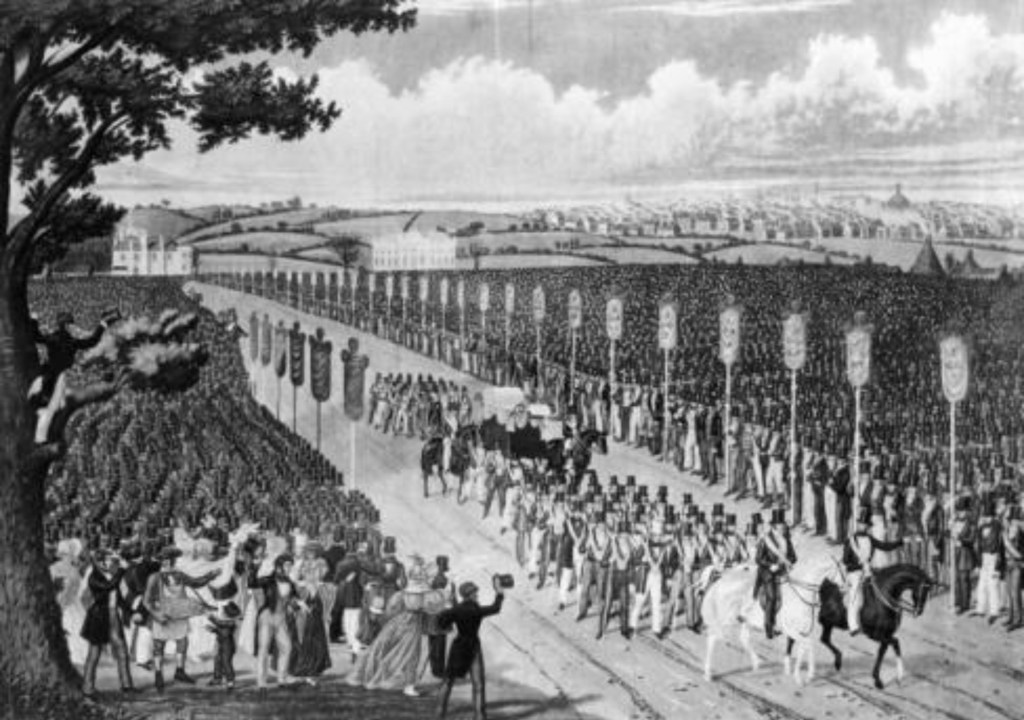
Chartism became a mass movement.

Meetings attracted thousands.

Newspapers spread its ideas.

Petitions gathered enormous numbers of signatures.

And Parliament repeatedly said no.

1842

The second great Chartist petition was presented to Parliament in May 1842.

It contained millions of signatures.

Parliament rejected it overwhelmingly.

Meanwhile the economic crisis continued.

This combination was explosive.

Workers were experiencing falling wages while simultaneously being reminded that they possessed almost no influence over the Parliament governing them.

Economic grievance and political grievance began merging.

Then the cotton districts around Manchester ignited.

Pulling the plug 1842

Stalybridge

The immediate origins of the great strike are usually associated with Stalybridge, an industrial town east of Manchester.

Cotton manufacturers were attempting further wage reductions.

Workers had had enough.

In early August 1842, mill workers began turning out.

But instead of simply leaving their own workplaces, groups moved to other factories and encouraged — or sometimes compelled — other workers to join them.

They needed a way to stop production.

Steam provided the answer.

Pull the Plug

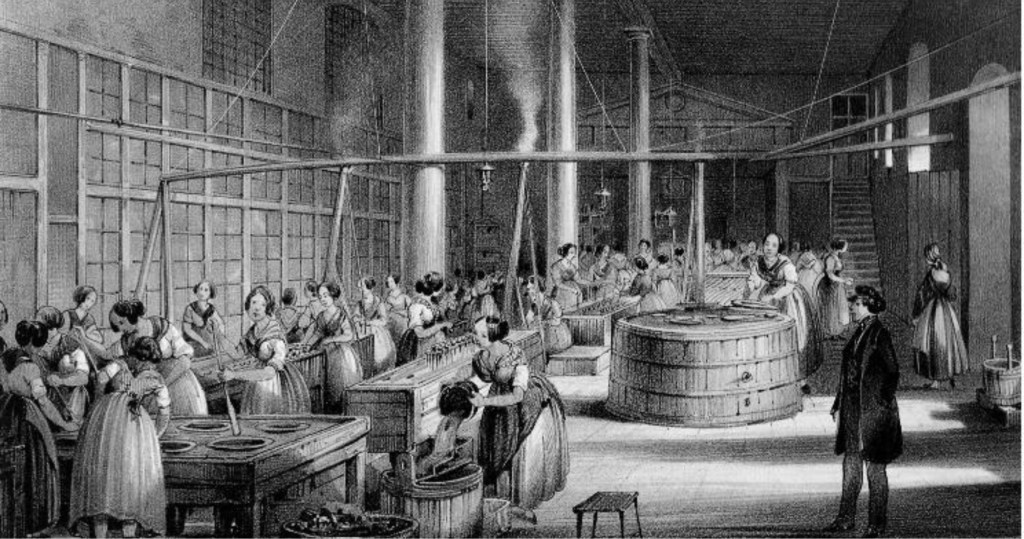
A steam-powered mill depended upon its boiler.

Water was heated.

Steam generated pressure.

That pressure drove the engine.

The engine drove belts and shafts.

Those powered machinery throughout the factory.

Stop the steam engine and the entire industrial organism stopped with it.

Workers discovered an elegantly simple method.

Remove the boiler plug.

The water escaped.

The boiler could no longer generate steam.

The engine stopped.

And suddenly a factory filled with expensive machinery was useless.

This is where the term Plug Riots originated.

The workers weren’t blindly attacking technology.

They understood it.

They knew precisely where the vulnerability lay.

A Luddite might destroy a machine considered threatening to a trade.

The plug puller could stop an entire factory without necessarily destroying its machinery.

It was industrial sabotage requiring remarkably little equipment.

“The Scene at New Cross [Manchester]” (1842)

From Mill to Mill

The strike spread rapidly.

Workers moved through Ashton-under-Lyne, Hyde, Dukinfield, Denton, Oldham, Manchester and surrounding districts.

Mills were stopped.

Workers poured into the streets.

Colliers joined factory workers.

Other trades became involved.

Contemporary reports repeatedly describe crowds travelling from workplace to workplace demanding that production cease.

The word used was “turn-out.”

Workers were being turned out of the factories.

But the movement was no longer confined to individual disputes between workers and individual employers.

Whole industrial districts were stopping.

The implications terrified employers and authorities.

“A Fair Day’s Wage”

At Mottram Moor, thousands assembled.

Contemporary evidence recorded two demands that reveal the dual character of the movement.

Workers wanted:

“a fair day’s wage for a fair day’s work”

and

“the People’s Charter.”

There lies the central historical problem of 1842.

Was this a strike about wages?

Or was it a political uprising demanding Chartism?

The answer is:

Both — but not necessarily everywhere and not necessarily from the beginning.

Bread or the Charter?

Historians have debated the relationship between Chartism and the strike ever since.

The original disturbances emerged substantially from industrial grievances, particularly wage reductions.

Workers wanted wages restored to earlier levels.

But once mass strikes began spreading, Chartist activists recognised an extraordinary opportunity.

If workers refused to return until the Charter became law, economic action might force political reform.

This was a profoundly important idea.

Workers possessed little electoral power.

But they possessed something else.

Their labour.

And industrial Britain could not function without it.

The strike therefore raised an extraordinary possibility:

What if people excluded from political power used their economic power instead?

The General Strike Before the General Strike

The expression general strike was not yet commonly used in its later sense.

But that is remarkably close to what parts of Britain experienced.

The movement eventually involved enormous numbers of workers across Lancashire, Cheshire, Yorkshire, Staffordshire and the Midlands, with disturbances and strikes elsewhere.

Cotton mills stopped.

Mines stopped.

Potteries were affected.

Transport workers participated in places.

Factories stood idle.

This wasn’t a modern centrally organised national strike with union officials coordinating ballots and strike funds.

It spread unevenly.

Local motivations differed.

Communication was imperfect.

Leadership was contested.

But the scale was extraordinary.

Britain was witnessing one of the earliest mass industrial shutdowns in its history.

Manchester

Manchester was the symbolic heart of industrial Britain.

Cotton had transformed it.

Its factories represented both the astonishing productivity of industrialisation and the social inequality accompanying it.

When the strike reached Manchester, enormous crowds gathered.

Factories were stopped.

Chartist leaders attempted to direct the movement towards political objectives.

A conference of trades delegates met in Manchester.

The question before them was momentous.

Should workers remain out until the People’s Charter became law?

For radical Chartists, this was the opportunity they had dreamed of.

The government saw something rather different.

Potential revolution.

1842 – Chartists, General Strike and ‘Plug Riots’ in Leeds – On: Yorkshire Magazine

Memories of Revolution

British ruling elites had good reason to fear large crowds.

The French Revolution remained within living memory.

Britain had already experienced Luddism.

The Spa Fields disturbances.

The Pentrich Rising.

Peterloo.

The Swing Riots.

The Newport Rising.

And repeated Chartist demonstrations.

Again and again, governments confronted the same frightening question:

What happens if large numbers of ordinary people simply stop obeying?

Britain liked to imagine itself as stable.

Its rulers knew stability could not be taken for granted.

The sight of tens of thousands of workers moving between factories and stopping industrial production looked ominously like authority passing from magistrates and employers into the streets.

Troops were mobilised.

Hunger at Stockport

At Stockport, economic desperation became particularly visible.

Unemployment and hunger were severe.

Crowds attacked the workhouse and sought food.

This reminds us that political movements are rarely powered solely by abstract constitutional principles.

The Charter mattered.

So did dinner.

A man unable to vote might resent Parliament.

A man unable to feed his children had considerably more immediate reasons for anger.

The great strike therefore cannot be understood without hunger.

Behind arguments about suffrage and representation stood households trying to survive.

Women in the Streets

And, as we have discovered repeatedly in our journey through food riots and industrial unrest, women were there.

Contemporary accounts of demonstrations during the Plug Riots describe substantial numbers of women and young people participating.

That should not surprise us.

Industrialisation employed women and children extensively.

A reduction in wages affected entire households.

Food prices affected women particularly because they frequently managed household purchasing.

Women also possessed virtually no formal political power.

Yet they could participate in collective action.

The street could provide political visibility unavailable through the ballot box.

Working-class protest was never exclusively male.

History simply became very good at remembering it that way.

Preston

Then came one of the darkest episodes of the strike.

On 13 August 1842, unrest reached Preston.

Workers moved through the town stopping factories.

A large crowd assembled.

Authorities attempted to disperse it.

The Riot Act was read.

Soldiers and police confronted demonstrators.

Stones were thrown.

Then troops fired.

Several people were killed and others wounded.

Among the dead were young workers.

The confrontation demonstrated the limits of Victorian tolerance for mass protest.

The state might accept petitions.

It might tolerate meetings.

But when workers began physically stopping industrial production and refusing orders to disperse, military force remained available.

Peterloo had occurred only twenty-three years earlier.

The memory must have been chilling.

“Riot” or Strike?

Even the name Plug Riots deserves examination.

Calling an event a riot immediately frames it in a particular way.

A riot suggests disorder.

Violence.

A mob.

Criminality.

But much of what occurred in 1842 was organised industrial action.

Workers stopped factories.

They demanded wages.

They attended meetings.

They discussed political objectives.

There was violence.

There was intimidation.

Property was attacked.

Some workers were undoubtedly compelled to stop work against their wishes.

But describing the entire movement simply as rioting can obscure its political and industrial character.

Likewise, calling it purely a Chartist uprising ignores workers whose primary concern was wages.

Perhaps the awkwardness of naming the events tells us something useful.

1842 was simultaneously strike, protest, political agitation, direct action, disorder and, in some places, riot.

Mass movements rarely fit neatly into filing cabinets.

The Government Strikes Back

The government responded firmly.

Troops were deployed throughout affected districts.

Police and special constables were mobilised.

Meetings were disrupted.

Leaders were arrested.

As production gradually resumed, the authorities pursued Chartist organisers and others considered responsible.

Hundreds faced legal proceedings.

Among the most prominent defendants was the great Chartist leader Feargus O’Connor.

The government wanted to demonstrate that political leaders could not use industrial unrest to coerce Parliament.

But prosecution could not erase the lesson of August 1842.

Working people had demonstrated an entirely new scale of collective power.

Why the Strike Failed

The strike ultimately failed to secure either its full economic objectives or the People’s Charter.

There were several reasons.

The movement lacked unified leadership.

Different areas wanted different things.

Some workers primarily demanded restoration of wages.

Chartists wanted constitutional reform.

Not every striker accepted the idea of remaining out until the Charter became law.

Families without substantial savings could not remain indefinitely without wages.

Employers resisted.

Authorities used police and military force.

Leaders were arrested.

And maintaining a huge strike across geographically scattered industrial communities was extraordinarily difficult.

Eventually people returned to work.

The steam engines restarted.

The mills filled again.

The plugs went back in.

Parliament remained unreformed.

On the surface, the government had won.

But Something Had Changed

The deeper significance of 1842 lies elsewhere.

Industrialisation had created enormous concentrations of workers.

That created misery and exploitation.

But it also created something employers hadn’t necessarily intended:

collective power.

A handloom weaver working independently possessed limited leverage.

Thousands of workers concentrated in factories and mines could organise.

Industrial capitalism brought workers together physically.

They talked.

They shared grievances.

They formed societies.

They subscribed to newspapers.

They attended meetings.

They learned how dependent employers were upon uninterrupted labour.

The factory therefore created both industrial discipline and the possibility of industrial resistance.

Pulling the plug symbolised that discovery beautifully.

From the Luddites to the Plug Pullers

There is a tempting but misleading version of industrial history in which workers gradually became more sophisticated.

First, supposedly ignorant Luddites smashed machines.

Later, enlightened trade unionists learned to negotiate.

Reality was far more interesting.

The Luddites often understood industrial technology extremely well.

Their attacks were targeted against particular machines, employers and working practices.

Likewise, the Plug Rioters understood exactly how industrial production worked.

They didn’t hate steam.

They exploited its weakness.

In both movements, technology became a battlefield because control over technology meant control over work.

Who determined how machines were used?

Who benefited from increased productivity?

Who determined wages?

Who controlled working hours?

Who carried the cost when markets collapsed?

These questions remained central to industrial relations long after the last boiler plug had been replaced.

Chartism After 1842

Chartism survived.

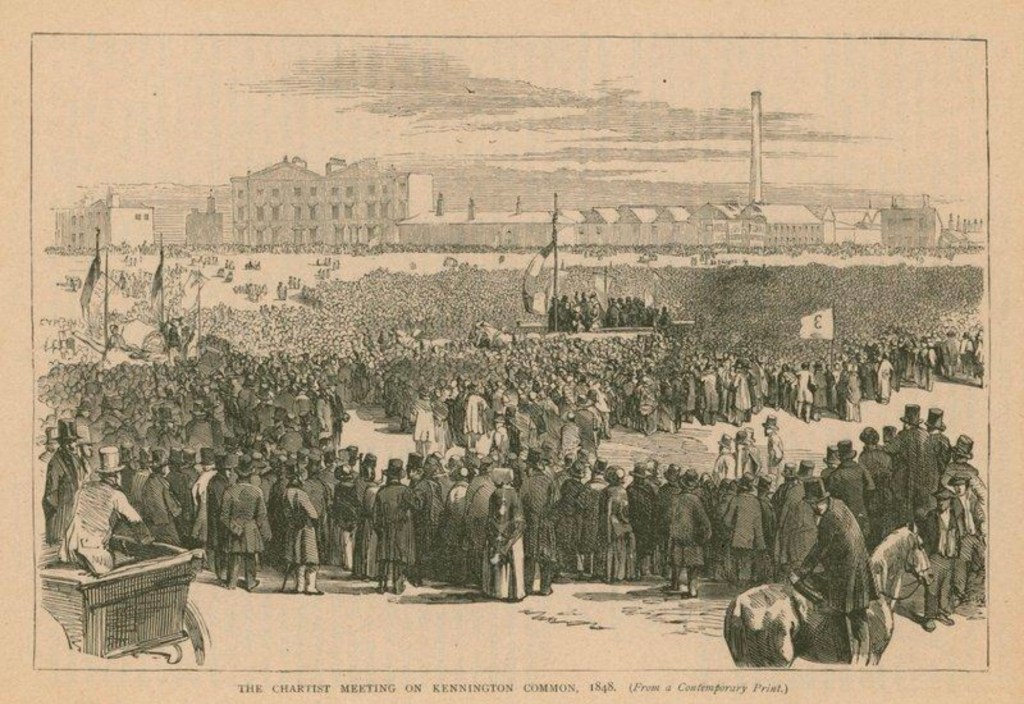
There would be another enormous petition in 1848, during a year of revolutions across Europe.

Again, Parliament rejected Chartist demands.

Eventually the movement declined.

And yet Chartism suffered one of history’s most interesting forms of defeat.

It lost.

Then, gradually, much of what it demanded happened anyway.

The property qualification for MPs disappeared.

Voting became secret.

MPs were eventually paid.

Electoral districts became more equal.

The male franchise expanded dramatically.

Annual Parliaments never arrived, and universal suffrage took much longer — particularly for women.

But five of the six Chartist demands were eventually achieved in substantial form.

The radicals of one generation became the constitutional normality of another.

The Long Road to Trade Union Power

The Plug Riots also belong within a much longer story.

The Combination Acts had attempted to suppress worker organisation.

The Luddites had resisted industrial change imposed on unfavourable terms.

The Tolpuddle labourers would be transported for organising and administering an oath.

Chartists demanded political representation.

The workers of 1842 demonstrated the enormous potential of coordinated withdrawal of labour.

Later trade unions would develop more permanent structures.

Strike funds.

Branches.

Officials.

National organisations.

Collective bargaining.

Eventually the labour movement would create its own parliamentary representation.

None of this happened in a straight line.

But 1842 belongs unmistakably to that journey.

Power Without the Vote

Perhaps the greatest importance of the Plug Riots lies in a simple discovery.

Most working men couldn’t vote.

No women could vote.

Parliament could reject petitions containing millions of signatures.

Workers therefore confronted an uncomfortable question:

What power do we possess when the political system refuses to give us any?

One answer was labour.

The mill owner possessed capital.

He owned the building.

He owned the machinery.

He bought the raw materials.

But none of them produced anything without workers.

A factory without labour was merely an expensive collection of stationary objects.

For a few weeks in 1842, workers demonstrated that fact on an enormous scale.

The Little Plug That Stopped a Factory

And that brings us back to the wonderfully ordinary object that gave the events their name.

A plug.

Small.

Cheap.

Technologically insignificant.

Yet removing it could silence an enormous steam engine.

That makes it an almost perfect symbol for the industrial struggle.

The workers themselves could appear insignificant to employers and politicians.

Individual labourers were replaceable.

They possessed little property.

Most had no vote.

They occupied the bottom of Britain’s political hierarchy.

But remove enough of them from the industrial system and suddenly something remarkable happened.

The machine stopped.

The Plug Riots failed to deliver the People’s Charter.

They failed to permanently reverse the economic forces pushing down wages.

Their leaders faced prosecution.

Their crowds were dispersed.

Their dead were buried.

But for several extraordinary weeks in the summer of 1842, Britain’s workers demonstrated something that governments and employers would never entirely forget.

Industrial society had created a new kind of power.

And sometimes exercising it required nothing more complicated than knowing which plug to pull.

Tim Alderman ©️2026

Sources and Further Reading

The National Archives (UK), “What Was Chartism?” — excellent primary-source collection covering Chartism, the 1842 disturbances, Preston, Manchester and contemporary descriptions of the Plug Plot.

The National Archives, contemporary reports concerning Mottram Moor, Manchester and the 1842 disturbances — particularly valuable for the combination of wage demands and support for the People’s Charter.

Malcolm Chase, Chartism: A New History — a major modern history of Chartism placing the 1842 strike within the movement’s wider political and social development.

Dorothy Thompson, The Chartists: Popular Politics in the Industrial Revolution — important study emphasising Chartism as a working-class social and political movement rather than merely a campaign for parliamentary reform.

Mick Jenkins, The General Strike of 1842 — detailed study of the strike and its relationship with Chartism.

F. C. Mather, “The General Strike of 1842: A Study in Leadership, Organisation and the Threat of Revolution during the Plug Plot Disturbance,” The Webbs, Fabianism and Feminism / related historical scholarship on nineteenth-century labour protest — useful for debates concerning organisation, leadership and revolutionary potential.

British Library collections on Chartism — background on the People’s Charter, petitions and development of Britain’s first mass working-class political movement.

UK Parliament, historical material on Chartism and electoral reform — useful for tracing how many Chartist demands were ultimately incorporated into Britain’s parliamentary system.

Angels: Heavenly Messengers, Divine Warriors, and the Evolution of One of Religion’s Most Enduring Beliefs

“Across thousands of years, angels have comforted the dying, terrified prophets, guided armies, inspired artists and become symbols of hope. Yet the angels familiar to many people today often bear little resemblance to those described in the world’s sacred texts.”

Few religious ideas have captured the human imagination quite like angels. They appear in Judaism, Christianity and Islam, occupy an important place in ancient Persian thought, influence later Western mysticism, and have become enduring figures in literature, music and popular culture. They have been depicted as fearsome warriors, radiant messengers, protectors of children, guardians of nations and even executors of divine judgment.

Modern images of angels—gentle beings with flowing robes, golden halos and soft white wings—owe as much to Renaissance painters and Victorian sentimentality as they do to scripture. The angels encountered in the Bible are often startling, mysterious and, at times, terrifying. Their first words are frequently, “Do not be afraid,” suggesting that fear was the natural reaction to encountering them.

This article explores where the idea of angels came from, how it developed across the centuries, and why these celestial beings continue to fascinate believers and non-believers alike.

What Is an Angel?

The English word angel comes from the Greek angelos, meaning “messenger.” It translates the Hebrew word mal’akh, which carries essentially the same meaning.

The emphasis, therefore, is not on what angels are but on what they do.

They are God’s messengers.

Throughout the Bible they deliver warnings, announce births, protect individuals, interpret visions, carry out divine judgments and praise God. They are not portrayed as independent gods or supernatural beings with authority of their own, but as servants acting under divine command.

Angels Before Christianity

The earliest books of the Hebrew Bible say surprisingly little about angels.

In Genesis, mysterious visitors appear to Abraham.

Jacob wrestles through the night with a mysterious being.

An angel prevents Abraham from sacrificing Isaac.

The Angel of the Lord frequently appears, sometimes speaking as though he were God Himself—a mystery that has intrigued Jewish and Christian theologians for centuries.

Following the Babylonian Exile (sixth century BCE), Jewish beliefs about angels became more developed. Contact with Persian religion, particularly Zoroastrianism, may have encouraged more elaborate ideas about heavenly beings organised into ranks and engaged in cosmic struggles between good and evil. While scholars continue to debate the extent of that influence, angelology certainly became far more detailed during the Second Temple period.

Angels in Christianity

Christianity inherited Judaism’s belief in angels and expanded upon it.

The New Testament opens with angelic activity.

The Archangel Michael defeats Satan in the Book of Revelation.

The angel Gabriel announces the births of John the Baptist and Jesus.

Angels minister to Jesus after His temptation in the wilderness.

They comfort Him in Gethsemane.

They proclaim His resurrection.

They accompany His ascension.

Far from being decorative figures, angels are woven throughout the Christian story from beginning to end.

Angels in Islam

Islam also gives angels a central role.

They are created from light and possess complete obedience to God.

Among the best known are:

Jibril (Gabriel), who revealed the Qur’an to the Prophet Muhammad.

Mikail, associated with mercy and provision.

Israfil, who will sound the trumpet on the Day of Judgment.

Azrael, who receives the souls of the dead.

Islamic art generally avoids portraying angels in the naturalistic way common in Christian art, yet their presence in theology is profound.

The Nine Orders of Angels

One of Christianity’s most influential descriptions of heavenly hierarchy came from the mysterious sixth-century writer known as Pseudo-Dionysius the Areopagite.

He divided angels into nine choirs arranged in three hierarchies.

First Hierarchy

Seraphim

The closest to God.

Isaiah describes them with six wings—two covering their faces, two covering their feet and two for flight—as they continually proclaim:

“Holy, holy, holy is the Lord.”

Cherubim

Modern greeting cards depict cherubs as chubby babies.

Biblical cherubim are anything but.

They guard Eden after Adam and Eve’s expulsion and support God’s heavenly throne.
The prophet Ezekiel describes them with multiple faces, wings and wheels filled with eyes—a vision that has puzzled readers for centuries.

Thrones

Associated with divine justice and God’s authority.

Little is said about them directly in scripture, but later theology regarded them as symbolic bearers of God’s throne.
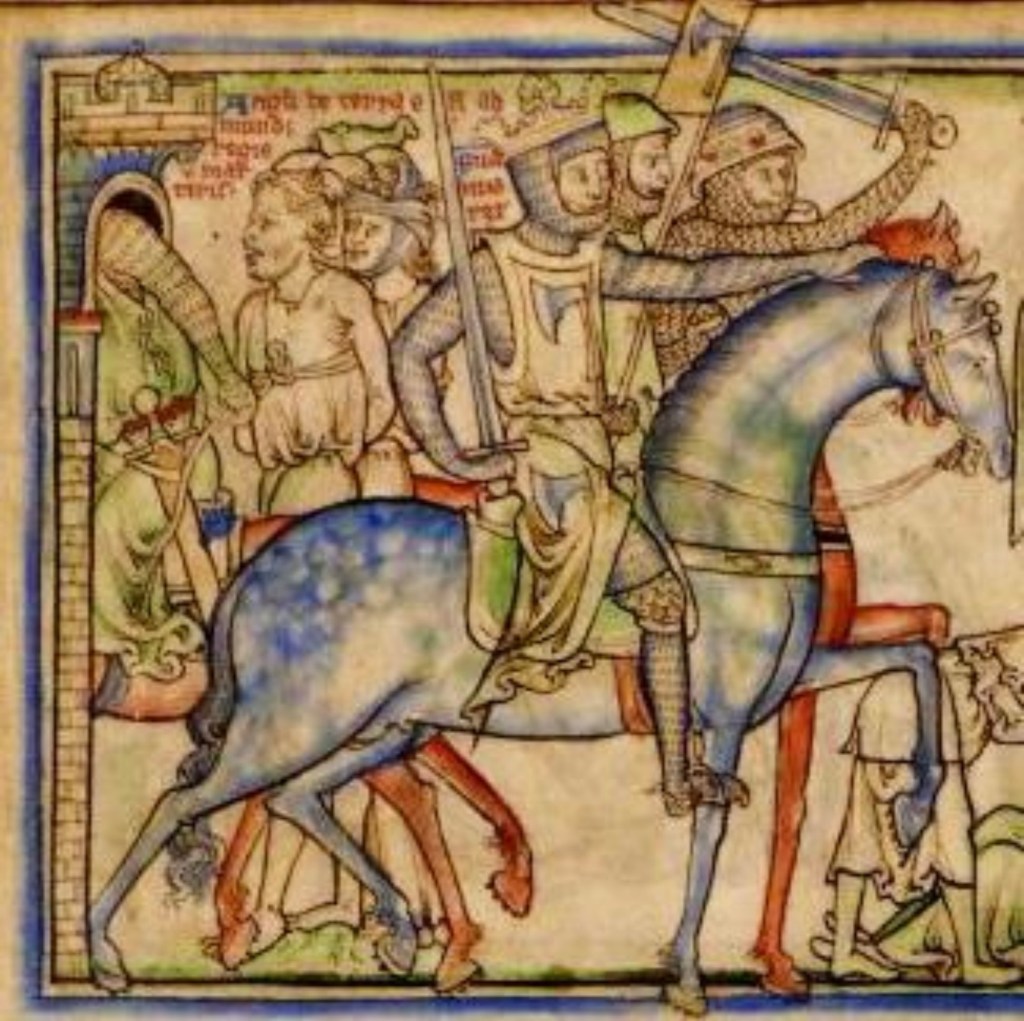
Second Hierarchy

Dominions

Virtues

Powers

These oversee the ordering of the cosmos, miracles and the spiritual battle between good and evil.

Third Hierarchy

Principalities

Archangels

Angels

These interact most directly with humanity.

The Great Archangels

Only a handful are named in the canonical Bible.

Michael

Leader of Heaven’s armies.

Defeats Satan in Revelation.

Often portrayed with armour and sword.

Gabriel

The great messenger.

Announces the births of John the Baptist and Jesus.

A symbol of revelation and hope.

Raphael

Appears in the Book of Tobit, accepted by Catholics and Orthodox Christians but not by most Protestants.

Associated with healing and guidance.

Uriel

Accepted in several Orthodox traditions and some ancient writings.

Associated with wisdom and divine illumination.

Guardian Angels

The belief that every individual has a guardian angel developed gradually.

Several biblical passages hint at personal angelic protection, particularly Jesus’ statement that children have angels who continually behold the face of God.

By the Middle Ages the idea had become deeply embedded in Catholic devotion.

Guardian angels remain popular in Catholicism, Eastern Orthodoxy and among many Protestants, although interpretations differ considerably.

Fallen Angels

No discussion of angels is complete without addressing the fallen.

Contrary to popular belief, the Bible gives surprisingly little detail about Satan’s fall.

Many later traditions combine passages from Isaiah, Ezekiel and Revelation into a single narrative.

Early Christian writers, medieval theologians and poets such as John Milton expanded these brief references into the richly developed story familiar today.

Milton’s Paradise Lost arguably shaped the popular image of rebellious angels more than scripture itself.

Angels in Art

No figures have inspired artists more consistently than angels.

The Renaissance transformed their appearance.

Artists such as Fra Angelico, Raphael and Michelangelo Buonarroti painted angels with idealised human beauty.

Victorian artists softened them even further into comforting, almost sentimental figures.

This image has remained enormously influential.

Angels in Popular Culture

Today angels appear everywhere.

They populate novels, films, television series and video games.

Some are biblical.

Others are romantic.

Some are superheroes.

Others are comic.

Theological accuracy is rarely the goal.

Instead, angels have become universal symbols of hope, protection and transcendence.

Whether in It’s a Wonderful Life, Touched by an Angel, or countless Christmas cards, they continue to reassure people that goodness exists beyond the visible world.

A Timeless Fascination

For believers, angels remain active servants of God who watch over creation and carry out His will.

For historians, they reveal how religious ideas develop across centuries, absorbing influences from different cultures while remaining rooted in sacred tradition.

For artists, they represent beauty, mystery and the longing to transcend earthly existence.

Perhaps that explains why angels have endured for more than three thousand years.

They stand at the boundary between heaven and earth, reminding humanity that throughout history people have imagined that they are not entirely alone—that somewhere beyond the visible world are messengers who carry hope, justice and divine purpose.

Whether viewed through the lens of faith, history or art, angels remain among humanity’s most enduring and captivating symbols.

Tim Alderman ©️2026

Sources

The Hebrew Bible (Tanakh)

The New Testament

The Qur’an

The Complete Dictionary of Angels

A History of Angels

The Celestial Hierarchy

Paradise Lost

The Oxford Dictionary of the Christian Church

Indulgences: Salvation for Sale? The Controversial Practice That Changed Christianity

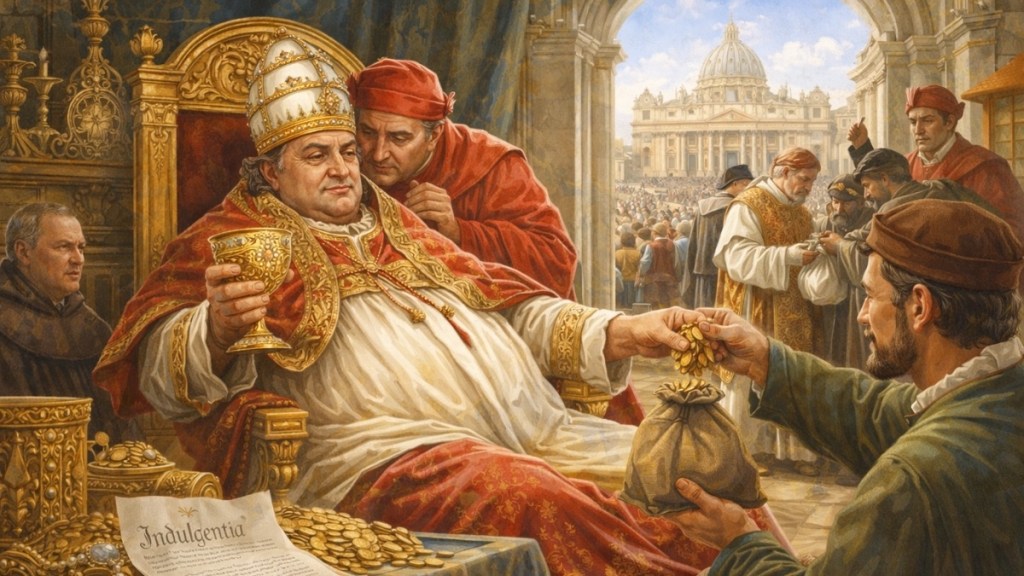
For centuries, the Roman Catholic Church taught that while sin could be forgiven through confession, the consequences of that sin might still remain. To address this, the Church developed one of the most controversial doctrines in Christian history—the indulgence.

To believers, indulgences represented God’s mercy administered through the Church. To critics, they became symbols of greed, corruption and spiritual manipulation. Their abuse would eventually spark the Protestant Reformation, permanently dividing Western Christianity.

Understanding the Concept

An indulgence is often misunderstood as the forgiveness of sin. It is not.

According to Catholic theology, there are two consequences of sin:

Eternal punishment, removed through genuine repentance and absolution in the Sacrament of Confession.

Temporal punishment, the lingering spiritual effects of sin that still require purification.

An indulgence removes all or part of this temporal punishment.

The Church teaches that Christ, together with the saints, accumulated an infinite “Treasury of Merit.” Because Jesus’ sacrifice was perfect and the saints lived exceptionally holy lives, their merits exceeded what was needed for their own salvation. The Pope, as successor to Saint Peter, was believed to possess the authority to dispense these merits for the benefit of the faithful.

This theological framework became one of the most distinctive features of medieval Catholicism.

Purgatory: The Missing Piece

The doctrine of indulgences cannot be understood without understanding Purgatory.

By the twelfth century, belief in Purgatory had become firmly established. It was viewed as a temporary state where souls destined for Heaven were purified before entering God’s presence.

This purification could be long and painful.

Naturally, Christians wanted to shorten that suffering—for themselves and for deceased loved ones.

Indulgences appeared to offer hope.

Early Indulgences

The earliest indulgences looked nothing like those that later scandalised Europe.

During the early Middle Ages, bishops granted reductions in severe public penances. A sinner might have been ordered to fast for years or undertake lengthy pilgrimages.

An indulgence simply reduced these earthly penalties.

Gradually the concept evolved.

Instead of reducing earthly penance, indulgences increasingly came to be understood as reducing punishment in Purgatory.

Crusades and Spiritual Rewards

The Crusades transformed indulgences.

In 1095 Pope Urban II promised a plenary indulgence—complete remission of temporal punishment—to those who fought in the First Crusade.

This proved enormously popular.

Suddenly military service could be viewed as an act of spiritual devotion.

Over succeeding centuries indulgences became attached to pilgrimages, charitable works, church building projects and religious observances.

Partial and Plenary Indulgences

Two forms developed.

Partial Indulgence

Removed part of the temporal punishment due to sin.

Plenary Indulgence

Removed all temporal punishment, provided certain conditions were met.

Modern Catholic teaching requires:

Sacramental confession

Reception of Holy Communion

Prayer for the Pope’s intentions

Complete detachment from all sin

Performance of the prescribed work

This last condition is often the one people notice—but it is only one element among several.

The Money Problem

The trouble began when indulgences became linked with fundraising.

Churches, monasteries, hospitals and cathedrals required enormous sums of money.

Popes increasingly authorised indulgences connected with donations.

Officially, money was never supposed to purchase forgiveness.

Rather, the donation was considered evidence of charity and repentance.

In practice, however, many ordinary Christians concluded that they were buying spiritual benefits.

That distinction proved disastrous.

Building St Peter’s Basilica

Perhaps the most famous indulgence campaign funded the rebuilding of St Peter’s Basilica in Rome.

Construction began under Pope Julius II and continued under Pope Leo X.

The project required staggering amounts of money.

Indulgence preachers travelled throughout Europe encouraging donations.

The campaign became especially controversial in the German states.

Johann Tetzel

No individual became more associated with indulgences than the Dominican friar Johann Tetzel.

He was a gifted preacher and fundraiser.

Although historians debate precisely what he said, he became associated with the famous rhyme:

“As soon as the coin in the coffer rings,
the soul from Purgatory springs.”

Whether Tetzel actually coined the phrase or whether opponents exaggerated his methods remains debated.

Nevertheless, many contemporaries believed indulgences had become little more than commercial transactions.

Martin Luther Strikes Back

On 31 October 1517 an Augustinian monk named Martin Luther challenged the practice.

His Ninety-five Theses criticised not the existence of indulgences themselves, but their abuse.

Among his complaints were:

Christians were being misled.

Genuine repentance mattered more than purchased certificates.

The Pope could not free souls from Purgatory simply through financial transactions.

Poor people were giving away money they desperately needed.

Thanks to the recently invented printing press, Luther’s arguments spread across Europe with astonishing speed.

The result was the Protestant Reformation.

The Church Responds

Initially, Church authorities attempted to defend indulgences.

However, the abuses had become impossible to ignore.

The Council of Trent (1545–1563) reaffirmed the legitimacy of indulgences but condemned dishonest fundraising and prohibited their commercial exploitation.

Professional indulgence sellers disappeared.

The theology remained.

The abuses were officially rejected.

Do Indulgences Still Exist?

Yes.

The Catholic Church still grants indulgences today.

Modern indulgences are associated with acts such as:

Reading Scripture prayerfully.

Eucharistic adoration.

Pilgrimages.

The Rosary.

Works of mercy.

Visiting designated holy sites during Jubilee Years.

Money no longer plays any official role.

Instead, the emphasis is placed upon sincere conversion, prayer and charity.

Common Myths

Several misconceptions persist.

Myth: Indulgences forgive sins.

Reality: Only repentance and sacramental confession forgive sin.

Myth: You can buy your way into Heaven.

Reality: Catholic teaching rejects this completely.

Myth: The Church sold Heaven.

Reality: While many clergy behaved as though spiritual benefits could be bought, official doctrine was more nuanced. The scandal arose because practice often failed to match theology.

Political Consequences

Indulgences did more than reshape theology.

They undermined confidence in Church leadership.

Princes who supported Luther gained greater independence from Rome.

Religious wars followed.

Entire nations rejected papal authority.

The map of Europe changed forever.

It is difficult to overstate the historical significance of indulgences.

A theological doctrine concerning the consequences of sin became one of the principal catalysts for one of the greatest upheavals in Western civilisation.

Legacy

Today, indulgences occupy a far quieter place within Catholic life.

They remain part of official teaching, but the dramatic fundraising campaigns that characterised the late Middle Ages belong to history.

Yet the controversy still echoes.

For many Protestants, indulgences remain symbolic of medieval corruption.

For Catholics, they represent a misunderstood expression of God’s mercy, one that suffered from very human abuse.

Perhaps the greatest lesson is not about indulgences themselves, but about the dangers that arise whenever religious authority, political power and money become too closely entwined. History shows that even sincere theological ideas can become distorted when financial interests enter the picture.

Tim Alderman 2026

Sources

Catechism of the Catholic Church, §§1471–1479.

Pope Paul VI, Indulgentiarum Doctrina (1967).

Council of Trent, Session XXV, Decree on Indulgences (1563).

Martin Luther, Ninety-five Theses (1517).

Eamon Duffy, Saints and Sinners: A History of the Popes.

Diarmaid MacCulloch, The Reformation: A History.

R. N. Swanson, Indulgences in Late Medieval England.

Thomas F. Madden, The New Concise History of the Crusades.

Gay History: Captain Moonlite: Australia’s Bushranger Who Loved Another Man

“What has grabbed my attention today?”

Andrew George Scott “Captain Moonlite”

Australian bushrangers have become part of our national mythology.

We know the names.

Ned Kelly.

Ben Hall.

Thunderbolt.

Captain Starlight.

Yet hidden among these famous outlaws is perhaps the most remarkable bushranger of them all—a man whose final letters reveal one of the most moving expressions of love in nineteenth-century Australia.

His name was Andrew George Scott.

History remembers him as Captain Moonlite.

An Unlikely Bushranger

Andrew George Scott was born in Ireland in 1842 into a respectable Presbyterian family.

Unlike the stereotypical bushranger, he was well educated, articulate and charismatic.

He even spent time as a lay preacher before his life took an unexpected turn.

Following financial difficulties and criminal convictions, Scott adopted the flamboyant persona of “Captain Moonlite.”

He robbed a bank.

Escaped.

Was captured.

Escaped again.

Eventually he found himself imprisoned in Melbourne’s Pentridge Prison.

It was there that history changed.

Meeting James Nesbitt

While serving his sentence, Scott met a much younger prisoner named James Nesbitt.

Whatever developed between the two men appears to have become extraordinarily close.

When both men were eventually released, they remained together.

They lived together.

Travelled together.

Eventually they became members of the gang that carried out the infamous hold-up at Wantabadgery Station in New South Wales in 1879.

During the siege that followed, police bullets struck several members of the gang.

James Nesbitt was mortally wounded.

Scott rushed to his side.

Witnesses described him kissing the dying man and weeping openly over his body.

Even hardened policemen reportedly found the scene deeply affecting.

James Nesbitt

The Prison Letters

Captured and sentenced to death, Scott was taken to Darlinghurst Gaol.

Awaiting execution, he wrote numerous letters.

These letters survive.

They are among the most remarkable documents in Australian history.

Writing about James Nesbitt, Scott declared:

“We were one in heart and soul.”

In another letter he wrote:

“My dearest friend has gone before me. I am to follow. I hope to be with him through eternity.”

Perhaps his most poignant request concerned his burial.

Scott asked that he be buried beside James.

His wish was refused.

Instead, after his execution in January 1880, he was buried separately in Sydney.

Only in 1995—115 years later—were his remains reinterred beside Nesbitt in Gundagai, finally fulfilling the wish he had expressed before his death. (Environment NSW)

Were They Lovers?

This is the question historians continue to discuss.

Modern readers naturally ask whether Captain Moonlite was gay.

The honest historical answer is that we cannot know with absolute certainty.

Nineteenth-century Australians did not generally understand sexual identity in the way we do today.

Terms such as “gay,” “homosexual” and “bisexual” belong largely to later periods.

What we can say is that Scott’s surviving letters express extraordinary affection for James Nesbitt.

Several historians believe they strongly suggest a romantic relationship.

Others urge caution, noting that expressions of intense male friendship were often more emotionally demonstrative in the nineteenth century than they are today.

Nevertheless, many scholars argue that if identical letters had been exchanged between a man and a woman, few people would hesitate to describe them as love letters. (ABC News)

Rediscovering a Forgotten Story

For many years Captain Moonlite’s relationship with James Nesbitt received relatively little attention.

Recent scholarship, however, has revisited their story as part of Australia’s LGBTQ+ history.

In 2025 the graves of Captain Moonlite and James Nesbitt were entered on the New South Wales State Heritage Register.

The listing recognised not simply two bushrangers, but the historical significance of one of Australia’s earliest publicly acknowledged same-sex love stories. (Environment NSW)

Beyond the Bushranger Legend

Captain Moonlite reminds us that LGBTQ+ Australians did not suddenly appear in the twentieth century.

They have always been part of Australia’s story.

Often they lived quietly.

Sometimes they left almost no trace.

Occasionally, however, history preserves something extraordinary.

Captain Moonlite’s prison letters are one such treasure.

Whether one ultimately describes Andrew Scott and James Nesbitt as lovers, soulmates or devoted companions, their story speaks of profound affection, loyalty and grief.

It also reminds us that love has always found ways to express itself—even in an age when society lacked the language to describe it openly.

Perhaps the final word belongs to Captain Moonlite himself.

“We were one in heart and soul.”

More than 140 years later, those simple words continue to resonate.

Tim Alderman ©️ 2026

PS I should add that Garry Wotherspoon, whose work has helped preserve so much of Sydney’s gay history, is someone I know personally. We moved through the Sydney scene at the same time, and I have several of his books on Sydney gay history. That gives this story an added resonance for me: it is not simply about reclaiming Captain Moonlite, but about the broader work of recovering the lives, loves and communities that official history too often ignored.

Sources

Garry Wotherspoon, research on Captain Moonlite and Australian LGBTQ+ history.

Museums of History NSW, research on Captain Moonlite and James Nesbitt.

ABC News, “Story of Captain Moonlite reflects NSW’s queer history, historian says” (2025). (ABC News)

NSW Government, “Graves of Captain Moonlite and James Nesbitt listed on the State Heritage Register” (2025). (Environment NSW)

Matthew Grubits, “Was famous bushranger Captain Moonlite gay?” Fuse Magazine. (FUSE Magazine)