Category Archives: Church History

Angels: Heavenly Messengers, Divine Warriors, and the Evolution of One of Religion’s Most Enduring Beliefs

“Across thousands of years, angels have comforted the dying, terrified prophets, guided armies, inspired artists and become symbols of hope. Yet the angels familiar to many people today often bear little resemblance to those described in the world’s sacred texts.”

Few religious ideas have captured the human imagination quite like angels. They appear in Judaism, Christianity and Islam, occupy an important place in ancient Persian thought, influence later Western mysticism, and have become enduring figures in literature, music and popular culture. They have been depicted as fearsome warriors, radiant messengers, protectors of children, guardians of nations and even executors of divine judgment.

Modern images of angels—gentle beings with flowing robes, golden halos and soft white wings—owe as much to Renaissance painters and Victorian sentimentality as they do to scripture. The angels encountered in the Bible are often startling, mysterious and, at times, terrifying. Their first words are frequently, “Do not be afraid,” suggesting that fear was the natural reaction to encountering them.

This article explores where the idea of angels came from, how it developed across the centuries, and why these celestial beings continue to fascinate believers and non-believers alike.

What Is an Angel?

The English word angel comes from the Greek angelos, meaning “messenger.” It translates the Hebrew word mal’akh, which carries essentially the same meaning.

The emphasis, therefore, is not on what angels are but on what they do.

They are God’s messengers.

Throughout the Bible they deliver warnings, announce births, protect individuals, interpret visions, carry out divine judgments and praise God. They are not portrayed as independent gods or supernatural beings with authority of their own, but as servants acting under divine command.

Angels Before Christianity

The earliest books of the Hebrew Bible say surprisingly little about angels.

In Genesis, mysterious visitors appear to Abraham.

Jacob wrestles through the night with a mysterious being.

An angel prevents Abraham from sacrificing Isaac.

The Angel of the Lord frequently appears, sometimes speaking as though he were God Himself—a mystery that has intrigued Jewish and Christian theologians for centuries.

Following the Babylonian Exile (sixth century BCE), Jewish beliefs about angels became more developed. Contact with Persian religion, particularly Zoroastrianism, may have encouraged more elaborate ideas about heavenly beings organised into ranks and engaged in cosmic struggles between good and evil. While scholars continue to debate the extent of that influence, angelology certainly became far more detailed during the Second Temple period.

Angels in Christianity

Christianity inherited Judaism’s belief in angels and expanded upon it.

The New Testament opens with angelic activity.

The Archangel Michael defeats Satan in the Book of Revelation.

The angel Gabriel announces the births of John the Baptist and Jesus.

Angels minister to Jesus after His temptation in the wilderness.

They comfort Him in Gethsemane.

They proclaim His resurrection.

They accompany His ascension.

Far from being decorative figures, angels are woven throughout the Christian story from beginning to end.

Angels in Islam

Islam also gives angels a central role.

They are created from light and possess complete obedience to God.

Among the best known are:

Jibril (Gabriel), who revealed the Qur’an to the Prophet Muhammad.

Mikail, associated with mercy and provision.

Israfil, who will sound the trumpet on the Day of Judgment.

Azrael, who receives the souls of the dead.

Islamic art generally avoids portraying angels in the naturalistic way common in Christian art, yet their presence in theology is profound.

The Nine Orders of Angels

One of Christianity’s most influential descriptions of heavenly hierarchy came from the mysterious sixth-century writer known as Pseudo-Dionysius the Areopagite.

He divided angels into nine choirs arranged in three hierarchies.

First Hierarchy

Seraphim

The closest to God.

Isaiah describes them with six wings—two covering their faces, two covering their feet and two for flight—as they continually proclaim:

“Holy, holy, holy is the Lord.”

Cherubim

Modern greeting cards depict cherubs as chubby babies.

Biblical cherubim are anything but.

They guard Eden after Adam and Eve’s expulsion and support God’s heavenly throne.

The prophet Ezekiel describes them with multiple faces, wings and wheels filled with eyes—a vision that has puzzled readers for centuries.

Thrones

Associated with divine justice and God’s authority.

Little is said about them directly in scripture, but later theology regarded them as symbolic bearers of God’s throne.

Second Hierarchy

Dominions

Virtues

Powers

These oversee the ordering of the cosmos, miracles and the spiritual battle between good and evil.

Third Hierarchy

Principalities

Archangels

Angels

These interact most directly with humanity.

The Great Archangels

Only a handful are named in the canonical Bible.

Michael

Leader of Heaven’s armies.

Defeats Satan in Revelation.

Often portrayed with armour and sword.

Gabriel

The great messenger.

Announces the births of John the Baptist and Jesus.

A symbol of revelation and hope.

Raphael

Appears in the Book of Tobit, accepted by Catholics and Orthodox Christians but not by most Protestants.

Associated with healing and guidance.

Uriel

Accepted in several Orthodox traditions and some ancient writings.

Associated with wisdom and divine illumination.

Guardian Angels

The belief that every individual has a guardian angel developed gradually.

Several biblical passages hint at personal angelic protection, particularly Jesus’ statement that children have angels who continually behold the face of God.

By the Middle Ages the idea had become deeply embedded in Catholic devotion.

Guardian angels remain popular in Catholicism, Eastern Orthodoxy and among many Protestants, although interpretations differ considerably.

Fallen Angels

No discussion of angels is complete without addressing the fallen.

Contrary to popular belief, the Bible gives surprisingly little detail about Satan’s fall.

Many later traditions combine passages from Isaiah, Ezekiel and Revelation into a single narrative.

Early Christian writers, medieval theologians and poets such as John Milton expanded these brief references into the richly developed story familiar today.

Milton’s Paradise Lost arguably shaped the popular image of rebellious angels more than scripture itself.

Angels in Art

No figures have inspired artists more consistently than angels.

The Renaissance transformed their appearance.

Artists such as Fra Angelico, Raphael and Michelangelo Buonarroti painted angels with idealised human beauty.

Victorian artists softened them even further into comforting, almost sentimental figures.

This image has remained enormously influential.

Angels in Popular Culture

Today angels appear everywhere.

They populate novels, films, television series and video games.

Some are biblical.

Others are romantic.

Some are superheroes.

Others are comic.

Theological accuracy is rarely the goal.

Instead, angels have become universal symbols of hope, protection and transcendence.

Whether in It’s a Wonderful Life, Touched by an Angel, or countless Christmas cards, they continue to reassure people that goodness exists beyond the visible world.

A Timeless Fascination

For believers, angels remain active servants of God who watch over creation and carry out His will.

For historians, they reveal how religious ideas develop across centuries, absorbing influences from different cultures while remaining rooted in sacred tradition.

For artists, they represent beauty, mystery and the longing to transcend earthly existence.

Perhaps that explains why angels have endured for more than three thousand years.

They stand at the boundary between heaven and earth, reminding humanity that throughout history people have imagined that they are not entirely alone—that somewhere beyond the visible world are messengers who carry hope, justice and divine purpose.

Whether viewed through the lens of faith, history or art, angels remain among humanity’s most enduring and captivating symbols.

Tim Alderman ©️2026

Sources

The Hebrew Bible (Tanakh)

The New Testament

The Qur’an

The Complete Dictionary of Angels

A History of Angels

The Celestial Hierarchy

Paradise Lost

The Oxford Dictionary of the Christian Church

Indulgences: Salvation for Sale? The Controversial Practice That Changed Christianity

For centuries, the Roman Catholic Church taught that while sin could be forgiven through confession, the consequences of that sin might still remain. To address this, the Church developed one of the most controversial doctrines in Christian history—the indulgence.

To believers, indulgences represented God’s mercy administered through the Church. To critics, they became symbols of greed, corruption and spiritual manipulation. Their abuse would eventually spark the Protestant Reformation, permanently dividing Western Christianity.

Understanding the Concept

An indulgence is often misunderstood as the forgiveness of sin. It is not.

According to Catholic theology, there are two consequences of sin:

Eternal punishment, removed through genuine repentance and absolution in the Sacrament of Confession.

Temporal punishment, the lingering spiritual effects of sin that still require purification.

An indulgence removes all or part of this temporal punishment.

The Church teaches that Christ, together with the saints, accumulated an infinite “Treasury of Merit.” Because Jesus’ sacrifice was perfect and the saints lived exceptionally holy lives, their merits exceeded what was needed for their own salvation. The Pope, as successor to Saint Peter, was believed to possess the authority to dispense these merits for the benefit of the faithful.

This theological framework became one of the most distinctive features of medieval Catholicism.

Purgatory: The Missing Piece

The doctrine of indulgences cannot be understood without understanding Purgatory.

By the twelfth century, belief in Purgatory had become firmly established. It was viewed as a temporary state where souls destined for Heaven were purified before entering God’s presence.

This purification could be long and painful.

Naturally, Christians wanted to shorten that suffering—for themselves and for deceased loved ones.

Indulgences appeared to offer hope.

Early Indulgences

The earliest indulgences looked nothing like those that later scandalised Europe.

During the early Middle Ages, bishops granted reductions in severe public penances. A sinner might have been ordered to fast for years or undertake lengthy pilgrimages.

An indulgence simply reduced these earthly penalties.

Gradually the concept evolved.

Instead of reducing earthly penance, indulgences increasingly came to be understood as reducing punishment in Purgatory.

Crusades and Spiritual Rewards

The Crusades transformed indulgences.

In 1095 Pope Urban II promised a plenary indulgence—complete remission of temporal punishment—to those who fought in the First Crusade.

This proved enormously popular.

Suddenly military service could be viewed as an act of spiritual devotion.

Over succeeding centuries indulgences became attached to pilgrimages, charitable works, church building projects and religious observances.

Partial and Plenary Indulgences

Two forms developed.

Partial Indulgence

Removed part of the temporal punishment due to sin.

Plenary Indulgence

Removed all temporal punishment, provided certain conditions were met.

Modern Catholic teaching requires:

Sacramental confession

Reception of Holy Communion

Prayer for the Pope’s intentions

Complete detachment from all sin

Performance of the prescribed work

This last condition is often the one people notice—but it is only one element among several.

The Money Problem

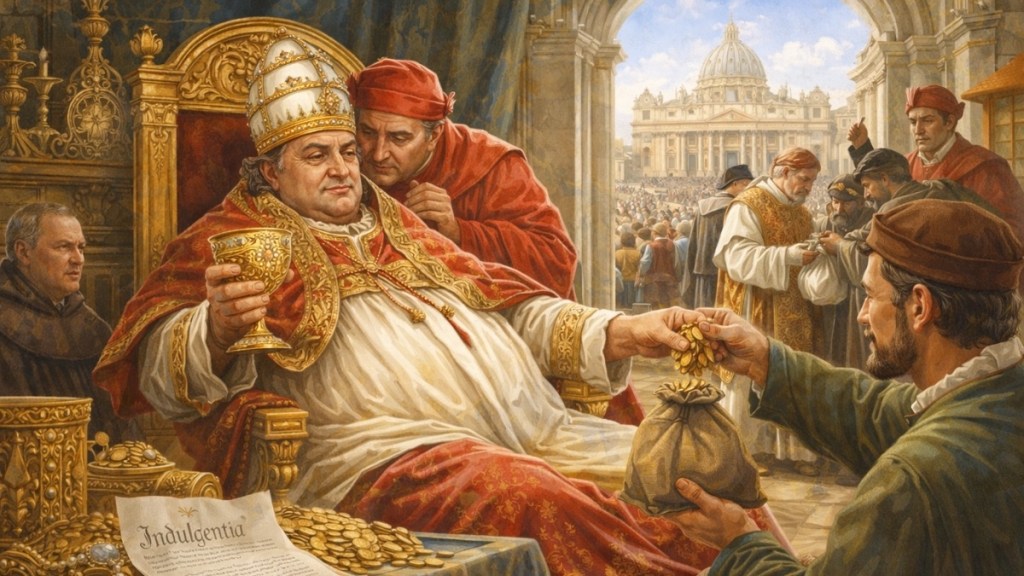
The trouble began when indulgences became linked with fundraising.

Churches, monasteries, hospitals and cathedrals required enormous sums of money.

Popes increasingly authorised indulgences connected with donations.

Officially, money was never supposed to purchase forgiveness.

Rather, the donation was considered evidence of charity and repentance.

In practice, however, many ordinary Christians concluded that they were buying spiritual benefits.

That distinction proved disastrous.

Building St Peter’s Basilica

Perhaps the most famous indulgence campaign funded the rebuilding of St Peter’s Basilica in Rome.

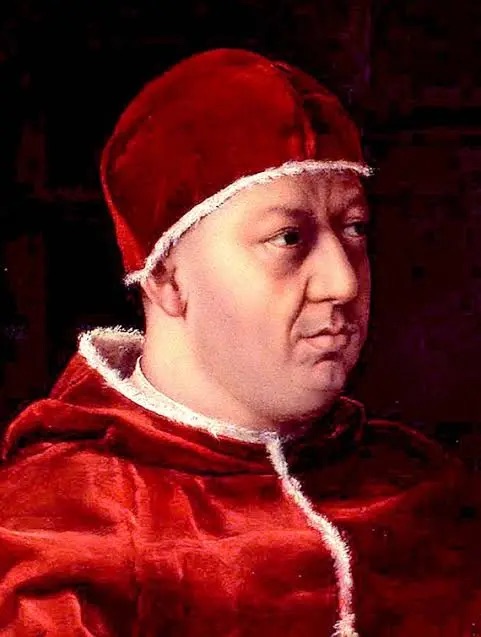
Construction began under Pope Julius II and continued under Pope Leo X.

The project required staggering amounts of money.

Indulgence preachers travelled throughout Europe encouraging donations.

The campaign became especially controversial in the German states.

Johann Tetzel

No individual became more associated with indulgences than the Dominican friar Johann Tetzel.

He was a gifted preacher and fundraiser.

Although historians debate precisely what he said, he became associated with the famous rhyme:

“As soon as the coin in the coffer rings,
the soul from Purgatory springs.”

Whether Tetzel actually coined the phrase or whether opponents exaggerated his methods remains debated.

Nevertheless, many contemporaries believed indulgences had become little more than commercial transactions.

Martin Luther Strikes Back

On 31 October 1517 an Augustinian monk named Martin Luther challenged the practice.

His Ninety-five Theses criticised not the existence of indulgences themselves, but their abuse.

Among his complaints were:

Christians were being misled.

Genuine repentance mattered more than purchased certificates.

The Pope could not free souls from Purgatory simply through financial transactions.

Poor people were giving away money they desperately needed.

Thanks to the recently invented printing press, Luther’s arguments spread across Europe with astonishing speed.

The result was the Protestant Reformation.

The Church Responds

Initially, Church authorities attempted to defend indulgences.

However, the abuses had become impossible to ignore.

The Council of Trent (1545–1563) reaffirmed the legitimacy of indulgences but condemned dishonest fundraising and prohibited their commercial exploitation.

Professional indulgence sellers disappeared.

The theology remained.

The abuses were officially rejected.

Do Indulgences Still Exist?

Yes.

The Catholic Church still grants indulgences today.

Modern indulgences are associated with acts such as:

Reading Scripture prayerfully.

Eucharistic adoration.

Pilgrimages.

The Rosary.

Works of mercy.

Visiting designated holy sites during Jubilee Years.

Money no longer plays any official role.

Instead, the emphasis is placed upon sincere conversion, prayer and charity.

Common Myths

Several misconceptions persist.

Myth: Indulgences forgive sins.

Reality: Only repentance and sacramental confession forgive sin.

Myth: You can buy your way into Heaven.

Reality: Catholic teaching rejects this completely.

Myth: The Church sold Heaven.

Reality: While many clergy behaved as though spiritual benefits could be bought, official doctrine was more nuanced. The scandal arose because practice often failed to match theology.

Political Consequences

Indulgences did more than reshape theology.

They undermined confidence in Church leadership.

Princes who supported Luther gained greater independence from Rome.

Religious wars followed.

Entire nations rejected papal authority.

The map of Europe changed forever.

It is difficult to overstate the historical significance of indulgences.

A theological doctrine concerning the consequences of sin became one of the principal catalysts for one of the greatest upheavals in Western civilisation.

Legacy

Today, indulgences occupy a far quieter place within Catholic life.

They remain part of official teaching, but the dramatic fundraising campaigns that characterised the late Middle Ages belong to history.

Yet the controversy still echoes.

For many Protestants, indulgences remain symbolic of medieval corruption.

For Catholics, they represent a misunderstood expression of God’s mercy, one that suffered from very human abuse.

Perhaps the greatest lesson is not about indulgences themselves, but about the dangers that arise whenever religious authority, political power and money become too closely entwined. History shows that even sincere theological ideas can become distorted when financial interests enter the picture.

Tim Alderman 2026

Sources

Catechism of the Catholic Church, §§1471–1479.

Pope Paul VI, Indulgentiarum Doctrina (1967).

Council of Trent, Session XXV, Decree on Indulgences (1563).

Martin Luther, Ninety-five Theses (1517).

Eamon Duffy, Saints and Sinners: A History of the Popes.

Diarmaid MacCulloch, The Reformation: A History.

R. N. Swanson, Indulgences in Late Medieval England.

Thomas F. Madden, The New Concise History of the Crusades.

Opus Dei: Holiness, Discipline and Controversy Behind One of the Catholic Church’s Most Misunderstood Institutions

“What has grabbed my attention today?”

Few organisations within modern Catholicism evoke reactions as strong as Opus Dei.

To some, it represents an inspiring spiritual movement that teaches ordinary people to find holiness through everyday work and family life.

To others, particularly some former members, it represents an intensely demanding organisation characterised by secrecy, psychological pressure and rigid discipline.

Somewhere between those opposing views lies one of the most fascinating stories in modern Church history.

Understanding Opus Dei requires separating documented history from sensationalism, while also acknowledging that sincere members and disillusioned former members often describe remarkably different experiences.

Spain in Turmoil

Opus Dei was founded in 1928 by the young Spanish priest Josemaría Escrivá.

Spain at the time was politically unstable.

The monarchy would soon collapse.

The Second Republic followed.

Then came the brutality of the Spanish Civil War.

Churches were burned.

Priests and religious were murdered.

Catholicism became deeply entangled with politics.

Within this turbulent world, Escrivá believed he had received a divine inspiration.

His message was surprisingly simple.

Holiness was not reserved for monks or nuns.

Lawyers, teachers, nurses, engineers, cleaners, factory workers and parents could all become saints simply by performing ordinary work extraordinarily well.

He called this the “sanctification of ordinary life.”

It remains the central idea of Opus Dei today.

A Different Kind of Religious Movement

Unlike a religious order, Opus Dei was intended primarily for lay people.

Members would remain in the world rather than withdraw from it.

They would pursue professional careers.

Raise families.

Participate in society.

Yet strive for deep spiritual discipline.

In 1982, Pope John Paul II granted Opus Dei the unique status of a Personal Prelature.

Rather than being tied to a geographical diocese, it operates across national boundaries under its own prelate while remaining within the Catholic Church.

Different Types of Members

Membership is more diverse than many realise.

Supernumeraries form the majority.

Most are married.

They live ordinary family lives while participating in the spiritual life of Opus Dei.

Associates usually remain single but live independently.

Numeraries represent the group that has generated most public attention.

They are generally celibate.

Many live in Opus Dei centres.

Their lives involve structured routines of prayer, study and apostolic work.

It is largely the experiences of former numeraries that have fuelled much of the public criticism.

Discipline and Mortification

One aspect of Opus Dei that has attracted considerable attention concerns traditional forms of bodily discipline.

Historically, some members have voluntarily practised corporal mortification.

These practices have included:

wearing a small spiked chain called a cilice for limited periods;

using a light discipline or cord in private prayer;

fasting;

other forms of voluntary self-denial.

To modern readers these practices often seem startling.

Yet historically they are far older than Opus Dei.

Various forms of ascetic discipline have appeared throughout Christian history, from the Desert Fathers to medieval monks and numerous religious orders.

Within Opus Dei they are presented as voluntary acts of sacrifice rather than punishment.

Critics question whether genuine freedom always exists within highly structured communities.

Supporters insist such practices are freely embraced by mature adults.

Allegations from Former Members

Much of the controversy surrounding Opus Dei arises not from its theology but from personal testimonies.

Former members have described experiences including:

intense psychological pressure;

discouragement from maintaining certain outside friendships;

close supervision of daily life;

encouragement to prioritise organisational commitments;

difficulties leaving the movement;

feelings of guilt after departure.

Some have spoken publicly of lasting emotional harm.

Others simply prefer never to revisit that chapter of their lives.

Their accounts deserve to be heard with respect.

At the same time, they do not necessarily represent every member’s experience.

Many current and former members describe Opus Dei positively and remain grateful for its influence upon their spiritual lives.

Secrecy or Privacy?

Another recurring criticism concerns secrecy.

Historically, Opus Dei was often viewed as unusually discreet regarding membership and internal governance.

The organisation generally responds that discretion should not be confused with secrecy.

Its members include judges, academics, business executives, tradespeople, teachers and homemakers.

Most simply wish to practise their faith without attracting unnecessary attention.

Critics remain unconvinced.

The distinction between privacy and secrecy continues to generate debate.

Influence and Power

Because many members occupy influential professional positions, Opus Dei has frequently been accused of exercising disproportionate influence within politics, finance, education and the Church.

Some claims are well documented.

Others appear speculative.

As with many elite educational and professional networks, influence often arises naturally from members occupying positions of responsibility rather than through coordinated institutional control.

Nevertheless, perceptions of influence have contributed significantly to the movement’s public image.

The Da Vinci Code

Much of the public first encountered Opus Dei through Dan Brown’s bestselling novel The Da Vinci Code.

The novel portrayed an albino monk named Silas practising severe corporal mortification while carrying out acts of violence on behalf of Church conspirators.

It made compelling fiction.

It did not present an accurate history of Opus Dei.

The organisation publicly criticised the novel, while many historians observed that Brown had blended genuine practices with dramatic invention.

Ironically, the novel introduced millions of readers to an organisation they had never previously heard of.

A Balanced Assessment

Nearly a century after its foundation, Opus Dei remains one of the Catholic Church’s most discussed institutions.

Supporters praise:

spiritual discipline;

integrity in professional life;

intellectual formation;

devotion to ordinary holiness.

Critics question:

internal culture;

recruitment methods;

transparency;

psychological pressure;

treatment of departing members.

Both perspectives form part of the historical record.

Neither should be ignored.

Conclusion

Perhaps the most important lesson is that Opus Dei cannot be understood through stereotypes alone.

It is neither simply a sinister conspiracy, as popular fiction sometimes suggests, nor merely an ordinary devotional society untouched by controversy.

It is a complex institution whose members have experienced it in profoundly different ways.

For some it has been a source of lifelong spiritual enrichment.

For others it has been an experience they would rather leave firmly in the past.

History’s task is not to decide whose experience is “correct.”

It is to recognise that both exist.

Only then can we begin to understand why Opus Dei continues to provoke such fascination nearly one hundred years after a young Spanish priest claimed to have received a vision that ordinary work itself could become a path to God.

Tim Alderman ©️ 2026

Sources

John L. Allen Jr., Opus Dei: An Objective Look Behind the Myths and Reality of the Most Controversial Force in the Catholic Church.

Michael Walsh (ed.), The Oxford History of the Popes.

Peter Berglar, Opus Dei: Life and Work of Its Founder.

Gareth Gore, Opus: The Cult of Dark Money, Human Trafficking, and Right-Wing Conspiracy inside the Catholic Church.

Opus Dei, The Way by Josemaría Escrivá.

Official publications of Opus Dei on its history, governance and spirituality.

Scholarly articles on new religious movements, Catholic reform movements and twentieth-century Spanish Catholicism.

Australian Apparitions: When Heaven Visited the Lucky Country

“What has grabbed my attention today?”

When people think of Marian apparitions, they usually picture the famous shrines of Lourdes in France or Fátima in Portugal.

Australia rarely comes to mind.

Yet over the past century, Australians have reported numerous sightings of the Virgin Mary, Jesus, angels and other supernatural phenomena. Some have attracted thousands of pilgrims. Others disappeared almost as quickly as they emerged. A few have become part of Australian religious folklore.

Unlike Europe, however, none of Australia’s reported Marian apparitions has received formal approval from the Catholic Church as being of supernatural origin.

That does not make the stories any less fascinating.

How the Catholic Church Approaches Apparitions

Contrary to popular belief, the Catholic Church does not rush to declare miracles.

In fact, it is usually remarkably cautious.

When reports of apparitions emerge, Church authorities typically ask several questions.

Is there evidence of fraud?

Could there be a natural explanation?

Is anyone profiting financially?

Are the reported messages consistent with Catholic teaching?

What spiritual fruits result from the phenomenon?

Most reported apparitions never receive official recognition.

Many are quietly forgotten.

Others remain open questions for decades.

Fence-post Mary of Coogee

Perhaps one of Australia’s most charming modern religious stories occurred in Sydney’s beachside suburb of Coogee.

At some point during the late twentieth century, word spread that the Virgin Mary had appeared upon an ordinary wooden fence post.

News travelled rapidly through Sydney’s Catholic community.

Before long, visitors began arriving carrying rosary beads, prayer books and candles.

Some knelt in prayer.

Others simply stood in silence.

For a brief period, an otherwise unremarkable suburban fence became an impromptu place of pilgrimage.

Eventually a far less supernatural explanation emerged.

Observers suggested the image resulted from the angle of the sunlight interacting with the grain and texture of the timber.

Psychologists would describe the phenomenon as pareidolia—our brain’s remarkable tendency to recognise familiar faces and figures within random patterns.

Yet for those who gathered, the experience itself remained meaningful.

Whether miracle or optical illusion, the event demonstrated humanity’s enduring hope that the sacred may unexpectedly reveal itself within ordinary life.

The Walls That Weep

Australia has also experienced numerous reports of weeping statues.

Throughout the decades, newspaper reports have occasionally described statues of the Virgin Mary apparently shedding tears or exuding oil.

Such reports have emerged in private homes, churches and devotional centres.

Scientific investigation has frequently suggested natural explanations including condensation, hidden moisture, capillary action or deliberate tampering.

Yet public fascination rarely diminishes.

Even today, reports of weeping statues continue to attract attention around the world.

Religious Revival and Private Visions

Australia’s Catholic history contains many individuals who have reported private mystical experiences.

Most remained personal.

Some attracted local followers.

A few generated considerable publicity.

In nearly every instance, Church authorities adopted a cautious position.

Private revelations, even when respected, never occupy the same status as the central teachings of Christianity.

Catholics are not required to believe in any reported apparition, even those that receive favourable ecclesiastical judgement overseas.

Why Do Apparitions Occur?

Historians, psychologists and theologians offer differing explanations.

Believers may interpret apparitions as genuine interventions from heaven.

Psychologists point to perception, expectation and the remarkable human capacity to recognise meaningful patterns.

Sociologists observe that apparitions frequently emerge during periods of uncertainty, social upheaval or personal crisis.

Perhaps each perspective illuminates part of the picture.

Throughout history, people have consistently searched for reassurance that they are not alone.

Apparitions often arise within precisely that emotional landscape.

Australia’s Catholic Imagination

Australia has always possessed a strong Catholic tradition.

Irish immigrants brought deep Marian devotion during the nineteenth century.

Rosary societies flourished.

May processions filled parish calendars.

Schools honoured Our Lady.

Within such a culture, it is hardly surprising that reports of Marian phenomena occasionally emerged.

Unlike Europe, however, Australia never developed a nationally recognised Marian shrine based upon an apparition.

Our religious identity remained comparatively practical.

Perhaps that is why stories like the Coogee fence post continue to occupy a curious place somewhere between folklore and faith.

Faith and Skepticism

One of the most interesting aspects of reported apparitions is the coexistence of belief and scepticism.

The same event may inspire profound devotion in one observer and complete disbelief in another.

Even the Catholic Church itself frequently adopts a position somewhere between those extremes.

Rather than asking, “Did it happen?” investigators often ask a different question:

“What evidence exists?”

Sometimes the answer remains uncertain.

Sometimes natural explanations prove convincing.

Occasionally the mystery simply remains unresolved.

Conclusion

Australian apparitions remind us that extraordinary stories are not confined to Europe or the Holy Land.

Even in a country more readily associated with beaches, bushfires and barbecue culture, people continue to report moments in which heaven appears to touch the ordinary world.

Some claims fade into local legend.

Some become newspaper curiosities.

Some inspire genuine spiritual reflection.

Whether one approaches these stories as matters of faith, psychology or folklore, they reveal something profoundly human.

People continue to look for signs.

They continue to hope that the divine might reveal itself in unexpected places.

And sometimes, for a few remarkable days, even an ordinary fence post in Coogee can become the centre of a pilgrimage.

One thing I found while researching this is actually quite interesting. Australia has had many reported apparitions and miraculous claims, but very few have achieved lasting national prominence. They tend to be intensely local—known within a parish or diocese, attracting attention for weeks or months, and then gradually fading. That makes them quite different from places like Lourdes or Fátima, where a single event became an enduring international pilgrimage site. The Catholic Church’s cautious approach to alleged apparitions has also meant that no Australian Marian apparition has received the sort of formal recognition associated with the great European shrines.

I will return to this subject in future posts.

Tim Alderman ©️2026

Gold, Silk and Sacred Splendour: The Astonishing Wealth of Catholic Vestments

“What has grabbed my attention today?”

To the casual observer, the robes worn by Catholic clergy may appear little different from one another.

A white robe.

A coloured stole.

Perhaps a decorative cape.

Nothing particularly remarkable.

Look more closely, however, and an extraordinary world unfolds.

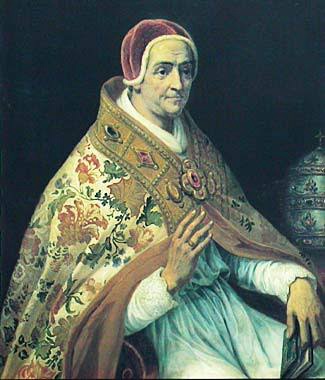
Some of the garments worn throughout the history of the Catholic Church have rivalled royal clothing in cost, craftsmanship and magnificence.

Hand-woven silks.

Gold thread.

Silver embroidery.

Rare lace.

Velvet from Genoa.

Damask from Lyon.

Jewelled mitres.

Gold pectoral crosses.

Rings set with precious stones.

In certain periods of history, a single bishop’s ceremonial attire might have cost the equivalent of a comfortable family home.

It raises an obvious question.

How did the religion founded by a carpenter from Nazareth come to embrace such extraordinary splendour?

From Simplicity to Ceremony

The earliest Christians possessed no elaborate liturgical wardrobe.

The first bishops and priests generally wore the ordinary clothing of respectable Roman citizens.

There was little to distinguish them from other members of society.

As Christianity became legal under Emperor Constantine the Great in the fourth century, circumstances changed dramatically.

Churches became public buildings.

Ceremonies grew more elaborate.

Imperial patronage introduced greater ceremony into Christian worship.

Vestments gradually developed from the formal dress of late Roman society.

Ironically, while secular fashions continued to evolve, the Church often preserved older styles.

Many liturgical garments therefore represent surviving descendants of Roman clothing long abandoned elsewhere.

Every Colour Has Meaning

Catholic vestments are not simply decorative.

Each garment carries symbolic meaning.

White represents joy, resurrection and purity.

Red recalls martyrdom, the Holy Spirit and sacrifice.

Green symbolises hope and ordinary time.

Purple expresses penance and preparation.

Black, once commonly used at funerals and requiem Masses, has become less frequent in many places.

Gold may replace white, red or green on particularly solemn occasions.

Even the smallest details communicate theological ideas.

The Language of Fabric

The materials themselves once proclaimed status.

Silk became the preferred fabric for important vestments.

Velvet followed.

Gold and silver thread created intricate embroidered scenes.

Many garments required hundreds or even thousands of hours of handwork.

Convents throughout Europe became famous for producing exquisite embroidery.

Entire communities of nuns devoted their lives to creating liturgical masterpieces.

Some pieces remain among the finest examples of textile art ever produced.

Dressing the Bishop

A bishop celebrating a solemn Mass traditionally wears an astonishing array of garments.

Among them are:

the amice;

alb;

cincture;

pectoral cross;

stole;

dalmatic (under certain circumstances);

chasuble;

ring;

mitre;

crozier.

Each possesses centuries of symbolism.

Each developed over time.

Each reflects both practical origins and theological interpretation.

To outsiders, the process can appear almost theatrical.

To believers, every item serves a liturgical purpose.

The Renaissance and Baroque Explosion

If one period embraced splendour without apology, it was the Renaissance.

Popes became major patrons of art.

Churches competed in magnificence.

Vestments reflected the same spirit.

Italian weaving centres produced breathtaking brocades.

French workshops supplied luxurious silks.

Spanish embroidery achieved astonishing complexity.

Some papal vestments incorporated real gold thread.

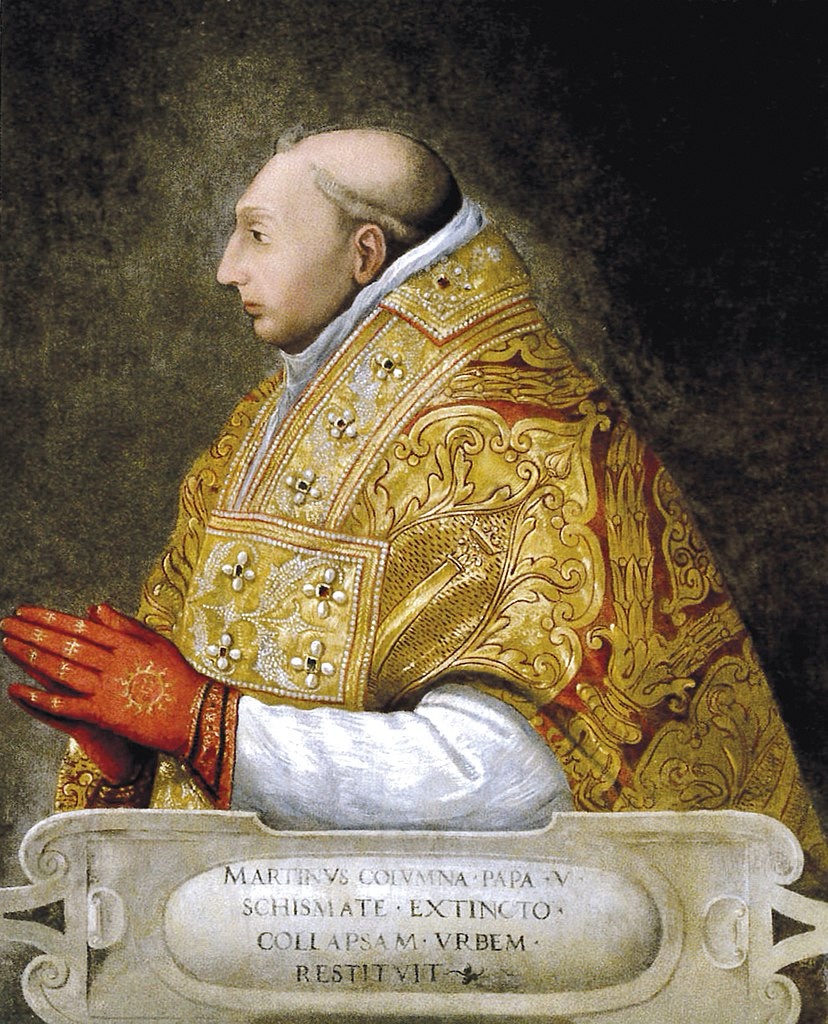
Mitres sparkled with pearls and gemstones.

The Church sought to honour God by offering humanity’s finest artistic achievements.

Critics, however, questioned whether such extravagance reflected the humility preached by Christ.

That debate continues today.

How Much Did They Cost?

Exact values are difficult to calculate.

Historical records nevertheless suggest remarkable expenditure.

Modern reproductions of hand-embroidered pontifical vestments frequently cost many thousands of dollars.

A complete set made using traditional methods can exceed the price of a luxury motor vehicle.

Historic papal vestments containing genuine gold thread, antique lace and exceptional embroidery are effectively priceless.

Museums throughout Europe preserve examples valued more as works of art than merely as religious clothing.

The Economics of Beauty

Supporters of elaborate vestments advance several arguments.

Firstly, the garments belong to the Church rather than to individual clergy.

Secondly, many survive for centuries.

Thirdly, they preserve artistic traditions that might otherwise disappear.

Most importantly, they argue that beauty itself honours God.

Just as magnificent cathedrals inspire wonder, so too can beautiful liturgical art.

For them, splendour is not vanity.

It is worship.

The Critics Respond

Critics have always existed.

The Protestant Reformation strongly rejected what many reformers regarded as excessive ceremonial display.

Even within Catholicism, voices periodically called for greater simplicity.

The contrast appears obvious.

Jesus preached among fishermen.

The Apostles travelled modestly.

How then should Christians interpret garments woven with gold?

Throughout history, reform movements repeatedly asked precisely that question.

Vatican II and Simplicity

The Second Vatican Council encouraged greater liturgical simplicity.

Vestments generally became less ornate.

Designs grew cleaner.

Heavy embroidery often gave way to simpler symbolism.

Many dioceses adopted plainer styles reflecting contemporary aesthetics.

Yet traditional craftsmanship never disappeared.

Indeed, recent decades have witnessed renewed appreciation for classical vestment design.

More Than Fancy Frocks

It is easy—and perhaps irresistible—to smile at the sheer magnificence of ecclesiastical dress.

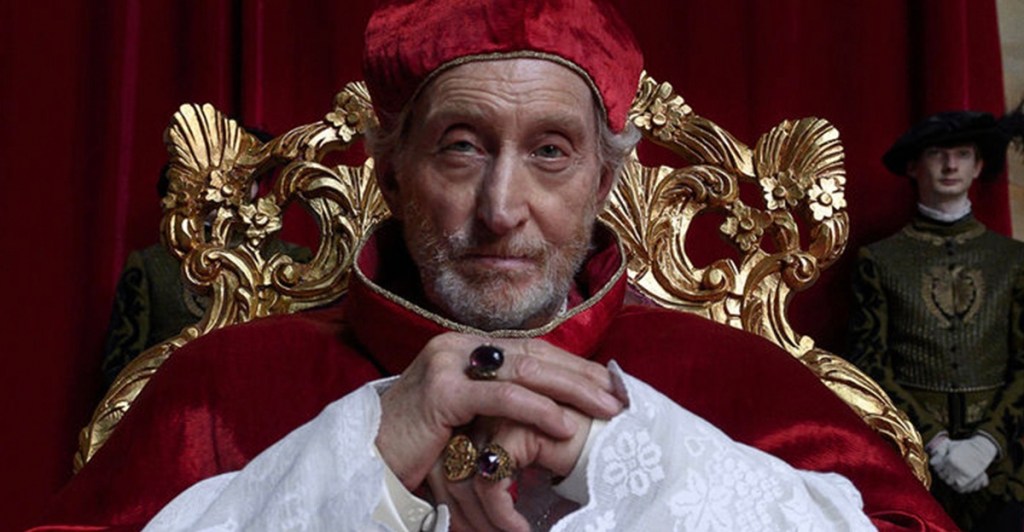
One can scarcely blame those who joke that certain cardinals appear ready for a royal coronation rather than Sunday worship.

Yet behind the gold thread and embroidered silk lies a deeper story.

Vestments represent centuries of theology, artistic achievement and cultural history.

They reveal changing ideas about authority, beauty and worship.

They also remind us that Christianity has always contained a creative tension.

One tradition emphasises humility, poverty and simplicity.

Another seeks to glorify God through beauty, ceremony and artistic excellence.

Neither impulse has ever completely eclipsed the other.

The history of Catholic vestments is about far more than elaborate clothing.

It is a history of civilisation itself.

Every embroidered chasuble tells a story.

Every jewelled mitre reflects the artistic ideals of its age.

Every thread woven in silk or gold reminds us that human beings have long attempted to express the sacred through beauty.

Whether one sees these garments as magnificent works of art or examples of unnecessary extravagance will depend largely upon one’s perspective.

What cannot be denied is their extraordinary craftsmanship.

And perhaps that is the enduring fascination.

Behind what some affectionately describe as “fancy frocks” lies one of the richest textile traditions the world has ever produced—woven not merely from silk and gold, but from sixteen centuries of faith, history and human imagination.

Tim Alderman ©️2026