Category Archives: Religion/Lifestyle

The Dalai Lamas: History, Selection, and the Most Renowned Incarnations

For more than five centuries, the Dalai Lamas have occupied a unique place in world history. They have served not only as spiritual leaders of Tibetan Buddhism but also, for much of their history, as political rulers of Tibet. Revered by millions of Buddhists around the world, the Dalai Lama is regarded as the earthly manifestation of compassion itself, a succession of reincarnated spiritual masters dedicated to helping all sentient beings achieve liberation from suffering.

The institution of the Dalai Lama is one of the most fascinating traditions in religious history. Unlike monarchies, where power is inherited through family bloodlines, or democracies, where leaders are elected, the Dalai Lama is believed to be reborn repeatedly, with each new incarnation identified through a complex process involving visions, prophecies, spiritual signs, and careful investigation.

Today, the Fourteenth Dalai Lama is among the world’s most recognized religious figures, known for his advocacy of peace, compassion, non-violence, and interfaith understanding. Yet the story of the Dalai Lamas extends far beyond the modern era and encompasses centuries of Tibetan history.

The Meaning of “Dalai Lama”

The title “Dalai Lama” combines Mongolian and Tibetan influences.

The word “Dalai” is Mongolian and means “ocean,” while “Lama” is a Tibetan term meaning “spiritual teacher” or “guru.” Together, the title is often interpreted as “Ocean of Wisdom.”

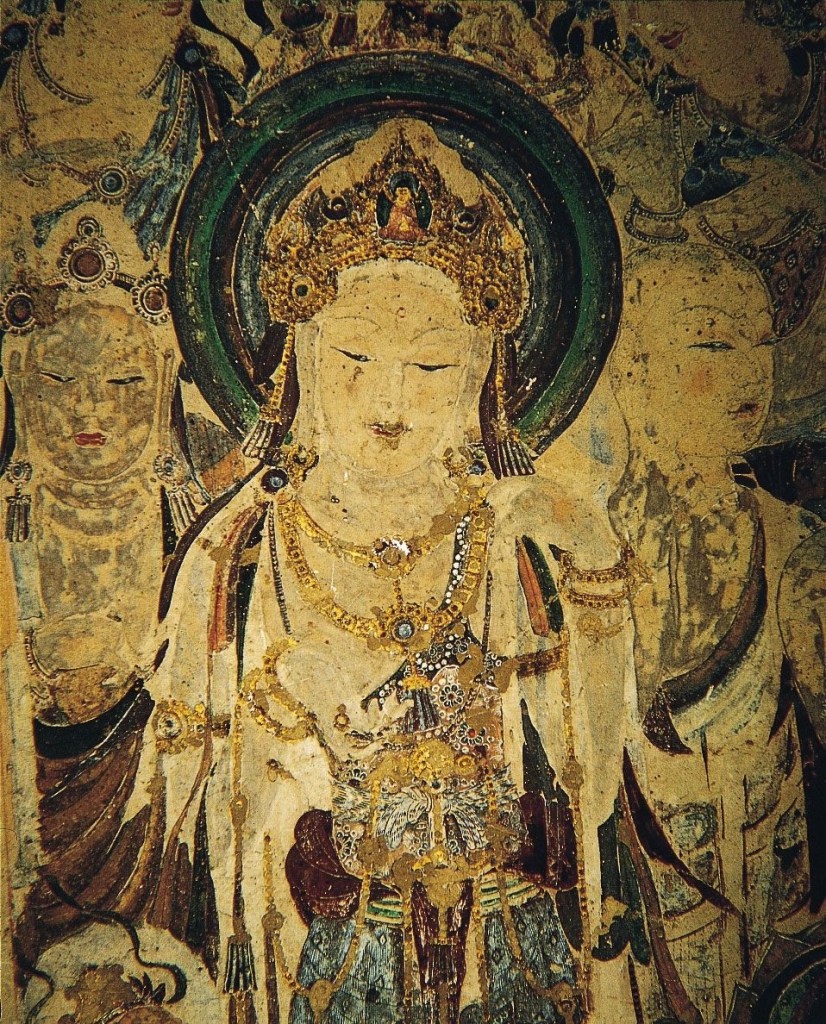
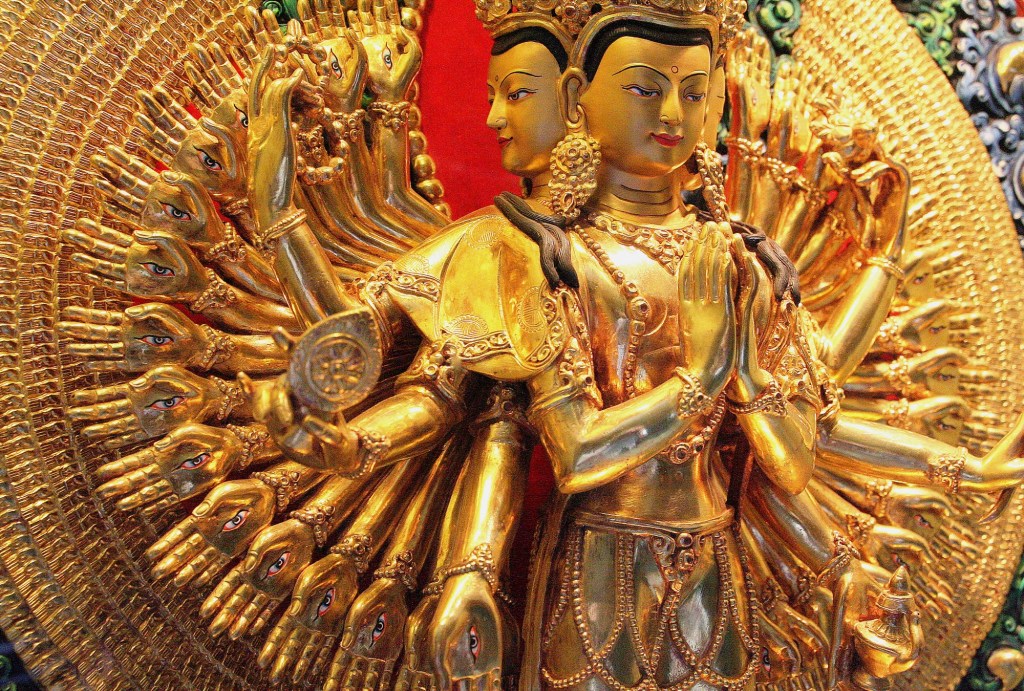
The Dalai Lama is believed to be an incarnation of Avalokiteshvara, known in Tibetan as Chenrezig, the Bodhisattva of Infinite Compassion. According to Buddhist belief, Avalokiteshvara vowed to remain in the cycle of rebirth until all beings were liberated from suffering.

Each Dalai Lama is therefore regarded not as an entirely separate individual but as a continuation of the same compassionate spiritual lineage.

The Origins of the Dalai Lama Institution

The lineage traces its origins to Gendun Drub (1391–1474), a disciple of the great Tibetan Buddhist reformer Je Tsongkhapa.

Interestingly, Gendun Drub was not known as the First Dalai Lama during his lifetime. The title was bestowed retrospectively after the recognition of later incarnations.

The title “Dalai Lama” was first granted to the Third Dalai Lama, Sonam Gyatso, by the Mongol ruler Altan Khan in 1578. The title was then applied retrospectively to his two predecessors, creating the lineage known today.

This relationship between Tibet and Mongolia helped establish the Dalai Lama as both a spiritual and political authority.

How a New Dalai Lama Is Chosen

One of the most intriguing aspects of Tibetan Buddhism is the process used to identify a new Dalai Lama.

When a Dalai Lama dies, senior monks begin searching for signs indicating where the next incarnation has been reborn.

The process may involve:

1. Observing Omens

Monks carefully observe unusual events occurring after the Dalai Lama’s death.

These signs may include:

Dreams experienced by senior lamas

Unusual weather patterns

Directions indicated by smoke from cremation ceremonies

Visions reported by respected spiritual practitioners

Such phenomena are believed to provide clues about the location of the rebirth.

2. Consulting Sacred Lakes

One of the most famous methods involves meditation at the sacred Lhamo La-tso.

Senior monks may receive visions while gazing into the lake. These visions might reveal:

Specific villages

Distinctive houses

Geographic landmarks

Letters or symbols

The information serves as guidance during the search.

3. Searching for Candidate Children

Investigation teams travel throughout Tibet looking for children born around the time of the previous Dalai Lama’s death.

Children displaying unusual maturity, spiritual inclination, or signs matching prophetic visions become candidates.

4. Recognition Tests

Potential candidates are often presented with objects belonging to the previous Dalai Lama mixed among similar items.

The child may correctly identify:

Prayer beads

Walking sticks

Ritual objects

Personal belongings

Recognition of these objects is considered evidence of continuity from one incarnation to the next.

5. Confirmation

After extensive investigation, senior monks and religious authorities formally recognize the child as the new Dalai Lama.

The child then begins years of intensive religious education and training.

The Fifth Dalai Lama: The Great Unifier

Among the most important figures in Tibetan history was Ngawang Lobsang Gyatso (1617–1682), often called “The Great Fifth.”

His achievements transformed the institution permanently.

With Mongol military support, he unified much of Tibet under a single government and established the Dalai Lama as both spiritual and temporal ruler.

His accomplishments included:

Unifying competing Tibetan regions

Strengthening Buddhist institutions

Establishing diplomatic relations with neighboring powers

Beginning construction of the magnificent Potala Palace

The Potala Palace became the winter residence of successive Dalai Lamas and remains one of the most recognizable landmarks in the world.

The Fifth Dalai Lama laid the foundation for centuries of Tibetan governance.

The Thirteenth Dalai Lama: A Modern Reformer

Another highly significant figure was Thubten Gyatso (1876–1933).

He ruled during a period of immense political change and recognized the need for modernization.

His reforms included:

Strengthening Tibet’s administration

Establishing postal services

Modernizing the military

Encouraging educational reforms

Increasing diplomatic engagement

The Thirteenth Dalai Lama also foresaw many future challenges facing Tibet. Shortly before his death, he warned of external threats and emphasized the importance of preserving Tibetan culture and independence.

Many Tibetans view him as one of the wisest and most visionary leaders in the lineage.

The Fourteenth Dalai Lama

Tenzin Gyatso was born on 6 July 1935 in a small village in northeastern Tibet.

Born as Lhamo Thondup, he was identified as the reincarnation of the Thirteenth Dalai Lama at the age of two.

According to accounts from the search party, the child recognized several belongings of the previous Dalai Lama and demonstrated unusual familiarity with visitors.

He was formally enthroned in Lhasa in 1940.

His life would become intertwined with one of the most dramatic periods in Tibetan history.

Tibet and Exile

In 1950, forces from the People’s Republic of China entered Tibet.

Political tensions increased throughout the decade, culminating in the Tibetan uprising of 1959.

Following the failed uprising, the Dalai Lama fled across the Himalayas into India.

He eventually established the Tibetan government-in-exile in Dharamshala.

Thousands of Tibetans followed him into exile.

Although separated from his homeland, the Fourteenth Dalai Lama became the global face of Tibetan culture and Buddhism.

International Recognition

Throughout the second half of the twentieth century, the Fourteenth Dalai Lama emerged as a leading advocate of non-violence and peaceful conflict resolution.

His teachings emphasize:

Compassion

Ethical living

Religious harmony

Environmental responsibility

Human rights

In 1989, he received the prestigious Nobel Peace Prize for his commitment to peaceful solutions and his rejection of violence.

The award brought international attention to Tibet’s situation and further enhanced his standing as a global moral leader.

Spiritual Role of the Dalai Lama

While many people focus on the Dalai Lama’s political significance, his primary role remains spiritual.

He serves as:

A Buddhist teacher

A monk

A scholar

A spiritual guide

A symbol of compassion

The Dalai Lama teaches that compassion is not merely a religious ideal but a practical necessity for human survival.

His public lectures often stress universal values that transcend religious boundaries.

These include kindness, forgiveness, empathy, and responsibility toward others.

The Future of the Dalai Lama Institution

One of the most discussed questions today concerns the future of the Dalai Lama lineage.

The Fourteenth Dalai Lama has indicated that the institution may continue, change, or even end, depending on circumstances and the wishes of the Tibetan people.

He has suggested several possibilities:

A traditional reincarnation

A reincarnation born outside Tibet

A recognized female incarnation

The voluntary conclusion of the lineage

These discussions reflect broader questions about the preservation of Tibetan culture and religion in the modern world.

The issue remains politically sensitive and spiritually significant.

Women and the Dalai Lama Lineage

Historically, all Dalai Lamas have been male.

However, the current Dalai Lama has stated that there is no theological reason preventing a future Dalai Lama from being female.

Such a development would be consistent with Buddhist teachings that enlightenment transcends gender.

Many scholars regard this possibility as an important example of Buddhism’s capacity for adaptation while maintaining continuity with ancient traditions.

Legacy of the Dalai Lamas

Over more than 500 years, the Dalai Lamas have influenced religion, politics, culture, art, and philosophy throughout the Himalayan region and beyond.

Their legacy can be seen in:

Monasteries across Tibet and the Himalayas

Tibetan Buddhist scholarship

Artistic traditions

Diplomatic history

Global interest in mindfulness and compassion

The institution has survived invasions, political upheavals, exile, and modernization while continuing to inspire millions of followers.

The Dalai Lama represents one of the world’s most remarkable religious traditions. Rooted in the Buddhist ideal of compassion, the lineage is based on the belief that enlightened beings voluntarily return life after life to serve others.

From the First Dalai Lama’s humble beginnings to the Great Fifth’s unification of Tibet, from the reforms of the Thirteenth Dalai Lama to the global influence of the Fourteenth, the lineage reflects both spiritual continuity and historical change.

The process of identifying a reincarnated child, educating him for leadership, and entrusting him with the preservation of an entire spiritual tradition remains unique in human history.

Today, the Fourteenth Dalai Lama stands as one of the most respected religious leaders in the world. Regardless of what form future incarnations may take, the ideals associated with the Dalai Lama—wisdom, compassion, non-violence, and service to humanity—continue to resonate far beyond the mountains of Tibet.

For Buddhists, the Dalai Lama is more than a person. He is a living embodiment of compassion, an enduring reminder that wisdom and kindness can guide humanity through even its most challenging times.

Tim Alderman ©️ 2026

Buddhist Rituals, Major Celebrations, and Sacred Instruments

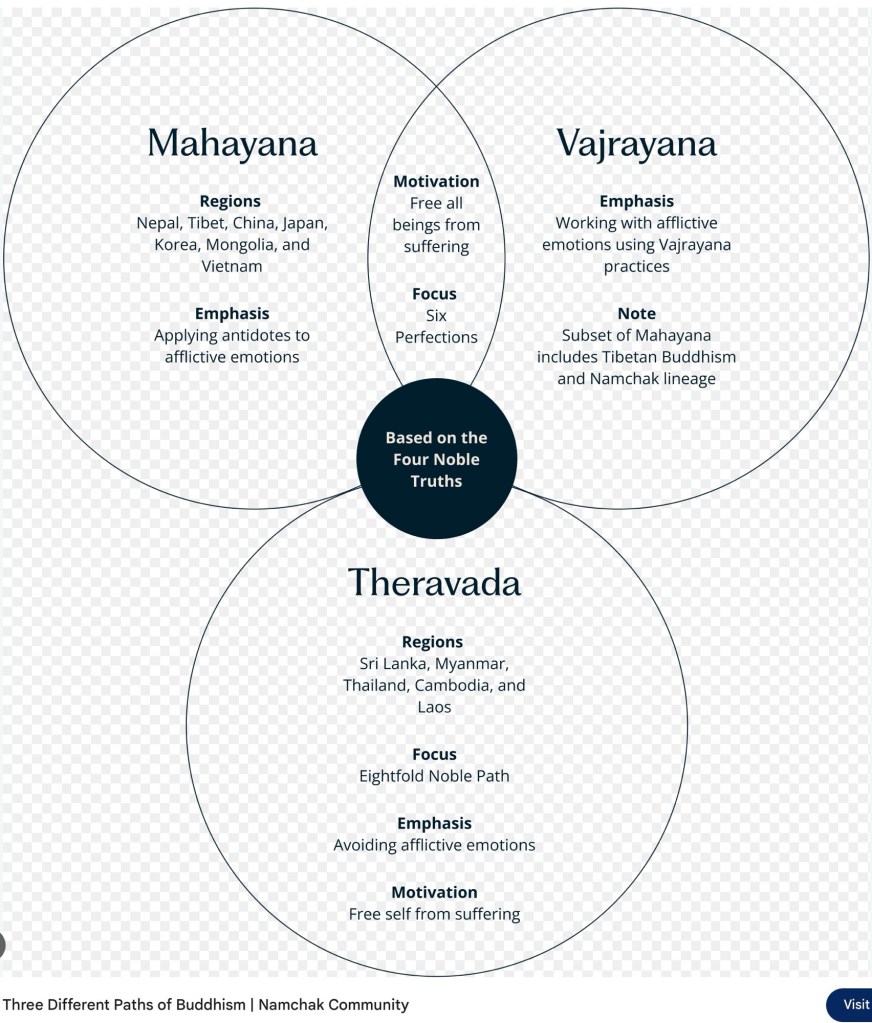
Buddhism is often described as a philosophy, a spiritual path, and a religion devoted to understanding the nature of suffering and achieving enlightenment. Since its origin in ancient India more than 2,500 years ago through the teachings of Siddhartha Gautama, Buddhism has spread across Asia and the world, developing rich traditions of rituals, ceremonies, festivals, and sacred objects. While different schools of Buddhism—such as Theravada Buddhism, Mahayana Buddhism, and Vajrayana Buddhism—have distinct practices, many rituals and celebrations share common themes of reverence, compassion, mindfulness, and gratitude.

Rituals in Buddhism are not generally viewed as acts that earn divine favour. Rather, they are tools that help practitioners cultivate wisdom, focus the mind, honour the teachings, and strengthen community bonds.

The Purpose of Buddhist Rituals

Buddhist rituals serve several important functions. They help practitioners remember the teachings of the Buddha, express devotion, create mindfulness, and mark significant moments in life and the religious calendar.

Many rituals involve:

Meditation

Chanting sacred texts

Offering flowers, incense, and candles

Bowing or prostrations

Pilgrimage

Acts of generosity and charity

Commemorative ceremonies

These activities encourage practitioners to develop virtues such as compassion, humility, gratitude, and awareness.

The symbolism behind rituals is often as important as the ritual itself. For example, flowers placed before a Buddha statue remind devotees that all things are impermanent because flowers eventually wilt and fade.

Daily Rituals

Offering Rituals

One of the most common Buddhist rituals involves making offerings before an image of the Buddha. These offerings may include:

Flowers

Incense

Candles

Water

Fruit

Food

Each offering carries symbolic meaning. Incense represents moral conduct and spiritual purification. Candles symbolize wisdom that dispels ignorance. Flowers remind practitioners of impermanence.

Offerings are not made because Buddhists believe the Buddha requires them. Rather, they represent respect and gratitude for his teachings.

Chanting

Chanting is a central practice throughout Buddhist traditions. Sacred texts, known as sutras or suttas, are recited individually or in groups.

Common purposes include:

Developing concentration

Preserving teachings

Generating merit

Inspiring devotion

Creating a peaceful mental state

In Theravada countries such as Thailand, Sri Lanka, and Myanmar, chants are often recited in the ancient language of Pali. In Mahayana traditions, chants may be performed in Chinese, Japanese, Korean, Tibetan, or local languages.

Meditation

Meditation remains one of Buddhism’s most important ritual practices. Different forms include:

Mindfulness meditation

Loving-kindness meditation

Insight meditation

Zen sitting meditation

Visualization practices

Meditation helps practitioners understand the nature of the mind and develop wisdom and compassion.

Bowing and Prostrations

Bowing before a Buddha image is a common expression of humility and respect.

In many traditions, practitioners perform three bows representing reverence for:

The Buddha

The Dharma (teachings)

The Sangha (community)

Full-body prostrations are especially important in Tibetan Buddhism, symbolizing surrender of pride and cultivation of humility.

Life-Cycle Rituals

Birth Ceremonies

Many Buddhist communities hold ceremonies to bless newborn children. Monks may chant protective scriptures and offer blessings for health, wisdom, and happiness.

Parents often bring infants to a temple to receive their first blessing shortly after birth.

Coming-of-Age Rituals

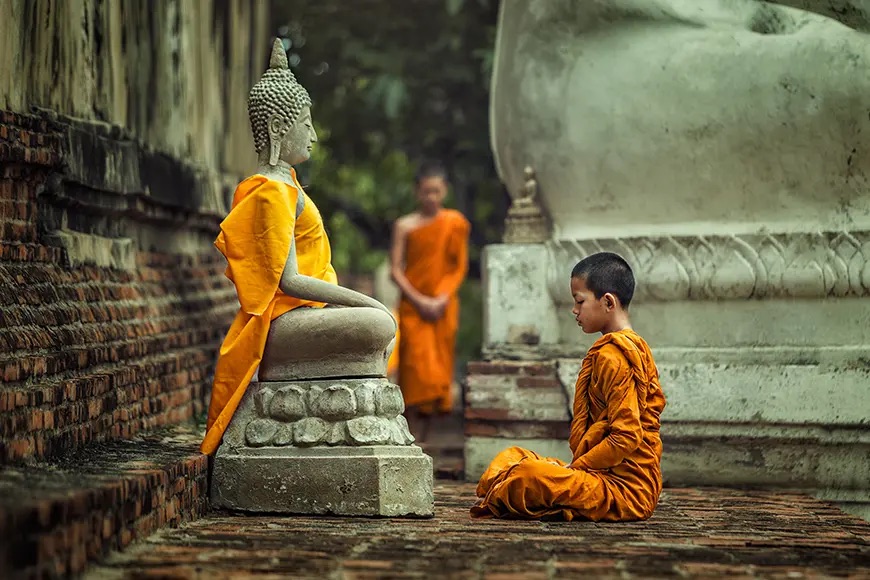
In countries such as Thailand and Myanmar, temporary ordination as a novice monk is an important rite of passage for young males.

The experience teaches discipline, meditation, and Buddhist values.

Marriage Ceremonies

Although marriage is generally considered a social rather than religious institution in Buddhism, Buddhist weddings often include:

Blessings from monks

Chanting

Offerings

Exchange of vows

Sprinkling of holy water

The ceremony emphasizes mutual respect, kindness, and responsibility.

Funeral Rituals

Funerals are among the most significant Buddhist ceremonies.

Death is viewed as part of the cycle of birth, death, and rebirth. Funeral rituals help family members honour the deceased and reflect on impermanence.

Common practices include:

Chanting by monks

Offerings

Meditation

Merit-making activities

Memorial services

In many traditions, ceremonies continue for days or weeks after death to assist the deceased on their spiritual journey.

Major Buddhist Celebrations

Vesak (Buddha Day)

Vesak is the most important Buddhist festival worldwide.

It commemorates three events traditionally believed to have occurred on the same full moon day:

The Buddha’s birth

His enlightenment

His passing into Nirvana

During Vesak celebrations Buddhists:

Visit temples

Participate in meditation

Offer food to monks

Listen to teachings

Release birds or animals as acts of compassion

Engage in charitable activities

Temples are often decorated with lanterns, flowers, and colourful displays.

Magha Puja

Celebrated primarily in Thailand, Laos, and Cambodia, Magha Puja commemorates a gathering of 1,250 enlightened disciples who assembled spontaneously to hear the Buddha teach.

The day emphasizes:

Ethical conduct

Meditation

Respect for the monastic community

Candlelight processions around temples are a common feature.

Asalha Puja

Asalha Puja marks the Buddha’s first sermon following enlightenment.

The sermon introduced the Four Noble Truths and established the foundation of Buddhist teaching.

This festival celebrates the beginning of the Sangha and the spread of Buddhism.

Obon Festival

Obon is one of Japan’s most beloved Buddhist celebrations.

The festival honours ancestors and deceased family members. Traditional activities include:

Lantern ceremonies

Temple visits

Family gatherings

Traditional dances known as Bon Odori

Many believe ancestral spirits return to visit their families during this period.

Losar

Losar is the Tibetan Buddhist New Year celebration.

The festival includes:

Prayer ceremonies

Offerings

Family gatherings

Traditional music and dance

Temple visits

Losar symbolizes renewal and spiritual purification.

Pilgrimage Rituals

Pilgrimage plays an important role in Buddhist devotion.

Many Buddhists visit sacred sites associated with the Buddha’s life.

Important pilgrimage locations include:

Lumbini – birthplace of the Buddha

Bodh Gaya – site of enlightenment

Sarnath – location of the first sermon

Kushinagar – place of the Buddha’s passing

Pilgrims often meditate, make offerings, and walk mindfully around sacred monuments.

Ritual Instruments and Sacred Equipment

Buddhist ceremonies employ many ritual objects that symbolize spiritual truths and assist practitioners in meditation and worship.

Bells

Bells are among the most important Buddhist ritual instruments.

Their sound symbolizes:

Wisdom

Impermanence

Awakening

Temple bells announce ceremonies, mark meditation periods, and call practitioners to prayer.

In Tibetan Buddhism, bells are often paired with a vajra.

Vajra

The vajra is a ritual object especially important in Vajrayana Buddhism.

It symbolizes:

Spiritual power

Enlightenment

Indestructible truth

During ceremonies, monks may hold a vajra in one hand and a bell in the other, representing the union of wisdom and compassion.

Prayer Wheels

Prayer wheels contain sacred mantras written on paper scrolls.

Practitioners spin them while reciting prayers or meditating. Each rotation is believed to multiply the beneficial effects of the mantra.

Prayer wheels are common throughout Tibet, Nepal, Bhutan, and Himalayan Buddhist communities.

Prayer Beads (Mala)

A mala consists of beads used to count prayers, mantras, or breaths during meditation.

Most malas contain 108 beads, a number with deep spiritual significance in Buddhism.

Malas assist concentration and mindfulness.

Drums

Ceremonial drums are widely used in Tibetan and East Asian Buddhism.

Their rhythmic sound:

Marks ritual timing

Accompanies chanting

Creates spiritual atmosphere

Large temple drums can often be heard over great distances.

Cymbals

Ritual cymbals help maintain rhythm during ceremonies and chanting.

In Tibetan monasteries, cymbals contribute to elaborate ritual music intended to focus attention and create sacred space.

Conch Shell

The conch shell is one of Buddhism’s ancient sacred symbols.

When blown, it represents the spreading of the Dharma throughout the world.

Its powerful sound symbolizes the Buddha’s teachings reaching all beings.

Incense Burners

Burning incense is a nearly universal Buddhist ritual.

Incense symbolizes:

Purification

Ethical conduct

Spiritual aspiration

The rising smoke represents prayers and intentions extending into the universe.

Butter Lamps

Particularly common in Tibetan Buddhism, butter lamps symbolize the light of wisdom overcoming ignorance.

Devotees often sponsor lamps as acts of merit and remembrance.

Singing Bowls

Singing bowls produce resonant tones when struck or rubbed with a mallet.

They are used for:

Meditation

Relaxation

Ritual ceremonies

Mindfulness practices

The sustained sound encourages concentration and inner calm.

Buddha Statues

Although not worshipped as gods, Buddha images serve as important focal points for devotion and meditation.

Different postures symbolize various aspects of the Buddha’s life and teachings, including:

Meditation

Teaching

Enlightenment

Compassion

Stupas and Pagodas

Stupas and pagodas are sacred structures that often contain relics or commemorate important events.

Walking clockwise around a stupa while praying or meditating is a common devotional practice known as circumambulation.

Buddhist rituals, festivals, and sacred instruments form an essential part of Buddhist religious life. While meditation and personal spiritual development remain at the heart of Buddhist practice, rituals provide meaningful ways for individuals and communities to express devotion, preserve traditions, and deepen their understanding of the Dharma.

From the global celebration of Vesak to the quiet offering of incense before a Buddha image, Buddhist rituals serve as reminders of compassion, mindfulness, wisdom, and impermanence. Sacred instruments such as bells, prayer wheels, malas, vajras, and singing bowls enrich these practices, helping practitioners focus their minds and connect with centuries of spiritual heritage.

Across the many cultures and traditions in which Buddhism has flourished, rituals continue to provide a bridge between ancient teachings and contemporary life, ensuring that the message of the Buddha remains vibrant, relevant, and inspiring for millions of people around the world.

Tim Alderman ©️ 2026

The Buddhist Tradion in Japan

Introduction

Buddhism has been one of the most influential religious, philosophical, and cultural traditions in Japan for more than 1,400 years. Since its introduction from the Asian mainland in the sixth century, Buddhism has profoundly shaped Japanese society, influencing everything from art, architecture, literature, politics, ethics, and daily life to concepts of death, suffering, and enlightenment. Over the centuries, Buddhism in Japan evolved into a rich and diverse tradition, producing unique schools of thought and spiritual practices that continue to attract followers both within Japan and around the world.

Unlike some countries where Buddhism remained relatively uniform, Japanese Buddhism developed into numerous traditions, each emphasizing different paths toward enlightenment. These include Pure Land Buddhism, Zen Buddhism, Nichiren Buddhism, and Shingon Buddhism, among others. Together they form a vibrant religious landscape that remains an important part of Japanese identity.

The Arrival of Buddhism in Japan

Buddhism originated in India during the fifth century BCE through the teachings of Siddhartha Gautama, who became known as the Buddha, or “The Enlightened One.” From India, Buddhism spread throughout Asia via trade routes and missionary efforts.

According to traditional accounts, Buddhism officially arrived in Japan in 552 CE when the kingdom of Baekje, located in Korea, sent Buddhist scriptures, images, and monks to the Japanese imperial court. Some historical sources suggest an earlier date of 538 CE, but the exact year remains debated among scholars.

The introduction of Buddhism was not immediately accepted. Japan already possessed indigenous religious beliefs known as Shinto, centred on the worship of kami, or spiritual beings associated with nature, ancestors, and sacred places. Powerful clans disagreed about whether the foreign religion should be embraced. The influential Soga clan supported Buddhism, while the Mononobe and Nakatomi clans opposed it.

Eventually, the Soga clan prevailed, allowing Buddhism to gain a foothold in Japanese society. The religion soon received strong support from the imperial court, particularly under Prince Shōtoku, who ruled as regent in the early seventh century. Prince Shōtoku promoted Buddhist teachings, sponsored temple construction, and helped establish Buddhism as an important part of state governance.

Buddhism and the Japanese State

During the Nara period (710–794), Buddhism became closely associated with the imperial government. The state sponsored large monasteries and temples throughout the country. Monks were often regarded as important advisors and scholars.

One of the most significant achievements of this period was the construction of Tōdai-ji in Nara. The temple houses the Great Buddha, a colossal bronze statue representing Vairocana Buddha. Completed in the eighth century, it symbolized both religious devotion and imperial authority.

The government viewed Buddhism as a means of protecting the nation, ensuring prosperity, and promoting social order. Buddhist rituals were conducted for the welfare of the state, while monks copied scriptures believed to bring spiritual benefits to the country.

The Heian Period and Esoteric Buddhism

The Heian period (794–1185) witnessed the emergence of uniquely Japanese forms of Buddhism. Two influential monks introduced esoteric Buddhist traditions from China.

The first was Saichō, who established the Tendai school. Based on teachings from China’s Tiantai tradition, Tendai emphasized the universality of enlightenment and the importance of the Lotus Sutra.

The second was Kūkai, also known as Kobo Daishi. He founded Shingon Buddhism, an esoteric tradition emphasizing rituals, mantras, meditation, and symbolic practices designed to help practitioners realize their innate Buddha nature.

Shingon Buddhism introduced elaborate ceremonies, sacred mandalas, and mystical teachings that profoundly influenced Japanese religious culture. Many of Japan’s famous temples and sacred mountain retreats trace their origins to these traditions.

The Rise of New Buddhist Movements

By the late Heian period, political instability, warfare, and social unrest led many Japanese people to seek more accessible forms of Buddhism. New schools emerged that emphasized personal faith and practical spiritual guidance.

Pure Land Buddhism

Pure Land Buddhism became one of Japan’s most popular traditions. Its teachings centred on faith in Amitābha Buddha, known in Japan as Amida Buddha.

The monk Hōnen taught that ordinary people living in a spiritually degenerate age could attain rebirth in Amida’s Pure Land simply by sincerely reciting the nembutsu: “Namu Amida Butsu” (“I take refuge in Amida Buddha”).

His disciple Shinran further developed these teachings, emphasizing complete reliance on Amida’s compassion rather than personal effort. Today, Jōdo Shinshū remains one of Japan’s largest Buddhist denominations.

Zen Buddhism

Zen Buddhism emerged as another major tradition. Imported from China, Zen focused on meditation, direct experience, and insight into one’s true nature.

The monk Eisai introduced the Rinzai school, which employed meditation and paradoxical questions known as koans to provoke enlightenment.

Later, Dōgen established the Sōtō school, emphasizing seated meditation, or zazen, as both the practice and expression of enlightenment itself.

Zen profoundly influenced Japanese culture. Its ideals of simplicity, mindfulness, discipline, and appreciation for the present moment can be seen in tea ceremonies, martial arts, gardening, calligraphy, and traditional aesthetics.

Nichiren Buddhism

Another influential movement arose through the teachings of Nichiren. Nichiren believed that the Lotus Sutra represented the highest expression of the Buddha’s teaching.

He taught that chanting “Nam-myoho-renge-kyo” was the most effective practice for attaining enlightenment and transforming society. Nichiren Buddhism remains influential today and has inspired several modern Buddhist organizations both in Japan and internationally.

Buddhism and Shinto

One of the most distinctive features of Japanese religion is the coexistence of Buddhism and Shinto. Rather than competing for followers, the two traditions often blended together.

For centuries, many Japanese viewed Buddhist deities and Shinto kami as different manifestations of the same spiritual reality. Temples and shrines were frequently built together, and people participated in both traditions without perceiving any contradiction.

A common saying in Japan reflects this relationship: people are often “born Shinto and die Buddhist.” Shinto rituals traditionally mark births and life celebrations, while Buddhist ceremonies are commonly associated with funerals and ancestor memorials.

Although the government formally separated Buddhism and Shinto during the nineteenth century, many aspects of their historical integration remain visible today.

Buddhist Art and Architecture

Buddhism inspired some of Japan’s greatest artistic and architectural achievements. Temples became centres of culture, learning, and creativity.

Japanese Buddhist architecture features elegant wooden structures, pagodas, meditation halls, and carefully landscaped gardens. Famous temple complexes include Kinkaku-ji, Kiyomizu-dera, and Hōryū-ji.

Buddhist sculpture also flourished. Statues of Buddhas, bodhisattvas, guardians, and spiritual figures became masterpieces of Japanese craftsmanship. Many are considered national treasures.

Painting, calligraphy, poetry, and literature likewise absorbed Buddhist themes such as impermanence, compassion, and enlightenment. The Buddhist concept of “mujo,” or impermanence, became a central theme in Japanese aesthetics and literature.

Buddhism and Daily Life

Although Japan is often described as a secular society today, Buddhism continues to influence daily life in numerous ways.

Many families maintain household altars known as butsudan, where they honour ancestors and offer prayers. Buddhist temples conduct funerals, memorial services, and annual ceremonies remembering deceased family members.

Traditional festivals frequently contain Buddhist elements, and many Japanese visit temples during important holidays or periods of personal reflection. Temple pilgrimages remain popular, particularly the famous Shikoku pilgrimage associated with Kūkai.

Buddhist values such as compassion, mindfulness, respect for others, and awareness of impermanence continue to shape Japanese social attitudes and cultural practices.

Modern Japanese Buddhism

The nineteenth and twentieth centuries brought significant challenges to Buddhism. During the Meiji Restoration, government policies favoured Shinto as a national ideology, leading to the destruction of some Buddhist institutions and property.

Nevertheless, Buddhism adapted to changing circumstances. New religious movements emerged, some drawing inspiration from traditional Buddhist teachings while addressing contemporary concerns.

After the Second World War, Japan experienced rapid modernization and urbanization. Although temple attendance declined in some areas, Buddhism remained deeply embedded in cultural traditions, especially surrounding family rituals and memorial practices.

Today, Japanese Buddhist organizations engage in education, social welfare, environmental advocacy, peace movements, and international dialogue. Zen, in particular, has gained worldwide recognition, influencing psychology, wellness practices, and mindfulness movements across the globe.

Global Influence of Japanese Buddhism

Japanese Buddhism has become a major international force. Zen centres can now be found throughout North America, Europe, Australia, and many other regions. The teachings of Dōgen, Hakuin, and other Zen masters are studied by practitioners of diverse cultural backgrounds.

Nichiren Buddhism has also spread internationally through organizations that emphasize personal empowerment, peacebuilding, and social engagement.

Japanese Buddhist art, philosophy, and aesthetics continue to inspire architects, designers, writers, and spiritual seekers around the world.

The concept of mindfulness, now widely discussed in healthcare, education, and workplace settings, owes much to the global dissemination of Buddhist meditation practices, including those developed within Japanese traditions.

Conclusion

The Buddhist tradition in Japan represents one of the most remarkable examples of religious adaptation and cultural creativity in world history. Introduced from the Asian mainland more than fourteen centuries ago, Buddhism transformed Japanese society while itself evolving into uniquely Japanese forms.

From the philosophical depth of Tendai and Shingon Buddhism to the devotional faith of Pure Land traditions, the meditative discipline of Zen, and the passionate commitment of Nichiren Buddhism, Japanese Buddhism offers multiple paths toward understanding suffering and attaining enlightenment.

Its influence extends far beyond temples and monasteries. Buddhism has shaped Japanese art, literature, architecture, ethics, and daily customs while fostering a deep appreciation for impermanence, compassion, and inner awakening.

Today, despite modernization and social change, Buddhism remains an enduring spiritual and cultural force in Japan. Its teachings continue to guide millions of people and offer timeless insights into the nature of existence, reminding humanity of the possibility of wisdom, compassion, and peace.

I hope this provides a useful overview of the development, major schools, cultural influence, and continuing significance of Buddhism in Japan.

Tim Alderman ©️ 2026

Buddhism in Tibet: History, Traditions, and Enduring Legacy

Tibetan Buddhism is one of the world’s most fascinating and distinctive spiritual traditions. Known for its colourful rituals, profound philosophical teachings, intricate art, and emphasis on compassion and wisdom, Tibetan Buddhism has captivated people both within and beyond the Himalayan region. For more than a thousand years, Buddhism has shaped the culture, politics, literature, and identity of Tibet, becoming inseparable from Tibetan civilization itself.

The story of Buddhism in Tibet is one of adaptation and transformation. Originating in India, Buddhism crossed the towering Himalayas and merged with local Tibetan beliefs, creating a unique spiritual tradition that continues to inspire millions worldwide. Despite periods of persecution, political upheaval, and exile, Tibetan Buddhism has survived and flourished, spreading far beyond its traditional homeland.

The Arrival of Buddhism in Tibet

Before Buddhism arrived, Tibet was dominated by the indigenous Bon religion. Bon involved animistic beliefs, shamanic practices, rituals for spirits, and reverence for natural forces. Although later Tibetan Buddhism would absorb many aspects of Bon culture, the two traditions remained distinct.

The introduction of Buddhism to Tibet began during the seventh century under King Songtsen Gampo. Often regarded as one of Tibet’s greatest rulers, Songtsen Gampo unified much of the Tibetan plateau and established Tibet as a major regional power.

According to Tibetan tradition, the king’s marriages to Buddhist princesses from Nepal and China played a significant role in introducing Buddhist ideas and sacred objects to Tibet. Temples were constructed, including the famous Jokhang Temple in Lhasa, which remains one of Tibetan Buddhism’s holiest sites.

While Buddhism gained an initial foothold during this period, it did not immediately replace traditional beliefs. Its deeper establishment would occur during the reign of later rulers.

Padmasambhava and the Foundation of Tibetan Buddhism

The eighth century marked a turning point with the arrival of the Indian Buddhist master Padmasambhava, known affectionately as Guru Rinpoche (“Precious Master”).

Invited by King Trisong Detsen, Padmasambhava helped establish Buddhism throughout Tibet. Tibetan legends describe him subduing local spirits and transforming them into protectors of the Buddhist teachings. Whether viewed literally or symbolically, these stories illustrate how Buddhism adapted to Tibetan culture rather than attempting to erase it.

Padmasambhava worked alongside the scholar Shantarakshita to found Samye Monastery, the first Buddhist monastery in Tibet. Samye became a centre for translation, learning, meditation, and monastic training.

The efforts of these early masters resulted in the translation of hundreds of Buddhist scriptures from Sanskrit into Tibetan. These translations preserved many Indian Buddhist texts that were later lost in India itself, making Tibet one of the most important custodians of Buddhist knowledge.

The Development of Tibetan Buddhist Schools

Over time, several major schools of Tibetan Buddhism emerged. Although differing in lineage, practices, and emphasis, they share core Buddhist teachings.

Nyingma School

The Nyingma, or “Ancient Ones,” trace their origins directly to Padmasambhava and the earliest period of Buddhism in Tibet. Nyingma teachings place particular emphasis on Dzogchen, or the “Great Perfection,” a profound meditation system focused on recognizing the mind’s innate enlightened nature.

Nyingma practitioners often regard Padmasambhava as a second Buddha whose teachings remain especially relevant for the modern age.

Kagyu School

The Kagyu tradition emphasizes meditation and direct spiritual experience. It traces its origins through the Indian masters Tilopa and Naropa and the Tibetan translator Marpa.

One of the most beloved figures in Tibetan history is Milarepa, a Kagyu saint renowned for achieving enlightenment after years of intense meditation in mountain caves. His life story continues to inspire practitioners seeking spiritual transformation.

Sakya School

The Sakya school emerged during the eleventh century and became influential both spiritually and politically. Sakya scholars developed sophisticated philosophical systems and maintained strong connections with Mongol rulers during the medieval period.

Gelug School

Founded by the reformer Tsongkhapa in the fourteenth century, the Gelug school emphasizes ethical discipline, scholarship, and systematic study.

The Gelug tradition eventually became Tibet’s dominant political and religious force. The Dalai Lama lineage belongs to this school, and many of Tibet’s largest monasteries were established under its influence.

Core Beliefs and Teachings

Tibetan Buddhism shares the essential teachings found throughout Buddhism.

The Four Noble Truths

The Buddha taught that suffering exists, that suffering has causes, that liberation from suffering is possible, and that the path to liberation is the Noble Eightfold Path.

These teachings form the foundation of Tibetan Buddhist practice.

Karma and Rebirth

Tibetan Buddhists believe that actions have consequences extending beyond a single lifetime. Positive actions create beneficial results, while harmful actions generate suffering.

The cycle of birth, death, and rebirth continues until enlightenment is achieved.

Compassion and Wisdom

Compassion is considered indispensable in Tibetan Buddhism. Practitioners strive not only for personal liberation but also for the welfare of all beings.

Wisdom involves understanding the true nature of reality, including the Buddhist concept of emptiness—the idea that all phenomena arise through interdependence rather than existing independently.

The union of compassion and wisdom is regarded as the essence of enlightenment.

The Bodhisattva Ideal

A defining feature of Tibetan Buddhism is the Bodhisattva ideal.

A Bodhisattva is someone who aspires to attain enlightenment for the benefit of all sentient beings. Rather than seeking liberation solely for oneself, a Bodhisattva vows to help others overcome suffering.

This aspiration is known as Bodhicitta, often translated as the “awakening mind.”

Practices designed to cultivate Bodhicitta include meditation on compassion, loving-kindness, and empathy. Many Tibetan Buddhists recite prayers expressing their wish to benefit all beings throughout countless lifetimes.

Monasteries and Monastic Life

Monasteries have historically been at the heart of Tibetan society.

These institutions served not only as religious centres but also as schools, libraries, cultural repositories, and community hubs. Monks and nuns devoted themselves to study, meditation, ritual practice, and service.

Some monasteries housed thousands of residents. Major monastic universities developed rigorous systems of education, including logic, philosophy, ethics, psychology, and metaphysics.

Debate became a distinctive feature of Tibetan monastic training. Through structured philosophical discussions, students sharpened their understanding of Buddhist teachings and cultivated analytical insight.

Meditation and Spiritual Practice

Meditation occupies a central place in Tibetan Buddhism.

Practitioners engage in a wide variety of contemplative techniques. Some meditations focus on concentration and mindfulness, while others cultivate compassion or investigate the nature of consciousness.

Visualization practices are particularly distinctive. Practitioners may imagine enlightened beings such as Buddhas or Bodhisattvas, not as external gods but as symbolic representations of enlightened qualities already present within the mind.

Mantra recitation is also common. Sacred syllables are repeated to focus attention, develop spiritual qualities, and deepen meditative awareness.

Prayer wheels, prayer flags, and ritual instruments further enrich devotional practice.

Tibetan Buddhist Art and Culture

Tibetan Buddhism has produced a rich artistic heritage.

Thangka paintings depict Buddhas, Bodhisattvas, teachers, and sacred mandalas. These works function not merely as decorations but as visual aids for meditation and spiritual instruction.

Mandalas, intricate geometric representations of enlightened realms, symbolize the universe and the path toward awakening.

Monasteries feature elaborate murals, statues, and architectural designs reflecting profound religious symbolism.

Music, chanting, dance, and ritual ceremonies also play important roles in Tibetan religious life. Festivals bring communities together to celebrate spiritual teachings and cultural traditions.

The Institution of the Dalai Lama

Perhaps the most internationally recognized symbol of Tibetan Buddhism is the Dalai Lama.

The title “Dalai Lama” means “Ocean of Wisdom.” Tibetan Buddhists regard each Dalai Lama as the reincarnation of Avalokiteshvara, the Bodhisattva of Compassion.

Beginning in the seventeenth century, the Dalai Lamas served as both spiritual and political leaders of Tibet. This unique combination of religious and governmental authority shaped Tibetan society for centuries.

The Fourteenth Dalai Lama, Tenzin Gyatso, has become a global advocate for peace, compassion, nonviolence, and interfaith dialogue. His teachings have introduced Tibetan Buddhism to audiences around the world.

Challenges in the Modern Era

The twentieth century brought profound challenges to Tibet and Tibetan Buddhism.

Following political changes in the mid-twentieth century, many monasteries were damaged or destroyed, particularly during periods of political upheaval. Large numbers of monks, nuns, and lay Tibetans fled into exile.

In 1959, the Dalai Lama left Tibet and established a government-in-exile in India. Numerous monasteries were re-established in exile communities, preserving traditions that might otherwise have been lost.

Despite these difficulties, Tibetan Buddhism demonstrated remarkable resilience. Monastic education continued, sacred texts were preserved, and new generations of teachers emerged.

Tibetan Buddhism Around the World

One of the most remarkable developments of the modern era has been the global spread of Tibetan Buddhism.

Teachers from all major Tibetan traditions established centres across Europe, North America, Australia, and many other regions. Translations of Tibetan texts became widely available, allowing people from diverse backgrounds to study Buddhist philosophy and meditation.

Western interest in mindfulness, compassion training, psychology, and contemplative science has further increased engagement with Tibetan Buddhist teachings.

Scientific research into meditation has generated dialogue between Buddhist practitioners and neuroscientists, creating new opportunities for understanding the human mind.

Today, Tibetan Buddhist communities can be found on every inhabited continent.

Enduring Relevance

The continuing appeal of Tibetan Buddhism lies partly in its emphasis on compassion, ethical responsibility, and inner transformation.

In a world often characterized by conflict, distraction, and uncertainty, Tibetan Buddhist teachings encourage individuals to cultivate patience, wisdom, and concern for others. Rather than offering simple answers, the tradition provides practical methods for understanding the mind and reducing suffering.

Its teachings on interdependence are particularly relevant in an increasingly interconnected world. Tibetan Buddhism reminds us that our actions affect others and that genuine happiness cannot be separated from the wellbeing of the wider community.

Buddhism in Tibet represents one of humanity’s most remarkable spiritual and cultural achievements. Emerging from the encounter between Indian Buddhist wisdom and Tibetan culture, it developed into a sophisticated tradition encompassing philosophy, meditation, art, ethics, and social organization.

From the pioneering efforts of Padmasambhava and the early kings to the global influence of the Dalai Lama and contemporary Tibetan teachers, Tibetan Buddhism has demonstrated extraordinary adaptability and resilience. Despite centuries of challenges, it continues to inspire people through its commitment to compassion, wisdom, and the possibility of human awakening.

Today, Tibetan Buddhism remains both a living religious tradition and a profound source of insight into the human condition. Its enduring message—that compassion and wisdom can transform both individuals and societies—continues to resonate across cultures and generations.

Tim Alderman ©️ 2026

Tara in Buddhism: Meaning, Symbolism, and the Many Incarnations of the Divine Mother

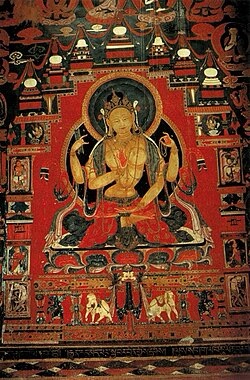
White Tara

Among the most beloved and widely revered figures in Buddhist spirituality is Tara, the compassionate female bodhisattva who embodies enlightened wisdom, protection, and liberation from suffering. Worshipped throughout Tibet, Nepal, Bhutan, Mongolia, India, and increasingly throughout the Western world, Tara represents the active expression of compassion and serves as a guide for practitioners seeking enlightenment.

Known as the “Mother of Liberation” and the “Mother of all Buddhas,” Tara occupies a unique position within Buddhist tradition. While many Buddhist figures are depicted as male, Tara stands as one of the most important feminine embodiments of enlightenment. Her numerous manifestations, often referred to as the Twenty-One Taras, symbolize different aspects of compassion, wisdom, healing, protection, and spiritual accomplishment.

This article explores the origins of Tara, her significance within Buddhism, and the various incarnations through which she manifests to assist sentient beings.

The Origins of Tara

The origins of Tara are found primarily within Mahayana and Vajrayana Buddhism. Historical evidence suggests that devotion to Tara emerged in India between the sixth and eighth centuries CE. Over time, her cult spread throughout the Himalayan regions and became especially important within Tibetan Buddhism.

According to one popular legend, Tara was originally a princess named Yeshe Dawa, meaning “Moon of Primordial Wisdom.” She lived countless ages ago and dedicated herself to spiritual practice. Monks encouraged her to pray for rebirth as a man so she could more easily attain Buddhahood. In response, she rejected the notion that enlightenment was limited by gender.

She declared:

“There is no male, there is no female, there is no self, no person, and no consciousness. These labels have no ultimate validity.”

She vowed to attain enlightenment in female form and to continue helping beings as a woman throughout all future lifetimes. This vow established Tara as a powerful symbol of spiritual equality and feminine wisdom.

Another tradition describes Tara as emerging from a tear shed by the Bodhisattva of Compassion, Avalokiteshvara. Seeing the immense suffering of sentient beings, Avalokiteshvara wept. From one tear arose a sacred lake, and from the lake appeared Tara, who promised to assist him in liberating all beings from suffering.

These stories illustrate Tara’s essential nature: compassion transformed into action.

The Meaning of Tara

The Sanskrit word “Tara” means “Star” or “She Who Ferries Across.” Much like a star guides travelers through darkness, Tara guides beings across the ocean of suffering and ignorance toward enlightenment.

She is often regarded as a savior figure who protects devotees from physical dangers, emotional turmoil, spiritual obstacles, and negative karmic influences.

In Buddhist philosophy, Tara symbolizes:

  • Compassion in action
  • Wisdom and insight
  • Protection from fear
  • Swift assistance
  • Liberation from suffering
  • Feminine enlightenment
  • Courage and fearlessness

Unlike some deities who appear distant or majestic, Tara is often portrayed as approachable and ready to respond immediately to sincere prayers.

Her posture reflects this readiness. In many depictions, one leg remains folded in meditation while the other extends forward, indicating her willingness to rise instantly and help those in need.

Tara and the Feminine Principle

One of Tara’s most important roles is her embodiment of the feminine principle within Buddhism.

In Vajrayana Buddhism, wisdom and compassion are often represented through complementary masculine and feminine energies. Tara embodies enlightened wisdom while simultaneously expressing boundless compassion.

Her prominence challenges misconceptions that Buddhism is exclusively male-oriented. Tara demonstrates that enlightenment transcends gender and that feminine qualities such as nurturing, intuition, receptivity, and compassion possess profound spiritual power.

For many women practitioners, Tara serves as an empowering figure who confirms the equal potential of women to achieve complete enlightenment.

Green Tara: The Most Popular Manifestation

Green Tara is perhaps the most widely recognized form of Tara.

She represents active compassion and immediate assistance. Green symbolizes vitality, growth, action, and enlightened activity.

Green Tara is often depicted seated on a lotus throne with her right foot extended outward, signifying her readiness to help beings at a moment’s notice.

Practitioners invoke Green Tara for:

  • Protection from fear
  • Removal of obstacles
  • Safe travel
  • Guidance during difficult circumstances
  • Spiritual progress

One of the most famous prayers associated with her is the Green Tara mantra:

Om Tare Tuttare Ture Soha

This mantra is believed to invoke Tara’s blessings, protection, and compassionate presence.

Green Tara is often described as liberating beings from the “Eight Great Fears,” including pride, ignorance, anger, envy, attachment, wrong views, greed, and doubt.

White Tara: The Mother of Compassion

White Tara represents purity, healing, longevity, and maternal compassion.

She is usually depicted with seven eyes—two normal eyes, one on her forehead, and one in each palm and sole. These eyes symbolize her ability to perceive suffering throughout the universe.

White Tara is frequently invoked for:

  • Healing illness
  • Extending life
  • Developing compassion
  • Inner peace
  • Spiritual maturity

Many Tibetan practitioners perform White Tara practices to cultivate longevity and support recovery from physical and emotional suffering.

Her calm and peaceful appearance reflects the nurturing and protective aspects of enlightened wisdom.

The Twenty-One Taras

Although Green and White Tara are the most widely known, Buddhist tradition recognizes twenty-one principal forms of Tara.

Each manifestation expresses a unique enlightened quality and serves specific spiritual purposes.

Among the most notable are:

Red Tara

Red Tara symbolizes magnetizing power, love, compassion, and spiritual attraction.

She helps practitioners attract positive conditions, beneficial relationships, and spiritual opportunities.

Red Tara transforms desire into wisdom rather than suppressing it.

Yellow Tara

Yellow Tara is associated with abundance, prosperity, merit, and generosity.

She assists practitioners in overcoming poverty and developing a healthy relationship with material resources.

Yellow Tara reminds followers that wealth can become a tool for compassion and service.

Blue Tara

Blue Tara embodies fierce compassion and transformative power.

Her wrathful appearance is not an expression of anger but rather the energetic destruction of ignorance, hatred, and spiritual obstacles.

Blue Tara helps practitioners confront fears and break through deeply rooted negative patterns.

Black Tara

Black Tara is a protective manifestation who guards against harmful influences and negative energies.

She represents the fierce determination necessary to overcome adversity and defend the Dharma.

Golden Tara

Golden Tara symbolizes spiritual wealth, wisdom, and enlightened prosperity.

She is associated with generosity and the accumulation of merit through virtuous actions.

Tara and the Eight Great Fears

A recurring theme in Tara devotion is her protection from the Eight Great Fears.

Historically these included physical dangers such as:

  • Lions
  • Elephants
  • Fire
  • Snakes
  • Robbers
  • Imprisonment
  • Floods
  • Demons

However, Buddhist teachers interpret these symbolically as representing inner psychological obstacles.

For example:

  • Lions symbolize pride.
  • Elephants symbolize ignorance.
  • Fire symbolizes anger.
  • Snakes symbolize jealousy.
  • Robbers symbolize false views.
  • Floods symbolize attachment.
  • Imprisonment symbolizes greed.
  • Demons symbolize doubt.

Through Tara practice, practitioners learn to overcome these internal enemies and cultivate wisdom.

Tara in Tibetan Buddhism

Tara occupies an especially prominent position within Tibetan Buddhism.

All major Tibetan schools—including the Gelug School, Kagyu School, Nyingma School, and Sakya School—maintain Tara practices.

Daily Tara prayers are common among monks, nuns, and lay practitioners alike.

Many Tibetans begin each day by reciting praises to Tara and chanting her mantra.

Numerous revered masters have emphasized Tara practice, including Atisha, whose devotion helped spread Tara worship throughout Tibet during the eleventh century.

Today, Tara remains one of the most frequently invoked deities in Tibetan Buddhist ritual and meditation.

Tara as a Meditation Practice

Tara is not simply an object of worship but also a profound meditative focus.

In Vajrayana Buddhism, practitioners visualize Tara seated before them or imagine themselves embodying Tara’s enlightened qualities.

Through visualization, mantra recitation, and contemplation, practitioners seek to cultivate:

  • Compassion
  • Fearlessness
  • Wisdom
  • Patience
  • Loving-kindness
  • Spiritual confidence

The goal is not merely to receive Tara’s blessings but ultimately to recognize that Tara’s enlightened qualities already exist within one’s own mind.

In this sense, Tara serves as a mirror reflecting humanity’s innate Buddha nature.

Tara in the Modern World

In recent decades, Tara has become increasingly popular among Western Buddhists and spiritual seekers.

Many people are drawn to her because she combines compassion with empowerment. She is both gentle and strong, peaceful and active, nurturing and fearless.

Tara’s message remains deeply relevant in the modern world. Her teachings encourage individuals to face fear with courage, meet suffering with compassion, and transform obstacles into opportunities for growth.

For women especially, Tara provides a powerful spiritual role model whose enlightenment is inseparable from her feminine identity.

Her enduring popularity demonstrates the universal appeal of compassion expressed through action.

Conclusion

Tara stands among Buddhism’s most inspiring and beloved figures. Whether appearing as Green Tara, White Tara, Red Tara, Blue Tara, Yellow Tara, or one of her many other manifestations, she embodies the compassionate determination to alleviate suffering wherever it exists.

Her name, meaning “She Who Ferries Across,” captures her essential purpose: guiding beings across the turbulent waters of fear, ignorance, and attachment toward the shore of enlightenment.

The many incarnations of Tara are not separate deities but diverse expressions of a single enlightened reality. Each manifestation addresses different human needs while pointing toward the same ultimate truth—that wisdom and compassion are inseparable.

For more than a thousand years, Tara has inspired countless practitioners to cultivate courage, kindness, and spiritual awakening. Her enduring presence within Buddhism serves as a reminder that enlightenment is not distant or unattainable. Like Tara herself, it is always ready to arise in response to the suffering of the world.

In the words of countless devotees throughout the centuries, Tara remains the swift and compassionate mother who hears the cries of all beings and responds with boundless love.

Tim Alderman ©️ 2026

The Precepts and Principles of Buddhism

Buddhism is one of the world’s oldest and most influential spiritual traditions, originating more than 2,500 years ago in northern India. Founded upon the teachings of Siddhartha Gautama — later known as the Gautama Buddha — Buddhism offers not only a religion but also a philosophy and practical way of life. At its core, Buddhism seeks to answer one of humanity’s oldest questions: why do people suffer, and how can suffering be overcome?

Unlike many religious traditions, Buddhism places strong emphasis on personal experience, ethical conduct, mindfulness, and wisdom rather than blind faith or divine revelation. Over centuries, Buddhist teachings spread across Asia and eventually the wider world, influencing art, culture, psychology, ethics, and spirituality. Today Buddhism exists in many forms, including Theravāda, Mahāyāna, and Vajrayāna traditions, yet all share common principles and moral foundations.

Central to Buddhism are its precepts — ethical guidelines for living — and its principles, which shape the Buddhist understanding of life, suffering, compassion, and enlightenment.

The Life of the Buddha

According to Buddhist tradition, Siddhartha Gautama was born around the 5th century BCE into a royal family in what is now Nepal. Raised in luxury, he was shielded from the harsh realities of life. However, upon leaving the palace, he encountered what are known as the “Four Sights”: an old man, a sick person, a corpse, and a wandering holy man. These encounters revealed the unavoidable realities of aging, illness, death, and the search for spiritual meaning.

Deeply troubled by human suffering, Siddhartha renounced his royal life and embarked upon a spiritual quest. After years of meditation and ascetic practices, he attained enlightenment while meditating beneath the Bodhi tree at Bodh Gaya in India. Thereafter he became known as the Buddha, meaning “The Awakened One.”

The Buddha spent the remainder of his life teaching others the path to liberation from suffering.

The Core Principles of Buddhism

The Four Noble Truths

The foundation of Buddhist philosophy rests upon the Four Noble Truths. These truths explain the nature of existence and the path toward freedom from suffering.

1. The Truth of Suffering (Dukkha)

Buddhism teaches that suffering is an inherent part of life. This suffering includes obvious forms such as pain, grief, sickness, and death, but also subtler forms of dissatisfaction, anxiety, and impermanence. Even pleasurable experiences are temporary and can therefore become sources of suffering when they end.

The Buddha did not present this truth pessimistically. Rather, he encouraged people to honestly recognize the reality of human existence.

2. The Cause of Suffering

The Buddha taught that suffering arises primarily from craving, attachment, and ignorance. People cling to material possessions, relationships, desires, identities, and expectations. Because everything in life changes, attachment inevitably leads to disappointment and suffering.

Ignorance also plays a major role. Humans often misunderstand the nature of reality, believing things to be permanent when they are not.

3. The End of Suffering

Buddhism teaches that suffering can be overcome. By eliminating craving and attachment, individuals can attain liberation, peace, and enlightenment, known as Nirvana.

Nirvana is not a heavenly paradise but a profound state of freedom from greed, hatred, delusion, and suffering.

4. The Path to the End of Suffering

The Buddha outlined a practical method for overcoming suffering known as the Noble Eightfold Path.

The Noble Eightfold Path

The Eightfold Path serves as a guide to ethical living, mental discipline, and wisdom. Its eight aspects are often grouped into three categories: wisdom, ethical conduct, and mental cultivation.

Wisdom

Right View

Understanding reality correctly, especially the Four Noble Truths and the law of karma.

Right Intention

Cultivating thoughts of compassion, kindness, renunciation, and non-harm rather than hatred or selfishness.

Ethical Conduct

Right Speech

Avoiding lying, gossip, harsh language, and harmful communication.

Right Action

Behaving ethically by refraining from violence, stealing, and sexual misconduct.

Right Livelihood

Earning a living in ways that do not harm others. Traditional Buddhism discourages professions involving killing, exploitation, or deceit.

Mental Discipline

Right Effort

Developing positive states of mind while overcoming harmful thoughts and habits.

Right Mindfulness

Cultivating awareness of body, emotions, thoughts, and surroundings through mindfulness and meditation.

Right Concentration

Practising deep meditation to develop clarity, calmness, and insight.

The Eightfold Path is not intended as a rigid set of commandments but as a practical framework for living consciously and compassionately.

The Five Precepts

For lay Buddhists, the Five Precepts are the primary ethical guidelines. They are not considered divine commandments but voluntary commitments to reduce suffering and cultivate compassion.

1. Refraining from Killing

Buddhists are encouraged to respect all forms of life and avoid intentionally harming living beings. This principle promotes compassion, non-violence, and reverence for life.

2. Refraining from Stealing

This precept encourages honesty, generosity, and respect for the property and rights of others.

3. Refraining from Sexual Misconduct

Buddhism promotes responsible and ethical sexual behaviour that avoids exploitation, betrayal, or harm.

4. Refraining from False Speech

Truthfulness is highly valued in Buddhism. Lying, slander, gossip, and malicious speech are discouraged because they create suffering and conflict.

5. Refraining from Intoxicants

Alcohol and drugs that cloud the mind are discouraged because they impair awareness and mindfulness, leading to harmful actions.

Many Buddhists interpret these precepts flexibly according to circumstance and personal understanding, while monastic communities often follow stricter rules.

Karma and Rebirth

Two important Buddhist principles are karma and rebirth.

Karma

Karma refers to intentional actions and their consequences. According to Buddhism, actions motivated by greed, hatred, and ignorance tend to produce suffering, while actions motivated by compassion and wisdom lead toward happiness and spiritual growth.

Karma is not viewed as divine punishment or reward. Instead, it reflects the natural moral law of cause and effect.

Rebirth

Buddhism teaches that existence is cyclical, involving repeated birth, death, and rebirth, known as samsara. Rebirth continues until enlightenment is attained.

However, Buddhism differs from some religions in that it does not teach the existence of an eternal soul. Instead, rebirth involves the continuation of consciousness and karmic influence rather than a permanent self.

The Principle of Impermanence

Impermanence, or anicca, is one of Buddhism’s central teachings. Everything in existence changes constantly — relationships, emotions, health, possessions, societies, and even life itself.

Suffering often arises because humans resist change and cling to temporary things as though they were permanent. By accepting impermanence, Buddhists believe people can develop greater peace, resilience, and freedom.

This principle has profound psychological relevance today, particularly in coping with grief, anxiety, aging, and uncertainty.

The Principle of Non-Self

Another distinctive Buddhist teaching is anatta, or non-self. Buddhism teaches that what people consider the “self” is not fixed or permanent but a constantly changing combination of physical and mental processes.

This idea challenges the belief in a permanent ego or soul. By understanding non-self, Buddhists aim to reduce attachment, pride, fear, and selfishness.

Rather than encouraging nihilism, this teaching promotes humility, interconnectedness, and compassion.

Compassion and Loving-Kindness

Compassion lies at the heart of Buddhism. Buddhists strive to cultivate kindness not only toward friends and family but toward all living beings.

Two important concepts are:

Metta — loving-kindness and goodwill

Karuna — compassion for those who suffer

Meditation practices focused on loving-kindness encourage individuals to extend compassion universally, even toward enemies or difficult people.

This emphasis on compassion has influenced Buddhist involvement in peace movements, social justice, humanitarian aid, and environmental activism.

Meditation and Mindfulness

Meditation is one of Buddhism’s most recognised practices. It is used to cultivate mindfulness, concentration, insight, and emotional balance.

There are many forms of Buddhist meditation, including:

Mindfulness meditation

Breathing meditation

Loving-kindness meditation

Insight meditation (Vipassana)

Zen meditation

Mindfulness, in particular, has become widely adopted in modern psychology and healthcare. Many secular mindfulness programs are rooted in Buddhist practices, though often separated from religious beliefs.

Buddhism teaches that meditation helps individuals observe thoughts and emotions without attachment, allowing greater inner peace and wisdom.

The Middle Way

The Buddha taught the importance of the Middle Way — avoiding extremes of self-indulgence and severe asceticism.

Before enlightenment, Siddhartha Gautama experienced both luxury and extreme deprivation. He concluded that neither led to wisdom or liberation. Instead, balance, moderation, and mindful living were the healthiest spiritual path.

This principle remains highly relevant in modern life, encouraging balance in work, relationships, consumption, and emotional life.

Buddhist Ethics and Modern Society

Buddhist principles continue to resonate in the modern world because they address universal human experiences: stress, fear, suffering, conflict, and the search for meaning.

Many contemporary movements draw upon Buddhist ideas, including:

Mindfulness-based therapy

Non-violent activism

Environmental ethics

Compassion-focused psychology

Minimalist and mindful living movements

Prominent Buddhist figures such as Dalai Lama have advocated peace, compassion, interfaith dialogue, and human rights on the global stage.

Buddhist ethics also contribute to debates about consumerism, mental health, social inequality, and ecological responsibility.

Differences Among Buddhist Traditions

Although united by core principles, Buddhism developed into several major traditions.

Theravāda Buddhism

Common in Sri Lanka and Southeast Asia, Theravāda emphasises monastic life, meditation, and personal enlightenment.

Mahāyāna Buddhism

Popular in China, Japan, Korea, and Vietnam, Mahāyāna emphasises compassion and the ideal of the bodhisattva — one who seeks enlightenment for the benefit of all beings.

Vajrayāna Buddhism

Practised mainly in Tibet and the Himalayan regions, Vajrayāna incorporates rituals, symbolism, and advanced meditative techniques.

Despite differences in ritual and philosophy, all traditions share the fundamental teachings of the Buddha.

Conclusion

The precepts and principles of Buddhism offer far more than religious doctrine; they provide a practical framework for understanding human suffering and cultivating wisdom, compassion, and inner peace. Through teachings such as the Four Noble Truths, the Noble Eightfold Path, the Five Precepts, mindfulness, and compassion, Buddhism encourages individuals to live ethically and consciously while recognising the interconnected and impermanent nature of existence.

In an increasingly fast-paced and anxious world, Buddhist teachings continue to attract people seeking meaning, emotional balance, and spiritual insight. Whether approached as a religion, philosophy, or mindfulness practice, Buddhism remains one of humanity’s most enduring and influential paths toward understanding the mind, reducing suffering, and fostering compassion for all living beings.

Tim Alderman ©️ 2026

Buddhism 101: Buddhist Monks and Shaved Heads

And Why Is the Buddha Depicted With Curls?

Two nuns of a Tibetan Buddhist order, photographed in Dharamsala, India. Matthew Wakem / Getty Images

Here’s a question that comes up from time to time — why do Buddhist nuns and monks shave their heads? We can speculate that perhaps shaving the head reduces vanity and is a test of a monastic’s commitment. It’s also practical, especially in hot weather.

Historical Background: Hair and the Spiritual Quest 

Historians tell us that wandering mendicants seeking enlightenment were a common sight in first millennium BCE India. The historical record also tells us that these mendicants had issues with hair.

For example, some of these spiritual seekers deliberately left their hair and beards unkempt and unwashed, having taken vows to avoid proper grooming until they had realized enlightenment. There also are accounts of mendicants pulling out their hair by the roots.

The rules made by the Buddha for his ordained followers are recorded in a text called the Vinaya-pitaka. In the Pali Vinaya-pitaka, in a section called the Khandhaka, the rules say that hair should be shaved at least every two months, or when the hair has grown to the length of two finger-widths. It may be that the Buddha just wanted to discourage the weird hair practices of the time.

The Khandhaka also provided that monastics must use a razor to remove hair and not cut hair with scissors unless he or she has a sore on her head. A monastic may not pluck out or dye gray hair. Hair may not be brushed or combed — a good reason to keep it short — or managed with any kind of oil. If somehow some hair is sticking out oddly, it is all right to smooth it with one’s hand, however. These rules mostly seem to discourage vanity.

Head Shaving Today 

Most Buddhist nuns and monks today follow the Vinaya rules about hair. 

Practices do vary somewhat from one school to another, but the monastic ordination ceremonies of all schools of Buddhism include head shaving. It’s common for the head to be mostly shaved prior to the ceremony, leaving just a little on top for the ceremony officiant to remove.

The preferred form of shaving is still a razor. Some orders have decided that electric razors are more like scissors than a razor and therefore are forbidden by the Vinaya.

The Buddha’s Hair 

The early scriptures tell us that the Buddha lived in the same way as his disciples. He wore the same robes and begged for food like everyone else. So why isn’t the historical Buddha depicted bald, as a monk? (The fat, bald, happy Buddha is a different Buddha.)

The earliest scriptures don’t tell us specifically how the Buddha wore his hair, although stories of the Buddha’s renunciation tell us he cut his long hair short when he began his quest for enlightenment.

There is, however, one clue that the Buddha didn’t shave his head after his enlightenment. The disciple Upali originally was working as a barber when the Buddha came to him for a haircut.

The first depictions of the Buddha in human form were made by the artists of Gandhara, a Buddhist kingdom that was located in what is now Pakistan and Afghanistan, 2000 years or so ago. The artists of Gandhara were influenced by Greek and Roman art as well as Persian and Indian art, and many of the earliest Buddhas, sculpted in the early first millennium CE, was sculpted in an unmistakably Greek/Roman style.

These artists gave the Buddha curly hair clasped in a topknot. Why? Perhaps it was a popular men’s hairstyle at the time.

Over the centuries the curly hair became a stylized pattern that sometimes looks more like a helmet than hair, and the topknot became a bump. But depicting the historical Buddha with a shaved head remains rare.

Reference

  • O’Brien, Barbara. “Buddhist Monks and Shaved Heads.” Learn Religions, Aug. 25, 2020, learnreligions.com/why-buddhist-monks-and-nuns-shave-their-heads-449598.

Buddhism 101: Samskara or Sankhara

This is a vital component of Buddhist teaching

© Arctic-Images / Getty Images

Samskara (Sanskrit; the Pali is sankhara) is a useful word to explore if you are struggling to make sense of Buddhist doctrines. This word is defined by Buddhists in many ways—volitional formations; mental impressions; conditioned phenomena; dispositions; forces that condition psychic activity; forces that shape moral and spiritual development.

Samskara as the Fourth Skandha 

Samskara also is the fourth of the Five Skandhas and the second link in the Twelve Links of Dependent Origination, so it’s something that figures into many Buddhist teachings. It’s also closely linked to karma.

According to Theravada Buddhist monk and scholar Bhikkhu Bodhi, the word samskara or sankhara has no exact parallel in English. “The word sankhara is derived from the prefix sam, meaning ‘together,’ joined to the noun kara, ‘doing, making.’ Sankharas are thus ‘co-doings,’ things that act in concert with other things, or things that are made by a combination of other things.”

In his book What the Buddha Taught (Grove Press, 1959), Walpola Rahula explained that samskara can refer to “all conditioned, interdependent, relative things and states, both physical and mental.”

Let’s look at specific examples.

Skandhas Are Components That Make an Individual  

Very roughly, the skandhas are components that come together to make an individual—physical form, senses, conceptions, mental formations, awareness. The skandhas are also referred to as the Aggregates or the Five Heaps.

In this system, what we might think of as “mental functions” are sorted into three types. The third skandha, samjna, includes what we think of as intellect. Knowledge is a function of samjna.

The sixth, vijnana, is pure awareness or consciousness.

Samskara, the fourth, is more about our predilections, biases, likes and dislikes, and other attributes that make up our psychological profiles.

The skandhas work together to create our experiences. For example, Let’s say you walk into a room and see an object. Sight is a function of sedana, the second skandha. The object is recognized as an apple — that’s samjna. An opinion arises about the apple—you like apples, or maybe you don’t like apples. That reaction or mental formation is samskara. All of these functions are connected by vijnana, awareness.

Our psychological conditionings, conscious and subconscious, are functions of samskara. If we are afraid of water, or quickly become impatient, or are shy with strangers or love to dance, this is samskara. 

No matter how rational we think we are, most of our willful actions are driven by samskara. And willful actions create karma. The fourth skandha, then, is linked to karma.

In the Mahayana Buddhist philosophy of yogacara, samskaras are impressions that collect in the storehouse consciousness or alaya-vijnana. The seeds (bijas) of karma arise from this.

Samskara and the Twelve Links of Dependent Origination

Dependent Origination is the teaching that all beings and phenomena inter-exist. Put another way, nothing exists completely independently from everything else. The existence of any phenomenon depends on conditions created by other phenomena.

Now, what are the Twelve Links? There are at least a couple of ways to understand them. Most commonly, the Twelve Links are the factors that cause beings to become, live, suffer, die, and become again. The Twelve Links also are sometimes described as the chain of mental activities that lead to suffering.

The first link is avidya or ignorance. This is ignorance of the true nature of reality. Avidya leads to samskara—mental formations— in the form of ideas about reality. We become attached to our ideas and unable to see them as illusions. Again, this is closely linked to karma. The force of mental formations leads to vijnana, awareness. And that takes us to nama-rupa, name, and form, which is the beginning of our self-identity—I am. And on to the other eight links.

Samskara as Conditioned Things 

The word samskara is used in one other context in Buddhism, which is to designate anything that is conditioned or compounded. This means everything that is compounded by other things or affected by other things.

The Buddha’s last words as recorded in the Maha-parinibbana Sutta of the Pali Sutta-pitaka (Digha Nikaya 16) were, “Handa dani bhikkhave amantayami vo: Vayadhamma sankhara appamadena sampadetha.”  A translation: “Monks, this is my last advice to you. All conditioned things in the world will decay. Work hard to gain your own salvation.”

Bhikkhu Bodhi said of samskara, “The word stands squarely at the heart of the Dhamma, and to trace its various strands of meaning is to get a glimpse into the Buddha’s own vision of reality.” Reflecting on this word may help you understand some difficult Buddhist teachings.

Reference

Buddhism 101: Mandala Altar Offerings

How to Offer a Mandala

By Kyabje Lama Zopa Rinpoche

Kopan Monastery, Tushita Meditation Centre and Bodhgaya 

A compilation of teachings given by Kyabje Lama Zopa Rinpoche at Kopan Monastery, Tushita Meditation Centre and Bodhgaya in the 1970s and ’80s. With additional material from Kirti Tsenshab Rinpoche, Gen Jampa Wangdu and the Sharpa Choje, Khensur Losang Nyima. Edited by Ven. Thubten Wongmo and Ven. Sangye Khadro.

See also The Wish-Fulfilling Golden Sun of the Mahayana Thought Training and Lama Zopa Rinpoche’s Online Advice Book, for more advice on the mandala offering.  Note: Mandala offering sets are available for purchase from FPMT Foundation Store.

Lama Zopa Rinpoche receiving a mandala offering, 1990. Photo: Merry Colony.

Lama Zopa Rinpoche receiving a mandala offering, 1990. Photo: Merry Colony.

How to Offer a Mandala

Introduction 

The mandala offering is an extremely powerful method for accumulating extensive merit and receiving realizations such as bodhicitta and emptiness quickly. Just as great strength is needed to carry a heavy load, a great amount of merit is needed to lead all sentient beings to enlightenment. There’s nothing that can be offered with your hands that is more meritorious than offering mandalas.

The Tibetan term for mandala is khyil-khor, which means “taking the essence.” The essence you take is the whole path from guru devotion to enlightenment. That’s what you get from doing this practice, plus the result: the unification of dharmakaya and rupakaya. Therefore by doing this practice you receive inconceivable temporal and ultimate happiness.

Mandala Offerings and the Six Perfections

Offering the mandala contains the practice of all six perfections. By cleaning and blessing the mandala base with liquid mixed with a bajung pill you practice the perfection of giving (water symbolizes prosperity). Checking the grain1 for insects and looking after the base, keeping it clean, leads to the perfection of moral conduct. Removing insects from the grain without harming them leads to the perfection of patience. Thinking of how fortunate you are to be able to practice Dharma and making the offering with joy, you cultivate joyous effort. By not forgetting the visualization, you attain concentration. By clearly visualizing the colors and objects in the mandala, and by meditating on its emptiness, wisdom is attained. Therefore offering mandalas helps you to quickly complete the two accumulations of the merits of method and wisdom2 as it contains all six perfections.

This practice pacifies all hindrances to your temporal and ultimate happiness. These depend on merit and merit depends on offerings. The most meritorious object to offer is the mandala. Therefore if you wish to achieve temporal and ultimate happiness, the best thing you can do is to offer many mandalas.

Lama Tsongkhapa offered a million eight hundred thousand mandalas and achieved all the realizations of the stages and paths. If you wish to gain realizations you should offer mandalas to your guru every day as his jewel-like body can bestow the sphere of great bliss in an instant. All realizations depend on your guru. Offering mandalas to him/her is like offering gifts to a king before requesting a favor of him. Achieving enlightenment in one lifetime depends on your relationship with your guru.

Lama Tsongkhapa was instructed by Manjushri to leave the monastery and go to a hermitage where he was to concentrate on bodhicitta, seeing his guru as Buddha, meditate on the path, purify and accumulate merit. Without working on all of these, even if you practice for a hundred years you won’t gain realizations. However, if you do, you will receive realizations within three years or even in a few months. The mere wish to make progress doesn’t make it happen. It’s necessary to create the causes, one of which is accumulating merit.

How to Get the Most Out of Your Practice

Basically, offering the mandala involves mentally offering the entire universe: all the planets and worlds, all sense objects, and especially the objects to which there is much clinging, such as your body, possessions and friends. All these are offered to the merit field. The essential technique of offering is to offer the best quality materials, in the greatest quantity and to have as clear a visualization as possible. In this way you can create extensive merit in just a short time.

Even if you’re a beggar, by making mandala offerings you will receive all the necessities for your practice in this and future lives. By visualizing and then offering whatever you need in the space above the mandala, you create the cause to receive it. Visualizing anything golden and offering it to the buddhas frees you from disease, and offering the moon creates the cause for you to be reborn as a god or a holy being. Offering jewels, gold and enjoyments creates the cause to be reborn in the caste of kings.

If you don’t have good materials you can even use a stone for the mandala base (but first you should ask permission of the spirit landlord, otherwise it’s like stealing). Lama Tsongkhapa’s forearm was blue and bloody with scabs and calluses from making mandala offerings on a stone during his eight-year retreat. This doesn’t mean that lamas don’t have money to buy gold and silver bases. Lama Tsongkhapa did this to emphasize the importance of pure morality. If you are abiding in pure moral conduct you aren’t allowed to touch precious metals with attachment. However, the more valuable the material you offer, the more merit you receive. The best is a gold or silver base, then copper or brass. The finest things to offer are piles of gold, silver, or jewels; next best are sea shells; rice or other grains are acceptable. As mandala offerings are of great consequence, you should offer the finest materials you can afford. If you have enough money to provide yourself with the comforts of life but you use inferior materials for offering, the only result of your offering will be a decrease of merit.

By visualizing the offerings as more precious and extensive, you create vast merits. For example, imagining that you’re offering a Mt. Meru of silver, lapis lazuli, ruby and gold, even if there are no such materials on your base, you receive the merit of actually offering them. So in just a few seconds it’s possible to create the merit of having offered the entire universe. When you offer water bowls it’s good to visualize the water as nectar. The water appears as nectar to the devas, so of course it appears as nectar to the buddhas—this is explained in Maha-anuttara Yoga Tantra. It generates infinite bliss in the holy mind. So if you offer only water, you get the merit of offering water, but if it’s offered as nectar you gain much more merit because of the superior quality of that offering.

The Story of King Ashoka’s Previous Life

Similarly, when making an offering of ten cents to the Buddha, if you clearly visualize the sky filled with dollars, you receive that much merit even if you don’t have a single dollar. What’s the reference that shows that by visualizing nectar or gold you receive the merit of actually offering these? Who had that experience? This was explained by Pabongka Rinpoche in his teaching called Giving Liberation In Your Hand, where he tells the story of King Ashoka’s previous life:

Once when Guru Shakyamuni Buddha was going out for alms he passed three boys playing in the sand. One boy wanted to offer a handful of sand to the Buddha, but was not able to reach the Buddha’s alms bowl, so he stood on the shoulders of the other two boys. He visualized that he was offering gold to the Buddha, and so he created the merit of having actually offered gold. By that karma, the boy was born as King Ashoka in a later life and was able to build ten million stupas in one day. He was able to offer lots of service to the Sangha because he had such great wealth and power.

Through this story you can see how karma is expandable and how to practice Dharma. Even if you’re penniless you can create extensive merit. Being born as King Ashoka, experiencing good results in that life and in future lives, all came from visualizing sand as gold. So even by doing small actions, creating small virtues, things that are easy to do, it’s possible to create unbelievable results of happiness and perfections. So all the time you should practice creating even small merits or good karma. If you’re skillful like the boy in the story, so much merit can be accomplished. But it’s difficult if your practice is unskillful.

The karma stories in the lam-rim are quite unbelievable, like people having strange bodies with horns or tails, or the arhat Tse-yi who had gold pouring unceasingly from his hand. This was the result of his having put a piece of gold in the vase of Buddha Kashyapa in his past life. Shakyamuni Buddha could explain the precise cause of each occurrence. For example, he could tell the causes of new diseases that appear in the world.

The lam-rim teachings on karma show us that we shouldn’t ignore even small karmas, because such incredible results can come, things we can’t even imagine. This is the experience of people in the past. We’re not able to remember our experiences through our own mental power, but if there is happiness, it came from virtue. If a person continually makes offerings of water bowls and mandalas, after a few years that person will have better materials to offer. The result is experienced in this life because any merit accumulated with the guru-buddha is very powerful. The same is true for good karma created with a bodhisattva or parents: the result will be experienced in this life.

So if you remember this story you’ll have faith. Even by offering one tiny grain to the Buddha creates so much merit, because karma is expandable. But if we don’t visualize as explained in the prayer, then it’s just offering grain, or maybe offering nothing! You’d just be playing with grains!

The sutras and tantras can be related to for reference. Accumulating merit by offering the mandala and other offerings to the Buddha is the completely reliable method to create causes of happiness, perfections and wealth. Sometimes when money is invested with the expectation of making millions of dollars profit, lots of money may be lost instead. Material values are always going up and down in the world, so you can’t always be sure of making a profit. But the results of creating merit with the Buddha don’t fluctuate. The results will always be sure, provided the merit is dedicated and isn’t destroyed by anger.

For example, there are eight benefits of folding your hands to the Buddha, even if it is not done with a virtuous motive or even if it’s done with anger. The eight benefits are:

1. Having a healthy, attractive body
2. Having pleasant surroundings, servants, etc
3. Being able to keep pure moral conduct
4. Having devotion
5. Having courage to fight delusions and work for others
6. Rebirth as a human or a god
7. Attaining the arya paths
8. Attaining enlightenment

There are also specific benefits of making prostrations. For example, for each atom of ground covered by the body during prostrations we create the merit to be born a chakravartin king a thousand times. These kings are usually bodhisattvas. His Holiness the Dalai Lama is the copper chakravartin king. They have great power to guide sentient beings (one needs power and wealth to be able to guide beings).

So the result of Dharma practice is always there, if it has been dedicated. It’s just a matter of time when the result will be experienced. If there are no interferences, it will be experienced soon. It’s completely reliable; there’s no betrayal regarding the result.

The Importance Of Clear Visualization

Generating lam-rim realizations in the mind quickly depends on creating extensive merit. However much merit can be created in one day, in one hour makes it that much quicker to attain realizations of the lam-rim. Creating merit depends on how clearly and extensively you can visualize. That is the key; that is the essential thing about mandala offerings. In the Lam-rim Chen-mo, Lama Tsongkhapa did not explain mandalas in detail, but he explained the importance of offering the mandala with a clear visualization. This is incredibly important advice. If the visualization is not clear, less merit is created. That’s the secret of mandalas; the amount of merit created depends on clearly visualizing the worlds, etc., as explained in the prayer.

The number of mandalas that are done isn’t so important. The goal is lam-rim realizations, and quick realization depends on clear visualization. You would create more merit by doing ten mandalas with clear visualization than a hundred vaguely visualized. The prayer can be said quickly, but it wouldn’t have so much meaning if done in that way.

It’s not enough to have mere intellectual knowledge of the path—that doesn’t change the mind. If there are seeds, but no soil, water, fertilizer and warmth they won’t grow. Similarly, in order for realizations to grow, for the mind to be transformed by the teachings, you need to purify obstacles and accumulate merit. Offering the mandala is one of the most important methods to accumulate this much-needed merit.

Multiplying the Offering

You can also increase the merit of the offering by imagining that you’re offering many universes, as many as you can imagine. After constructing the mandala, imagine beams of light going out in all directions from the mandala. On the end of each beam is another mandala. Then from each of these mandalas emanate beams of light with a mandala on the end of each, and so on. Another way of multiplying the mandala is to imagine another whole universe on each atom of the first mandala, and then another universe on each of those universes’ atoms, etc. You can also imagine a duplicate image of yourself making a mandala offering in each atom of space. The entire space becomes filled with mandalas.

Although the mandala base is small, you must imagine everything in the universe on it. It’s like seeing many objects reflected in a tiny water bubble, or looking at a mountain through the eye of a needle, or looking at a city from an airplane. It’s very important to think that all these objects actually exist. The imagined symbol of the universe does exist as a creation of the mind.

Between Sessions

Whenever your mind feels solid and unmoving and everything seems to be at a standstill, you should make mandala offerings and strong requests to the guru and the merit field. When you feel like this, heresy towards the teachings can arise and instead of gaining energy to practice and increase your wisdom, you create nothing but downfalls. Offering mandalas will prevent this.

Mandala Offering in Tantra

One of the commitments of Maha-anuttara Yoga Tantra is to offer mandalas six times a day to your guru. This is done during the six-session guru yoga practice. If you don’t have a plate, you can just visualize offering the mandala three times a day and three times at night. If you fail to do this, it’s one bombo (transgression of a branch tantric vow). Kyabje Pabongka Rinpoche said in the lam-rim that breaking a bodhisattva vow is a hundred thousand times heavier than breaking a root vow of a fully ordained monk, and breaking a branch tantric vow is a million times heavier than breaking a root bodhisattva vow. The karmic consequence of breaking a branch tantric vow is the same as that of killing dakinis. However, if you visualize offering the mandala as described in the six-session prayer you don’t receive this fault. It is necessary to recite the six-session prayer to be conscious of what you should practice.

Even those who have achieved the developing stage of tantra have to offer mandalas. If you don’t continuously make mandala offerings from the time you receive a tantric initiation until you achieve the completion stage, there is a great danger to your life from such things as spirits.

The more you understand karma, the more you will recognize the preciousness of this simple practice. The benefits of making one mandala offering are incredible. The disadvantages of not doing so are also very heavy. Kadampa geshes would always carry with them their mandala plates, offering bowls and yellow robes.

By offering mandalas it’s possible to have visions of deities. One fully-ordained nun saw Chenrezig after making many mandala offerings.


NOTES

1 Uncooked grains such as rice or barley can be used as the substance for the mandala offering.  [Return to text]

2 In order to attain enlightenment with its two holy bodies (kayas): form body (rupakaya) and truth body (dharmakaya), it is necessary to complete the two accumulations of the merits of method and transcendental wisdom.

Mandala offering with the unique Yungdrung Bon square top. Photo credit: Unknown.

The Actual Practice

If you’re using grain such as rice, it should first be cleaned (insects and dirt removed, washed in water and dried) and made nice-smelling with perfume or scented water. The base should also be cleaned the first time with water to which saffron, scent and a bajung3 pill have been added. This is similar to sprinkling scented water on the ground before inviting a king or guru to the place.

OM VAJRA BHUMI AH HUM—the powerful golden ground. This is recited to bless the mandala. Hold a small amount of grain in each hand. Holding the mandala base with your left hand, pour some grain on the base with your right. This grain symbolizes the negativities and obscurations of yourself and all sentient beings. Tip the base away from you so that the grain spills off and rub the base three times in a clockwise direction with your right wrist.4 Here there is the “bodhicitta vein” associated with the development of clairvoyance. Think that you’re wiping away all the negativities of yourself and all beings. The first wipe eliminates those of body, the second of speech and the third of mind. Think that you’re also eliminating all undesirable places such as the hells and undesirable things such as thorns, illness, misfortunes, the two obscurations and all the impurities of yourself and others that have arisen due to clinging to external objects and the internal mind.

The mandala base becomes the golden ground, representing our buddha nature, with plains as smooth as the palm of a child’s hand. Now place more grain on the base. Tipping it towards you, rub it with your wrist three times counter-clockwise. Think that you’re receiving the qualities, blessings and attainments of the guru and the merit field; these enter your body, speech and mind. You transform into the merit field, or your yidam.

OM VAJRA REKHI AH HUM—encircled by an iron fence. Place some grain in the center of the base and then place the first ring. Never put the ring on an empty base as that would create the karma to take rebirth in a place where a buddha has not descended. After placing the first ring, pour a handful of grain around the edge of the plate, just inside of the ring, moving in a counter-clockwise direction.

Now you begin to place heaps of rice to represent the different objects. There are different ways of constructing the mandala—37 heaps, 25 heaps, 23 heaps and 7 heaps, but here it’s according to the 37-heap method. When you place the heaps, think that the grain is the object. Instead of thinking that the objects drop onto the base with the grain, visualize that they appear out of emptiness, lighting up in space like a light bulb when it’s been turned on. Clear visualization and clear recognition of each object of the mandala is extremely important if you wish to quickly complete the accumulation of merit.

Don’t rush; go slowly and spend time on the visualization to make it as clear as possible. Visualizing each object in turn, think, “I’m offering this to my guru who is the merit field.” Then even if your visualization becomes unclear or gets lost you still create merit. Try to remember the qualities and functions of each object as you name it. This is very beneficial for the mind.

After offering each object, dedicate the merit to all sentient beings.

(The large objects like Mt. Meru you can offer at the end altogether rather than each time.)

The arrangement of the objects offered depends on the purpose of making the offering. In order to request realizations, the east is placed towards you, but in order to make an offering to the merit field, east is on the opposite side, towards the merit field.5

Objects Offered in the Mandala of 37 Heaps

1. Mt. Meru: Place a heap of grain in the center of the base to represent Mt. Meru, which has four faces, each of a different precious substance:

  • The eastern face is made of radiant, silvery crystal.
  • The southern face is of bright blue lapis lazuli.
  • The western face is of ruby.
  • The northern face is of gold.

Each jeweled face of Mt. Meru radiates dazzlingly, and its reflection accounts for the color of the sea, sky and world on its respective side.

The top of Mt. Meru is flat and square, like a plateau. Here are found the four guardian kings, and the palace of the worldly gods, who have incredible enjoyments.

The shape of the mountain resembles an inverted pyramid with the apex buried beneath its lower levels. There are eight lower levels which are like eight steps all around the bottom of the mountain. Only four of these are above the ocean, visible to the eye, while the other four are beneath the ocean. The asura realm is located where the water meets Mt. Meru. The sura realms are located on the upper four levels or steps. Here they have enjoyments a hundred times greater than those found in America! Above the fourth level is the god realm, Tushita.

2. The Eastern World: It is white and semi-circular like a half-moon. The people who live there are tall and very beautiful with half-moon-shaped faces. They have subdued minds and limitless possessions. They always enjoy a high status and live for three hundred years. They eat rice and vegetables. They are a quiet, peaceful people who never fight, but they have no religion.

3. The Southern World (this is our world): It is blue and trapezoidal (similar to the canopy of an Indian rickshaw). The inhabitants’ faces are the same shape as their world, as is true of all the worlds. Here, many people have high realizations.

4. The Western World: It is red and circular. The people here have round faces, live for five hundred years and have infinite enjoyments.

5. The Northern World: It is yellow and square. The people here have square faces and beautiful bodies made of light. They live for a thousand years. The standard of life is god-like: there is no fighting, food grows in abundance; the moment one is born one receives everything one needs. Because there is very little suffering there is no desire for religion and the people are unaware of death. But seven days before they die, they hear a voice whispering, telling them where they will be reborn and what sufferings they will experience.

There are not many examples of suffering in the western, northern and eastern worlds, so it is very difficult for those people to practice Dharma.

6-13. Each world has two smaller, similarly-shaped and colored worlds on either side of it. These are the next eight heaps of grain on the base. First put a heap to the left of the main world, then one to the right (i.e. for the eastern world, put the first heap in the south-east and the second in the north-east, then move on to the southern world.)

The next four objects are called the four “precious things.” They are the particular enjoyments of each of the four worlds; things that the inhabitants of each world enjoy the most. We should visualize them in the aspect of offerings, but think that in essence they are realizations of the Dharma. They are to be visualized floating in the sky above their respective world.

14. The Precious Mountain (east): This is a huge mountain made of the seven precious gems: gold, silver, lapis, coral, diamonds, pearls and emeralds.

15. The Wish-Granting Tree (south): It is huge and made of the seven precious gems: its roots are gold, trunk is silver, branches are lapis lazuli, leaves are emeralds, with sapphire buds, pearl flowers and diamond fruit. Thinking of whatever you wish for and praying to the tree, your needs pour down from it like rain. This is by the power of the object. When its leaves rustle, they make the sound of Dharma. The people of the southern world like fruit, so this tree is their particular enjoyment.

16. The Wish-Fulfilling Cow(west): This cow is also made of jewels: with diamond horns, sapphire hooves and a tail like the wish-granting tree. Its body is golden-orangish colored, healthy and very beautiful. Its excrement is gold. Whatever one desires springs forth from its pores. It also gives unceasing milk.

17. The Uncultivated Harvest (north): These are crops that grow unceasingly, without needing to be cultivated. Its fruit is perfect: skinless and clean, easy to pick (just falls off in one’s hand), beautiful and delicious, satisfying all desires.

(If using four rings, place the second ring at this point. If using three rings, the second ring is placed later.) 

The next seven objects are the seven possessions of a chakravartin (wheel-turning) or universal monarch; offering them creates the cause to become such a monarch. The qualities of these objects are explained in the Heruka Lama Chöpa.6

18. The Precious Wheel (east): This is a vehicle for the universal monarch, actualized by and propelled by his great stock of merit. It travels very fast—it can cover the four worlds and the god realms in a day—and can carry the monarch and his entire retinue to any part of the universe he wishes to go to.

Made of gold, with a thousand spokes, it’s very bright, like the sun. The wheel is symbolic, when offering it, dedicate: “By offering this precious wheel, may I and all sentient beings achieve complete control over Dharma activities (like Guru Shakyamuni Buddha and His Holiness the Dalai Lama). By understanding the different levels and so on of sentient beings and teaching them accordingly, may I lead all of them to enlightenment.”

Guru Shakyamuni Buddha, by understanding different beings’ capabilities, intelligence, merit, etc., can show various methods without error, and not only through his speech but also in various manifestations. He possesses all realizations of the words and their meanings. So by offering the precious wheel we pray to be able to do the same. This is the benefit of offering this wheel.

19. The Precious Jewel (south): This is an eight-sided wish-fulfilling jewel made of lapis lazuli. It is as bright as the sun, can make night like day-time, and emits light rays of five colors that can be seen for thousands of miles. These rays bring all success and whatever is needed by sentient beings. When we’re tormented by heat they make us feel cool; when it’s cold they provide warmth. They bring all happiness and prevent illness and untimely death to all those within their range. They also fulfill whatever Dharma wishes sentient beings have.

Dedicate: “By offering this precious jewel, may all sentient beings have their Dharma wishes fulfilled perfectly.”

20. The Precious Queen (west): She is extremely beautiful, charming, has a camphor-scented body and sweet-smelling upali-flowered breath. Perfectly dressed, she has a calm, subdued mind and gives good vibrations. She is free of the five faults of women: greed or miserliness with men and other objects, jealousy, anger and pride; and possesses the eight qualities of a perfect lady: harmonious mind, bearing only sons, of noble birth, of high caste, free of jealousy towards other women, does not gossip or hold wrong views, and remains unaffected by objects of the senses. She bestows bliss and freedom from hunger and thirst on any being who touches her. Her mind is endowed with love and compassion; she grants all success and guides all beings from physical and mental suffering.

Dedicate: “By offering this precious queen, may all sentient beings enjoy the non-contaminated, non-deluded great bliss of aryas.”

21. The Precious Minister (north): He has renounced all non-Dharma actions, so all his projects are Dharma-related and for the benefit of others. He is never treacherous or harmful, but always acts with love. He never gets upset about or tired of working for others. He spontaneously carries out the wishes of the universal monarch without having to be asked (he is able to read the monarch’s mind). He is extremely wise and skillful in all situations and in directing the activities of the entourage and the army.

Dedicate: “By offering this precious minister may all sentient beings fulfill exactly all the wishes of the buddhas.”

22. The Precious Elephant (south-east): He is as large and as white as a snow mountain and as strong as a thousand ordinary elephants. He is so wise, skillful and alert that he doesn’t need to be led by a rope; a fine thread is enough. He is decorated like a ceremonial elephant. He has a large penis, and his trunk, tail and testicles touch the ground. He carries the universal monarch wherever he wants to go without needing to be ordered—he can read his master’s mind. He can travel around the universe three times in a day, without shaking or disturbing the rider’s body. He is peaceful, never violent or harmful to others; perfectly obedient, incredibly wise and able to conquer all opposing forces.

Dedicate: “By offering this precious elephant may all sentient beings ride the supreme great vehicle to enlightenment.”

23. The Precious and Excellent Horse (south-west): Is white, of perfect shape, size and color, is decorated with the jeweled crown of the devas, a jeweled saddle and various jeweled ornaments. He can travel around the universe three times in one day, and never gets tired or sick. He is very wise and subdued and can be led by a thread; a bridle is not necessary. He is magnificent-looking, and protects his rider from harm.

Dedicate: “By offering this precious, excellent horse, may all sentient beings attain mundane and supra-mundane psychic powers.” (Offering the precious horse creates the cause to achieve clairvoyance.)

24. The Precious General (north-west): He never harms others as he has totally abandoned all non-Dharma actions. However he can never be defeated in battle. He intuitively knows the wishes of his ruler, and never tires in his service. He leads large armies of horses, elephants, chariots and foot soldiers. In times of struggle and hardship visualizing the precious general prevents you from being harmed by others (the would-be harmers are subdued) and protects you from poverty.

Dedicate: “By offering the precious general may all sentient beings become holders of the entire collection of teachings.”

According to Lama Tsongkhapa, the precious householder is offered at this time, instead of the precious general, who is included with the precious minister. The precious householder has many possessions and jewels: all sentient beings are pleased to see him.

25. The Great Treasure Vase (north-east): It is made of gold, and decorated with jewels. It has a flat base, large belly and long neck, like a Greek urn. The neck is decorated with cloth from the deva realms, and the vase has a beautiful tree as a stopper. The vase contains various treasures and grants all wishes.

(If using four rings, place the third one at this point. If using three rings, place the second.)

26. The Goddess Of Beauty (east): She is white, she stands in an S-shaped dancing posture with hands on her hips, holding a vajra in each hand. She exhibits her beauty through dancing and moving her body.

27. The Goddess Of Garlands (south): She is yellow-colored and very beautiful. She holds a rosary made of precious vajras with both hands at her breasts; with this she grants initiations to whomever comes before her.

28. The Goddess Of Song (west): She is pink-colored; she plays a lute and sings, offering the music to all beings.

29. The Goddess Of Dance (north): She is multi-colored: her face and feet are white, neck and breasts are pink, hands and hips are blue and her thighs are light yellow. She holds a vajra in each hand, with her right hand on her head and left hand on her left hip.

30. The Goddess Of Flowers (south-east): She is bright yellow; in her left hand she holds a vase containing a vajra and flowers. She scatters the flowers in the air with her right hand.

31. The Goddess Of Incense (south-west): She is white; in her right hand she holds an incense burner at the level of her shoulder. The incense totally satisfies whoever it’s offered to. Her left hand is in the threatening gesture at her left shoulder.

32. The Goddess Of Light (north-west): She is pink and holds a beautiful lamp on her left shoulder with her right hand held over her head. Her left hand is at her heart.

33. The Goddess Of Perfume (north-east): She is rainbow-colored. In her left hand at her heart she holds a conch shell containing a vajra and beautifully scented sandal water. With her right hand she sprinkles this perfume in all directions.

These eight goddesses, visualized in space above the first level of Mt. Meru,7 are the emanations of your own transcendental wisdom of non-dual bliss and emptiness. They should be visualized as young and very beautiful. They have slender waists, enchanting faces with fine blue eyes and red lips. Their bodies are fragrant; they have soft, smooth skin which, when touched energizes great bliss. Any sounds they make are lovely to hear. Visualizing the goddesses as exquisitely beautiful in all respects is for the purpose of transforming desire into the path. Imagine that all space is filled with these goddesses.

(If using four rings, place the fourth at this point. If using three, place the third.) 

34. The Sun (south): It’s in the southern sky above the level of Mt. Meru. It’s like a gigantic magnifying glass dispelling darkness (the darkness of sentient beings’ gross and subtle delusions); like a clear lens through which hot rays are focused, and it emits brilliant rays of light. Its shape is that of a disc, with a golden fence around its edge. At its centre, stairs lead to a palace in which the children of the gods are dancing and singing.

Think about the function of the sun; for instance, how it causes crops to ripen.

The sun signifies all wisdoms, all paths: Hinayana, Mahayana and Vajrayana. It signifies the clear light, which results in the dharmakaya. The sun is absolute bodhicitta; it dispels the darkness of ignorance grasping at true existence, the root of samsara.

35. The Moon (north): The moon, in the northern sky, is the same size as the sun and is equal to the sun in brightness. Usually, the sun’s light obscures the moon but in the mandala the light of both pervade the world. The moon is also disc-shaped, with a fence around its edge and a palace at its centre where the children of the gods are singing and dancing. The moon causes samsara to cease; its two edges are the two extremes which it eliminates. The light of the moon has the power to dispel sentient beings’ gross obscurations.

The moon symbolizes method, the methods of the three vehicles; also conventional bodhicitta, whose root is compassion. Its light extinguishes the darkness of the self-cherishing attitude, so that we naturally come to cherish others. The light also prevents us from falling into the blissful state of self-liberation.

The moon and the sun are visualized together because method and wisdom, bodhicitta and emptiness, should be practiced together, simultaneously. From the tantric viewpoint the sun represents the clear light of wisdom and the moon represents the illusory body. Visualize that the light of the sun and moon dispels the darkness of the obscurations and ignorance of all sentient beings. By visualizing like this you create the cause to achieve the entire path, both the method and wisdom aspects, that result in attaining the rupakaya and dharmakaya. The sun and moon are also offerings of light.

36. The Precious Parasol (east):8 Its handle is of lapis lazuli encrusted with jewels and gold. Its thousand spokes are of gold, and it is crowned with an eight-sided sapphire. The canopy is white and has a fringe hanging all around; the ends of the fringe are richly decorated with various jewels, some of which are like magnifying glasses and emit powerful light. There are also strands of pearls hanging from the edge; from the jewels and pearls come a flow of nectar that eliminates the true sufferings and true causes of suffering of all sentient beings. There are small glass vases hanging from the fringe from which nectar pours as an offering to the buddhas. This nectar also quenches the thirst and alleviates the suffering of those beings who suffer from thirst. There are also small bells making very sweet Dharma sounds in praise of the Buddha and teaching sentient beings according to their level.

This parasol is similar to the one that the naga king, Maitri, offered to Lord Buddha. Its essence is all the qualities of the cessations, the abandonment of the two obscurations. The parasol can provide extensive protection from suffering and offering it creates the cause for oneself to become an object of refuge, able to save sentient beings from the heat of samsara.

37. The Banner Of Victory Throughout All Directions (west): It has a jeweled shaft with three pieces of cloth hanging from it. There are innumerable small bells hanging from the banner making pleasant tinkling sounds. The banner is illustrated with different symbols, such as an eight-legged lion and a special kind of fish. Its top is crowned with a half-moon and an eight-sided sapphire.

The essence of the banner is all qualities of all realizations. It symbolizes total victory; by offering it we create the cause to be victorious over the four maras. We also create the cause to be able to benefit others perfectly by leading them according to their level, and to liberate them from the fears and sufferings of samsara. It brings about the auspicious conditions for us to realize the Dharma and thus become a holder of the banner of the teachings, like Vajradhara.

In times of trouble, banners were placed on the roofs of monasteries to overcome negative forces. By putting the banner in the front of the mandala, we create the cause to have perfect listening, reflecting and meditation, and to become a holder of all Dharma teachings.

Now place three heaps in the center, symbolizing the realizations of the body, speech and mind of the merit field; by offering these we create the cause to be able to attain them. Then place the mandala top. With a small amount of grain in both hands, hold up the mandala.

“…u.su lha.dang mi…” —”at the center are all possessions precious to gods and humans…” Visualize clouds of offerings floating in space above the center of the mandala. These include: your body, wealth and all your merits of the three times as well as all the various enjoyments of gods and humans.

As you recite the prayer, mentally offer all that brings pleasure to the five senses. Imagine that you are offering everything, not leaving anything out: all the possessions of gods and humans as well as all the wonderful things that exist throughout the ten directions and are not possessed by anyone.

Visualizing the Mandala as a Pure Realm 

“Sa.zhi po.kyi…” At the beginning of this part of the offering, the mandala is seen as impure, then it transforms into the pure realm of a buddha. This practice creates much merit and the karma to take rebirth in a pure realm. It also purifies wrong conceptions. Imagine the pure realm that you would like to be reborn in (according to your practice: Tushita if your practice is Ganden Lha Gyäma; Kacho Shing if you’re practicing Vajrayogini, etc.) and visualize that all sentient beings are there, receiving teachings and just about to become enlightened. It is very powerful to imagine your enemies there in the pure realm, receiving teachings. While reciting the prayer, visualize a rain of offerings showering down in that pure land.

In pure lands one isn’t born from parents but from lotus flowers. One doesn’t have physical bodies subject to sickness and old age, but bodies made of light that never experience sickness or aging. Whatever is wished for spontaneously appears. Food and drink are nectar and do not cause attachment to arise. The entire environment is beautifully decorated and filled with wish-granting trees.

There are buddhas and bodhisattvas everywhere. Depending on which pure land one is in, it’s possible to see the particular buddha of that land and receive direct teachings from his holy speech. All the sounds we hear are Dharma teachings. There are bodhisattvas in the aspect of birds flying around whose songs are teachings. The ground is made of lapis lazuli and there are lotus ponds filled with large, beautiful lotus flowers. The air is perfumed with sweet scents. Goddesses in space scatter a rain of flowers. There are also many dakas and dakinis.

It’s also extremely beneficial to multiply the offering, imagining that you are offering many universes. [As explained before: see the Introduction.] 

Hold the mandala at your heart and without attachment to the offerings, offer them with devotion. At the end of the prayer imagine that the mandala dissolves into light and absorbs into the heart of the guru-deity. Think that the guru experiences incredible bliss. Then tip the mandala base to dismantle the mandala: towards you if the offering was made in order to receive realizations, and away from you if the offering was made to the merit field. As you do this, light comes from the guru and enters your body, purifying all hindrances and negative karma of body, speech and mind. Then a replica of the guru dissolves into you. Think that you have become one, completely unified, with the guru and have received all his realizations.

Short (Seven-heap) Mandalas 

Start by offering one long mandala of 37 heaps, recite the four-line prayer and dismantle the mandala, then begin to construct short mandalas. Each short mandala begins in the same way as the long mandala: pouring grain on the base and wiping the base with your right wrist three times clockwise and three times counter-clockwise (or as many times as you like), to purify and receive blessings. While doing this, recite the prayer of refuge and bodhicitta (sang.gye cho.dang…) once or as many times as you like. Then pour a little grain on the base, place the first ring and pour grain around the inside of the ring, moving in a counter-clockwise direction.

While reciting the four-line prayer (sa.zhi po.kyi…) place grain for the seven heaps:

1. Mt. Meru in the center,
2-5. The four worlds in the east, south, west and north,
6. The sun in the south,
7. The moon in the north.

Holding the mandala at your heart, recite the rest of the prayer, doing the appropriate visualization. Then dismantle the mandala and visualize receiving light and blessings from the guru.

If you wish you can offer a nine-heap mandala, adding another heap in the east for the precious parasol and one in the west for the victory banner. This practice is advised sometimes as it is very auspicious to offer the victory banner.

When counting mandala offerings [as a preliminary practice], you offer only mandalas of seven or nine heaps.

Begin slowly, with twenty-five short mandalas, and build up slowly. When your physical action becomes smooth, concentrate on the visualization. It is important to open up and give everything to the guru, and to feel that you are really receiving your guru’s blessings.

You can eventually do a hundred mandalas in the morning and a hundred at night as a comfortable number, without pushing.

When offering the mandala of seven heaps, it’s best to visualize all thirty-seven features of the long mandala. But if your mind cannot cope with the elaborate visualization, at least imagine clearly and in proper order, the golden ground, iron fence, Mt. Meru, the four worlds, the sun and the moon. It’s also very beneficial to offer objects that symbolize the realizations you wish to achieve, such as a sword, bell or text, or materials you need for your practice. Visualize these in the space above the mandala. This creates the karma for you to quickly gain these realizations and materials.


NOTES 

3 Khensur Losang Nyima Rinpoche explained that a bajung pill is made from cow products. There is a substance in the folds of the skin underneath the neck of the cow that has the potential to purify whatever the cow eats, thus the things produced from the cow—milk, butter, excrement, etc.—also have this potential to purify. Also, one can add a dutsi rilbu(nectar pill) to the water used to clean the base. The way to clean the base is as follows: first place your right thumb in the center of the base, dip your right finger in the mixture, then rub that finger around one half of the edge of the base, moving in a clockwise direction. Next, place your right ring finger in the center of the base, dip the thumb in the mixture, then rub the other half of the edge of the base, moving in a counterclockwise direction.  [Return to text]

4 According to Khensur Losang Nyima Rinpoche, the part of the arm with which to rub the base is the thickest part of the forearm, below the elbow.  [Return to text]

5 According to Khensur Losang Nyima Rinpoche, when offering the mandala when requesting your guru to live long, eg at a long-life puja, place east towards you.  [Return to text]

6 According to Pabongka Rinpoche in Liberation in the Palm of Your Hand (p.212) these seven and the great treasure vase float in the space between the continents and Mt. Meru.  [Return to text]

7 According to Liberation (p.212) the eight goddesses stand on a ledge around Mt. Meru.  [Return to text]

8 According to Geshe Wangchen in Awakening the Mind of Enlightenment (p.68), the parasol is normally placed towards you, and this is to overcome obstacles to your meditation practice—it symbolizes the protection of all buddhas and bodhisattvas. But in order to receive blessings, place the banner in the east.

Four Ways of Offering the Mandala

1. The Outer Mandala

[As described in Chapter Two.]

2. The Inner Mandala 

The inner mandala is a powerful remedy to the three poisonous minds of attachment, aversion and ignorance, that cause us to discriminate other beings as friend, enemy and stranger. It involves imagining your body transforming into the mandala and then into a pure realm, as well as offering the objects of your attachment, aversion and ignorance. The prayer “dag.gi chag.dang…” is recited while visualizing this offering. This prayer is a method to counteract attachment and miserliness towards your body, possessions, merits and the environment. It loosens the grip of attachment; suddenly it makes no sense to be attached to things any more. The mind is transformed and feels very peaceful. The way to transform your body into the mandala is as follows:

  • Your skin becomes the surface of the golden ground; your blood becomes an ocean of nectar;
  • Your flesh becomes beautiful garlands of flowers floating on the ocean of nectar;
  • Your stomach becomes Mount Meru;
  • Your hands and feet become the four worlds and the upper and lower parts of your arms and legs become the eight sub-worlds; your head becomes a beautiful palace on top of Mt. Meru;
  • Your heart becomes a beautiful jewel adorning the top of this palace;
  • Your eyes become the sun and moon;
  • All your inner organs become wonderful possessions and enjoyments of gods and humans.

Sometimes regret is felt for having given something. This creates the karma of miserliness. True offering should not be like this; instead, you should completely and sincerely give from the depths of your heart. If you sincerely renounce and dedicate whatever you offer without any clinging, you’ll receive the same merit as if you had actually made the material offering.

Each time you recite the six-session prayer you dedicate your body, life and wealth to your guru and then request his help. You should actually give up attachment to these things, but instead you still think of them as yours: “my body, my possessions.” By verbally offering them while still thinking of them as yours, you receive many downfalls.

Visualize many objects of your attachment, aversion and ignorance in the space above Mt. Meru, and offer all this to your gurus. Don’t visualize one object only: for example, if you have attachment for someone, imagine offering many numbers of that person. Think of possessions or certain types of food that you like, imagine them multiplied many times and offer them to your gurus without any sense of loss. By offering the objects of your negative mind you renounce them and thereby cut off your attachment to them. If they are offered sincerely to the guru-buddha, then they become his and no longer yours, so it is not appropriate to feel attachment or aversion for them.

Ordinary beings are pleased by material offerings, but the best offering to make to your guru is your renunciation of the three poisonous minds. Your guru is extremely pleased by this; not for himself, but because he knows that this is the only way you will achieve liberation.

The essential meaning of giving up is not giving up the object, but relinquishing your attachment to it. A renounced mind is the best offering. It’s no use making offerings to your guru unless you completely offer your body, speech and mind. And once you have offered your body, speech, mind and enjoyments to your guru you should never again think of them as “mine” or try to prevent others from using or taking them.

Therefore, when making the inner offering it’s very powerful to think, “As I have offered my body, speech, mind and the objects of my three poisonous minds to my guru, how can I ever again use them for myself? From now on I must use them only according to his wishes. What does he wish? That I become Buddha to enlighten all sentient beings. For that to happen I cannot use these objects to carry out the aims of my negative mind; that would be completely opposite to my guru’s wishes. I would be misusing my guru’s possessions.”

At the end of the prayer of the inner offering, think, “By offering the objects of my three poisonous minds and those of all sentient beings, may those objects and poisons automatically disappear from our minds.” Imagine that the three poisons have dissolved into emptiness. Even the names, “attachment”, “aversion”, and “ignorance” cease to exist.

3. The Secret Mandala

Here, you manifest as a deity and then your own dharmakaya nature manifests as the mandala. The aspect is the universe: the golden ground, Mt. Meru, etc., but its essence is the transcendental wisdom of non-dual bliss and emptiness. You can visualize yourself as the deity in your own pure land and offer that to your gurus.

4. The Suchness Mandala

Recognize that the three circles: yourself, the action of offering and the guru (or subject, action and object), are all merely labeled by mind and do not exist from their own side. So you are offering the empty nature of these three. See that the appearance of a self-existent circle of three is like a mirage or a dream. As the subject, action and object are all merely labeled by mind, it’s like offering a mandala in a dream. This practice cuts the root of samsara.

These four types of mandala offering can be practiced consecutively or simultaneously. To practice them simultaneously, first meditate on emptiness. Then, from the blissful space of non-duality you manifest as the deity. The different parts of your divine body, the nature of which is the dharmakaya, transform into the various features of the mandala. Then recognize that yourself (the deity), the action of offering and the object of the offering (your guru) are unified in non-duality.

Dedication 

At the end of every session of offering mandalas, recite the following prayer written by Lama Tsongkhapa:

May none of these merits become the cause of taking pride in understanding, reputation or receiving things.
May these merits only become the cause of attaining enlightenment.

How to Construct a Mandala with Three Rings 

First Ring
1. Mount Meru
2. Lu pag po
3. Dzam bu ling
4. Ba lang choe
5. Dra mi nyan
6. Lu
7. Lu.pag
8. Nga yab
9. Nga yab zhan
10. Yoe den
11. Lam chog dro
12. Dra mi nyen
13. Dra mi nyen gyi da
14. Precious mountain
15. Wish-granting tree
16. Wish-fulfilling cow
17. Unploughed harvest
18. Precious wheel
19. Precious jewel
20. Precious queen
21. Precious minister
22. Precious elephant
23. Precious horse
24. Precious general
25. Great treasure vase

Second Ring 
26. Goddess of beauty
27. Goddess of garlands
28. Goddess of song
29. Goddess of dance
30. Goddess of flowers
31. Goddess of incense
32. Goddess of light
33. Goddess of perfume

Third Ring
34. Sun
35. Moon
36. Precious parasol
37. Banner of victory in all directions
38. In the center, the most precious

possessions of gods and humans

A home mandala offering set

References

Buddhism 101: Buddhist Ritual Objects

Thunderbolt and Bell

Thunderbolt and bell, 1403–1424. China; Ming dynasty (1368–1644), Reign of the Yongle Emperor (1403–1424).(Opens in a new window) Gilded bronze. Gift of Margaret Polak, B85B3.a and B85B3.b.

What are these ritual objects?

The vajra (Tibetan: Dorjie) and bell (Sanskrit: ghanta; Tibetan: drilbu) are the most important ritual objects of Tibetan Buddhism. Most every lama has a pair and knows how to use them. They represent “method” (vajra) and “wisdom” (bell). Combined together they symbolize enlightenment as they embody the union of all dualities: bliss and emptiness, compassion and wisdom, appearance and reality, conventional truth and ultimate truth, and male and female, etc.

What is meant by method and wisdom?

Method indicates the compassionate activities of the bodhisattva that relieve living beings of their miseries. It is the skillful means that brings about the elimination of ignorance, greed, cruelty, etc. in living beings and causes them to follow the path to enlightenment. Wisdom is the direct insight into ultimate reality; it is the wisdom that realizes emptiness. By combining method and wisdom, the bodhisattva accumulates merit and insight and eventually attains Buddhahood.

What is the symbolism of the Vajra and bell?

Most vajras have five prongs that symbolize the five wisdoms that are attained through the transcendance of five kleshas (greed, anger, delusion, pride and envy). The hub between them signifies emptiness. This one has eight prongs plus the central hub. Vajra is a Sanskrit word, in Tibetan it is called a dorje. It is related to the word for diamond, and appears to be similar to the thunderbolt weapon carried by the Vedic god Indra, and the Olympian Zeus. As a thunderbolt weapon it destroys both internal and external enemies. As a diamond it symbolizes the indestructible and all-penetrating mind of enlightenment.

The sound of the bell calls to mind the empty nature of all things. That is, according to the Buddha, nothing whatsoever can exist independently, all phenomena are empty of true or inherent existence. By being profoundly aware of the empty nature of all things, we become free of attachment and aversion, and are liberated from the painful cycle of birth and death (samsara). The bell is also a musical instrument Its sound, together with other sacred instruments such as the hand-drum (damaru), are played in rituals as musical offerings to the Buddhas and other gods.

How are they used?

The vajra and bell are often seen represented in the hands of deities in art, and in practice are held in the hands of the monks during rituals, the vajra in the right hand, the bell in the left. They are moved in prescribed movements. When the arms are crossed this symbolizes that the two are united—representing enlightenment. The sound of the bell is considered by Tibetan Buddhists as the most beautiful music. This music is presented as one of eight offerings to the deity that is invoked during the ritual.

What are the eight offerings presented in rituals?

When Tibetans Buddhist begin meditation, they will invoke the presence of the deity, bow, and make offerings. For peaceful deities, the offerings are as follows:

  • pure water for the deity to drink
  • water for the deity to wash with
  • scented oil for the deity to be anointed with
  • flowers
  • incense
  • butter lamps
  • food
  • music, played on the ghanta (bell) and the damaru, a small two-faced drum with clappers attached by string, played by twisting back and forth in the hand

This thunderbolt and bell were cast for the Chinese Emperor Yongle (1403–1424) as a gift for a distinguished lama of Tibet. The Emperor possibly wished to gain merit for the commission. This and other gifts like it show the relationship between the Tibetan lamas and the emperors of China. Known as the priest-patron relationship, this was one way that ideas and artistic styles spread between China and Tibet. Artists working in China in imperial workshops were ordered to make Tibetan style objects for either the personal use of the emperor or to send to important lamas in Tibet, who were often considered to be their spiritual teachers.

Tibetan Drum (Damaru)

The Tibetan drum, or Damaru, might seem a little familiar. That’s probably because of the way in which you play this instrument. You take the drum and roll it from side to side, whilst small beads on the end of strings will ‘bang’ the leather drum heads. Estimates guess that this instrument reached the Himalayas in around the 8th century, and this wood and leather object has been a staple in the Buddhist faith ever since. Within Buddhism, these Tibetan ritual items hold immense significance during tantric practices.

Tibetan Drum (Damaru)

There are actually three different types of Damaru, each one holding its own properties and purpose. The most widely used is the Chöd Damaru. This tends to be made from wood and covered with leather skins for the drum surface. Usually, they are 8 to 12 inches in diameter, although in rare cases this has been known to vary. The purpose of the Chöd Damaru is to be used during the tantric practice of Chöd, where a believer tries to ‘cut through’ the problems that face them and hinder their quest for enlightenment.

A slightly more grotesque Damaru is that of the Skull Damaru. This is certainly one of the more unusual Tibetan ritual items, and takes the form of a human skull, shaped into that of a drum. This version tends to be used in temples and large festivals, so keep an eye out when visiting Tibetan religious festivals. It’s a unique sight and usually coated in rare and precious stones

Tibetan Buddhist right-turning conch shell (Shankha)

The Shankha looks like an ornate snail shell. The outside is usually decorated with patterns regarding the Buddhist faith, and is usually painted in light, white colors. The shell is one of the eight auspicious symbols of Buddhism (the Ashtamangala), and represents water and Buddhism’s pervasiveness.

Tibetan Buddhist right-turning conch shell (Shankha)

If you want to see one of the conches in person, it tends to be used to bring together and call on followers to meet. During rituals, it is sometimes used as a musical instrument, but can also be used to carry holy water from one place to another.

Tibetan prayer beads (malas)

The Malas is probably one of the most well know Tibetan ritual items. These Tibetan prayer beads are composed of 108 beads, each of which signifies the mortal sins of humanity. The beads themselves tend to be made from the wood of a special tree, known as the Ficus religiosa. Sometimes, bodhi seeds are also used, or rattan seeds. The different materials generally signify different uses, with the wooden beads being seen as generally ‘all-purpose’.

Tibetan prayer beads (malas)

A visit to any Buddhist temple will usually allow you to see the Tibetan prayer beads both on sale, and being used by the monks themselves. Monks will usually count the beads whilst praying.

Gawu box

The Gawu box is an amulet usually made from silver, which is used to hold an image of the Buddha made from metal or clay. The outside is usually decorated with expensive and rare stone, with ornate designs and patterns you’ll find on other Tibetan ritual items as well. Usually, the Gawu is used during prayer to ward off evil spirits and bring about the Buddha’s blessing.

Gawu box
Gawu box

Whilst travelling to Tibetan temples, keep an eye out for the differences you’ll see. One of the most striking is that males tend to wear a square shaped amulet, whilst women will adorn a more rounded one.

Tibetan prayer wheel

The Tibetan prayer wheel is a cylindrical wheel which comes in many different shapes, sizes, and materials. Whilst small, personal ones can be found, there are also those which are much larger and must be held up by (usually) wooden structures. One thing they tend to have in common, though, is that they usually come in gold. The Prayer wheels also tend to be decorated with the 8 auspicious symbols of Ashtamangala.

Tibetan prayer wheel

Larger, stationary prayer wheels tend to be located in most monasteries. Visitors can usually move the wheels themselves by running their hands over them as they walk past.

Tibetan butter lamp

The Tibetan Butter Lamp is found in almost all Tibetan temples and sanctuaries. The (usually) golden cup tends to burn Yak Butter, which represents the illumination of Wisdom. If you head to the temples early in the morning, you’ll find monks taking part in their morning ritual, which consists of an offering of the Tibetan butter lamp, along with seven other bowls containing other symbolic offerings. Pilgrims, whilst travelling between temples, tend to supply oil for these lamps to gain favor.

Tibetan butter lamp

Reference