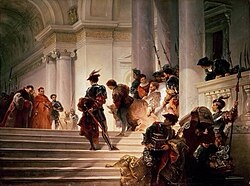
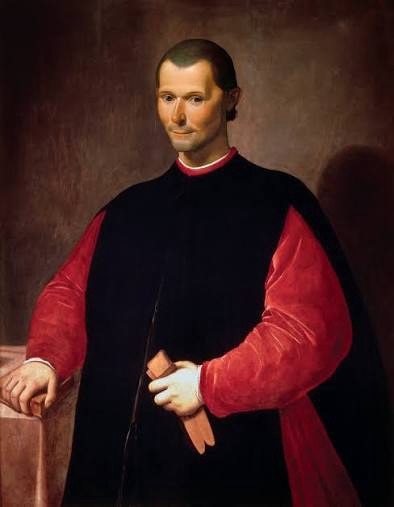
Tag Archives: Cesare Borgia

The Great Borgia Scandals

Sex, Incest, Poison, Murder — and What Was Actually True

There are corrupt Renaissance families.

There are murderous Renaissance families.

There are sexually scandalous Renaissance families.

And then there are the Borgias.

Five centuries after their political power disappeared, the name still conjures images of poisoned wine, murdered husbands, naked Vatican banquets, incestuous siblings, illegitimate papal children and corpses mysteriously appearing in the River Tiber.

Some accusations are nonsense.

Some are probably propaganda.

Some remain genuinely mysterious.

And rather inconveniently for anyone attempting to rehabilitate the Borgias, some of the scandals are substantially true.

So rather than simply repeating the stories, let us put the Borgias on trial.

Scandal One: The Pope Had Children

Verdict: GUILTY

There is no serious dispute here.

Before becoming Pope Alexander VI, Rodrigo Borgia fathered several children.

His long-term mistress Vannozza dei Cattanei was mother to the most famous Borgia siblings:

Cesare.

Juan — or Giovanni.

Lucrezia.

Gioffre.

Rodrigo acknowledged them and promoted their interests.

Nor did becoming pope suddenly produce celibacy.

Alexander continued to be associated with women, most famously the beautiful Giulia Farnese.

The scandal therefore isn’t that hostile propagandists invented Alexander’s sexual life.

They didn’t need to.

The pope really did have children.

Scandal Two: Giulia Farnese Slept With the Pope

Verdict: ALMOST CERTAINLY GUILTY

Giulia Farnese became famous as Giulia la Bella — Julia the Beautiful.

She was young.

Alexander was considerably older.

Their relationship was widely recognised.

But the affair becomes much more interesting when we look at Giulia’s family.

Her brother was Alessandro Farnese.

Alexander made Alessandro a cardinal in 1493.

This naturally produced the mocking suggestion that Alessandro owed his red hat to his sister’s bed.

He was even derided as the “petticoat cardinal.”

And then history produced one of its wonderful twists.

Alessandro Farnese eventually became:

Pope Paul III.

Yes.

The brother of Alexander VI’s mistress became pope.

And Paul III later commissioned Michelangelo to undertake the Last Judgment in the Sistine Chapel.

There is tonight’s Borgia–Michelangelo connection.

Scandal Three: Alexander Bought the Papacy

Verdict: VERY POSSIBLY — BUT WITH QUALIFICATIONS

The conclave of 1492 was surrounded by accusations of simony — buying ecclesiastical office.

Rodrigo Borgia certainly deployed patronage and promises aggressively.

His opponents accused him of effectively purchasing votes.

But conclaves were political affairs.

Cardinals negotiated.

Benefits were promised.

Alliances were constructed.

Alexander’s election therefore cannot simply be reduced to:

Rodrigo handed everyone bags of gold and bought himself a tiara.

But neither should we imagine an entirely spiritual gathering of holy men quietly waiting for divine inspiration.

Renaissance conclaves were politics conducted in scarlet robes.

Scandal Four: Cesare Murdered His Brother Juan

Verdict: NOT PROVEN

Juan Borgia disappeared in June 1497.

His body was recovered from the Tiber.

He had been stabbed.

His money remained with him.

This was murder.

The mystery is who ordered it.

Cesare later benefited enormously because he eventually assumed the secular role Juan had occupied.

That provided motive.

But motive is not evidence.

Other political and personal enemies had plausible reasons to kill Juan.

The earliest evidence does not establish Cesare as the murderer.

Posterity eventually decided that Cesare was precisely the sort of man who would murder his brother.

Perhaps he was.

We still cannot prove that he did.

Scandal Five: Lucrezia Committed Incest With Cesare

Verdict: ALMOST CERTAINLY NOT GUILTY

Here we encounter one of the most damaging Borgia legends.

Lucrezia supposedly had sexual relationships with her brother Cesare.

Sometimes Juan is added.

And occasionally her father Alexander joins the family arrangement.

There is no convincing evidence establishing these incestuous relationships.

The accusation emerged particularly viciously during the destruction of Lucrezia’s first marriage.

Her husband Giovanni Sforza was being publicly humiliated.

The Borgias claimed the marriage had never been consummated.

The implication was obvious:

Giovanni was impotent.

Giovanni retaliated.

If Lucrezia’s father wanted her back, he suggested, perhaps it was because the pope wanted her for himself.

Thus one of history’s greatest sexual scandals may have originated partly in an extremely nasty divorce.

Scandal Six: Giovanni Sforza Was Forced to Declare Himself Impotent

Verdict: SUBSTANTIALLY TRUE

The Borgias had arranged Lucrezia’s marriage to Giovanni Sforza because the alliance was politically useful.

Then it stopped being useful.

Alexander wanted the marriage annulled.

The simplest canonical argument was non-consummation.

Giovanni resisted.

Understandably.

Accepting the annulment effectively required accepting public humiliation concerning his sexual capacity.

Eventually the marriage was annulled.

Lucrezia was declared a virgin.

And Giovanni Sforza went away furious.

One should never underestimate the historical consequences of publicly questioning a Renaissance man’s performance in bed.

Scandal Seven: Lucrezia Had a Secret Child

Verdict: SOMETHING VERY STRANGE HAPPENED

Now we reach one of the great Borgia mysteries.

A boy named Giovanni Borgia appeared.

He became known as the Infans Romanus — the Roman Infant.

And then came two extraordinary papal documents.

In one, the boy was described as Cesare’s son.

In another, Alexander VI acknowledged the boy as his own.

Two fathers.

One child.

Both Borgias.

Naturally historians began asking:

Who was the mother?

One theory eventually implicated Lucrezia.

That produced the perfect Borgia scandal:

Was Giovanni the child of Lucrezia and Cesare?

Lucrezia and Alexander?

Someone else entirely?

There is no solid evidence proving Lucrezia was Giovanni’s mother.

But the contradictory documentation surrounding his paternity ensured that rumours flourished.

The Borgias had effectively manufactured their own mystery.

Scandal Eight: Pedro Calderón Ended Up in the Tiber

Verdict: DEAD — CIRCUMSTANCES SUSPICIOUS

During the period surrounding Lucrezia’s marital difficulties, a young Spaniard in Alexander’s household named Pedro Calderón — known as Perotto — became associated with her.

Rumours circulated.

Then Perotto disappeared.

His body was reportedly recovered from the Tiber.

A female servant connected with Lucrezia also died.

Cesare was suspected.

Did Perotto have an affair with Lucrezia?

Was she pregnant?

Was he murdered to protect the family’s reputation?

The evidence does not permit certainty.

But yet another inconvenient body had appeared in Roman water.

The Tiber was becoming alarmingly useful to the Borgias.

Scandal Nine: Cesare Murdered Lucrezia’s Second Husband

Verdict: VERY PROBABLY GUILTY

Lucrezia’s second husband was Alfonso of Aragon.

Initially the marriage suited Borgia diplomacy.

Then Alexander and Cesare shifted politically towards France.

Alfonso became inconvenient.

In July 1500 he was attacked and seriously wounded.

He survived.

Lucrezia helped nurse him.

Then in August he was killed.

Cesare’s feared associate Micheletto Corella was intimately connected with the killing.

Cesare apparently justified Alfonso’s death by claiming Alfonso had plotted against him.

Whatever the precise sequence, historians generally regard Cesare’s responsibility as highly probable.

Lucrezia was reportedly devastated.

This is one Borgia murder that requires relatively little later embellishment.

Scandal Ten: The Banquet of Chestnuts

Verdict: POSSIBLY BASED ON A REAL EVENT — DETAILS DISPUTED

31 October 1501.

The Vatican.

Cesare Borgia.

Courtesans.

Nudity.

Chestnuts.

Sexual contests.

Prizes.

Welcome to the Banquet of Chestnuts.

The famous account appears in the diary associated with Johann Burchard, papal master of ceremonies.

According to the notorious description, courtesans danced after dinner, eventually naked. Chestnuts were scattered across the floor and the women gathered them while crawling among the guests.

The evening supposedly culminated in sexual contests with prizes.

It is difficult to imagine a story better designed for the Borgia reputation.

Yet historians remain cautious.

Questions surround the transmission and interpretation of the account, and later retellings enthusiastically expanded Borgia sexual mythology.

Something scandalous may indeed have occurred.

Whether every delicious detail repeated today should be accepted unquestioningly is another matter.

Historical verdict:

Keep the chestnuts. Apply caution to the orgy.

Scandal Eleven: The Borgias Had Their Own Secret Poison — Cantarella

Verdict: PROBABLY LEGEND

Cantarella became the great Borgia murder weapon.

A mysterious poison.

Odourless.

Deadly.

Convenient.

Alexander and Cesare supposedly used it to eliminate wealthy cardinals and political enemies.

The problem is that convincing contemporary evidence for a special Borgia poison called cantarella is lacking.

Poison existed.

Poisoning occurred.

Renaissance rulers feared poisoning.

Arsenic and other toxic substances were known.

But the legendary Borgia poison became increasingly elaborate as stories accumulated.

Cantarella belongs more securely to Borgia mythology than documented Borgia pharmacology.

Scandal Twelve: The Borgias Poisoned Wealthy Cardinals and Stole Their Property

Verdict: UNPROVEN

This story made excellent political propaganda.

Invite cardinal to dinner.

Poison cardinal.

Cardinal dies.

Pope acquires property.

Repeat.

There were certainly financial incentives surrounding ecclesiastical appointments and deaths.

Alexander was certainly financially acquisitive.

But systematic poisoning of cardinals as a Borgia fundraising programme is not established by reliable evidence.

Once again:

a plausible Renaissance fear became a historical certainty through repetition.

Scandal Thirteen: Alexander Accidentally Drank His Own Poison

Verdict: ALMOST CERTAINLY FALSE

This is perhaps the most satisfying Borgia legend.

Alexander and Cesare supposedly planned to poison a wealthy cardinal.

The poisoned wine was accidentally served to them.

Cesare survived.

Alexander died.

The great poisoner destroyed by his own poison.

Perfect.

Too perfect.

Alexander and Cesare both became seriously ill during the Roman summer of 1503.

Malaria or another infectious fever provides a much more plausible explanation.

Alexander died.

Cesare survived.

But history loves poetic justice.

So fever became poison.

Scandal Fourteen: Alexander’s Corpse Became Monstrous Because the Devil Claimed Him

Verdict: DECOMPOSITION

Accounts of Alexander’s body are gruesome.

It became swollen.

Darkened.

Difficult to handle.

Later anti-Borgia writers saw divine judgement.

There is a simpler explanation.

Rome.

August.

Heat.

Disease.

A dead body.

Rapid decomposition is not evidence of Satan.

Though admittedly Satan makes better television.

Scandal Fifteen: Cesare Had His Enemies Strangled

Verdict: GUILTY

Unlike the poisoning legends, Cesare’s use of political killing is well documented.

The events at Senigallia in 1502 demonstrate it spectacularly.

Cesare’s rebellious commanders believed reconciliation had occurred.

Cesare received them.

Then arrested them.

Vitellozzo Vitelli and Oliverotto da Fermo were strangled.

Others subsequently died.

Machiavelli was nearby observing Cesare’s methods.

This is important.

When reliable evidence demonstrates Cesare’s brutality, we should accept it.

Rejecting Borgia mythology does not require sanitising the Borgias.

Scandal Sixteen: Cesare Had His Own Governor Cut in Half and Displayed in Public

Verdict: ESSENTIALLY GUILTY

Remirro de Orco had governed the Romagna brutally on Cesare’s behalf.

Then Cesare needed to distance himself from that brutality.

The people of Cesena awoke to discover Remirro’s mutilated corpse publicly displayed.

Machiavelli later used the episode in The Prince.

The political message was magnificent in its horror.

Order had been restored.

The hated enforcer was dead.

Cesare could present himself as the source of justice rather than cruelty.

This was Renaissance public relations performed with a corpse.

Scandal Seventeen: Lucrezia Was a Serial Poisoner

Verdict: NOT GUILTY

The famous image of Lucrezia carrying poison inside a hollow ring belongs largely to later legend.

There is no convincing evidence that Lucrezia systematically poisoned people.

Indeed, as she grew older and escaped the immediate orbit of Alexander and Cesare, she developed into a respected duchess at Ferrara.

She administered estates.

Patronised artists.

Managed correspondence.

Participated in government.

And became associated with one of Renaissance Italy’s sophisticated courts.

The poisoner Lucrezia is largely a creation of hostile propaganda and later literature.

The historical woman is much more interesting.

Scandal Eighteen: Lucrezia Was Blonde, Beautiful and Irresistible

Verdict: PROBABLY BLONDE — BEAUTY REMAINS SUBJECTIVE

A lock of hair traditionally associated with Lucrezia survives in Milan and appears golden-blonde.

Contemporary descriptions praise her appearance.

But even here legend intervenes.

The seductive Borgia femme fatale required extraordinary beauty.

Later painters and filmmakers supplied it enthusiastically.

Our image of Lucrezia has therefore become another mixture of documentation and fantasy.

Scandal Nineteen: Alexander VI Was the Worst Pope in History

Verdict: COMPETITION IS EXTREMELY STRONG

Alexander was unquestionably problematic.

Sexual relationships.

Children.

Nepotism.

Dynastic politics.

Financial manipulation.

Political violence.

But the title “worst pope ever” requires navigating some formidable competition.

Earlier medieval papal history contains murders, warfare, imprisonment, political corruption and extraordinary sexual allegations.

Alexander’s distinction is partly that his scandals occurred during an age of expanding printing and increasingly sophisticated political propaganda.

The Borgias became internationally famous at precisely the historical moment when reputations could circulate more efficiently.

They were badly behaved.

They were also badly reviewed.

Scandal Twenty: Were the Borgias Really Unusually Evil?

Verdict: YES AND NO

Here lies the central problem.

If we compare the Borgias with modern expectations of religious leadership:

appalling.

If we compare them with the ideal standards Christianity itself proclaimed:

frequently appalling.

If we compare them with Renaissance Italian politics:

Things become considerably murkier.

The Sforza murdered.

The Medici plotted.

The Orsini fought.

The Colonna fought.

Venice employed espionage.

Florence executed conspirators.

France invaded Italy.

Spain invaded Italy.

Popes commanded armies.

Political marriages were arranged and discarded.

Assassination was an accepted political possibility.

The Borgias were ruthless participants in a ruthless system.

They were not innocent victims of history.

But neither were they supernatural aberrations dropped into an otherwise peaceful Renaissance.

Why the Scandals Survived

The Borgias possessed four disastrous characteristics.

They were powerful.

They were foreigners.

They had enemies.

And they lost.

Once Alexander died and Cesare’s state collapsed, their opponents controlled much of the subsequent narrative.

The family became useful shorthand for everything supposedly corrupt about the Renaissance papacy.

Then came historians.

Novelists.

Playwrights.

Opera.

Film.

Television.

Every generation rediscovered the Borgias.

Every generation added another layer.

Eventually the Borgias ceased being merely a family.

They became a genre.

The Final Scorecard

Definitely or substantially true:

Alexander fathered children.

Alexander maintained mistresses.

Giulia Farnese was almost certainly his mistress.

Alexander promoted relatives.

Cesare abandoned the cardinalate for secular power.

Cesare used political assassination.

Cesare betrayed and killed opponents.

Alfonso of Aragon was probably killed on Cesare’s orders.

Remirro de Orco was brutally executed and displayed.

Cesare’s enemies at Senigallia were deliberately trapped and killed.

Possible but unproven:

Cesare murdered Juan.

Lucrezia had a sexual relationship with Perotto.

Cesare ordered Perotto’s death.

Some version of the Banquet of Chestnuts occurred as described.

Probably false or greatly exaggerated:

Cesare and Lucrezia committed incest.

Alexander had sex with Lucrezia.

Lucrezia was a serial poisoner.

The Borgias possessed a unique secret poison called cantarella.

Alexander and Cesare systematically poisoned cardinals for their property.

Alexander accidentally drank poison intended for someone else.

The condition of Alexander’s corpse demonstrated supernatural evil.

The Greatest Borgia Scandal

Perhaps the greatest scandal surrounding the Borgias is ultimately this:

We didn’t need to invent anything.

Alexander really was a pope with acknowledged children.

Cesare really was a cardinal who became a warlord.

Lucrezia really was repeatedly married for political advantage.

Her second husband really was murdered.

Juan really was pulled dead from the Tiber.

Cesare really did lure political opponents into a trap and have them strangled.

A brutally murdered governor really was displayed publicly.

Machiavelli really did watch Cesare operate.

And the brother of Alexander’s mistress really did become pope.

The historical Borgias were already extraordinary.

But scandal possesses its own momentum.

A suspicious death becomes poison.

A close sibling relationship becomes incest.

A mistress becomes a prostitute.

A political murder becomes pathological bloodlust.

A decomposing corpse becomes evidence of Satan.

And eventually history disappears beneath the legend.

That is why the Borgias remain fascinating.

Not because they were innocent.

Not because every accusation was true.

But because their genuine behaviour was sufficiently outrageous that the impossible stories began to sound perfectly believable.

And perhaps that is the ultimate achievement of the Borgia family:

five hundred years later, when someone tells us another outrageous story about them, our first reaction is still —

“Well… it was the Borgias.”

Tim Alderman ©️2026

Sources and Further Reading

Johann Burchard, Liber Notarum (At the Court of the Borgia), contemporary papal ceremonial diary and a major source for Alexander VI’s court.

Niccolò Machiavelli, The Prince, particularly Chapter VII.

Niccolò Machiavelli, diplomatic correspondence and writings concerning Cesare Borgia and the events at Senigallia.

Michael Mallett, The Borgias: The Rise and Fall of the Most Infamous Family in History.

Sarah Bradford, Cesare Borgia: His Life and Times.

Sarah Bradford, Lucrezia Borgia: Life, Love and Death in Renaissance Italy.

Christopher Hibbert, The Borgias and Their Enemies.

G. J. Meyer, The Borgias: The Hidden History.

Encyclopaedia Britannica, biographies of Alexander VI, Cesare Borgia and Lucrezia Borgia.

Vatican Museums, historical material concerning the Borgia Apartments, Alexander VI and Renaissance papal patronage.

For the wider political context, studies of Renaissance Italy, the Italian Wars and the papacy are essential for distinguishing genuinely unusual Borgia conduct from behaviour common among contemporary ruling dynasties.
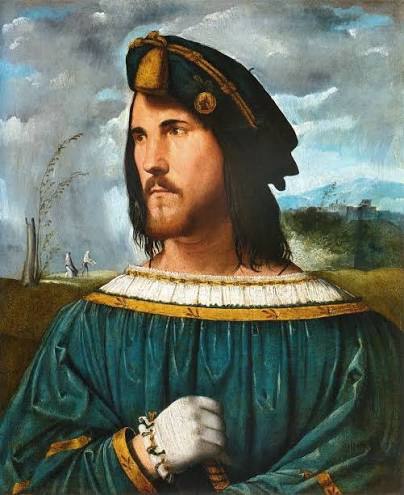
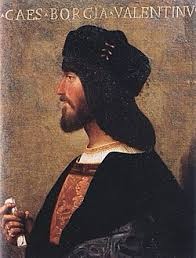
Cesare Borgia: Murderer, Machiavellian Prince and Renaissance Bad Boy

Separating the Man from the Myth

Few surnames in European history have acquired quite the reputation of Borgia.

Poison.

Incest.

Murder.

Corruption.

Sex.

Nepotism.

Assassination.

A pope with mistresses and children.

A beautiful daughter supposedly sharing her father’s and brother’s beds.

And towering above much of the legend stands Cesare Borgia: cardinal turned warlord, ruthless conqueror, suspected fratricide and one of the men who helped inspire Niccolò Machiavelli’s The Prince.

It is an irresistible story.

There is only one problem.

Some of it probably isn’t true.

The Borgias were certainly corrupt by modern standards. Pope Alexander VI openly promoted his children. Cesare employed violence and political treachery. Enemies sometimes had an unfortunate tendency to die. Vast sums of church money and influence served family ambitions.

Yet Renaissance Italy was already violent, nepotistic and politically ruthless before the Borgias arrived.

What made the Borgias exceptional was partly what they did.

But their enduring reputation was also shaped by something equally powerful:

Cesare Borgia

their enemies told the story afterwards.

Separating Cesare Borgia the historical man from Cesare Borgia the Renaissance monster therefore becomes an intriguing detective story.

And the historical Cesare hardly needs fictional embellishment.

The Pope’s Son

Cesare was born around 1475, the son of Cardinal Rodrigo Borgia and his mistress Vannozza dei Cattanei.

That sentence alone requires us to abandon modern assumptions about the Renaissance papacy.

Rodrigo was a senior churchman.

He also fathered several children.

Cesare’s siblings included Giovanni — usually called Juan — Lucrezia and Gioffre.

Rodrigo acknowledged them.

Then, in 1492, Rodrigo Borgia was elected pope.

He became Pope Alexander VI.

The children of a cardinal had suddenly become the children of the pope.

And Alexander intended to use them.

Nepotism Was Not Invented by the Borgias

Alexander VI is notorious for promoting relatives.

He did.

But nepotism was deeply embedded within Renaissance papal politics.

Popes had no legitimate dynastic heirs.

Yet they needed trustworthy political allies.

Who could be trusted more than family?

The Italian word nipote, meaning nephew, became intimately associated with papal favour because popes routinely elevated “nephews” and other relatives.

Sometimes those nephews were actually sons.

The Borgias therefore did not invent papal nepotism.

They practised it spectacularly.

Cesare was directed towards the church.

His brother Juan was groomed for secular dynastic leadership.

Cesare became a bishop while still extremely young.

Then an archbishop.

Then, in 1493, a cardinal.

He was approximately eighteen.

Calling this a meteoric ecclesiastical career would be an understatement.

Dad was pope.

Cesare Didn’t Want to Be a Cardinal

Cesare appears to have been much better suited to politics and warfare than church administration.

His father’s original arrangement created a division:

Juan would become the soldier.

Cesare would become the churchman.

Then something happened that changed everything.

Juan Borgia died.

Violently.

A Body in the Tiber

On the night of 14 June 1497, Juan Borgia disappeared.

The following day he was missing.

Eventually witnesses were questioned.

A man reported seeing several figures throwing a body into the River Tiber.

The river was searched.

Juan’s corpse was recovered.

He had been stabbed repeatedly.

His purse still contained money.

Robbery therefore seemed unlikely.

Rome erupted in rumours.

Who murdered the pope’s son?

Political enemies?

The Orsini family?

A jealous husband?

Someone involved in a sexual dispute?

Or Juan’s own brother?

Cesare.

Did Cesare Murder His Brother?

This is perhaps the most famous accusation against Cesare Borgia.

And we simply do not know.

Cesare certainly benefited from Juan’s death.

With Juan gone, Cesare eventually assumed the secular military role previously intended for his brother.

That makes an excellent motive.

It does not make evidence.

Importantly, suspicion of Cesare does not appear to have dominated the earliest accounts of the murder. Other suspects and political explanations circulated.

The image of Cesare murdering Juan became much stronger later.

Could he have done it?

Certainly.

Can historians demonstrate that he did?

No.

This distinction matters enormously when dealing with the Borgias.

Possible is not proven.

Unfortunately for Cesare’s reputation, later writers frequently converted the first into the second.

The Cardinal Takes Off His Red Hat

In 1498 Cesare did something extraordinary.

He resigned from the College of Cardinals.

He became the first cardinal in history to formally surrender the cardinalate.

The churchman became a secular prince.

And Cesare finally entered the world for which he seems to have been considerably better suited.

Politics.

Diplomacy.

War.

France Enters the Story

Cesare’s ambitions required powerful allies.

France provided them.

King Louis XII wanted papal cooperation concerning his marriage and his claims in Italy.

Alexander VI wanted advancement for Cesare.

A deal emerged.

Cesare travelled to France.

Louis XII made him Duke of Valentinois.

Hence one of Cesare’s famous nicknames:

Il Valentino.

Cesare also married Charlotte d’Albret, sister of the King of Navarre.

The pope’s son was becoming a European dynastic figure.

Cesare the Conqueror

Now Cesare began building something extraordinary.

With French support and papal authority, he launched military campaigns through the Romagna and surrounding territories.

One ruler after another fell.

Imola.

Forlì.

Pesaro.

Rimini.

Faenza.

Other territories followed.

Cesare combined military force with political calculation.

He could negotiate.

Threaten.

Bribe.

Besiege.

Reorganise.

And betray.

This was not simply random violence.

Cesare was attempting to construct a territorial state in central Italy.

And for several years he was remarkably successful.

Enter Caterina Sforza

One of Cesare’s most formidable opponents was Caterina Sforza.

She ruled Imola and Forlì.

She was no helpless Renaissance damsel.

Caterina had survived assassinations, political upheaval and military threats and had developed a reputation for extraordinary determination.

Cesare eventually defeated her.

She was captured.

And here we encounter another Borgia scandal.

Cesare was accused of sexually abusing or raping Caterina during her captivity.

The evidence is contested and the surviving accounts are politically charged.

Once again, the responsible historical position is uncomfortable:

The allegation existed.

Cesare was capable of brutality.

But certainty exceeds the evidence.

That distinction does not exonerate him.

It simply prevents allegation from becoming automatic fact.

The Man Who Terrified the Romagna

Conquest creates another problem.

Someone has to govern what has been conquered.

The Romagna had suffered from factional conflict, violence and weak government.

Cesare appointed Ramiro de Lorqua — usually known as Remirro de Orco — to impose order.

Remirro did so brutally.

Then, in December 1502, the inhabitants of Cesena awoke to an extraordinary sight.

Remirro’s body had been cut in two and displayed publicly in the town square.

Beside it lay a bloody knife and block.

Who ordered it?

Almost certainly Cesare.

Why?

That is where Machiavelli becomes fascinated.

Machiavelli Watches Cesare

Niccolò Machiavelli was in Cesare’s territory as a Florentine diplomatic representative.

He watched.

He listened.

He reported.

And years later, when writing The Prince, he remembered.

Machiavelli described Cesare’s strategy in the Romagna.

A brutal subordinate had imposed order.

The population hated the brutality.

Cesare then eliminated the subordinate.

The cruelty became associated with Remirro.

The restoration of order became associated with Cesare.

It was political theatre.

Terrifying political theatre.

And Machiavelli recognised its effectiveness.

This is important because Machiavelli did not simply invent an abstract ruthless prince.

He had watched actual Renaissance politicians operating.

Cesare was one of them.

The Trap at Senigallia

If one incident demonstrates Cesare’s political ruthlessness, it is what happened at Senigallia at the end of 1502.

Several of Cesare’s commanders and political associates had rebelled against him.

Among them were Vitellozzo Vitelli and Oliverotto da Fermo.

Eventually reconciliation appeared possible.

Cesare behaved as though peace had returned.

The conspirators came to Senigallia.

Cesare received them.

Then the trap closed.

Vitelli and Oliverotto were seized.

They were strangled.

Others were subsequently killed.

Machiavelli witnessed the political aftermath and wrote an account of Cesare’s methods.

Here we do not require later Borgia propaganda.

Cesare really was capable of calculated political killing.

Did Cesare Poison His Enemies?

Now we reach one of the most persistent Borgia legends.

Cantarella.

According to later stories, the Borgias possessed a secret poison used to eliminate inconvenient enemies.

Sometimes it supposedly appeared as a mysterious white powder.

Sometimes it was slipped into wine.

Sometimes Alexander and Cesare supposedly invited wealthy cardinals to dinner, poisoned them and confiscated their property.

It is wonderful Gothic material.

Evidence for a special Borgia poison called cantarella is extremely weak.

Poisoning certainly occurred in Renaissance Italy.

Fear of poisoning was widespread.

But the image of Cesare wandering around Rome with a proprietary Borgia poison kit belongs substantially to legend.

The Poisoned Banquet

The most spectacular poisoning story concerns Alexander VI’s own death.

According to one version, Alexander and Cesare planned to poison Cardinal Adriano Castellesi.

Unfortunately, the poisoned wine was accidentally served to themselves.

Alexander died.

Cesare survived because he received treatment.

It is almost too perfect.

The poisoner poisoned by his own poison.

Unfortunately for lovers of poetic justice, malaria or another infectious fever provides a considerably more plausible explanation.

Rome in August was notoriously unhealthy.

Both Alexander and Cesare became seriously ill.

Alexander died on 18 August 1503.

Cesare survived.

And Cesare’s political world collapsed almost immediately.

The Corpse of Alexander VI

Even without poison, Alexander’s death generated lurid descriptions.

His body decomposed rapidly in the summer heat.

Contemporary accounts describe swelling and discoloration.

Later writers transformed the decomposing corpse into almost supernatural evidence of evil.

The devil had apparently come for the Borgia pope.

There is a more mundane explanation.

Dead bodies decompose.

Rome was extremely hot.

Alexander had been seriously ill.

But when someone already possesses a reputation for wickedness, even decomposition becomes propaganda.

And What About Lucrezia?

No discussion of Cesare can avoid his sister.

Lucrezia Borgia became perhaps the greatest victim of the Borgia legend.

She has been portrayed as poisoner, seductress, incestuous lover and accomplice to murder.

The historical Lucrezia appears considerably more conventional — although conventional for a daughter of Alexander VI was hardly ordinary.

Her marriages were political arrangements.

Her father annulled her first marriage.

Her second husband, Alfonso of Aragon, was attacked in 1500.

He survived.

Then he was murdered.

Suspicion fell heavily upon Cesare.

Did Cesare Murder Lucrezia’s Husband?

This accusation is considerably more plausible than many Borgia legends.

Alfonso’s political usefulness had diminished as papal foreign policy shifted towards France.

After surviving the first attack, he was recovering under Lucrezia’s care.

Then Cesare’s associate Micheletto Corella became involved.

Alfonso was killed, apparently strangled.

Cesare seems to have been responsible or at minimum closely connected with the killing.

The precise circumstances remain disputed.

But here we are on considerably firmer historical ground than with tales of secret poison.

Cesare did not need cantarella.

He had Micheletto.

Cesare and Lucrezia: Incest?

And now we reach the scandal everyone remembers.

Did Cesare have a sexual relationship with his sister?

There is no convincing evidence that he did.

Incest accusations circulated around the Borgia family, particularly during the bitter disputes surrounding the annulment of Lucrezia’s first marriage to Giovanni Sforza.

Sforza had been humiliated.

He retaliated.

Accusations of incest were politically devastating.

They were also extremely difficult to disprove.

Was Lucrezia sexually involved with her father?

No credible evidence demonstrates it.

With Cesare?

Again, no convincing evidence.

With Juan?

Likewise uncertain.

But scandal has greater longevity than documentation.

Five centuries later, the accusation still follows her name.

The Banquet of Chestnuts

Then there is the infamous Banquet of Chestnuts.

According to the account associated with Johann Burchard, master of ceremonies at the papal court, an extraordinary sexual entertainment occurred in the Vatican in October 1501 involving courtesans, naked participants, chestnuts scattered across the floor and prizes supposedly awarded for sexual performance.

Alexander and Cesare were allegedly present.

Historians have long debated the reliability and interpretation of the account.

Some accept that an event of this general character occurred.

Others question details or later embellishment.

What matters is that the story became perfect material for the developing Borgia legend.

Sex.

Vatican.

Pope.

Cesare.

Naked women.

Chestnuts.

Propaganda scarcely needed to improve it.

Though naturally it tried.

The Borgia Apartments

Alexander VI did little to conceal his family.

The magnificent Borgia Apartments in the Vatican proclaimed his dynasty visually.

Pinturicchio decorated them.

Classical mythology, Christian imagery and Borgia symbolism intertwined.

The famous Borgia bull appeared everywhere.

This was Renaissance dynastic self-promotion.

Alexander behaved not merely as pope but as patriarch of a family determined to establish itself permanently among Italy’s ruling dynasties.

That ambition terrified his enemies.

Why Everybody Hated the Borgias

Several factors contributed to their reputation.

First, they were outsiders.

The family originated in Valencia in Spain.

Italian rivals regarded them as foreigners.

Anti-Spanish prejudice helped shape attacks upon them.

Second, Alexander practised nepotism conspicuously.

Third, Cesare genuinely was ruthless.

Fourth, the Borgias accumulated powerful enemies.

The della Rovere family particularly despised them.

And this became crucial after Alexander died.

Pope Julius II

Cardinal Giuliano della Rovere eventually became Pope Julius II.

He had been one of Alexander’s great enemies.

Cesare initially believed he could work with the new pope.

That was a catastrophic miscalculation.

Julius had little intention of preserving Cesare’s territorial empire.

Without his father controlling the papacy, Cesare discovered how fragile his power actually was.

The Borgia state began collapsing.

The Great Weakness in Cesare’s Plan

Machiavelli recognised the problem.

Cesare had demonstrated enormous political skill.

But his power depended fundamentally upon something he could not control:

his father’s survival.

Alexander was pope.

Papal authority supported Cesare’s conquests.

Then Alexander suddenly died while Cesare himself was seriously ill.

Had Cesare been healthy at precisely that moment, history might have unfolded differently.

Machiavelli considered this terrible fortune.

Cesare had prepared for many possibilities.

He had not adequately prepared for being incapacitated when his father died.

Fortune — fortuna — had intervened.

Captivity

Cesare’s enemies closed in.

He was arrested.

Released.

Arrested again.

Eventually he was sent to Spain.

He was imprisoned in the castle of La Mota.

For the man who had terrorised central Italy, it was an extraordinary reversal.

But Cesare Borgia was not finished.

The Great Escape

In 1506 Cesare escaped.

He descended from the fortress using a rope.

The escape went wrong and he fell, suffering injuries.

Nevertheless, he got away.

He travelled to Navarre, where his brother-in-law King John III ruled.

Cesare once again became a soldier.

But the grand Borgia dream was gone.

The Final Battle

On 12 March 1507 Cesare participated in fighting near Viana in Navarre.

He pursued retreating enemies.

He became separated from his men.

He was surrounded.

Cesare Borgia was killed.

He was approximately thirty-one years old.

His body was reportedly found stripped of armour and clothing.

The man who had once dreamed of carving out a principality across Italy died violently beside a road in Spain.

It was an oddly appropriate ending.

Was Cesare a Monster?

By modern standards, Cesare committed appalling acts.

He used assassination.

He betrayed allies.

He conquered territories militarily.

He participated in brutal Renaissance politics.

He almost certainly ordered killings.

But calling him uniquely monstrous creates another problem.

Renaissance Italy was filled with political violence.

The Medici used violence.

The Sforza used violence.

The Orsini used violence.

The French used violence.

The Spanish used violence.

Popes employed armies.

City-states executed conspirators.

Rulers eliminated rivals.

Cesare was exceptionally effective at playing a game many others were already playing.

What distinguished him was partly his ambition.

He attempted to turn temporary papal family power into a permanent territorial dynasty.

For several years, it almost worked.

The Black Legend

After the Borgias fell, their enemies had little incentive to preserve their reputations.

Stories accumulated.

Every suspicious death became poisoning.

Every sexual rumour became incest.

Every political betrayal became evidence of pathological evil.

Cesare gradually transformed from Renaissance prince into something approaching a Gothic villain.

Lucrezia became a seductive poisoner.

Alexander became Satan wearing the papal tiara.

The Borgias became shorthand for corruption.

Some of this reputation was deserved.

Much of it was exaggerated.

And separating the two remains difficult because the Borgias themselves operated in an environment where rumour was a political weapon.

And Then Came Machiavelli

This brings us to the man standing quietly nearby taking notes.

Niccolò Machiavelli.

He met Cesare.

Observed him.

Negotiated around him.

Reported on him.

And remembered him.

When Machiavelli later wrote The Prince, Cesare became one of his most important examples of political leadership.

Not because Machiavelli necessarily admired everything he did.

And certainly not because The Prince simply tells rulers to behave like psychopaths.

Machiavelli was interested in a far more disturbing question:

What actually works?

If cruelty produces stability, can cruelty be politically effective?

If generosity destroys a ruler’s finances, is generosity always virtuous government?

If keeping a promise destroys the state, should a ruler keep it?

If fear protects authority more reliably than love, which should a ruler choose?

These questions eventually produced an adjective:

Machiavellian.

Five centuries later we still use it.

And standing behind part of that word is the extraordinary young man Machiavelli watched conquering the Romagna:

Cesare Borgia.

Legend Versus Evidence

So let us put the great Borgia scandals on trial.

Cesare murdered his brother Juan:
Possible, but unproven.

Cesare arranged the killing of Lucrezia’s husband Alfonso:
Strongly plausible and supported by substantial contemporary evidence.

Cesare used political assassination:
Yes.

Cesare betrayed and killed former allies at Senigallia:
Yes.

Cesare possessed a secret poison called cantarella:
Probably legend or substantial embellishment.

Alexander and Cesare accidentally drank poison intended for someone else:
Highly doubtful; infectious disease is considerably more plausible.

Cesare had an incestuous relationship with Lucrezia:
No convincing evidence.

The Borgias participated in spectacularly sexual Vatican entertainments:
Some contemporary evidence exists, particularly surrounding the Banquet of Chestnuts, but individual details and later embellishments require caution.

Cesare was unusually ruthless:
Yes.

Cesare was uniquely evil by Renaissance standards:
Much harder to sustain.

And perhaps that is what makes him more interesting than the monster of legend.

The fictional Cesare Borgia is predictable.

He poisons everyone.

Sleeps with everyone.

Kills everyone.

Plots constantly.

The historical Cesare is considerably more complicated.

He was intelligent.

Ambitious.

Militarily capable.

Politically ruthless.

Occasionally brilliant.

Frequently brutal.

Spectacularly fortunate.

Then catastrophically unlucky.

He benefited enormously from nepotism.

He attempted something politically remarkable.

And he ultimately discovered that an empire constructed upon one man’s possession of the papacy could disappear almost as quickly as it had arisen.

Machiavelli watched.

Europe remembered.

And the Borgias became immortal.

Not because every terrible story told about them was true.

But because enough of the true ones were terrible already.

Tim Alderman ©️2026

Sources and Further Reading

Niccolò Machiavelli, The Prince, particularly Chapter VII and its discussion of Cesare Borgia.

Niccolò Machiavelli, diplomatic writings and Description of the Methods Adopted by Duke Valentino When Murdering Vitellozzo Vitelli, Oliverotto da Fermo, the Signor Pagolo and the Duke di Gravina Orsini.

Johann Burchard, Liber Notarum (At the Court of the Borgia), an indispensable contemporary source that nevertheless requires careful contextual reading.

Michael Mallett, The Borgias: The Rise and Fall of the Most Infamous Family in History.

Christopher Hibbert, The Borgias and Their Enemies.

Sarah Bradford, Cesare Borgia: His Life and Times.

Sarah Bradford, Lucrezia Borgia: Life, Love and Death in Renaissance Italy.

G. J. Meyer, The Borgias: The Hidden History.

The Encyclopaedia Britannica, biographical material on Cesare Borgia, Alexander VI and Lucrezia Borgia.

Machiavelli’s correspondence as Florentine envoy during Cesare’s campaigns provides particularly valuable contemporary evidence for Cesare’s political and military behaviour.

The Borgia Popes: Power, Poison and the Black Legend of Renaissance Rome

Few names in history evoke such images of corruption, intrigue and murder as the Borgias. To generations of writers, artists and filmmakers they have become the ultimate symbol of a decadent Renaissance papacy—where cardinals schemed, enemies were poisoned, illegitimate children became princes, and the throne of Saint Peter was treated as another prize in the struggle for political power.

Pope Alexander VI

Yet the truth is more complicated than legend. While the Borgia family undoubtedly practised nepotism and political manipulation on a grand scale, many of the darker stories surrounding them were amplified by enemies who had every reason to destroy their reputation.

The Borgias remain one of history’s most fascinating dynasties because they sit at the intersection of religion, politics, warfare and myth.

From Spain to Italy

Unlike many of the great Roman families, the Borgias were outsiders.

The family originated in the Kingdom of Aragon in what is now Spain. Their original surname was Borja, later Italianised to Borgia after family members established themselves in Italy.

Their rise began with Alfonso de Borja, a respected jurist and diplomat whose intelligence and political skill earned him the favour of kings and popes.

In 1455 he became Pope Callixtus III.

Pope Callixtus III (1455–1458)

Callixtus III is remembered today for two very different reasons.

The first was his attempt to organise a crusade against the advancing Ottoman Empire after the fall of Constantinople.

The second—and historically more significant—was his extraordinary promotion of family members.

Like many Renaissance popes, he believed trusted relatives were more reliable than ambitious Roman nobles.

Among those relatives was a brilliant young nephew named Rodrigo Borgia.

At only twenty-five years of age Rodrigo became a cardinal.

Few appointments better illustrate Renaissance nepotism.

Pope Callixtus III

Rodrigo Borgia

If Callixtus laid the foundations, Rodrigo built the dynasty.

Exceptionally intelligent, politically gifted and personally charming, Rodrigo spent more than thirty years learning every aspect of Vatican government.

He became one of the wealthiest and most influential cardinals in Europe.

He also ignored clerical celibacy.

Rodrigo openly fathered several children, including:

Cesare Borgia

Juan (Giovanni) Borgia

Lucrezia Borgia

Gioffre Borgia

Although shocking by modern standards, many Renaissance churchmen maintained mistresses and families with relatively little secrecy.

The scandal lay less in the existence of children than in the political advantages bestowed upon them.

Pope Alexander VI

In 1492 Rodrigo was elected pope, taking the name Alexander VI.

His election has long been associated with accusations of bribery.

Whether votes were literally purchased remains debated, but there is little doubt that promises, patronage and political bargaining influenced papal elections during this era.

Alexander VI quickly transformed the Vatican into the headquarters of the Borgia family.

His children became central figures in Italian politics.

Cesare Borgia

Cesare Borgia

No member of the family has attracted greater fascination than Cesare Borgia.

Originally destined for the Church, he resigned his cardinalship after the death of his brother Juan.

This alone was almost unprecedented.

Cesare instead became a military commander determined to carve out a principality in central Italy.

Supported by papal wealth and diplomacy, he conquered city after city.

His ruthless efficiency attracted the admiration of the Florentine diplomat Niccolò Machiavelli.

Many historians believe Cesare became one of the principal inspirations for The Prince.

Lucrezia Borgia

If any Borgia has suffered from historical exaggeration, it is Lucrezia.

Popular legend portrays her as a beautiful poisoner who murdered rivals with secret toxins concealed in rings.

Evidence for these stories is remarkably thin.

In reality, Lucrezia was married several times to strengthen Borgia political alliances.

These marriages often ended in tragedy—not because she engineered them, but because shifting alliances made husbands politically inconvenient.

Later in life she became Duchess of Ferrara and earned respect as a capable administrator, patron of the arts and devoted mother.

Modern historians increasingly regard her as one of the principal victims of the Borgia legend rather than one of its villains.

Lucrezia Borgia

Poison and Murder

No discussion of the Borgias can avoid poison.

Almost every dramatic retelling depicts elaborate murders using a mysterious poison known as cantarella.

The problem is evidence.

While poison undoubtedly existed in Renaissance Italy, historians remain divided over whether the Borgias possessed a unique poison or whether later writers embroidered rumours into sensational legend.

Political assassination certainly occurred.

Whether the Borgias were uniquely murderous is another matter entirely.

Their enemies proved equally capable of violence.

Nepotism on a Grand Scale

The Borgias perfected Renaissance nepotism.

Family members received:

Cardinals’ hats.

Duchies.

Military commands.

Lucrative church offices.

Vast estates.

This was hardly unique.

Nearly every Renaissance pope advanced relatives.

The Borgias simply did it more openly—and more successfully—than most.

The French Invasions

Alexander VI’s pontificate coincided with the beginning of the Italian Wars.

France, Spain, the Holy Roman Empire and numerous Italian states competed for dominance.

The Pope constantly shifted alliances in an attempt to preserve both the Papal States and Borgia interests.

This balancing act required diplomacy, deception and occasionally outright ruthlessness.

The Sudden Collapse

Alexander VI died suddenly in August 1503.

Rumours immediately circulated that he had accidentally poisoned himself while attempting to poison someone else.

The story is irresistible.

It is also unsupported.

Modern scholars generally suspect malaria or another infectious illness, which was widespread in Rome during the summer.

Without Alexander, Cesare rapidly lost political support.

Within a few years the extraordinary Borgia empire had collapsed.

The Black Legend

Why are the Borgias remembered as uniquely evil?

Part of the answer lies in propaganda.

Their enemies included powerful Italian families, hostile cardinals, foreign rulers and later Protestant writers eager to demonstrate the corruption of Renaissance Catholicism.

The resulting “Black Legend” painted every rumour as fact.

Incest.

Poison.

Orgies.

Murder.

Secret chambers.

Some stories contain kernels of truth.

Others have no contemporary evidence whatsoever.

Separating history from legend remains one of the great challenges facing Borgia scholars.

Their Lasting Legacy

Ironically, the Borgias helped create the conditions that eventually led to reform.

The spectacle of Renaissance papal politics fuelled growing criticism of the Church.

Only fourteen years after Alexander VI’s death, Martin Luther published his Ninety-five Theses.

While the Reformation had many causes, memories of Renaissance excess undoubtedly weakened confidence in papal leadership.

Today the Borgias survive less as historical figures than as cultural icons.

Novels, films and television series continue to portray them as Renaissance supervillains.

The truth is both less sensational and more interesting.

They were ambitious politicians operating within an age where dynastic power, family loyalty and political violence were accepted tools of government. Their methods were often ruthless, but rarely unique.

The Borgias did not invent corruption within the Renaissance Church.

They simply became its most enduring symbol.

Tim Alderman ©️2026

Sources

Christopher Hibbert, The Borgias and Their Enemies.

Sarah Bradford, Cesare Borgia: His Life and Times.

Sarah Bradford, Lucrezia Borgia.

G. J. Meyer, The Borgias: The Hidden History.

Niccolò Machiavelli, The Prince.

John Julius Norwich, Absolute Monarchs: A History of the Papacy.

Eamon Duffy, Saints and Sinners: A History of the Popes.

Michael Mallett & Christine Shaw, The Italian Wars 1494–1559.

Indulgences (and the road to the Reformation).

The Medici Popes (our next major feature).

The Borgia Popes.

Clerical Celibacy and Church Wealth.

The Palmarian Catholic Church.

Sodalicio de Vida Cristiana.

Gruppo del Rosario.