Part Three: Clement VII and the Sack of Rome
When historians discuss the Medici popes, Leo X usually steals the limelight. He was flamboyant, cultured and extravagant—the perfect Renaissance prince wearing
Electrotype Medal Replica – Pope Clement VII
Photographer: Heath Warwick
Source: Museums Victoria
the tiara of St Peter.
Yet if Leo represented the high-water mark of Medici ambition, his cousin Giulio de’ Medici, who became Pope Clement VII, presided over one of the greatest catastrophes in papal history.
His reign witnessed the destruction of Rome, the humiliation of the papacy, the further spread of the Protestant Reformation, and the beginning of England’s break with Rome.
Few popes inherited such a glittering legacy.
Few saw it unravel so spectacularly.
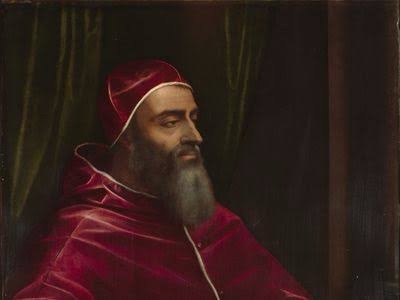
An Illegitimate Beginning
Giulio de’ Medici entered the world under difficult circumstances.
He was born in 1478, the illegitimate son of Giuliano de’ Medici, Lorenzo the Magnificent’s younger brother.
His father never saw him grow up.
Only months after Giulio’s birth came one of Renaissance Italy’s most infamous political murders—the Pazzi Conspiracy.
During High Mass in Florence Cathedral on Easter Sunday 1478, conspirators attacked the Medici brothers.
Giuliano was stabbed repeatedly and died beneath the cathedral floor.
Lorenzo escaped only because he managed to barricade himself inside the sacristy.
The conspiracy failed, but it changed Florence forever.
The surviving conspirators were hunted down with remarkable speed. Some were hanged from the windows of the Palazzo della Signoria before the day was out. Others met equally brutal ends.
The orphaned Giulio was raised under the protection of the Medici family.
From childhood he learned a lesson that would shape his entire life:
Power could disappear overnight.
A Reluctant Statesman
Unlike Leo X, Clement VII wasn’t remembered as a lover of spectacle.
He was intelligent.
Careful.
Diplomatic.
Some historians describe him as thoughtful; others call him indecisive.
Both assessments may be true.
He had inherited a Europe unlike the one Leo had enjoyed.
Martin Luther’s challenge had become a full-scale religious crisis.
France and the Holy Roman Empire were locked in an increasingly bitter struggle for dominance in Italy.
The Ottoman Turks were advancing in the east.
Every decision carried enormous consequences.
Unfortunately, Clement had an unfortunate habit of trying to keep everyone happy.
History rarely rewards that approach.
Europe Becomes a Chessboard
The two most powerful rulers in Europe were:
Francis I of France
Charles V, Holy Roman Emperor and King of Spain
Both wanted control of Italy.
Both expected the Pope’s support.
Clement tried to remain neutral.
Neutrality proved impossible.
He shifted alliances repeatedly, hoping to preserve the independence of the Papal States while preventing either monarch from becoming too powerful.
Instead, he succeeded in alienating both.
The Road to Disaster
By 1526, Clement joined the League of Cognac, an alliance formed to resist Emperor Charles V’s growing dominance.
On paper, it looked formidable.
France.
Venice.
Milan.
Florence.
The Papacy.
In reality, it lacked unity, money and effective military leadership.
Charles V’s army—many of whom had gone unpaid for months—marched south toward Rome.
They were exhausted.
Hungry.
Poorly disciplined.
And increasingly difficult to control.
Among them were thousands of German Landsknechts, many of whom sympathised with Luther and regarded the Pope as the embodiment of the corruption they despised.
The situation was explosive.
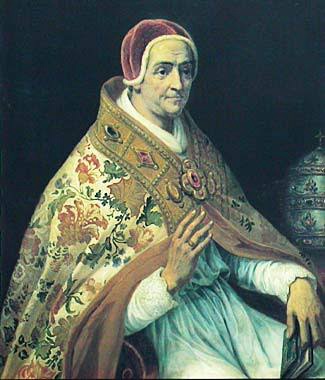
The Sack of Rome
On 6 May 1527, imperial forces reached Rome.
Their commander, Charles de Bourbon, was killed almost immediately while scaling the city walls.
With no effective leadership, discipline collapsed.
What followed shocked Europe.
For months, Rome was subjected to murder, looting, torture and destruction.
Churches were desecrated.
Monasteries were plundered.
Nuns were assaulted.
Cardinals were ransomed.
Palaces were stripped bare.
Works of art disappeared forever.
Some soldiers mocked Catholic ceremonies while others simply stole anything of value.
The greatest city of the Renaissance became a city of terror.
The Last Stand of the Swiss Guard
One of the most enduring stories from that day concerns the Swiss Guard.
Created only twenty-one years earlier by Pope Julius II, they fought desperately on the steps of St Peter’s Basilica.
Of the 189 guards on duty, 147 were killed defending the Pope.
Their sacrifice allowed Clement VII to escape through the Passetto di Borgo, the elevated fortified passage connecting the Vatican with the massive fortress of Castel Sant’Angelo.
He reached safety.
His defenders did not.
Even today, new Swiss Guards are sworn in on 6 May, commemorating that extraordinary act of loyalty.
A Prisoner in His Own City
Clement survived.
Freedom did not.
For months he remained effectively a prisoner inside Castel Sant’Angelo while negotiations dragged on.
Eventually he surrendered.
He paid an enormous ransom.
He ceded territory.
He accepted humiliating conditions.
The Bishop of Rome had become little more than a political hostage.
It was an image the papacy would spend centuries trying to erase.
Florence Turns Against the Medici
News of Rome’s fall spread rapidly.
In Florence, the Medici were expelled.
The republic was restored.
Ironically, the catastrophe that had devastated the Pope also threatened his family’s political power at home.
Only later, with imperial assistance, would Medici rule in Florence be restored.
The family survived.
Its prestige never entirely recovered.
Henry VIII Arrives
While Clement struggled to rebuild his shattered authority, another problem landed on his desk.
King Henry VIII of England wanted his marriage to Catherine of Aragon annulled.
Ordinarily, such requests could often be resolved through legal and diplomatic channels.
But Catherine happened to be the aunt of…
Charles V.
The same emperor whose troops had recently imprisoned the Pope.
Clement found himself trapped.
Grant the annulment and risk offending Charles.
Refuse it and alienate England.
He delayed.
He negotiated.
He hesitated.
In the end, Henry lost patience.
The result was the English Reformation and the birth of the Church of England.
Whether Clement could realistically have chosen differently remains one of history’s great “what if?” questions.
The End of the Renaissance Papacy
Many historians see the Sack of Rome as the symbolic end of the High Renaissance.
The carefree optimism that had characterised Leo X’s court vanished.
Art became more restrained.
Religion became more serious.
The Protestant Reformation gathered pace.
Within a generation, the Catholic Church would begin its own profound internal renewal through the Council of Trent.
The age of dazzling Renaissance popes was over.
The age of reform had begun.
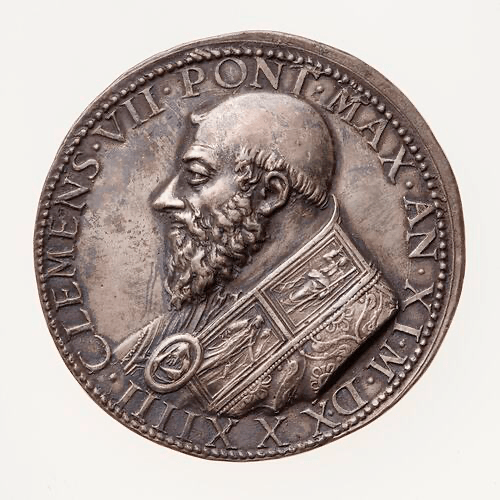
Electrotype Medal Replica – Pope Clement VII
Photographer: Heath Warwick
Source: Museums Victoria
Clement’s Legacy
Clement VII is often remembered as an indecisive pope overwhelmed by events beyond his control.
That judgement may be too harsh.
He inherited a Europe in religious upheaval, caught between ambitious monarchs, rising Protestantism and shifting alliances.
His greatest failing was not a lack of intelligence, but an inability to make decisive choices quickly enough in a world that no longer rewarded caution.
Unlike Leo X, who left behind magnificent works of art, Clement left behind lessons in the dangers of political hesitation.
History can be unforgiving to rulers who try to please everyone.
Sometimes the choice not made becomes the decision that changes the world.
We’ll separate popular myth from Catholic theology, explain how indulgences actually worked, why abuses became so widespread, and why a German monk named Martin Luther believed the entire system had gone disastrously wrong. That essay will connect directly back to Leo X and show how ideas, money and politics combined to reshape Christianity.
Tim Alderman ©️2026

