The Rise of the Medici: From Wool Merchants to Princes of the Church
Few families have left a greater mark on Western civilisation than the Medici of Florence. Their story is one of astonishing ambition. Beginning as modest merchants, they built Europe’s most powerful banking empire, became the unofficial rulers of Florence, financed kings and popes, transformed Renaissance art, and ultimately placed members of their own family upon the throne of St Peter.
To admirers, the Medici were enlightened patrons whose wealth helped produce one of history’s greatest cultural flowerings. Without them, the masterpieces of Michelangelo, Botticelli and Leonardo da Vinci might never have been created, or at least not in the forms we know today.
To critics, they represented everything that was wrong with the Renaissance Church: nepotism, political manipulation, extravagant wealth and the blurring of spiritual leadership with dynastic ambition.
Both views contain considerable truth.
Understanding the Medici popes requires first understanding the remarkable family that produced them.
Florence: A Republic Unlike Any Other
The Medici story begins not in Rome but in Florence.
In the fourteenth century Florence was one of Europe’s wealthiest cities. Although technically a republic, political power was dominated by wealthy merchant families who competed constantly for influence.
Unlike the feudal nobility of France or England, Florence’s elite earned their fortunes through commerce rather than inherited titles.
Textiles, particularly wool and later silk, generated enormous wealth.
Banking generated even more.
Florentine bankers financed monarchs, merchants, trading expeditions and, perhaps most importantly, the papacy itself.
Money became political power.
Political power became social prestige.
Social prestige, eventually, became religious influence.
The Origins of the Medici
The exact origins of the Medici family remain somewhat obscure.
Tradition claimed they descended from an ancient knight who had served Charlemagne, but historians generally regard this as later family mythology designed to enhance noble status.
The family was more likely descended from prosperous farmers and merchants in the Mugello valley north of Florence.
Their surname, Medici, simply means “physicians.”
Whether an ancestor actually practised medicine remains uncertain.
By the late thirteenth century, members of the family had established themselves in Florence as successful businessmen.
They were respectable.
They were comfortable.
They were not yet extraordinary.
That would soon change.
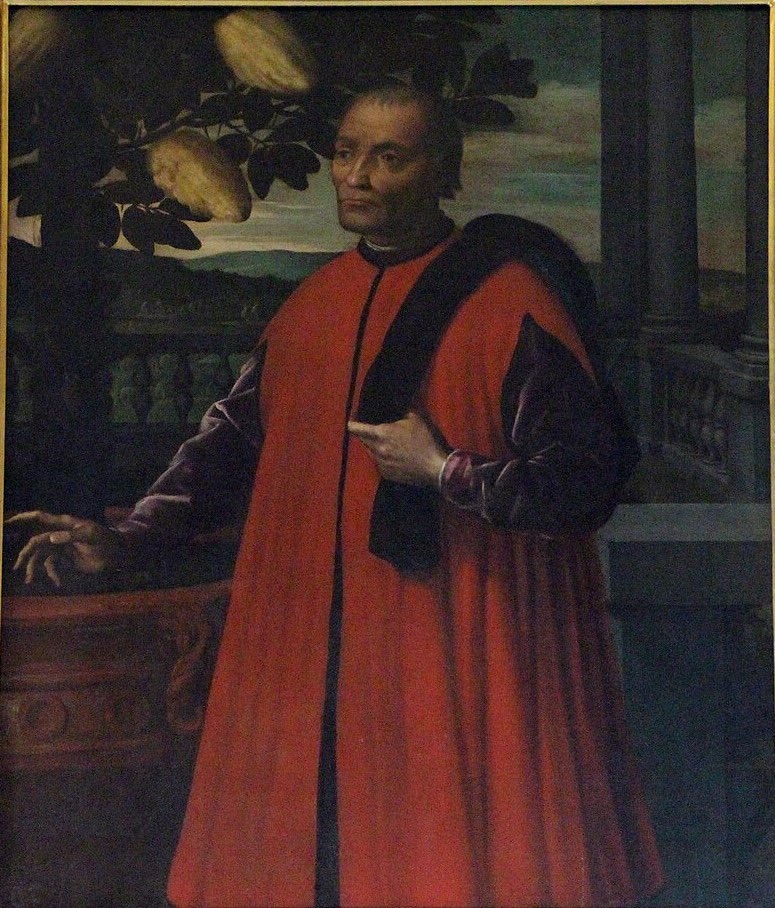
Alessandro Allori hangs in the Uffizi in Florence
Giovanni di Bicci de’ Medici
The true founder of Medici greatness was Giovanni di Bicci de’ Medici (c.1360–1429).
Unlike many wealthy Florentines, Giovanni possessed two remarkable qualities.
He was financially brilliant.
He knew when not to attract attention.
Rather than openly seeking political office, Giovanni concentrated on banking.
His greatest achievement was establishing the Medici Bank.
Within decades it became Europe’s most successful financial institution.
Branches appeared across the continent.
Rome.
Venice.
Milan.
Naples.
Geneva.
Bruges.
London.
Each branch expanded the family’s wealth—and influence.
But Giovanni secured an even greater prize.
Bankers to the Papacy
The medieval papacy required enormous financial services.
Church taxes flowed from every corner of Europe.
Funds had to be transferred across kingdoms.
Loans financed wars, construction projects and administration.
The Vatican needed reliable bankers.
The Medici became those bankers.
Being entrusted with papal finances brought immense profits.
It also brought unparalleled political connections.
Every pope became, in effect, a valuable client.
This relationship between the Medici and successive popes would eventually culminate in an extraordinary reversal.
Instead of merely serving popes…
The Medici would become them.
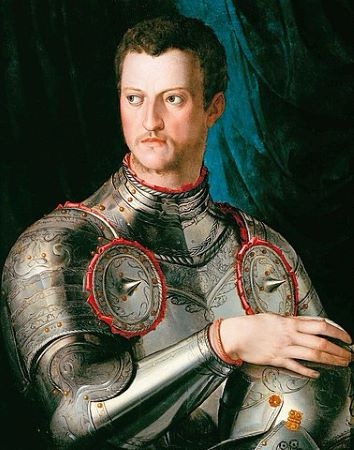
Cosimo de’ Medici: The Real Architect
When Giovanni died in 1429, leadership passed to his son Cosimo de’ Medici, later known as Cosimo the Elder.
If Giovanni built the fortune, Cosimo transformed it into political power.
Cosimo rarely held formal office.
He understood that visible power invited opposition.
Instead, he perfected influence behind the scenes.
Political allies received financial support.
Enemies found credit difficult to obtain.
Favours created obligations.
Debts created loyalty.
Florence remained officially a republic.
Unofficially, it increasingly revolved around one family.
Many historians have described Cosimo as Europe’s first great political banker.
Exile—and Triumph
Power inevitably bred resentment.
In 1433 Cosimo’s rivals succeeded in having him arrested.
He was imprisoned and sentenced to exile.
For many families this would have ended the story.
For the Medici it became only a brief interruption.
Within a year public opinion, commercial interests and political allies had shifted.
Cosimo returned to Florence in triumph.
His enemies, rather than Cosimo himself, were forced into exile.
The lesson was unmistakable.
The Medici had become indispensable.
Wealth Put to Work
Unlike many wealthy rulers, Cosimo spent lavishly on public works.
Churches.
Libraries.
Hospitals.
Monasteries.
Scholarship.
Architecture.
He commissioned magnificent buildings while quietly encouraging the rediscovery of ancient Greek and Roman learning.
The Renaissance was already underway.
Cosimo accelerated it.
His patronage attracted artists, architects, philosophers and scholars whose influence would spread throughout Europe.
This generosity also served practical purposes.
A grateful population proved far easier to govern.
A New Kind of Power
The Medici demonstrated something Europe had rarely seen before.
Power no longer depended solely upon swords or inherited titles.
Money itself had become a political weapon.
Loans could achieve what armies sometimes could not.
Influence could be purchased without firing a single arrow.
The Medici became masters of what we would now recognise as financial diplomacy.
Kings needed them.
Merchants relied upon them.
Popes trusted them.
That combination made the family extraordinarily difficult to challenge.
Seeds of Future Trouble
Yet hidden beneath this success lay dangerous contradictions.
The Church preached humility.
The Medici accumulated immense wealth.
The Gospel warned against earthly riches.
The Vatican increasingly relied upon powerful banking families.
Religious offices gradually became entwined with political ambition.
Church appointments frequently reflected family influence as much as spiritual merit.
These tensions would grow steadily throughout the fifteenth century.
By the early sixteenth century they would contribute directly to one of Christianity’s greatest upheavals: the Protestant Reformation.
Ironically, one of the central figures in that drama would be a Medici pope.
Looking Ahead
When Cosimo died in 1464, the Medici were already the most powerful family in Florence.
Yet their greatest triumph—and greatest controversies—still lay ahead.
The next generation would produce Lorenzo the Magnificent, arguably the most celebrated patron of the Renaissance, whose glittering court nurtured artists including Michelangelo and Botticelli. But it would also face conspiracy, assassination attempts, foreign invasion and growing criticism of the Church.
From this extraordinary world would emerge the first Medici pope.
His election would alter the course of both the papacy and European history.
Tim Alderman ©️2026
Sources
Christopher Hibbert, The House of Medici: Its Rise and Fall.
Paul Strathern, The Medici: Godfathers of the Renaissance.
John M. Najemy, A History of Florence 1200–1575.
Lauro Martines, April Blood: Florence and the Plot Against the Medici.
Tim Parks, Medici Money: Banking, Metaphysics and Art in Fifteenth-Century Florence.
Peter Partner, Renaissance Rome 1500–1559.
Will Durant, The Renaissance (The Story of Civilization, Vol. 5).

