How Minority Communities Transform Insults into Symbols of Identity
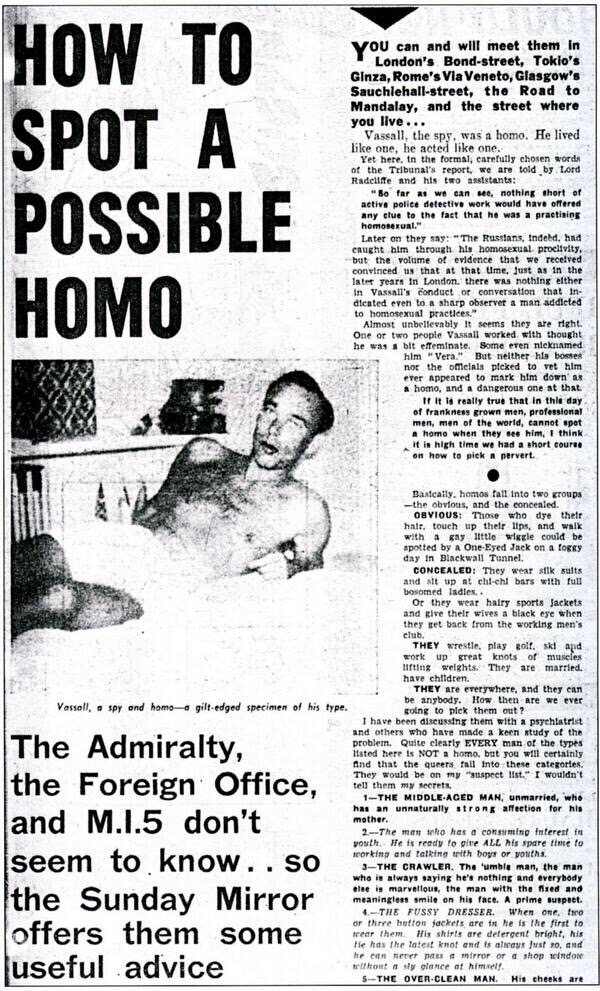
Language is one of humanity’s greatest achievements. It allows us to express love, inspire revolutions, preserve history and communicate ideas across generations. Yet language also possesses a darker side. Throughout history, words have been weaponised to demean, exclude and dehumanise individuals or entire communities. Few groups have experienced this more consistently than sexual minorities, whose identities have often been reduced to insults intended to provoke shame and fear.
Yet language is never static. Words evolve, meanings shift, and occasionally those who were once its victims seize ownership of the very vocabulary used against them. This remarkable process—known as linguistic reclamation—has transformed many former insults into expressions of pride, solidarity and identity.
The history of reclaimed language is therefore not simply about words. It is about power—who possesses it, who loses it, and how those without power sometimes wrest it back.
What Is a Derogatory Term?
A derogatory term is a word or expression intended to belittle, insult or diminish another person or group. Such words rarely describe objective facts. Instead, they convey contempt.
The word derogatory derives from the Latin derogare, meaning “to take away” or “to detract.” Originally it referred to diminishing legal rights or authority. Over centuries it evolved to describe language that diminishes a person’s dignity or social standing.
Derogatory language functions by reducing individuals to a single characteristic—whether race, religion, disability, sexuality, nationality or appearance—and suggesting that characteristic makes them inferior.
Throughout history societies have created thousands of such labels. Some disappear with time; others become deeply embedded in everyday speech.
Why Insults Matter
Words shape perception.
Calling someone “criminal,” “mad,” “heretic” or “pervert” does more than describe them—it creates expectations about how society should treat them.
Historically, insults have often accompanied legal discrimination.
Women were dismissed as hysterical.
People with disabilities were labelled “idiots” or “cripples.”
Religious minorities were branded infidels or heretics.
Gay men became “sodomites.”
Language normalised unequal treatment long before legislation codified it.
This is why insults are rarely “just words.” They reinforce social hierarchies.
The Psychology of Reclaiming Words
Reclaiming language is an act of psychological resistance.
Instead of allowing opponents to define identity, members of the targeted group redefine it themselves.
The strategy follows a simple principle:
A weapon loses much of its power when the intended victim refuses to be wounded by it.
Psychologists describe this as reducing the emotional impact of stigma. When an insult becomes an accepted badge of identity among friends, its ability to humiliate is weakened.
This does not mean the word becomes harmless.
Context remains everything.
A word spoken affectionately within a community may remain deeply offensive when used by outsiders.
The Gay Community and Linguistic Reclamation
Few communities have reclaimed as many insults as the gay community.
Centuries of persecution generated an extraordinary vocabulary of abuse.
Some expressions originated in legal documents.
Others came from religious preaching.
Many emerged from street culture.
Over time, however, some of these words underwent remarkable transformation.
“Gay”
Ironically, one of the most common words today began with an entirely different meaning.
Derived from the Old French gai, it originally meant cheerful, carefree or bright.
By the eighteenth century “gay women” often referred euphemistically to prostitutes, while “gay men” suggested a life devoted to pleasure.
During the twentieth century homosexual men increasingly adopted “gay” as a discreet, positive description of themselves.
By the late twentieth century it had become the preferred term across much of the English-speaking world.
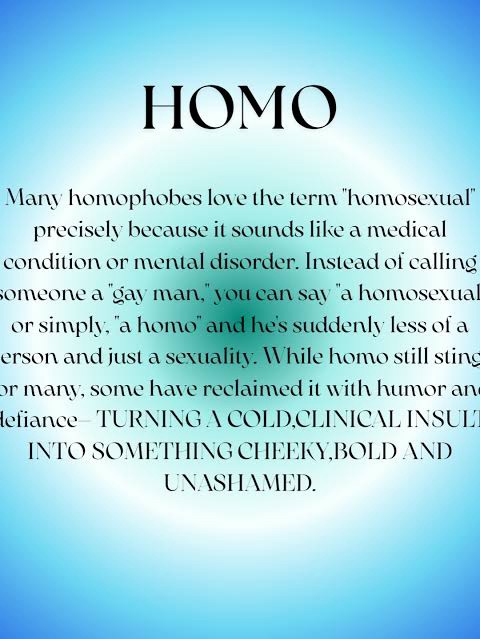
Rather than accepting medical labels such as “homosexual,” many chose “gay” because it emphasised identity rather than pathology.
“Homosexual”
Unlike “gay,” the word homosexual was never originally intended as an insult.
It was coined in nineteenth-century Europe from the Greek homos (“same”) and the Latin sexualis.
Initially regarded as a scientific description, it soon became associated with psychiatric diagnosis, criminal law and moral judgement.
For much of the twentieth century, official documents classified homosexuals as mentally ill or sexually deviant.
Consequently many gay people came to dislike the term.
Today it remains appropriate in medical, legal and historical contexts but often sounds clinical in everyday conversation.
“Queer”
Perhaps no reclaimed word illustrates linguistic transformation better than queer.
Originally meaning “strange” or “peculiar,” it became one of the harshest anti-gay insults during the late nineteenth and twentieth centuries.
Countless gay men remember hearing it shouted in schoolyards, workplaces and streets immediately before physical violence.
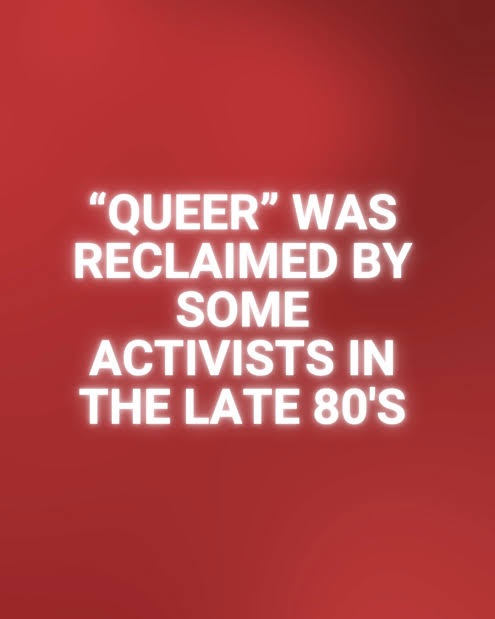
Beginning in the late 1980s and early 1990s, however, younger activists deliberately reclaimed it.
Groups such as Queer Nation argued that embracing the word deprived homophobes of its power.
Today “queer” appears in university departments, academic journals and community organisations.
Yet the word remains deeply divisive.
Many older gay men and lesbians who experienced it primarily as an insult still reject it completely. For them, the emotional associations are impossible to separate from decades of abuse.
Conversely, many younger people use it as an inclusive umbrella term for diverse sexual and gender identities.
Neither perspective is inherently right or wrong. They reflect different lived experiences across generations.
“Poof”
“Poof” (or “poofter”) developed in Britain during the twentieth century.
Its exact origins remain uncertain, though several theories connect it with the appearance of softness or effeminacy.
For decades it functioned almost exclusively as an insult.
In Australia and Britain, however, many gay men gradually began using it affectionately among themselves.
Friends greeting each other with “How are you, you old poof?” demonstrate how humour can strip hostility from language.
Yet, again, context matters enormously.
The identical word shouted aggressively by strangers carries an entirely different meaning.
“Fag” and “Faggot”
Few words generate stronger reactions.
Their origins remain disputed.
One theory connects faggot with bundles of sticks used as fuel, later becoming associated—perhaps apocryphally—with executions for heresy or sodomy. Most historians are cautious about this explanation, as direct evidence linking the term to executions is weak.
By the twentieth century it had become one of the most aggressive anti-gay slurs in the English-speaking world.
Some gay men, particularly in North America, have reclaimed “fag” within friendship circles.
Others reject any attempt to rehabilitate it.
The emotional wounds attached to the word remain too profound.
“Fairy”
Originally describing mythical beings, “fairy” became associated with effeminate gay men during the late nineteenth century.
Today it survives both affectionately and ironically within parts of the gay community, although it has largely declined in everyday use.
“Dyke”
Among lesbians, dyke followed a trajectory similar to “queer.”
Once intended solely as abuse, many lesbians reclaimed it during the feminist movement of the 1970s and 1980s.
Today events such as Dyke Marches openly celebrate the word as one of strength and visibility.
Reclamation Beyond the Gay Community
Reclaiming language is not unique to LGBTQ+ communities.
Many marginalised groups have followed similar paths.
People with disabilities have challenged medical labels previously regarded as insults.
Some racial minorities have reclaimed words once intended to dehumanise them, although the acceptability of such usage often depends heavily on who is speaking.
Women have reclaimed terms such as “witch” and “spinster,” transforming symbols of exclusion into expressions of independence or resistance.
The underlying process is remarkably consistent.
Control over language becomes control over identity.
Why Reclamation Remains Controversial
Not everyone supports reclaiming derogatory language.
Critics argue that some words carry too much historical trauma ever to become harmless.
Survivors of discrimination may understandably wish never to hear them again.
Others fear that widespread use among insiders may blur boundaries and encourage outsiders to use the same language offensively.
Supporters respond that reclaiming language does not erase history.
Instead, it demonstrates resilience.
The insult survives, but its intended effect changes.
The Importance of Context
Perhaps the greatest lesson is that words possess no fixed meaning independent of context.
Who speaks?
Who listens?
What relationship exists between them?
A close friend jokingly saying “old poof” differs profoundly from a stranger yelling the same word across a street.
Language always carries social meaning beyond dictionary definitions.
The history of derogatory language is ultimately the history of power.
Insults have long served as tools for exclusion, reinforcing legal discrimination, religious condemnation and social prejudice. Yet history also demonstrates that language is remarkably adaptable. Communities are not passive recipients of labels imposed upon them. They can reshape words, redefine identities and transform symbols of shame into expressions of solidarity.
Reclaiming language does not erase painful history, nor does it make every insult acceptable. Context, intent and lived experience remain crucial. A term embraced by one generation may still evoke painful memories for another, and words reclaimed within a community may remain offensive when used by outsiders.
Perhaps the greatest lesson is that language is never merely a collection of sounds or letters. It reflects society’s values, fears and aspirations. As those values evolve, so too do the words we use. The story of reclaimed language reminds us that dignity can sometimes be restored not by inventing new words, but by refusing to surrender old ones to hatred.
Tim Alderman ©️2026
Sources
Oxford English Dictionary (entries for gay, queer, faggot, derogatory).
David Crystal, The Cambridge Encyclopedia of the English Language.
Deborah Cameron, Verbal Hygiene.
Gregory M. Herek, research on stigma and sexual prejudice.
Judith Butler, Excitable Speech: A Politics of the Performative.
Eve Kosofsky Sedgwick, Epistemology of the Closet.
George Chauncey, Gay New York.
William L. Leap (ed.), Beyond the Lavender Lexicon.
Jonathan Green, Green’s Dictionary of Slang.
Simon Winchester, The Meaning of Everything.