Part Two: Leo X – The Renaissance Pope Who Changed History
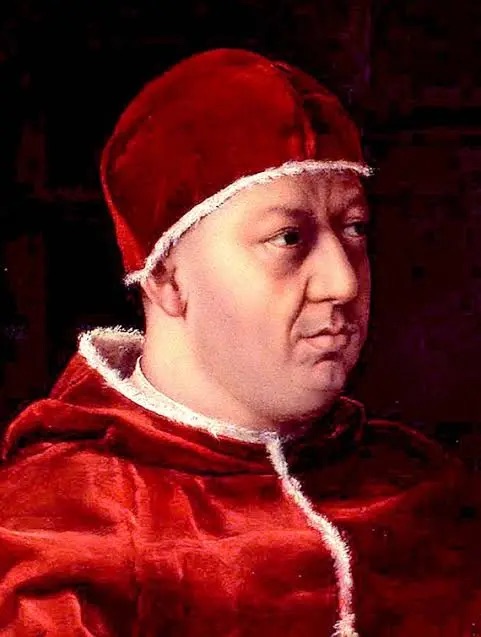
If there was ever a pope who perfectly embodied the splendour—and the excesses—of the Renaissance, it was Giovanni de’ Medici, better known as Pope Leo X.
His election in 1513 marked the triumph of the Medici family. For decades they had dominated Florence through wealth and political skill. Now one of their own ruled not merely a city but the spiritual lives of millions of Christians.
Ironically, Leo X would become one of the most cultured popes in history—and one of the principal architects of the greatest religious schism Western Christianity had ever experienced.
A Pope Born to Rule
Giovanni de’ Medici was born in 1475, the second son of Lorenzo the Magnificent.
Unlike many churchmen who slowly climbed the ecclesiastical ladder, Giovanni scarcely had to climb at all.
His father ensured he entered the Church almost from infancy.
At just thirteen years of age he became a cardinal.
By modern standards this seems astonishing, but Renaissance Europe operated under different rules. Great noble families routinely secured church offices for their sons. Spiritual qualifications often came second to political usefulness.
For the Medici, placing Giovanni in the College of Cardinals was simply another investment.
One day it paid extraordinary dividends.
The Young Pope
When Pope Julius II died in 1513, Giovanni was elected pope at only thirty-seven.
He became Leo X.
Rome celebrated.
Europe celebrated.
Artists celebrated.
Bankers celebrated.
No one embodied Renaissance optimism more completely.
The Church had survived schisms, political wars and internal corruption. The Ottoman Empire threatened from the east, but Europe seemed prosperous and confident.
Leo intended to make Rome the artistic capital of the world.
In many respects, he succeeded.
Patron of Genius
Leo X adored beauty.
He spent enormous sums supporting painters, sculptors, architects, musicians and scholars.
Under his patronage:
Raphael continued decorating the Vatican.
St Peter’s Basilica expanded into the greatest church in Christendom.
Classical Greek and Roman learning flourished.
Printing, literature and music received generous support.
Rome became the cultural capital of Europe.
For historians of art, Leo’s reign represents one of civilisation’s golden ages.
Yet all of this magnificence came at an extraordinary financial cost.
The Money Problem
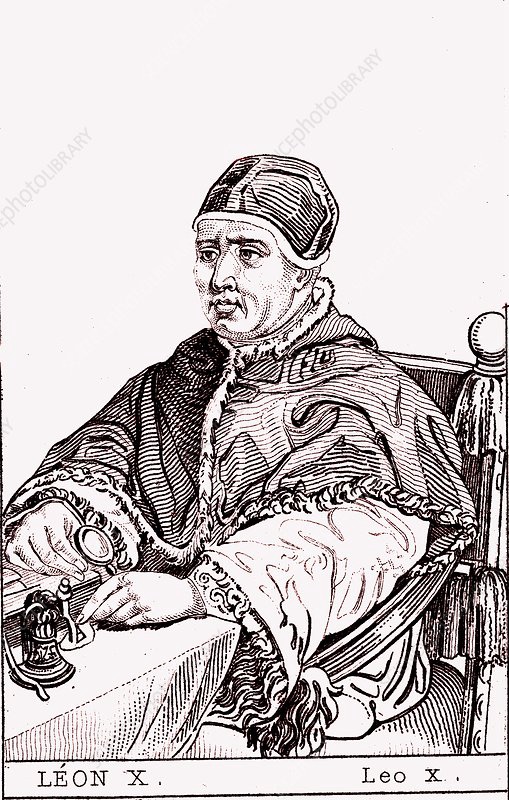
The papacy was wealthy.
It was not wealthy enough.
Leo inherited significant debts and rapidly accumulated even larger ones.
Court life became spectacularly expensive.
Banquets.
Festivals.
Building projects.
Diplomatic gifts.
Lavish ceremonies.
Patronage.
Everything required money.
Lots of it.
One contemporary remarked that Leo seemed to believe the papal treasury was inexhaustible.
Unfortunately, it wasn’t.
The bills eventually had to be paid.
St Peter’s Basilica
Nothing symbolised Leo’s ambitions more than the rebuilding of St Peter’s Basilica.
The medieval church built over the traditional tomb of St Peter was deteriorating.
Leo envisioned something entirely different.
A building worthy of the Prince of the Apostles.
The greatest church on earth.
The basilica would eventually become one of humanity’s greatest architectural achievements.
But construction costs were astronomical.
Finding the money became increasingly urgent.
Enter the Indulgences
To help finance St Peter’s, the Church expanded the preaching and sale of indulgences.
This is where our next article naturally begins.
Many people today imagine indulgences as “buying forgiveness.”
The reality was more complicated.
According to Catholic theology, forgiveness came through repentance and confession.
An indulgence dealt with the temporal punishment believed to remain after sin had been forgiven.
The theological distinction was subtle.
Unfortunately, many preachers explained it very badly.
Others deliberately exaggerated what indulgences could accomplish because exaggerated promises attracted larger donations.
Money flowed into Rome.
So did criticism.
A Monk in Germany
Far away in the German town of Wittenberg lived an Augustinian monk named Martin Luther.
Luther watched indulgence preachers making extraordinary claims.
One famous Dominican friar, Johann Tetzel, became notorious for promoting indulgences in language many believed grossly distorted Church teaching.
Whether every quotation attributed to Tetzel is authentic remains debated by historians, but his preaching became symbolic of everything Luther believed was wrong with the Church.
In 1517 Luther published his famous Ninety-five Theses.
Leo X initially regarded the dispute as a minor quarrel among German monks.
He underestimated its significance.
So did almost everyone else.
Within a few years Europe would never be the same again.
A Renaissance Prince More Than a Spiritual Reformer
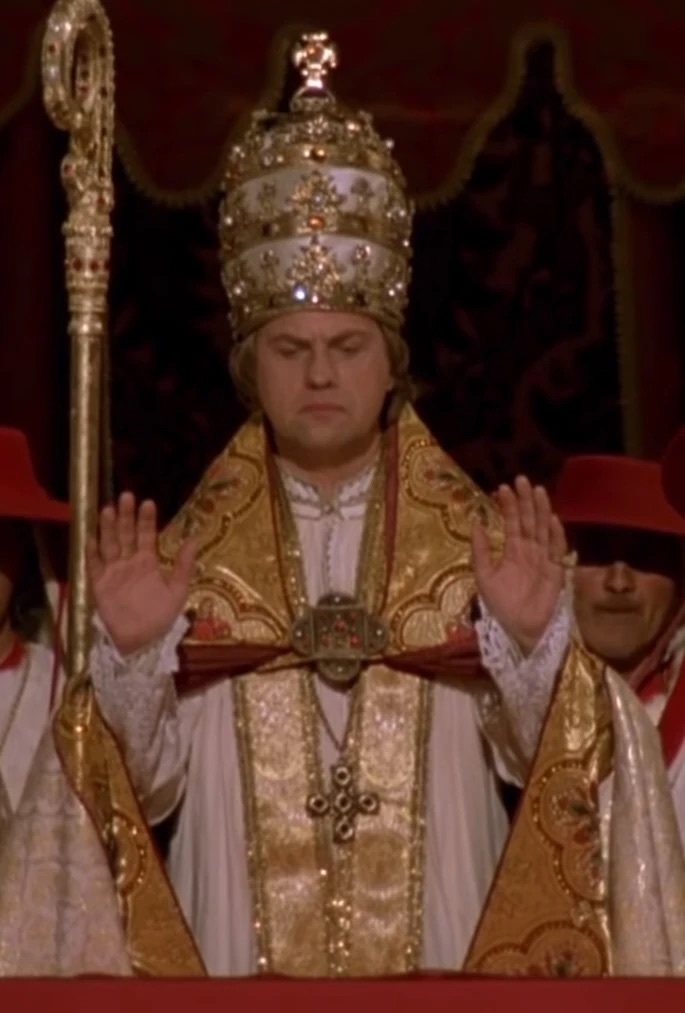
Leo X has often been criticised for treating the papacy more like a Renaissance court than a spiritual office.
That criticism contains some truth.
He enjoyed hunting.
He loved theatre.
He delighted in elaborate celebrations.
He appreciated fine food, conversation and music.
None of these things made him uniquely immoral by Renaissance standards.
The real problem was one of priorities.
While Leo was fostering artistic brilliance in Rome, dissatisfaction with the Church was spreading across northern Europe.
He failed to grasp how serious the crisis had become.
Did Leo Cause the Reformation?
Not entirely.
The causes had been building for centuries.
Church corruption.
Political tensions.
National rivalries.
Calls for reform.
The invention of the printing press.
Growing literacy.
Economic change.
All were important.
Yet Leo X undoubtedly accelerated events.
His financial policies, particularly the indulgence campaign connected with St Peter’s, provided the spark that ignited a movement already waiting for ignition.
The Irony of Leo X
History judges Leo X in two very different ways.
Art historians remember him as one of the greatest patrons of the Renaissance.
Church historians often see him as the pope who failed to recognise the approaching storm.
His reign produced magnificent art that still inspires millions.
It also witnessed the beginning of the Protestant Reformation, permanently dividing Western Christianity.
Few popes have left such a contradictory legacy.
Tim Alderman ©️2026

