In May 1873, sixteen women from the Oxfordshire village of Ascott-under-Wychwood walked out to a field.
They were not armed.
They did not destroy machinery.
They did not burn crops.
They did not demolish toll gates.
And, unlike our recent acquaintances in the Rebecca Riots, they were not men disguised in women’s clothing.
These really were women in frocks.
Their purpose was straightforward.
Agricultural labourers in the district were engaged in a bitter dispute over wages and union organisation. A farmer had brought in men from another village to work while his own labourers were involved in the dispute.
The women intended to persuade those men not to break the strike.
Words were exchanged.
The strikebreakers went home.
And sixteen women were arrested.
What followed was so heavy-handed that a small agricultural dispute in rural Oxfordshire became a national scandal.
The women were sentenced to imprisonment — several with hard labour.
Some had children.
Two took infants into prison with them.
Within days, public outrage was spreading.
They became known as the Ascott Martyrs.
Their story is a remarkable reminder that the struggle for workers’ rights was never exclusively a story about men.
Sometimes the people standing on the picket line wore frocks.
The World of the Agricultural Labourer
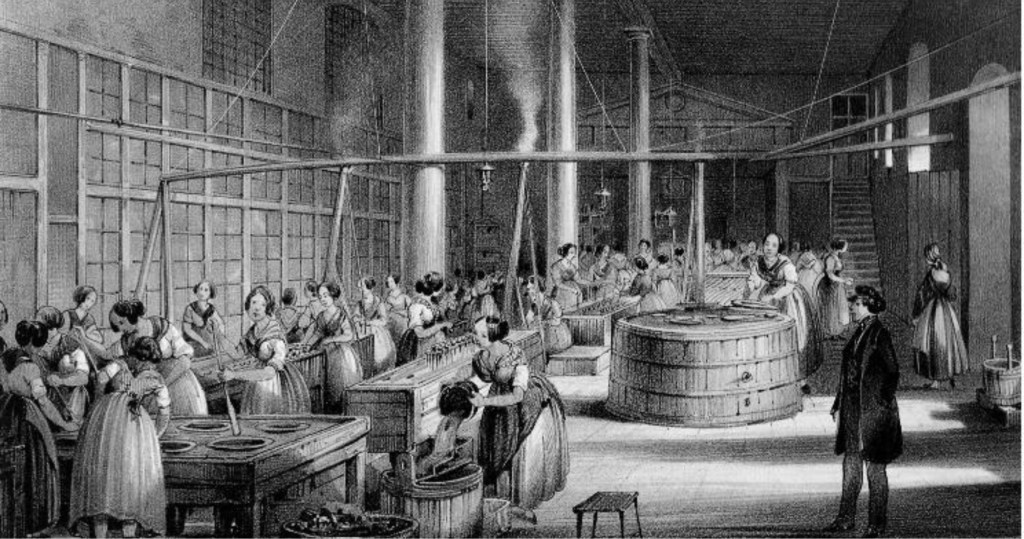
By 1873, Britain was the world’s great industrial power.
Its factories produced immense quantities of manufactured goods.
Its railways crossed the country.
Its empire stretched around the globe.
London was becoming the centre of global finance.
Yet in the English countryside, agricultural labourers could still live remarkably precarious lives.
Wages were low.
Housing was often tied directly or indirectly to employment.
Large farmers and landowners wielded considerable influence over village life.
A labourer who antagonised an employer risked not merely losing his job but finding future employment difficult throughout the district.
For generations, agricultural workers had possessed little bargaining power.
But things were changing.
Joseph Arch and the Agricultural Labourers
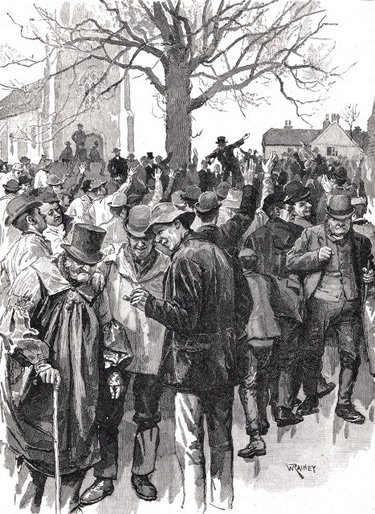
In 1872, an agricultural labourer and Methodist lay preacher named Joseph Arch addressed a meeting beneath a chestnut tree at Wellesbourne in Warwickshire.
Thousands reportedly gathered.
Out of the rapidly growing movement came the National Agricultural Labourers’ Union.
Its emergence was extraordinary.
Industrial workers had been organising for decades, but agricultural labourers were scattered across thousands of villages.
Organising them was considerably more difficult than organising hundreds of workers concentrated within one factory.
Nevertheless, rural workers began joining.
They demanded better wages.
Shorter working hours.
Greater dignity.
And the ability to negotiate collectively.
Landowners and farmers suddenly confronted something many had never experienced before:
agricultural labourers saying no.
Ascott-under-Wychwood
Ascott-under-Wychwood was a small Oxfordshire village.
Agriculture dominated local life.
In 1873, labourers employed by farmer Robert Hambridge became involved in the growing union movement and a dispute developed over wages and employment.
Hambridge sought replacement labour.
Men from the nearby village of Ramsden were recruited to work.
To union supporters, these men were blacklegs — strikebreakers whose labour undermined the workers’ collective action.
The arrival of replacement workers created anger within the village.
And the men’s wives decided to do something about it.
The Women Walk Out
On 21 May 1873, a group of women approached the men brought in to work for Hambridge.
Their intention was to persuade them to stop working.
Precisely what was said became important later because the legal case depended upon whether the women had merely attempted persuasion or had used intimidation and threats.
Accounts differ in detail.
That is worth emphasising.
Later retellings naturally turned the women into heroic martyrs, while hostile accounts portrayed them as an intimidating mob.
The safest conclusion is that a confrontation occurred, the women strongly pressured the replacement labourers, and the men subsequently left.
Nobody was killed.
No major property was destroyed.
Yet the authorities treated the incident with remarkable severity.
Arrested
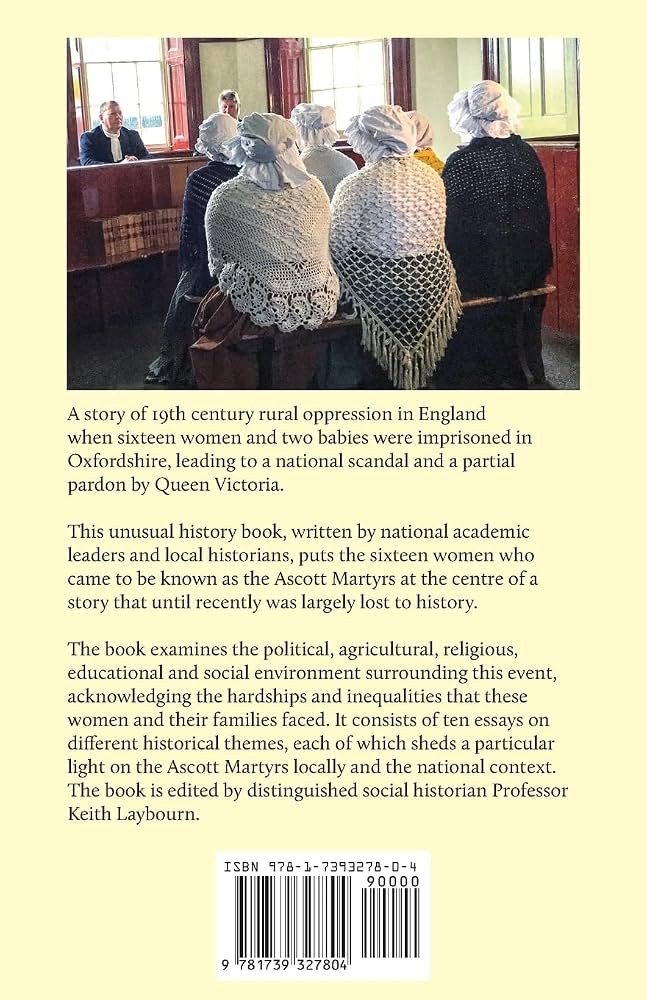
Sixteen women were brought before magistrates.
Among them were married women, mothers and young women.
Some were closely related to striking agricultural labourers.
Their protest was therefore not an abstract political gesture.
The outcome of the labour dispute directly affected the income entering their homes.
This is crucial.
A nineteenth-century labourer’s wage wasn’t merely his wage.
It fed a household.
When wages fell, wives stretched household budgets.
When men struck, women confronted the immediate consequences.
When employers imported replacement labour, the entire family’s bargaining position was threatened.
The Ascott women weren’t merely supporting their husbands’ politics.
They were defending their own households.
The Law of Intimidation
The women were prosecuted under legislation restricting intimidation and coercion in labour disputes.
Victorian Britain was undergoing an awkward transition.
Trade unions were becoming increasingly legal and socially established.
But many activities associated with effective collective bargaining remained legally vulnerable.
Workers might possess a theoretical right to organise.
Yet persuading other workers not to undermine a strike could easily cross a legal boundary — particularly when magistrates interpreted behaviour as threatening or intimidating.
This distinction remains central to labour law even today:
Where does legitimate persuasion end and coercion begin?
At Ascott, the magistrates decided the women had crossed that line.
Then they imposed sentences that transformed the case.
The Magistrates
The proceedings were conducted before local magistrates drawn from the social world of rural authority.
That itself mattered.
Victorian local justice was heavily influenced by class.
Magistrates were commonly landowners, clergy and other members of the local elite.
Agricultural labourers and their families therefore entered a courtroom in which the people judging them often belonged socially and economically to the class employing them.
The Ascott women were found guilty.
Some were offered an opportunity to avoid imprisonment by paying fines and costs or entering into recognisances.
But poverty makes a fine a very different punishment depending upon who receives it.
A wealthy person can pay.
A poor person goes to prison.
And prison it was.
Hard Labour
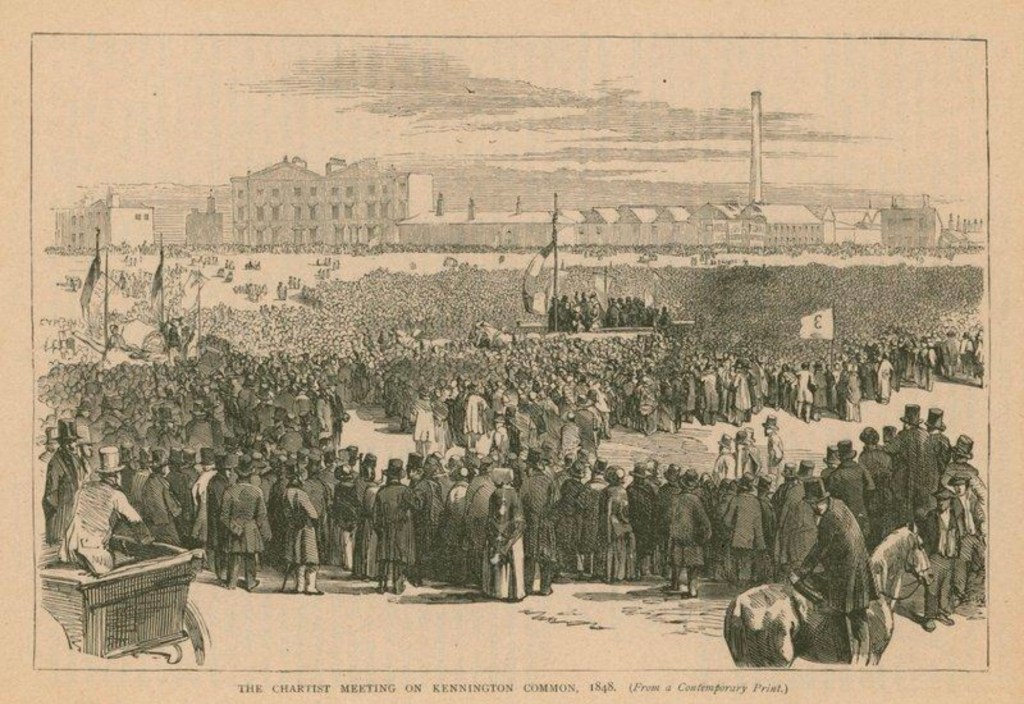
The sentences varied, but several women received terms of imprisonment involving hard labour.
The severity caused immediate shock.
These weren’t habitual violent criminals.
They were village women involved in an agricultural labour dispute.
Yet they were being treated as serious offenders.
Then the story became still more disturbing.
Some of the women had very young children.
Two had infants who accompanied them into prison.
Victorian punishment therefore reached beyond the convicted women themselves.
Babies were effectively imprisoned because their mothers were imprisoned.
The authorities may have regarded this as an administrative necessity.
The public increasingly regarded it as grotesque.
Prison
Victorian imprisonment was deliberately unpleasant.
Prisons weren’t intended simply to remove offenders from society.
Punishment could involve strict discipline, isolation, restricted diets and exhausting repetitive labour.
Hard labour might include physically demanding and intentionally monotonous tasks designed partly to punish rather than produce anything useful.
The very phrase carried a message:
You will suffer for what you have done.
Applying such punishment to women whose offence arose from supporting striking agricultural workers looked wildly disproportionate.
The authorities had intended to demonstrate that intimidation would not be tolerated.
Instead, they created martyrs.
The Children
The presence of children changed public perception dramatically.
Victorian society could be remarkably punitive toward poor adults.
Children complicated the moral equation.
Reports that mothers and infants had been taken into prison transformed a technical prosecution concerning labour intimidation into something emotionally powerful.
Readers didn’t need to understand the fine details of nineteenth-century industrial law.
They understood a baby behind prison walls.
The imagery was devastating.
And the union movement knew it.
The Press Takes Notice
News of the sentences spread beyond Oxfordshire.
Newspapers reported the case.
Trade unionists protested.
Public meetings were held.
Questions arose about the conduct of the magistrates and the severity of the punishment.
The women who had been virtually unknown outside their village suddenly became national figures.
The process closely resembled what had happened to the Tolpuddle Martyrs four decades earlier.
Authorities attempted to make an example of working people.
The punishment appeared excessive.
Public sympathy moved toward the punished.
The example then worked in precisely the opposite direction from that intended.
The Tolpuddle Echo
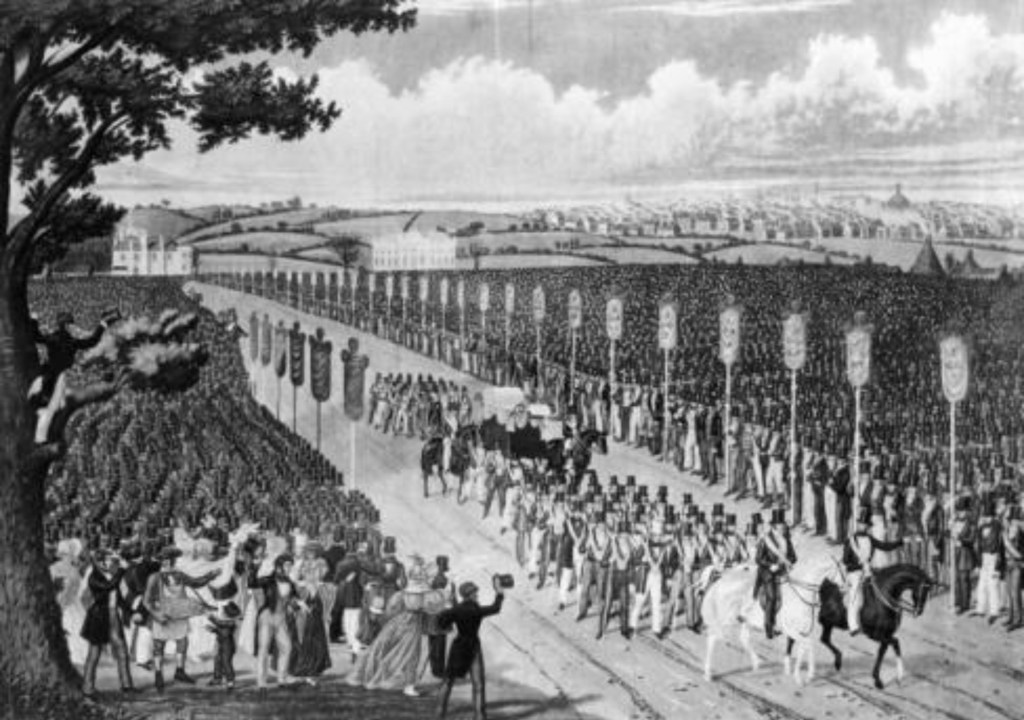
The comparison with Tolpuddle was irresistible.
In 1834, six Dorset agricultural labourers had organised to resist falling wages.
The authorities used an old law concerning unlawful oaths to prosecute them.
Seven years’ transportation followed.
The sentences provoked mass protest.
Now, in 1873, agricultural workers were again organising.
This time their wives and supporters attempted to prevent replacement labour from weakening the dispute.
Again, the authorities responded aggressively.
Again, punishment created sympathy.
And again, rural labourers who possessed little formal power discovered that public opinion could become a political weapon.
There was, however, one important difference.
This time the martyrs were women.
Where Are the Women in Labour History?
Traditional labour history often gives us a procession of men.
Male miners.
Male dockers.
Male factory workers.
Male union organisers.
Male politicians.
But working-class women were always present.
They worked.
They managed households.
They participated in food riots.
They joined demonstrations.
They raised money.
They supported strikes.
They confronted strikebreakers.
They sometimes organised independently.
And they frequently absorbed the economic consequences when men withdrew their labour.
The Ascott women make this impossible to ignore.
The agricultural union might formally consist largely of men.
But a strike depended upon families surviving without ordinary wages.
That made women participants whether official union structures recognised them or not.
The Household as a Political Unit
This brings us back to something we encountered in the eighteenth- and early nineteenth-century food riots.
Working-class politics frequently began in the household.
Bread prices were political.
Rent was political.
Wages were political.
Fuel prices were political.
Employment was political.
A woman attempting to feed several children on an agricultural labourer’s wage understood economics perfectly well without having read Adam Smith.
If wages fell from twelve shillings to ten, she knew exactly what disappeared from the household budget.
Meat.
Coal.
Shoes.
Rent money.
Medicine.
Food.
When women defended men’s wages, they weren’t merely acting as dutiful Victorian wives.
They were defending their own material interests.
Victorian Respectability Meets Working-Class Women
The Ascott protest also collided with Victorian ideas about respectable femininity.
Middle-class ideology idealised women as domestic, modest, submissive and removed from the rough world of public conflict.
Working-class life rarely permitted such luxury.
Poor women worked.
They bargained.
They carried goods.
They confronted traders.
They pawned possessions.
They managed debts.
They argued with landlords.
And when necessary, they protested.
The Ascott women violated respectable expectations simply by appearing collectively in public and challenging men engaged to break a labour dispute.
That made their behaviour particularly unsettling.
They weren’t behaving as Victorian authority believed respectable women should.
Then the magistrates discovered the danger of punishing them as though gender didn’t matter.
The same society that expected women to be vulnerable mothers now watched mothers being sent to prison.
Authority had trapped itself within its own assumptions.
Queen Victoria Enters the Story
Later accounts of the Ascott Martyrs frequently bring Queen Victoria dramatically into proceedings.
The broad point is sound: the affair reached high levels of government and attracted attention far beyond Oxfordshire.
But some colourful versions of Victoria’s personal intervention have grown in the retelling.
Claims that the Queen personally ordered the women released or angrily demanded explanations should therefore be treated cautiously unless tied to contemporary documentation.
What can safely be said is that the government’s handling of the case became politically embarrassing.
The sentences had generated far more trouble than sixteen Oxfordshire women could ever have caused standing beside a field.
Released
The women’s imprisonment was brief.
Public pressure and official intervention led to their early release.
They returned to Ascott.
And they received a remarkable welcome.
Crowds gathered.
Union supporters celebrated them.
The women who had entered prison as convicted intimidators emerged as heroes of the labour movement.
They had acquired a new collective name.
The Ascott Martyrs.
Again the language mattered.
The state called them offenders.
Their supporters called them martyrs.
History remembered the second description.
Medals and Commemoration
The women were subsequently presented with commemorative medals connected with the agricultural labour movement.
The symbolism was striking.
A court had punished them.
The labour movement decorated them.
Two competing systems of honour were operating simultaneously.
Official society said:
You broke the law.
Working-class society replied:
You stood by your people.
That tension runs through much of nineteenth-century protest history.
Legality and legitimacy are not always the same thing.
Did They Win?
The immediate agricultural dispute is less important historically than what the prosecution revealed.
The women didn’t overthrow rural capitalism.
Agricultural wages remained low.
Farmers retained enormous power.
The agricultural union movement itself would experience periods of growth and decline.
But the prosecution demonstrated that rural labour organisation could no longer be suppressed quietly.
Newspapers existed.
National unions existed.
Public campaigns existed.
Parliament could be questioned.
Local magistrates could find their decisions scrutinised across the country.
The world of Tolpuddle had changed.
Not enough.
But significantly.
Forty Years After Tolpuddle
Place the two cases side by side.
1834:
Six agricultural labourers organise.
They are prosecuted.
They receive seven years’ transportation.
They are shipped to Australia.
A national campaign takes years to secure pardons and bring them home.
1873:
Sixteen women support agricultural labourers.
They are prosecuted.
They receive prison sentences.
National outrage erupts almost immediately.
Political pressure mounts.
Their imprisonment is rapidly curtailed.
That difference tells us something about how Britain had changed.
Trade unionism had become harder to suppress.
Working-class political organisation was stronger.
Newspapers could mobilise opinion.
The electorate had expanded.
The state could still behave repressively.
But repression now carried greater political costs.
The Law Changes
The 1870s became an important period in the legal development of British trade unionism.
The Trade Union Act 1871 had recognised unions more securely in law, but related criminal legislation continued to restrict picketing and other forms of collective pressure.
In 1875, further legislation significantly improved the legal position of trade unions and clarified that peaceful persuasion in labour disputes should not automatically be treated as criminal conspiracy or intimidation.
The Ascott affair did not single-handedly produce those reforms.
History is rarely that tidy.
But it belonged to the political environment demonstrating how unsatisfactory the existing law had become.
The boundaries of legitimate trade-union activity were being renegotiated.
And sixteen Oxfordshire women had helped expose the problem.
The Ascott Martyrs Today
For many years, the Ascott women were remembered principally within local and labour history.
Later generations restored their story more prominently.
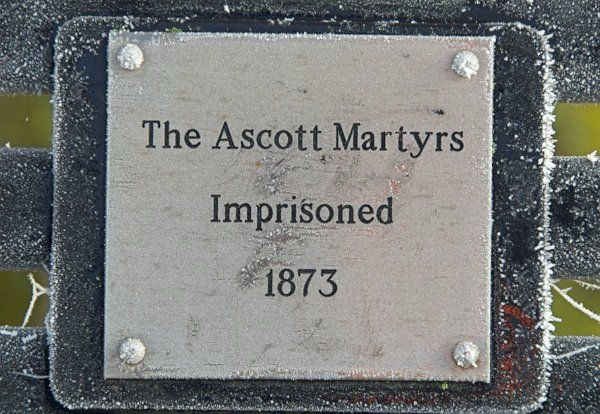
Today a memorial stands in Ascott-under-Wychwood, commemorating the sixteen women and their role in the struggle for agricultural workers’ rights.
Their story has also become increasingly important within women’s history.
That is appropriate.
Because calling them merely the wives of agricultural labourers misses the point.
They acted.
They confronted the replacement workers.
They went before the magistrates.
They went to prison.
They endured the punishment.
And they became symbols.
They weren’t supporting characters.
They were protagonists.
Sixteen Ordinary Women
Perhaps the most striking thing about the Ascott Martyrs is how ordinary they were.
They weren’t famous reformers.
They weren’t wealthy philanthropists.
They weren’t members of Parliament.
They hadn’t written political treatises.
They were women from a rural village whose families depended upon agricultural wages.
A labour dispute threatened those families.
So they intervened.
And suddenly the enormous machinery of Victorian justice descended upon them.
Magistrates.
Law.
Police.
Prison.
Hard labour.
Against sixteen village women.
The imbalance itself helped transform the story.
The punishment looked absurdly large beside the offence.
And when authority looks absurd, authority begins losing power.
From Rebecca to Ascott
Only thirty years separated the Rebecca Riots from the Ascott Martyrs.
Yet the methods were dramatically different.
Rebecca’s daughters disguised themselves.
They assembled at night.
They destroyed property.
They created a fictitious female leader.
Ascott’s women appeared openly.
No disguise.
No invented identity.
No smashed toll gates.
They simply stood together and attempted to persuade other workers not to undermine a labour dispute.
But both stories demonstrate something important about nineteenth-century popular protest.
People excluded from formal power found other ways to exercise it.
Rebecca possessed no vote.
Neither did the women of Ascott.
Women in Britain wouldn’t receive parliamentary voting rights until the twentieth century.
Yet political exclusion didn’t produce political silence.
People without votes still protested.
Still organised.
Still resisted.
Still embarrassed governments.
And occasionally changed history.
The Real Women in the Frocks
The humour surrounding the Rebecca Rioters’ cross-dressing makes their story unforgettable.
But Ascott gives us the genuine article.
Sixteen Victorian women.
Mothers, wives and daughters.
Standing in a field.
Defending household wages.
Challenging strikebreakers.
Refusing to remain politely invisible.
The magistrates attempted to teach them a lesson.
Instead, the women taught Victorian Britain one.
Workers’ rights weren’t merely men’s rights.
A wage supported a household.
A strike affected a family.
And solidarity didn’t stop at the cottage door.
The Tolpuddle Martyrs had demonstrated the power of the word we.
Nearly forty years later, the women of Ascott expanded its meaning.
The authorities saw sixteen troublesome women.
The labour movement saw sixteen comrades.
History gave them another name.
The Ascott Martyrs.
Tim Alderman ©️2026
Sources and Further Reading
Carol Anderson, The Ascott Martyrs — detailed modern research into the women, their families, the labour dispute and their prosecution.
Oxfordshire History Centre — archival material relating to Ascott-under-Wychwood, local government, magistrates and nineteenth-century rural life.
The Ascott Martyrs Educational Trust — local research and commemorative material preserving the individual stories of the sixteen women.
Trades Union Congress historical resources — background on Joseph Arch, agricultural labour unionism and the development of organised labour during the nineteenth century.
National Union of Agricultural and Allied Workers historical material — useful for the longer history of agricultural trade unionism and the legacy of Joseph Arch’s movement.
Alun Howkins, Poor Labouring Men: Rural Radicalism in Norfolk 1870–1923 — valuable wider context for agricultural labour, rural unionism and political radicalisation in late nineteenth-century England.
Pamela Horn, Labouring Life in the Victorian Countryside — broader social history of agricultural workers and their families.
E. P. Thompson, The Making of the English Working Class — essential background to the traditions of collective action, class consciousness and popular resistance inherited by later nineteenth-century labour movements.
UK Parliament historical material on the Trade Union Act 1871 and Conspiracy and Protection of Property Act 1875 — useful for tracing the changing legal status of unions, picketing and collective labour action.

