Kinky gay men who are open and honest with partners are more likely to have better mental health
Photo: torbakhopper / Flickr
Gay men have revealed the fetishes they don’t want others to know about.
XTube surveyed their users to determine and rank which fetishes they get turned most on by.
The winner was ‘partialism’, also known as a fetish for a particular part of the body. This could be anything from feet to a hairy chest.
Role play was second on the list, while narratophilia (or dirty talk) was third on the list.
The answers was collected from over 3,000 gay or bisexual men over the age of 18.
Fetishes
Clothes often play a key part in people’s fetishes | Photo: Differio
The full list:
1. Partialism (9.54%)
2. Role play (8.24%)
3. Narratophilia [or dirty talk] (7.55%)
4. Uniforms [firefighters, soldiers etc] (7.41%)
5. Bondage (7.31%)
6. Submission (7. 3%)
7. Exhibitionism [sex in a place you can get caught] (6.28%)
8. Voyeurism [watching others have sex] (4.7%)
9. Maschalagnia [armpits] (3.4%)
10. Macrophilia [someone being bigger than you] (2.79%)
11. Olfactophilia [smells and odors] (2.52%)
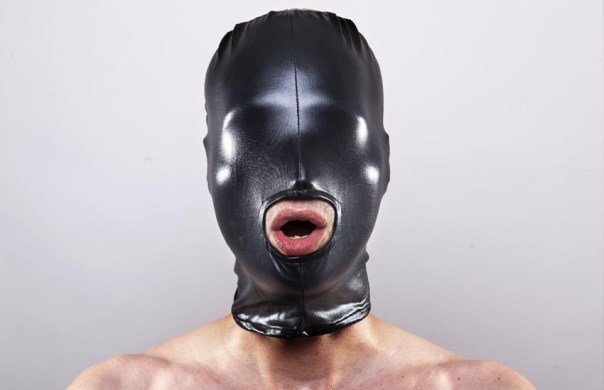
12. Clothing fetishism [leather, rubber] (2.14%)
13. Underwear fetishism [jockstraps, etc] (2.01%)
14. Ablutophilia [baths, showers] (1.78%)
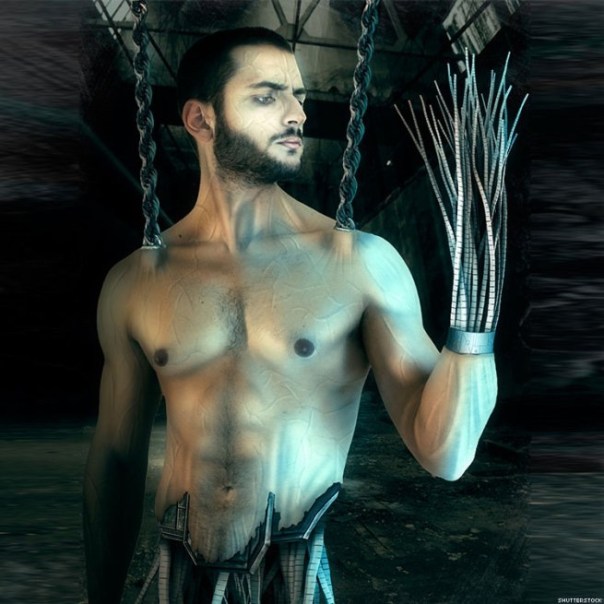
15. Technosexuality [robots, toys etc] (1.4%)
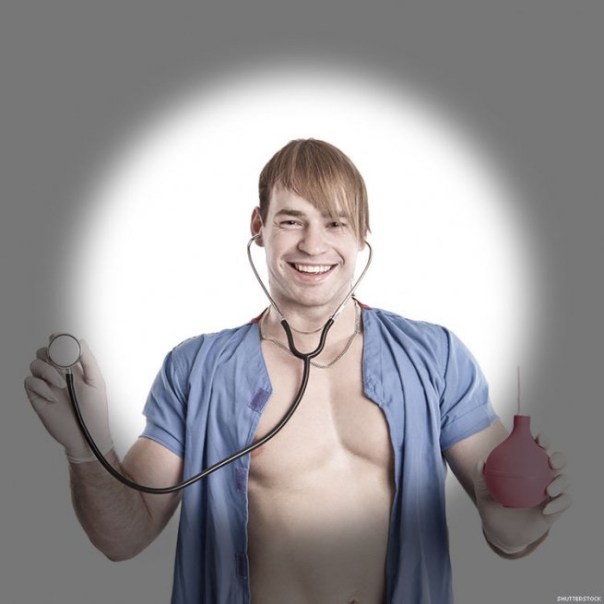
16. Medical fetishism [doctors etc] (1.36%)
17. Podophilia [feet] (1.24%)
18. Coulrophilia [clowns] (1.11%)
19. Sitophilia [food] (1%)
20. Pygophilia [bums] (0.79%)
21. Transvestophilia [wearing clothing typically worn by the opposite gender] (0.65%)
22. Toonophilia [cartoons] (0.3%)
Kink and mental health
If you are kinky, psychotherapists advise to share it with your partners if you already have good communication.
Also, some studies say people who do engage in kink are more likely to have positive mental health.
Deborah Fields, a kink-specialist and psychotherapist, told Gay Star News: ‘[There are studies that say] people who are kinky are more likely to be ok with themselves. People who are kinky tend to have better mental health than people who are not.
‘It’s a hard one to judge. I see a lot of mental health issues. However, do I see any more mental health issues than those outside of the kink community. No.
‘I think what kinky people do is talk more. We have to talk about our shit more than someone that doesn’t. You’re negotiating consent. That community, we, are more likely to discuss things and be open about mental health upfront. The idea of being risk-aware is also including mental health.
‘Research says we’re quite ok. However, there’s no widespread research that has yet to look at the kink community.
New calls for Kink to be added to LGBTI acronym
What do you think?
Should ‘Kink’ be a part of the LGBTI acronym? | Photo: torbakhopper and See-ming Lee / Flickr
There are new calls for the letter ‘K’ (which stands for ‘Kink’) to join the LGBTI initialism.
According The Gay UK, the full all-inclusive list of initials is now: LGBTQQICAAAPF2K+
Breaking this down, the letters stand for Lesbian, Gay, Bisexual, Transgender, Queer, Questioning, Intersex, Asexual, Agender, Ally, Pansexual, Polysexual, Friends and Family, Two Spirit and Kink.
But many took to Twitter to respond with confusion to the addition of ‘k’ to the list.
Some called out the fact kink is not a sexuality or a gender identity.
Vonny Leclerk said: ‘There’s now a K for Kink in the LGBT+ acronym. Really? Is kinkiness now viewed as a sexual orientation?’
Twitter user Sister Outrider wrote: ‘Just no. [It] is not a sexual orientation. People with sexual kinks do not face any structural or systematic discrimination as a result of those proclivities.’
‘Isn’t Pride all about celebrating who you have sex with?’
Previous forums on the subject also discuss the appropriateness of adding kink to the acronym.
On a previous MacRumors forum, one user wrote: ‘The queer community is already incredibly sexualized.’
‘One major problem I have with including kink in the LGBTQ+ community is it makes LGBTQ+ spaces inappropriate for minors. LGBTQ+ youth need safe spaces to express themselves and any struggles they may be facing as a result of their identity,’ they said.
But then another came to kink’s defence: ‘Personally, I see the sexual aspect of gay pride parades being the participants giving the finger to the people grossed out by the sexual aspect of their relationship as if that’s the only thing it is about.’
Then another said: ‘Isn’t Pride all about celebrating who you have sex with?’
What do you think?
Who watches the most kink and BDSM porn out of gay, bisexual or straight men?
Other findings include how one in five straight men watches gay porn
Who out of straight, bisexual and gay men is the most interested in kink?
A new study has surveyed the porn-viewing habits of 821 gay, straight and bisexual men from across the US, and the results are very revealing.
One in five straight men watches gay porn and 55% of gay men watches straight porn.
Other findings included how bisexual men were far less interested in kink or BDSM than their straight or gay counterparts.
Dr Martin J Downing, the lead researcher, was surprised to find how 21% of men, who say they only had sex with women, would watch two men having sex together on screen.
He found sexual behavior and sexual identity seems to line up, with straight men having sex with women and (apart from a rare few) gay men having sex with men.
Downing said this ‘identity discrepant viewing’ as ‘some level of evidence’ of fluidity in sexual attraction, at least in the habits of what porn they watch.
Bisexual men displayed different porn-viewing habits to gay or straight men, with bis saying they watch guy-on-guy porn just as must as gay men do and watching guy-on-girl porn almost as much as straight men. They also reported watching a significant amount of ‘bisexual porn’, with two men and one woman or two women and one man.
Downing said this proves bisexual men are not ‘watered down gays or heterosexuals’.
‘[Bisexual men] are more like heterosexual men in some things, and more like gay men in other things, but that’s a reflection of their own unique attractions,’ he wrote in Archives of Sexual Behavior.
‘They’re not identical to either group in terms of their porn viewing, which I think is really interesting for understanding bisexuality.’
Both bi and straight men watched solo masturbation more than gay men (60% compared to less than 50%), and bi men were far less interested in porn involving BDSM or other kinks (13.7%) than straight (24.6%) or gay (27.9%). However, gay men were far more likely to watch videos involving fisting, felching or water sports.
Two years ago this month, I was sitting on the sofa in my Sir’s living room. It was my birthday. We were getting ready to go to the gym. But first, he said, I should open my presents. Two packages were in front of me on the coffee table.
Our relationship had started more than a year earlier with intense monthly BDSM play sessions. After we stopped playing sexually, we continued to go to the gym together and push each other to live healthier. We still go to the gym together, and today I consider him one of my closest friends. He knows what I like — sexually and otherwise — more than most people in my life, so his presents are always top-notch.
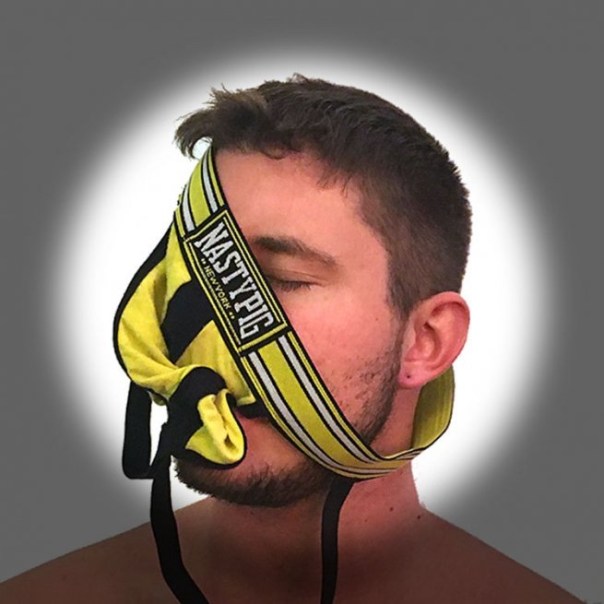
Inside the first package was a bottle of twelve-year Glenlivet, one of my favorite single malt whiskies. The second: a Nasty Pig jockstrap. But it was not just any Nasty Pig jock. I sniffed. That distinctly musky, delicious aroma, which can only be found in the playrooms of gay circuit parties and in gyms across the country, lingered in the stitching. “I wore it for a few days,” he said. “You’re welcome.”
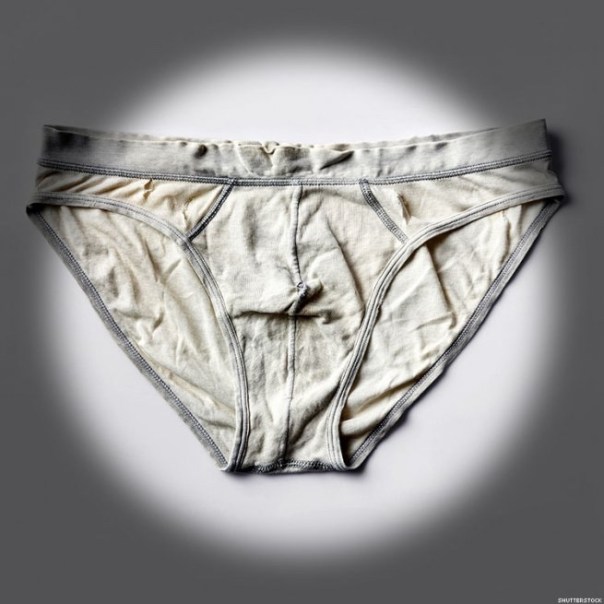
Used underwear is one of my fetishes.
You may be asking: What is a fetish, and how is it different from a kink? I clarified these two terms in my list of 30 kinky terms every gay man should know. But I’ll reiterate their distinction here. Kinks are “unconventional” sexual interests, like bondage or paddling. That’s it. Fetishes — also called paraphilias — are objects, materials, features, or articles of clothing, like used jockstraps, that people respond to sexually, and that enhance or facilitate sexual arousal. To clarify: fetish objects are not sexual on their own, like whips or dildos. Fetish objects become sexualized when someone responds to them sexually.
You’ve probably heard of a few obscure fetishes, like high-heeled shoes and rubber duckies. Fetishes are rapidly moving out of their kinky niche and into pop culture. Stay on top of (or under) the trend with this list of 36 fetishes — some well known, others less so — that you need to know about.
1. Leather
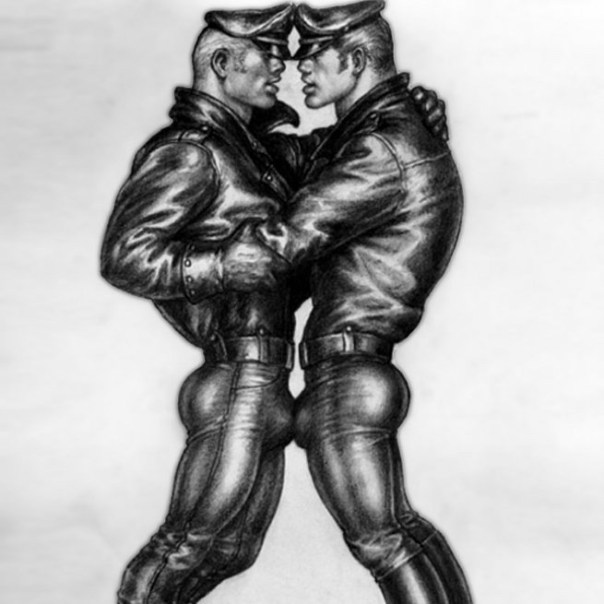
Photo source:The Tom of Finland Foundation
Leather is one of the most commonly fetishized materials, and certainly one of the oldest. Tom of Finland’s 1970s drawings of biker boys, clad in impossibly form-fitting leather, solidified leather as a staple of gay culture. Today, the leather community is global, united by national and international leather competitions that celebrate this fetish at gatherings like the Folsom Street Fair in San Francisco, International Mr. Leather in Chicago, and Folsom Berlin.
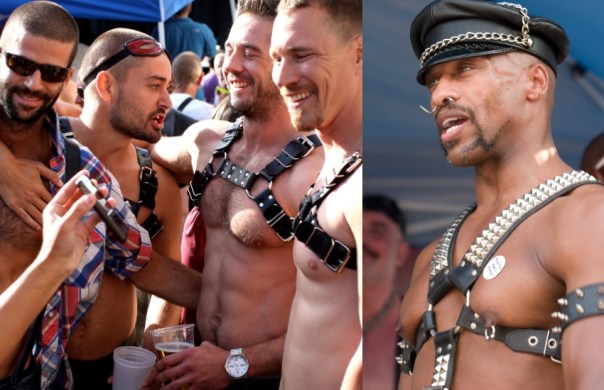
What does a leather event look like? It looks like throngs of men in leather harnesses, jock straps, jackets, boots, gloves, aprons, fully-body uniforms, and other garb. Since many leather fetishists are into many other fetishes and kinks, the leather community is generally considered synonymous with the kink community as a whole.
2. Rubber
The second most commonly fetishized material is rubber. Rubber guys are usually into the same fetishes and enjoy the same kinks as leather guys, but prefer a different material. They have their own large-scale gatherings like Mister International Rubber, also in Chicago.
It is common for rubber guys to wear full-body suits that cover greater amounts of skin. Rubber is not used for harnesses to the same degree that leather is, although a good leather store and kink supplier like Mr. S Leather in San Francisco will have plentiful options of gear in both materials.
3. Rope
Here’s a great opportunity to make the distinction between “kink” and “fetish” — a difference which, colloquially, is somewhat arbitrary since many people use the terms interchangeably.
Rope is a common material used in bondage, which is a kink, but rope is not used exclusively. People into bondage may also use duct tape, leather cuffs, chord, zip ties, neckties, and other tools of restraint. But since many kinksters (kinky people) into bondage fetishize rope specifically, rope becomes a fetishized material.
Rope is more rustic and romantic than duct tape. Duct tape is reminiscent of police sirens and robberies — the restraint material you’d use if you want to be tied, gagged, and left in a closet for a few hours. Rope, in contrast, calls to mind your youthful fantasies of getting captured by horny pirates and tied to the mast — and all the wonderful scenarios that follow.
4. Used Underwear
Used underwear is such common fetish item that big-name escorts, porn stars, and prominent sex figures can usually make a good buck selling their unwashed undies. (Adam Killian, if you’re reading this, I would like to speak with you about a possible business venture.)
5. Armpits
Also called maschalagnia, armpit fetishes are difficult to explain to those who don’t share them. Our culture views armpits as nasty places on the body. While everyone should probably use antiperspirant before a job interview or family gathering, some of us really enjoy the smell (and taste) of pits, sans deodorant, and get turned on by it.
6. Skateboarders
This fetish probably falls under the umbrella of “uniform” fetishes, but I separated it since there is not a standard uniform for skateboarders, punks, and alternative guys. Some people, including my former Sir, fetishize the stereotypical look of skateboarders, from their neck tattoos to their lip rings, from their Diamond Supply Co. t-shirts to their Vans shoes.
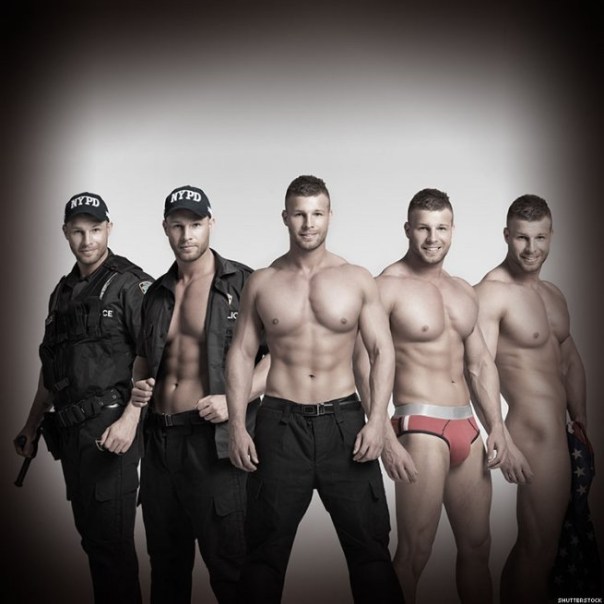
7. Uniforms
People who live in the United States are taught from a young age that uniforms should be viewed with respect, especially police uniforms, military uniforms, and firefighter uniforms. These socio-politics of respect naturally morphed into male strippers dressed as firefighters and cops — evidence that uniforms are heavily fetishized by straight and LGBT people alike.
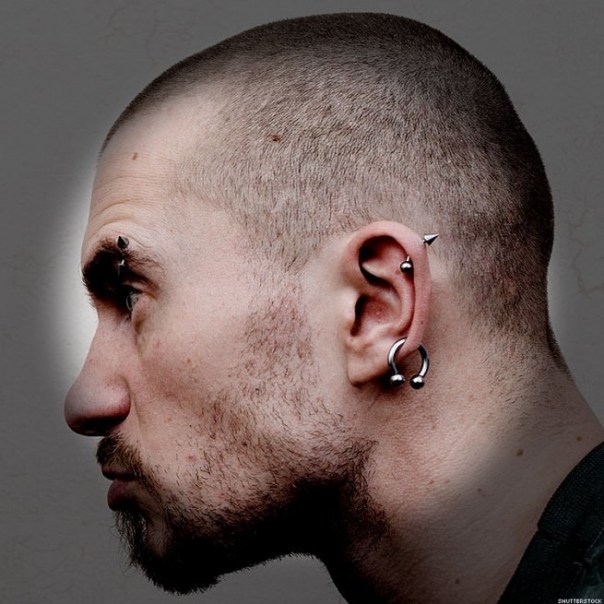
8. Skinheads
There is a massive (albeit more underground) fetish surrounding guys with buzz cuts, or “skinheads.” This fetish typically overlaps with rubber and skateboarder/punk wear. By extension, buzzing someone’s hair is a common kink practice that is generally seen as a form of humiliation and “ownership.”
Skinheads and the guys who fetishize them tend to also fetishize urine and enjoy fisting.
9. Razors
Shaving the body is typically seen as a nonsexual activity and part of a mundane, un-erotic self-maintenance regimen. But for some, shaving (themselves and others) is extremely arousing. As a sexual activity, shaving would probably be considered a kink rather than a fetish. But trimmers, razors, and other modes of shaving and cutting body hair are fetishized objects, so they deserve a mention. Guys I’ve met that are into this fetish get aroused from the sensation of electric buzzers running against their skin — and have had more than a few uncomfortable erections in barber chairs.
10. Urine
Also called urolagnia, this is the fetish around urine itself, which for obvious reasons overlaps with the kink of watersports — a sexual activity in which people enjoy getting peed on, peeing on others, and/or drinking urine.
11. Duct Tape
Remember how rope is a commonly fetishized bondage material? Duct tape is a close second.
For guys who enjoy getting gagged, duct tape is a staple. Duct tape calls to mind kidnap fantasies and dark hallways, and nothing beats that hot, muffled gagging sound. Note: as sexy as duct tape is, at some point you will have to pull it off, which will hurt. This writer suggests using vet wrap as a nice alternative.
12. Spit
Like urine, spit is a nonsexual bodily fluid that gets fiercely fetishized. Piggy guys into spit enjoy getting spit on, spitting on others, using spit religiously in place of lube, and even drinking saliva.
13. Gas Masks
An old-school fetish object, gas masks are rarely found in popular culture anymore. Originally used in the WWI trenches, they were an integral part of the social landscape during the Cold War and in the early days of gas and chemical warfare. Today, gas masks are really only seen at riots where tear gas is used. As such, they have that innately revolutionary quality, and are often used by graffiti artists}\\ for protection against harmful fumes from spray paint. All this lovely protest imagery and violent Americana lends itself beautifully to fetishization. Gas masks are common erotic objects for kinksters into breath play and are popular among rubber fetishists.
14. Food
Don’t confuse this fetish with the consumption of aphrodisiacs like oysters and chocolate. Food fetishes can exist for any food, from cheesecake to steak tartare. Satisfying food fetishes does not always mean eating it. If you don’t think food can be sexualized, try adding chocolate sauce, honey, whipped cream, and M&Ms to your next wild sex session.
15. Feet
Some people love seeing, touching, licking, massaging, tickling, and getting penetrated (anally or vaginally) by feet. Foot fetishes naturally lead people to think of shoe fetishes, although these are not the same. Like feet, some guys love sniffing, licking, and touching women’s shoes. (I personally love licking a dominant leather man’s boots, but this is more a sign of submission than a legitimate boot fetish.)
16. Hands
I was cuddling with a guy recently when I made a comment that he thought was very strange. I said, “Your hands are really sexy.”
He had firm, small, smooth, meaty hands — in other words, great hands for fisting. But hand fetishes don’t have to be linked to fisting, which is the kink practice of slowly inserting the whole hand (and more) into the anus or vagina, with the assistance of buckets of lube. Many people get aroused from hands: the way they look, the way they feel, their shape, their texture, and the sensation of touching them.
17. Amputees
Photo Source: Broadway Bares, photo by Kevin Thomas Garcia
No list of fetishes would be complete without amputees. My ex-boyfriend, in fact, thought guys with amputations, prosthetic legs, and other missing limbs were extremely sexy, and every morning I made sure all my limbs were still intact.
Alex Minksy has more or less made a career from this fetish. The ex-military amputee is a common muse for L.A. photographer Michael Stokes. For the sake of clarity, I should stress that the fetishization of amputees is not the same thing as the kink practice of actually removing limbs for the sake of sexual gratification, which is considered an extreme body-modification kink that is by and large not endorsed by the international kink community. Simply put: you can think amputees are sexy, but don’t go cutting off someone’s leg, or your own. That’s not OK.
18. Medical
Doctor’s offices — along with a wide range of medical tools like speculums and catheters — have become so commonly fetishized that, like locker rooms and sports gear, they have long become a popular porn genre altogether. You’ve seen it: the porn scenario where the delicate patient gets “probed” by the gloved doctor, who is conspicuously naked beneath his lab coat.
19. Guns
As phallic-shaped instruments of power, it is no surprise that guns are heavily fetishized, although, for obvious reasons, exploring this fetish has an accompanying degree of risk attached. There is endless kidnapping and rape-fantasy porn on the Internet that features guys and girls being “forced” into sex at gunpoint (as an aside to their directors, these scenarios teeter into the absurd when they start orally servicing the barrel).
20. Enemas
Also called klismaphilia, enema fetishes are commonly explored in amateur gay and straight porn. As useful tools for cleaning out the anal cavity, enemas and douches are used by bottom guys and anyone looking to enjoy mess-free anal sex, so naturally they have become part of sex itself. Aside from their usefulness, enemas are generally considered a healthy occasional practice, and have become a sexualized object all on their own.
22. Diapers
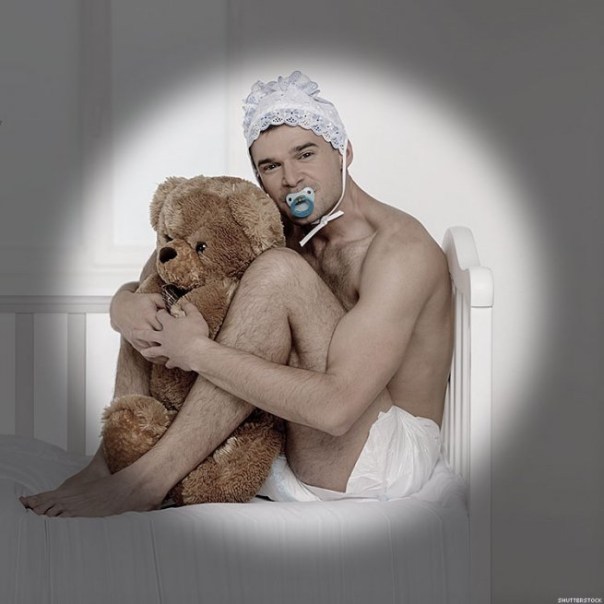
The fetishization of “adult babies” is hard to separate from the kink practice of acting like a baby or infant, which many adults are into, and which typically involves them wearing diapers. The terms get tricky here. Wearing diapers would be considered a kink, but erotic stimulation from diapers in general, regardless if you wear them, makes them fetish objects. This fetish may or may not be related to feces (see #33).
23. Piercings
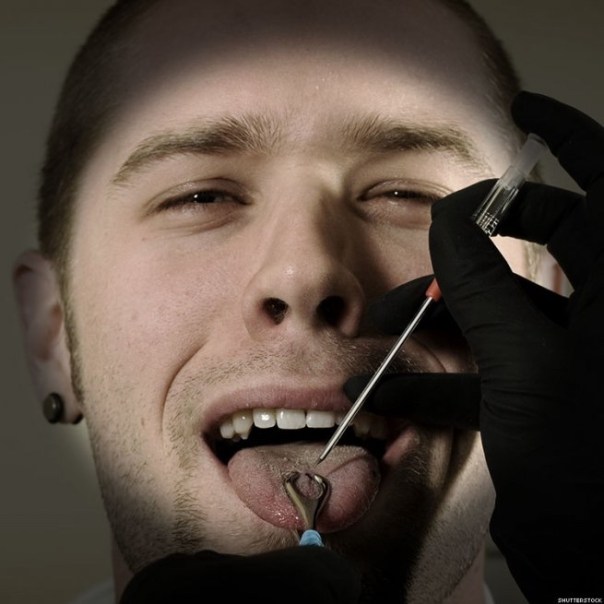
Many guys have fetishes for piercings — also called piquerism — and as a result may also enjoy the body-mod kink of piercing the skin, which some take to extremes. I have a fetish for Prince Alberts — circular piercings that go through the head of the penis — but I do not personally have one, which means I enjoy this fetish but do not practice the kink of piercing myself or someone else for pleasure. (This will change the minute I get my long-awaited PA.)
24. Scars
Scars are very sexy. They tie in to our culture’s icon of the rugged warrior, the roughed-up cowboy, the soldier wounded from battle. For some people, they are an extremely strong turn-ons. These people have scar fetishes, and may sometimes choose to intentionally scar themselves in order to give themselves a feature they consider attractive. Not to belabor a distinction, but doing so would probably be considered a body-mod kink. Scars as erotic stimuli are fetishes.
25. Plushy Toys/Stuffed Animals
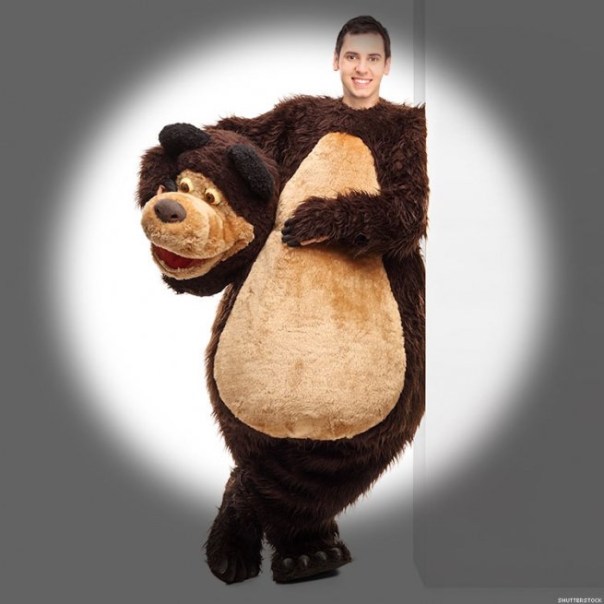
You’ll never look at your niece’s collection of plushy animals the same way again. Some people get sexually aroused from plushy toys — this fetish is actually more common than you might think.
26. Balloons
I didn’t believe this was a real fetish until I looked it up. Balloon fetishes, which are very real, seem to be related to the tension of them popping, a tension that some consider very erotic.
27. Socks
There are fetishes for virtually every kind of clothing, but socks and stockings are certainly a close second behind underwear as the most commonly fetishized clothing articles. In the same way that I love sniffing a hot guy’s used boxers, some guys love sniffing a pair of used socks.
28. Beard/Facial Hair Fetish
You know by now that shaving tools and buzzed haircuts have fetishes attached to them. Beards and body hair should be less surprising, especially these days. Beards are so sexually charged and erotically idealized among today’s scruffier populations of gay men that one might forget the fact that beards are still, technically, fetish objects.
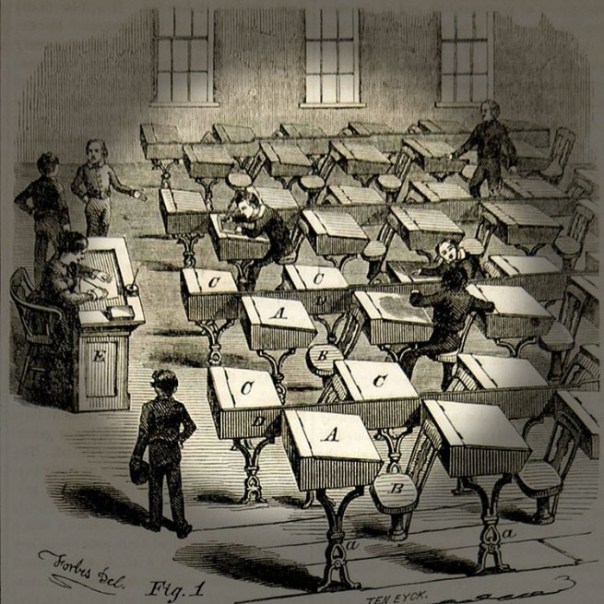
29. Classrooms
“You’ve been a very naughty boy. You need to stay after class for a hard lesson.”
Most of us should be familiar now with the fetishes surrounding teachers, desks, rulers, chalkboards, and other classroom fare. Some kinksters may explore these fetishes by replicating a classroom setting for their own form of interrogation torture and role play.
30. Blood
With all the vampire romance and gore porn that composes today’s literary and cinematic milieu, it is no surprise that blood is an increasingly popular fetish. A small number of kinky sex practices allow you to explore this fetish with little risk of long-term injury — piercing, whipping, etc. — but they are not without risk of transmitting HIV, Hep C and other STIs. As a rule of sex and of life, if you see blood, it usually means something is wrong. Therefore blood play is a difficult fetish to explore safely. The kink community does not endorse injurious and unsafe sex practices.
31. Knives
Like guns, knives can (and should) cause a certain degree of discomfort, which for some people creates strong sexual arousal. Like guns, knife fetishes automatically require a hefty amount of caution.
32. Clowns
photo of Ouchy the Clown by Scott Beale/Laughing Squid
Yes, it’s true. I watched clown porn the other night just to see if this is a real fetish. It is.
I have heard it proposed more than once that fetishes are psychological conditions that manifest themselves as the only responses certain people can have to stimuli that they would otherwise consider repulsive. I personally have never fully bought this claim. However, it is no secret that clowns — which will likely be remembered in a thousand years as one of the worst creations of modern man — are commonly fetishized figures, and I cannot help but wonder if fetishizing clowns is the only way some people can respond to their horror. The mind is capable of doing many incredible things, like transferring pain into pleasure, stress into desire, and fear into eroticism, so while I cannot justifiably make the claim that all fetishes are the mind’s roundabout method of dealing with revulsion, I do wonder why clowns have emerged as such a surprisingly common fetish.
33. Feces
I promised my scat fetishist friend in Dallas that he would be represented on this list. Coprophilia is sexual stimulation from feces, and while the general population’s response to it is bound to be pretty strong, this fetish is more common than you might suspect, particularly among gay pig players, fisting enthusiasts, and kinky leather men. Despite its popularity within a more niche section of the gay male population, it is generally considered an unhygienic fetish to explore, since handling and consuming human fecal matter carries with it certain health risks. In my limited experience, it is also one of the more heavily stigmatized fetishes, even within the kink community.
34. Sports Gear
Remember those adolescent longings for the high school quarterback? Perhaps you enjoyed varsity baseball for more reasons than you let on. The fetishes surrounding sports gear and sport environments are so common that locker room porn has become its own popular genre. Prominent gay clothing brands like Nasty Pig and Cellblock 13 draw their design inspiration from tried-and-true sports wear, and standard gay circuit attire will always feature a pair of football pants with the front lacing beckoningly open.
35. Mannequins
Also called agalmatophilia, this fetish applies to dolls, mannequins, statues, and anything that resembles a human without actually being one. Note: while sex dolls and inflatables with porn star faces may appeal to people who enjoy this fetish, I would not immediately consider these objects fetish objects, since they are specifically designed for sexual arousal.
36. Age
Photo by Charles Thomas Rogers from the portfolio, Men Over 50
Also called chronophilia (and sometimes ageism), the fetishization of age is a hotly debated topic in gay culture. The term swings both ways: this fetish applies when someone older fetishizes the specific age of someone younger, and when someone younger fetishizes the specific age of someone older. The fetish doesn’t require a significant age difference — just the fact that someone’s age itself is a turn-on.
Conceptually, this fetish opens up debate surrounding the fetishization of other characteristics like skin color and body type. Some argue that fetishizing certain physical characteristics like age and weight is no different than feet and hand fetishes, which we generally do not frown upon. Others say that age fetishes, like skin color and body type fetishes, are not fetishes at all, and that the reduction of a person’s features into points of desire (and, by extension, rejection) is dehumanizing and smacks of racism and body-shaming.
Debate rages. Age fetish deserves inclusion on this list for the sheer purpose that it shows how fetishes can cross from the playfully erotic into more culturally profound and impactful subjects. The whole concept of fetish reveals that anything in the world, from pool floats to ice cream, can become sexual objects if someone responds to them that way, and as such they unleash our sexual desires from the narrow confines that our culture tends to place them in.
This being said, fetish exploration is not a free-for-all. There is a trepidatious line between fetishizing balloons and fetishizing blood. That vague line exists throughout the world of kink, which is why the motto “safe, sane, and consensual” should be strictly adhered to as you explore the things that turn you on — which, I must stress, are worth exploring. Your birthdays just got a lot more interesting.
Mya Taylor, left, and Kitana Kiki Rodriguez, in “Tangerine.”(Magnolia Pictures )
It is no secret that Hollywood has a diversity issue — just take a look at the past two years of #OscarsSoWhite. But more than some may have expected, the industry’s exclusion problems extend past the conventional conversation about race/ethnicity and sex. According to the latest study from GLAAD, released Monday, LGBT representation in film needs improvement as well.
“Hollywood’s films lag far behind any other form of media when it comes to portrayals of LGBT characters,” said Sarah Kate Ellis, GLAAD’s president and CEO, in a statement. “Too often, the few LGBT characters that make it to the big screen are the target of a punchline or token characters. The film industry must embrace new and inclusive stories if it wants to remain competitive and relevant.”
GLAAD is the leading lesbian, gay, bisexual and transgender media advocacy organization. Their fourth annual Studio Responsibility Index maps the quantity, quality and diversity of LGBT people in films released by the seven largest motion picture studios: 20th Century Fox, Warner Bros., Lionsgate Entertainment, Walt Disney Studios, Sony Columbia Pictures, Universal Pictures and Paramount Pictures. Below are eight highlights from the study:
Only 22 of the 126 major releases in 2015 included characters identified as LGBT.
Julianne Moore, left, and Ellen Page in a scene from “Freeheld.” (Phil Caruso / Lionsgate/AP)
That’s only 17.5%, and not a change from 2014’s 17.5% value. Some of these films include Lionsgate’s “American Ultra” and “Freeheld” and Warner Bros.’ “Magic Mike XXL” and “Get Hard.” In those 22 films, there were 47 LGBT characters, up from 28 last year.
When movies do have LGBT characters, they are usually gay men.
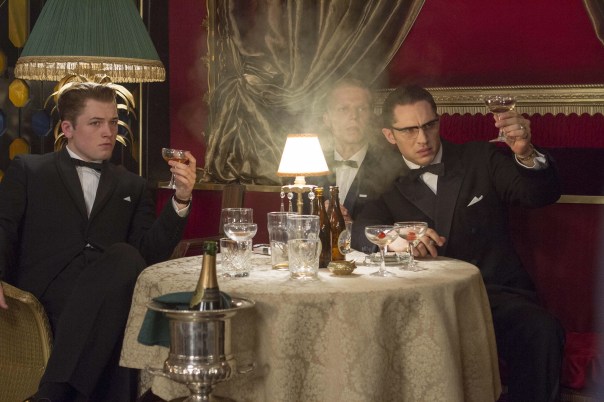
Taron Egerton, Charley Palmer Rothwell and Tom Hardy in “Legend.” (Universal Pictures)
Male characters outnumbered females by a ratio of more than three to one. More than three quarters of inclusive films (77%) featured gay male characters while less than a quarter (23%) included lesbian characters. As for the representation of the rest of the queer community, only 9% included bisexual characters while only one film was trans-inclusive, Warner Brothers’ “Hot Pursuit.”
But they’re also usually white.
In 2014, 32.1% of LGBT characters were people of color. That number dropped to 25.5% in 2015. Of the LGBT characters counted in 2015, 34 (72.3%) were white, five were Latino (10.6%), four were black (8.5%) and three (6.4%) were Asian or Pacific Islander. One character was non-human, Fabian in Lionsgate’s “Un Gallo con Muchos Huevos.”
When there are LGBT characters, you might miss them if you blink.
Just looking at the number of LGBT characters on the big screen isn’t enough. With 73% of the few queer characters having less than 10 minutes of screen time, their impact is additionally limited.
Of the seven studios, not even one is doing “good.”
Since the study’s inception, GLAAD has given each studio a rating of good, adequate or failing. None of them received a rating of “good” for their 2015 releases. Fox, Lionsgate, Sony and Universal all received ratings of “Adequate”, while Paramount, Disney and Warner Bros. all received a “Failing” grade.
The most inclusive major studio was Lionsgate, as eight of its 2015 releases were LGBT-inclusive.
Warner Bros. followed with five then Universal with four. Sony only had three and Fox two. Neither Disney nor Paramount included any LGBT content in their 2015 slates of 11 and 12 films, respectively.
That’s probably because LGBT depictions are getting worse.
Last year saw a resurgence of outright offensive images of LGBT people; more films relied on gay panic and defamatory stereotypes for giggles. Though humor can be a powerful tool to challenge the norm, when crafted problematically, it has the opposite effect.
The depictions are so bad that only eight of the 22 LGBT-inclusive films passed the “Vito Russo Test.”
The “Vito Russo Test” is GLAAD’s set of criteria analyzing how LGBT characters are represented in fictional work named after GLAAD co-founder and film historian Vito Russo. Inspired by the “Bechdel Test,” these criteria represent a standard GLAAD would like to see a greater number of mainstream Hollywood films reach in the future.
In order to pass the Vito Russo Test, a film must include having an identifiably lesbian, gay, bisexual or transgender character that is not solely or predominantly defined by their sexual orientation or gender identity and is tied into the plot in such a way that their removal would have a significant effect. Only eight of the 22 major studio films that featured an LGBT character passed the test in 2015, the lowest percentage in this study’s history.
Luckily, the major studios have more progressive imprints.
Last year, GLAAD began examining the film releases of four smaller, affiliated studios to draw a comparison between content released by the mainstream studios and their perceived “art house” divisions. Those smaller studios are Focus Features, Fox Searchlight, Roadside Attractions and Sony Pictures Classics.
Of the 46 films released under those studio imprints, 10, or 22%, were LGBT-inclusive. That’s a notably higher percentage than the parent studio counterparts and an increase from 2014’s 10.6% (five of 47) of films from the same divisions. Some of the films from these smaller studios include “The Danish Girl,” “Grandma” and “Stonewall.”
In the period October 1980-May 1981, 5 young men, all active homosexuals, were treated for biopsy-confirmed Pneumocystis carinii pneumonia at 3 different hospitals in Los Angeles, California. Two of the patients died. All 5 patients had laboratory-confirmed previous or current cytomegalovirus (CMV) infection and candidal mucosal infection. Case reports of these patients follow.
In honor of National Gay Men’s HIV/AIDS Awareness Day, I’m republishing my article on the first report documenting the emergence of the HIV/AIDS pandemic. That article, published in the CDC’s Morbidity and Mortality Weekly Report on June 5, 1981, describes five cases of an unusual form of pneumonia in atypical patients, all young men. The broader social and public health implications of these five cases were not understood at the time of the article’s publication, but would be in just a few unnerving months. In short time, it would become clear that this pneumonia, caused by a tiny fungal organism, was part of a constellation of diseases associated with a novel and highly unusual viral infection that was spreading rapidly through a subset of the American population.
This MMWR article is the first record of an emerging outbreak that, in just one decade, would be the second leading cause of death in young American men 25 to 44 years and have infected over 8 to 11 million people worldwide. As I note in my article, “the June 5th report is a symbol of a time before HIV/AIDS became ubiquitous, before it became a pandemic, before a small globular virus became mankind’s biggest global public health crisis … June 5th marks the beginning of a radical transformation in how disease surveillance and medicine was conducted.” The HIV/AIDs outbreak, since this report’s publication and the growing awareness of the virus, has profoundly changed medicine, public health, virology, and the lives of millions of people.
It often seems that gay men are disproportionately, and perhaps unfairly, bludgeoned with HIV educational and awareness campaigns. After all, this virus is an equal opportunist infector infecting both genders of all sexual orientations. And, yes, men that report having sex with other men represent a truly tiny proportion of the United States population, a slim 2% of the three-hundred million that live in this country.
However, as the CDC reports, gay men account for 63% of all newly diagnosed HIV infections in the United States and make up 52% of the current population of people living with a HIV diagnosis. Stopping the continued transmission of HIV/AIDS in this country critically relies on affecting change and promoting awareness among these men. In 1981, we just became aware of the HIV/AIDS virus. Today, we continue to bring awareness to prevention, testing, and treatment of a virus that continues to percolate through the same vulnerable population that was brutally affected nearly thirty years ago.
June 5, 1981. Pneumocystis Pneumonia. Los Angeles.
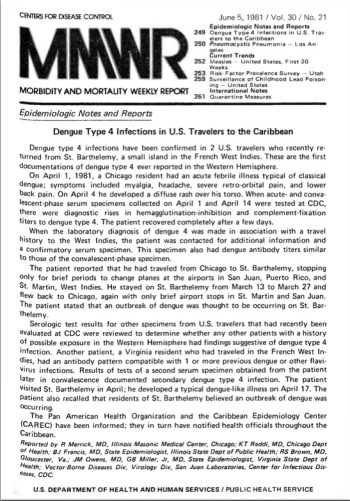
“Pneumocystis Pneumonia — Los Angeles,” in the June 5, 1981 edition of the CDC’s Morbidity and Mortality Weekly Report, was an economical seven paragraph clinical report cataloging five observed cases, accompanied by an explanatory editorial note on the rarity of this fungal disease. It seemed to be nothing out of the ordinary from MMWR, a publication that has been issuing the latest epidemiology news and data from around the world for 60 years. The report was included in that week’s slim 16 page report detailing dengue in American travelers visiting the Caribbean, surveillance results from a childhood lead poisoning program and what measles had been up to for the past five months.
Since 1978, Dr. Joel Weisman, a Los Angeles general practitioner, had been treating dozens of gay men in the city presenting with a motley collection of uncommon illnesses – blood cancers, rare fungal infections, persistent fevers and alarmingly low white blood cell counts – typically seen in the elderly and immunocompromised (1). In 1980, he was struck by two profoundly ill men and by the similarity of their symptoms, their prolonged fevers, dramatic weight loss, unexplained rashes and swollen lymph nodes. He referred them to Martin Gottlieb, an immunologist at UCLA who just so happened to be treating a gay patient with identical symptoms.
All three men were infected with Pneumocystis pneumonia, caused by the typically benign fungus Pneumocystis jirovecii, and soon Gottlieb would hear of a two more patients with the fungal infection from colleagues (2). The MMWR editorial note accompanying the report of these cases would mention that Pneumocystis pneumonia, or PCP, is “almost exclusively limited to severely immunosuppressed patients” and that it was “unusual” to find cases in healthy individuals without any preexisting immune system deficiencies. The disease would later be cataloged on immunological graphs illustrating the awful decline of the infected – first the CD4+ T-cell count falls as the viral load ascends, then a marching band of viral, fungal, protozoan and bacterial infections capitalizing on the loss of CD4+ T-cells. PCP is now known as a classic opportunistic infection of those infected with HIV/AIDS.
In the first sentence, the report would note that the young men were “all active homosexuals.” These five were all “previously healthy” men in their late 20s and 30s. They did not know each other, they did not share common contacts and they did not know of any sexual partners suffering with similar symptoms.
Three of the men were found to have “profoundly depressed” numbers of CD4+ T-cells. All five reported using inhalant drugs, or “poppers,” common in that era among gay men, which would later serve as a lead into this new syndromic disease (3). Cytomegalovirus, found in the five men, was also suspected as a culprit behind this strange outbreak. The editorial note stated definitively that “the fact that these patients were all homosexuals suggests an association between some aspect of a homosexual lifestyle or disease acquired through sexual contact and Pneumocystis pneumonia in this population.”
By the time the very first report on this acquired immunodeficiency syndrome, which we now know as AIDS, had been published by Gottlieb and Weisman and three fellow physicians in the MMWR, two of the patients had already died.
New reports showed up after the June 5th report, the list of cancerous malignancies and bizarre diseases killing young gay men blossoming in number, seemingly inexhaustible in scope and variety. The first reported cluster was in Los Angeles but by the summer and fall of 1981, reports would trickle in from San Francisco and New York City, and then Miami, Houston, Boston and Washington, D.C. would represent new epicenters.
The July 4th report on 26 cases of Kaposi’s sarcoma, a rare cancer that only appeared in elderly men of Mediterranean descent, in California and New York City was another pivotal report on this new syndromic disease. The entire December 1981 issue of The Lancet was dedicated to the disease and hypothesized on the origins of this immunological deficiency but, tellingly, none of the articles proposed an emerging infectious disease as the culprit. The disparate constellation of diseases seemed to be linked only by their aberrational appearance in men in what should have been their prime, their gay lifestyle, and abnormally low CD4 cell counts. It had no apparent origin, and physicians were scrambling to find an appropriate treatment to decelerate the rapid progression to death.
By December 1981, it became clear that this disorder wasn’t limited to gay men but also affected intravenous drug users, recipients of transfused blood products and immigrant Haitians. The escalating numbers of cases reported daily and the disastrous mortality rate – 40% of patients were dying within a year of diagnosis – began to sow panic in the public health and medical world that soon spilled into the public (4).
It would take three years before the virus was detected and AIDS was definitively linked to an infection caused by a novel virus, human immunodeficiency virus or HIV. In just a decade, AIDS would be the second leading cause of death in young men 25 to 44 years in the United States and would have infected over 8 to 11 million people worldwide (5). The most recent estimate for the number of people worldwide living with HIV/AIDS is 34 million in 2011, with 68% residing in sub-Saharan Africa (6). That year, there were 2.5 million new HIV infections and 1.7 million AIDS-related deaths.
Though the June 5th, 1981 report was overlooked at first, for many years it would be “one of the most heavily quoted articles in the medical literature” (2). And since its publication, we have seen a cataclysmic shift in how the interrelated worlds of public health and medicine view infectious diseases, especially how to prevent, control and educate the public about them.
June 5th marks the beginning of a radical transformation in how disease surveillance and medicine was conducted. In the seventies, the scientific consensus on infectious diseases was that they were largely eradicated, that they were finished. Vaccines had diminished their presence in modern society, and antibiotics and antivirals would sort out the rest. HIV/AIDS changed that mentality and reality. It seemed to come from nowhere, the blossoming epidemic completely unforeseen and unprecedented in its scope. The June 5th report is a symbol of a time before HIV/AIDS became ubiquitous, before it became a pandemic, before a small globular virus became mankind’s biggest global public health crisis.
Author’s note: This article was originally published in January 2013 at thePump Handle blog as a part of a series on “public health classics,” exploring some of the classic studies and reports that have shaped the field of public health. Check out the original articlehere.
The answer lies in the makeup of a man as well as LGBT people at large.
If you have ever taken a walk down Santa Monica Boulevard in West Hollywood, Boystown’s North Halsted Street in Chicago, or even Chueca’s Gran Vía in Madrid, you have likely seen it: the attack of the clones. And I am not talking about some gaymers going crazy over the latest George Lucas screening.
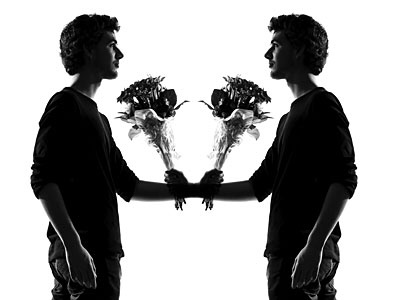
We have all seen our share of guys in the gay world who cross a seemingly incestuous line between looking so similar they could be brothers and boyfriends. Whether it is some gym bunny who is dating another protein-obsessed jock, a hipster with another skinny-jeans-wearing, glasses-clad ironist, or a twink who is dating another boyish-looking guy, there are lot of guys who tend to date what seems like a mirror image of themselves.
And that is not to disparage any of the aforementioned groups. However, it leads one to question: Why is this such a phenomenon among gay men?
The answer, I believe, lies deep in the struggle of coming out. While growing up, many of us — especially those of us from small towns — tried fitting into a straight paradigm. We grew up with our straight friends, assuming that we would grow up, fall in love with a woman, get married, and procreate. For this reason, some of us around puberty had a hard time reconciling what was hardwired in our brain and what our genitalia was telling us, because in all other aspects, we are just like our straight counterparts.
I can recall the exact moment in my middle school years when I tried to reconcile these two aspects of my life. At the time, I most certainly had a crush on this one guy named Kyle who I swam with on my year-round club team. I would often have to avert my stares at him when he looked my way, embarrassed that I had just caught a glance of his muscly features in a Speedo.
Yet, at an awkward tweenage party — the kind that only acne and newfound hormones could create — I saw all my friends “falling in love” with girls. It suddenly hit me that I had never felt about a girl in that way. Feeling left out, I decided I needed a girl crush. So I looked over at my nearby friend’s newly developed boobs and decided I was head over heels for her. After all, that was what I was supposed to find attractive, right?
Naturally, I was lying to myself due to social pressures. And this is a common occurrence in the gay world. There is a reason that the term “gold star gay” — a gay man who has never slept with a woman — exists. We all take our own path to realize that when it comes to sexuality, we are different. And for some of us, it takes a relationship with a girl.
But when we get out of this straight paradigm, most gay men seem to seek perfection in a relationship. After finding how much easier and natural same-sex relationships are for us, some of us raise our standards so incredibly high that only a clone of ourselves will do.
Yet, this unfortunately can, and often does, invite a variety of problems. Above the tendency to serial date, the search for perfection causes a social strata among gay men, starting with the infamous “Masc4Masc” category on dating sites. Wanting only a “real” man, this guy goes out of his way to act “straighter” than straight men and date only those who are the same — he forgets, of course, that straight men want a vagina and not his penis.
Then there are the racially motivated messages on dating profiles and hookup sites, such as “no Asians” or “no black guys,” etc. Wanting only to date a guy of a particular race (most likely his own), this man swears he is not racist, but rather that skin color is a preference just like one’s personality or astrological sign.
Last but not least, there is the message that says “no fats.” While it is understandable that this guy may be simply concerned that a potential partner could just die of a heart attack at age 40, that is probably not his motivation. A guy with a healthy body image who has a little bit of pudge disgusts him, as he seeks only a man with the abs of a go-go dancer and the arms of a construction worker or lumberjack.
Of course, many believe that these three examples are really just preferences and not problematic. After all, gay clone couples show the happiness and fulfillment of standards, right? I choose to respectfully disagree — rejecting anyone who is not Prince Charming riding down Santa Monica Boulevard, you are rejecting reality for a fairy tale. Enjoy a man who is exactly like you or a man who is your polar opposite, but always acknowledge that no man or relationship is perfect.
There was no royal or parliamentary law against homosexual activity in England until 1533, but a number of medieval legal sources do discuss “sodomy:.
Fleta, xxxviii.3:Those who have dealings with Jews or Jewesses, those who commit bestiality, and sodomists, are to be buried alive after legal proof that they were atken in the act, and public conviction”
[Fleta, seu Commentarius Juris Anglicani, (London: 1735), as trans in Derrick Sherwin Bailey,Homosexuality and the Western Christian Tradition, (London: Longmans, Green, 1955), 145]
Bailey notes that it is improbable that the penalty or burial alive was ever inflicted in medieval times [although Tacitus refers to it among ancient Germans inGermania12].
Britton, i.10:“Let enquiry also be made of those who feloniously in time of peace have burnt other’s corn or houses, and those who are attainted thereof shall be burnt, so that they might be punished in like manner as they have offended. The same sentence shall be passed upon sorcerers, sorceresses, renegades, sodomists, and heretics publicly convicted”
Bailey notes that this implies a process in which ecclesiastical courts made the charges and convictions and the state put them into effect. There do not seem, however, to have been serious efforts made to put theory into practice. The preamble to the 1533 Law seems to make this clear.
25 Henry VIII. C6
Le Roy le veult
“Forasmuch as there is not yet sufficient and condign punishment appointed and limited by the due course of the Laws of this Realm for the detestable and abominable Vice of Buggery committed with mankind of beast: It may therefore please the King’s Highness with the assent of the Lords Spiritual and the Commons of this present parliament assembled, that it may be enacted by the authority of the same, that the same offence be from henceforth ajudged Felony and that such an order and form of process therein to be used against the offenders as in cases of felony at the Common law. And that the offenders being herof convict by verdict confession or outlawry shall suffer such pains of death and losses and penalties of their good chattels debts lands tenements and hereditaments as felons do according to the Common Laws of this Realme. And that no person offending in any such offence shall be admitted to his Clergy, And that Justices of the Peace shall have power and authority within the limits of their commissions and Jurisdictions to hear and determine the said offence, as they do in the cases of other felonies. This Act to endure till the last day. of the next Parliament”
[Bailey, 147-148, and H. Montgomery Hyde,The Love That Dared Not Speak Its Name: A Candid History of Homosexuality in Britain, (Boston: Little, Brown, 1970) [British title:The Other Love]
Note that the law only ran until the end of the next Parliament. The law was reenacted three times, and then in 1541 it was enacted to continue in force for ever. In 1547, Edward VI’s first Parliament repealed all felonies created in the last reign [I Edw. VI. C.12]. In 1548 the provisions of the 1533 Act were given new force, with minor amendments – the penalty remained death, but goods and lands were not forfeit, and the rights of wives and heirs were safeguarded. Mary’s accession brought about the repeal of all Edward’s acts in 1548 [1 Mar c.1]. It was not until 1563, that Elizabeth I’s second Parliament reenacted the law [5 Eliz I. C.17] and the law of 1533 (not 1548) were given permanent force.
In 1828, the statute of 1563 was revoked by a consolidating act, but the death penalty was retained. In 1861 life imprisonment, or a jail time of at least ten years, was substituted for the death penalty. All these laws were against buggery, and indeed the law of 1828 had discussed matters of proof in terms of penetration. Note that other sexual activities were not specifically criminalised.
In 1885 Mr. Labouchere introduced an amendment to the Criminal Amendment Act of 1885. It read:-
48&49 Vict. c.69, 11:“Any male person who, in public or private, commits or is party to the commission of, or procures or attempts to procure the commission by any male person of any act of gross indecency with another male person, shall be guilty of a misdemeanour, and being convicted thereof shall be liable at the discretion of the Court to be imprisoned for any term not exceeding two years, with or without hard labour”
So for the first time private acts were brought under the scope of the law, as were acts other than anal penetration. This became the famous blackmailer’s charter, and was the law used to convict Oscar Wilde.
[for all the above see Bailey 145-152]
It was the Act of 1533, then, which first made buggery an offense under English criminal law. This law survived in various forms England until 1967, although it was amended in 1861 to substitute life imprisonment for the penalties of death and forfeiture of property.
But the direct effects of this law were not restricted to England. Because of England’s success as a colonial power, and its tendency to impose its entire legal structure on the ruled areas, legal prohibitions against homosexual activity derived from this law extended well outside England. In Scotland, for instance, (which has a separate legal system) the law was not changed until 1979. In many American states “sodomy” laws are still on the books, as also in former British colonies in the Caribbean.
.[ref. H. Montgomery Hyde,The Love That Dared Not Speak Its Name: A Candid History of Homosexuality in Britain, (Boston: Little, Brown, 1970)]
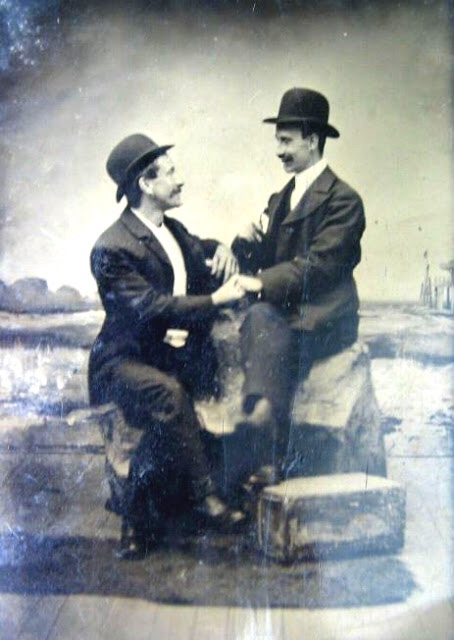
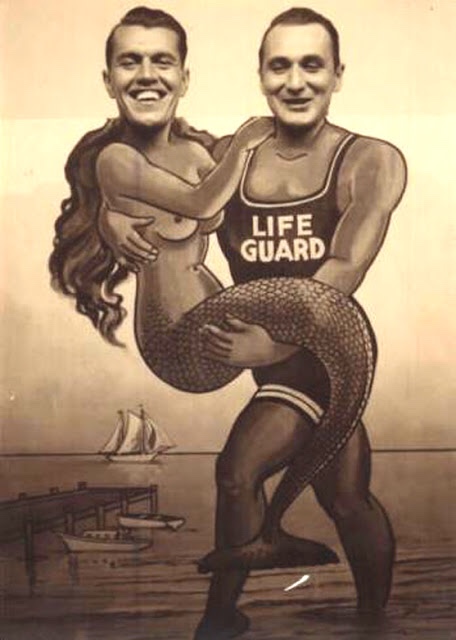
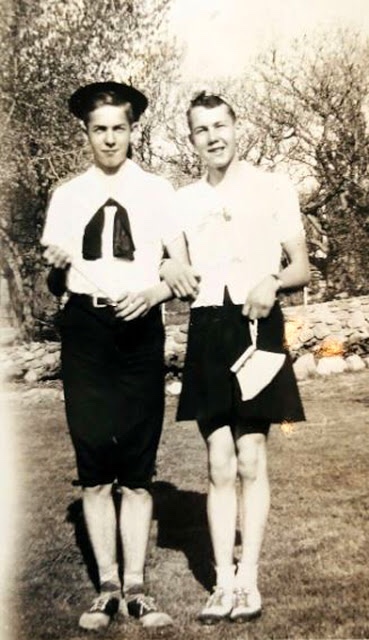
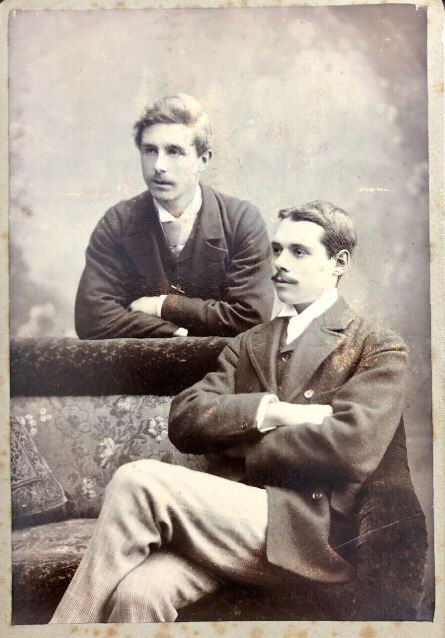
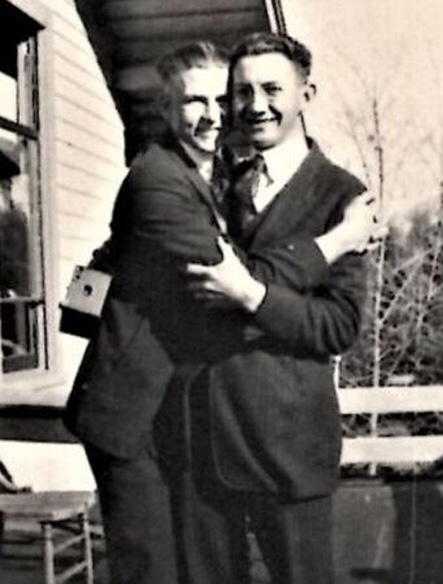
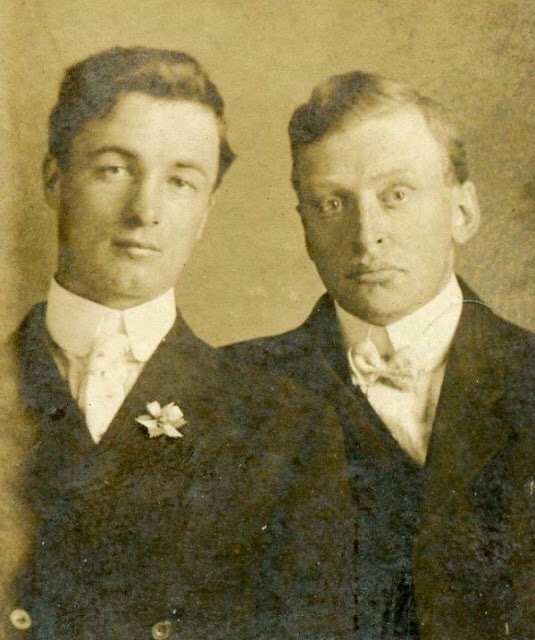
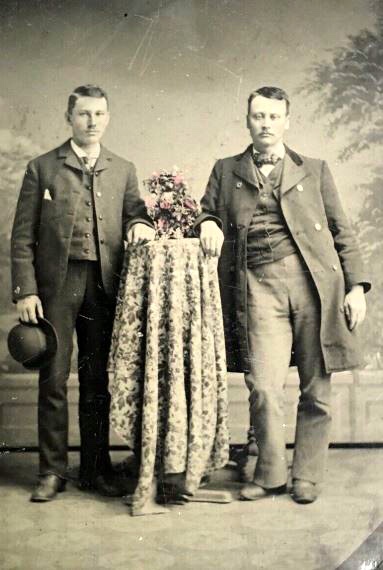
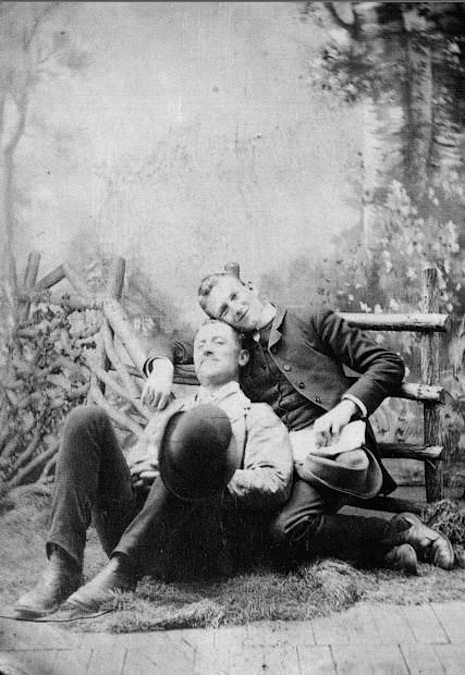
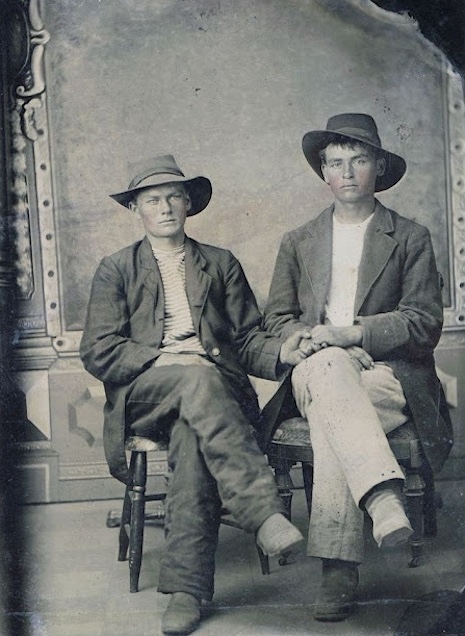
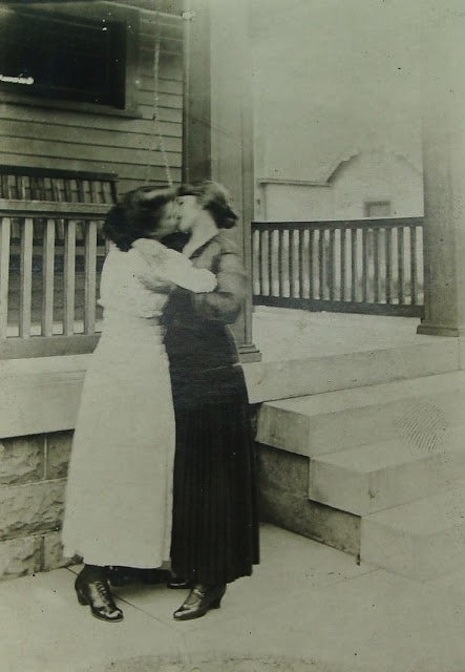
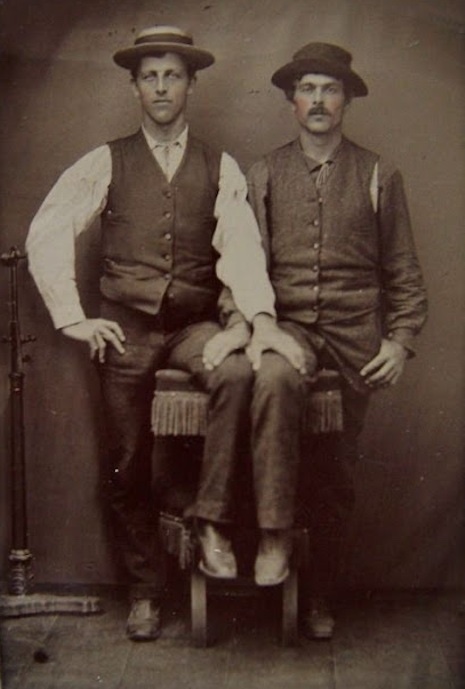
A couple’s photographic portrait is an affirmation of their relationship. It states for all to see: “We love each other. We care for each other. We are proud of who we are together.”
During the Victorian era many gay and lesbian couples proudly expressed their love for each other in studio portraits. Unlike the common belief that such relationships were “the love that dare not speak its name,” as Oscar Wilde so famously described same sex attraction in his poem “Two Loves,” gays and lesbians often dared to show their love. Indeed, many gay and lesbian couples more or less lived openly together throughout their lives. This was far easier for women than for men as women were expected to live together if they were not married, or to live with the euphemistically termed “female companion.”
Men, no historical surprises here, had their own haunts for meeting like-minded souls. In London these could be found in the “Molly houses” and gentlemen’s clubs or pick-ups haunts at Lincoln’s Inn, or St. James Park or the path on the City’s Moorfields, which was charmingly referred to as “Sodomites Walk.”
Theaters and circuses were also well-known dens of homosexual activity—this can be traced all the way back to Elizabethan England, when male prostitutes plied their trade at theaters.
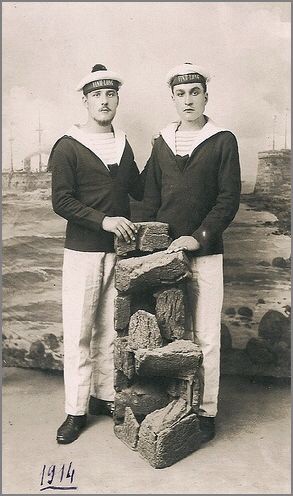
The armed forces, in particular the Royal Navy was notorious for gay relationships—understandable with all the horny seamen looking for any port in a storm. Apparently word got around.
It is a moot point that the change in public attitude towards homosexuality commenced with the Labouchere Amendment to the Sexual Offences Act in 1885, which “prohibited gross indecency between males.” This was the law under which Wilde was infamously prosecuted and the law that heightened discrimination against gays.
Before that there had been the Buggery Act—against anal penetration and bestiality—which was introduced during the reign of Henry VIII. This led to numerous executions (hangings) and imprisonments. It was briefly repealed, then reinstated by Elizabeth I. However, there were few prosecutions under the act and it was repealed again in 1828—though “buggery” remained a capital offense. James Pratt and John Smith became the last two men to be executed for buggery, in 1835.
The Labouchere Amendment outlawed homosexuality and made it more difficult for gay men to live the lives they desired. Labouchere did not include lesbians in the act as he believed drawing attention to lesbianism would only encourage sapphic desires amongst most Victorian women.
So even when gay relationships were outlawed in England, they still thrived in open secret. In America, the sodomy laws varied from state to state. What one state tolerated or had no opinion about, another state punished. However, as with England in the Victorian era, America gay and lesbian couples would often openly express their love for each other in portrait photographs.
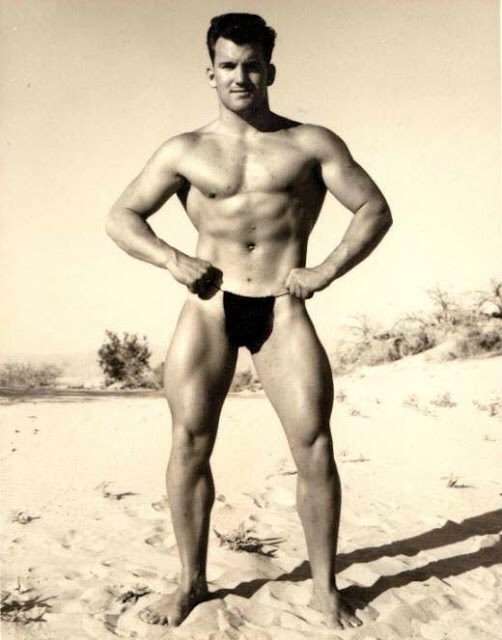
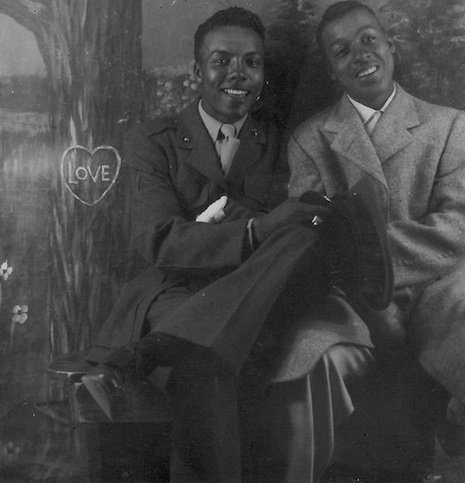
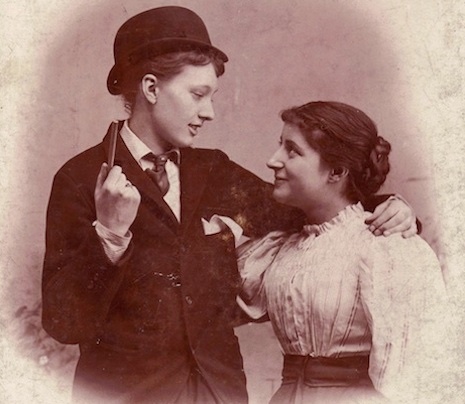
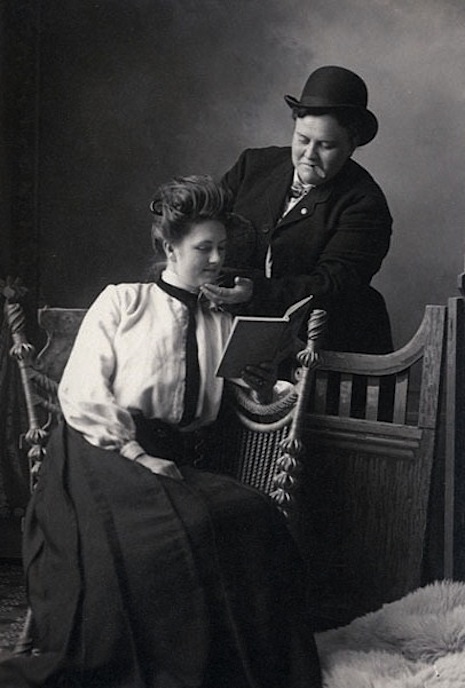
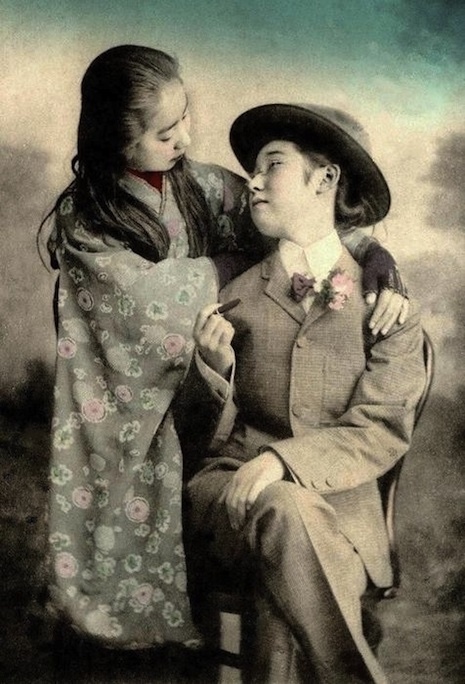
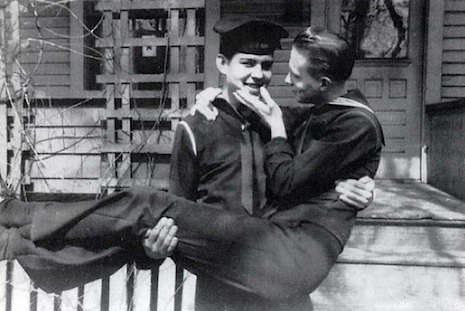
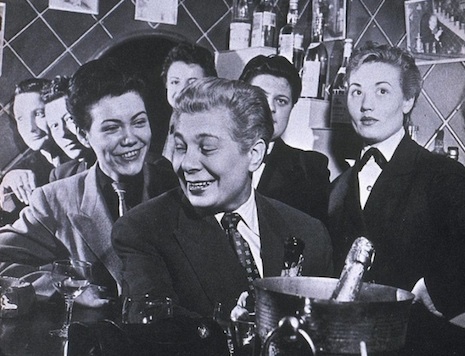
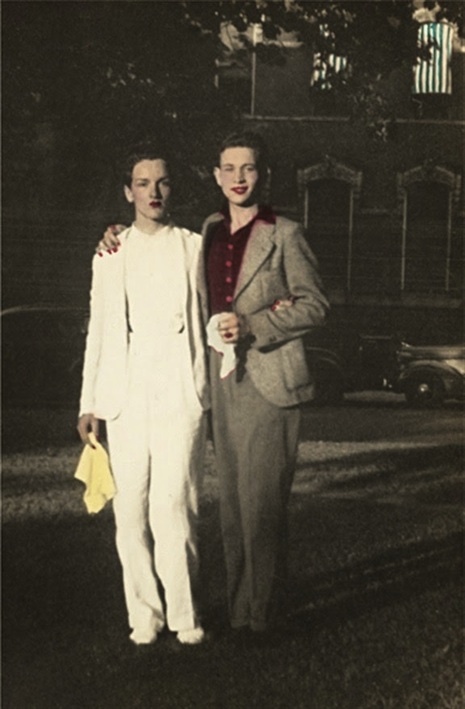
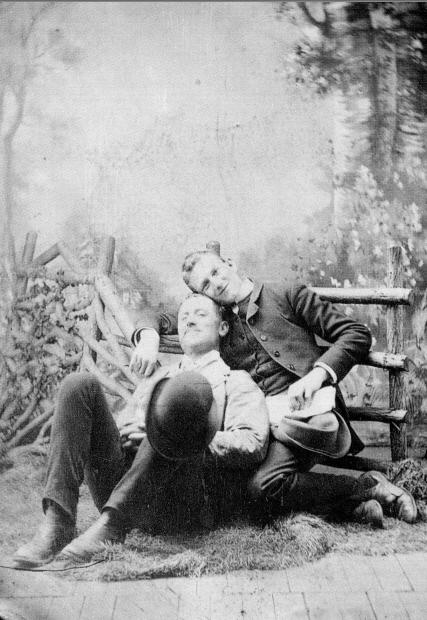
This collection of beautiful, brave people gives us a small visual history of LGBT relationships from the 1860s-1960s. Many of the couples are unidentifiable, but where possible their names have been given. (Editor writes: Mild disclaimer: Of course it’s difficult to say that in all cases these photos are of gay couples.)
Vintage Gay Love: A Look Back At The Early Gay Pioneers in Photos
The following is a photo tribute to gay couples from the late 19th century and first half of the 20th Century. It is a testament to the early pioneers of the LGBT movement who have made the world a more accepting and compassionate place for everyone today. It is also a reminder that homosexuality has been around since the beginning of mankind and is not something which can be legislated back into the closet.
England, 1875
Unknown location, 1880’s
New York, 1900
Unknown, Early 1900’s
Europe, 1906
New York, 1907
“A friend of mine found this old photograph in a shoe box in his Grandmother’s attic. On the back was written… Aunty Mary and her “friend” Ruth, 1910. I wonder if those quotation marks imply what I think they do, by the look on their faces, I would say they do”
Unknown, 1912
Unknown, 1914
Unknown Lesbian Couple, 1915
WWI couple, England, sometime between 1914-1918
California, 1923
Unknown, 1925
Unknown
Unknown
Unknown
Source: Flickr / gaytwogether.com / and are the property of their owners.








































 timalderman