It’s time to recognize these trolling tactics for what they are.
Wesley Johnson
The LGBTQ+ community has long been maliciously associated with pedophiles by people who wish to further stigmatize us. Internet trolls are aware of this violent tradition, and are taking advantage by spreading propaganda that, on first glance, resembles an embrace of pedophiles by LGBTQ+ people. It’s an effective tactic if we accept the false premise: that there is a link between sexual predators and queer people. But there isn’t, and it’s time we stopped meeting that propaganda on the trolls’ terms.
Last month, Central Oregon Pride organizers were targeted by an insidious campaign that distributed fake posters claiming NAMBLA was sponsoring the event along with the Human Dignity Coalition, an LGBTQ+ advocacy group in Bend, Oregon. Jamie Bowman, president of the organization, says, “Several people sent me photos asking if it was the real thing.” The posters prominently featured a photo of 10-year-old Desmond Napoles, known as Desmond is Amazing in drag, who was the subject of debate thanks to professor and YouTuber Jordan Peterson saying on Twitter that Desmond’s drag was child exploitation.
Desmond’s mother, who runs Desmond’s social media, took to Instagram where Desmond has over 75,000 followers to disavow the poster. “THIS IS DISGUSTING!” the caption reads. “I am offended, angry, and yes, hurt. If you see these signs, please tear them down immediately.” Bowman says she did just that, walking around and pulling the posters down.
[THERE IS A BLOCK OF TEXT MISSING DUE YO AN OBSTRUCTION ON THE PAGE]
Since debunked by internet sleuths at Snopes, “clovergender” is an invented identity meant to mock nonbinary people by claiming that some adults have not mentally matured past the age of 13 and therefore should be allowed to date underaged people. Shkreli asked people to spread awareness of “clovergender” on Twitter, and the call for volunteers on 4Chan asked for help to “troll SJW’s.”
Besides the obvious goal of causing distress to queer people, the goal of “clovergender” proponents and of the Oregon Pride trolls is bifold: to get cisgender heterosexual people to associate the LGBTQ+ community with sexual predators, and to get the LGBTQ+ community to mount a genuine defense against the accusation that it is harboring pedophiles within our circles, thus, on some level, validating the assertion. These repudiations, while virtuous in intent, still give the trolls what they want. They want to use the preexisting stigma against LGBTQ+ people to demonize us.
Another recently debunked hoax was the “Minor Attracted Persons” flag that emerged in Pride season this year. “Minor Attracted Persons” is indeed a term some pedophiles have attempted to use to breach mainstream acceptance, but the flag appears to be a hoax that, again, was taken at its word. It fits nicely with other hoaxes that use rainbow flag imagery and inclusive language that support pedophilia.
But perhaps the most malicious campaign came in 2016, when a faction of 4Chan users attempted to create a false movement to include the letter “P,” for pedosexuals, into the LGBTQ+ acronym. Snopes has debunked this as well, but what’s most chilling about this campaign is the planning and patience the organizers exhibited when putting it together. “If they want to demand that society accept their horseshit identities, then it’s time we slip in one of our own,” wrote the post’s author. “How do we do this? We convince them that Pedos deserve rights too. Think about it, if this were to catch any traction at all it would only further remove any legitimization they’ve gained.”
Ethan Edwards, a cofounder of the group “Virtuous Pedophiles” who uses a pseudonym, advocates against acceptance of pedophilia and monitors the movements of groups like NAMBLA online. He says he hasn’t seen any attempts on their end to integrate with the LGBTQ+ community. “Perhaps there is some genuine pedophile somewhere pushing this new rainbow flag. Maybe a few others are trying to infiltrate LGBT+ groups by the backdoor,” he says over email. “But I haven’t seen any evidence of this in a group setting.”
That hasn’t stopped some well-meaning LGBTQ+ people from speaking out against this alleged movement. Attitude, a UK-based gay mag, ran a story on the supposed “MAPS” Pride flag, which, again, is a hoax. It’s completely understandable why one might exercise an abundance of caution by calling this out, but it still validates a false premise that this is part of some larger movement.
It’s also worth noting that oppression of LGBTQ+ people in the modern day relies on the falsehood that queer people are child predators. In Russia, for example, Vladimir Putin said in 2014 that gay people would be safe at the Sochi Winter Olympics so long as they “leave kids alone.” It’s a not-so-subtle reminder that people often invoke the safety of children when trying to legislate against the LGBTQ+ community.
But obvious troll campaigns like these, while they do invoke that reality, must be dealt with on a different level. Our current political climate is an example of what happens when we assume every argument, no matter how ridiculous or odious, has merit and must be met halfway. It’s how we ended up with Donald Trump, whose litany of ridiculous and bombastic statements, like assertions that Mexicans are rapists, earned him even more coverage but little accountability.
We should bear this in mind when responding to incidents like what happened in Oregon, and be aware of the offending party’s goal: to paint a picture in which LGBTQ+ people are having an internal debate over where pedophiles fit into our community. It’s a debate that, at the moment, is not happening on any meaningful scale. Our response should not necessarily be to ignore it. Our response should, however, call a spade a spade and place the blame where it rightfully lies: on the trolls.
One of many hoaxes involving the claim that a common food product has somehow become contaminated with HIV.
Capriccio Bubbly Sangria beverages are contaminated with HIV.
In May 2018, the Capriccio Bubbly Sangria beverage generated a good deal of publicity online and in news coverage, drawing frequent comparisons to Four Loko as well as speculation about its ingredients and rumored effects on consumers:
One of the most prominent rumors about the beverage involved a supposed screen shot from an alleged news report aired by Chicago television station WFLD (Fox 32 Chicago) stating that Capriccio Sangria was “spreading HIV worldwide”:
We (Snopes) found no evidence that WFLD, or any other legitimate news organization, aired such a report. This image appears to be a digitally doctored one in which a fake chyron was overlaid onto a screenshot of an ordinary Fox News/WFLD report about the drink’s sudden popularity.
The Capriccio Sangria rumor is just the latest entry in a long string of hoaxes positing that various food items have been contaminated with HIV. As we often note, such rumors fail the reality check that HIV would not survive in this type of environment long enough to pose a real danger to unwitting consumers:
Hoax: Beware of HIV-infected oranges
One joke got out of hand while a false declaration was used to promote the anti-immigrant agenda. Here are some recent hoaxes spreading on social media.
Several poor-quality shots of sliced oranges with red spots and a brief description stating they come from Libya were used to spread a popular rumour: the oranges were sprayed with blood infected with the HIV virus.
Croatian customs officers were said to have made this socking discovery, the Sme daily wrote recently. More then 8,000 people on Facebook shared the fake information that has been spreading for at least three years. In August 2017, the antipropaganda.sk website was already writing about the hoax.
More recent alarm
The Czech version of the hoax has been spreading since at least spring 2016. The current version of the hoax is probably identical to the one Antipropaganda noticed: it’s in the Czech language, and both versions contain the same typo – instead of “pomeranče“ (oranges), it reads “pomenanče“. In 2016, more than 16,000 people shared this status.
HIV does not spread through food
The English version has been spread since February 2015, and was analysed by the snopes.com website. The server reminded readers that even if someone really injected the HIV virus into oranges, one cannot get infected in this way.
“Except for rare cases when children ate a meal previously chewed by an HIV-infected person, this virus cannot spread via meals,” Snopes writes. The virus cannot live for long outside of the human body nor survive cooking or exposure to stomach acids.
Joke looses control
Sometimes there is no bad intention or efforts to impact public opinion behind a hoax: from time to time, a mere joke morphs into hoax that isn’t too amusing.
Recently, Czech social media has been flooded by the news that Prague will lose one of its most famous monuments. The popular Charles’ Bridge is allegedly damaged beyond repair, and thus, it has to be demolished. Instead, a modern replica will be built.
This is not the case, however.
A man named Martin Topič created a paste-up that looks like an article from the Czech website iDnes concerning the end of a famous monument. The article states that the walls, thought to be 700 years old, cannot be renovated anymore, and the city has to get rid of the bridge. It claims the European Union ordered the bridge’s demolition as it does not fulfill EU standards anymore, and this news has to be shared.
The author intended this as a joke, targeting fans of such hoaxes and fake news by sending it to several groups in which they meet. In fact, he only misrepresented the original news about the demolition of the Výtoň Bridge, according to the Manipulátoři.cz website.
Facts and fiction
The Výtoň Bridge is the Prague railway bridge that has so many problems it doesn’t make sense to repair it, according to Czech railways. As it is protected by the Monuments Board, however, it could be replaced by an exact replica.
But hoax enthusiasts did not bother to check on anything, resulting not only in rude and enraged comments but also the spread of news that was originally meant as a mere joke.
Is there any lesson to learn? Hardly, if you know how embarrassing it is to explain the meaning of jokes, Sme wrote.
Monaco is not Marrakesh
In May, people started sharing information on the Monaco Declaration, according to which Slovakia has to accept 11,000 Africans, starting on July 1, 2018. After someone noticed that there is no such thing as the Monaco Declaration but rather the Marrakesh Declaration, the hoax was updated and the alarming news continued to spread, the Denník N daily wrote.
The first website to share this hoax was the Czech disinformation website Parlamentní Listy, according to Czech TV. On May 7, it published a story headlined “Africans to Europe, Babiš’ minister signed in Africa. Hungary: this will change the population of Europe, let us not sign it”. The story spread en mass across Facebook, while other Czech and Slovak websites immediately grasped the issue. “An avalanche of migrants from Africa is being prepared, supported by the legislation on the European and national levels,” the Slobodný Výber website wrote one day later.
Slovak politicians use the hoax
For example, the Supreme Court Justice and potential presidential candidate, Štefan Harabin, recorded a video in which he said that 150 to 200 million Africans will arrive in Europe.
“This is a fatal threat to citizens of Slovakia, and an existential threat to our sovereign state,” he noted for the video, which has more than 40,000 clicks. “Do our families want to have children raped, do we want to have window shops broken and zones where even police do not dare to enter?” he asks.
The Facebook site Zdrojj then published a picture where duties allegedly steaming from the Marrakesh Declaration are listed, garnering around 300,000 shares in two days. This is the third most successful disinformation news in the whole week, according to the blbec.online project.
The extreme right ĽSNS party also joined in, according to Denník N. Its MP Natália Grausová described at a parliamentary session in mid-May how Slovakia would be obliged to accept Africans and pay for their accommodation, paired with €800 in pocket money and other benefits.
The state tried to officially disprove these rumours through repeated explanations by the Foreign Ministry. The Facebook site for the police joined in, calling it nonsense and an “absolute hoax”.
The Foreign Ministry’s state secretary Ivan Korčok warned of the hoax through a special status on his Facebook profile.
The Marrakesh Declaration can be read in English on the European Commission websites. It was created as part of the so-called Rabat process, a long-term dialogue of European and African countries on solutions in the sphere of migration.
What is the Marrakesh Declaration?
The latest conference concerning the declaration took place in Marrakesh, Morocco, and one of the participants was Czech Interior Minister Lubomír Metnar; on the Slovak side, nobody participated. Moreover, none of the Slovak ministers even formally signed it. Slovak diplomacy joined the declaration with the Slovak ambassador to Brussels expressing his support remotely.
The working agreement does not mention anything about Slovakia being forced to accept Africans.
The Marrakesh Declaration is not an international contract obliging Slovakia to anything. It is a mere political declaration which is legally non-binding, according to Denník N.
HOAX ALERT: HIV injected into ‘bloody’ bananas, again
“That is Satanism,” a religious group says on its Facebook page, claiming that fruit is being injected with HIV-infected blood by groups of people “with the aim of killing millions of people around the world”.
The post by the Spiritual Warfare and Tactics Squad warns people not to eat any fruit with a “red weird colour.” It’s illustrated by two pictures: one shows a banana being injected with a fluid that looks like blood. The other shows a peeled banana with a red colour inside.
Hoax debunked three years ago
The post was flagged by Facebook users in Nigeria. Africa Check has found a number of versions of the claim. It has been so popular it was debunked by Snopes in November 2015 and Hoax-Slayer in February 2016.
“This form of reddish discolouration in bananas has nothing to do with blood of any sort,” Snopes explained. “It’s a hallmark of fungal or bacterial diseases that affect bananas grown in some areas and can cause their centres to turn dark red.”
The US Centers for Disease Control states that HIV does not live for long outside the body. And the virus can’t be caught from food, even if the food contains small amounts of HIV-infected blood. – Allwell Okpi (24/10/2018)
Rumor: Someone Put HIV+ Blood in Pepsi Cola
A viral rumor has been circulating since at least 2004 claiming that a worker put HIV-infected blood into a cola company’s products. The rumor is false—a complete hoax—but read on to find out the details behind the urban legend, how it got started, and the facts of the matter according to health officials
“Urgent Message”
The following posting, which was shared on Facebook on Sept. 16, 2013, is fairly representative of the rumor alleging HIV-infected cola:
There’s news from the police. Its an urgent message for all. For next few days don’t drink any product from pepsi company’s like pepsi, tropicana juice, slice, 7up etc. A worker from the company has added his blood contaminated with AIDS.. Watch MDTV. please forward this to everyone on your list.
Versions of the same rumor have made the rounds previously, in 2004, and again in 2007-2008. In those previous instances, the food products allegedly contaminated with HIV-positive blood were ketchup and tomato sauce, but the status of the claim was the same: false.
No legitimate sources, media or governmental, have reported any such occurrence. Moreover, even if such an incident had occurred, it would not have resulted in the spread of AIDS, according to medical experts.
CDC Debunks Myth
This is how the Centers for Disease Control and Prevention explains it:
You can’t get HIV from consuming food handled by an HIV-infected person. Even if the food contained small amounts of HIV-infected blood or semen, exposure to the air, heat from cooking, and stomach acid would destroy the virus.
A CDC fact sheet also reported that the agency has never documented any incidents of food or beverage products being contaminated with HIV-infected blood or semen, or incidents of HIV infection transmitted via food or beverage products.
The Myth Resurfaces
As recently as 2017, the urban legend resurfaced—this time in a viral rumor posted on. Aug 21 of that year. The post, which appeared on the website of Washington, D.C., television station WUSA 9, reads in part:
WUSA9 News was contacted by several viewers who saw thistext message being shared on social mediaas a warning. The message reads: Important message from Metropolitan Police to all citizen of United Kingdom. “For the next few weeks do not drink any products from Pepsi, as a worker from the company has added blood contaminated with HIV (AIDS). It was shown yesterday on Sky News. Please forward this message to the people who you care.” WUSA9 News researchers contacted United Kingdom Department of Health Media & Campaigns Executive, Lauren Martens who confirmed the message is a hoax and also not shown on Sky News. Martens also said Metropolitan Police did not have any issued statement about this message.
The television station also contacted the CDC, which—as noted above—said that you can’t get HIV “from consuming food handled by an HIV-infected person.” WUSA also contacted PepsiCo spokesperson Aurora Gonzalez from who called story an “old hoax.”
HOAX: This photo with a warning about tainted chocolates is false
A photo warning consumers about consuming Cadbury chocolates actually shows a terror suspect being extradited
A Facebook post warning social media users not to consume Cadbury chocolates ‘for the next few weeks’ because a HIV-positive worker allegedly added his contaminated blood to them is a HOAX.
The post cautions against consuming Cadbury products due to the risk of getting infected with HIV/AIDS..
Reverse image searches on Google and TinEye reveal that the man in the photo being escorted by two police officers was not arrested for contaminating Cadbury products as the post claims, but is actually Aminu Sadiq Ogwuche, the alleged mastermind behind the April 2014 bombing of a bus station in Abuja, the Nigerian capital, in 2014.
The photo in the post was taken on his arrival in Nigeria following his extradition from Sudan.
The claim of potential HIV infection from blood in chocolate contained in the post is also factually incorrect, because the HIV virus does not survive long outside the human body and cannot reproduce outside a human host. Contracting the virus from consuming food items, even if they are contaminated with HIV, is extremely unlikely as explained by the CDC.
Cadbury took to Twitter in March 2018 to caution its clients about the false information being spread about its products being contaminated with the HIV virus.
PesaCheck has looked into the claim that tainted Cadbury products could transmit HIV to unsuspecting consumers and finds it to be a HOAX.
Urban Legend: Needles Hidden Under Gas Pump Handles
A viral alert warns that evildoers are exposing innocent victims to theAIDS virusby attaching HIV-contaminated needles to gas pump handles. This is a long-discredited hoax that has been circulating since 2000 but continues to crop up years and even decades later
The samples of the hoax postings are included for your comparison. If you receive a similar warning via email or social media, you can safely ignore it. It’s best not to continue circulating this hoax.
Please read and forward to anyone you know who drives.
My name is Captain Abraham Sands of the Jacksonville, Florida Police Department. I have been asked by state and local authorities to write this email in order to get the word out to car drivers of a very dangerous prank that is occurring in numerous states.
Some person or persons have been affixing hypodermic needles to the underside of gas pump handles. These needles appear to be infected with HIV positive blood. In the Jacksonville area alone there have been 17 cases of people being stuck by these needles over the past five months.
We have verified reports of at least 12 others in various states around the country. It is believed that these may be copycat incidents due to someone reading about the crimes or seeing them reported on the television. At this point no one has been arrested and catching the perpetrator(s) has become our top priority.
Shockingly, of the 17 people who where stuck, eight have tested HIV positive and because of the nature of the disease, the others could test positive in a couple years.
Evidently the consumers go to fill their car with gas, and when picking up the pump handle get stuck with the infected needle. IT IS IMPERATIVE TO CAREFULLY CHECK THE HANDLE of the gas pump each time you use one. LOOK AT EVERY SURFACE YOUR HAND MAY TOUCH, INCLUDING UNDER THE HANDLE.
If you do find a needle affixed to one, immediately contact your local police department so they can collect the evidence.
********* PLEASE HELP US BY MAINTAINING A VIGILANCE AND BY FORWARDING THIS EMAIL TO ANYONE YOU KNOW WHO DRIVES. THE MORE PEOPLE WHO KNOW OF THIS THE BETTER PROTECTED WE CAN ALL BE. **********
Social Media Posting
As posted on Facebook, Jan. 26, 2013:
HIV/AIDS Needles hidden under gas pumps
In Florida and other places on the East Coast a group of people are puttingHIV/AIDS infectedand filled needles underneath gas pump handles so when someone reaches to pick it up and put gas in their car, they get stabbed with it. 16 people have been a victim of this crime so far and 10 tested HIC positive. Instead of posting that stupid crap about how your love life will suck for years to come of you don’t re-post, post this. It’s important to inform people, even if you don’t drive, a family member might, and what if they were next? CHECK UNDER THE HANDLE BEFORE YOU GRAB IT!!! IT MIGHT SAVE YOUR LIFE!
Analysis of Viral Warnings
On June 20, 2000, mere days after the overwrought warning above first slammed inboxes across the Internet, the Jacksonville Sheriff’s Department issued a press release declaring it a hoax.
“The Jacksonville Sheriff’s Office has had no reports of such incidents and there is no ‘Capt. Abraham Sands’ at the JSO,” the statement said. Nor had any such incidents been reported elsewhere in the United States. Moreover, according to the CDC, there are no documented cases of HIV being transmitted via needle-sticks in non-health care settings, ever.
The viral warning was, and is, entirely fictitious. It did add an interesting new wrinkle to the HIV needle-stick rumors already circulating online in various forms since 1997. Previous variants warned of tainted syringes planted in movie theater seats and pay phone coin slots, not to mention random “stealth prickings” (for lack of a better phrase) in nightclubs and other crowded public places.
Copycat Pranks
All these variants have been investigated and deemed false by authorities with the sole exception of a spate of apparent copycat pranks that occurred around the beginning of 1999 in western Virginia. According to police there, actualhypodermic needleswere found in the coin slots of public phones and bank night deposit slots in a couple of small towns in the area. None were found to be contaminated with HIV or any other biological agent. Presumably, the pranksters were imitating rumors that had already been circulating online for months.
Groundless though it may be, the conviction that unknown assailants are intentionally spreading AIDS by hiding contaminated needles in public places remains popular, especially on the email forwarding circuit. One reason is that these tales and otherurban legendslike them provide an outlet for unspoken fears—of strangers, of the motives of some of the more marginal members of society, of AIDS itself. They’recautionary tales, albeit ones that don’t really function as such—not literally, at any rate—in that they fail to address the primary way HIV isactuallytransmitted: unsafe sex.
Personal Risk
By virtue of the fact that each of these fictitious scenarios depicts the transmission of HIV via acts of penetration, each works as ametaphorfor sex. Consider the claim that one risks exposure to HIV simply by inserting one’s finger into the coin slot of a public phone. The imagery isn’t pretty, but it’s apt. Now we’re being warned to be careful whenpumping gas, to take all due precautions before sliding the nozzle into the tank. Sound advice? Metaphorically speaking, yes!
CDC Statement
This statement appeared on the CDC.gov site in 2010.
Have people been infected with HIV from being stuck by needles in non-health care settings?
No. While it is possible to get infected with HIV if you are stuck with a needle that is contaminated with HIV, there are no documented cases of transmission outside of a health-care setting.
CDC has received inquiries about used needles left by HIV-infected injection drug users in coin return slots of pay phones, the underside of gas pump handles, and on movie theater seats. Some reports have falsely indicated that CDC “confirmed” the presence of HIV in the needles. CDC has not tested such needles nor has CDC confirmed the presence or absence of HIV in any sample related to these rumors. The majority of these reports and warnings appear to be rumors/myths.
Get a reality check on some of the most bizarre rumours about how HIV is transmitted.
There’s only a few ways that you can get HIV but, at Avert, it seems that we’ve heard it all when it comes to the many myths and misconceptions about HIV.
A lot of these stories circulating on the HIV rumour mill are old, outdated and more importantly, misinformed. In fact, many of these myths just keep reinforcing HIV-related stigma and have had a long-lasting and damaging impact on many people’s perceptions about how the virus is spread.
Here we debunk some common urban legends to give you the truth about HIV transmission…
Myth 1: Girl goes to cinema and comes out with HIV
Rumour:During the 1990s, a common myth suggested that discarded needles left by strangers anywhere from gas pump handles to inside your cinema chair were infecting unassuming people with HIV. One such story involved a girl getting an unexpected needle stick injury while reaching down beneath her cinema seat to pick up some popcorn.
Reality:Although HIV transmission is a risk between people whoshare needles for drug use, there has actually never been a recorded case of HIV transmission from a discarded needle. However, if you are concerned that you have received a needle stick injury, you should seek medical advice to get checked up forhepatitis C andB instead.
Myth 2: There’s something wrong with this banana…
Rumour:Pictures of red-pigmented fruit (such as bananas or oranges) still circulate the web even today. They are usually accompanied by warnings not to eat them because they have supposedly been injected with HIV. Similar food-related HIV transmission rumours include tainted ketchup, pizza with toppings of bodily fluids and pineapple vendors accused of deliberately selling contaminated fruit.
Reality: You cannot get HIV from food of any kind, including fruit. Even if HIV contaminated blood did get onto the food you’re eating, the virus doesn’t live long enough outside of a human body for it to be transmittable.
Myth 3: I got a pedicure and HIV from some fish in a shopping centre
Rumour:Getting pedicures from Garra rufa fish – which nibble off dry skin – was once a popular beauty fad. However, many salons offering this service closed as a result of news outlets spreading the rumours that fish in these tanks were spreading blood-borne viruses such as HIV and hepatitis C between consumers.
Reality:HIV stands for Human Immunodeficiency Virus which means transmission of HIV only happens between humans – you can’t get HIV from animals, insects or fish. There are no cases of HIV infection due to the use of fish baths, or as a result of any other water-borne route including the use of swimming pools or spas.
Myth 4: The fizzy drink HIV hoax
Rumour:‘For the next few weeks do not drink any products from Pepsi, as a worker from the company has added his blood contaminated with HIV (AIDS)…’
This SMS message, which was falsely linked to the United Kingdom’s Metropolitan Police service in 2017, suggested that a line worker at Pepsi was secretly contaminating cans of fizzy drink with the virus.
Reality:This message has been circulating the web in different formats since 2004 and is incredibly damaging. Even if there was blood found within the drinks cans, HIV can’t live outside of the body long enough for it to be transmittable.
Myth 5: Teen diagnosed with HIV after getting a hair weave at salon
Rumour:In 2015, a rumour in the US reported that a girl in Georgia had contracted HIV at a hair salon because the needles used to fix the girl’s weave to her scalp were dirty. The girl was supposedly diagnosed a week after her makeover, despite never having had sex or used intravenous drugs.
Reality:This story was later reported to be a work of fiction by its author, but it is worth noting that transmission of HIV from stick injuries even in medical settings is extremely rare. The claim that someone can be diagnosed with HIV a week after exposure is also incorrect – as it can take from two weeks to 3 months for an infection to be detected by modern HIV tests.
Robert Colvile reports on one of the great forgotten stories of neuroscience.
For the first hour, they just talked. He was nervous; he’d never done this before. She was understanding, reassuring: let’s just lie down on the bed together, she said, and see what happens. Soon, events took their course: they were enjoying themselves so much they could almost forget about the wires leading out of his skull.
The year was 1970, and the man was a 24-year-old psychiatric patient. The woman, 21, was a prostitute from the French Quarter of New Orleans, hired by special permission of the attorney general of Louisiana. And they had just become part of one of the strangest experiments in scientific history: an attempt to use pleasure conditioning to turn a gay man straight.
The patient – codenamed B-19 – was, according to the two academic papers that catalogued the course of the research, a “single, white male of unremarkable gestation and birth”. He came from a military family and had had an unhappy childhood. He had, the papers said, entered the military but had been expelled for “homosexual tendencies” within a month. He had a five-year history of homosexuality, and a three-year history of drug abuse: he had tried glues, paints, thinners, sedatives, marijuana, LSD, amphetamines, even nutmeg and vanilla extract. He had temporal lobe epilepsy. He was depressive, suicidal, insecure, procrastinating, self-pitying and narcissistic. “All of his relationships,” wrote his doctors, with an unsparing lack of sympathy, “have been characterised by coercion, manipulation and demand.”
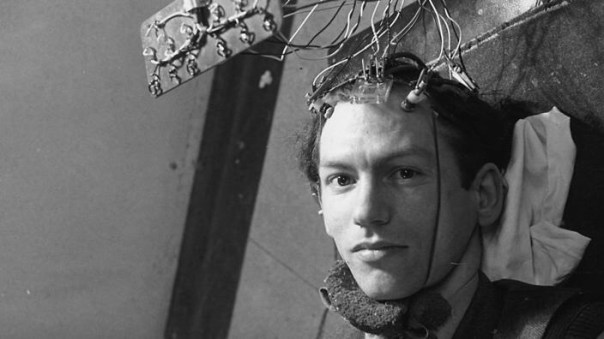
In 1970, B-19 ended up in the care of Robert Galbraith Heath, chair of the department of psychiatry and neurology at Tulane University, New Orleans. Heath’s prescription was drastic. He and his team implanted stainless steel, Teflon-coated electrodes into nine separate regions of B-19’s brain, with wires leading back out of his skull. Once he had recovered from the operation, a control box was attached which enabled him, under his doctors’ supervision, to provide a one-second jolt to the brain area of his choice.
Before being given control of the electrodes, B-19 had been shown a film “displaying heterosexual foreplay and intercourse”. He reacted with anger and revulsion. But then the stimulation sessions started, delivered via the button that felt most pleasurable to him. Over the next few days, he found that it could arouse him, and he would press the button to stimulate himself “to a point that, both behaviorally and introspectively, he was experiencing an almost overwhelming euphoria and elation and had to be disconnected, despite his vigorous protests”. He would hit the button up to 1,500 times over a three-hour session. “He protested each time the unit was taken from him,” said one of the papers, “pleading to self-stimulate just a few more times.”
Ten days into his treatment, the doctors suggested that B-19 watch the porn film again. “He agreed without reluctance… and during its showing became sexually aroused, had an erection, and masturbated to orgasm.” He started talking about wanting to have sex with women – and so Heath got permission to hire what he later referred to as a “lady of the evening”. “We paid her $50,” he said. “I told her it might be a little weird, but the room would be completely blacked out with curtains.”
She certainly did her job, guiding B-19 through the process and encouraging him to gradually build up his confidence. “As the second hour began, she relates that his attitude took an even more positive shift to which she reacted by removing her bra and panties and lying down next to him. Then, in a patient and supportive manner, she encouraged him to spend some time in a manual exploration and examination of her body.” Despite his initial shyness, he ended up having such a good time that – much to his doctors’ delight – he often paused before the moment of orgasm, in order to prolong his pleasure.
B-19 features in two 1972 papers: ‘Septal stimulation for the initiation of heterosexual behavior in a homosexual male’, by Heath and his colleague Charles E Moan, and ‘Pleasure and brain activity in man’, by Heath alone, which set out – apparently for the first time – what happens to human brainwaves during orgasm. The papers are extraordinary: at once academic and pornographic, clinically detached and queasily prurient. And they prompt all sorts of questions. Who was this Dr Heath? How on earth did he come to carry out this experiment – and get permission for it? And did it really, you know, work?
In the course of trying to unravel these questions, I read Heath’s papers, interviewed his former colleagues, and travelled to New Orleans to see where he worked and to watch the videos in which he reminisced about his career. And what I found was something more remarkable than I could have imagined – the story of the man responsible for some of the strangest, boldest and most controversial experiments of the 20th century, yet who has been almost entirely written out of scientific history.
The man behind the controversy
The first thing you have to understand about Bob Heath is his charisma. If you were casting a movie and looking for someone to play the scientist-hero, he would be the first and last name on your list. In every profile, every interview, the topic of his presence came up: he was Gary Cooper or Cary Grant or Gregory Peck in a crisp white lab coat. “He looked like a god – and carried himself like one,” says his former colleague Marilyn Skinner.
The second thing is that he was talented – perhaps too talented. He was board-certified in both psychiatry and neurology. He was a qualified psychoanalyst. He could treat a patient, diagnose a mental illness, read an EEG and dash off a paper, all before heading off to the country club for a round of golf.
The third thing is that the one true love of his life wasn’t a woman, but an area of the brain. Imagine a line that goes through one ear and out the other. Now take another line that runs dead centre from the top of your skull and down through your tongue. Where the two meet is what Heath labelled the septal area, although scientists today would probably call it the nucleus accumbens. For Heath, it was the seat of pleasure and emotions that he thought would allow him to unlock the human brain.
Born in 1915 in Pittsburgh, Heath trained as a neurologist, before being drafted into service as a military psychiatrist in World War II. He rapidly aligned himself with the new breed of biological psychiatrists – scientists who argued that what were traditionally thought of as diseases of the mind were often actually diseases of the brain and could therefore be cured through surgery, not therapy.
There was already some obvious evidence for this, in the shape of the way that patients’ behaviour changed after prefrontal lobotomy. This was the most widespread form of what was known as psychosurgery – the surgical treatment of mental illness. Yet even though the procedure, which involved chopping away the connections to much of the brain’s frontal lobe, was growing in popularity, Heath and his colleagues at Columbia University rightly viewed it as crude and ineffective. They decided to compare it with a much less invasive alternative, which they called topectomy: this involved targeting and removing specific areas of the cortex, in order to avoid wider damage to the brain.
Heath had already developed a particular interest in schizophrenia, which he viewed as the single greatest challenge in mental health, affecting roughly 2 per cent of Americans. He noticed that such patients seemed largely unaffected by either lobotomy or topectomy; since these procedures targeted only the most immediately accessible part of the brain, the cortex, he concluded that their symptoms must be more deep-rooted.
So Heath began his investigations of the subcortex (literally, ‘the part below the surface’). And one particular area – the septal region – appeared particularly promising. When it was damaged or destroyed in cats and monkeys, they started behaving in a startlingly similar fashion to people with schizophrenia: their emotions were dulled, they lost their ability to experience pleasure (a phenomenon known as anhedonia), and they generally seemed to be removed from reality.
This reinforced Heath’s burgeoning conviction that schizophrenia was a biological, not a psychological, problem: something “dependent upon a defect in basic machinery, rather than a complication of environment”, as he would later write. By implanting electrodes into the deepest parts of the brain, he could not only examine how this machinery operated, but also – he hoped – jolt it back into life.
There was just one problem. Heath could – and did – carry out all the tests he wanted on animals, but he couldn’t test his theories on humans: not so much for ethical reasons as because his colleagues at Columbia weren’t interested in the subcortex. Then, on a trip to Atlantic City, he found himself lying on the beach next to a man from New Orleans. He was the dean of Tulane University’s medical school, and he was looking to set up a psychiatry department. He’d heard good things about a guy called Bob Heath. I’m Bob Heath, said Bob Heath. And so they started to talk.
For the 35-year-old, the job at Tulane was an irresistible opportunity. New Orleans was an academic backwater. But it had something very special: in the words of his future colleague Arthur Epstein, “a big sprawling beautiful hospital, containing some of the sickest patients you will ever see”.
This was Charity Hospital, a vast, brutalist 1930s edifice through which the poor and sick of New Orleans flowed in their thousands. Heath was open about the fact that it was this endless supply of potential patients – or, as he put it, the “tremendous amount of clinical material” – that attracted him to the job, because it gave him the chance to realise his outsize ambitions. He moved to New Orleans in 1949: within a year, he had persuaded Charity’s governors to budget up to $400,000 to set up a 150-bed psychiatric unit on the third floor, which would enable him to tackle a waiting list for psychosurgery that was already ten months long.
Heath’s new position made him one of the most powerful men in the Louisiana mental health system. As well as Charity, he held positions at other New Orleans hospitals such as DePaul, Touro and the Veterans Administration Center, and later Tulane’s own private hospital. He maintained an experimental unit – at the state’s expense – at the East Louisiana Mental Hospital in Jackson, and was involved with another facility in Mandeville. If he needed healthy volunteers, he had free access to inmates at the state prison complex at Angola.
On top of this, there was his role within Tulane. Uniquely, his new department combined not just neurology and psychiatry – itself a reflection of his then-radical commitment to treating the mind and brain as linked – but also a psychoanalytic institute modelled on the work of his mentor Sandor Rado, who had argued for the key role of pleasure in motivating behaviour: Heath urged all of his colleagues to learn analysis, and to be analysed themselves. By 1970, the time of the ‘gay cure’ experiment, there were almost 200 staff and medical students under his supervision.
Disturbing experiments in Schizophrenia
In 1952, Heath and the colleagues he had recruited from Columbia and elsewhere revealed the first fruits of their work. At a scientific conference (written up as the 1954 book Studies in Schizophrenia), they described how they had honed their techniques, developing better and safer methods of implanting ever more electrodes and leaving them in for ever longer.
These electrodes had, they announced, uncovered “an abnormality in the septal region” – unusual brainwave patterns, seen during seizures, that were exclusive to schizophrenia. And their use of electrical pulses to stimulate the same area had had promising results with the initial 22 patients, 19 of whom were schizophrenic. (The others were two patients with terminal cancer and one with acute TB: Heath wanted to see whether septal stimulation would offer relief from their incurable pain.)
The tone of the reports – and of most of the observers’ comments – was upbeat. Professor Herbert S Gaskill of Indiana University, while admitting that the clinical results were not conclusive, praised the “breadth of vision and imagination which this research study has shown”, calling it “of inestimable value”.
Yet you do not have to read through many of the 600 pages of Studies in Schizophrenia to feel slightly different emotions. The type of electric pulse, Heath and co admitted, was “arbitrarily chosen” because it seemed to work on animals: “We are still by no means certain that it is the most effective way of influencing the circuit.” Among the first ten patients, “Two patients had convulsions… wound infection occurred in two cases.” Among the second ten, there were two deaths, both related to brain abscesses that developed following the operation. Some patients developed infections, others had convulsions. Patient 21 “tugged vigorously at his bandage and displaced the electrodes”. Patient 12 had two electrodes put in the wrong place.
When the electrical currents were activated, several of the patients had seizures. Patient 13 “complained of nervousness, urinary urgency and chills”. Patient 14 “developed a generalized terror, which appeared to be associated with his extreme apprehension and fear and which persisted for several minutes after stimulation”. Patient 16 “became quite agitated”, with her blood pressure spiking to 178/110. Patient 17 developed “marked cardiac arrhythmia”, and “in both stimulations, the patient’s eyes were seen to open widely, and she said she was afraid”. Patient 22 “expressed great fear, and at one point it took four or five people to restrain her”.
If these studies make uncomfortable reading, they make for even more disturbing viewing. Heath filmed many of his experiments over the years, showing the results to colleagues and visitors. After his death, the films were seen by neuroscientist Gregory Berns, while researching his book Satisfaction. He describes watching footage of patient A-10, a member of the Army whose erratic behaviour saw him diagnosed as a paranoid schizophrenic, and entrusted to Heath’s care in 1952.
The full description is harrowing. At one point, A-10 rakes his face with his hands, squirms, and complains of “going black in the head”, before curling into the fetal position and saying: “I can’t think of nothing when my brain is turning up like that. Oh, no… before I pass out! I don’t want to pass out… Oh, my brain!”
“Suddenly,” writes Berns, “the patient’s voice changes. He screams in a pitch so high it is uninterpretable. Then he starts tearing at his clothes, trying to rip off his shirt, and gets up from the gurney.
“The interviewer says, ‘You’re tearing at your clothes. Do you know you’re tearing at your clothes?’ On the verge of incoherence, in a falsetto voice, the patient screams, ‘I don’t care! I gotta do something! I don’t care. I don’t care!’ Pausing for a moment, he starts to get off the gurney again before yelling, ‘I’m gonna rip you up!’
“Several hands come into view and hold the patient down, tying his hands. ‘Stop!’ the interviewer commands. ‘Stop!’ The patient stares into the camera and hisses, ‘I don’t give a goddamn. I’m gonna kill you. Let me up. I’m gonna kill you and rip you to goddamn shreds!’”
The pleasure button
Even by the standards of the time, these experiments were radical and strange – and they duly caused an uproar. Heath and his acolytes later blamed this on the hostility of the American Psychological Association, in which the emotional rather than biological model of mental health was firmly entrenched (a popular theory on schizophrenia, for example, was it was caused by poor parenting – the “schizophrenogenic mother”). But as Heath admitted, his work also “caused a great deal of emotional upset to a lot of people at the 1952 meeting” – particularly the stimulation of “averse emotions of an intense degree”, such as rage or fear.
There was another problem: while the work had improved scientists’ understanding of the brain’s circuitry, it hadn’t actually done much to cure schizophrenia. Heath had been encouraged by the initial results of stimulating patients with electrodes: “if they were catatonic and mute, they would begin to talk; if they were very delusional, they would tend to come back towards reality to varying degrees”. But in the long term, the risk of damage from the electrodes’ implantation appeared to outweigh any benefits from the treatment: of the initial 22 patients, four who had had abnormal brainwave patterns showed improvement a few months later, but at least the same number who had had normal patterns developed “evidence of gross abnormality”. Also, although Heath did not acknowledge it, any improvement may have come about simply because the chosen patients were getting more attention from their doctors.
By 1955, Heath had stopped the study, on the grounds that “the lasting beneficial effects in the patient group… have not been significant”. But this did not mean that he was done with his electrodes. He was just getting started.
He noticed that the same jolt to the septal area, in depressed but non-schizophrenic patients, resulted in an intense sensation of pleasure, almost ecstasy. Given the chance to stimulate themselves, some of his patients would do so hundreds of times an hour, just as rats did in similar experiments (and as patient B-19 later would). In one of Heath’s films, a man who has just tried to kill himself starts to smile when his electrodes activate, saying: “I feel good. I don’t know why. I just suddenly felt good”. He adds: “When I get mad, if I push the button I feel better… that’s a real good button… I would buy one if I could.”
Soon, Heath was coming up with all manner of uses for those buttons. In 1963, he reported that he was treating two new types of patient. One, with epilepsy, had 51 electrodes implanted into 17 separate brain sites in an attempt to disrupt seizures before they happened. The other, a 28-year-old nightclub entertainer with narcolepsy, was given a self-stimulation unit with three buttons, each linked via electrodes to a different part of the brain. Like B-19 later on, he quickly settled on the button connected to the septal area as his preferred option. If he felt himself falling asleep, he would push the button – or his friends would give him a jolt to wake him up. But he also learned another use for the button: to push it in a “frantic” fashion. “It built him up toward a feeling of orgasm that he was never quite able to consummate”, writes the campaigning psychiatrist Peter Breggin in his book The Return of Lobotomy and Psychosurgery.
Heath’s was a time in which damaging or experimental procedures were commonplace: there were almost none of the controls or restrictions that we have today. But even so, his radicalism stood out.
Other doctors would implant a few electrodes for a few days; Heath implanted dozens, and left them in for years. Others experimented with animals; Heath experimented with people and animals both, feeding the findings from one set of tests into the next. Others tested the pleasure reflex under carefully controlled laboratory conditions; Heath handed patients the control boxes and set them loose to juice themselves as they saw fit. One of them ended up in Chicago, trying to sell himself and his hardware to the university for $5,000; another popped up in New York, whose police force called Heath on the grounds that he was the only one anyone could think of whose patients had wires coming out of their heads.
Heath was, in other words, a man of extraordinary curiosity – and in a position to follow his muse wherever it took him, or have one of his many subordinates do so on his behalf. While septal stimulation was the constant of his career, he engaged in an enormous variety of other work, publishing at least 425 papers.
Among these were his efforts to treat gay men by turning “repugnant feelings… toward the opposite sex” into pleasurable ones – and similar work on “frigid women”. He experimented with dripping drugs deep into the brain down tiny pipes called cannulae, targeting the same regions as his electrodes. He tested a ‘brainwashing’ drug called bulbocapnine for the CIA, on both animals and (although he denied it for decades) on a human prisoner, as a small part of the vast and largely illegal ‘MK-ULTRA’ programme to explore the limits and limitations of the American body.
He talked a suicidal patient down from a roof. He injected horseradish peroxidase into the brain to see how it carried chemicals. He gave a talk to the Army on electrical stimulation of the brain, after which his department was contracted to test psychoactive drugs on prisoners: the resulting paper, from 1957, is as macabre and gripping as the studies involving B-19, complete with detailed descriptions of the patients’ behaviour and hallucinations.
In 1972, the New Orleans Times-Picayune newspaper reported that Heath had been able to “record septal activity resulting from alcohol, tobacco, amphetamine, marijuana and sexual orgasm”. At around that time, he began testing the effects of marijuana on monkeys by blowing smoke into their cages: the equivalent of 250 joints a day. “Memo to the parents of New Orleans,” ran the resulting report in theTimes-Picayune in 1974. “If you’ve been trying to persuade yourselves that the ‘pot’ which ‘Junior’ is smoking isn’t harming him, listen to this.” Marijuana, Heath claimed gravely, could cause brain damage, respiratory damage – and erectile dysfunction.
The mysterious substance that didn’t exist
For all the volume and variety of his work, Heath’s contemporary reputation rested on one particular discovery – again the product of his work on the septal region.
As well as stimulating the schizophrenic brain, Heath was studying it. He wanted to know what was different about the tissue, the chemicals, the genes that caused the anomalies he had found. Examining blood samples and brain matter from people with schizophrenia, he discovered a mysterious substance he called taraxein, which seemed to be generated in the septal area.
This was, he dramatically announced in 1956, not a by-product of schizophrenia: rather, it seemed to be its cause. If you took a serum of taraxein and injected it into monkeys, they started showing schizophrenia-like symptoms. A couple of hours later, they were completely back to normal. When he tried it on people, the results were the same. The report caused a sensation.
And in 1967, Heath doubled down, claiming that further investigation had revealed that taraxein was in fact an antibody produced by the brain. The first line of Tulane’s press release suggested this might well be “one of the most significant scientific advances in the field of psychiatry”, and it was hard to disagree. What Heath had discovered – as the global media eagerly reported – was that people with schizophrenia were, in effect, allergic to their own brains. There was talk of a Nobel Prize.
There was just one problem: taraxein didn’t exist. Or if it did, no one else could find it. Even some of the technicians charged with isolating and purifying the substance became convinced that it didn’t actually exist. James Eaton, a colleague of Heath’s who witnessed a failed demonstration for visiting dignitaries, says it became clear that the patients were acting crazy because that’s what they realised Heath wanted: when the ‘taraxein’ was administered by other doctors, their behaviour was unchanged.
This controversy damaged Heath’s national reputation – already imperilled by a feud with Seymour Kety, who as the first director of the National Institute of Mental Health ensured that Heath was always denied federal funding for his work, and had to go cap in hand to private donors. But it did not change things in Louisiana: Heath continued to be given awards and positions, to be respected and venerated.
Yet a wider backlash against psychosurgery was stirring. It wasn’t just lobotomy, although that was increasingly discredited: there seemed to be a laundry list of damaging, dangerous or disturbing treatments being carried out around the USA. Fears of mind control and brainwashing, stoked by the success of the film The Manchurian Candidate, cast suspicion on any research involving drugs and electrodes to manipulate the mind.
In 1972, Peter Breggin published an essay warning of the dangers of psychosurgery, including Heath’s work, which a sympathetic Congressman inserted into the Congressional Record. It caught the attention of Todd Ochs, a member of the Medical Committee for Human Rights (which provided care for civil rights activists across the South) who was working at a free clinic in the French Quarter of New Orleans – and as a paramedic at Charity Hospital. Ochs and his committee took up the cause, and he alerted his friend Bill Rushton, a gay rights campaigner and investigative reporter for the local Vieux Carre Courier.
The resulting piece, ‘The mysterious experiments of Dr Heath: in which we wonder who is crazy and who is sane’, was a broadside against Heath’s work. Published in 1974, it not only told the story of patient B-19 but also claimed that nurses at Charity would hide their patients from Heath’s lackeys when they came sniffing round for subjects. Heath attracted further negative publicity in Alan Scheflin and Edward Opton’s 1978 book The Mind Manipulators.
The most damaging critique, however, came in Elliott Valenstein’s 1973 book Brain Control. Unlike the others, Valenstein – now professor emeritus of psychology and neuroscience at the University of Michigan – was a member of Heath’s own profession. And he argued not that Heath was a monster, but simply a bad scientist.
Valenstein pointed out gently but firmly that because of Heath’s lack of controls, his habit of reading what he wanted into the data, and other experimental errors, much of his work was simply invalid. “My criticism of Heath,” he says today, “was really that he didn’t seem to know how to test his own conclusions for verification. He was always interested in results that were spectacular – like finding some protein in the brain that would evoke schizophrenia. He’d published papers of that sort but never really looked for alternative explanations, never tested the reliability of his findings, was very willing to rapidly publicise his findings, so that he was quite unreliable.”
Some people Valenstein talked to told him that even Heath’s vaunted pleasure centre wasn’t all it was cracked up to be: “[They] said that many of these patients were just stimulating their own brains because they thought that’s what he wanted them to do – it wasn’t really a pleasurable experience for them.” Heath admitted in print that septal stimulation had different effects on different people – generally serving to amplify rather than create emotions, especially in the case of arousal, and having much less effect on those who were already feeling happy and contented.
Despite the growing controversy, Heath retained his position and prestige – but Tulane was becoming increasingly worried about its reputation. In the early 1970s, donors to fund the electrode studies became harder to come by, as did official approval for procedures. Heath even took a brief sabbatical while the bad publicity died down.
Yet in terms of his ambitions, and his convictions about the brain, nothing of substance changed. Psychiatrist Marilyn Skinner remembers, as a young resident at Tulane, being given the case of a 22-year-old woman: “She was wild, you couldn’t get close to her, she was literally scarred – her whole body was a scar, from her own cutting and burning. … She was going to kill herself, and somebody else too.”
Heath decided to carry out a radical surgical procedure – but couldn’t get permission to do it in New Orleans. So he found a sympathetic hospital in California, and when the procedure took place, something amazing happened, Skinner says: “They basically severed the connections between the two hemispheres [of the brain]. And I’m not kidding you, she was a dream after that. She showed warmth, and gratitude – she was able to talk about her feelings, and what happened, and was no longer suicidal or homicidal.”
That is the tantalising thing about Heath: sometimes, his wild ideas actually came off.
Visionary or monster?
Heath retired as chairman of his department in 1980, after 31 years at the helm, although he continued working for some years afterwards. Even before his death in 1999, at the age of 84, his reputation outside Tulane had become tarnished. He was known, if at all, not as the man who was the first to map out the pleasure circuit, or as one of the earliest and most passionate advocates for the biological causation of schizophrenia (now the established orthodoxy), but as a man whose work seemed closer to science fiction than practical medicine.
To some, he was a monster, plain and simple. He used vulnerable patients to hone his theories, to no therapeutic benefit, causing many of them very significant harm. He tested psychoactive drugs on the unwitting.
Harry Bailey, an Australian doctor who briefly worked with Heath on his electrode studies, accused him of picking out African-Americans for his experiments because, as he put it, “it was cheaper to use niggers than cats… they were everywhere and cheap experimental animals”. The patients would be wired up and given a little box and “just went around, ‘pop, pop, pop’, all the time, continuous orgasms”. A woman called Claudia Mullen even testified before Congress in 1995 that Heath had, when she came to him as a child patient, engaged in all kinds of unethical practices before handing her over to the custody of the CIA, where she was used as a sex slave. He has been accused of mind control, of barbarity, of “Nazi science”, of using prisoners in Charity, Jackson and elsewhere as his playthings.
Yet his former colleagues almost uniformly tell a very different story. “Other than my parents,” says James Eaton, “he was the most formidable mentor and leader and ideal that I had.” For John Goethe, another who worked with him at Tulane, “Nobody was more devoted to trying to find a cure for the people he felt medicine had neglected. He was in psychiatry and neurology rather than cardiology and dermatology because he felt ‘We’re not paying enough attention to these folks.’”
Yes, he was arrogant and temperamental – “It would be easy for him to win a contest to see who could divide a room quickest,” says Goethe – but he was also inspirational. In an obituary, fellow Tulane neurologist Leon Weisberg called him “a true visionary… an extraordinary clinician, teacher, administrator, scientist and friend”.
How to reconcile these two Bob Heaths? Certainly, it is easy to cast doubt on the wilder allegations. Bailey’s quotes come from a long, rambling, drunken speech, decades after the event – and he himself was a genuine monster, whose “deep sleep” therapy, based on the idea that the human brain would be more malleable if the patient were plunged into a barbiturate-induced coma, killed dozens of people. In fact, given New Orleans demographics, African-Americans appear to have been under-represented in Heath’s electrode studies rather than the reverse.
As for Claudia Mullen, her social worker and champion, Valerie Wolf, had her licence revoked over claims that she had exploited her clients and encouraged them to believe recovered memories that turned out to be false. Wolf is now dead and Mullen has long been out of the public eye; Alan Scheflin, the Santa Clara law professor (and co-author of The Mind Manipulators) who validated her claims of CIA abuse, refused multiple requests for an interview.
Heath may have gone to extremes, but he had many companions in excess. In 1963, a different group of scientists at Tulane started transplanting chimpanzee kidneys into humans. Lobotomies, deep sleep therapy, “insulin shock” – Heath’s electrodes were, in comparison, a relatively delicate intervention. He generally used them, he insisted, on incurably sick patients for whom all other treatments had been tried and had failed – although the B-19 case and others suggest that is not entirely true. And while he did map out the “aversive” areas of his patients’ brains (including “a site which when stimulated would turn on intense killing rage, instantaneously”), and carry out that experiment with bulbocapnine on the CIA’s behalf, he also claimed to have rejected a request from the CIA to study the brain’s pain centre.
Yet this, in an odd way, is precisely what makes Heath so fascinating, and his career so relevant today. He was not a villainous outlier, cackling to himself in a basement, but the respected head of a major university department, someone who was not only in the academic mainstream but had defined, at least for Tulane, what that mainstream was. His excesses, and his flaws, and his failures to accept his limitations, were therefore all the more significant.
Heath’s central insight – that schizophrenia was a disease of the brain rather than the mind – has certainly been vindicated, and triumphantly so. Much of his research, for example in mapping the pleasure circuit of the brain or monitoring it during orgasm, was pioneering. Yet his 425 papers have left a remarkably small imprint on the wider field. By the time he retired – and, in truth, long before – it was clear that much of his work had been rendered moot by advances in antipsychotic medication; the idea of there being one single, fixable cause for schizophrenia also ended up being simplistic and overly optimistic.
Scientists are now, again, attempting to use deep brain stimulation to treat mental illness – such as intractable and crippling obsessive–compulsive dsorder. But a recent profile of one of the leaders in the field, Emad Eskandar, claimed the practice had only begun in 1987. Heath’s use of deep brain stimulation 20–30 years earlier has been largely written out of the history of neuroscience.
B-19’s experience
To modern eyes, the B-19 episode is the most controversial of Heath’s cases – even though there is some pretty stiff competition. But what is striking in the contemporary reports is how few people, in comparison to his other electrode experiments, seem to have raised any objections.
Take Elliott Valenstein’s book Brain Control. In it, he did criticise the experiment – but for its method, not its motives. His argument was that “orgasmic reorientation” – a behavioural therapy programme based around masturbation – seemed to get equivalent results for much less effort. The basic idea that it was a psychiatrist’s duty to “cure” gay people went unquestioned. Homosexuality was, until 1968, formally listed in the diagnostic textbooks as a sociopathic personality disturbance, a fear of the opposite sex that was thought to result – just like schizophrenia – from childhood trauma. It was still listed as a ”sexual deviation” until 1973.
Speaking today, Valenstein acknowledges that “the attitude towards homosexuality at the time was very different from what it is now”. What was different about Heath’s procedure, he says, wasn’t that he was trying to “fix” homosexuality – many people, including Heath’s mentor Sandor Rado, were doing the same. Heath’s work, and other such biological approaches, were notable mostly because they seemed to offer an easier and more lasting solution than long-term therapy.
A few years ago, says James Eaton, he was interviewed about Heath’s work for a potential documentary. At the end, he was asked about Heath’s apparent crusade to wipe out homosexuality. “I said: ‘What are you talking about? I myself am gay. I’ve known I’ve been gay all of my life. Heath knew it too. And out of 44 or 45 fellows or residents, he made me his chief resident, and he trusted me until his death. Now why would he do that? He never once alluded to the fact that I was gay.’ And that floored them. It just floored them.”
And what about the young man, B-19? Did Heath’s “cure” actually work? In the paper he wrote with Charles E Moan, Heath claimed that B-19 – who he identified in contemporary interviews as a male prostitute – had subsequently had a ten-month relationship with a married woman. While he had also returned to homosexual activity, this had only happened twice, “when he needed money and ‘hustling’ was a quick way to get it when he was out of work”. Heath added that “such acting out was not intended to be a replacement for sex with females, which he indicates he is definitely motivated to continue”. In an interview in 1972, he went further, claiming that B-19 “has solved many of his personal problems and is leading an actively and exclusively heterosexual life”.
Mission accomplished, then? Not quite. While Heath’s electrodes may have stirred up arousal temporarily, they didn’t actually change the patient’s basic nature. “At least at the time I knew [B-19], it was less about whether he was homosexual or heterosexual. He was sort of asexual. He just wasn’t that interested,” says John Goethe. “It was clear to me… that his life stressors were – some were related to sexual orientation, but most were not.” He drifted between jobs, and “was not a happy camper about a lot of things”. He adds that it was B-19 who approached Heath for help with his sexuality – rather than having a “cure” imposed on him in exchange for leniency over drugs charges, as suggested by Bill Rushton at the time.
The best place to find the truth about B-19 and Heath’s other experiments would be his archives, which are held by his old department at Tulane. But the university (which is a private institution) refuses to let anyone have access to them, even though researchers have in the past been allowed to view the films of Heath’s experiments held by Tulane. While I spoke to several of Heath’s former colleagues, those still working at Tulane itself refused to comment. With the assistance of Ken Kramer of PsychSearch.net, who investigates cases of psychiatric malpractice, I was able to track down Moan, Heath’s co-author on the B-19 paper, but he refused repeated requests for an interview.
Yet from the available evidence, it is hard to disagree with the judgement of Alan Baumeister, a Louisiana State University psychiatry professor and the leading academic expert on Heath, that the Tulane electrical brain stimulation experiments were “dubious and precarious” not just by today’s standards, but by those of the time. “Heath, throughout the history of his work, justified what he was doing on therapeutic grounds,” says Baumeister. “He said that it was done for the benefit of the patients. But some of the things he did couldn’t conceivably have been done for the benefit of the patient.”
Persistent but flawed
He may not have been a god, but Heath was clearly a man of extraordinary gifts and extraordinary charisma – yet one whose self-belief blinded him to the flaws in his theories and his methods. “He, like many doctors, did not see any ethical problems from what he was doing,” says Todd Ochs. “He was trying to help people. And in a way it makes it more sad and also more dangerous – self-righteousness is something that reason doesn’t address. … He thought he was helping gay men, he thought he was helping schizophrenics, and that his research was going to be transformative.”
During his long career, Heath made many claims about what stimulating his beloved septal region could do. First he thought it could “wake up” the brain from a sleep-like state; then that it could be used to compensate for schizophrenics’ defective pleasure centres; or to detect and disrupt epileptic fits; or relieve chronic pain.
Even in old age, he was coming up with new ideas, arguing that transplanting septal tissue from one person to another could enhance brain function and ward off the effects of ageing and Alzheimer’s: he’d already done it in rats, he told a Tulane colleague in an interview in 1986, and they’d tried it out on squirrel monkeys just the day before.
Yet what Heath had, ultimately, was a procedure in search of a purpose. Like his patients with their metal boxes, he could do something to the brain – septal stimulation – that was strange and fascinating and enthralling and mysterious.
THE MAN WHO FRIED GAY PEOPLE’S BRAINS
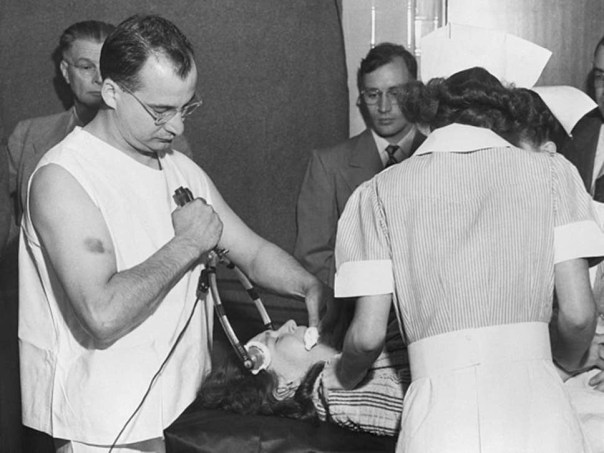
A doctor administers ‘transorbital lobotomy’ , or shock therapy at Western State Hospital in 1949
Post-war America considered homosexuality a mental disorder – which allowed one neurosurgeon to widen his horrific experiments.Robert Colvileconcludes his report
As we saw yesterday, Dr Robert Galbraith Heath was a man of extraordinary curiosity – and in a position to follow his muse wherever it took him, or have one of his many subordinates do so on his behalf. Much of his life was devoted to exploring his theory that he could cure schizophrenia and other mental illnesses by delivering targeted electric pulses to the “septal” region of the brain’s subcortex, by means of electrodes through the skull. But while septal stimulation was the constant of his career, he engaged in an enormous variety of other work, publishing at least 425 papers.
Among these were his efforts to treat gay men by turning “repugnant feelings … toward the opposite sex” into pleasurable ones – and similar work on “frigid women”. He experimented with dripping drugs deep into the brain down tiny pipes called cannulae, targeting the same regions as his electrodes. He tested a ‘brainwashing’ drug called bulbocapnine for the CIA, on both animals and (although he denied it for decades) on a human prisoner, as a small part of the vast and largely illegal “MK-Ultra” programme to explore the limits and limitations of the American body.
He talked a suicidal patient down from a roof. He injected horseradish peroxidase into the brain to see how it carried chemicals. He gave a talk to the army on electrical stimulation of the brain, after which his department was contracted to test psychoactive drugs on prisoners: the resulting paper, from 1957, is as macabre and gripping as the studies involving B-19, complete with detailed descriptions of the patients’ behaviour and hallucinations.
In 1972, the New Orleans Times-Picayune newspaper reported that Heath had been able to “record septal activity resulting from alcohol, tobacco, amphetamine, marijuana and sexual orgasm”. At around that time, he began testing the effects of marijuana on monkeys by blowing smoke into their cages: the equivalent of 250 joints a day. “Memo to the parents of New Orleans,” ran the resulting report in the Times-Picayune in 1974. “If you’ve been trying to persuade yourselves that the ‘pot’ that ‘Junior’ is smoking isn’t harming him, listen to this.” Marijuana, Heath claimed gravely, could cause brain damage, respiratory damage – and erectile dysfunction.
As we saw yesterday, Dr Robert Galbraith Heath was a man of extraordinary curiosity – and in a position to follow his muse wherever it took him, or have one of his many subordinates do so on his behalf. Much of his life was devoted to exploring his theory that he could cure schizophrenia and other mental illnesses by delivering targeted electric pulses to the “septal” region of the brain’s subcortex, by means of electrodes through the skull. But while septal stimulation was the constant of his career, he engaged in an enormous variety of other work, publishing at least 425 papers.
Among these were his efforts to treat gay men by turning “repugnant feelings … toward the opposite sex” into pleasurable ones – and similar work on “frigid women”. He experimented with dripping drugs deep into the brain down tiny pipes called cannulae, targeting the same regions as his electrodes. He tested a ‘brainwashing’ drug called bulbocapnine for the CIA, on both animals and (although he denied it for decades) on a human prisoner, as a small part of the vast and largely illegal “MK-Ultra” programme to explore the limits and limitations of the American body.
He talked a suicidal patient down from a roof. He injected horseradish peroxidase into the brain to see how it carried chemicals. He gave a talk to the army on electrical stimulation of the brain, after which his department was contracted to test psychoactive drugs on prisoners: the resulting paper, from 1957, is as macabre and gripping as the studies involving B-19, complete with detailed descriptions of the patients’ behaviour and hallucinations.
In 1972, the New Orleans Times-Picayune newspaper reported that Heath had been able to “record septal activity resulting from alcohol, tobacco, amphetamine, marijuana and sexual orgasm”. At around that time, he began testing the effects of marijuana on monkeys by blowing smoke into their cages: the equivalent of 250 joints a day. “Memo to the parents of New Orleans,” ran the resulting report in the Times-Picayune in 1974. “If you’ve been trying to persuade yourselves that the ‘pot’ that ‘Junior’ is smoking isn’t harming him, listen to this.” Marijuana, Heath claimed gravely, could cause brain damage, respiratory damage – and erectile dysfunction.
For all the volume and variety of his work, Heath’s contemporary reputation rested on one particular discovery – again the product of his work on the septal region. As well as stimulating the schizophrenic brain, Heath was studying it. He wanted to know what was different about the tissue, the chemicals, the genes that caused the anomalies he had found. Examining blood samples and brain matter from people with schizophrenia, he discovered a mysterious substance he called taraxein, which seemed to be generated in the septal area.
This was, he dramatically announced in 1956, not a by-product of schizophrenia: rather, it seemed to be its cause. If you took a serum of taraxein and injected it into monkeys, they started showing schizophrenia-like symptoms. A couple of hours later, they were completely back to normal. When he tried it on people, the results were the same. The report caused a sensation.
And in 1967, Heath doubled down, claiming that further investigation had revealed that taraxein was in fact an antibody produced by the brain. The first line of Tulane’s press release suggested this might well be “one of the most significant scientific advances in the field of psychiatry”, and it was hard to disagree. What Heath had discovered – as the global media eagerly reported – was that people with schizophrenia were, in effect, allergic to their own brains. There was talk of a Nobel Prize.
There was just one problem: taraxein didn’t exist. Or if it did, no one else could find it. Even some of the technicians charged with isolating and purifying the substance became convinced that it didn’t actually exist. James Eaton, a colleague of Heath’s who witnessed a failed demonstration for visiting dignitaries, says it became clear that the patients were acting crazy because that’s what they realised Heath wanted: when the “taraxein” was administered by other doctors, their behaviour was unchanged.
This controversy damaged Heath’s national reputation – already imperilled by a feud with Seymour Kety, who as the first director of the National Institute of Mental Health ensured that Heath was always denied federal funding for his work, and had to go cap in hand to private donors. But it did not change things in Louisiana: Heath continued to be given awards and positions, to be respected and venerated.
Yet a wider backlash against psychosurgery was stirring. It wasn’t just lobotomy, although that was increasingly discredited: there seemed to be a laundry list of damaging, dangerous or disturbing treatments being carried out around the US. Fears of mind control and brainwashing, stoked by the success of the film The Manchurian Candidate, cast suspicion on any research involving drugs and electrodes to manipulate the mind.
In 1972, a campaigning psychiatrist called Peter Breggin published an essay warning of the dangers of psychosurgery, including Heath’s work, which a sympathetic Congressman inserted into the Congressional Record. It caught the attention of Todd Ochs, a member of the Medical Committee for Human Rights (which provided care for civil rights activists across the South) who was working at a free clinic in the French Quarter of New Orleans – and as a paramedic at Charity Hospital. Ochs and his committee took up the cause, and he alerted his friend Bill Rushton, a gay rights campaigner and investigative reporter for the local Vieux Carre Courier.
The resulting piece, “The mysterious experiments of Dr Heath: in which we wonder who is crazy and who is sane”, was a broadside against Heath’s work. Published in 1974, it not only told the story of patient B-19 but also claimed that nurses at Charity would hide their patients from Heath’s lackeys when they came sniffing round for subjects. Heath attracted further negative publicity in Alan Scheflin and Edward Opton’s 1978 book The Mind Manipulators.
The most damaging critique, however, came in Elliott Valenstein’s 1973 book Brain Control. Unlike the others, Valenstein – now professor emeritus of psychology and neuroscience at the University of Michigan – was a member of Heath’s own profession. And he argued not that Heath was a monster, but simply a bad scientist.
Valenstein pointed out gently but firmly that because of Heath’s lack of controls, his habit of reading what he wanted into the data, and other experimental errors, much of his work was simply invalid. “My criticism of Heath,” he says today, “was really that he didn’t seem to know how to test his own conclusions for verification. He was always interested in results that were spectacular – like finding some protein in the brain that would evoke schizophrenia. He’d published papers of that sort but never really looked for alternative explanations, never tested the reliability of his findings, was very willing to rapidly publicise his findings, so that he was quite unreliable.”
Some people Valenstein talked to told him that even Heath’s vaunted pleasure centre wasn’t all it was cracked up to be: “[They] said that many of these patients were just stimulating their own brains because they thought that’s what he wanted them to do – it wasn’t really a pleasurable experience for them.” Heath admitted in print that septal stimulation had different effects on different people – generally serving to amplify rather than create emotions, especially in the case of arousal, and having much less effect on those who were already feeling happy and contented.
Despite the growing controversy, Heath retained his position and prestige – but Tulane was becoming increasingly worried about its reputation. In the early 1970s, donors to fund the electrode studies became harder to come by, as did official approval for procedures. Heath even took a brief sabbatical while the bad publicity died down.
Yet in terms of his ambitions, and his convictions about the brain, nothing of substance changed. Psychiatrist Marilyn Skinner remembers, as a young resident at Tulane, being given the case of a 22-year-old woman: “She was wild, you couldn’t get close to her, she was literally scarred – her whole body was a scar, from her own cutting and burning. She was going to kill herself, and somebody else too.”
Heath decided to carry out a radical surgical procedure – but couldn’t get permission to do it in New Orleans. So he found a sympathetic hospital in California, and when the procedure took place, something amazing happened, Skinner says: “They basically severed the connections between the two hemispheres [of the brain]. And I’m not kidding you, she was a dream after that. She showed warmth, and gratitude – she was able to talk about her feelings, and what happened, and was no longer suicidal or homicidal.” That is the tantalising thing about Heath: sometimes, his wild ideas actually came off.
Heath retired as chairman of his department in 1980, after 31 years at the helm, although he continued working for some years afterwards. Even before his death in 1999, at the age of 84, his reputation outside Tulane had become tarnished. He was known, if at all, not as the man who was the first to map out the pleasure circuit, or as one of the earliest and most passionate advocates for the biological causation of schizophrenia (now the established orthodoxy), but as a man whose work seemed closer to science fiction than practical medicine.
To some, he was a monster, plain and simple. He used vulnerable patients to hone his theories, to no therapeutic benefit, causing many of them very significant harm. He tested psychoactive drugs on the unwitting.
Harry Bailey, an Australian doctor who briefly worked with Heath on his electrode studies, accused him of picking out African-Americans for his experiments because, as he put it, they were “everywhere and cheap experimental animals”. The patients would be wired up and given a little box and “just went around, ‘pop, pop, pop’, all the time, continuous orgasms”. A woman called Claudia Mullen even testified before Congress in 1995 that Heath had, when she came to him as a child patient, engaged in all kinds of unethical practices before handing her over to the custody of the CIA, where she was used as a sex slave. He has been accused of mind control, of barbarity, of “Nazi science”, of using prisoners in Charity, Jackson and elsewhere as his playthings.
Yet his former colleagues almost uniformly tell a very different story. “Other than my parents,” says James Eaton, “he was the most formidable mentor and leader and ideal that I had.” For John Goethe, another who worked with him at Tulane, “Nobody was more devoted to trying to find a cure for the people he felt medicine had neglected. He was in psychiatry and neurology rather than cardiology and dermatology because he felt ‘We’re not paying enough attention to these folks.’”
Yes, he was arrogant and temperamental – “It would be easy for him to win a contest to see who could divide a room quickest,” says Goethe – but he was also inspirational. In an obituary, fellow Tulane neurologist Leon Weisberg called him “a true visionary … an extraordinary clinician, teacher, administrator, scientist and friend”.
How to reconcile these two Bob Heaths? Certainly, it is easy to cast doubt on the wilder allegations. Bailey’s quotes come from a long, rambling, drunken speech, decades after the event – and he himself was a genuine monster, whose “deep sleep” therapy, based on the idea that the human brain would be more malleable if the patient were plunged into a barbiturate-induced coma, killed dozens of people. In fact, given New Orleans demographics, African-Americans appear to have been under-represented in Heath’s electrode studies rather than the reverse.
As for Claudia Mullen, her social worker and champion, Valerie Wolf, had her licence revoked over claims that she had exploited her clients and encouraged them to believe recovered memories that turned out to be false. Wolf is now dead and Mullen has long been out of the public eye; Alan Scheflin, the Santa Clara law professor (and co-author of The Mind Manipulators) who validated her claims of CIA abuse, refused requests for an interview.
Heath may have gone to extremes, but he had many companions in excess. In 1963, a different group of scientists at Tulane started transplanting chimpanzee kidneys into humans. Lobotomies, deep sleep therapy, “insulin shock” – Heath’s electrodes were, in comparison, a relatively delicate intervention. He generally used them, he insisted, on incurably sick patients for whom all other treatments had been tried and had failed – although the B-19 case and others suggest that is not entirely true. And while he did map out the “aversive” areas of his patients’ brains (including “a site which, when stimulated, would turn on intense killing rage, instantaneously”), and carry out that experiment with bulbocapnine on the CIA’s behalf, he also claimed to have rejected a request from the CIA to study the brain’s pain centre.
Yet this, in an odd way, is precisely what makes Heath so fascinating, and his career so relevant today. He was not a villainous outlier, cackling to himself in a basement, but the respected head of a major university department, someone who was not only in the academic mainstream but had defined, at least for Tulane, what that mainstream was. His excesses, and his flaws, and his failures to accept his limitations, were therefore all the more significant.
Heath’s central insight – that schizophrenia was a disease of the brain rather than the mind – has certainly been vindicated, and triumphantly so. Much of his research, for example in mapping the pleasure circuit of the brain or monitoring it during orgasm, was pioneering. Yet his 425 papers have left a remarkably small imprint on the wider field. By the time he retired – and, in truth, long before – it was clear that much of his work had been rendered moot by advances in antipsychotic medication; the idea of there being one single, fixable cause for schizophrenia also ended up being simplistic and overly optimistic.
Scientists are now, again, attempting to use deep brain stimulation to treat mental illness – such as intractable and crippling obsessive–compulsive dsorder. But a recent profile of one of the leaders in the field, Emad Eskandar, claimed the practice had only begun in 1987. Heath’s use of deep brain stimulation 20–30 years earlier has been largely written out of the history of neuroscience.
To modern eyes, the B-19 episode is the most controversial of Heath’s cases – even though there is some pretty stiff competition. But what is striking in the contemporary reports is how few people, in comparison to his other electrode experiments, seem to have raised any objections.
Take Elliott Valenstein’s book Brain Control. In it, he did criticise the experiment – but for its method, not its motives. His argument was that “orgasmic reorientation” – a behavioural therapy programme based around masturbation – seemed to get equivalent results for much less effort. The basic idea that it was a psychiatrist’s duty to “cure” gay people went unquestioned. Homosexuality was, until 1968, formally listed in the diagnostic textbooks as a sociopathic personality disturbance, a fear of the opposite sex that was thought to result – just like schizophrenia – from childhood trauma. It was still listed as a ”sexual deviation” until 1973.
Speaking today, Valenstein acknowledges that “the attitude towards homosexuality at the time was very different from what it is now”. What was different about Heath’s procedure, he says, wasn’t that he was trying to “fix” homosexuality – many people, including Heath’s mentor Sandor Rado, were doing the same. Heath’s work, and other such biological approaches, were notable mostly because they seemed to offer an easier and more lasting solution than long-term therapy.
A few years ago, says James Eaton, he was interviewed about Heath’s work for a potential documentary. At the end, he was asked about Heath’s apparent crusade to wipe out homosexuality. “I said: ‘What are you talking about? I myself am gay. I’ve known I’ve been gay all of my life. Heath knew it too. And out of 44 or 45 fellows or residents, he made me his chief resident, and he trusted me until his death. Now why would he do that? He never once alluded to the fact that I was gay.’ And that floored them. It just floored them.”
And what about the young man, B-19? Did Heath’s “cure” actually work? In the paper he wrote with Charles E Moan, Heath claimed that B-19 – who he identified in contemporary interviews as a male prostitute – had subsequently had a 10-month relationship with a married woman. While he had also returned to homosexual activity, this had only happened twice, “when he needed money and ‘hustling’ was a quick way to get it when he was out of work”. Heath added that “such acting out was not intended to be a replacement for sex with females, which he indicates he is definitely motivated to continue”. In an interview in 1972, he went further, claiming that B-19 “has solved many of his personal problems and is leading an actively and exclusively heterosexual life”.
Mission accomplished, then? Not quite. While Heath’s electrodes may have stirred up arousal temporarily, they didn’t actually change the patient’s basic nature. “At least at the time I knew [B-19], it was less about whether he was homosexual or heterosexual. He was sort of asexual. He just wasn’t that interested,” says John Goethe. “It was clear to me … that his life stressors were – some were related to sexual orientation, but most were not.” He drifted between jobs, and “was not a happy camper about a lot of things”. He adds that it was B-19 who approached Heath for help with his sexuality – rather than having a “cure” imposed on him in exchange for leniency over drugs charges, as suggested by Bill Rushton at the time.
The best place to find the truth about B-19 and Heath’s other experiments would be his archives, which are held by his old department at Tulane. But the university (which is a private institution) refuses to let anyone have access to them, even though researchers have in the past been allowed to view the films of Heath’s experiments held by Tulane. While I spoke to several of Heath’s former colleagues, those still working at Tulane itself refused to comment. With the assistance of Ken Kramer of PsychSearch.net, who investigates cases of psychiatric malpractice, I was able to track down Moan, Heath’s co-author on the B-19 paper, but he refused requests for an interview.
Yet from the available evidence, it is hard to disagree with the judgement of Alan Baumeister, a Louisiana State University psychiatry professor and the leading academic expert on Heath, that the Tulane electrical brain stimulation experiments were “dubious and precarious” not just by today’s standards, but by those of the time. “Heath, throughout the history of his work, justified what he was doing on therapeutic grounds,” says Baumeister. “He said that it was done for the benefit of the patients. But some of the things he did couldn’t conceivably have been done for the benefit of the patient.”
He may not have been a god, but Heath was clearly a man of extraordinary gifts and extraordinary charisma – yet one whose self-belief blinded him to the flaws in his theories and his methods. “He, like many doctors, did not see any ethical problems from what he was doing,” says Todd Ochs. “He was trying to help people. And in a way it makes it more sad and also more dangerous – self-righteousness is something that reason doesn’t address. He thought he was helping gay men, he thought he was helping schizophrenics, and that his research was going to be transformative.”
During his long career, Heath made many claims about what stimulating his beloved septal region could do. First he thought it could “wake up” the brain from a sleep-like state; then that it could be used to compensate for schizophrenics’ defective pleasure centres; or to detect and disrupt epileptic fits; or relieve chronic pain.
Even in old age, he was coming up with new ideas, arguing that transplanting septal tissue from one person to another could enhance brain function and ward off the effects of ageing and Alzheimer’s: he’d already done it in rats, he told a Tulane colleague in an interview in 1986, and they’d tried it out on squirrel monkeys just the day before.
Yet what Heath had, ultimately, was a procedure in search of a purpose. Like his patients with their metal boxes, he could do something to the brain – septal stimulation – that was strange and fascinating and enthralling and mysterious. So, like them, he kept doing it, again and again and again.
‘Dan White murdered my friend’: When anger boiled over into violence at City Hall and San Francisco police raided a Castro bar
On May 21, 1979, thousands of members of San Francisco’s predominantly gay Castro District community took to the streets to protest the lenient sentence received by Dan White for the murders of local politician and gay rights activist Harvey Milk and Mayor George Moscone. Their anger–combined with the actions of police who arrived to quell the scene–soon boiled over into rioting. The resulting violence affected San Francisco’s LGBT community for decades to come.
Harvey Milk rose to prominence as a gay rights activist and became the first openly gay person elected to a public office in the state of California when he was elected to the San Francisco Board of Supervisors in 1977. His murder, as well as that of Mayor Moscone, devastated not just the gay community, but the city as a whole.
Dan White was a former member of the Board of Supervisors who had clashed with Milk during their time serving the city together. In November of 1978, White resigned from his post, but changed his mind and asked to be reinstated. Mayor Moscone denied the request–with Milk lobbying against White’s reappointment. On November 27, White entered City Hall through a basement window and shot both men to death in their offices.
Six months later, White was convicted, not of first-degree murder, but voluntary manslaughter. White’s defense team had pointed to his diminished mental capacity and emotional state at the time of the murders, as indicated by the once-health conscious White consuming too much junk food– a ploy that became known as the “Twinkie Defense.” The jury-predominantly white, Roman Catholic and heterosexual—bought into it, recommending the lesser charge, which led to a sentence of just 7 years and 8 months.
When news of the verdict broke on the night of May 21, Cleve Jones–a close friend of Milk’s who would eventually go on to become one of the creators of the AIDS Quilt–spoke to a crowd of about 500 gatherers on Castro Street, and a peaceful march was quickly organized. By the time the crowd of protestors had made its second trip around the block, they were 1,500 strong. They then marched to City Hall, where their numbers expanded to an estimated 5,000.
As the crowd grew, so did the anger. Police soon arrived to try to control the situation, but that only served to enrage the crowd more. The police had raised over $100,000 for White’s defense–he was a former police officer–and many in the community believed the department had conspired to reduce White’s charges and sentencing. Although ordered to simply hold the crowd back, many officers began attacking the protestors with night sticks. Many had even taped over their badges, so as not to be identified.
Chaos erupted, as the crowd fought with police and destroyed a dozen police vehicles, as well as parts of City Hall itself. After three hours, officers moved in to quell the rioting for good, using tear gas in the process, and the crowd dispersed. In all, 59 officers and 124 protestors were injured, with about two dozen arrests made.
Hours later, several police officers gathered on their own to raid the Castro neighborhood, vandalizing a local bar and assaulting patrons. They shouted anti-gay slurs at the victims, and eventually turned their attention to attacking anyone that happened to be out on Castro Street.
After two hours, Police Chief Charles Gain was made aware of the rogue officers’ activities, and he made his way to the Castro to put a stop to it. No officers were reprimanded for the attacks, as officials were never able to determine who had ordered it, but the violence was finally over.
The next day, on what would have been Milk’s 49th birthday, 20,000 San Franciscans gathered to remember him. That October, more than 75,000 people marched for gay rights in Washington, D.C., and gay rights activists from around the country were inspired to continue their fight.
In San Francisco, the riots led to a wave of political changes, as more and more LGBT politicians were elected over the next decades. LGBT presence on the police forced also dramatically increased, and has continued to increase to this day.
There are still those out there who think AZT saved lives…it didn’t!I took it!I know!Will & Deni McIntyre—Getty Images
Today, if someone is diagnosed with HIV, he or she can choose among 41 drugs that can treat the disease. And there’s a good chance that with the right combination, given at the right time, the drugs can keep HIV levels so low that the person never gets sick.
That wasn’t always the case. It took seven years after HIV was first discovered before the first drug to fight it was approved by the U.S. Food and Drug Administration (FDA). In those first anxious years of the epidemic, millions were infected. Only a few thousand had died at that point, but public health officials were racing to keep that death rate from spiking — the inevitable result if people who tested positive weren’t treated with something.
As it turned out, their first weapon against HIV wasn’t a new compound scientists had to develop from scratch — it was one that was already on the shelf, albeit abandoned. AZT, or azidothymidine, was originally developed in the 1960s by a U.S. researcher as way to thwart cancer; the compound was supposed to insert itself into the DNA of a cancer cell and mess with its ability to replicate and produce more tumor cells. But it didn’t work when it was tested in mice and was put aside.
Two decades later, after AIDS emerged as new infectious disease, the pharmaceutical company Burroughs Wellcome, already known for its antiviral drugs, began a massive test of potential anti-HIV agents, hoping to find anything that might work against this new viral foe. Among the things tested was something called Compound S, a re-made version of the original AZT. When it was throw into a dish with animal cells infected with HIV, it seemed to block the virus’ activity.
The company sent samples to the FDA and the National Cancer Institute, where Dr. Samuel Broder, who headed the agency, realized the significance of the discovery. But simply having a compound that could work against HIV wasn’t enough. In order to make it available to the estimated millions who were infected, researchers had to be sure that it was safe and that it would indeed stop HIV in some way, even if it didn’t cure people of their infection. At the time, such tests, overseen by the FDA, took eight to 10 years.
Patients couldn’t wait that long. Under enormous public pressure, the FDA’s review of AZT was fast tracked — some say at the expense of patients.
Scientists quickly injected AZT into patients. The first goal was to see whether it was safe — and, though it did cause side effects (including severe intestinal problems, damage to the immune system, nausea, vomiting and headaches) it was deemed relatively safe. But they also had to test the compound’s effectiveness. In order to do so, a controversial trial was launched with nearly 300 people who had been diagnosed with AIDS. The plan was to randomly assign the participants to take capsules of the agent or a sugar pill for six months. Neither the doctor nor the patient would know whether they were on the drug or not.
After 16 weeks, Burroughs Wellcome announced that they were stopping the trial because there was strong evidence that the compound appeared to be working. One group had only one death. Even in that short period, the other group had 19. The company reasoned that it wouldn’t be ethical to continue the trial and deprive one group of a potentially life-saving treatment.
Those results — and AZT — were heralded as a “breakthrough” and “the light at the end of the tunnel” by the company, and pushed the FDA approve the first AIDS medication on March 19, 1987, in a record 20 months.
But the study remains controversial. Reports surfaced soon after that the results may have been skewed since doctors weren’t provided with a standard way of treating the other problems associated with AIDS — pneumonia, diarrhea and other symptoms — which makes determining whether the AZT alone was responsible for the dramatic results nearly impossible. For example, some patients received blood transfusions to help their immune systems; introducing new, healthy blood and immune cells could have helped these patients battle the virus better. There were also stories of patients from the 12 centers where the study was conducted pooling their pills, to better the chances that they would get at least some of the drug rather than just placebos.
And there were still plenty of questions left unanswered about the drug when it was approved. How long did the apparent benefits last? Could people who weren’t sick yet still benefit? Did they benefit more than those further along in their disease?
Such uncertainty would not be acceptable with a traditional approval, but the urgent need to have something in hand to fight the growing epidemic forced FDA’s hand. The people in the trial were already pressuring the company and the FDA to simply release the drug — if there were something that worked against HIV, they said, then it was not ethical to withhold it.
The drug’s approval remains controversial to this day, but in a world where treatment options are so far advanced it can be hard to imagine the sense of urgency and the social pressure permeating the medical community at the time. AIDS was an impending wave that was about to crash on the shores of an unsuspecting — and woefully unprepared — populace. Having at least one drug that worked, in however limited a way, was seen as progress.
But even after AZT’s approval, activists and public health officials raised concerns about the price of the drug. At about $8,000 a year (more than $17,000 in today’s dollars) — it was prohibitive to many uninsured patients and AIDS advocates accused Burroughs Wellcome of exploiting an already vulnerable patient population.
In the years since, it’s become clear that no single drug is the answer to fighting HIV. People taking AZT soon began showing rising virus levels — but the virus was no longer the same, having mutated to resist the drug. More drugs were needed, and AIDS advocates criticized the FDA for not moving quickly enough to approve additional medications. And side effects including heart problems, weight issues and more reminded people that anything designed to battle a virus like HIV was toxic.
Today, there are several classes of HIV drugs, each designed to block the virus at specific points in its life cycle. Used in combination, they have the best chance of keeping HIV at bay, lowering the virus’s ability to reproduce and infect, and ultimately, to cause death. These so-called antiretroviral drugs have made it possible for people diagnosed with HIV to live long and relatively healthy lives, as long they continue to take the medications.
And for most of these people, their therapy often still includes AZT.
AIDS HOPES DASHED BY TERRIBLE TRUTH ON AZT
It was the drug that held out hope to people carrying the world’s most feared virus. It had the power to move share prices by millions. What it could not do was help people facing AIDS.
This weekend the truth about AZT is in the open: a comprehensive trial, so big it equals all the other research put together, shows that the drug which dominates AIDS treatment has no effect in delaying the onset of the disease. After all the promise and the profits, AZT has nothing to offer people with HIV.
The findings came in the final report on the Anglo-French Concorde trial, published yesterday in The Lancet. Some 1,749 patients with HIV, but who showed no symptoms, were given either the drug or a placebo. There was no statistical difference in the progress of the two groups: after three years 18% had AIDS or were dead.
The results leave a terrible void for the 12m people worldwide said to be infected with the virus, and crush any remaining hopes that AZT might delay the onset of symptoms. They also raise questions as to how those hopes were fuelled in the first place.
Doubts about AZT were first revealed by The Sunday Times five years ago. A painstaking investigation showed that AZT had been rushed to market on the back of a flawed study that was supposed to demonstrate its effectiveness.
The American Food and Drug Administration (FDA), responsible for protecting the public from risk, had been aware of flaws in the trial, but gave AZT approval. Documents obtained under the American Freedom of Information Act showed that records compiled during the trial had been altered, giving the drug a more favourable record; “multiple deviations” from the terms of the study had occurred; and FDA investigators had argued for data from one centre to be dropped entirely from the results. A senior FDA official believed AZT should not be granted a licence, but was overruled.
The doubts did nothing to inhibit Wellcome, AZT’s maker, from promoting its drug. Patients with HIV, but without AIDS symptoms, were the new target. They are worth more money because there are more of them and because they have longer to live.
To show the drug’s usefulness to this lucrative group, Wellcome trumpeted a big American trial called Protocol 019. The trial was halted in August 1989, after less than two years, on the grounds that it had already shown such benefit to HIV-positive people it would be unethical not to give the drug to all who wanted it.
Such “benefit” was judged only by time free from disease. A new analysis of the trial data, however, reaches a similar conclusion to Concorde: that AZT is essentially useless.
The original results were announced with a fanfare by the National Institute of Allergy and Infectious Diseases, which sponsored it with Wellcome’s support. In London, The Independent newspaper gave its front page to the findings, under the headline “AIDS drug offers lease of life”.
The very different picture painted by last month’s analysis, in the New England Journal of Medicine, comes after investigators paid more attention to the drug’s side-effects. These can include anaemia, liver damage, fatigue, nausea, headaches and sometimes a collapse in white blood cells, making patients more prone to disease.
The researchers looked at the average time patients experienced neither a progression of disease nor an adverse effect. Those treated with low doses of AZT were found to suffer a reduction in quality of life “due to severe side-effects of therapy” that approximately equalled any benefit from slowing down the disease; people on higher doses suffered even greater side-effects, outweighing the supposed benefit.
Dr Peter Duesberg, the American virus expert who has claimed for years that AZT is not a rational therapy, says it is clear that the original claims were completely ill-founded. “The opposite interpretations of the same data lead me to conclude that those responsible are not acting as scientists; they are acting as politicians.
“When the time is ripe to say that AZT is detrimental, that it actually hurts, the interpretation will change again.”
For patients with AIDS-related symptoms, AZT will continue to be prescribed: the consensus remains that it gives a temporary benefit.
For those without symptoms, hope centres on combinations of drugs, or on other approaches such as gene therapy. However, Professor Ian Weller, of the Middlesex hospital in London, who was the principal British investigator in the Concorde trial, is alarmed by the drive to give AIDS patients an AZT drug cocktail as if it were already an established therapy.
“There’s a suspicion of more toxicity if you combine it with other treatment, and we are a long way from showing an important clinical benefit, or that it is safer than AZT on its own,” he said. “There are physicians who are jumping the gun.”
As late as Thursday, Wellcome was insisting that AZT “remains the best weapon we have to slow the progress of the disease”. Dr Trevor Jones, its research director, said: “The question is where in the course of the disease you begin.” *
AIDS and the AZT Scandal: SPIN’s 1989 Feature, ‘Sins of Omission’
The story of AZT, one of the most toxic, expensive, and controversial drugs in the history of medicine
At the end of 1989, two years after we had started the highly controversial AIDS column in SPIN, we published an article by Celia Farber called “Sins of Omission” about the truly bad and corrupt science surrounding promoting AZT as a treatment for the syndrome of diseases.
Celia was the editor and frequent writer of the column and unearthed hard evidence of the cold-bloodedness of the AIDS establishment pushing a drug that was worse than the disease, and killed faster than the natural progression of AIDS left untreated. AZT had been an abandoned cancer drug, discarded because of it’s fatal toxicity, resurrected in the cynical belief that AIDS patients were going to die anyway, so trying it out was sort of like playing with the house’s money. Because the drug didn’t require the usual massively expensive research and trial processes, having gone through that years earlier, it was insanely profitable for its maker, Burroughs Wellcome. It was a tragically perfect storm of windfall profits, something to pacify AIDS activists and the media, and a convenient boom to the patent holders for HIV testing.
Celia — who should get the Congressional Medal of Honor for her brave and relentless reporting, here and throughout the ten years we ran the column — exposed the worthlessness of the drug, the shady studies and deals to suppress the negative findings, and its awful and final consequences. This piece very literally changed the media’s view of AIDS and sharpened their discerning and skeptical eye. And soon after, AZT was once again shelved, hopefully this time forever.
Many times over the years since, people have come up to me and said that reading this article saved their lives, that they either stopped taking the drug and their health improved vastly, or they never took it because of what we reported. Nothing ever made me prouder.
— Bob Guccione Jr., founder of SPIN, October 3, 2015
[This story was originally published in the November 1989 issue of SPIN. In honor of SPIN’s 30th anniversary, we’ve republished this piece as part of our ongoing “30 Years, 30 Stories” series.]
On a cold January day in 1987, inside one of the brightly-lit meeting rooms of the monstrous FDA building, a panel of 11 top AIDS doctors pondered a very difficult decision. They had been asked by the FDA to consider giving lightning-quick approval to a highly toxic drug about which there was very little information. Clinically called Zidovudine, but nicknamed AZT after its components, the drug was said to have shown a dramatic effect on the survival of AIDS patients. The study that had brought the panel together had set the medical community abuzz. It was the first flicker of hope — people were dying much faster on the placebo than on the drug.
But there were tremendous concerns about the new drug. It had actually been developed a quarter of a century earlier as a cancer chemotherapy, but was shelved and forgotten because it was so toxic, very expensive to produce, and totally ineffective against cancer. Powerful, but unspecific, the drug was not selective in its cell destruction.
Drug companies around the world were sifting through hundreds of compounds in the race to find a cure, or at least a treatment, for AIDS. Burroughs Wellcome, a subsidiary of Wellcome, a British drug company, emerged as the winner. By chance, they sent the failed cancer drug, then known as Compound S, to the National Cancer Institute along with many others to see if it could slay the AIDS dragon, HIV. In the test tube at least, it did. At the meeting, there was a lot of uncertainty and discomfort with AZT. The doctors who had been consulted knew that the study was flawed and that the long-range effects were completely unknown. But the public was almost literally baying at the door. Understandably, there was immense pressure on the FDA to approve AZT, considering the climate of fear and anger all around.*
Everybody was worried about this one. To approve it, said Ellen Cooper, an FDA director, would represent a “significant and potentially dangerous departure from our normal toxicology requirements.” Just before approving the drug, one doctor on the panel, Calvin Kunin, summed up their dilemma. “On the one hand,” he said, “to deny a drug which decreases mortality in a population such as this would be inappropriate. On the other hand, to use this drug widely, for areas where efficacy has not been demonstrated, with a potentially toxic agent, might be disastrous.”
“We do not know what will happen a year from now,” said panel chairman Dr. Itzhak Brook. “The data is just too premature, and the statistics are not really well done. The drug could actually be detrimental.” A little later, he said he was also “struck by the fact that AZT does not stop deaths. Even those who were switched to AZT still kept dying.”
“I agree with you,” answered another panel member, “there are so many unknowns. Once a drug is approved, there is no telling how it could be abused. There’s no going back.” Burroughs Wellcome reassured the panel that they would provide detailed two-year follow-up data, and that they would not let the drug get out of its intended parameters: as a stopgap measure for very sick patients.
Dr. Brook was not won over by the promise. “If we approve it today, there will not be much data. There will be a promise of data,” he predicted, “but then the production of data will be hampered.” Brook’s vote was the only one cast against approval.
“There was not enough data, not enough follow-up,” Brook recalls. “Many of the questions we asked the company were answered by, ‘We have not analyzed the data yet,’ or, ‘We do not know.’ I felt that there was some promising data, but was very worried about the price being paid for it. The side effects were so very severe. It was chemotherapy. Patients were going to need blood transfusions, that’s very serious.”
“The committee was tending to agree with me,” says Brook, “that we should wait a little bit, be more cautious. But once the FDA realized we were intending to reject it, they applied political pressure. At about 4 p.m., the head of the FDA’s Center for Drugs and Biologics asked permission to speak, which is extremely unusual. Usually they leave us alone. But he said to us, ‘Look, if you approve the drug, we can assure you that we will work together with Burroughs Wellcome and make sure the drug is given to the right people.’ It was like saying ‘please do it.’”
Brad Stone, FDA press officer, was at that meeting. He says he doesn’t recall that particular speech, but that there is nothing “unusual” about FDA officials making such speeches at advisory meetings. “There was no political pressure,” he says. “The people in that meeting approved the drug because the data the company had produced proved it was prolonging life. Sure it was toxic, but they concluded that the benefits clearly outweighed the risks.” The meeting ended. AZT, which several members of the panel still felt uncomfortable with and feared could be a time bomb, was approved.
Flash forward: August 17, 1989. Newspapers across America banner-headlined that AZT had been “proven to be effective in HIV antibody-positive, asymptomatic, and early ARC patients,” even though one of the panel’s main concerns was that the drug should only be used in a last-case scenario for critically-ill AIDS patients, due to the drug’s extreme toxicity. Dr. Anthony Fauci, head of the National Institutes of Health (NIH), was now pushing to expand prescription.
The FDA’s traditional concern had been thrown to the wind. Already the drug had spread to 60 countries and an estimated 20,000 people. Not only had no new evidence allayed the initial concerns of the panel, but the follow-up data, as Dr. Brook predicted, had fallen by the wayside. The beneficial effects of the drug had proven to be temporary. The toxicity, however, stayed the same.
The majority of those in the AIDS-afflicted and medical communities held the drug up as the first breakthrough on AIDS. For better or worse, AZT had been approved faster than any drug in FDA history, and activists considered it a victory. The price paid for the victory, however, was that almost all government drug trials, from then on, focused on AZT — while over 100 other promising drugs were left uninvestigated.
Burroughs Wellcome stock went through the roof when the announcement was made. At a price of $8.000 per patient per year (not including blood-work and transfusions), AZT is the most expensive drug ever marketed. Burroughs Wellcome’s gross profits for next year are estimated at $230 million. Stock market analysts predict that Burroughs Wellcome may be selling as much as $2 billion worth of AZT, under the brand name Retrovir, each year by the mid-1990s — matching Burroughs Wellcome’s total sales for all its products last year.
“Does AZT do anything? Yes, it does. But the evidence that it does something against HIV is really not there.”
AZT is the only antiretroviral drug that has received FDA approval for treatment of AIDS since the epidemic began ten years ago, and the decision to approve it was based on a single study that has long been declared invalid. The study was intended to be a “double-blind placebo-controlled study,” the only kind of study that can effectively prove whether or not a drug works. In such a study, neither patient nor doctor is supposed to know if the patient is getting the drug or a placebo. In the case of AZT, the study became unblinded on all sides, after just a few weeks.
Both sides contributed to the unblinding. It became obvious to doctors who was getting what because AZT causes such severe side effects that AIDS per se does not. Furthermore, a routine blood count known as a CMV, which clearly shows who is on the drug and who is not, wasn’t whited out in the reports. Both of these facts were accepted and confirmed by both the FDA and Burroughs Wellcome, who conducted the study.
Many of the patients who were in the trial admitted that they had analyzed their capsules to find out whether they were getting the drug. If they weren’t, some bought the drug on the underground market. Also, the pills were supposed to be indistinguishable by taste, but they were not. Although this was corrected early on, the damage was already done. There were also reports that patients were pooling pills out of solidarity to each other. The study was so severely flawed that its conclusions must be considered, by the most basic scientific standards, unproven.
The most serious problem with the original study, however, is that it was never completed. Seventeen weeks into the study, when more patients had died in the placebo group, the study was stopped, five months prematurely, for “ethical” reasons: It was considered unethical to keep giving people a placebo when the drug might keep them alive longer. Because the study was stopped short, and all subjects were put on AZT, no scientific study can ever be conducted to prove unequivocally whether AZT does prolong life.
Dr. Brook, who voted against approval, warned at the time that AZT, being the only drug available for doctors to prescribe to AIDS patients, would probably have a runaway effect. Approving it prematurely, he said, would be like “letting the genie out of the bottle.”
Brook pointed out that since the drug is a form of chemotherapy, it should only be prescribed by doctors who have experience with chemotherapeutic drugs. Because of the most severe toxic effect of AZT — cell depletion of the bone marrow —patients would need frequent blood transfusions. As it happened, AZT was rampantly prescribed as soon as it was released, way beyond its purported parameters. The worst-case scenario had come true: Doctors interviewed by the New York Times later in 1987 revealed that they were already giving AZT to healthy people who had tested positive for antibodies to HIV.
The FDA’s function is to weigh a drug’s efficacy against its potential hazards. The equation is simple and obvious: A drug must unquestionably repair more than it damages, otherwise the drug itself may cause more harm than the disease it is supposed to fight. Exactly what many doctors and scientists fear is happening with AZT.
“I personally do not prescribe AZT. I have continued to experience that people live longer who are not on it.”
AZT was singled out among hundreds of compounds when Dr. Sam Broder, the head of the National Cancer Institute (NCI), found that it “inhibited HIV viral replication in vitro.” AIDS is considered a condition of immune suppression caused by the HIV virus replicating and eating its way into T-4 cells, which are essential to the immune system. HIV is a retrovirus which contains an enzyme called reverse transcriptase that converts viral RNA to DNA. AZT was thought to work by interrupting this DNA synthesis, thus stopping further replication of the virus.
While it was always known that the drug was exceedingly toxic, the first study concluded that “the risk/benefit ratio was in favor of the patient.”
In the study that won FDA approval for AZT, the one fact that swayed the panel of judges was that the AZT group outlived the placebo group by what appeared to be a landslide. The ace card of the study, the one that canceled out the issue of the drug’s enormous toxicity, was that 19 persons had died in the placebo group and only one in the AZT group. The AZT recipients were also showing a lower incidence of opportunistic infections.
While this data staggered the panel that approved the drug, other scientists insisted that it meant nothing — because it was so shabbily gathered, and because of the unblinding. Shortly after the study was stopped, the death rate accelerated in the AZT group. “There was no great difference after a while,” says Dr. Brook, “between the treated and the untreated group.”
“That study was so sloppily done that it really didn’t mean much,” says Dr. Joseph Sonnabend, a leading New York City AIDS doctor. Dr. Harvey Bialy, scientific editor of the journal Biotechnology, is stunned by the low quality of science surrounding AIDS research. When asked if he had seen any evidence of the claims made for AZT, that it “prolongs life” in AIDS patients, Bialy said, “No, I have not seen a published study that is rigorously done, analyzed, and objectively reported.”
Bialy, who is also a molecular biologist, is horrified by the widespread use of AZT, not just because it is toxic, but because, he insists, the claims its widespread use are based upon are false. “I can’t see how this drug could be doing anything other than making people very sick,” he says.
The scientific facts about AZT and AIDS are indeed astonishing. Most ironically, the drug has been found to accelerate the very process it was said to prevent: the loss of T-4 cells.
“Undeniably, AZT kills T-4 cells [white blood cells vital to the immune system],” says Bialy. “No one can argue with that. AZT is a chain-terminating nucleotide, which means that it stops DNA replication. It seeks out any cell that is engaged in DNA replication and kills it. The place where most of this replication is taking place is in the bone marrow. That’s why the most common and severe side effect of the drug is bone marrow toxicity. That is why they [patients] need blood transfusions.”
AZT has been aggressively and repeatedly marketed as a drug that prolongs survival in AIDS patients because it stops the HIV virus from replicating and spreading to healthy cells. But, says Bialy: “There is no good evidence that HIV actively replicates in a person with AIDS, and if there isn’t much HIV replication to stop, it’s mostly killing healthy cells.”
University of California at Berkeley scientist Dr. Peter Duesberg drew the same conclusion in a paper published in Proceedings, the journal of the National Academy of Sciences. Duesberg, whose paper addressed his contention that HIV is not a sufficient cause for AIDS, wrote: “Even if HIV were to cause AIDS, it would hardly be a legitimate target for AZT therapy, because in 70 to 100 percent of antibody-positive persons, proviral DNA is not detectable… and its biosynthesis has never been observed.”
As a chemotherapeutic drug, explained Duesberg, AZT “kills dividing blood cells and other cells,” and is thus “directly immunosuppressive.”
“The cell is almost a million-fold bigger target than the virus, so the cell will be much, much more sensitive,” says Duesberg. “Only very few cells, about one in 10,000, are actively making the virus containing DNA, so you must kill incredibly large numbers of cells to inhibit the virus. This kind of treatment could only theoretically help if you have a massive infection, which is not the case with AIDS. Meanwhile, they’re giving this drug that ends up killing millions of lymphocytes [white blood cells]. It’s beyond me how that could possibly be beneficial.”
“It doesn’t really kill them,” Burroughs Wellcome scientist Sandra Lehrman argues. “You don’t necessarily have to destroy the cell, you can just change the function of it. Furthermore, while the early data said that only very few cells were infected, new data says that there may be more cells infected. We have more sensitive detection techniques now.”
“Changes their function? From what — functioning to not functioning? Another example of mediocre science,” says Bialy. “The ‘sensitive detection technique’ to which Dr. Lehrman refers, PCR, is a notoriously unreliable one upon which to base quantitative conclusions.”
When specific questions about the alleged mechanisms of AZT are asked, the answers are long, contradictory, and riddled with unknowns. Every scientific point raised about the drug is eventually answered with the blanket response, “The drug is not perfect, but it’s all we have right now.” About the depletion of T-4 cells and other white cells, Lehrman says, “We don’t know why T-4 cells go up at first, and then go down. That is one of the drug mechanisms that we are trying to understand.”
When promoters of AZT are pressed on key scientific points, whether at the NIH, FDA, Burroughs Wellcome, or an AIDS organization, they often become angry. The idea that the drug is “doing something,” even though this is invariably followed with irritable admissions that there are “mechanisms about the drug and disease we don’t understand,” is desperately clung to. It is as if, in the eye of the AIDS storm, the official, government-agency sanctioned position is immunized against critique. Skepticism and challenge, so essential to scientific progress and so prevalent in every other area of scientific endeavor, is not welcome in the AZT debate, where it is arguably needed more than anywhere else.
The results, finally and ironically, are what damns AZT.
The toxic effects of AZT, particularly bone marrow suppression and anemia, are so severe that up to 50 percent of all AIDS and ARC patients cannot tolerate it and have to be taken off it. In the approval letter that Burroughs Wellcome sent to the FDA, all of 50 additional side effects of AZT, aside from the most common ones, were listed. These included: loss of mental acuity, muscle spasms, rectal bleeding, and tremors.
Anemia, one of AZT’s common side effects, is the depletion of red blood cells, and, according to Duesberg, “Red blood cells are the one thing you cannot do without. Without red cells, you cannot pick up ???gen.”
Fred, a person with AIDS, was put on AZT and suffered such severe anemia from the drug he had to be taken off it. In an interview in the AIDS handbook Surviving and Thriving With AIDS, he described what anemia feels like to editor Michael Callen: “I live in a studio and my bathroom is a mere five-step walk from my bed. I would just lie there for two hours; I couldn’t get up to take those five steps. When I was taken to the hospital, I had to have someone come over to dress me. It’s that kind of severe fatigue. The quality of my life was pitiful… I’ve never felt so bad… I stopped the AZT and the mental confusion, the headaches, the pains in the neck, the nausea, all disappeared within a 24-hour period.”
“I feel very good at this point,” Fred went on. “I feel like the quality of my life was a disaster two weeks ago. And it really was causing a great amount of fear in me, to the point where I was taking sleeping pills to calm down. I was so worried. I would totally lose track of what I was saying in the middle of a sentence. I would lose my directions on the street.”
“Many AIDS patients are anemic even before they receive the drug,” says Burroughs Wellcome’s Dr. Lehrman, “because HIV itself can infect the bone marrow and cause anemia.”
This argument betrays a bizarre reasoning. If AIDS patients are already burdened with problems such as immune suppression, bone marrow toxicity, and anemia, is compounding these problems an improvement?
“Yes, AZT is a form of chemotherapy,” says the man who invented the compound a quarter-century ago, Jerome Horwitz. “It is cytotoxic, and as such, it causes bone marrow toxicity and anemia. There are problems with the drug. It’s not perfect. But I don’t think anybody would agree that AZT is of no use. People can holler from now until doomsday that it is toxic, but you have to go with the results.”
The results, finally and ironically, are what damns AZT. Several studies on the clinical effects of AZT — including the one that Burroughs Wellcome’s approval was based on — have drawn the same conclusion: that AZT is effective for a few months, but that its effect drops off sharply after that. Even the original AZT study showed that T-4 cells went up for a while and then plummeted. HIV levels went down, and then came back up. This fact was well-known when the advisory panel voted for approval. As panel member Dr. Stanley Lemon said in the meeting, “I am left with the nagging thought that after seeing several of these slides, that after 16 to 24 weeks — 12 to 16 weeks, I guess — the effect seems to be declining.”
A follow-up meeting, two weeks after the original Burroughs Wellcome study, was scheduled to discuss the long-range effects of AZT and the survival statistics. As one doctor present at that meeting in May 1988 recalls, “They hadn’t followed up the study. Anything that looked beneficial was gone within half a year. All they had were some survival statistics averaging 44 weeks. The p24 didn’t pan out and there no persistent improvement in T-4 cells.”
HIV levels in the blood are measured by an antigen called p24. Burroughs Wellcome made the claim that AZT lowered this level, that is, lowered the amount of HIV in the blood. At the first FDA meeting, Burroughs-Welcome emphasized how the drug had “lowered” the p24 levels; at the follow-up meeting they didn’t even mention it.
As that meeting was winding down, Dr. Michael Lange, head of the AIDS program at St. Luke’s-Roosevelt Hospital in New York spoke up about this. “The claim of AZT is made on the fact that it is supposed to have an antiviral effect,” he said to Burroughs Wellcome, “and on this we have seen no data at all… Since there is a report in the Lancet [a leading British medical journal] that after 20 weeks or so, in many patients p24 came back, do you have any data on that?”
They didn’t.
“What counts is the bottom line,” one of the scientists representing Burroughs Wellcome summed up, “the survival, the neurologic function, the absence of progression and the quality of life, all of which are better. Whether you call it better because of some antiviral effect, or some other antibacterial effect, they are still better.”
Dr. Lange suggested that the drug may be effective in the same way a simple anti-inflammatory, such as aspirin, is effective. An inexpensive, nontoxic drug called Indomecithin, he pointed out, might serve the same function, without the devastating side effects.
One leading AIDS researcher, who was part of the FDA approval process, says today: “Does AZT do anything? Yes, it does. But the evidence that it does something against HIV is really not there.”
“There have always been drugs that we use without knowing exactly how they work,” says Nobel Prize winner Walter Gilbert. “The really important thing to look at is the clinical effect. Is the drug helping or isn’t it?”
A physician with extensive experience with AIDS patients who asked to remain anonymous told SPIN, point blank: “I personally do not prescribe AZT. I have continued to experience that people live longer who are not on it.”
“I’m living proof that AZT works,” says one person with ARC on AZT. “I’ve been on it for two years now, and I’m certainly healthier than I was two years ago. It’s not a cure-all, it’s not a perfect drug, but it’s effective. It’s slowing down the progression of the disease.”
“Sometimes I fee like I’m swallowing Drano,” says another. “I mean, sometimes I have problems swallowing. I just don’t like the idea of taking something that foreign to my body. But every six hours, I’ve got to swallow it. Until something better comes along, this is what is available to me.”
“I am absolutely convinced that people enjoy a better quality of life and survive longer who do not take AZT,” says Gene Fedorko, President of Health Education AIDS Liaison (HEAL). “I think it’s horrible the way people are bullied by their doctors to take this drug. We get people coming to us shaking and crying because their doctors said they’ll die if they don’t take AZT. That is an absolute lie.” Fedorko has drawn his conclusion from years of listening to the stories of people struggling to survive AIDS at HEAL’s weekly support group.
“I wouldn’t take AZT if you paid me,” says Michael Callen, cofounder of New York City’s PWA coalition, Community Research Initiative, and editor of several AIDS journals. Callen has survived AIDS for over seven years without the help of AZT. “I’ve gotten the s–t kicked out of me for saying this, but I think using AZT is like aiming a thermonuclear warhead at a mosquito. The overwhelming majority of long-term survivors I’ve known have chosen not to take AZT.”
“I’m convinced that if you gave AZT to a perfectly healthy athlete he would be dead in five years.”
The last surviving patient from the original AZT trial, according Burroughs Wellcome, died recently. When he died, he had been on AZT for three and one-half years. He was the longest surviving AZT recipient. The longest surviving AIDS patient overall, not on AZT, has lived for eight and one-half years.
An informal study of long-term survivors of AIDS followed 24 long-term survivors, all of whom had survived AIDS for more than six years. Only one of them had recently begun taking AZT.
In the early days, AZT was said to extend lives. In actual fact, there is simply no solid evidence that AZT prolongs life.
“I think AZT does prolong life in most people,” says Dr. Bruce Montgomery of the State University of New York at Stony Brook, who is completing a study on AZT. “There are not very many long-term survivors, and we really don’t know why they survive. It could be luck. But most people are not so lucky.”
“AZT does seem to help many patients,” says Dr. Bernard Bahari, a New York City AIDS physician and researcher, “but it’s very hard to determine whether it actually prolongs life.”
“Many of the patients I see choose not to take AZT,” says Dr. Don Abrams of San Francisco General Hospital. “I’ve been impressed that survival and lifespan are increasing for all people with AIDS. I think it has a lot to do with aerosolized Pentamadine [a drug that treats pneumocystis carinii pneumonia]. There’s also the so-called plague effect, the fact that people get stronger and stronger when a disease hits a population. The patients I see today are not as fragile as the early patients were.”
“Whether you live or die with AIDS is a function of how well your doctor treats you, not of AZT,” says Dr. Joseph Sonnabend, one of New York City’s first and most reputable AIDS doctors, whose patients include many long-term survivors, although he has never prescribed AZT. Sonnabend was one of the first to make the simple observation that AIDS patients should be treated for their diseases, not just for their HIV infection.
Several studies have concluded that AZT has no effect on the two most common opportunistic AIDS infections, Pneumocystic Carinii Pneumonia (PCP) and Kaposi’s Sarcoma (KS). The overwhelming majority of AIDS patients die of PCP, for which there has been an effective treatment for decades. This year, the FDA finally approved aerosolized Pentamadine for AIDS. A recent Memorial Sloan Kettering study concluded the following: By 15 months, 80 percent of people on AZT not receiving Pentamadine had a recurrent episode of pneumocystis. Only 5 percent of those people who did get Pentamadine had a recurring episode. “All those deaths in the AZT study were treatable,” Sonnabend says. “They weren’t deaths from AIDS, they were deaths from treatable conditions. They didn’t even do any autopsies for that study. What kind of faith can one have in these people?”
“If there’s one resistance to AZT in the general public at all, it’s within the gay community of New York,” says the doctor close to the FDA approval, who asked to remain anonymous. “The rest of this country has been brainwashed into thinking this drug really does that much. The data has all been manipulated by people who have a lot vested in AZT.”
“If AIDS were not the popular disease that it is — the money-making and career-making machine — these people could not get away with this kind of shoddy science,” says Bialy. “In all my years in science I have never seen anything this atrocious.” When asked if he thought it was at all possible that people have been killed as a result of AZT poisoning rather than AIDS he answered: “It’s more than possible.”
August 17, 1989: The government has announced that 1.4 million healthy, HIV antibody-positive Americans could “benefit” from taking AZT, even though they show no symptoms of disease. New studies have “proven” that AZT is effective in stopping the progression of AIDS in asymptomatic and early ARC cases. Dr. Fauci, the head of NIH, proudly announced that a trial has been going on for “two years” had “clearly shown” that early intervention will keep AIDS at bay. Anyone who has antibodies to HIV and less than 500 T-4 cells should start taking AZT at once, he said. That is approximately 650,000 people. 1.4 million Americans are assumed HIV antibody-positive, and eventually all of them may need to take AZT so they don’t get sick, Fauci contended.
The leading newspapers didn’t seem to think it unusual that there was no existing copy of the study, but rather a breezy two-page press release from the NIH. When SPIN called the NIH asking for a copy of the study, we were told that it was “still being written.”
We asked a few questions about the numbers. According to the press release, 3,200 early ARC and asymptomatic patients were divided into two groups, one AZT and one placebo, and followed for two years. The two groups were distinguished by T-4 cell counts; one group had less than 500, the other more than 500. These two were then divided into three groups each: high-dose AZT, low-dose AZT, and placebo. In the group with more than 500 T-4 cells, AZT had no effect. In the other group, it was concluded that low-dose AZT was the most effective, followed by high-dose. All in all, 36 out of 900 developed AIDS in the two AZT groups combined, and 38 out of 450 in the placebo group. “HIV-positive are twice as likely to get AIDS if they don’t take AZT,” the press declared.
However, the figures are vastly misleading. When we asked how many patients were actually enrolled for a full two years, the NIH said they did not know, but that the average time of participation was one year, not two.
“It’s terribly dishonest the way they portrayed those numbers,” says Dr. Sonnabend. “If there were 60 people in the trial those numbers would mean something, but if you calculate what the percentage is out of 3,200, the difference becomes minute between the two groups. It’s nothing. It’s hit or miss, and they make it look like it’s terribly significant.”
The study boasted that AZT is much more effective and less toxic at one-third the dosage than has been used for three years now. That’s the good news. The bad news is that thousands have already been walloped with 1,500 milligrams of AZT and possibly even died of toxic poisoning — and now we’re hearing that one third of the dose would have done?
With all that remains so uncertain about the effects of AZT, it seems criminal to advocate expanding its usage to healthy people, particularly since only a minuscule percentage of the HIV-infected population have actually developed ARC or AIDS.
Burroughs Wellcome has already launched testing of AZT in asymptomatic hospital workers, pregnant women, and in children, who are getting liquid AZT. The liquid is left over from an aborted trial, and given to the children because they can mix it with water — children don’t like to swallow pills. It has also been proposed that AZT be given to people who do not yet even test positive for HIV antibodies, but are “at risk.”
“I’m convinced that if you gave AZT to a perfectly healthy athlete,” says Fedorko, “he would be dead in five years.”
“This is such shoddy science it’s hard to believe nobody is protesting.”
In December 1988, the Lancet published a study that Burroughs Wellcome and the NIH do not include in their press kits. It was more expansive than the original AZT study and followed patients longer. It was not conducted in the United States, but in France, at the Claude Bernard Hospital in Paris, and concluded the same things about AZT that Burroughs Wellcome’s study did, except Burroughs Wellcome called their results “overwhelmingly positive,” and the French doctors called theirs “disappointing.” The French study found, once again, that AZT was too toxic for most to tolerate, had no lasting effect on HIV blood levels, and left the patients with fewer T-4 cells than they started with. Although they noticed a clinical improvement at first, they concluded that “by six months, these values had returned to their pretreatment levels, and several opportunistic infections, malignancies, and deaths occurred.”
“Thus the benefits of AZT are limited to a few months for ARC and AIDS patients,” the French team concluded. After a few months, the study found, AZT was completely ineffective.
The news that AZT will soon be prescribed to asymptomatic people has left many leading AIDS doctors dumbfounded and furious. Every doctor and scientist I asked felt that it was highly unprofessional and reckless to announce a study with no data to look at, making recommendations with such drastic public health implications. “This simply does not happen,” says Bialy. “The government is reporting scientific facts before they’ve been reviewed? It’s unheard of.”
“It’s beyond belief,” says Dr. Sonnabend in a voice tinged with desperation. “I don’t know what to do. I have to go in and face an office full of people asking for AZT. I’m terrified. I don’t know what to do as a responsible physician. The first study was ridiculous. Margaret Fischl, who has done both of these studies, obviously doesn’t know the first thing about clinical trials. I don’t trust her. Or the others. They’re simply not good enough. We’re being held hostage by second-rate scientists. We let them get away with the first disaster; now they’re doing it again.”
“It’s a momentous decision to say to people, ‘If you’re HIV-positive and your T-4 cells are below 500, start taking AZT,’” says the AIDS doctor who wished to remain anonymous. “I know dozens of people that I’ve seen personally every few months for several years now who have been in that state for more than five years, and have not progressed to any disease.”
“I’m ashamed of my colleagues,” Sonnabend laments. “I’m embarrassed. This is such shoddy science it’s hard to believe nobody is protesting. Damned cowards. The name of the game is to protect your grant, don’t open your mouth. It’s all about money… it’s grounds for just following the party line and not being critical, when there are obviously financial and political forces driving this.”
When Duesberg heard the latest announcement, he was partially stunned over the reaction of Gay Men’s Health Crisis President Richard Dunne, who said that GMHC now urged “everybody to get tested,” and of course those who test positive to go on to AZT. “These people are running into the gas chambers,” says Duesberg. “Himmler would have been so happy if only the Jews were this cooperative.”
* = This sentence was changed to correct an error in the original version of this article, which wrongly stated that the FDA had approved Thalidomide.
The rise and fall of AZT: It was the drug that had to work. It brought hope to people with HIV and Aids, and millions for the company that developed it. It had to work. There was nothing else. But for many who used AZT – it didn’t
RUMOURS about the drug had been circulating since early 1985 when word came from America that a company in Carolina had found a compound that was effective against HIV – at least in a Petri dish. Two years later, by the time AZT had been licensed for use, demand for it had grown to gigantic proportions.
By then, Aids patients had grown so desperate that they would sample any of the bootlegged underground therapies, some of which were probably life-threatening. With the arrival of AZT, doctors who had been powerless for so long against a syndrome about which they knew so little, at last had something they could give their patients that had passed stringent official tests.
In March 1987, when AZT was available on prescription for the first time, almost everyone with Aids wanted to take it, as did many who had tested positive for HIV. One of these was Michael Cottrell, a gay Englishman. He had tested positive for HIV in 1985 at the age of 22. He took AZT for several months in the late Eighties and suffered severe side-effects from the drug: chronic headaches and nausea, debilitating muscle fatigue. Cottrell felt much worse on AZT than he did off it. But he persevered because it seemed AZT was the only anti-Aids drug there was.
So Cottrell took it early in his infection: after all, if AZT was judged to be effective in treating Aids, then perhaps, it was thought, it would also benefit those who took it before they became ill. AZT spelt hope: psychologically it served to dispel despair. It was never claimed to be a cure, but it did claim to keep you alive longer, and in that extra time it bought, who knew what would happen? Maybe a cure would be found. Maybe a vaccine. Maybe other drugs would be developed to fight the disease, too.
Cottrell still has boxes of AZT capsules at home. He gave up on it after several months, because he couldn’t stand how ill he was feeling on the drug; he felt as though his immune system was being damaged rather than strengthened; he believed he had never encountered a drug as toxic as AZT.
Cottrell knew the drug didn’t work for him, but he believed he might have been one of the unlucky ones, like people who react badly to penicillin. Then a month ago he woke up to the news that the drug didn’t work on HIV at all, and that all his suffering had been avoidable.
Concorde, an Anglo-French programme, was the biggest clinical trial of AZT ever conducted: 1,749 patients over three years. It did not examine how effective AZT was in treating people who were seriously ill with Aids but, just as important, it looked at how effective the drug was in treating the millions of people with HIV, before they became unwell and showed Aids symptoms. Preliminary results of the trial were published in a letter in the Lancet, and made headlines worldwide. The results suggested that early intervention with AZT – for people who were HIV but had not yet developed any symptoms of Aids – was a waste of time. The study, organised by the British Medical Research Council and the equivalent body in France, reported that it made no difference to either mortality rates or disease progression if one took AZT before the onset of Aids.
In a ‘blind’ test, AZT was given to 877 people and 872 were given a placebo. As soon as a patient developed any Aids symptoms, he or she (15 per cent were women) would be offered ‘open-label’ AZT. The mortality rates appeared to be shocking: over the three years of the trial, there were 79 Aids-related deaths in the AZT group, but only 67 in the placebo group. The researchers explained that among so many patients this figure was not statistically significant, but if you were HIV-positive and read of this in the newspapers, you were bound to question all the great claims that had been made for AZT. More people got Aids and died on Concorde than on any previous trial.
There were other causes for concern. Those on AZT developed more side-effects than those on the placebo. The results of the tests also cast doubt on one of the fundamental ways we measure a person’s immunity to disease. Those given AZT early increased their ‘CD4’ or ‘T4’ cell count; these are the cells attacked by HIV, and their numbers drop as the disease spreads. But the fact that, even with this higher count, patients did not live longer or develop the disease more slowly, struck at one of the basic tenets of Aids research.
Cottrell told the news to his 28-year-old partner Karl Burge, who had been diagnosed as HIV-positive four years ago, and they decided to take action. But what could they do? They had already joined protests against Wellcome plc, the British company that made AZT and had reaped millions in sales and share profits. Wellcome executives had listened to their complaints, and had admitted to certain levels of toxicity in AZT, but claimed that their product still had great beneficial effects. They were not readily going to halt production of the drug that last year made them pounds 213m, their second biggest earner.
So Cottrell and his friends selected a new target, the Terrence Higgins Trust. This was a strange choice: the trust, Britain’s most prominent Aids charity over the past 10 years, is staffed by dedicated professionals and volunteers providing a large range of support and information about all aspects of Aids and HIV; it developed the caring ‘buddy’ system; it produced information for schools; it sat on many Aids research panels and often met government departments.
So what had it done wrong? It had taken money from Wellcome plc and included positive information about AZT in its many leaflets and documents. Cottrell and his friends felt they were being betrayed by the very organisation that they had believed existed to act in their best interests; they felt that what was once an invaluable institution was acting as a mouthpiece for a multinational pharmaceuticals company.
Last week, Cottrell and Burge were still pitched outside the Terrence Higgins Trust office in central London, four weeks after their protest began. On Wednesday they were arrested and charged with a public order offence after a member of the trust called the police. The protest is growing by the week. They have been joined by John Stevens, diagnosed HIV- positive more than eight years ago, and who also had bad experiences with AZT, and Pierre Hardy, diagnosed HIV-positive four years ago when he was 27 and had felt devastated by its effects. Many other protesters carry placards, collect signatures, hand out leaflets. You will not find a more potent symbol of the complex story of AZT, a story of how the struggle to find a ‘magic bullet’ to help millions of people has degenerated into a saga of distrust, confusion, and anger. It is a story of health and illness, but it is also a story of scientific ambition, secrecy and political pressure, and of the amounts of money that can be generated when a lethal virus turns into a worldwide epidemic.
IN 1964, Jerome Horwitz was working in his laboratory at the Michigan Cancer Foundation when he had what he hoped was a brilliant idea. At 45, Dr Horwitz was the foundation’s director of chemistry, and although not in the scientific premier league, was a respected local researcher with his own lab and assistants. He had spent much of the previous decade doing what many of the world’s leading scientists had done – working on a cure, or at the very least an effective treatment, for cancer.
He developed a theoretical solution: what was needed was a chemical that would insert a ‘phoney’ compound into the DNA ‘building block’ of a cell to prevent its replication. After years of research, Dr Horwitz came up with
azidothymidine (AZT).
He tried his new compound on leukaemic mice, but it had no effect. Horwitz didn’t know why, but AZT didn’t work.
Horwitz never became famous. Recently he said AZT ‘was a terrible disappointment . . . we dumped it on the junkpile. I didn’t keep the notebooks.’ The compound remained ‘on the shelf’, occasionally tried by other researchers but always found to be useless. There was no reason to patent it. But 20 years later, Burroughs Wellcome brought it back to life.
THE WELLCOME group was founded in London by two Americans in 1880. Its first significant achievement was the creation of the tablet – previously most medication had been administered in powder form. In the 1930s the group was split into two distinct parts: the Wellcome Trust, a large charity which devoted its income to scientific research and the maintenance of an institute and library concerned with the history of medicine; and the Wellcome Foundation Ltd, a profit-making pharmaceuticals company that was called Burroughs Wellcome in the United States. In the course of its research, Wellcome employees have won five Nobel prizes.
By 1980, Wellcome had specialised in the treatment of viruses for more than 15 years, and its anti-viral drugs accounted for the bulk of its income. In that year, David Barry, a leading researcher at Burroughs Wellcome in the US, noticed that demand for its drug Septra – a drug that Wellcome had helped to develop a few years earlier to combat a rare form of pneumonia – was suddenly on the increase. Previously this pneumonia, known as PCP, was prevalent only in children with leukaemia, but now many doctors were requesting it for adult males. Most of these men were gay, and living in New York and San Francisco.
Two years later, another new Wellcome drug, Zovirax, was in great demand among the same group of people. Zovirax was an anti- herpes treatment. Dr Barry was very disturbed by the sudden demand for these two drugs.
Aids (Acquired Immune Deficiency Syndrome) was first classified as a new disease in 1981, but it was not until 1984 that the cause was identified as HIV (Human Immunodeficiency Virus). This cause has since been challenged by several prominent molecular biologists, but it remains the cornerstone of Aids research. And if any company was ideally equipped to conduct research into combating a new virus, it was Wellcome.
It was only natural for Barry to devote much of the company’s research resources to fight HIV. No one knew how widespread the virus or Aids was or would become. In 1984, only about 3,000 people had been diagnosed with Aids, but some early forecasts were terrifying: millions of people might already be infected, and hundreds of thousands could die within the next few years. Any scientist could see that Aids was potentially a career-making race to the Nobel prize. Millions might be made from a successful treatment.
After a few years of government inactivity – shameful years in which this new disease was virtually ignored – political ambition added to the desire to find a treatment. Health departments noticed that it wasn’t just homosexuals who were being struck down, but also hundreds of haemophiliacs and drug users. A certain amount of official panic took hold: by the time Rock Hudson died in the summer of 1985, it was clear that anyone – even film stars – could be in the frontline.
According to Wellcome’s own three-page account, research into HIV began in June 1984. During mass testing of scores of anti-viral
compounds, a substance known at first only as Compound S was found to inhibit viruses in animal cells. Compound S was AZT, a resyn- thesised version of what Horwitz had made 20 years before (Wellcome credits Horwitz in its account, but spells his name wrong).
In November 1984, according to the Wellcome account, the company sent samples of AZT to Duke University in North Carolina, the Food and Drug Administration (FDA) and the National Cancer Institute for independent testing, and within a few weeks the results confirmed what Wellcome already believed: that the stuff worked against HIV in test-tubes under laboratory conditions. Wellcome had already progressed further than Horwitz, but the real test – its effect on humans – was fraught with danger.
But first there is another account of the development of AZT to consider. A US government official named Sam Broder believes he has far more claim to being ‘Mr AZT’ than anyone at Burroughs Wellcome. Broder, the director of the National Cancer Institute, claims that Burroughs Wellcome showed little interest in developing an anti-Aids drug.
Broder went on a tour of pharmaceuticals companies towards the end of 1984, imploring them to send any possible anti-viral compounds to his lab for testing in safe conditions. ‘I went to one prestigious company, hat in hand,’ he told the business writer Bruce Nussbaum, whose book, Good Intentions, traces a history of the search for anti-Aids drugs. ‘I got about one minute and thirty seconds of a high-ranking officer’s time. It was very disappointing for me. It was emblematic of the issue. There was no real interest in it.’
Broder then went to Burroughs Wellcome. He says: ‘They made it clear that on the basis of 3,000 patients, there was no way they could practically get involved.’ Broder says he then became abrasive. ‘As I left, I said, ‘You know, we’re going to have more than 3,000 cases. It is going to be commercially viable for you . . .’ ‘
Whoever pushed who, the drug came through. When Broder found that the AZT sent to him by Burroughs Wellcome in November 1984 worked against the virus, he assured the company that every effort would be made to get this great new drug to dying patients as soon as possible. The FDA’s stringent testing requirements mean that most new drugs take between eight and 10 years to pass from development to the marketplace. AZT was pushed through in just 20 months.
This could have been the early history of almost any drug; the difference is, during what would normally have been an eight-year test period, for six of those years the drug was already on the market. At a time of desperation, this drug looked like the one that would restore hope. The National Cancer Institute had previously tried one other therapy, Suramin, which proved to be toxic in early tests, but AZT appeared to be far less poisonous. And so it was put on the ‘fast track’: the testing of some other drugs for less life-threatening illnesses was put aside; AZT was given top priority, an all-or-bust thing. But could any drug live up to the boundless hopes pinned on AZT?
THIS IS how AZT is supposed to work against HIV. HIV enters body cells, usually T4 white blood cells that play a crucial role in the orchestration of the body’s immune system. HIV is one of a group of viruses known as retro- viruses, which means that, unlike most living things that store their genetic information as DNA, HIV stores it as RNA. Before HIV can replicate, it must convert its RNA code to DNA by use of a special enzyme. It is during this conversion process that AZT works. When AZT enters the body, it is transformed into a molecule that closely resembles one of the building blocks of DNA. During the process of HIV conversion, this molecule is incorporated mistakenly into the DNA. The addition of this ‘phoney’ molecule makes the addition of further building blocks impossible and halts replication of the virus. It’s a form of chemotherapy. It worked fine under a microscope.
The first human tests were in two phases. The first examined whether AZT could be tolerated in the body at all, and whether it entered the brain, crossing the ‘blood-brain barrier’; to know this was important, because a common Aids symptom is dementia. The first Aids patient was injected with AZT in July 1985. This test concluded that the blood-brain barrier was crossed, and that although there were levels of toxicity detected, these were deemed to be safe.
The second phase of the tests, the final hurdle to the granting of a licence for mass production, was a shambles. It was set up six months later to establish whether AZT would combat Aids. This test, overseen by the Food and Drug Administration, involved 282 patients, all of them already ill with Aids or Arc (Aids-related complex). It was to be a placebo test, conducted over 24 months. It was to be a ‘double-blind’ study in which neither patient nor doctor knew whether the capsules being taken were AZT or starch. (But before the tests could begin, Wellcome had to produce large quantities of AZT, and found it couldn’t do it. It had run out of one crucial ingredient: herring sperm. Finally, Wellcome bought it in bulk from another company.)
At a press conference after the tests in September 1986, Wellcome reported that they had been a considerable success, such a success that the 24-week trial had been halted after 16 weeks for ‘ethical’ reasons. Mortality rates for people taking AZT were staggeringly lower than those taking the placebo; there had been 19 deaths in the placebo group of 137 people, but only one in the AZT group of 145. Those on AZT also had a decreased number of opportunistic infections and showed improvement in weight gain and T4 cell counts. Wellcome agreed in response to pressure from some sectors of the gay community that if AZT was effective, then dying people should be taken off the placebo at once.
No one claimed it was a cure, but there was huge relief that a breakthrough had been made. There had been much embarrassment when it became known that Rock Hudson had attended the Pasteur Institute in France for treatment; now at last America was showing those foreigners a thing or two. Robert Windom, assistant health secretary, said that ‘treatment with AZT prolongs survival of persons with Aids’. The results were ‘exciting’.
It was not suitable for everyone, but it was the best thing yet. In fact, it was the only thing. Last year, interviewed in the Wellcome in- house magazine, David Barry said that ‘the staff at Wellcome can tell our children, grandchildren and great-grandchildren that we were there, that we made a difference’. When it was shown that AZT worked, ‘we . . . first had a frenzied, cheerful celebration, and then a very quiet one. The longer we considered the global implications, the greater the accomplishment we realised Wellcome had made in the control of the HIV epidemic.’
But a few months after AZT was made available, John Lauritsen, a journalist working on the gay newspaper New York Native, obtained test documents through the Freedom of Information Act that suggested that many rules had been broken in the trials. The trial had been ‘unblinded’ within weeks: some patients claimed they could tell what they were taking by taste; others were so keen to have AZT that they pooled their treatment with other patients to increase their chances of receiving the drug. The documents showed that almost half the AZT patients had received numerous blood transfusions in the course of the trial, because of damage to their bone marrow and immune systems; and that a few had to be taken off AZT altogether.
What happened after the trial ended suggested something more alarming about AZT. After 16 weeks, one AZT patient was dead, compared to 19 placebo patients; a week later two more patients on AZT had died, compared to four more on the placebo. The ratio had switched from 19:1 to 23:3, which suggested AZT might only be effective for a limited time.
If the trial had continued, the ratio might have narrowed even more. The tests would probably still have shown that AZT has some benefits for very ill patients, but with hindsight it is alarming that a new drug was allowed to be
released with so much left to prove. People at Wellcome now put it down to the mood and the severe pressure of the times. Dr Trevor Jones, Director of Research at Wellcome, who has been involved in their development of AZT from the beginning, acknowledged that the trials were subject to extraordinary pressures. ‘Much of these accusations (about the breakdown of trial protocol) took place, not at that stage, but later on, when the drug was showing benefit in a less sick population.
All sorts of things we heard stories about, and some of them I think we can confirm from our data. Patients would go to their doctor, get their treatments, and rather than risk the uncertainty (or receiving the placebo), they’d put the two together, mix them and divide them by half. We know this, because people who were supposed to be on the placebo already had drug levels in them.’
Much of the pressure came from people with HIV and Aids, and their carers, who wanted the drug released immediately. It was unacceptable to administer a placebo, they argued, if AZT worked. And there was no point having a drug released on the market in 10 years – by that time hundreds of thousands would be dead.
Burroughs Wellcome and many other independent research institutions would spend every subsequent year trying to supplement their data on AZT, trying to find out all the things that would normally be known about a drug before it hit the market. In these later years AZT was to become for many people the symbol of all that was wrong with Aids research. Once AZT was shown to have worked, almost all available funds were channelled to support its development and other potential treatments, along with any doubts that HIV was the cause of Aids, were swept aside.
BUT IN 1986, AZT was unstoppable. It suited the FDA, because it showed the administration was doing something. It suited Wellcome, because it now had a patent on AZT (and by 1986, with the epidemic increasing alarmingly, there was no doubt that the financial rewards would be enormous). It suited doctors, because they believed they could help their patients. And it certainly suited people with Aids. Some people had doubts, but hell, if you were ill and dying you wanted to believe. After all the despair and uncertainty, people in authority were saying ‘take this, it’ll do you good’.
Cottrell was one of the first people to take AZT in Britain. He was prescribed it in 1986, before it was widely available, when he was 23.
‘I had recently been diagnosed HIV-positive, and I went into a panic. I thought I was going to die. I remembered something about this drug coming from America and everyone clamouring to get it. I was perfectly healthy. My boyfriend’s blood count was quite low, and he was prescribed it by St Stephen’s Hospital, and I took it too. Intuitively, I didn’t think it was doing me any good. I was prescribed it three times over a period of three years, and I took it out of fear. I was first prescribed 1,200mg a day, and then 500mg, but I still felt bad, even on the lower dose. I had nausea and headaches and muscle fatigue.’
Cottrell took it every four hours, which meant he had to have a bleeper that woke him at three or four o’clock every morning. (People joked that the real Aids money lay in making these bleepers; in New York in the late Eighties, opera performances were punctuated by bleeps.) Cottrell stopped taking AZT after a few weeks, but then he got scared, and began taking it once more. ‘I got my drugs every two weeks – a big plastic bagful. I felt that I was carrying my life around in that bag.’
His friend, Pierre Hardy, was diagnosed HIV in 1989, when he was 28. At a specialist clinic he was given a sheet of paper which explained that AZT was the most efficient treatment, but also that it hadn’t been around long enough for anyone to know the long-term effects. Like most people in his position, he said he’d try anything, and he was prescribed 500mg a day.
‘My T4 count went up along with my general health in the first year, and everything settled down. I had been on AZT for three years, and my T4 count was levelling between 400 and 600 (an average T4 count in healthy adults is between 800 and 1,000). And then last year I started to get sick. I had repeated chest infections, and in November 1992 I had a stroke. I was hospitalised in a specialist ward. I asked them for my T4 count, and when they came back, they were were uncomfortable about it. My T4 count was 90. I thought I was finished.
‘When I got home and started to review the whole thing, the whole HIV theory. I threw away all the pills I was taking – I was taking seven every morning and evening. I started to change my diet, and then I went back to my doctor. When I had my new T4 count it was 545. I’ve had three migraines since January, a little bit of asthma coming back, but basically I feel much better. If I’d continued to believe in the traditional medicine sytem I would have been dead either this year or next year.’
Two weeks ago Hardy met a volunteer with the Terrence Higgins Trust, who told him that he and his boyfriend were taking AZT and it was working like a dream.
‘I asked him how long they were on it. He said four months. I said that that was the trap that everyone was falling into. The AZT will work for you for a little while, for the maximum of one year, as it did for me, and afterwards the damage became visible.’
Most people with Aids, and many with asymptomatic HIV, take or have taken AZT. Other drugs have emerged in the past few years that work in a similar way – DDC (produced by the Swiss company Hoffmann-La Roche) and DDI (made by the American company Bristol-Myers Squibb), but AZT is still the market leader. It is hard to think of another product that is so dominant in its field. You read the showbiz autobiographies and those three little letters snap out of the page.
Earvin ‘Magic’ Johnson, the basketball star who tested HIV-positive in October 1991, was advised to take AZT immediately. He agreed. ‘There was a lot of public interest in the fact that I was taking AZT, which was originally used only in the later stages of the illness,’ he explained in My Life, his autobiography. ‘These days it’s used as a preventative, but not everybody knew that. That may be why some people, including a few reporters, concluded that I was sicker than I actually was.’ People wrote to Johnson telling him that AZT was not the answer. Somebody advised him to drink all his blood and replace it with new blood. ‘Even now I can’t go anywhere without somebody coming up and saying, ‘I know this friend who knows this doctor who has a cure’.’
Rudolf Nureyev, who died in January, began taking AZT in 1988. ‘AZT was just beginning to be used in France,’ said Michel Canesi, his doctor. ‘I didn’t want to give it to him straight away, because I was worried that the side-effects would hamper him (Nureyev was still dancing at this time). Rudi lost his temper and said: ‘I want this medicine.’ I replied that there hadn’t been long enough to judge the results. But I had to give in and prescribe it – he was so insistent. But he didn’t take it regularly. He went off every time with tons of drugs, and every time I went to see him I found unused packets all over the place.’
The film-maker Derek Jarman, who was diagnosed HIV-positive in 1986, has found AZT beneficial. ‘It works – it holds everything up. It stops the virus replicating. At the beginning they gave people much too massive doses, which affected us physically. I had no recognisable toxic side-effects from it. I began taking it in September 1990, I think, and I came off it last August.
‘I was invited by my doctor to make up my mind whether I took the drug or not, so I rang up various people in America and the general advice was to take it – and this was advice was from quite radical people, not people in with the Wellcome Foundation.
‘I came off it because my doctor said that my (T4) count was down. We’ve never discussed it since. He just suddenly said, ‘I think you’ve had enough AZT, Derek’, and I very much trust him, he’s a brilliant doctor. The whole thing is so complicated, because I took a lot of other drugs as well. I had to have suppressants for TB, toxoplasmosis and PCP. And then obviously if I got an infection there was fluconazole and all of that area. And then at a certain point they added hydrocortisone and fludrocortisone to keep my energy up.’
Jarman has recently been in hospital. ‘At the moment I’m actually on nothing. I’ve had a skin complaint and they decided it would be very sensible to take me off all my pills, and then go back on the drugs to see if they were causing the skin complaint. They can obviously play around with the drugs.
‘My feeling about AZT is that I’m glad I took it, even though I can’t prove to you that it did anything. You can say that if it helps someone psychologically then it must be doing some good. I think the doctors generally feel that it does some good. But how do you know?’
FINANCIALLY, Wellcome plc has done extremely well out of AZT. Retrovir, the drug’s brand name, accounts for more than 13 per cent of its total income, and yielded pounds 213m last year. As the only big earner to have been launched by the company in the past decade, the continued success of AZT is crucial to its growth. The company will be well aware that at the end of last year the World Health Organisation estimated that about 13 million men, women and children have been infected with HIV since the start of the pandemic. (A large proportion of these cases are in sub-Saharan Africa and South and South-east Asia, where AZT and other anti-Aids treatments are unlikely to be available or affordable; the figure for HIV infection in the Americas and Western Europe is estimated at 2.5 million.)
Part of the Wellcome Foundation was floated on the stock market in 1986, the year of the AZT breakthrough. Subsequent rises in share prices have been directly linked to the fortunes of the drug and the results of new trials. In February 1987, the share price jumped 73.5p to 374.5p on the news that AZT would be widely available in the US at dollars 188 for 100 capsules, an extremely high price for a new drug, and one that would yield large profits (this translated to about dollars 10,000 a year for every user). By November 1989 the share price had almost doubled to 724p; year-on-year pre-tax profits were up 28 per cent to pounds 283m. In early 1993, the share price was at 810p; last year’s pre-tax profits were pounds 505m.
‘In terms of the emotive quality of the demand, there’s never been a drug like it,’ said Martin Sherwood, a Wellcome spokesman, shortly after AZT’s launch. It was just this emotive demand that led to the picketing of the Wellcome shareholders’ meeting in January 1990. Act Up (the Aids Coalition to Unleash Power, co-founded by the playwright Larry Kramer) picketed the AGM at Grosvenor House in London, describing it as ‘a gathering of Aids profiteers’. Activists complained about the price of AZT, and what they saw as Wellcome’s reluctance to provide all available information on the drug.
Wellcome shareholders were irritated by this intrusion, not least when Act Up members interrupted the meeting and insisted on talking to Sir Alfred Shepperd, the outgoing chairman. But Wellcome executives were baffled: they believed they had done everything they could to benefit people with HIV and Aids, certainly more than any other pharmaceuticals company. Was it not these very same activists who had celebrated when AZT was launched three years earlier? At first Wellcome defended its pricing on the grounds that AZT took dollars 80m to develop and produce (later revised to dollars 30m), but it soon bowed to pressure (and its economies of scale) and cut the price. The recommended dosage was also reduced for medical reasons, which meant many more people could tolerate its toxicity. Today AZT costs about dollars 3,000 per person per year, or about pounds 2,000.
As would be expected, Wellcome plays up the good news. When, in 1989, two double- blind placebo trials of the effects of AZT on asymptomatic and less seriously ill patients showed that it could delay the progression of the disease, much was made of the results and the share price rose by 30p. But when, four months later, the company admitted that AZT had caused cancer in rodents, it explained that the rats and mice were given 10 times the dose prescribed to humans, and that several other drugs in use by humans had also produced tumours in animals when administered over long periods. Wellcome’s share price went down one penny.
Wellcome’s PR machine is an impressive force, and much money is spent on convincing the media of AZT’s worth. You go and see them and you get a lot of bumph: how AZT works, why it is more effective than other anti- retrovirals. Wellcome house-magazines talk of the extra 400,000 productive years of life it has made possible through the drug, about how many thorough and independent studies have stressed AZT’s efficacy.
‘The number of people who have shown agression against us concerns us no end,’ says Trevor Jones. ‘Normally the company tries to distance itself from the patient / physician interaction – it must do. The day-to-day therapy of the patient is not our responsibility. But about three years ago we started to open our labs to people with HIV and their carers, contrary to the advice of my security and other colleagues. You then realise the uncertainty and the frustrations involved in that act of taking a tablet for the very first time. When people with HIV came through the door of the lab I could almost touch their anger. But I realised that the anger was not really about Wellcome or me, but about their mortality. They were frustrated, and saying, ‘Please, please what can I do?’ These were genuine cris de coeur.’
Dr Jones is one of the few pharmaceutical industry representatives on Britain’s Medical Controls Agency. Wellcome has clearly selected its spokesman with care. ‘People say we’re purely acting out of commercial interests, but it is not in our commercial interests to do anything else but get this drug right,’ Dr Jones says. ‘We wanted to show people that we are working night and day, weekdays and weekends trying to develop better medicines. Otherwise we look like ogres and robber barons all the time. That’s the whole history of our business; if you’ve got a problem with a product, you must, you must, you must tell people. The criticism hurts a lot; our integrity as a scientific body is important to us. I don’t take too kindly to people saying, ‘Oh, you don’t want to listen to Wellcome, because they would say that, wouldn’t they?’ You can’t hide anything in this business, because otherwise who will trust us when we develop another drug, like the new epilepsy drug we’ve got now? You have to believe that the integrity of science is good.’
Jones has had a bad few weeks. Wellcome’s share price was hammered by last month’s Concorde trial report, falling 10 per cent to 670p, before rallying to 692p. Five days after the report appeared, Wellcome staged a damage limitation exercise, at which Jones told a press conference that he was unhappy with the way the results were released, without peer review or advice to patients, and saying it had caused panic among those with HIV. He said that the full results had yet to be released, and hoped that a more beneficial picture of early intervention with AZT would emerge at the ninth International Aids Conference in Berlin in June. He also outlined that the protocol of the study had changed from that agreed in 1988. When an American study reported in 1989 that AZT did have beneficial effects on people with asymptomatic HIV, the Concorde officials decided that people on its trial could switch to AZT if they wanted to; this may have led to a diluting of the results.
Last week, Jones reiterated why AZT may still be beneficial, and why doctors should continue to prescribe the drug early. ‘We have gathered together 10 studies on asymptomatic patients. Five of these are control studies with placebos, and five are cohort studies, in which we simply give the drug and observe what happens. These studies involved more than 6,500 patients and ranged from one to four years in duration. We believe we have accrued sufficient data to show that taking the drug when you’re asymptomatic does delay the onset of further symptoms.’
WELLCOME has a presence at all the chief Aids conferences, and will occasionally organise gatherings of its own. In June 1992 it launched Positive Action, ‘an international intiative’ in support of those with HIV and Aids. For the launch conference in London, journalists flew in from all over Europe to hear Wellcome executives describe how pounds 1m was being distributed to many educational organisations. An emotional climax of sorts was provided by Jerry Breitman, the company’s US director of professional relations. He was there to present the ‘workplace initiative’, and his speech contained a little surprise at the end. Like the wig salesman whose coup de grace is to rip off his own toupee, Breitman declared himself HIV-positive. ‘I thought long and hard before deciding to tell my management,’ he revealed. ‘But . . . when you are part of an enlightened organisation such as Wellcome, I am absolutely convinced that communicating your HIV infection is a positive action . . . It is, truly, one of the best decisions I have made in a very long time.’ A few journalists felt distinctly queasy at the theatricality of it all.
One of the initiatives raised was Wellcome’s involvement with the Terrence Higgins Trust. This first surfaced in 1991, with the publication of four information leaflets. Two months ago staff at the Trust and volunteers read in their newsletter that the link had been strengthened. The newsletter explained that ‘THT, along with the Wellcome Foundation, is about to begin producing an important new medical information series. THT are providing a series of medical updates for all staff and volunteers. We will be providing them on a regular basis every two months in the evening. Costs will be met by the Wellcome Foundation, which also funds our series of general booklets.’
Nick Partridge, chief executive of the trust, is dubbed ‘Nick the Sick’ on the placards carried by the protesters outside his office. Partridge, in reply, calls them ‘New Age flat- earthers who have a naive hope that Holland & Barrett will produce a herbal tea that will be effective against HIV.’ Partridge said that the trust actively pursued funding from a wide range of companies and government agencies, and that it was ‘quite clear that none of that funding involves an ability by those companies to influence the information we produce. We would be neglecting our duty if we were not in regular contact with Wellcome, Bristol-Myers Squibb and Roche, arguing for greater investment in HIV research and fair and balanced information. The leaflets are not about treatment issues.’
But once they were. In 1991 the trust produced a 24-page booklet on HIV and its treatment; nine pages were devoted to AZT, but only half a page was given to other therapies. The copyright on the leaflet was held by the Wellcome Foundation, which also paid for its printing. ‘It was only available for eight months,’ Partridge says. ‘Information changes quite rapidly. The main fault of that leaflet is that it is too hopeful. By 1991 the hopes around early intervention had probably gone further than we realise, in retrospect, was wise. The desire by many people with HIV to say, ‘Yes, we can live with this infection’ meant that a lot of hope was invested in the theory of early intervention. For all its faults, our leaflet was still a lot more realistic than the material that Wellcome was putting out on its own. Remember that over the years, there have been many stories of breakthroughs that proved to be wildly optimistic.’
FOR MOST people with HIV, the AZT dream is over. AZT is the future that was; no one believes in the ‘magic bullet’ any more. It does have benefits for some patients who are seriously ill, but there is now severe doubt over its other uses. This, after the drug has been subjected to more tests, and has been the subject of more post-launch research papers, than perhaps any other modern therapy.
The future for HIV and Aids treatment appears to be in combination treatment – the use of AZT and DDC and DDI and many other compounds used in all manner of variations. Several trials are in progress. Two weeks ago it was announced that Wellcome has joined forces with its competitors Hoffman-La Roche, Bristol-Myers Squibb, Glaxo, SmithKline Beecham and 15 other companies, in an attempt to pool their research knowledge and find an effective treatment.
Wellcome is also developing some other anti-Aids drugs on its own. We won’t hear about these for a while; the company doesn’t want to raise any hopes.
Jerome Horwitz, the man who created AZT in 1964, is still active in medical research. He’s 74 now, but you can still reach him most days at the Meyer L Prentis Cancer Center in Detroit. Occasionally he does a little Aids work, but most of his time involves cancer chemotherapy.
Horwitz believes AZT is not the answer to HIV and Aids, but has hopes for combination therapies (he was also the first to synthesise DDC). He concludes that AZT ‘buys time’.
‘We were certainly on the cutting edge,’ he says of his work in the mid-Sixties. ‘When the pharmacologist said, ‘Look, Dr Horwitz, your compounds are not effective against leukaemias and I see no future for them’, that was like a blow to the solar plexus. We had great hopes. ‘I remember one of my students saying at the time that we had a great series ofcompounds just waiting for a disease totreat. It took 25 years before our beliefs were vindicated.’
The first Horwitz heard of AZT’s use against HIV was when he read about it in the Wall Street Journal. Burroughs Wellcome established a chair in his name at the Michigan Cancer Foundation, but he has received no financial reward.
‘My wife sits across from me at the
breakfast table and reminds me of all the
money that Burroughs Wellcome has got out of it and I haven’t got a dime. I keep telling her about the legacy I’m leaving. But I wouldn’t be being absolutely straight with you if I hadn’t thought that I should have gotten something out of it.’-
The Student Homophile League, the first gay student organization in the country, was founded at Columbia University in 1966 and held many of its activities in Earl Hall.
In 1970, the group became the more activist Gay People at Columbia (also known as Gay People at Columbia-Barnard), which sponsored a series of popular Friday-night dances in Earl Hall’s auditorium.
In 1971, gay students established a gay lounge in Furnald Hall, which is now known as the Stephen Donaldson Queer Lounge.
Credit: Christopher D. Brazee/NYC LGBT Historic Sites Project, 2016.
HISTORY
In 1966, Columbia University became the first collegiate institution in the United States, and possibly the first in the world, with an LGBT student group. In the fall of that year, bisexual sophomore Robert Martin (using the pseudonym Stephen Donaldson) founded the Student Homophile League (SHL) following a meeting with Columbia and Barnard representatives, religious advisers, and two of the most important national leaders for gay and lesbian rights, Frank Kameny and Barbara Gittings.
The small student group had the support of the university chaplain and, thus, gained space in Earl Hall, the center of student religious life. The university officially recognized the group in April 1967 with the stipulation that it not organize social events. A subsequent front page article in the New York Times resulted in outrage from hundreds of alumni and negative editorials in many newspapers; one alum wrote “Tolerance has its limits. Let the pansies go elsewhere.” The SHL sponsored lectures, held “rap sessions” about homosexuality on dorm floors, and advocated for the acceptance of homosexuals in society in generally, with specific emphasis on ending discrimination in the military and the psychiatric community.
By 1970, Columbia’s gay student group had become the more activist Gay People at Columbia (also known as Gay People at Columbia-Barnard), which sought to “present as complete a view as possible of the contemporary gay experience: socially, educationally and politically.” Its most popular activity was monthly Friday-night dances, beginning in 1970, held in the auditorium on the third floor of Earl Hall, which welcomed the entire gay and lesbian community of New York. The dances reached their peak popularity in the 1980s and were especially popular with those who enjoyed the relaxed atmosphere that contrasted with the clubs and bars downtown. The group still exists as the Columbia Queer Alliance (CQA) and hosts “First Friday” dance events in Alfred Lerner Hall.
In 1971, gay students, led by Morty Manford (later the head of the Gay Activists Alliance and son of PFLAG founder Jeanne Manford), requested space for a gay lounge. Although denied permission by the university, the group took over an unused space in the basement of the Furnald Hall dormitory. The lounge eventually was recognized by the university and the space is still in use, now known as the Stephen Donaldson Queer Lounge.
In March 2018, the NYC LGBT Historic Sites Project successfully nominated Earl Hall to the National Register of Historic Places, following its listing on the New York State Register in January 2018. The nomination is available in the “Read More” section below.
Reference
Student Homophile League at Earl Hall, Columbia University ,Student Homophile League at Earl Hall, Columbia University,
I learned what “racial play” is and had a rather shitty experience with a “straight” guy who was into having sex with men.
ILLUSTRATIONS BY CLAIRE MILBRATH
After breaking up with a boyfriend in 2011, I wanted to explore online dating and give being single in Toronto a shot before jumping into anything serious. Unfortunately for me, I soon realized that the gay dating world came with its own set of rules, most of which are pretty weird and somewhat racist. Race, body shaming, identity politics, and masculinity seemed to come up a lot and eventually I just said “fuck it” and deleted every dating site I was on. I needed a break. I needed to hear something other than “looking for whites only” or “straight-acting only.” It got to a point where I felt shitty about wanting to get laid and needed give the online thing a rest.
In 2013, I came out of “online dating retirement” and decided to explore it again. Every so often I’d hear my friends gush about all the great dates and hot sex they were having on Grindr and Scruff. It took a lot of convincing, but I gave a few of these apps a shot. I downloaded both Grindr and Scruff and immediately starting messaging people.
Throughout that year, there were a few really nice conversations that didn’t really go anywhere, the occasional good ass and/or dick pics, and an older couple in their 80s that always messaged me in Spanish. But aside from that, the string of weird encounters just got worse every time. In January, I finally deleted all the apps and have sworn off online dating and hookups for good. But it wasn’t all for nothing. Below, you’ll find three stories that I’ll probably never forget.
Picture Tag Gone Wrong
Around Thanksgiving last year, I got a message from an Irish guy visiting the city for a few weeks. I chatted him up about all things Ireland and told him about a trip I was planning for spring 2016. The vibe was friendly for the first few days, and then he wanted to see some pics, which I was more than willing to share. I sent a face pic to start and he sent one back. He was a bald, rugged, bearded man with green eyes. Suffice to say the dude was really hot and definitely checked off a few boxes in the “my type” department.
We talked for a week and he eventually asked me if I had a dick pic. I sent the most recent one and waited for him to send something back. Two hours later he sends a pic, but it’s not of a body part or another sexy face pic, it’s a picture of him and his sister with the caption “hot pic.” I wasn’t sure if this was a mistake or a joke, but I decided to just brush it off and send another dick pic. He then responded with a picture of him smiling with his grandmother, saying nothing else.
Two days later he messaged me to ask what I was doing. I told him I was just enjoying my day off and asked him what he had planned for the day. He then sent a picture of his spread asshole dripping with cum, a picture of him and his dog, and then a picture of him having family dinner, again saying nothing else. At this point, I wasn’t even mad or upset. The dude clearly wasn’t serious. That or he had a fucked-up sense of humor.
As funny as the whole thing was, I decided to stop communicating with him entirely. I often wonder what a dripping asshole, playing with your dog, and eating dinner with your family could be code for, but I guess I’ll ever know.
“Racial Play” I messaged a guy after work one day just to see if he’d reply. He messaged me back and said he comes to Toronto for work every day and wondered if we could hook up later that evening. I told him we should drink a few beers at my place and see where it goes. He came over around 10:30 PM, and made a few weird comments about the beer we were drinking, calling it “hipster beer.” That sort of turned me off, but I decided not to read too much into it.
I wasn’t expecting things to heat up after the weird beer comment, but after six beers we just went for it and started making out. Before things escalated, he stopped me and said he needed to tell me something. I remember being puzzled and asking what was wrong. He told me he was into a few kinks, but didn’t know how to talk about them. Fetish is always an awkward subject for people, but I assured him I wasn’t easily weirded out. He looked extremely flustered and scared to say it, but after about five minutes of circling around the big confession, he sheepishly blurted out that he was into “racial play.”
I kind of giggled and then looked at him again. At that moment I realized he was being serious and took a deep breath because, as a black man and a human being, the whole thing had just thrown me off. Solely based on curiosity, I asked him exactly what this type of roleplay scene would entail. It scared me to imagine where this conversation was going to go, but I still couldn’t quite process what I just heard. I’ve done some weird shit, but this whole thing was fucked up and I didn’t understand what turned him on about it exactly. He asked me if I was mad that he was into that. I told him no because I actually wasn’t pissed at all. After having another beer he got into the finer details of how a “racial play” scene would go down.
According to him, a play scene would involve me in a cage, getting choked with his dick, while he spits on me and calls me nigger a few times. He assured me that while it was a lot to handle, it was actually a pretty popular fetish. It’s just something that nobody talks about. I looked at him, extremely puzzled after that statement. He stood, confident in his belief that was an acceptable thing to get off to, and it took a minute for me to figure out the best way to respond. Wanting to end this interaction on a peaceful note, I told him that while I respect his honesty, the thought of a man getting off to calling me racial slurs and performing violent sex acts on me was enough to make me want to commit murder.
When I said that he laughed it off, but once he saw the expression on my face, I could tell he knew it was probably in his best interest to call it a night. After he left I Googled “racial play” and found a lot of crazy shit, most of which I wish I could unsee. There are certain thoughts and images that linger in the subconscious and lead us to the fetishes we have. I think most things are fair game, but if me picking cotton gets you horny, there probably won’t be a second date.
Runaway Cucumber One of the first guys I met on Grindr was a university student who had just moved to Toronto for school. During our first hangout we drank a few beers and talked about Toronto, which was a nice change from the usual in-and-out hook up. We immediately hit it off and it turned into an ongoing thing. We met up for sex about twice a month for a couple of months. It was really low-key, which has awesome because I wasn’t after anything serious at the time.
One night he came over and dropped a bomb on me. Apparently he had a girlfriend, which was news to me. He said he wasn’t gay—he just met up with guys because his girlfriend wasn’t into anal play. This all seemed messy and complicated, so I told him we should cool it on the sex until he and his girlfriend had a serious conversation. It would be one thing if they were in an open relationship, but it seemed more like their lack of communication had led to him sneaking out to get fucked by guys behind her back. It just didn’t seem healthy for me to continue sleeping with him if that was the case.
He texted me out of the blue three months later, asking if we could meet. I had my reservations about it, but I decided to let him stop by and get an update on what was going on with him and his situation. He came over and immediately went for my crotch, but before I could let it go any further, I needed to ask what the status of his relationship was. Apparently he had broken up with his girlfriend and was exclusively fucking guys. The way he talked about these new relationships was very strange. He maintained that he was still straight, but just really loved bottoming and couldn’t get enough.
We proceeded to play around a bit and eventually I was fucking him. I don’t know if fate was punishing me for allowing my thirst to blind me from the obvious mess of a situation this was, but ten minutes into it I’d felt something wet go down my leg. Let’s just say that he wasn’t ready to bottom and by the time I stopped the evidence of that was all over my bed.
When you’re having butt sex, there’s always the slight possibility of a little shit, but this was literally a shit storm. He felt really bad and I didn’t want to make a big deal about it, so I said we should just shower and call it a night. I let him go first so I could throw away the sheets and after he got out I went in to get myself cleaned up. When I walked out of the shower, what I saw him doing brought new meaning to the phrase “by any means necessary.” I stood quietly by the door and watched as he began squatting down on a cucumber from my fridge, trying to fuck himself with it. He was jerking off and heavily breathing as he attempted to fit the entire cucumber up his ass.
After a minute or so, I purposely slammed the bathroom door and he freaked out when he saw me standing there. He could tell I was pissed and he kept trying to avoid eye contact. I asked him what he was doing still naked, which left him stuttering as he tried to make up a good excuse. I snatched the cucumber out of his hand and asked him to put on his clothes while I finished getting dressed in the bathroom.
After we were both dressed I walked him out of my apartment and told him he shouldn’t contact me again. I didn’t want to be an asshole, but between his first lie about the girlfriend and the shit-stained bed I had to throw out, I felt like the universe was trying to tell me this needed to end.
To make matters worse, when I went back into the house, I checked the fridge and the fucking cucumber was gone. I was short an ingredient for my next lunch. I ordered a new bed and went to buy groceries the next day. Thank you universe! I definitely got the message.
“Gay” was the first queer word I ever learned, and the first queer thing I ever called myself. Something about “lesbian” didn’t sit right with me, and I wasn’t yet aware of reclamation, of the bright side of pejoratives — the spark that happens when you turn a weapon on itself. Plus I liked the sneakiness. Gay meant happy, right? You could claim it while admitting nothing. It was a rainbow dream mask.
But even before it got the rest of its colors, this word blushed. Pleasure, joy, and other gaieties are perpetually societally fraught, and gay has the scars to prove it — it’s been punned on, leaned on, worn proudly, hidden behind, argued over, and ping-ponged across the net of respectability ever since it was invented. If words could break, gay might have a long time ago. Luckily it bent instead. Here’s the beginning of how it happened.
The most common etymology of the word “gay” has it rooted in the Proto-Indo-European root *gey- (“to go”). This evolved into *gheng- (“to stride”) which became the Proto-Germanic *ganhaz/*ganhwaz (“sudden”), and then the Old High German gahi (“quick, impulsive”). The move to Old French jai (“merry”) brought the recognizable definition and a nice modern jauntiness. Jai became gai likely due to the influence of Gothic gaheis (“impetuous”), and soon we had the Middle English gay, direct ancestor of the word we use today.
Easy enough — except that etymology is an inexact science based on barely traceable exchanges that took place thousands of years ago, so not everyone agrees on what happened. Anatoly Liberman has an alternate theory that roots gay in Old High German wahi (“shining”/”beautiful”), based on a g/w interchangibility that we see borne out in word pairs like “guardian” and “warden,” or “guerrilla” and “war.” But he’s even more attached to a different explanation from the 19th century master Frank Chance. An “excellent etymologist, now almost forgotten,” Chance used to publish almost exclusively in Notes and Queries, a quarterly where scholars and hobbyists traded notes and asked each other questions — kind of like an early Formspring, but for linguistics and lexicography. In an 1861 Note, Chance took on “gay” via an analogy to the French gaîne, or “sheath,” which comes from the Latin vagina, also “sheath” (and also your bonus etymology-of-the-day).
“SON, WE SHALL NAME YOU FRANK CHANCE, DOOMING YOU TO A LIFE OF GAMBLING AND/OR ETYMOLOGY”
“The g in gaîne,” Chance explains, “corresponds to the v in vagina… In a similar way, I think, our adjective “gay” might be readily deduced from the Latin vagus, or perhaps from the corresponding Italian vago, which means both wandering, roaming, and pleasant, agreeable.” About a century and a third later, German linguist Harri Meier added some evidence to the pile, listing Italian cognates like svagarsi (“amuse oneself”) and svago (“diversion”).
I have also become attached to this theory, not only because it’s more fun, but also because it means that the start of gay’s backstory involves a gradual influx of positive feeling — what semantician Stephen Ullman calls an “amelioration of meaning.” As Liberman points out, the Latin vagus often meant “flighty” or “frivolous,” which, though not the worst possible things to call someone, aren’t as sunshiney as the merriment and joie de vivre implied by “gay” — see, for example, Propertius’s Elegy V, in which a “vagis puellis” is compared negatively to Cynthia, a “docta puella” or “learned girl,” and Propertius’s perpetual muse. So somewhere over the course of its initial leap into English, gay enjoyed a rise in reputation — a fine beginning for a word that would spend the rest of its life undergoing a roller coaster ride of semantic shifts.
“Gay” first hit paper in 1325, in a transcription of a Middle English song called “Blow, Northerne Wynd.” When I started reading it, I thought it was about how the narrator would brave the northern wind to get to his beloved, who is described as semly and menskful and lossom (“seemly,” “worshipful,” and “lovely,” if you prefer boring new English words). But in the end, he’s actually asking the wind to blow his suetyng (“sweetheart”) to him, which honestly sounds kind of mean and lazy. Dave Wilton found the relevant stanza:
“Heo is dereworþe in day graciouse, stout, ant gay gentil, iolyf so þe iay worhliche when heo wakeþ. Maiden murgest of mouþ; bi est, bi west, by norþ ant souþ, þer nis fiele ne crouþ þat such murþes makeþ. Blow northerne wynd! Send thou me my suetyng! Blow northerne wynd! blow, blow, blow!”
(TRANSLATION: “She is precious in day / gracious, stout, and gay / gentle, jolly as the jay/ noble when she wakes. / Maiden merriest of mouth / by East, West, North and South / Neither fiddle nor crowd / Makes such abundance. / Blow northern wind! / Send me my sweetheart! / Blow northern wind! Blow, blow, blow!”)
Gay is a nice-sounding, one-syllable word that rhymes with a lot of things — all the makings of a poetic mainstay. To the delight of decades of middle school English students, no one could get enough of it for centuries and centuries. Chaucer used it in 1385. Robert Mannyng used it in his “story of England,” in the late 14th century. The lyrics of “Deck The Halls” are from 1862. Shakespeare used it thirteen times in total. Here’s Iago, in Othello, written in 1603: “She that was ever fair and never proud / Had tongue at will and yet was never loud / Never lack’d gold and yet went never gay.” I’m trying to be mature here but Shakespeare makes it hard.
DON’T LISTEN TO HIM, DESDEMONA! YOU’RE BETTER OFF GOLD AND GAY
Over this time, though, “gay” began experiencing a “pejoration of meaning” — it’s the opposite of the aforementioned amelioration, and you use it when a word’s reputation starts going downhill. Some think this started as far back as the 14th century, but it was definitely established by the 17th, when, according to the OED, it was generally used to describe those “addicted to pleasures and dissipations.” Carefreeness had flipped back to frivolity. You can even see it in the above Shakespeare, as Iago uses “gay” to mean “flashy” and sets it in parallel with pride and loudness, two then-undesirable traits). This frivolity developed into a general lack of inhibitions, and often referred to sexual carefreeness — by at least 1799, a “gay man” was a womanizer, a “gay woman” a prostitute, and a “gay house” a brothel.
In a nice return to its roots, “to go gay” was to live a life of hedonism. For proper usage, see this sentence, from Edward Montague Compton MacKenzie’s Carnival, that was far ahead of its time:
“After dinner Jenny went back to Hagworth Street, and had a flaming quarrel with her mother, who accused her of “going gay”; demanded to know how she dared put in an appearance dressed in another woman’s clothes; insisted she was to come home immediately after dinner; forbade a hundred things, and had the door slammed in her face for the advice.”
While this meaning became more prevalent, another now-familiar one snuck up alongside it. Next time we’ll talk about when gay started meaning what it does now — and take another few dips up and down the semantic roller coaster.
Photo Illustration by Lyne Lucien/The Daily Beast/Getty
In 1942, the exposure of a Brooklyn townhouse where wealthy men had sex with members of the armed services led to an anti-gay witch-hunt and heated political scandal.
n the early part of the 20th century, brothels were commonplace in many neighborhoods in New York City, but in 1942 an inconspicuous two-story redbrick town house at 329 Pacific Street—a run-down block near the border between Brooklyn Heights and downtown Brooklyn—would become the most famous “house of assignation” in the entire country.
The proprietor, a fifty-five-year-old, “moon-faced” Swedish immigrant, Gustave Beekman, specialized in providing wealthy men with members of the armed services.
He had previously run a similar house a few blocks closer to the water at 235 Warren Street, but had relocated after being busted in a police raid in November 1940. At that time, he was charged with running a disorderly house, fined, and quickly released.
However, when the police raided his establishment on Pacific Street on the evening of March 14, 1942 (accompanied by members of the Office of Naval Intelligence), they would uncover a scandal that would rock the nation, consume newspaper headlines for months, and get hotly debated on the floor of the US Senate.
Or perhaps it’s more accurate to say they would invent one. It would be Walter Winchell, then the gossip columnist for the New York Daily Mirror, who would give this strange episode in Brooklyn history its enduring name: “The Swastika Swishery.”
This was one of the stories I’d heard about early in my research for my new book, When Brooklyn Was Queer, but I never suspected that I would uncover new information that would answer many of the lingering questions about this so-called scandal.
The initial story, which was primarily reported in the New York Post, went something like this: Beekman ran a “house of degradation” where German spies hired American servicemen to pump them over pillow talk for information about troop movements.
From there, the story quickly spiraled. Not only were there spies at Beekman’s house, a notorious “Senator X,” who was well known as a closeted gay man and opposed America’s entry into World War II, was also a regular habitué of Beekman’s. By early May, Beekman wasn’t just accused of hosting any old spy; rather, he was catering to “one of Hitler’s chief espionage agents in this country.”
For all of April and May, papers kept readers riveted with headlines such as “Service Men Lured to ‘Den’ Called Spy Nest,” “Senator Linked to Spy Nest Which Lured Service Men,” “Den Keeper Withholds Source of Cash,” and “Leibowitz Pushes Spy Ring Probe: Tells Convicted Morals Offender to Talk or Get 20-Year Term.”
News bulletins eagerly broadcast every new tidbit of information in the case, including the four separate (and contradictory) official statements Beekman gave to the police and the FBI.
The senator in question was soon revealed as David Ignatius Walsh, a Catholic “confirmed bachelor” from Boston, who—although liberal on many social issues—was a strong isolationist, believing America had no place in the affairs of Europe.
Time magazine called his connection with the Beekman case “one of the worst scandals that ever affected a member of the Senate.” When the Senate majority leader opened discussion of the issue on the Senate floor, he called the FBI’s report on the case “disgusting and unprintable” and refused to have it entered into the Senate’s official record.
“To this day, numerous authors have speculated about what actually happened at Beekman’s house in the middle of World War II, with most concluding that it was ultimately unknowable”
Another isolationist senator from Missouri called Dorothy Schiff, the publisher of the New York Post, an “old hussy” and demanded an investigation on the charge that she was part of a secret cabal that was trying to gin up public sentiment in favor of the war by making antiwar politicians look bad.
To this day, numerous authors have speculated about what actually happened at Beekman’s house in the middle of World War II, with most concluding that it was ultimately unknowable.
However, Dorothy Schiff was so concerned that Senator Walsh might sue the Post over its reporting that she secretly commissioned a team of six private investigators and attorneys, led by Daniel A. Doran, to discover the truth.
Their report, which took five months to prepare, ran over 150 pages and included everything from interviews with the major players in the case (including Beekman and all of his lawyers), to a detailed analysis of Senator Walsh’s travel schedule for the times he was supposedly in Brooklyn.
For years, this report has been publicly available, along with the rest of Dorothy Schiff’s papers, at the New York Public Library, but no historians seem to have referenced it. As far as I know, I am the first to read its findings.
Local police had had Beekman under watch at least as far back as January 1942, having noticed an unusual number of sailors and soldiers coming and going from his building. In the two years since they had last busted Beekman, the war had begun, and no one wanted to arrest a bunch of men who might be needed in Europe or to impugn the morality of the military in general.
The police had no plans to raid his house until they were contacted by the Office of Naval Intelligence (ONI), which had secretly set up a spy post on the fourth floor of a nearby hospital, from which they were recording the license plate numbers of everyone who entered the building.
The ONI wasn’t interested in Beekman; rather, it was trailing William Elberfeld, a German national whom it believed to be a spy for Hitler. Together, the police and the ONI raided the establishment, arresting not just Beekman, but some of his clients (including noted composer Virgil Thomson), and some of the men who worked there.
“The prosecution seemed convinced that Beekman couldn’t be making much money from running a house of male prostitution, and so he had to have some other source of income—perhaps from Elberfeld or another spy”
One of the sex workers arrested was a Brooklyn merchant mariner named Charles Zuber, who was also one of Beekman’s lovers.
The assistant district attorney (ADA) on the case, eager, perhaps, to make a name for himself, questioned Zuber at length about any particularly wealthy clients. The prosecution seemed convinced that Beekman couldn’t be making much money from running a house of male prostitution, and so he had to have some other source of income—perhaps from Elberfeld or another spy.
Zuber furnished the ADA with the name “Walsh,” saying he believed the man to be a doctor. The ADA, aware of the long-standing rumors that Senator David Walsh was gay, jumped to the conclusion that these two men were one and the same. He offered Zuber a deal: if he flipped on Beekman and testified against him on sodomy charges, Zuber would get off scot-free.
The ADA then passed the information about Walsh on to the judge in the case. When Beekman was found guilty on charges of sodomy, largely thanks to Zuber’s testimony, the judge told Beekman that if he came clean about the extent of the spy ring, he would be lenient; otherwise, Beekman was facing a twenty-year sentence.
“He seemed willing to say whatever was necessary to avoid going to prison, which for a fifty-five-year-old gay man whom the nation now believed to be a Nazi sympathizer might well have been a death sentence”
According to the lead investigator hired by Dorothy Schiff, Beekman was “ingratiating, well-mannered, well spoken and plausible.” He was also terrified and rather loose with the truth. He seemed willing to say whatever was necessary to avoid going to prison, which for a 55-year-old gay man whom the nation now believed to be a Nazi sympathizer might well have been a death sentence.
Elberfeld had been a regular at Beekman’s place, but he also ran a rival brothel in Manhattan and had no need to go to Brooklyn if he wanted to question sailors. Moreover, Beekman had banned him from his house around Thanksgiving of 1941, when Elberfeld told Beekman that Sweden was next on Hitler’s list, and that after it was invaded, Beekman wouldn’t be so “uppity-uppity.”
The police literally tore apart both Beekman’s home and Elberfeld’s apartment and found nothing except a shortwave radio at Elberfeld’s, which was technically contraband when owned by a foreign national.
Elberfeld was placed on indefinite detention on Ellis Island—where he would remain for the rest of the war—but no charges were ever brought against him, and the police and the ONI no longer seemed interested in him at all. Instead, they leaned on Beekman to identify Walsh, once grilling him for over seven hours until he collapsed.
A few of the men arrested in the initial raid were also asked about Walsh, with some saying he was there, others saying he wasn’t, and a few saying they had no idea.
With no evidence other than a series of contradictory statements on whether Walsh had ever been at Beekman’s home, there was no case. Yet the government still believed that Beekman was hiding some source of income, which the judge seemed to believe would have linked Walsh to the story.
When Beekman refused to name his (nonexistent) financial backers, he received a twenty-year sentence to Sing Sing, the maximum-security prison in Ossining, New York.
By making a detailed analysis of Walsh’s travel schedule, investigator Doran conclusively proved that Walsh could not have been at Beekman’s establishment on any of the dates he was supposed to have been present.
“No one seemed interested in using that evidence to exonerate Beekman, who would serve out the entirety of his twenty-year sentence before emerging from prison (where he was called ‘Mother Beekman’) and disappearing from public records entirely”
Moreover, Doran tracked down a Connecticut doctor, Harry Stone, a regular at Beekman’s who bore a distinct resemblance to Senator Walsh. By presenting photos of Walsh and Stone to various witnesses (including Beekman), Doran concluded that Stone was almost definitely the man mistaken for Walsh.
Yet no one seemed interested in using that evidence to exonerate Beekman, who would serve out the entirety of his twenty-year sentence before emerging from prison (where he was called “Mother Beekman”) and disappearing from public records entirely.
As for Walsh, although his fellow Senate members congratulated him on his aplomb during the entire affair, the airing of his gay laundry (plus, no doubt, his opposition to the war) seemed to sour voters on him. He was ousted from the Senate in 1946 and died the next year.
After months of wild accusations, sting operations, and endless denunciations to the press, all the government got was the pointless destruction of the lives of two gay men and a witch hunt that sent innumerable others into hiding.
Today, the quiet red-brick building still sits at 329 Pacific Street as a private residence, with no trace of its infamous past showing in its innocuous façade.