Tag Archives: Harvey Milk

Gay History: The Twinkie Defense: Dan White, Harvey Milk and the Verdict That Enraged San Francisco

There are moments when a complicated historical event becomes reduced to a single memorable phrase.

For the trial of Dan White, that phrase was “the Twinkie defense.”

The popular version of the story is wonderfully absurd.

In November 1978, former San Francisco supervisor Dan White shot and killed Mayor George Moscone and fellow supervisor Harvey Milk. When White came to trial, so the story goes, his lawyers claimed that he had eaten so much junk food that he could not be held fully responsible for what he had done.

The jury believed it.

White escaped a murder conviction and was convicted instead of voluntary manslaughter.

Thus, according to legend, Twinkies got a double murderer off lightly.

It is a magnificent story.

It is also not quite true.

Twinkies really did enter the evidence at White’s trial, along with other junk food. But White’s lawyers did not argue that eating Twinkies caused him to murder Moscone and Milk.

The real defence was far more complicated—and arguably more disturbing.

Harvey Milk and a Changing San Francisco

By the late 1970s, San Francisco was undergoing enormous social and political change.

One of the most visible symbols of that transformation was Harvey Milk.

Milk had moved to San Francisco in 1972 and opened a camera shop in the Castro, the neighbourhood rapidly becoming the centre of the city’s growing gay community. He became increasingly involved in local politics and, after several unsuccessful campaigns, was elected to the San Francisco Board of Supervisors in 1977.

His election was historically significant.

Milk became one of the first openly gay elected officials in the United States and rapidly emerged as a national symbol of gay political participation.

He was outspoken, theatrical, humorous and politically astute.

Milk also understood something fundamental about gay politics: invisibility helped prejudice survive.

He therefore urged gay men and lesbians to come out—to families, friends, neighbours and colleagues. Once people realised that somebody they loved or respected was gay, he believed, it became considerably harder to regard homosexuals as some remote and threatening minority.

Milk’s politics inevitably made enemies.

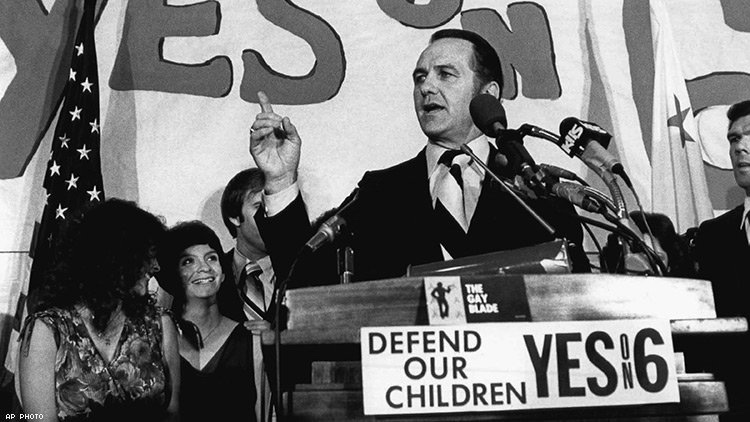
The late 1970s were witnessing a powerful conservative backlash against gay rights. Anita Bryant’s “Save Our Children” campaign had successfully helped repeal gay-rights protections in Miami-Dade County, while California’s Proposition 6—the Briggs Initiative—attempted to prohibit gay men and lesbians, and potentially their supporters, from working in public schools.

Milk became one of the most prominent opponents of Proposition 6.

California voters defeated it in November 1978.

Less than three weeks later, Harvey Milk was dead.

Dan White

Dan White represented a very different San Francisco.

A former police officer and firefighter, White was elected to the Board of Supervisors at the same election that brought Milk into office.

Politically and personally, the two men were very different.

White represented a more socially conservative constituency and was frequently identified with the city’s traditional working- and middle-class communities. Milk represented the increasingly politically organised gay population of the Castro.

Their relationship was nevertheless more complicated than a simple gay-versus-conservative confrontation.

They sometimes cooperated politically and at other times clashed.

White was the only supervisor to vote against San Francisco’s landmark gay-rights ordinance in 1978.

By November that year, however, White had another problem.

Money.

The salary paid to supervisors was inadequate for his family’s financial needs, and on 10 November 1978 White resigned his seat.

Almost immediately, he regretted it.

White asked Mayor George Moscone to reappoint him.

Moscone initially appeared willing to do so, but opposition developed—including from Milk and other political figures—and Moscone ultimately decided not to return White to the Board.

White believed he had been betrayed.

On the morning of 27 November 1978, he went to City Hall.

And he carried a gun.

The Assassinations

White entered City Hall through a basement window rather than using the normal public entrance.

This detail would later become particularly troubling in light of the defence argument that White lacked the mental capacity necessary for premeditated murder.

White was carrying his loaded .38-calibre revolver and additional ammunition.

He went to Mayor Moscone’s office and asked to speak privately with him.

The conversation did not end peacefully.

White shot Moscone repeatedly, including shots to the head at close range.

He then left the mayor’s office.

He did not leave City Hall.

Instead, White proceeded to the area containing Harvey Milk’s office.

After speaking briefly with Milk, White shot him five times, including two close-range shots to the head.

Two of San Francisco’s most important political figures were dead.

White subsequently surrendered to police and confessed.

There was never any serious question about who killed George Moscone and Harvey Milk.

The question at White’s trial would instead become:

What crime had Dan White committed when he killed them?

Murder or Manslaughter?

White was charged with first-degree murder with special circumstances.

The stakes were enormous.

A conviction potentially exposed him to the death penalty.

His defence lawyers therefore attacked one of the essential components necessary for the most serious murder conviction: White’s mental ability to premeditate, deliberate and form the required malice.

California law at the time recognised the doctrine of diminished capacity.

It did not necessarily mean that a defendant was insane.

Instead, the defence could argue that mental impairment prevented the accused from forming the particular mental state required for a specific crime.

White’s lawyers presented evidence portraying him as a profoundly troubled man who had deteriorated psychologically before the killings.

Psychiatrists testified about depression.

His behaviour had changed.

His appearance had changed.

His relationships had changed.

And then somebody mentioned his diet.

Enter the Twinkie.

Here Comes the Twinkie

White had previously been intensely concerned with fitness.

According to testimony, this health-conscious former firefighter had begun behaving differently as his psychological condition deteriorated.

Among those changes was his diet.

Instead of his previous healthy eating habits, White was consuming sugary drinks and junk food.

Including Twinkies.

Psychiatrist Dr Martin Blinder discussed this change while giving evidence about White’s mental state.

And this is where history and mythology parted company.

The defence was not simply arguing:

Dan ate Twinkies.
Twinkies altered Dan’s brain.
Therefore Dan killed two people.

Rather, White’s changed eating habits were presented primarily as part of a collection of behavioural changes indicating depression and psychological deterioration. There was also testimony touching on the possible relationship between diet and mood, which helped give later retellings of the case their extraordinary durability.

But the junk food was only part of a much larger psychiatric defence.

The actual argument was diminished capacity.

White’s lawyers maintained that his depression and mental condition had left him incapable of the deliberation, premeditation and malice required for murder.

The distinction matters.

Twinkies were evidence within the defence.

They were not, by themselves, the defence.

The Birth of the “Twinkie Defense”

Unfortunately for the complexities of jurisprudence, “diminished capacity caused by severe depression” does not make a particularly memorable headline.

“Twinkie defense” does.

The expression caught on.

It transformed an intricate—and controversial—psychiatric defence into an irresistible piece of popular culture.

Soon the story had mutated into something much simpler:

Dan White murdered two men and blamed it on junk food.

The phrase eventually escaped the White case altogether.

A “Twinkie defense” became shorthand for almost any apparently ridiculous attempt to explain or excuse someone’s behaviour.

There is an irony here.

The expression became so successful precisely because it distorted the legal argument it supposedly described.

But What About Premeditation?

This remains one of the most disturbing aspects of the case.

Consider White’s actions.

He took a loaded gun to City Hall.

He carried additional ammunition.

He avoided the normal public entrance and entered through a window.

He killed Moscone.

He then walked to another part of City Hall.

He approached Milk.

And he killed him too.

White’s defence nevertheless persuaded the jury that his mental condition prevented him from possessing the degree of deliberation and premeditation necessary for murder.

The prosecution strongly disputed this interpretation.

A prosecution psychiatrist who had interviewed White shortly after the killings testified that there was nothing in the interview suggesting a mental disorder, although the psychiatric evidence presented during the trial was extensive and conflicting.

The jury also heard White’s emotional recorded confession.

According to contemporary reporting, some jurors wept.

The trial had ceased to be simply an examination of physical evidence.

It had become an argument over the interior workings of Dan White’s mind.

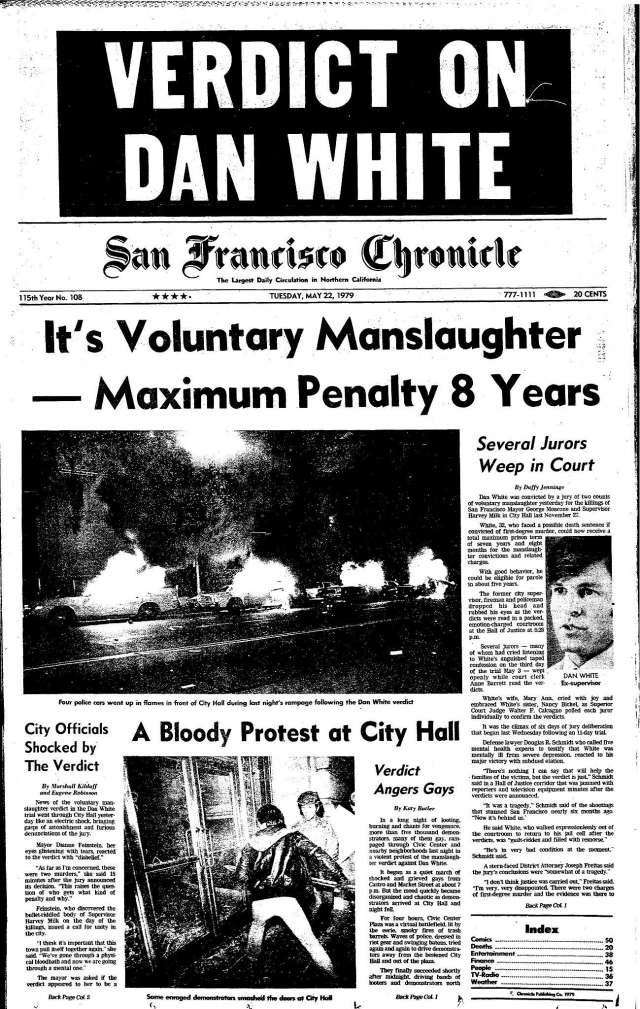
The Verdict

On 21 May 1979, the jury returned its decision.

Not guilty of first-degree murder.

Not guilty of second-degree murder.

Instead, White was convicted on two counts of voluntary manslaughter.

The maximum sentence was seven years and eight months.

For many San Franciscans—particularly members of the gay community—the verdict was almost incomprehensible.

Harvey Milk had received death threats during his political career.

A man had entered City Hall carrying a firearm and ammunition, avoided the public entrance, shot the mayor, travelled through the building and then shot Milk.

And somehow the law had concluded that this was manslaughter rather than murder.

The anger was immediate.

White Night

Thousands gathered in the Castro and marched towards City Hall.

The demonstration became increasingly furious.

For many gay San Franciscans, the verdict represented considerably more than dissatisfaction with one criminal trial.

It touched years of accumulated anger about discrimination, police treatment, violence against gay people and a justice system many believed did not value gay lives equally.

Police cars were attacked and set alight.

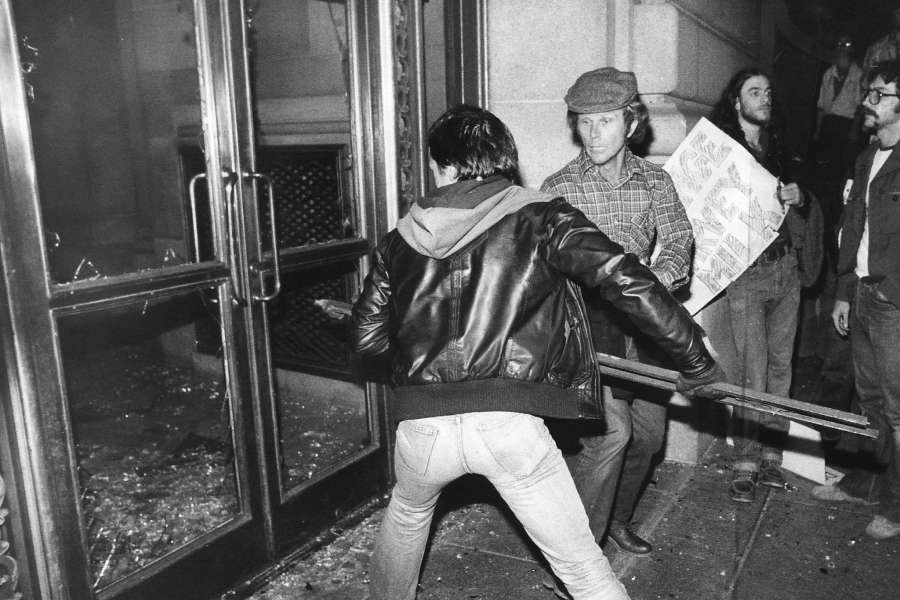
Windows at City Hall were smashed.

Police and demonstrators fought.

The violence became known as the White Night riots.

But the confrontation did not end at City Hall.

Police subsequently moved into the Castro.

Officers entered gay establishments, damaged property and assaulted patrons and people in the streets.

Thus a trial already born from political assassination became entangled with another longstanding source of tension—the relationship between gay communities and police.

The night represented an extraordinary transformation.

Only six months earlier, after Milk and Moscone were murdered, thousands had walked through San Francisco in an overwhelmingly peaceful candlelight procession.

After the verdict, candles were replaced by flames.

Was Harvey Milk Killed Because He Was Gay?

This question requires care.

White and Milk were political opponents, and Milk had opposed White’s return to the Board of Supervisors.

The immediate circumstances of the killings centred heavily on White’s resignation, his failed attempt to regain his seat and his belief that political opponents had prevented Moscone from reappointing him.

It is therefore too simplistic to describe Milk’s assassination solely as a straightforward anti-gay hate crime.

Yet homosexuality cannot simply be removed from the historical context either.

Milk was not merely another supervisor.

He was perhaps the most visible openly gay politician in America.

White had opposed the city’s gay-rights ordinance and had expressed socially conservative views about homosexuality.

More importantly, the gay community’s reaction to White’s conviction reflected its broader historical experience.

Gay people knew what it meant for violence against them to be trivialised, ignored or inadequately punished.

Whatever combination of political resentment, psychological instability and personal grievance motivated Dan White, Harvey Milk’s death was inevitably experienced by gay people as the assassination of one of their own.

And that gave the verdict enormous symbolic power.

What Happened to the Diminished-Capacity Defence?

The controversy surrounding the White verdict contributed to a broader backlash against California’s diminished-capacity doctrine.

California subsequently abolished diminished capacity as a formal defence.

The law did not simply become “you can no longer use the Twinkie defense”; the legal changes were more substantial than the popular slogan suggests.

But the White case became one of the most notorious examples used in arguments that psychiatric evidence had allowed defendants to escape appropriate responsibility for deliberate acts.

In that sense, the trial had consequences far beyond Dan White himself.

White Leaves Prison

White was sentenced to seven years and eight months.

He did not serve anything approaching a lifetime sentence.

He was released in January 1984, after approximately five years in prison.

His release reopened wounds that had barely healed.

For many people in San Francisco, there was something almost grotesque about the arithmetic.

George Moscone was dead.

Harvey Milk was dead.

Dan White was free.

After parole in Southern California, White eventually returned to the San Francisco Bay Area.

On 21 October 1985, aged 39, Dan White died by suicide through carbon-monoxide poisoning in the garage of his home.

Seven years had not yet passed since the assassinations.

The Twinkie That Ate the Story

There is something almost appropriate about the fact that the Twinkie defense became a myth.

Harvey Milk understood better than most politicians that symbols have extraordinary power.

And the Twinkie became a symbol.

It symbolised a verdict many people could not understand.

It symbolised frustration with psychiatric defences.

And for many gay people it symbolised something darker—the suspicion that the justice system had somehow found a way to diminish the seriousness of Harvey Milk’s murder.

But reducing the trial to “Twinkies made him do it” actually hides the more interesting—and more troubling—questions.

How should mental illness affect criminal responsibility?

How can a jury determine whether someone truly premeditated an act?

How much weight should psychiatric testimony receive?

Can a person undertake a sequence of apparently deliberate actions while nevertheless lacking the mental capacity the law requires for murder?

And why did so many gay San Franciscans immediately believe that the verdict demonstrated something fundamentally unjust about the society in which they lived?

Those questions cannot be answered by a snack cake.

Harvey’s Victory

There is another reason the story should not end with Dan White.

White killed Harvey Milk.

He did not kill what Milk represented.

Milk had famously recorded messages to be played in the event of his assassination because he understood that his political visibility made him vulnerable.

His central political message was remarkably simple.

Gay people had to be visible.

They had to participate.

They had to vote.

They had to run for office.

They had to make it impossible for society to pretend they did not exist.

White’s bullets ended Milk’s life at 48.

But assassination transformed Milk from a San Francisco politician into an international symbol.

Decades later, Harvey Milk’s name appears on schools, buildings, streets and institutions. His life has inspired books, documentaries, an opera and the Academy Award-winning film Milk.

Dan White’s name survives too.

But largely because he killed Harvey Milk.

And because somebody mentioned a Twinkie.

Perhaps history delivered its own verdict after all.

Tim Alderman ©️2026

Sources and further reading

Contemporary reporting

Francis J. Moriarty, “Defense, State Rest in Murder Trial of Ex-Supervisor White,” The Washington Post, 11 May 1979.

Francis Moriarty, “White Is Convicted of Voluntary Manslaughter,” The Washington Post, 22 May 1979.

San Francisco Chronicle archival coverage of the Dan White verdict and White Night disturbances.

Nancy Skelton and Mark A. Stein, “S.F. Assassin Dan White Kills Himself,” Los Angeles Times, 22 October 1985.

Legal background

Cornell Law School, Legal Information Institute, material on diminished capacity and the history of the “Twinkie defense.”

California statutory changes concerning diminished capacity and evidence of mental disorder in determining criminal intent.

Harvey Milk and gay history

Harvey Milk Foundation, biographical history of Harvey Milk.

Randy Shilts, The Mayor of Castro Street: The Life and Times of Harvey Milk.

Robert Epstein and Richard Schmiechen, The Times of Harvey Milk (1984), documentary film.

Historical accounts of the White Night riots and San Francisco gay politics during the 1970s.

For the myth itself

Carol Pogash, “Myth of the ‘Twinkie Defense’,” San Francisco Chronicle, 23 November 2003.

Contemporary and retrospective reporting on psychiatric testimony during People v. White.

One little historical irony particularly appeals to me: the Twinkie has achieved something Dan White never managed—it has survived for decades with its reputation largely intact. 😂

And I think the most important distinction in the piece is that we haven’t sanitised White’s defence merely because the popular version is wrong. The defence really did introduce his dramatic change to junk-food consumption as psychiatric evidence; it simply wasn’t “Twinkies caused the murders.” Contemporary reporting confirms that the defence was fundamentally trying to establish diminished capacity through depression and other evidence.

The manslaughter verdict on 21 May 1979 provoked an immediate march from the Castro toward City Hall and the violence remembered as White Night. White served about five years and died by suicide in October 1985.

Gay History: Martyrs Among Us: Deifying Matthew Shepard, Harvey Milk + more

IMAGE ABOVE: JAKE GYLLENHAAL AND HEATH LEDGER IN BROKEBACK MOUNTAIN; COVER STORY IMAGE: HILLARY SWANK IN BOYS DON’T CRY

When news broke that Matthew Shepard’s remains were finally buried at the National Cathedral some 20 years after his death, we were reminded of the collective grief the nation felt after the brutal, senseless murder of the waiflike 21-year-old. In the intervening years since he happened into a bar where he met up with two men who lured him into their truck, robbed him, and drove him to a desolate stretch of highway outside Laramie, Wyoming where they pistol-whipped him, tied him to a wooden fence and left him for dead in the cold night air, Shepard had become more than an emblem of the senseless hate crimes perpetrated against the gay community, he had become a martyr.

Matthew Shepard was an openly gay student at the University of Wyoming who was brutally attacked in a hate crime at the age of 21.

Shepard’s place among sacrificial victims was solidified when more than 5,000 people gathered on the steps of the Capitol to mourn his death and cemented when Congress passed the Matthew Shepard and James Byrd Jr. Hate Crimes Prevention Act, which broadened existing law to include crimes triggered by sexual orientation, gender, gender identity, race and disability. Byrd was an African American man murdered by three white supremacists in Jasper, Texas. On June 7, 1998, they dragged his body for three miles behind their pickup truck. Although Byrd wasn’t gay, his inhumane murder serves to remind us of the hate that permeates society.

In his book, Dying to Be Normal: Gay Martyrs and the Transformation of Sexual Politics, author Brett Krutszch theorizes that LGBTQ activists are using religion to make the argument that gays are essentially the same as straights and deserve the same equal rights. He points to the veneration of Shepard, Harvey Milk and other high profile gay victims, as well as campaigns like the It Gets Better Project, which he believes promotes the notion that “like Christ’s suffering on the cross, one’s trials today can lead to a better tomorrow.” Krutszch says that national tragedies like Orlando’s Pulse nightclub shooting show how activists use headline-grabbing deaths to gain acceptance, shape the debate over LGBTQ rights and foster assimilation.

Krutszch maintains that Mr. Shepard’s 1998 murder is steeped in religious imagery. Just the thought of the all-American boy-next-door tied to a fence conjures up images of the crucifixion. He concludes that Matthew Shepard’s resulting canonization is due to the interplay of religion, death and LGBTQ politics and that “martyrs as emblems can be changed into more respectable figures than they were in their lifetime.” We may never know if Mr. Shepard was the innocent victim most people believe he was, or as The Book of Matt: Hidden Truths About the Murder of Matthew Shepard indicates, he was a meth dealer who not only knew his killers, but was sexually involved with one and that his death was the result of a drug robbery gone bad.

Whatever the motive for his murder, Shepard has become a shining symbol in the pantheon of almost exclusively white gay martyrs. The group dates back to the 4th century when Sergius and Bacchus, two Roman Christian soldiers who happened to be lovers, took part in a rite called adelphopoiesis (the ancient equivalent of same sex marriage) and refused to attend sacrifices for Zeus, thereby revealing their Christianity. The pair was paraded through what is now Syria. They were dressed in women’s clothing and tortured to death. They lived on through fervent followers and the churches that were dedicated to them throughout The Byzantine Empire.

Any conversation about modern-day martyrs would not be complete without mentioning Harvey Milk. He was the first openly gay elected official in California. Krutszch described Milk as “a secular Jewish, Yiddish-speaking, anti-monogamist” who was transformed by activists who “downplayed his Jewishness, depicted him as committed to fidelity and presented him as someone whose death, like Christ’s crucifixion, transformed the world.” One can argue the validity of that characterization, but it is hard to deny the contributions Milk made as San Francisco’s District 5 Supervisor. Those included defeating Proposition 6 that would have banned lesbian and gay educators from teaching in California public schools, and his efforts to pass legislation that prohibited discrimination in housing and employment based on sexual orientation.

Harvey Milk

Tyler Clemente may be less well known than Milk and Shepard, but like their deaths, his was another flashpoint. You may remember reading about his suicide in 2010. Clemente was an 18-year-old Rutgers University student who jumped from the George Washington Bridge after his roommate used a webcam to spy on him kissing another man. The video was posted on Twitter.

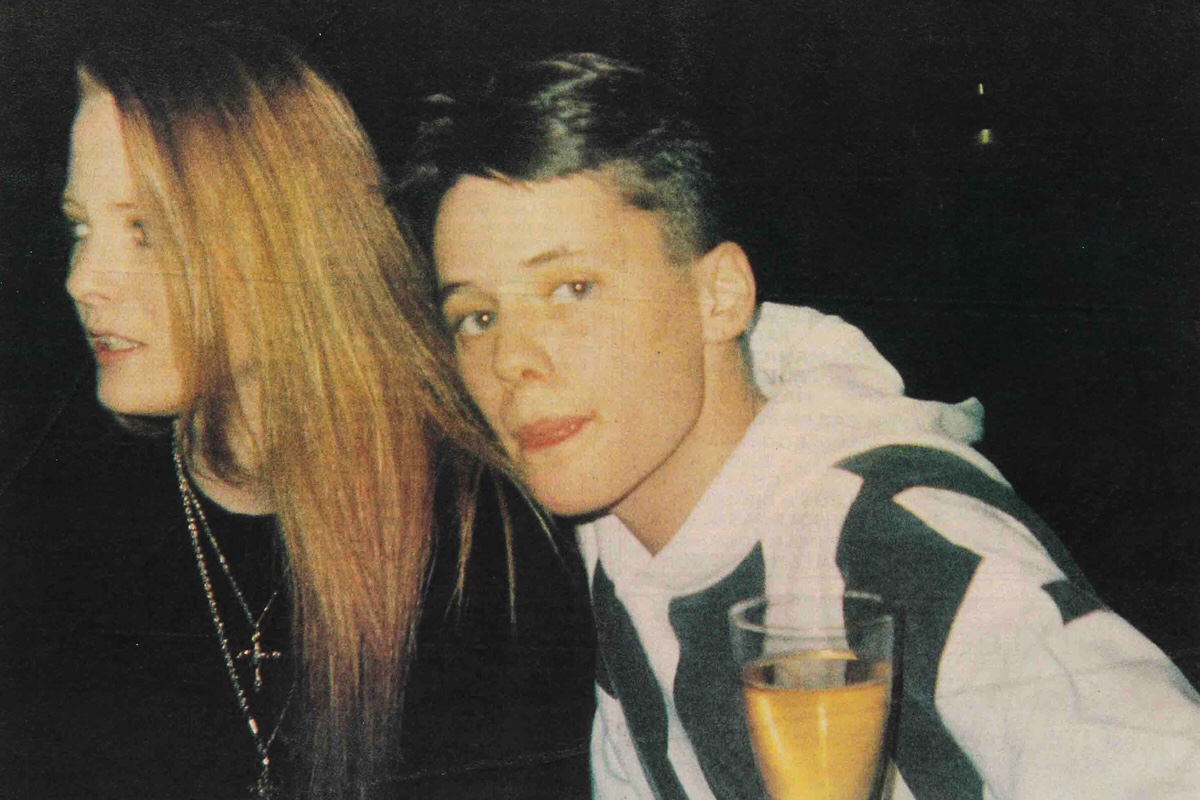
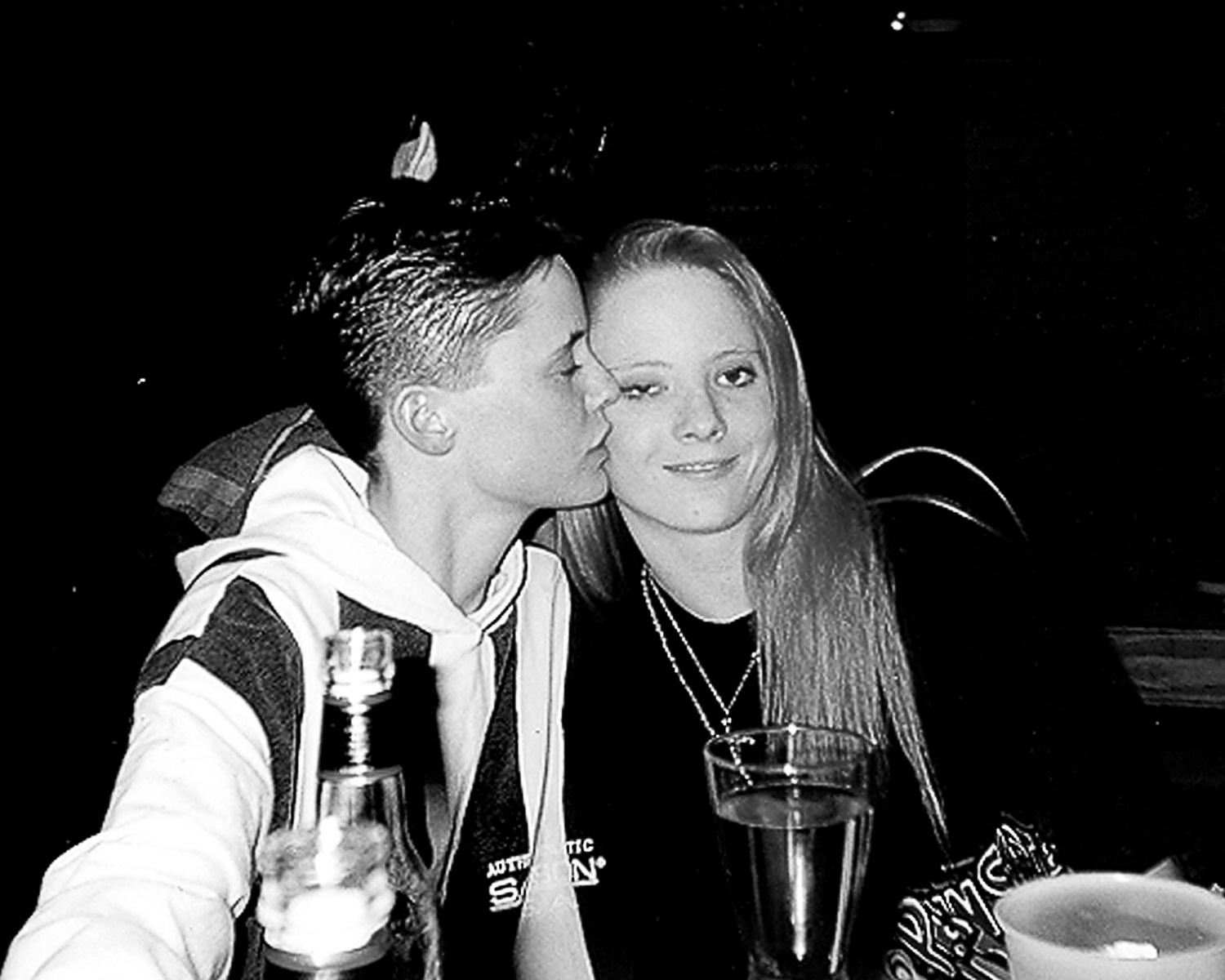
Most homosexual martyrs are white, but they are not all men. Brandon Teena, born Teena Renae Brandon, became famous when Hilary Swank played him in Boys Don’t Cry. The 21-year-old Teena was living a quiet transgender life in Humboldt, Nebraska, dating 18-year-old Lana Tisdel and hanging out with two ex-convicts John Lotter and Marvin Thomas “Tom” Nissen. Everything was fine until December 19, 1993, when Teena was arrested for forging checks. He used his one phone call to call Tisdel. She got the surprise of her life when she came to bail him out and was directed to the women’s prison where Teena was being held.

Brandon Teena

At a Christmas Eve party a few weeks later, Lotter and Nissen forced Teena to remove his pants, proving to Tisdale that he was a woman. Later that night, Lotter and Nissen forced Teena into a car, drove him to a deserted area, attacked and gang-raped him. Fearful that Brandon would file a police complaint, the pair murdered him on New Year’s Eve. While his family buried him as a female (his tombstone reads “Teena R. Brandon, Daughter, Sister and Friend”), the death of Brandon Teena is credited with raising awareness of transgender issues in the same way that Matthew Shepard’s became a clarion call for injustices directed toward gay men.

Teen Lana Tisdale

While real-life suffering seems like a necessary prerequisite for martyrdom, some fictional characters like Brokeback Mountain’s Jack Twist and Ennis Del Mar have transcended fictional status to take their place in the cultural zeitgeist. Brokeback author, Annie Proulx, said the characters Jack and Ennis were her first two that felt “really damned real” and “got a life of their own.” She also said, “Unfortunately, they got a life of their own for too many other people, too … the audience that Brokeback reached most strongly have powerful fantasy lives. They can’t bear the way it ends. So they invent all kinds of boyfriends and new lovers and so forth after Jack is killed. They can’t understand that the story isn’t about Jack and Ennis, it’s about homophobia.”

Gay martyrs like Matthew Shepard, Harvey Milk, Brandon Teena and even Brokeback’s fictional characters are often a byproduct of homophobia, when people who find themselves outside the mainstream and are struggling to just be who they are.

Reference

Gay History:The Briggs Initiative: Remembering a Crucial Moment in Gay History

Homophobe John Briggs promoting his initiative

A lot of people are saying this year’s midterm election is the most crucial of our lifetime. It may well be, given the need to elect officials who will fight Donald Trump’s loathsome agenda. But another midterm election, 40 years ago, was one of the most crucial as well, at least in California.

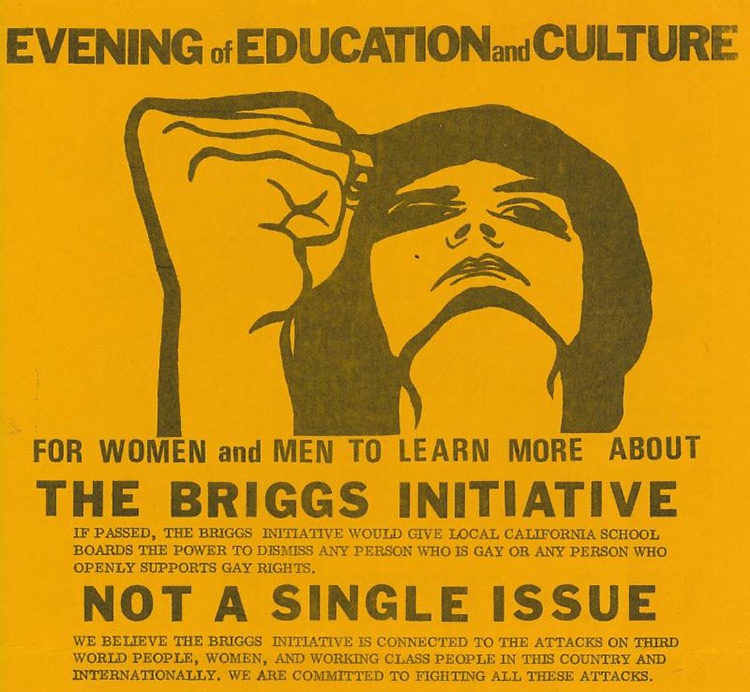
In 1978, State Sen. John Briggs put an initiative on the ballot that would have mandated the firing of any gay or lesbian teacher in California public schools, or any teacher who supported gay rights (the term LGBT wasn’t used back then). Thanks to a Herculean effort by California grassroots activists — Harvey Milk, Cleve Jones, Sally Miller Gearhart, hundreds of others — Briggs’s Proposition 6, popularly known as the Briggs Initiative, was resoundingly defeated, by more than a million votes. It was the first time voters had rejected an antigay measure.

To mark the 40th anniversary of this milestone, the GLBT Historical Society in San Francisco is mounting an exhibition called “The Briggs Initiative: A Scary Proposition,” recounting the story of the initiative and how it was turned back. It opens September 14.

“This exhibition will bring a scary time for LGBTQ people zinging back for those of us who were there, reminding us that we can fight the forces of anti-LGBTQ discrimination and win even against long odds,” said co-curator Sue Englander, a veteran of the anti-Briggs Initiative effort, in a press release. “And if you weren’t here 40 years ago, the story will sear itself into your consciousness. The differences between 1978 and today aren’t as big as they may look.”

Indeed, there are similarities between 1978 and today. The gay rights movement jump-started by the Stonewall riots and other events of the 1960s had made some gains in the 1970s. Gays and lesbians were getting elected to state- or city-level public office, or coming out and getting reelected — Elaine Noble in Massachusetts, Allan Spear in Minnesota, Harvey Milk in San Francisco. Many cities and counties, including San Francisco and Miami-Dade County, were adopting ordinances banning antigay discrimination. Major cities across the nation were holding Pride parades, usually around the anniversary of Stonewall in late June. The American Psychiatric Association announced it no longer considered homosexuality a mental illness.

This amount of progress pales in comparison with that of the 21st century, which brought nationwide marriage equality, many more antidiscrimination laws, and, for a time, a president who wholeheartedly supported LGBTQ equality. But just as the Trump administration and other anti-LGBTQ forces are trying to undo civil rights progress today, homophobes came out of the woodwork to try to strip away the advances of the 1970s. The Briggs Initiative was part of this backlash, as was Anita Bryant’s campaign to repeal the Miami-Dade County gay rights law. But where she succeeded, Briggs would fail.

Briggs was a far-right Republican from a district in Orange County, a conservative enclave between Los Angeles and San Diego. In a state that makes greater use of the citizen initiative process than almost any other that has it, he hoped Prop. 6 would boost his political career. Specifically, he aspired to become California’s governor.

But one of the forces who helped persuade voters to reject the initiative was a former governor — Ronald Reagan. When he became president a few years later, Reagan didn’t build a gay-friendly record — he courted the religious right and notoriously ignored the AIDS crisis. But in 1978, he announced his opposition to the Briggs Initiative in an informal letter and in responses to reporters’ questions, and on November 1, six days before the election, he published a commentary in the Los Angeles Herald-Examiner denouncing the measure.

“Whatever else it is, homosexuality is not a contagious disease like the measles,” he wrote. “Prevailing scientific opinion is that an individual’s sexuality is determined at a very early age and that a child’s teachers do not really influence this.” That language may sound pretty tepid now, but at the time it was a significant statement. Then-President Jimmy Carter and his predecessor, Gerald Ford, also opposed the initiative.

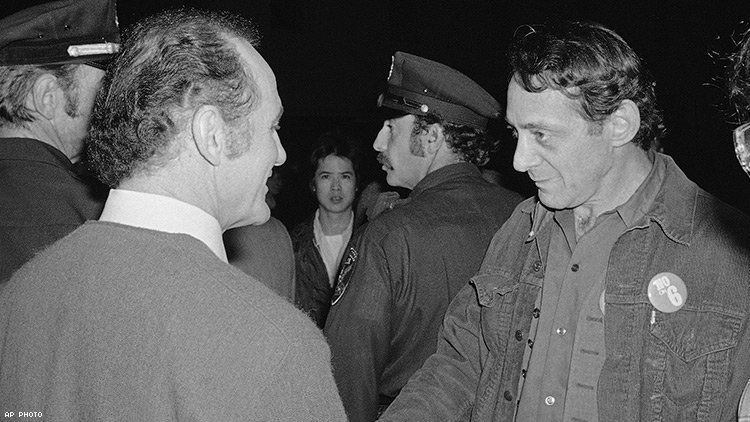
Opponents meet: John Briggs and Harvey Milk

But the credit for defeating the Briggs Initiative really should go not to high-profile politicians but to the many grassroots activists who worked against it. The opposition started with gay and lesbian advocates and the women’s movement, but they formed alliances with organized labor, progressive religious groups, and community organizations representing a variety of populations. Milk and Gearheart famously debated John Briggs, as chronicled in the documentary The Times of Harvey Milk and the narrative film Milk (although the latter left out Gearheart). They made mincemeat out of Briggs’s arguments, particularly about his initiative being a way to combat child molestation; Gearheart cited government data showing that this is overwhelmingly committed by straight men.

But most important, gay people came out. “We can defeat the Briggs Initiative if all the gay people come out to your family, your friends — if indeed they are your friends, your coworkers, your neighbors,” Milk said at the time. “You will hurt them if you come out, but think of how they will hurt you if they vote for Briggs. If they don’t come out, then it will be a very tight race.”

Indeed, gay people and their allies managed to flip the script on the initiative, as Ramy K. Khalil noted in his Western Washington University master’s thesis on the campaign. In August, just three months before the election, opinion polls showed support for the measure at 61 percent, opposition at 31 percent. By September, the polls showed a toss-up. And on November 7, voters delivered a resounding defeat, with the proposition losing by a margin of 58.4 percent to 41.6 percent, and not even carrying Briggs’s home county.

“One decisive factor was the mistake by Briggs himself of over-reaching — of promoting an initiative that was more extreme than the anti-gay ballot initiatives in other states,” Khalil wrote. “Proposition 6 required school districts to terminate employment of LGBT or straight people who expressed any sympathy toward homosexuality, on or off the job, whereas the ballot initiatives in other states merely repealed special protections against discrimination for gays or lesbians. Most importantly, though, Proposition 6 was defeated by LGBT people, labor unions, feminists, and other allies who organized a powerful grassroots movement involving highly visible protests and actions that successfully confronted the homophobic arguments behind Proposition 6.”

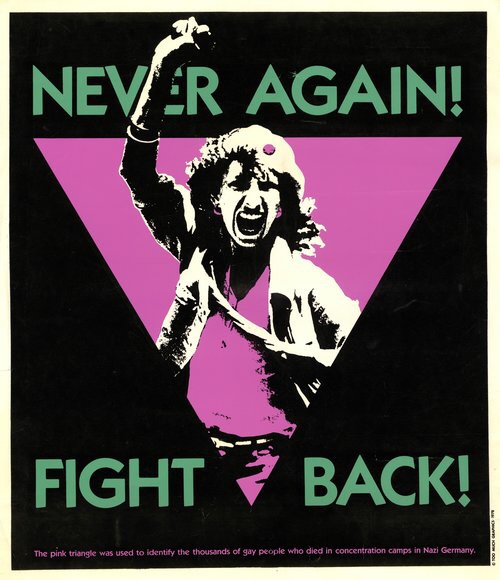
One of the posters to be featured in the exhibit

“Never Again! Fight Back!” (San Francisco: Too Much Graphics, 1978); silk-screened poster sold as a fundraiser for the No on Six campaign, GLBT Historical Society.

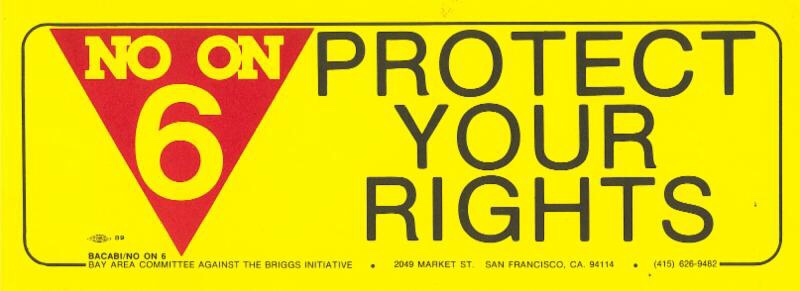
“No on 6” bumper sticker (San Francisco: Bay Area Committee Against the Briggs Initiative, 1978). Collection of the GLBT Historical Society.

Reference

Gay History: What Were The White Night Riots?

‘Dan White murdered my friend’: When anger boiled over into violence at City Hall and San Francisco police raided a Castro bar

On May 21, 1979, thousands of members of San Francisco’s predominantly gay Castro District community took to the streets to protest the lenient sentence received by Dan White for the murders of local politician and gay rights activist Harvey Milk and Mayor George Moscone. Their anger–combined with the actions of police who arrived to quell the scene–soon boiled over into rioting. The resulting violence affected San Francisco’s LGBT community for decades to come.

Harvey Milk rose to prominence as a gay rights activist and became the first openly gay person elected to a public office in the state of California when he was elected to the San Francisco Board of Supervisors in 1977. His murder, as well as that of Mayor Moscone, devastated not just the gay community, but the city as a whole.

Dan White was a former member of the Board of Supervisors who had clashed with Milk during their time serving the city together. In November of 1978, White resigned from his post, but changed his mind and asked to be reinstated. Mayor Moscone denied the request–with Milk lobbying against White’s reappointment. On November 27, White entered City Hall through a basement window and shot both men to death in their offices.

Six months later, White was convicted, not of first-degree murder, but voluntary manslaughter. White’s defense team had pointed to his diminished mental capacity and emotional state at the time of the murders, as indicated by the once-health conscious White consuming too much junk food– a ploy that became known as the “Twinkie Defense.” The jury-predominantly white, Roman Catholic and heterosexual—bought into it, recommending the lesser charge, which led to a sentence of just 7 years and 8 months.

When news of the verdict broke on the night of May 21, Cleve Jones–a close friend of Milk’s who would eventually go on to become one of the creators of the AIDS Quilt–spoke to a crowd of about 500 gatherers on Castro Street, and a peaceful march was quickly organized. By the time the crowd of protestors had made its second trip around the block, they were 1,500 strong. They then marched to City Hall, where their numbers expanded to an estimated 5,000.

As the crowd grew, so did the anger. Police soon arrived to try to control the situation, but that only served to enrage the crowd more. The police had raised over $100,000 for White’s defense–he was a former police officer–and many in the community believed the department had conspired to reduce White’s charges and sentencing. Although ordered to simply hold the crowd back, many officers began attacking the protestors with night sticks. Many had even taped over their badges, so as not to be identified.

Chaos erupted, as the crowd fought with police and destroyed a dozen police vehicles, as well as parts of City Hall itself. After three hours, officers moved in to quell the rioting for good, using tear gas in the process, and the crowd dispersed. In all, 59 officers and 124 protestors were injured, with about two dozen arrests made.

Hours later, several police officers gathered on their own to raid the Castro neighborhood, vandalizing a local bar and assaulting patrons. They shouted anti-gay slurs at the victims, and eventually turned their attention to attacking anyone that happened to be out on Castro Street.

After two hours, Police Chief Charles Gain was made aware of the rogue officers’ activities, and he made his way to the Castro to put a stop to it. No officers were reprimanded for the attacks, as officials were never able to determine who had ordered it, but the violence was finally over.

The next day, on what would have been Milk’s 49th birthday, 20,000 San Franciscans gathered to remember him. That October, more than 75,000 people marched for gay rights in Washington, D.C., and gay rights activists from around the country were inspired to continue their fight.

In San Francisco, the riots led to a wave of political changes, as more and more LGBT politicians were elected over the next decades. LGBT presence on the police forced also dramatically increased, and has continued to increase to this day.

Reference

Gay History: A Gay Martyr Who Ignited A Global Revolution

Biography: Harvey Milk, Lillian Faderman, Yale University Press, €21.99, JP O’ Malley

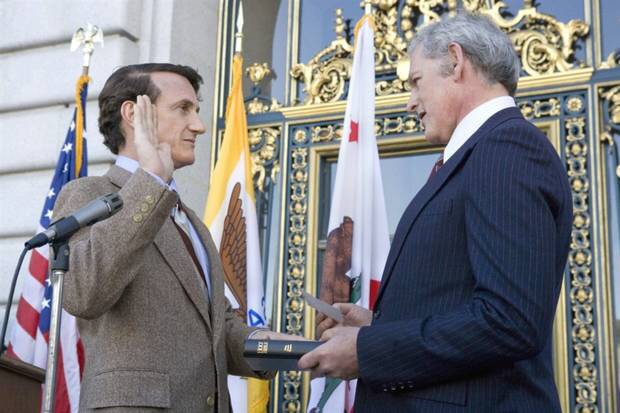
Sean Penn (left) won a best actor Oscar for his portrayal of Harvey Milk, California’s first openly gay elected politician, in the 2008 film ‘Milk’

On November 18, 1977, Harvey Milk distributed a secret tape recording to a select network of close friends: “To be played only in the event of my death by assassination,” the audio began: “If a bullet should enter my brain, let that bullet destroy every closet door,” the statement concluded.

Milk made the recordings shortly after becoming the first openly gay man to be elected to public-political office anywhere; when he won a seat on the San Francisco Board of Supervisors. Just one year later he was murdered by Dan White.

White, a fellow supervisor on San Francisco’s governing body, killed Milk because he claimed the city was being turned into Sodom by men who insisted on flaunting their homosexuality in public.

As historian and scholar of the LGBT movement, Lillian Faderman, explains in the concluding chapter of this concise, yet enormously insightful biography, Milk’s murder immortalised him forever: igniting a nationwide call to action from the LGBT community to demand equality, free from prejudice.

At the last Gay Freedom Day rally he attended before his death, Milk proposed that gay people across America gather in the US capital. On October 14, 1979, the first March on Washington for Lesbian and Gay Rights had 100,000 people in attendance.

As Faderman notes, support for the LGBT movement grew in numbers over time: the second March on Washington for Lesbian and Gay Rights in 1987 drew 600,000 people; while the third in 1993 attracted close to a million. As of 2016, 43 states across the US have elected at least one LGBT person to their state legislature. And this historic progressive change spread further afield.

Indeed, it’s possible to draw a line from Milk’s death, to Ireland’s progressive move in 2015 to enshrine marriage equality into law for same sex couples; and the subsequent appointment, two years later, of the country’s first openly gay Taoiseach, Leo Varadkar.

A hopeful, moving, and uplifting read, Faderman’s book tells the story of a man that didn’t fit the typical criteria for a progressive political martyr. Primarily because Milk lacked consistency in his political allegiances: he could play the liberal-pot smoking hippie, just as he could champion right wing conservatism when it suited him.

Faderman subtly hints that the circumstances of Milk’s personal life meant he never felt entirely comfortable in one firmly-rooted set of political ideals.

Essentially because he was living a double life. Born in 1930, into a conservative Jewish family in Long Island, New York, Milk never came out to either of his parents. Both died knowing nothing of his sexual identity.

As a Jew and homosexual, Milk always saw himself as an outsider who had to fight for social acceptance. He often used analogies of Jews being slaughtered in Nazi Germany. The Holocaust remained a pertinent metaphor in Milk’s speeches and editorials. Drawing lessons from European history, Milk claimed that calling any minority group pariahs, criminals, and demons would naturally only end in catastrophe.

Milk lived much of his life in a peripatetic manner: oscillating between New York, Dallas, and California. He took jobs in teaching, acting, on Wall Street and in the navy too, where he briefly served in Korea. But it was in the Castro area of San Francisco where Milk finally laid down roots and began to interact with a burgeoning gay community.

Then in his forties, Milk, along with his partner Scott Smith, opened Castro Camera: a gay camera photo development shop, which also served as a political constituency office, as well as a popular neighbourhood gay hangout spot too.

Faderman continually stresses that Milk was often shunned by certain sections of the gay community in his own lifetime.

Since the Stonewall Riots in New York’s Greenwich Village in 1969, a large proportion of the gay community across America had become synonymous with radical politics: seeking to overthrow existing social institutions.

Milk, however, was no committed leftist. He simply sought for gay people to be accepted into mainstream society as it presently stood.

Faderman points out that even martyrs have their flaws too: shortly before his death, the US Attorney General authorised that the FBI look into allegations that Milk had tried to divert funds from the Pride Foundation into his own pocket. We also read how Milk’s love life was mired in anguish, abandonment, heartache, and tragedy. One of his long-time partners, Jack Lira, hanged himself in 1977, leaving Milk a rather nasty suicide note.

Faderman’s narrative mixes the personal and the political with great skill; subtly displaying how at a fundamental level, fighting for collective political rights is really just a human yearning for personal happiness, which usually has its roots in compassion. The book is an exemplary testament to how ordinary citizens – with hope in their hearts and relentless ambition – can swing the pendulum of history towards progress and freedom.

Reference

Gay History: Harvey Milk Debates Sen. John Briggs, September 1978.

Harvey Milk and Republican state Sen. John Briggs of Orange County met in September 1978 for a debate at Northgate High School in Walnut Creek over the Briggs Initiative, a proposition that would have made it mandatory for school boards to fire openly gay and lesbian teachers. The photos were recently found in The San Francisco Chronicle archive by pop culture critic Peter Hartlaub and published for the first time in decades. 📷: John Storey