Tag Archives: LGBT

Gay History: 18 Anti-Gay Groups And Their Propaganda

This article and listing is from 2010, so some have possibly disappeared, and new groups appeared. I think this is an important part of our history, a constant reminder that there has always been, and will continue to be, groups whose sole purpose is to discriminate, demoralise, spread misinformation, and use hate-speech against the LGBT community. We could add our own local groups like the so-called Australian Christian Lobby, and Family First. These groups like to glorify the word “family” with no nod or acknowledgement to the changing faces of “family” in today’s world. Mind you, these are the same groups who suggest that, if you are the victim of domestic abuse, you should just suffer it for the sake of your “family”. Says it all, really!

A small coterie of groups now comprise the hard core of the anti-gay movement

Even as some well-known anti-gay groups like Focus on the Family moderate their views, a hard core of smaller groups, most of them religiously motivated, have continued to pump out demonizing propaganda aimed at homosexuals and other sexual minorities. These groups’ influence reaches far beyond what their size would suggest, because the “facts” they disseminate about homosexuality are often amplified by certain politicians, other groups and even news organizations. Of the 18 groups profiled below, the Southern Poverty Law Center (SPLC) will be listing 13 next year as hate groups, reflecting further research into their views; those are each marked with an asterisk. Generally, the SPLC’s listings of these groups is based on their propagation of known falsehoods — claims about LGBT people that have been thoroughly discredited by scientific authorities — and repeated, groundless name-calling. Viewing homosexuality as unbiblical does not qualify organizations for listing as hate groups.

*Abiding Truth Ministries
Springfield, Mass.

Abiding Truth Ministries serves mainly as a launching pad for an international anti-gay campaign. Its founder, Scott Lively, is also responsible for a book, widely cited by gay-bashers, accusing homosexuals of running the Nazi Party.

Lively first emerged as an anti-gay activist when he became communications director for the Oregon Citizens Alliance, which was backing that state’s notorious Measure 9 vote in 1992. The measure, which failed, would have added language to the state constitution listing homosexuality, along with pedophilia and masochism, as “abnormal behavior.” Lively later served as California director of the American Family Association, another particularly hard-line anti-gay group (see below).

Lively is best known for co-authoring, with Kevin Abrams, The Pink Swastika: Homosexuality in the Nazi Party. The book makes a series of claims that virtually no serious historian agrees with: that Hitler was gay, that “the Nazi Party was entirely controlled by militaristic homosexuals,” and that gays were especially selected for the SS because of their innate brutality. The claims are entirely false; in fact, the Nazis murdered significant numbers of gays and made homosexuality a death penalty offense in 1942. In the foreword, Abrams adds that homosexuality is “primarily a predatory addiction striving to take the weak and unsuspecting down with it. … They have no idea of how to act in the best interests of their country… . Their intention is to serve none but themselves.”

Lively has taken his message abroad to Eastern Europe (see Watchmen on the Walls, below), Africa and Russia. In a 2007 open letter to the Russian people, he asserted that “homosexuality is a personality disorder that involves various, often dangerous sexual addictions and aggressive, anti-social impulses.” In 2009, he went to Uganda to speak at a major conference on the evils of homosexuality, saying, among other things: “The gay movement is an evil institution. The goal of the gay movement is to defeat the marriage-based society and replace it with a culture of sexual promiscuity.” He also met with Ugandan lawmakers. A month after Lively left the country, a bill was introduced that called for the death penalty for certain homosexual acts and prison for those who fail to disclose gays’ identities.

In 2008, Lively started the Redemption Gate Mission Society, a church that seeks to “re-Christianize” the city of Springfield, Mass., where he lives.

Anti-Gay Scott Lively Closing Down ‘Hate Group’ Abiding Truth Ministries

*American Family Association

Methodist minister Donald E. Wildmon formed the National Federation for Decency in 1977, changing its name to the American Family Association (AFA) in 1988. Today, the group, which was taken over by Tim Wildmon after his father’s 2010 retirement, claims a remarkable 2 million online supporters and 180,000 subscribers to its AFA Journal. It also broadcasts over nearly 200 radio stations.

The AFA seeks to support “traditional moral values,” but in recent years it has seemed to specialize in “combating the homosexual agenda.” In 2009, it hired Bryan Fischer, the former executive director of the Idaho Values Alliance, as its director of analysis for government and policy. Taking a page from the anti-gay fabulist Scott Lively (see Abiding Truth Ministries, above), Fischer claimed in a blog post last May 27 that “[h]omosexuality gave us Adolph Hitler, and homosexuals in the military gave us the Brown Shirts, the Nazi war machine and 6 million dead Jews.” (Ironically, the elder Wildmon was widely denounced as an anti-Semite after suggesting that Jews control the media, which the AFA says “shows a genuine hostility towards Christians.”) Fischer has described Hitler as “an active homosexual” who sought out gays “because he could not get straight soldiers to be savage and brutal and vicious enough.” He proposed criminalizing homosexual behavior in another 2010 blog post and has advocated forcing gays into “reparative” therapy. In a 2010 “action alert,” the AFA warned that if homosexuals are allowed to openly serve in the military, “your son or daughter may be forced to share military showers and barracks with active and open homosexuals.”

Gays aren’t the AFA’s only enemies. In late 2009, Fischer suggested that all Muslims should be banned from joining the U.S. military. “Islam is a totalitarian political ideology,” Fischer added in August 2010. “It is as racist as the KKK. … Allowing a mosque to be built in town is fundamentally no different that granting a building permit to a KKK cultural center built in honor of some King Kleagle.” A little later, according to the Huffington Post, Fischer said that whatever the government does to “to make it unthinkable for America’s youth to join a white supremacist group,” it should also do “to make it as unthinkable for a resident of America  to embrace Islam.” Around the same time, the Huffington Post said, he blogged that Muslim values are “grossly incompatible with American values,” and therefore no place in America should allow a mosque to be built.

And then there are the promiscuous. On his May 26, 2010, radio show, Fischer recounted the biblical story of Phineas, who used a spear to kill a man and a woman who were having sex. Citing the nation’s “rampant sexual immorality,” Fischer said, “God is obviously looking for more Phineases in our day.”

Right-wing radio host Bryan Fischer is being mocked online after he said that gay men won’t get into heaven for their parts in a “homosexual liaison.”

*Americans for Truth About Homosexuality

Americans for Truth About Homosexuality (AFTAH) was formed as a part-time venture in 1996 by long-time gay-basher Peter LaBarbera, who reorganized it in 2006 as a much more serious and influential, if often vicious, operation.

A one-time reporter for the conservative Washington Times, LaBarbera has been an energetic campaigner against “the radical homosexual agenda” since at least 1993, when he launched The Lambda Report, which claimed to do first-hand reporting to expose its gay enemies. Over the years, he has been an official with Accuracy in Media, Concerned Women for America, the Family Research Council and the Illinois Family Institute (see below for the last three). He left the Illinois Family Institute, where he’d been executive director, in 2006.

AFTAH is notable for its posting of the utterly discredited work of Paul Cameron (of the Family Research Institute; see below), who has claimed that gays and lesbians live vastly shorter lives than heterosexuals. Among the Cameron propaganda published by AFTAH are 2007 claims that gays and lesbians in Norway and Denmark live 24 fewer years than heterosexuals. Reviewing that claim, Danish epidemiologist Morten Frisch found that it had no scientific basis. LaBarbera himself, in 2002, compared the alleged dangers of homosexuality to those of “smoking, alcohol and drug abuse.” Similarly, AFTAH’s website carries essays describing homosexuality as a “lethal behavior addiction,” a “dangerous” practice that is “neither normal nor benign.”

In 2007, LaBarbera claimed there was “a disproportionate incidence of pedophilia” among gay men — yet another false assertion. The same year, he posted an open letter to the Lithuanian people from long-time gay-basher Scott Lively (see Abiding Truth Ministries, above), who has made a series of false claims about gays running the German Nazi Party. In the piece posted to the AFTAH website, Lively said homosexuals are trying to take away free speech from all opponents of gays and to silence all religious opinions on the matter.

The AFTAH site repeats bogus claims like the idea that a proposed bill in California would “promote cross-dressing, sex-change operations, bisexuality and homosexuality” to kindergartners and other children. And it ran an essay that falsely asserted that hate crime laws would “restrict our speech.”
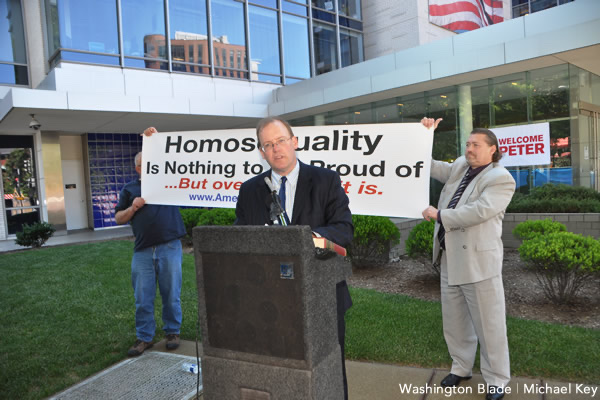
Peter LaBarbera of the anti-gay group Americans for Truth About Homosexuality, organized the Pride Week news conference. (Washington Blade photo by Michael Key)

*American Vision

Led since 1986 by Gary DeMar, American Vision is one of the primary exponents of the doctrine of “Christian Reconstruction” — the idea that the U.S. was founded as a “Christian nation” and that its democracy should be replaced with a theocratic government based on Old Testament law. As a practical matter, that means American Vision, which describes its goal as “restor[ing] America’s Biblical foundation,” backs the death penalty for practicing homosexuals.

DeMar has modified that dictum slightly in the past, saying that homosexuals wouldn’t all be executed under a “reconstructed” government, but that he did believe that the occasional execution of “sodomites” would serve society well because “the law that requires the death penalty for homosexual acts effectively drives the perversion of homosexuality underground, back into the closet.” More recently, while hosting American Vision’s “The Gary DeMar Show” in December 2009, Joel McDurmon, the group’s research director, agreed that the Bible does call for killing homosexuals. And, he said, “when most of a society is Christian, is biblical, then it [execution of gays] is perfectly normal; it should definitely be in place.”

In April 2009, DeMar said: “Homosexuals aren’t content with only having the bedroom. They have taken their perversion into the classrooms, teaching that such practices are normal. There is nothing normal about what homosexuals do.”

DeMar, who was closely allied with the late D. James Kennedy of Coral Ridge Ministries (see below), is a central figure in Reconstruction theology, which was founded by R.J. Rushdoony (see Chalcedon Foundation, below). He is co-author of Christian Reconstruction: What It Is, What It Isn’t with Gary North.

DeMar has also said that a “long-term goal” should be “the execution of abortionists and their parents.” Islam is another enemy, he said in August 2010: “The long-term goal of Islam is the abolition of our constitutional freedoms.”

Texas Lt. Gov. Dan Patrick, center, announces “Operation One Million Voices” to promote Senate Bill 6, the so-called bathroom bill, on March 6, 2017. The effort is being lead by Vision America and the Family Research Council, two groups with long histories of opposing LGBT rights. (Eric Gay / AP)

*Chalcedon Foundation
Vallecito, Calif.

The Chalcedon Foundation, named after a 451 A.D. council that proclaimed the state’s subservience to God, was started in 1965 by Rousas John Rushdoony, who is known as “father of Christian Reconstruction” theology. Led by Rushdoony’s son, Mark, since the elder Rushdoony’s death in 2001, the foundation continues to push for the imposition of Old Testament law on America and the world.

Reconstruction, as described in R.J. Rushdoony’s foundational 1973 book The Institutes of Biblical Law, is opposed to modern notions of equality, democracy or tolerance — instead, it embraces the most draconian of religious views. Rushdoony supported the death penalty for homosexuals, among other “abominators.” He also opposed what he called “unequal yoking” — interracial marriage — and “enforced integration,” insisting that “[a]ll men are NOT created equal before God” (the Bible, he explained, “recognizes that some people are by nature slaves”). Rushdoony also denied the Holocaust, saying the murder of 6 million Jews was “false witness.”

Rushdoony’s Reconstruction is indeed radical, even including “incorrigible children” among those deserving death. And virtually all of his works remain for sale on the Chalcedon Foundation website.

Today, most fundamentalist leaders deny holding such views. But a Who’s Who of the religious right — including Tim and Beverly LaHaye (see Concerned Women for America, below), Donald Wildmon (American Family Association, above), and the late D. James Kennedy (Coral Ridge Ministries, below) — once served alongside the elder Rushdoony on the Coalition for Revival, a group formed in 1984 to “reclaim America.” Rushdoony reportedly was also a member of the secretive Council of National Policy, a group of archconservative leaders.
The Chalcedon Foundation is a think tank founded by Reconstructionist, Rousas Jouh Rushdoony in 1965. Rushdooney is the guru of the Dominionist realm. The Foundation publishes books, newsletters and reports which are all geared toward advancing the theological teachings of the Reconstructionist movement. The role of influence of this Foundation of Christianity on politics is staggering.

Christian Anti-Defamation Commission
Vista, Calif.

Originally incorporated in 1999 by retired Army Gen. William Hollis, the Christian Anti-Defamation Commission (CADC) says its goal is to serve as a “first line of response to anti-Christian defamation, bigotry and discrimination.” It was largely inactive until 2007, when it brought in as its new leader the Rev. Gary Cass, who claims that Christian-bashing, “the last acceptable form of bigotry in America, is alive and well and growing more intense and hysterical by the day.”

The CADC is heavily focused on the alleged evils of homosexuality. It has called the idea of allowing gays to serve openly in the military “evil”; opposed hate crimes legislation (which many religious-right groups falsely assert would make it easy to send pastors to prison for condemning homosexuality); and raged against a judge’s overturning of California’s Proposition 8, which had invalidated same-sex marriages. With regard to that last, it said: “Homosexuals have turned away from humbly worshipping the true and living God and his transcendent moral order in order to make an idol out of their sexual perversion and chaos.”

The group also has protested a lawsuit seeking to end public use of the motto, “In God We Trust”; encouraged the IRS to investigate the anti-theocratic Americans United for Separation of Church and State; and opposed a proposed Islamic center in New York City, saying Muslims “are exploiting the liberty we afford them to honor a murderous ideology that denies religious liberty every where [sic] it can.”

Although it is somewhat benign by comparison, the CADC has an advisory board that includes some of the country’s most hard-line anti-gay activists: Lou Sheldon, head of the Traditional Values Coalition (see below); Donald Wildmon, the founder of the American Family Association (above); and O’Neal Dozier, a pastor who wrote in his 2008 book that “[h]omosexuality not only spreads disease and neutralizes God’s command,” but also “destroys families.” The board also includes Carmen Mercer, a former top official of the Minuteman Civil Defense Corps, a now-defunct nativist group that once ran its own armed civilian border patrols.

The Christian Anti-Defamation Commission has released its ‘Top 10 list of Anti-Christian Acts of 2009’ and they point the finger at Larry David, Obama, the Department of Homeland Security, but mostly at gays, and the oh-so-scary gay marching band that participated in the inauguration.

Concerned Women for America
Washington, D.C
.

San Diego, Calif., activist Beverly LaHaye, whose husband Tim would go on to become famous as co-author of the Left Behind novels depicting the end times, started Concerned Women for America (CWA) in 1979 to create an anti-feminist group that matched the power of the National Organization for Women. Today, CWA claims more than 500,000 members organized into state chapters, a radio program that reaches more than 1 million listeners, and a cadre of attorneys and researchers devoted to the group’s mission of promoting biblical values.

LaHaye has blamed gay people for a “radical leftist crusade” in America and, over the years, has occasionally equated homosexuality with pedophilia. In 2001, she hired prominent anti-gay propagandists Robert Knight (now with Coral Ridge Ministries; see below) and Peter LaBarbera (now with Americans for Truth About Homosexuality, above) to launch CWA’s Culture and Family Institute. Matt Barber was CWA’s policy director for cultural issues in 2007 and 2008 before moving on to similar work with the Liberty Counsel (below).

While at CWA, on April 12, 2007, Barber suggested against all the evidence that there were only a “miniscule number” of anti-gay hate crimes and most of those “may very well be rooted in fraudulent reports.” In comments that have since disappeared from CWA’s website, Barber demanded a federal probe of “homosexual activists” for their alleged fabrications of hate crime reports.

CWA long relied on and displayed Knight’s articles and talking points, including claims that “homosexuality carries enormous physical and mental health risks” and “gay marriage entices children to experiment with homosexuality.” Most remarkably, Knight cited the utterly discredited work of Paul Cameron (see Family Research Institute, below) to bolster claims that homosexuality is harmful.

Today, CWA continues to make arguments against homosexuality on the basis of dubious claims. President Wendy Wright said this August that gay activists were using same-sex marriage “to indoctrinate children in schools to reject their parents’ values and to harass, sue and punish people who disagree.” Last year, CWA accused the Gay, Lesbian, and Straight Education Network (GLSEN), a group that works to stop anti-gay bullying in schools, of using that mission as a cover to promote homosexuality in schools, adding that “teaching students from a young age that the homosexual lifestyle is perfectly natural … will [cause them to] develop into adults who are desensitized to the harmful, immoral reality of sexual deviance.”

The group has pushed a plethora of Christian right causes over the years, including criminalizing abortion, banning same-sex marriage, and rolling back sex education for students.

Coral Ridge Ministries
Fort Lauderdale, Fla.

The late Rev. D. James Kennedy started turning fundamentalist Coral Ridge Presbyterian into a mega-church in the 1960s, adding Coral Ridge Ministries (CRM) as its action arm in 1974 and claiming some 10,000 members by the 1990s. During the fiscal year ending in June 2009, CRM raised almost $18 million and spent more than $6 million of that on television and radio outreach efforts.

Over the years, Kennedy emphasized anti-gay rhetoric, particularly in his TV ministry. He recommended as “essential” the virulent work of R.J. Rushdoony (see Chalcedon Foundation, above), who believed practicing gays should be executed. In an especially nasty 1989 edition of a CRM newsletter, Kennedy ran photographs of children along with the tagline, “Sex With Children? Homosexuals Say Yes!”

After Kennedy died in 2007, Coral Ridge Presbyterian seemed to change course, merging in 2009 with New City Presbyterian Church under its pastor, Tullian Tchividjian, a grandson of evangelist Billy Graham. Tchividjian began to move the church away from divisive social issues; some 500 members of Coral Ridge, including Kennedy’s daughter, left as a result. Today, Tchividjian says that the church, with 2,400 congregants, is entirely separate from CRM.

CRM, however, has continued its hard-line course. In 2009, it hired anti-gay activist Robert Knight as a senior writer and Washington, D.C., correspondent. Knight has used the work of discredited researcher Paul Cameron (see Family Research Institute, below). In one recent essay on the CRM website, he argued against allowing homosexuals to serve openly in the military, saying that “Bible-believing Christians would quickly find themselves unwelcome in Barney Frank’s new pansexual, cross-dressing military.” (Hector Padron, CRM’s executive vice president, wrote last May that such a change would post a “grave threat to the military.”)

In 2002, before joining CRM, Knight wrote that gay marriage “entices children to experiment with homosexuality” and that accepting homosexuality leads to “a loss of stability in communities, with a rise in crime, sexually transmitted diseases and other social pathologies. Still another is a shortage of employable, stable people.”

After decades of being known as Coral Ridge Ministries, the ministry Dr. D. James Kennedy founded is now called Truth in Action Ministries

*Dove World Outreach Center
Gainesville, Fla.

The Dove World Outreach Center was founded in 1986 by Don Northrup and described itself as a “total concept church” in which all would be served. But Northrup died in 1996, and his successor brought in long-time Northrup associate Terry Jones as Dove’s leader in 2001. Since then, Jones has spouted increasingly vicious attacks on gays and Muslims, culminating in a plan that drew worldwide condemnation this September to hold an “International Burn a Koran Day.”

Jones and his family had spent some 20 years in Cologne, Germany, running a church that was allied with Dove. When he was asked to take over the Gainesville church, he apparently divided his time between the two until 2008, when the Cologne church was closed amid criticism of Jones by its congregants.

Jones pushed himself into the headlines last March, when he surrounded Dove with signs aimed at Craig Lowe, a Gainesville city commissioner who was running for mayor, that said “No Homo Mayor.” After an electioneering complaint was filed with the IRS (nonprofit churches cannot intervene in political campaigns), Jones had the signs shortened to the more generic “No Homo.” At one point, Jones and 30 of his congregants joined an anti-gay rally by the Westboro Baptist Church, which runs the Godhatesfags.com website and regularly pickets the funerals of U.S. soldiers, saying God is killing soldiers because America is a “fag-enabling” nation.

Jones is also the author of a book entitled Islam is of the Devil, and he has used that phrase on another set of signs posted around his church and sent his followers’ children to school in T-shirts bearing that slogan. (The school refused to let the children wear the shirts, and the ACLU filed suit against it as a result.) He regularly repeats the phrase on his “Braveheart Show,” an Internet video program where he asserted last April that “[h]omosexuality makes God throw up.”

Jones and his tiny congregation became momentarily famous this September, when he said he would burn Korans to protest Islam, which he describes as “an evil religion.” The threat drew public condemnation from Gen. David Petraeus, the commander of U.S. troops in Afghanistan, and several leading members of the Obama Administration, and sparked anti-U.S. rallies in Muslim countries. In the end, Jones withdrew his threat and rapidly sank back into political obscurity.

Close to 100 protester showed with signs and chanted slogans in opposition the Dove World Outreach Center and their leader Terry Jones in Gainesville, Florida September 11, 2010. UPI/Mark Wallheiser

*Faithful Word Baptist Church
Tempe, Ariz.

Steven Anderson, formerly affiliated with Sacramento, Calif.-based Regency Baptist Church, started Faithful Word Baptist Church in Arizona on Christmas Day 2005 as a “totally independent” organization. With “well over a hundred chapters of the Bible memorized word-for-word,” Anderson quickly led his congregation into a series of extremely radical stands.

Much of his venom was aimed at homosexuals, who he suggests should be killed (“The biggest hypocrite in the world is the person who believes in the death penalty for murderers but not for homosexuals”). In an August 2009 sermon, he attacked the United Methodist Church, saying “10% of their preachers are queers” and adding, “they got a dyke and a faggot behind the pulpit.” He has described gays as “sodomites” who “recruit through rape” and “recruit through molestation.”

Anderson is also a virulent government hater. As operator of the True Sons of Liberty website, the pastor calls for abolishing the IRS, the Federal Reserve, Social Security and Child Protective Services state agencies. In April 2009, he refused to get out of his car or answer questions from Border Patrol agents at the California-Arizona border. Agents broke his window and tased him as a result.

Anderson brought his church national notoriety in August 2009, when a member of his congregation, Christopher Broughton, went to an Obama appearance in Phoenix legally carrying an assault rifle and a pistol. It turned out that Anderson had preached a day earlier to Broughton and others that he “hates Obama” and would “pray that he dies and goes to hell.” Two weeks later, he told openly gay columnist Michelangelo Signorile that he “would not judge or condemn” anyone who killed the president. Then, for good measure, he told Signorile at the end of the interview, “If you’re a homosexual, I hope you get brain cancer and die like Ted Kennedy.”

*Family Research Council
Washington, D.C.

Started as a small think tank in 1983, the Family Research Council (FRC) merged in 1988 with the much larger religious-right group Focus on the Family in 1988, and brought on Gary Bauer, former U.S. undersecretary of education under Ronald Reagan, as president. In 1992, the two groups legally separated to protect Focus on the Family’s tax-exempt status, although Focus founder James Dobson and two other Focus officials were placed on the FRC’s newly independent board. By that time, FRC had become a powerful group on its own.

Headed since 2003 by former Louisiana State Rep. Tony Perkins, the FRC has been a font of anti-gay propaganda throughout its history. It relies on the work of Robert Knight, who also worked at Concerned Women for America but now is at Coral Ridge Ministries (see above for both), along with that of FRC senior research fellows Tim Dailey (hired in 1999) and Peter Sprigg (2001). Both Dailey and Sprigg have pushed false accusations linking gay men to pedophilia: Sprigg has written that most men who engage in same-sex child molestation “identify themselves as homosexual or bisexual,” and Dailey and Sprigg devoted an entire chapter of their 2004 book Getting It Straight to similar material. The men claimed that “homosexuals are overrepresented in child sex offenses” and similarly asserted that “homosexuals are attracted in inordinate numbers to boys.”

That’s the least of it. In a 1999 publication (Homosexual Behavior and Pedophilia) that has since disappeared from its website, the FRC claimed that “one of the primary goals of the homosexual rights movement is to abolish all age of consent laws and to eventually recognize pedophiles as the ‘prophets’ of a new sexual order,” according to unrefuted research by AMERICAblog. The same publication argued that “homosexual activists publicly disassociate themselves from pedophiles as part of a public relations strategy.” FRC offered no evidence for these remarkable assertions, and has never publicly retracted the allegations. (The American Psychological Association, among others, has concluded that “homosexual men are not more likely to sexually abuse children than heterosexual men are.”)

In fact, in a Nov. 30, 2010, debate on MSNBC’s “Hardball with Chris Matthews” between Perkins and the Southern Poverty Law Center’s Mark Potok, Perkins defended FRC’s association of gay men with pedophilia, saying: “If you look at the American College of Pediatricians, they say the research is overwhelming that homosexuality poses a danger to children. So Mark is wrong. He needs to go back and do his own research.” In fact, the college, despite its hifalutin name, is a tiny, explicitly religious-right breakaway group from the American Academy of Pediatrics, the 60,000-member association of the profession. Publications of the American College of Pediatricians, which has some 200 members, have been roundly attacked by leading scientific authorities who say they are baseless and accuse the college of distorting and misrepresenting their work.

Elsewhere, according to AMERICAblog, Knight, while working at the FRC, claimed that “[t]here is a strong current of pedophilia in the homosexual subculture. … [T]hey want to promote a promiscuous society.” AMERICAblog also reported that then-FRC official Yvette Cantu, in an interview published on Americans for Truth About Homosexuality’s website, said, “If they [gays and lesbians] had children, what would happen when they were too busy having their sex parties?”

More recently, in March 2008, Sprigg, responding to a question about uniting gay partners during the immigration process, said: “I would much prefer to export homosexuals from the United States than to import them.” He later apologized, but then went on, last February, to tell MSNBC host Chris Matthews, “I think there would be a place for criminal sanctions on homosexual behavior.” “So we should outlaw gay behavior?” Matthews asked. “Yes,” Sprigg replied. At around the same time, Sprigg claimed that allowing gay people to serve openly in the military would lead to an increase in gay-on-straight sexual assaults.

Perkins has his own unusual history. In 1996, while managing the U.S. Senate campaign of Republican State Rep. Louis “Woody” Jenkins of Louisiana, Perkins paid $82,500 to use the mailing list of former Klan chieftain David Duke. The campaign was fined $3,000 (reduced from $82,500) after Perkins and Jenkins filed false disclosure forms in a bid to hide the link to Duke. Five years later, on May 17, 2001, Perkins gave a speech to the Louisiana chapter of the Council of Conservative Citizens (CCC), a white supremacist group that has described black people as a “retrograde species of humanity.” Perkins claimed not to know the group’s ideology at the time, but it had been widely publicized in Louisiana and the nation. In 1999, after Republican Senate Majority Leader Trent Lott was embroiled in a national scandal over his ties to the group, GOP chairman Jim Nicholson urged Republicans to quit the CCC because of its “racist views.” That statement and the nationally publicized Lott controversy came two years before Perkins’ 2001 speech.

The Family Research Council has chosen to celebrate Humanism as a way to advance its agenda of hate against LGBT persons.

*Family Research Institute
Colorado Springs, Colo.

Started in 1987 by psychologist Paul Cameron, the Family Research Institute (FRI) has become the anti-gay movement’s main source for what Cameron claims is “cutting-edge research” — but is, in fact, completely discredited junk science pushed out by a man who has been condemned by three professional organizations.

Over nearly three decades, Cameron has published “research studies” (though almost never in peer-reviewed journals) that suggest that homosexuals are predatory and diseased perverts who victimize children. Among his more recent defamations was an FRI pamphlet asserting the primary activity of the gay rights movement is “seeking to legitimize child-adult homosexual sex.” In another, he claimed that with “the rise of the gay rights movement, homosexual rape of men appears to have increased.” In yet another, he wrote, “Homosexuals were three times more likely to admit to having made an obscene phone call” and “a third more apt to report a traffic ticket or traffic accident in the past 5 years.”

Some of Cameron’s more infamous claims include the idea that homosexuals molest children at far higher rates than heterosexuals and that homosexuals have extremely short lives. Last February, he wrote on FRI’s website that “[i]f homosexuals are allowed to serve in the military, they will be recruiting in showers, having sex in the barracks… . Before long, the U.S. may be defended by the sex-obsessed and those who can tolerate kowtowing to them.” After all, writes Cameron — a man who proposes that parents promote teen heterosexual activity to keep kids straight — “homosexual sex overwhelms rationality [and] overwhelms the desire to serve.”

Cameron’s colleagues have condemned him repeatedly. In 1983, he was thrown out of the American Psychological Association for ethical violations.  In 1984, the Nebraska Psychological Association disassociated itself from Cameron’s statements about sexuality. In 1985, the American Sociological Association adopted a resolution saying Cameron “has consistently misinterpreted and misrepresented sociological research on sexuality” and “repeatedly campaigned for the abrogation of the civil rights of lesbians and gay men”; the following year, the same group formally condemned Cameron for that misrepresentation of research.

In late 2010, reacting to reports that his group had once again been listed by the Southern Poverty Law Center as a hate group, Cameron told The (Colorado Springs, Colo.) Gazette that he believed homosexuality should be criminalized in America and that he was fine with a proposed bill in Uganda that would punish some gay sexual acts with death (“Whatever they decide, I’m OK with”). He also proposed heavily taxing gays and single adults because of their failure to produce children. And he suggested that gays and lesbians undergo a “public shaming” of some kind.

Despite all this — and the fact that Cameron’s propaganda is widely known to be false or misleading — many groups have continued to use his claims, though often without citing their source. They include the American Family Association, Americans for Truth About Homosexuality, Concerned Women for America, Coral Ridge Ministries, the Family Research Council (see above for all five) and, until recently, the Illinois Family Institute (see below).

*Heterosexuals Organized for a Moral Environment
Downers Grove, Ill.

Heterosexuals Organized for a Moral Environment (HOME) was founded by 62-year-old Wayne Lela, a former Catholic who now describes himself as an agnostic. Until recently, the 20-year-old group has had a fairly low profile.

The group, which is entirely focused on the alleged evils of homosexuality, attacks gay people on a wide variety of levels. But it keeps coming back to the idea that gay sexual activity should be illegal. “[P]enalizing people for engaging in homosexual behavior is clearly not discrimination, just like penalizing people for exhibitionism or incest is not discrimination,” HOME’s website says. In a second website comment, it adds, “[H]eterosexual activity is not illegalizeable … while homosexual activity is definitely illegalizeable.” And in a third, it insists that “legalizing homosexual deviations” leads to a “confused and sick society.”

HOME doesn’t stop there. It says that gays should apologize “for all the STDs [sexually transmitted diseases] they’ve spread, and all the money those STDs have cost, and especially for setting bad moral examples for our children.” It accuses homosexuals of having a “pathological attitude” toward the opposite sex. It says homosexuality shouldn’t have been removed from the American Psychiatric Association’s list of mental disorders. It says gays threaten free speech because they seek hate crime law protections. It argues that gay film directors are working to “condition men to bond with other men at the expense of women.” And it claims that pedophilia and necrophilia are a sexual orientations like homosexuality, going on to suggest that they could therefore be legalized.

And then there’s this: Freemasonry may be connected to “the homosexual movement,” with members evidently engaging in sodomy and “homosexual orgies.” Thus, HOME says, there is a “very real possibility that this group is using its influence to try to impose pro-homosexual ‘values’ on the public.”

*Illinois Family Institute
Carol Stream, Ill.

The Illinois Family Institute (IFI), which says it dedicates itself to issues surrounding “marriage, family, life and liberty,” is heavily focused on attacking gay people and homosexuality in general. It maintains “working partnerships” with other hard-line groups including the Family Research Council (see above) and the Alliance Defense Fund, a conservative legal center based in Phoenix. In early 2010, it launched Illinois Family Action as a political-action sister organization.

In 2006, then-Executive Director Peter LaBarbera (see Americans for Truth About Homosexuality, above), told a religious-right gathering hosted by Vision America that homosexuality was “disgusting” and demanded the closing down of all “homosexual establishments.” He called for the repeal of all “sexual orientation laws” — laws that ban discrimination against gays — and spoke of the “need to find ways to bring back shame to those practicing homosexual behavior.”

Over the years, the group also has occasionally embraced the groundless propaganda of Paul Cameron (see Family Research Institute, above). Until 2009, it carried an article on Cameron — “New Study Shows that Homosexuals Live 20 Fewer Years” — preceded by a full-throated endorsement LaBarbera. “Paul Cameron’s work has been targeted for ridicule by homosexual activists, and he’s been demonized by the left,” LaBarbera wrote in his introduction, “but that should not discount his findings.” IFI also posted a video attacking school anti-bullying programs that claimed, based on Cameron, that gay men’s median age of death is 42. Both were removed in response to the Southern Poverty Law Center’s 2009 listing of IFI as a hate group, which was largely based on its use of Cameron.

That response, however, hardly indicated that the IFI was backing down on its hard-line position. This year, Focus on the Family — for years, the powerhouse of anti-gay religious organizations in America — moderated its position markedly after founder James Dobson retired and pastor Jim Daly took over. In April, Daly told an interviewer: “I will continue to defend traditional marriage, but I’m not going to demean human beings in the process. It’s not about being highly confrontational.” The response of Laurie Higgins, IFI’s belligerent director of school advocacy, was that Daly was showing “surprising naïveté,” using the same language as pro-gay “homosexualists,” and failing to confront “the pro-homosexual juggernaut.”

In 2009, Higgins compared homosexuality to Nazism, likening the German Evangelical Church’s weak response to fascism to the “American church’s failure to respond appropriately to the spread of radical, heretical, destructive views of homosexuality.” Elsewhere, Higgins has pined for the days when gays were in the closet. “There was something profoundly good for society about the prior stigmatization of homosexual practice… . [W]hen homosexuals were ‘in the closet,’ (along with fornicators, polyamorists, cross-dressers, and ‘transexuals’), they weren’t acquiring and raising children.” She’s also said that McDonald’s, because it ran a gay-friendly TV ad, is “hell bent on using its resources to promote subversive moral, social, and political views about homosexuality to our children.”

Liberty Counsel
Orlando, Fla.

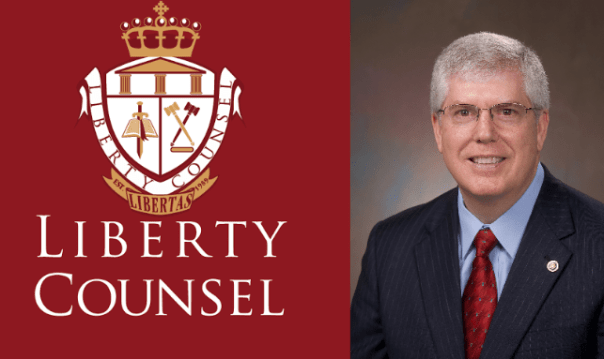
Created in 1989, Liberty Counsel is affiliated with Liberty University Law School in Lynchburg, Va., a legacy of the late conservative icon Jerry Falwell. It was founded and is still chaired by Mathew (Mat) Staver, who also serves as director of the Liberty Center for Law and Policy at Liberty University, and provides legal assistance with regard to religious liberty, abortion and the family.

The organization may be best known for its campaigns to ensure that “public displays of religion” are maintained during the Christmas holiday, and it has adopted broad right-wing views, including the allegation that the Obama Administration has a “socialist liberal agenda.” But it also has focused heavily on anti-gay activism.

In 2009, J. Matt Barber, formerly with Concerned Women for America and Americans for Truth About Homosexuality (see above for both), joined Liberty Counsel as director of cultural affairs (also becoming Liberty University’s associate dean for career and professional development). A year earlier, Barber had argued that given “medical evidence about the dangers of homosexuality,” it should be considered “criminally reckless for educators to teach children that homosexual conduct is a normal, safe and perfectly acceptable alternative.”

The Counsel also has been active in battling same-sex marriage, saying it would destroy the “bedrock of society.” In 2005, the group’s blog said: “People who … support the radical homosexual agenda will not rest until marriage has become completely devalued. Children will suffer most from this debauchery.” A 2007 blog posting said same-sex marriage would “severely impact future generations.”

Like other anti-gay groups, Liberty Counsel argues that hate crime laws are “actually ‘thought crimes’ laws that violate the right to freedom and of conscience” — an opinion rejected by the Supreme Court. In fact, the laws raise penalties for crimes already on the books — assault, murder and so on — that were motivated by hatred of people based on their sexual orientation. They do not, and could not under the Constitution, punish people for voicing opinions.

Since 2006, Liberty Counsel has also run its “Change is Possible” campaign with Parents and Friends of Ex-Gays to protect people who say they’ve changed from gay to straight from “discrimination” by “intolerant homosexuals.”
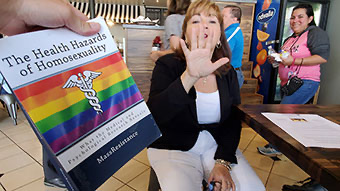
*MassResistance

MassResistance, “the leading pro-family grassroots activist group in Massachusetts,” began life in 1995 as the Parents’ Rights Coalition, became the Article 8 Alliance in 2003, and took on its current name in 2006. Its leader, Brian Camenker, is a programmer who was an official of the Article 8 Alliance and also headed the Newton, Mass., chapter of the National Taxpayers’ Association.

As president of yet another group, the Interfaith Coalition of Massachusetts, Camenker spearheaded the drafting of a bill that passed in 1996 and required that parents be notified of any sex education in their children’s schools. That same year, Camenker claimed that suicide prevention programs aimed at gay youth actually were “put together by homosexual activists to normalize homosexuality.” Later, MassResistance charged that groups like the Gay, Lesbian and Straight Education Network (GLSEN), which support school anti-bullying programs, actually want to lure children into homosexuality and, very possibly, sadomasochism.

At a 2006 religious right gathering in Washington, D.C., Camenker insisted that gays were trying to get legislation passed to allow sex with animals. “One bill in Massachusetts takes away all the penalties for bestiality,” he claimed. “This is where this [homosexual] agenda is going.” A little later, he added, “They [gays and lesbians] are pushing perversion on our kids.”

In 2006-2007, Mass-Resistance pushed for an amendment of the 1996 statute that would have required that parents be notified of any discussion of gay or lesbian issues in the schools. The group proposed language that lumped sexual orientation (which includes heterosexuality, homosexuality and bisexuality) in with criminal behaviors like bestiality and polygamy. During legislative testimony supporting the amendment, Camenker falsely claimed that no homosexuals died in the Holocaust and that the pink triangle the Nazis forced imprisoned gays to wear actually signified Catholic priests. The amendment did not pass.

Camenker, who has long focused on the purported “homosexual agenda” in the schools and frequently claimed gays are dangerous to kids, has repeatedly cited discredited claims from organizations like the National Association for Research and Therapy of Homosexuality that link homosexuality and pedophilia.

In 2008, Camenker made another accusation for which there was no supporting evidence at all — the claim that the state of Massachusetts had had to spend more money every year since same-sex marriage became legal in that state. That, he said, was because of “skyrocketing homosexual domestic violence” and because of the “extreme dysfunctional nature of homosexual relationships.”

This year, MassResistance called Boston Gay Pride events a “depraved” display that featured “a great deal of obviously disturbed, dysfunctional, and extremely self-centered people whose aim was to push their agenda.”
National Organization for Marriage
Princeton, N.J.

The National Organization for Marriage (NOM), which is dedicated to fighting same-sex marriage in state legislatures, was organized in 2007 by conservative syndicated columnist Maggie Gallagher and Princeton University politics professor Robert George. George is an influential Christian thinker who co-authored the 2009 “Manhattan Declaration,” a manifesto developed after a New York meeting of conservative church leaders that “promises resistance to the point of civil disobedience against any legislation that might implicate their churches or charities in abortion, embryo-destructive research or same sex marriage.”

NOM’s first public campaign was in 2008, supporting California’s Proposition 8, which sought to invalidate same-sex marriage in that state. It was widely mocked, including in a parody by satirist Stephen Colbert, for the “Gathering Storm” video ad it produced at the time. Set to somber music and a dark and stormy background, the ad had actors expressing fears that gay activism would “take away” their rights, change their lifestyle, and force homosexuality on their kids.

The group, whose president is now former executive director Brian Brown, has become considerably more sophisticated since then, emphasizing its respect for homosexuals. “Gays and Lesbians have a right to live as they choose,” NOM says on its website, “[but] they don’t have the right to redefine marriage for all of us.”

For a time, NOM’s name was used by a bus driver named Louis Marinelli, who drove a van for NOM’s “Summer for Marriage Tour” this year. Marinelli called himself a “NOM strategist” and sent out electronic messages under the NOM logo that repeated falsehoods about homosexuals being pedophiles and gay men having extremely short lifespans. In homemade videos posted on his own YouTube page, he said same-sex marriage would lead to “prostitution, pedophilia and polygamy.” But this July, NOM said it was not associated with Marinelli.

*Traditional Values Coalition
Anaheim, Calif.

Former Presbyterian minister Lou Sheldon has been warning Americans about the “gay threat” since 1980, when he founded the Traditional Values Coalition (TVC), which also is concerned with abortion and national security and takes on liberal activists on a range of issues. The TVC, which today claims to speak for 43,000 churches, lobbies Congress and also mobilizes churches to oppose legislation that it disagrees with. Sheldon’s daughter Andrea Lafferty, a former Reagan Administration official, serves as executive director of the organization.

The group has at times enjoyed remarkable access to the halls of power — during the George W. Bush Administration, Sheldon and Lafferty visited the White House a combined 69 times, meeting personally with Bush in eight of the visits. But that does not mean that it has not long had a record of extreme gay-bashing.

In 1985, Sheldon suggested forcing AIDS victims into “cities of refuge.” In 1992, columnist Jimmy Breslin said that Sheldon told him that “homosexuals are dangerous. They proselytize. They come to the door, and if your son answers and nobody is there to stop it, they grab the son and run off with him. They steal him. They take him away and turn him into a homosexual.” Sheldon later denied that he made the comments, but his website today includes strikingly similar language: “[S]ince homosexuals can’t reproduce, they will simply go after your children for seduction and conversion to homosexuality.” Elsewhere, it claims that “[t]he effort to push adult/child sex … is part of the overall homosexual movement.”

The TVC also asserts that “it is evident that homosexuals molest children at a far greater rate than do their heterosexual counterparts”  — a falsehood based on conflating male-male molestation with homosexuality. Gays, it says, molest children at “epidemic rates,” adding: “As homosexuals continue to make inroads into public schools, more children will be molested and indoctrinated into the world of homosexuality. Many of them will die in that world.” With regard to LGBT teen suicides, TVC, under the headline “Homosexual Urban Legends,” claims that “[t]he cold, hard fact is that teens who are struggling with homosexual feelings are more likely to be sexually molested by a homosexual school counselor or teacher than to commit suicide over their feelings of despair.”

The TVC also makes assertions on its website about disproportionate homosexual pedophilia and attacks the idea that people are born gay and the claim that gays want the right to marry for the same reasons that heterosexuals do — the TVC suggests the real purpose of marriage equality is to destroy the concept of marriage and ultimately replace it altogether with group sex and polygamy.

Reference

The Pressure To Be ‘Macho’ Can Damage Gay Men’s Mental Health

Living in a hetero-normative world often demands men to act according to strict societal rules on “masculinity.”
GETTY IMAGES

I remember when I first thought my body was not good enough to be desired by other men. This feeling of disappointment with myself and envy of other men happened when I started going to gay bars and clubs. I noticed that men with defined muscles and often perfectly groomed facial hair received all the attention.

What they did not display was anything that was even slightly feminine.

Many gay men feel the pressure to have the perfect muscular body, which can be for their own self-confidence and health, but it may also be an attempt to exude society’s notion of masculinity in order to be desirable to other men. And part of this perception is due to toxic masculinity.

The term became known after Terry Kupers, a renowned American psychiatrist, published an article in 2005 titled, “Toxic Masculinity as a Barrier to Mental Health Treatment in Prison.” Kupers wrote that toxic masculinity was a “constellation of socially regressive male traits that serve to foster domination, the devaluation of women, homophobia, and wanton violence.”

MRBIG_PHOTOGRAPHY VIA GETTY IMAGES Muscular men getting more muscular.

“It (toxic masculinity) is when these traits and ideologies that (men) ascribe to as historically belonging to men, are exaggerated in a kind of dangerous form,” said Adam Davies, a doctoral candidate in education, gender and sexuality studies at the University of Toronto. “Many gay men therefore believe that in order to act like the ‘manliest’ man possible, this often means shunning anything that can even slightly be interpreted as feminine.”

“For a lot of gay men, just by being gay, there is this sense of insecurity of being a failure because they’re not performing their masculinity in the way that they (feel like they) are expected to,” said Davies.

Miah Mills, a Toronto resident, said that while he was very fortunate to have a non-gendered upbringing at home, his peers at school bullied him.

“They would police the whole boys do this/boys don’t do that nonsense,” said the 36-year-old. “Eventually, you police yourself.”

He said it took him many years to feel comfortable around effeminate gay men.

GETTY IMAGES Crowd of people in Berlin, Germany participate in a parade celebrating the LGBTQ community on June 21, 2014.

“I always knew that I should support them and be proud of them, but my first response was always to cringe. In them I saw the parts of myself that I hated. The parts of me that others saw in me and bullied me for.”

Alex McKenzie, a sexologist based in Montreal, said that he has also seen this same feeling of failure when working with predominantly LGBTQ2S men.

“This is a health risk because there is a constant dissonance between what they are trying to achieve versus what they actually want, which slowly has an effect on one’s mental health … it erodes your well-being the more it goes on,” says McKenzie. “I see a lot of issues in regards to anxiety come up, as well as depression, when people find themselves living in situations not right for them.”

https://youtu.be/C3SJeM8ed_Q

Video above is a trailer for “Men Don’t Whisper,” a comedic short film about a gay couple emasculated at a sales conference, which screened at Sundance and SXSW earlier in September.

According to McKenzie, these mental health effects are also caused by dating apps, such as Grindr and Tinder.

“Dating apps are a phenomenon that started out as something innovative and fun, but has changed the landscape of dating and how we not only treat each other, but also how we view ourselves as individuals, which directly links to our self-esteem,” says McKenzie.

My own experiences on apps such as Grindr and Tinder have shown me that fit and active men (all traits seen as masculine) are the most desired men. While I consider myself to be fairly active, my lack of muscles and toned figure have made me close the apps at times wondering why I should even bother if I’m not the “ideal man.” Davies said this form of masculinity has always been put on a pedestal.

“In the (early 20th century) when gay men had different labels for themselves based on their gender expression, the feminized gay man was called ‘the fairy’ and was always seen as … the lowest denominator of gay communities,” said Davies. The word “fairy” was also often used as a homophobic slur.

A historical trope during the 1970s and 1980s that many gay men looked up to and tried to emulate was that of the “Castro” clone. Named after the historically gay Castro district in San Francisco, this stereotype was a rugged, muscular man with a moustache who would have sex with many different men without any attachments. I still find myself, from time to time, aspiring to be like one of them because of how they were so lusted after.

GETTY IMAGES Individuals congregate in the Castro District for the annual Pride celebration on June 27, 2015.

Rusty Souleymanov, a doctoral candidate at the University of Toronto’s Faculty of Social Work, whose doctoral work focused on the health and well being of substance-using gay, bisexual, as well as two-spirit and queer men in Toronto, said the desire to be seen as more masculine can also influence behaviours and lifestyles sometimes practiced by gay men.

“There’s this ongoing view that the manliest of men have a lot of casual bareback sex (penetrative sex without a condom) and also engage in substance use while having sex, and it can lead to a lot of health risks,” said Souleymanov, who has conducted research about HIV education among gay and bisexual men who use drugs.

The health effects that Souleymanov describes include higher rates of mental health issues and eating disorders on top of higher HIV rates. A 2007 article titled, “Eating Disorders in Diverse Lesbian, Gay and Bisexual Population,” by Matthew Feldman and Ilan Meyer showed that gay and bisexual men are up to 10 times more likely to suffer from eating disorders than heterosexual men.

None of the above is to say that toxic masculinity is the sole reason why these issues exist, but it does play an important role. Davies said that gay, bisexual and queer men need to be more vulnerable with each other.

For a lot of gay men, just by being gay, there is this sense of insecurity of being a failure because they’re not performing their masculinity in the way that they (feel like they) are expected to.

Adam Davies, a doctoral candidate

“A lot of men think that it isn’t masculine enough to talk about our emotions, our struggles and things that make us appear weak, but we need to be more open with each other,” said Davies. “We need to practice being more vulnerable with each other and start working to take away this stigma to really come together as a community.”

I am more at ease with my sense of self and my own body these days. Of course, there is still some work I can do on myself (I mean, who doesn’t?) but at least now I know that when I see these standards for gay men, they’re not what I should necessarily be. I would be lying if I said that I never feel a little bad looking at my scrawny self in the mirror, but I do know that it does not take away from my sense of masculinity.

Reference

Gay Men Reveal the Fetishes They Don’t Want Others to Know About

Kinky gay men who are open and honest with partners are more likely to have better mental health

Photo: torbakhopper / Flickr

Gay men have revealed the fetishes they don’t want others to know about.

XTube surveyed their users to determine and rank which fetishes they get turned most on by.

The winner was ‘partialism’, also known as a fetish for a particular part of the body. This could be anything from feet to a hairy chest.

Role play was second on the list, while narratophilia (or dirty talk) was third on the list.

The answers was collected from over 3,000 gay or bisexual men over the age of 18.

Fetishes

Clothes often play a key part in people’s fetishes | Photo: Differio

The full list:

1. Partialism (9.54%)

2. Role play (8.24%)

3. Narratophilia [or dirty talk] (7.55%)

4. Uniforms [firefighters, soldiers etc] (7.41%)

5. Bondage (7.31%)

6. Submission (7. 3%)

7. Exhibitionism [sex in a place you can get caught] (6.28%)

8. Voyeurism [watching others have sex] (4.7%)

9. Maschalagnia [armpits] (3.4%)

10. Macrophilia [someone being bigger than you] (2.79%)

11. Olfactophilia [smells and odors] (2.52%)

12. Clothing fetishism [leather, rubber] (2.14%)

13. Underwear fetishism [jockstraps, etc] (2.01%)

14. Ablutophilia [baths, showers] (1.78%)

15. Technosexuality [robots, toys etc] (1.4%)

16. Medical fetishism [doctors etc] (1.36%)

17. Podophilia [feet] (1.24%)

18. Coulrophilia [clowns] (1.11%)

19. Sitophilia [food] (1%)

20. Pygophilia [bums] (0.79%)

21. Transvestophilia [wearing clothing typically worn by the opposite gender] (0.65%)

22. Toonophilia [cartoons] (0.3%)

Kink and mental health

If you are kinky, psychotherapists advise to share it with your partners if you already have good communication.

Also, some studies say people who do engage in kink are more likely to have positive mental health.

Deborah Fields, a kink-specialist and psychotherapist, told Gay Star News: ‘[There are studies that say] people who are kinky are more likely to be ok with themselves. People who are kinky tend to have better mental health than people who are not.

‘It’s a hard one to judge. I see a lot of mental health issues. However, do I see any more mental health issues than those outside of the kink community. No.

‘I think what kinky people do is talk more. We have to talk about our shit more than someone that doesn’t. You’re negotiating consent. That community, we, are more likely to discuss things and be open about mental health upfront. The idea of being risk-aware is also including mental health.

‘Research says we’re quite ok. However, there’s no widespread research that has yet to look at the kink community.

New calls for Kink to be added to LGBTI acronym

What do you think?

Should ‘Kink’ be a part of the LGBTI acronym? | Photo: torbakhopper and See-ming Lee / Flickr

There are new calls for the letter ‘K’ (which stands for ‘Kink’) to join the LGBTI initialism.

According The Gay UK, the full all-inclusive list of initials is now: LGBTQQICAAAPF2K+

Breaking this down, the letters stand for Lesbian, Gay, Bisexual, Transgender, Queer, Questioning, Intersex, Asexual, Agender, Ally, Pansexual, Polysexual, Friends and Family, Two Spirit and Kink.

But many took to Twitter to respond with confusion to the addition of ‘k’ to the list.

Some called out the fact kink is not a sexuality or a gender identity.

Vonny Leclerk said: ‘There’s now a K for Kink in the LGBT+ acronym. Really? Is kinkiness now viewed as a sexual orientation?’

Twitter user Sister Outrider wrote: ‘Just no. [It] is not a sexual orientation. People with sexual kinks do not face any structural or systematic discrimination as a result of those proclivities.’

‘Isn’t Pride all about celebrating who you have sex with?’

Previous forums on the subject also discuss the appropriateness of adding kink to the acronym.

On a previous MacRumors forum, one user wrote: ‘The queer community is already incredibly sexualized.’

‘One major problem I have with including kink in the LGBTQ+ community is it makes LGBTQ+ spaces inappropriate for minors. LGBTQ+ youth need safe spaces to express themselves and any struggles they may be facing as a result of their identity,’ they said.

But then another came to kink’s defence: ‘Personally, I see the sexual aspect of gay pride parades being the participants giving the finger to the people grossed out by the sexual aspect of their relationship as if that’s the only thing it is about.’

Then another said: ‘Isn’t Pride all about celebrating who you have sex with?’

What do you think?

Who watches the most kink and BDSM porn out of gay, bisexual or straight men?

Other findings include how one in five straight men watches gay porn

Who out of straight, bisexual and gay men is the most interested in kink?

A new study has surveyed the porn-viewing habits of 821 gay, straight and bisexual men from across the US, and the results are very revealing.

One in five straight men watches gay porn and 55% of gay men watches straight porn.

Other findings included how bisexual men were far less interested in kink or BDSM than their straight or gay counterparts.

Dr Martin J Downing, the lead researcher, was surprised to find how 21% of men, who say they only had sex with women, would watch two men having sex together on screen.

He found sexual behavior and sexual identity seems to line up, with straight men having sex with women and (apart from a rare few) gay men having sex with men.

Downing said this ‘identity discrepant viewing’ as ‘some level of evidence’ of fluidity in sexual attraction, at least in the habits of what porn they watch.

Bisexual men displayed different porn-viewing habits to gay or straight men, with bis saying they watch guy-on-guy porn just as must as gay men do and watching guy-on-girl porn almost as much as straight men. They also reported watching a significant amount of ‘bisexual porn’, with two men and one woman or two women and one man.

Downing said this proves bisexual men are not ‘watered down gays or heterosexuals’.

‘[Bisexual men] are more like heterosexual men in some things, and more like gay men in other things, but that’s a reflection of their own unique attractions,’ he wrote in Archives of Sexual Behavior.

‘They’re not identical to either group in terms of their porn viewing, which I think is really interesting for understanding bisexuality.’

Both bi and straight men watched solo masturbation more than gay men (60% compared to less than 50%), and bi men were far less interested in porn involving BDSM or other kinks (13.7%) than straight (24.6%) or gay (27.9%). However, gay men were far more likely to watch videos involving fisting, felching or water sports.

Reference

36 Fetishes Every Gay Man Should Know (NSFW)

Two years ago this month, I was sitting on the sofa in my Sir’s living room. It was my birthday. We were getting ready to go to the gym. But first, he said, I should open my presents. Two packages were in front of me on the coffee table.

Our relationship had started more than a year earlier with intense monthly BDSM play sessions. After we stopped playing sexually, we continued to go to the gym together and push each other to live healthier. We still go to the gym together, and today I consider him one of my closest friends. He knows what I like — sexually and otherwise — more than most people in my life, so his presents are always top-notch.

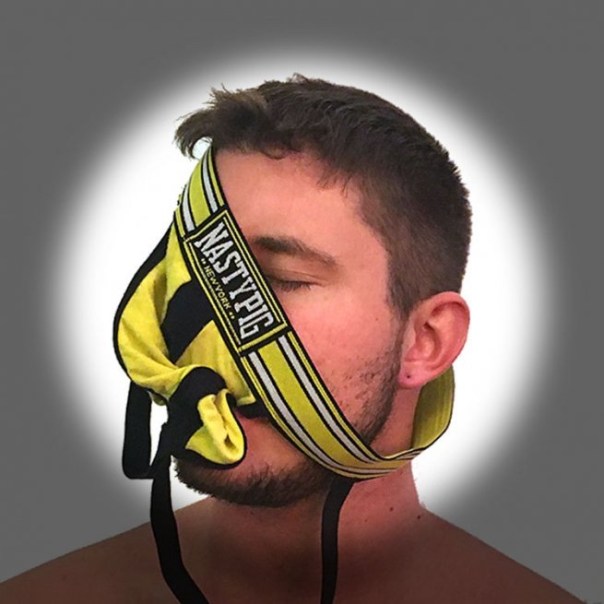
Inside the first package was a bottle of twelve-year Glenlivet, one of my favorite single malt whiskies. The second: a Nasty Pig jockstrap. But it was not just any Nasty Pig jock. I sniffed. That distinctly musky, delicious aroma, which can only be found in the playrooms of gay circuit parties and in gyms across the country, lingered in the stitching.  “I wore it for a few days,” he said. “You’re welcome.”

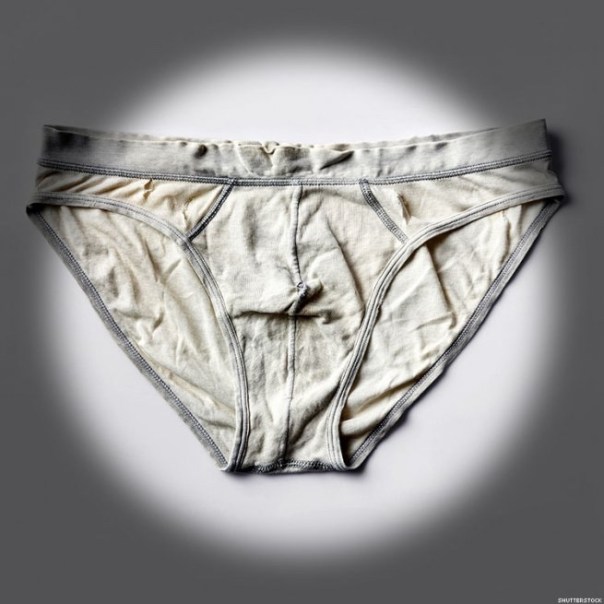
Used underwear is one of my fetishes.

You may be asking: What is a fetish, and how is it different from a kink? I clarified these two terms in my list of 30 kinky terms every gay man should know. But I’ll reiterate their distinction here. Kinks are “unconventional” sexual interests, like bondage or paddling. That’s it. Fetishes — also called paraphilias —  are objects, materials, features, or articles of clothing, like used jockstraps, that people respond to sexually, and that enhance or facilitate sexual arousal. To clarify: fetish objects are not sexual on their own, like whips or dildos. Fetish objects become sexualized when someone responds to them sexually.

You’ve probably heard of a few obscure fetishes, like high-heeled shoes and rubber duckies. Fetishes are rapidly moving out of their kinky niche and into pop culture. Stay on top of (or under) the trend with this list of 36 fetishes — some well known, others less so — that you need to know about. 

1. Leather

Photo source:The Tom of Finland Foundation

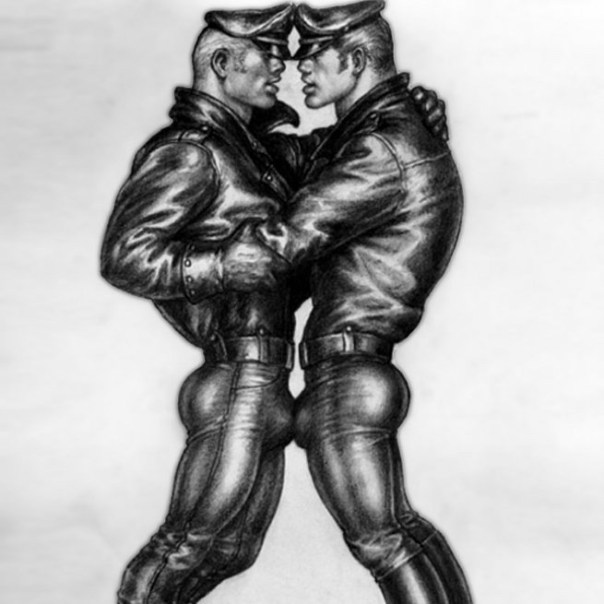
Leather is one of the most commonly fetishized materials, and certainly one of the oldest. Tom of Finland’s 1970s drawings of biker boys, clad in impossibly form-fitting leather, solidified leather as a staple of gay culture. Today, the leather community is global, united by national and international leather competitions that celebrate this fetish at gatherings like the Folsom Street Fair in San Francisco, International Mr. Leather in Chicago, and Folsom Berlin.

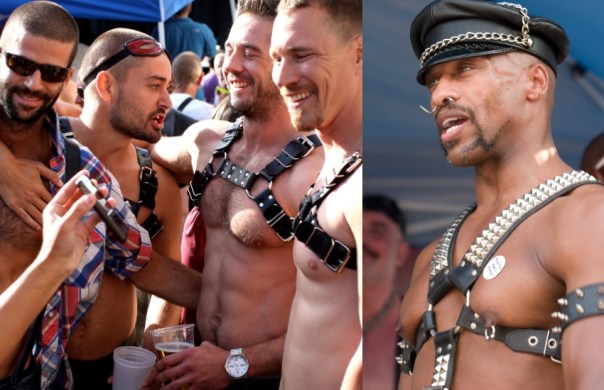
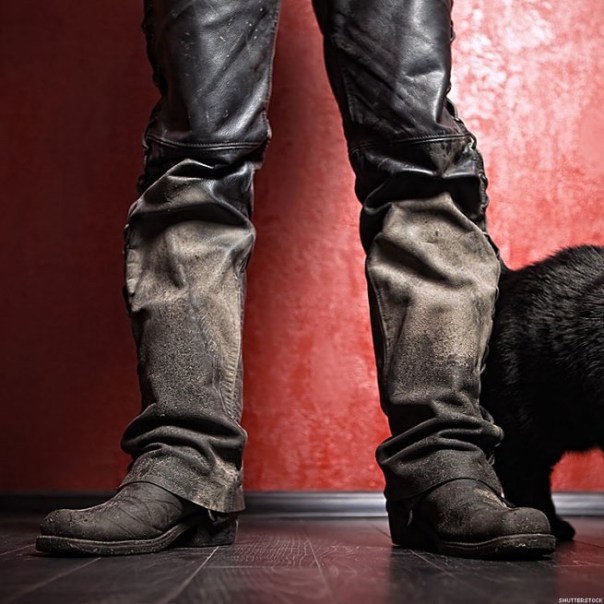
What does a leather event look like? It looks like throngs of men in leather harnesses, jock straps, jackets, boots, gloves, aprons, fully-body uniforms, and other garb. Since many leather fetishists are into many other fetishes and kinks, the leather community is generally considered synonymous with the kink community as a whole. 

2. Rubber

The second most commonly fetishized material is rubber. Rubber guys are usually into the same fetishes and enjoy the same kinks as leather guys, but prefer a different material. They have their own large-scale gatherings like Mister International Rubber, also in Chicago.

It is common for rubber guys to wear full-body suits that cover greater amounts of skin. Rubber is not used for harnesses to the same degree that leather is, although a good leather store and kink supplier like Mr. S Leather in San Francisco will have plentiful options of gear in both materials. 

3. Rope

Here’s a great opportunity to make the distinction between “kink” and “fetish” — a difference which, colloquially, is somewhat arbitrary since many people use the terms interchangeably.

Rope is a common material used in bondage, which is a kink, but rope is not used exclusively. People into bondage may also use duct tape, leather cuffs, chord, zip ties, neckties, and other tools of restraint. But since many kinksters (kinky people) into bondage fetishize rope specifically, rope becomes a fetishized material.

Rope is more rustic and romantic than duct tape. Duct tape is reminiscent of police sirens and robberies — the restraint material you’d use if you want to be tied, gagged, and left in a closet for a few hours. Rope, in contrast, calls to mind your youthful fantasies of getting captured by horny pirates and tied to the mast — and all the wonderful scenarios that follow. 

4. Used Underwear

Used underwear is such common fetish item that big-name escorts, porn stars, and prominent sex figures can usually make a good buck selling their unwashed undies. (Adam Killian, if you’re reading this, I would like to speak with you about a possible business venture.) 

5. Armpits

Also called maschalagnia, armpit fetishes are difficult to explain to those who don’t share them. Our culture views armpits as nasty places on the body. While everyone should probably use antiperspirant before a job interview or family gathering, some of us really enjoy the smell (and taste) of pits, sans deodorant, and get turned on by it. 

6. Skateboarders

This fetish probably falls under the umbrella of “uniform” fetishes, but I separated it since there is not a standard uniform for skateboarders, punks, and alternative guys. Some people, including my former Sir, fetishize the stereotypical look of skateboarders, from their neck tattoos to their lip rings, from their Diamond Supply Co. t-shirts to their Vans shoes. 

7. Uniforms

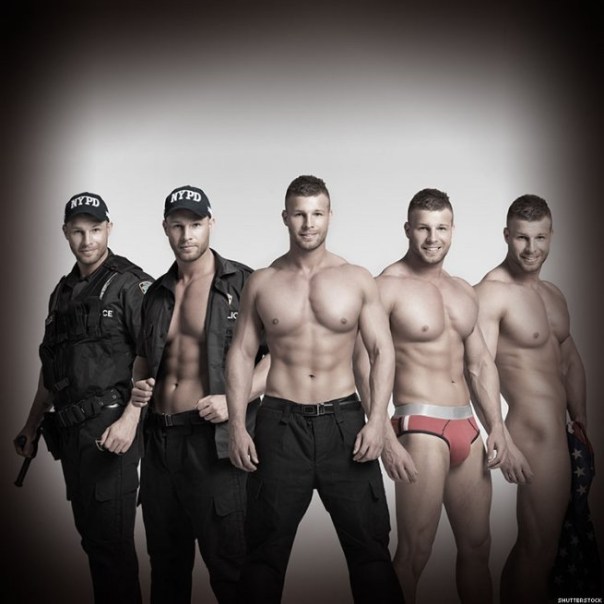
People who live in the United States are taught from a young age that uniforms should be viewed with respect, especially police uniforms, military uniforms, and firefighter uniforms. These socio-politics of respect naturally morphed into male strippers dressed as firefighters and cops — evidence that uniforms are heavily fetishized by straight and LGBT people alike. 

8. Skinheads

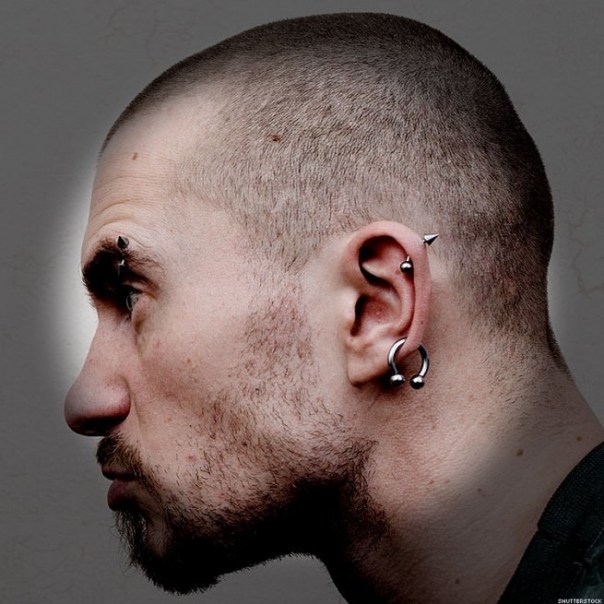
There is a massive (albeit more underground) fetish surrounding guys with buzz cuts, or “skinheads.” This fetish typically overlaps with rubber and skateboarder/punk wear. By extension, buzzing someone’s hair is a common kink practice that is generally seen as a form of humiliation and “ownership.”

Skinheads and the guys who fetishize them tend to also fetishize urine and enjoy fisting. 

9. Razors

Shaving the body is typically seen as a nonsexual activity and part of a mundane, un-erotic self-maintenance regimen. But for some, shaving (themselves and others) is extremely arousing. As a sexual activity, shaving would probably be considered a kink rather than a fetish. But trimmers, razors, and other modes of shaving and cutting body hair are fetishized objects, so they deserve a mention. Guys I’ve met that are into this fetish get aroused from the sensation of electric buzzers running against their skin — and have had more than a few uncomfortable erections in barber chairs. 

10. Urine

Also called urolagnia, this is the fetish around urine itself, which for obvious reasons overlaps with the kink of watersports — a sexual activity in which people enjoy getting peed on, peeing on others, and/or drinking urine. 

11. Duct Tape

Remember how rope is a commonly fetishized bondage material? Duct tape is a close second.

For guys who enjoy getting gagged, duct tape is a staple. Duct tape calls to mind kidnap fantasies and dark hallways, and nothing beats that hot, muffled gagging sound. Note: as sexy as duct tape is, at some point you will have to pull it off, which will hurt. This writer suggests using vet wrap as a nice alternative. 

12. Spit

Like urine, spit is a nonsexual bodily fluid that gets fiercely fetishized. Piggy guys into spit enjoy getting spit on, spitting on others, using spit religiously in place of lube, and even drinking saliva. 

13. Gas Masks

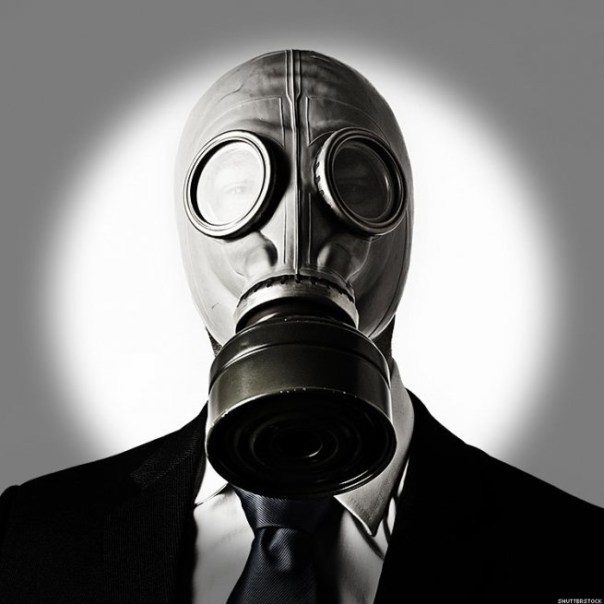
An old-school fetish object, gas masks are rarely found in popular culture anymore. Originally used in the WWI trenches, they were an integral part of the social landscape during the Cold War and in the early days of gas and chemical warfare. Today, gas masks are really only seen at riots where tear gas is used. As such, they have that innately revolutionary quality, and are often used by graffiti artists}\\ for protection against harmful fumes from spray paint. All this lovely protest imagery and violent Americana lends itself beautifully to fetishization. Gas masks are common erotic objects for kinksters into breath play and are popular among rubber fetishists.

14. Food

Don’t confuse this fetish with the consumption of aphrodisiacs like oysters and chocolate. Food fetishes can exist for any food, from cheesecake to steak tartare. Satisfying food fetishes does not always mean eating it. If you don’t think food can be sexualized, try adding chocolate sauce, honey, whipped cream, and M&Ms to your next wild sex session. 

15. Feet

Some people love seeing, touching, licking, massaging, tickling, and getting penetrated (anally or vaginally) by feet. Foot fetishes naturally lead people to think of shoe fetishes, although these are not the same. Like feet, some guys love sniffing, licking, and touching women’s shoes. (I personally love licking a dominant leather man’s boots, but this is more a sign of submission than a legitimate boot fetish.) 

16. Hands

I was cuddling with a guy recently when I made a comment that he thought was very strange. I said, “Your hands are really sexy.”

He had firm, small, smooth, meaty hands — in other words, great hands for fisting. But hand fetishes don’t have to be linked to fisting, which is the kink practice of slowly inserting the whole hand (and more) into the anus or vagina, with the assistance of buckets of lube. Many people get aroused from hands: the way they look, the way they feel, their shape, their texture, and the sensation of touching them. 

17. Amputees

Photo Source: Broadway Bares, photo by Kevin Thomas Garcia

No list of fetishes would be complete without amputees. My ex-boyfriend, in fact, thought guys with amputations, prosthetic legs, and other missing limbs were extremely sexy, and every morning I made sure all my limbs were still intact.

Alex Minksy has more or less made a career from this fetish. The ex-military amputee is a common muse for L.A. photographer Michael Stokes. For the sake of clarity, I should stress that the fetishization of amputees is not the same thing as the kink practice of actually removing limbs for the sake of sexual gratification, which is considered an extreme body-modification kink that is by and large not endorsed by the international kink community. Simply put: you can think amputees are sexy, but don’t go cutting off someone’s leg, or your own. That’s not OK. 

18. Medical

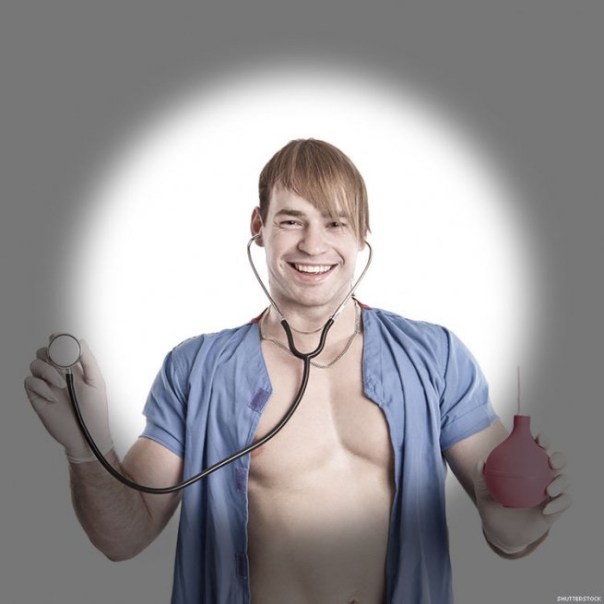
Doctor’s offices — along with a wide range of medical tools like speculums and catheters — have become so commonly fetishized that, like locker rooms and sports gear, they have long become a popular porn genre altogether. You’ve seen it: the porn scenario where the delicate patient gets “probed” by the gloved doctor, who is conspicuously naked beneath his lab coat. 

19. Guns

As phallic-shaped instruments of power, it is no surprise that guns are heavily fetishized, although, for obvious reasons, exploring this fetish has an accompanying degree of risk attached. There is endless kidnapping and rape-fantasy porn on the Internet that features guys and girls being “forced” into sex at gunpoint (as an aside to their directors, these scenarios teeter into the absurd when they start orally servicing the barrel).  

20. Enemas

Also called klismaphilia, enema fetishes are commonly explored in amateur gay and straight porn. As useful tools for cleaning out the anal cavity, enemas and douches are used by bottom guys and anyone looking to enjoy mess-free anal sex, so naturally they have become part of sex itself. Aside from their usefulness, enemas are generally considered a healthy occasional practice, and have become a sexualized object all on their own. 

22. Diapers

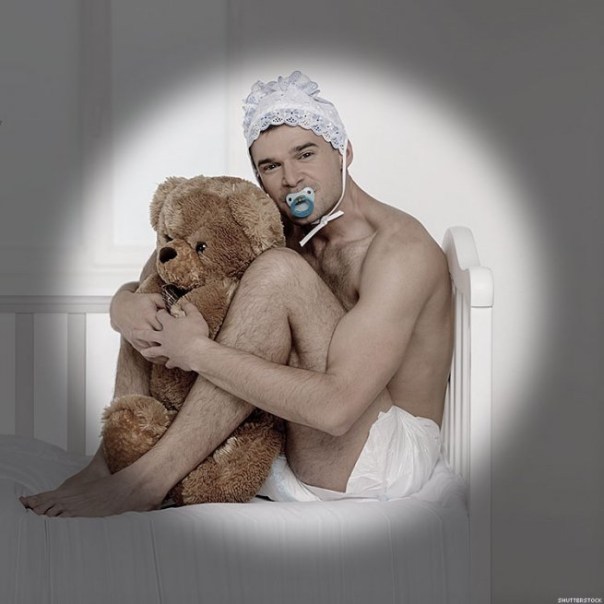
The fetishization of “adult babies” is hard to separate from the kink practice of acting like a baby or infant, which many adults are into, and which typically involves them wearing diapers. The terms get tricky here. Wearing diapers would be considered a kink, but erotic stimulation from diapers in general, regardless if you wear them, makes them fetish objects. This fetish may or may not be related to feces (see #33). 

23. Piercings

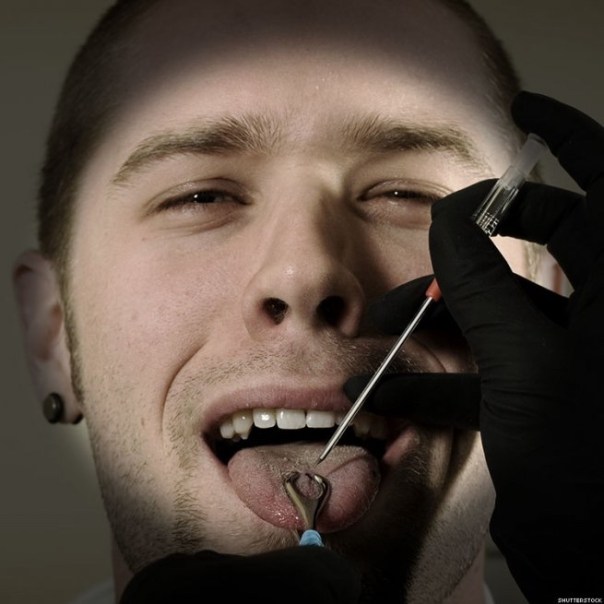
Many guys have fetishes for piercings — also called piquerism — and as a result may also enjoy the body-mod kink of piercing the skin, which some take to extremes. I have a fetish for Prince Alberts — circular piercings that go through the head of the penis — but I do not personally have one, which means I enjoy this fetish but do not practice the kink of piercing myself or someone else for pleasure. (This will change the minute I get my long-awaited PA.) 

24. Scars

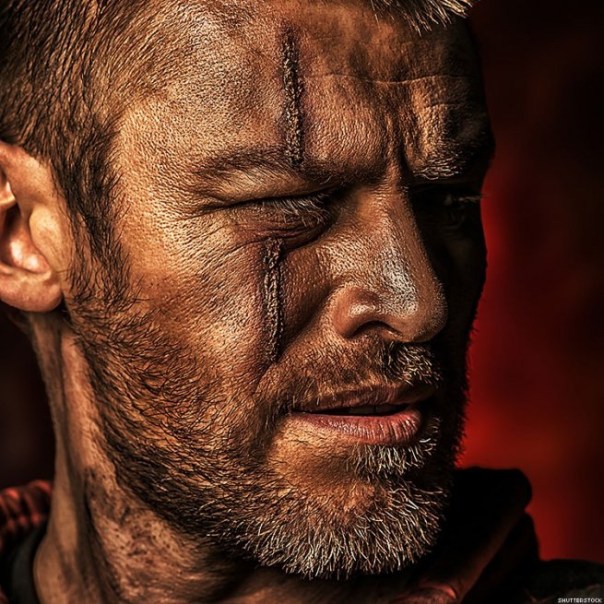
Scars are very sexy. They tie in to our culture’s icon of the rugged warrior, the roughed-up cowboy, the soldier wounded from battle. For some people, they are an extremely strong turn-ons. These people have scar fetishes, and may sometimes choose to intentionally scar themselves in order to give themselves a feature they consider attractive. Not to belabor a distinction, but doing so would probably be considered a body-mod kink. Scars as erotic stimuli are fetishes. 

25. Plushy Toys/Stuffed Animals

You’ll never look at your niece’s collection of plushy animals the same way again. Some people get sexually aroused from plushy toys — this fetish is actually more common than you might think. 

26. Balloons

I didn’t believe this was a real fetish until I looked it up. Balloon fetishes, which are very real, seem to be related to the tension of them popping, a tension that some consider very erotic. 

27. Socks

There are fetishes for virtually every kind of clothing, but socks and stockings are certainly a close second behind underwear as the most commonly fetishized clothing articles. In the same way that I love sniffing a hot guy’s used boxers, some guys love sniffing a pair of used socks. 

28. Beard/Facial Hair Fetish

You know by now that shaving tools and buzzed haircuts have fetishes attached to them. Beards and body hair should be less surprising, especially these days. Beards are so sexually charged and erotically idealized among today’s scruffier populations of gay men that one might forget the fact that beards are still, technically, fetish objects. 

29. Classrooms

“You’ve been a very naughty boy. You need to stay after class for a hard lesson.”

Most of us should be familiar now with the fetishes surrounding teachers, desks, rulers, chalkboards, and other classroom fare. Some kinksters may explore these fetishes by replicating a classroom setting for their own form of interrogation torture and role play. 

30. Blood

With all the vampire romance and gore porn that composes today’s literary and cinematic milieu, it is no surprise that blood is an increasingly popular fetish. A small number of kinky sex practices allow you to explore this fetish with little risk of long-term injury — piercing, whipping, etc. — but they are not without risk of transmitting HIV, Hep C and other STIs. As a rule of sex and of life, if you see blood, it usually means something is wrong. Therefore blood play is a difficult fetish to explore safely. The kink community does not endorse injurious and unsafe sex practices. 

31. Knives

Like guns, knives can (and should) cause a certain degree of discomfort, which for some people creates strong sexual arousal. Like guns, knife fetishes automatically require a hefty amount of caution.

32. Clowns

photo of Ouchy the Clown by Scott Beale/Laughing Squid

Yes, it’s true. I watched clown porn the other night just to see if this is a real fetish. It is.

I have heard it proposed more than once that fetishes are psychological conditions that manifest themselves as the only responses certain people can have to stimuli that they would otherwise consider repulsive. I personally have never fully bought this claim. However, it is no secret that clowns — which will likely be remembered in a thousand years as one of the worst creations of modern man — are commonly fetishized figures, and I cannot help but wonder if fetishizing clowns is the only way some people can respond to their horror. The mind is capable of doing many incredible things, like transferring pain into pleasure, stress into desire, and fear into eroticism, so while I cannot justifiably make the claim that all fetishes are the mind’s roundabout method of dealing with revulsion, I do wonder why clowns have emerged as such a surprisingly common fetish. 

33. Feces

I promised my scat fetishist friend in Dallas that he would be represented on this list. Coprophilia is sexual stimulation from feces, and while the general population’s response to it is bound to be pretty strong, this fetish is more common than you might suspect, particularly among gay pig players, fisting enthusiasts, and kinky leather men. Despite its popularity within a more niche section of the gay male population, it is generally considered an unhygienic fetish to explore, since handling and consuming human fecal matter carries with it certain health risks. In my limited experience, it is also one of the more heavily stigmatized fetishes, even within the kink community. 

34. Sports Gear

Remember those adolescent longings for the high school quarterback? Perhaps you enjoyed varsity baseball for more reasons than you let on. The fetishes surrounding sports gear and sport environments are so common that locker room porn has become its own popular genre. Prominent gay clothing brands like Nasty Pig and Cellblock 13 draw their design inspiration from tried-and-true sports wear, and standard gay circuit attire will always feature a pair of football pants with the front lacing beckoningly open. 

35. Mannequins

Also called agalmatophilia, this fetish applies to dolls, mannequins, statues, and anything that resembles a human without actually being one. Note: while sex dolls and inflatables with porn star faces may appeal to people who enjoy this fetish, I would not immediately consider these objects fetish objects, since they are specifically designed for sexual arousal. 

36. Age

Photo by Charles Thomas Rogers from the portfolio, Men Over 50

Also called chronophilia (and sometimes ageism), the fetishization of age is a hotly debated topic in gay culture. The term swings both ways: this fetish applies when someone older fetishizes the specific age of someone younger, and when someone younger fetishizes the specific age of someone older. The fetish doesn’t require a significant age difference — just the fact that someone’s age itself is a turn-on.

Conceptually, this fetish opens up debate surrounding the fetishization of other characteristics like skin color and body type. Some argue that fetishizing certain physical characteristics like age and weight is no different than feet and hand fetishes, which we generally do not frown upon. Others say that age fetishes, like skin color and body type fetishes, are not fetishes at all, and that the reduction of a person’s features into points of desire (and, by extension, rejection) is dehumanizing and smacks of racism and body-shaming.

Debate rages. Age fetish deserves inclusion on this list for the sheer purpose that it shows how fetishes can cross from the playfully erotic into more culturally profound and impactful subjects. The whole concept of fetish reveals that anything in the world, from pool floats to ice cream, can become sexual objects if someone responds to them that way, and as such they unleash our sexual desires from the narrow confines that our culture tends to place them in.

This being said, fetish exploration is not a free-for-all. There is a trepidatious line between fetishizing balloons and fetishizing blood. That vague line exists throughout the world of kink, which is why the motto “safe, sane, and consensual” should be strictly adhered to as you explore the things that turn you on — which, I must stress, are worth exploring. Your birthdays just got a lot more interesting. 

Reference

Here is Why Hollywood Also Has an LGBT Diversity Issue

PLEASE NOTE: This article is from 2016.

Mya Taylor, left, and Kitana Kiki Rodriguez, in “Tangerine.”(Magnolia Pictures )

It is no secret that Hollywood has a diversity issue — just take a look at the past two years of #OscarsSoWhite. But more than some may have expected, the industry’s exclusion problems extend past the conventional conversation about race/ethnicity and sex. According to the latest study from GLAAD, released Monday, LGBT representation in film needs improvement as well.

“Hollywood’s films lag far behind any other form of media when it comes to portrayals of LGBT characters,” said Sarah Kate Ellis, GLAAD’s president and CEO, in a statement. “Too often, the few LGBT characters that make it to the big screen are the target of a punchline or token characters. The film industry must embrace new and inclusive stories if it wants to remain competitive and relevant.”

GLAAD is the leading lesbian, gay, bisexual and transgender media advocacy organization. Their fourth annual Studio Responsibility Index maps the quantity, quality and diversity of LGBT people in films released by the seven largest motion picture studios: 20th Century Fox, Warner Bros., Lionsgate Entertainment, Walt Disney Studios, Sony Columbia Pictures, Universal Pictures and Paramount Pictures. Below are eight highlights from the study:

Only 22 of the 126 major releases in 2015 included characters identified as LGBT.

Julianne Moore, left, and Ellen Page in a scene from “Freeheld.” (Phil Caruso / Lionsgate/AP)

That’s only 17.5%, and not a change from 2014’s 17.5% value. Some of these films include Lionsgate’s “American Ultra” and “Freeheld” and Warner Bros.’ “Magic Mike XXL” and “Get Hard.” In those 22 films, there were 47 LGBT characters, up from 28 last year.

When movies do have LGBT characters, they are usually gay men.

Taron Egerton, Charley Palmer Rothwell and Tom Hardy in “Legend.” (Universal Pictures)

Male characters outnumbered females by a ratio of more than three to one. More than three quarters of inclusive films (77%) featured gay male characters while less than a quarter (23%) included lesbian characters. As for the representation of the rest of the queer community, only 9% included bisexual characters while only one film was trans-inclusive, Warner Brothers’ “Hot Pursuit.”

But they’re also usually white.

In 2014, 32.1% of LGBT characters were people of color. That number dropped to 25.5% in 2015. Of the LGBT characters counted in 2015, 34 (72.3%) were white, five were Latino (10.6%), four were black (8.5%) and three (6.4%) were Asian or Pacific Islander. One character was non-human, Fabian in Lionsgate’s “Un Gallo con Muchos Huevos.”

When there are LGBT characters, you might miss them if you blink.

Just looking at the number of LGBT characters on the big screen isn’t enough. With 73% of the few queer characters having less than 10 minutes of screen time, their impact is additionally limited.

Of the seven studios, not even one is doing “good.”

Since the study’s inception, GLAAD has given each studio a rating of good, adequate or failing. None of them received a rating of “good” for their 2015 releases. Fox, Lionsgate, Sony and Universal all received ratings of “Adequate”, while Paramount, Disney and Warner Bros. all received a “Failing” grade.

The most inclusive major studio was Lionsgate, as eight of its 2015 releases were LGBT-inclusive.

Warner Bros. followed with five then Universal with four. Sony only had three and Fox two. Neither Disney nor Paramount included any LGBT content in their 2015 slates of 11 and 12 films, respectively.

That’s probably because LGBT depictions are getting worse.

Last year saw a resurgence of outright offensive images of LGBT people; more films relied on gay panic and defamatory stereotypes for giggles. Though humor can be a powerful tool to challenge the norm, when crafted problematically, it has the opposite effect.

The depictions are so bad that only eight of the 22 LGBT-inclusive films passed the “Vito Russo Test.”

The “Vito Russo Test” is GLAAD’s set of criteria analyzing how LGBT characters are represented in fictional work named after GLAAD co-founder and film historian Vito Russo. Inspired by the “Bechdel Test,” these criteria represent a standard GLAAD would like to see a greater number of mainstream Hollywood films reach in the future.

In order to pass the Vito Russo Test, a film must include having an identifiably lesbian, gay, bisexual or transgender character that is not solely or predominantly defined by their sexual orientation or gender identity and is tied into the plot in such a way that their removal would have a significant effect. Only eight of the 22 major studio films that featured an LGBT character passed the test in 2015, the lowest percentage in this study’s history.

Luckily, the major studios have more progressive imprints.

Last year, GLAAD began examining the film releases of four smaller, affiliated studios to draw a comparison between content released by the mainstream studios and their perceived “art house” divisions. Those smaller studios are Focus Features, Fox Searchlight, Roadside Attractions and Sony Pictures Classics.

Of the 46 films released under those studio imprints, 10, or 22%, were LGBT-inclusive. That’s a notably higher percentage than the parent studio counterparts and an increase from 2014’s 10.6% (five of 47) of films from the same divisions. Some of the films from these smaller studios include “The Danish Girl,” “Grandma” and “Stonewall.”

Reference.

Gay History: June 5, 1981. Pneumocystis Pneumonia. Los Angeles.

In the period October 1980-May 1981, 5 young men, all active homosexuals, were treated for biopsy-confirmed Pneumocystis carinii pneumonia at 3 different hospitals in Los Angeles, California. Two of the patients died. All 5 patients had laboratory-confirmed previous or current cytomegalovirus (CMV) infection and candidal mucosal infection. Case reports of these patients follow.

In honor of National Gay Men’s HIV/AIDS Awareness Day, I’m republishing my article on the first report documenting the emergence of the HIV/AIDS pandemic. That article, published in the CDC’s Morbidity and Mortality Weekly Report on June 5, 1981, describes five cases of an unusual form of pneumonia in atypical patients, all young men. The broader social and public health implications of these five cases were not understood at the time of the article’s publication, but would be in just a few unnerving months. In short time, it would become clear that this pneumonia, caused by a tiny fungal organism, was part of a constellation of diseases associated with a novel and highly unusual viral infection that was spreading rapidly through a subset of the American population.

This MMWR article is the first record of an emerging outbreak that, in just one decade, would be the second leading cause of death in young American men 25 to 44 years and have infected over 8 to 11 million people worldwide. As I note in my article, “the June 5th report is a symbol of a time before HIV/AIDS became ubiquitous, before it became a pandemic, before a small globular virus became mankind’s biggest global public health crisis … June 5th marks the beginning of a radical transformation in how disease surveillance and medicine was conducted.” The HIV/AIDs outbreak, since this report’s publication and the growing awareness of the virus, has profoundly changed medicine, public health, virology, and the lives of millions of people.

It often seems that gay men are disproportionately, and perhaps unfairly, bludgeoned with HIV educational and awareness campaigns. After all, this virus is an equal opportunist infector infecting both genders of all sexual orientations. And, yes, men that report having sex with other men represent a truly tiny proportion of the United States population, a slim 2% of the three-hundred million that live in this country.

However, as the CDC reports, gay men account for 63% of all newly diagnosed HIV infections in the United States and make up 52% of the current population of people living with a HIV diagnosis. Stopping the continued transmission of HIV/AIDS in this country critically relies on affecting change and promoting awareness among these men. In 1981, we just became aware of the HIV/AIDS virus. Today, we continue to bring awareness to prevention, testing, and treatment of a virus that continues to percolate through the same vulnerable population that was brutally affected nearly thirty years ago.

June 5, 1981. Pneumocystis Pneumonia. Los Angeles.

“Pneumocystis Pneumonia — Los Angeles,” in the June 5, 1981 edition of the CDC’s Morbidity and Mortality Weekly Report, was an economical seven paragraph clinical report cataloging five observed cases, accompanied by an explanatory editorial note on the rarity of this fungal disease. It seemed to be nothing out of the ordinary from MMWR, a publication that has been issuing the latest epidemiology news and data from around the world for 60 years. The report was included in that week’s slim 16 page report detailing dengue in American travelers visiting the Caribbean, surveillance results from a childhood lead poisoning program and what measles had been up to for the past five months.

Since 1978, Dr. Joel Weisman, a Los Angeles general practitioner, had been treating dozens of gay men in the city presenting with a motley collection of uncommon illnesses – blood cancers, rare fungal infections, persistent fevers and alarmingly low white blood cell counts – typically seen in the elderly and immunocompromised (1). In 1980, he was struck by two profoundly ill men and by the similarity of their symptoms, their prolonged fevers, dramatic weight loss, unexplained rashes and swollen lymph nodes. He referred them to Martin Gottlieb, an immunologist at UCLA who just so happened to be treating a gay patient with identical symptoms.

All three men were infected with Pneumocystis pneumonia, caused by the typically benign fungus Pneumocystis jirovecii, and soon Gottlieb would hear of a two more patients with the fungal infection from colleagues (2). The MMWR editorial note accompanying the report of these cases would mention that Pneumocystis pneumonia, or PCP, is “almost exclusively limited to severely immunosuppressed patients” and that it was “unusual” to find cases in healthy individuals without any preexisting immune system deficiencies. The disease would later be cataloged on immunological graphs illustrating the awful decline of the infected – first the CD4+ T-cell count falls as the viral load ascends, then a marching band of viral, fungal, protozoan and bacterial infections capitalizing on the loss of CD4+ T-cells. PCP is now known as a classic opportunistic infection of those infected with HIV/AIDS.

In the first sentence, the report would note that the young men were “all active homosexuals.” These five were all “previously healthy” men in their late 20s and 30s. They did not know each other, they did not share common contacts and they did not know of any sexual partners suffering with similar symptoms.

Three of the men were found to have “profoundly depressed” numbers of CD4+ T-cells. All five reported using inhalant drugs, or “poppers,” common in that era among gay men, which would later serve as a lead into this new syndromic disease (3). Cytomegalovirus, found in the five men, was also suspected as a culprit behind this strange outbreak. The editorial note stated definitively that “the fact that these patients were all homosexuals suggests an association between some aspect of a homosexual lifestyle or disease acquired through sexual contact and Pneumocystis pneumonia in this population.”

By the time the very first report on this acquired immunodeficiency syndrome, which we now know as AIDS, had been published by Gottlieb and Weisman and three fellow physicians in the MMWR, two of the patients had already died.

New reports showed up after the June 5th report, the list of cancerous malignancies and bizarre diseases killing young gay men blossoming in number, seemingly inexhaustible in scope and variety. The first reported cluster was in Los Angeles but by the summer and fall of 1981, reports would trickle in from San Francisco and New York City, and then Miami, Houston, Boston and Washington, D.C. would represent new epicenters.

The July 4th report on 26 cases of Kaposi’s sarcoma, a rare cancer that only appeared in elderly men of Mediterranean descent, in California and New York City was another pivotal report on this new syndromic disease. The entire December 1981 issue of The Lancet was dedicated to the disease and hypothesized on the origins of this immunological deficiency but, tellingly, none of the articles proposed an emerging infectious disease as the culprit. The disparate constellation of diseases seemed to be linked only by their aberrational appearance in men in what should have been their prime, their gay lifestyle, and abnormally low CD4 cell counts. It had no apparent origin, and physicians were scrambling to find an appropriate treatment to decelerate the rapid progression to death.

By December 1981, it became clear that this disorder wasn’t limited to gay men but also affected intravenous drug users, recipients of transfused blood products and immigrant Haitians. The escalating numbers of cases reported daily and the disastrous mortality rate – 40% of patients were dying within a year of diagnosis – began to sow panic in the public health and medical world that soon spilled into the public (4).

It would take three years before the virus was detected and AIDS was definitively linked to an infection caused by a novel virus, human immunodeficiency virus or HIV. In just a decade, AIDS would be the second leading cause of death in young men 25 to 44 years in the United States and would have infected over 8 to 11 million people worldwide (5). The most recent estimate for the number of people worldwide living with HIV/AIDS is 34 million in 2011, with 68% residing in sub-Saharan Africa (6). That year, there were 2.5 million new HIV infections and 1.7 million AIDS-related deaths.

Though the June 5th, 1981 report was overlooked at first, for many years it would be “one of the most heavily quoted articles in the medical literature” (2). And since its publication, we have seen a cataclysmic shift in how the interrelated worlds of public health and medicine view infectious diseases, especially how to prevent, control and educate the public about them.

June 5th marks the beginning of a radical transformation in how disease surveillance and medicine was conducted. In the seventies, the scientific consensus on infectious diseases was that they were largely eradicated, that they were finished. Vaccines had diminished their presence in modern society, and antibiotics and antivirals would sort out the rest. HIV/AIDS changed that mentality and reality. It seemed to come from nowhere, the blossoming epidemic completely unforeseen and unprecedented in its scope. The June 5th report is a symbol of a time before HIV/AIDS became ubiquitous, before it became a pandemic, before a small globular virus became mankind’s biggest global public health crisis.

Author’s note: This article was originally published in January 2013 at the Pump Handle blog as a part of a series on “public health classics,” exploring some of the classic studies and reports that have shaped the field of public health. Check out the original article here

References
(1) E Woo. (July 23, 2009) Dr. Joel D. Weisman dies at 66; among the first doctors to detect AIDS. Los Angeles Times [Online]. Accessed November 16, 2012 athttp://www.latimes.com/news/nationworld/nation/la-me-joel-weisman23-2009jul23,0,7095313.story

(2) E Fee & TM Brown (2006) Michael S. Gottlieb and the Identification of AIDS. Am J Public Health; 96(6): 982–983.http://www.ncbi.nlm.nih.gov/pmc/articles/PMC1470620/

(3) S Israelstam et al. (1978) Poppers, a new recreational drug craze. Can Psychiatr Assoc J;23(7): 493-5

(4) V. Quagliarello (1982) Acquired Immunodeficiency Syndrome: Current Status. Yale J Biol Med; 55(5-6): 443–452

(5) Centers for Disease Control (CDC) (1991) The HIV/AIDS epidemic: the first 10 years. MMWR Morb Mortal Wkly Rep; 40(22): 357. Accessible athttp://www.cdc.gov/mmwr/preview/mmwrhtml/00001997.htm

(6) UNAIDS (2012) UNAIDS World AIDS Day Report. UNAIDS. Accessible athttp://www.unaids.org/en/resources/campaigns/20121120_

Article Reference

Why Do So Many of Us Date Our Clones?

The answer lies in the makeup of a man as well as LGBT people at large.

If you have ever taken a walk down Santa Monica Boulevard in West Hollywood, Boystown’s North Halsted Street in Chicago, or even Chueca’s Gran Vía in Madrid, you have likely seen it: the attack of the clones. And I am not talking about some gaymers going crazy over the latest George Lucas screening.


We have all seen our share of guys in the gay world who cross a seemingly incestuous line between looking so similar they could be brothers and boyfriends. Whether it is some gym bunny who is dating another protein-obsessed jock, a hipster with another skinny-jeans-wearing, glasses-clad ironist, or a twink who is dating another boyish-looking guy, there are lot of guys who tend to date what seems like a mirror image of themselves. 


And that is not to disparage any of the aforementioned groups. However, it leads one to question: Why is this such a phenomenon among gay men? 


The answer, I believe, lies deep in the struggle of coming out. While growing up, many of us — especially those of us from small towns — tried fitting into a straight paradigm. We grew up with our straight friends, assuming that we would grow up, fall in love with a woman, get married, and procreate. For this reason, some of us around puberty had a hard time reconciling what was hardwired in our brain and what our genitalia was telling us, because in all other aspects, we are just like our straight counterparts. 


I can recall the exact moment in my middle school years when I tried to reconcile these two aspects of my life. At the time, I most certainly had a crush on this one guy named Kyle who I swam with on my year-round club team. I would often have to avert my stares at him when he looked my way, embarrassed that I had just caught a glance of his muscly features in a Speedo.


Yet, at an awkward tweenage party — the kind that only acne and newfound hormones could create — I saw all my friends “falling in love” with girls. It suddenly hit me that I had never felt about a girl in that way. Feeling left out, I decided I needed a girl crush. So I looked over at my nearby friend’s newly developed boobs and decided I was head over heels for her. After all, that was what I was supposed to find attractive, right? 


Naturally, I was lying to myself due to social pressures. And this is a common occurrence in the gay world. There is a reason that the term “gold star gay” — a gay man who has never slept with a woman — exists. We all take our own path to realize that when it comes to sexuality, we are different. And for some of us, it takes a relationship with a girl.


But when we get out of this straight paradigm, most gay men seem to seek perfection in a relationship. After finding how much easier and natural same-sex relationships are for us, some of us raise our standards so incredibly high that only a clone of ourselves will do. 


Yet, this unfortunately can, and often does, invite a variety of problems. Above the tendency to serial date, the search for perfection causes a social strata among gay men, starting with the infamous “Masc4Masc” category on dating sites. Wanting only a “real” man, this guy goes out of his way to act “straighter” than straight men and date only those who are the same — he forgets, of course, that straight men want a vagina and not his penis. 


Then there are the racially motivated messages on dating profiles and hookup sites, such as “no Asians” or “no black guys,” etc. Wanting only to date a guy of a particular race (most likely his own), this man swears he is not racist, but rather that skin color is a preference just like one’s personality or astrological sign. 


Last but not least, there is the message that says “no fats.” While it is understandable that this guy may be simply concerned that a potential partner could just die of a heart attack at age 40, that is probably not his motivation. A guy with a healthy body image who has a little bit of pudge disgusts him, as he seeks only a man with the abs of a go-go dancer and the arms of a construction worker or lumberjack.


Of course, many believe that these three examples are really just preferences and not problematic. After all, gay clone couples show the happiness and fulfillment of standards, right? I choose to respectfully disagree — rejecting anyone who is not Prince Charming riding down Santa Monica Boulevard, you are rejecting reality for a fairy tale. Enjoy a man who is exactly like you or a man who is your polar opposite, but always acknowledge that no man or relationship is perfect.


Reference

Gay History: The (Sodomy) Law in England, 1290-1885

There was no royal or parliamentary law against homosexual activity in England until 1533, but a number of medieval legal sources do discuss “sodomy:.

Fleta, xxxviii.3: Those who have dealings with Jews or Jewesses, those who commit bestiality, and sodomists, are to be buried alive after legal proof that they were atken in the act, and public conviction” 

[Fleta, seu Commentarius Juris Anglicani, (London: 1735), as trans in Derrick Sherwin Bailey, Homosexuality and the Western Christian Tradition, (London: Longmans, Green, 1955), 145] 

Bailey notes that it is improbable that the penalty or burial alive was ever inflicted in medieval times [although Tacitus refers to it among ancient Germans in Germania 12].

Britton, i.10: “Let enquiry also be made of those who feloniously in time of peace have burnt other’s corn or houses, and those who are attainted thereof shall be burnt, so that they might be punished in like manner as they have offended. The same sentence shall be passed upon sorcerers, sorceresses, renegades, sodomists, and heretics publicly convicted” 

[Britton, ed. F.M. Nichols, (Oxford: 1865), Vol 1:41-42 and Bailey, 146]

Bailey notes that this implies a process in which ecclesiastical courts made the charges and convictions and the state put them into effect. There do not seem, however, to have been serious efforts made to put theory into practice. The preamble to the 1533 Law seems to make this clear.

25 Henry VIII. C6

Le Roy le veult
“Forasmuch as there is not yet sufficient and condign punishment appointed and limited by the due course of the Laws of this Realm for the detestable and abominable Vice of Buggery committed with mankind of beast: It may therefore please the King’s Highness with the assent of the Lords Spiritual and the Commons of this present parliament assembled, that it may be enacted by the authority of the same, that the same offence be from henceforth ajudged Felony and that such an order and form of process therein to be used against the offenders as in cases of felony at the Common law. And that the offenders being herof convict by verdict confession or outlawry shall suffer such pains of death and losses and penalties of their good chattels debts lands tenements and hereditaments as felons do according to the Common Laws of this Realme. And that no person offending in any such offence shall be admitted to his Clergy, And that Justices of the Peace shall have power and authority within the limits of their commissions and Jurisdictions to hear and determine the said offence, as they do in the cases of other felonies. This Act to endure till the last day. of the next Parliament” 

[Bailey, 147-148, and H. Montgomery Hyde, The Love That Dared Not Speak Its Name: A Candid History of Homosexuality in Britain, (Boston: Little, Brown, 1970) [British title: The Other Love] 

Note that the law only ran until the end of the next Parliament. The law was reenacted three times, and then in 1541 it was enacted to continue in force for ever. In 1547, Edward VI’s first Parliament repealed all felonies created in the last reign [I Edw. VI. C.12]. In 1548 the provisions of the 1533 Act were given new force, with minor amendments – the penalty remained death, but goods and lands were not forfeit, and the rights of wives and heirs were safeguarded. Mary’s accession brought about the repeal of all Edward’s acts in 1548 [1 Mar c.1]. It was not until 1563, that Elizabeth I’s second Parliament reenacted the law [5 Eliz I. C.17] and the law of 1533 (not 1548) were given permanent force. 

In 1828, the statute of 1563 was revoked by a consolidating act, but the death penalty was retained. In 1861 life imprisonment, or a jail time of at least ten years, was substituted for the death penalty. All these laws were against buggery, and indeed the law of 1828 had discussed matters of proof in terms of penetration. Note that other sexual activities were not specifically criminalised.

In 1885 Mr. Labouchere introduced an amendment to the Criminal Amendment Act of 1885. It read:-

48&49 Vict. c.69, 11: “Any male person who, in public or private, commits or is party to the commission of, or procures or attempts to procure the commission by any male person of any act of gross indecency with another male person, shall be guilty of a misdemeanour, and being convicted thereof shall be liable at the discretion of the Court to be imprisoned for any term not exceeding two years, with or without hard labour” 

So for the first time private acts were brought under the scope of the law, as were acts other than anal penetration. This became the famous blackmailer’s charter, and was the law used to convict Oscar Wilde.

[for all the above see Bailey 145-152]

It was the Act of 1533, then, which first made buggery an offense under English criminal law. This law survived in various forms England until 1967, although it was amended in 1861 to substitute life imprisonment for the penalties of death and forfeiture of property. 

But the direct effects of this law were not restricted to England. Because of England’s success as a colonial power, and its tendency to impose its entire legal structure on the ruled areas, legal prohibitions against homosexual activity derived from this law extended well outside England. In Scotland, for instance, (which has a separate legal system) the law was not changed until 1979. In many American states “sodomy” laws are still on the books, as also in former British colonies in the Caribbean.

.[ref. H. Montgomery Hyde, The Love That Dared Not Speak Its Name: A Candid History of Homosexuality in Britain, (Boston: Little, Brown, 1970)]

Reference

Gay History: Love And Affection: Vintage Photos Of Gay And Lesbian Couples

A couple’s photographic portrait is an affirmation of their relationship. It states for all to see: “We love each other. We care for each other. We are proud of who we are together.”

During the Victorian era many gay and lesbian couples proudly expressed their love for each other in studio portraits. Unlike the common belief that such relationships were “the love that dare not speak its name,” as Oscar Wilde so famously described same sex attraction in his poem “Two Loves,” gays and lesbians often dared to show their love. Indeed, many gay and lesbian couples more or less lived openly together throughout their lives. This was far easier for women than for men as women were expected to live together if they were not married, or to live with the euphemistically termed “female companion.”

Men, no historical surprises here, had their own haunts for meeting like-minded souls. In London these could be found in the “Molly houses” and gentlemen’s clubs or pick-ups haunts at Lincoln’s Inn, or St. James Park or the path on the City’s Moorfields, which was charmingly referred to as “Sodomites Walk.”

Theaters and circuses were also well-known dens of homosexual activity—this can be traced all the way back to Elizabethan England, when male prostitutes plied their trade at theaters.

The armed forces, in particular the Royal Navy was notorious for gay relationships—understandable with all the horny seamen looking for any port in a storm. Apparently word got around.

It is a moot point that the change in public attitude towards homosexuality commenced with the Labouchere Amendment to the Sexual Offences Act in 1885, which “prohibited gross indecency between males.” This was the law under which Wilde was infamously prosecuted and the law that heightened discrimination against gays.

Before that there had been the Buggery Act—against anal penetration and bestiality—which was introduced during the reign of Henry VIII. This led to numerous executions (hangings) and imprisonments. It was briefly repealed, then reinstated by Elizabeth I. However, there were few prosecutions under the act and it was repealed again in 1828—though “buggery” remained a capital offense. James Pratt and John Smith became the last two men to be executed for buggery, in 1835.

The Labouchere Amendment outlawed homosexuality and made it more difficult for gay men to live the lives they desired. Labouchere did not include lesbians in the act as he believed drawing attention to lesbianism would only encourage sapphic desires amongst most Victorian women.

So even when gay relationships were outlawed in England, they still thrived in open secret. In America, the sodomy laws varied from state to state. What one state tolerated or had no opinion about, another state punished. However, as with England in the Victorian era, America gay and lesbian couples would often openly express their love for each other in portrait photographs.

This collection of beautiful, brave people gives us a small visual history of LGBT relationships from the 1860s-1960s. Many of the couples are unidentifiable, but where possible their names have been given. (Editor writes: Mild disclaimer: Of course it’s difficult to say that in all cases these photos are of gay couples.)

Reference