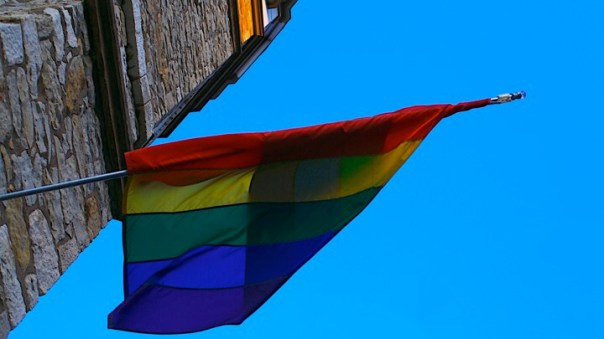
Tag Archives: LGBT

Gay History: The Queer Nation Manifesto

Text of a manifesto originally passed out by people marching with the ACT UP contingent in the New York Gay Pride Day parade, 1990.

How can I tell you. How can I convince you, brother; sister that your life is in danger. That everyday you wake up alive, relatively happy, and a functioning human being, you are committing a rebellious act. You as an alive and functioning queer are a revolutionary. There is nothing on this planet that validates, protects or encourages your existence. It is a miracle you are standing here reading these words. You should by all rights be dead.

 Don’t be fooled, straight people own the world and the only reason you have been spared is you’re smart, lucky, or a fighter. Straight people have a privilege that allows them to do whatever they please and f— without fear. But not only do they live a life free of fear; they flaunt their freedom in my face. Their images are on my TV, in the magazine I bought, in the restaurant I want to eat in, and on the street where I live. I want there to be a moratorium on straight marriage, on babies, on public displays of affection among the opposite sex and media images that promote heterosexuality. Until I can enjoy the same freedom of movement and sexuality, as straights, their privilege must stop and it must be given over to me and my queer sisters and brothers.

 Straight people will not do this voluntarily and so they must be forced into it. Straights must be frightened into it. Terrorized into it. Fear is the most powerful motivator. No one will give us what we deserve. Rights are not given they are taken, by force if necessary.

 It is easier to fight when you know who your enemy is. Straight people are you enemy. They are your enemy when they don’t acknowledge your invisibility and continue to live in and contribute to a culture that kills you.

 Every day one of us is taken by the enemy. Whether it is an AIDS death due to homophobic government inaction or a lesbian bashing in an all-night diner (in a supposedly lesbian neighborhood), we are being systematically picked off and we will continue to be wiped out unless we realize that if they take one of us they must take all of us.

An Army of Lovers Cannot Lose

Being queer is not about a right to privacy; it is about the freedom to be public, to just be who we are. It means everyday fighting oppression; homophobia, racism, misogyny, the bigotry of religious hypocrites and our own self-hatred. (We have been carefully taught to hate ourselves.) And now of course it means fighting a virus as well, and all those homo-haters who are using AIDS to wipe us off the face of the earth.

 Being queer means leading a different sort of life. It’s not about the mainstream, profit-margins, patriotism, patriarchy or being assimilated. It’s not about executive directors, privilege and elitism. It’s about being on the margins, defining ourselves; it’s about gender-f— and secrets, what’s beneath the belt and deep inside the heart; it’s about the night. Being queer is “grass roots” because we know that everyone of us, every body, every c—, every heart and a– and d— is a world of pleasure waiting to be explored. Everyone of us is a world of infinite possibility.

 We are an army because we have to be. We are an army because we are so powerful. (We have so much to fight for; we are the most precious of endangered species.) And we are an army of lovers because it is we who know what love is. Desire and lust, too. We invented them. We come out of the closet, face the rejection of society, face firing squads, just to love each other! Every time we f—, we win.

 We must fight for ourselves (no else is going to do it) and if in that process we bring greater freedom to the world at large then great. (We’ve given so much to that world: democracy, all the arts, the concepts of love, philosophy and the soul, to name just a few of the gifts from our ancient Greek Dykes, Fags.) Let’s make every space a Lesbian and Gay space. Every street a part of our sexual geography. A city of yearning and then total satisfaction. A city and a country where we can be safe and free and more. We must look at our lives and see what’s best in them, see what is queer and what is straight and let that straight chaff fall away! Remember there is so, so little time. And I want to be a lover of each and every one of you. Next year, we march naked.

I’m Angry

The strong sisters told the brothers that there were two important things to remember about the coming revolutions. The first is that we will get our a–es kicked. The second is that we will win.

 I’m angry. I’m angry for being condemned to death by strangers saying, “You deserve to die” and “AIDS is the cure.” Fury erupts when a Republican woman wearing thousands of dollars of garments and jewelry minces by the police lines shaking her head, chuckling and wagging her finger at us like we are recalcitrant children making absurd demands and throwing a temper tantrum when they aren’t met. Angry while Joseph agonizes over $8,000 a year for AZT which might keep him alive a little longer and which does make him sicker than the disease he is diagnosed with. Angry as I listen to a man tell me that after changing his will five times he’s running out of people to leave things to. All of his best friends are dead. Angry when I stand in a sea of quilt panels, or go to a candlelight march or attend yet another memorial service. I will not march silently with a f—ing candle and I want to take that goddamned quilt and wrap myself in it and furiously rent it and my hair and curse every god religion ever created. I refuse to accept a creation that cuts people down in the third decade of their life. It is cruel and vile and meaningless and everything I have in me rails against the absurdity and I raise my face to the clouds and a ragged laugh that sounds more demonic than joyous erupts from my throat and tears stream down my face and if this disease doesn’t kill me, I may just die of frustration. My feet pound the streets and Peter’s hands are chained to a pharmaceutical company’s reception desk while the receptionist looks on in horror and Eric’s body lies rotting in a Brooklyn cemetery and I’ll never hear his flute resounding off the walls of the meeting house again. And I see the old people in Tompkins Square Park huddled in their long wool coats in June to keep out the cold they perceive is there and to cling to whatever little life has left to offer them, and I think, ah, they understand. And I’m reminded of the people who strip and stand before a mirror each night before they go to bed and search their bodies for any mark that might not have been there yesterday. A mark that this scourge has visited them. And I’m angry when the newspapers call us “victims” and sound alarms that “it” might soon spread to the “general population.” And I want to scream “Who the f— am I?” And I want to scream at New York Hospital with its yellow plastic bags marked “isolation linen,” “ropa infecciosa” and its orderlies in latex gloves and surgical masks skirt the bed as if its occupant will suddenly leap out and douse them with blood and semen giving them too the plague. And I’m angry at straight people who sit smugly wrapped in their self-protective coat of monogamy and heterosexuality confident that this disease has nothing to do with them because it only happens to “them.” And the teenage boys who upon spotting my “Silence = Death” button begin chanting “Faggots gonna die” and I wonder, who taught them this? Enveloped in fury and fear, I remain silent while my button mocks me every step of the way. And the anger I feel when a television program on the quilt gives profiles of the dead and the list begins with a baby, a teenage girl who got a blood transfusion, an elderly Baptist minister and his wife and when they finally show a gay man, he’s described as someone who knowingly infected teenage male prostitutes with the virus. What else can you expect from a faggot? I’m angry.

[Untitled]

Since time began, the world has been inspired by the work of queer artists. In exchange, there has been suffering, there has been pain, there has been violence. Throughout history, society has struck a bargain with its queer citizens: they must pursue creative careers, if they do so discreetly. Through the arts queers are productive, lucrative, entertaining and even uplifting. These are the clear-cut and useful by-products of what is otherwise considered anti-social behavior. In cultured circles, queers may quietly coexist with an otherwise disapproving power elite.

 At the forefront of the most recent campaign to bash queer artists is Jesse Helms, arbiter of all that is decent, moral, christian and amerikan. For Helms, queer art is quite simply a threat to the world. In his imaginings, heterosexual culture is too fragile to bear up to the admission of human or sexual diversity. Quite simply, the structure of power in the Judeo-Christian world has made procreation its cornerstone. Families having children assures consumers for the nation’s products and a work force to produce them, as well as a built-in family system to care for its ill, reducing the expense of public healthcare systems. All non-procreative behavior is considered a threat, from homosexuality to birth control to abortion as an option. It is not enough, according to the religious right, to consistently advertise procreation and heterosexuality … it is also necessary to destroy any alternatives. It is not art Helms is after … It is our lives! Art is the last safe place for lesbians and gay men to thrive. Helms knows this, and has developed a program to purge queers from the one arena they have been permitted to contribute to our shared culture.

 Helms is advocating a world free from diversity or dissent. It is easy to imagine why that might feel more comfortable to those in charge of such a world. It is also easy to envision an amerikan landscape flattened by such power. Helms should just ask for what he is hinting at: State sponsored art, art of totalitarianism, art that speaks only in christian terms, art which supports the goals of those in power, art that matches the sofas in the Oval Office. Ask for what you want, Jesse, so that men and women of conscience can mobilize against it, as we do against the human rights violations of other countries, and fight to free our own country’s dissidents.

If You’re Queer, Shout It!

Queers are under siege.

 Queers are being attacked on all fronts and I’m afraid it’s ok with us.

In 1969, Queers, were attacked. It wasn’t ok. Queers fought back, took the streets.

Shouted

In 1990, there were 50 “Queer Bashings” in the month of May alone. Violent attacks. 3,720 men, women and children died of AIDS in the same month, caused by a more violent attack – government inaction, rooted in society’s growing homophobia. This is institutionalized homophobia, perhaps more dangerous to the existence of queers because the attackers are faceless. We allow these attacks by our own continued lack of action against them. AIDS has affected the straight world and now they’re blaming us for AIDS and using it as a way to justify their violence against us. They don’t want us anymore. They will beat us, rape us and kill us before they will continue to live with us. What will it take for This not to be ok? Feel some rage. If rage doesn’t empower you, try fear. If that doesn’t work try panic.

Shout It! 

Be proud. Do whatever you need to do to tear yourself away from your customary state of acceptance. Be free. Shout.

 In 1969, Queers fought back. In 1990, Queers say ok.

Next year, will we be here?

[Untitled]

I hate Jesse Helms. I hate Jesse Helms so much I’d rejoice if he dropped down dead. If someone killed him I’d consider it his own fault.

 I hate Ronald Reagan, too, because he mass-murdered my people for eight years. But to be honest, I hate him even more for eulogizing Ryan White without first admitting his guilt, without begging forgiveness for Ryan’s death and for the deaths of tens of thousands of other PWA’s – most of them queer. I hate him for making a mockery of our grief.

 I hate the f—ing Pope, and I hate John f—ing Cardinal O’Connor, and I hate the whole f—ing Catholic Church. The same goes for the Military, and especially for Amerika’s Law Enforcement Officials – the cops – state sanctioned sadists who brutalize street transvestites, prostitutes and queer prisoners. I also hate the medical and mental health establishments, particularly the psychiatrist who convinced me not to have sex with men for three years until we (meaning he) could make me bisexual rather than queer. I also hate the education profession, for its share in driving thousands of queer teens to suicide every year. I hate the “respectable” art world; and the entertainment industry, and the mainstream media, especially The New York Times. In fact, I hate every sector of the straight establishment in this country – the worst of whom actively want all queers dead, the best of whom never stick their necks out to keep us alive.

 I hate straight people who think they have anything intelligent to say about “outing.” I hate straight people who think stories about themselves are “universal” but stories about us are only about homosexuality. I hate straight recording artists who make their careers off of queer people, then attack us, then act hurt when we get angry and then deny having wronged us rather than apologize for it. I hate straight people who say, “I don’t see why you feel the need to wear those buttons and t-shirts. I don’t go around tell the whole world I’m straight.”

 I hate that in twelve years of public education I was never taught about queer people. I hate that I grew up thinking I was the only queer in the world, and I hate even more that most queer kids still grow up the same way. I hate that I was tormented by other kids for being a faggot, but more that I was taught to feel ashamed for being the object of their cruelty, taught to feel it was my fault. I hate that the Supreme Court of this country says it’s okay to criminalize me because of how I make love. I hate that so many straight people are so concerned about my goddamned sex life. I hate that so many twisted straight people become parents, while I have to fight like hell to be allowed to be a father. I hate straights.

 Where Are You Sisters?

Invisibility is Our Responsibility

I wear my pink triangle everywhere. I do not lower my voice in public when talking about lesbian love or sex. I always tell people I’m a lesbian. I don’t wait to be asked about my “boyfriend.” I don’t say it’s “no one’s business.”

 I don’t do this for straight people. Most of them don’t know what the pink triangle even means. Most of them couldn’t care less that my girlfriend and I are totally in love or having a fight on the street. Most of them don’t notice us no matter what we do. I do what I do to reach other lesbians. I do what I do because I don’t want lesbians to assume I’m a straight girl. I am out all the time, everywhere, because I want to reach you. Maybe you’ll notice me, maybe start talking, maybe we’ll become friends. Maybe we won’t say a word but our eyes will meet and I will imagine you naked, sweating, openmouthed, your back arched as I am f—ing you. And we’ll be happy to know we aren’t the only ones in the world. We’ll be happy because we found each other, without saying a word, maybe just for a moment.

 But no.

 You won’t wear a pink triangle on that linen lapel. You won’t meet my eyes if I flirt with you on the street. You avoid me on the job because I’m “too” out. You chastise me in bars because I’m “too political.” You ignore me in public because I bring “too much” attention to “my” lesbianism. But then you want me to be your lover, you want me to be your friend, you want me to love you, support you, fight for “our” right to exist.

Where Are You?

You talk, talk, talk about invisibility and then retreat to your homes to nest with your lovers or carouse in a bar with pals and stumble home in a cab or sit silently and politely by while your family, your boss, your neighbors, your public servants distort and disfigure us, deride us and punish us. Then home again and you feel like screaming. Then you pad your anger with a relationship or a career or a party with other dykes like you and still you wonder why we can’t find each other, why you feel lonely, angry, alienated.

Get Up, Wake Up Sisters!!

Your life is in your hands.

 When I risk it all to be out, I risk it for both of us. When I risk it all and it works (which it often does if you would try), I benefit and so do you. When it doesn’t work, I suffer and you do not.

 But girl you can’t wait for other dykes to make the world safe for you. stop waiting for a better more lesbian future! The revolution could be here if we started it.

 Where are you sisters? I’m trying to find you, I’m trying to find you. How come I only see you on Gay Pride Day?

 We’re out. Where the f— are you?

[Untitled]

When anyone assaults you for being queer, it is queer bashing. Right?

A crowd of 50 people exit a gay bar as it closes. Across the street, some straight boys are shouting “Faggots” and throwing beer bottles at the gathering, which outnumbers them by 10 to 1. Three queers make a move to respond, getting no support from the group. Why did a group this size allow themselves to be sitting ducks?

 Tompkins Square Park, Labor Day. At an annual outdoor concert/drag show, a group of gay men were harassed by teens carrying sticks. In the midst of thousands of gay men and lesbians, these straight boys beat two gay men to the ground, then stood around triumphantly laughing amongst themselves. The emcee was alerted and warned the crowd from the stage, “You girls be careful. When you dress up it drives the boys crazy,” as if it were a practical joke inspired by what the victims were wearing rather than a pointed attack on anyone and everyone at that event.

What would it have taken for that crowd to stand up to its attackers?

 After James Zappalorti, an openly gay man, was murdered in cold blood on Staten Island this winter, a single demonstration was held in protest. Only one hundred people came. When Yusef Hawkins, a black youth, was shot to death for being on “White turf” in Bensonhurst, African Americans marched through that neighborhood in large numbers again and again. A black person was killed because he was black, and people of color throughout the city recognized it and acted on it. The bullet that hit Hawkins was meant for a black man, any black man. Do most gays and lesbians think that the knife that punctured Zappalorti’s heart was meant only for him?

 The straight world has us so convinced that we are helpless and deserving victims of the violence against us, that queers are immobilized when faced with a threat. Be outraged! These attacks must not be tolerated. Do something. Recognize that any act of aggression against any member of our community is an attack on every member of the community. The more we allow homophobes to inflict violence, terror and fear on our lives, the more frequently and ferociously we will be the object of their hatred. Your body cannot be an open target for violence. Your body is worth protecting. You have a right to defend it. No matter what they tell you, your queerness must be defended and respected. You’d better learn that your life is immeasurably valuable, because unless you start believing that, it can easily be taken from you. If you know how to gently and efficiently immobilize your attacker, then by all means, do it. If you lack those skills, then think about gouging out his f—ing eyes, slamming his nose back into his brain, slashing his throat with a broken bottle – do whatever you can, whatever you have to, to save your life!

Why Queer?

Queer!

 Ah, do we really have to use that word? It’s trouble. Every gay person has his or her own take on it. For some it means strange and eccentric and kind of mysterious. That’s okay; we like that. But some gay girls and boys don’t. They think they’re more normal than strange. And for others “queer” conjures up those awful memories of adolescent suffering. Queer. It’s forcibly bittersweet and quaint at best – weakening and painful at worst. Couldn’t we just use “gay” instead? It’s a much brighter word. And isn’t it synonymous with “happy”? When will you militants grow up and get over the novelty of being different?

 Why Queer …

 Well, yes, “gay” is great. It has its place. But when a lot of lesbians and gay men wake up in the morning we feel angry and disgusted, not gay. So we’ve chosen to call ourselves queer. Using “queer” is a way of reminding us how we are perceived by the rest of the world. It’s a way of telling ourselves we don’t have to be witty and charming people who keep our lives discreet and marginalized in the straight world. We use queer as gay men loving lesbians and lesbians loving being queer. Queer, unlike gay, doesn’t mean male.

 And when spoken to other gays and lesbians it’s a way of suggesting we close ranks, and forget (temporarily) our individual differences because we face a more insidious common enemy. Yeah, queer can be a rough word but it is also a sly and ironic weapon we can steal from the homophobe’s hands and use against him.

No Sex Police

For anyone to say that coming out is not part of the revolution is missing the point. Positive sexual images and what they manifest saves lives because they affirm those lives and make it possible for people to attempt to live as self-loving instead of self-loathing. As the famous “Black is beautiful” changed many lives so does “Read my lips” affirm queerness in the face of hatred and invisibility as displayed in a recent governmental study of suicides that states at least 1/3 of all teen suicides are Queer kids. This is further exemplified by the rise in HIV transmission among those under 21.

 We are most hated as queers for our sexualness, that is, our physical contact with the same sex. Our sexuality and sexual expression are what makes us most susceptible to physical violence. Our difference, our otherness, our uniqueness can either paralyze us or politicize us. Hopefully, the majority of us will not let it kill us.

[Untitled]

Why in the world do we let heteros into queer clubs? Who gives a f— if they like us because we “really know how to party?” We have to in order to blow off the steam they make us feel all the time! They make out wherever they please, and take up too much room on the dance floor doing ostentatious couples dances. They wear their heterosexuality like a “Keep Out” sign, or like a deed of ownership.

 Why the f— do we tolerate them when they invade our space like it’s their right? Why do we let them shove heterosexuality – a weapon their world wields against us – right in our faces in the few public spots where we can be sexy with each other and not fear attack?

 It’s time to stop letting the straight people make all the rules. Let’s start by posting this sign outside every queer club and bar:

 – Rules of Conduct for Straight People

1.  Keep your displays of affection (kissing, handholding, embracing) to a minimum. Your sexuality is unwanted and offensive to many here.

2. If you must slow dance, be an inconspicuous as possible.

3. Do not gawk or stare at lesbians or gay men, especially bull dykes or drag queens. We are not your entertainment.

4. If you cannot comfortably deal with someone of the same sex making a pass at you, get out.

5. Do not flaunt your heterosexuality. Be discreet. Risk being mistaken for a lezzie or a homo.

6. If you feel these rules are unfair, go fight homophobia in straight clubs, or

7. Go f— Yourself.

I Hate Straights

I have friends. Some of them are straight.

 Year after year, I see my straight friends. I want to see them, to see how they are doing, to add newness to our long and complicated histories, to experience some continuity.

 Year after year I continue to realize that the facts of my life are irrelevant to them and that I am only half listened to, that I am an appendage to the doings of a greater world, a world of power and privilege, of the laws of installation, a world of exclusion.

 “That’s not true,” argue my straight friends. There is the one certainty in the politics of power: those left out of it beg for inclusion, while the insiders claim that they already are. Men do it to women, whites do it to blacks, and everyone does it to queers.

 The main dividing line, both conscious and unconscious, is procreation … and that magic word – Family. Frequently, the ones we are born into disown us when they find out who we really are, and to make matters worse, we are prevented from having our own. We are punished, insulted, cut off, and treated like seditionaries in terms of child rearing, both damned if we try and damned if we abstain. It’s as if the propagation of the species is such a fragile directive that without enforcing it as if it were an agenda, humankind would melt back into the primeval ooze.

 I hate having to convince straight people that lesbians and gays live in a war zone, that we’re surrounded by bomb blasts only we seem to hear, that our bodies and souls are heaped high, dead from fright or bashed or raped, dying of grief or disease, stripped of our personhood.

 I hate straight people who can’t listen to queer anger without saying “hey, all straight people aren’t like that. I’m straight too, you know,” as if their egos don’t get enough stroking or protection in this arrogant, heterosexist world. Why must we take care of them, in the midst of our just anger brought on by their f—ed up society?! Why add the reassurance of “Of course, I don’t mean you. You don’t act that way.” Let them figure out for themselves whether they deserve to be included in our anger.

 But of course that would mean listening to our anger, which they almost never do. They deflect it, by saying “I’m not like that” or “now look who’s generalizing” or “You’ll catch more flies with honey … ” or “If you focus on the negative you just give out more power” or “you’re not the only one in the world who’s suffering.” They say “Don’t yell at me, I’m on your side” or “I think you’re overreacting” or “Boy, you’re bitter.”

 – Let Yourself Be Angry

 They’ve taught us that good queers don’t get mad. They’ve taught us so well that we not only hide our anger from them, we hide it from each other. We even hide it from ourselves. We hide it with substance abuse and suicide and overachieving in the hope of proving our worth. They bash us and stab us and shoot us and bomb us in ever increasing numbers and still we freak out when angry queers carry banners or signs that say Bash Back. For the last decade they let us die in droves and still we thank President Bush for planting a f—ing tree, applaud him for likening PWAs to car accident victims who refuse to wear seatbelts. Let yourself be angry. Let yourself be angry that the price for visibility is the constant threat of violence, anti-queer violence to which practically every segment of this society contributes. Let yourself feel angry that there is no place in this country where we are safe, no place where we are not targeted for hatred and attack, the self-hatred, the suicide – of the closet.

 The next time some straight person comes down on you for being angry, tell them that until things change, you don’t need any more evidence that the world turns at your expense. You don’t need to see only hetero couple grocery shopping on your TV … You don’t want any more baby pictures shoved in your face until you can have or keep your own. No more weddings, showers, anniversaries, please, unless they are our own brothers and sisters celebrating. And tell them not to dismiss you by saying “You have rights,” “You have privileges,” “You are overreacting,” or “You have a victim’s mentality.” Tell them “Go away from me, until you change.” Go away and try on a world without the brave, strong queers that are its backbone, that are its guts and brains and souls. Go tell them go away until they have spent a month walking hand in hand in public with someone of the same sex. After they survive that, then you’ll hear what they have to say about queer anger. Otherwise, tell them to shut up and listen.

Reference


Gay History: The ‘Macaroni’ Scandal of 1772: ‘Gay’ Trial A Century Before Oscar Wilde

Much derision was directed toward aesthetes in the late 19th century, who, led by Oscar Wilde, declared their devotion to beauty in all its forms. That moment in the history of men and their fashions is remembered today because of the fate of Wilde, imprisoned for what was then the crime of “gross indecency”. But this was not the first sensational trial of a high-profile homosexual. That had happened long before, such as in the notorious “macaroni” case of 1772.

Over the centuries, all manner of dandies have attempted to make their place in society. Wilde’s predecessor, George Bryan “Beau” Brummell became an arbiter of men’s fashion in Regency England despite his obscure social origins and lack of interest in women. Part of the secret of his success was his cultivation of a refined but understated style that avoided the kind of flashiness that could get a man condemned for “effeminate” flamboyance.

In the 1760s and 1770s, there was an explosion of public interest in the “macaronis”, fashionable society gents who were given that name because, in the eyes of the penny press of the day, they committed such cardinal sins as rejecting good old English roast beef for dainty foods from continental Europe – such as pasta. Those finicky eaters, who also sported excessive French fashions in clothing, were in some ways the predecessors of Wildean aesthetes, but they have largely been forgotten today.

Wilde, by contrast, is remembered because of his talent and for the way he was treated by the British legal system. In the 1980s and 1990s, he became a kind of “gay icon” with a new relevance to a generation struggling with the horrors of the AIDS epidemic. His disgrace at the end of the 19th century was reinterpreted as a kind of queer martyrdom that presaged later struggles for lesbian and gay liberation.

Queer theory

Enthusiasm for Wilde on the part of lesbian and gay activists in the late 20th century was connected to the rise of a new form of cultural and literary analysis known as “queer theory”. This development was heavily influenced by the work of the French philosopher Michel Foucault on the ways in which textual discourse operates. The focus was no longer on identifying gay men or lesbians in past centuries but on identifying when and why those terms were used.

It was this thinking that led the prominent scholar of Alan Sinfield, a leading British queer theorist, to identity the Wilde trials of 1895 as a “queer moment” when dandyism became linked with same sex desire.

Print: ‘How d’ye like me’, Carington Bowles, London, 1772.

The stereotypical proto-homosexual man emerged as a being that was attracted to younger men, who was theatrical rather than understated, effeminate rather than manly, and artistic rather than sporting. But it was not true that Wilde became obvious as a homosexual during the course of his trial – for the simple reason that the term “homosexual” was not reported in the British media until the time of another scandal, that surrounding the Prussian Prince of Eulenburg, that unfolded between 1906 and 1909.

And the fact is that Wilde was far from the first allegedly effeminate “sodomite” or “bugger” – and here I use terms that were widely employed at the time – to be disgraced in court.

The scandal of Captain Jones

Hester Thrale (1741 – 1821) was a member of the literary circle surrounding the famous encyclopediast Dr Samuel Johnson. She kept a fascinating diary in which she noted a wide variety of sexual foibles and eccentricities in the society circles of her time. She had a striking ability to recognise homosexuals (both male and female). Thus, in the entry for March 29, 1794 she discussed “finger-twirlers” as being a “decent word for sodomite”. In one passage, recorded in late March or early April 1778, she recalled the time six years earlier when a certain Captain Jones had been convicted of crimes against nature, and sentenced to die:

He was a Gentleman famous for his Invention in the Art of making Fireworks, and adapting Subjects fit to be represented in that Genre; & had already entertained the Town with two particular Devices which were exhibited at Marylebone Gardens & greatly admired: viz: the Forge of Vulcan in the Cave of Mount Etna, & the calling of Eurydice out of Hell – If he is pardoned says Stevens, He may shew off the Destruction of Sodom and Gomorrah; it will have an admirable Effect.

Jones was a man of fashion in society who had been convicted at the Old Bailey for sodomising a 13-year-old boy. The link that Thrale made between camp dandyism and same sex scandal was rife in the papers of the time. As one correspondent put it in a letter to the Public Ledger on August 5, 1772, Captain Jones was “too much engaged in every scene of idle Dissipation and wanton Extravagance”. He was referred to as this “MILITARY MACCARONI [original emphasis]”. And, the writer concluded, “therefore, ye Beaux, ye sweet-scented, simpering He-She things, deign to learn wisdom from the death of a Brother”.

Arguments were brought forward that the boy’s testimony was unreliable and Jones was granted a royal pardon on the condition that he left the country. Members of the public seethed with indignation at the thought of an establishment cover-up and a variety of men fled to the Continent.

The macaronis have, however, been remembered for their style rather than for imputed sexual notoriety. We remember the uncouth revolutionary soldier who was originally mocked by the British as a “Yankee Doodle” for having “Stuck a feather in his cap / And called it macaroni”. But we’ve forgotten how queerly peculiar such an act may have seemed in the wake of a trial that bears comparison with those endured by Wilde a century later. That Americans could appropriate the song as a patriotic air implies a degree of innocence or, perhaps, of convenient forgetting.

Reference

Gay History: Send in the Clones

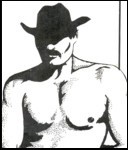
I was an 80s Clone…many would have said an arch-Clone! I lived the life, and the look. Levi’s jeans, “Bonds” tee-shirts and singlets, plaid flannelette shirts, “Blundstone” boots (Blunnies), or Doc Martins, huge handlebar moustache, a transient beard in any of a number of styles, short or buzz-cut hair, an “Akubra” cowboy hat. I lived in pubs like The Oxford, and danced…half naked…in nightclubs like “Mandate” (Melbourne), and “Midnight Shift” or “Stronghold” in Sydney. I sniffed Amyl, blew whistles, banged tambourines, ingested LSD & Speed when the mood took me, sprinkled talc on dancefloors, and danced in a jockstrap on occasion. Leather vests, belts, armbands and cockrings. Pierced ears, pierced nipples, tattoos. I loved it…though many other gay men, especially older “dinner party” gays, hated it and thought we leaned too heavily on straight stereotypes for our look. What they couldn’t see was that this extreme stereotyping WAS gay! That at THAT time, THEY were the stereotype…along with the effeminate, lisping, limp-wristed stereotype that was the general impression of gay men…was what we were trying to move away from, by presenting a more “macho” type of gay men…that we wanted to be seen as men, not as a parody of! The Clone look, along with Hi NRG dance music became looks and sounds that very much defined the 80s.

Don’t ask me why it started, but by the beginning of the 80’s ‘the clone’ was beginning to become a universal phenomenon (and I don’t mean Dolly the sheep!).

Some commentators suggest the first clones appeared in San Francisco’s Castro Street; others that they came from New York’s ‘Village’. Either way, by the 80’s the look had been adopted by gay men around the world.

The most obvious elements were the (obligatory) moustache and ‘the uniform’. Depending on where you lived, the latter would be based on a Lacoste sports shirt, chinos and ‘loafers’ (USA) or checked shirt, jeans and trainers (UK). These minor national differences notwithstanding, the overall look was an overt and unambiguous statement – not just about dress sense but also masculinity and sexuality.

The Clone Ranger. Extract from gay club advert.

This was an extremely significant act for that time – not least because gay men were, on the whole, still largely closetted. Yet, in spite of this, here were large groups of gay men choosing an image – and a highly sexualised one at that – for themselves. Prior to this, the only ‘sexualised’ images of gay men were as predators – of ‘defenceless’ straight men and, of course, children since we were all paedophiles. And, needless to say, they weren’t images of our choosing.

Within the UK this was also another indication of the Americanisation of gay men or, perhaps more accurately, the gay identity. In a sense, it was almost inevitable, given the sustained hostility to all things gay in the UK (e.g. Mary Whitehouse’s attacks on Gay News, the raiding of Gay’s the Word and other bookshops). The USA was the principal source of many gay resources – from porn to political material. (I shall cover this in more detail in a later blog.)

Get a room! Gay hotel ad.

It could be argued that it was the clones who started to put the sex into homosexual: there are certainly some commentators who believe that they paved the way for other groups such as leather men and bears. Certainly, the collective visibility of so many self-defined gay clones can only have helped put us on the map as a population that was much larger – and a lot less apologetic – than many people had imagined.

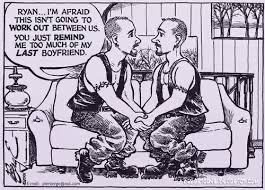
Of course, there were always some queens who took it all a bit too seriously. Thankfully, there were others who managed to combine the playful and political elements of the clone. No one in the UK did this more successfully than the artist David Shenton, through his character ‘Stanley’, who appeared regularly in Gay News and then Capital Gay.

Stanley (second from right) pops into his local gay bar. Taken from ‘Stanley and the Mask of Mystery’ by David Shenton. Reproduced by kind permission of the artist. World copyright © David Shenton

I’m not sure if the clone has totally disappeared from the gay scene or simply merged into one of the other diverse ‘identities’ our community now has. But it would be a shame if we were to forget what was our first, ‘home-grown’ positive gay stereotype.

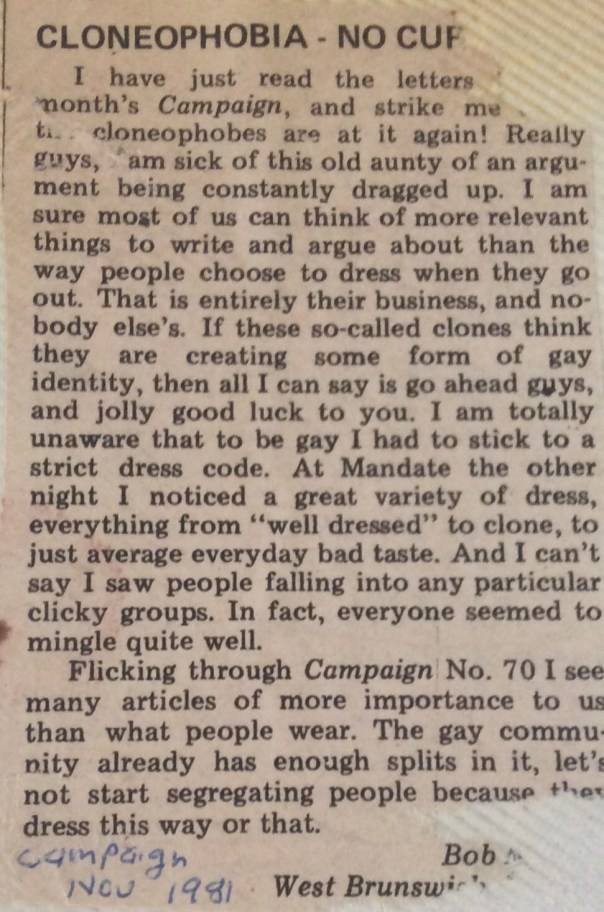
A letter I wrote to “Campaign”…a gay newspaper popular in the 70s & 80s…in response to someone criticising the Clone look – then in its starting phase
The blogger in Clone days circa 1986/87

Remaking the Castro Clone

Levis 501 jeans. Skin tight. Sanded down at the knees and crotch for that perfectly worn-in look. Third button unbuttoned to create a bit of allure. T-shirt, also skin tight. A Levis snap-front plaid. That was the uniform of the Castro clone, the gay fashion icon spawned in the 70s that — with surprisingly minor evolution or alteration — can still be seen on the streets of San Francisco today.

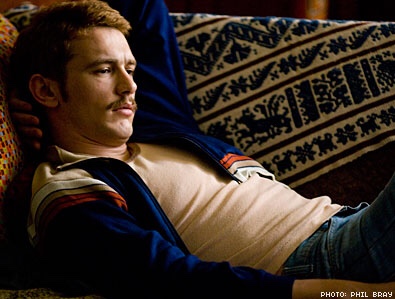
Danny Glicker, thankfully, is in love with the look. As the costume designer on Milk, Gus Van Sants biopic of the slain civil rights leader Harvey Milk, Glicker had to outfit hundreds of actors, from leading men Sean Penn, James Franco and Emile Hirsch to an army of extras, all dressed to span a full decades worth of fashion dos and donts.

Period films always present challenges to their costumers, but those based on true stories are that much more complicated. Glicker was saddled with another great expectation while preparing the highly anticipated film: Milks characters are not only real, they lived during a time many viewers can still recall themselves. And Milk owned a camera shop and lived an incredibly well documented life, which took some of the guesswork out of the equation, but also meant that there would be no excuse with eagle-eyed fans for anything less than absolute authenticity.

Simply recreating the clothes wouldnt have been sufficient — the bodies on todays actors are more defined and muscled than those of the leaner Milk and his comrades. Instead Glicker had to tailor the clothes to look as if they were hanging off of a 70s frame.

We created these enormous books of research that specifically address each character within the timeline, says Glicker, a young, unassuming, bespectacled man with a head of thick black curls whose previous work include Transamerica, Thank You For Smoking and HBOs True Blood. It was sort of overwhelming, because after awhile it was hard to edit down the material. I was very interested in recreating outfits exactly as they were, partially because I knew that Gus was going to be incorporating so much archival footage into the movie, and I didnt know exactly where.

Given access to the archives of the San Francisco GLBT Historical Society, Glicker and his team managed to get their hands on a fair amount of Milks actual clothing. Then they went shopping. Glicker, who prefers vintage pieces, combed hundreds of stores and amassed a huge collection of items, which he then authenticated using his research books before altering to fit the actors. No tiny detail of the evolution of fashion went unchecked — there are, after all, key differences between a 1976 shirt and a 1978 shirt (such as the collar width), and Glicker was determined to be accurate.

What couldnt be bought was recreated (and sometimes what was bought was still recreated so that spare sets were available), including T-shirts from now-defunct Castro bars, protest Ts found in the archive, and the suit Milk was killed in, which they had viewed at the Historical Society. That was a very, very meticulous recreation, says Glicker, who had to wear cotton gloves while handling the suit, which is kept in a temperature and light controlled environment and wrapped in acid free tissue. We were measuring everything from the lapels to the belt loops and leg openings. The fabric, every aspect of the fit, it was all done to match as closely as possible.

And when the thrift stores and archives didnt have what he needed, Glicker went to Levis corporate headquarters in San Francisco. The uniform of choice for Harvey Milk, his friends and many in the LBGT community at the time was the Levis 501 button fly jean, says Robert Hanson, President of Levi Strauss & Co.s Levis Brand Division. If you saw anything but Levis in the film it would have been wrong.

Levis gave me a tremendous amount of access to both their archive and retail store, says Glicker. Hanson (who is gay) and Levis, an early pioneer and longtime stalwart supporter for gay causes, thought the film was a perfect match for the brand. The movie is really about a very specific movement at a specific time in the city, Glicker says. These people wore Levis. It was what they were about and where they were. Its more than just a brand of clothes in this case, its an iconic part of America and the Castro.

When I started reading about what people wore, adds screenwriter Dustin Lance Black. I thought, What was that Levis clone look about? It didn’t take much to realize that it was about a group of people who had been called pansies and fags reclaiming their masculinity and being men.

That held true even when going butch went beyond the basics. I remember reading someone complaining that the guys were actually going too far with it — trying to be too butch, actor James Franco, who plays Milks longtime lover, Scott Smith, told Black in his Out cover interview. I saw a lot of guys from the Castro where they [actually] looked like construction workers.

Thats why the Castro clone, Glicker says, is actually a deceptively simple look. It has to be perfectly played, he says. In order to make it look good, you have to find the perfect fit and you have to feel great in it to be able to sell the outfit. It was a uniform because it was accessible for everybody. It wasnt out of peoples grasp. It was about the wearer more than the means of the wearer. And whether or not Milk launches a vintage resurgence, the basic elements havent been put out to pasture. I see the influence of it everywhere. Its not going anywhere. Its like the gay communitys little black dress.

The gay clone, illustrated.
Leather enthusiasts at the 1978 San Francisco Gay Day Parade.

2001 Michael Tolliver is wearing jeans, with an opened flannel shirt to show off his body. This look depicts the Castro Clone style of the 1970s.

Reference

Gay History: The Complete Guide to Every Queer Pride Flag

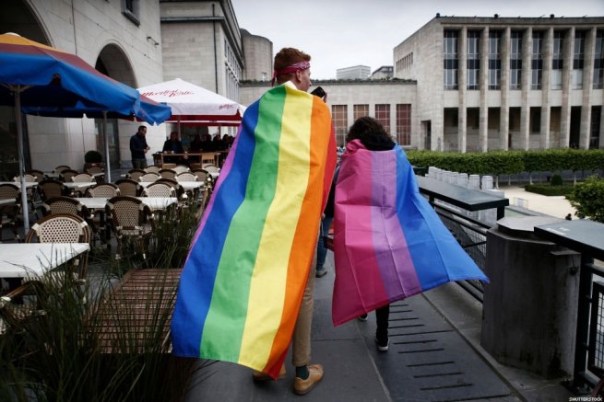
Whether you’re celebrating Pride in New York or Tel Aviv, you’ll be seeing all sorts of flags — and not just those in the traditional rainbow. There are many sexualities in on the queer spectrum, and we’ve identified the flags for each. Did we miss any? Let us know in the comments.

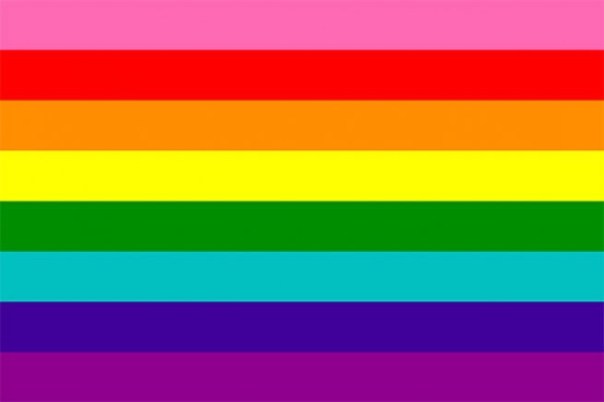
Gilbert Baker Pride Flag

In 1977, Harvey Milk challenged Gilbert Baker, a veteran who taught himself to sew, to come up with a symbol of pride for the gay community. His response? The original Pride flag. Inspired by Judy Garland’s “Over the Rainbow,” these colors flew at the San Francisco Gay Freedom Day Parade celebration on June 25, 1978. Though some dispute whether Baker was the sole creator of the flag that started it all, its symbolism remains. Each color celebrates an aspect of queer Pride:

Hot pink =  Sex

Red = Life

Orange = Healing

Yellow = Sunlight

Green = Nature

Turquoise = Magic/Art

Indigo = Serenity

Violet = Spirit

1978-1999 Pride Flag

After the assassination of Harvey Milk, many wanted the Pride flag he commissioned to commemorate his accomplishments for the community and their personal support. The demand was greater than the available fabric, so the Paramount Flag Company began selling this version of the flag, as did Gilbert Baker, who had trouble getting hot pink fabric.

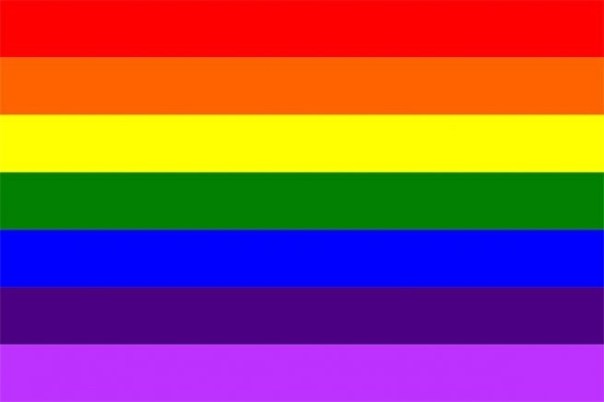
Traditional Gay Pride Flag

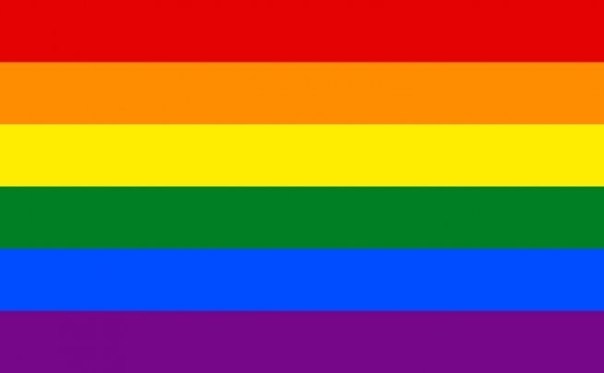
This is the most familiar flag. In 1979, the community landed on this six-color version, which was hung from lampposts in San Francisco. Numerous complications over having an odd-number of colors led to turquoise being dropped, at least according to reports. Read more about the modern flag here.

Philadelphia People Of Color Inclusive Flag

Noting that queer people of color are often not fully included in the LGBT community, the city of Philadelphia added two colors — black and brown — to the Pride flag in their honor. The city had previously faced accusations of racial discrimination in its gay bars, which led 11 queer nightlife venues to take antiracism training. Many white men were outraged by the flag, claiming that rainbow includes all skin colors, but with a star like Lena Waithe donning it at the Met Gala, it seems the design is here to stay.

Progress Pride Flag

This new flag seeks to take Philadelphia’s inclusive approach a step further. Daniel Quasar, who identifies as queer and nonbinary, designed this flag. The white, pink, and light blue reflect the colors of the transgender flag, while the brown and black stripes represent people of color and those lost to AIDS. “When the Pride flag was recreated in the last year to include both black/brown stripes as well as the trans stripes included this year, I wanted to see if there could be more emphasis in the design of the flag to give it more meaning,” Quasar explained on his Kickstarter.

Bisexual Flag

Designed by Michael Page, the flag brings visibility to the bisexual community, showing the overlap of the stereotypical colors for boys and girls. The flag was inspired by an older symbol of bisexuality: the “biangles,” two overlapping pink and dark blue triangles.

Pansexual Pride

Created on the web in 2010, this flag has colors that represent pansexuality’s interest in all genders as partners. The pink represents women, yellow nonbinary and gender-nonconforming people, and the blue is for men.

Asexual Flag

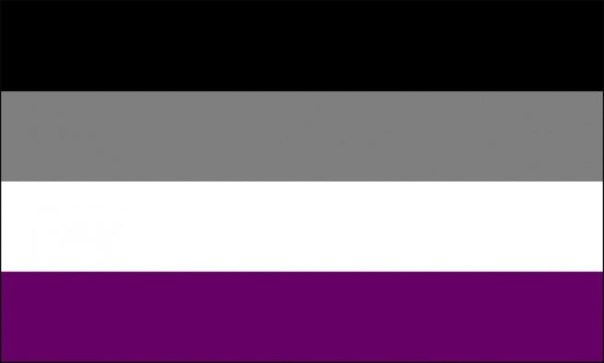
Like the pansexual flag, the asexual flag was created in 2010. Inspired by the Asexual Visibility and Education Network logo, it represents many ace identities, including graysexuals (the fluid area between sexuals and asexuals) and demisexuals (people who don’t experience sexual attraction unless they have an emotional connection with their partners.

Labrys Lesbian Pride Flag

Oddly enough, this sapphic symbol was created by a man. Created in 1999 by gay graphic designer Sean Campbell, the flag has not gained much traction in the lesbian community. It features a labrys, an ax-like weapon used by Grecian amazons.

Polyamory Flag

Featuring the symbol for the infinite numberpi, which shares the first letter of “polyamory,” this flag celebrates the infinite selection of partners available to polyamorous people. The letter is gold to represent the emotional attachment we have with others as friends and romantic partnerss, rather than just our carnal relationships.

Intersex Flag

Designed in 2013 by the organization Intersex International Australia, this flag intentionally features nongendered colors that celebrate living outside the binary.

Transgender Flag

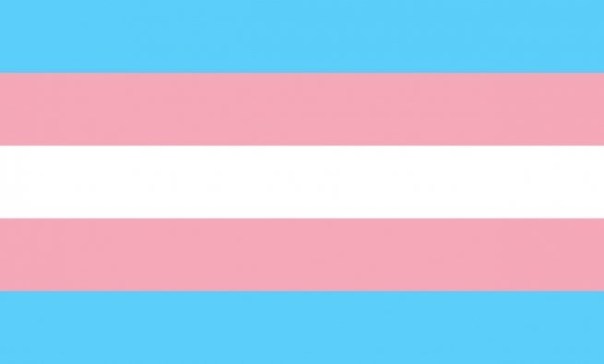
Monica Helms, a trans woman, designed this flag in 1999, and it was first flown at a Pride Parade in Phoenix a year later. “The light blue is the traditional color for baby boys, pink is for girls, and the white in the middle is for those who are transitioning, those who feel they have a neutral gender or no gender, and those who are intersexed,” Helms noted. “The pattern is such that no matter which way you fly it, it will always be correct. This symbolizes us trying to find correctness in our own lives.”

Genderfluid/Genderflexible Flag

Encompassing the fluctuations and the flexibility of gender in genderfluid people, the flag features colors associated with femininity, masculinity, and everything in between. The pink stands for femininity. The white represents the lack of gender. The purple represents the combination of masculinity and femininity. The black symbolizes all genders, including third genders. The blue reflects masculinity.

Genderqueer Flag

Created in 2011 by Marilyn Roxie, the genderqueer flag highlights androgyny with lavender, agender identities with white, and nonbinary people with green. Some people refer to it as a nonbinary flag if they feel queer is a slur.

Lipstick Lesbian Flag

If you want the most feminine pride flag, here it is. Although it’s not a widely used symbol, it celebrates the femmes in the lesbian community, lovingly called “lipstick lesbians.”

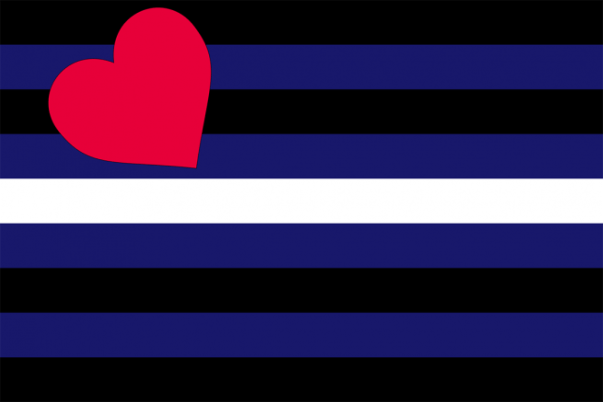
Leather, Latex, & BDSM Flag

Whether the kink community should be added in the acronym LGBT is a heated debate, but there is no denying that the community has several of its own flags. This one was designed by Tony DeBlase for Chicago’s International Mr. Leather celebration in 1989. This symbol is not exclusively gay, but rather for the leather and BDSM community. The original flag is on display at the Leather Archives and Museum in Chicago.

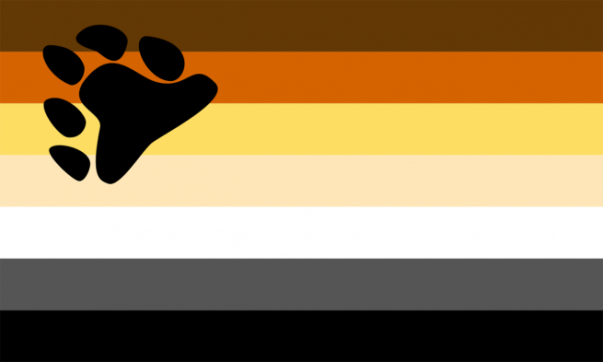
Bear Brotherhood Flag

Though The New York Times named 2018 “the age of the twink,” only the bears — as gay men lovingly refer to the beefier, more hirsute guys — have their own flag. Craig Byrnes designed it in 1995 for the International Bear Brotherhood. Its colors are to match the fur of bears living in the woods.

Rubber Pride Flag

This symbol is for members of the rubber and latex fetish community and is similar to its predecessor, the leather Pride flag. Peter Tolos and Scott Moats created the design in 1995 “as a means to identifying like-minded men and [it] reflects the sensory, sensual, and mental passion we have for rubber.” They say the black color represents “our lust for the look and feel for shiny black rubber,” the red symbolizes “our blood passion for rubber and rubbermen,” while yellow highlights “our drive for intense rubber play and fantasies.” It also features a literal kink, for obvious reasons.

Polysexual Flag

Polysexuality, unlike pansexuality, is the attraction to multiple genders but not all. A middle ground between bisexuality and pansexuality, it is centered more around attractions to femininity and masculinity rather than gender itself. The pink represents attraction to females; the blue for males. The green is for an attraction to those who don’t conform to either gender.

Agender Flag

While genderqueer people bend the rules of gender, agender people reject a gender completely. For their flag, the black and white stripes represent the absence of gender, while green, the inverse of the gender-heavy purple, represents nonbinary genders.

Aromantic Flag

While asexual flags use purple to show their lack of sexual attraction, aromantic flags use green to celebrate the people who live without romantic attraction.

Non Binary Flag

Created by 17-year-old Kye Rowan in 2014, this flag was a response to nonbinary people feeling improperly represented by the genderqueer flag. This symbol was not to replace Roxie’s creation but sit beside it as an option. The yellow symbolizes gender outside a binary. The white, a mix of all colors, represents those with many or all genders. Purple stands in for those who feel both binary male and female or fluid between them. The black is for the agender community, without sexuality or color.

Pony Flag

Pony play is a distinct fetish where people are treated like horses by wearing hooves, ears, and  saddles and pulling carts. Carrie P created this flag in 2007; it uses black in solidarity with the leather community at large.

Straight Ally Flag

The flag equivalent of “I support LGBT people, but no homo,” this makes everyone feel included at Pride marches, even if they’re celebrating other people’s sexualities.

Reference
Gay History: Unearthing The “Knights of the Clock”.

Enigmatic might be the best word to describe this organization, which was variously called the Knights of the Clock or Clocks. Gay and lesbian historians differ in their reporting of who founded the group, when it was founded, and what its exact name was. The ONE Gay and Lesbian Archives in L.A. maintains that Merton L. Bird, an African-American accountant about whom little is known, was the cofounder, and that it started up around June 1951. The other co-founder was W. Dorr Legg, who used about a dozen pseudonyms throughout his life, and whose name appears in virtually every anthology of gay history. He earned a master’s degree in landscape architecture with a specialty in urban planning, taught at Oregon State University, lived in New York and Florida, and came home to Ann Arbor, Michigan to care for his elderly parents. Legg’s lovers were, for the most part, African-American, and he experienced racial discrimination first hand (though not, according to John D’Emilio, in Detroit’s black community). Some historians hold that Bird and Legg met in Michigan, drove around looking for a comfortable place for interracial gay couples, and landed in L.A. in the late 1940’s. Lillian Fader-man and Stuart Timmons hold that Marvin Edwards, not Bird, went to L.A. with Legg. Timmons interviewed Edwards for their 2006 book, Gay L.A., which includes a very youthful candid photo. Edwards was forced to leave L.A. after a year or so, when his landlady discovered he was gay.

Legg has been variously described as charismatic, charming, poised, witty, intelligent, controlling, inflexible, and opinionated. A Republican in politics, he chose to live off the earnings of younger men (according to an interview in Joseph Hansen’s 1998 biography of Don Slater). In Legg’s 1994 book, Homophile Studies in Theory and Practice, he described Bird as brilliant and gives all credit for the Knights’ founding to Bird. “Hostility and harassment were the daily lot of interracial same-sex couples in 1950. … [Bird’s] idea was that by coming together to form a mutual aid society, the group could at the very least offer each other encouragement. The decision was to form a California nonprofit corporation and call it the Knights of the Clocks, a deliberately ambiguous title.” Many historians, such as Paul Cain, have quoted from Legg’s book, Homosexuals Today; A Handbook of Organizations & Publications (1956), which he wrote under the name of Marvin Cutler, stating that the aim of the Knights was to “promote fellowship and understanding between homosexuals themselves, specifically between other races and the Negro, as well as to offer its members aid in securing employment and suitable housing. Special attention was given to the housing problems of interracial couples of which there were several in the group.”

Although most sources give June 1951 as the Knights’ founding date, others range from the late 1940’s to the early 1950’s. Perhaps the L.A. group known as the Cloistered Loyal Order of the Conclaved Knights of Sophisticracy (or, sometimes, Sophistocracy, and known as the C.L.O.C.K.S.) lent its name to Bird and Legg’s Knights. It may or may not have been formally incorporated. Jonathan Ned Katz was unable to turn up the legal papers when he searched back in the 1970’s, but Edward Sagarin (the pseudonym of Donald Webster Cory) states in what was originally his NYU thesis, later published, that the Knights incorporated in 1950. Three undated typescripts in the ONE Archives’ file on the Knights contain some information about the C.L.O.C.K.S. Their oath of office, following a Masonic-type ritual, was to “practice the arts of sophisticracy diligently, honestly, courteously, amicably, faithfully, and with all of my ability.” At the end of the installation, the installing officer and “honor guard” intoned: “By the authority vested in me by the State of California, and as a duly elected officer of this corporation, I hereby declare you [name of office]. Honi soit qui mal y pense.” This, the motto of the Order of the Garter, founded in mid- 14th-century England, can be roughly translated as “shamed be he who thinks evil of it.” Instead of the usual titles (president, VP, etc.), the C.L.O.C.K.S. used medieval ones: Exalted Knight, Senior Knight, Bursar, and Scribe (who kept a Tablet instead of minutes).

In the ONE’s file, a few handwritten entries beginning on May 24, 1951, were recorded in an unused 1944 calendar from what appears to be an insurance company. On that date, “application forms were passed out,” “minutes were approved as read,” and the “Vice President spoke of aims of Club.” Gone is the mystique of the Cloistered Loyal Order. One of the Knights’ events was planned to take place in June at the Wilfandel Club. According to the still-active club’s website, wilfandelclub.com, it was established on November 21, 1945, by two black women to provide “people of all races with a public meeting place in Los Angeles during the 1950’s.” Another meeting note, dated July 1, listed members who would sing, play an instrument, dance, and make speeches at an upcoming party. (Bird was listed as one of the speech-makers.) On that same date, there was an entry for a rough draft of letterhead, “The C.L.O.C.K.S./Incorporated/Los Angeles/Calif.” The name “Josephine Baker” appears fleetingly in a meeting note, leaving one to imagine all kinds of possibilities.

Yet another event, dated August 4, was to be a “midsummer frolic” beginning at 9 p.m., with draft beer and spaghetti. The last social event mentioned was a Valentine’s meeting with a “social program” planned for Saturday, February 16 [1952]. Events seemed to be admission-by-card only. Other cryptic entries mentioned the Loan Fund, Housing & Employment Committee, the Membership Committee, the Entertainment Committee, and the Legal Aid Committee, of which Bird was chair. “NAACP” is noted without any further comment. Interestingly, Bird’s name is consistently spelled “Byrd” throughout, and C. Todd White’s book lists “M. Byrd” as Merton Bird’s pseudonym. Some members’ names and addresses are written throughout the entries, and there’s an intriguing mention of a seal and articles of incorporation. Sagarin remarked that meetings were originally held monthly, and then semimonthly. Meetings, he said, usually drew about 35 attendees, with a larger group attending the socials.

Reproduced in Legg’s 1994 book and credited to “ONE’s Baker Memorial Library and Archives” is a 1951 invitation, engraved in Gothic script, to a Knights social event: the fourth anniversary party of “Gene and Edward” on May 12, 1951, from 9 p.m. to 3 a.m. Legg stated that guests at that event were “a comfortable mix of races and assorted personal relationships including both men’s Beverly Hills employers and their families.” ONE Archives’ handwritten meeting notes do include some female first names, and one name that could possibly begin with “Mrs.”

When did the end come? ONE Archives’ file contains no information about the group beyond a handwritten list, dated February 15, 1952, of fourteen members (including Bird and Legg) who owed dues. On that date, the group had $14.15 in the bank. In 1952, Legg and Bird numbered among the founders of ONE, Inc., a group within the Mattachine that published ONE magazine. White mentions that Bird appeared to have offered the Knights’ charter as a model, or to offer a merger with the Knights, neither of which were accepted. Sagarin noted that “for all practical purposes it had disappeared from the scene” by 1953, though an occasional meeting was held after that date.

A 1966 article in Tangents magazine by Richard Conger implied that the Knights, “formerly of Los Angeles,” were represented at the ONE Institute Midwinter Session, an educational program for gay men and lesbians held on an almost yearly basis in various cities and considered a precursor to today’s academic programs. The Institute was the brainchild of Legg. Sidney Roth-man reported of the Knights: “Its originality lay in its avowed intention to enroll men and women alike and their parents and other relatives on an interracial basis. Its meetings and large social gatherings appear not to have been matched in attendance until this present year (1965) by a few social events staged in San Francisco as the joint effort of several homophile organizations in that city. The Knights continued for three or four years but eventually found themselves overshadowed by another Los Angeles development … The Mattachine.” (Conger and Rothman were, according to Vern Bullough, two of Legg’s pseudonyms.)

When Legg died in 1994 at the age of 89, he was survived by his partner of over thirty years, John (Johnny) Nojima, who died a few years ago. Very little is known at this time about Merton L. Bird.

ONE’s file contains the names and addresses of some of the earliest Knights. Can any of them be traced? Are any of their addresses close to those noted on the map of “significant locations” in White’s book? What might the archives of other California institutions contain? Did any of the Knights’ files migrate to other gay organizations following a very celebrated “heist” of papers in 1965 by another ONE, Inc. founder, Don Slater, due to personal and professional disputes with Legg? Does the NAACP’s L.A. chapter keep records back to the 1950’s? What about the archives of the Wilfandel Club? More research is waiting to be done on this fascinating and pioneering organization.

I’m grateful to the archivists at ONE National Gay & Lesbian Archives in LA., particularly to Loni Shibuyama. This article would not have been possible without Lillian Faderman ‘s assistance, and I would, also like to thank Philip Clark, Wayne Dynes, Joseph Hawkins, and C. Todd White.

References

  • Bullough, Vern L. Before Stonewall; Activists for Gay and Lesbian Rights in Historical Context. Harrington Park Press, 2002.
  • Cain, Paul D. Leading the Parade: Conversations with America’s Most Influential Lesbians and Gay Men. Scarecrow Press, 2002.
  • Conger, Richard (pseud.). Where the Mainstream Flows. ONE 14:2, 1966.
  • D’Emilio, John. Sexual Politics, Sexual Communities: The Making of a Homosexual Minority in the United States. 1940-1970. Univ. of Chicago Press, 1983.
  • Dynes, Wayne. “W. Dorr Legg.” in Gay & Lesbian Biography, edited by Michael J. Tyrkus. St. James Press, 1997.
  • Faderman, Lillian, and Stuart Timmons. Gay LA.: A History of Sexual Outlaws, Power Politics, and Lipstick Lesbians. Basic Books, 2006.
  • Hansen, Joseph. A Few Doors West of Hope: The Life and Times of Dauntless Don Slater. Homosexual Information Center, 1998.
  • Katz, Jonathan. Gay American History: Lesbians and Gay Men in the USA.: A Documentary. Crowell, 1976.
  • Knights of the Clock(s) File. ONE National Gay & Lesbian Archives, Los Angeles. Legg, W. Dorr, ed. Homophile Studies in Theory and Practice. ONE Institute Press, 1994.
  • Rothman, Sidney (pseud.). The Homophile Movement. ONE 13:12, 1965.
  • Sagarin, Edward (pseud.). Structure and Ideology in an Association of Deviants. Arno Press, 1966.
  • White, C. Todd. Pre-Gay LA.: A Social History of the. Movement for Homosexual Rights. Univ. of Illinois Press, 2009.
  • Martha E. Stone, literary editor of this magazine, is a reference librarian by day.
Gay History: The Unbelievably True Story of Jobriath, Music’s First Openly Gay Rock Star

Imagine watching the Empire State Building suddenly transform into giant spurting penis to ejaculate a figure dressed in a major King Kong look across a stage. Now, imagine this mysterious figure shedding the ape costume and emerging as the most fabulous Marlene Dietrich you’ve ever seen.

No, this isn’t the fever dream of a Hell’s Kitchen gay after watching Kong: Skull Island. This flamboyant and provocative series of events almost happened. The performance, set to take place at the Paris Opera House in 1973, would’ve introduced the world to glam rock’s first openly gay rock star. Through a sea of glitter, the crowd was to feel a potent mix of astonishment and arousal before whispering his name: Jobriath.

That you’re almost certainly wondering who the hell Jobriath is should betray the fact that his grand entrance never happened, but to dismiss Jobriath as yet another failed rock star would do a disservice to his legacy. The truth is, for all his failures, Jobriath paved a path for queer musicians. Without rock’s self-proclaimed “true fairy,” artists like ILoveMakonnen, Frank Ocean, PWR BTTM, Mykki Blanco and everyone in between might not be around to queer up the music industry.

Decades ago, in an era punctuated by the queerbaiting antics of Lou Reed and David Bowie, Jobriath’s star power proved to shine too bright, too fast—he was the Icarus of glam rock with a gloomy ending to match. Spanning multiple identities, enough tragedy to fill a Lifetime Original Movie, and a wealth of ideas that would never come to pass, this is the story of America’s first gay rock star.

The Adolescence and Abandonment of Bruce Wayne Campbell

You’d be forgiven if you thought the story of Jobriath’s adolescence was written by an overeager fiction writer. After all, his name shares similarities with both Batman and the star of Evil Dead and hails from a town that sounds like a history book. Yet, Bruce Wayne Campbell of King of Prussia, Pennsylvania really did exist. And he was even something of a child prodigy on the piano.

The Film Collaborative

Born the son of an Army man in the dirt track town, Campbell spent his youth moving from army base to army base with his family. It was a childhood light on friends and heavy on a blooming sexual identity that infuriated his family. It was an existence that wasn’t meant to last and, after a brief stint in the Army that ended with him going AWOL, he ran away to start a new life as Jobriath Salisbury in the sun-soaked streets of Los Angeles.

Detours and the Discovery of Jobriath Salisbury

Like any great glam rock origin story, Jobriath’s rise began with a little bark and a lot of hair follicles. A short time after arriving in LA, he accompanied his friend to the audition for the notoriously outlandish musical Hair. Despite only going to help the friend with lines, he was cast into the role of Woof and was soon performing to sold out crowds every night. Under the bright lights, he got a taste of stardom that changed his life.

Though as talented as he may have been in his role, he wasn’t immune to the vices of the 1960s. A cocktail of drugs strong enough to tranquilize a herd of buffalo mixed with his overinflated ego and he eventually left Hair in a blaze of glory—taking two of his costars with him to start a band called Pidgeon. You know, because it was 1969 and naming your band after sky rats was glam. The trio recorded a strange, baroque folk album that sounded like a chipper nightmare before the band promptly fell apart.

It was from this point that Jobriath’s AWOL status caught up to him and he was detained by military police. He was thrown into a military psychiatric hospital, suffered his first big breakdown, and then broke away from the padded walls to take on California one last time. It didn’t take long for him to pick up his old habits As he recalled years later, “I was floating down in the gutter. I didn’t eat. I just drank beer all the time. With no money, I hustled for booze and drugs.”

While he hustled, a new chapter in Jobriath’s story was being written thousands of miles away in New York. It was there that Jerry Brandt, legendary manager of Carly Simon, sat in the offices of Columbia Records’ Clive Davis listening to Jobriath’s demo tape. To his ears, he’d found the star he was waiting for.

The Film Collaborative

Jobriath Boone and Jerry Brandt’s Big, Gay American Disaster

The year was 1972 and Jobriath had just shed his steak-themed last name and emerged as Jobriath Boone—–just in time for Brandt to change his life forever. After search through LA to find him, Brandt quickly whisked the burgeoning star back to New York, got him a record contract with Elektra Records rumored to be worth $500,000, and began one of the most ambitious advertising campaigns of the decade.

“Jobriath is going to be the biggest artist in the world. He is a singer, dancer, woman, man. He has the glamour of Garbo. He is beautiful,” Brandt explained to Melody Maker before telling Music Week: “It’s Sinatra, Elvis, The Beatles, and now Jobriath.” To Brandt, Jobriath was glam rock’s gay, glittered Jesus Christ and he wanted the world to know his name.

Jobriath’s face was plastered across full page ads in Vogue, Penthouse, and Rolling Stone and put on posters on hundreds New York City buses. For Brandt’s pièce de résistance, a 41’ by 43’ billboard high atop Times Square was erected featuring Jobriath naked and posed as a Roman statue broken at the base and crawling across the floor.

The AV Club

When it came time to record the album, Brandt convinced Elektra Records to book them at Olympic Studios, the famed recording studio favored by bands like The Rolling Stones. It was within these soundproofed walled that a 55-piece orchestra accompanied Jobriath on a glam rock journey through the eleven tracks that made up his self-titled debut album. Despite the aggressively sexual S&M ballad “Take Me I’m Yours” and the swaggering bravado of “I’m a Man,” reviews were warm and encouraging.

The problem was that outside of the industry, Jobriath’s flagrant sexuality produced a product the public just wasn’t ready for. By the time the giant wave of marketing finally crashed down, Jobriath’s overhyped debut had become a disastrous joke. A debut concert at the Paris Opera House with a $200,000 price tag and the Empire State building ejaculating the star was quickly scrapped.

He made his television debut in an unforgettable yet restrained performance on a prominent nightly show called The Midnight Special. It was notable for his outlandish costume that could best be described as ‘spaceman by way of hamster tunnel tubing’ and was restrained because, after being barred from performing his S&M jam “Take Me I’m Yours” by producers, he instead performed “Rock of Ages” and his single “I’m a Man.” Late night just couldn’t handle a glitter-dipped gay rocker singing, “Any day you could buy me or tie me up.”

Alongside his TV debut, he headlined two sold out shows at The Bottom Line in all his unsheathed, gay glory to modest, 400-person crowds. The positive response brought some hope to Jobriath and Brandt but that momentum crashed down at a follow-up concert at Nassau Coliseum. There, the crowds immediately bombarded him with shouts of “faggot” as trash was thrown until he fled the stage. Elektra Records quickly pushed out the second and final album, Creatures of the Street, shortly after that disastrous show with leftover material from the Jobriath recording sessions and dropped him from their label.

With no future at Elektra, Jobriath embarked on one final tour and severed his partnership with Brandt. Like any good rock star though, Jobriath went out with a bang. His final show at the University of Alabama led to five encores that ended when the excited crowd pulled the fire alarm and sent the fire department rushing in. It was glorious moment that showcased the star Jobriath could’ve become had the country been ready to embrace that courageous homosexuality of rock’s first true fairy but ultimately signaled the end to his life as Jobriath.

The Downfall and Death of Cole Berlin

In 1975, high above the iconic Chelsea Hotel in a pyramid-topped apartment, Jobriath Boone was laid to rest alongside his brief career. From his ashes, the character of Cole Berlin emerged. When he wasn’t hustling or auditioning for the role of Al Pacino’s lover in Dog Day Afternoon, Cole spent his nights performing 1930s cabaret songs at The Covenant Gardens restaurant. His existence, perhaps for the first and only time, appeared restrained and mundane for a few years. It wasn’t until 1979 that the façade of normality was ripped away in an interview with Omega One magazine.

“Jobriath committed suicide in a drug, alcohol and publicity overdose. That whole hype just drove him crazy,” Cole said of his former identity. It was the statement of a broken man and, as the interview continued, he didn’t hesitate to talk about his personas as if they were a polyamorous family he’d moved in with. “Schizophrenia is my lifestyle. I think everybody is schizophrenic but they’ll all fighting it,” he explained. “I, or should I say we, are not fighting it. Come over. I’ll ask some of us to come out and play.”

Years after the interview, his lifestyle on the streets caught up with him and he soon contracted AIDs. On the Chelsea Hotel’s 100th anniversary in November 1982, he played his last public performance and, on the morning of August 4, 1983, police broke up the front door of his rooftop apartment and found his dead body. A decade after towering over Times Square, he died alone and abandoned—–his body decaying for four days before anyone found him.

The Great, Rock Resurgence of Jobriath

As tragic as his career and life were, time has ultimately been kinder to Jobriath. In the years following his death, the glamorous singer has become ingrained in the rock and roll folklore thanks to one of rock’s most iconic queer artists. In one of the strangest twists in Jobriath’s story, rock legend Morrissey of The Smiths has become integral in establishing the singer’s legacy.

In 1992, Morrissey expressed interest in having him as the opening act for his “Your Arsenal” tour–—unaware that the singer had died nearly ten years ago. It was a tragic request but, ultimately, served as a catalyst for Jobriath’s revitalization. In the two and a half decades since Morrissey first took an interest in rock’s first true fairy, a wealth of information and music has unearthed his story. Previously unreleased music filled Lonely Planet Boy in 2004 and As the River Flows in 2014; his first two albums saw a rerelease in 2008; and, finally, a documentary by Kieran Turner called Jobriath A.D. came out in 2012.

Four decades after crooning for audiences to let him be who he was on the track “I’m a Man,” the repercussions of Jobriath’s fearless embrace of his sexuality, Empire State Building ejaculation and all, are finally being celebrated.

Reference

Gay History: The Downfall of the Ex-Gay Movement

What went wrong with the conversion ministry, according to Alan Chambers, who once led its largest organization

TERRY JOHNSTON / FLICKR

In 2001, Alan Chambers was hired as the president of the world’s largest ex-gay ministry, Exodus International. That same year, U.S. Surgeon General David Satcher issued a report that stated, “there is no valid evidence showing that sexual orientation can be changed.”

Like most conservative Christian leaders at the time, Chambers considered the countercultural nature of his work a point of pride. During the latter part of the 20th century, Exodus and similar conservative groups promoted the idea that gay people could—and should try to—become straight. Ex-gay leaders traveled to churches and appeared on television news programs citing a litany of examples of happily married “former homosexuals” to demonstrate that sexual orientation is a choice and that change is possible.

But Chambers would undergo a radical change of heart. In 2013, he publicly apologized to the LGBT community for the “pain and hurt” Exodus had caused and announced that the ministry was permanently shutting down. Chambers’s decision effectively delivered the deathblow to the beleaguered ex-gay movement. And his story of transformation, detailed in a new memoir, My Exodus: From Fear to Grace with a foreword by CNN’s Lisa Ling, will likely resonate with many traditionalists who are searching for new ways to think about LGBT issues.

Chambers, 43, was raised by an ex-military father in a Southern Baptist home and realized he was attracted to other males at a young age. Most of his early sexual encounters with men were anonymous, which bred in him a deep self-hatred. At 19, he connected with an Exodus-affiliated ministry where he hoped to rid himself of same-sex attraction once and for all.

While the ministry did not make Chambers straight, he claims that it saved his life and many others because it provided a “safe space for many” to talk about their sexuality. At the time, there was no national network for LGBT Christians and most churches were not places of sexual transparency. But, he says, Exodus’s emphasis on “change” made it “fatally flawed.”

In 1998, Chambers married his wife, Leslie, with whom he adopted two children. In My Exodus, he recounts his inability to consummate the union for eight months, but he says their sex life is now “good.”

“While many relationships are built on sex, ours just includes sex,” Chambers says. “We love it and value it because we worked hard for it.”

As a former Exodus participant who once lived a “gay lifestyle” but was able to achieve a successful straight marriage, Chambers was the perfect candidate to lead the organization. And by 2001, Exodus needed all the help it could get.

At its peak, Exodus International had an annual operating budget of more than $1 million, had 25 employees, and served as an umbrella organization for more than 400 local ministries across 17 countries. But over the years since its founding in 1976, many of the leaders Exodus’ touted as success stories had become cautionary tales instead.

Cofounder Michael Bussee left the group in 1979 and entered a relationship with another Exodus leader, Gary Cooper. Bussee would later admit, “I never saw one of our members or other Exodus leaders or other Exodus members become heterosexual, so deep down I knew that it wasn’t true.” Throughout the 1980s and ‘90s, many former Exodus members became vocal critics of the ministry, claiming it had caused them psychological distress. And in September 2000, Exodus’s chairman John Paulk was photographed cruising for men at a gay bar in Washington, D.C. He was ousted from his position and later confessed, “I do not believe that reparative therapy changes sexual orientation; in fact, it does great harm to many people.”

The movement traditionalists believed would be their saving grace in the fight against LGBT rights was quickly becoming their Achilles’ heel.

Being chosen to lead Exodus in 2001 was like becoming the ex-gay Pope following the Catholic sex-abuse scandals. The ministry’s board knew it could not survive another public scandal, so it questioned Chambers rigorously before deciding to hire him. During the interview process, Chambers recalls a board member asking him what success would look like under his leadership. He replied, “It looks like Exodus going out of business because the church is doing its job.”

Chambers words would later seem prophetic, but he first needed to travel a long road. In 2005, he called homosexuality “one of the many evils this world has to offer.” And in 2006, he lobbied for a constitutional amendment banning gay marriage. But Chambers admits that during the same year his thinking began to evolve.

“As I heard more stories and evaluated my own realities,” Chambers said, “I realized change in orientation was not possible or happening.”

Though the ex-gay leader was stewing on the inside, he seemed as resolute as ever on the outside. He advocated for California’s Proposition 8, which sought to ban gay marriage in the state. In 2009, he published a book called Leaving Homosexuality: A Practical Guide for Men and Women Looking for a Way Out. He admits to immediately regretting the book’s title and some of its content.

Chambers’s thinking continued morphing until his dramatic announcement that the ministry would shut down in 2013: “Exodus is an institution in the conservative Christian world, but we’ve ceased to be a living, breathing organism. For quite some time, we’ve been imprisoned in a worldview that’s neither honoring toward our fellow human beings, nor biblical.”

By this point, the ex-gay movement was already in shambles. A 2013 Pew Research poll showed that only 36 percent of Americans believe a gay or lesbian person’s orientation can be changed. As Satcher reported, modern science had delivered crushing blows to the ex-gay movement with peer-reviewed research showing that its ideology was bunk. And a national movement to ban reparative therapy for minors was taking shape and had already been successful in several states.

The closing of Exodus International became the “tipping point” in conservative Christians’ conversations about the nature of sexual orientation. Today, even top Southern Baptist leaders have denounced ex-gay therapy, and the school newspaper for the Jerry Falwell-founded Liberty University has editorialized against it.

“Shutting down Exodus dealt a fatal blow to the whole idea that orientation can be changed and that God somehow loves you more because of the choices you make,” Chambers says. “Some ministries still promote this idea, but they are not going to achieve the same level of success that Exodus had. That position is more of a minority than it has ever been.”

The release of Chambers’s memoir this month marks another step in the leader’s evolution. He has voiced his support for President Obama’s effort to ban orientation-change therapies for minors and celebrated the Supreme Court’s decision to legalize gay marriage. And now he even admits that he believes committed, monogamous same-sex relationships can be holy.

“I look at gay and lesbian people who are in committed relationships and I believe they can reflect the image of God,” Chambers says. “That belief has continued to evolve, but heterosexuals don’t have a corner on the market of healthy, holy relationships.”

While many culture-warring conservatives will undoubtedly see Chamber’s openness as a cowardly capitulation, others will call him courageous. The former ex-gay leader chooses to focus on just being honest, instead. As he said in a chapter intended for his memoir but cut by the publisher, “Every part of my life, all of my compartmentalization is reconciled. My message and story are no longer different depending on the group to whom I’m speaking.”

Chambers describes his current sexual orientation as “complicated.” While he is still attracted to men, he also says that he and Leslie have a healthy marriage with a robust sex life. But he no longer claims that every person with same-sex attraction should follow his path.

“For those who cannot reconcile their faith and sexuality, they can be affirmed in their choice of celibacy and devote their lives to causes more life giving than ‘ridding themselves of the demon homosexuality,’” Chambers says. “And the gay Christian community can be affirmed in who they already are: beloved.”

Reference

Domestic Violence A ‘Silent Epidemic’ In Gay Relationships

Back in my dim, dark past I was picked up one night in the Midnight Shift by a very cute guy. Nothing odd about that…until he took me to the back of the bar and introduced me to his boyfriend. The intention was obvious, they were both good looking men…and I didn’t say no. The sex was great and both guys seemed quite at ease in the threesome situation, and I stayed the night. However, the next morning was a real eye-opener…over breakfast, things took a real turn to the dark side…and I was caught right in the middle of it…with no idea what to do. Graeme…the guy who had picked me up the last evening…was relentlessly verbally abused by his partner, Peter. It was as though I wasn’t even there, as the abuse went on around me, and needless to say, it was a very uncomfortable breakfast. It seemed that Graeme could neither do, nor say, anything right. I never witnessed any physical abuse, but you could feel it underlying the verbals. Peter ordered Graeme to drive me home, and said he’d be timing it. I felt so bad for Graeme, as he was a really lovely, gentle guy. We got to my apartment building and I asked him if he would like to come in for a coffee…but he stated the obvious! If he wasn’t home in the allotted time, he’d cop it. A number of months later, I ran into Graeme in my local watering hole. The whole puck-up thing happened, though this time he was on his own. When I questioned what was happening with Peter, he said they’d parted company. I mentally breathed a sigh of relief. Graeme and I then went on to have a fuck-buddy thing for about 4 years. Last time I saw him…about 20 years ago now…he was in a happy relationship with another guy. I all my years on the gay scene, both amongst a large, close social circle, and in my day-zoo-day picks ups, fuck buddies and one night stands, that was the only incidence of gay domestic violence that I’ve ever encountered. However, it made me very aware of its existence, and how it can be so easily covered up just by presenting the normal semblance of a relationship. It did make me wonder just how much could have been going on amongst those I did know.

Domestic violence has become a “silent epidemic” in the gay and lesbian community despite being the subject of increasing scrutiny in heterosexual relationships, according to the AIDS Council of NSW.

Roughly one in three lesbian, gay bisexual, transgender, and intersex (LGBTI) couples experience domestic violence. Those statistics are echoed among the general population.

After years of fighting to prove their love is valid, LGBTI victims of domestic violence can feel like they are in another closet, making it harder to get help.

Russ Vickery was six months into his first gay relationship when the violence began.

“We went out for dinner and then drinks at a local pub … he got angry about something and the night ended with me having a broken nose,” Vickery says

Same-sex couple Russ Vickery (L) and Matthew Parsons have both been in domestic violence situations in their previous relationships. CREDIT: PAUL JEFFERS

“After the first time he was very apologetic and it was never going to happen again.” But it did happen, again and again over a period of five years, culminating in Vickery being thrown down a set of stairs at home in front of his children.

For Matthew Parsons, domestic violence came in other forms – psychological, financial and emotional abuse.

The smallest of triggers would set off a torrent of abuse, like the time he left the do not disturb sign on a hotel room door.

“When we returned, the room hadn’t been serviced for towels and so he flipped out and threw champagne, strawberries and chocolate across the room. I spent the night crying in the parking lot.”

Parsons had no control over his own finances either. The final straw came when his partner knowingly withheld from him the few dollars he needed to purchase lunch.

“I thought, you don’t even think of me as human, I’m just your play thing. That was a really horrible realisation to come to.”

It took both men years to realise they were experiencing domestic abuse, which is little talked about in the LGBTI community.

“He kept telling me that when two men get involved in a relationship, things turn physical,” says Vickery, who had been in a 17-year marriage prior to coming out. “I had no barometer so I just assumed that was how it worked.”

Parsons says the gay and lesbian community has spent so long trying to prove their love is valid, they are afraid to ruin it by admitting domestic abuse occurs.

“There’s an unspoken fear that if we start to tell the mainstream community that actually sometimes our relationships are toxic and horrible and abusive, then that will be used against us to say, ‘see it’s all unnatural and a sin anyway’.”

Vickery likens it to coming out a second time.

“A lot of people ask me why I didn’t leave [sooner] … but I’d come out and told everyone it was a wonderful thing. I didn’t want to come out again…”

ACON chief executive, Nicolas Parkhill, says for this reason, domestic violence is under-reported within the LGBTI community.

And because same-sex domestic violence “doesn’t look the same” as in heterosexual relationships, people don’t always recognise it, Parkhill says.

Unique to LGBTI victims is the fear the abusive partner will “out” them to family, friends and work colleagues, or reveal their HIV status.

Within the LGBTI community abuse is more frequently reported by women and transgender males than by gay men but Parkhill says more research is needed to determine the full extent of the problem.

He applauds the naming of Rosie Batty as Australian of the Year which has already raised the profile of domestic violence in the community, but says “the silent epidemic within this public profile raising is how that plays out in relationships that aren’t perceived as ‘the normal’.”

More needs to be done to raise awareness of domestic violence in gay and lesbian relationships, Parkhill says, and more government funding is needed for LGBTI-specific support services.

Matthew Parsons remembers calling a domestic violence hotline only to discover it was run by a Christian organisation.

“They were very unhelpful to say the least and I thought from that experience there wasn’t help out there, which isn’t true,” he says.

He eventually found help through the website Another Closet and counselling which encouraged him to do a “pack and dash” – fleeing while his partner was out.

The stair incident was the catalyst for Vickery to leave, but it still took him a year to come to terms with the relationship loss.

The men have been together now for four years and finally know what it is like to feel happy and safe.

Drawing on those experiences, they co-created a highly acclaimed cabaret show My Other Closet about domestic violence in gay relationships, for the Sydney Mardi Gras festival in 2013 and have plans to revive the show in Melbourne.

“[Our] horrible relationships … taught us both everything we never want to have in a relationship again,” Parsons says.

“We want to turn our negative experiences into a positive and put the message out there … that abuse is abuse and it’s the same in any relationship.”

Reference

Gay History: Violence is No Stranger to the LGBT Community: David Mixner

Turning and turning in the widening gyre

The falcon cannot hear the falconer;

Things fall apart; the centre cannot hold;

Mere anarchy is loosed upon the world,

The blood-dimmed tide is loosed, and everywhere

The ceremony of innocence is drowned.

The best lack all conviction, while the worst

Are full of passionate intensity.

From “The Second Coming” by William Butler Yeats

Not since June 24, 1973 when a madman fire-bombed the UpStairs Lounge in New Orleans has the LGBT community suffered such slaughter at the hands of hate. On that horrible day, 43 years ago, 32 of our own were burned to death. No one was ever charged or punished for that crime. Ever since, unfortunately, random violence has shadowed our journey to freedom. Over a dozen MCC churches have been burned to the ground. Every one of us knows someone who has been gay-bashed. Many have been beaten so badly that they never regain their ability to function in the world. None of us will ever forget Matthew Shepard crucified on a fence in the barren and desolate prairie of Wyoming.
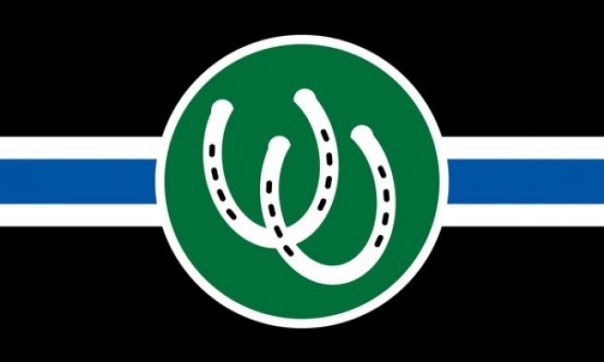
For the LGBT community, the news that terrorists aim to kill us is certainly not new. We have recoiled time and time again as videos show our brothers and sisters in the Middle East stoned to death or hurled off the tops of buildings. In Africa we see members of our community burned to death encased in the infamous ‘neckless’ (a burning tire around their neck). A generation of us witnessed first hand as our brothers endured a prolonged and brutal death from AIDS while our own government turned its back on us. American preachers have called for the death sentence for LGBT Americans and dispatched missionaries overseas to urge third world nations to inflict hate and violence on their own LGBT citizens.

For the most part we have suffered all this amid the silence of others; it has almost become a way of life for us. The lack of outrage or even coverage of the repression and terror directed toward us from the media is striking. Also, the fact that thirteen nations have the death penalty simply for being homosexual — and many of them are American allies. As ACT UP said so eloquently, silence really does equal death.

Now another place, another name has joined the long list: Pulse. Ironically the name of the Orlando bar is the means to ascertain if a person is still alive.

Oh yes, we are still alive. They have not invented a bullet, a gun or firebomb that can come close to murdering our spirit or our determination to be free. For every one of our fallen there are ten to take their place.

The slaughterhouse in Orlando hits close to home. I have spoken there at a community event. Every city in America has a bar like Pulse. We have all danced to the same music! We all know it can happen anywhere, anytime in our community. We are all always at risk.

President Obama rightly called the slaughter in Orlando both a terrorist act and a hate crime. The two can’t be separated.

Let’s be honest. Not only was this twisted terrorist inspired by ISIS; he had plenty of permission here in America to hate us.

There are precincts of American politics filled with rhetoric against our community, our rights, our very being. Pastors advocate hate from their pulpits and legislation is submitted and enacted to demean us and sanction anti-LGBT discrimination. There are states passing laws to permit our fellow citizens to deny us a meal in a restaurant, a place to sleep at night, or even access to a restroom. Do these agents of bigotry really believe their cynical fear-mongering and attempts to write hate into the stature books did not contribute to the massacre at Pulse? Really?

What can we do in the face of such horror?

For years to come and without question we will have to continue fighting our oppressors in the streets and at the ballot box. We cannot rest until every hate-filled law is overturned. The best memorial to the dead of Orlando is a new birth of freedom.

In the short term, many of the killed or injured are poor and they and their families need our financial assistance. Equality Florida has established a “Go Fund Me” page for us to help pay for funerals and medical expenses.

The LGBT community in Texas — and all decent citizens –have a special obligation and that is to remove Lt. Governor Patrick from office for his hateful tweet: “You reap what you sow.” He dishonors his office and America.

The Republican Party must stop exploiting gay-baiting as a tool to turn out their base.

Finally, we must stand tall, proud and open. All of us are sickened and angered by the mass execution of our brothers and sisters, but we are not bowed and not defeated. Never!

Reference

Gay History: Unearthing The Surprising Religious History Of American Gay Rights Activism

COURTESY OF THE LGBT RELIGIOUS ARCHIVES NETWORK A press conference in reponse to arrests at a Council on Religion and the Homosexual fundraiser and dance was featured on the front page of the San Francisco Chronicle on Jan. 3, 1965.

On New Year’s Day 1965, hundreds of gay San Franciscans arrived at 625 Polk Street in the city’s Tenderloin district for a much-anticipated “Mardi Gras Ball.”

The event organized by gay rights — or, to use the then-common term, homophile — activists was not unlike the thousands of public parties being held this June during Lesbian, Gay, Bisexual and Transgender Pride Month: There were drinks and music, hand-holding, flirtatious glances and kisses between friends old and new. But it was also a private affair — $5 tickets had to be bought ahead of time — in a city where gay people regularly faced threats and arrests for gathering together and showing affection.

Perhaps the most striking aspect of the San Francisco ball, however, was its purpose beyond merriment: It was held as a fundraiser for pro-gay clergy.

Today, although Americans for and against gay rights cite their religious beliefs, those who oppose same-sex marriage and other civil rights for LGBT individuals have been especially vocal in declaring that God is on their side. That’s not always been the expectation about the faithful. In the mid-1960s, LGBT activists often looked to men of the cloth as allies in their fight for justice and human rights, according to historians.

Just months before the ball, about two dozen Bay Area Methodist, Lutheran, Episcopal and United Church of Christ clergy and gay activists had formed the Council on Religion and the Homosexual to promote the “need for a better understanding of human sexuality” and its “broad variations and manifestations.”

On Dec. 7, 1964, a front-page article in the San Francisco Chronicle announced the launch of the Council on Religion and the Homosexual.

Clergy and lawyers for the group had negotiated with police — who had a habit of shutting down LGBT events — to let the dance go forward. But according to contemporary newspaper articles, police still showed up that night, taking pictures of those entering as an intimidation tactic. When the cops demanded to get inside, the lawyers reportedly blocked them. Six people ended up in jail for interfering with the police and disorderly conduct.

The clergy fought back with a press conference the next day. “Angry Ministers Rip Police,” said a front-page headline in the San Francisco Chronicle below a picture of men in clerical collars. The clash mobilized both the city’s gay community and the pastors. The American Civil Liberties Union brought a lawsuit over the arrests — the first time the ACLU had joined a legal battle over gay rights, according to the LGBT Religious Archives Network.

“That was years before the 1969 Stonewall riots, which is popularly considered the beginning of the gay rights movement,” said Heather White, a visiting assistant professor of religion at the New College of Florida who has spent years combing through LGBT archives for an upcoming book, tentatively titled Reforming Sodom: Protestants and the Rise of Gay Rights. “And that’s just one of the best-known stories. There were Councils on Religion and Homosexuality and similar groups in D.C., Pennsylvania, Ottawa, Hawaii.”

White is among a growing group of scholars who have been working to uncover the broad — and for many, surprising — history of religious gay rights activism. The LGBT Religious Archives Network has documented hundreds of stories like that of the San Francisco clergy since it was founded 13 years ago at the United Church of Christ-affiliated Chicago Theological Seminary. The organization is now based in Berkeley, California, at the Pacific School of Religion’s Center for Lesbian and Gay Studies in Religion and Ministry.

The network’s website offers a series of profiles of and oral history interviews with Protestant, Catholic, Muslim, Jewish, Buddhist and Pagan LGBT clergy and religious activists, living and dead. Online exhibits cover topics ranging from the Council on Religion and the Homosexual to the 1973 UpStairs Lounge fire in New Orleans, an anti-gay arson incident that killed 32 people, including many members of the city’s gay-friendly Metropolitan Community Church, to New York’s Congregation Beit Simchat Torah, which launched in 1973 and calls itself the world’s largest gay synagogue. The network also holds archives on the lives of people like William R. Johnson, who in 1972, as a member of the Golden Gate Association of the United Church of Christ, became the first gay American Protestant to be ordained.

White, who sits on the network’s advisory committee, said expectations about how religion would view gay rights began to change after the 1960s.

“What we know of the face of religion and gay rights has been shaped by a shift that occurred in the 1970s with the rise of conservative Christianity. It’s a consolidated political force that wasn’t in place before then. There were certainly conservative people and religious people who were involved in politics, but in the 1950s and 1960s, homophile organizations saw religious leaders as likely allies,” said White. “That is less of the case today, though things are changing.”

A Pew Research Center survey, released Thursday, found that 62 percent of Americans now say homosexuality should be accepted, rather than discouraged, by society. But clear lines still divide religious Americans when it comes to gay rights, especially same-sex marriage. Polls show that white evangelicals tend to strongly oppose gay marriage. The nation’s largest churches — including the Roman Catholic Church, the Southern Baptist Convention, the United Methodist Church and the Church of Jesus Christ of Latter-day Saints — officially do not support same-sex marriage.

On the other hand, Catholic Americans as individuals tend to be supportive of gay marriage. And several denominations — including the Presbyterian Church (USA), the Episcopal Church, the United Church of Christ, the Unitarian Universalist Association of Congregations, and both Reform and Conservative Jews — allow clergy to perform same-sex marriages or blessings.

Some of the biggest gay rights activists and organizations started their work in churches,” said Bernard Schlager, executive director of the Center for Lesbian and Gay Studies in Religion and Ministry and an associate professor of cultural and historical studies as the Pacific School of Religion.

He pointed to the Metropolitan Community Church, which gay rights activist Troy Perry launched in Los Angeles in 1968 to cater to gay people. The relatively small church has 222 congregations worldwide today, but Schlager said its influence was “monumental” in pro-LGBT Protestant movements. Another noted gay rights group, PFLAG — formerly known as Parents, Friends and Family of Lesbians and Gays — had its first meeting in 1973 at the Metropolitan-Duane Methodist Church in New York City’s Greenwich Village (now called the Church of the Village).

Schlager suggested that the widespread, if inaccurate, perception of religion firmly opposing gay rights is also shifting. “It’s come to the point that sometimes people today say it’s more difficult to come out as a person of faith than it is to come out as LGBT in religious circles,” he said.

Melissa Wilcox, an associate professor of religion and gender studies at Whitman College in Walla Walla, Washington, shared a similar view.

“With the increasing visibility of the marriage rights movement, we have started to see LGBT-supportive groups [within religious communities] being able to get their message out more clearly. That’s a battle for them, but many have been there all along,” said Wilcox, who also sits on the LGBT Religious Archives Network’s advisory committee.

After decades of church activism, for example, the Presbyterian Church (USA) General Assembly last week voted to allow its pastors to officiate gay marriages in states where they are legal. The church’s presbyteries, or regional bodies, are also scheduled to vote on whether to change the definition of marriage to cover “two people,” rather than only a man and a woman.

“A lot of people are still wary of anything you’d call religion. A lot of people have been burned,” said Wilcox. “But there’s a rich history out there of gay religious activism for us to appreciate and uphold.”

Reference