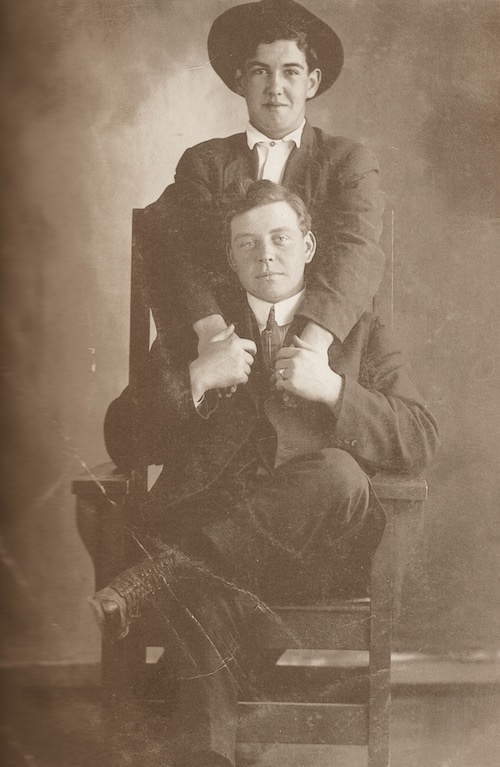
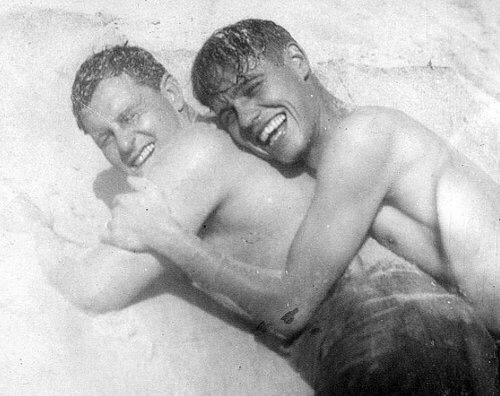
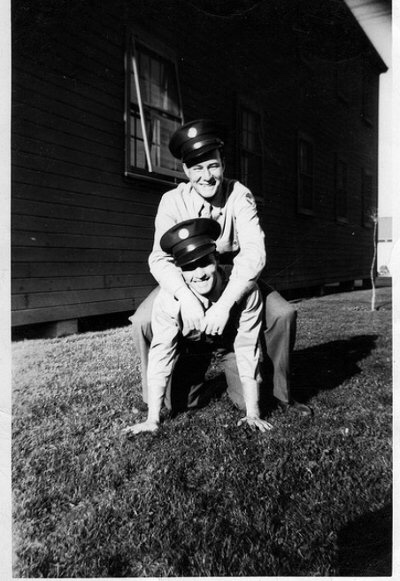
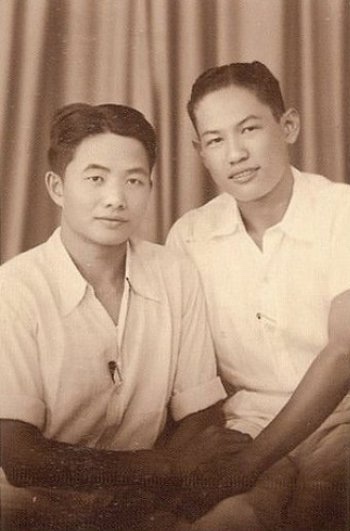
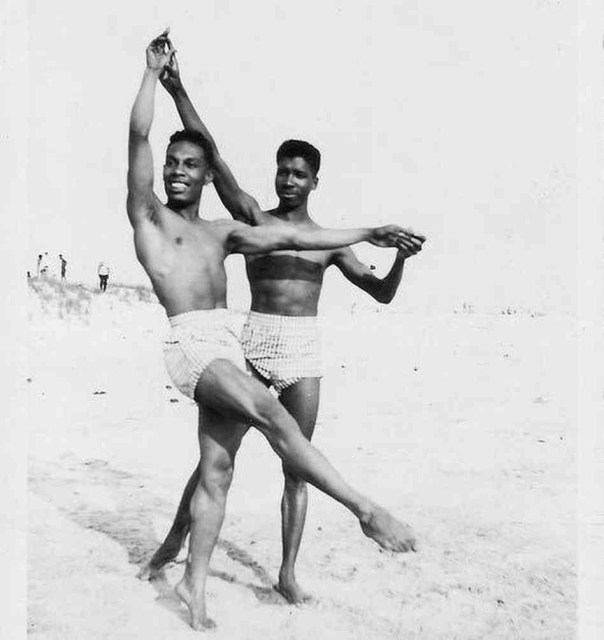
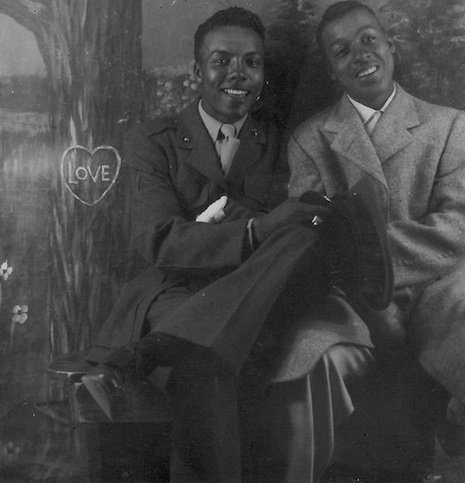
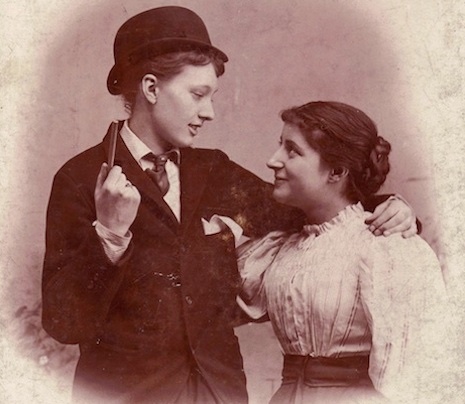
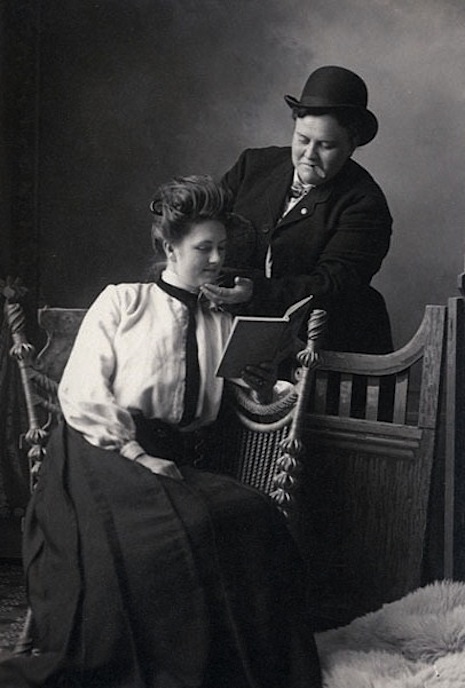
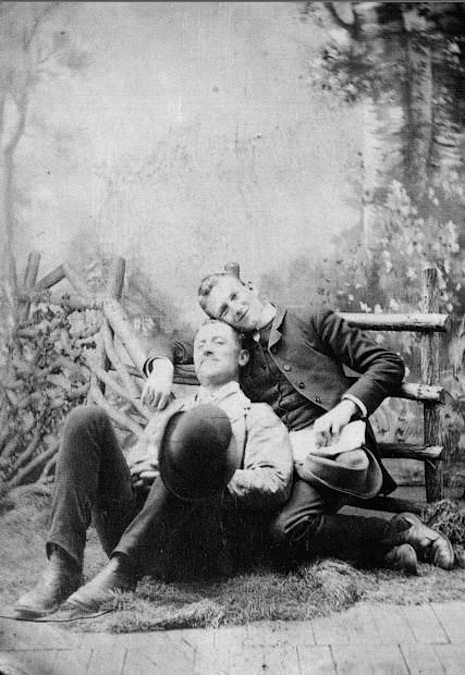
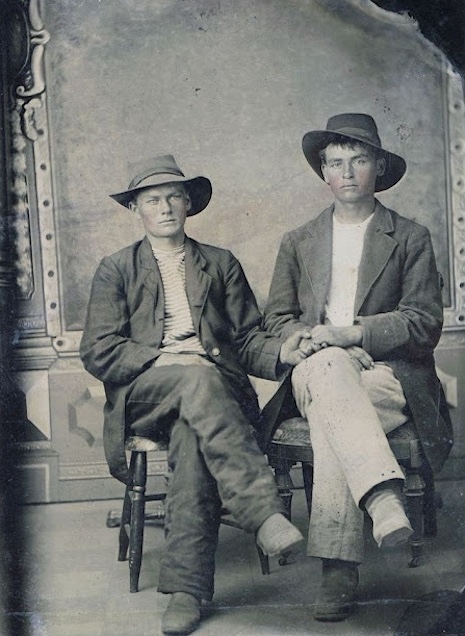
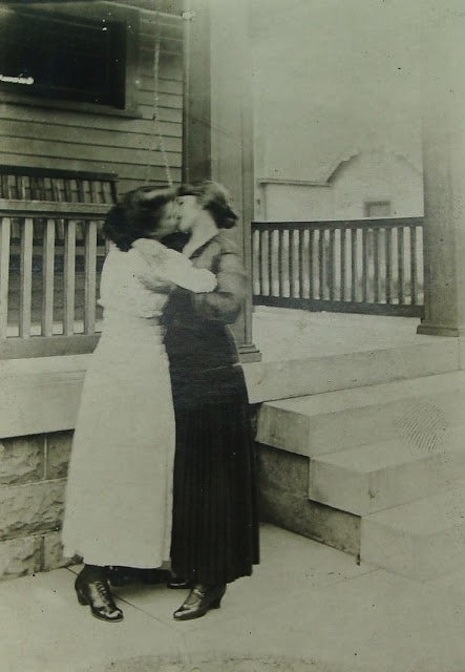
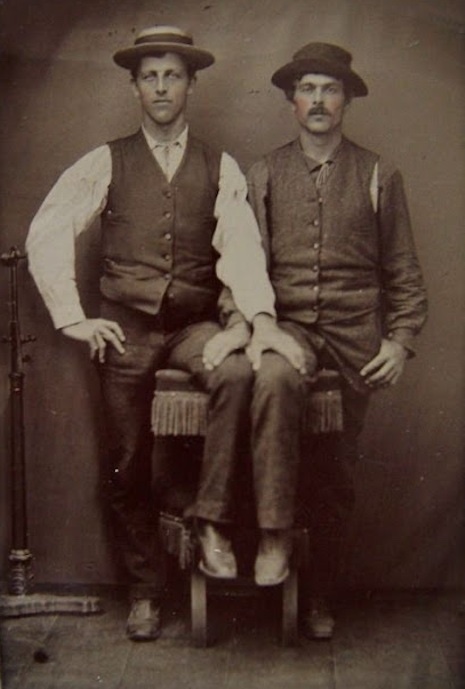
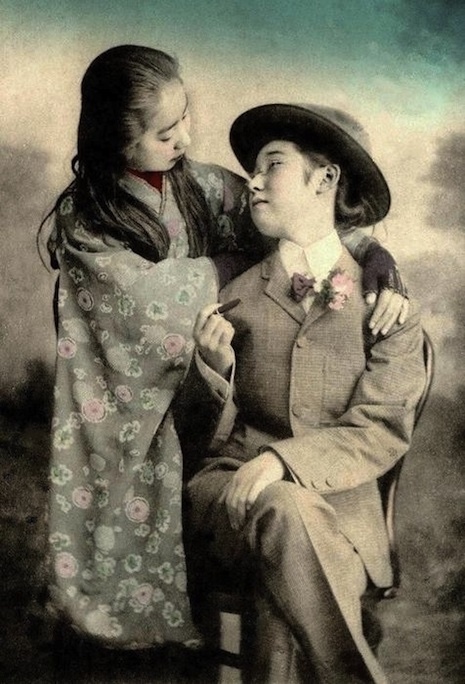
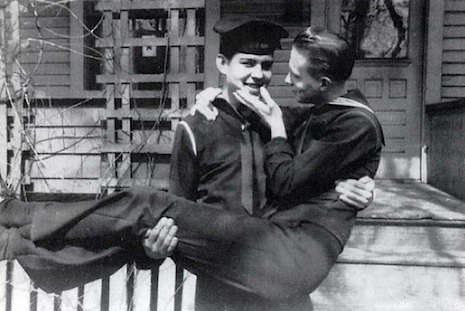
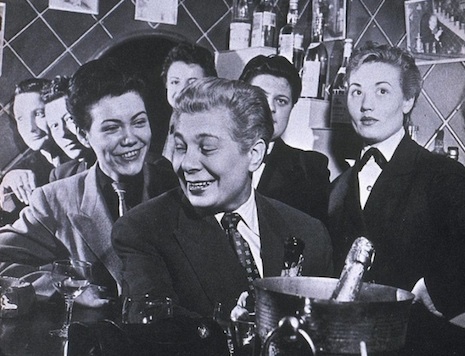
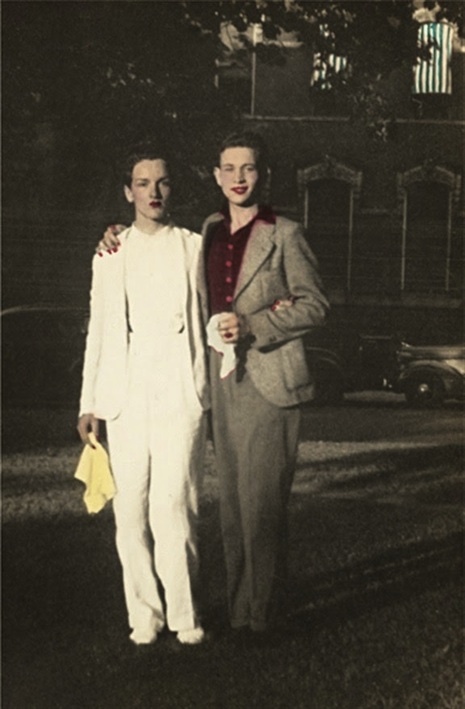
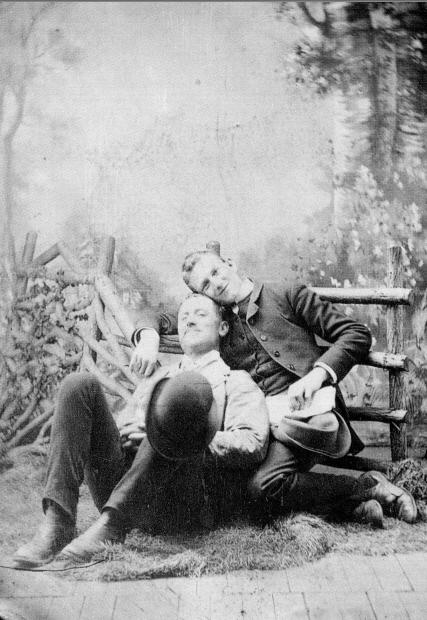
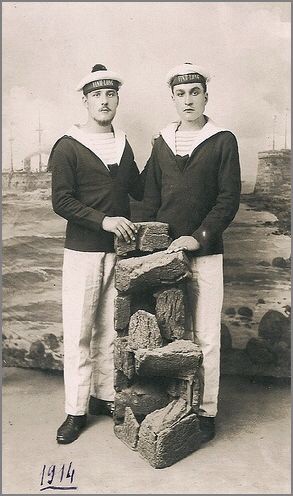
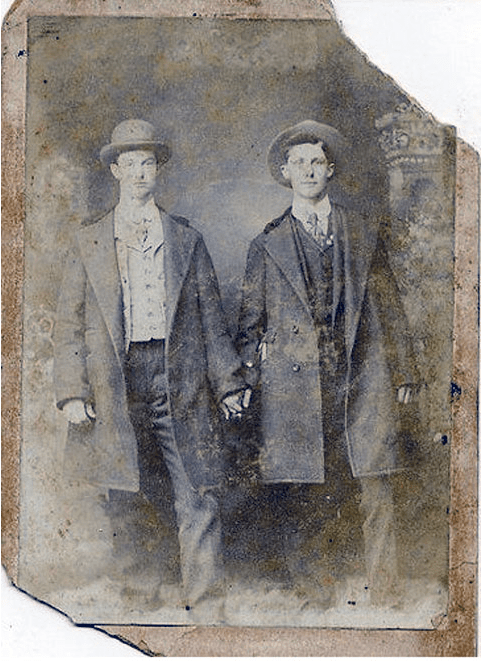
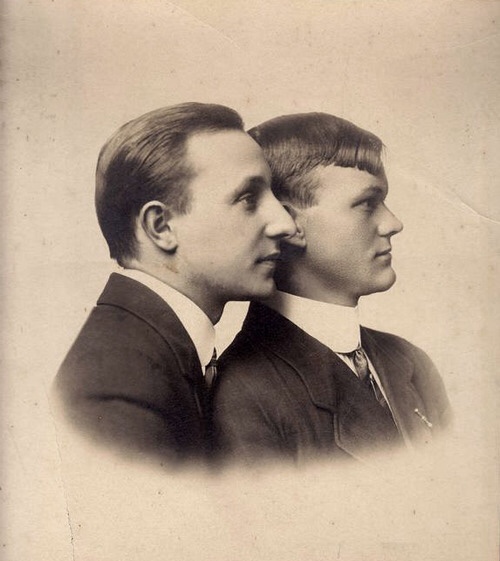
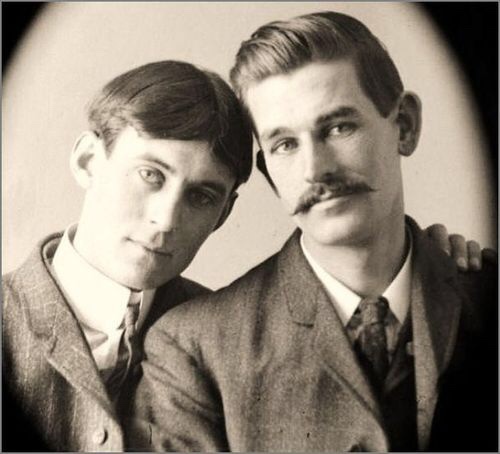
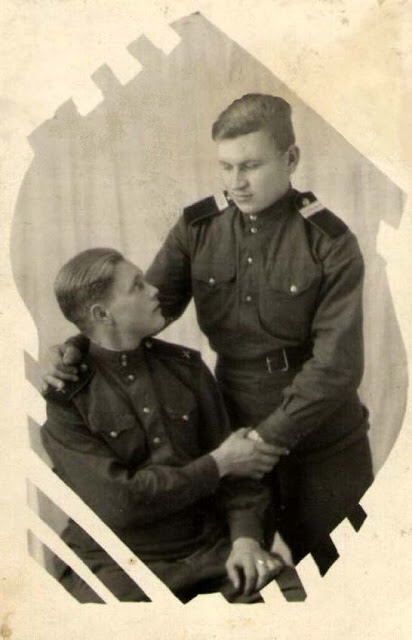
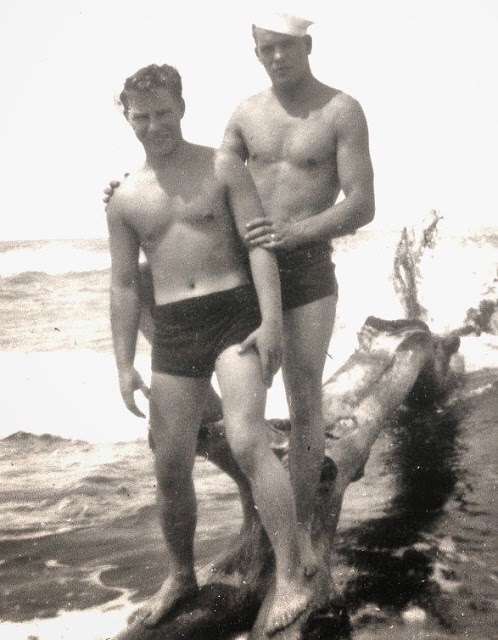
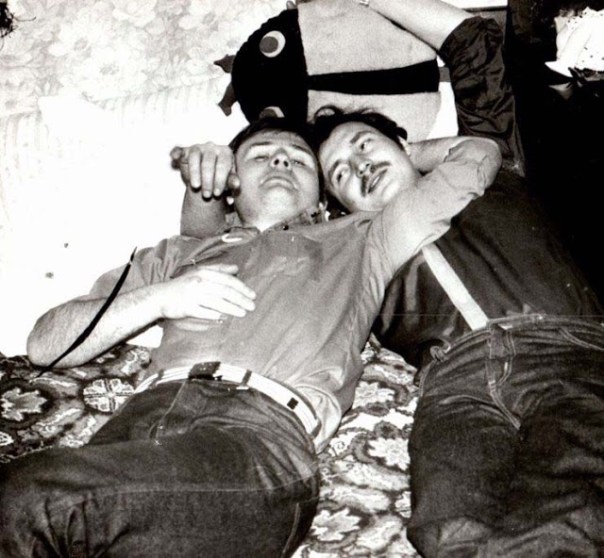
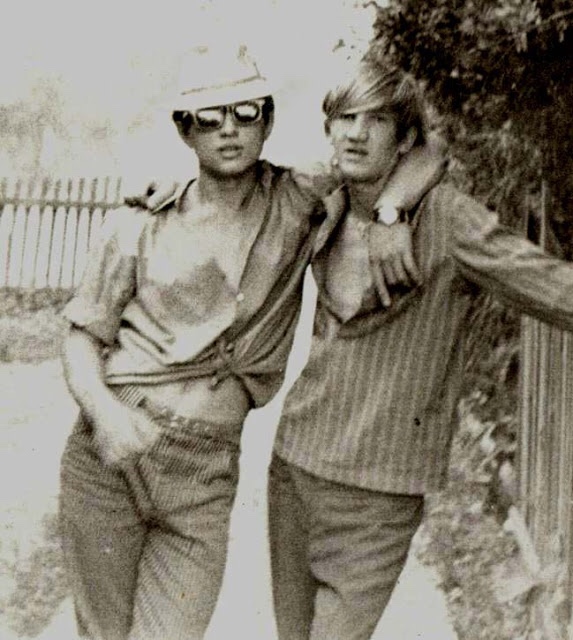
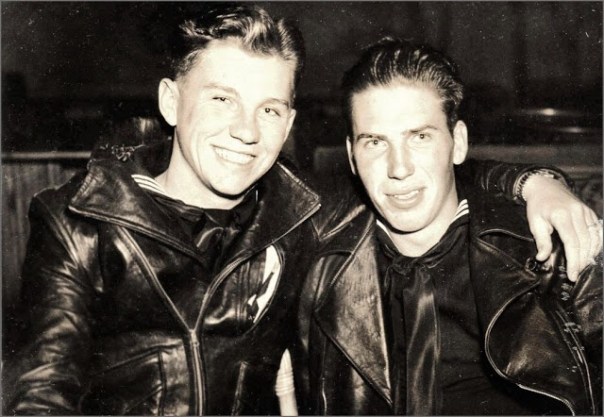
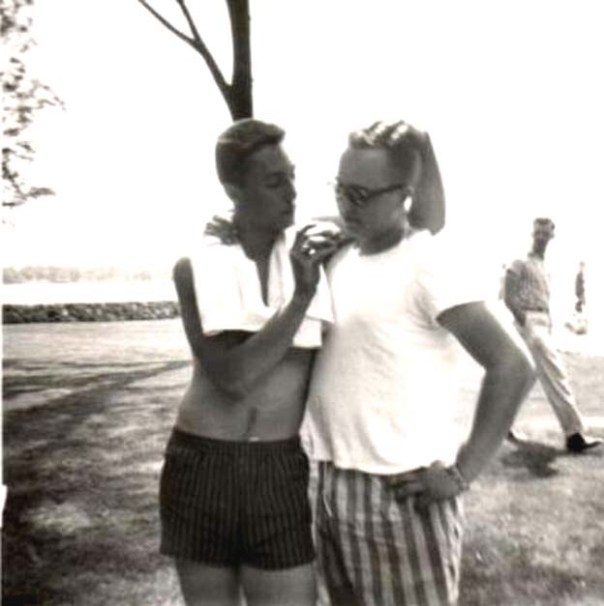
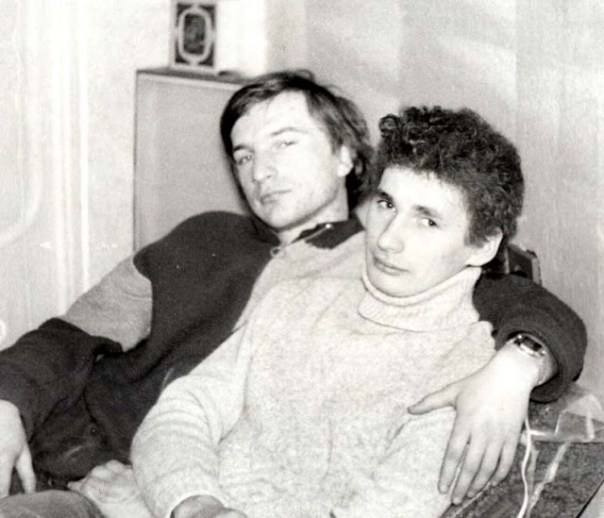
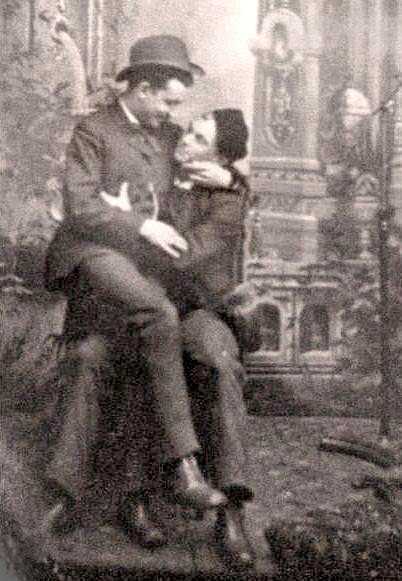
A recent study found that some straight guys still think gay guys aren’t masculine. Evidently, one male displaying affection towards another male isn’t considered “manly.” But that wasn’t always the case. Once upon a time, men were much more forthcoming when it came to showing their softer sides.
Check out these vintage pictures of men from yesteryear displaying sweet man-on-man affection.
There was no royal or parliamentary law against homosexual activity in England until 1533, but a number of medieval legal sources do discuss “sodomy:.
Fleta, xxxviii.3:Those who have dealings with Jews or Jewesses, those who commit bestiality, and sodomists, are to be buried alive after legal proof that they were atken in the act, and public conviction”
[Fleta, seu Commentarius Juris Anglicani, (London: 1735), as trans in Derrick Sherwin Bailey,Homosexuality and the Western Christian Tradition, (London: Longmans, Green, 1955), 145]
Bailey notes that it is improbable that the penalty or burial alive was ever inflicted in medieval times [although Tacitus refers to it among ancient Germans inGermania12].
Britton, i.10:“Let enquiry also be made of those who feloniously in time of peace have burnt other’s corn or houses, and those who are attainted thereof shall be burnt, so that they might be punished in like manner as they have offended. The same sentence shall be passed upon sorcerers, sorceresses, renegades, sodomists, and heretics publicly convicted”
Bailey notes that this implies a process in which ecclesiastical courts made the charges and convictions and the state put them into effect. There do not seem, however, to have been serious efforts made to put theory into practice. The preamble to the 1533 Law seems to make this clear.
25 Henry VIII. C6
Le Roy le veult
“Forasmuch as there is not yet sufficient and condign punishment appointed and limited by the due course of the Laws of this Realm for the detestable and abominable Vice of Buggery committed with mankind of beast: It may therefore please the King’s Highness with the assent of the Lords Spiritual and the Commons of this present parliament assembled, that it may be enacted by the authority of the same, that the same offence be from henceforth ajudged Felony and that such an order and form of process therein to be used against the offenders as in cases of felony at the Common law. And that the offenders being herof convict by verdict confession or outlawry shall suffer such pains of death and losses and penalties of their good chattels debts lands tenements and hereditaments as felons do according to the Common Laws of this Realme. And that no person offending in any such offence shall be admitted to his Clergy, And that Justices of the Peace shall have power and authority within the limits of their commissions and Jurisdictions to hear and determine the said offence, as they do in the cases of other felonies. This Act to endure till the last day. of the next Parliament”
[Bailey, 147-148, and H. Montgomery Hyde,The Love That Dared Not Speak Its Name: A Candid History of Homosexuality in Britain, (Boston: Little, Brown, 1970) [British title:The Other Love]
Note that the law only ran until the end of the next Parliament. The law was reenacted three times, and then in 1541 it was enacted to continue in force for ever. In 1547, Edward VI’s first Parliament repealed all felonies created in the last reign [I Edw. VI. C.12]. In 1548 the provisions of the 1533 Act were given new force, with minor amendments – the penalty remained death, but goods and lands were not forfeit, and the rights of wives and heirs were safeguarded. Mary’s accession brought about the repeal of all Edward’s acts in 1548 [1 Mar c.1]. It was not until 1563, that Elizabeth I’s second Parliament reenacted the law [5 Eliz I. C.17] and the law of 1533 (not 1548) were given permanent force.
In 1828, the statute of 1563 was revoked by a consolidating act, but the death penalty was retained. In 1861 life imprisonment, or a jail time of at least ten years, was substituted for the death penalty. All these laws were against buggery, and indeed the law of 1828 had discussed matters of proof in terms of penetration. Note that other sexual activities were not specifically criminalised.
In 1885 Mr. Labouchere introduced an amendment to the Criminal Amendment Act of 1885. It read:-
48&49 Vict. c.69, 11:“Any male person who, in public or private, commits or is party to the commission of, or procures or attempts to procure the commission by any male person of any act of gross indecency with another male person, shall be guilty of a misdemeanour, and being convicted thereof shall be liable at the discretion of the Court to be imprisoned for any term not exceeding two years, with or without hard labour”
So for the first time private acts were brought under the scope of the law, as were acts other than anal penetration. This became the famous blackmailer’s charter, and was the law used to convict Oscar Wilde.
[for all the above see Bailey 145-152]
It was the Act of 1533, then, which first made buggery an offense under English criminal law. This law survived in various forms England until 1967, although it was amended in 1861 to substitute life imprisonment for the penalties of death and forfeiture of property.
But the direct effects of this law were not restricted to England. Because of England’s success as a colonial power, and its tendency to impose its entire legal structure on the ruled areas, legal prohibitions against homosexual activity derived from this law extended well outside England. In Scotland, for instance, (which has a separate legal system) the law was not changed until 1979. In many American states “sodomy” laws are still on the books, as also in former British colonies in the Caribbean.
.[ref. H. Montgomery Hyde,The Love That Dared Not Speak Its Name: A Candid History of Homosexuality in Britain, (Boston: Little, Brown, 1970)]
A couple’s photographic portrait is an affirmation of their relationship. It states for all to see: “We love each other. We care for each other. We are proud of who we are together.”
During the Victorian era many gay and lesbian couples proudly expressed their love for each other in studio portraits. Unlike the common belief that such relationships were “the love that dare not speak its name,” as Oscar Wilde so famously described same sex attraction in his poem “Two Loves,” gays and lesbians often dared to show their love. Indeed, many gay and lesbian couples more or less lived openly together throughout their lives. This was far easier for women than for men as women were expected to live together if they were not married, or to live with the euphemistically termed “female companion.”
Men, no historical surprises here, had their own haunts for meeting like-minded souls. In London these could be found in the “Molly houses” and gentlemen’s clubs or pick-ups haunts at Lincoln’s Inn, or St. James Park or the path on the City’s Moorfields, which was charmingly referred to as “Sodomites Walk.”
Theaters and circuses were also well-known dens of homosexual activity—this can be traced all the way back to Elizabethan England, when male prostitutes plied their trade at theaters.
The armed forces, in particular the Royal Navy was notorious for gay relationships—understandable with all the horny seamen looking for any port in a storm. Apparently word got around.
It is a moot point that the change in public attitude towards homosexuality commenced with the Labouchere Amendment to the Sexual Offences Act in 1885, which “prohibited gross indecency between males.” This was the law under which Wilde was infamously prosecuted and the law that heightened discrimination against gays.
Before that there had been the Buggery Act—against anal penetration and bestiality—which was introduced during the reign of Henry VIII. This led to numerous executions (hangings) and imprisonments. It was briefly repealed, then reinstated by Elizabeth I. However, there were few prosecutions under the act and it was repealed again in 1828—though “buggery” remained a capital offense. James Pratt and John Smith became the last two men to be executed for buggery, in 1835.
The Labouchere Amendment outlawed homosexuality and made it more difficult for gay men to live the lives they desired. Labouchere did not include lesbians in the act as he believed drawing attention to lesbianism would only encourage sapphic desires amongst most Victorian women.
So even when gay relationships were outlawed in England, they still thrived in open secret. In America, the sodomy laws varied from state to state. What one state tolerated or had no opinion about, another state punished. However, as with England in the Victorian era, America gay and lesbian couples would often openly express their love for each other in portrait photographs.
This collection of beautiful, brave people gives us a small visual history of LGBT relationships from the 1860s-1960s. Many of the couples are unidentifiable, but where possible their names have been given. (Editor writes: Mild disclaimer: Of course it’s difficult to say that in all cases these photos are of gay couples.)
Vintage Gay Love: A Look Back At The Early Gay Pioneers in Photos
The following is a photo tribute to gay couples from the late 19th century and first half of the 20th Century. It is a testament to the early pioneers of the LGBT movement who have made the world a more accepting and compassionate place for everyone today. It is also a reminder that homosexuality has been around since the beginning of mankind and is not something which can be legislated back into the closet.
England, 1875
Unknown location, 1880’s
New York, 1900
Unknown, Early 1900’s
Europe, 1906
New York, 1907
“A friend of mine found this old photograph in a shoe box in his Grandmother’s attic. On the back was written… Aunty Mary and her “friend” Ruth, 1910. I wonder if those quotation marks imply what I think they do, by the look on their faces, I would say they do”
Unknown, 1912
Unknown, 1914
Unknown Lesbian Couple, 1915
WWI couple, England, sometime between 1914-1918
California, 1923
Unknown, 1925
Unknown
Unknown
Unknown
Source: Flickr / gaytwogether.com / and are the property of their owners.
As many of my blog followers would have noticed, I put a slightly perverse twist on the word “history”.
I love history, and always have. I excelled at it at school, right from the first day of what was then “Social Studies” at high school, which then morphed into history. As soon as the teacher started on about ancient Greece and Rome, I was hooked.
Ancient Greece & Rome – the beginnings of an addiction to History
In first form at High School, I was given the more complicated history projects, as Mrs Wilson, my asocial Studies teacher, knew I’d do the research, and put it all together in a professional way. I always scored high marks in history exams, and entered my School Certificate exam at Ordinary level for history, coming out with an Advanced pass. I had the ability that, even if I couldn’t recollect exact dates of events, I could fill in the gaps with a whole raft of other facts and figures surrounding the event. It’s a shame I can’t say the same for Math, Geography & Science – all subjects I had no love for.
This love of history has been with me all my life, and shows no signs of slowing. One of the great things I have applauded in recent years has been a strong movement towards telling the truth about history. Like many others, I grew up with a sugar-coated view of history. It was almost like we had to be protected from the very events that have placed us where we are right now! Yes, wars happened, but it was about the actual battles and the total outcome that was taught, not the actual human cost, the great blunders that cost lives…and I point directly at Gallipoli here as an example…the cities and towns and villages that were obliterated, and the millions left homeless and wandering. It never spoke of the hardships of the battlefield, where survival was an unexpected turn for those caught up in the romantic notions of war sold to them to get them to enlist. We were never taught about the aftermath of war, the disabilities, the mental anguish whereby that supposed “return to normality” never happened. My own father, who was in New Guinea and Borneo during the war, never recovered from the savageries of war, and was very much a twisted man up to his eventual suicide in 1978.
The history I grew up with extolled the virtues of the wrong people, like the ever adored Winston Churchill, who is credited…controversially…with helping to win WWII. We were never told of his drinking, his depression, his arrogance, unpopularity within parliament, his many bad decisions that resulted in the deaths of untold hundreds of thousands of people…decision making from afar, with no concern for the losses. Likewise, the Holocaust was totally ignored, the long years of events that led to Hitlers rise to power, nor the staggering death legacy of people like Stalin, and Mao Tse Tung. These were names that were just dropped into, and pulled out of, history as if their existence had no consequence. With the release of records, and film footage over the last few decades, we now have a clearer picture of the events that shaped the world around us.
But having said that, history is not just about the major events that happen around us, both in the past, and now. If we take the word ‘history’ literally, what has just happened is, in the blink of an eye, history! It is not just about what has happened in the past, but is happening right now around us, globally. The good…and the bad! Nor is it about great people, those with prestige and power. It’s about the tiny events by almost unknown people that has a long-term affect on the world. It’s about inventions, taking chances and risks, writing notes and letters, or just being a bit out-there and wacky. History isn’t just about all the serious shit – it has, quite often, an amusing and eccentric side to it.
And this is what I look for!
How many of you would read my blog posts if they were about the known, and mundane! As a gay man, I have lived through some major milestones of gay history, everything from the activism of the 70s and 80s, to the ghettoisation of the lgbt communities, to the devastation of HIV/AIDS, and the advent of Gay Pride.
However, like the world view of history, I don’t want to bore my followers by banging on about events they are already aware of. We all know about Stonewall, Gay Pride, Larry Kramer and the beginnings and politics of HIV. We know about Harvey Milk et al. Amongst all the night club dancing, the drugs, the sex, there was…and is… a plethora of other events happening. In many respects we have a bit of a blinkered view of our history on the gay scene (déjà vu?), seeing it mainly as events that happened from the mid-70s onwards. As you would have seen from the scope of my posts, the affects of both out-there and closeted gay people has been around for centuries. It is the weird, wacky, eccentric, brilliant, sad, funny, serious, fun, and downright fascinating shit that makes gay lives the earth-shattering influence they can be. That is what I want YOU to know about. If I can make you gasp, roll your eyes, or laugh then my aim has been a success.
I know there are politically correct individuals out there in Gayland who probably take offence to my calling the category “gay” history…and I don’t care, quite frankly. Their bleating falls on deaf ears. I identify as a GAY man, and as such use that term to define everything I do. However, that does not make me narrow-minded in the scope of what I post. I do not change terminologies to suit my own agenda. If an article is on queer, or trans, or homo, or bisexual…or any other terminologies within our community…culture, that is how it will be posted. I might be a narky old 80s queen, but I can assure you my world view is wide, and inclusive. The very multi-directional way our community has evolved is part of its…history.
Finally, I have to say I have loved putting these posts out there. It has indeed been an education for me as well. Who knew there was this much weirdness out there! And as gay people there is one thing I do know…the weirdness will never end as long as our community, and the individuals within it, are out there.
Bring on the Gay History!
Tim Alderman 2019
The blog owner Tim Alderman, with one of his two adored Jack Russells. They inspire me every day.
.I’m careful not to say that these men were gay because they could be brothers, best friends, etc. but most of them sure look like gay couples.
In Times of Hate, Chose to Love
Bromance or lovers?
Since the men in these photos are unknown, it’s impossible to know if they were gay couples or just “good friends.” Most vintage photographs of gay couples were eventually destroyed by horrified family members. For every photo that I may have mistakenly identified as gay, thousands more were burned or torn into pieces to keep a family secret.
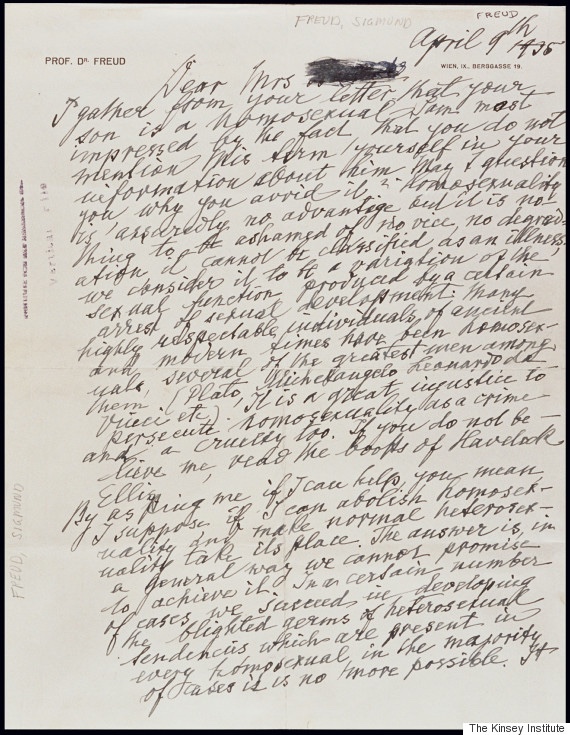
In 1935, Sigmund Freud penned a response to a mother who had asked him for help with her gay son. Despite the broader perceptions of homosexuality at the time, Freud took a different approach, telling the woman it’s “nothing to be ashamed of.”
“I gather from your letter that your son is a homosexual. I am most impressed by the fact that you do not mention this term for yourself in your information about him. May I question you why you avoid it?” he wrote. “Homosexuality is assuredly no advantage, but it is nothing to be ashamed of, no vice, no degradation; it cannot be classified as an illness; we consider it to be a variation of the sexual function, produced by a certain arrest of sexual development. Many highly respectable individuals of ancient and modern times have been homosexuals, several of the greatest men among them.”
While the this correspondence sheds light on his personal communications, it has long been known that Freud did not view homosexuality as a pathology. He believed everyone was born bisexual and later became either straight or gay because of the relationships with those around them. In the letter, Freud does suggest “treatment” for homosexuality may be possible, but says the result “cannot be predicted.”
The letter currently appears on display in London as part of an exhibition at Wellcome Collection called “The Institute of Sexology.” (Scroll for transcription.)
The Kinsey Institute
Dear Mrs [Redacted],
I gather from your letter that your son is a homosexual. I am most impressed by the fact that you do not mention this term yourself in your information about him. May I question you why you avoid it? Homosexuality is assuredly no advantage, but it is nothing to be ashamed of, no vice, no degradation; it cannot be classified as an illness; we consider it to be a variation of the sexual function, produced by a certain arrest of sexual development. Many highly respectable individuals of ancient and modern times have been homosexuals, several of the greatest men among them. (Plato, Michelangelo, Leonardo da Vinci, etc). It is a great injustice to persecute homosexuality as a crime – and a cruelty too. If you do not believe me, read the books of Havelock Ellis.
By asking me if I can help, you mean, I suppose, if I can abolish homosexuality and make normal heterosexuality take its place. The answer is, in a general way we cannot promise to achieve it. In a certain number of cases we succeed in developing the blighted germs of heterosexual tendencies, which are present in every homosexual in the majority of cases it is no more possible. It is a question of the quality and the age of the individual. The result of treatment cannot be predicted.
What analysis can do for your son runs on a different line. If he is unhappy, neurotic, torn by conflicts, inhibited in his social life, analysis may bring him harmony, peace of mind, full efficiency, whether he remains a homosexual or gets changed. If you make up your mind he should have analysis with me — I don’t expect you will — he has to come over to Vienna. I have no intention of leaving here. However, don’t neglect to give me your answer.
Sincerely yours with best wishes,
Freud
P.S. I did not find it difficult to read your handwriting. Hope you will not find my writing and my English a harder task.
This couple spent a year collecting fascinating LGBTI data to answer every question you can dream of
Pride in London: One couple has gathered LGBTI data from around the world to get to know the crowds better. Photo David Hudson
My husband and I spent a year collecting LGBTI data from hundreds of surveys, polls, reports, studies and monographs.
And the result is our new book, LGBTQ Stats: Lesbian, Gay, Bisexual, Transgender, and Queer People by the Numbers.
Ever wonder how many people around the globe live in countries where same-sex activity remains subject to criminal prosecution? Or how many trans people have been elected to public office? What relationship style lesbians prefer? Which US state was the first to elect an openly bisexual governor? Or what the top-grossing films are with LGBTQ content?
We answer these and about 1,000 other questions.
Noted economist and professor MV Lee Badgett, of The Williams Institute, says the book is ‘the most comprehensive portrait of LGBTQ life around.’
There are plenty of surprising facts and eye-opening figures.
My husband David Deschamps explains: ‘I was especially struck by the change in attitudes among young people. There has been a huge generational shift in a remarkably short span of time – from revulsion and derision to acceptance and marked casualness.’
Here is some of the most interesting LGBTI data, stats and facts we found:
Shifting attitudes
In 1994, 51% of college freshmen in the US believed lesbians and gay men should try to be heterosexual. Today, an astonishing 31% of 18- to 29-year-olds in the US and a whopping 49% of 18- to 24-year-olds in the UK describe themselves as ‘not 100% heterosexual’.
In 1985, 24% of Americans said they personally knew a lesbian or gay person. By 2015, that number had risen to 88%.
LGBTIs and the law
There is no country on earth in which LGBTI citizens enjoy the same legal rights that their heterosexual counterparts take for granted.
More than 2.7 billion people live in countries where being LGBTI is punishable by imprisonment, violence, or death.
The UN Security Council’s first meeting dedicated to addressing the persecution of LGBTI people took place In August 2015.
73 countries and 5 entities imprison consenting adults for homosexual acts. In 45 of these nations, the law is applied to women as well as men. In 14 countries, including Uganda and India, the potential penalty for engaging in same-sex activity is life in prison.
France became the first European country to decriminalize same-sex activity between consenting adults of the same gender in 1791. The following countries repealed sodomy laws in the years indicated:
Brazil in 1830.
Mexico in 1871.
Russia in 1917 (recriminalized in 1933 and decriminalized in 1993).
Poland in 1932.
Switzerland in 1942.
England in 1967 (partial decriminalization); gay men achieved full decriminalization in 2003.
Spain in 1979.
All of Australia in 1997.
All of the US in 2003.
Homosexuality remains a crime in 37 of the 52 nations that make up the Commonwealth of Nations (formerly the British Commonwealth).
North Korea, South Korea, Taiwan and Vietnam have never had Western-style sodomy laws.
Japan holds the distinction of having one of the shortest-lived sodomy laws in the world. The statute was in place from 1873 to 1883. Samurai warriors, who had a long tradition of same-sex relations, mounted strong opposition to the law and helped to get it repealed.
South Africa’s post-apartheid constitution of 1996 was the first in the world to prohibit discrimination on the basis of sexual orientation.
Lesbian, gay and bi people in the armed forces
LGB people can serve openly in the military in 49 countries, including Albania, Germany, Israel, Japan, and Thailand. Two additional countries, Mexico and South Korea, don’t ban LGB people from serving in the military, but they are often harassed and/or discharged.
Transgender people can serve in the military in 19 countries, including Australia, Canada, Sweden, the United Kingdom, and the United States.
Shocking HIV stats
Globally, trans women are 49 times more likely to have HIV than other adults of reproductive age.
As a result of homophobic laws, lack of sex education, and the absence of needle-exchange programs, the size of Russia’s HIV-infected population nearly doubled between 2010 (when it stood at 500,000) and 2015 (when it reached 930,000).
The AIDS Memorial Quilt was first unveiled at the Second National March on Washington for Lesbian and Gay Rights on 11 October 1987. It is composed of more than 48,000 panels. Each panel is a tribute to someone who has died of an AIDS-related illness. It is the largest piece of folk art in the world. The quilt covers 1.3 million square feet (or about 50 miles or 80 kilometers) and weighs more than 54 tons. More than 14 million people have seen it at thousands of displays worldwide. It was nominated for the Nobel Peace Prize in 1989.
Lesbian and gay prime ministers
Jóhanna Sigurðardóttir
became Iceland’s first female prime minister — and the world’s first openly lesbian head of government — on February 1, 2009. She served until 2013. There have been three other openly LGBT heads of state:
Elio Di Rupo, prime minister of Belgium from 2011 to 2014.
Xavier Bettel, prime minister of Luxembourg from 2013 to the present.
Leo Varadkar, who at 38 made history in 2017 by becoming Ireland’s youngest and first openly gay prime minister.
The first bisexual governor and trans politicians
On February 18, 2015, Kate Brown became the first openly bisexual governor in American history. Brown was sworn in as Oregon’s governor following the resignation of her predecessor. She became the first openly bisexual person to be elected governor in the US after her victory in a 2016 special election.
According to a Washington Post analysis published in December 2015:
Since 1977, 139 transgender candidates have run for more than 200 races in 31 countries.
52 transgender candidates were elected.
Nearly 90 percent of these candidates were trans women.
As of December 2015, 20 transgender elected officials were in office.
The ‘gay happiness index’ winners are…
In a 2015 study of 115,000 of its members, Planet Romeo – an international social network for GBT men – created a ‘gay happiness index’. It had three criteria:
How do gay men feel about society’s view of homosexuality?
How do gay men experience the way other people treat them?
Are gay men satisfied with their lives, and do they accept themselves?
Based on these criteria, of the 127 countries rated, the top nations in the gay happiness index were:
1 Iceland
2 Norway
3 Denmark
4 Sweden
5 Uruguay
6 Canada
7 Israel
8 Netherlands
(The UK ranked 23rd and the US ranked 26th.)
The lowest-ranked nations (in descending order) were:
What kind of relationship do lesbian and bi women want?
Lesbian website Autostraddle asked 8,566 self-selected lesbian, bisexual, and trans women about their preferred relationship style in a 2015 survey:
61.7% of respondents chose monogamy.
22% chose ‘mostly monogamy’ – which, in the words of the survey authors, ‘means many different things to many different people’.
6% chose an open relationship.
5.3% chose polyamory.
1.4% chose ‘don’t ask, don’t tell’. That means partners are free to do whatever they want with whomever they want as long as it doesn’t become known to the other partner.
0.58% chose polyfidelity. If you are in a relationship with more than one other person and you are all emotionally and sexually faithful to each other.
0.39% chose triad — a closed relationship that involves three people, also called a ‘thruple’.
Where are all the LGBTI families?
The US states with the highest proportion of same-sex couples raising children are:
Mississippi – 26%
Wyoming – 25%
Alaska – 23% What LGBTI films are box office hits?
Two LGBTI-themed films share the title of winning the most Oscars. This year Moonlight won Academy Awards for Best Picture, Best Supporting Actor, and Best Adapted Screenplay. And in 2006 Brokeback Mountain won Academy Awards for Best Director, Best Adapted Screenplay, and Best Score. The Academy also nominated Brokeback Mountain for Best Picture but it missed out.
At $83,043,761
in US earnings, Brokeback ranks as the fourth-highest-grossing LGBTI film. The Birdcage is first ($124,060,553), Interview with a Vampire comes second ($105,264,608), and The Imitation Game is third ($91,125,683). To date, Moonlight has grossed $27,854,932.
Which city in the world has the biggest Pride?
According to estimates from organizers, police, and media accounts, the largest LGBTI Pride events, calculated by the number of attendees, include:
1 São Paulo Pride Parade (2006) – 3 million people.
2 Madrid Europride Festival (2007) – 2.3 million.
3 New York City Pride Parade (2016) – 2 million.
4 San Francisco Pride Parade (2014) – 1.7 million.
5 New York City Pride Parade (2015) – 1.6 million.
6 Cologne Europride Parade (2002) – 1.4 million.
7 Toronto Pride Festival (2012) – 1.2 million.
8 Madrid National Pride (2012) – 1.2 million
And some ‘firsts’ from LGBTI history
Dr Magnus Hirschfeld founded the first ‘homosexual emancipation organization’ on 15 May 1897. It was called the Scientific-Humanitarian Committee and was in Berlin.
The first formally organized LGBTI movement group in the United States was the Society for Human Rights in Illinois in 1924. A few months after its founding, the group ceased to exist in the wake of several members’ arrests.
According to historian Susan Stryker, ‘the first known incident of collective militant queer resistance to police harassment in US history’ took place in August 1966. Transgender people staged a rebellion outside Compton’s Cafeteria in San Francisco’s Tenderloin district to protest mistreatment and abuse by the police.
A world of LGBTI data
LGBTQ Stats: Lesbian, Gay, Bisexual, Transgender, and Queer People by the Numbers is published by The New Press. Husband-and-husband team of David Deschamps and Bennett Singer are the authors
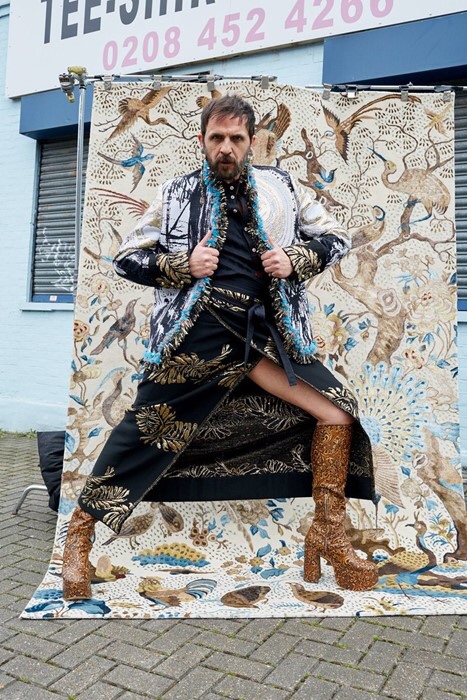
Andreas Kronthaler for Vivienne Westwood A/W16Photography by Juergen Teller
AnOther traces the history of male icons who have challenged modern tropes of masculinity, from Louis XIV toAndreas Kronthaler
It’s important to note that it’s only within the past few of centuries of western fashion that menswear has become synonymous with the tropes of masculine dress we might think of today. Even this relatively recent history of gender-regulated, pared-down, ostentation-eschewing style has been punctured with numerous anomalies that challenge the norms of said masculine taste standards. Heels, cosmetics, and other accoutrements that often constitute the cultural symbols of femininity have, at various periods, been equally associated with men and masculine ideals. As critics today return to embracing these often-neglected facets of men’s style, and designers from Andreas Kronthaler for Vivienne Westwood toGrace Wales Bonner turn away from contemporary conventions of masculinity, we explore the appearance ofthe decorated malethroughout history.
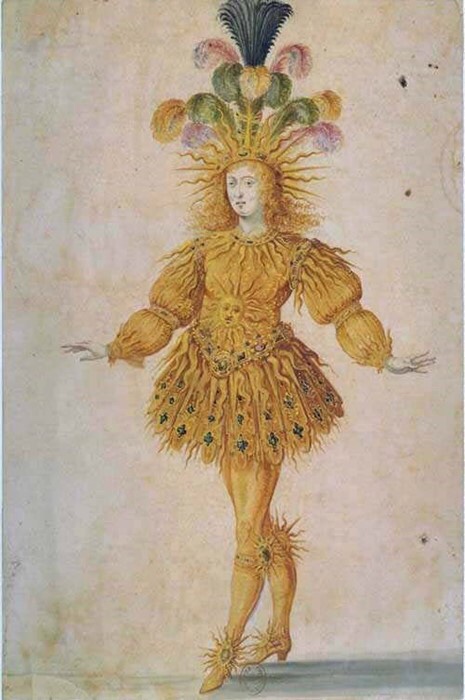
Louis XIV as Apollo in Le Ballet Royal de la nuitArtwork by Henri Gissey
Power Heels, Powder and Patriarchy
As is so often the case, one cannot speak about western fashion without mentioning examples outside the Occident. Makeup for men is known to have been prominent throughout the ancient world, with nail varnish being worn by those throughout all ranks of society at least as early as 3000 BCE in Japan and China. Perhaps the best-known example of ancient male cosmetics would be the wearing of eye makeup by the ancient Egyptians, while heels are a comparatively younger affair, worn by men throughout the medieval near east where they had the functional purpose of allowing horse riders to stand up in their stirrups and fire arrows. When these same Persian heels arrived in the court of Louis XIV, their purpose was altogether more decorative. Himself an admirer of this elevated footwear, they came to be known as the “Louis Heel”. The image of the 17th aristocrat is possibly one of the most prominent historical images of the decorated man; alongside heels, they opted for wigs, face powders and other makeup such as artificial beauty spots.
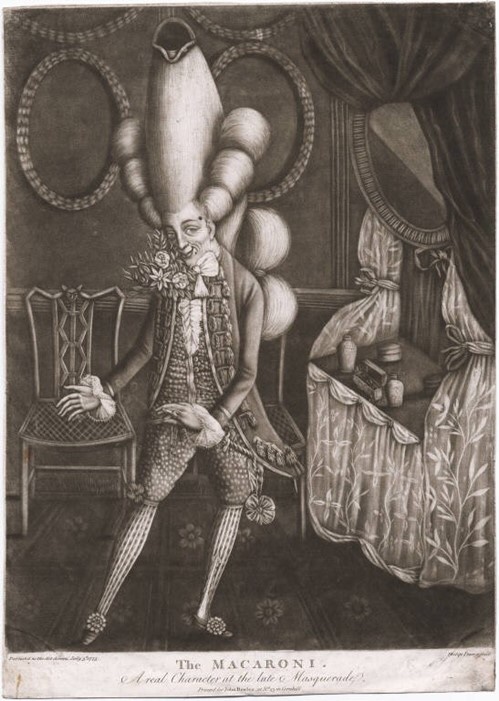
The Macaroni. A real Character at the late MasqueradeMezzotint by Philip Dawe, 1773
So many of these items were simply not yet strict symbols of femininity. Indeed, far removed from today’s concepts of masculine dress, many of these were as much to do with power and patriarchy as individual expressions of style. It is often cited that the diminutive King Louis took to heels and towering wigs to impart a more “monarchic” height, while it has been observed that it was only due to trends of women imitating men’s fashion that the heel became common amongst both genders. In 18th-century Europe, particularly in England, decoration reached new heights with the “Macaroni”. Macaroni referred to groups of cultured young men whose interest in fashion was seen as excessive. Their hairstyles and powdered wigs, jewellery, attire, makeup and generally “effete” appearance were cause for concern amongst many who felt they were rather too unmanly. It is worth noting, however, that whilst frowned upon and associated with effeminacy, there was not quite the same negative weight to such styles (or indeed to effeminacy) as there later was in Victorian society. Class, however, was heavily at play and while it might be considered acceptable or even suitable for a man of certain social status to sport highly stylised attire, a man of lower rank would not be received as warmly.
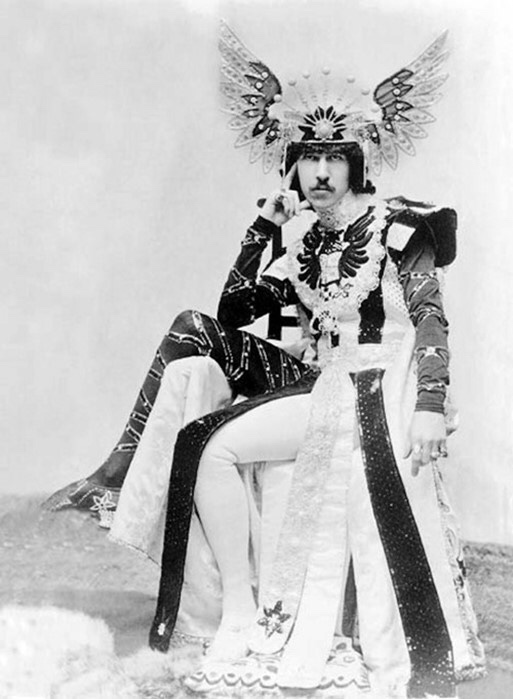
Henry Cyril Paget, 5th Marquess of Anglesey
Eccentrics and Exiles
There was a notable shift come the Victorian era, one that was particularly visible in Britain. Following some high-profile scandals in the press, attitudes towards gender became markedly less tolerant. In many ways, the late 1800s in particular can be thought of as a cut-off point for the social rules that shaped men’s style – whatever was considered masculine around this period remained so in a manner that had not quite been so rigid previously. This rigidity did not mean that there weren’t several who defied or ignored convention. If fortunate they were classified as eccentrics, as was the case with Henry Cyril Paget, whose elaborate headdresses and bejewelled costumes (which often contained Louis heels), amazed and also horrified many.
Paget, however, had the protections of wealth and status and that often worked to convert perceived queerness into tolerated eccentricity. Others were not so lucky. Even the likes of photographer Cecil Beaton, who was by no means lacking in money and social standing, suffered from the rampant homophobia that suffused the post-Victorian air. At a friend’s ball, he was famously dunked in a fountain by a group of “hearties”, because of his wearing makeup. Similarly, Quentin Crisp’s love of makeup and feminine attire resulted in his being chased through the streets, kicked and beaten. What was certainly apparent by the 1930s was that, in the public consciousness, the image of the decorated man had become consolidated with a vision of femininity and queerness that was violently received.
Self-portraitPhotography by Samuel Fosso
The Opening and Breaking of Menswear
This consolidation was to have a lasting effect. Vogue ball culture, which emerged from American black drag scenes of the 1930s, is particularly pivotal, in that it shows how queer cultures and groups utilised the negative connotations of the decorative to challenge and undermine the dominant status of masculinity. Elsewhere, counterculture made constant recourse to what had become strictly feminine symbols. With the disco movement, we see men in heels once again, this time in the form of platforms, while the flamboyant impulse was once more loose in the embracing of all the glitter and ornament that have now come to be thought of as “camp”. Similarly, the New Romantic movement which came about almost a decade later is defined by its disregard of the doggedly concrete rules about what men could and couldn’t wear, elevating instead the “excesses” of costume.
Current conversation regarding menswear and cosmetics is becoming increasingly preoccupied with noting the breaking down and opening up of menswear. For many, the mere loosening of men’s fashion is not enough – the very existence of menswear and womenswear as two separate strands, something which is central to the mechanisms of the fashion industry, continues to keep harmful gender norms alive (in spite of the move of some designers, like Andreas Kronthaler for Vivienne Westwood, to do away with such divisions). While designers like Claire Barrow emphasise the essential non-binary nature of their clothes, when it comes to more commercial bodies, such as Selfridges, who recently made the decision to promote gender-neutral clothing with a retail concept space titled ‘Agender’, it can be hard not to suspect the cold machinations of trends and advertising at work. For some, defying dominant gender standards is a choice, but for others, it is a necessity and not something to be left to the mercy of consumerism.
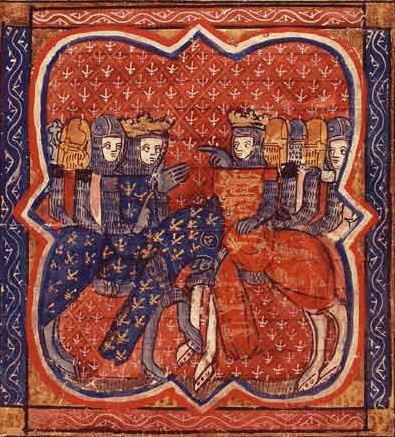
Richard the Lionheart and Philip II of France “ate every day at the same table and from the same dish, and at night their beds did not separate them.”
There are a number of monarchs throughout history who are believed to have been gay. Richard the Lionheart and Philip II are just a couple of kings who seemingly would rather have a relationship with a man than produce an heir and a spare. However, though Richard has been treated as something of a gay icon for years, direct evidence that he and Philip actually had a homosexual relationship is scant.
The source most people point to is a report by Roger de Hoveden, who was a contemporary of the two kings. Here is an English translation of his account:
Richard, [then] duke of Aquitaine, the son of the king of England, remained with Philip, the King of France, who so honored him for so long that they ate every day at the same table and from the same dish, and at night their beds did not separate them. And the king of France loved him as his own soul; and they loved each other so much that the king of England was absolutely astonished and the passionate love between them and marveled at it.
It sounds like solid evidence, but put into the context of the time, sharing a bed wasn’t a big deal. Certainly among lower classes, bed sharing among families happened all the time—it was a way to keep warm, or they might not have been able to afford more than one bed, or had room for more than one. Bed sharing was done as a matter of necessity. There was nothing inherently sexual about it and it was something most did.
In the case of Richard and Philip, the bed sharing and the other statements of love between them were a political statement. The two had teamed up to overthrow Henry II, and were just announcing to the world that France and England were allies. About the notion that the two were gay, historian Dr. John Gillingham states,
The idea wasn’t even mooted until 1948 and it stems from an official record announcing that, as a symbol of unity between the two countries, the kings of France and England had slept the night in the same bed. It was an accepted political act, nothing sexual about it; just two politicians literally getting into bed together, a bit like a modern-day photo opportunity.
Richard the Lionheart was also known to have held political court in his bedroom. He also rewarded his favourite servants with the opportunity to sleep at the foot of his bed at night. Again, there is no evidence to suggest that anything more than sleeping occurred on these occasions. He shared a bed with others to symbolize trust.
In later years, political leaders would often greet each other with “the kiss of peace” which was Biblically sanctioned. Again, the kiss meant nothing more than a handshake does today.
While the bed sharing and eating together wasn’t necessarily a positive indicator of the pair’s sexual preferences, the two for a time maintained a close alliance and apparent friendship. In fact, Richard was engaged to Alice, Philip’s sister for a while. However, he ended up renouncing her and spreading a rumour that she was having an affair and had given birth to an illegitimate child. Richard also married his wife, Berengaria of Navarre, while he was still betrothed to Philip’s sister. Not exactly things a person should do if they were trying to keep on the woman’s brother’s good side.
As previously mentioned, Philip also helped Richard win the crown of England. Thanks to their alliance, Philip went to war against Richard’s father with Richard later joining in, ultimately defeating Henry II. Henry then named Richard his heir and died two days later.
Philip and Richard’s relationship eventually soured. The pair spent the last five years of Richard’s life in bitter rivalry and open war. Richard ended up winning many of the battles between the two, but Philip outlasted him. Supposedly, Richard was shot and killed by a boy who was acting out of revenge. Whether that is true or not, the arrow he was shot with didn’t hit anything vital, but the wound became gangrenous, at least giving him time to set his affairs in order before he succumbed to infection.
Was Richard’s and Philip’s enmity part of a lover’s quarrel as is so commonly said today? The evidence for that is scant. So if not “lover’s quarrel” maybe “bromance turned sour…” or perhaps most accurate of all “political alliance that was no longer necessary or convenient.”
Bonus Facts:
▪ Many people argue that Richard was homosexual because he rarely saw his wife and never fathered any legitimate children. However, he did have at least one illegitimate son and reportedly spent time with other women while on Crusade.
▪ Richard and Philip fought together during the Crusades, but argued over what to do about certain areas, resulting in Philip leaving for France earlier than anticipated. Richard was then captured, and when he was released Philip warned Richard’s brother John: “Look to yourself: the devil is loose.”
▪ Philip’s marital issues also earned him a reputation for being homosexual, though he had enough wives and children to (perhaps) prove otherwise. He had one child with his first wife, Isabelle, who later died in childbirth trying to deliver twins (who also died). He was then married to Ingeborg, the daughter of the King of Denmark, who he despised and confined to a convent before seeking an annulment from the Pope on the grounds of non-consummation. He then took a third wife, Agnes, by whom he had two children, before going back to Ingeborg on the Pope’s orders.
▪ As far as kings go, Richard wasn’t a very good one. He only spent six months of his ten year reign in England and cared more about the Crusades than what was going on in his own country. He is popularly remembered as a good king though, partially because of the Robin Hood legends, where Robin Hood was a supporter of Richard the Lionheart and a sworn enemy of the king’s evil brother, Prince John.
▪ King Philip wasn’t a fan of John, either. After Richard’s death, John became king. Philip and John were at war for years, as Philip suspected that John had kidnapped and murdered Arthur, his daughter Marie’s betrothed.