Category Archives: History

Gay History: Albert Cashier

Albert D. J. Cashier (December 25, 1843 – October 10, 1915), born Jennie Irene Hodgers, was an Irish-born immigrant who served in the Union Army during the American Civil War. Cashier adopted the identity of a man before enlisting, and maintained it until death. Cashier became famous as one of a number of women soldiers who served as men during the Civil War, although the consistent and long-term (at least 53 years) commitment to a male identity has prompted some contemporary scholars to suggest that Cashier was a trans man.[3][4][5][6]

(November, 1864)

Cashier was very elderly and disoriented when interviewed about immigrating to the United States and enlisting in the army, and had always been evasive about early life; therefore, the available narratives are often contradictory. According to later investigation by the administrator of Cashier’s estate, Albert Cashier was born Jennie Hodgers in Clogherhead, County Louth, Ireland on December 25, 1843,[7]:52[2] to Sallie and Patrick Hodgers.[2] Typically, the youth’s uncle or stepfather was said to have dressed his charge in male clothing in order to find work in an all-male shoe factory in Illinois. Even before the advent of the war, Jenny adopted the identity of Albert Cashier in order to live independently.[7]:52 Sallie Hodgers, Cashier’s mother, was known to have died prior to 1862, by which time her child had traveled as a stowaway to Belvidere, Illinois, and was working as a farmhand to a man named Avery.[8][9][10]

Cashier first enlisted in July 1862 after President Lincoln’s call for soldiers.[7]:52 As time passed, the need for soldiers only increased. On August 6, 1862, the eighteen-year-old enlisted in the 95th Illinois Infantry for a three-year term using the name “Albert D.J. Cashier” and was assigned to Company G.[11][12][7]:52 Cashier was listed in the company catalog as nineteen years old upon enlistment, and small in stature.[note 1]

Many Belvidere boys had been at the Battle of Shiloh as members of the Fifteenth Illinois Volunteers, where the Union had suffered heavy losses. Cashier took the train along with other boys from Belvidere to Rockford in order to enlist, in answer to the call for more soldiers.[13]:380 Along with others from Boone and McHenry counties, Cashier learned how to be a volunteer infantryman of the 95th Regiment at Camp Fuller. After being shipped out by steamer and rail to Confederate strongholds in Columbus, Kentucky and Jackson, Tennessee, the 95th was ordered to Grand Junction where it became part of the Army of the Tennessee under General Ulysses S. Grant.[13]:380–381

The regiment was part of the Army of the Tennessee under Ulysses S. Grant and fought in approximately forty battles,[12] including the siege at Vicksburg. [13]:381 During this campaign, Cashier was captured while performing reconnaissance,[7]:55 but managed to escape and return to the regiment. After the Battle of Vicksburg, in June 1863, Cashier contracted chronic diarrhea and entered a military hospital, somehow managing to evade detection.[7]:55–56 In the spring of 1864, the regiment was also present at the Red River Campaign under General Nathaniel Banks, and in June 1864 at the Battle of Brice’s Crossroads in Guntown, Mississippi, where they suffered heavy casualties.[7]:56–57[13]:382–383

Following a period to recuperate and regroup following the debacle at Brice, the 95th, now a seasoned and battle-hardened regiment, saw additional action in the Winter of 1864 in the Franklin-Nashville Campaign, at the battles of Spring Hill and Franklin, the defense of Nashville, and the pursuit of General Hood.[13]:383

During the war, the regiment traveled a total of about 9,000 miles.[7]:52[note 2] Other soldiers thought that Cashier was small and preferred to be alone, which were not uncommon characteristics for soldiers. Cashier fought with the regiment through the war until honorably discharged on August 17, 1865, when all the soldiers were mustered out.[7]:57

Cashier was only one of at least 250 soldiers who were assigned female at birth and enlisted as men to fight in the Civil War.[14][15]
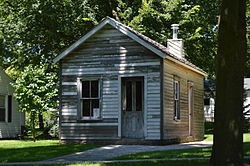
Cashier’s postwar residence, since moved to Saunemin, Illinois

After the war, Cashier returned to Belvidere, Illinois for a time, working for Samuel Pepper and continuing to live as a man.[7]:57[16] Settling in Saunemin, Illinois in 1869, Cashier worked as a farmhand as well as performing odd jobs around the town.[7]:57 and can be found in the town payroll records.[7]:57 Cashier lived with employer Joshua Chesbro and his family in exchange for work, and had also slept for a time in the Cording Hardware store in exchange for labor. In 1885, the Chesbro family had a small house built for Cashier.[17] For over forty years, Cashier lived in Saunemin and was a church janitor, cemetery worker, and street lamplighter. Living as a man allowed Cashier to vote in elections and to later claim a veteran’s pension under the same name.[7]:58 Pension payments started in 1907.[18]

In later years, Cashier ate with the neighboring Lannon family. The Lannons discovered their friend’s sex when Cashier fell ill, but decided not make their discovery public.[7]:59

In 1911, Cashier, who was working for State Senator Ira Lish, was hit by the Senator’s car, resulting in a broken leg.[7]:59 A physician found out the patient’s secret in the hospital, but did not disclose the information. No longer able to work, Cashier was moved to the Soldiers and Sailors home in Quincy, Illinois on May 5, 1911. Many friends and fellow soldiers from the Ninety-fifth Regiment visited.[7]:59 Cashier lived there until an obvious deterioration of mind began to take place and was moved to the Watertown State Hospital for the Insane in March 1914.[7]:60 Attendants at the Watertown State Hospital discovered Cashier’s sex, at which point, the patient was made to wear women’s clothes again after what we can assume would be more than fifty years.[7]:60 In 1914, Cashier was investigated for fraud by the veterans’ pension board; former comrades confirmed that Cashier was in fact the person who had fought in the Civil War and the board decided in February 1915 that payments should continue for life.[19][20][21]

Albert Cashier died on October 10, 1915 and was buried in uniform. The tombstone was inscribed “Albert D. J. Cashier, Co. G, 95 Ill. Inf.”[11] Cashier was given an official Grand Army of the Republic funerary service, and was buried with full military honors.[7]:60 It took W.J. Singleton (executor of Cashier’s estate) nine years to track Cashier’s identity back to the birth name of Jennie Hodgers. None of the would-be heirs proved convincing, and the estate of about $282 (after payment of funeral expenses)[20][21][22] was deposited in the Adams County, Illinois, treasury. The name on the original tombstone is Albert D. J. Cashier. In the 1970s, a second tombstone, inscribed with both names, was placed near the first one at Sunny Slope cemetery in Saunemin, Illinois.[11][23]

Cashier is listed on the internal wall of the Illinois memorial at Vicksburg National Military Park.[24]

A musical entitled The Civility of Albert Cashier has been produced based on Cashier’s life; the work was described by the Chicago Tribune as “A timely musical about a trans soldier”.[25]

Also Known As Albert D. J. Cashier: The Jennie Hodgers Story is a biography written by veteran Lon P. Dawson, who lived at the Illinois Veterans Home where Cashier once lived. The novel My Last Skirt, by Lynda Durrant, is based on Cashier’s life. Cashier was mentioned in a collection of essays called Nine Irish Lives, in which Cashier’s biography was written by Jill McDonough.[26] Cashier’s house has been restored in Saunemin.[27]

Authors including Michael Bronski, James Cromwell, Kirstin Cronn-Mills, and Nicholas Teich have suggested or argued that Cashier was a trans man due to living as a man for at least 53 years.[3][4][5][6]

References

1 Salt. Archived from the original (PDF) on 2007-10-08. Retrieved 2007-12-14.

2 ^ a b c Blanton, DeAnne & Cook, Lauren M. (2002). They Fought Like Demons: Women Soldiers in the American Civil War. Louisiana State University Press. ISBN 9780807128060.

3 ^ a b Cromwell, Jason (1999). “Transvestite Opportunists, Passing Women, and Female-Bodied Men”. Transmen and FTMs: Identities, Bodies, Genders, and Sexualities. University of Illinois Press. pp. 77–78. ISBN 9780252068256.

4 ^ a b Bronski, Michael (2011). “A Democracy of Death and Art”. A Queer History of the United States. Beacon Press. pp. 69–70. ISBN 9780807044391.

5 ^ a b Teich, Nicholas (2012). “The History of Transgenderism and its Evolution Over Time”. Transgender 101: A Simple Guide to a Complex Issue. Columbia University Press. pp. 76–77. ISBN 9780231157124.

6 ^ a b Cronn-Mills, Kirstin (2014). Transgender Lives: Complex Stories, Complex Voices. Minneapolis: Lerner Publishing Group. p. 41. ISBN 9780761390220.

7 ^ a b c d e f g h i j k l m n o p q r s t Tsui, Bonnie (2006). She Went to the Field: Women Soldiers of the Civil War. Globe Pequot. Guilford, Connecticut: TwoDot. ISBN 978-0-7627-4384-1. OCLC 868531116.

8 ^ Benck, Amy. “Albert D. J. Cashier: Woman Warrior, Insane Civil War Veteran, or Transman?”. OutHistory. Retrieved 6 May 2015.

9 ^ Illinois Issues: Little Soldier, Big Mystery, Illinois Public Radio, July 10, 2018

10 ^ McAuliffe, Nora-Ide. “When Jennie Came Marching Home – An Irishwoman’s Diary on Albert Cashier and the US Civil War.” The Irish Times, The Irish Times, 10 Apr. 2018, http://www.irishtimes.com/opinion/when-jennie-came-marching-home-an-irishwoman-s-diary-on-albert-cashier-and-the-us-civil-war-1.3456012.

11 ^ a b c Hicks-Bartlett, Alani (February 1994). “When Jennie Comes Marchin’ Home”. Illinois History. Archived from the original on 2006-09-05. Retrieved 2007-12-13.

12 ^ a b 1 Blanton, DeAnne (Spring 1993). “Women Soldiers of the Civil War”. Prologue. College Park, MD: National Archives. 25 (1). Archived from the original on 5 December 2007. Retrieved 2007-12-14.

2 ^ a b c d e f g Clausius, Gerhard P. (Winter 1958). “The Little Soldier of the 95th: Albert D. J. Cashier”. Journal of the Illinois State Historical Society. 51 (4): 380–387. ISSN 2328-3246. JSTOR 40189639.

3 ^ “The Women Who Fought in the Civil War”. Off the Beaten Path. Retrieved August 5, 2018.

4 ^ Steve Hendrix (August 25, 2017). “A history lesson for Trump: Transgender soldiers served in the Civil War”. Washington Post. Retrieved 10 August 2018.

5 ^ “Deposition of J. H. Himes” (January 24, 1915) from Blanton (Spring 1993)

6 ^ “Recollections – Albert D. J. Cashier”. Saunemin, Illinois. Google Sites. Retrieved 10 August 2018.

7 ^ “The Handsome Young Irishman of the 95th IL Infantry”. eHistory, Ohio State University. Retrieved August 3, 2018.

8 ^ McAuliffe, Nora-Ide. “When Jennie Came Marching Home – An Irishwoman’s Diary on Albert Cashier and the US Civil War”. http://www.irishtimes.com. The Irish Times. Retrieved 8 August 2018.

9 ^ a b “Women in the Civil War”. Warfare History. Retrieved August 3, 2018.

10 ^ a b DeAnne Blanton, Lauren Cook Wike (2002-09-01). They Fought Like Demons. LSU Press. p. 174. ISBN 9780807128060. Retrieved 2018-08-03.

11 ^ “The Handsome Young Irishman of the 95th IL Infantry”. eHistory, Ohio State University. Retrieved August 3, 2018.

12 ^ “Albert D. J. Cashier”. Find a Grave.

13 ^ Bonnie Tsui (2006-07-01). She Went to the Field: Women Soldiers of the Civil War. Rowman & Littlefield. ISBN 9781461748496. Retrieved 2018-08-03.

14 ^ Jones, Chris (7 September 2017). “‘Civility of Albert Cashier’: A timely musical about a trans soldier”. Chicago Tribune. Retrieved 8 August 2018.

15 ^ McDonough, Jill (2018). “The Soldier”. Nine Irish Lives. Algonquin Books. pp. 68–99.

16 ^ “For Love Of Freedom”. Saunemin Historical Society. July 2012. Retrieved 2012-07-14.

Gay History: When Gay Marriage Was A Rite

Gay marriage does not lead to polygamy according to 6000 years of human history. In countries where polygamy is legal, marriage for gays is often illegal. In countries where same-sex marriage is legal, polygamy is illegal.

St. Catherine’s Monastery on Mt. Sinai.

A Long Tradition Of Gay Marriage

As churches struggle with the issue of homosexuality, a long tradition of same sex marriage indicates that the Christian attitude toward same sex unions may not always have been as “straight” as is now suggested. A Kiev art museum contains a curious icon from St. Catherine’s monastery on Mt. Sinai.

It shows two robed Christian saints. Between them is a traditional Roman pronubus (best man) overseeing what in a standard Roman icon would be the wedding of a husband and wife. In the icon, Christ is the pronubus. Only one thing is unusual. The husband and wife are in fact two men.

St. Serge and St. Bacchus

Is the icon suggesting that a
homosexual or same sex marriage 
is one sanctified by Christ?

The very idea seems initially shocking. The full answer comes from other sources about the two men featured, St. Serge and St. Bacchus, two Roman soldiers who became Christian martyrs.

While the pairing of saints, particularly in the early church, was not unusual, the association of these two men was regarded as particularly close. Severus of Antioch in the sixth century explained that “we should not separate in speech [Serge and Bacchus] who were joined in life.” More bluntly, in the definitive 10th century Greek account of their lives, St. Serge is openly described as the “sweet companion and lover” of St. Bacchus.

In other words, it confirms what the earlier icon implies, that they were a homosexual couple who enjoyed a celebrated gay marriage. Their orientation and relationship was openly accepted by early Christian writers. Furthermore, in an image that to some modern Christian eyes might border on blasphemy, the icon has Christ himself as their pronubus, their best man overseeing their gay marriage.

Professor John Boswell’s Startling Discovery

The very idea of a Christian gay marriage seems incredible. Yet after a twelve year search of Catholic and Orthodox church archives Yale history professor John Boswell has discovered that a type of Christian gay marriage did exist as late as the 18th century.

Contrary to myth, Christianity’s concept of marriage has not been set in stone since the days of Christ, but has evolved as a concept and as a ritual.

St. Serge and St. Bacchus, a partnered gay couple

Professor Boswell discovered that in addition to heterosexual marriage ceremonies in ancient church liturgical documents (and clearly separate from other types of non-marital blessings of adopted children or land) were ceremonies called, among other titles, the “Office of Same Sex Union (10th and 11th century Greek) or the “Order for Uniting Two Men” (11th and 12th century). That certainly sounds like gay marriage.

John Boswell

earned the Ph.D. in History from Harvard University in 1975. He became a full professor at Yale University in 1982. Boswell was conversant in 17 languages.

The ceremonies Boswell describes had all the contemporary 
symbols of a marriage.

1 A community gathered in a church

2 A blessing of the couple before the altar

3 Their right hands joined as at heterosexual marriages

4 The participation of a priest

5 The taking of the Eucharist

6 A wedding banquet afterwards

All of these are shown in contemporary drawings of the same sex union of Byzantine Emperor Basil I (867-886) and his companion John. Such homosexual unions also took place in Ireland in the late 12th to early 13th century, as the chronicler Gerald of Wales (Geraldus Cambrensis) has recorded.

One Greek 13th century “Order for Solemnization of Same Sex Union,” having invoked St. Serge and St. Bacchus, called on God to “vouchsafe unto these Thy servants grace to love another and to abide unhated and not cause of scandal all the days of their lives, with the help of the Holy Mother of God and all Thy saints.” The ceremony concludes: “And they shall kiss the Holy Gospel and each other, and it shall be concluded.”

Another 14th century Serbian Slavonic “Office of the Same Sex Union,” uniting two men or two women, had the couple having their right hands laid on the Gospel while having a cross placed in their left hands. Having kissed the Gospel, the couple were then required to kiss each other, after which the priest, having raised up the Eucharist, would give them both communion.

Ancient marriage records can be found in libraries across Europe.

Boswell found records of same sex unions in such diverse archives as those in the Vatican, in St. Petersburg, in Paris, Istanbul, and in Sinai, covering a period from the 8th to 18th centuries. Nor is he the first to make such a discovery. The Dominican Jacques Goar (1601-1653) includes such ceremonies in a printed collection of Greek prayer books.

While homosexuality was technically illegal from late Roman times, it was only from about the 14th century that anti-homosexual feelings swept western Europe. Yet same sex unions continued to take place.

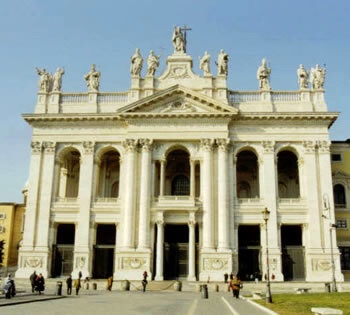
St. John Lateran Church, Rome

At St. John Lateran in Rome (traditionally the Pope’s parish church) in 1578, as many as 13 couples were “married” at Mass with the apparent cooperation of the local clergy, “taking communion together, using the same nuptial Scripture, after which they slept and ate together,” according to a contemporary report.

Gay people have partnered for thousands of years

Another woman to woman union is recorded in Dalmatia in the 18th century. Many questionable historical claims about the church have been made by some recent writers in The Irish Times newspaper.

Boswell’s academic study however is so well researched and sourced as to pose fundamental questions for both modern church leaders and heterosexual Christians concerning their attitude toward homosexuality.

For the Church to ignore the evidence in its own archives would be a cowardly cop-out. The evidence shows convincingly that what the modern church claims has been its constant unchanging attitude towards homosexuality is in fact nothing of the sort.

It proves that for much of the last two millennia, in parish churches and cathedrals throughout Christendom from Ireland to Istanbul and in the heart of Rome itself, homosexual relationships were accepted as valid expressions of a God-given ability to love and commit to another person, a love that could be celebrated, honoured and blessed both in the name of and through the Eucharist in the presence of Jesus Christ.

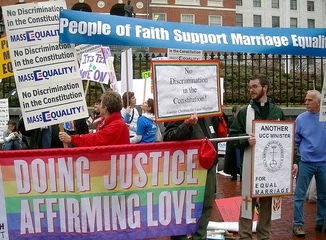
Either we’re all equal under the law or we’re not equal.

Gay Marriages really are about equal rights and civil rights.

Everyone should have the right to get married and enjoy the legal protections for their committed faithful partnership which only legal marriage provides.

This Gay Marriage article, originally published on August 11, 1998 is reprinted from The Irish Times, by permission of its author, Jim Duffy of Dublin, Ireland. Photos and Links added by Rick Brentlinger to illustrate the text.

Jim Duffy is an Irish political reporter, commentator and researcher.

Reference

Gay History: The Secret History Of Gay Saints The Catholic Church Doesn’t Want You To Read

These LGBTI saints prove you can be gay and Christian

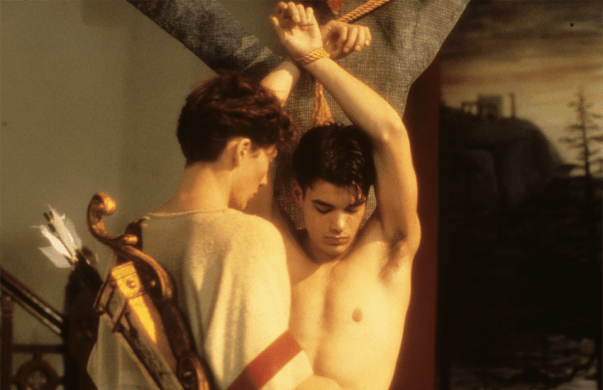
St Sebastian depicted in the 1996 film Lillies.

Some people think you can’t be gay and Christian. What better way to prove them wrong than with a list of LGBTI saints?

The Catholic Church doesn’t want you to read this. They’ve deliberately erased many gay saints from official lists.

And we have to admit it is difficult to find hard historical evidence about most saints. Many of the stories about them are little more than legends.

But if you start looking, there are lots of LGBTI saints and martyrs. Here are just a few of the most famous:

St Joan of Arc

The 1999 movie The Messenger: The Story of Joan of Arc.

Jeanne d’Arc is not just the most famous LGBTI saint but the most famous saint full-stop.

Joan was just a French peasant. But an angel appeared to her in a vision and told her God wanted her to lead the French fight against the English in the Hundred Years War.

She persuaded the French Prince Charles to let her lead his army, even though she had no military training. And, dressed as a male soldier, she achieved a momentous victory over the English at the city of Orléans in 1429.

Thanks to her, the prince was crowned King Charles VII. But Joan was then captured by the English.

They decided she was a heretic and a witch and burnt her at the stake. She was just 19.

Some refuse to accept Joan was LGBTI.

Was she a trans warrior or did she only cross-dress in male armor through necessity? Either way, she would be part of our gay, trans and gender-fluid family today.

Likewise, the same people who claim she was a virgin admit she liked to share her bed with other young women. And that sounds pretty lesbian to us.

St Sebastian

Gerrit van Honthorst’s depiction of Saint Sebastian.

St Sebastian is the original gay icon. This near-naked, young, muscled man – tied to a post and pierced with arrows – is one of the most famous images in fine art.

He was the commander of a company of archers in the imperial Roman bodyguard. And he was known to be ‘close’ to his male superiors. But he had a secret.

To rescue two other Christian soldiers, he ‘outed’ himself as Christian too. The Emperor Diocletian ordered that he should be shot to death by his fellow archers.

Strangely, that didn’t kill him. The pious St Irene saved him and treated his wounds. But Diocletian caught up with him. He ordered a second execution and Sebastian’s fellow soldiers beat him to death.

There’s no single reason why he became the unofficial gay patron saint. It’s a mix of his rumored sexuality, his ‘coming out’ story and his iconic homoerotic image penetrated with arrows. And homosexuality was once considered an illness while St Sebastian was known to save plague victims.

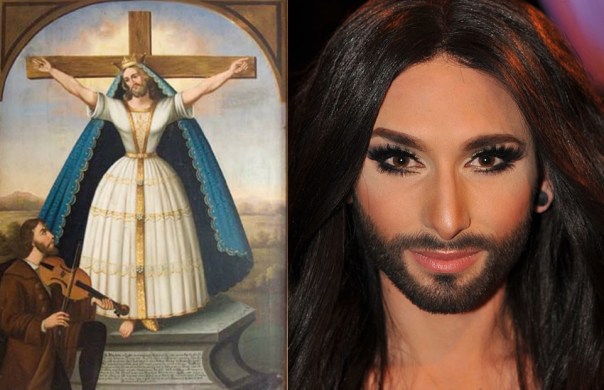
St Wilgefortis

Conchita (right) brought fresh attention to St Wilgefortis.

Legend says Wilgefortis was the daughter of a king in Portugal who took a vow of chastity.

When her father tried to force her into marriage with the king of Sicily she prayed for help. God saved her by giving her a beard and the Sicilian king refused to marry a bearded wife.

So she is a trans male saint.

Sadly, there is no happy ending. Her father got so angry he crucified her.

Her only reward is to become the patron saint of difficult marriages. After all, it’s a particularly difficult marriage that ends in crucifixion. In Spain she is called Librada because she helps women who want to be ‘liberated’ from difficult husbands.

The Catholic Church plays down St Wilgefortis. But after Conchita – another bearded lady – won the Eurovision Song Contest in 2014 for Austria, depictions of the saint gained short-lived cult status.

St Perpetua and St Felicity

George Hare’s 1890 painting Victory of Faith depicted Perpetua and Felicity in prison.

This North African lesbian couple are the patron saints of same-sex relationships.

Perpetua was 22-year-old noblewoman with a newborn baby. Felicity, who was pregnant, was her slave.

Roman soldiers arrested them in around 203AD because they were Christians. They comforted each other in prison and Perpetua wrote a jail diary, describing the visions she had while inside.

Felicity worried that she wouldn’t be martyred because Roman law forbade the execution of pregnant women. But she gave birth to her daughter in time.

The day came for games to celebrate the birthday of the Emperor Septimus Severus. As part of the entertainment, the pair were taken into the amphitheater in Carthage, North Africa, along with a group of male Christians.

Gladiators whipped them. Then a boar, a bear, and a leopard were set on the men, and a wild cow on the women. That still wasn’t enough to kill them and they gave each other the kiss of peace before a swordsman finished them off.

Perpetua’s diary became the ‘Passion of St Perpetua, St Felicitas, and their Companions’. The story was so popular in North Africa that St Augustine ordered people not to treat it like it was part of the Bible.

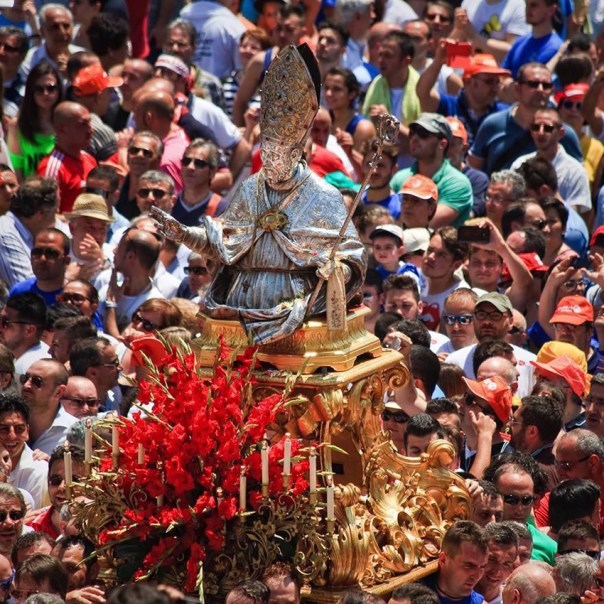
St Paulinus

St Paulinus processed through the streets of Nola, near Naples, Italy.

If you’ve ever heard a bell ringing to call you to church, you’ve got the bisexual St Paulinus to thank. He invented that tradition.

He had previously been a married Roman senator. But after his wife died, he became bishop of Nola in Italy from 395AD to 431AD.

When the Vandals raided the region, a poor widow came to Paulinus asking him to help her son who the Vandals had carried off.

He had spent all his money paying ransoms for other captives. So he went to Africa to offer himself to the Vandals in return for the widow’s son. They agreed and made Paulinus a gardener. But when the Vandal king realized his son-in-law’s slave was the Bishop of Nola, he set him free.

What’s not well known is Paulinus also wrote love poems to his boyfriend, Ausonius. In one, he promised there love would last even after his death. And he added:

Thee shall I hold, in every fiber woven,
Not with dumb lips, nor with averted face
Shall I behold thee, in my mind embrace thee,
Instant and present, thou, in every place.

He is still honored every year in Nola when his statue is paraded through the streets. American descendants of Italians from Nola also honor him in the same way in Brooklyn.

St Francis of Assisi

Mickey Rourke as St Francis of Assisi in the movie Francesco.

St Francis is one of the best-loved religious figures in history, famous for hugging lepers and showing compassion to animals.

What you probably don’t know is he encouraged the other Franciscan friars in his 13th century cloister to call him ‘mother’.

Even more surprisingly, he allowed a widow to enter the all-male friary, renaming her ‘Brother Jacoba’.

And it is likely he had at least one same-sex relationship while in his 20s. His partner’s identity is hidden by history but is thought to be Brother Elias of Cortona.

Thomas of Celano, who knew Francis personally and wrote a biography of him in 1230 just four years after his death, wrote:

‘Now there was a man in the city of Assisi whom Francis loved more than any other…

‘He would often take this friend off to secluded spots where they could discuss private matters and tell him that he had chanced upon a great and precious treasure. There was a cave near Assisi where the two friends often went to talk about this treasure.’

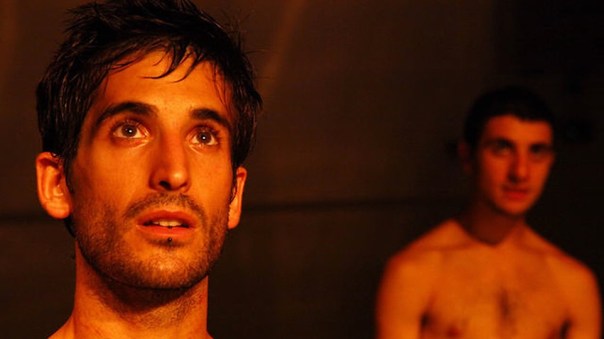
St Sergius and St Bacchus

The Passion of Saints Sergius and Bacchus by Elastic Theatre.

Homophobic Christians tell us that same-sex marriage is against their faith. Trouble is they don’t know their own history. Step forward Saints Sergius and Bacchus.

Sergius was a commander in the Roman army in the third century and Bacchus was his second in command.

They were referred to in the earliest records of their story as ‘erastai’, the Greek word for ‘lovers’. And it’s believed they committed themselves to each other in a Christian ceremony called ‘adelphopoiesis’ or ‘brother-making’ which was a kind of same-sex marriage.

But their faith got them in trouble while they were stationed in Syria in 303AD. As Christians, they refused to sacrifice to Jupiter, the Roman’s chief god.

Officials arrested them, dressed them in women’s clothing and paraded them through the street to humiliate them into submission. But they resisted, chanting they were dressed as brides of Christ.

So the Romans turned to torture. They separated them and beat them so severely that Bacchus died.

That wasn’t the end of the story. That night Sergius had a vision.

Bacchus appeared to him in his soldier’s armor and with the face of an angel. He urged Sergius not to give in, saying they would live together as lovers forever in heaven. It’s a unique martyrdom story, because martyrs are always promised they will be with God in heaven, not with their lover.

Over the coming days, Sergius was tortured and finally beheaded.

Christians honored them as saints right up until 1969, the same year as the Stonewall Riots. The Catholic Church stripped them from the official list of saints, perhaps to starve the emerging gay rights movement of their power.

St Aelred

The Name of The Rose movie depicted medieval monastic life.

The patron saint of friendship was erotically attracted to men, and celebrated male relationships, throughout his life.

Aelred was the abbot of a Cistercian abbey in North Yorkshire, England for 20 years until his death in 1167. He wrote about the link between friendship and spirituality, saying ‘God is friendship’.

And he encouraged friendship between his monks comparing it to the love between Jesus and his beloved disciple, and between Jonathan and David.

Aelred advocated chastity. But his passion for male relationships is clear when he wrote: ‘It is no small consolation in this life to have someone who can unite with you in an intimate affection and the embrace of a holy love…’

In the same passage he describes this relationship with another man as one where ‘the sweetness of the Spirit flows between you, where you so join yourself and cleave to him that soul mingles with soul and two become one.’

St Galla and St Benedicta

Women in the Dark Ages faced few choices, as depicted in The Last Kingdom.

Galla had been married but was widowed after just one year. Not wanting another relationship with a man, she grew a beard to ward them off.

And she went even further. St Galla founded a convent in Rome in the sixth century and fellow nun Benedicta moved in with her there.

Then Galla fell seriously ill and St Peter appeared to her in a vision, telling her to prepare for death. She was devoted to God so liked the idea of going to heaven. But she was also devoted to Benedicta and didn’t want to leave her behind.

So she prayed to Peter that Benedicta would swiftly follow her to the afterlife.

Admittedly, by modern standards, praying for your partner’s death seems a bit wrong. But Peter agreed.

Galla died in 550AD of breast cancer and Benedicta’s death came 30 days later, just as St Peter had promised.

Historical note on gay saints

To historians, we would point out there are around 10,000 Catholic saints (though there is no definitive figure). By any impartial standard, some of them are bound to have been LGBTI.

To Catholics, we would say that you accept a saint’s sanctity on the basis of faith, not scientific proof. So why would you not accept their sexuality on the same basis?

Reference

London Ghosts: The Gory History of Temple Bar

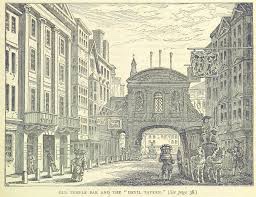
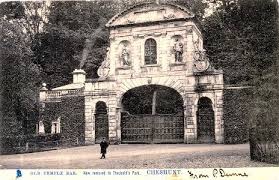
If you stand in front of St Paul’s cathedral and look to your left, towards Paternoster Square, you’ll see a stone arch with windows and well-worn statues. This is Temple Bar. Hard to believe now, but there were once human heads on poles adorning the top of it.

Temple Bar when it was in Fleet Street – note the severed heads on poles on top

The structure was built in 1670 by Sir Christopher Wren, the great architect who gave us St Paul’s Cathedral and many smaller churches. He set about rebuilding London in the aftermath of the Great Fire of London, a vast inferno that consumed much of the ancient city.

This terrible event had one upside. It gave Wren the opportunity to design a new and more ordered metropolis. However, poor Wren’s hopes of creating piazzas and wide streets was confounded at every turn by stubborn Londoners and their wish to keep the medieval winding thoroughfares and dark alleys.

So, why did Wren build Temple Bar? The stone gate replaced wooden posts and chains that separated the City of London from the City of Westminster. It was originally positioned across the road in front of what’s now the Royal Courts of Justice. On one side was Fleet Street in the City and on the other was The Strand leading to Whitehall and the centre of royal government.

Everybody entering the City had to pass under the Temple Bar. It wasn’t entirely popular. For one thing, it held up traffic. The archway soon became way too narrow for the mass of carts, horses, carriage and people trying to cram through and do business. It also had four poorly crafted statues of James I, Elizabeth I, Charles I and Charles II that were described in very unflattering terms by one Victorian writer as “mean” with “small feeble heads”. They’re not the greatest works of art it must be said.

After being removed from Fleet Street – Temple Bar sat in a park outside London unloved and forgotten

The man who carved these mediocre works of art was called John Bushnell. By all accounts, he was somewhere between eccentric and insane. One scheme he devised was to prove that the Greeks could have invaded Troy by building his own Trojan Horse out of timber and covering it in stucco. He spent £500 of his own money (a vast sum then) on this project creating a horse’s head that could hold a dining table to seat twelve people. The whole thing fell to pieces during a storm.

There is a room along the top portion of Temple Bar that was used as a storage room for Child’s bank. On the very top of Temple Bar, the heads of traitors once stared down on passers-by. This was meant to be an object lesson for 17th and 18th century Londoners not to rebel against their anointed kings and queens.

The first head to appear on Temple Bar was Sir Thomas Armstrong involved in the so-called Rye House Plot. Next came Sir William Perkins and Sir John Friend who planned to assassinate King William III as he returned from hunting in Richmond – intercepting his coach between Brentford and Turnham Green. They were hanged at Tyburn despite pleading their innocence – and their heads removed for public display.

In a ghoulish twist, typical of London, there were enterprising people in 1746 who were reportedly hiring out looking glasses at Temple Bar so that passers-by could take a closer look at the severed heads. It cost a halfpenny apparently. In 1766, a man was arrested for firing musket balls at the heads – which he then confessed to having done for three nights running.

In 1772, one of the heads blew down during a storm. Incredibly, the blackened object had been on top of Templar Bar since 1723 – nearly fifty years! A chap called John Pearce took it to a local tavern where it was then buried under the floor. Must have been an amusing subject of conversation beforehand!

Reference

Gay History: When The Canadian Government Used “Gay Detectors” To Try To Get Rid Of Homosexual Government Employees

We are all familiar with the colloquialism “gaydar” which refers to a person’s intuitive, and often wildly inaccurate, ability to assess the sexual orientation of another person.

In the 1960s, the Royal Canadian Mounted Police (RCMP) attempted to use a slightly more scientific, though equally flawed, approach- a machine to detect if a person was gay or not.  This was in an attempt to eliminate homosexuals from the Canadian military, police and civil service. The specific machine, dubbed the “Fruit Machine”, was invented by Dr. Robert Wake, a Carelton University Psychology professor.

Taking the lead from the United States’ McCarthyism, the Canadian government considered all homosexual public servants to be a threat to national security for various absurd reasons. In order to deal with the “security threats” posed by gay people, a special team in the RCMP was formed. Section A-3’s sole mission was to identify and dismiss from service every homosexual working for the Canadian government. Identified homosexuals were immediately fired or forced to resign.

Initial efforts included following people around and undercover work at various clubs, but this proved to be extremely costly and somewhat inefficient. Thus, Section A-3 decided they needed a new plan, a way to screen every employee directly. This new plan was the “Fruit Machine”.

The Fruit Machine primarily used the “pupil area response test” as an indicator of a person’s sexual orientation, as well as perspiration levels and pulse rate. While undergoing the test, the subject would sit in a dentist-style chair.  They’d then be shown various images, some completely mundane, while others depicted naked or semi-naked photos of women and men. If the subject’s pupils dilated when being shown erotic photos of people of the same gender, s/he was assumed to be homosexual.

Besides the “science” behind the machine being completely flawed, there were other problems as well.  For instance, each photograph changed the amount of light hitting the person’s eyes. If the difference from one slide to another was large enough, this obviously would change the subject’s pupil dilation, but was not accounted for in the results.

The Fruit Machine was not a stand alone test, but many of the other methods used were just as ridiculous. For instance, another test run by the RCMP included monitoring subjects’ physiological responses to specific words such as queer, gay, drag and even bar.

As you might expect, once word got out that the Fruit Machine test was attempting to determine if you were gay or not, rather than a stress testing machine as people were initially told, getting people to take the test became nearly impossible.  That, along with numerous mechanical failures with the machine itself, soon got funding for that particular part of the program cut off and the RCMP’s dream of having a gaydar to screen all Public Employees with was put on hold, though that didn’t stop them from continuing their work trying to root out “dangerous” homosexuals from the Canadian payroll.

Not to be deterred, the RCMP eventually started using a new type of machine, this one, a type of plethysmograph that measured blood flow to genitals while the subject is shown various images. While not nearly as scientifically flawed as the Fruit Machine, this one also, as you might expect, doesn’t give terribly accurate results on the whole and eventually the program for trying to root out homosexuals was abandoned by the Canadian government, but not before at least 400 people lost their jobs after being accused of being gay (with some estimates being significantly higher).

Bonus Facts:

▪ Despite that penile plethsymograph and the vaginal photoplethysmograph are somewhat flawed in detecting someone’s sexual orientation, it is still used to this day in nations like Canada and the United States to try to measure sexual arousal in certain people, though now being used primarily on pedophiles, ephebophiles, and rapists.  Some have even pushed for its use in trials, but to date such evidence is not generally admissible in court in either the U.S. or Canada owing to the highly flawed nature of the results of the test.  Despite this, there are exceptions, such as that courts do use the results of these tests to monitor convicted offenders to help determine things like if they are likely to become repeat offenders if let out of prison.

▪ In Czechoslovakia, such a test was recently used to try to determine if refugees from Iran were actually gay or not, to see if they should be given asylum. (The penalty for being gay in Iran is death and the two in question claimed if they were sent back to Iran, they’d be killed as the police were looking for them due to their homosexuality.)

▪ Funny enough, according to a 1996 study at the University of Georgia, using the somewhat flawed penile plethsymograph test (so take these results with a grain of salt), they found that homophobic men were more likely to be sexually aroused by depictions of gay sex than non-homophobic men.

▪

Canada is not the only country ashamed to have a Fruit Machine as part of their history. The American version of the Fruit Machine (pictured right) is currently on display at the new war museum in Ottawa, Canada. The Canadian Fruit Machine, which was much more elaborate than its American counterpart, has been lost and thought to have been destroyed when that part of the program was shut down.

▪ Delta airlines once argued in a plane crash litigation case that they should pay less for gay passenger deaths owing to the fact that the gay person may have had AIDS, so at that time would have died soon anyways… Delta Airlines later apologized for making that argument.

▪ In 1952, the Unites States Congress enacted a law banning lesbians and gay foreigners from entering the country. The law was on the books until it was repealed in 1990.

▪ A “beard” is someone of the opposite sex who knowingly dates a closeted lesbian or gay man to provide that person with a heterosexual “disguise,” usually for family or career purposes.

Reference

How the Catholic Church’s Hierarchy Makes It Difficult To Punish Sexual Abusers

A report released on Tuesday, July 18, found “a high degree of plausibility” that hundreds of boys at a prestigious Catholic boys’ choir in Germany were physically or sexually abused between 1945 and 1992. The choir was led at the time by Emeritus Pope Benedict XVI’s elder brother, Georg Ratzinger.

Just over a week ago – on July 10 – Cardinal George Pell, a top adviser to Pope Francis, returned to his native Australia to face criminal charges related to sexual assault. While the specific allegations and names of the accusers have not been made public, Cardinal Pell maintains that he has been a victim of “character assassination.” His case will be decided by an Australian court.

These are not the first times the Catholic Church has been rocked by charges of sexual abuse. While reforms in the Catholic Church in the United States have made it mandatory for priests to report instances of sexual abuse, there still remains much work to be done in the Catholic Church worldwide.

From my perspective as a Catholic scholar of religion, one of the challenges in tackling this issue is the hierarchy of the church itself. It is still difficult to hold high-ranking clerics responsible, either for the misdeeds of their subordinates or for the crimes that they may have committed themselves.

Church structure

At the top of the Catholic Church’s hierarchy is the pope. He is said to be the successor of the Apostle Peter, about whom Christ said, “You are Peter and on this rock I will build my church.” For Catholics, the pope is that “rock” that gives the church a firm foundation. The pope is considered to speak infallibly, “without error,” under specific conditions concerning doctrine and morals. But he is not infallible when it comes to personal judgment such as whom he chooses to get advice from.

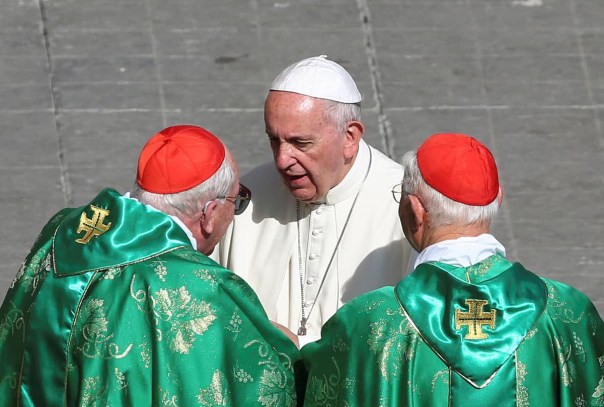
Pope Francis speaks with two cardinals at the Vatican. Alessandro Bianchi/Reuters

Under the pope are bishops, who serve the pope as successors to the original 12 apostles who followed Jesus.

There are also cardinals, who are appointed by the pope, and only they can elect his successor. Cardinals also govern the church between papal elections. Cardinals rank higher than bishops, so not all bishops are cardinals. But now all cardinals are bishops, although in the past there have been exceptions. George Pell is both a bishop and a cardinal, as well as the third-ranking official at the Vatican.

The hierarchical structure of the Catholic Church resembles the military with its high level of administrative control. But the “church” in Catholic understanding is not just a bureaucratic body. It also is a sacred institution that is willed by God.

Priests and obedience

Male priests have the lowest rank in the formal hierarchy. When they are ordained, they take vows of chastity, poverty and obedience to superiors. Usually priests are under the immediate authority of their local bishop, whose administrative area is called a “diocese.”

While priests in many countries are mandated both by the church and civil law to report sexual abuse to church commissions and legal authorities, there has been a culture of denial and secrecy that prevented allegations from being fully investigated. A 1962 Vatican document instructed bishops to observe the strictest secrecy in sexual abuse cases and to address sexual abuse, or “solicitation,” as an internal church matter, not as an offense that should be reported to local authorities.

Despite establishing a commission to look into the problem and address a backlog of cases, Pope Francis has still not established any protocol for handling sex abuse allegations for the Catholic Church as a whole. But the pope has set guidelines for removing bishops who have been “negligent” in addressing cases of abuse. Still, some commentators believe this is not enough.

Sexual abuse ignored

The fact is that there has been a long history of protecting highly placed Catholic leaders from charges of sexual abuse.

When reports surfaced in 1995 that Austrian Cardinal Hans Hermann Groer had molested monks and schoolboys, the sexual abuse was dismissed by Bishop Kurt Krenn as “boyish pranks.” There were also claims that victims were paid “hush money” to buy their silence. The allegations of sexual abuse against Cardinal Groer proved to be true.

In another case from the late 1940s, Marcial Maciel, the Mexican founder of a religious order, The Legionaries of Christ, was a sexual abuser multiple times over. When allegations against Maciel were initially raised, John Paul II ignored them. Joseph Ratzinger, John Paul II’s confident and later successor, remarked: “one can’t put on trial such a close friend of the pope.” Though Maciel was eventually disciplined by Ratzinger when he took over as Pope Benedict XVI, Maciel avoided prosecution until his death in 2008.

In the United States, Cardinal Bernard Law, who protected abuser priests in the Boston archdiocese during his 1984-2004 tenure, has also escaped prosecution. In fact, Law was effectively promoted to a prestigious position as head of one of Catholicism’s most famous churches, Santa Maria Maggiore in Rome.

Challenges to reporting

In all these cases, the hierarchical structure of the church made it difficult to bring high-ranking figures to justice. When you give superiors nearly absolute obedience, the threshold for acting against them is high. By the same token, superiors can often protect offending priests.

A presumption of integrity goes with a high position in the Catholic Church. It is often difficult to believe that a bishop could commit or cover up a terrible crime such as rape or sexual abuse. Also, if the Catholic Church is a divine institution necessary for salvation, then there are those who will protect its reputation at all costs.

There is a tipping point, however. The key moment leading to the resignation of Cardinal Law was a letter, signed by 58 priests, asking him to resign.

Pell’s prosecution, a decisive moment

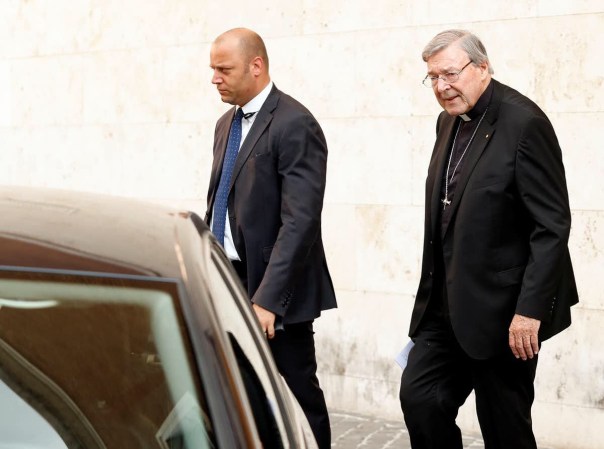
Cardinal George Pell leaves his house in Rome, Italy on June 29, 2017. Remo Casilli/Reuters

The compendium of Catholic beliefs, “The Catechism of the Catholic Church,” observes that the “sanctity” of the church is “real” but also “imperfect.” In other words, the church is composed of human beings who have their limitations. From this perspective, the problem is not hierarchy itself, but how people in high positions misuse their power.

While all Catholics are aware of the “humanness” of their church, the charges against Cardinal Pell are still traumatic for many Catholics who expect integrity in their leaders.

Cardinal Pell’s case marked yet another chapter in the Catholic Church’s struggle to address sexual abuse in its ranks. And now with this latest report concerning the choir school once led by the brother of the former Pope, the Catholic church clearly has much work to do in responding to allegations of sexual abuse.

Reference

Gay History: Is It Okay to Be Gay (and in the Far-Right)?

How outspoken gay figures like Milo Yiannopoulos and Caolan Robertson go down with right-wingers, who – traditionally – haven’t been big fans of the gays.

MILO YIANNOPOULOS AT THE REPUBLICAN NATIONAL CONVENTION CLEVELAND OHIO, USA, 21ST JULY 2016 (MARK REINSTEIN / ALAMY STOCK PHOTO)

In March of 2017, a terror attack in Westminster left 49 people injured and six dead or dying. While victims were still being driven away in ambulances, English Defence League (EDL) founder Tommy Robinson rushed to the scene with a camera crew to pace around outside the police cordon and rant about Muslims. Not long after he’d started, a younger man took over.

Pinching his thumb and forefinger together, the man raises his pinky and tells the camera: “If you import a culture, you get a culture.” Barking at unimpressed spectators, he finishes: “The blood. Is on. Your. Fucking. Hands,” with all the sassy-camp cadence of a RuPaul’s Drag Race queen.

That man was Caolan Robertson, a video producer with 12,000 YouTube subscribers, 41,000 Facebook followers and 35,000 Twitter followers. Robertson, who is gay, says that while “all religions are pretty bad… Islam is particularly worse”. Like fellow gay right-wing figure Milo Yiannopoulos – who became a darling of the alt-right on an anti-political correctness agenda – he has taken arch-campness to a twisted place.

That two public figures on the hard-right are openly gay might surprise some people, given that poster boys of this political persuasion are usually family-oriented and Christian-leaning, like Tommy Robinson and Britain First, or dullard conspiracy theorists, like Paul Joseph Watson. Also, right-wingers – from small-C conservatives up to neo-Nazis – historically haven’t been that keen on gays.

However, gay right-wingers aren’t actually as uncommon as you might think.

The recent case of neo-Nazi Ethan Stables, for example, who was convicted of preparing a terrorist act after plotting to attack a Pride event in Barrow, sharply counters this idea of heteronormative masculinity, as his defence involved an assertion of his own bisexuality. Elsewhere, European hard-right politicians Geert Wilders and Marine Le Pen have played to an LGB – but not T – crowd, while Germany’s far-right Alternative for Deutschland party promoted lesbian Alice Weidel to its leadership.

But how do people like Yiannopoulos – a gay man who harasses trans students on campuses – fit into the UK’s radical right?

Historically, brief radical right acceptance of white gay men plays against a backdrop of institutionalised homophobia. The Nazis’ momentary permissiveness of the gay Storm Battalion co-founder Ernst Rohm is a blip compared to the 50,000 homosexuals imprisoned and 15,000 homosexuals killed during the Holocaust. In 1999, neo-Nazi nail-bomber David Copeland attacked gay people, Bengali Muslims and black people with equal measures of hatred. Nicky Crane may have been a violent neo-Nazi secretly enjoying gay dalliances, but when he came out in 1992 he cast his political views aside, declaring them incompatible with his sexuality.

Then came 9/11, and a shifting – at least in the radical right’s eyes – of the hierarchy of minorities. Here was an opportunity to knit together different factions of the right against a common enemy: Islam.

Just as the Taliban’s treatment of women was seized upon by the Bush administration and its supporters to justify the war on terror, its treatment of queer people was used to cast all Muslims as anti-gay. In 2009, a Gallup Centre for Muslim Studies report seemingly backed up the radical right’s assertions: while 58 percent of the British general public thought homosexual acts were “morally acceptable”, zero percent of British Muslims agreed.

Even the liberal press focused on this statistic: “Patriotic, respectful, homophobic”, read The Independent’s summation. “Muslims in Britain have zero tolerance of homosexuality, says poll,” said The Guardian. Right-wing outlets, still bothered about gays in the Anglican church and the impending doom of same-sex marriage, didn’t quite know where to pitch up.

The day of the shooting at Orlando’s Pulse gay club in 2016, wChose Islam Over Gays. Now 100 People Are Dead Or Maimed”. In it, he describes the actions of an extremist as representing all of Islam, using the poll to back up his claims: “This isn’t about ‘radical’ Islam. This isn’t a tiny fringe,” he writes. “In Britain, a 2009 Gallup survey found that not one Muslim believed that homosexual acts were acceptable. Not one!”

Days later, Yiannopoulos addressed a small crowd in a YouTube livestream, calling for a Muslim ban on that basis. “This is not radical Islam… this is Muslims in the West,” he said, ignoring the fact that the same poll found that 19 percent of German Muslims and 35 percent of French Muslims thought homosexual acts were acceptable, implying countries with a longer legacy of Muslim immigration have more LGB-tolerant Muslims.which killed 49 people, Yiannopoulos wrote an article for Breitbart titled “The Left Chose Islam Over Gays. Now 100 People Are Dead Or Maimed”. In it, he describes the actions of an extremist as representing all of Islam, using the poll to back up his claims: “This isn’t about ‘radical’ Islam. This isn’t a tiny fringe,” he writes. “In Britain, a 2009 Gallup survey found that not one Muslim believed that homosexual acts were acceptable. Not one!”

Days later, Yiannopoulos addressed a small crowd in a YouTube livestream, calling for a Muslim ban on that basis. “This is not radical Islam… this is Muslims in the West,” he said, ignoring the fact that the same poll found that 19 percent of German Muslims and 35 percent of French Muslims thought homosexual acts were acceptable, implying countries with a longer legacy of Muslim immigration have more LGB-tolerant Muslims.

With that, the clash of civilisations narrative was set.

Weeks later, Donald Trump – whose campaign manager at the time was Stephen Bannon, then-CEO of Breitbart – became the first ever Republican nominee for the US presidency to mention LGBT people, using them as leverage to call for a Muslim immigration ban.

As Matthew Feldman – co-director of the Centre for Fascist, Anti-fascist and Post-fascist Studies, and Professor of the History of Modern Ideas at Teeside University – puts it: “The thinking is: ‘If this is another stick to beat Muslims with, we’ll take it. We’ll be silent on the LGBT question, we’ll just talk about their rights in the abstract.'”

ANNE-MARIE WATERS (PHOTO BY JAMES POULTER)

Trump’s views on LGBT people have since wavered, but other British groups are unafraid to exploit professed support for LGBT rights to attack Islam.

In 2016, a Stockton-on-Tees Pride march was organised by a group with no previous affiliations to the LGBT community, but many links to the EDL and Pegida UK, also founded by Tommy Robinson. The march was “appropriating tragedies to promote further bigotry”, warned anti-Islamophobia project Tell MAMA.

The next year, Gays Against Sharia (GAS) – set up by Tommy English, known as Tommy Cook, founder of the EDL LGBT division – carried the baton. Though Tommy Robinson hijacked one of GAS’s marches, rebranding it Unite Against Hate, in September of 2017 GAS held its own parade in Bristol. Footage shows English holding a rainbow flag reading “UNITED TOGETHER, TODAY AND FOREVER. HELP US STOP THE GROWTH OF AN EVIL, HATE-FILLED IDEOLOGY”. Pictured helping carry this banner is Anne-Marie Waters, the lesbian who ran for candidacy of UKIP on an anti-Islam ticket.

The demonstrators had re-framed Islam as the real and sole oppressors of LGBT people, and the far-right as minorities’ protectors – a narrative that’s as transparent as it is cynical.

As for the Gallup analysis, Dalia Mogahed – Director of Research at the Institute for Social Policy and Understanding – tells VICE it has been misinterpreted: “Saying homosexual acts are morally wrong is not evidence that Muslims will hurt the LGBTQ community.”

“Muslims have been part of the UK for literally hundreds of years, and unlike the Christian right do not advocate against the LGBTQ community,” added Mogahed. “In a democratic society, freedom of thought and belief are central principles, including beliefs that we may not agree with. We erode our own values when we start policing thought.”

Mogahed also pointed out the paradox of Yiannopoulos complaining about Muslim bigotry against LGBT people while advocating for the Muslim ban.

Luckily, Yiannopoulos isn’t the threat he once was, having lost the radical right’s affections, Breitbart’s employ and Robert Mercer’s funding after footage surfaced of him defending pederasty. Mind you, he’s still at it: his new website, Milo Inc, both damns gays and uses them as a shield to deflect accusations of Islamophobia. Two headlines read: “All The Studies Show, Gay Parents Are Not Good For Kids”, and “GOOGLE Aids Indonesia’s Muslim Government In Anti-Gay Crackdown”. There is, after all, a limit to how much homosexuality radical right LGBT people can appear to condone.

Caolan Robertson is more overt in his disdain for gay culture. In a video for far-right Canadian YouTube channel The Rebel Media, he attends London Pride 2017, mocks interviewees and calls the event “the most degenerate festival I’ve ever seen”. He also mentions a 2016 ICM poll with questionable methodology which suggests that 52 percent of British Muslims think homosexuality should be illegal, quoting when the stat before asking left-wing journalist and campaigner Owen Jones, “Do you think that’s something that’s a threat to gays in our country?”

Jones replies, succinctly: “Far-right groups… try to cynically appropriate gay rights for Islamophobia.”

In an another video – this time an interview with radical right vlogger, Millennial Woes – Robertson cites an unknown report alleging that “60 percent of gays in the UK admit to having over 500 partners”, adding, “[Gays] have literally shit all over all of the people who fought for their rights to be able to exist by behaving like this.” The only record which correlates to this is a 1978 sociological study regularly shared on Christian websites.

Robertson later left Rebel Media acrimoniously, and now works behind the camera on documentaries with fellow Rebel alumni, alt-right Canadian vlogger Lauren Southern.

Failed UKIP leader Anne-Marie Waters’ beliefs about LGBT rights and Islam can be summed up by one of her tweets: “I’m a gay woman who values my freedom, believe me, Islam is out to get me.” However, her new party, For Britain, makes no mention of LGBT people in its manifesto. Perhaps this is because the radical-right has little space for lesbians, who, as Patrik Hermansson of Hope Not Hate – who spent a year undercover in the alt-right – explains, “aren’t even discussed” due to its boys’ club chauvinism.

Hermansson understands how gay men come to be part of and celebrated by the radical right: “There’s this glorifying of the male body and an idea that men are the best in every possible way. It makes sense, then, that when men are close together, in those groups, homosexuality doesn’t have to be so strange.” He also cites the manosphere – made up of single men who feel “left out and oppressed by what they perceive as feminism” – as a common entry point to the radical right. Feldman agrees: “A close male bonding can go from homosociality to homoerotic to LGBT.”

There’s an argument to be had about the point at which fetishistic enjoyment of fascist iconography can tip into full-blown appreciation of the Nazi ideal of the Ubermensch – a strong, muscular and healthy Aryan man. Think Kenneth Anger’s Scorpio Rising, Tom of Finland’s predilection for uniformed antagonists and the gay skins culture. As Hermansson points out: “It’s like the bullied turning into bullies, but it only happens to white men because they’ve got that possibility.”

More pressing, though, is supposedly pro-LGBT groups leveraging a minority status to provide a get-out-of-bigotry-free-card in a cynical and manipulative attempt to gain the hard-right ethical kudos and more members. Not only can their arguments – propped up by sloppy and wilfully misinterpreted polling – be convincing, but these people also attempt to cast the left as the real oppressors of gay people. It was a Conservative government which introduced same-sex marriage to the UK, yes, but LGBT rights are more than marriage.

As that long fight showed, sexual orientation doesn’t always imply a political orientation, and it’s incumbent on everyone across ideological and political spectrums to continue the conversation about how the religious and socially conservative consider and treat LGBT people.

The radical right’s rebranding as well-dressed, slick and intellectual operators has worked to give the movement an undue credibility, but the gay-tolerant rendition of Islamophobia is transparently exploitative. It’s only a matter of time before they get found out.

This article originally appeared on VICE UK.

Reference

Gay History: The Raid On The Rainbow Lounge – Fort Worth, Texas, 28th June 2009

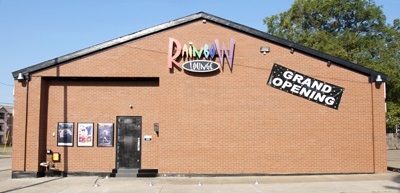
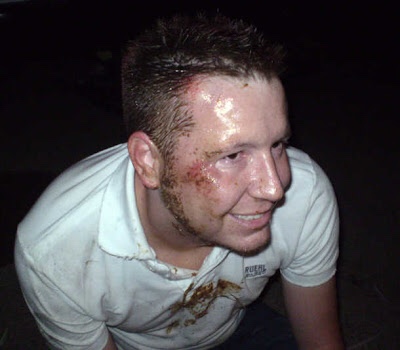
The Rainbow Lounge raid occurred in the early morning hours of June 28, 2009, at the Rainbow Lounge, a newly opened gay bar in Fort Worth, Texas.[1] The raid was carried out by members of the Texas Alcoholic Beverage Commission (TABC) and the Fort Worth Police Department.[2] Several customers were arrested for public intoxication and one customer, Chad Gibson, received a severe head and brain injury while in custody. The police also claimed the customers made sexual advances and contact with them. Other customers were detained and later released without arrest.[3]

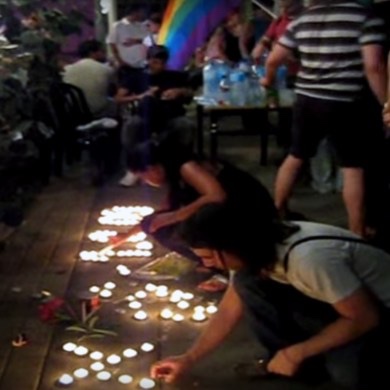
In response to this incident, several of the witnesses in the bar that evening, including Todd Camp, the artistic director of the local gay and lesbian film festival, began a grassroots awareness campaign with the launch of the informational Facebook page “Rainbow Lounge Raid.” Over the next several weeks, the page’s membership grew to nearly 15,000. Several local organizers planned a protest on the steps of the Tarrant County Courthouse the next afternoon. The Dallas-based LGBT rights group Queer Liberaction organized a candlelight vigil for the victim, a Milk Box event, and a later more formal protest.

It has been of particular interest to the media that the raid took place on the 40th anniversary of the Stonewall Riots, a notable raid of a gay bar which prompted the modern gay rights movement.[2] The address of the club, 651 South Jennings Avenue, is a classic location of gay bars in Fort Worth.[4]

Todd Camp, Journalist & Patron of the Rainbow Lounge the Night it Was Raided on June

At the City of Fort Worth’s first council meeting since the Rainbow Lounge Raid, and after an attendee of the meeting called out for an apology, the Mayor apologized for the events at the Rainbow Lounge.[5] The next day after the apology was reported nationally and internationally, the Mayor said the apology was taken out of context and that he was referring to the injury not the actual raid.[6]

The Rainbow Lounge in Ft. Worth, Texas

As a result of the raid, the Texas Alcoholic Beverage Commission fired 3 individuals and disciplined two others.[7][8] The agency also completed some previously scheduled changes including increased cultural diversity training.[9]

A separate “Use of Force” investigation determined that two charges: (a) “that the Rainbow Lounge was targeted for being a gay bar”, and (b) that TABC officers “used force beyond what was necessary and reasonable”, were both unfounded.[10] However, TABC Administrator Alan Steen announced that “TABC’s five regional Educational Liaisons are being re-named Community Liaisons, and will be tasked with reaching out to diverse community groups including GLBT organizations as well as associations representing racial, ethnic and religious minorities.”[10] Steen also appointed TABC’s Director of Communications and Governmental Relations as the agency’s liaison to the GLBT community “in an effort to improve communication around the state.”[10]

Raid at a Club in Texas Leaves a Man in the Hospital and Gay Advocates Angry

The Rev. Carol West and Brian Nesbitt at a candlelight vigil on Wednesday outside the Rainbow Lounge in Fort Worth. Credit John F. Rhodes/Dallas Morning News

FORT WORTH — The grand opening sign still hangs above the door of the Rainbow Lounge, but the recently opened dance club has already become a rallying point for gay men and lesbians here, after a raid by law enforcement last week left one man hospitalized with a head injury and prompted complaints of brutality.

The raid in the early hours of June 28 by Fort Worth police officers and agents from the Texas Alcoholic Beverage Commission has set off a political uproar and galvanized gay advocates in Fort Worth, who have traditionally been less vocal than in Dallas and Houston. After years of keeping a low profile, gay men and lesbians in Fort Worth say they are furious, and their complaints have spread on the Internet, attracting support from gay rights groups across the country.

They have organized protests and formed a new organization, Fairness Fort Worth, to keep track of various investigations into the incident that have begun or been requested. They also have taken up collections and organized a benefit concert to help the injured.

“It has brought this community together so tight — it’s almost impermeable now,” said Randy Norman, the manager of the lounge.

The incident has drawn even more attention because of its timing; it came on the 40th anniversary of the Stonewall riot in New York City, widely considered to be the start of the gay rights movement.

Law enforcement officials have begun an investigation into the accusations of brutality, and internal affairs officers from the state liquor authority were interviewing employees of the club on Friday afternoon, sifting through conflicting accounts of what had happened.

Fort Worth’s police chief, Jeffrey W. Halstead, initially stood behind his officers, saying Monday that patrons had provoked the scuffle by making sexual gestures toward officers.

But as the week went on, Chief Halstead backed away from that stance. By Thursday, he had ordered an inquiry, suspended operations with the state beverage commission and promised to give police officers “multicultural training.” He declined a request for an interview.

“Make no mistake, if our officers acted in error, this department will address the problem,” Chief Halstead said in an open letter to the community posted on the city’s Web site on Thursday. Chief Halstead said the state agents, not his officers, had been the ones who had taken the hospitalized man into custody.

Alan Steen, the administrator of the Texas Alcoholic Beverage Commission, has put two officers involved in the raid on desk duty and said an inquiry would be conducted.

Several witnesses said six police officers and two liquor control agents used excessive force as they arrested people during the raid.

Chad Gibson, a 26-year-old computer technician from Euless, about 15 miles northeast of Fort Worth, suffered a concussion, a hairline fracture to his skull and internal bleeding after officers slammed his head into a wall and then into the floor, witnesses and family members said. Mr. Gibson was still hospitalized on Friday evening as doctors monitored a blood clot in his brain, his mother, Karen Carter, said.

Another patron suffered broken ribs, and a third had a broken thumb, said Todd Camp, the founder and artistic director of Q. Cinema, a gay film festival in Fort Worth. Mr. Camp, a former journalist, said he was celebrating his 43rd birthday in the bar when the police arrived at 1:05 a.m.

The officers entered the bar without announcing themselves, witnesses said. Earlier in the night, they had visited two other bars looking for violations of alcohol compliance laws. Those bars do not cater to gay patrons, and the officers had made nine arrests at those establishments on public intoxication charges, officials said.

“They were hyped up,” Mr. Camp said of the officers in the Rainbow Lounge raid. “They came in charged and ready for a fight. They were just telling people they were drunk or asking them if they were drunk, and, if they mouthed off, arresting them.”

More than 20 people were taken out of the bar for questioning, handcuffed with plastic ties and, in some cases, were forced to lie face down in the parking lot, witnesses said. Five were eventually booked on charges of public drunkenness, the police said.

In a statement released Sunday, the police said that two of those arrested had made “sexually explicit movements” toward the officers. Another was arrested after he grabbed a state agent’s groin, the statement said.

Several witnesses dispute that account, saying they had not seen anyone harass the officers. So many questions have been raised about the police account that on Friday afternoon, Mayor Mike Moncrief asked the United States attorney for the Northern District of Texas, James T. Jacks, to review the Police Department’s investigation.

Tom Anable, a 55-year-old accountant who said he was in the bar during the raid, said that for more than a half-hour the officers entered the bar repeatedly in groups of three and escorted people out. Then around 1:40 a.m., he said, the officers started to get rougher, throwing one young man down hard on a pool table.

Minutes later, one of the state agents approached Mr. Gibson, who was standing on steps to a lounge at the back of the bar with a bottle of water in his hands, and tapped him on the shoulder, Mr. Anable said. Mr. Gibson turned and said, “Why?”

Then the officer, who has not been identified, twisted Mr. Gibson’s right arm behind his back, grabbed his neck, swung him off the steps and slammed his head into the wall of a hallway leading to the restrooms, Mr. Anable said. The agent then forced Mr. Gibson to the floor, Mr. Anable said.

“Gibson didn’t touch the officer,” Mr. Anable said. “He didn’t grope him.”

Two police officers and a second state agent arrived and helped subdue Mr. Gibson, kneeling on his back. A lounge employee, Lindsey Thompson, 23, said she saw an officer slam Mr. Gibson’s head into the floor while he was prone with his hands cuffed behind him.

The raid prompted swift action. Hours later, more than 100 people were protesting on the steps of the Tarrant County Courthouse. As the week went on, calls for an independent investigation grew, with a state senator, a group of local business leaders and two churches joining the chorus.

Yet some gay residents said the outcry had been loud in part because what happened at Rainbow Lounge was uncharacteristic for this city of 750,000 people. “This has been unnerving, I know, to a lot of people in Fort Worth because it’s not the Fort Worth we know,” said Joel Burns, a gay member of the City Council. “There is a lot of scratching of people’s heads.”

Kathleen Hicks, a council member who represents the neighborhood where the bar is located, said the accusations of police brutality have rattled the city government and warrant an independent investigation. She added that she had heard no complaints about the bar before the raid.

“It has caused a lot of soul searching within City Hall and beyond,” Ms. Hicks said. “Fort Worth has been able to move quietly along and avoid all the tension and strife that you have seen in other cities, but sometimes you need to have tension and strife. I hope that this will be a wake-up call.”

References

1 Huffstutter, P.J. (2009-07-06). “Police raid at gay club in Texas stirs ugly memories”. Los Angeles Times. Retrieved 2009-07-06.

2 ^ a b McKinley, James (July 4, 2009). “Raid at Club in Texas Leaves Man in Hospital and Gay Advocates Angry”. New York Times. Retrieved 2009-07-04.

3 ^ “Man injured during Rainbow Lounge raid in Fort Worth speaks out”. Dallas Morning News. 2009-07-06. Retrieved 2009-07-06.

4 ^ “Erect-a-Set”. Fort Worth Weekly. May 4, 2005. Retrieved 2009-07-15.

5 ^ Associated Press via the Los Angeles Times: Fort Worth mayor apologizes for gay bar raid

6 ^ Associated Press: Fort Worth mayor says apology for injury, not raid; Accessed: 18 July 2009;

7 ^ First Rainbow Lounge Investigation Report Complete Press release of August 6, 2009, TABC Website. Accessed 1 June 2010.

8 ^ TABC Chief Moreno Takes Action Following Rainbow Lounge Investigation Press release of August 28, 2009, TABC Website. Accessed 1 June 2010.

9 ^ Brown, Angela K., Texas liquor board fires 3 over gay bar raid, Houston Chronicle/Associated Press, 2009-04-28

10 ^ a b c Rainbow Lounge Use of Force Report Complete – Agency Announces Further Operational Changes Press release of November 5, 2009, TABC Website. Retrieved 1 June 2010.

11 ^ [1] Raid of the Rainbow Lounge, IMDB. Accessed May 11, 2012.

12 ^ First Rainbow Lounge Police Raid On Fort Worth’S Rainbow Lounge the Subject of New Documentary Article released February 29, 2012, TowleRoad Website. Accessed March 1, 2012.

13 ^ Raid of the Rainbow Lounge: Official Trailer Trailer posted February 21, 2012. Accessed March 1, 2012.

Gay History:, 25 Violent Attacks at Gay Bars That Preceded Orlando’s Horrific Nightclub Massacre

This litany of gay hate, murder and violence goes on everywhere in the world. Here in Australia alone there are, in Sydney, about 80 unsolved gay murders from the 80s alone. It is not a pleasant subject, but it’s a reality, and whether we like it or not, like war, it is part of our history. This article only goes up to June 2016 – it would be frightening to know the further extent of this awful violence since that date. It is a constant reminder to us that even in what we consider gay-safe spaces…we are not safe!

When a radiant President Obama declared June LGBTQ Pride month, he told the American people that “despite the extraordinary progress of the past few years, LGBT Americans still face discrimination simply for being who they are.” Nobody could have imagined how that statement would take on a tragic enormity just days later.

Sunday, Obama addressed the American LGBTQ community and the rest of the nation again to talk about the worst mass shooting in our history. He talked about the unthinkable contrast of the horror that happened in the early hours of Sunday morning in Orlando: “The shooter targeted a nightclub where people came together to be with friends, to dance and to sing, and to live. The place where they were attacked is more than a nightclub — it is a place of solidarity and empowerment where people have come together to raise awareness, to speak their minds, and to advocate for their civil rights.”

Less than two weeks before the country prepares to celebrate one year of marriage equality, the sight of two men kissing on the street is terrifying enough to someone that a hatred-fueled massacre we experienced at the Pulse in Orlando can be the result.

Unfortunately, Orlando is hardly the first major deadly attack against an LGBT bar or landmark.

Photo credit: GlobalGayz/Facebook

Until today, the deadliest attack had been in New Orleans, over 40 years ago. On the week when the LGBT community celebrated its fourth Gay Pride — four years after Stonewall —  an arsonist set fire to the Upstairs Lounge at the French Quarter, killing 32 people on June 24, 1973. No suspect was ever charged.

On Nov. 18, 1980 a man named Ronald K. Crumpley opened fire outside the Ramrod bar in Greenwich Village in New York City. He said he believed gay men were agents of the devil, stalking him and ”trying to steal my soul just by looking at me.” His father, a minister, said in his testimony that Crumpley maybe had a ”a homosexual problem himself.”

On April 28, 1990 at Uncle Charlie’s, another gay bar in Greenwich Village in Manhattan, three men were injured in an explosion possibly caused by a pipe bomb.  The police didn’t immediately arrest anyone for the crime. Five years later, federal prosecutors accused El Sayyid A. Nosair for bombing Uncle Charlie’s, planning to blow up New York City landmarks and killing a rabbi in 1990. They said Nosair, a muslim, attacked the bar because he objected to homosexuality on religious grounds according to report from the New York Times. In 1996, he was convicted of planning to wage a “war of urban terrorism” and was sentenced to life in prison.

Jon Christopher Buice is serving a 45-year sentence for the killing of Paul Broussard in Houston, Texas on July 4, 1991. Buice and nine of his friends tried go into several bars in a gay area of Montrose, but they were refused entry. They then attacked Buice and two other friends with nail-studded wooden planks, a knife, and steel-toed boots outside Heaven, a gay bar in the city’s heavily LGBT Montrose district.

On Feb. 21, 1997 a nail-laden device exploded at the Otherside Lounge, a lesbian nightclub in Atlanta. Five people were wounded. Eric Rudoplh confessed to the Otherside Lounge bombing, as well as the Atlanta Olympics bombings, and abortion clinics in Atlanta and Birmingham. “Homosexuality is an aberrant sexual behavior,” he wrote in a statement. “Like other humans suffering from various disabilities homosexuals should not attempt to infect the rest of society with their particular illness.”

Two people were killed and 81 were injured after a bomb exploded in a gay bar in London’s Soho, on April 30, 1999. The blast happened at the busy Admiral Duncan pub in the center of London’s very gay neighborhood at the start of a holiday weekend. Just like the Orlando tragedy, the attack happened in a place where people go to socialize and escape. Peter Tatchell, spokesman for the gay rights group OutRage!, said: “A lot of gay people saw the Old Compton Street area as a safe haven.They felt able to relax and hold hands without fear of attack. This outrage has destroyed that cosy assumption.”

In Roanoke, Virginia on Sept. 22, 2000, a man called Ronald Gay asked directions to a gay bar so he could “shoot some people.” He then walked calmly into the Backstreet Cafe on a Friday night, ordered a beer, and  opened fire. He killed one person and injured six. Gay told police he didn’t like being called Gay. He also said it was his mission to make all gays move to San Francisco, which he thought would end AIDS. “He said he was shooting people to get rid of, in his words, ‘faggots,’” Lieutenant William Althoff of the Roanoke police was quoted as saying. He was sentenced to four life terms.

18-year-old Jacob D. Robida walked into a bar in New Bedford, Massachusetts in the evening of February 2, 2006. He asked the bartender if he was at a gay bar, ordered a couple of beers, and moved to the back of the bar, watching a game of pool briefly before taking out a hatchet — a small ax the size of a hammer. The bartender told CNN the man “started swinging the hatchet on top of this customer’s head”. He also struck a second patron with the hatchet, pulled out a gun and shot the first victim in the face and the second twice in the head, Phillip said. A third person also was shot in the abdomen. He killed himself three days later.

At the San Diego Gay Pride festival in July 30, 2006, six men were attacked with baseball bats and knives after leaving the Pride festival. The attackers used anti-gay slurs as they beat the victims. One almost died. Four men pleaded guilty in connection with the attacks and received prison sentences from two years and 11 months to 11 years.

20-year-old Sean William Kennedy was walking to his car outside Brew’s Bar in Greenville, South Carolina on May 16, 2007 when a car approached him. A young man got out, called him a faggot and punched him in the face so hard that caused his brain to disconnect from his brain stem.The killer, 19-year-old Stephen Moller, left the scene and let Kennedy die from his injury. He was sentenced to five years for involuntary manslaughter, but his sentence was reduced to three, because he was father. His mother said he later “left a message on one of the girl’s phones who knew Sean, saying, ‘You tell your faggot friend that when he wakes up he owes me $500 for my ‘broken hand!’”

Osvan Inácio dos Santos was leaving a gay bar in Arapicara a small city in the Alagoas, Northeast of Brazil with a group of friends, after he won a local ‘Miss Gay’ competition on Sept. 15, 2007. On the way home, he got separated from the group. They tried contacting him, but he didn’t answer. His body was found a day later. He’d been raped and beaten to death. Tedy Marques, president of the Alagoas Gay Group, said that “Homophobia is one of the worst problems Brazil faces. It is unacceptable that every other day in our country a homosexual is brutally murdered.”

Lance Neve was with his boyfriend and another friend at Snuggery’s Bar in Spencerport, New York on March 7, 2008 when a man named Jesse D. Parsons approached the group. He said he wanted to shake Neve’s hand because he had never shaken a gay man’s hand before, but Neve refused. Parsons then beat him up and left him unconscious. He was transported to an area hospital, where he was treated for a fractured skull, nose, left eye socket and upper jaw bone and blood on the brain. During his hearing, he told the court that “while he didn’t mean to hurt Neve as badly as he did, Neve deserved it.” He was sentenced to five years and a half in jail, and was ordered to pay $24,000 for Neve’s medical expenses.  

Tony Randolph Hunter, was beaten outside the Be Bar Nightclub in Washington DC by 19-year-old Robert Hannah. He later died from the injuries on September 7, 2008. Hannah was sentenced to 6 months in jail and ordered to pay $50 in court costs. 

On March 1, 2009, three friends threw concrete blocks at patrons inside Robert’s Lafitte Bar, in Galveston, Texas injuring two men. One of the victims, Marc Bosaw, required 12 staples in his head. One of the three suspects later told police their intent was to target homosexuals, said Galveston Police Department Lt.D.J. Alvarez. The trio also hurled homophobic insults, authorities said.

On April 11, 2009 Justin Goodwin was attacked at a bar in Gloucester, Massachusetts by as many as five people, who were using anti-gay remarks. The bashing left him blind in one eye, and deaf in one year. He committed suicide two years later.

On August 29, 2009 a shooting took place at a LGBT youth center in Tel Aviv. Two people died, 15 were injured. Most of them minors. A man named Hagai Feliciano was indicted for murder and a hate crime in 2013, but the charges were dropped in 2014. While not technically a bar, it is the equivalent for LGBT youth – a place of sanctuary and empowerment.

In New York City, a man named Frederick Giunta was charged and arrested on October 17, 2010 for allegedly attacking and assaulting people in two bars in Greenwich Village: Ty’s Bar on Christopher Street and nearby Julius Bar on W 10th St hurling anti-gay remarks. According to NYPD officials, Giunta has a history of committing crimes by targeting men at gay bars. The attack happened two weeks before the NYPD arrested two men on charges they attacked a patron inside the bathroom at Stonewall Inn. 

In October of 2010, two men were arrested after attacking a man in the bathroom at the iconic Stonewall Inn in New York City. The suspects reportedly told the man, “We don’t like gay bars, and we don’t piss next to faggots” before the assault began. He later refused to apologize to the victim, because he has no regrets. “I’m not going to say sorry, because I don’t know what I should be sorry for,” said Francis, who also insisted he’s not a homophobe. “I don’t hate gay people. I don’t hate anybody.”

On October 25, 2011 a man sprayed 21-year-old Russel Banks with liquid fuel and threw a lit match at him at the Rainbow and Dove gay bar in Leicester City, England. Banks suffered third degree burns to 20 percent of his body.

On the first minutes of New Year’s Day, 2014 a man named Musab Masmari poured gasoline in a stairway to the balcony at the Neighbours Nightclub in Seattle, where 750 had gone to celebrate the New Year. An unidentified informant told the FBI that, in the numerous conversations after their first meeting, Masmari often expressed a “distaste for homosexual people,” and that Masmari “opined that homosexuals should be exterminated.” He was arrested a month later, and sentenced for 10 years in prison.

On June 1, 2014 two friends were killed after they left R Place, a gay club in Seattle. Ali Muhammad Brown confessed to the killings. He contacted the men via a hook-up app like Grindr, met them after they left  the club and then shot them multiple times and killed them. Brown told the police the murders were a “bloody crusade” to punish the U.S. government for its foreign policies.

After months of violent anti-gay attacks, Central Station, Russia’s largest  gay club closed its doors on March 27, 2014. The club was considered one of the only symbols of freedom for Russian’s LGBT community.

On October 1, 2014 a man named Wayne Odegard shot a man at the Salon, a popular gay bar in Minneapolis. He was passing by the bar when he saw two men kissing. He grabbed his gun, yelled “f**cking faggots,” and shot at them, injuring one. Odgegard admitted to police he said ‘faggots’ before the shooting, and said that seeing men kissing pisses him off.” He also recited a passage from Deuteronomy. 

On March 22, 2016 a transgender woman was sexually violated inside a bathroom at the Stonewall Inn. According to the NYPD, she said that a man came into the bathroom claiming he only needed to wash his hands, but then proceeded to grope and rape her. 

On April 8, 2016, an employee of a popular West Hollywood gay bar was attacked as he left the bar walking towards his car on an apparent hate crime. The person who attacked him took his wallet, but never used his credit card.

A few hours after the Pulse massacre in Orlando, on the West Coast the LAPD might have stopped another tragedy before it happened. 20-year-old Wesley Howell, a man from Indiana, was arrested on his way to attend the LA Pride festival, allegedly with an arsenal of weapons. Officials found him in a car with three assault rifles, high-capacity magazines, ammunition and a 5-gallon bucket with chemicals that could be used to create an explosive device.

These attacks should remind us all that we must remain vigilant while there are still people out there who remain so threatened by the sight of two men having a simple kiss that they will resort to violence to stop it.

References

Gay History: The Gay Bars and Vice Squads of 1950’s Los Angeles

A gathering of gay men in Los Angeles in 1951. This group founded the Mattachine Society

In the wake of World War II a conformist impulse reasserted itself in American society. At the same time thousands of gay men found themselves in California after World War II, and they were presented with the problem of living a life in the midst of social disapproval and police repression.

In Los Angeles throughout the 1950s, the culture of gay men functioned very much below the radar. Under constant harassment by the police, homosexuals risked social ostracism and loss of employment if outed.

Homosexuality as a disease

The dominant perception of homosexuality in the 1950s was that it was a disease. The psychiatric community was nearly unanimous in this assessment and others took their cue from this stance. Most employers and government agencies barred homosexuals with morality clauses and they were widely considered to be security risks. In daily language they were often defined as “deviants”, “perverts”, or “inverts”, when they were not being painted as pedophiles.

Psychiatric opinions

In 1952 the American Psychiatric Association published the Diagnostic and Statistical Manual of Mental Disorders for the first time. It included homosexuality as a mental disease.

This was a predominant view in the mental health profession for the entire decade (an important exception was Evelyn Hooker). It was widely conjectured that homosexuality resulted from emotional traumas in childhood, as is the case with other mental illnesses, and that genetics played little to no role. On this basis the practice of conversion therapy took hold, with widespread attempts to change people from homosexual to heterosexual (here are just a few examples from students at Oberlin College in Ohio).

Employment restrictions

It was common practice for employers to prohibit homosexuality. Homosexuals had long been barred from employment in federal jobs, a policy that was reinforced in 1953 by Dwight Eisenhower’s Executive Order 10450. Private employers varied on this issue, but most would fire any employee who was discovered to be gay. Thus at a very basic level, to identify oneself as a homosexual in public was to invite a lifetime of poverty.

Social mores

The disapprobation of psychiatrists and employers reflected the overt hostility of the mainstream American mindset. An unfortunate tendency was for many people to conflate homosexuals with pedophiles and serial killers. Public safety videos of the time made this connection explicit and helped to spread much fear and misinformation.

A survey conducted as late as 1967 for a CBS documentary (see the full program or a shorter version) determined that two thirds of Americans viewed homosexuals with “disgust, discomfort, or fear” while a majority favored laws against all homosexual acts.

Sodomy was illegal in every state until Illinois decriminalized it in 1961, and the laws on this were well enforced in the 1950s. Campaigns in Sioux City, Iowa and Boise, Idaho resulted in multiple arrests and involuntary confinements. There were very few voices that dissented from this policy.

The rise of the gay bar in L.A.

Due to an important court case in 1951, California became the first state where gay bars could legally operate. Although the patrons were frequent targets of police harassment, Los Angeles had a decent number of such establishments by the mid-1950s. This corresponded with the first, halting steps towards creating advocacy organizations for gay rights.

Stoumen v. Reilly

In 1951 the California Supreme Court ruled that a bar could not lose its liquor license because it catered to gay clientele. The case was Stoumen v. Reilly.

While this did little to advance the public acceptance of homosexuality, it did allow gay bars to operate in much of California. While a number of these bars were established in Los Angeles by the 1930s, a new wave joined the fray in the wake of this decision (It should be noted that many were closed in spite of this court ruling in a mid-1950s wave of enforcement).

The Los Angeles gay bars

Some of the well-known gay bars of this time were the House of Ivy and the Windup in Hollywood, and the Crown Jewel, Harold’s, the Waldorf, and Maxwell’s in downtown Los Angeles.

Many of the gay bars in Los Angeles were located near Pershing Square, which was a cruising ground in

The character of these places varied widely, reflecting divisions within the gay community. The Crown Jewel was known as a rather straight-laced bar, with a dress code and many patrons who wished to remain discreet. Maxwell’s operated on a different end of the spectrum, with a much more flamboyant crowd.

The more conservative group of the gay community took pains to distance themselves from the “obvious” crowd, believing that they perpetuated negative stereotypes and drew unwanted attention. Helen Branson, who operated the Windup, wrote:

“I have not touched on the problem of the obvious homosexual. He is in the minority. I think he brings the censure of the public not only on himself, but is the main cause of all averse judgment against the group as a whole…. I do not welcome this type in the bar. I am rude to them, watch them closely for any infraction of my arbitrary rules, and they soon leave.”

Other recreation: bathhouses, parks, and parties

Bars were not the only place where gay men congregated in this time period. There were bathhouses and parks that were known to be more homosexual, and small groups held house parties and private engagements. None of these places were particularly more safe than the others in regards to police harassment. Even a private home party could be the target of a sting operation and as such, invitations to them were very few. It was thus quite difficult for individual gay men to coalesce into a broader community.

The homophile movement and the Mattachine Society

The creation of the first gay bars in L.A. corresponded with the rise of a group called the Mattachine Society.

The Mattachine Society was an organization founded in 1950 to advocate for the cause of gay rights. For at least a few years it was the only group of its kind in the United States. The initial founders were radical Communists, but the organization was taken over after a couple of years by more mainstream activists. It was in this time that the term “homophile” was coined — explicitly to take the word “sexual” out of homosexual.

ONE Magazine was founded by members of the Mattachine Society

This terminology placed the Mattachines at the more accommodating end of the gay spectrum, vis a vis the “obvious” homosexual. Divisions within the community would eventually come to a head in the late 1960s, and the homophile label fell by the wayside as the gay community asserted itself more forcefully.

The LAPD Vice Squad

The Los Angeles Police combatted the homosexual scourge with a notoriously vigorous Vice Squad. Using a large number of undercover officers who posed as gay man for purposes of entrapment, the Vice Squad harassed the gay community in L.A. for decades.

The entrapment process

It is said that the LAPD recruited heavily from that set of men who had failed to obtain acting roles in Hollywood. Often young and athletic, these men were trained to impersonate the gay mannerisms and language of the time, and were sent around to different bars. Often they had quotas for the number of “perverts” they were expected to bring in for a given week or month.

Helen Branson described it as such:

“They offer someone a ride or accept a ride and that does it. Some of them play fair, inasmuch as they wait for the gay one to make a pass at them, but many others wait only long enough to get in the car before declaring the arrest. The officer’s word, of course, will be taken as true, and they always count on the victim not wanting publicity. They know he will pay the fine and be quiet. The fines for this charge amount to a considerable sum in a year’s time.”

The results of entrapment

One the first successful defenses against this tactic came in 1952, when Dale Jennings of the Mattachine Society took his case to court. Jennings declared himself to be a homosexual, but asserted that the charges against him were manufactured. The charges were dropped after the jury deadlocked.

Most gay men did not realistically have the option of going to court if they could avoid it. Defending the charges in these stings would have nearly always led to loss of employment, and potentially other scandals. The most common outcome was to make a plea bargain for a lesser charge in the hopes of paying a fine. In this manner, the Vice Squad harassment became a recurring shakedown of the gay community, and it continued until well after the 1950s.

Many of those who were convicted of crimes became registered sex offenders. Many lost their jobs or otherwise had their lives ruined. Such was the price of being a gay man in the 1950s.

References