Category Archives: History

Buddhism 101: The Gelugpa Tradition: Reform, Scholarship, and Compassion in Tibetan Buddhism

Among the many schools of Tibetan Buddhism, the Gelugpa tradition occupies a unique position. Often called the “Yellow Hat” school because of the distinctive ceremonial hats worn by its monks, the Gelugpa lineage is renowned for its emphasis on scholarship, monastic discipline, philosophical inquiry, and the pursuit of enlightenment through wisdom and compassion.

Today the Gelug tradition is perhaps best known as the school to which the Dalai Lama belongs, yet its history stretches back over six centuries and is deeply intertwined with the political, religious, and cultural development of Tibet itself.

Origins of the Gelug School

The Gelug school emerged in Tibet during the late fourteenth and early fifteenth centuries through the work of the great teacher and reformer Tsongkhapa.

Je Tsongkhapa was born in 1357 in the Amdo region of northeastern Tibet. According to traditional accounts, he demonstrated exceptional spiritual abilities from childhood and studied under masters from all the major Tibetan Buddhist traditions.

Rather than founding an entirely new religious movement, Tsongkhapa sought to revitalise Buddhist practice by returning to what he considered the authentic teachings of Indian Buddhist masters. He advocated rigorous ethical conduct, disciplined monastic life, deep meditation, and intensive study of Buddhist philosophy.

The name “Gelug” is commonly translated as “Virtuous Tradition” or “Way of Virtue.”

Tsongkhapa was concerned that some aspects of Tibetan Buddhism had become lax in their observance of monastic rules. He emphasised adherence to the Vinaya—the code governing monastic conduct—as a foundation for spiritual progress.

This combination of strict discipline and intellectual inquiry would become one of the defining characteristics of the Gelug tradition.

Tsongkhapa’s Vision

Tsongkhapa’s teachings synthesised centuries of Buddhist thought. His works reveal a remarkable attempt to integrate ethics, philosophy, meditation, and devotion into a coherent spiritual path.

Central to his teaching was the idea that enlightenment arises through the cultivation of three principal elements:

Renunciation

Bodhicitta (the aspiration to attain enlightenment for the benefit of all sentient beings)

Correct understanding of emptiness

Bodhicitta occupies a particularly important place within Gelug practice. Rather than seeking enlightenment solely for one’s own liberation, practitioners aspire to achieve Buddhahood in order to assist all beings in escaping suffering.

Another cornerstone of Gelug philosophy is the doctrine of emptiness, derived largely from the teachings of the Indian philosopher Nagarjuna.

In Gelug interpretation, emptiness does not imply nonexistence. Instead, it means that phenomena do not possess independent, inherent existence. Everything arises through causes, conditions, relationships, and interdependence.

For Gelug scholars, understanding emptiness correctly is regarded as essential for overcoming ignorance, which Buddhism identifies as the fundamental source of suffering.

The Great Monastic Universities

One of Tsongkhapa’s most enduring achievements was the establishment of institutions devoted to advanced learning.

He founded the monastery of Ganden Monastery in 1409, which became the principal seat of the Gelug tradition.

Over time three major monasteries emerged as centres of learning:

Ganden Monastery

Sera Monastery

Drepung Monastery

These institutions grew into some of the largest monastic universities in the world.

Prior to the twentieth century, thousands of monks studied within their walls.

The curriculum was highly structured and demanded years, often decades, of disciplined study.

Subjects included:

Logic

Epistemology

Metaphysics

Ethics

Psychology

Meditation theory

Buddhist scripture

Perhaps the most famous aspect of Gelug education is monastic debate.

Visitors to Tibetan monasteries often witness monks standing, clapping their hands dramatically, and challenging one another with rapid-fire philosophical questions.

This practice is not theatrical entertainment but a sophisticated educational method designed to sharpen reasoning, reveal contradictions, and deepen understanding.

Advanced students may spend twenty years or more studying before attaining the prestigious Geshe degree, often compared, somewhat imperfectly, to a doctorate in Buddhist philosophy.

The Dalai Lama Institution

The Gelug school became politically significant during the seventeenth century.

The institution of the Dalai Lama predates Gelug dominance, but it was under the Fifth Dalai Lama that the Gelug school established political authority over much of Tibet.

Ngawang Lobsang Gyatso (1617–1682), often called the Great Fifth, unified Tibet and created a system in which spiritual and temporal leadership became closely connected.

The residence associated with the Dalai Lamas, the magnificent Potala Palace, became an enduring symbol of Tibetan civilisation.

The Dalai Lama is regarded within the Gelug tradition as an incarnation of the Bodhisattva Avalokiteshvara, the embodiment of compassion.

The current Dalai Lama, Tenzin Gyatso, was born in 1935 and has become one of the most recognised religious figures in the world.

Following the political upheavals of the 1950s, many Gelug institutions were re-established in exile, particularly in India.

Monastic centres have flourished in places such as southern India, preserving teachings that might otherwise have been lost.

Gelug Philosophy

Gelug scholars place particular emphasis upon systematic analysis.

Rather than accepting doctrines unquestioningly, students are encouraged to investigate teachings critically.

This attitude is sometimes summarised through a saying attributed to the Buddha:

“Accept my teachings only after examining them as a goldsmith tests gold.”

Meditation within the Gelug tradition often proceeds through stages.

Practitioners may contemplate:

The preciousness of human life

Impermanence

Karma

Compassion

Interdependence

Emptiness

A central literary framework is the Lamrim, or “Stages of the Path.”

Tsongkhapa’s masterpiece, the Great Treatise on the Stages of the Path to Enlightenment, presents Buddhist practice as a gradual progression from ethical discipline to profound meditative insight.

Rather than separating scholarship and meditation, Gelug teachers generally see them as mutually supportive.

Study provides intellectual clarity.

Meditation transforms intellectual understanding into lived experience.

Ethics stabilise both.

Tantric Practice

Like all major schools of Tibetan Buddhism, the Gelug tradition also incorporates Vajrayana or Tantric practices.

These practices include visualisation, mantra recitation, ritual, and meditative techniques intended to accelerate spiritual development.

However, Gelug teachers traditionally insist that tantric practice must rest upon a strong foundation of ethics, compassion, and philosophical understanding.

Tsongkhapa himself warned against approaching Tantra merely as ritual or mysticism detached from moral discipline.

This emphasis contributed significantly to the reputation of the Gelug school as a tradition balancing devotion with intellectual rigour.

Gelug in Exile

The Chinese incorporation of Tibet during the mid-twentieth century profoundly affected Tibetan Buddhism.

Many monasteries inside Tibet suffered destruction during the period of the Cultural Revolution.

Thousands of monks, nuns, and laypeople fled into exile.

Yet the Gelug tradition demonstrated remarkable resilience.

New monastic universities were established in India, particularly in Karnataka.

These communities recreated educational systems that had evolved over centuries in Tibet.

Today Gelug teachers can be found across Europe, North America, Australia, and Southeast Asia.

Meditation centres affiliated with the tradition have introduced Tibetan Buddhist teachings to people from many cultural backgrounds.

Gelug and the Modern World

In recent decades the Gelug tradition has engaged extensively with science, psychology, and secular ethics.

The Fourteenth Dalai Lama has participated in dialogues with neuroscientists, philosophers, and physicists, exploring possible intersections between Buddhist contemplative traditions and modern scientific inquiry.

Meditation practices once confined largely to monasteries are now studied for their potential effects on stress reduction, emotional regulation, and wellbeing.

At the same time, many Gelug scholars caution against reducing Buddhism merely to a therapeutic technique.

From the traditional perspective, Buddhist practice aims at something much deeper: liberation from suffering and the cultivation of wisdom and compassion for all beings.

Critiques and Challenges

No religious tradition exists without internal debates.

Some critics argue that Gelug scholasticism can place excessive emphasis on intellectual mastery.

Others contend that its historical association with political power occasionally complicated the relationship between spiritual ideals and governance.

Within Tibetan Buddhism there have long been lively discussions among the Gelug, Kagyu, Sakya, and Nyingma schools concerning philosophy, meditation methods, and interpretation of doctrine.

Nevertheless, the schools have also influenced one another extensively over centuries, sharing teachers, texts, and practices.

Modern Tibetan Buddhism is often characterised by greater dialogue and cooperation among traditions than in previous eras.

Legacy

The Gelug tradition represents one of the great intellectual achievements of the Buddhist world.

It produced vast bodies of philosophical literature, educational institutions of extraordinary sophistication, and a lineage of teachers whose influence extends far beyond Tibet.

At its heart lies a simple but profound aspiration: that wisdom should be joined with compassion, and that personal spiritual development should ultimately serve the welfare of all beings.

Whether encountered through monastic debate in a Himalayan monastery, through meditation centres in Western cities, or through the teachings of the Dalai Lama, the Gelug tradition continues to offer a distinctive vision of disciplined inquiry, ethical living, and universal compassion.

For many practitioners, its enduring appeal lies precisely in this balance—an insistence that faith need not exclude reason, and that the highest form of wisdom is inseparable from kindness.

Tim Alrerman ©️ 2026

Gay History: Alice B. Toklas: More Than Gertrude Stein’s Companion

For many people, Alice B. Toklas is remembered simply as the lifelong companion of writer Gertrude Stein. Yet Toklas was far more than a literary footnote. She was a writer, editor, hostess, cultural facilitator and an important figure in twentieth-century lesbian history.

Born in 1877 in San Francisco, Alice Babette Toklas moved to Paris in 1907, where she soon met Gertrude Stein. Their partnership would last nearly four decades until Stein’s death in 1946.

Together they created one of the most famous literary salons of the twentieth century. Their home at 27 Rue de Fleurus became a gathering place for artists, writers and intellectuals, including Pablo Picasso, Ernest Hemingway and Henri Matisse.

At a time when same-sex relationships were often hidden or carefully coded, Stein and Toklas lived together openly within artistic circles. Although social conventions still imposed limitations, they fashioned a life that challenged expectations and offered an alternative model of domestic partnership.

Toklas played an essential role in Stein’s career. She typed manuscripts, organised correspondence, managed household affairs and provided emotional and intellectual support. Their relationship has often been described as one of the most enduring same-sex partnerships in modern cultural history.

After Stein’s death, Toklas found herself in difficult financial circumstances. Because their relationship lacked legal recognition, she inherited little security despite decades spent building a shared life.

In 1954 she published The Alice B. Toklas Cookbook, a work that combined recipes with memoir and anecdotes about artistic life in Paris. The book achieved lasting fame for its recipe for hashish fudge, later nicknamed “Alice B. Toklas brownies”, although Toklas herself was reportedly bemused by the attention this section received.

Her memoirs and writings preserve a unique perspective on a remarkable cultural world and on the realities faced by same-sex couples before legal protections existed.

Today Alice B. Toklas is increasingly recognised not merely as Gertrude Stein’s partner but as an important historical figure in her own right. Her life reminds us that queer history is not only a story of activism and protest, but also one of companionship, creativity, resilience and the determination to build meaningful lives despite social constraints.

For lesbian and queer historians, Toklas stands as a reminder that long before legal equality became possible, many same-sex couples forged enduring relationships, created families of choice and left lasting contributions to literature, art and culture.

Tim Alderman ©️ 2026

The Cranbourne Meteorite Scandal: How Australia Lost One of Its Greatest Natural Treasures

By Tim Alderman

Few Australians have heard of the Cranbourne meteorite, despite it being one of the most extraordinary meteorites ever discovered.

Today, its largest surviving fragment sits not in Australia, but thousands of kilometres away in London’s Natural History Museum. Its removal remains one of colonial Australia’s most controversial scientific episodes—a scandal involving wealthy landowners, rival museums, government indecision, and the export of one of the country’s greatest geological treasures.

A visitor from deep space

Long before Europeans settled Victoria, an enormous iron meteorite had crashed into what is now the Cranbourne-Devon Meadows district southeast of Melbourne.

Scientists believe the meteorite fragmented into numerous pieces before or during impact, scattering massive iron blocks across the landscape. Collectively these fragments weigh more than 8.6 tonnes, making the Cranbourne meteorite Australia’s second-largest known meteorite and, when first recognised by science, the largest known iron meteorite in the world.

Unlike the stony meteorites that occasionally fall today, the Cranbourne meteorite consists almost entirely of iron and nickel.

Its distinctive octahedral crystal structure formed over billions of years as molten metal slowly cooled inside the core of an ancient asteroid before that asteroid was shattered by collisions in the early Solar System.

The meteorite therefore represents material older than Earth itself.

The first custodians

One of the most remarkable—and often overlooked—parts of the story concerns the Bunurong people.

When Scottish settler Alexander McKay arrived in the district during the 1830s, he found Aboriginal people already familiar with the great iron mass.

According to McKay’s later recollections, Bunurong people gathered around the meteorite, striking it with stone tomahawks and dancing while enjoying the unusual metallic ringing it produced.

Modern historians rightly treat nineteenth-century recollections cautiously, yet the account strongly suggests the meteorite already possessed cultural significance before Europeans understood what it actually was.

Unfortunately, almost nothing was recorded about Bunurong traditions connected with the object.

Like so much Indigenous knowledge during colonisation, these stories were largely ignored.

A very unusual rock

European settlers initially regarded the enormous lump of iron simply as an inconvenience.

Some attempted to cut pieces from it.

One section was reportedly fashioned into a horseshoe and exhibited in Melbourne during the 1850s—without anyone recognising its extraterrestrial origin.

Imagine possessing one of the world’s greatest meteorites and using it to shoe horses.

Only later would scientists realise what had almost been destroyed.

Science arrives

In 1860, Melbourne Town Clerk Edmund Gerald FitzGibbon—an enthusiastic amateur geologist—recognised that two enormous iron masses near Cranbourne were probably meteorites.

The following year distinguished German scientist Georg von Neumayer visited the site, conducted investigations and confirmed the extraordinary discovery.

News spread rapidly throughout the scientific world.

Museums across Europe became intensely interested.

Large iron meteorites were exceedingly rare.

The Cranbourne discovery instantly became internationally significant.

Enter James Bruce

The largest fragment—now known as the Bruce meteorite—weighed around 3.5 tonnes.

Neighbouring landowner James Bruce acquired ownership of the giant mass.

Rather than remaining an Australian scientific treasure, Bruce decided he wished to donate it to the British Museum in London.

At first glance this may appear generous.

However, it ignited one of Australia’s earliest heritage controversies.

Many colonial scientists were horrified.

Victoria was beginning to establish its own museums, universities and scientific institutions.

Why should Australia’s greatest meteorite leave the colony?

The battle begins

The Bruce meteorite was transported to Melbourne before shipment overseas.

There it became the centre of a fierce public debate.

Members of the Royal Society of Victoria petitioned vigorously for it to remain in Melbourne.

They argued that such a unique scientific specimen belonged where it had been found.

Why should Britain receive yet another colonial treasure?

It was hardly an isolated issue.

Throughout the nineteenth century, museums in London accumulated enormous collections from across the Empire.

Australian fossils, Aboriginal artefacts, plants, animals and geological specimens routinely departed the colonies.

Many never returned.

The Cranbourne meteorite became another example of that pattern.

A controversial compromise

Eventually an agreement was reached.

Britain would receive the enormous Bruce meteorite.

In exchange, another major Cranbourne fragment—the Abel meteorite—would be returned to Victoria.

On paper it seemed reasonable.

In reality many regarded it as a poor bargain.

Australia surrendered the largest and most spectacular fragment forever.

The Bruce meteorite arrived in London in 1865.

More than 160 years later, it remains there.

Could it have been stopped?

From a modern perspective the obvious answer seems yes.

Today, objects of such outstanding scientific importance would almost certainly be protected by heritage legislation.

Export permits would be scrutinised.

Governments would intervene.

Museums would mount campaigns to retain nationally significant material.

But colonial Australia was different.

British institutions were viewed by many as the natural home for the Empire’s greatest discoveries.

Scientific prestige flowed towards London.

Colonial museums were often treated as junior partners.

The decision reflected the values of the age.

That does not necessarily make it any less regrettable.

More fragments appear

The story did not end with Bruce.

Over subsequent decades additional pieces continued to emerge as farming expanded across the district.

Eventually thirteen recognised fragments were identified.

Some entered Australian museum collections.

Others were sold overseas.

One disappeared completely after being lost during shipping.

Another eventually found its way to the National Museum of Natural History.

The meteorite’s scattered pieces are now dispersed among museums and collections around the world.

Scientific importance

The Cranbourne meteorite continues to surprise researchers.

Modern analytical techniques have revealed previously unknown minerals within some fragments.

In late 2024 scientists identified traces of the rare mineral muonionalustaite in material held by Melbourne Museum, demonstrating that even after more than 160 years this meteorite continues to produce new scientific discoveries.

Each fragment contains valuable information about the formation of the Solar System over 4.5 billion years ago.

These are literally pieces of planetary history.

A colonial lesson

The Cranbourne meteorite story raises uncomfortable questions.

Who owns natural heritage?

Does discovery by settlers override the cultural connections of Indigenous peoples?

Should nationally significant objects remain where they were found?

Should museums return objects removed during colonial times?

These debates now surround Aboriginal cultural material, fossils, artworks and human remains.

The Cranbourne meteorite belongs within that wider conversation.

Unlike many museum disputes, no theft occurred.

Ownership transferred through legal agreements recognised at the time.

Yet legality does not always settle questions of heritage or ethics.

Many Australians still believe the Bruce meteorite belongs in the country where it landed thousands of years ago.

Could it ever come home?

The prospect is slim.

Major museums rarely relinquish world-famous specimens unless overwhelming ethical grounds exist.

Unlike looted antiquities or human remains, meteorites occupy a more ambiguous legal and moral category.

For now, Australians wanting to see the largest Cranbourne meteorite must travel to London.

Smaller but still impressive fragments remain in Melbourne, allowing visitors to appreciate at least part of this remarkable extraterrestrial visitor.

The Cranbourne meteorite is more than an enormous lump of iron.

It is a symbol of Australia’s scientific coming of age, a reminder of colonial assumptions about ownership, and evidence that Indigenous Australians recognised the significance of unusual natural objects long before Western science understood them.

Its story also illustrates a familiar pattern in nineteenth-century Australia: priceless natural and cultural treasures leaving the colony for Britain, often with little consideration of what was being lost.

Whether one views the export of the Bruce meteorite as an unfortunate necessity or a genuine scandal, it remains one of the most fascinating—and least remembered—episodes in Australian scientific history.

Tim Alderman ©️2026

Sources

Natural History Museum – Collections relating to the Bruce Meteorite.

Museums Victoria – Cranbourne meteorite collections and scientific research.

R. Henry Walcott, Descriptions of the Victorian Meteorites, Memoirs of Museum Victoria (1915).

Meteoritical Society – Cranbourne meteorite classification and catalogue.

Recent mineralogical analysis of Cranbourne meteorite fragments (2024).

Gay History: The End of the Golden Mile: How HIV/AIDS, Social Change and Equality Reshaped Sydney’s Gay Ghetto

For decades, Sydney’s Oxford Street and the surrounding suburbs of Darlinghurst, Paddington and Surry Hills formed what was commonly known as Australia’s gay ghetto. To younger LGBTQ people, the term may sound strange, even negative. Yet for generations of gay men and lesbians, the ghetto was not a prison. It was a refuge.

It was where people found safety, friendship, love, employment, activism, healthcare and community in a society that often denied them all of those things.

Today, much of that world has disappeared. Many of the bars and clubs are gone. The crowds are smaller. The once-famous “Golden Mile” no longer dominates gay life in Australia as it once did.

It is tempting to blame one factor for this transformation. Some point to HIV/AIDS. Others blame gentrification. Some argue changing social attitudes made the ghetto unnecessary. Others suggest the internet killed it.

The truth is that the decline of Sydney’s gay ghetto resulted from all of these forces working together. Ironically, many of the victories fought for by generations of LGBTQ Australians helped make the ghetto less necessary than it once was.

Why the Ghetto Existed

To understand why it declined, we first need to understand why it existed.

Until relatively recently, homosexuality was criminalised throughout much of Australia. Gay men could lose their jobs, their families, their housing and their reputations simply because of who they were. Violence and harassment were common. Police raids on gay venues were an accepted part of life.

In such an environment, people naturally sought safety in numbers.

Sydney’s inner-city gay neighbourhood emerged because it offered something that could not be found elsewhere: community. A gay man could walk down Oxford Street and know he was not alone. He could meet friends in a bar, find information in a bookshop, access sympathetic doctors and counsellors, attend political meetings, or simply exist without constantly looking over his shoulder.

The ghetto was not merely a nightlife district.

It was a survival mechanism.

The Arrival of AIDS

Then came HIV/AIDS.

The first cases appeared in Australia in the early 1980s. What followed would become one of the defining experiences of modern gay history.

The epidemic struck hardest in communities where gay men lived, socialised and formed relationships. Sydney’s inner-city gay population found itself at the epicentre of a crisis unlike anything it had ever faced.

Suddenly, the bars and clubs that had represented freedom became places where rumours circulated about who was sick, who had died and who had vanished from the scene.

Entire friendship groups were affected.

Many younger Australians today struggle to grasp the scale of the loss. Thousands of men died. Others lived for years expecting to die. Funerals became a grim part of everyday life.

For those who survived, life priorities changed.

The hedonism and sexual liberation that characterised parts of gay culture in the 1970s gave way to something more serious. People became carers, activists and advocates. Safe-sex campaigns emerged. Fundraisers became common. Volunteer organisations appeared. Hospital wards became places of both suffering and extraordinary compassion.

Sydney’s gay ghetto became a community under siege.

HIV Strengthened the Community—and Weakened It

One of history’s great ironies is that HIV/AIDS both strengthened and weakened the gay ghetto at the same time.

It strengthened it because it forced the community to unite.

Political activism intensified. Community organisations became more professional. New networks of support developed. Relationships deepened through shared struggle.

Many people who lived through the epidemic still speak of a sense of solidarity that is difficult to explain to those who came later.

Yet HIV also weakened the community.

It removed thousands of people who would otherwise have become leaders, business owners, artists, activists and elders. It devastated social networks. It created trauma that lingered long after effective treatments arrived.

Perhaps most importantly, it caused many survivors to reassess what mattered in life.

After years of illness, funerals and grief, many people no longer wanted to spend every weekend in clubs and bars. Some sought stability. Others sought long-term relationships. Some moved away from the inner city entirely.

The seeds of a diaspora had already been planted.

Winning Equality Changed Everything

Another irony followed.

The success of LGBTQ activism helped undermine the need for a concentrated gay enclave.

As laws changed, discrimination slowly reduced and public attitudes softened, people gained choices previous generations never possessed.

For much of the twentieth century, many LGBTQ people moved to Sydney because it was one of the few places where they could live openly.

By the early twenty-first century, many no longer had to.

A gay couple could live in suburban Sydney, Newcastle, Wollongong, regional NSW or interstate without necessarily feeling isolated.

This was a tremendous social victory.

But it also reduced the practical necessity of living near Oxford Street.

Freedom dispersed the population.

The Changing Nature of Queer Spaces

The old gay scene was largely built around male spaces.

Many bars, clubs, bathhouses and social venues catered primarily or exclusively to men. Lesbians often created their own parallel social networks because they were not always welcome in male-dominated environments.

As society changed, so did expectations.

Women’s equality movements, anti-discrimination legislation and broader understandings of inclusion challenged many assumptions about who could enter particular venues and who those venues should serve.

Over time, many traditional gay male venues evolved into broader LGBTQ spaces.

This was undoubtedly a positive development for inclusion.

However, it also altered the character of some establishments. Places originally created by and for gay men increasingly became mixed queer venues serving a wider audience.

For some, this represented progress.

For others, it felt like the loss of something unique.

Both perspectives contain elements of truth.

The Internet Changed Geography

Before the internet, geography mattered enormously.

If you wanted to meet other gay people, there were limited options. You visited bars, clubs, community centres, sporting groups or social organisations.

The internet changed everything.

Dating moved online.

Friendships moved online.

Political discussion moved online.

Information moved online.

A young gay man living in Dubbo or Wagga Wagga could suddenly connect with others without relocating to Sydney.

The physical necessity of the ghetto diminished further.

The internet did not destroy the gay community.

It simply made community less dependent upon physical location.

Gentrification: The Final Blow

If HIV weakened the ghetto, and social change reduced its necessity, gentrification may have delivered the final blow.

The very neighbourhoods that attracted LGBTQ residents because they were affordable eventually became fashionable.

Property prices skyrocketed.

Rents increased.

Developers moved in.

Businesses that had served the community for decades struggled to survive.

Ironically, gay residents helped transform once-neglected neighbourhoods into desirable areas. Once those areas became valuable, many could no longer afford to remain there.

The result was another wave of dispersal.

The Great Diaspora

The story of Sydney’s gay ghetto is therefore not a story of extinction.

It is a story of diaspora.

The population did not disappear.

It spread.

Former residents moved to the Inner West, the Northern Beaches, regional NSW, Queensland, Victoria and beyond. Some sought cheaper housing. Others sought quieter lives. Many sought long-term relationships and family life.

The community became less visible because it became more integrated.

A generation that once clustered together for survival found itself free to live almost anywhere.

What Was Lost

Something valuable disappeared with the decline of the ghetto.

A concentrated community creates a sense of belonging that is difficult to replicate.

Older LGBTQ Australians often remember being able to walk down Oxford Street and recognise dozens of people. Friendships formed easily. News travelled quickly. Political mobilisation happened naturally.

There was comfort in visibility.

There was power in numbers.

There was also a sense of history.

Many younger people today inherit rights and freedoms won by those communities without necessarily seeing the places where those struggles occurred.

What Was Gained

Yet much was gained.

The ability to live openly outside the inner city.

Greater legal protections.

Better healthcare.

Marriage equality.

Broader social acceptance.

Safer workplaces.

More diverse forms of community.

Perhaps most importantly, younger LGBTQ Australians possess freedoms that earlier generations could scarcely imagine.

The very decline of the gay ghetto is evidence of how much society has changed.

Conclusion: A Community That Outgrew Its Fortress

The Sydney gay ghetto did not collapse because of HIV/AIDS.

Nor did it disappear because of women entering venues, anti-discrimination laws, the internet or rising property prices.

It declined because all of these forces combined to transform the world that created it.

The ghetto existed because society made it necessary.

As society changed, the need for that concentrated refuge diminished.

The result was not the death of a community, but its dispersal.

What emerged was a diaspora of gay people living across Sydney, across Australia and across society itself.

That dispersal brought freedom, opportunity and acceptance.

But it also brought a certain loneliness.

The old Oxford Street community was forged under pressure. Shared adversity created bonds that are difficult to recreate in more tolerant times.

Perhaps that is the central paradox of progress.

When a community wins many of the battles it has fought for, it gains freedom—but loses some of the solidarity that came from having to fight those battles together.

The story of Sydney’s gay ghetto is therefore neither a tragedy nor a triumph.

It is the story of a community that eventually outgrew the fortress it once needed to survive.

Tim Alderman ©️ 2026

The Deception Around OxyContin: How a Wonder Drug Became the Centre of a Public Health Catastrophe

The story of OxyContin is one of the most controversial chapters in modern pharmaceutical history. What began as a prescription painkiller intended to help people suffering from severe chronic pain evolved into a global symbol of corporate misconduct, regulatory failure, medical overprescribing, and widespread addiction.

For years, OxyContin was promoted as a breakthrough medication that offered long-lasting pain relief with a supposedly low risk of addiction. Physicians prescribed it in unprecedented numbers. Sales soared into the billions of dollars. Meanwhile, addiction rates climbed, overdose deaths increased, and entire communities were devastated.

Critics argue that much of this tragedy was not simply the result of a dangerous drug, but of a sustained campaign of misinformation and deception surrounding its risks. The consequences continue to reverberate through healthcare systems, courtrooms, and families across the world.

The Origins of OxyContin

OxyContin was introduced in 1996 by Purdue Pharma, a privately owned American pharmaceutical company controlled by members of the Sackler family.

The drug contained oxycodone, a powerful opioid that had been used in medicine for decades. Opioids are highly effective painkillers but carry significant risks of dependence and addiction.

Purdue’s innovation was not the active ingredient itself but the formulation.

OxyContin was designed as a controlled-release medication intended to deliver oxycodone gradually over approximately twelve hours. This was marketed as a major advance in pain management.

The company claimed patients could achieve long-lasting relief with fewer doses than traditional opioid medications.

Initially, OxyContin was prescribed primarily for severe pain associated with cancer, major injuries, and serious chronic illnesses.

That would soon change.

Changing Medical Attitudes Toward Pain

To understand OxyContin’s rise, it is important to understand the medical climate of the 1980s and 1990s.

Many healthcare professionals believed pain was being undertreated.

Patient advocacy groups, medical organizations, and some pain specialists argued that physicians were overly cautious about prescribing opioids.

Pain increasingly became known as the “fifth vital sign,” alongside temperature, pulse, respiration, and blood pressure.

Doctors were encouraged to take patients’ pain complaints more seriously and treat them more aggressively.

This shift created fertile ground for Purdue’s marketing strategy.

The Addiction Claim

Perhaps the most controversial aspect of OxyContin’s history was the repeated claim that its addiction risk was relatively low.

Purdue’s sales representatives frequently promoted the idea that controlled-release technology reduced abuse potential.

Some marketing materials suggested addiction occurred in less than one percent of patients.

Critics later argued that this claim was based on weak evidence and often misrepresented scientific literature.

One frequently cited source was a short 1980 letter published in the prestigious medical journal The New England Journal of Medicine.

The letter observed low rates of addiction among hospitalized patients receiving opioids under highly controlled conditions.

It was never intended as evidence that long-term outpatient opioid prescribing was safe.

Yet versions of this argument became widely repeated throughout medical education and pharmaceutical marketing.

Many physicians came to believe that addiction was uncommon when opioids were prescribed for legitimate pain.

The Marketing Blitz

Purdue launched one of the most aggressive pharmaceutical marketing campaigns in American history.

The company invested heavily in:

Physician education programs

Sponsored conferences

Promotional materials

Sales representative training

Medical speaker programs

Thousands of doctors attended seminars emphasizing the benefits of opioid therapy.

Sales representatives reassured physicians about addiction concerns.

High-prescribing doctors were often targeted for additional marketing efforts.

Purdue also tracked prescribing data to identify potential customers and expand sales.

The strategy worked spectacularly.

Within a few years, OxyContin became one of the most profitable prescription drugs in America.

Annual sales eventually exceeded US$3 billion.

What Purdue Knew

A central question in subsequent litigation was what Purdue executives knew about abuse and addiction risks.

Internal company documents revealed growing awareness that OxyContin was being misused.

Reports emerged of patients crushing tablets and snorting or injecting the contents.

Doing so bypassed the controlled-release mechanism and delivered large amounts of oxycodone rapidly, producing an intense euphoric effect.

The drug became highly attractive to recreational users and individuals already struggling with addiction.

Critics argued that Purdue was slow to acknowledge the scale of the problem and continued promoting the medication aggressively even as evidence of misuse mounted.

Communities Begin to Suffer

The effects became particularly visible in rural and working-class communities.

Regions in Appalachia, Kentucky, West Virginia, Ohio, and parts of New England experienced dramatic increases in opioid misuse.

Entire towns reported:

Rising addiction rates

Increased crime

Family breakdown

Neonatal opioid dependence

Overdose deaths

Many people who became addicted had initially received legitimate prescriptions following injuries, surgeries, or chronic pain diagnoses.

The crisis spread beyond any single demographic group.

Teachers, nurses, factory workers, tradespeople, students, and retirees were affected.

The Rise of “Hillbilly Heroin”

As misuse increased, OxyContin acquired a notorious street reputation.

In some areas it became known as “hillbilly heroin.”

Tablets that cost only a few dollars through prescription channels could command much higher prices on the black market.

Diversion became widespread.

Some patients sold part of their prescriptions for income.

Others obtained prescriptions from multiple doctors.

The availability of OxyContin expanded rapidly beyond medical settings.

Regulatory Scrutiny

By the early 2000s regulators were facing mounting pressure to act.

The U.S. Food and Drug Administration came under criticism for its approval process and oversight.

Questions emerged about whether regulators had adequately examined addiction risks before approving OxyContin.

Investigations revealed concerns about labeling language and promotional claims.

Many public health experts argued that regulators were too slow to respond to warning signs.

Criminal Charges and Settlements

In 2007 Purdue Pharma and several executives pleaded guilty to federal criminal charges relating to the marketing of OxyContin.

The company admitted that it had misled doctors, patients, and regulators about the drug’s addiction risks.

Purdue and its executives paid hundreds of millions of dollars in fines and settlements.

However, critics argued that the penalties were small compared with the enormous profits generated by the drug.

The controversy continued for years.

Additional lawsuits followed from:

States

Municipal governments

Native American tribes

Hospitals

Individuals

The litigation eventually became one of the largest legal battles in pharmaceutical history.

The Sackler Family Controversy

Public attention increasingly focused on the Sackler family, whose wealth was closely tied to Purdue Pharma’s success.

For decades the family had become known for philanthropy, donating hundreds of millions of dollars to museums, universities, and cultural institutions.

As awareness of the opioid crisis grew, critics argued that these donations had helped enhance the family’s reputation while obscuring the source of its wealth.

Activists organized campaigns targeting institutions bearing the Sackler name.

Many museums and universities later removed Sackler branding from buildings and programs.

The family denied wrongdoing while participating in legal settlement negotiations.

The Transition to Heroin and Fentanyl

One of the most tragic consequences of the opioid crisis was its evolution.

As prescription opioids became harder to obtain, many dependent individuals turned to heroin.

Later, illicitly manufactured fentanyl entered drug markets.

Fentanyl is significantly more potent than oxycodone and heroin.

Its proliferation drove overdose deaths to unprecedented levels.

Although OxyContin did not create every aspect of the opioid crisis, many experts view it as a major catalyst.

Purdue’s Bankruptcy

Facing thousands of lawsuits, Purdue Pharma filed for bankruptcy protection in 2019.

The company proposed restructuring plans involving billions of dollars in compensation for affected communities.

Legal disputes over these arrangements continued for years.

Victims, families, state governments, and advocacy organizations debated whether proposed settlements provided adequate accountability.

The bankruptcy became one of the most significant corporate collapses in pharmaceutical history.

Lessons Learned

The OxyContin saga exposed weaknesses across multiple systems.

Pharmaceutical Marketing

The case demonstrated how powerful marketing campaigns can influence medical practice.

Regulatory Oversight

Questions remain about whether regulators acted quickly enough when warning signs emerged.

Medical Education

Many doctors received incomplete or misleading information regarding opioid addiction risks.

Corporate Accountability

The controversy reignited debates about how corporations should be held responsible when products cause widespread harm.

Chronic Pain Treatment

The crisis also revealed the difficulties of balancing effective pain management with addiction prevention.

The Human Cost

Behind every statistic lies a human story.

Millions of people used OxyContin without becoming addicted and experienced meaningful pain relief.

However, many others suffered devastating consequences.

Families lost loved ones.

Communities were transformed.

Children entered foster care systems because of parental addiction.

Emergency departments, rehabilitation centres, and social services became overwhelmed.

The opioid epidemic eventually claimed hundreds of thousands of lives in the United States alone.

The history of OxyContin is not simply the story of a drug. It is the story of what can happen when commercial interests, regulatory shortcomings, medical enthusiasm, and human vulnerability intersect.

Critics contend that Purdue Pharma’s marketing created a false sense of security around a powerful opioid whose risks were far greater than many doctors and patients understood. Court findings, settlements, and guilty pleas reinforced concerns that crucial information about addiction potential was downplayed or misrepresented.

Today, OxyContin remains available in some settings under stricter controls, but its name has become synonymous with one of the greatest public health controversies of modern times.

The enduring lesson is clear: medicines can transform lives for the better, but transparency, evidence, and accountability must always take precedence over profit. When they do not, the consequences can be measured not only in dollars, but in human lives.

Tim Alderman ©️ 2026

Further Reading

Purdue Pharma Case Information

U.S. Department of Justice – Purdue Pharma Cases

Empire of Pain

Dopesick

Dopesick

Jack Russell – The Man And The Dog

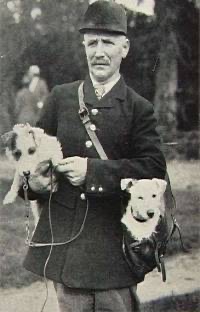
Amongst Dartmouth’s many famous historical figures is one Reverend John Russell, who ‘created’ the Jack Russell hunting dog. 

John, also known as Jack, Russell was born on 21 December 1795 in Dartmouth, the eldest son of John Russell and wife Nora Jewell. He lived at Sandhill House.

He was educated at Plympton Grammar School, Blundell’s School in Tiverton and Exeter College, Oxford. Following his university days in Oxford, he returned to the county to work as a Reverend in North Devon.

John came from a hunting family and wanted to find a hard working breed of terrier which could flush out a fox. He was adamant his terriers should not maim or kill the fox. Instead, he wanted them to nip and worry a fox to the point that it would bolt from its den and take its chances above ground.

In 1819, while studying at Oxford, legend has it he spotted a little white terrier with dark tan spots over her eyes, ears and at the tip of her tail, owned by a local milkman. Russell bought the dog on the spot and ‘Trump’ became the first of a line of fox hunting terriers that became known as Jack Russell Terriers.

Russell crossed Trump with a Devon hunt terrier to create the famous Jack Russell breed. She formed the basis for his breeding programme and by the 1850s the dogs were recognised as a distinct type of Fox Terrier. The dogs were well suited for digging out foxes with the shortness and strength of their legs.

The Reverend was a founding member of The Kennel Club. He helped to write the breed standard for the Fox Terrier (smooth) and became a respected judge.

Reverend Russell was vicar of St James Church, Swimbridge, near Barnstaple, for 40 years from 1832. It’s said his sermons were very brief by Victorian standards because his hunting horse was usually saddled up and waiting for him in the churchyard.

In 1836 he married Penelope Incledon-Bury, daughter and co-heiress of Vice Admiral Richard Incledon-Bury, of the Royal Navy and Lord of the Manor of Colleton, Chulmleigh. Russell is said to have had expensive sporting habits, both on and off the hunting field which drained the substantial resources of his heiress wife and left the estate of Colleton in poor condition.

Russell died in 1883 and his body is buried in the churchyard at Swimbridge. The village pub was renamed the ‘Jack Russell Inn’ in his honour. The pub sign is a reproduction of a painting of Trump, which was commissioned by the then Prince of Wales, later King Edward VII. The original still hangs at Sandringham.

The Jack Russell Terrier Club of Great Britain was established in 1974 as the parent club for the Jack Russell Terrier. The Parson Jack Russell Terrier was recognised in 1990 as a variant of the Fox Terrier. Though these different builds are basically variants of the same breed, with the same temperament and behaviour, most of the world now recognises them as separate breeds. And whether just Jack or Parson Jack they’re both named after Dartmouth’s Reverend John Russell for sure.

History of the Jack Russell Terrier

Jack Russell Terriers are a type, or strain, of working terrier; they are not pure bred in the sense that they have a broad genetic make-up, a broad standard, and do not breed true to type.

Jack Russell Terriers are a type, or strain, of working terrier; they are not pure bred in the sense that they have a broad genetic make-up, a broad standard, and do not breed true to type. This is a result of having been bred strictly for hunting since their beginning in the early 1800’s, and their preservation as a working breed since. The broad standard, varied genetic background based on years of restricted inbreeding and wide outcrossing, and great variety of size and type, are the major characteristics that make this strain of terrier known as a Jack Russell such a unique, versatile working terrier.

The Jack Russell Terrier takes it name from the Reverend John Russell who bred one of the finest strains of terriers for working fox in Devonshire, England in the mid-to-late 1800’s. Rev. Russell (1795-1883), apart from his church activities, had a passion for fox hunting and the breeding of fox hunting dogs; he is also said to be a rather flamboyant character, probably accounting for his strain of terrier’s notability and the name of our terrier today. His first terrier, the immortal TRUMP, is said to be the foundation of John Russell’s strain of working terriers.

Everything about the Jack Russell has fox hunting in mind… coloring, conformation, character, and intelligence. The body is compact, of totally balanced proportions, the shoulders clean, the legs straight, and most importantly, a small chest (easily spannable by average size hands at the widest part behind the shoulders). The Jack Russell must also be totally flexible, allowing him to maneuver underground. This conformation allows the terrier to follow his quarry down narrow earths. The fox is a good model for the Jack Russell-where the fox can go, so must the terrier. Although originally bred for fox hunting, the Jack Russell is a versatile working terrier to a variety of quarry including red and grey fox, raccoon and woodchuck.

John Russell maintained his strain of fox terriers bred strictly for working, and the terrier we know of today as the Jack Russell is much the same as the pre-1900 fox terrier. The Jack Russell has survived the changes that have occurred in the modern-day Fox Terrier because it has been preserved by working terrier enthusiasts in England for more than 100 years; it has survived on its merits as a worker. It is the foremost goal of the JRTCA that the Jack Russell continues in that tradition.

Opposed to Kennel Club Recognition

The Fox Terrier, accepted as a kennel club breed in the late 1800’s, has undergone many conformational changes as a result of the whims of the show ring, resulting in today’s Modern Fox Terrier. Conformational changes such as a deep chest, long, narrow head structure, and extremely straight shoulders make it very unlikely that a fox terrier of today’s standard could follow a fox into a shallow earth, even if the instinct to do so remained. John Russell maintained his strain of fox terriers bred strictly for working, and the terrier we know of today as the Jack Russell is much the same as the pre-1900 fox terrier. It is interesting to note that John Russell was one of the original founders of England’s Kennel Club in 1873; in 1874, he judged Fox Terriers in the first Kennel Club sanctioned show in London. While he remained a Kennel Club member for the rest of his life, he did not exhibit his own dogs.

There has been a great increase in the conformation showing of Jack Russell Terriers in recent years. Conformation exhibiting has been very effective in the U.S. in promoting correct conformation according to the JRTCA breed standard, thereby improving the quality of the breeding stock in this country.

However, while showing is beneficial to the breed in that respect, the JRTCA designs its trials to keep the working aspects of the terrier in the forefront. The highest awards presented to a terrier by the JRTCA are its working awards; the Natural Hunting Certificate, the Bronze Medallion for Special Merit in the Field, and the Working Achievement Award for Continued Field Service.

The JRTCA National Trial Conformation Champion is selected from the JRTCA Working Terrier Division of the National Trial; all entries have proven their working ability to having earned at least one Natural Hunting Certificate in the field. JRTCA sanctioned conformation judges are required to have an in-depth, first-hand knowledge of terrier work, and understand the importance of the physical characteristics necessary for a terrier to be useful for the work he was bred to do. These judges are required to work their terriers in the field.

Reference

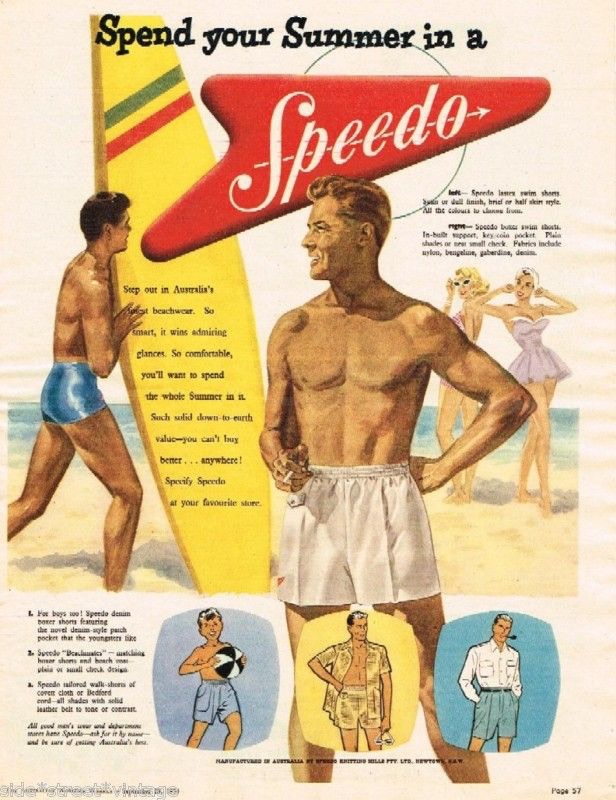
The Uncensored History of the Speedo Swim Brief: Australia’s Most Famous Swimsuit

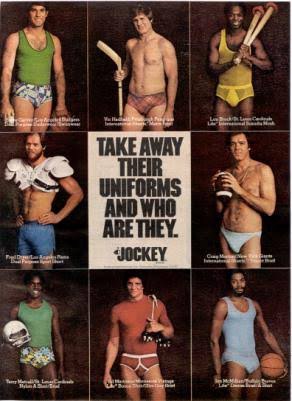
Few items of clothing have become as instantly recognizable as the Speedo swim brief. Around the world it is known by many names: racing brief, swim brief, budgie smugglers, banana hammock, racing trunks, and simply “Speedos.” Loved, ridiculed, admired, and occasionally banned, the garment has become one of the most iconic pieces of sporting apparel ever created.

For nearly a century, the Speedo swim brief has been at the centre of changing attitudes toward sport, body image, masculinity, fashion, and public decency. It has clothed Olympic champions, lifesavers, beachgoers, bodybuilders, and generations of Australian men. At various times it has been regarded as daring, revolutionary, athletic, sexy, practical, and hopelessly unfashionable.

Its story is inseparable from Australia’s beach culture and from the evolution of competitive swimming itself.

Before Speedo: Swimming in the Age of Modesty

In the nineteenth century, swimming attire looked nothing like modern swimwear.

Men often swam in woollen garments that resembled short-sleeved one-piece suits. These costumes were heavy, restrictive, and became even heavier when soaked with water.

Social attitudes demanded modesty. In many places, exposing too much skin was considered inappropriate or even illegal.

By the early twentieth century, men’s swimwear had evolved into sleeveless tank-style suits that still covered much of the torso and upper thighs.

Competitive swimmers increasingly complained that these garments restricted movement and created drag in the water.

The stage was set for change.

The Birth of Speedo

The company that would become synonymous with modern swimwear began in Sydney in 1914.

Founded by Scottish immigrant Alexander MacRae, the business originally manufactured hosiery and underwear.

The company later became known as Speedo Australia.

During the 1920s and 1930s, the popularity of swimming and beach culture exploded across Australia.

Australians embraced outdoor recreation, and beaches became central to national identity.

MacRae’s company began developing lighter, more comfortable swimwear that allowed greater freedom of movement.

The Racerback Revolution

One of Speedo’s earliest breakthroughs came in 1928 with the introduction of the “Racerback” swimsuit.

Although designed primarily for competitive swimmers, it represented a major departure from earlier swimwear.

The suit exposed more of the shoulders and back than previous designs.

Traditionalists were shocked.

Some regarded the garment as scandalously revealing.

Yet swimmers loved it because it improved performance.

The controversy surrounding the Racerback established a pattern that would repeat throughout Speedo’s history: every reduction in fabric generated public debate.

The Arrival of the Swim Brief

By the middle of the twentieth century, swimwear manufacturers increasingly experimented with shorter designs.

Competitive swimmers demanded garments that reduced drag while maximizing freedom of movement.

The swim brief gradually emerged as the logical solution.

Unlike traditional trunks, the brief hugged the body closely and eliminated excess material.

Its advantages were obvious:

Reduced water resistance

Improved mobility

Faster drying

Greater comfort during racing

Enhanced freedom of movement

For athletes, performance mattered more than modesty.

The Olympic Connection

The growth of the Speedo brief became closely tied to Olympic swimming.

Throughout the 1950s and 1960s, elite swimmers increasingly adopted streamlined briefs.

Television broadcasts brought competitive swimming into homes around the world.

Viewers became accustomed to seeing world champions wearing little more than a close-fitting brief.

The association between Speedo and athletic excellence became firmly established.

Olympic medals helped sell swimwear.

The message was simple: champions wore Speedos.

Australia’s Beach Culture

No discussion of the Speedo brief is complete without understanding Australian beach culture.

Australia’s climate, coastline, and outdoor lifestyle created an environment unlike almost anywhere else.

For much of the twentieth century, Australian beaches were dominated by practical swimwear rather than fashion-driven alternatives.

The swim brief became almost a national uniform.

It was worn by:

Lifesavers

Swimmers

Divers

Water polo players

Surfers during training

Beachgoers of all ages

For generations of Australian men, wearing a Speedo attracted little attention.

It was simply what people wore.

The Lifesaving Connection

Australia’s surf lifesaving movement played a major role in popularizing the brief.

Members of organizations such as the Surf Life Saving Australia required practical swimwear that allowed unrestricted movement.

The brief proved ideal.

It stayed secure in rough surf and provided minimal drag while swimming.

Images of bronzed lifesavers in red or navy briefs became iconic representations of Australian masculinity.

The International Divide

While Australia embraced the swim brief, other countries gradually moved in different directions.

In Europe, particularly around the Mediterranean, briefs remained popular.

However, in North America during the 1980s and 1990s, longer board shorts and baggy trunks became increasingly fashionable.

Cultural attitudes shifted.

Many younger men became self-conscious about wearing revealing swimwear.

As a result, the Speedo brief became associated more strongly with athletes, European beach culture, and Australia.

The garment’s practical advantages remained unchanged, but fashion trends had shifted.

The Rise of the “Budgie Smuggler”

Australia’s most famous nickname for the swim brief emerged in the late twentieth century.

The term “budgie smuggler” humorously suggests someone concealing a small bird inside their swimwear.

The phrase quickly entered Australian slang.

Unlike many fashion terms, it reflected Australia’s tendency to treat itself with humour and irreverence.

The nickname transformed what might otherwise have been an ordinary garment into a uniquely Australian cultural icon.

Even politicians, celebrities, and sports stars have found themselves photographed in budgie smugglers.

Body Image and Masculinity

The swim brief has always occupied a unique place in discussions about masculinity.

Unlike loose swim trunks, briefs reveal the shape and contours of the body.

This visibility has generated both admiration and anxiety.

At various times the garment has symbolized:

Athletic achievement

Physical confidence

Youthfulness

Body consciousness

Masculinity

Critics sometimes dismissed the brief as too revealing.

Supporters argued that it simply displayed the human body in a natural and practical way.

The debate continues today.

Competitive Swimming’s Choice

Despite changing fashions, competitive swimmers never abandoned the swim brief.

Elite athletes prioritize performance above all else.

The brief remains advantageous because it:

Creates minimal drag

Allows unrestricted kicking

Stays secure during racing

Reduces water retention

Although technological racing suits emerged in the late twentieth century, the swim brief remains a staple of training and competition.

Many swimmers continue to regard it as the most efficient swimwear ever designed.

The High-Tech Era

The late twentieth and early twenty-first centuries saw dramatic advances in swimwear technology.

Manufacturers developed fabrics that:

Reduced drag

Improved hydrodynamics

Dried rapidly

Resisted chlorine damage

Speedo became a leader in performance swimwear innovation.

Its advanced racing suits generated considerable controversy, particularly during the era of polyurethane-enhanced competition suits.

However, the classic swim brief remained part of the company’s identity.

Even as technology evolved, the traditional brief endured.

Popular Culture and Celebrity

The Speedo brief has enjoyed an extraordinary presence in popular culture.

Actors, athletes, models, and entertainers have all contributed to its image.

Some embraced it as a symbol of confidence.

Others became subjects of humour.

Unlike many garments, the Speedo brief rarely goes unnoticed.

It attracts attention precisely because it leaves little to the imagination while remaining entirely within the bounds of ordinary swimwear.

Fashion’s Cycles

Fashion trends have repeatedly declared the swim brief obsolete.

Yet each prediction has proven premature.

Periods of popularity have alternated with periods of decline.

In recent years, younger generations have shown renewed interest in classic swim briefs.

Part of this revival reflects broader trends toward vintage fashion and body positivity.

Many consumers appreciate the garment’s simplicity and functionality.

Why Men Still Wear Them

Despite countless alternatives, many men continue choosing swim briefs.

Common reasons include:

Comfort

Performance

Freedom of movement

Faster drying

Minimal tan lines

Athletic tradition

For swimmers and serious beachgoers, these practical advantages often outweigh concerns about fashion.

The brief remains one of the most efficient forms of swimwear ever invented.

Beyond the Stereotypes

The Speedo brief is often stereotyped as something worn only by athletes, bodybuilders, or older beachgoers.

The reality is far more diverse.

Men of all ages and body types continue wearing swim briefs around the world.

In countries such as Australia, Italy, Spain, France, and Brazil, they remain commonplace.

What one culture considers daring, another regards as entirely ordinary.

The garment’s reception often says more about cultural attitudes than about the swimwear itself.

The Enduring Legacy

Few pieces of sporting apparel have had the global influence of the Speedo swim brief.

Born from the practical needs of swimmers, it became a symbol of athletic performance, Australian beach culture, and changing social attitudes toward the male body.

Its design has remained remarkably consistent because its fundamental purpose has never changed.

It allows swimmers to move through water with maximum efficiency and minimum restriction.

That simple objective explains why, despite decades of fashion trends, jokes, and controversy, the Speedo brief continues to survive.

The history of the Speedo swim brief is ultimately a story of function triumphing over fashion.

From Sydney’s beaches to Olympic swimming pools, from surf lifesaving clubs to Mediterranean resorts, the brief has endured because it works.

It has challenged social conventions, sparked debates about modesty, and become one of Australia’s most recognizable contributions to global sporting culture.

Whether known as a racing brief, a Speedo, or a budgie smuggler, it remains one of the most iconic garments ever worn by men.

Nearly a century after its rise to prominence, the Speedo swim brief continues to do exactly what it was designed to do: help people move through the water as efficiently as possible, while carrying a cultural legacy far larger than the small amount of fabric from which it is made.

Tim Alderman ©️ 2026

Buddhism 101: The Shaolin Monastery: History, Buddhism, Martial Arts, and Legacy

Introduction

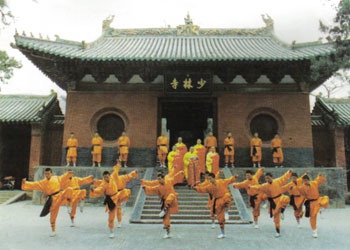
Few religious institutions have captured the imagination of the world quite like the Shaolin Monastery. Known variously as the birthplace of Chan (Zen) Buddhism, the legendary home of warrior monks, and the spiritual cradle of Chinese martial arts, Shaolin occupies a unique place where religion, philosophy, culture, and physical discipline meet.

For more than 1,500 years, the monastery has survived warfare, political upheaval, destruction, and rebuilding. It has inspired countless stories, films, novels, and martial arts traditions while remaining an active Buddhist temple devoted to spiritual practice.

Although popular culture often emphasizes the spectacular fighting abilities of Shaolin monks, the monastery’s deeper significance lies in its role as a centre of Buddhist learning and meditation. The martial arts associated with Shaolin were historically viewed not as ends in themselves but as disciplines that supported mental focus, physical health, and spiritual development.

The Founding of the Shaolin Monastery

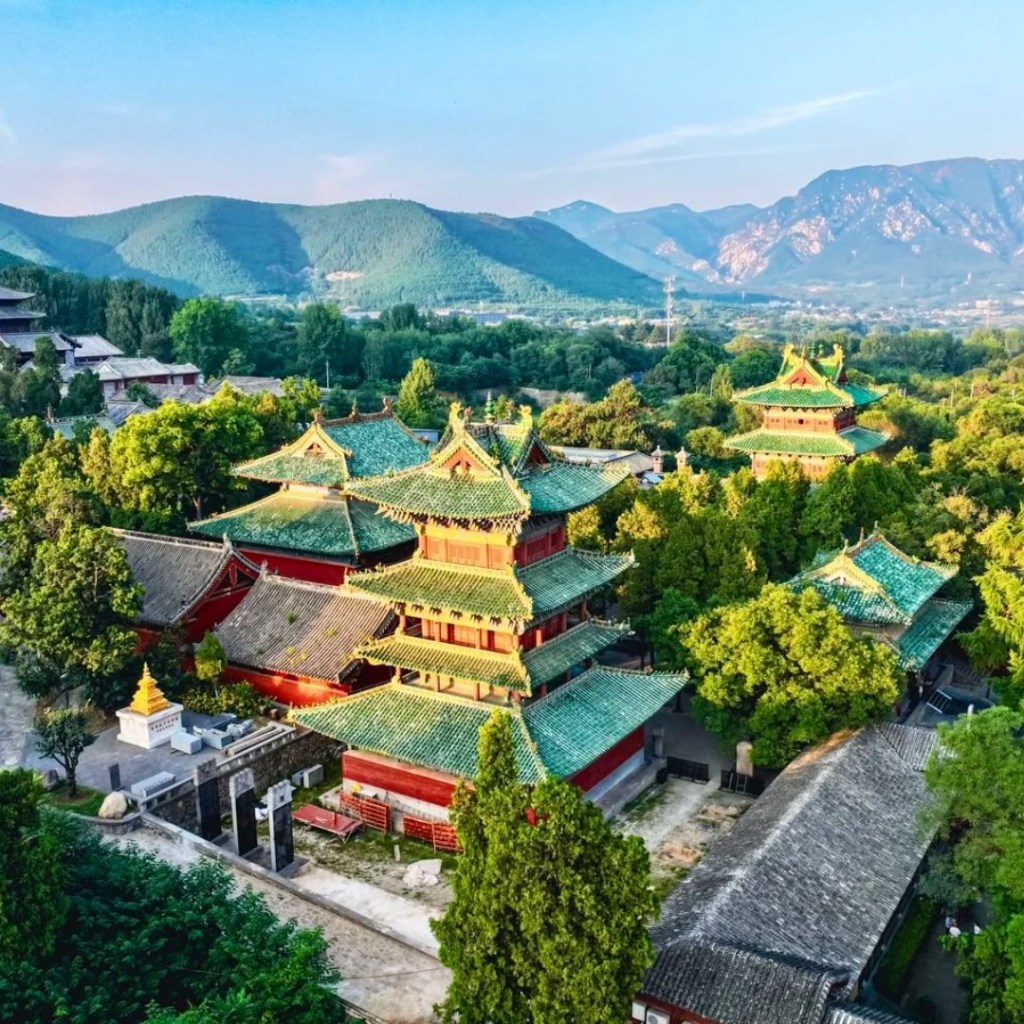
The Shaolin Monastery was established in 495 CE during the Northern Wei Dynasty. It was built on the slopes of Mount Song, one of China’s five sacred mountains, in what is now Henan Province.

The temple was constructed by Emperor Xiaowen to house an Indian Buddhist monk named Batuo (also known as Buddhabhadra), who had travelled to China to spread Buddhist teachings.

At the time, Buddhism was gaining influence throughout China. Originating in India centuries earlier through the teachings of the Buddha, the religion had gradually spread along trade routes into Central Asia and China.

The location chosen for the monastery was both beautiful and strategically secluded. Nestled among forests and mountains, it offered an ideal environment for meditation and religious study.

The name “Shaolin” literally means “Young Forest,” referring to the forests surrounding the temple.

Bodhidharma and the Birth of Chan Buddhism

No figure is more closely associated with Shaolin than Bodhidharma.

According to tradition, Bodhidharma was an Indian monk who arrived in China during the sixth century. While historians debate many details of his life, he became one of the most influential figures in East Asian Buddhism.

Legend states that Bodhidharma travelled to Shaolin and found the monks physically weak and struggling to maintain the rigorous demands of meditation.

One famous story claims that he meditated in a cave near the monastery for nine years, facing a wall in uninterrupted contemplation. The cave associated with this practice remains a pilgrimage site today.

Bodhidharma’s teachings emphasized direct personal experience over reliance on scriptures or rituals alone. He taught that enlightenment could be realized through disciplined meditation and insight into one’s own nature.

These teachings became the foundation of Chan Buddhism in China, which later evolved into Zen Buddhism in Japan and influenced Buddhist traditions throughout East Asia.

The Origins of Shaolin Martial Arts

The relationship between Bodhidharma and martial arts is one of the most debated topics in Shaolin history.

Popular tradition credits him with introducing exercises that eventually developed into Shaolin Kung Fu. However, most modern historians believe the connection is more symbolic than historical.

It is likely that martial arts practices evolved gradually over centuries within the monastery. Monks required physical fitness to endure long hours of meditation and to protect themselves from bandits who sometimes threatened remote religious communities.

Over time, techniques from military training, local fighting traditions, and physical conditioning exercises became integrated into monastic life.

The resulting martial arts system became known as Shaolin Kung Fu.

The Warrior Monks

Shaolin’s reputation as a community of warrior monks grew significantly during the Tang Dynasty.

Historical records describe occasions when Shaolin monks assisted imperial forces in military conflicts. One famous account tells of monks helping the future Emperor Li Shimin during a struggle for political power in the seventh century.

Their support reportedly earned imperial favour and recognition for the monastery.

These events contributed to the enduring image of Shaolin monks as both spiritual practitioners and skilled fighters.

However, contrary to many modern portrayals, martial activities represented only a small part of monastic life. Meditation, study, chanting, and religious observance remained the primary focus of the community.

Chan Buddhism at Shaolin

At its heart, Shaolin has always been a Buddhist monastery.

Chan Buddhism emphasizes:

Meditation

Mindfulness

Direct experience

Self-discipline

Simplicity

Insight into the nature of reality

Rather than focusing solely on philosophical study, Chan encourages practitioners to experience truth directly.

Many famous Chan masters lived and taught at Shaolin throughout its history.

The monastery became a major centre for Buddhist scholarship and spiritual practice, attracting monks and pilgrims from across China.

The famous Zen emphasis on being fully present in each moment reflects principles that were cultivated at Shaolin for centuries.

Daily Life of Shaolin Monks

Life within the monastery has traditionally followed a strict routine.

A typical day often begins before sunrise.

Activities include:

Morning chanting

Meditation sessions

Temple duties

Scriptural study

Physical exercise

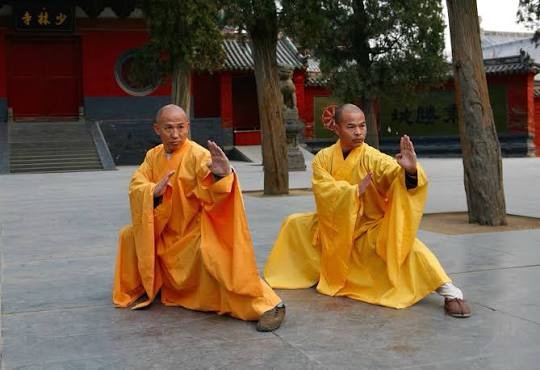
Martial arts training

Communal meals

Evening prayers

Monks generally live according to Buddhist precepts that encourage ethical behaviour, compassion, simplicity, and non-attachment.

Meals are usually vegetarian, reflecting Buddhist principles of non-harm toward living beings.

Discipline is considered essential. Every aspect of daily life is viewed as an opportunity to cultivate awareness and mindfulness.

Shaolin Kung Fu

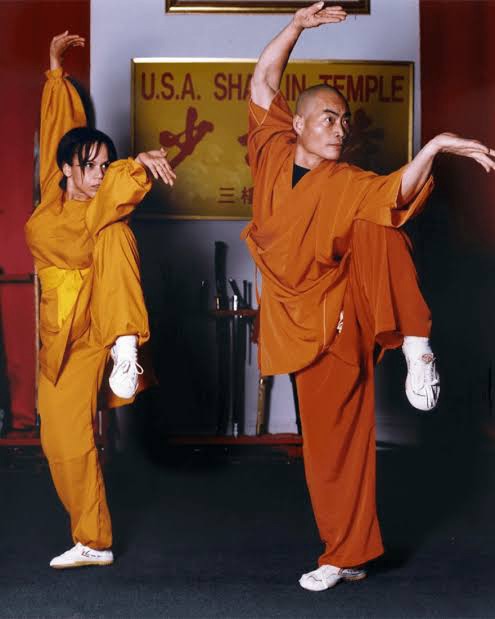
Shaolin Kung Fu developed into one of the world’s most famous martial arts traditions.

Rather than a single style, Shaolin Kung Fu encompasses hundreds of forms and techniques.

Training includes:

Striking techniques

Kicking techniques

Joint locks

Throws

Acrobatics

Weapons training

Breathing exercises

Conditioning practices

Students learn not only physical movements but also principles of discipline, patience, humility, and mental focus.

Traditional training can be extremely demanding, requiring years of dedicated practice.

Many practitioners regard Kung Fu as a moving form of meditation in which mind and body operate in harmony.

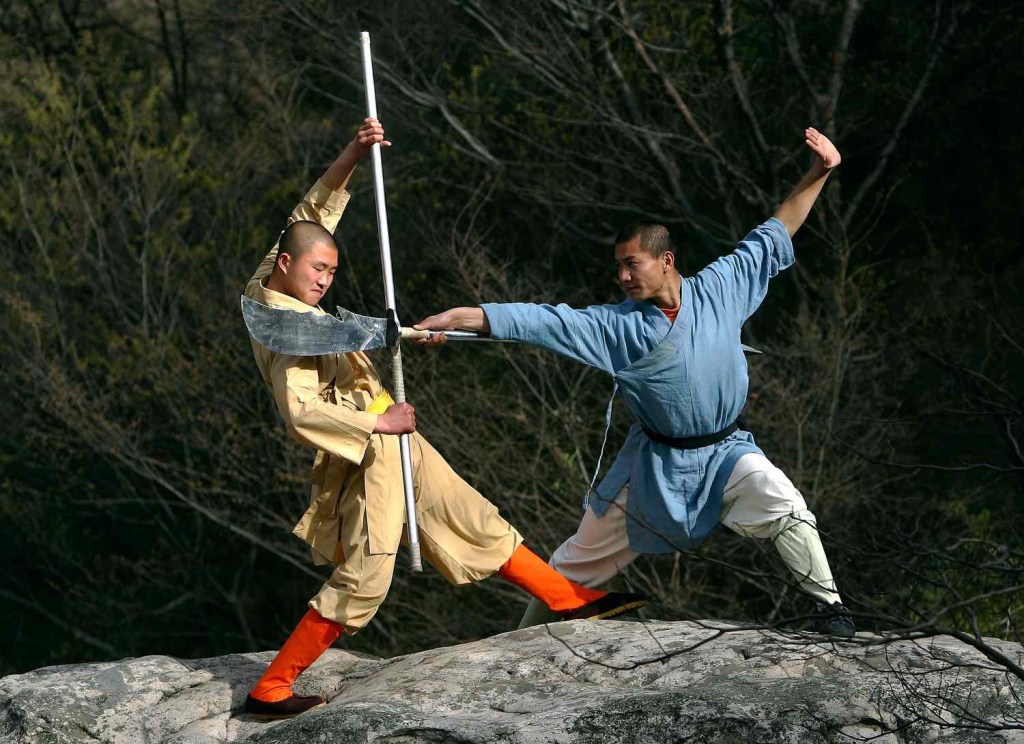
Shaolin Weapons

Historically, Shaolin monks trained with numerous traditional weapons.

These included:

Staffs

Spears

Swords

Broadswords

Halberds

Chain weapons

The staff became particularly associated with Shaolin and remains one of its most recognizable symbols.

Weapon training was never intended merely for combat. It cultivated coordination, concentration, timing, and self-discipline.

Many elaborate forms are still practiced today as part of traditional training.

The Pagoda Forest

One of the monastery’s most remarkable features is the Pagoda Forest.

This extraordinary collection of stone pagodas serves as a cemetery for generations of distinguished monks.

The forest contains hundreds of pagodas dating back many centuries.

Each structure commemorates a respected monk and reflects the individual’s status and accomplishments.

The Pagoda Forest is considered one of the most significant collections of ancient Buddhist funerary architecture in China.

Destruction and Rebuilding

Like many historic religious institutions, Shaolin has experienced repeated periods of destruction and renewal.

Over the centuries, the monastery suffered damage from:

Warfare

Political conflict

Bandit attacks

Natural disasters

One of the most devastating events occurred in 1928 during China’s warlord era when large sections of the temple were destroyed by fire.

Ancient scriptures, artworks, and historic buildings were lost.

Despite these setbacks, Shaolin repeatedly rebuilt and restored itself.

Its survival became a powerful symbol of resilience and continuity.

Shaolin During Modern China

The twentieth century brought profound changes to China and to religious institutions generally.

During the Cultural Revolution (1966–1976), many temples and religious sites throughout China experienced severe disruption.

Shaolin was not immune to these challenges.

However, in subsequent decades the monastery underwent extensive restoration and gradually regained its status as an important religious and cultural centre.

Today it functions as:

An active Buddhist monastery

A pilgrimage destination

A cultural heritage site

A centre for martial arts education

A major tourist attraction

Visitors arrive from around the world to experience its history and traditions.

Shaolin in Popular Culture

Beginning in the twentieth century, Shaolin became internationally famous through books, films, and television.

Martial arts cinema played a major role in spreading the monastery’s reputation worldwide.

Actors such as Jet Li gained international recognition through films depicting Shaolin history and Kung Fu traditions.

Countless movies have portrayed Shaolin monks as heroic warriors possessing extraordinary physical abilities.

While these portrayals often contain elements of historical truth, they also incorporate considerable myth and dramatic exaggeration.

The real monastery’s history is far more complex and deeply rooted in Buddhist spirituality.

Myths and Misconceptions

The popularity of Shaolin has generated many myths.

Among the most common are claims that:

Bodhidharma invented Kung Fu.

Shaolin monks possessed supernatural powers.

Martial arts were the monastery’s primary purpose.

Historical evidence suggests a more nuanced reality.

Martial arts certainly became important at Shaolin, but meditation and Buddhist practice remained central.

Likewise, while some stories describe miraculous feats, these are generally understood as legends rather than verifiable historical events.

The enduring appeal of such stories reflects the powerful cultural symbolism of Shaolin rather than literal history.

Shaolin Today

Today, Shaolin continues to attract monks, martial artists, pilgrims, and tourists from every continent.

The monastery remains a living institution where Buddhist practice continues alongside cultural preservation.

Modern Shaolin monks still engage in:

Meditation

Chanting

Religious study

Community service

Martial arts training

International schools and cultural programs have helped spread Shaolin traditions worldwide.

Yet despite global fame, the monastery’s essential purpose remains much the same as it was fifteen centuries ago: the cultivation of wisdom, compassion, discipline, and spiritual awakening.

The Shaolin Monastery occupies a unique place in world history. Founded as a Buddhist temple in the forests of central China, it became a centre of Chan Buddhism, a repository of spiritual learning, and the legendary home of one of the world’s most influential martial arts traditions.

Its story is one of endurance through centuries of change. Emperors, armies, revolutions, and modern globalization have all left their mark on the monastery. Yet Shaolin has retained its identity as a place where physical discipline and spiritual cultivation are inseparable.

Although popular culture often celebrates the monastery’s martial prowess, its greatest legacy may be its demonstration that true strength arises not merely from physical power, but from mastery of the mind. For more than 1,500 years, Shaolin has embodied the Buddhist ideals of discipline, mindfulness, perseverance, and compassion—values that continue to inspire people throughout the world today.

Tim Alderman ©️ 2026

The Tighty-Whities Story: A Comprehensive History of Men’s Classic Y-Front Briefs

Few items of clothing are as universally recognized as the classic white Y-front brief. Loved by some, mocked by others, and worn by generations of men around the world, the humble brief has become one of the most enduring garments in the history of men’s fashion.

Known affectionately—and sometimes less affectionately—as “tighty-whities,” the Y-front brief has spent nearly a century supporting men through childhood, military service, athletic pursuits, working life, and old age. It has been a symbol of practicality, masculinity, conformity, comfort, and even comedy. Yet despite repeated predictions of its demise, the classic brief remains an important part of men’s underwear culture.

Its story is one of innovation, changing fashions, evolving ideas about masculinity, and the constant search for comfort and support.

Before the Brief: The Age of Long Underwear

Prior to the twentieth century, men’s underwear looked very different from what we know today.

For centuries men wore garments such as:

Loincloths

Breeches

Drawers

Union suits

Long johns

The most common undergarment in the late nineteenth and early twentieth centuries was the union suit, a one-piece garment covering the body from shoulders to ankles.

While practical in colder climates, these garments were often bulky, restrictive, and uncomfortable during warmer weather.

As society modernized and clothing became lighter and more tailored, men began demanding underwear that offered greater freedom of movement.

The stage was set for a revolution.

The Birth of Modern Briefs

The breakthrough occurred in 1934.

An executive at the Chicago-based underwear manufacturer Jockey International reportedly received a postcard from the French Riviera depicting a man wearing a form-fitting bikini-style swimsuit.

Inspired by the design, the company developed a revolutionary new men’s undergarment.

The garment was introduced on January 19, 1935, under the name “Jockey Brief.”

It featured several innovations:

No legs

A close-fitting design

Knitted elastic fabric

A supportive front pouch

An overlapping fly opening

Most importantly, it offered support without requiring the leg sections found in traditional boxer shorts.

The product was an immediate success.

Chicago department stores reportedly sold thousands within weeks.

Men had never seen anything quite like it.

The Famous Y-Front Design

The defining feature of the classic brief was its distinctive Y-shaped fly opening.

This overlapping fabric construction created both convenience and support.

The Y-front quickly became the most recognizable characteristic of the garment.

Manufacturers promoted the design as:

Hygienic

Practical

Comfortable

Masculine

Supportive

The Y-front soon became synonymous with men’s underwear itself.

Even today, many people immediately picture the classic white Y-shaped fly when someone mentions men’s briefs.

The End of the Boxer Monopoly

Before briefs appeared, loose-fitting boxer shorts dominated the market.

Boxers had originally been developed for prize fighters and offered freedom of movement.

However, many men found them lacking in support.

The brief solved that problem.

Men who worked physically demanding jobs often preferred the additional support provided by the new garment.

Athletes quickly adopted briefs for similar reasons.

By the late 1930s, briefs had become one of the fastest-growing categories in men’s apparel.

Wartime Popularity

The Second World War significantly accelerated the spread of briefs.

Military organizations sought underwear that was:

Easy to manufacture

Comfortable

Durable

Space efficient

Millions of servicemen were introduced to modern briefs through military issue clothing.

After returning home, many continued wearing them.

As a result, the post-war years saw a massive expansion in brief sales throughout North America, Europe, and Australia.

The Y-front became a standard part of everyday male dress.

The Golden Age of the White Brief

The 1950s and 1960s represented the golden age of the classic white brief.

Manufacturers heavily promoted white cotton Y-fronts as the ideal underwear for modern men.

Advertisements emphasized:

Cleanliness

Respectability

Family values

Athleticism

Reliability

The colour white became closely associated with hygiene and purity.

For decades, many boys received their first briefs as children and continued wearing essentially the same style throughout adulthood.

White briefs became almost a uniform of masculinity.

Why They Were Called “Tighty-Whities”

The nickname “tighty-whities” emerged in the latter half of the twentieth century.

The term combined two obvious characteristics:

“Tighty” referred to the close-fitting nature of the garment.

“Whities” referred to the overwhelmingly white colour of most briefs sold during the era.

Although originally informal slang, the phrase eventually entered popular culture and became instantly recognizable throughout the English-speaking world.

Hollywood and Popular Culture

Classic briefs became deeply embedded in film and television.

Movie stars frequently appeared in them during scenes depicting ordinary domestic life.

The garment symbolized the average man.

Famous actors photographed in briefs helped normalize the style and even made it aspirational.

By the 1950s and 1960s, briefs were considered the standard underwear for men of all ages.

Virtually every major underwear manufacturer produced them.

The Rise of Television Advertising

Television transformed underwear marketing.

Advertisements featured athletic men displaying the benefits of supportive underwear.

Manufacturers promoted briefs as:

Comfortable

Masculine

Modern

Practical

The message was clear: active men wore briefs.

For decades, the image of a smiling athlete in spotless white briefs became a staple of advertising.

The Brief as a Symbol of Masculinity

The popularity of briefs reflected changing ideas about the male body.

Unlike loose boxers, briefs emphasized physique.

They highlighted:

Muscular thighs

Athletic builds

Physical fitness

As gym culture expanded during the twentieth century, many men viewed briefs as consistent with an active lifestyle.

The garment’s supportive design reinforced its association with sport and physical competence.

The Arrival of Colour

While white dominated the market for decades, the 1970s brought significant changes.

Manufacturers introduced:

Blue briefs

Black briefs

Red briefs

Patterned briefs

Fashion briefs

Men increasingly viewed underwear as an expression of personal style rather than merely a functional necessity.

Bright colours and designer waistbands appeared.

Yet white briefs remained the benchmark against which all others were measured.

Competition from Boxer Shorts

Beginning in the 1980s, boxer shorts experienced a major resurgence.

Several factors contributed:

Casual fashion trends

Greater emphasis on comfort

Celebrity endorsements

Fashion advertising

Many younger men embraced the looser fit of boxers.

The classic brief’s dominance began to weaken for the first time.

The Boxer Brief Revolution

The greatest challenge arrived during the 1990s.

Boxer briefs combined:

The support of briefs

The leg coverage of boxers

This hybrid design proved enormously popular.

Major underwear brands heavily promoted boxer briefs using athletes, actors, and celebrities.

Millions of men switched styles.

Industry observers predicted the eventual extinction of the traditional brief.

They were wrong.

Why Briefs Survived

Despite changing fashions, briefs retained several important advantages.

Support remained the primary reason.

Many men appreciated:

Secure fit

Minimal fabric

Comfort beneath trousers

Reduced bunching

Cooler wear in warm climates

Athletes, tradesmen, military personnel, and older men often continued wearing briefs regardless of fashion trends.

For them, practicality outweighed style.

Advances in Fabric Technology

Modern briefs differ significantly from their cotton ancestors.

Today’s versions often feature:

Moisture-wicking fabrics

Stretch fibres

Modal blends

Bamboo fabrics

Microfibre construction

These materials improve:

Comfort

Breathability

Durability

Shape retention

Yet the essential Y-front concept remains largely unchanged.

The Brief in Australia

Australian men embraced Y-front briefs throughout much of the twentieth century.

Generations grew up wearing brands produced locally or imported from overseas.

School changing rooms, military service, sports clubs, and family homes all reflected the dominance of the brief.

Many Australian men remember receiving packets of white briefs as routine purchases made by parents and grandparents.

For decades they represented everyday practicality rather than fashion.

Fashion Cycles and Revival

Interestingly, the twenty-first century has seen a revival of interest in traditional briefs.

Younger consumers increasingly embrace vintage styles.

Fashion designers have reinterpreted classic briefs using:

Premium fabrics

Contemporary cuts

Designer branding

Luxury materials

What was once considered old-fashioned has become retro-chic in some circles.

Fashion repeatedly demonstrates that styles rarely disappear completely.

Health and Comfort Considerations

The long-running debate between briefs and boxers continues.

Research has generally found that comfort and personal preference are more important than broad generalizations.

Many men simply find briefs provide the level of support they prefer.

The enduring popularity of briefs demonstrates that there is no single “correct” choice in men’s underwear.

Cultural Legacy

Few garments have had the cultural impact of the white Y-front brief.

It has appeared in:

Films

Television shows

Advertising campaigns

Comic strips

Sitcoms

Fashion collections

The garment has become a visual shorthand for ordinary manhood.

Whether portrayed seriously or humorously, the image remains instantly recognizable.

The Future of the Tighty-Whities

Nearly ninety years after their introduction, classic briefs remain widely available around the world.

While boxer briefs may dominate sales in many markets, millions of men continue to choose traditional Y-fronts every day.

Manufacturers continue refining designs while preserving the essential elements that made the original successful:

Support

Simplicity

Comfort

Functionality

The fact that the basic design has endured for almost a century speaks volumes about its effectiveness.

The story of the Y-front brief is ultimately a story of practical innovation.

Born during the 1930s as a radical alternative to bulky underwear, the brief transformed men’s clothing and redefined expectations of comfort and support.

From the Depression era to the digital age, from military barracks to suburban homes, from athletic fields to fashion runways, the classic white brief has remained a familiar companion for generations of men.

Though often joked about and periodically declared obsolete, the “tighty-whities” continue to survive because they perform their job exceptionally well.

In the history of men’s clothing, few garments have provided so much support—both literally and figuratively—as the classic Y-front brief.

Tim Alderman ©️ 2026

The Comprehensive History of the Jockstrap: A Man’s Main Means of Support

For more than 150 years, the jockstrap has occupied a unique place in men’s clothing. At once practical, athletic, symbolic, and sometimes controversial, it has evolved from a simple piece of sporting equipment into an enduring icon of masculinity, athleticism, and even fashion. While many modern men may rarely wear one outside specific sports or activities, the jockstrap remains one of the most recognizable items of men’s underwear ever created.

Its history is closely intertwined with the development of modern sport, changing attitudes toward masculinity, advances in textile technology, and evolving ideas about comfort and support. Few garments have undergone such a fascinating transformation while retaining their original purpose: supporting and protecting the male anatomy during physical activity.

The World Before the Jockstrap

Before the nineteenth century, men relied on a variety of undergarments that offered little specialized support.

In Europe and North America, men commonly wore loose-fitting drawers beneath their trousers. Earlier generations wore loincloths, breeches, or long underpants depending on the era and social class. While these garments provided modesty and warmth, they offered little support during vigorous movement.

As cities industrialized during the nineteenth century, new forms of transportation, work, and recreation created demands for more specialized clothing. Cycling, horse riding, manual labour, and organized sport all highlighted the limitations of traditional underwear.

The problem was particularly noticeable for bicycle messengers and delivery riders navigating increasingly crowded urban streets.

The Birth of the Jockstrap

The jockstrap was invented in 1874 by C. F. Bennett, an employee of the Chicago sporting goods company Sharp & Smith.

Chicago’s streets were rough, often paved with cobblestones, and bicycle couriers—known as “bike jockeys”—spent long hours riding over uneven surfaces. The constant bouncing created discomfort and sometimes injury.

Bennett designed a supportive undergarment specifically for these riders. His invention featured a supportive pouch at the front attached to an elastic waistband, with two elastic straps extending around the buttocks.

The design kept the male genitalia securely supported while allowing freedom of movement and ventilation.

The product became known as the “Bike Jockey Strap,” a name that was eventually shortened to “jockstrap.”

The company later became known as the famous sporting goods manufacturer Bike Athletic Company, whose products would dominate the jockstrap market for generations.

Early Adoption in Sport

The late nineteenth century witnessed the emergence of organized athletics on an unprecedented scale.

Football, baseball, cycling, rugby, wrestling, and track and field competitions became increasingly popular throughout North America and Europe.

Athletes quickly recognized the advantages of the jockstrap.

The garment offered:

Improved support

Reduced discomfort during running

Better mobility

Enhanced ventilation

Protection against chafing

As sports became more competitive and physically demanding, the jockstrap became standard equipment for many athletes.

By the early twentieth century, coaches and trainers frequently recommended its use.

The Addition of Protective Cups

The next major development came with the introduction of protective athletic cups.

While the original jockstrap provided support, it offered little protection against direct impacts.

Sports such as baseball, cricket, ice hockey, lacrosse, and American football exposed athletes to potentially serious groin injuries.

Manufacturers responded by creating jockstraps equipped with pockets capable of holding hard protective cups made from metal, fibre, or later plastic materials.

This innovation dramatically improved player safety.

The combination of jockstrap and protective cup became one of the most important pieces of sporting protective equipment ever developed.

Today, versions of this design remain standard in many contact sports.

The Golden Age of the Jockstrap

From the 1920s through the 1970s, the jockstrap experienced what might be called its golden age.

During this period it became almost universal among male athletes.

Physical education programs in schools often required boys to wear athletic supporters during sports participation. Generations of young men became familiar with the garment through school sports programs.

Manufacturers expanded their product lines, producing jockstraps in a variety of sizes, materials, and support levels.

Advertising frequently emphasized themes of:

Athletic performance

Strength

Masculinity

Endurance

Confidence

The jockstrap became deeply associated with the image of the active, athletic male.

By the mid-twentieth century, millions were sold annually.

Military Use

The jockstrap’s utility extended beyond sports.

Military organizations recognized its value during training and combat preparation.

Long marches, obstacle courses, and physical training exercises placed significant strain on soldiers’ bodies.

Supportive underwear helped reduce discomfort and improve mobility.

Various military forces incorporated athletic supporters into training equipment during parts of the twentieth century, particularly during periods of intense physical conditioning.

The Design Remains Remarkably Unchanged

One reason for the jockstrap’s longevity is the effectiveness of its original design.

The classic jockstrap consists of:

An elastic waistband

A supportive front pouch

Two elastic leg straps

Unlike many garments that undergo radical redesigns, the basic jockstrap remains remarkably similar to Bennett’s original concept.

Modern materials have improved comfort and durability, but the fundamental structure remains intact.

This is a testament to the brilliance of the original design.

The Rise of Modern Underwear Competition

Beginning in the 1970s and accelerating through the 1980s and 1990s, the jockstrap faced growing competition.

Advances in textile technology led to new underwear styles offering increased support.

These included:

Briefs

Boxer briefs

Compression shorts

Athletic compression garments

Compression shorts proved particularly influential.

Made from stretch fabrics such as spandex and Lycra, they provided support while covering the entire upper leg.

Many athletes found them more comfortable and aesthetically appealing than traditional jockstraps.

As a result, jockstrap usage declined in many sports.

Sports Where Jockstraps Endured

Despite competition from newer garments, jockstraps never disappeared.

They remained common in sports requiring protective cups.

These include:

Baseball

Softball

Cricket

Ice hockey

Lacrosse

Martial arts

Rugby in some settings

Athletes often preferred jockstraps because they securely held protective cups in place while maximizing ventilation.

Even when compression garments became popular, many athletes continued to wear cup-supporting jockstraps underneath.

The Jockstrap in Popular Culture

The jockstrap gradually developed a cultural significance extending beyond athletics.

Hollywood films frequently used it as shorthand for athletic masculinity.

Locker room scenes often featured jockstraps as symbols of sporting identity.

The term “jock” itself became associated with athletes, further strengthening the connection.

The garment’s visibility in sports culture helped transform it into a recognizable symbol of male athleticism.

The Jockstrap and Gay Culture

One of the most fascinating chapters in the garment’s history emerged during the late twentieth century.

Within segments of gay male culture, particularly in urban centres during the 1970s and 1980s, the jockstrap was embraced as a symbol of masculinity and athletic appeal.

Its association with sport, strength, and the male body made it a natural object of fascination.

Manufacturers began producing designer versions featuring:

Bright colours

Premium fabrics

Fashion-oriented designs

Enhanced comfort

The garment evolved from purely functional equipment into an item with social and cultural significance.

This transformation helped sustain the jockstrap market even as mainstream athletic usage declined.

Fashion Reinvention

By the twenty-first century, fashion brands had rediscovered the jockstrap.

Many underwear companies began producing luxury and fashion-focused versions.

Materials expanded to include:

Microfibre

Modal

Bamboo fabrics

Moisture-wicking synthetics

Premium cotton blends

Designers experimented with:

Colour combinations

Waistband branding

Anatomically shaped pouches

Ergonomic construction

The jockstrap became both functional underwear and a fashion statement.

Modern Athletic Technology

Today’s athletic supporters differ substantially from their nineteenth-century ancestors in terms of materials.

Modern versions commonly feature:

Moisture management fabrics

Anti-microbial treatments

Seamless construction

Four-way stretch materials

Ergonomic pouch engineering

These improvements increase comfort while preserving the garment’s original purpose.

Many professional athletes still use specialized supporters during training and competition.

Why Some Men Still Prefer Jockstraps

Despite the availability of countless underwear options, many men continue to prefer jockstraps for specific reasons.

Support remains the primary factor.

Advocates often cite:

Excellent ventilation

Reduced chafing

Freedom of movement

Enhanced comfort during exercise

Secure support

For high-intensity physical activities, many users believe the original design remains difficult to surpass.

Health and Practical Considerations

Medical professionals occasionally recommend supportive garments following certain procedures or injuries.

Athletic supporters can assist recovery by reducing movement and providing stability.

However, recommendations vary depending on individual circumstances and should always be guided by healthcare professionals.

The garment’s ability to combine support with ventilation continues to make it useful in various sporting and medical contexts.

The Enduring Legacy

Few items of men’s clothing have enjoyed such a long and influential history.

From Chicago bicycle couriers navigating cobblestone streets to professional athletes competing on the world stage, the jockstrap has provided reliable support for more than a century and a half.

Its simple design solved a practical problem so effectively that it remains relevant today.

Although boxer briefs and compression garments now dominate much of the underwear market, the jockstrap continues to survive because it fulfills a unique function.

For athletes, it remains protective equipment.

For many men, it remains the most supportive form of underwear ever created.

For historians of clothing, it represents a fascinating example of functional design achieving near-perfection.

More than 150 years after its invention, the jockstrap remains exactly what it was intended to be: a man’s main means of support.

Tim Alderman ©️ 2026

Sources

Bike Athletic Company

C. F. Bennett

National Baseball Hall of Fame

Academic literature on sports medicine, athletic protective equipment, and the history of sporting apparel.