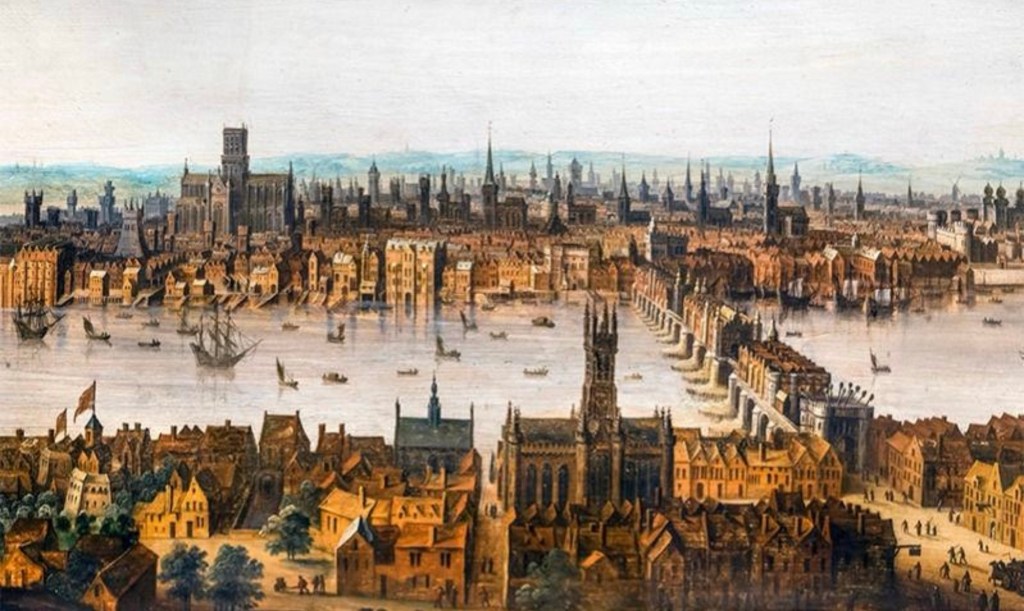
Across London Bridge, beyond the tightly regulated streets of the medieval City of London, lay another world.
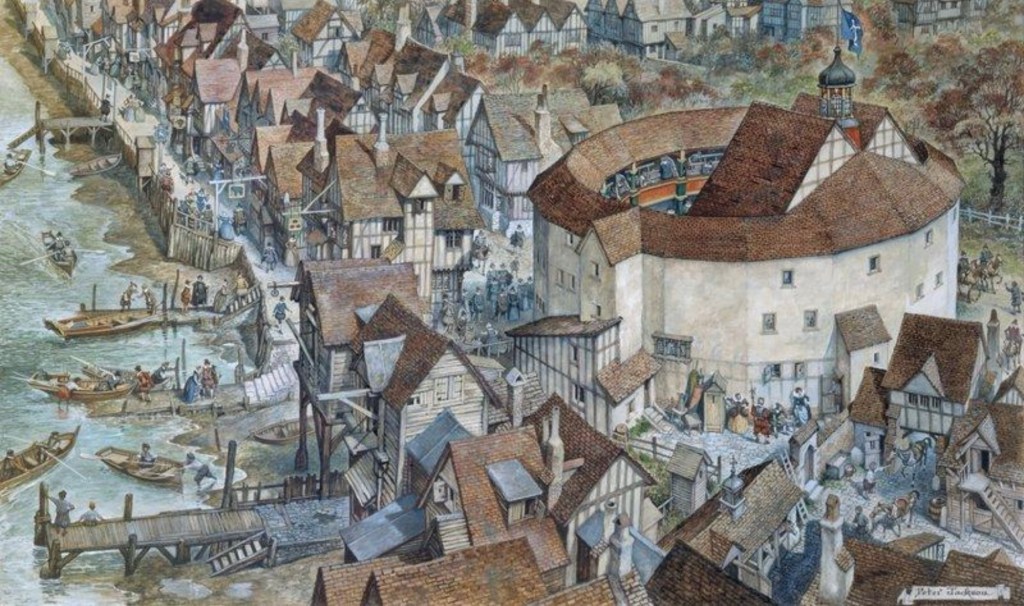
Southwark was noisy, crowded, transient and disreputable. Travellers arrived there before entering London. Pilgrims gathered in its inns before setting out towards Canterbury. Sailors and merchants came ashore along the Thames. Taverns provided drink and lodging. Entertainments flourished that respectable London preferred to keep at arm’s length.
There were gambling houses, animal-baiting arenas, inns, alehouses and, eventually, theatres.
And there were brothels.
They became known as the Southwark Stews.
Yet perhaps the most extraordinary thing about this notorious medieval red-light district was not that prostitution flourished there.
It was the identity of the landlord.
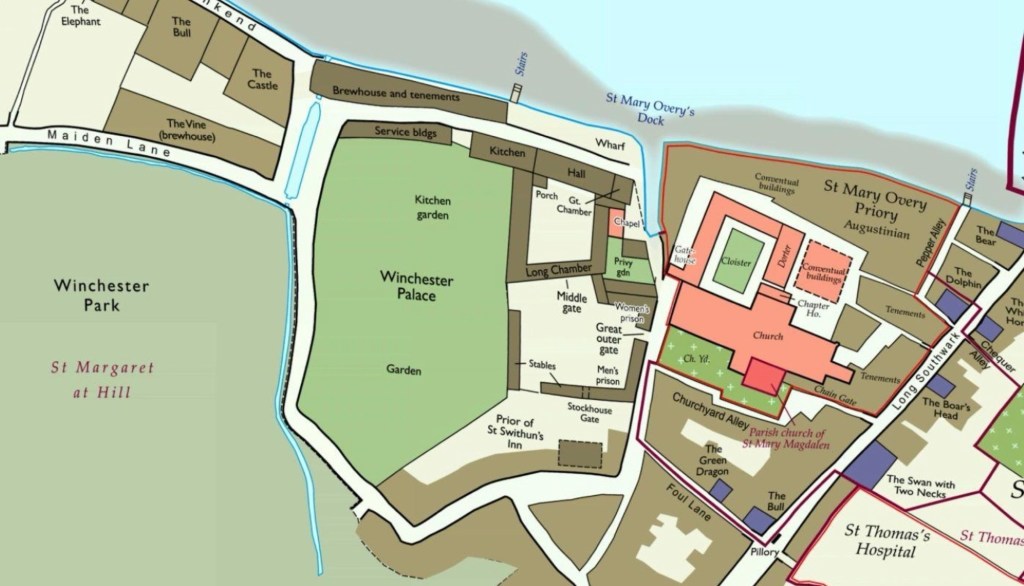
Much of the district belonged to the Bishop of Winchester.
For generations, therefore, an institution that preached against sexual sin simultaneously presided over a district in which commercial sex was tolerated, regulated and financially profitable.
The story of the Southwark Stews is consequently much more than a colourful footnote to London’s sexual history. It provides an extraordinary window into the compromises of medieval society: the enormous distance that could exist between religious doctrine and practical government, the precarious lives of women who sold sex, and the attempts of authorities to control sexual behaviour without ever really expecting to eliminate it.
And lurking behind the story is another intriguing question.
If heterosexual commercial sex could flourish semi-openly in medieval Southwark, what other sexual worlds existed alongside it?
That question leads eventually towards the largely hidden history of men who desired other men before Henry VIII’s Buggery Act of 1533.
But first, we must cross London Bridge and enter the Stews.
Across the Bridge
Medieval London was not one homogeneous city.
The City of London possessed its own government, courts, regulations and privileges. Immediately outside its jurisdiction, however, were numerous liberties and suburbs where different authorities exercised control.
Southwark lay across the Thames in Surrey.
The Bishop of Winchester owned extensive property there, centred upon his magnificent Winchester Palace, whose surviving ruins can still be seen near the modern Bankside.
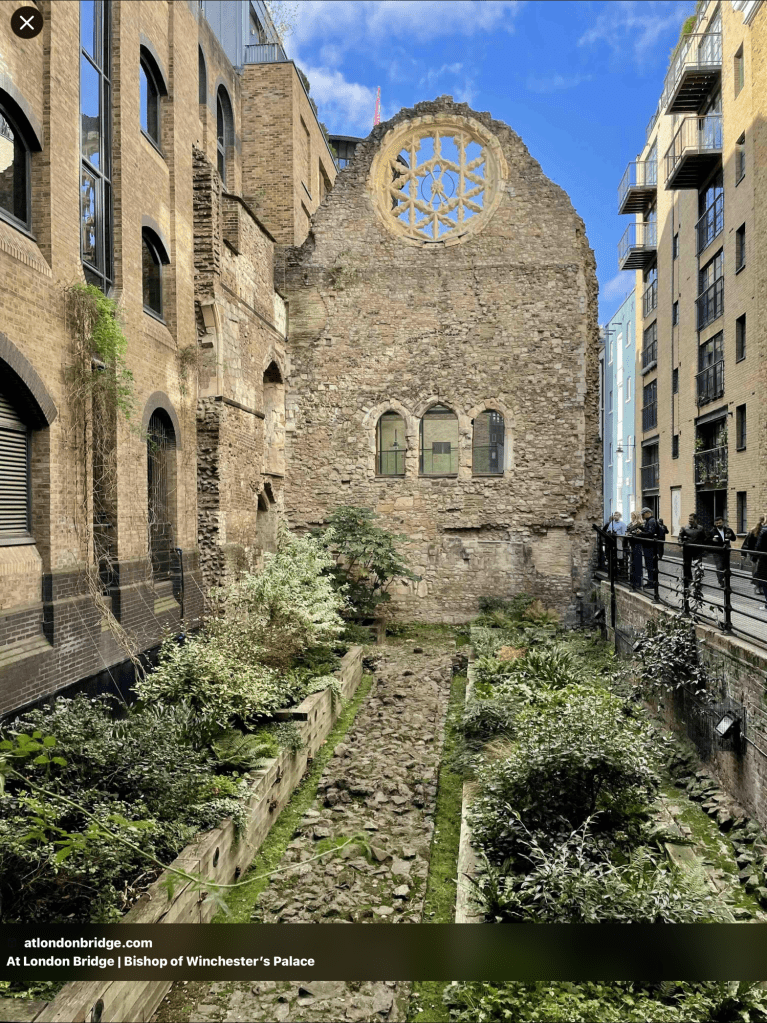
His territory became associated with the Liberty of the Clink, named after the bishop’s prison. The word clink eventually became slang for prison itself.
Southwark’s position made it ideal for activities that the authorities of London either prohibited or preferred to keep away from respectable neighbourhoods.
The river provided customers.
London Bridge provided customers.
The inns provided customers.
Travellers provided customers.
And the authorities provided something equally important:
a degree of tolerance.
By the late fourteenth century, prostitution in and around London was particularly associated with two tolerated districts: Cock Lane near Smithfield and Southwark. (Wellcome Collection)
The latter would become by far the more notorious.
Why Were They Called “Stews”?
The name sounds wonderfully peculiar today.
A stew originally had associations with heated baths and bathhouses. Public bathing establishments existed throughout medieval Europe, and some acquired reputations as places where customers could obtain considerably more than hot water.
Bathhouses and prostitution became so closely associated that stew gradually developed a secondary meaning: a brothel.
Not every bathhouse was a brothel, naturally, but the linguistic association became firmly established.
By the fifteenth century, the Southwark brothels were routinely known as the stews or stewhouses. (Wellcome Collection)
The district therefore acquired a name that was simultaneously geographic, commercial and sexual.
The Bishop’s Uncomfortable Business
Here we encounter one of the great contradictions of medieval Christianity.
The Church regarded prostitution as sinful.
Yet influential Christian thinkers had also developed the idea that prostitution could constitute a “necessary evil.”
The argument was essentially pragmatic. Human sexual desire could not realistically be abolished. Suppressing prostitution entirely, some theologians feared, might merely redirect male sexual behaviour towards adultery, rape or forms of sexuality regarded as even more sinful.
The result was an uncomfortable compromise.
Prostitution could be condemned morally while being tolerated socially.
Southwark demonstrates that compromise spectacularly.
The Bishop of Winchester did not personally run brothels in the modern sense. Rather, his administration possessed jurisdiction over the territory in which the stewhouses operated, and landlords, tenants, officials and brothel keepers existed within that economic and legal structure.
And money flowed through it.
Rents could be collected.
Fines could be imposed.
Regulations could be enforced.
Sin, it turned out, could generate remarkably respectable revenue.
The Winchester Geese
The women associated with the Southwark sex trade eventually became known as the “Winchester Geese.”
It is one of those historical expressions that sounds almost affectionate until one remembers the precarious circumstances behind it.
A visit to a prostitute could even be described in later slang as being “bitten by a Winchester goose,” particularly in reference to contracting venereal disease.
The women themselves remain frustratingly silent in the surviving evidence.
Most records were created by men: bishops, officials, clerks, courts, landlords and moralists.
We therefore know considerably more about how authorities wanted the women controlled than about what the women themselves thought about their lives.
Historian Ruth Mazo Karras has pointed out that medieval ideas of the “common woman” were themselves revealing. A prostitute could be conceived not merely as a woman who accepted payment for sex but as a woman supposedly sexually available to men “in common.” (OUP Academic)
The terminology tells us almost as much about medieval attitudes towards female sexuality as it does about prostitution.
The Famous Ordinances
Much of what we know about the Stews comes from a remarkable surviving set of regulations generally known as the Ordinances Touching the Government of the Stewholders in Southwark.
There were dozens of provisions governing how the houses operated.
For many years an attractive story was repeated that these regulations had originated in 1161 or 1162 during the reign of Henry II.
There is a problem.
The surviving document’s claim that the regulations had been authorised by a parliament at Winchester at that time is historically impossible in the form described.
Modern scholarship instead places the customary containing these regulations in the fifteenth century. (Wellcome Collection)
It is an excellent warning about medieval history: a document can itself contain an invented history.
The authorities apparently wanted their regulations to look ancient.
Ancient custom carried authority.
Regulating Sin
The ordinances are fascinating because they reveal that the Stews were not simply an anarchic sexual free-for-all.
Rules existed concerning both customers and women.
Among the most striking provisions was one forbidding stewholders from keeping women in their houses against their will.
Officials were supposed periodically to search the houses. If a single woman was discovered being detained involuntarily, she was to be permitted to leave without interference. (OUP Academic)
This does not mean medieval Southwark had solved sexual exploitation.
Far from it.
The existence of such a regulation strongly suggests that coercion was a recognised danger.
But it does demonstrate something important: authorities understood that brothel owners could exploit and imprison women, and attempted—at least on paper—to restrict that behaviour.
There were protections for customers too.
A brothel keeper was forbidden from detaining a man because he owed money, while another provision prohibited women from physically dragging potential customers into houses from the street. (Wellcome Collection)
Health was also regulated.
Women suffering from what the ordinances called a “burning disease” were forbidden from working, almost certainly reflecting contemporary awareness of sexually transmitted infections, even though medieval medicine understood them very differently from modern medicine. (Wellcome Collection)
The Stews therefore operated inside a strange mixture of commerce, policing, public health, morality and exploitation.
It sounds surprisingly modern because governments still struggle with exactly those questions.
A Female World Governed by Men
There is an uncomfortable reality behind all these regulations.
Men controlled virtually every official aspect of the system.
Men owned the property.
Men administered the courts.
Men wrote the ordinances.
Men collected rents.
Men imposed fines.
And men formed the principal customer base.
The women generated the trade but possessed comparatively little institutional power over it.
That does not mean every woman working in the Stews was necessarily a helpless victim. Medieval women’s experiences were considerably more complicated than that.
Some undoubtedly exercised agency within the limited economic choices available to them. Others may have entered sex work temporarily. Poverty could push women towards casual prostitution alongside other occupations.
Records elsewhere in London show laundresses, servants and women working in taverns being associated with occasional sex work. Dedicated brothels represented only one part of a much larger sexual economy in which taverns, alehouses and private homes could also provide places for commercial encounters. (OUP Academic)
The neat modern division between “prostitute” and “ordinary working woman” therefore does not always fit medieval society.
For some women, selling sex may have been one activity among several methods of earning enough money to survive.
Southwark’s Perfect Location
Geography explains much of the Stews’ success.
Imagine walking south across London Bridge.
Behind you stood the crowded City.
Ahead lay roads leading towards Canterbury and southern England.
Nearby were wharves filled with sailors and labourers.
Inns accommodated travellers.
Merchants arrived on business.
Pilgrims passed through.
Young apprentices and servants moved through an overwhelmingly youthful city.
Southwark consequently contained precisely the population that sustained entertainment districts throughout history:
people away from home.
And people away from home often behaved differently.
The district’s marginal legal status compounded the effect. Things restricted within the City could flourish immediately beyond its jurisdiction.
Centuries later, Bankside would become famous for another supposedly dubious entertainment:
the theatre.
The Globe, the Rose and other playhouses eventually appeared in broadly the same entertainment landscape.
Shakespeare’s audiences were therefore visiting an area already famous for centuries as London’s playground.
The Stews and the Hidden Sexual City
This is where Southwark becomes particularly important to gay history.
We must resist the temptation to describe the Stews as gay brothels. The surviving ordinances overwhelmingly concern female sex workers serving male customers.
But sexual districts create networks.
Taverns, bathhouses, lodging houses, streets, docks and entertainment venues bring strangers together.
Southwark contained all of them.
And medieval England certainly contained men who had sex with other men.
The difficulty is that those men generally did not describe themselves using identities equivalent to the modern word gay.
Authorities were usually interested in acts, not identities.
Consequently, our evidence tends to appear when something went wrong:
an arrest,
a court case,
a confession,
a scandal,
or an ecclesiastical investigation.
Successful clandestine encounters generally left no paperwork.
That creates one of the central problems of writing gay medieval history.
The archive records the men who were caught.
It rarely records the thousands who presumably were not.
Before the Buggery Act
This becomes especially important when we move towards Henry VIII’s Buggery Act of 1533.
Before that legislation, sexual acts between men were certainly regarded as sinful and could be punished through ecclesiastical or other jurisdictions.
But England did not yet possess the particular nationwide secular statute created in 1533 making “buggery” a felony punishable by death.
That does not mean men enjoyed sexual freedom before Henry VIII.
It means the machinery regulating them was different.
And that raises our next great question:
How did they find one another?
They had no gay bars.
No dating apps.
No newspapers carrying personal advertisements.
No recognised gay neighbourhood in the modern sense.
Yet human desire existed nonetheless.
Men travelled.
Men drank together.
Men slept in communal accommodation.
Men worked in overwhelmingly male environments.
Sailors lived among sailors.
Apprentices lived among apprentices.
Clergy lived among clergy.
Servants shared households.
Soldiers travelled together.
Pilgrims slept in inns.
And thousands of strangers passed constantly through places such as Southwark.
Somehow, men who desired men recognised opportunities.
That largely invisible network is the landscape we should explore next.
Crackdowns — and Survival
Tolerance of the Stews was never absolute.
Authorities periodically attempted to suppress prostitution and bawdy houses.
The early sixteenth century witnessed repeated moral campaigns around London. A 1506 attempt sought permanently to close the Southwark Stews, while authorities elsewhere prosecuted hundreds of alleged bawdy-house offences during roughly the same period. (OUP Academic)
Yet the Stews survived.
Finally, in 1546, Henry VIII ordered their closure. (Wellcome Collection)
The irony is irresistible.
Henry had broken England from papal authority.
He had dissolved monasteries.
He had transformed the relationship between Crown and Church.
He had introduced the Buggery Act in 1533.
And towards the end of his reign he also brought the famous episcopally controlled Southwark brothels to an official end.
But closing brothels did not abolish prostitution.
It simply changed its geography.
Sex workers moved elsewhere.
Customers followed.
The sexual city reorganised itself.
It always does.
The Dead of Southwark
There is one final, haunting element to the story.
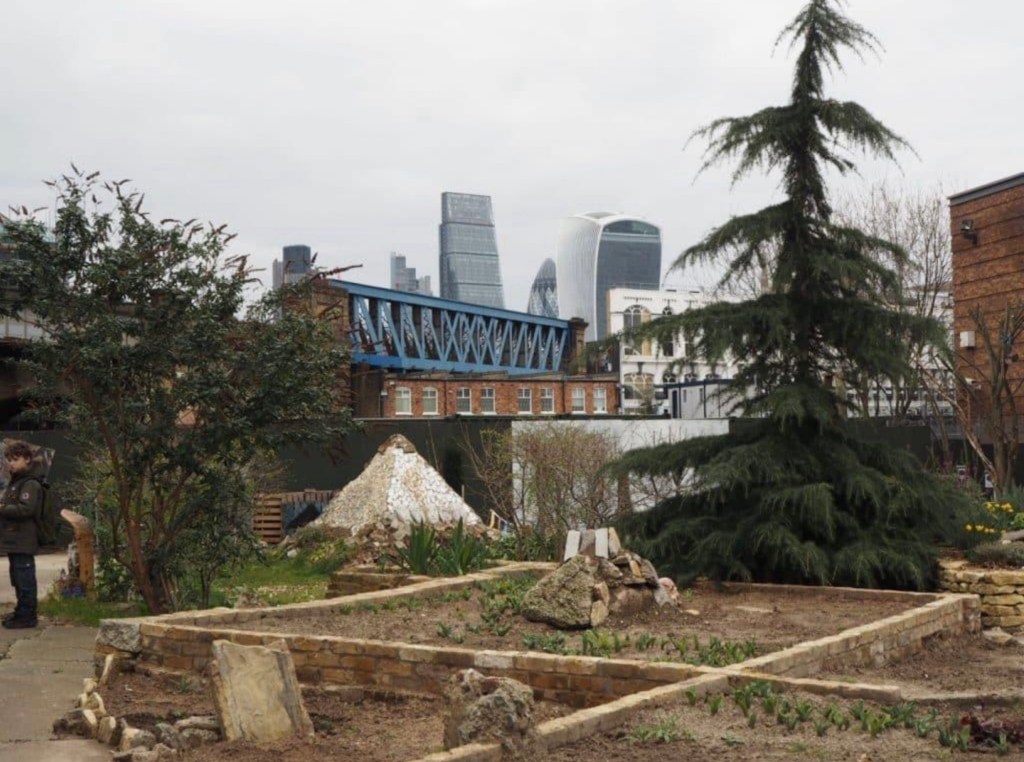
Near the former Stews lies Cross Bones Graveyard.
Later tradition associated the burial ground with the “single women” of Southwark—the euphemistic description traditionally connected with the Winchester Geese.
The evidence needs careful handling. The often-repeated claim that the Bishop of Winchester formally created Cross Bones specifically as a cemetery for prostitutes is much less securely documented than popular retellings sometimes suggest.
Nevertheless, antiquarian testimony recorded a tradition that women living the “sinful life” of the Stews could be denied Christian burial unless reconciled with the Church before death.
Cross Bones subsequently became a burial ground for the poor, and archaeological investigation revealed an extraordinarily crowded cemetery. Estimates suggest around 15,000 people may ultimately have been buried within its small area before its closure in 1853. (OUP Academic)
Today the site has become a place of remembrance for people historically pushed to society’s margins.
There is something deeply appropriate about that.
The women whom respectable society condemned, used, regulated and profited from have finally acquired a memorial.
Sin on One Side of the River
The Southwark Stews expose one of history’s recurring absurdities.
Across the Thames stood respectable London.
Across the bridge stood supposedly disreputable Southwark.
But the customers crossed the same bridge.
Respectability and vice were never really separate worlds.
They depended upon one another.
The Church condemned prostitution while an episcopal estate benefited economically from the district in which it flourished.
Authorities condemned sexual immorality while accepting that it could not be eliminated.
Men demanded sexual access while women bore much of the social disgrace associated with providing it.
And beneath the documented heterosexual economy existed other sexual networks about which the records tell us frustratingly little.
That is why the Southwark Stews matter to our larger exploration of gay history.
They show us that long before the emergence of Molly Houses in the seventeenth and eighteenth centuries, London already possessed a sexual geography: places where strangers mixed, conventional supervision weakened and opportunities for clandestine encounters multiplied.
Somewhere among those taverns, inns, bathhouses, wharves, markets and crowded streets, men who desired other men were also finding each other.
Their world is harder to reconstruct.
But it was there.
And that is where we go next.
Tim Alderman ©️2026
Sources and Further Reading
Ruth Mazo Karras, Common Women: Prostitution and Sexuality in Medieval England, Oxford University Press, 1996.
Kate Lister, “The Bishop’s Profitable Sex Workers,” Wellcome Collection, examining the Southwark Stews, Winchester Geese and surviving ordinances.
Past & Present, “Homosociality, Sexual Misconduct and Gendered Violence in England’s Pre-Modern Legal Profession,” Oxford Academic, particularly useful for prostitution, bawdy houses and the sexual geography of late-medieval London.
Claire Nally, “Cross Bones Graveyard: Excavating the Prostitute in Neo-Victorian Popular Culture,” Journal of Victorian Culture, Oxford University Press, 2018.
The fifteenth-century Ordinances Touching the Government of the Stewholders in Southwark under the Direction of the Bishop of Winchester, the customary governing the Southwark Stews.

