Infinitely adaptable and easy to conceal, these toys were surprisingly appealing to gay men in the 1950s.
Benjamin Frisch
Paper dolls, a vital part of children’s lives and fashion culture for generations, have always been meant to be instructive: to teach young women and girls how to look and behave. But, from the start, they have been used in unexpected ways, by people they weren’t necessarily intended for.
The first mass-produced paper doll was published in London in 1810 and called The History of Little Fanny. It was a morality play told in verse, about Fanny, a vain, well-to-do girl who has a tantrum when she isn’t allowed to wear her favorite dress and then sneaks away from home. She’s robbed of her clothes, and thus of her status, and becomes a beggar—the set came with a beggar outfit. She makes her way back up the social ladder, one paper costume at a time, until she is reunited with her family. The lesson of the book was supposed to be about the dangers of caring too much about clothes, about how obedience is the only thing standing between a woman and total ruin. But playing with Fanny must have demonstrated the exact opposite of that. It showed the fun of fashion and storytelling, the fun of paper dolls. This tension—between what paper dolls are meant to teach and the creative, playful, norm-breaking lessons they can teach instead—followed paper dolls into the 20th century.
By the early 1900s, millions of sets of paper dolls were being sold each year by dozens of different publishers. You could buy them for a few cents at the five and dime, or cut them out of newspapers, comic books, magazines, and advertisements. There were paper dolls of—among other things—little girls, like the incredibly popular Betsy McCall, a perfect avatar of middle-class Eisenhower-era values; brand mascots like Minnie Mouse; and classic film stars like Judy Garland, Elizabeth Taylor, and Carmen Miranda.
Because paper dolls were flat and printable, they were incredibly adaptable to all sorts of formats. There was even a vinyl record made for kids, where the sleeve featured paper dolls you could cut out and dress. One of the songs on the record, “The Paper Family,” by Anne Lloyd and Michael Stewart, has lyrics that describe how an American family ought to behave—as innocently and obediently as paper dolls.
The conformity represented by paper dolls was easy to subvert, because it was so easy to ignore. The virtue of simple toys is that it’s simple to use them any way you please. Paper dolls came with a lot of outfits—often eight to 10 per figure—and if you wanted more, you could just draw one yourself or cut them out of an old catalog. With all these choices, you could mix everything up, you could pair a gown with a bandana, you could pair a nursing outfit with dungarees. In this way, paper dolls were kind of like a Lego kit, a modular toy that was infinitely adaptable. You could even experiment with cross-dressing your doll. Anything you wanted to do, you could do. And this playfulness, this freedom, this is what many queer people loved about paper dolls.
In the world of paper doll publishing, the most famous gay player was Tom Tierney, who almost single-handedly kept paper dolls alive in the 1970s and ’80s—a low point for the popularity of the form. He created more than 400 paper doll books, including one of Pope John Paul II, and even some adult offerings, featuring drag queens, leather-clad bikers, and other atypical paper doll fare. But references to paper dolls show up all over gay culture.
The most fascinating connection we came across while researching this episode of Decoder Ring is also the most mysterious. San Francisco had a gay bar—or, at least, a proto-gay bar—called the Paper Doll, sometimes known as the Paper Doll Club, which was in operation by 1945, perhaps even earlier than that, which was incredibly early for an openly gay space. We don’t know for sure where the name came from, but we have a theory, and it has to do with another paper doll with a queer connection: In the early 1940s, there was a hugely popular song called “Paper Doll,” written by Johnny S. Black and performed by the Mills Brothers. It’s almost totally forgotten now, but it sold more than 11 million copies in its day. (That’s about as many copies as the “Macarena,” the Village People’s “Y.M.C.A.,” or Britney Spears’ “…Baby One More Time.”)
The song peaked at No. 1 on the Billboard singles chart in 1943 into 1944, so it would have been everywhere around the time the Paper Doll was opening. It seems likely that the song, at least in part, inspired the name of the club—because it has some pretty obvious queer subtext. Besides the oddness of a group of men singing about wanting a paper doll, one line refers to “flirty, flirty guys, with their flirty eyes.”
More generally, the fragility of the paper doll makes them a ready metaphor for gay people in the 1950s and ’60s—and still for some people even today—whose existence was precarious, who were constantly in danger of being found out, losing their jobs and families, and having everything ripped away from them. But paper dolls also suggest something more hopeful—the possibility of transformation.
And that transformation means that they are also a potent symbol for code-switching, of how changing outfits can change how you are perceived and act in different groups and situations. Out in the real world, you might wear the clothes of a lawyer or a sailor, but then when you’re around other gay people, say at the Paper Doll in San Francisco, you can shed that outfit and don something more authentically yourself.
Sean Penn (left) won a best actor Oscar for his portrayal of Harvey Milk, California’s first openly gay elected politician, in the 2008 film ‘Milk’
On November 18, 1977, Harvey Milk distributed a secret tape recording to a select network of close friends: “To be played only in the event of my death by assassination,” the audio began: “If a bullet should enter my brain, let that bullet destroy every closet door,” the statement concluded.
Milk made the recordings shortly after becoming the first openly gay man to be elected to public-political office anywhere; when he won a seat on the San Francisco Board of Supervisors. Just one year later he was murdered by Dan White.
White, a fellow supervisor on San Francisco’s governing body, killed Milk because he claimed the city was being turned into Sodom by men who insisted on flaunting their homosexuality in public.
As historian and scholar of the LGBT movement, Lillian Faderman, explains in the concluding chapter of this concise, yet enormously insightful biography, Milk’s murder immortalised him forever: igniting a nationwide call to action from the LGBT community to demand equality, free from prejudice.
At the last Gay Freedom Day rally he attended before his death, Milk proposed that gay people across America gather in the US capital. On October 14, 1979, the first March on Washington for Lesbian and Gay Rights had 100,000 people in attendance.
As Faderman notes, support for the LGBT movement grew in numbers over time: the second March on Washington for Lesbian and Gay Rights in 1987 drew 600,000 people; while the third in 1993 attracted close to a million. As of 2016, 43 states across the US have elected at least one LGBT person to their state legislature. And this historic progressive change spread further afield.
Indeed, it’s possible to draw a line from Milk’s death, to Ireland’s progressive move in 2015 to enshrine marriage equality into law for same sex couples; and the subsequent appointment, two years later, of the country’s first openly gay Taoiseach, Leo Varadkar.
A hopeful, moving, and uplifting read, Faderman’s book tells the story of a man that didn’t fit the typical criteria for a progressive political martyr. Primarily because Milk lacked consistency in his political allegiances: he could play the liberal-pot smoking hippie, just as he could champion right wing conservatism when it suited him.
Faderman subtly hints that the circumstances of Milk’s personal life meant he never felt entirely comfortable in one firmly-rooted set of political ideals.
Essentially because he was living a double life. Born in 1930, into a conservative Jewish family in Long Island, New York, Milk never came out to either of his parents. Both died knowing nothing of his sexual identity.
As a Jew and homosexual, Milk always saw himself as an outsider who had to fight for social acceptance. He often used analogies of Jews being slaughtered in Nazi Germany. The Holocaust remained a pertinent metaphor in Milk’s speeches and editorials. Drawing lessons from European history, Milk claimed that calling any minority group pariahs, criminals, and demons would naturally only end in catastrophe.
Milk lived much of his life in a peripatetic manner: oscillating between New York, Dallas, and California. He took jobs in teaching, acting, on Wall Street and in the navy too, where he briefly served in Korea. But it was in the Castro area of San Francisco where Milk finally laid down roots and began to interact with a burgeoning gay community.
Then in his forties, Milk, along with his partner Scott Smith, opened Castro Camera: a gay camera photo development shop, which also served as a political constituency office, as well as a popular neighbourhood gay hangout spot too.
Faderman continually stresses that Milk was often shunned by certain sections of the gay community in his own lifetime.
Since the Stonewall Riots in New York’s Greenwich Village in 1969, a large proportion of the gay community across America had become synonymous with radical politics: seeking to overthrow existing social institutions.
Milk, however, was no committed leftist. He simply sought for gay people to be accepted into mainstream society as it presently stood.
Faderman points out that even martyrs have their flaws too: shortly before his death, the US Attorney General authorised that the FBI look into allegations that Milk had tried to divert funds from the Pride Foundation into his own pocket. We also read how Milk’s love life was mired in anguish, abandonment, heartache, and tragedy. One of his long-time partners, Jack Lira, hanged himself in 1977, leaving Milk a rather nasty suicide note.
Faderman’s narrative mixes the personal and the political with great skill; subtly displaying how at a fundamental level, fighting for collective political rights is really just a human yearning for personal happiness, which usually has its roots in compassion. The book is an exemplary testament to how ordinary citizens – with hope in their hearts and relentless ambition – can swing the pendulum of history towards progress and freedom.
What do you do to a homosexual mathematician whose code-breaking genius saved the world during World War II? Not figuratively, but actually saved the world from Nazi domination? You put him on trial, of course! You convict him of gross indecency. You force him to choose prison or chemical castration. You strip him of all dignity and hound him until in shame and despair he swallows a cyanide pill and dies.
The story of Alan Turing is one of the most disgraceful episodes of modern civilization. A man who should have been a hero of the free world and idolized next to Einstein and Newton in the history books was instead hounded to death because of religion-inspired homophobia.
In World War II, Alan Turing’s genius at breaking Nazi secret codes was so successful that the Allies could have sunk almost every single U-boat and convoy that left Germany. Turing’s work was so good it was like cheating at cards: if you win every hand, the other players will quickly figure out that the game is rigged. The Allies had to employ all sorts of tricks to hide their success; if you want a fascinating account, I highly recommend Neal Stephenson’s semi-fictional Cryptonomicon, the story of the rise of modern cryptography.
Alan Turing literally saved the world from Nazi domination. Without his work, WWII would have ended very differently. The Nazi regime might have remained undefeated, still in control of Northern Europe and western Asia. The Japanese might have retained control of East Asia. Our world maps would look vastly different today. And even if we’d won the war, without Turing’s work it’s likely that millions more soldiers and civilians would have died in the fight.
And Turing’s work didn’t end with cryptography. Today he’s best known as the inventor of the modern digital computer, the one who laid down the mathematical foundation for all computer science. His name is even enshrined in two of the most important computer-science concepts, the Turing machine and the Turing test.
If Alan Turing hadn’t been homosexual, his name might be a household word like Einstein, Newton and Galileo. What home doesn’t have a computer? If you count the laptops, cell phones, digital TVs, iPods, digital cameras and microwave ovens in your home, I’ll bet you own more than a dozen computing devices. Every one of them works on the principles laid down by Alan Turing during WWII when he was trying to develop a computing machine to break the enemy’s codes even faster.
Turing’s fall from grace came at the hands of the religious commi-bashing right, the British equivalent of America’s McCarthyism. In 1952 a gay lover helped an accomplice rob Turing’s house. During the police investigation, it came out that Turing was a homosexual. He was arrested and convicted of gross indecency, and given a choice of prison or chemical castration. Turing choose castration.
On June 7, 1954, at just forty two years of age, Alan Mathison Turing killed himself by swallowing cyanide. One of the greatest minds in the history of humankind was lost forever, and one of the greatest heroes of World War II died in shame and disgrace.
But the real shame is on the rest of us, not Alan Turing. In spite of his sexual orientation and consequent hardships he must have experienced, he remained a true patriot and mathematician. He put his mind to work to save the very society that persecuted him. It is possible that he changed history and saved more lives than any other single person in the twentieth century.
On September 10, 2009, British Prime Minister Gordon Brown finally issued a public apology to Turing’s memory:
Thousands of people have come together to demand justice for Alan Turing and recognition of the appalling way he was treated. While Turing was dealt with under the law of the time and we can’t put the clock back, his treatment was of course utterly unfair and I am pleased to have the chance to say how deeply sorry I and we all are for what happened to him … So on behalf of the British government, and all those who live freely thanks to Alan’s work I am very proud to say: we’re sorry, you deserved so much better.
It is stories like Turing’s that keep me writing. It’s easy to have a live-and-let-live attitude toward the immoral “morality” of the Bible. It sounds nice to advocate tolerance and respect. But Alan Turing is dead, and the Bible is where it all started.
A boy — wearing an approved swimsuit — jumps into the public swimming pool in Auxerre, France. Credit: Adeline Sire
If you’ve traveled outside of the US this summer, a foreign language may not have necessarily been the biggest stress factor of the trip. Local customs are often what get us stumped.
Take a trip to the local pool, for example. Seems like an easy and universal-enough activity to not have to jump through the daunting hoops of cultural differences, right? Wrong. It can be an uncomfortable experience.
I am a native of the city of Auxerre, Burgundy, in France. It’s a lovely place of about 35,000 people, rich with medieval history.
It’s small, but it boasts many remarkable historical monuments, including a cathedral and an abbey from the Middle Ages and some ancient churches and chapels. It sits in the middle of the Burgundian hills, known for their excellent wines.
The city has another, more modern attraction that locals are proud of: its phenomenal public pool — or as it’s called there, the Nautical Stadium. It has four indoor heated pools with a jacuzzi, and three outside pools including an Olympic-sized one with a long, swirly slide. It is an extravagantly large — for its town — aquatic facility, built on the green banks of the river Yonne.
People travel from surrounding towns and villages to spend the day there, sunbathe on its beautiful lawns and snack at its eatery, when they are not swimming. You pay a small fee to get a bracelet which gives you access to the facilities. There’s nothing tricky, except for the bathing suit rules.
You see, in most French public pools, there are strict regulations about the kind of bathing suit you can wear, and therefore share with others, in the water.
For illustration: (L) Not approved swimwear. (R) Approved swimwear. Credit: Adeline Sire
Simply put, where hygiene is concerned, your swimsuit cannot be something you could be found wearing outside the pool. That means no trunks, Bermuda shorts, T-shirts or anything that is not strictly meant for swimming.
Auxerre’s pool administrators say they do not want people to drag any dirt on, or under, their summer attire into the pool. So if you are going to join the masses of swimmers — all 2,000 of them on a busy summer day — you’ll have very little cloth covering your own birthday suit.
Where else would you be told to wear something shorter and tighter, no matter your shape? Man, woman or child, you’ll have to wear some form of spandex, something tight, the kind Speedo makes. Something that often leaves nothing to the imagination — and it’s not to everyone’s liking.
If you are caught entering the pool with biking shorts, running shorts or trunks, lifeguards — turned fashion police — will blow the whistle and send you back to the lobby where you will be asked to purchase proper attire. This is where convenient vending machines come in.
In the Auxerre pool lobby, there are machines that vend soft drinks, sandwiches and espressos, and others that dispense anything needed for the pool, from ear plugs, soap, shampoo and goggles, to swimwear.
A vending machine at the public pool in Auxerre, France, dispenses swimsuits. Credit: Adeline Sire
A mannequin in swimming trunks with a big “forbidden” sign around its neck in the pool’s lobby is supposed to illustrate, for unsuspecting tourists, the kind of bathing suit that is acceptable. As a result, looking around, there is a certain repetitiveness to the swimsuit designs worn by men and boys.
There are four different designs in all, perhaps because that is all that is available at the vending machine or at the inexpensive sports store in town.
In the years since those regulations went into effect, I cannot remember hordes of disgruntled tourists getting outraged about this. But occasionally, one gets caught with his pants long (men more than women for obvious reasons) and is not happy about it.
The French have just gotten used to this, but for some visitors, the fact that municipal administrators have the authority to get you dressed to their liking — or un-dressed as the case may be — is completely infuriating. That is one of those unavoidable cultural quirks travelers must contend with in France.
As a resident of the United States, used to the uncompromising French swimsuit rules, it’s always disconcerting to me that anyone would be allowed to walk straight into an American public pool, from the street to the water, fully dressed, trunks over underwear, T-shirt over chest and sometimes with water shoes on.
That could make me love the French “no clothes — just Speedos” rules even more.
But perhaps there are no people on Earth prouder of their public pools than Icelanders. Iceland, where I just spent a few days, is rich with geothermal springs and big cities enjoy naturally heated outdoor pools. Because there are no chemicals in those pools, swimmers are expected to take a meticulous soap-and-scrub shower before entering the pool.
We were told that the rules are strictly enforced everywhere, and so visitors oblige.
The Blue Lagoon geothermal spa in Iceland. Credit: Adeline Sire
This was my experience recently at the Blue Lagoon geothermal spa near Reykjavik, where a very polite young staff lady looked on and directed all female visitors to shower in the nude before letting them into the hot spring. No one seemed to object. But then again, people were not told what to wear.
“I will always remember the moment when a pretty faced, slightly chubby blonde boy turned up at the door of The Cha Cha Club wearing a rather hideous blue velvet cape. He told me his name was Leigh Bowery, followed by, “Graham sent me to you.” It was late October 1981.
My friend Graham Parnham had met Leigh at Andrew Logan’s Alternative Miss World earlier that month. Leigh didn’t know anybody on the club scene in London so Graham had sent him along to my club telling him that I would look after him. “You’ll like him.” Graham had told me, “. . . he’s Australian and a bit bonkers.” Graham was right. I liked him immediately.
Leigh had a generous spirit and sharp wit, was extremely polite and charming. I told him I’d be glad to let him in to the club so long as he promised me that he would never wear that velvet cape again. We laughed, the first of many laughs that we were to have.
It would be two or three years before Leigh started creating looks and dressing in his extraordinary and very outrageous style. Back in 1982 and 83 he wanted to be a fashion designer and would create 1940s inspired pyjama suits for me, Trojan and himself.
He’d make me dresses to wear to the club, shrewdly knowing that they would be photographed aplenty. He’d hand write labels with indelible laundry marker and stitch them into his creations. I would look forward to the Tuesday afternoons when Leigh would arrive with something new to wear out that night.
The world quite rightly remembers Leigh Bowery as the brilliant and unique performance artist that he became. Though we remained friends throughout his life, for me there is a sweetness to remembering our close friendship of those early years and the extraordinary evolution of the pretty faced, slightly chubby blonde boy in the hideous blue velvet cape.
We lost Graham to AIDS in the spring of 1994.
We lost Leigh the same year, on New Year’s Eve.”
— by Scarlett Cannon
Sex, sin and sausages: the debauched brilliance of Leigh Bowery
His shocking shows – featuring births, enemas and vomiting – thrilled and appalled. Two decades after his death, why is the influence of this 80s nightclub legend still so pervasive?
‘He was modern art on legs’ … Leigh Bowery in a jacket he customised. Photograph: Mark Baker/Photoshot/Getty Images
e was painted naked and sprawling by Lucian Freud. He “gave birth” to his own wife on stage, using sausages as an umbilical cord. And he was the star turn in Taboo, perhaps the most debauched nightclub Britain has ever seen, hosting the revelry with his face painted blue, his nose and nipples pierced and his outfit as intimidatingly outlandish as possible. But there was much more to Leigh Bowery than sheer outrageousness – and his range, daring and influence are now starting to be appreciated by a new generation.
Perhaps the most prominent sign of this reappraisal comes from Australian choreographer Andy Howitt, who is bringing Sunshine Boy, a new show about the nightlife legend, to the Edinburgh fringe this summer. “I was at the National Gallery in Melbourne and there was a big sculpture that said, ‘By Leigh Bowery from Sunshine’,” he says. “I was like, ‘That can’t be the Leigh Bowery from the 80s dance scene.’ It sparked me on a journey to find out about the man.”
Bowery did indeed hail from Sunshine, a suburb of Melbourne with around 10,000 inhabitants. Howitt visited it and spoke to his family, as well as to those in London who had known him. “You have to remember his backstory,” says Howitt. “He only lived in London for 14 years. He sold up shop at 19 or 20 and went straight there and became the icon.” Howitt fed his findings into Sunshine Boy, telling the story of Bowery’s life through dance, spoken word passages, music and, naturally, those showstopping costumes. Howitt’s performance ranges from his childhood to the Taboo years and then to his death from Aids in 1994 at the age of 33.
Umbilical sausages … Leigh Bowery ‘giving birth’ to his wife. Photograph: James Hill/Rex
.Umbilical sausages … Leigh Bowery ‘giving birth’ to his wife. Photograph: James Hill/Rex
As Sunshine Boy suggests, Bowery remains a larger-than-life persona in underground culture, even 24 years after his death. What made him so different from the other 80s club kids? Partly his looks, which still seem strikingly original. As the impresario of Taboo, he wore a different, jaw-dropping outfit every week. There was the shiny PVC mask and matching catsuit, with one larger leg as if in plaster. There was the polka dot suit worn with polka dot face. There were the lightbulbs he’d wear on either side of his face, the coloured drips that would cover his bald head, the merkin he’d place over his genitals. And then there was his wife, Nicola Bateman, worn naked and strapped upside-down to his chest. (Although Bowery described himself as gay, he married his longtime companion and sometime lover Bateman seven months before his death.)
But Bowery’s creativity was not confined to clubs. He worked with the dancer and choreographer Michael Clark, creating costumes and co-starring in his performances. He appeared in the windows of the Anthony d’Offay Gallery, wearing a different outfit each day of the week. He fronted a band, Minty, and – perhaps most famously – modelled nude several times for Freud. On the back of the Freud connection, Bowery hit the mainstream from various directions. He appeared in a commercial for Pepe Jeans and guested on The Clothes Show on BBC One, taking tea in Harrods dressed in a succession of astonishing get-ups to the soundtrack of his hero, drag star Divine.
Bowery also engaged in more conventional creative work. He was an art director on the 1991 video for Massive Attack’s Unfinished Sympathy, a stylist for Rifat Özbek, a costume designer for Culture Club (Boy George would co-write and star in a successful musical about Bowery). His career resists categorisation. Asked what he most deplored in others by the Guardian in 1993, Bowery replied: “The urge to categorise: if you label me, you negate me.” Perhaps Boy George came up with the most accurate description when he described Bowery as “modern art on legs”. He turned himself, his body and his image into an art object, one that walked among us as well as appeared on stages and in the windows of galleries.
“People are always telling me about the time they saw him,” says Sue Tilley, Bowery’s friend and the author of Leigh Bowery: The Life and Times of an Icon. “It was probably only once, but he made such an impact they have never forgotten it.” DJ Princess Julia met Bowery in the early 80s, both part of a crowd that included the artist Cerith Wyn Evans, Boy George, Clark, and Bowery’s friend and frequent co-star Trojan. Julia says Bowery, who started off working at Burger King to make ends meet, quickly became a fixture on the scene: “He was very influential because he was very inventive. He was always coming up with ideas.”
His looks, she says, were often inspired by what was happening in wider society. “The dot face, for example, was a comment on Kaposi’s sarcoma” – the cancer which caused the facial lesions that struck many Aids sufferers in the 80s. “His work was about things like body image or illnesses – and those things haven’t gone away. It confronts you and frightens you and makes you think. It’s very disruptive, to use a word of the moment.”
There is a clear line from Bowery to the performers and punters exploring extreme looks today. Glyn Fussell is the founder of Sink the Pink, a playground for the artistic side of drag culture. He says that while the twentysomethings who come to the London club probably haven’t heard of Bowery, his influence is present. “You see it fashion, you see it in the underground, you see it in mainstream culture, in RuPaul’s Drag Race.”
Howdy … Bowery at home in 1984. Photograph: Steve Pyke/Getty
It is in fashion that Bowery’s influence is most explicit. Rick Owens’ “human backpack” collection in 2015 was a tribute to Bowery carrying Bateman like a papoose. Menswear designer Charles Jeffrey runs a club called Loverboy that stage shows verging on performance art, much like Bowery. And, with his floral gowns and matching face masks, Richard Quinn, the young London designer who had the Queen in attendance at his February show, has clearly been inspired by Bowery.
Advertisement
For Gareth Pugh, Bowery is a consistent reference. The designer first learned about him in Fergus Greer’s 2002 book Leigh Bowery Looks: “If you go into any suburban art college you’ll always find that book in the fashion section.” Bowery is inspirational, he believes, becausehe “ created his own language. That’s the golden fleece for any fashion designer: to find something they can be known for 30 years down the line – and for it to be so iconic.”
Of course, some elements of Bowery’s work haven’t aged so well, driven by his relentless desire to shock. One of his most infamous looks was called “Pakis from Outer Space”, inspired by the Asian communities near where Bowery lived in the East End and involving blue faces, bindis and nose rings. He made blouses out of material bearing swastikas, used rags stolen from Jewish artist Freud’s studio to make an image of Hitler and appeared, naked, in makeup similar to blackface, for a Minty publicity photo.
This preoccupation with the extreme offended plenty of people. Clark stopped working with Bowery when he insisted on wearing a costume with “a cunt” written on it. Minty saw their residency at the Soho club Freedom cut short because of a show that involved Bowery “vomiting” vegetable soup into Bateman’s mouth.
Perhaps Bowery’s work was radical satire, all part of a life lived without taboos. Shocking people – and perhaps waking them up – was the ultimate aim. Speaking about a show at an Aids benefit, in which he had an enema on stage that sprayed the front row, he said: “I was quite pleased with the hostile reaction. If I have to ask, ‘Is this idea too sick?’ I know I am on the right track.”
“The idea,” says Pugh, “of wilfully doing things that get a rise out of people. He had this idea of something that is bereft of control, for good or for bad.”
A ticket to the mainstream … one of Lucian Freud’s portraits of Bowery. Photograph: Bridgeman Images
“I don’t think he was setting out with a racist heart,” says Fussell. “He was challenging the status quo. It was about challenging what he was seeing on the streets and making it hyper-realised.”
Howitt’s 40-minute show will cover Bowery’s triumphs, disasters and premature death. Bowery found out he was HIV positive in 1988 and died six years later, not long before combination therapies greatly prolonged the lives of those with the disease. “A lot of people say that if he had survived another month, he would have been OK,” says Howitt.
Tilley often finds herself wondering what Bowery might have achieved had he lived longer. “He had a lot of irons in the fire, but he died before anything properly happened,” she says. Bowery may, she muses, have gone “down the path of reality television”. After all, she concludes: “He would have been brilliant on Big Brother.”
‘Nothing Was Ever Out of Bounds’: Leigh Bowery’s Friends Remember the Legendary Performance Art Provocateur 25 Years After His Death
Cerith Wyn Evans, Baillie Walsh, and Lou Stoppard reminisce about their late friend.
Film still from Cerith Wyn Evans, DEGREES OF BLINDNESS (1988). Courtesy of the British Film Institute National Archive.
Artist Cerith Wyn Evans and director Baillie Walsh met Leigh Bowery on the London club scene. To both, he became a collaborator and a close friend—a subject to film, a designer to call on for incredible garments, an artist to admire, a conspirator to talk with for endless hours on the phone. Sometimes he helped them, sometimes they helped him. Always, they recall, he pushed them—not necessarily forward, that would be too expected, but in a new, uncertain direction that was wide, warped, strange, sweeping, and beyond anything they’d planned. Walsh’s collaborations with Bowery include the music video to accompany Boy George’s 1991 song “Generations of Love,” Massive Attack’s “Unfinished Symphony” video from 1991, as well as “Unstitched” from 1990, which shows Bowery having his cheeks pierced and was regularly screened as a backdrop to Bowery’s performances. Wyn Evans’s works with Bowery include the early filmsEpiphany, from 1984, andDegrees of Blindness, from 1988. Here, they reflect on their late friend with Lou Stoppard.
Cerith Wyn Evans: Baillie, do you remember he had a tattoo on his inner lip that read “mum?” It was facing inwards so that only his teeth or throat would read “mum.” I told him, If he pulled his lip down, to everyone else it read “wuw.” He said, “Yer – wooo!”
Baillie Walsh: I’ve never talked about Leigh before. It was all too close at the time.
CWE: For a while, it felt like there was a load of people who wanted a bit of it all. When someone died and there was too much attention or discussion, Leigh used to say, “Oh, they just want another slice of death pie, so they can look like they have been a part of something.” And knowing what we do know, that he was living and dealing with HIV, those comments mean more.
BW: My relationship with Leigh was private, special, and personal. I didn’t want it to be public property. But now, 20 years have passed—longer, 23 years—I don’t get the same feeling. It’s nice to see how much I remember, together with Cerith, we can see if we can wheedle out some memories—and some laughs hopefully as Leigh was a-laugh-a-minute. I would like to remember more. What I loved about him was how he’d just turned everything on its head. He made you think in a different way. The idea of “fitting in” was abhorrent to him. I want to remember that. I often try to think in the way that Leigh pushed me to, and it’s nice to have a refresher course.
Bustier with hand-sewn crystals by Leigh Bowery, early 1990s. Courtesy of Lorcan O’Neill.
Lou Stoppard: One thing written a lot about Leigh Bowery is that his whole life was a performance, a work of art. Would you agree with that, having known him more intimately?
CWE: Well, it’s yes and no. I always thought he was much more extreme in mufti, or daywear, than he was in the outfits that he wore at night.
BW: That was much more disturbing, I agree. He looked like a child molester.
CWE: There was a vulnerable side to him, which you saw if you were a close friend. He tended to keep his friends apart; he didn’t like the idea of us talking about him. We had to be kept compartmentalized.
BW: He did love to cause trouble. He loved making stories up. He loved to lie. He would tell you someone had died. He once told me that Brad Branson was dead—he is now dead, so I can tell this story. He told me he was dead because Brad had slept with my boyfriend, John Maybury, so he thought I’d like to hear that. He told it to everybody.
CWE: He absolutely adored lying. I remember him telling me a story about Les Child, who was a dancer with the Michael Clark Company, how he was going through hard times—the company had got dissolved, or was on a break, or something like that. He said, “Oh poor Les. He’s making sandwiches in a gay sauna in Soho.” And I said, “Oh you bitch.” I was laughing. It was obviously a total lie. But then two months later, I ran into Les in the street who said, “I’ve taken to making sandwiches in a gay sauna in Soho. I’ll spring back.” It was true! So you never knew.
BW: Leigh loved to muddy the waters. You never knew what was true and what wasn’t.
Still from Cerith Wyn Evans, EPIPHANY (1984). Courtesy of the British Film Institute National Archive.
LS: Can you both recall when you first met him?
BW: I can remember my first vision of Leigh. It was him and Trojan in Heaven nightclub in the “Pakis from Outer Space” blue look. Apart from the look, they seemed very shy and almost demure. It wasn’t an immediate friendship. It took time. Really, I got to know Leigh properly because I started working with him. I took him to Italy to be in a fashion show—and it was that thing of going away with people and becoming friends, him, Big Sue. He made papier-mâché head masks of himself with the drip look he used to do. So, he had 30 models come out as him. It was for a company called Calugi e Giannelli—really tacky, but we’d do anything for a fee in those days, and it meant going away with a crowd. It was over times like that that I got to know him as him.
CWE: I met him around the same time at The Bell, a gay club in King’s Cross. We used to go on a Sunday night. I nearly fell over because Leigh and Trojan walked in, and Trojan was dressed as Sheba with really intense turquoise hands and face. That look—”Pakis from Outer Space”—was like Leigh’s collection at the time. I was a student at the Royal College, it would have been around 1983. I thought: “I’ve got to do something with these people, I wonder if they’ll be in a film.” I went up to them: “Oh hello, I’m a film student at the Royal College, would you ever consider making a film?” They said, “Yes all right then. We’re going to be in a film!” Leigh really took it seriously. Suitcases would arrive with makeup. Consummate professionals, from the word “go.” And they would do anything. The film was Epiphany. We shot the whole thing on tape on huge machines that had been given by the BBC to the Royal College. You had reels of two-inch video tape—the quality was insane. But these cameras were huge and so heavy, big pneumatic things with enormous cables that would almost move around on their own. We had three cameras on Leigh at all times. He said, “Which camera should I look at? The one with the red light?” And I said, “The red light is going to be on all of them; we’re recording everything, no takes.” He just loved that atmosphere—constantly being watched, reinventing himself, and rethinking his position. You know when you see the cliché of a model or David Hemmings pretending to be David Bailey—Give me this! Give me that!Leigh was like that. Going from look to look, posing and moving. It was just heavenly to witness. It was raw. There was a levity to it. But also, there was a sense of stagecraft and something studied—it was deeply sincere, however much of a laugh it was. The pain he went through and the discomfort to get the looks. It was an exuberant celebration on so many levels.
BW: He never thought he had a look unless it was painful. If it was painful, it meant he was taking it further than anyone else would. One night, we went to Heaven when he was doing the “Mexican mask” look and wanted his profile to be as flat as possible so you didn’t get any nose. I had to take him out because he had a complete panic attack, which you rarely saw with Leigh. He was in proper, incredible pain. You couldn’t unzip the mask because it was so tight. His voice was muffled, and his face was squashed: “Get me out of this!” I took him and Nicola Bateman back to my flat, and I got pliers and scissors to try to undo the zip. I couldn’t get them into it because it was so tight against the skin. Somehow in the end, he got out of it.
CWE: There would be bruises. He would be cut to shreds after a night out.
BW: Each time he went out, he wanted to push it further, getting more and more ambitious. There were some looks he would test out and never do again. He would always gauge the response. If he was just laughed at then that was a disaster. There had to be something more thought-provoking than that. It had to be challenging.
LS: What did he want people to feel? Disgusted? Scared?
BW: Both of those things. He liked laughter too—but not just laughter.
CWE: He was physically so very strong, and often he’d be on insanely high shoes. He was so massive. One of the things he liked doing at Taboo was kicking the ceiling lights out—bang! Glass in everyone’s drinks.
BW: His behavior at times was so extreme. He would pogo around the dance floor—he was such a large being, so it was really intimidating, especially as he was dressed in such a way, with the merkin on and something covering his face. But it was never aggression in a typical sense.
CWE:Never angry.
BW: No, I don’t think I ever saw Leigh angry.
LS: Was he a private person in some ways? Is that part of the reason he performed so much with his own identity, in order to keep certain things hidden?
BW: Well he kept his HIV status from me.
CWE: Me too.
BW: That was obviously very private. But I never felt that Leigh kept secrets much from me, which was why I was so surprised when I did find out that he was HIV positive. That was such a massive thing, especially at that time, because there was nothing you could do.
CWE: Fear and paranoia was everywhere.
BW: We were all watching hundreds of people die around us. When you watched someone die, you were not only very sad you were also terrified—Is that going to be me next? I think Leigh felt that very strongly. I think Leigh didn’t want to be labelled as someone with AIDS. Leigh was much more important, much more than that. And I think that if he had announced that, and if it had gone out into the world, he wouldn’t have been given the freedom to be other than that.
CWE: You look back and think: “Why didn’t I see it?” It was so obvious. We formed a band for a while, me, Leigh and Angus Cook, who was my boyfriend at the time. We didn’t play any music. We were called Magpie Shmagpie. Sue Tilley took the press photographs, which we did on the stairs of the sexual health clinic on Dean Street: all of us coming out of the door, posing with jackets on our shoulders—Leigh’s idea, obviously.
BW: He would talk about it hypothetically: “What if? What am I going to do if I’ve got AIDS?” But everyone was saying the same thing. We lived in fear.
CWE: I remember him on his deathbed saying: “I didn’t even bloody lose any weight.”
LS: I’ve heard he started rumors when he knew he was dying that he was going off to live in a different country.
CWE: He’d say he was going to Papua New Guinea to research anthropological tribe masks. After he died, we went to Patisserie Valerie and spent about 200 quid on cream cakes and had champagne. Sue Tilley said no one was allowed to cry.
Still from Cerith Wyn Evans, EPIPHANY (1984). Courtesy of the British Film Institute National Archive.
LS: I wonder what he would do if he was alive now. Because to play with your identity is easier now than ever, with all these different platforms.
CWE: So many years have passed—it’s a different world. The implications of what Leigh started off doing, and his ways of communicating about things, have become so mainstream, in a way.
BW: Leigh would have morphed into something else. There were so many different stages he went through during my friendship with him: he started in the clubs with no idea of entering the art world; he wasn’t creating art; he was creating attention for himself. Then that ambition changed when he got the gig with Anthony d’Offay gallery, and then later he met Lucian Freud through you, Cerith.
CWE: We sort of thought, “Oh it’ll be fun to mess things up for Lucian—we’ll introduce you to Leigh and then you’ll have to paint sequins!”
BW: I feel that Lucian’s work did change after he met Leigh. Part of Leigh’s thrill was always challenging his friends, and of course he did that to Lucian. I think you can see Leigh’s influence in those pictures.
CWE: Absolutely you can. Lucian was hugely affected by Leigh’s death. He was so so close to him, he really looked up to him.
BW: I love the fact that Lucian still looked up to him even after they found a stolen picture of his in Leigh’s flat. Leigh was stealing 50 pound notes every day when he went in there.
CWE: Lucian would think that that was just wonderful. He would think it was the most noble thing to do!
BW: They deserved each other. These two really strange characters coming together—it was a match made in heaven.
LS: Baillie, talk to me about working with Leigh on your films.
BW: My favorite project was the “Generations of Love” video with everyone in the street. Leigh just loved being a hooker on the street.
CWE: With the blonde wig and the “Come to Bed” t-shirt.
BW: Leigh was the one who got me thinking: “Oh, it’s a pop video, but I can make a porn video.” It was Leigh’s influence on me that kind of pushed me the whole time. He was a great doer, always with massive enthusiasm. It was a great collaboration. We just did it. He loved getting everyone in character and in dress. He’d be pushing Sue: “Get your tits out!” He got everyone—Rachel Auburn, Les Child, Michael Costiff, Talulah—in their costumes and their appropriate looks. Les Child fought every step of the way because Leigh was trying to cover his face in Vaseline. I would say that that was our most successful collaboration. His influence pushed me to a place that I thought was really interesting for a pop video.
CWE: That video is sort of sad also in a funny way. It’s mournful. There’s a melancholy at the heart of it, this idea of generations of love.
BW: I think the last project we did together was the Massive Attack video. That shoot was the first and only argument I ever had with him, and I don’t think he ever really forgave me. He’d made a dress for Shara Nelson, and we needed to find some way to cover up the earpiece that we needed her to wear. The collar wasn’t high enough, so he suggested a wig. She looked ghastly in, but of course Leigh loved it because it was so wrong. It got very awkward in front of the band. Leigh was determined, and I had to finally put my foot down. Leigh never really wanted to be told what to do. We were never quite the same after that trip to LA. Before that, we’d been two hours on the phone to each other everyday for seven years. But then also our lives were changing. Leigh was working with Lucian—his interests were changing. Our common interests were drifting.
CWE: He’d never do what he was asked to. At that time, I did some pop videos for The Fall. And we also did a play together at Riverside Studios where he played a Chicago mafia boss. Leigh would improvise lines, and every night he would stretch his lines by quite a few minutes by writing some “new material.” I can remember him coming on doing dances or singing songs, and then going into his lines. Mark E Smith would be grumbling and laughing. One thing that has always stuck with me and has been a barometer for me ever since: Leigh would look at something and say, “Yer, it was all right. But where’s the poison?”
Almost like a kind of homeopathic thing; you would need this poisonous kernel, so that it could be transformative, something in it that was deeply subversive and could dissolve hierarchies.
BW: Exactly. As much as he did work for me, I also did a lot of work for him. He would engage you as the magician’s helper. One of my strongest memories of him is when he did the AIDS benefit at the Fridge. It was his first ‘douche’ show. He comes out dancing with a corset and a merkin. I think it was to ‘Nothing Compares to You’. He’d rehearsed it so he’d lie back on a plinth, open his legs, and squirt a fountain of water from his arse. But he hadn’t rehearsed it with a corset. So, when the time came, he couldn’t lean back. So he goes to the front of the stage and bends over to squirt over the white table cloths. Of course, he was very nervous so the water wasn’t completely clean. He’s squirting shit all over the front row of an AIDS benefit. For the second part of the piece, he put a great big skirt on that I had to get under (as I was the back of the horse, if you will). I’m meant to get him onto my shoulders so he could be ten feet tall waving in this giant skirt. I get under and it’s covered in shit, slipping around everywhere. But it’s show business—not a choice! He was properly freaked out after that show; he knew that he had pushed the poison to the limit as people were horrified. And it did cause a scandal. He’d shat on the front tables at an AIDS benefit! That was Leigh when he really did think for a minute that he’d pushed it too far. There was fear—and it was rare that you saw Leigh with fear.
CWE: If you did that now, you’d probably go to prison. Anything that was inappropriate—Leigh was like a magnet. Everything inappropriate was good. Everything appropriate was bad. It was pretty clear cut. He was really an anarchist.
BW: That’s why John Waters’s films so influenced Leigh. Divine in Female Trouble was a benchmark for Leigh in so many ways.
Still from Cerith Wyn Evans, EPIPHANY (1984). Courtesy of the British Film Institute National Archive.
LS: Was it ever tiring being friends with someone who was that unrelenting in their commitment to subversion?
CWE: No. Because he was also so sweet and gentle. Like Baillie described—I was one of the people on the other end of the phone for an hour or two a day. We’d sit there watching television and he’d be like—What is Lorraine Kelly wearing?
LS: Did you ever feel embarrassed by him?
CWE: I can remember being on holiday in Cornwall with Leigh. Sue Tilley drove Leigh down; she couldn’t get into the car because Leigh had made a frock to wear in pink dayglo. It was like a Molly Goddard dress but the size of a flat—with all this tulle bunched into the car, the entire car was full. As soon as he arrived, he ran into the sea, and it soaked up so much seawater he nearly drowned. It was completely hysterical. I can remember this one dreadful situation: Leigh would do anything to embarrass Sue in public—it was one of his absolutely favorite things to do. So, we were alone in this grand Catholic church. And this lone nun was walking towards us in her habit. Sue was going, “Leigh, no. No. No.” Sue—she’s a big girl—and she’s trying to hide behind the column in the church. And Leigh is going at this 90-year-old woman in her habit, “Oi! My friend wants to eat you out!” The nun just shuffled away. “Bless you my child.” The strange thing is it never wore you out. He was like quicksilver, also. In the next moment, it would be a completely different thing—he’d be helping you make a pea soup. He thought it was hilarious that you had to buy a huge sack of peas to make a small bowl of pea soup.
BW: I was never embarrassed by Leigh because Leigh was never embarrassed. The joke was never on Leigh; he was making the joke, so there was never painful embarrassment.
CWE: But there would be times when he would be vulnerable. He’d open up on the phone and say, “Oh, I don’t know what I’m doing.” He wasn’t always high octane.
BW: Leigh really led a life on the telephone. Cerith was part of that. I was part of that. Sue was part of that. A lot of our lives were spent on the phone—hours and hours a day. That’s not high octane or a performance. That’s a proper relationship.
CWE: You’d talk about things in the news…
BW: …or sometimes there was just silence. And you’d hear a sewing machine going.
LS: The construction of his garments was incredible. People often talk about how great he was at making looks, but perhaps not enough focus is put on just how skilled he was at making clothes.
CWE: He was very fastidious about the idea of learning techniques. He really looked up to Mr. Pearl, who had this career in Paris making amazing corsets. Berwick Street market was an Aladdin’s cave, where you could get the sequin fabrics and needles and threads—he would refer to that as the Stitch Bitch Trail.
LS: He’s often remembered in terms of the Club Kids. What do you make of that?
CWE: I don’t think he actually liked the whole New York Club Kids thing. He went there, he was adored there. But the people that he really liked were the ones from Jackie 60 and Mother and Blacklips Performance Cult. He liked the drag queens who were politicized.
BW: He liked the ones who were incredibly smart. He loved intelligence.
CWE: He liked revolutionary people. Political people.
BW: The Club Kids thing was an early part of his history, but his ambitions moved way beyond that. Leigh, above everything else, was incredibly intelligent, a thing that shines through for me. He had many stages. He created this persona from nowhere. And he trod unknown ground and was still reinventing every day.
CWE: And he was constantly looking for ways to undermine his reputation for what he’d become known as.
LS: Are there any particular days with him that stand out?
BW: It was his birthday, and I really wanted to fuck him over. So I thought: “I’m going to get him a cat. It’s a wicked present to give someone.” I called all the pet shops, and there was a kitten in Camden Town. So I went to the pet shop, and it had sold! I thought: “Fuck it, I’ve failed.” And as I was walking down to St Martin’s Lane through Cecil Court, there was a homeless person with a cat, saying: “Do you want a cat?” I was so shocked I said, “No,” and walked up the street. But then I thought: “Of course you fucking do.” So, I went back and bought the cat, a fully-grown black cat. It was so extraordinary and immediately friendly and affectionate. I went home and put it in a stereo box, wrapped it up and went over to Leigh’s flat. Leigh unwrapped it, saw the box and thought that I had bought him a stereo. He was saying, “Oh that’s great.” Then he opened it, and the cat jumped out. He was completely horrified at first. But then he was a great father to the cat. Leigh adored Angus.
CWE: He named him Angus, which was the name of my boyfriend at the time. He did it to punish him.
BW: The cat was always sleeping in amongst fabric.
CWE: The flat was pretty amazing. Before Trojan died, it had Star Trek wallpaper. And after he died, Leigh decided that he wanted to change it. And as he was peeling off the wallpaper, he found one of Trojan’s hairs, from when Trojan and Leigh had put up the wallpaper. Leigh said he freaked out and didn’t know what to do. “I just ate it,” he said. He just had to ingest it.
LS: Tell me about his wedding; he married Nicola Bateman.
CWE:That was quite late on. I was his best man.
BW: The wedding was one of the secrets that I didn’t know about. Cerith was privy to that. But that was another of those “What else didn’t I know?” moments.
CWE: Leigh was in Minty [his band] at that time. He was also very scared at that point, and I imagine was probably showing symptoms of HIV/AIDS. He got married so that if the worst happened, at least Nicola would have a roof over her head. He was in a furious mood all day. He had this blond wig on and a coat that he’d bought on Brick Lane that was very nice, black, heavy, silk satin—an Orthodox Jewish man’s coat. Nicola just kept saying things like, “Oh darling, this is the happiest day of any woman’s life.” She was dressed in blue and had a blue garter—everything was her “something blue.” She’d really gone for things as if it was the Royal Wedding. Her sister was the bridesmaid and was dressed in a bizarre 1960s pop-art Paco Rabanne dress; her hair was big and bouffant and had black and white make up, mod shoes and big Perspex earrings. After the wedding, Leigh said he had to go to a Minty rehearsal: “Nicola you have the money, make sure that you spend it all on a wedding breakfast.” We went to the Angus Steak House on Leicester Square, the three of us there looking like complete freaks. We had steak and chips and a salad. After, Nicola’s sister and I went to a party at the Architectural Association, where I was teaching at the time—I actually got Leigh in to teach there too—and she won a prize for best fancy dress.
BW: How long before he died did they have the wedding?
CWE: A couple of months. It was the summer, I think, and he died in winter.
BW: On New Year’s. So very Leigh to ruin New Year’s. So sick, because every New Year’s you think of Leigh.
Film still from Baillie Walsh’s UNSTITCHED (1990). Courtesy of the artist.
LS: Tell me about getting him in to teach at the Architectural Association.
CWE: I was teaching a foundation course, which I’d got into because someone had asked me to come show my films and give a talk to some students. I’d asked to see the students’ work and ended up doing these tutorials and got on well with the students. Someone was having a baby and went on maternity leave—so all of sudden I was running the foundation department at the Architectural Association, despite having never studied architecture and actually being rather suspicious of architects. I ended up teaching there for seven years. I’d try and get them to look at things around buildings: dance, fashion, the body, do plans for zoning in department stores, or map Selfridges on top of the British museum so the Assyrian department would be in the same place as the shoe department—stuff like that. It was about opening people’s minds up, to stop them just thinking about making fabulous houses on golf courses in the Mediterranean. I thought Leigh would be perfect to come in, do it for a term and see how it went. I had a bit of a budget, so we hired ten sewing machines. He suggested we have to make a pair of gloves, as that was really, really difficult. So, we did a glove making workshop—every student had to make a pair to fit their own hand, and Leigh was there to help. The students were just over the moon—they loved him. On his first day, he had been so nervous. I remember he had on this pair of trousers that Jean Paul Gaultier had given him. They were green stretch satin, the weirdest thing. They had obviously worn out so many on the bottom that they had the overlocked stitching to hold them together, over and over and over again to keep the whole thing together. I can remember looking at him; he was covered in makeup—very, very heavy foundation.
BW: It would be orange.
CWE: And lots of rouging on the cheeks. Sometimes he’d wear one of his chemotherapy wigs, which he would have gotten from a charity shop and then cut so you could see all the netting on the scalp. But he was so tall. I thought: ‘You’re huge today, four inches taller than normal.’ I couldn’t work it out. He lifted the trousers up. And inside his trainers was a pair of trannie stilettos.
BW: He loved height. He wanted to be the biggest man in the room.
CWE: He was so nervous though.
BW: But the nervousness was endearing, wasn’t it?
CWE: Absolutely. By the end of the day he knew the names of their brothers and sisters, where they came from, all of that. He’d see them two months later and be like, “So, is Mathilda still doing the veterinary college thing?”
BW: There was always a boy he really fancied.
CWE: One time, Pearl came in, and we showed them a VHS cassette of a Christian Lacroix couture show. The students had never seen a fashion show. Pearl was there whispering away about couture and handcraft with his 16-inch waist. Leigh thought the show was genius and flawless. All the students were really getting into it. So, the project developed so that at the end of Leigh’s term we were going to do a fashion show, where the models were going to be the students and they were going to make outfits, couture outfits, based on a building. A very bright boy from Bulgaria chose a Bruce Goff strange kind of desert range house from the early 1960s. There was a very privileged Iranian woman who didn’t have a portfolio and would use a brand-new giant Chanel shopping bag to carry her work. Leigh was of course like, ‘She’s a genius; she’s incredible.’ She decided that for the fashion show, she wanted to come as the Taj Mahal. So Leigh helped her make a papier-mâché dome helmet, which she decided she was going to cover in fusilli pasta, glued on and sprayed silver. Now, the Taj Mahal has a lake down the front of it, so she got some Perspex manufacturer to make these two narrow strips which went down the front with blue colored water inside and model trees glued down the side. The fashion show was very well attended—Vivienne Westwood, Rifat Özbek, Jasper Conran, and people fromVoguecame. Leigh was the compere. And for that role, he decided to sport his head coming out of a toilet bowl with brown latex filled with rice krispies all down his front—like a brown shitty head coming out of a toilet—with a see-through corset, a huge skirt and black eye makeup. He had a clipboard with notes about each student and spoke in a voice as if it was a couture show: “And the next model that we have is…” I remember in one bit he said, “Dana has come at the Taj Ma Hole, oh sorry Mahal.” People were roaring with laughter. It was off-the-charts mental what people were wearing, but the students were genuinely moved.
LS: The breadth of the things you both worked with him on is quite something: films, teaching, performances.
CWE: Well, he was a very creative person, so nothing was ever out of bounds.
BW: It’s been lovely reminiscing and remembering. The tragedy is that he’s not here, because he would be pushing boundaries like no one else I’ve ever known and making me, certainly, and probably everyone else question everything.
Video-still from Charles Atlas, Teach, 1992-98Still of video by Vilma Gold
Four things you never knew about Leigh Bowery
The club scene icon’s best friend Sue Tilley shares some little-told stories from her life with the founderof Taboo
Leigh Bowery 20 Images
Dressed in looks dripping in colour, with overdrawn lips and exaggerated silhouettes distorting his form beyond recognition,Leigh Bowery is the Christian boy who became an icon of club-kid history, inspiring everyone fromAlexander McQueen (who once went to see his band Minty before their Soho residency was shut down for obscenity) toGareth Pugh. More than 20 years after his death, Bowery’s long-term best friend, biographer and party companion Sue Tilley, was joined by a group of enthusiasts at the Café Royal this week for a talk as part of A Curious Invitation’sIcons of Fashionseries, to tell his story from a more intimate perspectiv, from exploits in London to checking into the hospital under the name John Waters and watching his bands Minty and Raw Sewage (once named the Quality Street Rappers). Here are four things we learned about the icon.
HIS DIY DESIGNS HAVE ENDED UP IN THE LOUIS VUITTON ARCHIVES
“His goal was to be afashion designer,” explained Tilley. “But he wouldn’t really fit in. He wrote in his diary in 1981: ‘Fashion, where all girls have clear skin, blue eyes, blonde-blown wavy hair and a size 10 figure, and all the men have clear skin, moustaches, short waved blonde hair and masculine physical appearance, STINKS.” For the most part, Bowery decided to use his own body as a canvas for self-expression, but he did make clothes for a few friends and Boy George (who was a big fan). According to Tilley, “Boy George was terrified of him and was thrilled that Leigh Bowery was making clothes for him – he was obsessed to the point of writing musicals about him and everything!” Now many of the creations Sue received are in the hands of Louis Vuitton menswear designer Kim Jones, also a big Bowery fan. “He buys his clothes off me or I swap them for Louis Vuitton bags,” chuckled Tilley, “because to be honest, he’ll look after them a hundred times better than me, put it in the vaults at Louis Vuitton, and I’d rather that than having them in a box getting tatty.”
“Fashion, where all girls have clear skin, blue eyes, blonde-blown wavy hair and a size 10 figure… STINKS” – Leigh Bowery
HE FELT THE TIME WAS RIGHT FOR TABOO TO END
Taboo, Bowery’s iconic club night founded in January 1985, served as a meeting point for all types of people inspired by freedom of expression and absolute disregard for the traditional. The club staged its last hurrah in 1986, after asserting itself as the pinnacle of London nightlife. Tilley explained the story behind its closure. “Someone sold a big story to the papers about it being a den of vice and drugs. I never saw drugs or people on heroin or whatever, but perhaps I wasn’t looking in the right place. So this was the story, and the club had no choice but to shut it down.” But Bowery believed the time was right. “He then realised it was actually a good thing – it’s much better when something is shut down at its pinnacle when it’s still really good than when it’s died down and there’s three people from the suburbs in there. And then they asked him if he wanted to open it again and he went, “No. It’s best that it stopped when it did.”
The original club kids: Boy George and Leigh Bowery at Taboovia pinterest.com
HIS BODY PERFORMANCE ART HAD ACCIDENTAL BEGINNINGS
Although Bowery is perhaps best known for birthing his friend and wife Nicola Bateman, who came out of the performer’s ‘vagina’ with sausages for an umbilical cord, his first venture into the performing arts didn’t quite go as planned. “His first performance was at a crypt in a church that was run by the neo-naturists, a bunch of people who just walked around half-naked, the most famous one probably beingGrayson Perry,” Tilley remembered. “Everyone was standing round. He went round and stripped off naked, and in the process he caught his nipple that he’d just had pierced. It started bleeding and there was blood pouring down his chest… So he put on a doctor’s coat and pretended to inject (co-performer) Trojan with various syringes, Trojan then threw lighter fuel to the floor and set fire to it, while Leigh pissed into a glass, then Trojan drank half the piss and used the rest to douse the flames. I don’t think he’d be allowed to do that nowadays because of health and safety – but everything went then. Things got a little more professional after this, but bodily fluids still played a big part in Leigh’s repertoire.”
“Leigh pissed into a glass, then Trojan drank half the piss and used the rest to douse the flames. I don’t think he’d be allowed to do that nowadays because of health and safety” – Sue Tilley
LUCIAN FREUD WAS OBSESSED WITH HIS LEGS
Many unfamiliar with the 80s club kids will know Bowery as one of artistLucian Freud’s sitters. The 1990 portrait Freud painted of him, “Leigh Bowery (seated)”, was hailed by many as a masterpiece. Tilley, who also sat for the artist, explained how the two met during one of Bowery’s performances in a room with a two-way mirror. “Leigh dressed in a different outfit everyday, and he’d walk around this space like a sort of caged animal – he was very gymnastic as well, so he did a lot of high kicks and spinning on the floor. And there were musical traffic sounds and different smells coming. People used to come to the gallery for two hours – some of them were there every day to watch him. That was proper validation, because it was ‘proper art’ and it was accepted. One member of the crowd that came to see him was an old artist called Lucian Freud – because some of our friends worked for Lucian Freud they had mentioned Leigh, and he was curious and wanted to see what he was like, since he had a lot of interest in the world. He came along and was absolutely thrilled by him – especially by his calves. He said “It’s amazing! His calves go straight into his feet!” so he decided he wanted to paint him. This was a real turning point for Leigh.”
Boys in the Sand is a landmark. American gay pornographic film released at the very beginnings of the Golden Age of Porn. The 1971 film was directed by Wakefield Poole and stars Casey Donovan. Boys in the Sand was the first gay porn film to include credits, to achieve crossover success, to be reviewed by Variety, and one of the earliest porn films, after 1969’s Blue Movie by Andy Warhol, to gain mainstream credibility, preceding 1972’s Deep Throat by nearly a year.
Produced on a budget of $8,000, the film is a loose collection of three segments depicting Donovan’s sexual adventures at a gay beach resort community. Promoted by Poole with an advertising campaign unprecedented for a pornographic feature, Boys in the Sand, which premiered in 1971 at the 253-seat 55th Street Playhouse (154 E. 55th Street, New York, New York 10022) in New York City, was an immediate critical and commercial success. The film brought star Donovan international recognition. A sequel, Boys in the Sand II, was released in 1986 but was unable to match the success of the original.
The film’s title is a parodic reference to the Mart Crowley play and film, The Boys in the Band.
Plot
Boys in the Sand is composed of three segments set on Fire Island.
• Bayside: The dark, bearded Peter Fisk walks along the wooded paths of the island until reaching a beach. He strips and sunbathes on a blanket. Suddenly, out in the water, the blond naked Donovan appears and runs up onto the beach to Fisk. Fisk performs oral sex on Donovan, who then leads Fisk into the woods. Fisk grabs the blanket and follows, catching up to Donovan in a clearing. They kiss and touch each other, then Donovan takes a studded leather strap from Fisk’s wrist and attaches it around Fisk’s genitalia. They continue the scene, with each performing oral sex on the other and Donovan penetrating Fisk. Following Donovan’s climax he returns to servicing Fisk orally and, as Fisk is climaxing, momentary flashes of previous scenes are intercut. The scene ends with Fisk taking the strap from his genitals and attaching it around Donovan’s wrist. Fisk runs into the ocean and vanishes, mirroring Donovan’s entrance. Donovan dons Fisk’s abandoned clothes and heads off down the beach.
• Poolside: The segment opens with Donovan on a pier, holding a newspaper. He returns to his house, strips by the pool and begins reading. Intrigued by an ad in the back of the paper, Donovan writes a letter in response. After a number of days pass (marked by the cliché device of fluttering calendar pages), he receives a reply in the form of a package. Inside is a tablet, which he throws into the pool. The water starts to churn and the dark-haired Danny Di Cioccio emerges to Donovan’s delight. The two couple by the pool, with each performing oral sex on the other and Donovan penetrating Di Cioccio in a variety of positions. Di Cioccio turns the tables and tops Donovan until Donovan’s climax. The scene closes with the two engaged in horseplay in the pool and then walking off together down a boardwalk.
• Inside: This final segment opens with shots of Donovan showering, toweling off and wandering idly around his room, intercut with shots of African-American telephone repairman Tommy Moore checking various poles and lines outside, Donovan spots Moore from his balcony. Moore sees Donovan as well. The remainder of the segment consists of Donovan’s fantasized sexual encounters with Moore throughout the house intercut with shots of Donovan sniffing poppers and penetrating himself with a large black dildo. The segment ends following Donovan’s climax with the dildo, with the real Moore coming inside the house and closing the door behind them.
Production
Poole was inspired to make the film after he went with some friends to see a film called Highway Hustler. After watching the film, he said to a friend, “This is the worst, ugliest movie I’ve ever seen! Somebody oughta be able to do something better than this. “Poole was convinced that he was that somebody; “I wanted [to make] a film that gay people could look at and say, ‘I don’t mind being gay – it’s beautiful to see those people do what they’re doing.’ Having enlisted the help of his lover, Peter Fisk, and another man, Poole first shot a ten-minute segment entitled Bayside.
The success of that initial shoot convinced Poole to plan two more segments and seek theatrical distribution for the completed work. He hired Tommy Moore and Casey Donovan for the third segment, Inside. When Fisk’s scene partner from Bayside heard about the potential distribution deal, he refused to sign release forms until he was guaranteed 20% of the profits. Instead, Poole decided to scrap the segment and re-shoot with Fisk and Donovan. The resulting footage was so good that Poole decided to use Donovan for the second segment as well, entitled Poolside, and construct the loose storyline around him. The three segments were filmed on a budget of $8,000 over three successive weekends in August 1971 in the gay resort area of Cherry Grove, New York, on Fire Island.
Popular and critical reception
Boys in the Sand had its theatrical debut on December 29, 1971, at the 55th Street Playhouse in New York City. Poole engaged in an unprecedented pre-release publicity campaign, including screening parties and full-page ads in The New York Times and Variety.
The line, for the first showing, reached 7th Avenue. The film made back most of its production and promotions budget the day it opened, grossing close to $6,000 in the first hour, and nearly $25,000 during its first week, landing it on Variety’s list of the week’s 50 top-grossing films. Positive word of mouth spread and the film was favorably reviewed in Variety (“There are no more closets!”), The Advocate (“Everyone will fall in love with this philandering fellator”), and other outlets, which previously had completely ignored the genre. While some critics were less impressed, others saw the film as akin to the avant-garde work of directors, like Kenneth Anger and Andy Warhol. Within six months the film had grossed $140,000 and was continuing to open in theatres across the United States and around the world.
The film’s mainstream popularity helped usher in the era of “porno chic”, a brief period of mainstream cultural acceptability afforded hardcore pornographic film, having been cited as “very much a precursor” to the following year’s crossover success of Deep Throat. The film would continue to attract critical and scholarly attention from pornography historians and researchers for years after its release. The film is credited with beginning the trend of giving pornographic films titles that spoof the names of non-porn films.
With the success of Boys in the Sand, Casey Donovan became an underground celebrity. While he never achieved the mainstream film career for which he had hoped, he continued his career in pornography and translated his fame into some appearances on the legitimate stage, including a successful national tour in the gay-themed play Tubstrip and an unsuccessful attempt to produce a revival of The Ritz. His fame also allowed him success as a high-priced escort. He remained a bankable commodity in the adult industry, making films for the next fifteen years until his death from AIDS-related illness in 1987.
Legacy
Poole and Donovan had long wanted to make a sequel to Boys in the Sand. In 1984, they finally shot Boys in the Sand II. Also filmed on Fire Island, the film featured Donovan, the only cast member from the original to return. The original opening sequence, Bayside, was recreated for the sequel, with Pat Allen performing the run from the water. Litigation tied up the release of Boys in the Sand II until 1986 and with the advent of the home video market, there was a glut of gay porn titles available. Boys in the Sand II did not distinguish itself from the competition and was not particularly successful.
In 2002, TLA Releasing released The Wakefield Poole Collection. The two-DVD set includes Boys in the Sand and Boys in the Sand II along with a third Poole/Donovan collaboration, Bijou (1972), and other shorts and material shot by Poole. The collection won a 2003 GayVN Award for “Best Classic Gay DVD” and is now out of print.
In May 2014, filmmaker and writer Jim Tushinski’s full-length documentary I Always Said Yes: The Many Lives of Wakefield Poole which features extensive interviews with Poole, “Boys in the Sand” producer Marvin Schulman, and many contemporaries, began playing at film festivals. In June 2014, the DVD company Vinegar Syndrome restored “Boys in the Sand” from the remaining film elements and released this new version on DVD along with early short films by Wakefield Poole and several documentary shorts about the filming and reception of Boys in the Sand.
Who is Wakefield Poole and Why Haven’t You Heard of Him?
In late 1971, a little over two years after the Stonewall Riots, there were no out celebrities. That changed on December 27, when a respected Broadway choreographer/director and his business manager opened a low budget 16mm movie in a rundown art house theater on 55th Street.
“Boys in the Sand” was a phenomenon and utterly new—an artistically photographed, sexually explicit narrative film, set to classical music and featuring only male actors. These actors had unsimulated sex with each other on the beach, by a pool, and in a glamorous Fire Island house. It was presented and advertised as a legitimate film because it had no precedent. It wasn’t like the seedy loops that ran at the 42nd Street porno houses. It was gay sex positive, showing gay male sex and sexuality as something beautiful and to be admired. And the film made a lot of money. Variety took notice and trumpeted “Amateurs Bring in Bonanza.” Straight couples and women showed up. Rudolf Nureyev drove hundreds of miles to see the film. Going to a screening, you might see Angela Lansbury, Liza Minnelli, or Halston in the audience.
Director Wakefield Poole, well-known in Broadway circles, put his real name above the title in all advertisements and on the marquee of the 55th Street Playhouse. Proudly. Poole became one of the most famous gay men in the world along with “Boys in the Sand” star Casey Donovan. Pirated copies of the film played for years in Europe. Outside New York, people heard about the film through enthusiastic coverage in magazines like After Dark and The Advocate.
Placing ads in these magazines, Poole and producer Marvin Shulman started selling “Boys in the Sand” to the home 8mm film market – making the film available on multiple reels for $99 with a suggested soundtrack insert sheet so folks in Oklahoma or Idaho could enjoy the film just as the New York theatergoers had. The money rolled in, even though sending “pornography” through the mail was punishable with a prison sentence. Actor John Gielgud arranged to buy a 16mm copy and take it back to the UK so he could show it to all his friends. Hugh Hefner and Sammy Davis, Jr, also purchased 16mm copies directly from Poole and Shulman for their film libraries. Even several Hollywood studios asked for a copy, thinking they could hire Poole for something more mainstream.
Less than a year later, Poole and Shulman had another hit. “Bijou” was a dark, enigmatic, hardcore experimental narrative featuring actor and Robert Redford lookalike Bill Harrison, who shocked audiences when he unveiled the largest penis most people had ever seen on a movie screen or in real life. “Bijou” was such a success and had such a psychological effect that audience members by the hundreds went and talked to their analysts about it. Eventually, the head of the Columbia University Psychology department summoned Poole to his home on Easter Sunday to screen the film for some colleagues, his wife, his teenage children, and his mother. The National Organization for Women screened “Bijou” as an example of a non-degrading sexually explicit film.
Then “Deep Throat” opened, copying the advertising and promotional campaigns of “Boys in the Sand” and “Bijou.” When “Deep Throat” became a crossover phenomenon, mainstream media declared it as the start of porno chic, a brief period in the 1970s when hardcore films with stories, humor, and good production values suddenly were acceptable. In reality, it all started a year prior, ushered in by two gay men who had no idea if anyone would even come to see their little movie.
So why haven’t you heard of Wakefield Poole? Why isn’t he acknowledged by film historians and gay cultural gatekeepers as one of the true pioneers? Fandor just released an infographic highlighting the history of sex in film. “Deep Throat” is there, but no mention of “Boys in the Sand.” It’s not Fandor’s fault. They are repeating the well worn notions of official film history which states that gay cinema started in the 1990s. But when Out Magazine or one of the other mainstream gay magazines names the most influential LGBT people of the 20th Century, you’ll never find Poole listed. When an LGBT film festival in the US gives out a Lifetime Achievement Award, it’s not to Wakefield Poole (though he has received two from non-US film festivals). Some US festivals are brave enough to show his films, but many cower at the feet of their corporate sponsors, who do not want to be associated with “porn.”
There is an effort among LGBT cultural gatekeepers to de-sexualize our history. They want our pioneers to be G or PG-rated because they want LGBT people to be seen as just like everyone else – parents, husbands, wives, and respectable members of society. The sexual parts of LGBT history make most heterosexuals uncomfortable. They even make many LGBT people uncomfortable. So it’s best if these things are swept under the rug and forgotten.
But this denial of sex started years before the gay mainstreaming movement. By the time AIDS ravaged the community, sex was suspect and dangerous. Gay men who survived didn’t want to talk about porn or the sexual component of gay history because they had an enormous amount of shame. Sexual hedonism killed their friends. Porn contributed. It didn’t help that Poole’s classic films were always released on home video as “pre-condom porn” by less than respectable adult film companies and in versions that made the gorgeous photography look like someone smeared mud all over the negative. Poole and his films faded from collective gay memory, known only to vintage porn collectors and a few film fans.
In 2010, I accompanied Wakefield Poole to the Fire Island Pines, where two brave locals were doing benefit screenings of “Boys in the Sand.” The screenings were to help fund a 24/7 doctor living in the Pines, something the community didn’t have. Filmmaker Crayton Robey and artist Philip Monaghan were shut down by all official Fire Island Pines organizations m but forged ahead. When the two men started advertising the event, some locals were horrified, telling the organizers that porn had no place being screened at the Community Center and that the organizers were guilty of spreading AIDS because no condoms appear in the film. The loudest complaints came from gay men who owned property in the Pines—property that would not be worth nearly as much had it not been for “Boys in the Sand” making the Pines an international tourist destination in the early 1970s. The film is an integral part of the history of the Pines and yet some of the gay community there wanted the film demonized.
I hope this is changing. Five of Poole’s films have been completely restored from 2K scans of their original elements and released by the highly respected exploitation film DVD company Vinegar Syndrome, who is marketing them to cult film fans. The response so far has been exciting and unexpected. But mainstream film history and mainstream LGBT recognition still eludes Poole, his legacy, and his work. Without Poole’s work and its influence on other LGBT filmmakers, there would be no independent gay film, no big LGBT film festivals, and certainly, no accurate depictions of gay male sex on the screen. For most straight folk, that doesn’t seem like a big deal. For LGBT people, however, Poole is a key figure in their culture and art. Too bad most of them don’t have the slightest idea who he is.
Picture it; “Coastal Twist” Fair Day, Umina Beach, October 2019. This was one of a number of inaugural events for a yearly festival for the gay/LGBT/queer community on the Central Coast of NSW. I attended this friendly-feeling event with my housemate (an ex), and my most current ex. We have all moved out of the big city, and into the peace and quiet of life in this area almost 4 years ago. The gay community in this rather large area of NSW is there, but not blatantly obvious and “out there” like it is in the city. It is not easy to meet other gay people here, and the apps only really offer sex, not friendships. One would hope that events like this could change that scenario, but…
So, we are standing in the allocated area for alcohol, having a beer. This guy appears and greets my housemate, who knows him, and his partner, from earlier days in Darlinghurst, where they ran a restaurant. They have also dropped my housemate home from Woy Woy station on several occasions, on their way home to Umina Beach. In other words, they only live a very short distance away. My housemate has always made a point of telling me what a lovely couple they are.
Anyway…we are chatting to the one who appeared, obviously an extrovert. Really nice guy, very friendly, very chatty, and not a scatter brain. I automatically took to him, and the four of us were happily chatting away about life on the coast when his partner made an appearance. Despite my housemate insisting I knew them – he does this a lot…like I knew every single gay man in Sydney – but I certainly don’t remember them, so introductions all around. The partner stood next to me, and quite obviously wasn’t interested in getting involved in the conversation going on, which made me feel quite uncomfortable. He hung around for a couple of minutes, disappeared, returned a short time later, then disappeared again. Meanwhile, I found the one we were chatting to quite affable, and thought…nice guy to get to know. Finding out that he was also on a disability pension, and free during the day had me thinking about occasional coffees or lunches to break the home monotony. Towards the end of the chat, he mentioned they were having a barbecue the next day for some friends, and would we all like to come. Thinking this was a great opportunity to get to know and socialise with some other local gays, we said yes, and in return invited them to our annual home Christmas bash at the start of December. It did cross my mind that with the partner being less friendly and sociable, there could be a problem!
As it turned out…I was right. Got up the next day quite looking forward to meeting up again, only to be told by the housemate that he had received a message from the affable partner, saying the unfriendly partner was not feeling well, and the barbecue had been cancelled. We both exchanged a look that said…we know what’s happened there. Not a word since. It has been made pretty obvious – at least from one of the two – that we are supposed to ignore each other, despite a shared sexuality, and close proximity. Needless to say, I was very disappointed! It’s almost like being back on the scene in the city, where attitude reigns supreme!
I have heard from a number of Melbourne gay guys that Sydney gays are hard to get friendly with because of their attitude…and having lived in Melbourne, I tend to agree. What is it about Sydney men that makes them think they are better than anyone else! It was difficult enough when negotiating the scene in the 80s & 90s. There is a stand-offishness with Sydney guys, an attitude that makes approaching them difficult, and awkward. I always found picking guys up in Melbourne a lot easier than picking them up,in Sydney. It’s not that I lacked a sex life in Sydney, more that you had to work harder for it, and if guys weren’t interested, they were often quite rude about it. Everyone hung around in their cliquey groups – including me – and because the group was always there, in the pubs and bars, it was difficult to meet an individual. Going to a pub or bar on your own often meant that was how you remained for the night – single and alone. It was likewise within the scenes sub-groups, such as leather guys, bears, muscle Mary’s and so on. It seemed to be a like-for-like situation, and if you didn’t fit you were left on the outer. Despite sly looks, and eye meetings, attitude more often than not got in the way. Big parties like Mardi Gras and Sleaze became, after the late 80s, just about the gym bunnies dancing…off their faces…with other gym bunnies, and if you didn’t fit the mould then…too bad. I did wonder on occasion if these Peter Pans had any sex life at all, or did they just pose and flex as a substitute! It got really bad. Attitude ruled!
I remember only too well my run-in with AIDS in 1996. It was a very distressing and traumatic experience, and one I wasn’t expected to survive. However, it was a time of big advances in HIV medications, and I got through it against the odds. After 18 months of getting my mental and physical health back together, I thought it was time to make a move back onto the scene, and start having sex again. It had been a long drought. And in that interim period, even more friends had died, and it became very obvious that I knew very few people in Sydney at that time. I think my first night back out in a pub I had always been familiar with was…scary and alienating! I knew…nobody! And found myself standing on my own all night while these groups of people socialised around me. As always, guys looked, but no one approached. I recollect feeling very distressed about it. Not being someone who did beats, saunas or backrooms, I wondered if I was ever going to have sex again. It made me very aware of the devastation that wiped out most of my social circle, and despite me hoping that HIV/AIDS would bring us,…as individuals who existed within a sub-cultural community…closer together, that instead attitude had won out, and if you were on your own within the ghetto, you were likely to remain so. It gave me empathy for those who, in the days prior to my brush with death, I had observed wandering through the scene largely ignored.
I did eventually have sex, though it came with the knowledge…at least on one occasion…that people on the scene who were on the outskirts of HIV had no concept of what I was recovering from. I wanted a slow transition back into anal sex, but the attitude was…well…why! You’re gay…you should be ready and willing to do this HIS way! That didn’t work for me…though my second encounter was a lot more reciprocal and inventive. I fortunately ran into a friend when out one Friday night, who I hadn’t had contact details ,for, and thanks to him I then had someone to go out with. Shortly after that, I ended up in a relationship for the next 16 years. Through him, I ended up circulating in his social circle, so until we moved to Brisbane, our social life was quite good. Yeah…Brisbane…
I admit to being a bit of an introvert, but not to the point where I don’t socialise or enjoy the company of other people. My partner was my opposite – he was a true extrovert, and as often happens, the opposites that we were worked. However, Brisbane defeated both of us. What is it about capital cities that make gay men develop attitude – that ability to look down their noses at other gay men, to be stand-offish, or just talk through you. There was a lot of that in Brisbane, and in the almost 4 years we lived there, we had no friends on the local scene. It was like an unbreachable barrier. In early 2014, we mutually called an end to our relationship. The next lesson in gay attitude was about to come to a head. This branch of attitude was called…social media!
I love how we give names to things that aren’t what the name implies. I first started using Facebook around 2012. There wasn’t a lot of use back then, but I then discovered that a lot of people I knew from the scene in the 80s & 90s…and assumed many were dead as they had disappeared from the scene…were actually on FB, and much to my delight I reconnected with them. Now, this is the “social” part of social media that I enjoyed then, and continue enjoying even now! I have to say that of my 150-odd “friends” on there, in reality my friend list could be reduced to about 40, as they are the only ones who respond to, and comment on, posts and status updates. As for the rest of them…I don’t know why they bothered sending a friend request in the first place! In many (most?) cases, it is a matter of commenting on friends posts, and somebody from their list checking out your profile (picture, mainly), and thinking they’d send you a request.
I used to look at the friends requests, see how many mutual friends we had, and either accepted or declined from there. However, even that method of “friends in common” hasn’t proved successful, and I’ve ended up with a friends list of mainly people who may as well not exist at all, as they neither like, nor comment on, any of the activity coming from my profile…except for the serial pests! Yep…those guys who send friends requests for no other reason than to try to hook up through FB Messenger. They seem to think because you are friends with so-and-so, you are automatically available for some dirty talk or otherwise. As soon as I accept a friends request, and seconds later a Messenger pings with a “Hi handsome” or “Hi sexy” message I think…here we go! I know it appears rude, but these days I ignore them. Back in earlier days, when it really annoyed me that they didn’t want to know anything more about me than the size of my cock, I used to bore them with long tirades about myself to see if they’d stick it out! They rarely did! In my defence, I’m not adverse to some dirty talk (as several can attest)…but I like a stranger to get to know at least a little bit about me first!
Which brings us to the modern curse of self-censorship. These days, everyone seems to be so easily offended…though I do wonder if a lot of it isn’t being offended for the sake of being offended. As I’ve stated, I know most of my friends list, but there are those in there I don’t!’t know (friends of friends) so I always have to think before reposting something…is this going to offend anyone, even if it’s a tongue-in-cheek meme.
Instagram has become, in many respects, a narcissist heaven. Every person…gay and straight…who goes to a gym has to put up daily photos with shirts off, and undies on…just! Men love to show off their cocks/cock bulges and it has become so prolific that it borders on being a yawnfest now, and it’s noticeable that none of them are unattractive. Conversations of any description are light on too…though I do check regularly to see what reactions the posts generate. ❤️😍🔥🍆💦 are all most admirers have to say!
Of course, the next step from social media were the sex apps! Fuck me…can we talk a whole new dimension to hollow, and shallow! Now we can REALLY talk attitude…and how! My experiences in my short 12-month sprint on these apps could fill a book! And virtually none of it positive! The only way I have ever been able to describe my experiences there are as…demeaning, humiliating and frustrating! It seems to be the one medium where users can be totally rude, ignorant pigs…and get away with it!
At the height of my sex app/web usage, I was logging onto Gaydar, Scruff, Grindr, Manhunt, and BBRT. It’s like a drug addiction! You’d find yourself logging on over breakfast just to see what humiliation was in store for you that day. Of all the dozens of men I had contact with over 12 months, my total scoring sex encounters amounted to…5. Of those…1 was satisfactory. Thankfully, there were no second dates. So, here are some of my (true) encounters on the apps. Take into account that I discovered early not to give your true age…but I only knocked 5 years off…I was upfront about being HIV+, (and had an undetectable viral load for many, many years), and that I was severely vision-impaired, and as a result of this, I didn’t have a car. No names mentioned to protect the guilty;
The guy who had hot tatts, and messaged me, whenever I was online on Saturday night, that he would drop in TONIGHT. He never made one appearance…but I would say that due to the long gaps in answering messages, others were perhaps more lucky!
The guy who wanted to call in at 8.00am on his way to work for a quickie, then got his nose out of joint when I said no, as I had to get up at 7.00am to walk the dogs, and that was my have- breakfast-and-wake-up-properly time…and I just wasn’t horny at that hour! No mention of alternative times from him, so bye!
The guy whose photo was always right next to mine on Scruff, and lived in the same suburb. After 6 months of this happening, I thought I’d just send him a message to say hi from another local…was intended to be quite innocent! I got the most abrupt message back, wanting to know what I was after! He did calm down when I explained it was intended to be nothing more than a hello from a neighbour, but it made me realise how judgemental people on these sites were.
The guy who kept sending me teasing messages, then messaged me one Saturday night saying that he and 4 other guys were having a party, were off their faces…and needed tops!
The much older guy who thought he was so desirable that he had a “stable” of guys. He visited me at home…non-sexually…and explained that he would pick and choose his sexual partner depending on his mood. Evidently, if you were lucky enough to be selected for an encounter, you were expected to drop everything and be available to satisfy his sexual requirements. Needless to say, the three times he rang me, to an unanswered phone, must have eventually given him the idea that…we’ll…I wasn’t available!
The guy who was in a relationship, but his partner was working, and he travelled for about an hour to get to my place, arrived at around 3.00am, then proceeded to sit and drink a bottle of wine (even I’d stopped drinking way before that hour), then at 4.00am when we hit the sack, wondered why I couldn’t keep a hard-on…could it have been that I had been drinking much earlier, and that I was REALLY tired?
The guy who had been messaging me for months to have an assignation. He had a profile picture of an attractive, well-groomed guy, and had there that he was into fitness. My profile stated that amongst my PREFERENCES were smooth guys, into fitness and health, as I was. Well…when he turned up, it was evident the profile picture was quite old. Wasn’t totally unattractive, but had unkempt hair and beard, was overweight…and very hairy. We did have sex, as he was actually quite a nice guy, and we lined up another date. As it turned out, I had to move back to Sydney before that came around, and messaged him to let him know. He messaged back asking who I was…that he couldn’t place me. Obviously just as well I wasn this hanging out for the second date!
Then there was my one quite satisfying encounter. Nice looking guy, great personality. Came over for dinner, and seduction, all achieved quite enjoyably. By this stage in my personal life, I had just split up with a partner I had been with for 16 years. We hadn’t had sex together for a number of years at this time…he had assignations behind my back (or so he thought), and I was monogamous inside a relationship…so I hadn’t had a good fucking for quite some time. Not surprisingly, my guest wasn’t a small boy, and there was some…not unexpected…discomfort after. However, the next day…it never rains but it pours…another guy messaged me could he come over. This guy was also in a relationship, but had fantasies about fucking guys raw (no condoms, that is). Not believing my luck, I agreed. He turned up for what was basically a “blow ‘n go”, but having some slight damage from the night before, there was a bit of blood when he drew out. Well…he freaked. I kept trying to reassure him that I was undetectable, had been for a long, long time, and that I couldn’t pass anything on…not even a good old-fashioned std! Anyway, after much showering and scouring, he left. I think he was having second thoughts about his sexual fantasies at this stage.
Then the strangest one of all! Met two guys on the Barebackers site. One was interested sexually…so I thought…and one was in a rather odd relationship, but just wanted friendship. They both knew each other quite well from the site, and both came over for a “check you out” visit. We hit it off really well, and I was quite attracted to the guy who I thought was sexually interested in me. Later that night, he dropped the other guy home and came back. We had a couple of glasses of wine, and a chat. There was a bit of touchy-feely, then he said he had to get home, so I said okay. The visits continued, and what appeared to be a friendship developed. Now, the guy informed me he used to be a gay male escort in Sydney back in the 80s. We had both already ascertained that we’d lied about our ages on the site, and as it turned out, there was only five years between us. So I got a real surprise one night when I progressed things from just tit play and tongue kissing…to oral. That was fine, but then I pulled him up off the lounge, and headed him to the bedroom. He freaked…and fled! I really couldn’t work out what was going on at all. The next time we chatted, it was like nothing had happened. A chat with our other mate revealed that he had invited his 80-odd-years-old parents to live with him…and that they (who were living in the flat of their 55-year-old son) and they actually dictated what time he should be home by! Anyway, for some unknown reason he got very stand-offish, and we lost contact just before I moved back to Sydney. At my first dinner party with friends back in Sydney, I must have accidentally pocket-dialled him. I received a rather abrupt message from him, informing me that he really didn’t appreciate me ringing him to show what a good time I was having back in Sydney! WTF!
Unlike other guys I know, by admitting my HIV+ status on these sites, I never had anyone ask me if I was “Clean”! What ignorant arseholes these people are! What gives them the right to embarrass and demean people in this way…it is just internalised homophobia/AIDSphobia. Many of the recipients of this “request” were guys who lived through the horror years of HIV/AIDS, fought the battles for access to medical care, sat back…defenceless…as their social circles – friends, acquaintances, relatives, partners – were obliterated from the face of the earth, fought their own battles with AIDS and associated illnesses, coming out the other end of it burnt out, emotionally and psychologically devastated…YET embracing new treatments and therapies, many of which had not been thoroughly trialled. They are here because they took control, found treatments that worked, thus increasing their CD4 counts, and are now living with undetectable viral loads. It is now proven beyond any shadow of a doubt that having unprotected sex with an HIV+ person with an undetectable viral load will NOT put you at risk to contract HIV! Yet there are low-lives on sex apps who have the rudeness and audacity to ask these guys if they are “Clean”? Seriously? Fuck off! And get a fucking education, you ignorant prick! I can assure you…it’s just as well you never confronted me with that!
Before I moved back to Sydney, I deleted the apps, and closed online accounts. I really had had enough. I just don’t get why guys are so dishonest, and make having sex such a difficult thing! It’s like everything that goes on through social media, and sex sites. People can hide behind profiles, and they seem to think that because there is no person-to-person contact, they have a licence to throw all decency, morals and ethics out the window…that it is just open slather to be rude, demean people, lead people on, and to hurt people with no consequences coming back on them! It is one of several big drawbacks of using these forms of media. This sort of irresponsible behaviour would never have been tolerated in the days of face- to-face meetings in bars. It is sad that gay men have cheapened themselves so much in these days of contemporary media!
I am reconciled to a sexless life these days…well, apart from what I can do myself! The gay scene in Sydney is pretty well dead. Ageism was always alive and well anyway, and that is something that has moved over into social media, and the sex/dating apps. There are no gay bars in the area I live in, and despite the odd occasional eye contact in my local clubs, there is little opportunity to meet other gay people. Most of my social life these days revolves around straight people in my own age group. It’s not that this concerns me, as they are wonderful, inclusive people…but not likely to provide a 66-year-old who still has a high libido a sex life! That some of the gay people we’ve met here have an attitude problem, doesn’t help.
A lot of gay men need to get over it! That somebody wants to chat to you doesn’t mean they want to pick you up! More often than not, they just want to interact with someone who shares their sexuality, to be able to talk”gay”. These are, in many respects, remote areas that don’t have rows of gay nightclubs and pubs, and we need to learn respect for each other, irrespective of age, disability or gender. We can be our worst enemy, and it’s time to move on from attitude and snobbery.
Next time you pass someone in your local village or town who you think might be gay…we are more often than not still obvious…throw them a smile and a “Hi”. It’s not going to cause you any harm (even if they are not gay), and it could well make that persons day.
The concept of a Micronation is a crazy one. Tiny nations, rarely recognized by anyone, they claim territorial independence but are mostly ignored by the rest of the world. Some are pretty legit, some are jokes, and some are scams, but they’re all interesting. These 17 Micronations all have individual claims to fame that make them intensely cool, in one way or another.
17. Republic of Molossia
Molossia is probably one of the most well known Micronations, with just the right blend of tongue-in-cheek humor and seriousness be wonderful and awesome. Molossia is based on two properties in Nevada and Pennsylvania, stretching over 58,000 acres owned by President Kevin Baugh (dictatorial). He issues their own money, they recognise other micronations, and if you give him enough warning, he’ll even give you a tour in full uniform. Molossia has its own alphabet, flag, and has been at war with East Germany since 1983, despite only being founded in 1999. Plus, they just added their own words to the Albanian national anthem. A little bonkers, and a lot of fun, how could you dislike the Republic of Molossia?
16. The Kingdom of Lovely
In 2005, the BBC ran a six-part documentary titled How to Start Your Own Country in which comedian Danny Wallace attempted to do exactly that — the Kingdom of Lovely is what resulted. He decided his flat would be appropriate, and gave Tony Blair a declaration of Independence, claiming it as a micronation. Partly internet based, Lovely now has more than 55,000 citizens scattered around the world, but Wallace’s attempt to gain recognition from the United Nations was harmed by him lacking any territories.
15. The Duchy of Bohemia
Whether the Duchy of Bohemia is actually a micronation or not is up for debate. Amongst the serious Micronationers, it’s generally frowned upon as they haven’t been doing anything really political, instead just selling off titles as a way to make a quick buck — rather than attempting to set themselves up as a legitimate mini-country. The reason I’ve included them is because their backstory is wonderful — they believe themselves to be the government in exile of Bohemia, which was absorbed into other Eastern European countries decades ago. They believe themselves to be descended of the Bohemian royal line, which is kinda badass.
14. Gay and Lesbian Kingdom of the Coral Sea Islands
In 2004, the Australian govenrment refused to acknowledge gay marriages, so as a move of symbolic protest a huge cluster of islands of the Northeast Coast of Queensland were declared the Gay and Lesbian Kingdom of the Coral Sea Islands, a Euro spending constitutional monarchy under the rule of King Gautier I. With a national anthem by Gloria Gaynor, anyone who was gay or lesbian was immediately granted citizenship — though the only economic activity on the islands was tourism, fishing, and selling stamps. Yes, it’s silly, and no it’s not meant to be taken seriously, but it was an interesting protest, and all done in fun.
13. The Dominion of Melchizedek
The so-called Dominion of Melchizedek presents the seedier side of micronations, a group of people involved in an immense swathe of financial fraud that brought the world powers down against them. Not internationally recognised, it was founded by a father and son con-artist team, who sold fake banking licenses. They facilitated global banking fraud, and were once called “one of the most diabolical international scams ever devised in recent years.” The leaders claim it’s an “ecclesiastical sovereignty,” like the Vatican City, but that’s more or less BS. They give banking licenses to illegitimate entities, who then rip off everyone else. Poor immigrants were also duped into buying citizenship papers they couldn’t afford, only to find they were useless. Nice people, all around.
12. The Aerican Empire
Their flag has a happy face on it. Do you really need any more indication that these people are amazing? They also take the micronation concept to absurdest ends, claiming diverse areas of land like a square kilometer of Australia, a house-sized area in Montreal, Canada, a colony on Mars, the northern hemisphere of Pluto, and an imaginary planet. For the first 10 years of existence, it didn’t even claim any land, but still managed to declare war on other micronations. They also have one of the most wonderful mottos around “The Empire exists to facilitate the evolution of a society wherein the Empire itself is no longer necessary.” It’s pretty much a state set up by a bunch of HGTTG nerds, which is amazing in and of itself.
11. Nova Roma
Take you standard SCA style reenactment geeks, have the obsess about Rome instead of the Middle Ages, and turn the wackiness up to 11, and you have the basics of Nova Roma. Founded in 1989 in order to “the restoration of classical Roman religion, culture, and virtues,” they’re a fully recognized non-profit with an educational and religious mission. They practice the Roman religion, do the festivities, wear the clothes, reenact battles — but I’m assuming skip the horrible torture, ethnic cleansing, and pedophilia. Well, I hope. The New Romans don’t really consider themselves a Micronation, but the rest of the Micronation community does, and they have made utterings about attempting to become a sovereign nation following in Roman traditions.
10. Conch Republic
The Conch Republic deserves to be on this list if only for having the funniest motto I’ve ever seen on a Micronation: “We Seceded Where Others Failed.” Well played, Conchers, well played. The Republic is completely tongue-and-cheek, and exists only to help drive tourism to the Florida Keys, but its founding was caused by real frustrations. When the US Border Patrol set up a checkpoint between Key West and the mainland, it frustrated a number of residents. Why were they being treated like foreign nationals entering the USA when they were citizens? So they decided they should make their own country. Yeah, they were removing the Michael, but were doing so with a point.
9. The Other World Kingdom
Finding pictures of the OWK that I could put on a marginally SFW website was tricky, because OWK exists only for kink. It’s a Femdom Micronation, one where men and women who like it when women have complete sexual and physical power over men get together. Fiercely matriarchal, male visitors are used as furniture, beaten, and generally tortured in a manner that some BDSM lovers are intimately familiar with. While apparently no actual sex occurs in this Czech manor (yeah, right), their claims as a Micronation allow them to get away with things that otherwise might be illegal — like detaining people against their will (kinda?) and physical abuse. Hey, whatever rubs your Buddha.
8. The failed Libertarian states
This entry isn’t just one nation, but instead is devoted to the number of attempted Libertarian micronations that have fallen apart for one reason or another. Hey, whenever your entire population thinks they’re John Galt, it’s hard to find someone to fix the sewage pump. There was Minerva on a small reef island near Fiji, which fell when Tonga invaded and took it over. There was New Utopia, founded by Howard Turney, which may or may not be an immense scam, depending on who you talk to. Then the Principality of Freedonia attempted to lease land in Somaliland, but public dissatisfaction led to rioting and the death of a Somali national, so the American students who founded it scarpered. There’s the more recent Seasteading Institute, which is attempting to build an ocean based new nation. I’m sure one day, one of them will succeed.
7. The Empire of Atlantium
Unlike many of the tongue in cheek attempts at micronationhood, the Empire of Atlantium went at it with a fierce devotion to the nation-state experiment, and wanted to found an extremely liberal, secular humanist utopia. Formed in Sydney in 1981, the nation has only 0.29 square miles to its name, but as primarily non-territorial state, they’re cool with that. I guess you could say it’s more a state of mind (oh god, why did I make that pun?) The man behind Atlantium is fiercely disliked by other Micronations, essentially for being an enormous flaming douchenozzle, but at least he’s trying.
6. Grand Duchy of Westarctica
For some reason, up until 2001 there was a huge wedge of Antarctica not claimed by any existing nation. All of the land south of 60° S and between 90° W and 150° W. was between the claims of Chile and New Zealand, and no one wanted it. So Travis McHenry claimed the so called Marie Byrd Land, and christened it the Grand Duchy of Westarctica. Of all the entries on this list, Westartica actually makes more sense than most. There was a huge swathe of land that nobody wanted, so why couldn’t they just claim it? It was completely unclaimed, so they grabbed it. I kinda hope they actually get some recognition, at least one of these guys deserves a win.
5. The Kingdom of EnenKio
Possibly the most widely known and condemned of the scummy, scamming micronations, the Kingdom of EnenKio claimed Wake Atoll of the Marshall Islands as their home base. These three little islands make up around 6.5 square kilometers of land, and after setting up this micronation in 1994, the founders immediately started setting up scam passports and diplomatic papers, which they sold to various unsavory types, despite them not actually having any weight in any nation on the planet. Both the United States and the Marshall Islands have released official communications condemning the actions of the EnenKions.
4. The Hutt River Province Principality
One of the longer running micronations, the Hutt River Province was founded in Australia in 1970. Based in the middle of fucking nowhere, around 500km north of Perth, this 18,000 hectare of farmland declared their secession after what they deemed to be overly draconian wheat production quotas. Unlike most other attempts on this list, the Hutt River Provinces almost succeeded. There’s an old Commonwealth law allowing for succession, and the Queen’s representative in Australia couldn’t be bothered fighting the five families who started the new country, so they just let them be. They don’t pay taxes, and mostly just keep to themselves, selling stamps and coins to make some extra cash on the side.
3. The Independent Long Island
Wait a second, someone actually wants Long Island? Huh, who would have thought? The ILI is an interesting case, because while they started by claiming the entire island as their own in 2007, on the grounds that it never changed hands to the Americans during the Revolutionary War. Or something like that. They could just be ornery, I’m not really sure. But in the scant handful of years that followed, it was entertaining as all hell to watch their dreams crumble into dust. Unlike some of the leaders on this list who kept their delusions going for years, the ILI first wanted their own country, then were happy being a separate state, and now have completely abandoned political aspirations and is now a “cultural project.”
2. Freetown Christiania
Within the Danish capital of Copenhagen sits a small, self-declared autonomous region known as Freetown Christiania. Founded in 1971 by, well, hippies, it’s run by, well, hippies. A bunch of squatters took over a former military barracks, and set up the mother of all communes. Think street music, lots of pot, vegetarian food, no violence, and no hard drugs. Christiana was most well known up until 2004 for its completely open marijuana sales. Anybody (including tourists) could just rock up to a stall and buy some hash. Unfortunately, 2004 saw the Danish government crack down on this, and the freeholding has been in a legal wreck ever since, with their very existence in question. Luckily, 2011 saw them open their doors to the public again after shutting last year.
1. Sealand
Far and away the most widely known and popular of the micronations, Sealand is based on a WWII sea fort in international waters off the coast of the UK. Occuppied by the Sealandian royal family since 1967, they have a strong internet presence, and appear to make much of their money by hosting internet gambling sites on their servers, as it’s perfectly legal in Sealand. They’ve also made quite a spin on tourism and selling of minor titles. While not technically recognised by any other nation, they’re on an island no one has jurisdiction of, so they generally just get left well enough alone. Strangely, Sealand received a major popularity boost thanks to the anime and manga series Hetalia: Axis Powers, which was about the personified embodiments of nations (don’t even ask) including the tiny Sealand.
“The louder and more frequent one’s objections to homosexuality are, the more likely one is to be a homosexual.”
Haggard’s Law is an adage named after Pastor Ted Haggard — despite his not being gay in any way, shape or form. It is used as a purely sarcastic musing that people who strongly object to homosexuality may be likely to engage in homosexual activities, and is based on the numerous public scandals of famous figures who oppose homosexuality and homosexual behavior.
Instances of Haggard’s Law are gleefully spread by the media for an audience that revels in such scandalous behavior.
“Racists never imagine what it’s like to be like the person they hate, homophobes imagine it in graphic detail for hour upon hour.” – Bob Schooley
Haggard’s Law made its first published appearance in an article, written by Dennis DiClaudio of Comedy Central fame and is named after American evangelical preacher Ted Haggard. It was created after and is reference to a scandal involving prostitute and masseur Mike Jones who alleged that Haggard had paid Jones to engage in sex with him for three years and had also purchased and used crystal methamphetamine. Although Haggard denied using methamphetamine or having sex with Mr. Jones, the scandal has caused many evangelicals to view Haggard as extremely hypocritical about his spoken views, as he was known to publicly preach against homosexuality.
Original quote by author Dennis DiClaudio
Haggard’s Law— The likelihood of a person harboring secret desires to engage in sexual and/or romantic activities with members of the same sex is directly proportional to the frequency and volume of said person’s vocalized objections to homosexuality.
The “law” is more generally used to reference hypocrisy in public figures who lead the moral opposition of homosexuality, and then are discovered to have partaken in homosexuality or homosexual behavior.
Is Haggard’s law true?
So far, there are no scientific evidences supporting Haggard’s law which, therefore, should be taken only as an ironic term describing some hypocritical homophobes. In fact, testing scientifically if there is some truth in Haggard’s law is quite hard, because of the following reasons:
• There is no easy way to know with certainty the sexual orientation of a person. Statistical studies which rely on the sexual orientations reported by the subjects are hardly useful, since of course no homophobe would reveal their homosexuality. Methods measuring sexual arousal via biometrics are also problematic, because they measure only a physical response to a stimulus, not sexual orientation, and it is possible that similar physical responses are due to completely different psychological reasons. Probably, the only sure way to know the sexual orientation of a person would be spying on them to see if they actively look for and engage in heterosexual or homosexual activities, but of course that poses both ethical and practical problems.
• The scandals behind the history of Haggard’s law, although numerous, are statistically irrelevant with respect to the whole number of homophobes, who have never been caught in homosexual activities. Indeed, believing in Haggard’s law because of such scandals is an instance of the Toupée fallacy.
Penile plethysmography
In a 1996 study, 64 men were assessed by the “homophobia index” and split into two groups: “homophobic” and “non-homophobic.” Then, their arousal by homosexual and heterosexual images were measured via penile plethysmography, a rubber gauge used to measure erectile responses. In the “non-homophobic” group, 66% showed no arousal yet in the “homophobic” group only 20% managed to restrain themselves from getting aroused – and significantly underestimated their own arousal.
However, it should be noted that what was measured as arousal may have been the result of the uncomfortable feelings the homophobic group were feeling on seeing homosexual imagery. As pointed out by the authors of the study: “It is possible that viewing homosexual stimuli causes negative emotions such as anxiety in homophobic men but not in nonhomophobic men. Because anxiety has been shown to enhance arousal and erection, this theory would predict increases in erection in homophobic men. Furthermore, it would indicate that a response to homosexual stimuli is a function of the threat condition rather than sexual arousal per se.” Hence, this confounding factor may explain the results more consistently.
Implicit measures
Studies that rely on implicit measures both to gauge a subject’s same-sex attractions as well as their level of homophobia do give credence to the suspicion that there is something to Haggard’s law.
Statistics
By a 2011 survey, 33% of the USA population believes that “homosexuality is a way of life that should not be accepted by society”. On the other hand, another 2011 report estimates that about 8.2% of Americans have engaged in same-sex sexual behaviour.
On the basis of said polls, no more than 24.8% of those 33% of American homophobes — i.e. one in four active gay bashers — could be a closeted homosexual. This means that a literal interpretation of Haggard’s Law (e.g. ‘homophobe perfectly implies homosexual’) fails in at least 75.2% of cases.
However, this conclusion is flawed, as the 8.2% figure only considers those who have admitted to same-sex sexual activity.
Ethical calculus
It’s entirely possible to be raised to believe that homosexuality is evil yet still turn out to be homosexual. There are many ways for the human mind to rationalize this away, where everyone else is a “sinner” but you are unique, or some other cognitive dissonance. But one way to justify “sinning” is to remove more “sin” than you cause, sort of like how every third house fire fighters save they get to light one up for funzies. So if a politician or preacher manages to convince other people to avoid or give up homosexuality, then surely they have made the world “less sinful” and are thus still “good”, right?
Bisexuality?
Haggard’s Law could sometimes be a bit of a misnomer as the newly-outed may not only be attracted to their own sex, but “swing both ways.” Haggard himself insists that he can still “exclusively have sex with my wife and be permanently satisfied.”
Some instances of Haggard’s Law
• Ken Adkins, a notoriously anti-homosexual pastor who made the news for attacking the victims of the Orlando shooting, was arrested in August 2016 for not merely being gay, but having molested a young boy who was a member of his church. Ironically, one of his chosen lines of attack seems to have been that all gay and trans people were paedophiles, as he was banned by court order from using the phrase “child molester” without proof after numerous attacks on a local school board member via social media.
• Gary Aldridge, pastor at Thorington Road Baptist Church in Montgomery, Alabama, was found dead of autoerotic asphyxiation while wearing two complete rubber wetsuits, including a face mask, diving gloves and slippers, rubberized underwear, and a head mask, reportedly with one dildo in the anus covered with a condom. You read that correctly.
• Bob Allen, anti-gay Florida politician.
• Ernest Angley, internationally known televangelist, sued for sexual abuse by a former pastor, and caught on tape admitting to a homosexual encounter.
• Roy Ashburn, Californian anti-gay politician caught on a DUI after picking a man up at a gay bar.
• Larry Craig was a Republican Senator from Council, Idaho who is not gay and never has been gay. He is best known for his hardcore theocratic bent and for pleading guilty to “lewd conduct” in an airport restroom. He is totally not gay.
• Rodrigo Duterte, president of the Philippines and homophobe, says he “cured himself” of homosexuality.
Official photo of Mark Foley. “What, me? That kid? Naw, never!
• Mark Foley is a former United States Representative (R-FL). He is famous for validating Haggard’s Law after he sent sexually explicit emails to young male congressional workers. Rep. Foley resigned from Congress when his particular scandal broke. The irony was that Foley was on House committees to protect children from exploitation and fought against child pornography, as well as promoting causes like sex offender registration and requiring FBI fingerprint/background checks for adult volunteers and employees of child groups like Boy Scouts of America. While being against gay marriage and gay adoption, he had previously donated to LGBT causes and was endorsed by the Log Cabin Republicans. He has since come “out” and is now selling real estate in Palm Beach.
• Wes Goodman, Republican state legislator for Ohio, resigned after being caught having sex with a man in his office.
• Marc Goodwin, sent to prison for murdering a gay man in a homophobic attack, later became one of the first two men to receive a gay marriage in a British prison.
• Ted Haggard, duh
• Dennis Hastert, possibly, although the target of his affections appear to have been students on his high school wrestling team.
• Eddie Long was the senior clergyman at New Birth Missionary Baptist Church, a 25,000 member megachurch in Lithonia, Georgia, a suburb of Atlanta. In what has become an almost timelessly classic Christian story line, in September 2010 the homophobic minister was accused of coercing young men into sexual activity. Several plaintiffs brought suit against the heretofore triumphant exponent of the prosperity gospel. Describing Long as a ‘monster’ in an interview with WAGA-TV in Atlanta, one of Long’s victims alleged that he offered “holy scripture to justify and support the sexual activity.”
• Pastor Matt Makela, a married father of five, reportedly routinely argued gay people should sublimate their same-sex desires—while he was simultaneously chatting up guys on Grindr.
• Possibly Omar Mateen, the 2016 Orlando nightclub gunman. Multiple media outlets have reported that he had a gay dating app on his phone, and was a regular patron of the gay nightclub he later attacked.
• Jonathan Merritt, son of James Merritt, former leader of the Southern Baptist Convention.
• Matt Moore, who claimed to be ex-gay thanks to religion, was found using gay hook up services.
• Matthew Dennis “Denny” Patterson, pastor of Nolensville Road Baptist Church in Nashville, Tennessee, was arrested in 2018 for molesting multiple children, mostly boys, over the course of his 20 year ministry.
• Possibly Fred Phelps of the Westboro Baptist Church, according to former church member Lauren Drain.
• Timothy Lee Reddin, anti-gay pastor from Turner Street Baptist Church in Fayetteville, Arkansas, was arrested in August 2018 for soliciting what he thought was a 14-year-old boy for sex online.
• George Rekers is a Southern Baptist minister and typical religious right activist who has written numerous books about the evils of homosexuality. Rekers has long been affiliated with James Dobson and the Family Research Council, as well as appearing as an “expert” witness in several court cases espousing how homosexuals aren’t fit to raise children, and so should be prohibited from adoption. He also testified on behalf of the Boy Scouts of America in support of their gay ban. When a judge was suspicious of Rekers’ testimony, describing it as “extremely suspect” and said that Rekers “was there primarily to promote his own personal ideology”, Rekers went on a tantrum describing the trial as “utterly corrupt”. In May of 2010, he was spotted returning to Miami International Airport with a young Hispanic gentleman hired “to carry his bags”. Like all baggage assistants, the young man had been hired from a website entitled “Rentboy.com”. Much hilarity ensued, of course, with Rekers even admitting he had hired the boy from the escort website—while still insisting he had only hired him for “baggage handling”. At UCLA in the early 1970s, Rekers ran “The Sissy Boy Experiment”, a reparative therapy program. The program came under intense media scrutiny following the suicide of Kirk Murphy, whose parents enrolled him in the program when he was five years old. Murphy suffered physical abuse as part of the plan to cure him of his feminine behavior. Murphy’s family blames the program for his depression and eventual suicide.
• Bill Sanderson, a family values conservative Christian Republican lawmaker from Kenton, Tennessee, resigned his seat on the same day it was revealed that he was allegedly using the online dating service Grindr to hook up with gay men.
• Gaylard Williams, (possibly) former) pastor of Praise Cathedral Church of God in Seymour, Indiana, arrested for battery after soliciting gay sex at a park. After he was arrested, police discovered a gay porn DVD in his vehicle.
“It was a dream, and it was a good dream,” Zephram said. “Though it broke our spirits that we had no one to share it with. Now, it doesn’t matter that we didn’t have brothers. It doesn’t matter if the place survives. We carry it with us, in the moment. The work we did. What we felt.”
PITMAN, Pa. — They slept in the barn their first winter, on a straw mattress with antique linen sheets and a feather tick. There was no electricity, heat or plumbing, so they made their own candles, used a chamber pot and drew water from a spring.
They were born Michael Colby and Donald Graves, but once there, on 63 acres in the Mahantongo Valley, a bowl of land in central Pennsylvania, they changed their names to Christian and Johannes Zinzendorf and called themselves the Harmonists, inspired by a splinter group of 18th-century Moravian brothers who believed in the spiritual values of an agrarian life.
Their ideals were lofty but simple: They would live off the land, farming with Colonial-era tools, along with a band of like-minded men dressed in homespun robes wielding scythes and pickaxes. They would sleep in atmospheric log cabins and other 18th-century structures that they had rescued from the area and that they began to reconstruct, painstakingly, brick by crumbling brick and log by log.
But what if you built a commune, and no one came?
It turns out it’s not so easy to cook up a utopia from scratch. There are 1,775 so-called intentional communities listed in the Fellowship for Intentional Community’s United States directory: eco-villages, pagan co-ops, faith-based retreats and everything in between. But how do you advertise, organize and thrive? “Don’t ask us,” Johannes said. “We failed that class.”
Inspired by a splinter group of 18th-century Moravian brothers who believed in the spiritual values of an agrarian life, Johannes Zinzendorf, 64, left, and Zephram de Colebi, 65, arrived in Mahantongo Valley, a bowl of land in central Pennsylvania, in the late 1980s. Back then, they went by Michael Colby and Donald Graves. Christopher Gregory for The New York Times
It was a raw, bright afternoon in April. Christian and Johannes, or to be accurate (stay with me here) Zephram and Johannes (Christian changed his name again when he realized the hoped-for brotherhood was never going to materialize, and his new last name is de Colebi), are now 65 and 64. And they have reconfigured their life here for the third time in three decades.
The 25 buildings that dot the landscape are mostly dormant, save for Zephram’s house and Johannes’s house. The two have been living separately, so to speak, for a decade, individual housing being an unlooked-for boon when their commune went to pieces and they ceased to be a couple.
They’ve sold most of their antique tools, save for a handful, which they’ve added to the collection of furniture, housewares, paintings, textiles and other Pennsylvania Dutch relics they’ve amassed over the years. The two have turned the whole lot — thousands of artifacts — into a museum, filling the cavernous barn where they spent their first winter with exhibits.
They’ve written a memoir, tragicomic, of course, and are looking for a publisher.
Their ideals were lofty but simple: They would live off the land, farming with Colonial-era tools, along with a band of like-minded men dressed in homespun robes wielding scythes and pickaxes, sleeping in atmospheric log cabins and other 18th-century structures that they had rescued from the area and that they began to reconstruct. Christopher Gregory for The New York Times
It’s their second book. “The Big Book of Flax,” the story of linen processing (in history, legend and song!), came out in 2011 from Schiffer Publishing, a Pennsylvania house whose publishing motto is “Find your niche and scratch it!”
Johannes Zinzendorf feeding cattle in their early days on the farm.
Johannes and Zephram met in the 1970s at a gay-consciousness-raising group in Salt Lake City, where both were attending college. They were each dabbling in various spiritual practices: Zephram was circling around the Wiccans, attracted by their earth-centered rituals, and Johannes was sampling Hinduism.
When you’re gay, Zephram pointed out, it is not always the case that traditional religions will welcome you. So alternatives beckon.
Salt Lake City was changing, they said; they could see their future mapped out there, and it was not an appealing one. “Successful urban gays, buying property, having cultural weekends in San Francisco,” Johannes said. “Save us.”
Inspired in part by the Mormons, they began to turn over the idea of starting an intentional community in a rural setting. But how to organize? What would be the guiding principle?
They toyed with creating a gay Scottish clan (Johannes is from Texas and Zephram from Maine, and both have Scottish forebears) or starting their own version of the Radical Faeries, a vaguely pagan, spiritually based queer counterculture movement from the mid-1970s.
They moved to Bethlehem, Pa., that hotbed of Moravian culture (crafts and agriculture, mostly), where Zephram worked as a teacher and Johannes as a reporter. There they learned of a curious local offshoot of a brotherhood started in Europe in the 18th century.
As Johannes, left, and Zephram learned, it’s not so easy to cook up a utopia from scratch. After a series of success and failures, and an unrealized brotherhood, they have rebranded themselves as curators of the Mahantongo Heritage Center, open to the public from May through October. Christopher Gregory for The New York Times
Its leader was the charismatic son of a patron of the Moravian Church, who believed in a spiritual communion through sex and agricultural practice. It was not a wildly popular concept 300 years ago, and contemporary rural Pennsylvania was perhaps not the best place to resurrect its tenets, even with the sex part edited out.
Also, as Johannes pointed out: “Neither one of us is very charismatic. That was a problem.”
But they were young and eager. They bought 63 acres for $63,000 in Pitman, a tiny community in Eldred Township, and they began to rescue period cabins and structures in the area and move them to the site.
Filled with Colonial zeal, they bought an antique letterpress and began printing brochures to advertise their concept. Dressed in their homespun linen garments, made from flax they had planted and sewn themselves, they set up tables at gay-pride festivals, living-history farms and farming museums.
“People would look at us and say, ‘Oh, so you’re gay Amish?’ ” Johannes said.
They did get a few takers: a man who was interested in the culture of the early German settlers, but preferred to observe its customs rather than pitch in; a guy they called “the Primitive man,” who set up a lean-to on the property and wore loincloths in the summer (he stayed the longest but turned out to be mentally ill).
Then there was the man who brought his accordion and offered to play while they worked. Indeed, the farming chores seemed to mystify most of their would-be brothers.
“Everyone just wanted to watch us work, and that got old real fast,” Johannes said.
“We weren’t good at being able to explain the spiritual part, either. People would say: ‘Let’s write down your philosophy. Let’s create some commandments.’ But that didn’t come naturally. When we tried to explain our beliefs — spirits living in springs, the earth as mother — people just thought we were weird.”
They filled the cavernous barn where they spent their first winter with exhibits of furniture, housewares, paintings, textiles and other Pennsylvania Dutch relics they’ve amassed over the years. Christopher Gregory for The New York Times
Farming the Colonial way requires lots of hands. While Zephram worked full time as a teacher in a neighboring town, which paid their mortgage and costs, Johannes was alone on the farm, having been fired from his reporting job.
“I wasn’t able to do two full-time jobs at once,” Johannes said. “I remember the first time I cut hay, seven acres that had been planted by the previous owner. I’m there with my scythe, and I started cutting, and I quickly realized that what made the brotherhood we were emulating successful is that they had 88 men, and we were only two.”
Yet the work was holy to him, he said. “I loved getting out there.”
They had cattle, sheep and goats; turkeys, geese, ducks and chickens; and cats and dogs. A pair of oxen, Star and Bright, took over the plowing duties, with a handmade plow the local auto mechanic would fix when the oxen grew balky and mangled its metal parts.
They acquired much of their livestock before building the appropriate fencing, which meant that the animals would wander off, enraging the neighbors. “They were so incredibly tame, and we loved them,” Johannes said. “We had Edward Hicks and ‘The Peaceable Kingdom’ in our mind. But for ruminants, you know, the grass is always greener.”
Their older neighbors were impressed by their work ethic and shared their folklore and practices. “These Dutch couples in their 80s had lived the lifestyle we were living,” Johannes said. “They didn’t care who we were, they just saw how hard we worked. They taught us how to broadcast seed, how to tie the corn shocks to dry the corn.” And how to sharpen their scythes on the stone walls that Zephram had built.
Early on, a woman appeared with a gift, a heavy heirloom quilt stitched with pieces of her husband’s uniform from World War II. “This kept my husband and I alive one winter,” she told them.
This building is their weaving and spinning studio. The men are known locally as the Flax Brothers, for their expertise in growing and processing flax into linen. Christopher Gregory for The New York Times
There were moments of incredible joy. The day they completed the reconstruction of what they called the community house, an 18th-century log cabin with a marvelous peaked roof that they rescued from an industrial park and that took 10 years to remake. Eating outside with the animals. (“They were like our family,” Johannes said. “But they did eat all the flowers.”)
But there was menace, too. This rural township was not overwhelmingly welcoming to two young gay men and their dreams to populate a fledgling farm. They always knew when the bars closed. They would hear engines revving, and the shouts would begin: “We’re going to kill you.” “Go home.”
Johannes took to sleeping in his truck, hoping to chase the perpetrators and write down their license-plate numbers. One night, a cow was shot.
Eventually, self-sufficiency and exhaustion trumped the Colonial lifestyle. They put in a satellite phone, dug a well.
Harvesting by hand gave way at first to Star and Bright’s efforts, and then they sold the team to buy a tractor. They bought a generator and power tools, including a jigsaw. “That was fun — we put gingerbread trim on everything,” Johannes said.
They tried wind power, then solar. “You might get 40 minutes a day, and then it would crash,” he said. “Lightning storms would hit and blow up the transformer.” Four years ago, they hooked up to the power grid.
Zephram explaining the differences between various spinning wheels. Christopher Gregory for The New York Times
In the wake of the unrealized brotherhood, they tried artists’ retreats, residencies and other gatherings. Worn out, they decided their empty commune would be a hermitage. “We would be hermits, each in his hermit house,” Johannes said.
Now, they raise only poultry, because the birds are easier to take care of. They turned the bunkhouse into a library; along with a collection of local religious texts, there is a prodigious array of “Star Trek” paperbacks. (In anticipation, they christened it the Brokeback Bunkhouse, and decorated its crossbeams with saddles.)
Zephram retired from his teaching job and began painting. “We try to live in the spirit,” Johannes said. Some days are easier than others.
Then one day in early 2012, their turkeys vanished. They found them beaten to death, their body parts strewn over a field and a bloody crutch tossed nearby.
It had been years since Zephram and Johannes had been threatened. The viciousness of the attack stunned them. Though they say they know the assailant, no one was charged with the crime. Yet something shifted after that day.
“People came up to us and apologized,” Johannes said. “It traumatized not just us, but the town.”
Jim Hepler, a sixth-generation farmer and Pitman native, called it a turning point. “When they arrived, people said, ‘Oh, no, we’ve got a gay community beginning here in the valley, and it’s going to be awful,’ ” he said. “That wasn’t my feeling, but there was tension. Here we are 30 years later, and it’s still two men minding their own business.”
Pieces from Zephram’s collection of artifacts. Christopher Gregory for The New York Times
The turkey beating, he said, “was an awful thing.”
“It was senseless, and it was bad,” he continued. “I think the community came together then in support of them.”
Johannes and Zephram have rebranded themselves, too, as curators of the Mahantongo Heritage Center (that’s the barn with its exhibits), open to the public from May through October.
Zephram paints vibrant animistic canvases in his studio; Johannes frets about the maintenance on their copious collection of structures. In a tour of the property accompanied by their enormous bellowing turkeys (they have replenished the flock), he pointed out the peeling paint on the window trim of his hillside house.
Up on a ridge, a few art installations (a grain silo embellished with fins to look like a spaceship, and a cow-size dog made from rusty pipes) give the place a goofy DiaBeacon feel.
“It was a dream, and it was a good dream,” Zephram said. “Though it broke our spirits that we had no one to share it with. Now, it doesn’t matter that we didn’t have brothers. It doesn’t matter if the place survives. We carry it with us, in the moment. The work we did. What we felt. Star and Bright and all the animals.
“It’s not a lonely place. It’s just jumbled.”
The 25 buildings that dot the landscape are mostly dormant, save for Zephram’s house and Johannes’s house. Christopher Gregory for The New York TimesWhen Johannes and Zephram first began spreading the word about their concept, they set up tables at gay-pride festivals, living-history farms and farming museums. “People would look at us and say, ‘Oh, so you’re gay Amish?’” Johannes said. Christopher Gregory for The New York TimesOne of Zephram’s vibrant, animistic paintings. Christopher Gregory for The New York TimesOver the course of their years living in Mahantongo Valley, self-sufficiency and exhaustion trumped the Colonial lifestyle. They put in a satellite phone, dug a well. They bought a generator, and power tools, including a jigsaw. They tried wind power, then solar. Four years ago, they hooked up to the power grid. But they still use this wood stove. Christopher Gregory for The New York TimesNow, they raise only poultry, because the birds are easier to take care of. They turned the bunkhouse into a library; along with a collection of local religious texts, there is a prodigious array of “Star Trek” paperbacks. Christopher Gregory for The New York TimesJohannes in his home. Christopher Gregory for The New York Times
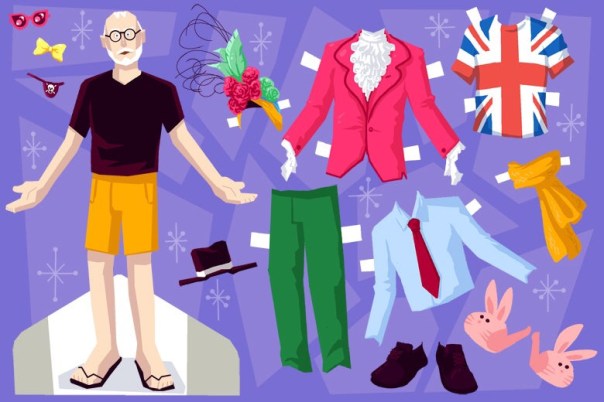
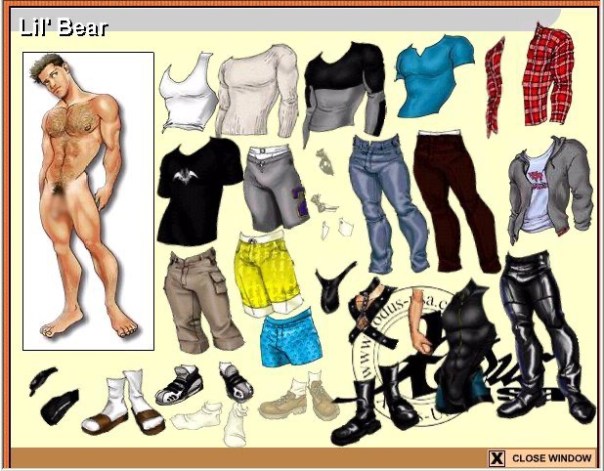
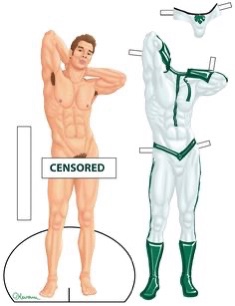


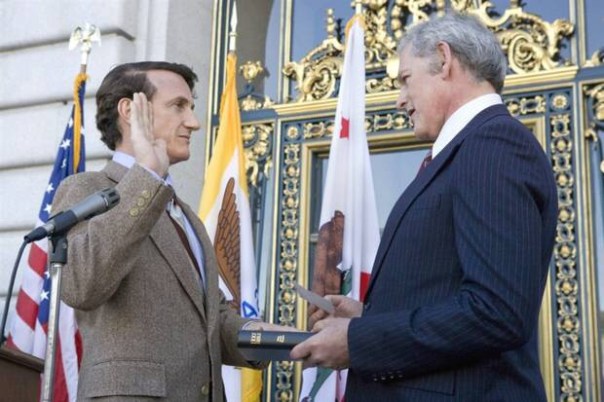



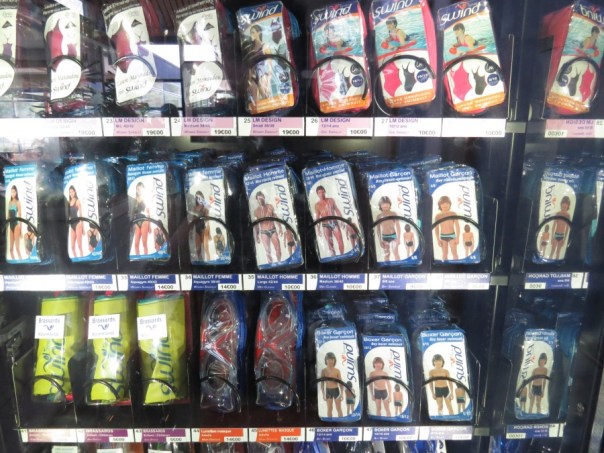


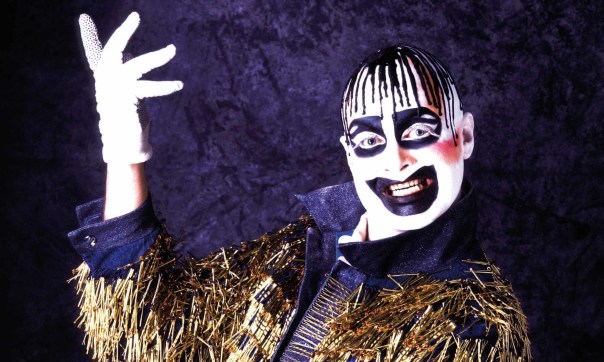

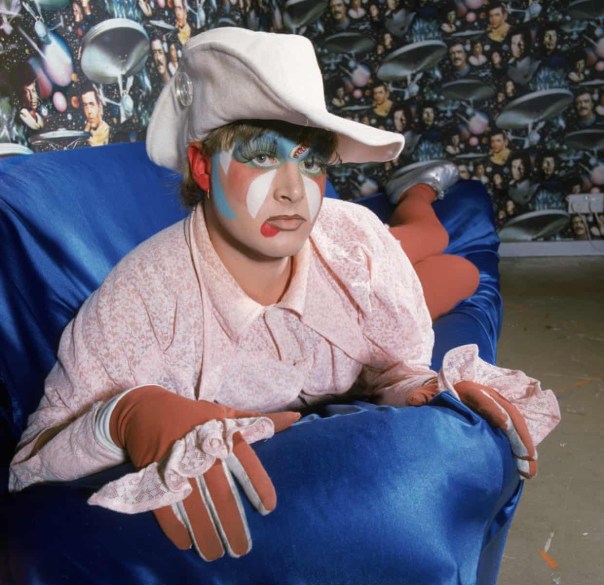

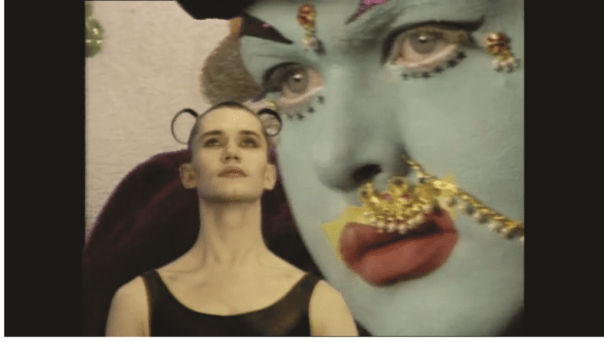

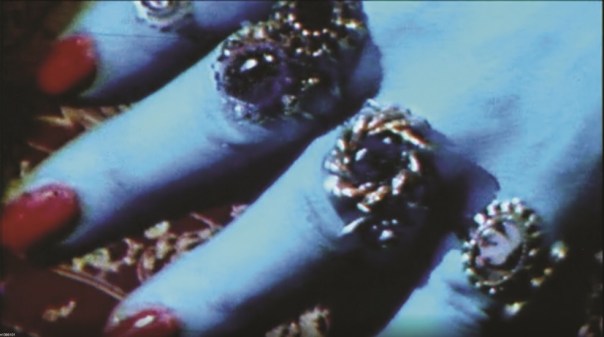




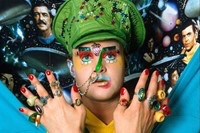




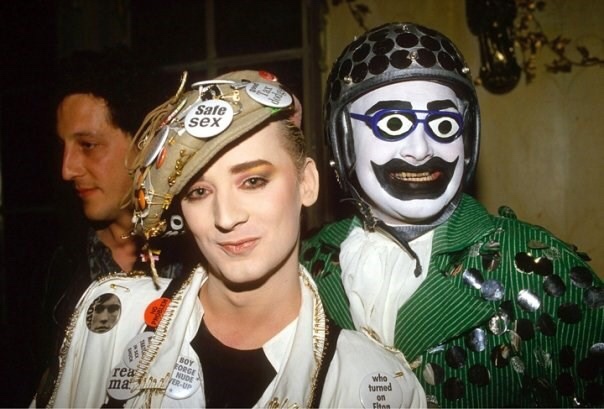


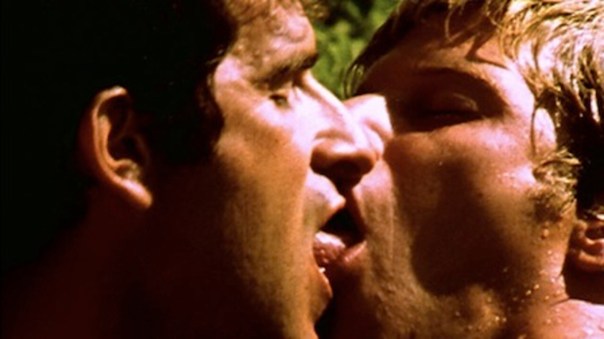
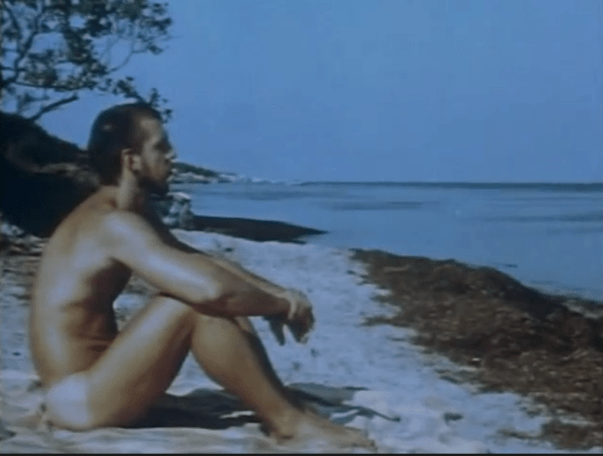


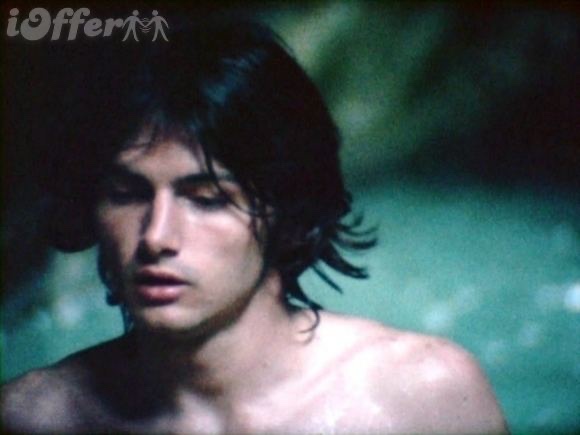



 Unlike other guys I know, by admitting my HIV+ status on these sites, I never had anyone ask me if I was “Clean”! What ignorant arseholes these people are! What gives them the right to embarrass and demean people in this way…it is just internalised homophobia/AIDSphobia. Many of the recipients of this “request” were guys who lived through the horror years of HIV/AIDS, fought the battles for access to medical care, sat back…defenceless…as their social circles – friends, acquaintances, relatives, partners – were obliterated from the face of the earth, fought their own battles with AIDS and associated illnesses, coming out the other end of it burnt out, emotionally and psychologically devastated…YET embracing new treatments and therapies, many of which had not been thoroughly trialled. They are here because they took control, found treatments that worked, thus increasing their CD4 counts, and are now living with undetectable viral loads. It is now proven beyond any shadow of a doubt that having unprotected sex with an HIV+ person with an undetectable viral load will NOT put you at risk to contract HIV! Yet there are low-lives on sex apps who have the rudeness and audacity to ask these guys if they are “Clean”? Seriously? Fuck off! And get a fucking education, you ignorant prick! I can assure you…it’s just as well you never confronted me with that!