Category Archives: General Interest

Gay History: Mitt Romney’s Teen Years: A Time of Homosexual Panic in America

Whether or not what Mitt Romney did as a teenager matters now, the way some conservatives are defending him, you’d think homosexuals didn’t exist until Halston, Calvin Klein, and Liza were discovered dancing at Studio 54 circa 1978.

“For those to the premises more recently arrived, a quick primer on 1965, when this occurred,” wrote syndicated columnist Kathleen Parker, responding to critics who’ve described Romney’s forcible cutting of the dyed-blond hair of a nonconforming student as anti-gay bullying. “Nobody knew who was or wasn’t ‘gay,’ a word that wasn’t yet in popular circulation as a noun and generally meant ‘merry.’ Homosexuality wasn’t on most high-school kids’ radar, period. If anything, Romney may not have liked Lauber’s ‘hippie’ locks, which is the more likely case given the era.”

Really? Check out the synopsis for the 1956 film by a much earlier Minnelli, Liza’s dad Vincente. Tea and Sympathy was adapted from the popular 1953 Broadway play of the same name, and Romney and his prep school buddies might as well have been acting out the plot: “Tom Robinson Lee, a 17-year old student at a boy’s prep school, is at odds with the other boys who like sports, talking about girls, and listening to pop music. Tom prefers classical music, reads books, can sew, goes to the theater, and generally seems to be more at ease in the company of women. The other boys torment him for his ‘unmanly’ qualities and call him ‘sister boy.’”

I don’t know what kind of sheltered life Kathleen Parker led, but homosexuality has been on high-school kids’ radars — particularly the radars of high-school boys — for as long as masculinity has been on their radars, which in Western culture would take us back to the ancient Greeks and the Roman gladiators, I imagine. But even if we don’t want to go back that far, suffice it to say that queer boys were defined in American culture surely since Oscar Wilde was carted off to prison for being a “sodomite” in 1895.

While there were times in the early part of the 20th century when homosexuality was more accepted in some cities (as historian George Chuancey describes in Gay New York, in which he also shows that the word “gay” most certainly existed then), the 1950s saw a homosexual panic that gripped American politics, media, and culture. In 1950 Sen. Joseph McCarthy began his investigations that led to the purging of alleged Communists and homosexuals from the government. In 1951 a popular book called Washington Confidential, co-written by New York Mirror columnist Lee Mortimer, captured the tenor of the time in a chapter titled, “A Garden of Pansies”:

If you’re wondering where your wandering semi-boy is tonight, he’s probably in Washington. The good people shook their heads in disbelief at the revelation that over 90 twisted twerps in trousers had been swished out of the state department. Fly commentators seized on it for gags about fags, whimsy with overtones of Kinsey and the odor of lavender. We pursued the subject and found that there are at least 6000 homosexuals on the government payroll, most of them known, and these comprise only a fraction of the total of their kind in the city.

Tea and Sympathy premiered on Broadway and was made into a film in the midst of that panic. (And you can read all about the context in this paper by film historian David Gerstner, who also happens to be my partner). The McCarthy era and the targeting of homosexuals spurred the first gay and lesbian activists, like the recently deceased pioneer Frank Kameny, who was ejected from the Army Map Service for being gay in 1957.

That first brave but tepid organizing only escalated the panic, which continued well into the 1960s. In 1963, two years before Romney’s prep school “prank,” the anti-gay metro editor of The New York Times, Abe Rosenthal, became alarmed after returning from overseas and seeing so many gay men on the streets of Manhattan. In response he commissioned a piece that was put on the front page of the paper of record, which blared with this headline: “Growth of Overt Homosexuality in City Provokes Wide Concern.”

Those years, the mid-‘60s, were in fact a critical time for the gay-rights movement: It was going to either burst forth, as it eventually did in 1969, with the Stonewall riots, or be suppressed further by the kind of attitudes that empowered high-school boys of the time to hold down a kid perceived as gay and forcibly cut his hair.

It matters today what Mitt Romney did then, even as a high-school student, because the country has moved on from that time of panic into a different place. It would tell us a lot about him, and the kind of leader he would be, if, rather than denying it or suppressing it, he were able to explain how he moved on and, as others have said, if he were able to use his story to shed some light on the anti-gay bullying we still see today.

Reference

Gay History: Before The Simpsons, Matt Groening Created This Pro-Gay Comic Strip That You Have To See

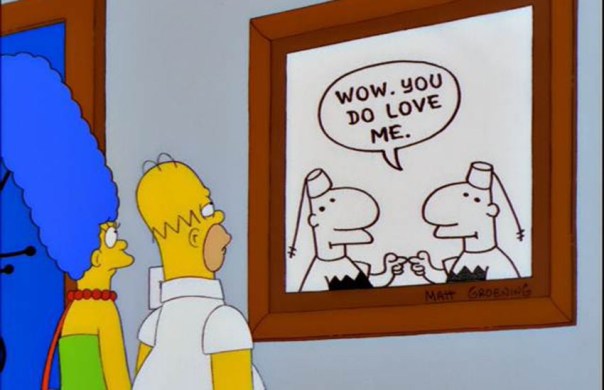
Take a look at Akbar and Jeff, a gay couple created by Matt Groening far before The Simpsons

Fox. Akbar and Jeff were Matt Groening’s original same-sex couple

Before Matt Groening created The Simpsons, he was drawing a neurotic rabbit and a same-sex couple who both dressed like Charlie Brown.

In 1986, Life In Hell’s Akbar and Jeff predated Homer, Marge, Bart, Lisa and Maggie and they were remarkably ahead of their time.

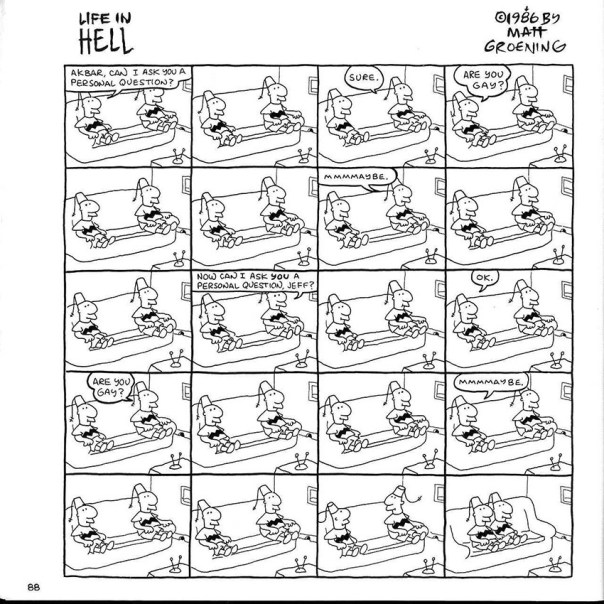
Groening had started drawing Akbar and Jeff in the fifth grade. Years later, in 1986, he drew this comic strip where the two came out to each other.

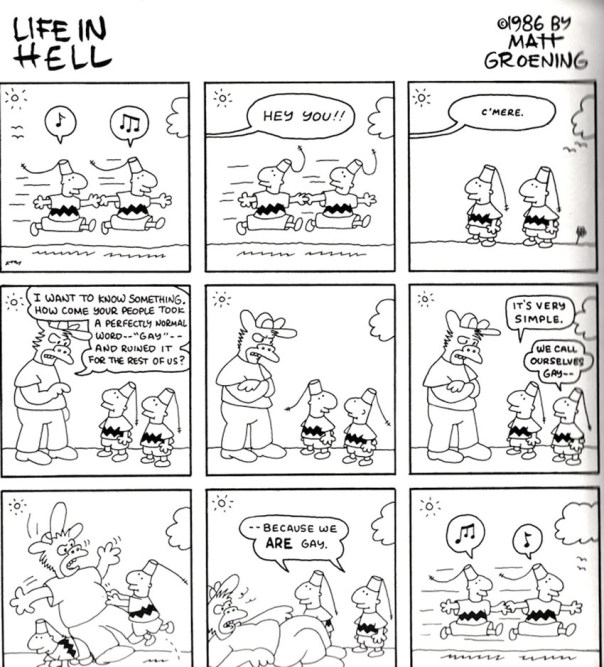
Wearing matching t-shirts, shorts and fezzes (it was the 80s), the boyfriend twins quickly formed into the alternative comic world’s iconic same-sex couple.

‘My friends and I were trying to draw Charlie Brown,’ Groening said in the late 80s. ‘We tried to imitate Peanuts, and they never came out looking right. And so eventually those drawings mutated into Akbar and Jeff.

‘They still have the Charlie Brown shirt if you noticed. Later I was trying to think about what kind of people they were and finally realized, of course, they’re gay, they’re lovers.’

While outing Akbar and Jeff as a gay couple meant there was a backlash, Groening kept drawing them in the Life In Hell comic book series.

A beer company had approached Groening to see if they could use Akbar and Jeff as mascots.

‘Then the article in Rolling Stone came out about me, and it was revealed that, “Oh my god. Akbar and Jeff – they’re not normal.” And the beer company dropped Akbar and Jeff,’ Groening said.

The beer company said it wouldn’t work to market gay characters to frat boys.

‘I said, “Listen, these are cartoon characters. It’s not that big a deal.” S

Groening said he wanted to have a same-sex couple in the series, but thought having a straight couple would end up using lazy jokes about men and women.

‘No one can accuse me of trying to score points against men or women if the characters are identical,’ he said.

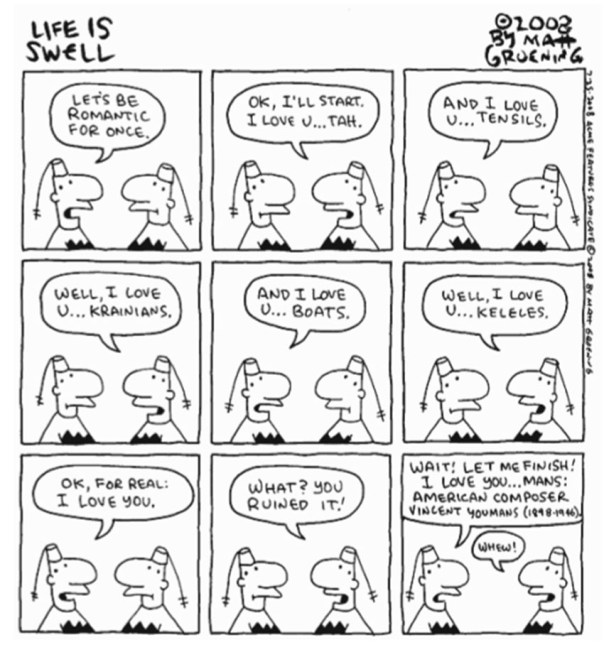
Life In Hell continued until 2012, and in that time Akbar and Jeff’s relationship kept being explored.

Akbar and Jeff, for the secondary stars of an alternative comic, also inspired many.

How Matt Groening’s Akbar and Jeff were inspirational

Scott Craig and Peter Alexander, a gay couple from Silverlake, created a LGBTI music venue Akbar – a tribute to the comic. Alexander had previously worked for Groening.

‘This is literally how me and my boyfriend got together,’ one guy said on Reddit.

‘When I was 14 I was sleeping over at a friends house & we were high and giggling over a Matt Groening book I’d got earlier in the day at a church book sale.

‘Turned page, this comic came up. We both got a little quiet. Heh…heh… Haltingly, friend said “Ummm hey….are you….gay?”

‘”Maaaaaaaybe” says I. And that was the first night of many that we made out that summer!’

Reference

Gay History: Unearthed Letter From Freud Reveals His Thoughts On Gay People

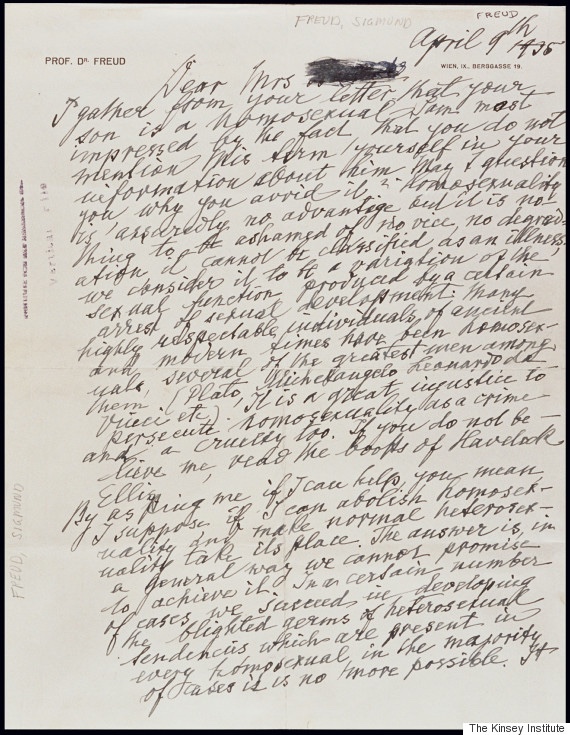
In 1935, Sigmund Freud penned a response to a mother who had asked him for help with her gay son. Despite the broader perceptions of homosexuality at the time, Freud took a different approach, telling the woman it’s “nothing to be ashamed of.”

“I gather from your letter that your son is a homosexual. I am most impressed by the fact that you do not mention this term for yourself in your information about him. May I question you why you avoid it?” he wrote. “Homosexuality is assuredly no advantage, but it is nothing to be ashamed of, no vice, no degradation; it cannot be classified as an illness; we consider it to be a variation of the sexual function, produced by a certain arrest of sexual development. Many highly respectable individuals of ancient and modern times have been homosexuals, several of the greatest men among them.”

While the this correspondence sheds light on his personal communications, it has long been known that Freud did not view homosexuality as a pathology. He believed everyone was born bisexual and later became either straight or gay because of the relationships with those around them. In the letter, Freud does suggest “treatment” for homosexuality may be possible, but says the result “cannot be predicted.”

The letter currently appears on display in London as part of an exhibition at Wellcome Collection called “The Institute of Sexology.” (Scroll for transcription.)

The Kinsey Institute

Dear Mrs [Redacted],

I gather from your letter that your son is a homosexual. I am most impressed by the fact that you do not mention this term yourself in your information about him. May I question you why you avoid it? Homosexuality is assuredly no advantage, but it is nothing to be ashamed of, no vice, no degradation; it cannot be classified as an illness; we consider it to be a variation of the sexual function, produced by a certain arrest of sexual development. Many highly respectable individuals of ancient and modern times have been homosexuals, several of the greatest men among them. (Plato, Michelangelo, Leonardo da Vinci, etc). It is a great injustice to persecute homosexuality as a crime – and a cruelty too. If you do not believe me, read the books of Havelock Ellis.

By asking me if I can help, you mean, I suppose, if I can abolish homosexuality and make normal heterosexuality take its place. The answer is, in a general way we cannot promise to achieve it. In a certain number of cases we succeed in developing the blighted germs of heterosexual tendencies, which are present in every homosexual in the majority of cases it is no more possible. It is a question of the quality and the age of the individual. The result of treatment cannot be predicted.

What analysis can do for your son runs on a different line. If he is unhappy, neurotic, torn by conflicts, inhibited in his social life, analysis may bring him harmony, peace of mind, full efficiency, whether he remains a homosexual or gets changed. If you make up your mind he should have analysis with me — I don’t expect you will — he has to come over to Vienna. I have no intention of leaving here. However, don’t neglect to give me your answer.

Sincerely yours with best wishes,

Freud

P.S. I did not find it difficult to read your handwriting. Hope you will not find my writing and my English a harder task.

Reference

Gay History: The Linguistic Turf Wars Over the Singular ‘They’

The use of the word “they” has been debated by linguists and copy editors alike. (Photo: zebicho/shutterstock.com)

Of all the turf wars that have complicated the landscape of grammar over the past few hundred years, the most complicated and frustrating may be that of the singular they.

It may be the most controversial word use in the English language—because it highlights a hole where a better-fitting word should go.

It creates a conflict between writers and editors who want things to follow the natural symmetry of Latin, and people who find they the only logical option for referring to a single person without a gender attached.

And there has been a lot written about it—it’s something of a hot topic this year, thanks to a vote by the American Dialect Society to name they its word of the year for 2015.

“In the past year, new expressions of gender identity have generated a deal of discussion, and singular they has become a particularly significant element of that conversation,” Ben Zimmer, the chairman of ADS’ New Words Committee, explained back in January. “While many novel gender-neutral pronouns have been proposed, they has the advantage of already being part of the language.”

The group voted the way it did in part because of they’s increasing importance as a way to make room for people who don’t fit a predefined gender binary. (It helps that the word drops the added complication of “he or she.”)

If the English language did permanently embrace a singular gender-neutral pronoun, it would be far from alone—254 of the 378 languages tracked by the World Atlas of Language Structures Online don’t specify for gender at all with their pronouns.

Alas, this problem isn’t as easy to solve as a vote from a dialect society. The problem is something of an emotional one—and it’s sparked debate for centuries.

For some word purists, the singular they is the linguistic equivalent of an ingrown hair, but for others, the solutions for getting around the problem are way messier.

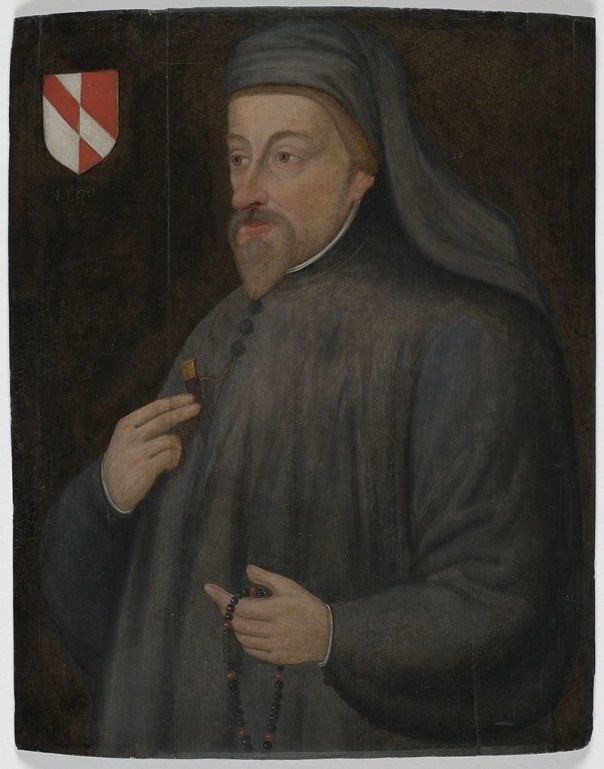
Geoffrey Chaucer, user of the singular they, along with Shakespeare and Jane Austen. (Photo: Public Domain)

For centuries, the singular they was not only accepted by the public but by some of our most famous authors—Geoffrey Chaucer, Jane Austen, and Shakespeare, just to name three.

But around the late 18th and early 19th century, something happened: Critics of this specific usage appeared. The reason for this critical reassessment came about partly out of prescriptive vibes around the English language at the time. Long story short: We wanted English to be more like Latin, and that meant rethinking the use of plural nouns in singular contexts.

In 1975, researcher Ann Bodine broke this down in a landmark paper, Androcentrism in Prescriptive Grammar: Singular ‘They,’ Sex-Indefinite ‘He,’ and ‘He or She’. The text, republished in the 1999 book The Feminist Critique of Language, notes that the influence of Latin grammar played an important role in the increase of rules around the English language—and specifically gave the world the “generic he,” a term that followed Latin form but didn’t mesh with modern concerns about gender equality.

Around the time of Bodine’s paper, things started to turn against the generic he. Students started complaining about its use at Harvard. But they faced resistance from the professors who taught them.

“The fact that the masculine is the unmarked gender in English (or that the feminine is unmarked in the language of the Tunica Indians) is simply a feature of grammar,” a group of 17 professors and teaching fellows wrote in a 1971 open letter published in the Harvard Crimson.

And Bodine noted that the then-recent attempts to ditch the generic he were really attempts to roll back a controversial change.

“Intentionally or not, the movement against sex-indefinite ‘he’ is actually a counter-reaction to an attempt by prescriptive grammarians to alter the language,” she wrote.

Grammarians didn’t give up on squashing the singular they easily. Some who tried to remedy the problem caused by this attempt to make English more like Latin have been tried to patch things up. For hundreds of years, English-speakers have tried to invent words that fill the language’s most unsightly gap. Nearly all of them have failed.

The New Words Committee of the American Dialect Society decided to make the singular they its word of the year. (Photo: PSD photography/shutterstock.com)

University of Illinois professor Dennis Baron, a longtime supporter of the singular they, has long maintained a list of gender-neutral pronouns that people have attempted to add to the English language, the most recent example from 2015, but most of the interesting ones from the 19th century. Terms like “thon,” “e,” and “um” were among the most prominent attempts to improve the language. Additionally, Baron notes, people complaining about the common use of the singular they were fairly common during the 19th century.

“If only occasionally found in the best writings, it is because the proofreader interposes his correction before the sentence reaches the public, for every editor [knows] how often even careful writers make the mistake,” a writer for the Findlay, Ohio Jeffersonian wrote in 1877.

Baron, in introducing the concept in an essay, is quick to stick a knife in its heart before it even had a chance to fly:

These pronouns fill a need, but none has been widely adopted, hence they are the words that failed. What has succeeded is singular they, which arose naturally in English hundreds of years ago, and is used both by speakers and writers concerned that their pronouns be inclusive, and also by many who don’t give the matter much thought at all.

Even in the modern day, some critics of the word use persist. Blogger Freddie deBoer, meanwhile, argues in an essay that the singular they issue is an infrequent problem at worst.

“Using ‘their’ for singular antecedents is one that I think people need to [just give into],” deBoer writes in his essay. “As I’ve argued, it only occurs in a very limited set of circumstances, and those circumstances very unlikely to produce confusion about what is meant.”

Over at the dearly departed site the Toast, linguist Gretchen McCulloch blames the root cause of this fissure on “a series of historical accidents,” but suggests that the issues raised by grammarians are practical in nature, even if the solutions are in many ways worse than the problems in the first place.

Really, if this problem is ever to go away, it’s going to be up to professional copy editors to speak up. And at least some of them appear to have made peace with the change.

Last year, prominent Washington Post copy editor Bill Walsh (who was not a football coach for the San Francisco 49ers) drew a line in the sand in favor of the singular they, revealing in a deeply nerve-wracking blog post that he had been wanting to make the big change for years, despite how divisive it was for some.

“What finally pushed me from acceptance to action on gender-neutral pronouns was the increasing visibility of gender-neutral people,” he wrote.

Walsh, the author of some popular books read by copy editors, is seen as something of a trailblazer on this issue, even though he pledges his desk will use the term sparingly.

Still, it won’t be easy to win over everyone else in the journalism world. The issue is that many copy editors simply struggle with the conundrum that the word creates, some treating it as a pet peeve even though it’s common in regular speech.

In a blog post last year, the Baltimore Sun’s John E. McIntyre noted the lingering controversy, citing one Facebook feed that called the singular they an “idiot epicene.”

“I know any number of editors who share this visceral dislike of the singular they,” McIntyre wrote. “It cuts no ice with them that linguists have demonstrated widespread use by reputable writers for centuries … or that we somehow contrive to use you in both singular and plural senses without growing red-faced and shouting.”

Copy editors have differing views on the use of a singular they. (Photo: Billion Photos/shutterstock.com)

Copy editors may never find peace on this issue, even though the American Copy Editors Society has been laying the groundwork for such a change, noting with positivity last January the American Dialect Society’s move to make the singular they its word of the year.

But a shift like that isn’t enough to convince one of the toughest copy editors in the business—Mary Norris, the “comma queen” at The New Yorker.

“Many ACES stalwarts—copy editors, journalists, grammarians, lexicographers, and linguists—stand ready to embrace the singular ‘their.’ But not us. We avoid it whenever we can,” Norris wrote earlier this year.

In that same blog post was a video where she discussed how her desk replaced an instance of the singular they in a George Saunders story with a generic he. (The linguistics blog Language Log had a field day with this whole saga.)

And, sooner or later, the Associated Press Stylebook will probably weigh in as it has in other linguistic controversies, like, recently, when it decided to allow “more than” and “over” to be used interchangeably.

Reference

Gay History: The Gay DNA Of House Music

The dance scene owes much to gay culture…

Earlier this year, Lithuanian producer Ten Walls was riding on a wave of global love with his big-room smasher ‘Walking With Elephants’. Then, in a strange move, which in the future will be seen as a case study for career sabotage, he wrote a homophobic rant on his Facebook page. 

The post compared homosexuals to paedophiles and referred to the LGBT community as “another breed”. His bigotry sent chills down the spine of anyone with an open mind and memories of less liberal times.

For many, reading such hateful views can be frightening.

While the UK’s an apparent bastion of tolerance, Stonewall’s national figures suggest eight in 10 LGBT people have been verbally abused or harassed and one in 10 has been physically assaulted. There might be gay characters in Hollyoaks, but it’s not all rainbows out there. LGBT acceptance is still fairly fragile and far from certain outside city centres.

TAPESTRY

Ten Walls’ comments revealed an embarrassing lack of historical perspective. House music (and all its subsequent forms) wouldn’t be the phenomenon it is today if it wasn’t for the major contribution from an underground scene on both sides of the Atlantic that was black, queer and fabulous.

Frat boys, R&B stars and TOWIE types are fist-pumping to EDM with a gusto that’s cheering, but also quite depressing. The musical narrative that led us to where we are today began over thirty years ago. Electronic music emerged from a scene that was alternative, diverse and mostly, very, very gay. Ten Walls? You listening at the back?

As with any cultural phenomenon, there are many threads which merge to make a fine tapestry. The LGBT contribution to the dawn of house isn’t the whole story, but it’s the backbone, glitter and colour that often gets overlooked. The unsung influence of gay culture may not stem from conscious discrimination, but when a major contribution isn’t celebrated, that oversight can allow homophobia to flourish.

The roots of today’s dance music are definitely disco — be that EDM, dubstep, house or trance. Disco spawned the driving kick-drum and epitomised the escapism, abandon and release that should be at the heart of any decent dance tune.

David Mancuso’s parties at The Loft in NYC were the ground zero of the disco movement. In 1973 Vince Aletti wrote a piece for Rolling Stone documenting the covert scene of, “After-hours clubs and private lofts open on weekends to members only — a hard-core dance crowd — blacks, Latins, gays.”

The much missed DJ Tallulah (1948-2008) span at Studio 54 in New York, but in 1974 took London by storm as the resident DJ at Bang on Charing Cross Road. When asked about dance music culture, he sniffed: “The rave lifestyle of Ibiza in the late ‘80s was just a vanilla version of the New York gay lifestyle of the ‘70s.”

NON STOP ECSTATIC DANCING

In 1981, when ‘house’ was something you might shout while playing bingo, but certainly wasn’t a ‘feeling’ or a genre, Marc Almond from Soft Cell pioneered a poetic take on queer sex, low life and ecstasy. Yes, you read that right — 1981.

The band mortified middle England with ‘Non Stop Erotic Cabaret’, then in ’82 forged electronic mixes and MDMA approval with ‘Non Stop Ecstatic Dancing’, a remix album that featured a rap from Cyndi Ecstasy, a notorious New York MDMA dealer.

Almond is a deserving national treasure now, but back then, he attracted vicious savaging from both the press and public. The mainstream may have been hating on him, but Marc was ‘loved up’ long before Ibiza became a byword for Mediterranean indulgence.

DISCO DECADENCE 

Marc Almond wasn’t the only one to enjoy chemical hedonism in NYC and bring back the vibes (and drugs) to the grey shores of England. Promoter Steve Swindells recalls visiting Paradise Garage and Studio 54: “I got to visit the ultimate VIP room, the manager’s office, and yes *sniff*, it’s all true!

What many people don’t know is that there was a heaving, largely gay orgy in the capacious basement every night! Paradise Garage, however, was something else entirely. That vast space with its incredible soundsystem! The largely gay, black and Hispanic crowd were totally off-their-tits — mostly on Quaaludes (known as ‘Ludes).”

Inspired by Paradise Garage, Swindells returned to London in ’82 and opened The Lift at the Gargoyle club. Susan Sarandon attended the opening bash and the club was immortalised as ‘The Shaft’ by Booker Prize winner Alan Hollinghurst in his first novel The Swimming Pool Library.

The Lift nodded towards New York’s disco palaces, but its roots were in South London’s largely black, illegal, gay house parties (or ‘Blues’ as they were known). Lift resident DJ Mel, of the KCC Sound System, found his feet at those illicit Blues parties and is regularly cited as one of London’s foremost black and proud DJs.

GIVE ME SOME MOORE

In 1983 Philip Sallon opened the Mud Club, a Friday nighter, with DJs Tasty Tim and Jay Strongman. Mark Moore launched his DJ career at the club, when he was promoted from carrying Tim’s records to stepping in when she took a night off.

The club’s clientele were a mix of queens, b-boys and fashionistas. The music was equally eclectic, ranging from hip-hop to show tunes and ‘trash’ — such as the theme tune from kids TV fave Rupert The Bear. The more leftfield and cheesy the tunes were, the crazier the crowd went.

Jeremy Norman opened Heaven in 1979 and by the early ‘80s, it was at the top of its game, giving gay London an epic club that rivalled anything New York (or the world) had to offer. Thursday nights were Asylum, run by Kevin Millins and hosted by Laurence Malice (the infamous Trade supremo).

Asylum and its successor, Pyramid, may get overlooked as acid house incubators, possibly because the crowd didn’t look like the smiley-faced, baggy-togged ravers that came to define the Second Summer Of Love. At Pyramid, die-hard leather clones inhaled amyl nitrate with nuclear goths and industrial transvestites. It was dark, cruisey and very weird. Heaven on any night could be unhinged and alarming, but it really climbed the walls midweek.

Mark Moore became resident on the main floor and as the mid ‘80s approached, he was characteristically experimental: “We were playing a lot of alternative electronic stuff; Cabaret Voltaire, Yello, DAF, New Order. They slotted in with the imports that were coming from Chicago and Detroit. We didn’t know what they were. It was just an extension of the electronic stuff I was already playing. Nobody settled on ‘house music’ for quite a while.”

BLACK, QUEER AND ACID

Those imports from Chicago were largely produced by and made for the city’s queer and black clubs, such as The Warehouse and The Music Box — where DJs like the late Frankie Knuckles were making a name for themselves. Initially, the tunes were a fusion of Italo, Euro-pop and funk. When producers started dabbling with the Roland TR-303 synthesiser, a style emerged that was sparser, spacier and was later dubbed ‘acid house’.

At Pyramid, the freaks ruled and nervy straight boys grudgingly gave respect to the cutting-edge sounds, with their backs firmly against the wall. It was a twitching, bitching melting pot, but it wasn’t loved by everyone. The commercial LGBT scene wasn’t entirely enamoured by the club’s electro beats and Dadaist fashions. Mark Moore regrets mentioning this schism.

“The mistake I made was recounting how the mainstream gay scene kind of rejected it — calling us the ‘black sheep’. In the eyes of most journalists, that makes it seem like it wasn’t that important. But everyone who went to those clubs has told me off for that. Of course it was important. It was JUST as important as the 30 people who saw the Sex Pistols in Manchester. It was MORE than 30 people. It was over 1,000 people, packing out at Heaven, midweek.”

As someone who attended Pyramid religiously, I can confirm that it was both seminal and heaving. My heroic 90-minute nightbus journey home, followed by a half-hour stagger through sleeping suburbia, was always worth the pain of crawling into bed at dawn, covered in glitter, fag-ash and saliva.

Attracting a much smaller clique, but equally wacky, was Leigh Bowery’s Taboo at Maximus in Leicester Square, launched in 1985. Immortalised in Boy George’s musical of the same name and hailed by the style crowd, there’s a chemical aspect of the club that’s often forgotten.

“It was very hi-energy and Italo,” remembers Mark Moore. “But what made it beautiful were Jeffery Hinton’s mix tapes. They were completely druggy and amazing. It was definitely the first place in London where there was mass ecstasy taking.”

Regulars at Taboo, such as Hot Gossip’s Mark Tyme and DJ Mark Lawrence (RIP) would spend hours at home perfecting synchronised dance routines to perform at the club. There was also a fad for formation ‘falling down’.

Basically, all those on the dancefloor would collapse in unison, often as a response to the floorshow. Taboo was demented, messy, short-lived and quite elite, but people have said the same of Danny Rampling’s Shoom. And that was two years later.

PROTO-RAVERS

Luke Howard is resident DJ at Horse Meat Disco and played Queer Nation for 14 years. He agrees that the gays were raving long before it had a name.

“Pre acid house/rave culture, you’d hear house music in many gay clubs in London. The DJ at the Prince Of Wales in Brixton would play house tracks like ‘House Nation’, and the first time I heard ‘House Music Anthem’ by Marshall Jefferson was at a venue called Traffic on York Way [in Kings Cross].

I went straight to Groove Records and bought a copy on import the next day. The biggest night that played loads of house music was Pyramid at Heaven where Mark Moore and Colin Faver were residents.”

On a less alternative tip, but fiercely serving the LGBT black community, was Jungle at Busby’s on Charing Cross Road.

The Monday nighter ran from ’83-86 and again, Steve Swindells was at the helm. He ponders its influence: “The DJs were Colin Faver (Kiss FM) and Fat Tony (his first regular DJ gig — I think he was 15!). In ‘86 they started drip-feeding a new genre of US imports in with the otherwise largely black music they were playing. Jungle hosted, I believe, the first-ever house music PA in London. That was Darryl Pandy singing Farley Jackmaster Funk’s ‘Love Can’t Turn Around’. The crowd went crazy.”

MY HOUSE IS YOUR HOUSE

Mark Moore became quite militant in his refusal to play anything BUT house. This took shape in ’87 at Planet Love at The Fridge, run by Nicky Trax.

Moore declared a musical war: “We put a sign on the door saying, ‘We play house music — if you don’t like it, please don’t come in’. There were a lot of locals who wanted to hear rare groove and we used to worry they’d come in and shoot us. So we put that warning on the door. And two years later those records DID become classics.”

There’s another aspect to this story that may explain why the LGBT contribution to UK house isn’t documented in a detailed fashion. As the Second Summer Of Love dawned in ’88, the UK gay scene was in major crisis and London was the epicentre of this battle. HIV/AIDS was cutting a swathe through our community, instilling tabloid panic, a rise in homophobia and widespread fear.

In 1988, we were nursing loved ones, fighting bigotry, attending floods of funerals and trying to stay alive and chipper. The edgiest innovators from a wild period of creativity were dying, or had turned to activism in response to a grim pandemic and a ruthless Tory government.

The age of consent for same-sex sexual activity was 21, so at this time, I was effectively jail bait. My boyfriends faced prison if we were caught together. The absurd laws didn’t stop passion, or inhibit love, but it was far from agreeable.

Section 28 of the Local Government Act 1988 prohibited local authorities in England and Wales from “promoting” homosexuality. It also labelled gay family relationships as “pretend”. The Second Summer Of Love emerged against this background of oppression and prejudice.

The gays had been integral to getting the house party started, but by late ‘88, the community’s focus had switched from MDMA to AZT and HIV. Quite frankly, we were busy.

We lost a lot of people. AIDS savaged clubland like a rusty scythe. DJs, drag stars, artists, designers and go-go boys either died or went below the radar.

Of course, HIV didn’t single out creatives, but the clubs were fuelled and populated by that crowd. The club kids and older gay men who’d ruled discos in the ‘70s suddenly became thin on the ground. Between ’88 and ’93, I was either raving or grieving.

Or both. I should have been studying, but I spent more time lost in dry ice than in the books on the syllabus. On more than one occasion, I dropped ecstasy while attending a funeral wake. It wasn’t disrespectful. On the contrary, the common refrain, as we gurned over yet another coffin, was: ‘It’s what they would have wanted’.

SECOND SUMMER OF LOVE

The party continued. It always does, but it was really picking up on the illegal rave scene. The energy that sparked the flames of house music in subversive gay clubs exploded elsewhere as the Second Summer Of Love (1988-’89). If you weren’t dead or too sad to pop pills, you threw yourself into the cultural phenomenon that was loved-up, initially optimistic but totally anti-establishment.

James Horrocks, co-creator of React Records, remembers the shift in thinking. “More young gay people were looking for something new and more vibrant, and had already frequented fashion-orientated clubs that embraced the mixed message,” he recalls.

“This was fully realised with the arrival of acid house and E-culture. Vast swathes of the scene migrated to warehouses to join the raving masses. It was such a sweeping change for the LGBT scene, it was forced to throw out the rule-book.”

My personal party habits in ’88 reflected the uncertain mood of the times. My straight mates (God love ‘em) were cracking AIDS jokes, dissing ‘bum bandits’ and dropping acid while dancing on the forecourt at Heston Services. We were a gang of sorts, our catchphrase being, ‘We put the E into Ealing’.

This much was true. We were regulars at a club called Haven Stables in Ealing (where Brandon Block got started). When the club threw us out, we’d dance on the green outside, to the bemusement of daytime shoppers and commuters. Despite all the pill-fuelled love and empathy, I still didn’t feel happy ‘coming out’ to them. In fact, I was terrified they’d find out.

With my straight mates, we’d go to Nicky Holloway’s Trip at The Astoria, Paul Oakenfold’s Spectrum at Heaven and the RiP raves in Clink Street. On the sly and on my own, I’d let my hair down at the queer parties, such as Jimmy Fox’s Daisy Chain (The Fridge, Brixton), Troll (The Soundshaft) and Pyramid. It was a dual life of double-dropping and downlow habits. Occasionally, the two lives would collide under the lasers. When I saw queens at the big, straight raves, I’d steer clear and spurn recognition — the dancing gay Judas with dilated pupils.

MADCHESTER

My dwindling studies took me to Liverpool in ‘89 and much to my southern surprise, the north was embracing rave culture with characteristic passion. Liverpool took to rave in a big way, but Manchester pipped it to the post and became the darling of the music press. ‘Madchester’ was thrilling.

The city buzzed off its renaissance, but it wasn’t just the scallies and the wide-boys getting ‘on one’. Manchester boasted a booming gay scene that was cocky, hip and ready to ‘ave it ‘til dawn. As it was a short drive from Liverpool, that’s where yours truly spent most weekends.
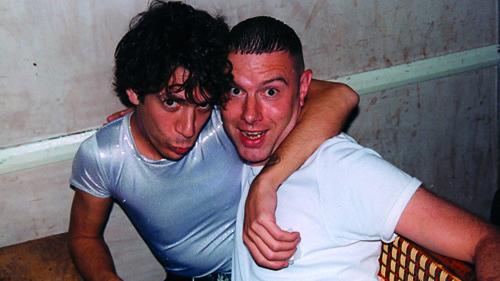
DJ Dave Kendricks explains the city’s LGBT heritage: “Manchester’s musical history is full of gay signifiers, from Pete Shelley singing ‘Ever fallen in love with someone you shouldn’t have?’ to New Order openly imitating the sound of Bobby O on ‘Blue Monday’.”

The No.1 Club on Central Street was a small carpet-and-chrome club that became THE queer rave destination in Manchester. Tim Lennox played feel-good piano house on a quadrophonic sound system, to a rocking clan of devotees.

Previously scared to come out to my straight mates, the cat was now out of the bag and the No.1 was where I took the boys. One night, a bunch of them cheered when I snogged a drug-dealing gangster. I couldn’t have been happier. Not only had they accepted my sexuality, they were applauding it. Times were a-changing and E was fuelling the evolution.

I paid £25 for an acid tab at Mike Pickering’s Nude at The Haçienda and while it was a boss night, when Paul Cons opened Flesh at The Haçienda in 1991, THAT was mind-blowing.

Resident DJ at Flesh, Dave Kendricks also remembers it fondly.

“That monthly gay night at The Haçienda was the greatest night I ever played. It was raucous, hedonistic, totally Northern and felt like a city turning its back on prejudice, towards acceptance, in the most thrilling way.

Just a few years before, Manchester’s chief of police James Anderton said the gay community was ‘swimming in a cesspit of its own making’ after he raided the gay club, Rockies. It was a direct reference to AIDS. Flesh was the biggest fight-back to that.”

I used to get so excited at the prospect of going to Flesh, I couldn’t eat for two days prior to the event. The club ran a coach from Liverpool to Flesh and back again. It was a demented mess on wheels. God-knows what the driver made of the transvestites in K-holes and topless lesbians dancing on the seats.

As a fledgling DJ, I’d set up decks and a soundsystem at home, in Toxteth. On more than one occasion, when the coach returned from Flesh, it would stop outside my home on Elwy Street and the tripping, screaming contents of the bus would pile into my cottage and the party would continue for days.

The epic post-Flesh socials in my Liverpool latty were known as Club Lovestretch. We painted the house in UV graffiti, installed black lights and removed the bannisters, so people could rave on the stairs. I was living in Liverpool, partying in Manchester and returning to London at every opportunity. I was very busy.

QUEER NATION

In 1990, Patrick Lilley opened Queer Nation at Covent Garden’s Gardening Club. “I’d run the first soulful house and garage club in the UK, High On Hope at Dingwalls,” Lilley tells DJ Mag. “Queer Nation was just the mutated gay version. For the authentic black heritage of house (the music that sees no colour), there’s no comparison or competition for QN. We came straight from the founding fathers.”

The brilliant Luke Howard and Princess Julia were the resident DJs at Queer Nation and I spent many a Sunday night in Patrick’s VIP ‘cupboard’ with his hash pipe and secret booze stash. Due to the Sunday trading laws, there was no alcohol served after 10pm, but where there’s a will…

While Queer Nation kept it funky, other London LGBT clubs were picking up the pace and breaking ground with tougher sounds. “React (myself and Thomas Foley and later Steven React) took over promoting Garage at Heaven and Troll at The Soundshaft in the summer of 1990,” James Horrocks tells DJ Mag.

“The New York house and Detroit techno we played at Garage and Troll had morphed into a much harder sound — a mix of techno and new beat. It immediately found popularity on the scene and along with the soulful house and garage sound of New York, became the soundtrack of our lives.”

Blu Peter, resident DJ at Garage, enjoyed success as both a DJ and a producer. “Garage integrated gay and straight crowds and became more about the music and less about the sex at the end of the night!” he tells DJ Mag.

“The ‘Reactivate’ series produced tunes that were tried and tested there. Mrs Wood and I were the first international DJs to play South Africa after Apartheid, and also after the hand-over in Hong Kong. Both gigs were massive honours.”

ALL-NIGHT BENDER

In 1990, another club launched in London that made the debauchery of Studio 54 appear tame and a bit lightweight. Laurence Malice (and Tim Stabler) launched Trade at Turnmills and unlike any club before, it started at 4am on a Sunday morning.

Plugged as the ‘original all-night bender’, the club stayed open ‘til way past Sunday lunchtime and was a deranged cocktail of sex, drugs and house music. Trans beauties, supermodels, international DJs, muscle boys, East End gangsters and A-list celebrities rubbed shoulders and partied en masse, every week, like their lives depended on it. It was full tilt at 8am.

It’s impossible to convey both the lunacy of the club and the obsessive allegiance of its regulars. Entry wasn’t guaranteed, even if you were gay. The door policy was vague, but sturdy: “You don’t have to be gay or a member to get in, but your attitude and look will count.”

Me and my mates used to party at The Curzon, Jody’s or Quadrant Park in Liverpool, then drive all the way to Farringdon as dawn approached. We’d stagger out of Trade at 2pm, then drive all the way back to Liverpool. Some of those journeys, swerving along the motorway, were a little bit scary.

Trade launched the DJ careers of a number of big players who’re still rocking it today. The original line-up was Martin Confusion, Daz Saund, Trevor Rockliffe, Smokin’ Jo and Malcolm Duffy. This stellar cast was later joined by ‘Tall’ Paul Newman, Alan Thompson, Steve Thomas, Pete Wardman, Ian M, The Sharp Boys, Fat Tony and Fergie.

The most celebrated Trade DJ remains the late, great Tony De Vit (1957 –1998). Tony’s mixing skills and ability to spin an overwhelming symphony of hard house led to him being venerated like a god.

Tragically, Tony died at 40, due to AIDS-related bronchial failure. One only has to listen to his single ‘Burning Up’, or his remix of ‘Hooked’ by 99th Floor Elevators to get an idea of his sound. However, to really understand De Vit’s magic, you had to be there, under the lasers, as his galloping wall of sound inspired joy, disbelief and amazement.

I moved back to London after (barely) completing my studies, and after a chance encounter with Laurence Malice, wound up working on the door of Trade for five years. I’d already decided it was the greatest queer club in the world, long before I became part of its rude family.

My enthusiasm for Trade’s hedonistic spirit never waned. I’d finish on the door at 10am, then get on the dancefloor ‘til the club shut that afternoon. Like Ice-T says in the NRG classic, which became a Trade anthem, ‘He Never Lost His Hardcore’.

DTPM

Lee Freeman’s Sunday afternoon party started in ’93, as a post-Trade knees-up, at an Italian restaurant in Holborn called Villa Stefano. In order to get round the Sunday licensing laws, an enormous buffet would greet the still-buzzing gay ravers as they trooped in from Turnmills. I never saw anybody eat anything, except for the odd pill.

Over the years, it moved, first to Bar Rumba, then The End, and finally, it did a major eight-year stint at Fabric on Sunday nights. Many of DT’s residents, such as Smokin’ Jo, Alan Thompson and Steve Thomas, were regular Trade DJs, but DTPM honed a funkier, deeper groove which helped establish the club’s unique brand.

I had my very own pillar at The End (in between the two dancefloors, next to the toilets), where you could find me, every Sunday, grinning and clinging onto it for dear life.

WOMEN IN THE HOUSE

The Fridge in Brixton hosted the first huge, women-only club night Eve’s Revenge in the ‘80s, followed by Venus Rising in the ‘90s. It regularly attracted over 1300 lesbian clubbers. A special mention must go to the awesome Vicky Edwards, who span at Jungle, Venus Rising and Bad at the Soundshaft. She’s still an excellent DJ.

DJ Smokin’ Jo used to sashay through Trade with a hunk hefting her record box, and the crowd would gawp at her sass and beauty. More importantly, she’d take to the decks and totally rock the place. “Trade gave a platform to that real US house style of music,” she tells DJ Mag. “It felt cutting edge and of course, it brought techno and harder sounds to the forefront.”

Jo was a regular in DJ Mag in its early days and her relationship with Skin from Skunk Anansie proved a powerful and gorgeous fusion of rock and house sovereignty. Hearing Skin rap over Jo’s DJ set at the DTPM tent at Gay Pride in Brockwell Park remains, for me, a gobsmacking and pivotal point in black girl power.

One could argue that female DJs suffered less sexism in LGBT clubs than elsewhere, but lesbian raving really hit a peak when clubs such as Pumpin’ Curls and Kitty Lips shook up London in the mid ‘90s. “We, Vikki Red and myself, were DJs first and foremost,” Queen Maxine tells DJ Mag. “Individually, we played to varying audiences over the world for many years.

We set out to offer something unique, yet boutique; a forward-thinking space for women (of all sexual persuasions and their gay male friends as guests) who appreciated the harder side of dance music and wanted a space without getting ‘put on’ by straight guys.

“It certainly worked. We promoted two very well attended and respected nights; Pumpin’ Curls and then Kitty Lips. These clubs ran alongside Trade at Turnmills, as the little sister club. Laurence Malice was very supportive and helped open many doors for us.

The secret to our success was keeping ahead of the pack and offering something different and daring. Because of this approach, we were able to attract a very diverse crowd, who believed they were a part of something that hadn’t been done before.”

In ’94, Suzie Kreuger arrived in London. With her NYC Clit Club experience, she launched the notorious Fist. A woman, promoting a gay fetish club, was a novelty in itself. The real revolution was that Fist welcomed S&M lesbians, who joined the leather men under one roof, all united in a passion for kink, pills and techno.

It was very queer, often shocking and musically brutal. Prior to Fist, I’d never seen lesbians having sex or watched live shows that were so graphic, punters fainted, fled or vomited on a regular basis. Lesbian techno mistress EJ Doubell span fearsome sets that only added to the demonic and highly-charged vibe.

MONDAY MORNING

Trade, Garage and Fist weren’t the only LGBT clubs serving up nu techno and ‘hardbag’. The truly wayward headed to FF at Turnmills on Sunday nights. Launched in ’89 by Mark Langthorne and Nicholas Timms, it was a dark and uncompromising night that featured Suzie Kreuger on the door and a crowd who were happy to be bang at it ‘til 5am Monday morning.

Mrs Wood and Blu Peter were the celebrated residents. Having spent my Sunday morning working at Trade, FF was where yours truly went to let off steam and feel the joy and terror of manic techno and hard trance.

The club wasn’t very welcoming to those who weren’t LGBT, and it certainly wasn’t for the faint hearted. The creative team behind FF also produced a satirical fanzine (also called FF) that was militantly gay and so near the knuckle, it eventually got shut down by a law suit. 

Asked about FF, Blu Peter admits to, “Special and often bizarre memories. On the whole it was a night when you could expect anything. The audience loved to be pushed and challenged. I aspired to play there above anywhere else. The legacy is that people still talk about it, though it ended 20 years ago.”

While Peter is right, it seems that straight, white, mainstream culture prefers to tell another account when it comes to electronic music. Dave Kendrick, DJ at Flesh, isn’t surprised at the selective story telling. “Unless you’re talking about hairdressing, airline stewarding or musical theatre, the LGBT contribution is overlooked in almost all UK cultures,” he says.

“We only reached full legal equality [in the UK] last year and within that, LGBT people will always be a minority. The dialogue about what we’re due is only just beginning. You have to shout to be heard when you’re in the minority, but that doesn’t mean the amazing gay nightlife culture incubated in the British gay night-time isn’t worth shouting about. It’s an inspirational story of underground culture directly informing the mainstream.”

It’s perplexing to note that sexual diversity appears to have almost vanished from electronic music media and the wider conversation. Largely straight, white middle class crowds are embracing a genre that was birthed by working class, queer, black and Latin people over three decades ago. The young seem especially ignorant of the struggles those communities endured then and, in many parts of the world, continue to experience now.

ROOTS AND RIGHTS

For a new generation, whose first experience of house music might be Avicii or David Guetta, this seems especially pertinent as they enjoy the party, but are blind to LGBT battles being fought in places like Russia or the Middle East.

Twenty years ago in the USA, it was rare to hear house music except in black or LGBT clubs and on very few radio stations. Currently, there’s a colossal mainstreaming of dance music, not just in America, but worldwide. It’s brilliant that these newcomers, commercially defined by pumped up boys and blonde party girls, get to feel the shared joys of house music. But it’s all a bit hollow if they don’t appreciate the roots.

Strides have been made and for many in the wider LGBT community, life is less fearful than it was 30 years ago. However, if ‘Music Is the Answer’, one can’t help but wonder what the question was? One thing’s for certain, as electronic music continues to dominate popular culture, we’d do well to remind ourselves of the diversity, political struggle and sheer queerness that was so fundamental to the very DNA of dance music. Joe Smooth once sang, ‘Brother, sisters/One day we will be free/From fighting, violence/People crying in the street’.

Top tune, lovely message, but we’re not there yet.

Reference

Gay History: Tab Hunter on being gay in 1950s Hollywood*

Tab Hunter, the actor with the all-American looks who starred in ’50s classics “Damn Yankees” and “Battle Cry,”. Photo Credit: Allan Glaser Production

With his blonde surfer-dude locks and fresh-scrubbed complexion, Tab Hunter set female hearts aflutter in the 1950s with hit movies like “Damn Yankees” and “Battle Cry” and records including the chart-topping “Young Love.” No one suspected that Hollywood’s all-American boy was homosexual.

Now Hunter, 84, opens up about his days in Hollywood — from his discovery at age 20 to working with cult filmmaker John Waters — and his private life, including his relationship with actor Anthony Perkins — in the new documentary “Tab Hunter Confidential,” produced by his longtime partner Allan Glaser. The actor will be on hand for a screening and Q&A Wednesday, Oct. 14, at Cinema Arts Centre in Huntington. He spoke by phone from his home in Santa Barbara, California.

You were thrown into movies with no experience. What was the first day on the set like?

The first time was when I tested with Linda Darnell for “Island of Desire,” and I was a nervous wreck. And she pinched me and said, “Relax, I’m good luck for newcomers.” And she was.

You left Warner Bros. after getting roles you didn’t like. Did you regret that move?

Yes, in many respects, and no. Your own freedom and individuality is major. . . . I really wanted out of the studio contract, but at the same time, the security financially was important because I had a mother I had to care for. It was a tough decision to make. I did a couple of movies after that that were all right, and then I did a lot of dreck, mainly for survival.

As a gay man in the 1950s, did you ever think being an actor, in which your life would be so scrutinized, might not be the right profession?

If something would be mentioned, I would just go in the other direction. I wouldn’t confront anything. My sexuality was nobody’s business. The studio never mentioned my sexuality. If they had, I would have freaked out. The only person I ever discussed things with besides Tony [Perkins] was Dick Clayton, my agent.

The movie deals heavily with your relationship with your mother. What did she say when you told her you were gay?

I never told my mother anything. We were driving back from my brother’s funeral up in northern California after he was killed in Vietnam. As we were driving down the coast, out of the blue my mother said, “I never see Tony anymore or hear about him.” And I said, “Well, he’s doing a picture in Thailand.” There was this long pause, and all of a sudden my mother said, “I’ve never been in love.” That was the closest we ever came to saying anything about it.

How did the idea for the documentary come about?

It all started with the book [his 2005 memoir of the same name]. Allan said, “I think you should do a book because I hear someone is going to do a book on you.” I thought, “Who would want to read a book on me?” He said, “You’d be surprised.” I thought about it and decided I’d do it. I figured get it from the horse’s mouth. . . . Then years went by and Allan said, “I think we should do a documentary.”

Warner Bros. considered you for “Rebel Without a Cause.” Did you want to do the kinds of roles people like James Dean were playing?

It was only when I got “Battle Cry” that I realized I wanted seriously to be an actor. . . . I started working with [acting coach] Jeff Corey and doing a lot of live TV, which was a great training ground.

Do you have any favorite co-stars or roles?

I loved working with Geraldine Page, she was one of my favorites. And Natalie Wood, who was like my kid sister. . . . “Damn Yankees” was great because it was my first musical, and I was working with the whole Broadway cast. Live TV was probably the most gratifying for my growth as an actor and a person.

How was working with Sophia Loren?

She was absolutely fabulous. We were working in the heat of the summer in New York City. She had an air-conditioned limo that we would sit in to cool off while we were waiting for a shot. The big record at that time was Bobby Darin’s “Splish Splash,” and that was our song. Under all that fire and sex, the great thing I loved about Sophia is that she was so childlike.

And Divine in “Polyester” and “Lust in the Dust”?

That’s one of my favorite leading ladies. I was just done doing a play in Indianapolis or someplace, and John Waters called and said, “I’ve got a script that I’d love you to look at, and it’s a film with Divine.” Then he said, “Before we go any further, how would you feel about kissing a 350-pound transvestite?” And I said, “Well I’m sure I’ve kissed a helluva lot worse.” I read the script and I knew I had to do it because it was such fun. . . . I wanted John to direct our film “Lust in the Dust,” but he said he only does his own stuff. I’d written it and originally it was called “The Reverend and Rosie,” and it was going to be Chita Rivera and myself, but she was tied up on Broadway. And then I wanted Shirley MacLaine, and that didn’t work out. Then Alan said to me, “What about Divine and Lainie Kazan as half sisters?” And I said, “Alan, you’re brilliant.”

Had you had any aspirations to be a singer?

I used to sing in the shower [laughs], and in church I sang in the choir. The only time I had a solo, nothing came out because I was so frightened. When Howard Miller, who was a big disc jockey in Chicago, heard me sing, he said, “Did you ever think about recording?” I said, “I’d love to do that,” so he said, “Let me put you in touch with [record producer] Randy Wood. Randy called me, presented me with a tune called “Young Love.” We went in an recorded it on a Friday, and on Monday morning I was driving down Sunset Boulevard and heard it on the car radio and almost hit a palm tree.

What did you think of your singing voice?

They drowned me in echo and I guess they thought it was all right

What did you think about having all of those female fans swooning over you?

Whenever anybody says to me, “My mother just loved you,” my response is, “Thank her for me because if it hadn’t been for her, I wouldn’t have been working.”

Did you ever think your looks were a help or a hindrance to your career?

I wasn’t comfortable in that skin. My comfort zone was being out at the stable. Every free minute I’d be out with my horses. They were my touch of reality in Hollywood. I was just never an out-there kind of guy. I was very shy as a kid. I played the game, but it was difficult.

Reference
An Abbreviated History of the Decorated Male

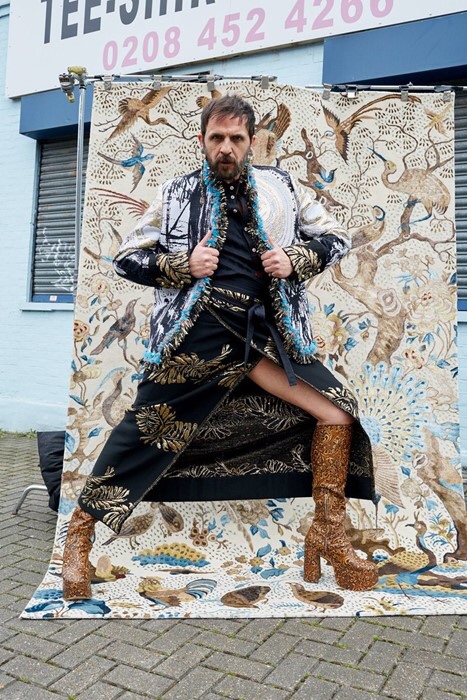
Andreas Kronthaler for Vivienne Westwood A/W16Photography by Juergen Teller

AnOther traces the history of male icons who have challenged modern tropes of masculinity, from Louis XIV to Andreas Kronthaler

It’s important to note that it’s only within the past few of centuries of western fashion that menswear has become synonymous with the tropes of masculine dress we might think of today. Even this relatively recent history of gender-regulated, pared-down, ostentation-eschewing style has been punctured with numerous anomalies that challenge the norms of said masculine taste standards. Heels, cosmetics, and other accoutrements that often constitute the cultural symbols of femininity have, at various periods, been equally associated with men and masculine ideals. As critics today return to embracing these often-neglected facets of men’s style, and designers from Andreas Kronthaler for Vivienne Westwood to Grace Wales Bonner turn away from contemporary conventions of masculinity, we explore the appearance of the decorated male throughout history.

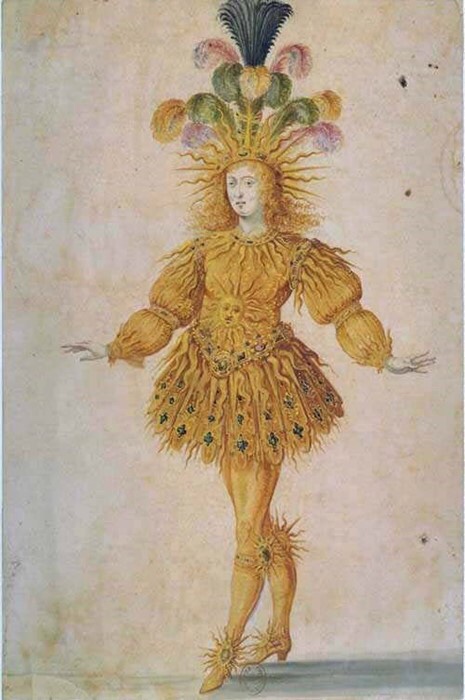
Louis XIV as Apollo in Le Ballet Royal de la nuitArtwork by Henri Gissey

Power Heels, Powder and Patriarchy

As is so often the case, one cannot speak about western fashion without mentioning examples outside the Occident. Makeup for men is known to have been prominent throughout the ancient world, with nail varnish being worn by those throughout all ranks of society at least as early as 3000 BCE in Japan and China. Perhaps the best-known example of ancient male cosmetics would be the wearing of eye makeup by the ancient Egyptians, while heels are a comparatively younger affair, worn by men throughout the medieval near east where they had the functional purpose of allowing horse riders to stand up in their stirrups and fire arrows. When these same Persian heels arrived in the court of Louis XIV, their purpose was altogether more decorative. Himself an admirer of this elevated footwear, they came to be known as the “Louis Heel”. The image of the 17th aristocrat is possibly one of the most prominent historical images of the decorated man; alongside heels, they opted for wigs, face powders and other makeup such as artificial beauty spots.

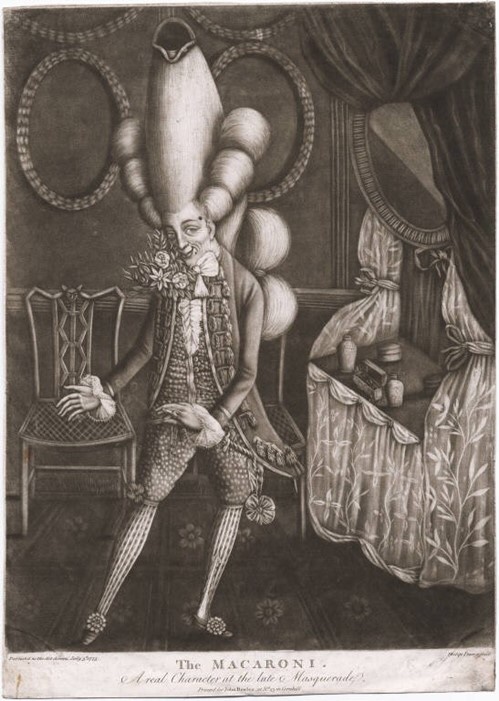
The Macaroni. A real Character at the late MasqueradeMezzotint by Philip Dawe, 1773

So many of these items were simply not yet strict symbols of femininity. Indeed, far removed from today’s concepts of masculine dress, many of these were as much to do with power and patriarchy as individual expressions of style. It is often cited that the diminutive King Louis took to heels and towering wigs to impart a more “monarchic” height, while it has been observed that it was only due to trends of women imitating men’s fashion that the heel became common amongst both genders. In 18th-century Europe, particularly in England, decoration reached new heights with the “Macaroni”. Macaroni referred to groups of cultured young men whose interest in fashion was seen as excessive. Their hairstyles and powdered wigs, jewellery, attire, makeup and generally “effete” appearance were cause for concern amongst many who felt they were rather too unmanly. It is worth noting, however, that whilst frowned upon and associated with effeminacy, there was not quite the same negative weight to such styles (or indeed to effeminacy) as there later was in Victorian society. Class, however, was heavily at play and while it might be considered acceptable or even suitable for a man of certain social status to sport highly stylised attire, a man of lower rank would not be received as warmly.

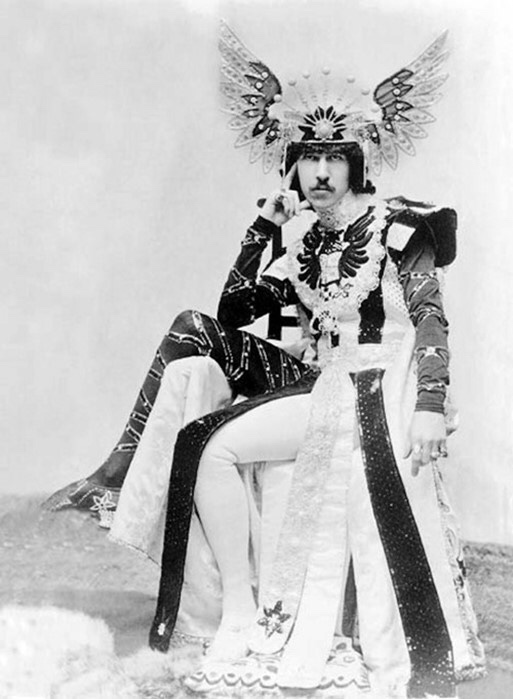
Henry Cyril Paget, 5th Marquess of Anglesey

Eccentrics and Exiles

There was a notable shift come the Victorian era, one that was particularly visible in Britain. Following some high-profile scandals in the press, attitudes towards gender became markedly less tolerant. In many ways, the late 1800s in particular can be thought of as a cut-off point for the social rules that shaped men’s style – whatever was considered masculine around this period remained so in a manner that had not quite been so rigid previously. This rigidity did not mean that there weren’t several who defied or ignored convention. If fortunate they were classified as eccentrics, as was the case with Henry Cyril Paget, whose elaborate headdresses and bejewelled costumes (which often contained Louis heels), amazed and also horrified many.

Paget, however, had the protections of wealth and status and that often worked to convert perceived queerness into tolerated eccentricity. Others were not so lucky. Even the likes of photographer Cecil Beaton, who was by no means lacking in money and social standing, suffered from the rampant homophobia that suffused the post-Victorian air. At a friend’s ball, he was famously dunked in a fountain by a group of “hearties”, because of his wearing makeup. Similarly, Quentin Crisp’s love of makeup and feminine attire resulted in his being chased through the streets, kicked and beaten. What was certainly apparent by the 1930s was that, in the public consciousness, the image of the decorated man had become consolidated with a vision of femininity and queerness that was violently received.

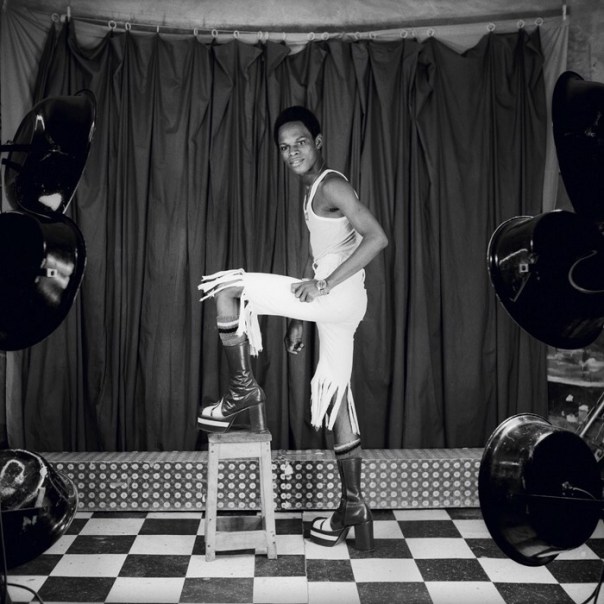
Self-portraitPhotography by Samuel Fosso

The Opening and Breaking of Menswear

This consolidation was to have a lasting effect. Vogue ball culture, which emerged from American black drag scenes of the 1930s, is particularly pivotal, in that it shows how queer cultures and groups utilised the negative connotations of the decorative to challenge and undermine the dominant status of masculinity. Elsewhere, counterculture made constant recourse to what had become strictly feminine symbols. With the disco movement, we see men in heels once again, this time in the form of platforms, while the flamboyant impulse was once more loose in the embracing of all the glitter and ornament that have now come to be thought of as “camp”. Similarly, the New Romantic movement which came about almost a decade later is defined by its disregard of the doggedly concrete rules about what men could and couldn’t wear, elevating instead the “excesses” of costume.

Current conversation regarding menswear and cosmetics is becoming increasingly preoccupied with noting the breaking down and opening up of menswear. For many, the mere loosening of men’s fashion is not enough – the very existence of menswear and womenswear as two separate strands, something which is central to the mechanisms of the fashion industry, continues to keep harmful gender norms alive (in spite of the move of some designers, like Andreas Kronthaler for Vivienne Westwood, to do away with such divisions). While designers like Claire Barrow emphasise the essential non-binary nature of their clothes, when it comes to more commercial bodies, such as Selfridges, who recently made the decision to promote gender-neutral clothing with a retail concept space titled ‘Agender’, it can be hard not to suspect the cold machinations of trends and advertising at work. For some, defying dominant gender standards is a choice, but for others, it is a necessity and not something to be left to the mercy of consumerism.

Reference

Gay History: Albert Cashier

Albert D. J. Cashier (December 25, 1843 – October 10, 1915), born Jennie Irene Hodgers, was an Irish-born immigrant who served in the Union Army during the American Civil War. Cashier adopted the identity of a man before enlisting, and maintained it until death. Cashier became famous as one of a number of women soldiers who served as men during the Civil War, although the consistent and long-term (at least 53 years) commitment to a male identity has prompted some contemporary scholars to suggest that Cashier was a trans man.[3][4][5][6]

(November, 1864)

Cashier was very elderly and disoriented when interviewed about immigrating to the United States and enlisting in the army, and had always been evasive about early life; therefore, the available narratives are often contradictory. According to later investigation by the administrator of Cashier’s estate, Albert Cashier was born Jennie Hodgers in Clogherhead, County Louth, Ireland on December 25, 1843,[7]:52[2] to Sallie and Patrick Hodgers.[2] Typically, the youth’s uncle or stepfather was said to have dressed his charge in male clothing in order to find work in an all-male shoe factory in Illinois. Even before the advent of the war, Jenny adopted the identity of Albert Cashier in order to live independently.[7]:52 Sallie Hodgers, Cashier’s mother, was known to have died prior to 1862, by which time her child had traveled as a stowaway to Belvidere, Illinois, and was working as a farmhand to a man named Avery.[8][9][10]

Cashier first enlisted in July 1862 after President Lincoln’s call for soldiers.[7]:52 As time passed, the need for soldiers only increased. On August 6, 1862, the eighteen-year-old enlisted in the 95th Illinois Infantry for a three-year term using the name “Albert D.J. Cashier” and was assigned to Company G.[11][12][7]:52 Cashier was listed in the company catalog as nineteen years old upon enlistment, and small in stature.[note 1]

Many Belvidere boys had been at the Battle of Shiloh as members of the Fifteenth Illinois Volunteers, where the Union had suffered heavy losses. Cashier took the train along with other boys from Belvidere to Rockford in order to enlist, in answer to the call for more soldiers.[13]:380 Along with others from Boone and McHenry counties, Cashier learned how to be a volunteer infantryman of the 95th Regiment at Camp Fuller. After being shipped out by steamer and rail to Confederate strongholds in Columbus, Kentucky and Jackson, Tennessee, the 95th was ordered to Grand Junction where it became part of the Army of the Tennessee under General Ulysses S. Grant.[13]:380–381

The regiment was part of the Army of the Tennessee under Ulysses S. Grant and fought in approximately forty battles,[12] including the siege at Vicksburg. [13]:381 During this campaign, Cashier was captured while performing reconnaissance,[7]:55 but managed to escape and return to the regiment. After the Battle of Vicksburg, in June 1863, Cashier contracted chronic diarrhea and entered a military hospital, somehow managing to evade detection.[7]:55–56 In the spring of 1864, the regiment was also present at the Red River Campaign under General Nathaniel Banks, and in June 1864 at the Battle of Brice’s Crossroads in Guntown, Mississippi, where they suffered heavy casualties.[7]:56–57[13]:382–383

Following a period to recuperate and regroup following the debacle at Brice, the 95th, now a seasoned and battle-hardened regiment, saw additional action in the Winter of 1864 in the Franklin-Nashville Campaign, at the battles of Spring Hill and Franklin, the defense of Nashville, and the pursuit of General Hood.[13]:383

During the war, the regiment traveled a total of about 9,000 miles.[7]:52[note 2] Other soldiers thought that Cashier was small and preferred to be alone, which were not uncommon characteristics for soldiers. Cashier fought with the regiment through the war until honorably discharged on August 17, 1865, when all the soldiers were mustered out.[7]:57

Cashier was only one of at least 250 soldiers who were assigned female at birth and enlisted as men to fight in the Civil War.[14][15]

Cashier’s postwar residence, since moved to Saunemin, Illinois

After the war, Cashier returned to Belvidere, Illinois for a time, working for Samuel Pepper and continuing to live as a man.[7]:57[16] Settling in Saunemin, Illinois in 1869, Cashier worked as a farmhand as well as performing odd jobs around the town.[7]:57 and can be found in the town payroll records.[7]:57 Cashier lived with employer Joshua Chesbro and his family in exchange for work, and had also slept for a time in the Cording Hardware store in exchange for labor. In 1885, the Chesbro family had a small house built for Cashier.[17] For over forty years, Cashier lived in Saunemin and was a church janitor, cemetery worker, and street lamplighter. Living as a man allowed Cashier to vote in elections and to later claim a veteran’s pension under the same name.[7]:58 Pension payments started in 1907.[18]

In later years, Cashier ate with the neighboring Lannon family. The Lannons discovered their friend’s sex when Cashier fell ill, but decided not make their discovery public.[7]:59

In 1911, Cashier, who was working for State Senator Ira Lish, was hit by the Senator’s car, resulting in a broken leg.[7]:59 A physician found out the patient’s secret in the hospital, but did not disclose the information. No longer able to work, Cashier was moved to the Soldiers and Sailors home in Quincy, Illinois on May 5, 1911. Many friends and fellow soldiers from the Ninety-fifth Regiment visited.[7]:59 Cashier lived there until an obvious deterioration of mind began to take place and was moved to the Watertown State Hospital for the Insane in March 1914.[7]:60 Attendants at the Watertown State Hospital discovered Cashier’s sex, at which point, the patient was made to wear women’s clothes again after what we can assume would be more than fifty years.[7]:60 In 1914, Cashier was investigated for fraud by the veterans’ pension board; former comrades confirmed that Cashier was in fact the person who had fought in the Civil War and the board decided in February 1915 that payments should continue for life.[19][20][21]

Albert Cashier died on October 10, 1915 and was buried in uniform. The tombstone was inscribed “Albert D. J. Cashier, Co. G, 95 Ill. Inf.”[11] Cashier was given an official Grand Army of the Republic funerary service, and was buried with full military honors.[7]:60 It took W.J. Singleton (executor of Cashier’s estate) nine years to track Cashier’s identity back to the birth name of Jennie Hodgers. None of the would-be heirs proved convincing, and the estate of about $282 (after payment of funeral expenses)[20][21][22] was deposited in the Adams County, Illinois, treasury. The name on the original tombstone is Albert D. J. Cashier. In the 1970s, a second tombstone, inscribed with both names, was placed near the first one at Sunny Slope cemetery in Saunemin, Illinois.[11][23]

Cashier is listed on the internal wall of the Illinois memorial at Vicksburg National Military Park.[24]

A musical entitled The Civility of Albert Cashier has been produced based on Cashier’s life; the work was described by the Chicago Tribune as “A timely musical about a trans soldier”.[25]

Also Known As Albert D. J. Cashier: The Jennie Hodgers Story is a biography written by veteran Lon P. Dawson, who lived at the Illinois Veterans Home where Cashier once lived. The novel My Last Skirt, by Lynda Durrant, is based on Cashier’s life. Cashier was mentioned in a collection of essays called Nine Irish Lives, in which Cashier’s biography was written by Jill McDonough.[26] Cashier’s house has been restored in Saunemin.[27]

Authors including Michael Bronski, James Cromwell, Kirstin Cronn-Mills, and Nicholas Teich have suggested or argued that Cashier was a trans man due to living as a man for at least 53 years.[3][4][5][6]

References

1 Salt. Archived from the original (PDF) on 2007-10-08. Retrieved 2007-12-14.

2 ^ a b c Blanton, DeAnne & Cook, Lauren M. (2002). They Fought Like Demons: Women Soldiers in the American Civil War. Louisiana State University Press. ISBN 9780807128060.

3 ^ a b Cromwell, Jason (1999). “Transvestite Opportunists, Passing Women, and Female-Bodied Men”. Transmen and FTMs: Identities, Bodies, Genders, and Sexualities. University of Illinois Press. pp. 77–78. ISBN 9780252068256.

4 ^ a b Bronski, Michael (2011). “A Democracy of Death and Art”. A Queer History of the United States. Beacon Press. pp. 69–70. ISBN 9780807044391.

5 ^ a b Teich, Nicholas (2012). “The History of Transgenderism and its Evolution Over Time”. Transgender 101: A Simple Guide to a Complex Issue. Columbia University Press. pp. 76–77. ISBN 9780231157124.

6 ^ a b Cronn-Mills, Kirstin (2014). Transgender Lives: Complex Stories, Complex Voices. Minneapolis: Lerner Publishing Group. p. 41. ISBN 9780761390220.

7 ^ a b c d e f g h i j k l m n o p q r s t Tsui, Bonnie (2006). She Went to the Field: Women Soldiers of the Civil War. Globe Pequot. Guilford, Connecticut: TwoDot. ISBN 978-0-7627-4384-1. OCLC 868531116.

8 ^ Benck, Amy. “Albert D. J. Cashier: Woman Warrior, Insane Civil War Veteran, or Transman?”. OutHistory. Retrieved 6 May 2015.

9 ^ Illinois Issues: Little Soldier, Big Mystery, Illinois Public Radio, July 10, 2018

10 ^ McAuliffe, Nora-Ide. “When Jennie Came Marching Home – An Irishwoman’s Diary on Albert Cashier and the US Civil War.” The Irish Times, The Irish Times, 10 Apr. 2018, http://www.irishtimes.com/opinion/when-jennie-came-marching-home-an-irishwoman-s-diary-on-albert-cashier-and-the-us-civil-war-1.3456012.

11 ^ a b c Hicks-Bartlett, Alani (February 1994). “When Jennie Comes Marchin’ Home”. Illinois History. Archived from the original on 2006-09-05. Retrieved 2007-12-13.

12 ^ a b 1 Blanton, DeAnne (Spring 1993). “Women Soldiers of the Civil War”. Prologue. College Park, MD: National Archives. 25 (1). Archived from the original on 5 December 2007. Retrieved 2007-12-14.

2 ^ a b c d e f g Clausius, Gerhard P. (Winter 1958). “The Little Soldier of the 95th: Albert D. J. Cashier”. Journal of the Illinois State Historical Society. 51 (4): 380–387. ISSN 2328-3246. JSTOR 40189639.

3 ^ “The Women Who Fought in the Civil War”. Off the Beaten Path. Retrieved August 5, 2018.

4 ^ Steve Hendrix (August 25, 2017). “A history lesson for Trump: Transgender soldiers served in the Civil War”. Washington Post. Retrieved 10 August 2018.

5 ^ “Deposition of J. H. Himes” (January 24, 1915) from Blanton (Spring 1993)

6 ^ “Recollections – Albert D. J. Cashier”. Saunemin, Illinois. Google Sites. Retrieved 10 August 2018.

7 ^ “The Handsome Young Irishman of the 95th IL Infantry”. eHistory, Ohio State University. Retrieved August 3, 2018.

8 ^ McAuliffe, Nora-Ide. “When Jennie Came Marching Home – An Irishwoman’s Diary on Albert Cashier and the US Civil War”. http://www.irishtimes.com. The Irish Times. Retrieved 8 August 2018.

9 ^ a b “Women in the Civil War”. Warfare History. Retrieved August 3, 2018.

10 ^ a b DeAnne Blanton, Lauren Cook Wike (2002-09-01). They Fought Like Demons. LSU Press. p. 174. ISBN 9780807128060. Retrieved 2018-08-03.

11 ^ “The Handsome Young Irishman of the 95th IL Infantry”. eHistory, Ohio State University. Retrieved August 3, 2018.

12 ^ “Albert D. J. Cashier”. Find a Grave.

13 ^ Bonnie Tsui (2006-07-01). She Went to the Field: Women Soldiers of the Civil War. Rowman & Littlefield. ISBN 9781461748496. Retrieved 2018-08-03.

14 ^ Jones, Chris (7 September 2017). “‘Civility of Albert Cashier’: A timely musical about a trans soldier”. Chicago Tribune. Retrieved 8 August 2018.

15 ^ McDonough, Jill (2018). “The Soldier”. Nine Irish Lives. Algonquin Books. pp. 68–99.

16 ^ “For Love Of Freedom”. Saunemin Historical Society. July 2012. Retrieved 2012-07-14.

Gay History: When Gay Marriage Was A Rite

Gay marriage does not lead to polygamy according to 6000 years of human history. In countries where polygamy is legal, marriage for gays is often illegal. In countries where same-sex marriage is legal, polygamy is illegal.

St. Catherine’s Monastery on Mt. Sinai.

A Long Tradition Of Gay Marriage

As churches struggle with the issue of homosexuality, a long tradition of same sex marriage indicates that the Christian attitude toward same sex unions may not always have been as “straight” as is now suggested. A Kiev art museum contains a curious icon from St. Catherine’s monastery on Mt. Sinai.

It shows two robed Christian saints. Between them is a traditional Roman pronubus (best man) overseeing what in a standard Roman icon would be the wedding of a husband and wife. In the icon, Christ is the pronubus. Only one thing is unusual. The husband and wife are in fact two men.

St. Serge and St. Bacchus

Is the icon suggesting that a
homosexual or same sex marriage 
is one sanctified by Christ?

The very idea seems initially shocking. The full answer comes from other sources about the two men featured, St. Serge and St. Bacchus, two Roman soldiers who became Christian martyrs.

While the pairing of saints, particularly in the early church, was not unusual, the association of these two men was regarded as particularly close. Severus of Antioch in the sixth century explained that “we should not separate in speech [Serge and Bacchus] who were joined in life.” More bluntly, in the definitive 10th century Greek account of their lives, St. Serge is openly described as the “sweet companion and lover” of St. Bacchus.

In other words, it confirms what the earlier icon implies, that they were a homosexual couple who enjoyed a celebrated gay marriage. Their orientation and relationship was openly accepted by early Christian writers. Furthermore, in an image that to some modern Christian eyes might border on blasphemy, the icon has Christ himself as their pronubus, their best man overseeing their gay marriage.

Professor John Boswell’s Startling Discovery

The very idea of a Christian gay marriage seems incredible. Yet after a twelve year search of Catholic and Orthodox church archives Yale history professor John Boswell has discovered that a type of Christian gay marriage did exist as late as the 18th century.

Contrary to myth, Christianity’s concept of marriage has not been set in stone since the days of Christ, but has evolved as a concept and as a ritual.

St. Serge and St. Bacchus, a partnered gay couple

Professor Boswell discovered that in addition to heterosexual marriage ceremonies in ancient church liturgical documents (and clearly separate from other types of non-marital blessings of adopted children or land) were ceremonies called, among other titles, the “Office of Same Sex Union (10th and 11th century Greek) or the “Order for Uniting Two Men” (11th and 12th century). That certainly sounds like gay marriage.

John Boswell

earned the Ph.D. in History from Harvard University in 1975. He became a full professor at Yale University in 1982. Boswell was conversant in 17 languages.

The ceremonies Boswell describes had all the contemporary 
symbols of a marriage.

1 A community gathered in a church

2 A blessing of the couple before the altar

3 Their right hands joined as at heterosexual marriages

4 The participation of a priest

5 The taking of the Eucharist

6 A wedding banquet afterwards

All of these are shown in contemporary drawings of the same sex union of Byzantine Emperor Basil I (867-886) and his companion John. Such homosexual unions also took place in Ireland in the late 12th to early 13th century, as the chronicler Gerald of Wales (Geraldus Cambrensis) has recorded.

One Greek 13th century “Order for Solemnization of Same Sex Union,” having invoked St. Serge and St. Bacchus, called on God to “vouchsafe unto these Thy servants grace to love another and to abide unhated and not cause of scandal all the days of their lives, with the help of the Holy Mother of God and all Thy saints.” The ceremony concludes: “And they shall kiss the Holy Gospel and each other, and it shall be concluded.”

Another 14th century Serbian Slavonic “Office of the Same Sex Union,” uniting two men or two women, had the couple having their right hands laid on the Gospel while having a cross placed in their left hands. Having kissed the Gospel, the couple were then required to kiss each other, after which the priest, having raised up the Eucharist, would give them both communion.

Ancient marriage records can be found in libraries across Europe.

Boswell found records of same sex unions in such diverse archives as those in the Vatican, in St. Petersburg, in Paris, Istanbul, and in Sinai, covering a period from the 8th to 18th centuries. Nor is he the first to make such a discovery. The Dominican Jacques Goar (1601-1653) includes such ceremonies in a printed collection of Greek prayer books.

While homosexuality was technically illegal from late Roman times, it was only from about the 14th century that anti-homosexual feelings swept western Europe. Yet same sex unions continued to take place.

St. John Lateran Church, Rome

At St. John Lateran in Rome (traditionally the Pope’s parish church) in 1578, as many as 13 couples were “married” at Mass with the apparent cooperation of the local clergy, “taking communion together, using the same nuptial Scripture, after which they slept and ate together,” according to a contemporary report.

Gay people have partnered for thousands of years

Another woman to woman union is recorded in Dalmatia in the 18th century. Many questionable historical claims about the church have been made by some recent writers in The Irish Times newspaper.

Boswell’s academic study however is so well researched and sourced as to pose fundamental questions for both modern church leaders and heterosexual Christians concerning their attitude toward homosexuality.

For the Church to ignore the evidence in its own archives would be a cowardly cop-out. The evidence shows convincingly that what the modern church claims has been its constant unchanging attitude towards homosexuality is in fact nothing of the sort.

It proves that for much of the last two millennia, in parish churches and cathedrals throughout Christendom from Ireland to Istanbul and in the heart of Rome itself, homosexual relationships were accepted as valid expressions of a God-given ability to love and commit to another person, a love that could be celebrated, honoured and blessed both in the name of and through the Eucharist in the presence of Jesus Christ.

Either we’re all equal under the law or we’re not equal.

Gay Marriages really are about equal rights and civil rights.

Everyone should have the right to get married and enjoy the legal protections for their committed faithful partnership which only legal marriage provides.

This Gay Marriage article, originally published on August 11, 1998 is reprinted from The Irish Times, by permission of its author, Jim Duffy of Dublin, Ireland. Photos and Links added by Rick Brentlinger to illustrate the text.

Jim Duffy is an Irish political reporter, commentator and researcher.

Reference

Gay History: This Discontinued Gay Ken Doll Will Haunt Mattel Forever

Remember when Mattel accidentally made a super gay Ken doll? We do. And queer people made him the best selling Ken doll, ever.

The year is 1993. Barbie is cool as shit, but her boyfriend Ken…not so much. Way less outfits, way less adventures, and with cool dudes like G.I. Joe and the New Kids on the Block fashion dolls to woo the blonde bombshell over, Ken’s chances weren’t looking great. Mattel needed to do something, and stat. So they surveyed a bunch of five year olds who definitely knew what cool was and made a whole new Ken, ready to burst out of the closet and say hi to the world.

Chrome cock ring necklace and all.

Wait, what??

You may be shocked to find out that children have a very easily influenced idea of what’s cool. The quizzed little girls that Mattel surveyed were more than happy to repeat back what they saw as cool (mainly whatever was airing on the then still-newish MTV), but five years olds aren’t exactly known for their in-depth understanding of social trends, gender norms, and the general cultural climate. So they had no idea that say, Madonna’s cool back up dancers, were actually gay AF.

And that’s how we ended up with Earring Magic Ken, a companion to Earring Magic Barbie clad in a purple mesh shirt, a purple leather vest, wearing a big, shiny, silver ring around his neck. While he fits into some gay stereotypes, (especially from the early ’90s), it’s the necklace that really got everyone’s attention.

Curtesy chateau_cat on Instagram

As gay author and journalist Dan Savage explains in a column about the doll from 1993, in the late ’80s and early ’90s, besides being a sex toy, a cock ring was the queer fashion statement of the time. Leather daddies wore them stitched to their vests. Lesbians wore them as zipper pulls. Placement on clothing communicated secret preferences to those in the know, much like pierced ears at the time (Ken does have that “straight” at least). And many, many people wore them around their necks as a necklace. Ken included. The accessory was a staple of the gay club culture that was blowing up at the time, a scene Ken would fit right into with his leather/mesh ensemble.

Obviously, none of those little girls told the Mattel researchers that they wanted Ken to wear a cock ring around his neck. It is probably true that the adults designing the doll saw the fashion out of context and never thought to dig deeper. Mattel staunchly denies the doll was intended to have anything to do with homosexuality at all. The early ’90s was a time when queer culture was just starting to blossom in the open, still reeling from the horror of the AIDS crisis. Queer culture and pop culture were beginning to mingle in a way they hadn’t before, and Earring Magic Ken is an example of what happens when you pay attention to the what of trends and not the why.

Mattel, who has never been pleased about this connection, rushed to discontinue the dolls. However, the story spread faster than them, and sales for the doll spiked, making him the best selling Ken doll ever. Some even claim the best selling Barbie model ever, but as Mattel is unwilling to discuss our friend Ken’s current status, that title goes to Total Hair Barbie (released the year before).

Still, he will always have his little place in history as the time Barbie supported her boyfriend in exploring his homosexual tendencies. Who knew Barbie was such a cool girlfriend?

How Barbie’s Boyfriend Ken Became an Accidental Gay Icon

The toy company Mattel introduced the doll Earring Magic Ken in the early 1990s as one of six dolls in the Earring Magic Barbie collection. But the company quickly recalled and discontinued the doll due to an unintended depiction of then-taboo gay culture. YVONNE HEMSEY/GETTY IMAGES/JULIUS SEELBACH/FLICKR/CC BY 2.0

Mattel has been manufacturing its Barbie dolls since 1959. Shortly thereafter, it began producing dolls of Barbie’s boyfriend, Ken. Girls really liked Barbie, and the doll became a certifiable cultural force, but Ken dolls never sold as well. In an effort to increase sales of Ken dolls in the early ’90s, Mattel’s research department worked with a group of 5-year-old girls to find out what might make them more likely to nag their parents to buy one.

This workshop of young girls, inspired by images and music videos they’d seen on the then-culture-defining MTV music video network, wanted Ken to have a cool, new look, as author Matt Haig detailed in his book “Brand Failures: The Truth About the 100 Biggest Branding Mistakes of All Time.” And what “cool” meant to 5-year-olds who’d seen MTV was maybe a mesh shirt. And a leather vest. And an earring, and tight pants. Oh, and maybe a flashy necklace, too.

The minds at Mattel went on to produce this version of Ken and in 1993, Earring Magic Ken was born. He wore a lavender mesh shirt, a matching purple leather vest, hip-hugging black jeans, and even had a new earring at a time when men having pierced ears in the United States was still somewhat risqué. Ken, just like the other dolls in the Earring Magic collection, even came with a human-sized clip-on earring for the kids to wear.

Ken even had a flashy, circular chrome ring dangling around his neck. But Mattel’s choice for Ken’s necklace would cause a row that the company would soon regret. That’s because a panel of 5-year-olds generally isn’t sophisticated enough to parse the subversion of gender norms, to understand the flouting of traditional masculinity, to ken the coded language of underground fashion — or to predict the cluelessness of toy designers.

At this time, we should point readers who’d rather avoid more graphic discussion of human sexuality in another direction. Perhaps you’d like to read about solar eclipses, or how 3-D printing works? You also could learn whether a giant squid could actually defeat a submarine. But if you’re sticking around beyond this paragraph, things get a little more adult.

The Earring Magic line of Barbie dolls included several versions of Barbie as well as the characters Midge, Ken, and others not pictured. KSUTA/FLICKR/CC BY 2.0

“He’s always read gay,” said Dan Savage, internationally renowned columnist and podcaster, in an email, “but has he ever read gayer than he did with a gay sex toy around his neck?”

Savage originally wrote about Earring Magic Ken in the summer of 1993, when much of the pop culture world was having a good laugh at Mattel’s lack of understanding that while little kids saw what Prince, the members of Right Said Fred or Madonna’s backup dancers were wearing simply as “cool,” the adult world was clued in to how gay it was.

The doll flew off the shelves, especially since gay men, including Savage, rushed out to buy a Ken doll. The kitsch factor drove Earring Magic Ken to become the best-selling Ken doll at the time. We reached out to Mattel for comment multiple times — to find out just how well the doll sold and whether it remains the No. 1 Ken, as well as for the current regime’s take on this piece of corporate history — but they did not return our requests.

Earring Magic Ken has become a sought-after collectible, fetching high prices on online auction sites like eBay. JULIUS SEELBACH/FLICKR/CC BY 2.0

Though the Earring Magic Ken incident showed that LGBTQ culture at the time had infiltrated the mainstream (or, arguably, been co-opted by it), Ken might’ve simply remained the butt of late-night jokes until Savage — who’s since gone on to serve as one of the country’s most prominent sex and relationship advice columnists — published his explanation of the gay-culture subtext communicated by wearing the sex toy.

As Savage outlined back in the 1990s, the chrome metal ring used as a sex toy was also worn as a fashion accessory among certain subsets of the queer community. The rings were used as necklaces, bracelets, zipper-pulls, and worn just about anywhere else they could be attached. And in a form of code, specific placements on clothing could imply certain sexual preferences among the gay crowd; you can read Savage’s more detailed account of the nuances in the Chicago Reader’s archives.

Mattel quickly pulled the dolls from the shelves and apologized for the error. Clearly, it was not their intention to associate a child’s doll with an adult sex accessory.

Ultimately, Savage thinks the Earring Magic Ken incident is more of an amusing cultural blip than some kind of important moment, noting that neither the doll nor the hubbub is well-known today. “I don’t think a gay man under 40 would even know what we we’re talking about,” he said.

Adam McDonald is a 36-year-old gay man and film critic for the Bored as Hell podcast. “I have no idea what you’re talking about,” he said when asked about Earring Magic Ken.

Dan Savage still has his Earring Magic Ken doll, though. When asked him about it, he quickly emailed a brand-new photograph of it, sex toy and all, proving that it had left at least some impression — if nothing other than as a relic of a unique time in quickly changing American popular culture.

References