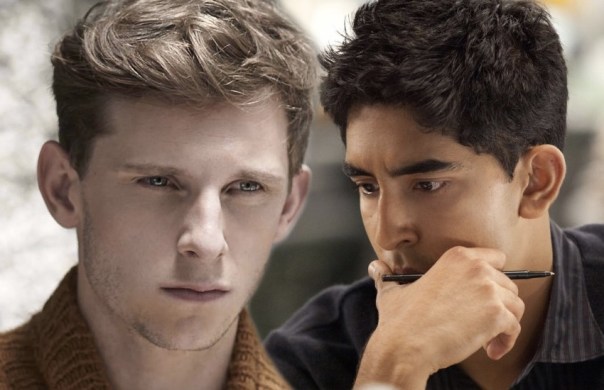
The WWII hero saved millions of lives before being chemically castrated for being gay. He killed himself two years later.
“[Alan Turing] was and is a hero of all time…a man who is a gay icon, who didn’t deny his nature, his being, and for that he suffered. … This is a story that celebrates him, that celebrates outsiders; it celebrates anybody who’s ever felt different and ostracized and ever suffered prejudice.”
—Benedict Cumberbatch
I usually find movie award shows to project primarily fluff and silliness, and they rarely stir deep emotions in me. But listening to Benedict Cumberbatch accept the award for Best Actor at the American Film Awards for his portrayal of Alan Turing in the film The Imitation Game two years ago brought me to tears.
This stemmed from a sense of deep pride and an endless abyss of sadness. Cumberbatch’s commitment and passion shined through on stage as he talked about transforming Turing’s story, his brilliance, and his humanity to the silver screen, helping to give Turing the long-overdue wide-scale recognition he rightly deserves.
Alan Mathison Turing was a pioneering computer scientist, and he served as a mid-20th century British mathematician, logician, and cryptanalyst who, working during World War II at England’s Government Code and Cypher School at Bletchley Park, succeeded with his team of scientists and linguists in cracking the “Enigma code” used by the Nazi command to conduct covert communication operations.
Because of Turing and his colleagues’ efforts, Cumberbatch said, there is now general agreement that they shortened the war by at least two years, saving an estimated 17 million lives. Prime Minister Winston Churchill singled out Turing as the person whose work contributed the most to defeating the Germans.
The Imitation Game also highlights the enormous obstacles placed in the way of women entering the sciences, especially mid-century. In this regard, Keira Knightley made an equally moving speech at the American Film Awards in accepting theBest Supporting Actress award for her portrayal of Joan Clarke, who worked with Turing in deciphering the code.
“Particularly now, when women are such a minority in all fields, her story and the fact that she really perseveres, and she had space and time and grace, is really inspiring,” she said.
Though initially considered a national hero in Britain, in 1952, government officials arrested and prosecuted Turing on the antiquated charge of “gross indecency” when he “admitted” to maintaining a same-sex relationship. Rather than serving time in prison, Turing chose to undergo estrogen injections then considered in men a form of “chemical castration” eliminating sex drive. Turing took his life two years later by swallowing cyanide just two weeks short of his 42nd birthday.
I find it deeply ironic that while Turing and his team helped defeat the Nazi war machine, a nation intolerant of any form of difference including same-sex relations (especially between men), the primary “allied” nations fighting Nazi Germany – United States, Britain, and the Soviet Union – all maintained laws criminalizing homosexuality.
Under King Henry VIII in 1533, England passed a “buggery” (or sodomy) law, doling out the penalty of death for “the detestable and abominable Vice of Buggery committed with mankind or beast.” Under the rule of Elizabeth I in 1564, death for same-sex acts between men became a permanent part of English law until the 1880s. British courts at the time concluded that sex between two women was impossible and, therefore, exempted women from the statute. By 1885, English Criminal Law punished homosexuality with imprisonment up to two years. This remained in effect until homosexuality was decriminalized in 1967.
In addition, Soviet dictator Joseph Stalin criminalized homosexuality with eight years imprisonment or exile to Siberia. And in the United States, consensual same-sex relations were against the law at one time in all states, and remained illegal in some states as late as 2003, when the Supreme Court finally overturned such bans in its Lawrence v. Texas decision.
In 2009, British Prime Minister Gordon Brown officially apologized to Alan Turing on behalf of the people of his nation for “the appalling way he was treated.” Parliament finally brought up a bill of “pardon” in 2013, and on 24 December, 2013, Queen Elizabeth granted Turing a posthumous pardon.
Though the English government never actually forced a physical stigma onto Turing’s body, they branded the symbol of the outsider, the pervert, the enemy deeply into his soul. This branding seriously deprived the British nation and the larger world community of his continued genius, his generosity, and the many additional gifts he could have imparted.
I agree with Benedict Cumberbatch that Turing’s wide-scale recognition is long overdue.
Americans rarely use the word “penis” in conversation. We say pecker or prick, willie or wang. Or whopper, wiener, wiggle stick, wrinkle beast, wobbly warhead, even wife’s worst enemy. “We, as humans, love to play with language, and mixing taboo language with clever wordplay to get coinages is a really common endeavor simply because it gets such a great reaction in others,” slang lexicographer Grand Barrett says. As a result, we’re always creating new slang for “penis,” and a lot of it can be traced back to these 11 words.
11 c. Sword
An instrument of death and destruction. A symbol of power and strength. A protector. An avenger. A slayer. The mighty sword is the ultimate symbol of masculinity. So, of course, it became one of the earliest slang terms for the penis, although a flaccid penis does not necessarily benefit from the comparison. Suddenly, swordplay is much less impressive.
While it’s possible that “cock” developed its sexual affiliation from its second meaning, “spout,” it’s more likely that it came from similarities to the wobbly red bits on a rooster’s neck. Just as a man’s penis reacts to arousal, an angry or excited cock’s wattles fill with blood, swell and brighten. Additionally, when a rooster crows, he arches his neck and tips his head back. Sound familiar? “Cock” eventually became so associated with the penis that the word “rooster” was created in the late 18th century to replace it.
Modern derivations: pillicock, peacock, cockroach, cockaroony, doodle
1676 Penis
“Tail” has been used to refer to both male and female genitals since the 14th century, but “penis,” the Latin word for “tail,” was not introduced to the English language until 1676. And it wasn’t until 1965 that “schwanz,” the German word for “tail,” was assimilated. The usage creates an entirely new meaning to the phrase “tail wagging the dog.”
Before its induction into the dick-tionary, “doodle” was used to denote a simpleton. In the late 18th century, this became associated with a man who thinks not with his “big brain” but with his small one. Of course, “doodle” could also be a distant cousin of “cock,” born from a rooster’s crow—cockadoodle-doo. Either way, the word is at its best from the lips of Rainn Wilson in Juno, “This is one doodle that can’t be undid, home skillet.”
More derivations: doodad, doohicky, loodle, whangdoodle, wang
1800s Roger
While Richards everywhere have borne the modern weight of the penis-name burden, they aren’t alone. In fact, “Roger” was the first in a long line of names applied to the penis. “Thomas” was second, introduced in 1811, followed by “Dick,” “Peter” and “Willie.” In general, these poor gentlemen are simply victims of having a common name. But let’s be honest, all Richards who choose to go by Dick are asking for it.
More derivations: Pete, Pepe, Rudy, Willer, Stanley, Johnson
1888 Dingus
The 19th century was a time of discretion and delicacy, not description. Americans were prone to replacing distastefully specific words with more general and thus less offensive ones. “Breasts” was replaced with “bosom,” a word that referred to a woman’s entire midsection. “Legs” was replaced with “limbs.” And “penis” was replaced with “dingus,” a word derived from Dutch dinges that simply means “thing.”
It is said that “dong” first became associated with the penis after the publication of Edward Lear’s poem “The Dong with a Luminous Nose.” As the story goes, a one-eyed creature referred to as The Dong attempts to find himself a lady using a long, red lamplike probe. Tragically, light-up noses are not great lady-finders, and all his searching is in vain. Good thing he has his flesh light to keep him company.
Wienerwursts, literally “sausages of Vienna,” became familiar in the United States in the late 19th century. But the word “wiener” was not created until the “-wurst” was dropped in 1905. The wiener was not commonly associated with the penis until five years later. This means it took more than a decade for the most phallic food in history to be officially associated with the penis. How disappointing.
More derivations: wienie, wee, weeter, wee wee, weedle, wenis, sausage
1932 Putz
German and Yiddish — both Germanic languages — share many of the same words. For example, “putz” and “schmuck” roughly translate to “ornament or decoration” in both languages. However, Jews used “schmuck” and “putz” to refer to a penis, and Germans used them to denote jewelry or Christ’s manger in a Nativity scene. Despite the inevitable miscommunications the holiday season may bring, Jews and Germans agree that there’s nothing like a good “putz” to put everyone in a festive mood.
More derivations: wantz, schmeck, schmeckel
1986 Junk
While the exact origination of “junk” is unclear, there are theories that claim “junk” was a common word for male genitalia in gay culture in the early ’80s. During that time, “junk” was usually associated with being kicked. Since then, “junk” has ameliorated; it has lost some of its potency. Today, “junk” is commonplace. It could mean anything from male or female genitalia to worthless stuff.
More derivations: package, lunch box, picnic basket
2009 Disco Stick
Although Lady Gaga’s homemade euphemism confused audiences at first, the infamous hook “I wanna take a ride on your disco stick” would carry “LoveGame” into top-ten charts in more than ten countries. Gaga cleared up any confusion on the words’ meaning in an interview with Rolling Stone, saying, “It’s another of my very thoughtful metaphors for a cock.” Barrett attributes creations like this to young people’s propensity to be “a hell of a lot more fun, which leads to lots more wordplay and goofing with language just for the heck of it.”
More derivations: meat stick, blow stick, jolly stick
Before A Penis Was A Penis: Sex Slang Throughout History
What word did people use for “vagina” in 1714? Or for “testicles” in 1300? Along with the rest of language, sex terminology has been evolving since humans started talking. Lest you assume that the vestiges of modern-day sex talk have been lost in the annals of time, the world’s foremost slang lexicographer is here to say it ain’t so. And, he should know; he can tell you exactly what a vagina was called in 1714.
Jonathon Green has dedicated his life to studying slang. His book, Green’s Dictionary of Slang, chronicles the march of English-language slang through the past five centuries — an epic Urban Dictionary for the ages that covers 10.3 million words (with citations) and has understandably solidified Green’s role as slang lexicography’s finest.
Now, Green and TimeGlider have graced us with interactive online charts that break out perhaps the most fascinating genre of Green’s research: sex slang. Humans have been “bumping uglies” since our cave days, but we certainly didn’t call it that back then. So, which period in history lays claim to the most inventive terms for genitalia and sex?
TheTimeline of Slang Words for the Vaginabegins in 1250, with the first recorded appearance of the (now-derogatory) word “cunt.” Fortunately, the vagina was eventually lavished with more poetic euphemisms, including “Venus’s honeypot” (early 1700s), “quim whiskers” (late 1800s), and, descriptively, “that thing” (early 1900s). The minds of vagina-label innovators apparently turned to food by the end of the 20th century, as evidenced by the monikers “bikini burger,” “hairy doughnut,” and “bacon sandwich.”
Thepenis slang timelinebegins with the year 1300 and the first known usage of the word “ballocks.” This term’s proved its worth via longevity; you can find it on the lips of frustrated Brits even today, with a slight vowel adjustment. And, English speakers only got more creative from there. “Fiddle,” “spindle,” and “pulling prick” all cropped up in the Middle Ages to describe the penis, while “bush-whacker,” “cranny hunter,” “fornicating engine,” and “Captain Standish” (yes, seriously) are just a few of the nicknames born at the turn of the 20th century. And, the sexy-talk walk through history doesn’t end there.
For even more linguistic amazingness, explore the charts that track the evolution of slang for intercourse, oral sex, anal sex, orgasm, bodily fluids, and contraception. In honor of this week’s #tbt, why not sprinkle some seriously old-timey diction into your sexting? While the effect would be most dramatic if you delivered your message by horse (or raven), your iPhone will do just fine. And, if your partner asks if you’d like to “navigate the windward passage,” just be sure to consult Green’s chart before you agree. It may be safer to stick with the word “fuck” — thatone’s been around since the 1500s, and still means the same exact thing.
101 Funny Slang Names for the Male Penis
Did you know that Inuit people have 50 different words for snow? It’s an indicator that snow is an important part of their lives and has been for a long time. That’s really telling when you think about how many words there are for a man’s genitals. While “penis” is the technical medical term, it’s the one we use the least. This list has 101 different names for your junk (that makes 102). You’ll get a laugh out of at least a few of them.
1. Womb Broom
Any ladies need help cleaning their closet? Ok, that might not make sense, but this is still a good one. 2. Womb Raider
We’d play all 20 installments of this game series. 3. Weapon of Ass Destruction
This one speaks for itself. 4. Vlad the Impaler
It’s a classic for a reason. 5. UncleReamus
This probably has British origins. They’re still the masters of dirty language. 6. Trouser Snake
Sometimes this is a euphemism. Sometimes it’s a terrifying camping story. 7. Tan Banana
This is only true for the bold. Some might find the prospect of a sunburned penis terrifying. 8. Sex Pistol
Which came first — the band or the slang term? 9. Russell the One-Eyed Muscle
If you can think of another name that rhymes with muscle, feel free to sub it. 10. One-Eyed Monster
There are a lot of “one-eyed” slang terms. It’s important to have variety. 11. One-Eyed Trouser Trout
Whoever decided to call a penis a trouser trout probably has an interesting story. 12.Rumpleforeskin
Be honest. You’re disappointed youdidn’t think of this first. 13. Richard and the Twins
Speaking of Richard, a kid called us a Richard Cranium once. It took us a while to get it. 14. Purple Helmeted Warrior of Love
Any reference to the dong being a purple helmet is gold in my book. 15. Puff the One-Eyed Dragon
It breathes fire when it gets puffed! Well, sort of. 16. PrinceEverhardof the Netherlands
This could also be the name of a band. Or an album! 17. Pleasure Pump
It’s accurate, simple, and effective. 18. Moby Dick
Every young boy in the world laughed the first time he heard this book title. It had to be on the list. 19. LordHardwick
Our penises are definitely nobility. How about yours? 20. Long Dong Silver
Have you ever read Treasure Island? Now you don’t have to! 21. Lap Rocket
Well, it can be explosive at times. 22.Knobgoblin
This has to be the most demeaning term you can level at another human being. 23. King Dong
I mean, obviously. Right? 24. Just-in Beaver
Easily the best thing to come from Bieber’s famed career. 25. Herman vonLongschlongenstein
Remember it’s pronounced “Stine” and not “Steen.”
26. Heat Seeking Moisture Missile If thisdoesn’t make you rethink everything about your own penis . . . 27. Frank n’ Beans It’s a weird mental image if you think about it too hard. 28. Fuck Puppet Right to the point! 29. Excalibur You’ve made this joke. Don’t lie. 30. Energizer Bunny That ad campaign has been around for a long time. So has this nickname. 31. Disco Stick This feels dated until you realize disco is still a thing in Europe. No, really. 32. TheDicktator You just chuckled, didn’t you? Welcome to your future. It’s all dad jokes from here. 33.Cocktapus If you have eight members, you need to see a doctor. Or a publicist. 34. Clam Hammer It even helps produce pearl necklaces. 35. Cave Hunter It’s not the funniest name on the list, but it still feels appropriate. 36. Blue Veined Aristocrat The little guy only has to be an aristocrat in public. Behind closed doors is another story. 37. Atomic Turtle We’re honestly not sure why it’s atomic, but it feels right. 38. Action Jackson Try not to conflate this with a Disney Channel show you watched as a young child. 39. Mutton Dagger There seems to be a recurring theme of objects that pierce and meat. 40. Yogurt Slinger An all-time classic. It’s funny. It’s gross. It has everything. 41. Meat Scepter Remember gents, mushroom stamps are a form of harassment. 42. Wedding Wrecker Oofa. This might be a little too true. 43. Spam Javelin Another meat piercer. Cool. 44. Tuna Torpedo The theme reigns. 45. Dora the Explorer It’s a joke that had to be made. But at what expense?! 46. Vagina Miner Is this a real occupation??? 47. Jurassic Pork You’ll never watch those movies the same way again. 48. Tiny Tim Hopefully, thisdoesn’t imply your Tiny Tim needs a crutch. Although, he probably has a nasty cough. 49. The Bone Ranger Hi-yo Silver! 50. Woody Womb Pecker At some point, you’re going to have to come to terms with your fear of children. 51. Ass Opener You might not believe it, but this is actually a very old nickname. It stems from the1890s. 52. Ass Wedge This is also from the1890s. It’s hard to say which is better. 53. Bayonet Does this make implications aboutBayonetta? 54. Beard Splitter Great. Now we’re associating vaginas with dwarves or some shit.
55. Best Leg of Three
This is just truth. 56. Brat Getter
Well, go get ‘em. 57. Bum Tickler
It’s ok if you giggled. It’s the right response. 58. Bush Whacker
This does not mean you should attach a hair trimmer to your penis. Put it down! 59. Creamy Hunter
Well, yeah. 60. Customs Officer
This is my new favorite. 61. Dr. Johnson
Let’s be real. The little guy has earned a title of respect. 62. Eye Opener
Sometimes it’s also an eye closer. 63. Father Confessor
If he can elicit cries to God, then this sounds about right. 64. Foreman
Yes, it’s a pun. You know you like it. 65. Lance of Love
An oldie but a goodie. 66. Leather Stretcher
Try not to associate this one withLeatherface. 67. Life Preserver
If someone is drowning, don’t throw them your penis. 68. The Heimlich
The next time someone shouts “Giver her the Heimlich!” You know what to do. 69. Love Dart
It’s important to practice your aim. 70.Manroot
This makes an odd amount of sense. 71. Master of Ceremonies
He’s good at it too. 72. Meat Skewer
This one isn’t trying too hard, is it? 73. Milkman
What does this make the milkman’s daughter? 74. Mole
He does like to burrow into a hole. 75. Pee-Wee
This got meta when Pee-Wee Herman got in trouble for showing his Pee-Wee.
76. Skyscraper You wish. 77.Tentpeg Youshouldn’t be pitching a tent right now . . . 78. Silent Flute Well, sometimes sound comes out. 79. Skin Flute But it’s not always melodic. 80. Sweetener If you tell this lie enough times it might actually work. 81. Redcap Maybepurplecapwould be better, but that’s not a pun. 82. Majesty Forget aristocracy! He’s royalty. 83. Charmer When the snake becomes the charmer . . . 84. Champion He really is. After all that abuse you’ve put him through, it’s the only right word. 85. Baby Fetcher You’re still flinching? You know where babies come from, right? 86. Axe If the female counterpart is called an axe wound, then this one has to be on the list. 87. Nightstick You can use it during the day too. It’s ok. 88. Joystick There might never have been a truer name for a man’s junk. 89. Gospel Pipe You just want to believe this one. 90. Drill I took this too literally once. I’m still dizzy. 91. Family Organ Get it? Eh? 92. Crown Jewels Also known as the family jewels. 93. Ham Bone I’ll never understand why the male member is associated with pork. 94. Old Boy This is actually the most British thing ever said. 95. Ambassador He is vital to foreign relations. 96. Organ Grinder Ouch. 97. Bald-Headed Sailor We probably don’t relate to the baldness of our penises enough. 98. One-Eyed Rattlesnake Thankfully he’s not venomous. 99. Tonsil Tickler Only on a good day. 100. Toothpick It might imply a small penis, but the oral connotation is worth it. 101. The Fantastic Four This name can be adapted to many forms: the furious five, the salacious six, the dirty dozen. The idea is that you’re implying the length of your penis in the joke. The key is to never use the same phrase twice. You want to keep people guessing.
Ten Words That Have Surprisingly Offensive Origins
While the etymology of many words we use today has faded into obscurity, there are some that are more offensive than we can ever imagine. There may be some words you use every day without a thought to their original meanings. Here are ten that it pays to be aware of.
#1 Bugger
noun | bug·ger | \ˈbə-gər, ˈbu̇-gər\
1. sodomite
2. a worthless person
3. a small or annoying thing
eg. “put down my keys and now I can’t find the buggers”
As well as being a noun as described above, Australians tend to use this word as a tamer expletive than some of its four-lettered cousins. However, though many people know its secondary meaning as ‘a sodomite’ or ‘sodomy’, not many know that the word was originally racially charged as well. Bugger comes from Middle English bougre which was derived from Medieval Latin Bulgarus — a literal translation for ‘Bulgarian’. This came by through association with a Bulgarian religious sect called the Bogomils, whose ways were so unorthodox that they were accused of sodomy.
Use instead: Depending on the context in which you’re using the word, you might instead call someone a ‘nuisance’. If you’re use it as an expletive… well, there’s really no reason not to enjoy the four-lettered classics.
#2 Uppity
adjective | up·pi·ty | \ˈə-pə-tē\
•putting on or marked by airs of superiority, eg. “uppity technicians” “a small uppity country”
The word uppity is commonly used to put down someone who is seen to be acting above their station — putting on airs and speaking out of turn, generally being a nuisance. While the word can be applied to pretty much anyone these days, its origins were in the United States’ racist heyday, during segregation. In this period, Southerners used the term “uppity” to describe black people who didn’t know their place in society. The word doesn’t sound so casual anymore when you consider that people have likely been lynched at one point in history due to being too “uppity”.
Use instead: ‘Arrogant’ and ‘pretentious’ are both great words to knock someone down a peg, without those nasty racist overtones.
#3 Gyp
noun | \ˈjip\
•cheat, swindler, eg. “Is that all they give you? What a gyp!” “we were very disappointed when the “free weekend in Las Vegas” offer turned out to be a gyp”
“Gyp” or “gypped” has universally come to mean being cheated or swindled, and though there’s no solid evidence for the origin of this slang term, it’s highly likely that it is derived from ‘gypsy’, a derogative term for the Romani people. While many people know little of “gypsies” other than what we see in Disney movies and costume shops, the Romani people have a long history of persecution — including their attempted genocide at the hands of the Nazis during World War II.
Use instead: ‘Swindled’ is an oldie but a goodie, or if you’re feeling ripped off, ‘highway robbery’ is a fun phrase without the racist undertones.
#4 Paddy wagon
noun | pad·dy wagon | \ˈpa-dē-\
•an enclosed motortruck used by police to carry prisoners, eg. “The cooperative family was being escorted into the paddy wagon”
While the racist meaning of paddy wagon is more overt to anyone who stops to think about it, it’s also so ingrained in our lexicon that it’s hard to stop and think in the first place. For those who are blissfully unaware, paddy wagon is the slang term for a police car. And where it came from? “Paddy”, short for “Patrick”, was a pejorative term for any Irishman — a group who have been the butt of many jokes for much of the last century. Whether the term came into use because there were many Irish criminals or because of a large number of Irish policemen, the association is still not the best one to be making. Interestingly enough the similar term ‘meat wagon’ seems to be used by people misinterpreting this phrase as ‘patty wagon’.
Use instead: “Police car” or “police van” should suffice.
#5 Hooligan
noun | hoo·li·gan | \ˈhü-li-gən\
%bull;a usually young man who does noisy and violent things as part of a group or gang, eg. “shouldn’t you hooligans be in school instead of threatening old ladies?”
While the term ‘hooligan’ is fairly dated these days — I can only seem to think of that crotchety old man yelling “you hooligans get off my lawn!” — other forms of the word are still in common usage. ‘Hooliganism’ in particular is one that the media seems keen to trot out as often as they can. But as in the case of ‘paddy wagon’ hooligan originally came from some poor sod’s surname — Houlihan. The name was used for a rowdy fictional Irish family in a popular drinking song, and soon after the word came to be a catchall for anyone displaying rowdy, violent tendencies.
Use instead: ‘Hoodlum’ is a word with a longer, non-racist history. ‘Hoon’ is also a uniquely Australian take on the concept.
#6 Eskimo
noun | Es·ki·mo | \ˈes-kə-ˌmō\
•a member of a group of peoples of northern Canada, Greenland, Alaska, and eastern Siberia
Far from being those cute, fur-wearing, nose-kissing people of the Arctic regions, this is actually an offensive term for the Inuit people. The reason? The word ‘Eskimo’ comes from the Danish loanword ‘ashkimeq,’ literally translated to ‘eaters of raw meat’. Calling an extensive group of different societies by such a gross generalisation is a great way to limit understanding of the entire culture.
Use instead: The proper term is Inuit, meaning “the people”. That’s it, unless you know the proper name of each individual nation.
#7 Hip hip hooray!
•an exclamation of congratulations especially in response to a call for ‘Three cheers for’ the person.
The racist origin of this common celebratory cry is controversial, but it potentially stems from the Hep Hep Riots — anti-Semetic riots conducted throughout Germany in the 19th century. The participants in these demonstrations reportedly cheered “hep hep” as they chased Jews from their homes. “Hep hep” was a traditional German call that shepherds would use while herding their sheep, but was given another meaning entirely in 1819 when it was Jews who were hunted under this rallying cry.
Use instead: ‘Hooray’ by itself is completely harmless, or the more old-timey ‘hoorah’.
#8 No Can Do
informal + humorous
•used in speech to say that one cannot do something that he or she has been asked or told to do, eg. “Can you give me a ride to work tomorrow?” “Sorry— no can do. My car is in the shop.”
The game of Chinese Whispers has been renamed in the past few years for its racist connotations, but few know that the common phrase “no can do” is a similar riff on the idea that Chinese people speak broken English. While it has since moved into common parlance, this phrase was originally used as a mimicry of a Chinese person with a heavy accent — and the same is true of ‘long time, no see’.
Use instead: Going back to the origin of the phrase “I can’t” or “I can’t do it” would be your safest option.
#9 Basket case
noun
1. a person who is very nervous, tired, etc., and is not able to think or act normally
2. something (such as a company or a government) that is in very bad condition and close to failure
eg. “I was so worried about losing my job that I was a complete basket case.”
Oddly enough the term basket case is not commonly used by its dictionary meaning today, and seems to now have connotations of someone being crazy (perhaps being mixed up with terms like head case and mental case). As it was originally used, however, a basket case refers to someone who is useless or not functioning well. The reason for this has its origins in WWI, when a ‘basket case’ was someone who had lost all four limbs and therefore had to be carried around in a basket. Not the best mental image and potentially offensive to amputees.
Use instead: ‘Nervous wreck’ or ‘bundle of nerves’ are nicely evocative terms that don’t risk making fun of quadruple amputees.
#10 Hysterical
noun | hys·te·ria | \his-ˈter-ē-ə, -ˈtir-\
1. a state in which your emotions (such as fear) are so strong that you behave in an uncontrolled way
2. a situation in which many people behave or react in an extreme or uncontrolled way because of fear, anger, etc.
eg. “A few of the children began to scream, and soon they were all caught up in the hysteria.”
Hysterical’s modern usage is problematic enough by itself, with the word most often being applied to women — looking at the first dictionary definition, you might be able to tell why that’s an issue. However the connotations behind calling a woman ‘hysterical’ have far-reaching implications beyond even the 2011 film Hysteria.
The term comes from the Greek ‘hysterikos’, meaning ‘of the womb’ or ‘suffering in the womb’. The Greeks believed that the uterus was the direct cause of a number of female ailments, based on the premise that the uterus was essentially its own organism. The womb was said to be so obsessed with creating children that it would wander the body, pressing up against other organs and causing medical havoc unless it was pregnant. Yup.
Use instead: Try ‘overwrought’, ‘frenzied’ or ‘agitated’ if you really have to call someone ‘hysterical’ without resorting to womb-based comparisons.
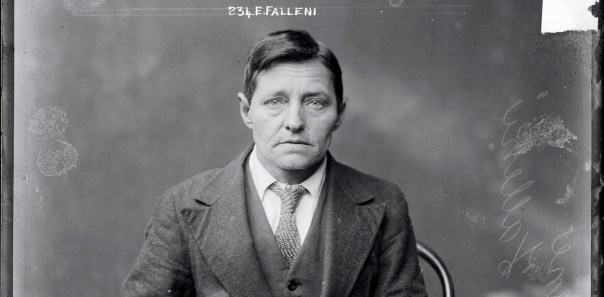
Eugenia Falleni in 1920. An Italian-born-woman-turned-Sydney-dwelling-man, Falleni was convicted of murder in 1920. Wikimedia
I’m an unlikely sailor of tall ships. Too clumsy, too prone to motion sickness, too white and nervous about symbols of colonisation. Nevertheless, in 2013 I found myself up the mast in the middle of the Tasman sea, surrounded by nothing but open ocean.
I was researching a novel about Eugenia Falleni, an Italian-born-woman-turned-Sydney-dwelling-man who was tried for the murder of his wife in 1920. As the commonly told version of the story would have it, Falleni “disguised herself” as a cabin boy and sailed from Wellington to Sydney on a Norwegian barque in the last years of the 19th century. According to some enthusiastic (but factually dubious) accounts, Falleni “roistered” around the Pacific, calling in at Honolulu, Papeetee, and Suva, drank with men, and passed as a man, but arrived in Sydney pregnant.
This “Norwegian barque” was a Schrodinger’s box, and Falleni was the cat. Falleni was man and woman in the same instant, and only tunnelling back through time, lifting a hatch on the deckhouse roof and peering in would decide the moment when Falleni, in the eyes of those watching at least, switched from one gender to the other. Many of Falleni’s biographers have tried to imagine the moment of the onlookers’ “discovery”. As a would-be novelist, I had to as well.
But where to start? Too under-confident in my concept to approach anyone from the transgender community, I started with the ship. If I could get the realist details of the external world right, I told myself, perhaps the interior, psychological uncertainties would resolve themselves in the process. Procrastination disguised as research, perhaps, but I did not know that then.
A Google image search of barques revealed that one was – bizarrely for the 21st century – sailing from Sydney to Auckland, almost exactly the reverse passage Falleni would have made in 1897. I lost a few hours clicking through links that led to sites, which led to my booking a berth as voyage crew on the STS Lord Nelson, set to leave Darling Harbour for Auckland on October 10 2013.
The Lord Nelson is not Norwegian, but wannabe time travellers can’t be too fussy. “Nellie”, as she’s affectionately known by those who sail her, is owned and worked by the South Hampton-based Jubilee Sailing Trust, an organisation established in the late 1970s to make off-shore sailing a possibility for those with special needs.
Stowing Sails of the Lord Nelson. JST
Despite Nellie’s mod-cons, my first night beyond the heads was a waking nightmare. The voyage crew slept below decks towards the bow of the ship in an area called the fo’c’sle. The fo’c’sle is far from the stabilising main mast, moves the most, and is the worst place to be if you are feeling queasy. It thrashed up and down, side to side, while we tried to sleep on shelves masquerading as bunks, our green faces nudging and retreating from the lee cloths that kept us in our beds.
We could hear the slurp and spray of the Tasman as it slammed against the porthole windows. Something aggressive barged at the hull repeatedly, and the aftershocks made the ship quiver like a dog in a thunderstorm. In my sleepless paranoid state I was convinced hammerhead sharks were head-butting the keel, trying to get at the tender voyage crew inside. (Later I would learn that the noise was made by the anchor rolling around in the anchor locker.)
Over the following nights, most of us gingerly made our way from our bunks to the stairs in the lower mess, then waited for the ship’s roll to help our weakened legs climb the stairs onto the deck. Once on deck we had to clip onto the safety wire that ran around the deckhouse and vomit into paper bags before flinging them into waves, which loomed five metres above us on the windward side of the ship, or dropped, suddenly, from beneath.
The ship would nuzzle into these waves, before rising on their peaks, tilting, then sliding down into a temporary gully. Why did I think this state of interminable queasiness would help me with a novel? I was literally, and figuratively, at sea.
All at sea
It was a feeling of motion-sickness that originally inspired me to write about Eugenia Falleni. In 2005, Sydney’sJustice and Police museum hosted City of Shadows, an exhibition of long-forgotten police photographs recovered from a flooded warehouse. I left the exhibition with the accompanying book, and later pored over the photographs for traces of the suburbs I thought I knew. One picture in particular captured my attention: a mugshot of a man in a cheap suit and tie, his short hair combed into a sideways part.
What struck me most was the melancholy in the subject’s eye; how brow-beaten he looked. To me, he seemed composed, but so close to the verge of a nervous breakdown that I was physically jolted out of being a passive viewer. I flipped to the back of the book to read a brief footnote:
Eugenie Falleni [sic], 1920, Central cells. When hotel cleaner “Harry Leon Crawford” was arrested and charged with the murder of his wife three years earlier, he was revealed to be in fact Eugenie Falleni – a woman and mother who had been passing as a male since 1899…
Turning back to the portrait of the sad man, his face — or my perception of his face — morphed into that of a woman’s. But in the moment that he, the sad man, morphed into she, the “cross-dressing murderer”, I have to admit that the thrill I felt was associated with my own jolt in perception; like the moment Escher’s black birds turn into white birds flying in the opposite direction. What would it be like to live your life oscillating between what others expected to see?
I had, up until this voyage at sea, written hundreds of thousands of words that did not ring true. Possibly this bad writing was due to a nervousness that what I was attempting was culturally insensitive. I am not transgender, I am not working class, I am not, and have never been, Italian. Should I even be attempting to write Falleni’s story? In the interests of forging the most respectful way forward (and appeasing my guilt), I did eventually meet with a trans man my supervisor knew. I was anxious going into the meeting, because I wasn’t entirely sure what I was asking from him. Did I want his permission? And if he gave it, what then?
My fears, it turned out, were founded. While he generously gave me his morning, he seemed a little frustrated by the need to have to explain that his experience as a trans man was going to be very different to another trans experience, especially one lived a hundred years ago. I flushed with embarrassment. Of course I didn’t want him to suddenly be the spokesman of the entire trans community, no, not at all.
Sitting across the table from him, my cold coffee growing skin as I babbled, I realised how condescending the categories of identity politics can be. While they are vital in giving the disenfranchised a collective voice, identity politics can also flatten the myriad possible expressions of how people might live between genders into one “type” — where one person’s experience can stand in for another’s.
Deviants to dysmorphia
Falleni told detectives that they dressed as a man for the economic opportunities. According to the local Sydney tabloid press, Truth, Falleni told detectives they “thought it better to give up life as a woman, because they worked for long hours for a small wage”. But Falleni also married two women and owned a dildo (also held in the Justice and Police Museum’s collection) — and presumably engaged in sexual relationships with women. Living at a time that did not have a language for what would now be considered transgender experience, it’s not surprising Falleni avoided citing sexual or instinctual reasons for passing as a man.
At thetime of Falleni’s trial, the term used to describe anyone not living a hetero-normative existence was a “sexual invert”, a pathological condition of deviancy. Falleni’s barrister, Archibald McDonnell, vaguely suggested that Falleni was such an “invert” by arguing that Falleni had “the masculine angle of the arms”. The judge interrupted McDonell’s cross-examination of the government medical officer to ask if he was making an insanity plea, proving that, at the time, there was confusion about whether “sexual inversion” was a sexualityBut as historianRuth Ford argues, it was not in the interest of the Crown to classify Falleni as an invert, because it would have “detracted from their case, which emphasised Falleni’s deceptive nature — her fraud and lies”.
Since Falleni’s arrest, various attempts have been made to categorise Falleni’s gender-crossing. In 1939,Dr Herbert M. Moran wrotethat Falleni was a “homosexualist” and suggested their “disorder” was congenital. He wrote:
She was condemned even from her birth and her abnormality derived from the very nature of her being. The temperamental outbursts, the vulgar debauches, the filthy speech, were but minor manifestations of her interior disorder.
In his 2012biography of Falleni, Mark Tedeschi diagnosed “gender dysmorphia”, reporting that
her female bodily attributes were like having an unwanted, additional limb attached to her body that she overwhelmingly felt did not belong to her.
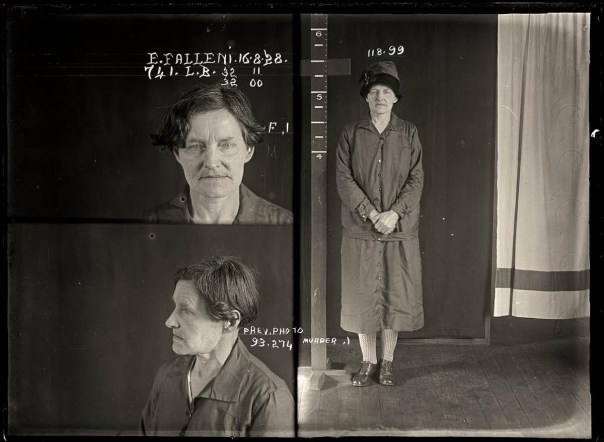
Eugenia Falleni in 1928, State Reformatory for Women. Justice and Police Museum, Sydney
Others have resisted classifying Falleni’s gender and sexuality. Alyson Campbell, director of Lachlan Philpott’s 2012 play about Falleni,The Trouble with Harry, admits to having initially wished to impose a lesbian subjectivity on Falleni’s story. However she conceded that neither lesbian or trans identities were “available to a person such as Falleni, navigating a way through the undocumented, secret world of being a female husband.”
I did not want to invade Falleni’s very private existential conundrum and claim their identities for my empire (read: my cv), and yet I couldn’t shake the story off.
What kept drawing me back was not an urge to answer the questions of who Falleni was (which are not my questions to answer), but rather an urge to come to terms with how Sydney dealt with the uncertainties that Falleni’s various identities posed. The shock remains fresh: Falleni’s trial occurred almost 100 years ago, and although the terminology we use to discuss cases like this has changed, the tendency to categorise and scrutinise “abnormal” behaviour hasn’t.
This was also a story about patriarchy, how its control is insidious and polices everyone — men and women and those who are neither or both — at every level of bureaucracy. Though my experience is by no means comparable to Falleni’s, this is something I have experienced first-hand.
A stranger amongst men
When the seas died down around Nellie, we were well clear of land. Surrounded by nothing but open ocean, my life now depended on something as small as a house, as buoyant as a bath toy, something only as strong as its shipwrights knew how to make it.
Sexual innuendo was social currency on the ship, and your first voyage was a test, to see if you could take it. It was fun, at first, to be around authority figures who couldn’t give a shit about “minding their manners” and affecting professional decorum. It helped that the first mate Leslie — a woman — had stripes, and was just as crass as the men.
I ended up staying on from Auckland to Wellington, this time as a trainee bosun’s mate, the volunteer crew responsible for maintaining the ship’s equipment. On this leg a watch leader presented me with a lock that had fallen off the ladies’ toilet door in the fo’c’sle, along with four very short screws. I found Leslie and the Captain in the chart room and asked Leslie what she thought I should do with it.
She looked at me incredulously. “Fix it.”
“Right,” I said, “but where are the screws?”
“You’ll have to get them from Mr Chips,” she said.
“Ah, but Pip,” the Captain said, “I’d be careful how you ask Chips for a screw.”
I found the second engineer, Mr Chips, on the stern platform with the first engineer, Marco, sitting in a coil of rope and sipping his third cup of tea for the day.
“Chips,” — I was already on the defensive — “I know how this is going to go, but I need four long screws.”
Chips said nothing for a while.
“Right,” he eventually said, “well you’ll find them in the container in the middle of the workshop.”
Marco groaned at the wasted opportunity.
Negotiating sexual innuendo with the cook was more precarious. When a handful of us were asked to scour the hot galley, I volunteered to scour the lard that had accumulated under and behind the ovens. At one point I had my torso wedged under the ovens, and my arse had nowhere else to be but high in the air. Derek the cook stood behind, supervising. The next day he sat beside me while I was sitting on the deck.
“I think you visited me last night in my dreams,” he said softly. “But you weren’t wearing French knickers when you cleaned the ovens, were you?” The comment was meant to be funny, but it made me weary. Really? I thought. Is this how it’s going to be? The game was: they prodded, and you deflected. It was both exhausting and boring.
Later, in the bar, I told Derek he was a sleaze. I said it publicly, and jovially, knowing “preciousness” would not be tolerated. Mr Chips inhaled sharply and Derek’s face fell. An unspoken rule of the ship became clear to me: women should take a joke, but an accusation of sexual impropriety — even if made in good humour — would not be tolerated.
Derek’s revenge came at dinner. My meal was loaded with so much chilli powder, I could barely swallow it. He didn’t talk to me for three days, but by the time we reached Napier he was cracking jokes about my “free passage” with a playful elbow in the ribs. I laughed along, to show him I could take it.
After we’d tied up in Wellington, Marco and I were taking a moment to recover from the wind over a cup of tea in the upper mess.
“So, what are you writing about?” he asked.
I told him the spiel. By then, I’d learned it by rote.
“Falleni…” Marco said, trying out the name, “so she was Italian? Of course she was. I bet she was hairy, too,” he chuckled, and shot a knowing look at Mr Chips.
As he did, I thought I saw a horse passing by on the dock outside. I did a double take. Yes, there was a horse out on the dock, being led by a woman in a shabby suit and bowler hat. She turned to look at the ship, and I saw her moustache, the whiskers growing out of her cheeks.
“Oh my God,” I said, and pointed out the window behind his back. He turned to look, and there were more women now, all in shabby suits and moustaches.
Marco turned back, unfazed. “So the wife, she had to know.”
“Well, apparently not,” I said, on automatic pilot, transfixed by the scene out the window.
“But how did they fuck?”
“With a dildo,” I said. “It’s on exhibit at…”
The women began to chant. They were on strike. They were re-creating the Great Strike of 1913 for the museum over the road, but it was the world of my novel and it was real and it was right outside the window.
Female union actors dockside in Wellington. Pip Smith
During the month I spent in Wellington, I wrote the first part ofmy novelthat stuck. It had nothing to do with sailing ships, nothing to do with being a spokesperson for a transgender experience that was not mine to share, and everything to do with being a fish out of water: a stranger amongst men.
Postscript
Eugenia Falleni was sentenced to death forthe murder of Annie Birketton October 6 1920, but shortly afterwards this sentence was commuted to life imprisonment. Falleni was released from Long Bay Penitentiary in February 1931, after which they lived as Jean Ford, and built a successful business as a manager of “residentials”.
On June 9, 1938, Jean Ford sold her Glenmore Road “residential” business for £105, and on the same day was hit by a car on Oxford St. Ford was taken to Sydney Hospital, but died on June 10, aged 63. Throughout their lives, Falleni maintained their innocence.
A year after my voyage on Nellie, Suzanne Falkinerre-released her 1988 biographyof Falleni with revisions and new information. There were details that hadn’t jumped out at me before. The main one suddenly rendering redundant months and thousands of dollars worth of research: Falleni probably didn’t travel to Sydney by a “Norwegian barque” at all. The son of one of Falleni’s New Zealand friends recalled that
the last time [Falleni] met my mother, [Falleni] told her that she was going to work her way as a stoker [someone who stoked a fire for a ship’s engine] on a ship to Australia, which she did. After she arrived in Australia, she [or someone who wrote for her] wrote to my mother saying she had arrived safe and that she hardly slept at all on board ship and kept an iron bar under her pillow for protection.
A stoker? On board a barque? Not likely. In becoming obsessed with the mysteries of Falleni’s identity, I had ignored details that were not convenient to my own myths. Or perhaps I wanted to go to sea, be at sea, a little while longer.
NB: in this article, I have chosen to refer to Falleni according to their surname, for its gender-neutrality, and have used the pronoun “they” when referring to Falleni’s collective self, and “he” or “she” for Falleni’s particular identities that presented as decidedly male or female.
Pip Smith’s novel,Half Wild, has just been published.
Pink Triangle Affixed to Gay Men’s Clothes in a Nazi Concentration Camp
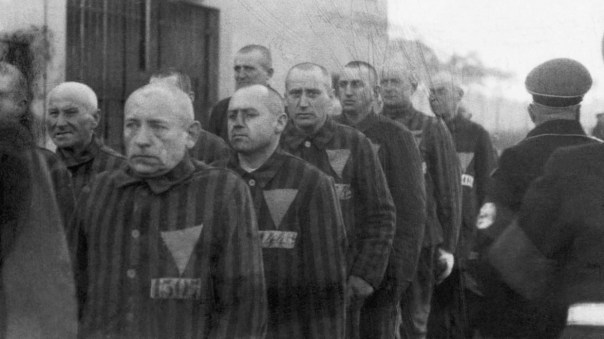
Before the pink triangle became a worldwide symbol of gay power and pride, it was intended as a badge of shame. In Nazi Germany, a downward-pointing pink triangle was sewn onto the shirts of gay men in concentration camps—to identify and further dehumanize them. It wasn’t until the 1970s that activists would reclaim the symbol as one of liberation.
Homosexuality was technically made illegal in Germany in 1871, but it was rarely enforced until the Nazi Party took power in 1933. As part of their mission to racially and culturally “purify” Germany, the Nazis arrested thousands of LGBT individuals, mostly gay men, whom they viewed as degenerate.
The United States Holocaust Memorial Museum estimates 100,000 gay men were arrested and between 5,000 and 15,000 were placed in concentration camps. Just as Jews were forced to identify themselves with yellow stars, gay men in concentration camps had to wear a large pink triangle. (Brown triangles were used for Romani people, red for political prisoners, green for criminals, blue for immigrants, purple for Jehovah’s Witnesses and black for “asocial” people, including prostitutes and lesbians.)
Homosexual prisoners at the concentration camp at Sachsenhausen, Germany, wearing pink triangles on their uniforms on December 19, 1938. Corbis/Getty Images
At the camps, gay men were treated especially harshly, by guards and fellow prisoners alike. “There was no solidarity for the homosexual prisoners; they belonged to the lowest caste,” Pierre Seel, a gay Holocaust survivor, wrote in his memoir I, Pierre Seel, Deported Homosexual: A Memoir of Nazi Terror.
An estimated 65 percent of gay men in concentration camps died between 1933 and 1945. Even after World War II, both East and West Germany upheld the country’s anti-gay law, and many gays remained incarcerated until the early 1970s. (The law was not officially repealed until 1994.)
The early 1970s was also when the gay rights movement began to emerge in Germany. In 1972, The Men with the Pink Triangle, the first autobiography of a gay concentration camp survivor, was published. The next year, post-war Germany’s first gay rights organization, Homosexuelle Aktion Westberlin (HAW), reclaimed the pink triangle as a symbol of liberation.
“At its core, the pink triangle represented a piece of our German history that still needed to be dealt with,” Peter Hedenström, one of HAW’s founding members said in 2014.
Memorial plaques for homosexuals, Jehovah’s Witnesses and Wehrmacht deserters are placed where once stood one of the demolished barracks in Buchenwald concentration camp near Weimar, Germany. Horacio Villalobos/Corbis/Getty Images
Afterwards, it began cropping up in other LGBT circles around the world. In 1986, six New York City activists created a poster with the words SILENCE = DEATH and a bright pink upward-facing triangle, meant to call attention to the AIDs crisis that was decimating populations of gay men across the country. The poster was soon adopted by the organization ACT UP and became a lasting symbol of the AIDS advocacy movement.
The triangle continues to figure prominently in imaging for various LGBT organizations and events. Since the 1990s, signs bearing a pink triangle enclosed in a green circle have been used as a symbol identifying “safe spaces” for queer people. There are pink triangle memorials in San Francisco and Sydney, which honor LGBT victims of the Holocaust. In 2018, for Pride Month, Nike released a collection of shoes featuring pink triangles.
Although the pink triangle has been reclaimed as an empowering symbol, it is ultimately a reminder to never forget the past—and to recognize the persecution LGBT people still face around the world.
Nazi Concentration Camp Triangle Classification Flyer
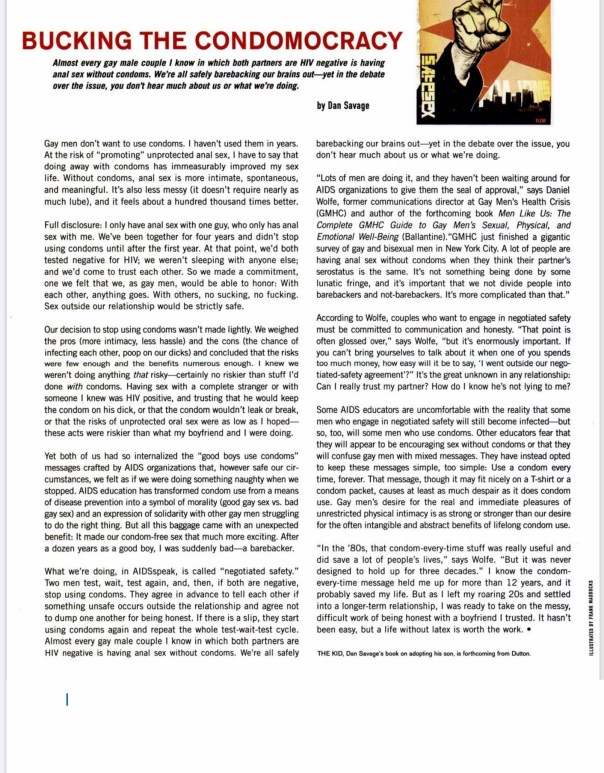
In 1999, both “Blue” magazine (the “Bucking the Condomocracy” article, also reprinted in “Out” Magazine, July 1999, Vol. 7, No.12), and “HQ” magazine (“They Shoot Barebackers Don’t They?”) published articles on barebacking, the one in “HQ” being a reprint of an article from “Poz” magazine. The latter caused a bit of a furore in both “The Sydney Star Observer”, and in the “Sydney Morning Herald”…probably understandably. Read in the context of HIV education and safe sex messages at that time, they read almost as a promotion of barebacking.
I was writing regularly for “Talkabout” magazine at the time, and was on the magazines working group. When I read both articles, I thought they elicited a response, and started to put an article about it together. However, several things were going on at “Talkabout”’ at that time, most notably was a new editor, and I was unsure of how liberal she was going to allow the writing to be, and secondly was an article I had written about the “Options” Employment Agency, which was operating on Oxford St at the time, supposedly to assist HIV/AIDS people to return to work after surviving AIDS, or to re-educate. I had written an expose of them not really doing much to actually assist people, and using said clients to do unpaid “work experience” in their offices. The editor, in all fairness, had sent the article to them… and their response was to threaten to sue the organisation (PLWHA NSW), the magazine, and myself. It was “Bring it on!” from my perspective, but obviously from the organisations…and funding…perspective, it wasn’t something they wanted..As it turned out, my accusations were accurate (I had been quite outspoken about what was going on there for some time,…and had the written testimony of a number of guys who had personally encountered the rort…and had even had the office manager of Options…whose name escapes me now…invite me into his office, and made veiled threats about what I was saying) and the agency had its funding stopped, and closed down shortly after. The article was published, but was so heavily edited that it lost all its clout. I was very disappointed.
However, this made me a bit dubious about publishing another controversial article, and being unsure about the editors response to this piece, and time then passing, I never completed the article. I have been republishing most of my “Talkabout” articles on my blog over the last couple of years…some re-edited, some not…and came across the original draft for this article. I couldn’t actually remember the content of the magazine articles, so did a bit of googling, and thanking the gods of cyberspace that nothing ever disappears completely in the ethos…I found both original articles. I will now include them in my article, to have a permanent record of them. They both make interesting reading.
About 18 months or so further down the line, and with a different editor, I wrote yet another controversial piece on bug chasing…heavily researched, so unbiased…that was totally pulled from publication by the then “Talkabout” working group. It was with great trepidation that Glenn, the then editor, rang to tell me the decision. He knew how much work had gone into it, and I cannot ever recollect an article, written by a HIV+ man, being pulled from publication before in “Talkabout”. The reasoning: it was a great article, but because “Talkabout” was funded by NSW Community Health, there was a perception that said organisation may have seen it as a “promotion of the act of bug chasing” rather than an expose. I was furious. Bug chasing was being talked about within the HIV community, the whole sex dating mentality of “breed me” was a reality…it was happening! To my thinking…it was as if they were burying their heads in the sand, and pretending this just wasn’t happening! The mentality defied me!
Below is my original article with the articles now included. At the end is letters published regarding the “Bucking the Condomocracy” article, and a more recent article on the same subject. My bug chasing article can be found on this blog simply by searching for “barebacking”.
HIV Hyped
My, hasn’t the HIV community been blessed this month, with both a quarterly and a bi-monthly magazine taking up the HIV cause. I wish I could think that the sort of hype they give HIV/AIDS is harmless, but unfortunately, after reading through both articles – twice – just to make sure I hadn’t miss a subtle point, my conclusion is not so.
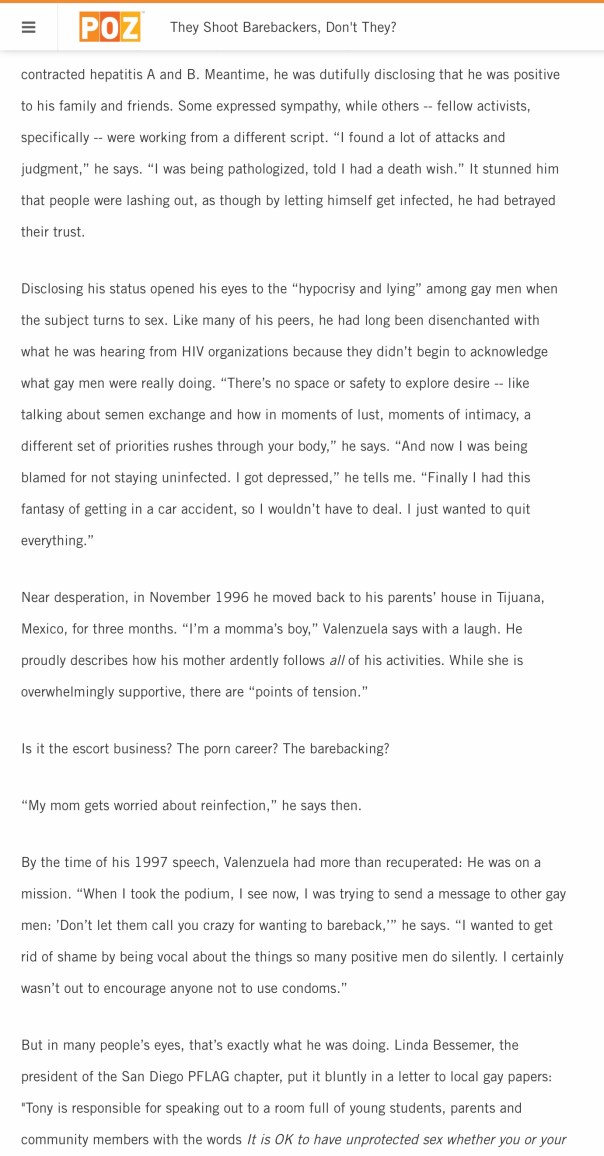
The article in HQ magazine (They Shoot Barebackers, Don’t They?), which has also received publicity via both the Sydney Star Observer, and the Sydney Morning Herald, is a reprint of an article from the American POZ magazine in February 1, 1999. When my partner and myself (also HIV+) read the article earlier this year, we were both quite horrified. It described in quite detailed account the so-called phenomena of ‘barebacking’, a current catch-cry for unsafe sex, especially between HIV positive and HIV negative men. This is supposedly by people who are ‘over’ practising safe sex and using condoms, and desire the thrill of ‘skin-to-skin’ sex. It reports on private parties in the USA for people who wish to indulge in this type of sex, and consider the risks of catching HIV minimal, compared to the joy of unprotected sex. Needless to say, the people who run the parties make sure everyone present signs a disclaimer. Wouldn’t want to get sued by people becoming infected, would we! The phenomena has reached as far as the Internet, where there are advertisements placed by HIV negative people to get HIV positive people to supposedly ‘father’ their own HIV infection. The mere implications of this sort of mentality would be enough to frighten anybody. There are also porn sites promoting galleries of photos with guys barebacking. Make it erotic, and you make it right, or so it would seem.
Of cause, the obvious question to ask is why is this happening? Have we stretched the limits of the practice and promotion of safe sex as far as it can go? Have people become so accepting of HIV that it is no longer considered a dangerous disease? Does the fact that we now have an arsenal of drugs to control HIV infection reducing people’s fear of infection? Do younger people consider the entire AIDS issue as a ‘generational’ thing? Is it just a millennium trend? Considering the current arguments going on around compliance and drug holidays, I don’t think it is feasible to even consider that HIV is either ended, or under control. Ask anyone infected and on drug regimes what they think of this! Ask them how much they enjoy taking the handfuls of pills everyday, and how much they enjoy the side effects of same. Ask them about how secure and comfortable they feel in the knowledge of a possible ten to twenty years with such regimes; always hoping the next generation of drugs is going to be easier on us. A vaccine is still a long way off.
Likewise, I also loved the article in ‘Blue” (“Bucking the Condomocracy”) which hit you in the face with the fabulous attention grabbing statement (in bold font) ‘POST-AIDS’. Now this article isn’t quite as bad as I originally thought. In the context in which it is written, it is in many respects correct. However, it does overlook a major point. If we are living with a ‘Post-AIDS’ mentality, then why are so many people in their mid twenties seroconverting? The article tends to cover the promise given by new treatments, but not the fact that playing down HIV is a dangerous road to take. It is full of trendy language, and as someone who has lived with HIV day in and day out for the last seventeen years, I haven’t heard of any of the expressions mooted by the author. Terms such as a ‘Protease Moment’, ‘vaccine optimism’ and ‘vaccine positive’ (in respect to forth coming language in the vaccine age) are all nice terms, and factually the article is right-there is more emphasis being placed on a preventative vaccine than a therapeutic, but that possibly is still a decade away. The article is, I grant you, full of positive images, which perhaps isn’t so bad in a world where doom and gloom are never far from the headlines. But it does seem to have made it look as though HIV is no longer happening. By being so nicey nicey about HIV, I feel it tends to play down the actual dangers inherent in contracting it. Again, ask anybody HIV positive if the would change sero status if possible, and you would get an almost one hundred percent resounding yes!
I felt, when originally reading the barebacking article earlier this year that it demanded a response, but being in an American magazine, and being a phenomena that I had not heard of occurring here (not, of cause, taking into account the many unsafe sex stories one hears from the saunas and backrooms), I decided to let it lie. The fact that HQ magazine has done a sideline on the Australian reaction to barebacking does not change the fact that, having the subject announced on the front cover is irresponsible journalism, to the extreme. The editor can defend it however she likes, but then she is not working in mainstream HIV/AIDS, and obviously knows very little about the subject, or the implications of the article. Trying to make barebacking a mainstream and fashionable pastime is not funny! An article published by Capital Q the same week as the SSO had its piece on HQ, showed the possible incidence of contracting HIV through unsafe sex. Odds of 120 to 1 (for unsafe anal) may sound good to many people, but considering the sex life of your average horny gay male, that makes the risk of infection from unsafe practices highly likely very early in their lives.
I grant that freedom of the press is a much-nurtured principle, but it can go too far, and the press often plays a major role in influencing people in a particular course of action that they may not otherwise take, and are often paramount in establishing new trends (Desirable, and undesirable). Journalists must stop looking at just headline stories to sell magazines, and consider the implications of what they are publishing.
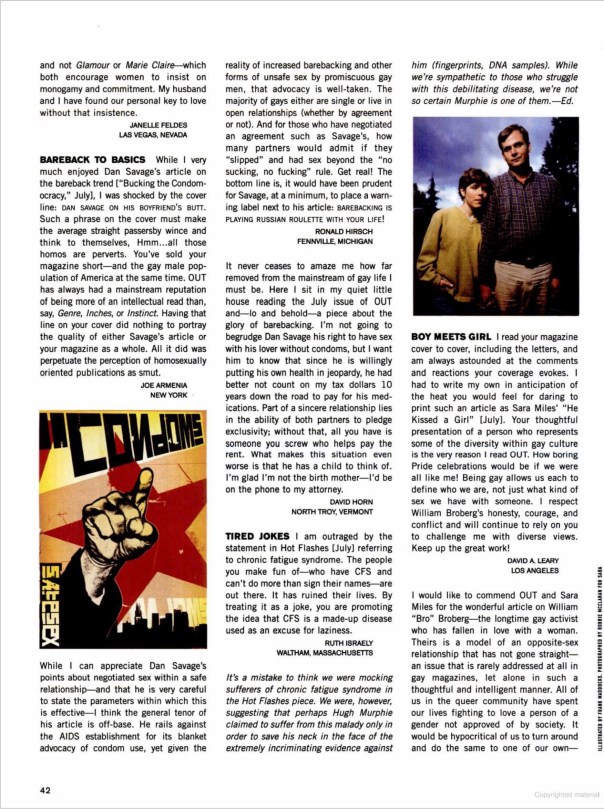
LETTERS PUBLISHED IN “OUT” MAGAZINE SEPTEMBER 1999, VOL 8, NO. 3 IN RESPONSE TO “BUCKING THE CONDOMOCRACY”.
Barebacking is Dead. Long Live Barebacking!
Treasure Island Media
Leave it to science and rational thinking to ruin a popular sexual taboo.
The “bareback” label for sex without a condom has faded in the age of pre-exposure prophylaxis (PrEP) and U=U. People not living with HIV who are taking PrEP are protecting themselves from transmission, while people living with HIV who have an undetectable viral load are unable to transmit the virus to their sex partners at all. As the very definition of HIV risk is being rearranged, the problematic term “barebacking” is finally being relegated to the dust bins of history.
We all know the nature of taboo. The naughty, furtive longing for something forbidden. As the AIDS pandemic lurched from the murderous 80s into the 90s, sexual behavior among gay men pivoted, from horror at the very thought of sex without a condom to, well, something we just might like to do. Real bad. “Barebacking” instantly became part of the lexicon, spurred by maverick porn producers who capitalized on our carnal desire to have sex without a barrier.
Sex without a barrier. Unprotected sex. Barebacking. Also known as having sex. Ask a straight person.
Gay men have always barebacked, of course (along with every other human being and their parents), certainly before HIV ever showed up and yes, even immediately after. If we all had stopped fucking without barriers we would have halted the HIV epidemic in its tracks. Instead, we kept behaving like human beings, making mistakes or getting horny or saying yes when we should have said no or getting drunk or falling in love or being young and stupid.
And sometime, even in the darkest and deadliest years of the epidemic, to unload inside our partner was an enormous “fuck you” to AIDS. You might not understand the humanity of that choice, the triumph of it, or the search it represented for some kind of spiritual and physical release in the midst of relentless mortality. I guess you had to be there.
Not long after we emerged from the 1990s, shell shocked but ready to rumble openly again now that we were armed with effective medications, a renegade porn star bottom named Dawson collected orgasms in the double digits on video and his flick was so polarizing that it was banned in gay video stores. Today, his exploits seem positively quaint, and those same video stores and the countless internet sites that followed transformed themselves from featuring a barebacking category to dropping the category and lumping everything together. Sex without condoms in porn is now customary. Condoms are the outlier.
The actual term has lost its wicked luster. These days, you rarely hear your sex partner say, “oh yeah, fuck me bareback, man.” I mean, sure I will, dude. Yawn.
And gone, too, hopefully, is the judgment of those who labeled barebacking a deviant, destructive pathology. This may be the most painful aspect of our prevention legacy; the rush to demonize those who admitted to having sex without condoms before it became agreeable again, not to mention the furor over those of us who have spoken empathetically about sex without a barrier.
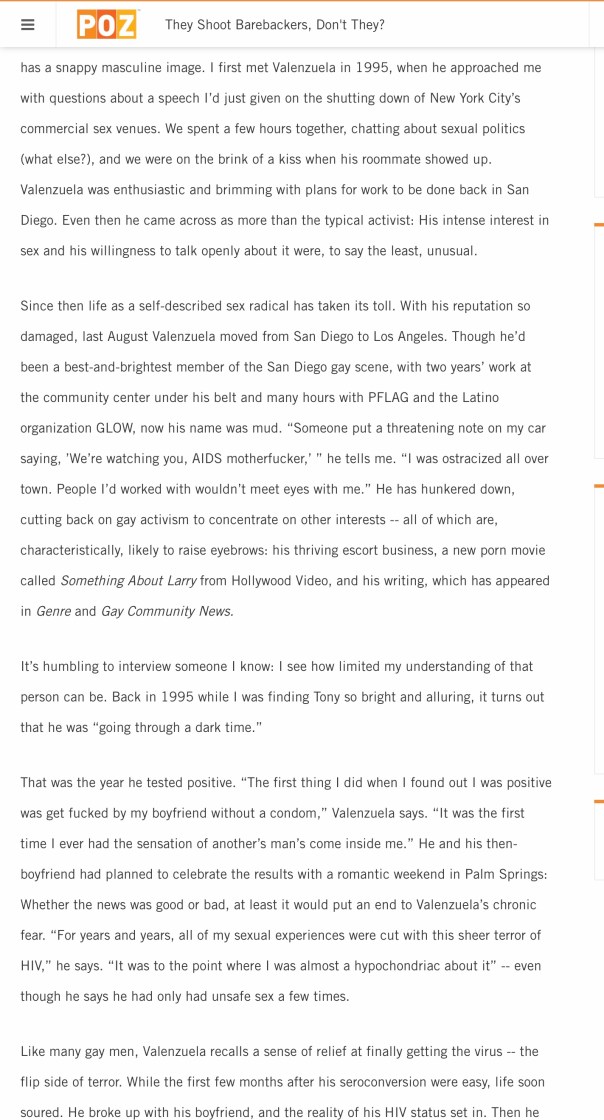
Activist and writer Tony Valenzuela became a community pariah when he wrote a piece in 1995 about being a young man living with HIV who had condomless sex with his boyfriend. He thumbed his nose at his detractors when he appeared naked on a horse for an infamous 1999 POZ Magazine cover (“They Shoot Barebackers, Don’t They?”) in which he discussed how the controversy angered and confused him. Valenzuela’s personal character was questioned and his professional life was derailed for years.
The late social anthropologist and author Eric Rofes (Reviving the Tribe) nearly caused a riot at a 1996 Atlanta town hall event for gay men when he discussed the spiritual and emotional value of sharing semen with a partner. And even as recently as 2013, my essay, “Your Mother Liked It Bareback,” produced one apoplectic comment, among many others, that remains the pinnacle of my blog infamy. “You,” it said, “are a vile merchant of death.”
Maybe, with our new biomedical tools of HIV prevention, those same people who once blindly damned sexual behaviors they didn’t understand — whether out of puritanical beliefs or their fear of their own desires – have reconciled their fantasies and their HIV risk. I hope they’re enjoying totally hot sex and the fluids are flying.
It is difficult to ignore the appalling homophobia, internalized and otherwise, that runs through this aspect of HIV prevention history. We held ourselves as gay men to a more grueling standard than the countless non-queers who get an STI (several of them life-threatening) or an unplanned pregnancy every year.
I have no illusions. Sexually transmitted infections continue, even if the very thought of gonorrhea just makes me feel nostalgic. The PrEP train hasn’t reached everyone who might benefit from it and there is misinformation about its efficacy and side effects. Meanwhile, nearly half of those living with HIV in the United States have not reached viral suppression. There is still reason to be cautious about the who and the when and the how of sex. Now, as ever, we are responsible for our own bodies and the risks we take.
Frankly, behavioral change has not served us well in the grand scheme of HIV prevention. There has always been some debate, tension even, between those who believed the answer to HIV infections is behavior modification, and those who welcome the advent of biomedical interventions such as PrEP and “treatment as prevention” (TasP) that don’t rely upon sexual behavioral choices to work.
Throughout the decades, we have all witnessed the dominant, primal pull that sexual desire has exhibited over caution, so I know which prevention strategy my money is on. But hey, to each his own strategy. For that matter, condoms are a golden oldie and a perfectly legitimate choice. You do you.
What has changed are the conversations and information gathering that happen between partners. PrEP, medications, who is undetectable or not, what sexual positioning in what combination will occur, all of these exist in a more informed landscape, at least among gay men in this country.
Barebacking, as an urban phrase and a taboo, is dead. Thank god and good riddance to this divisive bit of sexual branding. Sex, meanwhile, motors happily onward, unbothered by the judgments of man.
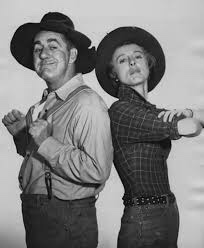
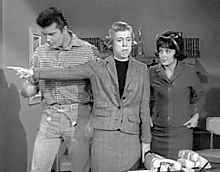
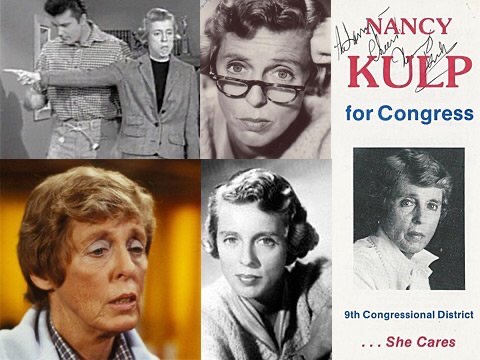
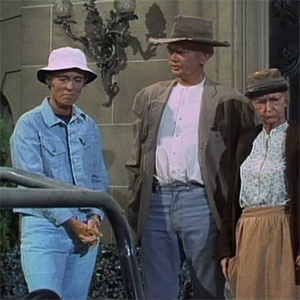
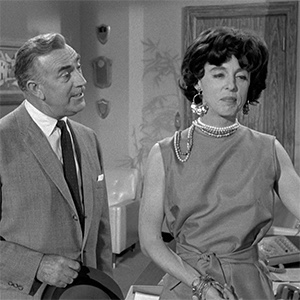
In the 1960s, it was almost unheard-of to find an out Queer person on television. Those that held a Queer identity were often forced into a ‘celluloid closet’ and made to keep their identities silent and hidden from public consumption. This was the case of Nancy Kulp, a closeted lesbian who is most remembered for her appearance as Miss Jane Hathaway in almost all of the 274 episodes of The Beverly Hillbillies, a television series airing on CBS from 1962 to 1971. Kulp would eventually come out, using her own terms, in a 1989 interview.
Nancy Jane Kulp was born in Harrisburg, Pennsylvania on August 28th, 1921 to Marjorie and Robert Kulp; the family would later move to Dade County, Florida. The only daughter of a lawyer and schoolteacher, Nancy was a bookish child from an early age and dreamed of becoming a journalist. Nancy would take the first step toward her goal when she graduated from Florida State University with a bachelor’s degree in journalism in 1943. During her years at FSU, Kulp worked as a feature writer for the Miami Beach Tropics, working on celebrity profiles.
Though she planned on continuing her education and obtaining her master’s degree, Nancy joined WAVES (Women Accepted for Voluntary Emergency Service) in 1943 to aid the US Navy during World War Two. While it was her patriotism and desire to work in an “all-female” atmosphere that led to her enlistment, Nancy determined that it was not her destiny to hold a career in the armed forces and left in 1945 after reaching the rank of junior-grade lieutenant. After leaving WAVES, Kulp took a position in Miami as a publicity director for a local radio station in 1946.
At the age of thirty, Nancy Kulp exchanged vows in an April Fool’s Day wedding celebration to Charles Dacus on April 1, 1951. While the marriage was short-lived, both parties parted on good terms and the relationship had a long-lasting impact on Nancy Kulp’s life. Nancy said that it was Charles Dacus who encouraged Kulp to leave her career as a publicist to achieve a career in acting (though she also later said that this inspiration came from director George Cukor). Following this encouragement, Nancy made her way to Hollywood where she took a position as a film publicist while she waited for her big break.
This break would come only three weeks later when she was discovered by A-list, gay, director George Cukor. Later that year, Nancy Kulp would make her big screen debut in Cukor’s 1951 film, The Model and the Marriage Broker. This role was larger than most others she would hold in movies though it was mostly silent and demeaning as she took on the role of a young woman desperately seeking matrimony from a marriage broker. This role was Kulp’s first foray into the sort of character she would often be type-cast to play- the spinster.
In 1954, Nancy would be cast in another Cukor film, the Judy Garland- led A Star is Born, though the scene in which she appeared would later be cut without the director’s knowledge or consent. Kulp would make several smaller appearances in many successful films such as Sabrina (the 1954 film starring Audrey Hepburn), The Three Faces of Eve (1957), Strange Bedfellows (1965), and The Parent Trap (1961), where Kulp played the butch troop leader.
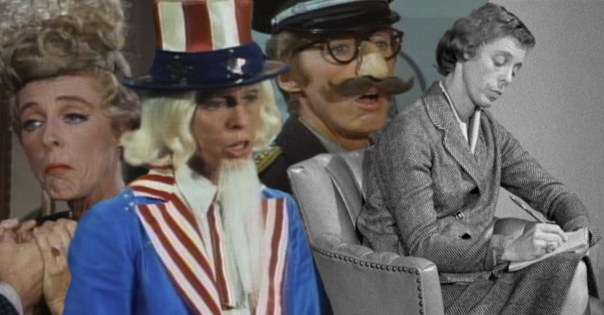
While Nancy appeared in movies, most of her acting work was done for the small screen. She made several appearances, largely comedic, on various television shows. Her first recurring television role was as a bird-watcher named Pamela Livingstone on The Bob Cummings Show (1955-1959). The writer for The Bob Cummings Show, Paul Henning, would go on to write for The Beverly Hillbillies, and created a role specifically for Kulp. Nancy would become known across the country as Miss Jane Hathaway, a smart and confident secretary that worked for a bank. Miss Jane, as most of the characters called her, was also a character that played into Kulp’s type-casted role as a spinster. Kulp received an Emmy Award nomination in 1967 for her performance on the show.
After the final episodes of The Beverly Hillbillies, Kulp was given a regular role on the Brian Keith Show (1973-1974) and made appearances on Sanford and Son (1972-1977), The Love Boat (1977-1987), and Fantasy Island (1978-1984). Kulp also appeared on stage at summer stock and dinner theaters before eventually landing a role in Paul Osborn’s 1982 production of Mornings at Seven.
In 1984, the patriotic Nancy Kulp, who had long been interested in politics, decided to run for Congress in her district in central Pennsylvania, having settled in Port Royal. She ran as a Democrat against the Ninth District’s incumbent Republican representative, Bud Shuster. While she received an endorsement from friend and fellow showbiz personality Ed Asner, her Hillbillies costar Buddy Ebsen recorded a radio advertisement claiming that Kulp was “too liberal for Pennsylvania.” Kulp was enraged by Ebsen, a California resident, getting involved in her campaign, stating that she “was speechless at such a betrayal, and something so needless and cruel.”
Nancy Kulp would go on to be defeated by Shuster and would spend the next year at Juniata College in Huntingdon, Pennsylvania, teaching film and drama. She would later return to California to serve on the board of the Screen Actors Guild and take an active role in non-profits including the Humane Society of the Desert, United Cerebral Palsy, and the Desert Theater League.
In a 1989 interview with author Boze Hadleigh for the book Hollywood Lesbians: From Garbo to Foster, Kulp responded to Hadleigh’s “Big Question” (the question of her sexuality which she renamed the “Fatal Question”) Nancy remarked in her own words:
“As long as you reproduce my reply word for word, and the question, you may use it,” she told Hadleigh. “I’d appreciate it if you’d let me phrase the question. There is more than one way. Here’s how I would ask it: ‘Do you think that opposites attract?’ My own reply would be that I’m the other sort–I find that birds of a feather flock together. That answers your question.”
Never in the course of the interview did she refer to herself as a lesbian.
Nancy Kulp would die of cancer only two years later, on February 3, 1991, at her home in Palm desert, California. While she never actively owned a lesbian label, Nancy Kulp was hailed as being a lesbian ground-breaker in the field of acting for having portrayed her identity (though a secret) in her work.
Former “Beverly Hillbilly” Says She Didn’t Play The Political “Game″
WASHINGTON (AP) _ Nancy Kulp of ″The Beverly Hillbillies″ fame doesn’t blame fellow Hillbilly Buddy Ebsen for her election defeat last fall – but says he should have stayed out of the congressional race.
Ebsen, who starred with Ms. Kulp on the long-running television program in the 1960s and early 1970s, recorded a radio commercial for her opponent, Republican Rep. Bud Shuster. In the spot, aired several weeks before the election, Ebsen said, ″Nancy, I love you dearly but you’re too liberal for me.″
Ms. Kulp still bristles when she thinks about the ad. ″How dare he 3/8 It wasn’t his business,″ she said.
But she said there were other reasons for her defeat, notably her lack of political savvy, a shortage of campaign dollars and the popularity of President Reagan in Shuster’s sprawling rural Pennsylvania district.
“I didn’t play the game, I guess,″ Ms. Kulp, 63, said in a telephone interview from Los Angeles. She left her restored, three-story farmhouse in Port Royal, Pa., after the election and drove to California to visit friends.
While she raised $73,143 during 1984, Shuster, who was seeking his seventh House term, reported contributions of $269,597, according to campaign finance reports. Ms. Kulp reported gifts of $29,471 from political action committees, Shuster $138,817.
After years of involvement in local party politics and with the Screen Actors Guild, Ms. Kulp said seeking office was satisfying because ″you finally get to put your convictions on the line. It was one of the highlights of my life.″
But the experience left her with a helpless feeling that there was an image barrier between her and the voters that she could not surmount.
“You’re turned off by the distortions,″ she said. ″My feeling is a candidate is elected because they are perceived to be something. Ronald Reagan never talked issues; he waved the flag and the people loved it.
“I was perceived to be an ultra-liberal. If that is their perception – even if they like me – then I can’t win.″
The experience, she said, has left her ″ambivalent″ about the elective process and doubtful that she will seek public office again.
A central Pennsylvania native born in Harrisburg, Ms. Kulp began her acting career in 1952. She appeared in such films as ″Three Faces of Eve″ and ″The Parent Trap,″ and was featured on ″The Bob Cummings Show″ on television before the ″Beverly Hillbillies″ premiered in 1961.
On the ″Beverly Hillbillies,″ she played the secretary of a banker managing the account of a millionaire hillbilly, played by Ebsen. She and Ebsen used to talk politics on the set; they rarely agreed about issues, she said.
Ms. Kulp said she now is thinking about returning to the East Coast, possibly to teach. Juniata, a small liberal arts college 120 miles east of Pittsburgh, has expressed interest in her, perhaps for an ″artist-in-re sidence″ program, said college spokesman Robert Howden.
Who the F Is … Actress and Politician Nancy Kulp?
Who she was:A well-regarded character actress who eventually ran for public office and came out — rather obliquely.
What she accomplished:Nancy Kulp (1921-1991) endeared herself to baby boomers with her role on a silly but successful TV sitcom,The Beverly Hillbillies.From 1962 to 1971, she played the prim, efficient Miss Jane Hathaway, secretary to banker Milburn Drysdale. She and Drysdale were managing the millions of the Clampett family, a backwoods clan who had relocated from Tennessee to Beverly Hills after striking oil. The comedy arose from the contrast between the beyond-unsophisticated Clampetts — who made moonshine, kept “critters,” and called their swimming pool “the cement pond” — and the upscale Southern Californians who surrounded them. Hathaway, always called “Miss Jane” by the Clampetts and their kin, was unaccountably attracted to the dim-witted Jethro Bodine, nephew of patriarch Jed Clampett. Critics had no love for the show, but viewers found it hilarious, and it had an extended life in syndication.
Born in Harrisburg, Pa., Kulp studied journalism in college, then served in the WAVES during World War II. After the war she worked as a publicist for radio and TV stations in Florida, then came to Hollywood in the 1950s with an eye to continuing in publicity. Someone encouraged her to try acting — some accounts say it was her then-husband, Charles Dacus, whom she refused to discuss in later years; others say it was esteemed director George Cukor. At any rate, she quickly won a small role in a Cukor film,The Model and the Marriage Broker,starring Jeanne Crain, Scott Brady, and Thelma Ritter. It was one of the great filmmaker’s lesser efforts, but it launched her career. She played supporting parts, often uncredited, in some noteworthy movies —Shane, Sabrina,the Judy Garland version ofA Star Is Born,also directed by Cukor — and some now-forgotten ones. She also worked in TV anthology series and in guest-starring roles. BeforeHillbillies,she was a regular onThe Bob Cummings Show,playing a spinsterly bird-watcher named Pamela Livingstone. (Bird-watching was also one of Miss Jane’s hobbies.)
AfterThe Beverly Hillbilliesended, she continued to guest-star on various TV series; she had a recurring role onSanford and Sonfor a time, and like many aging actors she appeared onThe Love BoatandFantasy Island.She also performed on Broadway inMorning’s at Sevenin the early 1980s. But she had a passion for politics, dating back to Adlai Stevenson’s presidential campaign in 1952, and in 1984 she returned to central Pennsylvania to run for Congress. She was an underdog as a Democrat in a heavily Republican district represented by a popular incumbent. She got support from showbiz friend Ed Asner, but herHillbilliescostar Buddy Ebsen, who had played Jed, did a commercial in which he called her “too liberal” and endorsed her opponent. It caused a rift between them that lasted for years, although they reportedly eventually made up. She lost the election to the incumbent, Bud Shuster. Later, she taught acting at a Pennsylvania college and made some stage appearances, including one as the Nurse inRomeo and Julietat the 1987 Georgia Shakespeare Festival in Atlanta, then retired to the California desert, where she kept busy with volunteer work. Among other things, she served on the board of the Screen Actors Guild.
In 1989 she addressed her sexual orientation — to a degree — in an interview with Boze Hadleigh, published in his bookHollywood Lesbians.“As long as you reproduce my reply word for word, and the question, you may use it,” she said. “I’d appreciate it if you’d let me phrase the question. There is more than one way. Here’s how I would ask it: ‘Do you think that opposites attract?’ My own reply would be that I’m the other sort — I find that birds of a feather flock together. That answers your question.” Miss Jane would have appreciated the imagery. She also expressed admiration for gay congressman Barney Frank, and when Hadleigh asked if she would have come out in Congress, she said, “Not voluntarily. If I were outed, then I would not deny it.” Hadleigh waited to publish the book until 1994, when all his subjects were dead. Kulp died of cancer in 1991 at her home in Palm Desert, Calif.
Choice quotes:“If one is past 50 or 60, it’s almost like saying that most of your life you’ve been too embarrassed to admit it or to speak up.” — to Boze Hadleigh, on the possibility of coming out
“I think I’ve been successful in making the distinction between actress and politician. But there’s always someone who screams, ‘Where’s Jethro?’” — toPeoplemagazine, during her congressional campaign
10 times Miss Jane Hathaway let loose and ditched her pressed suit on The Beverly Hillbillies
Take a tour of Nancy Kulp’s silliest costumes.
At its heart, The Beverly Hillbillies was about breaking out of your comfort zone, and it wasn’t just the Clampetts experiencing the growing pains. Fans know that Miss Jane Hathaway, the snooty bank secretary who keeps an eye on the Clampetts, had as much to learn from the hillbillies about having fun as they did from her about fitting in with fine society.
We first meet Jane Hathaway in the bank, dilligently taking notes for Mr. Drysdale, her boss, the insanely wealthy bank manager. She’s wearing her signature pressed suit, a drab number we’d see her sport throughout most of the initial seasons. But it wouldn’t take the writers, costumers and hillbillies long to wrestle Miss Jane out of those stuffy suits and neckerchiefs just to stuff her into funnier outfits that drew extra laughs precisely because she’d been set up as such a straight character. It was one of many ways the show had fun with its audience.
Below, we’ve gone back through our favorite episodes of The Beverly Hillbillies to offer up this tour of Miss Jane Hathaway’s most dazzling and outrageous outfits over nine seasons. Played brilliantly by Nancy Kulp, Miss Jane remains one of the show’s most memorable characters, and here’s a parade of standout moments that show us how her wardrobe helped cement her legacy.
1.Miss Jane Hathaway the Artist
It only took seven episodes before we saw Nancy Kulp slip into something sillier, this artist look that we consider her character’s first masterpiece in transformation.
2.Is that Nancy Kulp or Groucho Marx?
In the later seasons, the volume got turned up on Nancy Kulp’s costumes, and this was perhaps the height of that hilarity.
3.A hillbilly before the first season ends.
By the end of the first season, we got our first look at Nancy Kulp in hillbilly garb, and even doing a dance with the whole Clampett family! Talk about letting loose! This primed us to expect the unexpected from the typically kempt Miss Jane.
4.Remember when Miss Jane posed as Uncle Sam?
The color episodes of The Beverly Hillbillies do not disappoint when it comes to costumes, especially this red-white-and-blue suit arguably louder than any other suit she donned the whole series.
5.Miss Jane, the pageant queen.
There were many plots that involved Elly and Jane in competition for a suitor’s attention, but this beauty contest in the third season was the first time they turned that trope into a swimsuit competition!
6.Don’t think Miss Jane’s beneath a denim suit!
Need proof that Miss Jane Hathaway is a trendsetter? Check out this denim suit she donned at the very start of the ’70s. It was her idea of beach attire, and the bucket hat just perfects the look, don’t you think?
7.Fancy Nancy!
There were plenty of times, as we’ll get into soon, when Nancy Kulp showed up looking stunning on The Beverly Hillbillies, but we get flashes of Carol Burnett and Friends when we saw this particular evening attire and wacky updo!
8.Miss Jane’s very first evening look.
Let’s take a moment to just genuinely appreciate how Nancy Kulp completely owned silk, pearls and simplistic elegance. Bask in the very first time we saw her in a seriously stunning evening look from the first season.
9.That’s not to say she didn’t also know how to overdo it…
Between the wig, costume jewelry and dangly everything, Miss Jane almost looks as out of sorts in this outfit as Elly May did in an evening gown!
10.Proper, even in pajamas.
Last look is all the proof you need that Miss Jane even prefers to sleep in a suit, donning these neat blue pajamas in contrast to Granny’s gowns, but that changes soon when the writers get her character stuck in a sleeping bag that Granny’s trying to free her from here. It’s just one more example of all the physical humor that came just from shaking up Jane Hathaway’s wardrobe!
The television world of Paul Henning stretched from the Appalachian Mountains to the Hollywood Hills. The sitcom creator struck gold (well, oil) three times with his beloved hits The Beverly Hillbillies, Petticoat Junction and Green Acres. That trio of smash shows delivered dozens of memorable characters, many of which crossed over from series to series.
Henning’s anything-goes brand of homespun comedy included a menagerie of clever animals, like Dog and Arnold, not to mention actors switching roles. Bea Benaderet played both Cousin Pearl Bodine on The Beverly Hillbillies and Kate Bradley on Petticoat Junction. But no role-hopping was quite so silly as Max Baer Jr. portraying both Jethro Bodine and his twin sister, Jethrine Bodine.
Jethrine, as you will recall, was simply Max Baer Jr. dressed up to look somewhat like Little Bo Peep. He slipped into a curly blonde wig and floral dress and hammed it up. The joke was made complete with Jethrine’s feminine voice, which was clearly not dubbed by Baer.
Henning hired his daughter, Linda Kaye Henning, to give Jethrine her voice. At the time, in 1962, Linda Kaye had just one credit to her name, a bit role in a single episode of Mister Ed which aired earlier that year. She would voice Jethrine in 11 episodes throughout the first season of The Beverly Hillbillies.
In 1963, Linda Kaye’s collaboration with her dad leaped to a new level when she joined the cast of Petticoat Junction as Betty Jo, the redhead in the trio of Bradley daughters. Betty Jo played a significant role in the series. She was the one who discovered Dog at the start of season two. Later, after a major ongoing romance, she would marry cropduster Steve Elliott, played by Mike Minor. Henning would go on to appear in more episodes of the series than any other actress, appearing in all but three. (Not to mention, she would marry Minor in real life.)
Alas, despite all the crossovers, Betty Jo and Jethrine never shared screentime. Jethrine disappeared in ’63, just as Betty Jo first popped her head out of the water tower.
From dusty-sandal epic to zany comedy, these LGBTI characters from the Bible deserve some movie magic.
Lupita Nyong’o and Oprah Winfrey.
Ruth and Naomi
Category:Drama
Starring:Lupita Nyong’o (Ruth) and Oprah Winfrey (Naomi)
Premise:At a time of famine, a mother who has lost her sons finds love, strength and hope in the unlikeliest place.
Plot:Naomi and her family flee to Moab to find food. Her husband and then her sons die. One of her daughters-in-law leaves, but the other, Ruth, refuses to go.
‘Don’t urge me to leave you or to turn back from you. Where you go I will go, and where you stay I will stay. Your people will be my people and your God my God. Where you die I will die, and there I will be buried. May the Lord deal with me, be it ever so severely, if even death separates you and me.’ (Ruth 1:16)
Together they travel to Bethlehem and build a new life.
Channing Tatum and Zac Efron.
David and Jonathan
Category:Action
Starring:Channing Tatum (David) and Zac Efron (Jonathan)
Premise:One was the lowly shepherd who slew the giant Goliath. The other was the Prince of the Israelites. Their love would rock a nation.
Plot:David kills Goliath and becomes a great warrior. Prince Jonathan, heir to King Saul, falls in love with him.
They make a ‘covenant’, a sworn, lifelong friendship agreement – more marriage than bromance.
‘Jonathan made a covenant with David because he loved him as himself. Jonathan took off the robe he was wearing and gave it to David, along with his tunic, and even his sword, his bow and his belt.’ (1 Samuel 18:4)
They make out: ‘They kissed each other and wept together’.
Saul tries to kill David, fearing he would take the crown. Jonathan repeatedly warns his lover, saving his life.
Saul and Jonathan die in battle. David becomes king and writes the ancient world’s gayest song of mourning:
‘I grieve for you, Jonathan my brother;
you were very dear to me.
Your love for me was wonderful,
more wonderful than that of women.’ (2 Samuel 1:17)
Jamie Bell and Dev Patel.
Daniel and Ashpanez
Category:Action
Starring:Jamie Bell (Daniel) and Dev Patel (Ashpanez)
Premise:Babylon. The greatest city on Earth. A slave finds love with his eunuch overlord. Together they will defy the king and win eternal glory.
Plot:King Nebuchanezzer overruns Jerusalem and brings Daniel to Babylon to be his slave.
‘Now God brought Daniel into favor and tender [physical] love with the prince of the eunuchs’, Ashpanez, the man whose job it was to train the slaves to serve the king. (Daniel 1:9)
When Daniel refuses to eat the food the king commands, Ashpanez helps him. Daniel becomes the most ribbed and powerful of the king’s servants and goes on to survive action sequences in a fiery furnace and den of lions.
Darren Criss and Jared Leto.
Jesus and the Beloved Disciple
Category:Epic
Starring:Jared Leto (Jesus) and Darren Criss (John)
Premise:The Greatest Love Story Never Told.
Plot:John is one of Jesus’ first disciples and is repeatedly called ‘The Beloved Disciple’. He is next to him at The Last Supper.
‘Now there was leaning on Jesus’ bosom one of his disciples, whom Jesus loved.’ (John 13:23)
At the crucifixion, Jesus tells his mother Mary that this ‘beloved disciple’ is ‘your son’ and tells him that she is ‘your mother’.
Later, he is one of the first to find Jesus’ tomb empty and is visited by Jesus after his death.
Morgan Freeman in the film Red.
The Ethiopian Eunuch
Category:Comedy
Starring:Morgan Freeman
Premise:Judea. 31 AD. Around about teatime. And it doesn’t take much to save a eunuch.
Plot:An angel sends Philip to a desert road between Jerusalem and Gaza. He comes across a ‘born’ eunuch (gay man or possibly intersex person) who is the treasurer of the queen of the Ethiopians. (Acts 8:27)
When the Ethiopian Eunuch sees some water, he asks Philip to baptize him. But after they emerge from the water, Philip has simply disappeared…
Hugh Jackman and Russell Tovey.
The Centurion and his Lover
Category:Romantic comedy
Starring:Hugh Jackman (the centurion) and Russell Tovey (his lover)
Premise:Boy meets centurion. Centurion falls in love with boy. Boy falls sick. Centurion visits Jesus and asks for miracle.
Plot:Hugh Jackman stars as the beefy Roman Centurion who falls in love with his slave. But when the young man falls sick, nothing will stop him from finding a cure, even if it means humbling himself in front of a conquered Jew, Jesus.
‘Lord, my “pais” [servant or same-gender lover] lies at home paralyzed, suffering terribly… I do not deserve to have you come under my roof. But just say the word, and my servant will be healed.’ (Matthew 8:6)
Via The Comics Reporter, the website Shorpy has a great collection of photos from the 1920s of the Krazy Kat club, a Washington DC hangout/speakeasy that appears to have been quite a hub of bohemian activity. The police busted it more than once. The clientele included college kids, flappers and gays. A diary by a gay man kept in 1920 refers to the Krazy Kat club as a “Bohemian joint in an old stable up near Thomas Circle … (where) artists, musicians, atheists, professors” congregated.
The gay angle is worth pondering because of the club was named after the comic strip Krazy Kat (who can be seen on the door sign in the photo above). Krazy was the first androgynous hero(ine) of the comics: sometimes Krazy was a he, sometimes a she. As creator George Herriman stated, Krazy was willing to be either.
Is it possible that Krazy’s shifting gender identity made him/her an icon for gays?
Or it could be that the owners just liked comics. The building that housed the Krazy Kat club remained a gay hangout for decades to come and also held on to its connection to comics: it was later renamed The Green Lantern.
It’s also the case that Krazy Kat attracted outsiders of all sorts, not just gays. In the 1930s in Chicago, there was a Krazy Kat club organized by teenage African-Americans, also interesting in the light of the fact that Herriman had some black ancestry and used African-American themes and motifs in his strip.
This 1920s Badass Bohemian Hangout Had a Speakeasy in a Tree House
Oh yeah! If this isn’t one of the coolest places that anyone ever partied in, then I don’t know what is! When I came across these photos I was immediately compelled to find out more about it.
Turns out that back in the 1920s there was speakeasy in Washington D.C. that served its bootleg cocktails in a treehouse. It was named the “Krazy Kat Klub” after the character in a popular comic strip created by George Herriman.
The club was run by Cleon “Throck” Throckmorton , an artist who later became a stage set designer. It was a hipster haven for the counterculture, the avant garde, the artsy set.
This excerpt from a 1922 article in the Washington Times on Throckmorton and his “Krazy Kat Klub” was written by Victor Flambeau. He describes the club as “a most spooky sort of place, weird and crazy as its name.” A place for “Good friends, a blazing fire, some primitive furniture, hand made no doubt, candles, drinks, eats, a floor to dance upon, a garden annex in summertime, a spreading tree with airy rookeries built in it’s branches.”
I don’t know about you, but it sounds like a really fun place to me!
Below is the entrance to the club, which was actually in an old stable. Cleon, aka “Throck” is on the right.
And you know those unruly bohemians! Because it operated during Prohibition it was raided many times.
Below is an account from the Washington Post on a raid in 1919.
Officer Roberts was under orders to watch the ” rendevous of the Bohemians.” (great name for a band!) when he heard a shot fired. A raid ensued and 14 people landed in the slammer, mostly for drunk and disorderly conduct.
The article likens the Krazy Kat Klub to a Greenwich Village coffee house, with gaudy pictures created by futurists and impressionists. And the people arrested were “self styled artists, poets and actors and” GET THIS, “some who worked for the government by day and masqueraded as Bohemians by night.”
The horror! Can you imagine? Government workers leading double lives! Who would have thought?
I don’t know who that hot tomato is on the left, but I adore her 20s boho look. The photo was taken in 1921 and she’s wearing black rolled down stockings, a scarf wrapped around her head gypsy style and a skirt that is showing her knees. Downright scandalous!And check out this old rickety ladder they had to navigate in order to knock back a few. They sure had to go way out on a limb to get tipsy in the treetops! Imagine what it was like to have to climb down after one too many? I can imagine more than one patron ended up on their behinds!Mr. Throckmorton at the easel, 1920s hipsters smoking and posing in the yard.More history about the Krazy Kat Klub can be found here.
After seeing these photos I so want one of these in my back yard. Note to self, must add speakeasy treehouse to DH’s “Honey Do” list.
So, what about you? If you could time travel back to the 1920s, would you want to hang out in a place like this?
The Language of Krazy Kat
Chris Ware’s cover for the new Krazy Kat book.
If you live near a decent book store, you can now buy a copy of George Herriman’s Krazy & Ignatz 1941-1942: “A Ragout of Raspberries”, which gathers together two years of great full-page, colourful Krazy Kat comics. Beautifully designed by Chris Ware, the book also has a substantial essay I wrote Herriman’s writing skills.
In celebration of this new book, I want to quote a very pregnant bit of dialogue that appeared on Jan. 06, 1918 when Krazy Kat and Ignatz Mouse started arguing about the nature of language:
Krazy: “Why is Lenguage, Ignatz?”
Ignatz: “Language is that we may understand one another.”
Krazy: “Can you unda-stend a Finn, or a Leplender, or a Oshkosher, huh?”
Ignatz: “No,”
Krazy: “Can a Finn, or a Leplender, or a Oshkosher unda-stend you?”
Ignatz: “No,”
Krazy: “Then I would say lenguage is that that we may mis-unda-stend each udda.”
(I know what Finns and Laplanders are but I have no clue as to Oshkoshers. Anybody have any idea on this?)
The language of sin in Krazy Kat.
And here’s an excerpt from my essay:
To a striking degree, Herriman drew on the rich oral culture of early 20th century America. Herriman was a cultural magpie, taking his words from diverse sources far and wide, ranging from popular songs to political speeches to the Bible to medical and scientific discourse.
In describing Herriman’s literary skills, it’s easy enough to classify him as a nonsense poet, a coiner of nonce-words and playful gibberish in the great tradition of Lewis Carroll and Edward Lear. But if you pay close attention to Herriman’s language, what becomes evident is that he usually doesn’t make words up, however much he might twist them around. Rather, Herriman had a great ear for speech, for the endless mutations and variations of language as garbled by the human tongue. Herriman’s language was not something he invented in his head; it can be traced back to the world he lived in.
The America Herriman grew up in was much more oral than anything we’re used to. For us, music is something that comes out of a c.d. player or an iPod. In Herriman’s world, people could break out into song all over the place: at parties, at picnics, and in church. All the characters in Krazy Kat are tuneful, especially the eponymous heroine. These songs come from all sorts of genres, ranging from traditional hymns (such as Krazy’s familiar refrain that “there is a heppy land, fur, fur a-wa-ay”) to frontier anthems (“home on the range” gets a workout on July 26, 1942) to bluesy lamentations (when Krazy sings “Press my pents an’ shine my shoes” on July 22, 1935). Herriman also brings in songs from other languages. On July 29, 1941 we hear Ignatz sing to himself “Adios, Chaparrita Chula”. These words (which could be translated to mean “goodbye insolent darling”) are taken from the traditional Mexican lover’s lament “Adios, Mariquita Linda”.
Words aren’t stable, fixed things. They have shades of meaning and shifting connotations. Herriman was supremely alert to the slipperiness of language. Listen to how Ignatz tries to sweep aside Mrs. Kwakk Wakk: “Away, woman away with your gabble and gossip.” (May 25, 1941) Gabble is the perfect word because it denotes both meaningless speech and the low jabber of a duck (which is of course Mrs. Kwakk Wakk’s species).
Two pages from within the Krazy Kat book.
Reference
A Gay Old Kat, Sans Everything, 26 February 2008, by Jeet Heer
The Language of Krazy Kat, Sans Everything, 7 February 2008, by Jeet Heer
Vote up the most insane stories from ancient Roman times—those that put Washington, D.C. and Hollywood to shame.
If the Ancient Romans knew how to do one thing well, it was party. When they weren’t busy inventing the aqueduct, concrete, or the basis for the modern calendar, they were discovering new and exciting ways to have a good time with each other. Sure, every emperor, senator, and nobleman under the sun promoted family values… but when that sun set, ancient Rome got into the kind of action that would make the writers of Game of Thrones blush.
While the Romans probably weren’t the first in history to push the sexual envelope, they were among the first to keep detailed records. Regular talk of affairs, orgies, and contests spun around the rumor mill for centuries. Of course, the Romans weren’t above tabloid-level journalism. It’s no coincidence that the most extreme rumors were about the most hated emperors.
It wasn’t all fun and games, though. Since most of these Roman rumors involved the emperors, that meant most of them ended in either bloody coups or executions. It’s good to be the king, but only as long as people let you stay in power. So, as crazy as you think modern Washington controversies may seem, some of the ancient Rome sex stories on this list may make you appreciate just how far politicians have come over the last two thousand years.
For someone with the power and maniacal reputation of Emperor Nero, it was probably easy to get bored at having his every whim met. Perhaps that’s why Nero turned an innocent boy into a eunuch and then tied the knot. The boy, Sporus, was dressed as a woman in a veil for the official ceremony, and the pair even took a romantic honeymoon to Greece.
Caligula Went To A Wedding And Left With The Bride
Gaius Piso made the poor decision of inviting Emperor Caligula to his wedding. When Caligula showed up to the banquet, Gaius told the emperor not to touch his soon-to-be wife Livia Orestilla. So, naturally, Caligula stole her, married her, then banished her to an island where she was forbidden to sleep with anyone ever again. Moral of the story? Don’t tell Caligula he can’t do something.
For Emperor Nero’s mother, Agrippina, merely being the mother of the emperor wasn’t enough. Early in his rule as a teenager, Agrippina had a heavy hand in his decision-making. Rumors spread that she reinforced her influence with her body. Stories spread about Nero’s relationship with a consort who suspiciously resembled his mother as well as a public appearance together where his robes were noticeably stained.
Pushing the depths of depravity, stories said Emperor Tiberius trained young boys to fulfill his physical needs. He liked to go swimming with them, then have them lick and nibble him “between his thighs.” He called them “tiddlers.”
Caligula Slept With Guests’ Wives And Then Bragged About How They’d Gotten Down
Dinner parties with Caligula were a nightmare for married couples. Caligula frequently invited married couples over for dinner, and if a certain wife struck his fancy, he’d take her back to his bed chambers and return later to tell their husbands everything that went down. If that wasn’t enough for him, he’d sometimes file a bill of divorce for couples just because he could.
Although it’s been said he took all of his sisters to bed, Caligula’s favorite was allegedly Drusilla. Stories said their grandmother caught them in bed together when they were still minors. Later in life, he took Drusilla from her husband. When she died, Caligula declared an entire season of public mourning.
An Empress Had A Taboo Face-Off With A Famous Prostitute—And Won
Photo: Ricardo André Frantz/Wikimedia Commons/CC BY-SA 3.0
According to Pliny the Elder, Valeria Messalina, the third wife of Emperor Claudius and mother of his son, was known for her appetite for pleasure. Just for fun, the empress bet the best Roman courtesan of her time that she could sleep with more men in one day than said lady of the night. Messalina came out on top by bedding 25 men.
Nero Dressed Up As Animals For His Sexcapades
Nero may have had a weird childhood, but not even the most uncommon upbringing could explain his most ferocious urges. Stories said he liked to play a game where he dressed in animal skins, was let loose from a cage, and went to town on defenseless men and women who were tied to stakes.
Cleopatra Had A Love Child With Caesar And Paraded It Around Rome
Julius Caesar not only started the reign of Roman emperors; he was one of their finest playboys. Despite his marriage to Calpurnia, he took many mistresses—among them, the famous Cleopatra. When Caesar invited her to Rome, Cleopatra brought their baby and showed him off to everyone… including Calpurnia.
So what was an epic playboy to do? He gave the kid his name and drafted up a law saying he could marry as many women as he wanted.
Caligula Used His Sisters To Discredit Political Rivals
When Caligula wasn’t actually taking his siblings to bed, he often prostituted them off to his friends. This came in handy if he ever wanted to put those same friends on trial. He kept records of all the adultery and made them public to create an instant uproar whenever he needed to ruin a friend-turned-rival’s reputation.
Augustus Exiled His Daughter For Ruining Family Values
Emperor Augustus found himself in a bind with his daughter, Julia. Augustus was a supporter of family values and set out to make adultery illegal. Julia complicated his political stance by frequently indulging in vices, including public instances of adultery. Augustus was so upset that he exiled her to an island with no men or wine. As for the men she slept with, they were either exiled themselves or forced to kill themselves.
Elagabalus would search for the most well-endowed men in all of Rome and bring them back to his palace. There, he’d pose for them as the goddess of love, Venus. He’d pretend his partner was Paris from the Illiad and let the fantasy go from there.
When the Roman treasury was running low on money and taxes just weren’t doing the trick, Caligula turned his palace into a brothel. He put everyone on a line of credit with astronomical interest rates. Once, he allegedly saw two “Roman knights” who owed him passing by, so he had them seized and confiscated all their property.
Elagabalus Was a Part Time Emperor, Part Time Seducer
While Caligula turned his palace into a brothel, Elagabalus got in on the action himself. He had a room in his palace brothel where he’d stand at the door and try to entice clients into joining him.
Mark Antony Totally Went After Best Friend Caesar’s Girl After He Was Out Of The Way
Not long after Caesar met his end on the Ides of March, his closest friend and ally, Mark Antony, hooked up with his mistress, Cleopatra. Antony was named an enemy of Rome, but was too busy with the Queen of Egypt to care. Eventually, Caesar’s successor, Octavian, faced them down and defeated their forces. In the end they both took their own lives.
Claudius Executed His Wife For Organizing A Coup With Her Lover
Other than challenging prostitutes to feats of bedroom mastery, Emperor Claudius’s wife Valeria Messalina was famous for marrying another man, Gaius Silius, behind Cladius’s back. Together, they conspired to overthrow Claudius and rule the Empire. That all fell apart when Claudius found out—and executed them both.