As you seem to have noticed, in the “Humpty Dumpty” nursery rhyme, nowhere does it say that Humpty is an egg, yet he is often presented as such in pictures and stories. The version of the rhyme that most children learn today goes like this:
Humpty Dumpty sat on a wall, Humpty Dumpty had a great fall.
All the king’s horses and all the king’s men Couldn’t put Humpty together again
The first known publication of Humpty Dumpty was included in Juvenile Amusements by Samuel Arnold in 1797. In that version, the last lines read “Fourscore men and fourscore more / could not make Humpty Dumpty where he was before.” Over the next century, the rhyme appeared in numerous books with variations on the lyrics.
These publications did not include the first use of the term “humpty dumpty,” though. According to the Oxford English Dictionary, “humpty dumpty” was first used in the 17th century and referred to brandy boiled with ale. In the 1700s, it was also a term used to describe a short, clumsy person. It has also been a nickname attributed to someone who has had too much alcohol (perhaps imbibing the drink of the same name).
As the popular nursery rhyme is neither a bottle of alcohol nor a person, it is most likely that the nursery rhyme was intended as a riddle. The answer to the riddle, of course, is “an egg”—something that, if it rolled off a wall, could not be mended by any number of people. Today, the answer is so well known that the character of Humpty Dumpty has taken on the appearance of an egg and the rhyme is not considered to be a riddle at all, but a story.
Because of this switch from “riddle” to “story”, many people today believe that there is more meaning to the nursery rhyme than is given in the lyrics. Perhaps, in this instance, we could take advice from Humpty Dumpty himself, as seen in Through the Looking Glass by Lewis Carroll: “When I use a word, it means just what I choose it to mean—neither more nor less.” People will always attribute more meaning to nursery rhymes than was initially intended.
Nursery rhymes are commonly linked to historical events, but it is difficult to prove that imagery in the nursery rhymes represents historical places and figures. Most modern rhymes, after all, are created with the intent of being silly, repetitive, and enjoyable for children to repeat rather than for their historical significance (think “Miss Mary Mack” and other clapping games).
Two of the most popular theories link Humpty Dumpty to two separate historical events. The first is the Fall of Colchester. During the English Civil War in 1648, the town of Colchester was under siege. Supposedly, a man named Jack Thompson was stationed on the walls with a cannon nicknamed “Humpty Dumpty.” Thompson and the cannon managed to do a lot of damage to the advancing Parliamentarian troops, until the cannon eventually tumbled to the ground. Given the size and weight of the cannon, the dozens of men who attempted to lift it back to its place on the wall were unable to do so. Eventually, Colchester was forced to open its gates and surrender. While the siege of Colchester did happen, it is unlikely that Humpty Dumpty refers to anything in the siege as it happened over a century before Humpty Dumpty was recorded and there is no documented connection between the two.
The other popular theory is that Humpty Dumpty represented King Richard III. , called the “humpbacked king”. (He supposedly was a hunchback, though recent evidence seems to indicate Shakespeare was wildly exaggerating on this point, with Richard actually apparently having scoliosis which made his right shoulder higher than the left, but otherwise no hunch). In 1485, Richard III fought at the Battle of Bosworth. In this “humpty dumpty” origin story, it was said that either his horse was named “Wall” or his men, who abandoned him, were representative of the “wall.” Either way, the king fell off his horse and was supposedly hacked to pieces on the field—thus no one could put him together again. Several problems exist with this theory, the least of which being that the term “humpbacked” didn’t exist in King Richard’s day, nor for several centuries after. (The term “hunchback” also didn’t first pop up until the 18th century). Much more importantly was that the king’s remains were recently found largely intact save for a bludgeon to the head which probably killed him. Additionally, other than pure speculation, as in the previous “siege of Colchester” theory, no solid historical evidence has been found that shows that King Richard III was the inspiration for Humpty Dumpty. And, indeed, one of the reasons it’s so often connected, because of the “all the king’s horses and all the king’s men” bit, as noted, wasn’t even in the original version, being the more generic “fourscore men and fourscore more”.
The historical events that have been linked to “Humpty Dumpty” provide excellent stories, but are based on pure speculation. Given the actual evidence at hand, it is far more likely that Humpty Dumpty was not intended to be a story, but rather just a riddle posed to children for their amusement. The answer to the riddle, as stated, is “an egg”, which is why Humpty Dumpty today is nearly always depicted as such.
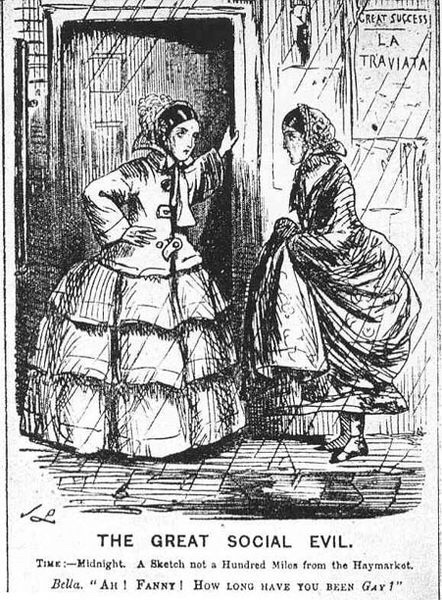
“Gay” was the first queer word I ever learned, and the first queer thing I ever called myself. Something about “lesbian” didn’t sit right with me, and I wasn’t yet aware of reclamation, of the bright side of pejoratives — the spark that happens when you turn a weapon on itself. Plus I liked the sneakiness. Gay meant happy, right? You could claim it while admitting nothing. It was a rainbow dream mask.
But even before it got the rest of its colors, this word blushed. Pleasure, joy, and other gaieties are perpetually societally fraught, and gay has the scars to prove it — it’s been punned on, leaned on, worn proudly, hidden behind, argued over, and ping-ponged across the net of respectability ever since it was invented. If words could break, gay might have a long time ago. Luckily it bent instead. Here’s the beginning of how it happened.
The most common etymology of the word “gay” has it rooted in the Proto-Indo-European root *gey- (“to go”). This evolved into *gheng- (“to stride”) which became the Proto-Germanic *ganhaz/*ganhwaz (“sudden”), and then the Old High German gahi (“quick, impulsive”). The move to Old French jai (“merry”) brought the recognizable definition and a nice modern jauntiness. Jai became gai likely due to the influence of Gothic gaheis (“impetuous”), and soon we had the Middle English gay, direct ancestor of the word we use today.
Easy enough — except that etymology is an inexact science based on barely traceable exchanges that took place thousands of years ago, so not everyone agrees on what happened. Anatoly Liberman has an alternate theory that roots gay in Old High German wahi (“shining”/”beautiful”), based on a g/w interchangibility that we see borne out in word pairs like “guardian” and “warden,” or “guerrilla” and “war.” But he’s even more attached to a different explanation from the 19th century master Frank Chance. An “excellent etymologist, now almost forgotten,” Chance used to publish almost exclusively in Notes and Queries, a quarterly where scholars and hobbyists traded notes and asked each other questions — kind of like an early Formspring, but for linguistics and lexicography. In an 1861 Note, Chance took on “gay” via an analogy to the French gaîne, or “sheath,” which comes from the Latin vagina, also “sheath” (and also your bonus etymology-of-the-day).
“SON, WE SHALL NAME YOU FRANK CHANCE, DOOMING YOU TO A LIFE OF GAMBLING AND/OR ETYMOLOGY”
“The g in gaîne,” Chance explains, “corresponds to the v in vagina… In a similar way, I think, our adjective “gay” might be readily deduced from the Latin vagus, or perhaps from the corresponding Italian vago, which means both wandering, roaming, and pleasant, agreeable.” About a century and a third later, German linguist Harri Meier added some evidence to the pile, listing Italian cognates like svagarsi (“amuse oneself”) and svago (“diversion”).
I have also become attached to this theory, not only because it’s more fun, but also because it means that the start of gay’s backstory involves a gradual influx of positive feeling — what semantician Stephen Ullman calls an “amelioration of meaning.” As Liberman points out, the Latin vagus often meant “flighty” or “frivolous,” which, though not the worst possible things to call someone, aren’t as sunshiney as the merriment and joie de vivre implied by “gay” — see, for example, Propertius’s Elegy V, in which a “vagis puellis” is compared negatively to Cynthia, a “docta puella” or “learned girl,” and Propertius’s perpetual muse. So somewhere over the course of its initial leap into English, gay enjoyed a rise in reputation — a fine beginning for a word that would spend the rest of its life undergoing a roller coaster ride of semantic shifts.
“Gay” first hit paper in 1325, in a transcription of a Middle English song called “Blow, Northerne Wynd.” When I started reading it, I thought it was about how the narrator would brave the northern wind to get to his beloved, who is described as semly and menskful and lossom (“seemly,” “worshipful,” and “lovely,” if you prefer boring new English words). But in the end, he’s actually asking the wind to blow his suetyng (“sweetheart”) to him, which honestly sounds kind of mean and lazy. Dave Wilton found the relevant stanza:
“Heo is dereworþe in day graciouse, stout, ant gay gentil, iolyf so þe iay worhliche when heo wakeþ. Maiden murgest of mouþ; bi est, bi west, by norþ ant souþ, þer nis fiele ne crouþ þat such murþes makeþ. Blow northerne wynd! Send thou me my suetyng! Blow northerne wynd! blow, blow, blow!”
(TRANSLATION: “She is precious in day / gracious, stout, and gay / gentle, jolly as the jay/ noble when she wakes. / Maiden merriest of mouth / by East, West, North and South / Neither fiddle nor crowd / Makes such abundance. / Blow northern wind! / Send me my sweetheart! / Blow northern wind! Blow, blow, blow!”)
Gay is a nice-sounding, one-syllable word that rhymes with a lot of things — all the makings of a poetic mainstay. To the delight of decades of middle school English students, no one could get enough of it for centuries and centuries. Chaucer used it in 1385. Robert Mannyng used it in his “story of England,” in the late 14th century. The lyrics of “Deck The Halls” are from 1862. Shakespeare used it thirteen times in total. Here’s Iago, in Othello, written in 1603: “She that was ever fair and never proud / Had tongue at will and yet was never loud / Never lack’d gold and yet went never gay.” I’m trying to be mature here but Shakespeare makes it hard.
DON’T LISTEN TO HIM, DESDEMONA! YOU’RE BETTER OFF GOLD AND GAY
Over this time, though, “gay” began experiencing a “pejoration of meaning” — it’s the opposite of the aforementioned amelioration, and you use it when a word’s reputation starts going downhill. Some think this started as far back as the 14th century, but it was definitely established by the 17th, when, according to the OED, it was generally used to describe those “addicted to pleasures and dissipations.” Carefreeness had flipped back to frivolity. You can even see it in the above Shakespeare, as Iago uses “gay” to mean “flashy” and sets it in parallel with pride and loudness, two then-undesirable traits). This frivolity developed into a general lack of inhibitions, and often referred to sexual carefreeness — by at least 1799, a “gay man” was a womanizer, a “gay woman” a prostitute, and a “gay house” a brothel.
In a nice return to its roots, “to go gay” was to live a life of hedonism. For proper usage, see this sentence, from Edward Montague Compton MacKenzie’s Carnival, that was far ahead of its time:
“After dinner Jenny went back to Hagworth Street, and had a flaming quarrel with her mother, who accused her of “going gay”; demanded to know how she dared put in an appearance dressed in another woman’s clothes; insisted she was to come home immediately after dinner; forbade a hundred things, and had the door slammed in her face for the advice.”
While this meaning became more prevalent, another now-familiar one snuck up alongside it. Next time we’ll talk about when gay started meaning what it does now — and take another few dips up and down the semantic roller coaster.
Taktsang Palphug Monastery, also called Paro Taktsang or The Tiger’s Nest, clings to a sheer cliff more than 10 thousand feet above sea level in the Himalayas of Bhutan. From this monastery there is about a 3,000 foot drop to the Paro Valley, below. The original temple complex was built in 1692, but the legends surrounding Taktsang are much older.
Taktsang marks the entrance of a cave where Padmasambhava is said to have meditated for three years, three months, three weeks, three days and three hours. Padmasambhava is credited with bringing Buddhist teachings to Tibet and Bhutan in the 8th century.
The Temple of the Tooth in Kandy was built in 1595 to hold the single most sacred object in all of Sri Lanka — a tooth of the Buddha. The tooth is said to have reached Sri Lanka in the 4th century, and in its complex history was moved several times and even stolen (but returned).
The tooth has not left the temple or been displayed to the public for a very long time. However, every summer it is celebrated in an elaborate festival, and a replica of the tooth is placed in a golden casket and carried through the streets of Kandy on the back of a large and elaborately decorated elephant, festooned with lights.
When construction began in the 12th century Cambodia’s Angkor Wat was intended to be a Hindu temple, but it was rededicated to Buddhism in the 13th century. At that time it was in the heart of the Khmer empire. But by the 15th century water shortages forced the Khmer to relocate, and the beautiful temple was abandoned except by a few Buddhist monks. In time much of the temple was reclaimed by the jungle.
It is renowned today for its exquisite beauty and for being the largest religious monument in the world. However, until the mid-19th century it was known only to Cambodians. The French were so astonished at the beauty and sophistication of the ruined temple that they refused to believe it had been built by the Khmer. It is now a UNESCO World Heritage site, and work to restore the temple is ongoing.
This massive temple was built on the Indonesian island of Java in the 9th century, and to this day it is considered the largest entirely Buddhist temple in the world (Angkor Wat is Hindu and Buddhist). Borobudur covers 203 acres and consists of six square and three circular platforms, topped by a dome. It is decorated with 2,672 relief panels and hundreds of Buddha statues. The meaning of the name “Borobudur” has been lost to time.
The entire temple almost was lost to time as well. It was abandoned in the 14th century and the magnificent temple was reclaimed by the jungle and forgotten. All that seemed to remain was a local legend of a mountain of a thousand statues. In 1814 the British governor of Java heard the story of the mountain and, intrigued, arranged for an expedition to find it.
Today Borobudur is a United Nation World Heritage Site and a place of pilgrimage for Buddhists.
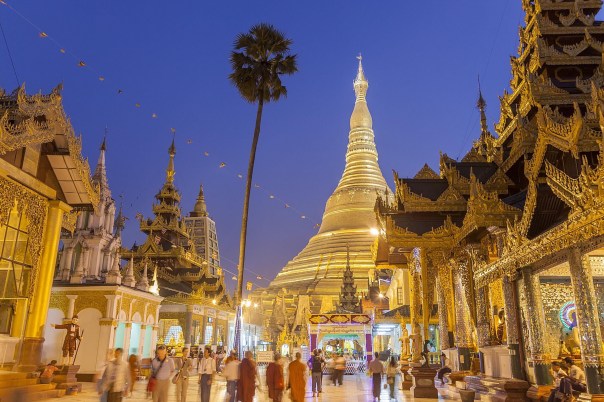
The great Shwedagon Pagoda of Yangon, Myanmar (Burma) is a kind of reliquary, or stupa, as well as a temple. It is believed to contain relics not only of the historical Buddha but also of three Buddhas who preceded him. The pagoda is 99 feet fall and plated with gold.
According to Burmese legend, the original pagoda was built 26 centuries ago by a king who had faith a new Buddha had been born. During his reign two merchant brothers met the Buddha in India and told him about the pagoda built in his honor. The Buddha then pulled out eight of his own hairs to be housed in the pagoda. When the casket containing the hairs was opened in Burma, many miraculous things happened.
Historians believe the original pagoda actually was built some time between the 6th and 10th centuries. It has been rebuilt several times; the current structure was built after an earthquake brought down the previous one in 1768.
According to legend, Jokhang Temple in Lhasa was built in the 7th century by a King of Tibet to please two of his wives, a princess of China and a princess of Nepal, who were Buddhists. Today historians tell us the princess of Nepal probably never existed. Even so, Jokhang remains a monument to the introduction of Buddhism to Tibet.
The Chinese princess, Wenchen, brought with her a statue said to have been blessed by the Buddha. The statue, called the Jowo Shakyamuni or Jowo Rinpoche, is considered the most sacred object in Tibet and remains enshrined in Jokhang to this day.
Long ago, about 628 CE, two brothers fishing in the Sumida River netted a tiny golden statue of Kanzeon, or Kannon, the bodhisattva of mercy. Some versions of this story say the brothers repeatedly put the statue back into the river, only to net it again.
Sensoji was built in honor of the bodhisattva, and the tiny golden statue is said to be enshrined there, although the statue the public may view is acknowledged to be a replica. The original temple was completed in 645, which makes it Tokyo’s oldest temple.
In 1945, during World War II, bombs dropped from American B-29s destroyed much of Tokyo, including Sensoji. The present structure was built after the war with donations from the Japanese people. On the temple grounds there is a tree growing from the remains of a tree hit by a bomb. The tree is cherished as a symbol of the undying spirit of Sensoji.
Eight centuries after its tragic destruction, Nalanda remains the most famous learning center in Buddhist history. Located in the present-day Bihar state of India, in Nalanda’s heyday the quality of its teachers attracted students from all over the Buddhist world.
It’s not clear when the first monastery was built at Nalanda, but one appears to have been there by the 3rd century CE. By the 5th century it had become a magnet for Buddhist scholars and had grown into something like a modern-day university. Students there not only studied Buddhism but also medicine, astrology, mathematics, logic and languages. Nalanda remained a dominant learning center until 1193, when it was destroyed by a nomadic army of Muslim Turks of central Asia. It is said that Nalanda’s vast library, full of irreplaceable manuscripts, smoldered for six months. Its destruction also marked the end of Buddhism in India until modern times.
Today the excavated ruins may be visited by tourists. But the memory of Nalanda still attracts attention. Presently some scholars are raising money to rebuild a new Nalanda near the ruins of the old one.
Yes, China’s Shaolin Temple is a real Buddhist temple, not a fiction created by martial arts movies. The monks there have practiced martial arts for many centuries, and they developed a unique style called Shaolin kung fu. Zen Buddhism was born there, established by Bodhidharma, who had come to China from India early in the 6th century. It doesn’t get more legendary than Shaolin.
History says Shaolin was first established in 496, a few years before Bodhidharma arrived. The buildings of the monastery complex have been rebuilt many times, most recently after they were gutted during the Cultural Revolution.
10. Mahabodhi: Where the Buddha Realized Enlightenment
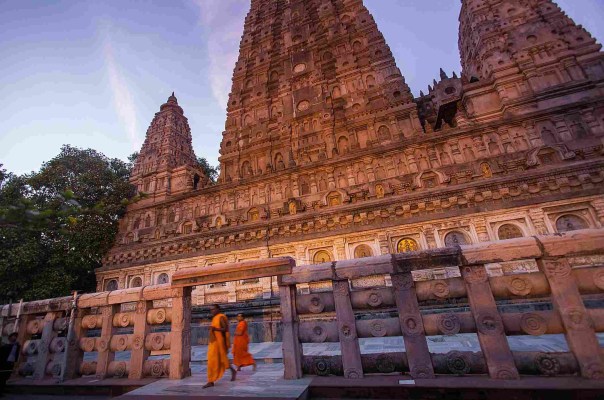
Mahabodhi Temple marks the place where the Buddha sat under the Bodhi tree and realized enlightenment, more than 25 centuries ago. “Mahabodhi” means “great awakening.” Next to the temple is a tree said to have been grown from a sapling of the original Bodhi tree. The tree and temple are located in Bodhgaya, in the Bihar state of India.
The original Mahabodhi Temple was built by the Emperor Ashoka about 260 BCE. In spite of its significance in the Buddha’s life, the site was largely abandoned after the 14th century, but in spite of neglect it remains one of the oldest brick structures in India. It was restored in the 19th century and is protected today as a UN World Heritage Site.
Buddhist legend says that Mahabodhi sits on the naval of the world; when the world is destroyed at the end of the age it will be the last place to disappear, and when a new world takes the place of this one, this same spot will be the first place to reappear.
11. Jetavana, or Jeta Grove: The First Buddhist Monastery?
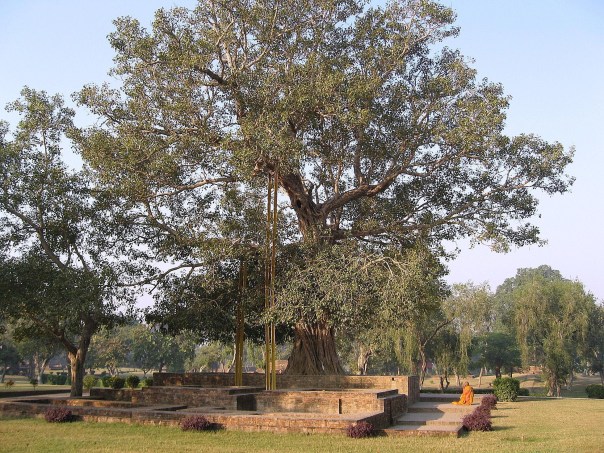
The Anandabodhi Tree at Jetavana is said to have been grown from a sapling of the original Bodhi tree. Bpilgrim, Wikipedia, Creative Commons License
The Anandabodhi Tree at Jetavana is said to have been grown from a sapling of the original Bodhi tree. Bpilgrim, Wikipedia, Creative Commons License
The ruins of Jetavana are what is left of what may have been the first Buddhist monastery. Here the historical Buddha gave many of the sermons recorded in the Sutta-pitaka.
Jetavana, or Jeta Grove, is where the disciple Anathapindika purchased land more than 25 centuries ago and built a place for the Buddha and his followers to live during the rainy season. The rest of the year the Buddha and his disciples traveled from village to village, teaching (see “The First Buddhist Monks”).
The site today is a historical park, located in the Indian state of Uttar Pradesh, which borders Nepal. The tree in the photograph is the Anandabodhi Tree, believed to have been grown from a sapling of the tree that sheltered the Buddha when he realized enlightenment.
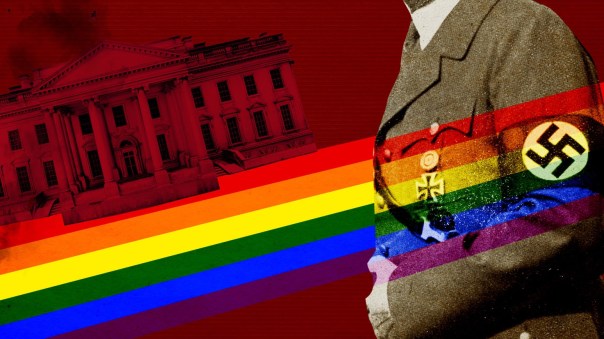
Photo Illustration by Lyne Lucien/The Daily Beast/Getty
In 1942, the exposure of a Brooklyn townhouse where wealthy men had sex with members of the armed services led to an anti-gay witch-hunt and heated political scandal.
n the early part of the 20th century, brothels were commonplace in many neighborhoods in New York City, but in 1942 an inconspicuous two-story redbrick town house at 329 Pacific Street—a run-down block near the border between Brooklyn Heights and downtown Brooklyn—would become the most famous “house of assignation” in the entire country.
The proprietor, a fifty-five-year-old, “moon-faced” Swedish immigrant, Gustave Beekman, specialized in providing wealthy men with members of the armed services.
He had previously run a similar house a few blocks closer to the water at 235 Warren Street, but had relocated after being busted in a police raid in November 1940. At that time, he was charged with running a disorderly house, fined, and quickly released.
However, when the police raided his establishment on Pacific Street on the evening of March 14, 1942 (accompanied by members of the Office of Naval Intelligence), they would uncover a scandal that would rock the nation, consume newspaper headlines for months, and get hotly debated on the floor of the US Senate.
Or perhaps it’s more accurate to say they would invent one. It would be Walter Winchell, then the gossip columnist for the New York Daily Mirror, who would give this strange episode in Brooklyn history its enduring name: “The Swastika Swishery.”
This was one of the stories I’d heard about early in my research for my new book, When Brooklyn Was Queer, but I never suspected that I would uncover new information that would answer many of the lingering questions about this so-called scandal.
The initial story, which was primarily reported in the New York Post, went something like this: Beekman ran a “house of degradation” where German spies hired American servicemen to pump them over pillow talk for information about troop movements.
From there, the story quickly spiraled. Not only were there spies at Beekman’s house, a notorious “Senator X,” who was well known as a closeted gay man and opposed America’s entry into World War II, was also a regular habitué of Beekman’s. By early May, Beekman wasn’t just accused of hosting any old spy; rather, he was catering to “one of Hitler’s chief espionage agents in this country.”
For all of April and May, papers kept readers riveted with headlines such as “Service Men Lured to ‘Den’ Called Spy Nest,” “Senator Linked to Spy Nest Which Lured Service Men,” “Den Keeper Withholds Source of Cash,” and “Leibowitz Pushes Spy Ring Probe: Tells Convicted Morals Offender to Talk or Get 20-Year Term.”
News bulletins eagerly broadcast every new tidbit of information in the case, including the four separate (and contradictory) official statements Beekman gave to the police and the FBI.
The senator in question was soon revealed as David Ignatius Walsh, a Catholic “confirmed bachelor” from Boston, who—although liberal on many social issues—was a strong isolationist, believing America had no place in the affairs of Europe.
Time magazine called his connection with the Beekman case “one of the worst scandals that ever affected a member of the Senate.” When the Senate majority leader opened discussion of the issue on the Senate floor, he called the FBI’s report on the case “disgusting and unprintable” and refused to have it entered into the Senate’s official record.
“To this day, numerous authors have speculated about what actually happened at Beekman’s house in the middle of World War II, with most concluding that it was ultimately unknowable”
Another isolationist senator from Missouri called Dorothy Schiff, the publisher of the New York Post, an “old hussy” and demanded an investigation on the charge that she was part of a secret cabal that was trying to gin up public sentiment in favor of the war by making antiwar politicians look bad.
To this day, numerous authors have speculated about what actually happened at Beekman’s house in the middle of World War II, with most concluding that it was ultimately unknowable.
However, Dorothy Schiff was so concerned that Senator Walsh might sue the Post over its reporting that she secretly commissioned a team of six private investigators and attorneys, led by Daniel A. Doran, to discover the truth.
Their report, which took five months to prepare, ran over 150 pages and included everything from interviews with the major players in the case (including Beekman and all of his lawyers), to a detailed analysis of Senator Walsh’s travel schedule for the times he was supposedly in Brooklyn.
For years, this report has been publicly available, along with the rest of Dorothy Schiff’s papers, at the New York Public Library, but no historians seem to have referenced it. As far as I know, I am the first to read its findings.
Local police had had Beekman under watch at least as far back as January 1942, having noticed an unusual number of sailors and soldiers coming and going from his building. In the two years since they had last busted Beekman, the war had begun, and no one wanted to arrest a bunch of men who might be needed in Europe or to impugn the morality of the military in general.
The police had no plans to raid his house until they were contacted by the Office of Naval Intelligence (ONI), which had secretly set up a spy post on the fourth floor of a nearby hospital, from which they were recording the license plate numbers of everyone who entered the building.
The ONI wasn’t interested in Beekman; rather, it was trailing William Elberfeld, a German national whom it believed to be a spy for Hitler. Together, the police and the ONI raided the establishment, arresting not just Beekman, but some of his clients (including noted composer Virgil Thomson), and some of the men who worked there.
“The prosecution seemed convinced that Beekman couldn’t be making much money from running a house of male prostitution, and so he had to have some other source of income—perhaps from Elberfeld or another spy”
One of the sex workers arrested was a Brooklyn merchant mariner named Charles Zuber, who was also one of Beekman’s lovers.
The assistant district attorney (ADA) on the case, eager, perhaps, to make a name for himself, questioned Zuber at length about any particularly wealthy clients. The prosecution seemed convinced that Beekman couldn’t be making much money from running a house of male prostitution, and so he had to have some other source of income—perhaps from Elberfeld or another spy.
Zuber furnished the ADA with the name “Walsh,” saying he believed the man to be a doctor. The ADA, aware of the long-standing rumors that Senator David Walsh was gay, jumped to the conclusion that these two men were one and the same. He offered Zuber a deal: if he flipped on Beekman and testified against him on sodomy charges, Zuber would get off scot-free.
The ADA then passed the information about Walsh on to the judge in the case. When Beekman was found guilty on charges of sodomy, largely thanks to Zuber’s testimony, the judge told Beekman that if he came clean about the extent of the spy ring, he would be lenient; otherwise, Beekman was facing a twenty-year sentence.
“He seemed willing to say whatever was necessary to avoid going to prison, which for a fifty-five-year-old gay man whom the nation now believed to be a Nazi sympathizer might well have been a death sentence”
According to the lead investigator hired by Dorothy Schiff, Beekman was “ingratiating, well-mannered, well spoken and plausible.” He was also terrified and rather loose with the truth. He seemed willing to say whatever was necessary to avoid going to prison, which for a 55-year-old gay man whom the nation now believed to be a Nazi sympathizer might well have been a death sentence.
Elberfeld had been a regular at Beekman’s place, but he also ran a rival brothel in Manhattan and had no need to go to Brooklyn if he wanted to question sailors. Moreover, Beekman had banned him from his house around Thanksgiving of 1941, when Elberfeld told Beekman that Sweden was next on Hitler’s list, and that after it was invaded, Beekman wouldn’t be so “uppity-uppity.”
The police literally tore apart both Beekman’s home and Elberfeld’s apartment and found nothing except a shortwave radio at Elberfeld’s, which was technically contraband when owned by a foreign national.
Elberfeld was placed on indefinite detention on Ellis Island—where he would remain for the rest of the war—but no charges were ever brought against him, and the police and the ONI no longer seemed interested in him at all. Instead, they leaned on Beekman to identify Walsh, once grilling him for over seven hours until he collapsed.
A few of the men arrested in the initial raid were also asked about Walsh, with some saying he was there, others saying he wasn’t, and a few saying they had no idea.
With no evidence other than a series of contradictory statements on whether Walsh had ever been at Beekman’s home, there was no case. Yet the government still believed that Beekman was hiding some source of income, which the judge seemed to believe would have linked Walsh to the story.
When Beekman refused to name his (nonexistent) financial backers, he received a twenty-year sentence to Sing Sing, the maximum-security prison in Ossining, New York.
By making a detailed analysis of Walsh’s travel schedule, investigator Doran conclusively proved that Walsh could not have been at Beekman’s establishment on any of the dates he was supposed to have been present.
“No one seemed interested in using that evidence to exonerate Beekman, who would serve out the entirety of his twenty-year sentence before emerging from prison (where he was called ‘Mother Beekman’) and disappearing from public records entirely”
Moreover, Doran tracked down a Connecticut doctor, Harry Stone, a regular at Beekman’s who bore a distinct resemblance to Senator Walsh. By presenting photos of Walsh and Stone to various witnesses (including Beekman), Doran concluded that Stone was almost definitely the man mistaken for Walsh.
Yet no one seemed interested in using that evidence to exonerate Beekman, who would serve out the entirety of his twenty-year sentence before emerging from prison (where he was called “Mother Beekman”) and disappearing from public records entirely.
As for Walsh, although his fellow Senate members congratulated him on his aplomb during the entire affair, the airing of his gay laundry (plus, no doubt, his opposition to the war) seemed to sour voters on him. He was ousted from the Senate in 1946 and died the next year.
After months of wild accusations, sting operations, and endless denunciations to the press, all the government got was the pointless destruction of the lives of two gay men and a witch hunt that sent innumerable others into hiding.
Today, the quiet red-brick building still sits at 329 Pacific Street as a private residence, with no trace of its infamous past showing in its innocuous façade.
Decades before gay marriage became legal anywhere in the US, same-sex couples were committing themselves to each other in front of friends and loved ones. Few records of these ceremonies existed – until now, writes Jonathan Berr.
In 1957, a man dropped off a roll of film at a pharmacy in Philadelphia. But the developed photos were never returned to their owners.
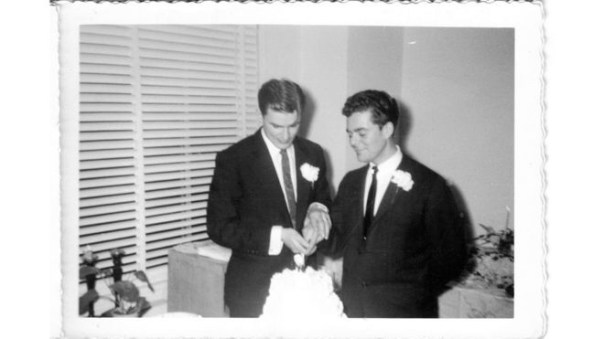
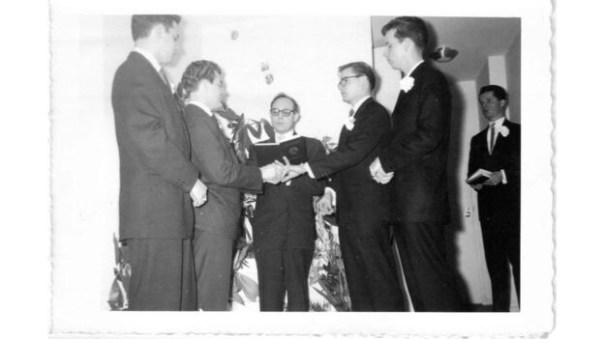
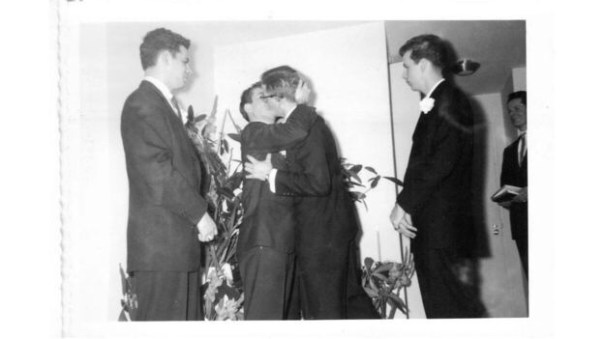
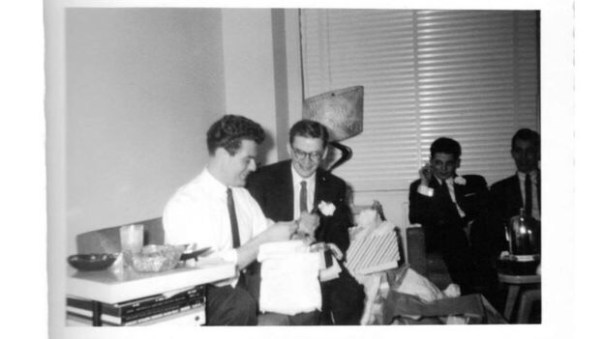
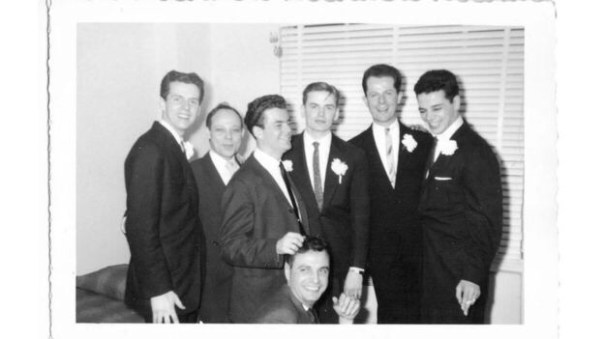
The pictures appear to depict a gay wedding, nearly 50 years before same-sex marriage was legal anywhere in the US and almost 60 years before it became a federally-recognised right.
Now, a trio of gay producers and writers are trying to identify the grooms to learn their story and to find out whether a pharmacy employee balked at providing the snaps because they objected to their subject.
The writers are documenting their efforts in a reality show The Mystery of the 1957 Gay Wedding Photos.
The programme, which doesn’t yet have a platform to call home, is being produced in conjunction with Endemol Shine Group, whose shows include Big Brother, The Biggest Loser and Extreme Makeover: Home Edition.
ONE Archives at USC
“It’s a passion project for us,” says Michael J. Wolfe, a Los Angeles-based writer. “We are turning over every stone, interviewing dozens of people in the Philadelphia area and beyond, and consulting with investigators, historians, and experts across many different fields.”
The photos were acquired by a collector a few years ago who had bought them at an online auction. He realised their significance and donated them to ONE Archives at the USC Libraries in Los Angeles and at the Wilcox Archives in Philadelphia.
The couple in the pictures appear to be in their 20s or 30s, so they would be in their 80s or 90s if they were alive today. The grooms and their guests are dressed up in dark suits with flowers in their lapels.
The celebration took place in a modest flat with the blinds drawn. It featured a ceremony officiated by someone who appears to be a member of the clergy. The grooms are shown kissing, cutting their wedding cake and opening presents.
ONE Archives at USC
Mr Wolfe and his partners, filmmaker PJ Palmer and TV writer/producer Neal Baer, have not identified the mystery couple yet.
“We are recovering amazing, important stories all sorts of them… and more gay history that’s been buried,” he says.
“There is a very rich history that’s been suppressed… I wish as a child [that] I had seen family photos of a marriage like this… I would have felt more normal as a kid. I would have known that I was okay.”
Couples who fell in love sometimes committed themselves to one another in unions that were not acknowledged by either governments or religions.
The US Supreme Court didn’t recognise the right for gay people to marry the person of their choice until 2015, 11 years after Massachusetts did so.
ONE Archives at USC
“We don’t know how common or uncommon it was for couples to hold ceremonies to marry each other [because] there is so little photographic or film record of how people actually lived,” says Eric Marcus, host of the Making Gay History podcast.
“It’s important to remember that people found ways to live their lives quietly away from the prying eyes of the straight world.”
Of course, that was easier said than done.
Wedding guests at the mystery wedding ONE Archives at USC
Several years before the wedding took place, President Dwight Eisenhower signed an executive order banning gays from working for the federal government.
In 1952, The American Psychiatric Association classified homosexuality as a “sociopathic personality disturbance” in the first edition of its Diagnostic and Statistical Manual (DSM), the listing of known psychiatric disorders.
After considerable lobbying by activists, the APA removed homosexuality from the second edition of the DSM in 1973.
The Stonewall Riots, considered to be the birth of the modern gay rights movement, had happened a few years before that in 1969 – 12 years after the wedding.
ONE Archives at USC
It’s not just the passage of time that will hinder the search for the grooms. The filmmakers believe the Aids crisis may also be factor – about 700,000 Americans have died since the start of the epidemic in the 1980s, according to the Kaiser Family Foundation.
“We are talking about a generation of people who were decimated by Aids,” Mr Wolfe said. “There are a lot of missing people who otherwise would have made a search like this much easier. All of that happened before social media.”
If the couple is ever identified, they would certainly add another chapter in the history of gay rights for doing something extraordinary that is now becoming increasingly ordinary.
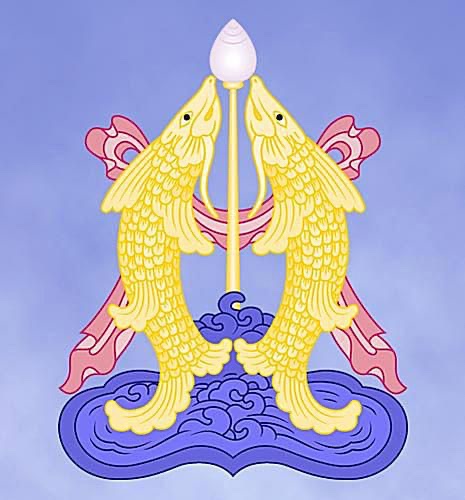
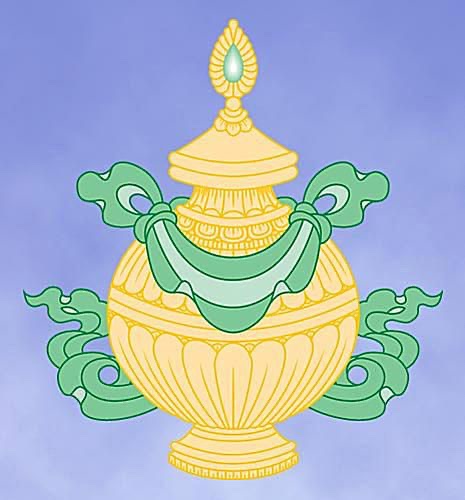
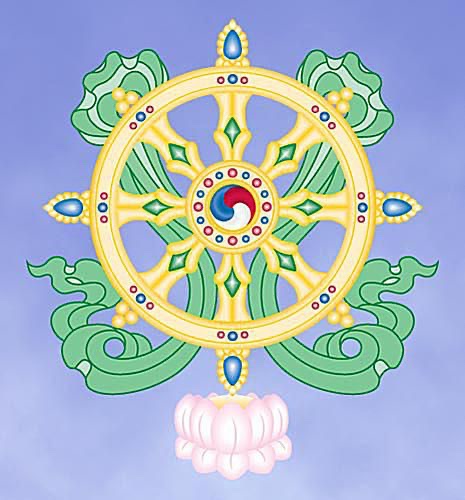
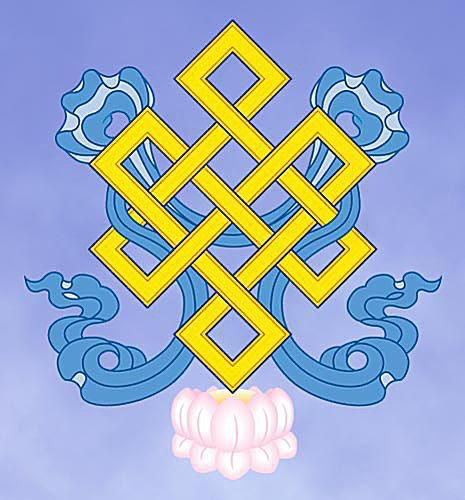
The Eight Auspicious Symbols of Buddhism originated in Indian iconography. In ancient times, many of these same symbols were associated with the coronations of kings, but as they were adopted by Buddhism, they came to represent offerings the gods made to the Buddha after his enlightenment.
Although westerners may be unfamiliar with some of the Eight Auspicious Symbols, they can be found in the art of most schools of Buddhism, especially in Tibetan Buddhism. In some monasteries in China, the symbols are placed on lotus pedestals in front of statues of the Buddha. The symbols are often used in decorative art, or as a point of focus for meditation and contemplation
Here is a brief overview of the Eight Auspicious Symbols:
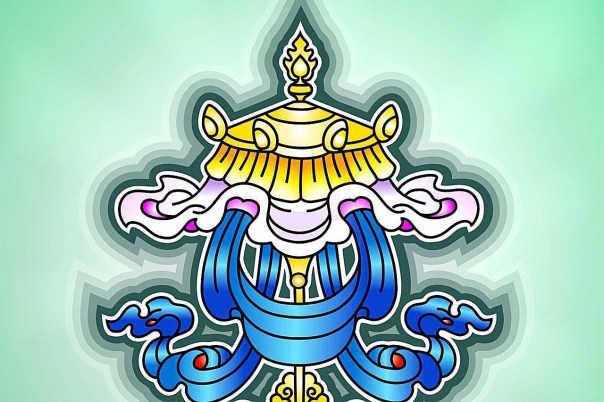
The parasol is a symbol of royal dignity and protection from the heat of the sun. By extension, it represents protection from suffering.
The ornate parasol usually is depicted with a dome, representing wisdom, and a “skirt” around the dome, representing compassion. Sometimes the dome is octagonal, representing the Eightfold Path. In other uses, it is square, representing the four directional quarters.
The two fish were originally symbolic of the rivers Ganges and Yamuna, but came to represent general good fortune for Hindus, Jainists, and Buddhists. Within Buddhism, it also symbolizes that living beings who practice the dharma need have no fear to drown in the ocean of suffering, and can freely migrate (chose their rebirth) like fish in the water.
In Asia, the conch has long been used as a battle horn. In the Hindu epic The Mahabharata, the sound of the hero Arjuna’s conch terrorized his enemies. In ancient Hindu times, a white conch also represented the Brahmin caste.
In Buddhism, a white conch that coils to the right represents the sound of the Dharma reaching far and wide, awakening beings from ignorance.
The lotus is an aquatic plant that roots in deep mud with a stem that grows up through murky water. But the blossom rises above the muck and opens in the sun, beautiful and fragrant. So perhaps its no surprise that in Buddhism, the lotus represents the true nature of beings, who rise through samsara into the beauty and clarity of enlightenment.
The victory banner signifies the Buddha’s victory over the demon Mara and over what Mara represents–passion, fear of death, pride and lust. More generally, it represents the victory of wisdom over ignorance. There is a legend that the Buddha raised the victory banner over Mount Meru to mark his victory over all phenomenal things.
The treasure vase is filled with precious and sacred things, yet no matter how much is taken out, it is always full. It represents the teachings of the Buddha, which remained a bountiful treasure no matter how many teachings he gave to others. It also symbolizes long life and prosperity.
The Dharma Wheel, also called the dharma-chakra or dhamma chakka, is one of the most well-known symbols of Buddhism. In most representations, the Wheel has eight spokes, representing the Eightfold Path. According to tradition, the Dharma Wheel was first turned when the Buddha delivered his first sermon after his enlightenment. There were two subsequent turnings of the wheel, in which teachings on emptiness (sunyata) and on inherent Buddha-nature were given.
The Eternal Knot, with its lines flowing and entwined in a closed pattern, represents dependent origination and the interrelation of all phenomena. It also may signify the mutual dependence of religious doctrine and secular life; of wisdom and compassion; or, at the time of enlightenment, the unions of emptiness and clarity.
Reference
O’Brien, Barbara. “The Eight Auspicious Symbols of Buddhism.” Learn Religions, Jan. 29, 2020, learnreligions.com/the-eight-auspicious-symbols-of-buddhism-449989.
Justice minister hails ‘momentous day’ as so-called Turing’s law receives royal assent, but critics say move does not go far enough
The legislation follows a posthumous pardon for the Enigma codebreaker Alan Turing who was convicted of gross indecency. Photograph: Sherborne school/AFP/Getty
Thousands of men convicted of offences that once criminalised homosexuality but are no longer on the statute book have been posthumously pardoned under a new law.
A clause in the policing and crime bill, which received royal assent on Tuesday, extends to those who are dead the existing process of purging past criminal records.
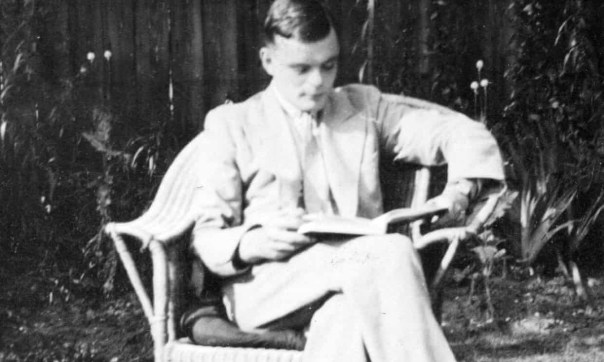
The general pardon is modelled on the 2013 royal pardon granted by the Queen to Alan Turing, the mathematician who broke the German Enigma codes during the second world war. He killed himself in 1954, at the age of 41, after his conviction for gross indecency.
Welcoming the legislation, the justice minister Sam Gyimah said: “This is a truly momentous day. We can never undo the hurt caused, but we have apologised and taken action to right these wrongs. I am immensely proud that ‘Turing’s law’ has become a reality under this government.”
There is already a procedure in place for the living to apply to the Home Office to have their past convictions, relating to same-sex relationships, expunged from their criminal records.
Under what is known as the disregard process, anyone previously found guilty of past sexual offences that are no longer criminal matters can ask to have them removed.
A disregard can be granted only if the past offence was a consensual relationship and both men were over 16. The conduct must also not constitute what remains an offence of sexual activity in a public lavatory.
Sam Gyimah, justice minister, says the government has ‘taken action to right these wrongs’. Photograph: Rex/Shutterstock
Each disregard application is checked to prevent people from claiming to be cleared of offences that are still crimes. Those granted a disregard will also be pardoned.
No lists of past pardons will be published but the new law will allow future historians to point out that those imprisoned or fined for consensual gay relationships would not under modern legislation have committed a crime.
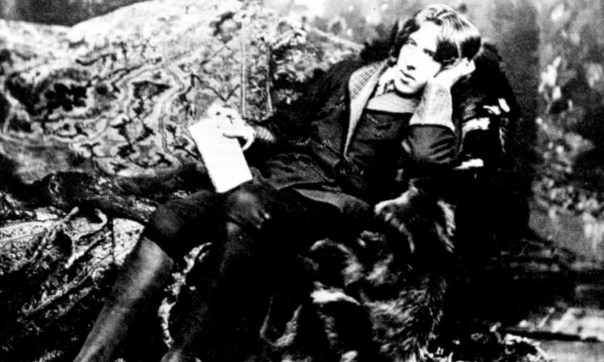
Rewriting history will not be easy. The complexity of the evidence, for example, that led to Oscar Wilde’s conviction in 1895 for gross indecency – including evidence of procuring male prostitutes – would make it difficult to assess.
The gay rights organisation Stonewall has suggested the playwright and author, who was sentenced to two years hard labour in Reading jail, should be entitled to a pardon.
The Ministry of Justice said there would be no historical limit in relation to past offences. It declined, however, to say whether Wilde would be among those deemed posthumously pardoned.
The amendments to the bill were tabled by Lord Sharkey, Lord Cashman and Lord Lexden with government support.
A private member’s bill with a similar aim and a blanket pardon, brought forward by the SNP MP John Nicolson, was not supported by the government. It would have backdated pardons only to 1919.
A Stonewall spokesperson said: “This is significant. And it’s as important to the whole lesbian, gay, bi and trans community, as it is for the gay and bi men affected.
“The more equality is enshrined into our law books, the stronger our equality becomes, and the stronger we as a community become.
“This month the government issued a clear and powerful apology to every gay and bi man who had been unjustly criminalised for being who they are. This is not just equality for gay and bi men; the passing of this law is justice.
“We’re working to ensure that this new process is brought quickly and correctly, and to ensure all gay and bi men unjustly persecuted and prosecuted can finally receive the justice they deserve.”
Welcoming the new law, the human rights campaigner Peter Tatchell said: “This pardon is an important, valuable advance that will remedy the grave injustices suffered by many of the estimated 50,000 to 100,000 men who were convicted under discriminatory anti-gay laws between 1885 and 2003 – the latter being the year when all homophobic sexual offences legislation was finally repealed in England and Wales.
“A pardon has connotations of forgiveness for a wrong done. These men and the wider LGBT community believe they did no wrong.
“The legislation has a few omissions. It does not explicitly allow for the pardoning of men convicted of soliciting and procuring homosexual relations under the 1956 and 1967 Sexual Offences Acts. Nor does it pardon those people, including some lesbians, convicted for same-sex kissing and cuddling under laws such as the Public Order Act 1986, the common law offence of outraging public decency, the Town Police Clauses Act 1847, the Ecclesiastical Courts Jurisdiction Act 1860 and the army, navy and air force acts and other diverse statutes.
“However, agreements secured by Lord Cashman mean that people convicted under these other laws can also apply for a pardon.”
The last men who were executed for homosexuality in England were James Pratt and John Smith who were hanged in 1835.
Sharkey, the Liberal Democrat peer who drafted the amendment to the bill, said: “This is a momentous day for thousands of families up and down the UK who have been campaigning on this issue for decades.
“It is a wonderful thing that we have been able to build on the pardon granted to Alan Turing and extend it to thousands of men unjustly convicted for sexual offences that would not be crimes today.”
Posthumous pardons law may see Oscar Wilde exonerated
Ministry of Justice announces initiative to wipe criminal records of gay and bisexual men convicted of sexual offences that are no longer illegal
The complexity of the evidence for Oscar Wilde’s conviction in 1895 for gross indecency makes it difficult to assess whether he should receive a pardon. Photograph: PA
Is Oscar Wilde about be posthumously pardoned? In a symbolic gesture announced by the government on Thursday, deceased gay and bisexual men convicted of sexual offences that are no longer illegal will have their criminal records wiped.
Announcing the initiative, the Ministry of Justice (MoJ) said that no individuals would be named or singled out – leaving the status of past scandals unresolved.
If the historical homosexual crime is no longer illegal and involved a consensual act with someone over the age of 16, then those convicted will be deemed to have received a posthumous pardon.
The complexity of the evidence that led to Wilde’s conviction in 1895 for gross indecency – including evidence of procuring male prostitutes – would make it difficult to assess. The gay rights organisation Stonewall suggested that the playwright and author, who was sentenced to two years hard labour in Reading jail, should now be entitled to a pardon.
The justice minister, Sam Gyimah, said that a clause would be introduced into the policing and crime bill. “It is hugely important that we pardon people convicted of historical sexual offences who would be innocent of any crime today,” he said. “Through pardons and the existing disregard process we will meet our manifesto commitment to put right these wrongs.”
The disregard process is already open to those who are alive and wish to remove from their criminal record any past sexual offences that are no longer illegal. They will be entitled to a statutory pardon under the new legislation.
In 2013 Alan Turing, the gay mathematician who broke the German Enigma codes, was posthumously pardoned by the Queen. He killed himself by taking cyanide in 1954, at the age of 41, following his conviction for gross indecency.
The MoJ said it would partially follow Lord Sharkey’s amendment to the Protection of Freedoms Act 2012 although it would grant a blanket pardon for those who have died and not investigate individual historical cases.
Sharkey said: “This is a momentous day for thousands of families up and down the UK who have been campaigning on this issue for decades. I am very grateful for the government’s support and the support of many of my colleagues in parliament.”
The government has declined to support a private members’ bill on the subject, brought forward by an SNP MP, John Nicolson, which is due to be debated in parliament later this week.
Ministers said they fear that bill would allow some people to claim they have been cleared of offences that are still crimes – including sex with a minor and non-consensual sexual activity.
Gyimah said: “I understand and support the intentions behind Mr Nicolson’s bill, however I worry that he has not fully thought through the consequences. A blanket pardon, without the detailed investigations carried out by the Home Office under the disregard process, could see people guilty of an offence which is still a crime today claiming to be pardoned.”
The MoJ said there would be no historical limit in relation to past offences. It declined to say whether Wilde would be among those deemed posthumously pardoned.
Nicolson, the former BBC newsreader and front bench SNP culture spokesman, told the Guardian that the former justice secretary Michael Gove had promised him government support for his private member’s bill. His would only backdate pardons to 1919. “I hope that the government will sit and read my bill carefully,” he said. “Mine would also be a blanket pardon. A lot of those people [who are alive] are very old and would not want their names listed.”
Paul Twocock, director of campaigns at Stonewall, said: “We welcome the government announcement to issue a posthumous pardon to all gay and bi men unjustly prosecuted for being who they are, but we don’t think it goes far enough. John Nicolson MP’s proposed bill closes a loophole that means some gay and bi men who are still alive and living with those convictions still can’t have them deleted, despite them being unjust and not illegal today. We urge the government to look at bringing this into their proposal.
“We also don’t agree with the government’s interpretation of John Nicolson MP’s bill – it explicitly excludes pardoning anyone convicted of offences that would still be illegal today, including non-consensual sex and sex with someone under 16.”
Family of Alan Turing to demand government pardon 49,000 other men
Campaigners to bring petition to Downing Street, demanding all men convicted under gross indecency law for their homosexuality are pardoned
Alan Turing was convicted in 1952 of gross indecency, but was given a posthumous royal pardon in 2013. Photograph: Rex
The family of the codebreaker Alan Turing will visit Downing Street on Monday to demand the government pardons 49,000 other men persecuted like him for their homosexuality.
Turing, whose work cracking the German military codes was vital to the British war effort against Nazi Germany, was convicted in 1952 of gross indecency with a 19-year-old man, was chemically castrated, and two years later died from cyanide poisoning in an apparent suicide.
He was given a posthumous royal pardon in 2013 and campaigners want the government to pardon all the men convicted under the outdated law.
Turing’s great-nephew, Nevil Hunt, his great-niece, Rachel Barnes, and her son, Thomas, will hand over the petition, which attracted almost 500,000 signatures, to 10 Downing Street.
Ms Barnes said: “I consider it to be fair and just that everybody who was convicted under the Gross Indecency law is given a pardon. It is illogical that my great uncle has been the only one to be pardoned when so many were convicted of the same crime. I feel sure that Alan Turing would have also wanted justice for everybody.”
Matthew Todd, the editor of Attitude Magazine, who will also visit Downing Street, said: “Generations of gay and bisexual men were forced to live their lives in a state of terror.
“Men convicted of gross indecency were often considered to have brought huge shame on their families and many took their own lives. We still live with the legacy of this period today and it’s about time the country addressed this appalling part of our history.”
Benedict Cumberbatch’s Oscar-nominated portrayal of Turing has brought the pioneering scientist’s story to a wider audience. The film follows him from his days as a second world war code breaker at Bletchley Park to his work at Manchester University, which saw him hailed as the father of modern computing, and his tragic death.
Turing led a team decoding messages at Bletchley Park, whose work remained secret until many years after the end of the war, and also designed the Bombe machine which decrypted German messages. Their work helped shorten the conflict and saved many thousands of lives.
QUESTIONABLE gay history! There is nothing in any of the accounts of Beau Brummell’s life to indicate he was gay. But there is also no indication that he was straight…in fact, no romantic trysts at all, with men, or women. There are suggestions that he may have been bisexual, but however you look at it – boy…he sure comes across as gay!
The name Beau Brummell is synonymous with Regency England, but what do you know about him? Researching this article I found that people associate him with silks, satins, and snuff, while one thought he was a fictional detective. It seemed the French writer Barbey d’Aurevilly was right: once the most famous man in the kingdom was “nothing but a name mysteriously sparkling in all the memoirs of his time.” So, what happened to Beau Brummell?
George Bryan Brummell was born in 10 Downing Street on 7th June 1778. He was the youngest son of William Brummell – an enterprising man who had risen to the position of Private Secretary to the Prime Minister, with all the influence and trappings that came with the role – a grace and favour apartment in Hampton Court Palace, a country house in Berkshire, and friendship with Charles James Fox, Richard Sheridan, and Sir Joshua Reynolds, who painted the two curly-haired Brummell boys in 1781. The Brummell family had risen a long way in two generations and young George was to take the family name to even greater heights, and depths. He became a legend in his own lifetime and worked as hard at this as his father had done as a junior clerk.
In 1783, William Brummell retired with an income of about £2,500 a year – enough to send his two sons to Eton. There, George was well liked. He was good natured and clever but lazy and already developing his fastidious nature, avoiding the streets in wet weather and careful of his dignity. George went on to Oriel College at Oxford but left in 1794 when his father died, and instead joined the Prince of Wales’ own regiment, the Tenth Dragoons – or ‘The Elegant Extracts’ as they were known. The Dragoons were based in Brighton until civil unrest called them to the north and Brummell resigned immediately, saying that Manchester would be too disagreeable for him. His £40,000 inheritance meant he could afford to concentrate on being a gentleman. Quickly given the soubriquet ‘Beau’, he proved to be a witty and observant figure who made many friends. Charles Stanhope said
“I could understand a good deal of the secret of Brummell’s extraordinary success and influence in the highest society. He was a vast deal more than a mere dandy; he had wit as well as humour and drollery, and the most perfect coolness and self-possession.”
To be part of Brummell’s set was Society’s top cachet, and to be cut by him was social death. In the novel Granby there is a poorly disguised portrait.
“In the art of cutting he shone unrivalled. He could assume that calm but wandering gaze which veers, as if unconsciously, round the proscribed individual, neither fixing not to be fixed, not looking on vacancy nor on any one object, neither occupied nor abstracted, a look which perhaps excuses you to the person cut and, at any rate, prevents him from accosting you.”
Brummell was careful to remain free from obligations or attachments (he is said to have cut his own brother) and there were no signs of any relationships – either with women or men. His first biographer, Captain Jesse, thought that Brummell “had too much self love ever to be really in love.” Beau himself told Lady Hester Stanhope that he had adopted the only course possible to distance himself from ordinary men. As Oscar Wilde said more than a century later “to love oneself is the beginning of a life-long romance.”
His friendship with the Prince of Wales did not last. As Brummell ceased to need the Prince’s patronage, so the Prince became jealous of Brummell’s position, but Brummell did not care. “I made him what he is and I can unmake him.” he quipped in an unguarded moment. By 1813 the end of the friendship was scandalously public when the Prince arrived at a party with Lord Alvanley and coldly ignored Brummell.
“Ah, Alvanley,” Brummell’s voice rang out clearly over the shocked silence, “Who is your fat friend?”
Brummell maintained his image so well that everyone was shocked when debts forced him to Calais in May 1816. In London, his effects were sold at auction, including his fine cellar “10 dozen Capital Old Port, 16 dozen of Burgundy, Claret, and Still Champagne. . .” They were, the publicity assured potential buyers, “the genuine property of a man of fashion, gone to the continent.” The auction raised £1000, but this was not enough to enable Brummell to return.
However, life in Calais was bearable. “No one can lead a more pleasant life than Brummell, for he passes his time between London and Paris” the British ambassador quipped, and Brummell’s friends visited him there, bring presents of money or gifts such as his favourite Façon de Paris snuff. In 1818 rumours abounded that he had been offered £5 thousand to write his memoirs, and that the Prince of Wales had offered £6 thousand for him not to do it.
Brummell became very popular in Calais “We used to call him Le Roi de Calais. He was a truly fine man, very elegant, and really well off – he always paid his bills and was very good to the poor; everyone was very sorry when he left.” said a Calais shopkeeper. Brummell was always careful to settle his debts with tradesmen – instead he owed increasingly vast amounts of money to bankers and his friends but his good nature and wit charmed them all.
When asked to make a contribution towards a Church of England chapel in Calais, he replied “I am very sorry you did not call last week, for it was only yesterday that I became a catholic.”
In 1827 Brummell’s patron the Duke of York died, and Brummell’s creditors began to close in. That summer, Brummell’s letters contained a note of panic. “I am sadly alarmed lest some overwhelming disaster should befall me” he wrote. While George IV was king, there was little hope of rapprochement, but good fortune did come along in June 1830 when Brummell was appointed His Majesty’s Consul for the departments of Calvados, La Manche, and Ille et Vilaine. The post was paid £400 a year and was based in Caen. However, there was a problem; with more than £1000 of debts, Brummell’s creditors were very reluctant to see him leave Calais. It was not until he signed a crippling agreement to assign his salary to his attorneys to deal with his debts that he was allowed to leave.
In Caen, he soon became a popular figure, noted for the way he would tiptoe across the cobbles to avoid getting dirt on his boots. He struck up a friendship with the grocer and wine merchant Charles Armstrong, who also cashed bills and money orders. Money remained a problem and he continued to press for a superior job; he wrote to Lord Palmerston that the post at Caen was not needed and he (Brummell) could do something better. On the 21st March 1832 he received a reply: HM Govt had “come to the conclusion that the post of British Consul at Caen may be abolished without prejudice to the public service . . . your salary will cease on the 31st May.” The news did not stay secret for long and he only escaped from the bailiffs when his landlady hid him in a wardrobe.
Armstrong went to England to collect money from Brummell’s friends and arranged £120 a year for his keep. Although generous, this was a pittance which at one time he would have spent in less than a month – when asked how much it would cost to launch a young man into London society, he once replied “with strict economy, it might be done for eight hundred pounds a year.”
His situation began to tell upon his mind, “I am incompetent to do anything but to ruminate over the broken toys of my past days” he mourned to his landlady’s daughter. That summer, the stress and worry probably contributed to his first stroke, and he moved to smaller lodgings at L’ Hotel d’Angleterre where, in April 1834, he had his second stroke whilst dining. Recovery was slow this time and he became dogged with a sense of his own mortality: “they are weaving a shroud about me; still I trust I shall yet escape” he wrote. A third stroke ended that year and the following May he was arrested for debt and taken to gaol where he shared a stone cell with three others. He had not been allowed to dress properly before his arrest and the degradation bewildered him.
“Image a position more wretched than mine! They have put me with all the common people! I am surrounded by the greatest villains and have nothing but prison fare!”
Once again, his remarkable friends rallied round and although they could not raise enough to secure his release, they paid for him to share the private room of political prisoner, Charles Godefroy. Armstrong arranged food, laundry, and sent in his washing basin so that he could perform his famous toilette – to Godefroy’s amazement. Armstrong also looked after his property and went to Calais and London to raise a fund for him. This time, Lord Palmerston agreed to £200 in recognition of the severance of the Caen contract, and once again his friends contributed, including £100 from King William IV.
Brummell was released on the 21st July 1835, and Armstrong made it clear that he would not honour any debts run up without his knowledge. The fastidious Beau was reduced to wearing cast-off clothes and a black silk cravat instead of white linen to save on the washing. When his trousers needed mending, he stayed in bed because they were his only pair. Brummell’s tragedy was that he outlived his time. His fairy-tale had ended twenty years before and now the new young Queen was ushering in the Victorian era while his friends were themselves passing into shadows.
As his illness grew, the former dandy neglected his cleanliness and threw fantasy parties for friends who were long dead. In 1839, he was taken to the asylum of the Bon Saveur – shrieking they were putting him into prison but where his last months were peaceful and he died in his bed on 30th March 1840. The legendary Beau Brummell lies in a plain grave in Calais, unnoticed and forgotten, the name more glittering and the man more elusive with each passing year.
You may have often experienced a mystic aroma in high-end stores and restaurants that adds to their ambiance. This aroma is something that you just can’t seem to achieve at home with air fresheners. So, what exactly do these retail stores and restaurants use? Well, it is nothing to hide. They use incense.
What Is Incense?
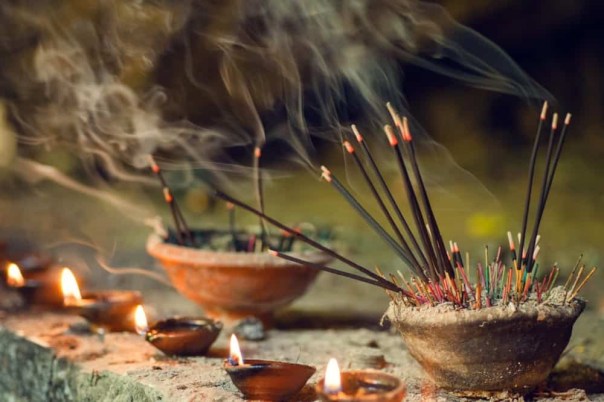
ncense is a biological material that produces a pleasantly fragrant smoke when burned. Essential oils and plant materials are used in the making of incense. It is used to create an ambiance, produces a pleasant aroma, and is also used in meditation, aromatherapy, and has several other uses as well.
The word incense comes from the Latin word incendere, which means ‘burn.’ The use of incense dates back to ancient Egypt, where priests used it for the fumigation of tombs and funeral ceremonies. Egyptians also used incense to keep demons away and as an offering to their gods during different rituals.
We will be discussing the different types of incenses in the article ahead. Keep reading!
Types of Incenses
Incense is normally of two main types, which are:
▪ Indirect burning incense
▪ Direct burning incense
Indirect burning Incense
Indirect burning incense includes loose resin that requires a separate source of heat constantly to keep the biological material burning. You will find that indirect burning incenses are most commonly used in contemporary settings
Direct Burning Incense
Direct burning incense is lit once and fanned out after a while. It creates a glowing ember that burns the material slowly and releases the fragrant smoke. Direct burning incenses are pressed into a cone, block, or any other shape and are formed around a stick that supports it.
Incenses come in many forms which are:
▪ Sticks
▪ Cones
▪ Coils
▪ Powders
The burning duration is greatly affected by the form of incense used.
Stick Incenses
Incense sticks are a part of the traditions of many countries like China, Japan, Tibet, and India. Each region has its own recipe and crafting method. Stick incenses usually burn for a short time. Longer stick incenses are also available which may burn for longer. The types of incense sticks that you are most likely to encounter are:
1. Stick Incense with Bamboo Core
A stick incense with a bamboo core is the most common type of incense that you will find in any tradition. It includes a central bamboo core with a paste of incense material wrapped around it. The fragrance of the smoke is considered to basically be the fragrance of the core, i.e., bamboo.
2. Cylinder Incense Stick
Cylinder incense sticks do not contain a bamboo core. They are made of one material through and through. They are made directly from the dried paste of the incense material. Some examples of this type of incense are simpoi and dhoop.
3. Joss Sticks
Joss is a term that originated in China. It describes objects that have a religious nature. However, nowadays, joss is used to refer to incense sticks. Joss sticks do not have a single definition. You will find different joss sticks used in different traditions. For example, one tradition may call for an incense stick that has a bamboo core as a joss stick, whereas other traditions may call for a hand-rolled incense stick without a bamboo core as a joss stick. Indian joss sticks contain bamboo in the core, whereas Japanese joss sticks do not have any supporting material in the center.
4. Hand-Dipped Incense Sticks
Hand-dipped incense sticks, as the name indicates, are made using the hand-dipping method. These sticks can be made by dipping either a bamboo incense stick or a masala stick into fragrant oils, which could be synthetic or natural.
5. Dhoop
Dhoop incense sticks are common in India and Tibet. These are solid incense sticks that are available in many sizes. They are malleable and soft and can be broken easily.
6. Agarbatti
The word agarbatti has been derived from two words; agar, which comes from agarwood or aloeswood, and batti, which means stick. Thus, agarbatti is an incense stick that is made with a wooden core. It is one of the most common types of incense that is used in Indian culture.
7. Masala Sticks
Masala sticks come from South India, where many kinds of wood, herbs, flowers, resins, gums, oils, and other ingredients are blended together to form a paste. This paste is then spread onto the surface of a bamboo core and dried.
8. Durbar Sticks
Durbar sticks are quite similar to Masala sticks. However, the blend of materials that are used to make them is fairly different and unknown in the west. Solid and liquid ingredients are used to make the paste, as a result of which, these sticks rarely dry out. The liquid ingredients are mainly perfumes. The aroma of Durbar sticks is sweet and spicy, and they are soft to touch.
9. Champa Incense
Champa incense contains sandalwood and frangipani (plumeria). Champa incense sticks are similar to masala sticks and durbar sticks. However, some unique flowers, like nagkeshar and magnolia are used in their preparation. They also consist of a natural ingredient, Halmaddi, which is only found in India. Champa sticks are so named because their fragrance is similar to that of the Champa flower. Halmaddi is hygroscopic. Because of this characteristic, it can absorb moisture from the atmosphere and can feel wet to the touch.
10. Simpoi Sticks
Simpoi sticks are thicker than other incense sticks. They are a hand-rolled, Tibetan variety of incense sticks.
11. Senko Sticks
Senko can be used to describe any type of incense, either stick or incense blend in Japan. Senko incense sticks do not contain a wooden or a bamboo core. Other names by which Senko sticks are known by include Senkou, Senkoo, and sen-koh.
12. Fluxo Incense
Fluxo incense may not suit well to the western palette, but it is quite popular in India. It contains a complex and rich blend of scent along with a number of additional ingredients. The scent varies with the ingredients used, but typically, the fragrance of Fluxo incense is pungent.
Cone Incenses
Cone incenses are made from a mixture of essential oils and powders. They release a pungent aromatic aroma that enhances the scent of the entire room, which is required during meditation and yoga practice. However, burning an incense cone is not as simple as lighting a candle and letting it burn. There are certain steps that need to be followed when using cone incense.
Cone incense should be kept in a suitable incense burner that can hold the ash when the incense burns.
To make sure that the incense sits evenly on the top of the burner, fill the bottom of the burner with uncooked rice or sand. This will help in improving the airflow and will also help in conducting less heat throughout the base of the burner. The burner should be kept on a nonflammable surface and away from any materials that can catch fire.
Burn the tip of the cone and either blow the flame out or fan it out. You will see a spiral of smoke rising from the tip of the cone, which will indicate that your incense is now burning.
Coil Incenses
As you can assume from the name, coil incenses are coils made from incense material. They are also known as incense spirals. They are considered to be a modified version of stick incenses. Coil incenses are made solely from the incense material. They do not contain a wooden or bamboo core in the center. Instead of shaping the incense material into a stick, the material is shaped to form a spiral.
An incense stick cannot be made too long as it raises the risk of the stick-breaking. The major advantage of shaping the incense material into a coil is that it can be made much longer, which can greatly increase the burning time.
They are much like mosquito coils – you burn incense coils so that fragrant smoke is produced. The coil incense is burnt, and the flame is extinguished after a few seconds, similar to how cone incense is burnt. Coil incenses are available in many sizes and shapes. They come with holders to hold the coil and its ash while it is burning.
Because of the extended burn time of incense coils, the compact design, and the capacity to be hanged from the ceiling, they are often a popular choice for worshippers. They can be seen hanging from the ceiling in many religious ceremonies and spiritual sites.
An incense coil having a diameter of 3 to 4 inches can burn for up to 3 to 24 hours. With an increase of only an inch in diameter, the length is increased so much that the burning duration increases from 3 hours to 24 hours approximately.
Incense coils are a perfect choice if you want to keep the interior smelling fresh and mystic for extended durations.
Powder Incenses
Powder incenses refer to the powdered incense material. They contain incense material only, without any core for support. Powder incense is added to an ignited charcoal disc in a bowl. The powder burns with the ignited charcoal and gives off an aroma that is characteristic of the material being used.
Incense Materials
Now that we have discussed the basic types of incenses, let’s look at the different materials that are used in incenses.
Amber
Amber corresponds to Fire and Air. It is used for truth-seeking and wisdom. The blend of florals, musk, and resins is an excellent incense that is quite common in temples.
Sandalwood
Sandalwood is said to heal and consecrate. It helps in removing negative energy and brings about peace. It helps in the creation of a ritual space.
Frankincense
Frankincense is one of the most popular incense fragrances. They help in setting up a sacred space. The attributes of Frankincense include riches, power, and purification. It also helps in balancing solar energy with healing Myrrh.
Patchouli
Patchouli has an earthy aroma that makes it exceptional as an incense material. Its attributes are attraction, money, and sex.
Cinnamon
Cinnamon incenses are used to bring feelings of personal protection and power. It can inflame passion and counter the effects of spells of love.
Citrus
Lemon incense is used to bring brightness. It produces a burst of good luck and confidence. It is the perfect incense for you when you need extra energy.
Coconut
It is used as a lunar incense. It is associated with the practice of chastity.
Dragon’s Blood
Dragon’s blood is a rare and extremely expensive resin. It is a perfect balance between earthy, sweet, and spicy. It is used to bring about the power to almost any working space.
Evergreen
Evergreen incense smells like the Irish Spring. It is used for cleansing, wisdom, and protection.
Other popular incense materials include the following:
▪ Honey
▪ Jasmine
▪ Lavender
▪ Musk
▪ Nag Champa
▪ Opium
▪ Rain
▪ Rose
▪ Sugar and Spice
▪ Vanilla
▪ Wild Berry
Every incense material has a unique and characteristic fragrance. Different types of incenses promote different effects. With so many types of incenses, you can experiment all you want and settle on the one that delivers the effects that you are looking for. Burning incense is a great way to keep your rooms smelling mystic and warm. If you are a religious person who prefers keeping the ambiance of their worship room temple-like, incenses are what will help you achieve the feel and smell of a temple.
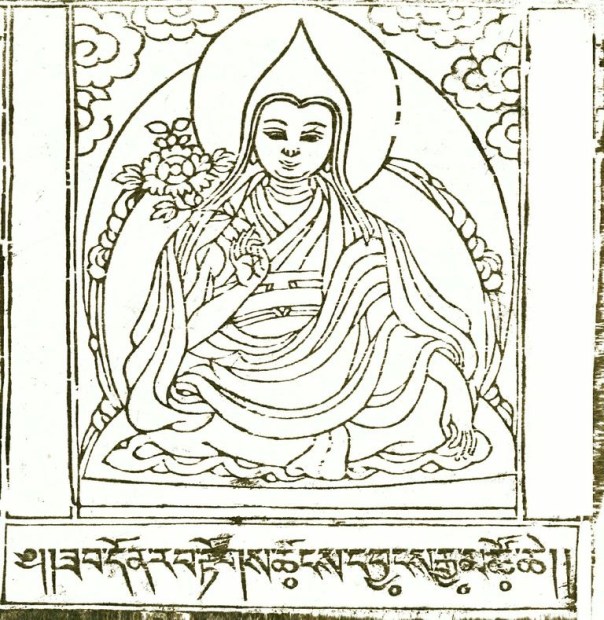
The Sixth Dalai Lama. Courtesy Himalayan Art Resources
The 6th Dalai Lama’s life story is a curiosity to us today. He received ordination as the most powerful lama in Tibet only to turn his back on monastic life. As a young adult he spent evenings in taverns with his friends and enjoyed sexual relations with women. He is sometimes called the “playboy” Dalai Lama.
However, a closer look at His Holiness Tsangyang Gyatso, the 6th Dalai Lama, shows us a young man who was sensitive and intelligent, even if undisciplined. After a childhood locked away in a country monastery with hand-picked tutors, his assertion of independence is understandable. The violent end of his life makes his story a tragedy, not a joke.
Prologue
The story of the 6th Dalai Lama starts with his predecessor, His Holiness Ngawang Lobsang Gyatso, the 5th Dalai Lama. The “Great Fifth” lived in a time of volatile political upheaval. He persevered through adversity and unified Tibet under his rule as the first of the Dalai Lamas to be political and spiritual leaders of Tibet.
Near the end of his life, the 5th Dalai Lama appointed a young man named Sangye Gyatso as his new Desi, an official who managed most of the Dalai Lama’s political and governing duties. With this appointment the Dalai Lama also announced that he was withdrawing from public life to focus on meditation and writing. Three years later, he died.
Sangye Gyatso and a few co-conspirators kept the 5th Dalai Lama’s death a secret for 15 years. Accounts differ as to whether this deception was at the 5th Dalai Lama’s request or was Sangye Gyatso’s idea. In any event, the deception averted possible power struggles and allowed for a peaceful transition to the rule of the 6th Dalai Lama.
The Choice
The boy identified as the Great Fifth’s rebirth was Sanje Tenzin, born in 1683 to noble family that lived in the border lands near Bhutan. The search for him had been carried out in secret. When his identity was confirmed, the boy and his parents were taken to Nankartse, a scenic area about 100 kilometers from Lhasa. The family spent the next 12 years in seclusion while the boy was tutored by lamas appointed by Sangye Gyatso.
In 1697 the death of the Great Fifth finally was announced, and 14-year-old Sanje Tenzin was brought in great fanfare to Lhasa to be enthroned as His Holiness the 6th Dalai Lama, Tsangyang Gyatso, meaning “Ocean of Divine Song.” He moved into the just-completed Potala Palace to begin his new life.
The teenager’s studies continued, but as time passed he showed less and less interest in them. As the day approached for his full monk’s ordination he balked, then renounced his novice ordination. He began to visit taverns at night and was seen staggering drunkenly through the streets of Lhasa with his friends. He dressed in the silk clothes of a nobleman. He kept a tent outside Potala Palace where he would bring young women.
Enemies Near and Far
At this time China was ruled by the Kangxi Emperor, one of the most formidable rulers of China’s long history. Tibet, through its alliance with fierce Mongol warriors, posed a potential military threat to China. To soften this alliance, the Emperor sent word to Tibet’s Mongol allies that Sangye Gyatso’s concealment of the Great Fifth’s death was an act of betrayal. The Desi was trying to rule Tibet himself, the Emperor said.
Indeed, Sangye Gyatso had become accustomed to managing Tibet’s affairs on his own, and he was having a hard time letting go, especially when the Dalai Lama was mostly interested in wine, women and song.
The Great Fifth’s chief military ally had been a Mongol tribal chief named Gushi Khan. Now a grandson of Gushi Khan decided it was time to take affairs in Lhasa in hand and claim his grandfather’s title, king of Tibet. The grandson, Lhasang Khan, eventually gathered an army and took Lhasa by force. Sangye Gyatso went into exile, but Lhasang Khan arranged his assassination, in 1701. Monks sent to warn the former Desi found his decapitated body.
The End
Now Lhasang Khan turned his attention to the dissolute Dalai Lama. In spite of his outrageous behavior he was a charming young man, popular with Tibetans. The would-be king of Tibet began to see the Dalai Lama as a threat to his authority.
Lhasang Khan sent a letter to the Kangxi Emperor asking if the Emperor would support deposing the Dalai Lama. The Emperor instructed the Mongol to bring the young lama to Beijing; then a decision would be made what to do about him.
Then the warlord found Gelugpa lamas willing to sign an agreement that the Dalai Lama was not fulfilling his spiritual responsibilities. Having covered his legal bases, Lhasang Khan had the Dalai Lama seized and taken to an encampment outside Lhasa. Remarkably, monks were able to overwhelm the guards and take the Dalai Lama back to Lhasa, to Drepung Monastery.
Then Lhasang fired cannon at the monastery, and Mongol horsemen broke through defenses and rode into the monastery grounds. The Dalai Lama decided to surrender to Lhasang to avoid further violence. He left the monastery with some devoted friends who insisted on coming with him. Lhasang Khan accepted the Dalai Lama’s surrender and then had his friends slaughtered.
There is no record of exactly what caused the 6th Dalai Lama’s death, only that he died in November 1706 as the traveling party approached China’s central plain. He was 24 years old.
The Poet
Yama, mirror of my karma,
Ruler of the underworld:
Nothing went right in this life;
Please let it go right in the next.