Category Archives: Article

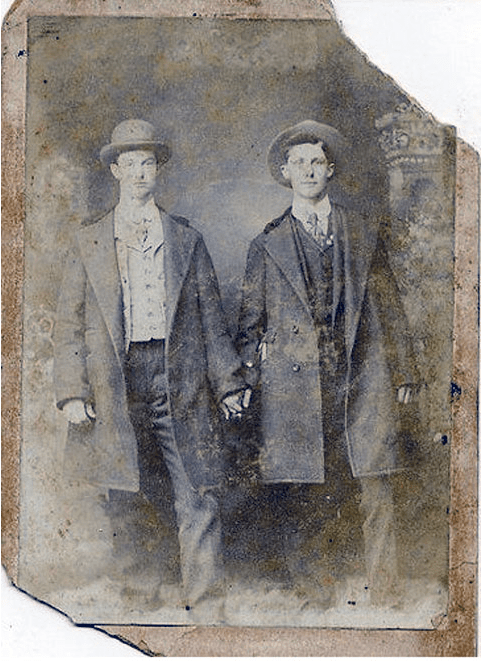
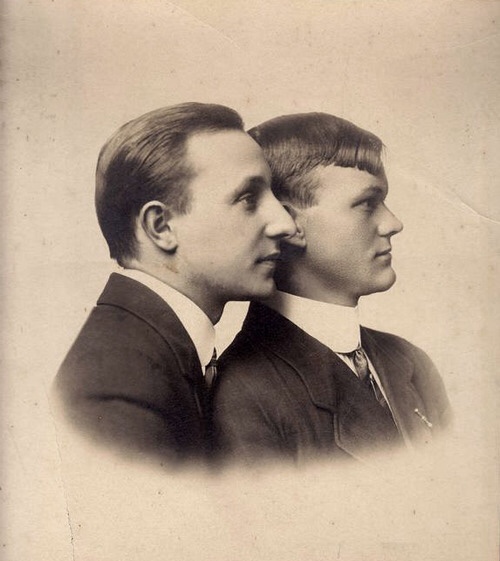
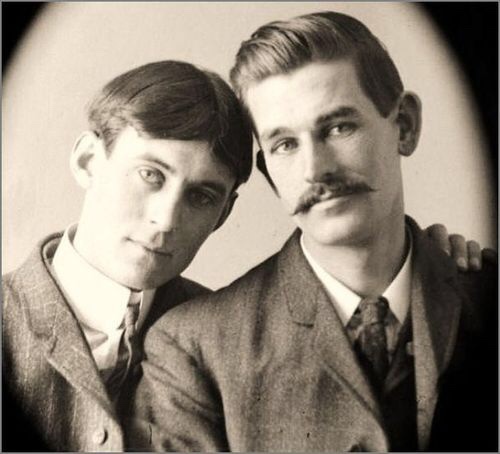
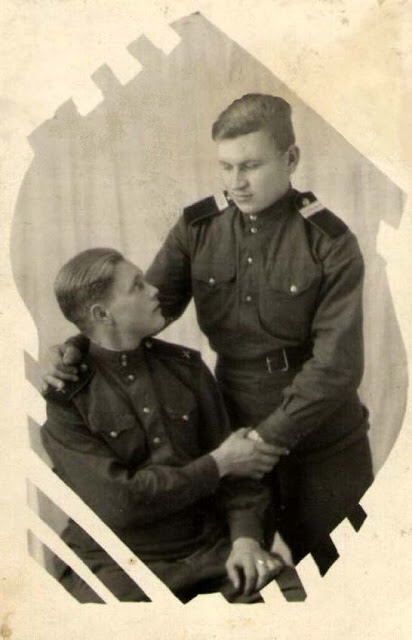
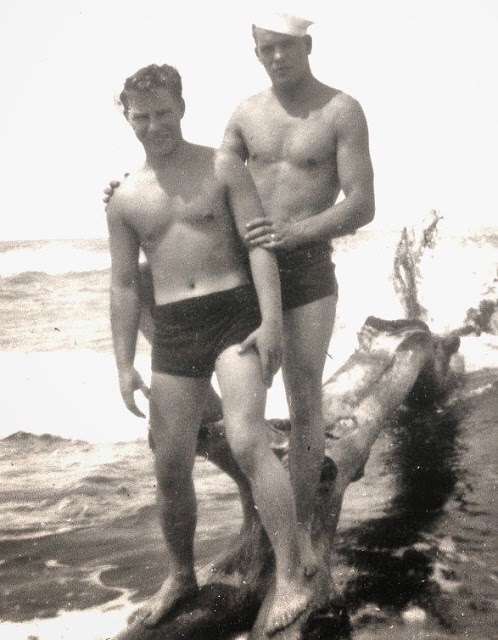
Gay History: Men Together 1800s (PHOTOS)

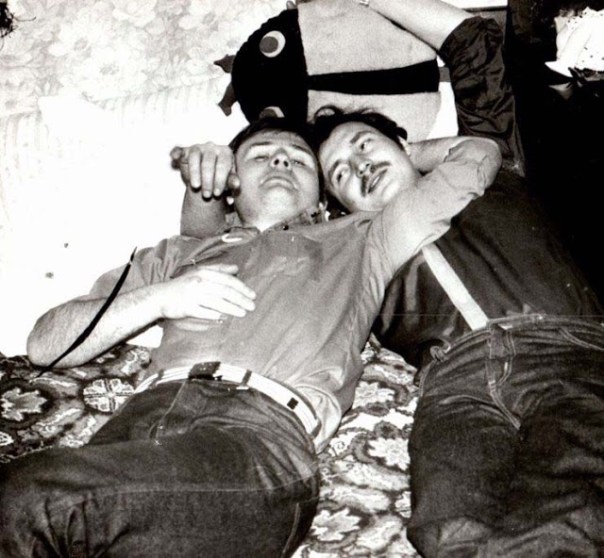
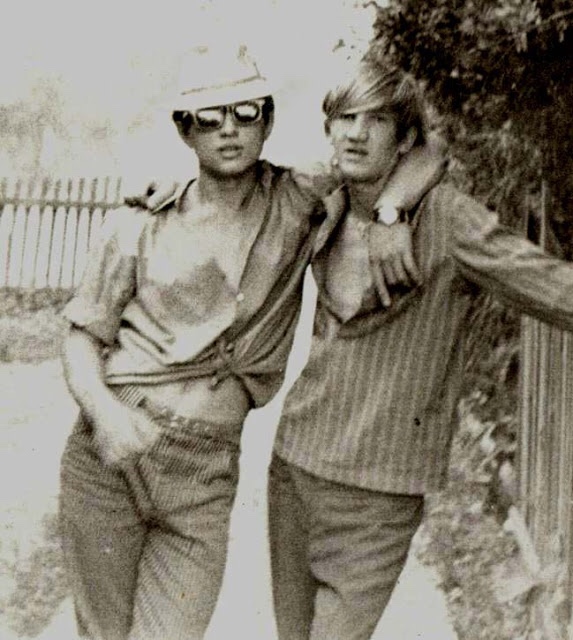
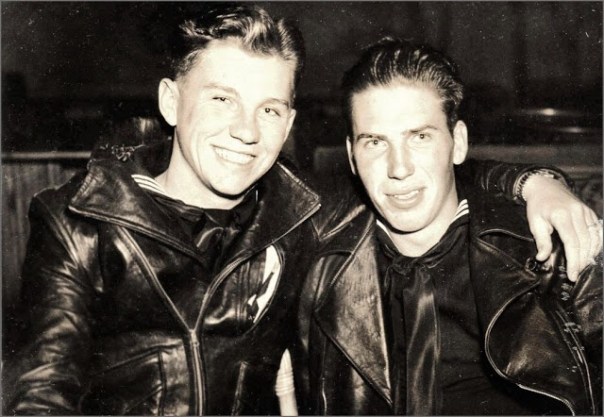
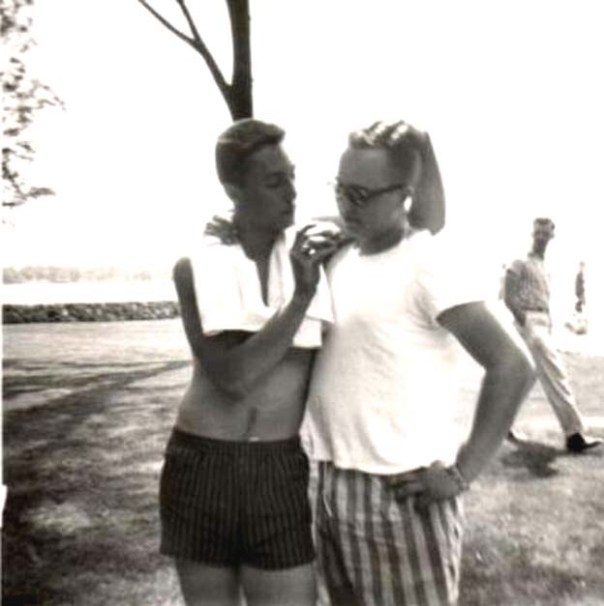
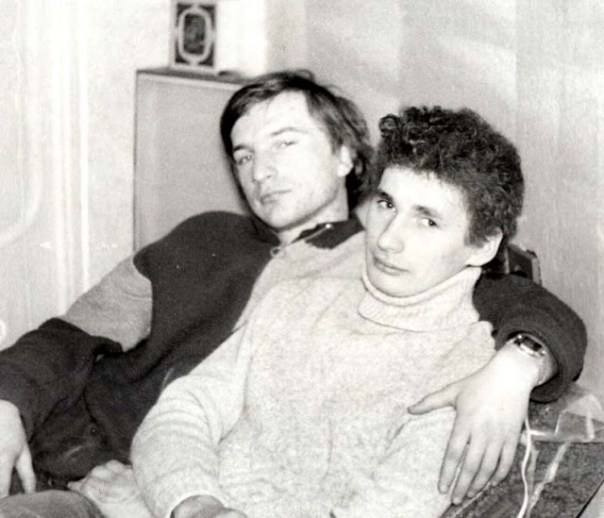
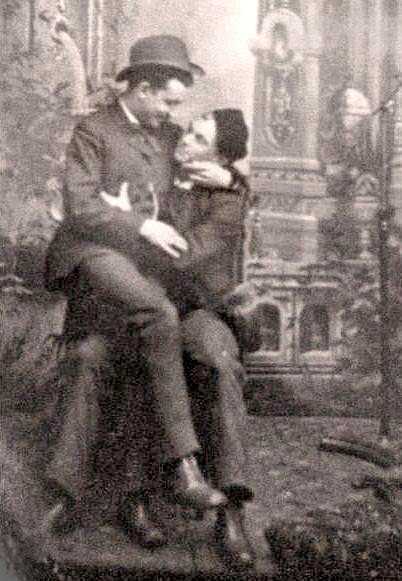
.I’m careful not to say that these men were gay because they could be brothers, best friends, etc. but most of them sure look like gay couples.

In Times of Hate, Chose to Love

Bromance or lovers?

Since the men in these photos are unknown, it’s impossible to know if they were gay couples or just “good friends.” Most vintage photographs of gay couples were eventually destroyed by horrified family members. For every photo that I may have mistakenly identified as gay, thousands more were burned or torn into pieces to keep a family secret. 

Reference

Gay History: Johnny Mathis on the Long Road to Gay Rights: ‘People Are Stubborn; There’s a Waiting Period Until They Catch Up’

At his penthouse in Beverly Hills, Johnny Mathis has no objection to a 9 a.m. interview — he has been up for five hours already, and at the gym for a long-standing regime of pulley stretching and leg lifts. “Anything to get the juices flowing and also get me into my stage clothes,” says the 81-year-old singer. “I look at myself in the mirror and go, ‘Well, not bad,’ ” he adds with a laugh.

Mathis has been donning those stage clothes all year, on a tour marking the 60th anniversary of his debut album. He is a singular vocalist whose classic hits from the 1950s — “Chances Are,” “Misty,” “It’s Not for Me to Say” — established an enduring style of  pop romance. In Barry Levinson’s Oscar-nominated 1982 film Diner, set in the postwar era, the character Eddie Simmons memorably asks his pals, “When you’re making out, which do you prefer, Sinatra or Mathis?”

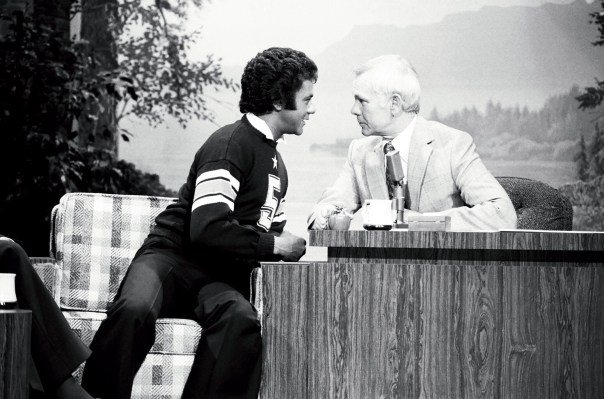
 Paul Drinkwater/NBC/NBCU Photo Bank via Getty Images Mathis with Johnny Carson in 1979.

A native of Texas, raised in California and the fourth of seven children, Mathis caught his father’s passion for music at a young age. He began vocal lessons, including classical and operatic styles, at age 13. Yet, in high school, he also was talented enough at track and field to get an athletic scholarship to San Francisco State University and, later, an invitation to try out for the U.S. team heading to the 1956 Summer Olympics in Melbourne, Australia.

Around that same time, however, while performing at a San Francisco nightclub, Mathis caught the ear of George Avakian, head of jazz A&R at Columbia Records, who was vacationing in the city. “Have found phenomenal 19-year-old boy who could go all the way,” Avakian telegrammed his label. “Send blank contracts.”

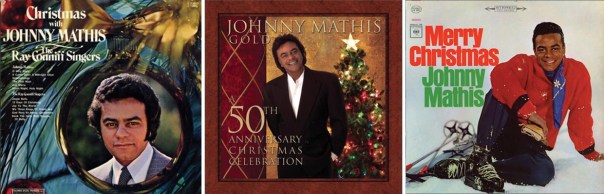
In the six decades since, Mathis has charted 43 hit singles and sent 74 titles, including numerous Christmas releases, onto the Billboard 200. In 2003, The Recording Academy presented Mathis with a Grammy Award for lifetime achievement. It was recognition for an artist who has long sung of romance— but also has supported civil rights and gay rights, from singing with activists at the Salute to Freedom concert in Birmingham, Ala., in 1963 to acknowledging his own sexual orientation two decades later.

The 74 titles Mathis has charted on the Billboard 200 have included numerous Christmas albums.

You were part of a generation of racial pioneers in pop in the ’50s who crossed over to white fans. What’s your perspective on Black Lives Matter and race relations today?

The world changes. The world is completely different now from when I was growing up. Back then you didn’t say things like they say now out loud, about race and things. But that’s just progress. When are we going to find out that we’re all the same, we’re all absolutely, without a doubt, the same? It doesn’t matter whether you’re black or white or straight or gay.

You’ve seen a lot of change in attitudes toward being gay since you were getting death threats in the 1980s. [The threats followed a 1982 interview in Us Weekly in which Mathis was quoted as saying, “Homosexuality is a way of life I’ve become accustomed to.”]

Things take time. People are stubborn about what they perceive to be the right thing or the wrong thing, and it takes a long time to filter this human condition. There’s a waiting period until people catch up. But if you have patience — which it takes when someone thinks differently from you — everybody always catches up. That patience is a wonderful virtue.

You have declined to talk about your own relationships, and it seems that you prefer to lead by your presence rather than speaking out.

I’ve been very happy to see some of the success that I’ve had along the way in opening the eyes of people, especially people who listen to music.

Looking back, what do you remember about George Avakian discovering you at San Francisco’s 440 Club?

I didn’t realize he was in the audience, and unfortunately he had a bad case of poison oak or poison ivy. So he was not in a very good mood. But he heard me sing and said, “I think you’re ready to make your first recording.” George is still with us; He’s now 102 years old, and I saw him not too long ago. He counseled me for many years.

Reference

Gay History: Mitt Romney’s Teen Years: A Time of Homosexual Panic in America

Whether or not what Mitt Romney did as a teenager matters now, the way some conservatives are defending him, you’d think homosexuals didn’t exist until Halston, Calvin Klein, and Liza were discovered dancing at Studio 54 circa 1978.

“For those to the premises more recently arrived, a quick primer on 1965, when this occurred,” wrote syndicated columnist Kathleen Parker, responding to critics who’ve described Romney’s forcible cutting of the dyed-blond hair of a nonconforming student as anti-gay bullying. “Nobody knew who was or wasn’t ‘gay,’ a word that wasn’t yet in popular circulation as a noun and generally meant ‘merry.’ Homosexuality wasn’t on most high-school kids’ radar, period. If anything, Romney may not have liked Lauber’s ‘hippie’ locks, which is the more likely case given the era.”

Really? Check out the synopsis for the 1956 film by a much earlier Minnelli, Liza’s dad Vincente. Tea and Sympathy was adapted from the popular 1953 Broadway play of the same name, and Romney and his prep school buddies might as well have been acting out the plot: “Tom Robinson Lee, a 17-year old student at a boy’s prep school, is at odds with the other boys who like sports, talking about girls, and listening to pop music. Tom prefers classical music, reads books, can sew, goes to the theater, and generally seems to be more at ease in the company of women. The other boys torment him for his ‘unmanly’ qualities and call him ‘sister boy.’”

I don’t know what kind of sheltered life Kathleen Parker led, but homosexuality has been on high-school kids’ radars — particularly the radars of high-school boys — for as long as masculinity has been on their radars, which in Western culture would take us back to the ancient Greeks and the Roman gladiators, I imagine. But even if we don’t want to go back that far, suffice it to say that queer boys were defined in American culture surely since Oscar Wilde was carted off to prison for being a “sodomite” in 1895.

While there were times in the early part of the 20th century when homosexuality was more accepted in some cities (as historian George Chuancey describes in Gay New York, in which he also shows that the word “gay” most certainly existed then), the 1950s saw a homosexual panic that gripped American politics, media, and culture. In 1950 Sen. Joseph McCarthy began his investigations that led to the purging of alleged Communists and homosexuals from the government. In 1951 a popular book called Washington Confidential, co-written by New York Mirror columnist Lee Mortimer, captured the tenor of the time in a chapter titled, “A Garden of Pansies”:

If you’re wondering where your wandering semi-boy is tonight, he’s probably in Washington. The good people shook their heads in disbelief at the revelation that over 90 twisted twerps in trousers had been swished out of the state department. Fly commentators seized on it for gags about fags, whimsy with overtones of Kinsey and the odor of lavender. We pursued the subject and found that there are at least 6000 homosexuals on the government payroll, most of them known, and these comprise only a fraction of the total of their kind in the city.

Tea and Sympathy premiered on Broadway and was made into a film in the midst of that panic. (And you can read all about the context in this paper by film historian David Gerstner, who also happens to be my partner). The McCarthy era and the targeting of homosexuals spurred the first gay and lesbian activists, like the recently deceased pioneer Frank Kameny, who was ejected from the Army Map Service for being gay in 1957.

That first brave but tepid organizing only escalated the panic, which continued well into the 1960s. In 1963, two years before Romney’s prep school “prank,” the anti-gay metro editor of The New York Times, Abe Rosenthal, became alarmed after returning from overseas and seeing so many gay men on the streets of Manhattan. In response he commissioned a piece that was put on the front page of the paper of record, which blared with this headline: “Growth of Overt Homosexuality in City Provokes Wide Concern.”

Those years, the mid-‘60s, were in fact a critical time for the gay-rights movement: It was going to either burst forth, as it eventually did in 1969, with the Stonewall riots, or be suppressed further by the kind of attitudes that empowered high-school boys of the time to hold down a kid perceived as gay and forcibly cut his hair.

It matters today what Mitt Romney did then, even as a high-school student, because the country has moved on from that time of panic into a different place. It would tell us a lot about him, and the kind of leader he would be, if, rather than denying it or suppressing it, he were able to explain how he moved on and, as others have said, if he were able to use his story to shed some light on the anti-gay bullying we still see today.

Reference

Gay History: Before The Simpsons, Matt Groening Created This Pro-Gay Comic Strip That You Have To See

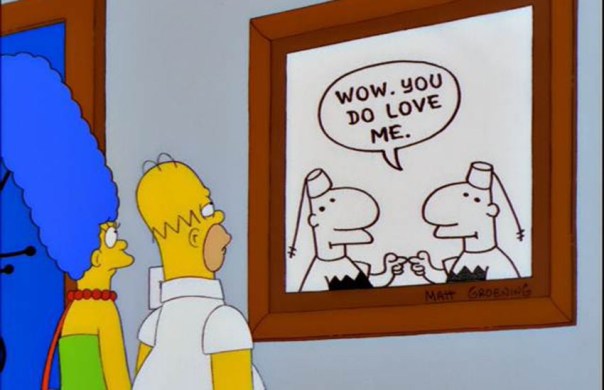
Take a look at Akbar and Jeff, a gay couple created by Matt Groening far before The Simpsons

Fox. Akbar and Jeff were Matt Groening’s original same-sex couple

Before Matt Groening created The Simpsons, he was drawing a neurotic rabbit and a same-sex couple who both dressed like Charlie Brown.

In 1986, Life In Hell’s Akbar and Jeff predated Homer, Marge, Bart, Lisa and Maggie and they were remarkably ahead of their time.

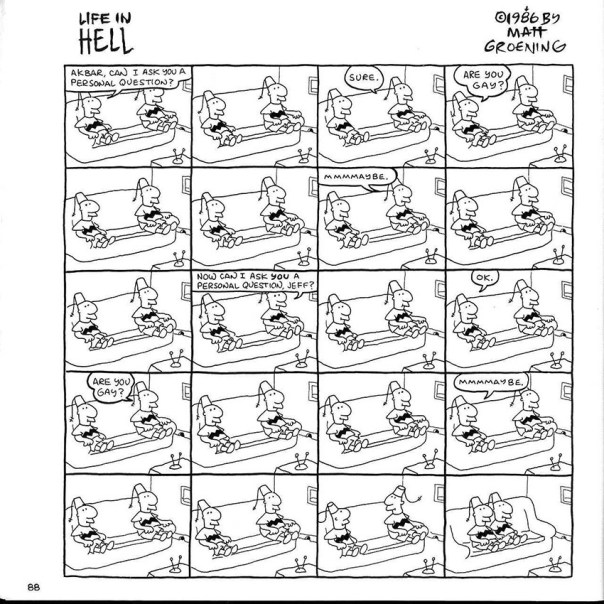
Groening had started drawing Akbar and Jeff in the fifth grade. Years later, in 1986, he drew this comic strip where the two came out to each other.

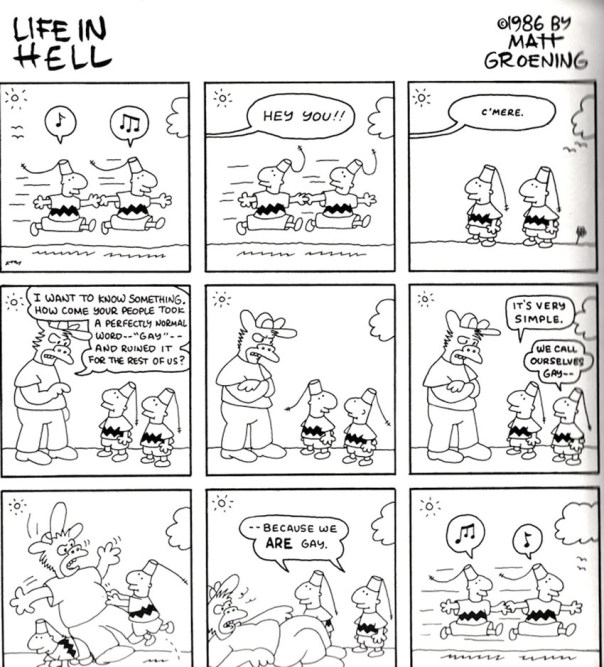
Wearing matching t-shirts, shorts and fezzes (it was the 80s), the boyfriend twins quickly formed into the alternative comic world’s iconic same-sex couple.

‘My friends and I were trying to draw Charlie Brown,’ Groening said in the late 80s. ‘We tried to imitate Peanuts, and they never came out looking right. And so eventually those drawings mutated into Akbar and Jeff.

‘They still have the Charlie Brown shirt if you noticed. Later I was trying to think about what kind of people they were and finally realized, of course, they’re gay, they’re lovers.’

While outing Akbar and Jeff as a gay couple meant there was a backlash, Groening kept drawing them in the Life In Hell comic book series.

A beer company had approached Groening to see if they could use Akbar and Jeff as mascots.

‘Then the article in Rolling Stone came out about me, and it was revealed that, “Oh my god. Akbar and Jeff – they’re not normal.” And the beer company dropped Akbar and Jeff,’ Groening said.

The beer company said it wouldn’t work to market gay characters to frat boys.

‘I said, “Listen, these are cartoon characters. It’s not that big a deal.” S

Groening said he wanted to have a same-sex couple in the series, but thought having a straight couple would end up using lazy jokes about men and women.

‘No one can accuse me of trying to score points against men or women if the characters are identical,’ he said.

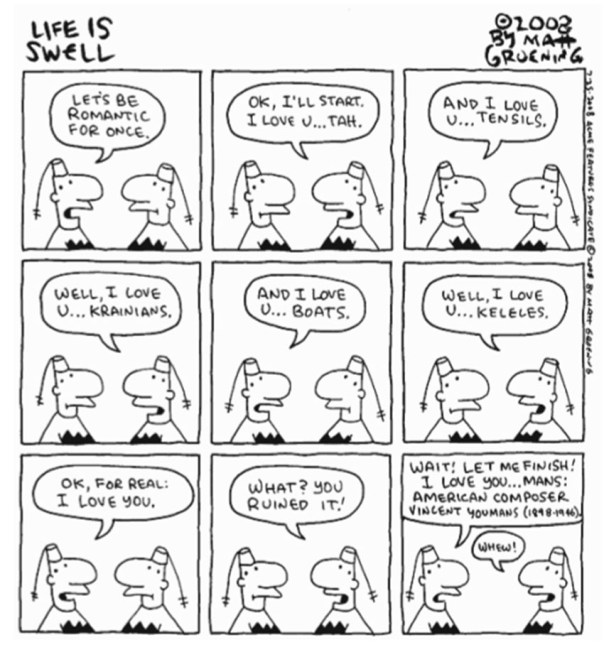
Life In Hell continued until 2012, and in that time Akbar and Jeff’s relationship kept being explored.

Akbar and Jeff, for the secondary stars of an alternative comic, also inspired many.

How Matt Groening’s Akbar and Jeff were inspirational

Scott Craig and Peter Alexander, a gay couple from Silverlake, created a LGBTI music venue Akbar – a tribute to the comic. Alexander had previously worked for Groening.

‘This is literally how me and my boyfriend got together,’ one guy said on Reddit.

‘When I was 14 I was sleeping over at a friends house & we were high and giggling over a Matt Groening book I’d got earlier in the day at a church book sale.

‘Turned page, this comic came up. We both got a little quiet. Heh…heh… Haltingly, friend said “Ummm hey….are you….gay?”

‘”Maaaaaaaybe” says I. And that was the first night of many that we made out that summer!’

Reference

Gay History: Unearthed Letter From Freud Reveals His Thoughts On Gay People

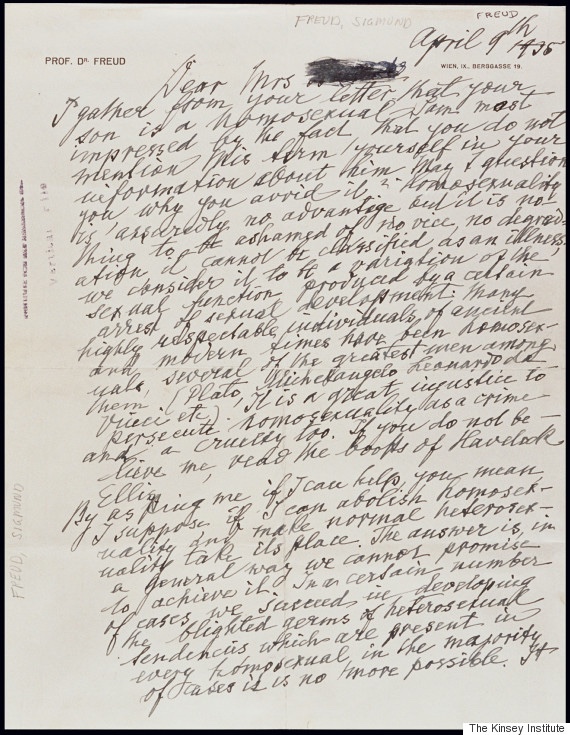
In 1935, Sigmund Freud penned a response to a mother who had asked him for help with her gay son. Despite the broader perceptions of homosexuality at the time, Freud took a different approach, telling the woman it’s “nothing to be ashamed of.”

“I gather from your letter that your son is a homosexual. I am most impressed by the fact that you do not mention this term for yourself in your information about him. May I question you why you avoid it?” he wrote. “Homosexuality is assuredly no advantage, but it is nothing to be ashamed of, no vice, no degradation; it cannot be classified as an illness; we consider it to be a variation of the sexual function, produced by a certain arrest of sexual development. Many highly respectable individuals of ancient and modern times have been homosexuals, several of the greatest men among them.”

While the this correspondence sheds light on his personal communications, it has long been known that Freud did not view homosexuality as a pathology. He believed everyone was born bisexual and later became either straight or gay because of the relationships with those around them. In the letter, Freud does suggest “treatment” for homosexuality may be possible, but says the result “cannot be predicted.”

The letter currently appears on display in London as part of an exhibition at Wellcome Collection called “The Institute of Sexology.” (Scroll for transcription.)

The Kinsey Institute

Dear Mrs [Redacted],

I gather from your letter that your son is a homosexual. I am most impressed by the fact that you do not mention this term yourself in your information about him. May I question you why you avoid it? Homosexuality is assuredly no advantage, but it is nothing to be ashamed of, no vice, no degradation; it cannot be classified as an illness; we consider it to be a variation of the sexual function, produced by a certain arrest of sexual development. Many highly respectable individuals of ancient and modern times have been homosexuals, several of the greatest men among them. (Plato, Michelangelo, Leonardo da Vinci, etc). It is a great injustice to persecute homosexuality as a crime – and a cruelty too. If you do not believe me, read the books of Havelock Ellis.

By asking me if I can help, you mean, I suppose, if I can abolish homosexuality and make normal heterosexuality take its place. The answer is, in a general way we cannot promise to achieve it. In a certain number of cases we succeed in developing the blighted germs of heterosexual tendencies, which are present in every homosexual in the majority of cases it is no more possible. It is a question of the quality and the age of the individual. The result of treatment cannot be predicted.

What analysis can do for your son runs on a different line. If he is unhappy, neurotic, torn by conflicts, inhibited in his social life, analysis may bring him harmony, peace of mind, full efficiency, whether he remains a homosexual or gets changed. If you make up your mind he should have analysis with me — I don’t expect you will — he has to come over to Vienna. I have no intention of leaving here. However, don’t neglect to give me your answer.

Sincerely yours with best wishes,

Freud

P.S. I did not find it difficult to read your handwriting. Hope you will not find my writing and my English a harder task.

Reference

Gay History: The Linguistic Turf Wars Over the Singular ‘They’

The use of the word “they” has been debated by linguists and copy editors alike. (Photo: zebicho/shutterstock.com)

Of all the turf wars that have complicated the landscape of grammar over the past few hundred years, the most complicated and frustrating may be that of the singular they.

It may be the most controversial word use in the English language—because it highlights a hole where a better-fitting word should go.

It creates a conflict between writers and editors who want things to follow the natural symmetry of Latin, and people who find they the only logical option for referring to a single person without a gender attached.

And there has been a lot written about it—it’s something of a hot topic this year, thanks to a vote by the American Dialect Society to name they its word of the year for 2015.

“In the past year, new expressions of gender identity have generated a deal of discussion, and singular they has become a particularly significant element of that conversation,” Ben Zimmer, the chairman of ADS’ New Words Committee, explained back in January. “While many novel gender-neutral pronouns have been proposed, they has the advantage of already being part of the language.”

The group voted the way it did in part because of they’s increasing importance as a way to make room for people who don’t fit a predefined gender binary. (It helps that the word drops the added complication of “he or she.”)

If the English language did permanently embrace a singular gender-neutral pronoun, it would be far from alone—254 of the 378 languages tracked by the World Atlas of Language Structures Online don’t specify for gender at all with their pronouns.

Alas, this problem isn’t as easy to solve as a vote from a dialect society. The problem is something of an emotional one—and it’s sparked debate for centuries.

For some word purists, the singular they is the linguistic equivalent of an ingrown hair, but for others, the solutions for getting around the problem are way messier.

Geoffrey Chaucer, user of the singular they, along with Shakespeare and Jane Austen. (Photo: Public Domain)

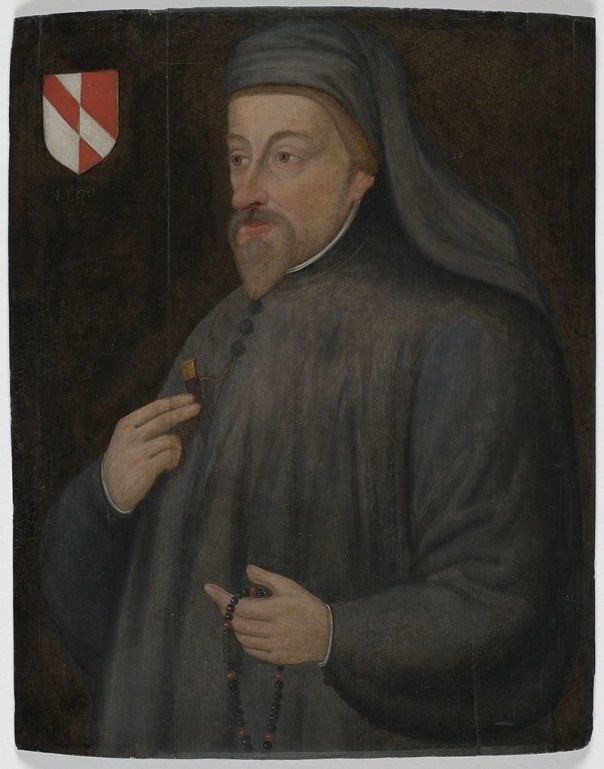
For centuries, the singular they was not only accepted by the public but by some of our most famous authors—Geoffrey Chaucer, Jane Austen, and Shakespeare, just to name three.

But around the late 18th and early 19th century, something happened: Critics of this specific usage appeared. The reason for this critical reassessment came about partly out of prescriptive vibes around the English language at the time. Long story short: We wanted English to be more like Latin, and that meant rethinking the use of plural nouns in singular contexts.

In 1975, researcher Ann Bodine broke this down in a landmark paper, Androcentrism in Prescriptive Grammar: Singular ‘They,’ Sex-Indefinite ‘He,’ and ‘He or She’. The text, republished in the 1999 book The Feminist Critique of Language, notes that the influence of Latin grammar played an important role in the increase of rules around the English language—and specifically gave the world the “generic he,” a term that followed Latin form but didn’t mesh with modern concerns about gender equality.

Around the time of Bodine’s paper, things started to turn against the generic he. Students started complaining about its use at Harvard. But they faced resistance from the professors who taught them.

“The fact that the masculine is the unmarked gender in English (or that the feminine is unmarked in the language of the Tunica Indians) is simply a feature of grammar,” a group of 17 professors and teaching fellows wrote in a 1971 open letter published in the Harvard Crimson.

And Bodine noted that the then-recent attempts to ditch the generic he were really attempts to roll back a controversial change.

“Intentionally or not, the movement against sex-indefinite ‘he’ is actually a counter-reaction to an attempt by prescriptive grammarians to alter the language,” she wrote.

Grammarians didn’t give up on squashing the singular they easily. Some who tried to remedy the problem caused by this attempt to make English more like Latin have been tried to patch things up. For hundreds of years, English-speakers have tried to invent words that fill the language’s most unsightly gap. Nearly all of them have failed.

The New Words Committee of the American Dialect Society decided to make the singular they its word of the year. (Photo: PSD photography/shutterstock.com)

University of Illinois professor Dennis Baron, a longtime supporter of the singular they, has long maintained a list of gender-neutral pronouns that people have attempted to add to the English language, the most recent example from 2015, but most of the interesting ones from the 19th century. Terms like “thon,” “e,” and “um” were among the most prominent attempts to improve the language. Additionally, Baron notes, people complaining about the common use of the singular they were fairly common during the 19th century.

“If only occasionally found in the best writings, it is because the proofreader interposes his correction before the sentence reaches the public, for every editor [knows] how often even careful writers make the mistake,” a writer for the Findlay, Ohio Jeffersonian wrote in 1877.

Baron, in introducing the concept in an essay, is quick to stick a knife in its heart before it even had a chance to fly:

These pronouns fill a need, but none has been widely adopted, hence they are the words that failed. What has succeeded is singular they, which arose naturally in English hundreds of years ago, and is used both by speakers and writers concerned that their pronouns be inclusive, and also by many who don’t give the matter much thought at all.

Even in the modern day, some critics of the word use persist. Blogger Freddie deBoer, meanwhile, argues in an essay that the singular they issue is an infrequent problem at worst.

“Using ‘their’ for singular antecedents is one that I think people need to [just give into],” deBoer writes in his essay. “As I’ve argued, it only occurs in a very limited set of circumstances, and those circumstances very unlikely to produce confusion about what is meant.”

Over at the dearly departed site the Toast, linguist Gretchen McCulloch blames the root cause of this fissure on “a series of historical accidents,” but suggests that the issues raised by grammarians are practical in nature, even if the solutions are in many ways worse than the problems in the first place.

Really, if this problem is ever to go away, it’s going to be up to professional copy editors to speak up. And at least some of them appear to have made peace with the change.

Last year, prominent Washington Post copy editor Bill Walsh (who was not a football coach for the San Francisco 49ers) drew a line in the sand in favor of the singular they, revealing in a deeply nerve-wracking blog post that he had been wanting to make the big change for years, despite how divisive it was for some.

“What finally pushed me from acceptance to action on gender-neutral pronouns was the increasing visibility of gender-neutral people,” he wrote.

Walsh, the author of some popular books read by copy editors, is seen as something of a trailblazer on this issue, even though he pledges his desk will use the term sparingly.

Still, it won’t be easy to win over everyone else in the journalism world. The issue is that many copy editors simply struggle with the conundrum that the word creates, some treating it as a pet peeve even though it’s common in regular speech.

In a blog post last year, the Baltimore Sun’s John E. McIntyre noted the lingering controversy, citing one Facebook feed that called the singular they an “idiot epicene.”

“I know any number of editors who share this visceral dislike of the singular they,” McIntyre wrote. “It cuts no ice with them that linguists have demonstrated widespread use by reputable writers for centuries … or that we somehow contrive to use you in both singular and plural senses without growing red-faced and shouting.”

Copy editors have differing views on the use of a singular they. (Photo: Billion Photos/shutterstock.com)

Copy editors may never find peace on this issue, even though the American Copy Editors Society has been laying the groundwork for such a change, noting with positivity last January the American Dialect Society’s move to make the singular they its word of the year.

But a shift like that isn’t enough to convince one of the toughest copy editors in the business—Mary Norris, the “comma queen” at The New Yorker.

“Many ACES stalwarts—copy editors, journalists, grammarians, lexicographers, and linguists—stand ready to embrace the singular ‘their.’ But not us. We avoid it whenever we can,” Norris wrote earlier this year.

In that same blog post was a video where she discussed how her desk replaced an instance of the singular they in a George Saunders story with a generic he. (The linguistics blog Language Log had a field day with this whole saga.)

And, sooner or later, the Associated Press Stylebook will probably weigh in as it has in other linguistic controversies, like, recently, when it decided to allow “more than” and “over” to be used interchangeably.

Reference

Gay History: The Most Surprising LGBTI Stats And Facts From Around The World

This couple spent a year collecting fascinating LGBTI data to answer every question you can dream of

Pride in London: One couple has gathered LGBTI data from around the world to get to know the crowds better. Photo David Hudson

My husband and I spent a year collecting LGBTI data from hundreds of surveys, polls, reports, studies and monographs.

And the result is our new book, LGBTQ Stats: Lesbian, Gay, Bisexual, Transgender, and Queer People by the Numbers.

Ever wonder how many people around the globe live in countries where same-sex activity remains subject to criminal prosecution? Or how many trans people have been elected to public office? What relationship style lesbians prefer? Which US state was the first to elect an openly bisexual governor? Or what the top-grossing films are with LGBTQ content?

We answer these and about 1,000 other questions.

Noted economist and professor MV Lee Badgett, of The Williams Institute, says the book is ‘the most comprehensive portrait of LGBTQ life around.’

There are plenty of surprising facts and eye-opening figures.

My husband David Deschamps explains: ‘I was especially struck by the change in attitudes among young people. There has been a huge generational shift in a remarkably short span of time – from revulsion and derision to acceptance and marked casualness.’

Here is some of the most interesting LGBTI data, stats and facts we found:

Shifting attitudes

In 1994, 51% of college freshmen in the US believed lesbians and gay men should try to be heterosexual. Today, an astonishing 31% of 18- to 29-year-olds in the US and a whopping 49% of 18- to 24-year-olds in the UK describe themselves as ‘not 100% heterosexual’.

In 1985, 24% of Americans said they personally knew a lesbian or gay person. By 2015, that number had risen to 88%.

LGBTIs and the law

There is no country on earth in which LGBTI citizens enjoy the same legal rights that their heterosexual counterparts take for granted.

More than 2.7 billion people live in countries where being LGBTI is punishable by imprisonment, violence, or death.

The UN Security Council’s first meeting dedicated to addressing the persecution of LGBTI people took place In August 2015.

73 countries and 5 entities imprison consenting adults for homosexual acts. In 45 of these nations, the law is applied to women as well as men. In 14 countries, including Uganda and India, the potential penalty for engaging in same-sex activity is life in prison.

France became the first European country to decriminalize same-sex activity between consenting adults of the same gender in 1791. The following countries repealed sodomy laws in the years indicated:

  • Brazil in 1830.
  • Mexico in 1871.
  • Russia in 1917 (recriminalized in 1933 and decriminalized in 1993).
  • Poland in 1932.
  • Switzerland in 1942.
  • England in 1967 (partial decriminalization); gay men achieved full decriminalization in 2003.
  • Spain in 1979.
  • All of Australia in 1997.
  • All of the US in 2003.

Homosexuality remains a crime in 37 of the 52 nations that make up the Commonwealth of Nations (formerly the British Commonwealth).

North Korea, South Korea, Taiwan and Vietnam have never had Western-style sodomy laws.

Japan holds the distinction of having one of the shortest-lived sodomy laws in the world. The statute was in place from 1873 to 1883. Samurai warriors, who had a long tradition of same-sex relations, mounted strong opposition to the law and helped to get it repealed.

South Africa’s post-apartheid constitution of 1996 was the first in the world to prohibit discrimination on the basis of sexual orientation.

Lesbian, gay and bi people in the armed forces

LGB people can serve openly in the military in 49 countries, including Albania, Germany, Israel, Japan, and Thailand. Two additional countries, Mexico and South Korea, don’t ban LGB people from serving in the military, but they are often harassed and/or discharged.

Transgender people can serve in the military in 19 countries, including Australia, Canada, Sweden, the United Kingdom, and the United States.

Shocking HIV stats

Globally, trans women are 49 times more likely to have HIV than other adults of reproductive age.

As a result of homophobic laws, lack of sex education, and the absence of needle-exchange programs, the size of Russia’s HIV-infected population nearly doubled between 2010 (when it stood at 500,000) and 2015 (when it reached 930,000).

The AIDS Memorial Quilt was first unveiled at the Second National March on Washington for Lesbian and Gay Rights on 11 October 1987. It is composed of more than 48,000 panels. Each panel is a tribute to someone who has died of an AIDS-related illness. It is the largest piece of folk art in the world. The quilt covers 1.3 million square feet (or about 50 miles or 80 kilometers) and weighs more than 54 tons. More than 14 million people have seen it at thousands of displays worldwide. It was nominated for the Nobel Peace Prize in 1989.

Lesbian and gay prime ministers

Jóhanna Sigurðardóttir
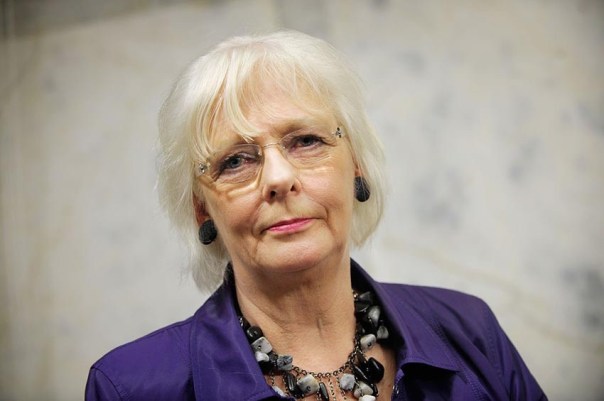
became Iceland’s first female prime minister — and the world’s first openly lesbian head of government — on February 1, 2009. She served until 2013. There have been three other openly LGBT heads of state:

  • Elio Di Rupo, prime minister of Belgium from 2011 to 2014.
  • Xavier Bettel, prime minister of Luxembourg from 2013 to the present.
  • Leo Varadkar, who at 38 made history in 2017 by becoming Ireland’s youngest and first openly gay prime minister.

The first bisexual governor and trans politicians

On February 18, 2015, Kate Brown became the first openly bisexual governor in American history. Brown was sworn in as Oregon’s governor following the resignation of her predecessor. She became the first openly bisexual person to be elected governor in the US after her victory in a 2016 special election.

According to a Washington Post analysis published in December 2015:

  • Since 1977, 139 transgender candidates have run for more than 200 races in 31 countries.
  • 52 transgender candidates were elected.
  • Nearly 90 percent of these candidates were trans women.
  • As of December 2015, 20 transgender elected officials were in office.

The ‘gay happiness index’ winners are…

In a 2015 study of 115,000 of its members, Planet Romeo – an international social network for GBT men – created a ‘gay happiness index’. It had three criteria:

  • How do gay men feel about society’s view of homosexuality?
  • How do gay men experience the way other people treat them?
  • Are gay men satisfied with their lives, and do they accept themselves?

Based on these criteria, of the 127 countries rated, the top nations in the gay happiness index were:

1 Iceland
2 Norway
3 Denmark
4 Sweden
5 Uruguay
6 Canada
7 Israel
8 Netherlands
(The UK ranked 23rd and the US ranked 26th.)

The lowest-ranked nations (in descending order) were:

8 Cameroon
7 Iran
6 Nigeria
5 Iraq
4 Kyrgyzstan
3 Ethiopia
2 Sudan
1 Uganda

What kind of relationship do lesbian and bi women want?

Lesbian website Autostraddle asked 8,566 self-selected lesbian, bisexual, and trans women about their preferred relationship style in a 2015 survey:

  • 61.7% of respondents chose monogamy.
  • 22% chose ‘mostly monogamy’ – which, in the words of the survey authors, ‘means many different things to many different people’.
  • 6% chose an open relationship.
  • 5.3% chose polyamory.
  • 1.4% chose ‘don’t ask, don’t tell’. That means partners are free to do whatever they want with whomever they want as long as it doesn’t become known to the other partner.
  • 0.58% chose polyfidelity. If you are in a relationship with more than one other person and you are all emotionally and sexually faithful to each other.
  • 0.39% chose triad — a closed relationship that involves three people, also called a ‘thruple’.

Where are all the LGBTI families?

The US states with the highest proportion of same-sex couples raising children are:

  • Mississippi – 26%
  • Wyoming – 25%
  • Alaska – 23%
    What LGBTI films are box office hits?

Two LGBTI-themed films share the title of winning the most Oscars. This year Moonlight won Academy Awards for Best Picture, Best Supporting Actor, and Best Adapted Screenplay. And in 2006 Brokeback Mountain won Academy Awards for Best Director, Best Adapted Screenplay, and Best Score. The Academy also nominated Brokeback Mountain for Best Picture but it missed out.

At $83,043,761
in US earnings, Brokeback ranks as the fourth-highest-grossing LGBTI film. The Birdcage is first ($124,060,553), Interview with a Vampire comes second ($105,264,608), and The Imitation Game is third ($91,125,683). To date, Moonlight has grossed $27,854,932.

Which city in the world has the biggest Pride?

According to estimates from organizers, police, and media accounts, the largest LGBTI Pride events, calculated by the number of attendees, include:

1 São Paulo Pride Parade (2006) – 3 million people.
2 Madrid Europride Festival (2007) – 2.3 million.
3 New York City Pride Parade (2016) – 2 million.
4 San Francisco Pride Parade (2014) – 1.7 million.
5 New York City Pride Parade (2015) – 1.6 million.
6 Cologne Europride Parade (2002) – 1.4 million.
7 Toronto Pride Festival (2012) – 1.2 million.
8 Madrid National Pride (2012) – 1.2 million

And some ‘firsts’ from LGBTI history

Dr Magnus Hirschfeld founded the first ‘homosexual emancipation organization’ on 15 May 1897. It was called the Scientific-Humanitarian Committee and was in Berlin.

The first formally organized LGBTI movement group in the United States was the Society for Human Rights in Illinois in 1924. A few months after its founding, the group ceased to exist in the wake of several members’ arrests.

According to historian Susan Stryker, ‘the first known incident of collective militant queer resistance to police harassment in US history’ took place in August 1966. Transgender people staged a rebellion outside Compton’s Cafeteria in San Francisco’s Tenderloin district to protest mistreatment and abuse by the police.

A world of LGBTI data

LGBTQ Stats: Lesbian, Gay, Bisexual, Transgender, and Queer People by the Numbers is published by The New Press. Husband-and-husband team of David Deschamps and Bennett Singer are the authors

Reference

Gay History: The Drummer’s Revenge – The Story of Nicolas Daussy, Seigneur de Saint-Michel

In 1642, the town of Ville-Marie — the future Montreal — was founded as part of the effort by some very extreme Catholics to convert the Native people to Catholicism. A mere six years later, in 1648, the city had its — and the future Canada’s — first recorded mention of homosexuality among Europeans.
A military drummer was sentenced for “crimes of the worst kind.” History doesn’t record the drummer’s name, nor his partner’s. One historian has suggested that this partner might have been a Native man who escaped the drummer’s fate, though this isn’t known for sure.
What is known is that the drummer’s case was moved to Quebec City. French law traditionally prescribed death by fire for homosexuality. According to the Journal of the Jesuit Fathers for September 1648:

“About this time, there was brought from Montreal a drummer, Convictus crimine pessimo [convicted of a crime of the worst kind], whose death our Fathers who were at Montreal opposed, sed occute; he was then sent hither and put in the prison. It was proposed to him, so that he might at least escape the galleys, to accept the office of executioner of Justice; he accepted it, but his trial was first disposed of, and then his sentence was commuted.”

So only the intervention of the Jesuits saved him from death, and they further managed to argue him down from a life of hard labour to a job as New France’s executioner. Given his choices, the drummer chose to become an executioner. This was extraordinary, given that executions of “sodomites” in France were then at their peak, at that the Jesuits were at the centre of it.

We don’t know what happened to the drummer after that, but we do know that his first victim was a girl of 15 or 16, convicted of theft. This is the last we hear of him. By 1653, the colony was looking for a new executioner. No record survives to tell us what happened to the drummer — whether he was dead, convicted of another crime, or had escaped.

Some historians working on this issue — Pierre Hurteau and Patrice Corriveau, for example — have taken to claiming the drummer’s name wasn’t lost to history, and are calling him “René Huguet dit Tambour.” I’ve checked the sources they cite, however, and can’t find that name in any of them. I’ve also checked Marcel Trudel’s Catalogue des Immigrants, which lists the names of everyone known to have arrived in the colony, from any known source Trudel could get a hold of, for the years the drummer would’ve been in Ville-Marie.

There is a “René Huguet” on genealogical records who arrives in the colony in 1680, however, by which time our drummer is long gone. So it seems Hurteau and Corriveau have made some kind of mistake. The drummer’s name is still unknown.

Reference

  • The Drummers Revenge, 9 June 2007, by Hamish, from his WordPress blog LGBT History & Politics in Canada

Gay History: The Gay DNA Of House Music

The dance scene owes much to gay culture…

Earlier this year, Lithuanian producer Ten Walls was riding on a wave of global love with his big-room smasher ‘Walking With Elephants’. Then, in a strange move, which in the future will be seen as a case study for career sabotage, he wrote a homophobic rant on his Facebook page. 

The post compared homosexuals to paedophiles and referred to the LGBT community as “another breed”. His bigotry sent chills down the spine of anyone with an open mind and memories of less liberal times.

For many, reading such hateful views can be frightening.

While the UK’s an apparent bastion of tolerance, Stonewall’s national figures suggest eight in 10 LGBT people have been verbally abused or harassed and one in 10 has been physically assaulted. There might be gay characters in Hollyoaks, but it’s not all rainbows out there. LGBT acceptance is still fairly fragile and far from certain outside city centres.

TAPESTRY

Ten Walls’ comments revealed an embarrassing lack of historical perspective. House music (and all its subsequent forms) wouldn’t be the phenomenon it is today if it wasn’t for the major contribution from an underground scene on both sides of the Atlantic that was black, queer and fabulous.

Frat boys, R&B stars and TOWIE types are fist-pumping to EDM with a gusto that’s cheering, but also quite depressing. The musical narrative that led us to where we are today began over thirty years ago. Electronic music emerged from a scene that was alternative, diverse and mostly, very, very gay. Ten Walls? You listening at the back?

As with any cultural phenomenon, there are many threads which merge to make a fine tapestry. The LGBT contribution to the dawn of house isn’t the whole story, but it’s the backbone, glitter and colour that often gets overlooked. The unsung influence of gay culture may not stem from conscious discrimination, but when a major contribution isn’t celebrated, that oversight can allow homophobia to flourish.

The roots of today’s dance music are definitely disco — be that EDM, dubstep, house or trance. Disco spawned the driving kick-drum and epitomised the escapism, abandon and release that should be at the heart of any decent dance tune.

David Mancuso’s parties at The Loft in NYC were the ground zero of the disco movement. In 1973 Vince Aletti wrote a piece for Rolling Stone documenting the covert scene of, “After-hours clubs and private lofts open on weekends to members only — a hard-core dance crowd — blacks, Latins, gays.”

The much missed DJ Tallulah (1948-2008) span at Studio 54 in New York, but in 1974 took London by storm as the resident DJ at Bang on Charing Cross Road. When asked about dance music culture, he sniffed: “The rave lifestyle of Ibiza in the late ‘80s was just a vanilla version of the New York gay lifestyle of the ‘70s.”

NON STOP ECSTATIC DANCING

In 1981, when ‘house’ was something you might shout while playing bingo, but certainly wasn’t a ‘feeling’ or a genre, Marc Almond from Soft Cell pioneered a poetic take on queer sex, low life and ecstasy. Yes, you read that right — 1981.

The band mortified middle England with ‘Non Stop Erotic Cabaret’, then in ’82 forged electronic mixes and MDMA approval with ‘Non Stop Ecstatic Dancing’, a remix album that featured a rap from Cyndi Ecstasy, a notorious New York MDMA dealer.

Almond is a deserving national treasure now, but back then, he attracted vicious savaging from both the press and public. The mainstream may have been hating on him, but Marc was ‘loved up’ long before Ibiza became a byword for Mediterranean indulgence.

DISCO DECADENCE 

Marc Almond wasn’t the only one to enjoy chemical hedonism in NYC and bring back the vibes (and drugs) to the grey shores of England. Promoter Steve Swindells recalls visiting Paradise Garage and Studio 54: “I got to visit the ultimate VIP room, the manager’s office, and yes *sniff*, it’s all true!

What many people don’t know is that there was a heaving, largely gay orgy in the capacious basement every night! Paradise Garage, however, was something else entirely. That vast space with its incredible soundsystem! The largely gay, black and Hispanic crowd were totally off-their-tits — mostly on Quaaludes (known as ‘Ludes).”

Inspired by Paradise Garage, Swindells returned to London in ’82 and opened The Lift at the Gargoyle club. Susan Sarandon attended the opening bash and the club was immortalised as ‘The Shaft’ by Booker Prize winner Alan Hollinghurst in his first novel The Swimming Pool Library.

The Lift nodded towards New York’s disco palaces, but its roots were in South London’s largely black, illegal, gay house parties (or ‘Blues’ as they were known). Lift resident DJ Mel, of the KCC Sound System, found his feet at those illicit Blues parties and is regularly cited as one of London’s foremost black and proud DJs.

GIVE ME SOME MOORE

In 1983 Philip Sallon opened the Mud Club, a Friday nighter, with DJs Tasty Tim and Jay Strongman. Mark Moore launched his DJ career at the club, when he was promoted from carrying Tim’s records to stepping in when she took a night off.

The club’s clientele were a mix of queens, b-boys and fashionistas. The music was equally eclectic, ranging from hip-hop to show tunes and ‘trash’ — such as the theme tune from kids TV fave Rupert The Bear. The more leftfield and cheesy the tunes were, the crazier the crowd went.

Jeremy Norman opened Heaven in 1979 and by the early ‘80s, it was at the top of its game, giving gay London an epic club that rivalled anything New York (or the world) had to offer. Thursday nights were Asylum, run by Kevin Millins and hosted by Laurence Malice (the infamous Trade supremo).

Asylum and its successor, Pyramid, may get overlooked as acid house incubators, possibly because the crowd didn’t look like the smiley-faced, baggy-togged ravers that came to define the Second Summer Of Love. At Pyramid, die-hard leather clones inhaled amyl nitrate with nuclear goths and industrial transvestites. It was dark, cruisey and very weird. Heaven on any night could be unhinged and alarming, but it really climbed the walls midweek.

Mark Moore became resident on the main floor and as the mid ‘80s approached, he was characteristically experimental: “We were playing a lot of alternative electronic stuff; Cabaret Voltaire, Yello, DAF, New Order. They slotted in with the imports that were coming from Chicago and Detroit. We didn’t know what they were. It was just an extension of the electronic stuff I was already playing. Nobody settled on ‘house music’ for quite a while.”

BLACK, QUEER AND ACID

Those imports from Chicago were largely produced by and made for the city’s queer and black clubs, such as The Warehouse and The Music Box — where DJs like the late Frankie Knuckles were making a name for themselves. Initially, the tunes were a fusion of Italo, Euro-pop and funk. When producers started dabbling with the Roland TR-303 synthesiser, a style emerged that was sparser, spacier and was later dubbed ‘acid house’.

At Pyramid, the freaks ruled and nervy straight boys grudgingly gave respect to the cutting-edge sounds, with their backs firmly against the wall. It was a twitching, bitching melting pot, but it wasn’t loved by everyone. The commercial LGBT scene wasn’t entirely enamoured by the club’s electro beats and Dadaist fashions. Mark Moore regrets mentioning this schism.

“The mistake I made was recounting how the mainstream gay scene kind of rejected it — calling us the ‘black sheep’. In the eyes of most journalists, that makes it seem like it wasn’t that important. But everyone who went to those clubs has told me off for that. Of course it was important. It was JUST as important as the 30 people who saw the Sex Pistols in Manchester. It was MORE than 30 people. It was over 1,000 people, packing out at Heaven, midweek.”

As someone who attended Pyramid religiously, I can confirm that it was both seminal and heaving. My heroic 90-minute nightbus journey home, followed by a half-hour stagger through sleeping suburbia, was always worth the pain of crawling into bed at dawn, covered in glitter, fag-ash and saliva.

Attracting a much smaller clique, but equally wacky, was Leigh Bowery’s Taboo at Maximus in Leicester Square, launched in 1985. Immortalised in Boy George’s musical of the same name and hailed by the style crowd, there’s a chemical aspect of the club that’s often forgotten.

“It was very hi-energy and Italo,” remembers Mark Moore. “But what made it beautiful were Jeffery Hinton’s mix tapes. They were completely druggy and amazing. It was definitely the first place in London where there was mass ecstasy taking.”

Regulars at Taboo, such as Hot Gossip’s Mark Tyme and DJ Mark Lawrence (RIP) would spend hours at home perfecting synchronised dance routines to perform at the club. There was also a fad for formation ‘falling down’.

Basically, all those on the dancefloor would collapse in unison, often as a response to the floorshow. Taboo was demented, messy, short-lived and quite elite, but people have said the same of Danny Rampling’s Shoom. And that was two years later.

PROTO-RAVERS

Luke Howard is resident DJ at Horse Meat Disco and played Queer Nation for 14 years. He agrees that the gays were raving long before it had a name.

“Pre acid house/rave culture, you’d hear house music in many gay clubs in London. The DJ at the Prince Of Wales in Brixton would play house tracks like ‘House Nation’, and the first time I heard ‘House Music Anthem’ by Marshall Jefferson was at a venue called Traffic on York Way [in Kings Cross].

I went straight to Groove Records and bought a copy on import the next day. The biggest night that played loads of house music was Pyramid at Heaven where Mark Moore and Colin Faver were residents.”

On a less alternative tip, but fiercely serving the LGBT black community, was Jungle at Busby’s on Charing Cross Road.

The Monday nighter ran from ’83-86 and again, Steve Swindells was at the helm. He ponders its influence: “The DJs were Colin Faver (Kiss FM) and Fat Tony (his first regular DJ gig — I think he was 15!). In ‘86 they started drip-feeding a new genre of US imports in with the otherwise largely black music they were playing. Jungle hosted, I believe, the first-ever house music PA in London. That was Darryl Pandy singing Farley Jackmaster Funk’s ‘Love Can’t Turn Around’. The crowd went crazy.”

MY HOUSE IS YOUR HOUSE

Mark Moore became quite militant in his refusal to play anything BUT house. This took shape in ’87 at Planet Love at The Fridge, run by Nicky Trax.

Moore declared a musical war: “We put a sign on the door saying, ‘We play house music — if you don’t like it, please don’t come in’. There were a lot of locals who wanted to hear rare groove and we used to worry they’d come in and shoot us. So we put that warning on the door. And two years later those records DID become classics.”

There’s another aspect to this story that may explain why the LGBT contribution to UK house isn’t documented in a detailed fashion. As the Second Summer Of Love dawned in ’88, the UK gay scene was in major crisis and London was the epicentre of this battle. HIV/AIDS was cutting a swathe through our community, instilling tabloid panic, a rise in homophobia and widespread fear.

In 1988, we were nursing loved ones, fighting bigotry, attending floods of funerals and trying to stay alive and chipper. The edgiest innovators from a wild period of creativity were dying, or had turned to activism in response to a grim pandemic and a ruthless Tory government.

The age of consent for same-sex sexual activity was 21, so at this time, I was effectively jail bait. My boyfriends faced prison if we were caught together. The absurd laws didn’t stop passion, or inhibit love, but it was far from agreeable.

Section 28 of the Local Government Act 1988 prohibited local authorities in England and Wales from “promoting” homosexuality. It also labelled gay family relationships as “pretend”. The Second Summer Of Love emerged against this background of oppression and prejudice.

The gays had been integral to getting the house party started, but by late ‘88, the community’s focus had switched from MDMA to AZT and HIV. Quite frankly, we were busy.

We lost a lot of people. AIDS savaged clubland like a rusty scythe. DJs, drag stars, artists, designers and go-go boys either died or went below the radar.

Of course, HIV didn’t single out creatives, but the clubs were fuelled and populated by that crowd. The club kids and older gay men who’d ruled discos in the ‘70s suddenly became thin on the ground. Between ’88 and ’93, I was either raving or grieving.

Or both. I should have been studying, but I spent more time lost in dry ice than in the books on the syllabus. On more than one occasion, I dropped ecstasy while attending a funeral wake. It wasn’t disrespectful. On the contrary, the common refrain, as we gurned over yet another coffin, was: ‘It’s what they would have wanted’.

SECOND SUMMER OF LOVE

The party continued. It always does, but it was really picking up on the illegal rave scene. The energy that sparked the flames of house music in subversive gay clubs exploded elsewhere as the Second Summer Of Love (1988-’89). If you weren’t dead or too sad to pop pills, you threw yourself into the cultural phenomenon that was loved-up, initially optimistic but totally anti-establishment.

James Horrocks, co-creator of React Records, remembers the shift in thinking. “More young gay people were looking for something new and more vibrant, and had already frequented fashion-orientated clubs that embraced the mixed message,” he recalls.

“This was fully realised with the arrival of acid house and E-culture. Vast swathes of the scene migrated to warehouses to join the raving masses. It was such a sweeping change for the LGBT scene, it was forced to throw out the rule-book.”

My personal party habits in ’88 reflected the uncertain mood of the times. My straight mates (God love ‘em) were cracking AIDS jokes, dissing ‘bum bandits’ and dropping acid while dancing on the forecourt at Heston Services. We were a gang of sorts, our catchphrase being, ‘We put the E into Ealing’.

This much was true. We were regulars at a club called Haven Stables in Ealing (where Brandon Block got started). When the club threw us out, we’d dance on the green outside, to the bemusement of daytime shoppers and commuters. Despite all the pill-fuelled love and empathy, I still didn’t feel happy ‘coming out’ to them. In fact, I was terrified they’d find out.

With my straight mates, we’d go to Nicky Holloway’s Trip at The Astoria, Paul Oakenfold’s Spectrum at Heaven and the RiP raves in Clink Street. On the sly and on my own, I’d let my hair down at the queer parties, such as Jimmy Fox’s Daisy Chain (The Fridge, Brixton), Troll (The Soundshaft) and Pyramid. It was a dual life of double-dropping and downlow habits. Occasionally, the two lives would collide under the lasers. When I saw queens at the big, straight raves, I’d steer clear and spurn recognition — the dancing gay Judas with dilated pupils.

MADCHESTER

My dwindling studies took me to Liverpool in ‘89 and much to my southern surprise, the north was embracing rave culture with characteristic passion. Liverpool took to rave in a big way, but Manchester pipped it to the post and became the darling of the music press. ‘Madchester’ was thrilling.

The city buzzed off its renaissance, but it wasn’t just the scallies and the wide-boys getting ‘on one’. Manchester boasted a booming gay scene that was cocky, hip and ready to ‘ave it ‘til dawn. As it was a short drive from Liverpool, that’s where yours truly spent most weekends.
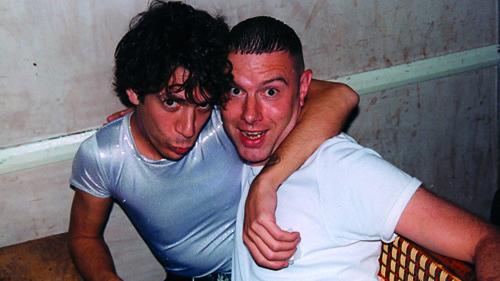
DJ Dave Kendricks explains the city’s LGBT heritage: “Manchester’s musical history is full of gay signifiers, from Pete Shelley singing ‘Ever fallen in love with someone you shouldn’t have?’ to New Order openly imitating the sound of Bobby O on ‘Blue Monday’.”

The No.1 Club on Central Street was a small carpet-and-chrome club that became THE queer rave destination in Manchester. Tim Lennox played feel-good piano house on a quadrophonic sound system, to a rocking clan of devotees.

Previously scared to come out to my straight mates, the cat was now out of the bag and the No.1 was where I took the boys. One night, a bunch of them cheered when I snogged a drug-dealing gangster. I couldn’t have been happier. Not only had they accepted my sexuality, they were applauding it. Times were a-changing and E was fuelling the evolution.

I paid £25 for an acid tab at Mike Pickering’s Nude at The Haçienda and while it was a boss night, when Paul Cons opened Flesh at The Haçienda in 1991, THAT was mind-blowing.

Resident DJ at Flesh, Dave Kendricks also remembers it fondly.

“That monthly gay night at The Haçienda was the greatest night I ever played. It was raucous, hedonistic, totally Northern and felt like a city turning its back on prejudice, towards acceptance, in the most thrilling way.

Just a few years before, Manchester’s chief of police James Anderton said the gay community was ‘swimming in a cesspit of its own making’ after he raided the gay club, Rockies. It was a direct reference to AIDS. Flesh was the biggest fight-back to that.”

I used to get so excited at the prospect of going to Flesh, I couldn’t eat for two days prior to the event. The club ran a coach from Liverpool to Flesh and back again. It was a demented mess on wheels. God-knows what the driver made of the transvestites in K-holes and topless lesbians dancing on the seats.

As a fledgling DJ, I’d set up decks and a soundsystem at home, in Toxteth. On more than one occasion, when the coach returned from Flesh, it would stop outside my home on Elwy Street and the tripping, screaming contents of the bus would pile into my cottage and the party would continue for days.

The epic post-Flesh socials in my Liverpool latty were known as Club Lovestretch. We painted the house in UV graffiti, installed black lights and removed the bannisters, so people could rave on the stairs. I was living in Liverpool, partying in Manchester and returning to London at every opportunity. I was very busy.

QUEER NATION

In 1990, Patrick Lilley opened Queer Nation at Covent Garden’s Gardening Club. “I’d run the first soulful house and garage club in the UK, High On Hope at Dingwalls,” Lilley tells DJ Mag. “Queer Nation was just the mutated gay version. For the authentic black heritage of house (the music that sees no colour), there’s no comparison or competition for QN. We came straight from the founding fathers.”

The brilliant Luke Howard and Princess Julia were the resident DJs at Queer Nation and I spent many a Sunday night in Patrick’s VIP ‘cupboard’ with his hash pipe and secret booze stash. Due to the Sunday trading laws, there was no alcohol served after 10pm, but where there’s a will…

While Queer Nation kept it funky, other London LGBT clubs were picking up the pace and breaking ground with tougher sounds. “React (myself and Thomas Foley and later Steven React) took over promoting Garage at Heaven and Troll at The Soundshaft in the summer of 1990,” James Horrocks tells DJ Mag.

“The New York house and Detroit techno we played at Garage and Troll had morphed into a much harder sound — a mix of techno and new beat. It immediately found popularity on the scene and along with the soulful house and garage sound of New York, became the soundtrack of our lives.”

Blu Peter, resident DJ at Garage, enjoyed success as both a DJ and a producer. “Garage integrated gay and straight crowds and became more about the music and less about the sex at the end of the night!” he tells DJ Mag.

“The ‘Reactivate’ series produced tunes that were tried and tested there. Mrs Wood and I were the first international DJs to play South Africa after Apartheid, and also after the hand-over in Hong Kong. Both gigs were massive honours.”

ALL-NIGHT BENDER

In 1990, another club launched in London that made the debauchery of Studio 54 appear tame and a bit lightweight. Laurence Malice (and Tim Stabler) launched Trade at Turnmills and unlike any club before, it started at 4am on a Sunday morning.

Plugged as the ‘original all-night bender’, the club stayed open ‘til way past Sunday lunchtime and was a deranged cocktail of sex, drugs and house music. Trans beauties, supermodels, international DJs, muscle boys, East End gangsters and A-list celebrities rubbed shoulders and partied en masse, every week, like their lives depended on it. It was full tilt at 8am.

It’s impossible to convey both the lunacy of the club and the obsessive allegiance of its regulars. Entry wasn’t guaranteed, even if you were gay. The door policy was vague, but sturdy: “You don’t have to be gay or a member to get in, but your attitude and look will count.”

Me and my mates used to party at The Curzon, Jody’s or Quadrant Park in Liverpool, then drive all the way to Farringdon as dawn approached. We’d stagger out of Trade at 2pm, then drive all the way back to Liverpool. Some of those journeys, swerving along the motorway, were a little bit scary.

Trade launched the DJ careers of a number of big players who’re still rocking it today. The original line-up was Martin Confusion, Daz Saund, Trevor Rockliffe, Smokin’ Jo and Malcolm Duffy. This stellar cast was later joined by ‘Tall’ Paul Newman, Alan Thompson, Steve Thomas, Pete Wardman, Ian M, The Sharp Boys, Fat Tony and Fergie.

The most celebrated Trade DJ remains the late, great Tony De Vit (1957 –1998). Tony’s mixing skills and ability to spin an overwhelming symphony of hard house led to him being venerated like a god.

Tragically, Tony died at 40, due to AIDS-related bronchial failure. One only has to listen to his single ‘Burning Up’, or his remix of ‘Hooked’ by 99th Floor Elevators to get an idea of his sound. However, to really understand De Vit’s magic, you had to be there, under the lasers, as his galloping wall of sound inspired joy, disbelief and amazement.

I moved back to London after (barely) completing my studies, and after a chance encounter with Laurence Malice, wound up working on the door of Trade for five years. I’d already decided it was the greatest queer club in the world, long before I became part of its rude family.

My enthusiasm for Trade’s hedonistic spirit never waned. I’d finish on the door at 10am, then get on the dancefloor ‘til the club shut that afternoon. Like Ice-T says in the NRG classic, which became a Trade anthem, ‘He Never Lost His Hardcore’.

DTPM

Lee Freeman’s Sunday afternoon party started in ’93, as a post-Trade knees-up, at an Italian restaurant in Holborn called Villa Stefano. In order to get round the Sunday licensing laws, an enormous buffet would greet the still-buzzing gay ravers as they trooped in from Turnmills. I never saw anybody eat anything, except for the odd pill.

Over the years, it moved, first to Bar Rumba, then The End, and finally, it did a major eight-year stint at Fabric on Sunday nights. Many of DT’s residents, such as Smokin’ Jo, Alan Thompson and Steve Thomas, were regular Trade DJs, but DTPM honed a funkier, deeper groove which helped establish the club’s unique brand.

I had my very own pillar at The End (in between the two dancefloors, next to the toilets), where you could find me, every Sunday, grinning and clinging onto it for dear life.

WOMEN IN THE HOUSE

The Fridge in Brixton hosted the first huge, women-only club night Eve’s Revenge in the ‘80s, followed by Venus Rising in the ‘90s. It regularly attracted over 1300 lesbian clubbers. A special mention must go to the awesome Vicky Edwards, who span at Jungle, Venus Rising and Bad at the Soundshaft. She’s still an excellent DJ.

DJ Smokin’ Jo used to sashay through Trade with a hunk hefting her record box, and the crowd would gawp at her sass and beauty. More importantly, she’d take to the decks and totally rock the place. “Trade gave a platform to that real US house style of music,” she tells DJ Mag. “It felt cutting edge and of course, it brought techno and harder sounds to the forefront.”

Jo was a regular in DJ Mag in its early days and her relationship with Skin from Skunk Anansie proved a powerful and gorgeous fusion of rock and house sovereignty. Hearing Skin rap over Jo’s DJ set at the DTPM tent at Gay Pride in Brockwell Park remains, for me, a gobsmacking and pivotal point in black girl power.

One could argue that female DJs suffered less sexism in LGBT clubs than elsewhere, but lesbian raving really hit a peak when clubs such as Pumpin’ Curls and Kitty Lips shook up London in the mid ‘90s. “We, Vikki Red and myself, were DJs first and foremost,” Queen Maxine tells DJ Mag. “Individually, we played to varying audiences over the world for many years.

We set out to offer something unique, yet boutique; a forward-thinking space for women (of all sexual persuasions and their gay male friends as guests) who appreciated the harder side of dance music and wanted a space without getting ‘put on’ by straight guys.

“It certainly worked. We promoted two very well attended and respected nights; Pumpin’ Curls and then Kitty Lips. These clubs ran alongside Trade at Turnmills, as the little sister club. Laurence Malice was very supportive and helped open many doors for us.

The secret to our success was keeping ahead of the pack and offering something different and daring. Because of this approach, we were able to attract a very diverse crowd, who believed they were a part of something that hadn’t been done before.”

In ’94, Suzie Kreuger arrived in London. With her NYC Clit Club experience, she launched the notorious Fist. A woman, promoting a gay fetish club, was a novelty in itself. The real revolution was that Fist welcomed S&M lesbians, who joined the leather men under one roof, all united in a passion for kink, pills and techno.

It was very queer, often shocking and musically brutal. Prior to Fist, I’d never seen lesbians having sex or watched live shows that were so graphic, punters fainted, fled or vomited on a regular basis. Lesbian techno mistress EJ Doubell span fearsome sets that only added to the demonic and highly-charged vibe.

MONDAY MORNING

Trade, Garage and Fist weren’t the only LGBT clubs serving up nu techno and ‘hardbag’. The truly wayward headed to FF at Turnmills on Sunday nights. Launched in ’89 by Mark Langthorne and Nicholas Timms, it was a dark and uncompromising night that featured Suzie Kreuger on the door and a crowd who were happy to be bang at it ‘til 5am Monday morning.

Mrs Wood and Blu Peter were the celebrated residents. Having spent my Sunday morning working at Trade, FF was where yours truly went to let off steam and feel the joy and terror of manic techno and hard trance.

The club wasn’t very welcoming to those who weren’t LGBT, and it certainly wasn’t for the faint hearted. The creative team behind FF also produced a satirical fanzine (also called FF) that was militantly gay and so near the knuckle, it eventually got shut down by a law suit. 

Asked about FF, Blu Peter admits to, “Special and often bizarre memories. On the whole it was a night when you could expect anything. The audience loved to be pushed and challenged. I aspired to play there above anywhere else. The legacy is that people still talk about it, though it ended 20 years ago.”

While Peter is right, it seems that straight, white, mainstream culture prefers to tell another account when it comes to electronic music. Dave Kendrick, DJ at Flesh, isn’t surprised at the selective story telling. “Unless you’re talking about hairdressing, airline stewarding or musical theatre, the LGBT contribution is overlooked in almost all UK cultures,” he says.

“We only reached full legal equality [in the UK] last year and within that, LGBT people will always be a minority. The dialogue about what we’re due is only just beginning. You have to shout to be heard when you’re in the minority, but that doesn’t mean the amazing gay nightlife culture incubated in the British gay night-time isn’t worth shouting about. It’s an inspirational story of underground culture directly informing the mainstream.”

It’s perplexing to note that sexual diversity appears to have almost vanished from electronic music media and the wider conversation. Largely straight, white middle class crowds are embracing a genre that was birthed by working class, queer, black and Latin people over three decades ago. The young seem especially ignorant of the struggles those communities endured then and, in many parts of the world, continue to experience now.

ROOTS AND RIGHTS

For a new generation, whose first experience of house music might be Avicii or David Guetta, this seems especially pertinent as they enjoy the party, but are blind to LGBT battles being fought in places like Russia or the Middle East.

Twenty years ago in the USA, it was rare to hear house music except in black or LGBT clubs and on very few radio stations. Currently, there’s a colossal mainstreaming of dance music, not just in America, but worldwide. It’s brilliant that these newcomers, commercially defined by pumped up boys and blonde party girls, get to feel the shared joys of house music. But it’s all a bit hollow if they don’t appreciate the roots.

Strides have been made and for many in the wider LGBT community, life is less fearful than it was 30 years ago. However, if ‘Music Is the Answer’, one can’t help but wonder what the question was? One thing’s for certain, as electronic music continues to dominate popular culture, we’d do well to remind ourselves of the diversity, political struggle and sheer queerness that was so fundamental to the very DNA of dance music. Joe Smooth once sang, ‘Brother, sisters/One day we will be free/From fighting, violence/People crying in the street’.

Top tune, lovely message, but we’re not there yet.

Reference

Gay History: Eugenia Falleni. Transgender Murderer?

Eugenia Falleni dressed as a man in her mugshot in 1920. .

Eugenia Falleni lived for decades as Harry Crawford until arrested for murder

Caitlyn Jenner and now the Oscar-nominated film The Danish Girl have shone the light on the difficulties faced by transgender people as never before. Jenner’s transition and Eddie Redmayne’s portrayal of Lili Elbe (formerly Einar Wegener) is bringing understanding and acceptance that others could never have dreamed of.

Take the tragic story of Sydney’s Eugenia Falleni, born about 1875, who lived most of her life as Harry Crawford. From an early age Falleni felt more comfortable as a male. For many years she lived secretly as a man in Sydney, but in the 1920s her story was made public under the most tragic and humiliating circumstances.

Eugenia is believed to have been born in Italy, the eldest of 22 children. The family migrated to New Zealand in 1877 but Eugenia was punished for dressing in boys clothes and being a tomboy.

As a teenager she ran away from home several times. At 19 her father forced her into a marriage with an Italian man named Braseli. When it turned out that Braseli was already married, Eugenia ran away for good.

Signing on as a ship’s cabin boy under the name Eugene Falleni she lived as a man aboard ships for several years until a captain discovered her secret and subjected her to continued rapes. She was forced ashore in Newcastle in 1898 and made her way to Sydney where she gave birth to a daughter she named Josephine.

She left her baby in the care of an Italian woman in Double Bay and took on the identity of Harry Leo Crawford, dressing as a man and working as a manual labourer.

Eugenia Fellini as Harry Crawford. Picture: Sydney Living Museums

Although some thought him strange and somewhat reserved, none of Crawford’s co-workers suspected his secret. They knew him to be a good worker who, despite his small frame, was not afraid of hard work.

Crawford always spurned the interest of young ladies until in 1912, when he was working as a general hand and cart driver at a company in Wahroonga, he fell for his boss’s housekeeper Annie Birkett, a widowed mother of a teenager son.

Crawford finally allowed himself to get close to a woman, even devising a method of making love that would convince her he was a man. They were married in 1913 and set up a sweets shop in Balmain together.

Crawford maintained the deception until 1917 when Annie discovered his secret from a neighbour. Determined to save the marriage Harry took Annie on a picnic on the banks of the Lane Cove River to convince her to stay

Annie Birkett was told Harry’s secret by a neighbour.

Something terrible happened on that picnic. According to later statements by Crawford Annie slipped and fell, fatally hitting her head on a rock. In a panic he tried to burn her body and obliterate the evidence. Her body was discovered but it would be years before the police were able to identify her remains.

Telling Annie’s son, Harry Birkett, that she had run off with another man Crawford moved house and in 1919 married Elizabeth Allison.

In 1920 the police finally identified Annie’s body with the help of Harry Birkett who recognised her jewellery and Crawford was later arrested.

The first mugshots were taken of Crawford in men’s clothes before he was forced to change into women’s clothes for more humiliating photographs.

Eugenia Falleni was forced to wear women’s clothing in her second series of mug shots. Picture: Leichhardt Library

There was more humiliation in store. Newspapers reported the Falleni case as the “man-woman” and there was intense interest from a less than understanding public.

Society was outraged by this woman “masquerading as a man” and supposedly defrauding innocent women into marriage.

At the trial Falleni’s defence centred on challenging the identification of the body as that of Annie, but the jury was not convinced. Falleni was convicted of murder and sentenced to death. The sentence was later commuted to life in prison.

Execution may have been a kinder sentence, because of the agony of being forced to live as a woman in prison. Falleni was released from Long Bay in 1931 because of her failing health, but was dogged by her tragic past.

She died in 1938 from injuries sustained after being hit by a car on Oxford St near her home at Paddington.

Was ‘transgender warrior’ a victim of an Australian miscarriage of justice?

Mark Tedeschi QC’s biography of Eugenia Falleni exposes a potential unjust murder conviction from 1920

f you go into the lord chief justice’s court at the Royal Courts of Justice in London, you may notice a pair of rather shabby red velvet curtains, to the left and right of the presiding judge’s chair. Each curtain is suspended from a horizontal brass rod, which is hinged so that it can sit flat against the panelled wall when not required.
Although court 4 is regularly used for ceremonial occasions, such as the swearing-in of senior legal figures and the extraordinary 800-year-old quit rents ceremony, I have never seen the curtains swung out for use. I had always assumed they were Victorian draught excluders, made redundant by improvements to the central heating system since the courts were opened in 1882.

That was until this week, when I read a chilling account of a woman being sentenced to death. This was not an Indonesian court sentencing someone for drug trafficking but an Australian court sentencing a defendant for murder.

The year was 1920. After hearing the jury’s verdict and inviting the defendant to address the court, the chief justice of New South Wales “gave an almost imperceptible nod to the sheriff’s officer who was waiting in the body of the court”. The official knew exactly what the gesture meant.

He walked to the front of the court, mounted the stairs to the bench, walked around the back of the judge to the two, large, hinged curtain rods that were normally flush on the wall behind the bench, each rod carrying a black velvet curtain, and swung them forward to a position on either side of the judge. By ancient tradition, this signalled that a death sentence was about to be handed down. This quaint practice symbolically isolated the judge from all side distractions and influences and focussed his attention on the prisoner directly in front of him, so as to assist him in discharging the distasteful task at hand.

Before I explain the remarkable background to this case, I should say that — as far as I know — nobody has ever been sentenced to death in court 4 of the Royal Courts of Justice, although the court of criminal appeal certainly used to hear appeals in capital cases there. Perhaps there is a legal historian who can tell me whether the courtroom curtains in London were ever deployed in the way they were in Sydney.

The woman sentenced to death in New South Wales had been convicted of murdering Annie Birkett, a woman who had believed she was the defendant’s wife. Eugenia Falleni had lived as a man for 22 years and, during that time, had taken part in two ceremonies of marriage with women who each believed that they were marrying a man. The second woman even persuaded herself she had become pregnant by Falleni.

Eugenia, the new biography of Falleni from which I have taken the passage above is, written by Mark Tedeschi QC, senior crown prosecutor for New South Wales. He believes that Falleni was wrongly convicted on the basis of “fallacious scientific evidence, unreliable sighting witnesses, dubious police practice and an avalanche of prejudicial publicity”.

Tedeschi demonstrates all too clearly how a more experienced defence counsel could have secured an acquittal or, at worst, a manslaughter verdict. It is a message that the justice secretary, Chris Grayling, should take to heart. And the authorities in Indonesia might care to note that, as long ago as 1920, Australian politicians were not prepared to see someone they regarded as a woman going to the gallows. No women had been executed in New South Wales for more than 30 years. The sentence was commuted to life imprisonment and Falleni was released on licence in 1931, only to die in a road accident in 1938.

Born in Italy in 1875 and brought up in New Zealand, Falleni went to sea at the age of 21. The following year, Falleni was raped by a sea captain who discovered that he and his crew had been deceived by the young sailor. Falleni became pregnant and gave birth to a daughter, who went on to have a family of her own.

It was in 1913 that Falleni, then known as Harry Crawford, went through a ceremony of marriage with Birkett. What strikes the modern reader as extraordinary was that Birkett, who had been widowed some seven years earlier and left with a young son, took more than four years to realise how she was being deceived by Falleni, despite several tell-tale signs.

Tedeschi explains how Falleni used a dildo and always wore a loose-fitting undershirt during lovemaking. Eventually, Birkett confronted Falleni, but Tedeschi’s account of their falling out makes it clear that Birkett’s death could have been an accident.

In his highly readable biography, Tedeschi concludes that Falleni was a “transgender warrior at a time when there was no understanding of her condition and no support for her cause”. He says “the most acceptable term today for Eugenia Falleni’s condition is ‘gender identity disorder’, which is synonymous with transsexualism”.

But Tedeschi writes as a lawyer, not as a psychologist. His main concern is to expose a miscarriage of justice for which one of his predecessors was largely responsible. An honest prosecutor never regards an unjust conviction as a successful outcome.

References