Monthly Archives: August 2019

Gay History: The Berlin Story.

How the Germans invented gay rights—more than a century ago.
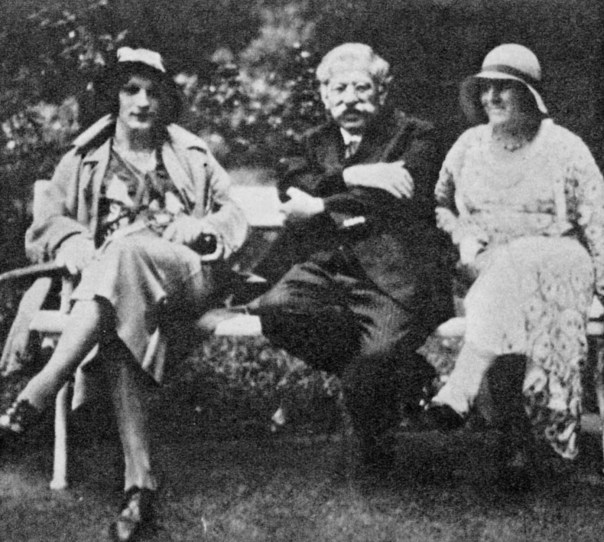
Magnus Hirschfeld and two cross-dressers, outside the Institute for Sexual Science.Courtesy Photo Hirschfeld / Voilà / Gallimard

On August 29, 1867, a forty-two-year-old lawyer named Karl Heinrich Ulrichs went before the Sixth Congress of German Jurists, in Munich, to urge the repeal of laws forbidding sex between men. He faced an audience of more than five hundred distinguished legal figures, and as he walked to the lectern he felt a pang of fear. “There is still time to keep silent,” he later remembered telling himself. “Then there will be an end to all your heart-pounding.” But Ulrichs, who had earlier disclosed his same-sex desires in letters to relatives, did not stop. He told the assembly that people with a “sexual nature opposed to common custom” were being persecuted for impulses that “nature, mysteriously governing and creating, had implanted in them.” Pandemonium erupted, and Ulrichs was forced to cut short his remarks. Still, he had an effect: a few liberal-minded colleagues accepted his notion of an innate gay identity, and a Bavarian official privately confessed to similar yearnings. In a pamphlet titled “Gladius furens,” or “Raging Sword,” Ulrichs wrote, “I am proud that I found the strength to thrust the first lance into the flank of the hydra of public contempt.”

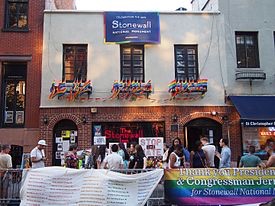
The first chapter of Robert Beachy’s “Gay Berlin: Birthplace of a Modern Identity” (Knopf) begins with an account of Ulrichs’s audacious act. The title of the chapter, “The German Invention of Homosexuality,” telegraphs a principal argument of the book: although same-sex love is as old as love itself, the public discourse around it, and the political movement to win rights for it, arose in Germany in the late nineteenth and early twentieth centuries. This message may surprise those who believe that gay identity came of age in London and New York, sometime between the Oscar Wilde trials and the Stonewall riots. The brutal repression of gay people during the Nazi period largely erased German gay history from international consciousness, and even from German memory. Beachy, a historian who teaches at Yonsei University, in Seoul, ends his book by noting that Germans hold gay-pride celebrations each June on what is known as Christopher Street Day, in honor of the street where the Stonewall protest unfolded. Gayness is cast as an American import.

Ulrichs, essentially the first gay activist, encountered censorship and ended up going into exile, but his ideas very gradually took hold. In 1869, an Austrian littérateur named Karl Maria Kertbeny, who was also opposed to sodomy laws, coined the term “homosexuality.” In the eighteen-eighties, a Berlin police commissioner gave up prosecuting gay bars and instead instituted a policy of bemused tolerance, going so far as to lead tours of a growing demimonde. In 1896, Der Eigene (“The Self-Owning”), the first gay magazine, began publication. The next year, the physician Magnus Hirschfeld founded the Scientific-Humanitarian Committee, the first gay-rights organization. By the beginning of the twentieth century, a canon of gay literature had emerged (one early advocate used the phrase “Staying silent is death,” nearly a century before aids activists coined the slogan “Silence = Death”); activists were bemoaning negative depictions of homosexuality (Thomas Mann’s “Death in Venice” was one target); there were debates over the ethics of outing; and a schism opened between an inclusive, mainstream faction and a more riotous, anarchistic wing. In the nineteen-twenties, with gay films and pop songs in circulation, a mass movement seemed at hand. In 1929, the Reichstag moved toward the decriminalization of homosexuality, although the chaos caused by that fall’s stock-market crash prevented a final vote.

Why did all this happen in Germany? And why is the story not better known? Beachy, focussing on Berlin’s social fabric, doesn’t delve too deeply into larger philosophical questions, but the answers are hardly elusive. The inclination to read German history as an extended prelude to Nazism—the “heading for Hitler” narrative—has tended to exclude countervailing progressive forces, especially those of the Wilhelmine period, from 1871 to 1918. The towering legacy of German idealism and Romanticism, which helps to explain why the gay-rights movement took root in Germany, has itself become somewhat obscure, especially outside the German school system. And so we are surprised by the almost inevitable. Nowhere else could a figure like Ulrichs have made his speech, and nowhere else would cries of “Stop!” have been answered by shouts of “No, no! Continue, continue!”

In Leontine Sagan’s 1931 film “Mädchen in Uniform,” the first sympathetic portrayal of lesbians onscreen, a boarding-school pupil named Manuela plays the title role in a school production of Friedrich Schiller’s 1787 play “Don Carlos,” an emblematic Romantic tale of forbidden love and resistance to tyranny. “A moment passed in paradise is not too dearly bought with death,” Manuela declaims onstage, conveying Don Carlos’s love for his stepmother. Afterward, fortified by punch, Manuela announces her love for one of her teachers, precipitating a scandal. The episode suggests the degree to which the German cultural and intellectual tradition, particularly in the Romantic age, which stretched from Goethe and Schiller to Schopenhauer and Wagner, emboldened those who came to identify themselves as gay and lesbian. (“Schiller sometimes writes very freely,” an elderly woman worriedly observes in Sagan’s film.

Close to the heart of the Romantic ethos was the idea that heroic individuals could attain the freedom to make their own laws, in defiance of society. Literary figures pursued a cult of friendship that bordered on the homoerotic, although most of the time the fervid talk of embraces and kisses remained just talk. But the poet August von Platen’s paeans to soldiers and gondoliers had a more specific import: “Youth, come! Walk with me, and arm in arm / Lay your dark cheek on your / Bosom friend’s blond head!” Platen’s leanings attracted an unwelcome spotlight in 1829, when the acidly silver-tongued poet Heinrich Heine, insulted by anti-Semitic remarks that Platen had lobbed at him, satirized his rival as a womanly man, a lover of “passive, Pythagorean character,” referring to the freed slave Pythagoras, one of Nero’s male favorites. Heine’s tone is merrily vicious, but he inserts one note of compassion: had Platen lived in Roman times, “it may be that he would have expressed these feelings more openly, and perhaps have passed for a true poet.” In other words, repression had stifled Platen’s sexuality and, thus, his creativity.

Gay urges welled up across Europe during the Romantic era; France, in particular, became a haven, since statutes forbidding sodomy had disappeared from its books during the Revolutionary period, reflecting a distaste for law based on religious belief. The Germans, though, were singularly ready to utter the unspeakable. Schopenhauer took a special interest in the complexities of sexuality; in a commentary added in 1859 to the third edition of “The World as Will and Representation,” he offered a notably mellow view of what he called “pederasty,” saying that it was present in every culture. “It arises in some way from human nature itself,” he said, and there was no point in opposing it. (He cited Horace: “Expel nature with a pitchfork, she still comes back.”) Schopenhauer proceeded to expound the dubious theory that nature promoted homosexuality in older men as a way of discouraging them from continuing to procreate.

Not surprisingly, Karl Heinrich Ulrichs seized on Schopenhauer’s curious piece of advocacy when he began his campaign; he quoted the philosopher in one of his coming-out letters to his relatives. Ulrichs might also have mentioned Wagner, who, in “Die Walküre” and “Tristan und Isolde,” depicted illicit passions that many late-nineteenth-century homosexuals saw as allegories for their own experience. Magnus Hirschfeld, in his 1914 book “The Homosexuality of Men and Women,” noted that the Wagner festival in Bayreuth had become a “favorite meeting place” for homosexuals, and quoted a classified ad, from 1894, in which a young man had sought a handsome companion for a Tyrolean bicycling expedition; it was signed “Numa 77, general delivery, Bayreuth.” Ulrichs had published his early pamphlets under the pseudonym Numa Numantius.

Encouraging signals from cultural giants were one thing, legal protections another. The most revelatory chapter of Beachy’s book concerns Leopold von Meerscheidt-Hüllessem, a Berlin police commissioner in the Wilhelmine period, who, perhaps more than any other figure, enabled “gay Berlin” to blossom. Meerscheidt-Hüllessem’s motivations remain unclear. He was of a “scheming nature,” a colleague noted, and liked nothing better than to gather masses of data on the citizenry, like a less malignant J. Edgar Hoover. His Department of Homosexuals, founded in 1885, maintained a carefully annotated catalogue of Berliners who conformed to the type. He evidently was not gay, although his superior, Bernhard von Richthofen, the police department’s president, is said to have had a taste for young soldiers. Meerscheidt-Hüllessem might have reasoned that it was better to domesticate this new movement than to let it become politically radicalized or overtaken by criminal elements.

For whatever reason, Meerscheidt-Hüllessem took a fairly benevolent attitude toward Berlin’s same-sex bars and dance halls, at least in the better-heeled parts of the city. He was on cordial terms with many regulars, as none other than August Strindberg attested in his autobiographical novel “The Cloister” (1898), which evokes a same-sex costume ball at the Café National: “The Police Inspector and his guests had seated themselves at a table in the centre of one end of the room, close to which all the couples had to pass. . . . The Inspector called them by their Christian names and summoned some of the most interesting among them to his table.” Meerscheidt-Hüllessem and his associates also showed solicitude for gay victims of blackmail, and went so far as to offer counselling. In 1900, the commissioner wrote to Hirschfeld expressing pride that he had saved people from “shame and death”: blackmail and suicide. A week later, in a grim irony, this enigmatic protector killed himself—not on account of his homosexual associations but because he was exposed as having taken bribes from a millionaire banker accused of statutory rape.

Hirschfeld’s Scientific-Humanitarian Committee probably could not have existed without Meerscheidt-Hüllessem’s tacit approval. (The commissioner was invited to the organization’s first meeting, although he probably did not attend.) Hirschfeld, who was born in 1868, a year after Ulrichs’s speech in Munich, began his radical activities in 1896, publishing a pamphlet titled “Sappho and Socrates,” which told of the suicide of a gay man who felt coerced into marriage. The next year, Hirschfeld launched the Committee, and soon afterward reprinted Ulrichs’s writings. Building on Ulrichs’s insight that same-sex desire was a congenital trait, Hirschfeld developed a minutely variegated conception of human sexuality, with a spectrum of “sexual intermediaries” appearing between the poles of the purely male and the purely female. He felt certain that if homosexuality were understood as a biological inevitability then the prejudice against it would disappear. “Through Science to Justice” was his group’s motto.

Beachy is candid about Hirschfeld’s limitations. His scientific work blended research and advocacy to an uncomfortable degree, and some of his confederates employed suspect methodologies. (One associate’s study of male prostitution in Berlin involved sleeping with at least one hustler.) But Hirschfeld’s knowledge of sexuality was vast, and Beachy has several incisive pages comparing him favorably to Sigmund Freud, whose influence was, of course, far greater. Freud rejected the congenital hypothesis, believing homosexuality to be a mutation of childhood development. Although Freud professed sympathy for gay people, American psychoanalysts later fostered the destructive notion that homosexuality could be cured through therapy. Freud was grandly systematic in his thinking; Hirschfeld was messily empirical. The latter got closer to the intricate reality of human sexuality.

Hirschfeld had enemies in Berlin’s gay scene. His interest in effeminacy among homosexual men, his attention to lesbianism, and his fascination with cross-dressing among both gay and straight populations (he coined the word “transvestism”) offended men who believed that their lust for fellow-males, especially for younger ones, made them more virile than the rest of the population. Being married to a woman was not seen as incompatible with such proclivities. In 1903, the malcontents, led by the writers Adolf Brand and Benedict Friedlaender, formed a group called Gemeinschaft der Eigenen, or Society of Self-Owners, the name referencing a concept from the anarchist philosophy of Max Stirner. Der Eigene, Brand’s magazine, became their mouthpiece, mixing literary-philosophical musings with mildly pornographic photographs of boys throwing javelins. In the same camp was the writer Hans Blüher, who argued that eroticism was a bonding force in male communities; Blüher made a particular study of the Wandervogel movement, a band of nature-hiking youth. Nationalism, misogyny, and anti-Semitism were rampant in these masculinity-obsessed circles, and Hirschfeld’s Jewishness became a point of contention. He was deemed too worldly, too womanly, insufficiently devoted to the glistening Aryan male.

Beachy celebrates the inclusivity of Hirschfeld, who welcomed feminists into his coalition. Unfortunately, women are largely absent from “Gay Berlin.” There is no mention, for example, of the theatre and music critic Theo Anna Sprüngli, who, in 1904, spoke to the Scientific-Humanitarian Committee on the subject of “Homosexuality and the Women’s Movement,” helping to inaugurate a parallel movement of lesbian activism. Sex between women was never explicitly outlawed in imperial Germany—Paragraph 175, the anti-sodomy law, applied only to men—but lesbians found it no easier to live an open life. Employing the alias Anna Rüling, Sprüngli proposed that the gay-rights and feminist movements “aid each other reciprocally”; the principles at stake in both struggles, she wrote, were freedom, equality, and “self-determination.” References to George Sand and Clara Schumann in her speech betray an essentially Romantic vision.

This story has a melancholy epilogue, as the historian Christiane Leidinger has discovered. After Sprüngli gave her historic speech—one that may have exacerbated the split between the “masculinist” and the “sexological” factions of the gay movement, as Beachy calls them—she said nothing more about lesbianism. Instead, she fell into a conventional, even conservative, journalistic career, adopting a jingoistic tone during the First World War and concealing her radical past in the Nazi era. Perhaps she remained as openly lesbian as circumstances permitted; almost nothing is known of her later life. Yet her sudden silence suggests how quickly gains can slip away.

During the golden years of the Weimar Republic, which occupy the last chapters of “Gay Berlin,” gays and lesbians achieved an almost dizzying degree of visibility in popular culture. They could see themselves onscreen in films like “Mädchen in Uniform” and “Different from the Others”—a tale of a gay violinist driven to suicide, with Hirschfeld featured in the supporting role of a wise sexologist. Disdainful representations of gay life were not only lamented but also protested; Beachy points out that when a 1927 Komische Oper revue called “Strictly Forbidden” mocked gay men as effeminate, a demonstration at the theatre prompted the Komische Oper to remove the offending skit. The openness of Berlin’s gay scene attracted visitors from more benighted lands; Christopher Isherwood lived in the city from 1929 to 1933, enjoying the easy availability of hustlers, who, in Beachy’s book, have a somewhat exhausting chapter to themselves.

Within the gay community, the masculinist-sexological split persisted. Hirschfeld was now at the helm of the Institute for Sexual Science: a museum, clinic, and research center, housed in a handsome villa in the Tiergarten district. Widening his sphere of interests, Hirschfeld offered sex advice to straight couples, advocated more liberal divorce laws and birth control, collaborated on the first primitive sex-change operations, and generally acquired a reputation as the “Einstein of sex,” as he was called on an American lecture tour. To the masculinists, Hirschfeld appeared to be running a sexual freak show. Adolf Brand published crude anti-Semitic attacks on Hirschfeld in the pages of Der Eigene. Some of Brand’s associates were flirting with Nazism, and not just in a metaphorical sense; one of them later became the lover of Ernst Röhm, the head of the Brown Shirts.

After the First World War, a new figure entered the fray: Friedrich Radszuweit, an entrepreneur who established a network of gay publications, including the first lesbian magazine, Die Freundin. Radszuweit hoped to heal divisions and establish a true mass movement—one from which he stood to make a great deal of money. In 1923, he took the lead in forming the Human Rights League, a consortium of gay groups. Distancing himself both from Hirschfeld’s emphasis on gender ambiguity and from Brand’s predatory focus on boys, Radszuweit purveyed a vision of “homosexual bourgeois respectability,” in Beachy’s words. Fearful of displaying political bias, Radszuweit attempted to placate the Nazis, believing that they, too, would see the light.

In fact, the driving force behind the Brown Shirts was a member of the Human Rights League, as Radszuweit must have known. Röhm never made a secret of his homosexuality, and Hitler chose to overlook it; although the Nazi leader had denounced Hirschfeld and the gay movement as early as 1920, he was too dependent on Röhm’s army of thugs to reject him. In the early thirties, German leftists tried to tarnish the Nazis by publicizing Röhm’s affiliations and affairs. Brand, having finally grasped the ruthlessness of Hitler’s methods, joined the assault. “The most dangerous enemies of our fight are often homosexuals themselves,” he sagely observed. Hirschfeld, though, disliked the campaign against Röhm, and the conflation of homosexuality and Fascism that it implied. The practice of outing political figures had surfaced before—notably, during a prewar scandal surrounding Kaiser Wilhelm II’s adviser Prince Philipp zu Eulenburg-Hertefeld—and Hirschfeld had criticized the tactic, which was known as the “path over corpses.”

Nazism brought Berlin’s gay idyll to a swift, savage end. Hirschfeld had left Germany in 1930, to undertake a worldwide lecture tour; wisely, he never returned. In May, 1933, a little more than three months after Hitler became Reich Chancellor, the Institute for Sexual Science was ransacked, and much of its library went up in flames during Joseph Goebbels’s infamous book-burning in the Opernplatz. Röhm, who became less indispensable once Hitler took power, was slaughtered in 1934, during the Night of the Long Knives, the first great orgy of Nazi bloodlust. Hirschfeld, who had watched the destruction of his life’s work on a newsreel in Paris, died the next year. Brand somehow survived until 1945, when he fell victim to Allied bombs. Vestiges of Paragraph 175 lingered in the German legal code until 1994.

In the decades after the Second World War, German historiography fell under the sway of the Sonderweg, or “special path,” school, which held that the country was all but doomed to Nazism, because of the perennial weakness of its bourgeois liberal factions. Since then, many historians have turned against that deterministic way of thinking, and “Gay Berlin” follows suit: Germany here emerges as a chaotic laboratory of liberal experiment. Beachy’s cultivation of the “other” Germany, heterogeneous and progressive, is especially welcome, because the Anglophone literary marketplace fetishizes all things Nazi. Appearing in the same month as “Gay Berlin,” last fall, were “Artists Under Hitler,” “Hitler’s Europe Ablaze,” “Atatürk in the Nazi Imagination,” “The Jew Who Defeated Hitler,” “Islam and Nazi Germany’s War,” “Nazi Germany and the Arab World,” and—an Amazon Kindle special—“The Adolf Hitler Cookbook.”

At the same time, Beachy enlarges our understanding of how the international gay-rights movement eventually prospered, despite the catastrophic setbacks that it experienced not only in Nazi Germany but also in mid-century America. Significantly, it was a German immigrant, Henry Gerber, who first brought the fight for gay rights to America, in the nineteen-twenties; Gerber’s short-lived Society for Human Rights, in Chicago, took inspiration from Hirschfeld and perhaps lifted its name from Radszuweit’s group. The Human Rights Campaign, a powerhouse of contemporary gay politics, which was first formed as a political action committee, in 1980, also echoes the German nomenclature, intentionally or not. Furthermore, Radszuweit’s determination to project a well-behaved, middle-class image anticipated the strategy that has allowed the H.R.C. and other organizations to achieve startling victories in recent years. German homosexuals—especially well-to-do men—began to win acceptance when they demanded equal treatment and otherwise conformed to prevailing mores. In this respect, Germany in the period from 1867 to 1933 bears a striking, perhaps unsettling, resemblance to twenty-first-century America.

I closed “Gay Berlin” with a deepened fondness for Hirschfeld, that prolix and imprecise thinker who liked to pose in a white lab coat and acquired the nickname Aunt Magnesia. The good doctor had a vision that went far beyond the victory of gay rights, narrowly defined; he preached the gorgeousness of difference, of deviations from the norm. From the beginning, he insisted on the idiosyncrasy of sexual identity, resisting any attempt to press men and women into fixed categories. To Hirschfeld, gender was an unstable, fluctuating entity; the male and the female were “abstractions, invented extremes.” He once calculated that there were 43,046,721 possible combinations of sexual characteristics, then indicated that the number was probably too small. He remains ahead of his time. ♦

This article appears in the print edition of the January 26, 2015, issue.

References

Teddy Girls: The Style Subculture That Time Forgot.

We trace the history of the 50s girl gangs that rebelled against austerity, trading in their ration books for Edwardian frills.

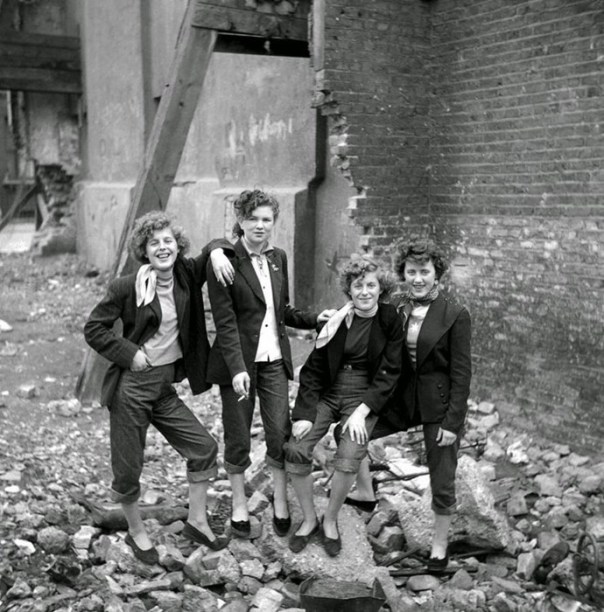
The Last of the Teddy GirlsPhotography by Ken Russell

On reflection, the paring of the aristocratic flamboyancy of an Edwardian gent with the rebellious attitude of American rock and roll shouldn’t have worked – but it did. This sartorial hybrid, engineered by the Teddy Boys of the 1950s and later adopted by their feisty female counterpart, Teddy Girls (also known as Judies) – created a strangely alluring visual identity, one which set them apart from their contemporaries in a decade where youth culture was finally carving out an aesthetic of its own. Sharply-suited Teds (whose name derives from ‘Edwardian’) might look remarkably smart to a contemporary eye – particularly when positioned against fellow groups of teenagers, like the punks who threatened to puncture the fabric of society with their safety pins – but their reality was more rebellious than it initially seems.

Like the gangs of youths who’d pace the streets in Dr Martens or Reebok Classics in decades to come, the odd report of fights quickly led to the sweeping generalisation that all Teds were trouble. In response, some venues implemented “no Edwardian dress” policies that echoed the “no trainers or football colours” door criteria of today. Contrary to what one might assume, smart dress didn’t make the Teds more respectable – it actually rendered them intimidating, in the same way that a suited Al Capone could coolly induce panic with a tip of his straw boater. “I remember my dad would threaten me for not doing what I was told by saying he would set the Teds on me,” remembers Magnum photographer, Chris-Steele Perkins who went on to photograph the second wave revival of the teds in the seventies.

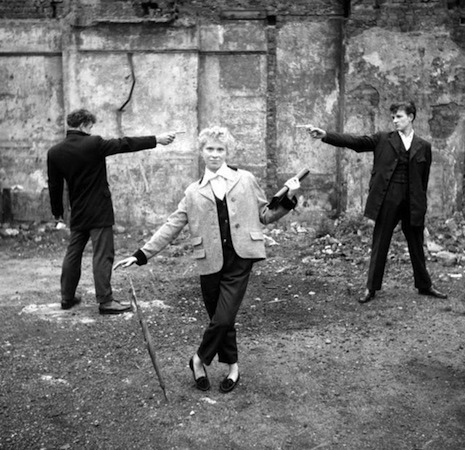
The Last of the Teddy GirlsPhotography by Ken Russell

Rebellious Decadence

The Teds had a put-together smartness that at first feels at odds with the idea of a rebellious teenager, but they were, in fact, ripping up the rulebook (or ration book, as it were) by rejecting the austere approach of a post-war economy. Their decadence was also a two fingers up to the ruling class, as the Teds took ownership of the Edwardian Drape jacket – which was marketed by Savile Row tailors to young Mayfair men in 1949 – much to the horror of the posh boys: “Absolutely the whole of one’s wardrobe immediately becomes unwearable,” complained one. Despite the aristocratic origins of the dandyish Drape, this item was almost always thrifted by the Teds, else paid for in incremental instalments. The Teddy Boys and Girls originated from then working-class areas in East or West London, areas still bearing the wounds of the war with still-to-be rebuilt bombsites punctuating their areas. After an era of fashion taking a back seat to function, what better way to sartorially rebel than with the impractical frivolity of a tiny clutch bag; the must-have accessory for a Teddy Girl?

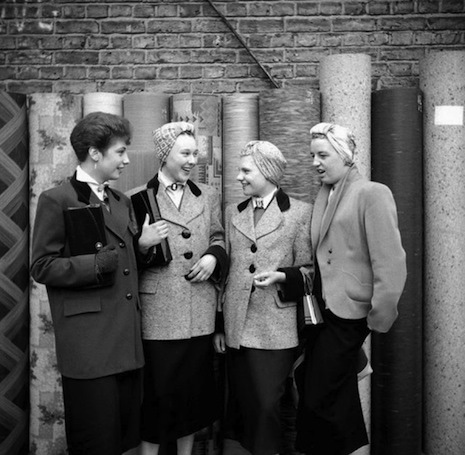
The Last of the Teddy GirlsPhotography by Ken Russell

Working Girls

Most Teddy Girls left school at 14 or 15, taking secretarial jobs in London, or working in factories on the outskirts. Their hard-earned cash was not wasted on expensive clothes, as original London Teddy girl Mary Toovey – who, herself worked in the Kegoo factory having left school at 15 – told writer Eve Dawoud: “Turn-up jeans, a coat and something to tie around your neck, those were the Teddy Girl essentials. My friends and I would buy similar clothes when we shopped on the Portobello Road. It was all second hand then, we couldn’t afford new. Smart’s, the local pie and mash shop on Goldborne Rd, was where we went to eat out if we had the money.” 

Toovey was photographed by Altered States Director Ken Russell, who documented a group of Teddy Girls local to him in Notting Hill. It was thought the images were lost forever but they were uncovered in 2005. “No one paid much attention to the Teddy Girls before I did them, though there was plenty on teddy boys,” He recalled. “They were tough, these kids, they’d been born in the war years and food rationing only ended in about 1954 – a year before I took these pictures. They were proud. They knew their worth. They just wore what they wore.”

The Last of the Teddy GirlsPhotography by Ken Russell

Androgynous New Age

Perhaps more significant than the boy’s subversion of upper-class clothing was the girls’ appropriation of masculine styles. Whilst the pants worn by working women during the war were mostly shed in relief, replaced by the welcome femininity of silhouette-skimming skirts, the Teddy Girls clung to the new sartorial codes that the adoption of menswear for women ushered in: boxy single-breasted jackets and the slicked back quiff hairstyle, a proto-mohawk that would eventually give way to the more extreme hairstyles of punk. Despite their non-conformist style and rebellious attitude, “I never thought of those kids as anything but innocent,” Ken Russell told The Evening Standard. “Even the Teddy Girls [from the 1955 series The Last of the Teddy Girls], all dressed up, were quite edgy, and that interested me; they were more relevant and rebellious — but good as gold. They thought it was fun getting into their clobber, and I thought so too.”

TThough Ken Russell wanted to be a ballet dancer, his father wouldn’t hear of it—no son of his would ever be seen in tights—so the young Russell turned his attention to photography, a craft he thought he could make his name with. He attended Walthamstow Technical College in London, where he was taught all about lighting and composition. Russell would later claim that everything he did as a trainee photographer broke the rules—a trend he continued throughout his career as a film director when producing such acclaimed movies as Women in Love, The Music Lovers, The Devils, Tommy, Altered States and Crimes of Passion.

Russell became a photographer for Picture Post and the Illustrated Magazine, and during his time with these publications took some of the most evocative photos of post-war London during the 1950s. He spent his days photographing street scenes and his nights printing his pictures on the kitchen table of his rented one-bed apartment in Notting Hill.hough Ken Russell wanted to be a ballet dancer, his father wouldn’t hear of it—no son of his would ever be seen in tights—so the young Russell turned his attention to photography, a craft he thought he could make his name with. He attended Walthamstow Technical College in London, where he was taught all about lighting and composition. Russell would later claim that everything he did as a trainee photographer broke the rules—a trend he continued throughout his career as a film director when producing such acclaimed movies as Women in Love, The Music Lovers, The Devils, Tommy, Altered States and Crimes of Passion.

Russell became a photographer for Picture Post and the Illustrated Magazine, and during his time with these publications took some of the most evocative photos of post-war London during the 1950s. He spent his days photographing street scenes and his nights printing his pictures on the kitchen table of his rented one-bed apartment in Notting Hill.

All above photos by Ken Russell

Reference

Gay History: 30 Years Later, a Look at the First AIDS Drug.

The FDA approved AZT in a record 20 months, a move that remains controversial today

All these years on, we are finally telling the truth about this insidiously poisonous drug, and the great marketing job by Big Pharma to sell it to a desperately ill population of people, and doctors who were also desperate, to provide some hope for their patients! The movie “Dallas Buyers Club” tells some of the story, of those who wanted something better than AZT to assist them in staying alive until something beneficial came along – which it eventually did! Things were not quite so bad here as far as pricing went, as with our Medicare system, the drugs were listed on the Pharmaceutical Benefits Scheme as soon as they became available, and cost a mere couple of dollars per script to buy. But the big sell by Big Pharma also happened here, as did the results of several badly run trials. Like many, the biggest mistake I ever made back in those early days of drug treatments was to let my doctor eventually talk me into taking AZT – against my better judgement! And it’s not just me, but many others who will attest that all our immune system and declining health problems started at the same time we decided to take AZT. It’s not as if we were only on a couple of pills a day – we were on massive doses, and as I have already said, this drug was poison…”human Ratsac” was how it was described in a report from the “Concorde” trial…another unethically run trial, but one that didn’t sugar-coat the truth about AZT. Those who took the massive doses of AZT back in the late 80s/early 90s suffered from problems such as anaemia, peripheral neuropathy, and renal problems…and still do to this day!

HIV was first reported in 1981, but it wasn’t until six years later—in March 1987—that a drug to fight the virus was approved by the Food and Drug Administration (FDA). On the 30th anniversary of this milestone, Time magazine takes a look at the story behind the controversial med azidothymidine, commonly known as AZT.

Also known as Retrovir or zidovudine, the compound AZT was not originally created with HIV in mind but was developed in the 1960s to battle cancer. Decades later, scientists at pharmaceutical giant Burroughs Wellcome made a version of AZT to fight HIV.

To fast-track the med, the drugmaker conducted a trial with 300 people who had AIDS. After 16 weeks, it was halted because those taking AZT were doing so much better than those not on the med. The results were considered a breakthrough, and the FDA approved the drug on March 19, 1987, in a record 20 months, according to Time.

The approval was granted despite many questions remaining unanswered—for example, how long did the benefits last?—and despite other issues surrounding the trial itself. In fact, Time notes, the trail remains controversial today.

Then came a bigger controversy: the price tag. At about $8,000 a year ($17,000 in today’s dollars), AZT was unattainable to many.

Today, we have more than 41 drugs to treat HIV, many in combo form and with much fewer side effects.

Reference

Gay History: When Gay Journalists Were Closeted: A History of AIDS Coverage at ‘The Times’

Mark Frankel

November 23, 2015
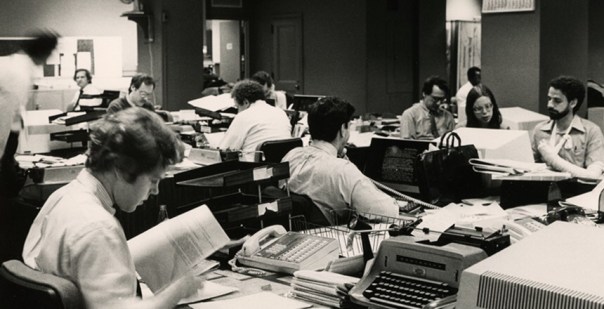
Days after New York State approved marriage equality in 2011, Samuel G. Freedman, a School of Journalism professor and former reporter for The New York Times, mused to friends about how the world had changed since he had worked at the paper in the 1980s.
Now an enthusiastic proponent of gay marriage, The Times was then a place where gay reporters feared being exiled to obscure beats and watching their careers wither. Freedman’s musings centered on his friend and mentor, Jeff Schmalz, a brilliant Times reporter dying of the disease who in 1992 and 1993 produced groundbreaking articles about people living with AIDS.
“Jeffrey who?” people often asked. Out of those encounters has come Freedman’s eighth book, Dying Words: The AIDS Reporting of Jeff Schmalz and How it Transformed The New York Times.
Produced as an oral history of dozens of Schmalz’s colleagues and friends, the book and an accompanying radio documentary focus on how journalism responded to the AIDS crisis in the 1980s and early ’90s, when many gay and lesbian journalists felt tremendous professional pressure to remain closeted, and discrimination against them was widespread. It also recounts the moment AIDS became a full-fledged health crisis, breaking out of the gay and IV-drug communities into the larger population.
“Jeff’s reporting played a real role in starting to turn opinion, certainly within The Times, but also within the broader public, from fear, suspicion, finger-pointing and blaming gays, to empathy and acceptance,” said Freedman. The 60-minute radio program will be broadcast on some two dozen public radio stations as part of events marking World AIDS Day on December 1. That same day, Freedman will host a panel on Dying Words at 6 p.m. at the Journalism School.
Schmalz was a rising star at the Times in the 1980s, a consummate journalist and skilled newsroom politician and mentor to younger journalists. When Freedman arrived at the paper in 1981, he soon was among those taken under Schmalz’s wing.
Though out of the closet to close friends at the paper, Schmalz kept his orientation hidden from higher-ups such as Abe Rosenthal, its executive editor from 1977 to 1986, and then-publisher Arthur Sulzberger.
“Abe Rosenthal hired me and promoted me, and I owe him a lot, but in doing this research I became very aware of his antipathy toward gay staffers at The Times,” said Freedman. “And it also became apparent that, in a less visible way, Punch Sulzberger also had a blind spot about gays.”
Critics inside and outside the newsroom accused the paper of being late to cover the AIDS crisis.
In December 1990, Schmalz, then deputy national editor, suffered a seizure in the newsroom. The diagnosis was full-blown AIDS, then a death sentence. For Schmalz, the closet was no longer an option. “Jeff commanded tremendous authority at the Times. So for him to come out had a tremendously sensitizing effect on the paper,” recalled Freedman.
When Schmalz returned to the paper in mid-1992, he was sick but determined to report on AIDS. By then, the paper had a new editor and publisher and, Freedman said, was more accepting of its gay and lesbian employees.
Over the next 15 months, Schmalz captured the many faces of AIDS, gay and straight, in some three dozen articles. He profiled Magic Johnson, the Los Angeles Lakers forward who quit basketball when he was diagnosed as HIV-positive, and AIDS activists Mary Fisher and Larry Kramer. “In a weird way, the diagnosis set him free,” recalled his sister, Wendy Schmalz Wilde. “He found a new empathy for other people who were sick and dying.”
Schmalz’s reporting took AIDS “from a medical story, a public health story, a science story, and made it a deeply human story,” said Freedman. “He got on the beat right when this was a disease crossing the lines of race, class and sexual orientation.” His articles also raised the bar on the paper’s AIDS coverage, setting a standard for other news organizations. His last story, which decried growing public complacency, appeared several weeks after his death in November 1993.
Freedman teamed with veteran radio producer Kerry Donahue to produce the radio documentary, which will be distributed by the Public Radio Exchange. Funds came from the Journalism School and a Kickstarter campaign that raised $28,000. A significant backer was current New York Times publisher Arthur Sulzberger Jr., who contributed his own reminiscences to Dying Words.
Schmalz’s death still haunts Freedman. “Jeff was an example of a supremely talented person who died at 39,” he said. “The world is still losing incredibly talented people at young ages. It’s a reminder of the continuing need to do the research that will cure the disease and of the role that journalists need to play.”

In December 1990, Schmalz, then deputy national editor, suffered a seizure in the newsroom. The diagnosis was full-blown AIDS, then a death sentence. For Schmalz, the closet was no longer an option. “Jeff commanded tremendous authority at the Times. So for him to come out had a tremendously sensitizing effect on the paper,” recalled Freedman.

When Schmalz returned to the paper in mid-1992, he was sick but determined to report on AIDS. By then, the paper had a new editor and publisher and, Freedman said, was more accepting of its gay and lesbian employees.

Over the next 15 months, Schmalz captured the many faces of AIDS, gay and straight, in some three dozen articles. He profiled Magic Johnson, the Los Angeles Lakers forward who quit basketball when he was diagnosed as HIV-positive, and AIDS activists Mary Fisher and Larry Kramer. “In a weird way, the diagnosis set him free,” recalled his sister, Wendy Schmalz Wilde. “He found a new empathy for other people who were sick and dying.”

Schmalz’s reporting took AIDS “from a medical story, a public health story, a science story, and made it a deeply human story,” said Freedman. “He got on the beat right when this was a disease crossing the lines of race, class and sexual orientation.” His articles also raised the bar on the paper’s AIDS coverage, setting a standard for other news organizations. His last story, which decried growing public complacency, appeared several weeks after his death in November 1993.

Freedman teamed with veteran radio producer Kerry Donahue to produce the radio documentary, which will be distributed by the Public Radio Exchange. Funds came from the Journalism School and a Kickstarter campaign that raised $28,000. A significant backer was current New York Times publisher Arthur Sulzberger Jr., who contributed his own reminiscences to Dying Words.

Schmalz’s death still haunts Freedman. “Jeff was an example of a supremely talented person who died at 39,” he said. “The world is still losing incredibly talented people at young ages. It’s a reminder of the continuing need to do the research that will cure the disease and of the role that journalists need to play.”

Reference

Gay History: S.W. Fores and the ‘Arse-Bishop’ – Scandal at the Printshop Window

theprintshopwindow's avatarThe Printshop Window

Concerns about the potential dangers associated with the public display of caricature prints were raised almost as soon as printsellers’ windows became features of note among eighteenth-century urban landscape. The critics ranged from those who simply saw displays of satirical prints as a crowd-drawing nuisance, to those who considered them to pose a fundamental threat to the moral and spiritual wellbeing of the nation. Those who fell into the latter group often described caricatures as if they possessed a hypnotic quality and were capable of seizing hold of the minds of those who happened to pass by the printsellers window and corrupting them.

This argument was clearly articulated by one critic, calling himself ‘Perambulator’, whose thoughts on the subject were published in the Morning Post and Daily Advertiser of 5th September 1780. The author claims to have observed the crowds passing before the window of “the large [print] shop in St Paul’s Churchyard”…

View original post 2,024 more words

Gay History: Lex Watson: Leading Gay Rights Activist and Trailblazer.

LEX WATSON, 1943-2014

For many of his generation and beyond, Lex Watson was the face of gay activism in Sydney.

For many of his generation and beyond, Lex Watson was the face of gay activism in Sydney. He was a foundation member of the Campaign Against Moral Persecution (CAMP), the organiser of the first gay rights demonstration in Australia, a longtime passionate advocate of homosexual law reform and of anti-discrimination legislation, a pioneer AIDS activist, and in later years, a keen advocate for the preservation of gay community history.

Lex Watson addressing gay rights activists setting up their ‘Gay Embassy’ opposite former NSW premier Neville Wran’s home in Woollahra to protest against Club 80 arrests in 1983.

CREDIT: ADRIAN SHORT

Alexander Watson was born in Perth on January 29, 1943, the son of Alec Watson, a medical practitioner in Geraldton, and his wife, Margaret (nee Newnham), a nurse. Lex started his education in Geraldton, then the family settled in Perth, where Alec became a well-known surgeon.

Despite his parents’ wish to place him at Geelong Grammar, or the King’s School in Parramatta, Lex was determined to go to Perth Modern. There he developed a lifelong love of languages, particularly German, and music, again particularly German, from Beethoven to the present day. At school he acted in Gilbert & Sullivan productions, directed by a teacher who remarked that he was ‘‘rather self-confident and arrogant’’, an observation often to be made of him throughout his life.

Lex Watson (left) and Robert French signing statutory declarations in 1983.

At puberty, Watson’s parents gave him a booklet on sex that contained a small non-judgmental paragraph on homosexuality. ‘‘So that’s what it is called,’’ he thought. He then looked up homosexuality in the school library, but all the texts he consulted talked of disease and perversion. Watson’s response was, ‘‘Why, they’ve got it wrong!’’ but it was a defining moment in his life.

Watson won a scholarship to the University of Western Australia, where he started in 1960. He did an arts degree and studied history and philosophy He read John Stuart Mill, whose classic liberalism became the touchstone of his life and later activism. He later became a supporter of the Council of Civil Liberties.

For his honours year, Watson transferred to the government department at the University of Sydney. It was there that he worked for the remainder of his academic life, teaching Australian politics to hundreds of students, many of whom became academics and political activists themselves.

The homosexual law reforms in Britain in 1967 sparked Watson’s interest and he became involved with reform in Australia because ‘‘it was needed and therefore you did it’’. He was in Canberra in 1970 on the weekend of the formation of the ACT Homosexual Law Reform Society and joined up. He then attended a public meeting in Sydney, organised by the Humanist Society, which formed a HLR sub-committee, which he became a member of.

Lex Watson as the Empress of Sydney in 1982.

These moves, however, were ‘‘wiped off the table’’ by the announcement by John Ware and Christabel Poll in September 1970 of the formation of the Campaign Against Moral Persecution (CAMP), the first openly homosexual group in Australia. Watson became a foundation member, and in early 1972, along with Sue Wills, became a co-president.

Ware credited Watson with making the organisation political, and it was Watson who organised the first gay demonstration, outside the Liberal Party headquarters in Ash Street, Sydney in October 1971.

Watson, as an academic, had contacts in the Liberal Party and got to hear of the challenge that conservative Jim Cameron was to bring against the federal pre-selection of Tom Hughes, after Hughes as federal attorney-general had raised the issue of homosexual law reform.

One of the major achievements of CAMP under Watson and Wills was highlighting the dangers of aversion therapy and psycho-surgery as then practised against women and homosexuals. That homosexual people then began to cease consulting practitioners for a ‘‘cure’’ for their sexual orientation was a triumph for CAMP.

Watson and Wills resigned from CAMP in October 1974 as the organisation concentrated more on its phone-counselling services.

Watson continued his activism and advocacy through newspaper articles in the gay press. In 1976 he, memorably and courageously, appeared on the ABC’s Monday Conference program in Mt Isa. Some of the audience were hostile, one member even pouring a bottle of sewage over his head. Watson maintained his composure throughout and won over the audience.

With the assistance of fellow academic and activist Craig Johnston in 1980, Watson approached Barrie Unsworth of the NSW Trades & Labor Council after the University of Sydney staff union had passed an anti-discrimination motion in relation to gays and lesbians. Unsworth was receptive and had a similar motion passed in the council. The move was the beginning of Gay Rights Lobby (GRL) and a new push for homosexual law reform in NSW, as well as support for a bill to incorporate homosexuality under the terms of the Anti-Discrimination Act.

Watson, in a dispute over tactics and his administrative style, fell out with GRL but that did not stop him and his fellow activists continuing to work together. After the police raid on Club 80 in 1983, it was Watson who suggested that the activists sign statutory declarations admitting to having committed buggery and to present them to the vice squad, seeking arrest. Watson was one of the first to present but the police had been forewarned and refused to make arrests.

He was a member of a delegation to premier Neville Wran in May 1984 on the morning of the introduction of his Private Members Bill to repeal the ‘‘buggery’’ provisions of the NSW Crimes Act. Watson attempted to persuade the premier to introduce an equal age of consent clause and when Wran refused, he argued for the inclusion of protections for persons between the ages of 16 and 18 years, which Wran enthusiastically agreed to. A new clause had been typed onto the bill when it reached the floor of the Legislative Assembly that day.

In 1982, the Chameleons social group had crowned Watson ‘‘Empress of Sydney’’, the first time for someone from outside the ‘‘drag’’ industry. He was proud of his only appearance in ‘‘drag’’, sporting a black velvet strapless gown. He wore the gown to the ‘‘Gay Embassy’’, a caravan that had been set up in front of the premier’s house in late 1983 as another move to push the law reform agenda. The embassy had been Watson’s idea.

Watson became aware of the problem of HIV/AIDS in 1982. He later became involved in the disputes with the Blood Bank, pointing out that the only solution to the implementation of sound public health policy relating to HIV was for the medical profession to engage in a dialogue with the gay community. He, and others, set up the AIDS Action Committee which, following federal government funding, morphed into the AIDS Council of NSW, of which Watson became the first president.

Watson later stepped down as president although he stayed on the committee. Truth to tell, he was not the greatest of administrators. He operated best as an individual activist, always sharp and on-message.

For many years Watson was also a block captain of marshals at Mardi Gras parades. In 2010, ACON awarded Watson and Wills their GLBTI Community Hero Award marking the 40th anniversary of the formal foundation of CAMP, and they were thrilled to ride up front in the 2011 Sydney parade.

After retirement from the University of Sydney, Watson became involved in the Pride History Group, Sydney’s gay and lesbian history group. He was president at the time that he died, assisting in the organisation of a history conference, set for November, on homosexual law reforms, his major life’s work. The conference will be dedicated to his memory.

Lex Watson is survived by his sister Wendy, brother-in-law Richard and nephews Nicholas and Ben and their families.

Reference

Gay History: The ”Gay Bob” Doll. NSFW

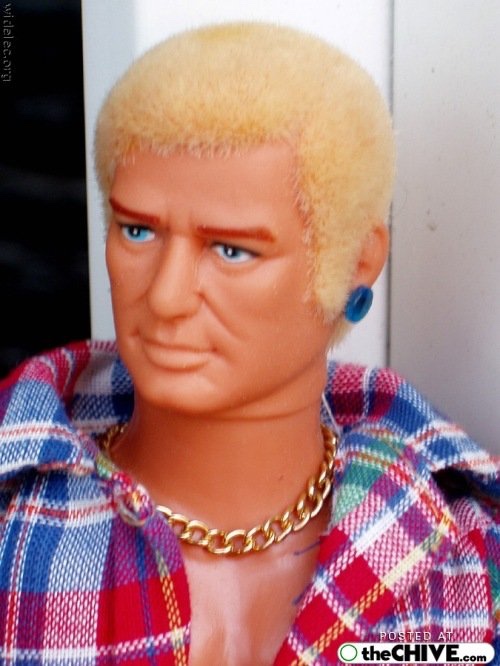
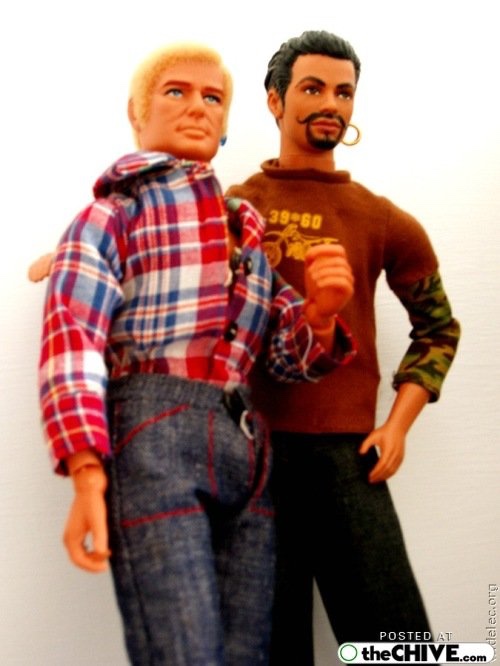
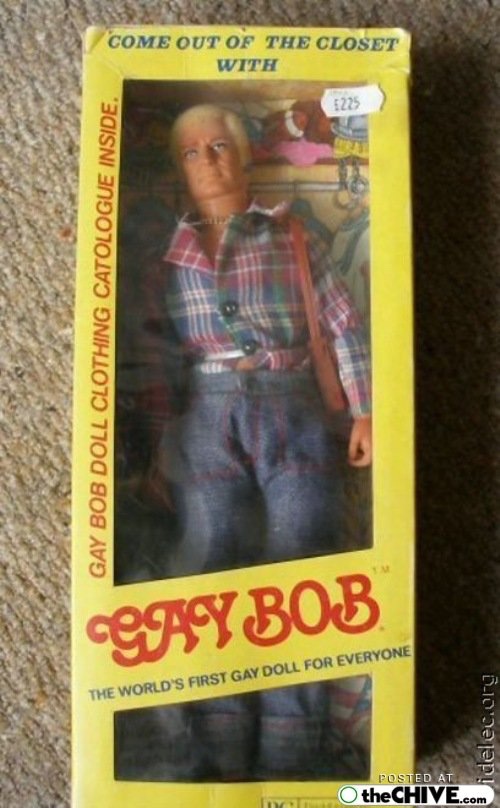
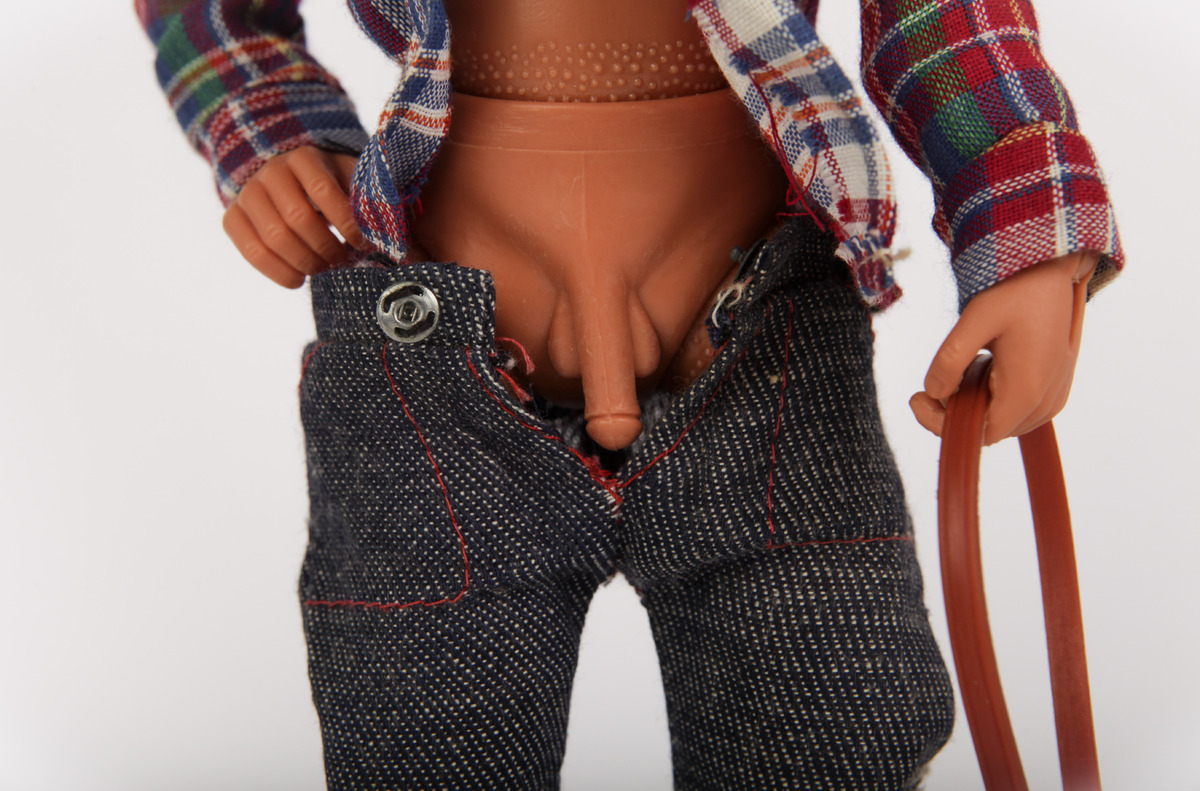
Gay Bob is a doll created in 1977. It was billed as the world’s first openly gay doll. Bob was created by former advertising executive Harvey Rosenberg and marketed through his company, Gizmo Development. Gay Bob was bestowed an Esquire magazine “Dubious Achievement Award” for 1978.

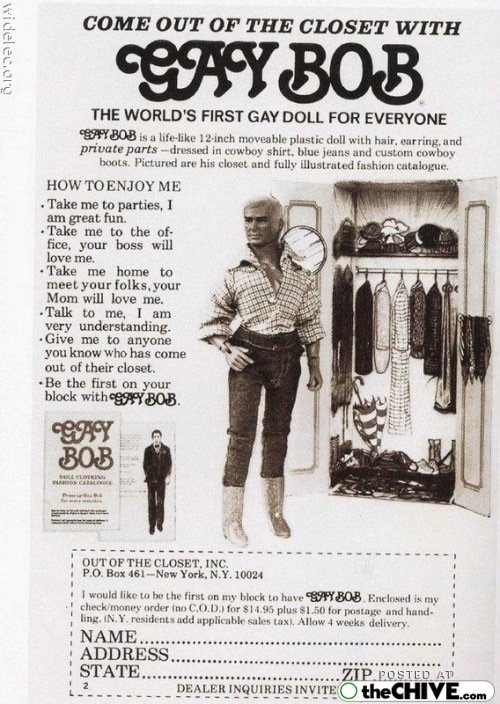
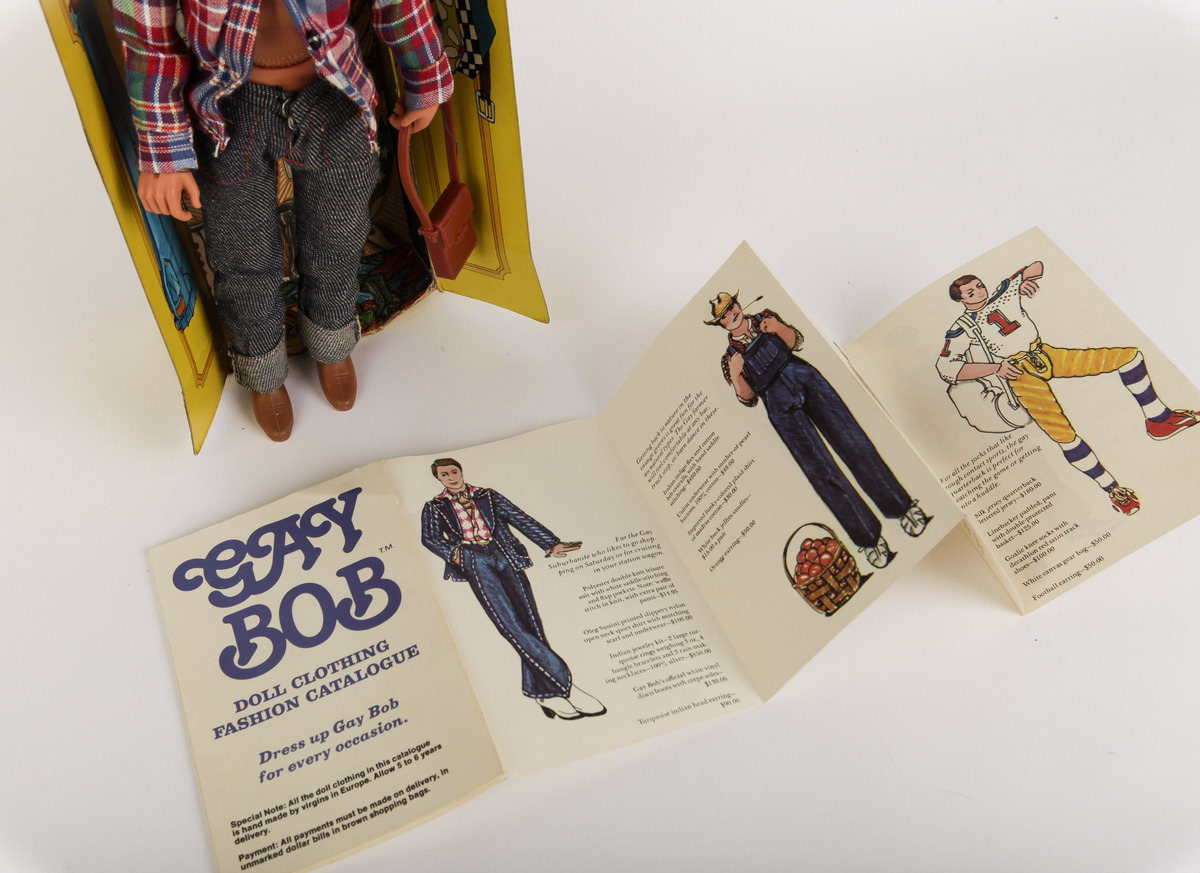
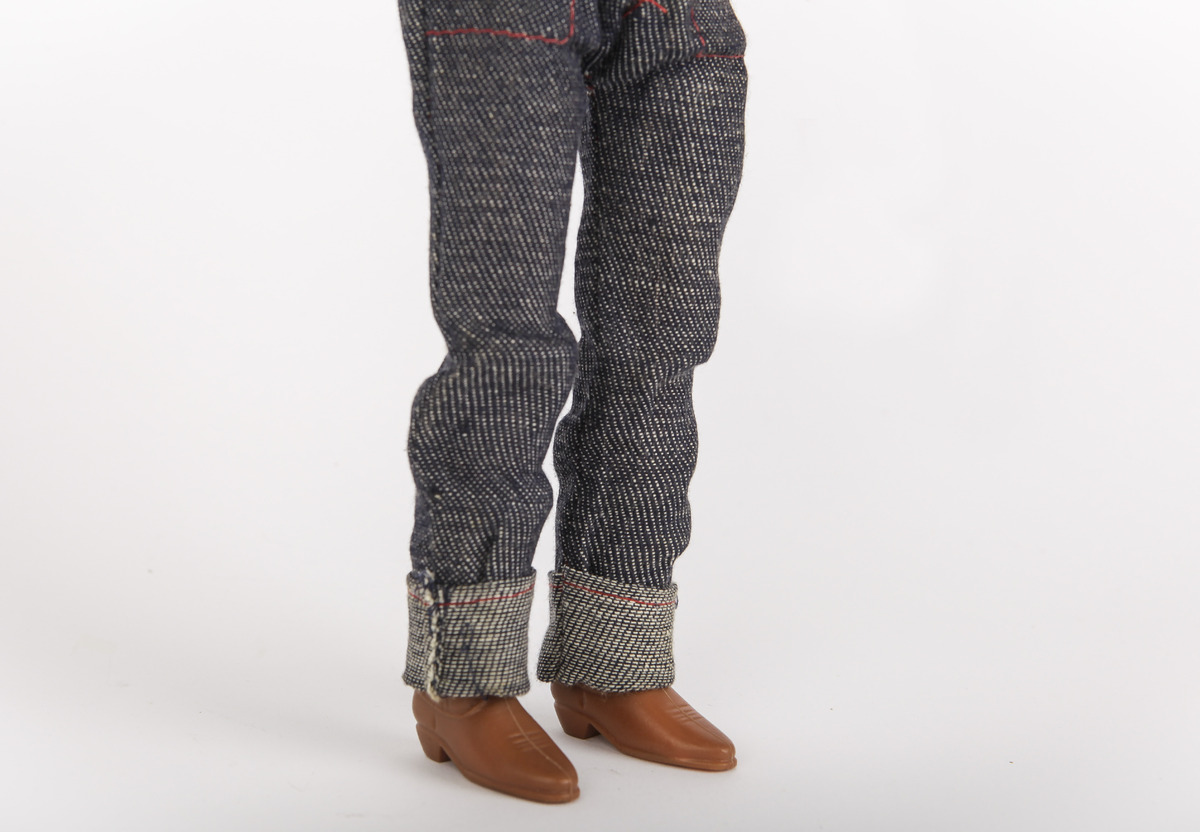
Bob stands 13 inches tall and came wearing a flannel shirt, tight jeans and cowboy boots. He had one ear pierced. Bob’s box was shaped like a closet and included a catalog from which consumers could order additional outfits. Creator Rosenberg described the doll as resembling a cross between Paul Newman and Robert Redford. Bob is anatomically correct.

The Story Behind Gay Bob, the World’s First Out-And-Proud Doll

He debuted in the ’70s, to both acclaim and outrage.

“IT’S ANOTHER EVIDENCE OF THE desperation the homosexual campaign has reached in its effort to put homosexual lifestyle, which is a deathstyle, across to the American people.”

A lobby group called Protect America’s Children made this statement in 1978—about a doll.

That year, the release of Gay Bob, billed as the world’s first openly gay doll, caused a minor sensation. Enraged consumers complained that a toy with a homosexual backstory would lead to other ”disgusting” dolls like “Priscilla the Prostitute” and “Danny the Dope Pusher.” Esquire awarded Gay Bob its “Dubious Achievement Award.” And anti-gay organizations across the United States blustered.

Gay Bob, who was meant to resemble a cross between Robert Redford and Paul Newman, was blond, with a flannel shirt, tight jeans, and one pierced ear. The doll gave anti-gay organizations plenty to fear; intrinsic within it was a celebration of gay identity, evidenced by Gay Bob’s programmed speech. “Gay people,” Bob said, “are no different than straight people… if everyone came ‘out of their closets’ there wouldn’t be so many angry, frustrated, frightened people.”

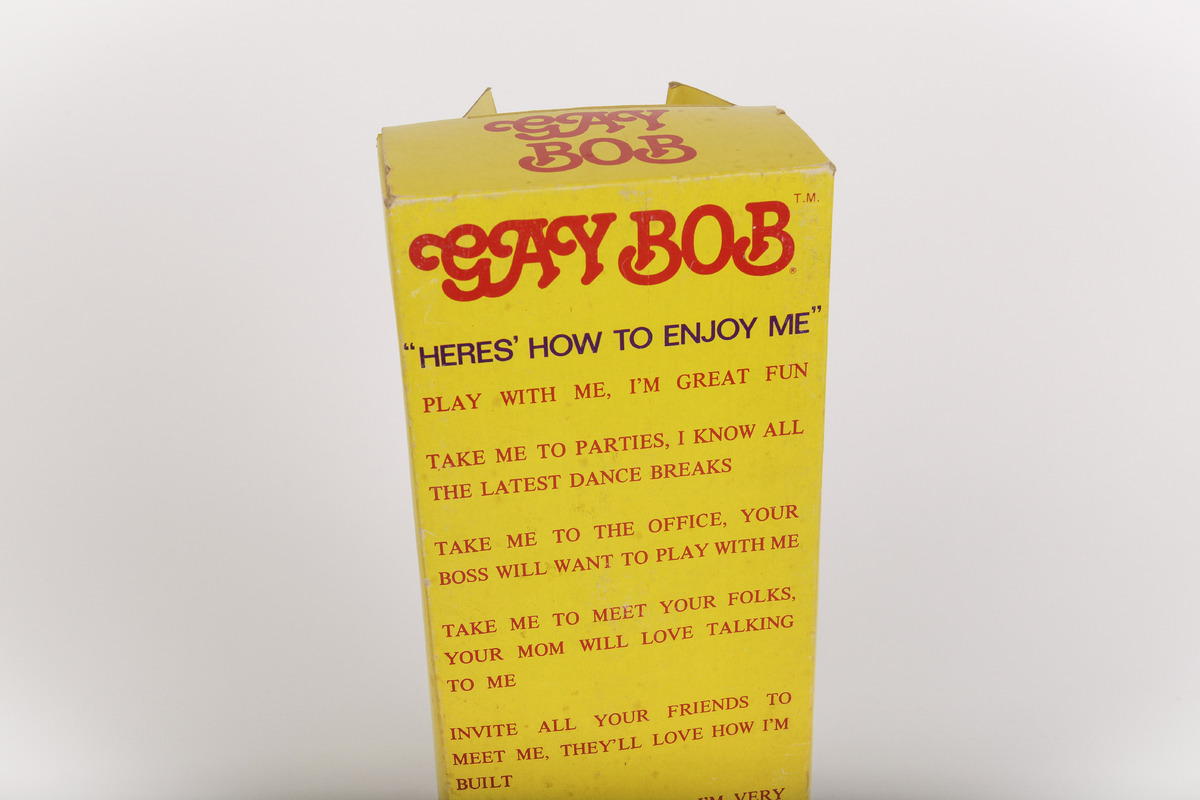
In a cheeky move, the box in which Gay Bob was packaged came in the outline of a closet, so that when he left his box, he was literally coming out of the closet. Gay Bob explained: “It’s not easy to be honest about what you are — in fact it takes a great deal of courage… But remember if Gay Bob has the courage to come out his closet, so can you.”

A 1978 advertisement for the Gay Bob Doll (OE Wolf /CC By NB-2.0)

The affirming message was no accident. The doll’s creator, Harvey Rosenberg, a former advertising executive who developed marketing campaigns for various corporations, wanted Gay Bob to “liberate” men from “traditional sexual roles.” He created the doll soon after a series of shocks rocked his life: in quick succession, his marriage fell apart and his mother became seriously ill. He decided that his next projects would need to be of great personal significance.

Though Gay Bob was certainly humorous—the doll was designed to be anatomically correct, and prominent gay activists such as Bruce Voeller told reporters that people should “deal with [the doll] lightly and enjoy it”—Rosenberg’s intentions seem to have been sincere. When asked why he would pour $10,000 of his money into the Gay Bob’s production, he replied, “we had something to learn from the gay movement, just like we did from the black civil rights movement and the women’s movement, and that is having the courage to stand up and say ‘I have a right to be what I am.’”

When Gay Bob hit stores in 1978, that right to be gay and equal was once again under attack, most notably from Anita Bryant, a singer and well-known brand ambassador who mobilized opposition to a Dade County, Florida ordinance that outlawed discrimination on the basis of sexual orientation. Fixating on its impact on public schools, Bryant claimed that the existence of LGBT school teachers would threaten the well-being of local students. “Homosexuals will recruit our children,” she warned. “They will use money, drugs, alcohol, any means to get what they want.” In June 1977, she had the rule repealed, and her anti-gay crusade—which gained widespread media attention—sparked similar ventures in Minnesota, Oregon, Kansas, and California.

Gay Bob, which sold 2,000 copies in its first two months, appeared in the heat of these political battles. It was no real flashpoint of its own, but it served as a humorous trophy—and a sign of changing times—for those fighting against Bryant.

Initially sold through mail-order ads in gay-themed magazines, Gay Bob soon expanded into boutique stores in New York and San Francisco. Rosenberg even pitched it to major department store chains, one of which liked the idea (but ultimately did not purchase it). And, it turns out, those consumers who feared the introduction of more “disgusting” dolls were partially correct—Rosenberg soon gave Gay Bob a family of his own, with brothers Marty Macho, Executive Eddie, Anxious Al, and Straight Steve (who lived in the suburbs and wore blue suits), and sisters Fashionable Fran, Liberated Libby, and Nervous Nelly. 

There is currently one for sale on Ebay for $293.00!

References

Gay History: How ‘Gay’ Came To Mean ‘Homosexual’

The word “gay” seems to have its origins around the 12th century in England, derived from the Old French word ‘gai’, which in turn was probably derived from a Germanic word, though that isn’t completely known.  The word’s original meaning meant something to the effect of “joyful”, “carefree”, “full of mirth”, or “bright and showy”.

However, around the early parts of the 17th century, the word began to be associated with immorality.  By the mid 17th century, according to an Oxford dictionary definition at the time, the meaning of the word had changed to mean  “addicted to pleasures and dissipations.  Often euphemistically: Of loose and immoral life”.  This is an extension of one of the original meanings of “carefree”, meaning more or less uninhibited.

Fast-forward to the 19th century and the word gay referred to a woman who was a prostitute and a gay man was someone who slept with a lot of women (ironically enough), often prostitutes. Also at this time, the phrase “gay it” meant to have sex.

With these new definitions, the original meanings of “carefree”, “joyful”, and “bright and showy” were still around; so the word was not exclusively used to refer to prostitutes or a promiscuous man.  Those were just accepted definitions, along with the other meanings of the word.

Around the 1920s and 1930s, however, the word started to have a new meaning.  In terms of the sexual meaning of the word, a “gay man” no longer just meant a man who had sex with a lot of women, but now started to refer to men who had sex with other men.  There was also another word “gey cat” at this time which meant a homosexual boy.

By 1955, the word gay now officially acquired the new added definition of meaning homosexual males.  Gay men themselves seem to have been behind the driving thrust for this new definition as they felt (and many still do), that “homosexual” is much too clinical, sounding like a disorder.  As such, it was common amongst the gay community to refer to one another as “gay” decades before this was a commonly known definition (reportedly homosexual men were calling one another gay as early as the 1920s).  At this time, homosexual women were referred to as lesbians, not gay.  Although women could still be called gay if they were prostitutes as that meaning had not yet 100% disappeared.

Since then, gay, meaning homosexual male, has steadily driven out all the other definitions that have floated about through time and of course also has gradually begun supplementing the word ‘lesbian’ as referring to women who are homosexual.

While the use of gay did become used in reference to homosexuality it was by far NOT the most common term in use, nor the prefered term prior to about 1970.

In the aftermath of the Stonewall Riots in 1969, The Gay Liberation Front was formed to fight for homosexual rights.

The name chosen by this important early activist group is the main reason gay became the politically correct term instead of any of the many more common terms in use before then.

Bonus Facts:

▪ The abstract noun ‘gaiety’ has somehow largely steered clear of having any sort of sexual connotation as with the word “gay”.  It still keeps its definition as meaning something to the effect of “festive”.

▪ Male homosexuality was illegal in Britain until the Sexual Offenses Act of 1967.  Because even mentioning someone was a homosexual was so offensive at the time in England, people who were thought to be gay were referred to as “sporty” with girls and “artistic” for boys.

▪ Bringing Up Baby in 1938 was the first film to use the word gay to mean homosexual.  Cary Grant, in one scene, ended up having to wear a lady’s feathery robe.  When another character asks about why he is wearing that, he responds an ad-libbed line “Because I just went gay”.  At the time, mainstream audiences didn’t get the reference so the line was thought popularly to have meant something to the effect of “I just decided to be carefree.”

Reference

Gay History: I Saw The Sign: LGBT Symbols Then And Now: From A Lesbian Perspective.

You’re sitting in your day parlor, sipping a cup of tea and needlepointing a screen with your female relatives. Then, a maid enters the parlor and informs you that you have a visitor waiting for you in the drawing room. You excuse yourself and enter the drawing room where you find Elizabeth Bennett, holding a bouquet of violets that she picked just for you.

BY KEENA

JUNE 21, 2012

Welcome to my fantasy. For years I’ve daydreamed about what gift Elizabeth Bennett might bring me to express her true intentions (which ranged from a beautifully-written letter sealed in wax to a corgi puppy in basket), but now I know she would bring me violets. Violets are beautiful and adorable flowers in general, but they’re also one of the more famous symbols of female homosexuality, possibly dating back to a poem in which Sappho describes herself and her lover wearing garlands of violets:

If you forget me, think

of our gifts to Aphrodite

and all the loveliness that we shared

all the violet tiaras

braided rosebuds, dill and

crocus twined around your young neck

Sappho

In the early 20th century, women used to give each other violets as a way of telling each other, “Hey, I LIKE like you,” in times when it wasn’t easy or accepted to say so in a more overt manner. And, though the historic origins of the violet as a symbol of women liking women may have faded, the color purple is still often associated with homosexuality, particularly in the naming of the Lavender Menace and in the use of the term “lavender lads” to describe gay men during the “Lavender Scare” in the 1950s in the U.S.

Sadly, as we all know, it’s only recently that open displays of homosexuality have begun to be accepted by society, and obviously there are still many places in the world where they are still met with disapproval, violence, and/or legal and social persecution. But! The good thing is that even in unfriendly societies, us homos have always managed to find our way to each other (call it the silver lining in the lavender cloud, if you will). We’ve done so in a variety of ways, though visual symbols are often among the most recognizable. Some of these symbols may be familiar to you, but even if they aren’t, perhaps they’ll give you an idea of how to decorate your messenger bag or expand your tattoo sleeve.

The Greek Symbol “Lambda”

Lambda was selected as a symbol by the Gay Activists Alliance of New York in the 1950s and was declared the international symbol for gay and lesbian rights by the International Gay Rights Congress in 1974. It’s unclear how exactly lambda was adopted by the LGBT community or what it actually means but some popular theories include: the charged energy of the gay and lesbian rights movement (since lambda symbolizes “energy” in chemistry and physics), the Roman interpretation meaning “the light of knowledge shining into the darkness of ignorance,” or “the notion of being on different wavelengths when it comes to sex and sexuality.” There’s also this idea kicking around that lambda appeared on the shields of Spartan and/or Theban warriors in ancient Greece. The Thebes version is more popular because, as legend has it, the city-state organized the Theban Army from groups of idealized lovers, which made them exceptionally fierce and dedicated soldiers–though eventually the army was completely decimated by King Philip II, the father of Alexander the Great. Lending credence to this theory is the fact that the 1962 version of “300” depicted soldiers with lambdas on their shields. I never saw the 2006 version so someone else will have to confirm or deny the perpetuity of lambda in that whole situation.

The Rainbow Flag(s)

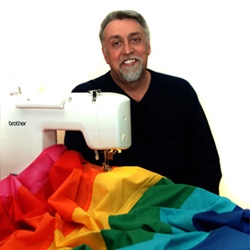
Gilbert Baker

In the 1970s, San Francisco artist Gilbert Baker recognized the need for a gay symbol that could be used during the Pride Parade each year. Baker drew inspiration for the first version of the iconic rainbow flag from a variety of sources and came up with a flag with eight color stripes, each representing a different aspect of gay and lesbian life: hot pink for sexuality, red for life, orange for healing, yellow for the sun, green for nature, blue for art, indigo for harmony, and violet for spirit. Baker and 30 volunteers hand-dyed and stitched the original flag, but had to remove the pink stripe for mass production due to a lack of commercially-available pink dye. When Harvey Milk was assassinated later that year, the 1979 Pride Parade Committee selected Baker’s flag as the symbol for the gay community to unite in honor of Milk’s memory.

The Original Rainbow Flag

In the 1979 San Francisco Pride Parade, the color indigo was also removed so the colors could be evenly-distributed along the parade route, leaving us with the flag we know today, with stripes of red, orange, yellow, green, blue and purple. Today, there are many, many varieties of the rainbow flag–you can stick a lambda on it, a colored triangle, a star of David, whatever you want! People seem particularly fond of the rainbow flag/rainbows in general because they are all-encompassing: a rainbow flag endorses gay rights without making a statement about the person displaying it. And this, to me, is the most rockin’ thing about rainbow flags. If you chose not to, you don’t have to say anything about yourself, your sexytime partners, your experiences, thoughts or feelings–you’re just rocking a rainbow, and under the rainbow we’re all family. Rainbow flags and stickers are often used to denote gay-friendly businesses, gay-friendly health facilities and really, who doesn’t want to paint their face in rainbow colors and go to a parade filled with like-minded rainbow-philes? No one, that’s who. It doesn’t matter whether you’re a member of the LGBT community or simply a supporter of gay rights, rainbows mean love for everyone and are therefore wonderful.

Black Triangles

One of the oldest symbols associated with the LGBT community is the triangle, which originated as one of the symbols used in Hitler’s Nazi concentration camps as a way to label prisoners: male homosexual prisoners were made to wear a pink triangle, while women imprisoned for “arbeitsscheu” (“antisocial behavior”, including feminism, lesbianism and prostitution) were made to wear black triangles. Though there isn’t definitive evidence to prove that the black triangles were worn by lesbians in the same way that pink triangles were worn by gay male prisoners, over time the black triangle has evolved into one of the more prominent symbols of lesbianism, contemporaneously symbolizing defiance against repression and discrimination.

Labrys

I know you all totally know what a labrys is already, but juuuust in case you don’t: a labrys is a double-headed axe. The labrys was first associated with the Greek goddesses Artemis (goddess of the hunt) and Demeter (goddess of the harvest) and used in battle by Scythian Amazon warriors. The Amazons ruled with a dual-queen system and were known for being ferocious in battle. Though the labrys originally stood for independence/strength/chopping prowess, it has also been appropriated as a symbol of lesbianism.

Note from commenter Nancy: The labrys is actually even older than Artemis as goddess of the hunt, it goes all the way back to the Minoan civilization on crete around the 15th century BCE, although we are not really sure what it meant then because it is sooo long ago! And while there were definitely women warriors in Scythia and nearby regions, it’s super speculative that they had the whole two-queen system and everything…that comes out of some quasi-history written by guys like Herodotus.

Double Venus

The double Venus symbol takes the scientific symbol for “female” (or “Venus”) and doubles it–two females = girl and girl; Bette and Tina; Ellen and Portia, etc.

Bisexuality Symbols

In 1998, the official Bisexuality Flag was designed by Michael Page to represent the bisexual community. The magenta stripe represents same-sex attraction and the blue stripe at the bottom represents opposite-sex attraction, while the smaller deep lavender (lavender!) stripe in the middle represents attraction to both genders. Overlapping pink and blue triangle are also used to symbolize bisexuality.

Transgender Symbols

In 2000, Monica Helms designed the first Transgender Pride flag, which debuted at the Phoenix Pride Parade in Arizona. Helms planned the flag to represent the spectrum of trans* experience. “The light blue is the traditional color for baby boys, pink is for girls, and the white in the middle is for those who are transitioning, those who feel they have a neutral gender or no gender, and those who are intersex. The pattern is such that no matter which way you fly it, it will always be correct. This symbolizes us trying to find correctness in our own lives.” Another popular symbol used to identify members of the the transgender community comes from the same roots as the double Venus: a circle with an arrow projecting from the top-right, as per the male symbol, and a cross projecting from the bottom, as per the female symbol, with an additional striked arrow (combining the female cross and male arrow) projecting from the top-left.

The Other Stuff

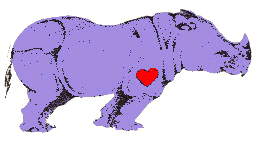
Purple Rhinoceros: In the 1970s gay activists in Boston chose the rhinoceros as their symbol because, like the gay rights movement, while the rhino is often misunderstood it is actually a docile and intelligent animal until it is attacked–at which point it’s probably going to steamroll your car. And guess what? It’s purple. Bam. Purple rhino.

Hare, Hyena and Weasel: These three animals were mentioned in an apocryphal text of the Bible, Barnabus, in which God warns against eating the flesh of the hare (associating it with anal sex), the hyena, which was at the time was believed to change gender once a year, and the weasel, which was associated with lesbian sex. Why? Who knows. Look how cute, though!

Thumb Rings: Popular culture seems to believe that if a woman wears a silver thumb ring, she’s telling the world she’s a big ole lesbian–though there seems to be some confusion over whether to wear it on the left or right thumb and what that signifies.

Purple String: In some places, wearing a piece of purple string or hemp around your wrist is a sign of liking other girls: wear it on your left wrist if you are single, right if you are in a relationship. But then sometimes girls from the UK say that this is reversed in Europe, adding to the dilemma of what to do when you go to London on vacay.

Sign Language for “Lesbian”: On one forum I read, a girl said that she and her friends signal “lesbian” by the American Sign Language sign,” which involves making your thumb and forefinger into an ‘L’ and sticking your chin between the two. I find this amusing and wonderful and will use it all the time.

Nautical Star Tattoo: In the 1940s, many lesbians got a nautical star tattooed on their inner wrist to advertise their sexuality. But then so did sailors and punk rockers. Not that the groups are mutually exclusive by any means (if you are lesbian sailor punk rocker, I want to meet you). What does seem to be a defining feature of tattoos indicating lesbianism is that they were often on the inner wrist, so ladies could cover them up with a watch during the day and expose them at night when they were out.

Also, dolphins: In almost every online discussion I read, some sad-sounding girl would chime in to ask, “I thought dolphins were symbols of lesbianism. What about dolphins?” Um, PREACH. Lack of historic precedent be damned, I say if we want dolphins, we can have dolphins. DOLPHINS!

LGBT symbols are ever-evolving as time, culture and civil rights allow. While it’s crucial to give a nod to the historic significance of using LGBT symbols during times and in places where one had to be covert, the use of symbols, raised some interesting questions that maybe you have thoughts about. How effective is an LGBT symbol if members of the community may not recognize what it means? At what point do “symbols” merge into the larger topic of gaydar?

It really depends on what you want, whether it be acknowledging the struggle of the past, your personal feelings about your own present, or pride in and of itself. In the end symbolism and the use of symbols is just that–it’s the user of the symbol who gives it meaning and significance. Ultimately it’s a pretty wonderful thing that in many places, we don’t have to use symbols to say what we mean and feel. But I’m just sayin’–if I see a girl with an Autostraddle ‘A’ sticker on her laptop, I’m going over to say hi.

Reference

Gay History: Here are 51 more weird and cool facts from LGBTI history.

Did you know the pope in the 1400s legalized gay sex during the summer months? Discover more here

1 Some of the world’s oldest rock paintings which were discovered in Sicily, made about 10,000 years ago, showed two male phallic figures having sex.

2 Ancient Roman historian Plutarch wrote about The Great Mother, an intersex deity depicted with both sets of genitals. Her sacred priestesses, as found in the earliest civilizations in Babylonia and Akkad, were eunuchs and trans women.

3 In ancient Assyrian society, if a man were to have sex with another man of equal status, it was thought that trouble would leave him and he would have good fortune.

4 A Hindu medical text dating back to at least 600 BC made several explicit references to gay people; kumbhika – men who bottom during anal sex; asekya – men who swallow semen; and sandha – men who speak and act like women. The text also claimed it was possible for two women to create a child together but said it would end up being ‘boneless’.

The Hindu god Shiva is often represented as Ardhanarisvara, a unified entity of him with his consort Parvati. This sculpture is from the Elephanta Caves near Mumbai.

5 In Egypt 1503 BC, Hatshepsut became the second woman to rule and chose to take the title of king. She donned male clothing and wore a false beard.

Statue of Hatshepsut on display at the Metropolitan Museum of Art

6 Julius Caesar and Claudius were considered ‘abnormal’ for refusing to take male lovers. Julius had, at least, an affair with Nicomedes, the king of Bithymia, as a youth.

7 Ancient Celtic men openly preferred male lovers. According to Diodorus in the 1st century BC, he wrote ‘young men will offer themselves to strangers and are insulted if the offer is refused’. Sex between men was very likely an important ‘bonding ritual’.

8 One of the first Roman emperors, Elagabalus, could have been transgender. Before dying at the age of 18, it was reported the emperor had married a male athlete and would go out disguised as a prostitute.

9 Wales had a gay king. King Maelgwn of Gwynedd of the sixth century was described as ‘addicted very much to the detestable vice of sodomy’.

10 St Thomas Aquinas, a priest from the 1200s, is considered the father of homophobia. At a time when homosexuality was often treated as an ‘open secret’, he preached widely that it was ‘unnatural’, similar to bestiality, and argued sodomy is second only to murder in the ranking of sins.

11 Pope Sixtus IV, of the 1400s, was reported to have legalized sodomy during the summer months.

Posthumous portrait of Pope Sixtus IV by Titian

12 In the Klementi tribe of Albania, first observed in the 1400s, if a virgin swore before 12 witnesses that she would not marry, she was then recognized as male, carried weapons and herded flocks.

13 The French called homosexuality the ‘Italian vice’ in the 16th and 17th centuries, the ‘English vice’ in the 18th century, the ‘Oriental vice’ in the 19th century, and the ‘German vice’ starting from 1870 and into the 20th century.

14 Most people know the origins of the word ‘gay’, but the word ‘lesbian’ was first used from around 1590 to mean a tool – a stick made of lead (from the isle of Lesbos) used by stonemasons. It was flexible so it could be used to measure or mold objects to irregular shapes. A ‘lesbian rule’ was also used to mean being flexible with the law.

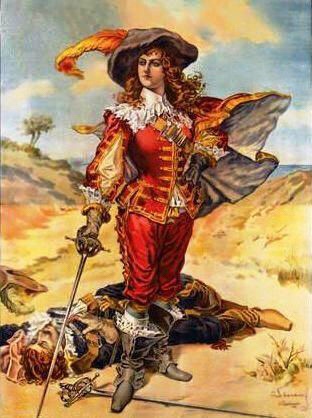
15 Julie D’Aubigny was a 17th century bisexual French opera singer and fencing master who fought and won at least 10 life-or-death duels, performed nightly shows on the biggest opera stage in the world and once took the Holy Orders just so she could sneak into a convent and have sex with a nun.

16 An 18th century English term for sex between women was the ‘Game of Flats’.

17 A molly house was an 18th century English term for a room or bar where gay men would meet. Patrons of the molly house would enact mock weddings and children being born.

Molly-houses were often considered as brothels in legal proceedings.[1] A male brothel, illustration by Léon Choubrac (known also as Hope), included in Léo Taxil’s book La prostitution contemporaine, 1884, pg. 384, Plate VII

18 Trans man Albert Cashier fought for the Union in the American Civil War. At one point, he was captured by the Confederates but managed to escape by overpowering a prison guard.

(November, 1864)[1]

19 A Boston marriage, in the 19th century, referred to two women living together financially independent of a man.

Sarah Ponsoby and Lady Eleanor Butler, also known as the Ladies of Llangollen, lived together in a Boston marriage.

20 The word ‘homosexual’ (coined in 1869) is older than the word ‘heterosexual’ (1892).

21 Edward White Benson, the Archbishop of Canterbury from 1883 to 1896, was thought to have been repressing his homosexuality. His wife, brother-in-law and five of his six children were also gay.

22 Dude used to be a homophobic slur.

23 UK Prime Minister Winston Churchill, when he was 21, was accused of ‘gross immorality of the Oscar Wilde type’.

24 Doctors in the early 1900s thought bicycles would turn women gay.

25 Wings, the first Oscar-winning film in 1920, featured a man-on-man kiss.

Richard Arlen in Wings

26 In the 1930s, a Disney comic strip showed Mickey Mouse as a violent homophobic thug. In the strip, he beats up an effeminate cat and called him a ‘cream puff inhaler’.

27 The British secret intelligence service tried to spike Hitler’s carrots with female hormones to ‘turn’ him into a woman.

28 Sister Rosetta Thorpe, a bisexual black woman, is credited with inventing rock n roll.

29 World War 2 genius and cryptographer Alan Turing said he had lost a mystery box of treasure in Bletchley Park but could no longer find it as he couldn’t crack his own code.

30 The 1948-53 Kinsey study found a third of men had a homosexual experience.

31 A drag queen was the first openly gay candidate to run for US public office. José Sarria won 6,000 votes in his 1961 campaign for the San Francisco Board of Supervisors.

Jose Sarria dines in Kenmore Square during 2010 visit to Boston

32 The death and funeral of Judy Garland is credited with inspiring the Stonewall Riots.

33 Pride in New York City was never really ‘Gay Pride’. The first was mainly organized by bisexual woman Brenda Howard.

34 The original name for Pride was ‘Gay Power’. Other suggested names included ‘Gay Freedom’, ‘Gay Liberation’ and ‘Christopher Street Liberation Day’.

The Stonewall Inn located in Greenwich Village was the site of the June 1969 Stonewall riots. That event in New York City’s queer history has served as a touchstone for various social movements, as well as the catalyst for Pride parades around the world.

35 Dracula author Bram Stoker married Oscar Wilde’s first girlfriend.

36 One of the first openly gay athletes was Dodgers outfielder Glenn Burke in the late 1970s. He told his teammates, who apparently didn’t care, and was officially outed in 1982. He is also credited with creating the high-five.

37 A man who saved President Ford from assassination had his life ruined when the media outed him as gay.

38 L Ron Hubbard, the founder of Scientology, had a son Quintin who was tasked to take over from the Church of Scientology. When Quintin came out as gay, he died of an ‘apparent suicide’ in 1976.

Geoffrey Quentin McCaully Hubbard

39 Mel Boozer, the African American human rights activist, became the first openly gay person ever nominated for the office of Vice President of the United States in 1980.

Melvin “Mel” Boozer

40 Sally Ride was the first American woman to go into space. She was also the first LGBTI astronaut and remains the youngest American to have traveled to space at the age of 32.

41 In the 1980s, religious groups tried to ban Dungeons and Dragons for being satanic as it ‘promoted homosexuality’.

42 In 1987, Delta Airlines apologized for arguing in plane crash litigation that it should pay less in compensation for the life of a gay passenger than for a heterosexual one because he may have had AIDS.

43 Princess Diana went to a London gay bar, accompanied by Freddie Mercury, disguised as a man.

44 The Etoro tribe in Papua New Guinea is where homosexuality is the norm and heterosexuals are excluded. They believe young men only become adults if they have a daily intake of semen to ‘properly mature’.

45 Queen’s The Show Must Go On was recorded as Freddie Mercury was dying due to complications from AIDS. According to Brian May, Mercury said: ‘I’ll fucking do it, darling’ – vodka down – and went in and delivered the incredible vocal.

46 When Ellen DeGeneres came out on her sitcom, Birmingham in Alabama refused to show it. A local LGBTI group sold out a 5,000-seat theatre so people could watch it via satellite.

Ellen DeGeneres, an Emmy winner, came out, as well as her fictional counterpart.

47 Stephen Hillenburg, one of the creators of Spongebob Squarepants, revealed in 2002 that Spongebob is asexual.

48 The couple in Lawrence vs Texas, the case that stopped sodomy being punishable in the US in 2003, didn’t actually have sex. They weren’t even a couple.

49 The country that watches the most gay porn is Kenya, a 2013 study found. In a recent poll, 92% of Kenyans claimed they thought homosexuality should be illegal.

50 Fun Home, the award-winning, lesbian musical, is the first in the history of the Tonys to be written entirely by women.

51 In 2015, it was announced a crater on Pluto’s moon will be named after George Takei’s Star Trek character, Sulu.

An area of Charon will named Sulu

Reference