COURTESY OF THE LGBT RELIGIOUS ARCHIVES NETWORK A press conference in reponse to arrests at a Council on Religion and the Homosexual fundraiser and dance was featured on the front page of the San Francisco Chronicle on Jan. 3, 1965.
On New Year’s Day 1965, hundreds of gay San Franciscans arrived at 625 Polk Street in the city’s Tenderloin district for a much-anticipated “Mardi Gras Ball.”
The event organized by gay rights — or, to use the then-common term, homophile — activists was not unlike the thousands of public parties being held this June during Lesbian, Gay, Bisexual and Transgender Pride Month: There were drinks and music, hand-holding, flirtatious glances and kisses between friends old and new. But it was also a private affair — $5 tickets had to be bought ahead of time — in a city where gay people regularly faced threats and arrests for gathering together and showing affection.
Perhaps the most striking aspect of the San Francisco ball, however, was its purpose beyond merriment: It was held as a fundraiser for pro-gay clergy.
Today, although Americans for and against gay rights cite their religious beliefs, those who oppose same-sex marriage and other civil rights for LGBT individuals have been especially vocal in declaring that God is on their side. That’s not always been the expectation about the faithful. In the mid-1960s, LGBT activists often looked to men of the cloth as allies in their fight for justice and human rights, according to historians.
Just months before the ball, about two dozen Bay Area Methodist, Lutheran, Episcopal and United Church of Christ clergy and gay activists had formed the Council on Religion and the Homosexual to promote the “need for a better understanding of human sexuality” and its “broad variations and manifestations.”
On Dec. 7, 1964, a front-page article in the San Francisco Chronicle announced the launch of the Council on Religion and the Homosexual.
Clergy and lawyers for the group had negotiated with police — who had a habit of shutting down LGBT events — to let the dance go forward. But according to contemporary newspaper articles, police still showed up that night, taking pictures of those entering as an intimidation tactic. When the cops demanded to get inside, the lawyers reportedly blocked them. Six people ended up in jail for interfering with the police and disorderly conduct.
The clergy fought back with a press conference the next day. “Angry Ministers Rip Police,” said a front-page headline in the San Francisco Chronicle below a picture of men in clerical collars. The clash mobilized both the city’s gay community and the pastors. The American Civil Liberties Union brought a lawsuit over the arrests — the first time the ACLU had joined a legal battle over gay rights, according to the LGBT Religious Archives Network.
“That was years before the 1969 Stonewall riots, which is popularly considered the beginning of the gay rights movement,” said Heather White, a visiting assistant professor of religion at the New College of Florida who has spent years combing through LGBT archives for an upcoming book, tentatively titled Reforming Sodom: Protestants and the Rise of Gay Rights. “And that’s just one of the best-known stories. There were Councils on Religion and Homosexuality and similar groups in D.C., Pennsylvania, Ottawa, Hawaii.”
White is among a growing group of scholars who have been working to uncover the broad — and for many, surprising — history of religious gay rights activism. The LGBT Religious Archives Network has documented hundreds of stories like that of the San Francisco clergy since it was founded 13 years ago at the United Church of Christ-affiliated Chicago Theological Seminary. The organization is now based in Berkeley, California, at the Pacific School of Religion’s Center for Lesbian and Gay Studies in Religion and Ministry.
The network’s website offers a series of profiles of and oral history interviews with Protestant, Catholic, Muslim, Jewish, Buddhist and Pagan LGBT clergy and religious activists, living and dead. Online exhibits cover topics ranging from the Council on Religion and the Homosexual to the 1973 UpStairs Lounge fire in New Orleans, an anti-gay arson incident that killed 32 people, including many members of the city’s gay-friendly Metropolitan Community Church, to New York’s Congregation Beit Simchat Torah, which launched in 1973 and calls itself the world’s largest gay synagogue. The network also holds archives on the lives of people like William R. Johnson, who in 1972, as a member of the Golden Gate Association of the United Church of Christ, became the first gay American Protestant to be ordained.
White, who sits on the network’s advisory committee, said expectations about how religion would view gay rights began to change after the 1960s.
“What we know of the face of religion and gay rights has been shaped by a shift that occurred in the 1970s with the rise of conservative Christianity. It’s a consolidated political force that wasn’t in place before then. There were certainly conservative people and religious people who were involved in politics, but in the 1950s and 1960s, homophile organizations saw religious leaders as likely allies,” said White. “That is less of the case today, though things are changing.”
A Pew Research Center survey, released Thursday, found that 62 percent of Americans now say homosexuality should be accepted, rather than discouraged, by society. But clear lines still divide religious Americans when it comes to gay rights, especially same-sex marriage. Polls show that white evangelicals tend to strongly oppose gay marriage. The nation’s largest churches — including the Roman Catholic Church, the Southern Baptist Convention, the United Methodist Church and the Church of Jesus Christ of Latter-day Saints — officially do not support same-sex marriage.
On the other hand, Catholic Americans as individuals tend to be supportive of gay marriage. And several denominations — including the Presbyterian Church (USA), the Episcopal Church, the United Church of Christ, the Unitarian Universalist Association of Congregations, and both Reform and Conservative Jews — allow clergy to perform same-sex marriages or blessings.
Some of the biggest gay rights activists and organizations started their work in churches,” said Bernard Schlager, executive director of the Center for Lesbian and Gay Studies in Religion and Ministry and an associate professor of cultural and historical studies as the Pacific School of Religion.
He pointed to the Metropolitan Community Church, which gay rights activist Troy Perry launched in Los Angeles in 1968 to cater to gay people. The relatively small church has 222 congregations worldwide today, but Schlager said its influence was “monumental” in pro-LGBT Protestant movements. Another noted gay rights group, PFLAG — formerly known as Parents, Friends and Family of Lesbians and Gays — had its first meeting in 1973 at the Metropolitan-Duane Methodist Church in New York City’s Greenwich Village (now called the Church of the Village).
Schlager suggested that the widespread, if inaccurate, perception of religion firmly opposing gay rights is also shifting. “It’s come to the point that sometimes people today say it’s more difficult to come out as a person of faith than it is to come out as LGBT in religious circles,” he said.
Melissa Wilcox, an associate professor of religion and gender studies at Whitman College in Walla Walla, Washington, shared a similar view.
“With the increasing visibility of the marriage rights movement, we have started to see LGBT-supportive groups [within religious communities] being able to get their message out more clearly. That’s a battle for them, but many have been there all along,” said Wilcox, who also sits on the LGBT Religious Archives Network’s advisory committee.
After decades of church activism, for example, the Presbyterian Church (USA) General Assembly last week voted to allow its pastors to officiate gay marriages in states where they are legal. The church’s presbyteries, or regional bodies, are also scheduled to vote on whether to change the definition of marriage to cover “two people,” rather than only a man and a woman.
“A lot of people are still wary of anything you’d call religion. A lot of people have been burned,” said Wilcox. “But there’s a rich history out there of gay religious activism for us to appreciate and uphold.”
ONE, Inc.was an early gay rights organisation in theUSA.
The idea for a publication dedicated to homosexuals emerged from aMattachine Societydiscussion meeting held on October 15,1952.ONE Magazine’s first editors included founders ofMattachine Societyand alsoThe Knights of the Clock, a support group for interracial gay couples that had begun in Los Angeles in 1950.
ONE Inc.’s Articles of Incorporation were signed on Nov. 15, 1952 and were signed by “Tony Sanchez” (a pseudonym), Martin Block, andDale Jennings. Other founders were Merton Bird,W. Dorr Legg, Don Slater, and Chuck Rowland. Jennings and Rowland were also Mattachine Society founders.
In January1953ONE, Inc. began publishingONE Magazine, the first U.S. pro-gay publication, and sold it openly on the streets of Los Angeles. In October1954the U.S. Postal Service declared the magazine ‘obscene’. ONE sued, and finally won in1958, as part of the landmarkFirst Amendmentcase,Roth v. United States.[1]The magazine continued until1967.
ONE also publishedONE Institute Quarterly(now theJournal of Homosexuality). It began to run symposia, and contributed greatly to scholarship on the subject of same-sex love (then called ‘homophilestudies’).
ONE readily admitted women, and Joan Corbin (as Eve Elloree), Irma Wolf (as Ann Carrl Reid), Stella Rush (as Sten Russell), Helen Sandoz (as Helen Sanders), and Betty Perdue (as Geraldine Jackson) were vital to its early success. ONE and Mattachine in turn provided vital help to theDaughters of Bilitisin the launching of their newsletterThe Ladder (Magazine)in1956. The Daughters of Bilitis was the counterpart lesbian organisation to the Mattachine Society, and the organisations worked together on some campaigns and ran lecture-series. Bilitis came under attack in the early 1970s for ‘siding’ with Mattachine and ONE, rather than with the new separatist feminists.
In 1965, ONE separated over irreconcilable differences between ONE’s business manager Dorr Legg andONE Magazineeditor Don Slater. After a two-year court battle, Dorr Legg’s faction retained the name “ONE, Inc.” and Don Slater’s faction retained most of the corporate library and archives. In 1968, Slater’s faction became theHomosexual Information Centeror HIC, a non-profit corporation that survives today.
In 1996, ONE, Inc. merged with ISHR, theInstitute for the Study of Human Resources, a non-profit organization created by transgendered philanthropist Reed Erickson, with ISHR being the surviving organization and ONE being the merging corporation. In 2005, the HIC donated many of its historic materials, including most of ONE Incorporated’s Blanche M. Baker Memorial Library, to theVern and Bonnie Bullough Collection on Sex and Gender, a special collection within Oviatt Library at California State University, Northridge.
A Timeline History of ONE, Incorporated 1947–1967
This timeline links to several primary documents, such as court records, corporate minutes, letters of resignation, and correspondence between several of the pioneers of the early movement for homosexual rights in the United States. It ends in 1967 after the division of ONE, Inc. was finalized after a grueling two-year court battle.
White’s book Pre-Gay L.A.: A Social History for the Movement for Homosexual Rights, published by the University of Illinois Press in May of 2009, discusses many of the documents linked to this page.
1947
June:Edythe EydepublishesVice Versa: America’s Gayest Magazine, the first regularly published newsletter in the United States dedicated to homosexual issues. The newsletter was typewritten at her employer’s, RKO Studios in Los Angeles. Eyde distributed 16 copies to friends such as Jim Kepner between June 1947 and February 1948. Eyde later became know to readers ofThe Ladderthrough her pen-name, “Lisa Ben,” an anagram for Lesbian.
Note: The HIC secured official right to use Eyde’s true name in print, in the summer of 2015.
1948
Alfred Kinsey et al.’sSexual Behavior in the Human Maleis published, asserting that one in three American males had experienced some form of homosexual encounter in their lifetime and that between four and eight percent were exclusively homosexual.
February: final (ninth) issue ofVice Versadistributed.
August: Harry Hay attends a beer bust near the University of Southern California campus, where the idea is sprung to start a political organization called “Bachelors for Wallace.” Upon returning home that night, Hay began his first draft of a prospectus to form an organization dedicated to the welfare of homosexuals.
1949
Publication of Nial Kent’sThe Divided Path.
1950
Physique Pictorialmagazine is first published, by Bob Mizer.
(Future activist) Betty Berzon moves to Los Angeles.
President Eisenhower signs Executive Order 10450, citing “sexual perversions” as reasons for preventing homosexuals from being employed by the federal government.
Nov 11:Harry Hay, Rudy Gernreich, Chuck Rowland,Dale Jennings, andBob Hullmeet at Hay’s home in Silver Lake to discuss his Preliminary Concepts for unifying homosexuals into social action. The group meet again two days later, on Nov. 13th.
Dec: A Senate subcommittee issues a report stating that homosexuals working within the Federal government could be considered a threat to national security.
Dec. 11: First organized discussion group of Hay’s secret society, which would later become known as Mattachine.
1951
Jim Kepnermoves to 2141 Baxter Street in Echo Park, where he is to reside for the next 21 years.
Donald Webster Cory’sThe Homosexual in America—A Subjective Approachis published by Greenberg.
Fritz Peters’s novelFinistèreis published by Farrar, Straus & Company.
April: Lovers Konrad Stevens and James Gruber (christened collectively as “Stim” byDale Jennings) join Harry Hay’s “Society of Fools.” The organization decides to call itself “Mattachine.” First Missions and Purposes of the Mattachine Society are written.
June: Dorr Legg (known as Bill Lambert), Merton Bird, and others found Knights of the Clocks, an organization of interracial homosexuals.
July 20: Missions and Purposes of the Mattachine Society are ratified.
1953
UCLA psychologistEvelyn Hookercontacts Mattachine in search of subjects for her study of differences between male homosexuals and heterosexuals.
January: Premier Issue ofONE Magazine, edited byMartin Block,Dale Jennings, andDon Slater, withWilliam Lambertas Business Manager andDonald Webster Coryas Contributing Editor.
Jim Kepnerattends his first Mattachine meeting by invitation of his friendBetty Perdue.
February 7 [Sa]:ONE, Incorporated’s Articles of Incorporationfiled with the Secretary of State in Sacramento, CA, signed byMartin Block,Dale Jennings, andTony Reyes, the First Directors of ONE, Inc. Also on this day: aBusiness Meeting
March 21 [Sa]:Business Meeting
April 11–12 [Sa–Su]: Mattachine Conference to create a new constitution.
Spring: Irma “Corky” Wolf, known in print as “Ann Carl Reid,” begins working for ONE, Inc.
May 27 [We]: ONE, Incorporated’s Charter Granted by the State of California.
June:Martin Blockresigns as editor ofONEmagazine;Dale Jenningstakes over.
June 7 [Su]:Business Meeting
August: An issue ofONEmagazine dealing with homosexual marriage is confiscated by the Los Angeles Postmaster.
AttorneyEric Julberlater secures the magazine’s release.
Sept:ONE is first distributed in New York City.
October 16 [Fr]:By-Laws for ONE, Incorporated are filed with the Secretary of State in Sacramento, California.
Nov. 1 [Su]:First Official Board Meeting for ONE, Incorporated.Martin Blockis elected Chair,Tony Reyes Vice Chair, andDale Jennings becomes the Secretary-Treasurer.
The cover of the November issue ofONEreads “The Homosexual Magazine” for the first time.
By year’s end, Mattachine-like discussion groups are being held throughout Los Angeles and in Long Beach, Laguna Beach, Fresno, San Diego, San Francisco, Oakland, Berkeley, and Chicago.
1954
January 22 [Fr]: Annual Business Meeting.
The Board of Directors of ONE, Incorporated electWilliam Lambertas Chairman,Irma Wolfas vice-Chairman, andDale Jenningsas Secretary-Treasurer, each to serve a three-year term.
Feb.:Dale Jenningsresigns as editor ofONE.Irma Wolfis recruited to the editorial board.
March 31 [We]:Don Slaterbecomes interim director of ONE, Inc. Jim Kepner, as “Lyn Pedersen,” publishes his first article inONE,“The Importance of Being Different.”
May:Jim Kepner, as “Lyn Pedersen,” becomes a member of the Editorial Staff forONE,replacing Ben Tabor.
October: Los Angeles PostmasterOtto K. Olesonrefuses to deliver the October issue ofONE,calling the content “obscene.” Attorney Eric Julber agrees to help ONE engage Oleson in a lawsuit.
1955
January: ONE’s Education Division, called ONE Institute for Homophile Studies, sponsors its first public meeting, a Midwinter Institute.
ONE Inc. begins its ONE Institute of Homophile Studies program, lead byJim Kepner,Merritt Thompson, andW. Dorr Legg. This is the first educational institution in the United States dedicated to the study of homosexuality.
ONE Confidentiallaunched and distributed to the Friends of ONE in response to the onslaught of mail and increased public attention.
ONE, Incorporated’s Publications Division publishesHomosexuals Today: A Handbook of Organizations & Publications,withWilliam Lambert[Marvin Cutler], as Editor.
Jim Kepnercontributes over 400 books to ONE Incorporated’s library, more than doubling the size of the collection.Don Slaterbecomes ONE’s first librarian.
Jan. 27–29: Second annual Midwinter Institute.Harry Hayis a featured speaker.
March 1 [Th]:Chuck Rowlandresigns from ONE’s Social Services Division.
Irma “Corky” Wolf, as “Ann Carll Reid,” is promoted to Editor ofONE Magazine.
U.S. District Judge Thurmond Clarke rules that the October 1954 issue ofONE Magazinehad contained “filthy and obscene material obviously calculated to stimulate the lust of the homosexual reader” and was thus unmailable. ONE’s attorneyEric Julberappeals.
1957
The Wolfenden Reportis published, recommending that homosexuality be decriminalized in England.
Harry Benjamincoins the word “transsexual.”
A Navy committee investigating homosexuals in the military publishesThe Crittenden Report,stating that there was no legitimate basis for excluding homosexuals from the armed forces.
Federal government astronomerFrank Kamenyis fired for being a homosexual.
UCLA PsychologistEvelyn Hookerpublishes a study proclaiming that homosexual men are just as well adjusted as heterosexual men.
Jan. 25–27: Third annual Midwinter Institute.
Theme: “The Homosexual Answers His Critics.” Harry Haypresents a paper titled “The Homophile in Search of an Historical Context and Cultural Continuity.”
Dale Jennings, as Jeff Winters, again appears inONEmagazine,as author of the short story “The Little Guy.”
March: California’s Ninth Circuit Court of Appeals Judges Barnes, Hamley, and Ross uphold Judge Clarke’s ruling from a year prior that the October 1954 issue ofONEwas obscene and thus not mailable. Julber decides to appeal.
June 24 [Mon]: Supreme Court rules in Roth vs. United States that “obscenity” is not protected by the First Amendment and that “The standard for judging obscenity…is whether, to the average person…the dominant theme of the material, taken as a whole, appeals to prurient interests.”
Summer: “The Homosexual Viewpoint” first printed on the cover ofONEmagazine.
Oct. 17 [Th]:Irma “Corky” Wolfresigns as Editor ofONEdue to health issues and continued conflicts with W. Dorr Legg[William Lambert].
1958
Barbara Gittingsfounds a Daughters of Bilitis chapter in New York.
Jan. 13 [Mo]: The United States Supreme Court rules that the October 1954 issue ofONE Magazinewas not obscene and should be protected as an exercise of free speech. The court battle between ONE Inc. and Los Angeles PostmasterOtto Olesonis over.
Jan. 31 [Fr]: Annual Business Meeting.Don Slaterelected a Director to fill the unexpired two-year term ofAnn Carll Reid.
Jan. 31–Feb. 2: 4th annual Midwinter Institute. Theme: Homosexuality: A Way of Life.
June 6 [Fr]:ONE Institute Quarterly for Homophile Studiesfirst published, byW. Dorr Legg,Merritt M. Thompson, andJim Kepner.
1959
Jan. 29–31: 5thannual Midwinter Institute.
Theme: Mental Health and Homosexuality.
Sept. 4–7: 6thannual Mattachine Convention in Denver. Theme: New Frontiers in Acceptance of the Homophile.Jim Kepneris a featured speaker.Billy Gloverattends and decides to work for the movement.
Late December:Jim SchneidercontactsDon Slaterat ONE’s offices in downtown Los Angeles and becomes an active volunteer for the organization.
1960
Jan. 29–31: ONE’s 6thannual Midwinter Institute.
Theme: “The Homosexual in the Community.”
Feb. 2: [Mon]: Board of Directors Meeting. Jim Kepneris elected Chairman,Don SlaterVice Chairman, andWilliam LambertSecretary-Treasurer.
Nov. 1 [Tue]:Jim Kepner’s letter explaining his resignation to the Members of ONE, Inc.
Nov. 15 [Sat]: Date ofJim Kepner’ssecond letter of resignationfrom ONE, Incorporated, and from the editorial board ofONEmagazine.Ross Ingersoll takes his place.
José Sarria at the Black Cat Bar
1961
Wayne Placek introducesJoseph HansentoDon Slater, to see if Slater would publish one of Hansen’s poems or short stories.
San Francisco drag artistJosé Sarriabecomes the first openly gay person to run for political office in the nation.
Jan. 28–29: 7thAnnual Midwinter Institute and “Bill of Rights” fiasco.
Jan. 27 [Fr]:Fred Frisbie(known as “George Mortenson”) becomes a director of ONE, Incorporated, replacingJim Kepner, who had resigned the prior November.
Jan. 28 [Sa]:Frank Kamenywrites to ONE, Inc. advising them of the Writ of Certiorari he had filed with the Supreme Court the day before.
July 12 [We]:Stella Rush, known as “Sten Russell,” resigns fromONEmagazine’s editorial board in a phone conversation withDon Slater.
Dec. 11: Psychologist and long-time friend of ONEBlanche M. Bakerdies.
1962
Joseph Hansenjoins ONE’s Editorial Board.
Jan. 26 [Fr]: 10thAnnual Business Meeting for ONE, Incorporated.Fred Frisbie(known as “George Mortenson”) becomes ONE’s Chairman.Don Slateris elected Vice-chair andW. Dorr Leggbecomes Secretary/Treasurer. ActorMorgan Farleyis elected to membership.
Jan. 26–28: 8thAnnual Midwinter Institute.Harry Hayis an honored speaker.
March:Joseph Hansenmakes his debut inONE.
May 1: ONE, Inc., moves to Venice Blvd. after being evicted from its Hill Street office due to earthquake retrofitting. Actor Morgan Farleyhelps to secure the new office for ONE Inc.
John Rechy’s novelCity of Nightpublished by Grove Press.
The Society for Individual Rights [SIR] founded in San Francisco to help organize the gay community.
In Britain, a group of Quakers publish a pamphlet titledToward a Quaker View of Sexthat argued that society “should no more deplore homosexuality than lefthandedness.”
Jan. 25–27 [Fr–Su]: 9thAnnual Midwinter Institute
Jan. 25 [Fr]: ONE Inc.’s Annual Meeting.Monwell Boyfrankbecomes a director.
Feb. 1 [Fr]: ONE’s election of officers.Joseph Aaronis elected Chairman.W. Dorr Leggis elected Vice-chairman, andMonwell Boyfrankbecomes Secretary/Treasurer.
Feb. 11 [Mo]: Spring semester begins at ONE Institute for Homophile Studies.
May:Harry Haymoves in withJim Kepnerin Echo Park. (They had started dating earlier in the year.
May 31 [Fri]: Joseph Arron resigns as Chair of ONE Incorporated’s Promotions Committee.Jim Schneideris installed in his place.
July 28 [Sun]:Joan Corbin, known as “Eve Elloree,” is dropped from corporate membership due to poor attendance.
Sept:Harry HaymeetsJohn Burnsideand the two begin living together two months later. Hay and Burnside remain lovers until Hay’s death on Oct. 24, 2002.
Nov. 12 [Tue]: Corporate meeting. ONE, Inc. becomes divided over who should be elected into membership at the next annual meeting in January. Slater, Reyes, and Steinert favor electingBilly Gloverto corporate membership; Lambert, Aaron, and Boyfrank reject Glover in favor of others. It is decided to submit the names ofHarry Hay,John Burnside, andBilly Gloveras candidates.
Nov. 22 [Fri]: President John F. Kennedy assassinated in Dallas.Billy GlovermeetsMelvin Cainlater that afternoon, and they become lovers and friends.
1964
Joseph Hansen, as “James Colton,” publishes his first novel,Lost on Twilight Road.
Jan. 15:Monwell Boyfranksubmits a formal letter of resignation, due to health reasons, at a board meeting chaired byBill Lambert.Jim Schneiderelected to Board of Directors of ONE, Inc.
Jan. 25 and 26: ONE Inc.’s Annual Business Meeting, chaired byJoe Weaver(a.k.a. Joseph Aaron).Manuel Boyfrankwas Secretary. Other members present:Antonio Reyes, Rudolf Steinert (“Stuart”),Bill Lambert, andDon Slater.Harry HayandJohn Burnsideare elected to serve as Directors then resign shortly after due to a conflict over whether or not to elect Billy Glover as a director.
Don Slater’s account of the 1964, 1965 Elections at ONE, Incorporated.
June 26: ONE, Inc., is featured in aLifemagazine article titled “Homosexuality in America.”
June 28: Erickson Educational Foundation founded by Reed Erickson in Baton Rouge, Louisiana.
July 4: Louisiana millionaire Reed Erickson contacts ONE Inc. to offer financial assistance to the organization.
August 15th:Monwell Boyfrank’s letter toDon Slaterstating that no compromise was possible and that ONE Inc. was in deadlock.
The Institute for the Study of Human Resources (ISHR) founded byDon Slater,Antonio Sanchez, andW. Dorr Legg.
Rudi Steinert’s letter to Chairman Joe Aaron requesting a Corporate Meeting, dated Sept. 9, 1964 (signed “R. H. Stuart”).
Sept. 21: ISHR granted exemption from franchise tax by the State of California Franchise Tax Board, as a non-profit organization dedicated exclusively to scientific research and education.
1965
Joseph Hansen, as James Colton, publishes his second novel,Strange Marriage.
Jan. 29th and 30th: ONE Inc.’s Annual Business Meeting. Meeting adjourned on the 29thwith no business conducted and resumed on Sat., without quorum Second meeting adjourned with no time or place set for a follow up meeting.
Feb. 5:Dorr Leggconvenes a meeting as a continuation of the adjourned Corporate Meeting despite Slater’s protest that it was instead a “special meeting,” citingRoberts Rules of Orderand the California Civil Code. Slater again protested the 1964 “election” of Winn and Bonham. Legg announced that Rudi Steinert, who was away conducting ONE’s business in Europe, would not be allowed to vote by proxy even though substantial changes in the bylaws were being prepared. Legg further announced that they were going to elect additional members and that Slater would be dismissed as a member of the corporation. Slater withdraws in protest.
March 2 [Tu]: Corporate meeting.Tony Reyes attends to address new members, but the chair,W. Dorr Legg, does not allow him the floor.
March 7 [Su]: Attorney Stuart Simke presents a lecture on “The California Sex Laws: Prospects for Reform” as part of the 1964–1965 ONE Institute Series.
April 12 [Mo]:W. Dorr Leggstorms into an editors’ meeting and forces the resignation of the editors ofONE Magazine,telling them they had no right to discuss or attempt to influence corporate policy.
April 14 [We]: Ross Ingersoll, known as “Marcel Martin,” resigns as Associate Editor ofONEmagazine. Ingersoll had served as an editor since the resignation ofJim Kepnerin November of 1960.
April 15 [Th]: Don Slater signs a lease for office space on Cahuenga Blvd. in Universal City.
April 18 [Su]: Don Slater, Tony Reyes, andBilly Glovermove ONE’s library and office from Venice to Cahuenga Blvd. “for the protection of the property of the corporation.” They soon begin calling themselves The Tangent Group, after a regular news column inONEmagazine usually written byJim Kepner, and maintain that they are indeed “the majority of legally elected board members of ONE.” Kepner and others dub the event “The Heist,” but Slater describes the event as more of a mutiny.
April 20 [Tu]: Jim Schneider’s letter to Don Slater expressing concern over the recent split of ONE, Incorporated.
April 21 [Wed]: Jim Schneider sends a letter to ONE Inc. members calling for an informal meeting in his home and demanding the resignation or reconciliation of W. Dorr Legg and Don Slater.
April 23 [Fr]: Joe Aaron resigns from ONE, Inc. due to “the present corporate dilemma.”
April 23 (or 25): Legg’s faction votes in a special meeting to removeDon Slaterfrom membership in ONE, Inc.
May 11 [Tu]: Don Slater sends a Letter to “Former Friends and Subscribers” ofONE Magazine, announcing ONE Inc.’s move from Venice to Cahuenga Blvd., in Hollywood and asking for help and “moral support.”
May 12 [We]: Jim Schneider sends a letter to Don Slater.
May 16 [Su]: Rudi Steinert and Tony Reyes are removed from membership in ONE, Inc. by W. Dorr Legg’s faction.
May 18 [Tu]: Monwell Boyfrank’s letter to Jim Schneider advising him that ONE’s board of directors had removed him from membership in the corporation.
June 5 [Sa]: The Institute for the Study of Human Resources [ISHR] is incorporated and granted tax exempt status under §501(c)(3) of the Internal Revenue Code.
Don Slatervoted off the board of ISHR based on allegations made by W. Dorr Legg.
July 27 [Tu]: First public meeting of Mattachine Midwest
Sept. 16th [Th]: Don Slater’s deposition taken in the law offices of Hillel Chodos, in Beverly Hills.
1966
Jan. 26 [We]: W. Dorr Legg answers Don Slater’s interrogatories in the law offices of Hillel Chodos, in Beverly Hills.
Feb. 19–20: Don Slater attends theNational Planning Conference of Homophile Organizationsheld in Kansas City, Missouri, where it was decided to launch a national campaign to protest the exclusion of homosexuals by the U.S. Military. Forty leaders attend from fourteen different homophile organizations.
The organizations unite to form NACHO, the North American Conference of Homophile Organizations.
March 18 [Fr]: Committee to Fight Exclusion of Homosexuals from the Armed Forces issues astatement and a press release.
May 21 [Sa]:Los Angeles Motorcadein protest of the exclusion of homosexuals from the U. S. Armed Forces.
Jan. 1 [Su]: Los Angeles Police raid the Black Cat Bar within minutes after midnight New Year’s eve.
Six male patrons are charged with kissing, and sixteen people are arrested. Several bar-goers are injured, leading to future protests and a legal case.
Feb. 11 [Sa]: Rally outside of the Black Cat Bar in Los Angeles. (Jim Kepnerhelped to organize.)
April 25 [Tu]: Agreement of Settlement between the parties to the action of ONE, Incorporated vs. Slater, et al.
April 27 [Th]: Dismissal entered for case number 864 824 without prejudice, as to all defendants and cross-defendants, and as to all causes of action in the complaint and in the cross-complaint. The court battle between ONE, Incorporated andDon Slater, et al., is officially over, the organization permanently divided.
ROTH V. UNITED STATES
The U.S. Supreme Court, in Roth v. United States and Alberts v. California, 354 U.S. 476, 77 S. Ct. 1304, 1 L. Ed. 2d 1498 (1957), issued a landmark ruling on obscenity and its relation to the first amendment. The Court held that obscenity was not a protected form of expression and could be restricted by the states. In addition, the Court announced a test for courts to use in evaluating whether material was obscene.
The Court consolidated the appeals of Samuel Roth and David Alberts. Roth had been convicted of violating a federal statute (18 U.S.C.A. § 1461) that made it a crime to mail obscene advertising and reading materials
Justice william j. brennan jr., in his majority opinion, reviewed the history of freedom of expression and concluded that not every type of utterance was protected in the thirteen original colonies. libel, blasphemy, and profanity were among the statutory crimes. In addition, that every state and the federal government had obscenity statutes showed that the First Amendment “was not intended to protect every utterance.” Obscenity is denied protection because it is “utterly without redeeming social importance.”
Having ruled that obscenity is not within the area of constitutionally protected speech or press, Brennan noted that sex in art and literature was not, by itself, obscene
Indeed, “sex, a great and mysterious motive force in human life” had interested “mankind through the ages; it is one of the vital problems of human interest and public concern.” In the past, however, mere sexual content was enough to have a novel banned under the test courts used in assessing whether something was obscene.
For a legal definition of obscenity, U.S. courts looked to the English case of Regina v. Hicklin, L.R. 3 Q.B. 360 (1868). The Hicklin test was “whether the tendency of the matter charged as obscenity is to deprave and corrupt those whose minds are open to such immoral influences, and into whose hands a publication of this sort may fall.” This test permitted prosecutors and judges to select objectionable words or passages without regard for the work as a whole and without respect to any artistic, literary, or scientific value the work might have.
Brennan rejected the Hicklin test as being “unconstitutionally restrictive of the freedoms of speech and press.” It was essential that the work as a whole be evaluated before being declared obscene
Brennan endorsed the test used in both Roth’s and Alberts’s trials: “whether to the average person, applying contemporary community standards, the dominant theme of the material taken as a whole appeals to a prurient [lewd or lustful] interest.” The new test was applicable to both state and federal government obscenity prosecutions.
The Roth test did not settle the question of what is obscenity, however. In fact, the Court was drawn into a long-term inquiry over virtually every element of the new obscenity test. The Court has never reached full agreement on what constitutes an appeal to “prurient interest.” The phrase “redeeming social importance” has also failed to generate a consensus. Nor, in the years immediately following Roth, could the Court agree on whether “community” referred to the nation as a whole or to individual states or localities
Mya Taylor, left, and Kitana Kiki Rodriguez, in “Tangerine.”(Magnolia Pictures )
It is no secret that Hollywood has a diversity issue — just take a look at the past two years of #OscarsSoWhite. But more than some may have expected, the industry’s exclusion problems extend past the conventional conversation about race/ethnicity and sex. According to the latest study from GLAAD, released Monday, LGBT representation in film needs improvement as well.
“Hollywood’s films lag far behind any other form of media when it comes to portrayals of LGBT characters,” said Sarah Kate Ellis, GLAAD’s president and CEO, in a statement. “Too often, the few LGBT characters that make it to the big screen are the target of a punchline or token characters. The film industry must embrace new and inclusive stories if it wants to remain competitive and relevant.”
GLAAD is the leading lesbian, gay, bisexual and transgender media advocacy organization. Their fourth annual Studio Responsibility Index maps the quantity, quality and diversity of LGBT people in films released by the seven largest motion picture studios: 20th Century Fox, Warner Bros., Lionsgate Entertainment, Walt Disney Studios, Sony Columbia Pictures, Universal Pictures and Paramount Pictures. Below are eight highlights from the study:
Only 22 of the 126 major releases in 2015 included characters identified as LGBT.
Julianne Moore, left, and Ellen Page in a scene from “Freeheld.” (Phil Caruso / Lionsgate/AP)
That’s only 17.5%, and not a change from 2014’s 17.5% value. Some of these films include Lionsgate’s “American Ultra” and “Freeheld” and Warner Bros.’ “Magic Mike XXL” and “Get Hard.” In those 22 films, there were 47 LGBT characters, up from 28 last year.
When movies do have LGBT characters, they are usually gay men.
Taron Egerton, Charley Palmer Rothwell and Tom Hardy in “Legend.” (Universal Pictures)
Male characters outnumbered females by a ratio of more than three to one. More than three quarters of inclusive films (77%) featured gay male characters while less than a quarter (23%) included lesbian characters. As for the representation of the rest of the queer community, only 9% included bisexual characters while only one film was trans-inclusive, Warner Brothers’ “Hot Pursuit.”
But they’re also usually white.
In 2014, 32.1% of LGBT characters were people of color. That number dropped to 25.5% in 2015. Of the LGBT characters counted in 2015, 34 (72.3%) were white, five were Latino (10.6%), four were black (8.5%) and three (6.4%) were Asian or Pacific Islander. One character was non-human, Fabian in Lionsgate’s “Un Gallo con Muchos Huevos.”
When there are LGBT characters, you might miss them if you blink.
Just looking at the number of LGBT characters on the big screen isn’t enough. With 73% of the few queer characters having less than 10 minutes of screen time, their impact is additionally limited.
Of the seven studios, not even one is doing “good.”
Since the study’s inception, GLAAD has given each studio a rating of good, adequate or failing. None of them received a rating of “good” for their 2015 releases. Fox, Lionsgate, Sony and Universal all received ratings of “Adequate”, while Paramount, Disney and Warner Bros. all received a “Failing” grade.
The most inclusive major studio was Lionsgate, as eight of its 2015 releases were LGBT-inclusive.
Warner Bros. followed with five then Universal with four. Sony only had three and Fox two. Neither Disney nor Paramount included any LGBT content in their 2015 slates of 11 and 12 films, respectively.
That’s probably because LGBT depictions are getting worse.
Last year saw a resurgence of outright offensive images of LGBT people; more films relied on gay panic and defamatory stereotypes for giggles. Though humor can be a powerful tool to challenge the norm, when crafted problematically, it has the opposite effect.
The depictions are so bad that only eight of the 22 LGBT-inclusive films passed the “Vito Russo Test.”
The “Vito Russo Test” is GLAAD’s set of criteria analyzing how LGBT characters are represented in fictional work named after GLAAD co-founder and film historian Vito Russo. Inspired by the “Bechdel Test,” these criteria represent a standard GLAAD would like to see a greater number of mainstream Hollywood films reach in the future.
In order to pass the Vito Russo Test, a film must include having an identifiably lesbian, gay, bisexual or transgender character that is not solely or predominantly defined by their sexual orientation or gender identity and is tied into the plot in such a way that their removal would have a significant effect. Only eight of the 22 major studio films that featured an LGBT character passed the test in 2015, the lowest percentage in this study’s history.
Luckily, the major studios have more progressive imprints.
Last year, GLAAD began examining the film releases of four smaller, affiliated studios to draw a comparison between content released by the mainstream studios and their perceived “art house” divisions. Those smaller studios are Focus Features, Fox Searchlight, Roadside Attractions and Sony Pictures Classics.
Of the 46 films released under those studio imprints, 10, or 22%, were LGBT-inclusive. That’s a notably higher percentage than the parent studio counterparts and an increase from 2014’s 10.6% (five of 47) of films from the same divisions. Some of the films from these smaller studios include “The Danish Girl,” “Grandma” and “Stonewall.”
For a religion that loves to lecture on right and wrong, involving itself in social issues it should keep its nose out of, and just generally being sanctimonious – it has an incredible history of abuse of power, wars, violence, sexual indiscretion, sexual abuse, hypocrisy, manipulation, discrimination, accumulation of wealth – and being just downright evil…and I’m not just talking about the Catholic variant! You’d think the following list was a story of fiction…but it’s not! Truth is always stranger than fiction!
WE now give a rapid summary of the crimes and vices with which many of the popes disgraced the chair of St. Peter; and before we conclude, the reader will see that every villainy the imagination can conceive has been practised by the vicegerents of God. Peculation, theft, cruelty, murder, fornication, adultery, and incest, not to mention still darker crimes, have all been notoriously committed by the supreme rulers of Christendom, who sat in the seat of infallibility, and claimed universal jurisdiction over the thoughts and consciences of mankind.
ST. DAMASUS (366-84). He was the first to assume the title of Pontiff. His election was opposed by Ursicinus, whose partisans accused Damasus of adultery. [122:1] Riddle says:
“After some deadly conflicts between the followers of the two rivals, Ursicinus was banished from the city; and a similar sentence was about to be carried into effect against seven presbyters of his party, when the people interfered, and lodged them for safety in one of the churches. But even here they found no shelter from the fury of their opponents. Armed with fire and sword, Damasus, with some of his adherents, both of the clergy and of the laity, proceeded to the place of refuge, and left no less than a hundred and sixty of their adversaries dead within the sacred precincts.” [122:2]
That this was a massacre and not a faction fight is shown by the fact that on the side of Damasus not a single person was killed. [123:3] Ammianus Marcellinus, the contemporary historian of the event, says of the contention between Damasus and Ursicinus:
“I do not deny, when I consider the ostentation that reigns at Rome, that those who desire such rank and power may be justified in laboring with all possible exertions and vehemence to obtain their wishes; since after they have succeeded, they will be secure for the future, being enriched by offerings from matrons, riding in carriages, dressing splendidly, and feasting luxuriously, so that their entertainment surpassed even royal banquets. [123:4]
Damasus gained the title of Auriscalpius Matronarum, ladies’ ear-scratcher. [123:5] He died of fever, and the Romish Church still invokes the aid of this saintly vicar of God in fever cases. [123:6]
Pope Damascus I
SIXTUS III (432-40). This pope, according to both Baronius and Platina, was accused of debauching a virgin, but was acquitted by a Council under the Emperor Valentina, who is said to have referred the pronouncing of the sentence to the Pope himself, “because the judge of all ought to be judged by none.” It was without doubt to establish this maxim that the “acts” of the Council were forged. [123:7]
ST. LEO THE GREAT (440-61). Jortin calls him “the insolent and persecuting Pope Leo, who applauded the massacre of the Priscillianists, and grossly misrepresented them.” [123:8]
SYMMACHUS (498-514). His election was violently opposed by the antipope Laurentius, and three Councils were held to decide the schism. Accusations of the most heinous crimes were laid against Symmachus. Bower says:
“This gave occasion to the rekindling of the war between the two parties in Rome; and several priests, many clerks, and a great number of citizens, fell daily in the battles that were fought in the different parts of the city. No regard was shown by either party to rank or dignity; and not even the sacred virgins were spared by the enraged multitude in their fury.” [123:9]
Eunodius declared that the Pope was “judge in the place of the most high, pure from all sin, and exempt from all punishment. All who fell fighting in his cause he declared enrolled on the register of heaven.” [124:1]
ST. HORMISDAS (514-23). He was a married man, and had a son, who was raised to the popedom. He was full of ambition, and insolent in his demands to the emperor, whom he exhorted to the persecution of heretics.
BONIFACE II (530-32). His election was disputed by the antipope Dioscorus. Each accused the other of simony, but Dioscorus opportunely died. Boniface “began his pontificate with wreaking his vengeance on the memory of his deceased competitor, whom he solemnly excommunicated, as guilty of simony, when he could not clear himself from the charge, nor retort it on him, as perhaps he otherwise might.” [124:2] This sentence was removed by Pope Agapetus.
SILVERIUS (536-38). He was accused of betraying the city of Rome to the Goths, and was in consequence expelled from his see.
VIGILUS (537-55). He was a deacon elected by bribery. He engaged himself to obey the Empress Theodora, who gave him money to gain the suffrages of the clergy. Anastasius tells us that he killed his own secretary in a transport of passion, and caused his own sister’s son to be whipped to death. He is considered to have been accessory to the banishment and death of Silverius. When banished himself by the emperor, he speedily repented, in order to save his seat.
PELAGIUS (555-60). He was accused of poisoning his predecessor. This is uncertain; but it is certain that, like most of his predecessors and successors, he incited the civil powers to the persecution of heretics.
ST. GREGORY THE GREAT (590-604). According to Gibbon, this pontiff was “a singular mixture of simplicity and cunning, of pride and humility, of sense and superstition.” [124:3] Jortin’s picture is still less flattering:
“Pope Gregory the Great was remarkable for many things — for exalting his own authority; for running down human learning [125:4] and polite literature; for burning classic authors; for patronising ignorance and stupidity; for persecuting heretics; for flattering the most execrable princes; and for relating a multitude of absurd, monstrous and ridiculous lies, called miracles. He was an ambitious, insolent prelate, under the mask of humility.” [125:5]
Draper says that Gregory not only forbade the study of the classics, mutilated statues, and destroyed temples but also “burned the Palatine library, founded by Augustus Caesar.” Gibbon, however, throws doubt on this destruction, while admitting that it was generally believed. [125:6]
Gregory does not appear to have been fond of women and wine, like so many other popes; but he possessed the darker vices of bigotry and ambition. His congratulations on the usurpation of the cruel, drunken and lascivious Phocas, after a wholesale massacre of the emperor’s family, simply because the successful villain favored the pretensions of Rome (p. 109), are a sufficient proof that Gregory would scruple at nothing to advance the glory of his see.
SABINIAN (604-6). Bower says he rendered himself so odious to the Roman people by his avarice and cruelty to the poor, that they could not forbear abusing him whenever he appeared. In a dreadful famine he raised the price of corn to exorbitant rates. He accused St. Gregory of simony; but according to Baronius, that departed saint having vainly reproved him in three different apparitions for his covetousness, gave him in a fourth apparition so dreadful a blow on the head, that he died soon after. [125:7]
Pope Sabinian
BONIFACE III (607). By flattering Phocas as Gregory had done, he induced him to take the title of universal bishop from the bishop of Constantinople, and confer it upon himself and his successors.
THEODORUS (642-49). He commenced the custom of dipping his pen in consecrated wine when signing the condemnation of heretics, [126:8] thus sanctifying murder with the blood of Christ. Of Adeodatus, Donus I, Agatho, and Leo II, we only know that they carried on fierce contests with the archbishop of Ravenna for refusing to acknowledge their supremacy. Leo II anathematised his predecessor, Pope Honorius, for heresy. [126:9] Neither Benedict II, John V, nor Conon, lived a whole year after assuming the tiara.
ST. SERGIUS I (687-701). He had to purchase his seat from the exarch of Ravenna by pawning the ornaments of the tomb of St. Peter. He was accused of adultery, but his innocence was strikingly proved; for, upon the child of whose parentage he was accused being baptised when but eight days old, he cried out, “The pontiff Sergius is not my father.” Bruys, the French historian of the Papacy, says, “What I find most marvellous in this story is, not that so young a child should speak, but that it should affirm with so much confidence that the pope was not its father.” [126:1]
CONSTANTINE (708-15). He is said to have excommunicated the Emperor, Philip Bardanes, for being of the same heresy as Pope Honorius. To oblige Constantine, Justinian II cut out the tongue and blinded the eyes of the Archbishop of Ravenna, who refused to pay the obedience due to the apostolic see. [126:2]
ST. GREGORY II (715-31). He was chiefly noted for his endowing monasteries with the goods of the poor, and for his opposition to the Emperor Leo’s edict against image worship. [126:3] Rather than obey the edict, he raised civil war both in Italy and elsewhere. He prayed that Christ might set the Devil on the emperor, and approved the barbarous murder of the imperial officer. [126:4] Yet the priests place in the list of saints a pontiff who, to establish the Christian idolatry of image worship, filled Italy with carnage.
STEPHEN III (768-72). When elected he found on the pontifical throne a lay pope, one Constantine, who, after a violent struggle, was dislodged and punished with the loss of his eyes, [127:5] many of his friends sharing the same fate. [127:6]
ADRIAN I (772-95). He made a league with Irene, the murderess of her son, to restore image worship, and presented to Charlemagne the pretended donation of Constantine. [127:7] Avarice was the vice of this able pontiff. He left large sums to his successors.
ST. PASCAL I (817-24). At the Diet of Compeigne this pope was charged with being accessory to the mutilation and murder of two Roman priests. The Pope denied the charge, but refused to deliver up the perpetrators of the crimes, alleging that they belonged “to the family of St. Peter.” [127:8]
EUGENIUS II (824-27). He had the honor of inventing the barbarous practice of ordeal by cold water.
NICHOLAS (858-67). He excommunicated Photius, the Greek patriarch, and the emperor Michael as his abettor, and threatened King Lothaire with the ecclesiastical sword if he suffered any bishop to be chosen without his consent. [127:9]
ADRIAN II (867-72). He was a married priest. He congratulated Bazilius, the murderer of the emperor Michael, and entered into alliance with him. [127:1]
JOHN VIII (872-82). The meek and holy nature of this worthy successor of St. Peter may be judged by his ordering the Bishop of Naples to bring him the chief men among the Saracens in that city, and cutting their throats in the presence of his legate. [127:2] A letter of John is extant, in which he justifies Athanasius, Bishop of Naples, for having plucked out the eyes of Sergius, Duke of Naples, who favored the Saracens in despite of the papal anathemas. He even cites the Gospel text as to plucking out offending eyes. Cardinal Baronius declares that this pontiff perjured himself, and that he rather deserved the name of a woman than that of a man. [128:3] The annals of the Abbey of Fulda relate that John VIII was poisoned by the relations of a lady whom he had seduced from her husband. [128:4]
FORMOSUS (891-96). He had been repeatedly excommunicated by John VIII. He invited Arnulf, the German emperor, to invade Italy, which he did, committing great atrocities. Formosus, however, had a great character for piety. He is said to have been well versed in scripture, and to have died a virgin in his eightieth year.
BONIFACE VI (896). Even according to Baronius, he was a man of most infamous character. He had been deposed for his scandalous life, first from the rank of sub-deacon, and afterward from the priesthood. [128:5]
Pope Boniface VI
STEPHEN VI. (896-7). He intruded into the see in the room of the intruder Boniface. Being of the opposite faction to Pope Formosus, he caused the body of that pontiff to be taken out of the tomb and to be placed, in the episcopal robes, on the pontifical chair. Stephen then addressed the dead body thus: “Why didst thou, being Bishop of Porto, prompted by thy ambition, usurp the universal see of Rome?” After this mock trial Stephen, with the approbation and consent of a Council of bishops, ordered the body to be stripped, three of the fingers (those used in blessing) to be cut off, and the remains to be cast into the Tiber. At the same Council all the ordinations of Formosus were declared invalid. [128:6]
Then followed what Riddle calls “a rapid succession of infamous popes,” of whom we may mention that Leo V (903) was deposed and cast into prison by his chaplain, Christopher, who was in turn ejected and imprisoned by Sergius III (904-11). This pontiff also had been excommunicated by John VIII. He was, says Baronius, “the slave of every vice and the most wicked of men.” [128:7] Riddle says:
“This Sergius III was a monster of profligacy, cruelty and vice in their most shameless and disgusting forms. But it was this very character which made him useful to his party, the duration of whose influence at Rome, could be insured only by a preponderance of physical power, and this again only by violence which should disdain all restraints of morality and religion. Sergius was the man for this purpose, who, while he lived in concubinage with Marozia, did not hesitate to yield all the treasures of the Roman Church as plunder to his party.” [129:8] To him succeeded other paramours of Marozia and of her mother the prostitute Theodora. John X, for instance (914-28), received his chair because he was the lover of Theodora, while Leo VI and Stephen VIII (929-31) were creatures of Marozia. Adultery and assassination form the staple of the annals of their pontificates.
JOHN XI (931-36). He was the son of Pope Sergius III. by Marozia, and if possible he surpassed his parents in crime. Elected pope at the age of eighteen, Alberic, his half brother, expelled him from Rome and imprisoned their mother Marozia. Stephen VIII (939-942) made himself so obnoxious to the Romans that they mutilated him. [129:9]
JOHN XII (956-64), the son of Alberic, was the first to change his name, which was originally Octavian. He nominated himself pope at the age of seventeen. Wilks says: “His profaneness and debaucheries exceeded all bounds. He was publicly accused of concubinage, incest, and simony.” This pope was so notorious for his licentiousness that female pilgrims dared not present themselves in Rome. [129:1] Bower says that he had changed the Lateran Palace, once the abode of saints, into a brothel, and there cohabited with his father’s concubine; that women were afraid to come from other countries to visit the tombs of the apostles at Rome; that he spared none, and had within a few days forced married women, widows, and virgins to comply with his impure desires. He was at length deposed by Otho, at the solicitation of a council of bishops and laymen, on charges of sacrilege, simony, blasphemy, and cruel mutilation. He had deprived one deacon of his right hand and made him a eunuch. He put out the eyes of Benedict, his ghostly father, cut off the nose of the keeper of the archives, and scourged the Bishop of Spires. [130:2] On the deposition of John, Leo VII was put in his place. John fulminated anathemas against his opponents, and soon after died, from a blow on the head while in bed with a married woman. [130:3] Jortin remarks that “Baronius says, from Luitprandus, that it was the Devil who gave John that blow; but it seems not probable that Satan would have used his good friend in such a manner. It is more likely that it might be the husband of the adulteress.” [130:4]
Mosheim says “that the history of the Roman pontiffs of this century [the tenth] is a history of monsters, a history of the most atrocious villainies and crimes, is acknowledged by all writers of distinction, and even by the advocates of popery.” [130:5]
Pope John XII
BONIFACE VII (974). The old authors in derision call him Maliface. Having had his predecessor Benedict murdered, he plundered the Basilica and escaped with his spoils to Constantinople, whence he afterwards returned and murdered John XIV (984), then on the papal throne.
GREGORY V (996-99). He was turned out of his see by Crescentius, who elected the antipope John. Upon Gregory’s restoration he had this unfortunate creature deprived of sight, cut off his nose, and tore out his tongue. He then ordered him to be led through the streets in a tattered sacerdotal suit, and mounted upon an ass with his face to the tail, which he held in his hand. [130:6]
SERGIUS IV (1009-12). This pope was called Os Porci, or Swine’s Mouth. Of his doings little is known, but he is asserted to have gravely declared “that the pope could not be damned, but that, do what he would, he must be saved.” [130:7]
BENEDICT VIII (1012-24). He saved the city of Rome from a great storm, which it seems was caused by some Jews. The Jews being immediately executed the storm ceased. [131:8]
JOHN XIX (1024-33). He was a layman, brother of Benedict, yet he was raised to the see. Wilks says:
“It was by gold, and not by imperial power, that the Romans consented to this uncanonical election. The rapacity of this pope was so great that he offered to sell the title of ‘Universal Bishop’ to the see of Constantinople for a sum of money!” [131:9]
By his exactions, debauchery and tyranny, he became so odious to the Romans that he had to flee for his life.
BENEDICT IX (1033-46). A nephew of the last two pontiffs. Some say he was raised to the papacy at the age of twelve — others, at eighteen. He “stained the sacred office with murder, adultery, and every other heinous crime.” [131:1] Desiderius, afterwards pope under the name of Victor III, styles Benedict the successor of Simon the sorcerer, and not of Simon the apostle, and paints him as one abandoned to all manner of vice. [131:2] Being eager to possess the person and property of a female cousin, he sold the papacy to John Gratianus, “the most religious man of his time,” for a sum of money, and consecrated him as Gregory VI. Benedict afterwards poisoned Pope Damasus II. The Romans, weary of his crimes, expelled him from the city, but he was reinstated by Conrad. “But,” says Jortin, “as he continued his scandalous course of life, and found himself despised and detested both by clergy and laity, he agreed to retire, and to abandon himself more freely to his pleasures.” Stipulating therefore to receive a sum of money, he resigned his place to Gratianus, called Gregory VI, and went to live in his own territories. [131:3]
Mosheim calls Benedict IX “a most flagitious man and capable of every crime.” [131:4]
We have already seen how Benedict, Sylvester, and Gregory, were alike declared unworthy of the pontificate, and Clement placed in the see, and by what means Hildebrand contrived to extend the papal power. This great pontiff, Gregory VII (1073-85), has been accused of poisoning his predecessors in order to obtain the popedom, and also of committing adultery with Matilda, Countess of Tuscany, who bestowed all her possessions on the pope. But these accusations probably arose from the spite of the many enemies aroused by Hildebrand’s high-handed measures.
Pope Benedict IX
PASCAL II (1099-1118). He was a disciple of Hildebrand, and inherited his ambition without his talents. He compelled Henry IV to abdicate, but on his son Henry V marching against him, after a sanguinary struggle, he gave up to the emperor the right of investiture. Afterwards he excommunicated all who should declare his own grant to be valid. [132:5]
ADRIAN IV (1154-59). The only Englishman who ever became pope. He caused Arnold of Brescia to be burnt at the stake (1154) for preaching against papal corruption. The Irish should remember that it was this pope who, in virtue of the pretended Donation of Constantine, made over to Henry II of England the right to take and govern Ireland on condition of the pope receiving an annual tribute of one penny for each house. [132:6]
ALEXANDER III (1159-81). The Lateran Council (1179) declared war against all heretics, and a crusade against them was sanctioned by this pontiff. [132:7]
CLEMENT III (1188-1191). He published the third crusade (1189).
INNOCENT III (1198-1216) also preached a crusade. He claimed for his see universal empire and established the Inquisition to support the claim. He excommunicated Philip II of France and put the whole nation under interdict. Afterwards he placed England under interdict, excommunicated John, bestowed the crown on Philip of France, and published a crusade against England. He also instituted a crusade against the Albigenses, butchering them by tens of thousands with every circumstance of atrocity. [132:8]
GREGORY IX (1227-41). He formally established the Inquisition; and, to support his ambition and the unbridled luxury of his court, raised taxes in France, England and Germany, excommunicated kings, and incited nations to revolt; finally causing himself to be driven from Rome. [133:9]
INNOCENT IV (1243-54). He conspired against the life of the Emperor Frederic, through the agency of the Franciscan monks. To avoid confronting his accuser, he retired to France, summoned a council at Lyons (1244), and excommunicated and deposed the emperor, whom he coolly denominated his vassal. He also excommunicated the kings of Arragon and Portugal, giving the crown of the latter to the Count of Bologna. He persecuted the Ghibellines, and pretending to have the right of disposing of the crown of the two Sicilies, offered it to Richard, Earl of Cornwall, brother to Henry III of England. Innocent made exorbitant claims to the bishoprics and benefices in England. [133:1]
Pope Innocent IV
BONIFACE VIII (1294-1303). He had his predecessor, Celestine, put in prison, where he died. [133:2] He openly styled himself “King of Kings,” trafficked in indulgences, and declared all excluded from heaven who disputed his claim to universal dominion. He persecuted the Ghibellines, and ordered the city of Bragneste to be entirely destroyed. He was publicly accused of simony, assassination, usury, of living in concubinage with his two nieces and having children by them, and of using the money received for indulgences to pay the Saracens for invading Italy. [133:3]
CLEMENT V (1305-1314). He is noted for his cruel suppression of the order of Knights Templar, so as to appropriate their property. He summoned the grand master of the Templars under false pretexts to his court, and issued a bull against the order in which he brought against it the most unfounded and absurd charges, and finally pronounced its abolition, having the Grand Master and many leading members burnt alive. [134:4] After sharing the spoils of the Templars with the king of France, Clement V fixed his court at Avignon, and gave himself publicly to the most criminal debaucheries. He preached a new crusade against the Turks and gave each new crusader the right to release four souls from purgatory. Dante places him in hell.
JOHN XXII (1316-34). Like his predecessors, he persecuted and burnt heretics. He anathematised the emperor of Germany and the king of France, and preached a new crusade. Money was raised in abundance by the sale of indulgences, and was misappropriated by the pope. He left enormous treasures. Villani, whose brother was one of the papal commission, states that this successor of the fisherman amassed altogether twenty-five million florins. [134:5] Gieseler says: “He arbitrarily disposed of the Benefices of all countries, chiefly in favor of his own nephews, and the members of his curia.” [134:6]
URBAN VI (1378-89). In his time occurred what is known as “the great Western schism,” which lasted from 1378 till the Council of Constance (1414). There were during that time two popes, one residing at Rome and the other at Avignon. But which of the popes was the true one and which the antipope has not yet been decided. Urban VI was a ferocious despot. He ordered six cardinals, whom he suspected of opposing him, to be brutally tortured. [134:7] Nor was his competitor, Clement VII, behind him in violence and crime. For fifty years they and their successors excited bloody wars and excommunicated one another. The schism, which cost thousands of lives, was ended by the deposition of John XXIII (1415), who was found guilty of murder and incest. He was accused before the Council of having seduced two hundred nuns. Theodoric de Niem informs us that he kept two hundred mistresses in Bologna, and he is described by his own secretary as a monster of avarice, ambition, lewdness and cruelty. [135:8] The same author says that an act of accusation, prepared against him, presented a complete catalogue of every mortal crime.
Pope Urban VI
MARTIN V (1417-31). His crimes were not of a kind to be censured by a Council of bishops. He had John Huss and Jerome of Prague burnt alive, and to put down their heresies excited civil war in Bohemia. He wrote to the Duke of Lithuania: “Be assured thou sinnest mortally in keeping faith with heretics.”
EUGENIUS IV (1431-47). His first act was to put to torture the treasurer of his predecessor, Martin V. He seized that pontiff’s treasures and sent to the scaffold two hundred Roman citizens, friends of the late pope. [135:9] The Council of Basle was called and deposed the pope, setting up an antipope, Felix V. Civil war and much cruelty of course followed.
PAUL II (1464-71). He broke all the engagements he had made to the conclave prior to his election. He persecuted with the greatest cruelty and perfidy the Count of Anguillara. He strove to kindle a general war throughout Italy, and excommunicated the king of Bohemia for protecting the Hussites against his persecutions. He also persecuted the Fratricelli. “His love of money,” says Symonds, “was such that, when bishoprics fell vacant, he often refused to fill them up, drawing their revenues for his own use, and draining Christendom as a Verres or a Memmius sucked a Roman province dry. His court was luxurious, and in private he was addicted to all the sensual lusts.” [135:1] The same writer says that “He seized the chief members of the Roman Academy, imprisoned them, put them to the torture, and killed some of them upon the rack.” [135:2] He died suddenly, leaving behind him an immense treasure in money and jewels, amassed by his avarice and extortion. [135:3]
SIXTUS IV (1471-84). He strove to excel his predecessors in crime. According to Symonds, “He began his career with a lie; for though he succeeded, to that demon of avarice, Paul, who had spent his time in amassing money which he did not use, he declared that he had only found five thousand florins in the papal treasury.” The historian continues:
“This assertion was proved false by the prodigality with which he lavished wealth immediately upon his nephews. It is difficult even to hint at the horrible suspicions which were cast upon the birth of two of the Pope’s nephews and upon the nature of his weakness for them: yet the private life of Sixtus rendered the most monstrous stories plausible, while his public treatment of these men recalled to mind the partiality of Nero for Doryphorus … The Holy Father himself was wont to say, A Pope needs only pen and ink to get what sum he wants.’ … Fictitious dearths were created; the value of wheat was raised to famine prices; good grain was sold out of the kingdom, and bad imported in exchange; while Sixtus forced his subjects to purchase from his stores, and made a profit by the hunger and disease of his emaciated provinces.” [136:4]
Ranke declares:
“He was restrained by no scruple from rendering his spiritual power subservient to his worldly views, or from debasing it by a mixture with those temporary intrigues in which his ambition had involved him. The Medici being peculiarly in his way, he took part in the Florentine troubles; and, as is notorious, brought upon himself the suspicion of being privy to the conspiracy of the Pazzi, and to the assassination which they perpetrated on the steps of the altar of the cathedral: the suspicion that he, the father of the faithful, was an accomplice of such acts! When the Venetians ceased to favor the scheme of his nephew, as they had done for a considerable time, the pope was not satisfied with deserting them in a war into which he himself had driven them; he went so far as to excommunicate them for persisting in it. He acted with no less violence in Rome: he persecuted the Colonnas with great ferocity: he seized Marino from them; he caused the prothonotary Colonna to be attacked, arrested and executed in his own house. The mother of Colonna came to San Celso in Branchi, where the body lay — she lifted the severed head by the hair, and cried ‘Behold the head of my son! Such is the faith of the pope. He promised that if we would give up Marino to him he would set my son at liberty; he has Marino: and my son is in our hands — but dead! Behold thus does the pope keep his word.'” [136:5]
Jortin says that “Sixtus IV erected a famous bawdy-house at Rome, and the Roman prostitutes paid his holiness a weekly tax, which amounted sometimes to twenty thousand ducats a year.” [137:6]
Pope Sixtus IV
INNOCENT VIII (1484-92). Schlegel, in his notes to Mosheim, says he “lived so shamefully before he mounted the Roman throne, that he had sixteen illegitimate children to make provision for. Yet on the papal throne he played the zealot against the Germans, whom he accused of magic, and also against the Hussites, whom he well-nigh exterminated.” [137:7] Wilks says: “He obtained the votes of the cardinals by bribery, and violated all his promises.” [137:8] The practice of selling offices prevailed under him as well as under his predecessors. “In corruption,” says Symonds, ” he advanced a step even beyond Sixtus, by establishing a bank at Rome for the sale of pardons. Each sin had its price, which might be paid at the convenience of the criminal: one hundred and fifty ducats of the tax were poured into the Papal coffers; the surplus fell to Franceschetto, the Pope’s son.” [137:9] The Vice-Chancellor of this rapacious pontiff, on being asked why indulgences were permitted for the worst scandals, made answer that “God wills not the death of a sinner, but rather that he should pay and live.” It must be added that “the traffic which Innocent and Franceschetto carried on in theft and murder filled the Campagna with brigands and assassins.” [137:1] The Pope’s vices cost him so much that he even pledged the papal tiara as a security for money.
ALEXANDER VI (1492-1503). Roderic Borgia was one of the most depraved wretches that ever lived. His passions were so unbridled that, having conceived a liking for a widow and two daughters, he made them all subservient to his brutality. Wilks calls him “a man of most abandoned morals, deep duplicity, and unscrupulous ambition. Like his predecessors, he had but one object at heart, the temporal and hereditary aggrandisement of his family.” [138:2] Mosheim says: “So many and so great villainies, crimes and enormities are recorded of him, that it must be certain he was destitute not only of all religion, but also of decency and shame.” [138:3] This pope, at a certain feast, had fifty courtesans dancing, who, at a given signal, threw off every vestige of clothing and — we draw a veil over the scene! “To describe him,” says Symonds, “as the Genius of Evil, whose sensualities, as unrestrained as Nero’s, were relieved against the background of flame and smoke which Christianity had raised for fleshly sins, is justifiable.” [138:4] His besetting vice was sensuality; in oriental fashion he maintained a harem in the Vatican. He invited the Sultan Bajazet to enter Europe and relieve him of the princes who opposed his intrigues in favor of his children.
In regard to his death we follow Ranke:
“It was but too certain that he once meditated taking off one of the richest of the cardinals by poison. His intended victim, however, contrived, by means of presents, promises and prayers, to gain over his head cook, and the dish which had been prepared for the cardinal was placed before the pope. He died of the poison he had destined for another.” [138:5]
JULIUS II (1503-13). He obtained the pontificate by fraud and bribery, [138:6] and boldly took the sword to extend his dominion. [138:7] Mosheim says:
“That this Julius II possessed, besides other vices, very great ferocity, arrogance, vanity, and a mad passion for war, is proved by abundant testimony. In the first place, he formed an alliance with the Emperor and the King of France, and made war upon the Venetians. He next laid siege to Ferrara. And at last, drawing the Venetians, the Swiss and the Spaniards, to engage in the war with him, he made an attack on Lewis XII, the king of France. Nor, so long as he lived, did he cease from embroiling all Europe.” [138:8]
Pope Julius II
PAUL III (1531-49). He was as much a man of the world as any of his predecessors. He acknowledged an illegitimate son and daughter. [138:9] The emperor once remonstrated with him on having promoted two of his grandsons to the cardinalate at too early an age. He replied that he would do as his predecessors had done — that there were examples of infants in the cradle being made cardinals. [139:1]
We now close this horrid list of criminals. Since the Reformation the popes have been obliged to live more decently, or at least to conceal their vices instead of flaunting them before the world. Should the Protestants object that they are in no way responsible for the crimes of the Papacy, we shall cheerfully concede the plea; but at the same time we beg to remind them that Catholics are also Christians, and that the historian must deal with the whole system through all the centuries. Besides, as Michelet observed, Protestantism is after all only an estuary, and Catholicism the great sea.
[125:4]So intense was Gregory’s hatred of learning, that he angrily rebuked the Archbishop of Vienna for suffering grammar to be taught in his diocese, and contemplated burning all the writings in existence that were not devoted to the cause of Christianity.
Frank Kameny, 86, a persistent and often brash activist who was one of the leading figures of the gay rights movement in the Washington area and in the nation, was found dead Oct. 11 2011 at his home in Northwest Washington.
His death was confirmed by Charles Francis, a founder of the Kameny Papers Project, and by Marvin Carter, a longtime friend. The cause of death could not immediately be learned.
Mr. Kameny, a Harvard PhD whose homosexuality led to his discharge from a federal government job more than half a century ago, lived to see his years of determined advocacy rewarded through the success of many of his campaigns and through his ultimate welcome by a political establishment that had rejected him.
His death, apparently on National Coming Out Day, occurred in a year when gay men and lesbians were accorded the right to serve openly in the armed forces, which the D.C. Council’s first openly gay member, David A. Catania (I-At Large), noted Tuesday night.
April 17 1965. Frank Kameny leads the first Gay & Lesbian protest at the White House
Through his efforts over the years, Mr. Kameny deserved to be known as one of the fathers of that shift from the policy of “don’t ask, don’t tell,” Catania said.
Mr. Kameny enlisted in the Army during World War II; in an interview last year with Richard Sincere on the Charlottesville Libertarian Examiner Web site, he said, “They asked, I didn’t tell.”
In what appeared to be one of the great triumphs of Mr. Kameny’s often lonely, uphill struggle, protest signs that he once carried in front of the White House were put on display in the Smithsonian Institution four years ago, to be viewed along with the museum’s other reminders of the course of U.S. history.
Mr. Kameny said he created the slogan “Gay Is Good.” In their pungent succinctness, the words both suggested his rhetorical skills and embodied the beliefs that he championed.
Years before the gay rights movement existed in any widely recognized form and in an era in which open assertion of homosexuality could invite physical harm, Mr. Kameny worked to increase the acceptance of gay men and lesbians in mainstream American society and to win recognition of their equality under the law.
Rather than shrink from revealing his sexual orientation, Mr. Kameny made it plain. He won attention and respect by the vigorous but unsuccessful campaign he waged 40 years ago for election as the District’s non-voting delegate to Congress.
“Out for Good,” a history of the gay rights movement in the United States, made Mr. Kameny the central figure in several chapters.
One of the book’s co-authors, Dudley Clendinen, has called him an “authentic hero” of American culture. In summarizing Mr. Kameny’s precarious position after the loss of his job, Clendinen noted that Mr. Kameny subsisted on a diet of baked beans. But, the author said, “he didn’t despair.”
In addition to the White House, he picketed at the State Department and at Independence Hall in Philadelphia. He did not accept his federal dismissal without a fight, appealing through the courts, and writing his own briefs.
“He was a stubborn and impatient person, and that was the recipe for his success,” Catania said. “He was never going to be content with second-class citizenship.”
Known for shunning blandness and apology in favor of outspoken militancy, Mr. Kameny was credited with playing an important part in the achievement of what were regarded as several signal milestones passed by gay men and lesbians on the road to full inclusion in American society.
With more than a hint of irony, he once described Dec. 15, 1973, as the date on which “we were cured en masse by the psychiatrists.” That was the date associated with the decision of the American Psychiatric Association to stop classifying homosexuality as a mental disorder. Mr. Kameny was credited with a major role in the effort to bring about that change.
Among other victories for gay rights with which he was associated was an executive order signed by President Bill Clinton that permitted gays to be given security clearances.
Frank Kameny made the Gay Rights movement happen
He considered the District’s repeal of an anti-sodomy law in early 1990s to be another achievement. In addition, he was credited as a co-founder of the Mattachine Society of Washington in 1961, a pioneering gay activist group.
The federal government, which had cast him aside, issued a formal apology in 2009 for letting him go.
The story of his struggle, chronicled in 77,000 pages of papers and memorabilia, was accepted in 2006 by the Library of Congress.
Living into his 80s, he was able to recognize and revel in the turnaround of American actions and attitudes towards the gay community.
Although he was aware that obstacles remained, he told a reporter last year that “it’s like a storybook ending.”
“Frank was active at a time when he had no backup,” said Rick Rosendall, a longtime gay rights activist in the District. “There was no significant organizational support. It was his sheer nerve, his patriotic indignation” that carried him.
His home, the site of the interview in which he reflected on the turnabouts in his life, was, in a further testament to the esteem in which he was held, designated as a D.C. Historic Landmark.
Franklin Edward Kameny, was born in the New York area on May 21, 1925. In the interview with the Charlottesville Libertarian Examiner, he told of enlisting in the Army at the height of World War II, a few days before he turned 18.
In discussing how he had been “asked,” but “didn’t tell,” he said that “as a healthy, vigorous teenager,” there were indeed “things to tell.” (Although, he said, there were not many.)
I have resented for 67 years that I had to lie in order to serve in a war effort that I strongly supported,” he said. “I did serve and I saw combat in Europe.”
Mr. Kameny was born in New York. After his Army service he received a doctorate in astronomy in 1956.
He came to Washington to work for the Army Map Service. His dismissal from that job came in 1957.
Published accounts say the dismissal was based on his homosexuality. One report said that he was arrested in Lafayette Square, which was known at that time as a place for cruising.
The loss of the job subjected him to deprivation, and he recalled surviving on 20 cents’ worth of food a day in some of the most difficult times. It forced his life into new paths.
On one occasion, he permitted himself to speculate on how things might have turned out if he had not been dismissed at a time when interest in space exploration was growing.
He suggested that he might have become an astronaut.
“I might have gone to the moon,” he said.
Survivors include a sister.
Staff writer Mike DeBonis contributed to this report.
Seal of the Gay and Lesbian Kingdom of the Coral Sea Islands
On June 14th, 2004, a micronation calledTheGay and Lesbian Kingdom of the Coral Sea Islandswas founded as a symbolic political protest by a group of gay rights activists as a response to the Australian government’s refusal to recognize same-sex marriages.
The idea for the founding of a gay kingdom was taken during the Brisbane Gay and Lesbian Pride Festival in 2003.
Gay activists believed that change in the marriage law, in particular the government’s plan to amend the marriage act so as to prevent homosexual couples who were married overseas to have their relationship recognised, had taken from homosexual people the right to be treated equally, “whether it be marriage, superannuation, hospital visits, adoption or IVF treatments”.
Based on the law of “Unjust Enrichment” (“If something is unjustly taken compensation must be made.”) and with reference to international law, which states “Oppressed people of overseas territories have a right to self government and self determination”, the activists claimed “territorial compensation” by establishing an independent gay state, claiming The Coral Sea Islands as its territory.
So after sailing on a ship called “The Gayflower” to a group of small, uninhabited tropical islands in the Coral Sea northeast of Queensland, activists declared Cato Island an independent gay and lesbian state. The newly proclaimed Emperor Dale raised the gay rainbow flag and claimed the island in his name as homeland for the gay and lesbian peoples of the world.
The new nation’s declaration began,
“Homosexual people have honestly endeavoured everywhere to merge ourselves in the social life of surrounding communities and to be treated equally. We are not permitted to do so. In vain we are loyal patriots, our loyalty in some places running to extremes; in vain do we make the same sacrifices of life and property as our fellow citizens; in vain do we strive to increase the fame of our native land in science and art, or her wealth by trade and commerce. In countries where we have lived for centuries, we are still cried down as strangers…. In the world as it is now and for an indefinite period…. I think we shall not be left in peace.”[
The activists founded a camp site on Cato Island which they named “Heaven” after the famous gay nightclub in London as the claimed capital, and “I Am What I Am” was set as the Kingdom’s national anthem.
The kingdom issued its first stamps in July 2006 “with the aim of creating a high and distinctive reputation amongst the philatelic fraternity”. The kingdom’s website stated that tourism, fishing and philatelic sales were its only economic activities. However, swimming, reef walking, lagoon snorkelling, bird-watching, seashell-collecting, and shipwreck-exploring were all gay government-sanctioned non-economic activities.
After Australia’s decision to legalise same sex marriage, though, Emperor Dale declared the kingdom dissolved on November 17th, 2017.
There was no royal or parliamentary law against homosexual activity in England until 1533, but a number of medieval legal sources do discuss “sodomy:.
Fleta, xxxviii.3:Those who have dealings with Jews or Jewesses, those who commit bestiality, and sodomists, are to be buried alive after legal proof that they were atken in the act, and public conviction”
[Fleta, seu Commentarius Juris Anglicani, (London: 1735), as trans in Derrick Sherwin Bailey,Homosexuality and the Western Christian Tradition, (London: Longmans, Green, 1955), 145]
Bailey notes that it is improbable that the penalty or burial alive was ever inflicted in medieval times [although Tacitus refers to it among ancient Germans inGermania12].
Britton, i.10:“Let enquiry also be made of those who feloniously in time of peace have burnt other’s corn or houses, and those who are attainted thereof shall be burnt, so that they might be punished in like manner as they have offended. The same sentence shall be passed upon sorcerers, sorceresses, renegades, sodomists, and heretics publicly convicted”
Bailey notes that this implies a process in which ecclesiastical courts made the charges and convictions and the state put them into effect. There do not seem, however, to have been serious efforts made to put theory into practice. The preamble to the 1533 Law seems to make this clear.
25 Henry VIII. C6
Le Roy le veult
“Forasmuch as there is not yet sufficient and condign punishment appointed and limited by the due course of the Laws of this Realm for the detestable and abominable Vice of Buggery committed with mankind of beast: It may therefore please the King’s Highness with the assent of the Lords Spiritual and the Commons of this present parliament assembled, that it may be enacted by the authority of the same, that the same offence be from henceforth ajudged Felony and that such an order and form of process therein to be used against the offenders as in cases of felony at the Common law. And that the offenders being herof convict by verdict confession or outlawry shall suffer such pains of death and losses and penalties of their good chattels debts lands tenements and hereditaments as felons do according to the Common Laws of this Realme. And that no person offending in any such offence shall be admitted to his Clergy, And that Justices of the Peace shall have power and authority within the limits of their commissions and Jurisdictions to hear and determine the said offence, as they do in the cases of other felonies. This Act to endure till the last day. of the next Parliament”
[Bailey, 147-148, and H. Montgomery Hyde,The Love That Dared Not Speak Its Name: A Candid History of Homosexuality in Britain, (Boston: Little, Brown, 1970) [British title:The Other Love]
Note that the law only ran until the end of the next Parliament. The law was reenacted three times, and then in 1541 it was enacted to continue in force for ever. In 1547, Edward VI’s first Parliament repealed all felonies created in the last reign [I Edw. VI. C.12]. In 1548 the provisions of the 1533 Act were given new force, with minor amendments – the penalty remained death, but goods and lands were not forfeit, and the rights of wives and heirs were safeguarded. Mary’s accession brought about the repeal of all Edward’s acts in 1548 [1 Mar c.1]. It was not until 1563, that Elizabeth I’s second Parliament reenacted the law [5 Eliz I. C.17] and the law of 1533 (not 1548) were given permanent force.
In 1828, the statute of 1563 was revoked by a consolidating act, but the death penalty was retained. In 1861 life imprisonment, or a jail time of at least ten years, was substituted for the death penalty. All these laws were against buggery, and indeed the law of 1828 had discussed matters of proof in terms of penetration. Note that other sexual activities were not specifically criminalised.
In 1885 Mr. Labouchere introduced an amendment to the Criminal Amendment Act of 1885. It read:-
48&49 Vict. c.69, 11:“Any male person who, in public or private, commits or is party to the commission of, or procures or attempts to procure the commission by any male person of any act of gross indecency with another male person, shall be guilty of a misdemeanour, and being convicted thereof shall be liable at the discretion of the Court to be imprisoned for any term not exceeding two years, with or without hard labour”
So for the first time private acts were brought under the scope of the law, as were acts other than anal penetration. This became the famous blackmailer’s charter, and was the law used to convict Oscar Wilde.
[for all the above see Bailey 145-152]
It was the Act of 1533, then, which first made buggery an offense under English criminal law. This law survived in various forms England until 1967, although it was amended in 1861 to substitute life imprisonment for the penalties of death and forfeiture of property.
But the direct effects of this law were not restricted to England. Because of England’s success as a colonial power, and its tendency to impose its entire legal structure on the ruled areas, legal prohibitions against homosexual activity derived from this law extended well outside England. In Scotland, for instance, (which has a separate legal system) the law was not changed until 1979. In many American states “sodomy” laws are still on the books, as also in former British colonies in the Caribbean.
.[ref. H. Montgomery Hyde,The Love That Dared Not Speak Its Name: A Candid History of Homosexuality in Britain, (Boston: Little, Brown, 1970)]
Whether or not what Mitt Romney did as a teenager matters now, the way some conservatives are defending him, you’d think homosexuals didn’t exist until Halston, Calvin Klein, and Liza were discovered dancing at Studio 54 circa 1978.
“For those to the premises more recently arrived, a quick primer on 1965, when this occurred,” wrote syndicated columnist Kathleen Parker, responding to critics who’ve described Romney’s forcible cutting of the dyed-blond hair of a nonconforming student as anti-gay bullying. “Nobody knew who was or wasn’t ‘gay,’ a word that wasn’t yet in popular circulation as a noun and generally meant ‘merry.’ Homosexuality wasn’t on most high-school kids’ radar, period. If anything, Romney may not have liked Lauber’s ‘hippie’ locks, which is the more likely case given the era.”
Really? Check out the synopsis for the 1956 film by a much earlier Minnelli, Liza’s dad Vincente. Tea and Sympathy was adapted from the popular 1953 Broadway play of the same name, and Romney and his prep school buddies might as well have been acting out the plot: “Tom Robinson Lee, a 17-year old student at a boy’s prep school, is at odds with the other boys who like sports, talking about girls, and listening to pop music. Tom prefers classical music, reads books, can sew, goes to the theater, and generally seems to be more at ease in the company of women. The other boys torment him for his ‘unmanly’ qualities and call him ‘sister boy.’”
I don’t know what kind of sheltered life Kathleen Parker led, but homosexuality has been on high-school kids’ radars — particularly the radars of high-school boys — for as long as masculinity has been on their radars, which in Western culture would take us back to the ancient Greeks and the Roman gladiators, I imagine. But even if we don’t want to go back that far, suffice it to say that queer boys were defined in American culture surely since Oscar Wilde was carted off to prison for being a “sodomite” in 1895.
While there were times in the early part of the 20th century when homosexuality was more accepted in some cities (as historian George Chuancey describes in Gay New York, in which he also shows that the word “gay” most certainly existed then), the 1950s saw a homosexual panic that gripped American politics, media, and culture. In 1950 Sen. Joseph McCarthy began his investigations that led to the purging of alleged Communists and homosexuals from the government. In 1951 a popular book called Washington Confidential, co-written by New York Mirror columnist Lee Mortimer, captured the tenor of the time in a chapter titled, “A Garden of Pansies”:
If you’re wondering where your wandering semi-boy is tonight, he’s probably in Washington. The good people shook their heads in disbelief at the revelation that over 90 twisted twerps in trousers had been swished out of the state department. Fly commentators seized on it for gags about fags, whimsy with overtones of Kinsey and the odor of lavender. We pursued the subject and found that there are at least 6000 homosexuals on the government payroll, most of them known, and these comprise only a fraction of the total of their kind in the city.
Tea and Sympathy premiered on Broadway and was made into a film in the midst of that panic. (And you can read all about the context in this paper by film historian David Gerstner, who also happens to be my partner). The McCarthy era and the targeting of homosexuals spurred the first gay and lesbian activists, like the recently deceased pioneer Frank Kameny, who was ejected from the Army Map Service for being gay in 1957.
That first brave but tepid organizing only escalated the panic, which continued well into the 1960s. In 1963, two years before Romney’s prep school “prank,” the anti-gay metro editor of The New York Times, Abe Rosenthal, became alarmed after returning from overseas and seeing so many gay men on the streets of Manhattan. In response he commissioned a piece that was put on the front page of the paper of record, which blared with this headline: “Growth of Overt Homosexuality in City Provokes Wide Concern.”
Those years, the mid-‘60s, were in fact a critical time for the gay-rights movement: It was going to either burst forth, as it eventually did in 1969, with the Stonewall riots, or be suppressed further by the kind of attitudes that empowered high-school boys of the time to hold down a kid perceived as gay and forcibly cut his hair.
It matters today what Mitt Romney did then, even as a high-school student, because the country has moved on from that time of panic into a different place. It would tell us a lot about him, and the kind of leader he would be, if, rather than denying it or suppressing it, he were able to explain how he moved on and, as others have said, if he were able to use his story to shed some light on the anti-gay bullying we still see today.
The use of the word “they” has been debated by linguists and copy editors alike. (Photo: zebicho/shutterstock.com)
Of all the turf wars that have complicated the landscape of grammar over the past few hundred years, the most complicated and frustrating may be that of the singular they.
It may be the most controversial word use in the English language—because it highlights a hole where a better-fitting word should go.
It creates a conflict between writers and editors who want things to follow the natural symmetry of Latin, and people who find they the only logical option for referring to a single person without a gender attached.
And there has been a lot written about it—it’s something of a hot topic this year, thanks to a vote by the American Dialect Society to name they its word of the year for 2015.
“In the past year, new expressions of gender identity have generated a deal of discussion, and singular they has become a particularly significant element of that conversation,” Ben Zimmer, the chairman of ADS’ New Words Committee, explained back in January. “While many novel gender-neutral pronouns have been proposed, they has the advantage of already being part of the language.”
The group voted the way it did in part because of they’s increasing importance as a way to make room for people who don’t fit a predefined gender binary. (It helps that the word drops the added complication of “he or she.”)
If the English language did permanently embrace a singular gender-neutral pronoun, it would be far from alone—254 of the 378 languages tracked by the World Atlas of Language Structures Online don’t specify for gender at all with their pronouns.
Alas, this problem isn’t as easy to solve as a vote from a dialect society. The problem is something of an emotional one—and it’s sparked debate for centuries.
For some word purists, the singular they is the linguistic equivalent of an ingrown hair, but for others, the solutions for getting around the problem are way messier.
Geoffrey Chaucer, user of the singular they, along with Shakespeare and Jane Austen. (Photo: Public Domain)
For centuries, the singular they was not only accepted by the public but by some of our most famous authors—Geoffrey Chaucer, Jane Austen, and Shakespeare, just to name three.
But around the late 18th and early 19th century, something happened: Critics of this specific usage appeared. The reason for this critical reassessment came about partly out of prescriptive vibes around the English language at the time. Long story short: We wanted English to be more like Latin, and that meant rethinking the use of plural nouns in singular contexts.
In 1975, researcher Ann Bodine broke this down in a landmark paper, Androcentrism in Prescriptive Grammar: Singular ‘They,’ Sex-Indefinite ‘He,’ and ‘He or She’. The text, republished in the 1999 book The Feminist Critique of Language, notes that the influence of Latin grammar played an important role in the increase of rules around the English language—and specifically gave the world the “generic he,” a term that followed Latin form but didn’t mesh with modern concerns about gender equality.
Around the time of Bodine’s paper, things started to turn against the generic he. Students started complaining about its use at Harvard. But they faced resistance from the professors who taught them.
“The fact that the masculine is the unmarked gender in English (or that the feminine is unmarked in the language of the Tunica Indians) is simply a feature of grammar,” a group of 17 professors and teaching fellows wrote in a 1971 open letter published in the Harvard Crimson.
And Bodine noted that the then-recent attempts to ditch the generic he were really attempts to roll back a controversial change.
“Intentionally or not, the movement against sex-indefinite ‘he’ is actually a counter-reaction to an attempt by prescriptive grammarians to alter the language,” she wrote.
Grammarians didn’t give up on squashing the singular they easily. Some who tried to remedy the problem caused by this attempt to make English more like Latin have been tried to patch things up. For hundreds of years, English-speakers have tried to invent words that fill the language’s most unsightly gap. Nearly all of them have failed.
The New Words Committee of the American Dialect Society decided to make the singular they its word of the year. (Photo: PSD photography/shutterstock.com)
University of Illinois professor Dennis Baron, a longtime supporter of the singular they, has long maintained a list of gender-neutral pronouns that people have attempted to add to the English language, the most recent example from 2015, but most of the interesting ones from the 19th century. Terms like “thon,” “e,” and “um” were among the most prominent attempts to improve the language. Additionally, Baron notes, people complaining about the common use of the singular they were fairly common during the 19th century.
“If only occasionally found in the best writings, it is because the proofreader interposes his correction before the sentence reaches the public, for every editor [knows] how often even careful writers make the mistake,” a writer for the Findlay, Ohio Jeffersonian wrote in 1877.
Baron, in introducing the concept in an essay, is quick to stick a knife in its heart before it even had a chance to fly:
These pronouns fill a need, but none has been widely adopted, hencetheyare the words that failed. What has succeeded is singular they, which arose naturally in English hundreds of years ago, and is used both by speakers and writers concerned that their pronouns be inclusive, and also by many who don’t give the matter much thought at all.
Even in the modern day, some critics of the word use persist. Blogger Freddie deBoer, meanwhile, argues in an essay that the singular they issue is an infrequent problem at worst.
“Using ‘their’ for singular antecedents is one that I think people need to [just give into],” deBoer writes in his essay. “As I’ve argued, it only occurs in a very limited set of circumstances, and those circumstances very unlikely to produce confusion about what is meant.”
Over at the dearly departed site the Toast, linguist Gretchen McCulloch blames the root cause of this fissure on “a series of historical accidents,” but suggests that the issues raised by grammarians are practical in nature, even if the solutions are in many ways worse than the problems in the first place.
Really, if this problem is ever to go away, it’s going to be up to professional copy editors to speak up. And at least some of them appear to have made peace with the change.
Last year, prominent Washington Post copy editor Bill Walsh (who was not a football coach for the San Francisco 49ers) drew a line in the sand in favor of the singular they, revealing in a deeply nerve-wracking blog post that he had been wanting to make the big change for years, despite how divisive it was for some.
“What finally pushed me from acceptance to action on gender-neutral pronouns was the increasing visibility of gender-neutral people,” he wrote.
Walsh, the author of some popular books read by copy editors, is seen as something of a trailblazer on this issue, even though he pledges his desk will use the term sparingly.
Still, it won’t be easy to win over everyone else in the journalism world. The issue is that many copy editors simply struggle with the conundrum that the word creates, some treating it as a pet peeve even though it’s common in regular speech.
In a blog post last year, the Baltimore Sun’s John E. McIntyre noted the lingering controversy, citing one Facebook feed that called the singular they an “idiot epicene.”
“I know any number of editors who share this visceral dislike of the singular they,” McIntyre wrote. “It cuts no ice with them that linguists have demonstrated widespread use by reputable writers for centuries … or that we somehow contrive to use you in both singular and plural senses without growing red-faced and shouting.”
Copy editors may never find peace on this issue, even though the American Copy Editors Society has been laying the groundwork for such a change, noting with positivity last January the American Dialect Society’s move to make the singular they its word of the year.
But a shift like that isn’t enough to convince one of the toughest copy editors in the business—Mary Norris, the “comma queen” at The New Yorker.
“Many ACES stalwarts—copy editors, journalists, grammarians, lexicographers, and linguists—stand ready to embrace the singular ‘their.’ But not us. We avoid it whenever we can,” Norris wrote earlier this year.
In that same blog post was a video where she discussed how her desk replaced an instance of the singular they in a George Saunders story with a generic he. (The linguistics blog Language Log had a field day with this whole saga.)
And, sooner or later, the Associated Press Stylebook will probably weigh in as it has in other linguistic controversies, like, recently, when it decided to allow “more than” and “over” to be used interchangeably.
This couple spent a year collecting fascinating LGBTI data to answer every question you can dream of
Pride in London: One couple has gathered LGBTI data from around the world to get to know the crowds better. Photo David Hudson
My husband and I spent a year collecting LGBTI data from hundreds of surveys, polls, reports, studies and monographs.
And the result is our new book, LGBTQ Stats: Lesbian, Gay, Bisexual, Transgender, and Queer People by the Numbers.
Ever wonder how many people around the globe live in countries where same-sex activity remains subject to criminal prosecution? Or how many trans people have been elected to public office? What relationship style lesbians prefer? Which US state was the first to elect an openly bisexual governor? Or what the top-grossing films are with LGBTQ content?
We answer these and about 1,000 other questions.
Noted economist and professor MV Lee Badgett, of The Williams Institute, says the book is ‘the most comprehensive portrait of LGBTQ life around.’
There are plenty of surprising facts and eye-opening figures.
My husband David Deschamps explains: ‘I was especially struck by the change in attitudes among young people. There has been a huge generational shift in a remarkably short span of time – from revulsion and derision to acceptance and marked casualness.’
Here is some of the most interesting LGBTI data, stats and facts we found:
Shifting attitudes
In 1994, 51% of college freshmen in the US believed lesbians and gay men should try to be heterosexual. Today, an astonishing 31% of 18- to 29-year-olds in the US and a whopping 49% of 18- to 24-year-olds in the UK describe themselves as ‘not 100% heterosexual’.
In 1985, 24% of Americans said they personally knew a lesbian or gay person. By 2015, that number had risen to 88%.
LGBTIs and the law
There is no country on earth in which LGBTI citizens enjoy the same legal rights that their heterosexual counterparts take for granted.
More than 2.7 billion people live in countries where being LGBTI is punishable by imprisonment, violence, or death.
The UN Security Council’s first meeting dedicated to addressing the persecution of LGBTI people took place In August 2015.
73 countries and 5 entities imprison consenting adults for homosexual acts. In 45 of these nations, the law is applied to women as well as men. In 14 countries, including Uganda and India, the potential penalty for engaging in same-sex activity is life in prison.
France became the first European country to decriminalize same-sex activity between consenting adults of the same gender in 1791. The following countries repealed sodomy laws in the years indicated:
Brazil in 1830.
Mexico in 1871.
Russia in 1917 (recriminalized in 1933 and decriminalized in 1993).
Poland in 1932.
Switzerland in 1942.
England in 1967 (partial decriminalization); gay men achieved full decriminalization in 2003.
Spain in 1979.
All of Australia in 1997.
All of the US in 2003.
Homosexuality remains a crime in 37 of the 52 nations that make up the Commonwealth of Nations (formerly the British Commonwealth).
North Korea, South Korea, Taiwan and Vietnam have never had Western-style sodomy laws.
Japan holds the distinction of having one of the shortest-lived sodomy laws in the world. The statute was in place from 1873 to 1883. Samurai warriors, who had a long tradition of same-sex relations, mounted strong opposition to the law and helped to get it repealed.
South Africa’s post-apartheid constitution of 1996 was the first in the world to prohibit discrimination on the basis of sexual orientation.
Lesbian, gay and bi people in the armed forces
LGB people can serve openly in the military in 49 countries, including Albania, Germany, Israel, Japan, and Thailand. Two additional countries, Mexico and South Korea, don’t ban LGB people from serving in the military, but they are often harassed and/or discharged.
Transgender people can serve in the military in 19 countries, including Australia, Canada, Sweden, the United Kingdom, and the United States.
Shocking HIV stats
Globally, trans women are 49 times more likely to have HIV than other adults of reproductive age.
As a result of homophobic laws, lack of sex education, and the absence of needle-exchange programs, the size of Russia’s HIV-infected population nearly doubled between 2010 (when it stood at 500,000) and 2015 (when it reached 930,000).
The AIDS Memorial Quilt was first unveiled at the Second National March on Washington for Lesbian and Gay Rights on 11 October 1987. It is composed of more than 48,000 panels. Each panel is a tribute to someone who has died of an AIDS-related illness. It is the largest piece of folk art in the world. The quilt covers 1.3 million square feet (or about 50 miles or 80 kilometers) and weighs more than 54 tons. More than 14 million people have seen it at thousands of displays worldwide. It was nominated for the Nobel Peace Prize in 1989.
Lesbian and gay prime ministers
Jóhanna Sigurðardóttir
became Iceland’s first female prime minister — and the world’s first openly lesbian head of government — on February 1, 2009. She served until 2013. There have been three other openly LGBT heads of state:
Elio Di Rupo, prime minister of Belgium from 2011 to 2014.
Xavier Bettel, prime minister of Luxembourg from 2013 to the present.
Leo Varadkar, who at 38 made history in 2017 by becoming Ireland’s youngest and first openly gay prime minister.
The first bisexual governor and trans politicians
On February 18, 2015, Kate Brown became the first openly bisexual governor in American history. Brown was sworn in as Oregon’s governor following the resignation of her predecessor. She became the first openly bisexual person to be elected governor in the US after her victory in a 2016 special election.
According to a Washington Post analysis published in December 2015:
Since 1977, 139 transgender candidates have run for more than 200 races in 31 countries.
52 transgender candidates were elected.
Nearly 90 percent of these candidates were trans women.
As of December 2015, 20 transgender elected officials were in office.
The ‘gay happiness index’ winners are…
In a 2015 study of 115,000 of its members, Planet Romeo – an international social network for GBT men – created a ‘gay happiness index’. It had three criteria:
How do gay men feel about society’s view of homosexuality?
How do gay men experience the way other people treat them?
Are gay men satisfied with their lives, and do they accept themselves?
Based on these criteria, of the 127 countries rated, the top nations in the gay happiness index were:
1 Iceland
2 Norway
3 Denmark
4 Sweden
5 Uruguay
6 Canada
7 Israel
8 Netherlands
(The UK ranked 23rd and the US ranked 26th.)
The lowest-ranked nations (in descending order) were:
What kind of relationship do lesbian and bi women want?
Lesbian website Autostraddle asked 8,566 self-selected lesbian, bisexual, and trans women about their preferred relationship style in a 2015 survey:
61.7% of respondents chose monogamy.
22% chose ‘mostly monogamy’ – which, in the words of the survey authors, ‘means many different things to many different people’.
6% chose an open relationship.
5.3% chose polyamory.
1.4% chose ‘don’t ask, don’t tell’. That means partners are free to do whatever they want with whomever they want as long as it doesn’t become known to the other partner.
0.58% chose polyfidelity. If you are in a relationship with more than one other person and you are all emotionally and sexually faithful to each other.
0.39% chose triad — a closed relationship that involves three people, also called a ‘thruple’.
Where are all the LGBTI families?
The US states with the highest proportion of same-sex couples raising children are:
Mississippi – 26%
Wyoming – 25%
Alaska – 23% What LGBTI films are box office hits?
Two LGBTI-themed films share the title of winning the most Oscars. This year Moonlight won Academy Awards for Best Picture, Best Supporting Actor, and Best Adapted Screenplay. And in 2006 Brokeback Mountain won Academy Awards for Best Director, Best Adapted Screenplay, and Best Score. The Academy also nominated Brokeback Mountain for Best Picture but it missed out.
At $83,043,761
in US earnings, Brokeback ranks as the fourth-highest-grossing LGBTI film. The Birdcage is first ($124,060,553), Interview with a Vampire comes second ($105,264,608), and The Imitation Game is third ($91,125,683). To date, Moonlight has grossed $27,854,932.
Which city in the world has the biggest Pride?
According to estimates from organizers, police, and media accounts, the largest LGBTI Pride events, calculated by the number of attendees, include:
1 São Paulo Pride Parade (2006) – 3 million people.
2 Madrid Europride Festival (2007) – 2.3 million.
3 New York City Pride Parade (2016) – 2 million.
4 San Francisco Pride Parade (2014) – 1.7 million.
5 New York City Pride Parade (2015) – 1.6 million.
6 Cologne Europride Parade (2002) – 1.4 million.
7 Toronto Pride Festival (2012) – 1.2 million.
8 Madrid National Pride (2012) – 1.2 million
And some ‘firsts’ from LGBTI history
Dr Magnus Hirschfeld founded the first ‘homosexual emancipation organization’ on 15 May 1897. It was called the Scientific-Humanitarian Committee and was in Berlin.
The first formally organized LGBTI movement group in the United States was the Society for Human Rights in Illinois in 1924. A few months after its founding, the group ceased to exist in the wake of several members’ arrests.
According to historian Susan Stryker, ‘the first known incident of collective militant queer resistance to police harassment in US history’ took place in August 1966. Transgender people staged a rebellion outside Compton’s Cafeteria in San Francisco’s Tenderloin district to protest mistreatment and abuse by the police.
A world of LGBTI data
LGBTQ Stats: Lesbian, Gay, Bisexual, Transgender, and Queer People by the Numbers is published by The New Press. Husband-and-husband team of David Deschamps and Bennett Singer are the authors
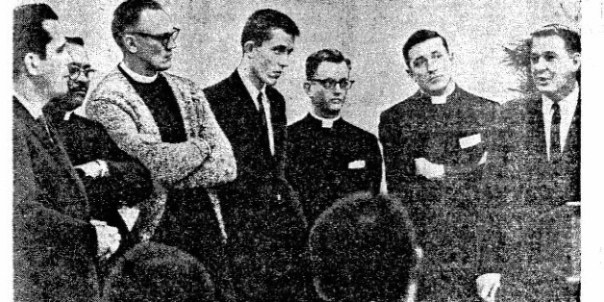
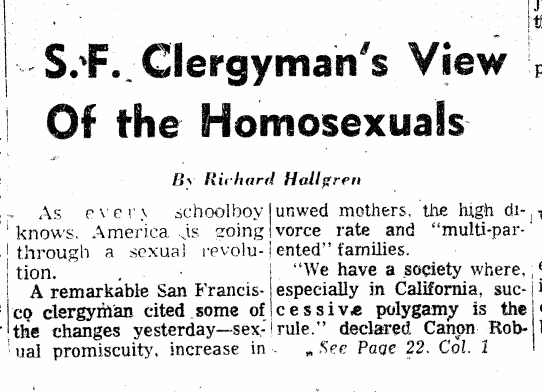
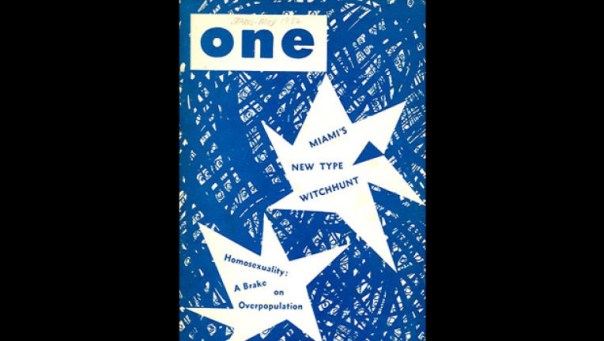
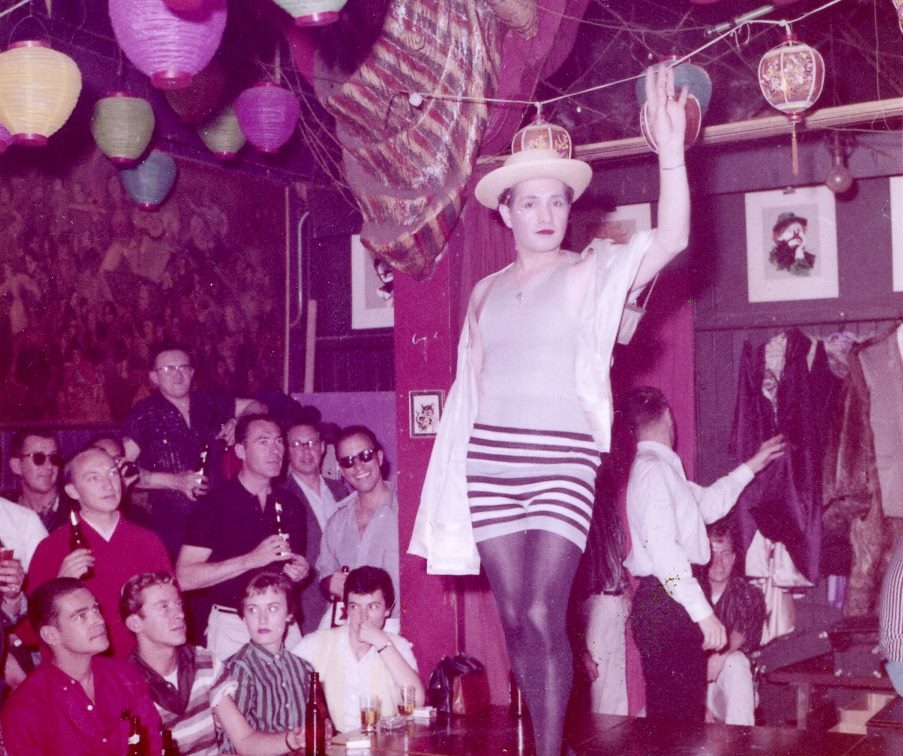
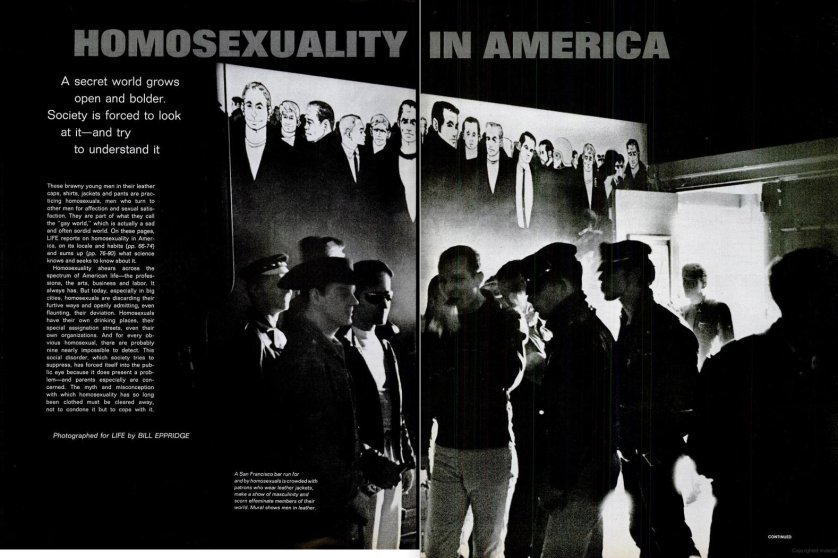
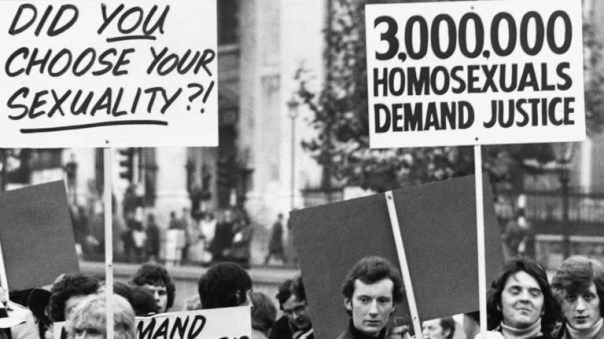


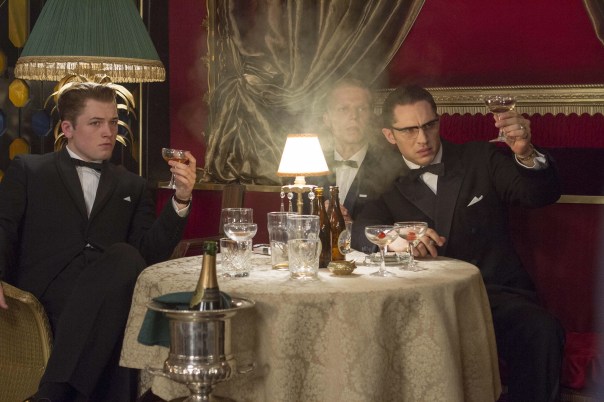


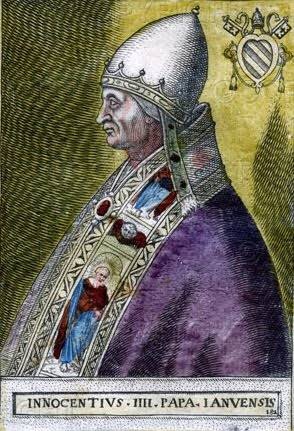
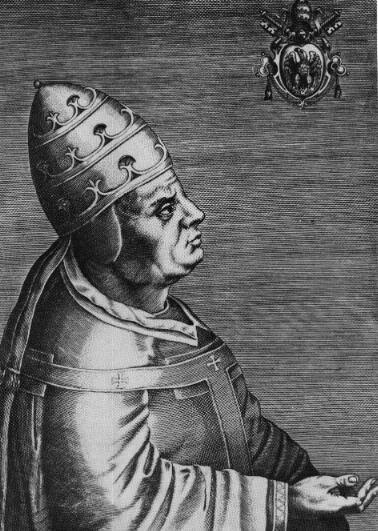
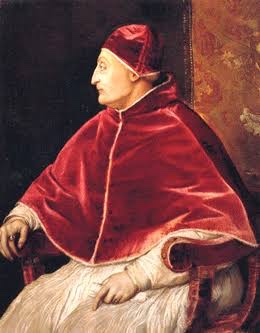
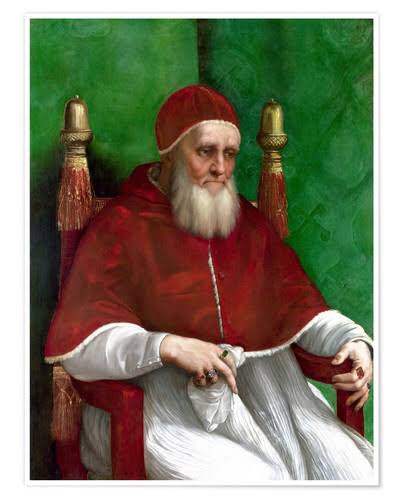







 timalderman

.jpg)