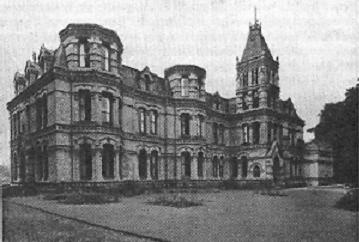
Some people just can’t let the past go, or have an inability to see when something has passed it’s use-by date! I have too many friends who keep reiterating that they wish the Sydney gay ghetto was still intact and functioning.
Let’s have a look at the (unspoken) history behind the formation, growth and death of the gay ghetto in Sydney. Historically, Kings Cross and Darlinghurst have always been protective enclaves for the dispossessed, eccentric, minority groups and the unclassifiable citizens of Sydney. Perhaps, initially, because of its foundations in working class and poverty-stricken populations, and later on the underworld, gangsters and prostitution – including transgender – it has always had its roots in notoriety!
In the 70s and early 80s in Sydney, the gay citizens were looking for a space to band together, to avoid the illegalities of being homosexual, and the social stigmatisation that happened at that time as we became more brazen and outspoken about our sexuality. I remember visiting there with a female friend in the 70s – before my own coming out – and the roots of the community were there already with nightclubs and cafes, though homophobic attacks and vitriol were prevalent as well. It was a wall-less ghetto in the making.
By the time the 80s rolled around, it was firmly established as a gay ghetto, ambling along Oxford St and its immediate environs, from Elizabeth St through to Paddington. The legalising of gay rights in 1982 brought around a boom in the area. The ghetto formed very much as a means for us to squeeze out the undesirables by a sheer force of numbers…and it worked. Any straight troublemaker coming onto our turf would have immediately felt threatened, and though violent attacks did occur, they were rare.
At its height, you could live within the ghetto and never move outside it. We had our nightclubs, pubs, cafes, restaurants, newspapers, magazines, bookstores, supermarkets, small businesses, doctors, dentists, optometrists, saunas, post office, houses, apartment buildings. A night out would involve a meal in a local cafe or restaurant, a visit to your pub of choice – about 9 in its heyday – then off to your nightclub of choice. In the early hours of the morning you could either stagger home via your favourite takeaway, or do a trip to your favourite sauna or backroom without ever being harassed. The ghetto was a security blanket.
During the HIV/AIDS epidemic of the 80s and 90s, it was a true blessing. Once again, you could live as a HIV person within the ghetto and be safe and protected. Within the boundaries of the ghetto were established our hospital and hospice care, our HIV/AIDS specialists and GP practices, our support groups such as ACON (AIDS Council of NSW), BGF (Bobby Goldsmith Foundation), CSN (Community support Network), ANKALI (emotional support), and the Positive Living Centres, as well as our advocacy groups such as PLWHA (People Living With HIV/AIDS), NAPWA (National Association of People with AIDS), our funeral directors, our church. We did our own fund-raising, and we supported each other through our pain and sorrow. Once again, it was a safety zone where the emaciated frames of those luving with AIDS could wonder without fear of derogatory remarks, hatred and harassment. In that zone we mourned, held our wakes, and looked for material and emotional support. Those religious groups such as the Festival of Light, who preached and promoted hatred towards us learnt the hard way about the strength and communication within the ghetto.
Fred Nile’s Cleansing March in the80s was a good example. Thinking his band of supporters would march unchallenged up Oxford St, he and they were in for a rude shock! From early in the morning on the day of the march, protestors, the gay community and its supporters started lining the length of the march. By the time the Rev Fred – with his cross-on-wheels – started marching up there, the footpaths, awnings and buildings along the route were packed to capacity with his detractors! The march, from his prospective, was an overwhelming humiliation, and failure! I remember seeing a car full of Tiwi Islanders who had evidently not been warned about how unpopular their beloved reverend was. They looked terrified for their very lives, overwhelmed as they were by the booing and vitriol of the massed ghettoites. I actually felt sorry for them!
However, in the midst of all this, other changes were taking place that were to instigate the downfall of the gay ghetto. Anti-discrimination laws came into play and all-male/female venues became – temporarily – illegal. Nightclubs like the Midnight Shift had to start letting women in, and once they started bringing their boyfriends and other straight male friends, the ambience of the clubs changed forever! And not in a good way! Many ghettoites who had been in the centre of the HIV/AIDS bonfire scattered to other states or to the far north of NSW. Indeed, by the time highly effective HIV antiretroviral regimes started in 1996, it was very much a decimated community, though the epidemic itself had moved on to the straight community, to drug-users and those that had the double-whammy of HIV and hepatitis. The myth of the “gay plague” was laid to rest for good!
But perhaps the greatest enemies of the ghetto was generational changes, social acceptance, and a movement away from the boundaries of the ghetto, a realisation the we no longer needed the safety and protection of the ghetto to live our lives. We dispersed to Newtown, Enmore, Erskinville, Camperdown, Leichhardt, Annandale, Alexandria, Pyrmont, Zetland, Moore Park, Surry Hills, Redfern and Summer Hill. We transformed areas into “Trendy” and moved away, in our hordes, from Oxford St. Yet, some pieces of our lives remained there – a few pubs and nightclubs, a few medical practices, but all-in-all, we moved on.
Darlinghurst and much of Paddington are now mere shadows of their former selves. A stroll down Oxford St now will reveal dozens of empty businesses, and those that do remain struggle for customers during the day. The nightclubs and pubs are now the enclaves of straight people, and a general feeling of desolation, violence, uncomfortable vibes, and unrest permeates the air. It is now, once again, a place where unsolicited violence can occur irrespective of your sexuality.
So the ghetto has outlived its usefulness, and is, to all intended purposes, dead! I can understand nostalgia, even fleeting yearnings. What I don’t get is an inability to accept the ravages of time, the changing dynamics of an area, the growth and development of populations, indeed diaspora! To those who wear blinkers, want the past to live on, the “good old days” to be a mantra for days gone by, I say…let it go! Enjoy the memories, but don’t wish for them to return. To deny yourself the insights of living in the “now” is to root yourself in a past that can never be repeated. Allow the ghetto to be swallowed by history, to takes its place in our memories as somewhere that we lived and enjoyed IN ITS TIME…and leave it there! Never let your yearning for the past, cause you to overlook the reality of now.
This year marks, for me, 33 years of living with HIV/AIDS…though now it is just HIV. I consider it a landmark, as back in 1996 I was admitted to Prince Henry hospital with chronic CMV retinitis, chronic candida, chronic anaemia, wasting syndrome (48 kg and going down), 10 CD 4 cells, and no immune system, and was not supposed to leave…at least not under my own steam. I did, thanks to advances in medications at that time, very aggressive treatment and a lot of will power. I don’t give a fuck how negative many HIV+ guys are about life with HIV. For me, this was the great singular event of my life, a pivotal point that resulted in life-altering decisions, a mental overhaul, and the knowledge that there was a hell of a lot more to life than HIV. It altered the course of my life, and for better or worse I have never looked back.
I was a speaker for the Positive Speakers Bureau for 12 years before realising that when you continually tell a story you start doing it by rote. The time came to opt out before it becomes totally meaningless. I have also written for “Talkabout” magazine (the flag ship publication of Positive Life NSW – formally PLWHA NSW Inc) for 15 years, as a features writer and a columnist. I also spent many years on the Publications Working Group. As a writer I see my role as not only to inform people, but to provoke debate, at times to be opinionated, to raise questions, to address abuses and unfairness and to be, when required, controversial. Unfortunately, my time with “Talkabout” taught me that to get published in a HIV publication you need to walk the safe road. To be controversial is to be tolling your own death knell. Mind you, this censorship has nothing to do with the editors who, in my experience, have been nothing but supportive. Community Health and a certain AIDS council provide funding to the magazine, so to poke your nose into sensitive areas will ensure your censure and non-publication.
As a HIV+ person writing about HIV issues I have always found my hands tied. I have written two extremely controversial articles on HIV Issues over the years. One, on Options Employment Services using HIV clients as a free work force in the guise of “work experience” was so watered down after threats of suing PLWHA, the editor and myself (I truly wish they had) that by the time of publication was a mere shadow of its original fiery tirade…despite the fact that I had evidence of this going on.The manager even took me aside and “suggested” that I quieten down my opinions as they were providing a service to the HIV community. Shortly after, they went broke and disappeared. The second article was amongst the best pieces I have ever written, and covered the controversial area of bug-chasing (HIV- guys who deliberately have unprotected sex with HIV+ guys in the hope of contracting HIV). The magazines working group deemed that by writing about bug-chasing I may have been promoting it amongst a certain sector of the community. Considering that the practice is well documented, is acknowledged and exists I failed to see how being informative about it was in any way promoting it…oh shit! I forgot that community health and certain HIV organisations wanted to keep their heads buried in the sand about the issue…and they held the purse-strings. Censorship is alive and well within the HIV community and always has been. Want to tell the truth about what is going on or want to expose something? Not on their watch!
But despite this I continue to write, though I keep it to the more nondescript these days. I do enjoy being published! Since moving to Brisbane I have been phasing out my writing for “Talkabout” (which after 15 years of being published in pretty well every issue, has gone unacknowledged by the organisation itself, though not by the editors), and have started writing for QPP “Alive”, the magazine of Queensland Positive People. Same story, different place as far as funding goes, I’m afraid. Nothing controversial will be coming out of here either.
33 years ago at the start of the HIV shit fight, people never questioned anything about treatments, definitions, philosophies, or courses-of-action. We were in crisis mode and anything was better than nothing. We let a lot happen that in more sane times, in more accountable times, would never have been allowed to happen. This far down the line it is time to start asking questions, time to demand investigations and redefinition into many aspects of treatment, time to look back at some of the historical record and say “we were wrong”, and set the record straight. I no longer allow my doctor, or the HIV establishment, or the drug companies to dictate my path to health for me. I follow my own path, which is dictated to by knowledge and experience. 11 years ago I made a decision to halve my daily medications, and dose myself once a day only. Considering the negative impacts of huge amounts of HIV medication on the body I decided to take a risk. Well, this far down the line my health has never been better (though diet and exercise also contribute to that), my viral load has remained at undetectable, and not only has my CD4 count remained stable, it has in fact risen considerably. In fact, on my blood tests all other readings – except CD4/CD8 – are within range. Considering the recent emphasis on drug regime “compliance”, and considering my own circumstances, I am forced to ask – controversially, naturally – if the compliance issue is being driven by HIV specialists, or by the drug companies who stand to make a fortune out of HIV drugs. I will leave that question in the air for you to mull over and answer for yourself. This is a personal opinion, and one I am entitled to.
With the release of the brilliant “Dallas Buyers Club” the truth about AZT is finally out there. Pressured by my doctor to go on it in the latter part of the 80s, it is the one decision of my HIV care that I regret. I had read the report from the “Concorde” study in France, I knew it was described as “Human Ratsac”, yet I still finally gave in, and witnessed the immediate decline of my health as it bashed my immune system into submission. Needless to say, the long-term affects are disabling, and were not worth the risk. I still hear those who work in the HIV “Industry” – as indeed it was and still is – banging on about how it kept the wolf from the door – it didn’t! It poisoned and destroyed our immune systems, and left us vulnerable to opportunistic infection! It effectively killed many of us. As a drug to assist with maintaining CD4 counts it was a total and complete failure! And I am not the only one to say so! Ask any one who survived AIDS their opinion on AZT! Minor control of HIV did not start AZT situation. How the FDA in America handled the AZT situation and allowed wed the drug companies to dictate treatment options, block other drugs put out by rival companies, and chose to ignore or acknowledge research from overseas was a disgrace.
Even now in 2014 ignorance lives on. I continually hear, read and see HIV being described as AIDS! It is NOT AIDS – it Is HIV or HIV+! For fuck sake get your facts right! HIV is a viral infection, and AIDS are as the initials infer – Acquired IMMUNE Deficiency Syndrome! They are infections contracted by a breakdown of the immune system! The two do not necessarily go hand in hand, and you can have one without having the other. People undergoing aggressive cancer treatments which knock the immune system around are left vulnerable to the same infections triggered by AIDS in the plague years. Drug addicts also.
There are – and I am not being unkind nor ungrateful – those who have worked in the HIV Industry for too long. They are burnt out, and out of touch. If you only wander in HIV circles, you will only know that singular perspective. These people are indoctrinated, lacking in vision, and single-minded in their approaches to HIV and its management. They are blinkered, and only ever spiel forth statistics and the same information that we have heard for the last 30-odd years. They seem incapable of acknowledging different perspectives, new ideas, or revisiting and re-evaluating the old philosophies and education. Without an insurgence of new blood, HIV is in danger of stagnating and just at a dead end. Their current publicity of “Ending HIV” is a fantasy, and they know it. As long as HIV is in Africa, and in countries like Russia and China where education is almost non-existent or played down, HIV will never end. Empty words to seem to appear to be doing something, is just a waste of money. The HIV Industry seems to be very good at this. Always about 2-years behind actual need – just look at the employment needs of AIDS survivors in 1997/98 – when services were introduced they were way off course. You can only have so many programs that teach you how to write a resume, or attend an employment interview. Every single return-to-work session I went to do talks at had the same people in them. They just moved from one group to another, never putting the teaching into action. Where was the advice for people who wanted to be re-educated, or start a business, or upgrade a hobby,or buy into a franchise? It was non-existent. These people were the ones who fell through the cracks for lack of support and services. This has always been an ongoing problem. Naturally, the lack of funding is always blamed – though enough money to pay huge salaries – when really it is a lack of foresight, and imagination. Of course, everything is now wrapped up under the umbrella of Community Health, so any hope of imaginative thinking is now out the window. Those who hold the purse-strings control everything. It is a sad state of affairs. Groups like “Positive Life” no longer acknowledge their roots, nor do they move in the directions set down by the original founders. They are out of touch with their memberships, are indeed losing them. In the race to save money they are dropping resources that keep everyone active within the group. Even Positive Speakers Bureau inductees are now told what to talk about, and bang on about the same old messages and sprout the same old statistics. The trouble is…no one gets sick any more, so there is nothing to talk about for an hour. Perhaps it has outlived its use.
If one has to be totally frank, service delivery, information and services are no better now than they were 20 years ago! In many cases, they are worse. One friend of mine complains of the lack if easy access to HIV meds, and he has to spend a lot of time travelling to obtain them. He also comments on how he and his partner feel isolated and-reclusive due to no social groups to mingle with, and the constant heed to continually go through your medical record every time you change providers. Pretty sad state of affairs considering he only lives in Canberra.
Being my 33rd anniversary of life with HIV, and with World AIDS Day approaching I have written a personal retrospective of that period hopefully for publication around that time. It is 2,500 words long…not a lot of words for 33 years. If you are interested, follow the link. Not quite as controversial as this!
Like most people, I take the city I live in for granted. Having always lived in and around Sydney, I don’t really give much thought to what makes it the city it is, what endears me so much to it, what creates this strange love affair with bricks, concrete, glass and steel.
I have always had a pretty good knowledge of the history of Sydney, and have walked much of its historic paths, and many lesser known alleys over the years. I travelled, at least for a while, over the Harbour Bridge on an almost daily basis. I have walked the pathways of the bridge many times, and have traversed it also in trains, and as a vague recollection, in trams. The bridge pylon has long been a favourite haunt as a place to escape the madding crowd – at least on weekdays – and as a place to meditate the beauty of my city, and be constantly in awe of the majesty of its harbour. The recently started climb up the actual span has added another dimension to it again, and a view of the harbour and city that is so beautiful it makes you weep. In my many journeys across it over the years, how often I wondered why I could not climb that arch! That dream is now available to all.
It is only as I have grown older that I have really started to get into the feeling of walking through time as I move about the city. Many others before me have walked streets that I walk, they are named after those who used them as far back as the first settlement. Suburbs are named the same way, as are homes, parks, bays, beaches, hills and mountains. Tongue-twisting Aboriginal names confuse many a tourist, and the buggerisation of their language is evident in many spellings of place names around the city. They have become not just names, but a patchwork of living history. I now go to Balmain knowing that at one time, the whole suburb was sold for five shillings. I know that Millers Point is just not a name, but an activity that occurred there, and that Brickfield Hill is named for the same reason. The Rocks is so because of rocks, Rushcutters Bay because they cut rushes there, Cockle Bay was renowned for its cockles and Double Bay because it is – yes – two bays.
The very trees and gardens in the Eastern suburbs hold history. Rocks bare graffiti from 1788. Archeology is all around, at places such as the dig at Suzannah Place in The Rocks, and more recently at Walsh Bay, and when the Conservatorium of Music was being restored (the old Government House stables). We no longer cringe at the suggestion of being from convict stock. There are many like me, whose families came out as free settlers in the mid-eighteen hundreds, who would beg, borrow or steal to have a convict history. It is only now that books are revealing the true facts of our past, the real people who were on the first fleet, the true conditions they endured to become the first white inhabitants of this land. This is a truth we no longer shrink from, but accept as part of our cultural colour. It is a shame we cannot be as proud of our treatment of indigenous cultures.
Up until I read John Birminghams ‘Leviathan’, I had always thought that John Macarthur died back in England. I had no concept of the hard time he had given his wife, nor that he died being declared insane. I had no knowledge of the back biting and factioning that went on between Governors, settlers and the Rum Corp, nor of the workings of the Unemployed Workers Movement of more recent history. I would not have known that free-settlers built homes in the highest areas of The Rocks, and that those living below them were engulfed by the sewerage running down the hills. Digging trenches around the lower homes did little to alleviate the problem – the sewerage just overflowed the trenches, and proceeded to boil and fester in the heat.
That I would never have been taught any of this at school does not surprise me. Growing up in the fifties and sixties in Sydney was a lot different to growing up here in the nineties and beyond. ‘Going to Town’ is no longer the event it used to be, where parents and children were dressed in their Sunday best, as though making a pilgrimage to the centre of their culture. My parents could not have imagined the squalor of the late nineteenth century, nor the depressions earlier in that time. Their parents lived on the legacy left to them from the depression of the twentieth century, and expected their children to carry the
same values forward. My apologies to them but they are wrong. I will not carry that guilt for them!
I love my city for having survived the warring factions, the depressions, the plagues, the demolitions, and the cultural and architectural history destroyed by a string of uncaring governments. I love her crowded streets, her bastard mix of architecture, and crooked, crazy alleys and lanes. Yes, she has grown as an old whore, but oh, a whore with so much class.
I was unbelievably impressed by the Olympic site at Homebush, and how much it was a measure of how far we have come. We have taken a toxic dumping ground and rejuvenated it into a suburban paradise. Twenty years ago, nobody would have given a damn about the Green and Gold Frog becoming extinct, let alone contemplating creating a space for it to thrive in. We now think about the spaces we are creating. No more just throwing up buildings as though there was no tomorrow – well, perhaps east Circular Quay is an exception to that rule. I see history being restored, and put to modern use. I trust we have got over the facadism of the eighties, and now choose to preserve buildings in their entirety, breathing into them a new life which they richly deserve.
Now when I walk up Palmer Street or Campbell Street in Darlinghurst, or drive down Old South Head ŷRoad, the names invoke a sense of history to me. They are not just boulevards, they are lives that have been lived, and continue to live as long as people care.
The Rev Alfred PicklesI have been researching my family tree for over 15 years now. In the early days it wasn’t so easy, and I probably had the sum total of about 10 names. The advent of the Internet has changed all that, and I now have four large arch files of information, including one entire file dedicated to one family member – more on him in a later post. I have gone as far back as the late 1500’s in Fylingdales and Robin Hood’s Bay in Yorkshire (the further you go back, the more difficult it gets), and can pretty well trace the family right down the male line to now, with a recent start being made on tracing the maternal lines back from my mother, and my Great Great Great Grandmother. A surprising find, in a site of graveyard inscriptions, were the names of not only my long searched for Great Great Great Grandmother (Clara Pickhills nee Rickinson), but also her husband (Joseph Pickhills), one son (Seth Pickhills) and daughter (Priscilla Pickhills). This was a great find as it connected me further back than my Great Great Grandfather (Rickinson Pickhills) and filled in a few blanks. I had to use a research company to find details, as the trace is difficult if you live in Australia. Clara’s son Seth Pickhills had one son – Alfred – who is important for two reasons (he is my first cousin three times removed). Firstly that he took off down his family line using Pickles instead of Pickhills – and I guess we will never know why. For a while in Rochdale (Lancashire) he lived with his aunt (Priscilla) and she was a Pickhills. Secondly, and the very last thing I would ever have expected to find in my family, after a stint at being a watchmaker he became a Baptist Minister in Rochdale. And here I was thinking that we had always been Catholics! I don’t know when religious affiliations changed, but I suspect it was after the families arrival in Australia, and probably after some Irish heritage had been added by way of the lineages of the Fanning’s and the McConnell’s. With Catholic’s being unable to marry outside the faith, potential spouses of other religions would have had to convert. Thankfully, my family never cared one way or the other, and despite being christened a Congregational, I am now a devout Atheist.
Anyway, this much we do know about Alfred. He was born in the rapidly growing West Riding textile town of Bradford, Yorkshire, in 1843. The son of Seth Pickhills and Jane Bracher, we know little of their actual lives except that they were working class. Seth was a journeyman printer (journeymen, after serving their apprenticeship, were able to move amongst employers), and according to the 1851 census the family were living in Belgrave Place in Bradford, and 8-year-old Alfred was a scholar. Moving on 10 years to the 1861 census, we know that he was 18-years-old, and living with his aunt, Priscilla (Seth’s sister) at 46 Belgrave Place, Bradford, and that he is listed as being a watchmaker. Seth had died in 1859, and it would appear that his sister had taken over the running of the household, though we are unsure of what had happened to Jane. His next mention in the records is in the 1871 census, and both he and Priscilla had moved to 95 Mitchell St in Rochdale, and he was listed as being a Baptist Minister.
We know from his memoir printed in “Memoirs of Ministers and Missionaries who died between 15th January 1917 and 31st October 1919” that he was involved with the Baptist church from a young age, and he became a member of Westgate Church in Rochdale under the pastorate of Henry Dowson, whose teachings had a lifelong influence on him.
On the 19th August, 1864 the following article appeared in the “Bradford Observer” regarding his ordination; “Ordination of a Bradford gentleman at Rochdale – On Tuesday, Mr A. Pickles, son of the late Mr. Seth Pickles, of Belgrave Place, Bradford, was ordained pastor of the Lyceum Baptist Church, Rochdale. A prayer meeting was held in the morning, the ordination followed in the afternoon, when a sermon eas preached. In the evening there was a tea meeting in the Milton Congregational School, presided over by the Rev. A. Pickles. Amongst those who were present at the ceremony were the Rev. E. Parker, Farsley; Rev. J. Smith, Bacup; Rev. H. Dowson, President of the Baptist Theological Institute, Bury; Rev. J. Home, Waterbarn; Rev. L. Nuttal, Ogden; Rev. J. Williams, Oldham; Rev. J. Bloomfield, Bradford; Rev. J. Wilkinson; Rev. A. Pitt; Rev. A. C. McCoffin; Rev. A. H. Drysdale, and several friends from Bradford. The Rev. A. Pickles was formerly a scholar at the Bradford Grammar School, and afterwards pursued his studies at Bury College under the Rev. H. Dowson.”
In 1874 he married Margaret Elizabeth Shepherd, who was born in Waterbarn, Lancashire in 1844. The couple had two children whilst living in Rochdale – George (1876) and Henry Shepherd (1878). Initially, Alfred’s ministry consisted mainly of cottage and outdoor meetings. He became one of the earliest students of the Baptist Theological Institute, which at the time was newly established at Chamber Hall in Bury, and under the presidency of Henry Dowson. In 1866 the Institute moved from Bury to Manchester and became the Manchester Baptist College, founded on strict Baptist communion lines. The College was to become a founding member of the Theological Faculty of Manchester University. Alfred’s name was the first on the roll of minister’s trained at the college. His pastoral work began in 1870 at the Lyceum in Rochdale, and soon afterwards at the church purchased in Water Street, Rochdale.
Manchester CollegeThis was to become the Water Street Ebenezer Baptist Chapel. During the pastorate of Alfred the congregation grew and prospered. On the evening of February 10, 1878 the Reverend gave a long lecture to his congregation entitled “Turkey, Russia, England and the Jews” which was published in booklet form shortly after. He was also secretary of the local branch of “The Liberation Society”.
The society had been formed by Edward Miall (8 May 1809 – 30 April, 1881) who was a Portsmouth-born journalist, apostle of disestablishment and a Liberal politician. He was also a Congregational minister at Ware, Hertfordshire (1831) and Leicester (1834), and in 1841 founded ”The Nonconformist”, a weekly newspaper in which he advocated the cause of disestablishment.
Miall saw that if the programme of Nonconformity was to be carried through it must have more effective representation in Parliament.
One of the first fruits of his work was the entrance of a John Bright into parliamentary life; and by 1852 forty Dissenters were members of the House of Commons.
This was due largely to the efforts of the British Anti-State-Church Association, which Miall was instrumental in founding in 1844. It was renamed in 1853 as the Society for the Liberation of Religion from State Patronage and Control, known for short as the “Liberation Society”. The Society was never able to secure a parliamentary majority for the disestablishment of the Church of England, but the long fight for the abolition of Compulsory Church Rates was finally successful in 1868. In 1870 Miall was prominent in the discussions aroused by the Education Bill. He was at this time Parliamentary member for Bradford (Yorkshire) from 1860-1874, having previously sat for Rochdale (where Alfred would undoubtedly have encountered him in person) in 1852-1857. In 1874 he retired from public life, and received from his admirers a gift of 10,000 guineas. He died in 1881 at Sevenoaks in Kent.
After ten prosperous years at Water Street Chapel, throat problems forced Alfred to accept a call to Towcester, in Northamptonshire, which was more rural and had a milder climate. He officially became pastor after a three month trial period. However, it would seem that this move to the North End Baptist Chapel was to have its own trials and tribulations. The chapel at Towcester was opened on 3 October, 1853. There appears to be little interaction with other churches in the area, though the Towcester Baptist Church does record that after re-forming in 1871, it received a letter from the North End Chapel to “renew contacts severed with the old church, as the basis for fellowship was now seen to be biblically established”. What was often referred to as “the Baptist Church”, almost as though it were a separate denomination, later came to be known as the South End Church, though there appears to be no desire to unite the two churches on the part of North End. Most of what we know of Alfred’s pastorate is from the Church Book. The Church Book was used to record baptisms, reception of people previously baptized by the laying on of hands, expulsions, and rebukes of a serious nature. Under the previous pastorate of Samuel Cooper Tite, the book had not been filled out prior to the 1880’s, and he had in fact taken the book with him when he left the church. He returned the Church Book to Alfred in 1886, after his return to the Baptist church. There was a fairly small congregation, possibly due to it being a sect of the Baptist church commonly referred to as Johnsonian Baptists. Founded by John Johnson (1706-1791) who was a Baptist Minister of High Calvinist views, he taught that faith was not a duty required of God, but a grace which it is impossible to convert into a duty. Want of faith, therefore, is no sin. He was repudiated by the local association for “bizarre ideas” , as he questioned whether the Incarnation would have been necessary if man had not sinned, he denied the doctrine of the Trinity, and was highly insular and exclusive. Johnsonian’s were not even allowed to associate with other Baptists, which would have explained the division between the two Baptist churches in Towcester. Other Johnsonian churches were founded in Blackburn, Norwich, Chesterfield, Halifax, Bromley, Duncote and Dublin.
In Towcester, for the 64 years leading up to Alfred’s appointment, about 80 people were associated with the church at one time or another. In 1886 there were 37 members, and Alfred baptized 20 in the 6 years since he became pastor. With the return of the Church Book, he started to record church meetings and one or two other “events”. There is a record of a visit from a person from a nearby congregation to communion “at the Lord’s Table October 2nd 1887 Mr Davidson a Member of the Church of Christ at Banbury requested and was allowed to commune. At the request of the Church he also preached in the evening from 1 Cor 15c 1 – 4 vs”. This is obviously an “Event” and reveals the small congregations isolation. The Churches income was about ₤20 per year, which appeared to cover their expenses. A welcome gift mentioned in the Church Book is of an amount of ₤100, which was on its way in five installments from the sale of a church in Comus Street, Liverpool.
In the meantime, Alfred and Margaret had another two children – Thomas Edward (1881) and Ruth (1884). The family first appear in Towcester in the 1881 census, living in High Street. Alfred and Margaret are listed along with George who is 5-years-old; Henry who is three; infant Pickles (Thomas, and just born); a Maude Clegwidden who is 12-years-old and occupation given as nurse maid (at 12?) born in London, Middlesex; and a Margaret Taylor, 68-years-old and a visitor. Alfred appears to have left his position as pastor of North End Chapel in 1891. The church may have been too small to warrant a pastor at that point, as thirteen members passed the following resolution at a Church Meeting towards the end of 1891 “that in harmony with the suggestion of the Trustees, we request Mr Fidler to preside at our Church Meetings and to advise and assist so that the Services at North End & Duncote Chapels may be maintained in as orderly and efficient manner as possible. Signed by Alfred Pickles. Pastor.” William Fidler accepted the invitation. By July 1893 there was obvious concern about the viability of the Church. Many of the church members had been elderly and had died. The Sunday School had just 11 pupils. A church meeting was held with 8 people present which decided to try to carry on for another few months. “There appeared no disposition to unite with the South End Church. Still the prospects of continuing as at present were doubtful. Mr Garlick was specially anxious that they should try to revive the work by prayer and united effort”. Early in 1894, after the services had been held in the vestry for all winter to save money, the church was officially closed on March 25. There were 16 members listed, 4 of which were discovered to have died. The contents were distributed between the Duncote Chapel, and Towcester Baptist. Church (South End Chapel). Obviously they weren’t too proud to take a donation from a church with opposing views to theirs.
In the 1891 census, Alfred and Margaret are listed as living at 19 The Drapery, Northampton. George is now 15 and an apprentice; Henry is 13 and a school boy; Thomas is 10 and a school boy; and Ruth, the new addition since the last census, is 7 and listed as a “school boy”. Margaret Lyack, 66-years-old, is living with them as a boarder living on her own means. 19 The Drapery (a store) is still there, and currently occupied by Oxfam. I think Alfred would like that.
For the following 6 years, after the official closure of North End Chapel, Alfred travelled from Northampton back to Towcester every Sunday in order to break the bread of life for the Towcester Church, this being done for no renumeration.
Another interesting item that came out of the 1891 census is that Alfred’s occupation is listed as a “Hatter & Hosier” at 19 The Drapery, and he is also listed as a Hatter in two directories of Northampton for that period. However, I am led to the thinking that this was the year they moved to London, possibly in the latter half of that year.. A notice appeared in the “Edinburgh Gazette” dated August 4, 1891 whereby in a listing taken from the “London Gazette” he was listed as bankrupt whilst living in Northampton. We know that at the time of the first meeting and first examination regarding his bankruptcy that he was residing at 160 Regents Park Rd, London, though he returned to Northampton for these meetings. He was still at the Regent’s Park Road address in 1893, when the Public Trustee Alfred Lister Blow was acting on his behalf. It is open to suggestion as to why he declared himself bankrupt. One reason may be that he used all his available cash trying to keep the North End Chapel viable. Another reason might be that with the church being so poor, and with him having to resign his position as pastor (and receiving no pension or renumeration) that there was just no money left for him and his family to survive on until he either obtained work, or started his own business. Who knows! I have tried researching the prevalence of bankruptcy in the 19th century with little success. Alfred is the second family member to have declared bankrupcy. He also started work for the Baptist Tract and Book Society, where he worked for some years. still preaching whenever and wherever he was needed. By the time the 1901 census rolled around, he was residing at 10 Oppidans Road in Hampstead. He is listed as a “Tay Dealer” which I can find nothing about, and suspect it is a deciphering error. Margaret is still listed, as are George (now 25, single and a clerk); Henry (now 23, single and a printer); Ruth (now 17, single and a shop assistant); and Thomas (now 20, single and a printer). They still have a boarder, now an Edward Gounersall, a 24-year-old single electrical engineer. By now Alfred’s eyesight was failing, and The Memoir notes that for several years before his death he was quite blind, and bore it with great patience. It would appear that he did continue to work, possibly as a hatter and hosier seller (perhaps Ruth was a shop assistant in his store), as well as continuing an occasional ministry for as long as his failing eyesight allowed.
Margaret died in 1911, and I think this would have devastated him, as he had described her as “a true help in all his labours”. At the time of the 1911 census he is living at 23 Ainger Road, St Pancras in London. He is listed as a Baptist Minister Retired. Thomas Edward is still with him at 30, and it would seem still single and now a Painter Machine Manager. Ruth is also still listed as being with him at 27, and it would seem that she also is still single and now a costumier.
Alfred died in his sleep (according to The Memoir, which can tend to prettify things) on the 20 February 1920, aged 72, at Hendon. He left behind a family who cherished his memory. “He was a man of faith and prayer, and faithful to the principle, even when fidelity meant loss. His one passion was to preach the gospel and he has now gone to hear his Lord’s “well done” and receive the reward of many soul’s for his hire”. It would appear from The Memoir that he was a very committed and devout man.
Although research continues into this side of the family, it would appear that only two of Alfred’s children married. The 1911 census lists at 10 Oppidans Road in Primrose Hill in London a George Pickles. He is now 35, in the Motor Accessory Trade, and head of the household. His wife is Mary Ellen Pickles who is 39, and born in Co Kildare, Ireland (a resident of Clonkeeran). They have been married for 8 years, though no children mentioned. Thomas Edward appears in the 1917 register of marriages for St Savior in Hampstead. He is 35 and marrying a Mary Turner who is 29. There is a listing for Thomas E Pickles Death in 1965 in Greater London, though if this is indeed Thomas Edward is yet to be verified. He was 84 at the time of his death. There is a death registration for Ruth Pickles, aged 81, at Sidcup in Kent. Again, this needs to be verified.
Further to the Water Street Ebenezer Baptist Chapel in Rochdale. The Water Street Chapel was demolished in 1915, and the demolition was witnessed by a parishioner by the name of “Owd Dob “who was inspired to write an account of his personal memories of the chapel in a short treatise entitled “Th’ Owd Chapel”, for private circulation. It is difficult to read as it is written in the Lancashire dialect, though with perseverance an interesting account of the chapel (including a mention of the pastorate of Alfred Pickles at the beginning) unfolds, and includes a picture of the Church, its banner, a sketch of its interior, and photographs of pastors, the choir and the woman’s class – all looking very “Baptist” in their 19th century severity.
This biography has been put together using information gleaned from census records, Alfred’s memorium in The Memoir, and various newspaper reports from the time. Some suppositions have had to be made, and I hope that some of my conjectures at least are correct. It has been an interesting exercise cobbling someones life together from whatever information is still available. At this time I am still waiting to hear from Northamptonshire Archives of any information they may have on file for Alfred. NB: they never got back to me. There is a payment request for searches on their web site, but I am nit willing to pay money to find they either have nothing, or I already have what they hold. A request to know if they have any information on Alfred before I pay has been ignored. This is the first archive in England to be unhelpful with an information request.
I would personally like to thank Emily Burgoyne from Regent’s Park College Library at the University of Oxford for abridging the “Memoirs of Ministers Who Died Between 15th January 1915 and 31st October 1919” and sending it to me (the Memoir itself is the only copy and is in to fragile a state to scan. It was compiled by the Baptist Union after they decided to stop printing the Baptist Union Handbook during the First World War, as paper was scarce, and printing expensive), along with scanning in his lecture “Turkey, Russia, England and the Jews”. It has all been an invaluable aid in helping to trace my long-lost cousin.
Tim Alderman (formerly Robert John Pickhills)
Note: Ebenezer Baptist Chapel, Water Street (pp 139-140)
This church was formed of members formerly in connection with the West-street Church, and met at first for divine worship in Baillie-street, on the 8th of January, 1867; it continued there up to the time of its removal to the chapel in Water-street. The last mentioned place was built in 1834, by the New Connexion Methodists, and was purchased from them by the Baptists, and re-opened for divine service on the 1st of May, 1870. [a little more]