Of the countless scriptures ofMahayana Buddhism, few are more widely read or revered than the Lotus Sutra. Its teachings thoroughly permeate most schools of Buddhism in China, Korea, and Japan. Yet its origins are shrouded in mystery.
The sutra’s name in Sanskrit isMaha Saddharma-pundarika Sutra, or “Great Sutra of the Lotus of the Wonderful Law.” It is a matter of faith in some schools of Buddhism that the sutra contains the words of the historical Buddha. However, most historians believe the Sutra was written in the 1st or 2nd century CE, probably by more than one writer. A translation was made from Sanskrit to Chinese in 255 CE, and this is the earliest historical documentation of its existence.
As with so many of the Mahayana sutras, the original text of the Lotus Sutra is lost. The several early Chinese translations are the oldest versions of the sutra that remain to us. In particular, a translation into Chinese by the monk Kamarajiva in 406 CE is believed to be the most faithful to the original text.
In the 6th century China the Lotus Sutra was promoted as the supreme sutra by the monk Zhiyi (538-597; also spelled Chih-i), founder of the Tiantai school of Mahayana Buddhism, called Tendai in Japan. In part through Tendai influence, the Lotus became the most revered Sutra in Japan. It deeply influenced Japanese Zen and also is an object of devotion of the Nichiren school.
The Setting of the Sutra
n Buddhism, a sutra is asermon of the Buddhaor one of his principaldisciples. Buddhist sutras usually begin with the traditional words, “Thus I have heard.” This is a nod to the story ofAnanda, who recited all of thehistorical Buddha‘s sermons at theFirst Buddhist Counciland was said to have begun each recitation this way.
The Lotus Sutra begins, “Thus I have heard. At one time the Buddha was in Rajagriha, staying on Mount Gridhrakuta.” Rajagriha was a city on the site of present-day Rajgir, in northeastern India, and Gridhrakuta, or “Vulture’s Peak,” is nearby. So, the Lotus Sutra begins by making a connection to a real place associated with the historical Buddha.
However, in a few sentences, the reader will have left the phenomenal world behind. The scene opens to a place outside ordinary time and space. The Buddha is attended by an unimaginable number of beings, both human and nonhuman — monks, nuns, laymen, laywomen, heavenly beings, dragons, garudas, and many others, including bodhisattvas and arhats. In this vast space, eighteen thousand worlds are illuminated by a light reflected by a hair between the Buddha’s eyebrows.
The Sutra is divided into several chapters — 28 in the Kamarajiva translation — in which the Buddha or other beings offer sermons and parables. The text, part prose, and partly verse contains some of the most beautiful passages of the world’s religious literature.
It could take years to absorb all the teachings in such a rich text. However, three principal themes dominate the Lotus Sutra.
All Vehicles Are One Vehicle
In early passages, the Buddha tells the assembly that his earlier teachings were provisional. People were not ready for his highest teaching, he said and had to be brought toenlightenmentby expedient means. But the Lotus represents the final, highest teaching, and supersedes all other teachings.
In particular, the Buddha addressed the doctrine of triyana, or “three vehicles” to Nirvana. Very simply, the triyana describes people who realize enlightenment by hearing the Buddha’s sermons, people who realize enlightenment for themselves through their own effort, and the path of the bodhisattva. But the Lotus Sutra says that the three vehicles are one vehicle, the Buddha vehicle,
All Beings May Become Buddhas
A theme expressed throughout the Sutra is that all beings will attain Buddhahood and attain Nirvana.
The Buddha is presented in the Lotus Sutra as dharmakaya — the unity of all things and beings, unmanifested, beyond existence or nonexistence, unbound by time and space. Because the dharmakaya is all beings, all beings have the potential to awaken to their true nature and attain Buddhahood.
The Importance of Faith and Devotion
Buddhahood may not be attained through intellect alone. Indeed, the Mahayana view is that absolute teaching cannot be expressed in words or understood by ordinary cognition. The Lotus Sutra stresses the importance of faith and devotion as a means to the realization of enlightenment. Among other significant points, the stress on faith and devotion makes Buddhahood more accessible to laypeople, who do not spend their lives in ascetic monastic practice.
The Parables
A distinctive feature of the Lotus Sutra is the use ofparables. The parables contain many layers of metaphor that have inspired many layers of interpretation. This is merely a list of the major parables:
The Burning House. A man must lure his playing children out of a burning house (Chapter 3).
The Prodigal Son. A poor, self-loathing man gradually learns that he is wealthy beyond measure (Chapter 4).
The Medicinal Herbs. Although they grow in the same ground and receive the same rain, plants grow in different ways (Chapter 5).
The Phantom City. A man leading people on a difficult journey conjures an illusion of a beautiful city to give them the heart to keep going (Chapter 7).
The Gem in the Jacket. A man sews a gem into his friend’s jacket. However, the friend wanders in poverty not knowing that he possesses a gem of great value (Chapter 8).
The Gem in the King’s Top-Knot. A king bestows many gifts but reserves his most priceless jewel for a person of exceptional merit (Chapter 14).
The Excellent Physician. A physician’s children are dying of poison but lack the sense to take medicine (Chapter 16)
Translations
Burton Watson’s translation ofThe Lotus Sutra(Columbia University Press, 1993) has gained great popularity since its publication for its clarity and readability.
A newer translation of The Lotus Sutra by Gene Reeves (Wisdom Publications, 2008) is also very readable and has been praised by reviewers.
Reference
O’Brien, Barbara. “Overview of the Lotus Sutra.” Learn Religions, Jan. 29, 2020, learnreligions.com/the-lotus-sutra-an-overview-450024.
The Eight Auspicious Symbols of Buddhism originated in Indian iconography. In ancient times, many of these same symbols were associated with the coronations of kings, but as they were adopted by Buddhism, they came to represent offerings the gods made to the Buddha after his enlightenment.
Although westerners may be unfamiliar with some of the Eight Auspicious Symbols, they can be found in the art of most schools of Buddhism, especially in Tibetan Buddhism. In some monasteries in China, the symbols are placed on lotus pedestals in front of statues of the Buddha. The symbols are often used in decorative art, or as a point of focus for meditation and contemplation
Here is a brief overview of the Eight Auspicious Symbols:
The parasol is a symbol of royal dignity and protection from the heat of the sun. By extension, it represents protection from suffering.
The ornate parasol usually is depicted with a dome, representing wisdom, and a “skirt” around the dome, representing compassion. Sometimes the dome is octagonal, representing the Eightfold Path. In other uses, it is square, representing the four directional quarters.
The two fish were originally symbolic of the rivers Ganges and Yamuna, but came to represent general good fortune for Hindus, Jainists, and Buddhists. Within Buddhism, it also symbolizes that living beings who practice the dharma need have no fear to drown in the ocean of suffering, and can freely migrate (chose their rebirth) like fish in the water.
In Asia, the conch has long been used as a battle horn. In the Hindu epic The Mahabharata, the sound of the hero Arjuna’s conch terrorized his enemies. In ancient Hindu times, a white conch also represented the Brahmin caste.
In Buddhism, a white conch that coils to the right represents the sound of the Dharma reaching far and wide, awakening beings from ignorance.
The lotus is an aquatic plant that roots in deep mud with a stem that grows up through murky water. But the blossom rises above the muck and opens in the sun, beautiful and fragrant. So perhaps its no surprise that in Buddhism, the lotus represents the true nature of beings, who rise through samsara into the beauty and clarity of enlightenment.
The victory banner signifies the Buddha’s victory over the demon Mara and over what Mara represents–passion, fear of death, pride and lust. More generally, it represents the victory of wisdom over ignorance. There is a legend that the Buddha raised the victory banner over Mount Meru to mark his victory over all phenomenal things.
The treasure vase is filled with precious and sacred things, yet no matter how much is taken out, it is always full. It represents the teachings of the Buddha, which remained a bountiful treasure no matter how many teachings he gave to others. It also symbolizes long life and prosperity.
The Dharma Wheel, also called the dharma-chakra or dhamma chakka, is one of the most well-known symbols of Buddhism. In most representations, the Wheel has eight spokes, representing the Eightfold Path. According to tradition, the Dharma Wheel was first turned when the Buddha delivered his first sermon after his enlightenment. There were two subsequent turnings of the wheel, in which teachings on emptiness (sunyata) and on inherent Buddha-nature were given.
The Eternal Knot, with its lines flowing and entwined in a closed pattern, represents dependent origination and the interrelation of all phenomena. It also may signify the mutual dependence of religious doctrine and secular life; of wisdom and compassion; or, at the time of enlightenment, the unions of emptiness and clarity.
Reference
O’Brien, Barbara. “The Eight Auspicious Symbols of Buddhism.” Learn Religions, Jan. 29, 2020, learnreligions.com/the-eight-auspicious-symbols-of-buddhism-449989.
As Buddhism spread through Asia, the robes worn by monks adapted to local climate and culture. Today, the saffron robes of southeast Asian monks are thought to be nearly identical to the original robes of 25 centuries ago. However, what monks wear in China, Tibet, Japan, Korea and elsewhere can look quite a bit different.
This photo gallery doesn’t come close to showing all the variations in styles of monks’ robes. Monks’ robes of the many schools and lineages, and even individual temples can be quite distinctive from each other. There are countless variations of sleeve styles alone, and you could probably find a monks’ robe to match every color in the crayon box.
Instead, this gallery is a sampler of Buddhist robe images that represent and explain common features. The images also illustrate how most robes retain some characteristics of the original robes if you know where to look.
Theravada monks of southeast Asia wear robes thought to be very similar to the robes worn by the historical Buddha and his disciples.
The robes worn by Theravada monks and nuns of southeast Asia today are thought to be unchanged from the original robes of 25 centuries ago. The “Triple robe” consists of three parts:
The uttarasanga or kashaya is the most prominent robe. It is a large rectangle, about 6 by 9 feet, that can be wrapped to cover both shoulders, but most often it is wrapped to cover the left shoulder but leave the right shoulder and arm bare.
The antaravasaka is worn under the uttarasanga. It is wrapped around the waist like a sarong, covering the body from waist to knees.
The sanghati is an extra robe that can be wrapped around the upper body for warmth. When not in use it is sometimes folded and draped over a shoulder, as you see in the photograph.
The original monks made their robes from discarded cloth found in rubbish heaps and on cremation grounds. After washing, the robe-cloth was boiled with vegetable matter—leaves, roots and flowers—and often spices, which would turn the cloth some shade of orange. Hence the name, “saffron robe.” Monks today wear robes made of cloth that is donated or purchased, but in Southeast Asia, the cloth usually is still dyed in spice colors.
02 – The Buddha’s Robe In Cambodia
Matteo Colombo/Getty Images
When it is too cold to be bare-armed, Theravada monks wrap themselves in the sanghati. Theravada is the dominant form of Buddhism in Sri Lanka, Thailand, Cambodia, Burma (Myanmar) and Laos. The monks in those countries wear very similar robes in the style of early Buddhist monks’ robes.
The monks have their sanghati robe folded and carried over the shoulder. These monks at Angor Wat, Cambodia, have wrapped the sanghati around their upper bodies for warmth.
03 – The Buddha’s Robe: The Rice Field
Details of a rice field pattern in a Kashaya Robe. Michael McCauslin/CC BY 2.0/Flickr
The rice field pattern is common to Buddhist robes in most schools of Buddhism. According to the Vinaya-pitaka of the Pali Canon, one day the Buddha asked his cousin and attendant,Ananda, to sew a robe in the pattern of a rice field. Ananda did this, and the pattern has been repeated on monks’ robes in most schools of Buddhism ever since.
Rice paddy fields can be roughly rectangular and separated by strips of dry ground for paths. The rice field pattern in the Theravada robe shown in the photo is in five columns, but sometimes there are seven or nine columns.
04 – The Buddha’s Robe in China
Kevin Frayer/Getty Images
Chinese monks abandoned the bare-shoulder style in favor of a robe with sleeves. When Buddhism got to China, the bare-shoulder style of the original monks’ robes became a problem. In Chinese culture, it was improper not to keep the arms and shoulders covered in public. So, Chinese Buddhist monks began to wear sleeved robes similar to a Taoist scholar’s robe of the early 1st millennium CE.
Because Chinese Buddhist monks lived in self-sufficient monastic communities, monks spent part of each day doing custodial and gardening chores. Wearing the kashaya all the time was not practical, so it came to be saved for formal occasions. The robe in the photograph is an “everyday” robe for non-ceremonial wear.
05 – The Ceremonial Buddha’s Robe in China
China Photos/Getty Images
Monks in China wear the kashaya over their sleeved robes on ceremonial occasions. The rice paddy pattern is preserved in the Chinese kashaya, although an abbot’s kashaya might be made of ornate, brocaded cloth. Yellow of a common color for monks’ sleeved robes. In China, yellow represents earth and is also the “central” color that might be said to representequanimity.
06 – The Buddha’s Robe: Kyoto, Japan
Cultura Exclusive/Getty Images
The Chinese practice of wearing a kashaya wrapped over a sleeved robe continues in Japan. There are many styles and colors of Buddhist monks’ robes in Japan, and they don’t all resemble the ensembles worn by the monks in this photograph. However, the robes in the photograph do illustrate how the Chinese style was adapted in Japan.
The practice of wearing a shorter outer robe over a longer white or gray kimono is distinctively Japanese.
07 – The Buddha’s Robe in Japan
Oleksiy Maksymenko/Getty Images
The rakusu is a small garment representing the kashaya robe that is worn by Zen monks. The “bib” worn by the Japanese monk in the photograph is arakusu, a garment unique to the Zen school that may have originated among Ch’an monks in China sometime after the T’ang Dynasty. The rectangle worn over the heart is a miniature kashaya, complete with the same “rice field” pattern seen in the third photo in this gallery. The rice field in a rakusu may have five, seven, or nine strips. Rakusu also come in a variety of colors.
Generally, in Zen, the rakusu may be worn by all monks and priests, as well as laypeople who have received jukai ordination. But sometimes Zen monks who have received full ordination will wear a standard kashaya, called in Japanese thekesa, instead of the rakusu. The monks’ straw hat is worn to partly cover his face during the alms ritual, ortakahatsu, so that he and those who give himalms do not see each others’ faces. This represents theperfection of giving—no giver, no receiver. In this photo, you can see the monk’s plain white kimono peaking out from under the black outer robe, called akoromo. The koromo is often black, but not always, and comes with different sleeve styles and diverse numbers of pleats in the front.
08 – The Buddha’s Robe in Korea
Chung Sung-Jun/Getty Images
Big and little monks in South Korea wear big and little kashaya robes. In Korea, as in China and Japan, it is common for monks to wrap the kashaya robe over a sleeved robe. Also as in China and Japan, robes can come in a variety of colors and styles.
Every year, this Chogye (Korean Zen) monastery in Seoul “ordains” children temporarily, shaving their heads and dressing them in monks’ robes. The children will live in the monastery for three weeks and learn about Buddhism. The “little” monks wear “little” kashaya robes in the style of a rakusu. The “big” monks wear a traditional kashaya.
09 – The Buddha’s Robe in Tibet
Berthold Trenkel/Getty Images
Tibetan monks wear a shirt and a skirt instead of a one-piece robe. A shawl-type robe may be worn as an outer layer. Tibetan nuns, monks and lamas wear an enormous variety of robes, hats, capes, and even costumes, but the basic robe consist of these parts:
Thedhonka, a wrap shirt with cap sleeves. The dhonka usually is maroon or maroon and yellow with blue piping.
Theshemdapis a maroon skirt made with patched cloth and a varying number of pleats.
Thechöguis something like a sanghati, a wrap made in patches and worn on the upper body, although sometimes it is draped over one shoulder like a kashaya robe. The chögu is yellow and worn for certain ceremonies and teachings.
Thezhenis similar to the chögu, but maroon, and is for ordinary day-to-day wear.
Thenamjaris larger than the chögu, with more patches, and it is yellow and often made of silk. It is for formal ceremonial occasions.
TheGelugpaTibetan monks in the photograph have shed their zhen robes in the heat of debate.
10 – The Buddha’s Robe: A Tibetan Monk and His Zhen
Keven Osborne/Getty Images
Tibetan Buddhist robes are distinctively from robes worn in other schools of Buddhism. Yet some similarities remain. Monks of thefour schools of Tibetan Buddhismwear somewhat different robes, but the dominant colors are maroon, yellow, and sometimes red, with blue piping on the sleeves of the dhonka.
Red and maroon came to be traditional monk robe colors in Tibet mostly because it was the most common and cheapest dye at one time. The color yellow has several symbolic meanings. It can represent wealth, but it also represents earth, and by extension, a foundation. The sleeves of the dhonka represent a lion’s mane. There are a number of stories explaining the blue piping, but the most common story is that it commemorates a connection to China.
The zhen, the maroon “everyday” shawl, often is draped to leave the right arm bare in the style of a kashaya robe.
Justice minister hails ‘momentous day’ as so-called Turing’s law receives royal assent, but critics say move does not go far enough
The legislation follows a posthumous pardon for the Enigma codebreaker Alan Turing who was convicted of gross indecency. Photograph: Sherborne school/AFP/Getty
Thousands of men convicted of offences that once criminalised homosexuality but are no longer on the statute book have been posthumously pardoned under a new law.
A clause in the policing and crime bill, which received royal assent on Tuesday, extends to those who are dead the existing process of purging past criminal records.
The general pardon is modelled on the 2013 royal pardon granted by the Queen to Alan Turing, the mathematician who broke the German Enigma codes during the second world war. He killed himself in 1954, at the age of 41, after his conviction for gross indecency.
Welcoming the legislation, the justice minister Sam Gyimah said: “This is a truly momentous day. We can never undo the hurt caused, but we have apologised and taken action to right these wrongs. I am immensely proud that ‘Turing’s law’ has become a reality under this government.”
There is already a procedure in place for the living to apply to the Home Office to have their past convictions, relating to same-sex relationships, expunged from their criminal records.
Under what is known as the disregard process, anyone previously found guilty of past sexual offences that are no longer criminal matters can ask to have them removed.
A disregard can be granted only if the past offence was a consensual relationship and both men were over 16. The conduct must also not constitute what remains an offence of sexual activity in a public lavatory.
Sam Gyimah, justice minister, says the government has ‘taken action to right these wrongs’. Photograph: Rex/Shutterstock
Each disregard application is checked to prevent people from claiming to be cleared of offences that are still crimes. Those granted a disregard will also be pardoned.
No lists of past pardons will be published but the new law will allow future historians to point out that those imprisoned or fined for consensual gay relationships would not under modern legislation have committed a crime.
Rewriting history will not be easy. The complexity of the evidence, for example, that led to Oscar Wilde’s conviction in 1895 for gross indecency – including evidence of procuring male prostitutes – would make it difficult to assess.
The gay rights organisation Stonewall has suggested the playwright and author, who was sentenced to two years hard labour in Reading jail, should be entitled to a pardon.
The Ministry of Justice said there would be no historical limit in relation to past offences. It declined, however, to say whether Wilde would be among those deemed posthumously pardoned.
The amendments to the bill were tabled by Lord Sharkey, Lord Cashman and Lord Lexden with government support.
A private member’s bill with a similar aim and a blanket pardon, brought forward by the SNP MP John Nicolson, was not supported by the government. It would have backdated pardons only to 1919.
A Stonewall spokesperson said: “This is significant. And it’s as important to the whole lesbian, gay, bi and trans community, as it is for the gay and bi men affected.
“The more equality is enshrined into our law books, the stronger our equality becomes, and the stronger we as a community become.
“This month the government issued a clear and powerful apology to every gay and bi man who had been unjustly criminalised for being who they are. This is not just equality for gay and bi men; the passing of this law is justice.
“We’re working to ensure that this new process is brought quickly and correctly, and to ensure all gay and bi men unjustly persecuted and prosecuted can finally receive the justice they deserve.”
Welcoming the new law, the human rights campaigner Peter Tatchell said: “This pardon is an important, valuable advance that will remedy the grave injustices suffered by many of the estimated 50,000 to 100,000 men who were convicted under discriminatory anti-gay laws between 1885 and 2003 – the latter being the year when all homophobic sexual offences legislation was finally repealed in England and Wales.
“A pardon has connotations of forgiveness for a wrong done. These men and the wider LGBT community believe they did no wrong.
“The legislation has a few omissions. It does not explicitly allow for the pardoning of men convicted of soliciting and procuring homosexual relations under the 1956 and 1967 Sexual Offences Acts. Nor does it pardon those people, including some lesbians, convicted for same-sex kissing and cuddling under laws such as the Public Order Act 1986, the common law offence of outraging public decency, the Town Police Clauses Act 1847, the Ecclesiastical Courts Jurisdiction Act 1860 and the army, navy and air force acts and other diverse statutes.
“However, agreements secured by Lord Cashman mean that people convicted under these other laws can also apply for a pardon.”
The last men who were executed for homosexuality in England were James Pratt and John Smith who were hanged in 1835.
Sharkey, the Liberal Democrat peer who drafted the amendment to the bill, said: “This is a momentous day for thousands of families up and down the UK who have been campaigning on this issue for decades.
“It is a wonderful thing that we have been able to build on the pardon granted to Alan Turing and extend it to thousands of men unjustly convicted for sexual offences that would not be crimes today.”
Posthumous pardons law may see Oscar Wilde exonerated
Ministry of Justice announces initiative to wipe criminal records of gay and bisexual men convicted of sexual offences that are no longer illegal
The complexity of the evidence for Oscar Wilde’s conviction in 1895 for gross indecency makes it difficult to assess whether he should receive a pardon. Photograph: PA
Is Oscar Wilde about be posthumously pardoned? In a symbolic gesture announced by the government on Thursday, deceased gay and bisexual men convicted of sexual offences that are no longer illegal will have their criminal records wiped.
Announcing the initiative, the Ministry of Justice (MoJ) said that no individuals would be named or singled out – leaving the status of past scandals unresolved.
If the historical homosexual crime is no longer illegal and involved a consensual act with someone over the age of 16, then those convicted will be deemed to have received a posthumous pardon.
The complexity of the evidence that led to Wilde’s conviction in 1895 for gross indecency – including evidence of procuring male prostitutes – would make it difficult to assess. The gay rights organisation Stonewall suggested that the playwright and author, who was sentenced to two years hard labour in Reading jail, should now be entitled to a pardon.
The justice minister, Sam Gyimah, said that a clause would be introduced into the policing and crime bill. “It is hugely important that we pardon people convicted of historical sexual offences who would be innocent of any crime today,” he said. “Through pardons and the existing disregard process we will meet our manifesto commitment to put right these wrongs.”
The disregard process is already open to those who are alive and wish to remove from their criminal record any past sexual offences that are no longer illegal. They will be entitled to a statutory pardon under the new legislation.
In 2013 Alan Turing, the gay mathematician who broke the German Enigma codes, was posthumously pardoned by the Queen. He killed himself by taking cyanide in 1954, at the age of 41, following his conviction for gross indecency.
The MoJ said it would partially follow Lord Sharkey’s amendment to the Protection of Freedoms Act 2012 although it would grant a blanket pardon for those who have died and not investigate individual historical cases.
Sharkey said: “This is a momentous day for thousands of families up and down the UK who have been campaigning on this issue for decades. I am very grateful for the government’s support and the support of many of my colleagues in parliament.”
The government has declined to support a private members’ bill on the subject, brought forward by an SNP MP, John Nicolson, which is due to be debated in parliament later this week.
Ministers said they fear that bill would allow some people to claim they have been cleared of offences that are still crimes – including sex with a minor and non-consensual sexual activity.
Gyimah said: “I understand and support the intentions behind Mr Nicolson’s bill, however I worry that he has not fully thought through the consequences. A blanket pardon, without the detailed investigations carried out by the Home Office under the disregard process, could see people guilty of an offence which is still a crime today claiming to be pardoned.”
The MoJ said there would be no historical limit in relation to past offences. It declined to say whether Wilde would be among those deemed posthumously pardoned.
Nicolson, the former BBC newsreader and front bench SNP culture spokesman, told the Guardian that the former justice secretary Michael Gove had promised him government support for his private member’s bill. His would only backdate pardons to 1919. “I hope that the government will sit and read my bill carefully,” he said. “Mine would also be a blanket pardon. A lot of those people [who are alive] are very old and would not want their names listed.”
Paul Twocock, director of campaigns at Stonewall, said: “We welcome the government announcement to issue a posthumous pardon to all gay and bi men unjustly prosecuted for being who they are, but we don’t think it goes far enough. John Nicolson MP’s proposed bill closes a loophole that means some gay and bi men who are still alive and living with those convictions still can’t have them deleted, despite them being unjust and not illegal today. We urge the government to look at bringing this into their proposal.
“We also don’t agree with the government’s interpretation of John Nicolson MP’s bill – it explicitly excludes pardoning anyone convicted of offences that would still be illegal today, including non-consensual sex and sex with someone under 16.”
Family of Alan Turing to demand government pardon 49,000 other men
Campaigners to bring petition to Downing Street, demanding all men convicted under gross indecency law for their homosexuality are pardoned
Alan Turing was convicted in 1952 of gross indecency, but was given a posthumous royal pardon in 2013. Photograph: Rex
The family of the codebreaker Alan Turing will visit Downing Street on Monday to demand the government pardons 49,000 other men persecuted like him for their homosexuality.
Turing, whose work cracking the German military codes was vital to the British war effort against Nazi Germany, was convicted in 1952 of gross indecency with a 19-year-old man, was chemically castrated, and two years later died from cyanide poisoning in an apparent suicide.
He was given a posthumous royal pardon in 2013 and campaigners want the government to pardon all the men convicted under the outdated law.
Turing’s great-nephew, Nevil Hunt, his great-niece, Rachel Barnes, and her son, Thomas, will hand over the petition, which attracted almost 500,000 signatures, to 10 Downing Street.
Ms Barnes said: “I consider it to be fair and just that everybody who was convicted under the Gross Indecency law is given a pardon. It is illogical that my great uncle has been the only one to be pardoned when so many were convicted of the same crime. I feel sure that Alan Turing would have also wanted justice for everybody.”
Matthew Todd, the editor of Attitude Magazine, who will also visit Downing Street, said: “Generations of gay and bisexual men were forced to live their lives in a state of terror.
“Men convicted of gross indecency were often considered to have brought huge shame on their families and many took their own lives. We still live with the legacy of this period today and it’s about time the country addressed this appalling part of our history.”
Benedict Cumberbatch’s Oscar-nominated portrayal of Turing has brought the pioneering scientist’s story to a wider audience. The film follows him from his days as a second world war code breaker at Bletchley Park to his work at Manchester University, which saw him hailed as the father of modern computing, and his tragic death.
Turing led a team decoding messages at Bletchley Park, whose work remained secret until many years after the end of the war, and also designed the Bombe machine which decrypted German messages. Their work helped shorten the conflict and saved many thousands of lives.
QUESTIONABLE gay history! There is nothing in any of the accounts of Beau Brummell’s life to indicate he was gay. But there is also no indication that he was straight…in fact, no romantic trysts at all, with men, or women. There are suggestions that he may have been bisexual, but however you look at it – boy…he sure comes across as gay!
The name Beau Brummell is synonymous with Regency England, but what do you know about him? Researching this article I found that people associate him with silks, satins, and snuff, while one thought he was a fictional detective. It seemed the French writer Barbey d’Aurevilly was right: once the most famous man in the kingdom was “nothing but a name mysteriously sparkling in all the memoirs of his time.” So, what happened to Beau Brummell?
George Bryan Brummell was born in 10 Downing Street on 7th June 1778. He was the youngest son of William Brummell – an enterprising man who had risen to the position of Private Secretary to the Prime Minister, with all the influence and trappings that came with the role – a grace and favour apartment in Hampton Court Palace, a country house in Berkshire, and friendship with Charles James Fox, Richard Sheridan, and Sir Joshua Reynolds, who painted the two curly-haired Brummell boys in 1781. The Brummell family had risen a long way in two generations and young George was to take the family name to even greater heights, and depths. He became a legend in his own lifetime and worked as hard at this as his father had done as a junior clerk.
In 1783, William Brummell retired with an income of about £2,500 a year – enough to send his two sons to Eton. There, George was well liked. He was good natured and clever but lazy and already developing his fastidious nature, avoiding the streets in wet weather and careful of his dignity. George went on to Oriel College at Oxford but left in 1794 when his father died, and instead joined the Prince of Wales’ own regiment, the Tenth Dragoons – or ‘The Elegant Extracts’ as they were known. The Dragoons were based in Brighton until civil unrest called them to the north and Brummell resigned immediately, saying that Manchester would be too disagreeable for him. His £40,000 inheritance meant he could afford to concentrate on being a gentleman. Quickly given the soubriquet ‘Beau’, he proved to be a witty and observant figure who made many friends. Charles Stanhope said
“I could understand a good deal of the secret of Brummell’s extraordinary success and influence in the highest society. He was a vast deal more than a mere dandy; he had wit as well as humour and drollery, and the most perfect coolness and self-possession.”
To be part of Brummell’s set was Society’s top cachet, and to be cut by him was social death. In the novel Granby there is a poorly disguised portrait.
“In the art of cutting he shone unrivalled. He could assume that calm but wandering gaze which veers, as if unconsciously, round the proscribed individual, neither fixing not to be fixed, not looking on vacancy nor on any one object, neither occupied nor abstracted, a look which perhaps excuses you to the person cut and, at any rate, prevents him from accosting you.”
Brummell was careful to remain free from obligations or attachments (he is said to have cut his own brother) and there were no signs of any relationships – either with women or men. His first biographer, Captain Jesse, thought that Brummell “had too much self love ever to be really in love.” Beau himself told Lady Hester Stanhope that he had adopted the only course possible to distance himself from ordinary men. As Oscar Wilde said more than a century later “to love oneself is the beginning of a life-long romance.”
His friendship with the Prince of Wales did not last. As Brummell ceased to need the Prince’s patronage, so the Prince became jealous of Brummell’s position, but Brummell did not care. “I made him what he is and I can unmake him.” he quipped in an unguarded moment. By 1813 the end of the friendship was scandalously public when the Prince arrived at a party with Lord Alvanley and coldly ignored Brummell.
“Ah, Alvanley,” Brummell’s voice rang out clearly over the shocked silence, “Who is your fat friend?”
Brummell maintained his image so well that everyone was shocked when debts forced him to Calais in May 1816. In London, his effects were sold at auction, including his fine cellar “10 dozen Capital Old Port, 16 dozen of Burgundy, Claret, and Still Champagne. . .” They were, the publicity assured potential buyers, “the genuine property of a man of fashion, gone to the continent.” The auction raised £1000, but this was not enough to enable Brummell to return.
However, life in Calais was bearable. “No one can lead a more pleasant life than Brummell, for he passes his time between London and Paris” the British ambassador quipped, and Brummell’s friends visited him there, bring presents of money or gifts such as his favourite Façon de Paris snuff. In 1818 rumours abounded that he had been offered £5 thousand to write his memoirs, and that the Prince of Wales had offered £6 thousand for him not to do it.
Brummell became very popular in Calais “We used to call him Le Roi de Calais. He was a truly fine man, very elegant, and really well off – he always paid his bills and was very good to the poor; everyone was very sorry when he left.” said a Calais shopkeeper. Brummell was always careful to settle his debts with tradesmen – instead he owed increasingly vast amounts of money to bankers and his friends but his good nature and wit charmed them all.
When asked to make a contribution towards a Church of England chapel in Calais, he replied “I am very sorry you did not call last week, for it was only yesterday that I became a catholic.”
In 1827 Brummell’s patron the Duke of York died, and Brummell’s creditors began to close in. That summer, Brummell’s letters contained a note of panic. “I am sadly alarmed lest some overwhelming disaster should befall me” he wrote. While George IV was king, there was little hope of rapprochement, but good fortune did come along in June 1830 when Brummell was appointed His Majesty’s Consul for the departments of Calvados, La Manche, and Ille et Vilaine. The post was paid £400 a year and was based in Caen. However, there was a problem; with more than £1000 of debts, Brummell’s creditors were very reluctant to see him leave Calais. It was not until he signed a crippling agreement to assign his salary to his attorneys to deal with his debts that he was allowed to leave.
In Caen, he soon became a popular figure, noted for the way he would tiptoe across the cobbles to avoid getting dirt on his boots. He struck up a friendship with the grocer and wine merchant Charles Armstrong, who also cashed bills and money orders. Money remained a problem and he continued to press for a superior job; he wrote to Lord Palmerston that the post at Caen was not needed and he (Brummell) could do something better. On the 21st March 1832 he received a reply: HM Govt had “come to the conclusion that the post of British Consul at Caen may be abolished without prejudice to the public service . . . your salary will cease on the 31st May.” The news did not stay secret for long and he only escaped from the bailiffs when his landlady hid him in a wardrobe.
Armstrong went to England to collect money from Brummell’s friends and arranged £120 a year for his keep. Although generous, this was a pittance which at one time he would have spent in less than a month – when asked how much it would cost to launch a young man into London society, he once replied “with strict economy, it might be done for eight hundred pounds a year.”
His situation began to tell upon his mind, “I am incompetent to do anything but to ruminate over the broken toys of my past days” he mourned to his landlady’s daughter. That summer, the stress and worry probably contributed to his first stroke, and he moved to smaller lodgings at L’ Hotel d’Angleterre where, in April 1834, he had his second stroke whilst dining. Recovery was slow this time and he became dogged with a sense of his own mortality: “they are weaving a shroud about me; still I trust I shall yet escape” he wrote. A third stroke ended that year and the following May he was arrested for debt and taken to gaol where he shared a stone cell with three others. He had not been allowed to dress properly before his arrest and the degradation bewildered him.
“Image a position more wretched than mine! They have put me with all the common people! I am surrounded by the greatest villains and have nothing but prison fare!”
Once again, his remarkable friends rallied round and although they could not raise enough to secure his release, they paid for him to share the private room of political prisoner, Charles Godefroy. Armstrong arranged food, laundry, and sent in his washing basin so that he could perform his famous toilette – to Godefroy’s amazement. Armstrong also looked after his property and went to Calais and London to raise a fund for him. This time, Lord Palmerston agreed to £200 in recognition of the severance of the Caen contract, and once again his friends contributed, including £100 from King William IV.
Brummell was released on the 21st July 1835, and Armstrong made it clear that he would not honour any debts run up without his knowledge. The fastidious Beau was reduced to wearing cast-off clothes and a black silk cravat instead of white linen to save on the washing. When his trousers needed mending, he stayed in bed because they were his only pair. Brummell’s tragedy was that he outlived his time. His fairy-tale had ended twenty years before and now the new young Queen was ushering in the Victorian era while his friends were themselves passing into shadows.
As his illness grew, the former dandy neglected his cleanliness and threw fantasy parties for friends who were long dead. In 1839, he was taken to the asylum of the Bon Saveur – shrieking they were putting him into prison but where his last months were peaceful and he died in his bed on 30th March 1840. The legendary Beau Brummell lies in a plain grave in Calais, unnoticed and forgotten, the name more glittering and the man more elusive with each passing year.
You may have often experienced a mystic aroma in high-end stores and restaurants that adds to their ambiance. This aroma is something that you just can’t seem to achieve at home with air fresheners. So, what exactly do these retail stores and restaurants use? Well, it is nothing to hide. They use incense.
What Is Incense?
ncense is a biological material that produces a pleasantly fragrant smoke when burned. Essential oils and plant materials are used in the making of incense. It is used to create an ambiance, produces a pleasant aroma, and is also used in meditation, aromatherapy, and has several other uses as well.
The word incense comes from the Latin word incendere, which means ‘burn.’ The use of incense dates back to ancient Egypt, where priests used it for the fumigation of tombs and funeral ceremonies. Egyptians also used incense to keep demons away and as an offering to their gods during different rituals.
We will be discussing the different types of incenses in the article ahead. Keep reading!
Types of Incenses
Incense is normally of two main types, which are:
▪ Indirect burning incense
▪ Direct burning incense
Indirect burning Incense
Indirect burning incense includes loose resin that requires a separate source of heat constantly to keep the biological material burning. You will find that indirect burning incenses are most commonly used in contemporary settings
Direct Burning Incense
Direct burning incense is lit once and fanned out after a while. It creates a glowing ember that burns the material slowly and releases the fragrant smoke. Direct burning incenses are pressed into a cone, block, or any other shape and are formed around a stick that supports it.
Incenses come in many forms which are:
▪ Sticks
▪ Cones
▪ Coils
▪ Powders
The burning duration is greatly affected by the form of incense used.
Stick Incenses
Incense sticks are a part of the traditions of many countries like China, Japan, Tibet, and India. Each region has its own recipe and crafting method. Stick incenses usually burn for a short time. Longer stick incenses are also available which may burn for longer. The types of incense sticks that you are most likely to encounter are:
1. Stick Incense with Bamboo Core
A stick incense with a bamboo core is the most common type of incense that you will find in any tradition. It includes a central bamboo core with a paste of incense material wrapped around it. The fragrance of the smoke is considered to basically be the fragrance of the core, i.e., bamboo.
2. Cylinder Incense Stick
Cylinder incense sticks do not contain a bamboo core. They are made of one material through and through. They are made directly from the dried paste of the incense material. Some examples of this type of incense are simpoi and dhoop.
3. Joss Sticks
Joss is a term that originated in China. It describes objects that have a religious nature. However, nowadays, joss is used to refer to incense sticks. Joss sticks do not have a single definition. You will find different joss sticks used in different traditions. For example, one tradition may call for an incense stick that has a bamboo core as a joss stick, whereas other traditions may call for a hand-rolled incense stick without a bamboo core as a joss stick. Indian joss sticks contain bamboo in the core, whereas Japanese joss sticks do not have any supporting material in the center.
4. Hand-Dipped Incense Sticks
Hand-dipped incense sticks, as the name indicates, are made using the hand-dipping method. These sticks can be made by dipping either a bamboo incense stick or a masala stick into fragrant oils, which could be synthetic or natural.
5. Dhoop
Dhoop incense sticks are common in India and Tibet. These are solid incense sticks that are available in many sizes. They are malleable and soft and can be broken easily.
6. Agarbatti
The word agarbatti has been derived from two words; agar, which comes from agarwood or aloeswood, and batti, which means stick. Thus, agarbatti is an incense stick that is made with a wooden core. It is one of the most common types of incense that is used in Indian culture.
7. Masala Sticks
Masala sticks come from South India, where many kinds of wood, herbs, flowers, resins, gums, oils, and other ingredients are blended together to form a paste. This paste is then spread onto the surface of a bamboo core and dried.
8. Durbar Sticks
Durbar sticks are quite similar to Masala sticks. However, the blend of materials that are used to make them is fairly different and unknown in the west. Solid and liquid ingredients are used to make the paste, as a result of which, these sticks rarely dry out. The liquid ingredients are mainly perfumes. The aroma of Durbar sticks is sweet and spicy, and they are soft to touch.
9. Champa Incense
Champa incense contains sandalwood and frangipani (plumeria). Champa incense sticks are similar to masala sticks and durbar sticks. However, some unique flowers, like nagkeshar and magnolia are used in their preparation. They also consist of a natural ingredient, Halmaddi, which is only found in India. Champa sticks are so named because their fragrance is similar to that of the Champa flower. Halmaddi is hygroscopic. Because of this characteristic, it can absorb moisture from the atmosphere and can feel wet to the touch.
10. Simpoi Sticks
Simpoi sticks are thicker than other incense sticks. They are a hand-rolled, Tibetan variety of incense sticks.
11. Senko Sticks
Senko can be used to describe any type of incense, either stick or incense blend in Japan. Senko incense sticks do not contain a wooden or a bamboo core. Other names by which Senko sticks are known by include Senkou, Senkoo, and sen-koh.
12. Fluxo Incense
Fluxo incense may not suit well to the western palette, but it is quite popular in India. It contains a complex and rich blend of scent along with a number of additional ingredients. The scent varies with the ingredients used, but typically, the fragrance of Fluxo incense is pungent.
Cone Incenses
Cone incenses are made from a mixture of essential oils and powders. They release a pungent aromatic aroma that enhances the scent of the entire room, which is required during meditation and yoga practice. However, burning an incense cone is not as simple as lighting a candle and letting it burn. There are certain steps that need to be followed when using cone incense.
Cone incense should be kept in a suitable incense burner that can hold the ash when the incense burns.
To make sure that the incense sits evenly on the top of the burner, fill the bottom of the burner with uncooked rice or sand. This will help in improving the airflow and will also help in conducting less heat throughout the base of the burner. The burner should be kept on a nonflammable surface and away from any materials that can catch fire.
Burn the tip of the cone and either blow the flame out or fan it out. You will see a spiral of smoke rising from the tip of the cone, which will indicate that your incense is now burning.
Coil Incenses
As you can assume from the name, coil incenses are coils made from incense material. They are also known as incense spirals. They are considered to be a modified version of stick incenses. Coil incenses are made solely from the incense material. They do not contain a wooden or bamboo core in the center. Instead of shaping the incense material into a stick, the material is shaped to form a spiral.
An incense stick cannot be made too long as it raises the risk of the stick-breaking. The major advantage of shaping the incense material into a coil is that it can be made much longer, which can greatly increase the burning time.
They are much like mosquito coils – you burn incense coils so that fragrant smoke is produced. The coil incense is burnt, and the flame is extinguished after a few seconds, similar to how cone incense is burnt. Coil incenses are available in many sizes and shapes. They come with holders to hold the coil and its ash while it is burning.
Because of the extended burn time of incense coils, the compact design, and the capacity to be hanged from the ceiling, they are often a popular choice for worshippers. They can be seen hanging from the ceiling in many religious ceremonies and spiritual sites.
An incense coil having a diameter of 3 to 4 inches can burn for up to 3 to 24 hours. With an increase of only an inch in diameter, the length is increased so much that the burning duration increases from 3 hours to 24 hours approximately.
Incense coils are a perfect choice if you want to keep the interior smelling fresh and mystic for extended durations.
Powder Incenses
Powder incenses refer to the powdered incense material. They contain incense material only, without any core for support. Powder incense is added to an ignited charcoal disc in a bowl. The powder burns with the ignited charcoal and gives off an aroma that is characteristic of the material being used.
Incense Materials
Now that we have discussed the basic types of incenses, let’s look at the different materials that are used in incenses.
Amber
Amber corresponds to Fire and Air. It is used for truth-seeking and wisdom. The blend of florals, musk, and resins is an excellent incense that is quite common in temples.
Sandalwood
Sandalwood is said to heal and consecrate. It helps in removing negative energy and brings about peace. It helps in the creation of a ritual space.
Frankincense
Frankincense is one of the most popular incense fragrances. They help in setting up a sacred space. The attributes of Frankincense include riches, power, and purification. It also helps in balancing solar energy with healing Myrrh.
Patchouli
Patchouli has an earthy aroma that makes it exceptional as an incense material. Its attributes are attraction, money, and sex.
Cinnamon
Cinnamon incenses are used to bring feelings of personal protection and power. It can inflame passion and counter the effects of spells of love.
Citrus
Lemon incense is used to bring brightness. It produces a burst of good luck and confidence. It is the perfect incense for you when you need extra energy.
Coconut
It is used as a lunar incense. It is associated with the practice of chastity.
Dragon’s Blood
Dragon’s blood is a rare and extremely expensive resin. It is a perfect balance between earthy, sweet, and spicy. It is used to bring about the power to almost any working space.
Evergreen
Evergreen incense smells like the Irish Spring. It is used for cleansing, wisdom, and protection.
Other popular incense materials include the following:
▪ Honey
▪ Jasmine
▪ Lavender
▪ Musk
▪ Nag Champa
▪ Opium
▪ Rain
▪ Rose
▪ Sugar and Spice
▪ Vanilla
▪ Wild Berry
Every incense material has a unique and characteristic fragrance. Different types of incenses promote different effects. With so many types of incenses, you can experiment all you want and settle on the one that delivers the effects that you are looking for. Burning incense is a great way to keep your rooms smelling mystic and warm. If you are a religious person who prefers keeping the ambiance of their worship room temple-like, incenses are what will help you achieve the feel and smell of a temple.
The Sixth Dalai Lama. Courtesy Himalayan Art Resources
The 6th Dalai Lama’s life story is a curiosity to us today. He received ordination as the most powerful lama in Tibet only to turn his back on monastic life. As a young adult he spent evenings in taverns with his friends and enjoyed sexual relations with women. He is sometimes called the “playboy” Dalai Lama.
However, a closer look at His Holiness Tsangyang Gyatso, the 6th Dalai Lama, shows us a young man who was sensitive and intelligent, even if undisciplined. After a childhood locked away in a country monastery with hand-picked tutors, his assertion of independence is understandable. The violent end of his life makes his story a tragedy, not a joke.
Prologue
The story of the 6th Dalai Lama starts with his predecessor, His Holiness Ngawang Lobsang Gyatso, the 5th Dalai Lama. The “Great Fifth” lived in a time of volatile political upheaval. He persevered through adversity and unified Tibet under his rule as the first of the Dalai Lamas to be political and spiritual leaders of Tibet.
Near the end of his life, the 5th Dalai Lama appointed a young man named Sangye Gyatso as his new Desi, an official who managed most of the Dalai Lama’s political and governing duties. With this appointment the Dalai Lama also announced that he was withdrawing from public life to focus on meditation and writing. Three years later, he died.
Sangye Gyatso and a few co-conspirators kept the 5th Dalai Lama’s death a secret for 15 years. Accounts differ as to whether this deception was at the 5th Dalai Lama’s request or was Sangye Gyatso’s idea. In any event, the deception averted possible power struggles and allowed for a peaceful transition to the rule of the 6th Dalai Lama.
The Choice
The boy identified as the Great Fifth’s rebirth was Sanje Tenzin, born in 1683 to noble family that lived in the border lands near Bhutan. The search for him had been carried out in secret. When his identity was confirmed, the boy and his parents were taken to Nankartse, a scenic area about 100 kilometers from Lhasa. The family spent the next 12 years in seclusion while the boy was tutored by lamas appointed by Sangye Gyatso.
In 1697 the death of the Great Fifth finally was announced, and 14-year-old Sanje Tenzin was brought in great fanfare to Lhasa to be enthroned as His Holiness the 6th Dalai Lama, Tsangyang Gyatso, meaning “Ocean of Divine Song.” He moved into the just-completed Potala Palace to begin his new life.
The teenager’s studies continued, but as time passed he showed less and less interest in them. As the day approached for his full monk’s ordination he balked, then renounced his novice ordination. He began to visit taverns at night and was seen staggering drunkenly through the streets of Lhasa with his friends. He dressed in the silk clothes of a nobleman. He kept a tent outside Potala Palace where he would bring young women.
Enemies Near and Far
At this time China was ruled by the Kangxi Emperor, one of the most formidable rulers of China’s long history. Tibet, through its alliance with fierce Mongol warriors, posed a potential military threat to China. To soften this alliance, the Emperor sent word to Tibet’s Mongol allies that Sangye Gyatso’s concealment of the Great Fifth’s death was an act of betrayal. The Desi was trying to rule Tibet himself, the Emperor said.
Indeed, Sangye Gyatso had become accustomed to managing Tibet’s affairs on his own, and he was having a hard time letting go, especially when the Dalai Lama was mostly interested in wine, women and song.
The Great Fifth’s chief military ally had been a Mongol tribal chief named Gushi Khan. Now a grandson of Gushi Khan decided it was time to take affairs in Lhasa in hand and claim his grandfather’s title, king of Tibet. The grandson, Lhasang Khan, eventually gathered an army and took Lhasa by force. Sangye Gyatso went into exile, but Lhasang Khan arranged his assassination, in 1701. Monks sent to warn the former Desi found his decapitated body.
The End
Now Lhasang Khan turned his attention to the dissolute Dalai Lama. In spite of his outrageous behavior he was a charming young man, popular with Tibetans. The would-be king of Tibet began to see the Dalai Lama as a threat to his authority.
Lhasang Khan sent a letter to the Kangxi Emperor asking if the Emperor would support deposing the Dalai Lama. The Emperor instructed the Mongol to bring the young lama to Beijing; then a decision would be made what to do about him.
Then the warlord found Gelugpa lamas willing to sign an agreement that the Dalai Lama was not fulfilling his spiritual responsibilities. Having covered his legal bases, Lhasang Khan had the Dalai Lama seized and taken to an encampment outside Lhasa. Remarkably, monks were able to overwhelm the guards and take the Dalai Lama back to Lhasa, to Drepung Monastery.
Then Lhasang fired cannon at the monastery, and Mongol horsemen broke through defenses and rode into the monastery grounds. The Dalai Lama decided to surrender to Lhasang to avoid further violence. He left the monastery with some devoted friends who insisted on coming with him. Lhasang Khan accepted the Dalai Lama’s surrender and then had his friends slaughtered.
There is no record of exactly what caused the 6th Dalai Lama’s death, only that he died in November 1706 as the traveling party approached China’s central plain. He was 24 years old.
The Poet
Yama, mirror of my karma,
Ruler of the underworld:
Nothing went right in this life;
Please let it go right in the next.
Organisation now bases enrollment in boys-only programs on the gender listed on application to become a scout
Boy Scouts of America says it is allowing transgender children who identify as boys to enroll in its boys-only programs. Photograph: Sipa Press / Rex Features
The Boy Scouts of America now allows transgender children who identify as boys to enroll in its boys-only programs.
The organization said on Monday it had decided to begin basing enrollment in its boys-only programs on the gender a child or parent lists on the application to become a scour, rather than birth certificate.
Rebecca Rausch, a spokeswoman for the organization, said the organization’s leadership had considered a recent case in Secaucus, New Jersey, where an eight-year-old transgender child had been asked to leave his Scout troop after parents and leaders found out he is transgender, but that the change was made because of the national conversation about gender identity.
“For more than 100 years, the Boy Scouts of America, along with schools, youth sports and other youth organizations, have ultimately deferred to the information on an individual’s birth certificate to determine eligibility for our single-gender programs,” the statement said.
“However, that approach is no longer sufficient as communities and state laws are interpreting gender identity differently, and these laws vary widely from state to state.”
Rausch said the enrollment decision went into effect immediately.
“Our organization’s local councils will help find units that can provide for the best interest of the child,” the statement said.
Boy Scouts of America leaders lifted a blanket ban on gay troop leaders and employees in July 2015.
BUT
Transgender boy removed from Boy Scouts troop in New Jersey
Joe Maldonado is at the center of the first known case of a trans child being banned from organization
The Boy Scouts of America recently lifted bans on gay scouts and leaders, which Joe Maldonado’s mother took as a sign that the organization would accept her transgender son. Photograph: Elaine Thompson/AP
Joe Maldonado wanted to join the Boy Scouts because many of his friends were a part of it. The eight-year-old went to school with the boys in the group, hung out with them and played on the basketball team with some of them, said Kristie Maldonado, his mother.
But about a month after joining Pack 87 in Secaucus, New Jersey, Joe was asked to leave because he is transgender, according to Kristie Maldonado. His case is believed to be the first known in which a scout was rejected based on their gender, Justin Wilson, the executive director of Scouts for Equality, told NorthJersey.com.
“Because he wasn’t born a boy, he was no longer able to go back into the Boy Scouts,” Maldonado told the Guardian.
Maldonado said she was unaware of any issues with her son until she received a call from a scouting official, asking whether Joe was born a girl. “At first, well, I didn’t answer him. I just said, you guys didn’t ask for a birth certificate. I said no one had ever seen my child naked,” she said.
The call came as a surprise to Maldonado because Joe was open about his gender identity and had been accepted as a boy at school. The other kids in the troop had never had an issue with him, Maldonado said.
But the official told her that some parents had mentioned Joe’s name had previously been Jodi, and that Joe could no longer be a part of the troop, Maldonado said.
“If they had said right from the beginning, because I know it’s a touchy subject and I know it’s a private organization, I would have said, OK, we can’t join. We can’t do it this year. I would have made an excuse for Joe,” she said, “But you don’t accept a child, then a month later you throw them out.”
The Boy Scouts of America endured years of controversy before ultimately lifting bans on gay scouts and leaders in recent years. Maldonado said she took this as a sign that her son would be allowed to join. “I took it as, OK, if they’re accepted, why not transgender?”
But a spokeswoman, Effie Delimarkos, said in a statement the organization considered transgender children as a separate issue.
“No youth may be removed from any of our programs on the basis of his or her sexual orientation,” she said, but added: “Gender identity isn’t related to sexual orientation.”
The Boy Scouts declined to directly address Joe’s situation or say whether there was a written policy on transgender participants. The statement said Cub Scout programs were for those identified as boys on their birth certificates.
Wilson told NorthJersey.com that the Boy Scouts of America organization was not known to have rejected any scouts due to gender identity prior to Joe’s case. He knew of at least two transgender boys who were Cub Scouts in other states and did not know of any instances in which scouts were asked for birth certificates as a condition of membership.
Eric Chamberlin of the Northern New Jersey Council of Boy Scouts acknowledged having called Maldonado last month, NorthJersey.com reported. He declined further comment and referred questions to the scouts’ national office, saying the issue involved “our membership standards”.
Earlier this year, the Boy Scouts told the Associated Press that it would admit transgender children to its coeducational programs, but not to programs that are for boys only, like the Cub Scouts and Boy Scouts.
By making the family’s story public, Kristie Maldonado is also hoping for change. “The change is I want for them to go not by birth certificate or what they’re born with, but go by their identity. Our definition of identity is how you feel,” Maldonado said. “When they say identity, they’re going by the birth certificate.” She wants transgender kids to be included, “no questions asked”.
The national Girl Scouts organization, which is not affiliated with the Boy Scouts, has accepted transgender members for years.
The Boy Scouts did not respond to questions about whether the group would accept a transgender girl whose birth certificate indicated she was assigned male at birth.
Boy Scouts of America ends ban on gay and lesbian troop leaders
On the heels of gay marriage legalization, the organization’s new policy allows local units to select their leaders to appease both liberal and religious groups
The national governing body of the Boy Scouts of America has ended a blanket ban on gay adult leaders while allowing church-sponsored Scout units to maintain the exclusion because of their faith.
The new policy, aimed at easing a controversy that embroiled the Boy Scouts for years and threatened the organization with lawsuits, takes effect immediately. It was approved on Monday night by the BSA’s 80-member national executive board in a teleconference.
The ban pitted leaders and members of the 105-year-old organization against each other, often fragmenting according to faith. The new policy seeks a compromise between more liberal groups, such as the New York City scouting group, and regions whose groups are run by staunchly conservative faiths, such as the Mormon church.
Under the new policy, local units will be able to select their own leaders according to their own standards, meaning church-run groups can “choose adult leaders whose beliefs are consistent with their own”, according to a statement from organization executives.
“It is not a victory but it certainly is progress,” said Zach Wahls, an Eagle Scout and executive director of Scouts for Equality, told the Guardian earlier on Monday. “I think this is the most progressive resolution we could’ve expected from the Boy Scouts.”
Wahls noted that the organization had banned gay people since 1978, and that its decentralized structure – religious organizations charter about 70% of Boy Scout troops – means some prejudices have deep roots.
“What really has to happen is change in the sponsoring organizations,” he said, adding that his concern was not with specific religious groups but for full inclusion.
“I’m not worried about Mormon units not allowing gay leaders as there aren’t a lot of openly gay Mormons anywhere,” he said. “But discrimination sends a harmful message to gay youths and straight youths, and it has no place in scouting.”
Scouting law says that a boy scout is cheerful, so we’ll be OK
Zach Wahls, Scouts for Equality
On 13 July, the organization’s executive committee, headed by president and former defense secretary Robert Gates, unanimously approved the resolution, saying there had been a “sea change in the law with respect to gay rights”.
“The BSA national policy that prohibits gay adults from serving as leaders is no longer legally defensible,” the organization said in a statement earlier this month. “However, the BSA’s commitment to duty to God and the rights of religious chartered organizations to select their leaders is unwavering.”
The vote took place only a month and a day after the US supreme court legalized same-sex marriage throughout the US, striking down state bans and punctuating the swift progress of gay rights with its 5-4 vote.
The board’s vote also follows only two years after a long and bitter debate at the organization’s 2013 meeting in Texas, where 60% of some 1,400 scout leaders voted to end the ban. The organization said at the time that it had no intentions of revisiting the issue.
But earlier this year the New York City chapter hired a gay camp counsellor, and said it would force the issue in court if necessary to keep the counsellor employed.
The Boy Scouts has about 2.5 million members between the ages of seven and 21, as well as 960,000 volunteers in local units, according to the organization. Membership has steadily declined about 4-6% each year for several years, contributing to the internal crisis over what to do.
John Stemberger, chairman of the breakaway Christian youth outdoor program Trail Life USA, told Reuters on Friday that lifting the ban was an affront to Christian morals and would make it “even more challenging for a church to integrate a [Boy Scouts] unit as part of a church’s ministry offerings”.
But major Catholic and Mormon supporters appeared to approve of the new policy. On its site, the National Catholic Committee on Scouting said that the Boy Scouts did not endorse homosexuality. The committee then wrote: “Any sexual conduct, whether homosexual or heterosexual, by youth of Scouting age is contrary to the virtues of Scouting.”
The Mormon church meanwhile reasserted itself earlier this month, saying in a statement that it has “always had the right to select Scout leaders who adhere to moral and religious principles that are consistent with our doctrines and beliefs”.
Roger Casement’s notorious Black Diaries are genuine, claims writer
English Photographer, (19th century). Medium: black and white photograph. Date: 19th Century. Roger Casement (1864-1916) Irish nationalist and revolutionary; Edward James Glave (1863-95) journalist and explorer; William Georges Parminter (d.1894); Herbert Ward (1863-1919) English sculptor; all of them travelled in Africa and especially the Congo and protested about human rights there; social justice; investigating human rights abuses; Provenance: Private Collection.
Since his execution at Pentonville prison, London, 83 years ago next week**, Sir Roger Casement has been at the centre of a historical controversy involving spies, treason and homosexuality.
Now fresh evidence has been unearthed suggesting that Casement’s so-called Black Diaries, detailing the Irish nationalist leader’s promiscuous homosexual affairs, were in fact genuine.
A Belfast-based writer has discovered a new letter, written only days before Casement died on the gallows, which he claims confirms the existence of a mysterious homosexual lover, alluded to in the Black Diaries as Millar.
The revelation is bound to provoke outrage among nationalist historians, who regard the allegations as slurs conjured up by British intelligence during the Irish war of independence.
The Casement controversy remains so powerful that Bertie Ahern, the Irish Prime Minister, ordered an investigation earlier this year into the authenticity of the diaries.
The Millar letter was written by an MI5 agent to the Home Office four days before Casement was hanged for treason. It was uncovered in the Public Record Office at Kew in London earlier this year by Jeff Dudgeon, an Ulster gay activist who sued the British Government in the European Court of Human Rights 20 years ago over discrimination against gays in Northern Ireland.
Dudgeon points out that in the Black Diaries of 1910-11, Casement allegedly makes a number of references to having sex with Millar. On 8 August, for instance, Casement is supposed to have written: ‘Leaving for Belfast. To sleep with Millar. In at once.’ Three days earlier Casement supposedly wrote: ‘Letter from Millar. Good on for Tuesday. Hurrah! Expecting!’ The diary entries also include references to the two men spending the night together on the day the Titanic sunk.
The agent who wrote the Millar memo, Frank Hall, discovered that Millar was Joseph Millar Gordon, a 26-year-old employee of the Belfast Bank in Donegall Square.
Hall tells his boss, Sir Ernley Blackwell, the chief legal adviser to the Home Office, that he was able to track Casement’s lover down via a motorbike which he bought for Millar for £25.
Hall noted that Millar Gordon lived alone with his mother at Carnstroan, a large Victorian house in Myrtlefield Park in south Belfast.
Four days after the memo’s postmark, Casement was hanged for his part in enlisting German military support for the 1916 Easter Rising.
At least five members of the British war Cabinet, including Home Secretary Herbert Samuel, had known Casement personally when he worked for the Foreign Office. Casement had investigated allegations of slavery and human rights abuses in the Congo and Peru on behalf of the British Government.
Dudgeon points out that the memo, which was only made available to the public at the end of 1998, was secret and would not have been used at the time in the propaganda campaign against the Irish republican icon.
‘Why would the British forge an internal MI5 memo? This letter puts flesh on the bones of the Millar referred to in the diaries. Nobody could have invented him, because he is so well documented. He was a living person from Belfast whom I believe definitely had a relationship with Casement,’ he said.
Dudgeon denied that being a gay unionist has coloured his year-long research programme into the Casement diaries. ‘I came to this subject with an open mind. It has to be said that the diaries, as well as being an important part of Irish history, are also a vital part of gay history in the twentieth century. They are the only body of written evidence of intense gay sexual detail from this time.’
However, Angus Mitchell, author of the most recent book on Casement, insists the Black Diaries are forgeries. Mitchell, who published The Amazon Journal of Roger Casement in 1997, said: ‘You should remember that the diaries came out of the Home Office, too. The diaries are forgeries, of that I have no doubt. So what if there really was a Millar? There are hundreds of others referred to in the diaries who Casement describes and who can be traced as well. It proves nothing.’
Eoin Neeson, the author of a recent book on 300 years of republicanism, Birth of a Republic, claims: ‘No one who knew him believed the allegations and [they] are unanimous about his extremely high sense of moral integrity… The virtual impossibility of his practising the gross degeneracies at all, let alone with the frequency alleged, is demonstrable.’
Dudgeon, who is writing a book based on his research, promises to reveal more material which he claims will prove that subsequent Irish governments covered up evidence to support the authenticity of the diaries.
Millar Gordon, the alleged lover, died in Dublin in 1956, three years before the diaries were first published.
Irish Legal Heritage: Hanged by a comma
Irish revolutionary Roger Casement, the ‘father of 20th-century human rights investigations’, was knighted in 1911 for his investigations into human rights abuses in the Congo and Peru while he worked a British Consul.
An Irish Republican, Casement went to Germany in 1914 in an effort to secure German military support for Irish independence. However, suspicious of the Germans toying with him when they provided significantly fewer arms than they promised, Casement left for Ireland in April 1916 with the hope that he could convince Eoin McNeill to call off the Easter Rising.
Casement travelled to Kerry in a German submarine, but had been suffering from malaria that he had contracted while working in the Congo and was too weak to travel further than a few miles from the coast. Three days before the beginning of the Easter Rising, Casement was arrested by the Royal Irish Constabulary at a site now known as Casement’s Fort near Tralee.
Casement was brought to London where he was tried in the High Court for high treason, contrary to the Treason Act 1351. Since the crimes he was accused of had occurred in Germany, much of Casement’s case hinged on statutory interpretation of the Treason Act 1351, which had been translated from Norman French to state: ‘if a do man levy War against our Lord the King in his Realm, or be adherent to the King’s enemies in his Realm, giving to them aid and comfort in the Realm, or elsewhere, and thereof be probably attainted of open deed’.
It was argued that this meant that the offence of treason included levying war against the king in his realm, or supporting the king’s enemies (located in the Realm, or elsewhere) by giving them ‘aid and comfort’ in the realm.
However, the Court omitted the comma after ‘Realm, or elsewhere’, and interpreted the statute to include a third offence of giving aid and comfort to the King’s enemies outside Britain.
As such, Casement was sentenced to death by hanging after being found guilty of ‘High treason by adhering to the King’s enemies elsewhere than in the King’s realm to wit, in the Empire of Germany, contrary to the Treason Act, 1351’.
A century since he was executed, the story of Irish rebel Sir Roger Casement remains controversial due to the Black Diaries – either a genuine chronicle of his sexual history or a forgery by British officials to discredit him. Two biographers have set out to settle Casement’s case once and for all
Undated library file photo of Sir Roger Casement. Photograph: PA
hanged man was never more popular. One hundred years ago, the British government executed Roger Casement for his participation in a rebellion in Ireland, the Easter Rising of 1916. This year, schoolchildren and tourists by the thousands have visited Casement’s gravesite in Dublin. It is part of a centennial pilgrimage in honour of the Rising, the pivotal event in modern Irish history, marked by headstones, prisons, and rebel redoubts now hard to imagine in jostling traffic. As the First World War raged across Europe, Irish men and women joined the Rising in an attempt to break from a United Kingdom that had bound Ireland for 115 years. In fighting to establish an Irish republic, they battled not just the British government; they also faced the prospect of a civil war against Irish Protestant unionists in the northern province of Ulster who had already spent three years arming themselves against the prospect of political domination by Ireland’s Catholic majority. In the aftermath of the Rising, the British government executed 16 rebel leaders, including Casement. He was hanged and buried on August 3 in the yard of Pentonville Prison in London, England, a land and sea away from his current resting place.
Casement, the last man to be executed, was the first among traitors in the eyes of British officials. Many knew of Casement, an Irish Protestant born outside of Dublin, for his years of work as a Foreign Office official in Africa and South America. This was the Casement who had held a memorial service in a mission church in the Congo Free State in 1901 to commemorate the passing of Queen Victoria; the Casement who was knighted by Victoria’s grandson King George V in 1911 for his humanitarian campaigns on behalf of indigenous peoples on two continents; the Casement who retired from the Foreign Office in 1913 on a comfortable pension that financed his turn to rebellion.
An undated portrait of Sir Roger Casement. Photograph: Courtesy National Library of Ireland
Just over half a century ago, in 1965, Casement’s remains were reinterred, following a state funeral, in Glasnevin Cemetery in Dublin. This traitor to the British crown and martyr for the Republic of Ireland remains a memory in motion, stirred by an unforeseen combination of circumstances. The achievement of legal equality for gays in Ireland in 2015, together with the United Kingdom’s recent Brexit vote to leave the European Union, may occasion a new life after death for Casement — as the symbol of a united Ireland. It is the role he had hoped to play even as the trapdoor opened beneath his feet.
Since his adolescence, Casement had been an Irish nationalist of the poetic variety. But his politics hardened after his experiences in the Congo Free State persuaded him that the Congolese and Irish peoples had suffered similar injustices, both having lost their lands to imperial conquest. Like many Irish nationalists, Casement turned to militancy in the years before the First World War, angered both by unionists arming themselves and London’s failure to act upon parliamentary legislation for “home rule,” which would have granted the Irish a measure of sovereign autonomy. In 1914, Casement crossed enemy lines into Germany. There, he attempted to recruit Irish prisoners of war to fight against their former British commanders and sought to secure arms from the Kaiser for a revolution in Ireland itself. Two years later — less than a week before the Rising began — Casement was arrested after coming ashore on the southwest coast of Ireland from a submarine bearing German weapons and ammunition. He was sent to London to be interrogated and tried for treason.
As the government reasoned, how could any right-thinking person defend a sodomist?
These days, Casement is chiefly known as the alleged author of the so-called Black Diaries, which are at the center of a long-standing controversy over his sexuality. As Casement awaited execution in London, supporters in the United Kingdom and the United States lobbied the British government to commute his sentence. In response, British officials began to circulate pages from diaries, purportedly written by Casement in 1903, 1910 and 1911, which chronicled in explicit terms his sexual relations with men. Among mundane daily entries are breathless, raunchy notes on Casement’s trysts and, often, the dimensions of his sexual partners. An excerpt from February 28, 1910, Brazil: “Deep screw to hilt … Rua do Hospicio, 3$ only fine room. Shut window. Lovely, young — 18 & glorious. Biggest since Lisbon July 1904 … Perfectly huge.” UK law forbade any sexual relations between men, so, the government reasoned, how could any right-thinking person defend a sodomist? The diaries served to weaken support for clemency for Casement. In the aftermath of his execution a decades-long debate over the authenticity of the diaries ensued.
The leading participants in the debate are two biographers: Jeffrey Dudgeon, who believes that the diaries are genuine and that Casement was a homosexual, and Angus Mitchell, who thinks that the diaries were forged and that Casement’s sexual orientation remains an open question. The stakes of this debate were once greater than they are today. As the debate over the Black Diaries gathered momentum in the 1950s and reached a crisis point in the run-up to the repatriation of Casement’s remains to Ireland in the 1960s, Ireland was both more Catholic in its culture and less assured of its sovereign authority than it is today. The southern 26 counties of Ireland declared themselves the Republic of Ireland in 1949, but the British government continued to treat the Republic as a subordinate member of the Commonwealth, rather than a full-fledged European state, until 1968. In that year, responsibility for British relations with the Republic was assigned to the Western European Department of the newly amalgamated Foreign and Commonwealth Relations Office. Six of the counties of the province of Ulster have remained in the United Kingdom as Northern Ireland, riven by sectarian tension that the Republic and Britain have only ever brought to a stalemate. It is telling that the Irish government has been content to leave the diaries in the British National Archives rather than demand ownership and become accountable for their authenticity.
Casement’s path to political redemption was laid by the Gay Liberation movement. Dudgeon is not just a biographer but a protagonist in one of the movement’s crucial battles. In 1981, he challenged Northern Ireland’s criminalisation of homosexual acts between consenting adult men in a case against the United Kingdom brought before the European Court of Human Rights. The court ruled that the law at issue violated the European Convention of Human Rights, and this decision prompted the British government in 1982 to issue an Order in Council that decriminalised homosexual acts between adult men in Northern Ireland; England, Wales, and Scotland had already passed similar laws. In 1993 the Irish parliament to the south also decriminalised male homosexuality in order to bring the Republic’s law into compliance with the European Convention of Human Rights. And in 2015, the Republic became the first country in the world to legalise same-sex marriage by popular vote. The broader campaign for LGBT rights in Ireland has kept Casement much in the news and proudly represented him as a national son and father.
In their biographies, Dudgeon and Mitchell present two Casements, each with strengths and weaknesses. Dudgeon offers meticulous, well-documented detail, but his book, Roger Casement: The Black Diaries, is for insiders, reading at many points like the notes for a doctoral dissertation, without consistent chronological structure or contextual explanation for those unfamiliar with Irish history in general and Casement in particular. Mitchell likewise offers meticulous documentary evidence in Roger Casement, but within a comparatively fluid and clear narrative history that depends problematically upon his assertion that the British government, from the Cabinet to the National Archive, has pursued an insidious, sweeping policy of individual defamation over the past century.
Were the Black Diaries forged? And if so, was it the work of the British government, seeking to destroy Casement for his betrayal and to deny Ireland a heroic martyr? It must be said that Dudgeon and Mitchell both magnify Casement out of proportion to his significance as a threat to the United Kingdom, a state that was attempting to survive a war on multiple fronts, with flagging morale at home, in 1916. The government had larger fish to fry than this man who never founded or led a political party, never engaged in assassination or led men into combat, and never wrote a popular manifesto or treatise. Moreover, as Dudgeon argues, it would have been a monumental, virtually impossible task in 1916 for officials and civil servants to forge diaries so comprehensive in their account of long-past events — when Casement was not under suspicion — that they could convince even Casement’s associates, who found themselves and their own interactions with Casement mentioned in the text. In a fascinating turn, Dudgeon offers the most successful refutation of forgery to date by systematically verifying the diaries’ contents, relentlessly revealing and cross-referencing new sources to pull together loose ends and flesh out identities from cryptic references and last names, such as that of Casement’s alleged boyfriend: “Millar.” Against the historical backdrop of a government marshalling limited resources in wartime, Dudgeon effectively charges that a forgery so verifiably true to life could not have been a forgery. He is probably correct.
Yet to travel further down this historical rabbit hole risks missing what is most significant about Casement at present: his potential reinvention as a symbol of Irish unity in the future. Casement has been resuscitated by an extraordinary combination of developments in the Republic of Ireland and the United Kingdom, not just the relative toleration of homosexuality, but the lurch toward Brexit in a popular referendum that found 52% of UK voters in favour and 48% opposed. The decisive support for Brexit was located in England and Wales, while both Scotland and Northern Ireland voted to remain in the EU, the latter by 55.8% to 44.2%. The Republic of Ireland and the UK have long agreed that the political division of Ireland will continue until the majority of Northern Ireland’s citizens vote to sanction secession. Even as Northern Ireland has moved steadily toward a Catholic majority (most of whom support secession), there is still a sizeable minority of Catholics who prefer continued union with Britain in the name of economic and political stability. After the Brexit vote, the disparate communities of Northern Ireland — Protestants and Catholics of all political stripes — may find new common ground in, of all places, Europe. Northern Ireland, like the Republic, benefits substantially from its relationship with the EU, and nationalists and unionists alike are worried about the loss of EU subsidies and markets.
Irish President Eamon de Valera speaking at the funeral of Irish nationalist Roger Casement at Glasnevin Cemetery in Dublin, 2nd March 1965. Photograph: Central Press/Getty Images
In the days preceding his execution, Casement asked his family to bury his body near the home of relatives in County Antrim, in what is now Northern Ireland. This was the family that had taken young Roger in after an itinerant childhood and the deaths of his parents. “Take my body back with you and let it lie in the old churchyard in Murlough Bay,” he reportedly stated. Casement’s reinternment at Glasnevin Cemetery was, in fact, a compromise. In 1965 neither the Irish nor the UK governments wished to antagonise Ulster unionists with the burial of a republican martyr in their midst. Among the many tributes laid at Casement’s grave following his burial in Glasnevin was a sod of turf from the high headland over Murlough Bay.
The transfer of Casement’s remains from Pentonville to Glasnevin was conceived by the Irish and UK governments as a symbolic gesture of goodwill that would set the political stage for the Anglo-Irish Free Trade Agreement of 1965. The governments turned to each other for economic support because France had frustrated their attempts to gain entrance into the European Economic Community (EEC), the predecessor organisation of the EU. When both countries joined the EEC in 1973, this trade agreement lapsed. Once more, then, with Brexit, Casement’s bones have been stirred by Anglo-Irish relations with Europe. In Ireland, the effects are likely to be much different this time around. In representing Casement as a man of contradictions, biographers have assessed him in the terms of conflicts in Irish society that persisted long after his death: the sectarian divide between Protestants and Catholics, the troubles between Ireland and Britain, and the discrimination against male homosexuals enforced by religion and law. As these conflicts dissipate, Casement will be recast in a new light. The portrait of a man of contradictions will give way to a composite picture in which the majority of the people of Ireland may see themselves. Should Ireland reunite, whether in the aftermath of Brexit or in a more distant time, the moment of reconciliation, of acceptance and forgiveness, may well occur over a grave at Murlough Bay.
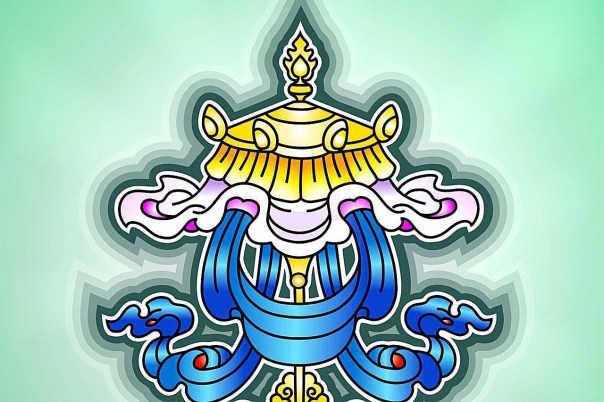
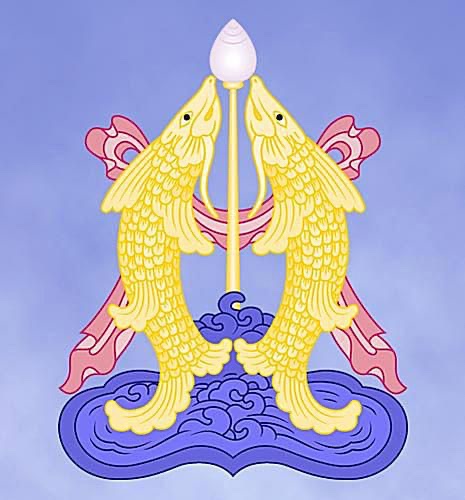


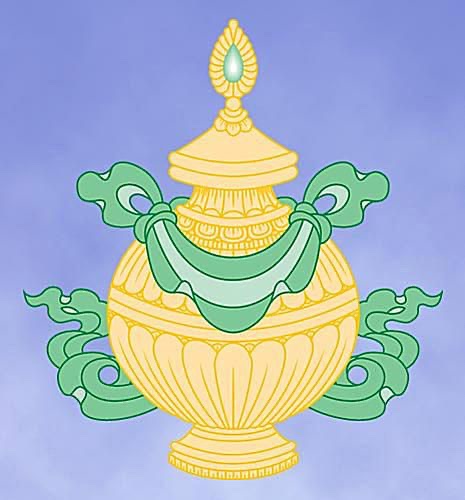
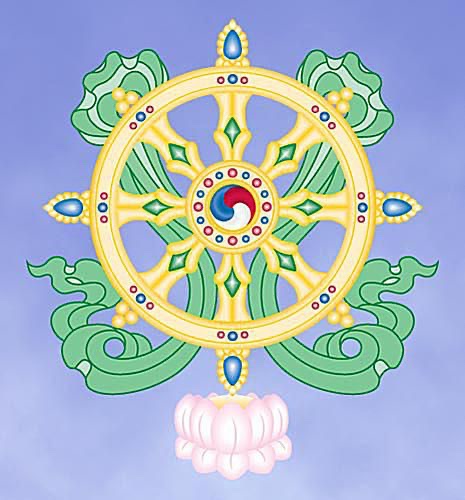
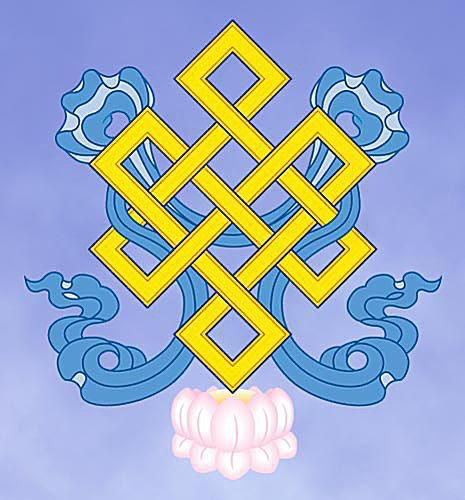
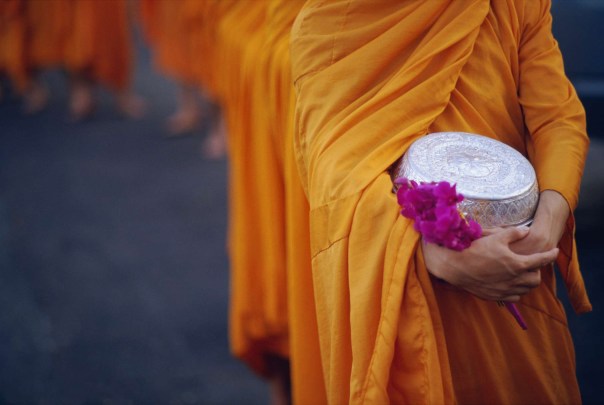
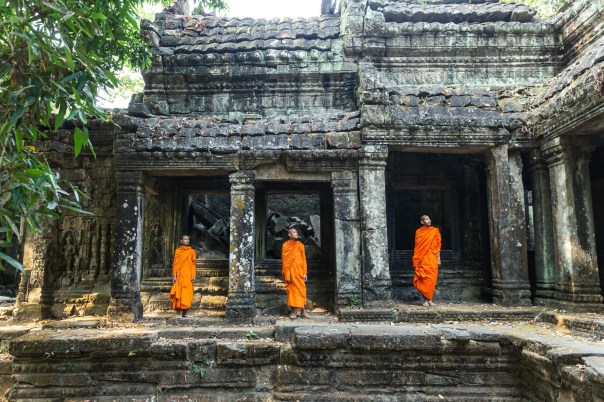
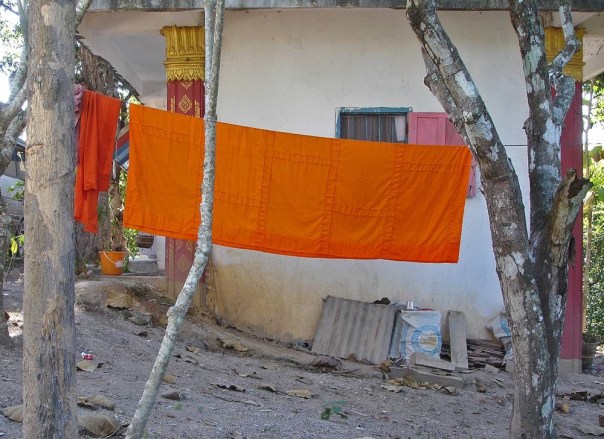
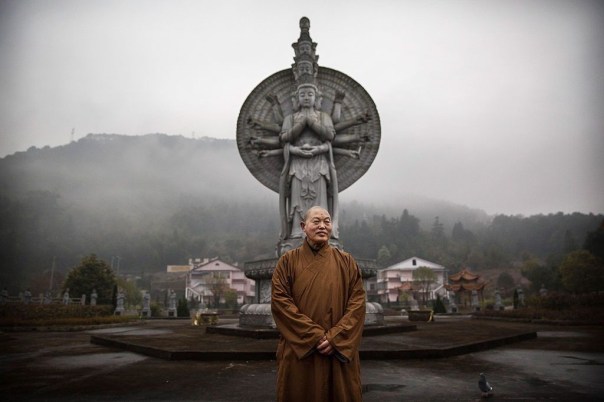
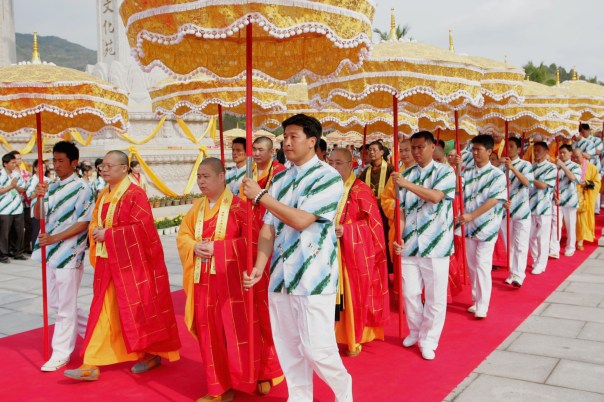
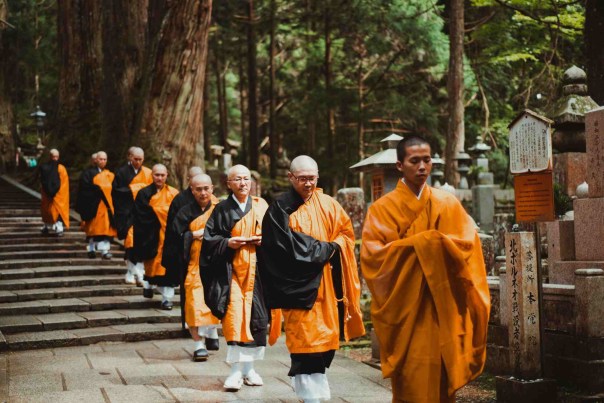
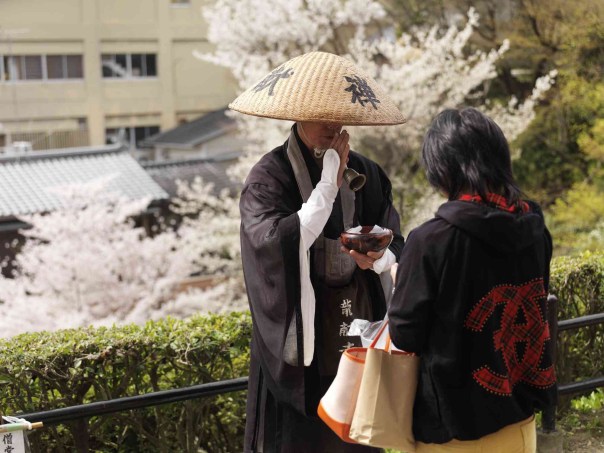
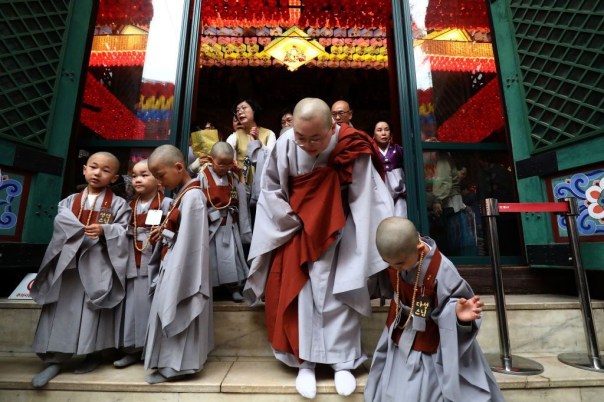
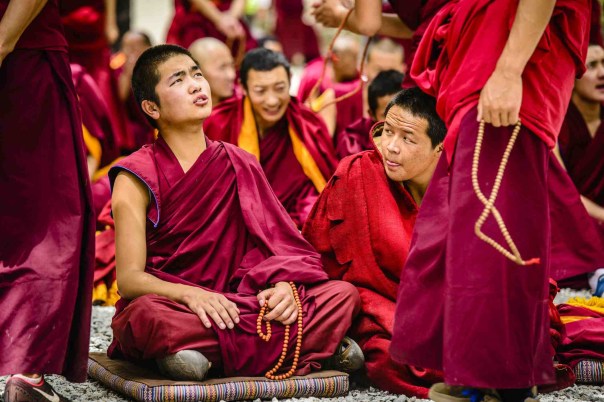
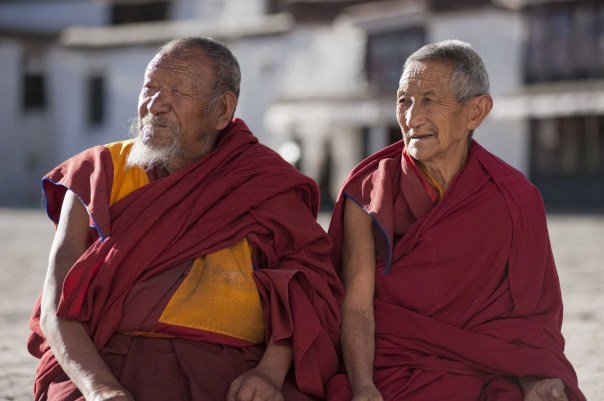


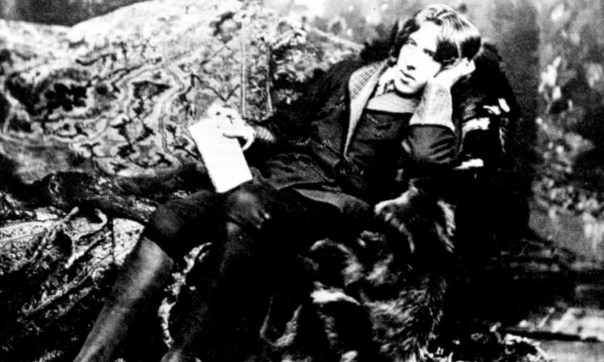
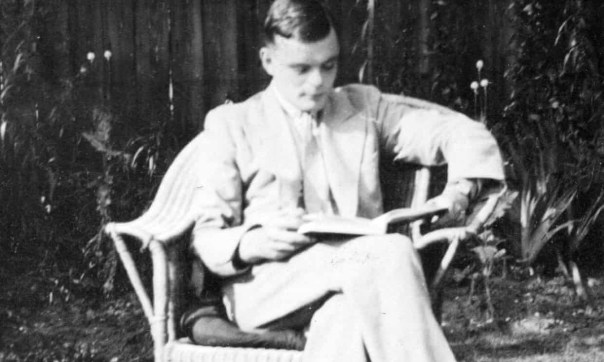
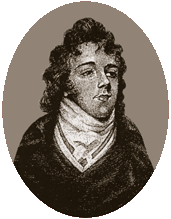

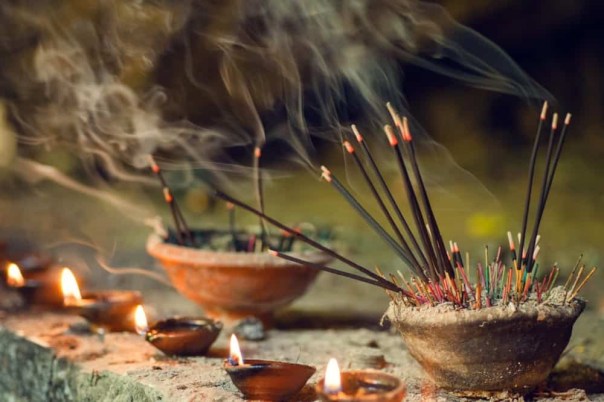
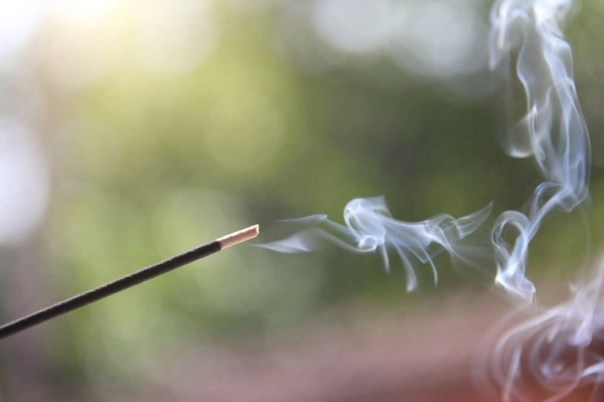
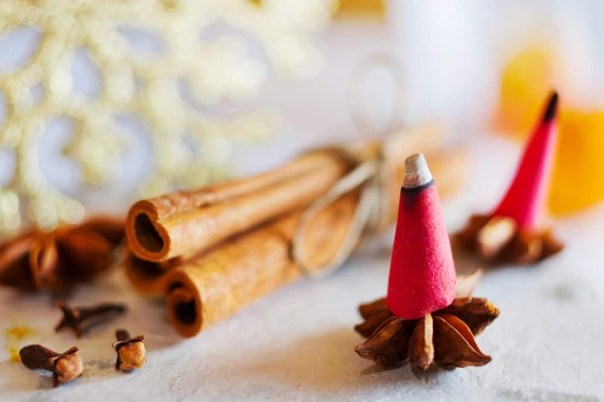

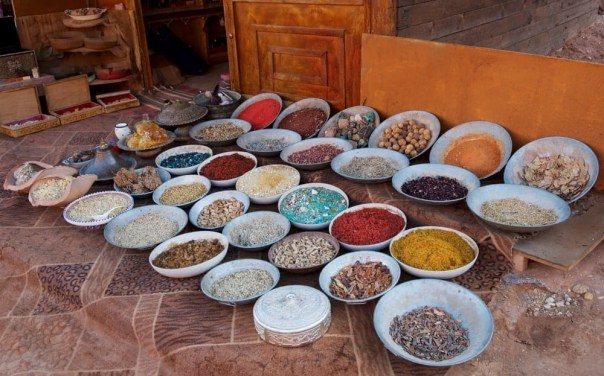
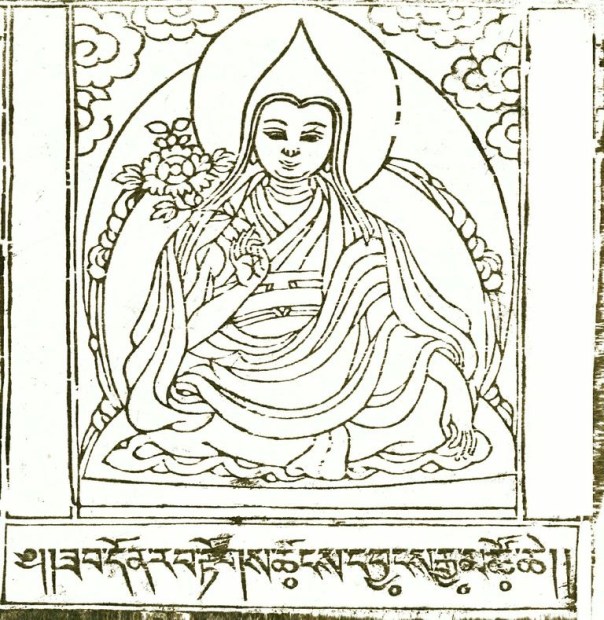

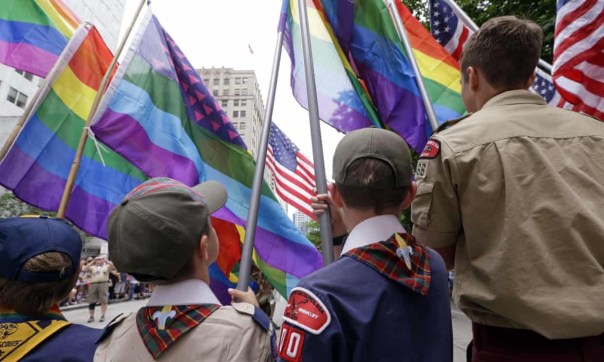
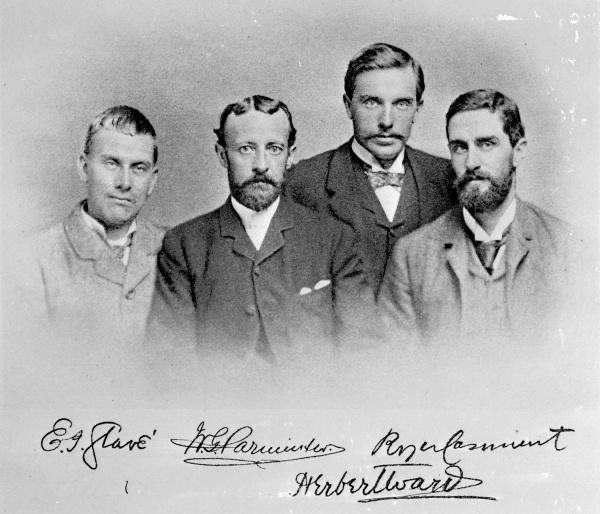
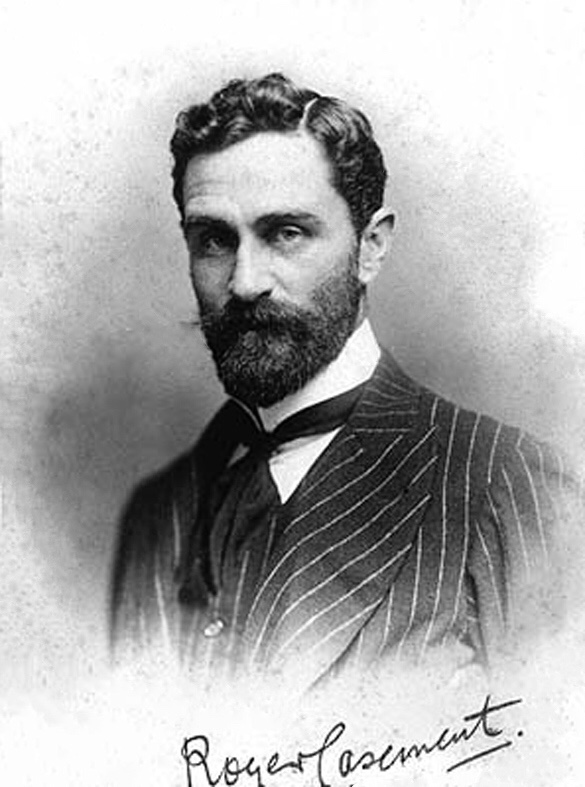

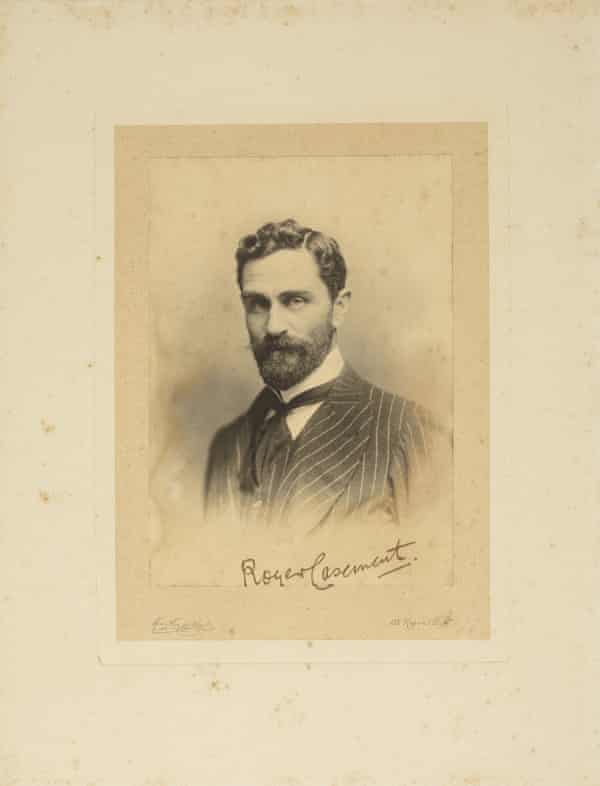

 timalderman