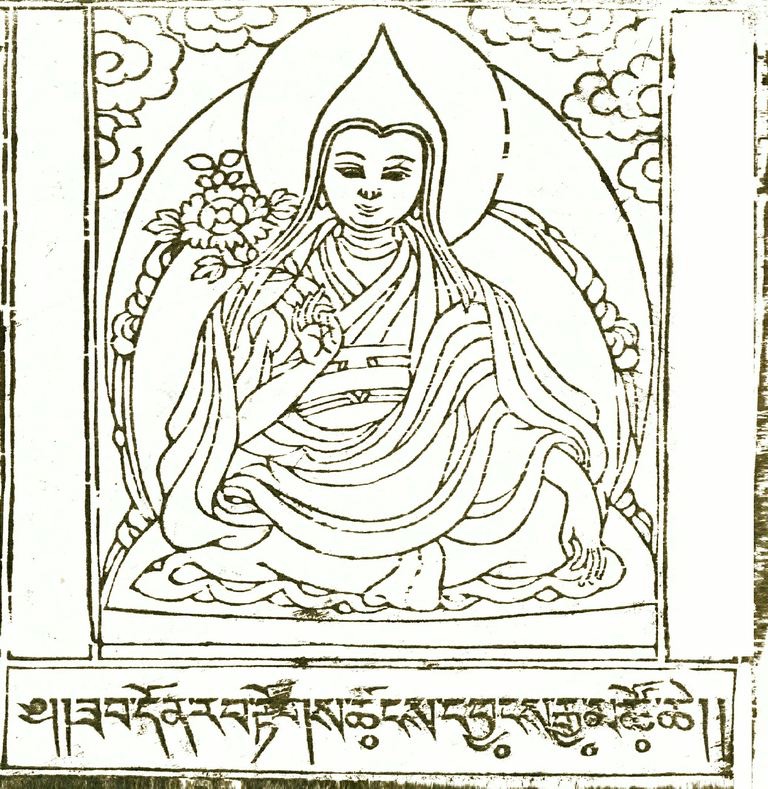
To many outsiders, Tibetan Buddhism appears as a single religious tradition characterised by monks in maroon robes, chanting, prayer flags fluttering in mountain winds, and the familiar image of the Dalai Lama smiling serenely before audiences around the world.
Yet Tibetan Buddhism is not a monolithic faith.
Over more than a thousand years, several distinct traditions developed within Tibet, each preserving unique teachings, meditation systems, lineages, and interpretations of Buddhist doctrine. These traditions often cooperated, occasionally competed, and continuously influenced one another.
Today four principal schools are recognised:
Nyingma
Kagyu
Sakya
Gelug
All four share a common foundation in the teachings of the Buddha, embrace Mahayana ideals of compassion, and practise Vajrayana or Tantric Buddhism. Yet each developed its own identity, spiritual emphasis, and institutional culture.
Rather than being separate religions, they may best be understood as different pathways ascending the same mountain.
The Nyingma School – The Ancient Ones
The oldest tradition of Tibetan Buddhism is the Nyingma school, whose name means “Ancient” or “Old Tradition.”
Its origins lie in the eighth century during the reign of the Tibetan king Trisong Detsen, who invited Indian Buddhist masters to Tibet to establish Buddhism within the kingdom.
Among these teachers none has had greater influence than Padmasambhava, often called Guru Rinpoche.
For many Tibetans, Padmasambhava occupies a place almost equal in devotion to the Buddha himself.
Tradition holds that he subdued hostile local spirits, integrated indigenous beliefs into Buddhist practice, and laid the foundations for Vajrayana Buddhism in Tibet.
The Nyingma school is famous for its doctrine of hidden teachings known as terma.
According to tradition, sacred texts and spiritual instructions were concealed by Padmasambhava to be rediscovered centuries later by specially destined teachers called tertöns.
This allowed the tradition to remain dynamic and adaptable, constantly renewing itself through revelations suited to changing historical circumstances.
Perhaps the most distinctive Nyingma teaching is Dzogchen, often translated as “Great Perfection.”
Dzogchen emphasises the direct recognition of the mind’s innate luminous nature.
Rather than gradual cultivation alone, it teaches that enlightenment is fundamentally present already and needs only to be recognised.
Its language is often poetic, mystical, and experiential.
For this reason, many practitioners regard Dzogchen as among the most profound contemplative systems in world spirituality.
The Kagyu School – The Oral Lineage
The Kagyu school traces its origins to a lineage of Indian and Tibetan masters whose teachings were transmitted directly from teacher to disciple.
Its name is frequently translated as “Oral Lineage.”
The tradition reveres a succession of remarkable teachers.
Among them are:
Tilopa
Naropa
Marpa Lotsawa
Milarepa
Gampopa
Among these figures, Milarepa remains perhaps the most beloved.
His life story reads almost like a spiritual epic.
According to tradition, he began life seeking revenge against relatives who had wronged his family and practised sorcery that resulted in numerous deaths.
Consumed by remorse, he sought spiritual guidance from Marpa.
After enduring years of demanding tests imposed by his teacher, Milarepa achieved enlightenment and became one of Tibet’s greatest saints.
His songs of realisation continue to inspire practitioners centuries later.
The Kagyu school places considerable emphasis upon meditation.
Among its most important systems is Mahamudra, often translated as the “Great Seal.”
Mahamudra focuses upon directly recognising the nature of mind through meditative experience.
Where Gelug scholarship is often associated with philosophical debate and systematic study, Kagyu practice is frequently characterised by intensive retreat and experiential insight.
The school is also known for the institution of reincarnate teachers, or tulkus.
The most famous is the Karmapa lineage, one of the oldest recognised systems of reincarnated spiritual leaders in the world.
The Sakya School – Scholarship and Aristocratic Tradition
The Sakya school arose during the eleventh century and derives its name from the grey earth upon which its original monastery was constructed.
Its principal monastery, Sakya Monastery, became one of the most influential religious institutions in medieval Tibet.
The Sakya tradition combined rigorous philosophical study with sophisticated tantric practice.
It is particularly associated with the Lamdre teachings, meaning “Path and Fruit.”
This system presents enlightenment as both the path one follows and the fruit one ultimately realises.
The Sakya school achieved significant political prominence during the thirteenth century.
Through relations with the Mongol Empire, Sakya leaders governed much of Tibet for a period.
This represented one of the earliest examples of the intertwining of religious authority and political administration that would later characterise Tibetan history.
Unlike some other schools, the Sakya tradition often passed leadership through hereditary family lines.
This created a distinctive institutional culture in which spiritual authority and family lineage became closely linked.
Sakya scholars developed highly sophisticated analyses of Buddhist philosophy and remain respected for their intellectual contributions.
Although numerically smaller than some other schools today, Sakya continues to preserve an extensive literary and ritual heritage.
The Gelug School – The Way of Virtue
The Gelug tradition emerged comparatively late in Tibetan history.
Founded during the fifteenth century by Je Tsongkhapa, it represented a reform movement intended to strengthen monastic discipline and revitalise Buddhist scholarship.
Gelug means “Virtuous Tradition.”
Tsongkhapa advocated a synthesis of:
Ethical conduct
Philosophical study
Meditation
Devotional practice
The Gelug school became famous for its monastic universities.
Three institutions attained particular prominence:
Ganden Monastery
Sera Monastery
Drepung Monastery
Thousands of monks studied there, engaging in years of formal debate and philosophical analysis.
One hallmark of Gelug education is dialectical debate.
Students challenge each other publicly, testing arguments with extraordinary precision.
This approach reflects the school’s belief that wisdom is strengthened through careful examination and reasoned inquiry.
The Gelug tradition eventually became politically dominant in Tibet.
Its most recognised figure is the Dalai Lama.
The current holder of that title, Tenzin Gyatso, has become one of the most influential religious voices of the modern era.
Shared Foundations
Despite their differences, the four schools share far more than divides them.
All recognise:
The Buddha’s teachings as their foundation
The ideal of compassion toward all beings
The pursuit of enlightenment
Karma and rebirth
Meditation as essential spiritual practice
Vajrayana methods including mantra and visualisation
Bodhisattva ethics
The distinctions often lie more in emphasis than in doctrine.
Nyingma frequently highlights spontaneity and direct recognition.
Kagyu emphasises meditation and experiential transmission.
Sakya integrates philosophy with highly developed tantric systems.
Gelug places strong emphasis upon scholasticism, logic, and disciplined monastic training.
Historical Rivalries and Cooperation
The history of Tibetan Buddhism has not always been harmonious.
Periods of rivalry emerged, particularly when religious institutions became associated with political power.
Control over monasteries, patronage from rulers, and alliances with Mongol leaders occasionally generated tensions.
Yet these divisions should not be exaggerated.
Teachers frequently studied outside their own traditions.
Texts circulated widely.
Meditation practices crossed sectarian boundaries.
Many contemporary Tibetan teachers actively encourage students to appreciate all four schools.
This ecumenical spirit was strongly promoted by nineteenth-century movements seeking to preserve endangered teachings from every lineage.
Today it is common for practitioners to receive teachings from masters belonging to several traditions.
Tibetan Buddhism Beyond Tibet
The upheavals of the twentieth century transformed Tibetan Buddhism profoundly.
Following the Chinese occupation of Tibet and the destruction suffered during the Cultural Revolution, thousands of monks, nuns, and teachers fled into exile.
Communities were re-established in India, Nepal, Bhutan, Europe, Australia, and North America.
Ironically, exile contributed to the global spread of Tibetan Buddhism.
Meditation centres now exist in cities across the world.
Teachings once confined to remote Himalayan monasteries are available online, translated into dozens of languages, and studied by people from many different cultural backgrounds.
Western interest in mindfulness, meditation, and contemplative psychology has also encouraged broader engagement with Tibetan traditions.
Four Paths, One Goal
Tibetan Buddhists often compare their traditions to different medicines prescribed for patients with differing needs.
One person may be drawn to the poetic mysticism of Dzogchen.
Another may prefer the disciplined reasoning of Gelug philosophy.
Some resonate with the meditative intensity of Mahamudra.
Others find meaning within the integrated tantric systems of Sakya.
Each path seeks the same destination.
All four traditions aim toward liberation from suffering and the cultivation of wisdom, compassion, and insight.
Perhaps this diversity explains why Tibetan Buddhism continues to fascinate scholars, seekers, and spiritual practitioners alike.
It offers not one voice but a chorus of voices, united in the conviction that human beings possess the capacity to transcend ignorance, transform suffering, and awaken to a deeper understanding of reality.
In that sense, the four schools of Tibetan Buddhism do not represent competing truths, but complementary expressions of a civilisation’s centuries-long exploration of the mind, consciousness, ethics, and the possibility of enlightenment.
Tim Alderman ©️2026