Organisation now bases enrollment in boys-only programs on the gender listed on application to become a scout
Boy Scouts of America says it is allowing transgender children who identify as boys to enroll in its boys-only programs. Photograph: Sipa Press / Rex Features
The Boy Scouts of America now allows transgender children who identify as boys to enroll in its boys-only programs.
The organization said on Monday it had decided to begin basing enrollment in its boys-only programs on the gender a child or parent lists on the application to become a scour, rather than birth certificate.
Rebecca Rausch, a spokeswoman for the organization, said the organization’s leadership had considered a recent case in Secaucus, New Jersey, where an eight-year-old transgender child had been asked to leave his Scout troop after parents and leaders found out he is transgender, but that the change was made because of the national conversation about gender identity.
“For more than 100 years, the Boy Scouts of America, along with schools, youth sports and other youth organizations, have ultimately deferred to the information on an individual’s birth certificate to determine eligibility for our single-gender programs,” the statement said.
“However, that approach is no longer sufficient as communities and state laws are interpreting gender identity differently, and these laws vary widely from state to state.”
Rausch said the enrollment decision went into effect immediately.
“Our organization’s local councils will help find units that can provide for the best interest of the child,” the statement said.
Boy Scouts of America leaders lifted a blanket ban on gay troop leaders and employees in July 2015.
BUT
Transgender boy removed from Boy Scouts troop in New Jersey
Joe Maldonado is at the center of the first known case of a trans child being banned from organization
The Boy Scouts of America recently lifted bans on gay scouts and leaders, which Joe Maldonado’s mother took as a sign that the organization would accept her transgender son. Photograph: Elaine Thompson/AP
Joe Maldonado wanted to join the Boy Scouts because many of his friends were a part of it. The eight-year-old went to school with the boys in the group, hung out with them and played on the basketball team with some of them, said Kristie Maldonado, his mother.
But about a month after joining Pack 87 in Secaucus, New Jersey, Joe was asked to leave because he is transgender, according to Kristie Maldonado. His case is believed to be the first known in which a scout was rejected based on their gender, Justin Wilson, the executive director of Scouts for Equality, told NorthJersey.com.
“Because he wasn’t born a boy, he was no longer able to go back into the Boy Scouts,” Maldonado told the Guardian.
Maldonado said she was unaware of any issues with her son until she received a call from a scouting official, asking whether Joe was born a girl. “At first, well, I didn’t answer him. I just said, you guys didn’t ask for a birth certificate. I said no one had ever seen my child naked,” she said.
The call came as a surprise to Maldonado because Joe was open about his gender identity and had been accepted as a boy at school. The other kids in the troop had never had an issue with him, Maldonado said.
But the official told her that some parents had mentioned Joe’s name had previously been Jodi, and that Joe could no longer be a part of the troop, Maldonado said.
“If they had said right from the beginning, because I know it’s a touchy subject and I know it’s a private organization, I would have said, OK, we can’t join. We can’t do it this year. I would have made an excuse for Joe,” she said, “But you don’t accept a child, then a month later you throw them out.”
The Boy Scouts of America endured years of controversy before ultimately lifting bans on gay scouts and leaders in recent years. Maldonado said she took this as a sign that her son would be allowed to join. “I took it as, OK, if they’re accepted, why not transgender?”
But a spokeswoman, Effie Delimarkos, said in a statement the organization considered transgender children as a separate issue.
“No youth may be removed from any of our programs on the basis of his or her sexual orientation,” she said, but added: “Gender identity isn’t related to sexual orientation.”
The Boy Scouts declined to directly address Joe’s situation or say whether there was a written policy on transgender participants. The statement said Cub Scout programs were for those identified as boys on their birth certificates.
Wilson told NorthJersey.com that the Boy Scouts of America organization was not known to have rejected any scouts due to gender identity prior to Joe’s case. He knew of at least two transgender boys who were Cub Scouts in other states and did not know of any instances in which scouts were asked for birth certificates as a condition of membership.
Eric Chamberlin of the Northern New Jersey Council of Boy Scouts acknowledged having called Maldonado last month, NorthJersey.com reported. He declined further comment and referred questions to the scouts’ national office, saying the issue involved “our membership standards”.
Earlier this year, the Boy Scouts told the Associated Press that it would admit transgender children to its coeducational programs, but not to programs that are for boys only, like the Cub Scouts and Boy Scouts.
By making the family’s story public, Kristie Maldonado is also hoping for change. “The change is I want for them to go not by birth certificate or what they’re born with, but go by their identity. Our definition of identity is how you feel,” Maldonado said. “When they say identity, they’re going by the birth certificate.” She wants transgender kids to be included, “no questions asked”.
The national Girl Scouts organization, which is not affiliated with the Boy Scouts, has accepted transgender members for years.
The Boy Scouts did not respond to questions about whether the group would accept a transgender girl whose birth certificate indicated she was assigned male at birth.
Boy Scouts of America ends ban on gay and lesbian troop leaders
On the heels of gay marriage legalization, the organization’s new policy allows local units to select their leaders to appease both liberal and religious groups
The national governing body of the Boy Scouts of America has ended a blanket ban on gay adult leaders while allowing church-sponsored Scout units to maintain the exclusion because of their faith.
The new policy, aimed at easing a controversy that embroiled the Boy Scouts for years and threatened the organization with lawsuits, takes effect immediately. It was approved on Monday night by the BSA’s 80-member national executive board in a teleconference.
The ban pitted leaders and members of the 105-year-old organization against each other, often fragmenting according to faith. The new policy seeks a compromise between more liberal groups, such as the New York City scouting group, and regions whose groups are run by staunchly conservative faiths, such as the Mormon church.
Under the new policy, local units will be able to select their own leaders according to their own standards, meaning church-run groups can “choose adult leaders whose beliefs are consistent with their own”, according to a statement from organization executives.
“It is not a victory but it certainly is progress,” said Zach Wahls, an Eagle Scout and executive director of Scouts for Equality, told the Guardian earlier on Monday. “I think this is the most progressive resolution we could’ve expected from the Boy Scouts.”
Wahls noted that the organization had banned gay people since 1978, and that its decentralized structure – religious organizations charter about 70% of Boy Scout troops – means some prejudices have deep roots.
“What really has to happen is change in the sponsoring organizations,” he said, adding that his concern was not with specific religious groups but for full inclusion.
“I’m not worried about Mormon units not allowing gay leaders as there aren’t a lot of openly gay Mormons anywhere,” he said. “But discrimination sends a harmful message to gay youths and straight youths, and it has no place in scouting.”
Scouting law says that a boy scout is cheerful, so we’ll be OK
Zach Wahls, Scouts for Equality
On 13 July, the organization’s executive committee, headed by president and former defense secretary Robert Gates, unanimously approved the resolution, saying there had been a “sea change in the law with respect to gay rights”.
“The BSA national policy that prohibits gay adults from serving as leaders is no longer legally defensible,” the organization said in a statement earlier this month. “However, the BSA’s commitment to duty to God and the rights of religious chartered organizations to select their leaders is unwavering.”
The vote took place only a month and a day after the US supreme court legalized same-sex marriage throughout the US, striking down state bans and punctuating the swift progress of gay rights with its 5-4 vote.
The board’s vote also follows only two years after a long and bitter debate at the organization’s 2013 meeting in Texas, where 60% of some 1,400 scout leaders voted to end the ban. The organization said at the time that it had no intentions of revisiting the issue.
But earlier this year the New York City chapter hired a gay camp counsellor, and said it would force the issue in court if necessary to keep the counsellor employed.
The Boy Scouts has about 2.5 million members between the ages of seven and 21, as well as 960,000 volunteers in local units, according to the organization. Membership has steadily declined about 4-6% each year for several years, contributing to the internal crisis over what to do.
John Stemberger, chairman of the breakaway Christian youth outdoor program Trail Life USA, told Reuters on Friday that lifting the ban was an affront to Christian morals and would make it “even more challenging for a church to integrate a [Boy Scouts] unit as part of a church’s ministry offerings”.
But major Catholic and Mormon supporters appeared to approve of the new policy. On its site, the National Catholic Committee on Scouting said that the Boy Scouts did not endorse homosexuality. The committee then wrote: “Any sexual conduct, whether homosexual or heterosexual, by youth of Scouting age is contrary to the virtues of Scouting.”
The Mormon church meanwhile reasserted itself earlier this month, saying in a statement that it has “always had the right to select Scout leaders who adhere to moral and religious principles that are consistent with our doctrines and beliefs”.
This is what Britain’s Gay Liberation Front movement looked like in the 1970s
Protests, parades, pamphlets, and policy change
Couple at a Gay Liberation Front gathering. (Hall-Carpenter Archives via London School of Economics Library)
Last month marked the 50th anniversary of the 1967 Sexual Offences Act, a landmark piece of legislation in the United Kingdom that ceased the prosecution of men for homosexual acts. It wasn’t a perfect law by any means — it did not fully decriminalize sexual acts with persons of the same sex — but it was the first legislative step toward equality for LGBTQ people under British law.
Prior to the 1970s, few gay people in Britain were publicly out and even fewer publicly campaigned. Dedicated activists knew that taking to the streets, being visible and not cowed was a key strategy in the pursuit of equal rights. They called for people up and down the country to come out.
Festival of Light, 1970s. (Hall-Carpenter Archives/LSE Library)
These days, gay pride marches are among the largest and most joyful gatherings. So, it might be difficult to imagine the extent to which a public showing of support for LGBTQ rights was radical.
Archive photographs, journals, and organizing literature provide testament to early activism in Britain. Recently, such papers and prints in the Hall-Carpenter Archives at the London School of Economics (LSE) were brought together for Glad to be Gay: The Struggle for Legal Equality, an exhibition of ephemera and social movement materials.
We witness the gatherings, think-ins, political actions, and marches. We see the self-made pamphlets, zines, and newsletters that forged solidarity of thought. These objects galvanized citizens who refused to remain silent; they propelled a movement.
Members of the Gay Liberation Front demonstrate in London in 1972. (Hall-Carpenter Archives/LSE Library)Disabled Gays Guide, 1985.Gay humanist group ephemeraGay Liberation Front ephemera, 1973. (Hall-Carpenter Archives/LSE Library)GLF party flyer. (Hall-Carpenter Archives/LSE Library)Gay Liberation Front street theatre. (Hall-Carpenter Archives/LSE Library)
LSE has an important historical role in the push for LGBTQ rights. The first ever Gay Liberation Front (GLF) meeting in the UK was convened in a basement classroom there. The date was October 13, 1970.
Inspired by the GLF movement in the United States, the UK GLF drew up demands and focused on group activities to root those demands — street theatre, “gay days,” festivals, and sit-ins. At first, it was very informal, but soon the GLF realized the power of collective voice. Its activities led to London’s first Gay Pride March in 1972.
The curator of Glad To Be Gay, Gillian Murphy, explains that until the 1950s homosexuality was a taboo subject. Male homosexuality was illegal and lesbianism wasn’t even recognized as an emotional, sexual, or social reality.
In 1957, UK Parliament published the Wolfenden Report, which recommended that the law should no longer judge nor punish sex conducted in private between consenting same-sex adults. The report didn’t come so much from a position of moral enlightenment, but more a realistic appraisal of privacy, its legal protections, and the impossibility of enforcement. Throughout the 1960s, the Homosexual Law Reform Society and campaigners such as Tony Dyson and Antony Grey pressed politicians to decriminalize homosexuality.
Passage of the 1967 Sexual Offences Act was a huge leap forward, but it also had negative consequences. It formalized the legal age of consent at 21 (it was lowered to 18 in 1994, and to 16 until 2001) and as a result, vast numbers of young gay adults, in their love, remained outside the law. Under the Sexual Offences Act, homosexual acts in the military also remained illegal. Furthermore, the law only applied to England and Wales and homosexual sex remained a crime for millions in Scotland and Northern Ireland until the early 80s.
Lifelong gay rights activist Peter Tatchell said in his book Europe in The Pink (1992) that the 1967 Sexual Offences Act actually facilitated an increase in prosecutions against homosexual men. Tatchell told The Guardian recently that between 1967 and the passage of the 2003 Sexual Offences Act, at least 15,000 men were convicted of same-sex acts, which would never have been prosecuted had the partner been of the other sex.
GLF Street Theatre, Parliament Hill Fields, May Day 1971. (Hall-Carpenter Archives/LSE Library)
An early Gay Pride march, London, early 1970s. (Hall-Carpenter Archives/LSE Library)
These photographs show the actions behind the LGBTQ community’s call for gay persons to come out. In the second half of the 20th century, gay, lesbian, and queer identified people found strength in numbers. They raised consciousness among the public at large and refused to feel shame any longer. The Gay Liberation Front brought a new energy to gay activism. Newly established grassroots organizations such as the Joint Council for Gay Teenagers, Gay Activists Alliance, and FRIEND (Fellowship for the Relief of the Isolated and Emotionally in Need and Distress) met specific needs of diverse groups within the LGBTQ community.
Looking at these images, reading this history, and tracing the legislative changes (especially the 2003 repeal of the remaining discriminatory laws from 1967), you might be forgiven for thinking the fight has been won. Far from it. The activism of the 1960s and 1970s began a fight which continues today. Transphobia, limited access to medical and mental healthcare, and general homophobic attitudes persist in British society. The fight for equality adopted back then isn’t just a chapter in history; it is also part of a continuum of speaking out, winning freedoms, and promoting love that is ongoing.
Gay Pride march, London, early 1970s. (Hall-Carpenter Archives/LSE Library)Gay Liberation Front diary, 1973. (Hall-Carpenter Archives/LSE Library)Gay Liberation Front diary, 1973. (Hall-Carpenter Archives/LSE Library)
Gay march demonstration, early 1970s. (Hall-Carpenter Archives/LSE Library)GLF Gay Day, Holland Park, 1971. (Hall-Carpenter Archives/LSE Library)GLF Gay Day, Holland Park, 1971. (Hall-Carpenter Archives/LSE Library)
GLF Gay Day, Holland Park, 1971. (Hall-Carpenter Archives/LSE Library)
Gay Liberation Front demands, November 1970. (Hall-Carpenter Archives/LSE Library)
Gay Liberation Front demands, February 1971. (Hall-Carpenter Archives/LSE Library)
Production of Come Together magazine in Aubrey Walter’s flat, circa 1972. (Hall-Carpenter Archives/LSE Library)
Lesbian and Gay Christian Movement badge.Lesbian Feminist weekend guide to London. (Hall-Carpenter Archives/LSE Library)Outwrite Women’s Newspaper, May 1988. (Hall-Carpenter Archives/LSE Library)UK Lesbian and Gay Switchboard hotline. (Hall-Carpenter Archives/LSE Library)“We Are Nature’s Children Too.” Marchers and police at a Gay Pride march, London, 1974. (Hall-Carpenter Archives/LSE Library)Festival of Light, 1970s. |The first Gay Liberation Front dance leaflet, 1970. (Hall-Carpenter Archives/LSE Library)The first National Convention, or “Think-In,” at Leeds University Union connected GLF groups across the country. (Hall-Carpenter Archives/LSE Library)Older Lesbian Newsletter, 1984.Outrage magazine, 1983.Sappho journal. (Hall-Carpenter Archives/LSE Library)
In the UK, the GLF had its first meeting in the basement of the London School of Economics on 13 October 1970. Bob Mellors and Aubrey Walter had seen the effect of the GLF in the United States and created a parallel movement based on revolutionary politics.
1971 GLF cover version of Ink magazine, London
By 1971, the UK GLF was recognized as a political movement in the national press, holding weekly meetings of 200 to 300 people. The GLF Manifesto was published, and a series of high-profile direct actions, were carried out, such as the disruption of the launch of the Church-based morality campaign, Festival of Light.
The disruption of the opening of the 1971 Festival of Light was the best organised GLF action. The first meeting of the Festival of Light was organised by Mary Whitehouse at Methodist Central Hall. Groups of GLF members in drag invaded and spontaneously kissed each other; others released mice, sounded horns, and unveiled banners, and a contingent dressed as workmen obtained access to the basement and shut off the lights.
Easter 1972 saw the Gay Lib annual conference held in the Guild of Undergraduates Union (students union) building at the University of Birmingham.
By 1974, internal disagreements had led to the movement’s splintering. Organizations that spun off from the movement included the London Lesbian and Gay Switchboard, Gay News, and Icebreakers. The GLF Information Service continued for a few further years providing gay related resources. GLF branches had been set up in some provincial British towns (e.g., Bradford, Bristol, Leeds, and Leicester) and some survived for a few years longer. The Leicester Gay Liberation Front founded by Jeff Martin was noted for its involvement in the setting up of the local “Gayline”, which is still active today and has received funding from the National Lottery. They also carried out a high-profile campaign against the local paper, the Leicester Mercury, which refused to advertise Gayline’s services at the time.
The papers of the GLF are among the Hall-Carpenter Archives at the London School of Economics.
Several members of the GLF, including Peter Tatchell, continued campaigning beyond the 1970s under the organisation of OutRage!, which was founded in 1990 and dissolved in 2011, using similar tactics to the GLF (such as “zaps” and performance protest to attract a significant level of media interest and controversy.[citation needed] It was at this point that a divide emerged within the gay activist movement, mainly due to a difference in ideologies, after which a number of groups including Organization for Lesbian and Gay Alliance (OLGA), the Lesbian Avengers, Sisters of Perpetual Indulgence, Dykes And Faggots Together (DAFT), Queer Nation, Stonewall (which focused on lobbying tactics) and OutRage! co-existed.
These groups were very influential following the HIV/AIDS pandemic of the 1980s and 1990s and the violence against lesbians and gay men that followed.
Throughout recorded history, oppressed groups have organised to claim their rights and obtain their needs. Homosexuals, who have been oppressed by physical violence and by ideological and psychological attacks at every level of social interaction, are at last becoming angry.
To you, our gay sisters and brothers, we say that you are oppressed; we intend to show you examples of the hatred and fear with which straight society relegates us to the position and treatment of sub-humans, and to explain their basis. We will show you how we can use our righteous anger to uproot the present oppressive system with its decaying and constricting ideology, and how we, together with other oppressed groups, can start to form a new order, and a liberated lifestyle, from the alternatives which we offer.
HOW We Are Oppressed
FAMILY
The oppression of gay people starts in the most basic unit of society, the family. consisting of the man in charge, a slave as his wife, and their children on whom they force themselves as the ideal models. The very form of the family works against homosexuality.
At some point nearly all gay people have found it difficult to cope with having the restricting images of man or woman pushed on them by their parents. It may have been from very early on, when the pressures to play with the ‘right’ toys, and thus prove boyishness or girlishness, drove against the child’s inclinations. But for all of us this is certainly a problem by the time of adolescence, when we are expected to prove ourselves socially to our parents as members of the right sex (to bring home a boy/girl friend) and to start being a ‘real’ (oppressive) young man or a ‘real’ (oppressed) young woman. The tensions can be very destructive.
The fact that gay people notice they are different from other men and women in the family situation, causes them to feel ashamed, guilty and failures. How many of us have really dared by honest with our parents? How many of us have been thrown out of home? How many of us have been pressured into marriage, sent to psychiatrists, frightened into sexual inertia, ostracised, banned, emotionally destroyed-all by our parents?
SCHOOL
Family experiences may differ widely, but in their education all children confront a common situation. Schools reflect the values of society in their formal academic curriculum, and reinforce them in their morality and discipline. Boys learn competitiv ego-building sports, and have more opportunity in science, whereas girls are given emphasis on domestic subjects, needlework etc. Again, we gays were all forced into a rigid sex role which we did not want or need. It is quite common to discipline children for behaving in any way like the opposite sex; degrading titles like ‘sissy’ and ‘tomboy’ are widely used.
In the content of education, homosexuality is generally ignored, even where we know it exists, as in history and literature. Even sex education, which has been considered a new liberal dynamic of secondary schooling, proves to be little more than an extension of Christian morality. Homosexuality is again either ignored, or attacked with moralistic warnings and condemnations. The adolescent recognising his or her homosexuality might feel totally alone in the world, or a pathologically sick wreck.
CHURCH
Formal religious education is still part of everyone’s schooling, and our whole legal structure is supposedly based on Christianity whose archaic and irrational teachings support the family and marriage as the only permitted condition for sex. Gay people have been attacked as abominable and sinful since the beginning of both Judaism and Christianity, and even if today the Church is playing down these strictures on homosexuality, its new ideology is that gay people are pathetic objects for sympathy.
THE MEDIA
The press, radio, television and advertising are used as reinforcements against us, and make possible the control of people’s thoughts on an unprecedented scale. Entering everyone’s home, affecting everyone’s life, the media controllers, all representatives of the rich, male-controlled world, can exaggerate or suppress whatever information suits them
Under different circumstances, the media might not be the weapon of a small minority. The present controllers are therefore dedicated defenders of things as they stand. Accordingly, the images of people which they transmit in their pictures and words do not subvert, but support society’s image of ‘normal’ man and woman. It follows that we are characterised as scandalous, obscene perverts; as rampant, wild sex-monsters; as pathetic, doomed and compulsive degenerates; while the truth is blanketed under a conspiracy of silence.
WORDS
Anti-homosexual morality and ideology, at every level of society, manifest themselves in a special vocabulary for denigrating gay people. There is abuse like ‘pansy’, ‘fairy’, ‘lesbo’ to hurl at men and women who can’t or won’t fit stereotyped preconceptions. There are words like ‘sick’, ‘bent’ and ‘neurotic’ for destroying the credence of gay people. But there are no positive words. The ideological intent of our language makes it very clear that the generation of words and meanings is, at the moment, in the hands of the enemy. And that so many gay people pretend to be straight, and call each other ‘butch dykes’ or ‘screaming queens only makes that fact the more real.
The verbal attack on men and women who do not behave as they are supposed to, reflects the ideology of masculine superiority. A man who behaves like a woman is seen as losing something, and a woman who behaves like a man is put down for threatening men’s environment of their privileges.
EMPLOYMENT
If our upbringing so often produces guilt and shame, the experience of an adult gay person is oppressive in every aspect. In their work situation, gay people face the ordeal of spending up to fifty years of their lives confronted with the anti-homosexual hostility of their fellow employees.
A direct consequence of the fact that virtually all employers are highly privileged heterosexual men, is that there are some fields of work which are closed to gay people, and others which they feel some compulsion to enter. A result of this control for gay women is that they are perceived as a threat in the man’s world. They have none of the sexual ties of dependence to men which make most women accept men as their ‘superiors’. They are less likely to have the bind of children, and so there is nothing to stop them showing that they are as capable as any man, and thus deflating the man’s ego, and exposing the myth that only men can cope with important jobs.
We are excluded from many jobs in high places where being married is the respectable guarantee, but being homosexual apparently makes us unstable, unreliable security risks. Neither, for example, are we allowed the job of teaching children, because we are all reckoned to be compulsive, child molesting maniacs.
There are thousands of examples of people having lost their jobs due to it becoming known that they were gay, though employers usually contrive all manner of spurious reasons.
There occurs, on the other hand, in certain jobs, such a concentration of gay people as to make an occupational ghetto. This happens, for women, in the forces, ambulance driving, and other uniformed occupations: and for men, in the fashion, entertainment and theatrical professions, all cases where the roles of ‘man’ and ‘woman’ can perhaps be undermined or overlooked [note: last phrase unclear in copy used for HTML]
THE LAW
If you live in Scotland or Ireland; if you are under 21, or over 21 but having sex with someone under 21; if you are in the armed forces or the merchant navy; if you have sex with more than one other person at the same time-and you are a gay male, you are breaking the law
The 1967 Sexual Offences Act gave a limited license to adult gay men. Common law however can restrict us from talking about and publicising both male and female homosexuality by classing it as ‘immoral’. Beyond this there are a whole series of specific minor offences. Although ‘the act’ is not illegal, asking someone to go to bed with you can be classed as ‘importuning for an immoral act’, and kissing in public is classed as ‘public indecency’
Even if you do not get into trouble, you will find yourself hampered by the application of the law in your efforts to set up home together, to raise children, and to express your love as freely as straight people may do.
The practice of the police in ‘enforcing’ the law makes sure that cottagers and cruisers will be zealously hunted, while queer-bashers may be apprehended, half-heartedly after the event.
PHYSICAL VIOLENCE
On 25 September 1969 a man walked onto Wimbledon Common . We know the common to be a popular cruising ground, and believe the man to have been one of our gay brothers. Whether or not this is the case, the man was set upon by a group of youths from a nearby housing estate, and literally battered to death with clubs and boots. Afterwards, a boy from the same estate said: ‘When you’re hitting a queer, you don’t think you’re doing wrong. You think you’re doing good. If you want money off a queer, you can get it off him-there’s nothing to be scared of from the law, cause you know they won’t go to the law’. (Sunday Times, 7/21/1971).
Since that time, another man has been similarly murdered on Hampstead Heath. But murder is only the most extreme form of violence to which we are exposed, not having the effective rights of protection. Most frequently we are ‘rolled’ for our money, or just beaten up: and this happens to butch looking women in some districts.
PSYCHIATRY
One way of oppressing people and preventing them getting too angry about it, is to convince them, and everyone else, that they are sick. There has hence arisen a body of psychiatric ‘theory’ and ‘therapy’ to deal with the ‘problems’ and ‘treatment’ of homosexuality .
Bearing in mind what we have so far described, it is quite understandable that gay people get depressed and paranoid; but it is also, of course, part of the scheme that gay people should retreat to psychiatrists in times of troubles.
Operating as they do on the basis of social convention and prejudice, NOT scientific truth, mainstream psychiatrists accept society’s prevailing view that the male and female sex roles are ‘good’ and ‘normal’, and try to adjust people to them. If that fails, patients are told to ‘accept themselves’ as ‘deviant’. For the psychiatrist to state that homosexuality was perfectly valid and satisfying, and that the hang-up was society’s inability to accept that fact, would result in the loss of a large proportion of his patients.
Psychiatric ‘treatment’ can take the form either of mindbending ‘psychotherapy’, or of aversion therapy which operates on the crude conditioning theory that if you hit a person hard enough, he’ll do what you want. Another form of ‘therapy’ is chemically induced castration, and there is a further form of ‘treatment’ which consists in erasing part of the brain, with the intent (usually successful) of making the subject an asexual vegetable.
This ‘therapy’ is not the source of the psychiatrist’s power, however. Their social power stems from the facile and dangerous arguments by which they contrive to justify the prejudice that homosexuality is bad or unfortunate, and to mount this fundamental attack upon our right to do as we think best. In this respect, there is little difference between the psychiatrist who says: ‘From statistics we can show that homosexuality is connected with madness’, and the one who says: ‘Homosexuality is unfortunate because it is socially rejected’. The former is a dangerous idiot-he cannot see that it is society which drives gay people mad. The second is a pig because he does see this, but sides consciously with the oppressors.
That psychiatrists command such credence and such income is surprising if we remember the hysterical disagreements of theory and practice in their field, and the fact that in formulating their opinions, they rarely consult gay people. In fact, so far as is possible, they avoid talking to them at all, because they know that such confrontation would wreck their theories.
SELF-OPPRESSION
The ultimate success of all forms of oppression is our self-oppression. Self-oppression is achieved when the gay person has adopted and internalised straight people’s definition of what is good and bad. Self-oppression is saying: ‘When you come down to it, we are abnormal’. Or doing what you most need and want to do, but with a sense of shame and loathing, or in a state of disassociation, pretending it isn’t happening; cruising or cottaging not because you enjoy it, but because you’re afraid of anything less anonymous. Self-oppression is saying: ‘I accept what I am’, and meaning: ‘I accept that what I am is second-best and rather pathetic’. Self-oppression is any other kind of apology: ‘We’ve been living together for ten years and all our married friends know about us and think we’re just the same as them’. Why? You’re not.
Self-oppression is the dolly lesbian who says: ‘I can’t stand those butch types who look like truck drivers’; the virile gay man who shakes his head at the thought of ‘those pathetic queens’. This is self-oppression because it’s just another way of saying: ‘I’m a nice normal gay. just like an attractive heterosexual’.
The ultimate in self-oppression is to avoid confronting straight society, and thereby provoking further hostility: Self-oppression is saying, and believing: ‘I am not oppressed’.
WHY we’re oppressed
Gay people are oppressed. As we’ve just shown, we face the prejudice, hostility and violence of straight society, and the opportunities open to us in work and leisure are restricted, compared with those of straight people. Shouldn’t we demand reforms that will give us tolerance and equality? certainly we should-in a liberal-democratic society, legal equality and protection from attack are the very least we should ask for. They are our civil rights.
But gay liberation does not just mean reforms. It means a revolutionary change in our whole society. Is this really necessary? Isn’t it hard enough for us to win reforms within the present society, and how will we engage the support of straight people if we get ourselves branded as revolutionaries?
Reforms may makes things better for a while; changes in the law can make straight people a little less hostile, a little more tolerant-but reform cannot change the deep-down attitude of straight people that homosexuality is at best inferior to their own way of life, at worst a sickening perversion. It will take more than reforms to change this attitude, because it is rooted in our society’s most basic institution-the Patriarchal Family.
We’ve all been brought up to believe that the family is the source of our happiness and comfort. But look at the family more closely. Within the small family unit, in which the dominant man and submissive woman bring up their children in their own image, all our attitudes towards sexuality are learned at a very early age. Almost before we can talk, certainly before we can think for ourselves, we are taught that there are certain attributes that are ‘feminine’ and other that are ‘masculine’, and that they are God-given and unchangeable. Beliefs learned so young are very hard to change; but in fact these are false beliefs. What we are taught about the differences between man and woman is propaganda, not truth.
The truth is that there are no proven systematic differences between male and female, apart from the obvious biological ones. Male and female genitals and reproductive systems are different, and so are certain other physical characteristics, but all differences of temperament, aptitudes and so on, are the result of upbringing and social pressures. They are not inborn.
Human beings could be much more various than our constricted patterns of ‘masculine’ and ‘feminine’ permit-we should be free to develop with greater individuality. But as things are at present, there are only these two stereotyped roles into which everyone is supposed to fit, and most people-including gay people too-are apt to be alarmed when they hear these stereotypes or gender roles attacked, fearing that children ‘won’t know how to grow up if they have no one to identify with’, or that ‘everyone will be the same’, i.e. that there will be either utter chaos or total conformity. There would in fact be a greater variety of models and more freedom for experimentation, but there is no reason to suppose this will lead to chaos.
By our very existence as gay people, we challenge these roles. it can easily be seen that homosexuals don’t fit into the stereotypes of masculine and feminine, and this is one of the main reasons why we become the object of suspicion, since everyone is taught that these and only these two roles are appropriate.
Our entire society is build around the patriarchal family and its enshrinement of these masculine and feminine roles. Religion, popular morality art, literature and sport all reinforce these stereotypes. In other words, this society is a sexist society, in which one’s biological sex determines almost all of what one does and how one does it; a situation in which men are privileged, and women are mere adjuncts of men and objects for their use, both sexually and otherwise.
Since all children are taught so young that boys should be aggressive and adventurous, girls passive and pliant, most children do tend to behave in these ways as they get older, and to believe that other people should do so too.
So sexism does not just oppose gay people, but all women as well. It is assumed that because women bear children they should and must rear them, and be simultaneously excluded from all other spheres of achievement.
However, as the indoctrination of the small child with these attitudes is not always entirely successful (if it were, there would be no gay people for a start), the ideas taken in by the young child almost unconsciously must be reinforced in the older child and teenager by a consciously expressed male chauvinism: the ideological expression of masculine superiority. Male chauvinism is not hatred of women, but male chauvinists accept women only on the basis that they are in fact lesser beings. It is an expression of male power and male privilege, and while it’s quite possible for a gay man to be a male chauvinist, his very existence does also challenge male chauvinism in so far as he rejects his male supremacist role over women, and perhaps particularly if he rejects ‘masculine’ qualities.
It is because of the patriarchal family that reforms are not enough. Freedom for gay people will never be permanently won until everyone is freed from sexist role-playing and the straightjacket of sexist rules about our sexuality. And we will not be freed from these so long as each succeeding generation is brought up in the same old sexist way in the Patriarchal family.
But why can’t we just change the way in which children are brought up without attempting to transform the whole fabric of society?
Because sexism is not just an accident-it is an essential part of our present society, and cannot be changed without the whole society changing with it. In the first place, our society is dominated at every level by men, who have an interest in preserving the status quo; secondly, the present system of work and production depends on the existence of the patriarchal family. Conservative sociologists have pointed out that the small family unit of two parents and their children is essential in our contemporary advanced industrial family where work is minutely subdivided and highly regulated-in other words, for the majority very boring. A man would not work at the assembly line if he had no wife and family to support; he would not give himself fully to his work without the supportive and reassuring little group ready to follow him about and gear itself to his needs, to put up with his ill temper when he is frustrated or put down by the boss at work.
Were it not also for the captive wife, educated by advertising and everything she reads into believing that she needs ever more new goodies for the home, for her own beautification and for the childrens’ well-being, our economic system could not function properly, depending as it does on people buying far more manufactured goods than they need. The housewife, obsessed with the ownership of as many material goods as possible, is the agent of this high level of spending. None of these goods will ever satisfy her, since there is always something better to be had, and the surplus of these pseudo ‘necessities’ goes hand in hand with the absence of genuinely necessary goods and services, such as adequate housing and schools.
The ethic and ideology of our culture has been conveniently summed up by the enemy. Here is a quotation, intended quite seriously, from an American psychiatric primer. The author, Dr. Fred Brown, states:
Our values in Western civilisation are founded upon the sanctity of the family, the right to property, and the worthwhileness of ‘getting ahead ‘ The family can be established on/y through heterosexual intercourse, and this gives the woman a high value. (Note the way in which woman is appraised as a form of property.} Property acquisition and worldly success are viewed as distinctly masculine aims. The individual who is outwardly masculine but appears to fall into the feminine class by reason . . . of his preference for other men denies these values of our civilisation. In denying them he belittles those goals which carry weigh t and much emotional co/ouring in our society and thereby earns the hostility of those to whom these values are of great importance.
We agree with his description of our society and its values-but we reach a different conclusion. We gay men and women do deny these values of our civilisation. We believe that the society Dr. Brown describes is an evil society. We believe that work in an advanced industrial society could be organised on more humane lines, with each job more varied and more pleasurable, and that the way society is at present organised operates in the interests of a small ruling group of straight men who claim most of the status and money, and not in the interests of the people as a whole. We also believe that our economic resources could be used in a much more valuable and constructive way than they are at the moment-but that will not happen until the present pattern of male dominance in our society changes too.
That is why any reforms we might painfully exact from our rulers would only be fragile and vulnerable; that is why we, along with the women’s movement, must fight for something more than reform. We must aim at the abolition of the family, so that the sexist, male supremacist system can no longer be nurtured there.
WE CAN DO IT
Yet although this struggle will be hard, and our victories not easily won, we are not in fact being idealistic to aim at abolishing the family and the cultural distinctions between men and women. True, these have been with us throughout history, yet humanity is at last in a position where we can progress beyond this.
Only reactionaries and conservatives believe in the idea of ‘natural man’. Just what is so different in human beings from the rest of the animal kingdom is their ‘unnaturalness’. Civilisation is in fact our evolution away from the limitations of the natural environment and towards its ever more complex control. It is not ‘natural’ to travel in planes. It is not ‘natural’ to take medicines and perform operations. Clothing and shoes do not grow on trees. Animals do not cook their food. This evolution is made possible by the development of technology-i.e. all those tools and skills which help us to control the natural environment.
We have now reached a stage at which the human body itself, and even the reproduction of the species, is being ‘unnaturally’ interfered with (i.e. improved) by technology. Reproduction used to be left completely to the uncontrolled biological processes inherited from our animal ancestors, but modern science, by drastically lowering infant mortality, has made it unnecessary for women to have more than two or three babies, while contraceptives have made possible the conscious control of pregnancy and the freeing of sexuality from reproduction. Today, further advances are on the point of making it possible for women to be completely liberated from their biology by means of the development of artificial wombs. Women need no longer by burdened with the production of children at their main task in life. and need be still less in the future
The present gender-role system of ‘masculine’ and ‘feminine’ is based on the way that reproduction was originally organised. Men’s freedom from the prolonged physical burden of bearing children gave them a privileged position which was then reinforced by an ideology of male superiority. But technology has now advanced to a stage at which the gender-role system is no longer necessary.
However, social evolution does not automatically take place with the steady advance of technology, The gender-role system and the family unit built around it will not disappear just because they have ceased to be necessary. The sexist culture gives straight men privileges which, like those of any privileged class, will not be surrendered without a struggle, so that all of us who are oppressed by this culture (women and gay people), must band together to fight it. The end of the sexist culture and of the family will benefit all women, and gay people. We must work together with women, since their oppression is our oppression, and by working together we can advance the day of our common liberation.
A NEW LIFE-STYLE
In the final section we shall outline some of the practical steps gay liberation will take to make this revolution. But linked with this struggle to change society there is an important aspect of gay liberation that we can begin to build here and now- a NEW, LIBERATED LIFE-STYLE which will anticipate, as far as possible, the free society of the future.
Gay shows the way. In some ways we are a/ready more advanced than straight people. We are already outside the family and we have already, in part at least, rejected the ‘masculine’ or ‘feminine’ roles society has designed for us. In a society dominated by the sexist culture it is very difficult, if not impossible, for heterosexual men and women to escape their rigid gender-role structuring and the roles of oppressor and oppressed. But gay men don’t need to oppress women in order to fulfill their own psycho-sexual needs, and gay women don’t have to relate sexually to the male oppressor, so that at this moment in time, the freest and most equal relationships are most likely to be between homosexuals.
But because the sexist culture has oppressed us and distorted our lives too, this is not always achieved. In our mistaken, placating efforts to be accepted and tolerated, we’ve too often submitted to the pressures to conform to the straightjacket of society’s rules and hang ups about sex.
Particularly oppressive aspects of gay society are the Youth Cult, Butch and Femme role-playing, and Compulsive Monogamy.
THE YOUTH CULT. Straight women are the most exposed in our society to the commercially manipulated (because very profitable) cult of youth and ‘beauty’- i.e. the conformity to an ideal of ‘sexiness’ and ‘femininity’ imposed from without, not chosen by women themselves. Women are encouraged to look into the mirror and love themselves because an obsession with clothes and cosmetics dulls their appreciation of where they’re really at . . . until it’s too late. The sight of an old woman bedizened with layers of make-up, her hair tortured into artificial turrets, provokes ridicule on all sides. Yet this grotesque denial of physical aging is merely the logical conclusion to the life of a woman who has been taught that her value lies primarily in her degree of sexual attractiveness.
Gay women, like straight men, are rather less into the compulsive search for youth, perhaps because part of their rebellion has been the rejection of themselves as sex objects-like men they see themselves as people; as subjects rather than objects. But gay men are very apt to fall victim to the cult of youth-those sexual parades in the ‘glamorous’ meat-rack bars of London and New York, those gay beaches of the South of France and Los Angeles haven’t anything to do with liberation. Those are the hang-outs of the plastic gays who are obsessed with image and appearance. In love with their own bodies, these gay men dread the approach of age, because to be old is to be ‘ugly’, and with their youth they lose also the right to love and be loved, and are valued only if they can pay. This obsession with youth is destructive. We must all get away from the false commercial standards of ‘beauty’ imposed on us by movie moguls and advertising firms, because the youth/beauty hang-up sets us against one another in a frenzied competition for attention, and leads in the end to an obsession with self which is death to real affection or real sensual love. Some gay men have spent so much time staring at themselves in the mirror that they’ve become hypnotised by their own magnificence and have ended up by being made unable to see anyone else
BUTCH AND FEMME. Many gay men and women needlessly restrict their lives by compulsive role playing. They may restrict their own sexual behaviour by feeling that they must always take either a butch or a femme role, and worse, these roles are transposed to make even more distorting patterns in general social relationships. We gay men and women are outside the gender-role system anyway, and therefore it isn’t surprising if some of us -of either six-are more ‘masculine’ and others more ‘feminine’. There is nothing wrong with this. What is bad is when gay people try to impose on themselves and on one another the masculine and feminine stereotypes of straight society, the butch seeking to expand his ego by dominating his/her partner’s life and freedom, and the femme seeking protection by submitting to the butch. Butch really is bad-the oppression of others is an essential part of the masculine gender role. We must make gay men and women who lay claim to the privileges of straight males understand what they are doing; and those gay men and women who are caught up in the femme role must realise, as straight women increasingly do, that any security this brings is more than offset by their loss of freedom
COMPULSIVE MONOGAMY. We do not deny that it is as possible for gay couples as for some straight couples to live happily and constructively together. We question however as an ideal, the finding and settling down eternally with one ‘right’ partner. This is the blueprint of the straight world which gay people have taken over. It is inevitably a parody, since they haven’t even the justification of straight couples-the need to provide a stable environment for their children (though in any case we believe that the suffocating small family unit is by no means the best atmosphere for bringing up children.
Monogamy is usually based on ownership-the woman sells her services to the man in return for security for herself and her children-and is entirely bound up in the man’s idea of property furthermore in our society the monogamous couple, with or without children, is an isolated, shut-in, up-tight unit, suspicious of and hostile to outsiders. And though we don’t lay down rules or tell gay people how they should behave in bed or in their relationships, we do want them to question society’s blueprint for the couple. The blueprint says ‘we two against the world’, and that can be protective and comforting. But it can also be suffocating, leading to neurotic dependence and underlying hostility, the emotional dishonesty of staying in the comfy safety of the home and garden, the security and narrowness of the life built for two, with the secret guilt of fancying someone else while remaining in thrall to the idea that true love lasts a lifetime-as though there were a ration of relationships, and to want more than one were greedy. Not that sexual fidelity is necessarily wrong; what is wrong is the inturned emotional exclusiveness of the couple which students the partners so they can no longer operate at all as independent beings in society. People need a variety of relationships in order to develop and grow, and to learn about other human beings.
It is especially important for gay people to stop copying straight-we are the ones who have the best opportunities to create a new lifestyle and if we don’t, no one else will. Also, we need one another more than straight people do, because we are equals suffering under an insidious oppression from a society too primitive to come to terms with the freedom we represent. Singly, or isolated in couples, we are weak-the way society wants us to be. Society cannot put us down so easily if we fuse together. We have to get together, understand one another, live together.
Two ways we can do this are by developing consciousness-raising groups and gay communes.
Our gay communes and collectives must not be mere convenient living arrangements or worse, just extensions of the gay ghetto. They must be a focus of consciousness-raising lie. raising or increasing our awareness of our real oppression} and of gay liberation activity, a new focal point for members of the gay community. It won’t be easy, because this society is hostile to communal living. And besides the practical hang-ups of finding money and a place large enough for a collective to live in, there are our own personal hang-ups: we have to change our attitudes to our personal property, to our lovers, to our day-to day priorities in work and leisure, even to our need for privacy.
But victory will come. If we’re convinced of the importance of the new life-style, we can be strong and we can win through.
AIMS
The long-term goal of Gay Liberation, which inevitably brings us into conflict with the institutionalised sexism of this society, is to rid society of the gender-role system which is at the root of our oppression. This can only be achieved by eliminating the social pressures on men and women to conform to narrowly defined gender roles. It is particularly important that children and young people be encouraged to develop their own talents and interests and to express their own individuality rather than act out stereotyped parts alien to their nature.
As we cannot carry out this revolutionary change alone, and as the abolition of gender rotes is also a necessary condition of women’s liberation, we will work to form a strategic alliance with the women’s liberation movement, aiming to develop our ideas and our practice in close inter-relation. In order to build this alliance, the brothers in gay liberation will have to be prepared to sacrifice that degree of male chauvinism and male privilege that they still all possess.
To achieve our long term goal will take many years, perhaps decades. But attitudes to the appropriate place of men and women in our society are changing rapidly, particularly the belief in the subordinate place for women. Modern conditions are placing increasing strain on the small nuclear family containing one adult male and one adult female with narrowly defined roles and bound together for life.
The way forward
FREE OUR H EADS
The starting point of our liberation must be to rid ourselves of the oppression which lies in the head of every one of us. This means freeing our heads from self oppression and male chauvinism, and no longer organising our lives according to the patterns with which we are indoctrinated by straight society. It means that we mustroot outthe idea that homosexuality is bad, sick or immoral, and develop a gaypride.In order to survive, most of us have either knuckled under to pretended that no oppression exists, and the result of this has been further to distort our heads. Within gay liberation, a number of consciousness-raising groups have already developed, in which we try to understand our oppression and learn new ways of thinking and behaving. The aim is to step outside the experience permitted by straight society, and to learn to love and trust one another. This is the precondition for acting and struggling together.
By freeing our heads we get the confidence to come out publicly and proudly as gay people, and to win over our gay brothers and sisters to the ideas of gay liberation.
CAMPAIGN Before we can create the new society of the future, we have to defend our interests as gay people here and now against all forms of oppression and victimisation. We have therefore drawn up the following list of immediate demands.
that all discrimination against gay people, male and female, by the law, by employers, and by society at large, should end.
that all people who feel attracted to a member of their own sex be taught that such feeling are perfectly valid.
that sex education in schools stop being exclusively heterosexual.
that psychiatrists stop treating homosexuality as though it were a sickness, thereby giving gay people senseless guilt complexes.
that gay people be as legally free to contact other gay people, though newspaper ads, on the streets and by any other means they may want as are heterosexuals, and that police harassment should cease right now.
that employers should no longer be allowed to discrim inate against anyone on accou nt of their sexual preferences.
that the age of consent for gay males be reduced to the same as for straight.
that gay people be free to hold hands and kiss in public, as are heterosexuals.
Those who believe in gay liberation need to support actively their local gay group. With the rapid spread of the ideas of gay liberation, it is inevitable that many members of such groups have only partially come to terms with their homosexuality. The degree of self-oppression is often such that it is difficult to respect individuals in the group, and activists frequently feel tempted to despair. But if we are to succeed in transforming our society we must persuade others of the merits of our ideas, and there is no way we can achieve this if we cannot even persuade those most affected by our oppression to join us in fighting for justice.
We do not intend to ask for anything.We intend to stand firm and assert our basic rights.If this involves violence, it will not be we who initiate this, but those who attempt to stand in our way to freedom
It’s a dilemma for some of us…do we fight against the “Daddy” label, or just give in and accept it? I think I garner more attention from younger guys these days than I ever did when I was on the scene…despite being a youngster who preferred to have liaisons with older guys. Even up to a week ago I received a message on Instagram from a younger…dare I say in his 30s…very good looking English guy, suggesting that if I was after a “sugar babe” to hit him up! I should point out that I don’t have the financial cred to be a Sugar Daddy…but I can’t say I wasn’t flattered! I was! I have spent the last 15 years fighting off the label of “Daddy”, but now find myself questioning why! I think the problem has always been the way gay Daddies are promoted – both in the media, and in movies. Usually older men who are financially independent, and have the money to fulfil the whims of the young guys in their company. However, a bit of reading on the subject dispels that myth. Yes, there are young guys out there who partner with older guys for financial reasons, but there are equally a number of guys who do it for less material reasons…they find the company of older men more stimulating than guys in their own peer group, often for intellectual reasons; they prefer the experiences of older guys, both sexually and emotionally; or they just prefer older guys…full stop. Having now come to the realisation that it’s not all about money, I’m thinking that…provided they are not after financial support (fuck knows it’s difficult enough to support ones self on a pension), I should embrace my inner Daddy. After all, aren’t the emotional and sexually experienced traits of older guys the reason I used to chase them!
It’s my job to write about celebrities from 9 to 5, and when a hot male steps out, I’m the first to call him “Daddy.” Usually, I’ll chat my friend and co-worker Erin with links to photos of hot guys, with comments like this:
“Doesn’t Kanye look like such a daddy in his Yeezys?”
“Gerard Butler could literally ask me to tie his shoes and I’d do it.”
“Ryan Gosling is an actual father but wow, what a daddy.”
“Drake is such a dad.”
She tends to agree, and often, we’ll debate over the exact qualifications of what gives a dude “Daddy” status. It’s a funny game that keeps us entertained. But where exactly does this term stem from? And why have empowered women suddenly picked it up as a phrase to toss around?
From my perspective as a homosexual male, use of the term “daddy” in gay culture, where it’s specifically popular, boils down to your sexual preferences. “Bottoms,” the label for generally submissive types in bed, if they’re so inclined, call their dominant partners, labeled “tops,” “daddy.” It outlines the power dynamics of the sexual relationship and boils down to sex.
Outside of gay culture, however, I’ve noticed pop culture has adopted the term too. Issa Rae’s lead character on Insecure throws the term around, and in 2017, “daddy” has seemingly morphed into “zaddy,” another version of the term that essentially has the same meaning.
According to Urban Dictionary, guys considered “zaddy” basically have the “It” factor. They’re stylish. They’re perceived as cool. They have their s— together. And obviously they’re hot. Typically, they’re rich. Ty Dolla $ign has a song called “Zaddy” in which he boasts about women flocking to him for his wealth and his ability to provide them with a better, more opulent lifestyle.
Zayn Malik often comes to mind when we think of “Zaddy” because fans have used the term to call him sexy on social media. The first letter of his name is “Z,” like, you know, “Zaddy,” so there’s that, too. As to why people pick up the slang word in instances when they’re not talking about the singer? I’m not so sure, and I’m not so sure it matters. It’s simply a way of labeling a man as attractive and automatically giving him the dominant role in the relationship.
The term “dad” is also used popularly, and it essentially equates to the same as “zaddy” or “daddy.”
But does the use of this term have anything to do with actual fathers? Not really. While some women may refer to their biological fathers as “daddy,” the use of the term in this particular instance has nothing to do with kinship. Most of my friends, at least, are uncomfortable with the term. “Ew, I’d never call a guy daddy. It reminds me of my dad,” friends tell me.
Designer Rachel Antonoff created a white shirt labeled with “daddy” on the front for her fall collection. Why? “I had wanted to do a shirt that said, ‘No more daddy-daughter dance’ just because, from the perspective of it being really heteronormative,” she says. “Then we changed it to daddy-daughter dance, and then we just shortened it to ‘daddy.’ It sort of had a weird little journey that actually had nothing to do with current pop culture.”
“On some level, there’s an element of creepy factor, like it’s just a gross word for some reason, and the idea of someone actually referring to their father as such, even though many people do, but it still is funny to me, which I think is part of why we were so amused by the idea of the daddy-daughter dance in the first place,” she added. “I think there’s an element of humor to it, to just tossing that word out there.”
I agree.
But still, where the hell does this term come from, and why is it so polarizing?
A Reddit thread from two years ago proves that most of us have no idea why we’re using this, yet we still are. In the thread, a tweet Lorde shared about Kim Kardashian was referenced to try to offer an explanation.
“I retweeted Kim’s amazing cover and wrote ‘MOM,’ which among the youthz is a compliment; it basically joking means ‘adopt me/be my second mom/I think of you as a mother figure you are so epic,” she wrote after a fan said that doing so wasn’t very feminist of her.
One Redditor chimed in, “The same thing happens with ‘Dad.’ I’m not sure how much is serious, how much is delusional, and how much is it weird daddy issues. You will find a mix of all of these.”
Roger Casement’s notorious Black Diaries are genuine, claims writer
English Photographer, (19th century). Medium: black and white photograph. Date: 19th Century. Roger Casement (1864-1916) Irish nationalist and revolutionary; Edward James Glave (1863-95) journalist and explorer; William Georges Parminter (d.1894); Herbert Ward (1863-1919) English sculptor; all of them travelled in Africa and especially the Congo and protested about human rights there; social justice; investigating human rights abuses; Provenance: Private Collection.
Since his execution at Pentonville prison, London, 83 years ago next week**, Sir Roger Casement has been at the centre of a historical controversy involving spies, treason and homosexuality.
Now fresh evidence has been unearthed suggesting that Casement’s so-called Black Diaries, detailing the Irish nationalist leader’s promiscuous homosexual affairs, were in fact genuine.
A Belfast-based writer has discovered a new letter, written only days before Casement died on the gallows, which he claims confirms the existence of a mysterious homosexual lover, alluded to in the Black Diaries as Millar.
The revelation is bound to provoke outrage among nationalist historians, who regard the allegations as slurs conjured up by British intelligence during the Irish war of independence.
The Casement controversy remains so powerful that Bertie Ahern, the Irish Prime Minister, ordered an investigation earlier this year into the authenticity of the diaries.
The Millar letter was written by an MI5 agent to the Home Office four days before Casement was hanged for treason. It was uncovered in the Public Record Office at Kew in London earlier this year by Jeff Dudgeon, an Ulster gay activist who sued the British Government in the European Court of Human Rights 20 years ago over discrimination against gays in Northern Ireland.
Dudgeon points out that in the Black Diaries of 1910-11, Casement allegedly makes a number of references to having sex with Millar. On 8 August, for instance, Casement is supposed to have written: ‘Leaving for Belfast. To sleep with Millar. In at once.’ Three days earlier Casement supposedly wrote: ‘Letter from Millar. Good on for Tuesday. Hurrah! Expecting!’ The diary entries also include references to the two men spending the night together on the day the Titanic sunk.
The agent who wrote the Millar memo, Frank Hall, discovered that Millar was Joseph Millar Gordon, a 26-year-old employee of the Belfast Bank in Donegall Square.
Hall tells his boss, Sir Ernley Blackwell, the chief legal adviser to the Home Office, that he was able to track Casement’s lover down via a motorbike which he bought for Millar for £25.
Hall noted that Millar Gordon lived alone with his mother at Carnstroan, a large Victorian house in Myrtlefield Park in south Belfast.
Four days after the memo’s postmark, Casement was hanged for his part in enlisting German military support for the 1916 Easter Rising.
At least five members of the British war Cabinet, including Home Secretary Herbert Samuel, had known Casement personally when he worked for the Foreign Office. Casement had investigated allegations of slavery and human rights abuses in the Congo and Peru on behalf of the British Government.
Dudgeon points out that the memo, which was only made available to the public at the end of 1998, was secret and would not have been used at the time in the propaganda campaign against the Irish republican icon.
‘Why would the British forge an internal MI5 memo? This letter puts flesh on the bones of the Millar referred to in the diaries. Nobody could have invented him, because he is so well documented. He was a living person from Belfast whom I believe definitely had a relationship with Casement,’ he said.
Dudgeon denied that being a gay unionist has coloured his year-long research programme into the Casement diaries. ‘I came to this subject with an open mind. It has to be said that the diaries, as well as being an important part of Irish history, are also a vital part of gay history in the twentieth century. They are the only body of written evidence of intense gay sexual detail from this time.’
However, Angus Mitchell, author of the most recent book on Casement, insists the Black Diaries are forgeries. Mitchell, who published The Amazon Journal of Roger Casement in 1997, said: ‘You should remember that the diaries came out of the Home Office, too. The diaries are forgeries, of that I have no doubt. So what if there really was a Millar? There are hundreds of others referred to in the diaries who Casement describes and who can be traced as well. It proves nothing.’
Eoin Neeson, the author of a recent book on 300 years of republicanism, Birth of a Republic, claims: ‘No one who knew him believed the allegations and [they] are unanimous about his extremely high sense of moral integrity… The virtual impossibility of his practising the gross degeneracies at all, let alone with the frequency alleged, is demonstrable.’
Dudgeon, who is writing a book based on his research, promises to reveal more material which he claims will prove that subsequent Irish governments covered up evidence to support the authenticity of the diaries.
Millar Gordon, the alleged lover, died in Dublin in 1956, three years before the diaries were first published.
Irish Legal Heritage: Hanged by a comma
Irish revolutionary Roger Casement, the ‘father of 20th-century human rights investigations’, was knighted in 1911 for his investigations into human rights abuses in the Congo and Peru while he worked a British Consul.
An Irish Republican, Casement went to Germany in 1914 in an effort to secure German military support for Irish independence. However, suspicious of the Germans toying with him when they provided significantly fewer arms than they promised, Casement left for Ireland in April 1916 with the hope that he could convince Eoin McNeill to call off the Easter Rising.
Casement travelled to Kerry in a German submarine, but had been suffering from malaria that he had contracted while working in the Congo and was too weak to travel further than a few miles from the coast. Three days before the beginning of the Easter Rising, Casement was arrested by the Royal Irish Constabulary at a site now known as Casement’s Fort near Tralee.
Casement was brought to London where he was tried in the High Court for high treason, contrary to the Treason Act 1351. Since the crimes he was accused of had occurred in Germany, much of Casement’s case hinged on statutory interpretation of the Treason Act 1351, which had been translated from Norman French to state: ‘if a do man levy War against our Lord the King in his Realm, or be adherent to the King’s enemies in his Realm, giving to them aid and comfort in the Realm, or elsewhere, and thereof be probably attainted of open deed’.
It was argued that this meant that the offence of treason included levying war against the king in his realm, or supporting the king’s enemies (located in the Realm, or elsewhere) by giving them ‘aid and comfort’ in the realm.
However, the Court omitted the comma after ‘Realm, or elsewhere’, and interpreted the statute to include a third offence of giving aid and comfort to the King’s enemies outside Britain.
As such, Casement was sentenced to death by hanging after being found guilty of ‘High treason by adhering to the King’s enemies elsewhere than in the King’s realm to wit, in the Empire of Germany, contrary to the Treason Act, 1351’.
A century since he was executed, the story of Irish rebel Sir Roger Casement remains controversial due to the Black Diaries – either a genuine chronicle of his sexual history or a forgery by British officials to discredit him. Two biographers have set out to settle Casement’s case once and for all
Undated library file photo of Sir Roger Casement. Photograph: PA
hanged man was never more popular. One hundred years ago, the British government executed Roger Casement for his participation in a rebellion in Ireland, the Easter Rising of 1916. This year, schoolchildren and tourists by the thousands have visited Casement’s gravesite in Dublin. It is part of a centennial pilgrimage in honour of the Rising, the pivotal event in modern Irish history, marked by headstones, prisons, and rebel redoubts now hard to imagine in jostling traffic. As the First World War raged across Europe, Irish men and women joined the Rising in an attempt to break from a United Kingdom that had bound Ireland for 115 years. In fighting to establish an Irish republic, they battled not just the British government; they also faced the prospect of a civil war against Irish Protestant unionists in the northern province of Ulster who had already spent three years arming themselves against the prospect of political domination by Ireland’s Catholic majority. In the aftermath of the Rising, the British government executed 16 rebel leaders, including Casement. He was hanged and buried on August 3 in the yard of Pentonville Prison in London, England, a land and sea away from his current resting place.
Casement, the last man to be executed, was the first among traitors in the eyes of British officials. Many knew of Casement, an Irish Protestant born outside of Dublin, for his years of work as a Foreign Office official in Africa and South America. This was the Casement who had held a memorial service in a mission church in the Congo Free State in 1901 to commemorate the passing of Queen Victoria; the Casement who was knighted by Victoria’s grandson King George V in 1911 for his humanitarian campaigns on behalf of indigenous peoples on two continents; the Casement who retired from the Foreign Office in 1913 on a comfortable pension that financed his turn to rebellion.
An undated portrait of Sir Roger Casement. Photograph: Courtesy National Library of Ireland
Just over half a century ago, in 1965, Casement’s remains were reinterred, following a state funeral, in Glasnevin Cemetery in Dublin. This traitor to the British crown and martyr for the Republic of Ireland remains a memory in motion, stirred by an unforeseen combination of circumstances. The achievement of legal equality for gays in Ireland in 2015, together with the United Kingdom’s recent Brexit vote to leave the European Union, may occasion a new life after death for Casement — as the symbol of a united Ireland. It is the role he had hoped to play even as the trapdoor opened beneath his feet.
Since his adolescence, Casement had been an Irish nationalist of the poetic variety. But his politics hardened after his experiences in the Congo Free State persuaded him that the Congolese and Irish peoples had suffered similar injustices, both having lost their lands to imperial conquest. Like many Irish nationalists, Casement turned to militancy in the years before the First World War, angered both by unionists arming themselves and London’s failure to act upon parliamentary legislation for “home rule,” which would have granted the Irish a measure of sovereign autonomy. In 1914, Casement crossed enemy lines into Germany. There, he attempted to recruit Irish prisoners of war to fight against their former British commanders and sought to secure arms from the Kaiser for a revolution in Ireland itself. Two years later — less than a week before the Rising began — Casement was arrested after coming ashore on the southwest coast of Ireland from a submarine bearing German weapons and ammunition. He was sent to London to be interrogated and tried for treason.
As the government reasoned, how could any right-thinking person defend a sodomist?
These days, Casement is chiefly known as the alleged author of the so-called Black Diaries, which are at the center of a long-standing controversy over his sexuality. As Casement awaited execution in London, supporters in the United Kingdom and the United States lobbied the British government to commute his sentence. In response, British officials began to circulate pages from diaries, purportedly written by Casement in 1903, 1910 and 1911, which chronicled in explicit terms his sexual relations with men. Among mundane daily entries are breathless, raunchy notes on Casement’s trysts and, often, the dimensions of his sexual partners. An excerpt from February 28, 1910, Brazil: “Deep screw to hilt … Rua do Hospicio, 3$ only fine room. Shut window. Lovely, young — 18 & glorious. Biggest since Lisbon July 1904 … Perfectly huge.” UK law forbade any sexual relations between men, so, the government reasoned, how could any right-thinking person defend a sodomist? The diaries served to weaken support for clemency for Casement. In the aftermath of his execution a decades-long debate over the authenticity of the diaries ensued.
The leading participants in the debate are two biographers: Jeffrey Dudgeon, who believes that the diaries are genuine and that Casement was a homosexual, and Angus Mitchell, who thinks that the diaries were forged and that Casement’s sexual orientation remains an open question. The stakes of this debate were once greater than they are today. As the debate over the Black Diaries gathered momentum in the 1950s and reached a crisis point in the run-up to the repatriation of Casement’s remains to Ireland in the 1960s, Ireland was both more Catholic in its culture and less assured of its sovereign authority than it is today. The southern 26 counties of Ireland declared themselves the Republic of Ireland in 1949, but the British government continued to treat the Republic as a subordinate member of the Commonwealth, rather than a full-fledged European state, until 1968. In that year, responsibility for British relations with the Republic was assigned to the Western European Department of the newly amalgamated Foreign and Commonwealth Relations Office. Six of the counties of the province of Ulster have remained in the United Kingdom as Northern Ireland, riven by sectarian tension that the Republic and Britain have only ever brought to a stalemate. It is telling that the Irish government has been content to leave the diaries in the British National Archives rather than demand ownership and become accountable for their authenticity.
Casement’s path to political redemption was laid by the Gay Liberation movement. Dudgeon is not just a biographer but a protagonist in one of the movement’s crucial battles. In 1981, he challenged Northern Ireland’s criminalisation of homosexual acts between consenting adult men in a case against the United Kingdom brought before the European Court of Human Rights. The court ruled that the law at issue violated the European Convention of Human Rights, and this decision prompted the British government in 1982 to issue an Order in Council that decriminalised homosexual acts between adult men in Northern Ireland; England, Wales, and Scotland had already passed similar laws. In 1993 the Irish parliament to the south also decriminalised male homosexuality in order to bring the Republic’s law into compliance with the European Convention of Human Rights. And in 2015, the Republic became the first country in the world to legalise same-sex marriage by popular vote. The broader campaign for LGBT rights in Ireland has kept Casement much in the news and proudly represented him as a national son and father.
In their biographies, Dudgeon and Mitchell present two Casements, each with strengths and weaknesses. Dudgeon offers meticulous, well-documented detail, but his book, Roger Casement: The Black Diaries, is for insiders, reading at many points like the notes for a doctoral dissertation, without consistent chronological structure or contextual explanation for those unfamiliar with Irish history in general and Casement in particular. Mitchell likewise offers meticulous documentary evidence in Roger Casement, but within a comparatively fluid and clear narrative history that depends problematically upon his assertion that the British government, from the Cabinet to the National Archive, has pursued an insidious, sweeping policy of individual defamation over the past century.
Were the Black Diaries forged? And if so, was it the work of the British government, seeking to destroy Casement for his betrayal and to deny Ireland a heroic martyr? It must be said that Dudgeon and Mitchell both magnify Casement out of proportion to his significance as a threat to the United Kingdom, a state that was attempting to survive a war on multiple fronts, with flagging morale at home, in 1916. The government had larger fish to fry than this man who never founded or led a political party, never engaged in assassination or led men into combat, and never wrote a popular manifesto or treatise. Moreover, as Dudgeon argues, it would have been a monumental, virtually impossible task in 1916 for officials and civil servants to forge diaries so comprehensive in their account of long-past events — when Casement was not under suspicion — that they could convince even Casement’s associates, who found themselves and their own interactions with Casement mentioned in the text. In a fascinating turn, Dudgeon offers the most successful refutation of forgery to date by systematically verifying the diaries’ contents, relentlessly revealing and cross-referencing new sources to pull together loose ends and flesh out identities from cryptic references and last names, such as that of Casement’s alleged boyfriend: “Millar.” Against the historical backdrop of a government marshalling limited resources in wartime, Dudgeon effectively charges that a forgery so verifiably true to life could not have been a forgery. He is probably correct.
Yet to travel further down this historical rabbit hole risks missing what is most significant about Casement at present: his potential reinvention as a symbol of Irish unity in the future. Casement has been resuscitated by an extraordinary combination of developments in the Republic of Ireland and the United Kingdom, not just the relative toleration of homosexuality, but the lurch toward Brexit in a popular referendum that found 52% of UK voters in favour and 48% opposed. The decisive support for Brexit was located in England and Wales, while both Scotland and Northern Ireland voted to remain in the EU, the latter by 55.8% to 44.2%. The Republic of Ireland and the UK have long agreed that the political division of Ireland will continue until the majority of Northern Ireland’s citizens vote to sanction secession. Even as Northern Ireland has moved steadily toward a Catholic majority (most of whom support secession), there is still a sizeable minority of Catholics who prefer continued union with Britain in the name of economic and political stability. After the Brexit vote, the disparate communities of Northern Ireland — Protestants and Catholics of all political stripes — may find new common ground in, of all places, Europe. Northern Ireland, like the Republic, benefits substantially from its relationship with the EU, and nationalists and unionists alike are worried about the loss of EU subsidies and markets.
Irish President Eamon de Valera speaking at the funeral of Irish nationalist Roger Casement at Glasnevin Cemetery in Dublin, 2nd March 1965. Photograph: Central Press/Getty Images
In the days preceding his execution, Casement asked his family to bury his body near the home of relatives in County Antrim, in what is now Northern Ireland. This was the family that had taken young Roger in after an itinerant childhood and the deaths of his parents. “Take my body back with you and let it lie in the old churchyard in Murlough Bay,” he reportedly stated. Casement’s reinternment at Glasnevin Cemetery was, in fact, a compromise. In 1965 neither the Irish nor the UK governments wished to antagonise Ulster unionists with the burial of a republican martyr in their midst. Among the many tributes laid at Casement’s grave following his burial in Glasnevin was a sod of turf from the high headland over Murlough Bay.
The transfer of Casement’s remains from Pentonville to Glasnevin was conceived by the Irish and UK governments as a symbolic gesture of goodwill that would set the political stage for the Anglo-Irish Free Trade Agreement of 1965. The governments turned to each other for economic support because France had frustrated their attempts to gain entrance into the European Economic Community (EEC), the predecessor organisation of the EU. When both countries joined the EEC in 1973, this trade agreement lapsed. Once more, then, with Brexit, Casement’s bones have been stirred by Anglo-Irish relations with Europe. In Ireland, the effects are likely to be much different this time around. In representing Casement as a man of contradictions, biographers have assessed him in the terms of conflicts in Irish society that persisted long after his death: the sectarian divide between Protestants and Catholics, the troubles between Ireland and Britain, and the discrimination against male homosexuals enforced by religion and law. As these conflicts dissipate, Casement will be recast in a new light. The portrait of a man of contradictions will give way to a composite picture in which the majority of the people of Ireland may see themselves. Should Ireland reunite, whether in the aftermath of Brexit or in a more distant time, the moment of reconciliation, of acceptance and forgiveness, may well occur over a grave at Murlough Bay.
The Beatles were famous for their beautiful, inspired love songs dedicated to women- “Michelle”, “Lucy in the Sky With Diamonds”, “Eleanor Rigby”, “Julia”, “Lovely Rita”, “Lady Madonna”, “Dear Prudence”. Even other Beatles’ classics, not graced with titles using proper nouns: “She Loves You”, “She’s a Woman”, “Girl”; and of course “I Want to Hold Your Hand”, “Love Me Do”, “P.S. I Love You” et al were all written about and centered around different women who had touched the Beatles in different ways (sometimes literally).
But which Beatles song sounds like it was written about a woman, but was in reality, written about a man? In 1968, the Beatles were on a quest, searching, just like many of us- to find “The Truth”. Yes, they were rich, famous, and materially successful beyond any of their wildest dreams. But they all- especially George and John- felt something was missing.
The Beatles, in their search, came upon an interesting spiritual guide named Maharishi Mahesh Yogi. They traveled to his meditation camp in Rishikesh, India to study, meditate, and hopefully “become enlightened”.
The fab four arrived and spent their days at the Maharishi’s retreat, with their respective wives, girlfriends, pals, and entourage. After a pleasant start, the Beatles’ spiritual revival stay at Rishikesh started to unravel. Ringo left first; after only ten days, he packed his bags and declared he’d had enough (Ringo’s excuse cited missing his children in London, plus the fact that his wife, Maureen, hated the prevalence of insects in their bungalow). Paul lasted a few days longer and departed, leaving John and George- the most sincerely hopeful to find “the answer” at the Ashram.
George and John remained for several more weeks, each meditating several hours a day. But a rumor, supposedly started and spread by John’s friend “Magic Alex” Mardas, filtered through to the Beatles’ camp. (“Magic Alex” was a would-be-inventor and full-time hanger-on (i.e. parasite) of the Beatles and was accompanying the boys at the retreat). According to Magic Alex’s salacious rumor, the holy Maharishi had made an overt pass at one or more of the pretty girls studying there. (Different sources cite the anonymous girl as being either Mia Farrow, her sister Prudence Farrow, or another cute short-haired blonde bombshell at the camp).
John Lennon- impulsive, quick-tempered, and trusting of his pal, Magic Alex- immediately rounded up his wife and friends and decided to leave. It was John who confronted the surprised guru, the Maharishi, and told him they were all hitting the road. “But why are you leaving?” Maharishi asked.
“If you’re so cosmic, you’ll know!” Lennon spat. According to John, the Maharishi shot him a look of daggers at that point and John immediately knew he was a fake and a fraud. And, thus, John, George, their respective wives and their retinue peremptorily left India.
Upon arriving back in England, John unwrapped the final song he had written while in India- a disillusioned, angry song called “Maharishi”. Lennon supposedly scratched out the original lyrics on a piece of wood at the London apple offices. (Ringo’s wife, Maureen, actually owned the piece of wood John carved the song on. She later sold the carved, seminal “Maharishi” song to a Beatles collector years later.)
The original lyrics were incredibly cruel and vile, as Paul remembers John first playing the tune for him. “Who the f**k do you think you are?” was about the mildest of the original lyrics.
John’s song referred to the Maharishi in the worst possible sexual epithets. It was George who advised John to tone the song down and change the title from “Maharishi” to “Sexy Sadie”. (For legal reasons, but also, George was not as upset or disillusioned as John. After initially leaving the camp with John, George returned to India for a few more weeks of meditation, peace, and quiet).
When “Sexy Sadie” was recorded over four sessions in July and August of ’68, John spent much of the time cursing and sputtering about the whole Maharishi experience, still deeply hurt and disillusioned.
“Sexy Sadie” was to appear in a few months on the Beatles’ legendary “White Album” later in 1968. The finished song is a very nice one, like most of John Lennon’s brilliant body of work. And to this day, I am sure many uneducated listeners assume “Sexy Sadie” was written about a sexy, unscrupulous woman who took the writer and other men for a ride and used them. The truth is that it was written as an angry, hostile “homage” to a short, bearded, gray-haired Indian guru.
But why did John so wholeheartedly and immediately believe Magic Alex’s gossip and story about the Maharishi? After all, Paul, George, and John’s wife, Cynthia, were all to later state that the story was a hoax and was concocted entirely by the nefarious Magic Alex. And even if the alleged story was true, as Paul was to later say, the Maharishi made no claims to being some god with no carnal desires. “Don’t treat me like a god. I’m a meditation teacher” was Paul’s quote from the guru. “There was no deal that you mustn’t touch women. There wasn’t a vow of chastity involved”, Paul added.
Maybe John just simply bought the malicious accusation, but Beatle scholars offer up a few different views. One is that John was just bored and tired of being the Maharishi’s disciple and wanted to return to England. As a bit of a stretch, others offer the theory that John even got Magic Alex to cook up the story so he’d have an excuse to blow the Ashram.
But a more accurate and likely theory lies a bit deeper, under the radar screen at the time. Every day he was at the Maharishi’s camp, John would happily hop to the local post office branch, where he was receiving strange, mysterious letters and postcards from an odd Japanese performance artist named Yoko Ono.
Lennon had met Yoko Ono previously, but these mailings fascinated and intrigued him. The feminine-scrawled mailings contained enigmatic lines of poetry like, “Look up at the sky and see my face” or “Take your thoughts and dig a hole and bury them.”
These postcards and letters and their “messages” spellbound Lennon and captured his imagination. He may have been dying to get back to London to give this Yoko Ono a call and get together with her. And this is exactly what happened, almost as soon as John arrived back home.
Cynthia Lennon, John’s wife of six years, was unceremoniously dumped and John cast his lot with Yoko. The Beatles were, after all, just four human beings. And human beings look for answers- and find them in many different places.
Years later, Paul, George, and Ringo were all to publicly state their gratitude to the Maharishi for what he had given them, and all three were to indulge in the transcendental meditation he had taught them, throughout their lives. The three Beatles (but not John) were to have only kind words about their old friend and teacher, the Maharishi. And, ironically, it was in his beloved Yoko Ono that the earnestly searching John Lennon was to find his own particular “truth” in life.
Infinitely adaptable and easy to conceal, these toys were surprisingly appealing to gay men in the 1950s.
Benjamin Frisch
Paper dolls, a vital part of children’s lives and fashion culture for generations, have always been meant to be instructive: to teach young women and girls how to look and behave. But, from the start, they have been used in unexpected ways, by people they weren’t necessarily intended for.
The first mass-produced paper doll was published in London in 1810 and called The History of Little Fanny. It was a morality play told in verse, about Fanny, a vain, well-to-do girl who has a tantrum when she isn’t allowed to wear her favorite dress and then sneaks away from home. She’s robbed of her clothes, and thus of her status, and becomes a beggar—the set came with a beggar outfit. She makes her way back up the social ladder, one paper costume at a time, until she is reunited with her family. The lesson of the book was supposed to be about the dangers of caring too much about clothes, about how obedience is the only thing standing between a woman and total ruin. But playing with Fanny must have demonstrated the exact opposite of that. It showed the fun of fashion and storytelling, the fun of paper dolls. This tension—between what paper dolls are meant to teach and the creative, playful, norm-breaking lessons they can teach instead—followed paper dolls into the 20th century.
By the early 1900s, millions of sets of paper dolls were being sold each year by dozens of different publishers. You could buy them for a few cents at the five and dime, or cut them out of newspapers, comic books, magazines, and advertisements. There were paper dolls of—among other things—little girls, like the incredibly popular Betsy McCall, a perfect avatar of middle-class Eisenhower-era values; brand mascots like Minnie Mouse; and classic film stars like Judy Garland, Elizabeth Taylor, and Carmen Miranda.
Because paper dolls were flat and printable, they were incredibly adaptable to all sorts of formats. There was even a vinyl record made for kids, where the sleeve featured paper dolls you could cut out and dress. One of the songs on the record, “The Paper Family,” by Anne Lloyd and Michael Stewart, has lyrics that describe how an American family ought to behave—as innocently and obediently as paper dolls.
The conformity represented by paper dolls was easy to subvert, because it was so easy to ignore. The virtue of simple toys is that it’s simple to use them any way you please. Paper dolls came with a lot of outfits—often eight to 10 per figure—and if you wanted more, you could just draw one yourself or cut them out of an old catalog. With all these choices, you could mix everything up, you could pair a gown with a bandana, you could pair a nursing outfit with dungarees. In this way, paper dolls were kind of like a Lego kit, a modular toy that was infinitely adaptable. You could even experiment with cross-dressing your doll. Anything you wanted to do, you could do. And this playfulness, this freedom, this is what many queer people loved about paper dolls.
In the world of paper doll publishing, the most famous gay player was Tom Tierney, who almost single-handedly kept paper dolls alive in the 1970s and ’80s—a low point for the popularity of the form. He created more than 400 paper doll books, including one of Pope John Paul II, and even some adult offerings, featuring drag queens, leather-clad bikers, and other atypical paper doll fare. But references to paper dolls show up all over gay culture.
The most fascinating connection we came across while researching this episode of Decoder Ring is also the most mysterious. San Francisco had a gay bar—or, at least, a proto-gay bar—called the Paper Doll, sometimes known as the Paper Doll Club, which was in operation by 1945, perhaps even earlier than that, which was incredibly early for an openly gay space. We don’t know for sure where the name came from, but we have a theory, and it has to do with another paper doll with a queer connection: In the early 1940s, there was a hugely popular song called “Paper Doll,” written by Johnny S. Black and performed by the Mills Brothers. It’s almost totally forgotten now, but it sold more than 11 million copies in its day. (That’s about as many copies as the “Macarena,” the Village People’s “Y.M.C.A.,” or Britney Spears’ “…Baby One More Time.”)
The song peaked at No. 1 on the Billboard singles chart in 1943 into 1944, so it would have been everywhere around the time the Paper Doll was opening. It seems likely that the song, at least in part, inspired the name of the club—because it has some pretty obvious queer subtext. Besides the oddness of a group of men singing about wanting a paper doll, one line refers to “flirty, flirty guys, with their flirty eyes.”
More generally, the fragility of the paper doll makes them a ready metaphor for gay people in the 1950s and ’60s—and still for some people even today—whose existence was precarious, who were constantly in danger of being found out, losing their jobs and families, and having everything ripped away from them. But paper dolls also suggest something more hopeful—the possibility of transformation.
And that transformation means that they are also a potent symbol for code-switching, of how changing outfits can change how you are perceived and act in different groups and situations. Out in the real world, you might wear the clothes of a lawyer or a sailor, but then when you’re around other gay people, say at the Paper Doll in San Francisco, you can shed that outfit and don something more authentically yourself.
Sean Penn (left) won a best actor Oscar for his portrayal of Harvey Milk, California’s first openly gay elected politician, in the 2008 film ‘Milk’
On November 18, 1977, Harvey Milk distributed a secret tape recording to a select network of close friends: “To be played only in the event of my death by assassination,” the audio began: “If a bullet should enter my brain, let that bullet destroy every closet door,” the statement concluded.
Milk made the recordings shortly after becoming the first openly gay man to be elected to public-political office anywhere; when he won a seat on the San Francisco Board of Supervisors. Just one year later he was murdered by Dan White.
White, a fellow supervisor on San Francisco’s governing body, killed Milk because he claimed the city was being turned into Sodom by men who insisted on flaunting their homosexuality in public.
As historian and scholar of the LGBT movement, Lillian Faderman, explains in the concluding chapter of this concise, yet enormously insightful biography, Milk’s murder immortalised him forever: igniting a nationwide call to action from the LGBT community to demand equality, free from prejudice.
At the last Gay Freedom Day rally he attended before his death, Milk proposed that gay people across America gather in the US capital. On October 14, 1979, the first March on Washington for Lesbian and Gay Rights had 100,000 people in attendance.
As Faderman notes, support for the LGBT movement grew in numbers over time: the second March on Washington for Lesbian and Gay Rights in 1987 drew 600,000 people; while the third in 1993 attracted close to a million. As of 2016, 43 states across the US have elected at least one LGBT person to their state legislature. And this historic progressive change spread further afield.
Indeed, it’s possible to draw a line from Milk’s death, to Ireland’s progressive move in 2015 to enshrine marriage equality into law for same sex couples; and the subsequent appointment, two years later, of the country’s first openly gay Taoiseach, Leo Varadkar.
A hopeful, moving, and uplifting read, Faderman’s book tells the story of a man that didn’t fit the typical criteria for a progressive political martyr. Primarily because Milk lacked consistency in his political allegiances: he could play the liberal-pot smoking hippie, just as he could champion right wing conservatism when it suited him.
Faderman subtly hints that the circumstances of Milk’s personal life meant he never felt entirely comfortable in one firmly-rooted set of political ideals.
Essentially because he was living a double life. Born in 1930, into a conservative Jewish family in Long Island, New York, Milk never came out to either of his parents. Both died knowing nothing of his sexual identity.
As a Jew and homosexual, Milk always saw himself as an outsider who had to fight for social acceptance. He often used analogies of Jews being slaughtered in Nazi Germany. The Holocaust remained a pertinent metaphor in Milk’s speeches and editorials. Drawing lessons from European history, Milk claimed that calling any minority group pariahs, criminals, and demons would naturally only end in catastrophe.
Milk lived much of his life in a peripatetic manner: oscillating between New York, Dallas, and California. He took jobs in teaching, acting, on Wall Street and in the navy too, where he briefly served in Korea. But it was in the Castro area of San Francisco where Milk finally laid down roots and began to interact with a burgeoning gay community.
Then in his forties, Milk, along with his partner Scott Smith, opened Castro Camera: a gay camera photo development shop, which also served as a political constituency office, as well as a popular neighbourhood gay hangout spot too.
Faderman continually stresses that Milk was often shunned by certain sections of the gay community in his own lifetime.
Since the Stonewall Riots in New York’s Greenwich Village in 1969, a large proportion of the gay community across America had become synonymous with radical politics: seeking to overthrow existing social institutions.
Milk, however, was no committed leftist. He simply sought for gay people to be accepted into mainstream society as it presently stood.
Faderman points out that even martyrs have their flaws too: shortly before his death, the US Attorney General authorised that the FBI look into allegations that Milk had tried to divert funds from the Pride Foundation into his own pocket. We also read how Milk’s love life was mired in anguish, abandonment, heartache, and tragedy. One of his long-time partners, Jack Lira, hanged himself in 1977, leaving Milk a rather nasty suicide note.
Faderman’s narrative mixes the personal and the political with great skill; subtly displaying how at a fundamental level, fighting for collective political rights is really just a human yearning for personal happiness, which usually has its roots in compassion. The book is an exemplary testament to how ordinary citizens – with hope in their hearts and relentless ambition – can swing the pendulum of history towards progress and freedom.

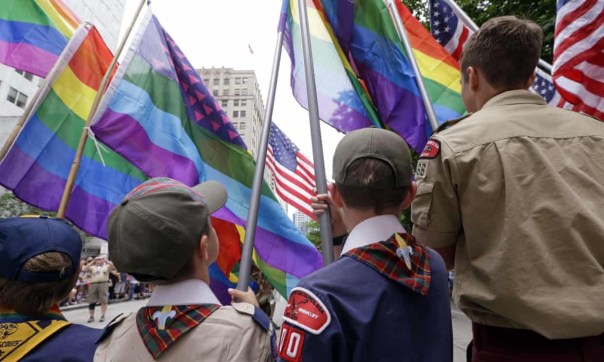
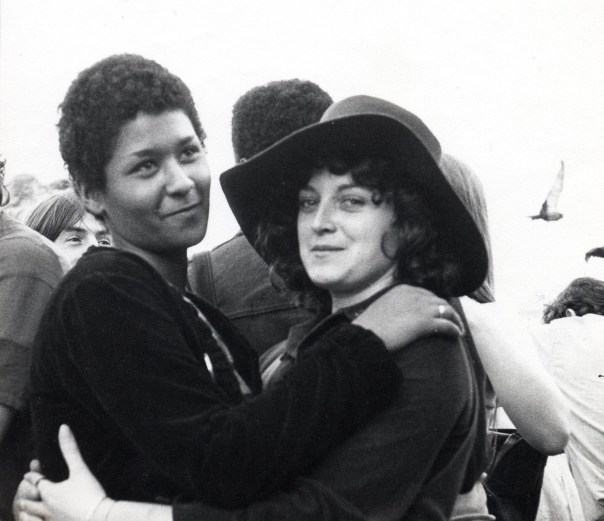
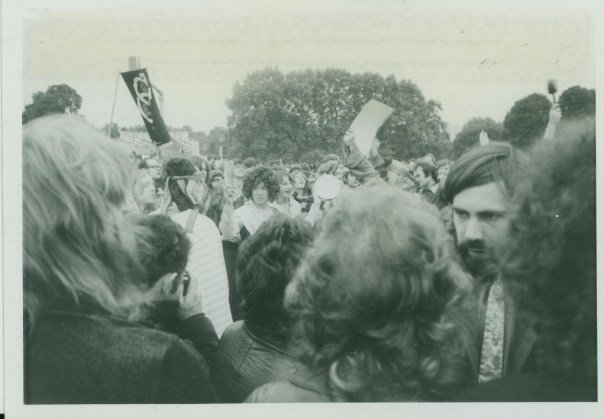
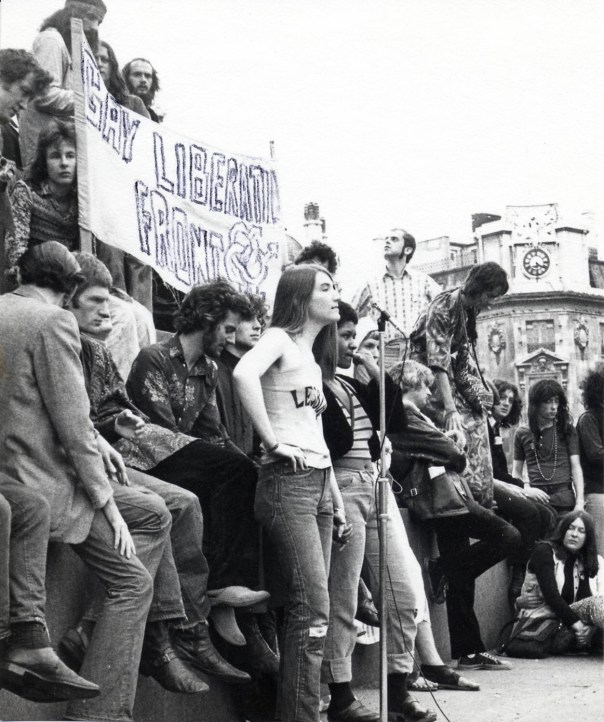
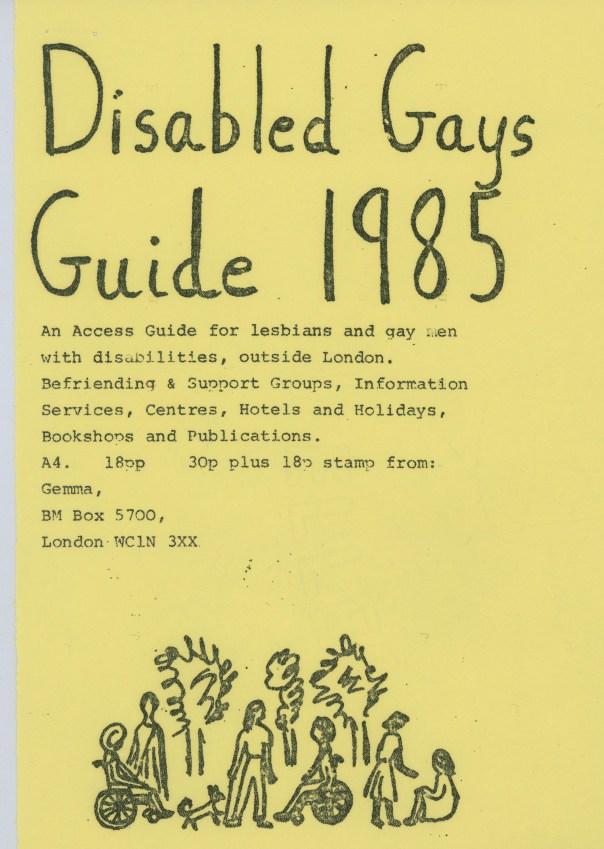
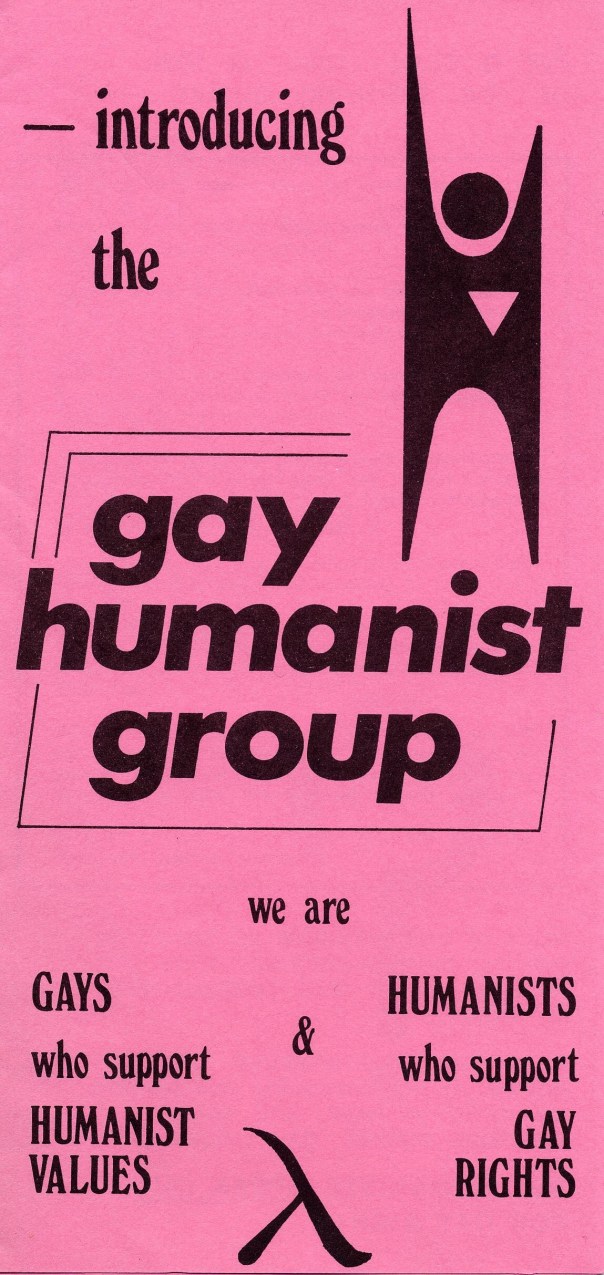


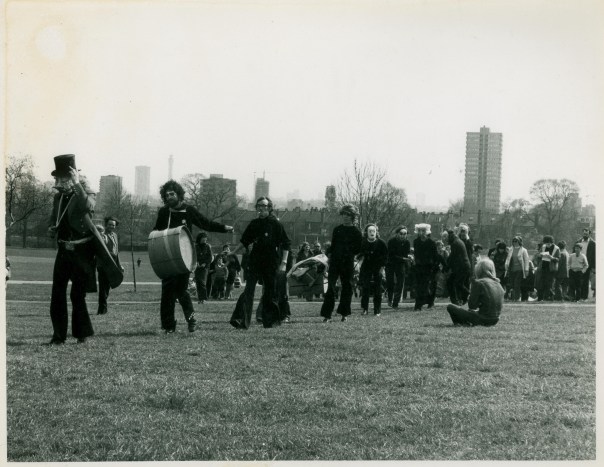


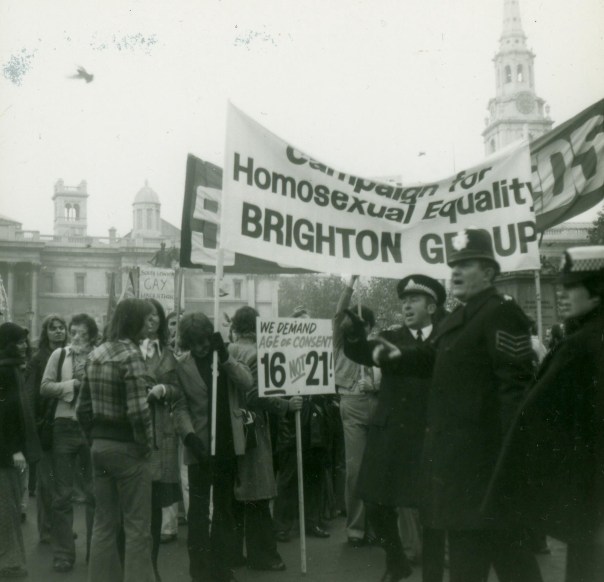
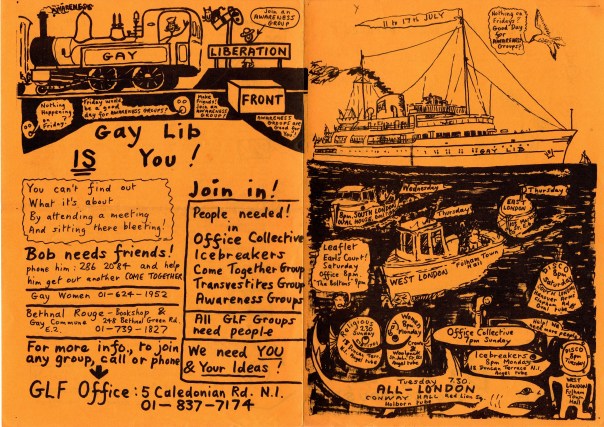
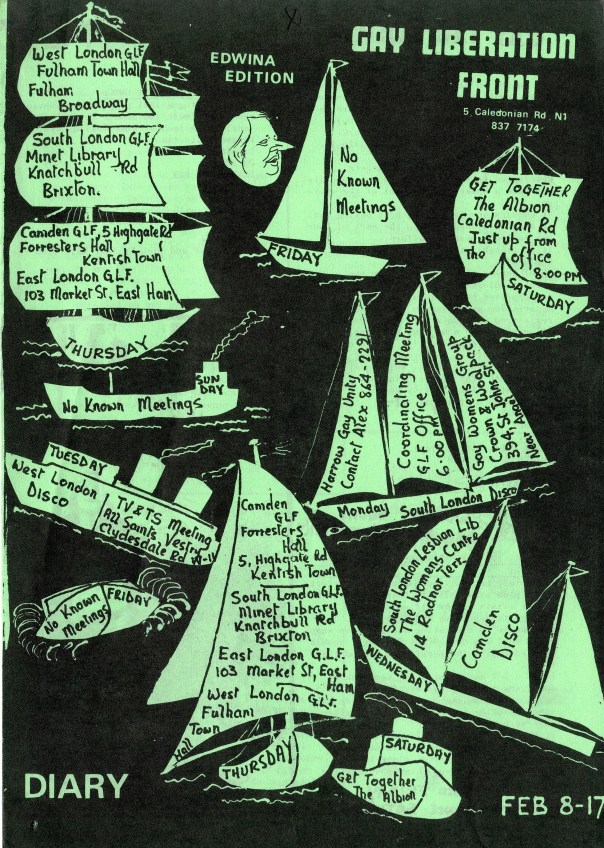
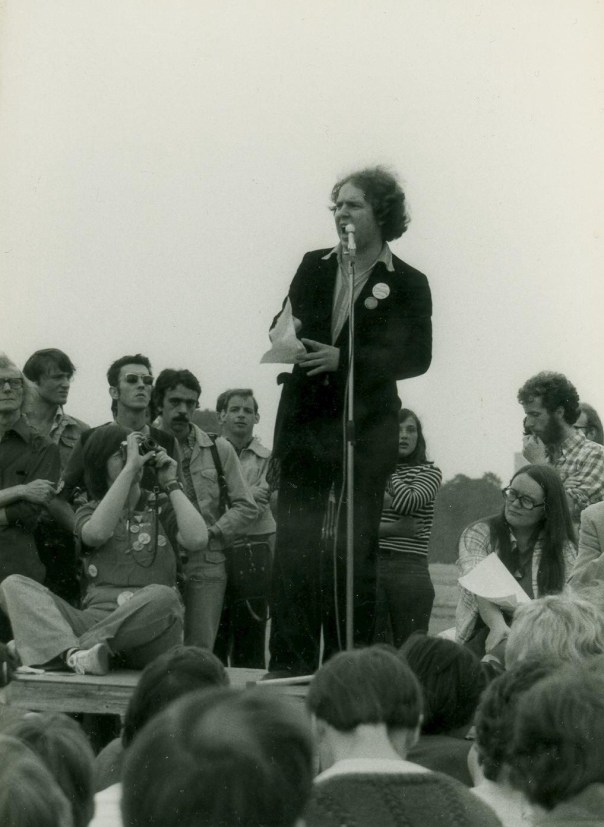
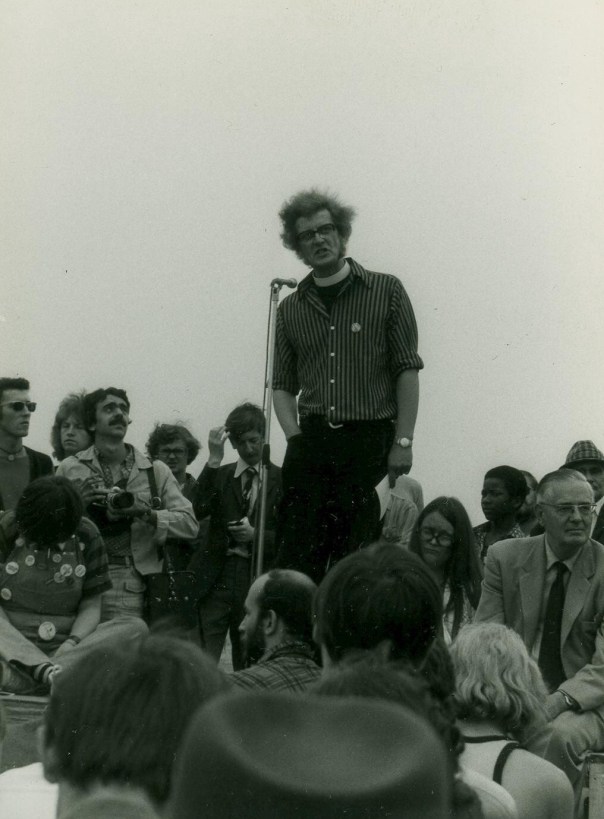

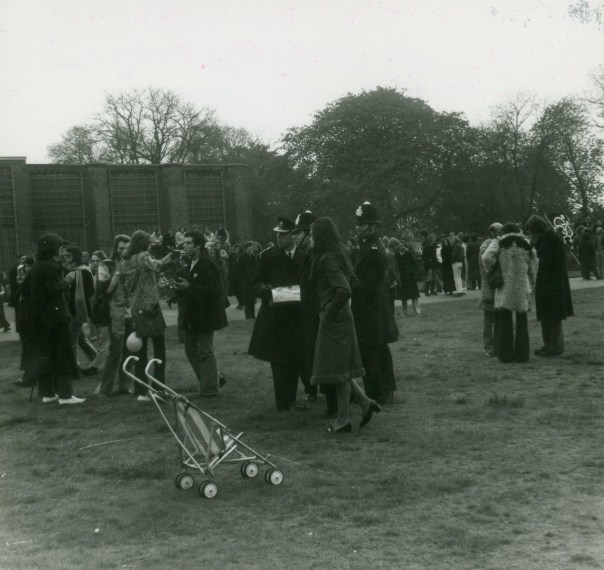

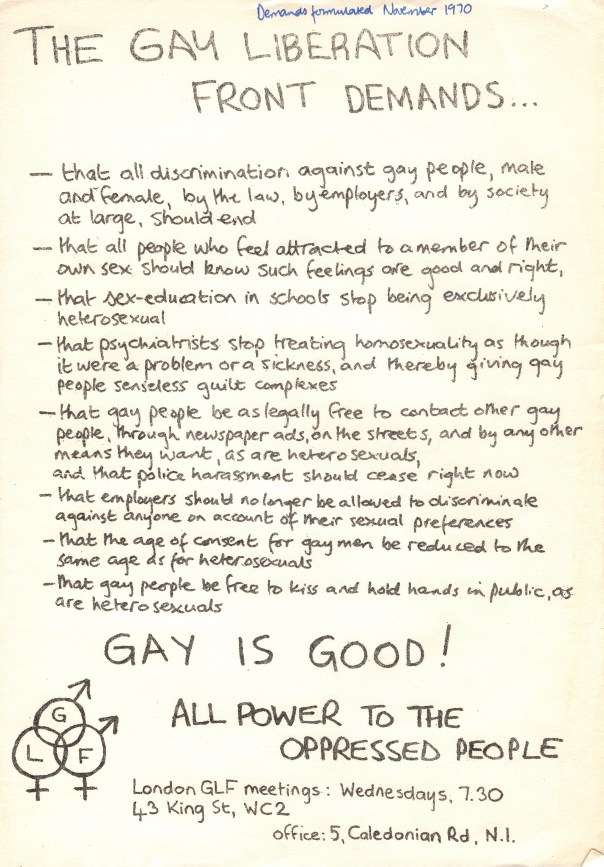


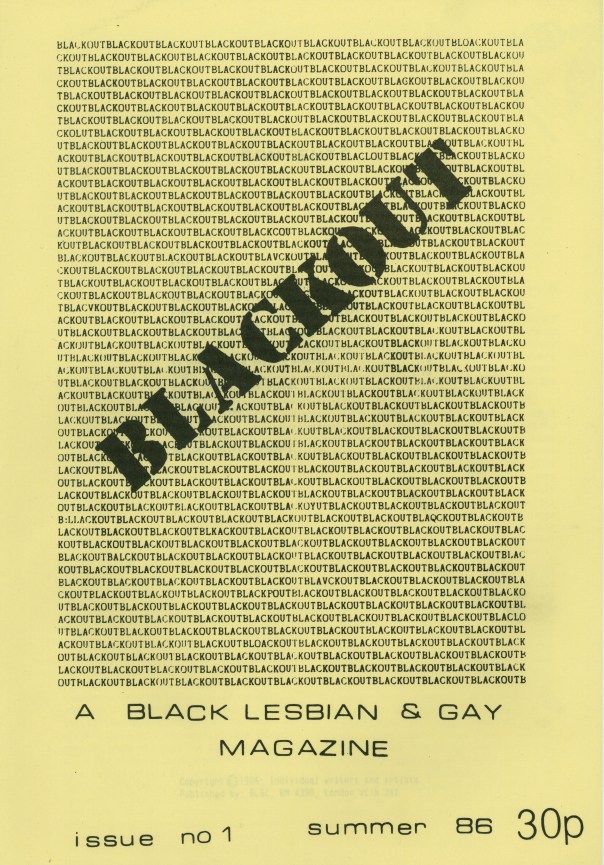
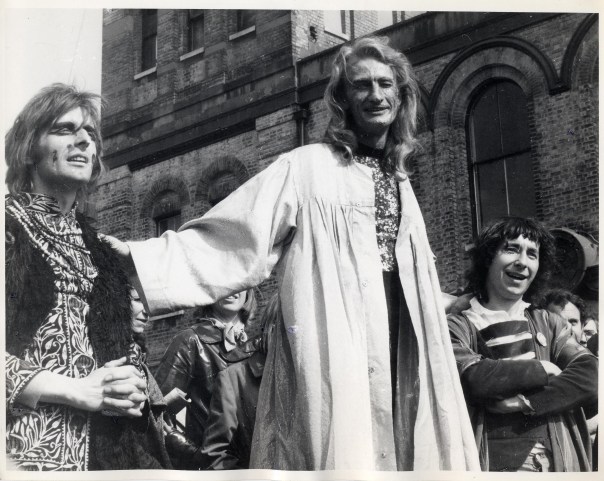


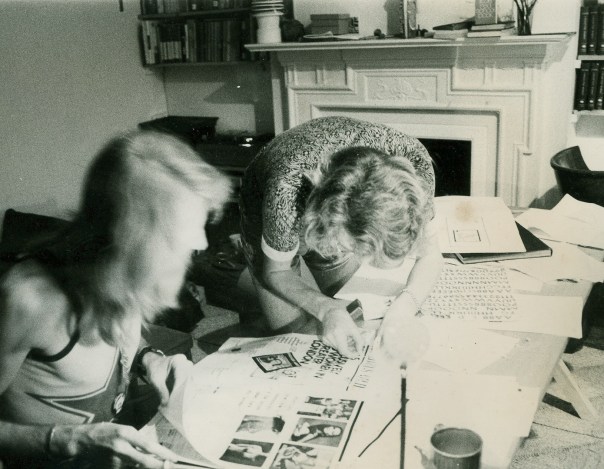
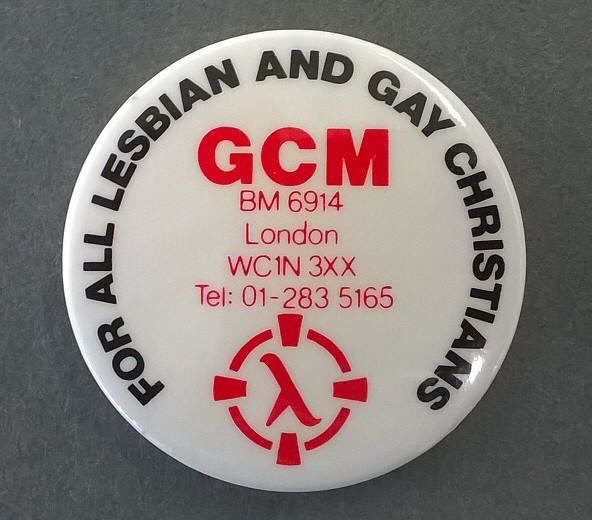
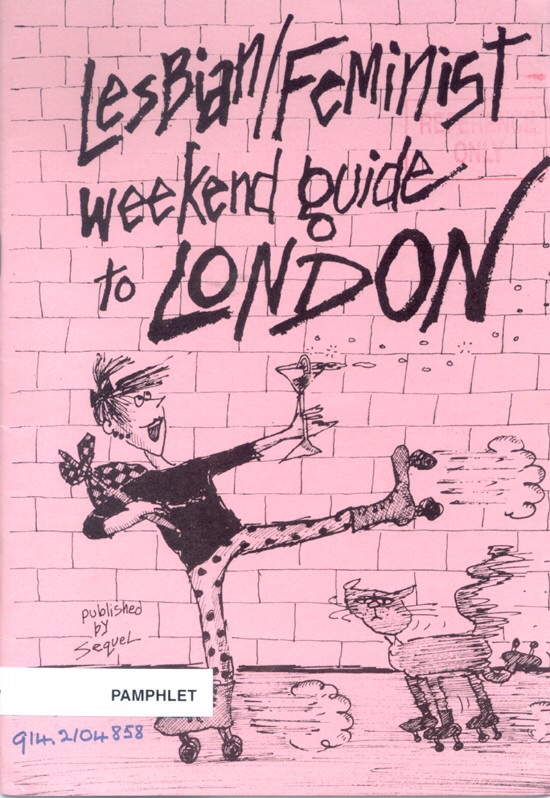


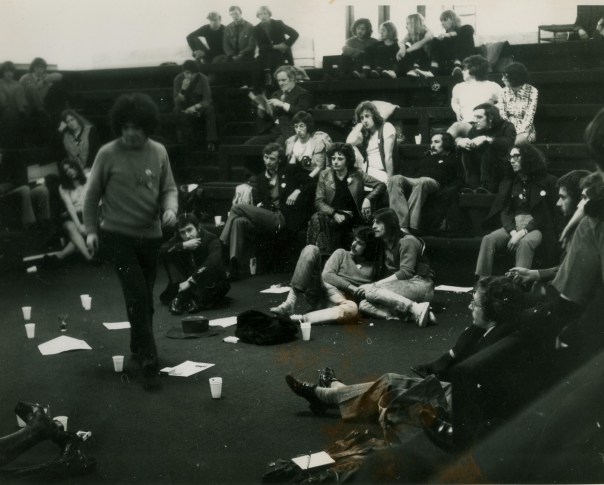
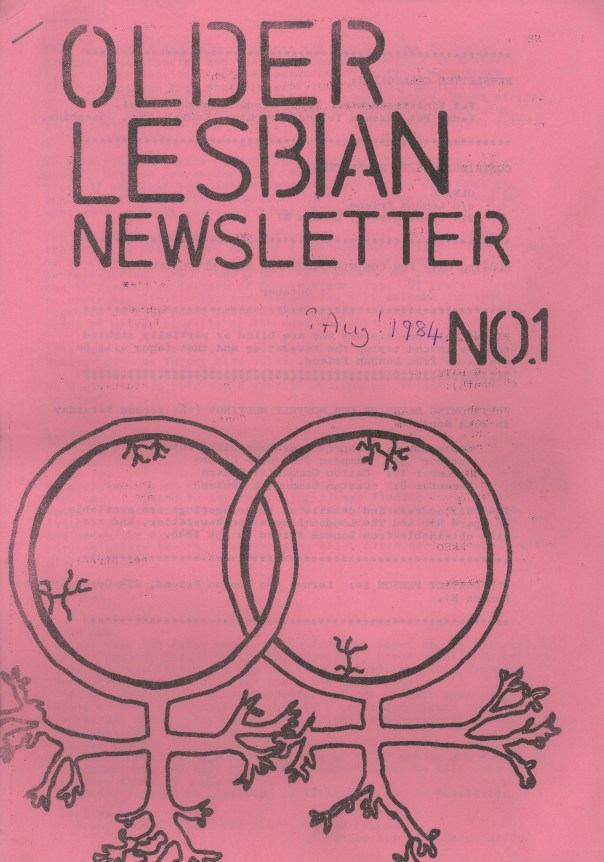
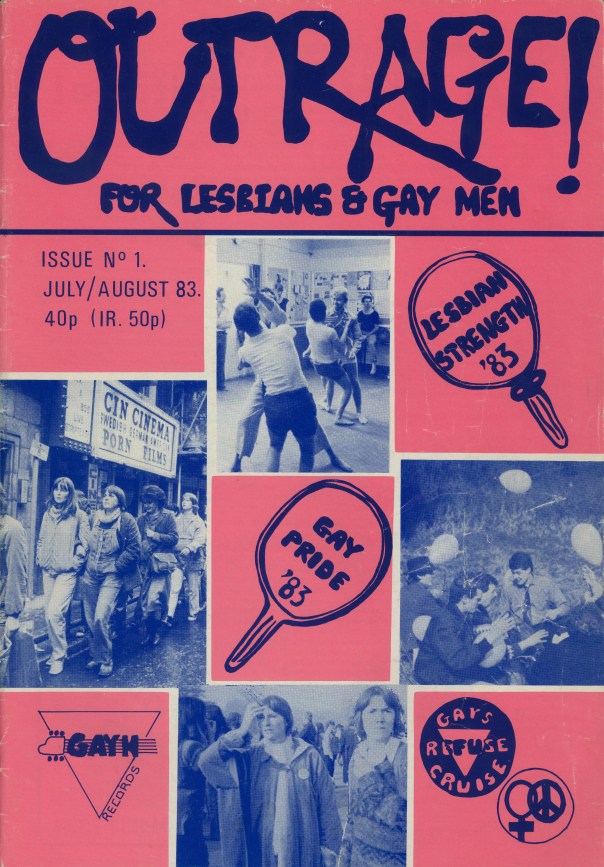
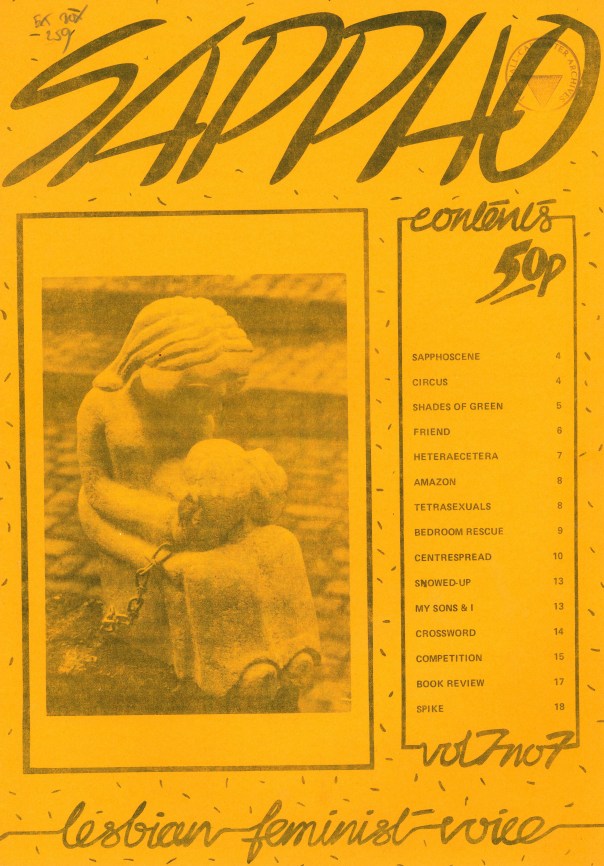
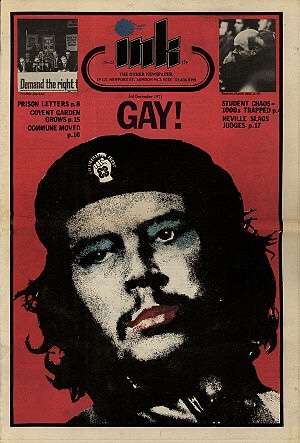
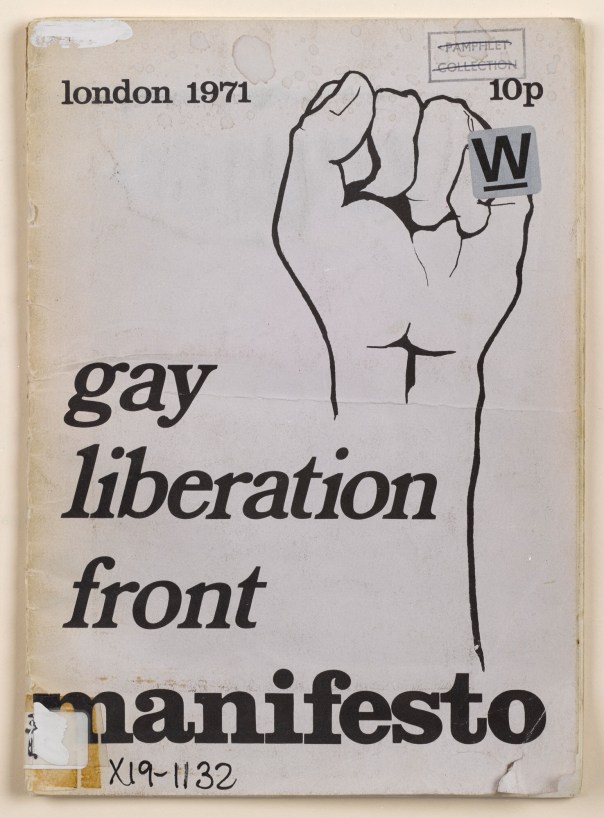

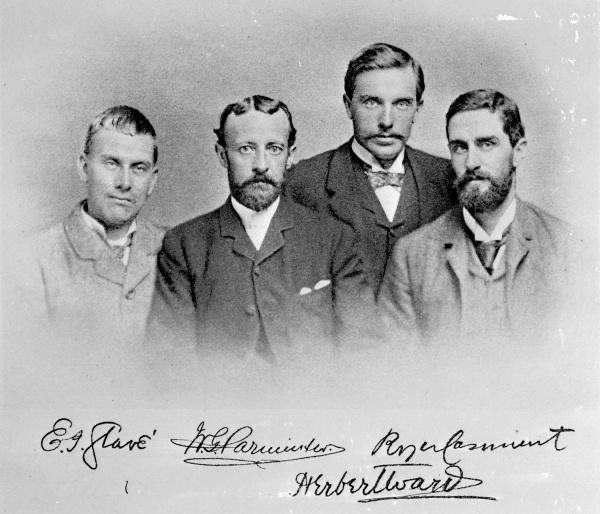
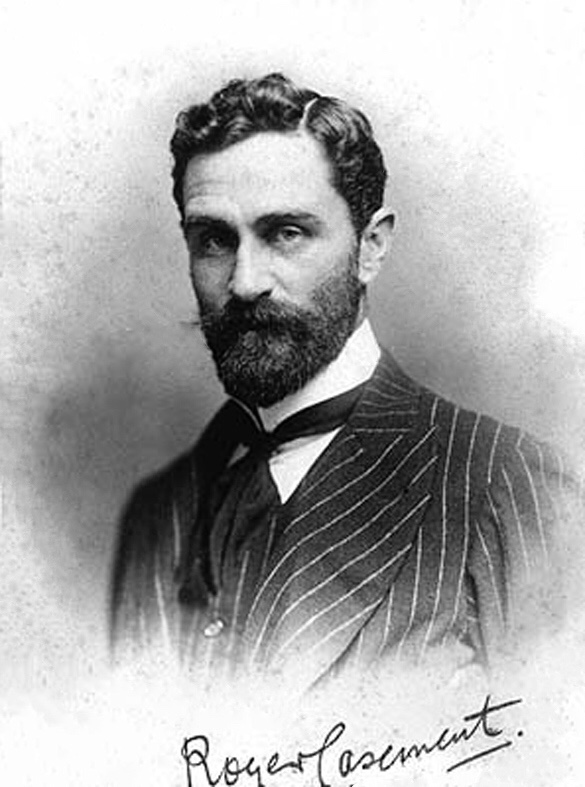


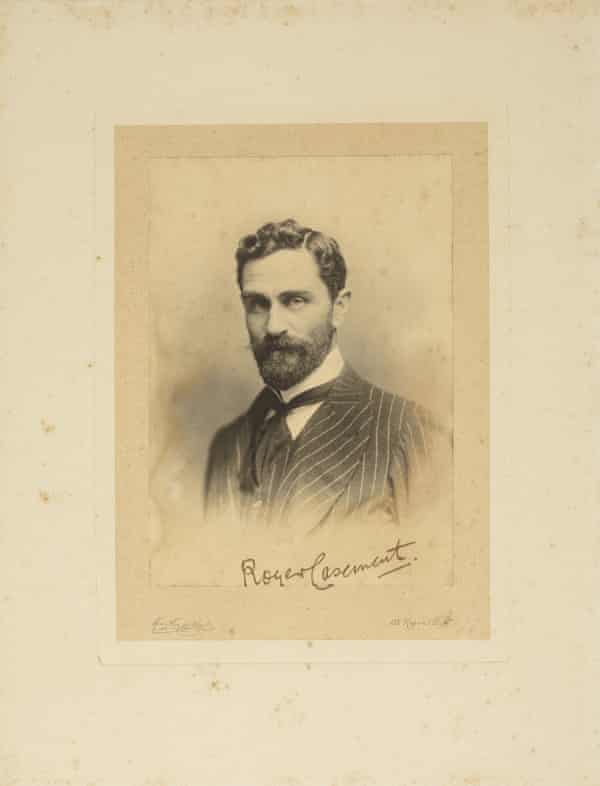




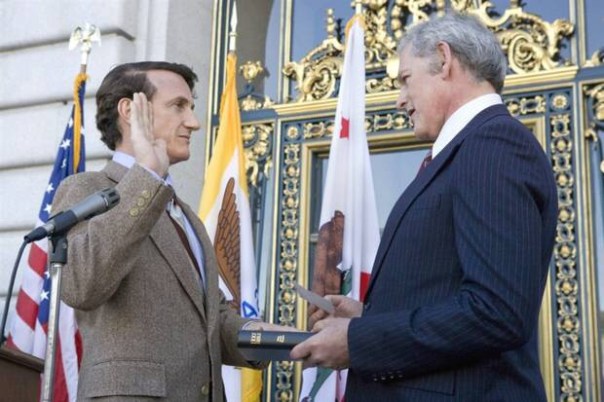
 timalderman