Part III – From Tudor England to the British Empire: A Legacy That Refused to Die
Henry VIII died on 28 January 1547, leaving behind a kingdom profoundly altered. England had broken with Rome, monasteries lay in ruins, and the Crown possessed powers that earlier monarchs could scarcely have imagined.
Yet the Buggery Act itself was far from secure.
Like much of Tudor legislation, its fortunes rose and fell with the religious convictions of successive monarchs.
Ironically, the law’s first years were almost as turbulent as the reign that produced it.
Edward VI – Reform and Repeal
Henry’s only legitimate son, Edward VI, inherited the throne at the age of nine.
Real power rested with Protestant regents who accelerated England’s religious transformation.
During Edward’s reign, large sections of Henry’s legislation were reviewed and reorganised.
Among the Acts repealed in 1547 was the original Buggery Act.
At first glance, this appears to represent a sudden burst of compassion.
It was nothing of the sort.
The repeal formed part of a broader legal housekeeping exercise, removing numerous statutes considered technically defective or unnecessarily complicated.
The offence itself did not disappear from English law.
Rather, legislators soon realised they still wished to prosecute it.
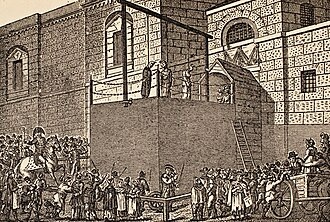
Execution outside Newgate Prison in London, early 19th century
Mary I – England Returns to Rome
Everything changed again in 1553.
Mary I, Henry’s eldest daughter by Catherine of Aragon, became Queen and immediately sought reconciliation with the Roman Catholic Church.
England briefly returned to papal authority.
Many Protestant reforms were reversed.
Ironically, this meant that the jurisdiction over offences such as buggery shifted once more.
The legal landscape became increasingly confused as religious and political authority changed hands.
Mary’s reign lasted only five years, but it demonstrated how closely criminal law remained tied to England’s religious identity.
Elizabeth I – Permanence at Last
When Elizabeth I succeeded her half-sister in 1558, England once again embraced Protestantism.
In 1563 Parliament passed a new Buggery Act.
This legislation largely restored Henry VIII’s original approach but with clearer drafting and improved legal procedure.
Unlike Henry’s statute, Elizabeth’s version endured.
For more than three centuries it formed the foundation of English criminal law relating to male same-sex sexual acts and bestiality.
The Act survived:
the Spanish Armada
the English Civil War
Oliver Cromwell
the Restoration
the Glorious Revolution
the Industrial Revolution
Kings and queens came and went.
Governments rose and fell.
Empires expanded.
Yet the law remained.
The Rise of the British Empire
During the seventeenth and eighteenth centuries Britain established colonies across the globe.
Settlers did not simply transport language and customs.
They transported law.
One of the fundamental principles of British colonisation was that English criminal law accompanied the Crown into new territories unless specifically altered.
Consequently, legislation derived from the Tudor Buggery Acts travelled with British administrators to North America, the Caribbean, India, Africa and, eventually, Australia.
Henry VIII could never have imagined Sydney.
Yet his legal revolution would eventually shape the criminal law of New South Wales.
Australia Inherits Tudor Law
When the First Fleet arrived in 1788, Governor Arthur Phillip brought with him English law.
Among the inherited offences was buggery.
Initially, prosecutions were relatively uncommon.
The realities of frontier life often meant authorities concentrated upon theft, violence, desertion and maintaining public order.
Nevertheless, the offence remained available to prosecutors.
Throughout the nineteenth century, colonial legislatures retained laws criminalising male same-sex sexual activity.
By then, however, the legislation owed as much to Victorian morality as it did to Tudor politics.
The legal principle established under Henry VIII had become deeply embedded within British legal tradition.
Australia inherited not merely one Act but an entire legal culture.
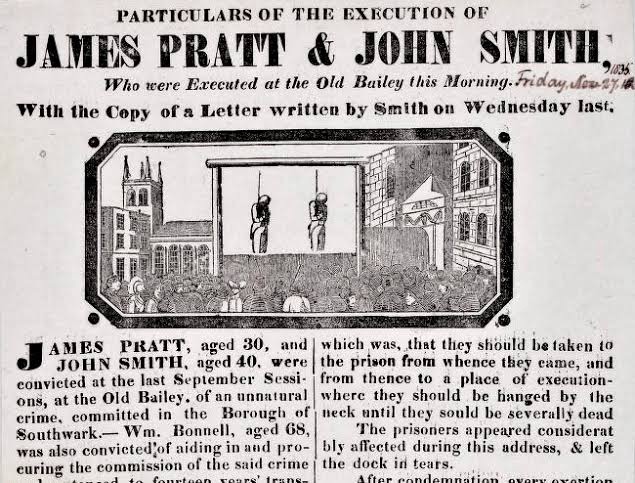
From Sin to Medical Condition
One of history’s great ironies emerged during the nineteenth century.
For centuries same-sex relations had primarily been viewed through religious and legal lenses.
Gradually another interpretation emerged.
Medicine.
Psychiatry.
Sexology.
Rather than asking whether such acts were sinful, many nineteenth-century scholars began asking why some individuals appeared consistently attracted to members of the same sex.
Among the most influential figures were:
Karl Heinrich Ulrichs
Richard von Krafft-Ebing
Magnus Hirschfeld
Havelock Ellis
By the late nineteenth century, the concept of homosexuality as a distinct identity had begun replacing the older legal emphasis upon isolated acts.
Ironically, this new understanding produced both progress and new prejudice.
People increasingly recognised that sexual orientation was more than behaviour.
Yet many physicians simultaneously classified homosexuality as a mental illness.
The Long Road Towards Reform
By the twentieth century, attitudes had begun changing.
One of the most significant turning points came with the Wolfenden Report of 1957.
After extensive investigation, the committee reached a conclusion that seems almost self-evident today but was revolutionary at the time:
“There must remain a realm of private morality and immorality which is, in brief and crude terms, not the law’s business.”
Those words represented a complete reversal of Henry VIII’s philosophy.
The Tudor state had expanded its authority into private sexual behaviour.
The Wolfenden Committee argued the state should withdraw from it.
Ten years later, England partially decriminalised consensual homosexual acts between adult men through the Sexual Offences Act 1967.
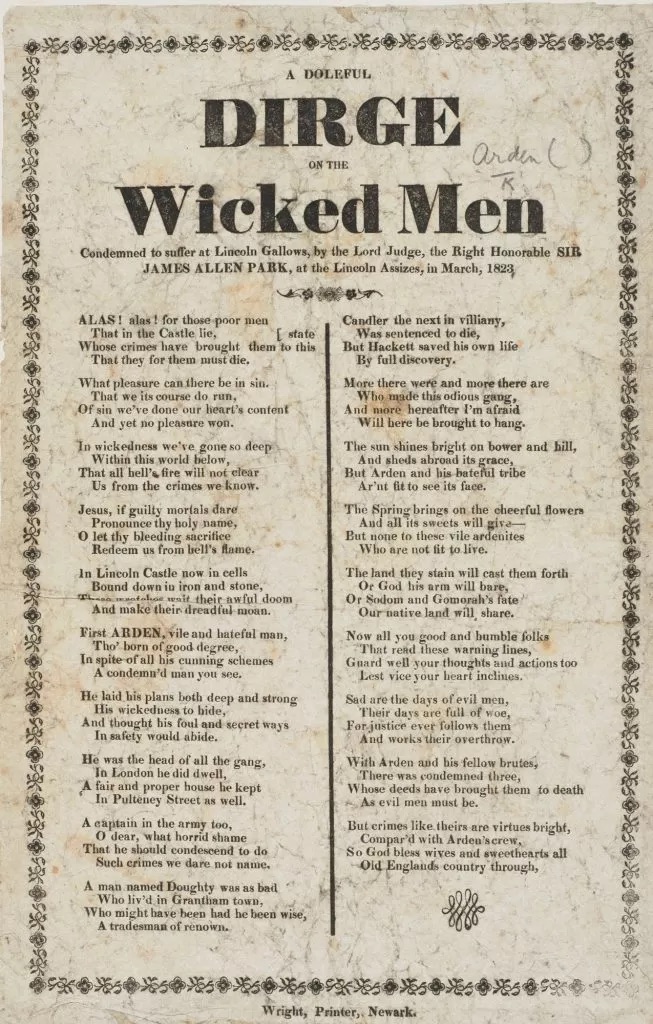
A Doleful Dirge on the Wicked Men: This newspaper goes to great lengths to allude to ‘crimes’ that these men have been tried and found guilty of’. / British Library, Public DomainBrowse Digital Magazines
Australia Follows
Australia moved more slowly.
South Australia became the first Australian jurisdiction to decriminalise consensual homosexual acts in 1975.
Other states followed over several decades.
Tasmania remained the last Australian state to repeal its criminal laws in 1997 after sustained legal and political pressure, including intervention by the United Nations Human Rights Committee.
By then, more than 460 years had passed since Henry VIII’s original legislation.
Henry’s Unexpected Legacy
Henry VIII never set out to influence gay rights debates.
He sought power.
He wanted control over England’s Church.
He wanted freedom from papal interference.
The Buggery Act formed one relatively small component of that larger constitutional struggle.
Yet history often remembers rulers for consequences they never anticipated.
The law Henry introduced eventually travelled around the world.
It shaped criminal justice systems on several continents.
It affected countless lives over nearly five centuries.
For millions of gay men, its descendants became symbols of fear, secrecy and exclusion.
Reassessing Henry VIII
Modern historians increasingly encourage us to view the Buggery Act through two lenses simultaneously.
The first is political.
It represented another stage in Henry VIII’s relentless concentration of power within the English Crown.
The second is human.
Whatever Henry’s intentions, the legislation established a legal framework that later generations used to persecute individuals whose only offence was engaging in consensual intimacy.
These two realities are not contradictory.
Indeed, they help explain why the Act endured for so long.
It served governments well.
It reflected prevailing religious beliefs.
It became embedded within legal tradition.
Only when society itself changed did the law finally begin to unravel.
Conclusion
The Buggery Act of 1533 occupies a unique place in legal history.
It was born amid the political upheaval of the English Reformation, forged in Henry VIII’s determination to subordinate the Church to the Crown. Although couched in the language of morality, its deeper significance lay in the transfer of judicial authority from ecclesiastical courts to the King’s courts. In doing so, it demonstrated one of the defining characteristics of the Tudor state: the increasing reach of royal power into areas of life once governed by the Church.
The Act’s consequences, however, extended far beyond Henry’s immediate ambitions. Re-enacted under Elizabeth I, absorbed into English common law, and carried across the globe by the expansion of the British Empire, it shaped legal systems on several continents. Generations of men lived under laws whose ancestry could be traced directly to the political struggles of sixteenth-century England.
Perhaps the greatest irony is that Henry VIII is remembered as much for his turbulent private life as for his legislation. A monarch whose reign was marked by multiple marriages, accusations of adultery, political executions and personal ambition became associated with one of history’s most enduring attempts to regulate the private conduct of others. That contradiction reminds us that laws often tell us less about morality than about power.
Today, historians no longer view the Buggery Act simply as an anti-homosexual statute. Instead, it is recognised as part of a much larger constitutional transformation that redefined the relationship between Church, State and individual. Yet acknowledging its political origins does not diminish its human cost. For centuries, its legal descendants contributed to fear, persecution and silence among countless people whose lives were shaped by its legacy.
History rarely unfolds as its participants intend. Henry VIII sought to create a stronger monarchy. Instead, he also created one of the most influential criminal statutes in the English-speaking world—one whose shadow would linger long after the Tudor dynasty, the British Empire and even the world that produced it had passed into history.
Tim Alderman ©️2026
Sources
Sir John Baker, An Introduction to English Legal History (5th ed., Oxford University Press, 2019).
J. A. Guy, Tudor England (Oxford University Press, 1988).
G. R. Elton, England Under the Tudors (Routledge, revised editions).
Diarmaid MacCulloch, Thomas Cromwell: A Life (Allen Lane, 2018).
Diarmaid MacCulloch, The Reformation: A History (Penguin, 2004).
The King’s Reformation.
The Stripping of the Altars.
Wolfenden Report (1957).
The National Archives – records of Tudor statutes and legal proceedings.
Parliament of the United Kingdom – historical texts of the Buggery Acts and subsequent legislation.


Excellent summary of the lasting impact of the original act upon the histories and lives of multitudes. Congratulations on a very commendable and worthy effort! 🙂 Naked hugs!