Imagine receiving a letter informing you that the Queen of England intended to spend a few days at your house.
It was an honour almost beyond measure.
You would entertain the sovereign. You would be noticed at court. Your neighbours would envy you. Your family’s standing might be enhanced for generations.
There was only one slight difficulty.
The Queen was not coming alone.
Behind her might come hundreds of courtiers, government officials, ladies, gentlemen, guards, cooks, grooms, musicians, messengers and servants. Then came their horses. Then the carts. Then the baggage. Then the royal furniture and clothing. Then the food, wine and equipment required to keep this travelling palace functioning.
And somehow they all had to be fed, accommodated and entertained.
There were no excess baggage charges.
Perhaps there should have been.
Welcome to the Royal Progress: one of the most spectacular — and financially terrifying — institutions of Tudor monarchy.
The King Is Coming
Royal progresses were not invented by the Tudors.
Medieval kings were travelling rulers by necessity. Government was centred upon the monarch, and monarchs regularly moved between royal castles, hunting lodges, palaces, religious houses and the estates of important subjects.
Partly this was political. A king who physically appeared throughout his kingdom demonstrated possession of it.
But there were also practical considerations.
Maintaining a large household in one location could rapidly exhaust local supplies of food, fuel and fodder. Moving the household distributed the burden.
The medieval royal court therefore had something of the character of a travelling institution.
The Tudors inherited this tradition but transformed it into something increasingly theatrical.
Henry VII travelled to demonstrate the authority of a dynasty whose claim to the throne had been established on the battlefield.
Henry VIII progressed magnificently, sometimes accompanied by his queens and an enormous household.
But it was Henry’s daughter Elizabeth I who became the great master of the Royal Progress.
For Elizabeth, travelling through England became an instrument of government.
It was politics performed on horseback.
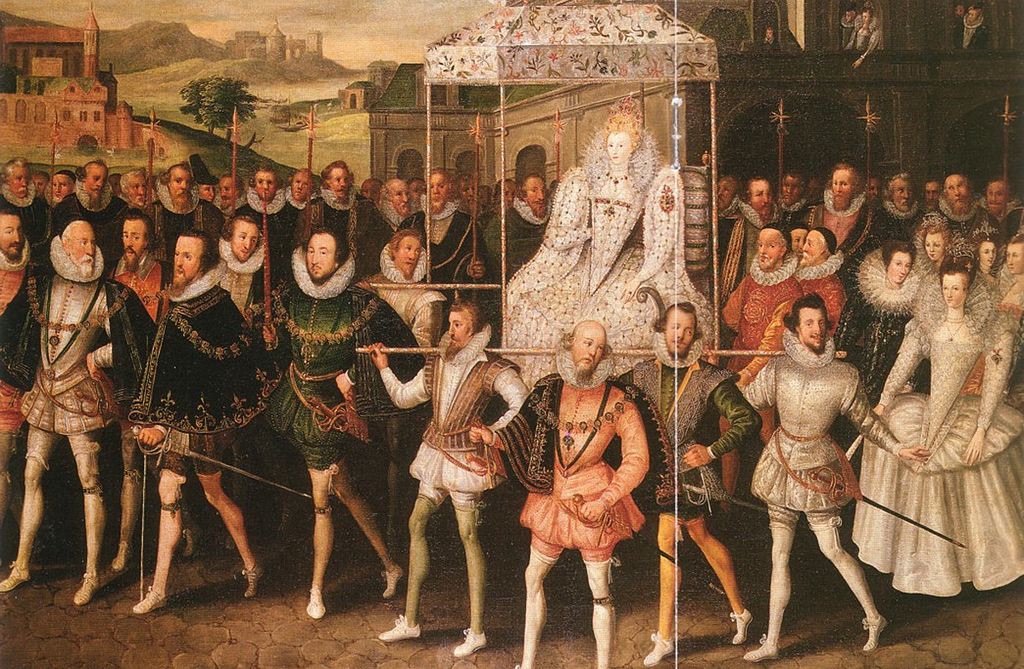
Elizabeth Takes to the Road
For much of the first half of her reign, Elizabeth regularly left her principal royal residences during the summer and travelled through parts of England.
These journeys could continue for weeks.
The route changed from year to year. Surrey, Kent, Sussex, Hertfordshire, Essex, Suffolk, Norfolk, Warwickshire, Oxfordshire, Wiltshire and other counties received the travelling court at various times.
Elizabeth stayed at royal properties, but she also stayed with bishops, aristocrats and wealthy gentlemen.
And that was where matters became interesting.
A royal visit bestowed enormous prestige upon the host.
It also threatened to empty his purse.
The sovereign traditionally possessed wide powers to obtain accommodation while travelling. Being selected as a royal host was therefore not quite equivalent to inviting someone around for dinner.
The Queen had decided to come.
Your principal decision was how magnificently you intended to survive it.
Why Progress at All?
Elizabeth’s progresses served several purposes simultaneously.
First, they made the monarchy visible.
Most Elizabethans would never enter a royal palace. They knew their Queen through proclamations, coins, portraits, sermons and official ceremonies.
A progress allowed them actually to see her.
As Elizabeth passed through towns, crowds assembled along streets and roads. Bells rang. Civic authorities assembled in ceremonial clothing. Children, scholars and actors might deliver speeches. Towns constructed temporary arches, stages and decorations.
The Queen could stop to receive petitions.
People could approach the royal person in ways that were far more difficult when the court was enclosed behind palace walls.
This accessibility was carefully managed, but it mattered enormously.
Elizabeth understood spectacle.
The sight of the Queen magnificently dressed, surrounded by richly dressed courtiers and escorted through the countryside transformed monarchy from an abstract institution into a living human presence.
The message was unmistakable:
Here is your Queen.
Politics on Horseback
Progresses also allowed Elizabeth to observe her kingdom.
Royal officials could inspect local conditions. The Queen could meet regional elites. Local disputes might reach the attention of the court.
More importantly, Elizabeth could inspect the men upon whom royal government depended.
Tudor England possessed nothing resembling a modern professional bureaucracy extending into every community.
Much local government depended upon landowners, magistrates, sheriffs and other members of the county elite.
A royal progress brought the central government directly into their world.
It was simultaneously a visit and an inspection.
Who appeared?
Who entertained the Queen properly?
Who demonstrated loyalty?
Who conspicuously failed to appear?
Who was quarrelling with whom?
The Tudor court was a political organism, and when Elizabeth travelled, a substantial portion of that organism travelled with her.
Government did not simply stop because the Queen had gone on holiday.
Packing the Queen
Here we encounter the first great misconception about a Royal Progress.
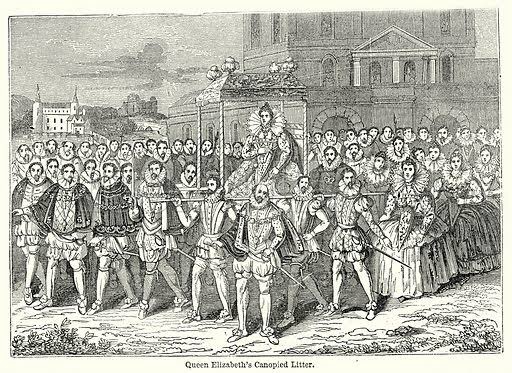
Elizabeth did not simply climb onto a horse accompanied by a few ladies and ride into the countryside.
The royal household had to move.
Clothing alone presented an extraordinary problem.
Elizabeth’s wardrobe was enormous and politically important. Her gowns, jewels, sleeves, ruffs, gloves and accessories formed part of the visual language of monarchy.
She could hardly arrive at a nobleman’s house wearing whatever happened to fit into a saddlebag.
Royal plate, linen, bedding, documents and household equipment also travelled.
Furniture could travel.
Servants travelled.
Kitchen personnel travelled.
Officials travelled.
Guards travelled.
Ladies of the Privy Chamber travelled.
Grooms travelled.
Messengers travelled.
And, naturally, the Privy Council and other elements of government might accompany or attend the Queen.
The result was less like modern tourism and more like relocating a government department, luxury hotel, restaurant, theatre company and small military establishment simultaneously.
The Traffic Jam from Hell
Then there were the horses.
Tudor transport depended upon them.
The Queen required horses. Courtiers required horses. Guards required horses. Messengers required horses. Carts and wagons required horses.
And horses eat.
Constantly.
Hay, oats and other fodder therefore became a major logistical consideration.
Stabling had to be found.
Roads had to carry heavily laden carts.
Bridges had to be trustworthy.
Bad weather could transform roads into mud.
A progress could therefore place tremendous pressure upon the countryside through which it travelled.
The royal party might be glamorous.
The baggage train probably wasn’t.
One can imagine a magnificent Queen disappearing elegantly over the horizon while miles behind her some unfortunate servant was standing beside a cart with a broken wheel contemplating the Tudor equivalent of roadside assistance.
The Advance Party
Fortunately, the court did not usually arrive completely without warning.
Royal officers investigated proposed routes and accommodation.
Houses had to be assessed.
Could the Queen’s chambers be made suitable?
Was there sufficient accommodation for senior courtiers?
Where could servants sleep?
Where could horses be stabled?
Were kitchens adequate?
Could additional cooking facilities be constructed?
Where would supplies come from?
The royal household was intensely hierarchical, and accommodation reflected rank.
The Queen required privacy and security.
The highest-ranking members of court expected appropriate rooms.
Those farther down the social ladder made do.
Servants might be accommodated in considerably less glamorous circumstances.
Nearby houses could be pressed into service when the principal residence proved inadequate.
Thus a royal visit might engulf not merely one mansion but an entire neighbourhood.
And Now We Come to the Host
For the host, preparations could become frantic.
Rooms might be redecorated.
Walls could be painted.
Furniture could be purchased or borrowed.
Gardens could be redesigned.
Temporary structures could be erected.
Kitchen facilities could be expanded.
Food and drink had to be accumulated in staggering quantities.
There needed to be meat.
Lots of meat.
Beef, mutton, pork, venison, poultry and game might appear.
There were fish, bread, butter, cheese and eggs.
There were spices and sugar — expensive ingredients whose extravagant use advertised wealth.
There were wines.
And beer.
Enormous quantities of beer.
Then came the entertainments.
A Queen could not simply be given dinner and pointed towards the guest bedroom.
There might be plays, masques, music, dancing, hunting, fireworks, poetry, allegorical performances and elaborate outdoor spectacles.
Everything carried political meaning.
Mythological characters might praise Elizabeth’s wisdom.
Nymphs might emerge from lakes.
Classical goddesses could announce that England was enjoying a new golden age.
Actors portraying allegorical virtues might conveniently discover that every conceivable virtue had reached perfection in Elizabeth.
Subtle it was not.
The Gift
Then came another delicate matter.
The royal gift.
Elizabeth received gifts throughout her reign, especially at New Year, but progresses provided additional opportunities for courtiers and civic authorities to demonstrate loyalty and generosity.
Jewellery was particularly effective.
So were valuable objects and money.
A gift was supposedly an expression of affection and allegiance.
It was also political communication.
A magnificent gift said:
Remember me.
Unfortunately, magnificent gifts cost magnificent sums.
And one man discovered precisely how expensive avoiding a royal visit could become.
Sir John Thynne Tries to Escape
In 1574 Elizabeth planned a progress through the West Country.
One proposed stop was Longleat, the spectacular new Wiltshire house being constructed by Sir John Thynne.
Thynne appears to have been less than delighted.
Records associated with the visit refer to Longleat’s apparent “unreadiness” to receive the Queen.
Then matters became even more unfortunate.
Thynne reported that his household had been struck by a “sweating sickness.”
How terribly inconvenient.
Elizabeth’s government was suspicious.
The Queen evidently suspected that these unfortunate circumstances might have something to do with Sir John’s reluctance to absorb the cost and disruption of entertaining the royal household.
The Earl of Sussex sent him a stern letter questioning him about the matter.
There was no escape.
On 2 September 1574 Elizabeth dined at Longleat.
Thynne provided pheasants, partridges, guinea fowl, larks and the Queen’s beloved musk comfits. Trumpeters were employed and flowers decorated the house.
Then Sir John produced his pièce de résistance.
He gave Elizabeth a jewel shaped like a phoenix.
It contained a huge emerald surrounded by fifty diamonds and rubies.
It cost him £140 — an extraordinary amount of money.
Elizabeth was delighted.
Sir John had survived.
One suspects the sweating sickness disappeared shortly afterwards.
Kirtling: The Accounts Survive
Four years later, in 1578, Elizabeth visited Roger, Lord North, at Kirtling Tower in Cambridgeshire.
Here we possess something especially valuable: accounts showing what entertaining the Queen actually involved.
North’s recorded expenditure amounted to:
£762 4s 2d.
That was a fortune.
About £32 went on improvements to the house.
Around £209 went on gifts.
Sugar alone cost approximately £16.
And then we encounter the alcohol.
North obtained 74 hogsheads of beer.
There were six hogsheads of claret and another of white wine.
And oysters?
A few dozen perhaps?
No.
The accounts record a cartload and two horseloads of oysters.
This is one of those delightful historical details that destroys any romantic notion of Elizabeth quietly visiting a country house.
Somewhere in Cambridgeshire there was apparently a man whose contribution to royal government consisted of transporting an alarming quantity of shellfish towards the Queen.
Meat, fish and cheese arrived in quantities capable of feeding what the Folger Shakespeare Library aptly describes as a small army.
Because, domestically speaking, that is roughly what the royal household had become.
Kenilworth: When Showing Off Becomes Architecture
And then there was Robert Dudley, Earl of Leicester.
If other hosts entertained Elizabeth, Dudley attempted to create another universe for her.
Elizabeth visited his great castle at Kenilworth several times.
The legendary visit occurred in 1575.
It lasted nineteen days.
This was the longest Elizabeth ever stayed at the residence of a courtier.
Dudley had spent years transforming Kenilworth.
He constructed a great four-storey building specifically containing luxurious accommodation for Elizabeth.
There were huge windows, enormous fireplaces and richly appointed rooms.
He created a magnificent private garden.
There were arbours, walks, fountains and elaborate planting.
The surrounding landscape itself became theatrical scenery.
During Elizabeth’s visit there were banquets, hunting, music, dancing, plays, masques and spectacular outdoor performances.
There were fireworks so tremendous that later accounts claimed they could be heard many miles away.
Characters emerged from the landscape.
Mythology came alive.
The Lady of the Lake appeared.
Triton appeared.
Elizabeth was enveloped in an elaborate fantasy in which Kenilworth became an enchanted kingdom and Dudley its magnificently devoted lord.
There was, naturally, politics behind all this.
Dudley’s relationship with Elizabeth had long generated speculation, and the Kenilworth entertainment has often been interpreted partly within the context of his hopes of marrying her.
If so, it was perhaps the most expensive marriage proposal never actually made.
Modern English Heritage material estimates the 1575 festivities at something approaching £1,000 per day in Tudor money.
Whether converted into modern currency or not — historical currency comparisons are notoriously slippery — the essential point remains.
Dudley spent a staggering fortune.
And Elizabeth still did not marry him.
Even the Garden Wasn’t Safe
One wonderful Kenilworth story illustrates the impossible standards involved.
Dudley had created an exquisite garden for Elizabeth.
Unfortunately, Elizabeth apparently complained that she could not see it properly from her specially constructed accommodation.
This could have been regarded as unfortunate.
Dudley’s household regarded it as an emergency.
According to English Heritage’s account, gardeners worked through the night creating a temporary garden beneath the Queen’s window.
Imagine being one of those gardeners.
The Queen wakes.
The Queen looks out the window.
The Queen would like a garden there.
By sunrise, there had better be a garden there.
Royal service could be remarkably motivational.
The Competition to Impress
There was another reason expenditure spiralled.
Hosts competed with one another.
If Lord Somebody had entertained Elizabeth with musicians and a masque, Lord Somebody Else might provide musicians, a masque and fireworks.
The next man added a hunting party.
The next constructed an artificial lake.
Prestige demanded escalation.
The progress therefore became a travelling competition among the elite.
Elizabeth benefited magnificently.
Her subjects displayed their loyalty.
Her nobility advertised its wealth.
And substantial portions of that wealth were converted into dinners, jewels, buildings, gardens and entertainments for the Crown.
Harefield: Three Days, One Enormous Bill
By 1602, Elizabeth was approaching the end of her reign.
She was nearly seventy.
But the machinery of royal entertainment continued.
In that year she visited Harefield House, the Middlesex residence of Sir Thomas Egerton, Lord Keeper of the Great Seal, and his wife Alice.
The entertainment was magnificent.
Surviving contemporary correspondence estimated Egerton’s expenditure at approximately £4,000.
The visit lasted only a few days.
Think about that.
Years of income could disappear during a royal house party.
The Harefield entertainment included elaborate dramatic presentations designed especially for Elizabeth.
Time itself was personified.
So was Place.
The symbolism celebrated Elizabeth’s extraordinarily long reign.
By then the young queen who had once ridden through England displaying the promise of a new regime had become almost a living historical monument.
But she still required feeding.
So did everyone travelling with her.
The Queen Wasn’t Always the Only Problem
The court itself could be troublesome.
Hundreds of people descending upon an estate inevitably created friction.
There were disputes over accommodation.
There was competition for access to the Queen.
There were servants everywhere.
There were horses everywhere.
Food disappeared.
Fuel disappeared.
Beds became scarce.
Privacy evaporated.
Sanitation became a problem.
The host’s household had effectively been invaded by another household — one vastly larger and more powerful than his own.
And because status determined everything, rooms had political meaning.
Who slept nearest the Queen?
Who received the better chamber?
Who was relegated elsewhere?
A bed was never merely a bed when the Tudor court was involved.
Where Did Everyone Sleep?
Not necessarily comfortably.
The greatest houses simply could not provide luxurious private bedrooms for hundreds of visitors.
Senior courtiers received the best available accommodation.
Others were dispersed into adjoining buildings or nearby houses.
Servants could sleep communally or wherever space existed.
Temporary arrangements were normal.
Beds and bedding were portable possessions in Tudor England to an extent unfamiliar today.
A wealthy traveller might transport furnishings that modern travellers assume a hotel will provide.
Thus the royal progress carried parts of its own domestic world with it.
Elizabeth’s personal surroundings could consequently remain recognisably royal even when the building containing them changed.
The house became temporarily hers.
Feeding the Monster
The kitchen must have been extraordinary.
Tudor elite households already maintained large kitchens capable of feeding many people.
A royal visit multiplied the challenge.
Cooking was labour-intensive.
Fires had to be maintained.
Water had to be carried.
Animals had to be slaughtered and butchered.
Bread had to be baked.
Pastry had to be prepared.
Sauces required grinding, mixing and heating.
Dishes had to be washed.
Waste had to be removed.
Beer had to be transported.
Wine had to be managed.
And meals were governed by status.
The Queen’s food was not simply ladled from the same pot as that provided to the stable boys.
Different ranks received different quantities and qualities of food.
The entire social hierarchy of Tudor England could therefore reproduce itself at dinner.
And Then Everyone Needed the Toilet
Here royal romance encounters Tudor reality.
Hundreds of people produce enormous quantities of human waste.
Large Tudor residences had garderobes and privies, but they were never designed with modern sanitation in mind.
Temporary arrangements became necessary.
Chamber pots proliferated.
Servants removed waste.
The pleasant image of perfumed Elizabethan courtiers strolling through beautiful gardens should therefore occasionally be accompanied by another thought:
Somebody had to empty the pots.
The royal progress was sustained by armies of largely invisible workers.
Without cooks, laundresses, scullions, grooms, carters, labourers and servants, the entire glittering spectacle would have collapsed within hours.
Towns Faced Their Own Royal Nightmare
Private hosts were not alone.
Towns along the route also had responsibilities.
Roads might be repaired.
Streets cleaned.
Buildings decorated.
Civic officials rehearsed ceremonies.
Platforms and arches were constructed.
Musicians and performers were employed.
Schoolchildren might prepare speeches.
Local dignitaries dressed in their finest clothing.
Gifts were assembled.
A royal entry transformed the town into a theatre.
Elizabeth was the principal actor.
The inhabitants became both performers and audience.
Ordinary People and the Queen
This is perhaps the most important element of the progress.
For ordinary people, seeing Elizabeth could be unforgettable.
Here was the woman whose face appeared on coins.
Here was the Supreme Governor of the Church of England.
Here was the monarch whose marriage — or refusal to marry — occupied European diplomacy.
Here was the woman upon whose survival the political stability of England appeared increasingly to depend.
And suddenly she was riding down your street.
Elizabeth understood the emotional power of these encounters.
She stopped.
She listened.
She spoke to people.
She received petitions.
She responded to speeches.
Her ability to perform monarchy was one of her greatest political skills.
The progress allowed her to cultivate the image of a Queen who loved her people and was loved by them.
Whether everyone actually loved her is another matter.
But political theatre rarely requires unanimous reviews.
The Darker Side
Progresses could impose serious burdens.
Royal purveyors and household officers needed enormous quantities of supplies.
Local communities could find themselves supplying horses, carts, food, accommodation and labour.
Harvest time was particularly inconvenient.
In 1602, contemporary correspondence reported complaints that the progress was interfering with agricultural work while poor weather and bad roads compounded the problem.
The royal progress was therefore experienced very differently according to social position.
To Elizabeth it could be government, recreation and spectacle.
To a courtier it could be opportunity.
To a host it could be glory mixed with financial terror.
To an innkeeper it might mean excellent business.
To a farmer whose horses or labour were required at precisely the wrong moment, it might be considerably less enchanting.
Security
Elizabeth’s safety was never a trivial matter.
Her reign witnessed rebellions, assassination plots, religious conflict and international war.
The problem became increasingly serious after her excommunication by Pope Pius V in 1570 and amid subsequent Catholic plots against her.
Yet the progress deliberately brought Elizabeth into comparatively public spaces.
Security therefore had to coexist with accessibility.
Guards accompanied the court.
Routes and accommodation were organised in advance.
Local authorities had responsibilities.
Access to the royal person was controlled even when Elizabeth appeared publicly accessible.
The smiling Queen on horseback was surrounded by an invisible architecture of Tudor security.
Disease: The Enemy That Could Cancel Everything
Disease presented another danger.
The Tudor court feared plague and other epidemic illnesses intensely.
If disease appeared in a town, the itinerary could change.
The monarch’s movements could therefore be dictated by outbreaks.
This makes Sir John Thynne’s convenient report of sweating sickness at Longleat particularly amusing — although infectious disease was sufficiently dangerous that the claim could not simply be dismissed.
The Queen could survive an impoverished host.
Plague was another matter.
The Progress as Propaganda
Elizabeth’s progresses were extraordinarily effective political propaganda, although the word “propaganda” should not necessarily imply dishonesty.
They created an image of monarchy.
Elizabeth appeared magnificent but accessible.
Remote enough to command awe.
Close enough to inspire affection.
The elaborate entertainments reinforced the mythology developing around her.
She became associated with classical goddesses.
With wisdom.
With justice.
With chastity.
With peace.
Eventually with the almost sacred image of the Virgin Queen.
The progress helped transform Elizabeth the woman into Elizabeth the symbol.
A Court Without a Building
Perhaps the best way to understand a Royal Progress is to stop thinking of “the court” as a place.
The court was people.
Where Elizabeth went, the court went.
Where the court went, government went.
Where government went, ambition followed.
Petitioners followed.
Diplomats followed.
Favour followed.
Gossip followed.
Money followed.
And enormous quantities of luggage followed.
A country house ceased temporarily to be merely someone’s home.
For several days it became a royal palace.
Then the Queen departed.
The palace disappeared with her.
The Morning After
This may have been the strangest moment of all.
For weeks beforehand, preparations had consumed the household.
Rooms had been altered.
Food accumulated.
Servants hired.
Entertainments rehearsed.
Gardens redesigned.
Neighbours inconvenienced.
Money spent.
Then suddenly the Queen was gone.
The carts departed.
The courtiers vanished.
The horses disappeared down the road.
Silence returned.
The host remained behind with his altered house, exhausted servants and accounts.
Perhaps the Queen had praised him.
Perhaps she had given him some token of favour.
Perhaps his political ambitions had advanced.
Perhaps not.
Robert Dudley spent extravagantly at Kenilworth and remained unmarried to Elizabeth.
Sir John Thynne tried to avoid his royal visitor and ended up surrendering a jewel containing an emerald and fifty diamonds and rubies.
Roger North spent more than £762 entertaining her and apparently required enough oysters to necessitate dedicated road transport.
Sir Thomas Egerton entertained an ageing Elizabeth for only a few days and was reportedly left with expenditure measured in thousands of pounds.
Royal favour was priceless.
Unfortunately, entertaining royalty was not.
Elizabeth’s Genius
There is a temptation to see Elizabeth’s progresses merely as extravagant holidays.
They were much more sophisticated.
Elizabeth possessed relatively limited financial resources compared with some continental monarchs.
Progress allowed her to inhabit magnificent residences without owning them.
Her nobles competed for the privilege of entertaining her.
Their wealth was displayed in her honour.
Their houses became extensions of her court.
Their gardens became settings for her mythology.
Their money helped finance the spectacle of monarchy.
And all the while Elizabeth strengthened personal relationships with the political elite and presented herself directly to her subjects.
It was remarkably effective.
The Queen did not need to build every palace.
Her courtiers built them hoping she would visit.
The Ultimate Tudor Road Trip
Strip away the pageantry and the Royal Progress was an extraordinary logistical achievement.
Hundreds of people moved through a country without railways, motor vehicles, telephones, refrigeration, modern hotels or reliable roads.
Food had to be sourced locally.
Information travelled by messenger.
Accommodation had to be negotiated.
Weather could destroy plans.
Disease could redirect the entire court.
Horses required constant feeding and care.
Government had to continue.
And the Queen herself had to emerge each day looking as though none of this required the slightest effort.
That was perhaps the greatest illusion of all.
Elizabeth rode through England magnificently dressed, greeted by cheering crowds, entertained by gods and goddesses, presented with jewels and welcomed into houses transformed for her pleasure.
Behind her came the officials.
Behind them came the servants.
Behind the servants came the carts.
Behind the carts came more carts.
Somewhere there were probably oysters.
And at the next great house stood another smiling Tudor nobleman.
He bowed deeply as the Queen approached.
He declared himself overwhelmed by the honour Her Majesty had bestowed upon his humble household.
And while Elizabeth smiled graciously back at him, one thought may reasonably have been occupying his mind:
How long is she staying?
Tim Alderman ©️2026
Sources and Further Reading
English Heritage — Kenilworth Castle and Elizabethan Garden. Particularly useful for Robert Dudley’s extensive alterations to Kenilworth, Leicester’s Building, Elizabeth’s private garden and the 1575 visit.
English Heritage — “The Elizabethan Garden.” Includes material derived from Robert Langham’s remarkable eyewitness description of Kenilworth during Elizabeth’s 1575 stay.
English Heritage — “Queen Elizabeth and Robert Dudley: The Real Story.” Useful for the relationship between Elizabeth and Dudley and the spectacular entertainments at Kenilworth.
English Heritage — “Stories of England: Pageantry and Progresses.” Overview of Elizabethan progress culture and aristocratic competition in royal entertainment.
Folger Shakespeare Library — “How Queen Elizabeth I Spent Her Summer Vacations.” Excellent account of Elizabeth’s progresses, including Roger, Lord North’s surviving Kirtling accounts and the enormous quantities of food and drink required.
Folger Shakespeare Library, Lost Plays Database — “Harefield Entertainment.” Material concerning Elizabeth’s 1602 visit to Sir Thomas Egerton and contemporary reports of its extraordinary expense.
Folgerpedia — The Elizabethan Court Day by Day. Detailed chronological material on Elizabeth’s itineraries, proposed progresses, hosts and preparations.
Longleat Archives / Longleat — “A Royal Anniversary” and “By Royal Command.” Particularly valuable for Sir John Thynne’s attempts to avoid Elizabeth’s 1574 visit, the alleged sweating sickness, the feast eventually provided and the spectacular phoenix jewel presented to the Queen.
Robert Langham — A Letter describing the entertainments at Kenilworth, 1575. One of the most entertaining contemporary witnesses to Elizabethan progress culture and the magnificence of Dudley’s reception of the Queen.
John Nichols — The Progresses and Public Processions of Queen Elizabeth. The great historical compilation of records, speeches, entertainments and documents associated with Elizabeth’s progresses. Although an older work, it remains an extraordinarily useful repository of primary material.

