In 1988, Boy George released a protest song.
It was not subtle.
It was not intended to be.
“No Clause 28” was an angry response to legislation then passing through the British Parliament — legislation that would become one of the most notorious measures affecting gay people in modern British history.
George addressed Margaret Thatcher directly. He attacked the government’s record on AIDS, the National Health Service and homosexuality. At one point he asked the “Iron Lady” whether Britain was “moving to the right.”
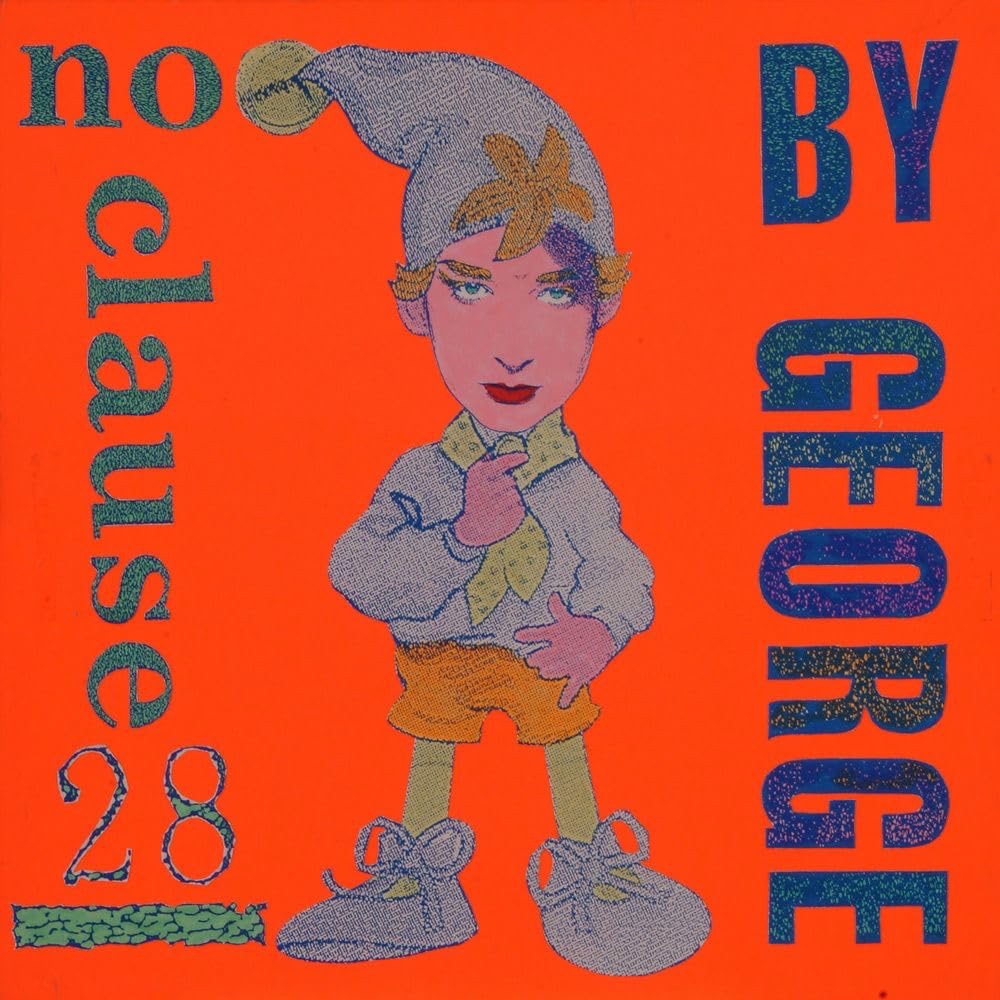
It was pop music as political protest.
But behind the beat lay something much darker.
Britain was living through the AIDS crisis. Gay men were dying. Newspapers routinely portrayed homosexuality through the lenses of disease, danger and scandal. Public anxiety about AIDS became entangled with older anxieties about sexuality, morality, children and the family.
Then Parliament legislated against the supposed “promotion of homosexuality.”
Officially it was Clause 28.
Once enacted, it became Section 28.
For a generation of gay people, however, it represented something much simpler.
A government had decided that their lives, their relationships and their families were something children should not be encouraged to regard as acceptable.
No Clause 28.
It’s just another term for hate.
Britain Before Section 28
To understand Section 28, we have to return to the Britain of the 1980s.
It was a period of enormous social and political conflict.
Margaret Thatcher had entered Downing Street in 1979. Her governments pursued privatisation, restrictions upon trade unions and a profound restructuring of Britain’s economy.
There was another battle underway as well.
A battle over values.
What was a family?
What should children be taught?
What constituted morality?
How far should local councils be permitted to pursue socially progressive policies?
And increasingly:
What place should gay men and lesbians occupy in British society?
The gay liberation movement had become increasingly visible during the 1970s.
Some Labour-controlled local councils developed policies intended to combat discrimination and recognise gay and lesbian communities.
To their supporters, this was equality.
To their opponents, it was political correctness, social engineering — and eventually “promoting homosexuality.”
The language mattered.
It suggested homosexuality was something that could be advertised, encouraged or taught.
And if homosexuality could be promoted, children could supposedly be recruited into it.
An old fear had acquired new political language.
Then Came AIDS
Into this already volatile environment came HIV/AIDS.
The first recognised cases appeared at the beginning of the 1980s.
Gay men were disproportionately affected during the early epidemic in Britain, as they were in several Western countries.
Fear spread faster than reliable information.
AIDS became associated in the public imagination with gay men.
Some newspapers used openly hostile language.
Gay sexuality could now be presented not merely as immoral but as dangerous.
People were dying while politicians, newspapers, doctors, activists and community organisations argued about how the epidemic should be discussed.
Britain eventually mounted one of the world’s most memorable public-health campaigns — “Don’t Die of Ignorance.”
But AIDS also intensified existing prejudices.
This is the atmosphere in which Section 28 must be understood.
It was not enacted in a social vacuum.
“Positive Images for Gays”
Margaret Thatcher herself made the political direction remarkably clear.
Speaking to the Young Conservative Conference in February 1987, she complained that parents did not want teachers forcing what she called “Positive images for gays” upon innocent children.
Later that year, at the Conservative Party Conference, she went further.
Children who needed traditional moral values, she said, were being taught that they possessed “an inalienable right to be gay.”
She concluded that such children were being cheated of a sound start in life.
Those words are extraordinary when read decades later.
But they are crucial because they demonstrate that the eventual legislation did not emerge from nowhere.
The Conservative government was explicitly presenting positive discussion of homosexuality in schools as part of a wider struggle over education and morality.
Jenny Lives With Eric and Martin
And then there was a children’s book.
Its name was Jenny Lives with Eric and Martin.
Written by Danish author Susanne Bösche, the book depicted a little girl living with her father and his male partner.
Today that premise sounds almost spectacularly ordinary.
In 1980s Britain it became political dynamite.
A copy was discovered in the library system of the Inner London Education Authority.
The controversy became vastly larger than the book itself.
Opponents presented it as evidence that local authorities were actively encouraging homosexuality among children.
During parliamentary debate, Conservative MP Jill Knight attacked the book and material of its kind in extraordinarily hostile terms.
She described such material collectively as a “pile of filth.”
The debate was no longer simply about whether gay people should be protected against discrimination.
It was about children.
And once a political argument becomes framed as protecting children from danger, compromise becomes considerably harder.
From Clause 28 to Section 28
During its passage through Parliament it was known as Clause 28.
That explains Boy George’s title.
When the Local Government Act received Royal Assent on 24 May 1988, Clause 28 became Section 28.
Technically it inserted a new Section 2A into the Local Government Act 1986.
The provision stated that a local authority should not intentionally promote homosexuality or publish material with the intention of promoting homosexuality.
It also prohibited local authorities from promoting teaching in maintained schools of the acceptability of homosexuality as a:
“pretended family relationship.”
Those three words became infamous.
Pretended.
Family.
Relationship.
The implication was difficult to miss.
A man and woman raising children constituted a family.
Two men or two women?
According to the language Parliament had placed into law, their relationship could be characterised as pretended.
What Section 28 Actually Did
This point is important because Section 28 has sometimes been described rather loosely as a law that made it illegal for teachers to discuss homosexuality.
Strictly speaking, that wasn’t what the legislation said.
The statutory restriction was placed upon local authorities.
It did not simply say:
“Teachers must not talk about homosexuality.”
Indeed, during later arguments over repeal, even supporters and opponents acknowledged that Section 28 did not directly regulate individual teachers in the simple way popular memory sometimes suggests.
It also contained an exception concerning action taken for the purpose of preventing or treating disease.
That matters when discussing AIDS: the law did not formally prohibit HIV-prevention work simply because it involved homosexuality.
But law does not operate only through prosecution.
It also operates through fear.
The Chilling Effect
Imagine being a teacher.
You know your local authority is legally prohibited from promoting homosexuality.
But what exactly constitutes promotion?
A book containing two fathers?
A lesson acknowledging gay relationships?
A gay teacher answering a pupil’s question?
Helping a pupil who thinks he might be gay?
Challenging another pupil who calls him a poof?
Discussing same-sex families?
Nobody wants to become the test case that discovers where the legal boundary lies.
So the safest response is obvious.
Say nothing.
That became one of Section 28’s most damaging legacies.
Its power was not simply what authorities were prosecuted for doing.
Its power lay in what people became frightened of doing at all.
The Gay Child in the Classroom
And somewhere in those classrooms sat gay children.
Some knew they were gay.
Some suspected.
Some had no word yet for what they were feeling.
Around them heterosexuality was everywhere.
Boys talked about girls.
Girls talked about boys.
Television showed husbands and wives.
Books contained princes marrying princesses.
Teachers referred to mothers and fathers.
None of this was called the promotion of heterosexuality.
It was simply regarded as life.
But presenting homosexuality positively could potentially be characterised as promotion.
That created an extraordinary imbalance.
One sexuality was ordinary.
The other became something adults approached nervously.
For a frightened gay teenager, silence itself carried a message.
“Pretended Family Relationship”
Perhaps nothing encapsulated that message more brutally than those words.
Pretended family relationship.
Gay people already had families.
They had partners.
They had children.
They had parents and siblings.
They created homes.
They cared for one another.
During the AIDS epidemic, gay men frequently created extraordinary networks of care when lovers and friends became sick — sometimes when biological families had rejected them.
Yet Parliament had inserted language into British law suggesting that homosexual relationships could be presented as something pretending to be a family.
Words in legislation are never merely words.
They tell citizens something about how the state regards them.
Boy George Answers Back
Boy George was never particularly renowned for political timidity.
In 1988 he answered the government through music.
“No Clause 28” attacked the proposed legislation while simultaneously attacking the political environment surrounding it.
AIDS appears in the song.
So does the NHS.
So does Thatcher.
So does political alienation.
George asks the Iron Lady whether Britain is moving to the right.
Most significantly, he refuses the underlying assumption that gay people should quietly accept the government’s definition of them.
The record wasn’t a major commercial hit.
Its historical value lies elsewhere.
It allows us to hear anger while Section 28 was actually happening.
This isn’t somebody looking back thirty years later and explaining why the legislation was harmful.
This is a gay man in 1988 saying:
No.
Ian McKellen Says Something Too
Another famous British gay man made a rather different intervention.
In January 1988, actor Ian McKellen participated in a BBC radio discussion about the proposed legislation.
During the discussion he publicly stated that he was homosexual.
It was effectively his coming out.
The political battle had turned something intensely personal into something public.
McKellen subsequently became one of Britain’s most prominent campaigners for gay equality.
And Section 28 helped produce something the legislation’s supporters presumably hadn’t intended.
It helped organise the opposition.
The Women Who Invaded the BBC News
Then came one of the great pieces of direct action in British gay and lesbian history.
On 23 May 1988, lesbian activists entered BBC Television Centre.
During the live Six O’Clock News, protesters disrupted the broadcast.
Newsreader Sue Lawley continued reading while the disturbance unfolded.
Millions of viewers suddenly encountered resistance to Clause 28 in their living rooms.
It was chaotic.
It was audacious.
And it was impossible to ignore.
The protesters understood something political campaigners have always understood:
If respectable channels won’t give you sufficient attention, create an event they cannot avoid reporting.
Abseiling Into Parliament
Other lesbian activists chose an even more spectacular method.
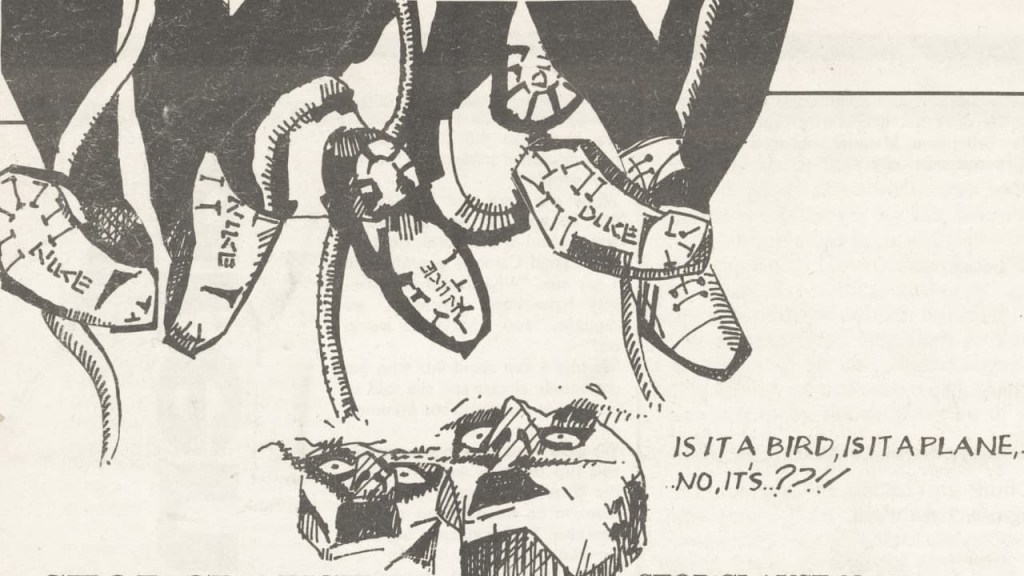
During protests surrounding the legislation, women entered the House of Lords and used rope to lower themselves into the chamber.
Think about the symbolism.
Parliament was legislating about homosexuality.
Gay and lesbian people were being discussed.
Their families were being discussed.
Their lives were being discussed.
So lesbian protesters literally dropped themselves into the debate.
They refused to remain outside while politicians decided how their existence could be represented.
Manchester Says No
Resistance was not confined to London.
On 20 February 1988, an enormous demonstration against Clause 28 took place in Manchester.
Tens of thousands participated.
The size of the protest demonstrated something important.
The British gay and lesbian community was no longer prepared simply to endure hostile legislation quietly.
A community that had spent generations being told to remain invisible was becoming politically impossible to ignore.
A law designed partly to restrict positive representations of homosexuality had produced an extraordinary amount of homosexual visibility.
History has a sense of irony.
From Protest to Stonewall
Section 28 also helped produce one of Britain’s most influential gay-rights organisations.
In the aftermath of the legislation, campaigners including Ian McKellen and actor Michael Cashman helped establish Stonewall.
Its strategy differed from some more confrontational activist organisations.
Stonewall concentrated heavily upon political lobbying and legislative reform.
The message was clear.
If Parliament could be used to restrict gay people’s lives, Parliament could also be persuaded to protect them.
The battle would increasingly move inside the political system itself.
Why Did People Support Section 28?
Historical fairness requires that we ask this question.
Supporters did not generally describe themselves as people attempting to persecute gay children.
They argued that homosexuality should not be actively promoted by taxpayer-funded local authorities.
Some believed schools had become vehicles for left-wing social engineering.
Some objected specifically to sexual material being made available to children.
Some believed traditional heterosexual marriage deserved a privileged place in education.
Some sincerely believed they were protecting children.
The controversy surrounding Jenny Lives with Eric and Martin became powerful precisely because it fitted that narrative.
But good intentions claimed by supporters do not settle the historical question.
We also have to ask:
What did the law actually communicate and produce?
Protecting children from sexually explicit material is one thing.
Treating positive acknowledgement of gay relationships as inherently suspect is another.
Section 28 blurred that distinction.
A child did not have to encounter sexually explicit material to learn that two men could love one another.
Yet homosexuality itself became entangled with the language of protection.
AIDS Makes the Silence More Troubling
The timing made this particularly disturbing.
Gay men were dying from AIDS.
Public-health authorities desperately needed to communicate frankly about sex.
Gay teenagers needed accurate information.
Fear and misinformation were themselves dangerous.
Section 28 technically permitted measures designed to prevent disease.
Nevertheless, it belonged to a broader political culture in which homosexuality could simultaneously be discussed as a public-health problem while positive representations of gay relationships were treated with suspicion.
Boy George saw the contradiction.
His song links Clause 28 directly with AIDS and government priorities.
For gay people living through the epidemic, these weren’t separate political subjects.
They were happening simultaneously.
The Long Years
Margaret Thatcher left office in 1990.
Section 28 remained.
John Major became prime minister.
Section 28 remained.
Tony Blair won his enormous Labour victory in 1997.
Section 28 still remained.
Repeal proved surprisingly difficult.
By then the provision had acquired enormous symbolic importance for both sides.
For opponents, repeal represented the removal of institutionalised prejudice.
For defenders, repeal could be portrayed as abandoning protection for children and traditional family values.
The original culture war simply continued into another decade.
Scotland Goes First
Devolution changed the situation.
The newly established Scottish Parliament repealed Scotland’s equivalent provision in 2000.
The campaign was bitter.
Once again arguments about homosexuality became arguments about children, schools and families.
But Scotland removed the restriction.
England and Wales would have to wait another three years.
Section 28 had never applied to Northern Ireland.
18 November 2003
Section 28 was finally repealed in England and Wales through the Local Government Act 2003.
Fifteen years had passed since its enactment.
By then Britain was changing rapidly.
The age of consent for gay men had been equalised.
Gay people were becoming increasingly visible in television, politics and public life.
Civil partnerships were about to arrive.
Eventually same-sex marriage would follow.
The state that had described homosexual relationships through the language of “pretended family relationship” would ultimately recognise those relationships as marriages.
That transformation occurred within a generation.
An Apology
There was another remarkable moment in 2009.
David Cameron — then leader of the Conservative Party — apologised for Section 28.
The party that had introduced the measure was acknowledging that it had been wrong.
Political apologies cannot undo history.
But they can reveal how dramatically accepted political values have changed.
Language once considered defensible government policy had become something a future Conservative prime minister felt compelled to repudiate.
The Legacy Wasn’t Repealed Overnight
Laws can disappear faster than cultures.
Section 28 vanished from the statute book.
Its effects did not necessarily vanish from classrooms.
Teachers who had spent years avoiding subjects associated with homosexuality did not instantly become comfortable discussing them.
Schools did not suddenly acquire inclusive resources.
Homophobic bullying did not disappear.
And the generation who had grown up beneath Section 28 did not suddenly forget what its silence had taught them.
For some, the lesson had been painfully simple:
Your heterosexual classmates can imagine their futures openly.
You should keep yours quiet.
That is the damage a chilling law can accomplish without prosecuting anybody.
“Promotion”
Perhaps the most revealing word in the entire controversy was not homosexuality.
It was:
promotion.
Can acknowledging the existence of gay people make children gay?
Can reading about two fathers manufacture homosexuality?
Can telling a gay teenager that his feelings are normal recruit him into homosexuality?
The premise assumes heterosexuality exists naturally while homosexuality requires encouragement.
History provides little support for that idea.
Gay people existed when homosexuality was punishable by death.
They existed when it meant imprisonment.
They existed when it could destroy a career.
They existed when psychiatrists attempted to cure it.
They existed beneath Section 28.
Silence never made gay people disappear.
It merely made some of their lives lonelier.
From the Buggery Act to Section 28
There is an uncomfortable historical echo here.
In 1533, Henry VIII’s government brought buggery explicitly within English secular felony law.
In 1988, Margaret Thatcher’s government legislated about how homosexuality could be represented by local government.
These laws were not equivalent.
The Buggery Act could send a man to the gallows.
Section 28 did nothing remotely comparable.
We should never flatten history by pretending otherwise.
Yet both belong to a much longer history of the state attempting to determine the boundaries surrounding same-sex sexuality.
What may people do?
What may they say?
What may children be told?
What constitutes a legitimate relationship?
What constitutes a family?
Across centuries, the answers changed.
But remarkably, governments kept asking the questions.
No Clause 28
Boy George’s protest record now belongs to another era.
Margaret Thatcher is dead.
Section 28 is repealed.
Same-sex couples can marry in Britain.
Gay people appear openly in schools, Parliament, television, sport and family life.
But history shouldn’t be rewritten simply because society moved on.
In 1988, gay men were watching friends die from AIDS.
Gay teenagers were trying to understand themselves.
Lesbians were fighting for recognition.
Teachers were trying to negotiate increasingly politicised classrooms.
And Parliament passed legislation declaring that local authorities must not promote the teaching of homosexuality as an acceptable “pretended family relationship.”
People protested.
Women invaded television news.
Women descended into the House of Lords.
Tens of thousands marched.
Ian McKellen came out.
Campaigners organised.
Stonewall emerged.
And a flamboyant gay singer who had already spent years refusing to conform picked up a microphone and told Margaret Thatcher exactly what he thought.
No Clause 28.
Sometimes history is written in Acts of Parliament.
Sometimes it is written by the people who refuse to accept them.
And sometimes it comes with a bloody good beat.
Tim Alderman ©️2026
Sources and Further Reading
UK Parliament, House of Commons Library, The 20th Anniversary of the Repeal of Section 28 of the Local Government Act 1988 — detailed account of the origins, operation, controversy and repeal of Section 28.
Local Government Act 1988, Section 28 — original statutory wording and insertion of Section 2A into the Local Government Act 1986.
UK Parliament, Hansard — parliamentary debates surrounding the legislation, including contemporary arguments concerning Jenny Lives with Eric and Martin and the alleged “promotion” of homosexuality.
Margaret Thatcher Foundation, speeches and archival material — particularly Thatcher’s 1987 Young Conservative Conference speech and Conservative Party Conference speech concerning “positive images for gays,” education and “traditional moral values.”
Stonewall, Our History and LGBTQ+ historical timeline — Section 28, Ian McKellen and the development of Stonewall.
Susanne Bösche, Jenny Lives with Eric and Martin — the children’s book that became central to the political controversy surrounding homosexuality and education.
Boy George, No Clause 28 (1988) — contemporary protest song responding to the legislation and its wider political context.
For broader context, contemporary British newspaper archives and gay and lesbian publications from 1987–89 provide valuable evidence of how the legislation was presented and experienced at the time.

