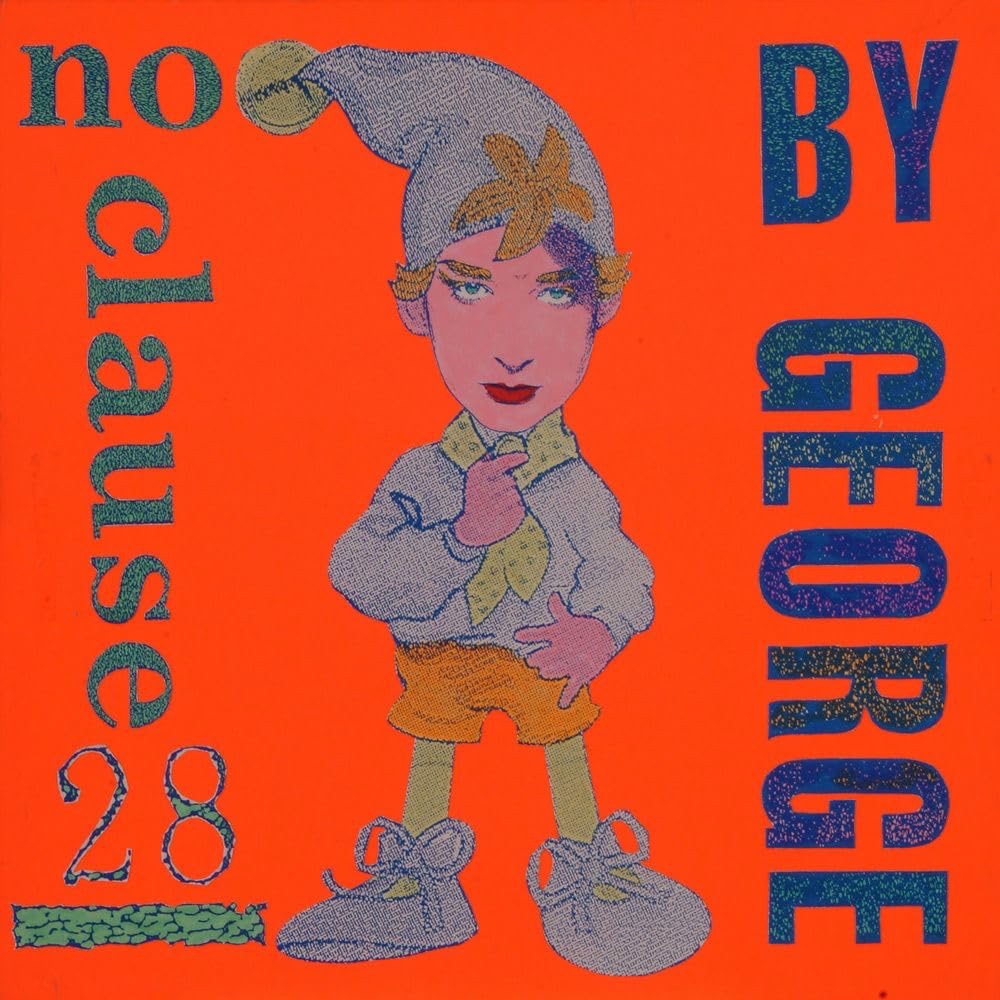
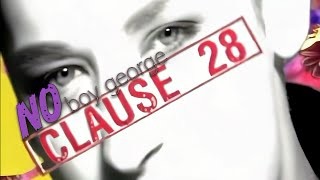
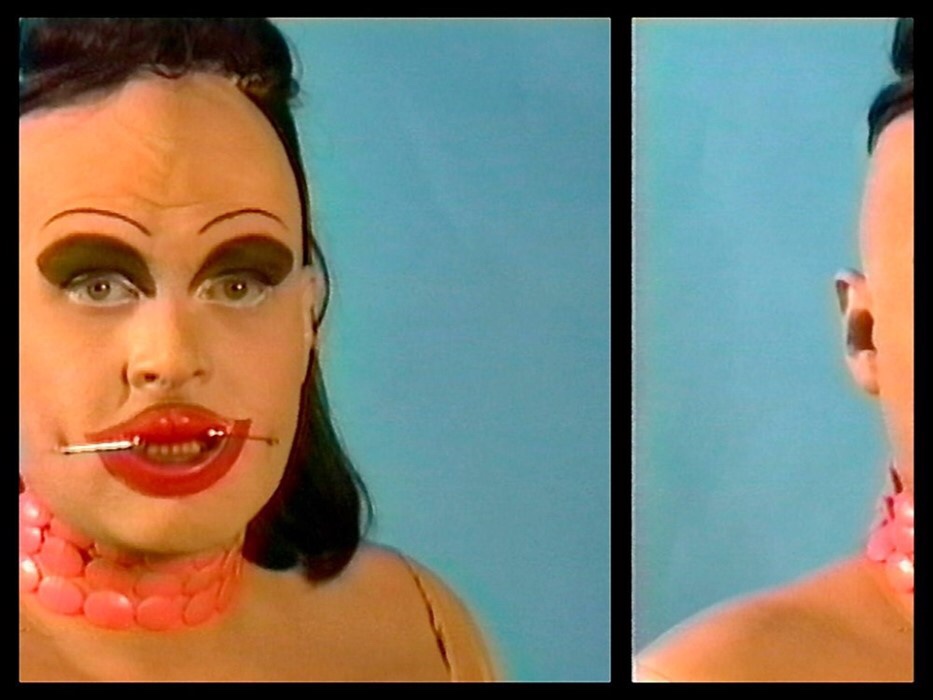
“No Clause 28” was an angry response to legislation then passing through the British Parliament — legislation that would become one of the most notorious measures affecting gay people in modern British history.
George addressed Margaret Thatcher directly. He attacked the government’s record on AIDS, the National Health Service and homosexuality. At one point he asked the “Iron Lady” whether Britain was “moving to the right.”
Boy George – No Clause 28
It was pop music as political protest.
But behind the beat lay something much darker.
Britain was living through the AIDS crisis. Gay men were dying. Newspapers routinely portrayed homosexuality through the lenses of disease, danger and scandal. Public anxiety about AIDS became entangled with older anxieties about sexuality, morality, children and the family.
Then Parliament legislated against the supposed “promotion of homosexuality.”
Boy George – No Clause 28
Officially it was Clause 28.
Once enacted, it became Section 28.
For a generation of gay people, however, it represented something much simpler.
A government had decided that their lives, their relationships and their families were something children should not be encouraged to regard as acceptable.
No Clause 28.
It’s just another term for hate.
Britain Before Section 28
To understand Section 28, we have to return to the Britain of the 1980s.
It was a period of enormous social and political conflict.
Margaret Thatcher had entered Downing Street in 1979. Her governments pursued privatisation, restrictions upon trade unions and a profound restructuring of Britain’s economy.
There was another battle underway as well.
A battle over values.
What was a family?
What should children be taught?
What constituted morality?
How far should local councils be permitted to pursue socially progressive policies?
And increasingly:
What place should gay men and lesbians occupy in British society?
The gay liberation movement had become increasingly visible during the 1970s.
Some Labour-controlled local councils developed policies intended to combat discrimination and recognise gay and lesbian communities.
To their supporters, this was equality.
To their opponents, it was political correctness, social engineering — and eventually “promoting homosexuality.”
The language mattered.
It suggested homosexuality was something that could be advertised, encouraged or taught.
And if homosexuality could be promoted, children could supposedly be recruited into it.
An old fear had acquired new political language.
Then Came AIDS
Into this already volatile environment came HIV/AIDS.
The first recognised cases appeared at the beginning of the 1980s.
Gay men were disproportionately affected during the early epidemic in Britain, as they were in several Western countries.
Fear spread faster than reliable information.
AIDS became associated in the public imagination with gay men.
Some newspapers used openly hostile language.
Gay sexuality could now be presented not merely as immoral but as dangerous.
People were dying while politicians, newspapers, doctors, activists and community organisations argued about how the epidemic should be discussed.
Britain eventually mounted one of the world’s most memorable public-health campaigns — “Don’t Die of Ignorance.”
But AIDS also intensified existing prejudices.
This is the atmosphere in which Section 28 must be understood.
It was not enacted in a social vacuum.
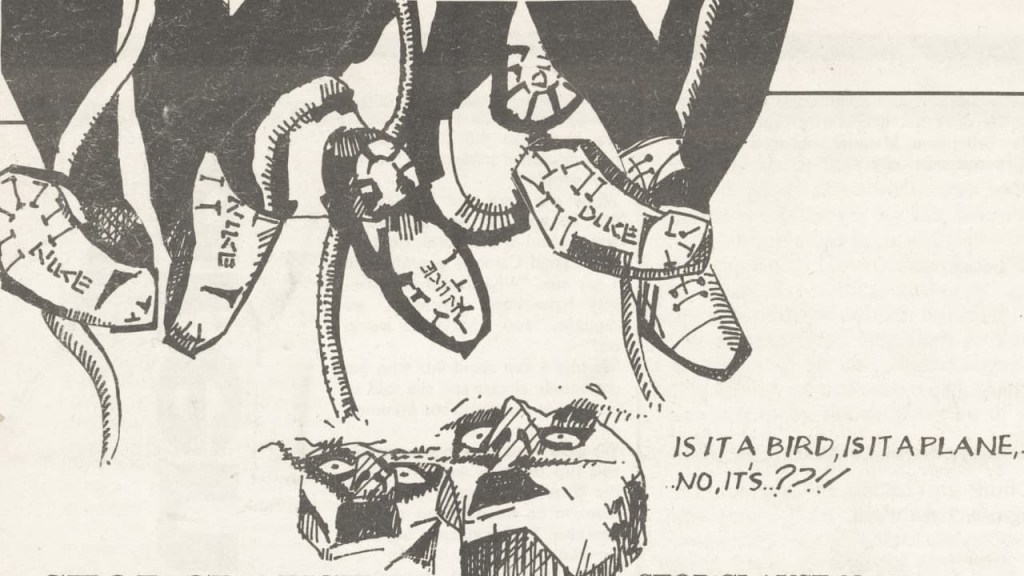
Stop Clause 28
“Positive Images for Gays”
Margaret Thatcher herself made the political direction remarkably clear.
Speaking to the Young Conservative Conference in February 1987, she complained that parents did not want teachers forcing what she called “Positive images for gays” upon innocent children.
Later that year, at the Conservative Party Conference, she went further.
Children who needed traditional moral values, she said, were being taught that they possessed “an inalienable right to be gay.”
She concluded that such children were being cheated of a sound start in life.
Those words are extraordinary when read decades later.
But they are crucial because they demonstrate that the eventual legislation did not emerge from nowhere.
The Conservative government was explicitly presenting positive discussion of homosexuality in schools as part of a wider struggle over education and morality.
Jenny Lives With Eric and Martin
And then there was a children’s book.
Its name was Jenny Lives with Eric and Martin.
Written by Danish author Susanne Bösche, the book depicted a little girl living with her father and his male partner.
Today that premise sounds almost spectacularly ordinary.
In 1980s Britain it became political dynamite.
A copy was discovered in the library system of the Inner London Education Authority.
The controversy became vastly larger than the book itself.
Opponents presented it as evidence that local authorities were actively encouraging homosexuality among children.
During parliamentary debate, Conservative MP Jill Knight attacked the book and material of its kind in extraordinarily hostile terms.
She described such material collectively as a “pile of filth.”
The debate was no longer simply about whether gay people should be protected against discrimination.
It was about children.
And once a political argument becomes framed as protecting children from danger, compromise becomes considerably harder.
From Clause 28 to Section 28
During its passage through Parliament it was known as Clause 28.
That explains Boy George’s title.
When the Local Government Act received Royal Assent on 24 May 1988, Clause 28 became Section 28.
Technically it inserted a new Section 2A into the Local Government Act 1986.
The provision stated that a local authority should not intentionally promote homosexuality or publish material with the intention of promoting homosexuality.
It also prohibited local authorities from promoting teaching in maintained schools of the acceptability of homosexuality as a:
“pretended family relationship.”
Those three words became infamous.
Pretended.
Family.
Relationship.
The implication was difficult to miss.
A man and woman raising children constituted a family.
Two men or two women?
According to the language Parliament had placed into law, their relationship could be characterised as pretended.
What Section 28 Actually Did
This point is important because Section 28 has sometimes been described rather loosely as a law that made it illegal for teachers to discuss homosexuality.
Strictly speaking, that wasn’t what the legislation said.
The statutory restriction was placed upon local authorities.
It did not simply say:
“Teachers must not talk about homosexuality.”
Indeed, during later arguments over repeal, even supporters and opponents acknowledged that Section 28 did not directly regulate individual teachers in the simple way popular memory sometimes suggests.
It also contained an exception concerning action taken for the purpose of preventing or treating disease.
That matters when discussing AIDS: the law did not formally prohibit HIV-prevention work simply because it involved homosexuality.
But law does not operate only through prosecution.
It also operates through fear.
The Chilling Effect
Imagine being a teacher.
You know your local authority is legally prohibited from promoting homosexuality.
But what exactly constitutes promotion?
A book containing two fathers?
A lesson acknowledging gay relationships?
A gay teacher answering a pupil’s question?
Helping a pupil who thinks he might be gay?
Challenging another pupil who calls him a poof?
Discussing same-sex families?
Nobody wants to become the test case that discovers where the legal boundary lies.
So the safest response is obvious.
Say nothing.
That became one of Section 28’s most damaging legacies.
Its power was not simply what authorities were prosecuted for doing.
Its power lay in what people became frightened of doing at all.
The Gay Child in the Classroom
And somewhere in those classrooms sat gay children.
Some knew they were gay.
Some suspected.
Some had no word yet for what they were feeling.
Around them heterosexuality was everywhere.
Boys talked about girls.
Girls talked about boys.
Television showed husbands and wives.
Books contained princes marrying princesses.
Teachers referred to mothers and fathers.
None of this was called the promotion of heterosexuality.
It was simply regarded as life.
But presenting homosexuality positively could potentially be characterised as promotion.
That created an extraordinary imbalance.
One sexuality was ordinary.
The other became something adults approached nervously.
For a frightened gay teenager, silence itself carried a message.
“Pretended Family Relationship”
Perhaps nothing encapsulated that message more brutally than those words.
Pretended family relationship.
Gay people already had families.
They had partners.
They had children.
They had parents and siblings.
They created homes.
They cared for one another.
During the AIDS epidemic, gay men frequently created extraordinary networks of care when lovers and friends became sick — sometimes when biological families had rejected them.
Yet Parliament had inserted language into British law suggesting that homosexual relationships could be presented as something pretending to be a family.
Words in legislation are never merely words.
They tell citizens something about how the state regards them.
Boy George Answers Back
Boy George was never particularly renowned for political timidity.
In 1988 he answered the government through music.
“No Clause 28” attacked the proposed legislation while simultaneously attacking the political environment surrounding it.
AIDS appears in the song.
So does the NHS.
So does Thatcher.
So does political alienation.
George asks the Iron Lady whether Britain is moving to the right.
Most significantly, he refuses the underlying assumption that gay people should quietly accept the government’s definition of them.
The record wasn’t a major commercial hit.
Its historical value lies elsewhere.
It allows us to hear anger while Section 28 was actually happening.
This isn’t somebody looking back thirty years later and explaining why the legislation was harmful.
This is a gay man in 1988 saying:
No.
Ian McKellen Says Something Too
Another famous British gay man made a rather different intervention.
In January 1988, actor Ian McKellen participated in a BBC radio discussion about the proposed legislation.
During the discussion he publicly stated that he was homosexual.
It was effectively his coming out.
The political battle had turned something intensely personal into something public.
McKellen subsequently became one of Britain’s most prominent campaigners for gay equality.
And Section 28 helped produce something the legislation’s supporters presumably hadn’t intended.
It helped organise the opposition.
The Women Who Invaded the BBC News
Then came one of the great pieces of direct action in British gay and lesbian history.
On 23 May 1988, lesbian activists entered BBC Television Centre.
During the live Six O’Clock News, protesters disrupted the broadcast.
Newsreader Sue Lawley continued reading while the disturbance unfolded.
Millions of viewers suddenly encountered resistance to Clause 28 in their living rooms.
It was chaotic.
It was audacious.
And it was impossible to ignore.
The protesters understood something political campaigners have always understood:
If respectable channels won’t give you sufficient attention, create an event they cannot avoid reporting.
Abseiling Into Parliament
Other lesbian activists chose an even more spectacular method.
During protests surrounding the legislation, women entered the House of Lords and used rope to lower themselves into the chamber.
Think about the symbolism.
Parliament was legislating about homosexuality.
Gay and lesbian people were being discussed.
Their families were being discussed.
Their lives were being discussed.
So lesbian protesters literally dropped themselves into the debate.
They refused to remain outside while politicians decided how their existence could be represented.
Manchester Says No
Resistance was not confined to London.
On 20 February 1988, an enormous demonstration against Clause 28 took place in Manchester.
Tens of thousands participated.
The size of the protest demonstrated something important.
The British gay and lesbian community was no longer prepared simply to endure hostile legislation quietly.
A community that had spent generations being told to remain invisible was becoming politically impossible to ignore.
A law designed partly to restrict positive representations of homosexuality had produced an extraordinary amount of homosexual visibility.
History has a sense of irony.
From Protest to Stonewall
Section 28 also helped produce one of Britain’s most influential gay-rights organisations.
In the aftermath of the legislation, campaigners including Ian McKellen and actor Michael Cashman helped establish Stonewall.
Its strategy differed from some more confrontational activist organisations.
Stonewall concentrated heavily upon political lobbying and legislative reform.
The message was clear.
If Parliament could be used to restrict gay people’s lives, Parliament could also be persuaded to protect them.
The battle would increasingly move inside the political system itself.
Why Did People Support Section 28?
Historical fairness requires that we ask this question.
Supporters did not generally describe themselves as people attempting to persecute gay children.
They argued that homosexuality should not be actively promoted by taxpayer-funded local authorities.
Some believed schools had become vehicles for left-wing social engineering.
Some objected specifically to sexual material being made available to children.
Some believed traditional heterosexual marriage deserved a privileged place in education.
Some sincerely believed they were protecting children.
The controversy surrounding Jenny Lives with Eric and Martin became powerful precisely because it fitted that narrative.
But good intentions claimed by supporters do not settle the historical question.
We also have to ask:
What did the law actually communicate and produce?
Protecting children from sexually explicit material is one thing.
Treating positive acknowledgement of gay relationships as inherently suspect is another.
Section 28 blurred that distinction.
A child did not have to encounter sexually explicit material to learn that two men could love one another.
Yet homosexuality itself became entangled with the language of protection.
AIDS Makes the Silence More Troubling
The timing made this particularly disturbing.
Gay men were dying from AIDS.
Public-health authorities desperately needed to communicate frankly about sex.
Gay teenagers needed accurate information.
Fear and misinformation were themselves dangerous.
Section 28 technically permitted measures designed to prevent disease.
Nevertheless, it belonged to a broader political culture in which homosexuality could simultaneously be discussed as a public-health problem while positive representations of gay relationships were treated with suspicion.
Boy George saw the contradiction.
His song links Clause 28 directly with AIDS and government priorities.
For gay people living through the epidemic, these weren’t separate political subjects.
They were happening simultaneously.
The Long Years
Margaret Thatcher left office in 1990.
Section 28 remained.
John Major became prime minister.
Section 28 remained.
Tony Blair won his enormous Labour victory in 1997.
Section 28 still remained.
Repeal proved surprisingly difficult.
By then the provision had acquired enormous symbolic importance for both sides.
For opponents, repeal represented the removal of institutionalised prejudice.
For defenders, repeal could be portrayed as abandoning protection for children and traditional family values.
The original culture war simply continued into another decade.
Scotland Goes First
Devolution changed the situation.
The newly established Scottish Parliament repealed Scotland’s equivalent provision in 2000.
The campaign was bitter.
Once again arguments about homosexuality became arguments about children, schools and families.
But Scotland removed the restriction.
England and Wales would have to wait another three years.
Section 28 had never applied to Northern Ireland.
18 November 2003
Section 28 was finally repealed in England and Wales through the Local Government Act 2003.
Fifteen years had passed since its enactment.
By then Britain was changing rapidly.
The age of consent for gay men had been equalised.
Gay people were becoming increasingly visible in television, politics and public life.
Civil partnerships were about to arrive.
Eventually same-sex marriage would follow.
The state that had described homosexual relationships through the language of “pretended family relationship” would ultimately recognise those relationships as marriages.
That transformation occurred within a generation.
An Apology
There was another remarkable moment in 2009.
David Cameron — then leader of the Conservative Party — apologised for Section 28.
The party that had introduced the measure was acknowledging that it had been wrong.
Political apologies cannot undo history.
But they can reveal how dramatically accepted political values have changed.
Language once considered defensible government policy had become something a future Conservative prime minister felt compelled to repudiate.
The Legacy Wasn’t Repealed Overnight
Laws can disappear faster than cultures.
Section 28 vanished from the statute book.
Its effects did not necessarily vanish from classrooms.
Teachers who had spent years avoiding subjects associated with homosexuality did not instantly become comfortable discussing them.
Schools did not suddenly acquire inclusive resources.
Homophobic bullying did not disappear.
And the generation who had grown up beneath Section 28 did not suddenly forget what its silence had taught them.
For some, the lesson had been painfully simple:
Your heterosexual classmates can imagine their futures openly.
You should keep yours quiet.
That is the damage a chilling law can accomplish without prosecuting anybody.
“Promotion”
Perhaps the most revealing word in the entire controversy was not homosexuality.
It was:
promotion.
Can acknowledging the existence of gay people make children gay?
Can reading about two fathers manufacture homosexuality?
Can telling a gay teenager that his feelings are normal recruit him into homosexuality?
The premise assumes heterosexuality exists naturally while homosexuality requires encouragement.
History provides little support for that idea.
Gay people existed when homosexuality was punishable by death.
They existed when it meant imprisonment.
They existed when it could destroy a career.
They existed when psychiatrists attempted to cure it.
They existed beneath Section 28.
Silence never made gay people disappear.
It merely made some of their lives lonelier.
From the Buggery Act to Section 28
There is an uncomfortable historical echo here.
In 1533, Henry VIII’s government brought buggery explicitly within English secular felony law.
In 1988, Margaret Thatcher’s government legislated about how homosexuality could be represented by local government.
These laws were not equivalent.
The Buggery Act could send a man to the gallows.
Section 28 did nothing remotely comparable.
We should never flatten history by pretending otherwise.
Yet both belong to a much longer history of the state attempting to determine the boundaries surrounding same-sex sexuality.
What may people do?
What may they say?
What may children be told?
What constitutes a legitimate relationship?
What constitutes a family?
Across centuries, the answers changed.
But remarkably, governments kept asking the questions.
No Clause 28
Boy George’s protest record now belongs to another era.
Margaret Thatcher is dead.
Section 28 is repealed.
Same-sex couples can marry in Britain.
Gay people appear openly in schools, Parliament, television, sport and family life.
But history shouldn’t be rewritten simply because society moved on.
In 1988, gay men were watching friends die from AIDS.
Gay teenagers were trying to understand themselves.
Lesbians were fighting for recognition.
Teachers were trying to negotiate increasingly politicised classrooms.
And Parliament passed legislation declaring that local authorities must not promote the teaching of homosexuality as an acceptable “pretended family relationship.”
People protested.
Women invaded television news.
Women descended into the House of Lords.
Tens of thousands marched.
Ian McKellen came out.
Campaigners organised.
Stonewall emerged.
And a flamboyant gay singer who had already spent years refusing to conform picked up a microphone and told Margaret Thatcher exactly what he thought.
No Clause 28.
Sometimes history is written in Acts of Parliament.
Sometimes it is written by the people who refuse to accept them.
UK Parliament, House of Commons Library, The 20th Anniversary of the Repeal of Section 28 of the Local Government Act 1988 — detailed account of the origins, operation, controversy and repeal of Section 28.
Local Government Act 1988, Section 28 — original statutory wording and insertion of Section 2A into the Local Government Act 1986.
UK Parliament, Hansard — parliamentary debates surrounding the legislation, including contemporary arguments concerning Jenny Lives with Eric and Martin and the alleged “promotion” of homosexuality.
Margaret Thatcher Foundation, speeches and archival material — particularly Thatcher’s 1987 Young Conservative Conference speech and Conservative Party Conference speech concerning “positive images for gays,” education and “traditional moral values.”
Stonewall, Our History and LGBTQ+ historical timeline — Section 28, Ian McKellen and the development of Stonewall.
Susanne Bösche, Jenny Lives with Eric and Martin — the children’s book that became central to the political controversy surrounding homosexuality and education.
Boy George, No Clause 28 (1988) — contemporary protest song responding to the legislation and its wider political context.
For broader context, contemporary British newspaper archives and gay and lesbian publications from 1987–89 provide valuable evidence of how the legislation was presented and experienced at the time.
“I will always remember the moment when a pretty faced, slightly chubby blonde boy turned up at the door of The Cha Cha Club wearing a rather hideous blue velvet cape. He told me his name was Leigh Bowery, followed by, “Graham sent me to you.” It was late October 1981.
My friend Graham Parnham had met Leigh at Andrew Logan’s Alternative Miss World earlier that month. Leigh didn’t know anybody on the club scene in London so Graham had sent him along to my club telling him that I would look after him. “You’ll like him.” Graham had told me, “. . . he’s Australian and a bit bonkers.” Graham was right. I liked him immediately.
Leigh had a generous spirit and sharp wit, was extremely polite and charming. I told him I’d be glad to let him in to the club so long as he promised me that he would never wear that velvet cape again. We laughed, the first of many laughs that we were to have.
It would be two or three years before Leigh started creating looks and dressing in his extraordinary and very outrageous style. Back in 1982 and 83 he wanted to be a fashion designer and would create 1940s inspired pyjama suits for me, Trojan and himself.
He’d make me dresses to wear to the club, shrewdly knowing that they would be photographed aplenty. He’d hand write labels with indelible laundry marker and stitch them into his creations. I would look forward to the Tuesday afternoons when Leigh would arrive with something new to wear out that night.
The world quite rightly remembers Leigh Bowery as the brilliant and unique performance artist that he became. Though we remained friends throughout his life, for me there is a sweetness to remembering our close friendship of those early years and the extraordinary evolution of the pretty faced, slightly chubby blonde boy in the hideous blue velvet cape.
We lost Graham to AIDS in the spring of 1994.
We lost Leigh the same year, on New Year’s Eve.”
— by Scarlett Cannon
Sex, sin and sausages: the debauched brilliance of Leigh Bowery
His shocking shows – featuring births, enemas and vomiting – thrilled and appalled. Two decades after his death, why is the influence of this 80s nightclub legend still so pervasive?
‘He was modern art on legs’ … Leigh Bowery in a jacket he customised. Photograph: Mark Baker/Photoshot/Getty Images
e was painted naked and sprawling by Lucian Freud. He “gave birth” to his own wife on stage, using sausages as an umbilical cord. And he was the star turn in Taboo, perhaps the most debauched nightclub Britain has ever seen, hosting the revelry with his face painted blue, his nose and nipples pierced and his outfit as intimidatingly outlandish as possible. But there was much more to Leigh Bowery than sheer outrageousness – and his range, daring and influence are now starting to be appreciated by a new generation.
Perhaps the most prominent sign of this reappraisal comes from Australian choreographer Andy Howitt, who is bringing Sunshine Boy, a new show about the nightlife legend, to the Edinburgh fringe this summer. “I was at the National Gallery in Melbourne and there was a big sculpture that said, ‘By Leigh Bowery from Sunshine’,” he says. “I was like, ‘That can’t be the Leigh Bowery from the 80s dance scene.’ It sparked me on a journey to find out about the man.”
Bowery did indeed hail from Sunshine, a suburb of Melbourne with around 10,000 inhabitants. Howitt visited it and spoke to his family, as well as to those in London who had known him. “You have to remember his backstory,” says Howitt. “He only lived in London for 14 years. He sold up shop at 19 or 20 and went straight there and became the icon.” Howitt fed his findings into Sunshine Boy, telling the story of Bowery’s life through dance, spoken word passages, music and, naturally, those showstopping costumes. Howitt’s performance ranges from his childhood to the Taboo years and then to his death from Aids in 1994 at the age of 33.
Umbilical sausages … Leigh Bowery ‘giving birth’ to his wife. Photograph: James Hill/Rex
.Umbilical sausages … Leigh Bowery ‘giving birth’ to his wife. Photograph: James Hill/Rex
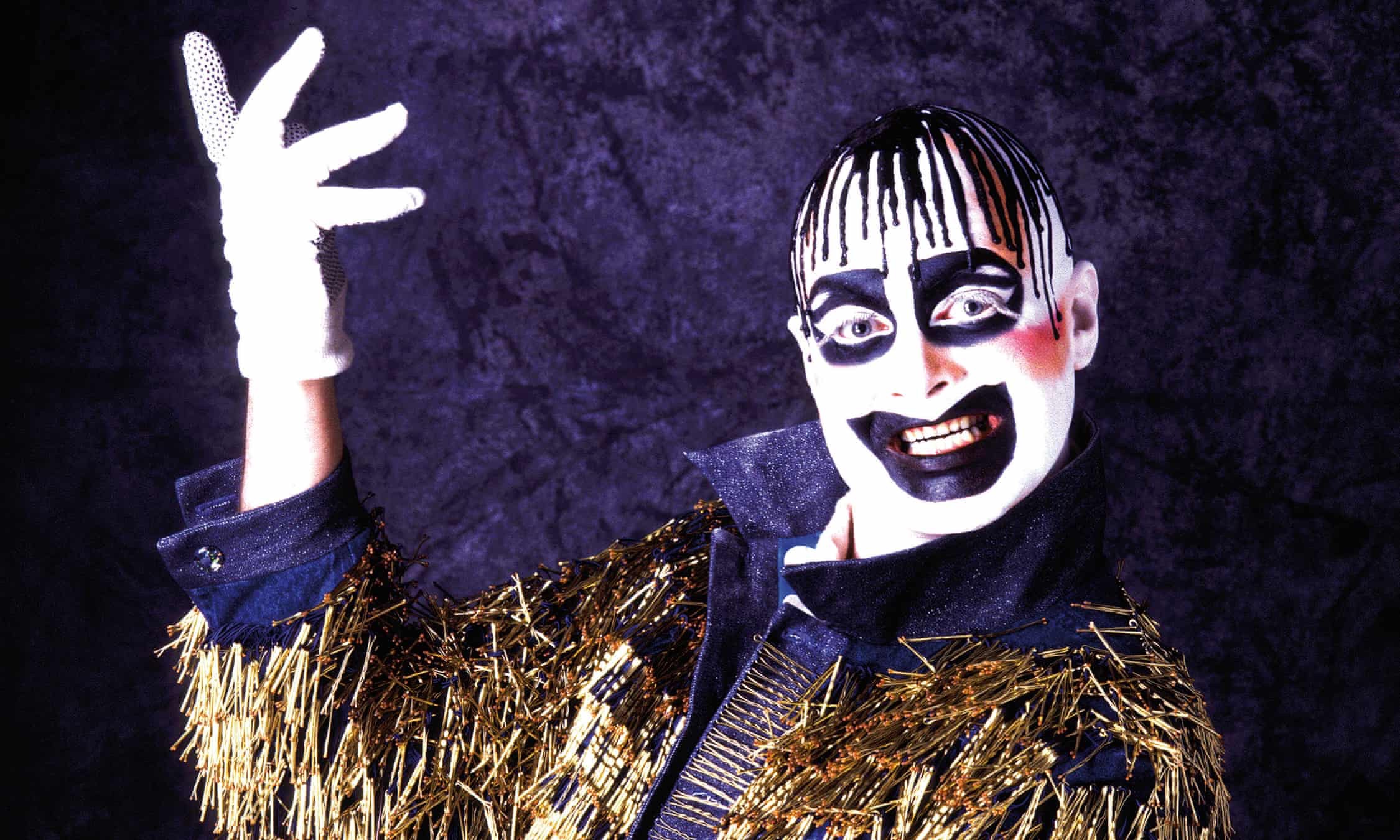
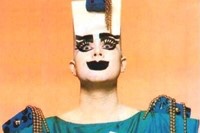
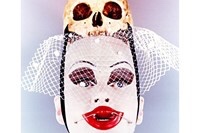
As Sunshine Boy suggests, Bowery remains a larger-than-life persona in underground culture, even 24 years after his death. What made him so different from the other 80s club kids? Partly his looks, which still seem strikingly original. As the impresario of Taboo, he wore a different, jaw-dropping outfit every week. There was the shiny PVC mask and matching catsuit, with one larger leg as if in plaster. There was the polka dot suit worn with polka dot face. There were the lightbulbs he’d wear on either side of his face, the coloured drips that would cover his bald head, the merkin he’d place over his genitals. And then there was his wife, Nicola Bateman, worn naked and strapped upside-down to his chest. (Although Bowery described himself as gay, he married his longtime companion and sometime lover Bateman seven months before his death.)
But Bowery’s creativity was not confined to clubs. He worked with the dancer and choreographer Michael Clark, creating costumes and co-starring in his performances. He appeared in the windows of the Anthony d’Offay Gallery, wearing a different outfit each day of the week. He fronted a band, Minty, and – perhaps most famously – modelled nude several times for Freud. On the back of the Freud connection, Bowery hit the mainstream from various directions. He appeared in a commercial for Pepe Jeans and guested on The Clothes Show on BBC One, taking tea in Harrods dressed in a succession of astonishing get-ups to the soundtrack of his hero, drag star Divine.
Bowery also engaged in more conventional creative work. He was an art director on the 1991 video for Massive Attack’s Unfinished Sympathy, a stylist for Rifat Özbek, a costume designer for Culture Club (Boy George would co-write and star in a successful musical about Bowery). His career resists categorisation. Asked what he most deplored in others by the Guardian in 1993, Bowery replied: “The urge to categorise: if you label me, you negate me.” Perhaps Boy George came up with the most accurate description when he described Bowery as “modern art on legs”. He turned himself, his body and his image into an art object, one that walked among us as well as appeared on stages and in the windows of galleries.
“People are always telling me about the time they saw him,” says Sue Tilley, Bowery’s friend and the author of Leigh Bowery: The Life and Times of an Icon. “It was probably only once, but he made such an impact they have never forgotten it.” DJ Princess Julia met Bowery in the early 80s, both part of a crowd that included the artist Cerith Wyn Evans, Boy George, Clark, and Bowery’s friend and frequent co-star Trojan. Julia says Bowery, who started off working at Burger King to make ends meet, quickly became a fixture on the scene: “He was very influential because he was very inventive. He was always coming up with ideas.”
His looks, she says, were often inspired by what was happening in wider society. “The dot face, for example, was a comment on Kaposi’s sarcoma” – the cancer which caused the facial lesions that struck many Aids sufferers in the 80s. “His work was about things like body image or illnesses – and those things haven’t gone away. It confronts you and frightens you and makes you think. It’s very disruptive, to use a word of the moment.”
There is a clear line from Bowery to the performers and punters exploring extreme looks today. Glyn Fussell is the founder of Sink the Pink, a playground for the artistic side of drag culture. He says that while the twentysomethings who come to the London club probably haven’t heard of Bowery, his influence is present. “You see it fashion, you see it in the underground, you see it in mainstream culture, in RuPaul’s Drag Race.”
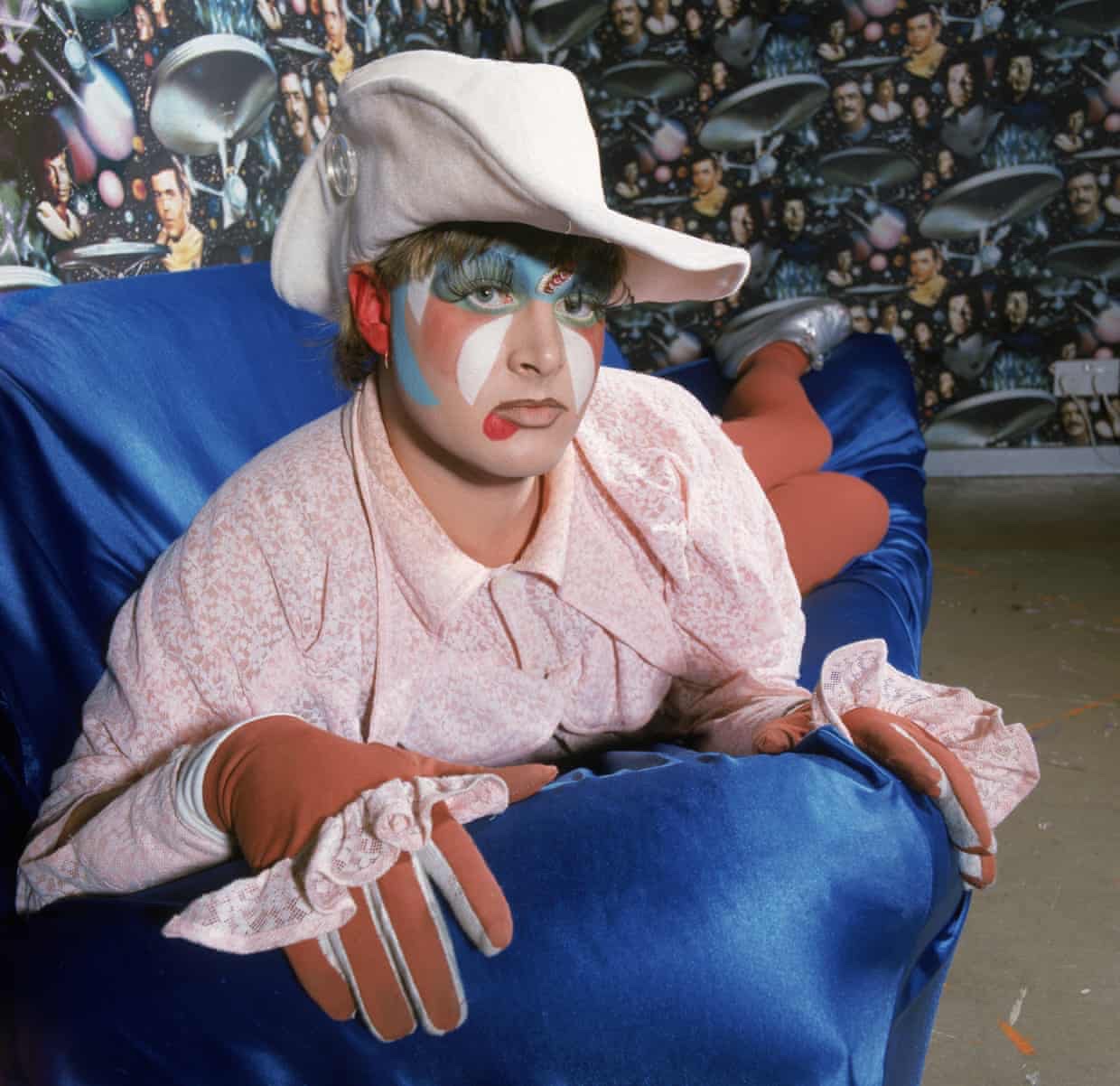
Howdy … Bowery at home in 1984. Photograph: Steve Pyke/Getty
It is in fashion that Bowery’s influence is most explicit. Rick Owens’ “human backpack” collection in 2015 was a tribute to Bowery carrying Bateman like a papoose. Menswear designer Charles Jeffrey runs a club called Loverboy that stage shows verging on performance art, much like Bowery. And, with his floral gowns and matching face masks, Richard Quinn, the young London designer who had the Queen in attendance at his February show, has clearly been inspired by Bowery.
Advertisement
For Gareth Pugh, Bowery is a consistent reference. The designer first learned about him in Fergus Greer’s 2002 book Leigh Bowery Looks: “If you go into any suburban art college you’ll always find that book in the fashion section.” Bowery is inspirational, he believes, becausehe “ created his own language. That’s the golden fleece for any fashion designer: to find something they can be known for 30 years down the line – and for it to be so iconic.”
Of course, some elements of Bowery’s work haven’t aged so well, driven by his relentless desire to shock. One of his most infamous looks was called “Pakis from Outer Space”, inspired by the Asian communities near where Bowery lived in the East End and involving blue faces, bindis and nose rings. He made blouses out of material bearing swastikas, used rags stolen from Jewish artist Freud’s studio to make an image of Hitler and appeared, naked, in makeup similar to blackface, for a Minty publicity photo.
This preoccupation with the extreme offended plenty of people. Clark stopped working with Bowery when he insisted on wearing a costume with “a cunt” written on it. Minty saw their residency at the Soho club Freedom cut short because of a show that involved Bowery “vomiting” vegetable soup into Bateman’s mouth.
Perhaps Bowery’s work was radical satire, all part of a life lived without taboos. Shocking people – and perhaps waking them up – was the ultimate aim. Speaking about a show at an Aids benefit, in which he had an enema on stage that sprayed the front row, he said: “I was quite pleased with the hostile reaction. If I have to ask, ‘Is this idea too sick?’ I know I am on the right track.”
“The idea,” says Pugh, “of wilfully doing things that get a rise out of people. He had this idea of something that is bereft of control, for good or for bad.”
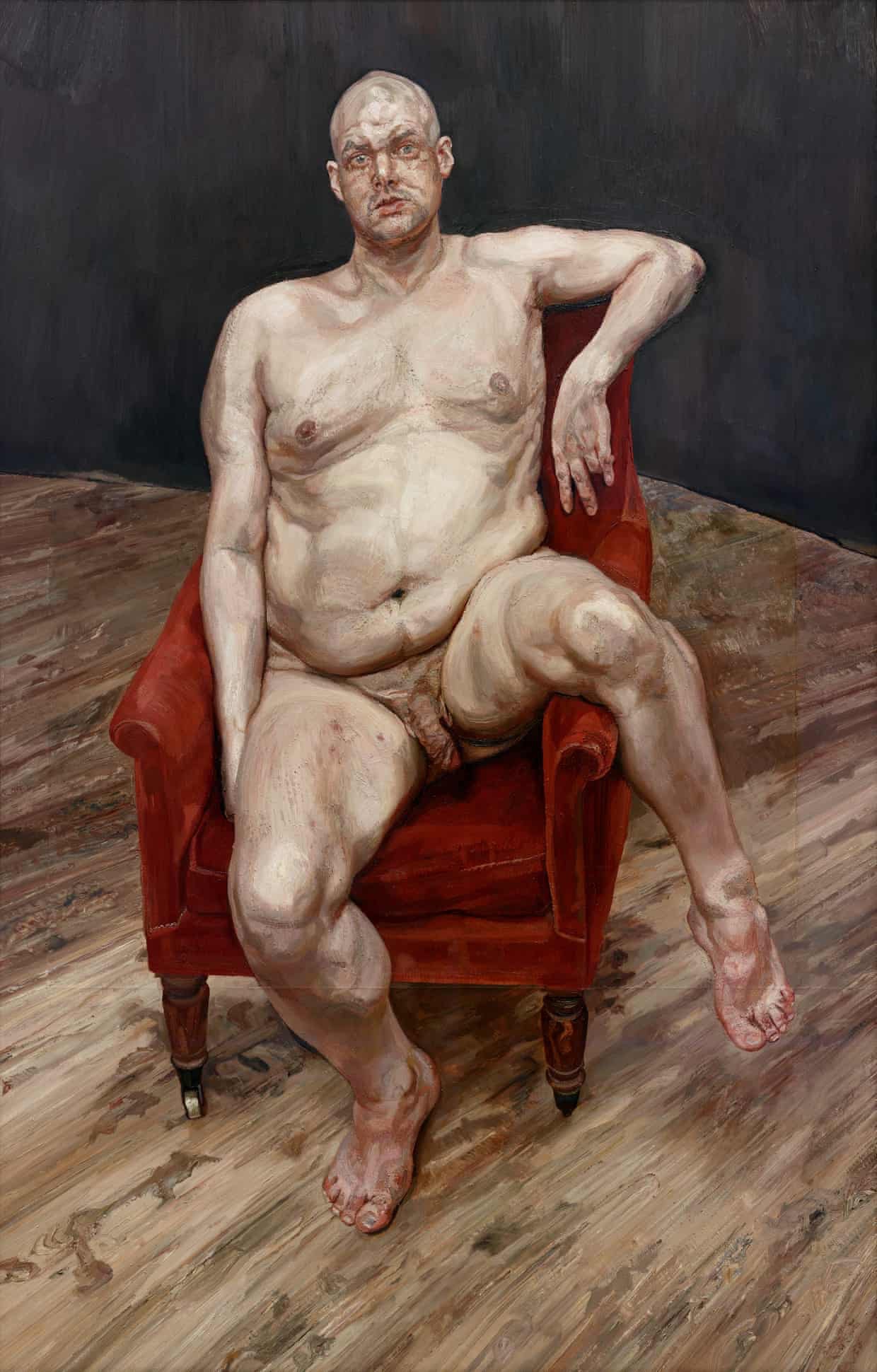
A ticket to the mainstream … one of Lucian Freud’s portraits of Bowery. Photograph: Bridgeman Images
“I don’t think he was setting out with a racist heart,” says Fussell. “He was challenging the status quo. It was about challenging what he was seeing on the streets and making it hyper-realised.”
Howitt’s 40-minute show will cover Bowery’s triumphs, disasters and premature death. Bowery found out he was HIV positive in 1988 and died six years later, not long before combination therapies greatly prolonged the lives of those with the disease. “A lot of people say that if he had survived another month, he would have been OK,” says Howitt.
Tilley often finds herself wondering what Bowery might have achieved had he lived longer. “He had a lot of irons in the fire, but he died before anything properly happened,” she says. Bowery may, she muses, have gone “down the path of reality television”. After all, she concludes: “He would have been brilliant on Big Brother.”
‘Nothing Was Ever Out of Bounds’: Leigh Bowery’s Friends Remember the Legendary Performance Art Provocateur 25 Years After His Death
Cerith Wyn Evans, Baillie Walsh, and Lou Stoppard reminisce about their late friend.
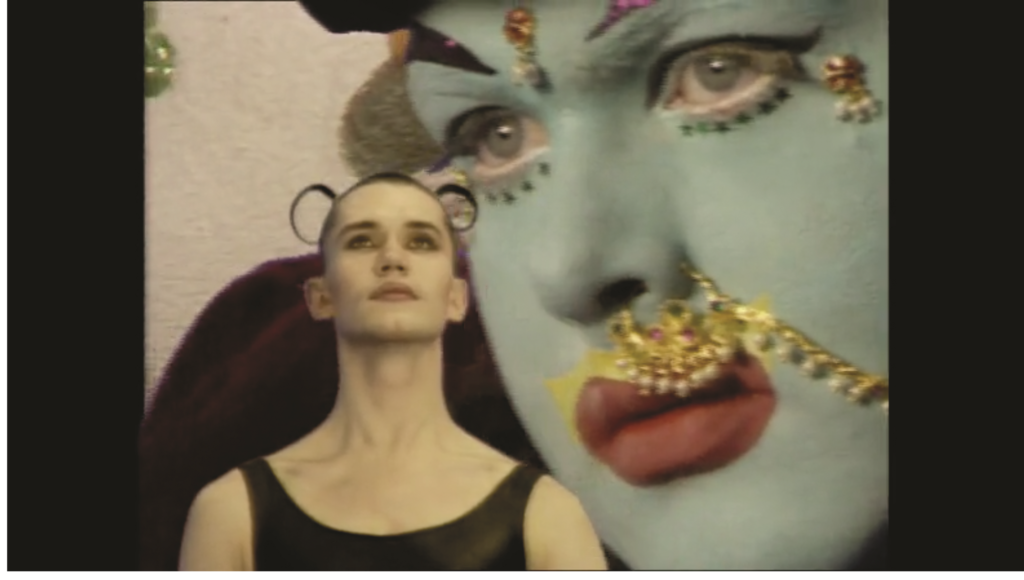
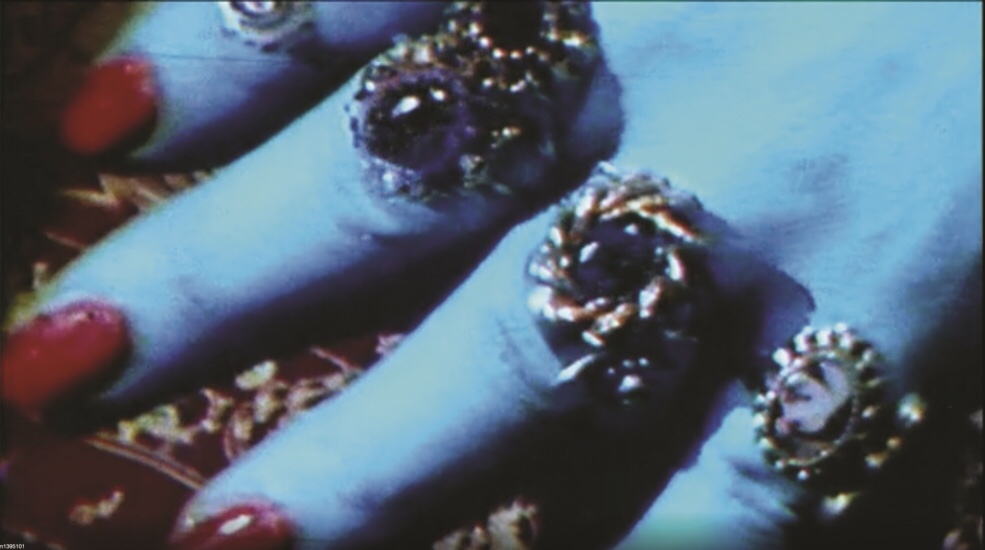
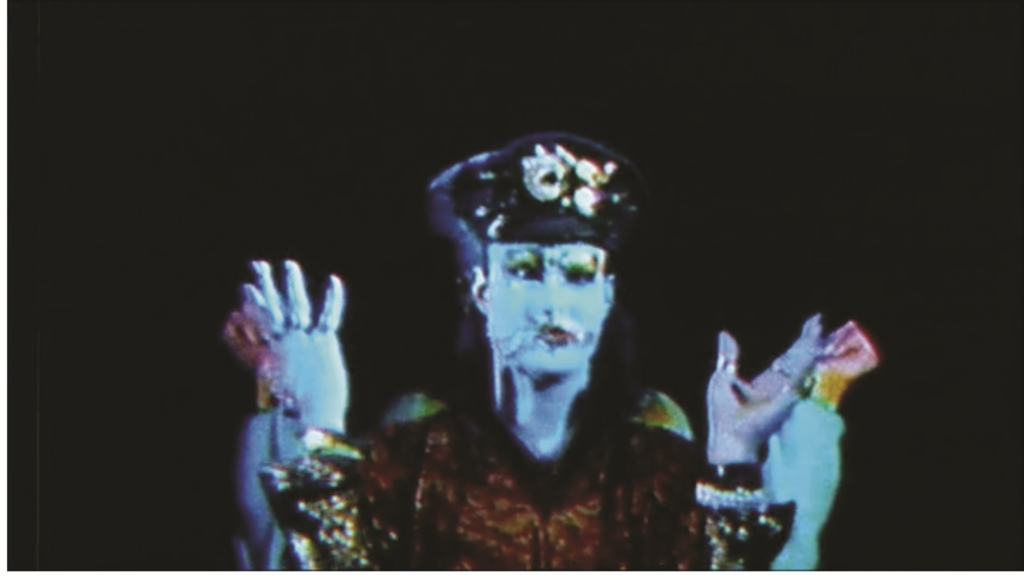
Film still from Cerith Wyn Evans, DEGREES OF BLINDNESS (1988). Courtesy of the British Film Institute National Archive.
Artist Cerith Wyn Evans and director Baillie Walsh met Leigh Bowery on the London club scene. To both, he became a collaborator and a close friend—a subject to film, a designer to call on for incredible garments, an artist to admire, a conspirator to talk with for endless hours on the phone. Sometimes he helped them, sometimes they helped him. Always, they recall, he pushed them—not necessarily forward, that would be too expected, but in a new, uncertain direction that was wide, warped, strange, sweeping, and beyond anything they’d planned. Walsh’s collaborations with Bowery include the music video to accompany Boy George’s 1991 song “Generations of Love,” Massive Attack’s “Unfinished Symphony” video from 1991, as well as “Unstitched” from 1990, which shows Bowery having his cheeks pierced and was regularly screened as a backdrop to Bowery’s performances. Wyn Evans’s works with Bowery include the early filmsEpiphany, from 1984, andDegrees of Blindness, from 1988. Here, they reflect on their late friend with Lou Stoppard.
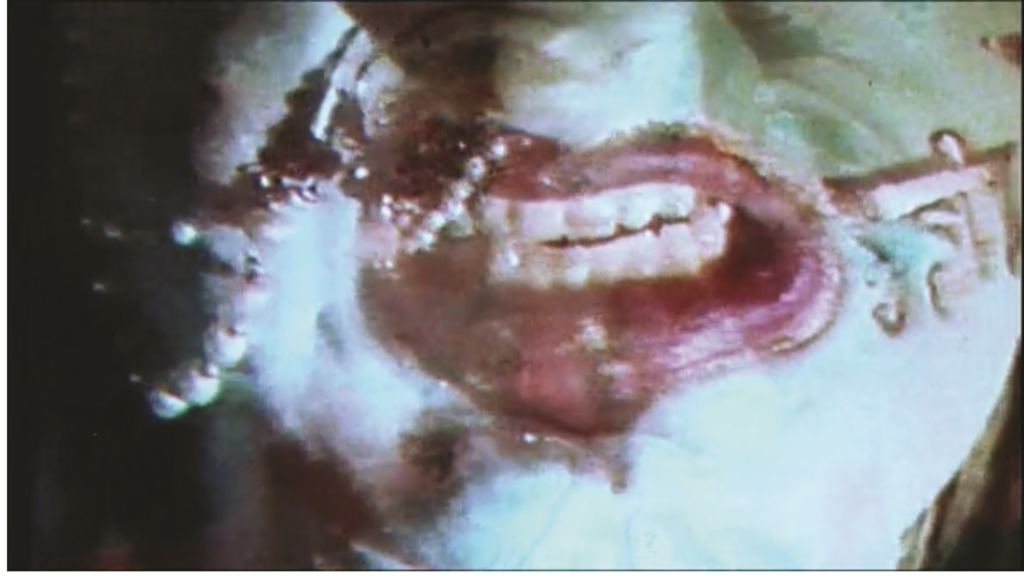
Cerith Wyn Evans: Baillie, do you remember he had a tattoo on his inner lip that read “mum?” It was facing inwards so that only his teeth or throat would read “mum.” I told him, If he pulled his lip down, to everyone else it read “wuw.” He said, “Yer – wooo!”
Baillie Walsh: I’ve never talked about Leigh before. It was all too close at the time.
CWE: For a while, it felt like there was a load of people who wanted a bit of it all. When someone died and there was too much attention or discussion, Leigh used to say, “Oh, they just want another slice of death pie, so they can look like they have been a part of something.” And knowing what we do know, that he was living and dealing with HIV, those comments mean more.
BW: My relationship with Leigh was private, special, and personal. I didn’t want it to be public property. But now, 20 years have passed—longer, 23 years—I don’t get the same feeling. It’s nice to see how much I remember, together with Cerith, we can see if we can wheedle out some memories—and some laughs hopefully as Leigh was a-laugh-a-minute. I would like to remember more. What I loved about him was how he’d just turned everything on its head. He made you think in a different way. The idea of “fitting in” was abhorrent to him. I want to remember that. I often try to think in the way that Leigh pushed me to, and it’s nice to have a refresher course.
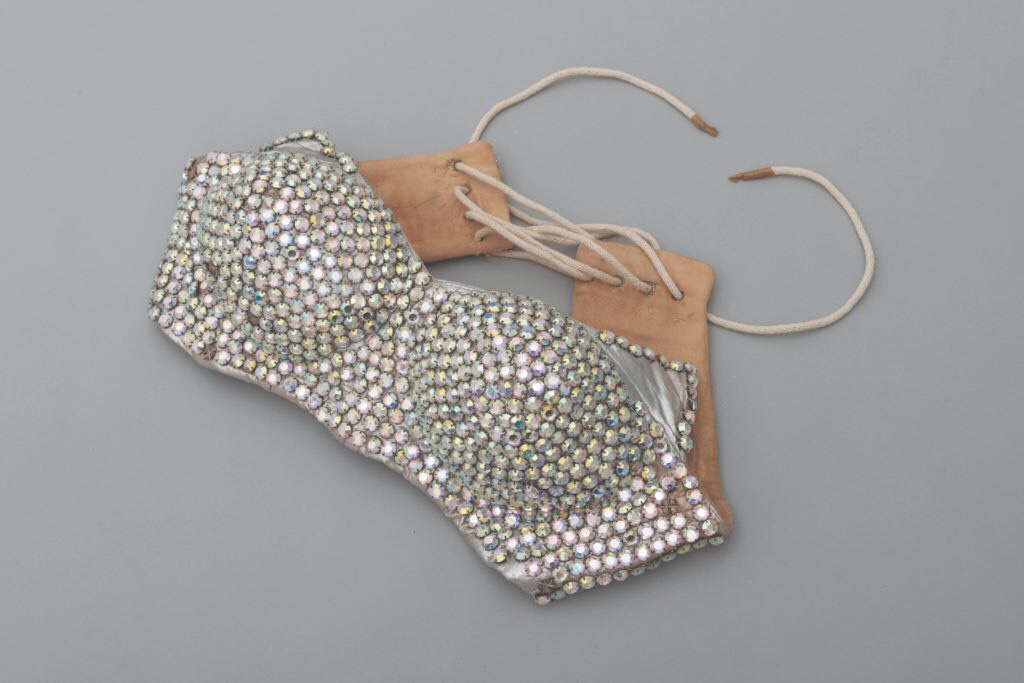
Bustier with hand-sewn crystals by Leigh Bowery, early 1990s. Courtesy of Lorcan O’Neill.
Lou Stoppard: One thing written a lot about Leigh Bowery is that his whole life was a performance, a work of art. Would you agree with that, having known him more intimately?
CWE: Well, it’s yes and no. I always thought he was much more extreme in mufti, or daywear, than he was in the outfits that he wore at night.
BW: That was much more disturbing, I agree. He looked like a child molester.
CWE: There was a vulnerable side to him, which you saw if you were a close friend. He tended to keep his friends apart; he didn’t like the idea of us talking about him. We had to be kept compartmentalized.
BW: He did love to cause trouble. He loved making stories up. He loved to lie. He would tell you someone had died. He once told me that Brad Branson was dead—he is now dead, so I can tell this story. He told me he was dead because Brad had slept with my boyfriend, John Maybury, so he thought I’d like to hear that. He told it to everybody.
CWE: He absolutely adored lying. I remember him telling me a story about Les Child, who was a dancer with the Michael Clark Company, how he was going through hard times—the company had got dissolved, or was on a break, or something like that. He said, “Oh poor Les. He’s making sandwiches in a gay sauna in Soho.” And I said, “Oh you bitch.” I was laughing. It was obviously a total lie. But then two months later, I ran into Les in the street who said, “I’ve taken to making sandwiches in a gay sauna in Soho. I’ll spring back.” It was true! So you never knew.
BW: Leigh loved to muddy the waters. You never knew what was true and what wasn’t.
Still from Cerith Wyn Evans, EPIPHANY (1984). Courtesy of the British Film Institute National Archive.
LS: Can you both recall when you first met him?
BW: I can remember my first vision of Leigh. It was him and Trojan in Heaven nightclub in the “Pakis from Outer Space” blue look. Apart from the look, they seemed very shy and almost demure. It wasn’t an immediate friendship. It took time. Really, I got to know Leigh properly because I started working with him. I took him to Italy to be in a fashion show—and it was that thing of going away with people and becoming friends, him, Big Sue. He made papier-mâché head masks of himself with the drip look he used to do. So, he had 30 models come out as him. It was for a company called Calugi e Giannelli—really tacky, but we’d do anything for a fee in those days, and it meant going away with a crowd. It was over times like that that I got to know him as him.
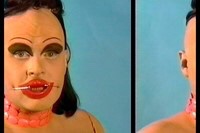
CWE: I met him around the same time at The Bell, a gay club in King’s Cross. We used to go on a Sunday night. I nearly fell over because Leigh and Trojan walked in, and Trojan was dressed as Sheba with really intense turquoise hands and face. That look—”Pakis from Outer Space”—was like Leigh’s collection at the time. I was a student at the Royal College, it would have been around 1983. I thought: “I’ve got to do something with these people, I wonder if they’ll be in a film.” I went up to them: “Oh hello, I’m a film student at the Royal College, would you ever consider making a film?” They said, “Yes all right then. We’re going to be in a film!” Leigh really took it seriously. Suitcases would arrive with makeup. Consummate professionals, from the word “go.” And they would do anything. The film was Epiphany. We shot the whole thing on tape on huge machines that had been given by the BBC to the Royal College. You had reels of two-inch video tape—the quality was insane. But these cameras were huge and so heavy, big pneumatic things with enormous cables that would almost move around on their own. We had three cameras on Leigh at all times. He said, “Which camera should I look at? The one with the red light?” And I said, “The red light is going to be on all of them; we’re recording everything, no takes.” He just loved that atmosphere—constantly being watched, reinventing himself, and rethinking his position. You know when you see the cliché of a model or David Hemmings pretending to be David Bailey—Give me this! Give me that!Leigh was like that. Going from look to look, posing and moving. It was just heavenly to witness. It was raw. There was a levity to it. But also, there was a sense of stagecraft and something studied—it was deeply sincere, however much of a laugh it was. The pain he went through and the discomfort to get the looks. It was an exuberant celebration on so many levels.
BW: He never thought he had a look unless it was painful. If it was painful, it meant he was taking it further than anyone else would. One night, we went to Heaven when he was doing the “Mexican mask” look and wanted his profile to be as flat as possible so you didn’t get any nose. I had to take him out because he had a complete panic attack, which you rarely saw with Leigh. He was in proper, incredible pain. You couldn’t unzip the mask because it was so tight. His voice was muffled, and his face was squashed: “Get me out of this!” I took him and Nicola Bateman back to my flat, and I got pliers and scissors to try to undo the zip. I couldn’t get them into it because it was so tight against the skin. Somehow in the end, he got out of it.
CWE: There would be bruises. He would be cut to shreds after a night out.
BW: Each time he went out, he wanted to push it further, getting more and more ambitious. There were some looks he would test out and never do again. He would always gauge the response. If he was just laughed at then that was a disaster. There had to be something more thought-provoking than that. It had to be challenging.
LS: What did he want people to feel? Disgusted? Scared?
BW: Both of those things. He liked laughter too—but not just laughter.
CWE: He was physically so very strong, and often he’d be on insanely high shoes. He was so massive. One of the things he liked doing at Taboo was kicking the ceiling lights out—bang! Glass in everyone’s drinks.
BW: His behavior at times was so extreme. He would pogo around the dance floor—he was such a large being, so it was really intimidating, especially as he was dressed in such a way, with the merkin on and something covering his face. But it was never aggression in a typical sense.
CWE:Never angry.
BW: No, I don’t think I ever saw Leigh angry.
LS: Was he a private person in some ways? Is that part of the reason he performed so much with his own identity, in order to keep certain things hidden?
BW: Well he kept his HIV status from me.
CWE: Me too.
BW: That was obviously very private. But I never felt that Leigh kept secrets much from me, which was why I was so surprised when I did find out that he was HIV positive. That was such a massive thing, especially at that time, because there was nothing you could do.
CWE: Fear and paranoia was everywhere.
BW: We were all watching hundreds of people die around us. When you watched someone die, you were not only very sad you were also terrified—Is that going to be me next? I think Leigh felt that very strongly. I think Leigh didn’t want to be labelled as someone with AIDS. Leigh was much more important, much more than that. And I think that if he had announced that, and if it had gone out into the world, he wouldn’t have been given the freedom to be other than that.
CWE: You look back and think: “Why didn’t I see it?” It was so obvious. We formed a band for a while, me, Leigh and Angus Cook, who was my boyfriend at the time. We didn’t play any music. We were called Magpie Shmagpie. Sue Tilley took the press photographs, which we did on the stairs of the sexual health clinic on Dean Street: all of us coming out of the door, posing with jackets on our shoulders—Leigh’s idea, obviously.
BW: He would talk about it hypothetically: “What if? What am I going to do if I’ve got AIDS?” But everyone was saying the same thing. We lived in fear.
CWE: I remember him on his deathbed saying: “I didn’t even bloody lose any weight.”
LS: I’ve heard he started rumors when he knew he was dying that he was going off to live in a different country.
CWE: He’d say he was going to Papua New Guinea to research anthropological tribe masks. After he died, we went to Patisserie Valerie and spent about 200 quid on cream cakes and had champagne. Sue Tilley said no one was allowed to cry.
Still from Cerith Wyn Evans, EPIPHANY (1984). Courtesy of the British Film Institute National Archive.
LS: I wonder what he would do if he was alive now. Because to play with your identity is easier now than ever, with all these different platforms.
CWE: So many years have passed—it’s a different world. The implications of what Leigh started off doing, and his ways of communicating about things, have become so mainstream, in a way.
BW: Leigh would have morphed into something else. There were so many different stages he went through during my friendship with him: he started in the clubs with no idea of entering the art world; he wasn’t creating art; he was creating attention for himself. Then that ambition changed when he got the gig with Anthony d’Offay gallery, and then later he met Lucian Freud through you, Cerith.
CWE: We sort of thought, “Oh it’ll be fun to mess things up for Lucian—we’ll introduce you to Leigh and then you’ll have to paint sequins!”
BW: I feel that Lucian’s work did change after he met Leigh. Part of Leigh’s thrill was always challenging his friends, and of course he did that to Lucian. I think you can see Leigh’s influence in those pictures.
CWE: Absolutely you can. Lucian was hugely affected by Leigh’s death. He was so so close to him, he really looked up to him.
BW: I love the fact that Lucian still looked up to him even after they found a stolen picture of his in Leigh’s flat. Leigh was stealing 50 pound notes every day when he went in there.
CWE: Lucian would think that that was just wonderful. He would think it was the most noble thing to do!
BW: They deserved each other. These two really strange characters coming together—it was a match made in heaven.
LS: Baillie, talk to me about working with Leigh on your films.
BW: My favorite project was the “Generations of Love” video with everyone in the street. Leigh just loved being a hooker on the street.
CWE: With the blonde wig and the “Come to Bed” t-shirt.
BW: Leigh was the one who got me thinking: “Oh, it’s a pop video, but I can make a porn video.” It was Leigh’s influence on me that kind of pushed me the whole time. He was a great doer, always with massive enthusiasm. It was a great collaboration. We just did it. He loved getting everyone in character and in dress. He’d be pushing Sue: “Get your tits out!” He got everyone—Rachel Auburn, Les Child, Michael Costiff, Talulah—in their costumes and their appropriate looks. Les Child fought every step of the way because Leigh was trying to cover his face in Vaseline. I would say that that was our most successful collaboration. His influence pushed me to a place that I thought was really interesting for a pop video.
CWE: That video is sort of sad also in a funny way. It’s mournful. There’s a melancholy at the heart of it, this idea of generations of love.
BW: I think the last project we did together was the Massive Attack video. That shoot was the first and only argument I ever had with him, and I don’t think he ever really forgave me. He’d made a dress for Shara Nelson, and we needed to find some way to cover up the earpiece that we needed her to wear. The collar wasn’t high enough, so he suggested a wig. She looked ghastly in, but of course Leigh loved it because it was so wrong. It got very awkward in front of the band. Leigh was determined, and I had to finally put my foot down. Leigh never really wanted to be told what to do. We were never quite the same after that trip to LA. Before that, we’d been two hours on the phone to each other everyday for seven years. But then also our lives were changing. Leigh was working with Lucian—his interests were changing. Our common interests were drifting.
CWE: He’d never do what he was asked to. At that time, I did some pop videos for The Fall. And we also did a play together at Riverside Studios where he played a Chicago mafia boss. Leigh would improvise lines, and every night he would stretch his lines by quite a few minutes by writing some “new material.” I can remember him coming on doing dances or singing songs, and then going into his lines. Mark E Smith would be grumbling and laughing. One thing that has always stuck with me and has been a barometer for me ever since: Leigh would look at something and say, “Yer, it was all right. But where’s the poison?”
Almost like a kind of homeopathic thing; you would need this poisonous kernel, so that it could be transformative, something in it that was deeply subversive and could dissolve hierarchies.
BW: Exactly. As much as he did work for me, I also did a lot of work for him. He would engage you as the magician’s helper. One of my strongest memories of him is when he did the AIDS benefit at the Fridge. It was his first ‘douche’ show. He comes out dancing with a corset and a merkin. I think it was to ‘Nothing Compares to You’. He’d rehearsed it so he’d lie back on a plinth, open his legs, and squirt a fountain of water from his arse. But he hadn’t rehearsed it with a corset. So, when the time came, he couldn’t lean back. So he goes to the front of the stage and bends over to squirt over the white table cloths. Of course, he was very nervous so the water wasn’t completely clean. He’s squirting shit all over the front row of an AIDS benefit. For the second part of the piece, he put a great big skirt on that I had to get under (as I was the back of the horse, if you will). I’m meant to get him onto my shoulders so he could be ten feet tall waving in this giant skirt. I get under and it’s covered in shit, slipping around everywhere. But it’s show business—not a choice! He was properly freaked out after that show; he knew that he had pushed the poison to the limit as people were horrified. And it did cause a scandal. He’d shat on the front tables at an AIDS benefit! That was Leigh when he really did think for a minute that he’d pushed it too far. There was fear—and it was rare that you saw Leigh with fear.
CWE: If you did that now, you’d probably go to prison. Anything that was inappropriate—Leigh was like a magnet. Everything inappropriate was good. Everything appropriate was bad. It was pretty clear cut. He was really an anarchist.
BW: That’s why John Waters’s films so influenced Leigh. Divine in Female Trouble was a benchmark for Leigh in so many ways.
Still from Cerith Wyn Evans, EPIPHANY (1984). Courtesy of the British Film Institute National Archive.
LS: Was it ever tiring being friends with someone who was that unrelenting in their commitment to subversion?
CWE: No. Because he was also so sweet and gentle. Like Baillie described—I was one of the people on the other end of the phone for an hour or two a day. We’d sit there watching television and he’d be like—What is Lorraine Kelly wearing?
LS: Did you ever feel embarrassed by him?
CWE: I can remember being on holiday in Cornwall with Leigh. Sue Tilley drove Leigh down; she couldn’t get into the car because Leigh had made a frock to wear in pink dayglo. It was like a Molly Goddard dress but the size of a flat—with all this tulle bunched into the car, the entire car was full. As soon as he arrived, he ran into the sea, and it soaked up so much seawater he nearly drowned. It was completely hysterical. I can remember this one dreadful situation: Leigh would do anything to embarrass Sue in public—it was one of his absolutely favorite things to do. So, we were alone in this grand Catholic church. And this lone nun was walking towards us in her habit. Sue was going, “Leigh, no. No. No.” Sue—she’s a big girl—and she’s trying to hide behind the column in the church. And Leigh is going at this 90-year-old woman in her habit, “Oi! My friend wants to eat you out!” The nun just shuffled away. “Bless you my child.” The strange thing is it never wore you out. He was like quicksilver, also. In the next moment, it would be a completely different thing—he’d be helping you make a pea soup. He thought it was hilarious that you had to buy a huge sack of peas to make a small bowl of pea soup.
BW: I was never embarrassed by Leigh because Leigh was never embarrassed. The joke was never on Leigh; he was making the joke, so there was never painful embarrassment.
CWE: But there would be times when he would be vulnerable. He’d open up on the phone and say, “Oh, I don’t know what I’m doing.” He wasn’t always high octane.
BW: Leigh really led a life on the telephone. Cerith was part of that. I was part of that. Sue was part of that. A lot of our lives were spent on the phone—hours and hours a day. That’s not high octane or a performance. That’s a proper relationship.
CWE: You’d talk about things in the news…
BW: …or sometimes there was just silence. And you’d hear a sewing machine going.
LS: The construction of his garments was incredible. People often talk about how great he was at making looks, but perhaps not enough focus is put on just how skilled he was at making clothes.
CWE: He was very fastidious about the idea of learning techniques. He really looked up to Mr. Pearl, who had this career in Paris making amazing corsets. Berwick Street market was an Aladdin’s cave, where you could get the sequin fabrics and needles and threads—he would refer to that as the Stitch Bitch Trail.
LS: He’s often remembered in terms of the Club Kids. What do you make of that?
CWE: I don’t think he actually liked the whole New York Club Kids thing. He went there, he was adored there. But the people that he really liked were the ones from Jackie 60 and Mother and Blacklips Performance Cult. He liked the drag queens who were politicized.
BW: He liked the ones who were incredibly smart. He loved intelligence.
CWE: He liked revolutionary people. Political people.
BW: The Club Kids thing was an early part of his history, but his ambitions moved way beyond that. Leigh, above everything else, was incredibly intelligent, a thing that shines through for me. He had many stages. He created this persona from nowhere. And he trod unknown ground and was still reinventing every day.
CWE: And he was constantly looking for ways to undermine his reputation for what he’d become known as.
LS: Are there any particular days with him that stand out?
BW: It was his birthday, and I really wanted to fuck him over. So I thought: “I’m going to get him a cat. It’s a wicked present to give someone.” I called all the pet shops, and there was a kitten in Camden Town. So I went to the pet shop, and it had sold! I thought: “Fuck it, I’ve failed.” And as I was walking down to St Martin’s Lane through Cecil Court, there was a homeless person with a cat, saying: “Do you want a cat?” I was so shocked I said, “No,” and walked up the street. But then I thought: “Of course you fucking do.” So, I went back and bought the cat, a fully-grown black cat. It was so extraordinary and immediately friendly and affectionate. I went home and put it in a stereo box, wrapped it up and went over to Leigh’s flat. Leigh unwrapped it, saw the box and thought that I had bought him a stereo. He was saying, “Oh that’s great.” Then he opened it, and the cat jumped out. He was completely horrified at first. But then he was a great father to the cat. Leigh adored Angus.
CWE: He named him Angus, which was the name of my boyfriend at the time. He did it to punish him.
BW: The cat was always sleeping in amongst fabric.
CWE: The flat was pretty amazing. Before Trojan died, it had Star Trek wallpaper. And after he died, Leigh decided that he wanted to change it. And as he was peeling off the wallpaper, he found one of Trojan’s hairs, from when Trojan and Leigh had put up the wallpaper. Leigh said he freaked out and didn’t know what to do. “I just ate it,” he said. He just had to ingest it.
LS: Tell me about his wedding; he married Nicola Bateman.
CWE:That was quite late on. I was his best man.
BW: The wedding was one of the secrets that I didn’t know about. Cerith was privy to that. But that was another of those “What else didn’t I know?” moments.
CWE: Leigh was in Minty [his band] at that time. He was also very scared at that point, and I imagine was probably showing symptoms of HIV/AIDS. He got married so that if the worst happened, at least Nicola would have a roof over her head. He was in a furious mood all day. He had this blond wig on and a coat that he’d bought on Brick Lane that was very nice, black, heavy, silk satin—an Orthodox Jewish man’s coat. Nicola just kept saying things like, “Oh darling, this is the happiest day of any woman’s life.” She was dressed in blue and had a blue garter—everything was her “something blue.” She’d really gone for things as if it was the Royal Wedding. Her sister was the bridesmaid and was dressed in a bizarre 1960s pop-art Paco Rabanne dress; her hair was big and bouffant and had black and white make up, mod shoes and big Perspex earrings. After the wedding, Leigh said he had to go to a Minty rehearsal: “Nicola you have the money, make sure that you spend it all on a wedding breakfast.” We went to the Angus Steak House on Leicester Square, the three of us there looking like complete freaks. We had steak and chips and a salad. After, Nicola’s sister and I went to a party at the Architectural Association, where I was teaching at the time—I actually got Leigh in to teach there too—and she won a prize for best fancy dress.
BW: How long before he died did they have the wedding?
CWE: A couple of months. It was the summer, I think, and he died in winter.
BW: On New Year’s. So very Leigh to ruin New Year’s. So sick, because every New Year’s you think of Leigh.
Film still from Baillie Walsh’s UNSTITCHED (1990). Courtesy of the artist.
LS: Tell me about getting him in to teach at the Architectural Association.
CWE: I was teaching a foundation course, which I’d got into because someone had asked me to come show my films and give a talk to some students. I’d asked to see the students’ work and ended up doing these tutorials and got on well with the students. Someone was having a baby and went on maternity leave—so all of sudden I was running the foundation department at the Architectural Association, despite having never studied architecture and actually being rather suspicious of architects. I ended up teaching there for seven years. I’d try and get them to look at things around buildings: dance, fashion, the body, do plans for zoning in department stores, or map Selfridges on top of the British museum so the Assyrian department would be in the same place as the shoe department—stuff like that. It was about opening people’s minds up, to stop them just thinking about making fabulous houses on golf courses in the Mediterranean. I thought Leigh would be perfect to come in, do it for a term and see how it went. I had a bit of a budget, so we hired ten sewing machines. He suggested we have to make a pair of gloves, as that was really, really difficult. So, we did a glove making workshop—every student had to make a pair to fit their own hand, and Leigh was there to help. The students were just over the moon—they loved him. On his first day, he had been so nervous. I remember he had on this pair of trousers that Jean Paul Gaultier had given him. They were green stretch satin, the weirdest thing. They had obviously worn out so many on the bottom that they had the overlocked stitching to hold them together, over and over and over again to keep the whole thing together. I can remember looking at him; he was covered in makeup—very, very heavy foundation.
BW: It would be orange.
CWE: And lots of rouging on the cheeks. Sometimes he’d wear one of his chemotherapy wigs, which he would have gotten from a charity shop and then cut so you could see all the netting on the scalp. But he was so tall. I thought: ‘You’re huge today, four inches taller than normal.’ I couldn’t work it out. He lifted the trousers up. And inside his trainers was a pair of trannie stilettos.
BW: He loved height. He wanted to be the biggest man in the room.
CWE: He was so nervous though.
BW: But the nervousness was endearing, wasn’t it?
CWE: Absolutely. By the end of the day he knew the names of their brothers and sisters, where they came from, all of that. He’d see them two months later and be like, “So, is Mathilda still doing the veterinary college thing?”
BW: There was always a boy he really fancied.
CWE: One time, Pearl came in, and we showed them a VHS cassette of a Christian Lacroix couture show. The students had never seen a fashion show. Pearl was there whispering away about couture and handcraft with his 16-inch waist. Leigh thought the show was genius and flawless. All the students were really getting into it. So, the project developed so that at the end of Leigh’s term we were going to do a fashion show, where the models were going to be the students and they were going to make outfits, couture outfits, based on a building. A very bright boy from Bulgaria chose a Bruce Goff strange kind of desert range house from the early 1960s. There was a very privileged Iranian woman who didn’t have a portfolio and would use a brand-new giant Chanel shopping bag to carry her work. Leigh was of course like, ‘She’s a genius; she’s incredible.’ She decided that for the fashion show, she wanted to come as the Taj Mahal. So Leigh helped her make a papier-mâché dome helmet, which she decided she was going to cover in fusilli pasta, glued on and sprayed silver. Now, the Taj Mahal has a lake down the front of it, so she got some Perspex manufacturer to make these two narrow strips which went down the front with blue colored water inside and model trees glued down the side. The fashion show was very well attended—Vivienne Westwood, Rifat Özbek, Jasper Conran, and people fromVoguecame. Leigh was the compere. And for that role, he decided to sport his head coming out of a toilet bowl with brown latex filled with rice krispies all down his front—like a brown shitty head coming out of a toilet—with a see-through corset, a huge skirt and black eye makeup. He had a clipboard with notes about each student and spoke in a voice as if it was a couture show: “And the next model that we have is…” I remember in one bit he said, “Dana has come at the Taj Ma Hole, oh sorry Mahal.” People were roaring with laughter. It was off-the-charts mental what people were wearing, but the students were genuinely moved.
LS: The breadth of the things you both worked with him on is quite something: films, teaching, performances.
CWE: Well, he was a very creative person, so nothing was ever out of bounds.
BW: It’s been lovely reminiscing and remembering. The tragedy is that he’s not here, because he would be pushing boundaries like no one else I’ve ever known and making me, certainly, and probably everyone else question everything.
Video-still from Charles Atlas, Teach, 1992-98Still of video by Vilma Gold
Four things you never knew about Leigh Bowery
The club scene icon’s best friend Sue Tilley shares some little-told stories from her life with the founderof Taboo
Leigh Bowery 20 Images
Dressed in looks dripping in colour, with overdrawn lips and exaggerated silhouettes distorting his form beyond recognition,Leigh Bowery is the Christian boy who became an icon of club-kid history, inspiring everyone fromAlexander McQueen (who once went to see his band Minty before their Soho residency was shut down for obscenity) toGareth Pugh. More than 20 years after his death, Bowery’s long-term best friend, biographer and party companion Sue Tilley, was joined by a group of enthusiasts at the Café Royal this week for a talk as part of A Curious Invitation’sIcons of Fashionseries, to tell his story from a more intimate perspectiv, from exploits in London to checking into the hospital under the name John Waters and watching his bands Minty and Raw Sewage (once named the Quality Street Rappers). Here are four things we learned about the icon.
HIS DIY DESIGNS HAVE ENDED UP IN THE LOUIS VUITTON ARCHIVES
“His goal was to be afashion designer,” explained Tilley. “But he wouldn’t really fit in. He wrote in his diary in 1981: ‘Fashion, where all girls have clear skin, blue eyes, blonde-blown wavy hair and a size 10 figure, and all the men have clear skin, moustaches, short waved blonde hair and masculine physical appearance, STINKS.” For the most part, Bowery decided to use his own body as a canvas for self-expression, but he did make clothes for a few friends and Boy George (who was a big fan). According to Tilley, “Boy George was terrified of him and was thrilled that Leigh Bowery was making clothes for him – he was obsessed to the point of writing musicals about him and everything!” Now many of the creations Sue received are in the hands of Louis Vuitton menswear designer Kim Jones, also a big Bowery fan. “He buys his clothes off me or I swap them for Louis Vuitton bags,” chuckled Tilley, “because to be honest, he’ll look after them a hundred times better than me, put it in the vaults at Louis Vuitton, and I’d rather that than having them in a box getting tatty.”
“Fashion, where all girls have clear skin, blue eyes, blonde-blown wavy hair and a size 10 figure… STINKS” – Leigh Bowery
HE FELT THE TIME WAS RIGHT FOR TABOO TO END
Taboo, Bowery’s iconic club night founded in January 1985, served as a meeting point for all types of people inspired by freedom of expression and absolute disregard for the traditional. The club staged its last hurrah in 1986, after asserting itself as the pinnacle of London nightlife. Tilley explained the story behind its closure. “Someone sold a big story to the papers about it being a den of vice and drugs. I never saw drugs or people on heroin or whatever, but perhaps I wasn’t looking in the right place. So this was the story, and the club had no choice but to shut it down.” But Bowery believed the time was right. “He then realised it was actually a good thing – it’s much better when something is shut down at its pinnacle when it’s still really good than when it’s died down and there’s three people from the suburbs in there. And then they asked him if he wanted to open it again and he went, “No. It’s best that it stopped when it did.”
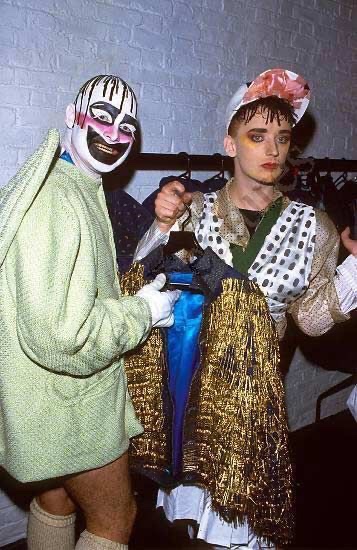
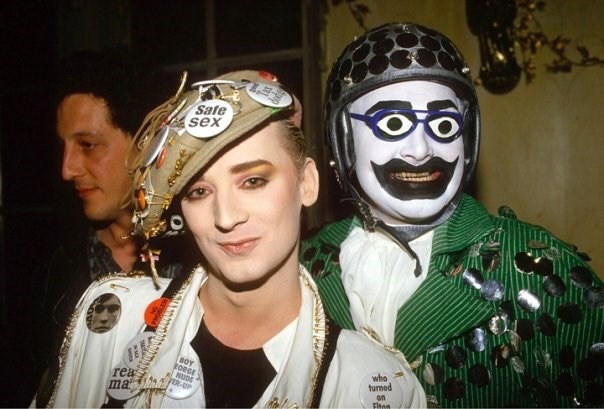
The original club kids: Boy George and Leigh Bowery at Taboovia pinterest.com
HIS BODY PERFORMANCE ART HAD ACCIDENTAL BEGINNINGS
Although Bowery is perhaps best known for birthing his friend and wife Nicola Bateman, who came out of the performer’s ‘vagina’ with sausages for an umbilical cord, his first venture into the performing arts didn’t quite go as planned. “His first performance was at a crypt in a church that was run by the neo-naturists, a bunch of people who just walked around half-naked, the most famous one probably beingGrayson Perry,” Tilley remembered. “Everyone was standing round. He went round and stripped off naked, and in the process he caught his nipple that he’d just had pierced. It started bleeding and there was blood pouring down his chest… So he put on a doctor’s coat and pretended to inject (co-performer) Trojan with various syringes, Trojan then threw lighter fuel to the floor and set fire to it, while Leigh pissed into a glass, then Trojan drank half the piss and used the rest to douse the flames. I don’t think he’d be allowed to do that nowadays because of health and safety – but everything went then. Things got a little more professional after this, but bodily fluids still played a big part in Leigh’s repertoire.”
“Leigh pissed into a glass, then Trojan drank half the piss and used the rest to douse the flames. I don’t think he’d be allowed to do that nowadays because of health and safety” – Sue Tilley
LUCIAN FREUD WAS OBSESSED WITH HIS LEGS
Many unfamiliar with the 80s club kids will know Bowery as one of artistLucian Freud’s sitters. The 1990 portrait Freud painted of him, “Leigh Bowery (seated)”, was hailed by many as a masterpiece. Tilley, who also sat for the artist, explained how the two met during one of Bowery’s performances in a room with a two-way mirror. “Leigh dressed in a different outfit everyday, and he’d walk around this space like a sort of caged animal – he was very gymnastic as well, so he did a lot of high kicks and spinning on the floor. And there were musical traffic sounds and different smells coming. People used to come to the gallery for two hours – some of them were there every day to watch him. That was proper validation, because it was ‘proper art’ and it was accepted. One member of the crowd that came to see him was an old artist called Lucian Freud – because some of our friends worked for Lucian Freud they had mentioned Leigh, and he was curious and wanted to see what he was like, since he had a lot of interest in the world. He came along and was absolutely thrilled by him – especially by his calves. He said “It’s amazing! His calves go straight into his feet!” so he decided he wanted to paint him. This was a real turning point for Leigh.”