Today is Mexico’s Independence Day! After a war that lasted over 11 years, Mexico achieved independence from Spanish rule and would begin a path toward self-determination. On September 16, 1810, Miguel Hidalgo y Costilla, a Catholic priest, launched the Mexican War of Independence. Yes, decolonize!
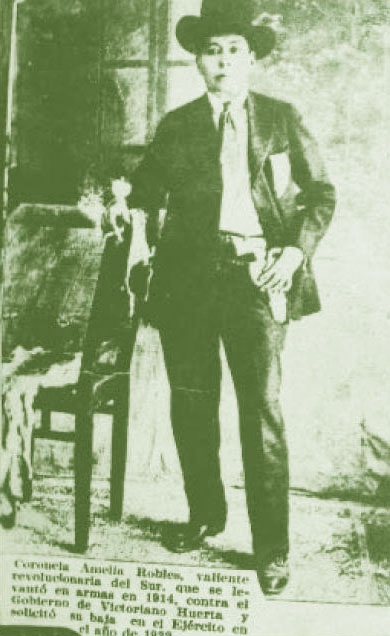
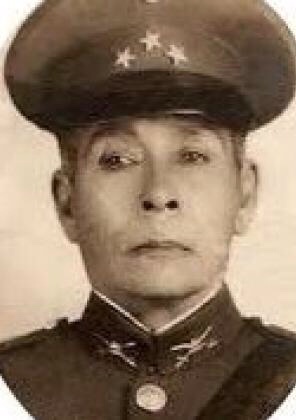
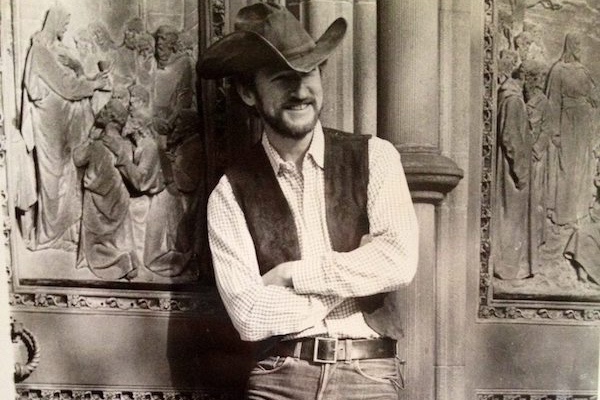
To celebrate Mexican history, we’ll be focusing on one hero today, not of the Mexican War of Independence but of the Mexican Revolution. Colonel Amelio Robles Ávila is recognized as the first trans soldier in the Mexican military’s history. A decorated colonel, Amelio Robles Ávila lived as a man from the age of roughly 22 or 24 until the day he died at 95 years old.
While some believe it was Ávila’s wealthy family that allowed him to live life as his truest self, it certainly may have helped, but his courage in battle and in life must be honored and celebrated. Ávila’s identity was not always met with kindness, but the soldier was well-equipped to deal with challenges to his gender. The pistol-whipping colonel was a ladies man, skilled marksmen, and hero. This is the story of Colonel Amelio Robles Ávila.
Amelio Robles Ávila
Amelio Robles Ávila was born to a wealthy family on November 3, 1889, in Xochipala, Guerrero. In his youth, Ávila attended a Catholic school for little girls where he was taught to cook, clean, and sew. However, at a young age, he began to express his gender identity. He showed an aptitude for things that were, at the time perceived to be, masculine like handling weapons, taming horses, and marksmanship.
Perhaps, it was a natural response, if not the only response, to being pressured to conform to a gender identity that isn’t yours — Ávila was perceived as stubborn, rebellious, and too much to handle for the school nuns. But it would be his tenacity and obstinance that served him in the long run.
In 1911, when Amelio robles was arranged to be married to a man, he enlisted as a revolutionary instead.
Not a woman dressed as a man, just a man.
To force the resignation of President Porfirio Dîaz and later, to ensure a social justice-centered government, Mexico needed to engage much of its population in warfare. This meant that eventually women were welcomed with many limitations. Soldaderas were able to tend to wounded soldiers or provide food for the militia but were prohibited from combat and could not have official titles.
Amelio Robles legally changed his first name from Amelia to Amelio, cut his hair, and became one of Mexico’s most valuable and regarded revolutionaries.
“To appear physically male, Robles Ávila deliberately chose shirts with large chest pockets, common in rural areas, and assumed the mannerisms common among men at the time,” according to History.com.
While he was not the only person assigned female to adopt a male persona to join the war, unlike many others Ávila kept his name and lived as a man until the day he died.
“After the war was over, their part in it was dissolved along with whatever rank they held during the fight, and they were expected to return to subservient roles. Some did,” writes Alex Velasquez of Into. “Others, like Amelio Robles Ávila, lived the rest of their lives under the male identities they had adopted during the war.”
You come at the king, you best not miss.
Ávila fought courageously in the war until its end. Becoming a Colonel with his own command, he was decorated with three stars by revolutionary general Emiliano Zapata. He led and won multiple pivotal battles where his identity and contributions were respected.
However, that respect was sometimes earned through empathy other times through the whip of his pistol. Ávila was a man and anyone who chose to ignore this fact would be taught by force. On one occasion, when a group of men tried to “expose” him by tearing off his clothes, Ávila shot and killed two of the men in self-defense.
Colonel Amelio Robles Ávila
Unsurprisingly, Amelio Robles was a bit of a ladies man, though he finally settled down with Angela Torres and together they adopted their daughter Regula Robles Torres. In 1970, he was recognized by the Mexican Secretary of National Defense as a veterano as opposed to a veterana of the Mexican Revolution, thus Colonel Amelio Robles Ávila is considered the first trans soldier documented in Mexican military history. The swag is infinite!
After the war, Ávila was able to live comfortably as a man where he devoted his life to agriculture. He lived a life, that still for so many trans people around the world seems unfathomable. Colonel Ávila lived to be 95 years old and the rest — no all of it — is history.
The literary parlor game of “Who Is J. T. LeRoy?” got its final answer in February: The mysterious boy novelist with the horrifying tales of childhood abuse was the invention of a 40-year-old San Francisco woman. But the untold story behind this literary hoax is even more outrageous than the fictions.
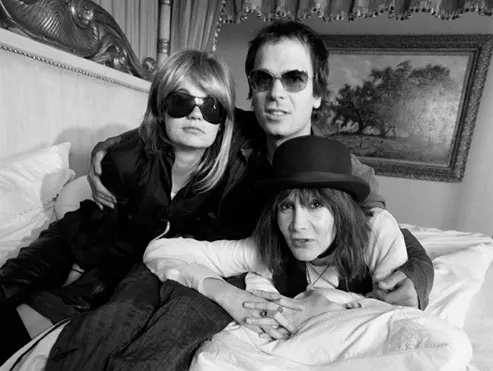
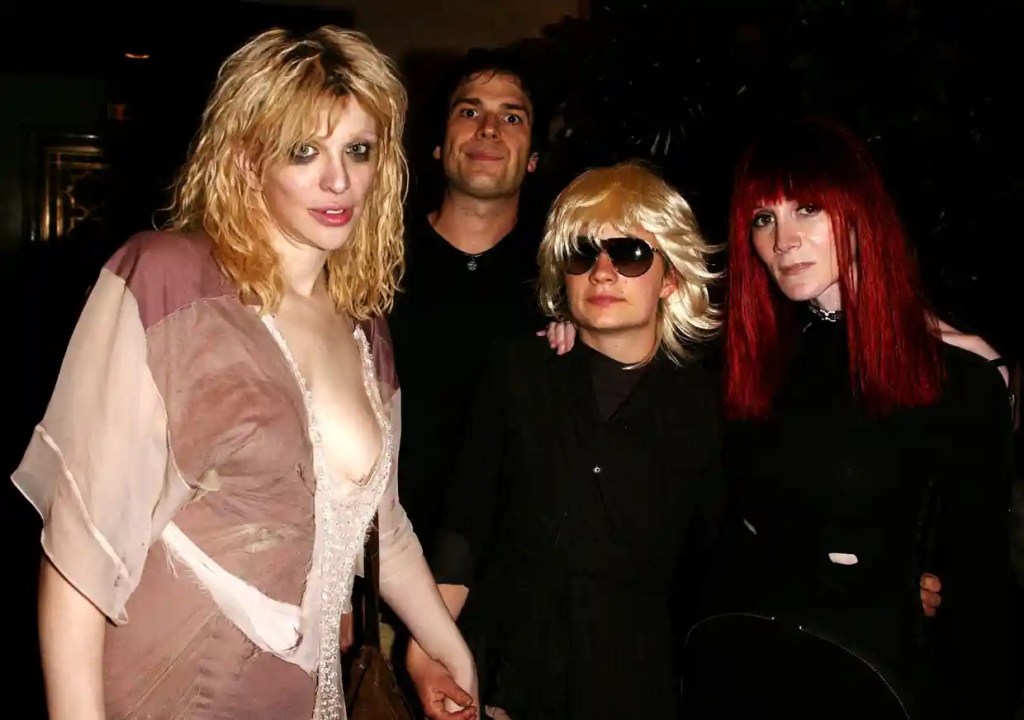
Savannah Knoop dressed as J. T. LeRoy, Geoff Knoop, and Laura AlbertPHOTOGRAPH BY MICK ROCK.
Part One: The Making Of J.T.
J.T. LeRoy’s literary career seemed headed for a downturn, and he was only 24. Back in his teens, he had achieved cultish notoriety for his autobiographical fiction, which drew on a childhood marred by horrific physical and sexual abuse—most famously stints working in truck stops in his native West Virginia as an under-age transvestite prostitute, side by side with his drug-addicted mother. (“She felt angry about the competition, but she also liked the money, too” he told Terry Gross in an interview on NPR’s Fresh Air.) The truck-stop liaisons were only the most lurid episode in his past. He had had his first sexual experience at the age of five or six. He had been raped and regularly beaten. He eventually became addicted to heroin and at the age of 13 ended up living on the streets in San Francisco, working as a hustler. He was H.I.V.-positive. He cut himself. He burned himself. He associated love with brutality and exploitation, could only feel human connection through physical pain. It was a life story that read like an encyclopedia of the myriad ways children can be victimized by adults. But in a culture that fetishizes suffering and consumes memoirs of abuse as a form of off-the-rack therapy, it was a life story that also had commercial potential.
And in that J.T. appeared to have found salvation. A social worker, who had found him wandering into traffic in a daze, introduced him to a psychologist who encouraged him to write about his experiences. It turned out he had a native gift, producing fragments of raw but vivid memoir. By phone and by facsimile in those pre-e-mail days—J.T. would haul around a fax machine a kindly john had given him and set it up in public bathrooms and convenience stores—he reached out to established writers, many of whom took an interest in him and his work, taught him craft, and passed him along the literary food chain.
In 1997, when he was 17, he published his first piece of writing—about dressing up like his mother and seducing one of her boyfriends—in the Grove Press anthology Close to the Bone: Memoirs of Hurt, Rage, and Desire. No longer using heroin, he had formed an ad hoc family, living with the social worker who had helped rescue him, her husband, and their young son. A novel, Sarah, followed in 2000. A year later, when J.T. was finally old enough to have a legal drink, he brought out a collection of linked stories, The Heart Is Deceitful Above All Things. The books were mostly well reviewed, and even critics who didn’t care for the prose, or found the disturbing subject matter overwrought as art, paid obeisance to the horrible contours of the life.
By 2004, however, the well seemed to be running dry. He had a contract for a third book but hadn’t yet produced much that was worthwhile. When he did write, aside from completing a thin “novella,” he spent most of his energy on journalism for publications such as BlackBook, Nerve, and T: Travel, a New York Times Sunday-magazine supplement, which sent him to Disneyland Paris. Mostly he seemed to be caught up in a whirlwind of literary celebrity—“the Truman Capote highway,” in the words of one friend. He had long suffered from pathological shyness as a result of his childhood traumas—most of his writer friends had never met him in the flesh; he was famous for ducking people, even editors and agents—but around the time of his second book he began making tentative public appearances at literary events, a waif-like, androgynous figure hiding behind sunglasses, big blond wigs, and a girlish, whispery voice. He would sit tremulously to the side as a coterie of famous, mostly female admirers that included Rosario Dawson, Tatum O’Neal, and Shirley Manson read from his works. Madonna, an e-mail pal, reportedly sent him books on Kabbalah. Friends such as Carrie Fisher opened their homes to him. There were movie deals with the director Gus Van Sant (who optioned Sarah) and a Web site selling J.T. merchandise (including $17 necklace-ready raccoon-penis bones, or baculums, objects which figure prominently in Sarah). J.T. went on European tours, attended splashy parties with rock bands, took home racks of free designer clothes. He appeared in a feature in an Abercrombie & Fitch catalogue. He and his ad hoc family formed their own band, Thistle. J.T. wrote the lyrics; the social worker, Emily Frasier, who had begun calling herself Speedie, sang; her husband, known as Astor, played guitar.
There were also appearances in glossy magazines, among them Vanity Fair. In an introduction to his short Q&A with J.T., the singer-songwriter Tom Waits wrote, “He is the witness to all the tales that go on in the dark, and for all of us, long may he have the courage to remember.” This was accompanied by a photo of J.T. dressed as “Cinderella after the ball” in a tutu and beaded sweater.
And who, after what he had been through, would begrudge J. T. LeRoy a little harmless, glitzy fun? His agent, however, was growing impatient. “This was perhaps one of the more demanding—and I mean time-wise—clients I’ve ever had,” the agent, Ira Silverberg, told me recently. “Insanely long conversations not about writing, not about career, but about celebrities who he met and who he’d been e-mailing with. Endless, endless. It was a litany of name-dropping. You know, ‘Gus Van Sant came through town and we went out and I ate oysters at the most expensive restaurant in San Francisco and I said to Gus, “They taste like boogers!”’ For me it was like, ‘That’s great. You want to show me some pages?’ ” At the 2004 Cannes Film Festival, where the movie version of The Heart Is Deceitful Above All Thingspremiered, Silverberg took J.T. aside and lectured him: “Honey, you’ve got to get off the road. You’ve got to get back to the writing. The celebrity obsession is taking over your life.” Silverberg feared that his client was on the verge of becoming “the Grace Jones of literature, if you know what I mean.”
Others thought the fault lay less with J.T. himself than with Speedie and Astor, whose eagerness to piggyback on J.T.’s success seemed, at times, almost pitiable. Speedie, who spoke with a malleable British accent and who at times still went by Emily, seemed in particular to exert a Svengali-like influence on J.T. She almost never left his side in public and often answered questions for him. He would look to her for cues and ask her permission even for innocuous actions—taking off his wig in a hot, sweaty disco or breaking away from a group to go shopping. “She was clearly very manipulative of J.T.,” says Thomas Fazi, the writer’s Italian publisher. “She was clearly using the J.T. character in some way to suit herself, exploiting him economically.”
“I used to call Speedie and Astor the jailers,” says Roberta Hanley, one of 28 credited producers of The Heart Is Deceitful Above All Things. “J.T. seemed like a prisoner of this horrible rock band. I thought he should get away from these grifters who were living off his work. I wanted to sit him down and say, ‘You’re a famous writer. You should get your own place. You should get away from these people and stop sharing your salary with them.’ ”
Charlie Wessler, a film producer who has worked on most of the Farrelly brothers’ movies, met J.T. and Speedie/Emily one weekend last spring at Carrie Fisher’s home in Los Angeles. Wessler would become close to J.T., even buying him a computer, but he was surprised at the way Emily, within minutes of their introduction, began pushing J.T.’s books on him, as if she were his publicist. She also catalogued for him the various C-list celebrities J.T. was supposedly sleeping with—a discomfiting boast given J.T.’s recent past as an H.I.V.-positive child prostitute. Fisher, Wessler quickly learned, was not a fan: “Carrie couldn’t stand Emily. She thought this kid”—J.T.—“was living in this woman’s house and being dragged around by her. Carrie started sending these e-mails saying, ‘You’ve got to get away from this Emily woman. She’s ruining your life.’ Carrie thought she was a fucking idiot.” (Fisher herself declined to be interviewed for this article.)
For his part, J.T. remained stubbornly, sometimes touchingly loyal. In an e-mail response to a friend who had criticized Emily’s behavior, J.T. defended her with tenderness and generosity: “Emily had purity of intent. She is not bad or toxic for me. She gets lost sometimes coz she is also finding out who she is, so please just love on her the way you do. We all come from great pain.”
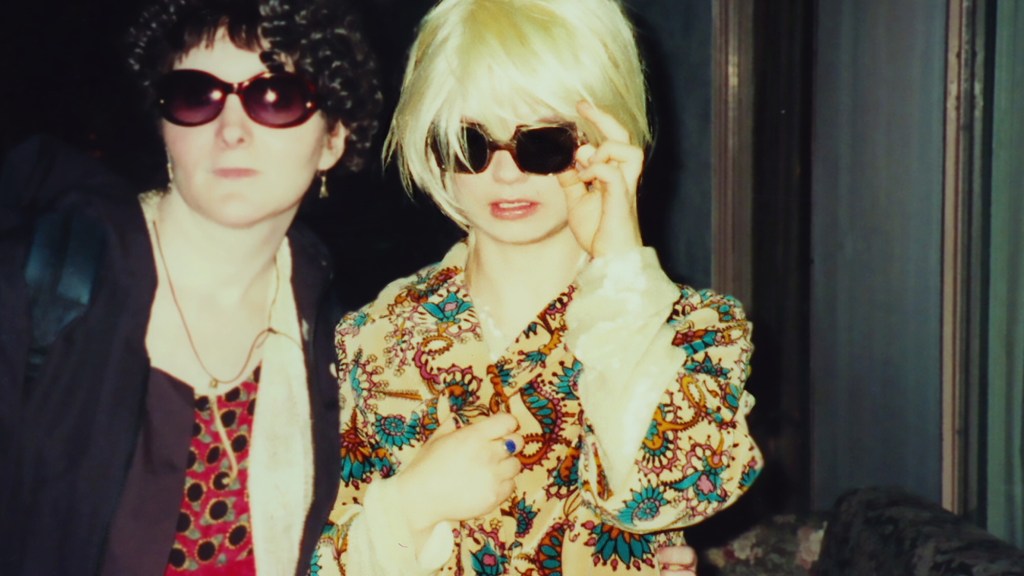
What wasn’t apparent at the time, and what in the light of day renders J.T.’s defense more than a little odd and, if you are of generous disposition, even heartbreaking, is that the writer was in fact defending himself. Or rather herself. Because as was revealed last fall and winter in a series of magazine and newspaper articles, first in New York magazine, then, more definitively, in The New York Times, J. T. LeRoy was the invention of Speedie/Emily, whose real name is Laura Albert. Now 40, she wrote all of J.T.’s books, articles, and stories, corresponded as J.T. by e-mail, and spoke as him on the phone, putting on a southern accent she thought was in accordance with J.T.’s supposed West Virginian origins. (The high, feminine pitch was sometimes explained away as a result of J.T.’s not having fully matured physically due to the abuse he suffered.) Her co-conspirators were Astor, whose real name is Geoffrey Knoop, 39, and his half-sister Savannah Knoop, a 25-year-old aspiring clothes designer who, once J.T.’s career took off, was drafted to play the writer in public—the wigs-and-sunglasses figure.
Many otherwise savvy people who thought they knew J.T. intimately, who had spent considerable time with him on the phone and even in person, who were touched by his story, connected the sometimes obvious dots only in hindsight—after all, who would second-guess a homeless, self-mutilating, H.I.V.-positive teenager struggling to overcome an unthinkable legacy of abuse?
The novelist Dennis Cooper was the first writer Laura Albert contacted. He had a long and sometimes emotionally draining phone relationship with J.T. and suspected he was being hustled on some level—that, of course, had been J.T.’s original profession—but at the same time Cooper thought he understood where the hustle ended: “I knew that he was a pathological liar, but I had a sense I knew him. I thought I knew whenhe was lying.”
Gus Van Sant bought the film rights to Sarah and commissioned J.T. to write a screenplay about a school shooting that provided the seed for the 2003 film Elephant (for which J.T. received an associate-producer credit). Van Sant met J.T. twice and spent hours with him on the phone. “I still kind of believe that he exists, just not in the flesh,” Van Sant says. “I think he exists in Laura’s head. Either it’s something she obsessively works on as a character or it’s something she can’t help but work on.
That’s a fine but telling distinction, one that many who knew J.T. have wondered about: to what extent was Laura Albert really in control of her creation? “God knows I’ve been over this in my mind, and I can’t picture the scenario in which someone would invest the amount of time and effort that this person went through with me personally for the ends they got,” says the novelist Joel Rose, who was another early champion of J.T.’s and who, like Cooper, not only extended himself professionally for J.T., helping him find an agent and a publisher, but also talked the younger writer through any number of supposed midnight crises. “If you’re going to pull off some kind of scam or hoax,” Rose says, “it seems like it could have been a lot more succinct.”
It certainly could have.
When talking about J. T. LeRoy, people who knew him tend to do two things. One, they try to mimic his seductive, high-pitched accent, which invariably sounds like someone’s cocktail-party imitation of Blanche DuBois. (You can hear J.T. “himself” in his 2001 interview with Terry Gross on NPR’s Web site. It’s an odd listen in that the southern-inflected voice is credible as an effeminate young man’s while at the same time, when you know who’s really speaking, clearly an older woman’s—the aural equivalent of the classic optical illusion where you see a crone and a young beauty in the same face.) And, two, with the benefit of hindsight, they tend to become extremely self-conscious when using pronouns. He, she, it, they—whatever. (Indeed, I’ve changed pronouns in quotes here and there for the sake of coherence.)
This is all true even of Geoff Knoop, whom I went to see in San Francisco this past February. He greeted me at the front door of his new home, which he shares with a childhood friend—he and Laura Albert separated last fall—in a blue-collar neighborhood by the beach; most of his things were still at his old apartment downtown on Russian Hill, from which he says Laura had locked him out. According to Geoff, they are in the midst of a legal wrangle over their communal property, a dispute complicated by the fact that the couple, though Geoff says they functioned as married, never bothered with the civic niceties of matrimony—that and the dawning realization that J.T.’s business and legal affairs are, to be gentle, muddled. (On the advice of their lawyers, they only speak regarding their 8-year-old son, whom they share custody of.)
Geoff had a complicated mix of motivations for talking to me. On the one hand, he seemed to want genuinely to come clean, to atone for deceptions he had helped visit upon people he admired and in some cases was close to. On the other hand, he was also angry that his contributions to J.T.’s art and life had often been overlooked, that he is unfairly seen as the enterprise’s Zeppo or Gummo. He insisted he had been a “vice president” equivalent in the J.T. enterprise with Laura, about whom he seemed similarly conflicted, his emotions fluctuating between tenderness, respect, and resentment. There was, perhaps predictably, a third motive for talking: he is hoping to cut book and movie deals.
If J. T. LeRoy often seemed interested more in name-dropping and expense-account meals than in the spartan but—people say—soul-nourishing rewards of the traditional literary life, it may have been because Laura and Geoff had for years been getting by on economic fumes. Laura, born in 1965, grew up in Brooklyn Heights. Her parents, both educators, split when she was young; she would often intimate to friends that hers had been a difficult childhood. She left her mother’s care as a teenager, spent time in a group home for troubled kids, and took fiction classes at the New School in Manhattan. She also became part of the early-80s punk scene in the East Village. With abundant drugs and sometimes ugly sex, it was a scene that would contribute ingredients to J.T.’s biography. “A lot of homeless kids in the New York scene turned tricks,” she would later tell the writer Steven Blush for his oral history of punk, American Hardcore. “Most were abused children. Some weren’t even sexually abused—it was emotional abuse. If you come from a dysfunctional family and a man comes along, you realize that you have something that somebody wants intensely; it’s a huge sense of power.” (Laura declined to be interviewed for this article.)
Geoff’s parents, restless midwestern bohemians, had moved to San Francisco in 1965. Geoff was born there in 1966 when the family was living in a rough neighborhood on the far edge of the Haight-Ashbury district; he remembers hanging out with Hells Angels, and that someone killed the family’s cat. His parents split when Geoff was two. For a time, the family went on welfare. A passionate guitarist, he got involved in San Francisco’s punk scene as a teenager. A band he was in earned a studio tryout with I.R.S. Records in 1983, when he was only 17, but, in the way of these things, the group fell apart before anything jelled. That remained his biggest break for nearly two decades.
Geoff and Laura met in San Francisco in 1989 when both were 23. To his eyes she was eccentric and high-strung—“She didn’t have a lot of filters” is how he puts it—but she was also sweet and, despite a weight problem, beautiful. Laura told him she’d been writing song lyrics, and the two began collaborating on songs—10 in a single afternoon on their first try. In truth, he was impressed as much by her musical talent, which was raw, as by her energy and fearlessness; she seemed like someone who could make things happen. They began performing together as an acoustic duo, though she felt uncomfortable onstage, self-conscious about her weight. In less pressured settings she could shine: friends remember a woman with a theatrical flair and a gift for storytelling; she was also a fabulous mimic, making people laugh with imitations of acquaintances.
Eventually Geoff and Laura moved in together, sharing a small studio apartment. For fun, they would sometimes call up local bands they admired and, pretending to be reporters, arrange to meet them. Eventually they formed their own band, naming it Daddy Don’t Go, in tribute to their parallel childhood experiences with broken homes. Laura, despite her unease in the limelight, was the lead singer, her voice reminiscent of Deborah Harry’s, though more brittle. According to Geoff, she would starve herself for weeks before concerts but still felt self-conscious onstage. “She couldn’t be the diva she wanted to be,” says a friend. “She was always apologizing for her weight.” Offstage, she demonstrated greater talent and resourcefulness in handling the band’s bookings and publicity, fearlessly cold-calling radio stations and newspapers, generating more ink and airtime than Daddy Don’t Go’s meager following probably merited. As Geoff says, “We looked like a huge success just because of our press.”
PHOTO: ISAIAH TRICKEY/FILMMAGIC.
Laura polished her cold-calling skills by way of her day job working for a phone-sex service. Aided by her gift for mimicry, she would become whomever clients wanted her to be—a Japanese girl named Yokiko, a black woman named Keisha, a dominatrix. The money was good, and Geoff quit his own day job delivering pizzas and began “doing calls,” too, specializing in she-males.
Daddy Don’t Go, meanwhile, had split up after what seemed like its big break—placing a song on a CD of aural erotica entitled The Edge of the Bed: Cyborgasm 2—proved not to be the case. (Geoff and Laura also contributed a spoken-word vignette about cross-dressing. Laura: “I’ll make you wear my panties every single day. I’ll make you into a nice little fucking cunt … ” Geoff: “Please don’t.”) But the couple didn’t get discouraged. According to Geoff, they kept their eyes firmly on the prize. She would think, If I could just be skinny I’d be fine. He would think, If I could just be a successful musician I’d be happy.
J.T. LeRoy’s biography begins in the mid-90s when Laura began reviewing pornographic Web sites for a local online magazine. The fact that she was once again flexing her writing muscles, Geoff says, led her back to fiction. At the New School, she had sometimes written in the voice of a young southern boy, and she tapped into that voice again. Late at night, she and Geoff would lie in bed and she would read her latest work. She was exhilarated to be writing fiction again, and the boy’s stories, told in the first person, multiplied. In one, the narrator was raped by a stepfather after both were abandoned by the boy’s mother. In another, the mother fed the boy methamphetamine.
Laura herself sometimes seemed surprised by what ended up on the page. After reading aloud a particularly brutal passage she would turn to Geoff and laugh, wondering, “Where did that come from?” (Later, after the early J.T. stories were collected in 2001 as The Heart Is Deceitful Above All Things, the couple would joke that, as Geoff says, “The faster somebody would read The Heart, the sicker they were. People would be like, ‘Yeah, I took The Heart to the beach and I couldn’t stop reading it, finished the whole thing in a couple of days, got a really bad sunburn.’ We’d be, Wow—you’re sick.”)
When she read to him Laura would use her normal voice, but from time to time Geoff would come into the apartment and discover that she was talking to herself in the voice of a southern boy. He found this unnerving until he finally put two and two together when she began calling writers pretending to be the teenager. According to Geoff, there was a precedent for this too: when Laura had moved to San Francisco from New York, she called a hotline for abused teenagers, pretending to be a young boy who needed to get away from a bad home situation. The woman on the other end of the line ended up inviting the “boy” to stay with her until he found a permanent place to live; somehow—Geoff is fuzzy on the details—this led to Laura finding her first place to live in San Francisco.
In Geoff’s memory, the first J.T. call, late one evening, was to Dennis Cooper. Laura had become obsessed with his novel Try, which featured a teenage male protagonist who, like J.T., was a kind of sexual pincushion. On the phone, she initially said her name was Terminator, which was supposedly J.T.’s nickname on the streets—an ironic reference to his slight stature, though also, perhaps, a less ironic and less innocent reference to his talents as a prostitute. In a boyishly breathless voice, Terminator told Cooper he was a huge, huge fan and wanted to interview him for a music magazine. The questions never really materialized—“He seemed to mostly want to talk about himself,” Cooper says—but the two struck up a phone relationship, and Terminator began showing Cooper his work.
According to Geoff, there was no aha! moment when Laura decided she was going to perpetrate a grand and elaborate literary hoax. In both their eyes the Terminator calls were only extensions of what they had been doing for years—pretending to be reporters, role-playing for phone-sex clients, making cold calls to promote the band. What’s the harm?, Geoff thought when Laura first called Cooper. It’s not like they’re ever going to meet …
They didn’t, until years later at a reading in Los Angeles. (Cooper would be surprised at how “strangely indifferent” J.T., now in the person of Savannah Knoop, proved to be during a stilted conversation between two supposed old friends. “Clearly,” he says, “Savannah was just trying to get rid of me.”) But if J.T. had been born into the real world as something of a lark, Laura was soon breathing as much life into her creation as she could. Cooper had passed Terminator on to the similarly edgy novelist Bruce Benderson, who in turn put him in touch with Joel Rose. Rose, a co-founder of the East Village literary magazine Between C & D, hooked up Terminator with his agent, Henry Dunow, and his editor, Karen Rinaldi, then at Crown. The young writer also struck up relationships with the poet Sharon Olds and the novelist and short-story writer Mary Gaitskill. Soon, everyone who was anyone in the literary world seemed to at least be acquainted with J.T.—Dave Eggers, Michael Chabon, Mary Karr, Rick Moody, Tobias Wolff. (J.T. boasted in the New York Press in 1999 that he had even spurned the amorous attentions of “Burroughs and Ginsberg and those guys.”) As someone noted at the time of the increasingly well-connected urchin, “He sure knows how to turn up on the right doorsteps.
Another person J.T. had reached out to was Dr. Terrence Owens, a San Francisco psychologist who works with abused and drug-addicted kids. J.T. would talk to Owens on the phone, sometimes patching in friends for three-way conversations. Other times, he would play people tapes of his therapy sessions with Owens—perhaps the ultimate test of friendship. In the public J.T. mythology, it was Owens who had convinced the scarred youngster to try his hand at writing. (Citing patient-therapist confidentiality—still—Owens declined to be interviewed.)
Given that the voice on the other end of the line was ostensibly a homeless teenager calling from, say, a pay phone in front of a shooting gallery, most writers were only too happy to extend themselves. But Terminator, who early on also went by Jeremy and Jeremiah, could be an exhausting and demanding phone friend. He would call three or four times a day, often late at night. There would be crises—he’d be threatening suicide, he’d be calling from a hospital where he was having his stomach pumped after a herculean overdose. He’d leave messages like, “If you don’t call me back, I’m going to kill myself. If you don’t call me back, I’m going to cut myself.” He was nakedly careerist. “I’d get 40 minutes of ‘I love you. I’d be dead if it wasn’t for you,’ ” says Cooper. “And then”—abrupt segue—“ ‘Would you mind talking to this reporter for me?’ It was clear I was being used to legitimize this project. But I felt like, how can I begrudge this kid?… I thought he was going to die any minute.”
“He had an incredibly filthy mouth,” says Panio Gianopoulos, an editor who worked on both Sarah and The Heart Is Deceitful Above All Things. “He’d say all these really sexual things. Not many in a come-on way, more in a juvenile, loved-to-provoke way. Kind of like testing boundaries.” Gianopoulos remembers J.T. bragging that he had a “sex slave” who typed his manuscripts for him. “You never really knew what was true and what was not.” There was, in fact, a kernel of truth in the sex-slave story: according to Geoff, Laura had a submissive phone-sex client who handled typing and other office chores for her; it was a barter arrangement.
As Terminator’s world grew ever more elaborate—“The more you lie or make things up, the more complicated things become,” concedes Geoff—he and Laura became characters themselves. As Emily, or Speedie, Laura would speak in an English accent, both to mask her own voice and to distance Emily’s from Terminator’s. In inspired moments she would go back and forth on the phone between Emily and J.T., rubbing the phone on her sleeve to simulate the handoff as if she were a character in a sitcom farce. The name Astor she made up off the top of her head one day when she needed to refer to Geoff; he has no idea where it came from, though at the time he thought the name was pretty cool. When the couple’s son was born, in 1997, he became Thor. (As a condition for our interview, Geoff asked that I not reveal Thor’s real name.)
Courtney Love, Laura Albert’s then husband, Geoffrey Knoop, Savannah Knoop dressed as JT LeRoy and Albert in character as Speedie, JT LeRoy’s manager. Photograph: Matthew Peyton/Getty Images
Terminator had a canny ability to tweak his personality in ways he thought would be appealing to specific listeners, a testament, perhaps, to Laura’s phone-sex skills. With his first agent, Henry Dunow, who has two young children and who wrote a memoir about coaching his son’s Little League team, Jeremy, as Dunow knew him, would talk a lot about family. He would ask after Dunow’s kids and occasionally send them little presents. “I felt like, oh, he wants me to be his dad,” Dunow recalls. “He’s looking for a father figure, which made perfect sense. I am a father figure.
Cooper, whose work is comfortably nestled in the “transgressive” wing of contemporary American letters—Try’s subject matter includes necrophilia and child pornography—saw another side of the young writer, who at times acted as if he had stepped out of one of Cooper’s own literary fantasies. Their conversations were charged. If Cooper suggested meeting, Terminator would balk and say that if Cooper wasn’t sexually attracted to him—“He was supposedly cut and abused so much he looked like a monster”—he would be so distraught he’d have to kill himself. He also claimed to have an erotic obsession with wanting to be murdered that, Cooper says, “I think Laura thought I would be into.” One night Terminator called and left a message saying he was in a limo with a john who wanted to kill him and that he was giving serious thought to acquiescing. Cooper, obviously concerned, wasn’t able to reach Terminator until the following morning; the voice on the line acted as if nothing had happened. Over time, the older writer, like many of J.T.’s early phone pals, threw up his hands: “At one point I said to a friend, ‘I can’t do this anymore. If this kid ends up dead, he ends up dead.’ ”
Laura’s initial expectations for her writing were so low that, Geoff says, when she learned Dr. Owens had been distributing J.T.’s stories to a class he taught for troubled kids and that they had liked them she was thrilled—an audience! J.T. to this point in his career existed only as a voice on the phone or a faxed manuscript, but, whether as Terminator or Jeremy or Jeremiah or J. T. LeRoy (the name Laura eventually settled on, the J for Jeremy, the T for Terminator, and LeRoy a friend’s name she thought sounded southern), he was generating buzz across the country in Manhattan. “It was so clear that he had raw, virtuosic talent, not really ready for publication, but it had some elemental power that you look for in writing and you don’t see too often,” says Karen Rinaldi, then a senior editor at Crown, now the publisher of Bloomsbury USA.
One day, Laura turned to Geoff and said, “I need to substantiate J.T. to a couple of people to make this fly. I think I can get a book deal, but people are wondering if there really is a J.T.” This was true: almost from the day J.T. dipped a toe in public waters there were rumors that he was an invention of Dennis Cooper’s or Mary Gaitskill’s or, later, Gus Van Sant’s.
The first person Laura wanted to “substantiate” J.T. with was Dr. Owens. According to Geoff, she sprang this on him at the last minute, on a Sunday morning not long before the scheduled meeting with Dr. Owens, set for 9:30. The couple jumped into their Tercel and began cruising up and down Polk Street, one of the city’s seedier drags, looking for an authentic teenage hustler to play Laura’s pretend one.
With only minutes to spare, they spotted someone blond, skinny, and strung-out: just the J.T. type. Laura chatted him up while Geoff stayed in the car. At first the kid was wary—what exactly was this couple interested in?—but Laura talked him into the Tercel with a promise of a few 20s and gave him his brief: “I need you to meet this guy. All you have to do is say, ‘Hi, I’m J.T.,’ and then get nervous and run away.” According to Geoff, the kid was “totally out of it—he was probably doing heroin—but he’s like, ‘O.K, O.K. No problem.’ ”
They drove to St. Mary’s Medical Center, the hospital where Dr. Owens worked; he was waiting for them in the parking lot. As Geoff remembers it, “The kid walks right up to Dr. Owens, shakes his hand, and then forgets the one thing he’s supposed to be doing—he tells him his real name. ‘Hi, I’m Richard.’ And Laura is standing right up against him, purposely, and like gives him a little elbow. Realizing he’s blown it, he goes, ‘Oh, I’ve had too much coffee!’ and runs off.” Geoff chased after Richard while Laura stayed behind and, presumably in the role of Emily, somehow explained J.T.’s behavior to the evidently broad-minded therapist.
Several months later, Laura decided J.T. also needed to meet Mary Gaitskill, who lived in San Francisco. The rendezvous was set for a coffee shop, where Gaitskill would be waiting at a table. The hapless Richard, mustered with great effort, was again given his instructions: “All you have to do—you don’t even need to say anything. Just walk toward the table, start to sit down, look at her nervously for a second, freak out, and leave.” This time, Richard, flanked by Geoff and Laura, played his role to perfection. Laura dashed out after him, pretended to comfort him on the street, and then returned to chat with Gaitskill, apologizing for J.T.’s “skittishness.” According to Geoff, it was a pivotal moment: “That was her first taste of getting to vicariously have the pleasure of meeting somebody she admired and interacting with them as Laura. Or, at least, as Emily.”
Geoff had his own taste of disconnect, a bittersweet one, when Karen Rinaldi, visiting San Francisco from New York, showed up unexpectedly at the door of his and Laura’s apartment with a care package of food. Geoff kept his cool and said J.T. wasn’t around, wouldn’t be around, and Rinaldi, though skeptical, eventually left. But a deep impression had been made: “She was really sexy, and she had groceries. And a limo. I was like, I’ll go for a ride in the limo. This was rock-star treatment for J.T.—that was the first time I saw something like that. And I just remember wishing like, God, I wish we were real.”
Clearly this was no ordinary literary hoax, but what, then, was it? Certainly there was calculation. According to Geoff, Laura had versed herself in the case of Anthony Godby Johnson, another sexually abused boy with AIDS who was rescued by a social worker; who published a best-selling memoir in 1993, A Rock and a Hard Place; and who was later exposed as the likely invention of the supposed social worker. “I think Laura learned a lot from that,” Geoff says. “How to do it better.” According to Geoff, Laura was acutely aware that editors, critics, and booksellers would be more interested in the autobiographical tales of a spectacularly abused teenage hustler than in the novice fictions, however accomplished, of a woman in her early 30s whose only previous literary endeavors were her lyrics for a failed rock band.
But masquerading as J.T. seemed to meet other needs as well. Geoff thinks that because of her self-consciousness about her appearance, Laura welcomed a way to venture into the world cloaked, present but hidden. In interviews, as J.T., Laura seemed to wrestle with this issue. “One thing I’m really working on in therapy is the way I crave attention,” J.T. told Interview magazine. “I can’t get enough of it, and at the same time it terrifies me.”
But J.T. seemed on occasion to be in the grip of forces beyond his—or possibly Laura’s—control. “If it was just a scam,” says Panio Gianopoulos, J.T.’s editor, “it just seems remarkable that someone would take the time to call me up on, like, a Sunday and pretend to be suicidal. He’d gotten the edits already. He’d had the attention. Why would you bother with this?”
On the phone, J.T. could fly into sudden, inexplicable rages or babble incoherently in what Henry Dunow describes as “some sort of dissociative state.” (Dunow was so concerned by one such conversation that he contacted Dr. Owens, who assured the agent that J.T.’s behavior was under control.) A number of people I spoke to said J.T. would sometimes exhibit evidence of multiple personalities. Dennis Cooper remembers “a series of calls where he’d be having all these personalities. There’d be a really innocent little girl, and a mean guy, and a mean little girl. There were four or five different personalities.” The mean guy had a name: Roy.
The Italian actress Asia Argento wrote, directed, and starred in (not altogether triumphantly) the film adaptation of The Heart Is Deceitful Above All Things.She would consult J.T. while she was writing the screenplay. In order to give her notes, she says, he would become Roy, “this mean, more masculine person”; it was the only way, she says, that J.T., or Laura, could be “firm” and “judgmental.”
Were these other characters just a bonus layer of deception—filigree from a master hoaxster? Or were they evidence of something more fundamental in Laura’s personality? Was J.T. himself some kind of psychic eruption? Though Geoff, probably wisely, declined to play armchair psychoanalyst for me, he did offer this: “Laura feels like J.T. is a part of who she is. I mean, the fact that she’s been writing in that voice all her life, and maybe telling stories in that voice all her life … ” Of course, a lot of writers believe their characters are a part of them. As Flaubert famously said, “Madame Bovary, c’est moi.” On the other hand, history has no record of Virginia Woolf ever pretending to be Mrs. Dalloway on the phone.
Author: The JT LeRoy Story. Photo: Courtesy of Magnolia Pictures
Laura herself may have revealed more than she intended when speaking as J.T. to the London Observer Magazine last year: “If people want to say that I don’t fucking exist then they can do that. Because in a way I don’t. I have a different name that I use in the world, and maybe J. T. LeRoy doesn’t really exist. But I’ll tell you one thing: I’m not a hoax. I’m not a fucking hoax.”
Karen Rinaldi eventually offered J.T. a book contract with an advance of what one person familiar with the deal calls a “ballpark figure” of $24,000—a very respectable sum for a first book of uncertain commercial prospects. But there was another hurdle to overcome: how does a nonexistent writer, and a minor to boot, sign an enforceable contract? Brainstorm: Laura enlisted a close friend to play J.T.’s “Uncle Bruce,” who was supposedly counseling J.T. and would speak to Dunow and Rinaldi on the phone. Conveniently, Uncle Bruce had his own good reasons for remaining as elusive as J.T.: he was a super-top-secret government agent who couldn’t reveal too much without compromising his cover. “This is bad-novel, bad-movie time, these kinds of constructions,” admits Dunow with a sigh and the benefit of hindsight.
Uncle Bruce co-signed J.T.’s contract. Payments were directed to the writer’s “cousin” JoAnna Albert, in reality Laura’s sister. A corporation, Underdogs Inc., was set up to handle J.T.’s financial affairs; its president was Laura’s mother, Carolyn Albert, who had long given Laura and Geoff financial advice. The first check from Crown—Geoff remembers it as being around $12,000—was cause for celebration, more money than Laura had made in a year, Geoff says. But the couple was cautious not to get too excited; they were still licking their wounds from Cyborgasm 2.
That first book became Sarah, a kind of fantasia on the theme of truck-stop prostitution, which Laura had written in a six-month spurt shortly after their son’s birth, in 1997. “She was in an odd state of sleep deprivation and breast-feeding, eating lots of chocolate late at night,” says Geoff. “I didn’t even know she was writing it.” Published in 2000, the book took the supposed details of J.T.’s life—Sarah was the name of J.T.’s “real” mother as well as the mother character in the book—and spun them through a fanciful blender, creating a trashy but myth-infused world where young hookers are venerated as saints and a shrine with a stuffed jackalope head serves as a kind of Lourdes; it was as if C. S. Lewis had decided to rewrite Tobacco Road and had also developed a slightly campy sense of humor. Anchoring all this is the young narrator’s genuinely painful longing for love, and for his mostly absent mother, but it is probably safe to say that Sarah is one of the more palatable novels about child prostitution ever published. By any measure, it is an impressive first novel, though maybe not to your or my taste. (The stories that would be collected in The Heart Is Deceitful Above All Things are more visceral and horrifying, though their power is undercut by sloppier writing and occasional descents into poor-little-waif kitsch.)
Publishers Weekly dismissed Sarah as a “curiosity,” but most critics were generous. Geoff and Laura were thrilled when they first saw a positive notice of the book, in Spin. “We were just starstruck. Wow! A glossy magazine!” This, Geoff says, was even better than being read in Dr. Owens’s teen-junkie class. They were more thrilled when, after years of having to dragoon friends to come see their band, 30 strangers turned up spontaneously for the first reading of J.T.’s work in San Francisco, even if, as Geoff puts it, the fans were mostly “misfits.”
Part Two: The J.T. Show
Sitting on a couch in his new living room, late-afternoon sun slanting in through a parlor window, Geoff was showing me a stack of photos, a visual record of J.T.’s progress through the world of comparative fame and fortune: “There’s Zwan, Billy Corgan’s band. We went to see them backstage at Saturday Night Live.… This is from a photo shoot we did for The New York Times, with Third Eye Blind up in Sonoma or Napa at Danielle Steele’s kid’s house.… That’s Eddie Vedder. He’d read the books.… There’s Winona [Ryder]—she was a bit tipsy or something—hosting the reading at the Public Theater.… That’s in Italy, on the book tour.… This is the party Courtney Love threw in our hotel room, and it was so Courtney—you know, blasto.”
And so on. (Geoff wasn’t name-dropping. I had asked to see the pictures.)
This was phase two of J.T.’s career. Shortly after Sarah came out, the young writer had told an interviewer, “I wrote Sarah from this really pure, honest place, from deep inside. Just feeling, like Braille. I hope it is a book people will feel. I guess my biggest fear is that no one will give a shit.” That last part was certainly true. Having already plowed through the literary world, and now with an actual product to sell, Laura moved on to more publicity-fertile fields. “There were always packages of J.T.’s books going out to celebrities,” says Geoff, who makes the work of collecting rock stars and actresses sound like the easiest thing in the world, and maybe it was: “Contact the assistant, get ahold of the publicist—whatever. Send the stuff. Keep calling. It just snowballs. Once you’re in with a few people—Bono, Madonna—of course Winona’s going to want to be at your reading.”
With participants such as Ryder and Tatum O’Neal and Lou Reed—actors and musicians responded to J.T. for the same reasons novelists and poets did—the readings became pressworthy events, even attracting corporate sponsors: Index magazine and Motorola for a 2003 evening at the Public Theater in New York City. There were readings in London with Samantha Morton and Marianne Faithfull, and in Los Angeles with Lisa Marie and Susan Dey. (Geoff laughed when I asked about J.T.’s connection to Dey; the Partridge Family and L.A. Law actress didn’t necessarily seem like the first person a transgressive novelist would network with. “Laura just went after anyone,” he said. “I don’t even know what the motivation was sometimes.” As proof of this, perhaps, he showed me a snapshot of Nancy Sinatra at a J.T. event.)
The missing piece in the charade had been an actual, physical J. T. LeRoy. Though with two mostly well-received books under his belt in as many years, he was doing better than 98 percent of the MacDowell Colony, Laura felt she needed a real J.T. to take his career to the next level. Richard was long since out of the picture, and Laura had approached at least one other person to play J.T. “Then, one day,” Geoff says, “it just sort of dawned on her that Savannah would be perfect. And Savannah was like, ‘Sure. Why not?’ ”
This was Geoff’s half-sister Savannah Knoop, then 21. She was attractive in a boyish way, vaguely resembling Jean Seberg in Breathless, which had obviously sparked Laura’s imagination; according to Geoff and others who know her, Savannah had an untutored charisma that was just waiting to be harnessed. “Basically, she can charm the pants off of anybody,” says Geoff. But as with many twists in the J.T. saga, Savannah’s part began as much as a shrug or a hunch as a long-term plan. The occasion for Laura’s brainstorm was an interview request by German television in the fall of 2001. Again, Geoff thought, what’s the harm? “Even though it was television,” he says, “it was Germany, so who cared? Nobody was going to know or see it.”
This was not impeccable, Mission: Impossible–style subterfuge. Geoff and Laura bought a cheap wig in a store on Mission Street, then did some test shots with Savannah in a photo booth. Laura primed Savannah with a few details about J.T.’s life. The German crew shot Savannah walking around Polk Street and ducking into bookstores. “J.T.” didn’t say much. It all went off without a hitch.
The impersonation was such a success that Laura decided to keep it going. Savannah’s initial marching orders were to be shy and awkward in public—to more or less keep her mouth shut. When she did talk, people who had phone relationships with J.T. were surprised that his voice in person didn’t match the one they were familiar with, and that he often seemed to have no idea who they were. (So sad: one more debilitating effect of all that abuse.) But, overall, Savannah’s effect was galvanizing. Through a mix of luck and design, Laura had created a genuine icon. As tremulous as a broken-winged fledgling, this J.T. broke down crying at a reading in New York and hid under a table when grilled by aggressive Italian reporters at a press conference in Milan. With slight stature, androgynous good looks, and floppy blond hair, he bore a striking resemblance to the cute, sexy, but non-threatening boy singers who paper the walls of pre-teen girls’ bedrooms—an Aaron Carter with a whiff of rough trade. To help explain away Savannah’s evident femininity, J.T. began telling people he was undergoing a sex change, which only added to his aura of being both not of this world and one of its more palpable victims. No one seemed to notice that the scars they had heard so much about had disappeared.
I didn’t have an iota of doubt,” says Ira Silverberg. “I totally believed that this was my client, that this was someone who was abused, had gender-identity issues. It made total sense—Laura set this whole thing up brilliantly. When you meet this genderless thing, hiding behind a wig and sunglasses, you accept that as the damaged person who somehow is only able to communicate by phone.”
“In my business,” says Kelly Cutrone, a New York fashion publicist who was befriended by J.T. and worked with the writer informally on events, “it’s not the first time there’s a possibility that a man is actually more like a woman.”
“I was always sort of rationalizing. I thought, well, maybe I had underestimated his phobias,” says Panio Gianopoulos, who was surprised when Savannah, as J.T., didn’t seem to know who he was when they met at a party. (The forthcoming DVD of The Heart Is Deceitful Above All Things includes footage of Savannah as J.T. at a reading last year in London looking so anxious she appears ready to throw up.)
This new J.T. held a somewhat different appeal from the J.T. Dennis Cooper had known. “My secrets I can share with him. I trust him and feel safe with him. I tell him things I probably don’t tell anybody else. He pours his heart out to me. So warm and understanding,” Liv Tyler told Vanity Fair’s U.K. edition in 2003. Winona Ryder gushed: “He’s one of those guys you can lay in bed with and watch movies with and cuddle with and feel safe doing that. He is so true, such a poet.”
Hollywood actresses weren’t the only ones to melt in J.T.’s presence. Italians, too: “We were very touched by whoever that person was,” says Thomas Fazi, the Rome-based publisher who hosted J.T. in 2002 and again last year. “It was a magnetic, very powerful, charismatic person, even if he didn’t say much, or even do much. It was like being next to a fallen angel, someone who had obviously been through a lot but retained something pure. I felt like I wanted to cuddle with him.”
Non-famous people who had themselves been abused or were H.I.V.-positive or transgendered or were just moved by his story—or morbidly fascinated—began flocking to J.T.’s events. “Laura understood the kind of prurient part of the American psyche that wants to know, ‘Oh, this boy really did get fucked in the butt, he really did bleed,’ ” says Patti Sullivan, a screenwriter who adapted Sarah for Gus Van Sant and worked closely, she thought, with J.T. “People looked at him—and I was at his readings—like some kind of fucking stigmata. It was astonishing. You had these really damaged people, and it was like these fundamentalists going to church to hear the word. These people were probably victims of child abuse, and all kinds of things growing up. And Laura was telling their story on some level. These hundreds and hundreds of people would just be swooning, almost. It was like they were hearing something being told back to them that, on some level, rang true.”
For Geoff and Laura, life had become bifurcated. At home, they were still holed up in a cramped, messy apartment that was becoming increasingly crowded with J.T.-related detritus. The advance for The Heart Is Deceitful Above All Things was “modest,” according to a source, not much more than the one for Sarah. Though both of J.T.’s books had been sold to the movies, the option on Sarah was bringing in only $15,000 a year, and The Heart Is Deceitful Above All Things, shot in Knoxville in 2003, was strictly a low-budget affair. Still cadging favors and gifts, J.T. would complain to friends about his bad book contracts and the burden of having to support a family of four. “I got the feeling they didn’t have any money. They were hungry,” says the photographer Mary Ellen Mark, who shot J.T. for Vanity Fair in 2001 and then took the quartet out for dinner. “They ordered all this stuff and took it home with them.”
But life on the road, drafting in celebrity’s tailwinds as producers and publishers flew “the circus LeRoy”—Ira Silverberg’s phrase—back and forth across the country and the Atlantic, was altogether different. Years of experience living the D.I.Y. punk life collided with promotional budgets, expense accounts, and credulous publicists to spectacular and, at least from a remove, sometimes amusing effect. There were riders demanding that hotel rooms be stocked with high-grade organic chocolates and ice cream. There were expensive clothes from photo shoots and premieres which filled Geoff and Laura’s closets. Ira Silverberg remembers a dinner held by Viking in New York in 2002 to celebrate the house’s signing of J.T.’s as-yet-unfinished second novel, The Pants: “What was meant to be dinner for, I think, 4, maybe 5, turned into a dinner for about 12. Because anytime anyone was available to pick up the tab for dinner, Laura would invite twice as many people to somehow show to her friends or whoever these people were—usually hangers-on of no renown, you know, some stylists, some hairdresser, some freelance fashion person, or something—‘Look, we’re getting taken out by the publisher,’ and Viking would get stuck with the tab. I remember actually at that meal, Laura taking the tab and looking at it and giving me this kind of look of approval, like, ‘Oh good, it’s over a thousand dollars. That’s appropriate.’ ”
For the premiere of The Heart Is Deceitful Above All Things at Cannes, Laura, Geoff, Savannah, and Thor were put up at La Colombe d’Or, the inn and restaurant in Saint-Paul-de-Vence, up in the hills behind Cannes, which is famous for its paintings by Matisse and Léger. “They were great grifters,” says Roberta Hanley, the producer. “Costume National was very generous and offered them clothes for the premiere. There was all this back-and-forth because they were getting clothes for girls and boys—they couldn’t decide which way they were going to dress J.T. In the end, they decided they needed everything they saw. They found no reason not to accept two steamer trunks full of clothes. Then they turned to this nice Italian boy who had brought the clothes up to the Colombe d’Or and said, ‘Those leather pants would be very nice.’ They tried to take the pants straight off his ass! I turned to Speedie and said, ‘You’re good.’ ”
Laura now found herself in the odd position of having to share her baby, as it were. Savannah, who for her troubles was being paid a small but livable salary by J.T.’s corporation, had initially been of two minds about becoming J.T., even quitting on a couple of occasions, but as she grew into the role and began talking more in public—she and Laura, who still played J.T. on the phone, eventually synchronized their voices—she felt at times as if she too were channeling J.T. “Every time she’d come back and do it,” Geoff says, “she’d feel more deeply like it was part of her.”
Like any skilled actress, or at least one with leverage, she began making the role her own. “I was starting to observe that J.T. was looking prettier, wearing make-up, lipstick,” says Chris Hanley, Roberta’s husband, another of the many producers of The Heart Is Deceitful Above All Things. “It was Savannah coming out. She was bursting at the seams.”
Charlie Wessler—who is straight—found himself uncomfortably smitten when he met J.T. at Carrie Fisher’s house: “I remember thinking, That J.T. is really cute. And I remember feeling really screwed up for thinking that, but it was true.” One evening, the producer recalls, Fisher and her houseguests were watching a movie. The actress brought up a topic that was on a lot of minds. “You’re having a sex change?” she asked J.T. “Yes,” Savannah said, “I’ve started hormone treatments.” Fisher then observed, “Well, it looks like you’ve got some tits going there.” Savannah lifted up her shirt and showed them off—an odd instance of natural passing for man-made.
In Laura’s formulation, J.T.’s sexuality had always been ill-defined, neither here nor there but definitely somewhere. He had once claimed to Dennis Cooper that abuse had left him so hormonally stunted that he had the genitals of a two-year-old, and though he could be seductive on the phone, he often said he was no longer sexually active.
Savannah’s J.T. was less conflicted. She launched into a series of flings and make-out sessions, including at least one with a young male movie star who thought he was taking a walk on a wilder side than was the case in genetic fact. Savannah struck up a more involved relationship with Asia Argento during the course of collaborating with the actress-director, including a visit to the film’s set, in Knoxville. “We kissed, we made out,” Argento told me. “She had breasts, very small breasts, so it felt womanly, her body, but, you know, I still thought that it was a boy that did an operation. I didn’t have sex so much that I could see that actually the sex was real female.” (A few hours after we spoke, Argento, now brimming with loose-lipped joie de vivre, further warmed to the subject in front of 200 or so audience members at the New York premiere of her film: “I slept with J.T. in the same bed and I was like, ‘Wow, they make really good pussies these days.… I touch, I look. It was dark. You never know how they make pussies these days.”)
At parties and readings, Laura enjoyed watching from the sidelines while celebrities fawned over her increasingly confident stand-in. “It was always ironic,” Geoff says, “because Laura would be sitting nearby, the true genius.” The sadder irony was that many of J.T.’s fans and professional associates actively disliked the woman who had created him. They found Speedie/Emily pushy and abrasive, grasping, even trashy. Laura had finally gotten her weight problem under control, becoming more assertive in public, but behind her back people laughed about her patently phony British accent and made fun of her appearance. She wore odd Victorian clothes and obvious wigs, usually a severe red one with bangs, which made her look like a Halloween reveler. People assumed she was a parasite. There were epithets: starfucker, vampire. Roberta Hanley, the producer, thought of her as a female Fagin.
“She was loud and faking this accent,” says Panio Gianopoulos. “She just seemed completely superficial and like, ‘Pay attention to me,’ in a kind of juvenile way.”
“It’s hard to believe she wrote the books,” says Thomas Fazi. “Speedie didn’t seem like someone who could write such warm, tender, moving books. She was a good agent, but she was cold. The person in the blond wig had the aura of a writer. Speedie didn’t.” If there was a sense that this was a Cyrano de Bergerac story, it was one that seemed headed for a sadder ending.
As Savannah had become central to the enterprise, Geoff was feeling more and more like a fifth wheel. He stayed behind in San Francisco taking care of Thor when Laura and Savannah went to Europe for a six-week book tour in 2002; he and Thor had been scheduled to go too, but at the last minute the couple decided it would be too stressful to bring the boy. Geoff fumed one night when he was stuck cooling his heels in a parking lot with Thor, who had fallen asleep in the car, while Laura and Savannah went to a post-concert party for U2. More and more, Geoff says, he was stuck in the role of househusband or nanny.
Laura was still supportive of Geoff’s music. As J.T., she wrote in an e-mail to a friend: “He is house husband, doin soccer stuff, and he should should be doin music, it might not look the way we dreamed, but he should be. He should be a rockstar.… I know what happened, is happening with me and my writing is a grace, a gift, but it should be for him too. It fuckin should.” The band Thistle, which was formed in 2001, had its fans and had made some promising contacts in the music business, working with the former Talking Head Jerry Harrison and Dennis Herring, a producer who has recorded the likes of Elvis Costello and Sparklehorse; but the group could never quite gain commercial traction. Just as, Geoff says, Laura knew her work was far more marketable as J.T.’s, he was aware that J.T.’s lyrical contributions drove interest in Thistle. Worse, he resented having to tell his own mother to be sure to call him Astor when she turned up at shows.
By 2004 the constant pressure of maintaining the ruse was taking a toll on both Geoff and Laura. He had begun urging her to “retire” J.T., to turn the writer into a recluse in the manner of J. D. Salinger or Harper Lee and do her own writing. She angrily refused. He gave her a copy of Writing Children’s Books for Dummies, hoping she might do something for kids under her own name. She took the gesture as an insult. Something in the couple’s dynamic had shifted: he felt he was losing her.
Geoff’s close friends and family—between 20 and 30 people were now in on the secret—were also pressuring Laura to give J.T. up. Like Geoff, many were especially concerned about the effect of the deception on Thor (who once wondered aloud why J.T. got to be famous when everyone else was doing all the work). Geoff’s older sister confronted Laura at a family gathering: “Someday the shit is going to hit the fan. What are you going to do? You have a kid. What’s your plan?” Laura turned defensive, then flew into a rage. “It’s me,” she screamed. “It’s part of me. It’s not a hoax.”
Geoff began suffering anxiety attacks, afraid he would be blacklisted as a musician if and when the truth about J.T. came out. By last year, Laura herself may have finally begun to weary of the charade. As J.T. she e-mailed Charlie Wessler, the producer, “I wanted to just be the best writer I could be, and be who I want. And I might wanna go off and be a dress maker or go to school and be a cook, I don’t want to be pinned to being that gay street hustler boy … none of which is me at this point. And they wanna secure me the fuck down, and thrust me out and say, this is who you are … I will play their game best I can, whilst sticking to mine. But Charlie it is hard.”
Another e-mail to another friend: “Just wondering why all this fame hasn’t fixed me cause it don’t.”
The end game was quick, though not half as quick as it might have been. After all, if you had cared to look closely, there were so many holes in J.T.’s story: as the writer Stephen Beachy pointed out in a well-reported article in New York magazine last October, how had J.T., back in his street days, managed to find public bathrooms with phone jacks for his fax machine? And, come to think of it, who ever heard of a pathologically shy hustler?
Beachy, a Bay Area novelist who attended the first J.T. reading in San Francisco, had become increasingly intrigued by gaps in J.T.’s story and the unlikeliness of much that was supposedly accounted for. Running down numerous leads over the course of a year, he put together a strong circumstantial case that Laura was in fact the author of J.T.’s books, but he had no smoking gun, and while some of J.T.’s friends and fans began wondering if they’d been conned, others found ways to dismiss the claim. Says Gretchen Koss, a publicist at Viking who had befriended J.T. and had helped buy the as-yet-unfinished second novel, “J.T. had e-mailed a mutual friend of ours a perfect reply about that New Yorkarticle, saying that the writer was jealous, that there was some competition between him and Astor or some such nonsense, and then went on to outline how ridiculous the whole article was. And so I just thought, Oh well, it is a ridiculous article then—they don’t know, they just don’t know.”
In January, however, Warren St. John, a New York Times reporter who had also been chasing the story for more than a year after writing a straightforward profile of J.T. in the paper’s Sunday Styles section, outed Savannah as J.T.’s public face in the Times. J.T. issued a Hail Mary statement claiming, “As a transgendered human, subject to attacks, I use stand-ins to protect my identity.” But even for those most invested in believing, this, finally, was the Emperor’s New Clothes moment. In a follow-up article St. John persuaded Geoff, who by that point had split from Laura, to confess to the deception’s broadest outlines.
The reactions of J.T.’s friends and associates have since ping-ponged back and forth between hurt and puzzlement, embarrassment and anger, and even amused admiration for what some see as a kind of extended performance-art piece. “It was like someone tapping you on the shoulder and saying, ‘By the way, you’re adopted,’ ” recalls Silverberg, who was not amused; he is especially angry that Laura invoked AIDS to gain his and other’s sympathy. Tipped off to the article about Savannah in the Times the night before it ran, he screamed at Laura, or whoever answered J.T.’s phone, demanding an apology—which he didn’t get, although he did receive a follow-up e-mail suggesting that Richard Gere should play him in the inevitable film. It was signed, “with love, us all … ” Silverberg no longer represents J. T. LeRoy.
“I try not to see myself as a victim of a hoax because you just don’t want to feel like you’re an idiot, and I think, well it was my job to edit him,” says Panio Gianopoulos. “I feel bad for people who took tons and tons of time out of their lives and got emotionally involved. But I don’t know, I guess writers have a lot of time to kill anyway.”
Since Geoff and Laura have been instructed by their lawyers to speak to each other only about child-care matters, he doesn’t know what Laura’s reaction to his confession was. It didn’t go over well, he suspects. He is mostly relieved to have unburdened himself, though uncertain about his future. He is currently working on his own music and producing songs for a local band, French Disco.
In February, shortly before Geoff and I first spoke, Laura and Savannah had asked to be flown to New York for the premiere of The Heart Is Deceitful Above All Things, but when the distributor, Palm Pictures, insisted it would foot the bill for a week-long trip only if the pair spoke to the media and acknowledged their deception, the two balked. (And anyway, says a person who worked on the film, “They were asking for stuff Tom Cruise would ask for, and from someone who doesn’t even exist, that’s a bit much.”)
“There’s a reluctance of both Savannah and Laura to discard this creation,” says Chris Hanley. “It really felt like the death of a child. Speedie said to me, ‘Why do I have to let my boy-child, my J.T., die?’ ” It took a month or so after the exposé for Laura’s representatives in Hollywood to begin acknowledging her authorship of the books; they avoid the word “hoax,” instead referring to “the controversy”—a smudgy locution also favored by intelligent-design advocates. According to Judi Farkas, formerly J.T.’s manager, now Laura’s, “Laura is not denying that she is J.T., but she hasn’t made any public statements. At some point she will absolutely tell her story, and it’s a story that’s so complex, subtle, layered, and incredible that there’s no way for other people to tell it. The real heart of this story is how Laura will explain herself herself.” She spent part of last fall writing for the upcoming season of Deadwood, but whether as J.T. or herself—or both—remains to be seen.
Like Laura, Savannah turned down my request for an interview, as she has other press entreaties. She did, however, e-mail me the following statement: “I started out being J.T. to help Geoff and Laura get their music and writing out there. But eventually it evolved into this exploration of gender, and it gave me permission to play with my identity. I read in Audre Lorde’s ‘biomythography,’ Zami: A New Spelling of My Name,that in the fifties it was rumored that crossdressing women could be arrested for wearing less than three pieces of their sexes’ clothing. Today we all have the right to don whatever hat or wig or undergarments we choose, as well as make as many different kinds of art as we please. I am grateful for all of these surreal adventures that Laura and Geoff and I had together. I look forward to giving voice to them.” She is currently working as a waitress to help support her small clothing company, Tinc; her designs reportedly “explore gender” as well.
In the end, does it matter who wrote the books? Can the work be separated from the author, or non-author? As a philosophical question, it’s up to the individual reader to work that out for him- or herself. (Personally, having come to the books late, I think I find them more impressive as works of imagination than I would have as thinly veiled autobiography.) As a commercial proposition, it’s a wash: sales of J.T.’s books have apparently been unaffected by his “outing.”
Karen Rinaldi hasn’t spoken to J.T., or Jeremy, as she calls him, in a few years. She claims she always kept the writer at an emotional distance, but her kiss-off is as resonant as any: “I said, ‘Jeremy, I don’t know who you are. I don’t know what part of your story is true. I don’t think you’re H.I.V.-positive. I think you’re full of shit. But here’s what I know: you’re a brilliant writer. You’re really good, and that’s what I care about. The rest of it doesn’t really mean that much to me.’ ” J.T.’s response? “He just giggled, and that was the last conversation I had with him.”
From dusty-sandal epic to zany comedy, these LGBTI characters from the Bible deserve some movie magic.
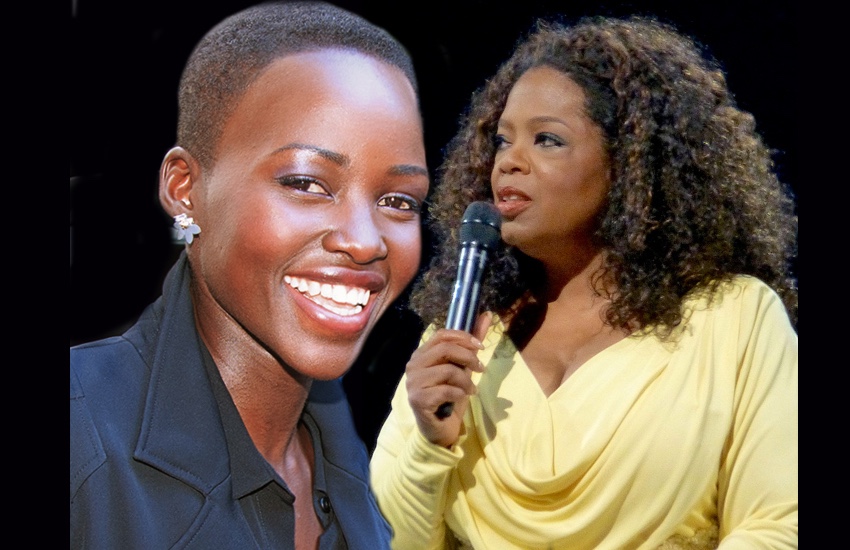
Lupita Nyong’o and Oprah Winfrey.
Ruth and Naomi
Category: Drama
Starring: Lupita Nyong’o (Ruth) and Oprah Winfrey (Naomi)
Premise: At a time of famine, a mother who has lost her sons finds love, strength and hope in the unlikeliest place.
Plot: Naomi and her family flee to Moab to find food. Her husband and then her sons die. One of her daughters-in-law leaves, but the other, Ruth, refuses to go.
‘Don’t urge me to leave you or to turn back from you. Where you go I will go, and where you stay I will stay. Your people will be my people and your God my God. Where you die I will die, and there I will be buried. May the Lord deal with me, be it ever so severely, if even death separates you and me.’ (Ruth 1:16)
Together they travel to Bethlehem and build a new life.
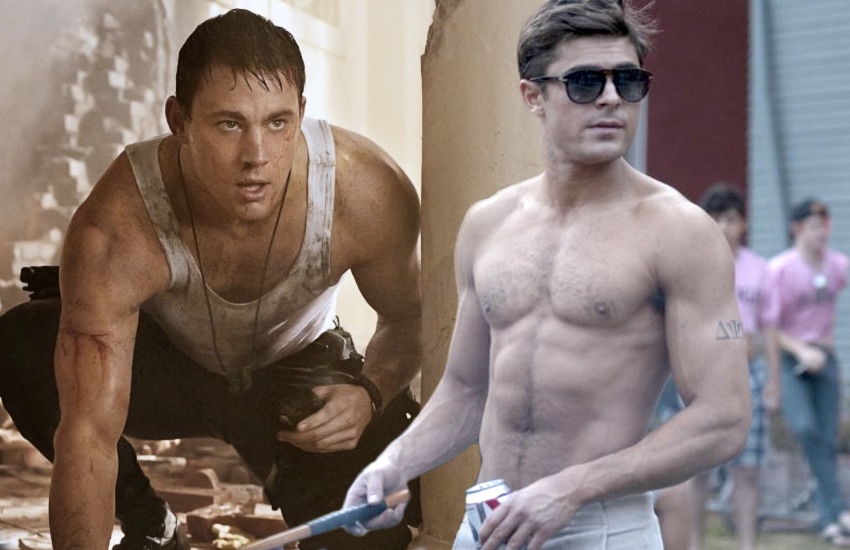
Channing Tatum and Zac Efron.
David and Jonathan
Category: Action
Starring: Channing Tatum (David) and Zac Efron (Jonathan)
Premise: One was the lowly shepherd who slew the giant Goliath. The other was the Prince of the Israelites. Their love would rock a nation.
Plot: David kills Goliath and becomes a great warrior. Prince Jonathan, heir to King Saul, falls in love with him.
They make a ‘covenant’, a sworn, lifelong friendship agreement – more marriage than bromance.
‘Jonathan made a covenant with David because he loved him as himself. Jonathan took off the robe he was wearing and gave it to David, along with his tunic, and even his sword, his bow and his belt.’ (1 Samuel 18:4)
They make out: ‘They kissed each other and wept together’.
Saul tries to kill David, fearing he would take the crown. Jonathan repeatedly warns his lover, saving his life.
Saul and Jonathan die in battle. David becomes king and writes the ancient world’s gayest song of mourning:
‘I grieve for you, Jonathan my brother; you were very dear to me. Your love for me was wonderful, more wonderful than that of women.’ (2 Samuel 1:17)
Jamie Bell and Dev Patel.
Daniel and Ashpanez
Category: Action
Starring: Jamie Bell (Daniel) and Dev Patel (Ashpanez)
Premise: Babylon. The greatest city on Earth. A slave finds love with his eunuch overlord. Together they will defy the king and win eternal glory.
Plot: King Nebuchanezzer overruns Jerusalem and brings Daniel to Babylon to be his slave.
‘Now God brought Daniel into favor and tender [physical] love with the prince of the eunuchs’, Ashpanez, the man whose job it was to train the slaves to serve the king. (Daniel 1:9)
When Daniel refuses to eat the food the king commands, Ashpanez helps him. Daniel becomes the most ribbed and powerful of the king’s servants and goes on to survive action sequences in a fiery furnace and den of lions.
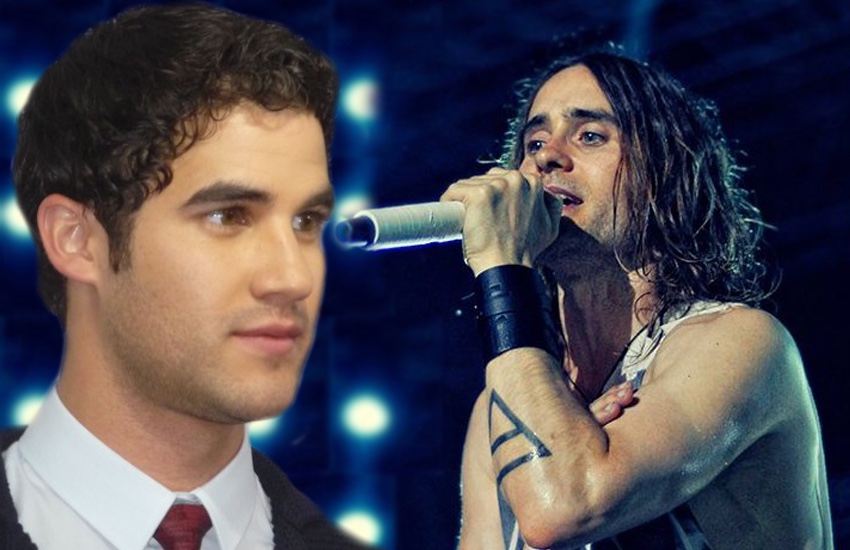
Darren Criss and Jared Leto.
Jesus and the Beloved Disciple
Category: Epic
Starring: Jared Leto (Jesus) and Darren Criss (John)
Premise: The Greatest Love Story Never Told.
Plot: John is one of Jesus’ first disciples and is repeatedly called ‘The Beloved Disciple’. He is next to him at The Last Supper.
‘Now there was leaning on Jesus’ bosom one of his disciples, whom Jesus loved.’ (John 13:23)
At the crucifixion, Jesus tells his mother Mary that this ‘beloved disciple’ is ‘your son’ and tells him that she is ‘your mother’.
Later, he is one of the first to find Jesus’ tomb empty and is visited by Jesus after his death.
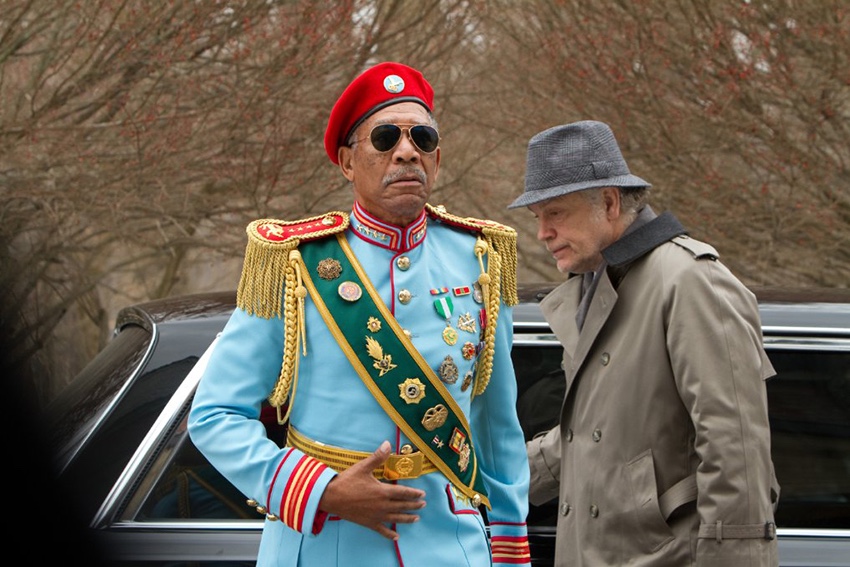
Morgan Freeman in the film Red.
The Ethiopian Eunuch
Category: Comedy
Starring: Morgan Freeman
Premise: Judea. 31 AD. Around about teatime. And it doesn’t take much to save a eunuch.
Plot: An angel sends Philip to a desert road between Jerusalem and Gaza. He comes across a ‘born’ eunuch (gay man or possibly intersex person) who is the treasurer of the queen of the Ethiopians. (Acts 8:27)
When the Ethiopian Eunuch sees some water, he asks Philip to baptize him. But after they emerge from the water, Philip has simply disappeared…
Hugh Jackman and Russell Tovey.
The Centurion and his Lover
Category: Romantic comedy
Starring: Hugh Jackman (the centurion) and Russell Tovey (his lover)
Premise: Boy meets centurion. Centurion falls in love with boy. Boy falls sick. Centurion visits Jesus and asks for miracle.
Plot: Hugh Jackman stars as the beefy Roman Centurion who falls in love with his slave. But when the young man falls sick, nothing will stop him from finding a cure, even if it means humbling himself in front of a conquered Jew, Jesus.
‘Lord, my “pais” [servant or same-gender lover] lies at home paralyzed, suffering terribly… I do not deserve to have you come under my roof. But just say the word, and my servant will be healed.’ (Matthew 8:6)
Most people can agree with the L, G, B, and T in the acronym LGBTQ+ stand for: lesbian, gay, bisexual, and transgender. But when it comes to the Q, it gets a little more complicated. According to the Human Rights Campaign, the Q stands for queer. But according to Planned Parenthood, the Q stands for “questioning (or queer).” For PFlag and The Trevor Project, the Q stands for both, equally.
Even style guides don’t agree. The Associated Press Style Guide notes that the Q stands for “questioning and/or queer,” but the Los Angeles Times’ style guide notes that the Q “most commonly means ‘queer,’ but can also mean ‘questioning.” Similarly, GLAAD’s media glossary notes that the Q “typically means queer and, less often, questioning.”
Though activists have been using the acronyms “LGBTQ” and “LGBTQ+” for much longer, the Q has only come into mainstream use in the past few years. HRC officially began using “LGBTQ” across their work in 2016, though they had been using it in youth programs earlier. In 2016, GLAAD issued an announcement, “for the first time, encourag[ing] journalists and other media content creators to adopt the use of ‘LGBTQ’ as the preferred acronym to most inclusively describe the community.” One year later, the Associated Press changed its style guide to allow either “LGBT” or “LGBTQ.”Both HRC and GLAAD added the letter in response to a growing number of young people identifying as queer. While “questioning” simply means you’re still figuring out how you identify, “queer” is a little more complicated. “Queer” can be used as an umbrella term for anyone not cis and straight — for example, a person might identify as both bisexual and queer — but a growing number of young people identify simply as queer, with no other label.While some LGBTQ+ folks use the word queer to describe the whole community, others would prefer not to use it at all. The word technically means “strange” or “odd,” but as Cara Giaimo detailed for Autostraddle, beginning around the 1890s, the word “queer” was used as a derogatory term for LGBTQ+ individuals. In 1970, a linguistics researcher noted that while the majority of gays and lesbians were familiar with the term, they had only experienced it as a slur.
Then, beginning in the 1980s, some LGBTQ+ activists began reclaiming the word “queer.” In 1990, some AIDS/HIV activists from the group ACT UP formed a new group that they named Queer Nation. In a 1990 leaflet, they addressed the name, writing, “Well, yes, ‘gay’ is great. It has its place. But when a lot of lesbians and gay men wake up in the morning we feel angry and disgusted, not gay. So we’ve chosen to call ourselves queer. Using ‘queer’ is a way of reminding us how we are perceived by the rest of the world. It’s a way of telling ourselves we don’t have to be witty and charming people who keep our lives discreet and marginalized in the straight world… Yeah, QUEER can be a rough word but it is also a sly and ironic weapon we can steal from the homophobe’s hands and use against him.”While Queer Nation was only active for a few years, Giaimo notes, “the reclamation it had started struck a chord and stuck around.” The word “queer” grew andwas increasingly used as a positive term for the LGBTQ+ community throughout the 1990s, 2000s, and 2010s. And while some LGBTQ+ folks still avoid using the word “queer” because of its history as a slur, others find it’s the best way to describe themselves. “For me, it felt like the only word that was all-encompassing enough to accurately describe my sexuality,” Daisy, 25,previously told Refinery29.As for the +, it’s meant to indicate everyone else who isn’t straight, but doesn’t identify with the L, G, B, T, or Q. You may also be familiar withother acronyms to describe the LGBTQ+ community — such as LGBTQIA (the I stands for intersex and the A for asexual), LGBTQQIA (the two Qs are for both queer and questioning), LGBTQ2 (the 2 stands for Two-Spirit, a term used for gender non-conforming or genderqueer folks in the indigenous community in North America), LGBTTQQIAAP (lesbian, gay, bisexual, transgender, transsexual, queer, questioning, intersex, asexual, ally, pansexual), and QUILTBAG (queer, intersex, lesbian, transgender, bisexual, asexual, and gay).The language we use to refer to the LGBTQ+ community is always growing and changing to become more inclusive — and that’s definitely a good thing.
Most historians agree that there is evidence of homosexual activity and same-sex love, whether such relationships were accepted or persecuted, in every documented culture.
A brief history of lesbian, gay, bisexual and transgender social movements/Bonnie J. Morris, PhD
On June 12, 2016, the popular gay dance club Pulse in Orlando was the site of a mass shooting by one assailant. With at least 49 dead and another 50 injured, this hate crime is being called the worst mass shooting in U.S. history. It occurred during what was LGBT Pride weekend for towns and cities in and beyond the United States. The immediate, caring response from mayors, police and FBI authorities, local and national politicians, and the President of the United States, who reached out to express outrage and concern, demonstrates the enormous shift toward acceptance and public support for the LGBT community. Although the LGBT community and individuals remain targets for hate violence and backlash throughout the world, the hard work of activists and allies made it possible to reach this era, where the perpetrators of violence, not the victims, are condemned as sick.
Social movements, organizing around the acceptance and rights of persons who might today identify as LGBT or queer, began as responses to centuries of persecution by church, state and medical authorities. Where homosexual activity or deviance from established gender roles/dress was banned by law or traditional custom, such condemnation might be communicated through sensational public trials, exile, medical warnings and language from the pulpit. These paths of persecution entrenched homophobia for centuries—but also alerted entire populations to the existence of difference. Whether an individual recognized they, too, shared this identity and were at risk, or dared to speak out for tolerance and change, there were few organizations or resources before the scientific and political revolutions of the 18th and 19th centuries. Gradually, the growth of a public media and ideals of human rights drew together activists from all walks of life, who drew courage from sympathetic medical studies, banned literature, emerging sex research and a climate of greater democracy. By the 20th century, a movement in recognition of gays and lesbians was underway, abetted by the social climate of feminism and new anthropologies of difference. However, throughout 150 years of homosexual social movements (roughly from the 1870s to today), leaders and organizers struggled to address the very different concerns and identity issues of gay men, women identifying as lesbians, and others identifying as gender variant or nonbinary. White, male and Western activists whose groups and theories gained leverage against homophobia did not necessarily represent the range of racial, class and national identities complicating a broader LGBT agenda. Women were often left out altogether.
What is the pre-history of LGBT activism? Most historians agree that there is evidence of homosexual activity and same-sex love, whether such relationships were accepted or persecuted, in every documented culture. We know that homosexuality existed in ancient Israel simply because it is prohibited in the Bible, whereas it flourished between both men and women in Ancient Greece. Substantial evidence also exists for individuals who lived at least part of their lives as a different gender than assigned at birth. From the lyrics of same-sex desire inscribed by Sappho in the seventh century BCE to youths raised as the opposite sex in cultures ranging from Albania to Afghanistan; from the “female husbands” of Kenya to the Native American “Two-Spirit,” alternatives to the Western male-female and heterosexual binaries thrived across millennia and culture. These realities gradually became known to the West via travelers’ diaries, the church records of missionaries, diplomats’ journals, and in reports by medical anthropologists. Such eyewitness accounts in the era before other media were of course riddled with the biases of the (often) Western or white observer, and added to beliefs that homosexual practices were other, foreign, savage, a medical issue, or evidence of a lower racial hierarchy. The peaceful flowering of early trans or bisexual acceptance in different indigenous civilizations met with opposition from European and Christian colonizers.
In the age of European exploration and empire-building, Native American, North African and Pacific Islander cultures accepting of “Two-Spirit” people or same-sex love shocked European invaders who objected to any deviation from a limited understanding of “masculine” and “feminine” roles. The European powers enforced their own criminal codes against what was called sodomy in the New World: the first known case of homosexual activity receiving a death sentence in North America occurred in 1566, when the Spanish executed a Frenchman in Florida. Against the emerging backdrop of national power and Christian faith, what might have been learned about same-sex love or gender identity was buried in scandal. Ironically, both wartime conflict between emerging nations and the departure or deaths of male soldiers left women behind to live together and fostered strong alliances between men as well. Same-sex companionship thrived where it was frowned upon for unmarried, unrelated males and females to mingle or socialize freely. Women’s relationships in particular escaped scrutiny since there was no threat of pregnancy. Nonetheless, in much of the world, female sexual activity and sensation were curtailed wherever genital circumcision practices made clitoridectomy an ongoing custom.
Where European dress—a clear marker of gender—was enforced by missionaries, we find another complicated history of both gender identity and resistance. Biblical interpretation made it illegal for a woman to wear pants or a man to adopt female dress, and sensationalized public trials warned against “deviants” but also made such martyrs and heroes popular: Joan of Arc is one example, and the chilling origins of the word “faggot” include a stick of wood used in public burnings of gay men. Despite the risks of defying severe legal codes, cross-dressing flourished in early modern Europe and America. Women and girls, economically oppressed by the sexism which kept them from jobs and economic/education opportunities designated for men only, might pass as male in order to gain access to coveted experiences or income. This was a choice made by many women who were not necessarily transgender in identity. Women “disguised” themselves as men, sometimes for extended periods of years, in order to fight in the military (Deborah Sampson), to work as pirates (Mary Read and Anne Bonney), attend medical school, etc. Both men and women who lived as a different gender were often only discovered after their deaths, as the extreme differences in male vs. female clothing and grooming in much of Western culture made “passing” surprisingly easy in certain environments. Moreover, roles in the arts where women were banned from working required that men be recruited to play female roles, often creating a high-status, competitive market for those we might today identify as transwomen, in venues from Shakespeare’s theatre to Japanese Kabuki to the Chinese opera. This acceptance of performance artists, and the popularity of “drag” humor cross-culturally, did not necessarily mark the start of transgender advocacy, but made the arts an often accepting sanctuary for LGBT individuals who built theatrical careers based around disguise and illusion.
The era of sexology studies is where we first see a small, privileged cluster of medical authorities begin promoting a limited tolerance of those born “invert.” In Western history, we find little formal study of what was later called homosexuality before the 19th century, beyond medical texts identifying women with large clitorises as “tribades” and severe punishment codes for male homosexual acts. Early efforts to understand the range of human sexual behavior came from European doctors and scientists including Carl von Westphal (1869), Richard von Krafft-Ebing (1882) and Havelock Ellis (1897). Their writings were sympathetic to the concept of a homosexual or bisexual orientation occurring naturally in an identifiable segment of humankind, but the writings of Krafft-Ebing and Ellis also labeled a “third sex” degenerate and abnormal. Sigmund Freud, writing in the same era, did not consider homosexuality an illness or a crime and believed bisexuality to be an innate aspect beginning with undetermined gender development in the womb. Yet Freud also felt that lesbian desires were an immaturity women could overcome through heterosexual marriage and male dominance. These writings gradually trickled down to a curious public through magazines and presentations, reaching men and women desperate to learn more about those like themselves, including some like English writer Radclyffe Hall who willingly accepted the idea of being a “congenital invert.” German researcher Magnus Hirschfeld went on to gather a broader range of information by founding Berlin’s Institute for Sexual Science, Europe’s best library archive of materials on gay cultural history. His efforts, and Germany’s more liberal laws and thriving gay bar scene between the two World Wars, contrasted with the backlash, in England, against gay and lesbian writers such as Oscar Wilde and Radclyffe Hall. With the rise of Hitler’s Third Reich, however, the former tolerance demonstrated by Germany’s Scientific Humanitarian Committee vanished. Hirschfeld’s great library was destroyed and the books burnt by Nazis on May 10, 1933.
In the United States, there were few attempts to create advocacy groups supporting gay and lesbian relationships until after World War II. However, prewar gay life flourished in urban centers such as New York’s Greenwich Village and Harlem during the Harlem Renaissance of the 1920s. The blues music of African-American women showcased varieties of lesbian desire, struggle and humor; these performances, along with male and female drag stars, introduced a gay underworld to straight patrons during Prohibition’s defiance of race and sex codes in speakeasy clubs. The disruptions of World War II allowed formerly isolated gay men and women to meet as soldiers and war workers; and other volunteers were uprooted from small towns and posted worldwide. Many minds were opened by wartime, during which LGBT people were both tolerated in military service and officially sentenced to death camps in the Holocaust. This increasing awareness of an existing and vulnerable population, coupled with Sen. Joseph McCarthy’s investigation of homosexuals holding government jobs during the early 1950s outraged writers and federal employees whose own lives were shown to be second-class under the law, including Frank Kameny, Barbara Gittings, Allen Ginsberg and Harry Hay. Awareness of a burgeoning civil rights movement (Martin Luther King’s key organizer Bayard Rustin was a gay man) led to the first American- based political demands for fair treatment of gays and lesbians in mental health, public policy and employment. Studies such as Alfred Kinsey’s 1947 Kinsey Report suggested a far greater range of homosexual identities and behaviors than previously understood, with Kinsey creating a “scale” or spectrum ranging from complete heterosexual to complete homosexual.
The primary organization for gay men as an oppressed cultural minority was the Mattachine Society, founded in 1950 by Harry Hay and Chuck Rowland. Other important homophile organizations on the West Coast included One, Inc., founded in 1952, and the first lesbian support network Daughters of Bilitis, founded in 1955 by Phyllis Lyon and Del Martin. Through meetings and publications, these groups offered information and outreach to thousands. These first organizations soon found support from prominent sociologists and psychologists. In 1951, Donald Webster Cory published “The Homosexual in America”, asserting that gay men and lesbians were a legitimate minority group, and in 1953 Evelyn Hooker, PhD, won a grant from the National Institute of Mental Health to study gay men. Her groundbreaking paper, presented in 1956, demonstrated that gay men were as well-adjusted as heterosexual men, often more so. But it would not be until 1973 that the American Psychiatric Association removed homosexuality as an “illness” classification in its diagnostic manual. Throughout the 1950s and 60s, gay men and lesbians continued to be at risk for psychiatric lockup as well as jail, losing jobs, and/or child custody when courts and clinics defined gay love as sick, criminal or immoral.
In 1965, as the civil rights movement won new legislation outlawing racial discrimination, the first gay rights demonstrations took place in Philadelphia and Washington, D.C., led by longtime activists Frank Kameny and Barbara Gittings. The turning point for gay liberation came on June 28, 1969, when patrons of the popular Stonewall Inn in New York’s Greenwich Village fought back against ongoing police raids of their neighborhood bar. Stonewall is still considered a watershed moment of gay pride and has been commemorated since the 1970s with “pride marches” held every June across the United States. Recent scholarship has called for better acknowledgement of the roles that drag performers, people of color, bisexuals and transgender patrons played in the Stonewall Riots.
The gay liberation movement of the 1970s saw myriad political organizations spring up, often at odds with one another. Frustrated with the male leadership of most gay liberation groups, lesbians influenced by the feminist movement of the 1970s formed their own collectives, record labels, music festivals, newspapers, bookstores, and publishing houses, and called for lesbian rights in mainstream feminist groups like the National Organization for Women (NOW). Gatherings such as women’s music concerts, bookstore readings and lesbian festivals well beyond the United States were extraordinarily successful in organizing women to become activists; the feminist movement against domestic violence also assisted women to leave abusive marriages, while retaining custody of children became a paramount issue for lesbian mothers.
Expanding religious acceptance for gay men and women of faith, the first out gay minister was ordained by the United Church of Christ in 1972. Other gay and lesbian church and synagogue congregations soon followed. Parents and Friends of Lesbians and Gays (PFLAG), formed in 1972, offered family members greater support roles in the gay rights movement. And political action exploded through the National Gay and Lesbian Task Force, the Human Rights Campaign, the election of openly gay and lesbian representatives like Elaine Noble and Barney Frank, and, in 1979, the first march on Washington for gay rights. The increasing expansion of a global LGBT rights movement suffered a setback during the 1980s, as the gay male community was decimated by the AIDS epidemic, demands for compassion and medical funding led to renewed coalitions between men and women as well as angry street theatre by groups like AIDS Coalition to Unleash Power (ACT UP) and Queer Nation. Enormous marches on Washington drew as many as one million gay rights supporters in 1987 and again in 1993. Right wing religious movements, spurred on by beliefs that AIDS was God’s punishment, expanded via direct mail. A New Right coalition of political lobby groups competed with national LGBT organizations in Washington, seeking to create religious exemptions from any new LGBT rights protections. In the same era, one wing of the political gay movement called for an end to military expulsion of gay, lesbian and bisexual soldiers, with the high-profile case of Col. Margarethe Cammermeyer publicized through a made-for- television movie, “Serving in Silence.” In spite of the patriotism and service of gay men and lesbians in uniform, the uncomfortable and unjust compromise “Don’t Ask, Don’t Tell” emerged as an alternative to decades of military witch hunts and dishonorable discharges. Yet more service members ended up being discharged under DADT.
During in the last decade of the 20th century, millions of Americans watched as actress Ellen DeGeneres came out on national television in April 1997, heralding a new era of gay celebrity power and media visibility—although not without risks. Celebrity performers, both gay and heterosexual, continued to be among the most vocal activists calling for tolerance and equal rights. With greater media attention to gay and lesbian civil rights in the 1990s, trans and intersex voices began to gain space through works such as Kate Boernstein’s “Gender Outlaw” (1994) and “My Gender Workbook” (1998), Ann Fausto-Sterling’s “Myths of Gender” (1992) and Leslie Feinberg’s Transgender Warriors (1998), enhancing shifts in women’s and gender studies to become more inclusive of transgender and nonbinary identities. As a result of hard work by countless organizations and individuals, helped by internet and direct-mail campaign networking, the 21st century heralded new legal gains for gay and lesbian couples. Same-sex civil unions were recognized under Vermont law in 2000 and Massachusetts became the first state to perform same-sex marriages in 2004; with the end of state sodomy laws (Lawrence v. Texas, 2003), gay and lesbian Americans were finally free from criminal classification. Gay marriage was first legal in the Netherlands, Belgium, Spain and Canada; but the recognition of gay marriage by church and state continued to divide opinion worldwide. After the impressive gains for LGBT rights in post-apartheid South Africa, conservative evangelicals in the U.S. began providing support and funding for homophobic campaigns overseas. Uganda’s dramatic death penalty for gays and lesbians was perhaps the most severe in Africa.
The first part of the 21st century saw new emphasis on transgender activism and the increasing usage of terminology that questioned binary gender identification. Images of trans women became more prevalent in film and television, as did programming with same-sex couples raising children. Transphobia, cissexism and other language (such as “hir” and “them”) became standardized, and film and television programming featured more openly trans youth and adult characters. Tensions between lesbian and trans activists, however, remained, with the long-running Michigan Womyn’s Music Festival boycotted by national LGBT groups over the issue of trans inclusion; like many woman-only events with a primarily lesbian base, Michfest had supported an ideal of ingathering women and girls born female. The festival ended after its fortieth anniversary in August 2015.
Internet activism burgeoned, while many of the public, physical gathering spaces that once defined LGBT activism (bars, bookstores, women’s music festivals) began to vanish, and the usage of “queer” replaced lesbian identification for many younger women activists. Attention shifted to global activism as U.S. gains were not matched by similar equal rights laws in the 75 other countries where homosexuality remained illegal. As of 2016, LGBT identification and activism was still punishable by death in ten countries: Iran, Iraq, Mauritania, Nigeria, Qatar, Saudi Arabia, Somalia, Sudan, Uganda and Yemen; the plight of the LGBT community in Russia received intense focus during the 2014 Winter Olympic Games, to which President Obama sent a contingent of out LGBT athletes. Supportive remarks from the new Pope Francis (“Who am I to judge?”) gave hope to LGBT Catholics worldwide.
Perhaps the greatest changes in the U.S. occurred between spring 2015 and spring 2016: in late spring 2015 Alison Bechdel’s lesbian-themed Broadway production Fun Home won several Tony awards, former Olympic champion Bruce Jenner transitioned to Caitlyn Jenner, and then in June of 2015, the Supreme Court decision recognized same-sex marriage (Obergefell v. Hodges). By spring 2016 the Academy Awards recognized films with both lesbian and transgender themes: Carol and The Danish Girl. And the Supreme Court had avowed that a lesbian family adoption in one state had to be recognized in all states. However, the United States also saw intense racial profiling confrontations and tragedies in this same period, turning LGBT activism to “intersectionality,” or recognition of intersections issues of race, class, gender identity and sexism. With the June 12 attacks on the Pulse Club in Orlando, that intersectionality was made plain as straight allies held vigils grieving the loss of young Latino drag queens and lesbians of color; with unanswered questions about the killer’s possible identification with ISIS terrorism, other voices now call for alliances between the LGBT and Muslim communities, and the greater recognition of perspectives from those who are both Muslim and LGBT in the U.S. and beyond. The possible repression of identity which may have played a role in the killer’s choice of target has generated new attention to the price of homophobia –internalized, or culturally expressed— in and beyond the United States.
Reference
History of Lesbian, Gay, Bisexual and Transgender Social Movements, American Psychological Association, 2009, by Bonnie J. Morris, PhD George Washington University Washington, D.C. https://www.apa.org/pi/lgbt/resources/history
Article References
Alison Bechdel, Fun Home: A Family Tragicomic, Houghton Mifflin, 2006
Kate Bornstein, Gender Outlaws: On Men, Women, and the Rest of Us, Routledge, 1994
Michael Bronski, A Queer History of the United States, Beacon Press, 2011
Devon Carbado and Dwight McBride, eds. Black Like Us: A Century of Lesbian, Gay and Bisexual African-American Fiction, Cleis Press, 2002
David Carter, Stonewall: The Riots That Sparked the Gay Revolution, Macmillan, 2004
Debbie Cenziper and Jim Obergefell, Love Wins: The Lovers and Lawyers Who Fought the Landmark Case for Marriage Equality, Harper Collins Publishers, 2016
Lillian Faderman, The Gay Revolution: The Story of the Struggle, Simon & Schuster, 2015; and To Believe in Women: What Lesbians Have Done for America – A History, Houghton Mifflin, 1999
Salvatore Mineo Jr. better known to the world as Sal Mineo, was the baby-faced American actor whose legend and cult following largely stems from his iconic role as the doomed ‘Plato’ in Nicholas Ray’s 1955 classic of ‘switchblade cinema’ – ‘Rebel Without A Cause’. In the movie Mineo played a troubled high-school kid who emulates (actually as far as 50’s cinema could push that envelope) falls in love with James Dean’s character Jim Stark, although there are reports of a real-life love affair between the two off-set).This was the role for which he would earn the first of two Academy Award nominations.
In 1962 Jill Haworth Mineo’s “girlfriend” kicked open Mineo’s closet door, catching the 35-year-old actor bedding his buddy Bobby Sherman. (Yes. thatBobby Sherman.) “But he didn’t stop,” she said. “He kept going at it.” Rumors of Mineo’s sexuality circulated. He found serious work even more difficult to procure, predominantly because filmmakers saw him as an embarrassing relic of the 1950s.
On the night of February 12, 1976, actor Sal Mineo returned home following a rehearsal for the play P.S. Your Cat Is Dead. After parking his car in the carport below his West Hollywood apartment, the 37-year-old actor was stabbed in the heart by a mugger who quickly fled the scene. At first, the e police suspected that Mineo’s work for prison reform had put him in contact with a dangerous ex-con. Then their focus shifted to Mineo’s personal life. Investigators had discovered that his home was filled with pictures of nude men. But the gay pornography also failed to turn up any leads and later became the basis for a hotbed of rumors that Mineo was killed by a “trick gone wrong”
Out of the blue, Michigan authorities reported that Lionel Williams was arrested on bad check charges and was bragging to everyone that he had killed Mineo. Although he later retracted his stories at about the same time Williams’ his wife back in Los Angeles told police that he had come home the night of the murder drenched in blood. However, there was one major discrepancy in the case, Williams was black with an Afro and all of the eyewitnesses had described the perpetrator as a white man with long brown hair.
Fortunately, the police were able to unearth an old photo of Williams in which his hair had been dyed brown and processed so that it was straight and long. In addition, the medical examiner had made a cast of Mineo’s knife wound and police were able to match it to the description of the knife provided by Williams’ wife. Lionel Williams was eventually convicted and given a sentence of life in prison. He was paroled in the early 1990s but rearrested after committing other crimes. Today, Williams whereabouts is unknown or weather or not he is still even alive.
***NOTE: Because of the time period many are unsure of Mineo’s true sexuality. Some have said that Mineo was “bisexual” but because of the time period in the 1970’s many gay men used the claim of bisexuality as a stepping stone to fully “coming out”.
Outside the Black Cat on February 11, 1967 Photograph: Courtesy ONE Archives at the USC Libraries
On New Year’s Eve in 1966, undercover officers atthe Black Cat Tavern inSilver Lakebegan to handcuff and beat the patrons and staff as everyone was exchanging celebratory midnight kisses. An estimated 14 people were arrested, many charged with lewd conduct and forced to register as sex offenders for the rest of their lives.
Other Silver Lake gay bars, including New Faces, a few doors down, were targeted the same evening. Two years before the Stonewall uprising, more than 200 people came together outside the Black Cat for one of the earliest U.S. LGBTQ-rights demonstrations. Picketers gathered on February 11, 1967, to peacefully protest the police raids that had been conducted weeks before. Alexei Romanoff, a former owner of New Faces, describes the Black Cat demonstration as a turning point. During a time in which homosexuality was illegal in most states, LGBTQ people developed elaborate codes and survival strategies to avoid arrest. But that February night, Romanoff says, the community stood up and fought back.
Now 82, he is the last surviving organizer of Personal Rights in Defense and Education (P.R.I.D.E.), one of the groups that helped stage the 1967 stand. We traveled back to that monumental moment with Romanoff.
Romanoff in 1968 Photograph: Courtesy Alexei Romanoff
How were the protests organized?
We didn’t have computers, we didn’t have cell phones, but what we did have was called a phone tree. One person would immediately call another 10 people and tell them what had happened, and then each of them would call 10 more people. It took us about two weeks to organize the protest. The Hub Bar [in Alhambra] was the only place that allowed us to meet. We were cautious. We kept moving the demonstration up and down the block so we couldn’t be charged with loitering. We had flyers printed up. People would ask what was going on. We’d give them a flyer, and if they dropped it, we would rush over, grab it and pick it up so we wouldn’t be considered to be littering.
What was the protest like?
If you look at the pictures, none of the regular news media covered us. They were all from the Free Press at the time. They were the only ones that covered the demonstration. A couple of years ago, I met with [former] police chief [William J.] Bratton, and we were looking at the pictures, when I said, “Do you see anybody smiling there?” He said no. And I said, “That’s because [the protesters] were all terrified to do this, but they knew they had to.” It took place in the evening because they had jobs they would likely lose the next day.
What were the risks?
If the major news media would have covered that demonstration, their faces would have been in the newspapers, but the newspapers didn’t think it was very important because it was only those “unhappy homosexuals.” At that time, we could be put into a sanitarium for being gay. And our families could have us committed if they were embarrassed by us. There, you were subject to shock treatments and chemically castrated. We were afraid, but we couldn’t take it anymore. You couldn’t just come in, beat us up and take us to jail because we were who we were.
What was the aftermath of the protests?
Once you let the cat out of the bag, there’s no stopping it. I started an organization, Santa Monica Bay Coalition for Human Rights. In 1970, we were marching in the LA Pride parade, and we had this big banner. I was in the front, and there were mounted police officers. I was nervous, but one of them turned his horse away from all the rest and gave me a V-for-victory sign. I knew we were going to be okay.
And what was the legacy at the Black Cat?
We got the Black Cat designated as a historic landmark. There’s a plaque on the front of the building now. When I went back one time, there was a note that was attached to the plaque, and all it said was “thank you.” That was enough for everything.
Romanoff discussed the evening’s events with Time Out, and his account has been edited and condensed for length and clarity.
“You’re not fat fat, but you are gay fat,” said the guy I was dating at the time when I expressed that I felt like I didn’t particularly fit into gay culture.
These words, which at the time were deeply hurtful, continued to bother me for years. They illustrate the ridiculous, restrictive, and unattainable body norms that govern gay male culture. I often ponder what exactly it means to be “gay fat.” “Fat” is a social construction, a term that often functions as a general category in which we place anyone who does not meet cultural standards of size and/or appearance. The notion of being “gay fat,” as opposed to simply “fat,” illustrates that gay male culture and Western culture have different body standards.
I call this ideal gay male type thenormate gay: the slim, toned, appropriately masculine, appropriately hairy, white, cisgender, and able-bodied gay man who embodies the collection of characteristics gay culture values most. The bodies of gay men who have less social and sexual capital because they are regarded as “deviant” — those who are of color, trans, disabled, fat, or fem — are defined in contrast to the body of the normate gay. The normate gay does not, in fact, exist, but is an idealized and unattainable cultural figure. Though some gay men may embody the normate gay to a large extent, appearance standards are set to create a constant state of lack that aligns with consumer capitalism in the form of diet culture. As sociologists Nathaniel C. Pyle and Noa Logan Klein observe:
“The prevalence of these media representations [the body promoted by mainstream gay media] creates an enormous pressure on gay men to conform to this narrow ideal body type, much like the beauty standards that are imposed on women and have been thoroughly analyzed by feminists. Rates of eating disorders and other body image disturbances are high among gay men, which may be taken as evidence that body image ideals exert pressures on gay men similar in strength to those faced by heterosexual women.”
Gay men clearly suffer from a host of body image issues, disordered eating, and full-blown eating disorders. Yet, despite existing similarities between appearance standards for women and gay men, there is no gay men’s body liberation movement to the extent that one exists within contemporary feminism. In gay men’s culture there is little discussion of diet culture, body positivity, the concept of “health at every size,” or feminism.
The absence of a sorely needed gay men’s body liberation movement is the product of cultural ideas of toxic masculinity — aspects of masculinity that produce socially harmful effects such as domination, misogyny, homophobia, and violence — andtoxic gay masculinity, a subcategory of toxic masculinity that describes aspects of masculinity within gay male culture that are similarly detrimental.
Toxic masculinity, as a set of cultural standards for what men should be or do, is not monolithic. Gay men can simultaneously be victimized by toxic masculinity, as expressed by straight men, and perpetuate toxic masculinity against other marginalized men.Toxic gay masculinity functions around the desire to embody the normate gay type and to police those who fall outside the parameters of this cultural ideal, thereby reinforcing structural forms of oppression such as sexism, cissexism, racism, lookism, sizeism, and ableism.
I prefer the terms “body liberation” and “body justice,” as opposed to the more popular term “body positivity,” because body positivity is increasingly co-opted by the weight loss and diet industry. Some diets, for example, market themselves as involving “body positive weight loss.” Body positivity as a feminist concept stemming from the Fat Acceptance Movement, however, is about radically accepting and making peace with one’s bodyas is. “Body positive weight loss” is therefore at odds with the original intentions of body positivity.
The now widespread use of the term may also prevent us from seeing sizeism as a social justice issue. It is not enough to feel “positive” about one’s own body or the bodies of those one interacts with on a daily basis. The word “positivity” can prevent us from seeing body liberation as a civil and human rights issue and that body size should be a protected category similar to race, gender, sexual orientation, and ability. The terms “liberation” and “justice,” which imply the need for systemic change where body size is concerned, are, by nature, more radical and less co-optable by diet culture.
There is no gay men’s body liberation movement because norms of masculinity prevent gay men from seeing and addressing the extent to which diet culture and gay male culture are enmeshed.
Because caring about one’s physical appearance, dieting, and weight loss/body manipulation are seen as feminine behaviors in our culture, gay men, who are already stigmatized for being too feminine and therefore not “real” men, are hesitant to discuss body issues openly. The social and sexual privileges conferred by normative gay masculine provides further incentive for gay men to leave the status quo unchallenged.
A Brief History of the Gay Male Body
Due to the fact that gay men were historically described as “inverts,” or improperly feminine in comparison to heterosexual men — a notion that persists to this day — they often seek to redress the shame associated with gay identity through appeals to normative masculinity. Gay men’s bodies have long been defined by standards of masculinity, though these standards have changed over time in response to larger social and cultural circumstances. Masculinity in Western culture is defined, in part, via the expression of sexual desire and power; therefore, in gay male culture there exists an intense focus on masculinity, sex, and desirability.
When the gay liberation movement emerged in the United States in the late 1960s, body standards for gay men were not the gym-toned aesthetic of today, but the thin, androgynous hippie style often adopted by New Left men of the period. As the Gay Rights Movement progressed, and gay people became more socially and culturally visible and enmeshed within emerging forms of consumer capitalism, body standards for gay men became more idealized, unattainable, and rigid. The expansion of gay gyms, bathhouses, sex clubs, and porno theaters represented the co-optation of the philosophy of gay liberation by capitalists.
The normative body type that emerged during the mid-to-late 1970s is what some have referred to as the “Castro clone,” or, the sexualized image of the ideal white, working-class gay man. This look grew out of the Castro district of San Francisco, which became a gay mecca as urban gay communities expanded during the post-Stonewall period. The “Castro clone” often sported masculine fabrics such as denim and leather and typically wore form-fitting plaid shirts or t-shirts and Levis jeans, worn tight to emphasize the crotch area. A mustache or facial hair often topped off the hyper-masculine look. Some have also likened the “Castro clone” to the image of the Marlboro Man, a character of a rugged, working-class man used to market Marlboro cigarettes, who first appeared in advertising in 1954.
Body norms for gay men shifted with the arrival of the HIV/AIDS epidemic in the early 1980s to an even further idealized slim, toned, white, and able-bodied aesthetic. The amplified masculinity of the rugged “Castro clone” was replaced by an imperative to be smooth, hairless, and clean shaven. Though scientifically inaccurate, AIDS was described by medical professionals and the media as an explicitly gay disease or “gay cancer” (the initial name used for the condition by the Centers for Disease Control was GRID, or, Gay Related Immune Deficiency). In contrast to prevailing notions that gay men were diseased, the ideal body aesthetic of the time was one that connoted health, cleanliness, and physical fitness in the form of muscularity.
Activist and journalist Michelangelo Signorile, in his 1997 bookLife Outside, argued that the muscular gym imperative heightened during the early years of the epidemic because doctors recommended steroids to HIV-positive gay men to combat wasting and other physical signs of illness. Signorile famously observed that, at this time, the most physically beautiful men were often those who were the most ill. Though doctors prescribed steroids with the intent to help patients combat the symptoms created by AIDS, steroid use in response to the epidemic further solidified gay culture’s masculine muscular ideal.
The anti-identity movements of the 1990s, such as third wave feminism and radical queer and transgender movements, which questioned the efficacy of the gender binary and other gender and sexual norms, led, in part, to the emergence of bear and twink subcultures, though the gay gym aesthetic still predominated in the mainstream. Gay culture and sexuality remain taboo and attaining an ideal physique is a way for gay men to visually demonstrate their morality, virtue, and control in the face of a society that regards non-heteronormative ways of being as deviant and shameful. Due to internalized homophobia, some gay men might regard their sexual desires and practices as “excessive” and seek to mitigate shame by disciplining and exerting control over their body size and shape.
Some historians trace the beginnings of contemporary diet culture to the work of the nineteenth-century social reformer Sylvester Graham. Graham argued that one’s appetite and morality were linked and that one could use food as a path to moral virtue. He prescribed a bland diet as a way for men to control their desires and exercise sexual restraint. It is therefore unsurprising that during the HIV/AIDS epidemic the ideal gay body type shifted from simply thin to a physique that was lean, sculpted, and hairless. The ideal gay male body type has developed over time to represent not just morality and virtue, but moral virtue on hyperdrive. Consumer capitalism, including gay media, further employs the precepts of diet culture to prey upon gay men’s desires to be socially and sexually worthy.
Dear Gay Men, You Are On a Diet
I define a diet as any change in eating and/or behavior with the intention of weight or body manipulation. The belief that we must engage in dieting in order to make our bodies conform to cultural ideals is supported by diet culture.Christy Harrison, an anti-diet dietitian and host of theFood Psychpodcast, describes “diet culture” as a system of beliefs that “worships thinness and equates it to health and moral virtue… promotes weight loss as a means of attaining higher status… demonizes certain ways of eating while elevating others… and oppresses people who don’t match up with its supposed picture of ‘health.’” “By and large,” Harrison explains, “Western culture is diet culture. This way of thinking about food and bodies is so embedded in the fabric of our society, in so many different forms, that it can be hard to recognize.” Diet culture contributes to systems of oppression such as sizeism — the belief that smaller bodies are inherently superior to larger bodies — and lookism.
Lookism, or the personal, institutional, and social privileges and benefits conferred upon persons whose physical appearances align with cultural preferences, is rampant in gay male culture. The term was first coined during the 1970s by activists within the Fat Acceptance Movement. Michelangelo Signorile defines this concept as follows:
“the setting of a rigid set of standards of physical beauty that pressures everyone within a particular group to conform to them. Any person who doesn’t meet those very specific standards is deemed physically unattractive and sexually undesirable. In a culture in which the physical body is held in such high esteem and given such power, body fascism then not only deems those who don’t or can’t conform to be sexually less desirable, but in extreme sometimes dubbed lookism also deems a person completely worthlessas a person, based solely on his exterior. In this sense it is not unlike racism or sexism, or homophobia itself.”
Lookism, then, does more than position someone as merely unattractive. It denies one’s very humanity on the basis of culturally-determined aesthetic standards. In gay male culture, it is not enough to be thin; rather, one must embody a set of idealized aesthetic characteristics in order to be considered desirable and worthy. Sizeism and lookism combine to create an ideal that is impossible for most to achieve.
Diet culture is hard to recognize within the context of gay male culture because it often appears dressed in a masculine guise to make its precepts more palatable to gay men. Gay men talk about “fitness journeys,” “gyming,” “gym goals,” and “meal prepping” — not dieting. But asHarrisonexplains, diet culture also “masquerades as health, wellness, and fitness.” This facet of diet culture is only amplified within the masculinized space of mainstream gay male culture.
Gay men may also engage in “clean eating” — another form of dieting under the guise of “health” — as a way to manage the stigma of being gay through appeals to bodily cleanliness and moral superiority. The assumption is that if we eat foods that are “clean,” we are, by extension, “clean,” and if we eat “unhealthy” foods we are therefore “contaminated” or “dirty.” I admit that for awhile I got into “clean eating,” in part, as a way to feel morally superior to other gay/queer men. My thought process was that if I didn’t have the ideal body aesthetic, I could at least feel better about myself because I was eating “cleaner” in comparison to others. In reality, food holds no moral value outside the value a culture — in this case Western diet culture — ascribes to it.
The invisibility of diet culture within gay male culture also results in some gay men seeing the end results of their personal “fitness journeys” as something all gay men can attain through discipline and hard work. The message is that anyone can achieve acceptance within gay culture if only they hit the gym and eat “healthy.” Such messages are diet culture dressed up as “fitness inspiration.” They may further be seen as anti-homophobic messages — not diet messages — because gay men may link their “fitness journeys” to overcoming bullying, harassment, and internalized shame.
The majority of these men, in the words of Harrison, “were born on third base but think they batted a triple.” Genetic privilege allows them to more easily conform to the normate gay ideal. Feminist activist and educator Warren Farrell refers to this phenomenon as “genetic celebrity,” or, the largely unearned adoration we bestow upon those whose physical appearances, based upon random combinations of genetic factors, fall within the parameters of what a particular culture deems “attractive” and thus desirable and worthy.
While thin or “fit” gay men may also suffer from body image issues that intersect with experiences of homophobia, they should simultaneously acknowledge their thin privilege and the fact that they do not have to face the pervasive stigma and stress experienced by those who live in larger bodies. Put differently, there is no system of oppression that marginalizes thin people in the ways sizeism and lookism oppress those who are larger.
Pointing out the extent diet culture and gay male culture are enmeshed is challenging because it unsettles notions gay men have long held as truths. It is difficult for some gay men to acknowledge and surrender the social and sexual privileges conferred by normate gay status and to work towards collective body liberation.
Riot, Not Diet
In the now classic feminist analysis of the beauty industry,The Beauty Myth, Naomi Wolf refers to diets as “political sedatives.” Wolf argues that if women’s focus is primarily directed to their physical appearance and the attainment of “beauty,” they cannot effectively create political and social change.Christy Harrisonfurther explains that dieting “keeps us from changing the status quo, from speaking out and rebelling against the things that don’t work for us, and from reshaping society in ways that align with our values.” Dieting, in essence, diminishes our political efficacy — our ability to meaningfully impact change. It keeps gay/queer men from challenging the status quo and living out our full potential as well.
The Stonewall Inn Riots of 1969 are often cited as the origin myth of modern gay liberation (though, in fact, the Gay Rights Movement began several decades prior and a liberationist mentality developed across the United States simultaneous to Stonewall). Our gay ancestors, nevertheless, rioted, fought, and died so we would have the right to exist proudly and without shame. This includes the liberation of our bodies — not just sexually — but in all ways.
The solution is not for women and fems to prioritize the inclusion of gay/queer men within ongoing body liberation movements. Gay men must do it themselves, must create their own movement informed by existing critiques, and must give up the hesitance to address diet culture and body liberation because dismantling long-held ideals means relinquishing the status and privilege that comes from normative masculinity. An essential first step is to recognize where and how diet culture operates within gay male culture. We must, as our gay predecessors did, and as a popular third-wave feminist slogan tell us:
A work by Bill Costa, from the Leslie-Lohman collection. Registrar Branden Wallace traces the images of purity (white linen, smooth body) to the advent of AIDS and HIV. (Photo courtesy of the Leslie-Lohman Museum of Gay and Lesbian Art)
Late June’s (2019) 50th anniversary of the Stonewall Riots is making this Pride month a particularly reflective one.
But like a newly minted AARP member flipping through their high school yearbook, the modern gay rights movement’s “Big five-oh” moment brings, with its flood of memories, certain hard questions—not the least of which is: What possessed you to wear that?
“I have, fortunately, no photos publicly available of me during my ’70s platform shoes and glitter rock period,” says Joseph Hawkins, director of the ONE National Gay and Lesbian Library and Archives at the USC Libraries, who spoke with the Blade about how the things we put in our literal closet can liberate us from the figurative one (or keep us there).
“When I look at pictures of people back in the [pre-Stonewall] 1960s,” says the USC Professor of Anthropology and Gender Studies, “there was an assimilationist viewpoint, where you wanted to look like a good citizen. I think of people marching in front of the White House, where they’re dressed in their Sunday best.”
“When the consequences of being an out homosexual were damaging to one’s life and career, there had to be codes to letting people know who you were,” observes registrar Branden Wallace, of NYC’s Leslie-Lohman Museum of Gay and Lesbian Art.
Fashion, Wallace notes, “is a way to express one’s identity, specifically, for the time after Stonewall, when you had this bursting, where queer culture could actually be visible. They took their cues from things that were going on socially, and the trends in fashion, and also developed their own.”
Registrar Branden Wallace, of the Leslie-Lohman Museum of Gay and Lesbian Art. (Photo by Gonzalo Casals)
By the late ’60s, Hawkins recalls, “there was a lot of crossover [between the counterculture and gays]—ripped Hawaiian shirts, and ripped jeans. But later, that gave way that whole ‘clone’ thing, which came as a response to the term ‘sissy.’ Even within the gay community, a sissy would be ‘too’ effeminate. In the clone movement, the gay men were going to out-butch straight men.”
There was very little “humor, in these bastions of gay masculinity… seriousness and masculinity were the same thing. That opaque perspective on masculinity was also a mockery of drag queens and effeminate men. They weren’t really men,” recalled Gerald Busby, in a recent Blade article (“Of cowboy drag, cruising, and cocaine”) about the “cowboy” look he donned to make it past the doors of NYC’s Spike and Eagle’s Nest, during the early 1970s.
“It denoted seriousness of commitment to being gay and being masculine, as well as being decisive about what kind of sex you were after,” Busby noted, of the “alignment of costume and behavior… unmistakable symbols of sexual preference, such as blue or red handkerchiefs in left or right rear pockets of jeans, to indicate top or bottom.”
This exaggerated working class “clone” look, whether denim, lumberjack, or leather, Hawkins observes, was, in its own way, a “liberation ideology. Part of what allowed the sexual revolution to occur was this idea that masculinity could be a gay phenomenon. That’s what fed the ‘clone’ thing. It was a response to the idea that gay men couldn’t be masculine.”
Of his above-mentioned platform shoes ’70s look, Hawkins notes he paired it with skin-tight jeans, shoulder-length hair, and “an old saddle bag I carried. I don’t remember being ‘coded,’ though.” Working in an Office of Economic Opportunity program at the time, Hawkins recalls going on a field trip to Washington, D.C., when “a guy in my group turned to me and said, ‘Oh, girl, if you’re gonna sell that merchandize, you have to advertise.’ There were certain things you wanted to do to look gay, for people to know you were gay. You could walk down the street and catch someone’s glance. That was a different kind of coding.”
In the decades after Stonewall, Wallace notes, cloning reared a new head, and coding morphed with the mainstream, to the point of merger.
Sporting a well-groomed, muscled, manicured look and clingy shirts meant to showcase a sculpted gym body, the “Chelsea Boy” aesthetic ruled the late 1990s and early 2000s.
“I called it the ‘A-Gays,’ a standard that is unobtainable” yet desirable and pursued, Wallace recalls, also noting the Chelsea Boy look shared its time in the sun with “grunge and goth, the alternative kids who, no matter how hard they tried, could not fit in. So it’s amazing that in gay culture [of that time], you have the perfectly coiffed, and this side that just didn’t care, and was for all genders.”
There was also in this era, Wallace notes, “a drastic change in the photographic artwork. With the advent of AIDS and HIV, the art tends to go toward a smooth body, clean appearances. There’s usually white linen and water around. So artists like Herb Ritts and Bruce Weber are using these models for their purity; a perfect-looking body that is not possible.”
Nowadays, “anything goes,” Wallace says. “Beards, which you never saw in a Chelsea Boy in the 1990s, bow ties and sweater vests, and everything… I’m probably raw denim, wearing a T-shirt, got a big keychain in my pocket and a hanky and a Mohawk. That’s usually paired with a suit jacket or a jacket of some sort. You really can do anything now.”
“I don’t know why these things happen,” Hawkins admits, of trends and styles and looks that sometimes seem to defy explanation (he’s still wrapping his head around flip-flops). “Sometimes, in the middle of them, they make no sense. On the other hand, you look back and there are all these political and cultural cues. Maybe there’s an economic downturn or a wave of conservatism based on some sort of military action”—or, an event like Stonewall, which steps over lines in the sand while drawing new ones of its own. “Those things,” Hawkins says, “begin to infiltrate the way people think about fashion, and what they are going to do.”
Gerald Busby in cowboy drag, ready to cruise at the Spike and the Eagle’s Nest. (Photo by Joanna Ney)
Levis 501 jeans. Skin tight. Sanded down at the knees and crotch for that perfectly worn-in look. Third button unbuttoned to create a bit of allure. T-shirt, also skin tight. A Levis snap-front plaid. That was the uniform of the Castro clone, the gay fashion icon spawned in the 70s that — with surprisingly minor evolution or alteration — can still be seen on the streets of San Francisco today.
Danny Glicker, thankfully, is in love with the look. As the costume designer on Milk, Gus Van Sants biopic of the slain civil rights leader Harvey Milk, Glicker had to outfit hundreds of actors, from leading men Sean Penn, James Franco and Emile Hirsch to an army of extras, all dressed to span a full decades worth of fashion dos and donts.
Period films always present challenges to their costumers, but those based on true stories are that much more complicated. Glicker was saddled with another great expectation while preparing the highly anticipated film: Milks characters are not only real, they lived during a time many viewers can still recall themselves. And Milk owned a camera shop and lived an incredibly well documented life, which took some of the guesswork out of the equation, but also meant that there would be no excuse with eagle-eyed fans for anything less than absolute authenticity.
Simply recreating the clothes wouldnt have been sufficient — the bodies on todays actors are more defined and muscled than those of the leaner Milk and his comrades. Instead Glicker had to tailor the clothes to look as if they were hanging off of a 70s frame.
We created these enormous books of research that specifically address each character within the timeline, says Glicker, a young, unassuming, bespectacled man with a head of thick black curls whose previous work include Transamerica, Thank You For Smoking and HBOs True Blood. It was sort of overwhelming, because after awhile it was hard to edit down the material. I was very interested in recreating outfits exactly as they were, partially because I knew that Gus was going to be incorporating so much archival footage into the movie, and I didnt know exactly where.
Given access to the archives of the San Francisco GLBT Historical Society, Glicker and his team managed to get their hands on a fair amount of Milks actual clothing. Then they went shopping. Glicker, who prefers vintage pieces, combed hundreds of stores and amassed a huge collection of items, which he then authenticated using his research books before altering to fit the actors. No tiny detail of the evolution of fashion went unchecked — there are, after all, key differences between a 1976 shirt and a 1978 shirt (such as the collar width), and Glicker was determined to be accurate.
What couldnt be bought was recreated (and sometimes what was bought was still recreated so that spare sets were available), including T-shirts from now-defunct Castro bars, protest Ts found in the archive, and the suit Milk was killed in, which they had viewed at the Historical Society. That was a very, very meticulous recreation, says Glicker, who had to wear cotton gloves while handling the suit, which is kept in a temperature and light controlled environment and wrapped in acid free tissue. We were measuring everything from the lapels to the belt loops and leg openings. The fabric, every aspect of the fit, it was all done to match as closely as possible.
And when the thrift stores and archives didnt have what he needed, Glicker went to Levis corporate headquarters in San Francisco. The uniform of choice for Harvey Milk, his friends and many in the LBGT community at the time was the Levis 501 button fly jean, says Robert Hanson, President of Levi Strauss & Co.s Levis Brand Division. If you saw anything but Levis in the film it would have been wrong.
Levis gave me a tremendous amount of access to both their archive and retail store, says Glicker. Hanson (who is gay) and Levis, an early pioneer and longtime stalwart supporter for gay causes, thought the film was a perfect match for the brand. The movie is really about a very specific movement at a specific time in the city, Glicker says. These people wore Levis. It was what they were about and where they were. Its more than just a brand of clothes in this case, its an iconic part of America and the Castro.
When I started reading about what people wore, adds screenwriter Dustin Lance Black. I thought, What was that Levis clone look about? It didn’t take much to realize that it was about a group of people who had been called pansies and fags reclaiming their masculinity and being men.
That held true even when going butch went beyond the basics. I remember reading someone complaining that the guys were actually going too far with it — trying to be too butch, actor James Franco, who plays Milks longtime lover, Scott Smith, told Black in his Out cover interview. I saw a lot of guys from the Castro where they [actually] looked like construction workers.
Thats why the Castro clone, Glicker says, is actually a deceptively simple look. It has to be perfectly played, he says. In order to make it look good, you have to find the perfect fit and you have to feel great in it to be able to sell the outfit. It was a uniform because it was accessible for everybody. It wasnt out of peoples grasp. It was about the wearer more than the means of the wearer. And whether or not Milk launches a vintage resurgence, the basic elements havent been put out to pasture. I see the influence of it everywhere. Its not going anywhere. Its like the gay communitys little black dress.