Tag Archives: HIV

Gay History: 30 Years Later, a Look at the First AIDS Drug.

The FDA approved AZT in a record 20 months, a move that remains controversial today

All these years on, we are finally telling the truth about this insidiously poisonous drug, and the great marketing job by Big Pharma to sell it to a desperately ill population of people, and doctors who were also desperate, to provide some hope for their patients! The movie “Dallas Buyers Club” tells some of the story, of those who wanted something better than AZT to assist them in staying alive until something beneficial came along – which it eventually did! Things were not quite so bad here as far as pricing went, as with our Medicare system, the drugs were listed on the Pharmaceutical Benefits Scheme as soon as they became available, and cost a mere couple of dollars per script to buy. But the big sell by Big Pharma also happened here, as did the results of several badly run trials. Like many, the biggest mistake I ever made back in those early days of drug treatments was to let my doctor eventually talk me into taking AZT – against my better judgement! And it’s not just me, but many others who will attest that all our immune system and declining health problems started at the same time we decided to take AZT. It’s not as if we were only on a couple of pills a day – we were on massive doses, and as I have already said, this drug was poison…”human Ratsac” was how it was described in a report from the “Concorde” trial…another unethically run trial, but one that didn’t sugar-coat the truth about AZT. Those who took the massive doses of AZT back in the late 80s/early 90s suffered from problems such as anaemia, peripheral neuropathy, and renal problems…and still do to this day!

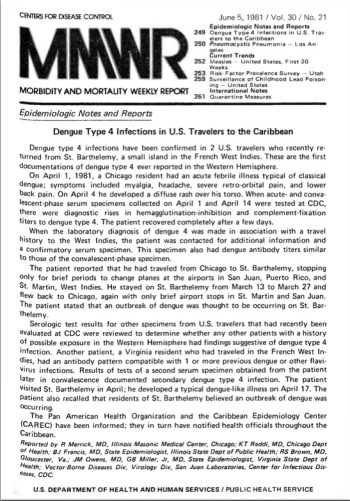
HIV was first reported in 1981, but it wasn’t until six years later—in March 1987—that a drug to fight the virus was approved by the Food and Drug Administration (FDA). On the 30th anniversary of this milestone, Time magazine takes a look at the story behind the controversial med azidothymidine, commonly known as AZT.

Also known as Retrovir or zidovudine, the compound AZT was not originally created with HIV in mind but was developed in the 1960s to battle cancer. Decades later, scientists at pharmaceutical giant Burroughs Wellcome made a version of AZT to fight HIV.

To fast-track the med, the drugmaker conducted a trial with 300 people who had AIDS. After 16 weeks, it was halted because those taking AZT were doing so much better than those not on the med. The results were considered a breakthrough, and the FDA approved the drug on March 19, 1987, in a record 20 months, according to Time.

The approval was granted despite many questions remaining unanswered—for example, how long did the benefits last?—and despite other issues surrounding the trial itself. In fact, Time notes, the trail remains controversial today.

Then came a bigger controversy: the price tag. At about $8,000 a year ($17,000 in today’s dollars), AZT was unattainable to many.

Today, we have more than 41 drugs to treat HIV, many in combo form and with much fewer side effects.

Reference

Gay History: When Gay Journalists Were Closeted: A History of AIDS Coverage at ‘The Times’

Mark Frankel

November 23, 2015
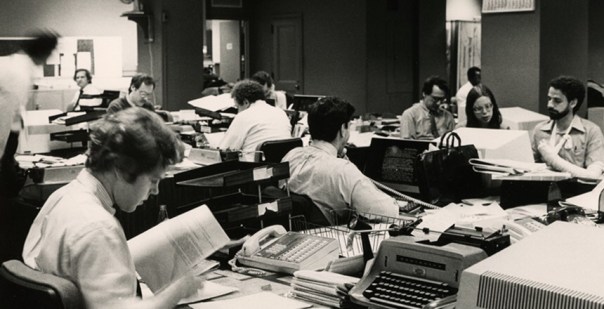
Days after New York State approved marriage equality in 2011, Samuel G. Freedman, a School of Journalism professor and former reporter for The New York Times, mused to friends about how the world had changed since he had worked at the paper in the 1980s.
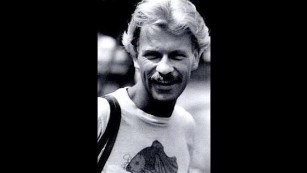
Now an enthusiastic proponent of gay marriage, The Times was then a place where gay reporters feared being exiled to obscure beats and watching their careers wither. Freedman’s musings centered on his friend and mentor, Jeff Schmalz, a brilliant Times reporter dying of the disease who in 1992 and 1993 produced groundbreaking articles about people living with AIDS.
“Jeffrey who?” people often asked. Out of those encounters has come Freedman’s eighth book, Dying Words: The AIDS Reporting of Jeff Schmalz and How it Transformed The New York Times.
Produced as an oral history of dozens of Schmalz’s colleagues and friends, the book and an accompanying radio documentary focus on how journalism responded to the AIDS crisis in the 1980s and early ’90s, when many gay and lesbian journalists felt tremendous professional pressure to remain closeted, and discrimination against them was widespread. It also recounts the moment AIDS became a full-fledged health crisis, breaking out of the gay and IV-drug communities into the larger population.
“Jeff’s reporting played a real role in starting to turn opinion, certainly within The Times, but also within the broader public, from fear, suspicion, finger-pointing and blaming gays, to empathy and acceptance,” said Freedman. The 60-minute radio program will be broadcast on some two dozen public radio stations as part of events marking World AIDS Day on December 1. That same day, Freedman will host a panel on Dying Words at 6 p.m. at the Journalism School.
Schmalz was a rising star at the Times in the 1980s, a consummate journalist and skilled newsroom politician and mentor to younger journalists. When Freedman arrived at the paper in 1981, he soon was among those taken under Schmalz’s wing.
Though out of the closet to close friends at the paper, Schmalz kept his orientation hidden from higher-ups such as Abe Rosenthal, its executive editor from 1977 to 1986, and then-publisher Arthur Sulzberger.
“Abe Rosenthal hired me and promoted me, and I owe him a lot, but in doing this research I became very aware of his antipathy toward gay staffers at The Times,” said Freedman. “And it also became apparent that, in a less visible way, Punch Sulzberger also had a blind spot about gays.”
Critics inside and outside the newsroom accused the paper of being late to cover the AIDS crisis.
In December 1990, Schmalz, then deputy national editor, suffered a seizure in the newsroom. The diagnosis was full-blown AIDS, then a death sentence. For Schmalz, the closet was no longer an option. “Jeff commanded tremendous authority at the Times. So for him to come out had a tremendously sensitizing effect on the paper,” recalled Freedman.
When Schmalz returned to the paper in mid-1992, he was sick but determined to report on AIDS. By then, the paper had a new editor and publisher and, Freedman said, was more accepting of its gay and lesbian employees.
Over the next 15 months, Schmalz captured the many faces of AIDS, gay and straight, in some three dozen articles. He profiled Magic Johnson, the Los Angeles Lakers forward who quit basketball when he was diagnosed as HIV-positive, and AIDS activists Mary Fisher and Larry Kramer. “In a weird way, the diagnosis set him free,” recalled his sister, Wendy Schmalz Wilde. “He found a new empathy for other people who were sick and dying.”
Schmalz’s reporting took AIDS “from a medical story, a public health story, a science story, and made it a deeply human story,” said Freedman. “He got on the beat right when this was a disease crossing the lines of race, class and sexual orientation.” His articles also raised the bar on the paper’s AIDS coverage, setting a standard for other news organizations. His last story, which decried growing public complacency, appeared several weeks after his death in November 1993.
Freedman teamed with veteran radio producer Kerry Donahue to produce the radio documentary, which will be distributed by the Public Radio Exchange. Funds came from the Journalism School and a Kickstarter campaign that raised $28,000. A significant backer was current New York Times publisher Arthur Sulzberger Jr., who contributed his own reminiscences to Dying Words.
Schmalz’s death still haunts Freedman. “Jeff was an example of a supremely talented person who died at 39,” he said. “The world is still losing incredibly talented people at young ages. It’s a reminder of the continuing need to do the research that will cure the disease and of the role that journalists need to play.”

In December 1990, Schmalz, then deputy national editor, suffered a seizure in the newsroom. The diagnosis was full-blown AIDS, then a death sentence. For Schmalz, the closet was no longer an option. “Jeff commanded tremendous authority at the Times. So for him to come out had a tremendously sensitizing effect on the paper,” recalled Freedman.

When Schmalz returned to the paper in mid-1992, he was sick but determined to report on AIDS. By then, the paper had a new editor and publisher and, Freedman said, was more accepting of its gay and lesbian employees.

Over the next 15 months, Schmalz captured the many faces of AIDS, gay and straight, in some three dozen articles. He profiled Magic Johnson, the Los Angeles Lakers forward who quit basketball when he was diagnosed as HIV-positive, and AIDS activists Mary Fisher and Larry Kramer. “In a weird way, the diagnosis set him free,” recalled his sister, Wendy Schmalz Wilde. “He found a new empathy for other people who were sick and dying.”

Schmalz’s reporting took AIDS “from a medical story, a public health story, a science story, and made it a deeply human story,” said Freedman. “He got on the beat right when this was a disease crossing the lines of race, class and sexual orientation.” His articles also raised the bar on the paper’s AIDS coverage, setting a standard for other news organizations. His last story, which decried growing public complacency, appeared several weeks after his death in November 1993.

Freedman teamed with veteran radio producer Kerry Donahue to produce the radio documentary, which will be distributed by the Public Radio Exchange. Funds came from the Journalism School and a Kickstarter campaign that raised $28,000. A significant backer was current New York Times publisher Arthur Sulzberger Jr., who contributed his own reminiscences to Dying Words.

Schmalz’s death still haunts Freedman. “Jeff was an example of a supremely talented person who died at 39,” he said. “The world is still losing incredibly talented people at young ages. It’s a reminder of the continuing need to do the research that will cure the disease and of the role that journalists need to play.”

Reference

Gay History: The Photo That Changed The Face Of HIV/AIDS!

By Savannah Cox

Published August 1, 2015

Updated July 18, 2017

Source: Time

Nearly 25 years ago, David Kirby lay on the cusp of death. Kirby, 32, had nearly reached the end of his fatal fight against HIV/AIDS when journalism student Therese Frare took the photo seen above.

In the photo, Kirby’s gaze appears vacant; he is a man resigned to a fate that his family–also broken by HIV/AIDS–just cannot bring itself to see. For many, the raw anguish radiating from this photo exemplified the tragedy of the HIV/AIDS epidemic, which at this point in time had struck millions around the world.

The photo, which was later published in Life and then used by clothing company United Colors of Benetton in an advertising campaign, is said to have changed the face of AIDS.

When published, public understanding of HIV/AIDS was minimal. Many thought the disease confined its victims to those who identified as homosexual; few considered the damage it inevitably inflicted on an AIDS victim’s family. This photo helped change that.

Frare recently sat down with Time to discuss the photo, and her memories of living through–and documenting–a span of years that devastated countless families. We provide an excerpt below:

“I started grad school at Ohio University in Athens in January 1990. Right away, I began volunteering at the Pater Noster House, an AIDS hospice in Columbus. In March I started taking photos there and got to know the staff — and one volunteer, in particular, named Peta — who were caring for David and the other patients.

On the day David died, I was visiting Peta. Some of the staff came in to get Peta so he could be with David, and he took me with him. I stayed outside David’s room, minding my own business, when David’s mom came out and told me that the family wanted me to photograph people saying their final goodbyes.

I went in and stood quietly in the corner, barely moving, watching and photographing the scene. Afterwards I knew, I absolutely knew, that something truly incredible had unfolded in that room, right in front of me.

Early on, I asked David if he minded me taking pictures, and he said, ‘That’s fine, as long as it’s not for personal profit.’ To this day I don’t take any money for the picture.

But David was an activist, and he wanted to get the word out there David Kirby was born and raised in a small town in Ohio. A gay activist in the 1980s, he learned in the late Eighties — while he was living in California and estranged from his family — that he had contracted HIV. He got in touch with his parents and asked if he could come home; he wanted, he said, to die with his family around him. The Kirbys welcomed their son back.about how devastating AIDS was to families and communities. Honestly, I think he was a lot more in tune with how important these photos might become.”

David Kirby was born and raised in a small town in Ohio. A gay activist in the 1980s, he learned in the late Eighties — while he was living in California and estranged from his family — that he had contracted HIV. He got in touch with his parents and asked if he could come home; he wanted, he said, to die with his family around him. The Kirbys welcomed their son back.

Peta, for his part, was an extraordinary (and sometimes extraordinarily difficult) character. Born Patrick Church, Peta was “half-Native American and half-White,” Frare says, “a caregiver and a client at Pater Noster, a person who rode the line between genders and one of the most amazing people I’ve ever met.”

“On the day David died, I was visiting Peta,” Frare, who today lives and works in Seattle, told LIFE. “Some of the staff came in to get Peta so he could be with David, and he took me with him. I stayed outside David’s room, minding my own business, when David’s mom came out and told me that the family wanted me to photograph people saying their final goodbyes. I went in and stood quietly in the corner, barely moving, watching and photographing the scene. Afterwards I knew, I absolutely knew, that something truly incredible had unfolded in that room, right in front of me.”

“Early on,” Frare says of her time at Pater Noster House, “I asked David if he minded me taking pictures, and he said, ‘That’s fine, as long as it’s not for personal profit.’ To this day I don’t take any money for the picture. But David was an activist, and he wanted to get the word out there about how devastating AIDS was to families and communities. Honestly, I think he was a lot more in tune with how important these photos might become.”

Frare pauses, and laughs. “At the time, I was like, Besides, who’s going to see these pictures, anyway?”

Over the past 20 years, by some estimates, as many as one billion people have seen the now-iconic Frare photograph that appeared in LIFE, as it was reproduced in hundreds of newspaper, magazine and TV stories — all over the world — focusing on the photo itself and (increasingly) on the controversies that surrounded it.

Frare’s photograph of David’s family comforting him in the hour of his death earned accolades, including a World Press Photo Award, when published in LIFE, but it became positively notorious two years later when Benetton used a colorized version of the photo in a provocative ad campaign. Individuals and groups ranging from Roman Catholics (who felt the picture mocked classical imagery of Mary cradling Christ after his crucifixion) to AIDS activists (furious at what they saw as corporate exploitation of death in order to sell T-shirts) voiced outrage. England’s high-profile AIDS charity, the Terrence Higgins Trust, called for a ban of the ad, labeling it offensive and unethical, while powerhouse fashion magazines like Elle, Vogue and Marie Claire refused to run it. Calling for a boycott of Benetton, London’s Sunday Times argued that “the only way to stop this madness is to vote with our cash.”

“We never had any reservations about allowing Benetton to use Therese’s photograph in that ad,” David Kirby’s mother, Kay, told LIFE.com. “What I objected to was everybody who put their two cents in about how outrageous they thought it was, when nobody knew anything about us, or about David. My son more or less starved to death at the end,” she said, bluntly, describing one of the grisly side effects of the disease. “We just felt it was time that people saw the truth about AIDS, and if Benetton could help in that effort, fine. That ad was the last chance for people to see David — a marker, to show that he was once here, among us.”

David Kirby passed away in April 1990, at the age of 32, not long after Frare began shooting at the hospice. But in an odd and ultimately revelatory twist, it turned out that she spent much more time with Peta, who himself was HIV-positive while caring for David, than she did with David himself. She gained renown for her devastating, compassionate picture of one young man dying of AIDS, but the photographs she made after David Kirby’s death revealed an even more complex and compelling tale.

Frare photographed Peta over the course of two years, until he, too, died of AIDS in the fall of 1992.

“Peta was an incredible person,” Frare says. Twenty years on, the affection in her voice is palpable. “He was dealing with all sorts of dualities in his life — he was half-Native American and half-White, a caregiver and a client at Pater Noster, a person who rode the line between genders, all of that — but he was also very, very strong.”

As Peta’s health deteriorated in early 1992 — as his HIV-positive status transitioned to AIDS — the Kirbys began to care for him, in much the same way that Peta had cared for their son in the final months of his life. Peta had comforted David; spoken to him; held him; tried to relieve his pain and loneliness through simple human contact — and the Kirbys resolved to do the same for Peta, to be there for him as his strength and his vitality faded.

Kay Kirby told LIFE.com that she “made up my mind when David was dying and Peta was helping to care for him, that when Peta’s time came — and we all knew it would come — that we would care for him. There was never any question. We were going to take care of Peta. That was that.

“For a while there,” Kay remembers, “I took care of Peta as often as I could. It was hard, because we couldn’t afford to be there all the time. But Bill would come in on weekends and we did the best we could in the short time we had.”

Kay describes Peta, as his condition worsened in late 1991 and 1992, as a “very difficult patient. He was very clear and vocal about what he wanted, and when he wanted it. But during all the time we cared for him, I can only recall once when he yelled at me. I yelled right back at him — he knew I was not going to let him get away with that sort of behavior — and we went on from there.”

Bill and Kay Kirby were, in effect, the house parents for the home where Peta spent his last months.

“My husband and I were hurt by the way David was treated in the small country hospital near our home where he spent time after coming back to Ohio,” Kay Kirby said. “Even the person who handed out menus refused to let David hold one [for fear of infection]. She would read out the meals to him from the doorway. We told ourselves that we would help other people with AIDS avoid all that, and we tried to make sure that Peta never went through it.”

“I had worked for newspapers for about 12 years already when I went to grad school,” Therese Frare says, “and was very interested in covering AIDS by the time I got to Columbus. Of course, it was difficult to find a community of people with HIV and AIDS willing to be photographed back then, but when I was given the okay to take pictures at Pater Noster I knew I was doing something that was important — important to me, at least. I never believed that it would lead to being published in LIFE, or winning awards, or being involved in anything controversial — certainly nothing as epic as the Benetton controversy. In the end, the picture of David became the one image that was seen around the world, but there was so much more that I had tried to document with Peta, and the Kirbys and the other people at Pater Noster. And all of that sort of got lost, and forgotten.”

Lost and forgotten — or, at the very least, utterly overshadowed — until LIFE.com contacted Frare, and asked her where the photo of David Kirby came from.

“You know, at the time the Benetton ad was running, and the controversy over their use of my picture of David was really raging, I was falling apart,” Frare says. “I was falling to pieces. But Bill Kirby told me something I never forgot. He said, ‘Listen, Therese. Benetton didn’t use us, or exploit us. We used them. Because of them, your photo was seen all over the world, and that’s exactly what David wanted.’ And I just held on to that.”

After the Benetton controversy finally subsided, Therese Frare went on to other work, other photography, freelancing from Seattle for the New York Times, major magazines and other outlets. While the world has become more familiar with HIV and AIDS in the intervening years, Frare’s photograph went a long way toward dispelling some of the fear and, at times, willful ignorance that had accompanied any mention of the disease. Barb Cordle, volunteer director at Pater Noster when David Kirby was there, once said that Frare’s famous photo “has done more to soften people’s hearts on AIDS than any other I have ever seen. You can’t look at that picture and hate a person with AIDS. You just can’t.”

References

The Terrifying Truth About HIV Long-Term Survival!

The harsh reality is that the only people really qualified to comment on long-term survival are – long-term survivors.

Being a HIV long-term survivor is a bit like being a Vietnam veteran…more often than not you feel delegated to the sidelines of history. Like the Vietnam vets, we fought a socially unpopular and unacceptable war, and like them, our continuing presence is a reminder of things that many would sooner either forget, or just not acknowledge.

That is a harsh – and raw – assessment, and I can see hackles rising already amongst those who choose to observe it through rose-coloured glasses. The harsh reality is that the only people really qualified to comment on long-term survival are – long-term survivors.

On June 5th, 2018…if it’s occurred in the 5 years since, I am unaware of it…was HIV Long-Term Survivor Awareness Day. I can’t say that I didn’t personally feel a certain…pride…not the right word, though I’m hunting for the right one…that at last there was an acknowledgement of my part in HIV history. I posted the event as a Facebook status update, and I’m truly humbled by the response from my friends, and at the same time reminded that there are others in my current social “circle”who are also chalking up survival terms equal to my 36 years. Yet despite the acknowledgement, the most telling word to me was”Awareness”! And perhaps that word, more than any other, takes us back to the start of this article. It is an important word, as it suggests – very strongly – that we are the forgotten, those of HIV “past”, and our very existence needs to have attention drawn to it; that there needs to be a reminder that we didn’t all succumb to the ravages of AIDS.

Reality hurts, doesn’t it! And that really is the reality of long-term survival. To be honest, I don’t think anyone knows what to do with us, apart from just leaving us alone to muddle through. On the general overview of HIV history, and considering the numbers of those who died – and continue to – as a result of AIDS, the numbers of us who have survived 20 years or more are small. We are now a disparate group, spread far and wide by the great diaspora that resulted from HIV diagnosis in the day. We are no longer concentrated in the areas of ground zero for the HIV/AIDS pandemic, and in many respects that is a major reason for our being in the background of modern day HIV.

I don’t want to call this “awareness” day tokenistic…but, recognition of the sheer tenacity of HIV long-term survivors has been a hell of a long time coming! Considering that those of us with early diagnosis, who were still alive in the late 80s/early 90s were already long-term survivors…it’s recognition that is – like so much in HIV – well and truly overdue!

I have attempted to convey the harsh reality of long-term survival in past articles, and in my talks when I was a speaker for the Positive Speakers Bureau (PSB). Myself, and other speakers, whose history went back to the key points of HIV in Sydney were always in demand, as we were the living history of HIV and AIDS, the harbingers of the tales of horror, stigma, discrimination, political and religious turmoil, and the community response to the pandemic. But over time – I was a speaker for 12 years – I saw this group slowly dropping away for various reasons, and by the time I chose to retire from speaking I was one of the last of these “history” speakers. By that time, I personally felt that HIV in its modern guise was leaving me behind, lost in its dust as it moved into new territory. A HIV diagnosis still came with its fears and insecurities, but it was no longer a death sentence.

To be honest, I don’t think anyone knows what to do with us, apart from just leaving us alone to muddle through.

So, who are these people who are having “awareness” drawn to them? I can only speak for myself; can only put a personal perspective on HIV long-term survival. Perhaps the reality of it has always been something I have downplayed, in an attempt to NOT come across as a victim! The true reality of the horror years was TERROR!

My CMV diagnosis in 1996 filled me with terror! It was the ultimate reality that I was now on borrowed time. But even before that time, it was terrifying to get what was a death sentence in 1985! It was truly terrifying to watch the horrendous deaths happening around me on a daily basis! It was terrifying to know that that was what could be in store for me! It was terrifying every time I visited the doctor, every time I had a blood test! It was terrifying to know that treatments were limited, and of short duration! It was terrifying to be subjected to the side-effects of huge dosages of same treatments – side-effects I still live with today! It was terrifying visiting friends and lovers in hospital, knowing each kiss could be the last! It was terrifying to find myself losing weight, and trying to hide the fact under baggy clothing! It was terrifying to find myself the figure of HIV discrimination in my workplace, and powerless to do anything about it! It was terrifying to realise I could no longer go on working! It was terrifying after a lifetime of independence to realise that I would need to go onto DSP, and housing subsidies! It was terrifying watching myself head towards alcoholism, chain smoking and life in the fast lane to deal with everything that was going on – uncontrollably – around me! It was terrifying to find myself in hospital for the first time – a collapsed lung! It was terrifying to lie there for 2 weeks, having Sandy from the Oxford Hotel visit another friend and suddenly stumbled upon me! It was terrifying to see – very briefly – the look in her eyes! It was terrifying to think I could be there for reasons of HIV – yet denying it…I would go home…life would go on…yeah…right! It was terrifying to live the 24 hours between my possible CMV diagnosis, and its confirmation! It was terrifying to know that this was a reality- AIDS! It was terrifying only hours after that, getting off a bus at Prince Henry Hospital at La Perouse, and wobbling towards admissions…and thinking…what the fuck! It was terrifying to realise the reality of your health status; 10 CD4 cells, 48kgs weight…could that be right? Chronic candida, chronic anaemia, chronic CMV retinitis! It was terrifying to realise I was dying! It was terrifying to lie again in a hospital bed with nurses, and drips, and medications…and wondering if it was all worthwhile! It was terrifying finding myself at POW the next day, having drugs injected directly into my eyes! It was terrifying that day…and every day after! It was terrifying to sit in that waiting room days later, holding the hand of another guy going through the same thing, trying to reassure him as he wept, a reassurance I didn’t feel myself! It was terrifying trying new drug combinations, not knowing if they would be successful, or in time! It was terrifying to realise I accepted my fate, and was not frightened! It was terrifying to be told the combination had worked, and I’d soon be going home! It was terrifying to realise that I felt robbed, felt that I didn’t deserve to be spared that which so many I loved had not been saved from! Terrifying to realise I was going back to a world I no longer knew! Terrifying to realise that in many respects, I was now a freak…someone who just didn’t fit in! It was terrifying to know that no one, no individual, no organisation, was prepared in any way for the return of the living dead! It was terrifying to sit at home…lost, alone, isolated, unsure, unknowing, afraid! It was terrifying to have the reality of ongoing life, of being whisked from deaths door! It was terrifying going through the panic attacks, the anxiety, the depression! It was terrifying to discover that every one was so unprepared for “us” that necessary help was not available when we needed it! Terrifying to be taking massive numbers of drugs – 3-4 medications, with anywhere from 4-6 pills for each medication, 3 times a day (with dietary and time compliances on them), plus prophylaxis, plus pills to control side effects! It was terrifying to find I needed medication compliance counselling, return-to-life counselling, peer support groups, weekly clinics, specialists! Terrifying that I felt myself useless, at a loose end, disconnected! Terrified to realise I wanted nothing to do with life as it had been – so few friends survived the ravages of AIDS, and those not infected had no point of connection with me, and where I now was. I cut back my drinking, stopped smoking, adopted a healthier lifestyle, decided I wanted my life to head off in different directions to that which it had been going in! It was terrifying to find that there was no one to help me do that, and despite being at the forefront of a needs assessment project concerning the return-to-work requirements of others like me, the reality was that help was a couple of years away! It was terrifying to have lost the sight in one eye, and a good deal of the sight in the other due to the CMV, and learning to deal with that, and its uncertainties! It was terrifying to fall flat on my face on footpaths due to lack of depth perspective; tripping over tree roots, or low street benches, or falling down steps because I could not see the edge; It was terrifying going through the surgery to have Vitrasert implants put in my eyes to negate the regular intraocular injections, then surgery to remove the cataracts caused by same! Terrifying to get the Deca-Dorabolin injections to help put weight back on! Terrifying to return to a normal job – albeit temporarily – knowing that it made access to doctors appointments and hospitals (for drugs) very difficult! Terrifying to find myself collapsing in a gift store, and unable to use my legs…and even more terrifying to find the store owner dumping me in the gutter under the illusion I was a druggie…and everyone else ignoring me – then finally managing to walk again, only to collapse in the middle of Bondi Road on my way home! Terrifying to find I was losing my ability to walk a straight line, but drifted all over the footpath…and no one knew why! Terrifying going through many tests and scans- with dire predictions of what was happening in my head – to finally ascertain that THE virus had jumped the blood/brain barrier and was resident in my brain! The terrifying wait for it to resolve itself! Terrifying to go out to a pub for the first time after an 18-month recovery period! Terrifying to know I knew no one in the pub! Terrifying to go home with someone despite a previous very promiscuous life! Terrifying to get into a relationship again!

Terrifying! Terrifying! Terrifying! I could go on and on with the lists of terrifying experiences over this period, but the word count would be astronomical! Suffice it to say – terror had a name…HIV/AIDS! No one diagnosed these days will – I hope – ever have to go through it.

Survivor guilt was something that came later, after all the pandemonium of getting my health back on track quietened down, and left me with time to think, to mull over the events just past. It felt so unfair that I was still here! Felt unfair that, having prepared myself to die, it hadn’t eventuated, and I was left to continue mourning for those gone, continuing to live thanks to the hoped for medications that others hadn’t managed to hang around for! It was unhealthy thinking, but it happened anyway! More counselling to reconcile that!

So – has the terror stopped? For me, not really! A detached retina, and complex surgery to replace it in 2013, and the removal of the blind eye -it is now a prosthetic – in early 2015 has reduced what was bad vision even further. I joke that every time I walk out onto the street, I take my life into my hands…but it is, in reality, no laughing matter! It is quite frightening! It restricts what I do in some respects, but I deal with it. However, the fears of further detachments – I had one scare recently – or anything else that may affect what little vision I do have is always there.

However, it hasn’t all been terrifying over the last 22 years. I’ve taken control of my own health, I’ve reeducated myself, and fulfilled a few frustrated ambitions. I’ve reconnected with some old mates through social media, and it pleases me to know that not all disappeared like many did. I’m in a happy place as far as everyday life goes.

I hope this gives those that bother to read it an “awareness” of what long-term survival is really about. It would be fulfilling if something could be set up to make us more visible, less confined to the sidelines of HIV. I don’t have an answer to that conundrum only to say that it should have nothing to do with sitting in a circle, knitting and discussing HIV! Now that is a truly terrifying thought!

Tim Alderman © 2018.

Sacrilege: Living HIV Outside The Square!

“Sacrilege” may seem like a strange word to use in relationship to ones life. Its religious connotation is “the violation or profanation of anything sacred or held sacred” thus by a very loose expansion of the meaning – a human life, as it is, in many respects, regarded as sacred. Stretching definitions even further – and many would not be surprised that I don’t take it literally – infecting it with HIV could be considered a sacrilege, be it intentional or unintentional. The sacred has been violated! Also, as a HIV+ man, it is expected that I will follow a set of “rules” as dictated by various community groups, doctors and specialists! To totally ignore the expected, and go off down your own path would be considered by many to be sacrilege!

I can’t contemplate continuing to live with HIV without viewing it within the framework of my life! No war is without its battles, without its dark times, yet still seeing the light at the end of the tunnel! If I had to use a word to describe myself, belligerant comes straight to mind – but then I think to myself “That’s a bit harsh!”. Okay…cantankerous is one that has been used by those close to me, so that’s sort of acceptable, and it’s true! Curmudgeonly… a word I love, but I’m not really surly enough! So I’ll just stick with stubborn! I could claim that it’s a Capricornian trait, but it goes deeper than that.

At 12-years-of-age, my stubborn streak was already settling in. Though unrecognised by me at the time, it was a survival mechanism that was to serve me well for most of my life. It is only when I look back to 1965, that I realise what a testing ground it was: my mother left my father; a bitch of a housekeeper who was to forever change our family dynamics; and my father jumping over The Gap with Kevin, my brother – resulting in my brothers death – would have sent a less resilient person into dark depths that they may never have risen from! Considering the lack of psychological & emotional support available at that time, to have come out of that year relatively unscathed had to show a stoicism way beyond that normally expected from one so young. By digging my heels in, ignoring all the negativity around me, and just “getting on with it” – a philosophy I still embrace – I was to set in place a mental tenacity that was to impact my life for decades to come!

There was no love lost between my father & myself! Even prior to Kevin’s death, I had seen – and felt –  a violent streak in his nature; almost a need to punish those who had a life contrary to his. He could be a right royal cunt! The only way I could establish my own independence – which had flowered rapidly after Kev’s death – was open defiance! He told me not to smoke…so I smoked; not to drink…so I drank; to get a trade…I went in every direction but; and to get my hair cut…I left it to grow – despite a threat, after an argument about it, to “knock my block off”! He even denied me a 21st birthday celebration, because he had been at war when his fell due…I organised it myself. My grandmother left me a small inheritance, and just after my 21st, I moved out of home, into my own apartment. After he remarried and moved to Vincentia (on the south coast of NSW), we had little contact. After his suicide via carbon monoxide poisoning in his car in 1978, I never cried a single tear – but just let out a massive sigh of relief! I was free! As the ultimate act of a true prick, he left me nothing in his will – it all went to my step-family! Just to show that they were all tarred with the same brush, directly after his death his sisters indulged themselves in a game of telephone harrassment against my step-mother. I was glad to walk away from them all!

As soon as the old man died, I came out! It is the one time my usual defiance was kept capped. I had seen what he wss capable of with my brother, and my survival instinct whispered to me to be  quiet about this issue. Again, I had witnessed him & his mates yelling “poofter” out of the car window to some poor guy who did nothing more than wear a pink shirt! As I said – they were pricks! Stubbornness does not necessarily equal a death wish! Then, having stepped out of the closet, I megaphoned my life choice to all and sundry, including my employees. No one seemed particularly surprised! There were some in my workplace who were not impressed with my sexual preferences, and made no secret of it! My pure indifference to them was reward enough. My decision to desert the security of a regular job had nothing to do with my detractors…it was based purely on a desire to break free of a life I wanted to leave behind. But the curve balls were to keep coming, with no inkling at that time of the odd parallel path that both being gay, and being HIV+ were going to lead me down!


Even as I was coming out in Melbourne in 1980, snippets about a lethal cancer, that was killing gay men who frequented the saunas in the USA, were appearing in the local press here. I read them, and like many others, though not panicking, was left with a feeling of unease. That unease turned to immense consternation over the next couple of years, as the reports became more alarmist, and HIV crossed the ocean to our shores. By the time they developed a test in 1985, I for one was already stacking the odds – and not in my favour! In retrospect, this may have been a defence mechanism against coming up HIV+…that if I did, I was already prepared for it, and if I didn’t I could just breath a sigh of relief. The former proved to be true!

Back in the day, there was a severe lack of counselling, and given the sheer volume of testing results coming in at that time, was cursory at its best. When I went to get my result – and I don’t know why I made the presumption I did – the positive result was not a shock. These were strange (ethereal?) times, and for those of us admitting to our – then – death sentence, it was almost like belonging to a select club.

There was a two year window given at that time, between diagnosis and the advent of AIDS, leading, so they thought, to an inevitable death. Some didn’t make it to the window period, and my first friend, Andrew Todd, died at the end of 1986. I made it to the two year point…and was still very healthy. By then, the window for those diagnosed in 1985 had been expanded to five years, so the waiting game for many of us continued.  Up to 1990 is a very convoluted journey, and I don’t want to rehash history that has already been covered in many writings, and is really outside the parameters of this article. I decided to make this a useful period, and did a number of trials. It was better than just sitting around and waiting. This was a time when I made my one bad decision regarding my healthcare – I allowed my doctor to – after a najor ethical battle with her – to put me onto AZT! There has been much written about AZT, and its history as a drug…which was not exclusively formulated for use with HIV. I am not a conspiracy theorist, but my thinking on HIV has always been a bit radical, and I, along with others, gravitate to the thinking that HIV and AIDS – despite our use of them as co-joined conditions – are separate illnesses, and HIV doesn’t necessarily lead to AIDS, but AIDS as an independent condition, brought about by the deterioration of the immune system. 

So, I had a diagnosis of HIV, with no related conditions that would have rated a diagnosis of AIDS. Even with a CD4 count on the decline, I still had good health – which admittedly may have been a lot better if I wasn’t knocking myself around by chain-smoking, and chronic abuse of alcohol – until…I started AZT! Many of those still around from that time will acknowledge that the decline in their health status is directly parallel to starting AZT. It wasn’t nicknamed “human Rat-Sac”for nothing. It’s negative affects from then up until now are also well documented. Damaged nerves, liver & kidney problems, the leaching of calcium from bones, and other neurological problems can all be traced back to AZT usage. I wish I had stuck by my guns, and refused to use it! There is no evidence that it saved one single life. I wouldn’t have refused trestment with other drugs that came along shortly after – I didn’t have a suicide wish – but I have no doubt that if I had refused AZT, some ongoing problems I have now would not have happened. I have an undisguised hate of Big Pharma, and its tactics, and lack of ethics where it comes to flogging a drug, and how they went about flogging this incredibly toxic drug to a desperate and unsuspecting demographic is truly horrifying – more on this shortly.

So, dispite heavy smoking, alcohol abuse, long work hours, and a shit diet…I made it to 1990, and with my health still okay. I won’t say I was unscathed, as the relentless list of those who died over this time, with many more to come, was physically, mentally, and emotionally destructive. I am by nature – and experience – a stoic in the face of death. I accept the reality, and inevitability of it – but any sign of the existance of God in this obliteration was missing – no just, loving God would ever allow this! My conversion to Atheism was complete. However, the combination of all that was happening was starting to wear me down, and encountering on-the-job bullying by an Area Manager brought about my decision to leave the workforce in 1993, and go onto disability, and get a housing subsidy. It was a forgone conclusion back then that this was the road to take because – after all – none of us would survive for all that long. At this stage, under the most positive of thinking, I gave myself two more years. 

I actually got to mid-1996 before it all started to come undone. I have written about the circumstances surrounding all the events that happened at this stage, so won’t repeat them here, but will give you an intimate insight into my thinking on my situation when I was finally admitted to Prince Henry Hospital in June, 1996. Given that I was already close to death when admitted, with a plethora of conditions that really should have killed me earlier, and that I really thought I would never leave there any other way than via a wooden box gives a good indication of how serious things were. It was in Mark’s Pavilion there that my stoicism, my acceptance of reality, possibly should have been tested, but instead gave me a calmness, an acceptance of my own potential death that I had pondered about prior to this. I was chronically ill, I was tired and in some respects, if other factors hadn’t intervened, death just seemed like such a pleasant, restful reality, leaving all that was happening behind, joining all those that I had loved and lost over the last 10 years. It was an acceptance of death that I wasn’t expecting to be quite so complete, so easy, so without fear. 

But I picked my moment, didn’t I! Big changes were happening in the treatment of AIDS, and shortly after being admitted, not going down the road of death, that I expected to go down, I walked – well, taxied – out of Prince Henry. I exited that taxi into a world that was in no way prepared for the living dead of HIV. If I ever thought my battles were behind me, I could not have been more wrong. The next couple of years – a long period of recuperation – were intense. There was a seemingly neverending period of specialists, doctors, clinics, pharmacy, counselling, peer support groups, drug compliance groups, massive – and I mean massive – amounts of medication, side effects, dental work, anxiety and panic attacks, and drug trials. It was a time where one wanted to initiate great change in the direction of ones life  – with no one there to assist. Change had to be fought for, had to be forced. All these community groups gathering money and prestige, sitting in meetings and forums, listening to the likes of me yelling about what we needed…and just turning deaf ears! It was a frusteating period where everything was years behind where it needed to be, and if you wanted to get on with your life without being trapped in the system, you had to do it under your own steam! So I did!

Some volunterr work, some work in the community sector, a flowering writing career that demanded and exposed…when I eas “allowed” as one didn’t question the system – led to a brief period of full-time work – that didn’t help my health at all – then onto university & TAFE to experience at last that which gad been denied me in my youth. This led to an interesting period of experiences, from spending 12 years talking about the HIV experience through the Posituve Speakers Bureau, to 15 years writing for “Taljabout” magazine and various other publications, starting several businesses – the most recent of which was destroyed by the GFC, to where I am now – happy, balanced, and reasonably fulfilled.

However, the last few years haven’t been without its challenges, and my mental tenacity, combined with a fairly laud-back approach to life, have seen me get through things without any apparent negativity. I do health care on my own terms these days, because if one just relies on mrdico’s, one would rattle like a pill bottle. I want less pills, not more! About 15 years ago, I halved my HIV medications. I have been waiting for some red-faced, fuming doctor to lecture me about it (has no one realised how rarely I get scripts?) but no one ever has. In the interim, my blood readings get better and better, with CD4s on the rise, and an ongoing undetectable viral load. Okay, I no longer smoke – gave that up in ‘96, drink bugger all, have turned vegetarian, and exercise daily, but nothing else. Big Pharma be fucked! Your drug resistance tests – a farce! You just don’t want people on old drugs! Over-prescribing? You bet you do…big time! I wouldn’t trust you as far as ai could kick you! 

Have I mentioned my shit vision? Whoops…overlooked that. Blind in one eye thanks to CMV (also covered in articles on my blog), and almost blind in the other. The most major decision over the last couple of years? Having my blind eye removed voluntarily, and replaced with a prosthetic. Does it stop me getting around? Not fucking likely! I might be slow, but I get there! I have a white cane (laughingly called my whacking stick), but rarely use it. I walk the dogs, do the shopping, get to gym! It might be done with a slight feeling of nervousness, but it gets done.

I don’t hold any grudges. What has been, has been! In a way, I thank my father for the rough younger years. It gave me a set of survival tools that have served ne well – and still do – throughout my life. Maybe I was born in an auspicious astrological period, or maybe my natural survival instincts are genetic, endowing me with stoicism and mental tenacity! Whatever it is, it has seen me through nicely! Life is to be enjoyed, and despite the occasional downs, it should be lived to its fullest. Just step outside that square, and do it on your own terms!

Tim Alderman (©2017)

Media Pig! From The Prophetic To The Mundane!

I have always believed in having a voice, and be it right, wrong or indifferent I think people should speak up, and one of the best ways to do that is through  either letter writing, or being included in written conversations on specific issues. There is a lot of stupidity, injustice, prejudice and misinformation going on around us, and it is always important to speak out against these issues.

I have been involving myself in letters and articles since the mid-70s, and have pretty well kept the full record of my involvement. As a way of posting something a bit different, and covering, where possible, the scenario’s that provoked the letters and articles, here is a rundown of my social involvements over time. Funny how circumstances provide the fodder for letters! In my early days, it was always about gay issues – but then you settle down with someone, move to the ‘burbs, and all of a sudden it’s about your local council, or the idiots who inflict their opinions on us through the local rags! Keeps life interesting!

Published in the Catholic Weekly around 1976. I was the store manager for Pellegrini & Co Pty Ltd, in York St, Sydney. A woman had eritren to the Catholic Weekly that Australia had no patron saints, which was inaccurate, as Our Lady Help Of Christians actually was. This is under my old name of Robert Phillips.

Also from around 1976, this article is an interview with the Catholic Weekly regarding the actual Pellegrini store itself. It was sround this time that we had moved the store from its original site in George St, Sydney (in Roma House) to York St.

Around 1978 I left Pellegrini to work for my local menswear store, P&S Michael, who were branching out from the store in Granville, to MacArthur Square in Campbelltown. However, they employed pressure salesmanship – my pet retail hate – so it was a short-lived relationship. I returned to Pellegrini a couple of months later. This is me, modeling clothes for an advert in the local paper.


“Campaign” November, 1981. I was working for Pellegrini in Melbourne, and had just come out. I lived in West Brunswick. The gay clone phenomena had just started, and because of its “macho” imagery, a lot of old queens were whinging about how it was selling out the gay community by adopting “straight” stereotypes. I got fed up with it. My only letter from my Melbourne days.


Two-in-one! Both the smsll photo of myself (right) and Barty Carter taken at the Midnight Shift, and the letter regarding ACON Safe Sex campaigns not hitting the mark would be from circa 1984. Both published probably in Sydney Star Observer.


Beresford Hotel 1985. Christmas function. Photographed with Tony Kelly (right), my partner at the time. More than likely in the Sydney Star Observer.

Article in “Outrage”, October 1985 by Adam Carr under his pseudonym Miles Walker. Adam had visited myself and my partner at the time, Damian, in our flat in Kellett Way, King’s Cross. He was on hus way to a street party. He decided to write a tongue-in-cheek piece about the visit. In the article, substitute Damian for Shane, and Tim for Tony. Notoriety comes in strange ways!

Star Observer circa 1985/86. A politician had made a rather stupid statement that gay men didn’t work in retail! Considering the retail sector relied heavily on gay staff, it just showed his general ignorance.

Star Observer Issue No.30, 20 June 1986. Cleo, my gutter drag persona, makes the front cover, along with Ruby Pollock (front right), and Andrew Carter. We had been to a Queens Birthday party at Geoff Smith & Steve Thompson’s home in Glebe. This photo was raken in The Oxford.

Cleo making it real in an advertising campaign for “Numbers” Bookshop in 1987. This was Cleo’s 1986 Sleaze Ball costume.

Green With Envy party, 31 August, 1986 at 38 Mona Rd, Darling Point. An annual party, put on by Sydney DJ Gareth Paull, who played regularly at The Oxford. A friend, Andrew Todd, asked me to go with him in drag, as he had never done drag before. Andrew had AIDS, and had spent most of the yesr in and out of hospital. He had a great night, and died on Boxing Day that year. I went wigless, and on the far right of this Star Observer photo.

Star Observer August 1987. Montage from The Oxford’s 5th birthday party on 23 August 1987. That is Cleo’s white wig on the top left corner.

Outrage Magazine 1988. Mardi Gras photo, taken at the Art Gallery of NSW. Darby Wilcox (left) and myself about to scatter the ashes (mixed with glitter) of Don Tickle, who had died from stomach cancer earlier that year. His ashes were scattered along the parade route.

Star Observer June 1988. Montage from ANZAC Day at The Oxford, 1987. Don & I, in army drag, at bottom of photo, right hand side.


“The Bulletin” August 1987. An interview in The Oxford regarding how we felt about living with HIV. Being still early days in the history of the pandemic, this all sounds a bit naive now.

Though labelled “Locker Room”, this was actually taken in the Midnight Shift circa 1997. Tony Kelly to the right.

Circa 1986. The premier, Neville Wran, commented on cinema’s banning condom advertising due to them being perceived as not “family friendly”. Nothing like sticking your head in the sand, as far as I was concerned. Evidently I was allowed to see it on television, but not in the cinema?


A series of photographs taken by the Sydney Star Observer circa 1987. We had a Nuns, Priests & Prostitutes party to celebrate my flatmates birthday. The patty was an afternoon affair held at our apartment in Bourke St, Darlinghurst. A group of us went out to the Oxford Hotel after the patty, where these were taken.

My backside, in leather chaps & thong, makes an appearance in – of all things – a lesbian magazine – LOTL (Lesbians On The Loose), at a Sleaze Ball. Also circa 1987.

Outrage No.63, August 1988. Someone from Adelaide was laying shit on Mardi Gras…obviously decided not to have a great time…and succeeded! The tone of the letter will give you some indication of his gripes.

Poster for “Dancing Through the Decade”, New Years Eve 1989, at the Wentworth Function Centre, University of Sydney. Put on by the Bobby Goldsmith Foundation (BGF), DJs were Rob Davis & myself.

2 articles from local papers (names unknown) who reported on the opening party for “Expectations”. Expectations was a fetish store I managed for a short while, situated on the second floor of 159 Oxford St, Darlinghurst. Owned by Paul Jones, as was Numbers Bookshop, and the Den Club. In the first article I am in the top right photo, and in the second article the left side photo.

All I can remember about this photo was that it was taken in the Midnight Shift, and probably sometime between 1990-1993. I think I was in it due to my DJ work. It was published in the Star Observer.

Star Observer May 1990? (Date very difficult to read). Oxford DJ roster for what would seem to be Mardi Gras week, seeing as a Recovery Party is listed.


The Star Observer, 5 October 1990. The Oxford Hotel DJ Roster. I was a resident DJ at The Oxford from 1990-1996. This is probably the first roster I was on.

Star Observer, January 1991. Australia Day week DJ roster at The Oxford.

“Wentworth Courier” 22 September 1994. As usual, Oxford St as a shopping strip is going to hell on a hot rail, and everyone just seems to argue about what needs doing. The need for a retail plan for Oxford St should have been a council priority.

Star Observer, 31 January 1995. Myself & Marcus Craig (right) at the opening of his mixed-media gallery exhibition “Odyssey”. The air brush painting in the oicture was donated to the Luncheon Club.

Capital Q – 6 April 1995. People having a bash at HIV people because they are not relying more on alternative therapies.

The Daily Telegraph, 6 February 1997. Having attended the opening of a gorilla exhibit at Taronga Park zoo, all I could really see everywhere was McDonald’s – the exhibits sponsor – advertising. Way over the top!

Sun Herald, 16 March 1997. Someone whinging about forms of address to customers in retail stores.

Positive Living, June 1997. My response to an article they ran on CMV Retinitis, something I was well & truly knowledgeable about.

Capital Q 1997. My one attempt to jeet a potential friend or partner through the gay classifieds. I opted for the fully out there, warts and all approach. All those that I met were either serial classifieds users, or just plain nut cases. I met Michael, from Rose Bay, who I had a brief “thing” with just proor to meeting David. I still have the letters from guys who responded…more than I expected.

Star Observer January 1998. Dawn O’Donnell’s 70th Birthday Party at Paddington Town Hall. My self & Phillip Metcalf attended as representatives of PLWHA. Photo is not clear as enlarged from a very tiny shot. I am in the rear, far tight.

Capital Q 23 January 1998. A letter in support of my friend Marcus Craig, regarding the closure o a gym in the Pride Centre.

Capital Q 30 January 1997. The response of the gym owner to my and amarcus’s letter regarding its closure.

Wentworth Courier 1997. My gripes about life in Bondi! A true nightmare of a place to live in, esprcially in regards to transport & infrastructure.

Star Observer 30 October 1997. A letter expressing my thanks HIV services.


Star Observer 1998 – Myself (left) and David st the 1998 Mardi Gras Party. We had been in the parade, and are photographed here in the PLWHA Time-Out Room…a dpace set aside for guts with HIV to have a break during the party.

Star Observer 1998. Mardi Gras Fair Day 1998, probably the last I attended. I am to the far left of the photo in 3/4 shorts.

“Talkabout” July 1998. Alex Crystal had sent a letter to the editor critisizing an article I had written. Not only had this person not ever been as seriously ill as I had been in 1996, he had no empathy for the long recovery process, the psychological implications of surviving AIDS, nor coping with ongoing life with disabilities.

Probably Star Observer 1998. Mardi Grad parade entry for PLWHA – Dick Van Dykes on Bikes.
Sydney Morning Herald, 22 October 1998. A letter responding to the mass closures of banks – a trend that was soon to reverse.

“Talkabout” No.91, Octoger 1998. A esponse to a letter critisizing my friend Marcus Craig for representing gay men with pisitive body images in his art work. Some people need to get a life!.

Sydney Morning Herald 10 November 1998. A letter regarding the fifficulties of obtaining work after serious illness, and when you are older.
“Net” Magazine, April 1999.,The mire everyday aspects of life, and dealing with technology.

Sydney Star Observer 8 July 1999. A letter of thanks to The Oxford for awarding me a special prize for having entries in the BGF Bake-Off since its instigation.

Sydney Star Observer 3 August 2000. The Oxford had undergone yet ANOTHER renovation, but this time a whole lot of poker machines had been added. Holding a charity auction in a place where money was being fed into machines was a bit ironic.

Good Weekend Magazine, 29 October 2000. A letter regarding an article they did on Stephen King, after his quite serious accident.

Wentworth Courier, February 2001. Letter regarding back-packers dumping inloved furniture etc on the footpath when they move on.

“Internet” Magazine, Issue 69, July 2002. Yet more mundane technology problems.

“Delicious” Magazine, February 2002. A great food magazine, if you enjoyed a LOT of tunning around to grt all the ingredients together for a recipe.


“DNA” Magazine, No.26, March 2002. A response to an article regarding gays, and religiiys dogma.

Sydney Star Observer 27 June 2002. Photographed at Arq with my winning entry in the Condiments & Preserves category, at the annual BGF Bake-Off. in 2002.

“DNA” Magazine, March 2003. A letter regarding an article in their Februarybissue regarding workplace bullying. The very start of the letter is missing.

“Sunday Life” Magazine, December 2003. My response to a fery touching article on coming out as gay to ones parents.

“DNA” Magazine, February 2004. A tongue-in-cheek lettet regarding their very sexy photo shoots.

Sydney Star Observer, 28 April 2005. My having yet ANOTHER dig at the Student Services Union at UTS. I had bern at loggerheads with them for years over compulsory inion fees. Unfortunately, my original oetter regarding this is missing.

Daily Telegraph, 28 April 2005. The impossibility of getting work, even part-time, as you get older.

Daily Telegraph, 1 June 2005. Response to a ketter regarding the absence of small birds in our gardens.


Sydney Star Observer, 5 October 2006. David had, in a drunken moment at that years BGF Bake-Off, won an auction bid on a cake (bloody awful) and 2 Sleaze Ball tickets. We attended the party, and had an absolute ball, not at least helped along by some Ecstacy.


“The Glebe” 12 July, 2007. I take issue with people who are just unpleasant individuals. No wonder the dogs nipped him!

“The Glebe” April 17, 2007. After some demolition work in New Canterbury Rd, Dulwich Hill, some old painted shop signage appeared on the side of a remaining huilding, which had originally been hidden. I contacted the local paper, and they did a piece about it. The signage can be vaguely seen in the background.

“The Glebe” 1 May, 2007. My involvement in a local protest about removing a small park at the topnof Marrickville Rd that had historical significance as a tram turning-circle. I’m in the background, dark glasses & cap to right of picture. I’m holding Benji, my dog.

“Good Weekend” Magazine, 18 August 2007. A letter regarding the joys of childhood, which won me “Letter of the Week”, and the prize attached ton it – a weekend for 2 at Pepper’s Convent, in the Hunter Valley.

“Inner West Courier” 16 March, 2010. Local Treens rep is trying to thwart a much-needed recamp and extension to Marrickville Metro, and has obviously never shopped in our area.

“DNA” Magazine No.121, 2010. In praise of a redhead make-over! Yum!

“DNA” Magazine No.124, 2010. A dig at a VERY boring Mardi Gras parade.

Inner West Courier, 2 November 2010. A whinge about cuts to mowing services that sre leaving yhe areas looking like jungles.


Sydney Star Observer, 23 March, 2011. A dig at a columnist who accused fit, healthy older guys of being posers.
A note to the Sydney Mirning Heralds “Column 8” about something locally amusing.

Rumination of the Day (2nd December 2016)

WORLD AIDS DAY

It’s the day after WAD, and as usual, I’m ruminating! For many years now I have been looking at how I now view HIV/AIDS – through the lense of objectivity. Emotion only muddles the issue, and history has a trail of misinformation, mixed objectives, venom and misunderstanding! 

Even recently I have encountered those who, for reasons known only to themselves, have never been able to move on! The hate is still alive, the dragons still circling. I could be one of these, who still feel that the experiences of the 80s & 90s are still alive, an uncompromising hard line that leaves me stranded in a time that has passed by. Fuck knows there is a lot in my past that I have never fully moved on from – family business that could, at any time in the past, have left me sitting in a gutter, needle dangling…or in a bar, in an alcoholic stupor – and fuck knows I flew very close to the latter at one stage! More so than many, I have reason enough to be bitter, to be a victim. My experience with AIDS has left me close to blind, and there are many who would agree that that is reason enough. But, as in my latter teens, with full knowledge of my families dysfunctionality, living with a solitary knowledge of my younger brothers horrendous death, of violence and unspoken secrets, of my being gay, I made a quiet vow to myself that I was not going to let it get the better of me, to smother me, to stop me being who I would be! So to with AIDS – my survival alone was an unexpected surprise – and blindness! To buckke under, to attribute blame, to become a victim, to allow it to hold me back, swallow me up, would be saying…I do not have the strength for this, the self-empowerment whereby I would become someone who even I didn’t recognise! 

To move on, one has to acknowledge that the past is just that – the past! Yes, what happened was dreadful – the hatred, the discrimination, the accusations, the blame, the misinformation, the segregation, the fear! We need to acknowledge – 40 years along now – that we were all scared shitless. Straight, gay, male, female, religious, non-religious, politicians, doctors, journalists, activists…ad infinitum…were all scared. Perhaps not since the scourges of the Black Death have we encountered something we all knew absolutely nothing about – not even those who, perhaps, should have known! And what does human nature do when it is faced with an unknown that can just kill at will, shows no mercy, is no respecter of life at all – it looks for scapegoats, attributes blame, hands out punishment! It just so happens that the scapegoat was the gay community, and given what was happening at that time, it perhaps should not have been surprising. Minority groups have a long history of misunderstanding, stigma, discrimination, hate and ignominy! I am not defending the direction it took…I’m not going to shoot myself in the foot…but the point is, it was quite a while back now, and as awful and relentless as it was, as a community we not only survived it, but we fought back with the tools to hand – knowledge, facts, patience and dogged determination. 

One can’t deny that some of the negatives from that era live on. There is still prejudice, discrimination, stigma and musunderstanding! But it is also true that we don’t have it on our own – just ask any person with Down Syndrome. To hang onto the hate, and all the other negatives from that period in our history is to hold no one back but yourself! You know, we all walked in the footsteps of those that suffered, those that died! But by walking in their footsteps, when their footsteps stopped…ours continued on! To live with the negativity is to deny that a lot of good, positive, beautiful things were still going on. The community still lived, loved, and laughed. We supported each other, we were staunch in the face of adversity, we celebrated the lives of those who died with a gusto that was ever born of love. If ever there was a time I was proud to be a member of the gay community, it was through the 20 years of that horror!

Okay, it damaged me! As a fanatical reader & writer, it chose to attack perhaps the most important assets I had – my eyes! But it also presented me with new opportunities, new roads to venture down, new challenges to tackle. I can’t carty the hate because, despite everything, my life has not stopped, nor my humour, my inquisitiveness, my talents, nor my ability to just get on with it. I no longer go to candlelight vigils, or other AIDS memorials. It is too raw, too emotion charged, to ready to rip open healed wounds. I don’t forget – those who died are too entrenched in my memories for that – but now I choose to remember in more gentle ways. What every single one of my dead friends would have wanted is for me to get on with my life. Once a year their ghosts are going to waft around, to cajole me to tears, to invoke memories of wonderful times that will stay with me forever. 

But I’ll wake up tomorrow, and the ghosts will be gone. And just as they wanted, my life goes on. Who am I to argue with them!

Tim Alderman (2016)

Daily (Or When The Mood Tales Me) Gripe: Has HIV Inc. Run Out of Steam!

This year marks, for me, 34 years of living with HIV/AIDS…though now it is just HIV. I consider it a landmark, as back in 1996 I was admitted to Prince Henry hospital with chronic CMV retinitis, chronic candida, chronic anaemia, wasting syndrome (48 kg and going down), 10 CD 4 cells, and no immune system, and was not supposed to leave…at least not under my own steam. That  I did was only due to advances in medications at that particular time, very aggressive treatment, some great doctors and nurses –  and a lot of will power. I don’t give a fuck how negative many HIV+ guys are about life with HIV. For me, this was the great singular event of my life, a pivotal point that resulted in life-altering decisions, a mental overhaul, and the knowledge that there was a hell of a lot more to life THAN HIV. It altered the course of my life, and for better or worse I have never looked back. 

I was a speaker for the Positive Speakers Bureau for 12 years before realising that when you continually tell a story you start doing it by rote. Time to get out before it became totally meaningless. I have also written for “Talkabout” magazine (the flag ship publication of Positive Life NSW – formally PLWHA NSW Inc) for 15 years, both as a features writer and a columnist. As a writer I see my role to be not just to inform people, but to provoke debate, at times to be opinionated, to raise questions, to address abuses and unfairness and to be, when required, controversial. Unfortunately, my time with “Talkabout” taught me that to get published in a HIV publication you need to walk the safe road. To be controversial is to be tolling your own death knell. Mind you, this censorship has nothing to do with the editors who, in my experience, have been nothing but supportive. Community Health and a certain AIDS council provide funding to the magazine, so to poke your nose into sensitive areas will ensure your censure and non-publication. As a HIV+ person writing about HIV issues I have always found my hands tied. I have written two extremely controversial articles on HIV issues over the years. One, on Options Employment Services using HIV clients as a free work force, in the guise of “work experience”, was so watered down by the editor after threats of suing PLWHA, the editor and myself (I truly wish they had) that by the time of publication it was a mere shadow of its original fiery tirade…despite the fact that I had evidence of this going on. The manager of “Options”even took me aside and “suggested” that I quieten down my opinions as they were providing a service to the HIV community. Shortly after this fiasco, they went broke and disappeared. The second article was amongst the best pieces I have ever written, and covered the controversial area of bug-chasing (HIV- guys who deliberately have unprotected sex with HIV+ guys in the hope of contracting HIV). The magazines working group deemed that by writing about bug-chasing I may have been promoting it amongst a certain sector of the community. Considering that the practice is well documented, is acknowledged and exists, I failed to see how being informative about it was in any way promoting it…oh shit! I forgot that community health and certain HIV organisations wanted to keep their heads buried in the sand about such unpleasant issues…and they held the purse-strings. Censorship is alive and well within the HIV community and always has been. Want to tell the truth about what is going on or want to expose something? Not on their watch!

But despite this I continue to write, though I keep it to the more nondescript these days, and publish them on my blog. I have around 100 followers – not bad for an unknown.. I do enjoy being published! When I moved to Brisbane I began phasing out my writing for “Talkabout” (which after 15 years of being published in pretty well every issue, has gone unacknowledged by the organisation itself, though not by the editors), and had started writing for QPP “Alive”, the magazine of Queensland Positive People. Same story, different place as far as funding goes, I’m afraid. Nothing controversial would be coming out of there either. Nor did I get paid anymore – one advantage of “Talkabout”.

34 years ago at the start of the HIV shit fight, people never questioned anything about treatments, definitions, philosophies, or courses-of-action. We were in crisis mode and anything was better than nothing. We let a lot happen that in more sane, accountable times would never have been allowed to happen. This far down the line it is time to start asking questions, time to demand investigations and redefinition into many aspects of treatment, time to look back at some of the historical record and say “we were wrong”, and set the record straight. I no longer allow my doctor, or the HIV establishment, nor the drug companiesi in particular, to dictate my path to positive health outcomes. I follow my own path, which is dictated to by knowledge and experience. 12 years ago I made a decision to halve my daily medications, and dose myself once a day only. Considering the negative impacts of huge amounts of HIV medication on the body I decided to take a risk. Well, this far down the line my health has never been better (though diet and exercise also contribute to that), my viral load has remained at undetectable, and not only has my CD4 count remained stable, it has in fact risen substantially. Considering the recent emphasis on drug regime “compliance”, and considering my own circumstances, I am forced to ask – controversially, naturally – if the compliance issue is being driven by HIV specialists, or by the drug companies who stand to make a fortune out of HIV drugs. In the same way, I question resistance testing. I will leave that question in the air for you to mull over and answer for yourself. This is a personal opinion, and one I am entitled to.

I started “withdrawing” from the HIV community – in a generalised way – a number of years ago. It was starting to irk me, and was bogged down in academia, and a narrow mind-set. As stated earlier, the fact that something comes from the upper echelons of HIV Inc, doesn’t necessarily mean I believe or accept it. You tend to get a reputation for being obstreperous when you adopt this philosophy, and question everything that is thrown your way. There is little doubt that anyone from HIV Inc…or its sycophants (those who blindly follow and agree with every word from the mouth of) who reads this opinion piece will accuse me of negativity, and not being supportive or a believer in the end of HIV. This is not correct. It is a big step from negativity to a position of voicing reality!

I have written on several occasions about my distrust of drug companies…though it is an area that many are now accepting. These multi-billion dollar corporations are as corrupt as – despite much denial from health practitioners, community groups, and the drug companies themselves. As long as there are stakeholders salivating at the stock price, this will never change. That we are over-dosed – a now acknowledged stand – is all to thebenefit  of the drug companies, who are, at the end of the day, just research, manufacturing & distribution companies, with no stakes in public health other than shoveling their massively over-priced medications down our gullible throats. Now that community pharmacies are handling HIV meds, I went to my local, and was probably the first to get my meds through them. They nearly had conniptions when they saw the price of them! Considering how many years some of these drugs gave been on the market for, the price has never come down. HIV was a regular little money spinner for the drug companies!

Our larger HIV community groups have also been very good at wasting money over the years, and still continue to. I have seen so many ineffective campaigns churned out by them over the years that I’ve lost track. Nothing like churning out the same messages year after year, targeting the converted, and the blasé. When you are given advertising targets, you…well…spend it! The community groups themselves will tell you that no campaign is launched without the blessings of a focus group. What they don’t tell you is that it is pretty well a hard core group of people who attend these focys groups and forums, so in actual fact it is the same people – irrespective of the organisation arranging things – castings their blessings on every campaign that is tested. No wonder they all look the same!

And don’t ever think you can rely on the same groups to be able to assist and support you as needs change, despite however much notice is given of situations changing. By the time they catch up with what is happening, hundreds will have fallen through the cracks, and others will have just given up, and end up fighting their own battles. At the time of the introduction of the then-named combination therapies, there were two major issues raised. One was assisting those who were resurrected from a porential death sentence, being cast back into a world ill-prepared for them, or their needs. The second issue was handling the massive volume of drugs being rammed down the throats of basically every HIV+ people at that time. At the height of new treatment regimes, I was shoveling 358 pills per week down my throat – antivirals, prophylactics,  and pills for side-effects. Wasn’t that fun, with the added value of time & dietary restrictions! The only group committed to the problem of compliance was “Caleo”, which had its funding withdrawn after 2 years – just when it was needed. HIV Inc. prioritising, .as usual. Bet there was plenty of money for yet ANOTHER wasted campaign on condom use! While they were throwing yet more money away, many like ne were negotiating unprotected sex with like-minded – usually other HIV+ – guys. Money would have been better spent advusing guys on this at that time, not years down the line…then treating it like it was a great revelation from the powers that be.

Likewise when I worked for the Positively Working Project. Sonia Lawless & myself spent 12 months putting together a needs assessment for guys returning to the workforce after being returned to reasonable health via HAART. Nothing truly innovative was actioned after this very important report was released. Guys were basically given no assistance at all to help in the transition from DSP to a form of “work” that was beneficial to them in the long run. I was a speaker for the “Reconstruction” program for quite some time, and the most obvious negative from these programs was that many guys got recycled from one program into another. How many times can you be shown how to write a resume, or how to approach an intervuew before it becomes a lost cause? Considering the recycle rate, one would have thought that it clicked with someone that the approach was wrong, that maybe the guys were looking for inspiration and support to direct their lives in new directions – one of the key outcomes of the Positively Working report was that guys did not want to return to their old professions, but wanted to go off in new directions. No one listened!

HIV Inc. has a bad habit of being dogmatic, of only expressing the narrow, popularist view! You only have to go to any HIV web site, or forum to see how prolific this attitude is. If you want help and support, then ensure you walk in the safe zone, looking neither left nor right. Don’t problem solve yourself, don’t question the status quo! Over the 23 years I have been on DSP, I have – perhaps to my detriment – never used many of the services and financial assistance available. I hate the victim mentality, and have always liked my independence and financial freedom, and have always managed to get by. If I truly needed the help, I would have gone for it. I always remember my anger at guys who used to attend the Luncheon Club. They would be given cheap meals, and access to cheap food through the Larder – yet after the lunch, you would see them in yhe pub drinking till all hours, and all smoking! Seems they weren’t willing to sacrifice anything at all – the more you gave, the more they took. I always thought it was wrong, that their priorities were skewed. I still think that. Add in bill assistance from BGF, and housing subsidies…and these guys had it a lot better than many pensioners in the general community.

Anyway, times moved on. Now we have PrEP, and “Ending HIV”! According to HIV Inc, implementing the former will create the latter. According to a comment on a recent post placed on a FB HIV group page, during a discussion on PrEP, “if you have raw sex and take PrEP, no more HIV transmission, so no more HIV”. As simple as that! I was so angry at the naivety of it all Inever  returned to the post. The “Ending HIV” campaign is just ANOTHER example of HIV Inc. wasting precious money. There are several big problems here. One is the emphasis on sexual practice, and the assumption that because testing kits, and PrEP are available, that everyone is going to use them…another assumption being that everyone prepares for sex. Yeah, we all know about that! The only realistic fact I’ve read so far is that guys are sick of using condoms – are, in fact, not using them! I could have told them this 20 years ago!  The general discussion seems to be around eradicating HIV in Australia (no man is an island…) but logic decrees that is never going to happen. We have to account for the tyranny of distance often making both kits and PrEP difficult to obtain, people who are heavy drug users, bisexuality, guys who want to remain anonymous, cultural differences, worldwide travel, religious beliefs – these are just some of the obstacles. And as one guy pointed out, why should we be exposing perfectly healthy guys to the toxic effects of HIV drugs! It’s a good point. Most of us who take the drugs regularly are concerned about the long term side effects of same. I wouldn’t be taking them if I didn’t have to! It was also pointed out that new classes and alternate antibiotics are currently geing tested, and that these, along with PrEP will not only eliminate HIV, but STI’s in general. Evidently we are heading towards the perfect world. My immediate thought was…oh, new antibiotics…so, how long until STI’s make us resistant to these as well! Worth thinking about. This seems to be all HIV is about now – at least that’s all I seem to read about, and encounter through HIV groups. There is a lot of philosophising around both issues – good luck with that!

There was a time about 10 years ago when I thought that a changing of the guard from the older to the younger generation would bring about new thinking and ideas. It may have worked, but the old guard hovered in the background, never really wanting to relinquish their hold. The new guard just became copies of the old guard, and nothing seems to have progressed. There is a certain degree of internalised discrimination towards some sectors of the HIV community, and that hasn’t helped things. Also a certain degreebof self-stigmatisation, and being a victim amongst a group of guys fairly recently converted who will, in all probability, never get ill. A current trend to outing their HIV status to employers – who rarely receive the news gratefully – then leads to a string of posts on what to do. I don’t quite get why there is a need to advertise you status to all and sundry. Even in pre-HIV days, if you contracted an STI, the only people you informed were sexual partners. In my 34 years of living with HIV, I have only ever informed one company of my status – and that was for OH&S reasons. It’s not like the 80s & 90s when people with AIDS looked very obviously ill, and there was no hiding it. That doesn’t happen anymore. Maybe I’m just old-fashioned, and don’t believe in making a rod for my own back. I acknowledge that it is their lives to do with as they see fit, but common sense should decree that if you are going to travel that road, you should ask yourself – what can go wrong here! And if the worstcase  scenario presents, are you prepared to deal with the backlash. 

So, right here and now, I’m an ageing HIV+ man. I see a lot of HIV funding been spent on a lot of things – but nothing that is of any use to me! I don’t see the funding assisting with an actual cure, or giving me a place to go should my current pathway be diverted! As someone with a disability brought about by AIDS, no one has ever asked me…what would you really like? What can we do to assist and support you? There was much to-do about a Long-Term Survivors Day earlier this year. I remember thinking at the time – Why? Nothing will come out of it! As usual, we will be left to fight our own battles! It was a nice bit of tokenism, I guess. We like to think that we are thought about occasionally, even as just a passing thought. You see, we are seen as HIV past, not as HIV present. No one really understands us, as few walk in our shoes. It’s a lonely path at times, and frequently alienating. But we have defied the odds, and will probably continue to. HIV Inc. doesn’t have us in their sights any more…but then…

Maybe that’s just how we want it. It’s a no-bullshit world for most of us!

Tim Alderman (C) 2016

PS The following article appeared in the Sydney Morning Herald on the 22nd May 2017. It would seem to discount both using PrEP, and Ending HIV! http://www.smh.com.au/national/health/melbourne-man-tests-positive-to-hiv-while-taking-preventative-drug-20170522-gwaavh.html 

Daily (Or When the Mood Takes Me) Gripe: After More Than 30 Years of HIV Knowledge and Experience We STILL Have Stigma!

Please view this video first

https://m.youtube.com/watch?utm_source=GayAussie.co&v=UV5uv0589Ec&utm_term=HIV+Queensland&utm_medium=ga-social-ads&utm_campaign=HIV+FQ+GAY+AUSSIE

I can’t believe stigmatisation and internalised homophobia like this still goes on, and we need to have a dialogue about it! However, my own experiences as a 61 year-old with HIV, and a disability who used (note tense) gay dating sites tells me we do! We no longer have the shared experience of the 80s & 90s, so ignorance keeps on rearing it’s ugly head! Both the gay and HIV communities should be ashamed of themselves. The lessons of the past have quickly been forgotten!

This year I “celebrate” 33 years of being HIV+ (yeah, cheers, thanks). It doesn’t take a brilliant mathematician to work out the percentages – I have spent over half my life with this dubious honour. This is not braggodocio, me looking for a chest to pin a medal on, or leaning my head forward for a pat. This has also included a brush with AIDS – not to be confused with HIV, despite the still incorrectly used AIDS misnomer to describe someone with HIV. For those who think that just because I am walking around it has been an easy road, or similarly think that now, thanks to drugs, my life is a dream…think again. Every single day is a challenge, not so much something I dwell on daily, but certainly live daily.

Over those years I have seen stigma and discrimination of pretty well every variety – reluctance of governments to fund in the early day; religious intolerance, including a call for segregation and for internment camps; hospital staff refusing service to those with HIV; the incident with young Eve van Grafhorst (if you don’t know of it, look it up); social stigma; advertising scare campaigns; HIV denialists (while thousands drop dead around them); the deathly silence of many world leaders (mainly US presidents); ignorance and misinformation on every level. Personally, I have experienced workplace discrimination and bullying both as a gay and a HIV+ man. As the mother in the above video states, if this was cancer you would receive nothing but sympathy and support. But as soon as you say HIV, people back off, and the implication is that you are dirty, a sexual deviant. After all this time, and the misnomer that it is a “gay”disease with its prominent creep into the straight world at about the same time – can’t have them as scapegoats, can we! – one would have thought that all the misconceptions about HIV would have been pretty well eliminated. Well, I’m afraid not!

Even now, on Gay dating sites you eill encounter many instances of people adding labels like “clean” to both their profiles, and sexualpartner  requests! The insinuation is that if you have HIV, uou are domehow “unclean” or “dirty” – and it has nothing to do with me having a shower! Ironically, the profiles making this request don’t seem to think that the same language applies to them. Let’s face it, if I don’t disclose my status, you are going to be none the wiser…no I, for that matter! I have to take your word for it as much as you have to take mine! You haven’t really made any sort of a point, have you!

But apart from the degrading insult, it shows a huge gap in the education of the person posting – almost criminal, if they are Gay! For at keast the last decade or more, it has been pretty well acknowledged that if you are HIV, taking meds, and have an undetectable viral load, you are not going tomoass HIV on. The latest research http://mobile.aidsmap.com/No-one-with-an-undetectable-viral-load-gay-or-heterosexual-transmits-HIV-in-first-two-years-of-PARTNER-study/page/2832748 indicates that after two years into yhe latest study, chances of transmission are, to date, zero!

I hate condoms, and haven’t worn one for decades. Back in my pick- up days, I deliberately seeked other HIV+ guys, as within that circle unprotected sex was a norm, of more recent times I have used sites like BBRT – a barebacking site – for sex. At least on this site there is no foubt about what you get. If I had to ge honest – and the same would apply to the HIVphobes from the other sites – you have a getter chance of picking up a garden-variety STD than HIV…something that is conveniently overlooked! 

Perhaps rather than education – which to-date has got us absolutely nowhere – people just heed to get some manners…and a life!

Tim Alderman (C) 2015