Tag Archives: Gay

Gay History: Timeline Of An Acronym – LGBT

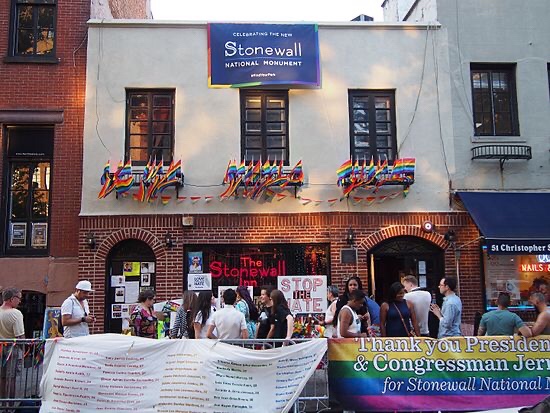
The Stonewall Inn in the gay village of Greenwich Village, Manhattan, site of the June 1969 Stonewall riots, the cradle of the modern LGBT rights movement and an icon of LGBT culture, is adorned with flags depicting the colors of the rainbow.[1][2][3]
LGBT (or GLBT) is an initialism that stands for lesbian, gay, bisexual, and transgender. In use since the 1990s, the term is an adaptation of the initialism LGB, which was used to replace the term gay in reference to the LGBT community beginning in the mid-to-late 1980s.[4] Activists believed that the term gay community did not accurately represent all those to whom it referred.

The initialism has become adopted into the mainstream as an umbrella term for use when labeling topics pertaining to sexuality and gender identity. For example, the LGBT Movement Advancement Project termed community centres, which have services specific to those members of the LGBT community, as “LGBT community centers”, in a comprehensive studies of such centres around the United States.[5]

The initialism LGBT is intended to emphasize a diversity of sexuality and gender identity-based cultures. It may be used to refer to anyone who is non-heterosexual or non-cisgender, instead of exclusively to people who are lesbian, gay, bisexual, or transgender.[6] To recognize this inclusion, a popular variant adds the letter Q for those who identify as queer or are questioning their sexual identity; LGBTQ has been recorded since 1996.[7][8] Those who add intersex people to LGBT groups or organizing use an extended initialism LGBTI.[9][10] The two acronyms are sometimes combined to form the terms LGBTIQ [11] or LGBT+ to encompass spectrums of sexuality and gender.[12] Other, less common variants also exist, motivated by a desire for inclusivity, including those over twice as long which have prompted criticism.[13]

A six-band rainbow flag representing LGBT

History of the term

The first widely used term, homosexual, now carries negative connotations.[15] It was replaced by  homophile in the 1950s and 1960s,[16][dubious ] and subsequently gayin the 1970s; the latter term was adopted first by the homosexual community.[17] Lars Ullerstam [sv] promoted use of the term sexual minority in the 1960s, as an analogy to the term ethnic minority for non-whites.[18]

As lesbians forged more public identities, the phrase “gay and lesbian” became more common.[19] A dispute as to whether the primary focus of their political aims should be feminism or gay rights led to the dissolution of some lesbian organizations, including the Daughters of Bilitis, which disbanded in 1970 following disputes over which goal should take precedence.[20] As equality was a priority for lesbian feminists, disparity of roles between men and women or butch and femme were viewed as patriarchal. Lesbian feminists eschewed gender role play that had been pervasive in bars, as well as the perceived chauvinism of gay men; many lesbian feminists refused to work with gay men, or take up their causes.[21]

Lesbians who held the essentialist view, that they had been born homosexual and used the descriptor “lesbian” to define sexual attraction, often considered the separatist opinions of lesbian-feminists to be detrimental to the cause of gay rights.[22] Bisexual and transgender people also sought recognition as legitimate categories within the larger minority community.[19]

After the elation of change following group action in the 1969 Stonewall riots in New York City, in the late 1970s and the early 1980s, some gays and lesbians became less accepting of bisexual or transgender people.[23][24] Critics[Like whom?] said that transgender people were acting out stereotypes and bisexuals were simply gay men or lesbian women who were afraid to come out and be honest about their identity.[23] Each community has struggled to develop its own identity including whether, and how, to align with other gender and sexuality-based communities, at times excluding other subgroups; these conflicts continue to this day.[24] LGBTQ activists and artists have created posters to raise consciousness about the issue since the movement began.[25]

From about 1988, activists began to use the initialism LGBT in the United States.[26] Not until the 1990s within the movement did gay, lesbian, bisexual, and transgender people gain equal respect.[24] This spurred some organizations to adopt new names, as the GLBT Historical Society did in 1999. Although the LGBT community has seen much controversy regarding universal acceptance of different member groups (bisexual and transgender individuals, in particular, have sometimes been marginalized by the larger LGBT community), the term LGBT has been a positive symbol of inclusion.[6][24]

Despite the fact that LGBT does not nominally encompass all individuals in smaller communities (see Variants below), the term is generally accepted to include those not specifically identified in the four-letter initialism.[6][24] Overall, the use of the term LGBT has, over time, largely aided in bringing otherwise marginalized individuals into the general community.[6][24] Transgender actress Candis Cayne in 2009 described the LGBT community “the last great minority”, noting that “We can still be harassed openly” and be “called out on television”.[27]

In response to years of lobbying from users and LGBT groups to eliminate discrimination, the online social networking service Facebook, in February 2014, widened its choice of gender variants for users.[relevant? ][28][29][30]

In 2016, GLAAD‘s Media Reference Guide states that LGBTQ is the preferred initialism, being more inclusive of younger members of the communities who embrace queer as a self-descriptor.[31] However, some people consider queer to be a derogatory term originating in hate speech and reject it, especially among older members of the community.[32]

LGBT publications, pride parades, and related events, such as this stage at Bologna Pride 2008 in Italy, increasingly drop the LGBT initialism instead of regularly adding new letters, and dealing with issues of placement of those letters within the new title.[14]

Variants

Many variants exist including variations that change the order of the letters; LGBT or GLBTare the most common terms.[24] Although identical in meaning, LGBT may have a more feminist connotation than GLBT as it places the “L” (for “lesbian”) first.[24] LGBT may also include additional Qs for “queer” or “questioning” (sometimes abbreviated with a question mark and sometimes used to mean anybody not literally L, G, B or T) producing the variants LGBTQ and LGBTQQ.[34][35][36] In the United Kingdom, it is sometimes stylized as LGB&T,[37][38] whilst the Green Party of England and Wales uses the term LGBTIQ in its manifesto and official publications.[39][40][41]

The order of the letters has not been standardized; in addition to the variations between the positions of the initial “L” or “G”, the mentioned, less common letters, if used, may appear in almost any order.[24] Longer initialisms based on LGBT are sometimes referred to as “alphabet soup”.[42][43] Variant terms do not typically represent political differences within the community, but arise simply from the preferences of individuals and groups.[44]

The terms pansexual, omnisexual, fluid and queer-identified are regarded as falling under the umbrella term bisexual (and therefore are considered a part of the bisexual community).

Some use LGBT+ to mean “LGBT and related communities”.[12] LGBTQIA is sometimes used and adds “queer, intersex, and asexual” to the basic term.[45] Other variants may have a “U” for “unsure”; a “C” for “curious”; another “T” for “transvestite“; a “TS”, or “2” for “two-spirit” persons; or an “SA” for “straight allies“.[46][47][48][49][50] However, the inclusion of straight allies in the LGBT acronym has proven controversial as many straight allies have been accused of using LGBT advocacy to gain popularity and status in recent years,[51] and various LGBT activists have criticised the heteronormative worldview of certain straight allies.[52] Some may also add a “P” for “polyamorous“, an “H” for “HIV-affected“, or an “O” for “other”.[24][53] Furthermore, the initialism LGBTIH has seen use in Indiato encompass the hijra third gender identity and the related subculture.[54][55]

The initialism LGBTTQQIAAP (lesbian, gay, bisexual, transgender, transsexual, queer, questioning, intersex, asexual, ally, pansexual) has also resulted, although such initialisms are sometimes criticized for being confusing and leaving some people out, as well as issues of placement of the letters within the new title.[42] However, adding the term “allies” to the initialism has sparked controversy,[56] with some seeing the inclusion of “ally” in place of “asexual” as a form of asexual erasure.[57] There is also the acronym QUILTBAG (queer and questioning, intersex, lesbian, transgender and two-spirit, bisexual, asexual and ally, and gay and genderqueer).[58]

Similarly LGBTIQA+ stands for “lesbian, gay, bisexual, transgender, intersex, queer/questioning, asexual and many other terms (such as non-binary and pansexual)”.[59]

In Canada, the community is sometimes identified as LGBTQ2 (Lesbian, Gay, Bisexual, Transgender, Queer and Two Spirit).[60]Depending on the which organization is using the acronym the choice of acronym changes. Businesses and the CBC often simply employ LGBT as a proxy for any longer acronym, private activist groups often employ LGBTQ+,[61] whereas public health providers favour the more inclusive LGBT2Q+ to accommodate twin spirited indigenous peoples.[62] For a time the Pride Toronto organization used the much lengthier acronym LGBTTIQQ2SA, but appears to have dropped this in favour of simpler wording.[63]

Transgender inclusion

The term trans* has been adopted by some groups as a more inclusive alternative to “transgender”, where trans (without the asterisk) has been used to describe trans men and trans women, while trans* covers all non-cisgender (genderqueer) identities, including transgender, transsexual, transvestite, genderqueer, genderfluid, non-binary, genderfuck, genderless, agender, non-gendered, third gender, two-spirit, bigender, and trans man and trans woman.[64][65] Likewise, the term transsexual commonly falls under the umbrella term transgender, but some transsexual people object to this.[24]

When not inclusive of transgender people, the shorter term LGB is used instead of LGBT.[24][66]

Intersex inclusion

The relationship of intersex to lesbian, gay, bisexual and trans, and queer communities is complex,[67] but intersex people are often added to the LGBT category to create an LGBTI community. Some intersex people prefer the initialism LGBTI, while others would rather that they not be included as part of the term.[10][68] LGBTI is used in all parts of “The Activist’s Guide” of the Yogyakarta Principles in Action.[69] Emi Koyama describes how inclusion of intersex in LGBTI can fail to address intersex-specific human rights issues, including creating false impressions “that intersex people’s rights are protected” by laws protecting LGBT people, and failing to acknowledge that many intersex people are not LGBT.[70] Organisation Intersex International Australia states that some intersex individuals are same sex attracted, and some are heterosexual, but “LGBTI activism has fought for the rights of people who fall outside of expected binary sex and gender norms”.[71][72] Julius Kaggwa of SIPD Uganda has written that, while the gay community “offers us a place of relative safety, it is also oblivious to our specific needs”.[73]

Numerous studies have shown higher rates of same sex attraction in intersex people,[74][75] with a recent Australian study of people born with atypical sex characteristics finding that 52% of respondents were non-heterosexual,[76][77] thus research on intersex subjects has been used to explore means of preventing homosexuality.[74][75] As an experience of being born with sex characteristics that do not fit social norms,[78] intersex can be distinguished from transgender,[79][80][81] while some intersex people are both intersex and transgender.[82]

2010 pride parade in Plaza de Mayo, Buenos Aires, which uses the LGBTIQ initialism.[33]

Criticism of the term

The initialisms LGBT or GLBT are not agreed to by everyone that they encompass.[84] For example, some argue that transgender and transsexual causes are not the same as that of lesbian, gay, and bisexual (LGB) people.[85] This argument centers on the idea that being transgender or transsexual have to do more with gender identity, or a person’s understanding of being or not being a man or a woman irrespective of their sexual orientation.[24] LGB issues can be seen as a matter of sexual orientation or attraction.[24]These distinctions have been made in the context of political action in which LGB goals, such as same-sex marriage legislation and human rights work (which may not include transgender and intersex people), may be perceived to differ from transgender and transsexual goals.[24]

A belief in “lesbian & gay separatism” (not to be confused with the related “lesbian separatism“), holds that lesbians and gay men form (or should form) a community distinct and separate from other groups normally included in the LGBTQ sphere.[86] While not always appearing of sufficient number or organization to be called a movement, separatists are a significant, vocal, and active element within many parts of the LGBT community.[87][86][88] In some cases separatists will deny the existence or right to equality of bisexual orientations and of transsexuality,[87] sometimes leading public biphobia and transphobia.[87][86] In contrasts to separatists, Peter Tatchell of the LGBT human rights group OutRage! argues that to separate the transgender movement from the LGB would be “political madness”, stating that: 

Queers are, like transgender people, gender deviant. We don’t conform to traditional heterosexist assumptions of male and female behaviour, in that we have sexual and emotional relationships with the same sex. We should celebrate our discordance with mainstream straight norms.[…] [89]

The portrayal of an all-encompassing “LGBT community” or “LGB community” is also disliked by some lesbian, gay, bisexual, and transgender people.[90][91] Some do not subscribe to or approve of the political and social solidarity, and visibility and human rights campaigning that normally goes with it including gay pride marches and events.[90][91] Some of them believe that grouping together people with non-heterosexual orientations perpetuates the myth that being gay/lesbian/bi/asexual/pansexual/etc. makes a person deficiently different from other people.[90] These people are often less visible compared to more mainstream gay or LGBT activists.[90][91] Since this faction is difficult to distinguish from the heterosexual majority, it is common for people to assume all LGBT people support LGBT liberation and the visibility of LGBT people in society, including the right to live one’s life in a different way from the majority.[90][91][92] In the 1996 book Anti-Gay, a collection of essays edited by Mark Simpson, the concept of a ‘one-size-fits-all’ identity based on LGBT stereotypes is criticized for suppressing the individuality of LGBT people.[93]

Writing in the BBC News Magazine in 2014, Julie Bindel questions whether the various gender groupings now, “bracketed together” … “share the same issues, values and goals?” Bindel refers to a number of possible new initialisms for differing combinations and concludes that it may be time for the alliances to be reformed or finally go “our separate ways”. In 2015, the slogan “Drop the T” was coined to encourage LGBT organizations to stop support of transgender people; while receiving some support from feminists as well as transgender individuals, the campaign has been widely condemned by many LGBT groups as transphobic.

Alternative terms

Many people have looked for a generic term to replace the numerous existing initialisms.[87] Words such as queer (an umbrella term for sexual and gender minorities that are not heterosexual, or gender-binary) and rainbow have been tried, but most have not been widely adopted.[87][102] Queer has many negative connotations to older people who remember the word as a taunt and insult and such (negative) usage of the term continues.[87][102] Many younger people also understand queer to be more politically charged than LGBT.[102][103] “Rainbow” has connotations that recall hippies, New Age movements, and groups such as the Rainbow Family or Jesse Jackson‘s Rainbow/PUSH Coalition. SGL (“same gender loving“) is sometimes favored among gay male African Americans as a way of distinguishing themselves from what they regard as white-dominated LGBT communities.[104]

Some people advocate the term “minority sexual and gender identities” (MSGI, coined in 2000), or gender and sexual/sexuality minorities (GSM), so as to explicitly include all people who are not cisgender and heterosexual; or gender, sexual, and romantic minorities (GSRM), which is more explicitly inclusive of minority romantic orientations and polyamory; but those have not been widely adopted either.[105][106][107][108][109] Other rare umbrella terms are Gender and Sexual Diversities (GSD),[110] MOGII (Marginalized Orientations, Gender Identities, and Intersex) and MOGAI (Marginalized Orientations, Gender Alignments and Intersex).[111][112]

The National Institutes of Health have framed LGBT, others “whose sexual orientation and/or gender identity varies, those who may not self-identify as LGBT” and also intersex populations (as persons with disorders of sex development) as “sexual and gender minority” (SGM) populations. This has led to the development of an NIH SGM Health Research Strategic Plan.[113] The Williams Institute has used the same term in a report on an international sustainable development goals, but excluding intersex populations.[114]

In public health settings, MSM (“men who have sex with men“) is clinically used to describe men who have sex with other men without referring to their sexual orientation, with WSW (“women who have sex with women“) also used as an analogous term.[115][116]

References

     Julia Goicichea (August 16, 2017). “Why New York City Is a Major Destination for LGBT Travelers”. The Culture Trip. Retrieved February 2, 2019.

  1. ^ Eli Rosenberg (June 24, 2016). “Stonewall Inn Named National Monument, a First for the Gay Rights Movement”. The New York Times. Retrieved June 25, 2016.
  2. ^ “Workforce Diversity The Stonewall Inn, National Historic Landmark National Register Number: 99000562”. National Park Service, U.S. Department of the Interior. Retrieved April 21, 2016.
  3. ^ Acronyms, Initialisms & Abbreviations Dictionary, Volume 1, Part 1. Gale Research Co., 1985,  ISBN 978-0-8103-0683-7. Factsheet five, Issues 32–36, Mike Gunderloy, 1989
  4. ^ Centerlink. “2008 Community Center Survey Report” (PDF). LGBT Movement Advancement Project. Retrieved August 29, 2008.
  5. ^ Jump up to: a b c d Shankle, Michael D. (2006). The Handbook of Lesbian, Gay, Bisexual, and Transgender Public Health: A Practitioner’s Guide To Service. Haworth Press. ISBN 978-1-56023-496-8.
  6. ^ The Santa Cruz County in-queery, Volume 9, Santa Cruz Lesbian, Gay, Bisexual & Transgendered Community Center, 1996. 2008-11-01. Retrieved 2011-10-23. page 690
  7. ^ “Civilities, What does the acronym LGBTQ stand for?”. Washington Post. Retrieved February 19, 2018.
  8. ^ William L. Maurice, Marjorie A. Bowman, Sexual medicine in primary care, Mosby Year Book, 1999, ISBN 978-0-8151-2797-0
  9. ^ Jump up to: a b Aragon, Angela Pattatuchi (2006). Challenging Lesbian Norms: Intersex, Transgender, Intersectional, and Queer Perspectives. Haworth Press. ISBN 978-1-56023-645-0. Retrieved 2008-07-05.
  10. ^ Siddharta, Amanda (April 28, 2019). “Trans Women March for Their Rights in Conservative Indonesia”. VOA. Retrieved April 28,2019.
  11. ^ Jump up to: a b Vikhrov, Natalie (April 26, 2019). “Armenia’s LGBT+ community still waits for change one year after revolution”. Thomson Reuters Foundation. Retrieved April 28, 2019.
  12. ^ Parent, Mike C.; DeBlaere, Cirleen; Moradi, Bonnie (June 2013). “Approaches to Research on Intersectionality: Perspectives on Gender, LGBT, and Racial/Ethnic Identities”. Sex Roles. 68 (11–12): 639–645. doi:10.1007/s11199-013-0283-2.
  13. ^ Cahill, Sean, and Bryan Kim-Butler. “Policy priorities for the LGBT community: Pride Survey 2006.” New York, NY: National Gay and Lesbian Task Force (2006).
  14. ^ Media Reference Guide (citing AP, Washington Post style guides), GLAAD. Retrieved 23 Dec 2019.
  15. ^ Minton, Henry (2002). Departing from Deviance. University of Chicago Press. ISBN 978-0-226-53043-7. Retrieved 2009-01-01.
  16. ^ Ross, E. Wayne (2006). The Social Studies Curriculum: Purposes, Problems, and Possibilities. SUNY Press. ISBN 978-0-7914-6909-5.
  17. ^ Ullerstam, Lars (1967). The Erotic Minorities: A Swedish View. Retrieved 12 March 2015.
  18. ^ Jump up to: a b Swain, Keith W. (21 June 2007). “Gay Pride Needs New Direction”. Denver Post. Retrieved 2008-07-05.
  19. ^ Esterberg, Kristen (1994). “From Accommodation to Liberation: A Social Movement Analysis of Lesbians in the Homophile Movement”. Gender and Society. 8 (3): 424–443. doi:10.1177/089124394008003008.
  20. ^ Faderman, Lillian (1991). Odd Girls and Twilight Lovers: A History of Lesbian Life in Twentieth Century America, Penguin Books. ISBN 0-14-017122-3, p. 210–211.
  21. ^ Faderman (1991), p. 217–218.
  22. ^ Jump up to: a b Leli, Ubaldo; Drescher, Jack (2005). Transgender Subjectivities: A Clinician’s Guide. Haworth Press. ISBN 978-0-7890-2576-0.
  23. ^ Jump up to: a b c d e f g h i j k l m n o Alexander, Jonathan; Yescavage, Karen (2004). Bisexuality and Transgenderism: InterSEXions of The Others. Haworth Press. ISBN 978-1-56023-287-2.
  24. ^ “Out of the Closet and Into the Streets”. Center for the Study of Political Graphics. Retrieved 1 October 2016.
  25. ^ Research, policy and practice: Annual meeting, American Educational Research Association Verlag AERA, 1988.
  26. ^ “I Advocate…”. The Advocate. Issue #1024. March 2009. p. 80.
  27. ^ “Facebook expands gender options: transgender activists hail ‘big advance. The Guardian. 14 February 2014. Retrieved 21 May2014.
  28. ^ Dewey, Caitlin (14 February 2014). “Confused by Facebook’s new gender options? Here’s what they mean”. Washington Post. Retrieved 21 May 2014.
  29. ^ Nicole Morley (26 June 2015). “Facebook celebrates LGBT Pride with rainbow profile picture function”. Metro.
  30. ^ Ring, Trudy (2016-10-26). “Expanding the Acronym: GLAAD Adds the Q to LGBT”. Advocate. Retrieved 30 October 2016.
  31. ^ Nadal, Kevin (15 April 2017). The SAGE Encyclopedia of Psychology and Gender. Thousand Oaks, California: SAGE Publications. p. 1384. ISBN 978-1-4833-8427-6. OCLC 994139871. Retrieved 3 January 2019.
  32. ^ “Marcha del Orgullo LGBTIQ” (in Spanish). Comisión Organizadora de la Marcha (C.O.M.O). Retrieved December 2,2016.
  33. ^ Bloodsworth-Lugo, Mary K. (2007). In-Between Bodies: Sexual Difference, Race, and Sexuality. SUNY Press. ISBN 978-0-7914-7221-7.
  34. ^ Alder, Christine; Worrall, Anne (2004). Girls’ Violence: Myths and Realities. SUNY Press. ISBN 978-0-7914-6110-5.
  35. ^ Cherland, Meredith Rogers; Harper, Helen J. (2007). Advocacy Research in Literacy Education: Seeking Higher Ground. Routledge. ISBN 978-0-8058-5056-7.
  36. ^ “Lesbian, gay, bisexual and transgender couples urged to research honeymoon destinations”. International Lesbian, Gay, Bisexual, Trans and Intersex Association. 26 September 2014. Retrieved 14 April 2015.
  37. ^ “The National LGB&T Partnership”. The National LGB&T Partnership. Archived from the original on 25 May 2015. Retrieved 14 April 2015.
  38. ^ “Green Party LGBT Group Website”. Lgbtiq-greens.greenparty.org.uk. 17 May 2011. Retrieved 25 May 2011.
  39. ^ “EQUALITY FOR ALL” (PDF). Green Party of England and Wales. Retrieved 3 May 2015.
  40. ^ Duffy, Nick (1 May 2015). “Green Party wants every teacher to be trained to teach LGBTIQ issues”. PinkNews. Retrieved 3 May2015.
  41. ^ Jump up to: a b “LGBTQQIAAP – ‘Alphabet Soup 101. PugetSoundOff.org. Archived from the original on October 2014. Retrieved 6 October2014.
  42. ^ DeMarco, Linda; Bruni, Sylvain (18 July 2012) [1st pub. 18 May 2012]. “No More Alphabet Soup”. The Huffington Post. 1527958. Archived from the original on 3 February 2015.
  43. ^ Brown, Catrina; Augusta-Scott, Tod (2006). Narrative Therapy: Making Meaning, Making Lives. Sage Publications Inc. ISBN 978-1-4129-0988-4.
  44. ^ “Lesbian, Gay, Bisexual, Transgender, Queer, Intersex, Asexual Resource Center”. University of California, Davis. September 21, 2015. Archived from the original on February 2, 2017. Retrieved 2017-01-20.
  45. ^ Lebaron, Sarah; Pecsenye, Jessica; Roland, Becerra; Skindzier, Jon (2005). Oberlin College: Oberlin, Ohio. College Prowler, Inc. ISBN 978-1-59658-092-3.
  46. ^ Chen, Edith Wen-Chu; Omatsu, Glenn (2006). Teaching about Asian Pacific Americans: Effective Activities, Strategies, and Assignments for Classrooms and Communities (Critical Perspectives on Asian Pacific Americans). Rowman & Littlefield. ISBN 978-0-7425-5338-5.
  47. ^ Babb, Florence E. (2001). After Revolution: Mapping Gender and Cultural Politics in Neoliberal Nicaragua. University of Texas Press. ISBN 978-0-292-70900-3.
  48. ^ Padilla, Yolanda C. (2003). Gay and Lesbian Rights Organizing: Community-based Strategies. Haworth Press. ISBN 978-1-56023-275-9.
  49. ^ Swigonski, Mary E.; Mama, Robin S.; Ward, Kelly; Shepard, Matthew (2001). From Hate Crimes to Human Rights: A Tribute to Matthew Shepard. Haworth Press. ISBN 978-1-56023-257-5.
  50. ^ Becker, Ron (2006). “Gay-Themed Television and the Slumpy Class: The Affordable, Multicultural Politics of the Gay Nineties”. Television & New Media. 7 (2): 184–215. doi:10.1177/1527476403255830. ISSN 1527-4764.
  51. ^ DeTurk, Sara (2011). “Allies in Action: The Communicative Experiences of People Who Challenge Social Injustice on Behalf of Others”. Communication Quarterly. 59 (5): 569–590. doi:10.1080/01463373.2011.614209. ISSN 0146-3373.
  52. ^ O’Rourke, P. J. (2001). Peace Kills: America’s Fun New Imperialism. Grove Press. ISBN 978-0-8021-4198-9.
  53. ^ Gurjar, Kaumudi. “Maiden stage act by city’s LGBT face gets censor’s chop”. punemirror.in. Pune Mirror. Retrieved 22 December 2014.
  54. ^ McCusker, Ros. “Gay Leeds — Your comprehensive guide to all things gay in Leeds”. gayleeds.com. Archived from the originalon 9 January 2015. Retrieved 22 December 2014.
  55. ^ Kelly, Morgan. “Adding ‘allies’ to LGBT acronym sparks controversy”. iowastatedaily.com. Iowa State Daily. Retrieved 29 December 2014.
  56. ^ Richard, Katherine. “Column: “A” stands for asexuals and not allies”. loyolamaroon.com. The Maroon. Archived from the original on 6 December 2013. Retrieved 29 December 2014. That “A” is not for allies[,] [t]hat “A” is for asexuals. […] Much like bisexuality, asexuality suffers from erasure.
  57. ^ “Reaching into the QUILTBAG: The Evolving World of Queer Speculative Fiction”. Apex Magazine. 2012-03-06. Retrieved 6 October 2014.
  58. ^ University, La Trobe. “What does LGBTIQA+ mean”. http://www.latrobe.edu.au. Retrieved
  1. Julia Goicichea (August 16, 2017). “Why New York City Is a Major Destination for LGBT Travelers”. The Culture Trip. Retrieved February 2, 2019.
    ^ Eli Rosenberg (June 24, 2016). “Stonewall Inn Named National Monument, a First for the Gay Rights Movement”. The New York Times. Retrieved June 25, 2016.
  • ^ “Workforce Diversity The Stonewall Inn, National Historic Landmark National Register Number: 99000562”. National Park Service, U.S. Department of the Interior. Retrieved April 21, 2016.
  • ^ Acronyms, Initialisms & Abbreviations Dictionary, Volume 1, Part 1. Gale Research Co., 1985,  ISBN 978-0-8103-0683-7. Factsheet five, Issues 32–36, Mike Gunderloy, 1989
  • ^ Centerlink. “2008 Community Center Survey Report” (PDF). LGBT Movement Advancement Project. Retrieved August 29, 2008.
  • ^ Jump up to: a b c d Shankle, Michael D. (2006). The Handbook of Lesbian, Gay, Bisexual, and Transgender Public Health: A Practitioner’s Guide To Service. Haworth Press. ISBN 978-1-56023-496-8.
  • ^ The Santa Cruz County in-queery, Volume 9, Santa Cruz Lesbian, Gay, Bisexual & Transgendered Community Center, 1996. 2008-11-01. Retrieved 2011-10-23. page 690
  • ^ “Civilities, What does the acronym LGBTQ stand for?”. Washington Post. Retrieved February 19, 2018.
  • ^ William L. Maurice, Marjorie A. Bowman, Sexual medicine in primary care, Mosby Year Book, 1999, ISBN 978-0-8151-2797-0
  • ^ Jump up to: a b Aragon, Angela Pattatuchi (2006). Challenging Lesbian Norms: Intersex, Transgender, Intersectional, and Queer Perspectives. Haworth Press. ISBN 978-1-56023-645-0. Retrieved 2008-07-05.
  • ^ Siddharta, Amanda (April 28, 2019). “Trans Women March for Their Rights in Conservative Indonesia”. VOA. Retrieved April 28,2019.
  • ^ Jump up to: a b Vikhrov, Natalie (April 26, 2019). “Armenia’s LGBT+ community still waits for change one year after revolution”. Thomson Reuters Foundation. Retrieved April 28, 2019.
  • ^ Parent, Mike C.; DeBlaere, Cirleen; Moradi, Bonnie (June 2013). “Approaches to Research on Intersectionality: Perspectives on Gender, LGBT, and Racial/Ethnic Identities”. Sex Roles. 68 (11–12): 639–645. doi:10.1007/s11199-013-0283-2.
  • ^ Cahill, Sean, and Bryan Kim-Butler. “Policy priorities for the LGBT community: Pride Survey 2006.” New York, NY: National Gay and Lesbian Task Force (2006).
  • ^ Media Reference Guide (citing AP, Washington Post style guides), GLAAD. Retrieved 23 Dec 2019.
  • ^ Minton, Henry (2002). Departing from Deviance. University of Chicago Press. ISBN 978-0-226-53043-7. Retrieved 2009-01-01.
  • ^ Ross, E. Wayne (2006). The Social Studies Curriculum: Purposes, Problems, and Possibilities. SUNY Press. ISBN 978-0-7914-6909-5.
  • ^ Ullerstam, Lars (1967). The Erotic Minorities: A Swedish View. Retrieved 12 March 2015.
  • ^ Jump up to: a b Swain, Keith W. (21 June 2007). “Gay Pride Needs New Direction”. Denver Post. Retrieved 2008-07-05.
  • ^ Esterberg, Kristen (1994). “From Accommodation to Liberation: A Social Movement Analysis of Lesbians in the Homophile Movement”. Gender and Society. 8 (3): 424–443. doi:10.1177/089124394008003008.
  • ^ Faderman, Lillian (1991). Odd Girls and Twilight Lovers: A History of Lesbian Life in Twentieth Century America, Penguin Books. ISBN 0-14-017122-3, p. 210–211.
  • ^ Faderman (1991), p. 217–218.
  • ^ Jump up to: a b Leli, Ubaldo; Drescher, Jack (2005). Transgender Subjectivities: A Clinician’s Guide. Haworth Press. ISBN 978-0-7890-2576-0.
  • ^ Jump up to: a b c d e f g h i j k l m n o Alexander, Jonathan; Yescavage, Karen (2004). Bisexuality and Transgenderism: InterSEXions of The Others. Haworth Press. ISBN 978-1-56023-287-2.
  • ^ “Out of the Closet and Into the Streets”. Center for the Study of Political Graphics. Retrieved 1 October 2016.
  • ^ Research, policy and practice: Annual meeting, American Educational Research Association Verlag AERA, 1988.
  • ^ “I Advocate…”. The Advocate. Issue #1024. March 2009. p. 80.
  • ^ “Facebook expands gender options: transgender activists hail ‘big advance. The Guardian. 14 February 2014. Retrieved 21 May2014.
  • ^ Dewey, Caitlin (14 February 2014). “Confused by Facebook’s new gender options? Here’s what they mean”. Washington Post. Retrieved 21 May 2014.
  • ^ Nicole Morley (26 June 2015). “Facebook celebrates LGBT Pride with rainbow profile picture function”. Metro.
  • ^ Ring, Trudy (2016-10-26). “Expanding the Acronym: GLAAD Adds the Q to LGBT”. Advocate. Retrieved 30 October 2016.
  • ^ Nadal, Kevin (15 April 2017). The SAGE Encyclopedia of Psychology and Gender. Thousand Oaks, California: SAGE Publications. p. 1384. ISBN 978-1-4833-8427-6. OCLC 994139871. Retrieved 3 January 2019.
  • ^ “Marcha del Orgullo LGBTIQ” (in Spanish). Comisión Organizadora de la Marcha (C.O.M.O). Retrieved December 2,2016.
  • ^ Bloodsworth-Lugo, Mary K. (2007). In-Between Bodies: Sexual Difference, Race, and Sexuality. SUNY Press. ISBN 978-0-7914-7221-7.
  • ^ Alder, Christine; Worrall, Anne (2004). Girls’ Violence: Myths and Realities. SUNY Press. ISBN 978-0-7914-6110-5.
  • ^ Cherland, Meredith Rogers; Harper, Helen J. (2007). Advocacy Research in Literacy Education: Seeking Higher Ground. Routledge. ISBN 978-0-8058-5056-7.
  • ^ “Lesbian, gay, bisexual and transgender couples urged to research honeymoon destinations”. International Lesbian, Gay, Bisexual, Trans and Intersex Association. 26 September 2014. Retrieved 14 April 2015.
  • ^ “The National LGB&T Partnership”. The National LGB&T Partnership. Archived from the original on 25 May 2015. Retrieved 14 April 2015.
  • ^ “Green Party LGBT Group Website”. Lgbtiq-greens.greenparty.org.uk. 17 May 2011. Retrieved 25 May 2011.
  • ^ “EQUALITY FOR ALL” (PDF). Green Party of England and Wales. Retrieved 3 May 2015.
  • ^ Duffy, Nick (1 May 2015). “Green Party wants every teacher to be trained to teach LGBTIQ issues”. PinkNews. Retrieved 3 May2015.
  • ^ Jump up to: a b “LGBTQQIAAP – ‘Alphabet Soup 101. PugetSoundOff.org. Archived from the original on October 2014. Retrieved 6 October2014.
  • ^ DeMarco, Linda; Bruni, Sylvain (18 July 2012) [1st pub. 18 May 2012]. “No More Alphabet Soup”. The Huffington Post. 1527958. Archived from the original on 3 February 2015.
  • ^ Brown, Catrina; Augusta-Scott, Tod (2006). Narrative Therapy: Making Meaning, Making Lives. Sage Publications Inc. ISBN 978-1-4129-0988-4.
  • ^ “Lesbian, Gay, Bisexual, Transgender, Queer, Intersex, Asexual Resource Center”. University of California, Davis. September 21, 2015. Archived from the original on February 2, 2017. Retrieved 2017-01-20.
  • ^ Lebaron, Sarah; Pecsenye, Jessica; Roland, Becerra; Skindzier, Jon (2005). Oberlin College: Oberlin, Ohio. College Prowler, Inc. ISBN 978-1-59658-092-3.
  • ^ Chen, Edith Wen-Chu; Omatsu, Glenn (2006). Teaching about Asian Pacific Americans: Effective Activities, Strategies, and Assignments for Classrooms and Communities (Critical Perspectives on Asian Pacific Americans). Rowman & Littlefield. ISBN 978-0-7425-5338-5.
  • ^ Babb, Florence E. (2001). After Revolution: Mapping Gender and Cultural Politics in Neoliberal Nicaragua. University of Texas Press. ISBN 978-0-292-70900-3.
  • ^ Padilla, Yolanda C. (2003). Gay and Lesbian Rights Organizing: Community-based Strategies. Haworth Press. ISBN 978-1-56023-275-9.
  • ^ Swigonski, Mary E.; Mama, Robin S.; Ward, Kelly; Shepard, Matthew (2001). From Hate Crimes to Human Rights: A Tribute to Matthew Shepard. Haworth Press. ISBN 978-1-56023-257-5.
  • ^ Becker, Ron (2006). “Gay-Themed Television and the Slumpy Class: The Affordable, Multicultural Politics of the Gay Nineties”. Television & New Media. 7 (2): 184–215. doi:10.1177/1527476403255830. ISSN 1527-4764.
  • ^ DeTurk, Sara (2011). “Allies in Action: The Communicative Experiences of People Who Challenge Social Injustice on Behalf of Others”. Communication Quarterly. 59 (5): 569–590. doi:10.1080/01463373.2011.614209. ISSN 0146-3373.
  • ^ O’Rourke, P. J. (2001). Peace Kills: America’s Fun New Imperialism. Grove Press. ISBN 978-0-8021-4198-9.
  • ^ Gurjar, Kaumudi. “Maiden stage act by city’s LGBT face gets censor’s chop”. punemirror.in. Pune Mirror. Retrieved 22 December 2014.
  • ^ McCusker, Ros. “Gay Leeds — Your comprehensive guide to all things gay in Leeds”. gayleeds.com. Archived from the originalon 9 January 2015. Retrieved 22 December 2014.
  • ^ Kelly, Morgan. “Adding ‘allies’ to LGBT acronym sparks controversy”. iowastatedaily.com. Iowa State Daily. Retrieved 29 December 2014.
  • ^ Richard, Katherine. “Column: “A” stands for asexuals and not allies”. loyolamaroon.com. The Maroon. Archived from the original on 6 December 2013. Retrieved 29 December 2014. That “A” is not for allies[,] [t]hat “A” is for asexuals. […] Much like bisexuality, asexuality suffers from erasure.
  • ^ “Reaching into the QUILTBAG: The Evolving World of Queer Speculative Fiction”. Apex Magazine. 2012-03-06. Retrieved 6 October 2014.
  • ^ University, La Trobe. “What does LGBTIQA+ mean”. http://www.latrobe.edu.au. Retrieved 13 October 2018.
  • ^ “Government of Canada initiatives to support LGBTQ2 communities and promote diversity and inclusion”. JUSTIN TRUDEAU, PRIME MINISTER OF CANADA. 28 November 2017. Retrieved 8 January 2019.
  • ^ “Rainbow Refugee”. Retrieved 8 January 2019.
  • ^ “LGBT2Q+”. http://www.vch.ca.
  • ^ Szklarski, Cassandra (2016-07-02). “Is it time to drop LGBTQ’s ‘infinitely expanding alphabet’ for something simpler? | CBC News”. CBC. CBC. Retrieved 8 January 2019.
  • ^ Ryan, Hugh (10 January 2014). “What Does Trans* Mean, and Where Did It Come From?. Slate. Retrieved 21 May 2014.
  • ^ “Glossary of Transgender Terms”. Vaden Health Center Stanford University. 14 February 2014. Archived from the original on 21 May 2014. Retrieved 21 May 2014.
  • ^ Bohan, Janis S. (1996). Psychology and Sexual Orientation: Coming to Terms. Routledge. ISBN 978-0-415-91514-4.
  • ^ Dreger, Alice (4 May 2015). “Reasons to Add and Reasons NOT to Add “I” (Intersex) to LGBT in Healthcare” (PDF). Association of American Medical Colleges. Retrieved 18 May 2016.
  • ^ Makadon, Harvey J.; Mayer, Kenneth H.; Potter, Jennifer; Goldhammer, Hilary (2008). The Fenway Guide to Lesbian, Gay, Bisexual, and Transgender Health. ACP Press. ISBN 978-1-930513-95-2.
  • ^ “Yogyakarta Principles in Action, Activist’s Guide”. Ypinaction.org. Retrieved 2011-10-23.
  • ^ Koyama, Emi. “Adding the “I”: Does Intersex Belong in the LGBT Movement?”. Intersex Initiative. Retrieved 18 May 2016.
  • ^ “Intersex for allies”. 21 November 2012. Retrieved 18 May 2016.
  • ^ OII releases new resource on intersex issues Archived 2014-06-06 at the Wayback Machine, Intersex for allies and Making services intersex inclusive by Organisation Intersex International Australia, via Gay News Network, 2 June 2014.
  • ^ Kaggwa, Julius (September 19, 2016). “I’m an intersex Ugandan – life has never felt more dangerous”. The Guardian. ISSN 0261-3077. Retrieved 2016-10-03.
  • ^ Jump up to: a b Meyer-Bahlburg, Heino F.L. (January 1990). “Will Prenatal Hormone Treatment Prevent Homosexuality?”. Journal of Child and Adolescent Psychopharmacology. 1 (4): 279–283. doi:10.1089/cap.1990.1.279. ISSN 1044-5463. human studies of the effects of altering the prenatal hormonal milieu by the administration of exogenous hormones lend support to a prenatal hormone theory that implicates both androgens and estrogens in the development of gender preference … it is likely that prenatal hormone variations may be only one among several factors influencing the development of sexual orientation
  • ^ Jump up to: a b Dreger, Alice; Feder, Ellen K; Tamar-Mattis, Anne (29 June 2010), Preventing Homosexuality (and Uppity Women) in the Womb?, The Hastings Center Bioethics Forum, retrieved 18 May2016
  • ^ “New publication “Intersex: Stories and Statistics from Australia. Organisation Intersex International Australia. February 3, 2016. Retrieved 2016-08-18.
  • ^ Jones, Tiffany; Hart, Bonnie; Carpenter, Morgan; Ansara, Gavi; Leonard, William; Lucke, Jayne (2016). Intersex: Stories and Statistics from Australia (PDF). Cambridge, UK: Open Book Publishers. ISBN 978-1-78374-208-0. Archived from the original(PDF) on 14 September 2016. Retrieved 2 February 2016.
  • ^ “Free & Equal Campaign Fact Sheet: Intersex” (PDF). United Nations Office of the High Commissioner for Human Rights. 2015. Retrieved 28 March 2016.
  • ^ Children’s right to physical integrity, Council of EuropeParliamentary Assembly, Report Doc. 13297, 6 September 2013.
  • ^ “Trans? Intersex? Explained!”. Inter/Act. Retrieved 2013-07-10.
  • ^ “Basic differences between intersex and trans”. Organisation Intersex International Australia. 2011-06-03. Retrieved 2013-07-10.
  • ^ Cabral Grinspan, Mauro (October 25, 2015), The marks on our bodies, Intersex Day
  • ^ Klesse, Christian (2007). The Spectre of Promiscuity: Gay Male and Bisexual Non-Monogamies and Polyamories. Ashgate Publishing, Ltd. ISBN 978-0-7546-4906-9.[clarification needed][better source needed]
  • ^ Finnegan, Dana G.; McNally, Emily B. (2002). Counseling Lesbian, Gay, Bisexual, and Transgender Substance Abusers: Dual Identities. Haworth Press. ISBN 978-1-56023-925-3.
  • ^ Wilcox, Melissa M. (2003). Coming Out in Christianity: Religion, Identity, and Community. Indiana University Press. ISBN 978-0-253-21619-9.
  • ^ Jump up to: a b c Mohr, Richard D. (1988). Gays/Justice: A Study of Ethics, Society, and Law. Columbia University Press. ISBN 978-0-231-06735-5. Retrieved 2008-07-05.
  • ^ Jump up to: a b c d e f Atkins, Dawn (1998). Looking Queer: Body Image and Identity in Lesbian, Bisexual, Gay, and Transgender Communities. Haworth Press. ISBN 978-0-7890-0463-5.
  • ^ Blasius, Mark (1994). Gay and Lesbian Politics: Sexuality and the Emergence of a New Ethic. Temple University Press. ISBN 978-1-56639-173-3.
  • ^ Tatchell, Peter (24 June 2009). “LGB – but why T?”. mother-ship.com. Mothership Blog. Archived from the original on 3 July 2009. Retrieved 18 March 2015. To try and separate the LGB from the T, and from women, is political madness. Queers are, like transgender people, gender deviant. We don’t conform to traditional heterosexist assumptions of male and female behaviour, in that we have sexual and emotional relationships with the same sex. We should celebrate our discordance with mainstream straight norms. The right to be different is a fundamental human right. The idea that we should conform to straight expectations is demeaning and insulting.
  • ^ Jump up to: a b c d e Sycamore, Matt Bernstein (2005). That’s Revolting!: Queer Strategies for Resisting Assimilation. Soft Skull Press. ISBN 978-1-932360-56-1. Retrieved 2008-07-05.
  • ^ Jump up to: a b c d Carlsson, Chris (2005). The Political Edge. City Lights Books. ISBN 978-1-931404-05-1. Retrieved 2008-07-05.
  • ^ Leondar-Wright, Betsy (2005). Class Matters: Cross-Class Alliance Building for Middle-Class Activists. New Society Publishers. ISBN 978-0-86571-523-3.
  • ^ “Anti-Gay”. Marksimpson.com. Archived from the original on September 27, 2011. Retrieved 2011-10-23.
  • ^ Julie Bindel (2 July 2014). “Viewpoint: Should gay men and lesbians be bracketed together?”. BBC News Magazine. Retrieved 4 July 2014.
  • ^ Glover, Katie (2015-09-10). “Why it’s time to take the T out of LGBT”. The Independent. Retrieved 2019-10-23.
  • ^ McCloy, Spencer (2018-07-27). “Why the LGBT Alliance Could Be on the Brink of Schism”. The Heritage Foundation. Retrieved 2019-10-23.
  • ^ “Why it’s time to remove the T from LGBT”. Metro News. 2015-04-06. Retrieved 2019-10-23.
  • ^ “LGBT Groups Respond to Petition Asking to ‘Drop the T. http://www.advocate.com. 6 November 2015.
  • ^ “Signatures for ‘Drop The T’ counter-petition surpass original – PinkNews · PinkNews”. http://www.pinknews.co.uk. 2015-11-12.
  • ^ Nast, Condé. “Why More Than 1,000 People Have Signed a Petition to Drop the “T” From LGBT”. Teen Vogue.
  • ^ Beyer, Dana; Director, ContributorExecutive; Maryl, Gender Rights (12 November 2015). “Gay Transphobia, 2015 Style”. HuffPost.
  • ^ Jump up to: a b c Armstrong, Elizabeth A. (2002). Forging Gay Identities: Organizing Sexuality in San Francisco, 1950–1994. University of Chicago Press. ISBN 978-0-226-02694-7. Retrieved 2008-07-05.
  • ^ Halpin, Mikki (2004). It’s Your World—If You Don’t Like It, Change It: Activism for Teenagers. Simon and Schuster. ISBN 978-0-689-87448-2.
  • ^ Rimmerman, Craig A.; Wald, Kenneth D.; Wilcox, Clyde (2006). The Politics of Gay Rights. University of Chicago Press. ISBN 978-1-4129-0988-4.
  • ^ “Welcome to the Bradford University Minority Sexual and Gender Identity Site!”. Bradford Uni MSGI Society. 2008. Retrieved 2008-09-09.
  • ^ “GSRM – Gender, Sexual, and Romantic Minorities”. acronymfinder.com. Retrieved 6 October 2014.
  • ^ Diversities’ May Enrich ‘LGBTQIAP’ Alphabet Soup”. The Huffington Post. 19 September 2013. Retrieved 6 October 2014.
  • ^ “LGBT? LGBTQ? Queer? QUILTBAG? GSM? GSRM?”. queerumich.com. University of Michigan (on Tumblr). Retrieved 12 March 2015.
  • ^ “Gender and Sexual Minority Students (LGBTIQA)”. University of Derby. Retrieved 12 March 2015.
  • ^ Organisation proposes replacing the ‘limiting’ term LGBT with ‘more inclusive’ GSD, February 25, 2013
  • ^ Gender And Sexual Diversities,’ Or GSD, Should Replace ‘LGBT,’ Say London Therapists”. The Huffington Post. 25 February 2013. Retrieved 6 October 2014.
  • ^ “Pride on the prowl”. Dalhousie News. Retrieved 6 October2014.
  • ^ Alexander, Rashada; Parker, Karen; Schwetz, Tara (October 2015). “Sexual and Gender Minority Health Research at the National Institutes of Health”. LGBT Health. 3 (1): 7–10. doi:10.1089/lgbt.2015.0107. ISSN 2325-8292. PMID 26789398.
  • ^ Park, Andrew (June 2016). A Development Agenda for Sexual and Gender Minorities. The Williams Institute.
  • ^ Young, R M & Meyer, I H (2005) The Trouble with “MSM” and “WSW”: Erasure of the Sexual-Minority Person in Public Health Discourse American Journal of Public Health July 2005 Vol. 95 No. 7.
  • ^ Glick, M Muzyka, B C Salkin, L M Lurie, D (1994) Necrotizing ulcerative periodontitis: a marker for immune deterioration and a predictor for the diagnosis of AIDS Journal of Periodontology 1994 65 p. 393–397.
  • Gay History: Why Be LGBT When You Can Be LGBTIQCAPGNGFNBA? The story of an escalating acronym

    Enrolling at Parsons College in New York the other day, a friend was asked to state her name, subject and PGPs. Her what? Her preferred gender pronouns. In other words, did she want to be referred to as ‘she’ and ‘her’, or ‘he’ and ‘him’, or ‘it’, or ‘they’, or none of the above, and was she a Mr, Miss, or Mx? If she wasn’t sure, a support group was on hand to help, called the LGBTQIAGNC. There was no need — she said her name was Clare and ‘she’ would do fine. And the rest of the class? ‘No one stated a PGP other than the obvious,’ she reports, ‘although we do have a large LGBT community.’

    Your reaction to that story might be to think how marvellously inclusive Parsons is — an institution so evolved that people can live gender-neutral lives without prejudice. Or it may be to ask: what on earth does LGBTQIAGNC stand for? And to wonder whether some people in the gay rights movement haven’t veered off course. As one activist sighed when I asked if he could spell out the acronym, ‘Matthew, there are so many letters now that nobody can keep up.’

    A little light googling reveals that it stands for ‘Lesbian, gay, bisexual, trans, queer, intersex, asexual and gender-non-conforming’. Go a little deeper and you discover that there are dozens of different acronyms, and that nobody can agree on what the official one should be. Well, how do you find a name for individuals who are united by being different? Other terms being tacked on to the LGBT movement include ‘questioning’, ‘pansexual’, ‘ally’ or ‘allied’, ‘straight’, ‘leather’ and ‘fetish’, though nobody has found a way of stringing them together to make a snappy word, which I always thought was the point of an acronym. Someone did come up with ‘Quiltbag’, though perhaps understandably, it hasn’t caught on. A more sensible suggestion is ‘Glow’ — ‘gay, lesbian or whatever’.

    Peter Tatchell, who has done more for gay rights than almost anyone, is bewildered by the proliferation of incomprehensible acronyms. ‘It’s great to be inclusive,’ he says, ‘but the new alphabet soup is a confusing and alienating mess — made even worse when people get into spats over missing initials or the inclusion of initials they disagree with. The longest I’ve ever seen is LGBTIQCAPGNGFNBA. This is absurd. It makes us a laughing stock and devalues serious issues around sexuality and gender.’

    The problem seems to be that the western world is only just coming to terms with transgenderism. For even the most enlightened liberal, the idea that we are anything other than just men and women is unfamiliar territory. Perhaps that’s because incidence of intersexuality is rare. Accurate figures are hard to come by, though the Intersex Society of North America puts the number of people born with neither XX nor XY chromosomes at one in 1,666. Is that really enough to merit institutions asking for our PGPs? Or for the Whitney Museum to install gender-neutral toilets, in addition to male and female ones? Or for some British schools to insist that teachers no longer address classes as ‘boys and girls’, for fear of offence?

    This might all sound silly — and the rush to take offence does undermine the LGBT movement. But surely it is important to create a society in which trans people can live without fear and prejudice? According to Stonewall, nearly half of trans people under 26 have attempted suicide. That perhaps puts a few odd pronouns into perspective.

    Personally, I wonder if the trans movement isn’t now at the beginning of an arc that gay rights and anti-racist campaigns were at a generation ago. In the 1950s, we prosecuted Alan Turing for homosexual acts but now recognise this as such a terrible injustice that he has been given a posthumous royal pardon. In the 1970s, we used to laugh at racist jokes in Rising Damp – now they appal us. I still doubt that, in 50 years’ time, terms like Mx will have caught on. But by then, it will perhaps be entirely irrelevant what gender or sexuality you are, and we’ll look back on the PGP as a relic of a long-gone fretful age.

    There is now a K in LGBTQQICAPF2K+

    This is a new one for us but welcome the Ks

    There is now a K to add to the ever-growing LGBT+ acronym – and apparently, it stands for “kink”. The acronym which has grown since the 90s, out of a need to move away from the limiting “gay community” adds letters to encompass any community that defines itself as anything but heterosexual or cisgender.

    The LGBT initialism was coined in the late 80s / early 90s.

    So what do all the letters mean?

    L – lesbian

    G – gay

    B – bisexual

    T – transgender

    Q – queer

    Q – questioning

    I – intersex

    A – asexual

    A – agender

    A – ally

    C – curious

    P – pansexual

    P – polysexual

    F – friends and family

    2 – two-spirit

    K – kink

    However, the addition of the K has been met with some reservation from many on the question website, Quora. Users were quick to dismiss Kink as part of the LGBT+ community.

    Sarah remarked, “Call me old-fashioned, but I don’t believe that fetishes belong in the same acronym as sexualities and gender identity”.

    While Caitlin added, “However, I and others believe that it shouldn’t be included in the acronym. Kink is not inherently non-cis or non-straight, and including it can feed into the stereotype of queer people being “sexual deviants”. BDSM is fine in a community of its own but it’s strange and unnecessary to include it with sexual orientations and gender identities”.

    John wrote, “I’m gay, and I do not and will not use this silly LGBTQLAPK sh*t. They keep adding a silly letter for inclusion. You are just labelling yourselves, and that is a silly thing to do.”

    References

    The 17 Most Interesting Micronations

    The concept of a Micronation is a crazy one. Tiny nations, rarely recognized by anyone, they claim territorial independence but are mostly ignored by the rest of the world. Some are pretty legit, some are jokes, and some are scams, but they’re all interesting. These 17 Micronations all have individual claims to fame that make them intensely cool, in one way or another.

    17. Republic of Molossia

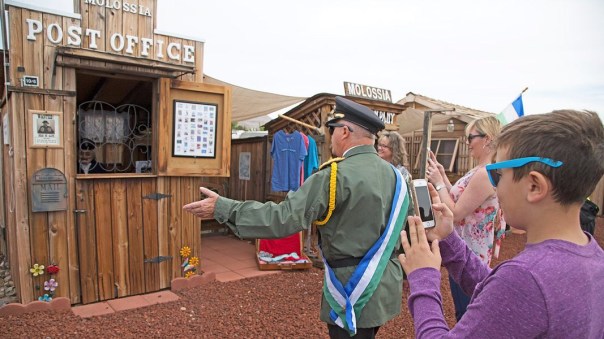
    Molossia is probably one of the most well known Micronations, with just the right blend of tongue-in-cheek humor and seriousness be wonderful and awesome. Molossia is based on two properties in Nevada and Pennsylvania, stretching over 58,000 acres owned by President Kevin Baugh (dictatorial). He issues their own money, they recognise other micronations, and if you give him enough warning, he’ll even give you a tour in full uniform. Molossia has its own alphabet, flag, and has been at war with East Germany since 1983, despite only being founded in 1999. Plus, they just added their own words to the Albanian national anthem. A little bonkers, and a lot of fun, how could you dislike the Republic of Molossia?

    16. The Kingdom of Lovely

    In 2005, the BBC ran a six-part documentary titled How to Start Your Own Country in which comedian Danny Wallace attempted to do exactly that — the Kingdom of Lovely is what resulted. He decided his flat would be appropriate, and gave Tony Blair a declaration of Independence, claiming it as a micronation. Partly internet based, Lovely now has more than 55,000 citizens scattered around the world, but Wallace’s attempt to gain recognition from the United Nations was harmed by him lacking any territories.

    15. The Duchy of Bohemia

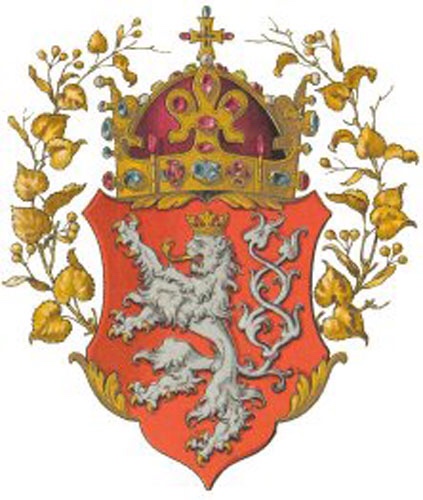
    Whether the Duchy of Bohemia is actually a micronation or not is up for debate. Amongst the serious Micronationers, it’s generally frowned upon as they haven’t been doing anything really political, instead just selling off titles as a way to make a quick buck — rather than attempting to set themselves up as a legitimate mini-country. The reason I’ve included them is because their backstory is wonderful — they believe themselves to be the government in exile of Bohemia, which was absorbed into other Eastern European countries decades ago. They believe themselves to be descended of the Bohemian royal line, which is kinda badass.

    14. Gay and Lesbian Kingdom of the Coral Sea Islands

    In 2004, the Australian govenrment refused to acknowledge gay marriages, so as a move of symbolic protest a huge cluster of islands of the Northeast Coast of Queensland were declared the Gay and Lesbian Kingdom of the Coral Sea Islands, a Euro spending constitutional monarchy under the rule of King Gautier I. With a national anthem by Gloria Gaynor, anyone who was gay or lesbian was immediately granted citizenship — though the only economic activity on the islands was tourism, fishing, and selling stamps. Yes, it’s silly, and no it’s not meant to be taken seriously, but it was an interesting protest, and all done in fun.

    13. The Dominion of Melchizedek

    The so-called Dominion of Melchizedek presents the seedier side of micronations, a group of people involved in an immense swathe of financial fraud that brought the world powers down against them. Not internationally recognised, it was founded by a father and son con-artist team, who sold fake banking licenses. They facilitated global banking fraud, and were once called “one of the most diabolical international scams ever devised in recent years.” The leaders claim it’s an “ecclesiastical sovereignty,” like the Vatican City, but that’s more or less BS. They give banking licenses to illegitimate entities, who then rip off everyone else. Poor immigrants were also duped into buying citizenship papers they couldn’t afford, only to find they were useless. Nice people, all around.

    12. The Aerican Empire

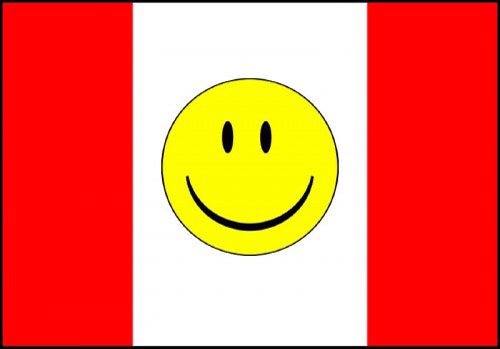
    Their flag has a happy face on it. Do you really need any more indication that these people are amazing? They also take the micronation concept to absurdest ends, claiming diverse areas of land like a square kilometer of Australia, a house-sized area in Montreal, Canada, a colony on Mars, the northern hemisphere of Pluto, and an imaginary planet. For the first 10 years of existence, it didn’t even claim any land, but still managed to declare war on other micronations. They also have one of the most wonderful mottos around “The Empire exists to facilitate the evolution of a society wherein the Empire itself is no longer necessary.” It’s pretty much a state set up by a bunch of HGTTG nerds, which is amazing in and of itself.

    11. Nova Roma

    Take you standard SCA style reenactment geeks, have the obsess about Rome instead of the Middle Ages, and turn the wackiness up to 11, and you have the basics of Nova Roma. Founded in 1989 in order to “the restoration of classical Roman religion, culture, and virtues,” they’re a fully recognized non-profit with an educational and religious mission. They practice the Roman religion, do the festivities, wear the clothes, reenact battles — but I’m assuming skip the horrible torture, ethnic cleansing, and pedophilia. Well, I hope. The New Romans don’t really consider themselves a Micronation, but the rest of the Micronation community does, and they have made utterings about attempting to become a sovereign nation following in Roman traditions.

    10. Conch Republic

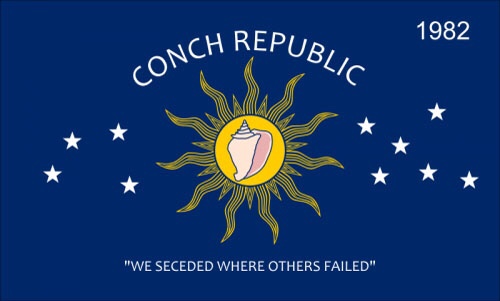
    The Conch Republic deserves to be on this list if only for having the funniest motto I’ve ever seen on a Micronation: “We Seceded Where Others Failed.” Well played, Conchers, well played. The Republic is completely tongue-and-cheek, and exists only to help drive tourism to the Florida Keys, but its founding was caused by real frustrations. When the US Border Patrol set up a checkpoint between Key West and the mainland, it frustrated a number of residents. Why were they being treated like foreign nationals entering the USA when they were citizens? So they decided they should make their own country. Yeah, they were removing the Michael, but were doing so with a point.

    9. The Other World Kingdom

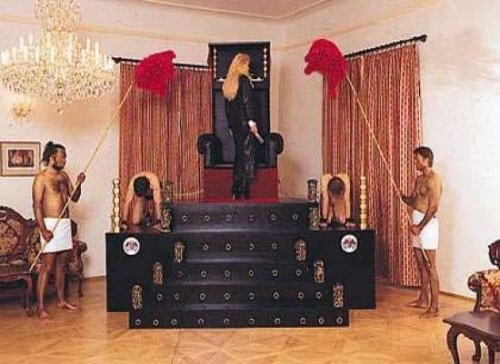
    Finding pictures of the OWK that I could put on a marginally SFW website was tricky, because OWK exists only for kink. It’s a Femdom Micronation, one where men and women who like it when women have complete sexual and physical power over men get together. Fiercely matriarchal, male visitors are used as furniture, beaten, and generally tortured in a manner that some BDSM lovers are intimately familiar with. While apparently no actual sex occurs in this Czech manor (yeah, right), their claims as a Micronation allow them to get away with things that otherwise might be illegal — like detaining people against their will (kinda?) and physical abuse. Hey, whatever rubs your Buddha.

    8. The failed Libertarian states

    This entry isn’t just one nation, but instead is devoted to the number of attempted Libertarian micronations that have fallen apart for one reason or another. Hey, whenever your entire population thinks they’re John Galt, it’s hard to find someone to fix the sewage pump. There was Minerva on a small reef island near Fiji, which fell when Tonga invaded and took it over. There was New Utopia, founded by Howard Turney, which may or may not be an immense scam, depending on who you talk to. Then the Principality of Freedonia attempted to lease land in Somaliland, but public dissatisfaction led to rioting and the death of a Somali national, so the American students who founded it scarpered. There’s the more recent Seasteading Institute, which is attempting to build an ocean based new nation. I’m sure one day, one of them will succeed.

    7. The Empire of Atlantium

    Unlike many of the tongue in cheek attempts at micronationhood, the Empire of Atlantium went at it with a fierce devotion to the nation-state experiment, and wanted to found an extremely liberal, secular humanist utopia. Formed in Sydney in 1981, the nation has only 0.29 square miles to its name, but as primarily non-territorial state, they’re cool with that. I guess you could say it’s more a state of mind (oh god, why did I make that pun?) The man behind Atlantium is fiercely disliked by other Micronations, essentially for being an enormous flaming douchenozzle, but at least he’s trying.

    6. Grand Duchy of Westarctica

    For some reason, up until 2001 there was a huge wedge of Antarctica not claimed by any existing nation. All of the land south of 60° S and between 90° W and 150° W. was between the claims of Chile and New Zealand, and no one wanted it. So Travis McHenry claimed the so called Marie Byrd Land, and christened it the Grand Duchy of Westarctica. Of all the entries on this list, Westartica actually makes more sense than most. There was a huge swathe of land that nobody wanted, so why couldn’t they just claim it? It was completely unclaimed, so they grabbed it. I kinda hope they actually get some recognition, at least one of these guys deserves a win.

    5. The Kingdom of EnenKio

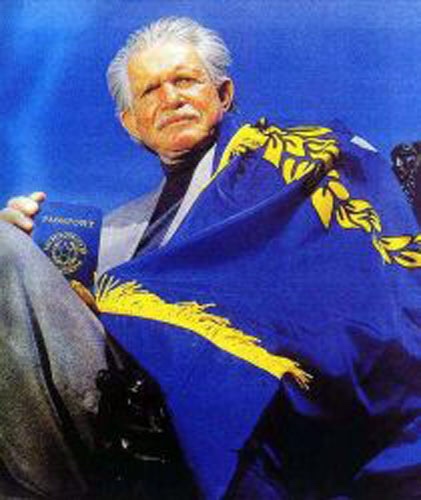
    Possibly the most widely known and condemned of the scummy, scamming micronations, the Kingdom of EnenKio claimed Wake Atoll of the Marshall Islands as their home base. These three little islands make up around 6.5 square kilometers of land, and after setting up this micronation in 1994, the founders immediately started setting up scam passports and diplomatic papers, which they sold to various unsavory types, despite them not actually having any weight in any nation on the planet. Both the United States and the Marshall Islands have released official communications condemning the actions of the EnenKions.

    4. The Hutt River Province Principality

    One of the longer running micronations, the Hutt River Province was founded in Australia in 1970. Based in the middle of fucking nowhere, around 500km north of Perth, this 18,000 hectare of farmland declared their secession after what they deemed to be overly draconian wheat production quotas. Unlike most other attempts on this list, the Hutt River Provinces almost succeeded. There’s an old Commonwealth law allowing for succession, and the Queen’s representative in Australia couldn’t be bothered fighting the five families who started the new country, so they just let them be. They don’t pay taxes, and mostly just keep to themselves, selling stamps and coins to make some extra cash on the side.

    3. The Independent Long Island

    Wait a second, someone actually wants Long Island? Huh, who would have thought? The ILI is an interesting case, because while they started by claiming the entire island as their own in 2007, on the grounds that it never changed hands to the Americans during the Revolutionary War. Or something like that. They could just be ornery, I’m not really sure. But in the scant handful of years that followed, it was entertaining as all hell to watch their dreams crumble into dust. Unlike some of the leaders on this list who kept their delusions going for years, the ILI first wanted their own country, then were happy being a separate state, and now have completely abandoned political aspirations and is now a “cultural project.”

    2. Freetown Christiania

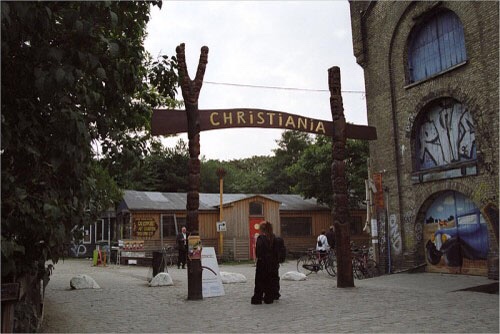
    Within the Danish capital of Copenhagen sits a small, self-declared autonomous region known as Freetown Christiania. Founded in 1971 by, well, hippies, it’s run by, well, hippies. A bunch of squatters took over a former military barracks, and set up the mother of all communes. Think street music, lots of pot, vegetarian food, no violence, and no hard drugs. Christiana was most well known up until 2004 for its completely open marijuana sales. Anybody (including tourists) could just rock up to a stall and buy some hash. Unfortunately, 2004 saw the Danish government crack down on this, and the freeholding has been in a legal wreck ever since, with their very existence in question. Luckily, 2011 saw them open their doors to the public again after shutting last year.

    1. Sealand

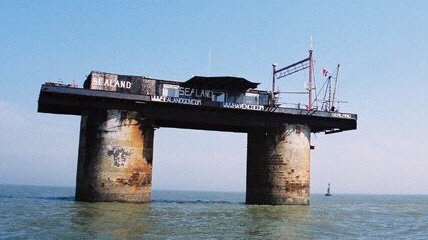
    Far and away the most widely known and popular of the micronations, Sealand is based on a WWII sea fort in international waters off the coast of the UK. Occuppied by the Sealandian royal family since 1967, they have a strong internet presence, and appear to make much of their money by hosting internet gambling sites on their servers, as it’s perfectly legal in Sealand. They’ve also made quite a spin on tourism and selling of minor titles. While not technically recognised by any other nation, they’re on an island no one has jurisdiction of, so they generally just get left well enough alone. Strangely, Sealand received a major popularity boost thanks to the anime and manga series Hetalia: Axis Powers, which was about the personified embodiments of nations (don’t even ask) including the tiny Sealand.

    Reference

    Gay History: Haggard’s Law

    “The louder and more frequent one’s objections to homosexuality are, the more likely one is to be a homosexual.”

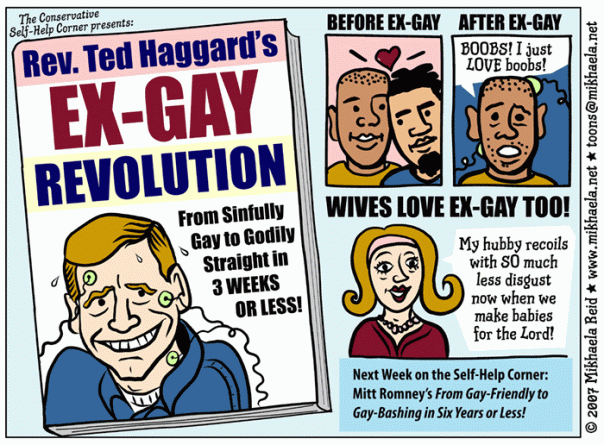
    Haggard’s Law is an adage named after Pastor Ted Haggard — despite his not being gay in any way, shape or form. It is used as a purely sarcastic musing that people who strongly object to homosexuality may be likely to engage in homosexual activities, and is based on the numerous public scandals of famous figures who oppose homosexuality and homosexual behavior.

    Instances of Haggard’s Law are gleefully spread by the media for an audience that revels in such scandalous behavior.

    “Racists never imagine what it’s like to be like the person they hate, homophobes imagine it in graphic detail for hour upon hour.” – Bob Schooley

    Haggard’s Law made its first published appearance in an article, written by Dennis DiClaudio of Comedy Central fame and is named after American evangelical preacher Ted Haggard. It was created after and is reference to a scandal involving prostitute and masseur Mike Jones who alleged that Haggard had paid Jones to engage in sex with him for three years and had also purchased and used crystal methamphetamine. Although Haggard denied using methamphetamine or having sex with Mr. Jones, the scandal has caused many evangelicals to view Haggard as extremely hypocritical about his spoken views, as he was known to publicly preach against homosexuality.

    Original quote by author Dennis DiClaudio

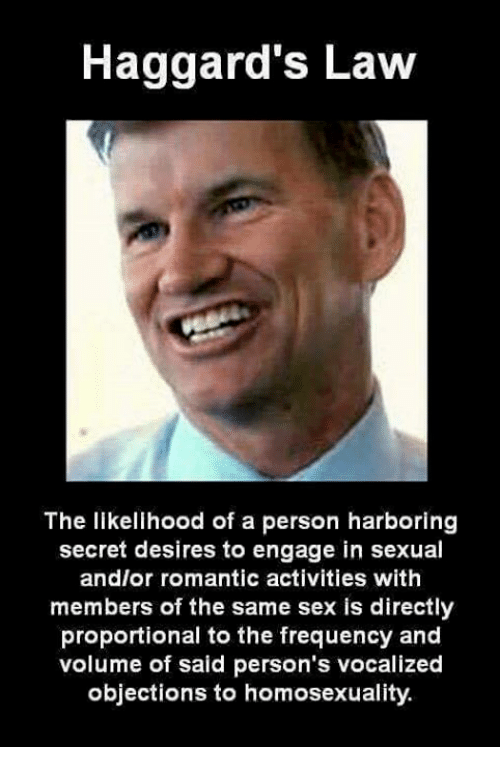
    Haggard’s Law — The likelihood of a person harboring secret desires to engage in sexual and/or romantic activities with members of the same sex is directly proportional to the frequency and volume of said person’s vocalized objections to homosexuality.

    The “law” is more generally used to reference hypocrisy in public figures who lead the moral opposition of homosexuality, and then are discovered to have partaken in homosexuality or homosexual behavior.

    Is Haggard’s law true?

    So far, there are no scientific evidences supporting Haggard’s law which, therefore, should be taken only as an ironic term describing some hypocritical homophobes. In fact, testing scientifically if there is some truth in Haggard’s law is quite hard, because of the following reasons:

    • There is no easy way to know with certainty the sexual orientation of a person. Statistical studies which rely on the sexual orientations reported by the subjects are hardly useful, since of course no homophobe would reveal their homosexuality. Methods measuring sexual arousal via biometrics are also problematic, because they measure only a physical response to a stimulus, not sexual orientation, and it is possible that similar physical responses are due to completely different psychological reasons. Probably, the only sure way to know the sexual orientation of a person would be spying on them to see if they actively look for and engage in heterosexual or homosexual activities, but of course that poses both ethical and practical problems.

    • The scandals behind the history of Haggard’s law, although numerous, are statistically irrelevant with respect to the whole number of homophobes, who have never been caught in homosexual activities. Indeed, believing in Haggard’s law because of such scandals is an instance of the Toupée fallacy.

    Penile plethysmography

    In a 1996 study, 64 men were assessed by the “homophobia index” and split into two groups: “homophobic” and “non-homophobic.” Then, their arousal by homosexual and heterosexual images were measured via penile plethysmography, a rubber gauge used to measure erectile responses. In the “non-homophobic” group, 66% showed no arousal yet in the “homophobic” group only 20% managed to restrain themselves from getting aroused – and significantly underestimated their own arousal.

    However, it should be noted that what was measured as arousal may have been the result of the uncomfortable feelings the homophobic group were feeling on seeing homosexual imagery. As pointed out by the authors of the study: “It is possible that viewing homosexual stimuli causes negative emotions such as anxiety in homophobic men but not in nonhomophobic men. Because anxiety has been shown to enhance arousal and erection, this theory would predict increases in erection in homophobic men. Furthermore, it would indicate that a response to homosexual stimuli is a function of the threat condition rather than sexual arousal per se.” Hence, this confounding factor may explain the results more consistently.

    Implicit measures

    Studies that rely on implicit measures both to gauge a subject’s same-sex attractions as well as their level of homophobia do give credence to the suspicion that there is something to Haggard’s law.

    Statistics

    By a 2011 survey, 33% of the USA population believes that “homosexuality is a way of life that should not be accepted by society”. On the other hand, another 2011 report estimates that about 8.2% of Americans have engaged in same-sex sexual behaviour.

    On the basis of said polls, no more than 24.8% of those 33% of American homophobes — i.e. one in four active gay bashers — could be a closeted homosexual. This means that a literal interpretation of Haggard’s Law (e.g. ‘homophobe perfectly implies homosexual’) fails in at least 75.2% of cases.

    However, this conclusion is flawed, as the 8.2% figure only considers those who have admitted to same-sex sexual activity.

    Ethical calculus

    It’s entirely possible to be raised to believe that homosexuality is evil yet still turn out to be homosexual. There are many ways for the human mind to rationalize this away, where everyone else is a “sinner” but you are unique, or some other cognitive dissonance. But one way to justify “sinning” is to remove more “sin” than you cause, sort of like how every third house fire fighters save they get to light one up for funzies. So if a politician or preacher manages to convince other people to avoid or give up homosexuality, then surely they have made the world “less sinful” and are thus still “good”, right?

    Bisexuality?

    Haggard’s Law could sometimes be a bit of a misnomer as the newly-outed may not only be attracted to their own sex, but “swing both ways.” Haggard himself insists that he can still “exclusively have sex with my wife and be permanently satisfied.”

    Some instances of Haggard’s Law

    • Ken Adkins, a notoriously anti-homosexual pastor who made the news for attacking the victims of the Orlando shooting, was arrested in August 2016 for not merely being gay, but having molested a young boy who was a member of his church. Ironically, one of his chosen lines of attack seems to have been that all gay and trans people were paedophiles, as he was banned by court order from using the phrase “child molester” without proof after numerous attacks on a local school board member via social media.

    • Gary Aldridge, pastor at Thorington Road Baptist Church in Montgomery, Alabama, was found dead of autoerotic asphyxiation while wearing two complete rubber wetsuits, including a face mask, diving gloves and slippers, rubberized underwear, and a head mask, reportedly with one dildo in the anus covered with a condom. You read that correctly.

    • Bob Allen, anti-gay Florida politician.

    • Ernest Angley, internationally known televangelist, sued for sexual abuse by a former pastor, and caught on tape admitting to a homosexual encounter.

    • Roy Ashburn, Californian anti-gay politician caught on a DUI after picking a man up at a gay bar.

    • Larry Craig was a Republican Senator from Council, Idaho who is not gay and never has been gay. He is best known for his hardcore theocratic bent and for pleading guilty to “lewd conduct” in an airport restroom. He is totally not gay.

    • Rodrigo Duterte, president of the Philippines and homophobe, says he “cured himself” of homosexuality.

    Official photo of Mark Foley. “What, me? That kid? Naw, never!

    • Mark Foley is a former United States Representative (R-FL). He is famous for validating Haggard’s Law after he sent sexually explicit emails to young male congressional workers. Rep. Foley resigned from Congress when his particular scandal broke. The irony was that Foley was on House committees to protect children from exploitation and fought against child pornography, as well as promoting causes like sex offender registration and requiring FBI fingerprint/background checks for adult volunteers and employees of child groups like Boy Scouts of America. While being against gay marriage and gay adoption, he had previously donated to LGBT causes and was endorsed by the Log Cabin Republicans. He has since come “out” and is now selling real estate in Palm Beach.

    • Wes Goodman, Republican state legislator for Ohio, resigned after being caught having sex with a man in his office.

    • Marc Goodwin, sent to prison for murdering a gay man in a homophobic attack, later became one of the first two men to receive a gay marriage in a British prison.

    • Ted Haggard, duh

    • Dennis Hastert, possibly, although the target of his affections appear to have been students on his high school wrestling team.

    • Eddie Long was the senior clergyman at New Birth Missionary Baptist Church, a 25,000 member megachurch in Lithonia, Georgia, a suburb of Atlanta. In what has become an almost timelessly classic Christian story line, in September 2010 the homophobic minister was accused of coercing young men into sexual activity. Several plaintiffs brought suit against the heretofore triumphant exponent of the prosperity gospel. Describing Long as a ‘monster’ in an interview with WAGA-TV in Atlanta, one of Long’s victims alleged that he offered “holy scripture to justify and support the sexual activity.”

    • Pastor Matt Makela, a married father of five, reportedly routinely argued gay people should sublimate their same-sex desires—while he was simultaneously chatting up guys on Grindr.

    • Possibly Omar Mateen, the 2016 Orlando nightclub gunman. Multiple media outlets have reported that he had a gay dating app on his phone, and was a regular patron of the gay nightclub he later attacked.

    • Jonathan Merritt, son of James Merritt, former leader of the Southern Baptist Convention.

    • Matt Moore, who claimed to be ex-gay thanks to religion, was found using gay hook up services.

    • Matthew Dennis “Denny” Patterson, pastor of Nolensville Road Baptist Church in Nashville, Tennessee, was arrested in 2018 for molesting multiple children, mostly boys, over the course of his 20 year ministry.

    • Possibly Fred Phelps of the Westboro Baptist Church, according to former church member Lauren Drain.

    • Timothy Lee Reddin, anti-gay pastor from Turner Street Baptist Church in Fayetteville, Arkansas, was arrested in August 2018 for soliciting what he thought was a 14-year-old boy for sex online.

    • George Rekers is a Southern Baptist minister and typical religious right activist who has written numerous books about the evils of homosexuality. Rekers has long been affiliated with James Dobson and the Family Research Council, as well as appearing as an “expert” witness in several court cases espousing how homosexuals aren’t fit to raise children, and so should be prohibited from adoption. He also testified on behalf of the Boy Scouts of America in support of their gay ban. When a judge was suspicious of Rekers’ testimony, describing it as “extremely suspect” and said that Rekers “was there primarily to promote his own personal ideology”, Rekers went on a tantrum describing the trial as “utterly corrupt”. In May of 2010, he was spotted returning to Miami International Airport with a young Hispanic gentleman hired “to carry his bags”. Like all baggage assistants, the young man had been hired from a website entitled “Rentboy.com”. Much hilarity ensued, of course, with Rekers even admitting he had hired the boy from the escort website—while still insisting he had only hired him for “baggage handling”. At UCLA in the early 1970s, Rekers ran “The Sissy Boy Experiment”, a reparative therapy program. The program came under intense media scrutiny following the suicide of Kirk Murphy, whose parents enrolled him in the program when he was five years old. Murphy suffered physical abuse as part of the plan to cure him of his feminine behavior. Murphy’s family blames the program for his depression and eventual suicide.

    • Bill Sanderson, a family values conservative Christian Republican lawmaker from Kenton, Tennessee, resigned his seat on the same day it was revealed that he was allegedly using the online dating service Grindr to hook up with gay men.

    • Gaylard Williams, (possibly) former) pastor of Praise Cathedral Church of God in Seymour, Indiana, arrested for battery after soliciting gay sex at a park. After he was arrested, police discovered a gay porn DVD in his vehicle.

    In fiction

    The 1999 film American Beauty

    Reference

    Gay History: They Built It. No One Came.

    They built a commune but nobody came

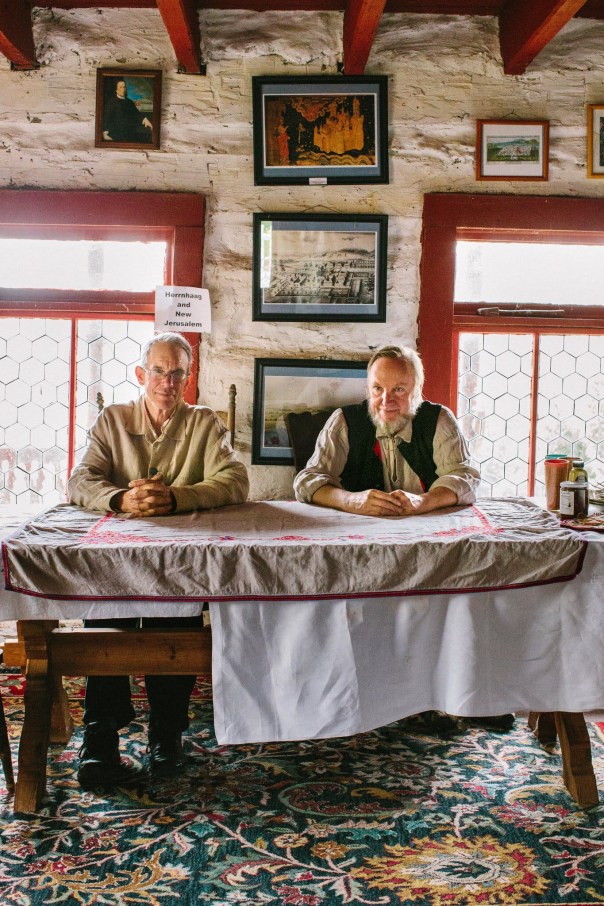
    “It was a dream, and it was a good dream,” Zephram said. “Though it broke our spirits that we had no one to share it with. Now, it doesn’t matter that we didn’t have brothers. It doesn’t matter if the place survives. We carry it with us, in the moment. The work we did. What we felt.”

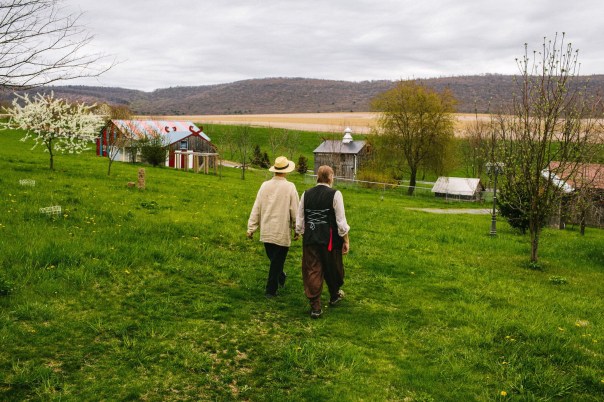
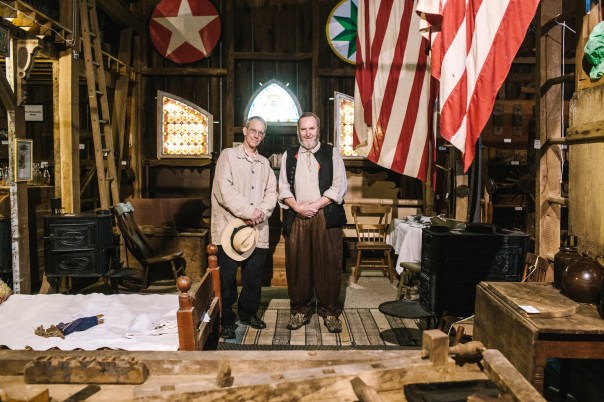
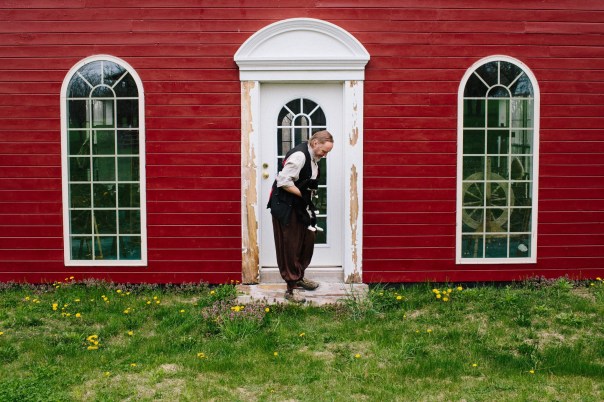
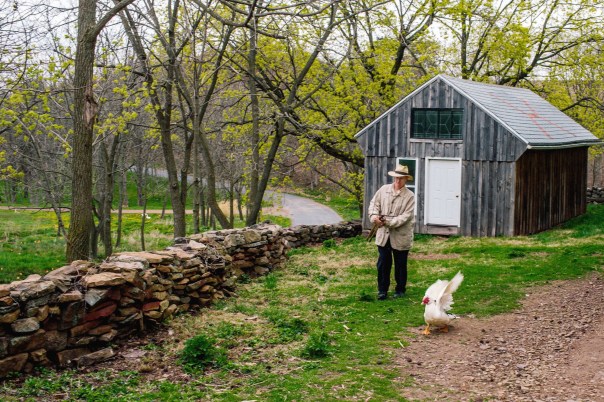
    PITMAN, Pa. — They slept in the barn their first winter, on a straw mattress with antique linen sheets and a feather tick. There was no electricity, heat or plumbing, so they made their own candles, used a chamber pot and drew water from a spring.

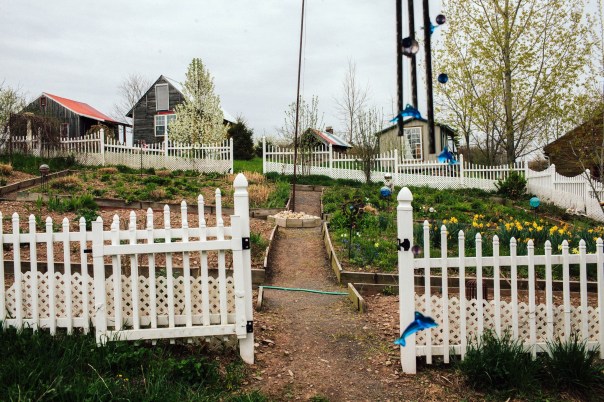
    They were born Michael Colby and Donald Graves, but once there, on 63 acres in the Mahantongo Valley, a bowl of land in central Pennsylvania, they changed their names to Christian and Johannes Zinzendorf and called themselves the Harmonists, inspired by a splinter group of 18th-century Moravian brothers who believed in the spiritual values of an agrarian life.

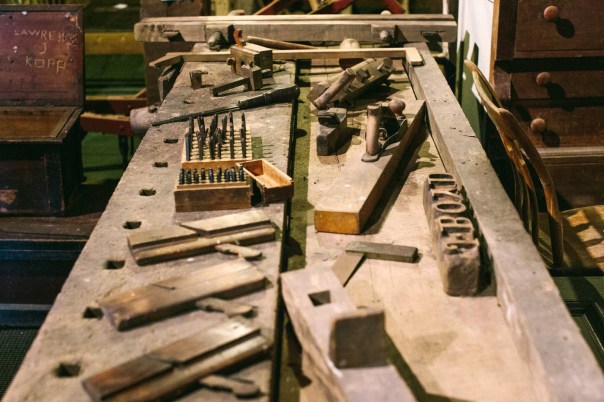
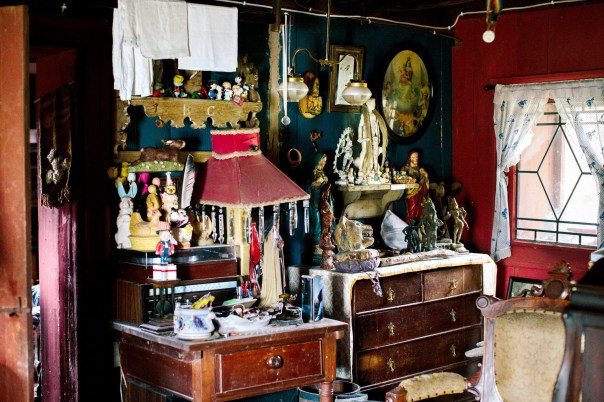
    Their ideals were lofty but simple: They would live off the land, farming with Colonial-era tools, along with a band of like-minded men dressed in homespun robes wielding scythes and pickaxes. They would sleep in atmospheric log cabins and other 18th-century structures that they had rescued from the area and that they began to reconstruct, painstakingly, brick by crumbling brick and log by log.

    But what if you built a commune, and no one came?

    It turns out it’s not so easy to cook up a utopia from scratch. There are 1,775 so-called intentional communities listed in the Fellowship for Intentional Community’s United States directory: eco-villages, pagan co-ops, faith-based retreats and everything in between. But how do you advertise, organize and thrive? “Don’t ask us,” Johannes said. “We failed that class.”

    Inspired by a splinter group of 18th-century Moravian brothers who believed in the spiritual values of an agrarian life, Johannes Zinzendorf, 64, left, and Zephram de Colebi, 65, arrived in Mahantongo Valley, a bowl of land in central Pennsylvania, in the late 1980s. Back then, they went by Michael Colby and Donald Graves. Christopher Gregory for The New York Times

    It was a raw, bright afternoon in April. Christian and Johannes, or to be accurate (stay with me here) Zephram and Johannes (Christian changed his name again when he realized the hoped-for brotherhood was never going to materialize, and his new last name is de Colebi), are now 65 and 64. And they have reconfigured their life here for the third time in three decades.

    The 25 buildings that dot the landscape are mostly dormant, save for Zephram’s house and Johannes’s house. The two have been living separately, so to speak, for a decade, individual housing being an unlooked-for boon when their commune went to pieces and they ceased to be a couple.

    They’ve sold most of their antique tools, save for a handful, which they’ve added to the collection of furniture, housewares, paintings, textiles and other Pennsylvania Dutch relics they’ve amassed over the years. The two have turned the whole lot — thousands of artifacts — into a museum, filling the cavernous barn where they spent their first winter with exhibits.

    They’ve written a memoir, tragicomic, of course, and are looking for a publisher.

    Their ideals were lofty but simple: They would live off the land, farming with Colonial-era tools, along with a band of like-minded men dressed in homespun robes wielding scythes and pickaxes, sleeping in atmospheric log cabins and other 18th-century structures that they had rescued from the area and that they began to reconstruct. Christopher Gregory for The New York Times

    It’s their second book. “The Big Book of Flax,” the story of linen processing (in history, legend and song!), came out in 2011 from Schiffer Publishing, a Pennsylvania house whose publishing motto is “Find your niche and scratch it!”

    Johannes Zinzendorf feeding cattle in their early days on the farm.

    Johannes and Zephram met in the 1970s at a gay-consciousness-raising group in Salt Lake City, where both were attending college. They were each dabbling in various spiritual practices: Zephram was circling around the Wiccans, attracted by their earth-centered rituals, and Johannes was sampling Hinduism.

    When you’re gay, Zephram pointed out, it is not always the case that traditional religions will welcome you. So alternatives beckon.

    Salt Lake City was changing, they said; they could see their future mapped out there, and it was not an appealing one. “Successful urban gays, buying property, having cultural weekends in San Francisco,” Johannes said. “Save us.”

    Inspired in part by the Mormons, they began to turn over the idea of starting an intentional community in a rural setting. But how to organize? What would be the guiding principle?

    They toyed with creating a gay Scottish clan (Johannes is from Texas and Zephram from Maine, and both have Scottish forebears) or starting their own version of the Radical Faeries, a vaguely pagan, spiritually based queer counterculture movement from the mid-1970s.

    They moved to Bethlehem, Pa., that hotbed of Moravian culture (crafts and agriculture, mostly), where Zephram worked as a teacher and Johannes as a reporter. There they learned of a curious local offshoot of a brotherhood started in Europe in the 18th century.

    As Johannes, left, and Zephram learned, it’s not so easy to cook up a utopia from scratch. After a series of success and failures, and an unrealized brotherhood, they  have rebranded themselves as curators of the Mahantongo Heritage Center, open to the public from May through October. Christopher Gregory for The New York Times

    Its leader was the charismatic son of a patron of the Moravian Church, who believed in a spiritual communion through sex and agricultural practice. It was not a wildly popular concept 300 years ago, and contemporary rural Pennsylvania was perhaps not the best place to resurrect its tenets, even with the sex part edited out.

    Also, as Johannes pointed out: “Neither one of us is very charismatic. That was a problem.”

    But they were young and eager. They bought 63 acres for $63,000 in Pitman, a tiny community in Eldred Township, and they began to rescue period cabins and structures in the area and move them to the site.

    Filled with Colonial zeal, they bought an antique letterpress and began printing brochures to advertise their concept. Dressed in their homespun linen garments, made from flax they had planted and sewn themselves, they set up tables at gay-pride festivals, living-history farms and farming museums.

    “People would look at us and say, ‘Oh, so you’re gay Amish?’ ” Johannes said.

    They did get a few takers: a man who was interested in the culture of the early German settlers, but preferred to observe its customs rather than pitch in; a guy they called “the Primitive man,” who set up a lean-to on the property and wore loincloths in the summer (he stayed the longest but turned out to be mentally ill).

    Then there was the man who brought his accordion and offered to play while they worked. Indeed, the farming chores seemed to mystify most of their would-be brothers.

    “Everyone just wanted to watch us work, and that got old real fast,” Johannes said.

    “We weren’t good at being able to explain the spiritual part, either. People would say: ‘Let’s write down your philosophy. Let’s create some commandments.’ But that didn’t come naturally. When we tried to explain our beliefs — spirits living in springs, the earth as mother — people just thought we were weird.”

    They filled the cavernous barn where they spent their first winter with exhibits of furniture, housewares, paintings, textiles and other Pennsylvania Dutch relics they’ve amassed over the years. Christopher Gregory for The New York Times

    Farming the Colonial way requires lots of hands. While Zephram worked full time as a teacher in a neighboring town, which paid their mortgage and costs, Johannes was alone on the farm, having been fired from his reporting job.

    “I wasn’t able to do two full-time jobs at once,” Johannes said. “I remember the first time I cut hay, seven acres that had been planted by the previous owner. I’m there with my scythe, and I started cutting, and I quickly realized that what made the brotherhood we were emulating successful is that they had 88 men, and we were only two.”

    Yet the work was holy to him, he said. “I loved getting out there.”

    They had cattle, sheep and goats; turkeys, geese, ducks and chickens; and cats and dogs. A pair of oxen, Star and Bright, took over the plowing duties, with a handmade plow the local auto mechanic would fix when the oxen grew balky and mangled its metal parts.

    They acquired much of their livestock before building the appropriate fencing, which meant that the animals would wander off, enraging the neighbors. “They were so incredibly tame, and we loved them,” Johannes said. “We had Edward Hicks and ‘The Peaceable Kingdom’ in our mind. But for ruminants, you know, the grass is always greener.”

    Their older neighbors were impressed by their work ethic and shared their folklore and practices. “These Dutch couples in their 80s had lived the lifestyle we were living,” Johannes said. “They didn’t care who we were, they just saw how hard we worked. They taught us how to broadcast seed, how to tie the corn shocks to dry the corn.” And how to sharpen their scythes on the stone walls that Zephram had built.

    Early on, a woman appeared with a gift, a heavy heirloom quilt stitched with pieces of her husband’s uniform from World War II. “This kept my husband and I alive one winter,” she told them.

    This building is their weaving and spinning studio. The men are known locally as the Flax Brothers, for their expertise in growing and processing flax into linen. Christopher Gregory for The New York Times

    There were moments of incredible joy. The day they completed the reconstruction of what they called the community house, an 18th-century log cabin with a marvelous peaked roof that they rescued from an industrial park and that took 10 years to remake. Eating outside with the animals. (“They were like our family,” Johannes said. “But they did eat all the flowers.”)

    But there was menace, too. This rural township was not overwhelmingly welcoming to two young gay men and their dreams to populate a fledgling farm. They always knew when the bars closed. They would hear engines revving, and the shouts would begin: “We’re going to kill you.” “Go home.”

    Johannes took to sleeping in his truck, hoping to chase the perpetrators and write down their license-plate numbers. One night, a cow was shot.

    Eventually, self-sufficiency and exhaustion trumped the Colonial lifestyle. They put in a satellite phone, dug a well.

    Harvesting by hand gave way at first to Star and Bright’s efforts, and then they sold the team to buy a tractor. They bought a generator and power tools, including a jigsaw. “That was fun — we put gingerbread trim on everything,” Johannes said.

    They tried wind power, then solar. “You might get 40 minutes a day, and then it would crash,” he said. “Lightning storms would hit and blow up the transformer.” Four years ago, they hooked up to the power grid.

    Zephram explaining the differences between various spinning wheels. Christopher Gregory for The New York Times

    In the wake of the unrealized brotherhood, they tried artists’ retreats, residencies and other gatherings. Worn out, they decided their empty commune would be a hermitage. “We would be hermits, each in his hermit house,” Johannes said.

    Now, they raise only poultry, because the birds are easier to take care of. They turned the bunkhouse into a library; along with a collection of local religious texts, there is a prodigious array of “Star Trek” paperbacks. (In anticipation, they christened it the Brokeback Bunkhouse, and decorated its crossbeams with saddles.)

    Zephram retired from his teaching job and began painting. “We try to live in the spirit,” Johannes said. Some days are easier than others.

    Then one day in early 2012, their turkeys vanished. They found them beaten to death, their body parts strewn over a field and a bloody crutch tossed nearby.

    It had been years since Zephram and Johannes had been threatened. The viciousness of the attack stunned them. Though they say they know the assailant, no one was charged with the crime. Yet something shifted after that day.

    “People came up to us and apologized,” Johannes said. “It traumatized not just us, but the town.”

    Jim Hepler, a sixth-generation farmer and Pitman native, called it a turning point. “When they arrived, people said, ‘Oh, no, we’ve got a gay community beginning here in the valley, and it’s going to be awful,’ ” he said. “That wasn’t my feeling, but there was tension. Here we are 30 years later, and it’s still two men minding their own business.”

    Pieces from Zephram’s collection of artifacts. Christopher Gregory for The New York Times

    The turkey beating, he said, “was an awful thing.”

    “It was senseless, and it was bad,” he continued. “I think the community came together then in support of them.”

    Johannes and Zephram have rebranded themselves, too, as curators of the Mahantongo Heritage Center (that’s the barn with its exhibits), open to the public from May through October.

    Zephram paints vibrant animistic canvases in his studio; Johannes frets about the maintenance on their copious collection of structures. In a tour of the property accompanied by their enormous bellowing turkeys (they have replenished the flock), he pointed out the peeling paint on the window trim of his hillside house.

    Up on a ridge, a few art installations (a grain silo embellished with fins to look like a spaceship, and a cow-size dog made from rusty pipes) give the place a goofy DiaBeacon feel.

    “It was a dream, and it was a good dream,” Zephram said. “Though it broke our spirits that we had no one to share it with. Now, it doesn’t matter that we didn’t have brothers. It doesn’t matter if the place survives. We carry it with us, in the moment. The work we did. What we felt. Star and Bright and all the animals.

    “It’s not a lonely place. It’s just jumbled.”

    The 25 buildings that dot the landscape are mostly dormant, save for Zephram’s house and Johannes’s house. Christopher Gregory for The New York Times
    When Johannes and Zephram first began spreading the word about their concept, they set up tables at gay-pride festivals, living-history farms and farming museums. “People would look at us and say, ‘Oh, so you’re gay Amish?’” Johannes said. Christopher Gregory for The New York Times
    One of Zephram’s vibrant, animistic paintings. Christopher Gregory for The New York Times
    Over the course of their years living in Mahantongo Valley, self-sufficiency and exhaustion trumped the Colonial lifestyle. They put in a satellite phone, dug a well. They bought a generator, and power tools, including a jigsaw. They tried wind power, then solar. Four years ago, they hooked up to the power grid. But they still use this wood stove. Christopher Gregory for The New York Times
    Now, they raise only poultry, because the birds are easier to take care of. They turned the bunkhouse into a library; along with a collection of local religious texts, there is a prodigious array of “Star Trek” paperbacks. Christopher Gregory for The New York Times
    Johannes in his home. Christopher Gregory for The New York Times

    Reference

    Gay History: The Only Major Player To Openly Admit He Was Gay During His Career Also May Have “Invented” The High-Five!

    “They can’t say that a gay man can’t play in the Majors, because I’m a gay man and I made it.”- Glenn Burke

    Major League Baseball has been going strong now for well over a century. Many thousands of players have taken the field since the beginning of organized professional baseball, but only one, Glenn Burke, ever “came out of the closet” during his playing career, letting managers, teammates, and owners know he was gay.  Burke also is noted as being the man who popularized, and possibly invented, the high-five.

    Burke was born in 1952 in Oakland, California.  By the age of 18, he was voted Northern California’s high school “basketball player of the year”.  A highly gifted athlete, Glenn could reputedly dunk a basketball with either hand- quite a feat considering he was just over six feet tall.  But he soon turned all his attention to baseball.

    An outfielder, he was drafted by the L.A. Dodgers and, as so often happens with young “toolsy” prospects when scouts are trying to hype them, he was quickly compared to one of the greats of all time- touted as “the next Willie Mays”.

    Burke made his MLB debut on April 9, 1976.  From the word go, Burke made no secret of the fact that he was gay, freely talking about it with teammates and management.  As a result of this, during his time with the Dodgers, then General Manager Al Campanis offered to treat Burke to a lavish honeymoon (actually offering him $75,000), if Burke would just agree to get married- no doubt worried that the fact that Burke was gay would be leaked or discovered by the media at some point with how open Burke was about it.  Burke responded to this marriage request by saying, “I guess you mean to a woman?”  He refused the offer.

    Despite management apparently being uncomfortable about Burke’s sexual preferences, players didn’t seem to feel the same way.  Burke was often described in his Dodger days as “the life of the clubhouse”.

    While things were great with his teammates, problems arose with manager Tommy Lasorda.  The issue started when Burke befriended Lasorda’s gay son, Tommy “Spunky” Lasorda Jr.  According to Burke’s sister, Burke and Spunky were just very close friends, not intimate.  In Burke’s 1995 autobiography, Out At Home,  he purposefully didn’t go into details about the extent of his relationship with Lasorda’s son, saying that it was “my business”.

    Regardless, Lasorda Sr. and Burke’s relationship quickly soured. Lasorda Sr. was in denial that his son, Spunky, was gay, at least publicly, despite the fact that Lasorda Jr. made no great secret of the fact. (Sadly, Spunky died in 1991 at the age of 33 from pneumonia and was thought to be suffering from AIDS at the time).

    Whatever he actually believed, Lasorda Sr. was not happy at all about Burke and his son being friends.  Given Lasorda Sr.’s position on the subject, it’s probably for the best that they abandoned a prank Spunky and Burke were going to play on Lasorda Sr. The two dressed up in drag and showed up at Lasorda Sr.’s house for dinner.  When they got to the door, Burke said they chickened out and just went home without knocking.

    Even without showing up to dinner in drag, Lasorda Sr.’s liking for Burke completely soured and Burke’s clubhouse antics, which Lasorda used to love for keeping the team loose, now were no longer appreciated by the skipper resulting in a major chewing out of Burke after one particular dugout incident.  Burke’s sister, Lutha Davis, later said,

    Glenn had such an abundance of respect and love for Tommy Lasorda.  When things went bad at the end, it was almost like a father turning his back on his son.

    This all came to a head in 1978, when the Dodgers suddenly traded Burke away to the Oakland Athletics for Billy North. One L.A. sportswriter stated after the fact that “[the trade] sucked the life out of the Dodger’s clubhouse.”  He even claimed to have seen a couple of the players crying when they heard Burke was traded.

    When Burke arrived in Oakland, his welcome was not good. A’s manager Billy Martin supposedly introduced him as a “faggot” in front of his teammates and reportedly referred to him that way several times.  Further, there were rumors that many of his new teammates would not take showers or undress if Burke was around.

    With this added strain, Burke’s play on the field suffered greatly and was later compounded by a knee injury. He went down to the Minor Leagues once his knee healed up, playing in 25 games there, but then decided to call it quits.  “It’s the first thing in my life I ever backed down from,” Burke said.  “Prejudice just won out.”

    In his 4-season career (1976-1979), Burke, who showed some promise when he first came up and was a very hyped prospect, ended up hitting just .237 in 523 at-bats, including 38 RBI’s, 2 home runs and 35 stolen bases.

    Besides being the first MLB player to come out during his playing career, at least with teammates and management, Glenn Burke is also often credited with being the guy who invented the high-five. To be clear, “low-fives” had been around for several decades at this point, particularly within the African American community, and there are a few people who claim to have “invented” the high-five.  Perhaps they really did perform a high-five first at some point- it being not exactly a complicated extension of the already popular low-five.  The reason Burke is so often given credit is there is substantial documented evidence of his first high-five, unlike so many other claimants. Further, after he started doing this, it caught on with the Dodgers and later throughout baseball and the world.  So even if he was not really the first person to have the bright idea to convert the low-five to a high-five (which seems likely), he at least was integral in popularizing the switch.

    This “first” momentous high-five happened in 1977 when Burke ran onto the field to congratulate his Dodger teammate Dusty Baker who’d just hit his 30th home run.  Rather than do a low-five, Burke raised his hand over his head as Baker jogged home from third base.  Baker got what Burke was going for and slapped Burke’s hand, thus “inventing” the high-five.  After retiring from baseball, Burke used the high five as a symbol for gay pride, even at the same time the Dodgers were selling trademarked “high-five” symbol t-shirts due to the tradition of high-fiving teammates started by Burke.

    As tragic as Glenn Burke’s baseball career may seem, it was a picnic compared to his post-baseball life.  At first things went well for him.  He became a star shortstop in his local gay softball league and led his club to the Gay Softball World Series.  He said of this:

    I was making money playing ball and not having any fun. Now I’m not making money, but I’m having fun.

    He also competed in the Gay Games in 1982 and 1986 in basketball and a few running events.  He even took home medals in the 100 and 200 meter sprints in 1982.  He also initially had aspirations of trying to pick back up his once promising basketball career and perhaps become the first openly gay NBA player, with that distinction, of course, now going to Jason Collins.

    One of Burke’s gay friends, Jack McGowan, said of Burke at this time,

    He was a hero to us. He was athletic, clean cut, masculine. He was everything that we wanted to prove to the world that we could be.

    However, things soon took a turn for the worse.  For reasons known only to him, Burke started doing drugs… a lot of them.  Things got even worse when, in 1987, his leg and foot were crushed when he was hit by a car in San Francisco.  Struggling to find work and now thoroughly addicted to cocaine, he found himself on the streets.  During this period, he was also arrested for drug possession and grand theft.  To add a healthy dose of lemon juice to his cuts, in 1993, he tested positive for HIV.  Just two years later, now living with his sister in Oakland, Burke passed away from complications due to AIDS on May 30, 1995 at the age of just 42.

    Bonus fact

    Since Burke, one other Major League Baseball player has announced to the world that he is gay, though he waited to tell anyone until after his career was finished.  The man is Billy Beane… No, not the current Money Ball GM of the Oakland Athletics.  William Daro “Billy” Beane who played for the Tigers, Dodgers, Padres from 1987 to 1995, and also played in Japan one year during that span.  In 1999, four years after retiring, Beane announced to the world that he is gay, and later wrote a book, Going the Other Way: Lessons from a Life in and out of Major League Baseball.

    Reference

    Gay History: The Queer Nation Manifesto

    Text of a manifesto originally passed out by people marching with the ACT UP contingent in the New York Gay Pride Day parade, 1990.

    How can I tell you. How can I convince you, brother; sister that your life is in danger. That everyday you wake up alive, relatively happy, and a functioning human being, you are committing a rebellious act. You as an alive and functioning queer are a revolutionary. There is nothing on this planet that validates, protects or encourages your existence. It is a miracle you are standing here reading these words. You should by all rights be dead.

     Don’t be fooled, straight people own the world and the only reason you have been spared is you’re smart, lucky, or a fighter. Straight people have a privilege that allows them to do whatever they please and f— without fear. But not only do they live a life free of fear; they flaunt their freedom in my face. Their images are on my TV, in the magazine I bought, in the restaurant I want to eat in, and on the street where I live. I want there to be a moratorium on straight marriage, on babies, on public displays of affection among the opposite sex and media images that promote heterosexuality. Until I can enjoy the same freedom of movement and sexuality, as straights, their privilege must stop and it must be given over to me and my queer sisters and brothers.

     Straight people will not do this voluntarily and so they must be forced into it. Straights must be frightened into it. Terrorized into it. Fear is the most powerful motivator. No one will give us what we deserve. Rights are not given they are taken, by force if necessary.

     It is easier to fight when you know who your enemy is. Straight people are you enemy. They are your enemy when they don’t acknowledge your invisibility and continue to live in and contribute to a culture that kills you.

     Every day one of us is taken by the enemy. Whether it is an AIDS death due to homophobic government inaction or a lesbian bashing in an all-night diner (in a supposedly lesbian neighborhood), we are being systematically picked off and we will continue to be wiped out unless we realize that if they take one of us they must take all of us.

    An Army of Lovers Cannot Lose

    Being queer is not about a right to privacy; it is about the freedom to be public, to just be who we are. It means everyday fighting oppression; homophobia, racism, misogyny, the bigotry of religious hypocrites and our own self-hatred. (We have been carefully taught to hate ourselves.) And now of course it means fighting a virus as well, and all those homo-haters who are using AIDS to wipe us off the face of the earth.

     Being queer means leading a different sort of life. It’s not about the mainstream, profit-margins, patriotism, patriarchy or being assimilated. It’s not about executive directors, privilege and elitism. It’s about being on the margins, defining ourselves; it’s about gender-f— and secrets, what’s beneath the belt and deep inside the heart; it’s about the night. Being queer is “grass roots” because we know that everyone of us, every body, every c—, every heart and a– and d— is a world of pleasure waiting to be explored. Everyone of us is a world of infinite possibility.

     We are an army because we have to be. We are an army because we are so powerful. (We have so much to fight for; we are the most precious of endangered species.) And we are an army of lovers because it is we who know what love is. Desire and lust, too. We invented them. We come out of the closet, face the rejection of society, face firing squads, just to love each other! Every time we f—, we win.

     We must fight for ourselves (no else is going to do it) and if in that process we bring greater freedom to the world at large then great. (We’ve given so much to that world: democracy, all the arts, the concepts of love, philosophy and the soul, to name just a few of the gifts from our ancient Greek Dykes, Fags.) Let’s make every space a Lesbian and Gay space. Every street a part of our sexual geography. A city of yearning and then total satisfaction. A city and a country where we can be safe and free and more. We must look at our lives and see what’s best in them, see what is queer and what is straight and let that straight chaff fall away! Remember there is so, so little time. And I want to be a lover of each and every one of you. Next year, we march naked.

    I’m Angry

    The strong sisters told the brothers that there were two important things to remember about the coming revolutions. The first is that we will get our a–es kicked. The second is that we will win.

     I’m angry. I’m angry for being condemned to death by strangers saying, “You deserve to die” and “AIDS is the cure.” Fury erupts when a Republican woman wearing thousands of dollars of garments and jewelry minces by the police lines shaking her head, chuckling and wagging her finger at us like we are recalcitrant children making absurd demands and throwing a temper tantrum when they aren’t met. Angry while Joseph agonizes over $8,000 a year for AZT which might keep him alive a little longer and which does make him sicker than the disease he is diagnosed with. Angry as I listen to a man tell me that after changing his will five times he’s running out of people to leave things to. All of his best friends are dead. Angry when I stand in a sea of quilt panels, or go to a candlelight march or attend yet another memorial service. I will not march silently with a f—ing candle and I want to take that goddamned quilt and wrap myself in it and furiously rent it and my hair and curse every god religion ever created. I refuse to accept a creation that cuts people down in the third decade of their life. It is cruel and vile and meaningless and everything I have in me rails against the absurdity and I raise my face to the clouds and a ragged laugh that sounds more demonic than joyous erupts from my throat and tears stream down my face and if this disease doesn’t kill me, I may just die of frustration. My feet pound the streets and Peter’s hands are chained to a pharmaceutical company’s reception desk while the receptionist looks on in horror and Eric’s body lies rotting in a Brooklyn cemetery and I’ll never hear his flute resounding off the walls of the meeting house again. And I see the old people in Tompkins Square Park huddled in their long wool coats in June to keep out the cold they perceive is there and to cling to whatever little life has left to offer them, and I think, ah, they understand. And I’m reminded of the people who strip and stand before a mirror each night before they go to bed and search their bodies for any mark that might not have been there yesterday. A mark that this scourge has visited them. And I’m angry when the newspapers call us “victims” and sound alarms that “it” might soon spread to the “general population.” And I want to scream “Who the f— am I?” And I want to scream at New York Hospital with its yellow plastic bags marked “isolation linen,” “ropa infecciosa” and its orderlies in latex gloves and surgical masks skirt the bed as if its occupant will suddenly leap out and douse them with blood and semen giving them too the plague. And I’m angry at straight people who sit smugly wrapped in their self-protective coat of monogamy and heterosexuality confident that this disease has nothing to do with them because it only happens to “them.” And the teenage boys who upon spotting my “Silence = Death” button begin chanting “Faggots gonna die” and I wonder, who taught them this? Enveloped in fury and fear, I remain silent while my button mocks me every step of the way. And the anger I feel when a television program on the quilt gives profiles of the dead and the list begins with a baby, a teenage girl who got a blood transfusion, an elderly Baptist minister and his wife and when they finally show a gay man, he’s described as someone who knowingly infected teenage male prostitutes with the virus. What else can you expect from a faggot? I’m angry.

    [Untitled]

    Since time began, the world has been inspired by the work of queer artists. In exchange, there has been suffering, there has been pain, there has been violence. Throughout history, society has struck a bargain with its queer citizens: they must pursue creative careers, if they do so discreetly. Through the arts queers are productive, lucrative, entertaining and even uplifting. These are the clear-cut and useful by-products of what is otherwise considered anti-social behavior. In cultured circles, queers may quietly coexist with an otherwise disapproving power elite.

     At the forefront of the most recent campaign to bash queer artists is Jesse Helms, arbiter of all that is decent, moral, christian and amerikan. For Helms, queer art is quite simply a threat to the world. In his imaginings, heterosexual culture is too fragile to bear up to the admission of human or sexual diversity. Quite simply, the structure of power in the Judeo-Christian world has made procreation its cornerstone. Families having children assures consumers for the nation’s products and a work force to produce them, as well as a built-in family system to care for its ill, reducing the expense of public healthcare systems. All non-procreative behavior is considered a threat, from homosexuality to birth control to abortion as an option. It is not enough, according to the religious right, to consistently advertise procreation and heterosexuality … it is also necessary to destroy any alternatives. It is not art Helms is after … It is our lives! Art is the last safe place for lesbians and gay men to thrive. Helms knows this, and has developed a program to purge queers from the one arena they have been permitted to contribute to our shared culture.

     Helms is advocating a world free from diversity or dissent. It is easy to imagine why that might feel more comfortable to those in charge of such a world. It is also easy to envision an amerikan landscape flattened by such power. Helms should just ask for what he is hinting at: State sponsored art, art of totalitarianism, art that speaks only in christian terms, art which supports the goals of those in power, art that matches the sofas in the Oval Office. Ask for what you want, Jesse, so that men and women of conscience can mobilize against it, as we do against the human rights violations of other countries, and fight to free our own country’s dissidents.

    If You’re Queer, Shout It!

    Queers are under siege.

     Queers are being attacked on all fronts and I’m afraid it’s ok with us.

    In 1969, Queers, were attacked. It wasn’t ok. Queers fought back, took the streets.

    Shouted

    In 1990, there were 50 “Queer Bashings” in the month of May alone. Violent attacks. 3,720 men, women and children died of AIDS in the same month, caused by a more violent attack – government inaction, rooted in society’s growing homophobia. This is institutionalized homophobia, perhaps more dangerous to the existence of queers because the attackers are faceless. We allow these attacks by our own continued lack of action against them. AIDS has affected the straight world and now they’re blaming us for AIDS and using it as a way to justify their violence against us. They don’t want us anymore. They will beat us, rape us and kill us before they will continue to live with us. What will it take for This not to be ok? Feel some rage. If rage doesn’t empower you, try fear. If that doesn’t work try panic.

    Shout It! 

    Be proud. Do whatever you need to do to tear yourself away from your customary state of acceptance. Be free. Shout.

     In 1969, Queers fought back. In 1990, Queers say ok.

    Next year, will we be here?

    [Untitled]

    I hate Jesse Helms. I hate Jesse Helms so much I’d rejoice if he dropped down dead. If someone killed him I’d consider it his own fault.

     I hate Ronald Reagan, too, because he mass-murdered my people for eight years. But to be honest, I hate him even more for eulogizing Ryan White without first admitting his guilt, without begging forgiveness for Ryan’s death and for the deaths of tens of thousands of other PWA’s – most of them queer. I hate him for making a mockery of our grief.

     I hate the f—ing Pope, and I hate John f—ing Cardinal O’Connor, and I hate the whole f—ing Catholic Church. The same goes for the Military, and especially for Amerika’s Law Enforcement Officials – the cops – state sanctioned sadists who brutalize street transvestites, prostitutes and queer prisoners. I also hate the medical and mental health establishments, particularly the psychiatrist who convinced me not to have sex with men for three years until we (meaning he) could make me bisexual rather than queer. I also hate the education profession, for its share in driving thousands of queer teens to suicide every year. I hate the “respectable” art world; and the entertainment industry, and the mainstream media, especially The New York Times. In fact, I hate every sector of the straight establishment in this country – the worst of whom actively want all queers dead, the best of whom never stick their necks out to keep us alive.

     I hate straight people who think they have anything intelligent to say about “outing.” I hate straight people who think stories about themselves are “universal” but stories about us are only about homosexuality. I hate straight recording artists who make their careers off of queer people, then attack us, then act hurt when we get angry and then deny having wronged us rather than apologize for it. I hate straight people who say, “I don’t see why you feel the need to wear those buttons and t-shirts. I don’t go around tell the whole world I’m straight.”

     I hate that in twelve years of public education I was never taught about queer people. I hate that I grew up thinking I was the only queer in the world, and I hate even more that most queer kids still grow up the same way. I hate that I was tormented by other kids for being a faggot, but more that I was taught to feel ashamed for being the object of their cruelty, taught to feel it was my fault. I hate that the Supreme Court of this country says it’s okay to criminalize me because of how I make love. I hate that so many straight people are so concerned about my goddamned sex life. I hate that so many twisted straight people become parents, while I have to fight like hell to be allowed to be a father. I hate straights.

     Where Are You Sisters?

    Invisibility is Our Responsibility

    I wear my pink triangle everywhere. I do not lower my voice in public when talking about lesbian love or sex. I always tell people I’m a lesbian. I don’t wait to be asked about my “boyfriend.” I don’t say it’s “no one’s business.”

     I don’t do this for straight people. Most of them don’t know what the pink triangle even means. Most of them couldn’t care less that my girlfriend and I are totally in love or having a fight on the street. Most of them don’t notice us no matter what we do. I do what I do to reach other lesbians. I do what I do because I don’t want lesbians to assume I’m a straight girl. I am out all the time, everywhere, because I want to reach you. Maybe you’ll notice me, maybe start talking, maybe we’ll become friends. Maybe we won’t say a word but our eyes will meet and I will imagine you naked, sweating, openmouthed, your back arched as I am f—ing you. And we’ll be happy to know we aren’t the only ones in the world. We’ll be happy because we found each other, without saying a word, maybe just for a moment.

     But no.

     You won’t wear a pink triangle on that linen lapel. You won’t meet my eyes if I flirt with you on the street. You avoid me on the job because I’m “too” out. You chastise me in bars because I’m “too political.” You ignore me in public because I bring “too much” attention to “my” lesbianism. But then you want me to be your lover, you want me to be your friend, you want me to love you, support you, fight for “our” right to exist.

    Where Are You?

    You talk, talk, talk about invisibility and then retreat to your homes to nest with your lovers or carouse in a bar with pals and stumble home in a cab or sit silently and politely by while your family, your boss, your neighbors, your public servants distort and disfigure us, deride us and punish us. Then home again and you feel like screaming. Then you pad your anger with a relationship or a career or a party with other dykes like you and still you wonder why we can’t find each other, why you feel lonely, angry, alienated.

    Get Up, Wake Up Sisters!!

    Your life is in your hands.

     When I risk it all to be out, I risk it for both of us. When I risk it all and it works (which it often does if you would try), I benefit and so do you. When it doesn’t work, I suffer and you do not.

     But girl you can’t wait for other dykes to make the world safe for you. stop waiting for a better more lesbian future! The revolution could be here if we started it.

     Where are you sisters? I’m trying to find you, I’m trying to find you. How come I only see you on Gay Pride Day?

     We’re out. Where the f— are you?

    [Untitled]

    When anyone assaults you for being queer, it is queer bashing. Right?

    A crowd of 50 people exit a gay bar as it closes. Across the street, some straight boys are shouting “Faggots” and throwing beer bottles at the gathering, which outnumbers them by 10 to 1. Three queers make a move to respond, getting no support from the group. Why did a group this size allow themselves to be sitting ducks?

     Tompkins Square Park, Labor Day. At an annual outdoor concert/drag show, a group of gay men were harassed by teens carrying sticks. In the midst of thousands of gay men and lesbians, these straight boys beat two gay men to the ground, then stood around triumphantly laughing amongst themselves. The emcee was alerted and warned the crowd from the stage, “You girls be careful. When you dress up it drives the boys crazy,” as if it were a practical joke inspired by what the victims were wearing rather than a pointed attack on anyone and everyone at that event.

    What would it have taken for that crowd to stand up to its attackers?

     After James Zappalorti, an openly gay man, was murdered in cold blood on Staten Island this winter, a single demonstration was held in protest. Only one hundred people came. When Yusef Hawkins, a black youth, was shot to death for being on “White turf” in Bensonhurst, African Americans marched through that neighborhood in large numbers again and again. A black person was killed because he was black, and people of color throughout the city recognized it and acted on it. The bullet that hit Hawkins was meant for a black man, any black man. Do most gays and lesbians think that the knife that punctured Zappalorti’s heart was meant only for him?

     The straight world has us so convinced that we are helpless and deserving victims of the violence against us, that queers are immobilized when faced with a threat. Be outraged! These attacks must not be tolerated. Do something. Recognize that any act of aggression against any member of our community is an attack on every member of the community. The more we allow homophobes to inflict violence, terror and fear on our lives, the more frequently and ferociously we will be the object of their hatred. Your body cannot be an open target for violence. Your body is worth protecting. You have a right to defend it. No matter what they tell you, your queerness must be defended and respected. You’d better learn that your life is immeasurably valuable, because unless you start believing that, it can easily be taken from you. If you know how to gently and efficiently immobilize your attacker, then by all means, do it. If you lack those skills, then think about gouging out his f—ing eyes, slamming his nose back into his brain, slashing his throat with a broken bottle – do whatever you can, whatever you have to, to save your life!

    Why Queer?

    Queer!

     Ah, do we really have to use that word? It’s trouble. Every gay person has his or her own take on it. For some it means strange and eccentric and kind of mysterious. That’s okay; we like that. But some gay girls and boys don’t. They think they’re more normal than strange. And for others “queer” conjures up those awful memories of adolescent suffering. Queer. It’s forcibly bittersweet and quaint at best – weakening and painful at worst. Couldn’t we just use “gay” instead? It’s a much brighter word. And isn’t it synonymous with “happy”? When will you militants grow up and get over the novelty of being different?

     Why Queer …

     Well, yes, “gay” is great. It has its place. But when a lot of lesbians and gay men wake up in the morning we feel angry and disgusted, not gay. So we’ve chosen to call ourselves queer. Using “queer” is a way of reminding us how we are perceived by the rest of the world. It’s a way of telling ourselves we don’t have to be witty and charming people who keep our lives discreet and marginalized in the straight world. We use queer as gay men loving lesbians and lesbians loving being queer. Queer, unlike gay, doesn’t mean male.

     And when spoken to other gays and lesbians it’s a way of suggesting we close ranks, and forget (temporarily) our individual differences because we face a more insidious common enemy. Yeah, queer can be a rough word but it is also a sly and ironic weapon we can steal from the homophobe’s hands and use against him.

    No Sex Police

    For anyone to say that coming out is not part of the revolution is missing the point. Positive sexual images and what they manifest saves lives because they affirm those lives and make it possible for people to attempt to live as self-loving instead of self-loathing. As the famous “Black is beautiful” changed many lives so does “Read my lips” affirm queerness in the face of hatred and invisibility as displayed in a recent governmental study of suicides that states at least 1/3 of all teen suicides are Queer kids. This is further exemplified by the rise in HIV transmission among those under 21.

     We are most hated as queers for our sexualness, that is, our physical contact with the same sex. Our sexuality and sexual expression are what makes us most susceptible to physical violence. Our difference, our otherness, our uniqueness can either paralyze us or politicize us. Hopefully, the majority of us will not let it kill us.

    [Untitled]

    Why in the world do we let heteros into queer clubs? Who gives a f— if they like us because we “really know how to party?” We have to in order to blow off the steam they make us feel all the time! They make out wherever they please, and take up too much room on the dance floor doing ostentatious couples dances. They wear their heterosexuality like a “Keep Out” sign, or like a deed of ownership.

     Why the f— do we tolerate them when they invade our space like it’s their right? Why do we let them shove heterosexuality – a weapon their world wields against us – right in our faces in the few public spots where we can be sexy with each other and not fear attack?

     It’s time to stop letting the straight people make all the rules. Let’s start by posting this sign outside every queer club and bar:

     – Rules of Conduct for Straight People

    1.  Keep your displays of affection (kissing, handholding, embracing) to a minimum. Your sexuality is unwanted and offensive to many here.

    2. If you must slow dance, be an inconspicuous as possible.

    3. Do not gawk or stare at lesbians or gay men, especially bull dykes or drag queens. We are not your entertainment.

    4. If you cannot comfortably deal with someone of the same sex making a pass at you, get out.

    5. Do not flaunt your heterosexuality. Be discreet. Risk being mistaken for a lezzie or a homo.

    6. If you feel these rules are unfair, go fight homophobia in straight clubs, or

    7. Go f— Yourself.

    I Hate Straights

    I have friends. Some of them are straight.

     Year after year, I see my straight friends. I want to see them, to see how they are doing, to add newness to our long and complicated histories, to experience some continuity.

     Year after year I continue to realize that the facts of my life are irrelevant to them and that I am only half listened to, that I am an appendage to the doings of a greater world, a world of power and privilege, of the laws of installation, a world of exclusion.

     “That’s not true,” argue my straight friends. There is the one certainty in the politics of power: those left out of it beg for inclusion, while the insiders claim that they already are. Men do it to women, whites do it to blacks, and everyone does it to queers.

     The main dividing line, both conscious and unconscious, is procreation … and that magic word – Family. Frequently, the ones we are born into disown us when they find out who we really are, and to make matters worse, we are prevented from having our own. We are punished, insulted, cut off, and treated like seditionaries in terms of child rearing, both damned if we try and damned if we abstain. It’s as if the propagation of the species is such a fragile directive that without enforcing it as if it were an agenda, humankind would melt back into the primeval ooze.

     I hate having to convince straight people that lesbians and gays live in a war zone, that we’re surrounded by bomb blasts only we seem to hear, that our bodies and souls are heaped high, dead from fright or bashed or raped, dying of grief or disease, stripped of our personhood.

     I hate straight people who can’t listen to queer anger without saying “hey, all straight people aren’t like that. I’m straight too, you know,” as if their egos don’t get enough stroking or protection in this arrogant, heterosexist world. Why must we take care of them, in the midst of our just anger brought on by their f—ed up society?! Why add the reassurance of “Of course, I don’t mean you. You don’t act that way.” Let them figure out for themselves whether they deserve to be included in our anger.

     But of course that would mean listening to our anger, which they almost never do. They deflect it, by saying “I’m not like that” or “now look who’s generalizing” or “You’ll catch more flies with honey … ” or “If you focus on the negative you just give out more power” or “you’re not the only one in the world who’s suffering.” They say “Don’t yell at me, I’m on your side” or “I think you’re overreacting” or “Boy, you’re bitter.”

     – Let Yourself Be Angry

     They’ve taught us that good queers don’t get mad. They’ve taught us so well that we not only hide our anger from them, we hide it from each other. We even hide it from ourselves. We hide it with substance abuse and suicide and overachieving in the hope of proving our worth. They bash us and stab us and shoot us and bomb us in ever increasing numbers and still we freak out when angry queers carry banners or signs that say Bash Back. For the last decade they let us die in droves and still we thank President Bush for planting a f—ing tree, applaud him for likening PWAs to car accident victims who refuse to wear seatbelts. Let yourself be angry. Let yourself be angry that the price for visibility is the constant threat of violence, anti-queer violence to which practically every segment of this society contributes. Let yourself feel angry that there is no place in this country where we are safe, no place where we are not targeted for hatred and attack, the self-hatred, the suicide – of the closet.

     The next time some straight person comes down on you for being angry, tell them that until things change, you don’t need any more evidence that the world turns at your expense. You don’t need to see only hetero couple grocery shopping on your TV … You don’t want any more baby pictures shoved in your face until you can have or keep your own. No more weddings, showers, anniversaries, please, unless they are our own brothers and sisters celebrating. And tell them not to dismiss you by saying “You have rights,” “You have privileges,” “You are overreacting,” or “You have a victim’s mentality.” Tell them “Go away from me, until you change.” Go away and try on a world without the brave, strong queers that are its backbone, that are its guts and brains and souls. Go tell them go away until they have spent a month walking hand in hand in public with someone of the same sex. After they survive that, then you’ll hear what they have to say about queer anger. Otherwise, tell them to shut up and listen.

    Reference


    Gay History: The ‘Macaroni’ Scandal of 1772: ‘Gay’ Trial A Century Before Oscar Wilde

    Much derision was directed toward aesthetes in the late 19th century, who, led by Oscar Wilde, declared their devotion to beauty in all its forms. That moment in the history of men and their fashions is remembered today because of the fate of Wilde, imprisoned for what was then the crime of “gross indecency”. But this was not the first sensational trial of a high-profile homosexual. That had happened long before, such as in the notorious “macaroni” case of 1772.

    Over the centuries, all manner of dandies have attempted to make their place in society. Wilde’s predecessor, George Bryan “Beau” Brummell became an arbiter of men’s fashion in Regency England despite his obscure social origins and lack of interest in women. Part of the secret of his success was his cultivation of a refined but understated style that avoided the kind of flashiness that could get a man condemned for “effeminate” flamboyance.

    In the 1760s and 1770s, there was an explosion of public interest in the “macaronis”, fashionable society gents who were given that name because, in the eyes of the penny press of the day, they committed such cardinal sins as rejecting good old English roast beef for dainty foods from continental Europe – such as pasta. Those finicky eaters, who also sported excessive French fashions in clothing, were in some ways the predecessors of Wildean aesthetes, but they have largely been forgotten today.

    Wilde, by contrast, is remembered because of his talent and for the way he was treated by the British legal system. In the 1980s and 1990s, he became a kind of “gay icon” with a new relevance to a generation struggling with the horrors of the AIDS epidemic. His disgrace at the end of the 19th century was reinterpreted as a kind of queer martyrdom that presaged later struggles for lesbian and gay liberation.

    Queer theory

    Enthusiasm for Wilde on the part of lesbian and gay activists in the late 20th century was connected to the rise of a new form of cultural and literary analysis known as “queer theory”. This development was heavily influenced by the work of the French philosopher Michel Foucault on the ways in which textual discourse operates. The focus was no longer on identifying gay men or lesbians in past centuries but on identifying when and why those terms were used.

    It was this thinking that led the prominent scholar of Alan Sinfield, a leading British queer theorist, to identity the Wilde trials of 1895 as a “queer moment” when dandyism became linked with same sex desire.

    Print: ‘How d’ye like me’, Carington Bowles, London, 1772.

    The stereotypical proto-homosexual man emerged as a being that was attracted to younger men, who was theatrical rather than understated, effeminate rather than manly, and artistic rather than sporting. But it was not true that Wilde became obvious as a homosexual during the course of his trial – for the simple reason that the term “homosexual” was not reported in the British media until the time of another scandal, that surrounding the Prussian Prince of Eulenburg, that unfolded between 1906 and 1909.

    And the fact is that Wilde was far from the first allegedly effeminate “sodomite” or “bugger” – and here I use terms that were widely employed at the time – to be disgraced in court.

    The scandal of Captain Jones

    Hester Thrale (1741 – 1821) was a member of the literary circle surrounding the famous encyclopediast Dr Samuel Johnson. She kept a fascinating diary in which she noted a wide variety of sexual foibles and eccentricities in the society circles of her time. She had a striking ability to recognise homosexuals (both male and female). Thus, in the entry for March 29, 1794 she discussed “finger-twirlers” as being a “decent word for sodomite”. In one passage, recorded in late March or early April 1778, she recalled the time six years earlier when a certain Captain Jones had been convicted of crimes against nature, and sentenced to die:

    He was a Gentleman famous for his Invention in the Art of making Fireworks, and adapting Subjects fit to be represented in that Genre; & had already entertained the Town with two particular Devices which were exhibited at Marylebone Gardens & greatly admired: viz: the Forge of Vulcan in the Cave of Mount Etna, & the calling of Eurydice out of Hell – If he is pardoned says Stevens, He may shew off the Destruction of Sodom and Gomorrah; it will have an admirable Effect.

    Jones was a man of fashion in society who had been convicted at the Old Bailey for sodomising a 13-year-old boy. The link that Thrale made between camp dandyism and same sex scandal was rife in the papers of the time. As one correspondent put it in a letter to the Public Ledger on August 5, 1772, Captain Jones was “too much engaged in every scene of idle Dissipation and wanton Extravagance”. He was referred to as this “MILITARY MACCARONI [original emphasis]”. And, the writer concluded, “therefore, ye Beaux, ye sweet-scented, simpering He-She things, deign to learn wisdom from the death of a Brother”.

    Arguments were brought forward that the boy’s testimony was unreliable and Jones was granted a royal pardon on the condition that he left the country. Members of the public seethed with indignation at the thought of an establishment cover-up and a variety of men fled to the Continent.

    The macaronis have, however, been remembered for their style rather than for imputed sexual notoriety. We remember the uncouth revolutionary soldier who was originally mocked by the British as a “Yankee Doodle” for having “Stuck a feather in his cap / And called it macaroni”. But we’ve forgotten how queerly peculiar such an act may have seemed in the wake of a trial that bears comparison with those endured by Wilde a century later. That Americans could appropriate the song as a patriotic air implies a degree of innocence or, perhaps, of convenient forgetting.

    Reference

    Gay History: Send in the Clones

    I was an 80s Clone…many would have said an arch-Clone! I lived the life, and the look. Levi’s jeans, “Bonds” tee-shirts and singlets, plaid flannelette shirts, “Blundstone” boots (Blunnies), or Doc Martins, huge handlebar moustache, a transient beard in any of a number of styles, short or buzz-cut hair, an “Akubra” cowboy hat. I lived in pubs like The Oxford, and danced…half naked…in nightclubs like “Mandate” (Melbourne), and “Midnight Shift” or “Stronghold” in Sydney. I sniffed Amyl, blew whistles, banged tambourines, ingested LSD & Speed when the mood took me, sprinkled talc on dancefloors, and danced in a jockstrap on occasion. Leather vests, belts, armbands and cockrings. Pierced ears, pierced nipples, tattoos. I loved it…though many other gay men, especially older “dinner party” gays, hated it and thought we leaned too heavily on straight stereotypes for our look. What they couldn’t see was that this extreme stereotyping WAS gay! That at THAT time, THEY were the stereotype…along with the effeminate, lisping, limp-wristed stereotype that was the general impression of gay men…was what we were trying to move away from, by presenting a more “macho” type of gay men…that we wanted to be seen as men, not as a parody of! The Clone look, along with Hi NRG dance music became looks and sounds that very much defined the 80s.

    Don’t ask me why it started, but by the beginning of the 80’s ‘the clone’ was beginning to become a universal phenomenon (and I don’t mean Dolly the sheep!).

    Some commentators suggest the first clones appeared in San Francisco’s Castro Street; others that they came from New York’s ‘Village’. Either way, by the 80’s the look had been adopted by gay men around the world.

    The most obvious elements were the (obligatory) moustache and ‘the uniform’. Depending on where you lived, the latter would be based on a Lacoste sports shirt, chinos and ‘loafers’ (USA) or checked shirt, jeans and trainers (UK). These minor national differences notwithstanding, the overall look was an overt and unambiguous statement – not just about dress sense but also masculinity and sexuality.

    The Clone Ranger. Extract from gay club advert.

    This was an extremely significant act for that time – not least because gay men were, on the whole, still largely closetted. Yet, in spite of this, here were large groups of gay men choosing an image – and a highly sexualised one at that – for themselves. Prior to this, the only ‘sexualised’ images of gay men were as predators – of ‘defenceless’ straight men and, of course, children since we were all paedophiles. And, needless to say, they weren’t images of our choosing.

    Within the UK this was also another indication of the Americanisation of gay men or, perhaps more accurately, the gay identity. In a sense, it was almost inevitable, given the sustained hostility to all things gay in the UK (e.g. Mary Whitehouse’s attacks on Gay News, the raiding of Gay’s the Word and other bookshops). The USA was the principal source of many gay resources – from porn to political material. (I shall cover this in more detail in a later blog.)

    Get a room! Gay hotel ad.

    It could be argued that it was the clones who started to put the sex into homosexual: there are certainly some commentators who believe that they paved the way for other groups such as leather men and bears. Certainly, the collective visibility of so many self-defined gay clones can only have helped put us on the map as a population that was much larger – and a lot less apologetic – than many people had imagined.

    Of course, there were always some queens who took it all a bit too seriously. Thankfully, there were others who managed to combine the playful and political elements of the clone. No one in the UK did this more successfully than the artist David Shenton, through his character ‘Stanley’, who appeared regularly in Gay News and then Capital Gay.

    Stanley (second from right) pops into his local gay bar. Taken from ‘Stanley and the Mask of Mystery’ by David Shenton. Reproduced by kind permission of the artist. World copyright © David Shenton

    I’m not sure if the clone has totally disappeared from the gay scene or simply merged into one of the other diverse ‘identities’ our community now has. But it would be a shame if we were to forget what was our first, ‘home-grown’ positive gay stereotype.

    A letter I wrote to “Campaign”…a gay newspaper popular in the 70s & 80s…in response to someone criticising the Clone look – then in its starting phase
    The blogger in Clone days circa 1986/87

    Remaking the Castro Clone

    Levis 501 jeans. Skin tight. Sanded down at the knees and crotch for that perfectly worn-in look. Third button unbuttoned to create a bit of allure. T-shirt, also skin tight. A Levis snap-front plaid. That was the uniform of the Castro clone, the gay fashion icon spawned in the 70s that — with surprisingly minor evolution or alteration — can still be seen on the streets of San Francisco today.

    Danny Glicker, thankfully, is in love with the look. As the costume designer on Milk, Gus Van Sants biopic of the slain civil rights leader Harvey Milk, Glicker had to outfit hundreds of actors, from leading men Sean Penn, James Franco and Emile Hirsch to an army of extras, all dressed to span a full decades worth of fashion dos and donts.

    Period films always present challenges to their costumers, but those based on true stories are that much more complicated. Glicker was saddled with another great expectation while preparing the highly anticipated film: Milks characters are not only real, they lived during a time many viewers can still recall themselves. And Milk owned a camera shop and lived an incredibly well documented life, which took some of the guesswork out of the equation, but also meant that there would be no excuse with eagle-eyed fans for anything less than absolute authenticity.

    Simply recreating the clothes wouldnt have been sufficient — the bodies on todays actors are more defined and muscled than those of the leaner Milk and his comrades. Instead Glicker had to tailor the clothes to look as if they were hanging off of a 70s frame.

    We created these enormous books of research that specifically address each character within the timeline, says Glicker, a young, unassuming, bespectacled man with a head of thick black curls whose previous work include Transamerica, Thank You For Smoking and HBOs True Blood. It was sort of overwhelming, because after awhile it was hard to edit down the material. I was very interested in recreating outfits exactly as they were, partially because I knew that Gus was going to be incorporating so much archival footage into the movie, and I didnt know exactly where.

    Given access to the archives of the San Francisco GLBT Historical Society, Glicker and his team managed to get their hands on a fair amount of Milks actual clothing. Then they went shopping. Glicker, who prefers vintage pieces, combed hundreds of stores and amassed a huge collection of items, which he then authenticated using his research books before altering to fit the actors. No tiny detail of the evolution of fashion went unchecked — there are, after all, key differences between a 1976 shirt and a 1978 shirt (such as the collar width), and Glicker was determined to be accurate.

    What couldnt be bought was recreated (and sometimes what was bought was still recreated so that spare sets were available), including T-shirts from now-defunct Castro bars, protest Ts found in the archive, and the suit Milk was killed in, which they had viewed at the Historical Society. That was a very, very meticulous recreation, says Glicker, who had to wear cotton gloves while handling the suit, which is kept in a temperature and light controlled environment and wrapped in acid free tissue. We were measuring everything from the lapels to the belt loops and leg openings. The fabric, every aspect of the fit, it was all done to match as closely as possible.

    And when the thrift stores and archives didnt have what he needed, Glicker went to Levis corporate headquarters in San Francisco. The uniform of choice for Harvey Milk, his friends and many in the LBGT community at the time was the Levis 501 button fly jean, says Robert Hanson, President of Levi Strauss & Co.s Levis Brand Division. If you saw anything but Levis in the film it would have been wrong.

    Levis gave me a tremendous amount of access to both their archive and retail store, says Glicker. Hanson (who is gay) and Levis, an early pioneer and longtime stalwart supporter for gay causes, thought the film was a perfect match for the brand. The movie is really about a very specific movement at a specific time in the city, Glicker says. These people wore Levis. It was what they were about and where they were. Its more than just a brand of clothes in this case, its an iconic part of America and the Castro.

    When I started reading about what people wore, adds screenwriter Dustin Lance Black. I thought, What was that Levis clone look about? It didn’t take much to realize that it was about a group of people who had been called pansies and fags reclaiming their masculinity and being men.

    That held true even when going butch went beyond the basics. I remember reading someone complaining that the guys were actually going too far with it — trying to be too butch, actor James Franco, who plays Milks longtime lover, Scott Smith, told Black in his Out cover interview. I saw a lot of guys from the Castro where they [actually] looked like construction workers.

    Thats why the Castro clone, Glicker says, is actually a deceptively simple look. It has to be perfectly played, he says. In order to make it look good, you have to find the perfect fit and you have to feel great in it to be able to sell the outfit. It was a uniform because it was accessible for everybody. It wasnt out of peoples grasp. It was about the wearer more than the means of the wearer. And whether or not Milk launches a vintage resurgence, the basic elements havent been put out to pasture. I see the influence of it everywhere. Its not going anywhere. Its like the gay communitys little black dress.

    The gay clone, illustrated.
    Leather enthusiasts at the 1978 San Francisco Gay Day Parade.

    2001 Michael Tolliver is wearing jeans, with an opened flannel shirt to show off his body. This look depicts the Castro Clone style of the 1970s.

    Reference

    Gay History: The Complete Guide to Every Queer Pride Flag

    Whether you’re celebrating Pride in New York or Tel Aviv, you’ll be seeing all sorts of flags — and not just those in the traditional rainbow. There are many sexualities in on the queer spectrum, and we’ve identified the flags for each. Did we miss any? Let us know in the comments.

    Gilbert Baker Pride Flag

    In 1977, Harvey Milk challenged Gilbert Baker, a veteran who taught himself to sew, to come up with a symbol of pride for the gay community. His response? The original Pride flag. Inspired by Judy Garland’s “Over the Rainbow,” these colors flew at the San Francisco Gay Freedom Day Parade celebration on June 25, 1978. Though some dispute whether Baker was the sole creator of the flag that started it all, its symbolism remains. Each color celebrates an aspect of queer Pride:

    Hot pink =  Sex

    Red = Life

    Orange = Healing

    Yellow = Sunlight

    Green = Nature

    Turquoise = Magic/Art

    Indigo = Serenity

    Violet = Spirit

    1978-1999 Pride Flag

    After the assassination of Harvey Milk, many wanted the Pride flag he commissioned to commemorate his accomplishments for the community and their personal support. The demand was greater than the available fabric, so the Paramount Flag Company began selling this version of the flag, as did Gilbert Baker, who had trouble getting hot pink fabric.

    Traditional Gay Pride Flag

    This is the most familiar flag. In 1979, the community landed on this six-color version, which was hung from lampposts in San Francisco. Numerous complications over having an odd-number of colors led to turquoise being dropped, at least according to reports. Read more about the modern flag here.

    Philadelphia People Of Color Inclusive Flag

    Noting that queer people of color are often not fully included in the LGBT community, the city of Philadelphia added two colors — black and brown — to the Pride flag in their honor. The city had previously faced accusations of racial discrimination in its gay bars, which led 11 queer nightlife venues to take antiracism training. Many white men were outraged by the flag, claiming that rainbow includes all skin colors, but with a star like Lena Waithe donning it at the Met Gala, it seems the design is here to stay.

    Progress Pride Flag

    This new flag seeks to take Philadelphia’s inclusive approach a step further. Daniel Quasar, who identifies as queer and nonbinary, designed this flag. The white, pink, and light blue reflect the colors of the transgender flag, while the brown and black stripes represent people of color and those lost to AIDS. “When the Pride flag was recreated in the last year to include both black/brown stripes as well as the trans stripes included this year, I wanted to see if there could be more emphasis in the design of the flag to give it more meaning,” Quasar explained on his Kickstarter.

    Bisexual Flag

    Designed by Michael Page, the flag brings visibility to the bisexual community, showing the overlap of the stereotypical colors for boys and girls. The flag was inspired by an older symbol of bisexuality: the “biangles,” two overlapping pink and dark blue triangles.

    Pansexual Pride

    Created on the web in 2010, this flag has colors that represent pansexuality’s interest in all genders as partners. The pink represents women, yellow nonbinary and gender-nonconforming people, and the blue is for men.

    Asexual Flag

    Like the pansexual flag, the asexual flag was created in 2010. Inspired by the Asexual Visibility and Education Network logo, it represents many ace identities, including graysexuals (the fluid area between sexuals and asexuals) and demisexuals (people who don’t experience sexual attraction unless they have an emotional connection with their partners.

    Labrys Lesbian Pride Flag

    Oddly enough, this sapphic symbol was created by a man. Created in 1999 by gay graphic designer Sean Campbell, the flag has not gained much traction in the lesbian community. It features a labrys, an ax-like weapon used by Grecian amazons.

    Polyamory Flag

    Featuring the symbol for the infinite numberpi, which shares the first letter of “polyamory,” this flag celebrates the infinite selection of partners available to polyamorous people. The letter is gold to represent the emotional attachment we have with others as friends and romantic partnerss, rather than just our carnal relationships.

    Intersex Flag

    Designed in 2013 by the organization Intersex International Australia, this flag intentionally features nongendered colors that celebrate living outside the binary.

    Transgender Flag

    Monica Helms, a trans woman, designed this flag in 1999, and it was first flown at a Pride Parade in Phoenix a year later. “The light blue is the traditional color for baby boys, pink is for girls, and the white in the middle is for those who are transitioning, those who feel they have a neutral gender or no gender, and those who are intersexed,” Helms noted. “The pattern is such that no matter which way you fly it, it will always be correct. This symbolizes us trying to find correctness in our own lives.”

    Genderfluid/Genderflexible Flag

    Encompassing the fluctuations and the flexibility of gender in genderfluid people, the flag features colors associated with femininity, masculinity, and everything in between. The pink stands for femininity. The white represents the lack of gender. The purple represents the combination of masculinity and femininity. The black symbolizes all genders, including third genders. The blue reflects masculinity.

    Genderqueer Flag

    Created in 2011 by Marilyn Roxie, the genderqueer flag highlights androgyny with lavender, agender identities with white, and nonbinary people with green. Some people refer to it as a nonbinary flag if they feel queer is a slur.

    Lipstick Lesbian Flag

    If you want the most feminine pride flag, here it is. Although it’s not a widely used symbol, it celebrates the femmes in the lesbian community, lovingly called “lipstick lesbians.”

    Leather, Latex, & BDSM Flag

    Whether the kink community should be added in the acronym LGBT is a heated debate, but there is no denying that the community has several of its own flags. This one was designed by Tony DeBlase for Chicago’s International Mr. Leather celebration in 1989. This symbol is not exclusively gay, but rather for the leather and BDSM community. The original flag is on display at the Leather Archives and Museum in Chicago.

    Bear Brotherhood Flag

    Though The New York Times named 2018 “the age of the twink,” only the bears — as gay men lovingly refer to the beefier, more hirsute guys — have their own flag. Craig Byrnes designed it in 1995 for the International Bear Brotherhood. Its colors are to match the fur of bears living in the woods.

    Rubber Pride Flag

    This symbol is for members of the rubber and latex fetish community and is similar to its predecessor, the leather Pride flag. Peter Tolos and Scott Moats created the design in 1995 “as a means to identifying like-minded men and [it] reflects the sensory, sensual, and mental passion we have for rubber.” They say the black color represents “our lust for the look and feel for shiny black rubber,” the red symbolizes “our blood passion for rubber and rubbermen,” while yellow highlights “our drive for intense rubber play and fantasies.” It also features a literal kink, for obvious reasons.

    Polysexual Flag

    Polysexuality, unlike pansexuality, is the attraction to multiple genders but not all. A middle ground between bisexuality and pansexuality, it is centered more around attractions to femininity and masculinity rather than gender itself. The pink represents attraction to females; the blue for males. The green is for an attraction to those who don’t conform to either gender.

    Agender Flag

    While genderqueer people bend the rules of gender, agender people reject a gender completely. For their flag, the black and white stripes represent the absence of gender, while green, the inverse of the gender-heavy purple, represents nonbinary genders.

    Aromantic Flag

    While asexual flags use purple to show their lack of sexual attraction, aromantic flags use green to celebrate the people who live without romantic attraction.

    Non Binary Flag

    Created by 17-year-old Kye Rowan in 2014, this flag was a response to nonbinary people feeling improperly represented by the genderqueer flag. This symbol was not to replace Roxie’s creation but sit beside it as an option. The yellow symbolizes gender outside a binary. The white, a mix of all colors, represents those with many or all genders. Purple stands in for those who feel both binary male and female or fluid between them. The black is for the agender community, without sexuality or color.

    Pony Flag

    Pony play is a distinct fetish where people are treated like horses by wearing hooves, ears, and  saddles and pulling carts. Carrie P created this flag in 2007; it uses black in solidarity with the leather community at large.

    Straight Ally Flag

    The flag equivalent of “I support LGBT people, but no homo,” this makes everyone feel included at Pride marches, even if they’re celebrating other people’s sexualities.

    Reference