For centuries, two words could carry enormous political weight in Ireland:
“The Castle.”
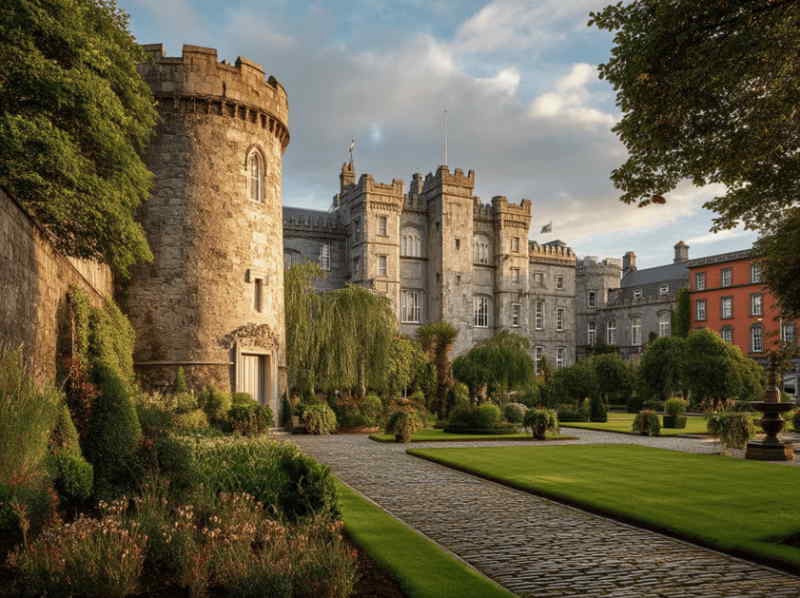
They referred, literally, to Dublin Castle, the great complex of buildings occupying a site in the heart of Dublin.
But in political conversation, “Dublin Castle” meant something much larger.
It meant government.
It meant the officials who administered Ireland on behalf of the English and later British Crown. It meant bureaucracy, patronage, policing, intelligence and political authority. To supporters of the Union it was the administrative centre from which Ireland was governed. To generations of Irish nationalists it became one of the most visible symbols of government imposed from London.
To understand Irish history before independence — and particularly the extraordinary scandals that periodically engulfed the Castle — we therefore have to look beyond its walls.
Dublin Castle was not merely a building.
It was a system.
The Castle Before “the Castle”
The story begins shortly after the Anglo-Norman invasion of Ireland in the twelfth century.
King John ordered the construction of a substantial castle in Dublin in 1204, and by the early thirteenth century a fortified complex had developed.
Its purpose was unmistakably political and military.
Dublin was the centre of English authority in Ireland, and the castle provided a fortified base from which that authority could be protected and exercised.
The medieval structure looked very different from the elegant government buildings visitors encounter today.
It possessed defensive walls, towers and a moat.
Over succeeding centuries, however, its military importance gradually diminished while its political importance increased.
The fortress became a seat of administration.
And eventually the name of the building became shorthand for the administration itself.
Governing Ireland for the Crown
At the summit of Castle government stood the monarch’s representative in Ireland.
The title varied over the centuries, but by the modern period the position was generally known as the Lord Lieutenant of Ireland, sometimes called the Viceroy.
He represented the sovereign.
In ceremonial terms he occupied an extraordinary position.
He held court, received dignitaries, participated in state occasions and lived for part of the year with considerable splendour in the Viceregal Lodge in Phoenix Park.
But governing Ireland required considerably more than ceremony.
The Lord Lieutenant headed an administration responsible for maintaining British authority over a country whose political relationship with Britain was frequently contentious and sometimes violent.
Around him developed the bureaucratic world known simply as Dublin Castle.
The Chief Secretary
If the Lord Lieutenant embodied royal authority, another official increasingly became crucial to the everyday business of government:
the Chief Secretary for Ireland.
Over time the Chief Secretary became one of the most politically powerful figures in Irish administration.
The office connected Dublin Castle with the government and Parliament at Westminster.
By the nineteenth century, the Chief Secretary frequently exercised enormous practical influence over Irish policy.
This creates one of the peculiarities of the Castle system.
Ireland possessed an elaborate administration located in Dublin, but ultimate political authority rested with the British government.
The Castle governed Ireland.
Westminster governed the Castle.
An Unelected Administration
This arrangement became increasingly controversial as democratic politics developed.
Much of the senior Castle administration was not accountable to an Irish electorate.
Officials were appointed.
Many came from the Protestant establishment traditionally associated with British rule.
Patronage played an important role in appointments.
To critics, Dublin Castle therefore represented government of Ireland rather than government by Ireland.
The expression “Castle rule” consequently acquired a deeply political meaning.
It suggested bureaucracy imposed from above, frequently insensitive to the population it governed.
What Did Dublin Castle Actually Do?
Almost everything associated with civil government eventually passed through some part of the Castle administration.
Its responsibilities included areas such as:
law and justice,
policing,
public order,
local government,
administrative appointments,
government correspondence,
security,
intelligence,
prisons,
and implementation of legislation passed at Westminster.
The precise organisation changed repeatedly.
But the fundamental point remains:
Dublin Castle was the administrative nerve centre of British government in Ireland.
This is why it appears so frequently in accounts of nineteenth-century Irish history.
When newspapers reported that “the Castle” was considering something, they did not mean the stones had developed an opinion.
They meant the government.
The Castle and the Police
One particularly important responsibility concerned policing and security.
Nineteenth-century Ireland possessed several policing institutions, most importantly the Royal Irish Constabulary across most of Ireland and the Dublin Metropolitan Police in the capital.
Political policing became especially sensitive.
Irish nationalist organisations, agrarian agitation, Fenian activity and later revolutionary movements made intelligence gathering a major concern of government.
Informers were cultivated.
Suspects were watched.
Correspondence could be scrutinised.
Detectives infiltrated political organisations.
Dublin Castle consequently developed an intelligence apparatus that became both feared and hated within nationalist circles.
And this becomes extremely important when we reach our next story.
Because in 1884 allegations of homosexual activity would become entangled with precisely this world of police, informers, officials and political interests.
The Castle and Irish Nationalism
By the nineteenth century, Dublin Castle had become a powerful nationalist symbol.
To many Irish nationalists, replacing Castle government was inseparable from achieving political self-government.
The criticism was not simply architectural or even bureaucratic.
The Castle represented a fundamental constitutional question:
Who had the right to govern Ireland?
For supporters of the Union, Ireland formed part of the United Kingdom and therefore administration through Dublin Castle was legitimate government.
For nationalists, the same institution could represent political subordination.
This is why references to “the Castle” in nineteenth- and early twentieth-century Irish literature carry considerably more meaning than might initially appear.
The term could evoke an entire political order.
The Social World of the Castle
Dublin Castle was also a social environment.
Officials, politicians, military officers, police figures and members of Dublin’s elite moved through overlapping networks.
There were ceremonies.
Balls.
Dinners.
Appointments.
Introductions.
Patronage.
Careers could depend upon connections.
And, inevitably, there were rumours.
The Castle therefore existed simultaneously as bureaucracy, political institution and social world.
That combination made scandal particularly dangerous.
A scandal involving an obscure private individual might embarrass a family.
A scandal involving people connected with Dublin Castle could embarrass the government.
The Castle as Theatre
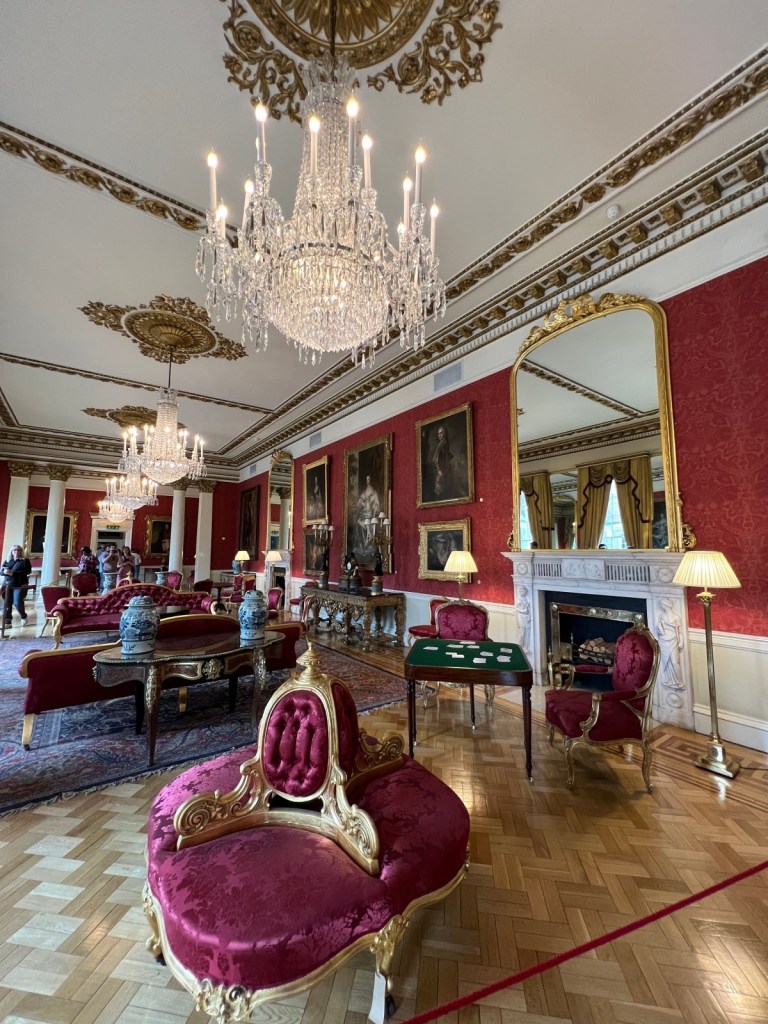
The State Apartments also provided a magnificent stage upon which British authority could display itself.
Ceremonial occasions reinforced the connection between Ireland and the Crown.
The surroundings communicated power through architecture, uniforms, ritual and hierarchy.
But there was an obvious political contradiction.
The more impressive the ceremonial display became, the more visibly it could remind critics that Ireland was being governed through institutions ultimately responsible to London.
The Castle therefore projected authority while simultaneously becoming a target for opposition to that authority.
A Centre of Intelligence — and a Target
By the late nineteenth century, Ireland was undergoing profound political change.
The campaign for Home Rule gathered strength.
Agrarian conflict destabilised rural society.
Fenian and other revolutionary organisations challenged British authority.
Political violence periodically shocked the administration.
In 1882, the Phoenix Park murders demonstrated just how dangerous Irish politics had become when the newly appointed Chief Secretary, Lord Frederick Cavendish, and Permanent Under-Secretary Thomas Henry Burke were stabbed to death.
The murders traumatised the Castle administration.
Security and intelligence became even more important.
The government needed detectives and informers.
But secret policing creates its own dangers.
Who can be trusted?
What happens when an informer lies?
What happens when police possess information capable of destroying someone’s reputation?
And what happens when allegations of sexual behaviour become entangled with political intelligence?
Those questions would explode spectacularly only two years later.
The Castle Scandal
In 1884, Dublin became consumed by allegations involving homosexual activity among men.
Because sexual acts between men were criminal offences, such accusations carried potentially catastrophic consequences.
Careers could be destroyed.
Men could be imprisoned.
Families could be disgraced.
And accusations could become weapons.
The resulting affair became known as the Dublin Castle scandal.
Its significance lay not merely in allegations about private sexual behaviour.
Police officials became involved.
Questions arose about informers and investigations.
Prominent figures were accused.
The possibility of official concealment became part of the controversy.
Politics and sexuality became almost impossible to separate.
And because some of those implicated or accused had connections with Dublin Castle, the scandal threatened the credibility of the administration itself.
We will enter that particularly murky corridor next.
Then Someone Lost the Crown Jewels
As though one major scandal were insufficient, Dublin Castle produced another extraordinary mystery little more than twenty years later.
In 1907, shortly before a royal visit, the insignia commonly known as the Irish Crown Jewels disappeared from a safe within Dublin Castle.
They have never been recovered.
The theft became a sensation.
How could immensely valuable ceremonial jewels disappear from the supposedly secure headquarters of British administration in Ireland?
Suspicion fell upon people within the Castle circle.
Rumours multiplied.
And among the names later associated with the mystery was Francis Richard Shackleton, brother of Antarctic explorer Ernest Shackleton.
Francis was never convicted of stealing the jewels.
Indeed, nobody was.
The case remains unsolved.
But the rumours surrounding the affair combined theft, homosexuality, social connections and alleged official embarrassment into precisely the kind of story upon which conspiracy theories thrive.
Once again, Dublin Castle found itself confronting a particularly dangerous question:
What did the authorities know, and what did they want the public not to know?
Revolution Comes to the Gates
Eventually, however, Dublin Castle confronted something considerably larger than scandal.
Revolution.
During the struggle for Irish independence, the Castle remained the central administrative headquarters of British rule.
Its intelligence operations became particularly important during the Irish War of Independence.
The IRA targeted intelligence officers, police and informers.
British authorities responded with increasingly aggressive security measures.
For revolutionaries, Dublin Castle was no longer merely symbolic.
It was an operational centre of the state they were attempting to overthrow.
1922: The Castle Changes Hands
The political meaning of Dublin Castle changed dramatically following the Anglo-Irish Treaty.
On 16 January 1922, the Castle was formally handed over to the new Provisional Government.
Michael Collins famously attended the transfer.
A popular story claims that the outgoing Lord Lieutenant remarked that Collins was late, to which Collins replied that Britain had kept Ireland waiting for seven hundred years.
It is a wonderful line.
Unfortunately, like many wonderful historical lines, its precise authenticity is doubtful.
But the story survived because it captured the symbolism of the moment perfectly.
For centuries Dublin Castle had represented English and then British authority in Ireland.
Now Irish ministers walked through its doors to assume power themselves.
“The Castle” had ceased to mean what it once meant.
Understanding Rutherfurd’s “Castle”
This is why repeated references to the Castle in historical fiction set in Dublin matter.
A reader unfamiliar with Irish administrative history could understandably imagine characters merely discussing a large historic building.
Contemporary readers would have heard something else.
“The Castle” meant officials.
Government.
Police.
Patronage.
Intelligence.
British authority.
Depending upon who was speaking, the phrase might carry respect, dependence, resentment, suspicion or outright hostility.
It was rather like saying “Whitehall” when referring to the British civil service or “the Kremlin” when referring to Russian government.
The place had become the institution.
More Than a Castle
Today, Dublin Castle is once again a place of ceremony and government, but in an independent Ireland.
Visitors can admire its State Apartments and architecture without necessarily sensing the enormous political weight once carried by its name.
Yet understanding that history transforms the building.
Behind the elegant rooms lies the memory of centuries of administration.
Viceroys governed.
Chief Secretaries made policy.
Civil servants produced mountains of correspondence.
Detectives pursued revolutionaries.
Informers whispered.
Nationalists condemned Castle rule.
Scandals erupted.
Jewels disappeared.
And eventually the government occupying the Castle itself disappeared.
For generations of Irish people, therefore, Dublin Castle was never simply a castle.
It was where power lived.
Tim Alderman ©️2026
Sources and Further Reading
Dublin Castle, official historical material on the development of the Castle and its role in Irish government.
Encyclopaedia Britannica, material on the history of Dublin Castle and British administration in Ireland.
R. B. McDowell, The Irish Administration, 1801–1914.
Eunan O’Halpin, The Decline of the Union: British Government in Ireland, 1892–1920.
Charles Townshend, Political Violence in Ireland: Government and Resistance since 1848.
David Fitzpatrick, The Two Irelands, 1912–1939.

