Category Archives: HIV/AIDS

Gay History: Lex Watson: Leading Gay Rights Activist and Trailblazer.

LEX WATSON, 1943-2014

For many of his generation and beyond, Lex Watson was the face of gay activism in Sydney.

For many of his generation and beyond, Lex Watson was the face of gay activism in Sydney. He was a foundation member of the Campaign Against Moral Persecution (CAMP), the organiser of the first gay rights demonstration in Australia, a longtime passionate advocate of homosexual law reform and of anti-discrimination legislation, a pioneer AIDS activist, and in later years, a keen advocate for the preservation of gay community history.

Lex Watson addressing gay rights activists setting up their ‘Gay Embassy’ opposite former NSW premier Neville Wran’s home in Woollahra to protest against Club 80 arrests in 1983.

CREDIT: ADRIAN SHORT

Alexander Watson was born in Perth on January 29, 1943, the son of Alec Watson, a medical practitioner in Geraldton, and his wife, Margaret (nee Newnham), a nurse. Lex started his education in Geraldton, then the family settled in Perth, where Alec became a well-known surgeon.

Despite his parents’ wish to place him at Geelong Grammar, or the King’s School in Parramatta, Lex was determined to go to Perth Modern. There he developed a lifelong love of languages, particularly German, and music, again particularly German, from Beethoven to the present day. At school he acted in Gilbert & Sullivan productions, directed by a teacher who remarked that he was ‘‘rather self-confident and arrogant’’, an observation often to be made of him throughout his life.

Lex Watson (left) and Robert French signing statutory declarations in 1983.

At puberty, Watson’s parents gave him a booklet on sex that contained a small non-judgmental paragraph on homosexuality. ‘‘So that’s what it is called,’’ he thought. He then looked up homosexuality in the school library, but all the texts he consulted talked of disease and perversion. Watson’s response was, ‘‘Why, they’ve got it wrong!’’ but it was a defining moment in his life.

Watson won a scholarship to the University of Western Australia, where he started in 1960. He did an arts degree and studied history and philosophy He read John Stuart Mill, whose classic liberalism became the touchstone of his life and later activism. He later became a supporter of the Council of Civil Liberties.

For his honours year, Watson transferred to the government department at the University of Sydney. It was there that he worked for the remainder of his academic life, teaching Australian politics to hundreds of students, many of whom became academics and political activists themselves.

The homosexual law reforms in Britain in 1967 sparked Watson’s interest and he became involved with reform in Australia because ‘‘it was needed and therefore you did it’’. He was in Canberra in 1970 on the weekend of the formation of the ACT Homosexual Law Reform Society and joined up. He then attended a public meeting in Sydney, organised by the Humanist Society, which formed a HLR sub-committee, which he became a member of.

Lex Watson as the Empress of Sydney in 1982.

These moves, however, were ‘‘wiped off the table’’ by the announcement by John Ware and Christabel Poll in September 1970 of the formation of the Campaign Against Moral Persecution (CAMP), the first openly homosexual group in Australia. Watson became a foundation member, and in early 1972, along with Sue Wills, became a co-president.

Ware credited Watson with making the organisation political, and it was Watson who organised the first gay demonstration, outside the Liberal Party headquarters in Ash Street, Sydney in October 1971.

Watson, as an academic, had contacts in the Liberal Party and got to hear of the challenge that conservative Jim Cameron was to bring against the federal pre-selection of Tom Hughes, after Hughes as federal attorney-general had raised the issue of homosexual law reform.

One of the major achievements of CAMP under Watson and Wills was highlighting the dangers of aversion therapy and psycho-surgery as then practised against women and homosexuals. That homosexual people then began to cease consulting practitioners for a ‘‘cure’’ for their sexual orientation was a triumph for CAMP.

Watson and Wills resigned from CAMP in October 1974 as the organisation concentrated more on its phone-counselling services.

Watson continued his activism and advocacy through newspaper articles in the gay press. In 1976 he, memorably and courageously, appeared on the ABC’s Monday Conference program in Mt Isa. Some of the audience were hostile, one member even pouring a bottle of sewage over his head. Watson maintained his composure throughout and won over the audience.

With the assistance of fellow academic and activist Craig Johnston in 1980, Watson approached Barrie Unsworth of the NSW Trades & Labor Council after the University of Sydney staff union had passed an anti-discrimination motion in relation to gays and lesbians. Unsworth was receptive and had a similar motion passed in the council. The move was the beginning of Gay Rights Lobby (GRL) and a new push for homosexual law reform in NSW, as well as support for a bill to incorporate homosexuality under the terms of the Anti-Discrimination Act.

Watson, in a dispute over tactics and his administrative style, fell out with GRL but that did not stop him and his fellow activists continuing to work together. After the police raid on Club 80 in 1983, it was Watson who suggested that the activists sign statutory declarations admitting to having committed buggery and to present them to the vice squad, seeking arrest. Watson was one of the first to present but the police had been forewarned and refused to make arrests.

He was a member of a delegation to premier Neville Wran in May 1984 on the morning of the introduction of his Private Members Bill to repeal the ‘‘buggery’’ provisions of the NSW Crimes Act. Watson attempted to persuade the premier to introduce an equal age of consent clause and when Wran refused, he argued for the inclusion of protections for persons between the ages of 16 and 18 years, which Wran enthusiastically agreed to. A new clause had been typed onto the bill when it reached the floor of the Legislative Assembly that day.

In 1982, the Chameleons social group had crowned Watson ‘‘Empress of Sydney’’, the first time for someone from outside the ‘‘drag’’ industry. He was proud of his only appearance in ‘‘drag’’, sporting a black velvet strapless gown. He wore the gown to the ‘‘Gay Embassy’’, a caravan that had been set up in front of the premier’s house in late 1983 as another move to push the law reform agenda. The embassy had been Watson’s idea.

Watson became aware of the problem of HIV/AIDS in 1982. He later became involved in the disputes with the Blood Bank, pointing out that the only solution to the implementation of sound public health policy relating to HIV was for the medical profession to engage in a dialogue with the gay community. He, and others, set up the AIDS Action Committee which, following federal government funding, morphed into the AIDS Council of NSW, of which Watson became the first president.

Watson later stepped down as president although he stayed on the committee. Truth to tell, he was not the greatest of administrators. He operated best as an individual activist, always sharp and on-message.

For many years Watson was also a block captain of marshals at Mardi Gras parades. In 2010, ACON awarded Watson and Wills their GLBTI Community Hero Award marking the 40th anniversary of the formal foundation of CAMP, and they were thrilled to ride up front in the 2011 Sydney parade.

After retirement from the University of Sydney, Watson became involved in the Pride History Group, Sydney’s gay and lesbian history group. He was president at the time that he died, assisting in the organisation of a history conference, set for November, on homosexual law reforms, his major life’s work. The conference will be dedicated to his memory.

Lex Watson is survived by his sister Wendy, brother-in-law Richard and nephews Nicholas and Ben and their families.

Reference

Gay History: Here are 51 more weird and cool facts from LGBTI history.

Did you know the pope in the 1400s legalized gay sex during the summer months? Discover more here

1 Some of the world’s oldest rock paintings which were discovered in Sicily, made about 10,000 years ago, showed two male phallic figures having sex.

2 Ancient Roman historian Plutarch wrote about The Great Mother, an intersex deity depicted with both sets of genitals. Her sacred priestesses, as found in the earliest civilizations in Babylonia and Akkad, were eunuchs and trans women.

3 In ancient Assyrian society, if a man were to have sex with another man of equal status, it was thought that trouble would leave him and he would have good fortune.

4 A Hindu medical text dating back to at least 600 BC made several explicit references to gay people; kumbhika – men who bottom during anal sex; asekya – men who swallow semen; and sandha – men who speak and act like women. The text also claimed it was possible for two women to create a child together but said it would end up being ‘boneless’.

The Hindu god Shiva is often represented as Ardhanarisvara, a unified entity of him with his consort Parvati. This sculpture is from the Elephanta Caves near Mumbai.

5 In Egypt 1503 BC, Hatshepsut became the second woman to rule and chose to take the title of king. She donned male clothing and wore a false beard.

Statue of Hatshepsut on display at the Metropolitan Museum of Art

6 Julius Caesar and Claudius were considered ‘abnormal’ for refusing to take male lovers. Julius had, at least, an affair with Nicomedes, the king of Bithymia, as a youth.

7 Ancient Celtic men openly preferred male lovers. According to Diodorus in the 1st century BC, he wrote ‘young men will offer themselves to strangers and are insulted if the offer is refused’. Sex between men was very likely an important ‘bonding ritual’.

8 One of the first Roman emperors, Elagabalus, could have been transgender. Before dying at the age of 18, it was reported the emperor had married a male athlete and would go out disguised as a prostitute.

9 Wales had a gay king. King Maelgwn of Gwynedd of the sixth century was described as ‘addicted very much to the detestable vice of sodomy’.

10 St Thomas Aquinas, a priest from the 1200s, is considered the father of homophobia. At a time when homosexuality was often treated as an ‘open secret’, he preached widely that it was ‘unnatural’, similar to bestiality, and argued sodomy is second only to murder in the ranking of sins.

11 Pope Sixtus IV, of the 1400s, was reported to have legalized sodomy during the summer months.

Posthumous portrait of Pope Sixtus IV by Titian

12 In the Klementi tribe of Albania, first observed in the 1400s, if a virgin swore before 12 witnesses that she would not marry, she was then recognized as male, carried weapons and herded flocks.

13 The French called homosexuality the ‘Italian vice’ in the 16th and 17th centuries, the ‘English vice’ in the 18th century, the ‘Oriental vice’ in the 19th century, and the ‘German vice’ starting from 1870 and into the 20th century.

14 Most people know the origins of the word ‘gay’, but the word ‘lesbian’ was first used from around 1590 to mean a tool – a stick made of lead (from the isle of Lesbos) used by stonemasons. It was flexible so it could be used to measure or mold objects to irregular shapes. A ‘lesbian rule’ was also used to mean being flexible with the law.

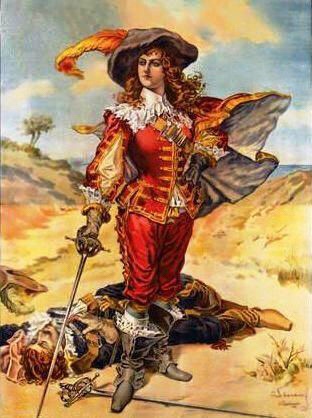
15 Julie D’Aubigny was a 17th century bisexual French opera singer and fencing master who fought and won at least 10 life-or-death duels, performed nightly shows on the biggest opera stage in the world and once took the Holy Orders just so she could sneak into a convent and have sex with a nun.

16 An 18th century English term for sex between women was the ‘Game of Flats’.

17 A molly house was an 18th century English term for a room or bar where gay men would meet. Patrons of the molly house would enact mock weddings and children being born.

Molly-houses were often considered as brothels in legal proceedings.[1] A male brothel, illustration by Léon Choubrac (known also as Hope), included in Léo Taxil’s book La prostitution contemporaine, 1884, pg. 384, Plate VII

18 Trans man Albert Cashier fought for the Union in the American Civil War. At one point, he was captured by the Confederates but managed to escape by overpowering a prison guard.

(November, 1864)[1]

19 A Boston marriage, in the 19th century, referred to two women living together financially independent of a man.

Sarah Ponsoby and Lady Eleanor Butler, also known as the Ladies of Llangollen, lived together in a Boston marriage.

20 The word ‘homosexual’ (coined in 1869) is older than the word ‘heterosexual’ (1892).

21 Edward White Benson, the Archbishop of Canterbury from 1883 to 1896, was thought to have been repressing his homosexuality. His wife, brother-in-law and five of his six children were also gay.

22 Dude used to be a homophobic slur.

23 UK Prime Minister Winston Churchill, when he was 21, was accused of ‘gross immorality of the Oscar Wilde type’.

24 Doctors in the early 1900s thought bicycles would turn women gay.

25 Wings, the first Oscar-winning film in 1920, featured a man-on-man kiss.

Richard Arlen in Wings

26 In the 1930s, a Disney comic strip showed Mickey Mouse as a violent homophobic thug. In the strip, he beats up an effeminate cat and called him a ‘cream puff inhaler’.

27 The British secret intelligence service tried to spike Hitler’s carrots with female hormones to ‘turn’ him into a woman.

28 Sister Rosetta Thorpe, a bisexual black woman, is credited with inventing rock n roll.

29 World War 2 genius and cryptographer Alan Turing said he had lost a mystery box of treasure in Bletchley Park but could no longer find it as he couldn’t crack his own code.

30 The 1948-53 Kinsey study found a third of men had a homosexual experience.

31 A drag queen was the first openly gay candidate to run for US public office. José Sarria won 6,000 votes in his 1961 campaign for the San Francisco Board of Supervisors.

Jose Sarria dines in Kenmore Square during 2010 visit to Boston

32 The death and funeral of Judy Garland is credited with inspiring the Stonewall Riots.

33 Pride in New York City was never really ‘Gay Pride’. The first was mainly organized by bisexual woman Brenda Howard.

34 The original name for Pride was ‘Gay Power’. Other suggested names included ‘Gay Freedom’, ‘Gay Liberation’ and ‘Christopher Street Liberation Day’.

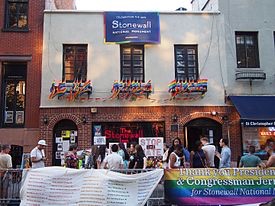
The Stonewall Inn located in Greenwich Village was the site of the June 1969 Stonewall riots. That event in New York City’s queer history has served as a touchstone for various social movements, as well as the catalyst for Pride parades around the world.

35 Dracula author Bram Stoker married Oscar Wilde’s first girlfriend.

36 One of the first openly gay athletes was Dodgers outfielder Glenn Burke in the late 1970s. He told his teammates, who apparently didn’t care, and was officially outed in 1982. He is also credited with creating the high-five.

37 A man who saved President Ford from assassination had his life ruined when the media outed him as gay.

38 L Ron Hubbard, the founder of Scientology, had a son Quintin who was tasked to take over from the Church of Scientology. When Quintin came out as gay, he died of an ‘apparent suicide’ in 1976.

Geoffrey Quentin McCaully Hubbard

39 Mel Boozer, the African American human rights activist, became the first openly gay person ever nominated for the office of Vice President of the United States in 1980.

Melvin “Mel” Boozer

40 Sally Ride was the first American woman to go into space. She was also the first LGBTI astronaut and remains the youngest American to have traveled to space at the age of 32.

41 In the 1980s, religious groups tried to ban Dungeons and Dragons for being satanic as it ‘promoted homosexuality’.

42 In 1987, Delta Airlines apologized for arguing in plane crash litigation that it should pay less in compensation for the life of a gay passenger than for a heterosexual one because he may have had AIDS.

43 Princess Diana went to a London gay bar, accompanied by Freddie Mercury, disguised as a man.

44 The Etoro tribe in Papua New Guinea is where homosexuality is the norm and heterosexuals are excluded. They believe young men only become adults if they have a daily intake of semen to ‘properly mature’.

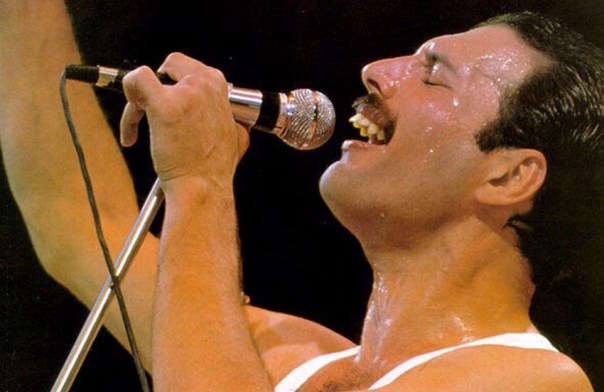
45 Queen’s The Show Must Go On was recorded as Freddie Mercury was dying due to complications from AIDS. According to Brian May, Mercury said: ‘I’ll fucking do it, darling’ – vodka down – and went in and delivered the incredible vocal.

46 When Ellen DeGeneres came out on her sitcom, Birmingham in Alabama refused to show it. A local LGBTI group sold out a 5,000-seat theatre so people could watch it via satellite.

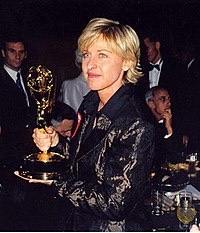
Ellen DeGeneres, an Emmy winner, came out, as well as her fictional counterpart.

47 Stephen Hillenburg, one of the creators of Spongebob Squarepants, revealed in 2002 that Spongebob is asexual.

48 The couple in Lawrence vs Texas, the case that stopped sodomy being punishable in the US in 2003, didn’t actually have sex. They weren’t even a couple.

49 The country that watches the most gay porn is Kenya, a 2013 study found. In a recent poll, 92% of Kenyans claimed they thought homosexuality should be illegal.

50 Fun Home, the award-winning, lesbian musical, is the first in the history of the Tonys to be written entirely by women.

51 In 2015, it was announced a crater on Pluto’s moon will be named after George Takei’s Star Trek character, Sulu.

An area of Charon will named Sulu

Reference

Gay History: The Photo That Changed The Face Of HIV/AIDS!

By Savannah Cox

Published August 1, 2015

Updated July 18, 2017

Source: Time

Nearly 25 years ago, David Kirby lay on the cusp of death. Kirby, 32, had nearly reached the end of his fatal fight against HIV/AIDS when journalism student Therese Frare took the photo seen above.

In the photo, Kirby’s gaze appears vacant; he is a man resigned to a fate that his family–also broken by HIV/AIDS–just cannot bring itself to see. For many, the raw anguish radiating from this photo exemplified the tragedy of the HIV/AIDS epidemic, which at this point in time had struck millions around the world.

The photo, which was later published in Life and then used by clothing company United Colors of Benetton in an advertising campaign, is said to have changed the face of AIDS.

When published, public understanding of HIV/AIDS was minimal. Many thought the disease confined its victims to those who identified as homosexual; few considered the damage it inevitably inflicted on an AIDS victim’s family. This photo helped change that.

Frare recently sat down with Time to discuss the photo, and her memories of living through–and documenting–a span of years that devastated countless families. We provide an excerpt below:

“I started grad school at Ohio University in Athens in January 1990. Right away, I began volunteering at the Pater Noster House, an AIDS hospice in Columbus. In March I started taking photos there and got to know the staff — and one volunteer, in particular, named Peta — who were caring for David and the other patients.

On the day David died, I was visiting Peta. Some of the staff came in to get Peta so he could be with David, and he took me with him. I stayed outside David’s room, minding my own business, when David’s mom came out and told me that the family wanted me to photograph people saying their final goodbyes.

I went in and stood quietly in the corner, barely moving, watching and photographing the scene. Afterwards I knew, I absolutely knew, that something truly incredible had unfolded in that room, right in front of me.

Early on, I asked David if he minded me taking pictures, and he said, ‘That’s fine, as long as it’s not for personal profit.’ To this day I don’t take any money for the picture.

But David was an activist, and he wanted to get the word out there David Kirby was born and raised in a small town in Ohio. A gay activist in the 1980s, he learned in the late Eighties — while he was living in California and estranged from his family — that he had contracted HIV. He got in touch with his parents and asked if he could come home; he wanted, he said, to die with his family around him. The Kirbys welcomed their son back.about how devastating AIDS was to families and communities. Honestly, I think he was a lot more in tune with how important these photos might become.”

David Kirby was born and raised in a small town in Ohio. A gay activist in the 1980s, he learned in the late Eighties — while he was living in California and estranged from his family — that he had contracted HIV. He got in touch with his parents and asked if he could come home; he wanted, he said, to die with his family around him. The Kirbys welcomed their son back.

Peta, for his part, was an extraordinary (and sometimes extraordinarily difficult) character. Born Patrick Church, Peta was “half-Native American and half-White,” Frare says, “a caregiver and a client at Pater Noster, a person who rode the line between genders and one of the most amazing people I’ve ever met.”

“On the day David died, I was visiting Peta,” Frare, who today lives and works in Seattle, told LIFE. “Some of the staff came in to get Peta so he could be with David, and he took me with him. I stayed outside David’s room, minding my own business, when David’s mom came out and told me that the family wanted me to photograph people saying their final goodbyes. I went in and stood quietly in the corner, barely moving, watching and photographing the scene. Afterwards I knew, I absolutely knew, that something truly incredible had unfolded in that room, right in front of me.”

“Early on,” Frare says of her time at Pater Noster House, “I asked David if he minded me taking pictures, and he said, ‘That’s fine, as long as it’s not for personal profit.’ To this day I don’t take any money for the picture. But David was an activist, and he wanted to get the word out there about how devastating AIDS was to families and communities. Honestly, I think he was a lot more in tune with how important these photos might become.”

Frare pauses, and laughs. “At the time, I was like, Besides, who’s going to see these pictures, anyway?”

Over the past 20 years, by some estimates, as many as one billion people have seen the now-iconic Frare photograph that appeared in LIFE, as it was reproduced in hundreds of newspaper, magazine and TV stories — all over the world — focusing on the photo itself and (increasingly) on the controversies that surrounded it.

Frare’s photograph of David’s family comforting him in the hour of his death earned accolades, including a World Press Photo Award, when published in LIFE, but it became positively notorious two years later when Benetton used a colorized version of the photo in a provocative ad campaign. Individuals and groups ranging from Roman Catholics (who felt the picture mocked classical imagery of Mary cradling Christ after his crucifixion) to AIDS activists (furious at what they saw as corporate exploitation of death in order to sell T-shirts) voiced outrage. England’s high-profile AIDS charity, the Terrence Higgins Trust, called for a ban of the ad, labeling it offensive and unethical, while powerhouse fashion magazines like Elle, Vogue and Marie Claire refused to run it. Calling for a boycott of Benetton, London’s Sunday Times argued that “the only way to stop this madness is to vote with our cash.”

“We never had any reservations about allowing Benetton to use Therese’s photograph in that ad,” David Kirby’s mother, Kay, told LIFE.com. “What I objected to was everybody who put their two cents in about how outrageous they thought it was, when nobody knew anything about us, or about David. My son more or less starved to death at the end,” she said, bluntly, describing one of the grisly side effects of the disease. “We just felt it was time that people saw the truth about AIDS, and if Benetton could help in that effort, fine. That ad was the last chance for people to see David — a marker, to show that he was once here, among us.”

David Kirby passed away in April 1990, at the age of 32, not long after Frare began shooting at the hospice. But in an odd and ultimately revelatory twist, it turned out that she spent much more time with Peta, who himself was HIV-positive while caring for David, than she did with David himself. She gained renown for her devastating, compassionate picture of one young man dying of AIDS, but the photographs she made after David Kirby’s death revealed an even more complex and compelling tale.

Frare photographed Peta over the course of two years, until he, too, died of AIDS in the fall of 1992.

“Peta was an incredible person,” Frare says. Twenty years on, the affection in her voice is palpable. “He was dealing with all sorts of dualities in his life — he was half-Native American and half-White, a caregiver and a client at Pater Noster, a person who rode the line between genders, all of that — but he was also very, very strong.”

As Peta’s health deteriorated in early 1992 — as his HIV-positive status transitioned to AIDS — the Kirbys began to care for him, in much the same way that Peta had cared for their son in the final months of his life. Peta had comforted David; spoken to him; held him; tried to relieve his pain and loneliness through simple human contact — and the Kirbys resolved to do the same for Peta, to be there for him as his strength and his vitality faded.

Kay Kirby told LIFE.com that she “made up my mind when David was dying and Peta was helping to care for him, that when Peta’s time came — and we all knew it would come — that we would care for him. There was never any question. We were going to take care of Peta. That was that.

“For a while there,” Kay remembers, “I took care of Peta as often as I could. It was hard, because we couldn’t afford to be there all the time. But Bill would come in on weekends and we did the best we could in the short time we had.”

Kay describes Peta, as his condition worsened in late 1991 and 1992, as a “very difficult patient. He was very clear and vocal about what he wanted, and when he wanted it. But during all the time we cared for him, I can only recall once when he yelled at me. I yelled right back at him — he knew I was not going to let him get away with that sort of behavior — and we went on from there.”

Bill and Kay Kirby were, in effect, the house parents for the home where Peta spent his last months.

“My husband and I were hurt by the way David was treated in the small country hospital near our home where he spent time after coming back to Ohio,” Kay Kirby said. “Even the person who handed out menus refused to let David hold one [for fear of infection]. She would read out the meals to him from the doorway. We told ourselves that we would help other people with AIDS avoid all that, and we tried to make sure that Peta never went through it.”

“I had worked for newspapers for about 12 years already when I went to grad school,” Therese Frare says, “and was very interested in covering AIDS by the time I got to Columbus. Of course, it was difficult to find a community of people with HIV and AIDS willing to be photographed back then, but when I was given the okay to take pictures at Pater Noster I knew I was doing something that was important — important to me, at least. I never believed that it would lead to being published in LIFE, or winning awards, or being involved in anything controversial — certainly nothing as epic as the Benetton controversy. In the end, the picture of David became the one image that was seen around the world, but there was so much more that I had tried to document with Peta, and the Kirbys and the other people at Pater Noster. And all of that sort of got lost, and forgotten.”

Lost and forgotten — or, at the very least, utterly overshadowed — until LIFE.com contacted Frare, and asked her where the photo of David Kirby came from.

“You know, at the time the Benetton ad was running, and the controversy over their use of my picture of David was really raging, I was falling apart,” Frare says. “I was falling to pieces. But Bill Kirby told me something I never forgot. He said, ‘Listen, Therese. Benetton didn’t use us, or exploit us. We used them. Because of them, your photo was seen all over the world, and that’s exactly what David wanted.’ And I just held on to that.”

After the Benetton controversy finally subsided, Therese Frare went on to other work, other photography, freelancing from Seattle for the New York Times, major magazines and other outlets. While the world has become more familiar with HIV and AIDS in the intervening years, Frare’s photograph went a long way toward dispelling some of the fear and, at times, willful ignorance that had accompanied any mention of the disease. Barb Cordle, volunteer director at Pater Noster when David Kirby was there, once said that Frare’s famous photo “has done more to soften people’s hearts on AIDS than any other I have ever seen. You can’t look at that picture and hate a person with AIDS. You just can’t.”

References

The Terrifying Truth About HIV Long-Term Survival!

The harsh reality is that the only people really qualified to comment on long-term survival are – long-term survivors.

Being a HIV long-term survivor is a bit like being a Vietnam veteran…more often than not you feel delegated to the sidelines of history. Like the Vietnam vets, we fought a socially unpopular and unacceptable war, and like them, our continuing presence is a reminder of things that many would sooner either forget, or just not acknowledge.

That is a harsh – and raw – assessment, and I can see hackles rising already amongst those who choose to observe it through rose-coloured glasses. The harsh reality is that the only people really qualified to comment on long-term survival are – long-term survivors.

On June 5th, 2018…if it’s occurred in the 5 years since, I am unaware of it…was HIV Long-Term Survivor Awareness Day. I can’t say that I didn’t personally feel a certain…pride…not the right word, though I’m hunting for the right one…that at last there was an acknowledgement of my part in HIV history. I posted the event as a Facebook status update, and I’m truly humbled by the response from my friends, and at the same time reminded that there are others in my current social “circle”who are also chalking up survival terms equal to my 36 years. Yet despite the acknowledgement, the most telling word to me was”Awareness”! And perhaps that word, more than any other, takes us back to the start of this article. It is an important word, as it suggests – very strongly – that we are the forgotten, those of HIV “past”, and our very existence needs to have attention drawn to it; that there needs to be a reminder that we didn’t all succumb to the ravages of AIDS.

Reality hurts, doesn’t it! And that really is the reality of long-term survival. To be honest, I don’t think anyone knows what to do with us, apart from just leaving us alone to muddle through. On the general overview of HIV history, and considering the numbers of those who died – and continue to – as a result of AIDS, the numbers of us who have survived 20 years or more are small. We are now a disparate group, spread far and wide by the great diaspora that resulted from HIV diagnosis in the day. We are no longer concentrated in the areas of ground zero for the HIV/AIDS pandemic, and in many respects that is a major reason for our being in the background of modern day HIV.

I don’t want to call this “awareness” day tokenistic…but, recognition of the sheer tenacity of HIV long-term survivors has been a hell of a long time coming! Considering that those of us with early diagnosis, who were still alive in the late 80s/early 90s were already long-term survivors…it’s recognition that is – like so much in HIV – well and truly overdue!

I have attempted to convey the harsh reality of long-term survival in past articles, and in my talks when I was a speaker for the Positive Speakers Bureau (PSB). Myself, and other speakers, whose history went back to the key points of HIV in Sydney were always in demand, as we were the living history of HIV and AIDS, the harbingers of the tales of horror, stigma, discrimination, political and religious turmoil, and the community response to the pandemic. But over time – I was a speaker for 12 years – I saw this group slowly dropping away for various reasons, and by the time I chose to retire from speaking I was one of the last of these “history” speakers. By that time, I personally felt that HIV in its modern guise was leaving me behind, lost in its dust as it moved into new territory. A HIV diagnosis still came with its fears and insecurities, but it was no longer a death sentence.

To be honest, I don’t think anyone knows what to do with us, apart from just leaving us alone to muddle through.

So, who are these people who are having “awareness” drawn to them? I can only speak for myself; can only put a personal perspective on HIV long-term survival. Perhaps the reality of it has always been something I have downplayed, in an attempt to NOT come across as a victim! The true reality of the horror years was TERROR!

My CMV diagnosis in 1996 filled me with terror! It was the ultimate reality that I was now on borrowed time. But even before that time, it was terrifying to get what was a death sentence in 1985! It was truly terrifying to watch the horrendous deaths happening around me on a daily basis! It was terrifying to know that that was what could be in store for me! It was terrifying every time I visited the doctor, every time I had a blood test! It was terrifying to know that treatments were limited, and of short duration! It was terrifying to be subjected to the side-effects of huge dosages of same treatments – side-effects I still live with today! It was terrifying visiting friends and lovers in hospital, knowing each kiss could be the last! It was terrifying to find myself losing weight, and trying to hide the fact under baggy clothing! It was terrifying to find myself the figure of HIV discrimination in my workplace, and powerless to do anything about it! It was terrifying to realise I could no longer go on working! It was terrifying after a lifetime of independence to realise that I would need to go onto DSP, and housing subsidies! It was terrifying watching myself head towards alcoholism, chain smoking and life in the fast lane to deal with everything that was going on – uncontrollably – around me! It was terrifying to find myself in hospital for the first time – a collapsed lung! It was terrifying to lie there for 2 weeks, having Sandy from the Oxford Hotel visit another friend and suddenly stumbled upon me! It was terrifying to see – very briefly – the look in her eyes! It was terrifying to think I could be there for reasons of HIV – yet denying it…I would go home…life would go on…yeah…right! It was terrifying to live the 24 hours between my possible CMV diagnosis, and its confirmation! It was terrifying to know that this was a reality- AIDS! It was terrifying only hours after that, getting off a bus at Prince Henry Hospital at La Perouse, and wobbling towards admissions…and thinking…what the fuck! It was terrifying to realise the reality of your health status; 10 CD4 cells, 48kgs weight…could that be right? Chronic candida, chronic anaemia, chronic CMV retinitis! It was terrifying to realise I was dying! It was terrifying to lie again in a hospital bed with nurses, and drips, and medications…and wondering if it was all worthwhile! It was terrifying finding myself at POW the next day, having drugs injected directly into my eyes! It was terrifying that day…and every day after! It was terrifying to sit in that waiting room days later, holding the hand of another guy going through the same thing, trying to reassure him as he wept, a reassurance I didn’t feel myself! It was terrifying trying new drug combinations, not knowing if they would be successful, or in time! It was terrifying to realise I accepted my fate, and was not frightened! It was terrifying to be told the combination had worked, and I’d soon be going home! It was terrifying to realise that I felt robbed, felt that I didn’t deserve to be spared that which so many I loved had not been saved from! Terrifying to realise I was going back to a world I no longer knew! Terrifying to realise that in many respects, I was now a freak…someone who just didn’t fit in! It was terrifying to know that no one, no individual, no organisation, was prepared in any way for the return of the living dead! It was terrifying to sit at home…lost, alone, isolated, unsure, unknowing, afraid! It was terrifying to have the reality of ongoing life, of being whisked from deaths door! It was terrifying going through the panic attacks, the anxiety, the depression! It was terrifying to discover that every one was so unprepared for “us” that necessary help was not available when we needed it! Terrifying to be taking massive numbers of drugs – 3-4 medications, with anywhere from 4-6 pills for each medication, 3 times a day (with dietary and time compliances on them), plus prophylaxis, plus pills to control side effects! It was terrifying to find I needed medication compliance counselling, return-to-life counselling, peer support groups, weekly clinics, specialists! Terrifying that I felt myself useless, at a loose end, disconnected! Terrified to realise I wanted nothing to do with life as it had been – so few friends survived the ravages of AIDS, and those not infected had no point of connection with me, and where I now was. I cut back my drinking, stopped smoking, adopted a healthier lifestyle, decided I wanted my life to head off in different directions to that which it had been going in! It was terrifying to find that there was no one to help me do that, and despite being at the forefront of a needs assessment project concerning the return-to-work requirements of others like me, the reality was that help was a couple of years away! It was terrifying to have lost the sight in one eye, and a good deal of the sight in the other due to the CMV, and learning to deal with that, and its uncertainties! It was terrifying to fall flat on my face on footpaths due to lack of depth perspective; tripping over tree roots, or low street benches, or falling down steps because I could not see the edge; It was terrifying going through the surgery to have Vitrasert implants put in my eyes to negate the regular intraocular injections, then surgery to remove the cataracts caused by same! Terrifying to get the Deca-Dorabolin injections to help put weight back on! Terrifying to return to a normal job – albeit temporarily – knowing that it made access to doctors appointments and hospitals (for drugs) very difficult! Terrifying to find myself collapsing in a gift store, and unable to use my legs…and even more terrifying to find the store owner dumping me in the gutter under the illusion I was a druggie…and everyone else ignoring me – then finally managing to walk again, only to collapse in the middle of Bondi Road on my way home! Terrifying to find I was losing my ability to walk a straight line, but drifted all over the footpath…and no one knew why! Terrifying going through many tests and scans- with dire predictions of what was happening in my head – to finally ascertain that THE virus had jumped the blood/brain barrier and was resident in my brain! The terrifying wait for it to resolve itself! Terrifying to go out to a pub for the first time after an 18-month recovery period! Terrifying to know I knew no one in the pub! Terrifying to go home with someone despite a previous very promiscuous life! Terrifying to get into a relationship again!

Terrifying! Terrifying! Terrifying! I could go on and on with the lists of terrifying experiences over this period, but the word count would be astronomical! Suffice it to say – terror had a name…HIV/AIDS! No one diagnosed these days will – I hope – ever have to go through it.

Survivor guilt was something that came later, after all the pandemonium of getting my health back on track quietened down, and left me with time to think, to mull over the events just past. It felt so unfair that I was still here! Felt unfair that, having prepared myself to die, it hadn’t eventuated, and I was left to continue mourning for those gone, continuing to live thanks to the hoped for medications that others hadn’t managed to hang around for! It was unhealthy thinking, but it happened anyway! More counselling to reconcile that!

So – has the terror stopped? For me, not really! A detached retina, and complex surgery to replace it in 2013, and the removal of the blind eye -it is now a prosthetic – in early 2015 has reduced what was bad vision even further. I joke that every time I walk out onto the street, I take my life into my hands…but it is, in reality, no laughing matter! It is quite frightening! It restricts what I do in some respects, but I deal with it. However, the fears of further detachments – I had one scare recently – or anything else that may affect what little vision I do have is always there.

However, it hasn’t all been terrifying over the last 22 years. I’ve taken control of my own health, I’ve reeducated myself, and fulfilled a few frustrated ambitions. I’ve reconnected with some old mates through social media, and it pleases me to know that not all disappeared like many did. I’m in a happy place as far as everyday life goes.

I hope this gives those that bother to read it an “awareness” of what long-term survival is really about. It would be fulfilling if something could be set up to make us more visible, less confined to the sidelines of HIV. I don’t have an answer to that conundrum only to say that it should have nothing to do with sitting in a circle, knitting and discussing HIV! Now that is a truly terrifying thought!

Tim Alderman © 2018.

Gay History: A Contradiction in Terms; Nicky Crane, and Kevin Wilshaw- Gay Neo-Nazi’s. Part 1.

“Adolf Hitler was my God. He was sort of like my Fuhrer, my leader. And everything I done was, like, for Adolf Hitler.”

NICKY CRANE

As part of my writing degree from the University of Technology in Sydney (2001) I studied a subject called Contemporary Cultures. Subsequently, I find the study of sub-cultures and “aberrations” within the Gay and Lesbian community a fascinating subject. However, occasionally a subject comes along that I find particularly disconcerting, and gay neo-nazi’s is one that confounds me! How a gay man could attach himself to the insidious writings and philosophies of one of the twentieth centuries greatest tyrants – especially one who condemned thousands of gay men and women to the ovens of the concentration camps – leaves me confused, and wondering…have they really studied what this movement was all about, and if they did, how could they be so dispassionate about it! Perhaps we can be reconciled to them by the fact that even they realised the contradiction, and gave up this somewhat insidious belief. However, the question remains – why? To be honest, and to be contradictory myself, I find the photo below a bit of a turn-on! Not the singlet…that is just wrong…but the man himself – oh yeah! There is an ultra-masculinity about him that is very sexy…and perhaps we should just leave it at that! The photo, and the man himself, are two different things!

Nicola Vincenzo Crane was born on 21 May 1958 in a semi-detached house on a leafy street in Bexley, south-east London. One of 10 siblings, he grew up in nearby Crayford, Kent.

As his name suggests, he had an unlikely background for a British nationalist and Aryan warrior. He was of Italian heritage through his mother Dorothy, whose maiden name was D’Ambrosio. His father worked as a structural draughtsman.

But from an early age Crane found a surrogate family in the south-east London skinhead scene. He was the British extreme right’s most feared streetfighter. But almost right up to his death, Nicky Crane led a precarious dual existence – until it fell dramatically apart.

“ I hate the fact that’s cool to be black these days. I hate this hip-pop fuckin’ influence on white-fuckin’ suburbia.”

“You think I’m gonna sit here and smile while some fuckin’ kike tries to fuck my mother? […] fuckin’ forget it, not on my watch, not while I’m in this family. I will fuckin’ cut your Shylock nose off and stick it up your ass before I let that happen.” Derek Vinyard, American ing movie X
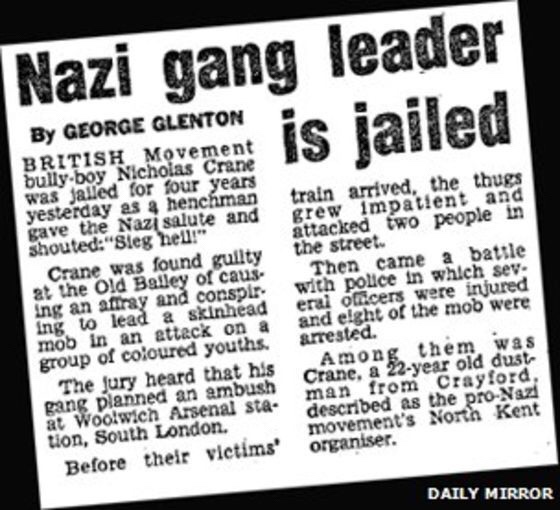
The similarity in thinking between Derek Vinyard in the above aggressive, frightening movie, and Nicky Crane has one major difference – the former is scripted.

The skinhead gang marched in military formation down the High Street clutching iron bars, knives, staves, pickaxe handles and clubs.

There were at least 100 of them. They had spent two days planning their attack. The date was 28 March 1980.

Soon they reached their target – a queue of mostly black filmgoers outside the Odeon cinema in Woolwich, south-east London.

Then the skinheads charged.

Most of them belonged to an extreme far-right group called the British Movement (BM).

This particular “unit” had already acquired a reputation for brutal racist violence thanks to its charismatic young local organiser. Many victims had learned to fear the sight of his 6ft 2in frame, which was adorned with Nazi tattoos. His name was Nicky Crane.

But as he led the ambush, Crane was concealing a secret from his enemies and his fascist comrades alike. Crane knew he was gay, but hadn’t acted on it. Not yet.

A boy stands in front of a poster featuring Nicky Crane

“When you’ve come from a tough background, when you get that identity, it’s a powerful thing to have,” says Gavin Watson, a former skinhead who later got to know Crane.

The south-east London skins also had close connections to the far right. Whereas the original skinheads in the late 1960s had borrowed the fashion of Caribbean immigrants and shared their love of ska and reggae music, a highly visible minority of skins during the movement’s revival in the late 1970s were attaching themselves to groups like the resurgent National Front (NF).

In particular the openly neo-Nazi BM, under the leadership of Michael McLaughlin, was actively targeting young, disaffected working-class men from football terraces as well as the punk and skinhead scenes for recruitment.

Crane was an enthusiastic convert to the ideology of National Socialism.

“Adolf Hitler was my God,” he said in a 1992 television interview. “He was sort of like my Fuhrer, my leader. And everything I done was, like, for Adolf Hitler.”

Within six months of joining the BM, Crane had been made the Kent organiser, responsible for signing up new members and organising attacks on political opponents and minority groups.

He was also inducted into the Leader Guard, which served both as McLaughlin’s personal corps of bodyguards and as the party’s top fighters. Members wore black uniforms adorned with neo-Nazi symbols and were drilled at paramilitary-style armed training weekends in the countryside.
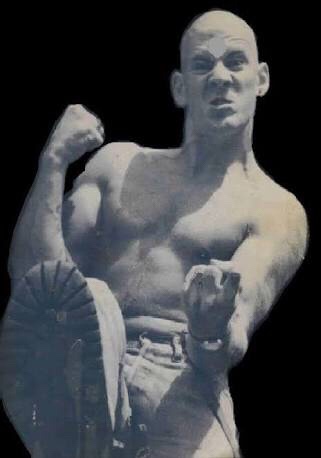
“By appearance and reputation he (Nicky Crane) was the epitome of right-wing idealism – fascist icon and poster boy,” writes Sean Birchall in his book “Beating the Fascists”, a history of AFA.

They were also required to have a Leader Guard tattoo. Each featured the letters L and G on either side of a Celtic cross, the British Movement’s answer to the swastika. Crane dutifully had his inked on to his flesh alongside various racist slogans.

By now working as a binman and living in Plumstead, Crane quickly acquired a reputation, even among the ranks of the far right, for exceptionally brutal violence.
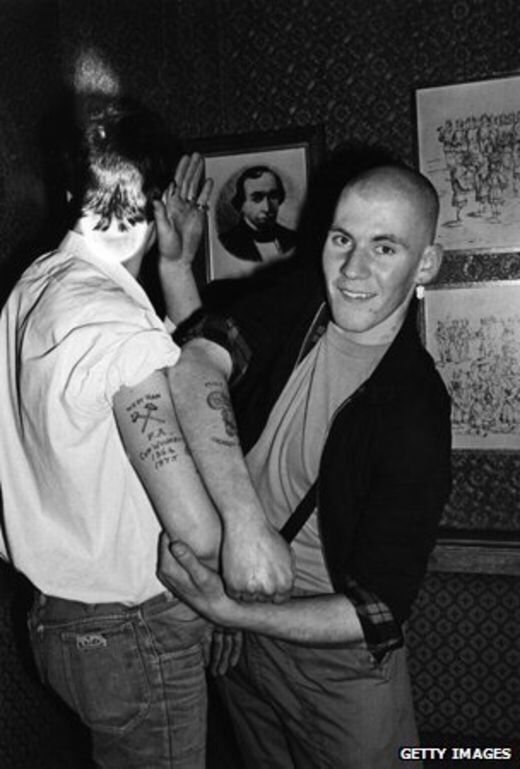
A young Crane shows off his tattoos with another skinhead

In May 1978, following a BM meeting, he took part in an assault on a black family at a bus stop in Bishopsgate, east London, using broken bottles and shouting racist slogans. An Old Bailey judge described Crane as “worse than an animal”.

The following year he led a mob of 200 skinheads in an attack on Asians in nearby Brick Lane. Crane later told a newspaper how “we rampaged down the Lane turning over stalls, kicking and punching Pakistanis”.

The Woolwich Odeon attack of 1980 was described by a prosecutor at the Old Bailey as a “serious, organised and premeditated riot”. After their intended victims fled inside, the skinheads drilled by Crane began smashing the cinema’s doors and windows, the court was told. A Pakistani man was knocked unconscious in the melee and the windows of a nearby pub were shattered with a pickaxe handle.

In 1981 Crane was jailed for his part in an ambush on black youths at Woolwich Arsenal station. As the judge handed down a four-year sentence, an acolyte standing alongside Crane stiffened his arm into a Nazi salute and shouted “sieg heil” from the dock.

Crane’s three jail terms failed to temper his violence. During one stretch, he launched an attack on several prison officers with a metal tray. A six-month sentence following a fracas on a London Tube train was served entirely at the top-security Isle of Wight prison – a sign of just how dangerous he was regarded by the authorities.

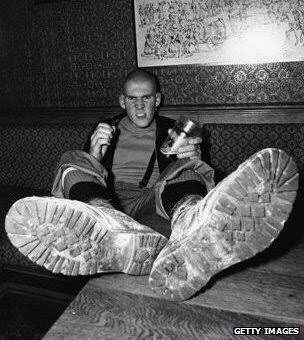
Nicky Crane’s legendary status escalated even more when he was featured in the cover of the album Strength Thru Oi! (1981), a compilation of crude songs of a popular punk sub-genre among skinheads. He appears grumbling, kicking to the camera’s direction. His violent attitude became an insignia of British Fascist movements. His image was printed on posters and t-shirts that were particularly popular among Neo-nazi followers.

In addition to his prominent membership in the brutal Nazi world, Crane was also a head of security of the band Skrewdriver, whose lyrics and music clearly evidenced their Fascist ideology. Craned developed a bond with Skrewdriver’s vocalist, Ian Stuart Donaldson, and together they founded the skinhead racist organization Blood & Honor.

Skrewdriver was founded in 1976 in Poulton-le-Fylde, a small town in Lancashire, England, by frontman Ian Stuart, who’d previously fronted a Rolling Stones cover band called Tumbling Dice. Skrewdriver began as a punk outfit, but quickly adopted the skinhead uniform: Bic-ed heads, white T-shirts, Levi’s, and “boots and braces” (steel-toe Doc Martens and suspenders). They weren’t overtly political at the outset, but they soon drew a strain of rabid fans sympathetic to radical politics, and drifted ever rightward. In the late 1970s, the group was dropped by their label, Chiswick Records, once their message became overtly violent; clubs throughout Britain refused to let them play.

But, though marginal, there was support for Skrewdriver and their ilk. The National Front, a far-right political party which was experiencing sharp growth throughout the 1970s, saw in Skrewdriver an opportunity for propaganda, and started its own record label, the cleverly named White Noise, on which the band released five early singles. Skrewdriver maintained an allegiance to a range of far-right groups and causes in the UK, including the National Front and the British Movement (BM), a neo-Nazi group founded in the late 60s and known for violence. BM wasn’t just lip service, either. The group had a trained elite, the Leader Guard, who spent weekends doing armed, paramilitary-style drills in the countryside. They regularly attacked members of racial minorities with broken bottles, clubs, or simply their fists.

Nicky began roadie-ing for Skrewdriver in 1983, and his association with the group boosted their reputation for brutality. Crane and Ian Stuart started Blood & Honour, a still-active, neo-Nazi political and social club, together in 1987. Crane, known for his temper and for leading ambushes against unsuspecting minorities (one judge called him “worse than an animal”) was living a double life, however. He was outed as gay after it was reported that he frequented Heaven, a London nightclub.

The outside world continued on without the presence of Crane. Groups against Fascism began to emerge, such as the Anti-Nazi League (ANL) and Anti-Fascist Action (AFA). Without their leader, Neo-Nazis could not counteract the destabilizing attacks of these new clicks. They also weren’t prepared to learn the truth about their hero. The possibility that Crane was homosexual would have never never crossed their minds, even though he secretly frequented London gay bars. Given his savage behavior and hatred towards groups that went against Fascist ideologies, no one  was prepared to accept Crane’s sexual orientation.

Unbeknown to his comrades, however, a very different side to Nicky Crane was emerging.

Crane was aware of the contradictions that he embodied and was burdened by his status as one of the most prestigious icons of Fascism. To preserve his reputation, he would make public appearances with skinhead girls who pretended to be his girlfriends. Nonetheless, Crane attended a gay pride rally on 1986 and appeared in gay amateur pornography videos.

The anti-fascist magazine Searchlight was, despite its political leanings, required reading for activists on the extreme right. Each month the publication would run gossip about the neo-Nazi scene, and fascists would furtively buy it to see whether they had earned a mention.

In April 1985 it ran a feature on Crane. It mentioned the GLC concert, the south London attacks and the jail sentences he had served. The magazine revealed it had received a Christmas card from him during his time on the Isle of Wight in which he proclaimed his continued allegiance to “the British Movement tradition” – that is, violence.

The Searchlight report ended its description of Crane with the line: “On Thursday nights he can be found at the Heaven disco in Charing Cross.”

Even a neo-Nazi audience might have been aware that Heaven was at this point London’s premier gay club. Nicky Crane had been outed. And homosexuality was anathema to neo-Nazis.

But the response of Crane’s comrades to the revelation was to ignore it.

A number of factors allowed Crane to brush off the report, Pearce says. Firstly, homosexuality was indelibly associated with effeminacy by the far right, and Crane was the very opposite of effeminate.

Secondly, no-one wanted to be seen to believe Searchlight above the word of a committed soldier for the Aryan cause.

Thirdly, on the most basic level, everyone was afraid of being beaten up by Crane if they challenged him.

“I remember it was just sort of furtive whispering,” adds Pearce. “I’m not aware that anyone confronted Nicky. People were happy for things to remain under the carpet.”

Sightings at gay clubs were dismissed by Crane.

Donaldson claimed Crane told him that he was obliged to take jobs at places like Heaven because the security firm he was employed by sent him there.

“I accepted him at face value, as he was a nationalist,” Donaldson told a fanzine years later.

For his part, Heaven’s then-owner, Jeremy Norman, says he does not recall Crane working on the door: “I would imagine that the door staff would have been supplied by a security contractor and that he would have been their employee but it is all a long time ago.”

Rumours circulated that a prominent football hooligan and far-right activist had hurled a homophobic slur at Crane, who in response had inflicted a severe beating which the victim was lucky to survive.

Word of this spread among the skinhead fraternity, too.

“My mate had a shop in Soho,” recalls Watson. “People would come in to say, ‘Have you heard Nicky’s gay?’ He would say, he works around the corner, why don’t you go and ask him? Of course they never did.”

Just as some in the gay community refused to believe that a gay man could be a neo-Nazi, others on the extreme right were unable to acknowledge that a neo-Nazi could be a gay man.

Searchlight reported in October 1987 that “Crane, the right’s finest example of a clinical psychopath, is also engaged in building a ‘gay skins’ movement, which meets on Friday nights” at a pub in east London.

Crane’s sexuality might by now have been obvious to any interested onlooker, but the neo-Nazi scene remained in denial.

While his right-wing colleagues studiously ignored the report, AFA took an interest. Its activists put the pub under surveillance.

The anti-fascists didn’t care about Crane’s sexuality, but were concerned that the gatherings might have a political objective. “Here were gay skinheads wearing Nazi regalia,” says Gary. “We could never get to the bottom of it – whether it was purely a sexual fetish.”

The gay community had, by this stage, begun to take notice of Crane, too. He was confronted by anti-fascists attending a Pride rally in Kennington, south London, in 1986.

The campaigner Peter Tatchell recalls a row erupting after it emerged Crane had been allowed to steward a gay rights march. The organisers had not been aware who Crane was or what his political affiliations were.

But now they were, and Crane must have realised he would no longer be welcome in much of gay London. The gay skinhead night may simply have been an attempt to carve out a space for himself where he would not be challenged either for his sexuality or his politics.

While his status in the far right was secure, he was being pushed to the fringes of the gay community. The double life he had been maintaining was beginning to erode.

After the Bloody Sunday march, there is no record of Crane taking part in any further political activity. He had begun drifting away from the extreme right.

Friends say he had begun spending an increasing amount of time in Thailand, where his past was not known and he could, for the first time since Strength Thru Oi! was released, be anonymous.

It was until 1992 that the ruthless Neo-nazi leader publicly accepted his homosexuality in a TV documentary called Skin Complex.
The Channel 4 programme was called Out. It featured a series of documentaries about lesbian and gay life in the UK. The episode broadcast on 27 July 1992 was about the gay skinhead subculture. Its star attraction was Nicky Crane.

First the programme showed recorded interviews with an unwitting Donaldson, who sounded baffled that such a thing as gay skinheads existed, and NF leader Patrick Harrington.

And then the camera cut to Crane, in camouflage gear and Dr Martens boots, in his Soho bedsit.

He told the interviewer how he’d known he was gay back in his early BM days. He described how his worship of Hitler had given way to unease about the far right’s homophobia.

He had started to feel like a hypocrite because the Nazi movement was so anti-gay, he said. “So I just, like, couldn’t stay in it.” Crane said he was “ashamed” of his political past and insisted he had changed.

“The views I’ve got now is, I believe in individualism and I don’t care if anyone’s black, Jewish or anything,” he added. “I either like or dislike a person as an individual, not what their colour is or anything.”

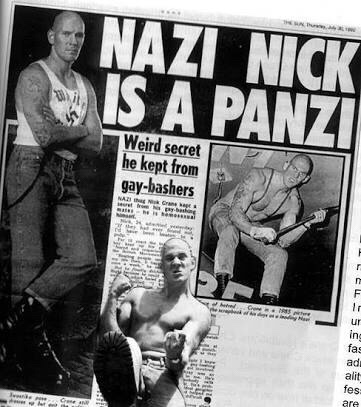
The aim of the program was to explore homosexuality in different subcultures like the skinhead movement. The revelation attracted considerable press attention. The Sun ran a story with the headline “NAZI NICK IS A PANZI”. Below it described the “Weird secret he kept from gay-bashers”.

Crane reiterated that he had abandoned Nazi ideology. “It is all in the past,” he told the paper. “I’ve made a dramatic change in my life.”

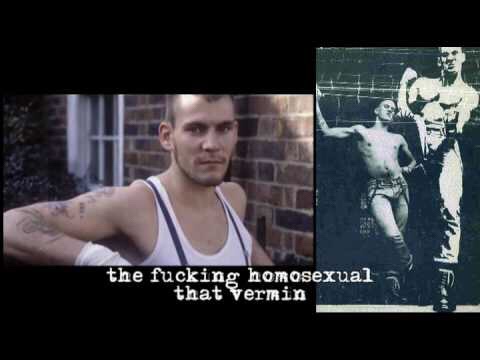
The reaction from his erstwhile comrades was one of horror and fury. Donaldson issued a blood-curdling death threat on stage at a Skrewdriver gig.His appearance turned him into the object of scorn of various Fascist groups and also people who once were his friends, like Ian Stuart Donaldson, who declared with frustration:

“He’s dug his own grave as far as I’m concern. I was fooled the same as everybody else. Perhaps more than everybody else. I felt I was betrayed by him and I want nothing to do with him whatsoever.”
But according to Pearce – who by this stage had made his own break with the NF – it was Crane’s disavowal of National Socialism, rather than the admission of his sexuality, that proved particularly painful for Donaldson.

“I think that Ian would have been very shocked,” says Pearce. “He was deeply hurt. But it had more to do with the fact that he switched sides politically.

“Nicky didn’t just come out as a homosexual, he became militantly opposed to what he previously believed in.”

British Nazism had lost its street-fighting poster boy. For the first time in his adult life, however, Crane was able to be himself.

Watson recalls catching a glimpse of Crane – by then working as a bicycle courier – shortly after he came out. “I saw him riding around Soho in Day-Glo Lycra shorts,” remembers Watson. “I thought, good for you.”

Certainly, after coming out, Crane always described himself as gay rather than bisexual.

Nonetheless, his relationships with women, coupled with rumours that he had fathered a son, allayed any initial suspicions his comrades might have had. So too did his propensity for racist violence.

On 8 December 1993, Byrne took the train to London. He had arranged to meet his friend Nicky Crane at Berwick Street market, just a few yards from his Rupert Street bedsit.

Byrne was looking forward to having “a good old chat” about skinheads they both knew. But Crane didn’t turn up.

When Byrne got home, he found out why. Crane had died the day before. He was 35. The cause of death was given on his death certificate as bronchopneumonia, a fatal inflammation of the air passages to the lungs.

He was a victim of the disease that had killed so many other young gay men of his generation.

“He didn’t tell me about his problems with Aids,” says Byrne. “He didn’t talk much about it really. I thought it was a shame.”

Word had got around that Crane was ill, however. Gary recalls his shock at seeing his one-time foe looking deeply emaciated, waiting on a platform at Baker Street Tube station. Crane’s stature was such, however, that even at this point fellow passengers were careful to keep their distance.

Those who suffered as a result of his rampages may have breathed a sigh of relief that he was no longer able to terrorise them.

But his death marked more than just the end of Nicky Crane.

It also coincided with the passing of an era in which the extreme right hoped to win power by controlling the street with boots and fists.

In 1993, Crane was dead, Donaldson died in a car crash and the British National Party (BNP) won its first council seat in Millwall, east London. The various factions of the NF had by now all but withered.

The following year, BNP strategist Tony Lecomber announced there would be “no more meetings, marches, punch-ups” – instead, the intention now was to win seats in town halls. The party would try to rebrand itself as respectable and peaceful – a strategy continued, with varying success, under the leadership of Nick Griffin. Streetfighters like Nicky Crane were supposedly consigned to the past.

The broader skinhead movement was changing, too.

Watson, like many other former skins, had by the time of Crane’s death, abandoned boots and braces for the rave scene. His skinhead days already felt like a different age.

“The skinhead stuff was washed away by rave and it’s, ‘Oh yes, Nicky’s out of the closet,'” Watson says. “It’s the story of that side of skinheads, isn’t it?”

By contrast, the presence of skinheads in gay clubs and bars was no longer controversial. Shorn of its political associations, the look was by now, if anything, more popular in London’s Old Compton Street or Manchester’s Canal Street than on football terraces or far-right rallies.

Two decades after Crane’s death, says Healy, the skinhead is “recognised as a gay man unambiguously in London and Manchester”. He adds: “If the Village People reformed today there would be a skinhead in the group.”

He may be an extreme case, but Crane reflects an era in which people’s expectations of what a gay man looked and behaved like began to shift.
“Everybody always knew gay people, but they just didn’t know it,” says Max Schaefer, whose 2010 novel “Children of the Sun” features a character fascinated by Crane. “The neo-Nazis were no different from everyone else.”

It’s unlikely Crane reflected on his place at this intersection between all these late 20th Century subcultures. He was a man of action, not ideology – a doer who left the thinking to others, and this may be what led a confused, angry young man to fascism in the first place.

As he lingered in St Mary’s hospital in Paddington, west London, waiting to die, a young man named Craig was at his side. Craig was “one of Nicky’s closest friends”, says Byrne.

According to Crane’s death certificate, Craig was with him at the end.

References

Sacrilege: Living HIV Outside The Square!

“Sacrilege” may seem like a strange word to use in relationship to ones life. Its religious connotation is “the violation or profanation of anything sacred or held sacred” thus by a very loose expansion of the meaning – a human life, as it is, in many respects, regarded as sacred. Stretching definitions even further – and many would not be surprised that I don’t take it literally – infecting it with HIV could be considered a sacrilege, be it intentional or unintentional. The sacred has been violated! Also, as a HIV+ man, it is expected that I will follow a set of “rules” as dictated by various community groups, doctors and specialists! To totally ignore the expected, and go off down your own path would be considered by many to be sacrilege!

I can’t contemplate continuing to live with HIV without viewing it within the framework of my life! No war is without its battles, without its dark times, yet still seeing the light at the end of the tunnel! If I had to use a word to describe myself, belligerant comes straight to mind – but then I think to myself “That’s a bit harsh!”. Okay…cantankerous is one that has been used by those close to me, so that’s sort of acceptable, and it’s true! Curmudgeonly… a word I love, but I’m not really surly enough! So I’ll just stick with stubborn! I could claim that it’s a Capricornian trait, but it goes deeper than that.

At 12-years-of-age, my stubborn streak was already settling in. Though unrecognised by me at the time, it was a survival mechanism that was to serve me well for most of my life. It is only when I look back to 1965, that I realise what a testing ground it was: my mother left my father; a bitch of a housekeeper who was to forever change our family dynamics; and my father jumping over The Gap with Kevin, my brother – resulting in my brothers death – would have sent a less resilient person into dark depths that they may never have risen from! Considering the lack of psychological & emotional support available at that time, to have come out of that year relatively unscathed had to show a stoicism way beyond that normally expected from one so young. By digging my heels in, ignoring all the negativity around me, and just “getting on with it” – a philosophy I still embrace – I was to set in place a mental tenacity that was to impact my life for decades to come!

There was no love lost between my father & myself! Even prior to Kevin’s death, I had seen – and felt –  a violent streak in his nature; almost a need to punish those who had a life contrary to his. He could be a right royal cunt! The only way I could establish my own independence – which had flowered rapidly after Kev’s death – was open defiance! He told me not to smoke…so I smoked; not to drink…so I drank; to get a trade…I went in every direction but; and to get my hair cut…I left it to grow – despite a threat, after an argument about it, to “knock my block off”! He even denied me a 21st birthday celebration, because he had been at war when his fell due…I organised it myself. My grandmother left me a small inheritance, and just after my 21st, I moved out of home, into my own apartment. After he remarried and moved to Vincentia (on the south coast of NSW), we had little contact. After his suicide via carbon monoxide poisoning in his car in 1978, I never cried a single tear – but just let out a massive sigh of relief! I was free! As the ultimate act of a true prick, he left me nothing in his will – it all went to my step-family! Just to show that they were all tarred with the same brush, directly after his death his sisters indulged themselves in a game of telephone harrassment against my step-mother. I was glad to walk away from them all!

As soon as the old man died, I came out! It is the one time my usual defiance was kept capped. I had seen what he wss capable of with my brother, and my survival instinct whispered to me to be  quiet about this issue. Again, I had witnessed him & his mates yelling “poofter” out of the car window to some poor guy who did nothing more than wear a pink shirt! As I said – they were pricks! Stubbornness does not necessarily equal a death wish! Then, having stepped out of the closet, I megaphoned my life choice to all and sundry, including my employees. No one seemed particularly surprised! There were some in my workplace who were not impressed with my sexual preferences, and made no secret of it! My pure indifference to them was reward enough. My decision to desert the security of a regular job had nothing to do with my detractors…it was based purely on a desire to break free of a life I wanted to leave behind. But the curve balls were to keep coming, with no inkling at that time of the odd parallel path that both being gay, and being HIV+ were going to lead me down!


Even as I was coming out in Melbourne in 1980, snippets about a lethal cancer, that was killing gay men who frequented the saunas in the USA, were appearing in the local press here. I read them, and like many others, though not panicking, was left with a feeling of unease. That unease turned to immense consternation over the next couple of years, as the reports became more alarmist, and HIV crossed the ocean to our shores. By the time they developed a test in 1985, I for one was already stacking the odds – and not in my favour! In retrospect, this may have been a defence mechanism against coming up HIV+…that if I did, I was already prepared for it, and if I didn’t I could just breath a sigh of relief. The former proved to be true!

Back in the day, there was a severe lack of counselling, and given the sheer volume of testing results coming in at that time, was cursory at its best. When I went to get my result – and I don’t know why I made the presumption I did – the positive result was not a shock. These were strange (ethereal?) times, and for those of us admitting to our – then – death sentence, it was almost like belonging to a select club.

There was a two year window given at that time, between diagnosis and the advent of AIDS, leading, so they thought, to an inevitable death. Some didn’t make it to the window period, and my first friend, Andrew Todd, died at the end of 1986. I made it to the two year point…and was still very healthy. By then, the window for those diagnosed in 1985 had been expanded to five years, so the waiting game for many of us continued.  Up to 1990 is a very convoluted journey, and I don’t want to rehash history that has already been covered in many writings, and is really outside the parameters of this article. I decided to make this a useful period, and did a number of trials. It was better than just sitting around and waiting. This was a time when I made my one bad decision regarding my healthcare – I allowed my doctor to – after a najor ethical battle with her – to put me onto AZT! There has been much written about AZT, and its history as a drug…which was not exclusively formulated for use with HIV. I am not a conspiracy theorist, but my thinking on HIV has always been a bit radical, and I, along with others, gravitate to the thinking that HIV and AIDS – despite our use of them as co-joined conditions – are separate illnesses, and HIV doesn’t necessarily lead to AIDS, but AIDS as an independent condition, brought about by the deterioration of the immune system. 

So, I had a diagnosis of HIV, with no related conditions that would have rated a diagnosis of AIDS. Even with a CD4 count on the decline, I still had good health – which admittedly may have been a lot better if I wasn’t knocking myself around by chain-smoking, and chronic abuse of alcohol – until…I started AZT! Many of those still around from that time will acknowledge that the decline in their health status is directly parallel to starting AZT. It wasn’t nicknamed “human Rat-Sac”for nothing. It’s negative affects from then up until now are also well documented. Damaged nerves, liver & kidney problems, the leaching of calcium from bones, and other neurological problems can all be traced back to AZT usage. I wish I had stuck by my guns, and refused to use it! There is no evidence that it saved one single life. I wouldn’t have refused trestment with other drugs that came along shortly after – I didn’t have a suicide wish – but I have no doubt that if I had refused AZT, some ongoing problems I have now would not have happened. I have an undisguised hate of Big Pharma, and its tactics, and lack of ethics where it comes to flogging a drug, and how they went about flogging this incredibly toxic drug to a desperate and unsuspecting demographic is truly horrifying – more on this shortly.

So, dispite heavy smoking, alcohol abuse, long work hours, and a shit diet…I made it to 1990, and with my health still okay. I won’t say I was unscathed, as the relentless list of those who died over this time, with many more to come, was physically, mentally, and emotionally destructive. I am by nature – and experience – a stoic in the face of death. I accept the reality, and inevitability of it – but any sign of the existance of God in this obliteration was missing – no just, loving God would ever allow this! My conversion to Atheism was complete. However, the combination of all that was happening was starting to wear me down, and encountering on-the-job bullying by an Area Manager brought about my decision to leave the workforce in 1993, and go onto disability, and get a housing subsidy. It was a forgone conclusion back then that this was the road to take because – after all – none of us would survive for all that long. At this stage, under the most positive of thinking, I gave myself two more years. 

I actually got to mid-1996 before it all started to come undone. I have written about the circumstances surrounding all the events that happened at this stage, so won’t repeat them here, but will give you an intimate insight into my thinking on my situation when I was finally admitted to Prince Henry Hospital in June, 1996. Given that I was already close to death when admitted, with a plethora of conditions that really should have killed me earlier, and that I really thought I would never leave there any other way than via a wooden box gives a good indication of how serious things were. It was in Mark’s Pavilion there that my stoicism, my acceptance of reality, possibly should have been tested, but instead gave me a calmness, an acceptance of my own potential death that I had pondered about prior to this. I was chronically ill, I was tired and in some respects, if other factors hadn’t intervened, death just seemed like such a pleasant, restful reality, leaving all that was happening behind, joining all those that I had loved and lost over the last 10 years. It was an acceptance of death that I wasn’t expecting to be quite so complete, so easy, so without fear. 

But I picked my moment, didn’t I! Big changes were happening in the treatment of AIDS, and shortly after being admitted, not going down the road of death, that I expected to go down, I walked – well, taxied – out of Prince Henry. I exited that taxi into a world that was in no way prepared for the living dead of HIV. If I ever thought my battles were behind me, I could not have been more wrong. The next couple of years – a long period of recuperation – were intense. There was a seemingly neverending period of specialists, doctors, clinics, pharmacy, counselling, peer support groups, drug compliance groups, massive – and I mean massive – amounts of medication, side effects, dental work, anxiety and panic attacks, and drug trials. It was a time where one wanted to initiate great change in the direction of ones life  – with no one there to assist. Change had to be fought for, had to be forced. All these community groups gathering money and prestige, sitting in meetings and forums, listening to the likes of me yelling about what we needed…and just turning deaf ears! It was a frusteating period where everything was years behind where it needed to be, and if you wanted to get on with your life without being trapped in the system, you had to do it under your own steam! So I did!

Some volunterr work, some work in the community sector, a flowering writing career that demanded and exposed…when I eas “allowed” as one didn’t question the system – led to a brief period of full-time work – that didn’t help my health at all – then onto university & TAFE to experience at last that which gad been denied me in my youth. This led to an interesting period of experiences, from spending 12 years talking about the HIV experience through the Posituve Speakers Bureau, to 15 years writing for “Taljabout” magazine and various other publications, starting several businesses – the most recent of which was destroyed by the GFC, to where I am now – happy, balanced, and reasonably fulfilled.

However, the last few years haven’t been without its challenges, and my mental tenacity, combined with a fairly laud-back approach to life, have seen me get through things without any apparent negativity. I do health care on my own terms these days, because if one just relies on mrdico’s, one would rattle like a pill bottle. I want less pills, not more! About 15 years ago, I halved my HIV medications. I have been waiting for some red-faced, fuming doctor to lecture me about it (has no one realised how rarely I get scripts?) but no one ever has. In the interim, my blood readings get better and better, with CD4s on the rise, and an ongoing undetectable viral load. Okay, I no longer smoke – gave that up in ‘96, drink bugger all, have turned vegetarian, and exercise daily, but nothing else. Big Pharma be fucked! Your drug resistance tests – a farce! You just don’t want people on old drugs! Over-prescribing? You bet you do…big time! I wouldn’t trust you as far as ai could kick you! 

Have I mentioned my shit vision? Whoops…overlooked that. Blind in one eye thanks to CMV (also covered in articles on my blog), and almost blind in the other. The most major decision over the last couple of years? Having my blind eye removed voluntarily, and replaced with a prosthetic. Does it stop me getting around? Not fucking likely! I might be slow, but I get there! I have a white cane (laughingly called my whacking stick), but rarely use it. I walk the dogs, do the shopping, get to gym! It might be done with a slight feeling of nervousness, but it gets done.

I don’t hold any grudges. What has been, has been! In a way, I thank my father for the rough younger years. It gave me a set of survival tools that have served ne well – and still do – throughout my life. Maybe I was born in an auspicious astrological period, or maybe my natural survival instincts are genetic, endowing me with stoicism and mental tenacity! Whatever it is, it has seen me through nicely! Life is to be enjoyed, and despite the occasional downs, it should be lived to its fullest. Just step outside that square, and do it on your own terms!

Tim Alderman (©2017)

Australian Gay History: Paul Dexter & The Gay Army


1983. Gay Politics: Sydney’s Mysterious (and Dangerous) ‘Gay Army’Posted on July 21, 2014 by Colin Clews

Anyone who was around in the early 80s will remember the media’s hysterical response to AIDS and the ease with which it attributed it to gay men. It wasn’t labelled ‘the gay plague’ or ‘gay bug’ out of sympathy for us.
So it was unsurprising that, in these hostile times, gay community organisations were doing everything they could to put across a true picture of the emerging crisis. As attacks on gay men increased dramatically in light of perceptions that we had ’caused’ AIDS, an intelligent and cautious approach was the order of the day.
Or, alternatively, you could get yourself into the headlines and onto TV by claiming to be the leader of a non-existent gay organisation and making outrageous claims. Step forward Paul Dexter, self-proclaimed head of ‘the Gay Army’ in Sydney, an organisation that he claimed “represents the gay community more than others”.
Gay Army Gay ConspiracyIn May 1983 he appeared as ‘the gay community spokesperson’ on a Channel 9 report on AIDS. His credentials were never provided nor was it explained why his views were more important that an organisation like, say, the Gay Counselling Service. Indeed, no one even bothered to ask for evidence that an organisation with the ridiculous name of ‘The Gay Army’ even existed. Nonetheless, he was up there with leading AIDS doctors and commentators like Larry Kramer.
In June 1983 the Sydney Morning Herald – a newspaper that really should have known a lot better – quoted his claim that “left-wing elements” were responsible for the outcry against AIDS publicity. They didn’t even bother to explain just what that ridiculous statement actually meant.
And yet, in spite of the obvious absurdity of this man, his fictitious organisation and his groundless claims, the Herald turned to him again the following year. Under the headline Gay group slates AIDS statement, Dexter – now “official spokesman for the Gay Army” – declared that AIDS was far more infectious than health experts claimed. “The advertisement suggests that AIDS cannot be spread by sneezing, coughing, breathing or mosquitoes but according to Mr Dexter, medical experts can give no scientific assurance of this.”
Whilst Dexter was quick to challenge medical experts on their authority, he made no attempt to justify his own. And, yet again, no one asked him for any, nor evidence that his Gay Army actually existed.
But, yet again, this was to be a case of not letting the facts get in the way of a good story. Dexter, it seemed, was happy to say anything to stay in the spotlight and the media were more than happy to report it. Take, for example, another headline Call for homosexual to spot gay clients, in which the “spokesman for the Gay Army” argued that “A homosexual should be behind the counter of the Red Cross Bank to spot any gay blood donors…”
The entire article was farcical as Dexter claimed that he had seen a gay man give blood while he himself was in the Blood Bank (“Of course, I didn’t give blood…”). Dexter knew he was homosexual because “He had effeminate gestures, was wearing a bracelet and his key ring was in his right hand pocket – which is a sign of being gay.”
His statements would be hysterically funny is they didn’t have such serious consequences. After stating, “Of course, you wouldn’t be able to pick out every gay but a homosexual would have a far better chance”, he went on to reinforce the conspiracy theory that HIV+ gay men were deliberately infecting the blood supplies: “A homosexual behind the counter would also deter any resentful homosexuals from giving blood.”
It’s hard to say who is the most irresponsible here; Dexter for his blind self-promotion or the media for carrying stories about ‘conspiracies’ and health experts concealing the true facts when they didn’t even bother to do the most basic check on Dexter’s own credentials. When it comes down to it, they both share a huge amount of shame and blame.

In 1985, Channel 10 did a report titled “The Truth About AIDS in Australia” (https://youtu.be/UKiiY5JUUvU). The witch-hunt was now in full swing. Popular 2GB talj-back host Mike Carlton, joined others in suggesting that gays were deliberately donating contaminated blood out of spite! The 10 report investigated, and lent support to, accusations that gay men were deligerately spreading AIDS! The charge was made in an anonymous letter sent to a New South Wales parliamentary committee inquiring into prostitution. The author suggested that heterosexuals who had been infected vua blood transfusions were innocent victims of an “evil conspiracy” in which homosexual activists deliberately infected blood supplies, so that their calls for government funding to fund AIDS would be acred on. Furtgermore, gays were knowingly infecting other men in their community to “get even” with old boyfriends because “the gay community is notoriously bitchy” .

The letters author, a “King’s Cross Homosexual” was also angry that a “fringe group of radical homosexuals” – the NSW AIDS Action Committee led by Sydney academic Lex Watson – was claiming to speak on gehalf of the entire gay community. “They are establishing paper empires to get government funds and couldn’t care a stuff about their gay brothers and sisters” he wrote. While the Network 10 program acknowledged that it was impossible to prove these claims, it remarkably stated that it could ” prove that the AIDS blood plan was seriiysly considered” because homosexuals in America gad contemplated such an act of political terrorism, and the “intimate links across the Pacific ensured the American plan became pillow talk down under”. The report did not reveal how most American gay men regarded this terrorist actio, nor explain why Australian homosexuals would contemplate the plan when the Commonwealth and the State governments were already responding to AIDS with more urgency than politicians in the Unired States had shown during the first three years of the AIDS epidemic.

The claims made in the letter were extraordinarily similar submissions nade to the mainstream and gay press by Paul Dexter, self-proclaimed leader of the Gay Army, which, as far as other gay men were concerned, consisted only of himself! Those who knew of his antagonism towards the AIDS Action Committee, and those who had begun to view the program cynically, would not have been surprised to see Dexter soon introduced as a “spokeman for the gay community” to confirm that a fringe group of radical gays were indeed spreading AIDS. As an “unbiased” member of the gay community, he supposedly served the purpose of demonstrating that homophobia was not the basis for the program’s investigation into the “evil conspiracy”. To many Darlinghurst gay men in the audience, hiwever, his presence only confirmed their doubts about the authenticity of the letter. 

It is interesting yo note that when a nan considered by Jenny Ross to be an inappropriate representative of the hemophilia community was interviewed by another television station, his comments were omitted from the program that went to air at the request of the Harmpholia Foundation. Despite the complaints of the AIDS Action Committee that Paul Dexter did not represent the general views of homosexual community, and that he was predisposed to making spiteful comments about some of its members, it was extended no such curtesy. Rather, Network Ten neglected to examine Dexter’s personal & political motives for accusing radical homosexuals of donating blood infused with HIV , just as the press had failed to challenge the factual basis of the doctor’s claims. Presumable, the print and electronic media would have been more thorough in their search and selection of their witnesses if they were to accuse National Party politicians or religious leaders into spiteful murder. Moreover, one can be certain that a public outcry would immediately follow if such accusations were made.

Paul Dexter was a small blip in the early days of HIV in Australia, but by setting himself as a self-appointed spokesman on the epidemic, and managing to gain as much exposure as he did, he created a lot of controversy, misinformation, and bias which in turn created its own problems. It is now difficult to even find any information on him…though like all bad history, he should not be forgotten! 

Tim Alderman (2017)

References

Learning to Trusr: Australian Responses to AIDS – Google Books https://books.google.com.au/books?id=1trSx2c_pEYC&pg=PA62&lpg=PA62&dq=paul+dexter+%26+the+gay+army&source=bl&ots=kyGf7ZjoJ9&sig=HaTIJYsl4eDZAyjNRCxgzB-QB7I&hl=en&sa=X&ved=0ahUKEwjTs7TsnrLVAhUPNpQKHUuaAhIQ6AEIIDAB#v=onepage&q=paul%20dexter%20%26%20the%20gay%20army&f=false

    Reality Check: The Politics of Blindness

    Originally written in 2001. This article has never been published.

    I have come to realise, perhaps a bit late in life, that you spend far too much time bending in the general direction of things instead of sticking up for yourself and saying no, this is not what I want, or the way I want things to go!

    I have decided to sue a local hospital. That I have chosen to do this has come as a tremendous shock to me, though those around me seem to have been waiting for me rectify what has been, for me, a life changing event. 
    By 1996 I had accepted that sooner or later, AIDS was going to get me. What I hadn’t counted on was that St. Vincent’s hospital was going to assist in my chances of survival! – and in the one ward they had where I always felt I would be safe – Ward 17, the dedicated HIV/AIDS ward.
    It was a sudden change in health status that delivered me to the A&E department. I had collapsed outside my apartment building, gasping for breath, clutching my chest, thinking that a heart attack was going to beat AIDS to the crunch, or that PCP had finally caught up to me, as it seemed to do to all in my state. It turned out to be neither – I had a collapsed left lung, though being HIV, they moved me into Ward 17 after inserting a tube to keep the lung inflated. Most of us assume that we go into hospital to be cured of health problems, or at least receive a better standard of medical care to assist you to a slightly higher standard of health than you have when you enter. Well…I have to tell you it doesn’t always happen that way!

    I firmly believe that some people go into health care because they truly believe in what they are doing. They truly believe they can make a difference, that they can benefit people who are ill or are disabled. These people are not professors of medicine, do not have a fancy examination room with a prestigious address, and are not heads of departments. The well-heeled medico’s who share these attribute have strings of initials after their names. They do ward rounds with a string of nose-in-the-air arse lickers and sycophants. St Vincent’s at this time had more than its fair share of the latter, and unfortunately, some of them were in HIV medicine! 


    Now, I don’t want to give the impression that I was just in hospital with a collapsed lung – it was more complicated than that. I was in the midst of changing doctors, so didn’t actually have a GP when I was admitted to Ward 17. My scripts for AZT had just run out, I had chronic anaemia, chronic Candida, and weighed in at about 48 kilos. In other words, I was a very sick boy. Now, under normal circumstances, with a CD4 count of about 10, they would test and examine you for ALL AIDS related illnesses – PCP, CMV, MAC, neurological and psychological problems. For some unknown reason. Sure, they treated – and eventually repaired – the collapsed lung. They tested me for PCP – negative result – and gave me a blood transfusion, but that was it. No eye examination, no dietician, no occupational therapist – no, that’s a lie, I did have one session with an OT, and though she promised other sessions – she never quite madeit back.

     So I lay there for 10 days, drifting in and out of sleep, as you tend to do when you are in this bad a condition, suffering in silence the daily ward rounds with a professor who seemed more interested in prestige than care, with his little band of sycophants, who seemed to assume that this was what was expected of theM. No one seemed to particularly care, so I was thankful for friends, for without them I think I would have gone mad.

    Death seemed pre-ordained at this time I felt I had outlived everyone else anyway, and that my time was drawing to a close. I had predicted 2 years when I quit work to go on the pension in 1993, and had managed 3, so in many respects I felt I had survived beyond expectation, and short of a miracle, I was going through the final stage of my life. I was, to all intended purposes, fulfilling expectation.  

    So, with a repaired lung, a couple of pints of fresh blood, and some Candida medication, I was discharged 10 days later. No HIV medications, no doctor. I had my discharge papers sent to a local HIV GP, who I didn’t know from a bar of soap, hoping that she would feel sorry for me, and rush me through the waiting list. Thankfully, she did just that!

    Two days out of hospital, and her receptionist rang to say my discharge papers had arrived, and that even though they didn’y know who I was, the doctor wanted to see me. I would like to think, in hindsight, that this was almost like some sort of sign, as having my hospital discharge sent to her was an act of providence that probably saved my life.

    As soon as I mentioned to her that my vision had been ‘greying over’ for a couple of weeks, she was immediately on the phone to the Prince of Wale’s Hospital Eye Clinic at Randwick. They promised that somebody would stay back at the end of clinic until I arrived to have my eyes checked. They thought at that stage that I had CMV retinitis, but could not be certain enough to confirm the diagnosis. I had to travel to Hurstville the next day to see a leading ophthalmologist, an expert in CMV. He confirmed the diagnosis, and by the time I arrived home that afternoon, their was a message to ring the doctor. She wanted me admitted to Prince Henry Hospital straight away. 

    Prince Henry added other health items to the list St Vincent’s had. On top of chronic anaemia and Candida, and my 10 CD4 cells, they added chronic bilateral CMV retinitis, and Wasting Syndrome. Pandemonium was about to strike, but at least this time I felt as though people cared. Prince Henry was much more grounded in reality than St Vincent’s, and whatever my prognosis may have been – mortality was never discussed – they went out of their way to help me. Sure, I had a drip in both arms, was being transported to Prince of Wales twice a week for intraocular injections of ganciclovir, and I was a bit of a guinea pig because of my condition – medical students must love people like me, as we become a living text book – but they did care. I had a dietician who planned meals and snacks for me, and nurses on hand to help me during my night sweats. I even had a reporter from Japan interview and photograph me, as he was doing a piece to be published in Japan. After seeing me, he was concerned that the Japanses ‘head-in-the-sand’ attitude to HIV/AIDS was something to be seriously concerned about.
    To be honest, the two weeks in Prince Henry gave me a different perspective on many aspects of life. There was the guy in the room next to mine – I had a huge room to myself in Marks Pavilion, and the windows looked out over Beauty Bay – who had terminal cancer. Not once, despite whatever he may have been going through, did I hear him complain or whinge about his lot. He virtually lived in the hospital, and even had his own stereo moved in with him. And the young guy who was at the opposite end of the ward to me. He also had CMV, but fuck, he was so young, so innocent! We sat together in the eye clinic one day, and he grasp[ed my hand, cuddled up to me, and cried. I wanted to give him some hope, but I would have felt like such a hypocrite. I didn’t know if their was hope for me at that stage, let alone try to give it to someone else who I knew was worse off than I was.

    Well, they saved my sight – sort of! The injections, and eventually $10,000 worth of ‘Vitrasert’ ganciclovir implants managed to save the sight in my left eye. As for my right eye, the optic nerve was damaged by the CMV, and despite efforts on everyones part, I lost 80% of the vision in it, and the impact on my life has been…disconcerting. I have regular checks every few months now, and I have to be careful not to bump my head hard on anything. The scar tissue in the left eye is so dense that they are concerned now about me ending up with a detached retina. I’ve also had two operations to remove cataracts caused by the implants. They originally estimated a 4% chance of cataracts from the implants, but 12 months later this prediction was upgraded to a 100% chance. Some odds you can’t beat.

    But this has been the least of my worries. Sure, my right eye has, in some respects, compensated for the loss of vision in my left, but not entirely. It took me twelve months to adjust, but that twelve months was not without incidents, such as tripping over some tree roots in Crown Street, and landing flat on my face in front of some people coming in the opposite direction. I also tripped and stumbled a great deal as my vision tried to compensate for a change in everything, including perspective. Stairs with contrasting edging strips became ramps – at least from my perspective – and ‘I’m sorry!’ became part of my everyday vocabulary as I bumped and staggered my way around. That is something that even 5 years down the line, I have never quite gotten used to. This would not be the first time I have stated that in some respects, it would have been easier to have ended up completely blind. At least that way, I would have a white cane, or a dog, and people would know I was definitely blind, and not give me condescending looks every time I run into someone. For some unknown reason, it has always ended up my fault. I just accept. 

    Rules of our household – don’t leave anything sitting low on the floor, or hanging to my left when I don’t know it is there. When walking down the street, keep to my right. If you don’t keep to that side, expect me to keep moving to ensure you are there. Go into the city? Not on my own these days. As much as I love the city, and love to watch it grow, it is a place for people in a rush, not a place for people who are visually impaired. Too many people, too many doorways for them to rush out of, and too many people crushing into confined spaces. I miss it very much, but it is not a place for me anymore. I shop locally, and that is hazardous enough for me. Do anything during the peak hour rush? Not likely these days. I had to meet David at 6.00 at the Entertainment Centre, to attend a couple of concerts. I actually mapped out a way to get there that would have a minimum of people that I would have to avoid. I go to daytime lectures and tutorials at UTS to avoid travelling too and fro during peak hours. I’m also trying to get them to contrast edge-strip the black granite stairs in the Tower Building, so that visually impaired people can see where the stair edges are. That is one fight I may yet win. Oh, and I shouldn’t forget that I kick small children.

    David, who is my partner, and I went for a walk down Hall Street, leading to Bondi Beach, for one reason or another – we were probably looking for somewhere to eat breakfast. Sure enough, for a split second, I wasn’t watching where I was going and the next thing I knew, this kid had run straight onto my foot as I took a step forward. He just came out of nowhere, as kids do, and I managed to literally lift him into the air with the forward motion of my step, and launched him off to the side of the footpath. Thankfully, he landed in the grassed area around some trees growing on the footpath. I would hate to think what may have happened if he had landed on the footpath itself. I don’t know who got the biggest fright – the kid, myself, the kid’s father, or David. The father came running as I picked the kid up to make sure he was okay, but the look on the father’s face said it all – It was my fault, and I should have been watching where I was going. Even an explanation that I was  partially blind, and hadn’t seen the kid coming didn’t seem to sit well with him, nor did a multitude of apologies. Now, I dare say the kid probably forgot the incident 10 minutes after it happened, but It is still a nightmare with me. Whenever I think about the state of my eyes, that is the one instant that comes straight to mind. It’s not just the incident with the kid – I’m aware of that. It is that in some way, these sorts of things happen to me everyday, though fortunately with larger adults, not small kids. Despite all my precautions, despite taking my time getting around, despite walking metres up a street to use crossings or lights, despite great care at intersections I feel it is only a matter of time before I either seriously hurt somebody, or they seriously hurt me.

    So I’m not just going to sit back and cop it sour anymore. Somewhere along the line, in a hospital, on a particular time on a particular day, somebody, for whatever reason, decided not to do something, and now I’m paying the price. Well, it’s time for someone to pay for their oversight, and the time to pay is NOW! My health is as good as it’s going to get at the moment, and with it being unlikely that I will ever return to full-time work, or to any job that requires me to get stressed, it is time to take action. I’m not going to ignore it anymore, or pretend that it just didn’t happen. It did, and my life has never been the same since.
    Personally, I think that they, like Prince Henry, and certainly me, never expected me to live, so just doing a minimum of care in 1996 may have been acceptable practise, especially in an area of medicine that has always been cash strapped. But I didn’t die! I am well and truly alive, and the time for revenge is at hand. I hope that at the end of the day, they will learn several lessons. Never assume anything; never underestimate the strength of the human will, and mind; and never think people are just going to forget about it! We Don’t!
    Tim Alderman

    Copyright ©2001 (Revised 2017)

    P.S: despite the solicitor instigating an action against St Vincent’s, and doing this pro-bono, I was expected to pay the bills for photocopying and incidentals. I received a bill for $1,500 from them to cover this…and being on a pension, this was the beginning, and the end, of the action. Justice never was served.

    Black Dog Rising! A Journey Into – and Out of – Depression!

    Originally published as “Not Who They Knew” in the August 1999 issue of “Talkabout” magazine.

    “Easygoing”, “Always Smiling”, “A Strong Shoulder to Lean on”, “Outgoing” may all be phrases that you are familiar with, especially if you have been pigeon-holed with them, as I have over the years. This is not to say I am not all these things, just that it puts a set of expectations upon my shoulders of how I will appear to people, irrespective of my true feelings.

    Towards the end of 1996, at the end of chronic illness, I had a major emotional and psychological problem on my hands-ME. I had been on the DSP for three years, I was not exactly 100% healthy, but I was certainly no longer ill. My viral load maintained itself at undetectable, my CD 4’s were stable. Combination therapy had moved the word ‘death’ quite a way down my vocabulary list. I had always had a group of peers for support years ago, but HIV had decimated that group. I felt alone, outcast, surviving with nowhere to go. I could not see a future with me in it.

    Depression is a hard word to define. Ask twenty people, get twenty different answers. To me, depression was not that dark, down twisting spiral into oblivion that it is for many. Nor was it an ongoing thing that kept re-occurring over time. It was a period of intense self-doubt, a losing of self-worth, and my own values as a functioning member of the community I moved in. I wanted so much to return to life, not the life I had known, but an entirely new one, free of all the dross I had been dragging around with me, the frustration of unfulfilled dreams, and directionless yearnings.

    I started (unknown to all, except by those close to me) to have black, brooding moods, periods of long silence where I would not communicate with anyone. I had panic attacks in bed at night, and developed a fear of the dark. I could not stand to travel in the subway, and avoided crowds. I saw a black future of pensions, and struggling to get by, ageing on my own, loneliness, and pills, pills pills. I remember that late one day I really needed to talk to someone desperately. I rang two of our HIV counselling services, to be told that noone was available-would I like to make an appointment for another day! I ended up ringing a friend and frantically dumping on him.

    I do not like antidepressants. This is a personal thing, I have nothing against them in general, nor the people who need to take them. I already shovel enough tablets down my throat (at the time of all this happening, around 300 per week), and have no desire to add to the load. I am also, by nature, one who is capable of intense self-analysis. I knew I had severe problems, I knew I needed help. But where to start? 

    The major problems, ones I have had all my life, were impatience, and wanting to do everything at once. I was aware that I needed counselling. This was not an easy self-admission. I had never believed in them. I rang Albion St, and arranged an appointment. The first meeting almost justified my misgivings about them, being a rushed affair whereby I felt time limitations were more important than my need to talk out issues. Following appointments were not so. I then did three of the beneficial things I have ever done with my life. I started volunteer work at the offices of PLWH/A (NSW) Inc, and started group work through both the ACON HIV Living Unit, and the Coleo Project. The ACON HIV Peer Support Group put me in contact with people going through similar experiences to mine. It gave me an outlet to voice my opinions, and to gain the advice and knowledge of other people to handle these panic situations. The Coleo project taught me the value of self-motivation, and the management of long-term treatment taking. They also encouraged me to take up writing, it being a good outlet for emotions-published or unpublished. This led to me joining the Positive Speakers Bureau, which has been, for me, one of life’s most fulfilling experiences.

    In 2012, I had a bad experience after eye surgery at Royal Brisbane Hospital. I had some very serious surgery on my right eye…the left was blind (and is now a prosthetic)…and they fully covered the right eye after the operation. Coming out of vety heavy anesthesia, I thought I was blind, had a massive panic attack and attempted to pull the dressing off. A young Malaysian nurse, seeing this happening, started yelling at me, just making things worse. They eventually xalmed me down, and readjusted the dressing to admit some light, but the situation wasn’t good. At home, I started having attacks of anxiety & further panic attacks. I wasn’t sleeping well, was waking up with a start at around 4-5am, and had to get up as I couldn’t stand staying in bed. In bed, I couldn’t wear jewellery, or tee-shirts with tight necks – I felt they were choking me! This went on for about 6 weeks, and I was getting to the point of dispair. I contacted an Anglican support service (non religious, otherwise I wouldn’t have) on the advice if a HIV service. They, in turn, then kept in regular contact with me, helped via some counseling, and introduced me to Acceptance & Committment Therapy (ACT), and through the meditation sessions, and breathing, I eventually, over a couple of weeks, worked my way through it. I also put an official complaint into the hospital, and just doing something affirmative about the cause of this problem helped with the process of returning to where I had been before the operation.

    Then, in early 2015, just after my return to Sydney from Brisbane, I had another period of both anxiety & panic attacks. 2014 had been a year from hell! I had a dreadful 60th birthday, followed by the breakdown of my 16 year relationship. Some financial oroblems followed on from that, then my ex-partners (we were clise friends after the breakup) parents both became serioysly ill; I had a very serious, debilitating dose of Shingles; Ampy, our longest surviving dog at that time, died; then in early 2015 I had my blind eye removed. This had all been bottled up, and on my return to Sydney – a move I really didn’t want to make – everything crashed in! The difficulty sleeping, getting moody, feeling that everything was getting on top of me, a severe drop in my libido, and Restless Leg Syndrome in bed at night all pointed to a return of the black dog. So off to the doctor, a psychological evaluation, and some antidepreeants & a drug to settle my restless legs. I went back to ACT, and within a fortnight we returned to a more normal state. 

    But I know the capacity for anxiety & panic attacks is there, and that I need to ensure that I deal with issues as they come along. I consider myself lucky in some respects that it never gets worse that this. I don’t get cyclic deep, dark depression, nor do I get pushed to the point of suicide…but it is still a disturbing, disorientating and horrible place to be. Depression in any ofits forms  is not a pleasant place to be in.


    This is a very different person sitting at this computer today. No longer scared of the future, or what it will hold. Confident that I have both a place, and direction to move in. I cannot give answers to others going through what St. Therese called ‘the Dark Night of the Soul’, except to hang on. There is, and must be, light at the end of the tunnel.

     Links

    Tim Alderman ©1999 (Revised 2017