“Personally, I think Victorian fantasies are going to be the next big thing, as long as we can come up with a fitting collective term for Powers, Blaylock and myself. Something based on the appropriate technology of the era; like “steampunks”, perhaps…”
-K.W. Jeter[1]
Have you ever liked a particular style of jewellery, fashion, or design only to find, further down the line that not only does it have a name, but that it is a trend or movement? That happened for me with Steampunk.
Just prior to leaving Brisbane in early 2014, I was rummaging through the jewellery in a new gift store that had opened over the road from me, and picked up the following piece, mainly because it was one of the few masculine pieces there, but also because I love things made out of cogs and gears. Unwittingly, I had entered the world of Steampunk! My final conversion was “Liking” a Facebook page called Steampunk Tendencies – the ephemera shown in their FB promotion was too much for me to ignore – I mean – fountain pens with intricate gold skeleton work wrapped around them! How could I NOT be addicted!
So, you are probably asking the same question I did – what the fuck is Steampunk? According to an article in the Huffington Post Style blog “What the hell is Steampunk?” [2] “So what the hell is steampunk? The term itself comes from science fiction novels. It was allegedly coined by author Kevin Jeter as a way of distinguishing him and fellow tetro-tech sci-fi writers from future-loving “cyberpunks” like William Gibson. But it’s grown into a whole visual style, and even a philosophy. It’s all about mixing old and new: fusing the usability of modern technology with the design aesthetic and philosophy of the Victorian age. Or as US young fiction author Caitlin Kittredge put it: “It’s sort of Victorian-industrial, but with more whimsy and fewer orphans…”
In its glibbest sense, it can be seen as a way of giving your personal technology a goth make-over. Imagine a top of the range computer pimped out to look like an old typewriter, or an iPhone dock that lets you answer your phone using an old brass and wood receiver. But at its deepest, it’s a whole way of looking and living: and a colourful protest against the inexorable advance of technology itself. And it’s a trend that’s sneaking its way into loads of different sectors: from fashion to film, interior design to video games…”
According to an article on Wikipedia “Steampunk is a subgenre of science fiction or science fantasy that incorporates technology and aesthetic designs inspired by 19th-century industrial steam-powered machinery. Although its literary origins are sometimes associated with the cyberpunk genre, steampunk works are often set in an alternative history of the 19th century’s British Victorian era or American “Wild West”, in a post-apocalyptic future during which steam power has maintained mainstream usage, or in a fantasy world that similarly employs steam power. Steampunk may, therefore, be described as neo-Victorian.
Steampunk perhaps most recognisably features anachronistic technologies or retro-futuristic inventions as people in the 19th century might have envisioned them, and is likewise rooted in the era’s perspective on fashion, culture, architectural style, and art. Such technology may include fictional machines like those found in the works of H. G. Wells and Jules Verne, or the modern authors Philip Pullman, Scott Westerfeld, Stephen Hunt and China Miéville. Other examples of steampunk contain alternative history-style presentations of such technology as lighter-than-air airships, analogue computers, or such digital mechanical computers as Charles Babbage’s Analytical Engine.
Steampunk may also incorporate additional elements from the genres of fantasy, horror, historical fiction, alternate history, or other branches of speculative fiction, making it often a hybrid genre. The first known appearance of the term steampunk was in 1987, though it now retroactively refers to many works of fiction created even as far back as the 1950s or 1960s.
Steampunk also refers to any of the artistic styles, clothing fashions, or subcultures, that have developed from the aesthetics of steampunk fiction, Victorian-era fiction, art nouveau design, and films from the mid-20th century. Various modern utilitarian objects have been modded by individual artisans into a pseudo-Victorian mechanical “steampunk” style, and a number of visual and musical artists have been described as steampunk.”
The Steampunk movement flourishes through inventive repurposing: old elements find new uses. ‘Nemo’s Steampunk Clock/Electrostatic Voltmeter’ is the time-telling creation of Roger Wood; see more of his designs at http://www.klockwerks.com. Image courtesy KlockwerksIt is an odd – yet…not so odd – mixing of the technology of the now, the technology of the past, particularly Victorian, and the Victorian era itself. It expresses itself through history, gadgets, gizmo’s, literature, fashion, music, magazines, conventions, lifestyle. It is the true expression of a “movement”, a trend-in-the-making. In a recent documentary I watched titled “Vintage Tomorrows” [3], one interviwee mused that if Steampunk was to invent a WMD, it would be the size of a room, and be covered in levers, buttons, bells and flashing lights…most of which would do absolutely nothing. In a way, that describes Steampunk!
Sam Van Olffen has an abundance of examples of Steampunk design featuring the stereotypical gears and brassy look.There is a very obvious bias towards romanticising the Victorian era, which is one of its more controversial aspects. Re-enacting and harking to this era is, to many – including Steampunk adherents themselves – is to base yourself in an era where the Industrial Era came to full fruition, along with its coal dust, choking air, its noise, its chimney stacks. It was a period of immense poverty, of workers being paid a pittance for long hours of work, child labour, women being denied the vote, slavery, and unconscionable wars and cultural destruction in places such as Egypt, India and Africa. Yes, it was an era of great inventions, ingenuity and forward thinking, but despite this it is not an era that should hold notions of romance, frivolity and purity. One woman in “Vintage Tomorrows”, discussing the wearing of Victorian clothing, noted that she had stopped wearing her pith helmet, as it brought to mind the savagery the British had inflicted upon both India & Africa as Colonial “masters”!
steampunk iPhone dockIt is for similar reasons that I see myself more an admirer and wearer of the Steampunk aesthetic, more so than a lifestyle adherent. If one can single out the pure ingenuity and inventiveness of the era, as distinct from reliving the era through clothing and settings, then one can approach it with a clear conscience.
The Movement also harkens back to the authors of the era – Jules Verne & H.G.Wells, who created fantastical machines, and undertook fantasy journeys. Books such as “Joyrney to the Centre of the Earth”, “20,000 Leagues Under the Sea”, “The Time Machine”, “Sleepy Hollow”, “Sherlock Holmes” and “Around the World in 80 Days” are steeped in the Steampunk aesthete. For more modern examples we only have to look to “The League of Extraordinary Gentlemen”, modern remakes of the Victorian classics, “Faucalt’s Pendulum” by Umberto Ecco, “Blade Runner”, China Meiville etc to see where the Steampunk Movement draws its inspiration from.
Original illustration of Jules Verne’s Nautilus engine roomI am not even going to attempt to cover the whole field of Steampunk in this brief piece, but I will include a list of some of the links that you can use for further research into this old-but-new Movement. It is, in my opinion, and despite controversy, one of the singularly most intriguing Movements to come along for a long, long time. It caters to history freaks, those into fantasy & science fiction, those into costuming, jewellery, the lovers of gizmo’s, reality escapists, and those like me who just idolise it for its eccentricity, and inventiveness. In a word – Steampunk Rocks!
For the fascinated, Steampunk has sub-genres [5] for those into specific areas:
Boilerpunk: The blue-collar answer to aristocratic Steampunk, incorporating the experiences and hardships of actually shoveling coal to gring steam to the upper classes. Vive la Revolution! “Ainsley threw the hot coals at his supervisors protective steam powered mask;the man didn’t even flinch, heing accustomed to it from the proletariat.”
Clockpunk: Clockwork technologies replace replace or supercede traditional steam power. “Ainsley got his finger caught in the gear and screamed even as he realised his miscue would throw all,of London off schedule.“
Dieselpunk: A heresy wherein diesel fuel and nuclear power replace steam power in alternate histories that often have a political component “Ainsley pushed the baroque OFFLINE button, but the diesel fuel continued to feed the reactor, with devastating consequences.”
Gaslight Romance: A mainly British term for the alternative histories that romantisise the Victorian era. Some Brits would argue that all American Steampunk is actually gaslight romance “Ainsley put on his monacle and, bypassing the door leading down into the boiler room and the brutes who worked there, went to the quarterdeck of the airship, there to enjoy a nice cucumber-and-prawn sandwich edged with gold leaf as the servants wiped the floor clean of the blood from the recent encounter with the enemies of the Empire.”
Mannerspunk: Fiction that may, or may not, be deemed Steampunk in which elaborate social heirarchies provide the friction, conflict and action of the narrative, usually in the context of endless formal dances. At parties. In Mansions.“Ainsley took the hand of Lady Borregard andswept her across the dance floor, away from that cad Bennington and his steam-powered shoes that never missed a step; ‘Darling’ he said, ‘what rumors do you hear of the Countess Automaton and her piratical sub-siblings in the boiler room; isn’t it scandalous?'”
Raygun Gothic: Though not strictly a subgenre, this type of retro-futurism based in part on Art deco and streamlined modern styles has been used for a number of science fiction settings, usually in movies. Coined by William Gibson, the term has become more useful in the context of Steampunk as the fiction has come to feature more and more tinkers and artists. “Ainsley soldered the door to the boiler room shut in an attempt to stall the Revolution a couple of hours more using his ultrachic GSG (Gothic Solder Gun), which he had baroqued-up on the orders of the Queen herself.”
Stitchpunk: Fiction influenced by the DIY and crafts element of Steampunk, with a prime example being the animated movie 9, in which cute Frankenstein doll-creatures stitched together by bits of burlap sack try to save the world. In a wider context, Stitchpunk emphasises the role of weavers, tinkers, and darners in Steampunk.“Ainsley was soon accosted by the homeless tinker-weavers living in the shadow if the boiler room. ‘Only through the loom may you ge free, comrade,’ they would say.”
Very shortly, I will have the following two items in my hands. And I don’t think they will be my last!
The fountain pens that first drew my attention to SteampunkSteampunk Movement Toad SunglassesiRobot Pendant – Jewelled Watch MovementSteampunk Necklace – Bumble bee pendant with silver watch movementSteampunk Cufflinks – Steam DesignsSteampunk Gold Filigree Ring Victorian Watch Movement with Clockwork Gears Topaz Blue Swarovski Crystal with Adjustable BandSteampunk Ying & Yang Pendant
ESS Watch Steampunk Skeleton Watch
Further Reading
3: July 12 2015 (USA). According to IMdB “Documentary · VINTAGE TOMORROWS examines Steampunk’s origins, explosive growth, and cultural significance. Is the Steampunk movement a homogenized, privileged subculture or a reclamation of technology …”
I have just spent a whole day sorting out a family mess. It’s not that what little information I had added to my tree was wrong – it is that the information that everybody else had copied, then incorrectly added to, then put on their tree, was wrong – compounded by everybody copying everyone else without checking the facts.
In a roundabout kind of way, Ancestry have promoted a system that actually encourages the spread of inaccurate family information. By promoting themselves, and making tracing your family tree sound simple and exotic “just enter a name and all will be revealed”, they have inadvertently unleashed a monster. People are inherently lazy, and for the majority of these new “genealogists”, if there is an easy way out, such as just taking your information from someone elses tree, that’s the road they’ll take. It’s not that collating information from other trees is wrong – it’s just that you need to double check it. In other words, there is no shortcut! You still need to research. This is how todays fiasco played out.
I have a family member on my paternal grandmothers tree named Thomas Saville. Someone related to the Saville family had contacted me regarding him, and asked meto contact her father, who was researching the same family. The initial information I had on this individual had been entered years ago, and was just sitting there waiting for me to get around to researching his family. I thought, to make matters easier, that before making the phone call, I would do some more research on him to see what I could find. My first port of call was the public family trees in Ancestry. The Saville family is large, and I found many trees with Thomas in them. The one thing they all had in common was that Ann Milligan was his wife. Okay, thinks I – I’ll check for a marriage record on one of the trees. Should be easy! Of the 20 trees I checked, NOT ONE had a document proving the marriage between Thomas and Ann Milligan. Further more, there was a discrepency with the number of children, and one tree included a second marriage. We know from records that he and his wife – and two children – arrived in Australia in 1842, and they both died here. However, a number of trees had children spanning from the early 1830s, then a huge gap of 20 years…and suddenly another batch of children appear in the 1850s!
Now, I don’t know about you, but that would have raised alarm bells with me – in fact did! I mean – children attributed to them in England at a time when they were living here? Clang! Clang! Clang goes the bell! What is wrong here? With so many trees having dodgy information, the obvious reason that it was all so over-the-shop, with inaccurate entries, and with all missing required documentation was that – they were copying each other! 20 trees with inaccurate information is frightening – because others are going to copy them as well, so we literally have a “pyramid scheme” of inaccurate information spreading like anoxious weed through peoples family histories.
So, off to research marriages for Thomas Saville and Ann. The marriage record was there – right at the top of the search results. A marriage for Ann Milligan and…Thomas SAVEL! Okay, inaccurate spelling of surname, but clerical errors are common, especially in a time where clerks often didn’t want to display their ignorance, and instead of asking for the spelling of a name, they used phonetic spellings. So, the document for the marriage was there, and a search of census records revealed that the only census they had appeared in was the 1841. However, the marriage records also revealed a union between a Thomas Saville and an Ann Ingham. There was no connection between the two marriages, and if people had checked the census records for Thomas & Ann Saville AFTER 1941, they should have noted a Joseph Ingham Saville listed amongst the children. Considering that children were often given their mothers family names as middle names, it should have raised a flag, and sent them researching further. However, they weren’t researching, so all the children were added to Thomas Saville and Ann Milligans line, and in some cases giving Thomas a second marriage to Ann Ingham. Some future researchers are going to be very confused about their lineage!
The question one has to ask is – is Ancestry giving everyone a bum ride, by making family research sound a lot easier than it is? How many people are just looking at hints, and if the name is on their tree, they are just blithely adding the record! I did make the requested phone call, and we both verified our information. Scott’s wife is a Saville, and he is researching her line. He informed me that he even encountered people researching this branch of the family in America, thanks to some Ancestry hints that had misdirected them! I still maintain – and have seen it for myself – that if people sren’t happy with their family the way it is, but want to spice it up with some convicts, or peers of the realm, or royalty…they will go out of their way to find the usually inaccurate records to prove it! I don’t get it…but there you go. Considering that to get records without paying a fortune for them you need to subscribe to Ancestry, it’s obvious who the people making money out of this – to the detriment of accurate family trees – is Ancestry! Even watching shows on genealogy like “Who Do You Think You Are?” gives a false impression on how easy it is to gather information on ones family. People watching don’t stop to consider that there is a host of professional genealogists working behind the scenes, who have probably spent months gathering information, before the show was recorded. However, having said that, it can also be excitingly revealing. In the episode with Jacqui Weaver, she was talking about her grandfathers family, whose surname was Onions. It is a very unusual name, and I knew I had some in my tree. I recorded the show, then traced the information they had against what was in my tree. Sure enough – I am distantly related, through marriage, to Jacqui Weaver. My flatmate loves to joke now, that whenever he sees her in a show he yells out “There’s your aunt!”…a bit of an exaggeration, but funny anyway.
But the message from this is – if you take your family history seriously, and not as a trend as many do, then do your leg work. There is no short-cuts, no easy way out. With the amount of inaccurate information out there on family trees (and with many losing interest after finding it is not so easy, and deserting trees), it is very easy to gather incorrect information, and take your family to places they have never been. If you are going to retrieve information from public trees, check the accuracy, and look for documentation. If in doubt, comment or contact tree owners for more information. I had someone contact me this week regarding my relationship to their family, as I had their photos on my tree (which had appeared through Ancestry hints). As it was, it is again my paternal grandmothers tree, and the person in question was my 1st cousin x 2 removed. I noted that there was no follow-on.
We owe it to our families to ensure that information is accurate, or at least as accurate as we can get it. It is better to leave a line dangling than to enter dubious information. If you are unsure of a records accuracy, hit the “Maybe” button, and research it at a later date. The one thing that I do know is that I like my family, both close and far distant. They have created me, here and now, and I owe them the respect they deserve by accurately recording their story, warts and all!
We kniw very little about our early family histories, other than what we can glean from records. From these, we have to try to piece together some sort of story of their life. Some records are too-the-point, others sketchy – but very occasionally they can be gems that give us very intimate glimpses into who they were. My Great Grand Uncle, Henry Moorsam Pickhills, is one such. He lived for a very short 25 years, yet I feel I know him well.
Henry was born in Halifax, Yorkshire in 1840, just in time to be included in the very first census held in England. The second-born son of Rickinson Pickhills & Elizabeth Appleyard, he was given his Great Grandmothers maiden name – Moorsom – as a middle name. Apart from being included in the 1851 census, where he resided in Manningham, Yorkshire along with two additions to the family – Catherine, and Charles Edward, this is all we know of his first ten years of life.
We hear nothing more about him until 14 October, 1847, when he volunteered for service with the Admiralty. Getting Henry’s Admiralty papers was a true find for several reasons – it gives us a description of him,, tells us his ranking and ship, who the captain was – and a statutoty declaration from Rickinson & Elizabeth, written in Rickinson’s hand, giving him permission to join, Henry being only 16 years-old at the time.
We know from this record of 3 pages that he enlisted on HMS Hastings. He was born on the 19 December 1940. He was 5’43/4″ tall, with a fresh complexion, light hair, and blue eyes. He has a scar on his left temple. His ranking is Boy, 2nd Class, and he has joined for 10 years from the age of 18. The actual Boy Certificate is signed by Rickinson, Henry, the Captain and 2 medical officers.The statutory declaration gives the Captains name as Captain Mends (William Robert, as per research). It tells us, rather unnecessarily, that at that time the ship was lying at Rock Ferry near Liverpool. Rickinson had mistakenly given Henry’s birth year as 1842. Henry was born at The Fold, in Northowram (Yorkshire). Rickinson goes into quite a starement in legalese towards the end of the declaration. Was he showing off? As an Articled Clerk training to be an Attorney did he want the readers of the declaration to know that he was a learned man? The reasoning is unknown, though it seems a quite unnecessary addition to the statement.
Our next encounter with Henry is on the 19 December 1858, in the UK Royal Navy Registers of Seaman’s Service, where he is noted on the Hastings.
We next hear of Henry at the 1861 census, where he is counted amongst those “at sea”.
We finally encounter Henry on the 8th April 1866. He had died onboard the SV Aracan, from Cholera, at Calcutta, Bengal. He was buried on the 9th October 1866 in Calcutta. £3/13/1 is owing to the family. Other goods sold. He was 25 years-old.
Notes
Captain William Robert Mends GCB (27 February 1812 – 26 June 1897), was a British admiral of the Royal Navy, son of Admiral William Bowen Mends[1] and nephew of Captain Robert Mends. William Mends was born at Plymouth into a naval family. He married Melita, daughter of Dr Joseph Stilon R.N. on 6 January 1839. From 3 April 1857 to 1 February 1860 he was captain of HMS Hastings on Coast Guard service. He moved to take command of HMS Majestic on 1 February 1860 when she replaced Hastings on coast guard service and was then appointed deputy controller general of the coast-guard in 1861. He spent May 1862 to February 1883 as Director of Transport at the Admiralty. Mends retired at the rank of rear-admiral on 1 January 1869, was promoted to vice-admiral on 1 January 1874 and then a full admiral on 15 June 1879.
HMS Hastings was a 74-gun third rate ship of the line of the Royal Navy. She was built in Calcutta for the Honourable East India Company, but the Royal Navy purchased her in 1819. The Navy sold her in 1886. Hastings was built of the highest quality “saul”, “sissoo”, “Pegue”, and “Java” teak wood, following Sir Robert Seppings’s principles, which resulted in a vessel both longitudinal and transverse support. Her construction cost Sicca ruppees (Sa.Rs.) 8,71,406 (£108,938), which the merchants of Calcutta and other patriotic individuals subscribed via shares. The full cost of getting her ready for sea was Sa.Rs. 8,71,406 (£116,375). Captain John Hayes sailed Hastings from Calcutta on 28 March 1818. She reached Madras on 13 April, and Port Louis on 2 July. From there she reached St Helena on 15 September, and arrived at The Downs on 3 November. The Ship’s figurehead is now on display at the Merseyside Maritime Museum.
SV Aracan; nationality: British; purpose: transport; type: fully rigged ship; propulsion: sailing ship; date built: 1854; tonnage: 864 grt; dimensions: 56.8 x 9.8 x 6.6 m; rigging: 3 masts full rigged; IMO/Off. no.: 1080; call sign: HGMW H G M W; about the loss cause lost: collision; date lost: 09/03/1874; casualties: 0; builder: Whitehaven Shipbuilding Co. Ltd., Whitehaven; owner: Brocklebank T. & J. Ltd. – Thomas & John; captain: Charles Hartwood.
The Brocklebank family who owned the Aracan that traded between England, India and China from the opening of Chinese ports in 1858. She was sunk in collision with the SS American at 10 p.m. on 9th March 1874, 16 miles off Portland Bill, England, with 116 men on board. All survived and were taken on board the SS Syria that was being towed by the American on a 0.25 mile long hawser. I still have a presentation case containing two Worcester dishes, as was given to 1st class passengers, and a copy of the newspaper articles about the accident and the subsequent court cases that found the captain of the American solely to blame.The Aracan was for many years known as the unknown vessel as it took 18 years after the wreck was found in 1996 by diver Grahame Knott of Weymouth. The wreck is now a prime dive site and attracts many divers. Unfortunately it sits in the middle of a military bombing range and can only be accessed during cease-fire periods.
Photo curtesy of Jonathan Clarke-Irons
Rock Ferry is an area of Birkenhead on the Wirral Peninsula, England. Administratively it is a ward of the Metropolitan Borough of Wirral. Before local government reorganisation on 1 April 1974, it was part of the county of Cheshire. At the 2001 Census, the population of Rock Ferry was 13,676 (6,444 males, 7,232 females),[2] increasing to 14,298 (6870 males, 7,428 females) at the Census 2011.[3]. In the 17th century Derby House, an occasional seat of the Minshull family, covered most of the grounds covered by present-day Rock Ferry. Thomas Oakshott, Mayor of Liverpool, lived there in the 19th century. The house, located on Rock Lane West close to the New Chester Road, was demolished in the early 20th century. Residential building did not really happen until the early part of the 19th century, the rise of the ferry and the railway, and the establishment of the Royal Rock Hotel and bath house in 1836. Between then and 1870, the area received an influx of luxurious housing, the villas of Rock Park and many other large houses around the Old Chester Road making Rock Ferry one of the most desirable addresses in the North West.[citation needed] In the later part of the 19th century, Rock Ferry expanded due to the need to house the increasing population of workers, especially at Birkenhead’s Cammell Laird shipyard. By 1901, the population stood at 2,971. In 1910, the Olympian Gardens were opened adjacent to the Royal Rock Hotel. These pleasure gardens were considered a great attraction and customers travelled from the whole of Wirral and, using the nearby ferry terminal, from Liverpool. The gardens hosted classical piano concerts and also slapstick comedy shows, with performers including Arthur Askey and Tommy Handley. At times the gardens held a prestige similar to the more famous Vauxhall Gardens in London. Shows were held in a large tent set amongst the trees and shrubs of land owned by Charles Boult. The gardens closed in the late 1920s after Mr Boult’s death. The decline of local industries in the 1950s took its toll. Many of the splendid buildings were dilapidated and unrestored. This decline was reflected in the loss of the Royal Rock Hotel, as well as many of the shops in the Old Chester Road and Bedford Road; whereas before Bedford Road had supported a wine merchant, a jeweller, two tailors, three banks, and two bookshops, most shops stood vacant. Large-scale regeneration work in the 1990s, which involved the demolition or restoration of many such derelict properties, and the building of new housing, means that the area has improved considerably, although many buildings of considerable character have been lost.
Tim Alderman 2016
Captain William Robert Mends Figurehead from HMS Hastings
General Service Medal HMS Hastings HMS Hastings HMS Hastings HMS Hastings HMS Hastings Newspaper piece on the collision and sinking of SV Aracan
This often-maligned compound now comes in a dazzling array of flavours and textures from countries across the globe, writes Helen Greenwood.
We all know too much salt is bad for us. Yet we can’t live without the ionic compound known as sodium chloride or NaCl. Remove salt from the diet and you die. What’s more, your food tastes better with salt.
Thomas Keller writes in The French Laundry Cookbook: “The ability to salt food properly is the single most important skill in cooking … Salt opens up flavours, makes them sparkle. But if you taste salt in a dish, it’s too salty.”
The question is, which salt? In the past few years, Sydney cooks have been deluged with a flood of artisan salts. They are extracted from the Himalayas in Pakistan, skimmed at Halen Mon in Wales, drawn from pans in Brittany in France or evaporated from the sea at Trapani in Sicily. We are now inundated with choices. And colours. And textures.
Gourmet salts can be white (Maldon), pink (Murray River), black (Cypriot), red or green (Hawaiian) and grey or natural (Italian). They can be flaky or grainy, pyramid- or crystal-shaped. They can be damp, dry or powdery.
More importantly, these gourmet salts have different mineralities that give each one a different flavour. They have depth, power and pungency and need only to be used sparingly to great effect.
At Rock Restaurant in the Hunter Valley, chef and owner Andrew Clarke has been playing with gourmet salts. “We use anywhere up to 12 different salts in the restaurant,” he says. “We use the vanilla Halen Mon with balmain bugs after they’ve been grilled. We use a coarse-grain curing salt for meats. We use iodised salts to flavour blanching water. We use the Cyprus black salt to finish off our wood-roasted goat. We put Maldon on the table because it’s clean and has a soft sea-saltiness.”
All salt comes from the sea, whether it’s mined high in the Himalayan mountains or collected from salt flats in Bolivia. Yet this inorganic mineral carries the flavour of the environment in which it was formed. In the case of the famous French fleur de sel, or flower of the salt, which is “young” crystals that form on the surface of salt evaporation ponds, the flavour varies from region to region – like fine wines.
Alderman Providore is a specialist online food retailer that sells Himalayan, Hawaiian, Bolivian and French sea and rock salts. Former co-owner Tim Alderman maintains salts from different countries impart different flavours. “Each one has a different minerally quality, as distinct from Saxa,” he says. “The grey salt has a distinct mineral taste, the pink and rose salts tend to be more subtle and are different the Murray River salt. The textures change, too.”
This is a contrast to the traditional view of salt as a mono-flavouring. Most of us grew up with an iodised salt that just tasted, well, salty. It was mined and refined to remove most of its minerals and took away bitter – and any other – tastes. Plain table salt was also available but most people preferred iodised salt, which manufacturers starting producing in the 1920s after US studies found people were suffering from goitre, an enlargement of the thyroid gland caused by iodine deficiency. It is believed Australians’ consumption of iodine has dropped considerably in the past few decades.
Humans need less than 225 micrograms of iodine a day. The mineral is found in seafood and sea salts, both natural replacements for refined salt.
Sea salts are harvested from salt pans, ponds or marshes, or by channelling ocean water into large clay trays and allowing the sun and wind to evaporate it naturally. Sea salts are less treated than other commercial salts so they retain traces of iron, magnesium, calcium, potassium, manganese, zinc and iodine. Sea salts’ fans rave about their bright, subtle flavours.
Gourmet salts can be used for cooking or for finishing a dish and sometimes both. Like a spice or herbs, different salts lend themselves to being used at different times as you cook.
Kala Namak, or Indian black salt or sanchal, is an unrefined mineral salt that, despite it’s name, is a pearl-pink grey. It’s strong, sulphuric odour dissipates when used in Indian cooking and is magic with eggplant. You can also sprinkle it on melon or yoghurt as a final seasoning.
Italian sea salts, such as Ravida from Trapani, is produced from the low waters along the coast of Sicily. They are rich in iodine, fluorine, magnesium and potassium with a lower percentage of sodium chloride than regular table salt. Delicate but with a defined flavour, they are finishing salts that bring a salad or a sauce to life.
Both these salts were part of a tasting held by The Salt Book. A dozen gourmet, plain and flavoured salts were lined up and paired with a variety of foods.
The exercise was fascinating. Strips of rare, grilled sirloin fared better or worse depending on which salt you used.
The coarse rock crystals of pink Himalayan salt looked pretty but the Ravida sea salt from Sicily made the meat jump in your mouth. The green Hawaiian salt was recommended with yellow fin tuna but added a polish to prawns.
James Ballingall, program director at the William Blue College of Hospitality Management in North Sydney, which hosted the tasting, used a brine made from Olsson’s macrobiotic salt to cure a chicken before roasting. The wonderful, tender, firm flesh tasted more like chicken than most birds, apart from organic chooks.
Good all-rounders, favoured by chefs and home cooks, are the Maldon sea salt and the home-grown Murray River salt. Guerande Fleur de Sel stood out as a pure, light seasoning that should only be used at the table.
Fleur de sel is a soft, moist salt that looks like sea foam and surprises consumers who are used to their salt being dry and grainy. Italian salts such as those from Trapani are also moist and often off-white.
The wonderful Riserva Camillone from Cervia in the Emilia Romagna region is strangely sweet. Flavoured salts such as Netherlands smoked salt, Tetsuya’s truffle salt, Cyprus lemon salt flakes and vanilla fleur de sel figured in the tasting, too.
They overpowered the plain ones and need to be used carefully.
Suggestions include salmon, kipfler potatoes, poached prawns and desserts respectively.
The key to a healthy diet is to cook fresh produce and then season it with a salt that has personality and provenance.
The Salt Book, Arbon Publishing, by Fritz Gubler and David Glynn, $34.99.
PROCESSED FOODS: THE REAL SINNERS
About 20 per cent of the world’s salt production is used in food. The remainder is used in the chemical industry and applications such as de-icing roads.
Most of the 20 per cent we consume is “hidden salt” in manufactured foods, from breakfast cereals to instant soups.
The Australian division of World Action on Salt and Health (AWASH) has reported many Australians consume 10 times the amount of salt they need for a healthy diet. The recommended daily intake for salt is four grams but many Australians regularly consume up to 40 grams.
The chairman of AWASH, Professor Bruce Neal, has asked manufacturers of processed food to reduce the salt content of their products by 5 per cent a year.
AWASH’s research has shown excessive consumption of salt comes mainly from eating processed food and can lead to high blood pressure, kidney damage and stomach cancer.
A leading nutritionist, Rosemary Stanton, (pictured), advises people to avoid such products in the first place. “The problem is we eat so much of it,” she says. “That’s why our salt intake has increased so much in the past few decades.”
KNOW YOUR SODIUM CHLORIDE
COOKING SALTS
Kala namak (also known as sanchal) Use in Indian cooking, on raw tropical fruits and cooked vegetables. It’s sold at Indian grocery stores.
Celtic salt, French grey sea salt Use for general purpose, soups, stews and sauces. Buy Coarse Guerande Salt.
Coarse salt Use for salt crusts on meat or fish, curing and flavouring in soups, stews and sauces. Buy Himalayan Pink, La Baleine, Esprit du Sel.
Rock salt Use for curing and brining. Not ideal for the table.
FINISHING SALTS
Flake salt Use as an all-round general salt in cooking or at the table. Buy Maldon, Murray River, Halen Mon, Pyramid.
Fleur de Sel (Flower of Salt) Use for salads, cooked fresh vegetables and grilled meats. Buy Le Paludier.
French sea salt Use in salads and on cooked fresh vegetables and grilled meat. Buy Le Paludier.
Grey salt (sel gris, Celtic sea salt) Use at the end of the cooking process or on the table. Good for casseroles and stews. Buy Le Paludier, Riserva Camillone sale di Cervia, Trapani.
Hawaiian sea salt (alaea, Hawaiian red salt) A natural mineral called alaea (volcanic baked red clay) adds iron oxide and imparts a mellow flavour. Used to preserve and season native Hawaiian dishes. Good for meats. Buy Alaea.
Italian sea salt Use for salads and to finish roasts and sauces. Great as a garnish on bruschetta. Buy Ravida.
Organic salt Standards include purity of the water, cleanliness of salt beds and how the salt is harvested and packaged. Certifiers include Nature et Progres (France), BioGro (New Zealand), Soil Association Certified (Wales). Buy Halen Mon, Olsson’s.
SUPPLIERS
GJ Food The Fine Food Connection (Le Paludier Fleur du Sel and others from Guerande).
Cantarella Bros (Ravida).
Lario Imports (Trapani, Riserva Camillone sale di Cervia).
Alderman Providore, aldermanprovidore.com.au (Himalayan Pink, Alaea, Bolivian Rose, Sel Gris de Guerande).
Simon Johnson (Halen Mon).
F. Mayer Imports (Maldon).
The Essential Ingredient (Murray River Salt).
Waimea Trading, 0409 219 280 (Cyprus Black sea salt).
Olsson Industries, olssons.com.au (Olsson’s Pacific Salt).
HBC Trading, 9958 5688 (Himalayan Pink).
Kirk Food (Pyramid).
Robert Douglas-Fairhurst reviews Strangers: Homosexual Love in the Nineteenth Century by Graham Robb
12:01AM GMT 03 Nov 2003
How do you pick out a gay man in a crowd? According to Dr La Forest Potter’s Strange Loves, published in 1933, “the average homosexual” differs from “ordinary men” in 10 easily identifiable ways: he has “large, easily aroused nipples”, “a mincing walk”, “sloped and rounded shoulders”, “thick, luxuriant hair”, “a hairless chest”, “soft, delicate skin” free of manly spots, a lack of “dogmatic energy”, a “peculiar swinging motion of the hips” due to anatomical defects in the spine and pelvis, “a considerable deposit of fat in the region of hips, breasts and thighs”, and – the clinching clue – “feminine buttocks”.
Clearly the author of Strange Loves was a little peculiar himself (how could he know that homosexual nipples were “easily aroused”?), but he is hardly an isolated figure in the troubled history of 20th-century attitudes towards homosexuality. From Raphael Kirchner’s 1908 German handbook, How to Recognise Homosexuals, to the two-page guide on “How to Spot a Possible Homo” published in the Sunday Mirror in 1963 (“shifty glances”, “dropped eyes”, “a fondness for the theatre”), it has long been popular wisdom that “one of them” is easily distinguishable from “one of us”. Whether seen as a choice or a compulsion, in everything from lifestyle to hairstyle, the assumption has been that homosexuality is a secret that simply cannot be kept. It is as if the world had been told that the root of “homosexual”, “homos”, is Greek for “same”, meaning that there are men who fall in love with other men, and had misunderstood it to mean that homosexuals are all the same.
Recently, much of the blame for this sorry state of affairs has been laid at the door of the Victorians. According to the most popular line of argument, although there had always been same-sex activity between men, only during the 19th century did the exclusively homosexual person emerge as a distinct social type. Both as a word and a concept, “homosexuality” was a Victorian invention. From the doctors who attempted to diagnose homosexuality (Ambroise Tardieu claimed in 1857 that the telltale signs in men included a corkscrew-shaped penis and a large bottom: “I have seen one pederast whose buttocks were joined and formed a single, perfect sphere”) to the politicians who attempted to legislate against it, the 19th century gave birth not only to “the homosexual” but to the repressive social forces that continued to echo through the 20th century.
This, at least, is the version of events, much influenced by Michel Foucault’s writings on sexuality, which is dutifully wheeled out by most histories of gay life. But then, Foucault was never one to let the facts get in the way of a good theory and, as Graham Robb’s revisionist account proves, the truth was rather more complicated and a lot more interesting.
Almost every page of this book reverberates with the sound of stereotypes being flattened. For example, the assumption that the Victorians were repressive in their attitudes towards illicit sexual behaviour hardly squares with what was accepted and even celebrated. Consider the case of “Fanny” Park, a drag queen arrested for using the ladies’ room at the Strand Theatre, whose acquittal on sodomy charges in 1870 – secured by his solicitor, the wonderfully named Mr Straight – was loudly cheered; or the tight-trousered rent boys (“mollies”) who were an established tourist attraction in both London and New York; or the odd couples, such as the “married” artists Charles Ricketts and Charles Shannon, whose unconventional households attracted some notoriety and a great deal of indifference.
Indeed, for a love that supposedly dared not speak its name, homosexuality was a surprisingly noisy part of Victorian life, less a subculture than a parallel culture that ran alongside and occasionally ran into the heterosexual mainstream. Even Jane Austen, who was hardly in the vanguard of permissiveness, allowed herself a sly joke about gay sex, when Mary Crawford in Mansfield Park discusses her knowledge of admirals: “Of Rears, and Vices, I saw enough. Now, do not be suspecting me of a pun, I entreat.”
Not that the 19th century was an oasis of tolerance and good sense. Most gay men and women remained strangers to the society that had the power to ostracise them or lock them up. Many also remained strangers to one another. It could be hard to recognise a like-minded soul, and Robb has some moving examples of the tactics needed to sound someone out about their sexuality, simultaneously leading on and backing off, without risking rejection or assault.
Even if this hurdle was overcome, there was no guarantee that two gay people, like any other two people, would have anything to talk about. Oscar Wilde cannot have been alone in finding it hard to reconcile his ideals of a pure Grecian love with the pimply youths he took to bed, like the two Cockney lads Frank Harris recalled seeing him with at the Café Royal, talking about the Olympic Games. “‘Did you sy they was niked?’ ‘Of course,’ Oscar replied, ‘nude, clothed only in sunshine and beauty.'”
Perhaps inevitably, such public displays in the period are rare; the history of Victorian gay life is less one of explicit confessions than it is of flirtatious hints and glimpses. Fleshing out these details into a rich and satisfying narrative, Robb is an ideal guide to the period – unfailingly intelligent, compassionate and discreetly witty.
His earlier biographies of Hugo and Rimbaud showed that he has a sharp eye for the way that real lives tend to resist the neat shapes we impose on them, and Strangers is crammed with statistics and anecdotes that succeed brilliantly in changing what we thought we knew about homosexuality, both then and now. In seeking to explain some of the messy and unpredictable workings of love, Robb has produced a rare thing: not just a book with ideas, but a book with heart.
How to spot a homosexual: A step by step guide – 11-07-2010, 04:56 PM
Homosexuals are amongst us. Every day, they discreetly pollute the Good Lord’s Earth with their filthy ways. Luckily, me and Dimitri, at the Domnino League Against Sodomites, have compiled a list of data that will assist you in telling whether your closest friends are secretly queers.
Eating and Drinking:
Whether at the bathhouse, drinking beverages (in appropriate amounts, as prescribed in Timothy 5:23) in the company of fellow Christians, or simply eating lunch on the truck roads of northern Siberia, eating and drinking habits of those within your group of friends will reveal whether or not they are Closetfags™. Foods consumed by men:
Anything with more than half a pound of meat.
Anything fried or deep fried.
Anything pie-like of the appropriate size.
Anything hunted/skinned yourself and cooked by your wife and/or daughter(s).
Foods consumed by homosexuals:
Anything that comes in small, faggy portions (Sushi, “Cocktail Snacks”)
Anything with a foreign name (Especially if in French)
Anything that is shared with other men (Tapas)
Drinks consumed by men:
Wine (Only if you are depressed. Wine must have a pronouncable name to avoid being mixed with “Faggy wine” [See below] ) Proverbs 31:6-7
Spirits (See Wine)
Beer (See Wine)
Water
Anything produced by the Coca-Cola Company, except drinks which reference fruit. These are considered “fruity”, e.g. homosexual beverages.
e.g. Coca-Cola Cherry.
Drinks consumed by homosexuals:
Cocktails (Notice the name!) – Not a proper drink. Any drink that is a mixture of two or more normally separate drinks is considered a cocktail.
Faggy Wine – Wine made outside of own country, probably in France. The name is distinctly not-English sounding and the label will most likely have pictures of men holding hands.
Conversation:
Homosexuals can often be caught out by listening to their conversation.
Conversation Word Limit
Men talk to exchange information. If any man exceeds the standard limit of 20 words per minute (Unless he is recounting a glorious story of conquest, preaching or praying), he is surely a homosexual.
If you fear you are nearly exceeding this limit in daily conversation, try the following tricks:
* Cut down on words like “Sure.”, “Okay.”, “Nah.” and replace them with indistinct grunts, or glares in the general direction of the person with whom the conversation is occuring.
* Ignore questions, then reproach them for asking you the same thing twice.
Topics of conversation suitable for men;
Comparing engine/tyre/gas tank sizes
Car/truck/van mechanical problems
Comparing your current events (Awful times) to similar events occuring 1/5/10/20 years ago (Good, Holy Christian times)
Your wife/daughter’s inability to cook/clean/etc.
Most recent [manly sport of your choice] game.
Women (In appropriate Christian fashion)
The Bible.
Topics of conversation considered homosexual:
The Weather (In a positive manner):
e.g. “The stars are so beautiful today.”
‘Famous people’ you haven’t heard of.
Clothes
Anything that uses the word “Gorgeous” or synonyms.
Indepth descriptions of sexual activities with other men.
Anything that is prefaced with “You’ll never guess what I saw in Vogue today!”
Other Signs
* In public toilets, a man uses a urinal next to your own.
* He often walks like a cowboy, but you have never seen him ride a horse.
* When you take a shower, he looks through your bathroom window.
Please add to our list if you find anything that is miss. Dimitri & I work very hard and will update once we discover more about this plague. If you suspect you have homosexuals in your neighbourhood, please seek professional aid and do not go outside alone.
Praise Christ.
Tim Alderman 2015
The Cleveland Street scandal occurred in 1889, when a homosexual male brothel in Cleveland Street, Fitzrovia, London, was discovered by police. At the time, sexual acts between men were illegal in Britain, and the brothel’s clients faced possible prosecution and certain social ostracism if discovered. It was rumoured that one client was Prince Albert Victor, who was the eldest son of the Prince of Wales and second-in-line to the British throne, though this rumour has never been substantiated. The government was accused of covering up the scandal to protect the names of any aristocratic patrons.
Another client was said to be Lord Arthur Somerset, an equerry to the Prince of Wales. Both he and the brothel keeper, Charles Hammond, managed to flee abroad before a prosecution could be brought. The male prostitutes, who also worked as telegraph messenger boys for the Post Office, were given light sentences and no clients were prosecuted. After Henry James FitzRoy, Earl of Euston, was named in the press as a client, he successfully sued for libel. The British press never named Prince Albert Victor, and there is no evidence he ever visited the brothel, but his inclusion in the rumours has coloured biographers’ perceptions of him since.
The scandal fuelled the attitude that male homosexuality was an aristocratic vice that corrupted lower-class youths. Such perceptions were still prevalent in 1895 when the Marquess of Queensberry accused Oscar Wilde of being an active homosexual.
Male brothel
Illustration of Inspector Frederick Abberline from a contemporary newspaper
In July 1889, Police Constable Luke Hanks was investigating a theft from the London Central Telegraph Office. During the investigation, a fifteen-year-old telegraph boy named Charles Thomas Swinscow was discovered to be in possession of fourteen shillings, equivalent to several weeks of his wages. At the time, messenger boys were not permitted to carry any personal cash in the course of their duties, to prevent their own money being mixed with that of the customers. Suspecting the boy’s involvement in the theft, Constable Hanks brought him in for questioning. After hesitating, Swinscow admitted that he earned the money working as a prostitute for a man named Charles Hammond, who operated a male brothel at 19 Cleveland Street. According to Swinscow, he was introduced to Hammond by a General Post Office clerk, eighteen-year-old Henry Newlove. In addition, he named two seventeen-year-old telegraph boys who also worked for Hammond: George Alma Wright and Charles Ernest Thickbroom. Constable Hanks obtained corroborating statements from Wright and Thickbroom and, armed with these, a confession from Newlove.[1]
Constable Hanks reported the matter to his superiors and the case was given to Detective Inspector Frederick Abberline. Inspector Abberline went to the brothel on 6 July with a warrant to arrest Hammond and Newlove for violation of Section 11 of the Criminal Law Amendment Act 1885. The Act made all homosexual acts between men, as well as procurement or attempted procurement of such acts, punishable by up to two years’ imprisonment with or without hard labour. He found the house locked and Hammond gone, but Abberline was able to apprehend Newlove at his mother’s house in Camden Town.[2] In the time between his statement to Hanks and his arrest, Newlove had gone to Cleveland Street and warned Hammond, who had consequently escaped to his brother’s house in Gravesend.[3]
Notable clienrs
Caricature of Lord Arthur Somerset, 1887
On the way to the police station, Newlove named Lord Arthur Somerset and Henry FitzRoy, Earl of Euston, as well as an army colonel by the name of Jervois, as visitors to Cleveland Street.[4] Somerset was the head of the Prince of Wales’s stables. Although Somerset was interviewed by police, no immediate action was taken against him, and the authorities were slow to act on the allegations of Somerset’s involvement.[5] A watch was placed on the now-empty house and details of the case shuffled between government departments.[6]
On 19 August, an arrest warrant was issued in the name of George Veck, an acquaintance of Hammond’s who pretended to be a clergyman. Veck had actually worked at the Telegraph Office, but had been sacked for “improper conduct” with the messenger boys.[7] A seventeen-year-old youth found in Veck’s London lodgings revealed to the police that Veck had gone to Portsmouth and was returning shortly by train. The police arrested Veck at London Waterloo railway station. In his pockets they discovered letters from Algernon Allies. Abberline sent Constable Hanks to interview Allies at his parents’ home in Sudbury, Suffolk. Allies admitted to receiving money from Somerset, having a sexual relationship with him, and working at Cleveland Street for Hammond.[8] On 22 August, police interviewed Somerset for a second time, after which Somerset left for Bad Homburg,[9] where the Prince of Wales was taking his summer holiday.[10]
On 11 September, Newlove and Veck were committed for trial. Their defence was handled by Somerset’s solicitor, Arthur Newton, with Willie Mathews appearing for Newlove, and Charles Gill for Veck. Somerset paid the legal fees.[11] By this time, Somerset had moved on to Hanover, to inspect some horses for the Prince of Wales, and the press was referring to “noble lords” implicated in the trial.[12] Newlove and Veck pleaded guilty to indecency on 18 September and the judge, Sir Thomas Chambers, a former Liberal Member of Parliament who had a reputation for leniency, sentenced them to four and nine months’ hard labour respectively.[13] The boys were also given sentences that were considered at the time to be very lenient.[14] Hammond escaped to France, but the French authorities expelled him after pressure from the British. Hammond moved on to Belgium from where he emigrated to the United States. Newton, acting for Somerset, paid for Hammond’s passage.[15] On the advice of the Prime Minister, Lord Salisbury, no extradition proceedings were attempted, and the case against Hammond was quietly dropped.[16]
Somerset returned to Britain in late September to attend horse sales at Newmarket but suddenly left for Dieppe on 26 September, probably after being told by Newton that he was in danger of being arrested.[17] He returned again on 30 September. A few days later, his grandmother, Emily Somerset, Dowager Duchess of Beaufort, died and he attended her funeral.[18] The Hon. Hamilton Cuffe, Assistant Treasury Solicitor, and James Monro, Commissioner of Police, pressed for action to be taken against Somerset, but the Lord Chancellor, Lord Halsbury, blocked any prosecution.[19] Rumours of Somerset’s involvement were circulating, and on 19 October Somerset fled back to France. Lord Salisbury was later accused of warning Somerset through Sir Dighton Probyn, who had met Lord Salisbury the evening before, that a warrant for his arrest was imminent.[20] This was denied by Lord Salisbury[21] and the Attorney General, Sir Richard Webster.[22] The Prince of Wales wrote to Lord Salisbury, expressing satisfaction that Somerset had been allowed to leave the country and asking that if Somerset should “ever dare to show his face in England again”, he would remain unmolested by the authorities,[23] but Lord Salisbury was also being pressured by the police to prosecute Somerset. On 12 November, a warrant for Somerset’s arrest was finally issued.[24] By this time, Somerset was already safely abroad, and the warrant caught little public attention.[25] After an unsuccessful search for employment in Turkey and Austria-Hungary, Somerset lived the rest of his life in self-imposed and comfortable exile in the south of France.[26]
Public revelations
Newspaper clipping
American newspapers claimed that Prince Albert Victor was “mixed up” in the scandal.
Because the press barely covered the story, the affair would have faded quickly from public memory if not for journalist Ernest Parke. The editor of the obscure politically radical weekly The North London Press, Parke got wind of the affair when one of his reporters brought him the story of Newlove’s conviction. Parke began to question why the prostitutes had been given such light sentences relative to their offence (the usual penalty for “gross indecency” was two years) and how Hammond had been able to evade arrest. His curiosity aroused, Parke found out that the boys had named prominent aristocrats. He subsequently ran a story on 28 September hinting at their involvement but without detailing specific names.[27] It was only on 16 November that he published a follow up story specifically naming Henry Fitzroy, Earl of Euston, in “an indescribably loathsome scandal in Cleveland Street”.[28] He further alleged that Euston may have gone to Peru and that he had been allowed to escape to cover up the involvement of a more highly placed person,[29] who was not named but was believed by some to be Prince Albert Victor, the son of the Prince of Wales.[30]
Euston was in fact still in England and immediately filed a case against Parke for libel. At the trial, Euston admitted that when walking along Piccadilly a tout had given him a card which read “Poses plastiques. C. Hammond, 19 Cleveland Street”. Euston testified that he went to the house believing Poses plastiques meant a display of female nudes. He paid a sovereign to get in but upon entering Euston said he was appalled to discover the “improper” nature of the place and immediately left. The defence witnesses contradicted each other, and could not describe Euston accurately.[31] The final defence witness, John Saul, was a male prostitute who had earlier been involved in a homosexual scandal at Dublin Castle, and featured in a clandestinely published erotic novel The Sins of the Cities of the Plain which was cast as his autobiography.[32] Delivering his testimony in a manner described as “brazen effrontery”, Saul admitted to earning his living by leading an “immoral life” and “practising criminality”, and detailed his alleged sexual encounters with Euston at the house.[33] The defence did not call either Newlove or Veck as witnesses, and could not produce any evidence that Euston had left the country. On 16 January 1890, the jury found Parke guilty and the judge sentenced him to twelve months in prison.[34] One historian considers Euston was telling the truth and only visited Cleveland Street once because he was misled by the card.[35] However, another has alleged Euston was a well-known figure in the homosexual underworld, and was extorted so often by the notorious blackmailer Robert Clifford, that Oscar Wilde had quipped Clifford deserved the Victoria Cross for his tenacity.[36] Saul stated that he told the police his story in August, which provoked the judge to rhetorically enquire why the authorities had not taken action.[37]
The judge, Sir Henry Hawkins, had a distinguished career, as did the other lawyers employed in the case. The prosecuting counsels, Charles Russell and Willie Mathews, went on to become Lord Chief Justice and Director of Public Prosecutions, respectively. The defence counsel, Frank Lockwood, later became Solicitor General for England and Wales, and he was assisted by H. H. Asquith, who became Prime Minister of the United Kingdom twenty years later.[38] Henry Labouchère accused the government of conspiring to hush up the scandal.
While Parke’s conviction cleared Euston, another trial began on 16 December 1889 when Newlove’s and Somerset’s solicitor, Arthur Newton, was charged with obstruction of justice. It was alleged that he conspired to prevent Hammond and the boys from testifying by offering or giving them passage and money to go abroad. Newton was defended by Charles Russell, who had prosecuted Ernest Parke, and the prosecutor was Sir Richard Webster, the Attorney General. Newton pleaded guilty to one of the six charges against him, claiming that he had assisted Hammond to flee merely to protect his clients, who were not at that time charged with any offence or under arrest, from potential blackmail. The Attorney General accepted Newton’s pleas and did not present any evidence on the other five charges.[39] On 20 May, the judge, Sir Lewis Cave, sentenced Newton to six weeks in prison,[40] which was widely considered by members of the legal profession to be harsh. A petition signed by 250 London law firms was sent to the Home Secretary, Henry Matthews, protesting at Newton’s treatment.[41
During Newton’s trial, a motion in Parliament sought to investigate Parke’s allegations of a cover-up. Henry Labouchère, a Member of Parliament from the Radical wing of the Liberal Party, was staunchly against homosexuality and had campaigned successfully to add the “gross indecency” amendment (known as the “Labouchère Amendment”) to the Criminal Law Amendment Act 1885. He was convinced that the conspiracy to cover up the scandal went further up the government than assumed. Labouchère made his suspicions known in Parliament on 28 February 1890. He denied that “a gentleman of very high position”—presumably Prince Albert Victor—was in any way involved with the scandal, but accused the government of conspiracy to pervert the course of justice by hampering the investigation, allowing Somerset and Hammond to escape, delaying the trials and failing to prosecute the case with vigour. Labouchère’s accusations were rebutted by the Attorney General, Sir Richard Webster, who was also the prosecutor in the Newton case. Charles Russell, who had prosecuted Parke and was defending Newton, sat on the Liberal benches with Labouchère but refused to be drawn into the debate. After an often passionate debate over seven hours, during which Labouchère was expelled from Parliament after saying “I do not believe Lord Salisbury” and refusing to withdraw his remark, the motion was defeated by a wide margin, 206–66.[42]
Aftermath
Public interest in the scandal eventually faded. Nevertheless, newspaper coverage reinforced negative attitudes about male homosexuality as an aristocratic vice, presenting the telegraph boys as corrupted and exploited by members of the upper class. This attitude reached its climax a few years later when Oscar Wilde was tried for gross indecency as the result of his affair with Lord Alfred Douglas.
Oscar Wilde alluded to the scandal in The Picture of Dorian Gray, first published in 1890.[43] Reviews of the novel were hostile; in a clear reference to the Cleveland Street scandal, one reviewer called it suitable for “none but outlawed noblemen and perverted telegraph boys”.[44][45][46] Wilde’s 1891 revision of the novel omitted certain key passages, which were considered too homoerotic.[46][47] In 1895, Wilde unsuccessfully sued Lord Alfred’s father, the Marquess of Queensberry, for libel. Sir Edward Carson, Lord Queensberry’s counsel, used quotes from the novel against Wilde and questioned him about his associations with young working men.[48] After the failure of his suit, Wilde was charged with gross indecency, found guilty and subsequently sentenced to two years’ hard labour. He was prosecuted by Charles Gill, who had defended Veck in the Cleveland Street case.[
Prince Albert Victor of Wales was created Duke of Clarence and Avondale the year after the scandal.
Prince Albert Victor died in 1892, but society gossip about his sex life continued. Sixty years after the scandal the official biographer of King George V, Harold Nicolson, was told by Lord Goddard, who was a twelve-year-old schoolboy at the time of the scandal, that Prince Albert Victor “had been involved in a male brothel scene, and that a solicitor had to commit perjury to clear him. The solicitor was struck off the rolls for his offence, but was thereafter reinstated.”[50] In fact, none of the lawyers involved in the case was convicted of perjury or struck off at the time, indeed most had very distinguished careers. However, Arthur Newton was struck off for 12 months for professional misconduct in 1910 after falsifying letters from another of his clients—the notorious murderer Harvey Crippen.[51] In 1913, he was struck off indefinitely and sentenced to three years’ imprisonment for obtaining money by false pretences.[52] Newton may have invented and spread the rumours about Prince Albert Victor in an attempt to protect his clients from prosecution by forcing a cover-up.[53] State papers on the case in the Public Record Office, released to the public in the 1970s, provide no information on the prince’s involvement other than Newton’s threat to implicate him.[54] Hamilton Cuffe wrote to the Director of Public Prosecutions, Sir Augustus Stephenson, “I am told that Newton has boasted that if we go on a very distinguished person will be involved (PAV). I don’t mean to say that I for one instant credit it—but in such circumstances as this one never knows what may be said, be concocted or be true.”[55] Surviving private letters from Somerset to his friend Lord Esher, confirm that Somerset knew of the rumours but did not know if they were true. He writes, “I can quite understand the Prince of Wales being much annoyed at his son’s name being coupled with the thing … we were both accused of going to this place but not together … I wonder if it is really a fact or only an invention.”[56] In his correspondence, Sir Dighton Probyn refers to “cruel and unjust rumours with regard to PAV” and “false reports dragging PAV’s name into the sad story”.[57] When Prince Albert Victor’s name appeared in the American press, the New York Herald published an anonymous letter, almost certainly written by Charles Hall, saying “there is not, and never was, the slightest excuse for mentioning the name of Prince Albert Victor.”[58] Biographers who believe the rumours suppose that Prince Albert Victor was bisexual,[59] but this is strongly contested by others who refer to him as “ardently heterosexual” and his involvement in the rumours as “somewhat unfair”.[60]
Notes & Sources
Aronson, pp. 8–10 and Hyde, The Cleveland Street Scandal, pp. 20–23
Aronson, pp. 11, 16–17 and Hyde, The Cleveland Street Scandal, pp. 23–24
Hyde, The Cleveland Street Scandal, p. 23
Aronson, p. 11 and Hyde, The Cleveland Street Scandal, p. 25
Aronson, p. 135
Hyde, The Cleveland Street Scandal, pp. 26–33
Aronson, pp. 11, 133 and Hyde, The Cleveland Street Scandal, p. 25
Aronson, pp. 134–135 and Hyde, The Cleveland Street Scandal, pp. 34–35
Hyde, The Cleveland Street Scandal, p. 35
Hyde, The Cleveland Street Scandal, p. 38
Hyde, The Cleveland Street Scandal, pp. 35, 45, 47
Hyde, The Cleveland Street Scandal, pp. 42, 46
Hyde, The Cleveland Street Scandal, pp. 47–53
Aronson, p. 137
Hyde, The Cleveland Street Scandal, pp. 74–77
Aronson, p. 136 and Hyde, The Cleveland Street Scandal, pp. 27, 34
Hyde, The Cleveland Street Scandal, p. 61
Aronson, p. 140 and Hyde, The Cleveland Street Scandal, pp. 80–81
Hyde, The Cleveland Street Scandal, pp. 82–86
Aronson, p. 142
Hyde, The Cleveland Street Scandal, p. 93
Hyde, The Cleveland Street Scandal, p. 94
Hyde, The Cleveland Street Scandal, p. 97
Aronson, p. 144 and Hyde, The Cleveland Street Scandal, pp. 98–99
Aronson, p. 150
Aronson, p. 175
Hyde, The Cleveland Street Scandal, pp. 106–107
North London Press, 16 November 1889, quoted in Hyde, The Other Love, p. 125
Aronson, p. 150 and Hyde, The Other Love, p. 125
Hyde, The Other Love, p. 123
Aronson, pp. 151–159 and Hyde, The Cleveland Street Scandal, pp. 113–116, 139–143
Hyde, The Cleveland Street Scandal, p. 108
Saul quoted in Hyde, The Cleveland Street Scandal, pp. 146–147
Aronson, pp. 151–159 and Hyde, The Other Love, pp. 125–127
Hyde, The Other Love, p. 127
Aronson, p. 160
Lord Euston’s Libel Case, South Australian Register, 18 February 1890, p. 5
Aronson, p. 153 and Hyde, The Cleveland Street Scandal, p. 135
Hyde, The Cleveland Street Scandal, pp. 162–207
Aronson, p. 173
Hyde, The Cleveland Street Scandal, pp. 208–212
Hyde, The Cleveland Street Scandal, pp. 215–231
In chapter 12 of the original 1890 version, one of the characters, Basil Hallward, refers to “Sir Henry Ashton, who had to leave England, with a tarnished name”.
“Reviews and Magazines”. Scots Observer, 5 July 1890, p. 181
Bristow, Joseph (2006). “Introduction” In: Wilde, Oscar. The Picture of Dorian Gray. Oxford World’s Classic, Oxford University Press. ISBN 978-0-19-280729-8. p. xxi
Ackroyd, Peter (1985). “Appendix 2: Introduction to the First Penguin Classics Edition” In: Wilde, Oscar. The Picture of Dorian Gray. Penguin Classics, Penguin Books. ISBN 978-0-14-043784-3. pp. 224–225
Mighall, Robert (2000). “Introduction” In: Wilde, Oscar. The Picture of Dorian Gray. Penguin Classics, Penguin Books. ISBN 978-0-14-043784-3. p. xvi
Kaplan, Morris B. (2004). “Literature in the Dock: The Trials of Oscar Wilde”. Journal of Law and Society 31: (No. 1) 113–130
Hyde, The Cleveland Street Scandal, p. 45
Lees-Milne, p. 231
Cook, pp. 284–285
Cook, pp. 285–286 and Hyde, The Cleveland Street Scandal, p. 253
Prince Eddy: The King We Never Had. Channel 4. Accessed 1 May 2010.
Cook, pp. 172–173
Hyde, The Cleveland Street Scandal, p. 55
Lord Arthur Somerset to Reginald Brett, 2nd Viscount Esher, 10 December 1889, quoted in Cook, p. 197
Hyde, The Cleveland Street Scandal, p. 127
Hyde, The Cleveland Street Scandal, p. 129
Aronson, pp. 116–120, 170, 217
Bradford, p. 10
References
Aronson, Theo (1994). Prince Eddy and the Homosexual Underworld. London: John Murray. ISBN 0-7195-5278-8
Bradford, Sarah (1989). King George VI. London: Weidenfeld & Nicolson. ISBN 0-297-79667-4
Cook, Andrew (2006). Prince Eddy: The King Britain Never Had. Stroud, Gloucestershire: Tempus Publishing Ltd. ISBN 0-7524-3410-1
Hyde, H. Montgomery (1970). The Other Love: An Historical and Contemporary Survey of Homosexuality in Britain. London: Heinemann. ISBN 0-434-35902-5
Hyde, H. Montgomery (1976). The Cleveland Street Scandal. London: W. H. Allen. ISBN 0-491-01995-5
Lees-Milne, James (1981). Harold Nicolson: A Biography. Volume 2: 1930–1968 London: Chatto & Windus. ISBN 0-7011-2602-7
Lord Henry Arthur George Somerset
Major Lord Henry Arthur George Somerset DL (17 November 1851 – 26 May 1926) was the third son of the 8th Duke of Beaufort and his wife, the former Lady Georgiana Curzon. He was head of the stables of the future King Edward VII (then Prince of Wales) and a Major in the Royal Horse Guards.
He was linked with the Cleveland Street scandal, wherein he was identified and named by several male prostitutes as a customer of their services. He was interviewed by police on 7 August 1889; although the record of the interview has not survived, it resulted in a report being made by the Attorney-General, Solicitor-General and Director of Prosecutions urging that proceedings should be taken against him under section 11 of the Criminal Law Amendment Act 1885. A piece of paper was pasted over Somerset’s name in the report, as it was deemed so sensitive. However, the Director was told that the Home Secretary wished him to take no action for the moment.[1] The police obtained a further statement implicating Somerset, while Somerset arranged for his solicitor to act in the defence of the boys arrested over the scandal. After the police saw him for a second time on 22 August, Somerset obtained leave from his regiment and permission to go abroad.[2]
Lord Arthur went to Homburg, although he returned to England. When tipped off in September that charges were imminent, he fled to France to avoid them. From there he travelled through Constantinople, Budapest, Vienna, and then back to France, where he settled and died in 1926, aged 74.[3
References
H. Montgomery Hyde, “The Cleveland Street Scandal” (W.H. Allen Ltd, 1976), p. 32-3.
H. Montgomery Hyde, “The Cleveland Street Scandal” (W.H. Allen Ltd, 1976), p. 35.
Kaplan, Morris B. (2005), Sodom on the Thames: Sex, Love, And Scandal in Wilde Times, Cornell University Press, ISBN 0-8014-3678-8
Henry James FitzRoy, Earl of Euston
Euston in Masonic attire
Henry James FitzRoy, Earl of Euston DL (28 November 1848 – 10 May 1912) was the eldest son and heir apparent of Augustus FitzRoy, 7th Duke of Grafton.
Euston married Kate Walsh, daughter of John Walsh, on 29 May 1871 at St. Michael’s Church, Worcester. His wife died in 1903, nine years before him. They had no children. Euston was appointed a deputy lieutenant of Northamptonshire in 1907.[1] He died at Wakefield Lodge, Potterspury, Northamptonshire, six years before his father, and so never inherited his father’s lands and titles. His younger brother, Alfred, became the 8th Duke of Grafton.
Euston was embroiled in the Cleveland Street scandal when he was accused of visiting a male brothel at 19 Cleveland Street in London by The North London Press, an obscure radical weekly newspaper. Euston sued for libel. At the trial Euston admitted that when walking along Piccadilly he had been given a card by a tout which read “Poses plastiques. C. Hammond, 19 Cleveland Street”. Euston testified that he went along to the house, believing Poses plastiques to mean a display of female nudes. He paid a sovereign to get in. On entry, Euston said he was appalled to discover the “improper” nature of the place and immediately left. The defence witnesses contradicted each other, and could not describe Euston accurately.[2] The final defence witness, John Saul, was a male prostitute who admitted to earning his living by leading an “immoral life” and “practising criminality”.[3] The jury did not believe the defence witnesses and found in favour of Euston.[4] H. Montgomery Hyde, an eminent historian of homosexuality, later wrote that there was little doubt that Euston was telling the truth and only visited 19 Cleveland Street once because he was misled by the card.[5]
Robert Cliburn, a young man who specialized in blackmailing older homosexual men, told Oscar Wilde that Euston was one of his victims [6]
Note
The London Gazette: no. 28054. p. 5868. 27 August 1907.
Hyde, The Cleveland Street Scandal, pp.113–116, 139–143
Hyde, The Cleveland Street Scandal, pp.146–147
Hyde, The Other Love, p.125–127
Hyde, The Other Love, p.127
McKenna, p.182
Reference
Hyde, H. Montgomery (1970). The Other Love: An Historical and Contemporary Survey of Homosexuality in Britain. London: Heinemann. ISBN 0-434-35902-5
Hyde, H. Montgomery (1976). The Cleveland Street Scandal. London: W. H. Allen. ISBN 0-491-01995-5
McKenna, Neil (2005). The Secret Life of Oscar Wilde. New York: Basic Books.
HISTORICAL NOTES: In 1889, the year in which this scandal takes place, it is legal for girls aged 12 and boys aged 14 to marry (with parental consent). Most people started work at the age of 6 (or younger) to help support their families and men had a life expectancy of just 40-45 years of age. Male homosexuality was illegal and punishable, if convicted of buggery, to penal servitude for life or for any term of not less than ten years. The death penalty for buggery had only recently been abolished in 1861.
Towards the end of the nineteenth century a gentleman by the name of Charles Hammond ran a male brothel located at No 19 Cleveland Street in London, just north of Oxford Street near Tottenham Court Road.
Hammond catered for a largely aristocratic clientele and for a number of years the existence of his establishment remained unknown to the authorities.
This all changed on 4th July 1889 when a 15 year old telegraph boy called Charles Swinscow was searched as part of an ongoing investigation into money theft at his employers, the General Post Office.
It was a telegraph boys job to cycle around London delivering telegrams and urgent messages to homes and businesses. His wage would have been about eleven shillings per week, however when he was searched, eighteen shillings were found in his pockets, more than a weeks salary to such a young man. Swinscow was taken in for questioning as part of the police operation.
When asked how he came to have such a large sum of money in his possession, Swinscow panicked and confessed he’d been recruited by Charles Hammond to work at a house in Cleveland Street where, for the sum of four shillings a time, he would permit the brothel’s clients to “have a go between my legs” and “put their persons into me”.
He then identified a number of other young telegraph boys who were also renting themselves out in this manner at the Cleveland Street establishment, leading to the apprehension and questioning of Henry Newlove, Algernon Allies and Charles Thickbroom.
Who Was Involved:
Henry Horace Newlove 16 yrs Telegraph Boy – GPO ‘Recruiter’ for Hammond
Charles Thomas Swinscow 15 yrs Telegraph Boy – First boy arrested for ‘theft’
George Alma Wright 17 yrs Telegraph Boy – ‘Performed’ with Newlove for voyeurs
Charles Ernest Thickbroom 17 yrs Telegraph Boy
William Meech Perkins 16 yrs Telegraph Boy – ID’s Lord Alfred Somerset as a ‘client’
Algernon Edward Allies 19 yrs Houseboy – The Marlborough Club, used by Lord Somerset
George Barber 17 yrs George Veck’s ‘Private Secretary’ and boyfriend
John Saul 37 yrs Infamous London rent boy – Possibly aka Jack Saul
Charles Hammond 35 yrs Brothel keeper of 19 Cleveland Street, London
George Daniel Veck aka Rev George Veck aka Rev George Barber40 yrs Ex General Post Office (GPO) employee, sacked for indecency with Telegraph boys. Lives at 19 Cleveland Street. Kept a coffee house in Gravesend, Kent. Has an 18 year old ‘son’ that travels with him.
PC Luke Hanks Police officer attached to the General Post Office
Mr Phillips Snr postal official who questions Swinscow with Hanks
Mr C H Raikes The Postmaster General
Mr James Monro Metropolitan Police Commissioner
Frederick Abberline 46 yrs Police Chief Inspector, infamous for the ‘Jack the Ripper’ investigations in 1888, London’s Whitechapel district
PC Richard Sladden Police officer who carried out observations on the Cleveland Street brothel following Swinscow’s arrest
Arthur Newton Lord Arthur Somerset’s solicitor. Later to defend Oscar Wilde at his trial in 1895 and notorious murderer Dr Crippen
Prince Albert Victor, the Duke of Clarence 25 yrs Rumoured to be a ‘Brothel Client’ – Went on a seven month tour of British India in Sept 1889 to avoid the press & trials
Colonel Jervois of the 2nd Life Guards ‘Brothel Client’ – Winchester Army Barracks
Lord Arthur Somerset, aka Mr Brown 37 yrs ‘Brothel Client’ – Named in Allies letters as ‘Mr Brown’
Henry James Fitzroy, 39 yrs Accused of being a ‘Brothel Client’ – Earl of Euston
Sir Augustus Stephenson Director of Public Prosecutions (DPP)
Hon Hamilton Cuffe Assistant DPP – Six years later he would prosecute Oscar Wilde at his trial in 1895 as the Director of Public Prosecutions
Ernest Parke Journalist – North London Press
After The Arrests
The officer in charge of the case was Chief Inspector Frederick Abberline, famous for being in charge of the detectives investigating the Jack-The_Ripper murders a year earlier in 1888
Abberline procured a warrant to arrest Charles Hammond on a charge of conspiracy to “to commit the abominable crime of buggery”, but when officers went to Cleveland Street, they found that Hammond had already absconded.
The police made arrangements to observe the comings and goings at No 19 Cleveland Street in case Hammond returned. They noted that a ‘Mr Brown’ called at the address on the 9th and 13th July 1889, later identified by both Swinscow and Thickbroom on the 25th July as one of the their clients.
Police followed Mr Brown back to army barracks in Knightsbridge where he was formally identified as Lord Arthur Somerset, younger son of Henry Charles Somerset, the 8th Duke of Beaufort. Lord Arthur was a Major in the Royal Horse Guards and equerry to Edward, Prince of Wales, who later became King Edward VII.
Papers were sent to the Director of Public Prosecutions with a view to prosecuting Lord Arthur on a charge of gross indecency. The Prince of Wales was incredulous when he heard of it
“I won’t believe it, any more than I should if they accused the Archbishop of Canterbury” he said.
Despite this gesture of support, Lord Somerset placed the matter in the hands of his solicitor Arthur Newton.
Newton contacted the DPP and mentioned that if his client were to be prosecuted, he might have to name Prince Albert Victor, the Duke of Clarence, as another brothel client whilst giving his evidence in court.
Given that Prince Albert Victor was the eldest son of the Prince of Wales and second in line to the throne, it was clear that the government would not want his name associated with the homosexual brothel at Cleveland Street.
The authorities appeared to drag their heels over the matter, delaying the court case, which allowed Lord Arthur Somerset the opportunity to flee abroad. By the 18th October 1889 he was safely in Boulogne, France. He remained in exile for the remainder of his life and eventually died on the French Riviera in 1926.
But whilst Somerset escaped prosecution, the same could not be said of the unfortunate ‘rent boys’ caught up in the investigation. Swinscow together with Henry Newlove, Algernon Allies and Charles Thickbroom were brought before the Old Bailey in September 1889 and charged with gross indecency. All were convicted. Newlove received a sentence of four months with hard labour whilst the others each got nine months.
This might have been the end of the story had it not been for a journalist named Ernest Parke, who ran a story on 28th September 1889 in the ‘North London Press’, claiming that the “heir to a duke and the younger son of a duke” had frequented Cleveland Street.
Again, on the 16th November 1889 Parke went so far as to name both Arthur Somerset and Henry James Fitzroy, the Earl of Euston, as the men in question and dropped a broad hint to his readers that a member of the royal family was also involved, referring to a gentleman “more distinguished and more highly placed”.
Ernest Parke believed that it was safe to name the two young aristocrats as they had both fled the country. He was correct as far as Lord Arthur Somerset was concerned, but the Earl of Euston was not in Peru as Parke thought, but still in England. In order to defend his reputation, Henry James Fitzroy felt obliged to bring a charge for criminal libel against Edward Parke.
The trial was heard at the Old Bailey on the 19th January 1890. Whilst Henry James Fitzroy admitted that he had been to 19 Cleveland Street, he claimed that it was all a mistake. According to his own testimony, he had only gone there after being given a card touting a ‘tableaux plastique’ (nude women) at the address, and that once he realised the true nature of the establishment, had made his excuses and left.
Ernest Parke however produced a witness named John Saul (AKA Jack Saul), who went into some detail describing the kind of services that he had provided for Henry James Fitzroy at the Cleveland Street brothel. Being a self-confessed prostitute, Saul’s evidence was easily ‘discredited’ and Ernest Parke was found guilty of libel without justification and sentenced to one year’s imprisonment with hard labour.
One more trial was to arise as a result of the Cleveland Street scandal in respect of the activities of Arthur Newton, defence solicitor to the aforementioned Arthur Somerset who, it was believed, had helped Somerset evade justice. Newton was brought before the court on the 12th December 1889 and charged with conspiracy to pervert the course of justice for allegedly interfering with witnesses and arranging their disappearance to France.
He was convicted but received the relatively mild punishment of six weeks in prison. He was even allowed to resume his legal practice, representing the author and playwright Oscar Wilde in own trial for gross indecency with other men five years later in 1895.
This was still not quite the end of the matter as the MP Henry Labouchère, a noted campaigner against ‘homosexual vice’, who had earlier been responsible for including the offence of ‘gross indecency’ within the Criminal Law Amendment Act 1885, became convinced that some kind of ‘cover-up’ had been launched by the authorities.
On the 28th February 1890 he tried to persuade Parliament to establish a committee to investigate the whole affair, but his motion was defeated by a vote of 204 to 66. Henry felt so strongly on the matter that he became over animated during the debate on his motion and he was suspended from Parliament for a week.
Finally…
Thus the Cleveland Street Scandal passed into history and ceased to be a matter of contemporary significance, however, from evidence that has since become available, it now appears that the Duke of Clarence was indeed a likely client of the Cleveland Street brothel. If indeed it were true, it would be very likely that some kind of damage limitation exercise was carried out at the highest levels of the British Government to protect him.
I grateful acknowledge the following works used in my research:
The Cleveland Street Affair – Colin Simpson, Lewis Chester & David Leitch
The Cleveland Street Scandal – H Montgomery Hyde
Cleveland Street ‘The Musical’ – Glenn Chandler & Matt Devereaux
The most fascinating aspect of Polari isn’t so much what we no longer use, as how much we still use both on the scene, and in everyday slang.
From Wikipedia
Polari (or alternatively Parlare, Parlary, Palare, Palarie, Palari; from Italian parlare, “to talk”) is a form of cant slang used in Britain by actors, circus and fairground showmen, merchant navy sailors, criminals, prostitutes, and the gay subculture. There is some debate about its origins,[3] but it can be traced back to at least the nineteenth century and possibly the sixteenth century.[4] There is a long-standing connection with Punch and Judy street puppet performers who traditionally used Polari to converse.[5]
Description
Polari is a mixture of Romance (Italian[6] or Mediterranean Lingua Franca), Romani, London slang,[6] backslang, rhyming slang, sailor slang, and thieves’ cant. Later it expanded to contain words from the Yiddish language and from 1960s drug users. It was a constantly developing form of language, with a small core lexicon of about 20 words (including bona (good [7]), ajax (nearby), eek (face), cod (naff, vile), naff (bad, drab), lattie (room, house, flat), nanti (not, no), omi (man), palone (woman), riah (hair), zhoosh (tjuz) (smarten up, stylize), TBH (To Be Had, sexually accessible), trade (sex), vada (see)), and over 500 other lesser-known words.[8] According to a Channel 4 television documentary,[which?] there was once (in London) an “East End” version which stressed Cockney rhyming slang and a “West End” version which stressed theatrical and Classical influences. There was some interchange between the two.
Usage
Polari was used in London fishmarkets, the theatre, fairgrounds and circuses, hence the many borrowings from Romani. As many homosexual men worked in theatrical entertainment it was also used among the gay subculture, at a time when homosexual activity was illegal, to disguise homosexuals from hostile outsiders and undercover policemen. It was also used extensively in the British Merchant Navy, where many gay men joined ocean liners and cruise ships as waiters, stewards and entertainers.[9] On one hand, it would be used as a means of cover to allow gay subjects to be discussed aloud without being understood; on the other hand, it was also used by some, particularly the most visibly camp and effeminate, as a further way of asserting their identity.[citation needed]
The almost identical Parlyaree has been spoken in fairgrounds since at least the seventeenth century[10] and continues to be used by show travellers in England and Scotland. As theatrical booths, circus acts and menageries were once a common part of European fairs it is likely that the roots of Polari/Parlyaree lie in the period before both theatre and circus became independent of the fairgrounds. The Parlyaree spoken on fairgrounds tends to borrow much more from Romany, as well as other languages and argots spoken by travelling people, such as cant and backslang.
Henry Mayhew gave a verbatim account of Polari as part of an interview with a Punch and Judy showman in the 1850s. The discussion he recorded references the arrival of Punch in England, crediting these early shows to a performer from Italy called Porcini (see also John Payne Collier’s account of Porsini—Payne Collier calls him Porchini—in Punch and Judy).[11] Mayhew provides the following:
Punch Talk
“‘Bona Parle’ means language; name of patter. ‘Yeute munjare’ – no food. ‘Yeute lente’ – no bed. ‘Yeute bivare’ – no drink. I’ve ‘yeute munjare,’ and ‘yeute bivare,’ and, what’s worse, ‘yeute lente.’ This is better than the costers’ talk, because that ain’t no slang and all, and this is a broken Italian, and much higher than the costers’ lingo. We know what o’clock it is, besides.”[5]
There are additional accounts of particular words that relate to puppet performance: “‘Slumarys’ – figures, frame, scenes, properties. ‘Slum’ – call, or unknown tongue”[5] (“unknown” is a reference to the “swazzle”, a voice modifier used by Punch performers, the structure of which was a longstanding trade secret).
There are many sources of polari lexicons or “dictionaries” online, most of which are random collections with little or no research, rather than a descriptive list of terms in use.
Decline in use
Polari had begun to fall into disuse amongst the gay subculture by the late 1960s. The popularity of the Julian and Sandy characters played by Hugh Paddick and Kenneth Williams ensured that some of this secret language became public property,[12] and the gay liberationists of the 1970s viewed it as rather degrading and divisive as it was often used to gossip about, or criticise, others, as well as to discuss sexual exploits. In addition, the need for a secret subculture code declined with the legalisation of adult homosexual acts in England and Wales in 1967.
In popular culture
Polari was popularised in the 1960s on the popular BBC radio show Round the Horne starring Kenneth Horne. Camp Polari-speaking characters Julian and Sandy were played by Hugh Paddick and Kenneth Williams.[12]
In the first series of British comedians’ panel television series Jokers Wild (1969), comedian Ray Martine is asked to explain the term palone (woman), which he used while telling a joke. In response to the definition, programme presenter Barry Cryer refers to Martine as a bona omi (good man).
Jason King star Peter Wyngarde recorded a self-titled album in 1970 which contained the song “Hippie and the Skinhead” about Billy the “queer sexy hippie” “trolling the Dilly”.
In the long running BBC Programme Doctor Who, in the episode “Carnival of Monsters”, Vorg, a showman, believing The Doctor to be one himself, attempts to converse with him in Polari. The Doctor states that he doesn’t understand him.[13]
In 2015, filmmakers Brian Fairbairn and Karl Eccleston made a short film entirely in Polari, entitled “Putting on the Dish”.[14]
The lyrics to David Bowie’s 2016 song “Girl Loves Me” consist chiefly of a blend of Polari and Nadsat slang. Use today
Bona Togs clothes shop
Since the mid-1990s, with the redistribution of cassettes and CDs of Round The Horne, and with increasing academic interest, Polari has undergone something of a revival. New words are being invented and updated to refer to more recent cultural concepts.[citation needed]
In 1990, Morrissey titled an album Bona Drag – Polari for “nice outfit” – and the single “Piccadilly Palare”.
Also in 1990, comic book writer Grant Morrison created the Polari-speaking character Danny the Street (based on Danny La Rue), a sentient transvestite street, for the comic Doom Patrol.
The 1998 film Velvet Goldmine, which chronicles a fictional retelling of the rise and fall of glam rock, contains a flashback to 1970 in which a group of characters converse in Polari, while their words are subtitled.
In 2002, two books on Polari were published, Polari: The Lost Language of Gay Men, and Fantabulosa: A Dictionary of Polari and Gay Slang (both by Paul Baker). Also in 2002, hip hop artist Juha released an album called Polari, with the chorus of the title song written entirely in the slang.
Characters in Will Self’s story Foie Humain, the first part of Liver, use Polari.
Comedians Paul O’Grady, Julian Clary, David Walliams, and Matt Lucas incorporate Polari in their comedy routines, as did Rik Mayall.[citation needed]
In 2012, artists Jez Dolan and Joseph Richardson created an iPhone app which makes available the Polari lexicon and comprehensive list of etymologies.[15][16]
Entry into standard English
A number of words from Polari have entered mainstream slang.
The Polari word naff, meaning inferior or tacky, has an uncertain etymology. Michael Quinion states that it is probably from the sixteenth-century Italian word gnaffa, meaning “a despicable person”.[17] There are a number of folk etymologies, many based on acronyms—Not Available For Fucking, Normal As Fuck—though these are backronyms. More likely etymologies include northern UK dialect naffhead, naffin, or naffy, a simpleton or blockhead; niffy-naffy, inconsequential, stupid, or Scots nyaff, a term of contempt for any unpleasant or objectionable person. An alternative etymology may lie in the Romany naflo, itself rooted in násfalo, meaning ill. The phrase “naff off” was used euphemistically in place of “fuck off” along with the intensifier “naffing” in Billy Liar by Keith Waterhouse (1959).[18] Usage of “naff” increased in the 1970s when television sitcom Porridge employed it as an alternative to expletives which were not considered broadcastable at the time.[17] Princess Anne famously told a reporter, “Why don’t you just naff off” at the Badminton horse trials in April 1982.[19]
“Zhoosh” (/ˈʒʊʃ/, /ˈʒuːʃ/ or /ˈʒʊʒ/[20]) (generally pronounced “zhuzh” with the vowel sound of “hood”) meaning to smarten up, style or improve something, became commonplace more recently, having been used in the 2003 United States TV series Queer Eye for the Straight Guy and What Not to Wear.
Polari glossary
Word Definition
acdc, bibi- bisexual[21]
ajax – nearby (shortened form of “adjacent to”)[21]
alamo! – they’re attractive! (via acronym “LMO” meaning “Lick Me Out!)[22]
aunt nell listen![23]
aunt nells – ears[24]
aunt nelly fakes – earrings[25]
aunt nell danglers – earrings[citation needed]
barney – a fight[26]
basket- the bulge of male genitalia through clothes[citation needed]
bat, batts, bates – shoes[26]
bitch – effeminate or passive gay man
bijou – small/little (means “jewel” in French)[27]
blag-, pick up[28]
blue -,code word for “homosexual”[citation needed]
bod – body[citation needed]
bona – good[29]
bona nochy – goodnight (from Italian – buona notte)[23]
bonaroo – wonderful, excellent[citation needed]
bungery – pub, this comes from bung.[citation needed]
butch -,masculine; masculine lesbian[30]
buvare – a drink; something drinkable (from Italian – bere or old-fashioned Italian – bevere or Lingua Franca bevire)[30]
cackle – talk/gossip[31]
camp – effeminate (possibly from Italian campare “exaggerate, make stand out”)
capello, capella, capelli, kapella – hat (from Italian, also Greek – cappello)[31]
carsey, karsey, khazi – toilet[31]
cartes – penis (from Italian – cazzo)[32]
cats – trousers[31]
charper – to search or to look (from Italian – acchiappare – to catch)[33]
charpering omi -,policeman
charver – sexual intercourse[28]
chicken – young man
clobber – clothes[34]
cod – bad[35]
cottage – a public lavatory used for sexual encounters
cottaging – seeking or obtaining sexual encounters in public lavatories
cove – taxi[36]
crimper – hairdresser[citation needed]
dally – sweet, kind. Possibly an alternate pronunciation of dolly.[citation needed]
dilly boy – a male prostitute[citation needed]
dinari – money (Latin denarii was the ‘d’ of the pre decimal penny)[citation needed]
dona – woman (perhaps from Italian donna or Lingua Franca dona)[37]
dorcas – term of endearment, ‘one who cares’. The Dorcas Society was a ladies’ church association of the nineteenth century, which made clothes for the poor.[citation needed]
drag – clothes, esp. women’s clothes (prob from Romani — indraka — skirt; also possibly from German – tragen – v. to wear (clothes))[citation needed]
doss – bed[citation needed]
ecaf – face (backslang)[38]
eek – face (abbreviation of ecaf)[38]
ends – hair[citation needed]
esong, sedon – nose (backslang)[39]
fantabulosa – fabulous/wonderful
feele/freely/filly child- young (from the Italian figlio, for son)
fruit – queen
funt – pound
gelt – money (Yiddish)
handbag – money
hoofer – dancer
HP (homy polone) – effeminate gay man
jarry – food, also mangarie (from Italian mangiare or Lingua Franca mangiaria)
jubes -,breasts
kaffies – trousers
khazi – toilet, also spelt carsey
lacoddy – body
lallies (lylies) – legs, sometimes also knees (as in “get down on yer lallies”)
lallie tappers- feet
latty/lattie – room, house or flat
lills – hands
lilly – police (Lilly Law)
lyles – legs (prob. from “Lisle stockings”)
lucoddy – body
luppers – fingers (Yiddish — lapa — paw)
mangarie – food, also jarry (from Italian mangiare or Lingua Franca mangiaria)
martinis – hands
measures – money
meese – plain, ugly (from Yiddish “meeiskeit, in turn from Hebrew מָאוּס repulsive, loathsome, despicable, abominable)
meshigener – nutty, crazy, mental (from Yiddish ‘meshugge’, in turn from Hebrew מְשֻׁגָּע crazy)
national handbag – dole, welfare, government financial assistance
ogle -,look, admire
ogles – eyes
oglefakes – glasses
omi – man (from Romance)
omi-palone – effeminate man, or homosexual
onk – nose (cf “conk”)
orbs – eyes
oven – mouth (nanti pots in the oven = no teeth in the mouth)
palare pipe – telephone (“talk pipe”)
palliass – back
park, parker – give
plate feet – to fellate
palone – woman (Italian paglione – “straw mattress”, [cf. old Cant “hay-bag” = woman]); also spelled “polony” in Graham Greene’s 1938 novel Brighton Rock
palone-omi – lesbian
pots – teeth
remould – sex change
riah/riha – hair (backslang)
riah zhoosher – hairdresser
rough trade – a working class or blue collar sex partner or potential sex partner; a tough, thuggish or potentially violent sex partner
scarper – to run off (from Italian scappare, to escape or run away or from rhyming slang Scapa Flow, to go)
schlumph – drink
scotch – leg (scotch egg=leg)
screech – mouth, speak
sharpy – policeman (from — charpering omi)
sharpy polone – policewoman
shush – steal (from client)
shush bag – hold-all
shyker/shyckle – wig (mutation of the Yiddish sheitel)
slap – makeup
so – homosexual (e.g. “Is he ‘so’?”)
stimps – legs
stimpcovers -,stockings, hosiery
strides – trousers
strillers – piano
switch – wig
thews – thighs
tober – road (a Shelta word, Irish bóthar)
todd (Sloanne) – alone
tootsie trade – sex between two passive homosexuals (as in: ‘I don’t do tootsie trade’)
trade – sex, sex-partner, potential sex-partner
troll -,to walk about (esp. looking for trade)
vada/varder – to see (from Italian — dialect vardare = guardare – look at)
vardered — vardering
vera (lynn) – gin vogue – cigarette (from Lingua Franca — fogus – “fire, smoke”)
Omies and palones of the jury, vada well at the eek of the poor ome who stands before you, his lallies trembling.—taken from “Bona Law”, a Round The Horne sketch written by Barry Took and Marty Feldman
Translation: “Men and women of the jury, look well at the face of the poor man who stands before you, his legs trembling.”
So bona to vada…oh you! Your lovely eek and your lovely riah.—taken from “Piccadilly Palare”, a song by Morrissey
Translation: “So good to see…oh you! Your lovely face and your lovely hair.”
As feely ommes…we would zhoosh our riah, powder our eeks, climb into our bona new drag, don our batts and troll off to some bona bijou bar. In the bar we would stand around with our sisters, vada the bona cartes on the butch omme ajax who, if we fluttered our ogle riahs at him sweetly, might just troll over to offer a light for the unlit vogue clenched between our teeth.—taken from Parallel Lives, the memoirs of renowned gay journalist Peter Burton
Translation: “As young men…we would style our hair, powder our faces, climb into our great new clothes, don our shoes and wander/walk off to some great little bar. In the bar we would stand around with our gay companions, look at thegreat genitals on the butch man nearby who, if we fluttered our eyelashes at him sweetly, might just wander/walk over to offer a light for the unlit cigarette clenched between our teeth.”
In the Are You Being Served? episode “The Old Order Changes”, Captain Peacock asks Mr Humphries to get “some strides for the omi with the naff riah” (i.e. trousers for the fellow with the unstylish hair).[40]
See also
African American Vernacular English (sometimes called Ebonics)
Bahasa Binan
Boontling
Caló (Chicano)
Carny, North American fairground cant
Gayle language
Gay slang
Grypsera
IsiNgqumo
Lavender linguistics
Lunfardo and Vesre
Rotwelsch
Swardspeak
Verlan
References
Polari at Ethnologue (18th ed., 2015)
Nordhoff, Sebastian; Hammarström, Harald; Forkel, Robert; Haspelmath, Martin, eds. (2013). “Polari”. Glottolog. Leipzig: Max Planck Institute for Evolutionary Anthropology.
Quinion, Michael (1996). “How bona to vada your eek!”. WorldWideWords. Retrieved February 20, 2006.
Collins English Dictionary, Third Edition
a b c Mayhew, Henry (1968). London Labour and the London Poor, 1861 3. New York: Dover Press. p. 47.
a b “British Spies: Licensed to be Gay.” Time. 19 August 2008
“The secret language of polari”. liverpoolmuseums.org.uk. Retrieved on 27 August 2015.
Baker, Paul (2002) Fantabulosa: A Dictionary of Polari and Gay Slang. London: Continuum ISBN 0-8264-5961-7
“Gay men in the Merchant Marine, Liverpool Maritime Museum”. Liverpoolmuseums.org.uk. Retrieved 2010-10-03.
Partridge, Eric (1937) Dictionary of Slang and Unconventional English
Punch and Judy. (with Illustrations by George Cruickshank). Thomas Hailes Lacey, London, 1859
a b Stevens, Christopher (2010). Born Brilliant: The Life Of Kenneth Williams. John Murray. p. 206. ISBN 1-84854-195-3.
Paul Baker (2 September 2003). Polari – The Lost Language of Gay Men. Routledge. p. 161. ISBN 9781134506347. Retrieved 13 August 2015.
Lowder, J. Bryan (2015-07-28). “Listen to Polari, the Lost Art of Gay Conversation”. Slate.
a b Quinion, Michael. “Naff”. World Wide Words. Retrieved 10 January 2010.
Waterhouse, Keith (1959). Billy Liar. Michael Joseph. pp. 35, 46. ISBN 0-7181-1155-9. p35 “Naff off, Stamp, for Christ sake!” p46 “Well which one of them’s got the naffing engagement ring?”
The New Partridge Dictionary of Slang and Unconventional English Dalzell and Victor (eds.) Routledge, 2006, Vol. II p. 1349
“The Old Order Changes”. Are You Being Served?. 18 March 1977.
Bibliography
Baker, Paul (2002) Fantabulosa: A Dictionary of Polari and Gay Slang. London: Continuum: ISBN 0-8264-5961-7 Baker, Paul (2003). Polari – The Lost Language of Gay Men. London: Routledge. ISBN 9781134506354.
Elmes, Simon & Rosen, Michael (2002) Word of Mouth. Oxford University Press: ISBN 0-19-866263-7
Back in the dim days of my youth, the BBC had a succession of hugely successful radio comedy programmes which have never been matched since. The BBC itself has a strong tendency to be nostalgic about them, calling them the Golden Age of Radio Comedy, though these days the gold mainly ends up in the till, now it has discovered how many other people have fond memories of the shows and are prepared to pay to hear them again on CD or cassette. The best known is almost certainly the Goon Show, attested by its Usenet newsgroup and its fan clubs in North America, Britain and elsewhere. Others included Take It from Here, Hancock’s Half Hour and Round The Horne. This last show was introduced by Kenneth Horne, an urbane straight man, who had previously partnered Richard Murdoch in Much Binding in the Marsh, a send-up of a small RAF station “somewhere in England”, but who in the intervening years had had an extremely successful business career. He was partnered by Kenneth Williams, Hugh Paddick and Betty Marsden, with scripts by Marty Feldman and Barry Took.
One element of the show, which was stereotypical in its layout, always featured a pair of screamingly camp young men: “Hello, I’m Julian and this is my friend Sandy”, overplayed by Williams and Paddick to an extent which robbed it of much of its latent homophobia (particularly as both were known to be gay), though I cannot imagine a similar duo being allowed anywhere near a BBC microphone in this supposedly more permissive but also infinitely more sensitive age. These two spoke in a slangy language which was virtually incomprehensible to anyone hearing it for the first time, though by repetition week by week a mental glossary could be constructed. “How bona to vada your eek!” was a recurring expression; there were references to “butch omis” and to “omipalones”; they always “trolled” everywhere, though their “lallies” weren’t up to much of that; things were “naph”, “bona” or sometimes “fantabulosa”.
This was not a constructed language, but a secret vocabulary, a cant or argot in the linguist’s term, which uses the grammar and syntax of English as well as most of its core vocabulary. It was in fairly common use in the theatre and in related branches of show business such as ballet and the circus, to the extent that a book on the Round the Horne series remarked that Williams and Paddick often really did speak like that in real life. It is variously called Palare, Palyaree, Palary or Polari from its own word for “talk” or “speech”.
HORNE: Would I have vada’d any of them do you think?
SANDY: Oooaaawwh! He’s got all the Palare, ain’t he?
JULIAN: [archly] I wonder where he picks it up?
Linguists still argue about where it came from. The larger part of its vocabulary is certainly Italian in origin, but nobody seems to know how the words got into Britain. Some experts say its origins lie in the lingua franca of the shores of the Mediterranean, a pidgin in use in the Middle Ages and afterwards as a medium of communication between sailors and traders from widely different language groups, the core of this language being Italian and Occitan. Quite a number of British sailors learnt the lingua franca. On returning home and retiring from the sea it is supposed that many of them became vagabonds or travellers, because they had no other means of livelihood; this threw them into contact with roving groups of entertainers and fairground people, who picked up some of the pidgin terms and incorporated them into their own canting private vocabularies. However, other linguists point to the substantial number of native Italians who came to Britain as entertainers in the early part of the nineteenth century, especially the Punch and Judy showmen, organ grinders and peddlars of the 1840s.
But Polari is a linguistic mongrel. Words from Romany (originally an Indian dialect), Shelta (the cant of the Irish tinkers), Yiddish, back slang, rhyming slang and other non-standard English are interspersed with words of Italian origin. Take this exchange from one of the Round the Horne sketches:
SANDY: Roll up yer trouser legs … we want to vada yer calves.
JULIAN: Hmmm … his scotches may be a bit naph but his plates are bona.
So it would not be surprising to find that both the Italian showman and the lingua franca theories are right, each contributing words at different stages in Polari’s development. This might indeed explain the substantial number of synonyms noted at various times. However, the vocabulary is not well recorded, and now may never be, because it was normal until quite recently for linguists to ignore such low-life forms, which rarely turned up in print (and then only in partial glossaries). But we do know that a few of Polari’s terms have made it across the language barrier into semi-standard English, much of it seeming to come to us via Cockney: karsey, a lavatory; mankey, poor, bad or tasteless; ponce, a pimp; and scarper to run away.
The rest have stayed within the theatrical and circus worlds, and have also been incorporated particularly into the private languages of some homosexual groups, as Julian and Sandy make very clear. Some writers have sought to claim Polari exclusively for the gay community, renaming it Gayspeak. In the 1990s it certainly seems to be heavily used by some city-based British gays (but only male gays, not lesbians), who have invented new terms like nante ’andbag for “no money” (handbag here being a self-mocking example of metonymy). However, it can scarcely have always been so, unless every fairground showman, circus performer, strolling player, cheapjack and Punch and Judy man in history was gay, which seems somewhat unlikely.
There are other characteristics of the language of Julian and Sandy. They tend to make diminuitives of nouns: would you like a bijou drinkette? for example. They also playfully invent words based on Italian models, such as fantabulosa. And they use a few terms which seem to be Polari and yet are unrecorded in glossaries: luffer = finger and nish = no, stop (as in “nish shouting!”; unpublished researches of the OED suggest this is either of Yiddish origin or comes from Irish Gaelic.)
A quick Polari lexicon:
batt = shoe; bevvy = drink (or possibly an abbreviation of beverage, or both); bijou = small; bimbo = dupe, sucker; bona = good; camp = excessive or showy or affecting mannerisms of the opposite sex; charper = to search (leading to charpering omi = policeman); dolly = nice or pleasant; dona = woman (hence the Australian slang word donah); drag = clothes (and so possibly via the gay world to the informal but widespread use meaning to dress in the clothes of the opposite sex); eek = face; fantabulosa = excellent; feele = child (hence feely omi = a young man, sometimes specifically an underaged young man); lally = leg; lattie = house, lodgings; leucoddy = body; naph = bad (quite possibly the origin of the current British English slang term naff); nante = none or nothing; ogle = eye (hence ogleriah = eyelash); omi = man; omipalone = homosexual; palare = talk; palone; woman; riah = hair (possibly back-slang); tosheroon = half a crown (two shillings and sixpence), possibly a much-corrupted form of the Italian mezzo caroon; troll, = walk, wander; vada = look; walloper = dancer; zhoosh = fix, tidy. And perhaps you might like to be able to count to ten in Polari: una, duey, trey, quater, chinker, sey, setter, otto, nobber, dacha.
Now you can have a go at translating this:
As feely homies, we would zhoosh our riahs, powder our eeks, climb into our bona new drag, don our batts and troll off to some bona bijou bar.
Edward De Lacy Evans (born Ellen Tremayne or Tremaye, 1830? – 25 August 1901) was a servant, blacksmith and gold miner, who immigrated from Ireland to Australia in 1856, and made international news in 1879 when it was revealed he was a woman.
Early life and name
Mystery surrounds Evans’ early life and his choice of name.[1] He told miners he worked with in Australia that he was born in France, had stolen £500 as a boy and fled to Waterford, where he acquired his Irish accent.[2] A woman living near Corop, who claimed to be a former Kilkenny neighbour, said he was the well-born ‘Ellen Lacy’ who had an illegitimate child, fled to America, but returned in the early 1850s as ‘Mrs De Lacy Evans’ to ride her horse through a gathering called by John Ponsonby, 5th Earl of Bessborough before being ‘dragged off her pony’ and forced to ‘clear out’.[3] Evans’ third wife, Julia Marquand, said the name was a family one and his uncle was the well known British General George de Lacy Evans.[4]
After his hospitalisation, Evans said little about his past, and was described as ‘not disposed to be communicative'[3] and someone who ‘observes unusual taciturnity.’.[5] Asked why he had ‘impersonated a man’, he replied ‘Oh, it doesn’t matter, and the sooner they put me out of the way and get done with me the better.'[6]
Immigration to Victoria
In 1856, Evans arrived in Victoria, Australia, then in a goldrush ‘boom’ period, aboard the Ocean Monarch as part of the ‘assisted immigration scheme’ which aimed to provide the workers and residents needed in the growing colony.[1] Evans traveled under the name Ellen Tremayne and, in the information he provided, stated that he was aged 26, born in Kilkenny, was a Roman Catholic, a housemaid and could read and write.[1]
For most of the voyage to Australia, Evans wore the same outfit of ‘a green merino dress and sealskin coat reaching almost to her ankles’ with men’s shirt and trousers,[2] and was said to have a traveling trunk full of male attire, stamped with the name ‘Edward De Lacy Evans’.[7] This, and the fact he appeared to have ‘formed sexual attachments’ with some of the women he shared a cabin with, led to on-board speculation he was a man impersonating a woman.[1] One of these women was later identified as Rose Kelly who was said to have been taken ill and, as a result, departed at Rio de Janeiro en route,[8] while another was said to have been a Mary Montague.[7] Further speculation, from among his fellow passengers, was that the ‘real’ Edward De Lacy Evans had enticed ‘Ellen Tremayne’ to take passage with him on the ship by sending his trunk ahead but he then abandoned ‘her’.[2] A later theory, not publicly mentioned during the voyage or late 19th century newspaper reports, was that the clothes belonged to Evans, and he had been wearing them prior to his immigration, but decided to make the long sea voyage – either through fear of disclosure among men, or preferring the company of women – in a female guise.[2] St Francis’ Church in Melbourne where Edward De Lacy Evans married Mary Delahuntly in 1856.
As a condition of his assisted passage Evans, under the name Ellen Tremayne, had been indentured as a maidservant to McKeddie, a Melton hotelkeeper, at a wage of 25 shillings per week, but he soon left the position and found one of his fellow passengers from the Ocean Monarch, Mary Delahunty.[1] Delahunty was a 34-year-old governess from Harristown, Waterford, in a similar area of Ireland to Evans, and another of the ‘close attachments’ he had made on the voyage.[1] Mrs. Thompson, a passenger on the Ocean Monarch, later said that Evans and Delahunty were from the same village in Kilkenny and that Delahunty was in possession of £900.[9] She also recalled Evans saying he would marry Delahunty ‘as soon as the ship reached Melbourne'[9] and, with Evans wearing male clothes, and calling himself ‘Edmund De Lacy’, the Roman Catholic ceremony took place at St Francis’ Church.[2]
Little is known of Evans and Delahunty’s married life over the next few years but there were reports that they ‘did not live comfortably together’.[1] Evans moved to work as a miner at Blackwood, in the state’s north-west, not far from Melton where he’d been employed as ‘Ellen Tremayne’, and Delahunty followed him in 1858.[10] Delahunty established a school in Blackwood but in 1862 left to marry Lyman Oatman Hart, an American mining surveyor.[1] Delahunty told ‘all who objected to this blatant act of bigamy’ that her first marriage was not legal as Evans was a woman.[10] Delahunty and Hart moved to Daylesford where they lived through the 1860s and 1870s.[10]
Sandhurst
Evans also left Blackwood in 1862, moving to the central Victorian city of ‘Sandhurst’ (now known as Bendigo), and, describing himself as a widower, he married a 23-year-old Irishwoman, Sarah Moore.[10] Over the next five years he held various occupations including carter, miner, blacksmith and ploughman[1] and lived with Moore in several nearby towns.[10] He also owned shares in a number of gold mines and paid property rates in Sandhurst and the adjoining district of Eaglehawk.[1] When he was found in a servant’s bedroom at a local hotel he was jailed for trespass for seven days.[1][2]
In 1867, Moore died of pulmonary tuberculosis[1] and the following year Evans met, and married, a friend of his former wife’s sister, 25-year-old Julia Marquand.[10] Marquand was a French dressmaker’s assistant who lived with her sister and brother-in-law, the prominent Sandhurst businessman, and owner of the ‘City Family Hotel’,[1] Jean Baptiste Loridan.[10]
In the early years of their marriage Evans and Marquand often lived apart but the couple reconciled by 1872.[4] Evans progressed in his mining profession and their Sandhurst home was a cottage that he had built.[4] A formal studio portrait taken at this time may be significant in its representation of how they saw themselves and their ‘establishment of a stable and traditional family unit’.[10]
Bendigo Court House where Edward De Lacy Evans was sentenced to the ‘Lunatic Ward’ of the hospital in July 1879.
In 1877, Marquand gave birth to a daughter the couple called ‘Julia Mary’.[11] Evans later supported Marquand when she brought a child maintenance suit against her brother-in-law Jean Baptiste Loridan for the child[12] but he gave his name as father on the birth certificate.[1] Around this period Evans’ was injured at work and, while he ‘welcomed the child as his own’ he was also ‘deeply disturbed by the circumstances in which his wife became pregnant’.[11]
On 21 July 1879, Loridan took him to the Bendigo Hospital[11] as he was ‘dangerous to others’,[13] but, when told to take a bath, he refused and escaped.[13] The following day he was arrested at home and brought to the Police Court where the magistrates agreed with the medical assessment that Evans was suffering from ‘softening of the brain’ and ordered him to be involuntarily committed to ‘the lunatic wards’ of the Bendigo hospital.[14]
‘A curious incident has occurred’ Edit
For six weeks at the Bendigo Hospital Evans refused to take a bath.[6] He shared a room with a warder called Gundry to whom he said that ‘his parents were Irish, but that he had come from France when about seven or eight years of age’.[6] However, when Gundry used some French phrases, Evans claimed that he’d ‘forgotten the language’.[6] While there he had regular visits from his wife and daughter, as well as other relatives, one of whom called Evans ‘Uncle’, while Julia Mary called him ‘Dadds’.[3]
On 30 August 1879, the hospital decided to send Evans and another patient to the Kew Asylum near Melbourne, accompanied by a police constable.[6] Marquand was at the station and Evans told her to care of Julia Mary and ‘both he and his wife were weeping’ by the time they left.[6] Kew Asylum in the 19th century where Edward De Lacy Evans was sent
The events at the Kew Asylum were described in The Argus on 3 September 1879:
“A curious incident has occurred at Kew Lunatic Asylum. A lunatic was brought from Sandhurst by the police, and was admitted into one of the male wards. The patient was tolerably quiet until preparations were made for giving ‘him’ the usual bath. On the attendants attempting to carry out the programme, violent resistance was made, the reason for which proved to be that the supposed man was in reality a woman. The most singular part of the affair is that the woman had been received into Sandhurst Hospital as a male patient and sent thence to the asylum under the name of Evans. She states that she has lived at Sandhurst for many years dressed in male attire. Her age is about 35.”[15]
On 4 September 1879, the Bendigo Advertiser ran with the headline ‘Extraordinary Case Of Concealment Of Sex’ and wrote:
“One of the most unparalleled impostures has been brought to light during the past few days, which it has ever been the province of the press of these colonies to chronicle, and we might even add is unprecedented in the annals of the whole world. A woman, under the name of Edward De Lacy Evans, has for 20 years passed for a man in various parts of the colony of Victoria… As it is almost impossible to give an account of the case without making use of the masculine pronoun when referring to Evans, we propose to use that appellation… “[6]
It was soon reported by local newspapers, and then the ‘colonial and international press’, that Evans had been determined by the Kew Asylum to be a woman, and ‘promptly handed over to female nurses’ and sent back in Bendigo.[1] Evans later recalled:
“The fellers there took hold o’ me to give me a bath, an’ they stripped me to put me in the water, an’ then they saw the mistake. One feller ran off as if he was frightened; the others looked thunderstruck an’ couldn’t speak. I was handed over to the women, and they dressed me up in frocks and petticoats.”[16]
While still a patient at Bendigo, Evans said he knew who the father of his child was, made a reference to his wife not being ‘true’, and mentioned concerns about financial difficulties and possibly losing the house he had built, before adding, ‘Everything coming together was enough to drive a man mad.'[3] Marquand also spoke to the press and insisted she had never known Evans was not a man.[4]
It wasn’t only the newspapers that covered the ‘curious incident’; Stawell photographer Aaron Flegeltaub began selling copies of the formal portrait Marquand and Evans had taken in the early 1870s, while Sandhurst photographer N. White managed to gain access to the Bendigo Hospital and took a number of head-shots of Evans wearing a ‘white hospital nightshirt (or straight-jacket)’ and looking ‘wild eyed and probably affronted by the intrusion’ which were used to create an image he also sold.[1] The hospital refused requests from ‘entrepreneurs’ for Evans be ‘publicly exhibited’.[1]
‘Another intrusion’ was a gynaecological examination conducted by a Dr Penfold, which caused Evans to ‘cry and scream’ when the speculum was used, and resulted in a finding that he was ‘physiologically female’ and ‘had carried and borne a child’.[1] Evans later said the ‘examination had injured’ him.[3]
On 10 October 1879, the Bendigo Hospital declined a request by the Kew Asylum to return Evans as he ‘was improving daily, and will soon be in a fit state to be discharged’.[17] By December, Evans was declared ‘cured’ and released,[11] but, a few days later, dressed in female clothes, he was ‘still mentally distressed’ when he gave evidence in support of Marquand’s unsuccessful suit against Loridan.[1][18]
Later life and legacy
In late December 1879, Evans was part of events by ‘panorama showmen’ Augustus Baker Pierce and William Bignell in Geelong and Stawell and newspapers noted that ‘neither mind nor body possesses the vigour once so noticeable’.[1] This was followed, in 1880, by appearances in Melbourne billed as ‘The Wonderful Male Impersonator’ as part of the ‘living wonders’ at the Waxworks,[19] while Sydney shows were accompanied by pamphlets about ‘The Man-Woman Mystery’.[3]
By February 1881, Evans had applied for admittance to a Benevolent Asylum and he was sent to the Melbourne Immigrants’ Home in St Kilda Road.[1] He remained there until his death, twenty years later, on 25 August 1901.[20]
In 1897, Joseph Furphy, who, from the late 1860s, lived near Bendigo, published his first novel Such Is Life and included the comparison to Evans with the mention; ‘one of those De Lacy Evanses we often read of in novels’.[1]
In 2006, sites associated with Evans were included in the history walk presented as part of Melbourne’s Midsumma Festival.[21]
References
Colligan, Mimi (Autumn 2002). “The Mysterious Edward/Ellen De Lacy Evans: The Picaresque in Real Life”. The La Trobe Journal (69). Retrieved 2013-10-03.
Lucy Sarah Chesser (2008). Parting with My Sex: Cross-dressing, Inversion and Sexuality in Australian Cultural Life. Sydney University Press. p. 10. ISBN 978-1-920898-31-1.
Unknown (1880). The History and confession of Ellen Tremaye, alias, De Lacy Evans, the man-woman. Melbourne: Wm. Marshall. p. 27. Retrieved 2013-10-03.
“INTERVIEW WITH MRS. EVANS.”. Bendigo Advertiser (Vic.: National Library of Australia). 4 September 1879. p. 2. Retrieved 3 October 2013.
“THE SANDHURST IMPERSONATOR— EDWARD DE LACY EVANS.”. Illustrated Australian News (Melbourne: National Library of Australia). 1 October 1879. p. 155. Retrieved 4 October 2013.
“EXTRAORDINARY CASE OF CONCEALMENT OF SEX.”. Bendigo Advertiser (Vic.: National Library of Australia). 4 September 1879. p. 2. Retrieved 3 October 2013.
“FURTHER PARTICULARS.”. Bendigo Advertiser (Vic.: National Library of Australia). 5 September 1879. p. 1 Supplement: Supplement to The Bendigo Advertiser. Retrieved 4 October 2013.
“Ellen Tremaye, alias Edward De Lacy Evans, the Female Impersonator.”. Australian Town and Country Journal (NSW: National Library of Australia). 11 October 1879. p. 32. Retrieved 4 October 2013.
“Ellen Tremaye, alias Edward De Lacy Evans, the Female Impersonator.”. Australian Town and Country Journal (NSW: National Library of Australia). 11 October 1879. p. 32. Retrieved 4 October 2013.
Lucy Sarah Chesser (2008). Parting with My Sex: Cross-dressing, Inversion and Sexuality in Australian Cultural Life. Sydney University Press. p. 11. ISBN 978-1-920898-31-1.
Lucy Sarah Chesser (2008). Parting with My Sex: Cross-dressing, Inversion and Sexuality in Australian Cultural Life. Sydney University Press. p. 13. ISBN 978-1-920898-31-1.
Lucy Sarah Chesser (2008). Parting with My Sex: Cross-dressing, Inversion and Sexuality in Australian Cultural Life. Sydney University Press. p. 16. ISBN 978-1-920898-31-1.
“The Female Impersonator.”. The Northern Territory Times and Gazette (National Library of Australia). 15 November 1879. p. 2. Retrieved 4 October 2013.
“CROSS PURPOSES.”. Bendigo Advertiser (Vic.: National Library of Australia). 23 July 1879. p. 2. Retrieved 3 October 2013.
“Victoria.”. The Evening News (Sydney: National Library of Australia). 3 September 1879. p. 2. Retrieved 3 October 2013.
Pryor, Lisa (2012-08-04). “Born as a girl”. Daily Life (Fairfax). Retrieved 2013-10-03.
“SANDHURST.”. The Argus (Melbourne: National Library of Australia). 10 October 1879. p. 3. Retrieved 4 October 2013.
“Victoria.”. The Evening News (Sydney: National Library of Australia). 6 December 1879. p. 5. Retrieved 4 October 2013.
“DEATH OF DE LACY EVANS.”. The Argus (Melbourne: National Library of Australia). 27 August 1901. p. 5. Retrieved 4 October 2013.
“MAN IMPERSONATORS.”. Queanbeyan Age (Queanbeyan, NSW: National Library of Australia). 23 November 1906. p. 4. Retrieved 4 October 2013.
Hunter, Tim (2006-01-26). “The queer streets of Bearbrass”. The Age. Retrieved 2013-10-03.
External links
Pamphlet sold at Sydney ‘shows’: The History and confession of Ellen Tremaye, alias, De Lacy Evans, the man-woman (1880)
Daily Mail Australia – 14 August 2014
By Louise Cheer for Daily Mail Australia
Was this Irish maid Australia’s first transgender person? Ellen Tremayne was leading a double life as Edward De Lacy Evans in 19th century Victoria
For about 20 years of his life, Edward De Lacy Evans lived as a man
He was born in Ireland as Ellen Tremayne and died in 1901 in Melbourne
Mr De Lacy Evans was married three times and was ‘father’ to one daughter
He worked as a carter, miner, blacksmith and ploughman across Victoria
The story of Edward De Lacy Evans read like every other man’s in the 19th century – he was a labourer, husband and father.
But underneath the suit and tie was a body of a woman named Ellen Tremayne – also known as Ellen Tremaye – who could have been Australia’s first transgender person.
Mr De Lacy Evans arrived on Australian shores from Ireland in June 1856 as an assisted immigrant on-board the Ocean Monarch.
It is speculated he was born between 1829 to 1841 due to a discrepancy in shipping lists, and birth, marriage and death certificates.
De Lacy Evans who could be Australia’s first transgender person as a woman (left) and as a man (right) during his stint in Kew Asylum
A portrait of Edward De Lacy Evans in male and female attire. The image is probably a fake cut-and-paste produced by a photographer after it was discovered De Lacy Evans was a man
According to ship records, he was a 26-year-old Roman Catholic from Kilkenny who could read and write, and was listed as a housemaid.
When she arrived in Victoria, Mr De Lacy Evans was still known as Ellen Tremayne and caused quite a stir on the trip over.
According to the State Library of Victoria’s The La Trobe Journal, he wore a man’s shirt and trousers underneath his dress and had formed sexual attachments to some of the other female passengers on the Ocean Monarch, including his soon-to-be first wife, Mary Delahunty – a 34-year-old governess who was also from Ireland.
He travelled with a trunk labelled with the name ‘Edward De Lacy Evans’ on it who, according to De Lacy Evans’ third wife, was his uncle.
There was also speculation her husband or lover was named ‘Edward De Lacy Evans’ and he had somehow tricked the transsexual by placing his trunk on the Ocean Monarch and deserted the 26-year-old.
Mr De Lacy Evans’, who was still identified as a woman, first job in Australia was as a maidservant at a Melton public house but some time after he left his position and started dressing like a man, and ditched the name of Ellen Tremayne.
Mr De Lacy Evans continued living as a man for 25 years after he left Kew Asylum in 1879 (left) and the right picture is of him and his third wife, Julia Marquand
Now as Edmund De Lacy, he went and sought out Ms Delahunty, marrying her at St Francis’ Roman Catholic Church in Lonsdale Street, Melbourne.
But their marriage was not a happy one, with evidence suggesting they ‘did not live comfortably together’.
After Ms Delahunty opened a school in Blackwood, she left Mr De Lacy Evans and married an American mining surveyor Lyman Oatman Hart who lived in Daylesford – north-west of Melbourne.
In the next 20 years, Mr De Lacy Evans married twice – his second wife was Sarah Moore who died of pulmonary tuberculosis in 1867 and a Julia Marquand of Bendigo – north of Melbourne.
Mr De Lacy Evans worked as a carter, miner, blacksmith and ploughman in the areas of Blackwood, Bendigo and Stawell.
The breakdown of his third marriage came after March 1878 when Ms Marquand gave birth to a child fathered by her brother-in-law, Jean Baptiste Loridan.
Despite Mr De Lacy Evans knowing it was not his child, he registered himself as the child’s father but his resentment over the pregnancy started taking its toll on the marriage.
In July 1879, he started violently acting out against Ms Marquand and his 15-month-old daughter, fell into a deep depression and then was admitted to Bendigo Hospital’s lunacy ward for amentia – a mental disability.
Another portrait done of Mr De Lacy Evans done by Aaron Flegeltaub who was active between 1882-1891
For the first six weeks of his stint in the hospital, Mr De Lacy Evans refused to bathe until he was transferred to the Kew Asylum and forcibly stripped that his secret was discovered.
He was handed over to female nurses and forced to dress as a woman
In an interview, Mr De Lacy Evans’ recalled the moment he was outed as a female at Kew Asylum.
‘I was sittin’ the carriage at the railway station, an’ the wife was cryin’ and the kid was squealin’, an’ I was laughin’ at ‘em,’ he said during an interview.
‘Well, when we got to Kew, the fellers there took hold o’ me to give me a bath, an’ they stripped me to put me in the water, an’ then they saw the mistake.
‘One feller ran off as if he was frightened; the others looked thunderstruck an’ couldn’t speak.
‘I was handed over to the women, and they dressed me up in frocks and petticoats.’
Mr De Lacy Evans’ outing as a female caused a worldwide stir, with one photographer named Nicholas White sneaking into the hospital and taking photos of the transsexual dressed as a man and a woman as well as possibly a straitjacket.
As a transgender person, Mr De Lacy Evans’ faced brutal treatment inside the asylum including a report done up by The Australian Medical Journal that said he cried and screamed as he was probed during a gynaecological examination – which verified he was a physiologically a woman.
A drawing done of Mr De Lacy Evans entitled The Sandhurst impersonator working as a man at the Victorian goldfields
With the news in circulation, Mr De Lacy Evans received offers to be ‘publicly exhibited’ and after his release from Kew Asylum he took up the opportunities. He was once offered three to five pounds per week for a tour.
He appeared as ‘The Wonderful Male Impersonator’ at St Georges Hall on Bourke Street in Melbourne in January 1880 and another time alongside a trapeze artist and ‘The Electric Boy’ at Sydney’s Egyptian Hall on George Street in September 1880.
When the truth came out his wife, Ms Marquand denied knowing her husband was in fact a woman and accounted for her daughter’s existence by telling reporters: ‘Some strange man entered the house one night about the time her husband should have returned home’.
Ms Marquand also stated her husband would never let her see him stripped or washing himself.
Additionally, Mr De Lacy Evans could have fooled his wife into thinking he was a man by fashioning a homemade strap-on dildo.
There was also evidence Mr De Lacy Evans’ second wife, Sarah Moore, found out about her husband’s cross-dressing about a year into their marriage
A witness reported seeing Ms Moore punching Mr De Lacy Evans in the breast – her ‘weak place’.
Mr De Lacy Evans lived as a man for another 25 years and found no success in show business.
In February 1881, he was applying for relief at the Melbourne Police Court and wanted to be admission to the Benevolent Asylum.
Mr De Lacy Evans died in August 1901 in the Melbourne Immigrants’ Home at St Kilda Road, where he had been since February 1881.
Read more:
The Mysterious Edward/Ellen De Lacy Evans: The Picaresque in Real Life – No 69 Autumn 2002 – La Trobe Journal
John Church (1780 – c. 1835) was an Independent minister who was most famous for his involvement in the homosexual scandal of the Vere Street Coterie. He is often claimed as the first openly gay ordained Christian minister in England. Contemporary rumours about this are unproveable one way or the other, though circumstantial evidence may suggest that his “inordinate affections which led me into error”[1] can be equated with homosexual inclinations. LIFE
EARLY LIFE
A foundling discovered as a toddler barely able to walk on the steps of St John’s Church Clerkenwell (hence his name) or St Andrew’s Church Holborn, Church’s parents are unknown. He was sent to the Foundling Hospital and spent his first six years in the care of a woman at Hadlow, near Tonbridge in Kent, before returning to the hospital. There he remained, receiving a rudimentary education, including how to read but not how to write, until he was indentured at the age of 10 to a carver and gilder in Great Portland Street. This was broken off after only eight years due to a quarrel with the master but, though he complained of poverty during this time, he managed some self-education and acquired a small personal library.
EARLY PREACHING
Church then moved from job to job and, on 22 March 1801, married the daughter of a Mr Elliott of Hampshire at the (Swedenborgian) New Church in the Strand. He may have been introduced to Swedenborgianism by his first employer, despite claiming to have regularly attended Anglican services during his apprenticeship. Becoming more openly an evangelical dissenter, from about 1801 he attended Itinerant Society meetings, a few years later began to preach publicly and organise a Sunday school. In 1807 he was baptised at the Grafton Street congregation under the ministry of its minister, the Revd Richard Burnham. Tried and approved as a preacher there, he admired William Huntington’s high Calvinism, though it is unclear that this led, as his detractors claimed, to his practicing Huntingdon’s “practical antinomianism” or showing wanton disregard for accepted Christian morality.
Church almost immediately accepted a permanent appointment at an Independent chapel at Banbury, Oxfordshire, being ordained on 15 September 1807 before a group of Baptist and Independent ministers, but had this office curtailed the following year as a result of rumours that he was sodomising young men in the congregation. He moved back to London, to the Grub Street congregation, but despite admitting that he had acted “imprudently”[2] he refused to submit to their investigation of these allegations and moved on to many and various other short-term preaching appointments before joining the Obelisk Chapel, St George’s Fields, as its regular minister.
VERE STREET
In the course of 1813 rumours began to spread in the Weekly Dispatch and other pamphlets and broadsides connecting Church with the White Swan (a well-known homosexual brothel or ‘gay bar’ in modern parlance, in Vere Street, Clare Market), saying that Church was its chaplain and had performed mock marriage ceremonies for its male customers subsequently recognised by some modern historians as same sex marriages). Church denied this connection with Vere Street, claiming that it was propaganda by his clerical opponents and successfully taking legal action to prevent the Dispatch from publishing further reports. Attempted prosecutions against him for sodomy failed and his following did not decline – indeed, in 1814 he founded a new chapel, later known as the Obelisk Tabernacle, designed to accommodate larger numbers. His first wife died, having borne him 4 children, and he remarried not long afterwards to a wife of unknown name (though she is thought to have been the proprietor of a ladies’ seminary at Hammersmith).
IMPRISONMENT
In 1816 Church states that he dreamed of seeing a number of scorpions crawling about the floor of his chapel and being able to kill all but two of them “which fled to the very seat that was occupied by ******* and another”.[3] Soon afterwards, on 26 September, he was indicted at the Surrey assizes, Croydon, for attempted sodomy. His accuser was Adam Foreman, a 19 year old apprentice potter in his congregation who alleged that Church had entered his room one night, placed a hand upon his genitals, and feigned his mistress’s voice, upon which Foreman claimed to have fled. The trial was a cause célèbre, lasting to 17 August the following year and returning a guilty verdict and sentencing Church to two years’ imprisonment. Upon the verdict, Church was burned in effigy by a large and violent crowd outside the Obelisk Tabernacle. During the 730 days he served of his sentence at Newington and Horsemonger Lane gaols, he was often in great anguish according to his autobiography, but he received many visitors, had access to books, retained many of his followers (especially women) and had his four children cared for. He soon recommenced regular services on release, including preaching to more than 1000 people on the evening of his release.
Though his correspondence survives, he did not incur further controversy and nothing more is known of him after 1826 (the date of his last published sermon), when he disappears from the public record – his date of death is unknown.
LITERARY WORKS
A number of sermons.
Autobiography, in which he represented himself as “a child of providence”, a latter-day Moses with a life marked by divinely appointed trials and triumphs.
NOTES
SOURCES
Famous adoptees
R. Norton, Mother Clap’s molly house: the gay subculture in England, 1700–1830 (1992)
Anon, “The trial and conviction of John Church … for an assault with intent to commit an unnatural crime” (1817)
Anon, “The infamous life of John Church, the St George’s Fields preacher” (1817)
I. McCalman, Radical underworld: prophets, revolutionaries, and pornographers in London, 1795–1840 (1988)
W. Benbow, The crimes of the clergy (1823) – an ultra-radical anti-clericalist pamphlet
R. Norton, in Who’s who in Gay and Lesbian History Aldrich, Robert and Wotherspoon, Garry (Eds) (2001)
HELP IMPROVE THIS ARTICLE
Sourced from World Heritage Encyclopedia™ licensed under CC BY-SA 3.0
Help to improve this article, make contributions at the Citational Source
This article was sourced from Creative Commons Attribution-ShareAlike License; additional terms may apply. World Heritage Encyclopedia content is assembled from numerous content providers, Open Access Publishing, and in compliance with The Fair Access to Science and Technology Research Act (FASTR), Wikimedia Foundation, Inc., Public Library of Science, The Encyclopedia of Life, Open Book Publishers (OBP), PubMed, U.S. National Library of Medicine, National Center for Biotechnology Information, U.S. National Library of Medicine, National Institutes of Health (NIH), U.S. Department of Health & Human Services, and USA.gov, which sources content from all federal, state, local, tribal, and territorial government publication portals (.gov, .mil, .edu). Funding for USA.gov and content contributors is made possible from the U.S. Congress, E-Government Act of 2002. Crowd sourced content that is contributed to World Heritage Encyclopedia is peer reviewed and edited by our editorial staff to ensure quality scholarly research articles. By using this site, you agree to the Terms of Use and Privacy Policy. World Heritage Encyclopedia™ is a registered trademark of the World Public Library Association, a non-profit organization.
Due to the unique circumstances of d’Éon’s life, this article avoids the use of gendered pronouns by repeating the name instead (see talk page).
Portrait of d’Éon by Thomas Stewart (1792), at the National Portrait Gallery Caricature of d’Éon dressed half in women’s clothes, half in men’s clothes D’Eon’s name listed on the south face of the Burdett Coutts memorial
Charles-Geneviève-Louis-Auguste-André-Timothée d’Éon de Beaumont (5 October 1728 – 21 May 1810), usually known as the Chevalier d’Éon, was a French diplomat, spy, freemason[1] and soldier who fought in the Seven Years’ War. D’Éon had androgynous physical characteristics and natural abilities as a mimic, good features for a spy. D’Éon appeared publicly as a man and pursued masculine occupations for 49 years, although during that time d’Éon successfully infiltrated the court of Empress Elizabeth of Russia by presenting as a woman. For 33 years, from 1777, d’Éon dressed as a woman, claiming to have been female at birth. Doctors who examined d’Éon’s body after d’Éon’s death discovered that d’Éon would have actually been designated male at birth. Early life
D’Éon was born at the Hôtel d’Uzès in Tonnerre, Burgundy, into a poor noble family. D’Éon’s father, Louis d’Éon de Beaumont, was an attorney and director of the king’s dominions, later mayor of Tonnerre and sub-delegate of the intendant of the généralité of Paris.[2] D’Éon’s mother, Françoise de Charanton, was the daughter of a Commissioner General to the armies of the wars of Spain and Italy. Most of what is known about d’Éon’s early life comes from a partly ghost-written autobiography, The Interests of the Chevalier d’Éon de Beaumont.[3]
D’Éon excelled in school, moving from Tonnerre to Paris in 1743, graduating in civil law and canon law from the Collège Mazarin in 1749 at age 21. D’Éon became secretary to Bertier de Sauvigny, intendant of Paris, served as a secretary to the administrator of the fiscal department, and was appointed a royal censor for history and literature by Malesherbes in 1758.[3] Life as a spy
In 1756, d’Éon joined the secret network of spies called the Secret du Roi, employed by King Louis XV without the knowledge of the government. It sometimes promoted policies that contradicted official policies and treaties. According to d’Éon’s memoirs (although there is no documentary evidence to support that account) the monarch sent d’Éon with the Chevalier Douglas, Alexandre-Pierre de Mackensie-Douglas, baron de Kildin, a Scottish Jacobite in French service, on a secret mission to Russia in order to meet Empress Elizabeth and conspire with the pro-French faction against the Habsburg monarchy. At that time the English and French were at odds, and the English were attempting to deny the French access to the Empress by allowing only women and children to cross the border into Russia. D’Éon had to pass convincingly as a woman or risk being executed by the English upon discovery. In the course of this mission, d’Éon was disguised as the lady Lea de Beaumont, and served as a maid of honour to the Empress. Eventually, Chevalier Douglas became French ambassador to Russia, and d’Éon was secretary to the embassy in Saint Petersburg from 1756 to 1760, serving Douglas and his successor, the marquis de l’Hôpital.[4] D’Éon’s career in Russia is the subject of one of Valentin Pikul’s novels, Le chevalier d’Éon et la guerre de Sept ans.
D’Éon returned to France in October 1760, and was granted a pension of 2,000 livres as reward for service in Russia. In May 1761, d’Éon became a captain of dragoons under the maréchal de Broglie and fought in the later stages of the Seven Years’ War. D’Éon served at the Battle of Villinghausen in July 1761, and was wounded at Ulstrop. After Empress Elizabeth died in January 1762, d’Éon was considered for further service in Russia, but instead was appointed secretary to the duc de Nivernais, awarded 1,000 livres, and sent to London to draft the peace treaty that formally ended the Seven Years’ War. The treaty was signed in Paris on 10 February 1763, and d’Éon was awarded a further 6,000 livres, and received the Order of Saint-Louis on 30 March 1763, becoming the Chevalier d’Éon.[4] The title chevalier, French for knight, is also sometimes used for French noblemen.
Back in London, d’Éon became chargé d’affaires in April 1763, and then plenipotentiary minister – essentially interim ambassador – when the duc de Nivernais returned to Paris in July. D’Éon used this position also to spy for the king. D’Éon collected information for a potential invasion – an unfortunate and clumsy initiative of Louis XV, of which Louis’s own ministers were unaware – assisting a French agent, Louis François Carlet de la Rozière, who was surveying the British coastal defences. D’Éon formed connections with English nobility by sending them the produce of d’Éon’s vineyard in France and abundantly enjoyed the splendour of this interim embassy.[4]
Upon the arrival of the new ambassador, the comte de Guerchy in October 1763, d’Éon was demoted to the rank of secretary and humiliated by the count. D’Éon was trapped between two French factions: Guerchy was a supporter of the duc de Choiseul, duc de Praslin and Madame de Pompadour, in opposition to the comte de Broglie and his brother the maréchal de Broglie. D’Éon complained, and eventually decided to disobey orders to return to France. In a letter to the king, d’Éon claimed that the new ambassador had tried to drug d’Éon at a dinner at the ambassador’s residence in Monmouth House in Soho Square. The British government declined a French request to extradite d’Éon, and the 2,000 livres pension that had been granted in 1760 was stopped in February 1764. In an effort to save d’Éon’s station in London, d’Éon published much of the secret diplomatic correspondence about d’Éon’s recall under the title Lettres, mémoires et négociations particulières du chevalier d’Éon in March 1764, disavowing Guerchy and calling him unfit for his job.[5] This breach of diplomatic discretion was scandalous to the point of being unheard of, but d’Éon had not yet published everything (the King’s secret invasion documents and those relative to the Secret du Roi were kept back as “insurance”), and the French government became very cautious in its dealings with d’Éon, even when d’Éon sued Guerchy for attempted murder. With the invasion documents in hand, d’Éon held the king in check.[6] D’Éon did not offer any defense when Guerchy sued for libel, and d’Éon was declared an outlaw and went into hiding. However, d’Éon secured the sympathy of the British public: the mob jeered Guerchy in public, and threw stones at his residence. D’Éon then wrote a book on public administration, Les loisirs du Chevalier d’Éon, which was published in thirteen volumes in Amsterdam in 1774.[7]
Guerchy was recalled to France, and in July 1766 Louis XV granted d’Éon a pension (possibly a pay-off for d’Éon’s silence) and a 12,000-livre annuity, but refused a demand for over 100,000 livres to clear d’Éon’s extensive debts. D’Éon continued to work as a spy, but lived in political exile in London. D’Éon’s possession of the king’s secret letters provided protection against further actions, but d’Éon could not return to France.[6] The Chevalière d’Éon The Chevalier d’Éon Fencing Match between Monsieur de Saint-George et Mademoiselle La chevalière d’Éon de Beaumont at Carlton House on 9 April 1787. Engraving by Victor Marie Picot, based on the original painting by Charles Jean Robineau. Life as a woman
Despite the fact that d’Éon habitually wore a dragoon’s uniform, rumours circulated in London that d’Éon was actually a woman. A betting pool was started on the London Stock Exchange about d’Éon’s true sex. D’Éon was invited to join, but declined, saying that an examination would be dishonouring, whatever the result. After a year without progress, the wager was abandoned. Following the death of Louis XV in 1774, the secret du roi was abolished, and d’Éon tried to negotiate a return from exile. The writer Pierre de Beaumarchais represented the French government in the negotiations. The resulting twenty-page treaty permitted d’Éon to return to France and retain the ministerial pension, but required that d’Éon turn over the correspondence regarding the secret du roi.[6]
The Chevalier d’Éon claimed to have been assigned female at birth, and demanded recognition by the government as such. D’Éon claimed to have been raised as a boy because Louis d’Éon de Beaumont could only inherit from his in-laws if he had a son. King Louis XVI and his court complied with this demand, but required in turn that d’Éon dress appropriately in women’s clothing, although d’Éon was allowed to continue to wear the insignia of the Order of Saint-Louis. When the king’s offer included funds for a new wardrobe of women’s clothes, d’Éon agreed. In 1777, after fourteen months of negotiation, d’Éon returned to France and as punishment was banished to Tonnerre.[6]
When France began to help the rebels during the American War of Independence, d’Éon asked to join the French troops in America, but d’Éon’s banishment prevented it.[6] In 1779, d’Éon published a books of memoirs: La Vie Militaire, politique, et privée de Mademoiselle d’Éon. They were ghostwritten by a friend named La Fortelle and are probably embellished.[4] D’Éon was allowed to return to England in 1785.
The pension that Louis XV had granted was ended by the French Revolution, and d’Éon had to sell personal possessions, including books, jewellery and plate. The family’s properties in Tonnerre were confiscated by the revolutionary government. In 1792, d’Éon sent a letter to the French National Assembly offering to lead a division of female soldiers against the Habsburgs, but the offer was rebuffed. D’Éon participated in fencing tournaments until seriously wounded in Southampton in 1796. D’Éon’s last years were spent with a widow, Mrs. Cole.[6] In 1804, d’Éon was sent to a debtors’ prison for five months, and signed a contract for a biography to be written by Thomas William Plummer, which was never published. D’Éon became paralyzed following a fall, and spent a final four years bedridden, dying in poverty in London on 21 May 1810 at the age of 81.[6]
Doctors who examined the body after d’Éon’s death discovered that the Chevalier had “male organs in every respect perfectly formed”, while at the same time displaying feminine characteristics such as rounded limbs and “breast remarkably full”.[8] D’Éon’s body was buried in the churchyard of St Pancras Old Church, and d’Éon’s remaining possessions were sold by Christie’s in 1813. D’Éon’s grave is listed on Baroness Burdett Coutts’s memorial there as one of the important graves lost. Legacy
Havelock Ellis coined the term eonism to describe similar cases of transgender behavior; it is rarely used now.[4]
The Chevalière d’Eon, by Charles Dupeuty and the Baron de Maldigny (1837), Théâtre du Vaudeville[9]
The Chevalier d’Eon, a comedy in 3 acts by Dumanoir and Jean-François Bayard (1837), Théâtre des Variétés[10]
The Beaumont Society, a long-standing organisation for transgender people, is named after the Chevalier d’Éon.
Le secret du Chevalier d’Éon (1959), a film loosely based on the life of the Chevalier that portrays d’Éon as a woman masquerading as a man.
Le Chevallier D’eon, a series of manga written by Tou Ubukata and illustrated by Kiriko Yumeji; it is published by Del Rey Manga
Le Chevalier d’Eon (2006), an anime series loosely based on the Chevalier d’Éon.
Eonnagata, a 2010 theatre piece by Canadian Robert Lepage, combining drama and dance, based on the life of the Chevalier d’Éon.
Some of d’Éon’s papers are at the Brotherton Library in Leeds, U.K.[4]
In 2012, a painting owned by the Philip Mould Gallery was identified as a portrait of d’Éon[11] and purchased by the National Portrait Gallery, London.[12]
Appeared as one of the summonable servants in mobile game Fate/Grand Order.
References
Initiated at London’s Immortality Lodge number 376 in 1768 and later member of Les Amis réunis lodge in Tonnerre (in Le Chevalier d’Eon, franc-maçon et espionne – Daniel Tougne – Trajectoires ed. 2012)
J. M. J. Rogister, D’Éon de Beaumont, Charles Geneviève Louis Auguste André Timothée, Chevalier D’Éon in the French nobility (1728–1810), Oxford Dictionary of National Biography, Oxford University Press, 2004; online edn, Sept 2012 accessed 26 April 2013
a b Lever, Evelyne; Maurice Lever (19 February 2009). Le Chevalier d’Éon : Une vie sans queue ni tête. Fayard. pp. 384 pages. ISBN 978-2-213-61630-8.
a b c d e f Burrows, Simon; Russell Goulbourne; Jonathan Conlin; Valerie Mainz (23 April 2010). The Chevalier d’Éon and his worlds: gender, espionage and politics in the eighteenth century. Continuum. pp. 272 pages.
Lettres, mémoires et négociations particulières du Chevalier D’Éon, ministre plénipotentiaire auprès du roi de Grande-Bretagne; avec M.M. les Ducs de Praslin, de Nivernois, de Sainte-Foy, & Regnier de Guerchy, Ambassad. Extr. &c.&c.&c. (1765)
a b c d e f g Burrows, Simon (October 2006). Blackmail, scandal and revolution London’s French libellistes, 1758–92. Manchester, UK: Manchester University Press. 9780719065262.
Chisholm, Hugh, ed. (1911). “Eon de Beaumont”. Encyclopædia Britannica 9 (11th ed.). Cambridge University Press.
Laughton, John Knox (1888). “D’Éon de Beaumont, Charles Geneviève Louis Auguste André Timothée”. In Stephen, Leslie. Dictionary of National Biography 14. London: Smith, Elder & Co.
The Chevalier d’Eon and Other Short Farces from the Eighteenth and Nineteenth Century French Theatre, By Frank J. Morlock
Theatrical Costume, Masks, Make-up and Wigs: A Bibliography and Iconography, by Sidney Jackson Jowers, p. 314
Bryner, Jeanna (19 April 2012). “Earliest Painting of Transvestite Uncovered”. Live Science. Retrieved 20 April 2012.
Brown, Mark (6 June 2012). “Portrait mistaken for 18th-century lady is early painting of transvestite”. The Guardian (UK). Retrieved 22 September 2014.
Further reading
Decker, Michel de. Madame Le Chevalier d’Éon, Paris: Perrin, 1987, ISBN 978-2-7242-3612-5.
d’Éon De Beaumont, Charles. The Maiden of Tonnerre: The Vicissitudes of the Chevalier and the Chevalière d’Éon, Baltimore, MD: Johns Hopkins University Press, 2001, ISBN 978-0-8018-6687-6.
d’Éon, Leonard J. The Cavalier, New York: G.P. Putnam’s Sons, 1987, ISBN 0-399-13227-9.
Frank, André, with Jean Chaumely. D’Éon chevalier et chevalière: sa confession inédite, Paris: Amiot-Dumont, 1953.
Fortelle M. de la. La Vie militaire, politique et privée de Demoiselle Charles-Geneviève-Auguste-Andrée-Thimothée Éon ou d’Èon de Beaumont, [… etc.], Paris: Lambert, 1779.
Gaillardet, F. (ed.), Mémoires du chevalier d’Éon, Paris, 1836, 2 vols.
Gontier, Fernande. Homme ou femme? La confusion des sexes, Paris: Perrin, 2006, Chapter 6. ISBN 978-2262024918.
Homberg, O., and F. Jousselin, Un Aventurier au XVIIIe siècle: Le Chevalier D’Éon (1728-1810), Paris: Plon-Nourrit, 1904.
Kates, Gary. Monsieur d’Éon Is a Woman: A Tale of Political Intrigue and Sexual Masquerade, Baltimore, MD: Johns Hopkins University Press, 2001, ISBN 978-0-8018-6731-6.
Lever, Évelyne and Maurice. Le Chevalier d’Éon: Une vie sans queue ni tête, Paris: Fayard, 2009, ISBN 978-2-213-61630-8.
Luyt, Philippe. D’Éon de Tonnerre. Iconographie et histoire, 2007, OCLC 163617123
Mourousy, Paul. Le Chevalier d’Éon: un travesti malgré lui, Paris: Le Rocher, 1998, ISBN 978-2-268-02917-7.
Musée municipal de Tonnerre, Catalogue bilingue de l’exposition, Le Chevalier d’Éon: secrets et lumières, 2007.
Royer, Jean-Michel. Le Double Je, ou les Mémoires du chevalier d’Éon, Paris: Grasset & Fasquelle, 1986, ISBN 978-2-246-38001-6.
Telfer, John Buchan, The strange career of the Chevalier d’Eon de Beaumont, minister plenipotentiary from France to Great Britain in 1763, 1885, OCLC 2745013
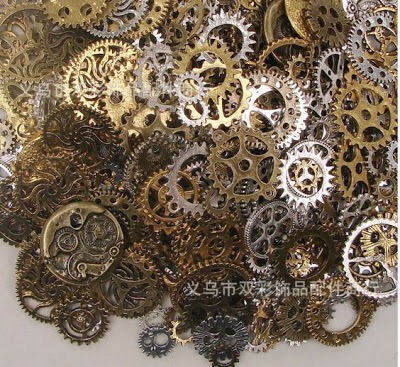
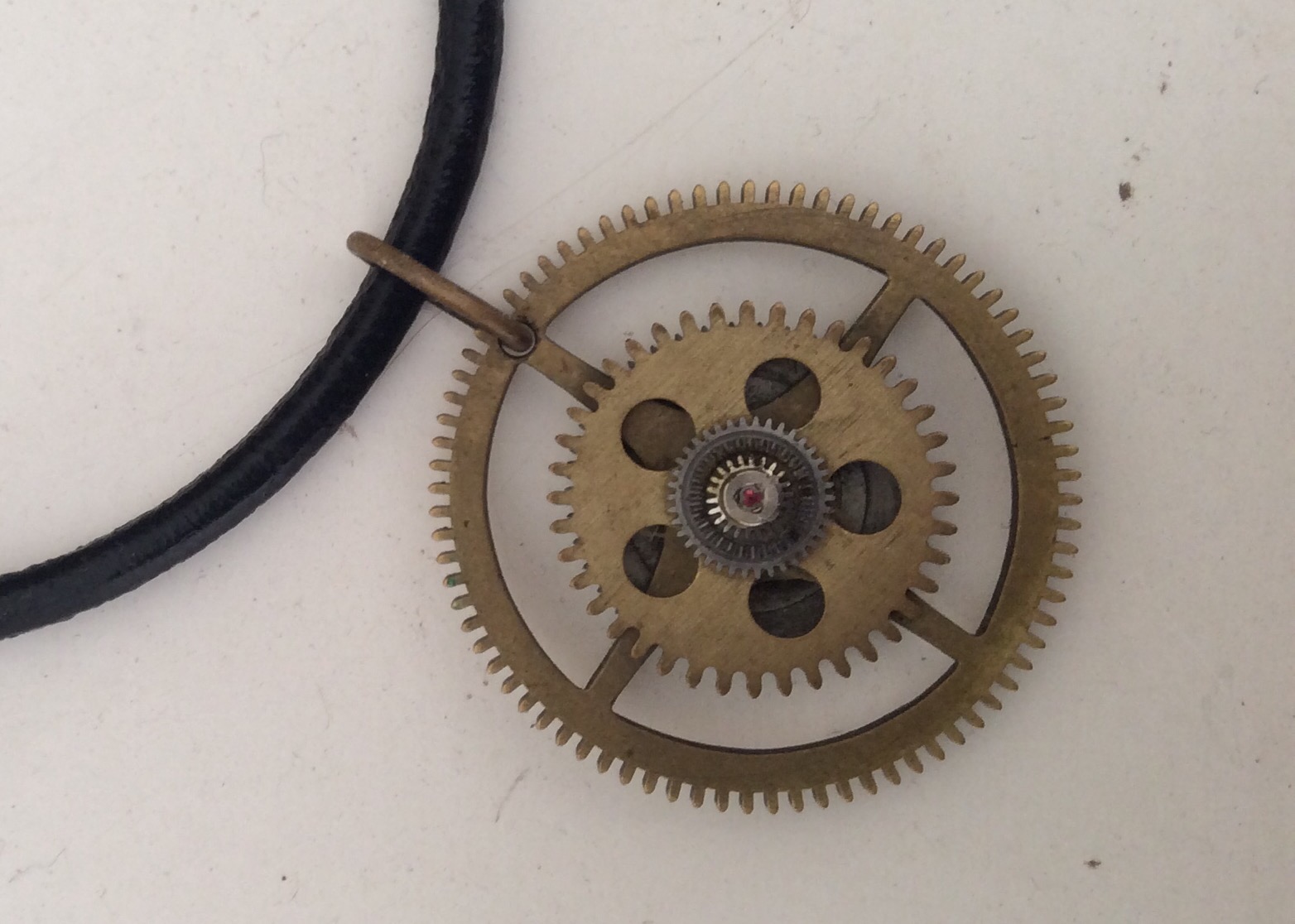
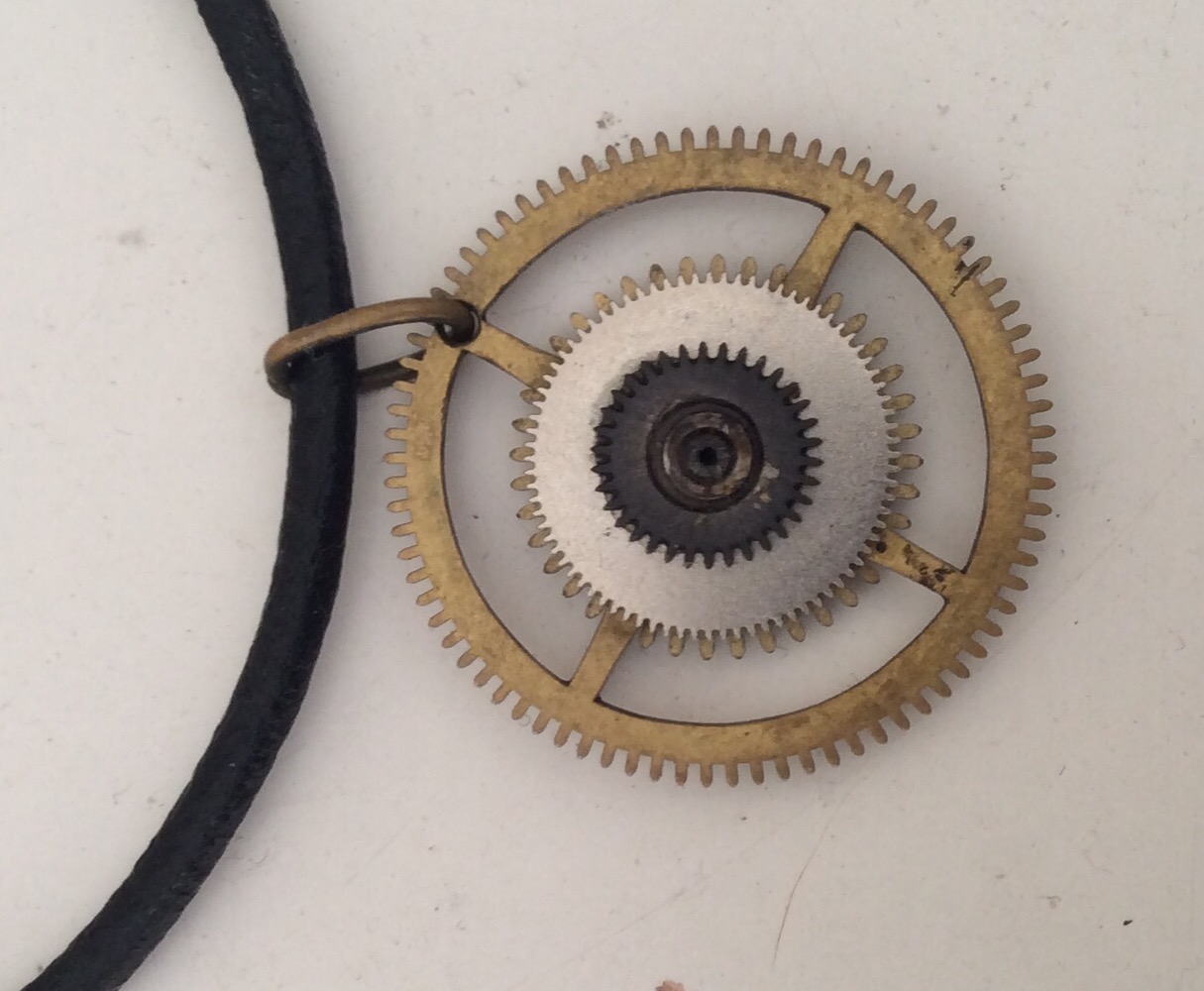
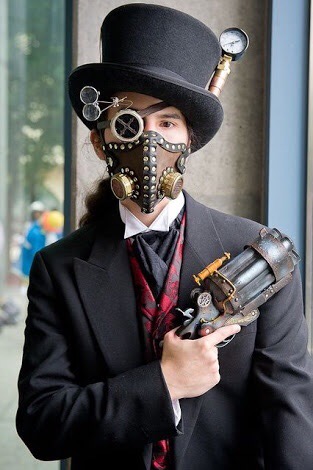



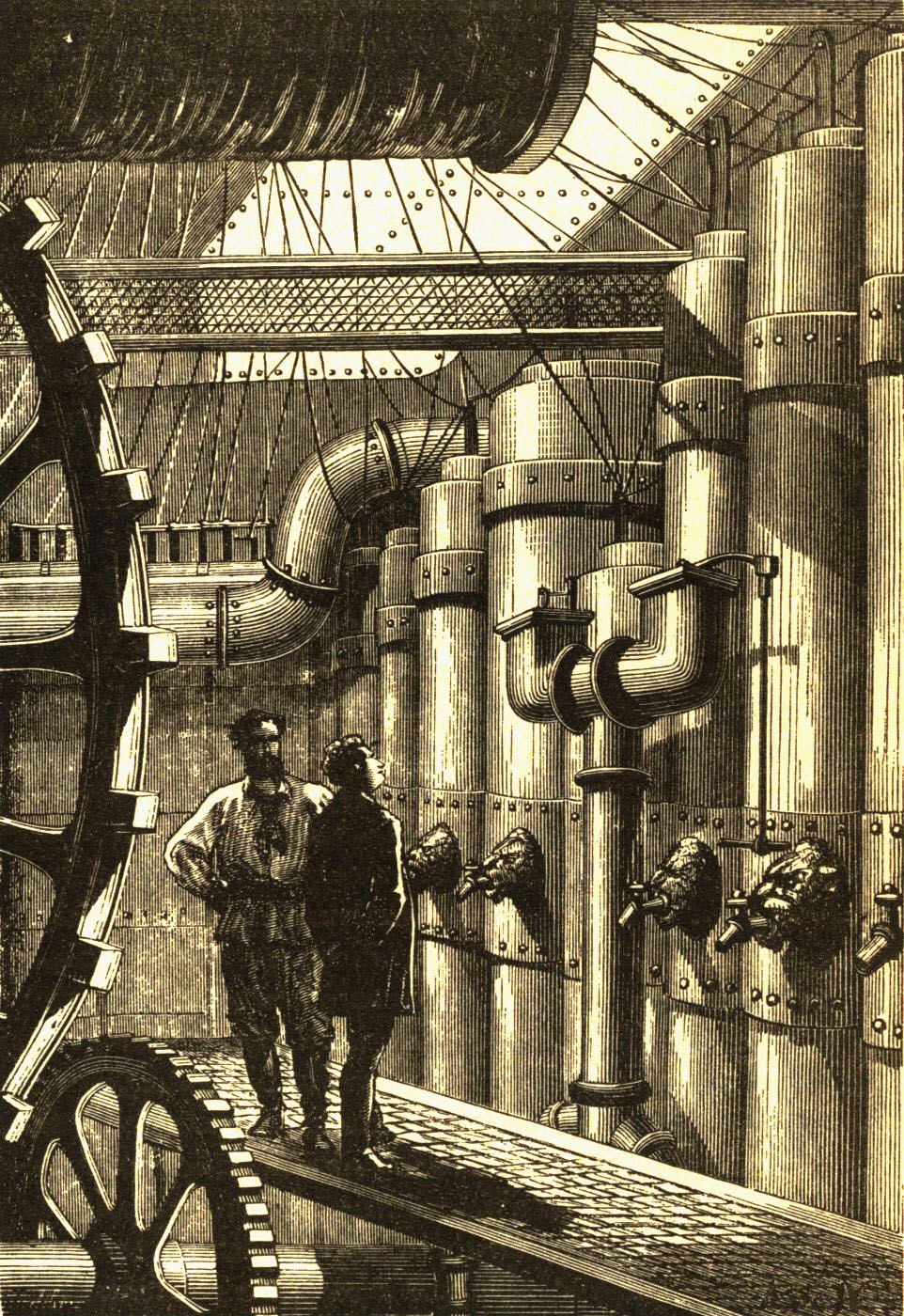
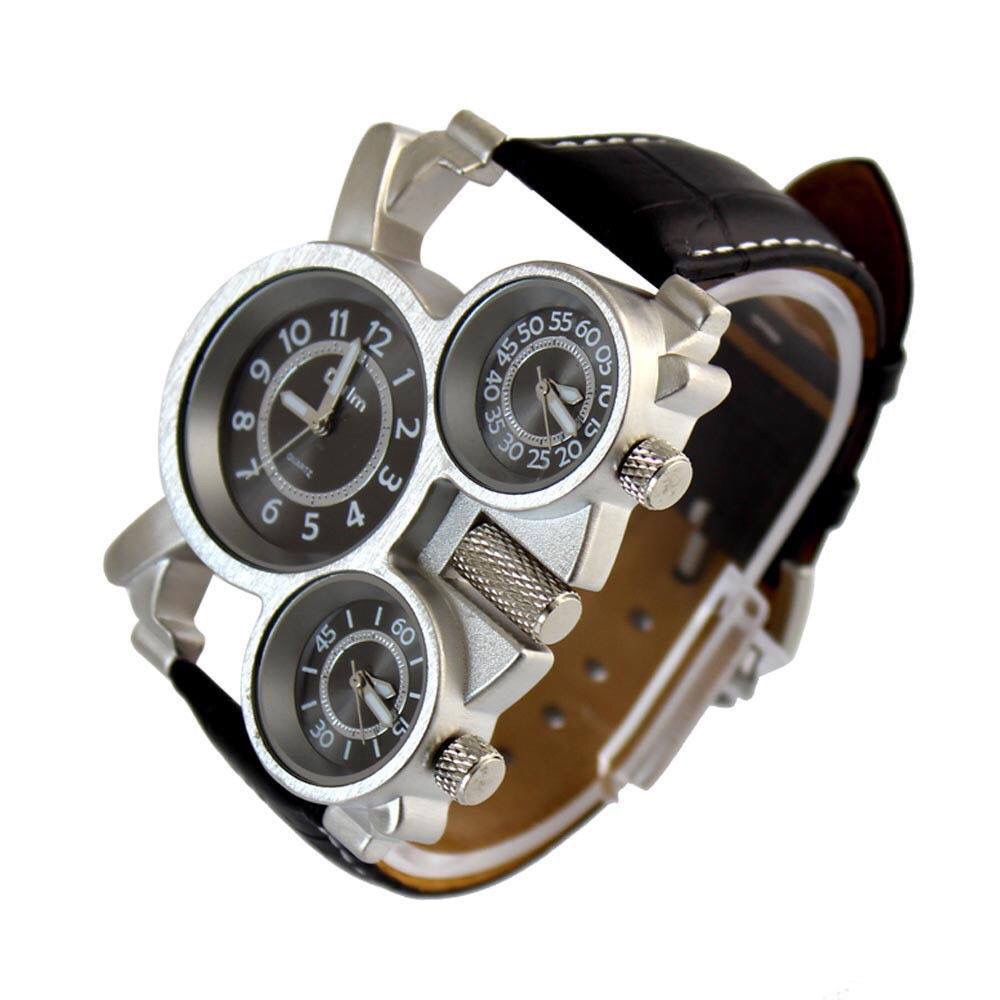
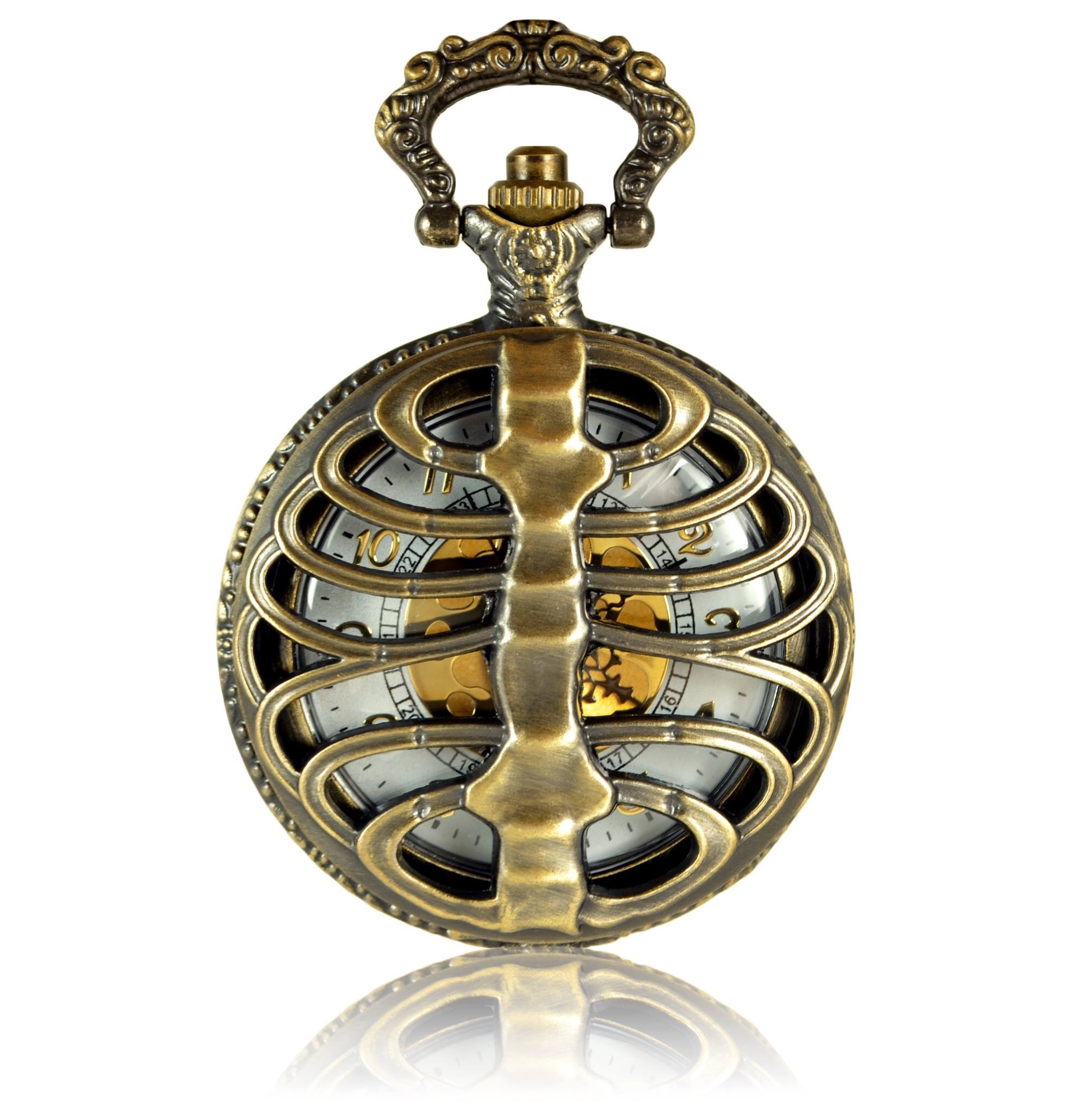
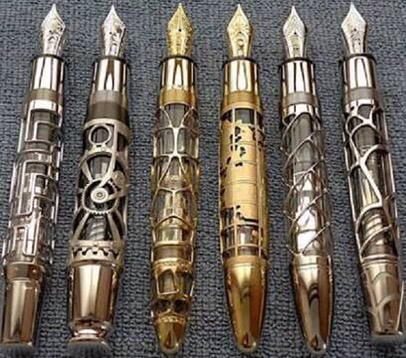


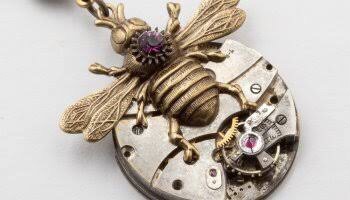
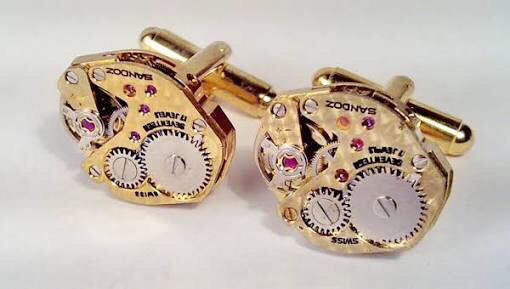

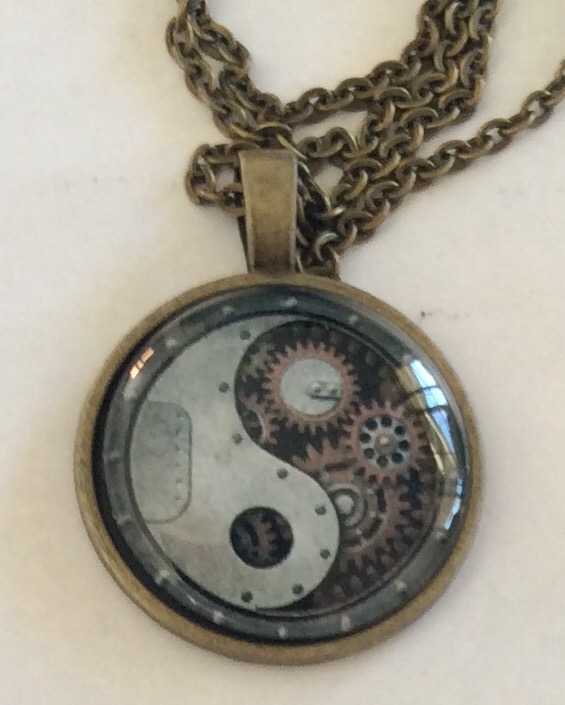
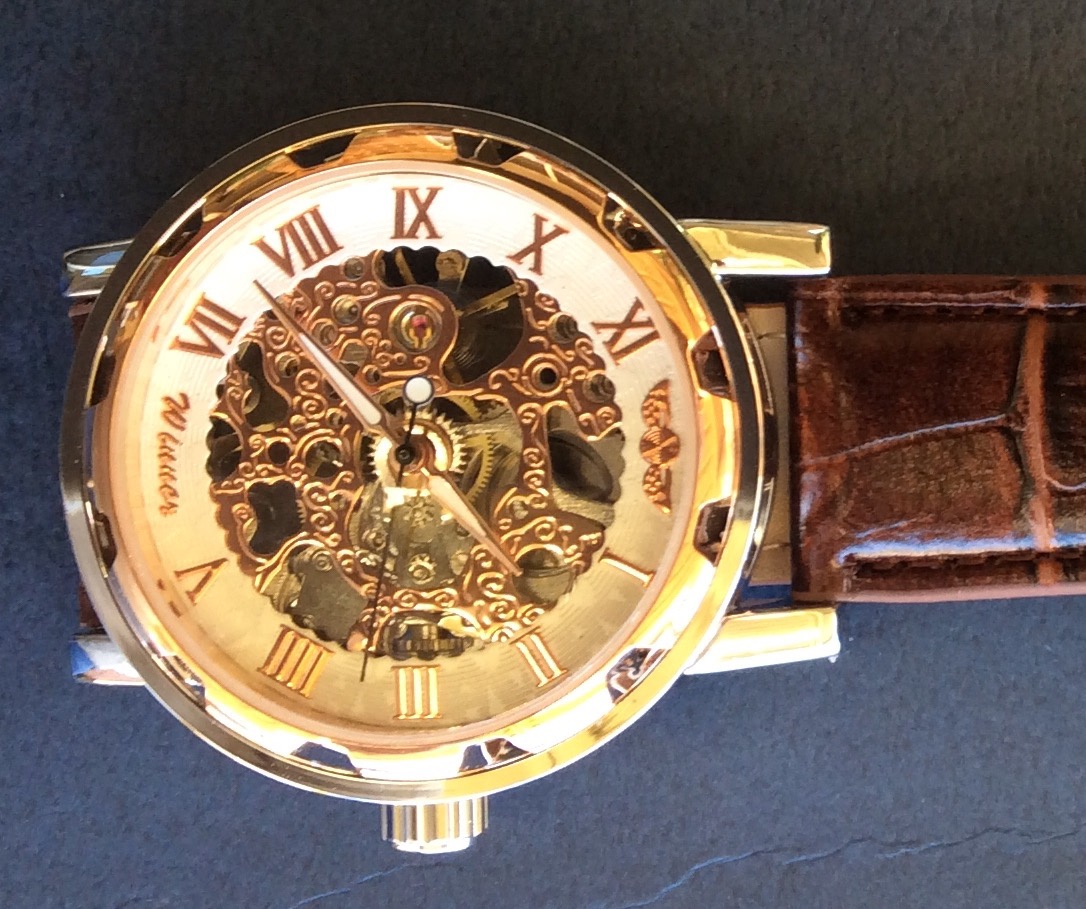

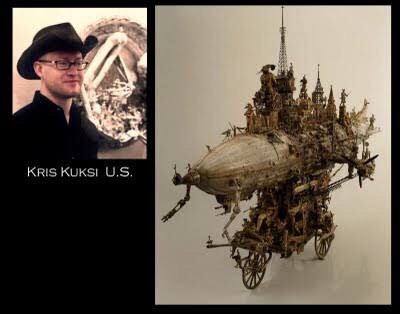

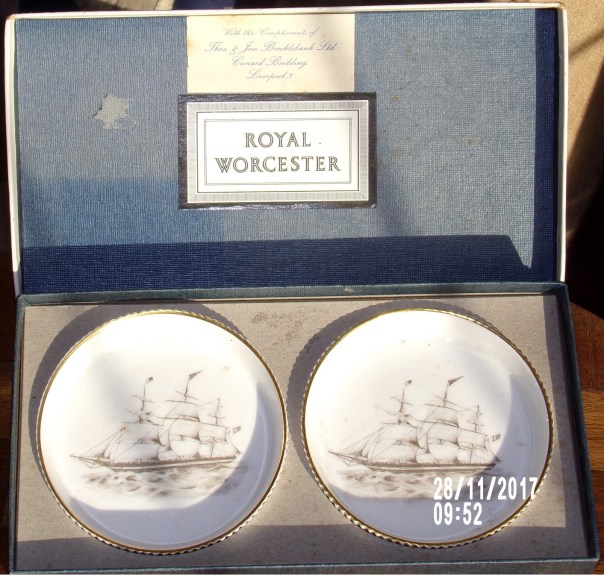
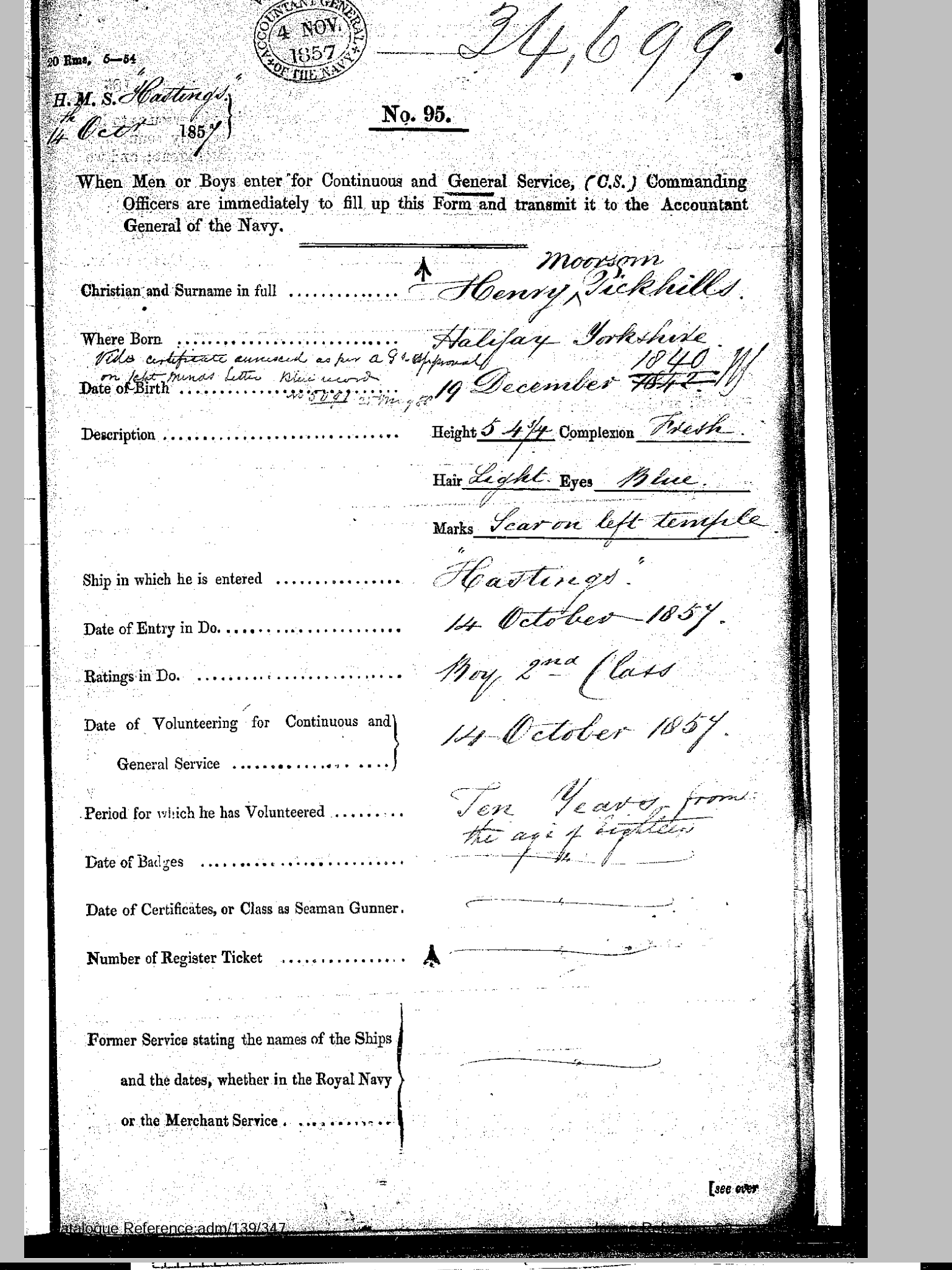
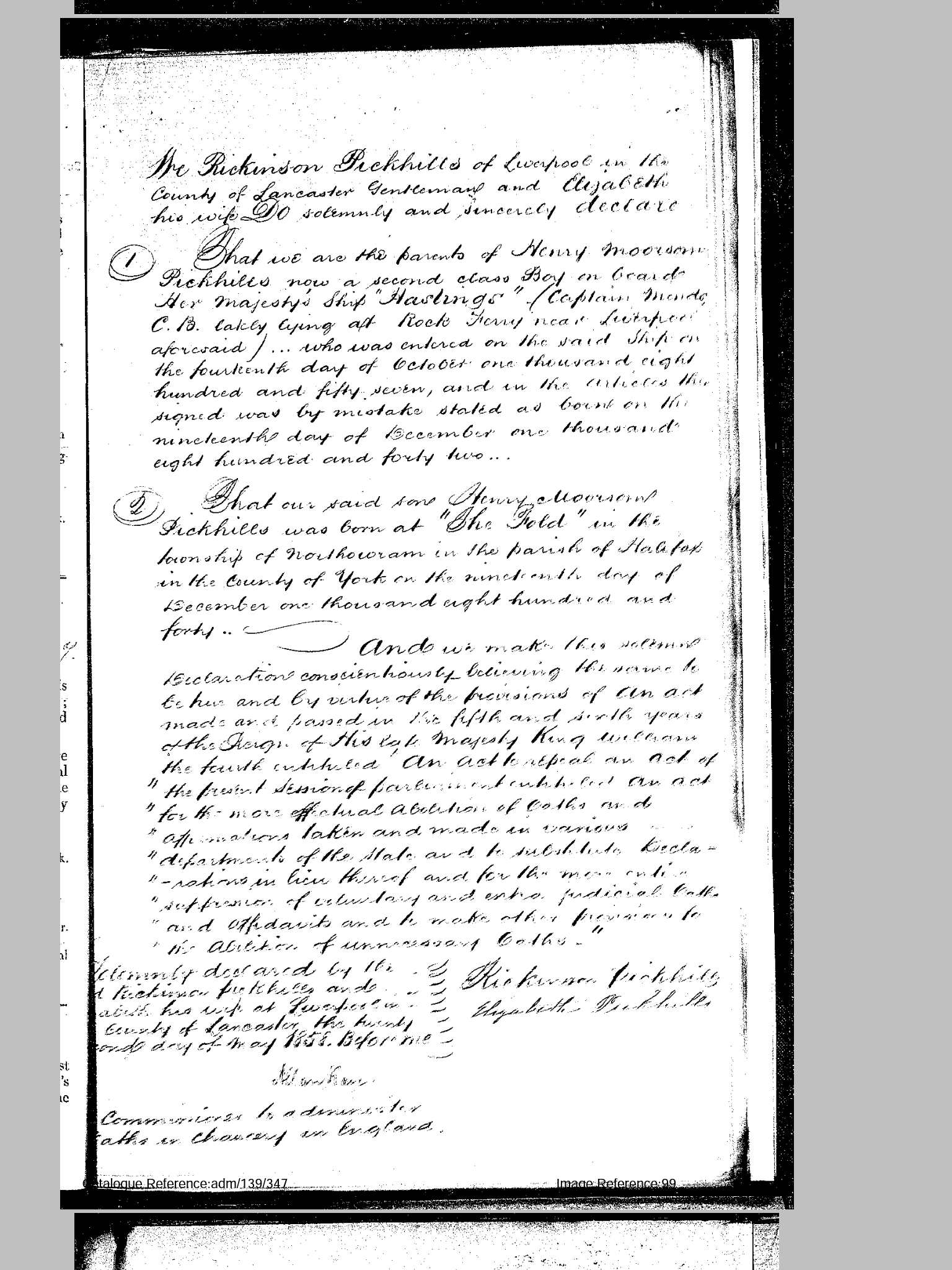
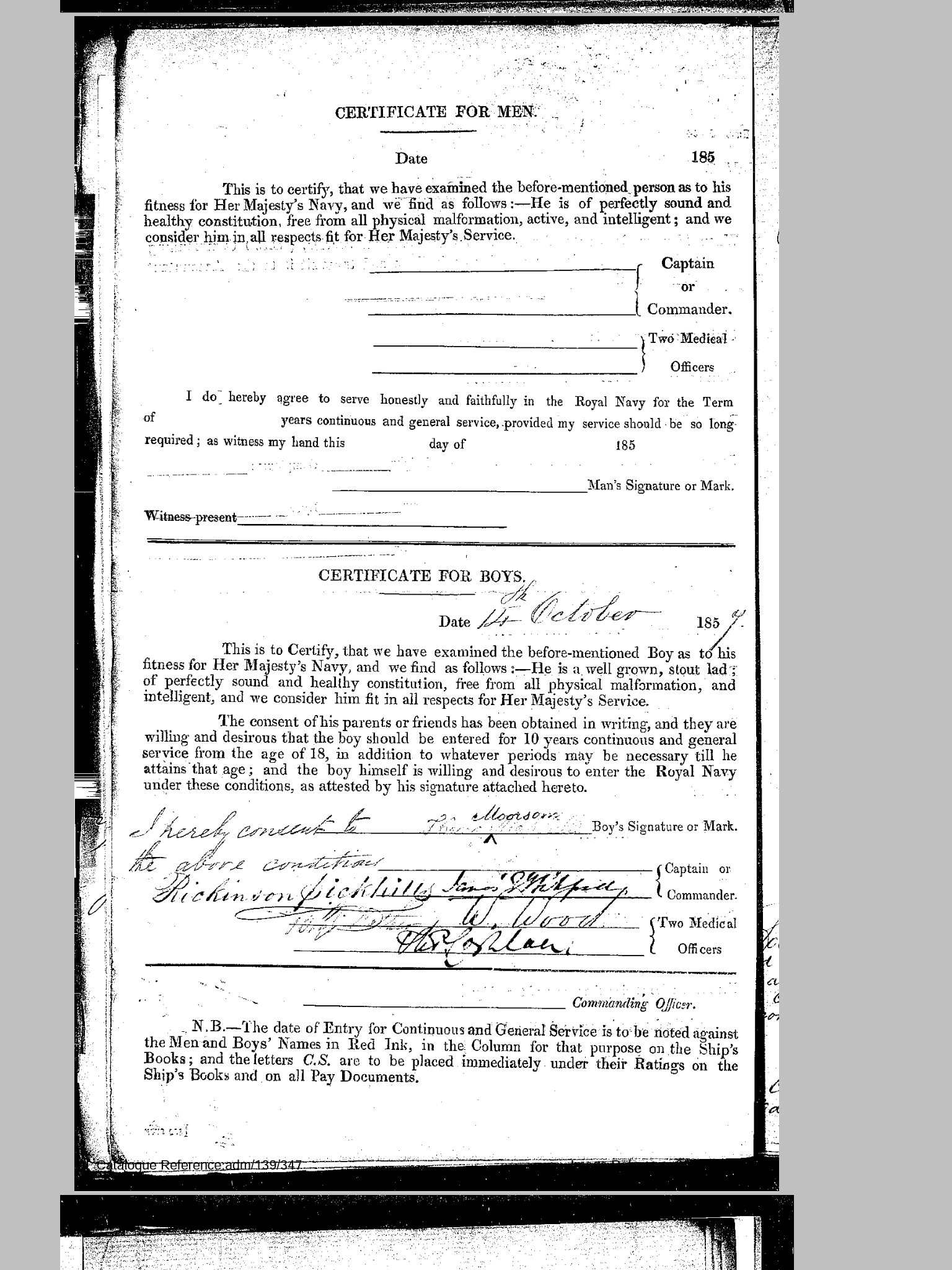

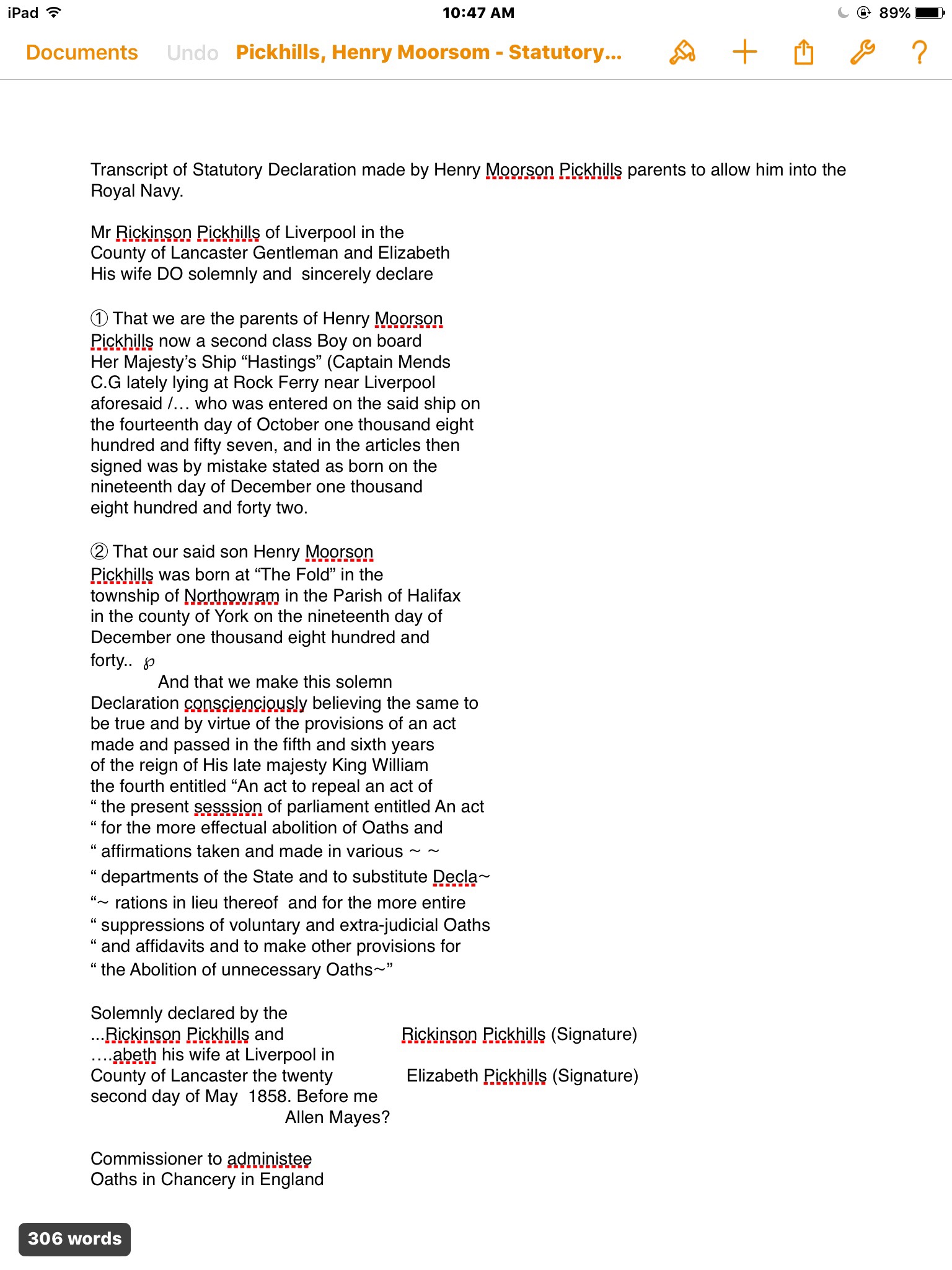
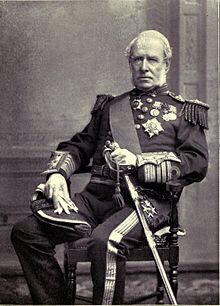
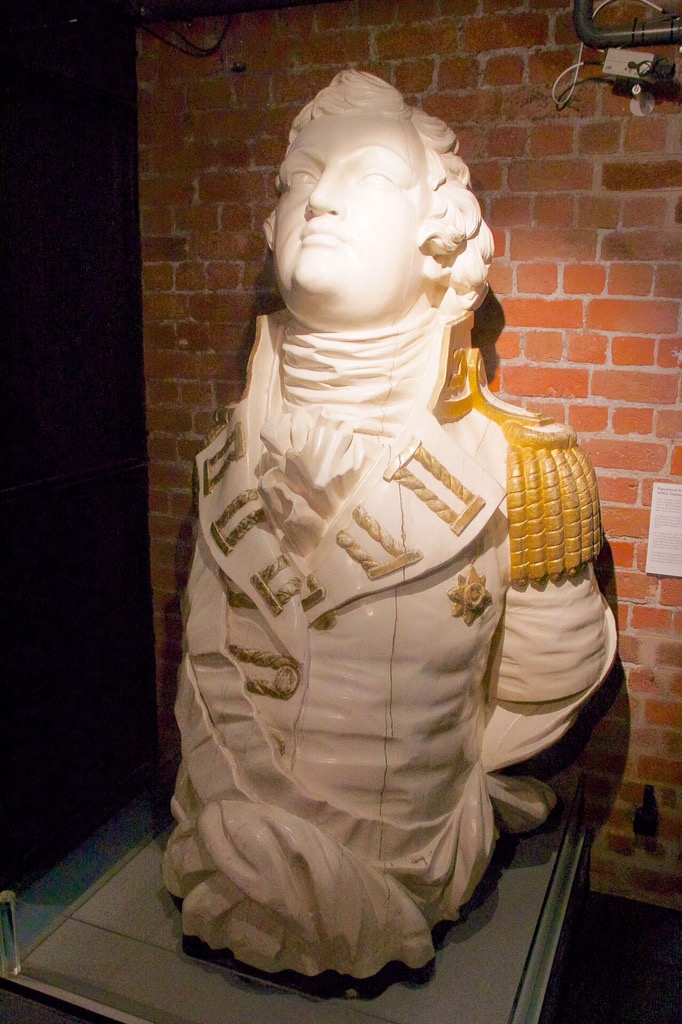
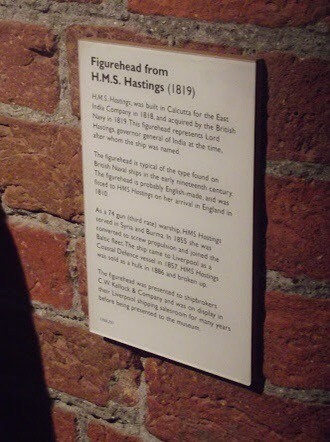
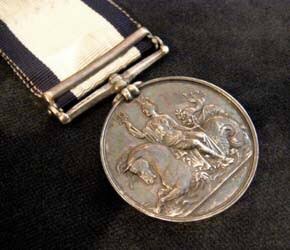
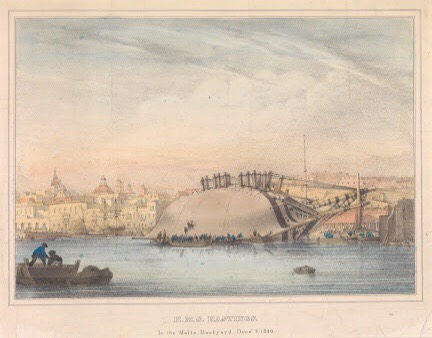
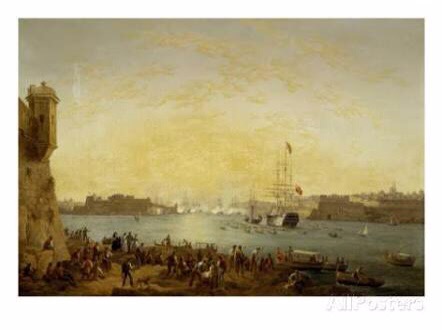

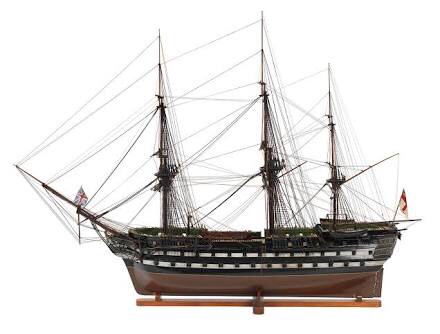


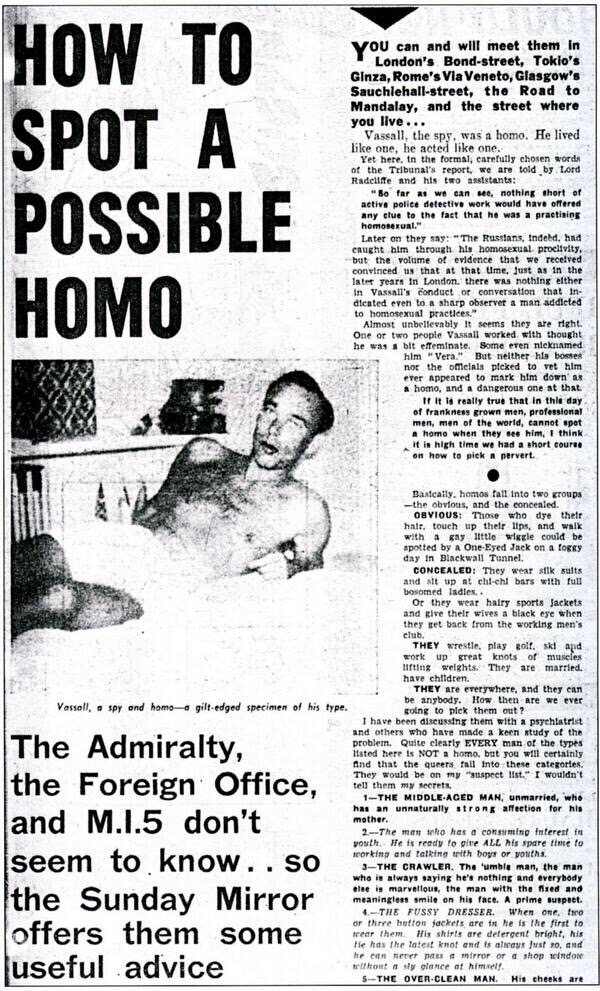


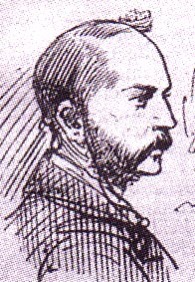
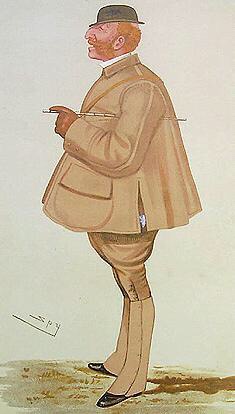
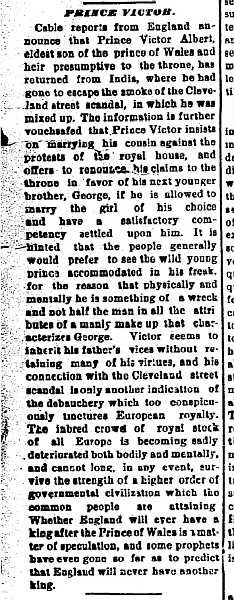
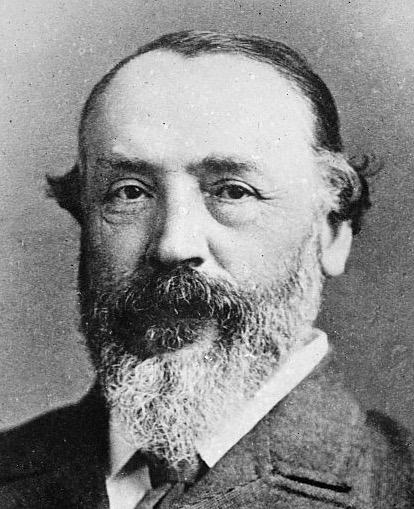
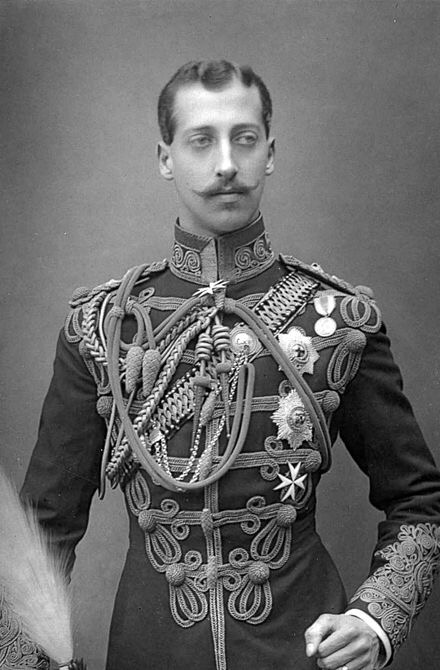
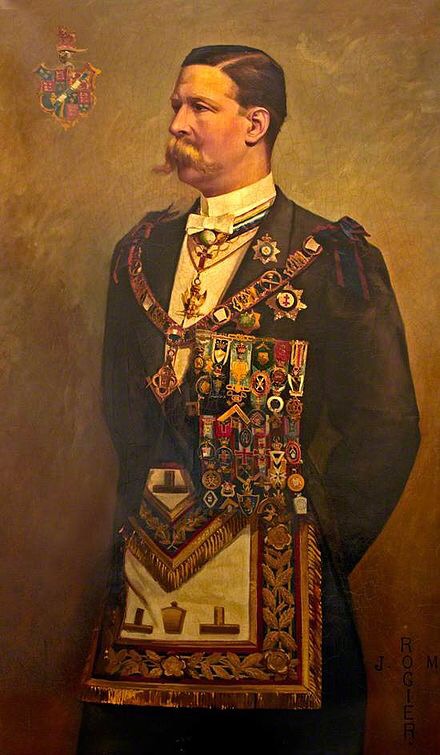




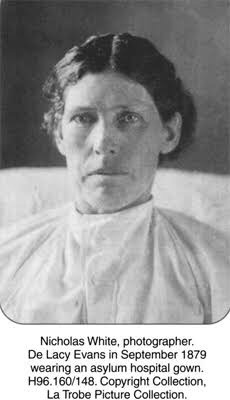


















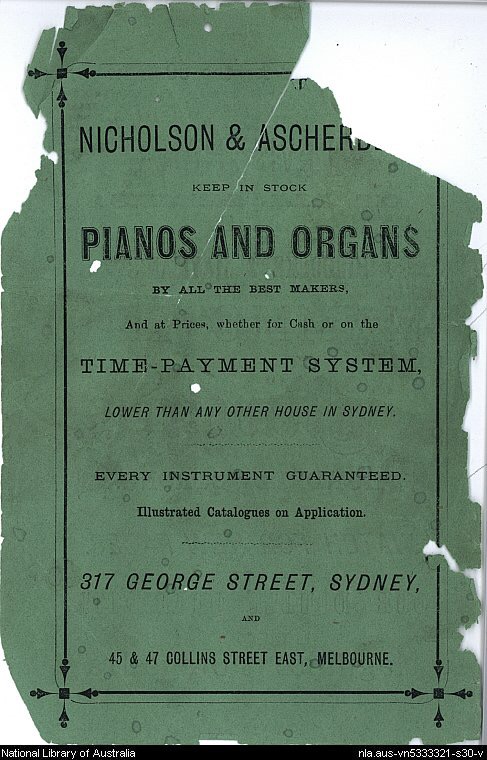


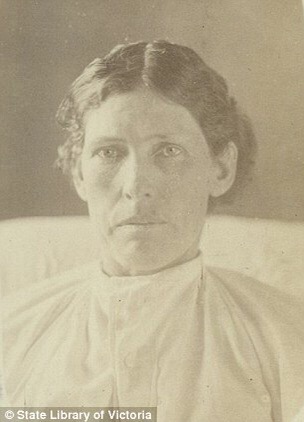


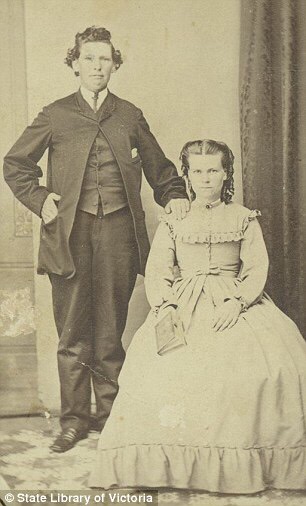


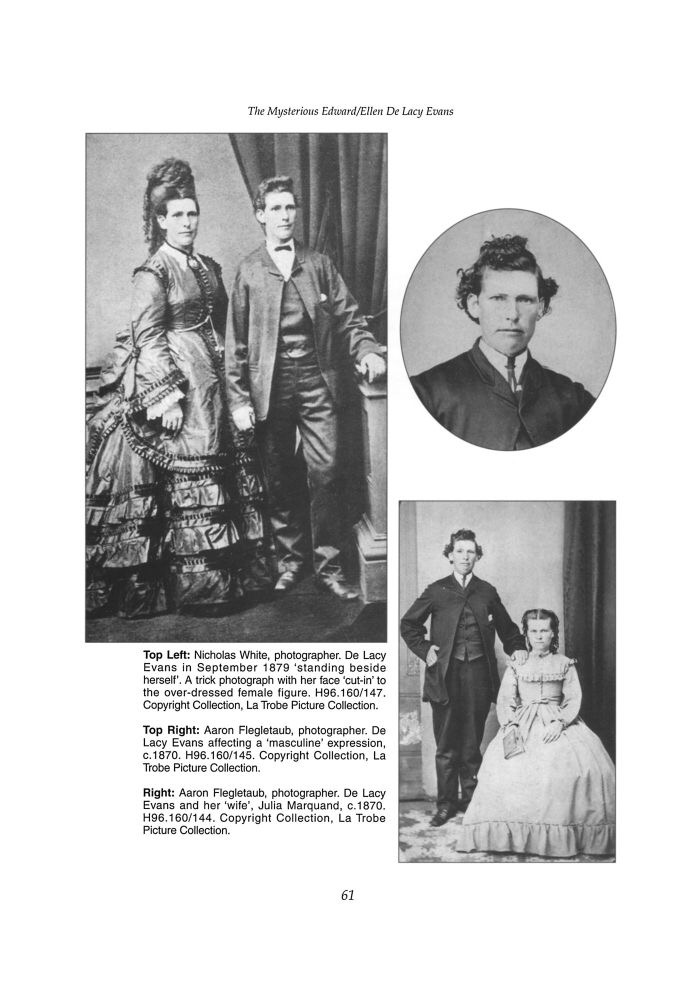


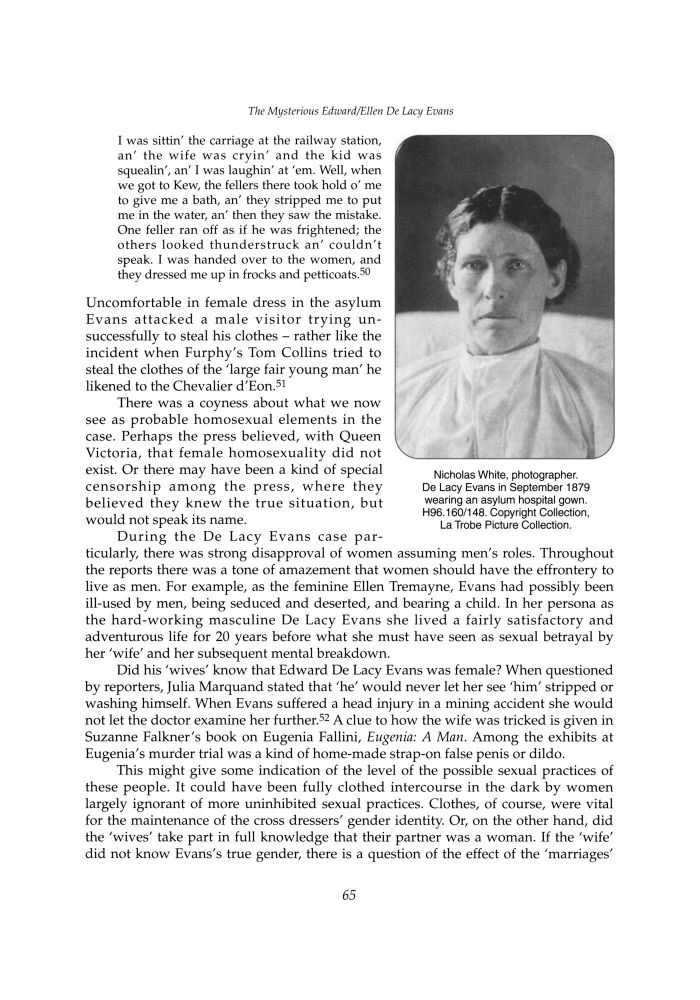

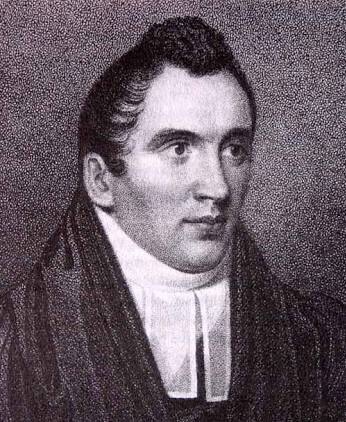




 timalderman