Things have gone very quiet since Malcolm Turnbull took over as Prime Minister. I am so used to Tony Abbott’s daily fuck-ups…which always managed to make the news…that I find this lack of tact, and myriad of blunders, very unsettling! And as a friend pointed out on FB last week, without Abbott he now has no one to have a go at every day. I commented…just give it time!
They say a new broom sweeps clean, and that would appear to be the truth. A new frontbench,including 5 women – one of who is Minister for Defence! That would NEVER have gappened under Abbott’s watch!
It appears to be a considered Cabinet, and will be interesting to watch, as will Turnbull! Despite being in a right-wing conservative government, Malcolm leans strongly to the left, and believes in social reform, and a contemporary society – the exact opposite to Abbott’s conservatism, much of which was vased on religious belief…don’t even start me on mixing religion and politics!
I think he will pander to the old government policies until the election next year…then I wouldn’t be surprised to see some very Laborcentric polices rolled out for the election. Truth is, electing Turnbull has put the Libs in a strong position for re-election, whereby Abbott would have ensured great losses, including seats. The Labor party now have a fight on their hands, and with Bill Shorten fronting them, I don’t fancy their chances.
To many tourists, Bondi, in Sydney’s Eastern Suburbs, is just a beach, a long expanse of sand and surf. However, Bondi beach itself is divided between the suburbs of Bondi and North Bondi – and don’t try to tell any local they are all the same area! North Bondi us partly situated on a long point of land creating the northern head of Bondi Bay. Wrapped around the point are steep cliffs, and rugged rocks that are lashed by the full fury of the surf. This barren area is known as Ben Buckler.
Map of North Bondi/Ben BucklerBen Buckler is the name of the northern headland of Bondi Bay. There are many conflicting stories about how a headland came to have a male name, but what is undisputed is that the first recorded use of the name was in 1831, when a land grant to Richard Hurd at North Bondi was described as being ‘…to a point called Ben Buckler’. The three most common theories about its naming are:
• It was named for a convict Benjamin Buckler or Ben Buckley, who lived locally with the Aboriginal people from 1810. His friend and fellow convict James Ives claimed he was killed near the point now bearing his name when the rock shelf on which he was standing collapsed. He also claims that the headland was formerly known as ‘Ben Buckler’s leap’.
• A variation on the story has a bushranger called Ben Buckley who, after taking part in many adventures and after obtaining his liberty, lived in a cave in the rocks at the northern end of Bondi Beach and was a known local character.
The rugged cliffs and rocks of Ben Buckler• Obed West (1807-1891) claimed that it was a corruption of an Indigenous word ‘benbuckalong’. Others have claimed that the Indigenous word was originally ‘baal-buckalea’.
But is there a Governor Lachlan Macquarie connection? This was first raised in an anonymous letter to the Sydney magazine the Australian Town and Country Journal on 25 May 1878. The writer, using the nome de plume, ‘Old Colonist’ claimed that the name Ben Buckler was a corruption of a name bestowed upon the headland by Macquarie. He went on to argue that Macquarie named it ‘Benbecula’ in honour of the island of the same name located in the remote Outer Hebrides off the west coast of Scotland.
Macquarie was born on one of the Hebridian Islands, Ulva, and would have been familiar with other islands in this group. The west coast of Benbecula has golden sand beaches, including one long sweep of beach Poll na Crann, with sand dunes behind them, the same coastal environment as Bondi Beach had before its development. Macquarie was born on island of Ulva in the Inner Hebrides, Scotland in 1762 and may have visited Benbecula, although this cannot be confirmed.
Macquarie would have travelled along the South Head Road, (now Old South Head Road) which had been constructed in 1811 and along parts of this Bondi Beach and its northern headland would have been visible. Did it look like Benbecula from a distance?
In 1906 the discussion began again in a local paper The Bondi Weekly when a land subdivision on the headland, known as the Queenscliffe Estate, began rumours that Ben Buckler’s name was to be changed to Queenscliffe.
On 29 June 1915 Captain J. W. Watson of the Australian Historical Society decreed that ‘the name of Ben Buckler is a corruption of Ben-becula, the name given by Macquarie.’ There is no primary evidence for any of the claims for the name Ben Buckler, making the debate about it all the more fascinating.
Published by Waverley Library from Local History source material, 2012.
The Big Rock
The Big Rock aka Mermaid RockOn the flat rock platform below the cliffs of Ben Buckler, Bondi’s northern headland, sits a huge boulder. Attached to its side is a brass plate which reads:
“Municipality of Waverley. This rock weighing 235 tons was washed from the sea during a storm on 15 July 1912. January 1933. J. S. MacKinnon. Town Clerk.”
It was fixed to the rock on 16 March, 1933. On Saturday 13 July, 1912 Sydney was under the influence of monsoonal activity resulting in a steady downpour of rain. Conditions deteriorated the following day and the weather was described by The Daily Telegraph as ‘a cyclonic storm – a bleak southerly gale raging, with fierce rain squalls. During the afternoon the rough weather on the coast continued with, if anything, greater fury.’
The Sydney Morning Herald described the weather as coming ‘from a cyclonic disturbance between Lord Howe Island and the central coast of NSW’ reporting that the wind was up to 113 k.p.h. along the coast, from Manly to Long Bay, beaches sustained serious damage. The wild weather continued over the weekend with newspaper reports describing waves at Tamarama as ‘rolling in like mountains’ and sea spray breaking at points ‘which had previously been unvisited by the waters of the Pacific’. Bronte Baths were damaged by this storm and the force of the sea threw huge boulders into the Bogey Hole.
Plaque placed by Waverley CouncilOn Bondi Beach the ocean had washed up to the edge of the concrete wall which then ran behind the beach, completely covering the sand. At Bondi Baths a gigantic plank, probably a diving board, described as being ‘about a foot in thickness’ was snapped in half.
The Watts family who lived in the old ‘Castle’ Pavilion, the forerunner to the current Bondi Pavilion, right on Bondi Beach reported being terrified by the storm as the south-facing beach bore the full front of the weather. It was after this wild weather subsided that a giant boulder on the North Bondi rock platform was first noticed. It was reported that the force of the mountainous seas which swept along the beaches during these storms had thrown up this enormous submerged sandstone rock from the ocean onto the rock platform. In November, 1932 it was grandly titled ‘Bondi’s Gibraltar’ by the Sydney Morning Herald which reported on Waverley Council’s decision to put a ‘tablet’ on the rock twenty years after its presence was first recorded, in order to record its history.
Cover of the Bondi View, June/July 2002.
Did it fall down – or was it thrown up? The long-accepted position on how The Big Rock came to be sitting on the North Bondi rock platform was that the boulder had been thrown up during the wild storms of July 1912, something that those who witnessed it had no trouble in believing. Soon after the storms a scientist, Carl A. Sussmilch, took measurements of the rock, talked to locals and calculated its weight at 232 tons. He noted deep eroded grooves near it which ran along the rock platform toward the sea and deduced that the force of the storm lifted the rock up from under the sea, flipped it over and with the aid of the strong wind skimmed it along the surface of the platform.
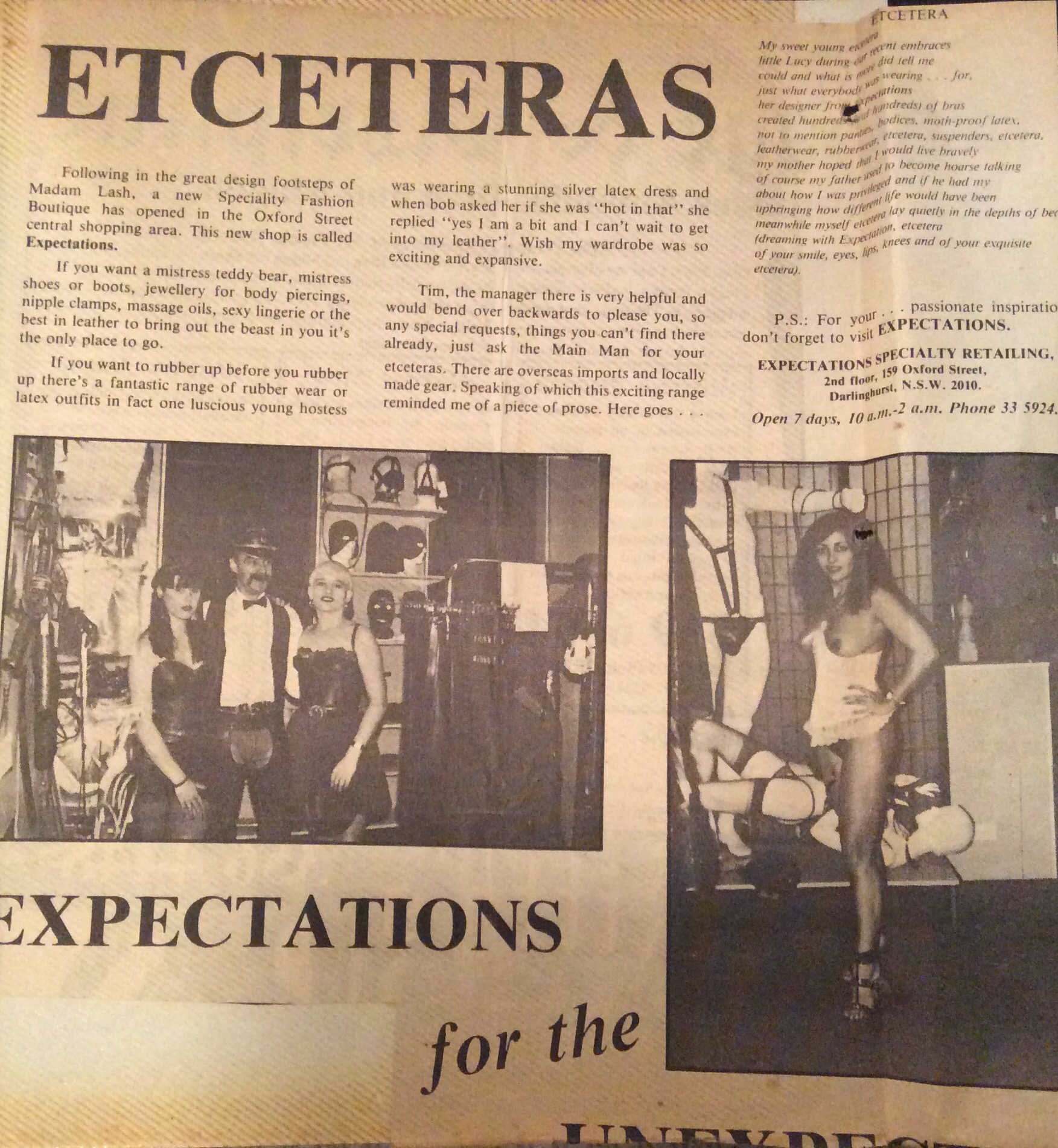
Cover of the Bondi View, June/July 2002He believed it had been turned over, leaving a new surface on top and marinegrowth on the underside. Local residents were divided; some believed the rock had always been there, claiming that they had frequently changed into their swimming costumes behind it. Another view was that there used to be many smaller rocks around this huge one and it was these smaller ones which were washed away during the storms, leaving The Big Rock exposed and prominent in a way it hadn’t been before and leading to the belief that it had suddenly appeared.
Regardless of some views to the contrary, the position that The Big Rock was washed up in the July 1912 became the accepted one and this position is repeated in most histories of Bondi Beach. In mid-2002 Bondi resident Lee Cass, then editor of local paper The Bondi View disputed the long accepted theory that The Big Rock was thrown up by the sea. His detailed rebuttal analyses the accepted wisdom about The Big Rock and finds it all wanting. He proposed an alternative view, that The Big Rock fell from the headland at Ben Buckler and furthermore that it was in place as long ago as 1888. His article ‘The Big Rock: exploding the myth’ appears in The Bondi View June-July 2002 edition a copy of which is available in Waverley Library in the Reference, i.e. non-lending, serial collection.
The Big Rock becomes Mermaid Rock in April 1960. For decades afterwards, despite having no mermaids, the rock continued to be referred to as Mermaid Rock. However that name, along with the memory of the mermaids who made it their rocky throne, has now almost disappeared and the boulder has gone back to its first, and basically self-descriptive title The Big Rock.
In June 2012, almost 100 years since the ferocious storm which is generally believed to have thrown up The Big Rock from its former watery home, extraordinarily powerful weather hit the east coast of Australia. This battered our beaches and the accompanying wild winds caused extensive damage. At Bondi huge seas rolled in, covering the sand and sending enormous waves crashing against the breakwater at the northern end of the beach and overrunning the promenade. Emergency service workers described it as possibly a ‘one-in-100-year storm’ it seems well-timed indeed.
Published by Waverley Library from Local History source material, 2012. Reference: ‘The Big Rock: exploding the myth’ from the Bondi View June-July 2012 ed,
The Mermaids
Mermaids looking out to seaThere were originally two Bondi mermaids who sat on the Big Rock at Ben Buckler.Because the mermaids used to sit there this rock is also often referred to as Mermaid Rock. Only the remains of one of the mermaids is still in existence. She is on permanent display in a special perspex case on the 1st floor, Waverley Library, 32-48 Denison Street, Bondi Junction. The mermaid statues were modelled on two local women:
• Jan Carmody, who was Miss Australia Surf, 1959
• Lynette Whillier, champion swimmer and runner-up in the Miss Australia Surf, 1959
The MermaidsSculptor Lyall Randolph created the mermaids from bronze-coloured fibreglass that he filled with cement. He first tried to sell the idea of the mermaids to Waverley Council, but the Council refused to pay for them.
So Lyall erected them on the Big Rock at his own expense. He claimed that because they were placed a certain distance offshore the space they occupied was not under the jurisdiction of Waverley Council, but the Department of Lands. He claimed that the Department had approved his statues. The mermaids were installed on 3 April 1960.
One month after they appeared university students chiselled mermaid Jan from the Big Rock and removed her as part of a Commemoration Day prank! She was later recovered under mysterious circumstances at the Engineering School, Sydney University. Repaired, she was restored to the Big Rock to rejoin her fellow mermaid Lynette. The cost of repair met by public subscription – the public loved the mermaids so much that they paid for Jan to be put back together again.
The surviving mermaid in Waverley LibraryHeavy seas claimed Lynette in 1974; swept off the Big Rock in a storm she disappeared forever. Jan lost an arm and her tail in the same storm. For two years Jan sat alone on her rocky throne until Waverley Council removed what was left of her in 1976, storing her in a Council Depot where she was forgotten for many years. Re-found in the late 1980s she was moved to Waverley Library, where, in 1999, the Friends of Waverley Library paid for her remains to be preserved by Sydney Artefacts Conservation.
Aboriginal Rock Carvings
Contemporary Bondi Beach is popular with surfers and sun-lovers. In earlier years, Aboriginal people also found it an attractive place, with its abundant nearby fresh water, fish and rocky shores full of shellfish. The name Bondi, also spelt Bundi, Bundye and Boondye, comes from the Aboriginal ‘Boondi’. According to some authorities, this means ‘water tumbling over rocks’, while the Australian Museum records its meaning as ‘a place where a fight with nullas took place’.
Early British arrivals identified Aboriginal pathways running from Port Jackson to the coast. In 1882, Obed West described Aboriginal men walking from Sydney harbour to Coogee or Bondi with bark canoes on their heads, looking for the best fishing spots. A midden of shellfish debris and artefacts at the edge of the dunes has now disappeared under modern development.
In 1899, a large cache of stone artefacts that came to be known as Bondi points were found at the northern end of the beach. These long thin blades were shaped to use as spear points and barbs and were first called ‘chipped-back surgical knives’ because they are shaped like scalpels.
Situated on the southern or sea side of Bondi Golf Course, adjacent to a sewerage treatment plant, there stands a substantial panel of Aboriginal rock carvings depicting various fish species. They are carved into the flat sea-cliff at a fishing rock known to the Indigenous people as Murriverie or Marevera. They were formed by pecking at the rock surface with pointed stones or shells, and extended over 60 metres southwards.
The largest group shows an eight-metre figure of a shark that appears to be attacking a male figure that could be an iguana or lizard. This could be the first record of a shark attack at Bondi. It was earlier thought to be a whale, as there are two other rock engravings of whales at Bondi, but the dorsal and pectoral fins identify it as a shark.
A separate panel shows two fish and a boomerang. The southernmost portion of the group has been cut deeper and is probably of an older date, possibly up to 2,000 years old. Ancestral footprints (mundoes) that once led to the site have now faded. It is assumed that the carvings were linked to a ceremonial ground overlooking the ocean.
A low chain fence now encloses the site. The carvings were retouched and fenced in 1951. A plaque commemorates a misguided attempt in 1964 by Waverley Council to preserve the engravings by re-grooving them. They are listed on the State Heritage Inventory but are poorly drained, blistering, and in danger of being damaged. They deserve serious attention as evidence of the Aboriginal occupation of Bondi long before the blonde-haired surfers arrived.
The Ben Buckler Gun Battery
The Ben Buckler Gun Battery was constructed in 1892 as one of a set of three coastal defence fortifications for Sydney Harbour, the other two being Signal Hill Battery at Watsons Bay and the Shark Point Battery in Clovelly. These fortifications were the last link in Sydney’s outer defence perimeter, which was intended to defend Sydney from bombardment by an enemy vessel standing off the coast. The fortifications built in the 1890s around Sydney’s eastern suburbs were the culmination of some twenty years of construction of harbour defense installations that reflected the changing policy of the time to meet new technologies, threats and styles of warfare.
Gun emplacemen
The Ben Buckler Battery is a rare, intact concrete 1890s gun emplacement, which was designed and developed for the new BL 9.2 inch (234 mm) Mk VI breech-loading ‘counter bombardment’ British Armstrong ‘disappearing’ gun. The Australian colonies bought 10 of these, three for Sydney, plus an extra barrel, four for Victoria at Fort Nepean and Fort Queenscliff, and two for Adelaide, South Australia, purchased in 1888. The Adelaide guns were never installed at Fort Glenelg and the British government bought them back in 1915. The barrel of the gun that had been installed at Signal Hill Battery survives on public display at the Royal Australian Artillery Museum at North Fort, North Head.[citation needed]
The Ben Buckler gun, Serial Number 7319, is the only complete 9.2-inch in Australia and was the largest gun in New South Wales. The gun barrel weighed 22 tons and it took a total of thirty-six horses to transport the barrel from Victoria Barracks in Darlinghurst to the battery in North Bondi; the transit took over three weeks.
Soon after its arrival, the gun was installed on a hydraulically operated disappearing mount. The gun was located below ground level and beneath a domed iron shield set into a wall of reinforced concrete that was ten meters in diameter. The domed metal shield that covered the pit was intended to protect the gun from incoming shells.
Once the gun was loaded, the hydropneumatic action shunted it forward and up through a slot in the shield. After discharging, the recoil mechanism forced the gun back into its pit. This protected the gun crew while loading and made the gun a very difficult target for an enemy ship to hit.
Sometime in the 1950s the army vacated the site. The government was unsuccessful in finding a scrap metal buyer to remove the gun, so it buried the gun and gave the site over to parkland. The gun’s existence was forgotten until it was rediscovered in the mid-1990s by Water Board engineers planning a new pipeline. It is now classed as an architectural relic and is under the protection of the Heritage Council.
The “Spanish Proclamation”
From The Secret Visitors Project
High above Bondi Beach with spectacular views out to sea you will find a small rock engraving which became one of the proofs used by aviation pioneer Lawrence Hargrave in support of his theory that the Spanish had landed in eastern Australia in 1595. He thought that the Spanish had made this carving as their official record of their presence and possession of the land, and termed it the Spanish Proclamation. Hargrave’s argument convinced very few people and the story associated with the engraving remains largely forgotten.
Hargrave is best known for his aeronautical experimentation, for which he is rightly recognised as a pioneer. Much of this took place in the late 19th century; once the Wright brothers flew successfully his work was superseded by others. Perhaps in part driven by relevance deprivation, during mid 1906 Hargrave was inspired by the discovery of a cannon in Torres Strait and his own memories of work in the same area in the 1870s to develop a theory that the Spanish mariner Lope de Vega in the ship Santa Isabel [or Ysabel] had been separated from Alvaro de Mendana de Neira’s expedition to settle the Solomon Islands and had instead travelled as far south as Sydney Harbour, where they stayed for perhaps 3 years before being rescued.
Figure 1. Hargrave’s recording of the ‘Spanish Proclamation’.
Hargrave presented his theory to newspapers and in a lecture to the Royal Society of NSW in June 1909. The second part of his talk was presented in December 1909 to strong negative reaction. The published Royal Society papers, and later self-published documents and newspaper letters introduced a range of evidence to support his theory. One of his key proofs was the engraving at Bondi.
The engraving Description
The engraving [Figure 1] is located on the headland to the north of Bondi Beach, known since at least the 1830s as Ben Buckler. Later it was also called Meriverie [various spellings, earliest being Meriberri], which was also the name of the quarry that mined a basaltic dyke on the headland. The engraving is on exposed rock near the edge of the cliff, partly within a shallow natural depression that holds a few centimetres of rainwater. About 50 metres to the south is a large rock exposure that contains a number of Aboriginal rock engravings, later re-cut by Waverley Council. Immediately to the northwest is the tall chimney of the Bondi Ocean Outfall Sewer. The engraving is currently surrounded by a small chain fence.
The engraving shows two sailing ships in profile. Around and over them are a series of letters – BALN ZAIH – and other engravings such as a cross within a circle. They are engraved into the surface of the sandstone. They are oriented to be read from the west. The full set of motifs are:
Ship 1 – port side view, curved hull, suggestion of rudder, sterncastle and two part forecastle, bowsprit. Measures 660 mm long by 220 mm high.
Ship 2 – starboard side view, curved hull, delineated keel, sterncastle, bowsprit, about 12 portholes marked by dots. Has deteriorated too much to allow measurement, but scaled from existing drawings is about 1000 mm long by 250 mm high.
Lettering – first line B A L N, second line Z A I H, third line W O. The O is divided into quarters with a vertical cross. Lettering height ranges from 135 mm for the Z to 150 for the B. The first two lines are about 500 mm long.
Line – a line 400 mm long with a small triangle at either tip.
The engravings were first noted by Campbell in his 1899 recording of the nearby Aboriginal engravings. He mentioned that these engravings looked much less weathered than the Aboriginal motifs [Campbell 1899: 11]. Watson and Vogan [Watson 1911] detected two different hands at work, while Hargrave conceded that the N, I and H were scratched rather than chiselled in [Hargrave 1914: 34]
When inspected in March 2010 the engraving was found to be in poor condition. Recent wet weather had resulted in part of the engraving being covered with standing water. The lettering is clear, as is Ship 1 at the bottom of the panel. The outline of Ship 2 to the right had all but disappeared, and could only be faintly detected.
Parts of the rock platform surface are exfoliating, where the hardened surface rind of stone had detached from the bedrock and popped off completely, exposing softer stone. The chains that had been erected around the panel are also dragging on the rock and abrading the stone. Interpretation
Hargrave read the motifs as being a single coherent and purposeful message, cut into the shallow depression in one episode. In his scheme it was the semi-official proclamation of the survivors of Lope de Vega’s expedition, made after their rescue by the Santa Barbara in c.1600. In his reading the two ships are the Santa Isabel [or Ysabel] and the Santa Barbara. The lettering Hargrave interprets as Santa BArbara, Santa YZAbel for the ships and ‘L‘, ‘N‘, ‘H‘ being initials of the senior men present. ‘W‘ was the name they gave to this country. The cross in the circle was Spain’s symbol for conquest in the name of God.
Read together the symbols and letters meant, ‘We in the Santa Barbara and the Santa Ysabel conquered W… from point to point. By the sign of the Cross.’ The initials represent Lope de Vega and his three witnesses, N, I and H. This version appeared in his 1911 booklet and he maintained it essentially as is until his death. One variation that appeared in his later thoughts is that he thought W… referred not more generally to the eastern Australian coast but to an island formed from the higher land between Randwick to South Head, believing that this was separated by swamp or open water from the rest of Sydney in 1595.
Hargrave also believed that the name Meriverie itself was Spanish in origin, being Mare-y-ver-e = ‘Sea view’ [Hargrave 1914: 34]. History of the engraving Hargrave’s interest
The headland at Ben Buckler had already been the scene of significant European activities before Hargrave’s attention was drawn to it. Quarrying the ‘white metal’ basaltic dyke at O’Brien’s Bondi Quarry began in 1860-61 and continued for decades. In 1888 a sewer vent was installed near the engravings as part of the Bondi Sewer. In 1910 it was replaced with the current sewer tower.
The engraving first came to notice when Aboriginal carvings were being recorded by WD Campbell, who produced a detailed corpus of engravings in the Sydney district for the Geological Survey of NSW. After describing the Aboriginal engravings immediately to the south he noted:
[s]ome clue as to the slow rate of decomposition of the rock surface is afforded by a small carving which has been done with a chisel, by a white man evidently. It is one chain north-easterly from the north end of this group; it represents the hulls of two small vessels with the old-fashioned high poop and forecastle in vogue at the time of the founding of the Colony. Although this is considerably weathered, it is not anything like so much as that which the group above has undergone [Campbell 1899: 11].
The earliest mention of the Spanish Proclamation by Hargrave is a 1:1 tracing that he made of the engravings onto linen sheet. The annotation that the engravings sat in a shallow depression that may have prevented ‘wanton vandalism’ is dated 12.3.1910 [Hargrave 1914: unnumbered]. Apart from this there is a note in his personal papers held in the Powerhouse Museum Archives dated to 18.4.1910, which follows the form Hargrave used when he had a bright idea and wanted to document it properly within his files. The note identifies the lettering and their equivalents which he would later propose as the translation. Other undated material in his papers includes comparative hull profiles of the Santa Barbara, Santa Isabel and Columbus’s Santa Maria.
The President of the Royal Australian Historical Society James H. Watson had already disagreed with Hargrave publicly over the origin of engravings of human and animal figures at Woollahra Point, suggesting that rather than being of Spanish origin they were done by convicts early in the colonial period. In Watson’s view the outstretched arms were meant to show a convict tied to a whipping frame [Watson 1909]. When Hargrave ventured more public comments in 1911 Watson issued a strong critique in a newspaper letter.
Regarding the Ben Buckler engravings the carvings on the Bondi cliffs, to my mind-and also to that of Mr. A. J. Vogan, who accompanied me when I inspected them have been done at different periods, the larger ship being much older than the other. The royal-forecastle of the smaller appears to have been added, as also the bowsprit, and is not a part of the original. The letters look much more recent than the ships. [Watson SMH 15.9.1911 p. 5]
The letter is interesting in several ways. Clearly, Watson was systematically examining the evidence Hargrave put forward in support of his theory. Secondly, he mentions Arthur J. Vogan, who was to shortly embark on his own even more fanciful analysis of Aboriginal engravings and evidence for prehistoric migrations into Australia and the Pacific.
In 1911 Hargrave wrote to the Spanish Consul seeking support to protect the engravings at Woollahra Point and Ben Buckler but without success. Around this time he also approached the Mitchell Library to see if they could fund the recovery of ‘the most important document in Australian history’ as he called the Bondi carving. They declined, suggesting instead the Australian Museum [1914: unnumbered]. An upset Hargrave wrote to his two daughters in Britain, saying that this was unacceptable, as the Australian Museum staff were wedded to the Aboriginal engravings idea. Hargrave was at the same time working with Museum staff to excavate a midden on one of the Woollahra Point blocks near his home, in the hope of finding evidence to support his theory. His exasperation at the treatment of the Spanish Proclamation spilled over into an angry letter to the Sydney Morning Herald, in which he says
Your liberal-minded readers will understand better what “discredited” means when I tell them that the Mitchell Library declines to preserve the oldest document in Australia, the Spanish proclamation at Meriveries; that the Australian Museum tells me the few things that I say relate to Spain are all rubbish; that the Historical Society, through their president and secretary, ascribe the industry of certain in telligent convicts as being accountable for things I render reasons for being Spanish. [Hargrave SMH 12.9.1911, p. 7]
One possible convert that Hargrave made in this debate was Norman Lindsay, then an illustrator at the Bulletin magazine. Lindsay was deeply interested in historical ships and was a proficient model-maker, as well as being a very competent craftsman and artist in a range of media, a trait that probably endeared him to Hargrave who admired practical skills. In the magazine The Lone Hand in 1913 Lindsay wrote his own appreciation of the Lope de Vega story, illustrating it himself. The illustrations of the Lope de Vega story cover the ship, the carving of the Spanish Proclamation [see Figure 2 below], the last castaway making the bamboo figure een by Hargrave on Ugar Island in Torres Straits and the alleged shipwreck on Facing Island.
Lindsay’s belief in the story was qualified. In discussing the Spanish Proclamation he says ‘What the lettering accompanying these carvings means I prefer to leave out of this discussion. Mr Hargrave has his theory, which is very ingenious and may be right.’ [Lindsay 1913: p. 274].
Figure 2. Norman Lindsays depiction of the engraving of the Spanish Proclamation
Hargrave maintained his belief in the inscriptions and his overall theory until his death in early 1915. Almost no-one later admitted to having followed and supported his belief, something that Hargrave himself did not find a concern:
Still, it is better to be always in a minority of one and state your views as plainly as your ability allows than to have the support of a majority who do not know the meaning of the things you have attempted to portray. [Hargrave SMH 12.9.1911, p. 7] After Hargrave
Hargrave’s death effectively ended the speculation about these engravings. The inter-war period generally was very quiet in terms of speculations about secret visitors, a phenomenon we have yet to fully understand. Some significant new information did appear that helps us to understand the possible origin of the engravings.
A letter was published in the Sydney Morning Herald by CW Peck in 1928. Peck had written a number of books and newspaper articles on Aboriginal legends and was involved in the Anthropological Society of NSW. While he was generally sympathetic to Aboriginal people and their past he strongly disagreed with the idea that they were necessarily responsbile for the rock engravings around Sydney. He believed this on the basis of no recorded evidence by early European settlers. It was in this context that he critiqued others who believed that Aboriginal engravings were authentic, arguing that some at least were the work of whites.
There are at the present time living in or near Sydney two brothers, both over 70 years old, and both native born. … Out Palm Beach way there are aboriginal rock carvings (sic) done by these brothers in the days of their youth. … I think they sat back and laughed when Lawrence Hargreaves found out so much about the visits of some old Spaniard to Ben Buckler, and they certainly laugh at the naming of the high pooped ships crudely drawn. … Will it not be funny when the Ben Buckler drawings are fenced in, and school children are marched down to see the pictures of the Spanish ships that came here in the sixteenth century. [Peck SMH 4.10.1928: 6]
He went even further in a letter in the Sydney Sun:
The Spanish galleons on the rocks at Ben Buckler were cut by two employees of the Dredge Service who were ardent fishermen about 60 years ago. [Peck Sun 11.9.1929].
Michael Terry wrote of the engravings, uncritically accepting them as part of a broader range of evidence for Spanish or Portuguese voyaging down the east coast [Terry 1969]. The next advocate for European voyagers was Kenneth Gordon McIntyre who, although he provides evidence in support of his claim that Spanish sailed down the eastern coast, does not mention any of Hargrave’s sites.
Gilroy featured the engravings in Mysterious Australia [1995: 237-239] although he mistakenly referred to them as being on the north head of Botany Bay. The tone of his description is also equivocal about their authenticity, which is unusual as Gilroy often embraces even quite implausible anecdotal accounts of discoveries.
This part of the headland has now become a golf course which is reasonably compatible with the retention of the engravings. The Aboriginal engravings were deepened to make the images stand out in 1951 and again in 1964, a practice that has severely affected their appearance. In 1986 the Spanish Proclamation engraving was recognised and added to the Waverley Council Local Environment Plan as an item of environmental heritage. There has been subsequent vandalism and addition of new graffiti but most remain clearly legible. The protective fencing however is now doing more damage than good. Analysis
How do we critique Hargrave’s reading of the engravings? It almost is too outlandish to even know how to start and how would we convince Hargrave that it was suspect? Clearly from 1910 Hargrave had lost all perspective on his Lope de Vega theory and was unable to rationally assess any arguments or evidence contrary to his scenario. He had delivered his second Lope de Vega talk to the Royal Society of NSW in December 1909 and the reaction was so negative that they declined to hear a third instalment. Hargrave was keen to find evidence that proved his argument, and the engravings at Ben Buckler seemed to fit the bill.
Unlike Hargrave’s reading of the Woollahra Point engravings as being non-Aboriginal there is no dispute regarding the European origin of these engravings. Hargrave went to great lengths to compare the ships with other more-or-less contemporary illustrations, such as those of Columbus’s voyages. While moderately successful in showing that they were not typical of late 19th century built ships the conclusion could not be pushed too much further.
The explanation of the lettering, however, really strains credulity. Turning a bunch of letters into an elaborate message conveying information about ship names, conquest and the names of witnesses simply does not work. At different times Hargrave pleaded the illiteracy of the crew and the Peruvian slave miners but this is at odds with the importance he places on the message as Lope de Vega’s parting memorial. The idea that such an important message would be so poorly composed was one he could never surmount, and made even sympathetic supporters, such as Norman Lindsay, question this fundamental basis for his theory.
Peck’s information about these being either deliberate fakes or simply old graffiti is very specific and places their creation at about 1870. Watson and Vogan [Watson 1911] noted that the two ship engravings were of different depth, which is now borne out by the almost complete disappearance of Ship 2, and Campbell also stated they were clearly much fresher cutting than the Aboriginal engravings immediately to the south, consistently with Peck’s claim. The earliest reference I have to O’Brien’s Bondi Quarry operating is 1861, which also allows for the possibility of quarry workmen being implicated in their creation as well. Conclusion
In conclusion there is second-hand but reasonable evidence that the engravings were done in about 1870, by known individuals. The condition of the engravings is consistent with a post-European date, and certainly not in the order of four centuries. The differing engraving of the motifs suggests a number of hands, and it is reasonable to suppose that they are a palimpsest made over time rather than representing, as Hargrave thought, a coherent group with a single meaning. Hargrave’s interpretation of the meaning of the engraving cannot be supported in any way. It stretches the limited content to fit his desired theory of Lope de Vega’s presence in Sydney. The reading is illogical and pushes credibility. In the face of alternative plausible explanations Hargrave’s interpretation cannot be accepted as the explanation for the engravings.
References
Gilroy, R. 1995
Mysterious Australia, Nexus Publishing, Mapleton.
Hargrave L. 1909
‘Lope de Vega’, Journal and proceedings of the Royal Society of New South Wales, 43, pp. 39-54, 412-425
Hargrave, L. 1911
‘Australia’s discovery’ [Letter], Sydney Morning Herald, 12 September 1911, p. 5.
Hargrave, L. 1914
‘Lope de Vega’ annotated manuscript, amendment dated 23 February 1914, ML MSS 3119, Mitchell Library, Sydney.
Lindsay, N. 1913
The end of Lope de Vega’, The Lone Hand, 1 August 1913, pp. 271-277.
Peck, C.W. 1928
‘Rock carvings at Ben Buckler’ [Letter], Sydney Morning Herald, 4 October 1928, p. 6.
Peck, C.W. 1929
[letter to Editor], Sun [Sydney], 11 September 1929.
Watson, J.H. 1909
‘Supposed Spanish occupation of Woollahra Point’ [Letter], Sydney Morning Herald, 14 August 1909, p. 16.
Watson, J. H. 1911
‘Australia’s discovery’ [Letter], Sydney Morning Herald, 15 September 1911, p. 5.
To be checked
Campbell – unpublished original field recordings of the 1899 survey – held in Mitchell Library
Figures
Figure 1 – Published in Hargrave’s self-published booklet – Lope de Vega [1911]. This recording was made in March 1910, using a full-size tracing of the engraving, which was later both photographically reduced and redrawn to scale using a reduction grid. The copyright on this image has expired.
Figure 2 – One of the drawings created by Norman Lindsay to illustrate his article on Hargrave and Lope de Vega in The Lone Hand [1913]. The copyright on this image has expired. https://secretvisitors.wordpress.com/2011/03/20/the-spanish-proclamation/
To look at Tamarama beach today, it is hard to envisage that it was once the site of the largest open-air amusement park in the southern hemisphere, nor that there were attempts in the early 20th century to ban swimmers from the area.
Originally the site for the Royal Aquarium and Pleasure Grounds (commonly referred to as the Bondi Aquarium), it was an amusement park situated in Fletcher’s Glen at Tamarama beach.
It opened on the 1st October 1887 and touted a Great Military Band, merry-go-rounds, swings, shooting gallery, water boats, Camera Obscura, Punch ‘n Judy show, and dancing in the Grand Hall.
There were huge marine aquarium tanks featuring many fish varieties, sting rays, lobsters, turtles, wobbegong and tiger sharks. Seals shared a pond with a solitary penguin. There was a switchback railway, a roller coaster ride above the sand on Tamarama beach, two roller skating rinks, which eere “illiminated by the electric light”. Every Wednesday, Pain’s Grand Fireworks exploded overhead, and there were Sacred and Classical concerts every Sunday.
In typical early 1900s tradition, feats of daring-do were a must. Alexander, an Australian wire walker, walked a wire from cliff to cliff. Captain George Drevar floated on a “cask raft” in the surf. There was a Grand Balloon Ascent and Parachute Descent. Headliners from the Tivoli Theatre perforned on the Aquarium Curcuit.
Fire destroyed the Aquarium and Pavilion on 11th July 1891, but it rose from the ashes in September the same year, and continued on. The ladt known concert there was a fund-raiser for the Waverley Benevolent Society in 1906. Ownership and management chantes several times over the coarse of its existence, and it was finally sold by Mrs Margaret J Lachaume to William Anderson in 1906. He transformed and renamed it Wonderland City.
Anderson was a Prominent theatrical entrepreneur, leased the land in Tamarama Park, minus a 12-footbstrip of coastline, to allow the public access to the beach. He also leased a further 20-acres of land in Tamarama Gully – formerly Tamarama Glen, or “the Glen” – and started to transform it into an amusement park.
The main entrance was a large white weatherboard building in Wonderland Avenue near the point at which it joins Fletcher Street. The entry price was 6 pence for adults and 3 pence for children with all rides costing an additional fee.
Opening on Saturday, 1 December 1906 Wonderland claimed to equal ‘those amusement grounds… of the far famed Coney Island, New York, or White City, Chicago’. William Anderson also claimed “there weren’t sufficient trams in Sydney to transport the crowd … for the opening.” On this opening night approximately 20,00 people travelled out to Wonderland to go on fairground rides, view the novelty attractions and walk among the natural beauty of Tamarama Glen, which was lit by strings of electric lights and described as a ‘fairy city’.
Some of the attraction included an artificial lake; the first outdoor ice skating timk in Australia; a roller skating rink which doubled as a boxing ring; double-decker merry-go-round; Haunted House and Helter Skelter; steam-driven swutchback railway; maze; circus ring; fun factory; the Airum Scarum, an airship that moved on a cable from cliff to cliff, was supported at bith ends by huge wooden structures, and at high tide moved over the sea; wax works; Katzenjammer Castle; Hall of Laughter; Box Ball Alley; Alice the elephant; a sea pond and aquarium; Japanese tearooms; Alpine slide; and The King’s Theatre – a music hall – that could seat 1,000 people.
Employing over 160 people, Wonderland set a new standard for Australian outdoor pleasure grounds. Large crowds, estimated at 2,000 people came every summer weekend, with seventy turnstiles at the entrance doing a brisk trade. Wonderland was known for its novelty and ‘shocking’ acts, with William Anderson the consummate showman. He organised for a couple to be married at Wonderland, and then paraded through the grounds on the back of Alice the elephant. One daredevil performer, Jack Lewis, roller skated down a ramp, through a hoop of fire and landed in a tank with sharks – much to the horror of the crowd. Miraculously Jack always survived unharmed.
Unfortunately, conflict with swimmers was bound to happen. Despite the 12-foot public beach access strip being excluded from his lease, William Anderson erected a 8-foot high wire fence over it anyway, insisting it wss hecessary, as fare-evaders wrre using the strip as a way to access the park via his beachfront boundary fence.
The barbed wire fence extended down the cliff on the southern end of the beach, across the rocks and sand to the rocks at the beach’s northern end. However this wire fence also blocked access for swimmers to the beach. Some of these swimmers were influential businessmen and having their local beach cut off incensed them. The swimmers started an ongoing battle with Anderson; they would cut his wire fence, he would repair it and contact the police. The police would arrive and warn the swimmers and the following weekend the same scenario would be re-enacted. George B. Philip, the foundation President of the Tamarama Surf Life Saving Club, was one of these swimmers and he later recalled how he got around one particular wire fence gatekeeper. ‘I scaled under the barbed wire fence practically every day, I knew every nook and corner of it – until I was caught by the gatekeeper. The outcome of this was that I came to an arrangement with him whereby that if I carried his billy of tea from the kiosk to (the) main gate at 5 o’clock each day, I could walk in and out when I liked (much to the envy of my mates, who were not caught)…’
The stalemate between the swimmers and William Anderson continued, with the swimmers eventually taking a deputation to NSW Parliament. On 6 March 1907, the Minister for Lands, James Ashton, issued an order to resume the 12-foot strip of land fronting the beach to “give free access for all time to the beach at Tamarama Bay.” At the Tamarama Surf Life Saving Club’s centenary celebrations Ken Stewart, grandson of one of the original fence cutters Bill Stewart, reenacts his grandfather’s cutting of the barbed wire in 19061907 Many of these victorious swimmers formed the nucleus of a new surf club, the Tamarama Surf Life Saving Club. On 11 February 1908 the first surf ‘gymkhana’, equivalent to a surf carnival, was held at Wonderland on Tamarama Beach and was held each year until Wonderland closed.
Meanwhile, bad publicity dogged Wonderland. The conflict with local swimmers and the wire fence incident soured the public image of Wonderland, as did complaints that the animals were being poorly housed and mistreated. The occasional breakdown of the Airem Scarem airship above the dangerous surf caused accusations of safety breaches and resident opposition to the weekend revellers at Wonderland grew.
The crowd numbers dropped but Williams Anderson fought back bringing in famous entertainers and more daring acts from his national touring circuit to perform at the King’s Theatre. Anderson responded with more elaborate public exhibitions, but the public was tiring of Wonderland and the crowds dropped. It struggled on from March 1908 to December 1910 with poor crowds and low revenue, finally closing in 1911. William Anderson is said to have lost £15,000 on Wonderland City. Wonderland was the precursor of Luna Park, setting unprecedented standards for popular outdoor entertainment in Sydney. In its day it was the largest open-air amusement park in the Southern Hemisphere, and its decline does not diminish the grandeur of William Anderson’s vision.
Although little visible evidence of Wonderland survives today, with the possible exception of the two paths on the northern boundary of Tamarama Gully, the NSW Heritage Office still considers the site to be of archaeological significance. Today a mural commissioned by the Tamarama Surf Life Saving Club on the side of their clubhouse celebrates the history of Wonderland and the part it played in the formation of their club.
Published by Waverley Library from sources in the Local History Collection, 2008.
Tamarama Beach today. The beach is popular with the gay community, and is referred to as “Glamarama” due to the number of muscle boys who like to pose around there.
Mike Leyland, MBE (4 September 1941– 14 September 2009) and Mal Leyland, MBE (born 1945), also known as the Leyland brothers, were Australian explorers and documentary film-makers, best known for their popular television show, Ask the Leyland Brothers. The show ran on Australian television from 1976 until 1984.
In November 1990 the Leyland Brothers opened the theme park Leyland Brothers World (32°37′3″S 152°4′48″E), on a 40 ha property at North Arm Cove on the Pacific Highway north of Newcastle, New South Wales. It included a 1/40 scale replica of Uluru, as well as amusement rides, playground, roadhouse, museum and a 144 student capacity bush camp. In a 1997 article in the Sunday Age, Mike Leyland said that the initial A$1 million loan blew out due to rain during construction and a 27% interest rate. In July 1992 Chris Palmer of BDO Nelson was appointed receiver and manager of the park when the Leyland Brothers company failed to meet its loan commitment to the Commonwealth Bank. Auctioneers Colliers Jardine estimated the yearly attendance of the park to be about 400,000 people, with 10,000 students for the bush camp. After an auction held by the receiver on 26 November 1992 the theme park was sold for $800,000, and continues to trade successfully as the Great Aussie Bushcamp.[ The brothers went bankrupt.
After the 1992 bankruptcy, Mike and his wife Margie ran a New Lambton video store and worked for the park’s new owner. In 1997 Mike sold part of his Tea Gardens property to fund the production of a far north Queensland film for Channel Seven. Mike and his wife Margie signed a contract with Channel Seven for 12 one-hour documentaries, the first of which aired in 1998 in The World Around Us slot. On 14 September 2009 Mike Leyland died from Parkinson’s disease. He was 68 years old. Mike is survived by his wife Margie, his daughters Kerry, Sandy and Dawn, his stepdaughters Sarah and Alison, and seven grandchildren.
Mal and his wife Laraine ran a photo processing lab in Queensland and launched a travel magazine. In 1997 Mal and Laraine launched a bi-monthly magazine, Leyland’s Australia. In 2000 Mal produced the television show Leyland’s Australia, with his wife Laraine, daughter Carmen and her husband Robert Scott – travelling around Australia in a caravan. In April 2000 Channel 9 cancelled the show after 6 episodes but the series was then picked up by Network Ten.
Leyland Brothers: Mal Leyland reveals financial rift tore popular brothers apart
Australian Story By Brietta Hague
Updated 16 Feb 2015, 11:34am
Mal and Mike Leyland in the Simpson Desert
PHOTO: Mal and Mike Leyland film in the Simpson Desert in central Australia, 1989.
MAP: NSW
Long before Steve Irwin was jumping on crocodiles, Mike and Mal Leyland were sailing down the Darling River in a chaotic dinghy without oars — all in the name of entertainment.
They were the television legends whose wild adventures captured Australia’s imagination.
Armed with a camera and a catchy song that few can forget, they pioneered a successful outback documentary format and made millions of dollars along the way.
But it was their disastrous decision to branch out into the tourism industry by building their theme park Leyland Brothers World that would end the brothers’ collaboration — and relationship.
Mike Leyland died in 2009 and his brother Mal, now 70, has now agreed to repeated requests from Australian Story to tell their story.
“This is the first time that I’ve publicly spoken about what happened to the Leyland Brothers and why Mike and I went our separate ways,” Mal Leyland said.
“We made a conscious effort to make sure that people thought we were still travelling together.
“We didn’t want people to feel as though we were actually ready to rip each other’s throats out.”
By the time the project collapsed in 1992, they had lost more than $6 million and were bankrupt.
“The receivers came in and took possession of the whole lot,” Leyland said.
Who were the Leyland Brothers?
Australian explorers and documentary film-makers
Best known for their TV show Ask the Leyland Brothers, which ran from 1976-1984
Starred in a following series called Leyland Brothers’ World
Both brothers were awarded MBEs in 1980
“In hindsight, Leyland Brothers World was a huge mistake, the biggest mistake we ever made.”
Amid the financial woes, media reports claimed the brothers had transferred more than $1 million of assets into their wives’ names over an 18-month period.
“I didn’t really mind losing the money. I objected to being treated like a criminal because I lost the money,” Leyland said.
“The partnership that Mike and I had for 29 years was crumbling before my eyes and I knew would never be the same again.
“And since there was now nothing left that we jointly owned, there was no need for us to stay in partnership, so for the first time we went our separate ways.”
Brothers were original Ten Pound Poms
Despite their quintessentially Australian characters, the brothers were born in England and arrived in New South Wales in 1950.
Even at a young age they were fascinated by the outback and all things Australian.
The Brothers first set off to explore the country with their cameras in 1961 when Mal Leyland was just 15 and television was first starting to come to Australia.
Mal Leyland speaks with Australian Story
PHOTO: Mal Leyland says the financial rift over the failed theme park ended up pushing the brothers apart. (ABC: Anthony Sines)
They were the first to film Uluru in the wet and first to travel the length of the Darling River in a dinghy.
“We had no idea what we were letting ourselves in for. We were so inexperienced; we had no oars and only an outboard motor,” Mal Leyland said.
The adventures grew in size and ambition.
Their decision to travel from Australia’s western-most to eastern-most point was a feat never before captured on camera.
It was this entrepreneurial take on filmmaking that led to their early success.
“We decided we would road show the film, we would take it around the country and hire town halls, cinemas if we could, and advertise it ourselves and see how we went,” Mal Leyland said.
It was a risk that paid off.
“At the end of the two-week season we’d recovered $15,000, enough money to buy three houses at the time,” he said.
And so the Leyland Brothers were born.
Before long, their quirky television program Ask the Leyland Brothers was attracting some of the highest ratings of the 1970s and 80s, and the theme song is still a familiar tune to millions of Australians.
“Their place in television history is there forever. Historically, the films are incredibly important,” said entrepreneur Dick Smith, whose decision to make his own travel documentaries was inspired by the success of the Leyland Brothers. http://www.abc.net.au/news/2015-02-16/mal-leyland-reveals-financial-rift-tore-popular-brothers-apart/6091042
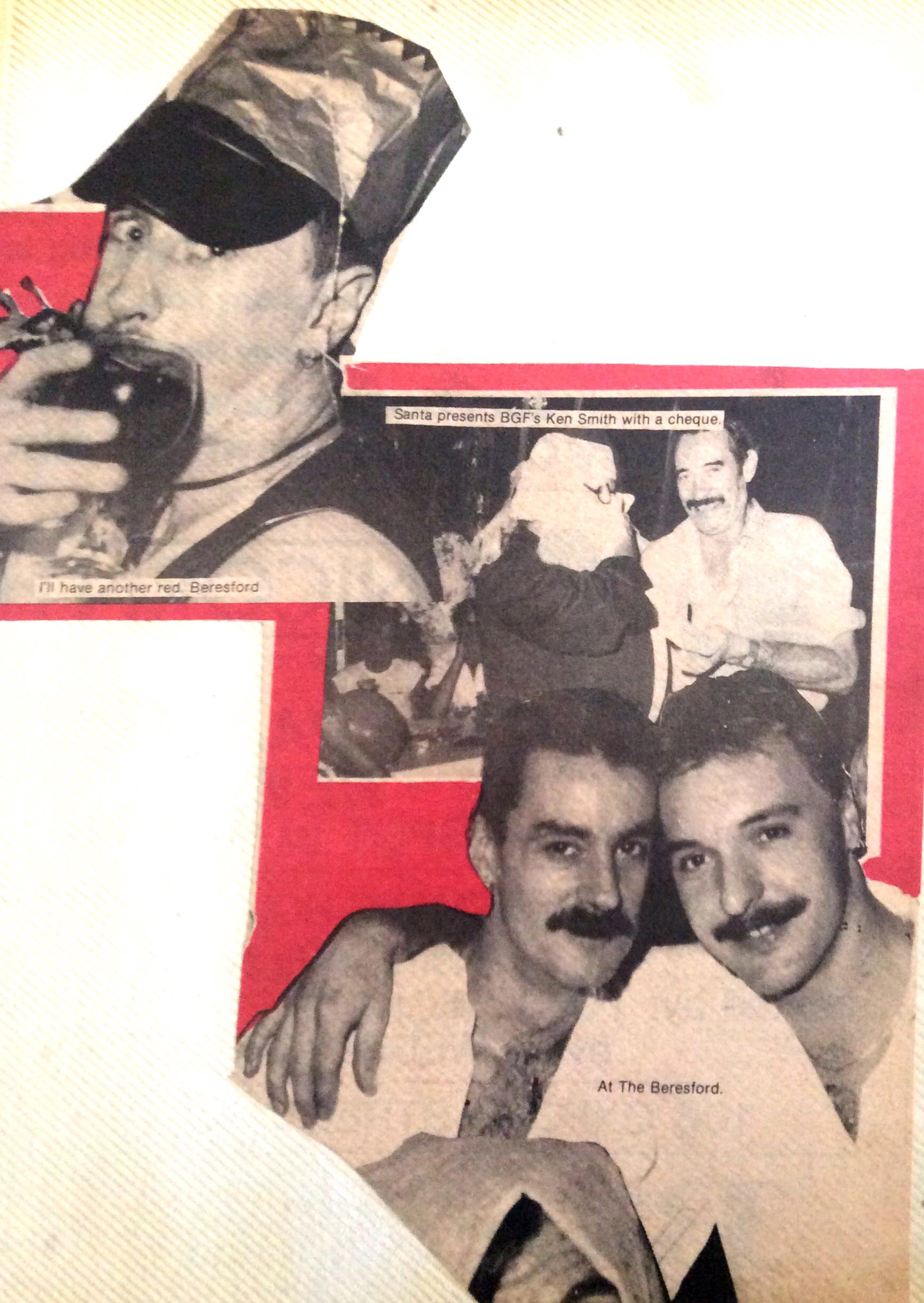
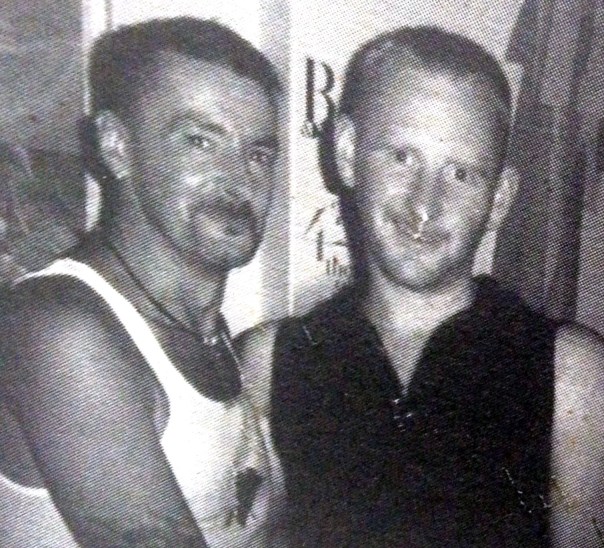
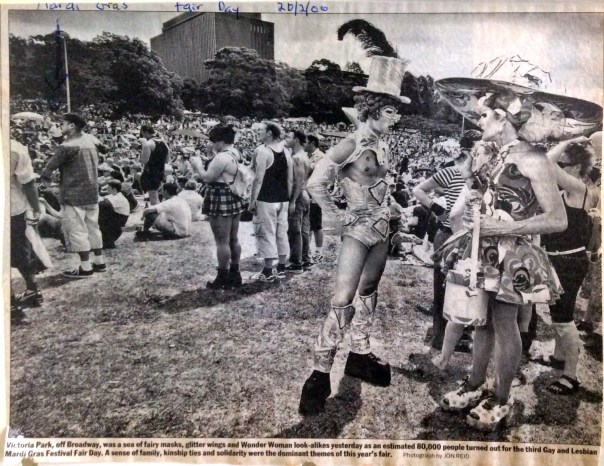
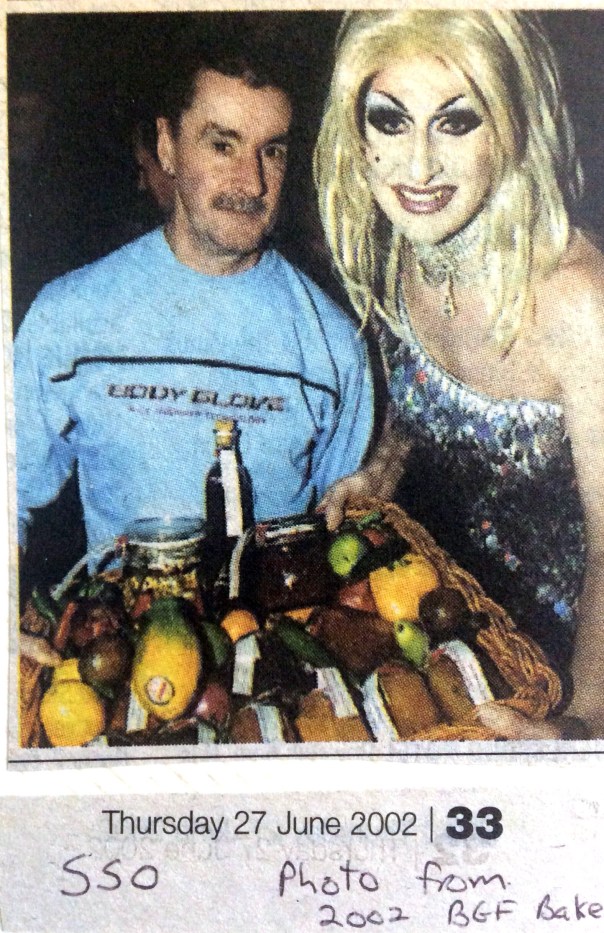
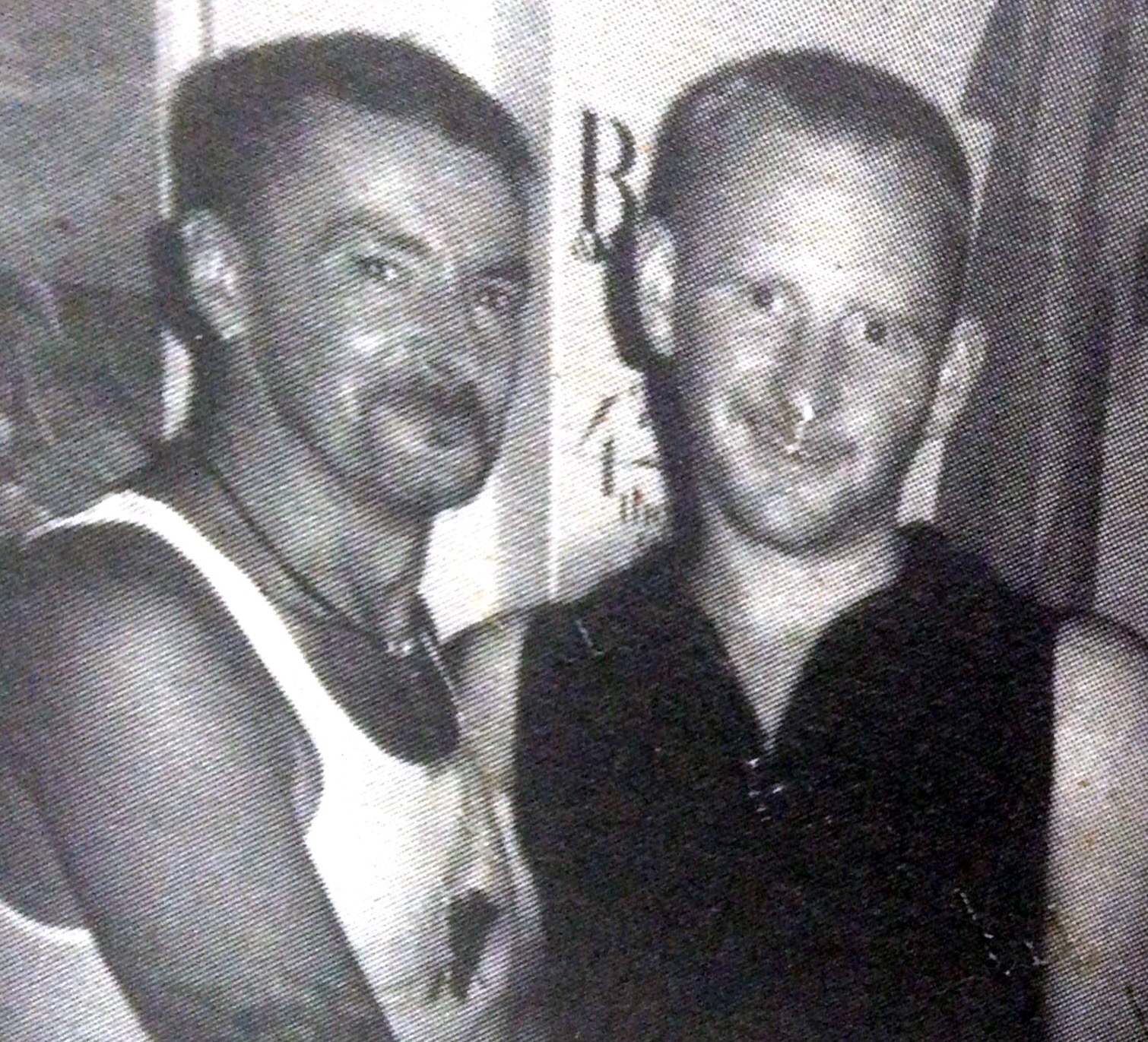
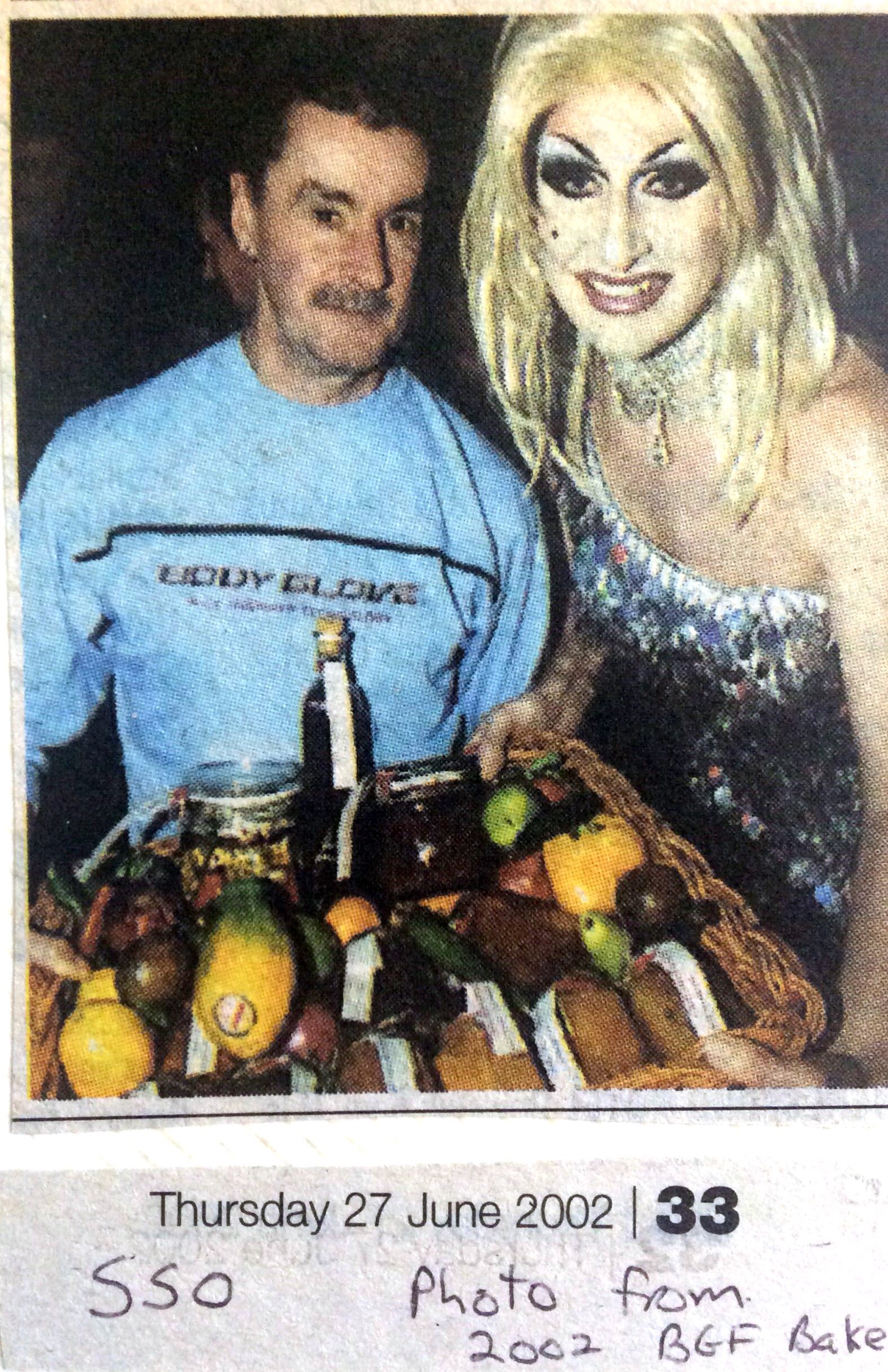
Above 2 photos taken in 2002. Private collection of Tim Alderman (Author)
The inept and much despised Tony Abbott is NO LONGER OUR PM. You can probably hear the corks popping thousands of miles away! Five Prime Ministers in something like 8 years – a record for Guinness, undoubtedly! I can hardly believe I no longer have to look at hus ugly face, listen to his inarticulate speech, put up with any mire if his policy-on-the-run, and idiotic “Captains calls” that have nade all Austealians look like idiots on the world stage!
Already celebrations are underway on social media as the excitement ramps up at this horrid mans well-deserved demise! Never in the political history of this country has a PM been hated so much, ir a government been so inept. It had gotten so bad that his own party turned against him! You can’t run a country on three word slogans, and by pushing uour own Catholic and far right-wing agendas. Nor can you expect people to support out-dated policies, and a lack of humanity, compassion and emoathy in what you espouse. People, especially voters, deserve and exoect more.
Along with getting rid if him we also dispense of the horrendous bunch of incompetent ministers called a frontbench. At least Julie Bishop had the sense to desert the sinking ship.
And Turnbull…we’ll just have to wait and see! At leadt he has a living example of what NOT to be like!
Farewell Abbott! No one will weep for you! Now to repair all the damage you caused! Fuck off – I never want to see or hear from you EVER again!
The following commentary is from the FB page “Veganurth”:
“Malala Yousafzai & Kylie Jenner just turned 18 – Kylie got a brand new Ferrari and spent $10,000’s on plastic surgery and botox. Malala was awarded a Nobel Peace Prize, survived a gun shot to the face by the Taliban, opened a school for Syrian refugees and is inspiring education for kids around the world. What’s upsetting is the media is only covering Kylie as “breaking news” and not mentioning a word about Malala’s powerful strength and courageous passion to change the world…. Kylie is immortalized because her parents are rich, she shops on Rodeo Drive and gets drunk at parties….. Malala is infinitely more beautiful!”
The dumbing down of both us, and how the media treat us, has been an interesting exercise to watch over the decades. A news item during the weak was….Woolworths dropping its grocert prices! Really! News? I just laughed it was so ludicrous. Then we have Tracy Grimshaw – a journalist I USED to respect before she fell into mediocrity – and her “A Current Affair”…not! Since when are neighbourhood disputes, germs on kitchen sponges! And old people being ripped off been “current affairs”? Current affairs used to be commentary on the hews, an extension and clarification of important daily news items, but now – with the exception of non-commercial television – nothing but social drivel We see it every day now, news that is aimed at the most stupid and impressionable sector of the community. You only have to hear talk-back radio to see how it filters down to inane, racist and prejudicial argument, people babbling on about things that they know absolutely nothing about. The whole Halal issue was a very good example of social rantings from people who didn’t even know what it was! And don’t even start me on the cult of celebrity! Or our use of the word “hero”! The above is a great example of how the “news” distorts values, gives credence to the undeserving, while the people and ideals we really should value are trampled under foot, and left as footnotes! Thank heaven for unaligned, freelance journalism! These are the only ones observing our politicians, leaders, big business, and world affairs, and commentating on it in a realistic and responsible way! Commercial news services – and those owned by so-called “media magnates” who use the services to espouse their own perverted world view…Rupert Murdoch and his disgraceful Fox News is a great example – make the future of nees reportage very frightening! When truth is swallowed and exchanged for digestible drivel, those of us who think, analyse, research and voice alternative opinions to the tripe and inane diatribes that are vomited out by our daily newspapers, and television news services, truly have to be concerned.
I have to be the first to admit that my immediate gut-instinct on how to handle the whole ISOL problem is to just “bomb the bastards out of existence”! But gut-instincts rarely provide solutions! The decision by the Australian government to provide air support to the UN/US/UK air forces is a bad one. For starters, there is no end-date to the support. I have already lived through two long term wars in my lifetime, and this was exactly how they protracted out into years of warfare on a devastating scale, hoth in terms of military and civilian – usually collateral and innocent – lives. Neither war ceased after troops were withdrawn, and I see nothing different with what is going on in Iraq. Whether this war will result in feet-on-the-ground military action remains to be seen, but we ertainly can’t get drawn once again into years of warfare that is not going yo end in a toral defeat if these obscene extremist fundamentalists. Once again, religion rears its ugly head in the world. It seems we never do really learn!
The current “trendiness” of genealogy, and the push by sites like “Ancestry” to get people interested in their family history has a downside – apart from hundreds of trees that are started and then deserted – for those of us who take it seriously. I do use “Ancestry” – indeed, have my whole tree up there – and it can be very useful for filling in gaps that you can’t find information for…though only if the names you draw from other peoples research have themselves been researched. Like many others, my tree is public, and anyone is free to take information, sources, documents and citations from it. However, there is a tendency for many trendies to want to take shortcuts, so just take information from trees without researching themselves, thus passing on information that is often not correct, which in turn has a pyramid effect as others take the information and add to their own trees. There are also those who are just headhunters and only interested in how many people they can add without checking anything at all. A guy on a genealogy page recently was bragging about the 20,000 people he had on his tree. When challenged about whether he had checked the sources for all of them, his comments suddenly stopped. Obviously…no!
I have just add d a convict to my tree – one of several who are closely related. This one is directly related to my maternal Grandmother’s sisters son’s wife…in other words, the wife of a first cousin. Thinking to check information against other trees, the results were fascinating, and a lesson on checking sources. Incorrect spellings of a prominent name, due to an obvious transcription error, was shared amongst the three trees I looked at. Incorrect naming of children, adding children twice – they were using census…as most of us do for England…but had added, for example, an Evangeline D born 1838, and an Evangeline Dorinda born 1838. The error there seems pretty obvious to me! They had made this error with three children, as if the family wasn’t big enough already without an extra three. They had poor Thomas Street arriving here in 1811 to start a 7-year sentence, then arriving again in 1816 to serve another 7-years. Poor bugger! A bit of research, and tying together some facts from the Colonial Secretary’s Papers – it’s all there – would have shown the 1811 arrival to be correct. As it is, the guy has a really interesting history here, and made quite a bit of money after being pardoned – something they don’t seem to have picked up on.
And people hate being corrected when they make mistakes. I have commented on three trees about inaccuracies, and been ignored. One woman, who I had quite a bit of correspondence with, made three errors with MY bloodlines…she added one colourful son to a cousin (he not only had different parents, but was born in a totally different area) who, despite my pointing out the incorrect parentage, is still there in her tree. She also had an incorrect birth date for a GG aunt, and had attributed her to a non-conformist meeting house record…despite the Priscilla she attributed it to having a different mother. All three errors are still there. Needless to say, I don’t trust any of the information on her tree.
I love seeing an interest in genealogy, but making people think that you just type in a name and off you go, and a little leaf popping up next to a name will give you all the correct information you heed is total bullshit. It is all about filtering and researching. There are no shortcuts!
There is an adage that you can choose your friends, but you can’t choose your family…and fortunately – or unfortunately – it’s true. And oddly, as distinct from family groups in centuries past where family history and lineage was often passed down through word-of-mouth, these days we seem to know very little about our family history, or who we are, and how we are related to others in our “group”.

I attempted to trace my family roots in the early 80s. I had the basics – mothers parents and grandparents, brothers and sisters and their families. My fathers sisters and their families, but that was about it. Tracing family history back then, in the dark ages, wasn’t as easy as it is now. There was no internet, no Ancestry or Family Search, no apps for tracing BDM, graves or potential record matches for family members. No little leaves popping up against names. I contacted my mother with a list of dates and relationships I required to move forward, only to find she wasn’t interested in family, and could only supply limited family information. With my father deceased, and his family alienated, my chances of getting very far looked grim. I entered up what info I had in a large family bible – the only thing that had family tree pages – and put it all on the backburner.
Fast forward to ten years ago. The internet is in full bloom, and Mr Google is a knight-mine of information. I put Pickhills into a search engine, and suddenly all this information came to light through the newly published sets of census from England. A full, colourful family history, hidden from a blinkered families sight, came into full bloom. My family had no idea what they had missed by cutting themselves off from the curiosity to know what their forebears had done! No one knew of my Great Great Grandmother (Paternal) Elizabeth Pickhills nee Appleyard, who was dragged all over Yorkshire by her husband, Rickinson, gave birth to 12 children and had most of them die in her lifetime, who visited her 2 sons in South Australia, was arrested twice, was shipped back to England (presumably) because she was too much of a handful for her kin), and died of “senile decay” – dementia – in Tooting Bec Mental Asylum in London. Nor of my Great Grand Aunt Clara who married into the prestigious De Bomford family in Tasmania, nor my Great Grand Uncles who captained steamers up and down the Darling, Murrumbidgee and Murray Rivers. One of these uncles led such a prolific life that I have a whole arch-folder dedicated to him, and it is suggested that the book “Dreadnought of the Darling” by the famous Australian war correspondent Charles Bean was based on the recollections of Captain George Rickinson Swan Pickhills’ life on the Darling River. Nor would they know that my Great Great Great Geandmother, Clara Pickhills nee Rickinson, was related to the very old and prominent Rickinson family from Robin Hood’s Bay in Yorkshire. What a shame that all this colourful heritage was lost to my family, caught up as they were in the dross of their own lives!
The family tree currently stands at around 8,500 people, related either through blood or marriage. Lineages grow exponentially, so in reality there are no ends, and finding beginnings can be difficult. I am sure the tree is 95% accurate, and I am currently working on sorting out a couple of messy lines. It has proven an interesting experience, and many characters involved have had a hand in world history. We have Cornish miners (my mothers family) who travelled all the way here, hoping for a getter life than that offered in Cornwall and established themselves in South Australia, Broken Hill and Cobar; a Rickinson who was an engineer on Ernest Shackleton’s exprdition to Antartica; many who died in mining accidents; those who fought in WWI and are buried in Villers-Brettoneux; there are several protestant ministers; at least four convicts; bankrupts; relatives in England, Wales, Ireland, the Channel aislands, America, Canada, Germany and New Zealand. We are related to the Henschke – yes, the South Australian wine people – family in South Australia. We have humour, like Happy Victoria Morris marrying Spencer Lemon, thus becoming a Happy Lemon. And, as described below, a host of cads to keep everyone on their toes. Welcome to the world of family!
Errant Family
Elizabeth Pickhills nee Appleyard (my Great Great Grandmother) arrived here after the death of her husband Rickinson. They had 12 children within a short space of time, and of the 12, Edward, Jane, Frederick William 1, Walter and Mary died either in infancy or within a few years of birth. Henry Moorsom joined the Admiralty at 14 and died of Cholera in Bengal when he was about 21. Frederick George, George Rickinson Swan and Clara all moved to Austrlia at a fairly young age, and Charles Edward died while visiting his brothers here. Whether she intended originally to emigrate or just visit is unknown, but her stay was memorable! Anyway, she did ship herself here, and for a while probably lived with George Ruckinson and his wife, Ellen in Goolwa, South Australia. According to the South Austrlian Police Gazette, June 21, 1876 ” .A warrant has been issued at Yankalilla for the apprehension of Elizabeth Pickhills, a widow, and mother of Captain Pickills, of the Goolwa, for larceny of 2lbs. of butter from Messrs. Smith & Swan, sheep farmers, Bullapabaringa. Offender is said to be living at Mr. Luffin’s, Goolwa.” Not quite the thing you can imagine GG Gran doing. We know nothing more about the case except for this note in the South Australian Police Gazette, May 1, 1878 “re – Larceny from Smith and Swan – The warrant for Elizabeth Pickhills has been withdrawn.”. One has to wonder if George hadn’t had a few words to Smith and Swan about his mothers mental condition, and got them to be lenient. It didn’t end there. A writ appears with the Goolwa police dated 2nd May, 1889 against Elizabeth Pickhills . She appeared before a Justice of the Peace, Thomas Goode, charged with that on the 28th April 1889 she did “unlawfully use abusive words in a certain public place, to wit The Parade in North Goolwa, with intent to invoke a breach of the peace”. She had to pay a fine of £2. This incident received a mention in “A Land Abounding – A History of the Port Elliot and Goolwa Region, South Australia” by Rob Linn, chapter 5, page
On the evening of 16 December 1965 at Sylvania, Frederick Lindsay Pickhills – my father – .took his 7-year-old son Kevin out to The Gap at Watsons Bay, and jumped over with him. Frederick survived, but Kevin’s body was found 3 days later by fishermen, floating in Broken Bay.
Colin Edward Campbell...gaoled sheep stealing.
William Thomas Onions went missing whilst supposedly leaving Broken Hill and heading to SA or WA, leaving his wife, Agnes, and 5 children in destitute circumstances.
Above listed as. Cess-pit attendant in the 1895 Wagga Wagga borough expenses.
19 jul 1851 Joseph Onions charged with larceny
25 January 1928 William Joseph Onions (25) indecently assaulted Edna May Hollis (14) and committed for trial at Goulburn Quarter Sessions. On 15 February 1928 was acquitted.
James Greenwood broke into home of Rickenson Pickhills and stole some dresses and a firearm.
John Magg – family convict ancestor. Convicted in Surrey Quarter Sessions in 1822, and sentenced to 7 years in NSW. Arrived here onboard the Surry in 1823.
Richard Blinksell – a wife-basher and thief: Transcription of article from the Queanbeyan Age dated 18 May 1883; “THREATENING LANGUAGE; Richard Blinksell was brought up in custody charged with threatening the life of his wife Sarah Blinksell, of Molonglo. The prisoner had been arrested on this charge by Constable Goodhew, having been given into custody by his wife. After the evidence of the arresting constable, Sarah Blinksell, on oath stated – I am the wife of the defendant now before the court. I gave him into custody of the police on the 11th of the present month for threatening to do me some harm. On Sunday evening, the 6th inst. defendant accused me of stealing his mare, and said to me, If the mare is not brought back to-night I will jump your ____ out. This occurred between one and two o’clock. I said, I never touched your mare. Defendant said, You are a ____ liar; and whatever row we have had before it will be nothing to what there will be to-night. He then went and laid down on the bed. While he was lying there I ran away. I stayed at my father’s house (John Edmonds) for three days. I then came home to my husband again, and brought my daughter and son-in-law with me. As soon as I came in the door the defendant jumped up and asked me why I did not bring his mare back that night. I told him I had never touched her. He told me I was a ____ liar, for he saw me take her. I told him then that I did not want to live with him any longer; I only wanted my three little children. Defendant told me I could take the ____. I called my children together and gathered up their things. As I was going out of the door with them, he called them all back again. I told him he could keep his children, but I did not intend to stop myself. He caught hold of me and was pushing me about to bring me back again. When my daughter found he would not let me go she went for the police. I mean she went to Carwoola and telegraphed to Queanbeyan for the police. I went into the house with my son-in-law; but when the latter went out defendant got up and barred the door against him. I remained with him all night. After staying there some time he told me to take my frock off and go to bed. I did so. After I was in bed some time he asked me if I was asleep. I was not, but did not answer him. He said, You had better enjoy it for it may be the last ____ sleep you’ll ever have. He kept using unbecoming language to me all night. I got up in the morning and prepared his and the children’s breakfast. On leaving to go to my father’s place to do some ploughing defendant walked up to me and spat in my face, making use of some expression which I forget. When he left the house I ran away into the bush and stayed there until the policeman came. I then went with the policeman to my father’s house and gave him in charge. From all that has passed I am afraid to live with him, fearing he might do me some bodily harm. I therefore pray that he may be required to find sureties to keep the peace towards me. To the Bench – I never laid my hands on the mare since the 18th of April last when I rode her home from my daughter’s place. Defendant has often struck me before – both me and my daughter. The last time he struck me was on the 20th of April. To the defendant – I was lying on the bed with my little child when you ordered me to take my frock off. I was trying to get the child to sleep, and did not wish to go to sleep myself. Defendant was then sworn, and stated – I am a farmer and live at Molonglo. On last Sunday week my wife went away from the place and told the children she was going to meet the little boys with the sheep. That led me astray. She had not returned at dark, and when I got my little children asleep I went to look for her, fearing something had happened to her. It was raining hard and I got off and washed my feet in the floods. I heard the next day that she was at her father’s place, and I sent her two messages to come home for an hour or two. She never came home till late on Thursday evening. I asked her how she came to go away in such a clandestine manner without telling me. The daughter then said something; she was there with her husband, Anderson; they came with my wife. I got Anderson and his wife out of the house, and shut them outside, and my wife, my children, and I remained in the house altogether that night. I told my wife she would not be obliged to herself for fetching her son-in-law there. I never that night attempted to raise my hand to her. I did say something to her, but I ‘disremember’ what it was”.
January 19, 1857 at Wheeo. William Apps charged with theft of two cows & 2 heifers.
March 29 1854. Narrawa. William Apps cautions people not to harbour his daughter Ellen, who has abandoned her family home without cause.
William Apps: William was tried at Canterbury on 7th April 1826 on a charge of stealing corn. Found guilty, he was sentenced to seven years transportation to NSW, arriving at Port Jackson on 26th November 1826 on the vessel “Speke”. In 1831 William was granted his Ticket-of-Leave only to have it cancelled on December the same year for receiving a blanket under false pretences from his former master, Mr. William Broughton. For this misdemeanour Apps was sentenced to a week on the treadmill at Hyde Park Barracks. This punishment completed he was re-assigned, but his spirit was unbroken and within days he escaped from his new assignment. His re-capture was notified in the Sydney Gazette on 22nd December 1831. Finally Apps received his Ticket-of-Leave in 1833. From Convict Indents it is known that he was a short man, standing 4 feet, 11 inches tall with a fresh, unmarked complexion, brown eyes and hair. In April 1935 William Apps, aged 32, made application to marry Margery Campbell. Following their marriage, William and Margery Apps continued to live in the vicinity of Sydney and were in Parramatta in 1837 when their oldest daughter, Ellen, was born in that year. By 1849 the family moved to Wheeo, being among the earliest in that district.
Margery Campbell (wife of William Apps), from Sligo, Ireland, was the daughter of William Campbell. When she was 23 she was tried in County Down for receiving stolen goods. For this offence, her first, she was sentenced to seven years transportation. She sailed on the “Palambam” from Cork on 23rd March 1830 arriving in Sydney on 31st July the same year. Margery was 4 feet 11 inches tall with a ruddy, freckled complexion and hazel to grey eyes. On her disembarkment in the colony she was assigned to Mr. James Taylor of Sutton Forest.
Jane Langley – Jane’s story begins on the 14th of September 1785 when she was tried at the Old Bailey with Mary Finn for stealing five guineas from a Robert Robinson, on the 29th of July 1785. Jane’s parentage is unclear but she was possibly the daughter of Edward and Elizabeth Langley, at St George Parish Hanover Sq The birth occurred on the 16th of September 1761 at the Holborn lying in hospital in Endell St. At the time of her trial Jane was a Tambour worker and was described as a tall dark girl with very curly hair, she appeared to be self supporting and doubt exist as to her need to be involved in crime. On the 6th of January 1787 she was boarded on the “Lady Penrhyn” during the Voyage to Australia Jane Langley had the first of her children a daughter Henrietta born on the 23rd of October 1787. There is some speculation regarding Henrietta’s father, Phillip Scriven or Shewring who was a seaman on the The Lady Penrhyn or Thomas Gilbert the ships Master on the Charlotte was also throught to be her father.
Henrietta Shewing (1787—1828) Married to Edward Fletcher 1807 Henrietta, one of twenty little souls born on the convict transports known as the First Fleet, was to be always known as English, and never in England. Henrietta is the only child born on the First Fleet known to have Australian descendants [1]. Henrietta was born on board the Lady Penrhyn at Capetown Harbour, South Africa on 23rd October 1787 [2]. Three of the women convicts on the ship were known to be midwives: Mary Parker, Ann Colpits and Sarah Burdo. The ship’s surgeon Arthur Bowes Symth was definitely not present, and even recorded later Henrietta in the surgeon’s log as male. The ship’s log at least got the sex correct! Rev. Richard Johnson came on board to baptise the baby on the 4th November 1787, an event well liked by the crew because they received an extra ration of grog. The sailors who also had fathered children had the opportunity to buy tea and other little extras at Cape Town for their women [3]. Henrietta arrived on the shores of Port Jackson 6th February 1788, a sultry stormy evening. The next two years were hard and famine was severe in the colony, taking its toll especially of the small children. It was decided to send five of the surviving children and their mothers to Norfolk Island. That in itself was an adventure, as they arrived in high seas and were only at great peril able to be landed at Cascade with the seas breaking into the boat which was very frightening and caused much panic and screaming. That night the Sirus was swept on to rocks and shipwrecked. Henrietta lived on Norfolk Island for the next five years and in that time her mother married the marine Thomas Chipp. A brother Robert was born (and died) and a sister Ann, and a third child is recorded. I think this could have been little Thomas Chipp whose death is recorded early 1795 but most members of the family think the evidence is too flimsy. There were school classes taken by a number of individuals and eventually in 1792 Thomas McQueen was appointed schoolmaster and Susannah Hunter his assistant for seventy five pupils. We could imagine Henrietta would have been one of the pupils. Norfolk Island had passed from its early idyllic days to a wilder rougher life, and Thomas Chipp and his family decided to leave there and return to Sydney Town which had also become a pretty wild and rough place. The Governor’s wife Mrs. King started an Orphan School to house the homeless girls living on the streets of Sydney. This first Orphan School stood on the corner of Bridge and George Street. Not all the girls in the institute were orphans. In two of her letters Henrietta refers to having been in the Orphan School. The family was on record as being “on stores” in 1804. Stores were the equivalent of social security. On the 23rd March 1807 nineteen year old Henrietta was married to the convict Edward Fletcher by the Reverend Henry Fulton at St. John’s Parramatta. Edward had been working for the Knights as a servant, as was her thirteen year old sister Mary Chipp, so we assume they met through mutual acquaintances. This is the period of time Henrietta’s stepfather would have had land at Toongabbie (Seven Hills, later to be known as Bella Vista) and Isaac Knight had the adjoining farm. Henrietta applied for a land grant and a cow on the grounds she had been an inmate of the Orphan School and was granted a thirty acres at Bankstown. Today the land is occupied by Liverpool Hospital. Governor Macquarie revoked all the land grants made by the Rum Corp after the overthrow of Governor Bligh and Henrietta reapplied and was granted the Liverpool land again. The annual rent was to be 2 shillings a year after 5 years. Thomas Moore [4] apparently wanted the grant Henrietta had at Liverpool but probably helped her to obtain the grant at Narellan plus an extra ten acres, which became known as Fletcher’s Farm, and today is the land near Springs Road, Narellan. Henrietta had six children: Edward born 8th March 1808 in Campbelltown, baptised at St. Luke’s Liverpool; John born the 10th May 1810 at Cowpastures and baptised by the Reverend Samuel Marsden at St Luke’s on 15th May 1810. Eliza was born at 12th August 1812 at Campbelltown. Susanna was born on the 12th May 1815 at Fletcher’s Farm, Campbelltown; Blanche was born 17th December 1823 and Elizabeth 26th April 1828. Since 1810 Edward had been employed as a constable in the Cowpastures District. Henrietta’s health had declined over the years and by the time she died at the age of forty-one years, she was blind and crippled. Thirteen year old Susanna was working for the Rev Thomas Hassall as a maidservant on a nearby property, but William Boyle Henrietta’s nephew was living with the family, his father having died. William’s mother Mary was not coping with the change in her circumstances and her sisters took in her children. Edward had a reputation for drinking, but it was said he was always kind and thoughtful to his wife and children, and Henrietta was described as “an exceedingly reputable woman who bestowed great pains in bringing up her children”. In 1828 there was the first outbreak of whooping cough in the colony and two thousand people died as a result of it. One could be excused for wondering if Elizabeth and Henrietta were two of the victims. Henrietta and Edward Fletcher are buried in St. Peter’s churchyard Campbelltown in a well-cared-for grave, which also has a First Fleeter’s plaque for Henrietta. Though Henrietta never lived to see her grand children she had thirty six grand children. There are other family graves St Peters churchyard including Susanna Chapman’s Henrietta and Edward’s daughter. Thomas Chipp always accepted Henrietta as part of his family, and Henrietta was involved in her sisters’ marriages and lives. Thomas was the only grandfather her children knew. NB Surname: Henrietta is variously quoted with the surnames Scriven, Shewring, Skirwin, Chipp and Langley before marriage. Grandson: MH has also written a piece about William Henry Fletcher who was a grandson of Henrietta. Notes [1] A number of children born to marines on the journey, returned with their families to England. (‘Orphans of History —The Forgotten Children of the First Fleet’ by Robert Holden). [2] The baby was born at 1pm so in navy parlance was dated the 23rd as their dates changed at noon. She was also recorded as the child of T..G.. which 198 years later was to cause speculation on who was T..G.. With the passing of sailing ships the navy parlance for calling sailors after their job had been forgotten. Philip Scriven was the foremast man responsible for the Top Gallant sail.[3] As recorded in Jonathan King’s book ‘The First Fleet’.[4] This is the same Thomas Moore who is credited with founding Moore Theological College. He was a land dealer in the early colony.NMargaret Hardwick, 2009
Lynn Shepherd was indicted for robbery in 1838, found guilty and sentenced to life on Norfolk Island
Addison Mitchell was indicted for murdering William Ablett on 8 Nov 1856 at the old Lachlan Road. John Collins testified at the trial before Mr Justice Therry at Bathurst Circuit Court] “John Collins, lives at No. 1 Swamp, near Carcoar, I recollect on 7th of November, 1856, being in company with Ablett, and prisoner; in answer to an inquiry made by prisoner, he said his name was Ablett, and he was a native of Cambridgeshire ; I should say he was about 20 years of age, 5 feet 9 inches in height, fair complexion, without whiskers, light hair, dressed in a light tweed cap, plaid jumper, fustian trousers, and watertight boots ; in prisoner’s presence, he told me that if he could find an old horse he would buy it to carry his swag to the Ovens ; I sold him an old bay horse, saddle, and bridle, for £6 ; he paid me in prisoner’s presence, with two £5-notes ; prisoner drew out the receipt; Ablett had a tent with him, and I noticed a shingling hammer (hammer found near fire shown) ; I believe this is the hammer deceased Ablett had; I noticed the boots he wore, and noticed that nails were out in front of the left boot ; to the best of my belief the boots I now see in Court are those I saw on Ablett ; the bridle now produced (found in prisoner’s bundle) is the one I sold to Ablett; I saw Ablett last at Radburn’s, 1 mile and a half from my house; he started, leading the horse with his swag placed across the saddle ; this was on Saturday ; he went in the direction of the junction of the Wagoola and Grabine roads with the Lachlan road; the horse might travel 20 or 25 miles a day ; after I left deceased, and on my return home, prisoner complained of his hands being sore from blisters ; I said we would spell that day, and commence again on Monday morning ; prisoner afterwards went out in the same direction that Ablett took ; about an hour afterwards; I did not see him again until next day, Sunday, about 2 p.m ; he was then very dirty ; he washed himself, and shortly afterwards I received information that my horse that I sold Ablett was near my house ; I went out and found the horse hobbled close at hand; I said, in prisoner’s presence, that the horse had been brought back ; prisoner said he had strayed back ; in the evening I told prisoner that it was no use in saying he did not bring the horse back, as he had been seen riding him ; he said, “well what of it, you don’t know Ablett as well as I do, he is a bolter, and there are constables after him in all directions ; that he was within a quarter of a mile of the place, but was afraid to come in ;” whilst I was sitting near the fire with prisoner, I saw the remains of a pocket-book in the ashes ; it had a clasp like the one I saw with Ablett ; I was frightened to put it in my pocket as I was alone with the prisoner; after prisoner left my house I searched for it, but could not find it ; I identify the handkerchief now produced, found in prisoner’s bundle, as one I gave to Ablett with flour in it, also the saddle and bridle sold by me to Ablett, and found concealed near my hut; on the Monday morning I discharged prisoner being suspicious of him; as he left I saw him pick up the bridle now produced; I identify it as the one sold by me to Ablett; I gave information to the police. Constable McFadden re-called : In consequence of information given by last witness prisoner was apprehended for horse-stealing: it was in looking for and making enquiries about Ablett that I found the camping ground on the old Lachlan road ; there were appearances of a tent having been pitched, there, and about half a mile distant in the scrub I found the ashes of the fire in which I found the bones, buttons, shingling hammer, hair, and buckles, which have been produced ; I made enquiries in the neighbourhood of the camp, but could find no traces of any person answering to Ablett’s description being seen in that neighbourhood. Thomas Radburn, of Carcoar, recollects Collins coming to his hut on 8th November, to change a 5 pound note ; he was accompanied by a young man; witness’s description tallied with that already given by Corby, Wood, and Collins. James Bradburn, son of last witness, gave the same evidence as to appearance and dress of Ablett ; two and a half hours afterwards saw prisoner following in the direction taken by Ablett ; when Collins told prisoner next day that he had been seen riding the horse, prisoner replied, well, what of it ? Katherine Radburn gives same description to that already given of Ablett, and thinks that the prisoner was the man she saw going in the same direction to that taken by Ablett two hours after. Richard Byrne, knows, the prisoner ; saw him on Sunday morning, 9th of November, between eleven and twelve a.m., at a place on the Lachlan road; about two and a half miles from the junction of the Wagoola and Grabine roads with the old Lachlan road; he was riding on a short brown-tailed horse, it was very thin, he had a bundle before him as full as it could hold ; I saw the horse prisoner was riding afterwards at the Court House ; prisoner was very dirty, like a man after a long journey. William Mulaly lives at Black Hill Creek, on the left of the Lachlan road, about quarter of a mile off the road; on Sunday, the 8th of November, prisoner came to my house between 11 and 12 a.m.; he-had a very poor brown horse with him ; I asked him whom the horse belonged to ; he said it was Collins’s he lent it me so that I could come over to you to get employment ; I asked him if his name was Mitchell; he said, yes ; there was neither saddle nor bridle on the horse when I saw him, prisoner’s appearance was that of a man after a hard day’s work, he was very dirty. Cross examined by Mr. Dalley: No appearance of having been engaged about a fire; his clothes were not burnt; he looked like a man after a hard day’s work. John Radburn identified the saddle as being found by him concealed at the foot of a tree near Collins’s hut. John Meiklejohn, constable in Carcoar police: On Sunday morning, the 9th of November, I was on the Lachlan Road, near the junction of the Wagoola and Grabine roads; I saw a fire in the distance, off the road about half a mile. I afterwards was taken to the place by McFadden, and I then recognised it as the place where I had seen the fire on the 9th November; looked for tracks at the junction, but could not find any. James Grant, the prisoner, was in my employment as a shepherd; he knew the country well in the neighbourhood of the junction of the roads to Wagoola and Grabine with the Lachlan road. On Sunday, 23rd November, McFadden and I found remains of a fire in a scrub, half a mile off the road; we found bones, buttons, a hammer, and portions of hair there; at the junction a tent had been pitched ; this was half a mile from the fire in the scrub. ………………The jury, after a short absence, found the prisoner guilty; and the Judge; in a most impressive manner, passed sentence of death upon the prisoner.This case occupied the whole day from 10 a.m. to 8 p.m.
Doris Olive Irene Nunns charged Thomas Henry Roy Jackson of attempted rape on 14 July 1920. He was acquitted.
Richard Cole Seaton charged with stabbing his wife with a knife and inflicting serious wounds, and also assaulting his niece.
John Henry Theodore Merrion was killed when falling from a roof during a demolition in Ngahauranga, NZ.
On 11/5/1903 Ellen Prest was remanded in gaol at Murrumburrah for 8 days due to “unsound mind”
Private Alfred Sydney Polglase deserted the army on July 21, 1916 and there was a warrant out for his arrest
Thomas Henry Roy Jackson charged with the attempted rape of Doris Olive Irene Nunns nee Polglase on 14 July 1920. Acquitted.
Squire Brooks – convict ancestor on my maternal grandmothers side – the Collins family
1924 Horace William Brooks, 9yo, drowned in Eastern Creek along with an 11 yo friend.
Sat 28 Sep 1867 at Braidwood Police Court. Thomas & Eliza Hobbs daughter Esther, 10yo, (born out of wedlock) was being prostituted by her father – a drunkard – and his wife – a drunkard and prostitute. Frederick Stephens, a witness, recollected that on Christmas Day saw Esther and a man named Dean naked together in a waterhole..the details here being too lurid to print. He had heard that it was common for liberties to be taken with the girl. Dean was known as a regular with the girl, and had been arrested for sexually assaulting her, but had been acquitted. Her parents received her earnings. The parents were known to often leave all the children on their own for long periods, to fend for themselves. The object of having the girl in court was to save her from her parents. She was sent to the industrial School. The Hobbs family members were regularly in court for drunkenness and foul language…and never argued the charges. On Friday 18th sep 1874 at Braidwood, the above Dean was admitted to hospital, having been brutally beaten, and died that night. He was found about a mile and a half from the Hobbs house, after having been out drinking. The Coroners Court jury found that death had been caused by person or persons unknown.
1884 Lynn David Nettleton had a warrant for his arrest issued for disobeying an order to financially support his illegitimate child.
Ada Camden was excited to be marrying Harris Horder...so excited, so it seems, that she forgot to divorce Roland Watts. Henry had their marriage dissolved on the basis of bigamy.
In 1885 Richard Camden alias Crib alias Snow was accused of stealing two horses belonging to James Hemsley and Thompson Ross. He was described as being 5’10”-11″, no age given, stout build, sandy complexion, and sporting Dreadweary whiskers. He was thought to have gone to Tambar Springs. No warrant was issued.
In 1919, Horace Horder (17) and a group of boys were charged with breaking and entering the home of William Clement and stealing jewellery etc to the value of £10 (part recovered). The boys were committed for trial, bail allowed.
Baptism Certificate for Sarah Camden in 1852 seems to have some difficulty deciding whether the surname should be Jones, or Camden. The transcriber made a note at the end of the certificate that the minister had added after the mothers name, on the original, that the child was born as the result of adultery. It would appear that the 17yo Richard had a dalliance with the 37yo Elizabeth Hale…with the predictable result. Sarah ended up a Camden.
In 1883, Gertrude Agnes Finke (the future Mrs Catherine Agnes Bottrill), was admitted to the Adelaide Destitute Asylum, along with 6-month old David. David died shortly after.
In 1773, at Helston Cornwall, Robert Barwick Scadden and his wife Anne were excommunicated. No clear reason is given.
24 December 1890, Thomas Ironfield charged with breaking & entering three homes in Leichhardt & Balmain. Jewellery & watches stolen. Later charged with pick-pocketing crowds in The Domain. His wife later charged him with desertion, claiming he had assaulted her for no good reason, then throwing her and her children out of the house. He also had her tossed out of a lodging house. He, in turn, said he had no desire to live with her. He was gaoled in 1898 for the robberies.
Mining Accidents – CLEAVES William
Name: CLEAVES William
Age: 0
Date: 05/02/1845
Year: 1845
Occupation:
Colliery: Hayeswood Coalworks
Owner: S.S.P. Samborne and Co.
Town: Timsbury
County: Somerset
Notes: Adjoining were old workings which had lain unused for many years and were filled with water. About 100 men descended for the day shift at about 5 a.m. Mr Evans, the overseer noticed there was an unusual appearance of damp but initially he did not become too alarmed as he thought it was only “the bleeding of the coal”. William’s body, along with that of George Palmer was not recovered until the following October. Two weeks later John Flower was brought out. Later another body was found and was buried in the name of Joseph Gullick. The mistake was discovered when the body of Joseph Gullick was found. 11 killed. Left a wife and 6 children.
17 Feb 1952 Adolphus Stead reversed over Margarey Ann Gould, aged 4, in his car at Broken Hill. She suffered fatal head injuries.
1903, Elizabeth Stead dies after inadvertently taking strychnine after an afternoon of consuming alcohol.