A PLAN to build a “gays only” gated housing estate “with all mod cons” has been revealed as an elaborate hoax.
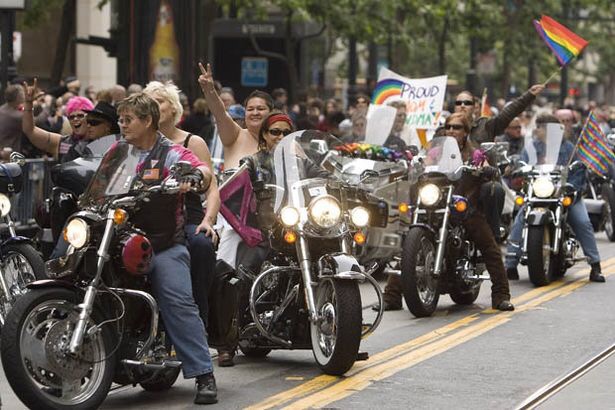
ALL ABOARD: Would a gays only commune be of any benefit at all to society? [GETTY]
The Gay Village project described itself as a scheme to create a prejudice-free community in Tilbery, Netherlands, complete with a cooking school and tennis courts.
The plan was endorsed by officials, estate agents and developers when it looked like building may go ahead.
He said: “A tolerant city is pleased to have a gay community within its borders.”
It later emerged that the officials were persuaded to play along by the Roze Maandag (Pink Monday) foundation which hosts an annual day at the Tilburg Fair, dedicated to LGBT issues.
HOAX: The plan for the housing estate was an elaborate joke to raise awareness [GETTY]
Roze Maandag posted on its website stating: “Although Gay Village is not real, intolerance against the gay community is.”null
The website explained how they were inspired to act by recent surveys showing that nearly a quarter of all gay men in the Netherlands – regarded as one of the most tolerant countries in the world – did not feel safe in their own neighbourhoods.
Despite being a hoax the story was met with intense criticism when it was first revealed.
Many argued that by “ghettoising” itself the LGBT community were doing nothing to help tackle homophobia and transphobia.
The group said it was pleased that the story gathered negative attention, stating: “to the effect that a gay village is indeed ‘ridiculous’”.
A spokesperson told the Netherlands Times: “We are happy with the thousands of negative, and the fewer positive, reactions.
“It is great to hear that the majority is against the idea. All we wanted was to create an awareness, and we are certain that we succeeded in this.”
EQUAL: The hoax highlighted the need for society to be more inclusive of all members of all communities [GETTY]
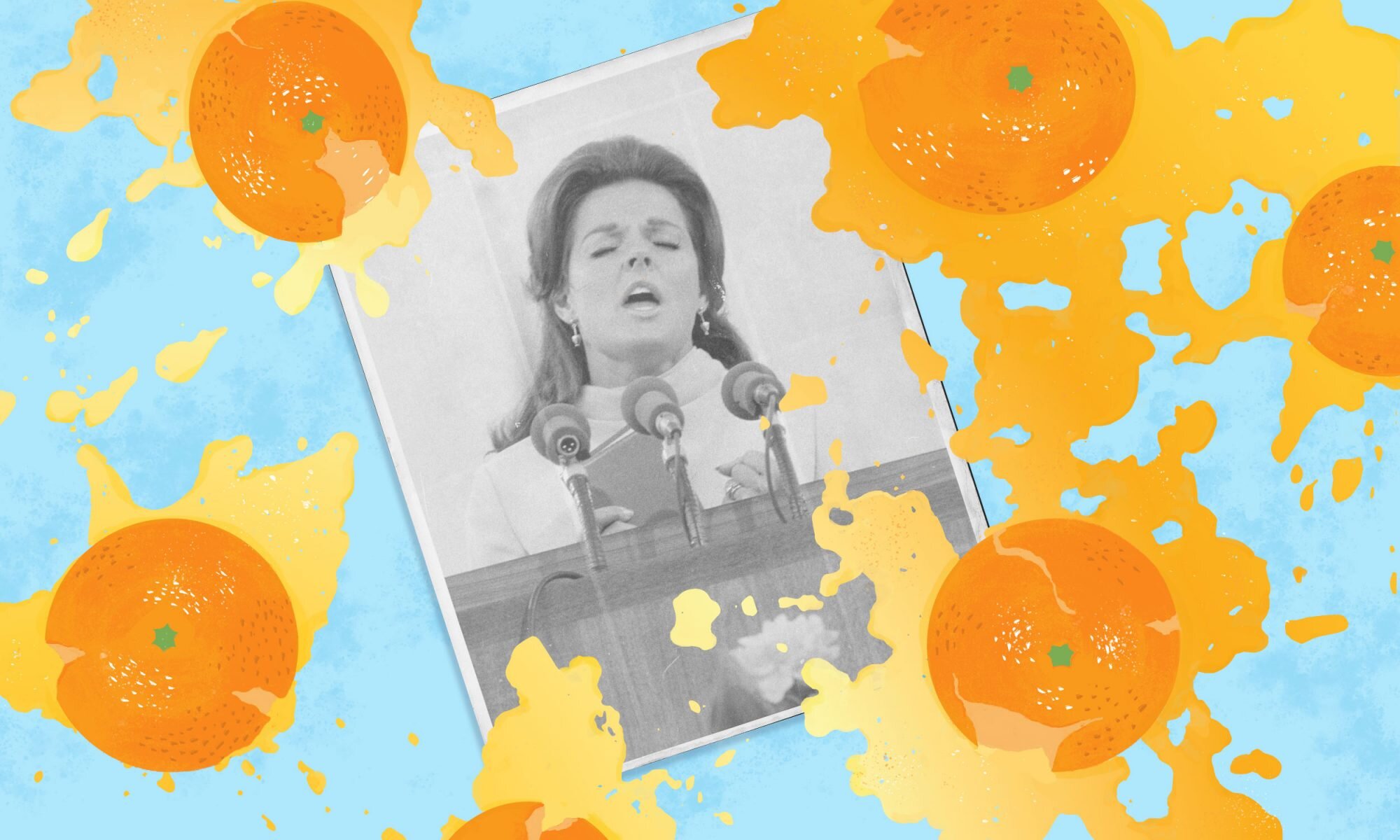
How a breakfast table staple sparked solidarity and protest in the queer community
CREDIT: ILLUSTRATION BY LAUREN KOLM
As she heeded the call to come on down, descending the Price Is Right’s audience riser wearing a headscarf with juicy swirls of lemon, tangerine, and lime, Yolanda Bowsley’s breasts jiggled out of her tube top. Producers flashed a thick blue bar over the contestant’s naked bits, people in the studio howled, but Bowsley looked neither freaked nor ashamed. Meanwhile, on ABC’s new sitcom Three’s Company—a show with double entendres about three-ways and casual lust—a pair of tangy orange throw pillows on the set’s central couch visually throbbed, the implied accoutrements of seduction. Sexual freedom in 1977 tended to express itself in fearless, provocative hues of citrus.
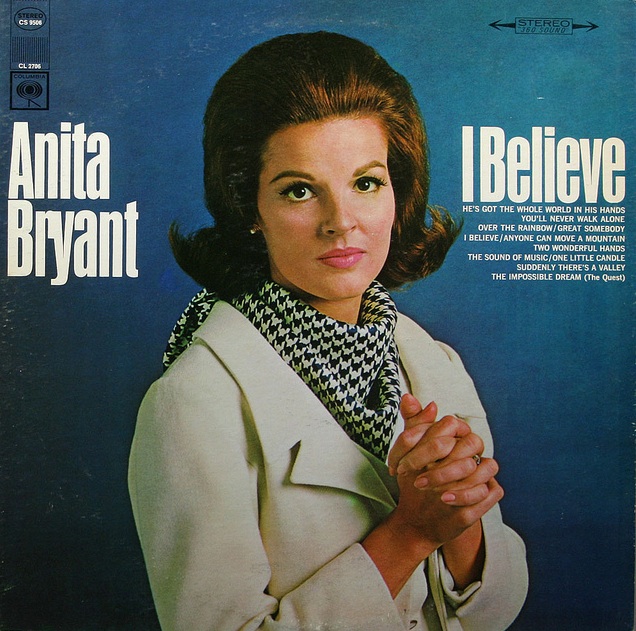
But not for the queen of orange juice herself. Not for Anita Bryant, who wore shirt-dresses the color of lemon meringue pie filling and tangerine cap-sleeve bodices as if they were the armor of the righteous in battle. Bryant saw sexual openness as a challenge to God’s order, a threat to what she liked to call “straight and normal America.” It lacked decency. It corrupted children. It had to be stopped.
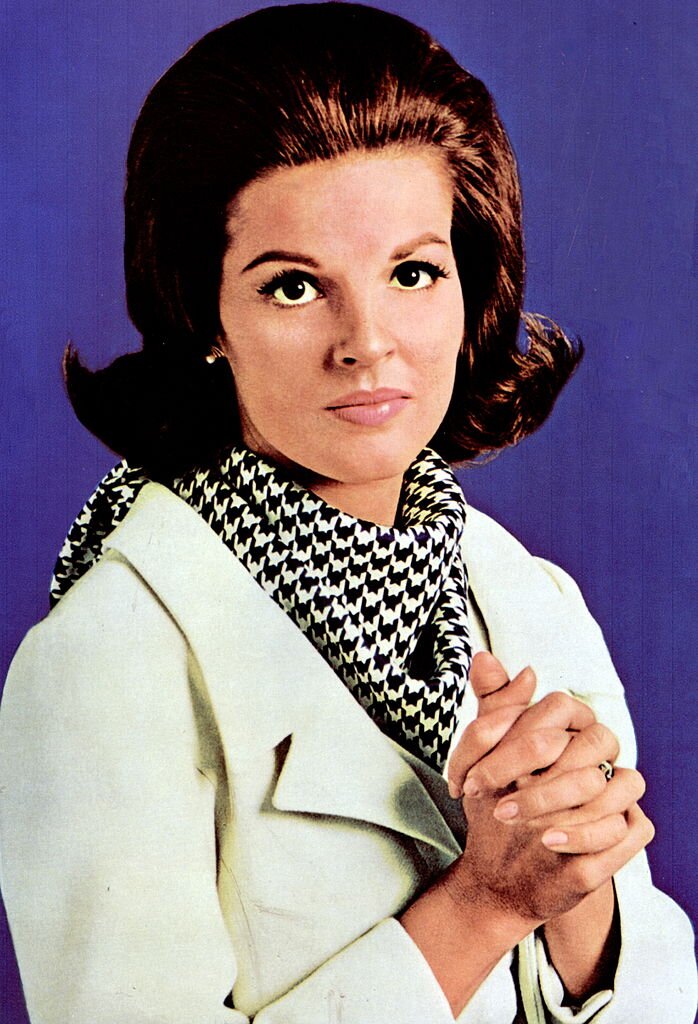
Bryant had been Miss Oklahoma once, beautiful, with pale skin and dark eyes. She was Jackie Kennedy with a hard-spray flip and a soft country twang, raised on church suppers and sticky flour gravy. As a tightly poised pop singer in the early ‘60s, she’d built a shortstack of hits, earning three gold records. She married her manager, Bob Green, a hunk with a handsome mess of sandy hair who knew how to pair a blazer with a turtleneck. They were a dream couple, country stylish like Elvis and Priscilla but without the obvious diet pills and demons. They lived in a six-bedroom mansion on Miami Beach’s North Bay Road, where palms rustled and clouds billowed like Rococo scrollwork, framing a crystal blue sky.
In 1969 Bryant began her second and most lucrative career—the Florida Citrus Commission, a politically powerful consortium of the state’s largest growers, crowned Bryant the Sunshine State’s official OJ Sweetheart. She became the star of TV spots and magazine ads, a lifestyle ambassador for frozen concentrated orange juice.
In an early commercial, Bryant strolls a sunny citrus grove, stabs a spigot in a dangling orange and sings a loping jingle, “Come to the Florida Sunshine Tree,” as a five-foot glass fills with juice. She tugs the spigot out and collects the last golden sluice in a tumbler of normal size. She sips. And in an Oklahoma drag that’s genuine, gentle, and perfect, with just enough post-production echo to make it sound infallible, Bryant drops the tagline: “Breakfast without orange juice is like a day without sunshine.”
Orange juice was, in a way, the Sun Belt’s symbol: healthy, wholesome, and optimistic, like… well, sunshine. Anita was its avatar. Then she became its avenging angel.
Per capita American OJ consumption would end up just about filling the Citrus Commission’s mighty sloshing prop glass. Houseware manufacturers like Libbey included pony-size juice tumblers in starter sets. Bars invited in a back squad of OJ party cocktails—Screwdrivers and Tequila Sunrises—to soak up the glut of concentrated juice. They invented the Alabama Slammer and the Harvey Wallbanger to keep things percolating in fern bars and fairway lounges.
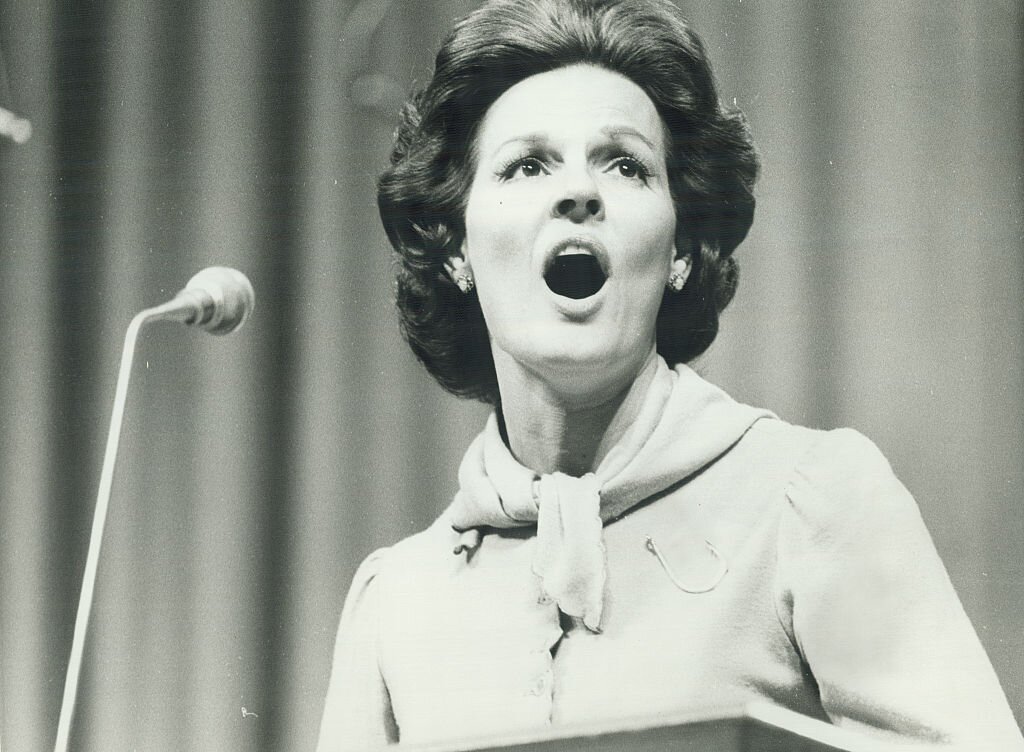
CREDIT: PHOTO BY GAB ARCHIVES VIA GETTY IMAGES
There was something else bending in OJ’s favor: a cultural tilt south. Starting in 1969, the collapse of the Rust Belt—factories in the Northeast and Upper Midwest closing, towns boarding up, labor unions shrinking—became an unavoidable narrative for papers and the evening news. The Sun Belt, a made-up political projection encompassing a westward sweep of the map from Jacksonville to San Diego, was where a new conservatism was spreading like the creep of subdivisions in the desert near Phoenix. Orange juice was, in a way, the Sun Belt’s symbol: healthy, wholesome, and optimistic, like… well, sunshine. Anita was its avatar. Then she became its avenging angel.
The year Bryant stabbed that orange with a spigot, 1969, was a year of events more tumultuous billowing up north. At New York City’s Stonewall Inn, demonstrations smoldered for days following a routine bust of queers, trans women, and drag queens that set off a riot, the official start of the gay liberation movement. In spite of an ambient distaste for homosexuals and the lack of even one openly gay or lesbian elected official anywhere in the nation, by the end of 1976, legislative bodies in 40 cities and counties and one state (Pennsylvania) had passed LGBT nondiscrimination laws in some form. An enlightened consensus was jelling. It said citizens shouldn’t be fired, or evicted, or denied service because they were gay, all standard under the old rules, when America discriminated righteously to thwart sodomy and other acts of moral degeneracy. But righteousness didn’t evaporate in the heat of Stonewall. Righteousness festered, biding its time.
As 1977 dawned in South Florida, liberals on the Miami–Dade County Commission passed a pretty standard homosexual nondiscrimination ordinance. Religious conservatives, including Bryant, representing her church, drew a line in the pale, sugar-fine sand. They spoke against the ordinance at a Commission hearing, arguing that the ordinance violated her rights as a person of faith. When it passed anyway, Bryant promised retribution, spinning a metaphor that, consciously or not, conjured a vision of Florida orange groves choked by a homosexual radicalism inching its sinister tendrils toward Washington and the Constitution. “The seed of sexual sickness,” Bryant said, “that germinated in Dade County has already been transplanted by misguided liberals in the U.S. Congress.”
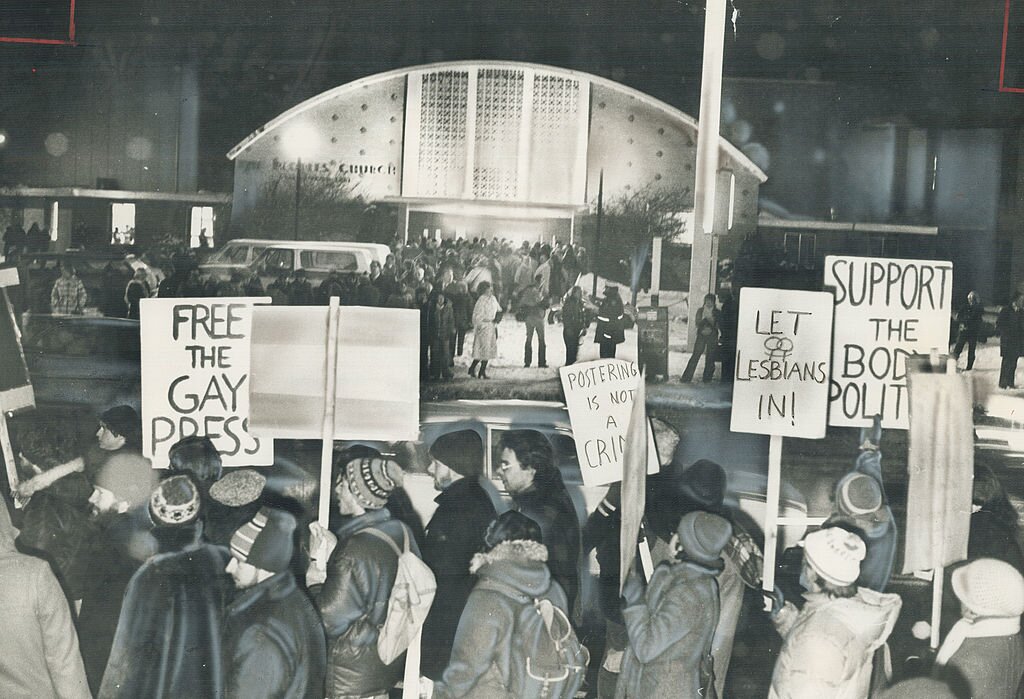
CREDIT: PHOTO BY BORIS SPREMO VIA GETTY IMAGES
Bryant’s retribution came weeks later, when she and her allies delivered, in an enormous bulging old suitcase wheeled into the county registrar’s office on a dolly, signatures in favor of calling a special referendum on the Miami-Dade ordinance. Bryant and her allies launched Save Our Children, to urge voters to bury the homosexual nondiscrimination ordinance with a special referendum in June. Children were the true victims of the ordinance, which enabled homosexuals (and especially gay teachers) to bend the innocent ones toward a mincing evil. “Gays can’t reproduce,” Bryant would say—often—in variations on the line, “so they have to recruit.”
Gay and lesbian political groups nationally saw what was happening: Suddenly, Miami was America’s test case for the strength of the nascent homosexual civil rights movement. And they were going up against a star, a woman with a national profile, with the strength of one of Florida’s major industries tacitly, at least, behind her. They were up against the queen of frozen concentrated orange juice herself.
Some raised money to send to activists in Miami defending the ordinance. Jim Toy, an LGBT-rights pioneer in Michigan, remembers driving from Ann Arbor to Detroit to make the round of gay bars with a donation jar. Others tried to hurt Bryant at the source of her fame. “We didn’t know any way to get back at her,” says Wayne Friday, who in 1977 was president of San Francisco’s Tavern Guild, a powerful association of gay bar owners and employees. “So we just targeted orange juice.”
CREDIT: PHOTO BY FLICKR USER CHRIS
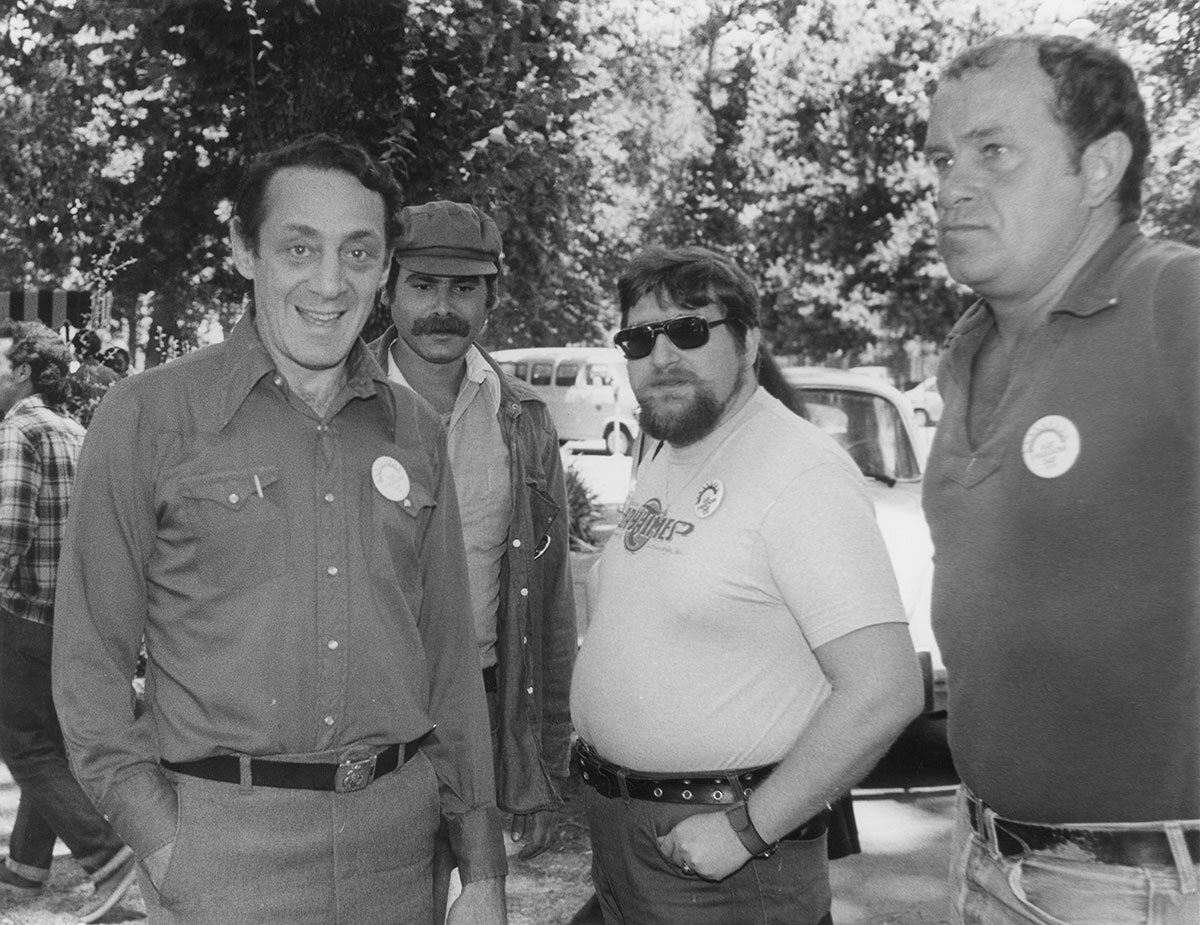
Weeks after the Miami-Dade special referendum was called, gay bars across the U.S. were boycotting orange juice from the Sunshine State, and activists including Harvey Milk, a vocal organizer in the new queer scene in San Francisco’s Castro neighborhood, were urging people to drop it at breakfast. Consumer boycotts were a persuasive tactic of the left, starting with farm labor organizer César Chávez’s call in 1966 for shoppers to shun California grapes and lettuce. In 1977, organized labor called for a boycott of Coors beer to protest the company’s labor practices, its union-busting and alleged racism and homophobia. But the Florida orange juice boycott was the first organized by gay and lesbian activists. They called it a gaycott. And it was strongest in what was, in 1977, the gayest city in America.
In April, San Francisco’s Tavern Guild printed up notices on orange construction paper for its member bars to post. The signs didn’t state so much as throw down: “TO PROMOTE HUMAN RIGHTS this establishment DOES NOT SERVE FLORIDA ORANGE JUICE or orange juice from CONCENTRATE.”
Wayne Friday says the public boycott started at a Polk Street bar, the N’Touch. Friday tended bar there. “Bars up and down Polk Street,” Friday says, “they’d have a thing where they’d say, ‘Okay, at 11 in the morning everybody pour out your orange juice in the street.’ We even got some non-gay bars to do it. The police would get a little mad but the city would just wash down the street.”
CREDIT: PHOTO BY FRANK LENNON VIA GETTY IMAGES
In some bars you could get a Screwdriver for half price if you brought in your own sack of oranges and squeezed them yourself, on little hand squeezers set out on the bar. You could bring in your own juice, but you had to know what you were carrying. “God help you if you brought a bottle of orange juice that was from Florida,” Friday says. “I’ve seen a bartender take it off the bar, look at the label, and pour it right down the drain.” Other bars pushed Greyhounds (vodka and grapefruit juice). Dan Perlman, a member of Ann Arbor’s Gay Student Union during the boycott, remembers a horrible grapefruit Tequila Sunrise, though a grapefruit Alabama Slammer tasted better (and still tastes better, he says) than the OJ original.
In his April 14 column for the Bay Area Reporter, a weekly gay newspaper, Harvey Milk urged readers to switch to pineapple juice for breakfast. “Some say that ONE can of OJ won’t make any difference,” he wrote. “Before Bryant becomes more powerful, remember that your ONE can adds up to millions of ONE cans throughout the nation. The only way to stop this bigot is to have a fully effective economic boycott.”
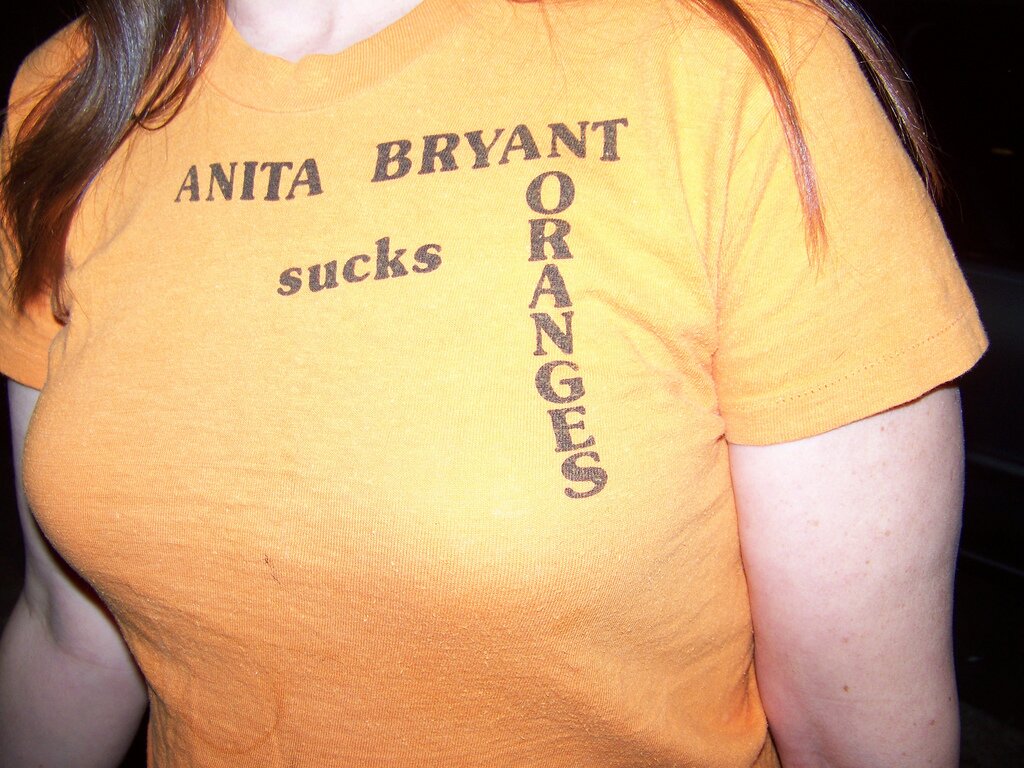
A queer cottage industry of anti-Anita protest gear popped up, with oranges as symbols of active (and sometimes passive) defiance: “Anita, Dear… Cram It”; “Stop V.D. Fuck Oranges.” People wore orange buttons that said “Squeeze Anita!” “A Day Without Human Rights Is Like a Day Without Sunshine,” read a popular T-shirt in all-caps bold, under a rough-skinned orange lurking like the Death Star.
Bryant spent the five months of the Miami-Dade campaign defiant, showing up at her church school to sing “Glory, Glory Hallelujah” with kindergartners as props. “Anita Bryant was once known as an orange juice saleswoman,” the local Miami NBC affiliate reported. “Not anymore. With a religious fervor that has made her the nation’s most controversial woman overnight, she has been selling her Save Our Children group.”
CREDIT: PHOTO VIA WIKIMEDIA COMMONS
Bryant portrayed her own martyrdom at the hand of the gaycott. “They’re coming, attacking my livelihood,” Bryant told a TV reporter, “and it has undermined a 10-year relationship with Florida citrus of goodwill. But I feel strongly, and I have great faith in God, that he’s going to take care of me. I’m not afraid. I have not been moved in that respect. And I do not believe that the product and the people I represent will be intimidated by that kind of a force.” She vowed to fight on, even if what she called her livelihood (in 1977 the Florida Citrus Commission paid her $100,000; adjusted for inflation that’s a little over $400,000 today) was stripped from her.
“We’re dealing with a vile and a vicious and a vulgar gang,” a young Jerry Falwell, Bryant’s supporter, said of Save Our Children’s foes.
The gays and their allies were simply outplayed. Save Our Children hired a Republican political consultant to produce a devastating ad, contrasting Miami’s annual Orange Bowl Parade with the San Francisco Pride march. The image of a baton twirler at the Orange Bowl, a girl with rosy cheeks, in a white, stylized military uniform, gives way to washed-out footage from San Francisco of a shirtless man in worn jeans and feathered hair, pelvic-thrusting on a float with a sad-looking palm tree, then cuts to another man in a black jockstrap and studded leather halter.
“The Orange Bowl Parade,” you hear a man say in voiceover, “Miami’s gift to the nation, wholesome entertainment. But in San Francisco, when they take to the streets, it’s a parade of homosexuals, men hugging other men, cavorting with little boys. The same people who turned San Francisco into a hotbed of homosexuality want to do the same thing to Dade County.” The dystopian gay metropolis appears furtive and frantic, fueled by speed and menace.
They never really had a chance, the gays and lesbians on OJ pickets at supermarkets or arguing their case at grocery co-op meetings, squeezing oranges or passing donation jars in gay bars. They thought the cause of civil rights, pretty much alone, would rally voters of conscience. They expected easier grounds for common cause with other minorities who’d suffered oppression.
As election news from 3,000 miles away seeped in through TVs, bars bumping Thelma Houston and Donna Summer emptied onto the streets of San Francisco’s burgeoning gay neighborhood that chilly night in June. By a two-to-one margin, voters in Dade County had killed the nondiscrimination ordinance. At an event she called the Lord’s victory supper, Anita Bryant was gleamingly triumphant. She vowed to take the fight to every city, county seat, and state capitol in the nation with laws protecting gay people.
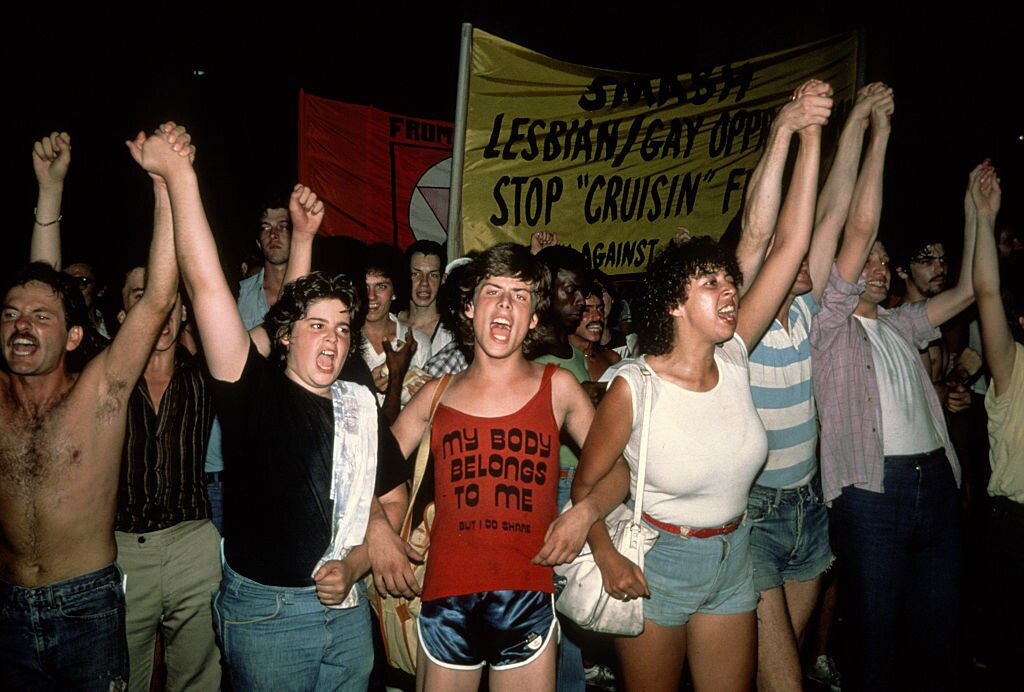
The crowd in San Francisco marched from the Castro to Polk Street, chanting, carrying candles in Dixie cups.. They milled around City Hall, returned to the Castro, and sat down in a busy intersection. Harvey Milk marched at the head of the crowd; later he spoke. Nobody had seen such a large and spontaneous takeover of the streets by so many calling themselves “faggots” and “dykes.” “I feel like the bill of rights has been wadded up on a cheap piece of paper and thrown in the wastebasket,” a woman told a radio reporter that night. You could hear her anger.
CREDIT: PHOTO BY IMAGE PRESS VIA GETTY IMAGES
Others glimpsed a measure of victory in defeat. Bob Kunst, Bryant’s opponent on the ground in Miami, said the ordinance fight had galvanized world opinion. “She gave us every access to world media,” Kunst said from the post-referendum party in a quietly reflective at the Fontainebleau in Miami Beach. “We had over 50,000 news clippings, this was the turning point where ‘gay’ became a household word, and we opened up the entire debate on human sexuality.”
For Milk, defeat was a reckoning, a reminder that gays and lesbians had to unify, to organize, and most of all to come out. Later that year, Milk would become the first openly gay person to be elected to public office in America. Just 17 months later he’d be assassinated, shot by a former cop, but not before he’d inspired a more active national LGBT movement and urged every one of the estimated 15 million queer Americans to come out to President Jimmy Carter, by letter. It wasn’t until 1998, 20 years later, that Dade County passed a new gay and lesbian rights ordinance. It’s still in effect, though conservative groups tried to repeal it in 2002.
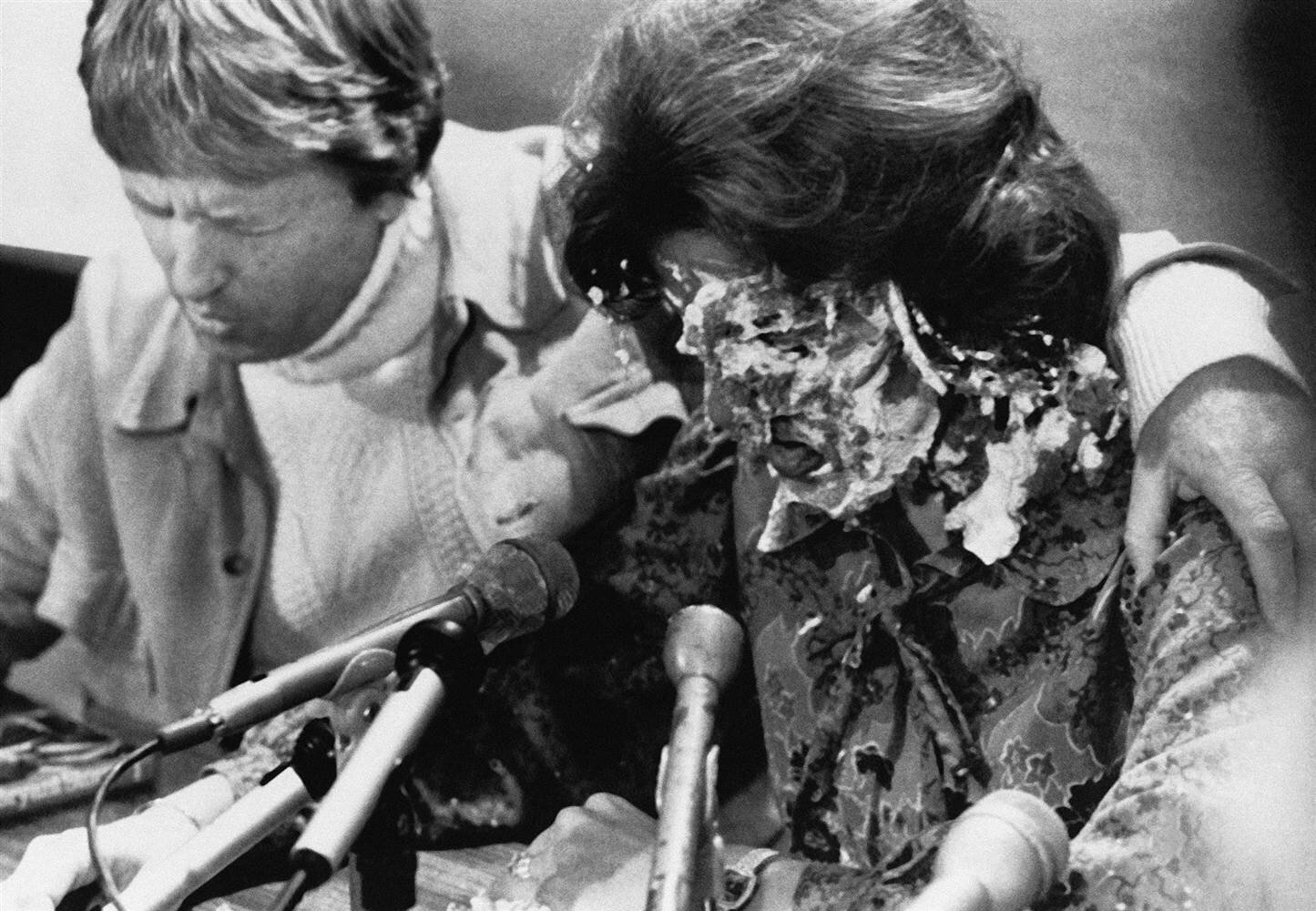
The orange juice gaycott went on after the referendum, petering out gradually. Bryant continued the work of Save Our Children; she was met with picket lines and protests everywhere she went. In Iowa, a protester nailed her with a cream pie. It is, perhaps, the enduring image of Anita, flicking pie crust out of one eye, praying for the man who threw it.
CREDIT: PHOTO VIA NBC NEWS
“At first the Florida Citrus Commission was bombarded,” Bryant told the Miami Herald after the referendum. “I guess people had nothing better to do than to write and to boycott. Then the mothers of America retaliated, I think. Sales are up 15 percent over last year. The citrus people say I’m a private citizen, that I can express my views.” It was an exaggeration, or wishful thinking. Two weeks after the referendum the public relations spokesman for Florida citrus said he wished Bryant would resign. At the end of 1978, in the same month Milk was assassinated, Bryant was fired. In 1980 she and Bob Green divorced. She experienced bankruptcy and decline. In 1990, trying to make a comeback with a new album, Bryant told Inside Story she had no regrets about what she did in Dade County in 1977. “I don’t regret it because I did the right thing.” She now lives quietly in Oklahoma.
On the night of the referendum, people called in to Fruit Punch, a gay radio show broadcast across the bay from San Francisco in Berkeley, to express their anger, fear, or despair. “I just about broke down in tears, something like this happening in our country,” a woman said in a weary tone. Another seemed almost chipper in her resolve. “I’m not gay myself,” she explained. “I just want to say that Anita Bryant has made me really mad because she’s wasting her time on negative things.”
She said she had a solution, said it with the optimism of the perpetually just. “We are giving up orange juice.”
Bob Green, Anti-Gay Bigot, Dies As Resentful As He Lived
Most people have no idea who he was. You can’t blame them. He was just a speed bump on the road toward equality of rights. Behind the scenes, however, he played an important role in creating the “culture war” that still plagues this nation.
Anita Bryant, the anti-gay crusader, was his wife. He didn’t play the role of sidekick; he was the power behind the throne.
Bryant was a would-be beauty queen, a Miss America runner-up who tried a singing career. She managed a small number of songs in the top 100 but was never star material. Green met her when he was a radio station DJ and escorted her to a music industry convention. They married in 1960, and he took control of Anita’s career.
Her career peaked when the Florida Citrus Commission hired her as a spokeswoman. Her commercials hawking orange juice made her a familiar face in American living rooms, something she used to her advantage in 1977 when she and Bob launched their anti-gay campaign. The couple trotted out all the usual anti-gay stereotypes, right down to naming their organization Save Our Children.
Their campaign resulted in numerous copycats working to repeal anti-discrimination laws around the country — but only those anti-discrimination laws that protected the LGBT community. Jerry Falwell rushed to Miami to support her but stole the lucrative anti-gay issue from under her by forming his Moral Majority.
In addition to pushing the usual stereotypes, Bryant even claimed that her “ministry” was capable of “curing” gay people through prayer. Save Our Children originated most of the talking points still used by the religious right in regard to gay people.
I made my way to Indianapolis on Oct. 7, 1977 to witness Bryant and Green in action. They were there to promote a “Right to Decency” bill introduced by Rep. Don Boys, a fundamentalist minister. Anita Bryant and Jerry Falwell were the draw for an evening rally. Earlier, her fundamentalist followers held a march in support of the bill. Some carried protest signs demanding that gay people be executed. Others seriously told me that the presence of homosexuals caused droughts. I jokingly asked if it were possible to control flooding by busing homosexuals, and one person seriously told me it would work.
Bryant had a concert/rally scheduled in South Bend on the Oct. 27, so I called the sponsoring minister and persuaded him to allow me to spend the day at the auditorium with Bryant and Green. It was eye-opening. Bryant was practicing, but between numbers she and Green would talk with me. When they weren’t talking to me, I was watching them.
Anita was plastered in make-up, though she was only 37 at time. Green, nine years her senior, dominated her completely.
Through the rehearsal he’d chastised her, pointing out every error or flaw. He wasn’t kindly, either. He barked at her. She didn’t talk back, but her body language was unmistakable. She tensed when he neared; her eyes shot barbs of contemptuous anger in his direction. Theirs was obviously a terminally ill marriage. Having experienced an abusive father at home, I was sensitive to the signs. I wondered how much worse it was behind closed doors, without a stranger watching.
At first, Save Our Children was rolling in money. But Falwell and other hate-mongers jumped into the market. Falwell’s television empire easily pushed Save Our Children out of the cash-generating limelight. Bryant’s records weren’t going to make her rich, and by publicly taking a political position, Bryant was poison as a spokeswoman. In 1979 the Florida Citrus Commission didn’t renew her expiring contract.
The final straw was a 1980 divorce. She claimed emotional abuse as the reason. Green insisted that they were still married according to the Bible and opposed her, publicly urging her to return to his side. The messy public divorce angered fundamentalists, her last source of support, guaranteeing her a well-deserved decline into obscurity. And when she was no longer in the public eye, Bob Green became a nobody. It took the media over a month to notice he had died.
Green remained bitter until the end. Bryant had told the world what I already knew, that their marriage “was never much good to begin with.” He never took responsibility for the decline and fall of Anita Bryant. He blamed gays, saying, “Blame gay people? I do. Their stated goal was to put her out of business and destroy her career. And that’s what they did. It’s unfair.” But Bob Green was the one who managed her into obscurity. He encouraged the crusade that lost her the spokeswoman career, and they couldn’t out-compete Falwell in the anti-gay market.
In The Miami Herald Steve Rothaus wrote, “For more than 30 years, Mr. Green lived quietly, alone and resentful.” He didn’t take responsibility for the choices he made. He convinced himself that it was all the fault of “the gays” and his ex-wife. Anita told Rothaus, “Bob internalized a lot of his own anger and frustration and disappointments. … I tried to be his friend, but you can only go so far.”
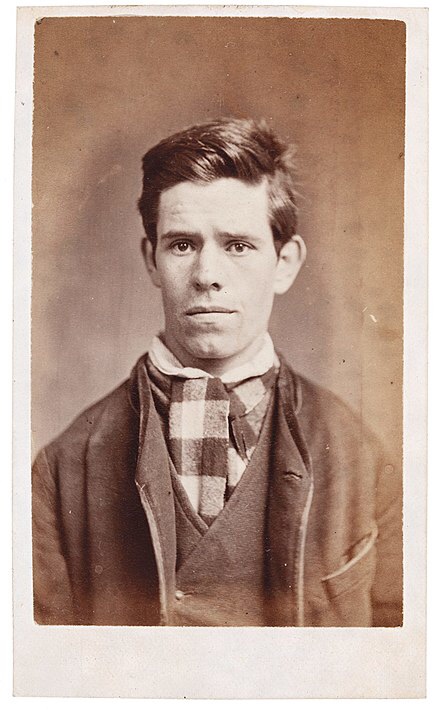
Darlinghurst Gaol record of AG Scott, alias Captain Moonlite, November 1879. Image courtesy of State Records NSW
The tale of Captain Moonlite
I first learned of Captain Moonlite from the historian Graham Willett. In Secret Histories of Queer Melbourne, a book Willett co-edited, Moonlite features “as the bushranger most likely to qualify as queer”.
Andrew George Scott – George to his friends – was born in 1845 (some records say 1843) to a wealthy family in Ireland. He emigrated with them to New Zealand in 1861, where his father served as a clergyman and magistrate. Arriving in Australia six years later, the young Scott, too, became a lay preacher, before turning to crime. In 1879, he held up a cattle station in New South Wales. Two of his associates were killed when the police arrived, as was a constable – and Scott was hanged in Sydney at the start of the following year.
But it was Scott’s relationship with James Nesbitt, one of his gang members, that attracted Willett’s attention. “Nesbitt and I were united by every tie which could bind human friendship,” wrote Scott (underlining and all) during his final incarceration. “We were one in hopes, one in heart and souland this unity lasted until he died in my arms.” Awaiting execution, Scott wore a ring made from Nesbitt’s hair, and pleaded with his gaolers to bury him with the younger man in the graveyard at Gundagai.
“I long to join him where there shall be no more parting,” he wrote.
The request wasn’t granted, of course, but Willett’s account concludes by explaining how, in 1995, “a group of [Scott’s] admirers persuaded the government to surrender Moonlite’s body to be re-interred in the Gundagai cemetery”.
That struck me as entirely remarkable. Exhumation requests are seldom granted. Given the context, I’d assumed Moonlite’s “admirers” to be queer agitators. One of them was a woman called Christine Ferguson, who was definitely an activist – but her activism centred on the National Party, of which she’d been federal president until earlier this year.
What was going on? Why had a leader of a staunchly socially conservative party gone to such trouble to re-bury an executed murderer next to the man he loved?
I found the phone number of the cattle and sheep station Ferguson runs near Gundagai. Oh, yes, she said, she’d love to talk about Moonlite.
When Scott landed in Victoria in 1868, he may well have been fleeing a scandal concerning his military service in New Zealand. Regardless, the Bishop of Melbourne offered the well-spoken newcomer a plum post as a lay preacher in the Bacchus Marsh settlement. At the time, worshippers there were still gathering each Sunday in a building known as the Iron Church, one of many pieces of prefabricated infrastructure imported during the Victorian gold rush. In archival photos, it looks like a corrugated-iron shed, unflatteringly supplemented with a steeple.
Such was the colony at the time: a still fluid society in which the stone certainties of Anglicanism were replicated with ersatz materials entirely unsuited to the local climate. The setting suited Scott, who emerges from Paul Terry’s authoritative biography In Search of Captain Moonlite as charming, self-centred, and almost entirely amoral.
The Reverend WH Cooper of Bacchus Marsh presented the recruit to his flock “as a young warrior who now has a firm grip on the sword of righteousness”. And, at first, Scott justified Cooper’s faith. The archivist at Bacchus Marsh’s present-day Holy Trinity Church showed me a weathered ledger where Scott’s beautiful copperplate signature repeatedly appeared alongside the number of parishioners he attracted – generally, close to 100 each week.
But in early 1869 a man called Robert Crook faced the Bacchus Marsh Court House accused of breaking a neighbour’s fences and stealing his cattle. Scott had ingratiated himself with the Crook clan, one of the grandest families in the parish, and obligingly provided the young squire with an alibi. Unfortunately, it was immediately contradicted by one of his Sunday school students, who swore she’d seen Scott and Crook loitering near the crime scene.
Naturally, the court believed a churchman over a teenage girl. But the acquittal did not quell the Anglican hierarchy’s unease about its lay preacher, who was abruptly banished to the isolated mining town of Mount Egerton.
The remains of the Iron Church were sold for scrap in the 1870s to make way for a stone chapel, but the archivist directed me to a decaying house on the corner of Waddell and Graham streets where pieces had been dumped. In the knee-high grass of the backyard I found rusted slabs of iron – remnants of the church – now crudely fashioned into a garden shed. Wasps were nesting on one panel; there was a strong smell of rot coming from inside.
It felt, perhaps fittingly, like a crime scene.
In dusty Mount Egerton, Scott befriended the few respectable people he could find, including a 17-year-old banker, Ludwig Julius Wilhelm Bruun, and the town’s schoolteacher, James Simpson.
On 8 May 1869, Bruun told authorities that a masked man had forced him to open the bank’s safe and hand over its gold. The intruder left a note: “I hereby certify that LW Bruun has done everything within his power to withstand this intrusion and the taking of money which was done with firearms.”
It was signed “Captain Moonlite”.
The whole implausible story was probably a fabrication, a scam cooked up by Scott, Bruun and Simpson. Their friendship, however, had soured, and Bruun said he recognised the gunman as his former friend, tying Scott to the Moonlite moniker. Scott hotly denied the charge and threw the blame back at Bruun and Simpson, who were sent to trial (and later acquitted); Scott departed hurriedly, taking himself to Fiji and then to Sydney, where he began spending the wealth he’d mysteriously acquired.
James Nesbitt
In late 1870, he was arrested for passing bad cheques. Confined in Maitland Gaol, he feigned madness and was transferred to the more comfortable Parramatta Lunatic Asylum, where the medical registry described him as a “civil but … unprincipled fellow without a spark of honour or decency to him”.
Upon his release in 1872, Scott was charged with the Mount Egerton robbery. While on remand, he dug through the brickwork in his cell and scaled the walls of the gaol. He was quickly recaptured. Redmond Barry (the judge who later sentenced Ned Kelly to death) sentenced Scott to ten years in Melbourne’s Pentridge prison for the robbery, adding one for his attempted escape.
As a criminal, Scott was always more urban hustler than highwayman. But he was handsome and athletic, had reportedly seen heavy combat in the so-called Maori Wars, and was a skilled rider and crack shot. The Captain Moonlite sobriquet, with its irresistible hint of midnight romance, took on a life of its own. His attempted escape further popularised the reputation of the bold and dashing Moonlite. “Brave to the verge of recklessness,” a journalist wrote, “cool, clear-headed and sagacious, and with a certain chivalrous dash, he is the beau ideal of a brigand chief.”
The press thought him a bushranger – and a bushranger he would become.
It was a long drive from Bacchus Marsh to Gundagai. The spring rain had left the wheatfields a deep green and those of canola garishly yellow. The landscape tramped by George Scott and James Nesbitt and their four young companions, in drought-stricken 1879, must have been very different.
Scott met Nesbitt – a petty criminal from Carlton – in Pentridge, where the younger man was once disciplined for “taking tea to Prisoner Scott”. As biographer Terry says, it’s an affectingly tender infraction.
Upon Scott’s release in March 1879, the men shared a rundown house in Fitzroy. But how would they live? Scott tried lecturing on prison reform but, though he drew huge crowds, theatres often refused to book him, particularly with the press linking the notorious Moonlite with every unsolved crime. Police warned potential employers against him; he was dragged in for questioning about the most preposterous allegations.
Scott resolved to walk to New South Wales in search of work and a new start. He took with him a coterie of young men from the slums of inner Melbourne. Like Nesbitt, Thomas Rogan was 21. Frank Johns, Graham Bennett and Augustus Wernicke were in their teens. Exiled from polite society, the 34-year-old Scott basked in the admiration of these youths, to whom, as an urbane intellectual, he seemed like a visitor from another world.
The journey proved an utter disaster, a weary trudge along a hot and inhospitable track. The privations were exacerbated by constant police harassment.
“As long as our money lasted,” Scott explained later, “we bought bread, and when our money was gone we sold our clothes and bought bread, with what we obtained for them. We tried to get work, but could not, and we fasted day after day.”
They’d been living on damper and tea and koala meat – and then no food at all – when they approached Wantabadgery Station, near Gundagai. The property was known for its hospitality but, unbeknown to Scott, it had recently changed hands and the new owner harboured little sympathy for itinerants.
Abruptly ordered to leave, Scott snapped.
“Misery and hunger produced despair,” he wrote later, “and in one wild hour we proved how much the wretched dare.” He retreated into the bush and then returned with gun in hand – transforming, at last, into the persona that had been created for him.
The men with Scott had never previously left the city, let alone ridden a horse. Suddenly, though, they too were bushrangers.
Scott acquired nothing of value at the station. Instead, he demanded food and drink. Leaving his men, he then bailed up the Australian Arms Hotel and detained everyone inside before forcing them back to Wantabadgery: he was more concerned about playing the gentlemanly host than planning an escape.
Inevitably, the police arrived; inevitably, a gunfight ensued.
Scott and his small gang then decamped to a nearby farmhouse, which was soon surrounded by troopers. “Come and fight!” Scott yelled, even though the rest of his gang could barely hold a rifle. Poor Tom Rogan spent the whole shootout hiding under a bed.
Wernicke was mortally wounded. “I am only fifteen,” he cried. A short time later, Nesbitt was shot in the head. A journalist of the time described how, as Nesbitt died, Scott “wept over him like a child, laid his head upon his breast, and kissed him passionately”.
In the exchange of fire, Senior Constable Edward Webb-Bowen took a bullet in the spine – his subsequent death sealed Scott’s fate. The surviving “bushrangers” were tried for murder. With the Kelly Gang still at large, the court set an example, handing down death sentences to all. Johns and Bennett received an eventual commutation on the grounds of their youth; Scott and Rogan (who hadn’t even fired a shot) walked to the gallows on 20 January 1880 and were buried at Sydney’s Rookwood Cemetery.
I drove to Kimo Estate, about 20 minutes from Gundagai, where a troop of dogs romped up to greet me. A minute later, Christine Ferguson roared into view on a ride-on mower. She was wearing a pullover emblazoned with a Captain Moonlite logo.
“G’day,” she said, wiping clean her hands. “You find the place all right?”
Kimo’s house dates back to the 1870s, and is pleasantly weathered. In spite of recent renovations for the bed-and-breakfast trade, Kimo is still a working farm. We sat in a lounge room crowded with books and framed photos, and talked about the exhumation in 1995.
Ferguson confirmed that disinterring a corpse wasn’t easy.
“We were actually the first people who weren’t relatives or the state to get a body exhumed. The only reason it was possible was because of Moonlite’s last letter, in which he wished to be buried in Gundagai next to his friends.”
But why had Ferguson gone to such trouble? “Here you are putting money and time into re-burying a convicted murderer who seems to have been involved in a same-sex relationship. It does seem, well, a bit strange.”
“Well, it was really only after the whole event that people raised that he might be gay,” Ferguson explained. “For a long time, we said, ‘Look, we believe they were just good mates, good friends.’ Just recently Sam Asimus, my partner in crime in the whole affair, told me she’d done some more research and she thinks Scott might have been bisexual. But who knows?”
As well as exhumation approval from the state, the women needed permission from the Anglican Church – eventually, both were granted. Ferguson’s team enlisted a local undertaker (“He was terribly excited!”), and they brought an ornate horse-drawn hearse to Gundagai on the back roads. The pallbearers wore period costumes.
“The locals here aren’t terribly excited about anything much,” Ferguson said, shrugging. “But when it was all done and it didn’t cost them any money, they did get into the swing of things. We had people lining the roads to watch.”
I still wanted to talk about sexuality. I’d learned about Moonlite from Willett and other gay historians, I explained. “Here was someone saying in those last letters, ‘I love this man, I want to be buried with him.’”
“He actually didn’t say that,” Ferguson said, then corrected herself. “Well, he did say it – in a way. But it was a long time ago, and mates were mates. We don’t know if he was gay or not. It comes down to your interpretation of ‘mate’ and what ‘mateship’ would have meant at the time.”
Fair enough. But mateship was a lot queerer than most people thought. In his 1958 book The Australian Legend, which popularised the concept as a national trait, Russel Ward suggested that, in the masculine environment of the frontier, the typical bushman satisfied himself sexually with prostitutes and indigenous women, then assuaged his “spiritual hunger” with “a sublimated homosexual relationship with a mate, or a number of mates”.
Was that how to think about Scott? In Bacchus Marsh, he seems to have been involved with a woman named Mrs Ames, who felt strongly enough about Scott to visit him regularly before his execution. Yet she barely registers in Scott’s death-cell writings, in which he returns again and again to Nesbitt.
“He died in my arms,” Scott wrote. “His death has broken my heart.”
That didn’t seem sublimated.
In one of his letters, Scott ended his plea for burial alongside Nesbitt with a quotation:
Now call me hence by thy side to be: The world thou leavest has no place for me. Give me my home on thy noble heart, Well have we loved – let us both depart.
The lines came from a Felicia Hemans poem entitled ‘The Lady of Provence’.
“The original was about the feelings of a woman for her dead lover,” I mentioned to Ferguson. “So here’s Scott including what seems to me clearly a love poem to a man.”
“Well, that was never brought up at the time,” she said. “But, again, we don’t have the evidence. Do homosexuals now write poems to each other? It’s an odd thing to do, writing poems – not something people do these days.”
Until quite recently, I’d been the editor of Overland, a literary journal that regularly publishes poetry. Nevertheless, I took the point. The more I read about sexuality in the 19th century, the more it seemed both strikingly familiar and disconcertingly strange.
During Scott’s criminal career, the police in Victoria had been led by Chief Commissioner Frederick Standish. He was a gambler and libertine, who, at one notorious dinner, decorated the room with naked women seated on black chairs to better show off their white bodies. When Prince Alfred, the second son of Queen Victoria, toured Melbourne in 1867, Standish acted as royal pimp, escorting the prince to Sarah Fraser’s brothel in Stephen Street.
But, as Willett says in Secret Histories of Queer Melbourne, the commissioner was also infatuated with men – in particular with Frank Hare, another policeman chasing the Kellys. “It was almost pathetic to see …” wrote one of their contemporaries, “how restless and uneasy [Standish] became were Hare out of his company. I have seen Standish on the top rail of a fence watching anxiously for Hare’s return from a short ride.”
And then there was the story of Edward Feeney, who, eight years before Scott’s execution, was put to death at Melbourne Gaol for his part in a bizarre suicide pact.
In March 1872, Feeney had accompanied Charles Marks into Melbourne’s Treasury Gardens, where, according to a pre-arranged plan, they attempted to shoot each other. Feeney’s gun fired; Marks’ didn’t. This left Feeney on trial for murder.
Feeney refused to offer any explanation. But the court heard that he and Marks exchanged letters about their passionate love for each other. A bar owner testified that they regularly cuddled in his premises, sometimes laying their heads on each other’s laps. In her article about the case, historian Amanda Kaladelfos points out that while the proprietor believed their behaviour unusual, “he expressed no malice toward Marks and Feeney; nor did he give evidence that he ever asked them to stop showing their affections in his place of business”.
“Men often slept together in the same beds,” historian Clive Moore explains in his study of sexuality on the frontier, “without raising the slightest suspicion that they were involved in what we would call a homosexual affair, were physically affectionate, had romantic crushes, wrote lovingly to each other and fretted when they were apart … For most of the 19th century there was no clear social, medical or legal concept of homosexuality; homosexual acts were recognised, particularly sodomy, but not a personal disposition or social identity.”
Today, of course, matters are very different.
“Is there a gay community in Gundagai?” I asked Christine Ferguson.
“Hmm. I know one who’s come here, used to be with Qantas and he’s here … I’ve only met him once but I know he’s here. A couple of others in town who are probably bachelors but most people say they are [gay]. But that’s about it.”
“Do they have a hard time?”
“No, I don’t think so. You really wouldn’t know. They’re not openly living with a bloke or anything. Gundagai is conservative but I don’t think it’s really bothered by homosexuality.”
“Would the town be open to the tourist potential of Moonlite as a gay icon?”
“No, I didn’t think Gundagai would be into that,” Ferguson replied. “A lot of the old people want to keep Gundagai how it is and how it has been in the past. They don’t see … they’re not very progressive.”
She told me that she and Samantha Asimus had wanted to establish a bushrangers and police museum in the old gaol, when a property there became available. They’d had plans for holograms; they’d spoken to the Justice & Police Museum in Sydney about borrowing exhibits.
“We thought it would be fabulous for the town. But no, no one was interested.”
We talked for a little while about politics in general – Ferguson is close friends with Tony Abbott and struggled to sound enthusiastic about Malcolm Turnbull – and then she showed me through the station.
“I like to have a project,” she said. “I like to keep myself busy.”
And that, it seemed, helped to explain her involvement in the re-burial, a cause she’d taken on almost because of its inherent difficulty.
In his cell, Scott had described the headstone he wanted:
[A] rough unhewn rock would be most fit, one that skilled hands could have made into something better. It will be like those it marks, as kindness and charity could have shaped us to better ends.
The words were now carved into a suitably craggy stone located at the very edge of the North Gundagai Cemetery.
In some ways, the sentiment seemed less apposite for Scott (who, in his early life at least, had scarcely been deprived of opportunities) than for the slum kids who died with him.
Ever since I stumbled upon Edward Feeney and Charles Marks’ story, I’d been thinking about the inner-city origins of Moonlite’s unhappy gang, and the strange visual connection between the past and present. Before Marks and Feeney went to the Treasury Gardens to kill each other, they’d posed for final portraits in a Bourke Street photographer’s studio. The resulting images are utterly compelling. In one picture, they’re holding hands – and, with their bushy whiskers and cloth trousers, they look disconcertingly contemporary. You would not blink an eye to see them strolling in Fitzroy or Carlton today.
On the scaffold, Feeney had issued a statement denying he’d been “improperly intimate” with Marks. The doctors who dissected his body inspected his rectum for signs of sodomy. In that posthumous indignity, we can detect, Amanda Kaladelfos says, the beginning of the modern science of sexuality, which in the decades to come would establish “homosexuality” as a distinct and all-consuming pathology.
A second photo of Marks and Feeney depicts them with pistols against each other’s breast. The photographer had suggested they pose as “bushrangers”, a comment that made me wonder if, by the 1870s, the life of the outlaw gang was seen as representing a kind of male intimacy that the cities were beginning to exclude.
Was Feeney gay? Was Moonlite? In one sense, asking such questions is almost silly, the projection of contemporary categories onto a past where they did not belong. Yet, in another sense, the rediscovery of men who loved other men (as both Feeney and Moonlite clearly did) matters a great deal.
I’d also asked Christine Ferguson whether, in today’s Gundagai, men who wrote love poems to other men would be welcome in the local pub.
“Yeah, they probably wouldn’t go to the pub,” she replied, amused at the thought. “The pubs in here are pretty blokey.” She didn’t drink in them much herself, and nor did many women.
Surely that was the value of the Moonlite story. It revealed the traditional masculinity enforced in public bars, sporting clubs and other bastions of heterosexuality to be neither innate nor eternal.
Scott had designed his own epitaph. He’d wanted it to read “This stone covers the remains of two friends”. He’d then written Nesbitt’s name and his own, with Nesbitt’s death listed as the date the pair were “separated”, and his own execution recorded as when they were “united by death”.
The exact location of Nesbitt’s body in this cemetery is no longer known. When Scott’s body was re-buried, the tombstone noted that he had been “laid to final rest near his friends James Nesbitt and Augustus Wernicke who lie in unmarked graves close by”.
The inscription diffused Scott’s passion for one man into a more conventional friendship with two.
The morning was starting to warm, but Scott’s grave was pleasantly shaded by a beautiful old gum tree. Its slight separation from the rest of the cemetery gave it an unmistakeable prominence – a gesture that the always-vain Scott would have liked.
Why bushranger Captain Moonlite died with a lock of hair in his hand
HISTORY Moonlite: The True and Tragic Love Story of Captain Moonlite and the Dying Days of the Bushrangers Garry Linnell Michael Joseph, $34.99
In the annals of bushranging, Andrew George Scott (aka Captain Moonlite) is not as familiar a name as Ned Kelly, though arguably he was just as complex and interesting a character as well as being similarly accomplished as a horseman. Scott was Irish – technically more so than Kelly, having been born there – but he came from a very different background from the leader of the Kelly Gang, being well-educated and Protestant. But both had occasion to be tried in a courtroom presided over by Sir Redmond Barry, also an Irishman.
The grave of Captain Moonlite. CREDIT:LUKE WATSON
The story of the life and misadventures of Captain Moonlite is recounted with gusto in this book.
The front cover boldly announces “A New Era of Australian Storytelling”, with Garry Linnell explaining that he tried to write a work of non-fiction “in a style that borrows heavily from novels and movies – using character development, pacing, dialogue and sub-plots” to enliven material drawn exclusively from archival sources.
Linnell consciously departs from the conventions of popular history by declaring “I despise footnotes” and questioning whether anyone ever reads them.
The armour notwithstanding, Kelly was not as showy as Scott, who created the legend of Captain Moonlite, dressing himself in a black crepe mask and cape-like coat as though he was a stage villain in some provincial melodrama.
Captain Moonlite was frank about his feelings for James Nesbitt.
For all its theatricality, the criminal persona was somewhat effective in obscuring Scott’s true identity. The performance was designed to instil fear and awe in Moonlite’s victims though it did have an absurd aspect, since Scott had a limp that tended to give him away no matter how impressively he tried to present himself to the world as a swashbuckling land pirate.
These days Kelly is regarded by many Australians as a prototypical bogan who, if he had been born a century or more later, would have worn flannelette and performed burnouts in a stolen Commodore. By contrast, Captain Moonlite was the nearest thing to a dandy highwayman in the tough yet surprisingly sentimental frontier culture that produced the bushrangers and their networks of supporters. We can imagine Kelly enjoying AC/DC while Scott might have preferred to listen to Adam and the Ants.
Like so many of the misfits and ne’er-do-wells from privileged families in Britain and Ireland that fetched up in far-flung colonies, Scott tried different careers but could not settle down to anything respectable. Linnell speculates that Scott, who pleaded insanity at a trial for fraud and was confined to the Parramatta Lunatic Asylum, was bipolar. The authorities concluded that Scott was feigning mental illness while plotting to escape and had him transferred to a regular prison.
Like Kelly, Scott’s career as a bushranger was curtailed in part by the then new modern technology of the telegraph and the railway, as well as more effective policing.
Perhaps the most compelling section of Moonlite features the extraordinary tenderness with which Scott regarded his last partner in crime and the love of his life, James Nesbitt, whom he met while both men were doing time in Pentridge. Scott was disarmingly frank about his feelings for the younger man, especially in an era during the 19th century when sex was not discussed publicly and homosexuality was harshly suppressed by the state.
Scott was captured following a deadly shootout and condemned to be executed. Linnell writes that at the end of his troubled life he thought only of Nesbitt, who had died in his arms during the last stand of Captain Moonlite.
“When they finally hauled Scott to his feet, handcuffed him and led him away, Scott took with him a lock of Nesbitt’s hair. In the years to come, as legend and myth and fact all merged into one, it would be said that Captain Moonlite went to the gallows with that lock of hair forming a ring on the wedding finger of his left hand.”
Reference
A queer bushranger, The Monthly, November 2015, by Jeff Sparrow
Ronnie and Reggie Kray had a secret incestuous relationship with each other so criminal rivals would not discover they were gay according to author John Pearson who interviewed them both
Kray Twins
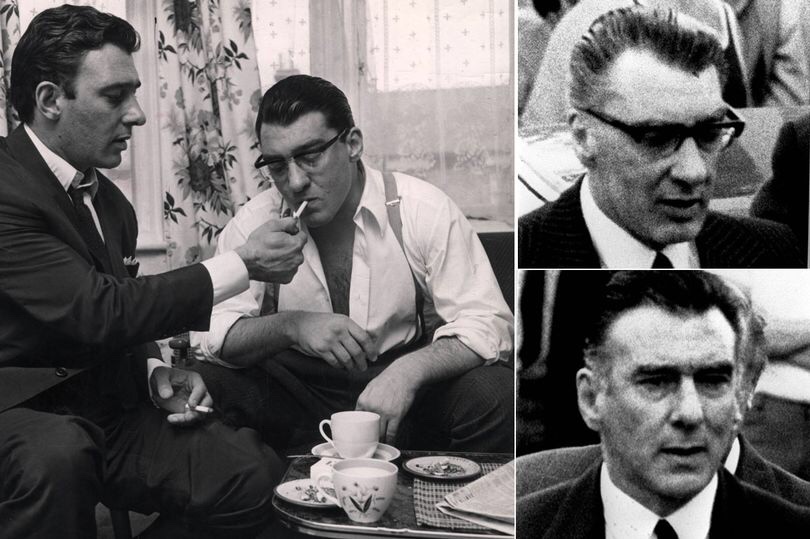
Vicious gangster twins Ronnie and Reggie Kray had an incestuous sexual relationship with each other as they were growing up.
The pair, who ran a cruel and violent criminal empire in London’s East End in the 1960s, were terrified of their secret coming out.
They were worried that rivals would see their sexuality – Ronnie was a homosexual and Reggie was bisexual – as a sign of weakness so only had sex with each other in order to keep the secret.
Author John Pearson who extensively interviewed the brothers and their associates has made the revelation as a new film comes out on the twins.
John said: “Homosexuality was nothing to be proud of in the East End.
“But as they became more notorious, Ronniebecame quite shameless about it.
“According to Ron in the early days they had sex with each other because they were terrified about people finding out.”
Smart: Twin brothers and organised crime bosses Ronnie and Reggie Kray (Image: Getty)
It has long been known that Ronnie was a homosexual and Reggie was bisexual but the news they had a sexual relationship with each other gives a telling insight into their close connection.
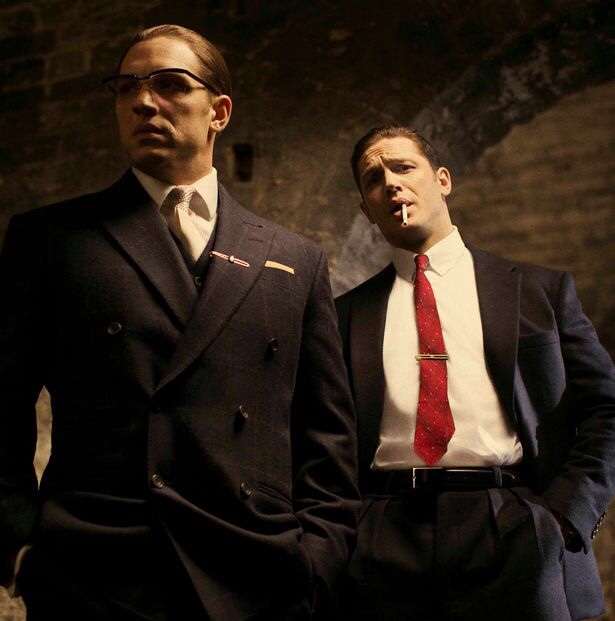
Actor Tom Hardy stars as both brothers in a new film , Legend, based on the lives of the murderous pair as told in a book by John.
Actor: Tom Hardy in his latest roles as Ronnie (left) and Reggie Kray in the film, Legend (Image: PA)
John has written three books on the brothers and says Ronnie told him the twins dark secret during one of their chats.
He says while he knew about the the incest he waited until the brothers were both dead before revealing it for fear of retribution.
Ronnie died in Broadmoor secure hospital of a heart attack in 1995 and Reggie died of cancer in 2000 having been released from prison on compassionate grounds.
In his book Notorious: The Immortal Legend of the Kray Twins , John said the pair were spoilt by their mother Violet, Grandma Lee and their two aunties, May and Rose, while their father was soon dominated by the increasingly violent brothers.
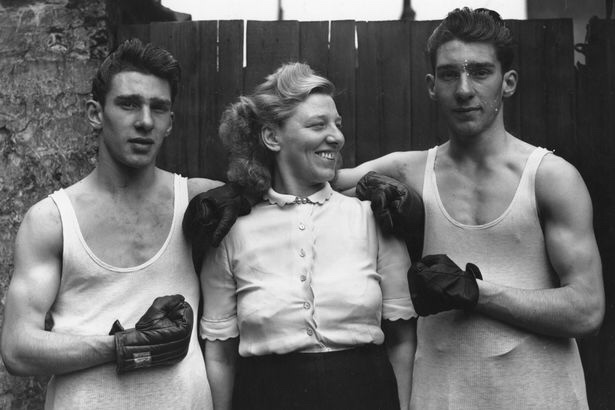
Brotherly love: Amateur boxers Reggie (left) and Ronnie Kray with their mother Violet Kray (Image: Getty)
John wrote: “All of which conformed, of course, to a classic pattern; and with their warm, indulgent mother, their ineffectual father, and their surrounding cast of loving women, it was not surprising that, with adolescence, the Twins discovered that they were gay.
Given their identical genetic make-up, it was virtually inevitable that if one twin was, the other would be too.”
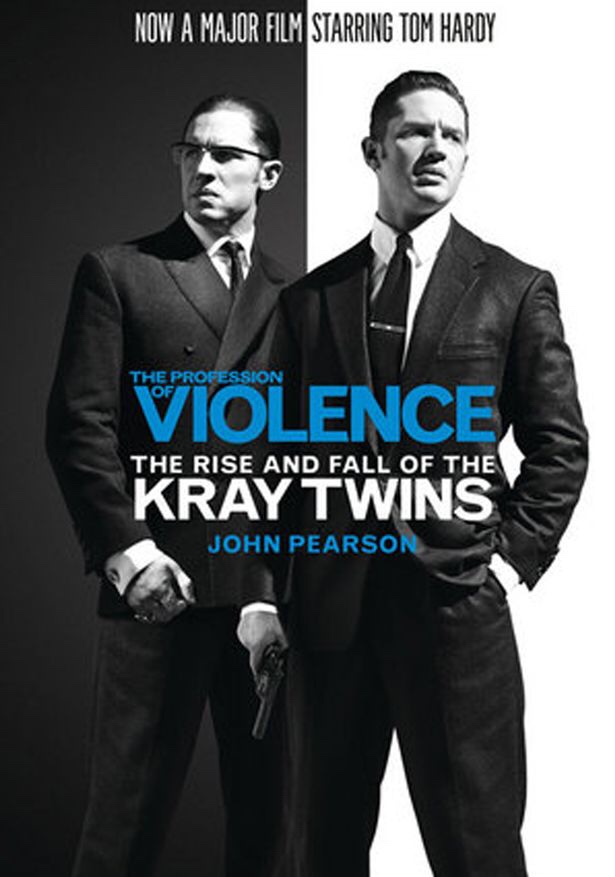
Tome: Author John Pearson’s book on the Kray Twins
However there was a problem for the twins as back in the macho world of 1950s East End it was seen as a weakness to be gay.
John wrote: “So it was hardly surprising that, for the time being, both the twins kept their sexual preferences to themselves.
Claims: Author John Pearson says the brothers had an incestuous relationship(Image: Twitter)
The brothers ran a notorious criminal network in the 1960s building up an empire of nightclubs though hijacking, armed robbery and arson.
Fighters: Ronnie and Reggie during their amateur boxing days in their youth
As they moved from the East End to the West End their became big names rubbing shoulders with Frank Sinatra and Judy Garland and being photographed by David Bailey.
Eventually the police got them and the Krays went to prison for murdering fellow gangsters George Cornell and Jack McVitie.
Never forget: TV chat show host Graham Norton once played a dildo-and-harness-wearing male dominatrix called Mr Puckov in American Pie parody Another Gay Movie. While that scene, like most of the film, is played for cheap laughs, there’s one climactic scene (literally) that takes a genuinely sexy turn at the end of the film.
It occurs when Andy, one of the core four characters desperate to lose his ‘anal virginity’, achieves this twice over during a raucous, hair-pulling threeway. We’d score it 10/10, were it not for the lassoing hand movements and the cringe-inducing dialogue… (‘heavens to Betsy!’).
Sexiness score: 6.5/10
5 King Cobra (2016)
Where to start with King Cobra? This biopic of gay porn actor Brent Corrigan (whose life the film ‘bastardized‘, he said) has enough thunderous, sinewy sex scenes to fill this entire list. But most of them are also utterly, laughably stupid.
In fact, the depictions of real sex are often more silly than the depictions of porn shoots. (Step forward James Franco’s porno director screaming for his boyfriend to ‘GIVE ME THAT BIG DICK!’). As such, a panting Garrett Clayton is particularly smouldering in an early montage showing him finding his footing in porn, soundtracked by the Scissor Sisters’ spirited classic Filthy/Gorgeous.
Sexiness score: 7/10
Photo: HBO
4 Looking: The Movie (2017)
In Looking For Now, the first episode of the first season of this seminal HBO drama, main character Patrick shows all the sex appeal of a wet lettuce. We watch as Jonathan Groff’s San Francisco-residing, saucer-eyed video game designer fumbles his way through an awkward encounter with another man in some bush.
Numerous hook ups, two relationships and one affair later, Patrick evolves into a different being. In Looking: The Movie, the show’s feature length swan song after it was criminally cancelled after two seasons, our main man shows off his rimming skills with such conviction that confidence radiates from the screen. It’s so obvious Jonathan Groff’s amazing in bed, isn’t it? Sigh.
Sexiness score: 8.10
3 God’s Own Country (2017)
When the dam of sexual tension finally breaks in 2017’s Call Me By Your Name, the camera suspiciously trails out of the window before the action even starts. Why? To make the movie palatable to straight audiences and awards voters, critics claimed.
Conversely, in the excellent God’s Own Country – a somewhat similarly-themed movie that came out around the same time, but didn’t receive nearly as much attention – the camera is agog with fascination during the sex scenes.
Indeed, when our straight-presenting protagonists Gheorgie and Johnny finally give into their unquenchable thirst for each other, the resulting sex is blunt, powerful and shocking. And yet, it’s filmed with enough dexterity that arguably all you’re witnessing is a spot of extreme heavy petting.
The only thing unsexy about the scene is the setting: the outer reaches of a neglected farm next to some sheep. (Well, they are farmers). It’s a rough, gruelling watch: you can almost feel the damp in the air and the biting cold, as Gheorgie’s long johns start to fall down, and he leaves a muddy handprint on Johnny’s backside… Actually, scrap that, we’d like to give it a try.
Sexiness score: 8.5/10
2 Stranger By the Lake (2014)
In God’s Own Country, the viewer’s face is pushed up against the camera lens. In French arthouse flick Stranger By the Lake, it’s pushed through – albeit with a gentle, deadly caress. Spoiler alert: this movie shows explicit sex, so might not be one to watch with the parents.
Indeed, while there are yet more outdoor shenanigans in Stranger, here, the nudity (plus the erections, ejaculations and blow jobs) are decidedly more sun-dappled.
Stranger tells the story of the sweeping sexual affair that takes place between two Frenchmen at a lakeside cruising spot one summer. The setting is stunning, the men are ridiculously hot, and the tension is unbearable. It would be aspirational, were it not for the fact that one of them’s a cold-blooded killer.
All of the sex looks amazing, but I’m deducting a fraction of a point because it’s all a little too, well photogenic for me. And I’m sorry, but nobody has sex this pleasurable-looking on dead grass or pebbles. Trust me, I grew up in the country.
Sexiness score: 9.5/10
1 Weekend (2011)
Here it is: the joyous, romantic and still totally sexy apex of gay sex on film.
In the critically-acclaimed Weekend, Tom Cullen and Chris New play Russell and Glen, two lost souls with kind hearts and handsome faces who fall for each other over a weekend in Russell’s dingy flat atop a Nottingham housing block.
Although the guys meet in a trashy gay bar on a Friday evening, the film wisely passes over their drunken first time together later that night.
We are privy, however, to the lazy, groaning sex they have the following afternoon, shortly after a stoned Glen’s gone to work on a piece of confectionary. (Can somebody please tell me: is that a McVitie’s Penguin he’s eating?! For some reason, I’m dying to know!).
In an earlier scene, artist Glen – who records interviews with his hook ups – bemoans compromising his work for ‘the straights’. Director Andrew Haigh, who’s since directed the Oscar nominated 45 Years (not to mention Looking: The Movie!), makes no such allowances. He shows all the sweat, tears and semen needed to make this love affair between two men feel truly convincing.
There are a lot of important gay movies that don’t have the happiest endings for gay characters, especially when those movies try to tackle important topics like homophobia or the HIV/AIDS crisis. Still, it can feel a little depressing when you keep seeing the same Bury Your Gays trope played out over and over again. It’s also important to see happy reflections of gay life in media. If you’re just in the movie for a fun film with a happily ever after ending, check out these 11 movies!
1) Beautiful Thing
The 1996 British film Beautiful Thingfollows Jamie, a teenage boy who is infatuated with his classmate, Ste. While Jamie is bullied in school, Ste is dealing with an abuse at home. Jamie’s mother, Sandra, offers Ste an escape from his alcoholic father, which results in Jamie and Ste sharing a bed and a kiss. While Sandra is initially shocked by her son’s relationship, she comes to accept it. The final scene shows Ste and Jamie celebrating their relationship openly, with Sandra at their side.
2) Shelter
The 2007 movie Shelter follows Zach, an aspiring artist who puts his college dreams on hold to help out his family. He falls for his best friend’s brother, Shaun, but struggles with his feelings. While their families are initially uncomfortable, they accept the relationship by the end of the film. If you’re looking for an uplifting story about romantic love and families with a final scene that’s uplifting, check out Shelter.
3) The Way He Looks
The romantic coming-of-age drama The Way He Looks has a happy falling in love with your best friend and riding off into the sunset ending that so many straight high school romance movies have. The film follows Leonardo, a blind high school student, as he falls for new student Gabriel. It’s also available to stream on Netflix.
4) The Birdcage
The 1996 comedy The Birdcage (the American remake of La Cage aux Folles) follows Armand, the owner of a drag club in South Beach called The Birdcage and is partner Albert who’s drag persona Starina is the club’s star attraction. When Armand’s son Val announces he’s marrying a woman with ultraconservative parents, Armand and Albert try to pull off a ridiculous farce. The all-star cast (Robin Williams, Gene Hackman, Nathan Lane, and Dianne Wiest), over the top situations, and light tone make this the perfect movie for an evening where you just don’t feel like watching anything heavy.
5) Maurice
The 1987 British drama Maurice is based on the E.M. Forster novel of the same name. The film is set in early 20th century England and follows Maurice Hall from his childhood to early adulthood. Maurice struggles with his feelings, but eventually meets his life partner Alec Scudder. Though society condemns their relationship, they’re willing to give up anything to be together.
6) Boys (Jongens)
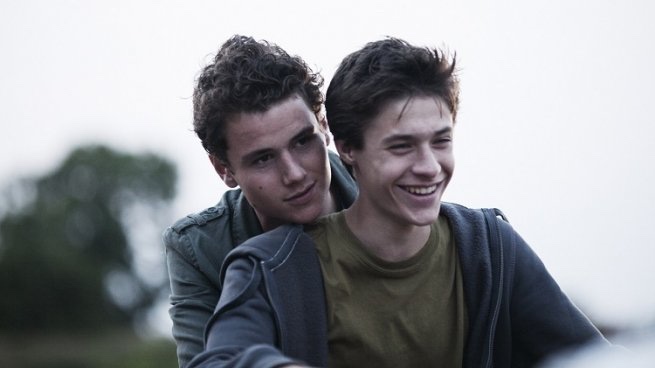
This Dutch coming-of-age film explores 15-year-old Sieger’s first love as he falls for Marc. While there are a few melancholy moments, the end makes it clear that Sieger is on a journey of self-acceptance, Marc will be a part of that journey. The film is streaming on Netflix.
7) Latter Days
Latter Days is full of ridiculous rom-com tropes, but this movie about a gay party boy and his closeted Mormon missionary neighbor falling in love is fun to watch. While there’s definitely some heartbreak, the movie ultimately has an uplifting ending.
8) Touch of Pink
Sometimes you just need some good romantic comedy fluff. Touch of Pinknever takes itself too seriously (see: Kyle MacLachlan playing the ghost of Cary Grant), which makes it a fun, endearing film. Alim movies to London to get away from his conservative family. When he comes out to his mother and faces problems with his boyfriend Giles the ghost of Cary Grant gives him advice that often seems to do more harm than good.
9) Jeffrey
Jeffrey is a 1995 romantic comedy that’s set in Manhattan during the height of the AIDS epidemic—but hear me out. Rather than going doom-and-gloom, the movie follows title character Jeffrey, who is afraid of falling in love with someone who might die. He swears off sex because of the AIDS crisis, and then meets and falls for Steve, an HIV positive man. He realizes he has to confront his fears to live and love fully. There are also some awesome cameos by Patrick Stewart, Sigourney Weaver, and Nathan Lane.
10) Big Eden
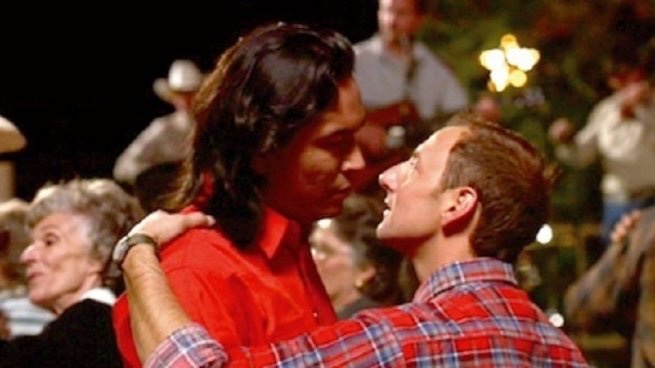
This 2000 romantic comedy follows Henry Hart, a New York City artist who returns to his rural hometown in Montana to take care of his grandfather. The townsfolk welcome Henry back and are accepting of his sexuality. Henry has to confront his unresolved feelings for his high school friend Dean Stewart, but he’s oblivious to the feelings of Pike Dexter, the Native American owner of the town’s general store. While films about rural gay life often focus on hardships, Big Eden is unique. The entire film is devoid of homophobia.
11) Love, Simon
The groundbreaking 2018 film (based off of Becky Albertalli’s young adult novel Simon vs. the Homo Sapiens Agenda) follows the story of typical, suburban high school senior Simon Spier as he tries to navigate life after being blackmailed and threatened with outing by one of his classmates while also trying to figure out the identity of his anonymous, romantic, online pen pal named Blue.
Although there are serious themes and instances of casual homophobia throughout the movie, like most teen rom-coms, the ending is really sweet and gives the audience a feeling of hope for the titular character and his life as a newly-out, gay man.
Why people living and aging with HIV will lead the way
Tuesday, 9/18 is National HIV/AIDS and Aging Awareness Day. Long-term survivors of HIV face unique challenges; they are the “hidden” survivors of the epidemic. When I was diagnosed with HIV in 1989 I wasn’t sure I’d be here in 2018 to talk about it. At the time there was no effective treatment for people living with HIV, it
was basically a death sentence. For those of us who did have access to health care and treatment, we were given what we now know is suboptimal therapy that not only rendered us resistant to more effective medications that were being developed, but also had life-altering side effects that remain with some of us to this day. These side effects from those earlier, more toxic treatments have added to the stigma of aging with HIV and have disfigured us, made us frailer, and caused our hearts to literally skip a beat.
Don’t get me wrong, I am grateful to be here. As a white, gay, cis man living with HIV who turns 60 this year, I also recognize and acknowledge my privilege. I have access today to a one pill, once-a-day therapy that keeps my virus fully suppressed, so that I’m unable to pass on HIV to others, and I experience virtually no side effects to my current regimen. But I also know that when I walk into a room, I have “the look”—the sunken cheeks, the veiny arms and legs, the extended belly. “You should be grateful to be here,” we’ve been told, “thankful to be alive!” But to what end? Grateful to be here to suddenly be rolled off of disability after being out of work for 20–30 years, expected to join the ranks of the work force without any specialized training or support? Grateful to be here only to fall into addiction or isolation because our support networks, friends and former lovers no longer exist? Grateful to be here while there is scant culturally competent care for aging LGBTQ+ seniors who are living with HIV? We as a society in general do not value our elders—how does the LGBTQ+ community regard those of us aging, let alone aging with HIV?
There is much work to be done, but if anyone can lead the way, it’s people living with HIV and our allies. We were the ones who took care of each other back at the start of the epidemic, and we will come to the forefront of the battle once again. The lesbian community was there for many gay men back in the 1980s when we were dropping like flies and when no one else would touch us; thank heavens for these unsung heroes. Community-based organizations like TPANwere founded by people living with HIV so that we could survive and thrive. Informational resources like Positively Aware delivered the information we needed to live healthy, happy lives.
Earlier this year The Reunion Project convened a community-led, diverse coalition of survivor advocates to discuss the needs and priorities of survivors, and issued a report in June. Go to tpan.com/reunion-project for more info. As someone living with HIV for 29 years, I am excited to be part of a national network of survivors that is giving voice to those who don’t have one and who have in many respects been left behind.
Currently 50% of people living with HIV are over the age of 50, and by 2030 it will be 70 percent. But we knew this was coming. Where is the sense of urgency? Where is the crisis task force taking up our agenda? Do we matter?
I believe we do. As the saying goes, with age comes wisdom. Long-term survivors have an opportunity to come together and join forces, mentor those coming up behind us on how to age and live with HIV gracefully, and to advocate for those who have no voice. An entire generation was lost, so who now is going to step up and advocate for us?
Being overweight carries with it a social stigma. So does being a man who embraces the feminine. But for those in the gay community who live at the intersection of such identities, life can be like the worst case of double jeopardy. To Jamal Lewis, however, who is also black and who identifies as “gender deviant,” being fat and effeminate is a source of power and a subject worthy of exploration in a documentary titled “No Fats, No Femmes.”
“For me, I’m just interested in the spaces that people are afraid to occupy,” said Lewis, who uses “he-she” as a gender pronoun. “I think there is something to be learned from what we are most afraid of, and so, if that’s what I was taught to be afraid of, well [forget] that. I am the Fat Femme.”
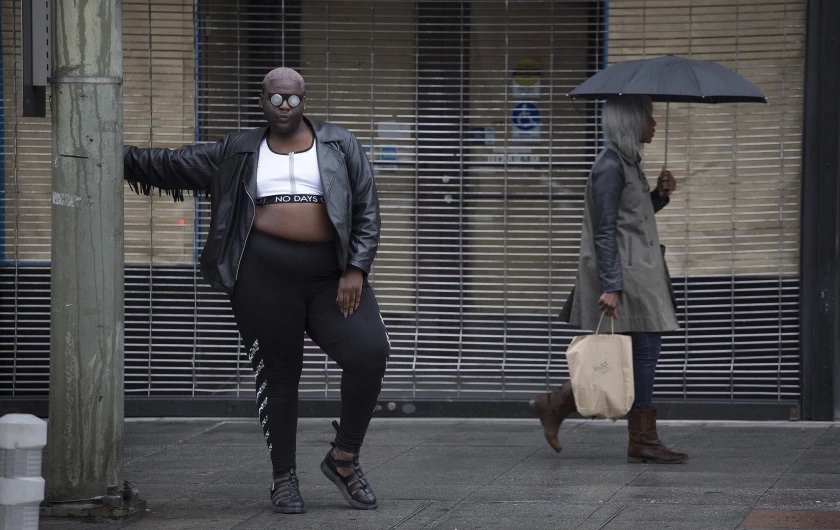
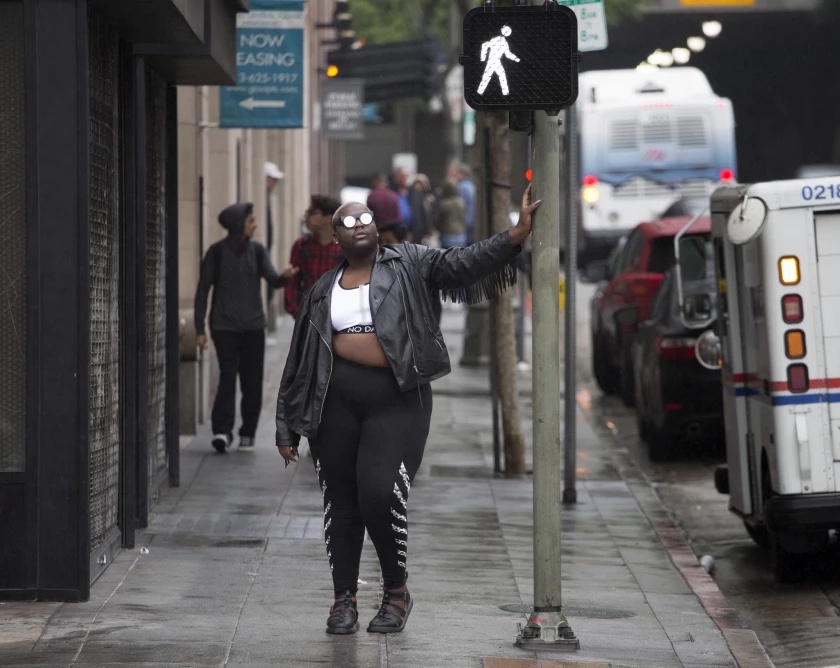
Jamal Lewis, director of “No Fats, No Femmes,” poses for a portrait on Third Street and Broadway in Los Angeles, Calif. (Brian van der Brug / Los Angeles Times)
Originally from Atlanta, Lewis is a second-year graduate student in media studies at the New School by day and “cultural worker, performance artist and freedom fighter” by night. While an undergrad at the historically black, all-male Morehouse College, he-she used queer social networking and dating sites to meet people. Sprawled on many of the profiles were “no fats, no femmes” — along with things like “no blacks, no Asians, no ballroom kids.” Seeing the frequency of such language inspired Lewis years later to create a feature-length documentary to interrogate and explore race, desire and body image, and the ways in which they’re informed by media, pop culture and capitalism.
The documentary will feature interviews with five black people: a disabled person in South Africa; a queer New York rapper; a PhD student and blogger in Missouri; an agender writer of work on body positivity and a trans woman. Using archival research and performance art, Lewis’ goal is to discuss the many ways individual desires are rooted in problematic conceptions of varying identities.
Lewis has raised more than $17,000 from 550 backers for “No Fats, No Femmes,” which is still in pre-production. The attention he-she has received, which includes support from the gay dating app Jack’d and a mention from Tribeca Film, has taken him-her across the country to speak on body and femme positivity, including to Cal State Los Angeles.
The Times spoke with Lewis, who is known online as Fat Femme, following his-her recent West Coast visit about the documentary — which is slated for a 2017 completion date — about how (black) people “fail gender” and how gender deviant and trans people fit into the Black Lives Matter movement.
The problem is that many people are gender complacent. They are comfortable with how they understand and see gender because of what it affords them.
JAMAL LEWIS
What does “no fats, no femmes” mean?
The “no fats, no femmes” ideology is often used by gay men [on dating sites] situating their desires within a framework that excludes particular kinds of bodies, mostly those fat, feminine, disabled, HIV positive and the list goes on. Anything that reminds them of what the world thinks it means to be gay, they shun away from. Put simply, it’s prejudice masked as preference.
Where did you get the idea to explore the thought process behind this statement in a documentary?
I have always admired the work of Marlon Riggs. I thought for a very long time about what he’d be talking about today had he still been alive and making work as someone who in the 1980s dared to talk about his life at the intersection of being black and gay. He wasn’t interested in being seen in fragments and put out a very visual and explicit narrative [titled “Tongues Untied”] that was really inspiring to me. I wanted to talk about [what] I was experiencing [while trying to date] using that as a model.
In the film’s introduction you quote Mark Aghuar’s “A Litany for My Heavenly Brown Body” which rejects whiteness, beauty and privilege while at the same time blessing the “sissies, trans, high femmes.” What about that work made you want it as the start of the documentary?
If you’re taught to be afraid of and move away from the body that you occupy, you never see a possibility of living in that place. I thought that what Mark was exploring spoke beautifully to the message I wanted to convey with this film because it’s like I’m washing myself clean of all these things that I was told I needed to be to be accepted. It deeply resonated with me, so I wanted it as something to set the tone and let you know I’m not about to play with you.
You say that the documentary focuses on the “politics of desirability.” Explain what that is.
For so long, ideas around sex and sexuality have been relegated to the bedroom. That is so because people are afraid of what it means to engage the messiness of our desires and how it controls a lot of our lives outside of the bedroom. I’m thinking of desire as both a cognitive and emotional phenomenon that is informed by the environment around us and the media we consume. And we know from feminist scholarship that the personal is political. The things that happen in our private lives very much so influence and determine how we show up in public.
Why was it important for you to have an all-black cast?
It meant a lot for me to have an all-black cast because so many other [films] don’t, or they can’t commit to an all-black cast because they want the film palatable to a certain kind of audience. It means more to me that I’m doing it in a way that honors how I show up in the world and the people around and most dear to me. I also chose to rock with an all-black cast and crew because black lives really do matter to me, and when we center them in critical conversations, we all get free. I want the kids of tomorrow and future generations to know and be proud of my decision and the reflection they see when they watch the film. I want my people to see themselves and feel seen.
But some might say the politics of desirability also affect white people. Is there space for them?
I think they have a space as listener. I’m not excluding them from the conversation, but it’s really important for me [to have an all-black cast] because whiteness is often a standard in conversations around beauty. I didn’t want white talking heads talking about these ideas because they are deeply implicated.
You crowdfunded $17,384 as a first time filmmaker. What does that tell you about the subject of your work?
For a long time I was afraid to share ideas because not only are we taught not to see ourselves, we’re taught not to believe in ourselves because of how we show up on a gender spectrum. [The support] showed me that there is an audience for the work that I want to produce and I don’t have to compromise my ideas or myself to do it.
Art and activism together serves as a means to mobilize,” said Lewis. (Brian van der Brug / Los Angeles Times)
How do the topics you’re raising in “No Fats, No Femmes” intersect with the Black Lives Matter movement and what seems like the exclusion of black trans and gender nonconforming people in that movement?
When you’re conditioned to only fight for a certain body, particularly black cisgender men, I think it’s hard to see anything outside of that as worth it because you only think black cis men are dying. No one thinks about the offset of that, the interpersonal violence that black women and gender deviant and effeminate people experience because of that. The problem is that so many people are what I have named gender complacent; they are comfortable with how they understand and see gender because of what it affords them and the convenience it provides them. People are afraid to wrestle with the fact that they too fail gender and are trans, in a way, and fail these normative notions of gender, particularly black people. People are afraid to show up for trans women in the streets because they are not really acknowledging how they are implicated in their murders and perpetuating transphobia.
What do you mean when you say people “fail gender”?
We see the conception of gender as this black, beastly, hyper masculine brute and this white, pristine, delicate trophy wife that’s meant to be protected from the black brute. If gender exists in those ways, so many people fail it because there is no space for nuance within that. Black women fail white womanhood. Black men fail the black brute stereotype. If we all understood how much we fail gender, we would approach conversations around trans-ness and gender nonconformity differently.
A number of recent videos of transgender and gender deviant people protesting police brutality and anti-LGBT laws using the voguing dance style have gone viral, including one of you. How can performance art be a tool for movement work?
For so long, the house and ballroom community has been shunned, but a lot of celebrities now are using it in their music videos and shows. Many don’t know that it is very important to black queer history because we understand vogue as embodied resistance. When [the founders] were kicked out of their homes [usually for being gay], they found a beloved community and found joy in what was supposed to be a tragedy and built a culture around that. Vogue is a dance of creative and resilient folks. To show up at a protest and do that, knowing the context behind the dance, is so powerful.
Voguing is no longer a thing that has to be at a club or in a private space. Art and activism together serve as a means to mobilize, to take up and disrupt space in a creative way in spaces where they may not be able to typically do so because of how they show up in the world.
What do you want people to take away from the documentary?
I want people to take away whatever they need from the film, most importantly healing, self reflexivity and honesty. May it be a mirror through which to engage their desires, internalized phobias and fears around who they are and what they have been told they are. And that’s my most honest response because sometimes I feel like I don’t know who exactly my work is speaking to and what people are taking from it. Most surprisingly, straight cis women and men are coming up to me after these talks at universities, community centers and movement spaces telling me how my work resonates with them, and they’ve helped me realize that this is bigger than [the] LGBT community and that it is bigger than all of our bedrooms. Desirability impacts so much around us, and I want healing for all.
(Above, right, powerful and closeted gay lawyer Roy Cohn was instrumental in creating anti-Communist fervor.)
Filmmaker Josh Howard discusses his forthcoming documentary on dark days in American history.
Tomorrow’s a lamentable anniversary for the United States: it was 60 years ago, on April 27, 1953, that President Eisenhower put his John Hancock an executive order demanding all gay and lesbian government employees be fired. Not really something you want to celebrate, right? But it is something you should know about, which is why director Josh Howard began production on The Lavender Scare, a documentary based on Dr. David Johnson’s book of the same name. It’s also the first cinematic account of how our government tracked down gays and lesbians in the mid-20th Century.
This project began in 2009, when Howard, a former Emmy-winning producer for CBS’ 60 Minutes and later CNBC, stumbled across Johnson’s book. He hadn’t intended on turning it into anything, and certainly didn’t intend on leaving his job to direct a documentary, but as he read on, and researched on his own, the subject gripped him.
Unable to shake the feeling that there was more story to tell, Howard approached Johnson, now a professor at the University of South Florida, about optioning the book. Johnson agreed, and for the past two years Howard has tracked down as many sources as possible to fill in the gaps, including Frank Kameny, a government astronomer fired who was fired for being gay in 1957 and went on to lead the first public protests against the anti-American policy.
Howard also managed to find a few of the government agents tasked with spearheading the anti-gay witch hunt. One remains particularly unrepentant. “The people that I got rid of, they were faggots,” he says, under the cloak of darkness, inthe film’s trailer, included below. “I didn’t give a hoot; get rid of the son of a bitch. Put him in the bread line.”
As far away as this may all seem, keep in mind that lawmakers and activists are still fighting for Employment Non-Discrimination, policies that would finally create federal laws making illegal to fire LGBT people. (As you know, it’s legal in 29 states to fire gay and lesbian employees and legally acceptable in 34 to do the same for transgender people as well.) And this isn’t simply about homophobia or jobs. It’s about the nagging, tenacious ability of Americans to participate in or turn a blind eye to injustice, a trait foreign observer EM Forster saw right away. Whether it’s scapegoating gays during then Lavender Scare or Muslims after 9/11 or Japanese-Americans during World War II, this a completely unattractive and persistent quality, and it’s one that Howard hopes this film can help eradicate.
To get to that point, though, Howard and his team need to finish editing and licensing the bundle of archival materials they hope to include, and that requires money. Supporters can give them a little greenback love at Kickstarter. They’re shooting for $50,000 and donations end on May 21, which would have been Kameny’s 88th birthday.
Here, Howard offers us the basics on The Lavender Scare, the policies it spawned, what happened to those policies and why this son of a bitch story still matters.
(Left: Frank Kameny can be seen toward the left in this picture from a 1965 White House picket he helped organized. Right: an older Kameny poses with one of those signs.)
1. WHAT IS THE LAVENDER SCARE? It’s the first feature-length film documentary to tell the story of the U.S. government’s decades-long campaign to fire every federal employee found to be gay or lesbian. In what became the most successful witch hunt in American history, thousands and thousands of federal workers lost their jobs. More than a few, with their careers in ruins and unable to find work, committed suicide.
2. WHEN DID THIS HAPPEN, AND WHY? In the 1950s, Senator Joseph McCarthy ignited the Red Scare with his allegations that Communists had infiltrated the U.S. government. He then added the claim that gay men and lesbians were even more dangerous than Reds, because they were susceptible to blackmail by foreign enemy agents and would give up government secrets in order to keep their sexual orientation from being exposed. The fear of this supposed homosexual menace became known as the Lavender Scare.
3. HOW MANY HOMOSEXUALS ACTUALLY GAVE UP SECRETS IN ORDER TO AVOID BEING EXPOSED? After several investigations over many years, not a single case was ever found.
4. WERE LGBT PEOPLE ALWAYS FEARED IN WASHINGTON? No! In fact, in the 1930s and 40s, there was a vibrant and very open gay community in Washington. A large number of new government jobs were created after the Great Depression, and many of the people who came to Washington to fill those jobs were gay men and lesbians. They were eager to make a new life in the growing city, and the government was eager to hire them. Same sex couples could be seen holding hands on the trolley or even kissing on the grounds of the Washington Monument. They enjoyed a comfortable work environment and a lively social life. No one could have anticipated the devastating events that were to come.
5. WAIT, WHY IS THE DATE APRIL 27, 1953 IMPORTANT? That is the day President Eisenhower signed Executive Order 10450, which made it official government policy that gay and lesbian employees were to be hunted down and fired. More than a thousand federal agents – a couple of whom are interviewed in our film -were assigned to the task of determining who was a homosexual. People were subjected to grueling interrogation: “Who do you live with? Who are your friends? What bars do you frequent? Would you like us to call your family back home and ask these questions?” People were ordered to give up the names of their gay and lesbian friends. Most chose to resign immediately, rather than face continued pressure or further scrutiny.
6. DID ANY GOOD COME OF THIS? Yes! In 1957, Dr. Franklin Kameny, a Harvard PhD who had been working for the U.S. Army Map Service, was fired from his job when the government found out he was gay. But unlike the thousands who had been fired before him, he fought back! The purges created a sense of anger and militancy in the gay community that sowed the seeds of the gay rights movement. In 1965, years before Stonewall, Kameny and a small band of brave men and women staged a picket in front of the White House, in what is believed to be the first gay rights demonstration in the country. Kameny went on to devote his entire life to the fight for LGBT rights, and just before his death saw his achievements honored by President Obama.
7. HOW LONG DID THE BAN ON GAY AND LESBIAN WORKERS REMAIN IN EFFECT? People continued to lose their jobs simply through the 1950s, ‘60s, 70s, and 80s. In 1995, President Clinton officially rescinded the policy that had been put in place by President Eisenhower in 1953, and for the first time in four decades, LGBT people could freely work for the civilian agencies of the federal government. Of course, the ban on service in the military continued for many years beyond that.
8. DOES THIS STORY HAVE ANY PRESENT DAY RELEVANCE? Oh, definitely. There are still 29 states in the country in which it is perfectly legal to fire people simply because they are LGBT – a direct result of our government’s homophobic policies that were put in place in the 1950s. We think the story of The Lavender Scare will help educate people about the need for laws on both the state and national level to protect LGBT people from employment discrimination. The federal Employment Non-Discrimination Act, which would extend job protection to LGBT people nationwide, has just been re-introduced in Congress – ironically enough. just as we’re marking the 60th anniversary of the start of the government’s anti-gay witch hunts.
9. WHY DO SO FEW PEOPLE KNOW ABOUT THIS? This is a classic example of the way in which the struggles and contributions of gay men and lesbians are ignored in the telling of American history. It is shocking that with all the books and films about the Cold War and the Red Scare, the story of the Lavender Scare is almost completely ignored. The Lavender Scare will be the first film to shine a light on this important subject – if we can raise the funds to finish production. As philanthropist and activist Jim Hormel has said, “If LGBT people don’t take the lead in preserving our history, who will?”