In 1935, Sigmund Freud penned a response to a mother who had asked him for help with her gay son. Despite the broader perceptions of homosexuality at the time, Freud took a different approach, telling the woman it’s “nothing to be ashamed of.”
“I gather from your letter that your son is a homosexual. I am most impressed by the fact that you do not mention this term for yourself in your information about him. May I question you why you avoid it?” he wrote. “Homosexuality is assuredly no advantage, but it is nothing to be ashamed of, no vice, no degradation; it cannot be classified as an illness; we consider it to be a variation of the sexual function, produced by a certain arrest of sexual development. Many highly respectable individuals of ancient and modern times have been homosexuals, several of the greatest men among them.”
While the this correspondence sheds light on his personal communications, it has long been known that Freud did not view homosexuality as a pathology. He believed everyone was born bisexual and later became either straight or gay because of the relationships with those around them. In the letter, Freud does suggest “treatment” for homosexuality may be possible, but says the result “cannot be predicted.”
The letter currently appears on display in London as part of an exhibition at Wellcome Collection called “The Institute of Sexology.” (Scroll for transcription.)
The Kinsey Institute
Dear Mrs [Redacted],
I gather from your letter that your son is a homosexual. I am most impressed by the fact that you do not mention this term yourself in your information about him. May I question you why you avoid it? Homosexuality is assuredly no advantage, but it is nothing to be ashamed of, no vice, no degradation; it cannot be classified as an illness; we consider it to be a variation of the sexual function, produced by a certain arrest of sexual development. Many highly respectable individuals of ancient and modern times have been homosexuals, several of the greatest men among them. (Plato, Michelangelo, Leonardo da Vinci, etc). It is a great injustice to persecute homosexuality as a crime – and a cruelty too. If you do not believe me, read the books of Havelock Ellis.
By asking me if I can help, you mean, I suppose, if I can abolish homosexuality and make normal heterosexuality take its place. The answer is, in a general way we cannot promise to achieve it. In a certain number of cases we succeed in developing the blighted germs of heterosexual tendencies, which are present in every homosexual in the majority of cases it is no more possible. It is a question of the quality and the age of the individual. The result of treatment cannot be predicted.
What analysis can do for your son runs on a different line. If he is unhappy, neurotic, torn by conflicts, inhibited in his social life, analysis may bring him harmony, peace of mind, full efficiency, whether he remains a homosexual or gets changed. If you make up your mind he should have analysis with me — I don’t expect you will — he has to come over to Vienna. I have no intention of leaving here. However, don’t neglect to give me your answer.
Sincerely yours with best wishes,
Freud
P.S. I did not find it difficult to read your handwriting. Hope you will not find my writing and my English a harder task.
Eugenia Falleni dressed as a man in her mugshot in 1920. .
Eugenia Falleni lived for decades as Harry Crawford until arrested for murder
Caitlyn Jenner and now the Oscar-nominated film The Danish Girl have shone the light on the difficulties faced by transgender people as never before. Jenner’s transition and Eddie Redmayne’s portrayal of Lili Elbe (formerly Einar Wegener) is bringing understanding and acceptance that others could never have dreamed of.
Take the tragic story of Sydney’s Eugenia Falleni, born about 1875, who lived most of her life as Harry Crawford. From an early age Falleni felt more comfortable as a male. For many years she lived secretly as a man in Sydney, but in the 1920s her story was made public under the most tragic and humiliating circumstances.
Eugenia is believed to have been born in Italy, the eldest of 22 children. The family migrated to New Zealand in 1877 but Eugenia was punished for dressing in boys clothes and being a tomboy.
As a teenager she ran away from home several times. At 19 her father forced her into a marriage with an Italian man named Braseli. When it turned out that Braseli was already married, Eugenia ran away for good.
Signing on as a ship’s cabin boy under the name Eugene Falleni she lived as a man aboard ships for several years until a captain discovered her secret and subjected her to continued rapes. She was forced ashore in Newcastle in 1898 and made her way to Sydney where she gave birth to a daughter she named Josephine.
She left her baby in the care of an Italian woman in Double Bay and took on the identity of Harry Leo Crawford, dressing as a man and working as a manual labourer.
Eugenia Fellini as Harry Crawford. Picture: Sydney Living Museums
Although some thought him strange and somewhat reserved, none of Crawford’s co-workers suspected his secret. They knew him to be a good worker who, despite his small frame, was not afraid of hard work.
Crawford always spurned the interest of young ladies until in 1912, when he was working as a general hand and cart driver at a company in Wahroonga, he fell for his boss’s housekeeper Annie Birkett, a widowed mother of a teenager son.
Crawford finally allowed himself to get close to a woman, even devising a method of making love that would convince her he was a man. They were married in 1913 and set up a sweets shop in Balmain together.
Crawford maintained the deception until 1917 when Annie discovered his secret from a neighbour. Determined to save the marriage Harry took Annie on a picnic on the banks of the Lane Cove River to convince her to stay
Annie Birkett was told Harry’s secret by a neighbour.
Something terrible happened on that picnic. According to later statements by Crawford Annie slipped and fell, fatally hitting her head on a rock. In a panic he tried to burn her body and obliterate the evidence. Her body was discovered but it would be years before the police were able to identify her remains.
Telling Annie’s son, Harry Birkett, that she had run off with another man Crawford moved house and in 1919 married Elizabeth Allison.
In 1920 the police finally identified Annie’s body with the help of Harry Birkett who recognised her jewellery and Crawford was later arrested.
The first mugshots were taken of Crawford in men’s clothes before he was forced to change into women’s clothes for more humiliating photographs.
Eugenia Falleni was forced to wear women’s clothing in her second series of mug shots. Picture: Leichhardt Library
There was more humiliation in store. Newspapers reported the Falleni case as the “man-woman” and there was intense interest from a less than understanding public.
Society was outraged by this woman “masquerading as a man” and supposedly defrauding innocent women into marriage.
At the trial Falleni’s defence centred on challenging the identification of the body as that of Annie, but the jury was not convinced. Falleni was convicted of murder and sentenced to death. The sentence was later commuted to life in prison.
Execution may have been a kinder sentence, because of the agony of being forced to live as a woman in prison. Falleni was released from Long Bay in 1931 because of her failing health, but was dogged by her tragic past.
She died in 1938 from injuries sustained after being hit by a car on Oxford St near her home at Paddington.
Was ‘transgender warrior’ a victim of an Australian miscarriage of justice?
Mark Tedeschi QC’s biography of Eugenia Falleni exposes a potential unjust murder conviction from 1920
f you go into the lord chief justice’s court at the Royal Courts of Justice in London, you may notice a pair of rather shabby red velvet curtains, to the left and right of the presiding judge’s chair. Each curtain is suspended from a horizontal brass rod, which is hinged so that it can sit flat against the panelled wall when not required.
Although court 4 is regularly used for ceremonial occasions, such as the swearing-in of senior legal figures and the extraordinary 800-year-old quit rents ceremony, I have never seen the curtains swung out for use. I had always assumed they were Victorian draught excluders, made redundant by improvements to the central heating system since the courts were opened in 1882.
That was until this week, when I read a chilling account of a woman being sentenced to death. This was not an Indonesian court sentencing someone for drug trafficking but an Australian court sentencing a defendant for murder.
The year was 1920. After hearing the jury’s verdict and inviting the defendant to address the court, the chief justice of New South Wales “gave an almost imperceptible nod to the sheriff’s officer who was waiting in the body of the court”. The official knew exactly what the gesture meant.
He walked to the front of the court, mounted the stairs to the bench, walked around the back of the judge to the two, large, hinged curtain rods that were normally flush on the wall behind the bench, each rod carrying a black velvet curtain, and swung them forward to a position on either side of the judge. By ancient tradition, this signalled that a death sentence was about to be handed down. This quaint practice symbolically isolated the judge from all side distractions and influences and focussed his attention on the prisoner directly in front of him, so as to assist him in discharging the distasteful task at hand.
Before I explain the remarkable background to this case, I should say that — as far as I know — nobody has ever been sentenced to death in court 4 of the Royal Courts of Justice, although the court of criminal appeal certainly used to hear appeals in capital cases there. Perhaps there is a legal historian who can tell me whether the courtroom curtains in London were ever deployed in the way they were in Sydney.
The woman sentenced to death in New South Wales had been convicted of murdering Annie Birkett, a woman who had believed she was the defendant’s wife. Eugenia Falleni had lived as a man for 22 years and, during that time, had taken part in two ceremonies of marriage with women who each believed that they were marrying a man. The second woman even persuaded herself she had become pregnant by Falleni.
Eugenia, the new biography of Falleni from which I have taken the passage above is, written by Mark Tedeschi QC, senior crown prosecutor for New South Wales. He believes that Falleni was wrongly convicted on the basis of “fallacious scientific evidence, unreliable sighting witnesses, dubious police practice and an avalanche of prejudicial publicity”.
Tedeschi demonstrates all too clearly how a more experienced defence counsel could have secured an acquittal or, at worst, a manslaughter verdict. It is a message that the justice secretary, Chris Grayling, should take to heart. And the authorities in Indonesia might care to note that, as long ago as 1920, Australian politicians were not prepared to see someone they regarded as a woman going to the gallows. No women had been executed in New South Wales for more than 30 years. The sentence was commuted to life imprisonment and Falleni was released on licence in 1931, only to die in a road accident in 1938.
Born in Italy in 1875 and brought up in New Zealand, Falleni went to sea at the age of 21. The following year, Falleni was raped by a sea captain who discovered that he and his crew had been deceived by the young sailor. Falleni became pregnant and gave birth to a daughter, who went on to have a family of her own.
It was in 1913 that Falleni, then known as Harry Crawford, went through a ceremony of marriage with Birkett. What strikes the modern reader as extraordinary was that Birkett, who had been widowed some seven years earlier and left with a young son, took more than four years to realise how she was being deceived by Falleni, despite several tell-tale signs.
Tedeschi explains how Falleni used a dildo and always wore a loose-fitting undershirt during lovemaking. Eventually, Birkett confronted Falleni, but Tedeschi’s account of their falling out makes it clear that Birkett’s death could have been an accident.
In his highly readable biography, Tedeschi concludes that Falleni was a “transgender warrior at a time when there was no understanding of her condition and no support for her cause”. He says “the most acceptable term today for Eugenia Falleni’s condition is ‘gender identity disorder’, which is synonymous with transsexualism”.
But Tedeschi writes as a lawyer, not as a psychologist. His main concern is to expose a miscarriage of justice for which one of his predecessors was largely responsible. An honest prosecutor never regards an unjust conviction as a successful outcome.
Albert D. J. Cashier (December 25, 1843 – October 10, 1915), born Jennie Irene Hodgers, was an Irish-born immigrant who served in the Union Army during the American Civil War. Cashier adopted the identity of a man before enlisting, and maintained it until death. Cashier became famous as one of a number of women soldiers who served as men during the Civil War, although the consistent and long-term (at least 53 years) commitment to a male identity has prompted some contemporary scholars to suggest that Cashier was a trans man.[3][4][5][6]
(November, 1864)
Cashier was very elderly and disoriented when interviewed about immigrating to the United States and enlisting in the army, and had always been evasive about early life; therefore, the available narratives are often contradictory. According to later investigation by the administrator of Cashier’s estate, Albert Cashier was born Jennie Hodgers in Clogherhead, County Louth, Ireland on December 25, 1843,[7]:52[2] to Sallie and Patrick Hodgers.[2] Typically, the youth’s uncle or stepfather was said to have dressed his charge in male clothing in order to find work in an all-male shoe factory in Illinois. Even before the advent of the war, Jenny adopted the identity of Albert Cashier in order to live independently.[7]:52 Sallie Hodgers, Cashier’s mother, was known to have died prior to 1862, by which time her child had traveled as a stowaway to Belvidere, Illinois, and was working as a farmhand to a man named Avery.[8][9][10]
Cashier first enlisted in July 1862 after President Lincoln’s call for soldiers.[7]:52 As time passed, the need for soldiers only increased. On August 6, 1862, the eighteen-year-old enlisted in the 95th Illinois Infantry for a three-year term using the name “Albert D.J. Cashier” and was assigned to Company G.[11][12][7]:52 Cashier was listed in the company catalog as nineteen years old upon enlistment, and small in stature.[note 1]
Many Belvidere boys had been at the Battle of Shiloh as members of the Fifteenth Illinois Volunteers, where the Union had suffered heavy losses. Cashier took the train along with other boys from Belvidere to Rockford in order to enlist, in answer to the call for more soldiers.[13]:380 Along with others from Boone and McHenry counties, Cashier learned how to be a volunteer infantryman of the 95th Regiment at Camp Fuller. After being shipped out by steamer and rail to Confederate strongholds in Columbus, Kentucky and Jackson, Tennessee, the 95th was ordered to Grand Junction where it became part of the Army of the Tennessee under General Ulysses S. Grant.[13]:380–381
The regiment was part of the Army of the Tennessee under Ulysses S. Grant and fought in approximately forty battles,[12] including the siege at Vicksburg. [13]:381 During this campaign, Cashier was captured while performing reconnaissance,[7]:55 but managed to escape and return to the regiment. After the Battle of Vicksburg, in June 1863, Cashier contracted chronic diarrhea and entered a military hospital, somehow managing to evade detection.[7]:55–56 In the spring of 1864, the regiment was also present at the Red River Campaign under General Nathaniel Banks, and in June 1864 at the Battle of Brice’s Crossroads in Guntown, Mississippi, where they suffered heavy casualties.[7]:56–57[13]:382–383
Following a period to recuperate and regroup following the debacle at Brice, the 95th, now a seasoned and battle-hardened regiment, saw additional action in the Winter of 1864 in the Franklin-Nashville Campaign, at the battles of Spring Hill and Franklin, the defense of Nashville, and the pursuit of General Hood.[13]:383
During the war, the regiment traveled a total of about 9,000 miles.[7]:52[note 2] Other soldiers thought that Cashier was small and preferred to be alone, which were not uncommon characteristics for soldiers. Cashier fought with the regiment through the war until honorably discharged on August 17, 1865, when all the soldiers were mustered out.[7]:57
Cashier was only one of at least 250 soldiers who were assigned female at birth and enlisted as men to fight in the Civil War.[14][15]
Cashier’s postwar residence, since moved to Saunemin, Illinois
After the war, Cashier returned to Belvidere, Illinois for a time, working for Samuel Pepper and continuing to live as a man.[7]:57[16] Settling in Saunemin, Illinois in 1869, Cashier worked as a farmhand as well as performing odd jobs around the town.[7]:57 and can be found in the town payroll records.[7]:57 Cashier lived with employer Joshua Chesbro and his family in exchange for work, and had also slept for a time in the Cording Hardware store in exchange for labor. In 1885, the Chesbro family had a small house built for Cashier.[17] For over forty years, Cashier lived in Saunemin and was a church janitor, cemetery worker, and street lamplighter. Living as a man allowed Cashier to vote in elections and to later claim a veteran’s pension under the same name.[7]:58 Pension payments started in 1907.[18]
In later years, Cashier ate with the neighboring Lannon family. The Lannons discovered their friend’s sex when Cashier fell ill, but decided not make their discovery public.[7]:59
In 1911, Cashier, who was working for State Senator Ira Lish, was hit by the Senator’s car, resulting in a broken leg.[7]:59 A physician found out the patient’s secret in the hospital, but did not disclose the information. No longer able to work, Cashier was moved to the Soldiers and Sailors home in Quincy, Illinois on May 5, 1911. Many friends and fellow soldiers from the Ninety-fifth Regiment visited.[7]:59 Cashier lived there until an obvious deterioration of mind began to take place and was moved to the Watertown State Hospital for the Insane in March 1914.[7]:60 Attendants at the Watertown State Hospital discovered Cashier’s sex, at which point, the patient was made to wear women’s clothes again after what we can assume would be more than fifty years.[7]:60 In 1914, Cashier was investigated for fraud by the veterans’ pension board; former comrades confirmed that Cashier was in fact the person who had fought in the Civil War and the board decided in February 1915 that payments should continue for life.[19][20][21]
Albert Cashier died on October 10, 1915 and was buried in uniform. The tombstone was inscribed “Albert D. J. Cashier, Co. G, 95 Ill. Inf.”[11] Cashier was given an official Grand Army of the Republic funerary service, and was buried with full military honors.[7]:60 It took W.J. Singleton (executor of Cashier’s estate) nine years to track Cashier’s identity back to the birth name of Jennie Hodgers. None of the would-be heirs proved convincing, and the estate of about $282 (after payment of funeral expenses)[20][21][22] was deposited in the Adams County, Illinois, treasury. The name on the original tombstone is Albert D. J. Cashier. In the 1970s, a second tombstone, inscribed with both names, was placed near the first one at Sunny Slope cemetery in Saunemin, Illinois.[11][23]
Cashier is listed on the internal wall of the Illinois memorial at Vicksburg National Military Park.[24]
A musical entitled The Civility of Albert Cashier has been produced based on Cashier’s life; the work was described by the Chicago Tribune as “A timely musical about a trans soldier”.[25]
Also Known As Albert D. J. Cashier: The Jennie Hodgers Story is a biography written by veteran Lon P. Dawson, who lived at the Illinois Veterans Home where Cashier once lived. The novel My Last Skirt, by Lynda Durrant, is based on Cashier’s life. Cashier was mentioned in a collection of essays called Nine Irish Lives, in which Cashier’s biography was written by Jill McDonough.[26] Cashier’s house has been restored in Saunemin.[27]
Authors including Michael Bronski, James Cromwell, Kirstin Cronn-Mills, and Nicholas Teich have suggested or argued that Cashier was a trans man due to living as a man for at least 53 years.[3][4][5][6]
1 Salt. Archived from the original (PDF) on 2007-10-08. Retrieved 2007-12-14.
2 ^ a b c Blanton, DeAnne & Cook, Lauren M. (2002). They Fought Like Demons: Women Soldiers in the American Civil War. Louisiana State University Press. ISBN 9780807128060.
3 ^ a b Cromwell, Jason (1999). “Transvestite Opportunists, Passing Women, and Female-Bodied Men”. Transmen and FTMs: Identities, Bodies, Genders, and Sexualities. University of Illinois Press. pp. 77–78. ISBN 9780252068256.
4 ^ a b Bronski, Michael (2011). “A Democracy of Death and Art”. A Queer History of the United States. Beacon Press. pp. 69–70. ISBN 9780807044391.
5 ^ a b Teich, Nicholas (2012). “The History of Transgenderism and its Evolution Over Time”. Transgender 101: A Simple Guide to a Complex Issue. Columbia University Press. pp. 76–77. ISBN 9780231157124.
6 ^ a b Cronn-Mills, Kirstin (2014). Transgender Lives: Complex Stories, Complex Voices. Minneapolis: Lerner Publishing Group. p. 41. ISBN 9780761390220.
7 ^ a b c d e f g h i j k l m n o p q r s t Tsui, Bonnie (2006). She Went to the Field: Women Soldiers of the Civil War. Globe Pequot. Guilford, Connecticut: TwoDot. ISBN 978-0-7627-4384-1. OCLC 868531116.
8 ^ Benck, Amy. “Albert D. J. Cashier: Woman Warrior, Insane Civil War Veteran, or Transman?”. OutHistory. Retrieved 6 May 2015.
9 ^ Illinois Issues: Little Soldier, Big Mystery, Illinois Public Radio, July 10, 2018
11 ^ a b c Hicks-Bartlett, Alani (February 1994). “When Jennie Comes Marchin’ Home”. Illinois History. Archived from the original on 2006-09-05. Retrieved 2007-12-13.
12 ^ a b 1 Blanton, DeAnne (Spring 1993). “Women Soldiers of the Civil War”. Prologue. College Park, MD: National Archives. 25 (1). Archived from the original on 5 December 2007. Retrieved 2007-12-14.
2 ^ a b c d e f g Clausius, Gerhard P. (Winter 1958). “The Little Soldier of the 95th: Albert D. J. Cashier”. Journal of the Illinois State Historical Society. 51 (4): 380–387. ISSN 2328-3246. JSTOR 40189639.
3 ^ “The Women Who Fought in the Civil War”. Off the Beaten Path. Retrieved August 5, 2018.
4 ^ Steve Hendrix (August 25, 2017). “A history lesson for Trump: Transgender soldiers served in the Civil War”. Washington Post. Retrieved 10 August 2018.
5 ^ “Deposition of J. H. Himes” (January 24, 1915) from Blanton (Spring 1993)
6 ^ “Recollections – Albert D. J. Cashier”. Saunemin, Illinois. Google Sites. Retrieved 10 August 2018.
7 ^ “The Handsome Young Irishman of the 95th IL Infantry”. eHistory, Ohio State University. Retrieved August 3, 2018.
8 ^ McAuliffe, Nora-Ide. “When Jennie Came Marching Home – An Irishwoman’s Diary on Albert Cashier and the US Civil War”. http://www.irishtimes.com. The Irish Times. Retrieved 8 August 2018.
9 ^ a b “Women in the Civil War”. Warfare History. Retrieved August 3, 2018.
10 ^ a b DeAnne Blanton, Lauren Cook Wike (2002-09-01). They Fought Like Demons. LSU Press. p. 174. ISBN 9780807128060. Retrieved 2018-08-03.
11 ^ “The Handsome Young Irishman of the 95th IL Infantry”. eHistory, Ohio State University. Retrieved August 3, 2018.
12 ^ “Albert D. J. Cashier”. Find a Grave.
13 ^ Bonnie Tsui (2006-07-01). She Went to the Field: Women Soldiers of the Civil War. Rowman & Littlefield. ISBN 9781461748496. Retrieved 2018-08-03.
14 ^ Jones, Chris (7 September 2017). “‘Civility of Albert Cashier’: A timely musical about a trans soldier”. Chicago Tribune. Retrieved 8 August 2018.
15 ^ McDonough, Jill (2018). “The Soldier”. Nine Irish Lives. Algonquin Books. pp. 68–99.
16 ^ “For Love Of Freedom”. Saunemin Historical Society. July 2012. Retrieved 2012-07-14.
The group that calls itself Islamic State (IS or Isis) has a special punishment for gay people – it kills them by throwing them off high buildings. Taim, a 24-year-old medical student, tells the story of how he only escaped this fate by fleeing from Iraq to Lebanon.
In our society, being gay means death. When Isis kills gays, most people are happy because they think we’re sick.
I first realised I was gay when I was about 13 or 14. I too thought homosexuality was a sickness and I just wanted to feel normal. During my first year of college, I started having therapy for it. My therapist told me to tell friends that I was going through a “difficult phase” and to ask for their support.
I’m of Muslim background but my ex-boyfriend was from a Christian background and I had a bunch of Christian friends, whom I used to hang out with. In 2013 I got into a fight with a fellow student, Omar – who later joined Isis – about hanging out with Christians. A friend of mine told him to go easy on me because I was going through a hard time, having treatment for being gay. That’s how people knew. I think my friend’s intention was noble but what happened as a result ruined my life.
Still from an IS video
In November 2013, Omar attacked me with two of his friends. I was just walking home after a really lovely day. They beat me, threw me to the ground and shaved my head, saying to me: “This is just a lesson to you for the moment, because your father is a religious man. Watch what you do!” He meant that I wouldn’t be killed then and there out of respect for my dad, because I’m from a religious family.
I left town for a few days and didn’t go to university but then I went back, and in March 2014 I made Omar angry again, this time by suggesting that non-Muslims shouldn’t have to pay the “jizya”, the tax paid by non-Muslims to a Muslim government. I was washing my hands in the university bathroom when he and others attacked me again. They came at me from behind, but I recognised one of them from his green watch. It was the same group. They kicked me half-unconscious. I was barely able to walk and stopped going to university for a month.
Then, in the middle of final exams, Isis took over. Omar called me and asked me to repent and join them. I hung up the phone.
Taim with shaved head
On 4 July, a group of fighters from Isis came to my home. My father answered the door and apparently they said to him: “Your son is an infidel and a homosexual and we have come to carry out God’s punishment on him.”
My dad is a religious man and luckily for me he was able to tell them to come back the next day, to give him time to find out whether the accusation was correct. He came inside the house and started screaming. Finally, he said: “If these accusations are true, I will hand you over to them myself, happily.” And I just stood there, not knowing what to do and what to say, or how to defend myself.
I was in shock. But my mother decided that I should leave the house immediately, and she started working on getting me out of Iraq for good. It was midnight and she said to me: “We’re leaving right now.” She took me to her sister’s house. The next day she booked me a plane ticket to Turkey and got me a visa. But I had to travel via Erbil and they wouldn’t let us into Kurdistan. I stayed in a village near Erbil for two weeks, trying to get in but I never managed it. I tried to leave via Baghdad but there were clashes on the road and the driver wouldn’t go on. I tried to get out so many times, and failed.
Eventually, in August, after weeks in hiding, my mum arranged somehow for me to get to Kirkuk, driving there through fields and on unpaved roads. From there, I went to Sulaymaniyah. I’d planned to go to Turkey but the first available flight was to Beirut and I didn’t need a visa – so here I am.
If I’d stayed, Isis would have come for me and killed me the way they’ve killed others. If Isis didn’t get me, members of my family would have done it. A few days after I left, I learned that my uncle – my father’s brother – had taken an oath to cleanse the family honour.
Recently, I received an anonymous Facebook message – but my mother thinks it was from my uncle. It said: “I know you’re in Beirut. Even if you went to hell, I would follow you there.”
All I want now is to be in a safe place, unreachable by my dad or anyone with extremist thoughts. I want to be safe, to be free, and to be myself – to get my degree and start living… I just want to start living.
Human rights lawyers from the Iraqi Refugee Assistance Project have helped me get refugee status and are working on getting me resettled in another country, where I want to continue my studies. Here I’m living in one room, the size of my bathroom back home. I’m in limbo.
I think I will recover eventually but there will always be a memory of this dark period when I literally had to run for my life to avoid being killed. It was very stressful, but luckily I made it.
I’ve lost contact with most of my family. A month after I fled, my younger brother sent me a Facebook message saying: “I have had to leave town. The family is shattered and it’s all because of you.”
I was angry and didn’t reply. But then on New Year’s Eve I missed him, so I wrote to him, saying: “It’s not my fault that I was born this way. They (Isis) are the criminals.” And after that we had a long conversation on Facebook about our childhoods.
I’ve not spoken to my father. What he did was very hurtful. He’s my father. He’s supposed to protect me and defend me, no matter what. But when he said that he’d hand me over to Isis, he knew what they were going to do to me. He knew. Maybe in the future I can forgive him, but right now I don’t even want to think about him. I want him out of my life.
I talk to my mum every week, though. It’s hard for her because there’s no network coverage and she has to go out of town to get a signal. She’s the most amazing woman in the whole world. She’s cultured, respectful – very bright. She loves me and when she was trying to smuggle me out, we never discussed my homosexuality. She was just focused on getting me to safety. Because she is my mother, I think she always knew that I was gay. But all I felt from her was her love, her ultimate love. I never said goodbye to her because when I actually managed to escape, there had been so many failed attempts that I was sure I would be back and see her again.
All I need is a hug from her.
I still have gay friends at home but we’re not in contact any more, for their own safety.
Earlier this year one of my best friends, who stayed behind, was killed.
He was thrown off the main government building.
He was a great man – a very kind person. He was 22 years old, a medical student, and he was really calm and really smart – a bit of a genius. He used to talk to me about the latest scientific discoveries.
He always got straight As. You never saw him without a book.
We met first online – gay Iraqis hang out a lot in online communities – and then face to face. In person, he was quite quiet – but online he never stopped talking. Sometimes he would chat until the power went off and we lost the internet. He shared his deepest secrets with me. As gay men, we all had to lead secret lives. But he was the kind of person you love to talk to.
I don’t know how he was outed because he was very careful – but maybe through a text or online message. When Isis capture people, they go through all their contacts.
The last time I saw him in the flesh was a few days after Isis took over our town, but we continued talking online until I fled.
When I first saw the pictures of him, I can’t describe what I felt. The video images follow me in my nightmares. I see myself falling through the air. I dream that I’m arrested and then thrown from a building – facing the same fate as my friend.
It was devastating to see him go in that brutal way. He was blindfolded but I knew it was him from his skin tone and from his build. It looked like he died immediately but a friend told me he didn’t – perhaps the building wasn’t high enough. The friend said he’d been stoned to death.
I wanted to break down. I couldn’t believe it. One day he was alive, active, just living his life.
And now he is gone.
Isis are professional when it comes to tracking gay people – they hunt them down one by one
Even before Isis arrived, I was living in constant fear. There are no laws to protect you. Militiamen were killing people in secret, and no-one would say anything. To them, we’re just a bunch of dirty criminals they need to get rid of because we bring God’s anger and are – as they see it – the source of all evil.
For the past few years it’s been really, really hard. There were militiamen or security men who – if they found out someone was gay – would arrest him, rape him, torture him. There were lots of murders supervised by the Iraqi army. Videos came out of people being burned alive or stoned and you can see soldiers there. I have seen a video where some gay men had ropes put around their necks and they were dragged around the streets and people were throwing stones at them and when they were half-dead they were set on fire. Some people had their rectums glued up and were then left to die in the desert.
Before Isis, I think that maybe the power of my family protected me. But let’s assume that Isis disappeared this second, the threat to my life would be just as serious, now that I’ve been identified as gay.
The difference now is that Isis has only one horrible method of killing people – throwing them off buildings and, if they don’t die, stoning them. I know that if Isis had captured me, that would have been my fate.
What’s also changed is that the media are focusing on what Isis is doing, because it’s Isis. And Isis films everything and releases the video and says: “We killed these people for being gay and this is their punishment according to our Holy Book.”
Isis are also professional when it comes to tracking gay people. They hunt them down one by one. When they capture people, they go through his phone and his contacts and Facebook friends. They are trying to track down every gay man. And it’s like dominoes. If one goes, the others will be taken down too.
We have feelings and we have souls – stop hating us just because we’re born different
It’s devastating to see the public reaction to the killings. Usually, when Isis posts pictures online, people sympathise with the victims – but not if they’re gay. You should see the Facebook comments after they post video of the killings. It’s devastating. “We hate Isis but when they do things like this, we love them. God bless you Isis.” “I am against Isis but I am totally with Isis when they kill gays.” “Amazing news. This is the least that gays deserve.” “The most horrible crime on earth is homosexuality. Good job Isis.” “The scene is ugly but they deserve it.” “Those dirty people deserve Isis.”
And there are thousands of people agreeing with these comments full of hate. That is what is so disturbing. This is the society I fled from.
Islam is against homosexuality. My father made me study Sharia law for six years because he wanted me to be a religious man like him. There is a hadith [an ethical guideline thought to be a saying of the prophet] that instructs gay men to be thrown off a cliff and then it’s up to a judge or the Caliph to decide if they should be burned or stoned to death.
Imam and Islamic scholar Dr Usama Hasan from the Quilliam Foundation says there are many hadiths and traditions ascribed to the Prophet Muhammad and his disciples on the subject of punishment for homosexuals. “However, all are disputed and there has never been any consensus on them, especially since they seem to contradict the Koran, 4:15-16.” He adds that some scholars have argued that Muhammad could not have given any such ruling since no confirmed case of homosexuality was ever brought to him.
I think Isis is throwing gay men from buildings because our society hates us and it’s a way of gaining support.
I try not to look at Isis’s videos. But to be honest I do look for their martyrdom videos. I want to see if I can see Omar, the man who ruined my life.
I worry a lot about the gay men still left there. I have dozens of friends who can’t leave because they can’t afford to. But, after our friend’s death, I said goodbye to them online and blocked them, for their own safety.
I’m speaking out to honour my friend who was killed – and for the gay men I know who are still in Iraq. I want Iraqis to know that we’re human beings, we’re not criminals. We have feelings and we have souls. Stop hating us just because we’re born different.
I was lucky to get out. I saved my soul. But what about them? Will they be lucky enough to survive? And, if they survive, will they recover from the trauma of being hunted? It’s a disaster. They’re all targets.
Taim told his story to the BBC’s Caroline Hawley. Taim is not his real name, nor is Omar the real name of his persecutor.
She prays that one day she will face the people who killed her daughter and find out why they did it.
“I want to know, that’s the point,” she says. “I want those who did this thing to my child to be arrested, all of them.”
Almost 4 months after Pasca was murdered, no-one has been arrested.
For many LGBTI people and their families in South Africa, safety, justice, and the promise of a truly rainbow nation still feel a long way off.
South Africa’s constitution was the first in the world to protect people from discrimination because of their sexual orientation. The country was also the first in Africa to legalise same-sex marriage. But after a spate of murders, gay people say more needs to be done to stop hate crimes.
Betty Melamu sits on a brown leather sofa in her living room in the township of Evaton, just south of Johannesburg. She’s cradling a framed picture of her daughter Motshidisi Pascalina, known as Pasca.
In a quiet, wavering voice, she sings Pasca’s favourite song.
“Whenever she would listen to radio or go to church she would sing that song,” she remembers.
When I ask if Pasca was a good singer she says, “Yes,” and laughs – apparently Pasca was more spirited than talented, constantly switching between parts as she sang.
She loved football too, studied hard at school and wanted to be a politician.
“She wanted to do something good,” says Melamu with pride.
But the laughter and happy memories are fleeting, and sadness is etched in her thin, drawn face. Pasca was a lesbian, something her family knew and accepted. She had just turned 21 and completed her final high school exams when she went to a party in December.
“I don’t know what happened after the party,” says Melamu. “But she didn’t come back.”
Two days later Pasca’s body was found in a field in a neighbouring township. She had been beaten and mutilated. At the morgue her family couldn’t recognise her face and could only identify her by a tattoo on her leg.
“At that time I was strong,” Melamu remembers. “But after that I feel like I am crazy woman.”
And as we talk, she repeats one question, over and over.
“Why? Why did this happen to my child?”
Pasca was was born in 1994, the year apartheid ended and Nelson Mandela was elected president – she was one of the first of South Africa’s so-called born free generation.
In his inauguration speech, Mandela promised to “build a society in which all South Africans will be able to walk tall, without any fear in their hearts… a rainbow nation at peace with itself and the world.”
But 21 years later, this promise remains largely unfulfilled for the country’s lesbian, gay, bisexual, transgender and intersex (LGBTI) community.
In a country where crime rates in general are high, black lesbians in poor townships face particular risks and often suffer the most violent crimes.
As women, they’re vulnerable in a country with one of the highest rates of rape in the world. As lesbians in an often homophobic and patriarchal society, they face a further danger – the idea that they can be “changed” and “made into women” through what is known as “corrective rape”.
It’s suspected this may have happened to Pasca, although the post-mortem was unable to determine this.
And when crimes happen, there’s no guarantee that the response will be adequate. Victims say they often face secondary harassment by police or health care workers.
Pasca’s case was assigned to a police officer who was on leave at the time, only returning to work two and a half weeks later.
Frustrated at the delay in this and two other rape cases, in January activists took to the streets of Evaton with rainbow flags and banners. Chanting “Pasca is our sister,” they marched to the local police station to demand justice.
“The police are not doing anything,” Lindiwe Nhlapo told me several weeks later. She’s part of Vaal LGBTI, one of the groups that organised the march. “The police are failing us big time.”
Since then, the police have tried to address concerns about the investigation into Pasca’s death, but frustration with the justice system is a common story.
Lindiwe Nhlapo wants justice for Pasca
In the nearby township of KwaThema, silver drapes and rainbow flags adorn the living room of the small house that’s the headquarters of the Ekurhuleni Pride Organising Committee (EPOC).
There’s also a bar down one end and a sign on the wall – Divas and Dykes Lounge. Day or night, this is a safe place for gay and transgender people to socialise.
“I can’t walk with my partner on the street and hold their hand,” says Bontle Kahlo, from EPOC. “I can’t go out at night and say ‘I’m going to dance somewhere,’ because I’m not safe. I might get killed because of who I am, because of who I love.”
Bontle Kahlo (right) with her partner Ntsupe Mohapi
She points to a frame on the wall containing photos of dozens of LGBTI men and women.
“This is our memory wall,” she says. Some of them died of natural causes, but many of the lesbians in the pictures were murdered because of their sexual orientation.
“Women are less than men,” says Kahlo. “If you’re a black woman, you are even less, and if you’re a black lesbian woman you are basically nothing in this country.”
Among the faces on the wall is Noxolo Nogwaza, a 24-year-old lesbian who was raped, mutilated and murdered in 2011.
Noxolo Nogwaza’s photo is top left – she is wearing a baseball cap and white top
But five years later, no-one has been prosecuted.
“The feeling we got from the police is that they expected us to do all the work for them,” says Kahlo.
“It’s very tiring to be an activist but to also be a police officer and to try as hard as you can, and to have a government which is not supportive.”
Her partner and fellow campaigner Ntuspe Mohapi nods in agreement.
“They’re good at talking but not at acting,” she says.
When they heard about Pasca’s murder, there was a familiar sadness.
“I think it’s getting worse,” Mohapi says. “And these are just the cases of murder that we are talking about. We haven’t started with rape, or hate speech, and the bullying in schools, and the suicides of gay teenagers.”
South African law doesn’t classify hate crimes differently from other crimes, so there are no official statistics to turn to.
The organisation Iranti-org is funded by the EU to document violence against LGBTI people – it has counted more than 30 murders and rapes in the country since 2012.
Pasca was just one of three LGBTI people killed in South Africa during a six week period late last year. The deaths barely received a mention in the mainstream media.
There hasn’t always been a lack of interest though. After the murder of Noxolo Nogwaza and several other lesbians in 2011, there was a global outcry. 170,000 people signed a petition calling on the government to act.
In response, the government set up a National Task Team and drew up a National Intervention Strategy to reduce hate crimes.
It also established a Rapid Response Team to make sure that hate crimes are properly investigated and the perpetrators prosecuted. This has had some success in clearing a backlog of murders and other crimes.
Mpaseka “Steve” Letsike says more should be done to change attitudes
But the government is not doing enough says Mpaseka “Steve” Letsike, co-chairwoman of the National Task Team and head of LGBTI organisation Access Chapter 2.
“We are not getting it right. There’s a huge gap. We need to invest our energies into prevention, into conversations, into dialogues.”
The government is doing some of this – funding awareness campaigns and training police and health workers. But “it’s still a drop in the ocean,” says Letsike.
To get a sense of the challenge South Africa faces, I travel to the Johannesburg suburb of Yeoville. It’s home to many migrants from more traditional, rural parts of the country.
In a tiny room, barely big enough for a bed and a fridge, I perch on an upturned bucket and speak to two men. The elder of the two speaks softly, but has a fearsome clarity when our conversation turns to homosexuality.
“Homosexuality is a taboo to us,” he says. “I’ll go back to African traditions, there’s no word for that in our language.”
I ask what would happen if one of his daughters told him she was a lesbian.
“I might kill her myself. That thing is unnatural, it’s awkward, so I cannot accept something that is awkward in my house.
“If someone said choose between keeping this child or killing it, I would kill it.”
His views reflect the gap between the law and the attitude of many South Africans. It shows that the government has failed to create a truly rainbow nation, say activists.
“Conditions for LGBTI people in South Africa have improved substantially since 1994,” says John Jeffery, deputy minister of justice and constitutional development. His department is responsible for the National Intervention Strategy.
“We are trying to educate people about LGBTI rights, that gay rights are human rights,” he says, and adds that he is frustrated with the criticism.
“There’s no use complaining outside that government is not doing enough,” he says. “I unfortunately have not heard proposals from civil society organisations about things we should be doing that we’re not doing. They need to tell us where they think we should be improving.”
While open to suggestions, he says there are limits to what he can do.
“More could be done, but the extent to which we can run awareness programmes would depend on budget and what money we’ve got, and unfortunately government is facing budget cuts.”
The government is currently in the process of preparing legislation to outlaw hate crimes and hate speech, which should allow better monitoring of crimes and, it’s hoped, reduce homophobic abuse.
“There’s no magic solution, it’s a process and that process takes time,” says Jeffery.
Betty Melamu is still waiting.
She prays that one day she will face the people who killed her daughter and find out why they did it.
“I want to know, that’s the point,” she says. “I want those who did this thing to my child to be arrested, all of them.”
Almost 4 months after Pasca was murdered, no-one has been arrested.
For many LGBTI people and their families in South Africa, safety, justice, and the promise of a truly rainbow nation still feel a long way off.
Portrait c.1740 of Robert and Katherine Clayton, by James Latham.
CLAYTON, ROBERT (1695–1758), Irish bishop, born at Dublin in 1695, was a descendant of the Claytons of Fulwood, Lancashire, whose estates came to him by inheritance. He was the eldest of eight children of Dr. Robert Clayton, minister of St. Michael’s, Dublin, and dean of Kildare, and Eleanor, daughter of John Atherton of Busie. Zachary Pearce [q. v.] privately educated him at Westminster School. He entered Trinity College, Dublin, became B.A. 1714, a fellow the same year, M.A. 1717, LL.D. 1722, and D.D. 1730. He made the tour of Italy and France, and on his father’s death in 1728 came into possession of a good estate and married Catharine, daughter of Lord Chief Baron Donnellan. He gave his wife’s fortune to her sister, and doubled the bequest, under his father’s will, to his own three sisters.
A gift of 300l. to a distressed scholar recommended to him by Samuel Clarke (1675-1729) [q. v.] brought him the intimate friendship of Clarke. Clayton embraced Clarke’s doctrines and held to them through life. Queen Caroline, hearing from Dr. Clarke of Clayton’s remarkable beneficence, had him appointed to the bishopric of Killala and Achonry in 1729-1730. In 1735 he was translated to that of Cork and Ross, and in 1745 to that of Clogher. His first literary production was a letter in the ‘Philosophical Transactions,’ August 1738, on a French refugee, in Cork, suckling a child, with an account of a remarkable skeleton. In 1739 he published ‘The Bishop of Corke’s Letter to his Clergy,’ Dublin, 8vo, and ‘A Sermon preached before the Judges of Assize,’ Cork, 4to, and in 1740 ‘ The Religion of Labour,’ Dublin, 4to, for the Society for Promoting English Protestant Schools in Ireland. In 1743 he published ‘ A Replication . . . with the History of Popery,’ &c., Dublin, 4to, directed against the author of ‘A Brief Historical Account of the Vaudois.’ In 1747 appeared ‘The Chronology of the Hebrew Bible vindicated … to the Death of Moses,’ London, 4to, pp. 494. In 1749 he published ‘ A Dissertation on Prophesy . . . with an explanation of the Revelations of St. John,’ Dublin, 8vo; reprinted London, 8vo. This work aimed at reconciling Daniel and Revelation, and proving that the ruin of popery and the end of the dispersion of the Jews would take place in A.D. 2000. Two letters followed, printed separately, then together, 1751, London, 8vo, ‘An Impartial Enquiry into the Time of the Coming of the Messiah.’ In 1751 appeared the remarkable work written by him, though often asserted to be that of a young clergyman of his diocese, ‘Essay on Spirit . . . with some remarks on the Athanasian and Nicene Creeds,’ London, 1751, 8vo. This book, full of Arian doctrine, led to a long controversy. It was attacked by William Jones, Warburton (who described it as ‘the rubbish of old heresies’), Nathaniel Lardner, and many others. The Duke of Dorset, the lord-lieutenant, refused on account of this work to appoint him to the vacant archbishopric of Tuam. Several editions appeared in 8vo and 12mo, 1752, 1753, and 1759. In 1752 a work having appeared called ‘ A Sequel to the Essay on Spirit,’ London, 8vo, Clayton published ‘The Genuine Sequel to the Essay,’ &c., Dublin, 8vo. His next work was ‘A Vindication of the Histories of the Old and New Testament, in answer to the Objections of . . . Bolingbroke,’ pt. i., Dublin, 1752, 12mo. The same year he was made fellow of the Society of Antiquaries, having some years before been elected a fellow of the Royal Society. In 1753 he published ‘A Journey from Grand Cairo to Mount Sinai, and back again. In Company with some Missionaries de propaganda Fide,’ &c., translated from a manuscript which had been mentioned by Pococke in his ‘Travels.’ The chief interest lay in the account of the supposed inscriptions of the Israelites in the Gebel el Mokatab. The work was addressed to the Society of Antiquaries, and the author offered to give 500l., spread over five years, to assist an exploration in Mount Sinai, but the society took no steps in the matter. Mr. Wortley Montagu, however, was induced to visit the spot and give an account of the inscriptions. The same year Clayton published ‘A Defence of the Essay on Spirit,’ London, 8vo. His next work was ‘Some Thoughts on Self-love, Innate Ideas, Freewill,’ &c., occasioned by Hume’s works, London, 1754, 8vo. The same year he brought out the second part of the ‘Vindication of … the Old and New Testament,’ Dublin, 8vo, adorned with cuts. This produced Catcott’s attack on his theories of the earth’s form and the deluge. In 1756 appeared ‘Letters which passed between . . . the Bishop of Clogher and Mr. William Penn concerning Baptism,’ London, 8vo, in which he asserted the cessation of baptism by the Holy Ghost. Clayton’s friend Bowyer obtained a copy of the correspondence and published it. Clayton proposed, 2 Feb. 1756, in the Irish House of Lords, that the Athanasian and Nicene creeds should be expunged from the liturgy of the church of Ireland. His speech, taken in shorthand, was afterwards published, and passed through several editions. Some editions have appeared as late as Evesham, 1839, 12mo, and London, 1839, 12mo. It is also given in Sparke’s ‘Essays and Tracts on Theology,’ vol. vi. 12mo, Boston, U.S., 1826. No proceedings were taken against him until the publication of the third part of the ‘Vindication of … the Old and New Testament,’ Dublin, 1757, 8vo, when he renewed his attack on the Trinity and advanced so many doctrines contrary to the Thirty-nine Articles that the government was compelled to order a prosecution. A meeting of Irish prelates was called at the house of the primate, and Clayton was summoned to attend. Before the appointed time the bishop was seized with a nervous fever, and died 26 Feb. 1758. On being told that he would probably lose his bishopric, he replied that he should never survive the blow.
Clayton’s temper was amiable, his spirit catholic, his beneficence unbounded, and many of his gifts secret till after his death. As a member of the linen board he managed to get steady employment for the poor of his diocese of Clogher. His writings are fanciful, though not without ability.
Dr. Bernard, afterwards dean of Derry, who married Clayton’s niece, and was his executor, had several of his works in manuscript, but they have never been published. He gave copyright of all Clayton’s works for England to the learned printer Bowyer, who issued the three parts of the ‘Vindication’ and the ‘Essay on Spirit,’ with additional notes and index to the scripture texts, in 1 vol. 8vo, London, 1759, pp. 504.
WORKS
His first publication was a letter in the Philosophical Transactions, August 1738. In 1739 he published ‘The Bishop of Corke’s Letter to his Clergy,’ Dublin, and ‘A Sermon preached before the Judges of Assize,’ Cork, and in 1740 ‘The Religion of Labour,’ Dublin, for the Society for Promoting English Protestant Schools in Ireland. In 1743 he published ‘ A Replication . . . with the History of Popery,’ &c., Dublin, directed against the author of ‘A Brief Historical Account of the Vaudois.’ In 1747 appeared ‘The Chronology of the Hebrew Bible vindicated … to the Death of Moses,’ London, pp. 494. In 1749 he published ‘A Dissertation on Prophesy . . . with an explanation of the Revelations of St. John,’ Dublin; reprinted London. This work aimed at reconciling the Book of Daniel and the Book of Revelation, and proving that the ruin of popery and the end of the dispersion of the Jews would take place in 2000. Two letters followed, printed separately, then together, 1751, London, ‘An Impartial Enquiry into the Time of the Coming of the Messiah.’
In 1751 appeared the most notable work written by him (though often asserted to be that of a young clergyman of his diocese), ‘Essay on Spirit . . . with some remarks on the Athanasian and Nicene Creeds,’ London, 1751. This book, full of Arian doctrine, led to a long controversy. It was attacked by William Jones of Nayland, William Warburton (who described it as ‘the rubbish of old heresies’), Nathaniel Lardner, and others. The Duke of Dorset, the lord-lieutenant of Ireland, refused on account of this work to appoint him to the vacant archbishopric of Tuam. Several editions appeared in (1752, 1753, and 1759). In 1752 a work having appeared called ‘A Sequel to the Essay on Spirit,’ London; Clayton published ‘The Genuine Sequel to the Essay,’ &c., Dublin.
His next work was ‘A Vindication of the Histories of the Old and New Testament, in answer to the Objections of . . . Bolingbroke,’ pt. i., Dublin, 1752. In 1753 he published ‘A Journey from Grand Cairo to Mount Sinai, and back again. In Company with some Missionaries de propaganda Fide,’ &c., translated from a manuscript which had been mentioned by Edward Pococke in his ‘Travels.’ It included an account of the supposed inscriptions of the Israelites in the Gebel el Mokatab. The work was addressed to the Society of Antiquaries, and the author offered to assist an exploration in Mount Sinai, but the society took no steps in the matter. Edward Wortley Montagu, however, was induced to visit the spot and give an account of the inscriptions. The same year Clayton published ‘A Defence of the Essay on Spirit,’ London. His next work was ‘Some Thoughts on Self-love, Innate Ideas, Freewill,’ &c., occasioned by David Hume’s works, London, 1754. The same year he brought out the second part of the ‘Vindication of … the Old and New Testament,’ Dublin. This produced Alexander Catcott’s attack on his theories of the earth’s form and the deluge. In 1756 appeared ‘Letters which passed between . . . the Bishop of Clogher and Mr. William Penn concerning Baptism,’ London, in which he asserted the cessation of baptism by the Holy Ghost. Clayton’s friend William Bowyer obtained a copy of the correspondence and published it.
Thomas Barnard, later bishop of Limerick, who married Clayton’s niece, and was his executor, had several of his works in manuscript, but they were not published. He gave copyright of all Clayton’s works for England to the printer Bowyer, who issued the three parts of the ‘Vindication’ and the ‘Essay on Spirit,’ with additional notes and index to the scripture texts, London, 1759.
Now fallen into shadow, the Romania-born Baron Franz Nopcsa was a groundbreaking scientist, adventurer — and would-be king
Sacel Castle, in a part of Transylvania known locally as the Land of Hateg, is not open to the public, but Dacian Muntean, my guide, has arranged for us to get in. I’ve seen the entryway in old photographs—Persian rugs, a piano, a grand staircase lit by a round, cathedral-like window of leaded glass.
That is nothing like what I find before me. If it weren’t for the window, I wouldn’t recognize it at all. Swallows fly through where the panes once were and sunshine pours down on stairs now covered in rubble. Two huge ceiling beams have fallen and are lying askew on the landing. Others are detached on one side and hang down precariously.
“Is it safe to go up?” I ask Dacian. He considers. “Yes,” he says. “I think so.” A dog with matted fur follows us, along with her lame puppy. It’s clear that this crumbling, abandoned castle is their home. They scamper over the rubble; one stops to pee on a pile of debris.
Upstairs, every window is gone. The floorboards are rotten. The walls are pockmarked with holes where treasure seekers, hearing a legend of hidden gold inside, have punched through. We come into what was once a stately library. Dacian points at a bay window. A breeze blows through the sockets. “I like to imagine him here reading,” he says. In the corner, an ornate wrought-iron spiral staircase leads up to nowhere, and I see light coming through a hole in the roof.
The castle was once the family home of Baron Franz Nopcsa von Felso-Szilvas, an Austro-Hungarian aristocrat born in 1877. Baron Nopcsa was a notorious figure in his day. A wild genius with a flair for the dandyish and the dramatic, he was an explorer, spy, polyglot and master of disguise. He crossed the Albanian Alps on foot and befriended local mountain men, sometimes involving himself in their tribal feuds. Once, he was nearly crowned King of Albania. It was said that he would disappear for months at a time only to arrive for polite tea at posh European hotels dressed as a peasant. Along with a younger man whom he called his secretary, he traversed swaths of the Balkans on motorcycle. He kept up years-long correspondences with famous and learned men all across Europe. Later in his life, he was known for chasing villagers from his estate with a pistol.
It is easy for the intrigue and romance of Nopcsa’s exploits, and the manner of his tragic death, to obscure the quieter fact that the baron was one of the great scholars and scientific minds of his time—and was largely self-taught. He was one of the first scientists to look at fossilized dinosaur bones and see a living, social creature. In fact, he was a staunch believer in the evolutionary relationship between birds and dinosaurs, decades before the idea became widely accepted among paleontologists. His overall contributions to the field have led some to call him the forgotten father of dinosaur paleobiology. “Nopcsa was asking questions nobody else was asking,” says David Weishampel, a paleontologist at the Center for Functional Anatomy and Evolution at John Hopkins University School of Medicine.
Nopcsa was equally brilliant as a structural geologist. While most of the scientific community still scoffed at the theory of continental drift, he provided some of the strongest evidence for such movement. He mapped the geology of Albania and became one of the country’s foremost ethnographers and historians. “It would be no exaggeration to say that he knew the country and its people better than any foreigner of his day,” says Robert Elsie, a scholar of Albania and the translator and editor of Nopcsa’s memoirs, published in English in 2014.
Over his career, Nopcsa published several tomes and more than 150 scientific papers. Yet his name barely appears in textbooks. No historical plaque adorns any of the places he lived or taught. Even his grave is unmarked.
Baron Franz Nopcsa von Felső-Szilvás was one of the first to consider the biology of dinosaurs. His work helped him found the field of palaeobiology. Image via Wikimedia Commons
Nopcsa was born to a wealthy noble family, the eldest of three children raised at Sacel. He had a typical upbringing for an aristocrat in a provincial backwater of an aging empire. At home he spoke Hungarian and learned Romanian, English, German and French. His father, Alexius, had fought in Mexico against Benito Juárez, in 1867, as a hussar in the army of Maximilian, Archduke of Austria and Emperor of Mexico. Later Alexius became a vice-director at the Hungarian Royal Opera, in Budapest. Nopcsa’s mother, Matilde, came from an aristocratic family from the nearby city of Arad.
In 1895, Nopcsa’s sister Ilona was walking along a riverbank near the family home when she found an unusual-looking skull, and she brought it to her teenaged brother. It soon became his obsession.
The skull belonged to a previously undiscovered duck-billed herbivore from the dusk of the Mesozoic, around 70 million years ago, and was buried in sediment before a mass extinction that would wipe out three-quarters of all plant and animal species on earth. Crushed by geological forces, the skull was in terrible shape.
In the fall, Nopcsa entered the University of Vienna and took the skull with him. Like a cat with a gift rat, he presented it to his professor, a famous geologist, expecting him to take it from there. But the professor sent Nopcsa back to Transylvania and told him to figure it out for himself. Whether it was lack of interest or funding or the cunning strategy of a master teacher, it was the making of a great scientist.
In the library of Sacel Castle, Nopcsa taught himself geology, physiology, anatomy and neurology. He wrote to scientists all over Europe asking for more books. At the time, very few European dinosaurs had been found. Unable to compare his fossils with others, he relied on his imagination. Working along the river strata, he began to excavate, preparing the fossils he found with homemade glue. From the tiniest scratch on the fossilized braincase, he speculated about the relationship between the pituitary gland, which regulates growth, and an organism’s size, applying what he’d learned of soft tissue and blood circulation. Drawing on the jaw mechanics of lizards and alligators, he rearticulated his dinosaur’s jaw and envisioned its musculature. In this, he was breaking new ground—comparing his dinosaur to living things.
Later, he would look at the pelvis and hind limbs of crocodiles to understand the mechanics of how running flight may have evolved in early birds. From watching birds themselves, he recognized brooding patterns in dinosaur nests, reasoning that since the hatchlings were too undeveloped at birth to defend themselves from predators, some dinosaurs must have parented their young. These ideas, too, were utterly new.
Nopcsa returned to Vienna and, at the age of 22, presented his work to the Austrian Academy of Sciences, one of the foremost scientific bodies in the world. His entry onto the international stage was anything but discreet. During his lecture, Nopcsa skewered the dinosaur classification system of a prominent scientist named Georg Baur with little concern for etiquette or empathy. His genius was clear, but so was his colossal talent for rudeness, which would shape his academic relationships throughout his life.
In time, Nopcsa would identify 25 genera of reptiles and five dinosaurs—the duck-billed Telmatosaurus transylvanicus, the beaked and bipedal Zalmoxes robustus, the armored Struthiosaurus transylvanicus and Magyarosaurus dacus and the meat-eating Megalosaurus. Four of these would become the “type specimens” of their species, the fossil blueprints against which all examples would be judged.
The Hateg dinosaurs turned out to be unique. They were unusually small—in some cases nearly miniatures. Nopcsa’s titanosaur belonged to a family of massive sauropods reaching lengths of 100 feet and weights of 80 tons, yet M. dacus was the size of a horse. His Telmatosaurus was smaller than a crocodile. Others were roughly an eighth the size of their non-Romanian cousins. The question was, why?
The most obvious possibility was that Nopcsa had found juveniles. Yet he didn’t believe this to be the case, and he was determined to prove otherwise. Certain bones grow together with age, and a good comparative anatomist, which Nopcsa was, can tell the developmental age of an organism by examining these sutures—so long as he has the right bones. But paleontologists don’t get to choose their bones, and Nopcsa’s Transylvanian miniatures presented either the wrong ones or were crushed beyond analysis. Looking for other ways to discern age, Nopcsa began to examine slices of bone under a microscope to study cell structure.
“Bones grow from the inside out, like trees,” explains Weishampel. “It’s possible to guess an age by counting the rings.” Today this method is known as paleohistology, and Nopcsa’s significant early contributions, particularly in determining which bones are most useful for analysis, remain largely uncredited, according to Weishampel.
Certain that his dinosaurs weren’t juveniles, Nopcsa looked to explain why they seemed unable to grow beyond a certain size. And he began to formulate the argument that Hateg was once an island—another claim supported by research after his death. Hateg Island’s environmental pressures, he concluded, limited the dinosaurs’ development.
“Islands are unique places, where biology gets a free hand,” says Weishampel. “Large animals tend to get smaller—for example, the dwarf elephants of Malta, hippos in the Mediterranean.” And, as it happens, the dwarf dinosaurs of Transylvania. The theory is that fewer food options lead to the success of animals with smaller anatomies. “And small animals,” Weishampel continues, “tend to get larger, like Komodo dragons, boas and tortoises in the Galápagos.” Nopcsa correctly identified the first set of conditions, and the second, scientists now speculate, can be explained by the idea that animals whose body sizes are held in check by predators on large landmasses tend to expand on an island with fewer of them. Nopcsa’s theory of what he called “island insularity” developed into what scientists now know as the “island rule.”
But though Nopcsa possessed many talents, he also possessed a private affliction, the symptoms of which can be discerned in letters he sent to Arthur Smith Woodward, the famous geological curator of the British Museum. The two men corresponded more or less monthly from 1901 until Nopcsa’s death in 1933. Nopcsa’s tone is touchingly deferential no matter how close the men became: The baron never failed to address his elder as “sir.”
Leafing through the great cache of letters, each page preserved between sheets of plastic and bound in a dozen volumes now held in an archive at the Natural History Museum in London, you can see the places where Nopcsa’s customary scrawl becomes spidery, as though his thoughts were turning in on themselves. Once, in 1910, after Nopcsa failed to arrive in London for a meeting, Smith Woodward received a note instead from Nopcsa’s mother, the baroness. As if excusing a child from school, she explained that her son was unable to visit due to a recurring illness.
Nopcsa’s life continued to be punctuated by periods of extreme productivity, extensive fieldwork and prolific writing, but over time his illness worsened. He later referred to what devastated him as “shattered nerves.” Today we would likely call it manic depression.
**********
Even as Nopcsa was establishing himself as a scientist, he became enthralled by tales of Albania’s mountain tribesmen, whom he first heard about from a man thought to be his first lover, Louis Draskovic, a Transylvanian count two years his senior. Nopcsa soon determined to visit the mountains and study the land and the people there.
At the turn of the 20th century, fieldwork wasn’t funded as it might be today, with university grants or stipends. And in this fundamental way Nopcsa’s aristocratic status cannot be separated from his life as a scientist. He had social access and money for schooling. He met Smith Woodward through his parents, and his first geological foray into Albania, in 1903, was paid for by his uncle, a favorite courtier of Empress Elisabeth of Austria. In the years to come many of Nopcsa’s Albanian adventures were paid for by the Austro-Hungarian Empire itself, the fruit of a different kind of relationship: At some point Nopcsa began to work for the vast and crumbling empire as a spy.
Albania was then the buffer zone between Austria-Hungary and the Ottoman Empire. As tensions rose in the run-up to World War I, the Austrian Imperial Council felt that it would be useful to have an accurate geographical and cultural map of the country. Nopcsa’s resulting studies and photographs documenting the country’s highland culture would become canonical for future ethnographers.
In 1906, while planning a trip, Nopcsa hired a young Albanian man to be his secretary. Bajazid Elmaz Doda was from a shepherd’s village high in the mountains. Nopcsa wrote in his journal that Doda was “the only person who has truly loved me” since Louis Draskovic. The feeling was apparently mutual. Nopcsa would later name a species of ancient turtle after Doda—Kallakobotion bajazidi, or “beautiful and round Bajazid.”
From the time they met until the outbreak of World War I in 1914, Doda and Nopcsa were often on the road. Nopcsa became fluent in local Albanian dialects and built friendships with the tribesmen. He was fascinated by their sense of honor. In a letter to Smith Woodward, he describes with great admiration witnessing a man take tea with the murderer of his son and saying nothing, because both were guests in another’s house—a feat of self-restraint, Nopcsa wrote, that no European gentlemen could have matched.
Doda, left, and Nopcsa, circa 1931. They spent nearly 30 years together. (Hungarian Natural History Museum)
Nopcsa continued to do collecting in the Haţeg Basin, at least until the beginning of the First World War. Among the fossils that Nopcsa studied were the duck-billed Telmatosaurus transylvanicus, the bipedal and beaked Zalmoxes robustus, the armored Struthiosaurus transylvanicus, and the sauropod Magyarosaurus dacus. In addition, he made extensive travels across much of Europe to visit palaeontological museums and to meet fellow scientists. In his field trips Nopcsa was now accompanied by Elmas Doda Bajazid, whom Nopcsa met in Albania and convinced to become his secretary. The men spent nearly 30 years togheter.
On 25 April 1933, Nopcsa’s body and that of his secretary Bajazid were found at their Singerstrasse residence. Nopcsa left a letter to the police: ”The motive for my suicide is a nervous breakdown. The reason that I shot my longtime friend and secretary, Mr Bayazid Elmas Doda, in his sleep without his suspecting at all is that I did not wish to leave him behind sick, in misery and without a penny, because he would have suffered too much. I wish to be cremated.”
References:
David B. Weishampel & Oliver Kerscher (2012): Franz Baron Nopcsa, Historical Biology: An International Journal of Paleobiology,DOI:10.1080/08912963.2012.689745
CSIKI, Z. & BENTON, M.J. (2010): An island of dwarfs – Reconstructing the Late Cretaceous Haþeg palaeoecosystem. Palaeogeography, Palaeoclimatology, Palaeoecology 293: 265 – 270doi:10.1016/j.palaeo.2010.05.032
Dumbravă, M. D.et al. A dinosaurian facial deformity and the first occurrence of ameloblastoma in the fossil record.Sci. Rep.6, 29271;doi: 10.1038/srep29271 (2016).
Despite notes on the Scaddan family tree that “Happy Jack” Scaddan was the Prime Minister of Western Australia, he was, in fact, Premier.
John Scaddan (1876-1934), miner, engine driver, premier and businessman, was born on 4 August 1876 at Moonta, South Australia, second youngest of twelve children of Richard Scaddan, hard-rock miner, and his wife Jennifer, née Smitheram, Cornish migrants. The family moved to Woodside where John attended primary school. When he was 13 the family moved to Eaglehawk, Victoria, where he worked in the mines, read widely, attended the Bendigo School of Mines part time, and gained an engine driver’s certificate. He played football and was a Methodist Sunday school superintendent.
In 1896 Scaddan went to the Western Australian goldfields and operated a stationary steam-engine at a mine. On 9 May 1900 at Boulder he married Elizabeth Fawkner, who died on 21 September 1902 of Bright’s disease. On 1 September 1904 he married Henrietta Edwards.
A member of the Goldfields Amalgamated Certificated Engine-drivers’ Union, he won Ivanhoe for Labor at the State election of 28 June 1904, when the party’s strength in the 50-man Legislative Assembly rose from 6 to 22; he had been out of work and thought he ‘might as well have a fly’. He spoke mainly on gold-mining issues, principally mine regulation and the inspection of machinery, but by 1906 began to debate more widely. In 1906-11 he was secretary of the Australian Labour Federation (Western Australian Division); in that post he helped to arrange the building of the Perth Trades Hall.
By 1909 Scaddan was one of Labor’s main parliamentary speakers, prone to make speeches of up to three hours. On 3 August 1910 he was elected party leader, succeeding Thomas Bath. His first major controversy as leader was his attack on an electoral redistribution by Frank Wilson’s Liberal government. It was alleged to be a gerrymander, but the October 1911 election was a Labor triumph.
Scaddan campaigned on a wide-ranging radical policy, largely as laid down by the 1910 State congress. His victory, by 34 seats to 16, made him the first Australian to lead a State Labor government with a substantial majority; it has never since been equalled by a Western Australian Labor premier. At 35 he was also the youngest premier the State had seen. The government’s main strength lay in the goldfields and metropolitan working-class areas. In almost five years, the eight-man cabinet saw only one change of personnel.
Scaddan was also treasurer; he led a reformist government which did much to aid the State’s economic development, while implementing policies benefiting wage-earners. It set up a Workers’ Homes Board, modified the arbitration system to help unionists and increased workers’ compensation benefits. It abolished secondary-school students’ fees, raised the land tax, and in 1912 introduced a graduated income tax, which it greatly increased on the outbreak of World War I. It also amended the laws relating to divorce, the criminal code and irrigation. Thus its relations with the rank and file were much more harmonious than in New South Wales. Scaddan’s achievements came despite opposition from the Liberal-dominated Legislative Council, which blocked or amended at least forty bills, including one to end alienation of crown land.
The government rightly saw the wheat industry’s development as the key to the State’s growth, as gold-mining declined. The area sown to wheat trebled in 1911-16, as did production.
Scaddan expanded facilities for technical advice to farmers, and greatly liberalized the lending terms of the Agricultural Bank. Railways were built at the highest rate—239 miles (385 km) a year—in the State’s history and most construction was in the wheatbelt. By 1914 Western Australia had a far higher ratio of mileage to population than any other State, but in 1914-15 the railways ran at a loss for the first time in twenty years. In the 1914 drought, which severely cut average wheat yield, Scaddan set up the Industries Assistance Board; seed-wheat, superphosphate and fodder were distributed to needy farmers. He was rewarded with a record harvest in 1915-16; however, heavy expenditure brought the government deficit to the unprecedented total of £1 million; Scaddan was dubbed ‘Gone-a-Million Jack’. He responded, ‘As if the workers hadn’t got the deficit in their pockets!’
Scaddan’s most spectacular move was to establish many state trading concerns, part of the party policy of creating ‘state socialism’. To circumvent the Opposition-dominated Legislative Council, he used executive rather than legislative methods. During the parliamentary recess of 1912 he spent £100,000 from the loan suspense account to set up these enterprises, principally the State Shipping Service with the purchase of four steamers. By the end of his term the government had also set up a brickworks, an agricultural-implement works, sawmills and a fishing business, and entered every phase of the meat industry from breeding stock to the retail trade. It had taken over Perth’s tramway and ferry system, and ran a dairy farm, abattoirs, a quarry, and hotels.
Premier John Scaddan toured the south east of Western Australia in 1915. His party visited the towns of Norseman, Salmon Gums, Grass Patch, Esperance, Gibson, Ravensthorpe, Kundip and Hopetoun.
Scaddan’s was a doctrinal approach to specific problems. The shipping service was to prevent northern pastoralists exploiting southern meat consumers through a shipping ring. The sawmills supplied sleepers for the transcontinental line and developed unused forest resources. The brickworks countered a price-fixing racket and provided cheaper, better bricks for workers’ homes. The agricultural-implement works were in response to farmers’ complaints about costly machinery. Dissatisfaction with Perth’s private tramways was so great that some of Scaddan’s fiercest critics strongly supported his government’s takeover, the details of which he concluded in England in 1913. The dairy farm supplied unadulterated milk to hospitals and doctors testified that it saved lives.
The formation and early life of most of these trading concerns was surrounded by controversy; opponents objected to them on principle. Most had serious operating problems and their standing suffered because they had no proper accounting system. The State Shipping Service and the agricultural-implement works were the most plagued by inefficient management, losses and shoddy work, but the implement factory was defended because it helped farmers in 1915-16. Scaddan declared that profits were of secondary importance. Even the tramway purchase caused him trouble, as services barely improved. Some Labor men saw the enterprises as unemployment relief projects. Scaddan’s cabinet became angrily disillusioned that so many of the government’s employees were lazy and unco-operative and acted as if the business had been created for their benefit, rather than the community’s.
MINISTER FOR HOME AFFAIRS MR W. O. ARCHIBALD LAYS THE FOUNDATION STONE FOR THE GENERAL POST OFFICE BUILDING CIRCA 1915. WITH HIM IS THE PREMIER JOHN SCADDAN (LEFT) AND CONTRACTOR MR C. W. ARNOTT.
One of Scaddan’s last enterprises, the Wyndham meat-freezing works, helped to destroy his government. In 1914 he had accepted an offer from S. V. Nevanas, a London financier, to build the works at a price which departmental experts insisted was unrealistically low. Nevanas had to abandon the work, receiving compensation when the contract was cancelled. As Scaddan’s ineptitude was revealed, criticism abounded; this was significant as his majority had been cut to two at the October-November election, which saw the newly created Country Party win eight seats. Labor’s only wheatbelt member, Edward Johnston, led caucus criticism of Scaddan’s handling of the issue. He was also angry at Scaddan breaking an election promise to sell farm land cheaply. Scaddan survived a caucus crisis in the spring of 1915. Then he lost his majority when J. P. Gardiner, a Labor member, mysteriously disappeared from parliament; Johnston left the party and retained his seat as an Independent; and the Country Party fashioned an alliance with the Liberals. During the January-July recess of 1916 Scaddan remained in office without a parliamentary majority. When parliament resumed on 25 July he was defeated, Wilson becoming premier again.
Scaddan lost to one of Wilson’s ministers in a metropolitan seat at the consequent ministerial by-election, then resumed his goldfields seat. Although the new government retained nearly all the state enterprises, Scaddan was prominent in the dispute over legislation which introduced proper accounting methods and made the establishment of future enterprises subject to a parliamentary veto.
He had lost office just as the controversy over conscription for overseas military service was developing. He campaigned for conscription and his deputy Philip Collier, against. After conscription was rejected at the October plebiscite, Scaddan and Collier were confirmed as leader and deputy leader of State Labor. That party, with great common sense, tried to prevent a permanent breach between conscriptionists and anti-conscriptionists, but in the eastern States the rival factions would not compromise. When Labor’s former Federal leader W. M. Hughes and new leader Frank Tudor campaigned against each other at the Federal election of May 1917, Scaddan was forced to choose between them. He had supported Hughes’s attempts to conscript men to serve in a just war; he could not now abandon him. So he resigned from the party and Collier became leader.
Grass Patch people admiring Premier John Scaddan
Scaddan formed the National Labor Party in Western Australia, negotiated with the Liberals, and joined the National Party coalition government formed by (Sir) Henry Lefroy in June, but lost his seat in the July ministerial by-election. He was again defeated (by Labor preferences) when he stood for National Labor in Albany in the Federal election later that year but represented Albany in the Legislative Assembly in 1919-24.
Turmoil in Lefroy’s government led, on 17 May 1919, to (Sir) James Mitchell becoming premier. He chose Scaddan as a minister, but he did not re-enter parliament until 31 May, ranking fifth in the ministry. His portfolios were railways, mines, police, industries and forests. In 1920 he moved from the National Party to the Country Party, becoming its de facto parliamentary leader, although loyal to Mitchell.
Scaddan improved the means of coping with miners’ phthisis; his brother had died of it in 1915. He improved working conditions in shops, factories and mines and took steps to counter the illicit traffic in gold. One of his Acts specified rules to apply if oil was discovered. He was appointed C.M.G. in 1923.
In 1924 Scaddan rejoined the National Party and left parliament at the general election. For three years he managed Westralian Motors, Perth, and then became a stock, farm and estate agent. In 1930 he returned to parliament as representative of Maylands and in Mitchell’s 1930-33 ministry held the same five portfolios as in 1919-24. He organized Depression unemployment relief, involving sustenance payments and large camps. In 1931 when the State Savings Bank was made over to the Commonwealth Bank, anxious clients stormed the bank’s Perth office. Scaddan’s booming voice addressed them: ‘If the bank fails, you can lynch me’. They did not. He complained of the neglect of Western Australia by the Commonwealth and was on a six-man committee which prepared the case for secession. The busy minister also brought in special help to men incapacitated in the mining industry and restricted the sale of firearms.
Scaddan lost his seat at the 1933 election, partly because his party stood two other candidates against him. He now had more time for bowls, homing pigeons and watching football, as his only public office was chairman of the Perth Roads Board (1931-34). He died suddenly, of cerebral haemorrhage, on 21 November 1934 and was buried in Karrakatta cemetery. His wife, daughter and son survived him; his estate was valued for probate at £132.
Despite the controversies and changes of party, Scaddan was remembered as ‘Happy Jack’, a large, jovial man of great energy who wore a flowing moustache as premier, but was later bald and clean-shaven. Although he had once declared, ‘The Trades Hall is my Church and Labour is my Religion’, he kept a lifelong allegiance to the Methodist church, advocated temperance, and was a Freemason. A good family man, he said that he disagreed with equality between the sexes, not having asked his wife to chop the wood. As early as 1909 he opposed capital punishment for murderers. He opposed the employment of Asians in his State, but was not as uncompromising as some Labor men. His industrious, pragmatic, humanitarian approach suited a pioneering State in need of industry and development.
References
V. Courtney, All I May Tell (Lond, 1956)
G. C. Bolton, A Fine Country to Starve In (Perth, 1972)
West Australian, 22, 24 Nov 1934
J. R. Robertson, The Scaddan Government and the Conscription Crisis 1911-1917 (M.A. thesis, University of Western Australia, 1958)
private information.
Citation details
J. R. Robertson, ‘Scaddan, John (1876–1934)’, Australian Dictionary of Biography, National Centre of Biography, Australian National University, http://adb.anu.edu.au/biography/scaddan-john-8348/text14651, published first in hardcopy 1988, accessed online 26 July 2017.
This article was first published in hardcopy in Australian Dictionary of Biography, Volume 11, (MUP), 1988
Richard Scaddan was born in Gwinear, Cornwall, England in c1775. He was the son of Henry Scaddan & Jane Clemens. He was baptised in Gwinear on 30 July 1775. He married Catherine Penhale, in Gwinear, in 1802. They had 4 children – Richard (1803); William (1809); Sphia (1815); and James (1817). Richard was found guilty at the Cornwall Assizes at Bodmin on 4.8.1817 of stealing “one ewe sheep of the price of twenty shillings of the goods and chattels of William Roberts”. On trial with him were John Wills and Richard Bath and the three were sentenced “to be severally hanged by the neck until they are dead” It is reported that the judges reprieved the capital offenders and sentenced them to transportation for life. The trial papers are stored at Chancery Lane, London.
England & Wales Criminal Register 1791-1892. Richard Scaddan – Death Penalty
Richard was received onboard the Prison Hulk “Captivity”, moored at Portsmouth, on 24 October 1817. He was sent to NSW on 26 August 1818.
UK Prison Hulk Registers & Letter Books 1802-1849
The convict ship “Globe” departed Portsmouth on 9 September 1818, and arrived in Sydney on 8.1.1819 with 140 other male convicts (139 landed). The ships Master was Joseph Blyth, and ships Surgeon was George Clayton. Convict records state that he was a native of Cornwall, his trade was ship’s carpenter, sawyer and boat builder, his age was given as 42, height 5’5″, fair to sallow complexion, brown to grey hair and grey eyes
On the 3 March 1819 (Colonial Secretary’s Papers), Richard was listed as a runaway, captured near Newcastle. He was forwarded to Sydney. Then on 3 April 1819, he absconded from a dockyard in Sydney with a J. Burton. On the 10 April 1819, he eas forwarded to Sydney. On the 17 April 1819, he was sentenced to 100 lashes, and confined to the Gaol Gang in double-irons for 12 months for escaping from the Colony in an open boat, captured off Newcastle.
From the Sydney Gazette & NSW Advertiser, Saturday 17 April 1819, Page 2
In the convict records for 8 September1821, he is listed as a “Shopwright, victualled HM Magazines (NSW State Archives, Reel 6016′ 4/5781 p75). In 1822 the Muster of Convicts listed Richard as a government servant appointed to William Thurston of Sydney. He appears in the 1822 NSW general convict Muster. In the Colonial Secretary’s Papers, event dated 28 April 1824, it is noted that Richard “Carpenter. On return of bonded mechanics.”. The Colonial Secretary’s Papers record an event dated 1 October 1824 “On monthly return of convict’s assigned in the counties of Northumberland & Durham, to William Evans.”.
From the Census & Population Books, noted in yhe District Constable’s Notebook, that from 1822-1824 he resided in Parramatta (Baulham Hills 1822). The 1828 Census showed that he was a government servant to William Evans at Bellevue, Pattersons Plains. His age was given as 61 and he was working as a boatbuilder. The entry in the 1828 Census is under the name of SEADON not SCADDEN but it is definitely Richard Scadden from other details given.
In the Convict Records – Assignment & Employment of Convicts – 1810-189, and dated 13 May 1830, it is noted that due to his wife now being here he is given a “Ticket of Exemption from Govt Labour 1830-1831″.”. The same exemption is granted 6 January 1831. On the 2 January 1832 he is granted a further exemption from Govt Labour from 1831-1832. On a petition to Governor Darling in 1831 it was stated that he had been in Mr Evans’ service since November, 1823. The petition was for his son Richard & Richard’s wife Grace, and their son Thomas to join the family in the colony. It is not known if Richard came to Austealia, thiugh he appears to have died in Cornwall.
His wife Catherine, son James, and daughter Soohia, came to Australia on a ship “Lady of the Lake” which left England on 12.9.1829 and arrived in Hobart on 1.11.1829. From Hobart Catherine, James and his sister Sophia travelled on the “Calista” which arrived in Sydney on 5.12.1829. Catherine had come to Australia to join her husband Richard nearly 11 years after he had arrived in Sydney as a convict.
It is sad to relate that Catherine, Richard, James & Sophia were not to be together for long as Richard is noted in the Convict Death Register for 1826-1879 as having died on 29.1.1833 at Matiland at the age of 65, buried in the Parish of Newcastle, County of Cumberland.
After her husband’s death Catherine [aged 48] remarried on 27.8.1833 to William Pregnell, a widower aged 46 in the Parish of Maitland. Catherine had been born circa 1785 and was baptised in the Parish of Gwinear, Cornwall on 22nd May, 1785 the daughter of John Penhale and his wife Eleanor Hooper who were married in Gwinear on 7th February, 1785. Eleanor had been baptised in Gwinear on 26.7.1761 the daughter of John Hooper and his wife Jane. No record has been found of Catherine’s death (up to 1905).
James married Margaret Arnold on 3.9.1860 according to the rites of the Church of England at Grafton. No record of James’ arrival in Grafton is known and he died in Killean Street, Balmain on 19.5.1887. To date no arrival in Australia has been found of Margaret Arnold or her mother & father, William Arnold, a farmer, and his wife Jane Griffith[s.
James & Margaret had 7 children, William, Jane (Sophia Jane) Emily, Bessie Martha, Sarah & Louisa, all living when their father died in 1887. The informant on the death certificate was aged 17 and gave James’ age at death at 87 but this is not correct. James was a shipwright and boatbuilder and it is assumed he worked in Grafton at this trade. Margaret Scadden married again in Balmain in 1888 to a William Green but no death date is known. Her age in 1888 was given as 43.
Sophia Scaddan married James Moy (Convict) on 20 December 1832. They had 8 children – Henry J, Rebecca, Richard, Rebecca, Eliza Jane, Eleanor C, William E & Sophia.
There is a plethora of information on the Vere Street Coterie, and it is a matter of sieving through it all to put this article on the event together. Considering the historic impact of the trial & punishment of members of the coterie, it is remiss that knowledge of it is not more widely spread. The 1810 conviction of London’s Vere Street Coterie led to the most brutal public punishment of homosexuals in British history.
The Vere Street Coterie began in 1810 when a man named Yardley introduced himself to James Cook. Yardley advised Cook that much money could be made by supplying the men of London with a male brothel. Cook, a self-proclaimed avaricious heterosexual, agreed to join Yardley in operating the White Swan in Vere Street, Clare Market.
The White Swan had a number of features designed to please its customers. The lower part of the house had one room with four beds, a ladies’ dressing room complete with every type of cosmetic, and a chapel for weddings.
Yardley and Cook followed the tradition established by the molly houses of the eighteenth century by allowing visitors to engage in sexual relations with each other free of charge. The upper section of the brothel housed prostitutes who lured casual customers in the manner of heterosexual brothels, presumably by wearing little clothing and offering various skills. No unusual interests, such as sadomasochism, were served.
The White Swan had been open for less than six months when the police raided it on July 8, 1810. Almost 30 of the inhabitants found themselves under arrest, including Cook. The police proved less of a problem than the mob, mostly female, who nearly killed the prisoners as they were transported in coaches from the watch house of St. Clement Danes to Bow Street for examination.
Most of the men were eventually set free for lack of sufficient evidence for prosecution. All seven of the men who were convicted belonged to the lower middle class, including William Amos, alias Sally Fox; Philip Kett; William Thomson; Richard Francis; James Done; and Robert Aspinal. Cook, found guilty of running a disorderly house, was never charged with sodomy.
All of the men except Aspinal were sentenced to stand an hour in the pillory. Aspinal had less culpability than the others and received a sentence of imprisonment for one year . Amos, for his third conviction on similar charges, received three years imprisonment, in addition to the pillorying. The others received terms of two years imprisonment, in addition to the pillorying.
The White Swan, The Gay Brothel in Vere Street – Lucy Inglis
Standing in the pillory involved locking the head and hands of a convict through one wing of a four-winged frame. The prisoner walked in a circle as the device rotated on an axis. The arrangement offered no means of protection to the convict.
On the day of the pillorying, September 27, 1810, the streets surrounding the Old Bailey were completely blocked by thousands of spectators. Shops were shut with the windows and roofs of nearby houses crowded with humanity. The mob, particularly the women, had built pyramids of mud balls that resembled shot. As the convicts moved in a wagon toward the pillory, the crowd hurled mud, dead cats and dogs, rotten fish, spoiled eggs, dung, offal, potatoes, turnips, brickbats, and verbal abuse. Several of the men began to bleed profusely from wounds.
Once placed in the pillory, the men walked for one hour while the violence continued unabated. About fifty women were permitted by authorities to form a ring among the men and pelt them incessantly. Cook and Amos, placed on the pillory without the protection of two additional prisoners’ bodies, suffered the worst, with Cook beaten almost insensible.
T wo members of the coterie, who were not present during the raid of July 8 but who were implicated by the testimony of an informer , were charged with buggery . Thomas White, a sixteen-year-old Drummer of the Guards in a Portugal regiment, and John Newbolt (or Newball) Hepburn, a forty-two-year-old ensign in a West India regiment, were captured after an acquaintance reported their involvement with the White Swan to a drum major . The officer arranged for both men to be brought for trial.
The Vere Street Gang at the pillory in 1810
Both soldiers were convicted and sentenced to death. They were hanged at Newgate prison on March 7, 1811.
The fate of the Vere Street Coterie terrorized the gay community in England. Part of a general crackdown on immoral behavior , the horrific punishment meted out to the group undoubtedly forced many gay men to re-evaluate their public activities.
Newspaper Reports of the Raid & Arrests
Tuesday, 10 July 1810
POLICE. Bow-Street, July 9. – In consequence of its having been represented to the Magistrates of the above office, that a number of persons of a most detestable description, met at the house of James Cooke, the White Swan, in Vere-street, Clare-market, particularly on a Sunday night, a privy search-warant was issued, and was put in execution on Sunday night last, when 23 persons, including the landlord of the house, were taken into custody, and lodged in St. Clement’s watch-house, till yesterday, at eleven o-clock,w hen they were brought before Mr. Read for examination; but the circumstance having transpired, a great concourse of people had collected in Bow-street, and which was much increased by the mob that followed the prisoners when they were brought from the watch-house. It was with the greatest difficulty the officers could bring them to and from the Brown Bear to the Office; the mob, particularly the women, expressing their detestation of the offence of which the prisoners were charged.
The following persons were first put to the bar, and gave their names and description:-
Esau Haycock keeps a shop near the Yorkshire Stingo, New Road.
James Amos, alias Fox, lodger, at the White Swan, (the house in question) a servant out of place, disabled in the arm. N.B. He was convicted and pilloried some time since for unnatural practices.
William Thopson, waiter at a hotel in Covent-garden.
Henry Toogood, servant to a gentleman in Portland-place.
Robert Aspinall, lodger, at No. 1, Brewer’s Court, Great Wild-street, taylor.
Richard Francis, a corporal in the 3d Regiment of Foot Guards.
James Cook, landlord of the house, and Philip Hot, the waiter.
Samuel Taunton, the officer, who had the executio of the warrant stated, that he and other officers went last night to the house about eleven o’clock, and apprehended the before-named persons, except the landlord and waiter, in a back parlour.
Two of the Patrole gave an account of their being in the house last night previous to the execution of the warrant [i.e. as infiltrators in disguise], and stated the particulars of the conversation and actions that passed while they were in the parlour, but it is of too horrible a nature to meet the public eye.
These witnesses also stated their having seen similar proceedings in the same parlour on the night of Sunday week, and identified several of the Prisoners as having been present at that time.
They were ordered to find bail for the misdemeanour, and in default were committed to prison.
James Spittle, a servant, in Chancery-lane; Matthew Saunders, of Duke-street, Aldgate; James Done, of Curran-road, shoreditch, bricklayer; William Barrow, of Furnival’s-inn; John Reeves, of Castle-street, Leicester-fields, traveller with goods, James Griffiths, Union-court, Holborn, servant out of place (well known at Bow-street); Edward Quaiffe, a soldier in the 3d Guards; George Boat, a waiter, out of place, lodging at the White Swan; John Clarke, Union-court, Holborn, a servant out of place; Timothy Norris, of Temple-street, Whitefriars, a servant out of place; Bernard Hovel, a soldier in the 1st Guards; Thos. Dixon, a soldier in the 3d Guards; Michael Hays, a servant out of place.
All these prisoners, except Dixon and Hays, who were in a dark kitchen, were found in a room on the first floor, but there being no evidence of what took place, they were all discharged except Done, who was proved to have been in the back parlour with the others, on the night of Sunday se’nnight. He was committed.
The crowd had, by this time, become so great in Bow-street, particularly facing the Office, that it was almost impossible to pass, and most of those who were discharged, were very roughly handled; several of them were hunted about the neighbourhood, and with great difficulty excaped with their lives, although every exertion was used by the constables and patrole to prevent such dangerous proceedings; and, in doing which, many of them were very roughly treated.
(Morning Chronicle; this newspaper cutting was pasted in William Beckford’s scrapbook now held in the Beinicke Library.)
Tuesday 10 July 1810
POLICE.
BOW-STREET, July 9.
On Sunday night, in consequence of some private information received by the Bow-street Magistrates, a strong party of police officers repaired to a public-house, the sign of the Swan, in Vere-street, Clare-market, said to be the rendezvous of a society of miscreants of a detestable description. The officers proceeded to search the house, where they found a company of 21 persons, the whole of whom, together with the landlord of the house, they apprehended, and lodged for the night in the watch-house of St. Clement’s parish. The house was a place of call for coffee-house and tavern waiters, and most of the persons taken were of that description. There were also amongst them some private soldiers of the Guards.
Yesterday morning, at eleven, the Bow-street officers proceeded with three coaches to the watch-house to bring up the prisoners for examination; but the concourse of people was so great that the carriages could scarcely proceed. Bow-street, and all the avenues leading to it, were also immensely crowded, and so continued till past 5 in the afternoon.
The prisoners underwent a long examination. Several were discharged, the proofs against them not being sufficiently strong to warrant their detention for trial; but their liberation was instantaneously productive of the most dangerous consequences. The multitude, male and female, fell upon them as they came out. They were knocked down, kicked, and covered with mud through every street in their endeavours to escape. The women, particularly those of Russel-street and Covent-garden market, were most ferocious in the application of this discipline; but the lower order of the male spectators were by no means lax in their exertions to mark their detestations of these wretches.
Out of the whole number, eight were ordered to find bail for the misdemeanour, and in default were committed to prison. They were housed for a time at the Brown Bear, in Bow-street, until the crowd should disperse. The crowd, however, continued to block up the Street and its avenues. A coach was drawn up before the door of the Brown Bear, for the conveyance of a part of the Delinquents to prison. This afforded a fresh signal to whet the eagerness of the mob, who pressed close round the carrige, and could not be kept off by the constables. It was, therefore, seen that any attempt to convey the Prisoners that way, must have exposed them to extremely rough handling, if not to urder. It was in consequence deemed prudent to detain the coach there, and by that means to fix the attention of the multitude, while the Prisoners were taken, about half-past four, over a wall at the rear of the Brown Bear, and into a large yard behind, which has an avenue to Russell-street, through which, after some time, they were conducted, hand-cuffed three together, to coaches, and conveyed to prison.
Tuesday 10 July 1810
POLICE.
BOW-STREET, July 9.
On Sunday night, in consequence of some private information received by the Bow-street Magistrates, a strong party of police officers repaired to a public-house, the sign of the Swan, in Vere-street, Clare-market, said to be the rendezvous of a society of miscreants of a detestable description. The officers proceeded to search the house, where they found a company of 21 persons, the whole of whom, together with the landlord of the house, they apprehended, and lodged for the night in the watch-house of St. Clement’s parish. The house was a place of call for coffee-house and tavern waiters, and most of the persons taken were of that description. There were also amongst them some private soldiers of the Guards.
Yesterday morning, at eleven, the Bow-street officers proceeded with three coaches to the watch-house to bring up the prisoners for examination; but the concourse of people was so great that the carriages could scarcely proceed. Bow-street, and all the avenues leading to it, were also immensely crowded, and so continued till past 5 in the afternoon.
The prisoners underwent a long examination. Several were discharged, the proofs against them not being sufficiently strong to warrant their detention for trial; but their liberation was instantaneously productive of the most dangerous consequences. The multitude, male and female, fell upon them as they came out. They were knocked down, kicked, and covered with mud through every street in their endeavours to escape. The women, particularly those of Russel-street and Covent-garden market, were most ferocious in the application of this discipline; but the lower order of the male spectators were by no means lax in their exertions to mark their detestations of these wretches.
Out of the whole number, eight were ordered to find bail for the misdemeanour, and in default were committed to prison. They were housed for a time at the Brown Bear, in Bow-street, until the crowd should disperse. The crowd, however, continued to block up the Street and its avenues. A coach was drawn up before the door of the Brown Bear One of those committed is a soldier; the reset of them flashy dressed fellows, in coloured clothes, with nankeen trowsers, silk stockings, &c. all hale robust fellows, the oldest not above 33.
Tuesday 10 July 1810
POLICE.
BOW-STREET, July 9.
On Sunday night, in consequence of some private information received by the Bow-street Magistrates, a strong party of police officers repaired to a public-house, the sign of the Swan, in Vere-street, Clare-market, said to be the rendezvous of a society of miscreants of a detestable description. The officers proceeded to search the house, where they found a company of 21 persons, the whole of whom, together with the landlord of the house, they apprehended, and lodged for the night in the watch-house of St. Clement’s parish. The house was a place of call for coffee-house and tavern waiters, and most of the persons taken were of that description. There were also amongst them some private soldiers of the Guards.
Yesterday morning, at eleven, the Bow-street officers proceeded with three coaches to the watch-house to bring up the prisoners for examination; but the concourse of people was so great that the carriages could scarcely proceed. Bow-street, and all the avenues leading to it, were also immensely crowded, and so continued till past 5 in the afternoon.
The prisoners underwent a long examination. Several were discharged, the proofs against them not being sufficiently strong to warrant their detention for trial; but their liberation was instantaneously productive of the most dangerous consequences. The multitude, male and female, fell upon them as they came out. They were knocked down, kicked, and covered with mud through every street in their endeavours to escape. The women, particularly those of Russel-street and Covent-garden market, were most ferocious in the application of this discipline; but the lower order of the male spectators were by no means lax in their exertions to mark their detestations of these wretches.
Out of the whole number, eight were ordered to find bail for the misdemeanour, and in default were committed to prison. They were housed for a time at the Brown Bear, in Bow-street, until the crowd should disperse. The crowd, however, continued to block up the Street and its avenues. A coach was drawn up before the door of the Brown Bear The crowd was not dispersed from Bow-street and its vicinity till near six o-clock, and appeared to be extremely mortified at the escape of their intended victims. (The Times, Issue 8029)
Thursday 12 July 1810
[ADVERTISEMENT]
ON Monday, the 9th day of July, 19810, as one of the Prisoners, that was taken up for an unnatural crime, was gong up Tavistock-street, Covent-Garden, after being acquitted by the Sitting Magistrate ofBow street Police Office, THOMAS HAYLETT, a young Man in the employ of a respectable Tradesman, in Tavistock-street, did assault and beat the above-mentioned acquitted person; and upon Mr. Rt. Shearsmith, Watch-maker, of No. 41, Stanhope-street, Clare market, from motives of humanity, requesting the said Thomas Haylett to desist from beating the man, he (T. H.) branded Mr. Shearsmith with being one of the disgraceful party, and did without any other provocation, strike Mr. Shearsmith a violent blow on the mouth, by which blow he nearly lost two or three teeth; for which unwarrantable attack the said Thomas Haylett doth thus publicly ask pardon of Mr. Shearsmith, in consideration of which, and the good character he bears, Mr. S. has condescended not to prosecute him.
&nsp; &nsp; &nsp; &nsp; THOMAS HAYLETT.
Witness – M. K. SUPPLE.
Morning Advertiser)
Monday, 16 July 1810
POLICE. DIABOLICAL CLUB IN VERE-STREET.
Bow-Street. – On Friday evening Esay Haycock, who was apprehended with a number of other persons at the White Swan public-house, in Vere-street, Clare-market, where they met, it was supposed, for the purpose of committing a most detestable offence, was brought to the Office from New Prison, Clerkenwell, and was admitted to bail himself in 100l. and James Smith, of Buckingham-street, New Road, in 50l. and John Colley, of York-street, Blackfriars-road, to 50l. for the prisoner to answer for the offence with which he is charged at the Sessions.
Henry Toogood, another of the persons who was apprehended at the same house with the same persons, was also brought from the prison, and was admitted to bail in 100>l. and two sureties, Wm. Baker, of Silver-street, Clerkenwell-green, and Wm. Wye, of Bunhill-row, in 50l. each.
Application was made on Saturday night to bail Cook, the landlord of the public house, but it was put off till this day.
(Morning Chronicle. From this report we can see how risky it was for any friends to provide sureties for a suspected sodomite, for their names would be published in the newspapers. Incidentally, according to the Morning Chronicle for 17 July 1810, Mr Nares the Magistrate refused Cook’s application for bail. Also incidentally, the Morning Chronicle for Thursday, 26 July 1810, reported the suicide “yesterday morning” of Mr Tranter, a footman in the service of the Prince of Wales, in Carlton House.)
17 July 1810
LONDON SESSIONS, MONDAY, JULY 16.
JOHN BARLOWE and WOLFE LYON, the latter a Jew, about 60 years of age, were indicted as accomplices in a high misdemeanour, with intent to commit a detestable crime, on the night of the 24th of April last. The Prosecutor, Scranton, having cause to suspect the intention of the Traversers, watched them from George-street, behind the Mansion-house, to a dark alley leading from Bearbinder-lane, into Lombard-street, where he detected them in the fact; he secured on the spot. But Lyon made his escape; and the Prosecutor apprehended him some weeks afterwards, in St. Paul’s Church-yard. The Prisoners were both found guilty. Lyon had been already twice convicted of the like offence. The first time in 1796, for which he was imprisoned in Newgate three years, and held in recognizance, hiimself in 100l. and two sureties for 50l. each, for three eyears after the expiration of his sentence; and the second time in 1805, when he was sentenced to four years imprisonment and similar recognizances. The Court, in consideration of his being thus shewn to be an incorrigible offender, ordered his second recognizance to be estreated [i.e. forfeited], and himself to be iimprisoned five years in Newgate: and to find the like recognizance for seven years after the expiration of his sentence.
Barlowe, who is a young man, and had been a Gentleman’s servant, was sentenced to two years imprisonment, and the same recognizances as Lyon.
THOMAS SINEY was indicted for an assault with the like intent upon a youth, named Nicholson, in Moorfields, on the 29th April. The assault was clearly proved. The prisoner, in a sanctified tone, made a long speech in his defence. – said he was coming from a place of worship, and that it was the prosecutor who made the assault upon him. He said he had been but three weeks in London, and was going from the Tabernacle to his lodgings in Tash-street, Gray’s-inn-lane, but he produced no witnesses even to character.
Verdict Guilty.
the Court sentenced him to two years imprisonment, and the like recognizance as in the preceding cases. (The Times, Issue 8036)
18 July 1810
At the Clerkenwell Sessions yesterday, four persons, of the names of Ramsey, Clarke, Goff, and Hill, were found guilty of an attempt to extort 10l. from T. Fitzhugh, a gentleman’s servant, by threatening to charge him with an unnatural offence.
Friday, 27 July 1810
Yesterday at Bow-street, the Ensign brought up by Revett, the officer, from the Isle of Wight, in consequence of a charge agaisnt him of an inhuman offence, at the Swan public house in Vere-street, underwent an examination before Mr. Justice Birnie. It is horrible to hear of the multiplied instances of this detestable crime; and in none have the circumstances been more atrocious, or the charge more distinctly proved. We, of course, abstain from all detail. The prisoner’s name is Hepburn, an Ensign belonging to a West India Regiment. He was fully committed to Newgate to take his trial, on the oath of a drummer in the Guards. (Morning Chronicle, Issue 12859)
Wednesday 1 August 1810
Yesterday at Bow-street, the Ensign brought up by Rivett, the officer, from the Isle of Wight, in consequence of a charge against him of a detestable offence, at the Swan public-house, in Vere-street, underwent an examination before Mr. Justice Birnie. It is horrible to hear of the multiplied instances of this detestable crime; and in none have the circumstances been more atrocious or the charge more distinctly proved. We, of course, abstain from alldetail. The prisoner’s name is Hepburn an Ensign belonging to a West India regiment. He was fullyi committed in Newgate to take his trial, on the oath of a drummer in the Guards. (Hereford Journal)
Saturday, 4 August 1810
Wednesday Dickinson, who was convicted at the last Westminster Sessions, of an assault upon a drum boy in the Guards, was exhibited, for an hour, on the pillory, at Charing-Cross; and received a most pitiless pelting from the indignant multitude, with mud, eggs, turnips, and other missiles. He is a well looking young man, about 22, and was a waiter at Hatchett’s hotel, Piccadilly. In the course of the first 10 minutes he was so completely enveloped with mud and filth, that it was scarcely possible to distinguish his back from his front; and it was with the utmost difficulty that the peace officers could prevent him from being torn to pieces by the mob, on his return from the pillory to the prison. (Ipswich Journal, Issue 4013)
Saturday, 18 August 1810
CHELMSFORD, August 17.
At our Assizes, . . . Samuel Mounser was convicted of an unnatural crime, and received sentence of death. (The Ipswich Journal, Issue 4015)
20 September 1810
OLD BAILEY, WEDNESDAY, SEPT. 19.
John Newbold Hepburn, aged 42, Ensign in a West India regiment, and Thomas White, a drummer in the guards, aged 16, were put to the bar on a capital indictment for a most detestable crime. but on the application of Hapburn founded on his affidavit that two drummers, now with their regiments in Portugal, were material witnesses for his defence, the trial was postponed until next session. (The Times)
Saturday, 29 September 1810
MIDDLESEX SESSIONS, SEPTEMBER 22.
Seven of the detestable club of Vere-street, viz. Wm. Amos, alias Fox, James Cooke, Philip Ilett, Wm. Thompson, Richard Francis, James Done, and Robert Aspinal, were tried for conspiring together at the Swan, in Vere-street, Clare-market, for the purpose or exciting each others to commit a detestible offence. Mr. Pooley stated the case for the prosecution, and the witnesses against the prisoner were Nichols, and another of the Bow-street patrole, who were sent to the house by the Magistrates, to watch the proceedings of persons assembled there. They gained admittance into the back parlour, which was the principal rendezvous of these miscreants, and were considered as persons of the same propensity, and treated without reserve. For three nights they witnessed such disgusting conduct and language, as to place beyond all doubt the intentions of the company. They gave information of all they had seen, and the prisoners, with a number of others, were brought before the Magistrates. The evidence being closed, Mr. Gurney, who had cross-examined the witnesses while giving their testimony, said that he was placed in the aukward [sic] situation of Counsel for the defendants, and had undertaken that task because he felt himself bound to do so by his oath, and duty as an advocate. In the course of the evidence he had done that duty to the best of his judgment, by giving the defendants every benefit of cross-examination. But he found the testimony so clear and uncontradicted, as to leave no ground of palliation upon which to make any appeal to the Jury, upon circumstances, which, if true, would go to excite an idea that the horrors of Sodom and Gomorrah were revied in London. He must therefore decline trespassing on the time of the Jury, and leave them to form their own conclusions. If the prisoners had any thing to offer in their defence, he had no doubt they would meet with every indulgence. The prisoners being then called on, each told his story, but it could have made no impression on the minds of any discerning Jury, and all the prisoners were found Guilty. Amost, having been trice before convicted of similar offences, was sentenced to three years imprisonment, and to stand once in the pillory in the Hay-market. Cooke, the keeper of the house, Ilett, Thompson, Francis, and Done, were sentenced to two years imprisonment, and the pillory in the same place; and Aspinal, to one year’s imprisonment only.
On sentence being pronounced they were all handcuffed, and tied to one chain in Court, and ordered to Cold Bath-fields prison. On leaving the Court, a numerous crowd of people, which had collected at the door, assailed them with fists, sticks, adn stones, which the constables could not completely prevent, although they were about 40 in number. The prisoners perceiving their perilous situation, immediately ran in a body to the prison, which they reached in a few minutes, and the constables, by blockading the streets, prevented the most fleet of their assailants from molesting them during their inglorioius retreat. (Jackson’s Oxford Journal, Issue 2996)
26 September 1810
An exhibition on the pillory of one of the wretches recently convicted at Clerkenwell took place yesterday, at 12 o’clock, opposite the Mansion-house when this human monster suffered all that could be inflicted by mud, rotten eggs, and potatoes.
The concourse of people collected upon this occasion was immense. Amongst other places particularly crowded was the ballustrade surrounding the Mansion-house, which, notwithstanding the exertions of constables placed there to keep off the crowd, was filled with spectators, some of whom had melancholy reason to regret their too eager curiosity as several of the rails and a great part of the coping stone gave way from the great weight of those clinging to it, and falling on some of the persons beneath, severely injured three, one of whom is not expected to recover; they were all taken to the Hospital. (The Times, Issue 8098)
Saturday, 29 September 1810
MIDDLESEX SESSIONS. — Unnatural Crimes. Seven of the infamous club of Vere-street, viz. Wm. Amos, alias Fox, James Cooke, Philip Islet, William Thompson, Richard Francis, James Done, and Robert Aspinal, were tried on Saturday, and all found Guilty.
Amos having been twice before convicted of similar offences and punished, was sentenced to three years imprisonment, and to stand once in the pillory, in the Hay-market, opposite Panton-street.
Cooke, the keeper of the house, Ilett, thompson, Francis and Done, were each sentenced to two year’s imprisonment, and the pillory in the same place; and Aspinal, as not having appeared so active as the others, to one year’s imprisonment only.
Four other wretches of the same description were found Guilty. (Leeds Mercury, Issue 2358)
27 September 1810
Notices were yesterday issued by the Sheriffs of Middlesex to all their officers, to appear this morning with their javelins at Newgate, for the purpose of escorting the Vere-street squad to the Haymarket, where they are to exhibit their faces precisely at 12 o’clock. (The Times)
Friday, 28 September 1810
PILLORY. – Yesterday William Amos, alias Fox, James Cook (the landlord), Philip Bell (the waiter), William Thomson, Richard Francis, and James Done, six of the Vere-street gang, stood in the Pillory, in the centre of the Hay-market, opposite Norris-street. They were conveyed from Newgate in the open caravan used for the purpose of taking the transports [i.e. those sentenced to transportation] to Portsmouth, in which they were no sooner placed, than the mob began to salute them with mud, rotten eggs, and filth, with which they continued to pelt them along Ludgate-hill, Fleet-street, the Strand, and Charing-cross. When they arrived at the Hay-market, it was found that the pillory would only accommodate four at once. At one o’clock, therefore, four of them were placed on the platform, and the two others were in the meantime taken to St. Martin’s Watch-house. The concours of people assembled were immense, even the tops of the houses in the Hay-market were covered with spectators. As soon as a convenient ring was formed [i.e. a space around the pillory], a number of women were admitted within side, who vigorously expressed their abhorrence of the miscreants, by a perpetual shower of mud, egs, offal, and every kind of filth with which they had plentifully supplied themselves in baskets and buckets. When the criminals had stood their allotted time, they were conveyed to Coldbath-fields Prison. At two o’clock the remaining two were placed in the Pillory, and were pelted till it was scarcely possible to adistinguish the human shape. The caravan conveyed the two last through the Strand, then to Newgate, the mob continuing to pelt them all the way. Notwithstanding the immense concourse of people, we are happy to learn that no accident occurred.
The horrible exhibition of yesterday must prove to every considerate spectator the necessity for an immediate alteration in the law as to the punishment of this crime. It is obvious that mere exposure in the pillory is insufficient; – to beings so degraded the pillory of itself would be trifling; it is the popular indignation alone which they dread: and yet it is horrible to accustome the people to take the vengeance of justice into their own hands. We avoid entering into the discussion of a crime so horrible to the nature of Englishmen, the prevalence of which we fear we must ascribe, among other calamities, to the unnecessary war in which we have been so long involved [i.e. the Napoleonic Wars]. It is not merely the favour which has been shown to foreigners, to foreign servants, to foreign troops, but the sending our own troops to associate with foreigners, that may truly be regarded as the source of the evil. For years we have observed with sorrow the progressive reovlution in our manners; and we have uniformly and steadily opposed all the innovations that have been admired in our theatres and our select places of amusement, as destructive of their character of the country.
Many of the most illustrious persons who at first charged us with illiberality, are now convinced of the right view which we took of the subject, and are zealously disposed to exert themselves in stemming a torrent of corruption that threatens to involve us in the gulph of infamy as well as ruin. We trust that the very first object of Parliament, on its meeting, will be the revision of this law.
(Morning Chronical. This newspaper cutting was pasted into William Beckford’s scrapbook, now at the Beinicke Library)
28 September 1810
Yesterday [i.e. 27 Sept.], Cooke, the Publican of the Swan in Vere-street, Clare-market, and five others of the eleven miscreants convicted at Clerkenwell Sessions last Saturday, of detestable practices, were exhibitedin the Pillory in the Hay market, opposite to Panton-street. Such was the degree of popular indignation excited against these wretches, and such the general eagerness to witness their punishment, that, by ten in the morning, the chief avenues from Clerkenwell Prison and Newgate to the place of punishment were crowded with people; and the multitude assembled in the Haymarket, and all its immediate vicinity, was so great as to render the streets impassible. All the windows and eventhe very roofs of the houses were crowded with persons of both sexes; and every coach, waggon, hay-cart, dray, and other vehicles which blocked up great part of the street, were crowded with spectators.
The Sheriffs, attended by two City Marshals, with an immense number of constables, accompanied the procession of the Prisoners from Newgate, whence they set out in the transport caravan, and proceeded through Fleet-street and the Strand; and the Prisoners were hooted and pelted the whole way by the populace. At one o- clock four of the culprits were fixed in the pillory, erected for and accommodated to the occasion, with two additional wings, one being alloted for each criminal; and immediately a new torret of popular vengeance poured upon them from all sides. The day being fine, the streets were dry and free from mud, but the dfect was speedily and amply supplied by the butchers of St. James’s- market. Numerous escorts of whom constantly supplied the party of attack, chiefly consisting of women, with tubs of blood, garbage, and ordure from their slaughter-houses, adn with this ammunition, plentifully diversified with dead cats, turnips, potatoes, addled eggs, and other missiles, the criminals were incessantly pelted to the last moment. They walked perpetually round during their hour [the pillory swivelled on a fixed axis]; and although from the four wings of the machine they had some shelter, they were completely encrusted with filth.
Two wings of the Pillory were then taken off to place Cooke and Amos in the two remaining ones, and although they came in only for the second course, they had no reason to complain of short allowance, for they received even a more severe discipline than their predecessors. On their being taken down adn replaced in the caravan, they lay flat in the vehicle; but the vengeance of the crowd still pursued them back to Newgate, and the caravan was so filled with mud and ordure as completely to cover them.
No interference from the Sheriffs and Police officers could refrain the popular rage; but notwithstanding the immensity of the multitude, no accident of any note occurred. (The Times, issue 8100; Most of this report was reprinted verbatim in the Annual Register, vol. 52, Chronicle entry for 27 September 1810)
28 September 1810
The disgust felt by all ranks in Society at the detestable conduct of these wretches occasioned many thousands to become spectators of their punishment. At an early hour the Old Bailey was completely blockaded, and the increase of the mob about 12 o’clock, put a stop to the business of the sessions. The shops from Ludgate Hill to the Haymarket were shut up, and the streets lined with people, waiting to see the offenders pass. Four of the latter had been removed from the House of Correction to Newgate on Wednesday evening, and being joined by Cook and Amos, they were ready to proceed to the place of punishment.
A number of fishwomen attended with stinking flounders and entrails of other fish which had been in preparation for several days.
The gates of the Old Bailey were shut and all strangers turned out. The miscreants were then brought out, all placed in the caravan. Amos began to laugh, which induced his companions to reprove him, and they all sat upright, apparently in a composed state, but having cast their eyes upwards, the sight of the spectators on the tops of the houses operated strongly on their fears, and they soon appeared to feel terror and dismay.
At the instant the church clock went half-past twelve, the gates were thrown open. The mob at the same time attempted to force their wayin, but they were repulsed. A grand sortie of the police was then made. About 60 officers, armed and mounted as before described, went forward with the City Marshals. The caravan went next, followed by about 40 officers and the Sherriffs. The first salute received by the offenders was a volley of mud, and a serenade of hisses, hooting, and execration, which compelled them to fall flat on their faces in the caravan. The mob, and particularly the women, had piled up balls of mud to afford the objects of their indignation a warm reception.
At one o’clock four of them were exalted on a new pillory, made purposely for their accommodation. The remaining two, Cook and Amos, were honoured by being allowed to enjoy a triumph in the pillory alone.
Upwards of fifty women were permitted to stand in the ring [in front of the pillory], who assailed them incessantly with mud, dead cats, rotten eggs, potatoes, and buckets filled with blood, offal, and dung, which were brought by a number of butchers’ men from St James’s Market. These criminals were very roughly handled; but as there were four of them, they did not suffer so much as a less number might.
After an hour, the remaining two, Cook and Amos, alias Fox, were desired to mount and in one minute they appeared a complete heap of mud and their faces were much more battered than those of the former four.
Cook appeared almost insensible, and it was necessary to help him both down and into the cart, whence they were conveyed to Newgate by the same road they had come. As they passed the end of Catherine Street, Strand, on their return, a coachman stood upon his box, and gave Cook five or six cuts with his whip.
From the moment the cart was in motion, the fury of the mob began to display itself in showers of mud and filth of every kind. Before the cart reached Temple Barm, the wretches were so thickly covered with filth, that a vestige of the human figure was scarcely discernible. They were chained, and placed in such a manner that they could not lie down in the cart, and could only hide and shelter their heads from the storm by stooping. This, however, could afford but little protection. Some of them were cut in the head with brick-bats, and bled profusely. The streets, as they passed, resounded with the universal shouts and execrations of the populace. (The Times)
Note: For a long report about this incident in the pillory, see Newspaper Reports for 3 October 1810.
29 September 1810
The Bow-Street officers and patrol apprehended many pickpockets in the crowd during the pilloring of Cook et al., including Samuel Brooke; William Hall; John Fregeur, a porter at the Saracen’s Head, Snow Hill; George Cohen. (The Times)
29 September 1810
We understand that in consequence of a proposition from Cooke the Publican, and one of the miscreants who were pilloried in the Hay-market on Thursday, there was a meeting of the Westminster Magistrates on Wednesday evening, to consider his offer for discovering a number of his accomplices in the same abominable system, but in a very different rank in life, provided his punishment of the Pillory was remitted; but that the Magistrates, after full deliberation, deemed it more for the advantage of public morals to reject his proposition, and let the sentence of the law take its course. (The Times, Issue 8101)
Monday, 1 October 1810
LONDON,
THURSDAY, SEPTEMBER 27, 1810
PILLORY. — Six of the monsters of the Vere-street Club were exhibited in the Pillory, in the Hay-Market, on Thursday. Between 30 and 40,000 persons were present. The indignation of the populace was so great that they scarcely escaped with their lives. (Hampshire Telegraph and Sussex Chronicle, Issue 573)
Tuesday, 2 October 1
James M’Namara, a low vulgar Irishman, seemingly a bricklayer’s labourer, and Thomas Walker, a squalid looking lad of about 17, a soldier in the first regiment of Guards, were tried for a similar crime, on the 14th ult.; and George Horiby, a cobbler, and John Cutmore, a soldier, were indicted for a similar crime, at the Star and Crown public-house, in Broadway, Westminster, on the 21st July. All four were found guilty. – Sentence deferred. (The Hull Packet and Original Weekly Commercial, Literary and General Advertiser, Issue 1238; the full report of the trial was otherwise identical with that reported by Jackson’s Oxford Journal for 29 September. The same brief report appeared in the Morning Chronicle for 24 September, which added the sentence “All four were caught in the fact.”)
Wednesday, 7 November 1810
MIDDLESEX SESSIONS, Nov. 6.
—— Haycock and —— Cooley, two of those miscreants who were apprehended at the Swan, in Vere-street, in July last, were convicted and sentenced to be imprisoned in the House of Correction for two years. (Morning Chronicle, Issue 12947)
6 December 1810
OLD BAILEY.
Yesterday the Sessions commenced before the RECORDER of LONDON, Mr. NATHANIEL GROSE, and Baron GRAHAM.
John Newbold Hepburn, formerly an officer in a West India regiment, and thomas White, late a drummer in the guards, (whose trials had been put off at the last and preceding sessions), were capitally indicted for perpetrating with each other a detestable crime, at Vere-street, Clare-market,, upon tesmony of another drummer in the guards, named R. MANN, and both found guilty. Hepburn is aged 42; White only 18. (The Times, Issue 8159)
Thursday, 6 December 1810
OLD BAILEY
These Sessions commenced yesterday before Mr. Justice Grose, Mr. Baron Graham, the Lord Mayor, Recorder, and Common Serjeant.
Thomas White and John Newball Hepburn stood capitally indicted for having committed an unnatural offence on the 17th of May last.
It was formerly mentioned, that the two delinquents were apprehended, shortly after the discovery of the detestable society in Vere-street, upon the accusation of a drummer, named James Mann, belonging to the 3d Regiment of Guards.
It appeared, from the testimony of Mann, that the Prisoner Hepburn accosted him on the Parade in St. James’s Park, a few days before the day on which the offence charged was committed: he told him that he was very anxious to speak to the boy who was then beating the big drum, meaning White, and said he would reward him if he would bring the lad to his lodgings, at No. 5, St. Martin’s Church-yard. Mann said he would tell White what he had said, and they then parted, Hepburn presenting him with half-a-crown. In the evening Mann and White went to Hepburn’s lodgings, who received them with great cordiality, and informed them that he belonged to a veteran regiment and was shortly going to the Isle of Wight. – Mann then went on to state that Hepburn invited them to dine with him on the ensuing Sunday at his lodgings, but to this White objected, observing it was not a good place, and proposed at the same time that they should meet at the Swan, in Vere-street. To this Hepburn agreed, and an appointment was accordingly made, which was punctually observed by all parties. On their arrival at the Swan, on Sunday, they were shewn into a private room where they had dinner; before and after which, conduct the most vile and disgusting passed between the two prisoners, the particulars of which it is impossible to detail without a gross violation of decency. It was on the detection of the monsters in Vere-street that Mann communicated the facts already stated to his Drum Major [presumably Mann had been linked to those arrested at the White Swan, and had agreed to testify against White and Hepburn to save his own skin], in consequence of which information White was instantly confined, and an officer was sent to the Isle of Man for Ensign Hepburn, the particulars of whose apprehension have already been stated.
The charge was most clearly and indisputably proved, and the Prisoners were both found Guilty – DEATH.
(Morning Chronicle. This newspaper cutting was pasted into William Beckford’s scrapbook, now at the Beinecke Library)
Monday, 10 December 1810
On Wednesday Ensign John Newbolt Hepburn, of the 4th West India Regiment (whose apprehension at the Barracks at Newport was stated in a former paper) and T. White, a drum boy, were tried at the Old Bailey, for a detestable crime. The prisoner Hepburn accosted Mann, the boy, whose evidence supported the prosecution, while on parade in the Park, promising to introduce him to White. The witness and White afterwards received an invitation to dine with him, and they met at the house in Vere-street, where the detestable gang was discovered some time since, and dragged to punishment. In consequence of information communicated by Mann to the Serjeant-Major of his Regiment, the prisoners were apprehended. Hepburn called several persons to speak to his character, but they did not attend. One witness, however, (Colonel Grant) stated that the prisoner had served in the same Regiment with him in 1794, and during that time Colonel G. had not heard any complaint against him. The other prisoner, White, also called a witness, who gave him a good character for orderly behaviour in his Regiment. The Jury found both prisoners – Guilty. the prisoner Hepburn is 42 years of age. (Hampshire Telegraph and Sussex Chronicle, Portsmouth, Issue 583)
The following description of the White Swan was written by the lawyer Robert Holloway, in his remarkable but trustworthy account The Phoenix of Sodom, or The Vere Street Coterie (London, 1813):
The fatal house in question was furnished in a style most appropriate for the purposes it was intended. Four beds were provided in one room – another was fitted up for the ladies’ dressing-room, with a toilette, and every appendage of rouge, &c. &c. A third room was called the Chapel, where marriages took place, sometimes between a “female grenadier”, six feet high and a “petit maitre” not more than half the altitude of his beloved wife! There marriages were solemnized with all the mockery of “bridesmaids” and “bridesmen”; the nuptials were frequently consummated by two, three or four couples, in the same room, and in the sight of each other. The uper part of the house was appropriated to youths who were constantly in waiting for casual customers; who practised all the allurements that are found in a brothel, by the more natural description of prostitutes. Men of rank, and respectable situations in life, might be seen wallowing either in or on beds with wretches of the lowest description.
It seems the greater part of these quickly assumed feigned names, though not very appropriate to their calling in life: for instance, Kitty Cambric is a Coal Merchant; Miss Selina a Runner at a Police Office; Blackeyed Leonora, a Drummer; Pretty Harriet, a Butcher; Lady Godiva, a Waiter; the Duchess of Gloucester, a gentleman’s servant; Duchess of Devonshire, a Blacksmith; and Miss Sweet Lips, a Country Grocer. It is a generally received opinion, and a very natural one, that the prevalency of this passion has for its object effeminate delicate beings only: but this seems to be, by Cook’s account, a mistaken notion; and the reverse is so palpable in many isntances, that Fanny Murry, Lucy Cooper, and Kitty Fisher, are now personified by an athletic bargeman, an Herculean Coal-heaver, and a deaf Tyre-Smith: the latter of these monsters has two sons, both very handsome young men, whom he boasts are full as depraved as himself. These are merely part of the common stock belonging to the house; but the visitors were more numerous and, if possible, more infamous, because more exalted in life: and “these ladies”, like the ladies of the petticoat order, have their favorite men; one of whom was White a drummer of the guards, who, some short time since, was executed for sodomy with one Hebden, an ensign.
White, being an universal favourite, was very deep in the secrets of the fashionable part of the coterie; of which he had made a most ample confession in writing, immediately previous to his execution; the truth of which he averred, even to his last moments.
That the reader may form some idea of the incontrollable rage of this dreadful passion, Cook states that a person in a respectable house in the city, frequently came to his pub, and stayed several days and nights together; during which time he generally amused himself with eight, ten, and sometimes a dozen different boys and men!
Sunday was the general, and grand day of rendezvous; and to render their excuse the more entangled and doubtful, some of the parties came a great distance, even so much as thirty miles, to join the festivity and elegant amusements of grenadiers, footmen, waiters, drummers.
Friday, 1 March 181THE PRINCE REGENT’S COURT.
Yesterday, at one o’clock, his Royal Highness the Prince Regent held a Court and Privy Council at Carlton House. Soon after one his Royal Highness gave audiences to the Lord Chancellor, Earl Camden (the Lord President of the Council), Sir Joseph Banks, and Mr. Pinkney, the american Minister. . . . His Royal Highness afterwards held another Council, which, in addition to the above, was attended by Lord Ellenborough, for receiving the Recorder of London’s report of the capital convicts at the December and January Old Bailey Sessions (except those for forgery), including Ensign Hepburn, and White the drummer, for an abominable offence, who were ordered for execution next Thursday; the others were respited during his Royal Highness’s pleasure. (Morning Chronicle, Issue 13045)
Friday, 8 March 1811
EXECUTION. — Yesterday morning, about five minutes efore 8 o’clock, Ensign Hepburn, and —— White, the drummer, a lad, only 16 years of age, for the perpetration of an unnatural crime, were brought on the scaffold, in front of the Debtors’ door, Newgate, and executed pursuant to their sentence. Their conduct since condemnation has been such as to evince a sincere contrition, and a just sense of the heinousness of their offence. They behaved in a manner becoming their unhappy situation; and after spending a few minutes in fervent prayer and devotion, with the Rev. Dr. Ford the Ordinary of Newgate, were launched into eternity, amidst a vast concourse of spectators. (Morning Chronicle, Issue 13051)
Saturday, 9 March 1811
The Duke of Cumberland, Lord Sefton, Lord Yarmouth, and several other Noblemen, were in the Press Yard, when Hepburn and his associate were executed. (Morning Chronicle, Issue 13052)
Monday, 11 March 1811
EXECUTION. — On Thursday, J. N. Hepburn, late an Ensign in a Veteran Battalion, and Thomas White, late a drum-boy in the Guards, were executed in the Old Bailey, pursuant to their sentence in December Sessions, for a crime of the most revolting nature. — Hepburn was 42 years of age, and White 17. White came out first; he seemed perfectly indifferent at his awful fate, and continued adjusting the frill of his shirt while he was viewing the surrounding popoulace. About two minutes after Hepburn made his appearance, but was immediately surrounded by the Clergyman, Jack Ketch [i.e. the hangman], his man, and others in attendance. The Executioner at the same time put the cap over Hepburn’s face, which of course prevented the people from having a view of him. White seemed to fix his eyes repeatedly on Hepburn. After a few minutes prayer, the miserable wretches were launched into eternity. Hepburn spoke to the Shieriff in a very firm and impressive manner, stating that the person who had sworn against him had perjured himself, and that every inta [? piece of evidence?] that he (Hepburn) had said, to prove the perjury, was perfectly correct. The Duke of Cumberland, Lord Sefton, Lord Yarmouth, and several other Noblemen, were in the Press Yard. (Hampshire Telegraph and Sussex Chronicle, Portsmouth, Issue 596)
Wednesday, 13 March 1811
EXCESSIVE GRIEF. — The mother of White, the Drummer, who was executed on Thursday, with Hepburn, the Ensign, died of a broken heart on the day subsequent to her son’s untimely end. She never left her bed after having taken farewell of the culprit on the evening previous to his execution. (Morning Chronicle, Issue 13055)
1811 – Thomas White & John Newbolt Hepburn of the Vere Street Coterie
Two centuries ago today, two men were hanged at Newgate Prison for buggery as a result of one of 19th century England’s most notorious anti-gay police raids.
Brits whose sexual palate ran beyond the stiff upper lip braved the force of the law to frequent molly houses, private clubs catering to homosexuality, cross-dressing, and the like.
In 1810, bobbies* busted mollies at one such establishment at the White Swan in London’s Vere Street. A press which evidently preferred its nicknames as vanilla as its coition dubbed these apprehended sodomites the Vere Street Coterie.
According to Phoenix of Sodom, a lasciviously queer-loathing account of the Coterie’s misadventures and of “the vast geography of this moral blasting evil” infesting London,
The fatal house in question was furnished in a style most appropriate for the purposes it was intended. Four beds were provided in one room – another was fitted up for the ladies’ dressing-room, with a toilette, and every appendage of rouge, &c. &c. A third room was called the Chapel, where marriages took place, sometimes between a “female grenadier”, six feet high and a “petit maitre” not more than half the altitude of his beloved wife! There marriages were solemnized with all the mockery of “bridesmaids” and “bridesmen”; the nuptials were frequently consummated by two, three or four couples, in the same room, and in the sight of each other. The upper part of the house was appropriated to youths who were constantly in waiting for casual customers; who practised all the allurements that are found in a brothel, by the more natural description of prostitutes. Men of rank, and respectable situations in life, might be seen wallowing either in or on beds with wretches of the lowest description.
It seems the greater part of these quickly assumed feigned names, though not very appropriate to their calling in life: for instance, Kitty Cambric is a Coal Merchant; Miss Selina a Runner at a Police Office; Blackeyed Leonora, a Drummer; Pretty Harriet, a Butcher; Lady Godiva, a Waiter; the Duchess of Gloucester, a gentleman’s servant; Duchess of Devonshire, a Blacksmith; and Miss Sweet Lips, a Country Grocer. It is a generally received opinion, and a very natural one, that the prevalency of this passion has for its object effeminate delicate beings only: but this seems to be, by Cook’s account, a mistaken notion; and the reverse is so palpable in many instances, that Fanny Murry, Lucy Cooper, and Kitty Fisher, are now personified by an athletic bargeman, an Herculean Coal-heaver, and a deaf Tyre-Smith: the latter of these monsters has two sons, both very handsome young men, whom he boasts are full as depraved as himself. These are merely part of the common stock belonging to the house; but the visitors were more numerous and, if possible, more infamous, because more exalted in life.
This intriguing little window into proto- or pre-gay culture opens to us at some cost to its participants, six of whom were confined to the pillory where the mob (“chiefly consisting of women”) bombarded them
with tubs of blood, garbage, and ordure from their slaughter-houses, and with this ammunition, plentifully diversified with dead cats, turnips, potatoes, addled eggs, and other missiles … They walked perpetually round during their hour [the pillory swivelled on a fixed axis]; and although from the four wings of the machine they had some shelter, they were completely encrusted with filth … On their being taken down and replaced in the caravan, they lay flat in the vehicle; but the vengeance of the crowd still pursued them back to Newgate, and the caravan was so filled with mud and ordure as completely to cover them.
Worse was to come.
Not arrested on the initial bust or included on the pillory, a 16-year-old regimental drummer named Thomas White was snitched out by a fellow-drummer for having also been a White Swan regular … and in fact, “an universal favourite … very deep in the secrets of the fashionable part of the coterie.”
The stool pigeon’s motivation was the usual in such cases: said pigeon was also making a bit on the side from the Coterie, and he had a mind to avoid his own self being completely covered with mud and ordure and dead cats and turnips.
This James Mann’s report to his superior officer, and subsequent testimony to the magistrates, got White and his partner in vice Ensign John Hewbolt Hepburn hanged for sodomy.
Our correspondent in Phoenix of Sodom notes the presence among that “vast concourse of people” who witnessed their deaths several nobles whom he clearly takes to be a vanguard of that homosexual agenda, “the Duke of Cumberland, Lord Sefton, Lord Yarmouth, and several other noblemen.” No word on Miss Sweet Lips or Blackeyed Leonora.
Merrie Olde England would go on issuing hempen discharges to gay soldiers for years to come.
As a footnote, the Rev. John Church, who might be the earliest openly homosexual Christian minister in England, was rumored to have performed gay marriages at the club.
CITATION: If you cite this Web page, please use the following citation:
Rictor Norton (Ed.), “The Vere Street Club, 1810”, Homosexuality in Nineteenth-Century England: A Sourcebook, 7 May 2008, updated 7 September 2008 http://rictornorton.co.uk/eighteen/1810vere.htm
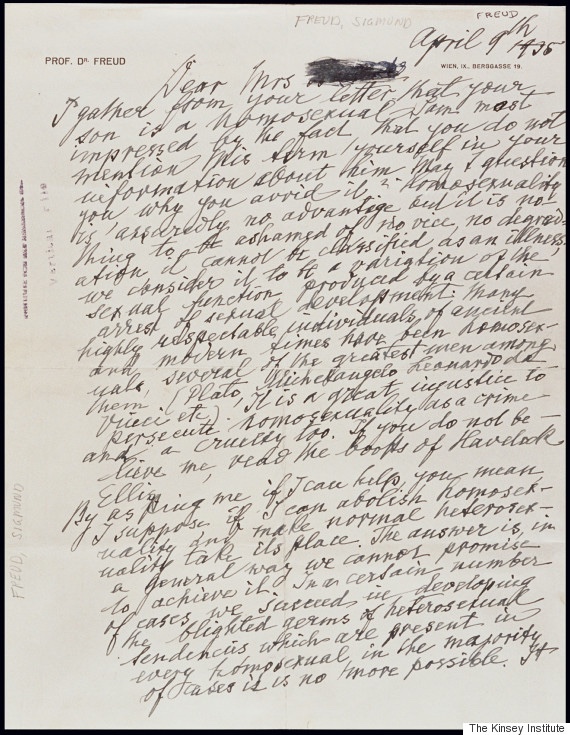


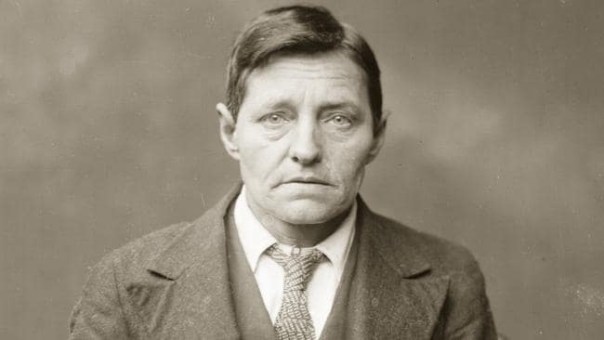
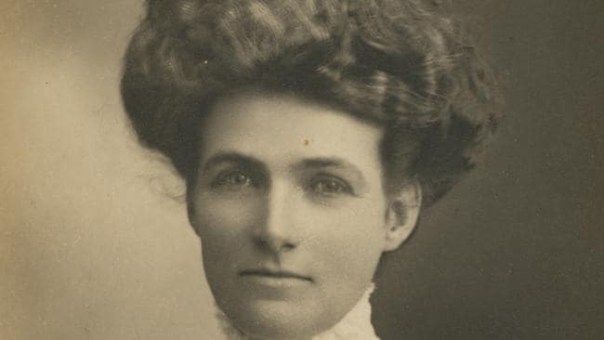


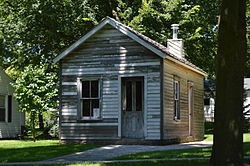








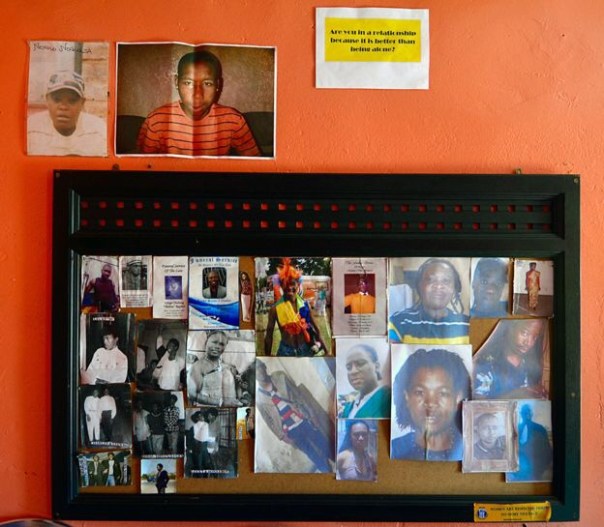





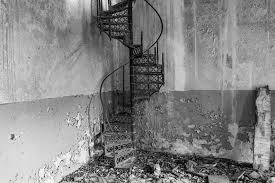

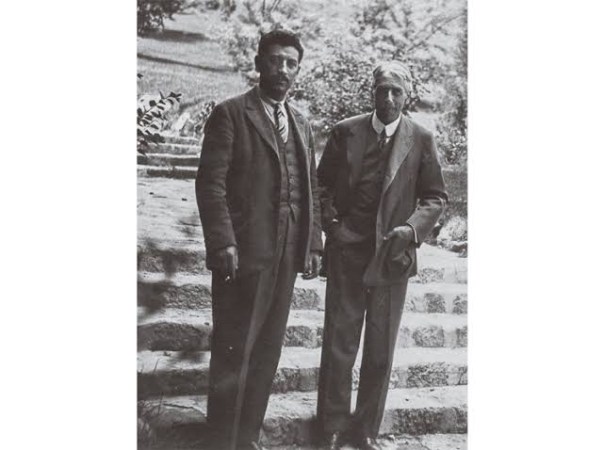
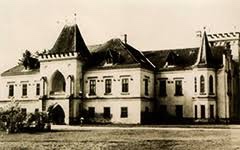



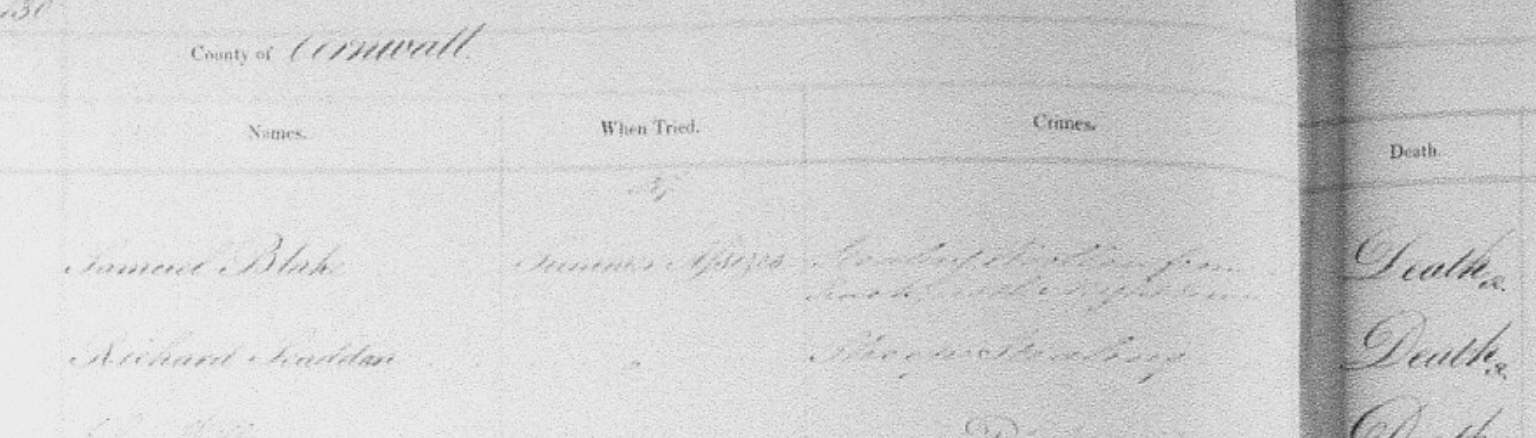


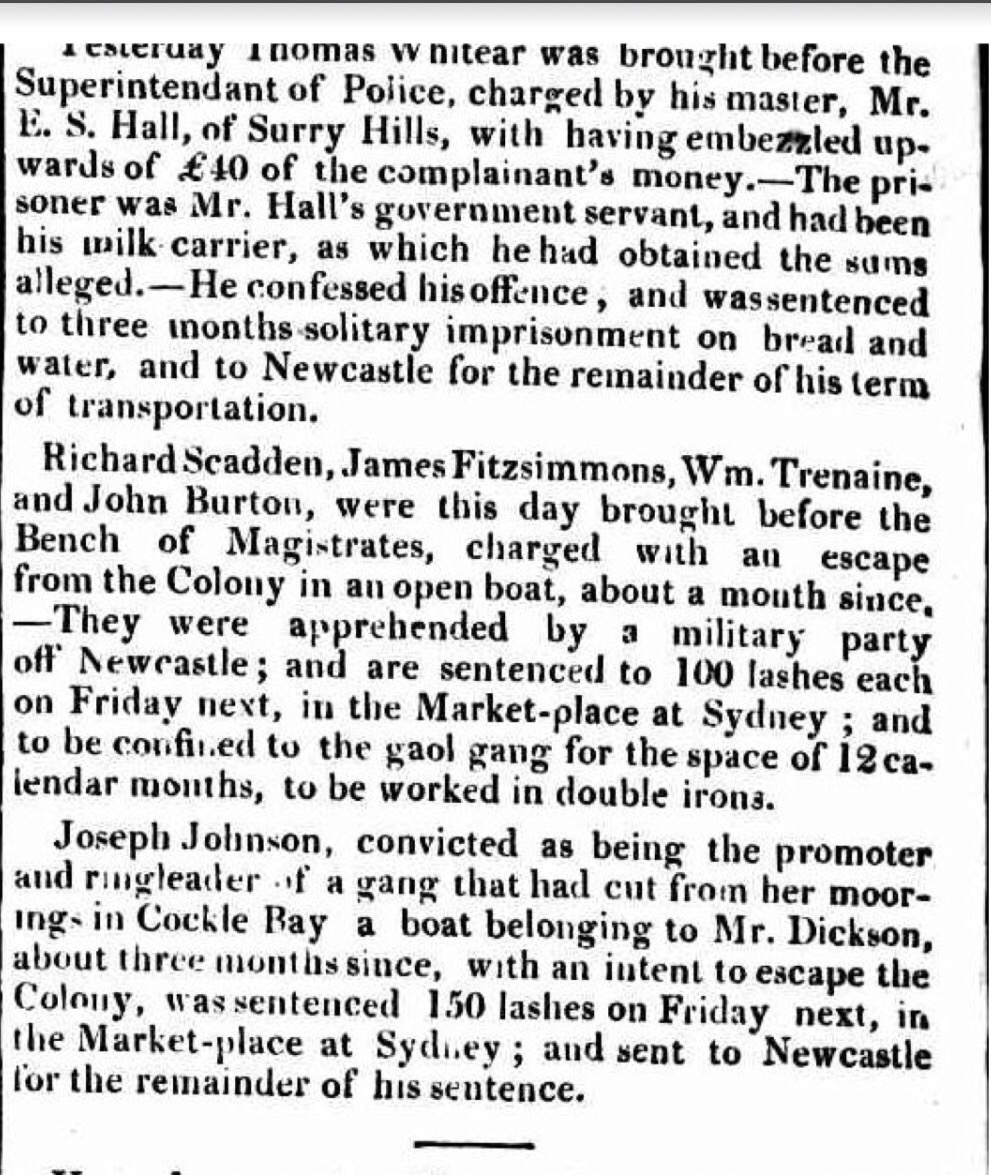

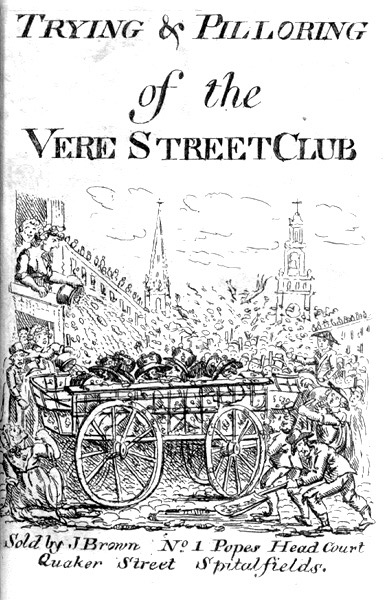
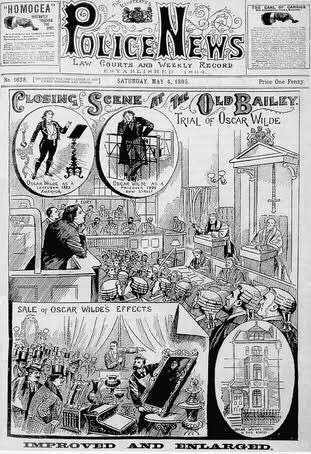



 timalderman