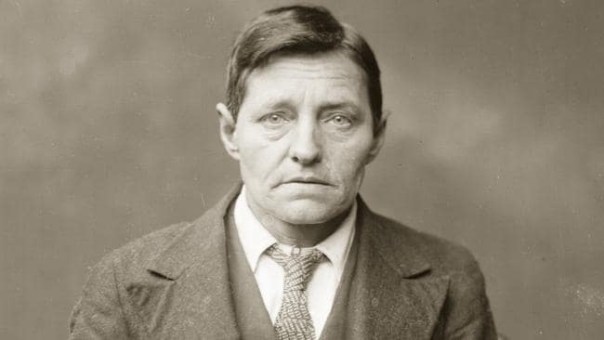
Tab Hunter, the actor with the all-American looks who starred in ’50s classics “Damn Yankees” and “Battle Cry,”. Photo Credit: Allan Glaser Production
With his blonde surfer-dude locks and fresh-scrubbed complexion, Tab Hunter set female hearts aflutter in the 1950s with hit movies like “Damn Yankees” and “Battle Cry” and records including the chart-topping “Young Love.” No one suspected that Hollywood’s all-American boy was homosexual.
Now Hunter, 84, opens up about his days in Hollywood — from his discovery at age 20 to working with cult filmmaker John Waters — and his private life, including his relationship with actor Anthony Perkins — in the new documentary “Tab Hunter Confidential,” produced by his longtime partner Allan Glaser. The actor will be on hand for a screening and Q&A Wednesday, Oct. 14, at Cinema Arts Centre in Huntington. He spoke by phone from his home in Santa Barbara, California.
You were thrown into movies with no experience. What was the first day on the set like?
The first time was when I tested with Linda Darnell for “Island of Desire,” and I was a nervous wreck. And she pinched me and said, “Relax, I’m good luck for newcomers.” And she was.
You left Warner Bros. after getting roles you didn’t like. Did you regret that move?
Yes, in many respects, and no. Your own freedom and individuality is major. . . . I really wanted out of the studio contract, but at the same time, the security financially was important because I had a mother I had to care for. It was a tough decision to make. I did a couple of movies after that that were all right, and then I did a lot of dreck, mainly for survival.
As a gay man in the 1950s, did you ever think being an actor, in which your life would be so scrutinized, might not be the right profession?
If something would be mentioned, I would just go in the other direction. I wouldn’t confront anything. My sexuality was nobody’s business. The studio never mentioned my sexuality. If they had, I would have freaked out. The only person I ever discussed things with besides Tony [Perkins] was Dick Clayton, my agent.
The movie deals heavily with your relationship with your mother. What did she say when you told her you were gay?
I never told my mother anything. We were driving back from my brother’s funeral up in northern California after he was killed in Vietnam. As we were driving down the coast, out of the blue my mother said, “I never see Tony anymore or hear about him.” And I said, “Well, he’s doing a picture in Thailand.” There was this long pause, and all of a sudden my mother said, “I’ve never been in love.” That was the closest we ever came to saying anything about it.
How did the idea for the documentary come about?
It all started with the book [his 2005 memoir of the same name]. Allan said, “I think you should do a book because I hear someone is going to do a book on you.” I thought, “Who would want to read a book on me?” He said, “You’d be surprised.” I thought about it and decided I’d do it. I figured get it from the horse’s mouth. . . . Then years went by and Allan said, “I think we should do a documentary.”
Warner Bros. considered you for “Rebel Without a Cause.” Did you want to do the kinds of roles people like James Dean were playing?
It was only when I got “Battle Cry” that I realized I wanted seriously to be an actor. . . . I started working with [acting coach] Jeff Corey and doing a lot of live TV, which was a great training ground.
Do you have any favorite co-stars or roles?
I loved working with Geraldine Page, she was one of my favorites. And Natalie Wood, who was like my kid sister. . . . “Damn Yankees” was great because it was my first musical, and I was working with the whole Broadway cast. Live TV was probably the most gratifying for my growth as an actor and a person.
How was working with Sophia Loren?
She was absolutely fabulous. We were working in the heat of the summer in New York City. She had an air-conditioned limo that we would sit in to cool off while we were waiting for a shot. The big record at that time was Bobby Darin’s “Splish Splash,” and that was our song. Under all that fire and sex, the great thing I loved about Sophia is that she was so childlike.
And Divine in “Polyester” and “Lust in the Dust”?
That’s one of my favorite leading ladies. I was just done doing a play in Indianapolis or someplace, and John Waters called and said, “I’ve got a script that I’d love you to look at, and it’s a film with Divine.” Then he said, “Before we go any further, how would you feel about kissing a 350-pound transvestite?” And I said, “Well I’m sure I’ve kissed a helluva lot worse.” I read the script and I knew I had to do it because it was such fun. . . . I wanted John to direct our film “Lust in the Dust,” but he said he only does his own stuff. I’d written it and originally it was called “The Reverend and Rosie,” and it was going to be Chita Rivera and myself, but she was tied up on Broadway. And then I wanted Shirley MacLaine, and that didn’t work out. Then Alan said to me, “What about Divine and Lainie Kazan as half sisters?” And I said, “Alan, you’re brilliant.”
Had you had any aspirations to be a singer?
I used to sing in the shower [laughs], and in church I sang in the choir. The only time I had a solo, nothing came out because I was so frightened. When Howard Miller, who was a big disc jockey in Chicago, heard me sing, he said, “Did you ever think about recording?” I said, “I’d love to do that,” so he said, “Let me put you in touch with [record producer] Randy Wood. Randy called me, presented me with a tune called “Young Love.” We went in an recorded it on a Friday, and on Monday morning I was driving down Sunset Boulevard and heard it on the car radio and almost hit a palm tree.
What did you think of your singing voice?
They drowned me in echo and I guess they thought it was all right
What did you think about having all of those female fans swooning over you?
Whenever anybody says to me, “My mother just loved you,” my response is, “Thank her for me because if it hadn’t been for her, I wouldn’t have been working.”
Did you ever think your looks were a help or a hindrance to your career?
I wasn’t comfortable in that skin. My comfort zone was being out at the stable. Every free minute I’d be out with my horses. They were my touch of reality in Hollywood. I was just never an out-there kind of guy. I was very shy as a kid. I played the game, but it was difficult.
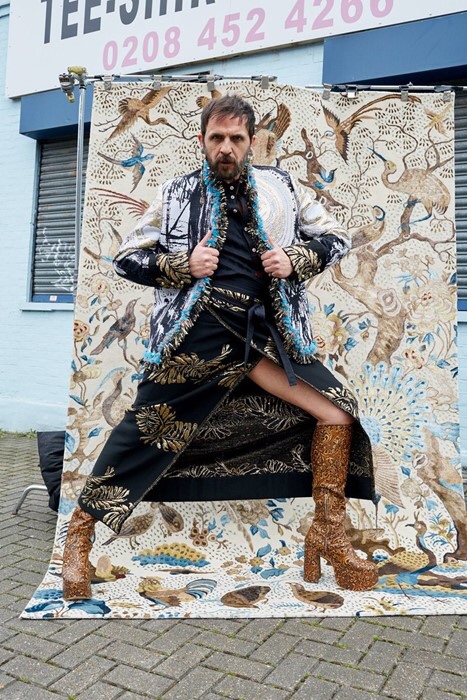
Andreas Kronthaler for Vivienne Westwood A/W16Photography by Juergen Teller
AnOther traces the history of male icons who have challenged modern tropes of masculinity, from Louis XIV toAndreas Kronthaler
It’s important to note that it’s only within the past few of centuries of western fashion that menswear has become synonymous with the tropes of masculine dress we might think of today. Even this relatively recent history of gender-regulated, pared-down, ostentation-eschewing style has been punctured with numerous anomalies that challenge the norms of said masculine taste standards. Heels, cosmetics, and other accoutrements that often constitute the cultural symbols of femininity have, at various periods, been equally associated with men and masculine ideals. As critics today return to embracing these often-neglected facets of men’s style, and designers from Andreas Kronthaler for Vivienne Westwood toGrace Wales Bonner turn away from contemporary conventions of masculinity, we explore the appearance ofthe decorated malethroughout history.
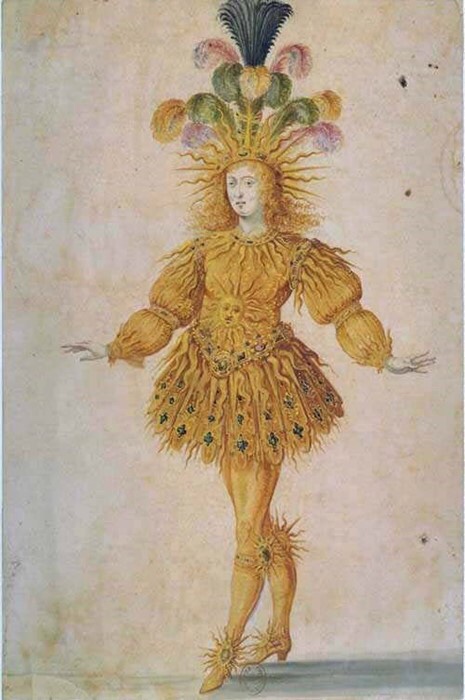
Louis XIV as Apollo in Le Ballet Royal de la nuitArtwork by Henri Gissey
Power Heels, Powder and Patriarchy
As is so often the case, one cannot speak about western fashion without mentioning examples outside the Occident. Makeup for men is known to have been prominent throughout the ancient world, with nail varnish being worn by those throughout all ranks of society at least as early as 3000 BCE in Japan and China. Perhaps the best-known example of ancient male cosmetics would be the wearing of eye makeup by the ancient Egyptians, while heels are a comparatively younger affair, worn by men throughout the medieval near east where they had the functional purpose of allowing horse riders to stand up in their stirrups and fire arrows. When these same Persian heels arrived in the court of Louis XIV, their purpose was altogether more decorative. Himself an admirer of this elevated footwear, they came to be known as the “Louis Heel”. The image of the 17th aristocrat is possibly one of the most prominent historical images of the decorated man; alongside heels, they opted for wigs, face powders and other makeup such as artificial beauty spots.
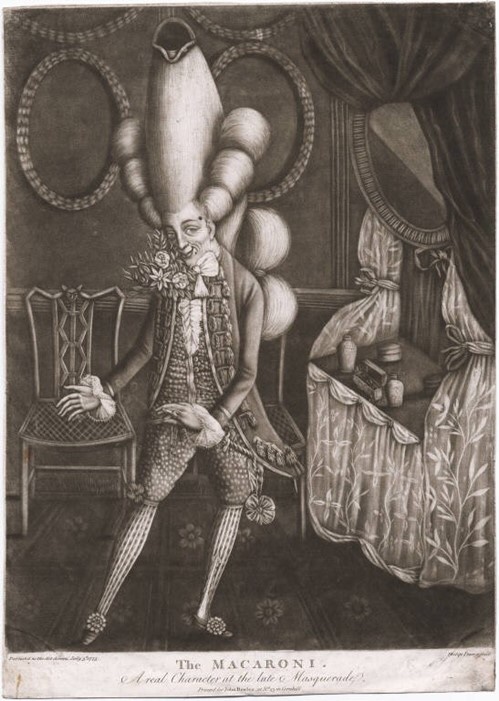
The Macaroni. A real Character at the late MasqueradeMezzotint by Philip Dawe, 1773
So many of these items were simply not yet strict symbols of femininity. Indeed, far removed from today’s concepts of masculine dress, many of these were as much to do with power and patriarchy as individual expressions of style. It is often cited that the diminutive King Louis took to heels and towering wigs to impart a more “monarchic” height, while it has been observed that it was only due to trends of women imitating men’s fashion that the heel became common amongst both genders. In 18th-century Europe, particularly in England, decoration reached new heights with the “Macaroni”. Macaroni referred to groups of cultured young men whose interest in fashion was seen as excessive. Their hairstyles and powdered wigs, jewellery, attire, makeup and generally “effete” appearance were cause for concern amongst many who felt they were rather too unmanly. It is worth noting, however, that whilst frowned upon and associated with effeminacy, there was not quite the same negative weight to such styles (or indeed to effeminacy) as there later was in Victorian society. Class, however, was heavily at play and while it might be considered acceptable or even suitable for a man of certain social status to sport highly stylised attire, a man of lower rank would not be received as warmly.
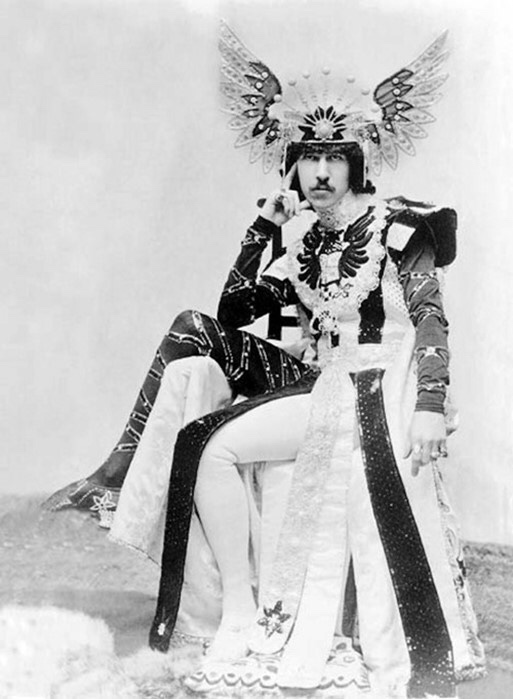
Henry Cyril Paget, 5th Marquess of Anglesey
Eccentrics and Exiles
There was a notable shift come the Victorian era, one that was particularly visible in Britain. Following some high-profile scandals in the press, attitudes towards gender became markedly less tolerant. In many ways, the late 1800s in particular can be thought of as a cut-off point for the social rules that shaped men’s style – whatever was considered masculine around this period remained so in a manner that had not quite been so rigid previously. This rigidity did not mean that there weren’t several who defied or ignored convention. If fortunate they were classified as eccentrics, as was the case with Henry Cyril Paget, whose elaborate headdresses and bejewelled costumes (which often contained Louis heels), amazed and also horrified many.
Paget, however, had the protections of wealth and status and that often worked to convert perceived queerness into tolerated eccentricity. Others were not so lucky. Even the likes of photographer Cecil Beaton, who was by no means lacking in money and social standing, suffered from the rampant homophobia that suffused the post-Victorian air. At a friend’s ball, he was famously dunked in a fountain by a group of “hearties”, because of his wearing makeup. Similarly, Quentin Crisp’s love of makeup and feminine attire resulted in his being chased through the streets, kicked and beaten. What was certainly apparent by the 1930s was that, in the public consciousness, the image of the decorated man had become consolidated with a vision of femininity and queerness that was violently received.
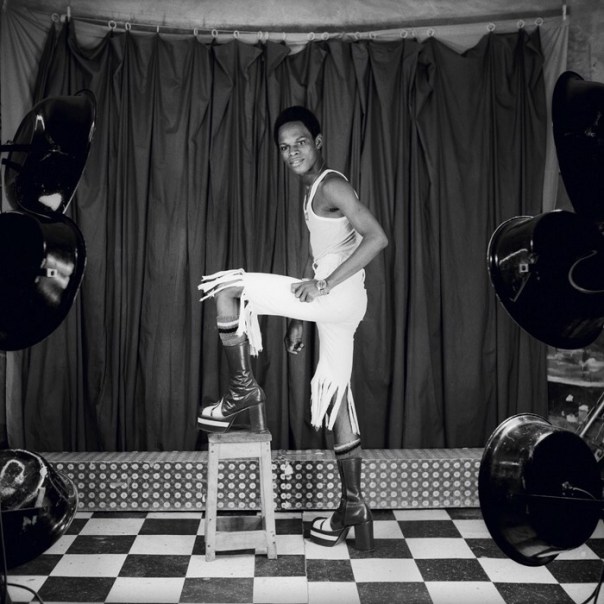
Self-portraitPhotography by Samuel Fosso
The Opening and Breaking of Menswear
This consolidation was to have a lasting effect. Vogue ball culture, which emerged from American black drag scenes of the 1930s, is particularly pivotal, in that it shows how queer cultures and groups utilised the negative connotations of the decorative to challenge and undermine the dominant status of masculinity. Elsewhere, counterculture made constant recourse to what had become strictly feminine symbols. With the disco movement, we see men in heels once again, this time in the form of platforms, while the flamboyant impulse was once more loose in the embracing of all the glitter and ornament that have now come to be thought of as “camp”. Similarly, the New Romantic movement which came about almost a decade later is defined by its disregard of the doggedly concrete rules about what men could and couldn’t wear, elevating instead the “excesses” of costume.
Current conversation regarding menswear and cosmetics is becoming increasingly preoccupied with noting the breaking down and opening up of menswear. For many, the mere loosening of men’s fashion is not enough – the very existence of menswear and womenswear as two separate strands, something which is central to the mechanisms of the fashion industry, continues to keep harmful gender norms alive (in spite of the move of some designers, like Andreas Kronthaler for Vivienne Westwood, to do away with such divisions). While designers like Claire Barrow emphasise the essential non-binary nature of their clothes, when it comes to more commercial bodies, such as Selfridges, who recently made the decision to promote gender-neutral clothing with a retail concept space titled ‘Agender’, it can be hard not to suspect the cold machinations of trends and advertising at work. For some, defying dominant gender standards is a choice, but for others, it is a necessity and not something to be left to the mercy of consumerism.
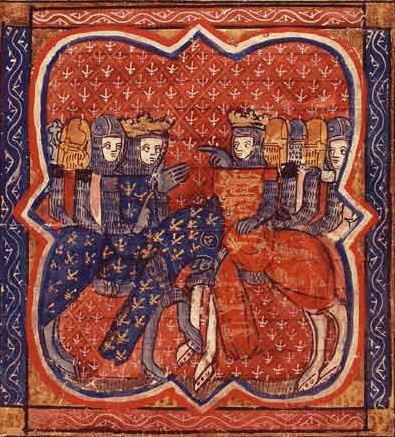
Richard the Lionheart and Philip II of France “ate every day at the same table and from the same dish, and at night their beds did not separate them.”
There are a number of monarchs throughout history who are believed to have been gay. Richard the Lionheart and Philip II are just a couple of kings who seemingly would rather have a relationship with a man than produce an heir and a spare. However, though Richard has been treated as something of a gay icon for years, direct evidence that he and Philip actually had a homosexual relationship is scant.
The source most people point to is a report by Roger de Hoveden, who was a contemporary of the two kings. Here is an English translation of his account:
Richard, [then] duke of Aquitaine, the son of the king of England, remained with Philip, the King of France, who so honored him for so long that they ate every day at the same table and from the same dish, and at night their beds did not separate them. And the king of France loved him as his own soul; and they loved each other so much that the king of England was absolutely astonished and the passionate love between them and marveled at it.
It sounds like solid evidence, but put into the context of the time, sharing a bed wasn’t a big deal. Certainly among lower classes, bed sharing among families happened all the time—it was a way to keep warm, or they might not have been able to afford more than one bed, or had room for more than one. Bed sharing was done as a matter of necessity. There was nothing inherently sexual about it and it was something most did.
In the case of Richard and Philip, the bed sharing and the other statements of love between them were a political statement. The two had teamed up to overthrow Henry II, and were just announcing to the world that France and England were allies. About the notion that the two were gay, historian Dr. John Gillingham states,
The idea wasn’t even mooted until 1948 and it stems from an official record announcing that, as a symbol of unity between the two countries, the kings of France and England had slept the night in the same bed. It was an accepted political act, nothing sexual about it; just two politicians literally getting into bed together, a bit like a modern-day photo opportunity.
Richard the Lionheart was also known to have held political court in his bedroom. He also rewarded his favourite servants with the opportunity to sleep at the foot of his bed at night. Again, there is no evidence to suggest that anything more than sleeping occurred on these occasions. He shared a bed with others to symbolize trust.
In later years, political leaders would often greet each other with “the kiss of peace” which was Biblically sanctioned. Again, the kiss meant nothing more than a handshake does today.
While the bed sharing and eating together wasn’t necessarily a positive indicator of the pair’s sexual preferences, the two for a time maintained a close alliance and apparent friendship. In fact, Richard was engaged to Alice, Philip’s sister for a while. However, he ended up renouncing her and spreading a rumour that she was having an affair and had given birth to an illegitimate child. Richard also married his wife, Berengaria of Navarre, while he was still betrothed to Philip’s sister. Not exactly things a person should do if they were trying to keep on the woman’s brother’s good side.
As previously mentioned, Philip also helped Richard win the crown of England. Thanks to their alliance, Philip went to war against Richard’s father with Richard later joining in, ultimately defeating Henry II. Henry then named Richard his heir and died two days later.
Philip and Richard’s relationship eventually soured. The pair spent the last five years of Richard’s life in bitter rivalry and open war. Richard ended up winning many of the battles between the two, but Philip outlasted him. Supposedly, Richard was shot and killed by a boy who was acting out of revenge. Whether that is true or not, the arrow he was shot with didn’t hit anything vital, but the wound became gangrenous, at least giving him time to set his affairs in order before he succumbed to infection.
Was Richard’s and Philip’s enmity part of a lover’s quarrel as is so commonly said today? The evidence for that is scant. So if not “lover’s quarrel” maybe “bromance turned sour…” or perhaps most accurate of all “political alliance that was no longer necessary or convenient.”
Bonus Facts:
▪ Many people argue that Richard was homosexual because he rarely saw his wife and never fathered any legitimate children. However, he did have at least one illegitimate son and reportedly spent time with other women while on Crusade.
▪ Richard and Philip fought together during the Crusades, but argued over what to do about certain areas, resulting in Philip leaving for France earlier than anticipated. Richard was then captured, and when he was released Philip warned Richard’s brother John: “Look to yourself: the devil is loose.”
▪ Philip’s marital issues also earned him a reputation for being homosexual, though he had enough wives and children to (perhaps) prove otherwise. He had one child with his first wife, Isabelle, who later died in childbirth trying to deliver twins (who also died). He was then married to Ingeborg, the daughter of the King of Denmark, who he despised and confined to a convent before seeking an annulment from the Pope on the grounds of non-consummation. He then took a third wife, Agnes, by whom he had two children, before going back to Ingeborg on the Pope’s orders.
▪ As far as kings go, Richard wasn’t a very good one. He only spent six months of his ten year reign in England and cared more about the Crusades than what was going on in his own country. He is popularly remembered as a good king though, partially because of the Robin Hood legends, where Robin Hood was a supporter of Richard the Lionheart and a sworn enemy of the king’s evil brother, Prince John.
▪ King Philip wasn’t a fan of John, either. After Richard’s death, John became king. Philip and John were at war for years, as Philip suspected that John had kidnapped and murdered Arthur, his daughter Marie’s betrothed.
Albert D. J. Cashier (December 25, 1843 – October 10, 1915), born Jennie Irene Hodgers, was an Irish-born immigrant who served in the Union Army during the American Civil War. Cashier adopted the identity of a man before enlisting, and maintained it until death. Cashier became famous as one of a number of women soldiers who served as men during the Civil War, although the consistent and long-term (at least 53 years) commitment to a male identity has prompted some contemporary scholars to suggest that Cashier was a trans man.[3][4][5][6]
(November, 1864)
Cashier was very elderly and disoriented when interviewed about immigrating to the United States and enlisting in the army, and had always been evasive about early life; therefore, the available narratives are often contradictory. According to later investigation by the administrator of Cashier’s estate, Albert Cashier was born Jennie Hodgers in Clogherhead, County Louth, Ireland on December 25, 1843,[7]:52[2] to Sallie and Patrick Hodgers.[2] Typically, the youth’s uncle or stepfather was said to have dressed his charge in male clothing in order to find work in an all-male shoe factory in Illinois. Even before the advent of the war, Jenny adopted the identity of Albert Cashier in order to live independently.[7]:52 Sallie Hodgers, Cashier’s mother, was known to have died prior to 1862, by which time her child had traveled as a stowaway to Belvidere, Illinois, and was working as a farmhand to a man named Avery.[8][9][10]
Cashier first enlisted in July 1862 after President Lincoln’s call for soldiers.[7]:52 As time passed, the need for soldiers only increased. On August 6, 1862, the eighteen-year-old enlisted in the 95th Illinois Infantry for a three-year term using the name “Albert D.J. Cashier” and was assigned to Company G.[11][12][7]:52 Cashier was listed in the company catalog as nineteen years old upon enlistment, and small in stature.[note 1]
Many Belvidere boys had been at the Battle of Shiloh as members of the Fifteenth Illinois Volunteers, where the Union had suffered heavy losses. Cashier took the train along with other boys from Belvidere to Rockford in order to enlist, in answer to the call for more soldiers.[13]:380 Along with others from Boone and McHenry counties, Cashier learned how to be a volunteer infantryman of the 95th Regiment at Camp Fuller. After being shipped out by steamer and rail to Confederate strongholds in Columbus, Kentucky and Jackson, Tennessee, the 95th was ordered to Grand Junction where it became part of the Army of the Tennessee under General Ulysses S. Grant.[13]:380–381
The regiment was part of the Army of the Tennessee under Ulysses S. Grant and fought in approximately forty battles,[12] including the siege at Vicksburg. [13]:381 During this campaign, Cashier was captured while performing reconnaissance,[7]:55 but managed to escape and return to the regiment. After the Battle of Vicksburg, in June 1863, Cashier contracted chronic diarrhea and entered a military hospital, somehow managing to evade detection.[7]:55–56 In the spring of 1864, the regiment was also present at the Red River Campaign under General Nathaniel Banks, and in June 1864 at the Battle of Brice’s Crossroads in Guntown, Mississippi, where they suffered heavy casualties.[7]:56–57[13]:382–383
Following a period to recuperate and regroup following the debacle at Brice, the 95th, now a seasoned and battle-hardened regiment, saw additional action in the Winter of 1864 in the Franklin-Nashville Campaign, at the battles of Spring Hill and Franklin, the defense of Nashville, and the pursuit of General Hood.[13]:383
During the war, the regiment traveled a total of about 9,000 miles.[7]:52[note 2] Other soldiers thought that Cashier was small and preferred to be alone, which were not uncommon characteristics for soldiers. Cashier fought with the regiment through the war until honorably discharged on August 17, 1865, when all the soldiers were mustered out.[7]:57
Cashier was only one of at least 250 soldiers who were assigned female at birth and enlisted as men to fight in the Civil War.[14][15]
Cashier’s postwar residence, since moved to Saunemin, Illinois
After the war, Cashier returned to Belvidere, Illinois for a time, working for Samuel Pepper and continuing to live as a man.[7]:57[16] Settling in Saunemin, Illinois in 1869, Cashier worked as a farmhand as well as performing odd jobs around the town.[7]:57 and can be found in the town payroll records.[7]:57 Cashier lived with employer Joshua Chesbro and his family in exchange for work, and had also slept for a time in the Cording Hardware store in exchange for labor. In 1885, the Chesbro family had a small house built for Cashier.[17] For over forty years, Cashier lived in Saunemin and was a church janitor, cemetery worker, and street lamplighter. Living as a man allowed Cashier to vote in elections and to later claim a veteran’s pension under the same name.[7]:58 Pension payments started in 1907.[18]
In later years, Cashier ate with the neighboring Lannon family. The Lannons discovered their friend’s sex when Cashier fell ill, but decided not make their discovery public.[7]:59
In 1911, Cashier, who was working for State Senator Ira Lish, was hit by the Senator’s car, resulting in a broken leg.[7]:59 A physician found out the patient’s secret in the hospital, but did not disclose the information. No longer able to work, Cashier was moved to the Soldiers and Sailors home in Quincy, Illinois on May 5, 1911. Many friends and fellow soldiers from the Ninety-fifth Regiment visited.[7]:59 Cashier lived there until an obvious deterioration of mind began to take place and was moved to the Watertown State Hospital for the Insane in March 1914.[7]:60 Attendants at the Watertown State Hospital discovered Cashier’s sex, at which point, the patient was made to wear women’s clothes again after what we can assume would be more than fifty years.[7]:60 In 1914, Cashier was investigated for fraud by the veterans’ pension board; former comrades confirmed that Cashier was in fact the person who had fought in the Civil War and the board decided in February 1915 that payments should continue for life.[19][20][21]
Albert Cashier died on October 10, 1915 and was buried in uniform. The tombstone was inscribed “Albert D. J. Cashier, Co. G, 95 Ill. Inf.”[11] Cashier was given an official Grand Army of the Republic funerary service, and was buried with full military honors.[7]:60 It took W.J. Singleton (executor of Cashier’s estate) nine years to track Cashier’s identity back to the birth name of Jennie Hodgers. None of the would-be heirs proved convincing, and the estate of about $282 (after payment of funeral expenses)[20][21][22] was deposited in the Adams County, Illinois, treasury. The name on the original tombstone is Albert D. J. Cashier. In the 1970s, a second tombstone, inscribed with both names, was placed near the first one at Sunny Slope cemetery in Saunemin, Illinois.[11][23]
Cashier is listed on the internal wall of the Illinois memorial at Vicksburg National Military Park.[24]
A musical entitled The Civility of Albert Cashier has been produced based on Cashier’s life; the work was described by the Chicago Tribune as “A timely musical about a trans soldier”.[25]
Also Known As Albert D. J. Cashier: The Jennie Hodgers Story is a biography written by veteran Lon P. Dawson, who lived at the Illinois Veterans Home where Cashier once lived. The novel My Last Skirt, by Lynda Durrant, is based on Cashier’s life. Cashier was mentioned in a collection of essays called Nine Irish Lives, in which Cashier’s biography was written by Jill McDonough.[26] Cashier’s house has been restored in Saunemin.[27]
Authors including Michael Bronski, James Cromwell, Kirstin Cronn-Mills, and Nicholas Teich have suggested or argued that Cashier was a trans man due to living as a man for at least 53 years.[3][4][5][6]
1 Salt. Archived from the original (PDF) on 2007-10-08. Retrieved 2007-12-14.
2 ^ a b c Blanton, DeAnne & Cook, Lauren M. (2002). They Fought Like Demons: Women Soldiers in the American Civil War. Louisiana State University Press. ISBN 9780807128060.
3 ^ a b Cromwell, Jason (1999). “Transvestite Opportunists, Passing Women, and Female-Bodied Men”. Transmen and FTMs: Identities, Bodies, Genders, and Sexualities. University of Illinois Press. pp. 77–78. ISBN 9780252068256.
4 ^ a b Bronski, Michael (2011). “A Democracy of Death and Art”. A Queer History of the United States. Beacon Press. pp. 69–70. ISBN 9780807044391.
5 ^ a b Teich, Nicholas (2012). “The History of Transgenderism and its Evolution Over Time”. Transgender 101: A Simple Guide to a Complex Issue. Columbia University Press. pp. 76–77. ISBN 9780231157124.
6 ^ a b Cronn-Mills, Kirstin (2014). Transgender Lives: Complex Stories, Complex Voices. Minneapolis: Lerner Publishing Group. p. 41. ISBN 9780761390220.
7 ^ a b c d e f g h i j k l m n o p q r s t Tsui, Bonnie (2006). She Went to the Field: Women Soldiers of the Civil War. Globe Pequot. Guilford, Connecticut: TwoDot. ISBN 978-0-7627-4384-1. OCLC 868531116.
8 ^ Benck, Amy. “Albert D. J. Cashier: Woman Warrior, Insane Civil War Veteran, or Transman?”. OutHistory. Retrieved 6 May 2015.
9 ^ Illinois Issues: Little Soldier, Big Mystery, Illinois Public Radio, July 10, 2018
11 ^ a b c Hicks-Bartlett, Alani (February 1994). “When Jennie Comes Marchin’ Home”. Illinois History. Archived from the original on 2006-09-05. Retrieved 2007-12-13.
12 ^ a b 1 Blanton, DeAnne (Spring 1993). “Women Soldiers of the Civil War”. Prologue. College Park, MD: National Archives. 25 (1). Archived from the original on 5 December 2007. Retrieved 2007-12-14.
2 ^ a b c d e f g Clausius, Gerhard P. (Winter 1958). “The Little Soldier of the 95th: Albert D. J. Cashier”. Journal of the Illinois State Historical Society. 51 (4): 380–387. ISSN 2328-3246. JSTOR 40189639.
3 ^ “The Women Who Fought in the Civil War”. Off the Beaten Path. Retrieved August 5, 2018.
4 ^ Steve Hendrix (August 25, 2017). “A history lesson for Trump: Transgender soldiers served in the Civil War”. Washington Post. Retrieved 10 August 2018.
5 ^ “Deposition of J. H. Himes” (January 24, 1915) from Blanton (Spring 1993)
6 ^ “Recollections – Albert D. J. Cashier”. Saunemin, Illinois. Google Sites. Retrieved 10 August 2018.
7 ^ “The Handsome Young Irishman of the 95th IL Infantry”. eHistory, Ohio State University. Retrieved August 3, 2018.
8 ^ McAuliffe, Nora-Ide. “When Jennie Came Marching Home – An Irishwoman’s Diary on Albert Cashier and the US Civil War”. http://www.irishtimes.com. The Irish Times. Retrieved 8 August 2018.
9 ^ a b “Women in the Civil War”. Warfare History. Retrieved August 3, 2018.
10 ^ a b DeAnne Blanton, Lauren Cook Wike (2002-09-01). They Fought Like Demons. LSU Press. p. 174. ISBN 9780807128060. Retrieved 2018-08-03.
11 ^ “The Handsome Young Irishman of the 95th IL Infantry”. eHistory, Ohio State University. Retrieved August 3, 2018.
12 ^ “Albert D. J. Cashier”. Find a Grave.
13 ^ Bonnie Tsui (2006-07-01). She Went to the Field: Women Soldiers of the Civil War. Rowman & Littlefield. ISBN 9781461748496. Retrieved 2018-08-03.
14 ^ Jones, Chris (7 September 2017). “‘Civility of Albert Cashier’: A timely musical about a trans soldier”. Chicago Tribune. Retrieved 8 August 2018.
15 ^ McDonough, Jill (2018). “The Soldier”. Nine Irish Lives. Algonquin Books. pp. 68–99.
16 ^ “For Love Of Freedom”. Saunemin Historical Society. July 2012. Retrieved 2012-07-14.
Gay marriage does not lead to polygamy according to 6000 years of human history. In countries where polygamy is legal, marriage for gays is often illegal. In countries where same-sex marriage is legal, polygamy is illegal.
St. Catherine’s Monastery on Mt. Sinai.
A Long Tradition Of Gay Marriage
As churches struggle with the issue of homosexuality, a long tradition of same sex marriage indicates that the Christian attitude toward same sex unions may not always have been as “straight” as is now suggested. A Kiev art museum contains a curious icon from St. Catherine’s monastery on Mt. Sinai.
It shows two robed Christian saints. Between them is a traditional Roman pronubus (best man) overseeing what in a standard Roman icon would be the wedding of a husband and wife. In the icon, Christ is the pronubus. Only one thing is unusual. The husband and wife are in fact two men.
St. Serge and St. Bacchus
Is the icon suggesting that a homosexual or same sex marriage is one sanctified by Christ?
The very idea seems initially shocking. The full answer comes from other sources about the two men featured, St. Serge and St. Bacchus, two Roman soldiers who became Christian martyrs.
While the pairing of saints, particularly in the early church, was not unusual, the association of these two men was regarded as particularly close. Severus of Antioch in the sixth century explained that “we should not separate in speech [Serge and Bacchus] who were joined in life.” More bluntly, in the definitive 10th century Greek account of their lives, St. Serge is openly described as the “sweet companion and lover” of St. Bacchus.
In other words, it confirms what the earlier icon implies, that they were a homosexual couple who enjoyed a celebrated gay marriage. Their orientation and relationship was openly accepted by early Christian writers. Furthermore, in an image that to some modern Christian eyes might border on blasphemy, the icon has Christ himself as their pronubus, their best man overseeing their gay marriage.
Professor John Boswell’sStartling Discovery
The very idea of a Christian gay marriage seems incredible. Yet after a twelve year search of Catholic and Orthodox church archives Yale history professor John Boswell has discovered that a type of Christian gay marriage did exist as late as the 18th century.
Contrary to myth, Christianity’s concept of marriage has not been set in stone since the days of Christ, but has evolved as a concept and as a ritual.
St. Serge and St. Bacchus, a partnered gay couple
Professor Boswell discovered that in addition to heterosexual marriage ceremonies in ancient church liturgical documents (and clearly separate from other types of non-marital blessings of adopted children or land) were ceremonies called, among other titles, the “Office of Same Sex Union (10th and 11th century Greek) or the “Order for Uniting Two Men” (11th and 12th century). That certainly sounds like gay marriage.

John Boswell
earned the Ph.D. in History from Harvard University in 1975. He became a full professor at Yale University in 1982. Boswell was conversant in 17 languages.
The ceremonies Boswell describeshad all the contemporary
symbols of a marriage.
1 A community gathered in a church
2 A blessing of the couple before the altar
3 Their right hands joined as at heterosexual marriages
4 The participation of a priest
5 The taking of the Eucharist
6 A wedding banquet afterwards
All of these are shown in contemporary drawings of the same sex union of Byzantine Emperor Basil I (867-886) and his companion John. Such homosexual unions also took place in Ireland in the late 12th to early 13th century, as the chronicler Gerald of Wales (Geraldus Cambrensis) has recorded.


One Greek 13th century “Order for Solemnization of Same Sex Union,” having invoked St. Serge and St. Bacchus, called on God to “vouchsafe unto these Thy servants grace to love another and to abide unhated and not cause of scandal all the days of their lives, with the help of the Holy Mother of God and all Thy saints.” The ceremony concludes: “And they shall kiss the Holy Gospel and each other, and it shall be concluded.”
Another 14th century Serbian Slavonic “Office of the Same Sex Union,” uniting two men or two women, had the couple having their right hands laid on the Gospel while having a cross placed in their left hands. Having kissed the Gospel, the couple were then required to kiss each other, after which the priest, having raised up the Eucharist, would give them both communion.
Ancient marriage records can be foundin libraries across Europe.
Boswell found records of same sex unions in such diverse archives as those in the Vatican, in St. Petersburg, in Paris, Istanbul, and in Sinai, covering a period from the 8th to 18th centuries. Nor is he the first to make such a discovery. The Dominican Jacques Goar (1601-1653) includes such ceremonies in a printed collection of Greek prayer books.
While homosexuality was technically illegal from late Roman times, it was only from about the 14th century that anti-homosexual feelings swept western Europe. Yet same sex unions continued to take place.
St. John Lateran Church, Rome
At St. John Lateran in Rome (traditionally the Pope’s parish church) in 1578, as many as 13 couples were “married” at Mass with the apparent cooperation of the local clergy, “taking communion together, using the same nuptial Scripture, after which they slept and ate together,” according to a contemporary report.
Gay people have partneredfor thousands of years
Another woman to woman union is recorded in Dalmatia in the 18th century. Many questionable historical claims about the church have been made by some recent writers in The Irish Times newspaper.
Boswell’s academic study however is so well researched and sourced as to pose fundamental questions for both modern church leaders and heterosexual Christians concerning their attitude toward homosexuality.
For the Church to ignore the evidence in its own archives would be a cowardly cop-out. The evidence shows convincingly that what the modern church claims has been its constant unchanging attitude towards homosexuality is in fact nothing of the sort.
It proves that for much of the last two millennia, in parish churches and cathedrals throughout Christendom from Ireland to Istanbul and in the heart of Rome itself, homosexual relationships were accepted as valid expressions of a God-given ability to love and commit to another person, a love that could be celebrated, honoured and blessed both in the name of and through the Eucharist in the presence of Jesus Christ.
Either we’re all equal under the law or we’re not equal.
Gay Marriages really are about equal rights and civil rights.
Everyone should have the right to get married and enjoy the legal protections for their committed faithful partnership which only legal marriage provides.
This Gay Marriage article, originally published on August 11, 1998 is reprinted fromThe Irish Times,by permission of its author, Jim Duffy of Dublin, Ireland. Photos and Links added by Rick Brentlinger to illustrate the text.
Jim Duffy is an Irish political reporter, commentator and researcher.
Remember when Mattel accidentally made a super gay Ken doll? We do. And queer people made him the best selling Ken doll, ever.
The year is 1993. Barbie is cool as shit, but her boyfriend Ken…not so much. Way less outfits, way less adventures, and with cool dudes like G.I. Joe and the New Kids on the Block fashion dolls to woo the blonde bombshell over, Ken’s chances weren’t looking great. Mattel needed to do something, and stat. So they surveyed a bunch of five year olds who definitely knew what cool was and made a whole new Ken, ready to burst out of the closet and say hi to the world.
Chrome cock ring necklace and all.
Wait, what??
You may be shocked to find out that children have a very easily influenced idea of what’s cool. The quizzed little girls that Mattel surveyed were more than happy to repeat back what they saw as cool (mainly whatever was airing on the then still-newish MTV), but five years olds aren’t exactly known for their in-depth understanding of social trends, gender norms, and the general cultural climate. So they had no idea that say, Madonna’s cool back up dancers, were actually gay AF.
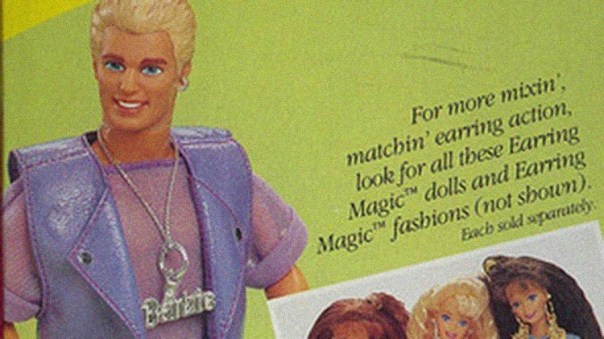
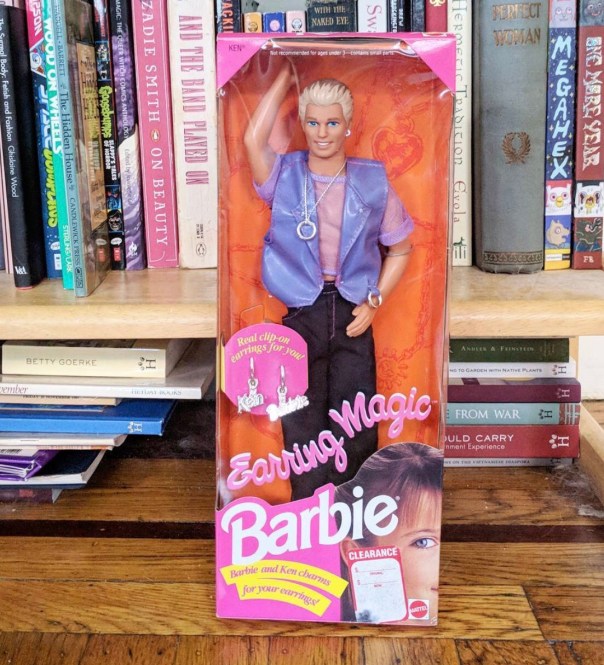
And that’s how we ended up with Earring Magic Ken, a companion to Earring Magic Barbie clad in a purple mesh shirt, a purple leather vest, wearing a big, shiny, silver ring around his neck. While he fits into some gay stereotypes, (especially from the early ’90s), it’s the necklace that really got everyone’s attention.
Curtesy chateau_cat on Instagram
As gay author and journalist Dan Savage explains in a column about the doll from 1993, in the late ’80s and early ’90s, besides being a sex toy, a cock ring was the queer fashion statement of the time. Leather daddies wore them stitched to their vests. Lesbians wore them as zipper pulls. Placement on clothing communicated secret preferences to those in the know, much like pierced ears at the time (Ken does have that “straight” at least). And many, many people wore them around their necks as a necklace. Ken included. The accessory was a staple of the gay club culture that was blowing up at the time, a scene Ken would fit right into with his leather/mesh ensemble.
Obviously, none of those little girls told the Mattel researchers that they wanted Ken to wear a cock ring around his neck. It is probably true that the adults designing the doll saw the fashion out of context and never thought to dig deeper. Mattel staunchly denies the doll was intended to have anything to do with homosexuality at all. The early ’90s was a time when queer culture was just starting to blossom in the open, still reeling from the horror of the AIDS crisis. Queer culture and pop culture were beginning to mingle in a way they hadn’t before, and Earring Magic Ken is an example of what happens when you pay attention to the what of trends and not the why.
Mattel, who has never been pleased about this connection, rushed to discontinue the dolls. However, the story spread faster than them, and sales for the doll spiked, making him the best selling Ken doll ever. Some even claim the best selling Barbie model ever, but as Mattel is unwilling to discuss our friend Ken’s current status, that title goes to Total Hair Barbie (released the year before).
Still, he will always have his little place in history as the time Barbie supported her boyfriend in exploring his homosexual tendencies. Who knew Barbie was such a cool girlfriend?
How Barbie’s Boyfriend Ken Became an Accidental Gay Icon
Mattel has been manufacturing its Barbie dolls since 1959. Shortly thereafter, it began producing dolls of Barbie’s boyfriend, Ken. Girls really liked Barbie, and the doll became a certifiable cultural force, but Ken dolls never sold as well. In an effort to increase sales of Ken dolls in the early ’90s, Mattel’s research department worked with a group of 5-year-old girls to find out what might make them more likely to nag their parents to buy one.
This workshop of young girls, inspired by images and music videos they’d seen on the then-culture-defining MTV music video network, wanted Ken to have a cool, new look, as author Matt Haig detailed in his book “Brand Failures: The Truth About the 100 Biggest Branding Mistakes of All Time.” And what “cool” meant to 5-year-olds who’d seen MTV was maybe a mesh shirt. And a leather vest. And an earring, and tight pants. Oh, and maybe a flashy necklace, too.
The minds at Mattel went on to produce this version of Ken and in 1993, Earring Magic Ken was born. He wore a lavender mesh shirt, a matching purple leather vest, hip-hugging black jeans, and even had a new earring at a time when men having pierced ears in the United States was still somewhat risqué. Ken, just like the other dolls in the Earring Magic collection, even came with a human-sized clip-on earring for the kids to wear.
Ken even had a flashy, circular chrome ring dangling around his neck. But Mattel’s choice for Ken’s necklace would cause a row that the company would soon regret. That’s because a panel of 5-year-olds generally isn’t sophisticated enough to parse the subversion of gender norms, to understand the flouting of traditional masculinity, to ken the coded language of underground fashion — or to predict the cluelessness of toy designers.
At this time, we should point readers who’d rather avoid more graphic discussion of human sexuality in another direction. Perhaps you’d like to read about solar eclipses, or how 3-D printing works? You also could learn whether a giant squid could actually defeat a submarine. But if you’re sticking around beyond this paragraph, things get a little more adult.
“He’s always read gay,” said Dan Savage, internationally renowned columnist and podcaster, in an email, “but has he ever read gayer than he did with a gay sex toy around his neck?”
Savage originally wrote about Earring Magic Ken in the summer of 1993, when much of the pop culture world was having a good laugh at Mattel’s lack of understanding that while little kids saw what Prince, the members of Right Said Fred or Madonna’s backup dancers were wearing simply as “cool,” the adult world was clued in to how gay it was.
The doll flew off the shelves, especially since gay men, including Savage, rushed out to buy a Ken doll. The kitsch factor drove Earring Magic Ken to become the best-selling Ken doll at the time. We reached out to Mattel for comment multiple times — to find out just how well the doll sold and whether it remains the No. 1 Ken, as well as for the current regime’s take on this piece of corporate history — but they did not return our requests.
Though the Earring Magic Ken incident showed that LGBTQ culture at the time had infiltrated the mainstream (or, arguably, been co-opted by it), Ken might’ve simply remained the butt of late-night jokes until Savage — who’s since gone on to serve as one of the country’s most prominent sex and relationship advice columnists — published his explanation of the gay-culture subtext communicated by wearing the sex toy.
As Savage outlined back in the 1990s, the chrome metal ring used as a sex toy was also worn as a fashion accessory among certain subsets of the queer community. The rings were used as necklaces, bracelets, zipper-pulls, and worn just about anywhere else they could be attached. And in a form of code, specific placements on clothing could imply certain sexual preferences among the gay crowd; you can read Savage’s more detailed account of the nuances in the Chicago Reader’s archives.
Mattel quickly pulled the dolls from the shelves and apologized for the error. Clearly, it was not their intention to associate a child’s doll with an adult sex accessory.
Ultimately, Savage thinks the Earring Magic Ken incident is more of an amusing cultural blip than some kind of important moment, noting that neither the doll nor the hubbub is well-known today. “I don’t think a gay man under 40 would even know what we we’re talking about,” he said.
Adam McDonald is a 36-year-old gay man and film critic for the Bored as Hell podcast. “I have no idea what you’re talking about,” he said when asked about Earring Magic Ken.
Dan Savage still has his Earring Magic Ken doll, though. When asked him about it, he quickly emailed a brand-new photograph of it, sex toy and all, proving that it had left at least some impression — if nothing other than as a relic of a unique time in quickly changing American popular culture.
These LGBTI saints prove you can be gay and Christian
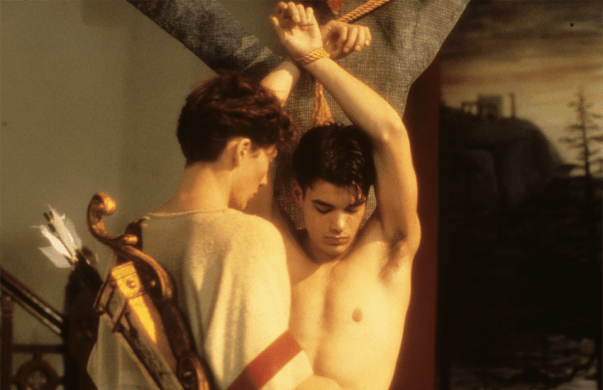
St Sebastian depicted in the 1996 film Lillies.
Some people think you can’t be gay and Christian. What better way to prove them wrong than with a list of LGBTI saints?
The Catholic Church doesn’t want you to read this. They’ve deliberately erased many gay saints from official lists.
And we have to admit it is difficult to find hard historical evidence about most saints. Many of the stories about them are little more than legends.
But if you start looking, there are lots of LGBTI saints and martyrs. Here are just a few of the most famous:
St Joan of Arc
The 1999 movie The Messenger: The Story of Joan of Arc.
Jeanne d’Arc is not just the most famous LGBTI saint but the most famous saint full-stop.
Joan was just a French peasant. But an angel appeared to her in a vision and told her God wanted her to lead the French fight against the English in the Hundred Years War.
She persuaded the French Prince Charles to let her lead his army, even though she had no military training. And, dressed as a male soldier, she achieved a momentous victory over the English at the city of Orléans in 1429.
Thanks to her, the prince was crowned King Charles VII. But Joan was then captured by the English.
They decided she was a heretic and a witch and burnt her at the stake. She was just 19.
Some refuse to accept Joan was LGBTI.
Was she a trans warrior or did she only cross-dress in male armor through necessity? Either way, she would be part of our gay, trans and gender-fluid family today.
Likewise, the same people who claim she was a virgin admit she liked to share her bed with other young women. And that sounds pretty lesbian to us.
St Sebastian
Gerrit van Honthorst’s depiction of Saint Sebastian.
St Sebastian is the original gay icon. This near-naked, young, muscled man – tied to a post and pierced with arrows – is one of the most famous images in fine art.
He was the commander of a company of archers in the imperial Roman bodyguard. And he was known to be ‘close’ to his male superiors. But he had a secret.
To rescue two other Christian soldiers, he ‘outed’ himself as Christian too. The Emperor Diocletian ordered that he should be shot to death by his fellow archers.
Strangely, that didn’t kill him. The pious St Irene saved him and treated his wounds. But Diocletian caught up with him. He ordered a second execution and Sebastian’s fellow soldiers beat him to death.
There’s no single reason why he became the unofficial gay patron saint. It’s a mix of his rumored sexuality, his ‘coming out’ story and his iconic homoerotic image penetrated with arrows. And homosexuality was once considered an illness while St Sebastian was known to save plague victims.
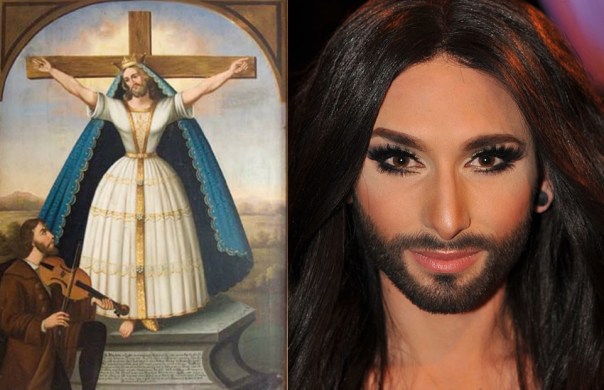
St Wilgefortis
Conchita (right) brought fresh attention to St Wilgefortis.
Legend says Wilgefortis was the daughter of a king in Portugal who took a vow of chastity.
When her father tried to force her into marriage with the king of Sicily she prayed for help. God saved her by giving her a beard and the Sicilian king refused to marry a bearded wife.
So she is a trans male saint.
Sadly, there is no happy ending. Her father got so angry he crucified her.
Her only reward is to become the patron saint of difficult marriages. After all, it’s a particularly difficult marriage that ends in crucifixion. In Spain she is called Librada because she helps women who want to be ‘liberated’ from difficult husbands.
The Catholic Church plays down St Wilgefortis. But after Conchita – another bearded lady – won the Eurovision Song Contest in 2014 for Austria, depictions of the saint gained short-lived cult status.
St Perpetua and St Felicity
George Hare’s 1890 painting Victory of Faith depicted Perpetua and Felicity in prison.
This North African lesbian couple are the patron saints of same-sex relationships.
Perpetua was 22-year-old noblewoman with a newborn baby. Felicity, who was pregnant, was her slave.
Roman soldiers arrested them in around 203AD because they were Christians. They comforted each other in prison and Perpetua wrote a jail diary, describing the visions she had while inside.
Felicity worried that she wouldn’t be martyred because Roman law forbade the execution of pregnant women. But she gave birth to her daughter in time.
The day came for games to celebrate the birthday of the Emperor Septimus Severus. As part of the entertainment, the pair were taken into the amphitheater in Carthage, North Africa, along with a group of male Christians.
Gladiators whipped them. Then a boar, a bear, and a leopard were set on the men, and a wild cow on the women. That still wasn’t enough to kill them and they gave each other the kiss of peace before a swordsman finished them off.
Perpetua’s diary became the ‘Passion of St Perpetua, St Felicitas, and their Companions’. The story was so popular in North Africa that St Augustine ordered people not to treat it like it was part of the Bible.
St Paulinus
St Paulinus processed through the streets of Nola, near Naples, Italy.
If you’ve ever heard a bell ringing to call you to church, you’ve got the bisexual St Paulinus to thank. He invented that tradition.
He had previously been a married Roman senator. But after his wife died, he became bishop of Nola in Italy from 395AD to 431AD.
When the Vandals raided the region, a poor widow came to Paulinus asking him to help her son who the Vandals had carried off.
He had spent all his money paying ransoms for other captives. So he went to Africa to offer himself to the Vandals in return for the widow’s son. They agreed and made Paulinus a gardener. But when the Vandal king realized his son-in-law’s slave was the Bishop of Nola, he set him free.
What’s not well known is Paulinus also wrote love poems to his boyfriend, Ausonius. In one, he promised there love would last even after his death. And he added:
Thee shall I hold, in every fiber woven,
Not with dumb lips, nor with averted face
Shall I behold thee, in my mind embrace thee,
Instant and present, thou, in every place.
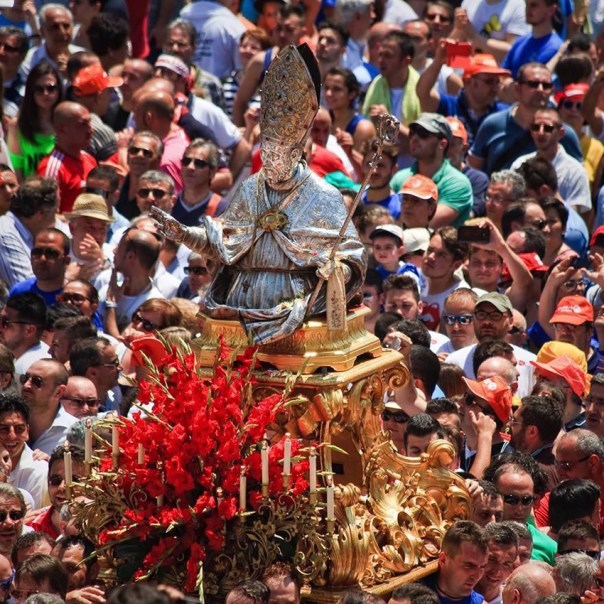
He is still honored every year in Nola when his statue is paraded through the streets. American descendants of Italians from Nola also honor him in the same way in Brooklyn.
St Francis of Assisi
Mickey Rourke as St Francis of Assisi in the movie Francesco.
St Francis is one of the best-loved religious figures in history, famous for hugging lepers and showing compassion to animals.
What you probably don’t know is he encouraged the other Franciscan friars in his 13th century cloister to call him ‘mother’.
Even more surprisingly, he allowed a widow to enter the all-male friary, renaming her ‘Brother Jacoba’.
And it is likely he had at least one same-sex relationship while in his 20s. His partner’s identity is hidden by history but is thought to be Brother Elias of Cortona.
Thomas of Celano, who knew Francis personally and wrote a biography of him in 1230 just four years after his death, wrote:
‘Now there was a man in the city of Assisi whom Francis loved more than any other…
‘He would often take this friend off to secluded spots where they could discuss private matters and tell him that he had chanced upon a great and precious treasure. There was a cave near Assisi where the two friends often went to talk about this treasure.’
St Sergius and St Bacchus
The Passion of Saints Sergius and Bacchus by Elastic Theatre.
Homophobic Christians tell us that same-sex marriage is against their faith. Trouble is they don’t know their own history. Step forward Saints Sergius and Bacchus.
Sergius was a commander in the Roman army in the third century and Bacchus was his second in command.
They were referred to in the earliest records of their story as ‘erastai’, the Greek word for ‘lovers’. And it’s believed they committed themselves to each other in a Christian ceremony called ‘adelphopoiesis’ or ‘brother-making’ which was a kind of same-sex marriage.
But their faith got them in trouble while they were stationed in Syria in 303AD. As Christians, they refused to sacrifice to Jupiter, the Roman’s chief god.
Officials arrested them, dressed them in women’s clothing and paraded them through the street to humiliate them into submission. But they resisted, chanting they were dressed as brides of Christ.
So the Romans turned to torture. They separated them and beat them so severely that Bacchus died.
That wasn’t the end of the story. That night Sergius had a vision.
Bacchus appeared to him in his soldier’s armor and with the face of an angel. He urged Sergius not to give in, saying they would live together as lovers forever in heaven. It’s a unique martyrdom story, because martyrs are always promised they will be with God in heaven, not with their lover.
Over the coming days, Sergius was tortured and finally beheaded.
Christians honored them as saints right up until 1969, the same year as the Stonewall Riots. The Catholic Church stripped them from the official list of saints, perhaps to starve the emerging gay rights movement of their power.
St Aelred
The Name of The Rose movie depicted medieval monastic life.
The patron saint of friendship was erotically attracted to men, and celebrated male relationships, throughout his life.
Aelred was the abbot of a Cistercian abbey in North Yorkshire, England for 20 years until his death in 1167. He wrote about the link between friendship and spirituality, saying ‘God is friendship’.
And he encouraged friendship between his monks comparing it to the love between Jesus and his beloved disciple, and between Jonathan and David.
Aelred advocated chastity. But his passion for male relationships is clear when he wrote: ‘It is no small consolation in this life to have someone who can unite with you in an intimate affection and the embrace of a holy love…’
In the same passage he describes this relationship with another man as one where ‘the sweetness of the Spirit flows between you, where you so join yourself and cleave to him that soul mingles with soul and two become one.’
St Galla and St Benedicta
Women in the Dark Ages faced few choices, as depicted in The Last Kingdom.
Galla had been married but was widowed after just one year. Not wanting another relationship with a man, she grew a beard to ward them off.
And she went even further. St Galla founded a convent in Rome in the sixth century and fellow nun Benedicta moved in with her there.
Then Galla fell seriously ill and St Peter appeared to her in a vision, telling her to prepare for death. She was devoted to God so liked the idea of going to heaven. But she was also devoted to Benedicta and didn’t want to leave her behind.
So she prayed to Peter that Benedicta would swiftly follow her to the afterlife.
Admittedly, by modern standards, praying for your partner’s death seems a bit wrong. But Peter agreed.
Galla died in 550AD of breast cancer and Benedicta’s death came 30 days later, just as St Peter had promised.
Historical note on gay saints
To historians, we would point out there are around 10,000 Catholic saints (though there is no definitive figure). By any impartial standard, some of them are bound to have been LGBTI.
To Catholics, we would say that you accept a saint’s sanctity on the basis of faith, not scientific proof. So why would you not accept their sexuality on the same basis?
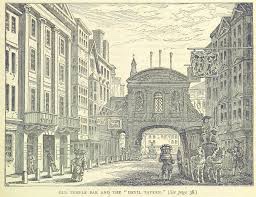
If you stand in front of St Paul’s cathedral and look to your left, towards Paternoster Square, you’ll see a stone arch with windows and well-worn statues. This is Temple Bar. Hard to believe now, but there were once human heads on poles adorning the top of it.
Temple Bar when it was in Fleet Street – note the severed heads on poles on top
The structure was built in 1670 by Sir Christopher Wren, the great architect who gave us St Paul’s Cathedral and many smaller churches. He set about rebuilding London in the aftermath of the Great Fire of London, a vast inferno that consumed much of the ancient city.
This terrible event had one upside. It gave Wren the opportunity to design a new and more ordered metropolis. However, poor Wren’s hopes of creating piazzas and wide streets was confounded at every turn by stubborn Londoners and their wish to keep the medieval winding thoroughfares and dark alleys.
So, why did Wren build Temple Bar? The stone gate replaced wooden posts and chains that separated the City of London from the City of Westminster. It was originally positioned across the road in front of what’s now the Royal Courts of Justice. On one side was Fleet Street in the City and on the other was The Strand leading to Whitehall and the centre of royal government.
Everybody entering the City had to pass under the Temple Bar. It wasn’t entirely popular. For one thing, it held up traffic. The archway soon became way too narrow for the mass of carts, horses, carriage and people trying to cram through and do business. It also had four poorly crafted statues of James I, Elizabeth I, Charles I and Charles II that were described in very unflattering terms by one Victorian writer as “mean” with “small feeble heads”. They’re not the greatest works of art it must be said.
After being removed from Fleet Street – Temple Bar sat in a park outside London unloved and forgotten
The man who carved these mediocre works of art was called John Bushnell. By all accounts, he was somewhere between eccentric and insane. One scheme he devised was to prove that the Greeks could have invaded Troy by building his own Trojan Horse out of timber and covering it in stucco. He spent £500 of his own money (a vast sum then) on this project creating a horse’s head that could hold a dining table to seat twelve people. The whole thing fell to pieces during a storm.
There is a room along the top portion of Temple Bar that was used as a storage room for Child’s bank. On the very top of Temple Bar, the heads of traitors once stared down on passers-by. This was meant to be an object lesson for 17th and 18th century Londoners not to rebel against their anointed kings and queens.
The first head to appear on Temple Bar was Sir Thomas Armstrong involved in the so-called Rye House Plot. Next came Sir William Perkins and Sir John Friend who planned to assassinate King William III as he returned from hunting in Richmond – intercepting his coach between Brentford and Turnham Green. They were hanged at Tyburn despite pleading their innocence – and their heads removed for public display.
In a ghoulish twist, typical of London, there were enterprising people in 1746 who were reportedly hiring out looking glasses at Temple Bar so that passers-by could take a closer look at the severed heads. It cost a halfpenny apparently. In 1766, a man was arrested for firing musket balls at the heads – which he then confessed to having done for three nights running.
In 1772, one of the heads blew down during a storm. Incredibly, the blackened object had been on top of Templar Bar since 1723 – nearly fifty years! A chap called John Pearce took it to a local tavern where it was then buried under the floor. Must have been an amusing subject of conversation beforehand!
I love hairless men, and possibly amongst my peer group, I am one of the few who admits it! I’ve never been caught up in the whole…often fake…macho ethos! The gay cultural stereotypes such as Bears, Clones, Leathermen etc have always extolled the virtues of hairy men, and as such, I’ve always felt on the outer, and discreetly cringe every time I’m added to yet another “Adoring Hairy Men” FB group. I even hate body hair on myself, and depilate what I do have every month. I don’t totally object to it…some I find quite sexy such as just the centre of the chest, or closely clipped chests…and treasure trails (the line of hair from the navel down) drives me insane with its erotic promise of what’s at the lower end of it. But totally hair-covered bodies I find quite a turn-off, especially if it’s really thick, on a man’s back, and masses of matted pubic hair. I hate that continual delays in foreplay as you pick it out of your mouth. For me, it’s about the sensation of skin, the soft, silky feel,of it as you run your hands…or tongue… down it. I love being able to lick someone all over. But that’s me! Needless to say, I don’t agree with a lot in this article…but it comes down to different strokes for different folks, and that leaves scope for all of us!
Michael B. Jordan
Men without chests — that was C. S. Lewis’s striking description of graduates of the postwar English schools, with their faculties trained to dismiss the virtues of patriotism and piety. These Englishmen, Lewis worried, would become lifelong enemies of the sublime, unable and unwilling, when push came to shove, to defend themselves or their countrymen. American men, I am happy to report — even the sensitive new age guys — still have something of a chest, thanks to our enduring fitness mania. But have you noticed how bare those chests are? Late twentieth-century America is increasingly a land not of men without chests but of men without chest hair.
I first realized this a couple of years ago while watching the otherwise forgettable B-movie romance Picture Perfect, starring Jennifer Aniston and Kevin Bacon, who was then just under 40. As the two characters get ready to, well, put the 13 in PG-13, Bacon takes off his shirt and his chest is completely hairless. Okay, Kevin Bacon may not prove much. But not long after that, I saw Al Pacino, whose fuzzy talent has graced the screen in such classics as Scarface and Serpico, appearing as hairless as an angel in The Devil’s Advocate. (Once you’re aware of the hairless-man phenomenon, by the way, you can no longer see a movie without noticing it. Sorry.)
Now, only 20 percent or so of adult white males are totally without what’s technically referred to as “terminal pigmented chest hair.” And yet, in the last few years, practically every Hollywood male sex symbol, when standing half-dressed for his more intimate scenes, looks as if he has absolutely no chest hair. Tom Cruise. Matt Damon. Keanu Reeves. Brad Pitt. All of them look like boys. One even sees older actors depilated to look like the boy-man stars who now capture every significant romantic role. The traditional Hollywood aesthetic in which old was never sexy has been carried to a new extreme: Now only the immature is sexy. Forget heroin chic, the hip aesthetic of the early ’90s; say hello to permanent adolescence. And this new look trickles down. A big-city cop of my acquaintance confided not long ago that he shaves his chest. For several years now waxing salons have not been for women only. One of these days, no doubt, a cosmetic surgeon will come up with the philosopher’s stone of our age — how to transplant hair from men’s chests to their heads — and make a fortune.
But the hairless man represents more than just a simple change in cosmetic fashions, like the widening and narrowing of ties. These men without chest hair carry on, knowingly or not, quite a tradition. In ancient Rome and Greece, the romantic associations of men and boys were jeopardized by the appearance of facial and bodily hair. It meant the boy was now a man, which meant he was no longer available. The Roman epigrammatist Martial lampooned men who plucked their hair to stay boyish.
Why pluck the hairs from your gray fanny?
That’s a chic touch which men admire
In girls, not in a flagrant granny.
Martial also took issue with a man who insisted on calling him brother ( fratere), a term that also meant lover:
I’m shaggy-legged and bristle-cheeked
Daily you depilate
Your silky skin. Your voice is light;
You lisp in a charming way —
My voice, as my loins can testify,
Is gruff, and so, I’ll say:
We’re less alike than eagles and doves
Or lions and does, so Mister
Don’t call me “brother,” or
I’ll have to call you sister.
Obviously today, as ever, the phenomenon cannot be disentangled from the romantic ideals of male homosexuals. As Salon columnist Camille Paglia authoritatively noted in a recent piece, “depilation has become highly fashionable in the gay male world. . . . Not since Greek athletes scraped their oiled, sandy bodies with the strigil . . . have men had such a fetish for girl-smooth skin.” But what is most interesting about the hairless man is that he is no longer exclusively gay; he is, rather, the American male ideal.
Last decade’s gay “clone” has become this decade’s hetero stud. The subject of countless overwrought academic “queer theory” treatises, the gay “clone” was usually defined as an archetypal boy cruising men on the street-corners and in the clubs of big cities. Boyish and neatly dressed (jeans and T-shirt ironed), he displayed a vanity and sense of style that were a “perfect” representation of manliness. And then, somewhere along the line, the straight male began to imitate him. To see the gay clone today, one need only flip through magazines like Men’s Fitness or Men’s Health, two glossies that have made vanity a lifestyle.
A typical article from Men’s Health tells readers how to decrease calories and stress (“Assign numerical values to the major parts of your life, such as work, marriage, and family; this can help you better apportion your time”) while increasing earnings, physical strength, and sex drive. And “if Jane Goodall’s research assistants have been creeping around your backyard, perhaps it’s time to ask a dermatologist about hair removal with lasers. . . . A typical back treatment takes four hours and costs $ 500 to $ 2,000. Nose and ear procedures cost around $ 200. Backside denuding is at the doctor’s discretion.” After which, you can turn over and be made to look like the hairless man on the magazine cover. These magazines are an education in how to look exactly like a ’90s man without having to think about what it means to be one.
Nor is this simply another case of gay fashion being a trendsetter for straights. The newly prominent hairless man is a sign of the convergence of gay and straight culture. Male vanity and the desire to prolong adolescence are becoming mainstream traits, no longer the markers of a subculture. Just two years after Ellen DeGeneres’s “coming out” scored a ratings bonanza for her then-declining, now-off-the-air TV show, the arguments between gay activists and their critics over how visible homosexuality should be on prime time TV are already seeming quaint. Such arguments presume that there is a dominant, hostile majority culture. But there isn’t. There are only tiny protest groups that get laughed at when they count the number of gay characters in TV shows and movies. The mainstream culture is the culture of the hairless man, at best indifferent to old-fashioned, grown-up male traits.
Here is a mainstream cultural moment. Cinematic stud Mark Wahlberg was interviewed earlier this year by Matt Lauer on the Today show. By the admittedly bland standards of morning television, the contrast in personalities should have made it an interesting conversation: Strong silent type who recently played an outsized porn star in the movie Boogie Nights confronts Sensitive New Age Guy, the kind of softy Americans want to see first thing in the morning. Instead, the only contrast in the interview was that of a regular SNAG versus a post-macho SNAG. It took Wahlberg, the post-macho SNAG, only seconds to reveal his vulnerable side: “It’s kind of hard, you know, because the whole macho thing, you know, it’s — coming from Boston, it’s — it’s also an — an athletic place, you know, and there’s not too much opportunity there. So being the tough guy is the thing to do. . . . It was — it was difficult to — to accept the role in Boogie Nights only because I was — and it’s stupid now to think about it, but I was worried about what my friends would think, you know, and — and stuff like that . . .”
Machismo is never so talked about as when it is absent. But there was a worthwhile question answered by the interview: What do you get when you put two SNAGS together? Answer: a conversation about being gay.
LAUER: You said in an article in Premiere magazine that when you were growing up, it was tough to repress the fact that you were . . . creative. It was a little bit like being gay and not being able to tell your parents.
WAHLBERG: Yeah.
LAUER: How does it feel to be in a place right now where it’s cool to be gay — sorry, it’s cool to be creative? You know what, it could be either way.
WAHLBERG: It’s cool to be gay, too. It’s cool to be gay.
LAUER: I loved your look when I said it. You kind of looked at me and said ‘What?’
WAHLBERG: It’s cool to be gay, too.
In fact, there is nothing ironic in Wahlberg’s playing spokesman for the gay community. The rapper formerly known as Marky Mark was central to one of the most important sightings of the hairless man. Before his success in Boogie Nights had him making appearances on Charlie Rose and other talk shows, Wahlberg was a model for the famous Calvin Klein ad that appeared in countless magazines, but nowhere more prominently than on that humongous billboard above Times Square. Striking a pose in his skivvies, Wahlberg looked like a bit of rough trade freshly showered for a special occasion. But more important, he was, except for a butchy hairdo, as smooth skinned as the day he was born.
Not only has the mainstream gone gay — remember the quaintly controversial IKEA commercial featuring two thoroughly domesticated gay men picking out items for their home? — but gay life has gone mainstream. The course of this change can be seen in Hollywood movies. It was just a few years ago that the gay hit The Adventures of Priscilla, Queen of the Desert, a bawdy and occasionally hilarious movie from Australia, inspired a mediocre American imitation starring tough-guys Wesley Snipes and Patrick Swayze — hairless men both. In 1997’s My Best Friend’s Wedding, Julia Roberts’s gay pal, who is her cover date for the wedding, seems to be the only character capable of romance; a faux-heterosexual tic has him stealing all the scenes he is in. Amidst so many public displays of friendship to support the comedy’s bland premise (the possibility of good friends’ getting married) the gay character refreshes the movie by leading the rehearsal dinner in a round of “I Say a Little Prayer.” It’s a weird throwback moment in which the movie’s greatest display of devotion — a scene that could have been stolen from an old Gene Kelly musical — is romantically meaningless. It’s also a reflection of the question at the center of the movie: Is love just an intense form of friendship?
Well, yes, according to various pop-culture trends of the ’90s. The super-successful girl pop band the Spice Girls were practically a propaganda squad detached by the friends of friendship to demote eros to the status of a lower passion. Two of the most popular sitcoms of the decade Seinfeld and Friends were both predicated on the elevation of platonic love, one cynically and the other in a way that was painfully cute. Ross from Friends, the show’s one regular male character of serious romantic intent, doesn’t even merit being called a SNAG. His whiny boyish mannerisms suggest he can barely live up to the guy part. Men who really do love women have been, if not written out of television and Hollywood, playing second fiddle to their emasculated brothers.
In her famous 1964 essay “Notes on Camp,” Susan Sontag, the voice of New York’s then cultural vanguard, felt compelled to explain the obvious overlap between the self-consciously theatrical style described in her essay and homosexual taste, which, she wrote, constitutes “the vanguard of camp”: “The camp insistence on not being ‘serious,’ on playing, also connects with the homosexual’s desire to remain youthful.” In September 1996, New York magazine published a prescient article describing the decline of the other defining characteristic of gay life: militancy. Referring to the “‘Hallmarkization’ of gay sensibility,” the author, Daniel Mendelsohn, argued, “If you take away the edge and the kitsch, there’s not much left — and what remains isn’t all that different from what you find in straight culture.”
This seems to already overstate the difference between the sometimes campy and sometimes edgy singles culture of gays and the less campy and less edgy singles culture of straights. Traditionally, big cities are magnets for both gays and young people who are looking for careers first and spouses later. In places like New York, the romantic lives of a young straight and a young gay — both divisible into units of temporary attachments — aren’t really that different. The difference between young married people and young unmarried people is far greater. If an icon of gay sexuality like the hairless male has gone mainstream over the last decade, it is because mainstream America wasn’t intrinsically hostile to gay visibility to begin with.
What has been lost as the hairless man, an eternal boy, has become our male ideal? Real romance, for one significant thing. The hairless man is perhaps searching for romance, but only insofar as it supplies self-fulfillment and steers him clear of the burdens of love and family. Which is a pity. In order for real romance to occur, there must be some connection with matrimony. The hairless man would have to be robbed of his adolescent affectations and forced to mature. Defenders of a traditional culture have been overly fixated on gay characters, openly gay actors, and gay love stories. Such entertainment will succeed or fail on its merits as entertainment. Yet, it is the embarrassment of heterosexual love that should concern us.
Manliness cannot, after all, be reduced to a hard body, high income, and regular exercise. And yet, a pretty boy, the hairless man, has become the signature of American romance, thus mistaking the acorn for the tree, potential for the final product, leaving us with too many suitors and too few fathers, and stories about sex and love that never end in marriage and family. The problem, to paraphrase C. S. Lewis, is that we cannot raise geldings and expect them to be fruitful. We cannot turn middle-aged men back into boys and expect them to be leaders, elders, the carriers of what wisdom that comes with age. We cannot erase general notions of manliness from popular culture and expect today’s boys to be tomorrow’s protectors and providers. Where can one find reflections of manliness, if everywhere you turn, the American male seems boyish, hairless, shorn of any sign that he is an adult?
Here’s to the Sunday afternoon Tea Dance phenomenon, a gay tradition which is slowly disappearing.
Many gay men under the age of 30 today are totally clueless of almost lost tradition of the Sunday Tea Dance. (A tradition that really must be brought back.) So here’s a little history primer on the tradition of the “Sunday T-dance” and how and why we embraced it in the LGBT culture.
Historically, tea was served in the afternoon, either with snacks (“low tea”) or with a full meal (“high tea” or “meat tea”). High Tea eventually moved earlier in the day, sometimes replacing the midday “luncheon” and settled around 11 o’clock, becoming the forerunner of what we know as “brunch”.
From the late 1800’s to well into the pre-WWI era in both America and England, late afternoon (low) tea service became the highlight of society life. As dance crazes swept both countries, tea dances became increasingly popular as places where single women and their gentlemen friends could meet — the singles scene of the age.
While tea dances enjoyed a revival in America after the Great War, The Great Depression of the 30’s wiped them out. Tea consumption was in steady decline in America anyways and by the 50’s, tea was largely thought of as something “your grandmother drinks”. Also, nightlife was moving later and younger. Working men and women were too busy building the American Dream to socialize so it was left to their teenaged children in the age of sockhops and the jukebox diner. Rock and roll was dark and dangerous — something you sneaked out for after dinner, not took part in before dinner.
Tea Dance at the Pines on Fire Island, 1980.
Gay people, of course, were still largely underground in the 50s, but it was in these discreet speakeasies that social (nonpartnered) dancing was evolving. It was illegal for men to dance with men, or for women to dance with women. In the event of a raid, gay men and lesbian women would quickly change partners to mixed-couples. Eventually, this led to everyone sort of dancing on their own.
By the late 60s, gay men had established the Fire Island Cherry Grove and also the more subdued and “closeted” Pines (off of Long Island, in New York) as a summer resort of sorts. It was illegal at that time for bars to knowingly sell alcohol to homosexuals and besides many of the venues there were not licensed as ‘night clubs’ or to sell alcohol. To avoid attracting attention, afternoon tea dances were promoted. Holding them in the afternoon also allowed those who needed to catch the last ferry back to the mainland to attend.
The proscription against same-sex dancing was still in effect, so organizers were forced to institute no touching rules. Since there were no lesbians around to change partners with, gay men developed the dancing apart style that club-goers everywhere now take for granted.
June 28, 1969: the Stonewall Riots mark the fiery birth of the so-called “modern gay rights movement”. Following (and in part perhaps inspired by) the death of gay icon Judy Garland, (as the urban legend goes) patrons of the Greenwich Village watering hole The Stonewall Inn fought back against another in a very long line of violent police raids, eventually barricading the police inside the bar and setting off three nights of rioting. The “snapped stiletto heel heard around the world”as some call it is commemorated today with Gay Pride celebrations held around the end of June.
Post-Stonewall, the tea dance moved from the Fire Island Pines to Greenwich Village. A newly-energized gay community around Christopher Street embraced the social dancing craze started on Fire Island. While the Fire Island gays tended to be rich upper-class preppies, the downtown gays of Christopher Street and the Village were working-class and they tended to party at night. As in the straight community, tea dances gradually moved later until they became subsumed into the night club scene.
Through the 70’s, gay men championed the uniform of the working class — t-shirts and denim — as fashion aesthetic. In part because they were affordable, and in part because it projected an appealing hypermasculinity associated with the working class. Gays in the post-Stonewall era were consciously rebelling against the effete stereotypes associated with the manicured, sweater-wearing, tea-drinking gays of the Fire Island set. Real men wore t-shirts and drank beer. Gay men still had afternoon/early evening dances — usually on Sundays, in order to make the most of one’s weekend while still being able to get up for Monday morning’s work.
The downtown gays rejected the term tea dance as being too effete and opted for the supposedly butcher t-dance, and promoted t-shirts and denim as the costume of choice. By the mid 70s, the Christopher Street Clone look (short cropped hair, mustache, plaid shirt over a tight white t-shirt, faded denim jeans that showed off your ass) had made the trans-continental trip from New York City to Los Angeles (gays in Hollywood) and, of course, to San Francisco (follow the Yellow Brick Road and it leads to Castro). It brought with it the tea dance phenomenon, which is slowly dying out and is nothing of its former self and in may places is all but gone.
So grab those fans and poppers boys and and let’s “Ohhhhha, Ooooha” like it’s 1978 again!
Let’s not let Sunday Tea become a piece of our forgotten gay history also.