All posts by timalderman

Unknown's avatar

About timalderman

Gay, visually-impaired guy writing professionally (and freelance) about disabilities, being gay, articles, opinion pieces, poems and short stories for over 15 years, mainly for small, local magazines. Obtained my Graduate Certificate in Writing from the University of Technology, Sydney in 2004.

Gay History: Here are 46 more weird and wonderful facts from LGBTI history

Know your herstory

1. Olive oil was used for many things in Ancient Greece, including as a popular lube for anal sex.

2. Christmas has its origins in Saturnalia, a Roman festival around first century BC. Instead of family lunch, it was a celebration of sex, fertility and homosexuality. During the festivities, men ran around naked, tops became bottoms and masters waited on servants.

3. There is no record whatsoever of Jesus or Muhammad preaching against homosexuality.

4. St Paulinas of York, who was bisexual, invented the tradition of bells calling parishioners to church.

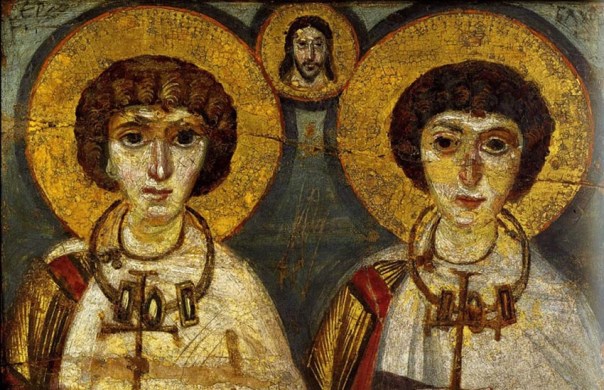
5. The earliest form of same-sex marriage was a Christian ceremony called adelphopoiesis. St Sergius, a commander in the Roman army in the third century, and St Bacchus, his second in command, were lovers who had their union in this way. The Catholic Church stripped them of ‘saint’ status in 1969.

St Sergius and St Bacchus

6. William II was ‘addicted to every kind of vice, particularly lust and especially sodomy’, according to early records. He kept his male courtiers hair long, and reportedly promoted them based on their talents in bed.

7. Eleanor Rykener, who may have been a trans woman, was a 14th century prostitute working in London. Arrested in 1395 for cross-dressing, this is the only surviving legal records from that age which mentions sodomy. Rykener claimed to have many clients, and preferred priests as they ‘paid better than others’.

8. Leonardo Da Vinci was arrested for gay sex, twice, at 24 years old. He was acquitted. If he had been killed, the world would never have had the Mona Lisa or The Last Supper.

9. In around 1600, William Shakespeare wrote As You Like It and Twelfth Night. Both feature women who cross-dress as men. It is thought this was a direct response to a Puritan campaign that objected to the ‘gay’ practice of young boys cross-dressing on stage.

10. At the first ever trial in Canada for homosexuality in 1648, a gay military drummer was sentenced to death. His life was spared on the condition he accepted the position of New France’s first permanent executioner.

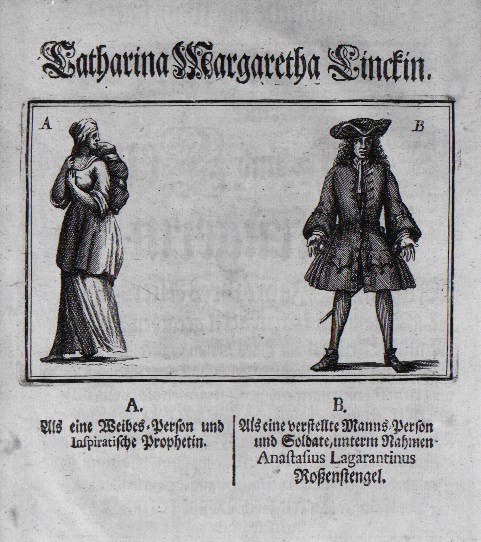
11. Catharina Linck, in 1721, was executed for being gay in Germany, who would dress as a man. It was found she had been sleeping with women using a leather stuffed horn. Acting as a funnel, it also allowed her to urinate standing up.

Catharina Linck

12. Deborah Sampson joined the Continental Army in 1782 and served 17 months as ‘Robert Shurtliff’, living, dressing and fighting as a man. They also reportedly had a lot of sex with women. A renowned soldier, they also once carved a bullet from their thigh.

Frontispiece of The Female Review: Life of Deborah Sampson, the Female Soldier in the War of Revolution.

13. Charles Dickens went to a London prison in 1835 and visited the last two men hanged for homosexuality in the UK.

14. Japan has one of the shortest-lived sodomy laws in the world. The statute was in place from 1873 to 1883. Samurai warriors, who had a long tradition of same-sex relations, mounted strong opposition to the law and helped to get it repealed.

15. Using ‘they’ as a third person gender-neutral singular was the most popular pronoun in the English language until the 1800s, when ‘he’ and ‘she’ became widespread to make English more like Latin.

16. The author of America the Beautiful, Katharine Lee Bates, was an ardent feminist who lived for 25 years with another woman believed (based on Bates’ own writing) to be her lesbian partner.

17. The Duke of Kent, the bisexual younger brother of British kings George VI and Edward VIII, was arrested alongside theatre legend Noel Coward under suspicion of prostitution. They had been going around Soho in London dressed as women.

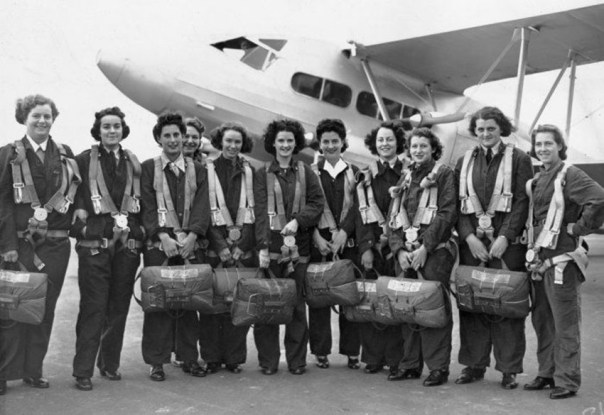
The Women’s Auxiliary Air Force in 1942

18. When a desperate mother asked Sigmund Freud to cure her gay son in 1935, he wrote her back explaining why her son had nothing to be ashamed of.

19. There was an attempt to make a film adaptation of The Children’s Hour, about the dangers of homophobia. However censors demanded any mention of homosexuality were completely removed.

20. In early 1940, a Women’s Auxiliary Air Force report came to a conclusion on lesbianism: ‘Naturally, it is a vice that is going to be impossible to keep out of the WAAF altogether.’

21. In 1970, the State of Connecticut denied a gay man a driver’s license on the basis that his sexuality made him dangerous to other drivers.

22. Dusty Springfield, one of the biggest superstars at the time, came out as bisexual in 1970. ‘I know that I’m as perfectly capable of being swayed by a girl as by a boy’

23. Wendy Carlos, a transgender woman, helped to pioneer electronic music. In 1968 she experimented with a series of recordings of compositions by JS Bach played on a Moog synthesizer.  She won three Grammys and recorded music for the soundtrack of Clockwork Orange.

Wendy Carlos

24. Years before Stonewall in New York City, there was a queer rebellion against police harassment in San Francisco in 1966. Trans people fought back against police outside Compton’s Cafeteria in San Francisco.

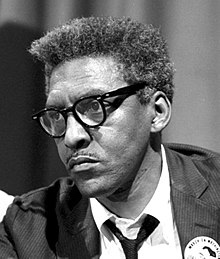
25. Bayard Rustin, an openly gay black man, inspired Martin Luther King Jr’s use of non-violent protest from which Bayard learned in India taking part in Ghandi’s movement.

Rustin at a news briefing on the March on Washington in Washington, D.C., on August 27, 1963

26. A young stripper named Shelly Bauman lost her leg in a freak confetti cannon accident. She sued and used the money from the settlement to open Seattle’s first gay bar, which she named ‘Shelly’s Leg’.

Shelly’s Leg sign in the Museum of History and Industry.

27. The first openly gay LGBTI person to be elected to office was not Harvey Milk. It was Kathy Kozachenko, in 1974, who won a seat on the Ann Arbor, Michigan city council.

28. Shakuntala Devi wrote the first study of homosexuality in India, The World Of Homosexuals, in 1977. It treated homosexuality in an understanding light and is considered pioneering.

29. Singer Johnny Mathis came out as gay in a 1982 magazine article, but the magazine had to retract the statement because Mathis received numerous death threats.

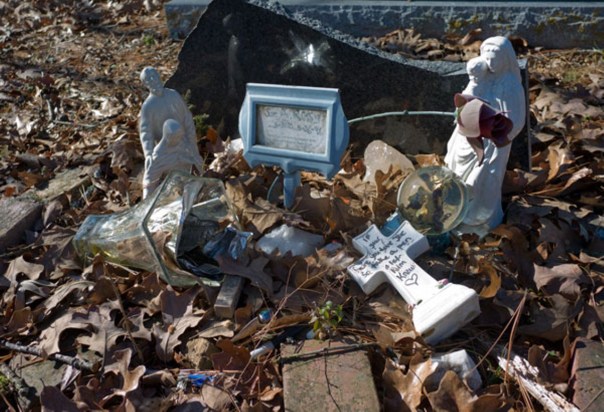
30. In a private cemetery in Arkansas, Ruth Coker-Burks single-handedly buried and gave funerals to more than 40 gay men during the height of the AIDS epidemic. She had to do this because their families wouldn’t claim them.

31. When scientists first realized American gay men and Africans in France were both suffering from AIDS, French researchers sent over a sample to be tested. But a scientist with a grudge against the French institute switched out the sample, setting research back years.

32. An official Star Trek novel was published with scenes depicting Kirk and Spock as lovers in 1985. While these parts were supposed to be edited out, the wrong version was printed. It then became a collector’s item.

33. OJ Simpson’s father was a gay drag queen who died of AIDS.

(L-R) O.J. Simpson and his father.

34. Before Matt Groening created The Simpsons, he created a cartoon featuring a gay couple.

35. Dorian Corey, the older drag queen featured heavily Paris Is Burning, kept a mummified corpse in her apartment for an untold amount of years. Shot in the head, wrapped in fake leather and stuffed in a suitcase, it was only discovered after her death.

36. The first primetime male gay kiss in the US is up for debate. While many consider it to be Dawson’s Creek in 1995, On Will & Grace, Will and Jack kissed (for political reasons) three months earlier.

37. Sailor Moon in Japan had a lesbian couple, Sailor Uranus and Sailor Neptune. In the English translation this is censored, stating they are cousins instead. Due to the dubbing the flirting that was left in, this meant some viewers thought their relationship was incestuous.

Haruka in her Super Sailor Uranus form, as seen in the anime.

38. George Clooney once was asked if he would ever play a gay role. His response was: ‘I already did — as Batman’.

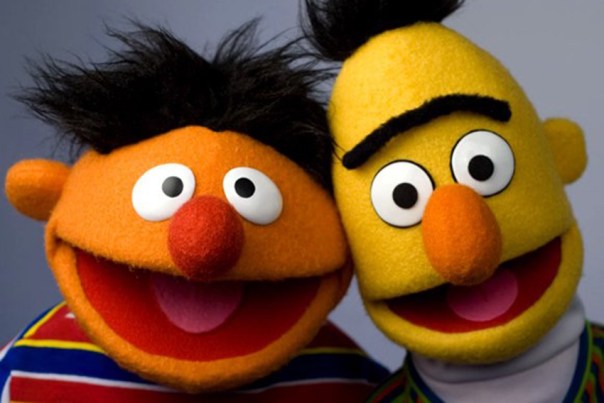
39. When asked if Bert and Ernie were gay in 1994, Sesame Streett CEO Gary Knell replied ‘They are not gay, they are not straight. They are puppets. They don’t exist below the waist.’

40. Man! I Feel Like A Woman was inspired by Shania Twain’s visit to a drag bar.

41. Oscar, the character from the US version of The Office, was not originally intended to be gay. This choice was inspired by an early episode in which he wore a pink shirt.

42. In 2004, a Mario game had a transgender playable character with a subplot about being accepted by her family. This was censored in the American version.

43. Eminem gave Elton John a pair of diamond studded cock-rings as a wedding gift.

44. A Nigerian ‘scientist‘ claimed he had ‘proved’ being gay was wrong by using magnets in 2013. He then promptly demanded to be given the Nobel prize for his research. He didn’t get one.

45. Satanists performed a ‘Pink Mass‘ on the grave of Fred Phelps’ mother in order to turn her into a lesbian in the afterlife.

46. A woman in Nebraska tried to sue all gay people in 2015. Her appeal had no legal references, but quoted Webster’s Dictionary and the Bible. It obviously did not succeed.

References

Gay History: 15 Ways To Spot A Lesbian According To Some Really Old Medical Journals

Dell Richards’ book “Lesbian Lists,” published in 1990, contains “a look at lesbian culture, history, and personalities,” through various lists like “19 Lesbian Novelists” and “14 Cult Films With Lesbian Characters.” These lists are both entertaining and educational.

One of the lists is entitled “20 Turn-of-the-Century “Ways to Tell” if a Girl Would Become Gay or if a Woman Was a Lesbian — according to the Medical Journals of the Day.” The list offers an opportunity for us to look back on the silly assholes of Medical History who sought to quell the viral nature of young madiens’ ripe homosexuality by educating the public regarding how to spot lesbians and subsequently convert or destroy them. You never know when a lesbian is in your neighborhood, driving their car down your street, or shopping next to you at the grocery store.

We have selected 15 of the items from this list to share with you today and have illustrated these items with helpful photographs. As you can see, they were clearly completely right about everything and In parentheses you will find the year in which the cited medical journal was printed.

(15 Turn-of-the-Century “Ways to Tell” if a Girl Would Become Gay or if a Woman Was a Lesbian — According to the Medical Journals of the Day)

(via Lesbian Lists:A look at Lesbian culture, history and personalities by Dell Richards, 1990)

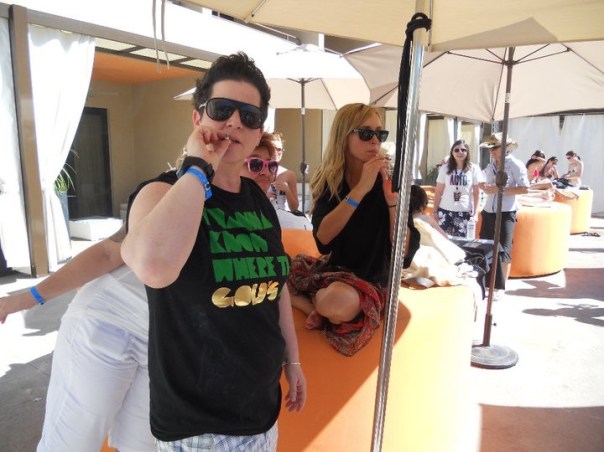
1. Smokes cigarettes in public. (1890)

confirmed lesbian julie goldman smoking cigarettes at poolside

2. Has a capacity for athletics and an incapacity for needlework and other domestic occupations. (1890)

natasha kai, confirmed lesbian with athletic capacities, screams “I hate needlepoint” on a soccer field

3. “Tomboy Habits” (1895)

autostraddle editor-in-chief riese’s girlfriend (a confirmed homosexual) participating in carpentry, a certified tomboy habit

4. Dresses in Boys’ Clothing (1895)

kim stolz, confirmed lesbian, wearing boys’ clothing on a reality television program. after the program, she continued to wear boys’ clothing in other contexts while romancing women of the same sex.

5. Abandons Dolls and Girlfriends for Marbles and Masculine Games (1895)

although these women may not be have been lesbians before this photograph was captured, this riveting game of marbles will surely transform them into lesbians

6. Prefers the Laboratory to the Nursery (1900)

fictional confirmed lesbian lexy is a doctor on the television program “Lip Service,” which requires the laboratory. furthermore, she does not have children or a nursery.

7. Goes to Bars (1900)

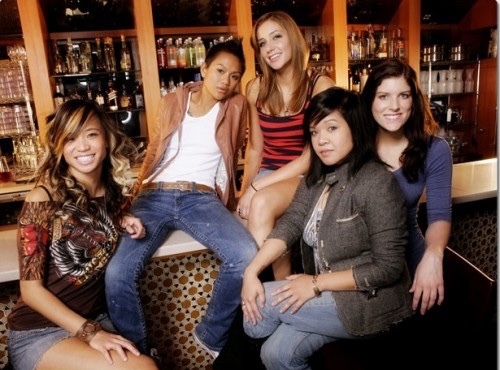
“gimme sugar” was a reality television program about lesbians who went to bars and also worked in bars, and yelled at each other.

8. Is Anti-Social (1900)

we are confident that there is a lesbian hiding behind this book

9. Has a firmness to her walk, a long step, and a rather heavy timbre to her voice. (1900)

kd lang, actual lesbian, records musical cds featuring her timbered voice

10. Talks loud and uses slang. (1900)

in this picture, confirmed lesbian sandra bernhard is swearing loudly using slang, probably slang for a vagina

11. Has no breasts to speak of (1900)

shane, confirmed lesbian, is not speaking of her breasts

12. Is square-shouldered and solid (1900)

skyler cooper has shoulders for days, likes girls

13. Has a strong, self-assured look in her eye (1910)

jessica clark, confirmed lesbian, is seducing you with her eyeballs

lesbian jenny shimizu seduced angelina jolie with these eyeballs

14. Shows mental arrogance and is abnormally deficient in natural female shyness (1910)

this photograph is self-explanatory

15. Has intellectual attributes usually associated with men – an acuteness of comprehension and lucid objectivity (1910)

confirmed lesbian rachel maddow hosts an acute and lucid television program

In conclusion, it would seem that the doctors of the 19th century were 100% correct when they made these scientific determinations. I wish you all luck in identifying and executing lesbians in your neighborhood as you see fit.

Reference

Gay History: The Berlin Story.

How the Germans invented gay rights—more than a century ago.
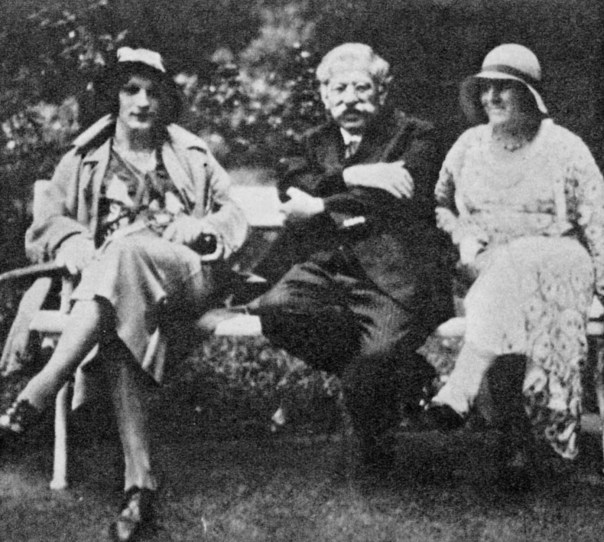
Magnus Hirschfeld and two cross-dressers, outside the Institute for Sexual Science.Courtesy Photo Hirschfeld / Voilà / Gallimard

On August 29, 1867, a forty-two-year-old lawyer named Karl Heinrich Ulrichs went before the Sixth Congress of German Jurists, in Munich, to urge the repeal of laws forbidding sex between men. He faced an audience of more than five hundred distinguished legal figures, and as he walked to the lectern he felt a pang of fear. “There is still time to keep silent,” he later remembered telling himself. “Then there will be an end to all your heart-pounding.” But Ulrichs, who had earlier disclosed his same-sex desires in letters to relatives, did not stop. He told the assembly that people with a “sexual nature opposed to common custom” were being persecuted for impulses that “nature, mysteriously governing and creating, had implanted in them.” Pandemonium erupted, and Ulrichs was forced to cut short his remarks. Still, he had an effect: a few liberal-minded colleagues accepted his notion of an innate gay identity, and a Bavarian official privately confessed to similar yearnings. In a pamphlet titled “Gladius furens,” or “Raging Sword,” Ulrichs wrote, “I am proud that I found the strength to thrust the first lance into the flank of the hydra of public contempt.”

The first chapter of Robert Beachy’s “Gay Berlin: Birthplace of a Modern Identity” (Knopf) begins with an account of Ulrichs’s audacious act. The title of the chapter, “The German Invention of Homosexuality,” telegraphs a principal argument of the book: although same-sex love is as old as love itself, the public discourse around it, and the political movement to win rights for it, arose in Germany in the late nineteenth and early twentieth centuries. This message may surprise those who believe that gay identity came of age in London and New York, sometime between the Oscar Wilde trials and the Stonewall riots. The brutal repression of gay people during the Nazi period largely erased German gay history from international consciousness, and even from German memory. Beachy, a historian who teaches at Yonsei University, in Seoul, ends his book by noting that Germans hold gay-pride celebrations each June on what is known as Christopher Street Day, in honor of the street where the Stonewall protest unfolded. Gayness is cast as an American import.

Ulrichs, essentially the first gay activist, encountered censorship and ended up going into exile, but his ideas very gradually took hold. In 1869, an Austrian littérateur named Karl Maria Kertbeny, who was also opposed to sodomy laws, coined the term “homosexuality.” In the eighteen-eighties, a Berlin police commissioner gave up prosecuting gay bars and instead instituted a policy of bemused tolerance, going so far as to lead tours of a growing demimonde. In 1896, Der Eigene (“The Self-Owning”), the first gay magazine, began publication. The next year, the physician Magnus Hirschfeld founded the Scientific-Humanitarian Committee, the first gay-rights organization. By the beginning of the twentieth century, a canon of gay literature had emerged (one early advocate used the phrase “Staying silent is death,” nearly a century before aids activists coined the slogan “Silence = Death”); activists were bemoaning negative depictions of homosexuality (Thomas Mann’s “Death in Venice” was one target); there were debates over the ethics of outing; and a schism opened between an inclusive, mainstream faction and a more riotous, anarchistic wing. In the nineteen-twenties, with gay films and pop songs in circulation, a mass movement seemed at hand. In 1929, the Reichstag moved toward the decriminalization of homosexuality, although the chaos caused by that fall’s stock-market crash prevented a final vote.

Why did all this happen in Germany? And why is the story not better known? Beachy, focussing on Berlin’s social fabric, doesn’t delve too deeply into larger philosophical questions, but the answers are hardly elusive. The inclination to read German history as an extended prelude to Nazism—the “heading for Hitler” narrative—has tended to exclude countervailing progressive forces, especially those of the Wilhelmine period, from 1871 to 1918. The towering legacy of German idealism and Romanticism, which helps to explain why the gay-rights movement took root in Germany, has itself become somewhat obscure, especially outside the German school system. And so we are surprised by the almost inevitable. Nowhere else could a figure like Ulrichs have made his speech, and nowhere else would cries of “Stop!” have been answered by shouts of “No, no! Continue, continue!”

In Leontine Sagan’s 1931 film “Mädchen in Uniform,” the first sympathetic portrayal of lesbians onscreen, a boarding-school pupil named Manuela plays the title role in a school production of Friedrich Schiller’s 1787 play “Don Carlos,” an emblematic Romantic tale of forbidden love and resistance to tyranny. “A moment passed in paradise is not too dearly bought with death,” Manuela declaims onstage, conveying Don Carlos’s love for his stepmother. Afterward, fortified by punch, Manuela announces her love for one of her teachers, precipitating a scandal. The episode suggests the degree to which the German cultural and intellectual tradition, particularly in the Romantic age, which stretched from Goethe and Schiller to Schopenhauer and Wagner, emboldened those who came to identify themselves as gay and lesbian. (“Schiller sometimes writes very freely,” an elderly woman worriedly observes in Sagan’s film.

Close to the heart of the Romantic ethos was the idea that heroic individuals could attain the freedom to make their own laws, in defiance of society. Literary figures pursued a cult of friendship that bordered on the homoerotic, although most of the time the fervid talk of embraces and kisses remained just talk. But the poet August von Platen’s paeans to soldiers and gondoliers had a more specific import: “Youth, come! Walk with me, and arm in arm / Lay your dark cheek on your / Bosom friend’s blond head!” Platen’s leanings attracted an unwelcome spotlight in 1829, when the acidly silver-tongued poet Heinrich Heine, insulted by anti-Semitic remarks that Platen had lobbed at him, satirized his rival as a womanly man, a lover of “passive, Pythagorean character,” referring to the freed slave Pythagoras, one of Nero’s male favorites. Heine’s tone is merrily vicious, but he inserts one note of compassion: had Platen lived in Roman times, “it may be that he would have expressed these feelings more openly, and perhaps have passed for a true poet.” In other words, repression had stifled Platen’s sexuality and, thus, his creativity.

Gay urges welled up across Europe during the Romantic era; France, in particular, became a haven, since statutes forbidding sodomy had disappeared from its books during the Revolutionary period, reflecting a distaste for law based on religious belief. The Germans, though, were singularly ready to utter the unspeakable. Schopenhauer took a special interest in the complexities of sexuality; in a commentary added in 1859 to the third edition of “The World as Will and Representation,” he offered a notably mellow view of what he called “pederasty,” saying that it was present in every culture. “It arises in some way from human nature itself,” he said, and there was no point in opposing it. (He cited Horace: “Expel nature with a pitchfork, she still comes back.”) Schopenhauer proceeded to expound the dubious theory that nature promoted homosexuality in older men as a way of discouraging them from continuing to procreate.

Not surprisingly, Karl Heinrich Ulrichs seized on Schopenhauer’s curious piece of advocacy when he began his campaign; he quoted the philosopher in one of his coming-out letters to his relatives. Ulrichs might also have mentioned Wagner, who, in “Die Walküre” and “Tristan und Isolde,” depicted illicit passions that many late-nineteenth-century homosexuals saw as allegories for their own experience. Magnus Hirschfeld, in his 1914 book “The Homosexuality of Men and Women,” noted that the Wagner festival in Bayreuth had become a “favorite meeting place” for homosexuals, and quoted a classified ad, from 1894, in which a young man had sought a handsome companion for a Tyrolean bicycling expedition; it was signed “Numa 77, general delivery, Bayreuth.” Ulrichs had published his early pamphlets under the pseudonym Numa Numantius.

Encouraging signals from cultural giants were one thing, legal protections another. The most revelatory chapter of Beachy’s book concerns Leopold von Meerscheidt-Hüllessem, a Berlin police commissioner in the Wilhelmine period, who, perhaps more than any other figure, enabled “gay Berlin” to blossom. Meerscheidt-Hüllessem’s motivations remain unclear. He was of a “scheming nature,” a colleague noted, and liked nothing better than to gather masses of data on the citizenry, like a less malignant J. Edgar Hoover. His Department of Homosexuals, founded in 1885, maintained a carefully annotated catalogue of Berliners who conformed to the type. He evidently was not gay, although his superior, Bernhard von Richthofen, the police department’s president, is said to have had a taste for young soldiers. Meerscheidt-Hüllessem might have reasoned that it was better to domesticate this new movement than to let it become politically radicalized or overtaken by criminal elements.

For whatever reason, Meerscheidt-Hüllessem took a fairly benevolent attitude toward Berlin’s same-sex bars and dance halls, at least in the better-heeled parts of the city. He was on cordial terms with many regulars, as none other than August Strindberg attested in his autobiographical novel “The Cloister” (1898), which evokes a same-sex costume ball at the Café National: “The Police Inspector and his guests had seated themselves at a table in the centre of one end of the room, close to which all the couples had to pass. . . . The Inspector called them by their Christian names and summoned some of the most interesting among them to his table.” Meerscheidt-Hüllessem and his associates also showed solicitude for gay victims of blackmail, and went so far as to offer counselling. In 1900, the commissioner wrote to Hirschfeld expressing pride that he had saved people from “shame and death”: blackmail and suicide. A week later, in a grim irony, this enigmatic protector killed himself—not on account of his homosexual associations but because he was exposed as having taken bribes from a millionaire banker accused of statutory rape.

Hirschfeld’s Scientific-Humanitarian Committee probably could not have existed without Meerscheidt-Hüllessem’s tacit approval. (The commissioner was invited to the organization’s first meeting, although he probably did not attend.) Hirschfeld, who was born in 1868, a year after Ulrichs’s speech in Munich, began his radical activities in 1896, publishing a pamphlet titled “Sappho and Socrates,” which told of the suicide of a gay man who felt coerced into marriage. The next year, Hirschfeld launched the Committee, and soon afterward reprinted Ulrichs’s writings. Building on Ulrichs’s insight that same-sex desire was a congenital trait, Hirschfeld developed a minutely variegated conception of human sexuality, with a spectrum of “sexual intermediaries” appearing between the poles of the purely male and the purely female. He felt certain that if homosexuality were understood as a biological inevitability then the prejudice against it would disappear. “Through Science to Justice” was his group’s motto.

Beachy is candid about Hirschfeld’s limitations. His scientific work blended research and advocacy to an uncomfortable degree, and some of his confederates employed suspect methodologies. (One associate’s study of male prostitution in Berlin involved sleeping with at least one hustler.) But Hirschfeld’s knowledge of sexuality was vast, and Beachy has several incisive pages comparing him favorably to Sigmund Freud, whose influence was, of course, far greater. Freud rejected the congenital hypothesis, believing homosexuality to be a mutation of childhood development. Although Freud professed sympathy for gay people, American psychoanalysts later fostered the destructive notion that homosexuality could be cured through therapy. Freud was grandly systematic in his thinking; Hirschfeld was messily empirical. The latter got closer to the intricate reality of human sexuality.

Hirschfeld had enemies in Berlin’s gay scene. His interest in effeminacy among homosexual men, his attention to lesbianism, and his fascination with cross-dressing among both gay and straight populations (he coined the word “transvestism”) offended men who believed that their lust for fellow-males, especially for younger ones, made them more virile than the rest of the population. Being married to a woman was not seen as incompatible with such proclivities. In 1903, the malcontents, led by the writers Adolf Brand and Benedict Friedlaender, formed a group called Gemeinschaft der Eigenen, or Society of Self-Owners, the name referencing a concept from the anarchist philosophy of Max Stirner. Der Eigene, Brand’s magazine, became their mouthpiece, mixing literary-philosophical musings with mildly pornographic photographs of boys throwing javelins. In the same camp was the writer Hans Blüher, who argued that eroticism was a bonding force in male communities; Blüher made a particular study of the Wandervogel movement, a band of nature-hiking youth. Nationalism, misogyny, and anti-Semitism were rampant in these masculinity-obsessed circles, and Hirschfeld’s Jewishness became a point of contention. He was deemed too worldly, too womanly, insufficiently devoted to the glistening Aryan male.

Beachy celebrates the inclusivity of Hirschfeld, who welcomed feminists into his coalition. Unfortunately, women are largely absent from “Gay Berlin.” There is no mention, for example, of the theatre and music critic Theo Anna Sprüngli, who, in 1904, spoke to the Scientific-Humanitarian Committee on the subject of “Homosexuality and the Women’s Movement,” helping to inaugurate a parallel movement of lesbian activism. Sex between women was never explicitly outlawed in imperial Germany—Paragraph 175, the anti-sodomy law, applied only to men—but lesbians found it no easier to live an open life. Employing the alias Anna Rüling, Sprüngli proposed that the gay-rights and feminist movements “aid each other reciprocally”; the principles at stake in both struggles, she wrote, were freedom, equality, and “self-determination.” References to George Sand and Clara Schumann in her speech betray an essentially Romantic vision.

This story has a melancholy epilogue, as the historian Christiane Leidinger has discovered. After Sprüngli gave her historic speech—one that may have exacerbated the split between the “masculinist” and the “sexological” factions of the gay movement, as Beachy calls them—she said nothing more about lesbianism. Instead, she fell into a conventional, even conservative, journalistic career, adopting a jingoistic tone during the First World War and concealing her radical past in the Nazi era. Perhaps she remained as openly lesbian as circumstances permitted; almost nothing is known of her later life. Yet her sudden silence suggests how quickly gains can slip away.

During the golden years of the Weimar Republic, which occupy the last chapters of “Gay Berlin,” gays and lesbians achieved an almost dizzying degree of visibility in popular culture. They could see themselves onscreen in films like “Mädchen in Uniform” and “Different from the Others”—a tale of a gay violinist driven to suicide, with Hirschfeld featured in the supporting role of a wise sexologist. Disdainful representations of gay life were not only lamented but also protested; Beachy points out that when a 1927 Komische Oper revue called “Strictly Forbidden” mocked gay men as effeminate, a demonstration at the theatre prompted the Komische Oper to remove the offending skit. The openness of Berlin’s gay scene attracted visitors from more benighted lands; Christopher Isherwood lived in the city from 1929 to 1933, enjoying the easy availability of hustlers, who, in Beachy’s book, have a somewhat exhausting chapter to themselves.

Within the gay community, the masculinist-sexological split persisted. Hirschfeld was now at the helm of the Institute for Sexual Science: a museum, clinic, and research center, housed in a handsome villa in the Tiergarten district. Widening his sphere of interests, Hirschfeld offered sex advice to straight couples, advocated more liberal divorce laws and birth control, collaborated on the first primitive sex-change operations, and generally acquired a reputation as the “Einstein of sex,” as he was called on an American lecture tour. To the masculinists, Hirschfeld appeared to be running a sexual freak show. Adolf Brand published crude anti-Semitic attacks on Hirschfeld in the pages of Der Eigene. Some of Brand’s associates were flirting with Nazism, and not just in a metaphorical sense; one of them later became the lover of Ernst Röhm, the head of the Brown Shirts.

After the First World War, a new figure entered the fray: Friedrich Radszuweit, an entrepreneur who established a network of gay publications, including the first lesbian magazine, Die Freundin. Radszuweit hoped to heal divisions and establish a true mass movement—one from which he stood to make a great deal of money. In 1923, he took the lead in forming the Human Rights League, a consortium of gay groups. Distancing himself both from Hirschfeld’s emphasis on gender ambiguity and from Brand’s predatory focus on boys, Radszuweit purveyed a vision of “homosexual bourgeois respectability,” in Beachy’s words. Fearful of displaying political bias, Radszuweit attempted to placate the Nazis, believing that they, too, would see the light.

In fact, the driving force behind the Brown Shirts was a member of the Human Rights League, as Radszuweit must have known. Röhm never made a secret of his homosexuality, and Hitler chose to overlook it; although the Nazi leader had denounced Hirschfeld and the gay movement as early as 1920, he was too dependent on Röhm’s army of thugs to reject him. In the early thirties, German leftists tried to tarnish the Nazis by publicizing Röhm’s affiliations and affairs. Brand, having finally grasped the ruthlessness of Hitler’s methods, joined the assault. “The most dangerous enemies of our fight are often homosexuals themselves,” he sagely observed. Hirschfeld, though, disliked the campaign against Röhm, and the conflation of homosexuality and Fascism that it implied. The practice of outing political figures had surfaced before—notably, during a prewar scandal surrounding Kaiser Wilhelm II’s adviser Prince Philipp zu Eulenburg-Hertefeld—and Hirschfeld had criticized the tactic, which was known as the “path over corpses.”

Nazism brought Berlin’s gay idyll to a swift, savage end. Hirschfeld had left Germany in 1930, to undertake a worldwide lecture tour; wisely, he never returned. In May, 1933, a little more than three months after Hitler became Reich Chancellor, the Institute for Sexual Science was ransacked, and much of its library went up in flames during Joseph Goebbels’s infamous book-burning in the Opernplatz. Röhm, who became less indispensable once Hitler took power, was slaughtered in 1934, during the Night of the Long Knives, the first great orgy of Nazi bloodlust. Hirschfeld, who had watched the destruction of his life’s work on a newsreel in Paris, died the next year. Brand somehow survived until 1945, when he fell victim to Allied bombs. Vestiges of Paragraph 175 lingered in the German legal code until 1994.

In the decades after the Second World War, German historiography fell under the sway of the Sonderweg, or “special path,” school, which held that the country was all but doomed to Nazism, because of the perennial weakness of its bourgeois liberal factions. Since then, many historians have turned against that deterministic way of thinking, and “Gay Berlin” follows suit: Germany here emerges as a chaotic laboratory of liberal experiment. Beachy’s cultivation of the “other” Germany, heterogeneous and progressive, is especially welcome, because the Anglophone literary marketplace fetishizes all things Nazi. Appearing in the same month as “Gay Berlin,” last fall, were “Artists Under Hitler,” “Hitler’s Europe Ablaze,” “Atatürk in the Nazi Imagination,” “The Jew Who Defeated Hitler,” “Islam and Nazi Germany’s War,” “Nazi Germany and the Arab World,” and—an Amazon Kindle special—“The Adolf Hitler Cookbook.”

At the same time, Beachy enlarges our understanding of how the international gay-rights movement eventually prospered, despite the catastrophic setbacks that it experienced not only in Nazi Germany but also in mid-century America. Significantly, it was a German immigrant, Henry Gerber, who first brought the fight for gay rights to America, in the nineteen-twenties; Gerber’s short-lived Society for Human Rights, in Chicago, took inspiration from Hirschfeld and perhaps lifted its name from Radszuweit’s group. The Human Rights Campaign, a powerhouse of contemporary gay politics, which was first formed as a political action committee, in 1980, also echoes the German nomenclature, intentionally or not. Furthermore, Radszuweit’s determination to project a well-behaved, middle-class image anticipated the strategy that has allowed the H.R.C. and other organizations to achieve startling victories in recent years. German homosexuals—especially well-to-do men—began to win acceptance when they demanded equal treatment and otherwise conformed to prevailing mores. In this respect, Germany in the period from 1867 to 1933 bears a striking, perhaps unsettling, resemblance to twenty-first-century America.

I closed “Gay Berlin” with a deepened fondness for Hirschfeld, that prolix and imprecise thinker who liked to pose in a white lab coat and acquired the nickname Aunt Magnesia. The good doctor had a vision that went far beyond the victory of gay rights, narrowly defined; he preached the gorgeousness of difference, of deviations from the norm. From the beginning, he insisted on the idiosyncrasy of sexual identity, resisting any attempt to press men and women into fixed categories. To Hirschfeld, gender was an unstable, fluctuating entity; the male and the female were “abstractions, invented extremes.” He once calculated that there were 43,046,721 possible combinations of sexual characteristics, then indicated that the number was probably too small. He remains ahead of his time. ♦

This article appears in the print edition of the January 26, 2015, issue.

References

Teddy Girls: The Style Subculture That Time Forgot.

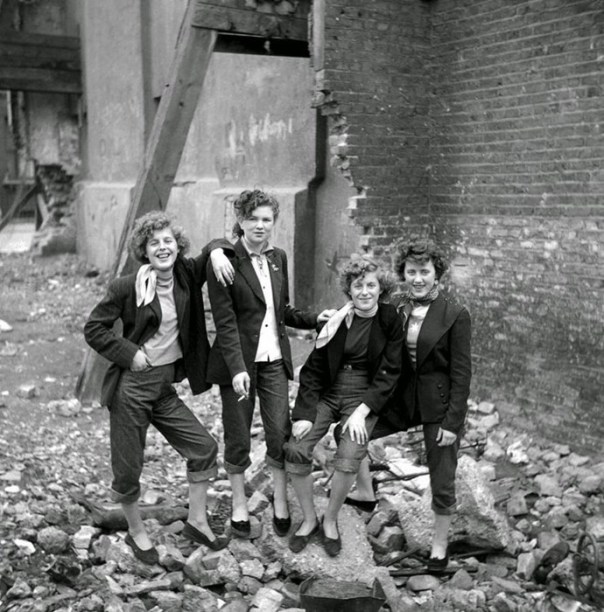
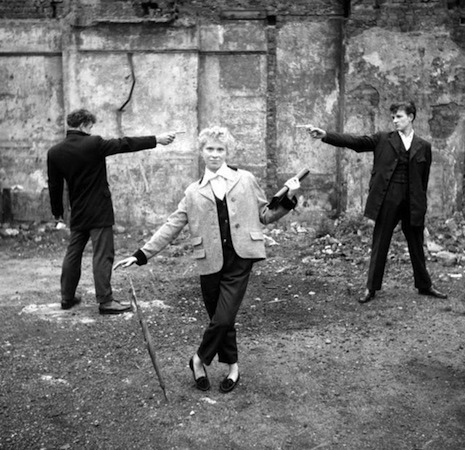
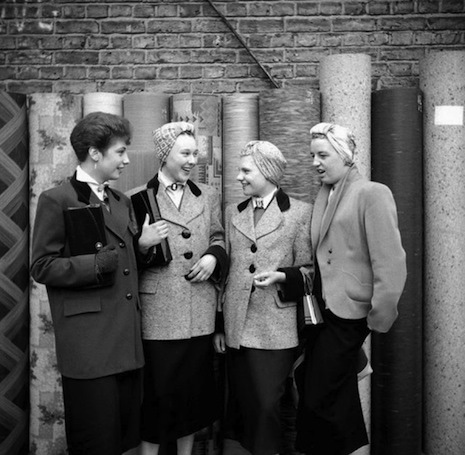
We trace the history of the 50s girl gangs that rebelled against austerity, trading in their ration books for Edwardian frills.

The Last of the Teddy GirlsPhotography by Ken Russell

On reflection, the paring of the aristocratic flamboyancy of an Edwardian gent with the rebellious attitude of American rock and roll shouldn’t have worked – but it did. This sartorial hybrid, engineered by the Teddy Boys of the 1950s and later adopted by their feisty female counterpart, Teddy Girls (also known as Judies) – created a strangely alluring visual identity, one which set them apart from their contemporaries in a decade where youth culture was finally carving out an aesthetic of its own. Sharply-suited Teds (whose name derives from ‘Edwardian’) might look remarkably smart to a contemporary eye – particularly when positioned against fellow groups of teenagers, like the punks who threatened to puncture the fabric of society with their safety pins – but their reality was more rebellious than it initially seems.

Like the gangs of youths who’d pace the streets in Dr Martens or Reebok Classics in decades to come, the odd report of fights quickly led to the sweeping generalisation that all Teds were trouble. In response, some venues implemented “no Edwardian dress” policies that echoed the “no trainers or football colours” door criteria of today. Contrary to what one might assume, smart dress didn’t make the Teds more respectable – it actually rendered them intimidating, in the same way that a suited Al Capone could coolly induce panic with a tip of his straw boater. “I remember my dad would threaten me for not doing what I was told by saying he would set the Teds on me,” remembers Magnum photographer, Chris-Steele Perkins who went on to photograph the second wave revival of the teds in the seventies.

The Last of the Teddy GirlsPhotography by Ken Russell

Rebellious Decadence

The Teds had a put-together smartness that at first feels at odds with the idea of a rebellious teenager, but they were, in fact, ripping up the rulebook (or ration book, as it were) by rejecting the austere approach of a post-war economy. Their decadence was also a two fingers up to the ruling class, as the Teds took ownership of the Edwardian Drape jacket – which was marketed by Savile Row tailors to young Mayfair men in 1949 – much to the horror of the posh boys: “Absolutely the whole of one’s wardrobe immediately becomes unwearable,” complained one. Despite the aristocratic origins of the dandyish Drape, this item was almost always thrifted by the Teds, else paid for in incremental instalments. The Teddy Boys and Girls originated from then working-class areas in East or West London, areas still bearing the wounds of the war with still-to-be rebuilt bombsites punctuating their areas. After an era of fashion taking a back seat to function, what better way to sartorially rebel than with the impractical frivolity of a tiny clutch bag; the must-have accessory for a Teddy Girl?

The Last of the Teddy GirlsPhotography by Ken Russell

Working Girls

Most Teddy Girls left school at 14 or 15, taking secretarial jobs in London, or working in factories on the outskirts. Their hard-earned cash was not wasted on expensive clothes, as original London Teddy girl Mary Toovey – who, herself worked in the Kegoo factory having left school at 15 – told writer Eve Dawoud: “Turn-up jeans, a coat and something to tie around your neck, those were the Teddy Girl essentials. My friends and I would buy similar clothes when we shopped on the Portobello Road. It was all second hand then, we couldn’t afford new. Smart’s, the local pie and mash shop on Goldborne Rd, was where we went to eat out if we had the money.” 

Toovey was photographed by Altered States Director Ken Russell, who documented a group of Teddy Girls local to him in Notting Hill. It was thought the images were lost forever but they were uncovered in 2005. “No one paid much attention to the Teddy Girls before I did them, though there was plenty on teddy boys,” He recalled. “They were tough, these kids, they’d been born in the war years and food rationing only ended in about 1954 – a year before I took these pictures. They were proud. They knew their worth. They just wore what they wore.”

The Last of the Teddy GirlsPhotography by Ken Russell

Androgynous New Age

Perhaps more significant than the boy’s subversion of upper-class clothing was the girls’ appropriation of masculine styles. Whilst the pants worn by working women during the war were mostly shed in relief, replaced by the welcome femininity of silhouette-skimming skirts, the Teddy Girls clung to the new sartorial codes that the adoption of menswear for women ushered in: boxy single-breasted jackets and the slicked back quiff hairstyle, a proto-mohawk that would eventually give way to the more extreme hairstyles of punk. Despite their non-conformist style and rebellious attitude, “I never thought of those kids as anything but innocent,” Ken Russell told The Evening Standard. “Even the Teddy Girls [from the 1955 series The Last of the Teddy Girls], all dressed up, were quite edgy, and that interested me; they were more relevant and rebellious — but good as gold. They thought it was fun getting into their clobber, and I thought so too.”

TThough Ken Russell wanted to be a ballet dancer, his father wouldn’t hear of it—no son of his would ever be seen in tights—so the young Russell turned his attention to photography, a craft he thought he could make his name with. He attended Walthamstow Technical College in London, where he was taught all about lighting and composition. Russell would later claim that everything he did as a trainee photographer broke the rules—a trend he continued throughout his career as a film director when producing such acclaimed movies as Women in Love, The Music Lovers, The Devils, Tommy, Altered States and Crimes of Passion.

Russell became a photographer for Picture Post and the Illustrated Magazine, and during his time with these publications took some of the most evocative photos of post-war London during the 1950s. He spent his days photographing street scenes and his nights printing his pictures on the kitchen table of his rented one-bed apartment in Notting Hill.hough Ken Russell wanted to be a ballet dancer, his father wouldn’t hear of it—no son of his would ever be seen in tights—so the young Russell turned his attention to photography, a craft he thought he could make his name with. He attended Walthamstow Technical College in London, where he was taught all about lighting and composition. Russell would later claim that everything he did as a trainee photographer broke the rules—a trend he continued throughout his career as a film director when producing such acclaimed movies as Women in Love, The Music Lovers, The Devils, Tommy, Altered States and Crimes of Passion.

Russell became a photographer for Picture Post and the Illustrated Magazine, and during his time with these publications took some of the most evocative photos of post-war London during the 1950s. He spent his days photographing street scenes and his nights printing his pictures on the kitchen table of his rented one-bed apartment in Notting Hill.

All above photos by Ken Russell

Reference

Gay History: 30 Years Later, a Look at the First AIDS Drug.

The FDA approved AZT in a record 20 months, a move that remains controversial today

All these years on, we are finally telling the truth about this insidiously poisonous drug, and the great marketing job by Big Pharma to sell it to a desperately ill population of people, and doctors who were also desperate, to provide some hope for their patients! The movie “Dallas Buyers Club” tells some of the story, of those who wanted something better than AZT to assist them in staying alive until something beneficial came along – which it eventually did! Things were not quite so bad here as far as pricing went, as with our Medicare system, the drugs were listed on the Pharmaceutical Benefits Scheme as soon as they became available, and cost a mere couple of dollars per script to buy. But the big sell by Big Pharma also happened here, as did the results of several badly run trials. Like many, the biggest mistake I ever made back in those early days of drug treatments was to let my doctor eventually talk me into taking AZT – against my better judgement! And it’s not just me, but many others who will attest that all our immune system and declining health problems started at the same time we decided to take AZT. It’s not as if we were only on a couple of pills a day – we were on massive doses, and as I have already said, this drug was poison…”human Ratsac” was how it was described in a report from the “Concorde” trial…another unethically run trial, but one that didn’t sugar-coat the truth about AZT. Those who took the massive doses of AZT back in the late 80s/early 90s suffered from problems such as anaemia, peripheral neuropathy, and renal problems…and still do to this day!

HIV was first reported in 1981, but it wasn’t until six years later—in March 1987—that a drug to fight the virus was approved by the Food and Drug Administration (FDA). On the 30th anniversary of this milestone, Time magazine takes a look at the story behind the controversial med azidothymidine, commonly known as AZT.

Also known as Retrovir or zidovudine, the compound AZT was not originally created with HIV in mind but was developed in the 1960s to battle cancer. Decades later, scientists at pharmaceutical giant Burroughs Wellcome made a version of AZT to fight HIV.

To fast-track the med, the drugmaker conducted a trial with 300 people who had AIDS. After 16 weeks, it was halted because those taking AZT were doing so much better than those not on the med. The results were considered a breakthrough, and the FDA approved the drug on March 19, 1987, in a record 20 months, according to Time.

The approval was granted despite many questions remaining unanswered—for example, how long did the benefits last?—and despite other issues surrounding the trial itself. In fact, Time notes, the trail remains controversial today.

Then came a bigger controversy: the price tag. At about $8,000 a year ($17,000 in today’s dollars), AZT was unattainable to many.

Today, we have more than 41 drugs to treat HIV, many in combo form and with much fewer side effects.

Reference

Gay History: When Gay Journalists Were Closeted: A History of AIDS Coverage at ‘The Times’

Mark Frankel

November 23, 2015
Days after New York State approved marriage equality in 2011, Samuel G. Freedman, a School of Journalism professor and former reporter for The New York Times, mused to friends about how the world had changed since he had worked at the paper in the 1980s.
Now an enthusiastic proponent of gay marriage, The Times was then a place where gay reporters feared being exiled to obscure beats and watching their careers wither. Freedman’s musings centered on his friend and mentor, Jeff Schmalz, a brilliant Times reporter dying of the disease who in 1992 and 1993 produced groundbreaking articles about people living with AIDS.
“Jeffrey who?” people often asked. Out of those encounters has come Freedman’s eighth book, Dying Words: The AIDS Reporting of Jeff Schmalz and How it Transformed The New York Times.
Produced as an oral history of dozens of Schmalz’s colleagues and friends, the book and an accompanying radio documentary focus on how journalism responded to the AIDS crisis in the 1980s and early ’90s, when many gay and lesbian journalists felt tremendous professional pressure to remain closeted, and discrimination against them was widespread. It also recounts the moment AIDS became a full-fledged health crisis, breaking out of the gay and IV-drug communities into the larger population.
“Jeff’s reporting played a real role in starting to turn opinion, certainly within The Times, but also within the broader public, from fear, suspicion, finger-pointing and blaming gays, to empathy and acceptance,” said Freedman. The 60-minute radio program will be broadcast on some two dozen public radio stations as part of events marking World AIDS Day on December 1. That same day, Freedman will host a panel on Dying Words at 6 p.m. at the Journalism School.
Schmalz was a rising star at the Times in the 1980s, a consummate journalist and skilled newsroom politician and mentor to younger journalists. When Freedman arrived at the paper in 1981, he soon was among those taken under Schmalz’s wing.
Though out of the closet to close friends at the paper, Schmalz kept his orientation hidden from higher-ups such as Abe Rosenthal, its executive editor from 1977 to 1986, and then-publisher Arthur Sulzberger.
“Abe Rosenthal hired me and promoted me, and I owe him a lot, but in doing this research I became very aware of his antipathy toward gay staffers at The Times,” said Freedman. “And it also became apparent that, in a less visible way, Punch Sulzberger also had a blind spot about gays.”
Critics inside and outside the newsroom accused the paper of being late to cover the AIDS crisis.
In December 1990, Schmalz, then deputy national editor, suffered a seizure in the newsroom. The diagnosis was full-blown AIDS, then a death sentence. For Schmalz, the closet was no longer an option. “Jeff commanded tremendous authority at the Times. So for him to come out had a tremendously sensitizing effect on the paper,” recalled Freedman.
When Schmalz returned to the paper in mid-1992, he was sick but determined to report on AIDS. By then, the paper had a new editor and publisher and, Freedman said, was more accepting of its gay and lesbian employees.
Over the next 15 months, Schmalz captured the many faces of AIDS, gay and straight, in some three dozen articles. He profiled Magic Johnson, the Los Angeles Lakers forward who quit basketball when he was diagnosed as HIV-positive, and AIDS activists Mary Fisher and Larry Kramer. “In a weird way, the diagnosis set him free,” recalled his sister, Wendy Schmalz Wilde. “He found a new empathy for other people who were sick and dying.”
Schmalz’s reporting took AIDS “from a medical story, a public health story, a science story, and made it a deeply human story,” said Freedman. “He got on the beat right when this was a disease crossing the lines of race, class and sexual orientation.” His articles also raised the bar on the paper’s AIDS coverage, setting a standard for other news organizations. His last story, which decried growing public complacency, appeared several weeks after his death in November 1993.
Freedman teamed with veteran radio producer Kerry Donahue to produce the radio documentary, which will be distributed by the Public Radio Exchange. Funds came from the Journalism School and a Kickstarter campaign that raised $28,000. A significant backer was current New York Times publisher Arthur Sulzberger Jr., who contributed his own reminiscences to Dying Words.
Schmalz’s death still haunts Freedman. “Jeff was an example of a supremely talented person who died at 39,” he said. “The world is still losing incredibly talented people at young ages. It’s a reminder of the continuing need to do the research that will cure the disease and of the role that journalists need to play.”

In December 1990, Schmalz, then deputy national editor, suffered a seizure in the newsroom. The diagnosis was full-blown AIDS, then a death sentence. For Schmalz, the closet was no longer an option. “Jeff commanded tremendous authority at the Times. So for him to come out had a tremendously sensitizing effect on the paper,” recalled Freedman.

When Schmalz returned to the paper in mid-1992, he was sick but determined to report on AIDS. By then, the paper had a new editor and publisher and, Freedman said, was more accepting of its gay and lesbian employees.

Over the next 15 months, Schmalz captured the many faces of AIDS, gay and straight, in some three dozen articles. He profiled Magic Johnson, the Los Angeles Lakers forward who quit basketball when he was diagnosed as HIV-positive, and AIDS activists Mary Fisher and Larry Kramer. “In a weird way, the diagnosis set him free,” recalled his sister, Wendy Schmalz Wilde. “He found a new empathy for other people who were sick and dying.”

Schmalz’s reporting took AIDS “from a medical story, a public health story, a science story, and made it a deeply human story,” said Freedman. “He got on the beat right when this was a disease crossing the lines of race, class and sexual orientation.” His articles also raised the bar on the paper’s AIDS coverage, setting a standard for other news organizations. His last story, which decried growing public complacency, appeared several weeks after his death in November 1993.

Freedman teamed with veteran radio producer Kerry Donahue to produce the radio documentary, which will be distributed by the Public Radio Exchange. Funds came from the Journalism School and a Kickstarter campaign that raised $28,000. A significant backer was current New York Times publisher Arthur Sulzberger Jr., who contributed his own reminiscences to Dying Words.

Schmalz’s death still haunts Freedman. “Jeff was an example of a supremely talented person who died at 39,” he said. “The world is still losing incredibly talented people at young ages. It’s a reminder of the continuing need to do the research that will cure the disease and of the role that journalists need to play.”

Reference

Gay History: S.W. Fores and the ‘Arse-Bishop’ – Scandal at the Printshop Window

theprintshopwindow's avatarThe Printshop Window

Concerns about the potential dangers associated with the public display of caricature prints were raised almost as soon as printsellers’ windows became features of note among eighteenth-century urban landscape. The critics ranged from those who simply saw displays of satirical prints as a crowd-drawing nuisance, to those who considered them to pose a fundamental threat to the moral and spiritual wellbeing of the nation. Those who fell into the latter group often described caricatures as if they possessed a hypnotic quality and were capable of seizing hold of the minds of those who happened to pass by the printsellers window and corrupting them.

This argument was clearly articulated by one critic, calling himself ‘Perambulator’, whose thoughts on the subject were published in the Morning Post and Daily Advertiser of 5th September 1780. The author claims to have observed the crowds passing before the window of “the large [print] shop in St Paul’s Churchyard”…

View original post 2,024 more words

Gay History: Lex Watson: Leading Gay Rights Activist and Trailblazer.

LEX WATSON, 1943-2014

For many of his generation and beyond, Lex Watson was the face of gay activism in Sydney.

For many of his generation and beyond, Lex Watson was the face of gay activism in Sydney. He was a foundation member of the Campaign Against Moral Persecution (CAMP), the organiser of the first gay rights demonstration in Australia, a longtime passionate advocate of homosexual law reform and of anti-discrimination legislation, a pioneer AIDS activist, and in later years, a keen advocate for the preservation of gay community history.

Lex Watson addressing gay rights activists setting up their ‘Gay Embassy’ opposite former NSW premier Neville Wran’s home in Woollahra to protest against Club 80 arrests in 1983.

CREDIT: ADRIAN SHORT

Alexander Watson was born in Perth on January 29, 1943, the son of Alec Watson, a medical practitioner in Geraldton, and his wife, Margaret (nee Newnham), a nurse. Lex started his education in Geraldton, then the family settled in Perth, where Alec became a well-known surgeon.

Despite his parents’ wish to place him at Geelong Grammar, or the King’s School in Parramatta, Lex was determined to go to Perth Modern. There he developed a lifelong love of languages, particularly German, and music, again particularly German, from Beethoven to the present day. At school he acted in Gilbert & Sullivan productions, directed by a teacher who remarked that he was ‘‘rather self-confident and arrogant’’, an observation often to be made of him throughout his life.

Lex Watson (left) and Robert French signing statutory declarations in 1983.

At puberty, Watson’s parents gave him a booklet on sex that contained a small non-judgmental paragraph on homosexuality. ‘‘So that’s what it is called,’’ he thought. He then looked up homosexuality in the school library, but all the texts he consulted talked of disease and perversion. Watson’s response was, ‘‘Why, they’ve got it wrong!’’ but it was a defining moment in his life.

Watson won a scholarship to the University of Western Australia, where he started in 1960. He did an arts degree and studied history and philosophy He read John Stuart Mill, whose classic liberalism became the touchstone of his life and later activism. He later became a supporter of the Council of Civil Liberties.

For his honours year, Watson transferred to the government department at the University of Sydney. It was there that he worked for the remainder of his academic life, teaching Australian politics to hundreds of students, many of whom became academics and political activists themselves.

The homosexual law reforms in Britain in 1967 sparked Watson’s interest and he became involved with reform in Australia because ‘‘it was needed and therefore you did it’’. He was in Canberra in 1970 on the weekend of the formation of the ACT Homosexual Law Reform Society and joined up. He then attended a public meeting in Sydney, organised by the Humanist Society, which formed a HLR sub-committee, which he became a member of.

Lex Watson as the Empress of Sydney in 1982.

These moves, however, were ‘‘wiped off the table’’ by the announcement by John Ware and Christabel Poll in September 1970 of the formation of the Campaign Against Moral Persecution (CAMP), the first openly homosexual group in Australia. Watson became a foundation member, and in early 1972, along with Sue Wills, became a co-president.

Ware credited Watson with making the organisation political, and it was Watson who organised the first gay demonstration, outside the Liberal Party headquarters in Ash Street, Sydney in October 1971.

Watson, as an academic, had contacts in the Liberal Party and got to hear of the challenge that conservative Jim Cameron was to bring against the federal pre-selection of Tom Hughes, after Hughes as federal attorney-general had raised the issue of homosexual law reform.

One of the major achievements of CAMP under Watson and Wills was highlighting the dangers of aversion therapy and psycho-surgery as then practised against women and homosexuals. That homosexual people then began to cease consulting practitioners for a ‘‘cure’’ for their sexual orientation was a triumph for CAMP.

Watson and Wills resigned from CAMP in October 1974 as the organisation concentrated more on its phone-counselling services.

Watson continued his activism and advocacy through newspaper articles in the gay press. In 1976 he, memorably and courageously, appeared on the ABC’s Monday Conference program in Mt Isa. Some of the audience were hostile, one member even pouring a bottle of sewage over his head. Watson maintained his composure throughout and won over the audience.

With the assistance of fellow academic and activist Craig Johnston in 1980, Watson approached Barrie Unsworth of the NSW Trades & Labor Council after the University of Sydney staff union had passed an anti-discrimination motion in relation to gays and lesbians. Unsworth was receptive and had a similar motion passed in the council. The move was the beginning of Gay Rights Lobby (GRL) and a new push for homosexual law reform in NSW, as well as support for a bill to incorporate homosexuality under the terms of the Anti-Discrimination Act.

Watson, in a dispute over tactics and his administrative style, fell out with GRL but that did not stop him and his fellow activists continuing to work together. After the police raid on Club 80 in 1983, it was Watson who suggested that the activists sign statutory declarations admitting to having committed buggery and to present them to the vice squad, seeking arrest. Watson was one of the first to present but the police had been forewarned and refused to make arrests.

He was a member of a delegation to premier Neville Wran in May 1984 on the morning of the introduction of his Private Members Bill to repeal the ‘‘buggery’’ provisions of the NSW Crimes Act. Watson attempted to persuade the premier to introduce an equal age of consent clause and when Wran refused, he argued for the inclusion of protections for persons between the ages of 16 and 18 years, which Wran enthusiastically agreed to. A new clause had been typed onto the bill when it reached the floor of the Legislative Assembly that day.

In 1982, the Chameleons social group had crowned Watson ‘‘Empress of Sydney’’, the first time for someone from outside the ‘‘drag’’ industry. He was proud of his only appearance in ‘‘drag’’, sporting a black velvet strapless gown. He wore the gown to the ‘‘Gay Embassy’’, a caravan that had been set up in front of the premier’s house in late 1983 as another move to push the law reform agenda. The embassy had been Watson’s idea.

Watson became aware of the problem of HIV/AIDS in 1982. He later became involved in the disputes with the Blood Bank, pointing out that the only solution to the implementation of sound public health policy relating to HIV was for the medical profession to engage in a dialogue with the gay community. He, and others, set up the AIDS Action Committee which, following federal government funding, morphed into the AIDS Council of NSW, of which Watson became the first president.

Watson later stepped down as president although he stayed on the committee. Truth to tell, he was not the greatest of administrators. He operated best as an individual activist, always sharp and on-message.

For many years Watson was also a block captain of marshals at Mardi Gras parades. In 2010, ACON awarded Watson and Wills their GLBTI Community Hero Award marking the 40th anniversary of the formal foundation of CAMP, and they were thrilled to ride up front in the 2011 Sydney parade.

After retirement from the University of Sydney, Watson became involved in the Pride History Group, Sydney’s gay and lesbian history group. He was president at the time that he died, assisting in the organisation of a history conference, set for November, on homosexual law reforms, his major life’s work. The conference will be dedicated to his memory.

Lex Watson is survived by his sister Wendy, brother-in-law Richard and nephews Nicholas and Ben and their families.

Reference

Gay History: The ”Gay Bob” Doll. NSFW

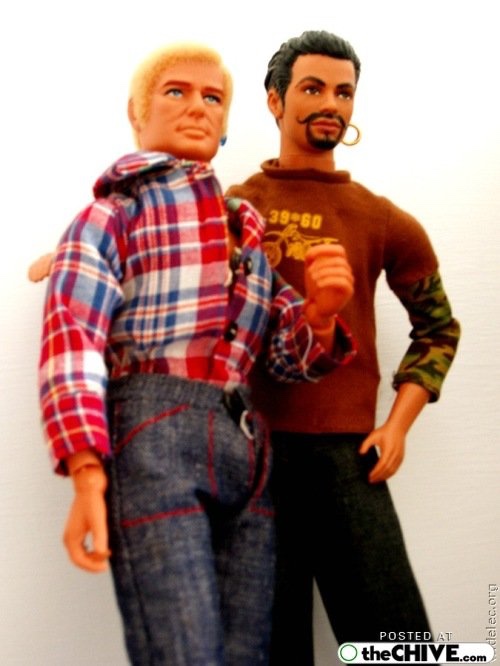
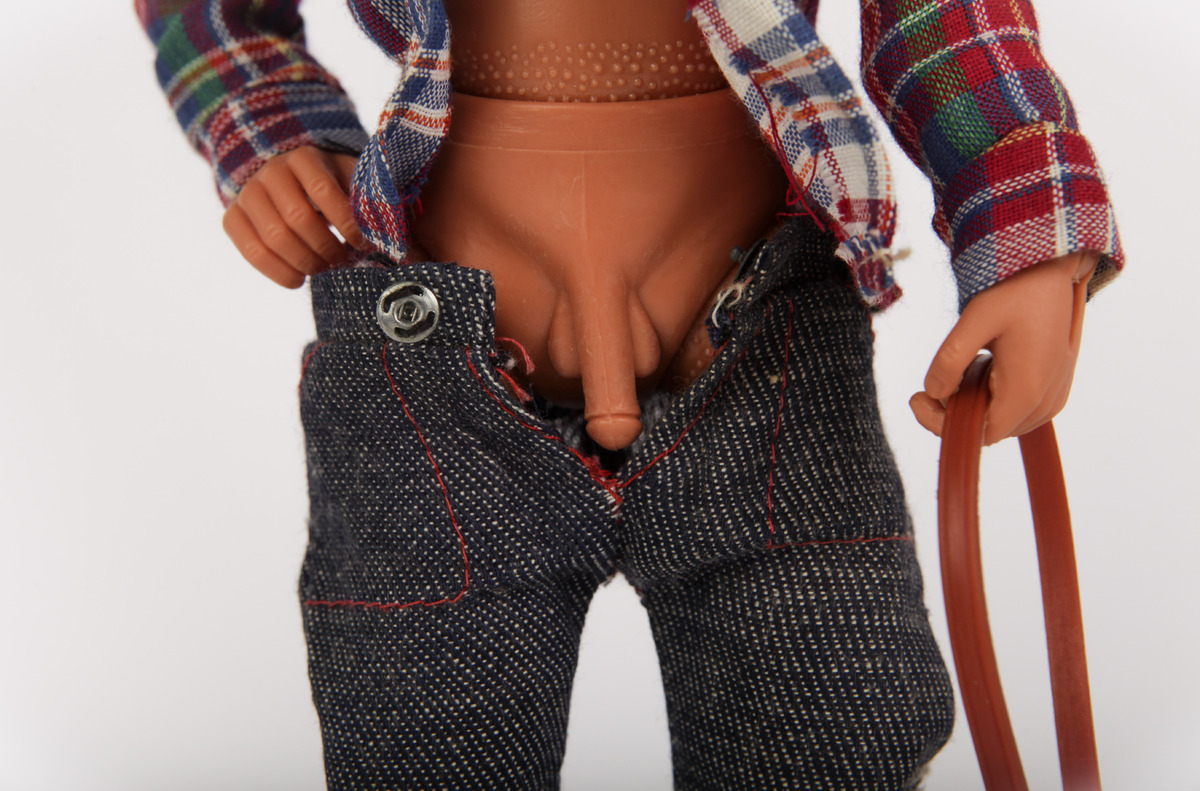
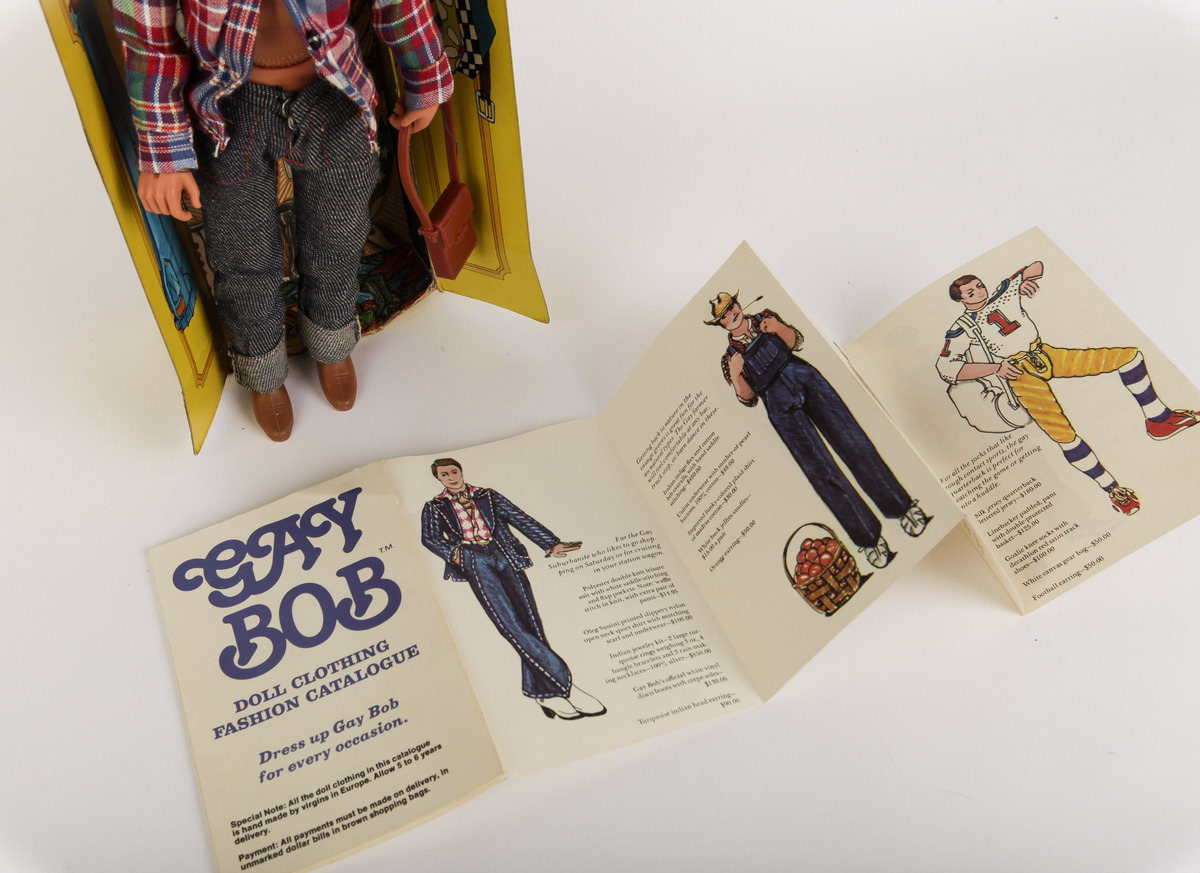
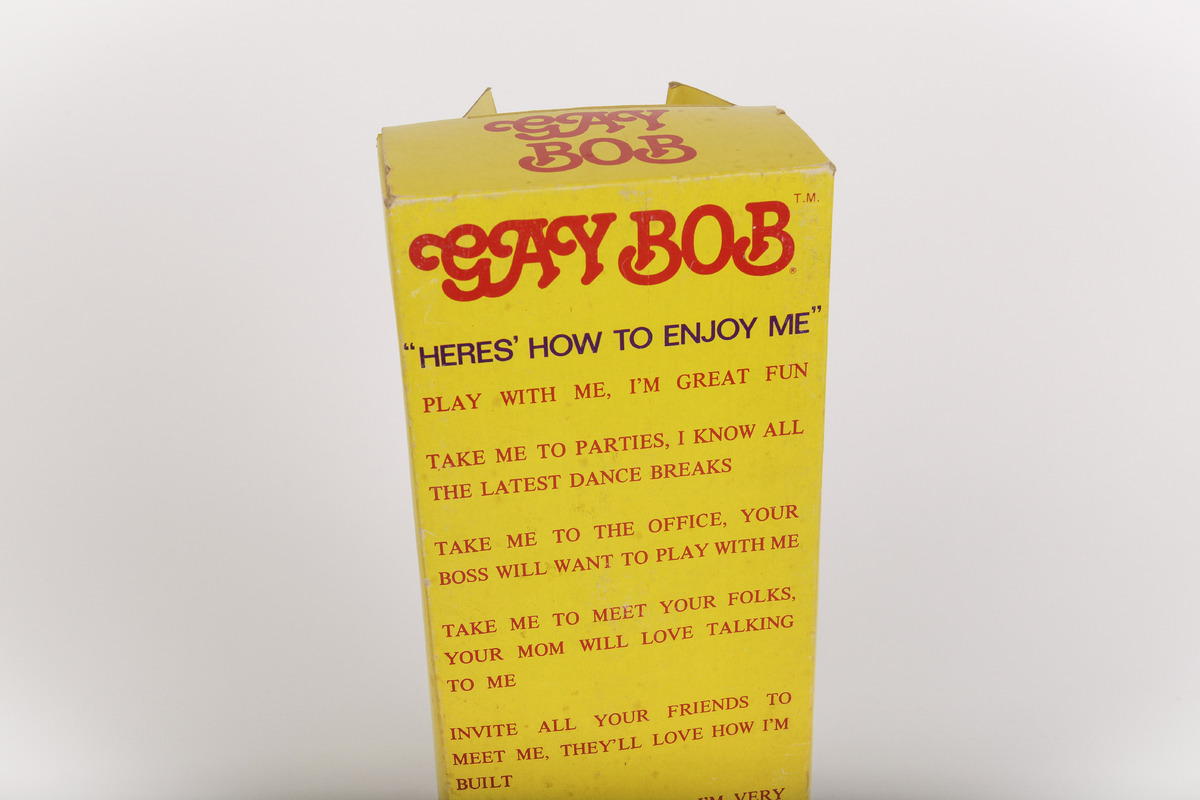
Gay Bob is a doll created in 1977. It was billed as the world’s first openly gay doll. Bob was created by former advertising executive Harvey Rosenberg and marketed through his company, Gizmo Development. Gay Bob was bestowed an Esquire magazine “Dubious Achievement Award” for 1978.

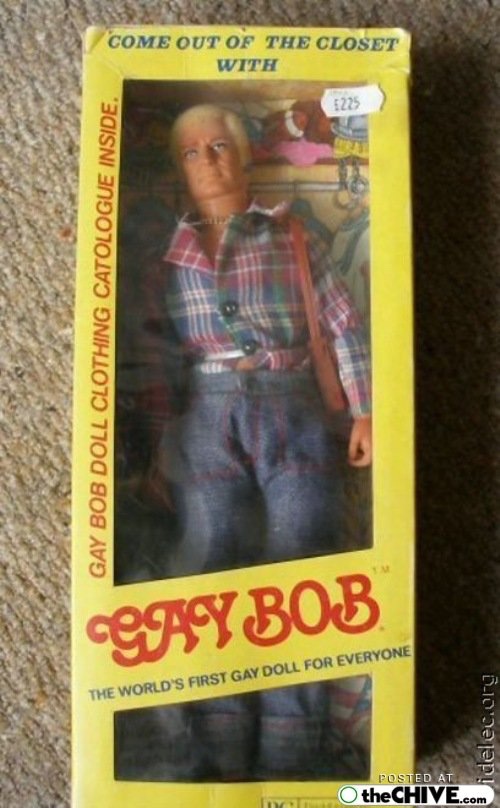
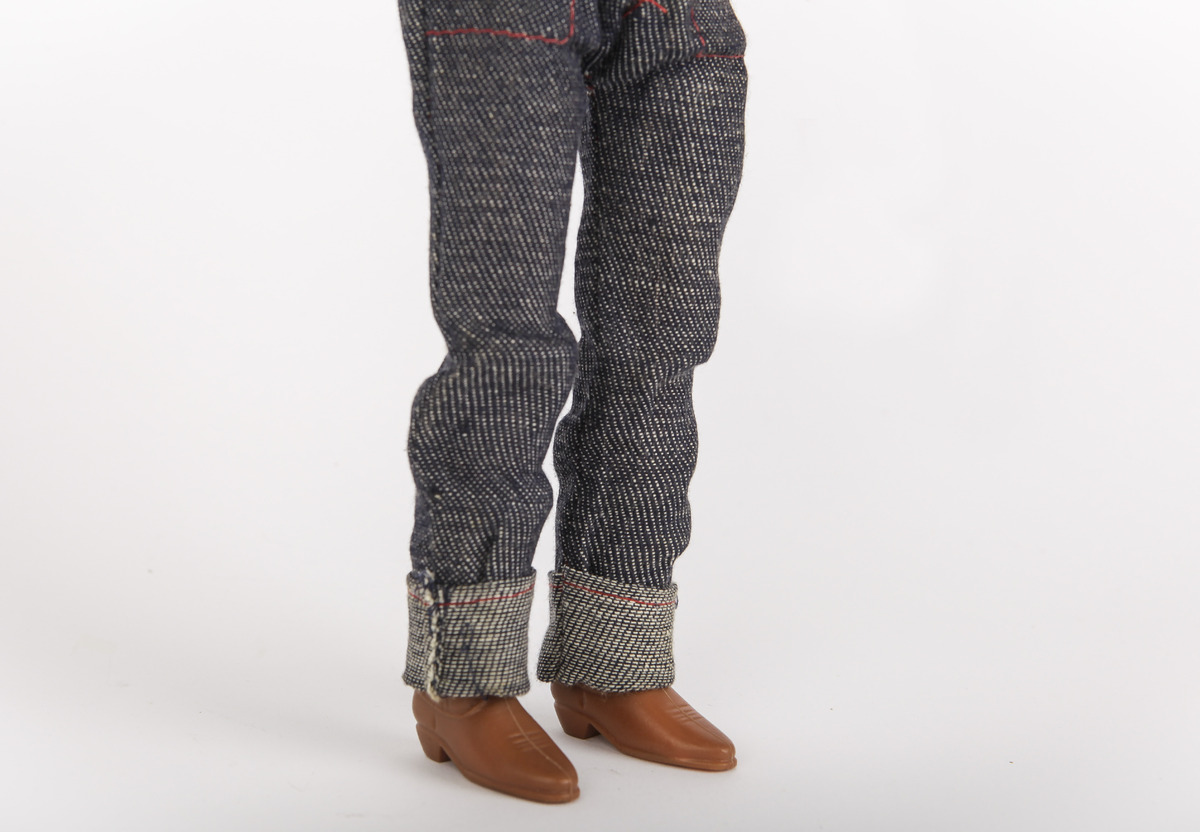
Bob stands 13 inches tall and came wearing a flannel shirt, tight jeans and cowboy boots. He had one ear pierced. Bob’s box was shaped like a closet and included a catalog from which consumers could order additional outfits. Creator Rosenberg described the doll as resembling a cross between Paul Newman and Robert Redford. Bob is anatomically correct.

The Story Behind Gay Bob, the World’s First Out-And-Proud Doll

He debuted in the ’70s, to both acclaim and outrage.

“IT’S ANOTHER EVIDENCE OF THE desperation the homosexual campaign has reached in its effort to put homosexual lifestyle, which is a deathstyle, across to the American people.”

A lobby group called Protect America’s Children made this statement in 1978—about a doll.

That year, the release of Gay Bob, billed as the world’s first openly gay doll, caused a minor sensation. Enraged consumers complained that a toy with a homosexual backstory would lead to other ”disgusting” dolls like “Priscilla the Prostitute” and “Danny the Dope Pusher.” Esquire awarded Gay Bob its “Dubious Achievement Award.” And anti-gay organizations across the United States blustered.

Gay Bob, who was meant to resemble a cross between Robert Redford and Paul Newman, was blond, with a flannel shirt, tight jeans, and one pierced ear. The doll gave anti-gay organizations plenty to fear; intrinsic within it was a celebration of gay identity, evidenced by Gay Bob’s programmed speech. “Gay people,” Bob said, “are no different than straight people… if everyone came ‘out of their closets’ there wouldn’t be so many angry, frustrated, frightened people.”

In a cheeky move, the box in which Gay Bob was packaged came in the outline of a closet, so that when he left his box, he was literally coming out of the closet. Gay Bob explained: “It’s not easy to be honest about what you are — in fact it takes a great deal of courage… But remember if Gay Bob has the courage to come out his closet, so can you.”

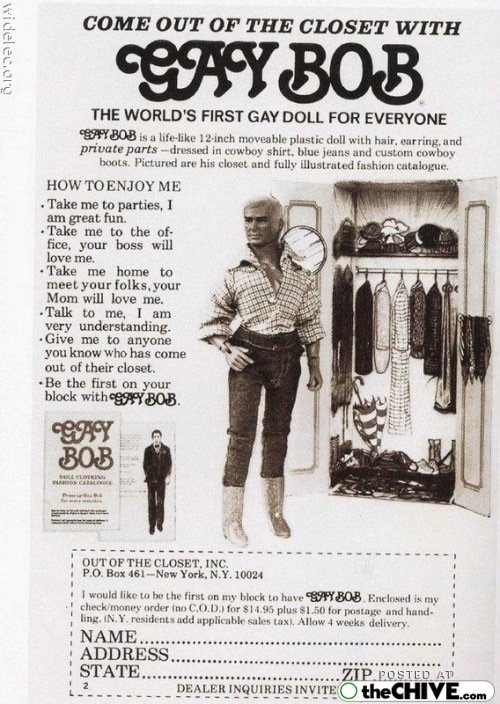
A 1978 advertisement for the Gay Bob Doll (OE Wolf /CC By NB-2.0)

The affirming message was no accident. The doll’s creator, Harvey Rosenberg, a former advertising executive who developed marketing campaigns for various corporations, wanted Gay Bob to “liberate” men from “traditional sexual roles.” He created the doll soon after a series of shocks rocked his life: in quick succession, his marriage fell apart and his mother became seriously ill. He decided that his next projects would need to be of great personal significance.

Though Gay Bob was certainly humorous—the doll was designed to be anatomically correct, and prominent gay activists such as Bruce Voeller told reporters that people should “deal with [the doll] lightly and enjoy it”—Rosenberg’s intentions seem to have been sincere. When asked why he would pour $10,000 of his money into the Gay Bob’s production, he replied, “we had something to learn from the gay movement, just like we did from the black civil rights movement and the women’s movement, and that is having the courage to stand up and say ‘I have a right to be what I am.’”

When Gay Bob hit stores in 1978, that right to be gay and equal was once again under attack, most notably from Anita Bryant, a singer and well-known brand ambassador who mobilized opposition to a Dade County, Florida ordinance that outlawed discrimination on the basis of sexual orientation. Fixating on its impact on public schools, Bryant claimed that the existence of LGBT school teachers would threaten the well-being of local students. “Homosexuals will recruit our children,” she warned. “They will use money, drugs, alcohol, any means to get what they want.” In June 1977, she had the rule repealed, and her anti-gay crusade—which gained widespread media attention—sparked similar ventures in Minnesota, Oregon, Kansas, and California.

Gay Bob, which sold 2,000 copies in its first two months, appeared in the heat of these political battles. It was no real flashpoint of its own, but it served as a humorous trophy—and a sign of changing times—for those fighting against Bryant.

Initially sold through mail-order ads in gay-themed magazines, Gay Bob soon expanded into boutique stores in New York and San Francisco. Rosenberg even pitched it to major department store chains, one of which liked the idea (but ultimately did not purchase it). And, it turns out, those consumers who feared the introduction of more “disgusting” dolls were partially correct—Rosenberg soon gave Gay Bob a family of his own, with brothers Marty Macho, Executive Eddie, Anxious Al, and Straight Steve (who lived in the suburbs and wore blue suits), and sisters Fashionable Fran, Liberated Libby, and Nervous Nelly. 

There is currently one for sale on Ebay for $293.00!

References

Gay History: How ‘Gay’ Came To Mean ‘Homosexual’

The word “gay” seems to have its origins around the 12th century in England, derived from the Old French word ‘gai’, which in turn was probably derived from a Germanic word, though that isn’t completely known.  The word’s original meaning meant something to the effect of “joyful”, “carefree”, “full of mirth”, or “bright and showy”.

However, around the early parts of the 17th century, the word began to be associated with immorality.  By the mid 17th century, according to an Oxford dictionary definition at the time, the meaning of the word had changed to mean  “addicted to pleasures and dissipations.  Often euphemistically: Of loose and immoral life”.  This is an extension of one of the original meanings of “carefree”, meaning more or less uninhibited.

Fast-forward to the 19th century and the word gay referred to a woman who was a prostitute and a gay man was someone who slept with a lot of women (ironically enough), often prostitutes. Also at this time, the phrase “gay it” meant to have sex.

With these new definitions, the original meanings of “carefree”, “joyful”, and “bright and showy” were still around; so the word was not exclusively used to refer to prostitutes or a promiscuous man.  Those were just accepted definitions, along with the other meanings of the word.

Around the 1920s and 1930s, however, the word started to have a new meaning.  In terms of the sexual meaning of the word, a “gay man” no longer just meant a man who had sex with a lot of women, but now started to refer to men who had sex with other men.  There was also another word “gey cat” at this time which meant a homosexual boy.

By 1955, the word gay now officially acquired the new added definition of meaning homosexual males.  Gay men themselves seem to have been behind the driving thrust for this new definition as they felt (and many still do), that “homosexual” is much too clinical, sounding like a disorder.  As such, it was common amongst the gay community to refer to one another as “gay” decades before this was a commonly known definition (reportedly homosexual men were calling one another gay as early as the 1920s).  At this time, homosexual women were referred to as lesbians, not gay.  Although women could still be called gay if they were prostitutes as that meaning had not yet 100% disappeared.

Since then, gay, meaning homosexual male, has steadily driven out all the other definitions that have floated about through time and of course also has gradually begun supplementing the word ‘lesbian’ as referring to women who are homosexual.

While the use of gay did become used in reference to homosexuality it was by far NOT the most common term in use, nor the prefered term prior to about 1970.

In the aftermath of the Stonewall Riots in 1969, The Gay Liberation Front was formed to fight for homosexual rights.

The name chosen by this important early activist group is the main reason gay became the politically correct term instead of any of the many more common terms in use before then.

Bonus Facts:

▪ The abstract noun ‘gaiety’ has somehow largely steered clear of having any sort of sexual connotation as with the word “gay”.  It still keeps its definition as meaning something to the effect of “festive”.

▪ Male homosexuality was illegal in Britain until the Sexual Offenses Act of 1967.  Because even mentioning someone was a homosexual was so offensive at the time in England, people who were thought to be gay were referred to as “sporty” with girls and “artistic” for boys.

▪ Bringing Up Baby in 1938 was the first film to use the word gay to mean homosexual.  Cary Grant, in one scene, ended up having to wear a lady’s feathery robe.  When another character asks about why he is wearing that, he responds an ad-libbed line “Because I just went gay”.  At the time, mainstream audiences didn’t get the reference so the line was thought popularly to have meant something to the effect of “I just decided to be carefree.”

Reference