Monthly Archives: November 2026

Gay History: From Molly Houses to Mary-Anns

The Hidden Gay World of Georgian and Victorian Britain

Long before there were gay bars, gay clubs, Pride marches or even a widely understood concept of a homosexual identity, men who desired other men found one another.

They had meeting places.

They developed slang.

They formed friendships.

They created social networks.

They adopted female names.

Some dressed in women’s clothing.

Some formed relationships resembling marriages.

Some sold sex.

And periodically the authorities discovered them.

The surviving evidence is fragmentary because these men lived in a society in which sex between men could bring prosecution, imprisonment, public disgrace and, during earlier periods, death.

Yet enough evidence survives to reveal something remarkable.

Britain possessed recognisable gay male subcultures centuries before modern gay liberation.

In eighteenth-century London, one of their most famous institutions was the molly house.

By the late nineteenth century, another expression had entered the language:

Mary-Ann.

Between the Molly and the Mary-Ann lies a fascinating history of survival, language and community.

What Was a Molly?

During the eighteenth century, molly became a term associated with men who had sexual relationships with other men, particularly men perceived as effeminate.

Its precise meaning could vary.

It could be affectionate within a community and insulting when used by outsiders.

This is an important feature of gay language that continues into modern times: a word used intimately within a group can become an insult in somebody else’s mouth.

The mollies inhabited a world in which the modern categories of sexual orientation and gender identity had not yet developed.

We should therefore be cautious about simply declaring that every molly was a “gay man” in exactly the modern sense.

Some behaved in ways we would now associate with gay male culture.

Some adopted feminine identities.

Some cross-dressed.

Some may perhaps have understood themselves in ways that today might be associated with transgender or gender-diverse identities.

But imposing twenty-first-century categories upon eighteenth-century people can conceal as much as it reveals.

What we can say is that these were people assigned male who participated in a distinctive subculture centred substantially upon relationships and sex between men.

The Molly House

The molly house was one of the most important institutions of this underground world.

It was not necessarily a brothel.

A molly house might be a tavern, alehouse, coffee house or private room where men could meet one another away from the scrutiny of respectable society.

Some certainly facilitated sexual encounters.

But describing them merely as places for sex misses their wider importance.

Men drank together.

Talked.

Gossiped.

Flirted.

Danced.

Performed.

Adopted feminine names.

And, crucially, encountered other people like themselves.

That last point matters enormously.

A man experiencing desire for other men in isolation might imagine himself uniquely different.

Walking into a room containing numerous other men sharing similar desires transformed that experience.

Whatever terminology they used, they had discovered community.

Mother Clap’s Molly House

The most famous establishment was run by Margaret Clap, generally known as Mother Clap.

Her house in Holborn became one of London’s best-known molly meeting places during the 1720s.

Contemporary accounts suggest that substantial numbers of men visited it.

Mother Clap herself was apparently not merely an indifferent landlady renting a convenient room. Accounts portray her as sympathetic towards her clientele.

That made her establishment particularly dangerous in the eyes of authorities and moral reformers.

Here was a place in which men committing what the law regarded as serious sexual offences could meet safely and openly with one another.

In 1726 the authorities struck.

The house was raided.

Men were arrested.

Mother Clap herself was prosecuted for keeping a disorderly house and sentenced to imprisonment, a fine and the pillory.

Several men caught in the wider crackdown ultimately faced a far more terrible punishment.

They were hanged.

When Gay Sex Could Mean Death

Under English law, the Buggery Act of 1533 had made certain sexual acts capital offences.

The legislation and its successors did not create homosexuality.

Nor did they criminalise a modern identity called “gay.”

They criminalised particular acts.

That distinction matters.

A man was not formally executed simply for experiencing attraction towards another man.

But if authorities could prove the prohibited sexual act, the consequences could be fatal.

Executions for sodomy occurred in England into the nineteenth century.

The last executions of two men for consensual sodomy took place in 1835, when James Pratt and John Smith were hanged at Newgate.

The death penalty for the offence was subsequently removed.

Legal persecution, however, was nowhere near ending.

Female Names

One of the most fascinating features of molly culture was the use of female names.

Men gave one another names that could be affectionate, comic, theatrical or mocking.

This tradition survived long after the original molly houses declined.

Female naming allowed the creation of another identity within the group.

It could be playful.

It could express femininity.

It could parody respectable society.

And it could provide a kind of coded recognition.

More than a century later we encountered exactly the same phenomenon during the Dublin Castle scandal:

The Duchess.

Lady Constance Clyde.

The Maid of Athens.

The terminology had changed.

The impulse had not.

Gay men were creating identities for one another within a world that frequently refused them respectable identities of their own.

Molly Marriages

Even more intriguing were ceremonies sometimes described as molly marriages.

Sources suggest that some mollies imitated or parodied heterosexual marriage ceremonies.

We should be careful not to describe these automatically as eighteenth-century same-sex marriage in the modern legal or political sense.

They carried no legal recognition.

Some may have been comic performances.

Others may have represented genuine emotional relationships.

But their existence is significant.

Long before governments contemplated legally recognising same-sex couples, men attracted to men were already borrowing the rituals and language of marriage to describe relationships among themselves.

The desire to give relationships meaning did not wait for legislation.

Giving Birth

Molly-house culture also contained extraordinary theatrical rituals.

Some accounts describe men pretending to be pregnant and undergoing mock childbirth.

The practice could involve exaggerated performances of femininity and maternity.

To modern readers this can seem bizarre.

But within the culture of the molly house it probably performed several functions.

It created humour.

It strengthened group identity.

It inverted conventional gender roles.

And perhaps most importantly, it created a world temporarily governed by rules different from those operating outside the door.

For a few hours, people whose behaviour society condemned could construct their own social universe.

Raids and Informers

That universe was extremely vulnerable.

The authorities did not simply stumble accidentally upon molly houses.

Moral reform organisations actively sought evidence.

Informers infiltrated gatherings.

Men could be followed.

Undercover witnesses could observe behaviour and later testify.

The resulting prosecutions create one of the great paradoxes of gay history.

The authorities attempted to destroy the subculture.

In doing so, they documented it.

Court records preserve names, meeting places, clothing, slang and social practices that otherwise might have vanished completely.

The persecutors became unwilling archivists.

From Molly to Margery

Language changed during the nineteenth century.

The word molly gradually became less prominent as a common designation for homosexual men.

Other female names appeared.

One was Margery.

Historian Rictor Norton notes that by the early nineteenth century Margery could describe a boy or young man dressed as a woman who sought male partners in places such as the Strand.

Once again femininity, male homosexuality and prostitution overlapped within contemporary terminology. (Rictor Norton)

Eventually another female name became particularly prominent.

Mary-Ann.

Who Was Mary-Ann?

There was no single famous Mary Ann after whom all gay men were supposedly named.

The expression belonged to a much broader linguistic habit of assigning ordinary female names to men regarded as effeminate or homosexual.

By the Victorian period, Mary-Ann could mean an effeminate or homosexual man.

But by the later nineteenth century it acquired a more specific association with male prostitution.

A historical slang dictionary recorded Mary-Ann as a term for a sodomite, while later dictionaries continued to associate the expression with homosexual or effeminate men. (Fimschools)

And then one actual Mary-Ann walked into history.

His name was John Saul.

John Saul: Professional Mary-Ann

John Saul is one of the most extraordinary characters to emerge from Victorian gay history.

Born in Dublin, Saul became involved in male prostitution and moved through the underground homosexual worlds of Dublin and London.

He appears in connection with more than one notorious Victorian homosexual scandal.

Most importantly, Saul was astonishingly candid.

During proceedings connected with the Cleveland Street scandal of 1889, he was asked about his occupation.

Saul described himself as:

“a professional Mary-Ann.”

There could hardly be clearer evidence of what the term could mean by this period. (Rictor Norton)

The Cleveland Street Scandal

Cleveland Street exposed another hidden world.

Police discovered that young male telegraph messengers had been earning money through a male brothel at 19 Cleveland Street in London.

The investigation threatened to implicate men from considerably higher social classes.

Rumours even reached towards the aristocracy and royal circles.

The potential embarrassment was enormous.

Once again the familiar ingredients appeared:

homosexuality,

class,

prostitution,

police,

political influence,

newspapers,

and allegations that powerful people were being protected.

John Saul became an important witness.

And unlike many witnesses dragged unwillingly into Victorian sexual trials, Saul appears remarkably unwilling to apologise for his existence.

Respectability and Class

The world of the Mary-Ann reveals another fundamental aspect of Victorian gay life:

class mattered enormously.

A wealthy man could purchase privacy.

He could maintain respectable appearances.

He could travel.

He could entertain privately.

He could afford lawyers.

A poor man possessed far fewer protections.

Male prostitution consequently created relationships across enormous class divisions.

A working-class youth might encounter a wealthy gentleman who could never publicly acknowledge knowing him.

The relationship contained obvious inequalities.

But the legal system could also produce a strange shared vulnerability.

If discovered, both men might face disgrace.

Yet the poorer man generally had considerably less social protection when that disgrace arrived.

Fanny and Stella

Between the world of the Georgian mollies and the Victorian Mary-Anns stand two wonderfully flamboyant figures:

Frederick Park and Ernest Boulton, better known as Fanny and Stella.

The pair frequently appeared in public wearing women’s clothing.

In 1870 they were arrested after leaving the Strand Theatre.

Their prosecution became a sensation.

Authorities attempted to prove that they had conspired to commit homosexual offences.

The defendants were ultimately acquitted.

Their case demonstrates just how difficult it can be to separate sexuality, gender performance and identity in historical records.

Were Fanny and Stella gay men who enjoyed cross-dressing?

Were their feminine identities more fundamental?

Would either identify as transgender if living today?

We cannot know.

The historical record allows us to describe what they did and how they presented themselves.

It cannot give them modern identities they never had the opportunity to articulate.

Interestingly, Boulton’s own mother was named Mary Ann — an amusing coincidence given the slang meaning the name was acquiring. (The Guardian)

A Language of Survival

Why did this world generate so much slang?

Partly because coded language provides protection.

People whose behaviour is criminalised become extremely good at communicating without outsiders necessarily understanding them.

But slang does more than conceal.

It creates belonging.

Knowing the right word identifies someone as an insider.

Using a feminine nickname for a friend can transform an insult into affection.

Language that outsiders intend to humiliate can be appropriated and turned into something playful.

That process has repeated itself throughout gay history.

From Acts to Identities

Something else was changing during the nineteenth century.

For much of earlier English history, law and society concentrated primarily upon acts.

A man committed sodomy.

A man committed an unnatural offence.

Increasingly during the nineteenth century, doctors, psychologists, sexologists and lawyers began describing a type of person.

Terms such as invert, Uranian and eventually homosexual appeared.

The word homosexual itself was coined in German in the nineteenth century and entered English usage only towards its end.

The conceptual change was enormous.

A prohibited behaviour was gradually becoming an identity.

The modern gay man had not suddenly appeared.

Society had developed a new way of classifying something that had existed all along.

1885: The Net Tightens

Ironically, just as homosexual identity was becoming more recognisable, British law became capable of prosecuting it more effectively.

The Criminal Law Amendment Act 1885 introduced the notorious Labouchere Amendment.

It criminalised “gross indecency” between males.

Unlike the older offence of sodomy, prosecutors no longer needed to establish the same narrowly defined sexual act.

The possibilities for prosecution expanded enormously.

Ten years later, Oscar Wilde would be convicted under this provision.

Privacy became even more essential.

Yet Community Survived

This is perhaps the most striking continuity between the molly houses and the Mary-Anns.

Repression repeatedly changed the shape of gay life.

It did not eliminate it.

Close one meeting place and another appeared.

Arrest one group and another formed.

Language changed.

Meeting places moved.

People became more secretive.

But men continued finding other men.

From Mother Clap’s house in the 1720s to John Saul walking the streets of Victorian London more than 150 years later, an underground social history continued beneath the official one.

From Molly to Mary-Ann

The terminology tells its own story.

Molly belonged particularly to the Georgian world.

Margery appeared during the transition into the nineteenth century.

Mary-Ann became associated with the Victorian homosexual world and particularly with men selling sex.

Later came other terms.

Some were insults.

Some were medical diagnoses.

Some were reclaimed.

Eventually gay would become one of the principal words through which homosexual men described themselves.

But the names changed more rapidly than the human need behind them.

People wanted companionship.

They wanted sex.

They wanted love.

They wanted somewhere to meet.

They wanted to laugh.

They wanted to belong.

And when respectable society refused to provide that space, they made spaces of their own.

The Thread Through History

There is a temptation to imagine modern gay community beginning with twentieth-century liberation movements.

Those movements were enormously important.

But community itself is much older.

The molly houses demonstrate it.

Fanny and Stella demonstrate it.

The Dublin Castle circle demonstrates it.

John Saul demonstrates it.

Again and again, historical records reveal men discovering one another and constructing communities beneath the surface of respectable society.

Sometimes the evidence survives only because police raided them.

Sometimes because newspapers exposed them.

Sometimes because courts prosecuted them.

The archive therefore gives us a distorted view.

We disproportionately encounter these people at the moment something went wrong.

We see the raid rather than the hundred peaceful evenings that preceded it.

We see the prosecution rather than the friendship.

We see the scandal rather than ordinary life.

Yet if we look carefully enough, ordinary life remains visible between the lines.

A nickname.

A party.

A tavern.

A dress.

A friendship.

A lover.

A room where, temporarily, nobody needed to pretend.

From the Molly Houses to the Mary-Anns, the names changed.

The laws changed.

The cities changed.

But one thing stubbornly refused to disappear:

gay people finding one another.

Tim Alderman ©️2026

Sources and Further Reading

Rictor Norton, Mother Clap’s Molly House: The Gay Subculture in England 1700–1830.

Rictor Norton, “Maiden Names and Little Sports: The Gay Subculture in Georgian England.” (Rictor Norton)

Rictor Norton, “The Mary-Anns of London, 1867–68.” (Rictor Norton)

H. G. Cocks, Nameless Offences: Homosexual Desire in the 19th Century.

Morris B. Kaplan, Sodom on the Thames: Sex, Love, and Scandal in Wilde Times.

Neil McKenna, Fanny and Stella: The Young Men Who Shocked Victorian England.

Jonathan Coleman, Rent: Same-Sex Prostitution in Modern Britain, 1885–1957.

Matt Houlbrook, Queer London: Perils and Pleasures in the Sexual Metropolis, 1918–1957.

Historical slang dictionaries, including J. S. Farmer and W. E. Henley, Slang and Its Analogues Past and Present. (Wikimedia Commons)
The Irish Crown Jewels

The Great Dublin Castle Mystery of 1907

On 6 July 1907, Dublin Castle discovered that it had a problem.

A very large problem.

The ceremonial jewels belonging to the Order of St Patrick, supposedly secured inside a safe in the heart of the administrative headquarters of British government in Ireland, had disappeared.

There was no smashed safe.

No broken lock.

No masked burglar had been seen climbing through a window.

Nobody even knew precisely when the jewels had been stolen.

And King Edward VII was due to arrive in Ireland only days later.

It was an almost perfect recipe for scandal.

The jewels have never been recovered.

No one has ever been convicted of stealing them.

More than a century later, we still do not know with certainty who took the so-called Irish Crown Jewels.

But there were suspects.

And one name has stubbornly refused to disappear:

Francis Richard Shackleton.

He was the younger brother of the considerably more respectable Antarctic explorer Ernest Shackleton.

And Francis was about to embark upon an adventure of a very different kind.

First Problem: They Weren’t Actually Crown Jewels

The famous name is slightly misleading.

There was no Irish crown among them.

The objects were ceremonial regalia associated with the Most Illustrious Order of St Patrick, an order of chivalry established by George III in 1783.

It performed for Ireland something broadly comparable to the Order of the Garter in England and the Order of the Thistle in Scotland.

The spectacular insignia included a jewelled star and badge incorporating diamonds, rubies and emeralds.

They were Crown property and were worn ceremonially by the Lord Lieutenant of Ireland as Grand Master of the Order.

Calling them the “Irish Crown Jewels” was irresistible to newspapers.

The name stuck.

Meet the Man Who Was Supposed to Guard Them

Responsibility for the regalia rested with Sir Arthur Vicars, Ulster King of Arms.

This splendidly medieval-sounding office was actually extremely important.

Vicars headed the Office of Arms at Dublin Castle and was responsible for heraldry, genealogy and ceremonial matters.

Unfortunately, Sir Arthur appears to have possessed a somewhat relaxed interpretation of security.

The jewels were kept in a safe in the Bedford Tower.

They were originally intended to be kept in a strongroom.

There was, however, an embarrassing practical problem.

The safe purchased for them was too large to fit through the strongroom doorway.

Consequently, it remained outside it.

This was not an encouraging beginning.

Security, Dublin Castle Style

Things became worse.

Several people possessed keys allowing access to the Bedford Tower.

Vicars retained the safe keys himself.

But the atmosphere surrounding the Office of Arms seems to have been remarkably informal considering the valuables stored there.

Vicars sometimes displayed the jewels to visitors.

And Dublin Castle’s own historical account records an astonishing incident.

At a party, while Vicars was intoxicated, Lord Haddo — the Lord Lieutenant’s son — took a safe key, removed the jewels as a prank and subsequently returned them to Vicars through the post.

That should probably have resulted in an immediate reassessment of security.

Apparently it didn’t.

The prank demonstrated something extremely important.

Someone familiar with Vicars could obtain his key.

Someone familiar with the Castle could reach the safe.

And someone could remove the jewels without breaking anything.

The Last Sighting

The last confirmed sighting of the jewels was on 11 June 1907.

Vicars showed them to a visitor.

Then came a series of warning signs.

On 3 July, an entrance door was reportedly found unlocked.

On the morning of 6 July, the strongroom door was found open.

Still, the alarm was not immediately raised.

Later that afternoon Vicars instructed a messenger to place another insignia into the safe.

The safe was opened.

The jewels weren’t there.

Neither was some jewellery belonging to Vicars’s mother that had also been stored inside.

Nobody could even establish exactly when the theft had occurred.

The Irish Crown Jewels might have been missing for weeks.

Four Days Until the King Arrived

The timing could hardly have been worse.

King Edward VII and Queen Alexandra were expected in Ireland on 10 July.

The King was furious.

The missing regalia represented considerably more than expensive jewellery.

They belonged to an institution closely associated with Crown authority in Ireland.

And they had vanished from Dublin Castle.

The administrative headquarters of British government in Ireland could apparently police a country but couldn’t reliably police its own safe.

Nationalist critics could scarcely have invented a better embarrassment.

Scotland Yard Arrives

The Dublin Metropolitan Police investigated.

The Royal Irish Constabulary became involved.

Then Scotland Yard entered the case.

Detective Chief Inspector John Kane was sent from London.

The physical evidence suggested an obvious possibility:

this looked like an inside job.

The safe had not simply been violently forced.

Whoever took the jewels apparently knew how to gain access.

That sharply reduced the interesting part of the suspect pool.

Attention inevitably turned towards people associated with the Office of Arms.

And among them was Francis Shackleton.

The Other Shackleton

Francis Richard Shackleton was born in Ireland in 1876.

His older brother Ernest would become one of the most celebrated figures of Antarctic exploration.

Francis followed a very different trajectory.

He moved within respectable social circles and developed an interest in heraldry and genealogy.

Sir Arthur Vicars helped him obtain appointment as Dublin Herald in 1905.

That placed Shackleton inside Vicars’s Office of Arms.

He knew the environment.

He knew Vicars.

He had access to the Castle.

And there was another difficulty.

Francis needed money.

Shackleton’s Finances

Francis Shackleton lived considerably beyond his means.

Financial problems would follow him spectacularly through life.

By 1910 he would be declared bankrupt owing almost £85,000, an enormous amount of money.

Later he became involved in financial fraud.

In 1913 he was convicted at the Old Bailey of fraudulently converting money entrusted to him and sentenced to fifteen months’ hard labour.

None of this proves that he stole the Irish Crown Jewels in 1907.

That point cannot be emphasised strongly enough.

A person who subsequently commits fraud does not automatically become guilty of an earlier theft.

But investigators looking for motive could hardly ignore his financial circumstances.

Shackleton knew the Castle.

He knew Vicars.

He knew the Office of Arms.

He needed money.

The suspicion was inevitable.

There Was One Rather Large Problem

Shackleton apparently wasn’t in Dublin when the theft was most likely to have occurred.

That complicates the neat solution considerably.

If Francis Shackleton was involved, therefore, one possibility is that he did not personally remove the jewels.

Perhaps he organised the theft.

Perhaps someone else carried it out.

Or perhaps he had absolutely nothing to do with it.

This is where historical fact begins dissolving into theory.

Enter Captain Richard Gorges

Another name repeatedly associated with the mystery was Captain Richard Gorges, an associate of Shackleton.

Later allegations proposed that Shackleton masterminded the theft while Gorges physically removed the jewels.

The theory gained additional potency because both men moved within social circles capable of producing another kind of scandal.

Francis Shackleton was gay.

At a time when sexual activity between men was criminal, that fact made him vulnerable.

And it also encouraged generations of writers to construct increasingly elaborate conspiracy theories around the theft.

The Ghost of 1884

Here our previous Dublin Castle scandal suddenly returns.

Only twenty-three years earlier, Dublin Castle had been rocked by allegations involving homosexual men, officials, police and accusations of concealment.

The authorities knew exactly how destructive another homosexual scandal involving people associated with the Castle could become.

Rumours consequently developed that Shackleton possessed embarrassing knowledge about important men.

One theory proposed that officials avoided prosecuting him because he could expose homosexual relationships involving members of the establishment.

It is a wonderful conspiracy theory.

There is just one problem.

We cannot prove it.

The distinction between plausible suspicion and established evidence is essential throughout this story.

Sir Arthur Points the Finger

Sir Arthur Vicars became absolutely convinced that Francis Shackleton was responsible.

He maintained the accusation for the remainder of his life.

In his will, written years later, Vicars claimed that he had been made a scapegoat while authorities protected the real thief.

He named that thief explicitly:

Francis R. Shackleton.

That is powerful evidence of what Vicars believed.

It is not proof that Vicars was correct.

The Commission

A Viceregal Commission investigated the affair in 1908.

Vicars wanted a much broader inquiry into the theft itself.

Instead, the Commission concentrated heavily upon his responsibility for the inadequate security arrangements.

Its conclusion was devastating.

Vicars had failed to exercise proper care over the jewels entrusted to him.

He lost his position.

Shackleton also left his position as Dublin Herald.

Yet the central question remained unanswered.

Who stole the jewels?

Parliament Starts Asking Awkward Questions

The mystery refused to disappear.

Irish nationalist MP Laurence Ginnell repeatedly questioned ministers at Westminster about the investigation.

Years after the theft, Parliament was still discussing Shackleton, access to the Castle, keys and supposedly confidential police reports.

In 1912, Ginnell explicitly asked whether prosecutors knew that Shackleton had access to the room containing the jewels and whether allegations existed that he had boasted that other people would be compromised if he were prosecuted.

The Attorney-General refused substantive comment because Shackleton was then facing unrelated criminal proceedings.

In January 1913, the government acknowledged something revealing.

Police had investigated the jewel theft.

But they had found no evidence sufficient to justify bringing a criminal charge against anyone.

That remains enormously important.

Suspicion is not evidence.

And suspicion never became prosecution.

What Happened to the Jewels?

Now we reach the really tantalising question.

Even if we cannot identify the thief, surely a spectacular collection of diamonds, emeralds and rubies would eventually reappear?

Apparently not.

One obvious theory is depressing:

they were broken up.

If the thief wanted money rather than trophies, keeping historically identifiable royal regalia would have been extraordinarily dangerous.

The stones could be removed.

Metal could be melted.

Individual gems could enter the international jewellery trade.

One contemporary theory suggested that the jewels had been taken to the Continent and dismantled.

Amsterdam, an important centre of the diamond trade, appears repeatedly in versions of the story.

But again:

no definitive evidence establishes that this happened.

The Nationalists Did It!

Another theory blamed Irish republicans or nationalists.

The political symbolism would certainly have been spectacular.

Stealing royal regalia from inside Dublin Castle would have constituted an extraordinary humiliation of British authority.

But investigators never established such a plot.

The theory has persisted partly because it makes such a satisfying story.

History unfortunately does not have to provide satisfying endings.

The Unionists Did It!

Naturally, if Irish nationalists could be blamed, someone eventually blamed their opponents.

Another theory proposed that Unionists arranged the disappearance for political reasons connected with opposition to Home Rule.

Again, evidence is lacking.

By this stage our jewellery box is becoming rather crowded with conspiracy theories.

Perhaps the Royal Family Has Them

One particularly colourful theory suggested that the stones somehow returned to royal possession and were subsequently incorporated into other jewellery.

Dublin Castle’s own historical account notes that a theory developed claiming that stones from the missing regalia appeared in a badge worn by Queen Elizabeth II.

Buckingham Palace disputed the claim.

There is no persuasive evidence supporting it.

So we probably shouldn’t frisk the Royal Collection just yet.

Then Came the Clairvoyants

No great unsolved mystery is complete without somebody consulting the supernatural.

Spiritualists became involved.

A séance reportedly produced information suggesting that the jewels were hidden in a cemetery near Dublin.

A search followed.

No Crown Jewels emerged.

One imagines Sir Arthur Vicars’s patience deteriorating considerably by this point.

Police had failed.

Scotland Yard had failed.

A Commission had failed.

And now the dead weren’t being particularly helpful either.

A Possible Later Lead

Years later, jeweller James Weldon reportedly received information purporting to reveal where the jewels could be found.

Dublin Castle’s account records that Weldon identified a man he met concerning the affair as Shackleton.

Nothing came of it.

Approximately twenty years later, another communication reached Weldon and eventually came to the attention of Irish leader W. T. Cosgrave.

Still the jewels remained missing.

Every promising trail seems to end the same way.

Nothing.

Francis Shackleton’s Later Career Does Him No Favours

Unfortunately for Francis, his subsequent life makes defending his reputation rather difficult.

His enormous bankruptcy was followed by flight abroad.

In 1912 he was arrested in Portuguese West Africa over unrelated fraud allegations and returned to Britain.

In October 1913 he was convicted at the Old Bailey of fraudulent conversion.

After prison, he adopted the surname Mellor.

His brother Ernest apparently helped him obtain employment.

Francis lived until 1941.

He never confessed to stealing the Irish Crown Jewels.

Nor was he ever prosecuted for doing so.

And Vicars Met a Terrible End

Sir Arthur Vicars’s story ended tragically.

After losing his Castle position, he eventually settled at Kilmorna House in County Kerry.

During the Irish War of Independence, IRA members took him from his home.

In April 1921 he was shot dead.

A notice left with his body accused him of informing.

Thus one of the central figures in the Crown Jewels mystery died violently without ever seeing his name publicly vindicated.

He remained convinced until the end that Shackleton had ruined him.

So Who Did It?

If we construct the case like detectives, several things seem reasonably clear.

The thief probably possessed considerable familiarity with Dublin Castle.

Access appears to have been achieved without obvious violent entry.

The security surrounding the jewels was astonishingly poor.

Several people within the Castle circle potentially possessed the knowledge necessary to obtain them.

Francis Shackleton had access, financial difficulties and a close relationship with Vicars.

But Shackleton also appears to have been away when the theft itself probably occurred.

No physical evidence connected him with the stolen jewels.

No confession emerged.

No jewels were discovered in his possession.

And no criminal charge concerning the theft was ever brought against him.

Therefore the responsible historical verdict remains:

Francis Shackleton is a compelling suspect, not a proven thief.

The Perfect Crime?

There is something almost comical about the whole affair.

The headquarters of British administration in Ireland contained ceremonial jewels representing British authority.

Someone apparently walked into the relevant offices, opened the safe, removed them and disappeared.

Officials did not immediately notice.

The precise date of the crime could not be established.

The investigation became entangled with personal rivalries, sexuality, political embarrassment and accusations of conspiracy.

The official responsible for security was dismissed.

The principal suspect was never charged.

The jewels vanished.

And more than a century later, nobody knows where they went.

If the thief’s intention was to embarrass Dublin Castle, the operation succeeded magnificently.

Our Verdict

So have we recovered them?

Sadly, no.

Coco Chanel appears to have an excellent alibi. 😄

My own evidence-based suspicion would remain with an inside job or an operation involving someone intimately familiar with the Office of Arms. Shackleton belongs near the top of the suspect list, but the evidence simply doesn’t permit us to write “Francis Shackleton stole the Crown Jewels” as historical fact.

Perhaps the most likely fate of the jewels is also the least romantic.

They may no longer exist.

The settings could have been destroyed, the precious metals melted and the stones recut and sold individually.

If so, some of those diamonds, rubies or emeralds may still exist today.

They could have passed through dozens of owners.

They might be sitting in a jewellery box somewhere in London, Paris, Dublin or Amsterdam.

Their present owner might have absolutely no idea.

The Irish Crown Jewels could therefore have been hidden for more than a century in the most ingenious place imaginable:

in plain sight.

Tim Alderman ©️2026

Sources and Further Reading

Dublin Castle, “The Theft of the Irish Crown Jewels.”

Dictionary of Irish Biography, “Shackleton, Francis Richard (‘Frank’).”

UK Parliament, Hansard, parliamentary questions concerning the Dublin Castle Crown Jewels, 1912–1913.

History Ireland, “The Theft of the Irish Crown Jewels, 1907.”

Contemporary and later reporting in The Irish Times concerning the theft and subsequent allegations.

Reports of the 1908 Viceregal Commission into the custody and disappearance of the regalia.

Gay History: The Dublin Castle Scandal of 1884

Sex, Politics and the “Unspeakable Crime”

Victorian Britain and Ireland possessed an extraordinary talent for creating scandals out of things respectable society insisted did not exist.

In Dublin in 1884, that contradiction exploded spectacularly.

What began as a political attack upon a senior police official developed into allegations of sex between men, a libel action, police investigations, criminal prosecutions and sensational newspaper coverage.

Prominent officials were accused.

Private detectives hunted for witnesses.

Men were pressured into giving evidence against former friends and sexual partners.

Courtrooms heard details that newspapers sometimes considered too indecent to print.

And behind the entire affair stood one enormously important institution:

Dublin Castle.

The resulting controversy became known as the Dublin Castle Scandal of 1884.

But describing it simply as a homosexual scandal misses much of its significance.

It was simultaneously a sex scandal, political battle, police scandal and extraordinary accidental record of gay life in Victorian Dublin.

And the men exposed by it paid vastly different prices.

Ireland in the 1880s

The scandal cannot be understood without its political setting.

Ireland remained part of the United Kingdom and was administered through Dublin Castle.

Irish nationalism was growing rapidly.

The Land War had intensified conflict between landlords and tenants.

Home Rule had become a major political issue.

Nationalist politicians and journalists regarded Dublin Castle as the administrative machinery of British rule and were eager to expose corruption or hypocrisy within it.

One of the most formidable nationalist journalists was William O’Brien, editor of the newspaper United Ireland.

O’Brien was not investigating homosexuality out of an early concern for gay rights.

Quite the opposite.

The sexual behaviour of government officials offered him a potentially devastating political weapon.

In Victorian society, accusing a man of homosexual activity could destroy him.

O’Brien was prepared to use that fact against the Castle establishment.

Enter James Ellis French

The first major target was James Ellis French, a senior figure in the Royal Irish Constabulary who had served as Director of Detectives.

In late 1883, United Ireland published material implying that French was involved sexually with other men.

This was explosive.

French wasn’t simply a private citizen.

He was associated with the machinery responsible for enforcing law and maintaining British authority in Ireland.

And sex between men was itself criminal.

French responded in the manner expected of a respectable Victorian gentleman whose reputation had been publicly attacked:

he sued for libel.

It was a dangerous decision.

A libel action meant the allegations could be investigated publicly.

And O’Brien needed evidence.

A Rather Dubious Detective

O’Brien employed John Meiklejohn, a former Scotland Yard detective with a decidedly colourful history, to investigate.

Meiklejohn began exploring Dublin’s underground gay world.

What emerged was considerably larger than one allegedly compromised police official.

There appeared to be a network of men from remarkably different social backgrounds who met one another socially and sexually.

Officials.

Soldiers.

Businessmen.

Clerks.

Professional men.

Men who sold sex.

The investigation eventually drew another extremely prominent name into the controversy:

Gustavus Cornwall, Secretary of the General Post Office in Ireland.

Cornwall had enjoyed a long and distinguished public career.

Within the gay circle revealed by the investigation, however, testimony suggested that he possessed another identity.

He was reportedly known as:

“The Duchess.”

The Victorian scandal was beginning to acquire characters worthy of a novel.

The Duchess Goes to Court

French’s legal action ultimately collapsed amid his deteriorating health and the evidence gathering around him.

Cornwall, however, decided to fight.

He sued O’Brien and United Ireland for libel.

The case reached the Four Courts in Dublin in July 1884.

For Cornwall, the stakes were enormous.

Winning could restore his reputation.

Losing could effectively establish in the public mind that the newspaper had grounds for its allegations.

O’Brien’s defence produced witnesses who testified about sexual encounters with Cornwall.

The libel action failed.

But an important distinction must be made here.

Losing a libel action was not the same thing as being convicted of a criminal sexual offence.

That distinction would become extremely important later.

Nevertheless, the collapse of Cornwall’s libel case opened the gates.

The authorities began criminal prosecutions.

Cornwall, French and six other men became caught in the affair. All eight were at one stage held at Kilmainham Gaol while facing proceedings. (Heritage Ireland)

Dublin’s Hidden Gay World Appears

Then something historically remarkable happened.

Men began giving evidence.

And through their testimony, a world normally almost invisible in official historical records appeared.

Gay men knew one another.

They possessed meeting places.

They used nicknames.

They met in private houses.

They encountered one another in public spaces.

Some dressed in women’s clothing at social gatherings.

Some relationships crossed social-class boundaries.

The trials intended to prosecute homosexuality inadvertently documented gay community.

Heritage Ireland notes encounters associated with places including the Botanic Gardens at Glasnevin, public urinals beneath the Thomas Moore statue and lanes behind the Queen’s Theatre.

There were also private gatherings.

And one in particular sounds remarkably familiar to anyone acquainted with later gay social history. (Heritage Ireland)

Lady Constance Clyde Throws a Party

One of the most revealing witnesses was Malcolm Johnston, the son of a prosperous Dublin businessman.

Johnston was known within the circle by names including:

“Lady Constance Clyde”

or simply

“Connie.”

He described holding a party at his family’s home in Clyde Road, Ballsbridge, while his father was away.

The guests were male.

A number wore women’s clothing.

According to Johnston’s evidence, among those present were two clergymen — one Catholic and one Church of Ireland.

Other men possessed similarly theatrical names.

Cornwall was “The Duchess.”

George Taylor was “The Maid of Athens.”

James Pillar was known as “Pa” or “Papa.”

These details are extraordinarily valuable.

The men were not merely engaging in isolated anonymous sexual encounters.

At least some appear to have formed social networks with their own names, humour and conventions. (Heritage Ireland)

For historians of gay life, that changes the nature of the story completely.

Before “Gay” Meant Gay

Naturally, these men did not generally describe themselves using the modern identity category gay.

Sexual identities and terminology were different.

Victorian law and newspapers instead used terms such as “sodomy,” “unnatural offence,” “indecency” and the wonderfully evasive:

“unspeakable crime.”

But we should not allow Victorian euphemisms to erase what the evidence shows.

Men attracted to men were finding one another.

They were creating social networks.

They developed meeting places and private spaces.

They adopted camp or feminine identities and nicknames.

Some cross-dressed.

In other words, homosexual behaviour existed alongside something resembling a recognisable gay subculture, even though its participants did not possess our modern vocabulary for describing it.

The Problem of the Evidence

Here, however, we encounter a major historical difficulty.

The testimony cannot simply be accepted uncritically.

Witnesses were operating under enormous pressure.

Some had reasons to protect themselves.

Others had been approached and pressured by Meiklejohn.

Giving evidence against another man could potentially save the witness from prosecution.

Reputations, careers and liberty were at stake.

Even contemporary juries sometimes found the evidence inadequate.

Consequently, the scandal must be reconstructed carefully.

The trials reveal that a gay network existed.

They do not necessarily prove every allegation made against every individual.

That distinction matters enormously when writing about people who can no longer defend themselves.

James Pillar

Among the men caught in the scandal was James Pillar, a married Quaker grocer and wine merchant.

His premises at Lower Rathmines Road had become an important meeting place within the circle.

Pillar was in his sixties and had a wife and children.

His name appeared repeatedly during the proceedings.

Eventually he pleaded guilty to one charge of sodomy.

His punishment was savage:

twenty years’ penal servitude.

He appears to have suffered more severely than any of the principal defendants.

Ill health eventually resulted in his release on licence in 1894.

A sexual life that had remained largely concealed had resulted in the destruction of his public existence. (National Archives)

Others Faced Trial

The prosecutions produced mixed results.

Some defendants were convicted.

Others were acquitted because evidence was insufficient or inadequately corroborated.

Two men, Fowler and Considine, were convicted of keeping disorderly houses and received two-year prison sentences.

Surgeon-Major Fernandez was acquitted.

Captain Martin Kirwan was also ultimately acquitted.

Cornwall faced criminal prosecution but was acquitted.

The jury in one proceeding explicitly stated that the Crown’s evidence was insufficient. (rictornorton.co.uk)

Yet acquittal did not restore what scandal had destroyed.

The Duchess Loses Everything Anyway

Gustavus Cornwall survived the criminal courts without a conviction.

But socially and professionally, he was ruined.

He lost his position at the General Post Office.

After more than forty years of public service, he was denied his pension.

The distinction is revealing.

The criminal law had failed to establish his guilt beyond the necessary standard.

Victorian respectability required no such standard.

Suspicion was enough.

The accusation itself could become punishment. (rictornorton.co.uk)

French Finally Faces the Court

James Ellis French’s case became complicated by questions concerning his mental condition and fitness to plead.

Eventually, in December 1884, French was convicted on a count of conspiracy to procure persons to commit immoral practices.

He received two years’ imprisonment with hard labour, calculated from the time of his arrest.

The former senior detective had become a prisoner of the same legal system he had once helped administer. (rictornorton.co.uk)

The symbolism was irresistible to Dublin Castle’s nationalist enemies.

Homosexuality as a Political Weapon

This is one of the uncomfortable aspects of the affair.

The exposure of gay men served a political purpose.

Irish nationalists could portray Dublin Castle as morally corrupt.

The allegation was essentially:

Look at the people Britain has governing Ireland.

Homosexuality became evidence of supposed political as well as personal degeneracy.

That means we should be cautious about celebrating the journalists who exposed the scandal simply because they challenged British authority.

Their political campaign came at the expense of men whose sexual lives could result in imprisonment and social destruction.

Two things can simultaneously be true:

Dublin Castle deserved political scrutiny.

And gay men’s vulnerability under Victorian law was being exploited.

A Window Opened — Then Slammed Shut

The greatest historical irony is that prosecution preserved evidence that secrecy would otherwise have destroyed.

Without the scandal, we might know almost nothing about this particular Dublin gay network.

Court testimony preserved names.

Nicknames.

Meeting places.

Relationships.

Parties.

Cross-dressing.

Sexual encounters.

Friendships.

The legal system attempted to eradicate homosexual behaviour.

Instead, its paperwork preserved evidence that homosexual people had created a social world.

Heritage Ireland makes essentially this point: without the trials, the extent of gay life in 1880s Dublin might have remained completely unknown. (Heritage Ireland)

The Chilling Effect

But exposure almost certainly carried consequences beyond the defendants.

Imagine belonging to that social world while reading the newspapers.

Friends were appearing in court.

Meeting places were being identified.

Nicknames were being published.

Police were investigating.

Men were informing upon other men.

People were going to prison.

The rational response was obvious:

disappear.

Destroy letters.

Avoid familiar meeting places.

Stop trusting acquaintances.

Keep your private life even more private.

We cannot easily measure how dramatically the scandal affected Dublin’s gay community, precisely because successful secrecy leaves very little historical evidence.

Eleven Years Before Oscar Wilde

There is another haunting aspect of the chronology.

The Dublin scandal occurred in 1884.

Oscar Wilde’s trials occurred in 1895.

The worlds are not identical, and we should resist drawing a simple straight line between them.

But the similarities are impossible to miss.

A respected man.

Rumours concerning homosexuality.

A disastrous decision to use the courts to defend reputation.

Private sexual behaviour becoming public testimony.

Newspapers transforming proceedings into spectacle.

And finally social destruction.

Victorian respectability could survive private hypocrisy.

What it could not survive was public exposure.

The Law Was About to Become Worse

At the time of the Dublin scandal, prosecution for sodomy generally required evidence relating to specific sexual acts.

That evidentiary difficulty could make convictions difficult.

In 1885, Parliament passed the Criminal Law Amendment Act.

Its notorious Labouchere Amendment created the offence of “gross indecency” between males.

The new offence dramatically expanded the legal possibilities for prosecuting sexual behaviour between men.

Ten years later, it would help send Oscar Wilde to prison.

The Dublin scandal therefore sits immediately before an important tightening of Britain’s legal persecution of homosexual men.

Some historians have suggested that the scandal contributed to the political environment in which the amendment emerged, although it would be too strong to claim that Dublin alone caused the legislation.

What the Scandal Really Revealed

Victorian newspapers presented the affair as evidence of depravity.

Irish nationalists presented it as evidence of corruption within British administration.

Police treated it as evidence of criminal activity.

But from our vantage point, the evidence reveals something else.

Gay men existed.

Not merely isolated individuals secretly believing themselves unique.

They found one another.

They created networks.

They gave one another nicknames.

They gathered socially.

Some dressed as women.

They developed meeting places.

They formed relationships across social boundaries.

And they did all this in a society whose laws threatened them with imprisonment and whose newspapers could destroy them merely by publishing their names.

The Real Scandal

That leaves us with an interesting question.

What, precisely, was scandalous about the Dublin Castle Scandal?

To Victorian society, the answer was obvious.

Men were having sex with men.

But history allows another interpretation.

Perhaps the greater scandal was that private consensual behaviour could destroy careers and families.

That men could be pressured into informing upon their friends.

That newspapers could weaponise sexuality for political purposes.

That acquittal could still mean ruin.

And that a man such as James Pillar could receive twenty years’ penal servitude for sexual conduct between men.

The Dublin Castle Scandal was supposed to expose an “unspeakable crime.”

Instead, nearly a century and a half later, it exposes the society that called it one.

And in doing so, those Victorian courtrooms inadvertently gave voices back to a group of gay Dubliners whom history might otherwise have forgotten.

The Duchess.

The Maid of Athens.

Lady Constance Clyde.

Pa.

They were supposed to disappear in disgrace.

Instead, remarkably, fragments of their world survived.

And that last aspect is the bit I find irresistible. The authorities were trying to document a crime; without meaning to, they documented a community. The cross-dressing party with a Catholic and a Church of Ireland clergyman attending is an absolute gem of social history.

Next we get an entirely different sort of scandal. 1907: the Irish Crown Jewels are sitting in a safe inside the administrative headquarters of British rule…and then somebody discovers they aren’t.

Enter Francis Shackleton.

Tim Alrerman ©️2026

Dublin Castle: When a Castle Was a Government

For centuries, two words could carry enormous political weight in Ireland:

Dublin Castle

“The Castle.”

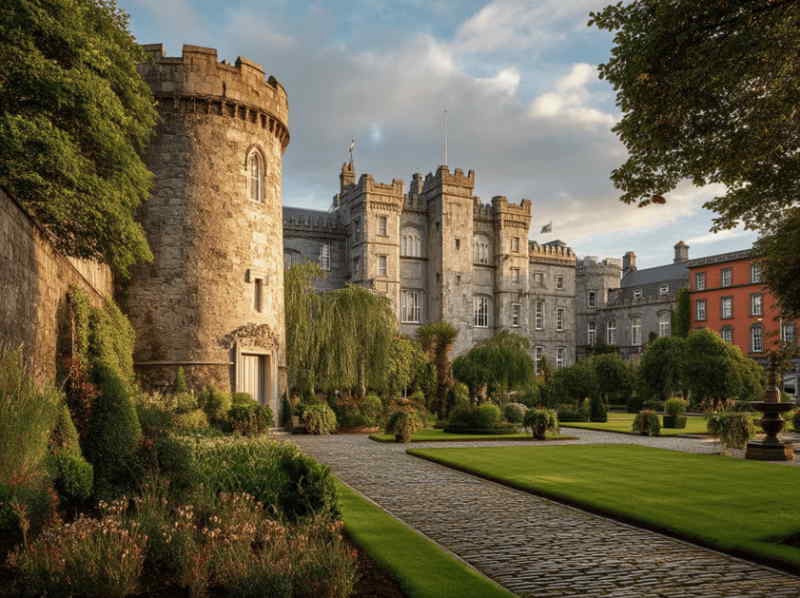
They referred, literally, to Dublin Castle, the great complex of buildings occupying a site in the heart of Dublin.

But in political conversation, “Dublin Castle” meant something much larger.

It meant government.

It meant the officials who administered Ireland on behalf of the English and later British Crown. It meant bureaucracy, patronage, policing, intelligence and political authority. To supporters of the Union it was the administrative centre from which Ireland was governed. To generations of Irish nationalists it became one of the most visible symbols of government imposed from London.

To understand Irish history before independence — and particularly the extraordinary scandals that periodically engulfed the Castle — we therefore have to look beyond its walls.

Dublin Castle was not merely a building.

It was a system.

The Castle Before “the Castle”

The story begins shortly after the Anglo-Norman invasion of Ireland in the twelfth century.

King John ordered the construction of a substantial castle in Dublin in 1204, and by the early thirteenth century a fortified complex had developed.

Its purpose was unmistakably political and military.

Dublin was the centre of English authority in Ireland, and the castle provided a fortified base from which that authority could be protected and exercised.

The medieval structure looked very different from the elegant government buildings visitors encounter today.

It possessed defensive walls, towers and a moat.

Over succeeding centuries, however, its military importance gradually diminished while its political importance increased.

The fortress became a seat of administration.

And eventually the name of the building became shorthand for the administration itself.

Governing Ireland for the Crown

At the summit of Castle government stood the monarch’s representative in Ireland.

The title varied over the centuries, but by the modern period the position was generally known as the Lord Lieutenant of Ireland, sometimes called the Viceroy.

He represented the sovereign.

In ceremonial terms he occupied an extraordinary position.

He held court, received dignitaries, participated in state occasions and lived for part of the year with considerable splendour in the Viceregal Lodge in Phoenix Park.

But governing Ireland required considerably more than ceremony.

The Lord Lieutenant headed an administration responsible for maintaining British authority over a country whose political relationship with Britain was frequently contentious and sometimes violent.

Around him developed the bureaucratic world known simply as Dublin Castle.

Inside Dublin Castle

The Chief Secretary

If the Lord Lieutenant embodied royal authority, another official increasingly became crucial to the everyday business of government:

the Chief Secretary for Ireland.

Over time the Chief Secretary became one of the most politically powerful figures in Irish administration.

The office connected Dublin Castle with the government and Parliament at Westminster.

By the nineteenth century, the Chief Secretary frequently exercised enormous practical influence over Irish policy.

This creates one of the peculiarities of the Castle system.

Ireland possessed an elaborate administration located in Dublin, but ultimate political authority rested with the British government.

The Castle governed Ireland.

Westminster governed the Castle.

An Unelected Administration

This arrangement became increasingly controversial as democratic politics developed.

Much of the senior Castle administration was not accountable to an Irish electorate.

Officials were appointed.

Many came from the Protestant establishment traditionally associated with British rule.

Patronage played an important role in appointments.

To critics, Dublin Castle therefore represented government of Ireland rather than government by Ireland.

The expression “Castle rule” consequently acquired a deeply political meaning.

It suggested bureaucracy imposed from above, frequently insensitive to the population it governed.

What Did Dublin Castle Actually Do?

Almost everything associated with civil government eventually passed through some part of the Castle administration.

Its responsibilities included areas such as:

law and justice,

policing,

public order,

local government,

administrative appointments,

government correspondence,

security,

intelligence,

prisons,

and implementation of legislation passed at Westminster.

The precise organisation changed repeatedly.

But the fundamental point remains:

Dublin Castle was the administrative nerve centre of British government in Ireland.

This is why it appears so frequently in accounts of nineteenth-century Irish history.

When newspapers reported that “the Castle” was considering something, they did not mean the stones had developed an opinion.

They meant the government.

The Castle and the Police

One particularly important responsibility concerned policing and security.

Nineteenth-century Ireland possessed several policing institutions, most importantly the Royal Irish Constabulary across most of Ireland and the Dublin Metropolitan Police in the capital.

Political policing became especially sensitive.

Irish nationalist organisations, agrarian agitation, Fenian activity and later revolutionary movements made intelligence gathering a major concern of government.

Informers were cultivated.

Suspects were watched.

Correspondence could be scrutinised.

Detectives infiltrated political organisations.

Dublin Castle consequently developed an intelligence apparatus that became both feared and hated within nationalist circles.

And this becomes extremely important when we reach our next story.

Because in 1884 allegations of homosexual activity would become entangled with precisely this world of police, informers, officials and political interests.

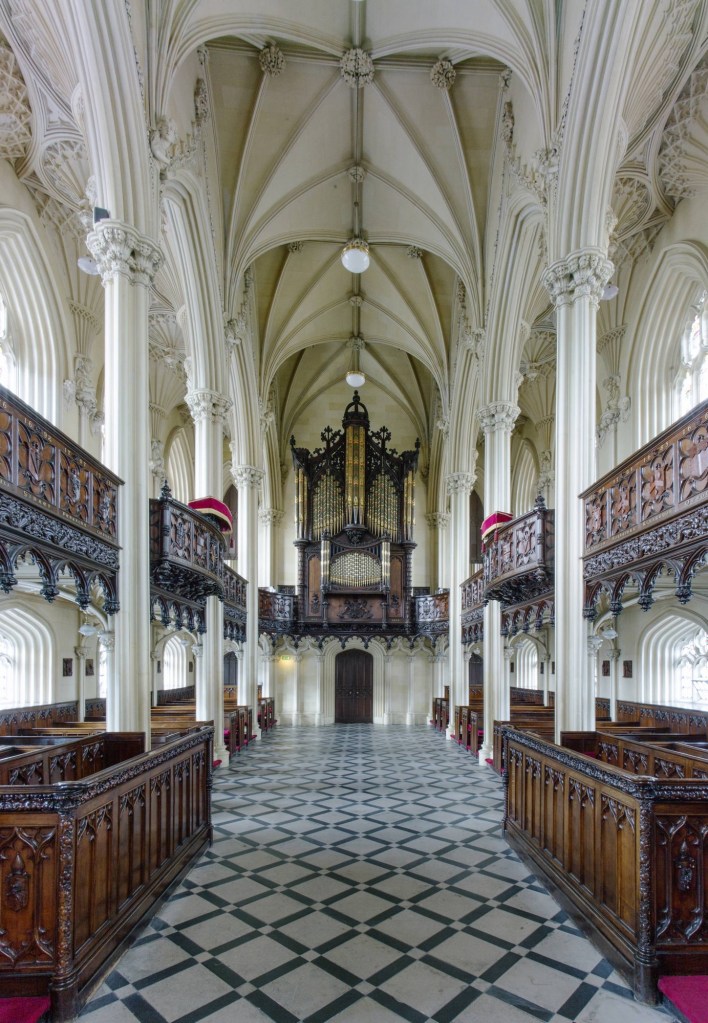
The Chapel Royal in Dublin Castle

The Castle and Irish Nationalism

By the nineteenth century, Dublin Castle had become a powerful nationalist symbol.

To many Irish nationalists, replacing Castle government was inseparable from achieving political self-government.

The criticism was not simply architectural or even bureaucratic.

The Castle represented a fundamental constitutional question:

Who had the right to govern Ireland?

For supporters of the Union, Ireland formed part of the United Kingdom and therefore administration through Dublin Castle was legitimate government.

For nationalists, the same institution could represent political subordination.

This is why references to “the Castle” in nineteenth- and early twentieth-century Irish literature carry considerably more meaning than might initially appear.

The term could evoke an entire political order.

The Social World of the Castle

Dublin Castle was also a social environment.

Officials, politicians, military officers, police figures and members of Dublin’s elite moved through overlapping networks.

There were ceremonies.

Balls.

Dinners.

Appointments.

Introductions.

Patronage.

Careers could depend upon connections.

And, inevitably, there were rumours.

The Castle therefore existed simultaneously as bureaucracy, political institution and social world.

That combination made scandal particularly dangerous.

A scandal involving an obscure private individual might embarrass a family.

A scandal involving people connected with Dublin Castle could embarrass the government.

The Castle as Theatre

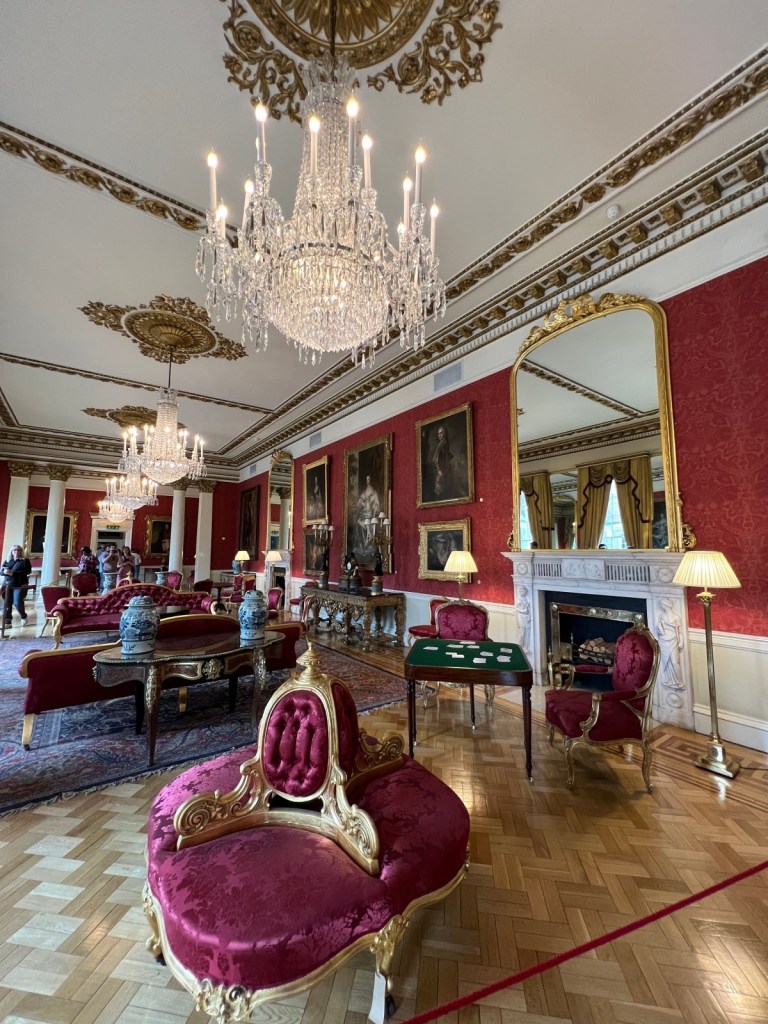
The State Apartments also provided a magnificent stage upon which British authority could display itself.

Ceremonial occasions reinforced the connection between Ireland and the Crown.

The surroundings communicated power through architecture, uniforms, ritual and hierarchy.

But there was an obvious political contradiction.

The more impressive the ceremonial display became, the more visibly it could remind critics that Ireland was being governed through institutions ultimately responsible to London.

The Castle therefore projected authority while simultaneously becoming a target for opposition to that authority.

A Centre of Intelligence — and a Target

By the late nineteenth century, Ireland was undergoing profound political change.

The campaign for Home Rule gathered strength.

Agrarian conflict destabilised rural society.

Fenian and other revolutionary organisations challenged British authority.

Political violence periodically shocked the administration.

In 1882, the Phoenix Park murders demonstrated just how dangerous Irish politics had become when the newly appointed Chief Secretary, Lord Frederick Cavendish, and Permanent Under-Secretary Thomas Henry Burke were stabbed to death.

The murders traumatised the Castle administration.

Security and intelligence became even more important.

The government needed detectives and informers.

But secret policing creates its own dangers.

Who can be trusted?

What happens when an informer lies?

What happens when police possess information capable of destroying someone’s reputation?

And what happens when allegations of sexual behaviour become entangled with political intelligence?

Those questions would explode spectacularly only two years later.

The Castle Scandal

In 1884, Dublin became consumed by allegations involving homosexual activity among men.

Because sexual acts between men were criminal offences, such accusations carried potentially catastrophic consequences.

Careers could be destroyed.

Men could be imprisoned.

Families could be disgraced.

And accusations could become weapons.

The resulting affair became known as the Dublin Castle scandal.

Its significance lay not merely in allegations about private sexual behaviour.

Police officials became involved.

Questions arose about informers and investigations.

Prominent figures were accused.

The possibility of official concealment became part of the controversy.

Politics and sexuality became almost impossible to separate.

And because some of those implicated or accused had connections with Dublin Castle, the scandal threatened the credibility of the administration itself.

We will enter that particularly murky corridor next.

Then Someone Lost the Crown Jewels

As though one major scandal were insufficient, Dublin Castle produced another extraordinary mystery little more than twenty years later.

In 1907, shortly before a royal visit, the insignia commonly known as the Irish Crown Jewels disappeared from a safe within Dublin Castle.

They have never been recovered.

The theft became a sensation.

How could immensely valuable ceremonial jewels disappear from the supposedly secure headquarters of British administration in Ireland?

Suspicion fell upon people within the Castle circle.

Rumours multiplied.

And among the names later associated with the mystery was Francis Richard Shackleton, brother of Antarctic explorer Ernest Shackleton.

Francis was never convicted of stealing the jewels.

Indeed, nobody was.

The case remains unsolved.

But the rumours surrounding the affair combined theft, homosexuality, social connections and alleged official embarrassment into precisely the kind of story upon which conspiracy theories thrive.

Once again, Dublin Castle found itself confronting a particularly dangerous question:

What did the authorities know, and what did they want the public not to know?

Revolution Comes to the Gates

Eventually, however, Dublin Castle confronted something considerably larger than scandal.

Revolution.

During the struggle for Irish independence, the Castle remained the central administrative headquarters of British rule.

Its intelligence operations became particularly important during the Irish War of Independence.

The IRA targeted intelligence officers, police and informers.

British authorities responded with increasingly aggressive security measures.

For revolutionaries, Dublin Castle was no longer merely symbolic.

It was an operational centre of the state they were attempting to overthrow.

1922: The Castle Changes Hands

The political meaning of Dublin Castle changed dramatically following the Anglo-Irish Treaty.

On 16 January 1922, the Castle was formally handed over to the new Provisional Government.

Michael Collins famously attended the transfer.

A popular story claims that the outgoing Lord Lieutenant remarked that Collins was late, to which Collins replied that Britain had kept Ireland waiting for seven hundred years.

It is a wonderful line.

Unfortunately, like many wonderful historical lines, its precise authenticity is doubtful.

But the story survived because it captured the symbolism of the moment perfectly.

For centuries Dublin Castle had represented English and then British authority in Ireland.

Now Irish ministers walked through its doors to assume power themselves.

“The Castle” had ceased to mean what it once meant.

Understanding Rutherfurd’s “Castle”

This is why repeated references to the Castle in historical fiction set in Dublin matter.

A reader unfamiliar with Irish administrative history could understandably imagine characters merely discussing a large historic building.

Contemporary readers would have heard something else.

“The Castle” meant officials.

Government.

Police.

Patronage.

Intelligence.

British authority.

Depending upon who was speaking, the phrase might carry respect, dependence, resentment, suspicion or outright hostility.

It was rather like saying “Whitehall” when referring to the British civil service or “the Kremlin” when referring to Russian government.

The place had become the institution.

More Than a Castle

Today, Dublin Castle is once again a place of ceremony and government, but in an independent Ireland.

Visitors can admire its State Apartments and architecture without necessarily sensing the enormous political weight once carried by its name.

Yet understanding that history transforms the building.

Behind the elegant rooms lies the memory of centuries of administration.

Viceroys governed.

Chief Secretaries made policy.

Civil servants produced mountains of correspondence.

Detectives pursued revolutionaries.

Informers whispered.

Nationalists condemned Castle rule.

Scandals erupted.

Jewels disappeared.

And eventually the government occupying the Castle itself disappeared.

For generations of Irish people, therefore, Dublin Castle was never simply a castle.

It was where power lived.

Tim Alderman ©️2026

Sources and Further Reading

Dublin Castle, official historical material on the development of the Castle and its role in Irish government.

Encyclopaedia Britannica, material on the history of Dublin Castle and British administration in Ireland.

R. B. McDowell, The Irish Administration, 1801–1914.

Eunan O’Halpin, The Decline of the Union: British Government in Ireland, 1892–1920.

Charles Townshend, Political Violence in Ireland: Government and Resistance since 1848.

David Fitzpatrick, The Two Irelands, 1912–1939.