In February 1834, six agricultural labourers from a tiny Dorset village were arrested.
They had not burned down a farmhouse.
They had not smashed a threshing machine.
They had not attacked a landowner.
They had not stolen anything.
Their great act of rebellion was considerably more dangerous.
They had organised.
The six men had formed a trade union and agreed that agricultural labourers should stand together against falling wages.
The union itself was legal.
So the authorities found something else with which to prosecute them.
The men had sworn an oath of loyalty to one another.
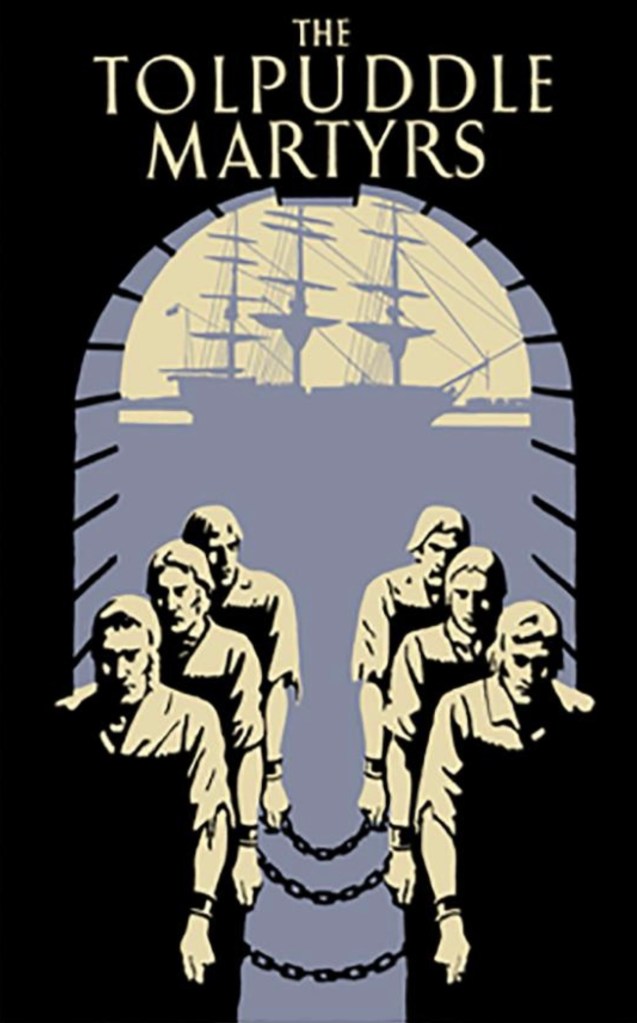
For that, six impoverished farm labourers were sentenced to seven years’ transportation to Australia.
Their punishment was intended as a warning.
Instead, it created martyrs.
Their names were:
George Loveless
James Loveless
Thomas Standfield
John Standfield
James Brine
James Hammett.
They became known to history as the Tolpuddle Martyrs.
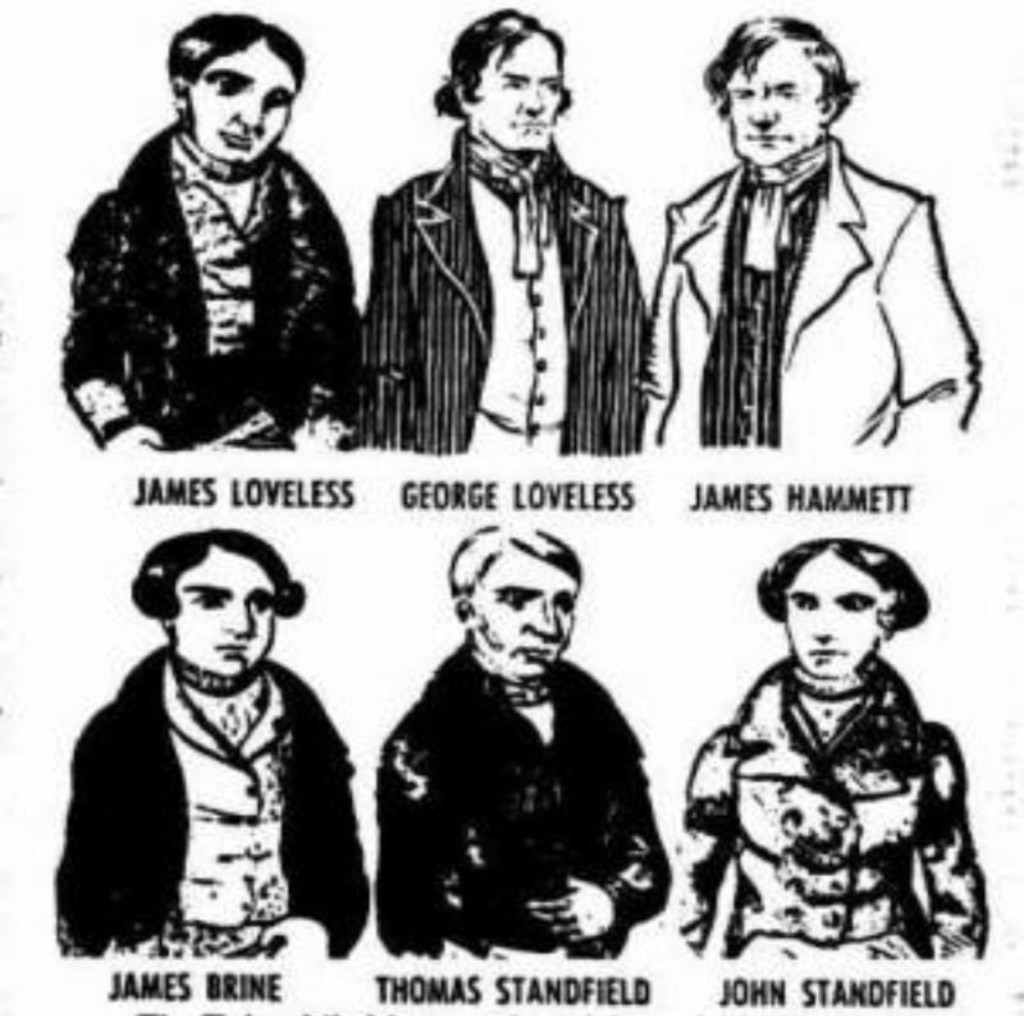
And their story became one of the founding legends of the British trade union movement.
A Pretty Village and Desperate Poverty
Tolpuddle lies in Dorset, in the gentle countryside of southern England.
It is difficult to imagine a landscape farther removed from the smoke-blackened industrial towns we encountered during the Plug Riots.
There were no enormous cotton mills.
No forests of chimneys.
No great steam engines requiring somebody to pull the plug.
Yet rural England could be every bit as brutal for the working poor.
Agricultural labourers occupied near the bottom of the rural economy.
They owned little or no land.
Their survival depended upon wages paid by farmers and landowners.
And those wages were falling.
According to the history preserved by the Trades Union Congress, George Loveless had been earning around nine shillings a week in 1830.
That fell to eight.
Then seven.
And another reduction threatened to bring wages down to six shillings a week. (TUC 150 Stories)
For a labourer supporting a wife and children, this wasn’t an inconvenience.
It threatened hunger.
Rural England After Captain Swing
Landowners had good reason to be nervous.
Only a few years earlier, rural southern England had erupted during the Swing Riots of 1830.
Agricultural workers attacked threshing machines, burned property and sent threatening letters signed by the mysterious fictional figure “Captain Swing.”
The disturbances emerged from many of the same grievances facing Tolpuddle:
low wages,
unemployment,
mechanisation,
poverty,
and resentment of rural elites.
The government had responded ferociously.
People were executed.
Hundreds were transported.
Others imprisoned.
Order was restored.
The grievances weren’t.
And now agricultural workers were experimenting with another weapon.
Organisation.
The Combination Acts
For decades, British governments had attempted to prevent workers combining to improve their wages.
The Combination Acts of 1799 and 1800 restricted collective organisation by workers.
But those Acts were repealed in the 1820s.
Trade unions therefore weren’t simply illegal by 1834.
This is essential to understanding Tolpuddle.
The six men were not legally transported merely because they formed a trade union.
The government needed another offence.
And it found one.
The Friendly Society of Agricultural Labourers
George Loveless was a Methodist local preacher as well as an agricultural labourer.
He was literate, thoughtful and clearly capable of leadership.
The Tolpuddle labourers attempted to negotiate over wages.
When those efforts failed, they formed the Friendly Society of Agricultural Labourers.
Friendly societies were hardly unusual.
Working people had long pooled money to provide support during sickness, unemployment or death.
Trade societies similarly allowed workers to act collectively rather than negotiate individually with employers.
And that was precisely what frightened local landowners.
One labourer asking for higher wages could be dismissed.
An entire village refusing to work below an agreed wage was another matter entirely.
The dangerous word was:
we.
The Sycamore Tree
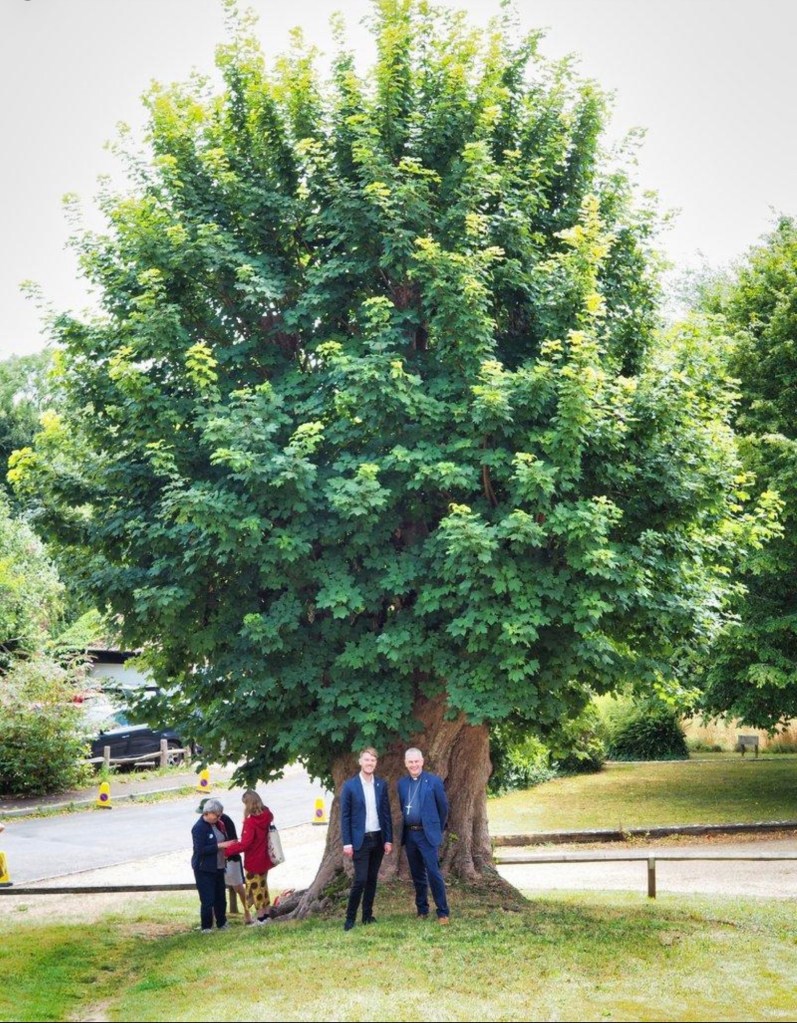
Tradition associates the formation of the Tolpuddle union with meetings beneath a great sycamore tree in the village.
The tree survives and has become one of the most famous living monuments in British labour history.
Beneath trees and in cottages, labourers discussed wages and solidarity.
Members of the society underwent an initiation.
And during that initiation, an oath was administered.
That provided the authorities with their opportunity.
Enter Squire Frampton
One of the central figures in the prosecution was local magistrate and landowner James Frampton.
Frampton regarded the new union with alarm.
The authorities feared that organised agricultural labour might spread.
This wasn’t simply about six men in one Dorset village.
Britain’s ruling classes had recently witnessed the Swing disturbances, agitation for parliamentary reform and the growth of organised labour.
The government had no intention of allowing rural unionism to develop unchecked.
But how could it prosecute men for belonging to a legal organisation?
Frampton sought advice.
The answer lay in legislation originally created for a rather different purpose.
The Illegal Oath
The prosecution relied upon legislation dating from 1797, enacted in an age of fear about naval mutiny, secret societies and revolutionary conspiracy.
Administering certain secret or unlawful oaths was prohibited.
The Tolpuddle men had sworn an oath during their union initiation.
There was the offence.
It was an ingenious piece of legal manoeuvring.
The authorities could say:
“We are not prosecuting these men for forming a union.”
Technically, they weren’t.
They were prosecuting them for the oath.
But almost nobody missed the real point.
The union was the target.
Arrest
On 24 February 1834, George Loveless was arrested.
The other five followed.
The men were imprisoned at Dorchester and brought to trial the following month.
Imagine the disparity in power.
On one side stood six impoverished agricultural labourers.
On the other:
landowners,
magistrates,
government officials,
the courts,
and the British state.
The outcome was not encouraging.
The Trial
The men were tried at the Dorset Assizes in Dorchester in March 1834.
They were convicted of administering or taking an unlawful oath.
Then came the sentence.
Seven years’ transportation.
Even by contemporary standards it was savage.
Transportation wasn’t simply imprisonment somewhere warmer.
For many convicts it amounted to permanent exile.
The journey to Australia took months.
Families could be separated forever.
Convicts were assigned to labour under harsh conditions.
Disease, punishment and physical exhaustion were ever-present risks.
The six men had organised to prevent wages falling to starvation level.
Britain responded by sending them approximately halfway around the planet.
“We Will, We Will, We Will”
George Loveless later became associated with lines written during his imprisonment:
“God is our guide! from field, from wave,
From plough, from anvil, and from loom…”
The famous verses end with the repeated declaration:
“We will, we will, we will be free!”
Whether encountered as poetry, song or labour-movement memory, the words capture something fundamental about Tolpuddle.
These weren’t revolutionaries plotting to overthrow the monarchy.
They were working men discovering that individual weakness could become collective strength.
That principle was precisely what made them threatening.
Off to Australia’s Penal Colonies
The men were transported.
Five eventually went to New South Wales.
George Loveless was sent separately to Van Diemen’s Land, modern Tasmania.
The punishment deliberately broke up the group.
Once in Australia, transported convicts could be assigned to work for settlers or government.
Their freedom of movement was restricted.
Discipline could be severe.
The Tolpuddle men had attempted to escape rural poverty in Dorset through collective bargaining.
They found themselves labouring as convicts in Britain’s Australian colonies.
But something remarkable was happening back home.
Britain Explodes in Anger
The severity of the sentence caused outrage.
The authorities had hoped to frighten workers away from trade unions.
Instead they created one of the greatest popular causes of the decade.
The six obscure Dorset labourers became national figures.
Meetings were organised.
Money was raised.
Petitions circulated.
Trade unionists rallied behind them.
The word Martyrs stuck.
On 21 April 1834, a huge demonstration assembled at Copenhagen Fields in London before marching towards Whitehall. Contemporary labour-movement accounts put attendance above 30,000, while the wider petition campaign eventually amassed hundreds of thousands of signatures. (TUC 150 Stories)
The procession was disciplined.
Banners flew.
Trade societies marched.
The government prepared for disorder.
But the protesters gave it little excuse for repression.
The campaign demonstrated something the Tolpuddle men themselves had been punished for discovering:
organisation worked.
And What of Their Families?
Here we encounter the people easily lost from the traditional story.
The wives and children.
Transportation didn’t punish only the convicted man.
It removed a family’s wage earner.
The women left behind faced possible destitution.
The wives of the Tolpuddle men sought parish relief.
Local authorities were not exactly sympathetic.
According to material preserved by the TUC, Frampton rejected assistance, effectively arguing that the men should have considered their families before spending money on union subscriptions. (TUC)
But the labour movement stepped in.
Funds raised during the campaign supported the families.
That matters.
Trade unionism wasn’t merely about strikes.
It was about solidarity.
If an employer could starve a striker’s family, the employer possessed enormous power.
If workers collectively supported one another’s families, that power diminished.
The women of Tolpuddle therefore belong within the story too.
They endured the consequences of the men’s prosecution while the growing labour movement demonstrated that solidarity could extend beyond the workplace.
A Political Disaster
The government had achieved a legal victory.
Politically, it was becoming a disaster.
The sentence looked vindictive.
The prosecution appeared transparently designed to suppress union organisation.
And the campaign refused to disappear.
Petitions continued.
Pressure mounted.
The six Dorset labourers became symbols of injustice.
Eventually the government retreated.
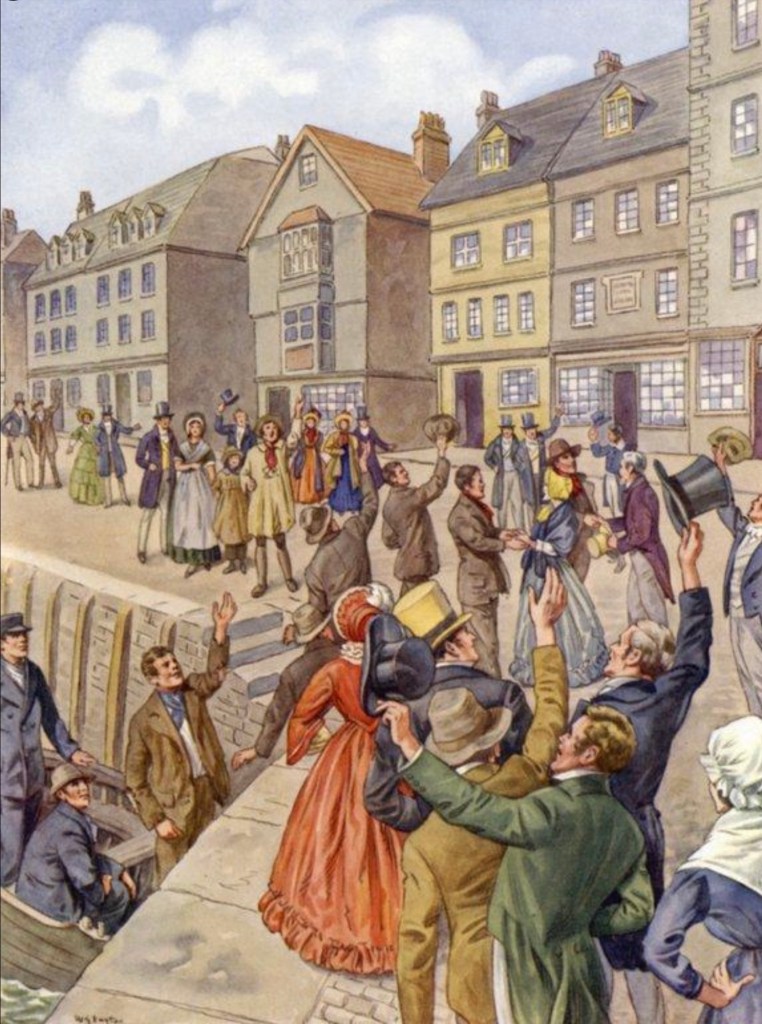
Pardoned
In March 1836, full pardons were granted.
That sentence deserves emphasis.
The British government had transported six men thousands of kilometres to demonstrate its authority.
Mass political pressure forced it to pardon them.
The labour movement had won.
But pardoning someone in Australia did not magically deposit him back in Dorset.
Communication was slow.
Transport was slower.
Arrangements for returning the men became complicated.
George Loveless, in particular, insisted upon returning as a genuinely free man rather than accepting compromises that might diminish the principle for which the campaign had fought.
The homecomings consequently occurred gradually. (TUC)
Home From Australia
George Loveless returned to Britain in 1837.
James Loveless, Thomas and John Standfield and James Brine followed.
James Hammett was the last to return, reaching England in 1839. (TUC 150 Stories)
They were no longer obscure Dorset labourers.
They were symbols.
Supporters raised money to help establish them after their return.
But most did not ultimately remain in Tolpuddle.
And, remarkably, several crossed the Atlantic and began again.
Canada
Five of the six eventually emigrated to Canada.
George Loveless and his family settled in Ontario.
So did several of his fellow martyrs.
There is something extraordinary about that final migration.
These men had once been forcibly removed from Britain.
Later they chose migration for themselves.
The distinction could hardly be greater.
Transportation said:
You will go.
Emigration said:
We choose to go.
Only James Hammett remained permanently associated with Tolpuddle itself.
Were They Really Martyrs?
Strictly speaking, none died for the cause.
The word martyr therefore isn’t being used in its narrowest sense.
But politically it was brilliant.
Calling them the Tolpuddle Martyrs transformed six convicted labourers into victims of persecution.
The state had wanted them remembered as criminals.
The labour movement remembered them as heroes.
History largely adopted the labour movement’s version.
That itself demonstrates the power of historical memory.
The Myth and the Reality
There is a simplified version of Tolpuddle that says:
Six men formed a trade union, trade unions were illegal, and they were transported to Australia.
That isn’t quite right.
And correcting it makes the story more interesting, not less.
Trade unions weren’t simply illegal in 1834.
The Combination Acts had already been repealed.
The authorities therefore used legislation against unlawful oaths.
The prosecution demonstrates something subtler than straightforward prohibition.
When governments wish to suppress a movement but cannot conveniently prosecute the movement itself, they may search for another legal mechanism.
The oath became that mechanism.
The offence was real under the law.
The political motivation behind prosecuting it was equally real.
From Tolpuddle to Chartism
The Tolpuddle affair occurred just before the great flowering of Chartism.
The connections are obvious.
Workers were beginning to realise that economic power and political power were intertwined.
Why were agricultural wages so low?
Why could landowners dominate local institutions?
Why could Parliament make laws affecting workers who had no vote?
Why could magistrates drawn from the landowning classes sit in judgement upon labourers?
Trade unionism could address wages.
Political reform could address power.
The two struggles increasingly overlapped.
Several Tolpuddle men later appeared at Chartist meetings, and George Loveless continued writing and speaking on political and religious questions. (TUC)
The Dangerous Principle
What frightened the authorities about Tolpuddle was not six men.
It was multiplication.
Six could become sixty.
Sixty could become six thousand.
A union in one Dorset village could inspire another village.
Then another.
Agricultural workers who had traditionally negotiated individually with employers could begin acting collectively.
That threatened a social system based partly upon workers remaining isolated from one another.
The same principle appeared in industrial towns.
A single cotton worker had little power.
Thousands pulling boiler plugs could stop Manchester.
A single Dorset labourer had little bargaining strength.
An organised workforce could demand ten shillings rather than accept six.
The crucial transformation was from:
I
to
we.
A Remarkably British Revolution
The story of British labour rights is sometimes presented as wonderfully peaceful.
No revolution!
No guillotines!
Just gradual reform and sensible parliamentary government.
Tolpuddle complicates that comforting picture.
Rights were frequently granted only after agitation.
Workers were imprisoned.
Demonstrators were attacked.
Strikers were prosecuted.
Protesters were transported.
Soldiers fired into crowds.
Governments feared revolution and legislated accordingly.
Britain avoided the revolutionary upheavals experienced elsewhere in Europe, but that doesn’t mean its political transformation occurred without conflict.
The Tolpuddle Martyrs are remembered precisely because ordinary people paid a price for demanding changes later generations came to regard as perfectly reasonable.
From Criminals to National Memory
Today Tolpuddle occupies a remarkable place in British labour history.
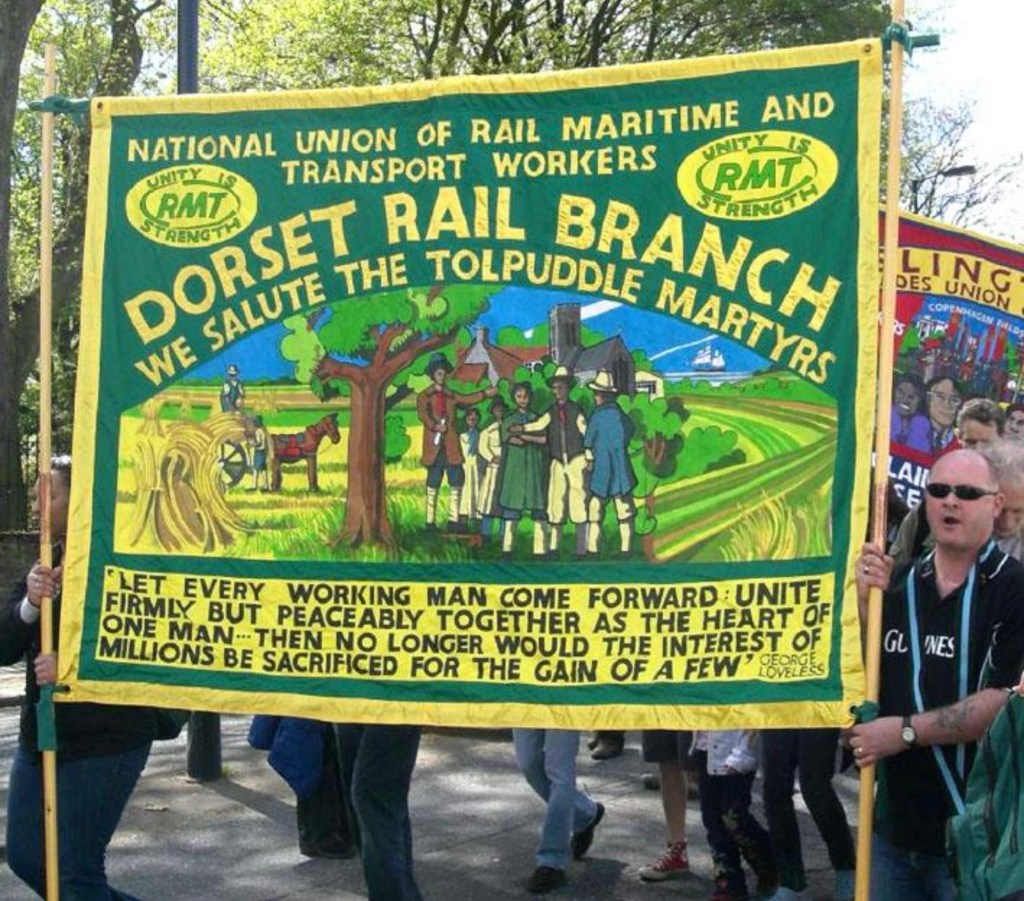
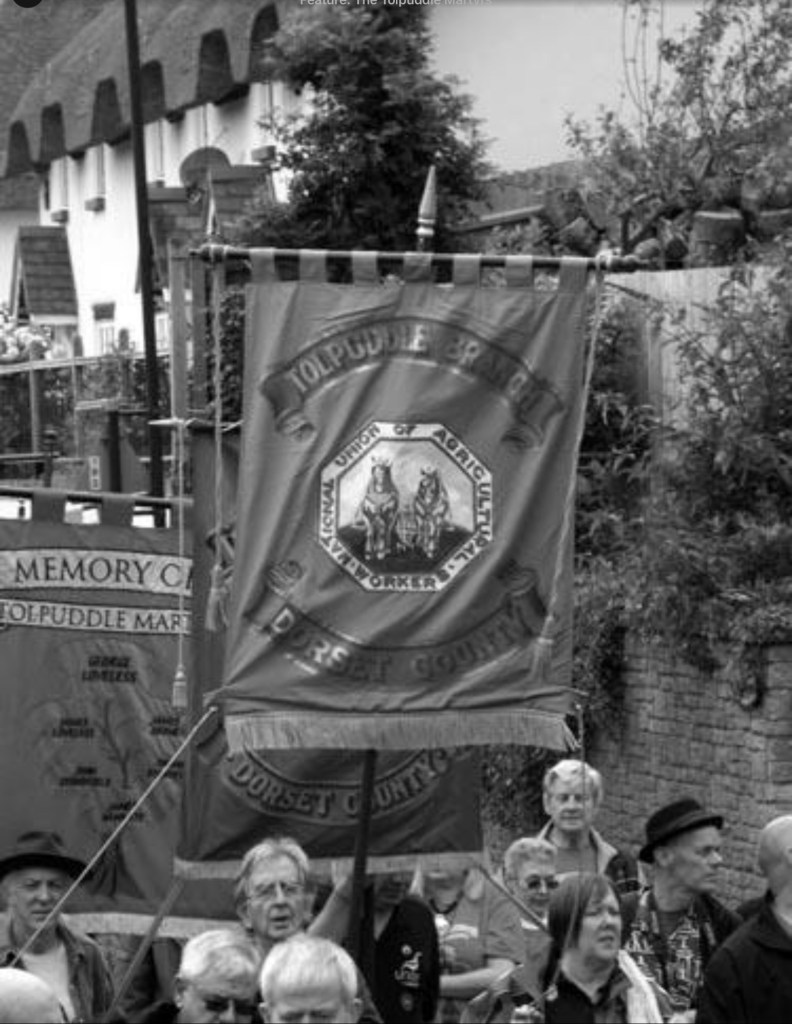
The village hosts the Tolpuddle Martyrs’ Museum, and thousands continue to gather for the annual Tolpuddle Martyrs’ Festival, with trade-union banners, speeches, music and processions commemorating the six agricultural labourers. (TUC)
The transformation is almost complete.
In 1834 the state treated their organisation as dangerous enough to justify transportation.
Today their story is commemorated as part of Britain’s democratic heritage.
The criminals became heroes.
The illegal oath became solidarity.
The tiny village became a place of pilgrimage for the labour movement.
And the sycamore became a monument.
The Road From Tolpuddle
The Tolpuddle Martyrs didn’t invent trade unionism.
Nor did their pardon suddenly establish modern trade-union rights.
The development of organised labour remained long, difficult and uneven.
But their story demonstrated several things.
Workers could organise.
Government could attempt to crush them.
Public opinion could mobilise in response.
Families could be supported collectively.
Petitions and demonstrations could exert pressure.
And governments could retreat.
Most importantly, the Tolpuddle campaign turned an apparently local injustice into a national political issue.
Six agricultural workers became everybody’s business.
Six Men Beneath a Tree
Perhaps that is why the story survives.
There is something wonderfully simple about it.
Six men in a Dorset village.
Wages falling.
Families to feed.
A meeting.
A society.
An oath.
Then suddenly:
arrest,
trial,
transportation,
Australia,
mass demonstrations,
hundreds of thousands of petition signatures,
pardon,
homecoming,
and immortality within the labour movement.
The authorities intended their sentence to deliver a warning:
Do not organise.
History transformed it into almost the opposite message:
Organisation works.
The government possessed Parliament.
The magistrates possessed the courts.
The landowners possessed the farms.
The employers possessed the jobs.
The six labourers possessed very little.
Except one another.
And in the end, that proved considerably more powerful than anyone expected.
Tim Alderman ©️2026
Sources and Further Reading
Trades Union Congress, “The Tolpuddle Martyrs” and Tolpuddle Martyrs’ Museum material — detailed accounts of the wage dispute, arrests, transportation, mass campaign, pardons and eventual return of the six men. (TUC 150 Stories)
Trades Union Congress, material on the return of the Tolpuddle Martyrs — particularly useful for the complicated story of the pardons and the men’s journeys home from Australia. (TUC)
Trades Union Congress, “Honouring the Women of Tolpuddle” — valuable corrective to accounts concentrating entirely upon the six men, including the economic consequences suffered by their wives and children. (TUC)
Joyce Marlow, The Tolpuddle Martyrs — detailed modern narrative of the affair and its political context.
A. J. Peacock, The Tolpuddle Martyrs — study of the six labourers, their union and prosecution.
George Loveless, The Victims of Whiggery — Loveless’s own account, invaluable as the voice of one of the transported men, though naturally read as a participant’s polemical account rather than detached history.
Dorset Museum, collections relating to popular and labour history — holds material relating to nineteenth-century Dorset and the later commemoration of the Tolpuddle story. (Dorset Museum & Art Gallery)
E. P. Thompson, The Making of the English Working Class — broader context for working-class organisation, radicalism and the transformation of British political culture.

