Monthly Archives: July 2026

Buddhism 101: The Shaolin Monastery: History, Buddhism, Martial Arts, and Legacy

Introduction

Few religious institutions have captured the imagination of the world quite like the Shaolin Monastery. Known variously as the birthplace of Chan (Zen) Buddhism, the legendary home of warrior monks, and the spiritual cradle of Chinese martial arts, Shaolin occupies a unique place where religion, philosophy, culture, and physical discipline meet.

For more than 1,500 years, the monastery has survived warfare, political upheaval, destruction, and rebuilding. It has inspired countless stories, films, novels, and martial arts traditions while remaining an active Buddhist temple devoted to spiritual practice.

Although popular culture often emphasizes the spectacular fighting abilities of Shaolin monks, the monastery’s deeper significance lies in its role as a centre of Buddhist learning and meditation. The martial arts associated with Shaolin were historically viewed not as ends in themselves but as disciplines that supported mental focus, physical health, and spiritual development.

The Founding of the Shaolin Monastery

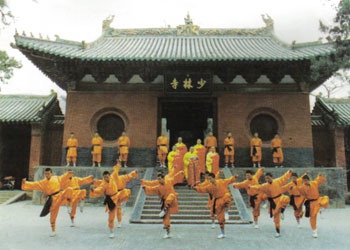
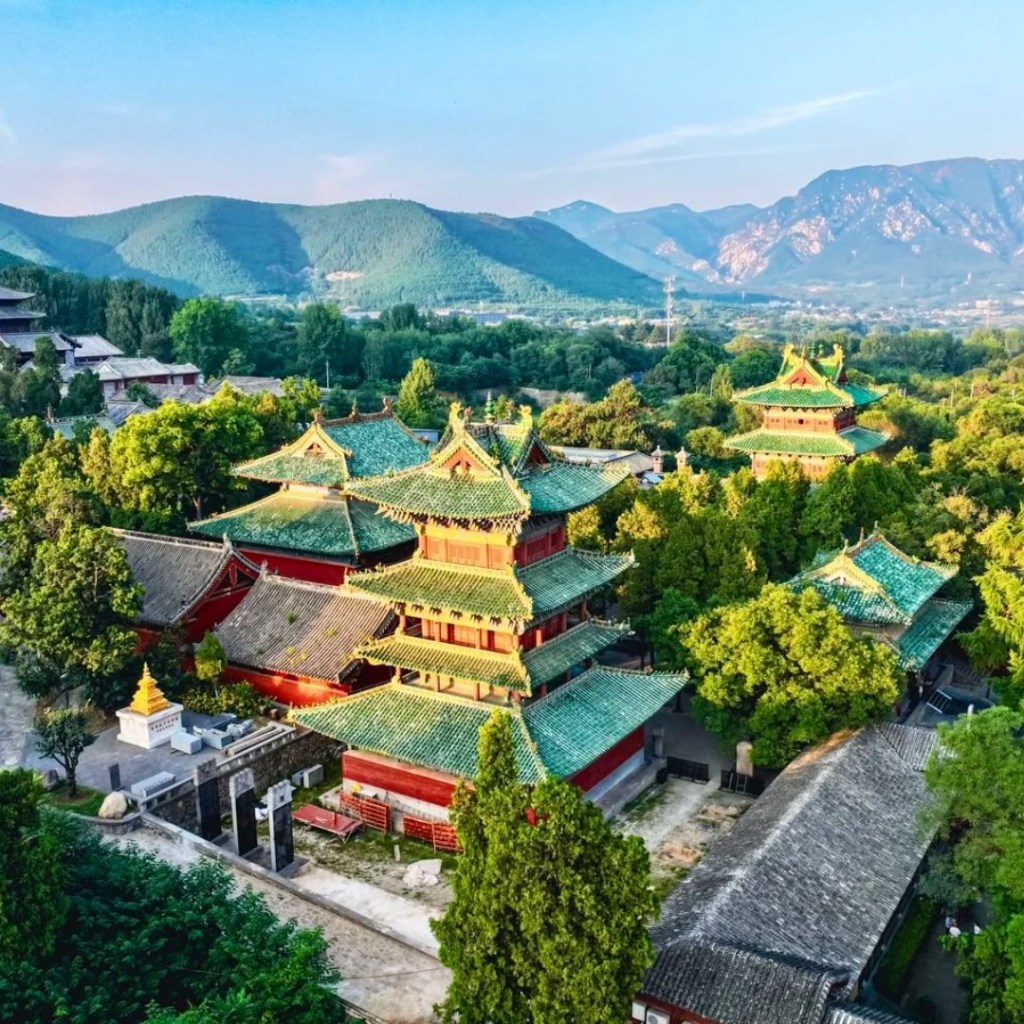
The Shaolin Monastery was established in 495 CE during the Northern Wei Dynasty. It was built on the slopes of Mount Song, one of China’s five sacred mountains, in what is now Henan Province.

The temple was constructed by Emperor Xiaowen to house an Indian Buddhist monk named Batuo (also known as Buddhabhadra), who had travelled to China to spread Buddhist teachings.

At the time, Buddhism was gaining influence throughout China. Originating in India centuries earlier through the teachings of the Buddha, the religion had gradually spread along trade routes into Central Asia and China.

The location chosen for the monastery was both beautiful and strategically secluded. Nestled among forests and mountains, it offered an ideal environment for meditation and religious study.

The name “Shaolin” literally means “Young Forest,” referring to the forests surrounding the temple.
Bodhidharma and the Birth of Chan Buddhism

No figure is more closely associated with Shaolin than Bodhidharma.

According to tradition, Bodhidharma was an Indian monk who arrived in China during the sixth century. While historians debate many details of his life, he became one of the most influential figures in East Asian Buddhism.

Legend states that Bodhidharma travelled to Shaolin and found the monks physically weak and struggling to maintain the rigorous demands of meditation.

One famous story claims that he meditated in a cave near the monastery for nine years, facing a wall in uninterrupted contemplation. The cave associated with this practice remains a pilgrimage site today.

Bodhidharma’s teachings emphasized direct personal experience over reliance on scriptures or rituals alone. He taught that enlightenment could be realized through disciplined meditation and insight into one’s own nature.

These teachings became the foundation of Chan Buddhism in China, which later evolved into Zen Buddhism in Japan and influenced Buddhist traditions throughout East Asia.
The Origins of Shaolin Martial Arts

The relationship between Bodhidharma and martial arts is one of the most debated topics in Shaolin history.

Popular tradition credits him with introducing exercises that eventually developed into Shaolin Kung Fu. However, most modern historians believe the connection is more symbolic than historical.

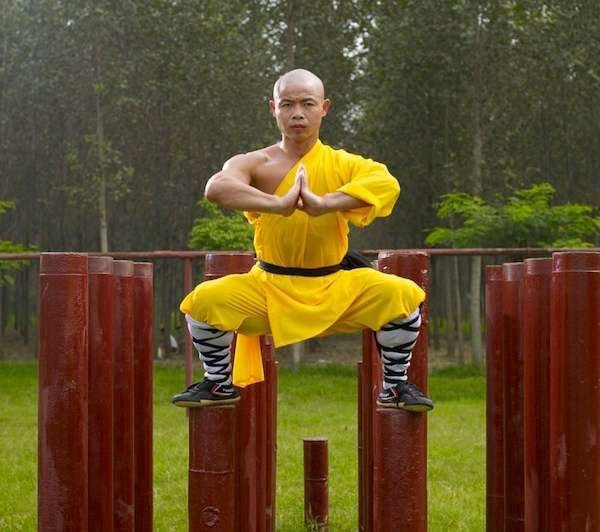
It is likely that martial arts practices evolved gradually over centuries within the monastery. Monks required physical fitness to endure long hours of meditation and to protect themselves from bandits who sometimes threatened remote religious communities.

Over time, techniques from military training, local fighting traditions, and physical conditioning exercises became integrated into monastic life.

The resulting martial arts system became known as Shaolin Kung Fu.
The Warrior Monks

Shaolin’s reputation as a community of warrior monks grew significantly during the Tang Dynasty.

Historical records describe occasions when Shaolin monks assisted imperial forces in military conflicts. One famous account tells of monks helping the future Emperor Li Shimin during a struggle for political power in the seventh century.

Their support reportedly earned imperial favour and recognition for the monastery.

These events contributed to the enduring image of Shaolin monks as both spiritual practitioners and skilled fighters.

However, contrary to many modern portrayals, martial activities represented only a small part of monastic life. Meditation, study, chanting, and religious observance remained the primary focus of the community.

Chan Buddhism at Shaolin

At its heart, Shaolin has always been a Buddhist monastery.

Chan Buddhism emphasizes:

Meditation

Mindfulness

Direct experience

Self-discipline

Simplicity

Insight into the nature of reality

Rather than focusing solely on philosophical study, Chan encourages practitioners to experience truth directly.

Many famous Chan masters lived and taught at Shaolin throughout its history.

The monastery became a major centre for Buddhist scholarship and spiritual practice, attracting monks and pilgrims from across China.

The famous Zen emphasis on being fully present in each moment reflects principles that were cultivated at Shaolin for centuries.
Daily Life of Shaolin Monks

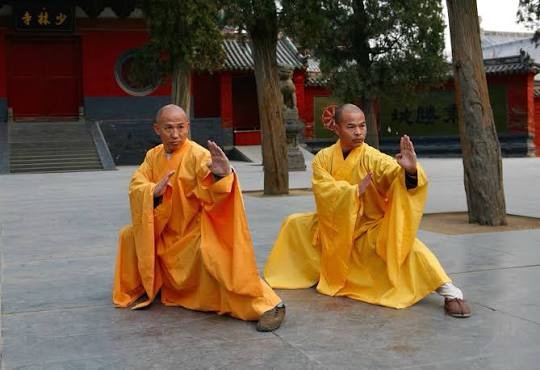
Life within the monastery has traditionally followed a strict routine.

A typical day often begins before sunrise.

Activities include:

Morning chanting

Meditation sessions

Temple duties

Scriptural study

Physical exercise

Martial arts training

Communal meals

Evening prayers

Monks generally live according to Buddhist precepts that encourage ethical behaviour, compassion, simplicity, and non-attachment.

Meals are usually vegetarian, reflecting Buddhist principles of non-harm toward living beings.

Discipline is considered essential. Every aspect of daily life is viewed as an opportunity to cultivate awareness and mindfulness.

Shaolin Kung Fu

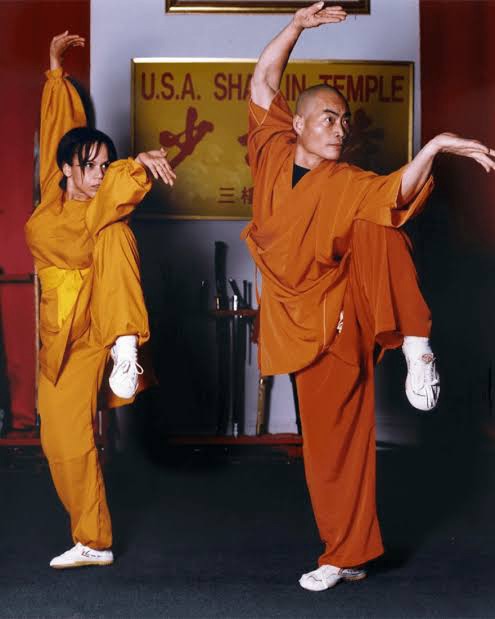
Shaolin Kung Fu developed into one of the world’s most famous martial arts traditions.

Rather than a single style, Shaolin Kung Fu encompasses hundreds of forms and techniques.

Training includes:

Striking techniques

Kicking techniques

Joint locks

Throws

Acrobatics

Weapons training

Breathing exercises

Conditioning practices

Students learn not only physical movements but also principles of discipline, patience, humility, and mental focus.

Traditional training can be extremely demanding, requiring years of dedicated practice.

Many practitioners regard Kung Fu as a moving form of meditation in which mind and body operate in harmony.
Shaolin Weapons

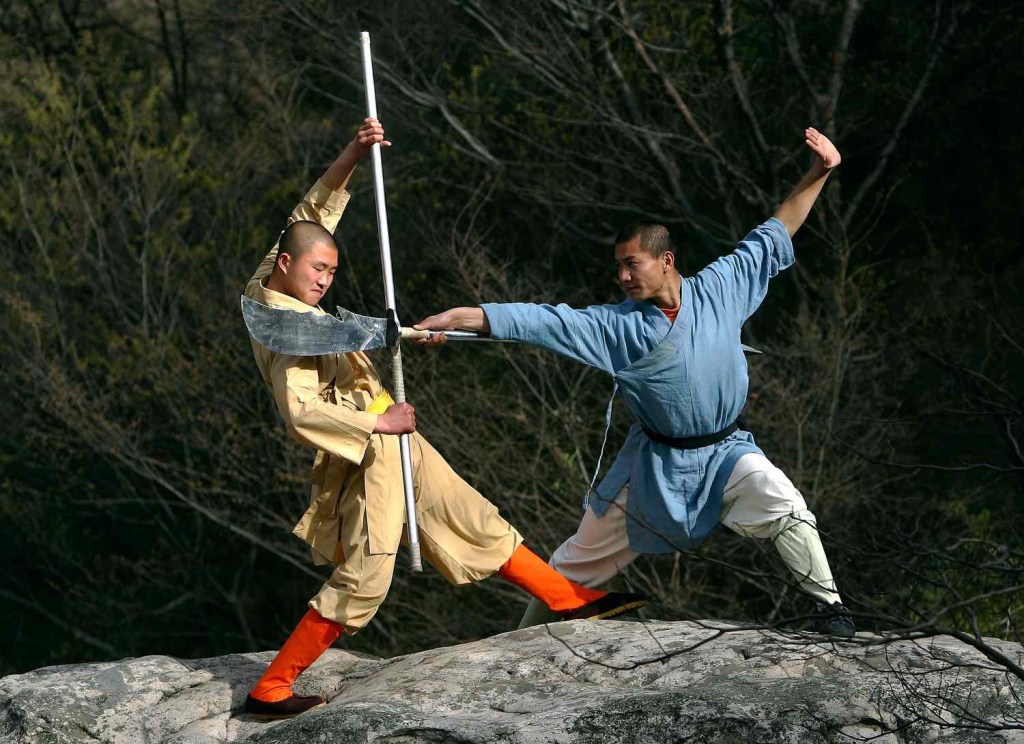
Historically, Shaolin monks trained with numerous traditional weapons.

These included:

Staffs

Spears

Swords

Broadswords

Halberds

Chain weapons

The staff became particularly associated with Shaolin and remains one of its most recognizable symbols.

Weapon training was never intended merely for combat. It cultivated coordination, concentration, timing, and self-discipline.

Many elaborate forms are still practiced today as part of traditional training.

The Pagoda Forest

One of the monastery’s most remarkable features is the Pagoda Forest.

This extraordinary collection of stone pagodas serves as a cemetery for generations of distinguished monks.

The forest contains hundreds of pagodas dating back many centuries.

Each structure commemorates a respected monk and reflects the individual’s status and accomplishments.

The Pagoda Forest is considered one of the most significant collections of ancient Buddhist funerary architecture in China.
Destruction and Rebuilding

Like many historic religious institutions, Shaolin has experienced repeated periods of destruction and renewal.

Over the centuries, the monastery suffered damage from:

Warfare

Political conflict

Bandit attacks

Natural disasters

One of the most devastating events occurred in 1928 during China’s warlord era when large sections of the temple were destroyed by fire.

Ancient scriptures, artworks, and historic buildings were lost.

Despite these setbacks, Shaolin repeatedly rebuilt and restored itself.

Its survival became a powerful symbol of resilience and continuity.

Shaolin During Modern China

The twentieth century brought profound changes to China and to religious institutions generally.

During the Cultural Revolution (1966–1976), many temples and religious sites throughout China experienced severe disruption.

Shaolin was not immune to these challenges.

However, in subsequent decades the monastery underwent extensive restoration and gradually regained its status as an important religious and cultural centre.

Today it functions as:

An active Buddhist monastery

A pilgrimage destination

A cultural heritage site

A centre for martial arts education

A major tourist attraction

Visitors arrive from around the world to experience its history and traditions.

Shaolin in Popular Culture

Beginning in the twentieth century, Shaolin became internationally famous through books, films, and television.

Martial arts cinema played a major role in spreading the monastery’s reputation worldwide.

Actors such as Jet Li gained international recognition through films depicting Shaolin history and Kung Fu traditions.

Countless movies have portrayed Shaolin monks as heroic warriors possessing extraordinary physical abilities.

While these portrayals often contain elements of historical truth, they also incorporate considerable myth and dramatic exaggeration.

The real monastery’s history is far more complex and deeply rooted in Buddhist spirituality.

Myths and Misconceptions

The popularity of Shaolin has generated many myths.

Among the most common are claims that:

Bodhidharma invented Kung Fu.

Shaolin monks possessed supernatural powers.

Martial arts were the monastery’s primary purpose.

Historical evidence suggests a more nuanced reality.

Martial arts certainly became important at Shaolin, but meditation and Buddhist practice remained central.

Likewise, while some stories describe miraculous feats, these are generally understood as legends rather than verifiable historical events.

The enduring appeal of such stories reflects the powerful cultural symbolism of Shaolin rather than literal history.

Shaolin Today

Today, Shaolin continues to attract monks, martial artists, pilgrims, and tourists from every continent.

The monastery remains a living institution where Buddhist practice continues alongside cultural preservation.

Modern Shaolin monks still engage in:

Meditation

Chanting

Religious study

Community service

Martial arts training

International schools and cultural programs have helped spread Shaolin traditions worldwide.

Yet despite global fame, the monastery’s essential purpose remains much the same as it was fifteen centuries ago: the cultivation of wisdom, compassion, discipline, and spiritual awakening.

The Shaolin Monastery occupies a unique place in world history. Founded as a Buddhist temple in the forests of central China, it became a centre of Chan Buddhism, a repository of spiritual learning, and the legendary home of one of the world’s most influential martial arts traditions.

Its story is one of endurance through centuries of change. Emperors, armies, revolutions, and modern globalization have all left their mark on the monastery. Yet Shaolin has retained its identity as a place where physical discipline and spiritual cultivation are inseparable.

Although popular culture often celebrates the monastery’s martial prowess, its greatest legacy may be its demonstration that true strength arises not merely from physical power, but from mastery of the mind. For more than 1,500 years, Shaolin has embodied the Buddhist ideals of discipline, mindfulness, perseverance, and compassion—values that continue to inspire people throughout the world today.

Tim Alderman ©️ 2026

The Tighty-Whities Story: A Comprehensive History of Men’s Classic Y-Front Briefs

Few items of clothing are as universally recognized as the classic white Y-front brief. Loved by some, mocked by others, and worn by generations of men around the world, the humble brief has become one of the most enduring garments in the history of men’s fashion.

Known affectionately—and sometimes less affectionately—as “tighty-whities,” the Y-front brief has spent nearly a century supporting men through childhood, military service, athletic pursuits, working life, and old age. It has been a symbol of practicality, masculinity, conformity, comfort, and even comedy. Yet despite repeated predictions of its demise, the classic brief remains an important part of men’s underwear culture.

Its story is one of innovation, changing fashions, evolving ideas about masculinity, and the constant search for comfort and support.

Before the Brief: The Age of Long Underwear

Prior to the twentieth century, men’s underwear looked very different from what we know today.

For centuries men wore garments such as:

Loincloths

Breeches

Drawers

Union suits

Long johns

The most common undergarment in the late nineteenth and early twentieth centuries was the union suit, a one-piece garment covering the body from shoulders to ankles.

While practical in colder climates, these garments were often bulky, restrictive, and uncomfortable during warmer weather.

As society modernized and clothing became lighter and more tailored, men began demanding underwear that offered greater freedom of movement.

The stage was set for a revolution.

The Birth of Modern Briefs

The breakthrough occurred in 1934.

An executive at the Chicago-based underwear manufacturer Jockey International reportedly received a postcard from the French Riviera depicting a man wearing a form-fitting bikini-style swimsuit.

Inspired by the design, the company developed a revolutionary new men’s undergarment.

The garment was introduced on January 19, 1935, under the name “Jockey Brief.”

It featured several innovations:

No legs

A close-fitting design

Knitted elastic fabric

A supportive front pouch

An overlapping fly opening

Most importantly, it offered support without requiring the leg sections found in traditional boxer shorts.

The product was an immediate success.

Chicago department stores reportedly sold thousands within weeks.

Men had never seen anything quite like it.

The Famous Y-Front Design

The defining feature of the classic brief was its distinctive Y-shaped fly opening.

This overlapping fabric construction created both convenience and support.

The Y-front quickly became the most recognizable characteristic of the garment.

Manufacturers promoted the design as:

Hygienic

Practical

Comfortable

Masculine

Supportive

The Y-front soon became synonymous with men’s underwear itself.

Even today, many people immediately picture the classic white Y-shaped fly when someone mentions men’s briefs.

The End of the Boxer Monopoly

Before briefs appeared, loose-fitting boxer shorts dominated the market.

Boxers had originally been developed for prize fighters and offered freedom of movement.

However, many men found them lacking in support.

The brief solved that problem.

Men who worked physically demanding jobs often preferred the additional support provided by the new garment.

Athletes quickly adopted briefs for similar reasons.

By the late 1930s, briefs had become one of the fastest-growing categories in men’s apparel.

Wartime Popularity

The Second World War significantly accelerated the spread of briefs.

Military organizations sought underwear that was:

Easy to manufacture

Comfortable

Durable

Space efficient

Millions of servicemen were introduced to modern briefs through military issue clothing.

After returning home, many continued wearing them.

As a result, the post-war years saw a massive expansion in brief sales throughout North America, Europe, and Australia.

The Y-front became a standard part of everyday male dress.

The Golden Age of the White Brief

The 1950s and 1960s represented the golden age of the classic white brief.

Manufacturers heavily promoted white cotton Y-fronts as the ideal underwear for modern men.

Advertisements emphasized:

Cleanliness

Respectability

Family values

Athleticism

Reliability

The colour white became closely associated with hygiene and purity.

For decades, many boys received their first briefs as children and continued wearing essentially the same style throughout adulthood.

White briefs became almost a uniform of masculinity.

Why They Were Called “Tighty-Whities”

The nickname “tighty-whities” emerged in the latter half of the twentieth century.

The term combined two obvious characteristics:

“Tighty” referred to the close-fitting nature of the garment.

“Whities” referred to the overwhelmingly white colour of most briefs sold during the era.

Although originally informal slang, the phrase eventually entered popular culture and became instantly recognizable throughout the English-speaking world.

Hollywood and Popular Culture

Classic briefs became deeply embedded in film and television.

Movie stars frequently appeared in them during scenes depicting ordinary domestic life.

The garment symbolized the average man.

Famous actors photographed in briefs helped normalize the style and even made it aspirational.

By the 1950s and 1960s, briefs were considered the standard underwear for men of all ages.

Virtually every major underwear manufacturer produced them.

The Rise of Television Advertising

Television transformed underwear marketing.

Advertisements featured athletic men displaying the benefits of supportive underwear.

Manufacturers promoted briefs as:

Comfortable

Masculine

Modern

Practical

The message was clear: active men wore briefs.

For decades, the image of a smiling athlete in spotless white briefs became a staple of advertising.

The Brief as a Symbol of Masculinity

The popularity of briefs reflected changing ideas about the male body.

Unlike loose boxers, briefs emphasized physique.

They highlighted:

Muscular thighs

Athletic builds

Physical fitness

As gym culture expanded during the twentieth century, many men viewed briefs as consistent with an active lifestyle.

The garment’s supportive design reinforced its association with sport and physical competence.

The Arrival of Colour

While white dominated the market for decades, the 1970s brought significant changes.

Manufacturers introduced:

Blue briefs

Black briefs

Red briefs

Patterned briefs

Fashion briefs

Men increasingly viewed underwear as an expression of personal style rather than merely a functional necessity.

Bright colours and designer waistbands appeared.

Yet white briefs remained the benchmark against which all others were measured.

Competition from Boxer Shorts

Beginning in the 1980s, boxer shorts experienced a major resurgence.

Several factors contributed:

Casual fashion trends

Greater emphasis on comfort

Celebrity endorsements

Fashion advertising

Many younger men embraced the looser fit of boxers.

The classic brief’s dominance began to weaken for the first time.

The Boxer Brief Revolution

The greatest challenge arrived during the 1990s.

Boxer briefs combined:

The support of briefs

The leg coverage of boxers

This hybrid design proved enormously popular.

Major underwear brands heavily promoted boxer briefs using athletes, actors, and celebrities.

Millions of men switched styles.

Industry observers predicted the eventual extinction of the traditional brief.

They were wrong.

Why Briefs Survived

Despite changing fashions, briefs retained several important advantages.

Support remained the primary reason.

Many men appreciated:

Secure fit

Minimal fabric

Comfort beneath trousers

Reduced bunching

Cooler wear in warm climates

Athletes, tradesmen, military personnel, and older men often continued wearing briefs regardless of fashion trends.

For them, practicality outweighed style.

Advances in Fabric Technology

Modern briefs differ significantly from their cotton ancestors.

Today’s versions often feature:

Moisture-wicking fabrics

Stretch fibres

Modal blends

Bamboo fabrics

Microfibre construction

These materials improve:

Comfort

Breathability

Durability

Shape retention

Yet the essential Y-front concept remains largely unchanged.

The Brief in Australia

Australian men embraced Y-front briefs throughout much of the twentieth century.

Generations grew up wearing brands produced locally or imported from overseas.

School changing rooms, military service, sports clubs, and family homes all reflected the dominance of the brief.

Many Australian men remember receiving packets of white briefs as routine purchases made by parents and grandparents.

For decades they represented everyday practicality rather than fashion.

Fashion Cycles and Revival

Interestingly, the twenty-first century has seen a revival of interest in traditional briefs.

Younger consumers increasingly embrace vintage styles.

Fashion designers have reinterpreted classic briefs using:

Premium fabrics

Contemporary cuts

Designer branding

Luxury materials

What was once considered old-fashioned has become retro-chic in some circles.

Fashion repeatedly demonstrates that styles rarely disappear completely.

Health and Comfort Considerations

The long-running debate between briefs and boxers continues.

Research has generally found that comfort and personal preference are more important than broad generalizations.

Many men simply find briefs provide the level of support they prefer.

The enduring popularity of briefs demonstrates that there is no single “correct” choice in men’s underwear.

Cultural Legacy

Few garments have had the cultural impact of the white Y-front brief.

It has appeared in:

Films

Television shows

Advertising campaigns

Comic strips

Sitcoms

Fashion collections

The garment has become a visual shorthand for ordinary manhood.

Whether portrayed seriously or humorously, the image remains instantly recognizable.

The Future of the Tighty-Whities

Nearly ninety years after their introduction, classic briefs remain widely available around the world.

While boxer briefs may dominate sales in many markets, millions of men continue to choose traditional Y-fronts every day.

Manufacturers continue refining designs while preserving the essential elements that made the original successful:

Support

Simplicity

Comfort

Functionality

The fact that the basic design has endured for almost a century speaks volumes about its effectiveness.

The story of the Y-front brief is ultimately a story of practical innovation.

Born during the 1930s as a radical alternative to bulky underwear, the brief transformed men’s clothing and redefined expectations of comfort and support.

From the Depression era to the digital age, from military barracks to suburban homes, from athletic fields to fashion runways, the classic white brief has remained a familiar companion for generations of men.

Though often joked about and periodically declared obsolete, the “tighty-whities” continue to survive because they perform their job exceptionally well.

In the history of men’s clothing, few garments have provided so much support—both literally and figuratively—as the classic Y-front brief.

Tim Alderman ©️ 2026

Buddhism 101: Major Buddhist Mantras: Their Pronunciation, Meaning, and Spiritual Significance

For more than 2,500 years, Buddhist practitioners have used mantras as tools for meditation, devotion, mindfulness, and spiritual transformation. Across the Buddhist world—from the monasteries of Tibet to the temples of Japan, China, Sri Lanka, Nepal, Bhutan, and Southeast Asia—millions of people chant sacred phrases that connect them to the teachings of the Buddha and the qualities of compassion, wisdom, healing, and enlightenment.

The word mantra comes from Sanskrit and is generally translated as “instrument of thought” or “tool of the mind.” A mantra may consist of a single syllable, a phrase, or a longer sacred formula. While some mantras can be translated literally, others contain symbolic sounds whose significance lies as much in their vibration and traditional usage as in their dictionary meaning.

The following are among the most important Buddhist mantras, including their pronunciation, traditional meaning, and spiritual purpose.

Om Mani Padme Hum

Associated with Avalokiteshvara (Chenrezig in Tibetan Buddhism), this is perhaps the best-known Buddhist mantra in the world.

The Mantra

Om Mani Padme Hum

Pronunciation

Ohm Mah-nee Pad-may Hoom

Meaning

A common translation is:

“Hail to the Jewel in the Lotus.”

However, many teachers explain that the mantra’s true significance is deeper than a simple translation.

The six syllables symbolize the transformation of negative qualities into enlightened virtues:

Om – Purifies pride

Ma – Purifies jealousy

Ni – Purifies desire

Pad – Purifies ignorance

Me – Purifies greed

Hum – Purifies hatred

The mantra embodies compassion, wisdom, and the aspiration to attain enlightenment for the benefit of all beings.

Om Tare Tuttare Ture Soha

This mantra is dedicated to Green Tara.

The Mantra

Om Tare Tuttare Ture Soha

Pronunciation

Ohm Tah-ray Too-tah-ray Too-ray So-ha

Meaning

Green Tara is revered as a protector who helps practitioners overcome fear, danger, and obstacles.

A common interpretation is:

Tare – Liberation from suffering

Tuttare – Liberation from fear

Ture – Liberation from ignorance

Soha – May these blessings take root

The mantra is often chanted for courage, protection, healing, and compassion.

Om Muni Muni Maha Muniye Soha

This mantra honours Siddhartha Gautama.

The Mantra

Om Muni Muni Maha Muniye Soha

Pronunciation

Ohm Moo-nee Moo-nee Mah-ha Moo-nee-yay So-ha

Meaning

A common translation is:

“Homage to the Sage, the Great Sage, the Great Sage of the Shakya Clan.”

The mantra celebrates the wisdom and enlightenment of Shakyamuni Buddha and is often recited to cultivate wisdom and understanding.

Gate Gate Paragate Parasamgate Bodhi Svaha

Found in the famous Heart Sutra.

The Mantra

Gate Gate Paragate Parasamgate Bodhi Svaha

Pronunciation

Gah-tay Gah-tay Pah-rah-gah-tay Pah-rah-sum-gah-tay Boh-dhee Sva-ha

Meaning

Usually translated as:

“Gone, gone, gone beyond, gone completely beyond, enlightenment, hail!”

This mantra symbolizes the journey from ignorance to enlightenment and the transcendence of ordinary perception.

Nam Myoho Renge Kyo

The central chant of Nichiren Buddhism.

The Mantra

Nam Myoho Renge Kyo

Pronunciation

Nahm Mee-yo-ho Ren-gay Kyo

Meaning

Generally translated as:

“Devotion to the Mystic Law of the Lotus Sutra.”

Practitioners believe this chant awakens the Buddha nature that exists within every person and enables individuals to transform suffering into wisdom and happiness.

Namo Amituofo

The primary mantra of Pure Land Buddhism.

Associated with Amitabha Buddha.

The Mantra

Namo Amituofo

Pronunciation

Nah-moh Ah-mee-two-oh-foh

Japanese form:

Namu Amida Butsu

Pronounced:

Nah-moo Ah-mee-dah Boot-soo

Meaning

“Homage to Amitabha Buddha.”

Pure Land practitioners chant this mantra to develop mindfulness of Amitabha Buddha and aspire to rebirth in the Pure Land.

Om Ah Hum

One of the most important mantras in Tibetan Buddhism.

The Mantra

Om Ah Hum

Pronunciation

Ohm Ah Hoom

Meaning

The three syllables symbolize:

Om – Body

Ah – Speech

Hum – Mind

The mantra represents the purification and transformation of body, speech, and mind into enlightened qualities.

Om Vajrasattva Hum

Associated with Vajrasattva.

The Mantra

Om Vajrasattva Hum

Pronunciation

Ohm Vah-jrah-saht-vah Hoom

Meaning

The mantra is used in purification practices.

It symbolizes cleansing negative karma, harmful habits, and mental obscurations while cultivating purity and wisdom.

Short Vajrasattva Mantra

A commonly used Tibetan variation.

The Mantra

Om Benza Satto Hung

Pronunciation

Ohm Ben-zah Sah-toh Hoong

Meaning

This shorter version serves the same purpose as the longer Vajrasattva mantra and is often used in daily practice.

Medicine Buddha Mantra

Associated with Bhaisajyaguru.

The Mantra

Tayata Om Bekandze Bekandze Maha Bekandze Radza Samudgate Soha

Pronunciation

Tah-yah-tah Ohm Bay-kan-zay Bay-kan-zay Mah-ha Bay-kan-zay Rah-dzah Sah-mood-gah-tay So-ha

Meaning

This mantra invokes healing, both physical and spiritual.

Practitioners often chant it for recovery from illness, emotional wellbeing, and the relief of suffering.

Om Ami Dewa Hrih

Another mantra associated with Amitabha Buddha.

The Mantra

Om Ami Dewa Hrih

Pronunciation

Ohm Ah-mee Day-wah Hreeh

Meaning

The mantra invokes the qualities of Amitabha Buddha, particularly compassion, wisdom, and infinite light.

Om Vajrapani Hum

Associated with Vajrapani.

The Mantra

Om Vajrapani Hum

Pronunciation

Ohm Vah-jrah-pah-nee Hoom

Meaning

Vajrapani symbolizes strength, courage, and the power to overcome obstacles on the spiritual path.

Practitioners chant this mantra when seeking determination and inner strength.

Om Maitreya Maha Maitreya Arya Maitreya Soha

Associated with Maitreya.

The Mantra

Om Maitreya Maha Maitreya Arya Maitreya Soha

Pronunciation

Ohm My-tray-yah Mah-ha My-tray-yah Ar-yah My-tray-yah So-ha

Meaning

This mantra honours Maitreya, the future Buddha who is expected to appear in a future age when the teachings of the present Buddha have faded.

The Refuge Chant

While technically not a mantra in the Sanskrit sense, it is among the most important Buddhist recitations.

The Chant

Buddham Saranam Gacchami

Dhammam Saranam Gacchami

Sangham Saranam Gacchami

Pronunciation

Bood-dham Sah-rah-nam Gutch-cha-mee

Dham-mam Sah-rah-nam Gutch-cha-mee

Sang-gham Sah-rah-nam Gutch-cha-mee

Meaning

“I take refuge in the Buddha.”

“I take refuge in the Dharma.”

“I take refuge in the Sangha.”

These words express commitment to the Three Jewels of Buddhism.

Why Pronunciation Varies

It is important to remember that Buddhist mantras originated in Sanskrit, Pali, Tibetan, Chinese, Japanese, and other languages.

As Buddhism spread throughout Asia, pronunciation naturally evolved.

For example:

Tibetans pronounce “Padme” differently from Indians.

Japanese Buddhists pronounce Amitabha differently from Chinese Buddhists.

Sanskrit syllables often sound different when rendered into English.

Therefore, small pronunciation differences are normal and generally accepted.

The sincerity and mindfulness of practice are traditionally considered more important than achieving perfect pronunciation.

Using Mantras in Daily Practice

Most Buddhist traditions recommend:

Sitting comfortably

Breathing naturally

Reciting slowly and clearly

Maintaining awareness of meaning

Using a mala (prayer beads) if desired

Focusing on compassion, wisdom, or the qualities represented by the mantra

Many practitioners repeat a mantra 108 times using a mala, although shorter recitations are also common.

Buddhist mantras are among the most powerful and enduring spiritual practices in the Buddhist world. Whether chanting Om Mani Padme Hum, Om Tare Tuttare Ture Soha, Nam Myoho Renge Kyo, Namo Amituofo, or one of the many other sacred formulas, practitioners seek to cultivate qualities such as compassion, wisdom, courage, healing, mindfulness, and enlightenment.

The sounds themselves have echoed through temples, monasteries, pilgrimage routes, and meditation halls for centuries. More than mere words, these mantras serve as bridges between everyday consciousness and the timeless teachings of the Buddha. Through repetition, reflection, and sincere practice, they continue to guide millions of people toward greater peace, understanding, and spiritual awakening.

Tim Alderman ©️ 2026