Few items of clothing are as universally recognized as the classic white Y-front brief. Loved by some, mocked by others, and worn by generations of men around the world, the humble brief has become one of the most enduring garments in the history of men’s fashion.
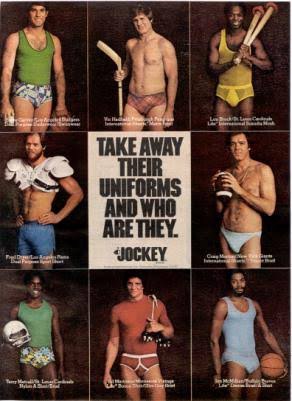
Known affectionately—and sometimes less affectionately—as “tighty-whities,” the Y-front brief has spent nearly a century supporting men through childhood, military service, athletic pursuits, working life, and old age. It has been a symbol of practicality, masculinity, conformity, comfort, and even comedy. Yet despite repeated predictions of its demise, the classic brief remains an important part of men’s underwear culture.
Its story is one of innovation, changing fashions, evolving ideas about masculinity, and the constant search for comfort and support.
Before the Brief: The Age of Long Underwear
Prior to the twentieth century, men’s underwear looked very different from what we know today.
For centuries men wore garments such as:
Loincloths
Breeches
Drawers
Union suits
Long johns
The most common undergarment in the late nineteenth and early twentieth centuries was the union suit, a one-piece garment covering the body from shoulders to ankles.
While practical in colder climates, these garments were often bulky, restrictive, and uncomfortable during warmer weather.
As society modernized and clothing became lighter and more tailored, men began demanding underwear that offered greater freedom of movement.
The stage was set for a revolution.
The Birth of Modern Briefs
The breakthrough occurred in 1934.
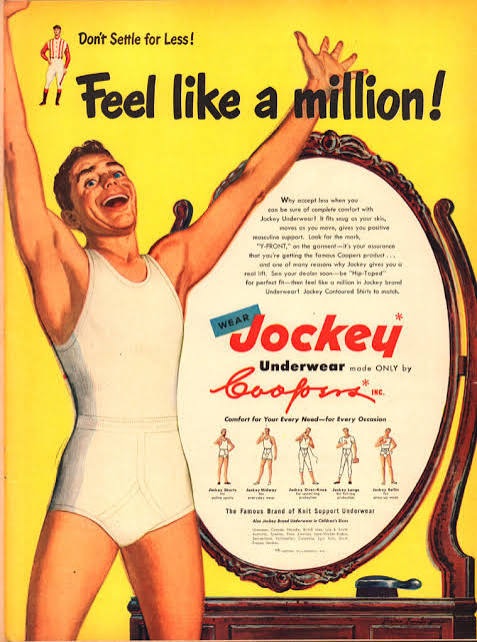
An executive at the Chicago-based underwear manufacturer Jockey International reportedly received a postcard from the French Riviera depicting a man wearing a form-fitting bikini-style swimsuit.
Inspired by the design, the company developed a revolutionary new men’s undergarment.
The garment was introduced on January 19, 1935, under the name “Jockey Brief.”
It featured several innovations:
No legs
A close-fitting design
Knitted elastic fabric
A supportive front pouch
An overlapping fly opening
Most importantly, it offered support without requiring the leg sections found in traditional boxer shorts.
The product was an immediate success.
Chicago department stores reportedly sold thousands within weeks.
Men had never seen anything quite like it.

The Famous Y-Front Design
The defining feature of the classic brief was its distinctive Y-shaped fly opening.
This overlapping fabric construction created both convenience and support.
The Y-front quickly became the most recognizable characteristic of the garment.
Manufacturers promoted the design as:
Hygienic
Practical
Comfortable
Masculine
Supportive
The Y-front soon became synonymous with men’s underwear itself.
Even today, many people immediately picture the classic white Y-shaped fly when someone mentions men’s briefs.
The End of the Boxer Monopoly
Before briefs appeared, loose-fitting boxer shorts dominated the market.
Boxers had originally been developed for prize fighters and offered freedom of movement.
However, many men found them lacking in support.
The brief solved that problem.
Men who worked physically demanding jobs often preferred the additional support provided by the new garment.
Athletes quickly adopted briefs for similar reasons.
By the late 1930s, briefs had become one of the fastest-growing categories in men’s apparel.

Wartime Popularity
The Second World War significantly accelerated the spread of briefs.
Military organizations sought underwear that was:
Easy to manufacture
Comfortable
Durable
Space efficient
Millions of servicemen were introduced to modern briefs through military issue clothing.
After returning home, many continued wearing them.
As a result, the post-war years saw a massive expansion in brief sales throughout North America, Europe, and Australia.
The Y-front became a standard part of everyday male dress.
The Golden Age of the White Brief
The 1950s and 1960s represented the golden age of the classic white brief.
Manufacturers heavily promoted white cotton Y-fronts as the ideal underwear for modern men.
Advertisements emphasized:
Cleanliness
Respectability
Family values
Athleticism
Reliability
The colour white became closely associated with hygiene and purity.
For decades, many boys received their first briefs as children and continued wearing essentially the same style throughout adulthood.
White briefs became almost a uniform of masculinity.

Why They Were Called “Tighty-Whities”
The nickname “tighty-whities” emerged in the latter half of the twentieth century.
The term combined two obvious characteristics:
“Tighty” referred to the close-fitting nature of the garment.
“Whities” referred to the overwhelmingly white colour of most briefs sold during the era.
Although originally informal slang, the phrase eventually entered popular culture and became instantly recognizable throughout the English-speaking world.
Hollywood and Popular Culture
Classic briefs became deeply embedded in film and television.
Movie stars frequently appeared in them during scenes depicting ordinary domestic life.
The garment symbolized the average man.
Famous actors photographed in briefs helped normalize the style and even made it aspirational.
By the 1950s and 1960s, briefs were considered the standard underwear for men of all ages.
Virtually every major underwear manufacturer produced them.
The Rise of Television Advertising
Television transformed underwear marketing.
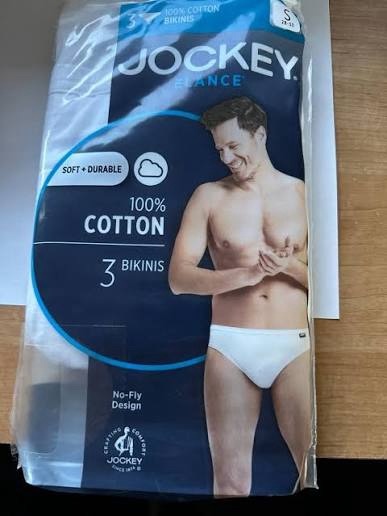
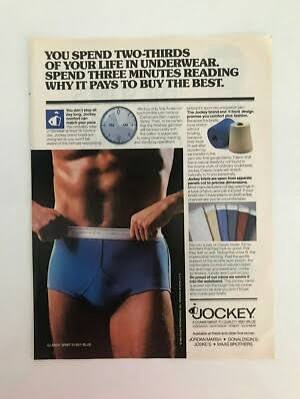
Advertisements featured athletic men displaying the benefits of supportive underwear.
Manufacturers promoted briefs as:
Comfortable
Masculine
Modern
Practical
The message was clear: active men wore briefs.
For decades, the image of a smiling athlete in spotless white briefs became a staple of advertising.
The Brief as a Symbol of Masculinity
The popularity of briefs reflected changing ideas about the male body.
Unlike loose boxers, briefs emphasized physique.
They highlighted:
Muscular thighs
Athletic builds
Physical fitness
As gym culture expanded during the twentieth century, many men viewed briefs as consistent with an active lifestyle.
The garment’s supportive design reinforced its association with sport and physical competence.
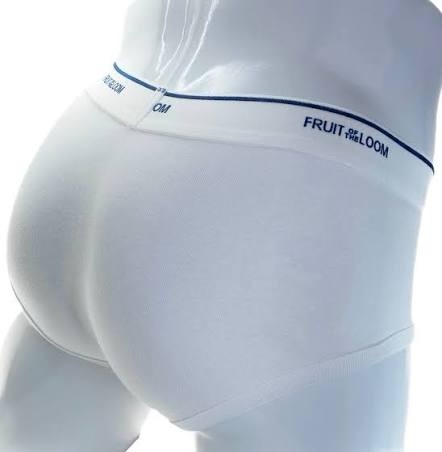
The Arrival of Colour
While white dominated the market for decades, the 1970s brought significant changes.
Manufacturers introduced:
Blue briefs
Black briefs
Red briefs
Patterned briefs
Fashion briefs
Men increasingly viewed underwear as an expression of personal style rather than merely a functional necessity.
Bright colours and designer waistbands appeared.
Yet white briefs remained the benchmark against which all others were measured.
Competition from Boxer Shorts
Beginning in the 1980s, boxer shorts experienced a major resurgence.
Several factors contributed:
Casual fashion trends
Greater emphasis on comfort
Celebrity endorsements
Fashion advertising
Many younger men embraced the looser fit of boxers.
The classic brief’s dominance began to weaken for the first time.
The Boxer Brief Revolution
The greatest challenge arrived during the 1990s.
Boxer briefs combined:
The support of briefs
The leg coverage of boxers
This hybrid design proved enormously popular.
Major underwear brands heavily promoted boxer briefs using athletes, actors, and celebrities.
Millions of men switched styles.
Industry observers predicted the eventual extinction of the traditional brief.
They were wrong.

Why Briefs Survived
Despite changing fashions, briefs retained several important advantages.
Support remained the primary reason.
Many men appreciated:
Secure fit
Minimal fabric
Comfort beneath trousers
Reduced bunching
Cooler wear in warm climates
Athletes, tradesmen, military personnel, and older men often continued wearing briefs regardless of fashion trends.
For them, practicality outweighed style.
Advances in Fabric Technology
Modern briefs differ significantly from their cotton ancestors.
Today’s versions often feature:
Moisture-wicking fabrics
Stretch fibres
Modal blends
Bamboo fabrics
Microfibre construction
These materials improve:
Comfort
Breathability
Durability
Shape retention
Yet the essential Y-front concept remains largely unchanged.
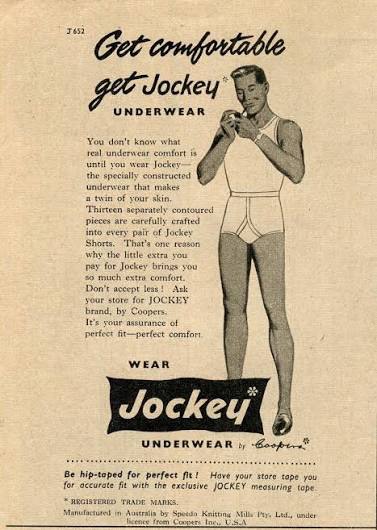
The Brief in Australia
Australian men embraced Y-front briefs throughout much of the twentieth century.
Generations grew up wearing brands produced locally or imported from overseas.
School changing rooms, military service, sports clubs, and family homes all reflected the dominance of the brief.
Many Australian men remember receiving packets of white briefs as routine purchases made by parents and grandparents.
For decades they represented everyday practicality rather than fashion.
Fashion Cycles and Revival
Interestingly, the twenty-first century has seen a revival of interest in traditional briefs.
Younger consumers increasingly embrace vintage styles.
Fashion designers have reinterpreted classic briefs using:
Premium fabrics
Contemporary cuts
Designer branding
Luxury materials
What was once considered old-fashioned has become retro-chic in some circles.
Fashion repeatedly demonstrates that styles rarely disappear completely.
Health and Comfort Considerations
The long-running debate between briefs and boxers continues.
Research has generally found that comfort and personal preference are more important than broad generalizations.
Many men simply find briefs provide the level of support they prefer.
The enduring popularity of briefs demonstrates that there is no single “correct” choice in men’s underwear.
Cultural Legacy
Few garments have had the cultural impact of the white Y-front brief.
It has appeared in:
Films
Television shows
Advertising campaigns
Comic strips
Sitcoms
Fashion collections
The garment has become a visual shorthand for ordinary manhood.
Whether portrayed seriously or humorously, the image remains instantly recognizable.
The Future of the Tighty-Whities
Nearly ninety years after their introduction, classic briefs remain widely available around the world.
While boxer briefs may dominate sales in many markets, millions of men continue to choose traditional Y-fronts every day.
Manufacturers continue refining designs while preserving the essential elements that made the original successful:
Support
Simplicity
Comfort
Functionality
The fact that the basic design has endured for almost a century speaks volumes about its effectiveness.
The story of the Y-front brief is ultimately a story of practical innovation.
Born during the 1930s as a radical alternative to bulky underwear, the brief transformed men’s clothing and redefined expectations of comfort and support.
From the Depression era to the digital age, from military barracks to suburban homes, from athletic fields to fashion runways, the classic white brief has remained a familiar companion for generations of men.
Though often joked about and periodically declared obsolete, the “tighty-whities” continue to survive because they perform their job exceptionally well.
In the history of men’s clothing, few garments have provided so much support—both literally and figuratively—as the classic Y-front brief.
Tim Alderman ©️ 2026

