Introduction
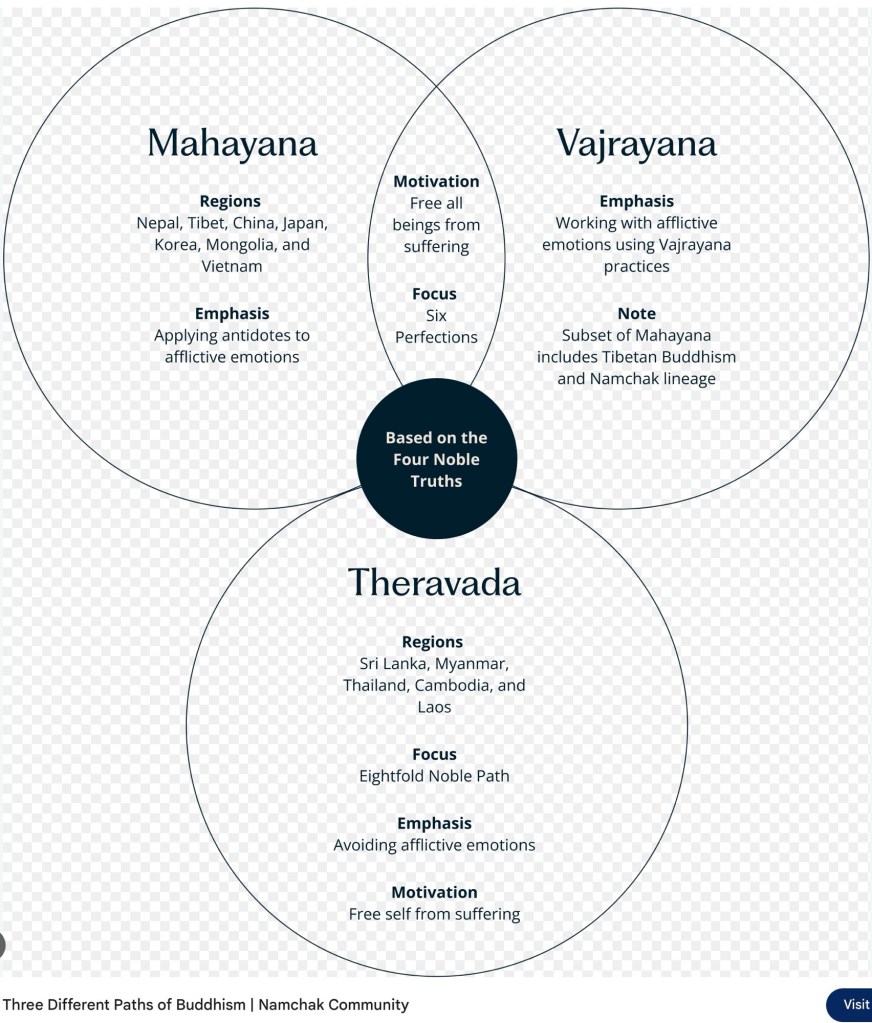
Of the three major traditions of Buddhism, Mahayana Buddhism is the largest, followed today by hundreds of millions of people across East Asia and increasingly throughout the Western world. Its name, Mahayana, means “The Great Vehicle”, reflecting its central ideal of carrying all living beings towards enlightenment rather than focusing solely on individual liberation.
Rich in philosophy, symbolism, art and compassion, Mahayana Buddhism has inspired magnificent temples, towering statues of Buddhas and Bodhisattvas, elegant Zen gardens, elaborate rituals and some of the world’s greatest works of religious literature. While remaining firmly rooted in the teachings of the historical Buddha, Mahayana developed new interpretations that placed universal compassion at the very heart of Buddhist practice.
The Origins of Mahayana
Mahayana Buddhism emerged in India approximately four to five centuries after the death of Siddhartha Gautama, the historical Buddha. Rather than appearing suddenly, it developed gradually as monks and scholars reflected on how the Buddha’s teachings could be understood more broadly.
By around the first century BCE, new scriptures began circulating. These texts presented fresh philosophical ideas while affirming the Buddha’s original goal of ending suffering. Over time they formed the foundation of what became known as Mahayana Buddhism.
Its followers described their path as the “Great Vehicle” because they believed it offered a way for all beings—not merely monks—to attain enlightenment.
Why “The Great Vehicle”?
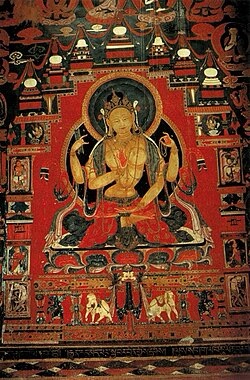
The word vehicle is used as a metaphor.
Imagine a great ship crossing a vast ocean. It does not carry only one passenger but everyone who wishes to board.
Likewise, Mahayana teaches that enlightenment should not be sought solely for oneself. Instead, one should work tirelessly so that every living being may eventually become free from suffering.
This ideal distinguishes Mahayana from earlier Buddhist traditions, which Mahayana writers referred to as Hinayana, or “Lesser Vehicle.” Today, however, that term is generally avoided because it is considered dismissive. The surviving early Buddhist tradition is known as Theravada, and modern Buddhists generally treat both traditions with mutual respect.
The Bodhisattva Ideal
The defining feature of Mahayana Buddhism is the Bodhisattva.
A Bodhisattva is someone who has generated the sincere aspiration to become fully enlightened but chooses to postpone final Buddhahood until all beings have the opportunity to awaken.
Rather than seeking liberation alone, the Bodhisattva vows:
“However innumerable sentient beings are, I vow to save them.”
This spirit of limitless compassion lies at the heart of Mahayana practice.
The Bodhisattva becomes both teacher and companion, helping others along the path while continuing to develop wisdom and compassion.
Compassion and Wisdom
Mahayana teaches that two qualities must develop together:
Compassion (Karuṇā)
The sincere wish to relieve the suffering of all beings.
Wisdom (Prajñā)
The deep understanding of reality as it truly is.
Compassion without wisdom can become misguided emotion.
Wisdom without compassion can become cold and detached.
Together they represent the perfect balance.
The Bodhisattvas
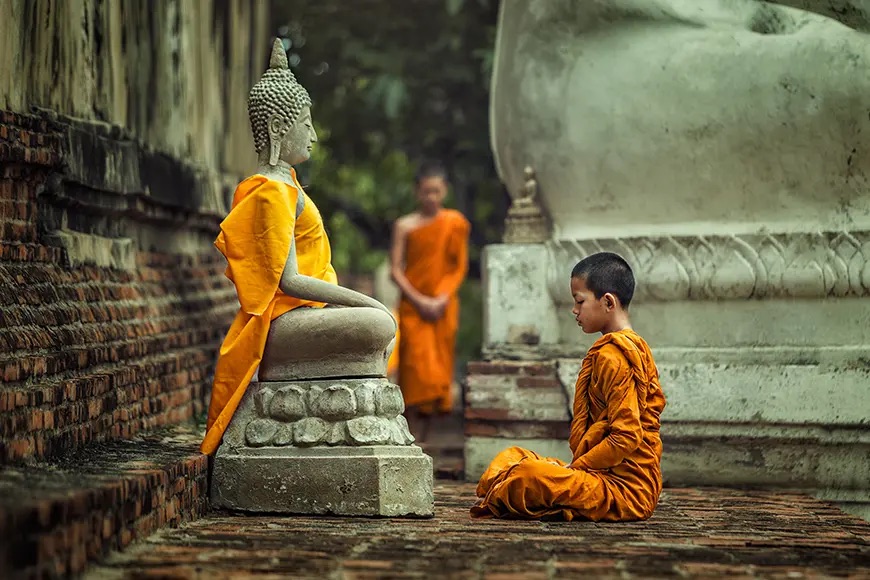
Unlike Theravada Buddhism, Mahayana places great emphasis on celestial Bodhisattvas who symbolise different aspects of enlightenment.
Among the best known are:
Avalokiteśvara
The Bodhisattva of Infinite Compassion.
Known as Guanyin in China and Kannon in Japan, Avalokiteśvara is perhaps the most beloved figure in Mahayana Buddhism. Countless temples are dedicated to this embodiment of mercy and compassion.
Mañjuśrī
The Bodhisattva of Wisdom.
Usually depicted holding a flaming sword that cuts through ignorance and delusion.
Samantabhadra
The Bodhisattva of Practice.
He represents the application of wisdom through compassionate action.
Kṣitigarbha
The Bodhisattva who vows not to attain Buddhahood until all hell realms are emptied.
He symbolises hope, perseverance and boundless compassion.
Many Buddhas
While Theravada focuses primarily on the historical Buddha, Mahayana teaches that countless Buddhas exist throughout the universe.
Among the most important are:
Amitābha Buddha
Associated with the Western Pure Land.
Faith in Amitābha forms the basis of Pure Land Buddhism, one of the largest schools in East Asia.
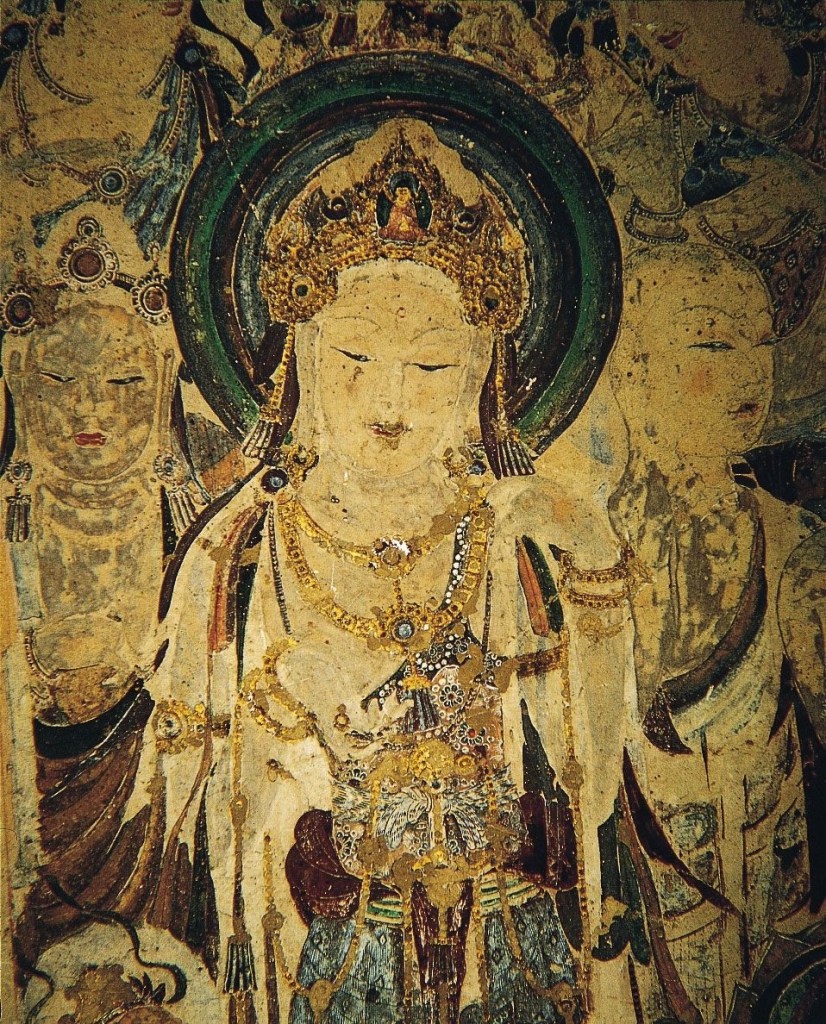
Vairocana Buddha
Represents the universal Buddha whose wisdom permeates all existence.
Medicine Buddha
Associated with physical and spiritual healing.
Emptiness (Śūnyatā)
One of Mahayana’s greatest philosophical contributions is the doctrine of Emptiness.
The word can be misleading.
It does not mean that nothing exists.
Instead, it teaches that nothing possesses permanent, independent existence.
Everything exists because of countless causes and conditions.
A flower depends upon:
sunlight
rain
soil
insects
seasons
time
Without these relationships, the flower could not exist.
Everything in the universe is similarly interconnected.
Recognising this frees us from attachment and suffering.
The Heart Sutra
Perhaps the most famous Mahayana text is the Heart Sutra.
Though remarkably brief, it contains one of Buddhism’s most profound statements:
“Form is emptiness; emptiness is form.”
This means that everything we experience exists through interdependence rather than independent permanence.
The Heart Sutra is recited daily in countless temples throughout Asia.
The Lotus Sutra
Another influential scripture is the Lotus Sutra.
It teaches that all beings possess the potential for Buddhahood.
No one is excluded.
The Lotus Sutra became especially important in Japan, influencing traditions such as Nichiren Buddhism, which places great emphasis on its teachings and the chanting of Nam-myoho-renge-kyo.
Schools of Mahayana
Over the centuries Mahayana developed into several distinctive schools.
Zen (Chan)
Originating in China as Chan before flourishing in Japan as Zen, this tradition emphasises meditation, direct experience and mindful awareness.
Rather than relying heavily on intellectual study, Zen encourages practitioners to experience reality directly.
Pure Land
One of the largest Buddhist traditions in the world.
Practitioners place their trust in Amitābha Buddha, aspiring to be reborn in the Pure Land where enlightenment is easier to attain.
Nichiren Buddhism
Based on the Lotus Sutra, Nichiren Buddhism teaches that chanting Nam-myoho-renge-kyo awakens the Buddha nature already present within each individual and encourages positive transformation in everyday life.
Tiantai and Huayan
Highly philosophical schools that developed sophisticated understandings of the interconnected nature of reality and the unity of all existence.
Everyday Practice
Although practices vary between schools, Mahayana Buddhists commonly engage in:
Meditation
Chanting sutras
Reciting mantras
Acts of compassion
Making offerings
Studying Buddhist scriptures
Mindfulness in daily life
Supporting their local community
The goal is not merely personal peace but becoming a source of peace for others.
Mahayana Around the World
Today Mahayana Buddhism predominates in:
China
Japan
South Korea
Vietnam
Taiwan
Singapore
Mongolia (alongside Vajrayana influences)
It has also spread widely throughout Europe, North America and Australia.
Its emphasis on compassion, social engagement and universal enlightenment has attracted many modern practitioners.
Misconceptions
One common misconception is that Mahayana “changed” Buddhism.
A better understanding is that Mahayana represents one major historical development within Buddhism. It shares with Theravada the Four Noble Truths, the Noble Eightfold Path, karma, rebirth and the goal of liberation from suffering. Its distinctive contribution is the emphasis on the Bodhisattva ideal, a vast cosmology and a rich body of philosophical literature.
Another misconception is that Mahayana is less rigorous than other forms of Buddhism. In reality, many Mahayana traditions require lifelong study, disciplined meditation and ethical practice.
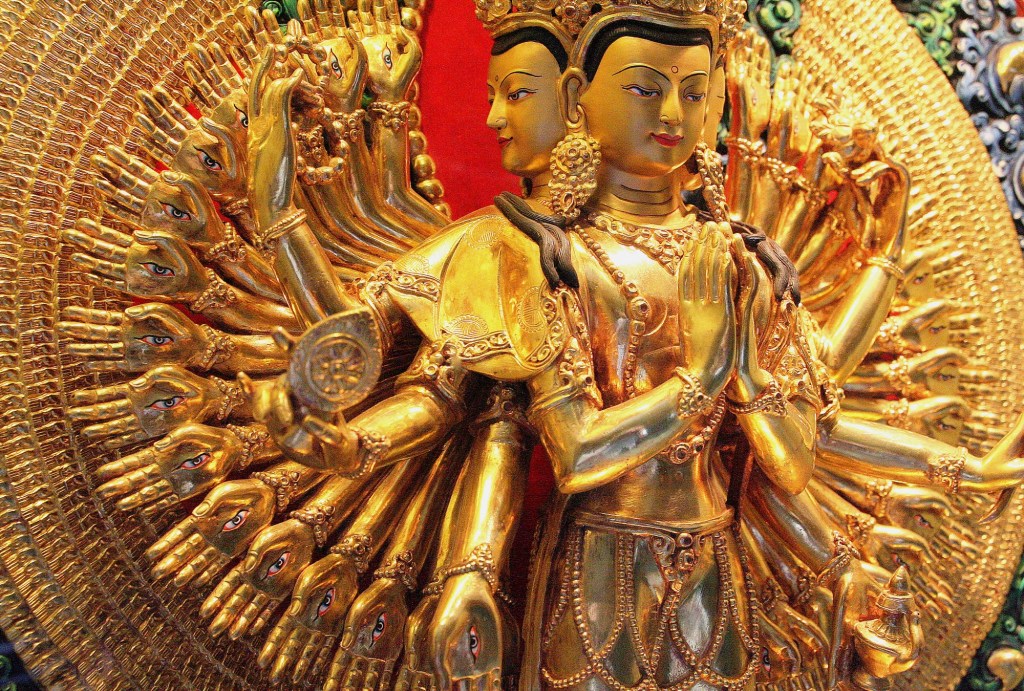
Mahayana Buddhism invites practitioners to look beyond their own suffering and recognise their profound connection with all life. It teaches that wisdom and compassion are inseparable, and that genuine enlightenment naturally expresses itself through kindness, generosity and the wish that every being may find peace.
Whether expressed through the quiet simplicity of Zen meditation, the devotional faith of Pure Land Buddhism, the chanting of the Lotus Sutra in Nichiren practice, or the philosophical depth of the Heart Sutra, Mahayana remains a living tradition whose central message is both timeless and deeply human: that our own awakening is intimately bound to the well-being of others.
In a world often marked by division and conflict, the “Great Vehicle” continues to offer a vision of shared compassion, reminding us that no one truly travels the path alone.
Tim Alderman ©️2026
Sources
Peter Harvey, An Introduction to Buddhism: Teachings, History and Practices
Paul Williams, Mahayana Buddhism: The Doctrinal Foundations
Edward Conze, Buddhist Thought in India
The Heart Sutra (Prajñāpāramitāhṛdaya)
Damien Keown, Buddhism: A Very Short Introduction
The Lotus Sutra (Saddharma Puṇḍarīka Sūtra)
Rupert Gethin, The Foundations of Buddhism
John Snelling, The Buddhist Handbook
For the next article in your Buddhism 101 series, it would flow naturally to explore Vajrayana Buddhism – The Diamond Vehicle, completing the overview of the three major Buddhist traditions before diving into individual schools and practices.

