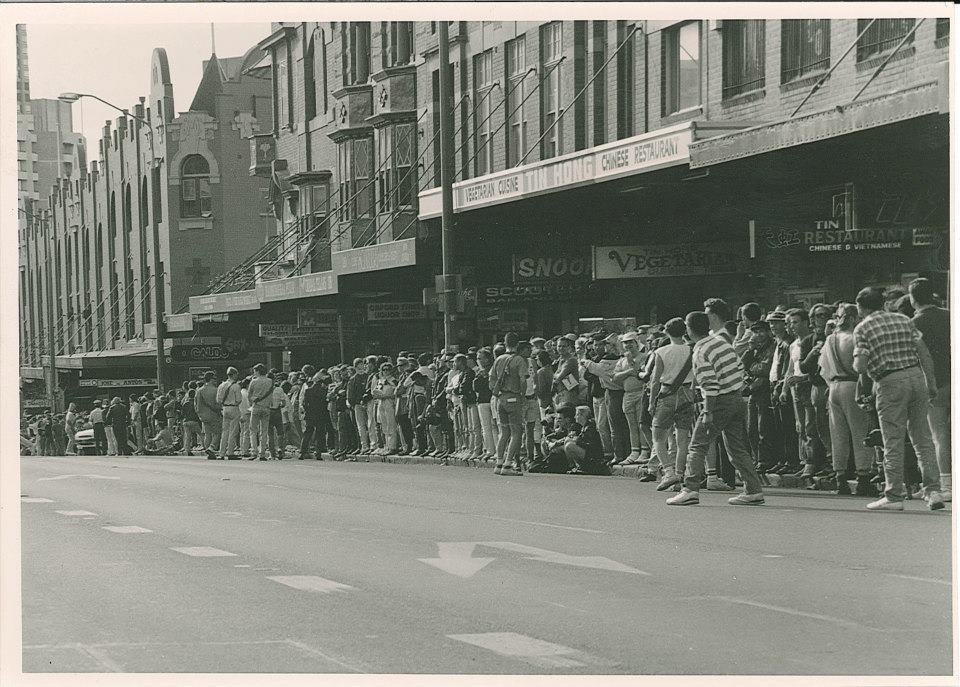
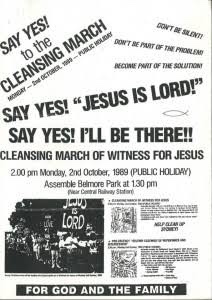
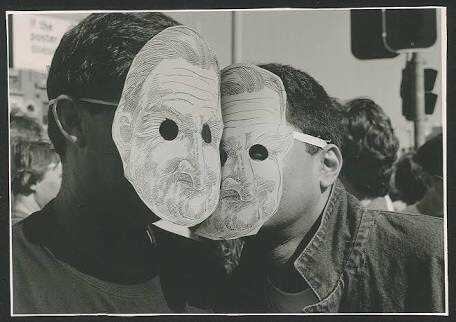
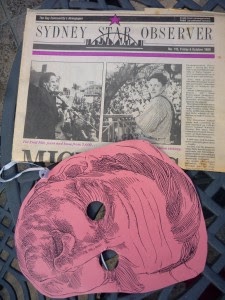
For decades, Sydney’s Oxford Street and the surrounding suburbs of Darlinghurst, Paddington and Surry Hills formed what was commonly known as Australia’s gay ghetto. To younger LGBTQ people, the term may sound strange, even negative. Yet for generations of gay men and lesbians, the ghetto was not a prison. It was a refuge.
It was where people found safety, friendship, love, employment, activism, healthcare and community in a society that often denied them all of those things.
Today, much of that world has disappeared. Many of the bars and clubs are gone. The crowds are smaller. The once-famous “Golden Mile” no longer dominates gay life in Australia as it once did.
It is tempting to blame one factor for this transformation. Some point to HIV/AIDS. Others blame gentrification. Some argue changing social attitudes made the ghetto unnecessary. Others suggest the internet killed it.
The truth is that the decline of Sydney’s gay ghetto resulted from all of these forces working together. Ironically, many of the victories fought for by generations of LGBTQ Australians helped make the ghetto less necessary than it once was.
Why the Ghetto Existed
To understand why it declined, we first need to understand why it existed.
Until relatively recently, homosexuality was criminalised throughout much of Australia. Gay men could lose their jobs, their families, their housing and their reputations simply because of who they were. Violence and harassment were common. Police raids on gay venues were an accepted part of life.
In such an environment, people naturally sought safety in numbers.
Sydney’s inner-city gay neighbourhood emerged because it offered something that could not be found elsewhere: community. A gay man could walk down Oxford Street and know he was not alone. He could meet friends in a bar, find information in a bookshop, access sympathetic doctors and counsellors, attend political meetings, or simply exist without constantly looking over his shoulder.
The ghetto was not merely a nightlife district.
It was a survival mechanism.
The Arrival of AIDS
Then came HIV/AIDS.
The first cases appeared in Australia in the early 1980s. What followed would become one of the defining experiences of modern gay history.
The epidemic struck hardest in communities where gay men lived, socialised and formed relationships. Sydney’s inner-city gay population found itself at the epicentre of a crisis unlike anything it had ever faced.
Suddenly, the bars and clubs that had represented freedom became places where rumours circulated about who was sick, who had died and who had vanished from the scene.
Entire friendship groups were affected.
Many younger Australians today struggle to grasp the scale of the loss. Thousands of men died. Others lived for years expecting to die. Funerals became a grim part of everyday life.
For those who survived, life priorities changed.
The hedonism and sexual liberation that characterised parts of gay culture in the 1970s gave way to something more serious. People became carers, activists and advocates. Safe-sex campaigns emerged. Fundraisers became common. Volunteer organisations appeared. Hospital wards became places of both suffering and extraordinary compassion.
Sydney’s gay ghetto became a community under siege.
HIV Strengthened the Community—and Weakened It
One of history’s great ironies is that HIV/AIDS both strengthened and weakened the gay ghetto at the same time.
It strengthened it because it forced the community to unite.
Political activism intensified. Community organisations became more professional. New networks of support developed. Relationships deepened through shared struggle.
Many people who lived through the epidemic still speak of a sense of solidarity that is difficult to explain to those who came later.
Yet HIV also weakened the community.
It removed thousands of people who would otherwise have become leaders, business owners, artists, activists and elders. It devastated social networks. It created trauma that lingered long after effective treatments arrived.
Perhaps most importantly, it caused many survivors to reassess what mattered in life.
After years of illness, funerals and grief, many people no longer wanted to spend every weekend in clubs and bars. Some sought stability. Others sought long-term relationships. Some moved away from the inner city entirely.
The seeds of a diaspora had already been planted.
Winning Equality Changed Everything
Another irony followed.
The success of LGBTQ activism helped undermine the need for a concentrated gay enclave.
As laws changed, discrimination slowly reduced and public attitudes softened, people gained choices previous generations never possessed.
For much of the twentieth century, many LGBTQ people moved to Sydney because it was one of the few places where they could live openly.
By the early twenty-first century, many no longer had to.
A gay couple could live in suburban Sydney, Newcastle, Wollongong, regional NSW or interstate without necessarily feeling isolated.
This was a tremendous social victory.
But it also reduced the practical necessity of living near Oxford Street.
Freedom dispersed the population.
The Changing Nature of Queer Spaces
The old gay scene was largely built around male spaces.
Many bars, clubs, bathhouses and social venues catered primarily or exclusively to men. Lesbians often created their own parallel social networks because they were not always welcome in male-dominated environments.
As society changed, so did expectations.
Women’s equality movements, anti-discrimination legislation and broader understandings of inclusion challenged many assumptions about who could enter particular venues and who those venues should serve.
Over time, many traditional gay male venues evolved into broader LGBTQ spaces.
This was undoubtedly a positive development for inclusion.
However, it also altered the character of some establishments. Places originally created by and for gay men increasingly became mixed queer venues serving a wider audience.
For some, this represented progress.
For others, it felt like the loss of something unique.
Both perspectives contain elements of truth.
The Internet Changed Geography
Before the internet, geography mattered enormously.
If you wanted to meet other gay people, there were limited options. You visited bars, clubs, community centres, sporting groups or social organisations.
The internet changed everything.
Dating moved online.
Friendships moved online.
Political discussion moved online.
Information moved online.
A young gay man living in Dubbo or Wagga Wagga could suddenly connect with others without relocating to Sydney.
The physical necessity of the ghetto diminished further.
The internet did not destroy the gay community.
It simply made community less dependent upon physical location.
Gentrification: The Final Blow
If HIV weakened the ghetto, and social change reduced its necessity, gentrification may have delivered the final blow.
The very neighbourhoods that attracted LGBTQ residents because they were affordable eventually became fashionable.
Property prices skyrocketed.
Rents increased.
Developers moved in.
Businesses that had served the community for decades struggled to survive.
Ironically, gay residents helped transform once-neglected neighbourhoods into desirable areas. Once those areas became valuable, many could no longer afford to remain there.
The result was another wave of dispersal.
The Great Diaspora
The story of Sydney’s gay ghetto is therefore not a story of extinction.
It is a story of diaspora.
The population did not disappear.
It spread.
Former residents moved to the Inner West, the Northern Beaches, regional NSW, Queensland, Victoria and beyond. Some sought cheaper housing. Others sought quieter lives. Many sought long-term relationships and family life.
The community became less visible because it became more integrated.
A generation that once clustered together for survival found itself free to live almost anywhere.
What Was Lost
Something valuable disappeared with the decline of the ghetto.
A concentrated community creates a sense of belonging that is difficult to replicate.
Older LGBTQ Australians often remember being able to walk down Oxford Street and recognise dozens of people. Friendships formed easily. News travelled quickly. Political mobilisation happened naturally.
There was comfort in visibility.
There was power in numbers.
There was also a sense of history.
Many younger people today inherit rights and freedoms won by those communities without necessarily seeing the places where those struggles occurred.
What Was Gained
Yet much was gained.
The ability to live openly outside the inner city.
Greater legal protections.
Better healthcare.
Marriage equality.
Broader social acceptance.
Safer workplaces.
More diverse forms of community.
Perhaps most importantly, younger LGBTQ Australians possess freedoms that earlier generations could scarcely imagine.
The very decline of the gay ghetto is evidence of how much society has changed.
Conclusion: A Community That Outgrew Its Fortress
The Sydney gay ghetto did not collapse because of HIV/AIDS.
Nor did it disappear because of women entering venues, anti-discrimination laws, the internet or rising property prices.
It declined because all of these forces combined to transform the world that created it.
The ghetto existed because society made it necessary.
As society changed, the need for that concentrated refuge diminished.
The result was not the death of a community, but its dispersal.
What emerged was a diaspora of gay people living across Sydney, across Australia and across society itself.
That dispersal brought freedom, opportunity and acceptance.
But it also brought a certain loneliness.
The old Oxford Street community was forged under pressure. Shared adversity created bonds that are difficult to recreate in more tolerant times.
Perhaps that is the central paradox of progress.
When a community wins many of the battles it has fought for, it gains freedom—but loses some of the solidarity that came from having to fight those battles together.
The story of Sydney’s gay ghetto is therefore neither a tragedy nor a triumph.
It is the story of a community that eventually outgrew the fortress it once needed to survive.
Tim Alderman ©️ 2026